Flashback : Dallas

A Miscellany: History, Ads, Pop Culture

Category: Leisure

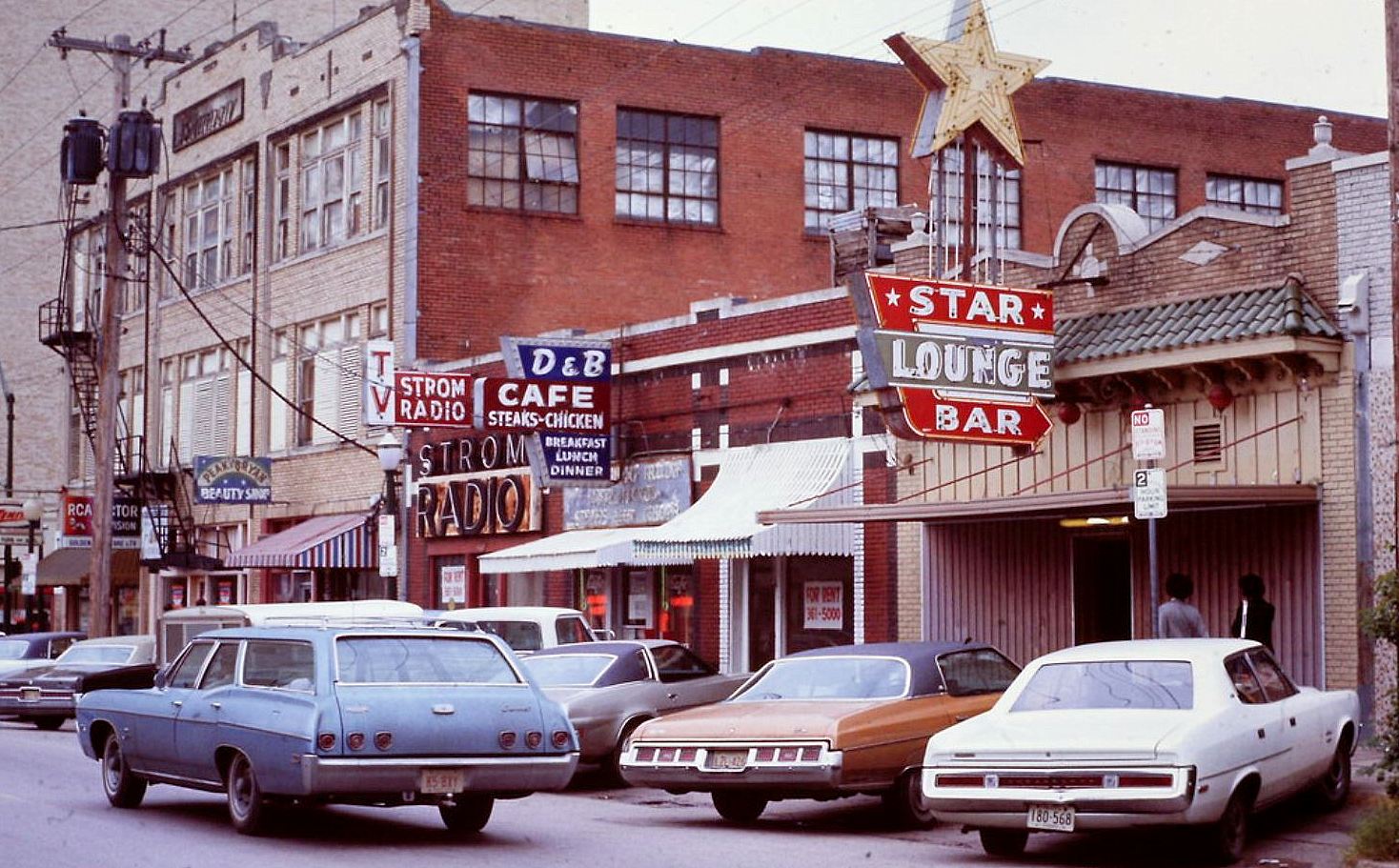
The Star Lounge, 4311 Bryan

star-lounge_next-to-brannon-bldg_city-of-dallas-preservation-collectionThe 4300-block of Bryan Street… (City of Dallas photo)

by Paula Bosse

You know those photos that just really grab you? This is one of those for me. It shows the Star Lounge & Bar (that sign!), located at 4311 Bryan, just east of Peak in Old East Dallas. The Star Lounge was opened in 1962 by Mrs. Wanda Nolan; Clark K. Curtis closed it in 1978 or 1979: that’s a lot of beer and cocktails over the lips and through the gums.

The building was built in 1922 by J. S. Johnson (the building permit had the estimated cost of construction at $3,500). Before the arrival of the Star Lounge, previous occupants of the space had included a barber shop, a cleaners, and a floor-covering and linoleum-installation company. (In 1931, when ABC Cleaners was there, the back wall of the building was blown out when two sticks of dynamite were planted one night by racketeers who were attempting to control the dry cleaning industry in Dallas by threatening violence if small-business owners refused to raise prices as a bloc and funnel the extra cash — basically “protection money” — back to them. The bad guys were thwarted.)

Early classified ads for the Star Lounge were want-ads for waitresses; in 1965, want-ads for “waitresses” were replaced by ads for “amateur go-go girls and exotic dancers.” I’m not sure how long that lasted, but it’s interesting to note that both sides of the 4300 block of Bryan were, at one time, jammed with bars which had similarly-themed retro-cool names (but which probably were more seedy than cool): the Orbit Lounge, the Rocket Lounge, the Space Lounge, and the Apollo Lounge. I’ve never seen that before. By 1970 those space-age gin mills were joined by an adult theater/bookstore. So… lively place! I’m hoping there was a lot — or even some — neon strobage going on.

This photo was probably taken around 1974, the year that Strom Radio & Appliances seems to have left the neighborhood. Neighboring businesses seen in this photo are Golden Furniture & Appliances (which has signs for Zenith and RCA-Victor out front), Peak & Bryan Beauty Shop, and the D & B Cafe. The three-story building on the corner of Bryan and Peak is the Brannon Building. All those buildings still stand — see the (sadly) more sedate block these days on Google Street View, here.

star-lounge_google-street-view_june-2018Google Street View, June, 2018

***

Sources & Notes

This photo is from a really great, somewhat random collection of 35mm slides from the City of Dallas Historic Preservation Program archives — most are from the 1970s and ’80s. Read about the recently rediscovered photos here, and browse through the entire fantastic collection on Flickr, here.

*

Copyright © 2019 Paula Bosse. All Rights Reserved.


The Zodiac Room

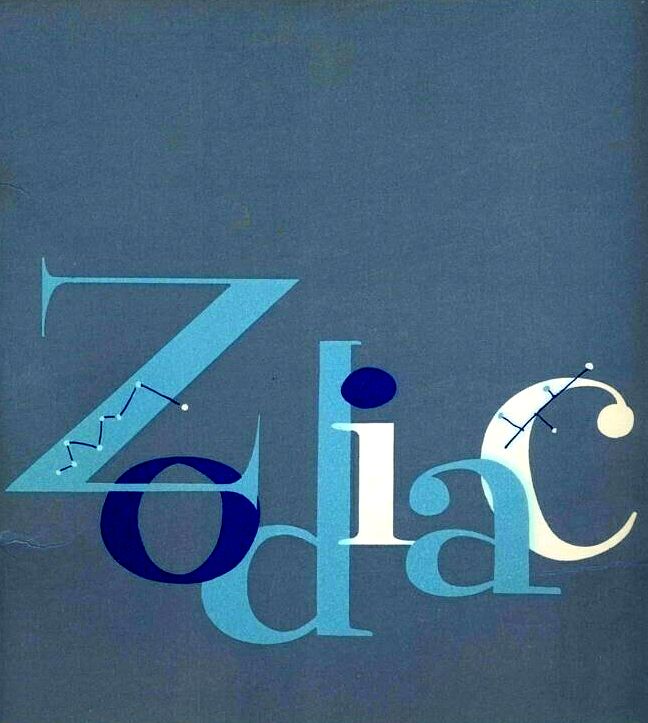
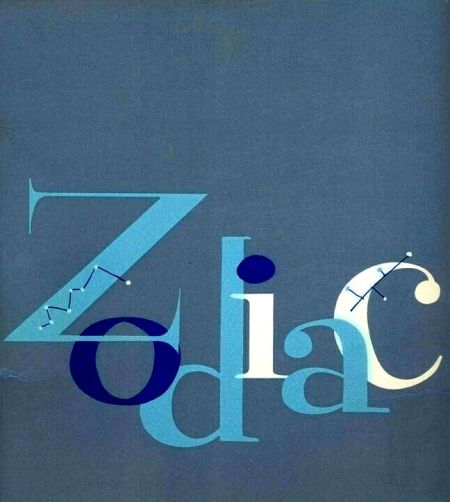
zodiac-room_ebay_menu_cover

by Paula Bosse

The tastefully swanky Zodiac Room opened at the downtown Neiman-Marcus store on April 27, 1953. (Interestingly, there was an earlier — and presumably unrelated — Zodiac Room, in the Jefferson Hotel, from at least 1950 to 1952.)

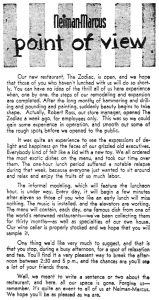
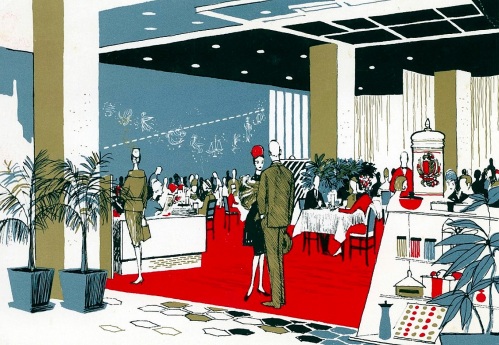
The Zodiac, a fashionable restaurant and tearoom featuring select foods, will open Monday on the sixth floor of Neiman-Marcus Company’s downtown store. Designed by Eleanor LeMaire of New York, the restaurant’s décor will suggest the roof of the world with signs of the Zodiac represented in both the main dining area and the terrace. (The Dallas Morning News, April 26, 1953)

Stanley Marcus wanted a restaurant in the store in which customers could take a break from shopping by having lunch or afternoon tea on-site, without having to leave the premises. Customers could continue to “shop” while dining as models walked around modeling fashions from the store’s inventory.

“[W]e installed a large restaurant, the Zodiac Room, to attract more people to the downtown area and as a service to those customers from out of town who were spending the day in the store.” (Stanley Marcus, in his book Minding the Store)

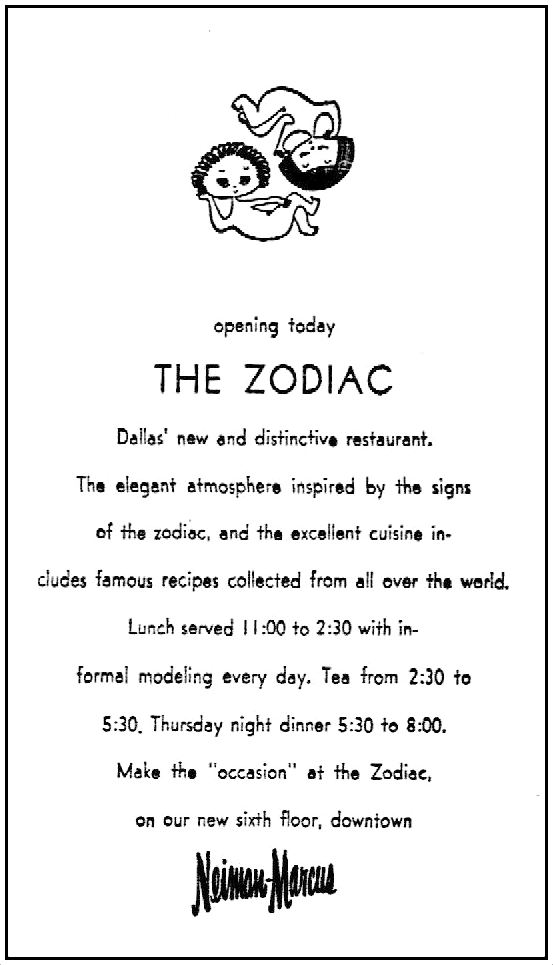
Below are a few ads from the Zodiac’s first week (click to see larger images).
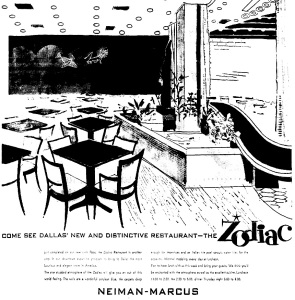
zodiac_opening-ad_042653
April 26, 1953

COME AND SEE DALLAS’ NEW AND DISTINCTIVE RESTAURANT — THE ZODIAC.

Just completed on our new sixth floor, the Zodiac Restaurant is another step in our downtown expansion program to bring to Dallas the most luxurious and elegant store in America.

The star studded atmosphere of the Zodiac will give you an out of this world feeling. The walls are a wonderful cerulean blue, the carpet’s deep enough for snowshoes and an Italian tile pool sprouts water lilies for the occasion. Informal modeling every day at luncheon.

Plan to have lunch with us this week and bring your guests. We think you’ll be enchanted with the atmosphere as well as the excellent cuisine. Luncheon 11:00 to 2:30, tea 2:30 to 5:00, dinner Thursday night 5:00 to 8:00. NEIMAN-MARCUS
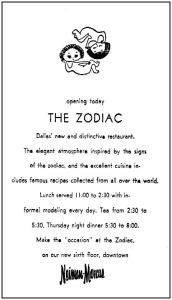
zodiac_opening-today-ad_042753
April 27, 1953

zodiac-room_042853-ad_opening
April 28, 1953 (N-M ad, detail)

You could even get a Zodiac-inspired hair-do, the Zodiac Cut: “Sophisticated, spherical — without a hint of a part.”
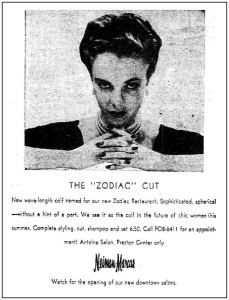
zodiac-cut_nm-ad_042953April 29, 1953

Other than the fact that this elegant dining space was part of the world-famous Neiman-Marcus department store, its main draw was its food. According to Stanley Marcus, in his book Minding the Store, the Zodiac struggled for the first year or two and didn’t find its footing until he hired the now-legendary Helen Corbitt as the restaurant’s director. He wrote the following in a guest column in The Dallas Morning News in 1979:

“A landmark in the culinary history of Dallas was the arrival of Helen Corbitt, who made a monumental contribution to improvement of food and service standards in the community. The Neiman-Marcus Zodiac Room became famous under her direction.” (Stanley Marcus, DMN, April 12, 1979)

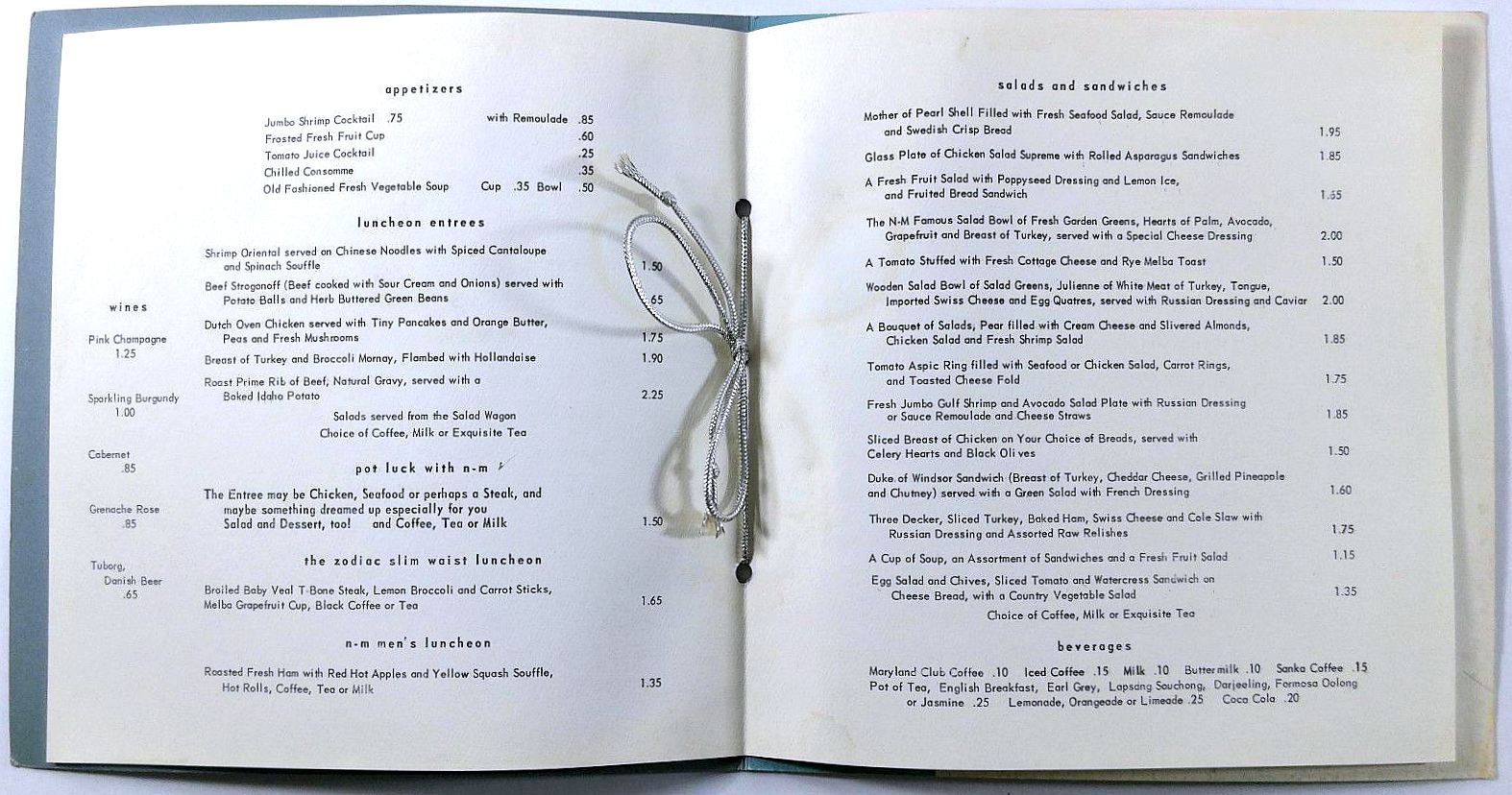
Below is an example of the fare favored by the Ladies Who Lunch (and the occasional Men Who Lunch), seen in a menu from 1956. (The most expensive item on the menu was the Roast Prime Rib of Beef, which came with a Baked Idaho Potato, a salad from the “Salad Wagon,” and a choice of coffee, milk, or “exquisite tea” — the price was $2.25, which in today’s money was a shockingly affordable $21.00.)
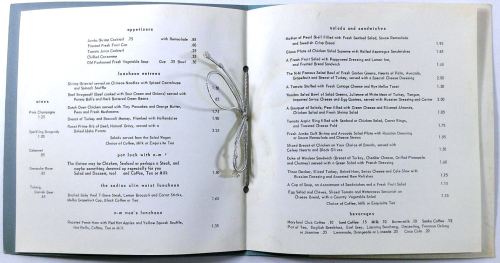
zodiac-1956-menu_inside_ebay

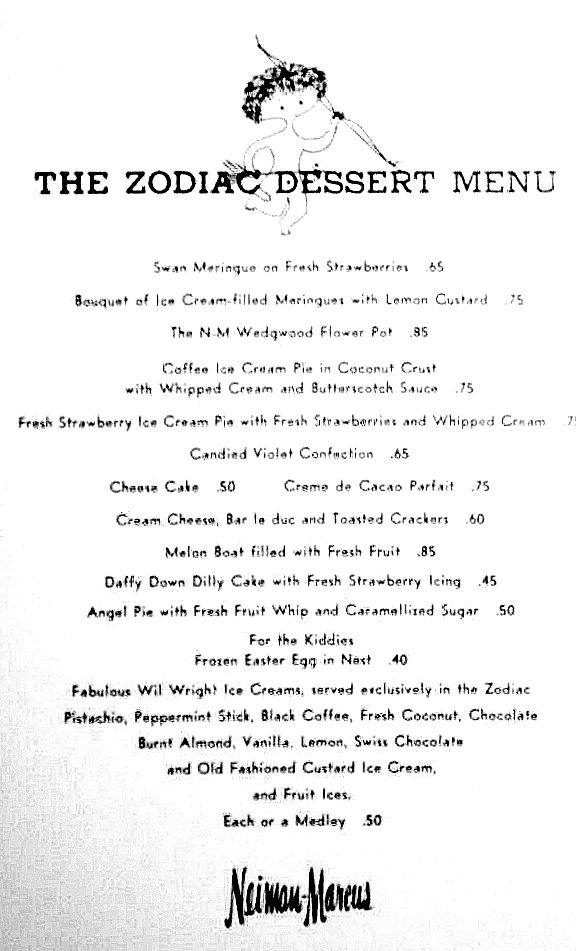
A dessert menu (a bit hard to read, I’m afraid) is below:
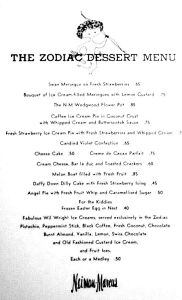
zodiac-menu-2_ebay_dessert-menu

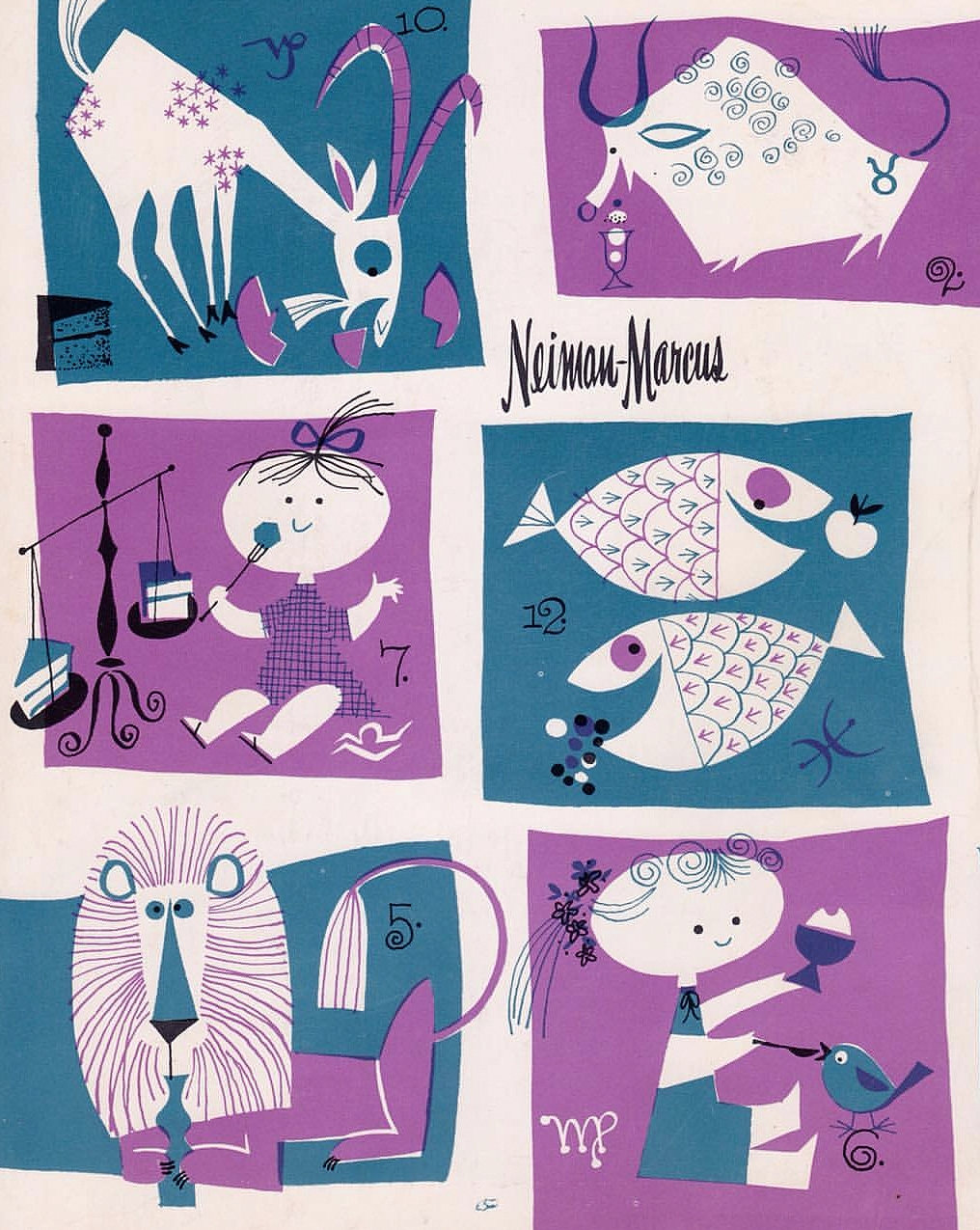
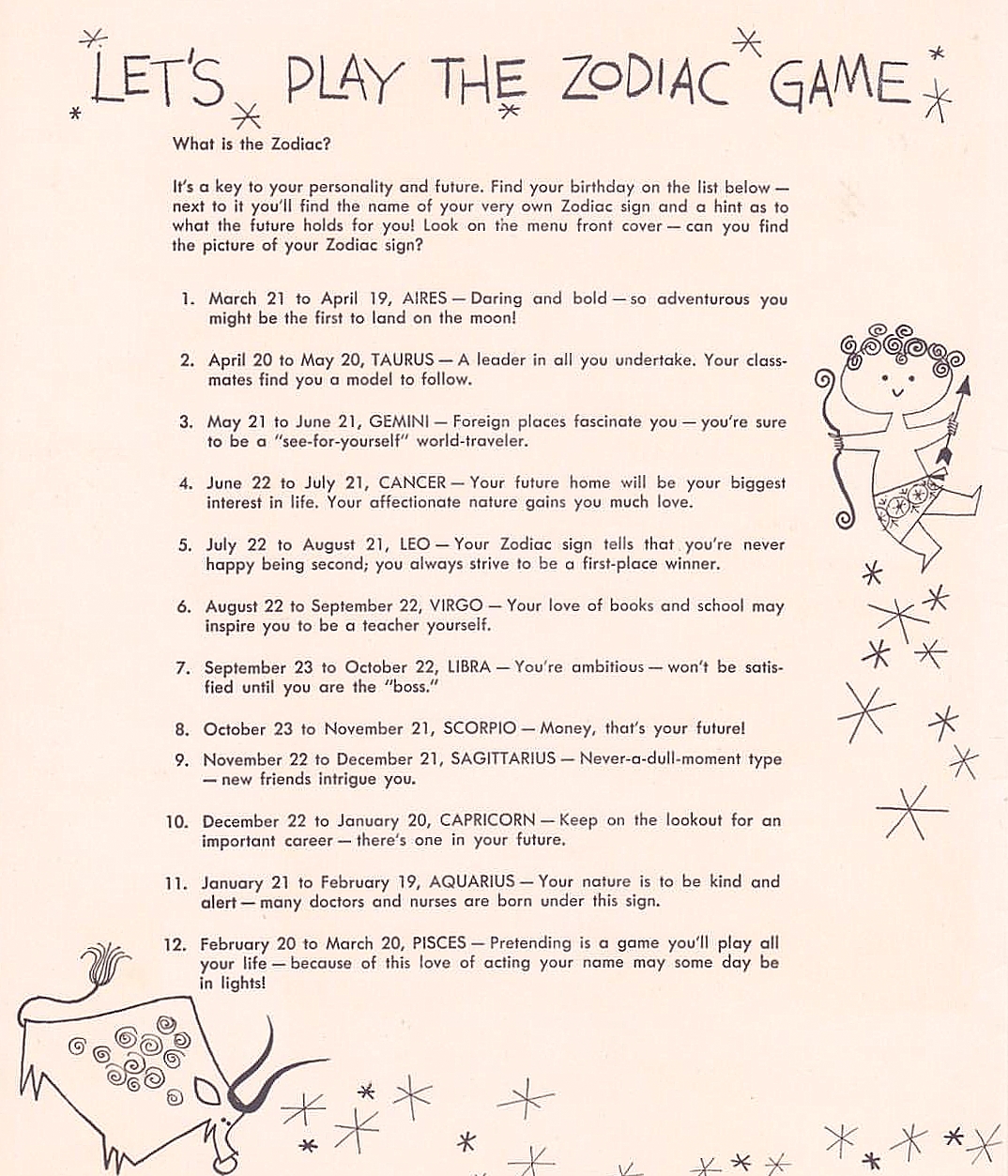
There was also a children’s menu, which was so charmingly designed by Neiman’s gift-wrap designer, Alma Shon, that I don’t blame a customer for having spirited away a copy of the menu as a holiday-time souvenir of what was no doubt a very special occasion (the date penciled at the top is Dec. 23, 1966). (More information about Ms. Shon is in the “Sources & Notes” section at the bottom of this post.) Below, the front and back of the children’s menu, illustrated with the signs of the zodiac:
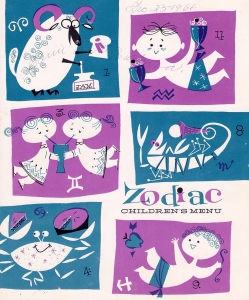
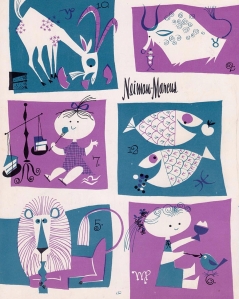
zodiac-room_childrens-menu_instagram_front

zodiac-room_childrens-menu_instagram_back

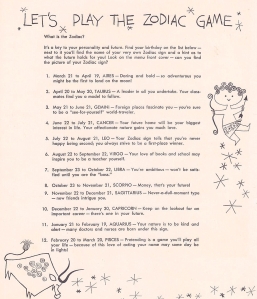
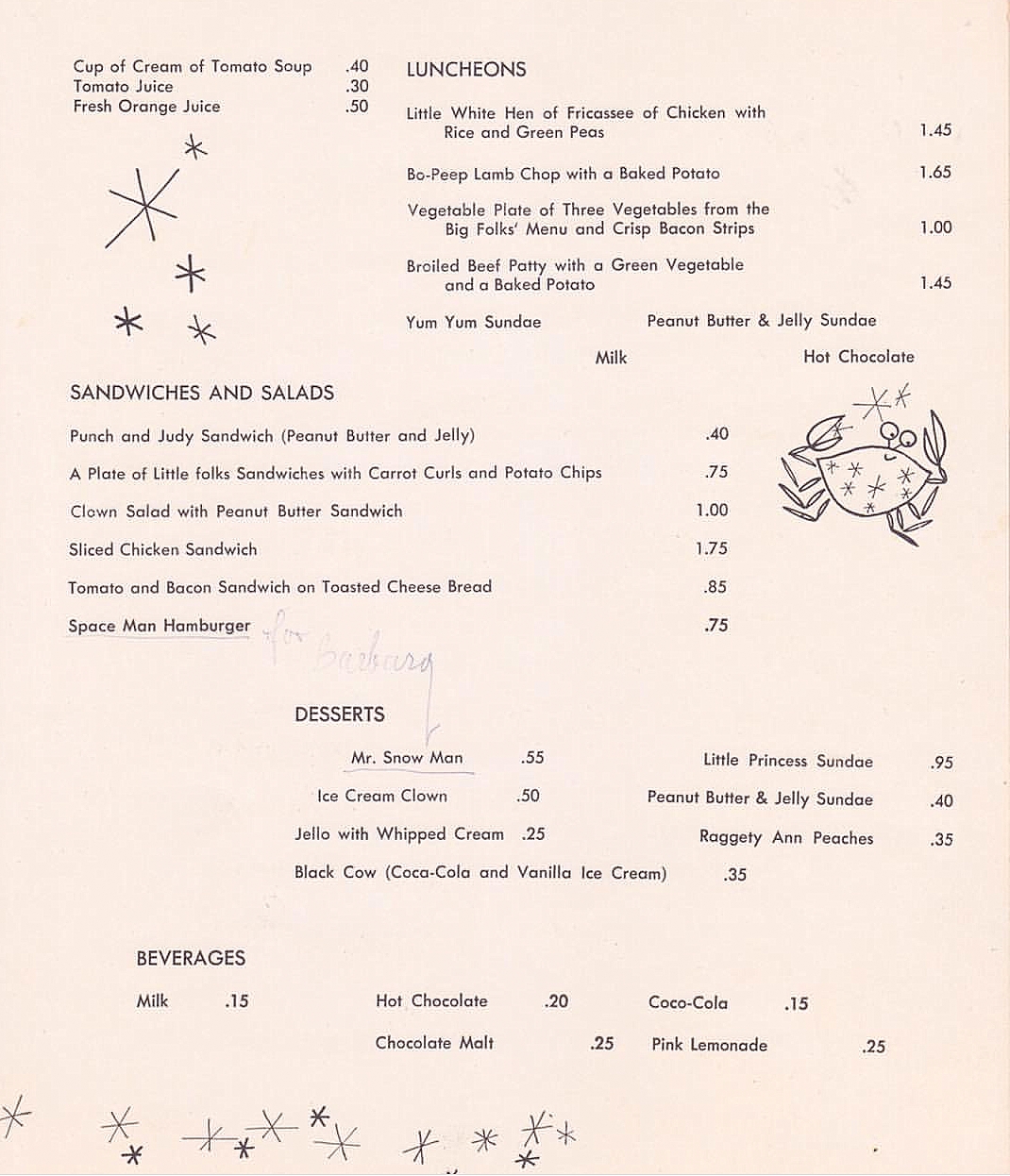
Inside, meal options for well-appointed kiddies and a “Zodiac game” to keep them occupied.
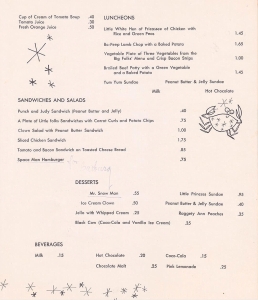
zodiac-room_childrens-menu_instagram_food

zodiac-room_childrens-menu_instagram_zodiac-game

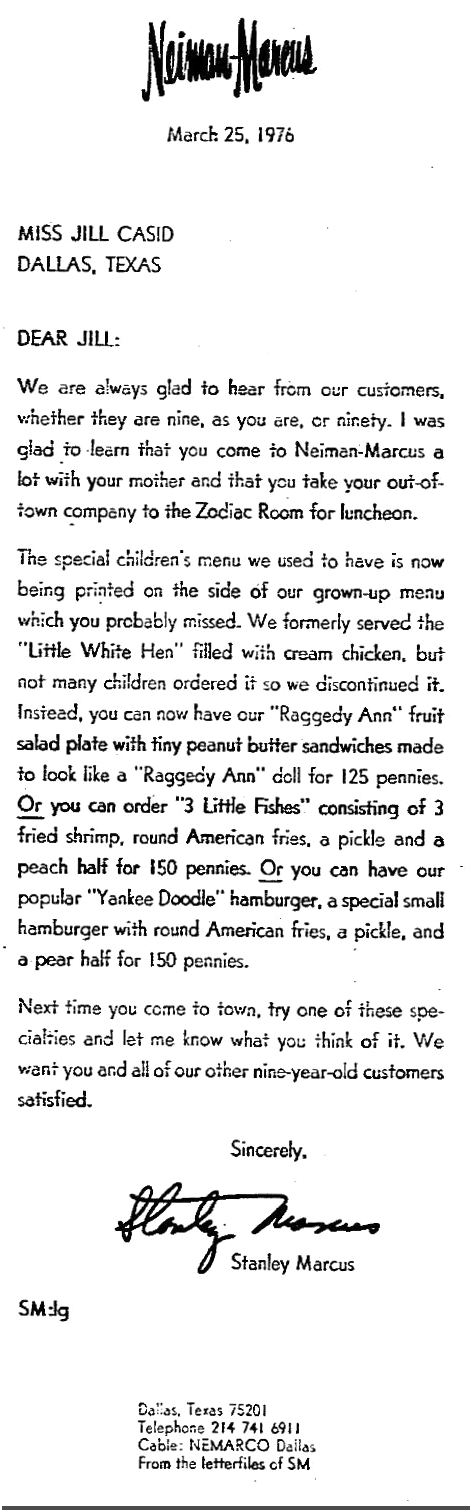
A few years later, this Stanley Marcus-penned letter appeared as a 1976 N-M ad — it was a personal reply to a nine-year-old Zodiac patron who had apparently written to Neiman’s inquiring about the children’s menu, which she was distressed to see had disappeared on her last visit:
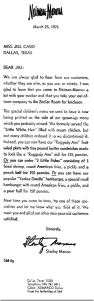
zodiac-room_051776_ad-det_childrens-menu
May 17, 1976

zodiac-room_postcard_flickr

Lastly, a memory of the downtown Zodiac, from the Department Store Museum website:

The downtown Dallas store was in its entirety a magic store. Every step and turn off the escalators to the top floor was amazing. The Zodiac room with its floor-to-ceiling diaphanous curtains that filtered the bright Texas sky made for a dreamlike atmosphere along with the slender long-legged models in evening gowns and furs and the Andre Previn-inspired piano player. The popovers with strawberry and cinnamon butter weren’t bad either. Thank you, Dallas and Neiman-Marcus, for such a rich time in my life.

And it’s still going strong.
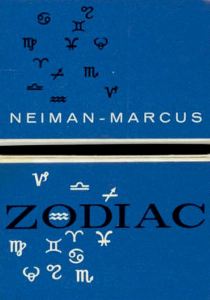
zodiac_matchbox_cook-collection_degolyer-library_SMU

***

Sources & Notes

Top image and other (non-children’s) menu images from eBay.

The four images of the Zodiac Room children’s menu are the reason I decided to do this post. My whimsy-threshold is pretty low, but I love the utterly charming drawings which grace the front and back covers. I saw them posted on the Instagram account @reflectionofaman (a cool account — here, for the desktop site — which features the photographs of Stanley Marcus, curated by his granddaughter, photographer Allison V. Smith); it had been shared there by Babs Bern (@mullett7665.manor). The menu’s artist — Alma Shon — was identified by her daughter Kate Heyhoe (@StarkRavingCat) in the comments. According to a 1953 Dallas Morning News profile, Shon was born in California in the early 1920s to Korean refugees who had fled Korea in 1905 during the Russo-Japanese War. She grew up in Los Angeles but made her way to Dallas by at least 1948; she began working for Neiman Marcus in 1948 or 1949. She was in charge of Neiman’s giftwrap design, but also designed other merchandising elements — she was with the store for several decades. More on Ms. Shon (including a photo of her from the ’50s) can be found in a post by her daughter Kate, here.

Color postcard of the Zodiac Room was found on Flickr, here. I used this same card in a previous Flashback Dallas post, “Luncheon at The Zodiac Room, Darling.”

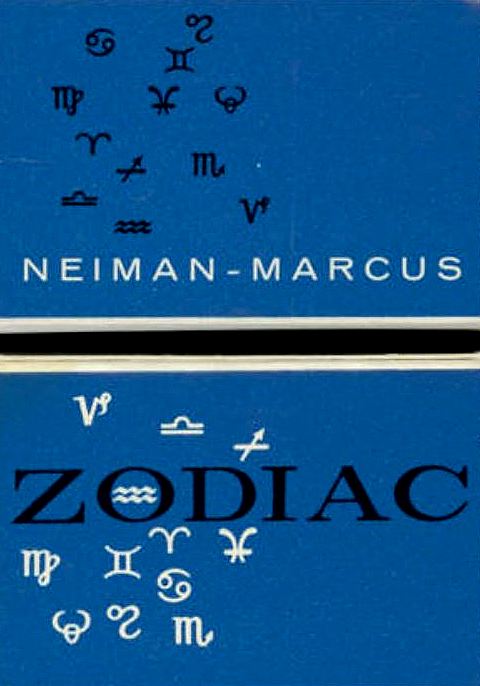
Image of the  blue matchbox at the bottom is from the George W. Cook Dallas/Texas Image Collection, DeGolyer Library, SMU Libraries; more info is here.

More on Helen Corbitt can be found in articles in Texas Monthly and in Legacies; a couple of her recipes — including her famous Poppy-Seed Dressing — can be found here.

*

Copyright © 2019 Paula Bosse. All Rights Reserved.

A Flooded Sportatorium — 1945

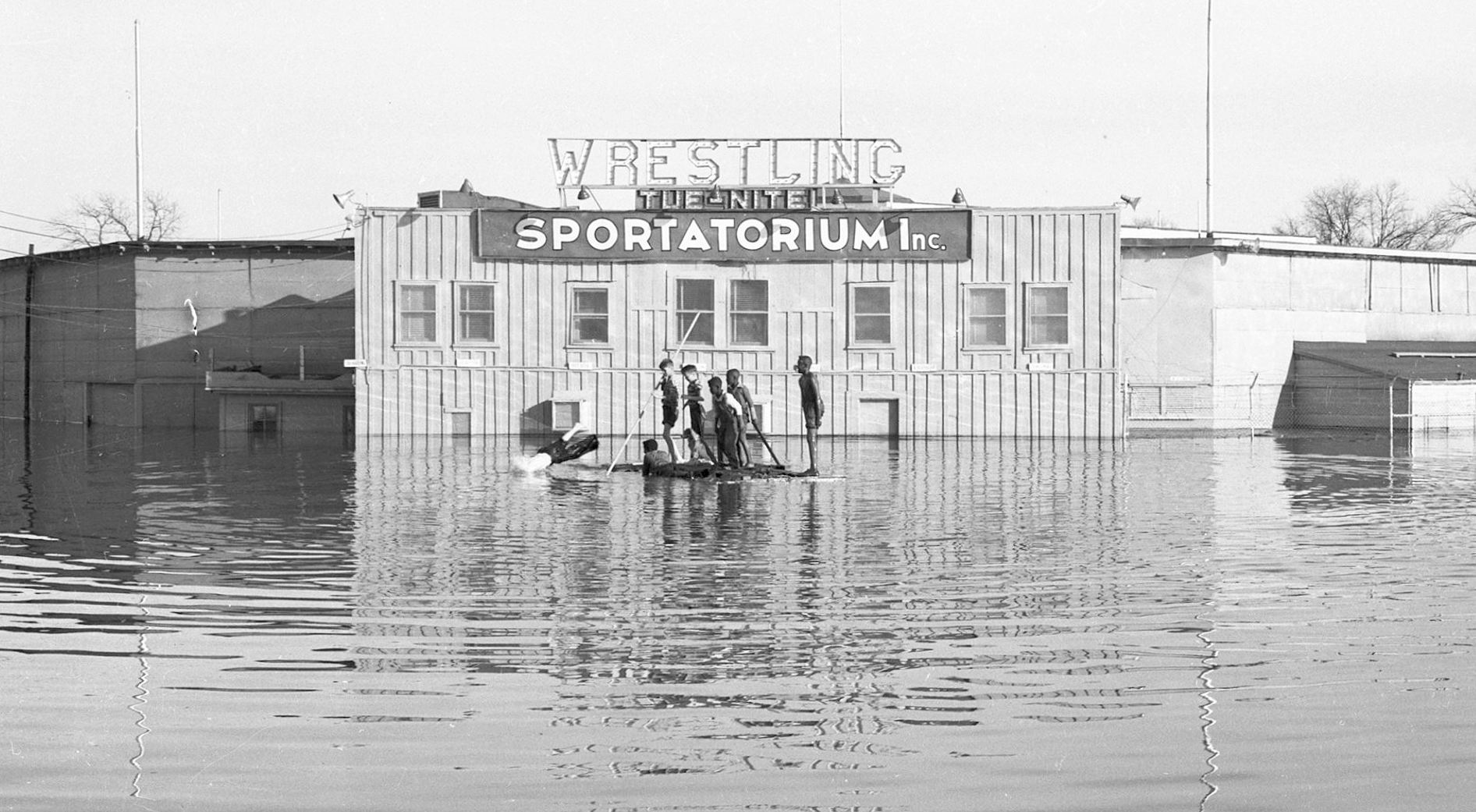
sportatorium_flood_squire-haskins_UTA_boys-1_det
Boys gotta do what boys gotta do… (photo: Squire Haskins/UTA Libraries)

by Paula Bosse

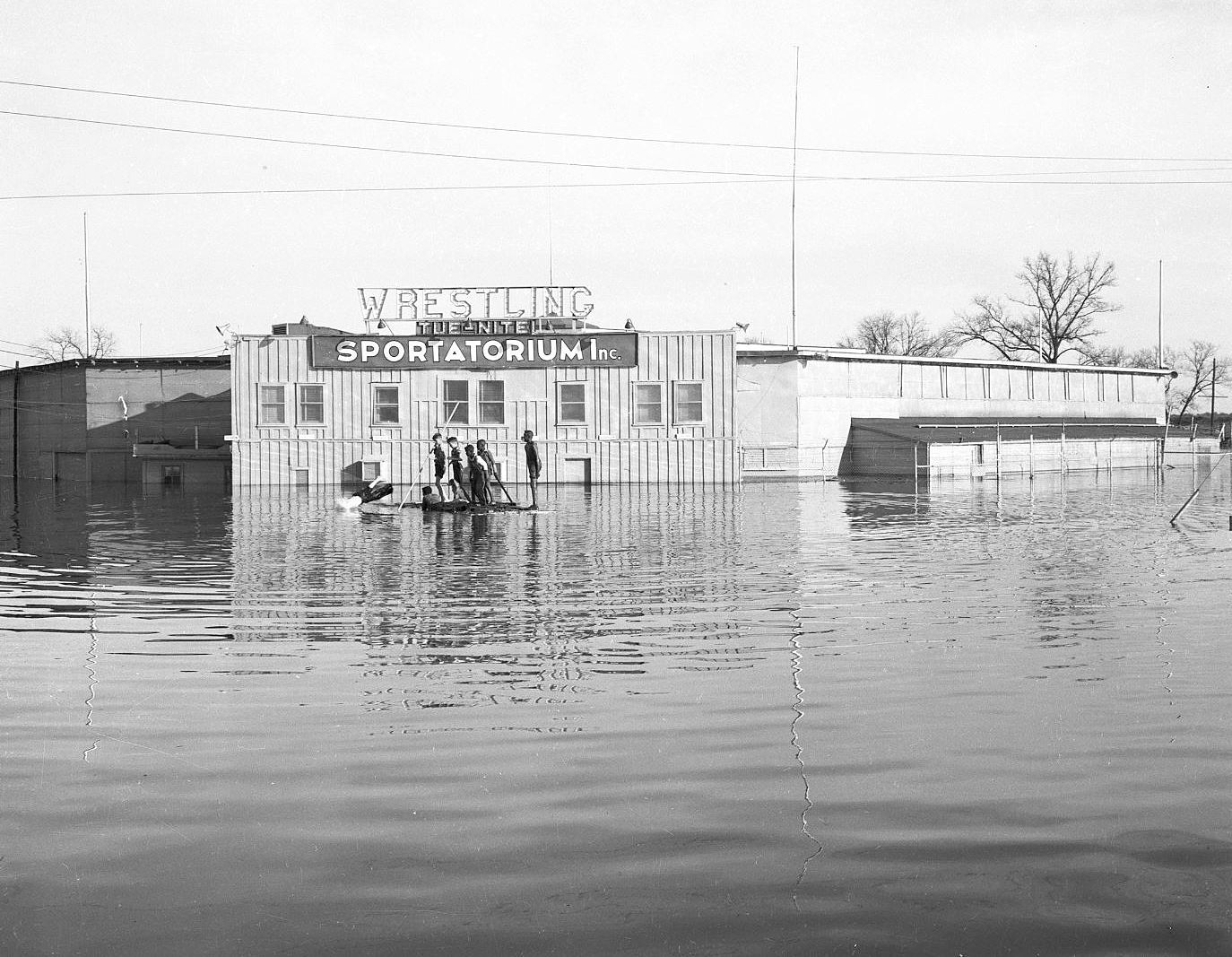
Imagine it has flooded around the Sportatorium: what would you expect seven boys and their dog to do? Well, here they are doing about what you’d expect. (The image above is a detail from the photo below, by Squire Haskins.)

sportatorium_flood_squire-haskins_UTA_boys-1

Another photo, this one with a Huck-Finn-meets-Iwo-Jima-Memorial vibe:

sportatorium_flood_squire-haskins_UTA_boys-2

My closer-up detail (click to see larger image):

sportatorium_flood_squire-haskins_UTA_boys-2_det

Another view:

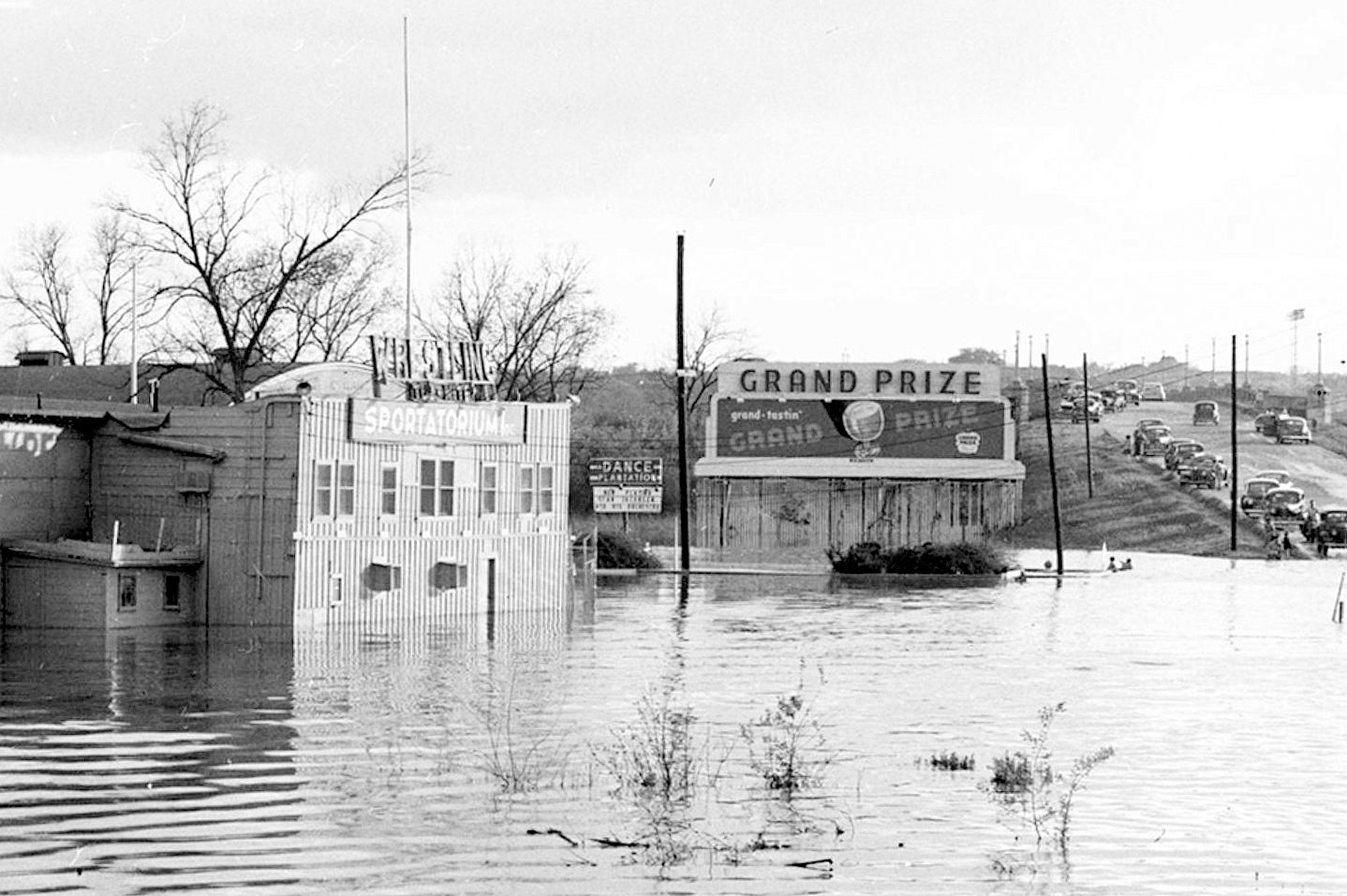
sportatorium_flood_squire-haskins_UTA_no-boys

Closer up, with a Grand Prize Beer billboard, cars (on Industrial?), and a sign for the next-door Plantation nightspot:

sportatorium_flood_squire-haskins_UTA_no-boys_det

No wrasslin’ tonight, y’all.

***

Sources & Notes

All photos by Squire Haskins, from the University of Texas at Arlington Libraries, Special Collections.

The photos in the UTA collection are undated, but a photograph of these same boys and dog on their raft appeared in The Dallas Morning News on April 5, 1945, along with a whimsical article titled “Pint-Size Warriors Fight Battle of Trinity, Prove Stormiest Rain Cloud Has Silver Lining.” A few pages away there were several aerial photos showing the major flooding which had submerged large portions of the area around the Sportatorium and Corinth Street viaduct.

The Sportatorium was located at 1000 S. Industrial (now Riverfront), at Cadiz (see map here). Maybe a little too close to the Trinity….

*

Copyright © 2019 Paula Bosse. All Rights Reserved

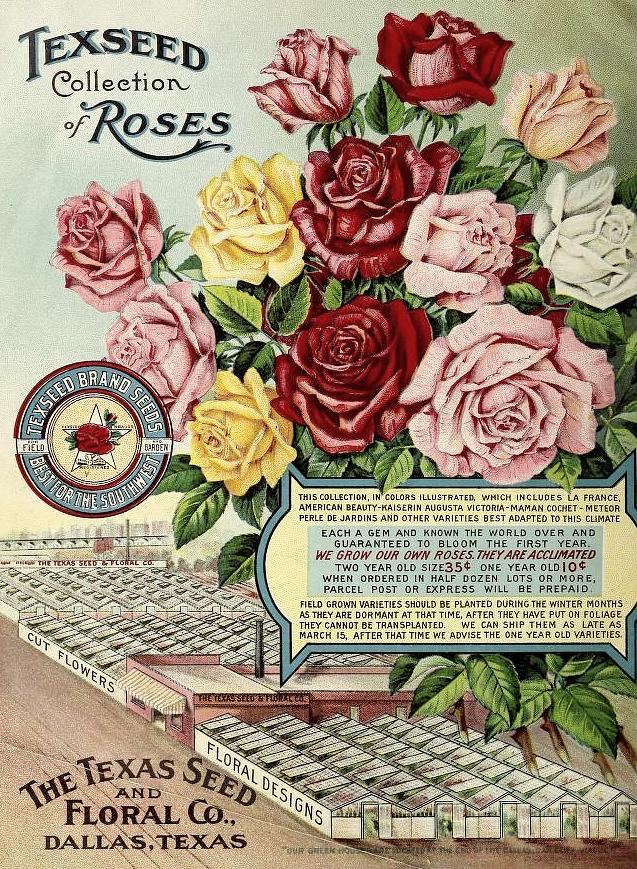
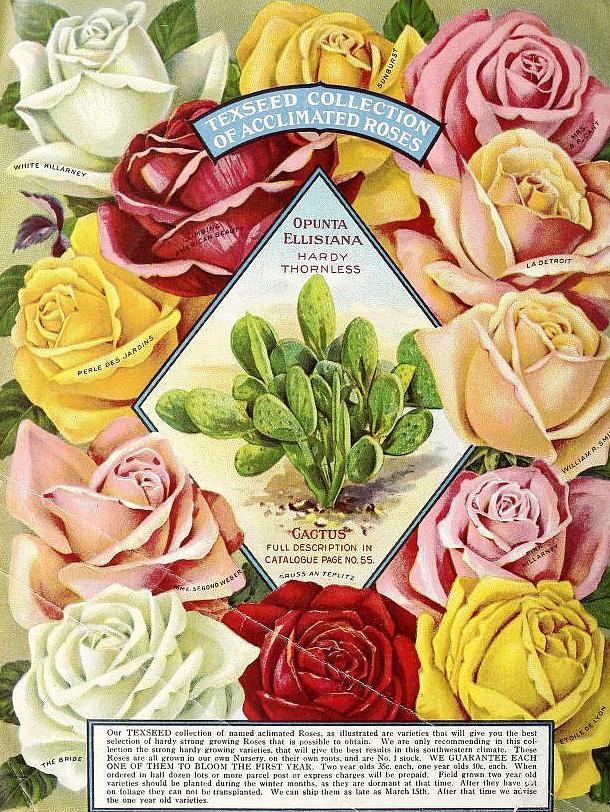
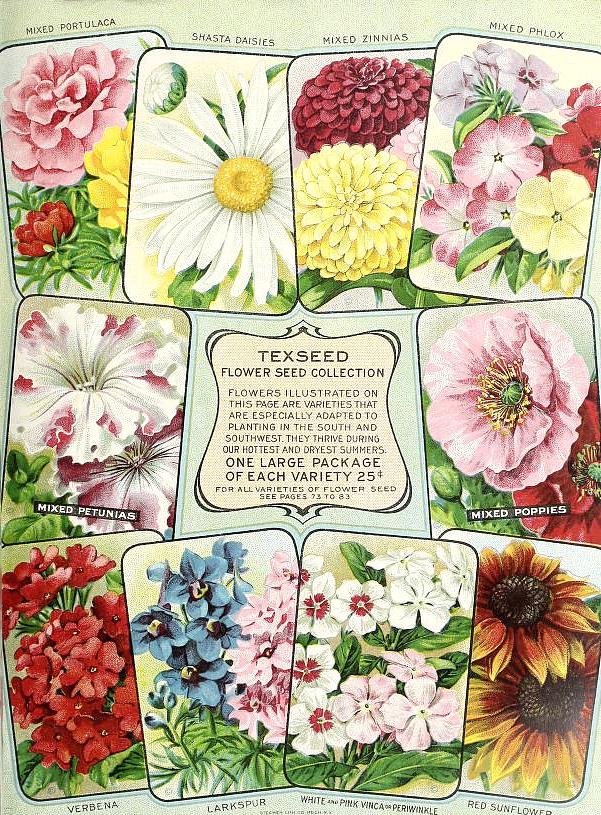
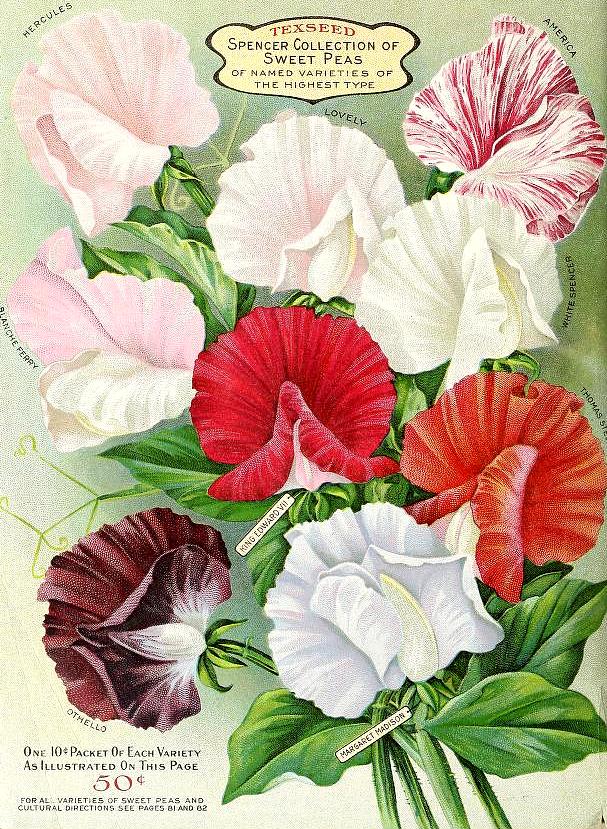
Spring, Brought to You by The Texas Seed & Floral Co.

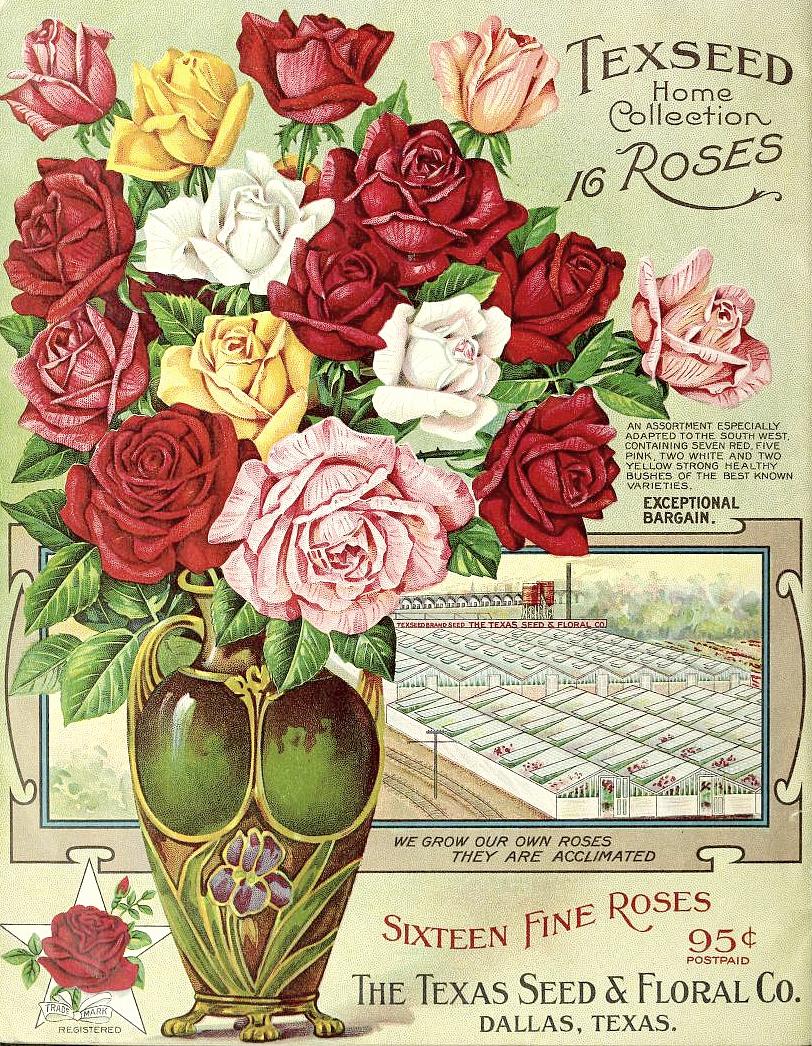
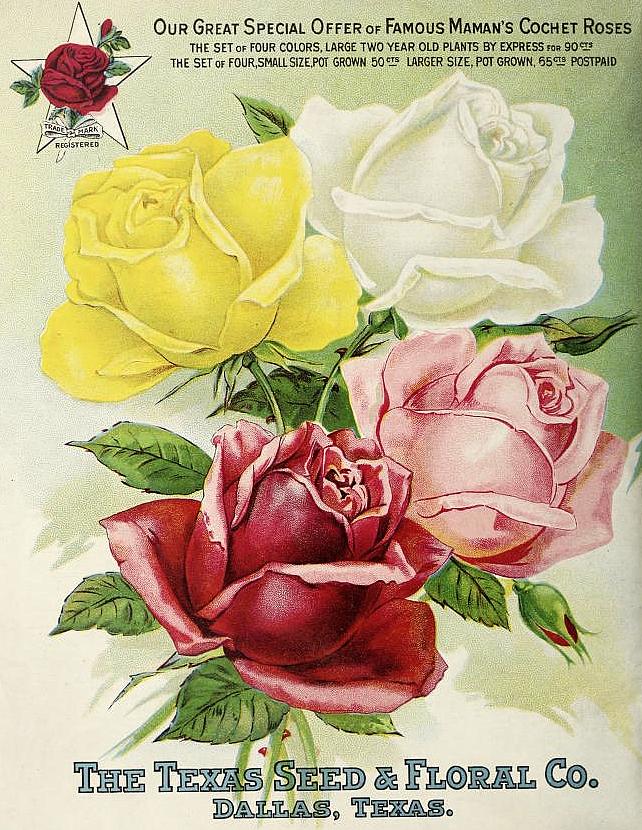
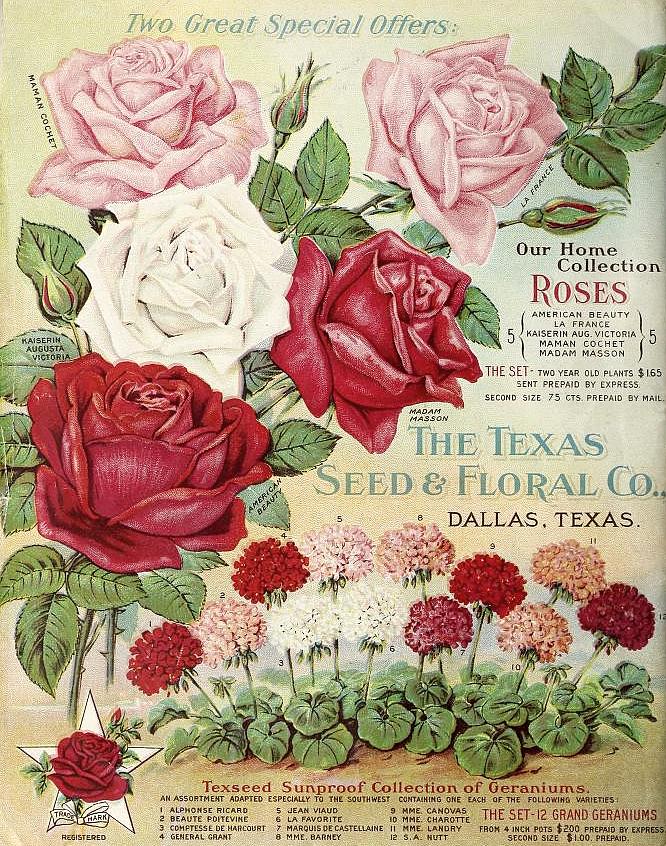
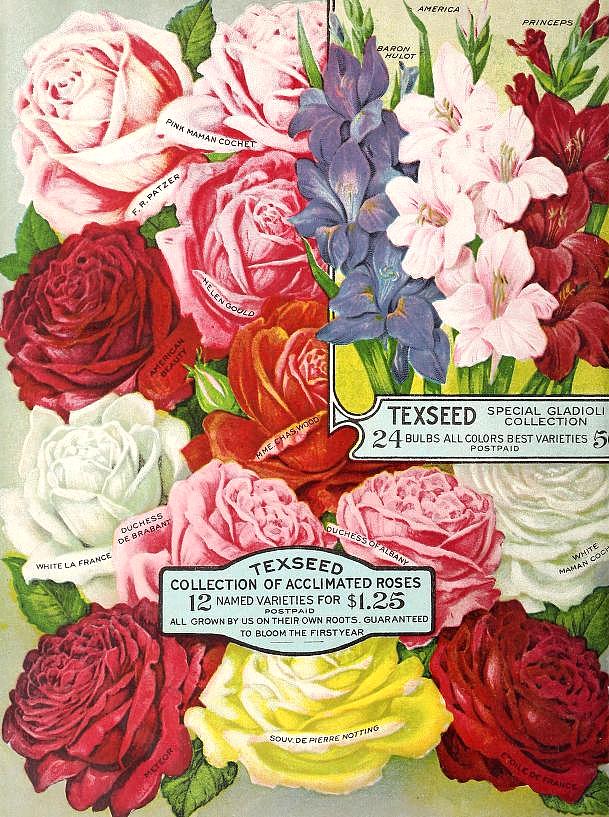
1913_tx-seed-floral_1913_rosesThe Texseed Home Collection, 1913

by Paula Bosse

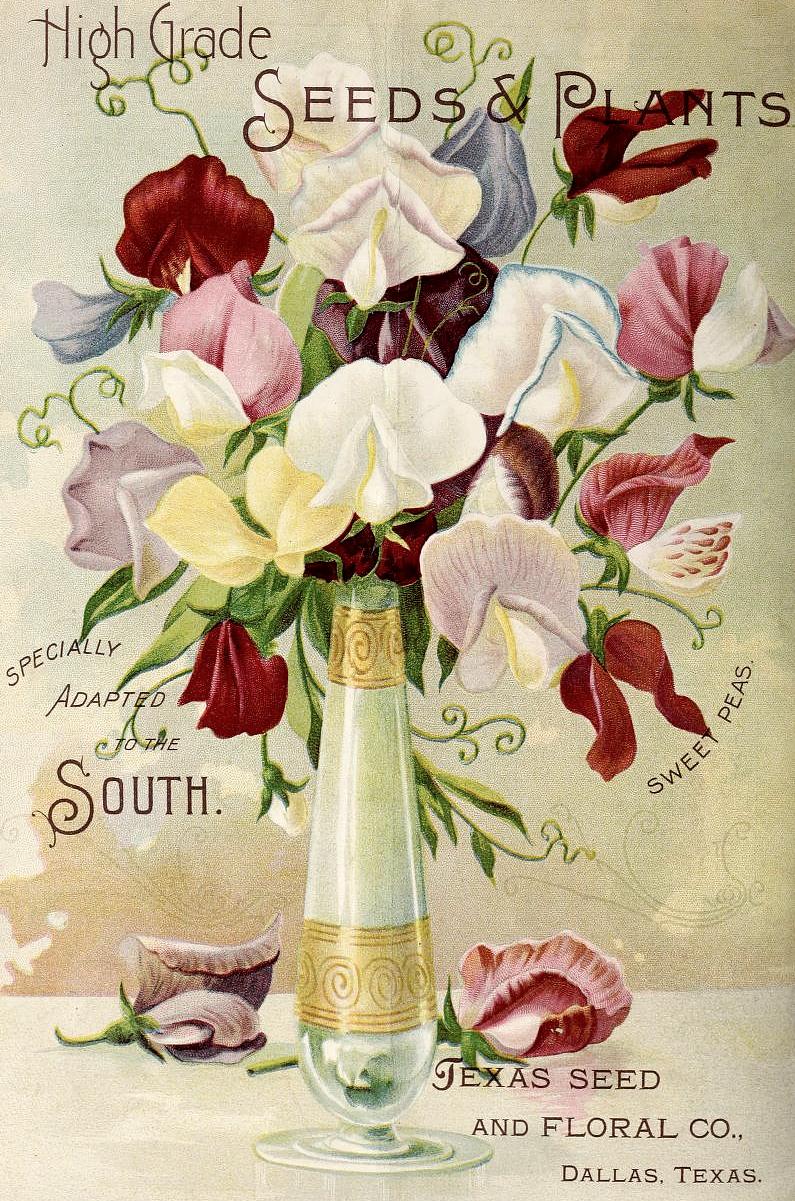
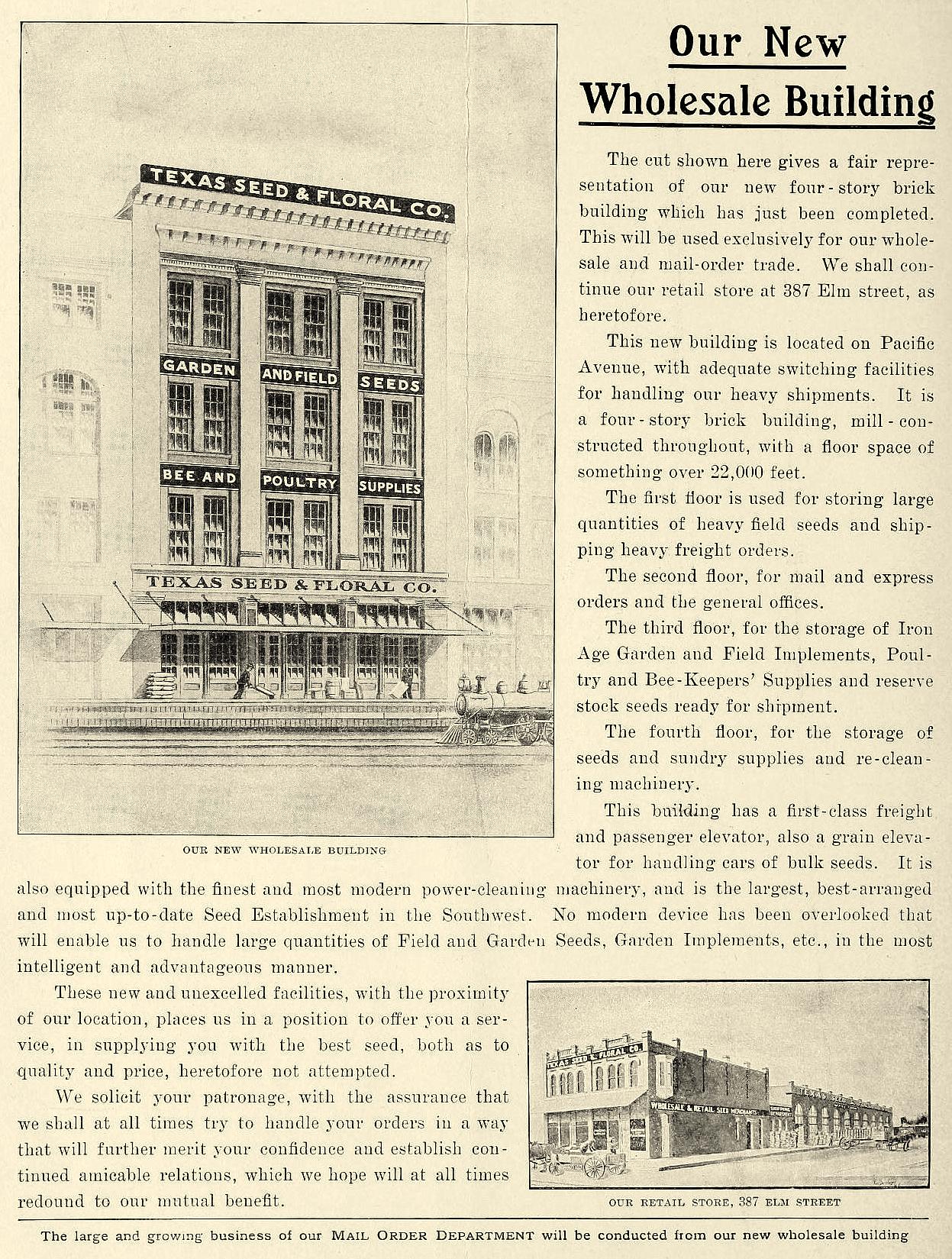
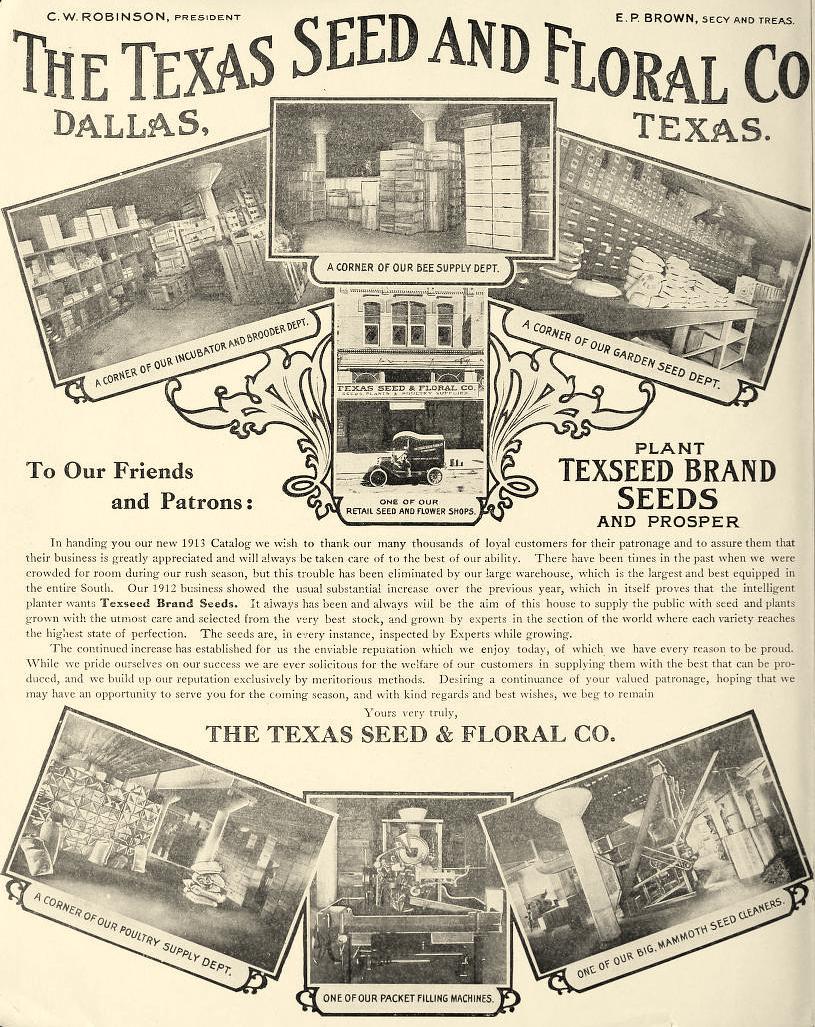
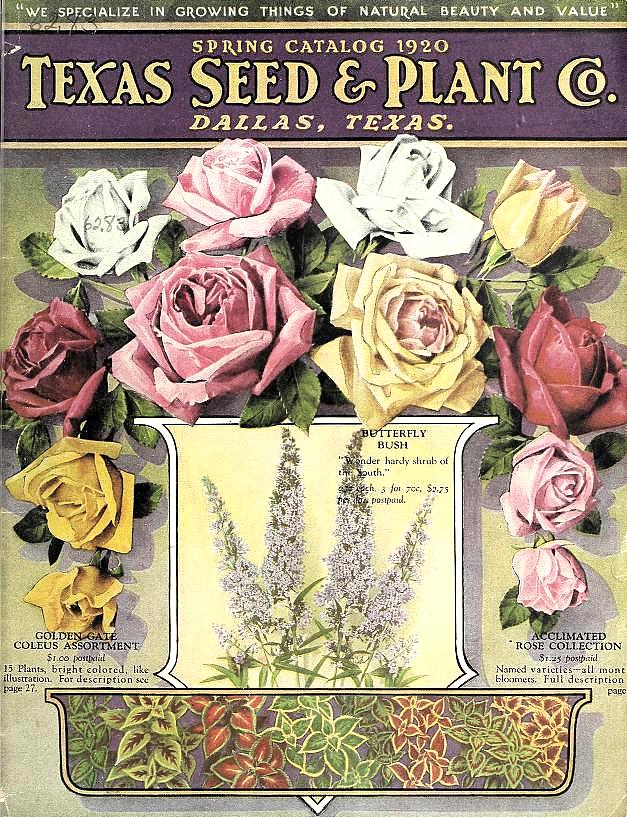
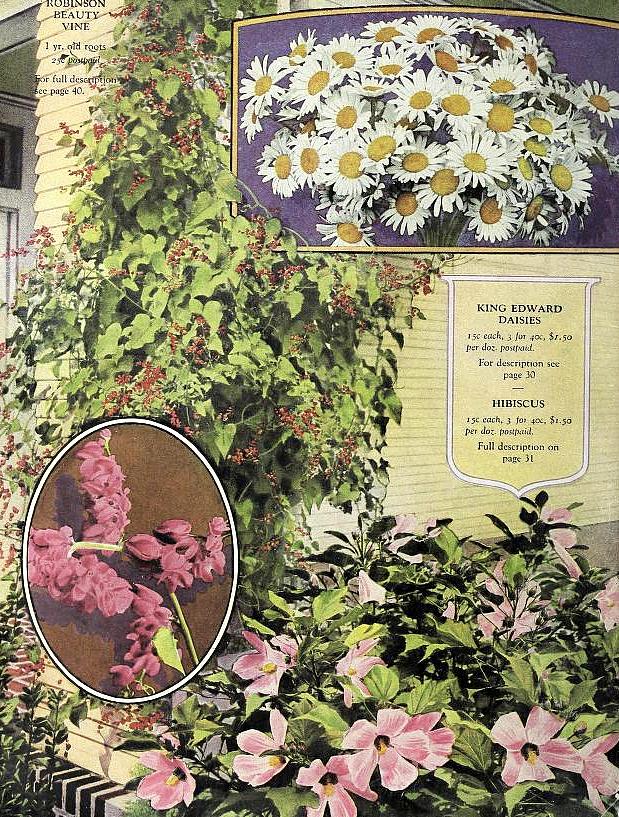
In honor of Spring’s arrival, I give you a collection of lovely illustrated covers from the Texas Seed & Floral Company’s seed catalogs. The company was established in Dallas around 1885 and was located for many years at the northwest corner of Elm and N. Ervay, with offices and a warehouse opening onto Pacific’s railroad tracks. (See photos of the interior of the business — later renamed Lone Star Seed & Floral — in the post “Next-Door Neighbors: The Palace Theater and Lone Star Seed & Floral — 1926.”)

Happy Spring! (All images are larger when clicked.)

1896_tx-seed-floral_1896_flowers1896

1906_tx-seed-floral_1906_stores1906

1911_tx-seed-floral_1911_roses1911

1912_tx-seed-floral_1912_roses1912

1913_tx-seed-floral_1913_store1913

1915_tx-seed-floral_1915_roses1915

1916_tx-seed-floral_1916_roses1916

1917_tx-seed-floral_1917_flowers1917

1917_tx-seed-floral_1917_flowers_a1917

1917_tx-seed-floral_1917_roses1917

1920tx-seed-floral_1920_flowers1920

1920_tx-seed-floral_1920_daisies1920

*

Below is the citation for the company from the book Greater Dallas Illustrated, published in 1908.

Texas Seed & Floral Co.

The great progress which has been made in agricultural and horticultural lines in the southwest has resulted in an ever increasing demand for a high quality of seeds, and to meet this demand many reliable seed houses have been established, among which is the Texas Seed & Floral Co., whose retail store is at 387 Elm street, and whose office and warehouse department is at 311-313 Pacific avenue. The line of seeds carried in stock includes all kinds of garden and flower seeds as well as field seeds, their leading brand being known under the name of “Texseed,” and they have the exclusive right to sell this brand in the southwest.

The company was established in 1885 and it is recognized as the largest seed house in the southwest, and its beautifully illustrated catalogue, which tells all about the best seeds for the southwestern planter, can be had upon request. R. [Robert] Nicholson is the secretary of this company, and the active manager of its affairs. He is of Scottish birth and has resided in Dallas for thirty years. He is a member of the Commercial Club, and is an Elk. Ably assisting him is F. J. Poor who comes to this firm from Kansas City.

***

Sources & Notes

All images from the Internet Archive.

*

Copyright © 2019 Paula Bosse. All Rights Reserved.
Esquire Theater — 1969

esquire-theater_1969_portal“Midnight Cowboy” at the Esquire, 1969…

by Paula Bosse

This is a really great photo of the still-missed Esquire Theater in Oak Lawn. Here we see it in 1969, showing the X-rated film Midnight Cowboy, which went on to win several Academy Awards, including Best Picture (the only X-rated film to receive the Best Picture Oscar), Best Director (John Schlesinger), and Best Adapted Screenplay (by Waldo Salt, based on the novel by James Leo Herlihy).

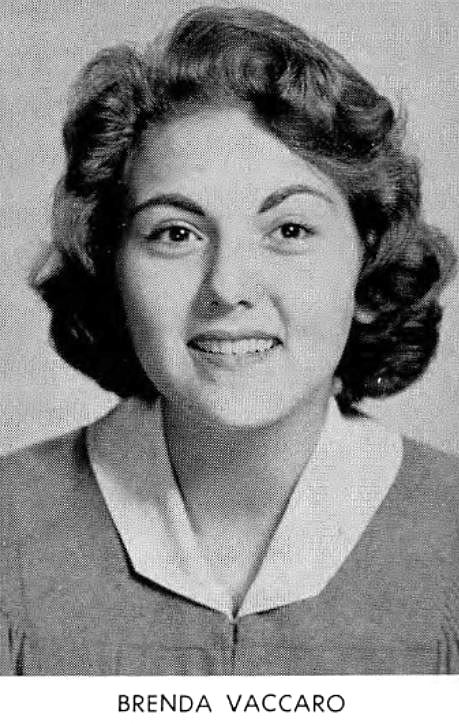
Midnight Cowboy opened at the Esquire in July, 1969 and ran for several months. One of the featured actors in this American classic is Dallas’ own Brenda Vaccaro (Thomas Jefferson High School Class of 1958, daughter of Mario Vaccaro who owned Mario’s Italian restaurant) — I’ve loved her in everything I’ve ever seen her in. (Here’s one of her scenes from Midnight Cowboy.)

vaccaro-brenda_thomas-jefferson_1958_seniorThomas Jefferson High School, 1958

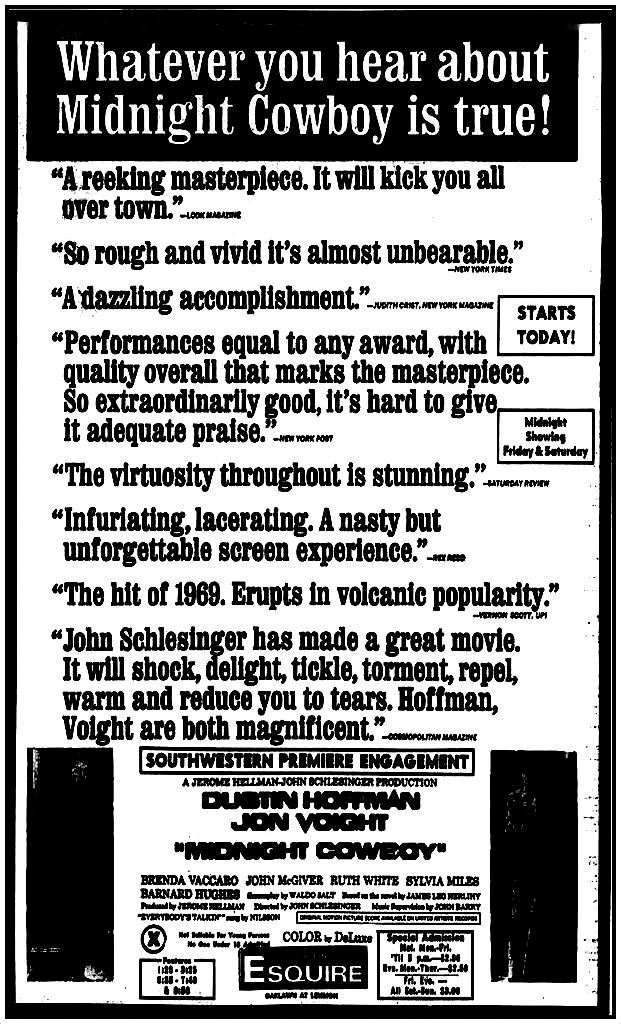
“Whatever you hear about Midnight Cowboy is true!” … “A reeking masterpiece. It will kick you all over town.” … “A nasty but unforgettable screen experience.”

midnight-cowboy_072369_opening_esquire
Opening day, July 23, 1969

It’s been a while since I’ve seen this movie. I had forgotten how much I liked the opening in which Joe Buck leaves Texas to head to New York. Here it is, overflowing with small-town Texas flavor (filmed in Big Spring). Cameo by an evocative Mrs. Baird’s paper hat.

***

Sources & Notes

Photo titled “[‘Midnight Cowboy’ at Esquire Theatre]” is from the Spotlight on North Texas collection, provided by UNT Media Library to The Portal to Texas History; more on this photo can be found here.

*

Copyright © 2019 Paula Bosse. All Rights Reserved.
Stoneleigh Pharmacy / Stoneleigh P

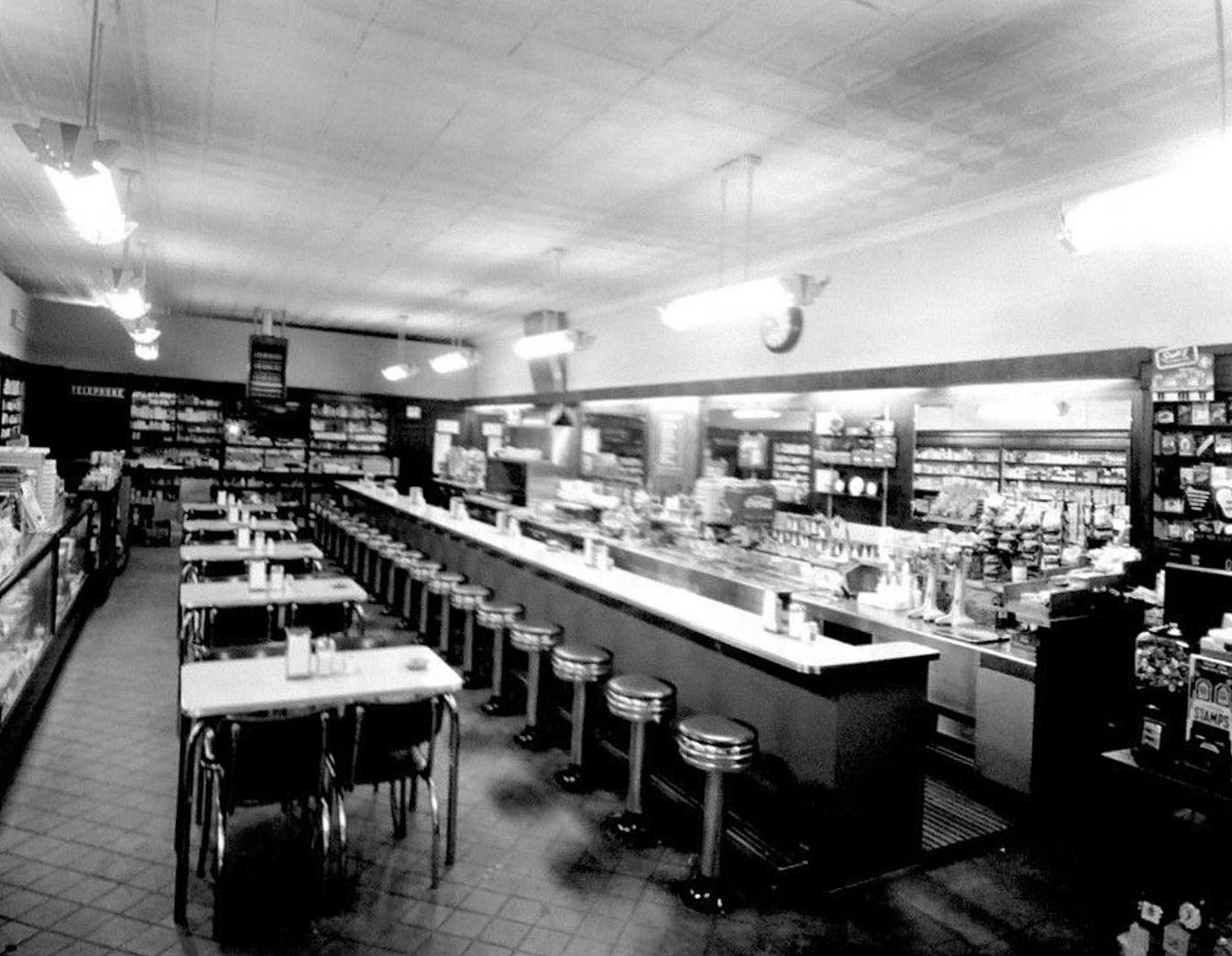
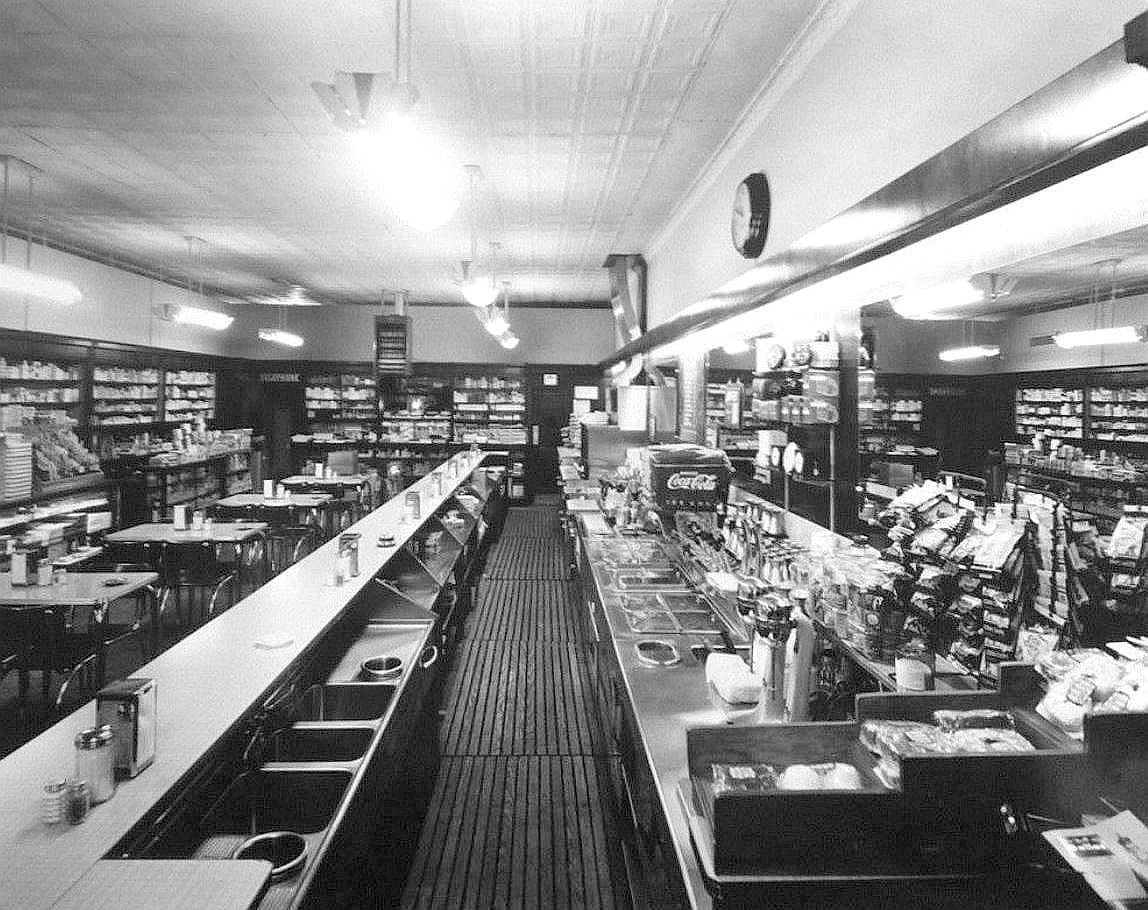
stoneleigh-pharmacy_fountain_ebay_2The pharmacy’s soda fountain…

by Paula Bosse

I’m pretty sure I was in the old Stoneleigh Pharmacy before it became the Stoneleigh P, but if so, I have no memory of it other than sitting at the fountain. I might have had a grilled cheese sandwich and a milkshake. I’ve definitely been in the “P” post-1980 — in fact, my father’s bookstore used to be across the street from it, and it was definitely a mainstay for great hamburgers.

Despite the location being so familiar, I didn’t know about the history of the old Stoneleigh Pharmacy, so when I came across the (slightly blurry) photo above and the one immediately below, I thought I should look into what was happening at 2926 Maple Avenue before the arrival of the Stoneleigh P.

stoneleigh-pharmacy_fountain_ebay_1

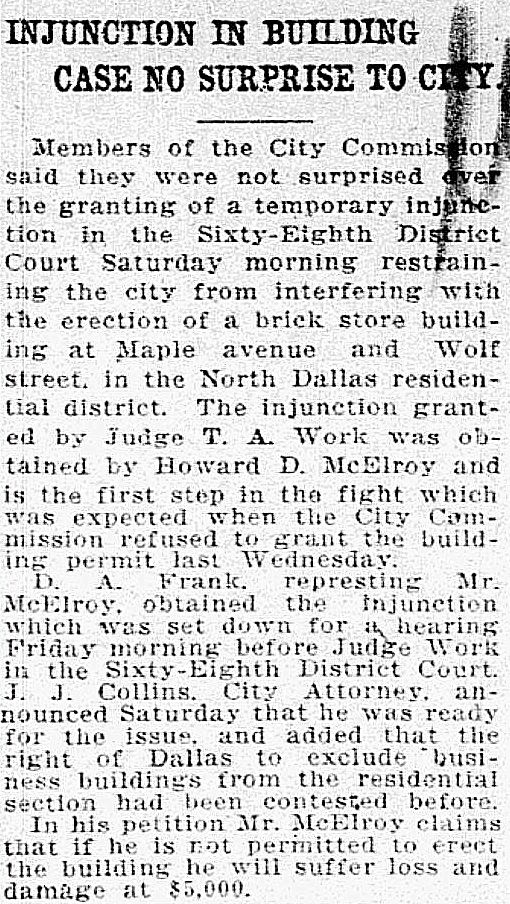
The Stoneleigh Pharmacy was the anchor of a small strip of shops which were built in 1923 at Maple and Wolf, directly across from the brand-new Stoneleigh Court, which, though now a hotel, began life as a very fashionable apartment-hotel (an apartment house with hotel amenities). There were concerns about a shopping strip in what was then a residential area, and the city tried to stop the construction. (Most images are larger when clicked.)

maple-and-wolf_dmn_022523_constructionDallas Morning News, Feb. 25, 1923

But the city lost and the building was completed.

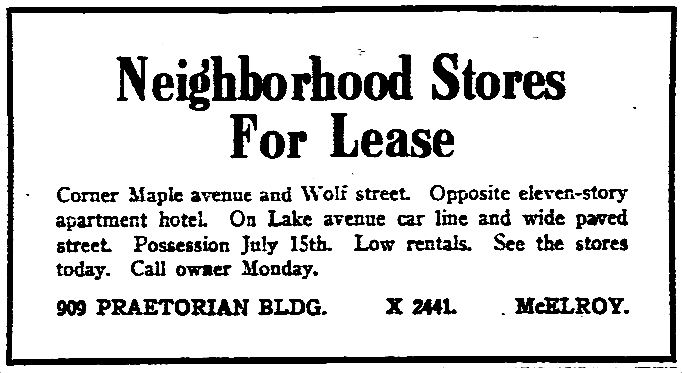
maple-and-wolf_dmn_070823_for-lease
DMN, July 8, 1923

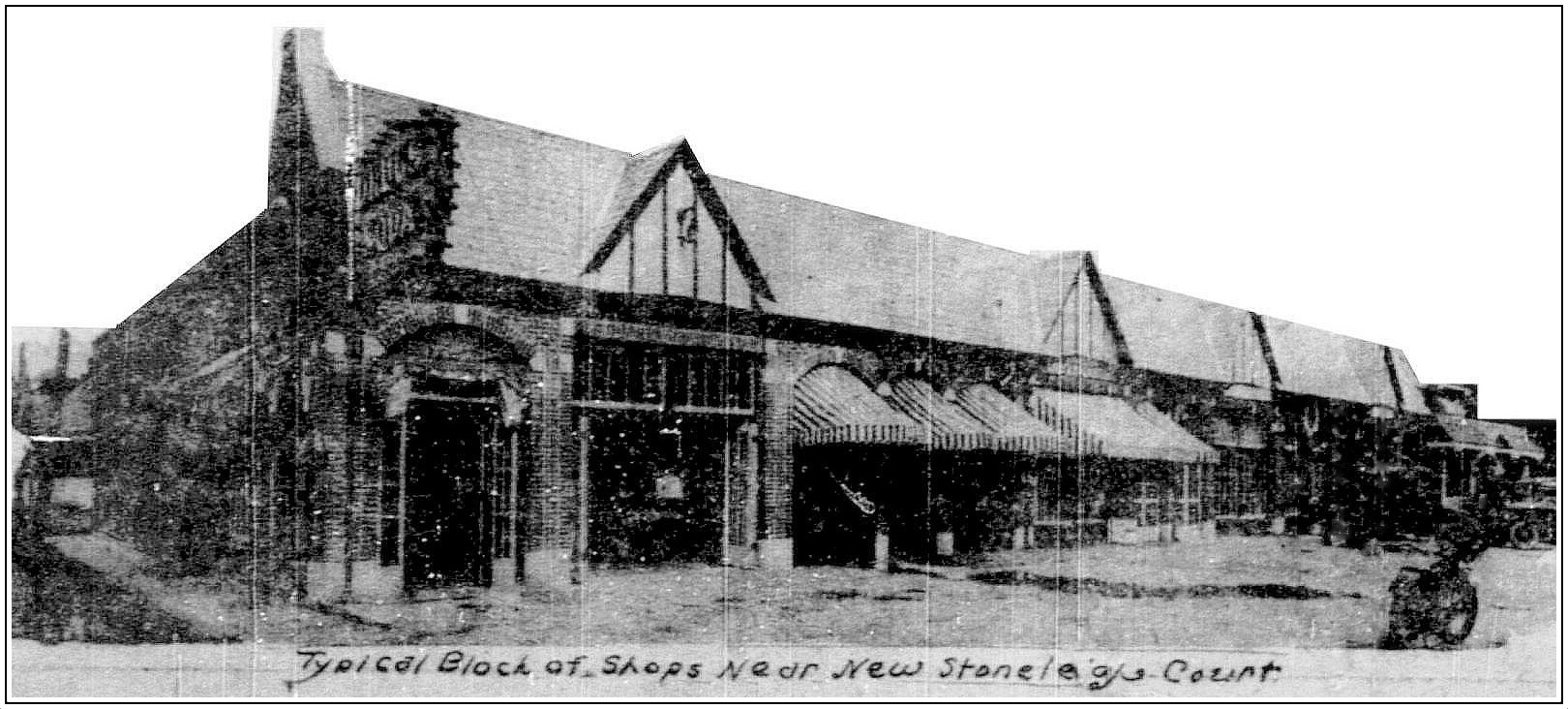
I looked everywhere to find a period photo, and this is the best I could do — it appeared in a special section of The Dallas Morning News which coincided with the opening week of the Stoneleigh Court.

stoneleigh-drug-store_stoneleigh-court-adv-supp_101423_croppedDMN, Oct. 14, 1923

Here’s a drawing:

stoneleigh-drug-store_101423_adv-supp-det
DMN, Oct. 14, 1923

The interior of what was originally called the Stoneleigh Drug Store, at 2926 Maple Avenue:

stoneleigh-drug-store_101423_det_drawing
DMN, Oct. 14, 1923

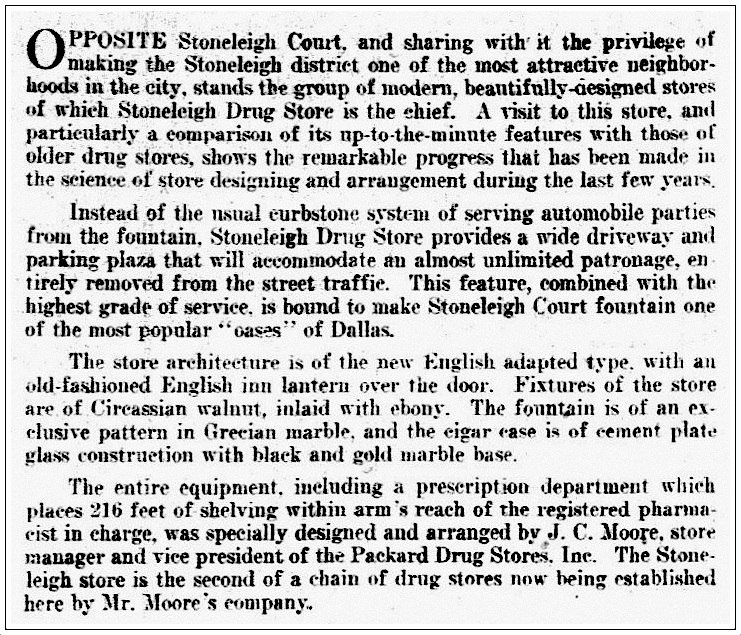
And a description of what sounds like a showplace of a drugstore, including Circassian-walnut fixtures inlaid with ebony:

stoneleigh-drug-store_101423_pharmacy-det
DMN, Oct. 14, 1923

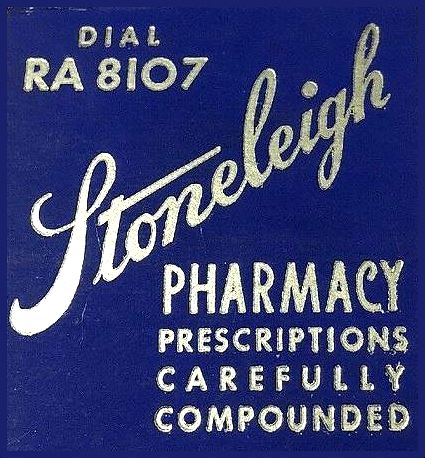
stoneleigh-pharmacy-label_jim-wheat

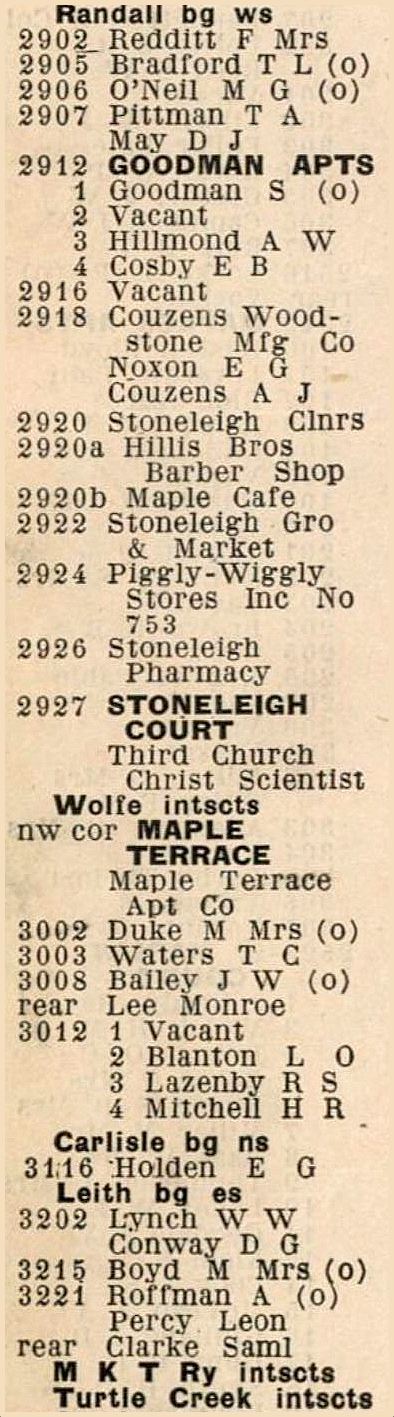
Its neighbors, in 1927:

stoneleigh-pharmacy_1927-directoryMaple Ave., 1927 Dallas directory

The drug store was owned by a company presided over by Royal A. Ferris, Jr., whose banker father had, until 1913, owned what many considered to be the most beautiful house in Dallas — Ivy Hall (which was situated at Maple and Wolf, diagonally across from the pharmacy, and which would become the site of the Maple Terrace Apartments in 1924).

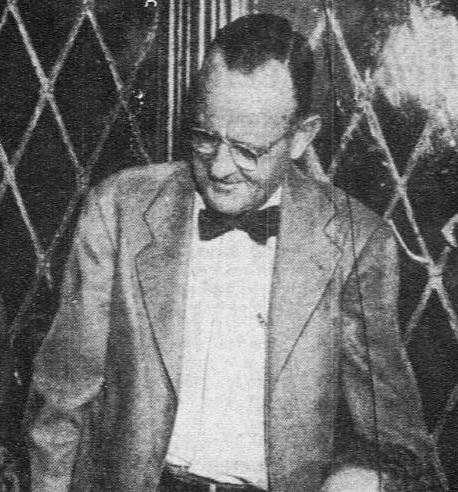
The drug store changed hands several times, until 1931 when pharmacist Henry C. Burroughs acquired it — and he was there for the long-haul, owning it until 1970. (H. C. Burroughs is also notable for having served on the very first Dallas City Council, having been elected in 1931 when the city of Dallas adopted the city council-city manager form of government.)

burroughs-h-c_1950sHenry C. Burroughs, 1950s

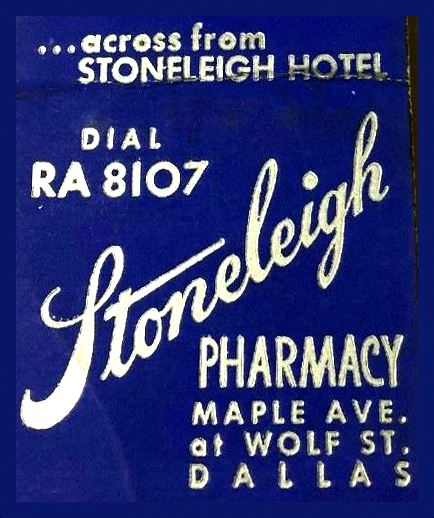
stoneleigh-pharmacy_fountain_matchbook_ebay_a        stoneleigh-pharmacy_fountain_matchbook_ebay_b

stoneleigh-pharmacy_fountain_matchbook_ebay_inside

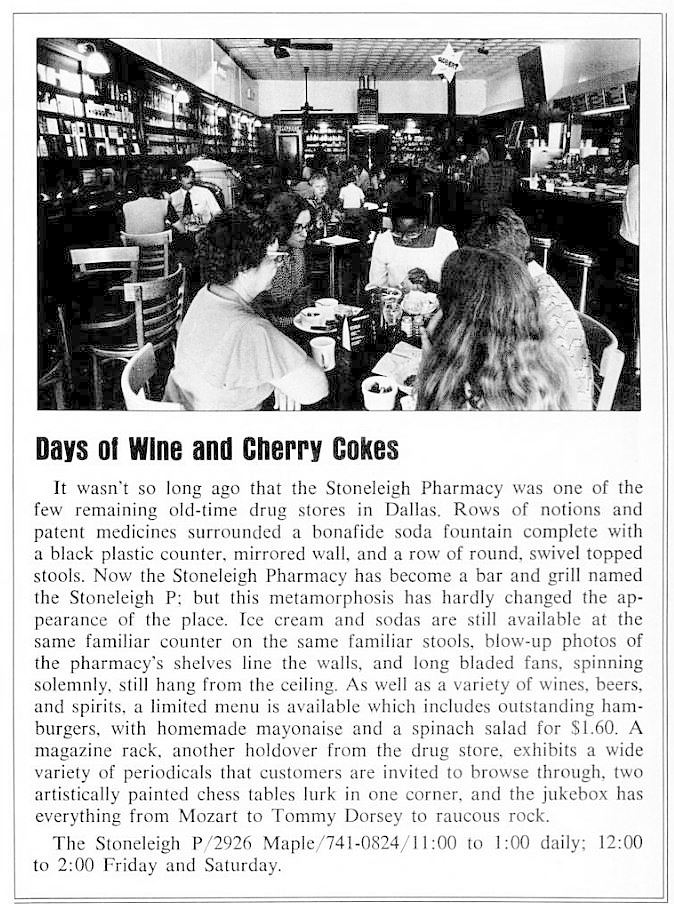
In 1973, the pharmacy stopped being a pharmacy when it was purchased by a group of investors including Tom Garrison, who renovated the old drugstore into a neighborhood bar/pub, while still retaining a drugstore “theme” and naming the new endeavor the Stoneleigh P. It was an immediate hit with the intellectual/artistic crowd, attracting denizens of the (then-funky) McKinney Avenue and Oak Lawn neighborhoods, Stoneleigh Hotel guests, Maple Terrace residents, and staffers from nearby KERA.

stoneleigh-p_dallas-municipal-archives_1970sDallas Municipal Archives

1973_stoneleigh-p_texas-monthly_july-1973Texas Monthly, July 1973

It was “happening” but not obnoxious — although the Lou Lattimore ad below — featuring a “glitter jeans” “knockoutfit” (yes, “knockoutfit”) which “can make you outsparkle the gang at the Stoneleigh P” — might have one thinking otherwise. (It was the ’70s, man.)

stoneleigh-p_lou-lattimore-ad_jan-1974
Lou Lattimore ad, January 1974

Everything seemed to be going along swimmingly when, in the early hours of January 26, 1980 a huge fire engulfed the group of buildings on the southeast corner of Maple and Wolf — according to newspaper reports, at least 15 “major pieces of equipment” and 75 firefighters responded to the multi-alarm fire. The 57-year-old building burned to the ground. Watch the WBAP-Ch. 5 News report here (with additional footage here).

A few screenshots from the above-linked news report:

stoneleigh-p-fire_012680_ch-5-news_portal

stoneleigh-p-fire_012680_ch-5-news_portal_intersection

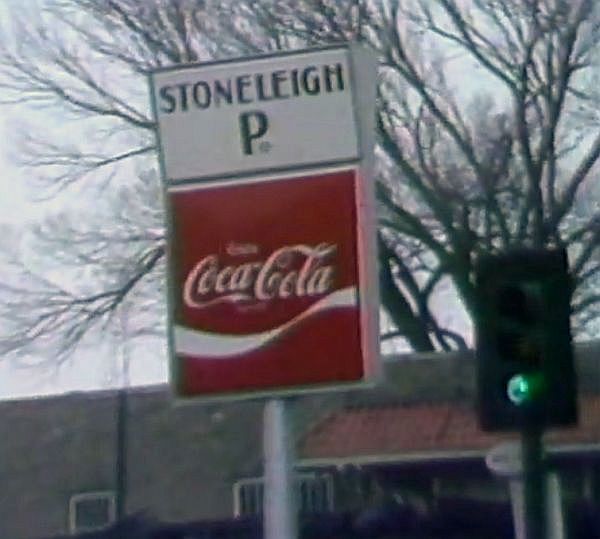
stoneleigh-p-fire_012680_ch-5-news_portal_sign

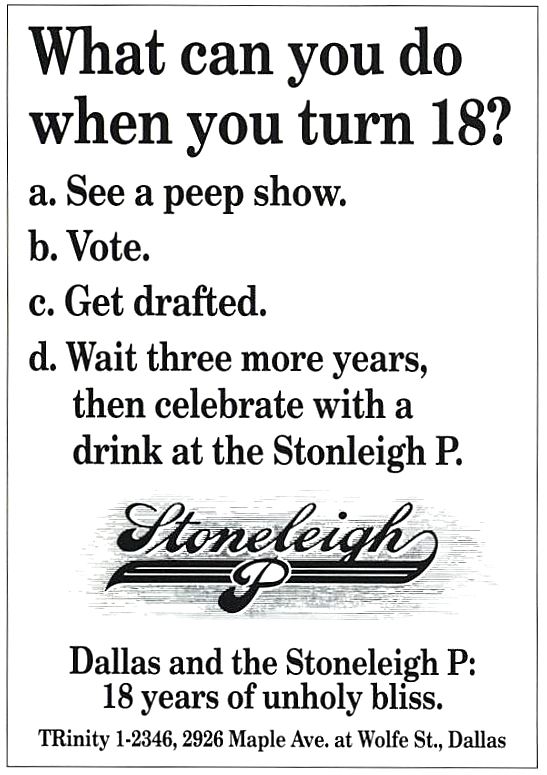
Garrison rebuilt, and the new Stoneleigh P opened in the summer of 1981. It still stands and is something of a Dallas institution. It’s now an unbelievable 46 years old. Here’s how it celebrated its 18th anniversary:

stoneleigh-p_ad_1991
1991 ad

I’m certainly glad it’s still around. I’ve got some great memories of the Stoneleigh P (except, maybe, for that one New Year’s Eve in the ’80s…).

stoneleigh-p_aug-2015_bosse-photoPhoto by Paula Bosse

*

2023 UPDATE: The P will be moving in 2024 — the location has not yet been announced. Keep an eye on their website!

***

Sources & Notes

Top two photos found on eBay. They appear to have been taken by the Liquid Carbonic Corporation, manufacturers of soda fountains — read all about the company here.

Stoneleigh Pharmacy label (with red letters) is from Jim Wheat’s Dallas County Texas Archives site. (J. T. Covington was associated with the pharmacy from about 1925 to 1927.)

1970s photo from the Dallas Municipal Archives Facebook page; from the Historic Preservation Office collection (photos made by the City of Dallas as part of a survey of historic buildings).

Videotape screenshots are from the WBAP-Ch. 5 News report on the 1980 fire; footage is from the KXAS-NBC 5 News Collection, UNT Libraries Special Collections, Portal to Texas History.

Photo showing the interior of the Stoneleigh P was taken in 2015 by Paula Bosse.

An entertaining interview with Stoneleigh P owner Tom Garrison can be found in the 2017 D Magazine article “History of Dallas Food: Tom Garrison’s Stoneleigh P” by Nancy Nichols, here.

Stoneleigh P website is here.

stoneleigh-p-fire_sign_012680_ch-5-news_portal

*

Copyright © 2019 Paula Bosse. All Rights Reserved.
Dallas Football Through the Decades

football_tom-landry_cowboys_texas-stadium-under-construction_UTA_051671Tom Landry, Texas Stadium, 1971…

by Paula Bosse

Here are a few football-centric Dallas images to enjoy on this football-centric day.

Above, Dallas Cowboys’ coach Tom Landry in 1971, surveying with wonderment the then-under-construction Texas Stadium (via UTA Special Collections).

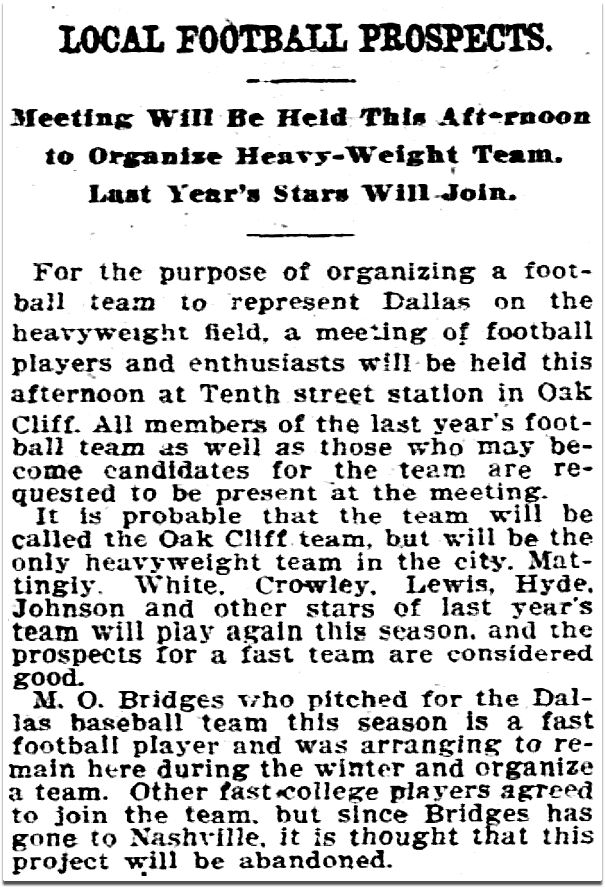
1905: Early days of local football. In 1905 there were hopes of getting up a “heavyweight team.” Prospects were iffy. (All images are larger when clicked.)

football_local-prospects_dmn_090305
Dallas Morning News, Sept. 3, 1905

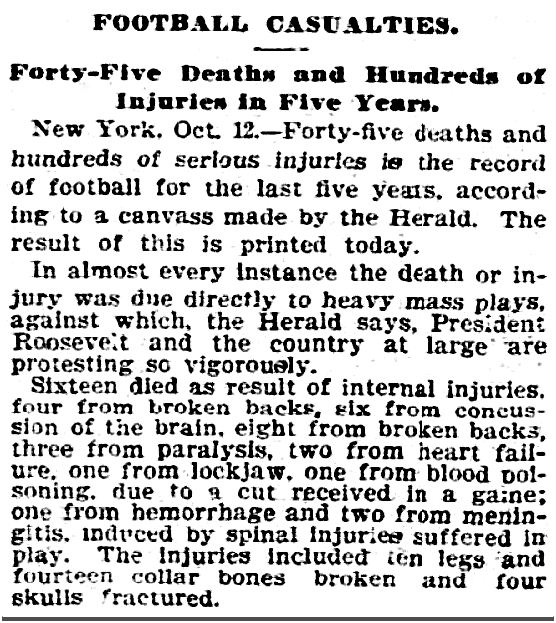
This was at a time when football injuries — and DEATH — were not uncommon.

football-casualties_dmn_101305
DMN, Oct. 13, 1905

1911: The Dallas High School team at Gaston Park (a popular sporting field which is now the site of the Dallas Music Hall at Fair Park). This photo was taken on December 16, 1911 — that day they defeated Fort Worth High, 15-5.

football_dallas-high-school_gaston-park_1911_cook-collection_degolyer-library_SMUGeorge W. Cook Collection, DeGolyer Library, SMU

1918: The Love Field eleven was made up of military personnel based at the airfield during World War I. They played other military teams in the area, venturing as far as at least Waco.

football_love-field_camp-team_wwi_cook-collection_degolyer_SMU_1918
George W. Cook Collection, DeGolyer Library, SMU

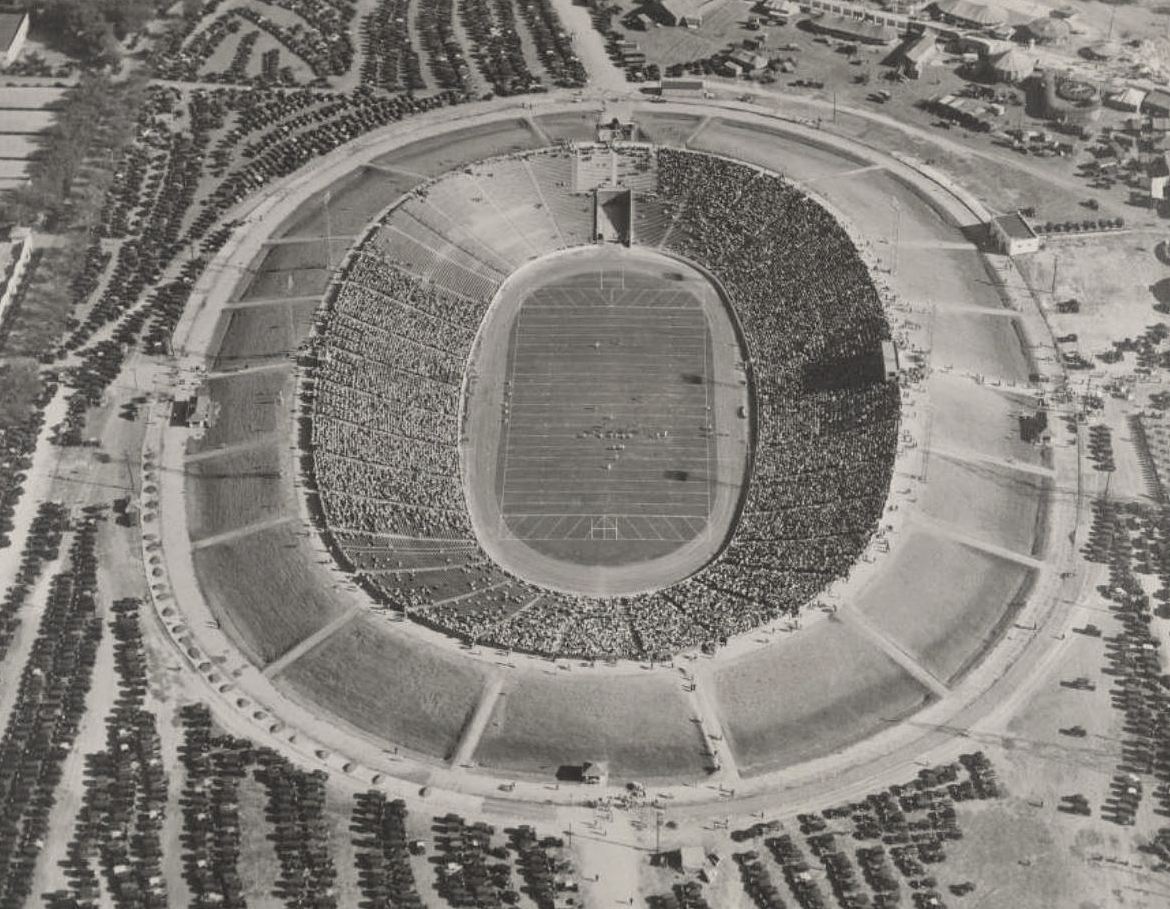
1920s: The “State Fair of Texas” stadium predated the Cotton Bowl. This aerial photo shows what was probably the University of Texas vs. Vanderbilt game, which took place on Oct. 13, 1928 during the State Fair of Texas. (Vanderbilt won, 13-12.)

football_state-fair-of-texas-stadium_UT-vs-vanderbilt_1920s
From “Dallas As a City In Which To Live” booklet, SMU

1920s: The SMU Mustangs took on the University of Missouri Tigers at Ownby Stadium.

football_ownby-oval-smu_SMU-vs-missouri-university_1920s
From “Dallas As a City In Which To Live” booklet, SMU

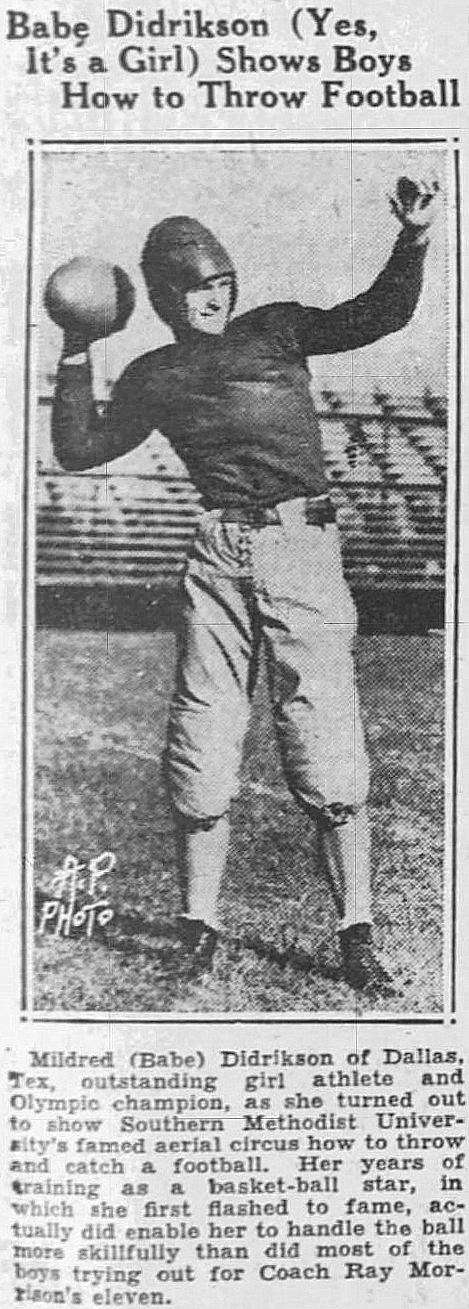
1932: Speaking of the SMU Mustangs, then-local sports superstar (and Olympics medalist) Babe Didrikson — who was proficient in every single sport she tried — was given the opportunity by SMU coach Ray Morrison to give football the old college try: he coached her in passing and receiving and even allowed her to suit up in an official uniform. She tried out her football moves for the public during a scrimmage in Ownby Stadium on September 18, 1932.

One of the most interesting features of the program from a football fan’s standpoint was demonstration of several of the Ponies’ famous scoring plays, in fast and slow motion. Babe Didrikson, Dallas’ famous feminine athlete, took part in the slow motion exercises and proved herself somewhat of a polished gridder — adding more fame to her long list of athletic achievements. (DMN, Sept. 18, 1932)

didrikson-babe_football-SMU_boston-globe_092332        didrikson-babe_football-SMU_pottsville-PA-republican-and-herald_092832
Boston Globe, 9/23/32; Pottsville [PA] Republican, 9/28/32

1933: The stadium which would eventually be named the Cotton Bowl looks a little otherworldly in this Lloyd M. Long aerial photo.

cotton-bowl_fair-park-stadium_lloyd-long_foscue-library_SMU_1933
Edwin J. Foscue Map Library, SMU

1940s: Dal-Hi Stadium (later P. C. Cobb Stadium) was the home field for six Dallas high schools.

dal-hi-stadium_cobb-stadium_postcard

dal-hi-stadium_cobb-stadium_postcard_caption

In December, 1949, Dal-Hi served as the practice field for the University of North Carolina team while in Dallas for the January 2, 1950 Cotton Bowl match against Rice University (which Rice won, 27-13). I like this snapshot — downtown looms like a ghost in the background.

dal-hi-stadium_cobb-stadium_uc-practice-for-cotton-bowl_dec-1949via “Dismal Day in Dallas”

1950s: Dallas had a pro team before the Cowboys — the Dallas Texans. Here’s their ticket office, at 1721 McKinney Avenue. (From the article “Gone and Forgotten, The Dallas Texans of 1952” by Thomas H. Smith, from the Spring, 2005 issue of Legacies.)
football_dallas-texans_ticket-office_legacies_spring-2005
via Legacies

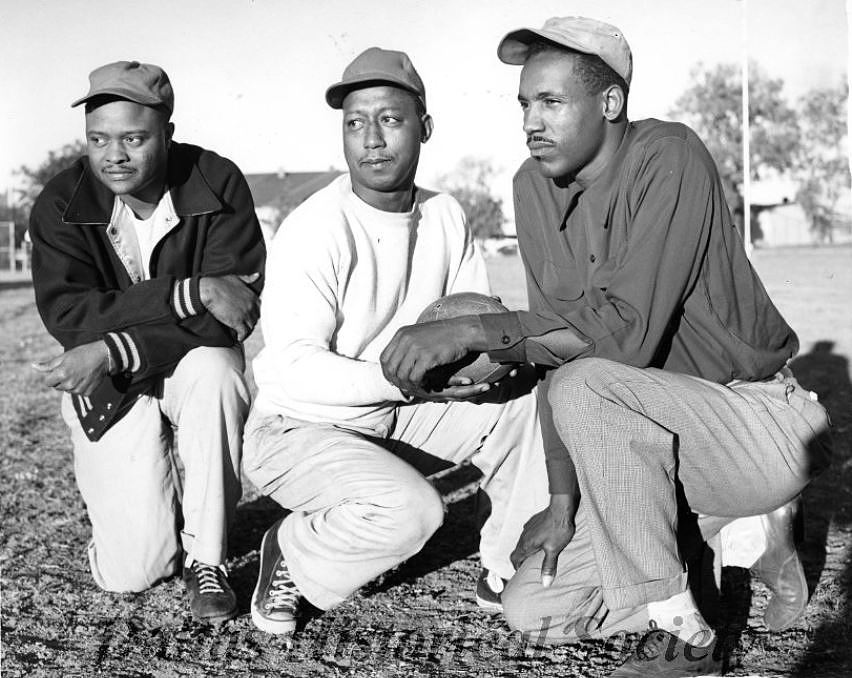
1950s/1960s: Dallas high school football coaches who were all connected at one point (either as players or coaches) with Booker T. Washington High School: the legendary Raymond Hollie (head coach at both Booker T. and Roosevelt), Marion “Jap” Jones, and Sam Briscoe.

football_booker-t-washington_coaches_patton-papers_DHS
John Leslie Patton Papers, Dallas Historical Society

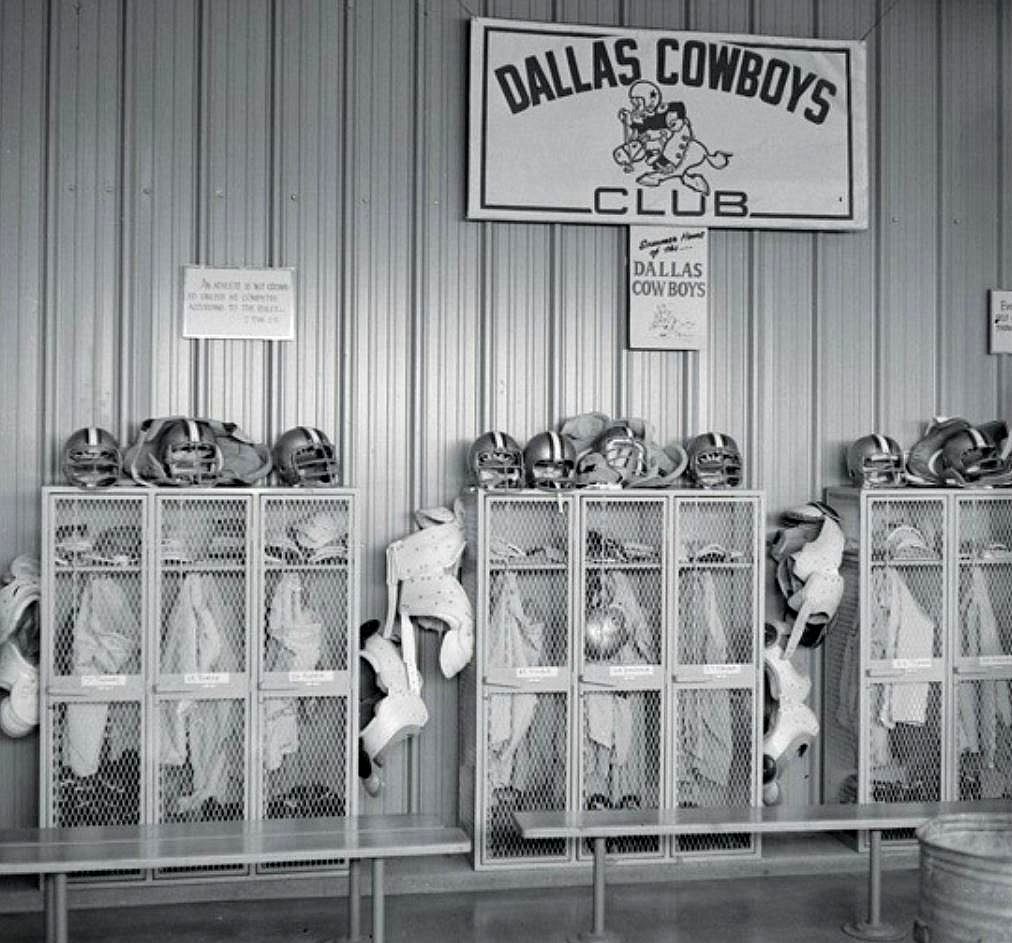
1960s: A quaint Dallas Cowboys locker room.

dallas-cowboys-locker-room_pinterest
via Pinterest

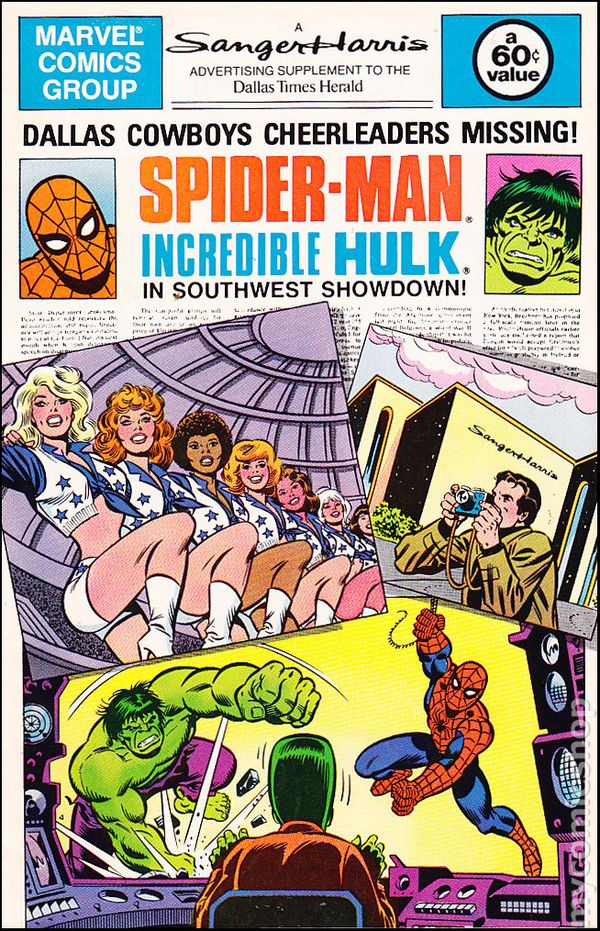
1981: In the tradition of other comic-book heroes appearing in Dallas to save whatever needed saving (here and here), Spider-Man and the Hulk stopped by to help with some football-related issue. The Dallas Cowboys Cheerleaders appear to have been involved.

football_cowboys_comic_spider-man_hulk_cheerleaders_1981

*

Copyright © 2019 Paula Bosse. All Rights Reserved.

Jane Asher in Dallas — 1967

jane-asher_dallas_1967

by Paula Bosse

English actress Jane Asher — who has acted since the age of 5 — will probably forever be referred to somewhere (like here) as “Paul McCartney’s former girlfriend.” They dated from 1963 to 1968, and Jane always asserted that her acting career was what was important to her, not being a celebrity (or the girlfriend of a celebrity). But if you were dating a Beatle, that was probably an impossible thing to escape.

In 1967, Jane toured the United States for several months as part of the Bristol Old Vic company. One of their longest stays was in Dallas (April 10-15, at the State Fair Music Hall), where the company performed Shakespeare’s Measure For Measure, Hamlet, and Romeo and Juliet (in which Jane appeared as Juliet). The Dallas performances (“The theatrical event of the season!” “Only Southwestern engagement…”) were co-sponsored by Neiman-Marcus.

bristol-old-vic_022667_det

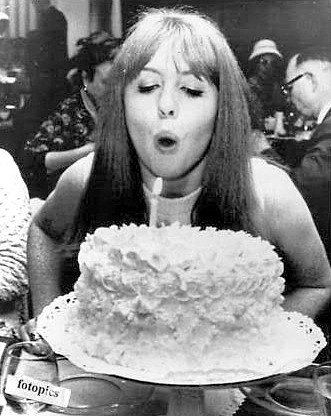
It appears that Jane popped into Dallas early — on April 4 and April 5 — in order to do some publicity, catch a Dallas Theater Center production of Julius Caesar (as the guest of Richard Marcus who, afterwards, hosted a small dinner party), and, the next day, celebrate her 21st birthday at a noon luncheon in Neiman’s Zodiac Room.

Her arrival at Love Field was captured by Channel 8 news cameras (sadly, without sound).

*

asher-jane_wfaa_jones-collection_smu_april-1967_a


asher-jane_wfaa_jones-collection_smu_april-1967

asher-jane_ap-wire-photo_040567_dtcAP wire photo, taken in Dallas on April 4, 1967

asher-jane_zodiac-room_040567
AP wire photo, taken in Dallas at Neiman-Marcus on April 5, 1967

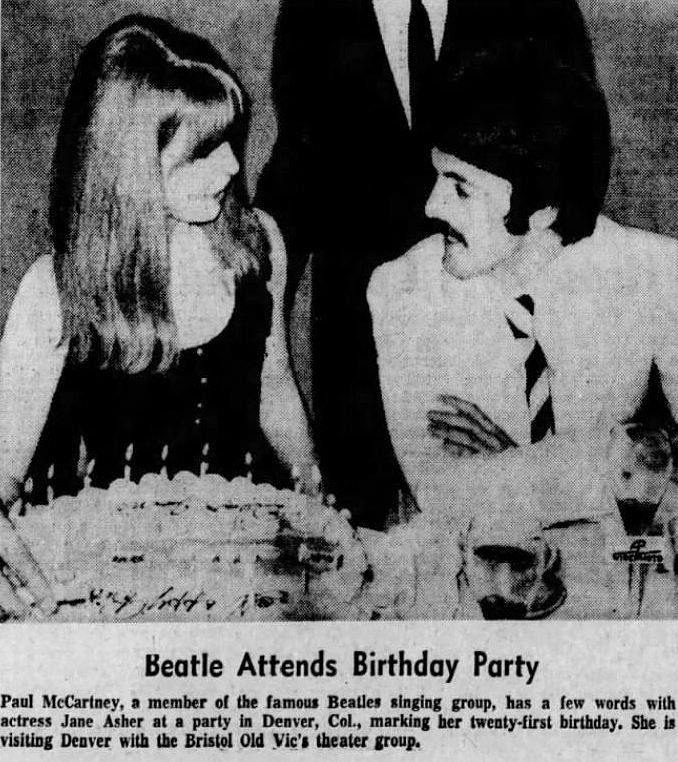
After cake at the Zodiac Room on her birthday — April 5, 1967 — she left for Denver, the next stop on the tour. That night her famous boyfriend joined her there for even more cake.

jane-paul_denver_ap-wire-photo_040667
Denver, April 5, 1967

After the run in Denver, the Bristol Old Vic company came to Dallas for six days (and seven performances). A reviewer complained about the Music Hall’s poor acoustics and thought that the productions of the three plays were a bit “mod” for his taste (“considerable stage movement and fast-paced dialogue caused many of the lines to be lost”), but he thought Jane acquitted herself well as Juliet in a good, if somewhat undistinguished production.

In an interview with Maryln Schwartz of The Dallas Morning News, Jane — probably for the thousandth time — had to steer the conversation back to her acting and away from her famous boyfriend. When Schwartz asked who her favorite “singing group” was she told her it was the Grateful Dead.

**

old-vic_dallas_austin-american-statesman_011567
Austin American-Statesman, Jan. 15, 1967 (click to see larger image)

***

Sources & Notes

Top photo by Harry Benson, Daily Express, Hulton Archive, Getty Images. The Getty caption has the date as April 25, 1967, which is incorrect — the photo was most likely taken on April 5, 1967 (Jane is wearing the same outfit seen in the Zodiac Room photo, and on April 25th, the theatrical company had been in Illinois for over a week). I have to admit, I love seeing celebrities awkwardly wearing Texas cowboy hats. But Jane looks pretty cute.

The WFAA-Ch. 8 news footage is from the G. William Jones Film Collection at SMU. The short, 49-second clip shows her arriving on a Delta flight at Love Field, met by a no doubt Stanley Marcus-approved be-costumed young man with a trumpet and a woman bearing some sort of official proclamation of “welcome.” The two color photos are my screen captures.

The birthday cake photo is from a blog post teeming with fantastic photos of Jane Asher and her stunning red hair, here.

More on Jane Asher’s career at Wikipedia, here.

More on the Beatles and Dallas can be found in the Flashback Dallas post “The Fab Four in Big D — 1964,” here. (It’s interesting to note that two important people in the orbit of the Beatles celebrated milestone birthdays in Dallas: Jane Asher turned 21 here, and manager Brian Epstein turned 30 while here with “the boys” in 1964.)

*

Copyright © 2019 Paula Bosse. All Rights Reserved.


Christmas Window Shopping — 1950

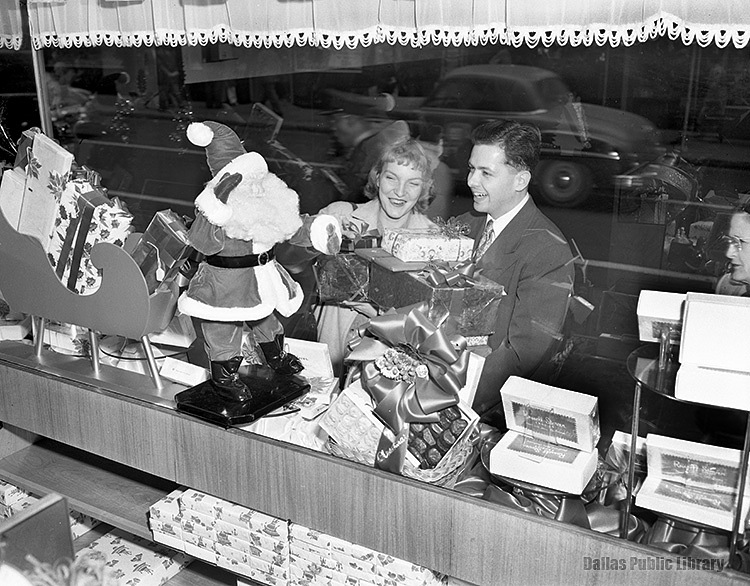
xmas-shoppers_121650_hayes-collection_DPLHappy Santa fans…

by Paula Bosse

Here are a couple enjoying a Christmas display. Haven’t finished your shopping? There’s still time!

***

Sources & Notes

Taken on Dec. 16, 1950, this photo is from the Hayes Collection, Dallas Public Library Dallas History & Archives Division, Dallas Public Library (“[Christmas storefront shoppers],” PA76-1/43.3).

More Flashback Dallas posts on Christmas can be found here.

*

Copyright © 2018 Paula Bosse. All Rights Reserved.

Pat Boone, Host of Channel 5’s “Teen Times” — 1954

boone-pat_portal_poss-teen-times
“Handsome teen-ager” Pat Boone, host of WBAP’s “Teen Times”

by Paula Bosse

In January, 1954, soon-to-be pop-star Pat Boone transferred from a college in Nashville to North Texas State College (now the University of North Texas) in Denton — he was 19 years old and recently married with a baby on the way. An entertainer since childhood, he had recently appeared on (and won) Ted Mack’s nationally televised “Amateur Hour” and had a few minor recordings under his  belt. He entered the Denton college in the middle of the school year, majoring in speech and minoring in music.

In an interview with the college newspaper, The Campus Chat, student reporter Bill Moyers (yes, that Bill Moyers) asked the scrupulously clean-cut Boone what career he saw for himself. His answer: “I want to preach on Sundays at churches that can’t afford pastors, and perhaps I’ll even become a full-time pastor.” He said that even though he had devoted years to being an entertainer and his father-in-law was a bona fide star, he did not envision a career as a professional singer because, for one reason, he did not approve of night clubs, on moral grounds: “I don’t want to sing at night clubs, and that’s where most of the singers do much of their work” (Campus Chat, Feb. 24, 1954).

The reason he was being interviewed in the first place — after only a couple of months in town — was because he had been named as the host of a Dallas-Fort Worth television show called “Teen Times,” sponsored by Foremost Dairies and broadcast on Saturday afternoons on WBAP-Ch. 5; the show premiered in February, 1954. Boone acted as host, dressed as a soda jerk behind a drugstore soda fountain, with teenaged guests who represented one Dallas school and one Fort Worth school (the schools changed each week), competing in a sort of talent show. Boone kept things moving, performed a few songs, and, in between, sang the praises of Foremost milk and ice cream.

Boone hosted the show through the spring of 1955. During the run of this local show, his popularity grew quickly on a national level, the result of several national TV appearances and ever-increasing record sales. After his year-and-a-half time in Denton, he moved to New York in the summer of 1955 and enrolled at Columbia University; before the end of the year, Pat Boone’s fame exploded: he had a huge hit with a cover of Fats Domino’s “Ain’t That a Shame” and was appearing regularly on national TV. By the late ’50s his record sales were reportedly second only to Elvis Presley’s, even though Boone’s squeaky-clean and sincere wholesomeness was the polar opposite of the suggestive, hep-cat abandon of Elvis’ earthier style.

Even though Pat Boone was a North Texas student for only a short time, whenever he has returned to Denton over the years he has always received something of a hero’s welcome. With formative years spent here, and with his star-turn in the 1962 filmed-at-Fair-Park movie State Fair, Pat Boone has every right to be considered an honorary Texan.

*

During his time in Denton, Pat Boone hosted two television shows for WBAP-Channel 5: the Foremost Dairies-sponsored “Teen Times” (often referred to as “Teen Time”) on Saturday afternoons, and the Bewley Mills-sponsored “Barn Dance” on Friday nights. (It looks like “Teen Times” was revamped a few years later and returned to Channel 5 in a somewhat similar format as “Teen-Age Downbeat” in January, 1958.)

teen-times_1954_logo
1954

teen-times_pat-boone_wbap_FWST_020754
Fort Worth Star-Telegram, Feb. 7, 1954 (click to read)

teen-times_pat-boone_wbap_FWST_021354
Feb. 13, 1954

boone-pat_bewley-barn-dance_FWST_021254
FWST, Feb. 12, 1954

Below, a super-blurry excerpt from Bill Moyers’ article in The Campus Chat (read the full interview here):

boone-pat_unt_campus-chat_022454_teen-times-host_bill-moyers
Campus Chat (North Texas State College newspaper), Feb. 24, 1954

pat-boone_barn-dance_FWST_062054
FWST, June 20, 1954

In June, 1955, Les Handy — a voice teacher at Texas Wesleyan College — took over as emcee at “Teen Times.” 

teen-times_june-1955_new-host
1955

And in September, 1955, Pat and Shirley and their new baby moved from Denton to New York City.

pat-boone_denton-record-chronicle_091155
Denton Record-Chronicle, Sept. 11, 1955

Pat Boone photos from the 1955 NTSC yearbook, The Yucca:

pat-boone_yucca_1955
Junior class photo, 1955

boone-pat_unt_1955-yucca_KA-frat
Kappa Alpha fraternity photo

pat-boone_yucca_1955_student-religious-council
Student Religious Council (detail from group photo)

***

Sources & Notes

Top photo of Pat Boone behind a soda fountain holding a microphone appeared in the Feb. 24, 1954 edition of Campus Chat, the college paper of what was then North Texas State College; it is from the UNT Libraries Special Collections, and may be accessed on UNT’s Portal to Texas History, here.

Pat Boone’s wife, Shirley, was the daughter of the legendary Nashville “hillbilly” singer, Red Foley. Here’s a video of a nervous Boone and his father-in-law on Foley’s “Ozark Jubilee” TV show, two weeks after Pat and Shirley had left Denton for New York. They are singing “Tennessee Saturday Night,” Red Foley’s big hit from 1949 (hear his great original hillbilly boogie version here).

Because it involves Pat Boone and UNT, check out the 20-minute informational film all about the college, made for students by students in 1963, available to watch on the Portal to Texas History, here — Pat Boone offers a few enthusiastic bits of narration.

And, why not, here’s a photo of journalist Bill Moyers from the 1953 North Texas yearbook.

moyers-bill_UNT_1953-yucca_yearbook

*

Copyright © 2018 Paula Bosse. All Rights Reserved.