Flashback : Dallas

A Miscellany: History, Ads, Pop Culture

Category: Leisure

From El Chico and the Cuellar Family: Feliz Navidad!

xmas_el-chico_cook-collection_degolyer_SMU

by Paula Bosse

…y Prospero Año Nuevo!

xmas_el-chico_cook-collection_degolyer_SMU_2

***

Sources & Notes

Images from a matchbook cover in the George W. Cook Dallas/Texas Image Collection, DeGolyer Library, Central University Libraries, Southern Methodist University; more on the item can be found on the SMU site here.

A couple of super-folksy El Chico commercials can be watched here.

*

Copyright © 2017 Paula Bosse. All Rights Reserved.


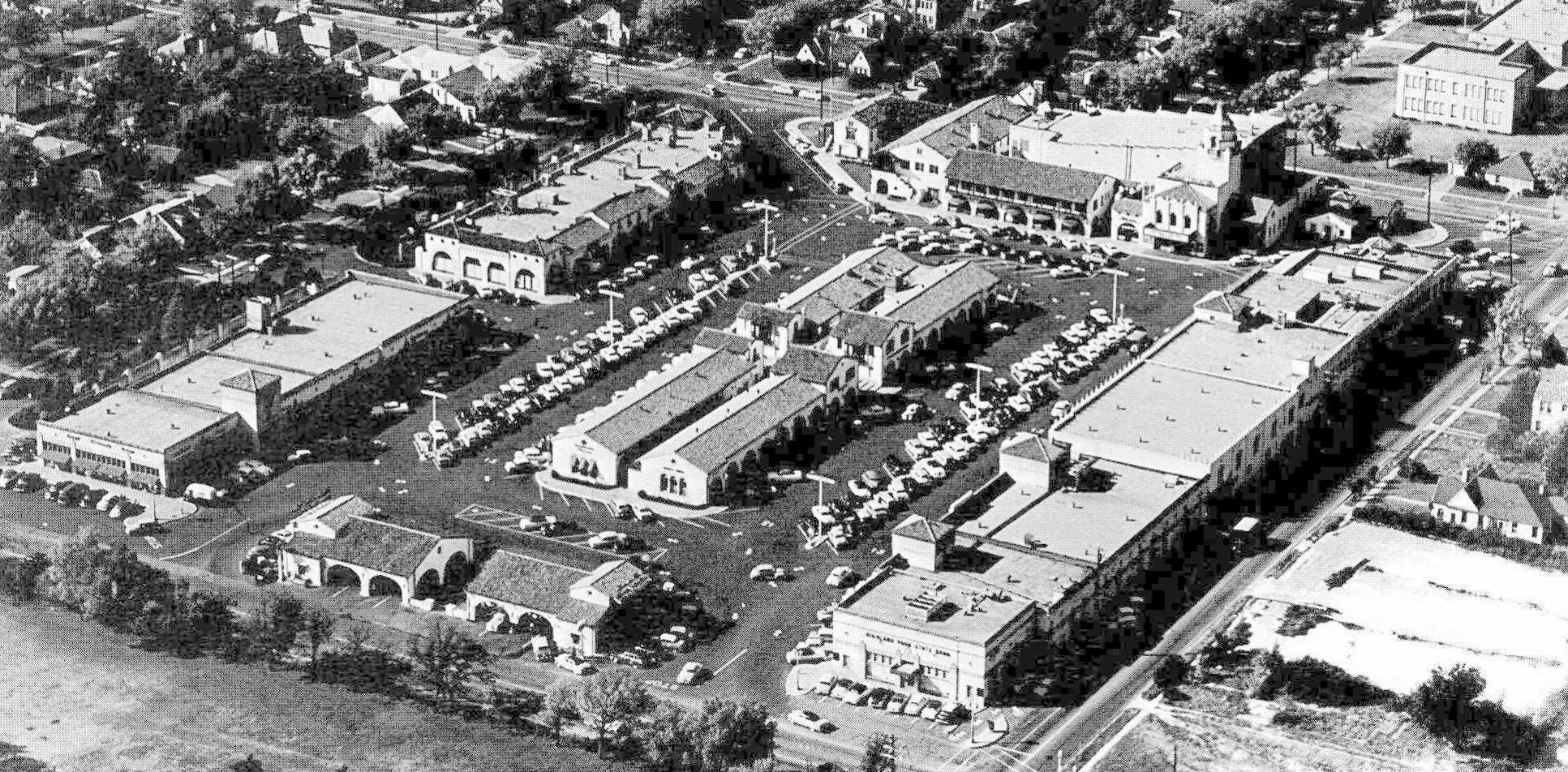
Highland Park Village From Above

h-p-village_HPHS_1966_ad-detPlenty of parking, above & below ground… (click for larger image)

by Paula Bosse

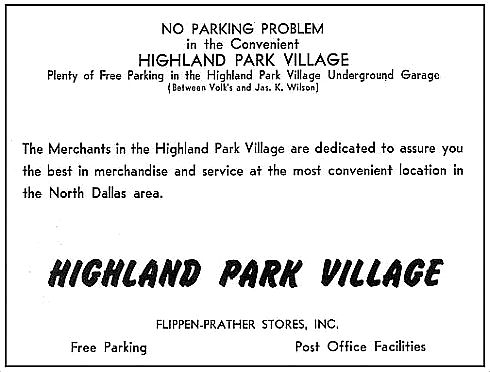
This bird’s-eye view of Highland Park Village is from an ad placed in the Highland Park High School yearbook by Flippen-Prather, who really wanted to stress how there was NO PARKING PROBLEM at this convenient “North Dallas” location, above ground and below ground. Don’t worry, Flippen-Prather had you covered.

h-p-village_HPHS_1966_text1966 ad

Fifty years on from this ad, Highland Park Village is physically still recognizable, just expanded. The tenants, however, are now much more chi-chi.

hp-village_google-2017Google, 2017

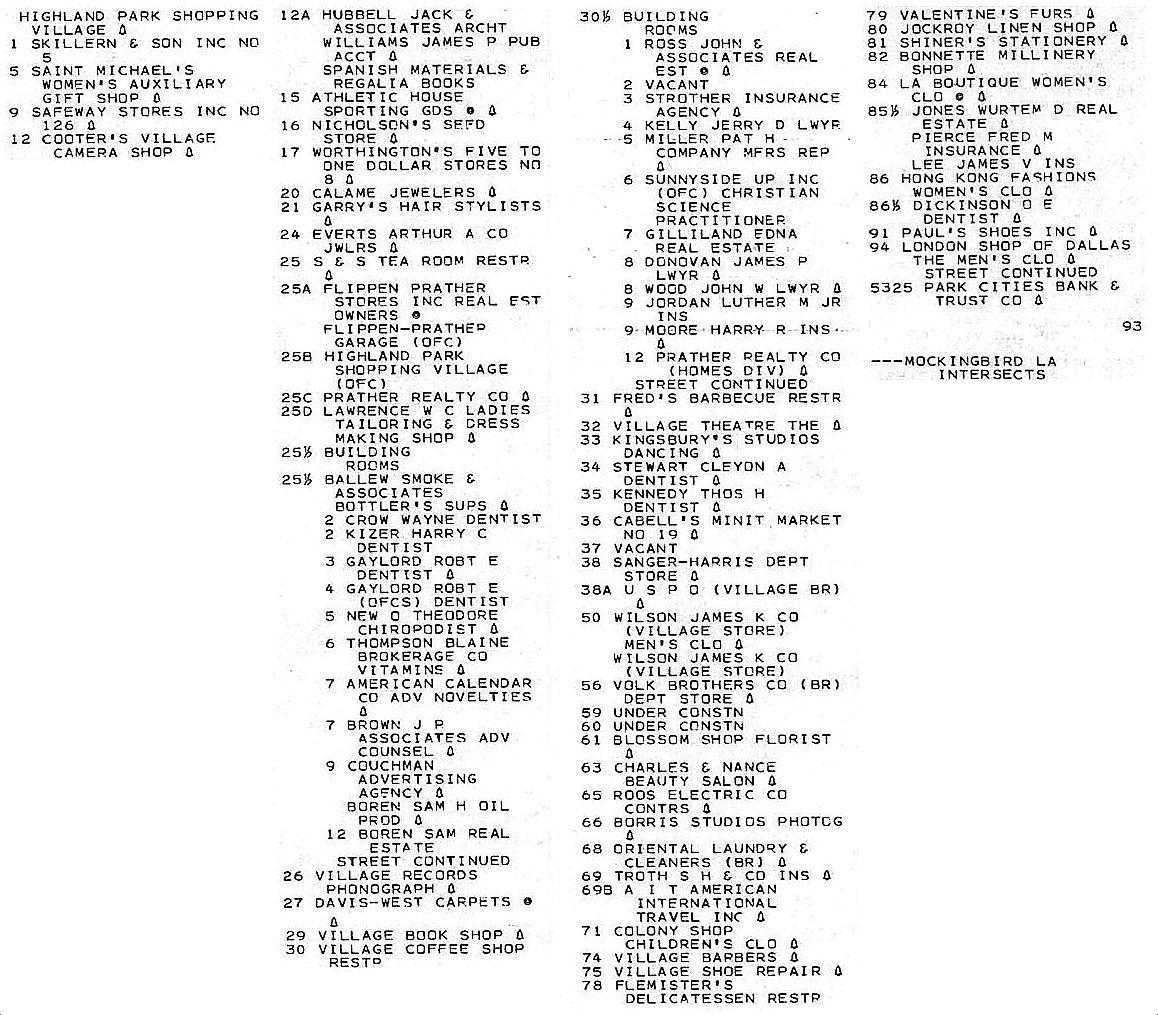
I’m not sure when the top photo was taken, but it appeared in the 1966 Highland Park High School yearbook. Here are the tenants of Highland Park Village in 1966 (click to see a larger image).

hp-village_1966-directory

***

Sources & Notes

Ad for Highland Park Village/Flippen-Prather Stores, Inc. appeared in the 1966 Highland Park High School yearbook.

Color image from Google.

Listing of Highland Park Village businesses is from Polk’s Greater Dallas City Directory, 1966.

All images larger when clicked.

*

Copyright © 2017 Paula Bosse. All Rights Reserved.

White Rock Train Station (And a Helicopter Ride)

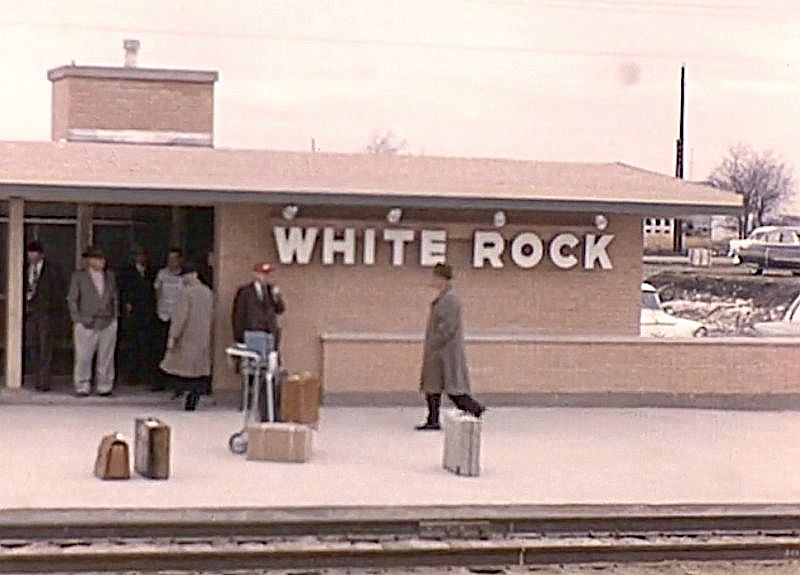
white-rock-station_portalWaiting on the Texas Chief…

by Paula Bosse

I was so happy to get word from UNT media librarian and film/video archivist Laura Treat this morning that she had come across film footage of White Rock Station, the first suburban train depot built in the Southwest by the Santa Fe Railway (in 1955). The footage is from the “Spotlight on North Texas” collection, a collaborative project between the University of North Texas Libraries and the Texas Archive of the Moving Image (TAMI) to preserve North Texas film history. This footage is from home movies donated by Mr. Peter Pauls Stewart.

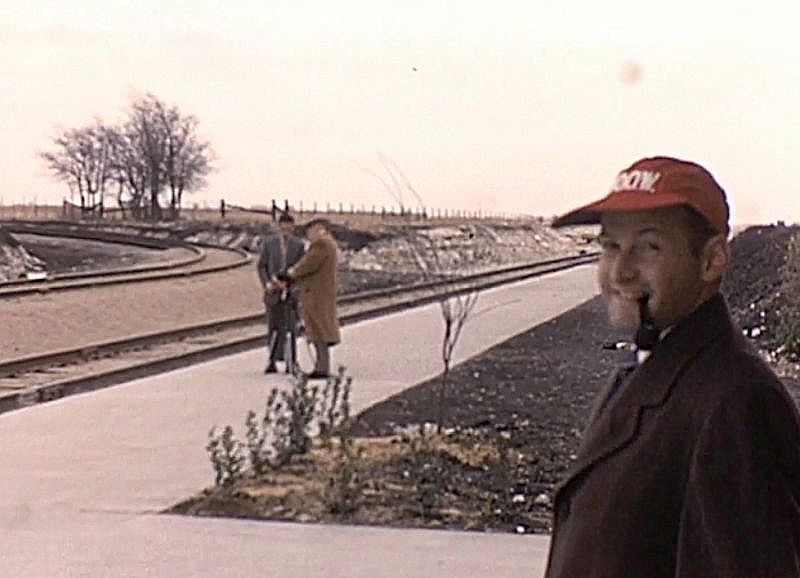
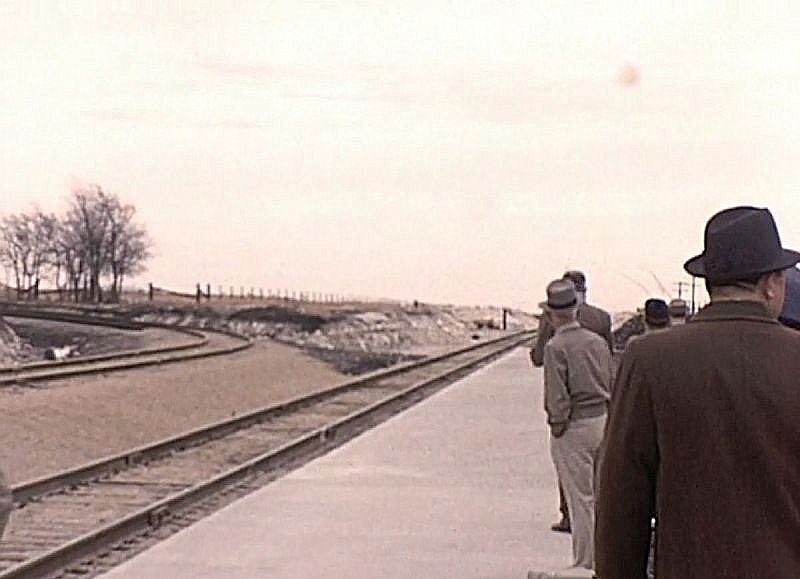
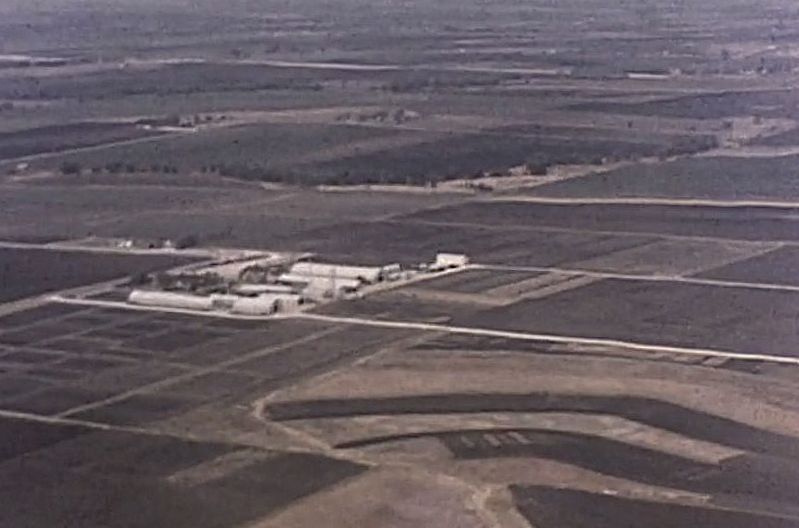
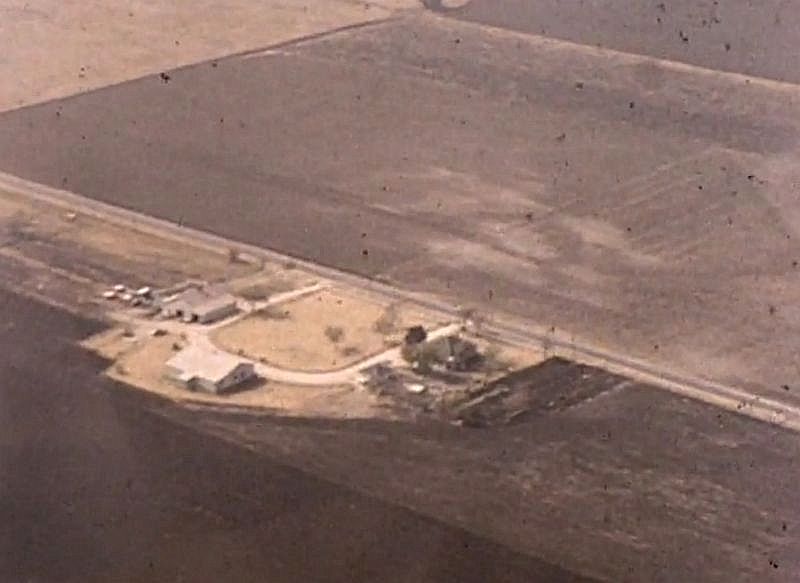
The 4-minute clip starts off with footage shot from a helicopter, showing brand new highways cutting through wide open land, followed by scenes of cute children and their cute dog, and then, beginning at the 3:00 mark, chilly-looking scenes of White Rock Station (which was located at about Jupiter and Kingsley on the edge of Garland, and which, today, looks disappointingly different) and a group of mostly men, some with cameras who appear to be train enthusiasts, waiting for the arrival of the Texas Chief. Doesn’t really look like Texas, does it? Below are some screenshots — watch the full clip on the Texas to Portal History site, here.

*
white-rock-station_parking_portal

white-rock-station_peter-pauls-stewart_portal

Above, two men set up a camera on a tripod as Mr. Stewart — the man who donated the footage — smiles at the camera and waits for the much-anticipated arrival of the train (which, be warned, is never actually seen in this film!).

white-rock-station_track_portal

Below a couple of aerial shots of the North Texas countryside.

helicopter_portal_1

helicopter_portal_2

UPDATE: In the comments below, Danny Linn writes about the aerial footage seen in the first minute or two of the clip: “… at the very beginning [of the clip is] a clear view of the old Highland Park Airport off Coit Road just north of Forest Lane. This portion of the clip also shows a fairly new Central Expressway near the future crossroad of LBJ Freeway.” Thank you, Danny! I assumed part of what we saw was in the LBJ-area, but wasn’t sure — another view of that area can be seen in a fairly startling photo of Preston and Valley View in 1958, here.

***

Sources & Notes

The main page of this clip (titled “The Peter Pauls Stewart Films, No. 5 — Helicopter and Railroad Rides”) can be found here, on the Portal to Texas History website; it is from the Spotlight on North Texas collection, UNT Media Library, University of North Texas. (Click picture to watch clip in a new window.)

I have to admit that I had never heard of White Rock Station until I wrote about it in 2015, a post which has been surprisingly popular. The post — “White Rock Station” — can be found here.

Click pictures to see larger images.

Thank you, Laura!

*

Copyright © 2017 Paula Bosse. All Rights Reserved.


“Mr. Wiggly Worm Does Much More Than Wiggle”

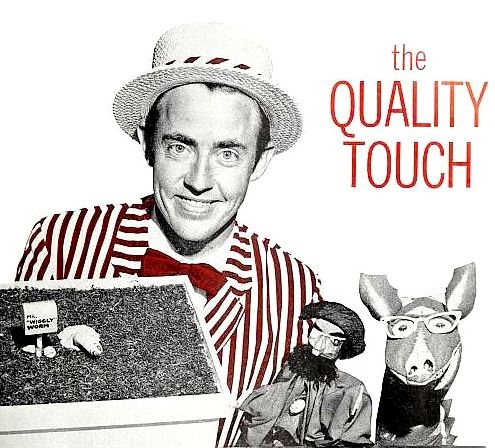
mr-peppermint_sponsor-mag_112061-det

by Paula Bosse

My first crush was on Mr. Peppermint, and I really, really, really loved Mr. Wiggly Worm.

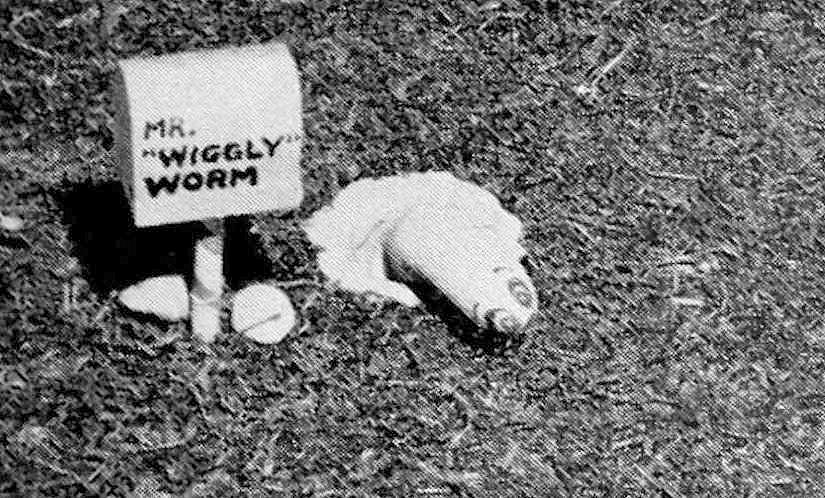
This is a rather unfortunate depiction of my childhood TV pal, but how can you not love a smiling wiggly worm with a mailbox?

mr-peppermint_sponsor-mag_112061_mr-wiggly-worm_det

mr-peppermint_sponsor-mag_021163_text

WFAA understood the appeal of Mr. W. W. They even built a whole broadcasting-trade-magazine ad around him. (Click to see it larger.)

mr-peppermint_sponsor-mag_021163Sponsor, Feb. 11, 1963

Here he is again:

mr-peppermint_sponsor-mag_112061
Sponsor, Nov. 20, 1961

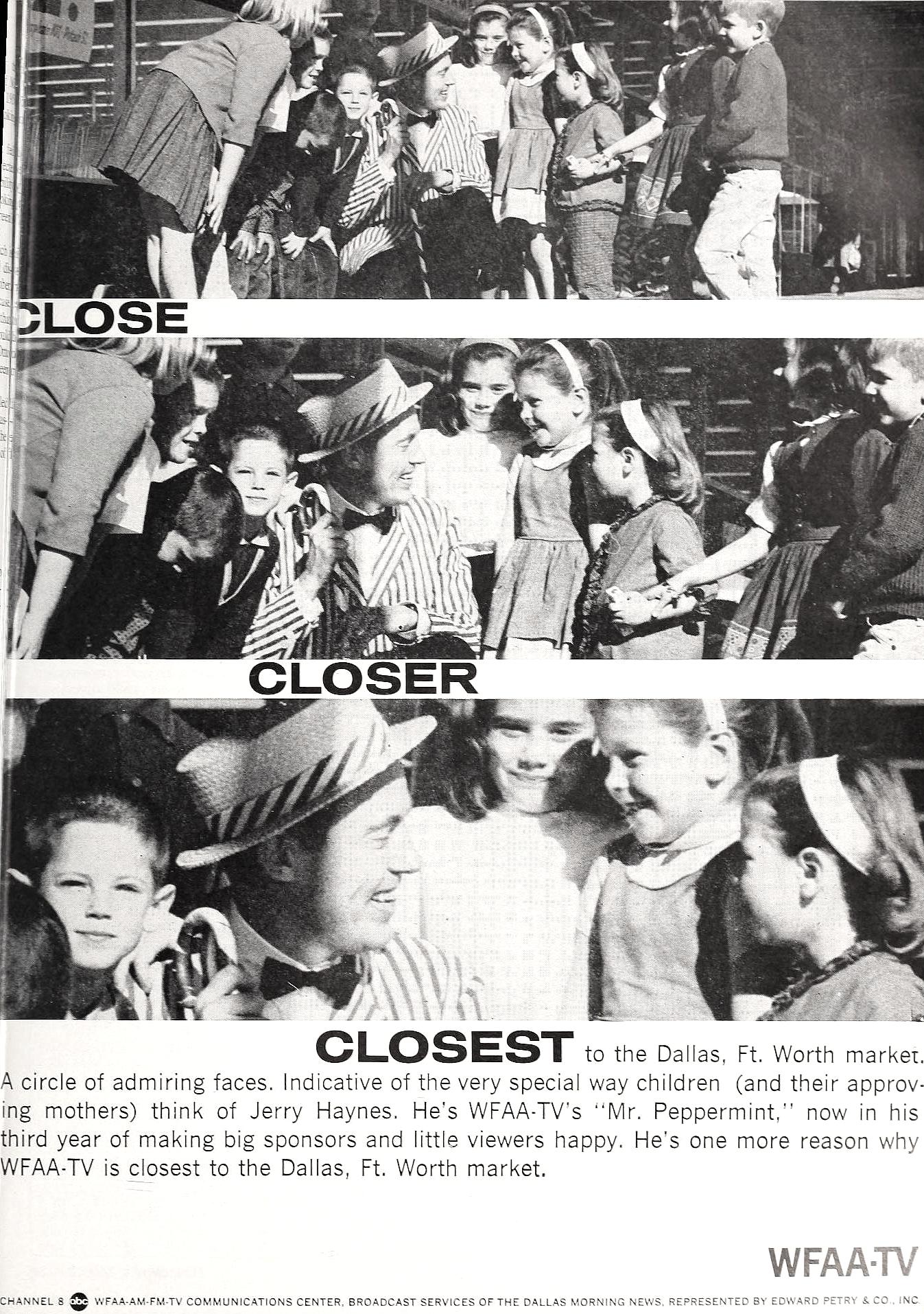
Mr. W. W. stayed at home for this one, but here we see Mr. Peppermint out mingling with his adoring public.

mr-peppermint_broadcasting-mag_061063
Broadcasting, June 10, 1963

And, look, “Communications Center” — bet you haven’t heard that in a while!

communications-center_sponsor-mag_112061_det1961

***

Sources & Notes

These Mr. Peppermint advertisements were part of a series of WFAA-Channel 8 ads which ran for several years in television trade magazines.

Click pictures to see larger images.

*

Copyright © 2017 Paula Bosse. All Rights Reserved.

Ann Wedgeworth: 1934-2017

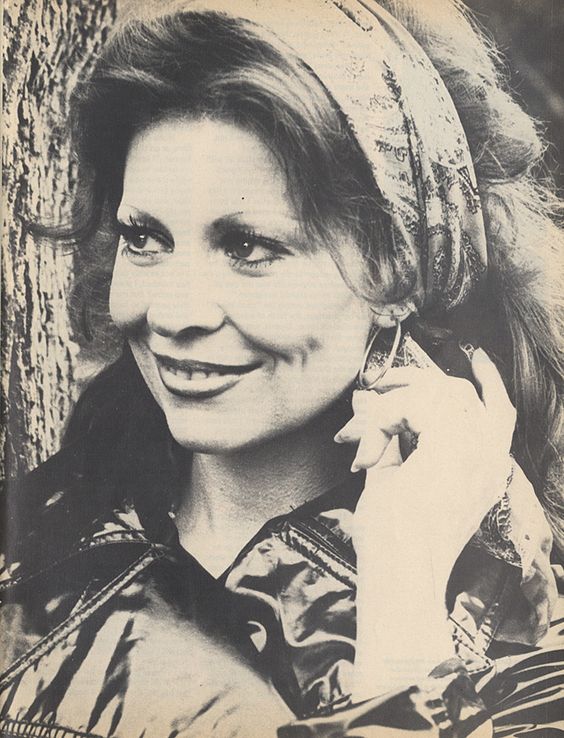
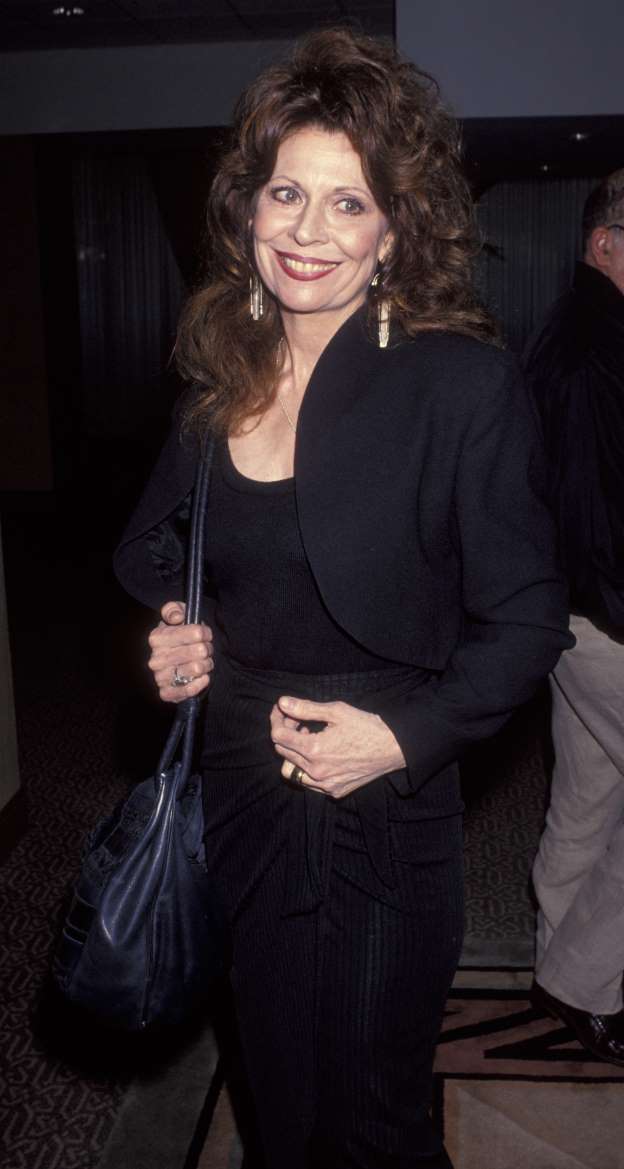
wedgeworth_ann

by Paula Bosse

The actress Ann Wedgeworth has died. If you don’t know her by her name, you probably know her by her face, or, even more likely, by her voice. I’m always impressed when actors are able to retain their natural accents without having to homogenize them to meet Hollywood standards, and Wedgeworth’s Texas accent was pretty thick. I would bet hard cash she reminds you of someone you know or someone in your own family.

Even though she had worked as an actor since she was a teenager — in school productions, small regional theaters, off-Broadway, Broadway, TV, soap operas, and movies — it was probably her short-lived role as Lana on Three’s Company which brought her to the attention of the widest audience.

Elizabeth Ann Wedgeworth was born in 1934 in Taylor County and spent her early years in Snyder and Perryton, Texas, where her father had been the superintendent of schools (her mother died when she was 2); she arrived in Dallas around 1946 when she was about 12 years old. Her father worked in conjunction with SMU and the Veteran’s Administration for a time before becoming a longtime employee of the City of Dallas; her stepmother was a student counselor at Highland Park Junior High School.

She attended high school in Highland Park, graduating from HPHS in 1950 (the same year as her school friend, Jayne Mansfield). She began her acting career when she was a teenager, racking up quite a lot of experience in Dallas theater productions and in a Colorado stock company. She focused on acting during college, which included both SMU and the University of Texas — she probably met her future husband Rip Torn in Austin, where he was a fellow actor who had been active in the UT theater program (and who was, incidentally, the cousin of future actress Sissy Spacek). The couple was married in Dallas in 1955, at the First Methodist Church (which I wrote about here). They lived in Killeen briefly until Torn’s military stint at Ford Hood was up, then they headed to New York City, where the couple began to find acting work fairly quickly. The two had one daughter and divorced in 1961; she remarried and had another daughter. (More about Ann Wedgeworth can be read in the Wikipedia entry here.)

Ann worked a lot, and, as I said, I’m pretty sure you’ve seen her in something. Though known mostly for her work in TV and movies, she won a Tony Award in 1978 for her role in Neil Simon’s Broadway play Chapter Two. Her breathlessly exuberant (and charmingly ditzy) acceptance speech is amusing (I am such a sucker for that accent!):


*
Ann Wedgeworth died on November 16, 2017; she was 83 years old.

*

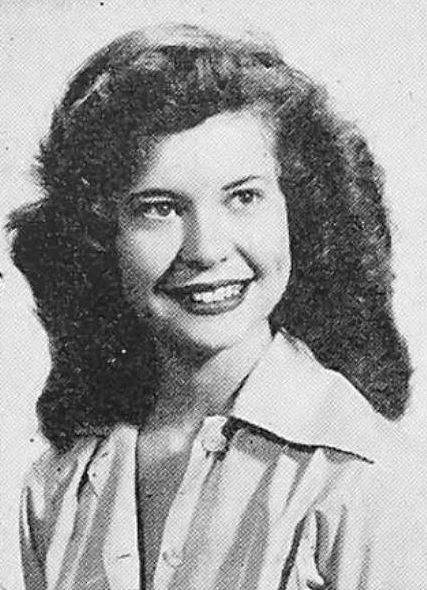
wedgeworth-ann_HPHS_sophomore-1948Highland Park High School sophomore, 1948

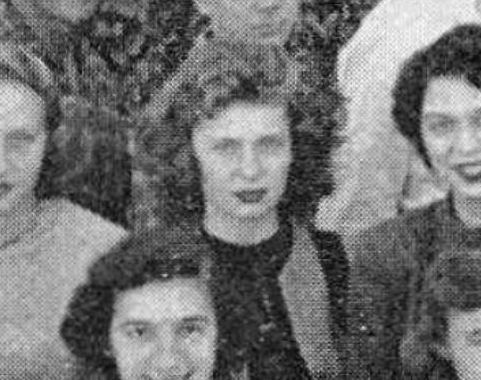
wedgeworth-ann_HPHS_junior_1949HPHS junior, 1949

wedgeworth-ann_HPHS_senior_1950
wedgeworth-ann_HPHS_senior_1950_info
HPHS senior, 1950

wedgeworth-ann_smu_freshman_1951SMU freshman, 1951

wedgeworth-ann_smu_campus_022252_photo
SMU sophomore, 1952

wedgeworth-ann_smu_campus_030552_cronyn
Appearing on national radio with Hume Cronyn, 1952

wedgeworth-torn_longview-news-journal_020655

wedgeworth-torn_longview-news-journal_020655_caption1955 announcement of her marriage to Rip Torn

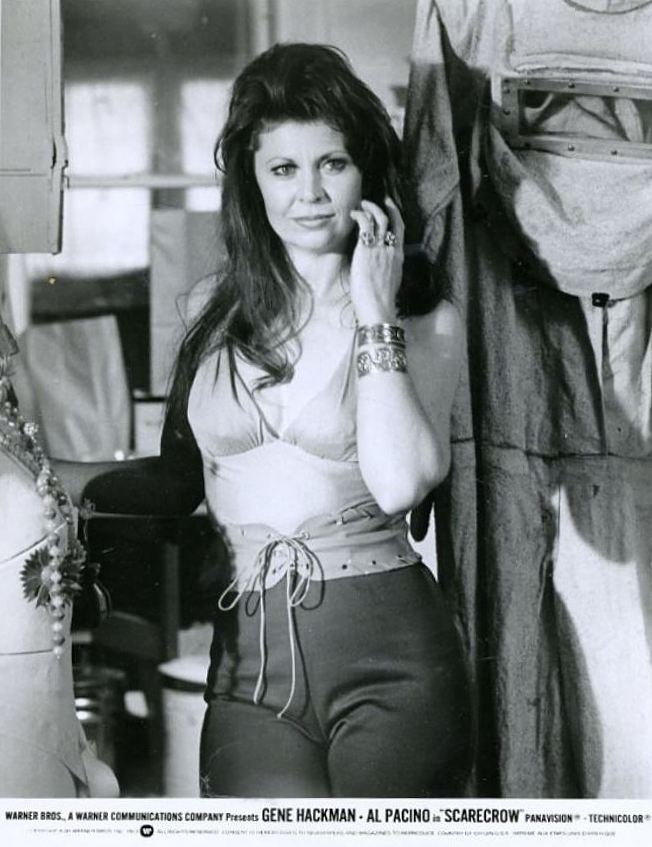
wedgeworth-ann_scarecrow_1973Publicity photo for the 1973 movie “Scarecrow”

wedgeworth_pinterest

wedgeworth-ann

ann-wedgeworth
photo via Lipstick Alley

***

Sources & Notes

Ann Wedgeworth’s obituary in The Washington Post can be found here.

School photos are from Highland Park High School and Southern Methodist University yearbooks.

The photo of 18-year-old Ann with Hume Cronyn appeared in the SMU Campus newspaper on March 5, 1952. (I believe Ann came in second in the competition.)

The wedding announcement of Ann and Rip Torn appeared in the Longview Daily News  on Feb. 6, 1955. (Rip Torn was born Elmore Rual Torn, Jr. — as a kid he was actually known as “Skip” Torn. …Doesn’t have quite the same ring to it….)

Most photos and clippings are larger when clicked.

*

Copyright © 2017 Paula Bosse. All Rights Reserved.

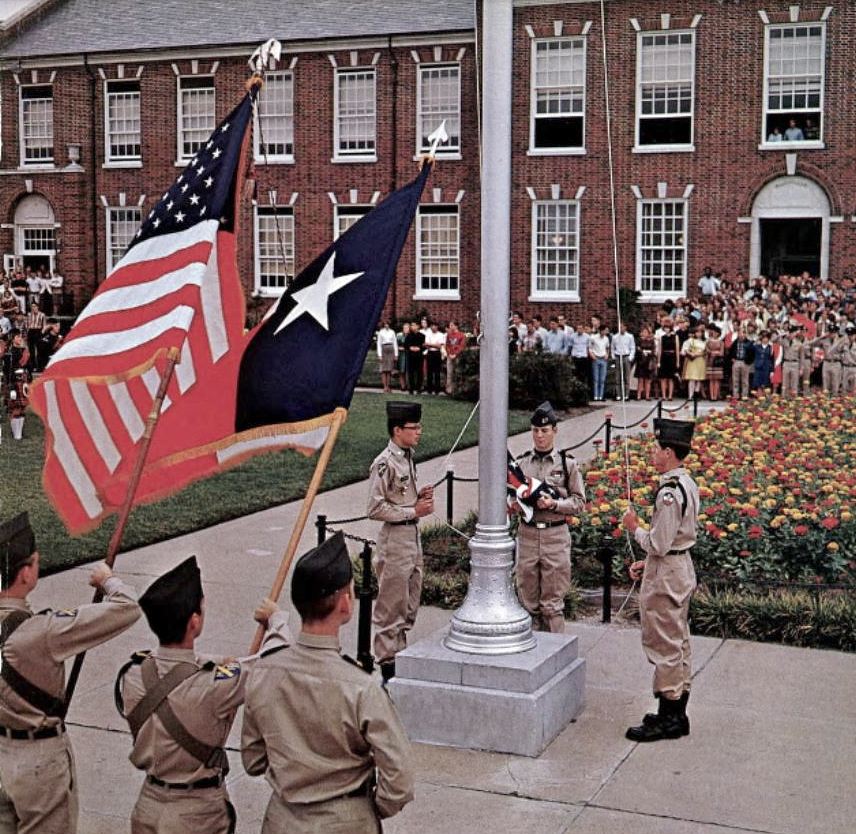
Highland Park High School: Photos from the 1966 Yearbook

HPHS_1966_flagHPHS ROTC… (click for larger image)

by Paula Bosse

I love looking through old yearbooks. Highland Park High School in the mid ’60s was a happening place. Below are a few photos I particularly like — most of which show students away from the classroom. (All photos are larger when clicked.)

*

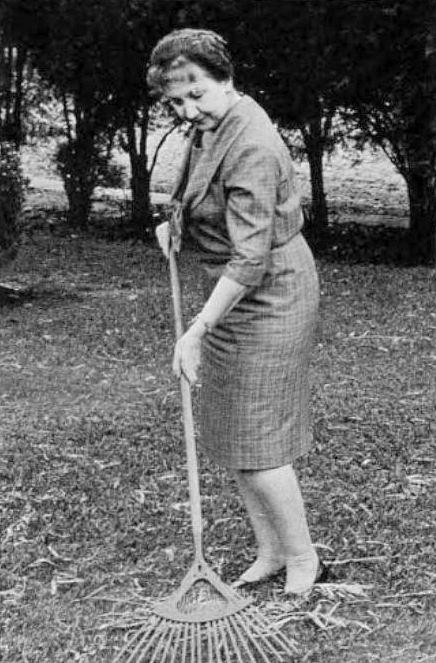
The 1966 Highlander was dedicated to science teacher Margaret Sauer. The caption of this photo: “Mrs. Sauer takes a down to earth approach to the study of botany.”

HPHS_1966_margaret_sauer_science-teacher

*

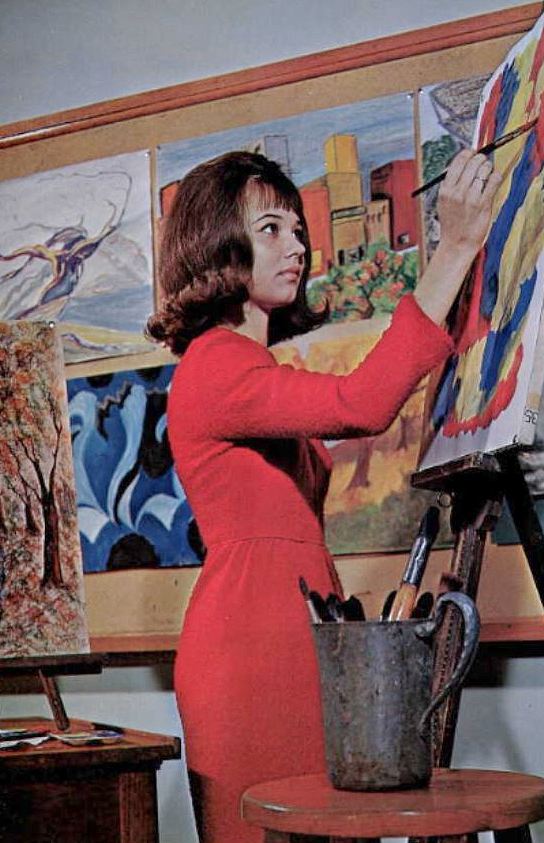
Here is student Carol Roach working on a painting:

HPHS_1966_carol-roach

*

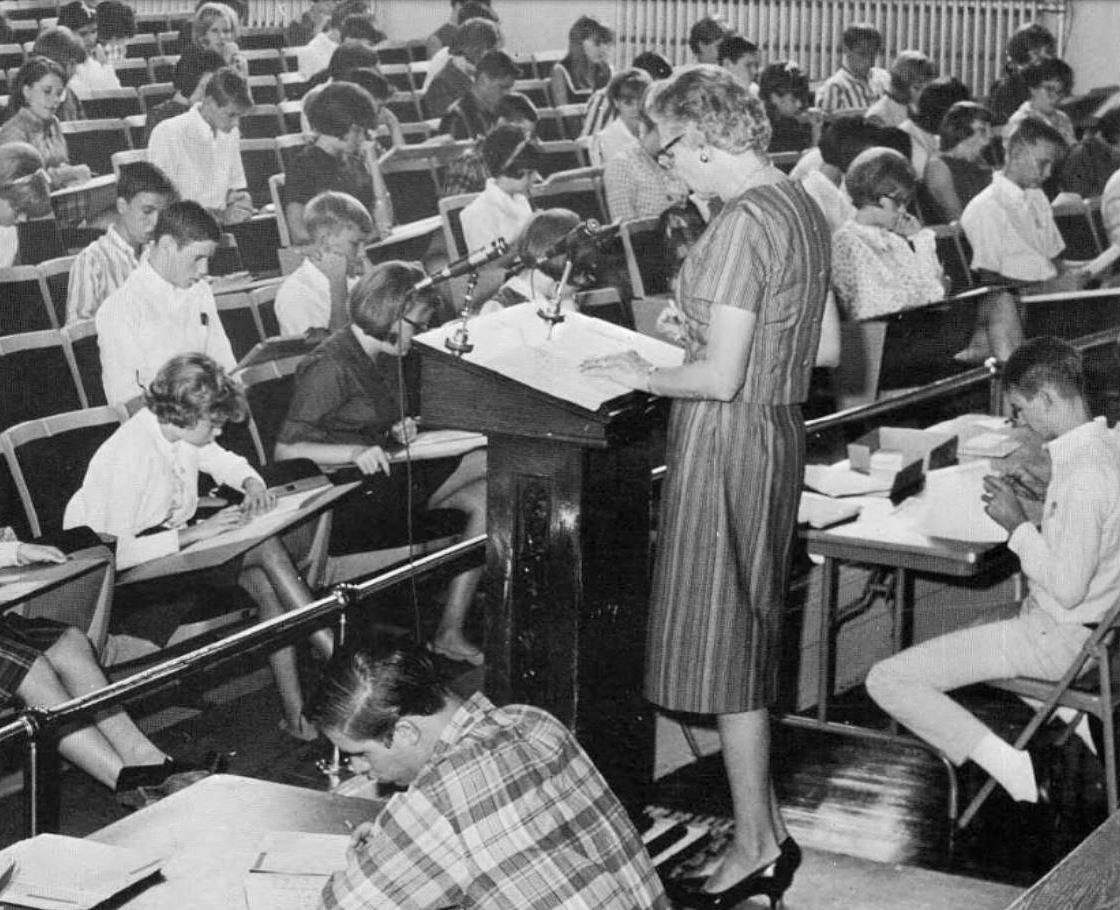
“Sophomores taking the California Mental Maturity Tests listen carefully to Mrs. Jones’ instructions.”

HPHS_1966_soph-test

*

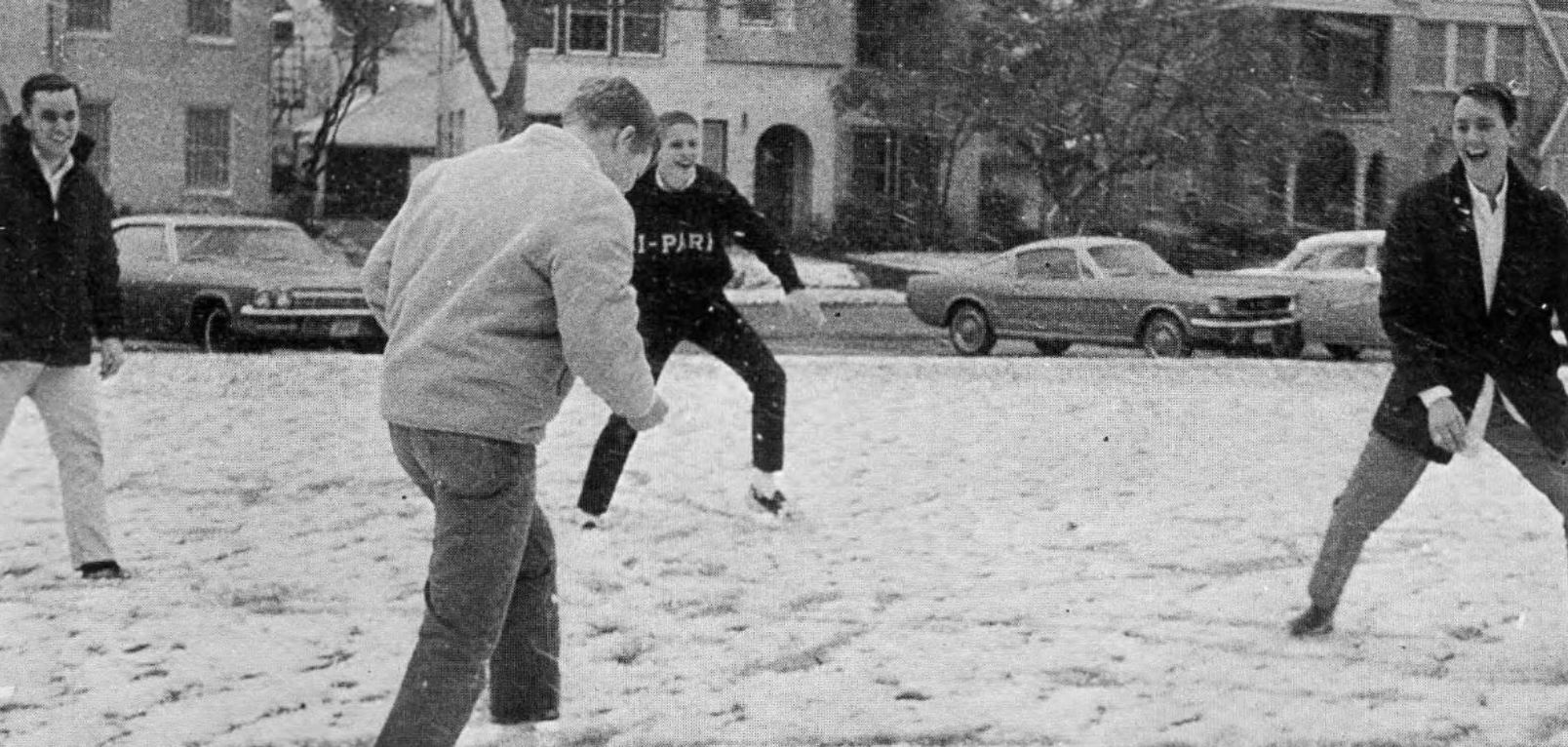
“Practicing snowball marksmanship not used for two years, Mark Shriver, Tony McClung, Fred Lundberg, and Ked Rike cavort in the snow outside school.” (The houses seen in the background are still there on Emerson.)

HPHS_1966_juniors_snowball-fight

*

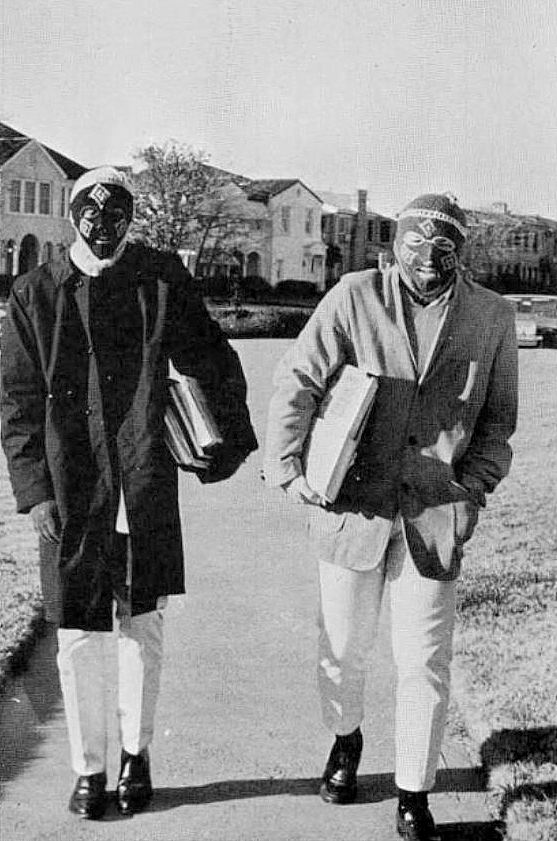
Speaking of cold weather, Vaughn Aldredge and Greg Uhl “brave the cold on the way to school wearing face masks.”

HPHS_1966-ski-masks

*

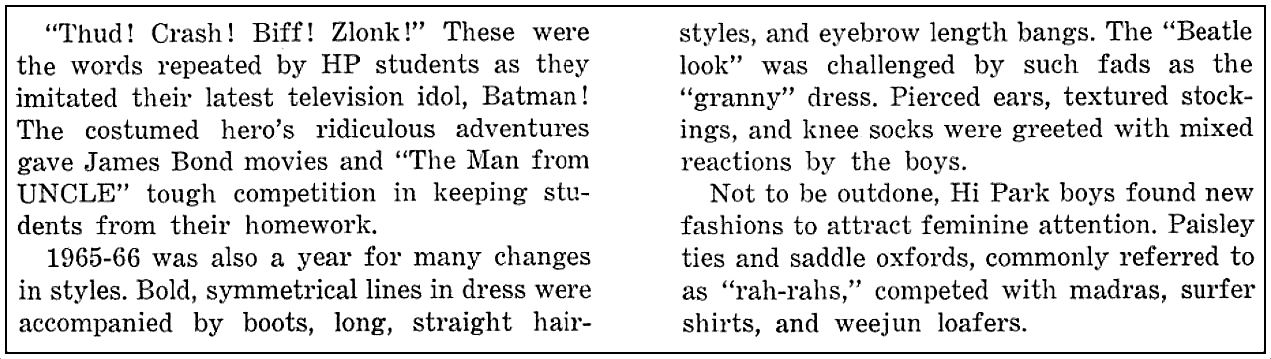
Speaking of fashion statements:

HPHS_1966_fads

*

Speaking of saddle shoes, “Shan Martin, Nan Weintraub, Betsy Wagner, and John Richardson exchange tips on cleaning their saddle oxfords.”

HPHS_1966_saddle-shoes

*

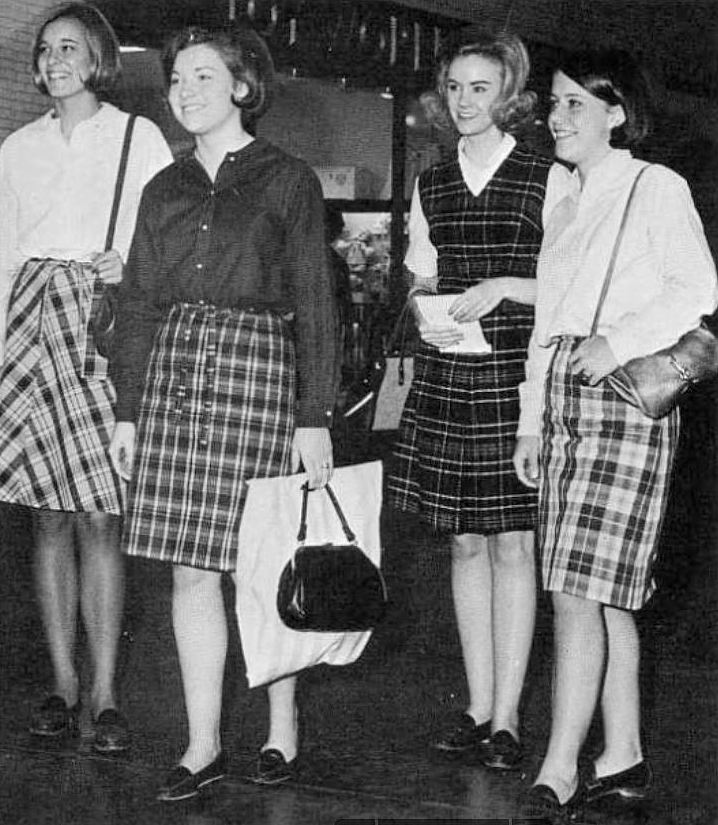
Yeah, HPHS is known as the home of “the Scots,” and plaid fashions were everywhere in 1966: “Hi-Lites Big Sisters Beverly and Barbara Kuykendall entertain little sisters Connie See and Lisa Ferguson with lunch and shopping at NorthPark.”

HPHS_1966_hi-lites_northpark

*

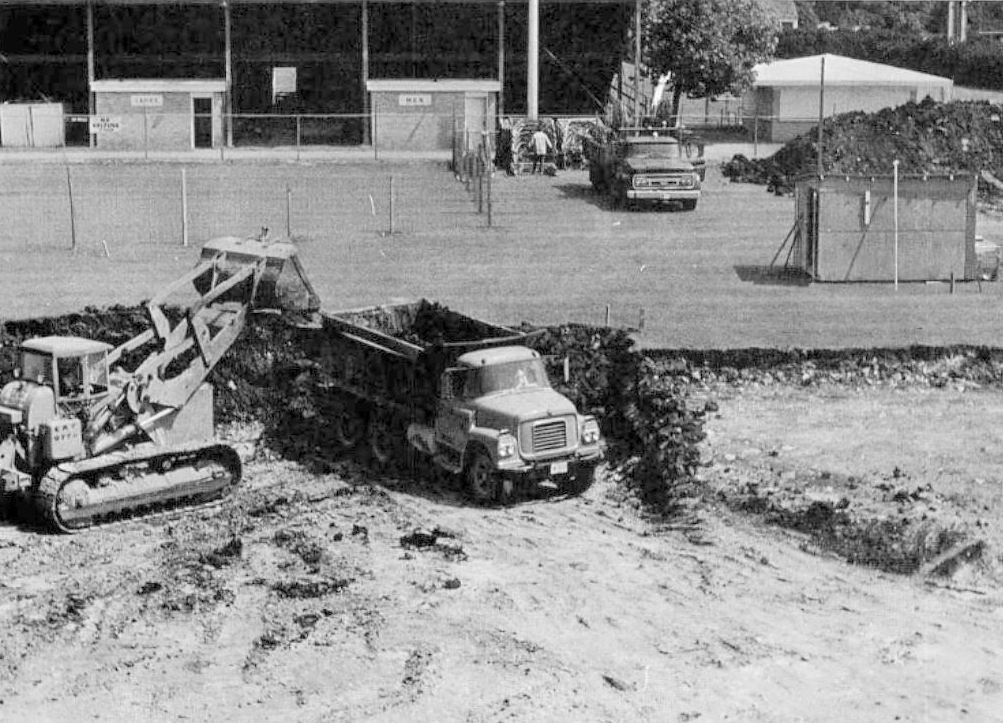
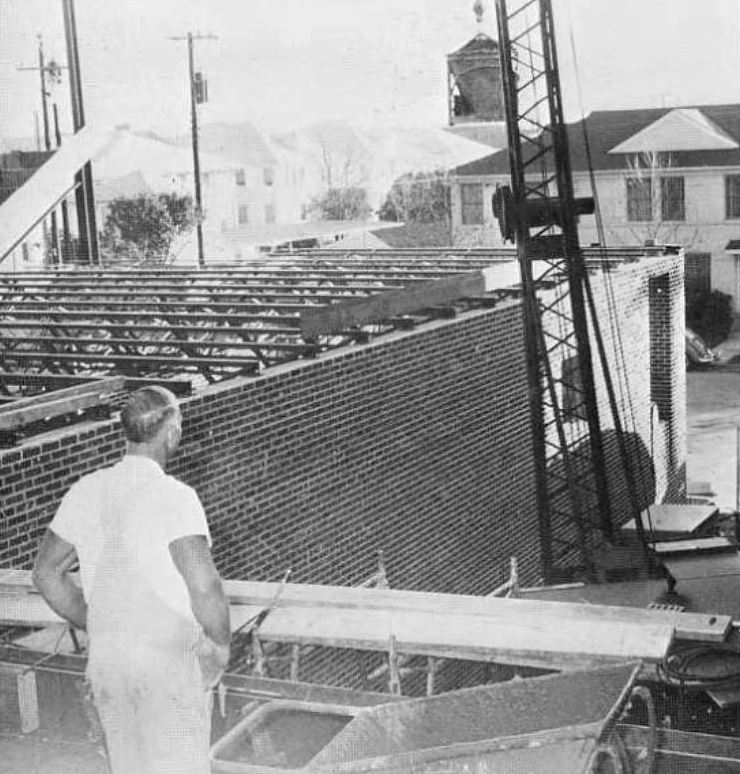
The 1965-1966 school year coincided with the construction of a new boys’ gym:

HPHS_1966_boys-gym-construction

HPHS_1966_boys-gym-construction_b

*

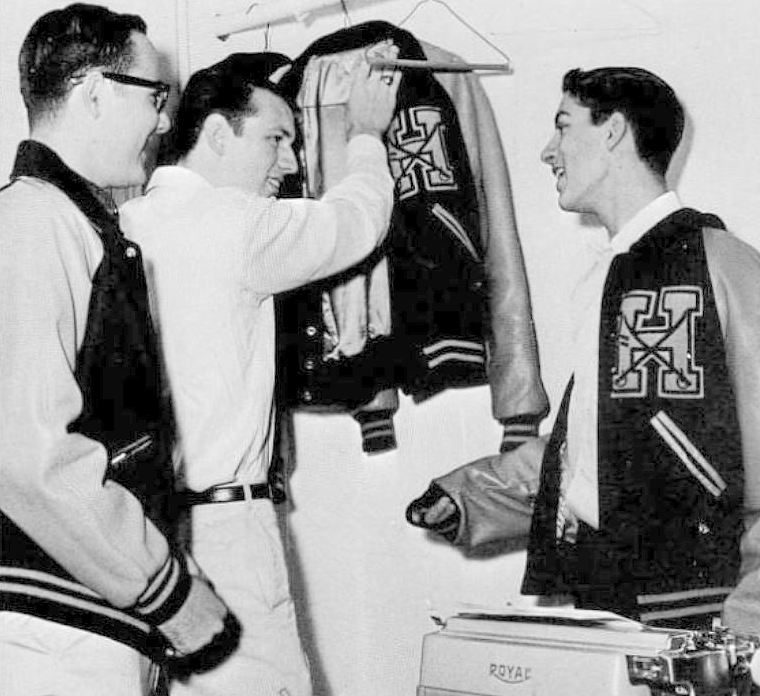
HPHS BMOC: “Ken Hamlett, Bob Winstead, and Charles Watkins proudly don new letter jackets.”

HPHS_1966_letter-jackets

*

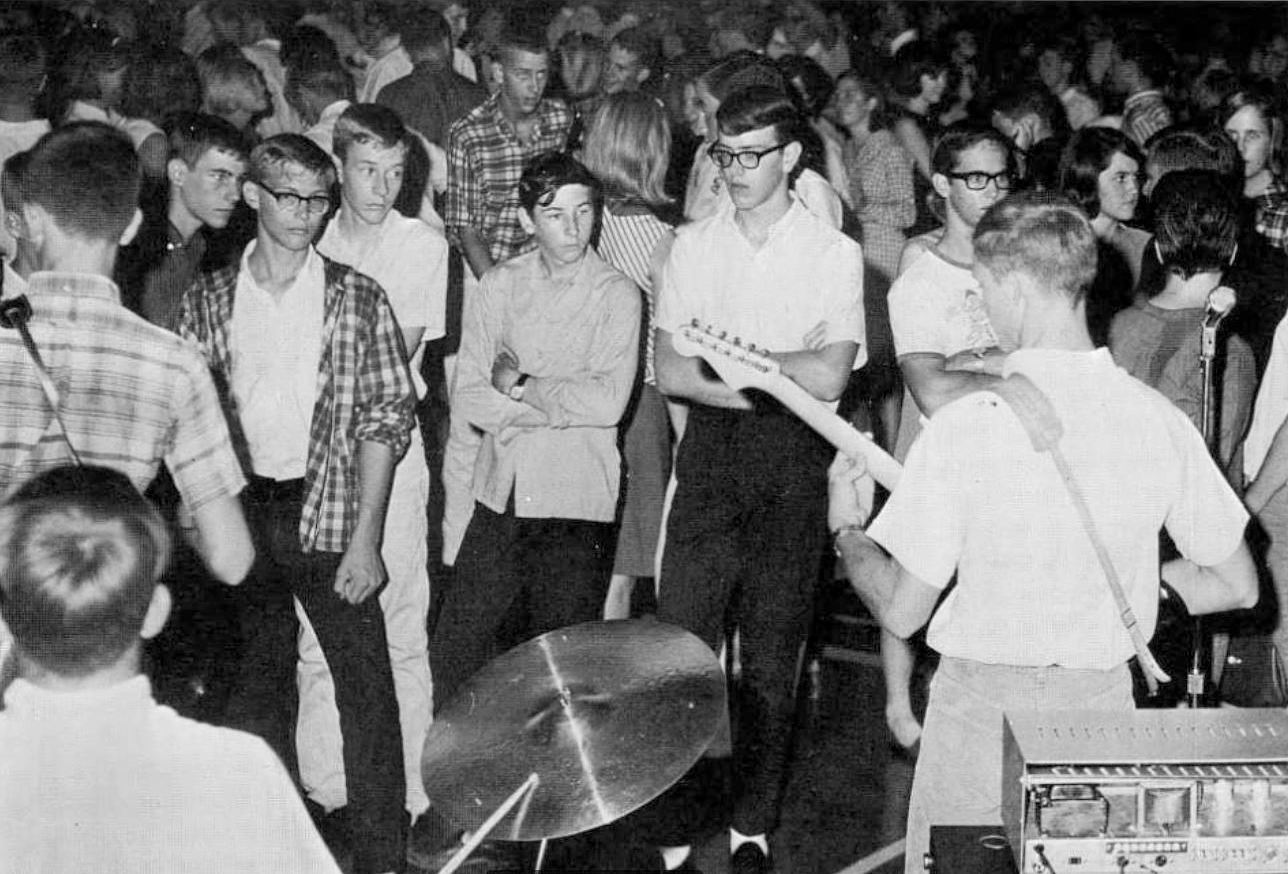
In 1966, everyone had a band: “Scots listen to competition between the Aces, the Continentals, and the Townsmen at the Howdy Dance.”

HPHS_1966_band-competition

*

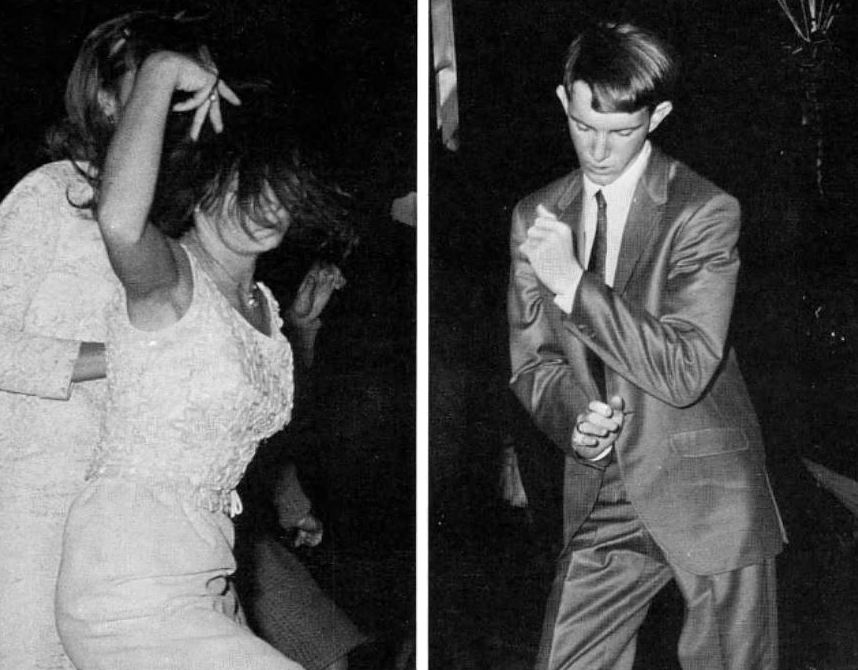
If you’re at something called a “Howdy Dance” I guess you’d probably better dance: “Suzanne Rogers and Dale Hastings display their proficiency in dancing to the music of The Townsmen.”

HPHS_1966_dancing

*

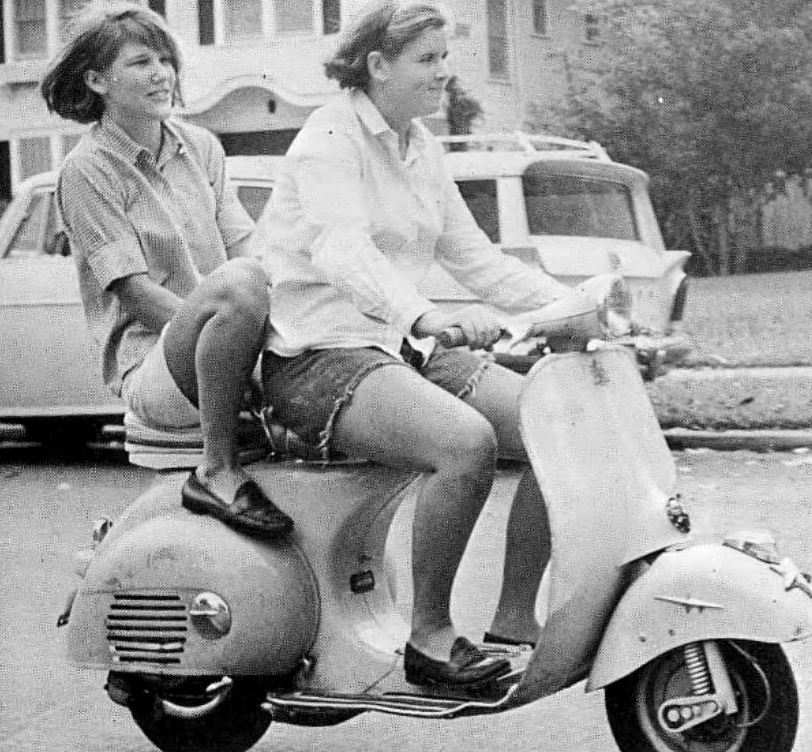
Transportation? Kids got places to go, man, and scooters are always cool: “Dare Majors and Nancy Northcutt take advantage of fall weather with a motorcycle ride.”

HPHS_1966_scooter

*

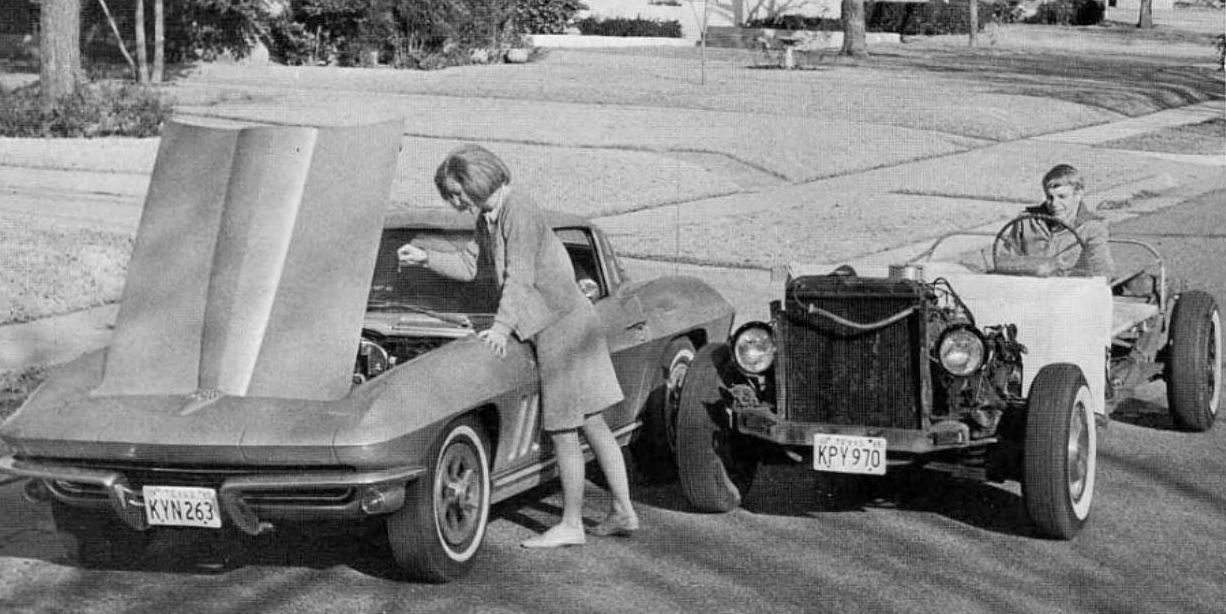
But, come on, it’s Highland Park. It’s a Corvette or nothing: Alinda Hill checks the oil in her ’65 Stingray as Eddie Richburg looks on from behind the wheel of his Park Cities jalopy.

HPHS_1966_cars

*

Coming next: Part 2 — ads for the hangouts, the businesses, and a couple of bands that were favorites of HPHS students in 1965-66.

***

Sources & Notes

All photos from the pages of the 1966 Highlander, the yearbook of Highland Park High School.

All photos larger when clicked.

*

Copyright © 2017 Paula Bosse. All Rights Reserved.


Event: “Remixing the News” Screening at SMU

remixing_hamon-library-blog-header

by Paula Bosse

UPDATE: The screening was great! For those of you who might have missed this event — or who would like to see the films again — the one-hour program is airing on KERA-Channel 13’s “Frame of Mind” on Thurs. Nov. 16, 2017 at 10:30 p.m., with another airing at 2:00 a.m. on Nov. 20.

*

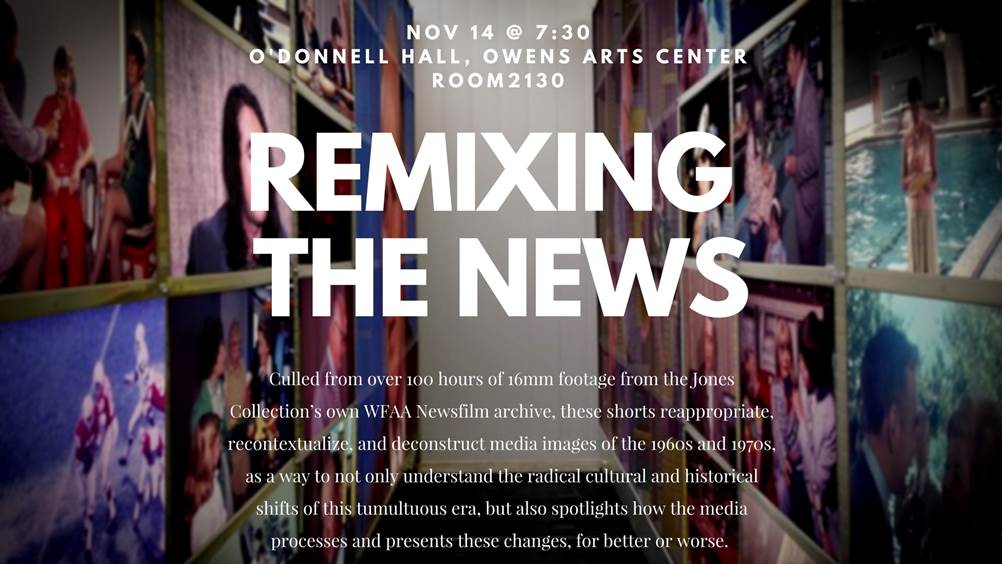
I’m really late announcing this event — WHICH TAKES PLACE TUESDAY, NOV. 14!! — but it sounds like something that people who are interested in Dallas history and/or video art would really enjoy: “Remixing the News,” presented by the G. William Jones Film and Video Collection at the Hamon Arts Library (SMU), in collaboration with KERA television and Dallas VideoFest.

So what is it?

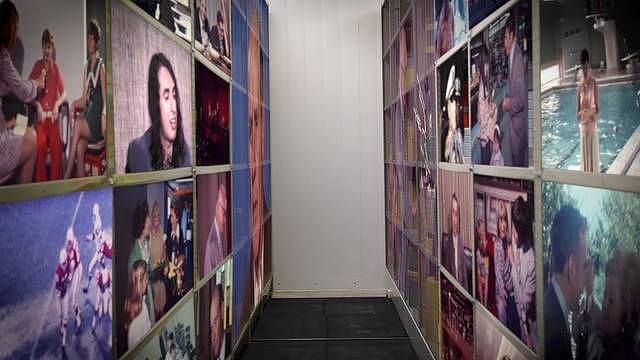
The Jones Collection at SMU includes the WFAA Newsfilm archive which contains what must be thousands of hours of 16mm film footage from the 1960s and ’70s, originally shot to be used as part of Channel 8 News broadcasts (this includes tons of B-roll footage shot to supplement the stories, but not always used in newscasts). As you can imagine, this is an unusual treasure trove of local news, history, and pop culture. I’ve dipped in and showcased some of the offerings in previous posts about the State Fair of Texas, and on Dallas appearances by Jimi Hendrix, Tiny Tim, and Glen Campbell.

Jeremy Spracklen, head curator of the Jones Collection, describes how this interesting local news archive was “reappropriated, recontextualized, and deconstructed” to become something altogether different:

We went in a unique direction in this — we did an experiment where we gave 10 local filmmakers a hard-drive with several hundred hours’ worth of footage on it and had them create their own interpretation of it. So, it is part history and part new video art.

I love this sort of thing. Eleven short films were produced by ten Texas filmmakers (Spracklen himself contributed two). Here are the films which will be shown Tuesday night, November 14:

  • “2,000 Hours in Dallas” by Jeremy Spracklen
  • “The Story of Jane X” by Christian Vasquez
  • “Dallas Circle” by Justin Wilson
  • “Lawmen & Cowpokes” by Gordon K. Smith
  • “History Lessons” by Steve Baker
  • “Beyond 10” by Carmen Menza
  • “Glass” by Madison McMakin
  • “Poofs are New” by Blaine Dunlap
  • “Divided” by Michael Thomas & Dakota Ford
  • “The Night in the Last Branches” by Michael Alexander Morris
  • “Echoes of the Past” by Jeremy Spracklen

The FREE advance screening of this collection (which will air at a later time on KERA’s long-running “Frame of Mind” series) will be held at SMU in the Owen Art Center on Tuesday, Nov. 14 (which might be TODAY!) — it begins at 7:30 p.m. After the screening, Bart Weiss, artistic director of the Video Association of Dallas, will host a Q&A with several of the filmmakers in attendance.

ALSO, Jeremy Spracklen tells me that those who are interested are invited to tour his very chilly subterranean film-archive lair after the event. So much Texas film history lurks beneath the SMU campus!

This event sounds great. Be there!

remixing-the-news_smu_hamon

“Remixing the News”

Presented by the G. William Jones Film and Video Collection, Hamon Arts Library, in collaboration with KERA and VideoFest

Date: Tuesday, November 14, 2017
Time: 7:30 p.m. – 9:00 p.m.

O’Donnell Hall, room 2130, Owen Arts Center (see map below)

FREE to the public

***

Resources & Notes

More on this event can be found on the SMU website here and on the Hamon Arts Library blog here; the Facebook event page is here.

The event is free, and parking on the SMU campus after 7:00 p.m. is also free. Parking at SMU scares me, but here is what Jeremy advises: “The closest parking is in the meters in front of the Meadows building (they are not active after 7:00), the ‘U’ lot just south of the building, and, if those are full, the Meadows Museum parking garage is open — it is just down Bishop Blvd. and about a 5-minute walk.”

His map is below, with the parking areas highlighted in red. (Click to see larger image.)

SMUCampusMapNamesBLK

More on the WFAA Newsfilm archive can be found in a Flashback Dallas post “How the News Got Made.”

One of the filmmakers who has contributed a film to this event is Blaine Dunlap — I have posted links to two of his films, both of which I really enjoyed: Sunset High School on Film — 1970″ (which he made while he was a Sunset student) and “‘Sometimes I Run’: Dallas Noir — 1973” (about a philosophizing downtown street cleaner).

More on “Frame of Mind” here.

*

Copyright © 2017 Paula Bosse. All Rights Reserved.


Neiman-Marcus Welcomes You to the Fair with Jeweled Mementos and Picasso Paintings — 1948

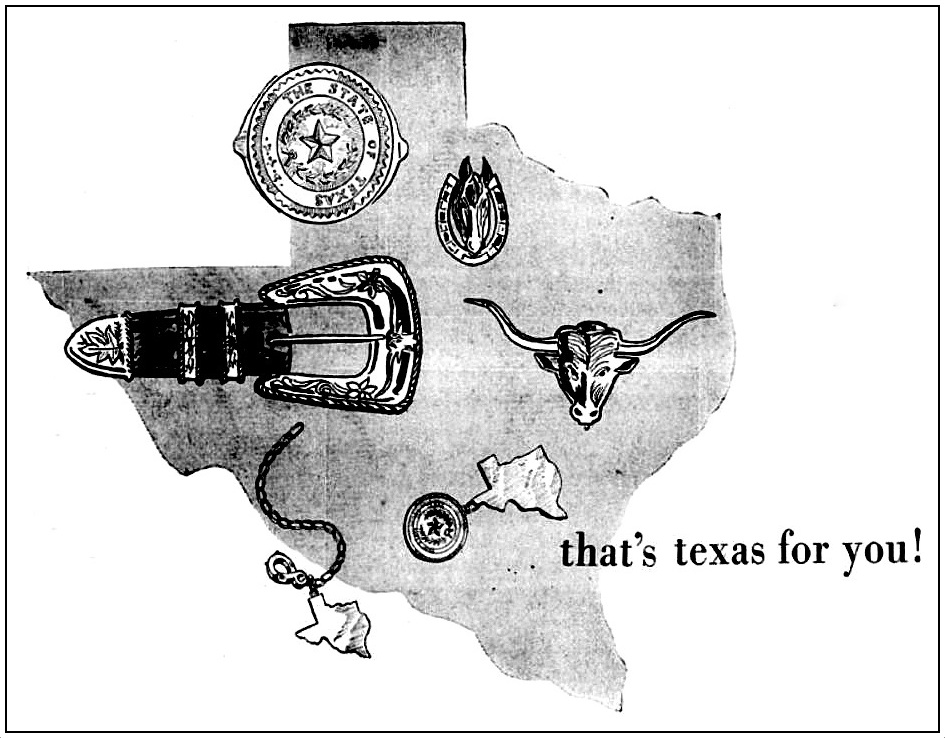
n-m_picasso_1948_fair_jewelryN-M’s 1948 “mementos of Texas…” (click for larger image)

by Paula Bosse

For many who come to Dallas from all across the state to visit the State Fair of Texas, a trip downtown to see the legendary Neiman Marcus department store is a must-see item on the itinerary. This was perhaps more the case years ago when the store was still owned by members of the Marcus family who were eager boosters of the annual event and placed several ads each year which graciously welcomed State Fair visitors to the city. For many years Neiman’s offered “souvenirs” for the tourists, ranging from relatively inexpensive Texas-centric knick-knacks to very expensive Texas-centric knick-knacks.

The 1948 N-M offerings can be seen below in an ad that boasts “A 14K gold welcome to Dallas and the State Fair!” (Click the ad below to see a larger image — to see an image of the ad copy alone, click here.)

ad-neiman-marcus_state-fair_1948_full

Here are the trinkets which no doubt wowed them back home in the nicer neighborhoods of Houston and Midland. (I’ve included ball-park prices in today’s money– according to the whiz-bangy Inflation Calculator — in parentheses.)

  • Texas Seal containing circular knife and file: $55 (about $550 in today’s money)
  • Gold belt buckle, made to order: $325 ($3,300)
  • Hand-tooled belt: $5 ($50)
  • Scarf clip, horse with ruby eyes and ruby studded collar: $500 ($5,100)
  • Hand-carved scarf pin, gold steer head with ruby eyes: $500 ($5,100)
  • Pocket key chain with Texas charm: $45 ($450)
  • Texas chain and Texas seal cuff links: $80 ($800)

For the cheap monogrammed hats, giant sunglasses, and salt water taffy, you’d have to head to Fair Park.

Another attraction at Neiman’s during the 1948 State Fair of Texas was an art exhibit: the first showing in Texas of original works by Pablo Picasso. The exclusive show was specifically scheduled to coincide with the State Fair and was prominently displayed on the 4th Floor of the store, in the Decorative Galleries. Twelve canvases — some never before seen in the United States — were “secured directly from Picasso’s studio at Antibes in Southern France,” via Samuel M. Kootz, Picasso’s rep in the U.S. Think about that for a second: in 1948 Pablo Picasso was the world’s most famous living artist, and there was an exhibit of his recent works — some never before seen in the United States — in a department store. In Texas. That was, as they say, a pretty good “get” for the soon-to-be President of the company, Stanley Marcus.

The Picasso exhibit was an early example of Neiman-Marcus’ dedication to bringing international arts and culture to Dallas — an idea which later manifested itself in the store’s Fortnight celebrations (which also ran to coincide with the State Fair in order to maximize publicity, foot traffic, and sales).

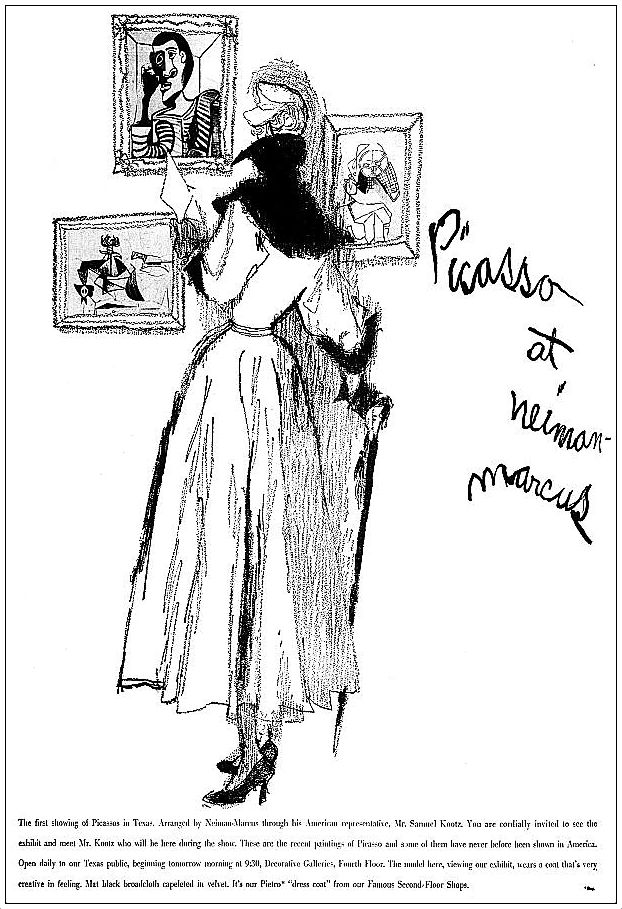
Stanley Marcus was an experienced buyer of art, and his relationship with Mr. Kootz was obviously warm — how else might one explain the inclusion of redrawn Picasso paintings (all of which appeared in the N-M show) in a store advertisement? Pretty ballsy. (Click ad below to see a larger image — the text alone can be seen larger here.)

picasso_n-m_1948

For those who might be interested, these are the first Picasso paintings ever publicly shown in Texas:

  • “Seated Woman” (1929)
  • “Sailor” (1943)
  • “Still Life with Mirror” (1943)
  • “Head” (1944)
  • “Still Life with Skull and Pitcher” (1945)
  • “Cock and Knife” (1947)
  • “Woman” (1947)
  • “Still Life with Coffee Pot” (1947)
  • “Owl and Arrow” (1947)
  • “Concierge’s Daughter with Doll” (1947)
  • “Blue Owl” (1947)
  • “The Glass” (1947)

Another art-world highlight in Dallas during the 1948 State Fair of Texas was the showing of Salvador Dali’s painting “Spain” at the Dallas Museum of Fine Arts in Fair Park (from the collection of Edward James, loaned by the Museum of Modern Art in New York). A Dallas Morning News headline — “Fair Interest to Divide Over Picasso and Dali” — seemed to imply that culturally-inclined Dallasites and/or fair-goers would have to choose one over the other in the battle of which famous Spanish artist-celebrity was most worthy of their attention: “Team Pablo” vs. “Team Salvador.” In regard to Dallas and its (somewhat late-blooming) openness to modern art, the first sentence of the article is interesting:

The simultaneous presence in Dallas during the period of the State Fair of Texas of original works by two of the world’s best-known living artists underscores heavily the swift progress toward cultural maturity in local thinking and planning. (Rual Askew, DMN, Oct. 3, 1948)

“Cultural maturity” and planning — both were in evidence in Dallas in the fall of 1948.

Thousands of Texans had their very first in-the-flesh glimpse of a Picasso canvas or a Dali painting in Dallas during the 1948 State Fair of Texas — either at a tony department store that sold $500 gold-and-ruby scarf pin “souvenirs,” or amongst the hot-dog-eating and roller-coaster-riding hoi polloi in Fair Park. That’s a pretty good reach for fine art.

It’s not all about the automobile shows!

***

Sources & Notes

Ads from October, 1948.

Click pictures to see larger images.

*

Copyright © 2017 Paula Bosse. All Rights Reserved.


State Fair of Texas Midway — 2017

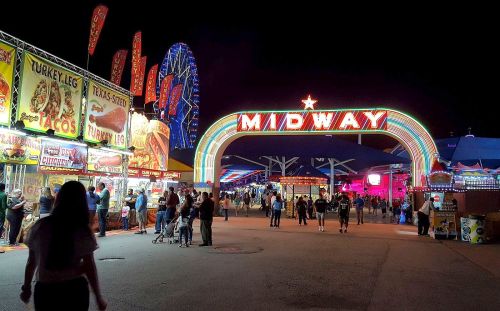
midway-entrance_sfot_night_100417The State Fair of Texas midway never gets old… (click for larger image)

by Paula Bosse

I haven’t been to the State Fair of Texas for several years, so I took a trip out to Fair Park this past Wednesday to see what’s new.

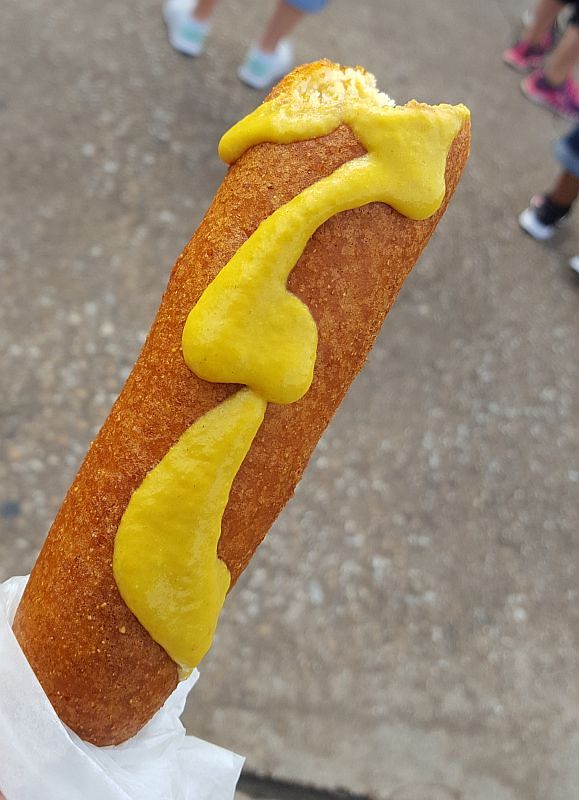
Food. The only thing I ever really want is the traditional Fletcher’s corny dog, and I’m happy to report they’re as good as ever.
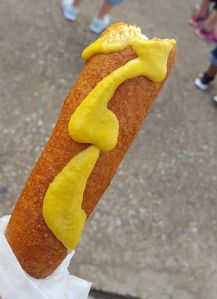
corny-dog_sfot-100417

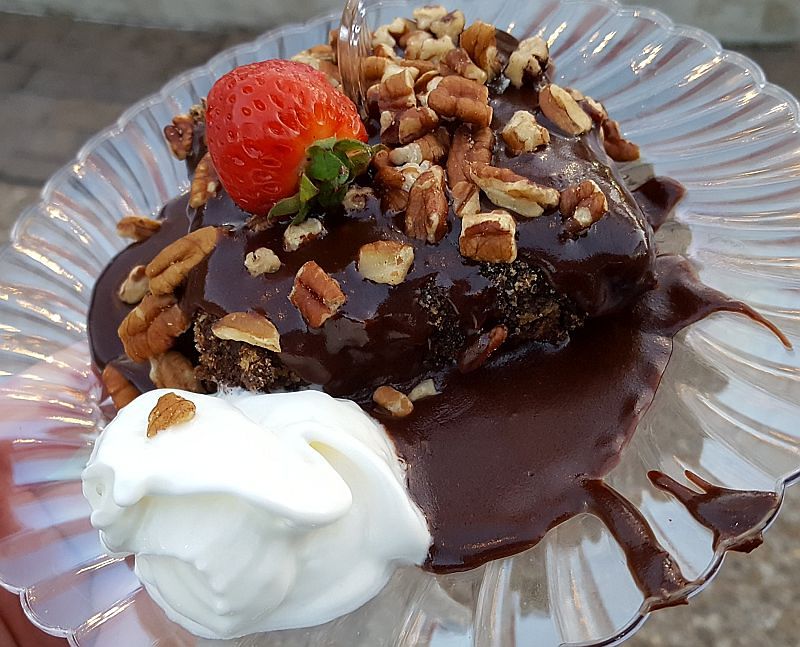
I also tried the Fried Texas Sheet Cake which was — and I can’t believe I’m saying this — too sweet, and just … too much. A bite would have been plenty. The topping of chocolate syrup and pecans was the best part. Maybe someone should offer a bowl of just that. …And then fry the whole thing — bowl and all. I’d probably try it.
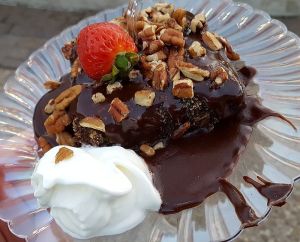
fried-tx-sheetcake_sfot_100417

When I saw the sign for “Fried Chicken Skin” I had to try it. I guess it’s something you either really want, or it’s something that makes you recoil in horror. I really wanted it. I was expecting more of a battered-Church’s-fried-chicken experience, but I don’t think there was any batter at all. I still liked it, but it could have been a lot more mouthwatering. It needed a bit more heft. (Speaking of fried skin — there’s a phrase I’ve never uttered — why aren’t there chicharrones at the fair? Done right, those things are incredible. Isn’t pork belly still a thing?) (And someone really should do battered fried chicken skin.)
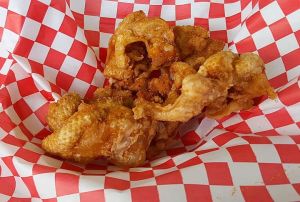
fried-chicken-skin_sfot_100417

It might have been healthier had I just swallowed the cute Big Tex earrings ($10, zero fat grams), which I almost went back for. It takes a special kind of person to be able to pull those off, and I’m afraid I’m not that whimsical. But I bet they make a great conversation-starter and help break the ice at parties.
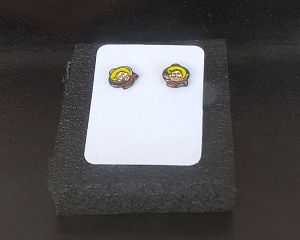
big-tex-earrings_sfot_100417

Everything was remarkably clean. I mean really clean. …Freakishly clean. This is not the grimy, dirty, cigarette-butt-laden fair I remember as a kid, and I have to admit, I kind of missed the grime and trash. Also, I don’t remember the plush toys being so remarkably colorful. My retinas will never be the same. Click the photo below to get the full neon blast of color.
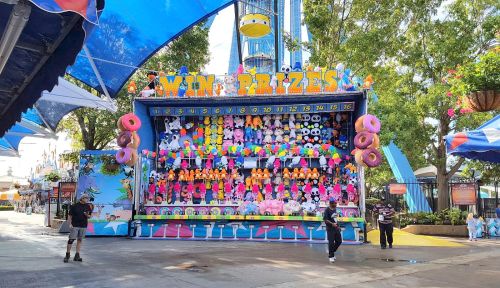
midway_prizes_sfot_100417

Speaking of things I miss, I also miss the seediness of the fairs from my childhood in the ’70s (certainly the seediest decade in modern times): the unkempt carnival barkers who never sounded like they were from Texas, the bored ride operators going about their repetitive jobs with a cigarette hanging from their mouth, the half-eaten candy apple stuck to the asphalt, and, yes the side shows. Without doubt, I think my favorite thing about the annual fair was seeing the huge banners emblazoned with vivid images of freaks and oddities — those banners were works of art and sheer advertising genius. I never wanted to see the shows, but I loved those banners, and I loved listening to the raspy voices of the going-through-the-motions barkers. Now? I saw a teeny booth along the midway wherein was what was purported to be the world’s smallest horse (yawn), and then there was the exhibit below featuring what appeared to be nothing more than a two-headed rattlesnake and a couple of two-headed turtles inside a little building about the size of a portable garden shed. But a kid will always be fascinated by anything with two heads. I realize my interest in two-headed creatures isn’t what it used to be, and I also realize that the day of the brilliant freak show banner art has come and gone.
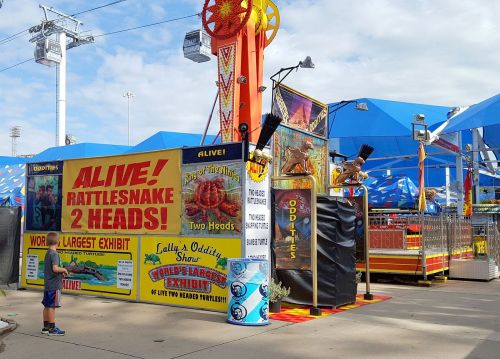
midway_alive_sfot_100417

When I was a kid, my favorite “ride” was always the German Funhouse. I did see one funhouse, which did not seem to be specific as to country of origin. These haunted houses get high marks for decorative impact. This is what you want to see at a state fair!
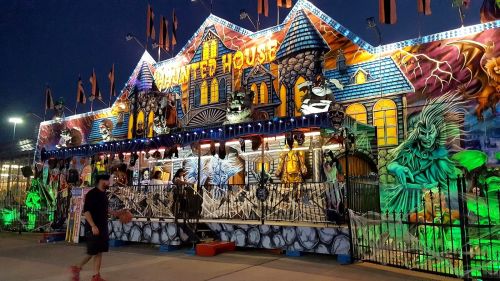
haunted-house_sfot_midway_100417

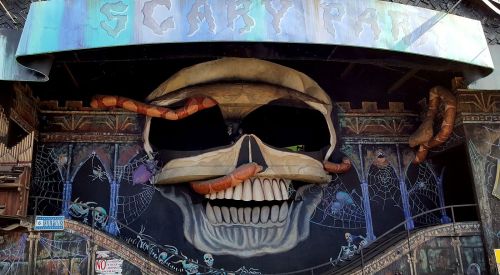
scary-park_sfot_midway_100417

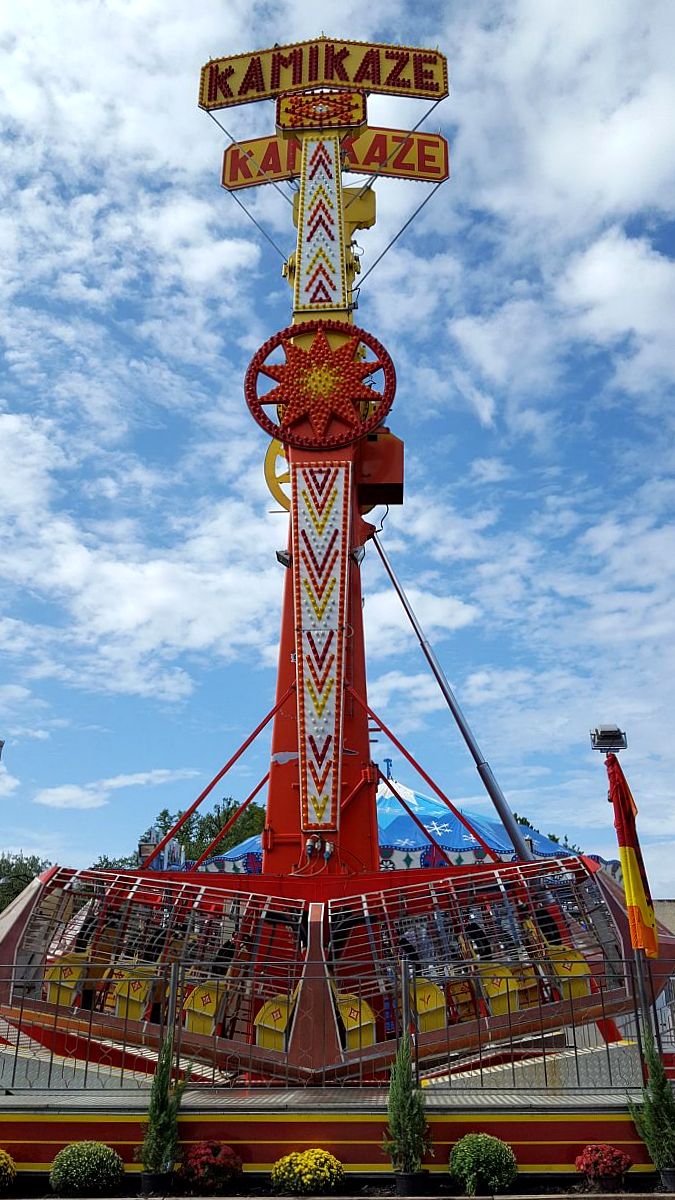
Incidentally, it will cost you 6 coupons to experience the full gory glory of “Scary Park” — that’s HALF the price of one order of fried chicken skin! Seems like a pretty good deal. There are some “extreme” rides that will cost you 150 coupons. ONE HUNDRED AND FIFTY COUPONS. That’s $75. I watched one of these rides, which began with two teenagers being strapped into some sort of horizontal harness. The second step was the signing of the waivers. Then the boys were raised way, way up and then dropped and flung across the sky from a height which makes me queasy just thinking about it. They swung back and forth a few times and were then lowered to terra firma, no doubt thrilled and nauseous. That makes a whirl on the quaint Kamikaze seem like a leisurely stroll around the neighborhood after a light meal.
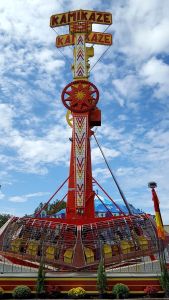
kamikaze_sfot_midway_100417

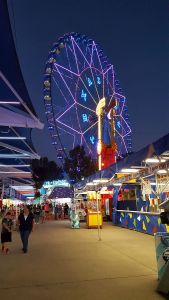
The Texas Star ferris wheel is pretty impressive and deserves a better photo than this, but look at the ground — you could eat off that!
texas-star_sfot_100417

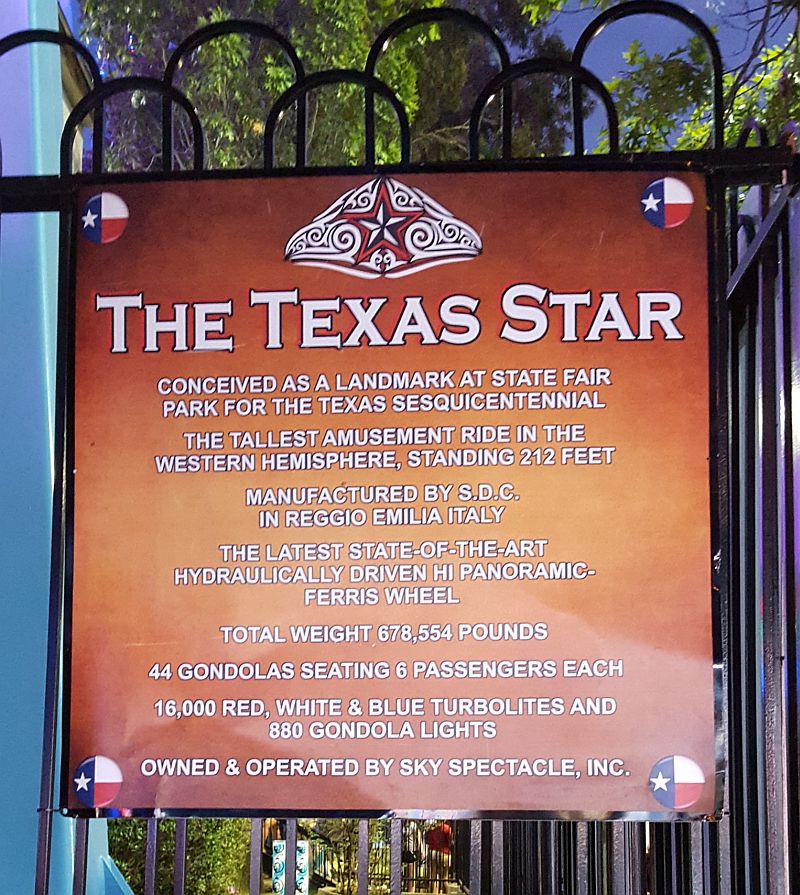
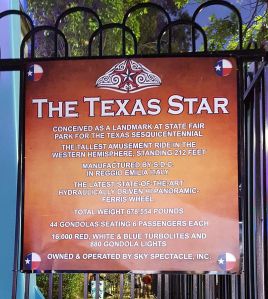
In case you ever find yourself on Jeopardy and the category is “Amusement Park Rides,” this might be helpful.
texas-star_ferris-wheel_history_sfot_100417

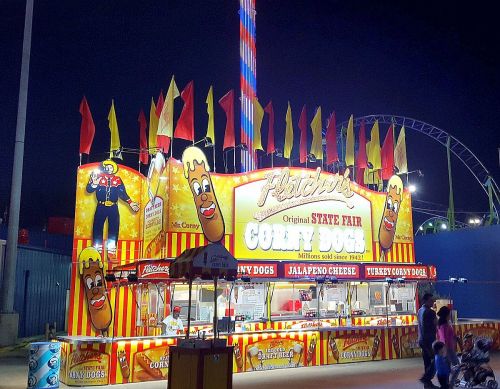
I don’t know how many Fletcher’s stands there are at the fair, but this one on the midway is certainly the brightest. (And if you say “corn dog” in my presence I will be forced to correct you….)
fletchers-corny-dog-stand_sfot_midway_100417

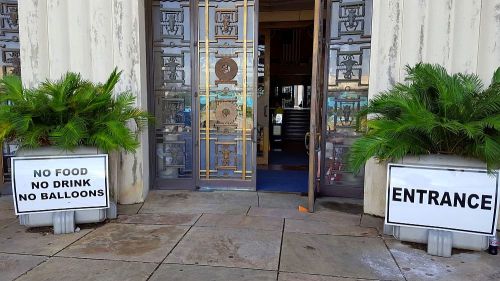
My favorite sign at the fair was this one, at the beautiful entrance to the beautiful Hall of State: “NO FOOD, NO DRINK, NO BALLOONS.” Don’t even think about it.
hall-of-state_no-balloons_sfot_100417

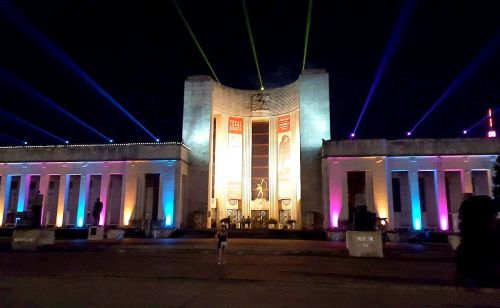
And look at Hall of State at night. Nary a balloon in sight.
hall-of-state_illuminated_night_sfot_100417

I was actually working in the Hall of State the day I took these photos, so I had a short walk around the park right after it opened (that corny dog was my breakfast!) and a longer walk around the midway at night. A few thoughts:

  • I’m the only person who wishes it weren’t quite so clean.
  • Neon Big Tex is way better than “new” post-flambé Big Tex. Everyone complains about the new Big Tex, and I’m one of them. There’s a new kid in town, Tex, and my allegiance is now firmly with Neon Big Tex, the old Centennial Liquor sign featuring a neon-outlined Big Tex recently planted in Fair Park.
  • I never liked the nightly parade as a kid, but I really enjoyed it this year. The floats were attractive, the cowboy on stilts and the unicyclist on a stuffed pony were fun and goofy, and the Carter High School band was really, really good (and brought memories of my high school marching band days back with a vengeance). Also in the parade were several policemen on horses. I wondered what happened when a horse would leave its … um … byproducts behind them in the (meticulously clean) street, and then I saw a policeman riding behind in a golf cart, with a shovel strapped to the side and a large receptacle in the back. I wonder if the officers draw straws before the parade to see who gets stuck with shovel-duty?
  • I did not visit any buildings. I saw no canned peaches, no automobiles, no butter sculptures, no livestock, no miracle mops, no pig races. I’ll have to leave those for next time.
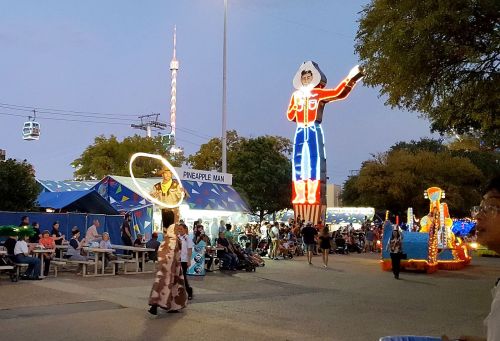
parade_neon-big-tex_lasso-stilts_sfot_100417

The best thing about the fair is that everyone is happy — especially the children, who are often over-stimulated and beside themselves with excitement — and it reminds me how much I used to look forward to my annual visit.

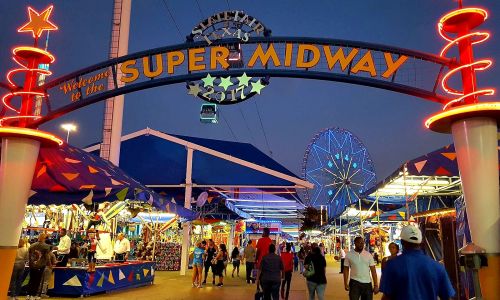
Seeing the fair in the daytime and at nighttime are two completely different experiences. Daytime in general is overrated. Always choose nighttime!
super-midway_sfot_100417

***

Sources & Notes

All photos by Paula Bosse. Most are pretty big — click ’em!

The 2017 State Fair of Texas runs from Sept. 29 to Oct. 22. There’s plenty of time left!

*

Copyright © 2017 Paula Bosse. All Rights Reserved.


Titche’s Discovers the Suburbs — 1961-1968

titches_dallas-stores_1969-directoryTitche’s has you covered… (click to see larger image)

by Paula Bosse

Edward Titche and Max Goettinger founded the Titche-Goettinger department store in Dallas in 1902, and in 1904 they moved into the new Wilson Building. In the late 1920s they built their own George Dahl-designed building at Main and St. Paul, which was greatly enlarged and expanded in 1955. The store was popular with downtown shoppers, and profits continued to rise. The next logical step was to open additional stores. It took a while (59 years), but in October, 1961 they opened three — three! — new suburban stores. How was that possible? Because Titche’s (or their then-parent company) purchased the Fort Worth department store chain The Fair of Texas, and several of its stores were re-christened as Titche’s stores (the others eventually became Monnig’s stores).

The ad above is from the 1969 Dallas city directory and shows that by 1969, there were seven Titche’s stores in the Dallas area. Titche’s bit the dust decades ago, and I have to admit that the only Titche’s store I actually remember ever being in was the one in NorthPark (and I might mostly be remembering Joske’s…). I had no idea about any of these other stores (other than the one at Main and St. Paul, which I wish I had been to!).

*

The oldest store in the ad above was the one on Main at St. Paul, still standing, still looking good (but, sadly, with that fab logo gone forever).

titches_1969-directory_downtown

*

The second store was located in North Dallas in the Preston Forest Shopping Center, at the southeast corner of Preston Road and Forest Lane. When this opened as Titches’ first suburban store, the paint must still have been wet. It was originally built as a Fair of Texas store, with its opening scheduled for August, 1961. It was opened in October, 1961 as a Titche’s store — remodeled from the original Amos Parrish Associates of New York design (seen here, in a rendering). (The Fair version was much more interesting!)

titches_1969-directory_preston-forest

*

One week later (!), the next two stores opened on the same day: in the Wynnewood Shopping Village in Oak Cliff, and in the Lochwood Shopping Village on Garland Road in far East Dallas. These two stores had been Fair stores and had opened at the same time in August, 1960. The two drawings below look pretty much the same as the rendering of the pre-remodeled Preston Forest store (all designed by Amos Parrish Assoc.). (An interesting tidbit about the Lochwood location: when this store was built by The Fair of Texas — a department store with Fort Worth roots going back to the 1880s or 1890s — it was the first Fair store in Dallas. In honor of this hands-across-the-prairie moment of business expansion, a truckload of Fort Worth dirt was brought over and “mixed symbolically” with Dallas dirt at the 1959 Lochwood groundbreaking.)

titches_1969-directory_lochwood

titches_1969-directory_wynnewood

*

The Arlington store was also a former Fair store; it opened as Titche’s in July, 1963.

titches_1969-directory_arlington

*

The NorthPark store — which occupied a quarter of a million square feet — was one of the first five stores to open in the brand new mall, in July 1965. NorthPark Center is known for its wonderfully sleek, clean, no-nonsense modern architecture (as seen below), but an early proposed Titche’s rendering from 1962 (seen here) looks a little fussy.

titches_1969-directory_northpark

*

And, lastly, in this 1960s wave of expansion, a second downtown Dallas location was opened in the new One Main Place in December, 1968 in the form of “Miss Titche,” a concept-store created to appeal to “career girls” who worked downtown and enjoyed shopping during their lunch hours. It was located on the “plaza level” which sounds like it might have been part of the then-new underground tunnel system of shops. If newspaper ads are anything to go on, it looks like Miss Titche managed to hang on until at least 1975.

titches_1969-directory_one-main-place

*

Titche’s continued opening new stores into the 1970s, but in August, 1978, it was announced that Titches’ parent company, Allied Stores Corp., was changing the names of all Dallas-area Titche’s stores to “Joske’s.” The nine Titche’s stores operating until the changeover were the flagship store downtown, Preston Forest, Lochwood Village (which became The Treehouse in 1974), Wynnewood, Arlington, NorthPark, Town East, Irving, and Red Bird.

And, just like that, after 72 years, the name of one of Dallas’ oldest department stores vanished.

titches_logo_1963

***

Sources & Notes

Ad and details from the 1969 Polk’s Greater Dallas City Directory.

More on Titche-Goettinger can be found at the Department Store Museum, here.

Images larger when clicked.

*

Copyright © 2017 Paula Bosse. All Rights Reserved.