Flashback : Dallas

A Miscellany: History, Ads, Pop Culture

Category: Leisure

Titche’s Discovers the Suburbs — 1961-1968
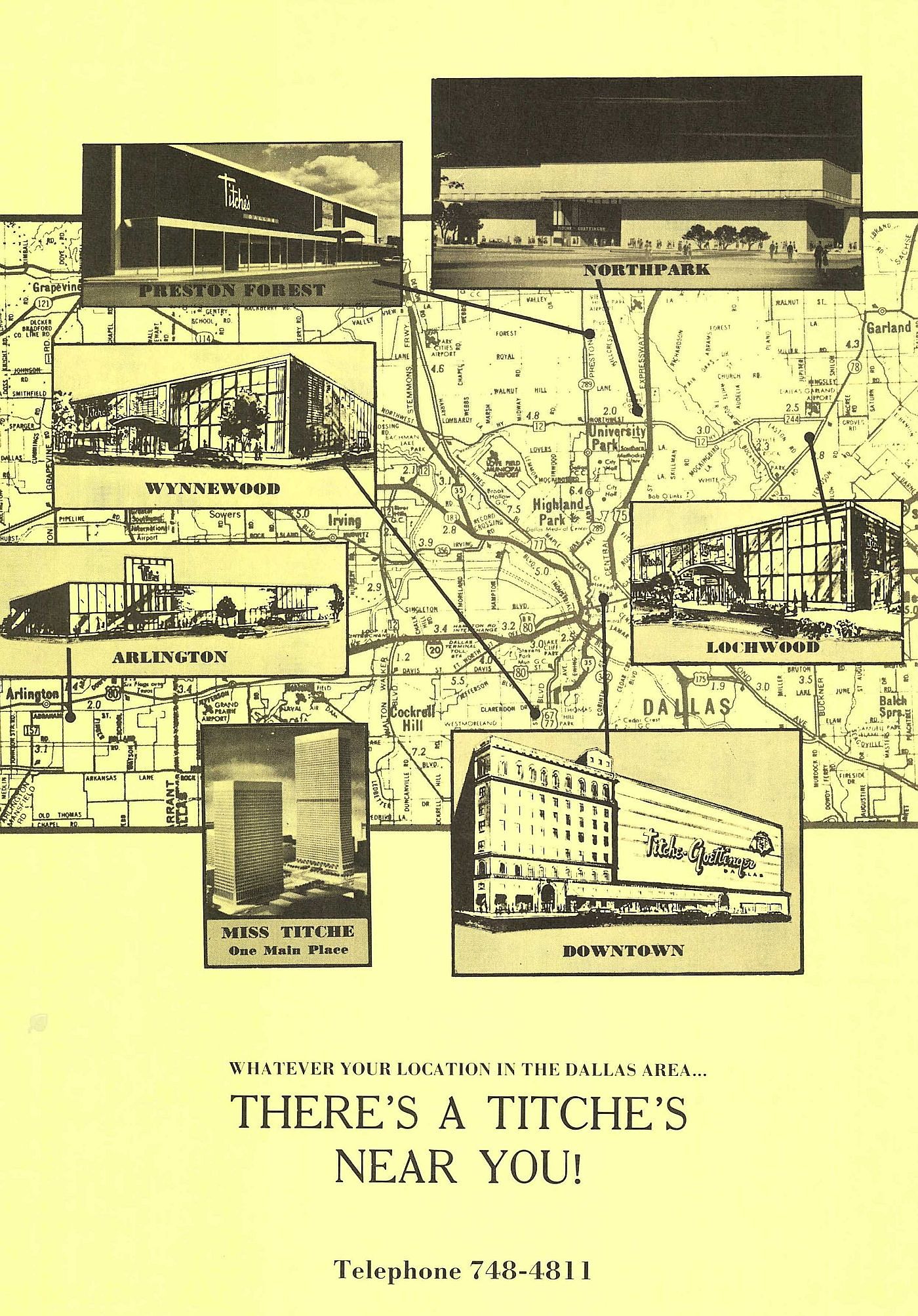
titches_dallas-stores_1969-directoryTitche’s has you covered… (click to see larger image)

by Paula Bosse

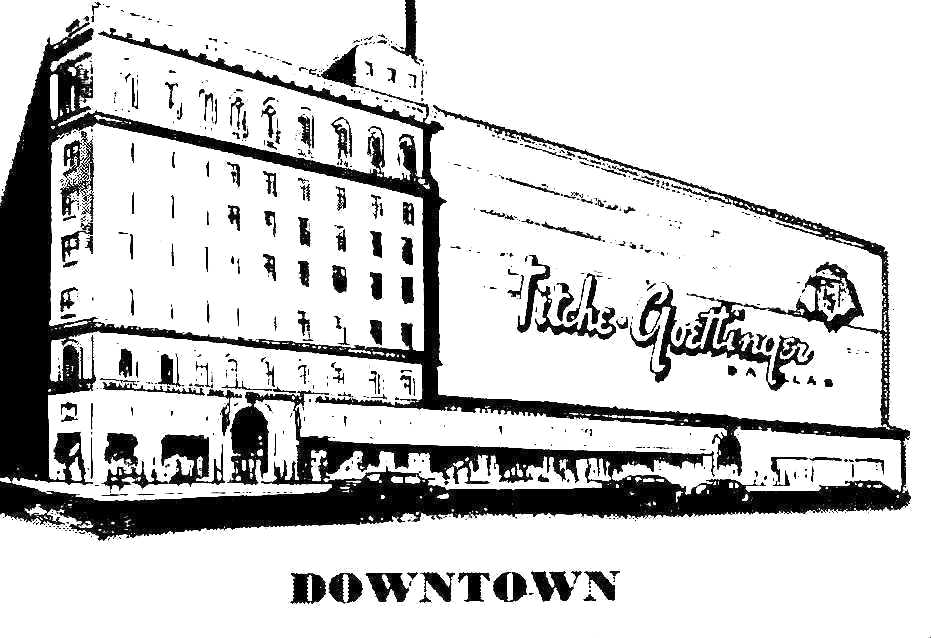
Edward Titche and Max Goettinger founded the Titche-Goettinger department store in Dallas in 1902, and in 1904 they moved into the new Wilson Building. In the late 1920s they built their own George Dahl-designed building at Main and St. Paul, which was greatly enlarged and expanded in 1955. The store was popular with downtown shoppers, and profits continued to rise. The next logical step was to open additional stores. It took a while (59 years), but in October, 1961 they opened three — three! — new suburban stores. How was that possible? Because Titche’s (or their then-parent company) purchased the Fort Worth department store chain The Fair of Texas, and several of its stores were re-christened as Titche’s stores (the others eventually became Monnig’s stores).

The ad above is from the 1969 Dallas city directory and shows that by 1969, there were seven Titche’s stores in the Dallas area. Titche’s bit the dust decades ago, and I have to admit that the only Titche’s store I actually remember ever being in was the one in NorthPark (and I might mostly be remembering Joske’s…). I had no idea about any of these other stores (other than the one at Main and St. Paul, which I wish I had been to!).

*

The oldest store in the ad above was the one on Main at St. Paul, still standing, still looking good (but, sadly, with that fab logo gone forever).
titches_1969-directory_downtown

*

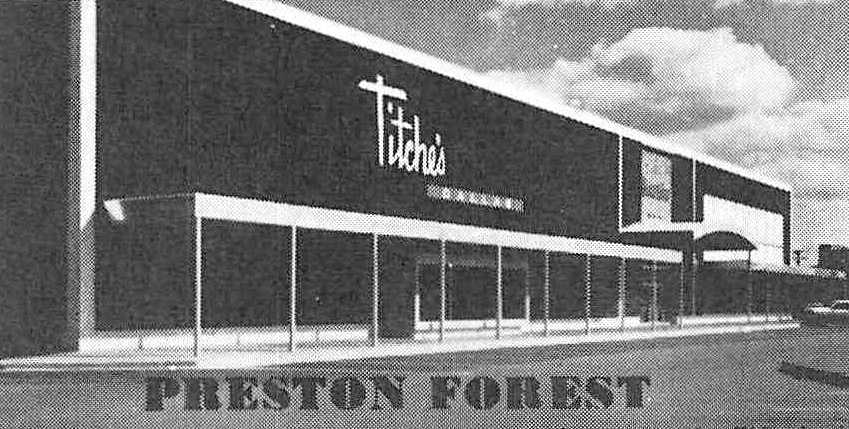
The second store was located in North Dallas in the Preston Forest Shopping Center, at the southeast corner of Preston Road and Forest Lane. When this opened as Titches’ first suburban store, the paint must still have been wet. It was originally built as a Fair of Texas store, with its opening scheduled for August, 1961. It was opened in October, 1961 as a Titche’s store — remodeled from the original Amos Parrish Associates of New York design (seen here, in a rendering). (The Fair version was much more interesting!)
titches_1969-directory_preston-forest

*

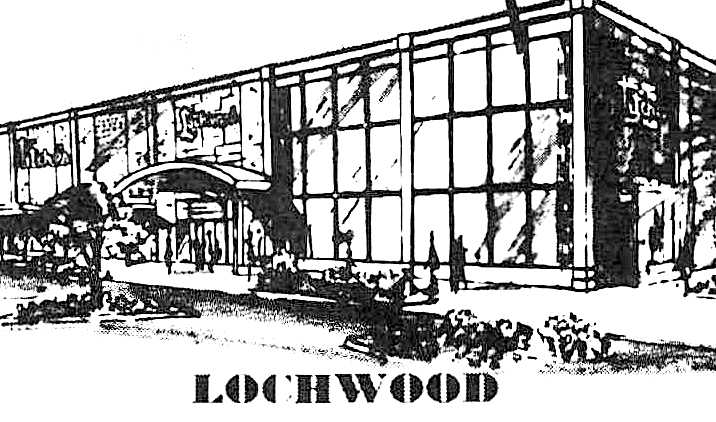
One week later (!), the next two stores opened on the same day: in the Wynnewood Shopping Village in Oak Cliff, and in the Lochwood Shopping Village on Garland Road in far East Dallas. These two stores had been Fair stores and had opened at the same time in August, 1960. The two drawings below look pretty much the same as the rendering of the pre-remodeled Preston Forest store (all designed by Amos Parrish Assoc.). (An interesting tidbit about the Lochwood location: when this store was built by The Fair of Texas — a department store with Fort Worth roots going back to the 1880s or 1890s — it was the first Fair store in Dallas. In honor of this hands-across-the-prairie moment of business expansion, a truckload of Fort Worth dirt was brought over and “mixed symbolically” with Dallas dirt at the 1959 Lochwood groundbreaking.)
titches_1969-directory_lochwood

titches_1969-directory_wynnewood

*

The Arlington store was also a former Fair store; it opened as Titche’s in July, 1963.

titches_1969-directory_arlington

*

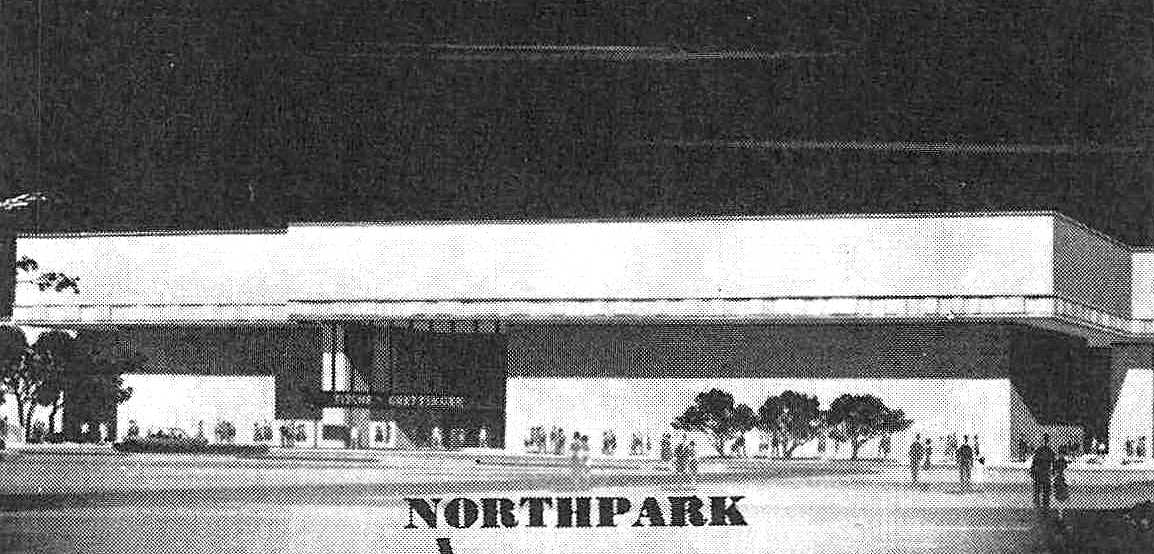
The NorthPark store — which occupied a quarter of a million square feet — was one of the first five stores to open in the brand new mall, in July 1965. NorthPark Center is known for its wonderfully sleek, clean, no-nonsense modern architecture (as seen below), but an early proposed Titche’s rendering from 1962 (seen here) looks a little fussy.
titches_1969-directory_northpark

*

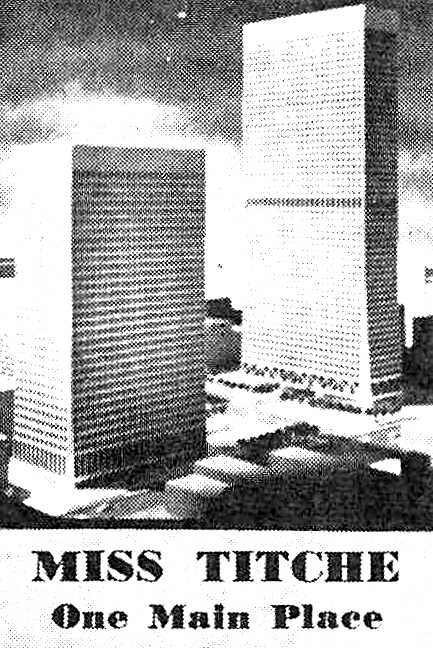
And, lastly, in this 1960s wave of expansion, a second downtown Dallas location was opened in the new One Main Place in December, 1968 in the form of “Miss Titche,” a concept-store created to appeal to “career girls” who worked downtown and enjoyed shopping during their lunch hours. It was located on the “plaza level” which sounds like it might have been part of the then-new underground tunnel system of shops. If newspaper ads are anything to go on, it looks like Miss Titche managed to hang on until at least 1975.
titches_1969-directory_one-main-place

*

Titche’s continued opening new stores into the 1970s, but in August, 1978, it was announced that Titches’ parent company, Allied Stores Corp., was changing the names of all Dallas-area Titche’s stores to “Joske’s.” The nine Titche’s stores operating until the changeover were the flagship store downtown, Preston Forest, Lochwood Village (which became The Treehouse in 1974), Wynnewood, Arlington, NorthPark, Town East, Irving, and Red Bird.

And, just like that, after 72 years, the name of one of Dallas’ oldest department stores vanished.

titches_logo_1963

***

Sources & Notes

Ad and details from the 1969 Polk’s Greater Dallas City Directory.

More on Titche-Goettinger can be found at the Department Store Museum, here.

Images larger when clicked.

*

Copyright © 2017 Paula Bosse. All Rights Reserved.


Film Footage: “The State Fair of Texas in the 1960s”

sfot_1960s_jones-collection_smu_men-in-suits_ice-creamEveryone likes ice cream…. (G. William Jones Collection, SMU)
by Paula Bosse

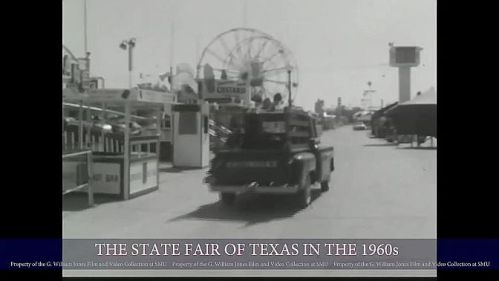
Thanks to Twitter, I discovered this cool video of film clips of the State Fair of Texas, shot throughout the 1960s, courtesy of SMU’s WFAA Newsfilm Collection/G. William Jones Film and Video Collection, put together by Moving Image Curator Jeremy Spracklen. There are 15 or so clips, some in black and white, some in color, some silent, some with sound. This compilation runs about 24 minutes. Watch it. You’ll enjoy it — especially the montage of fair food at the end! (Make sure you watch in fullscreen.)

*

Here are a few screengrabs I took, to give you an idea of the content (images are much cleaner in the video!).

Getting ready for the fair.

sfot_1960s_jones-collection_smu_midway

Fair Park entrance.

sfot_1960s_jones-collection_smu_entrance

Crowd, baby, binoculars.

sfot_1960s_jones-collection_smu_crowd

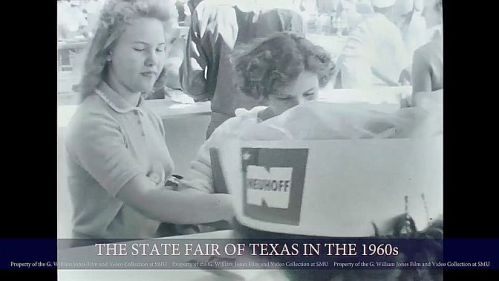
Neuhoff hot dog stand.

sfot_1960s_jones-collection_smu_neuhoff-hot-dogs

The monorail (with a cameo by Big Tex).

sfot_1960s_jones-collection_smu_monorail_big-tex

I don’ t know who this guy is, but he’s in several shots and I love him! Here he is losing out to the woman who correctly guessed his weight.

sfot_1960s_jones-collection_smu_guess-your-weight

Kids eating … Pink Things! “Made famous at Six Flags.”

sfot_1960s_jones-collection_smu_kids_pink-thing

Aqua Net and Moët. (I have to say, I’ve never seen champagne at the fair, but perhaps those are circles I don’t travel in.)

sfot_1960s_jones-collection_smu_aqua-net-and-moet

Everyone needs a corny dog fix.

sfot_1960s_jones-collection_smu_corny-dog_girl

Everyone.

sfot_1960s_jones-collection_smu_corny-dog

Have a groovy time at this year’s State Fair of Texas!

sfot_1960s_jones-collection_smu_groovy-poster

***

Sources & Notes

Film clips from Southern Methodist University’s WFAA Newsfilm Collection/G. William Jones Film and Video Collection; the video has been edited by SMU’s Moving Image Curator, Jeremy Spracklen. The direct link to the video on Vimeo is here.

*

Copyright © 2017 Paula Bosse. All Rights Reserved.

“Howdy, Folks! Welcome to the 1959 State Fair of Texas”

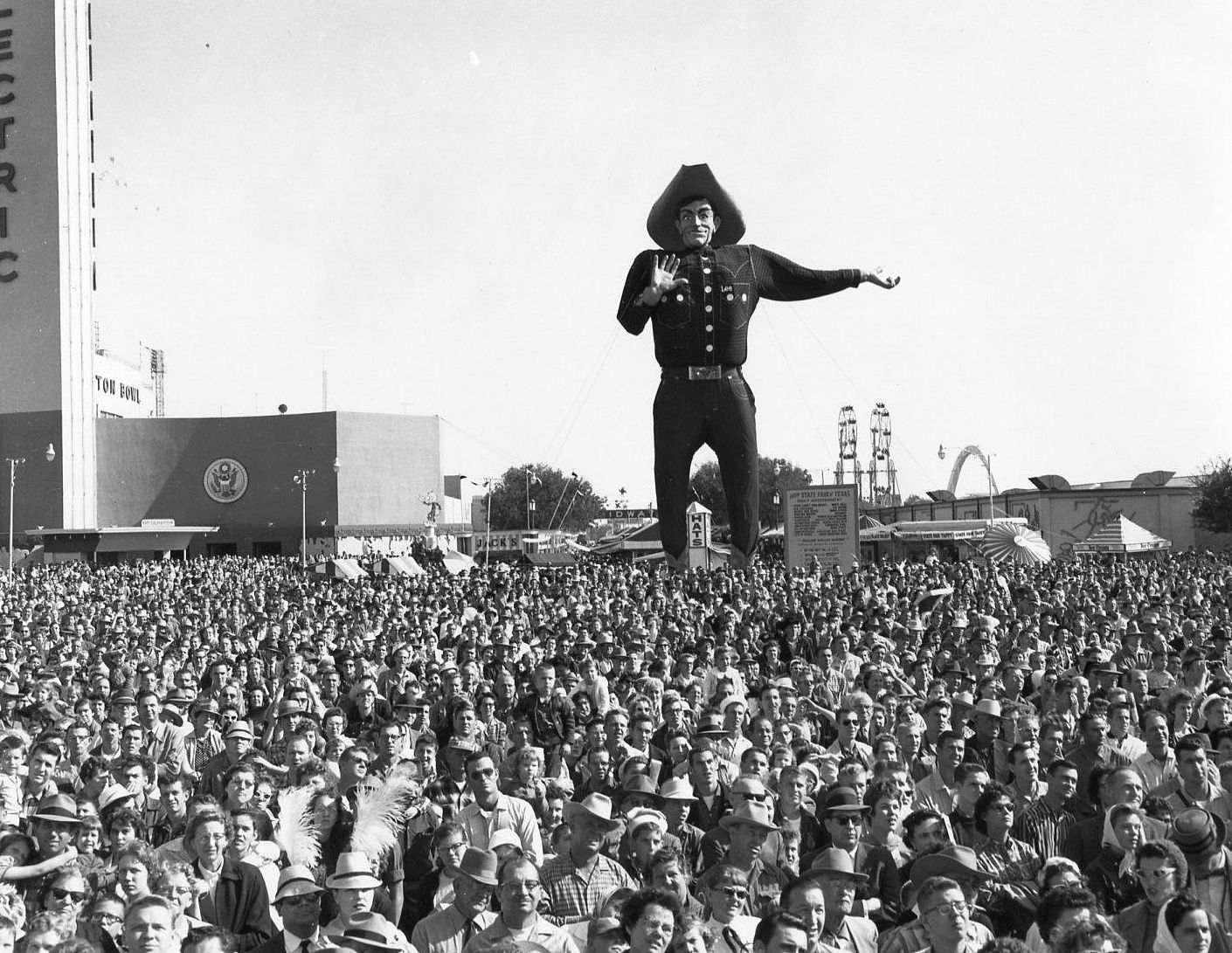
big-tex_1959Big Tex and his people… (click for larger image)

by Paula Bosse

Big Tex and a crowd of serious-looking adults watch something in the distance at the 1959 State Fair of Texas.

The 2017 State Fair of Texas starts in one week!

***

Sources & Notes

Source of photo: unknown!

See a whole passel of Flashback Dallas’ State Fair of Texas posts here.

*

Copyright © 2017 Paula Bosse. All Rights Reserved.

La Reunion Tower

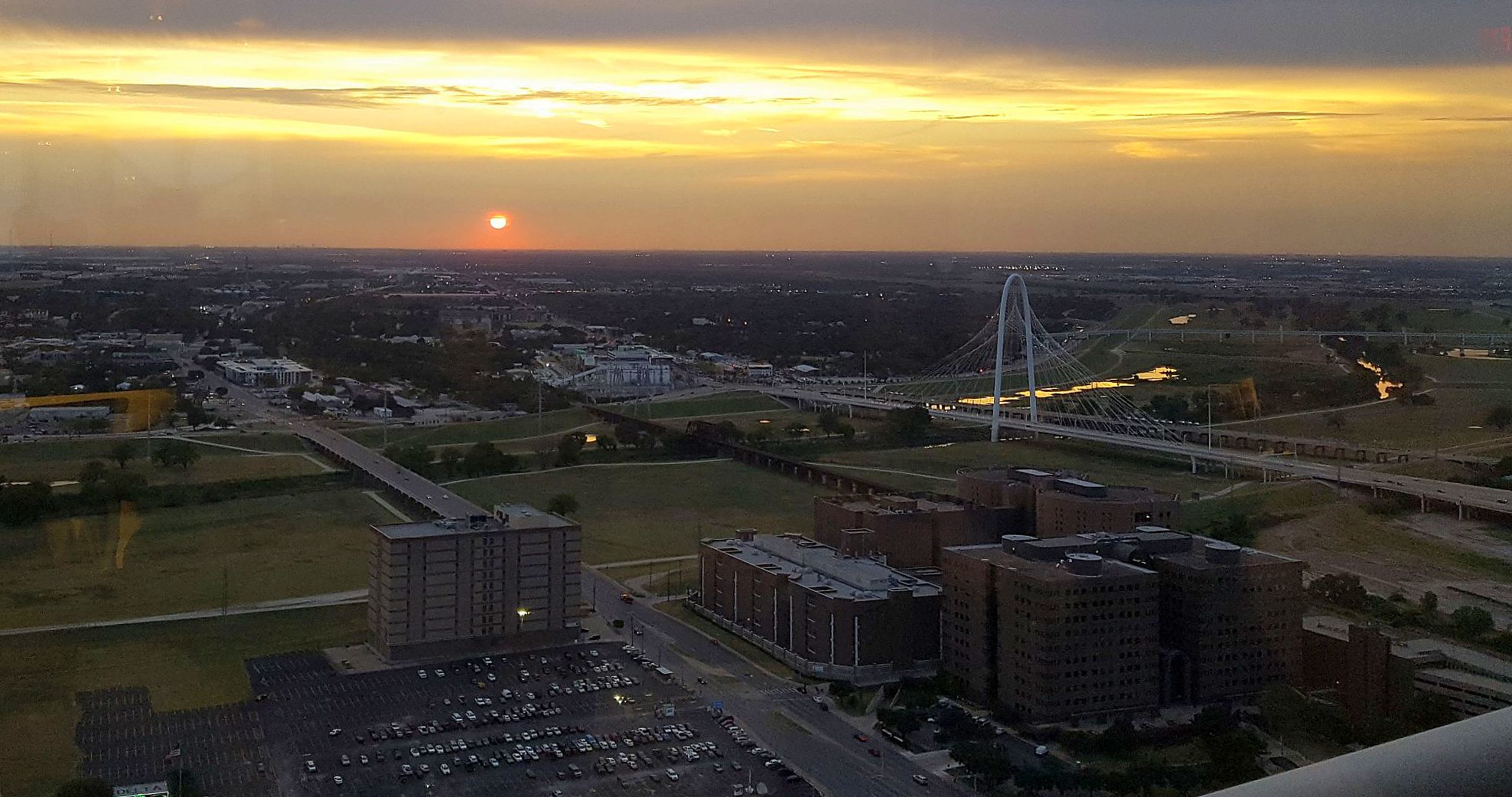
reunion-tower_skyline_091217Big D from inside the ball…

by Paula Bosse

On Tuesday night I gave a little talk on the history of the La Reunion colony as part of the Dallas Historical Society’s Pour Yourself Into History series. The event was held in the *very nice* Five Sixty by Wolfgang Puck restaurant high atop Reunion Tower — right in the ball. I was a bit of a last-minute fill-in presenter, and I hesitated to accept the invitation because I always feel awkward talking in front of more than, say, two or three people, but I really, really wanted to go up to the top of Reunion Tower.

I hadn’t been to Reunion Tower since a family outing back in the ’80s. Back then I was most fascinated by the fact that the restaurant slowly revolved to give diners a leisurely 360-degree view of the city (I always imagined it spinning out-of-control, pinning diners — and their meals — against the walls with centrifugal force, like a fine-dining version of the Spindletop ride at Six Flags, or The Rotor ride at the State Fair of Texas); but now, decades later, as an adult, the image of the spinning restaurant was eclipsed by the real star: the VIEW.

As you can imagine, the view is unbelievably spectacular — especially at night when Dallas is at its most glamorous. The ticket price is fairly steep to get up to the observation deck, and a meal and/or cocktails at the restaurant will set you back a goodly amount, but it is, without question, the most fabulous view of the city you’ll ever see. And you see all of it. When I started my talk about the history of the La Reunion colony of the 1850s (which was located about 5 miles due west of Reunion Tower, in West Dallas) the view was pretty much the one seen in the photo above; by the time I finished, we were, serendipitously, looking out over where the plucky colonists of “French Town” had toiled unsuccessfully 160 years ago. (Estimates on the boundary of La Reunion’s 2,000-acre land is the area now bounded by Westmoreland on the west, Hampton on the east, Davis on the south, and the Trinity River on the north — the southwest corner is marked here on Google Maps.)

It was a little noisy at the event Tuesday night, so if you were one of the very nice people who turned out, you might not have been able to hear anything I said! If you’d like to hear more about the history of La Reunion (and about Reunion Tower — and how, if a marketing agency had had its way, it might have been named “Esplanade” Tower), I enthusiastically recommend this very entertaining radio piece from Julia Barton (the La Reunion segment begins at about the 5:15 mark).

**

I took photos, but they don’t do justice to the view. The really breathtaking vistas are at night, and, sadly, none of those photos came out. Seriously, if you’ve never been up Reunion Tower — or if you haven’t been since it was opened in 1978 — you should definitely go now. Better still, go at sunset and enjoy the best view in Dallas as you sip delicious cocktails.

The view stretches for miles. Here’s a cropped view of Dealey Plaza (click to see it really big).

reunion-tower_dealey-plaza_triple-underpass_091217a

And, at sunset, the jail has never looked lovelier.

reunion-tower_sunset_jail_091217

Back down on terra firma, looking up and saying “goodbye” to the ball.

reunion-tower_the-ball_091217

Thank you, Dallas Historical Society, for inviting me to be part of your event! And thanks to everyone who came out … and up!

***

Sources & Notes*

Photos by Paula Bosse. Click ’em to see ’em bigger.

For more information of the La Reunion colony, see other Flashback Dallas posts here.

*

Copyright © 2017 Paula Bosse. All Rights Reserved.

The Square Dancing Craze in Big D — Late 1940s

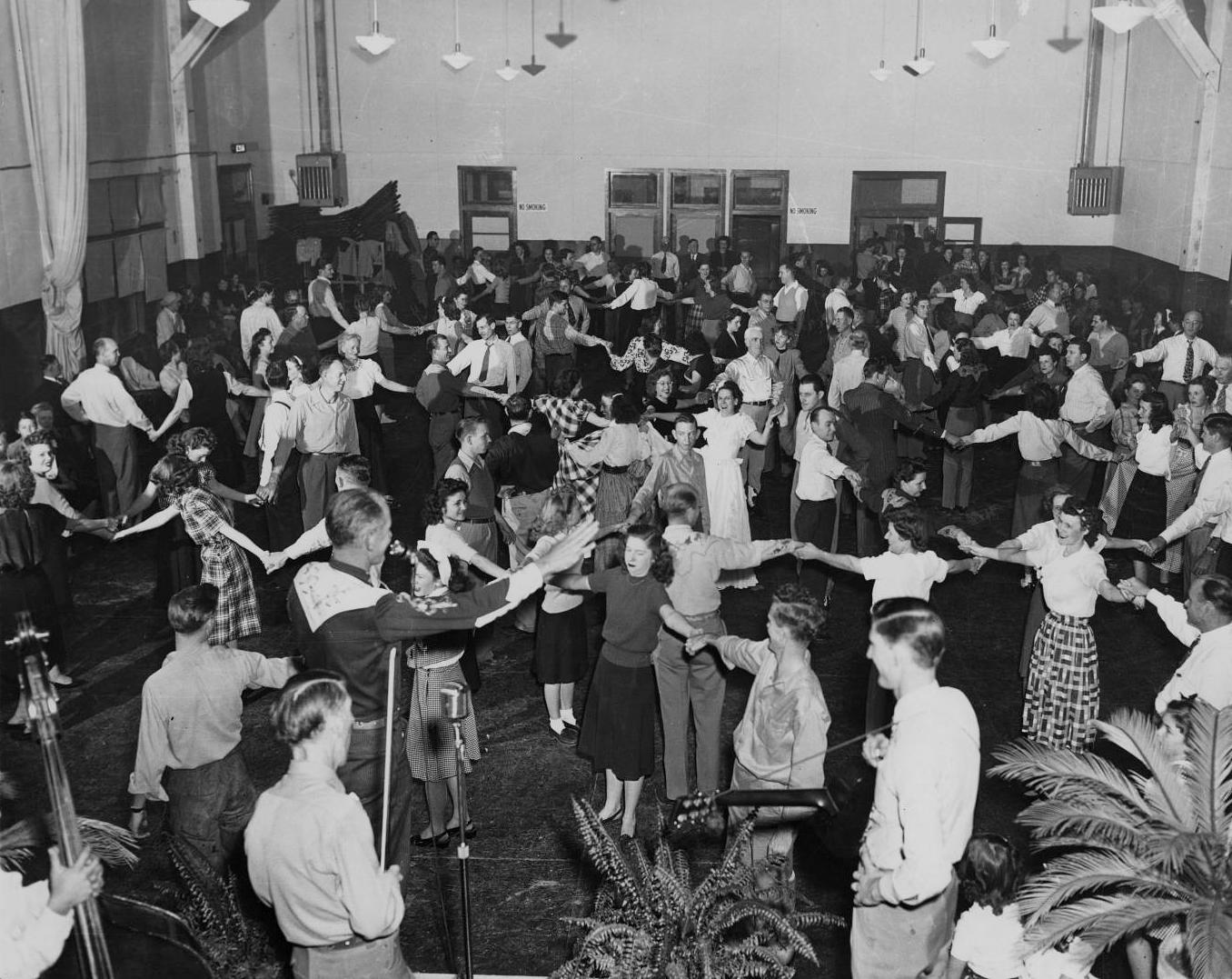
calamity-jane_premiere_-sam-bass_majestic-theatre_july-1949Hoedown at the Majestic, 1949…

by Paula Bosse

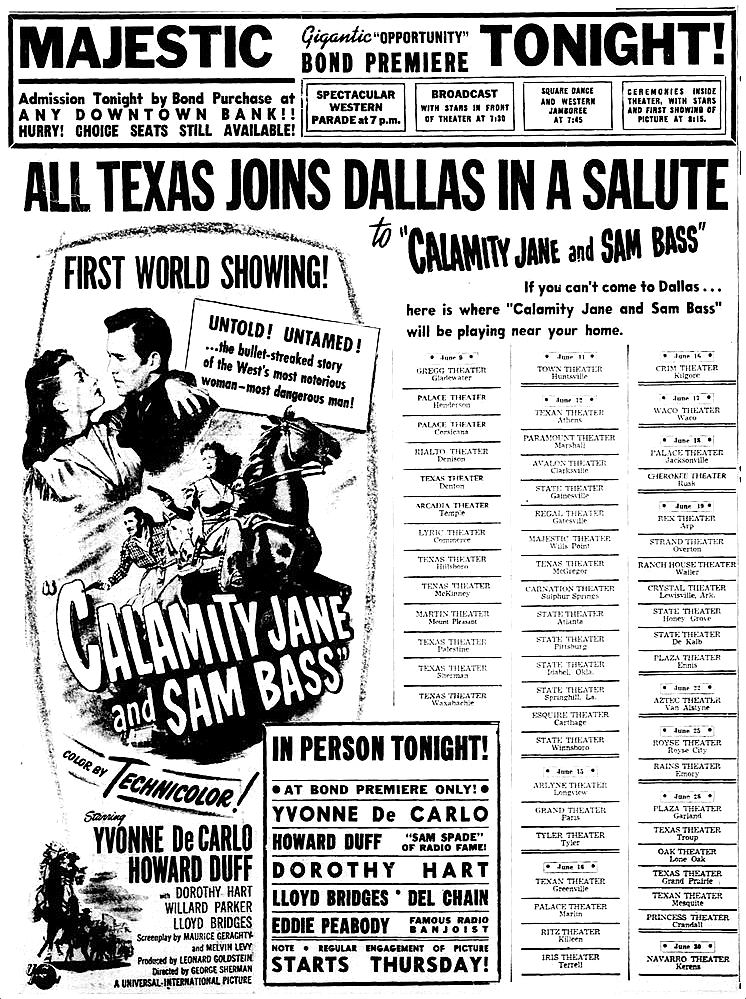
The photo above appeared in a show-biz trade publication showing part of the festivities which swirled around the world premiere of the movie “Calamity Jane and Sam Bass” starring Yvonne DeCarlo and Howard Duff at the Majestic Theatre on June 8, 1949. Several of the film’s stars made personal appearances and were made honorary deputies by Sheriff Bill Decker, sworn in by Judge Lew Sterrett (yes, Lily Munster was an honorary Dallas deputy sheriff!). There was a parade, a live show performed by the actors on the Majestic’s stage before the movie, a block party, and square dancing in Elm Street, with music provided by the Big D Jamboree band.

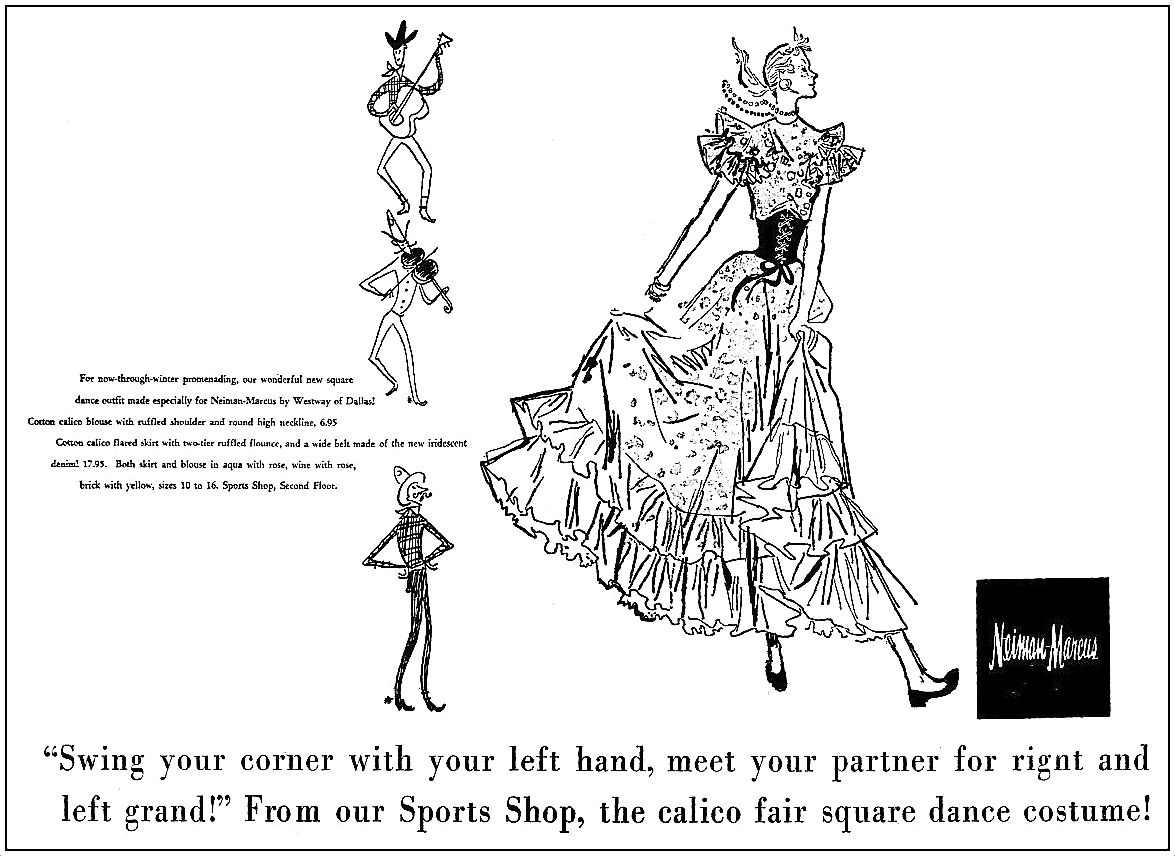
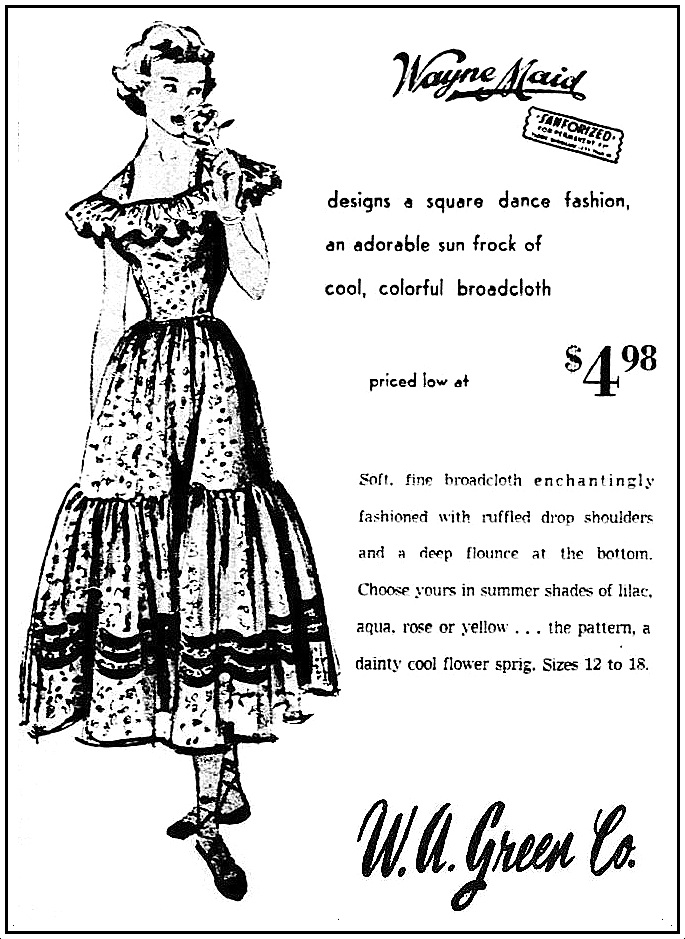
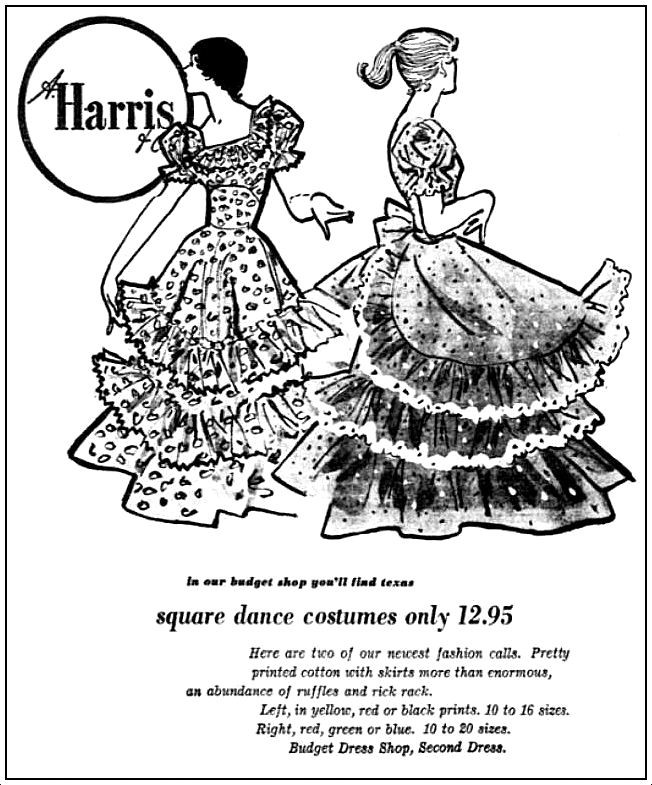
In 1949, as unlikely as it seems, square dancing was a HUGE fad which swept the country (or at least the Southwest). The peak years of the retro craze were probably 1948 to 1950, and its impact was pretty big locally, not only on the dance floor, but also in the fashion pages. When you see every major Dallas department store — even Neiman’s — selling calico and gingham square dance fashions … well, it’s big.

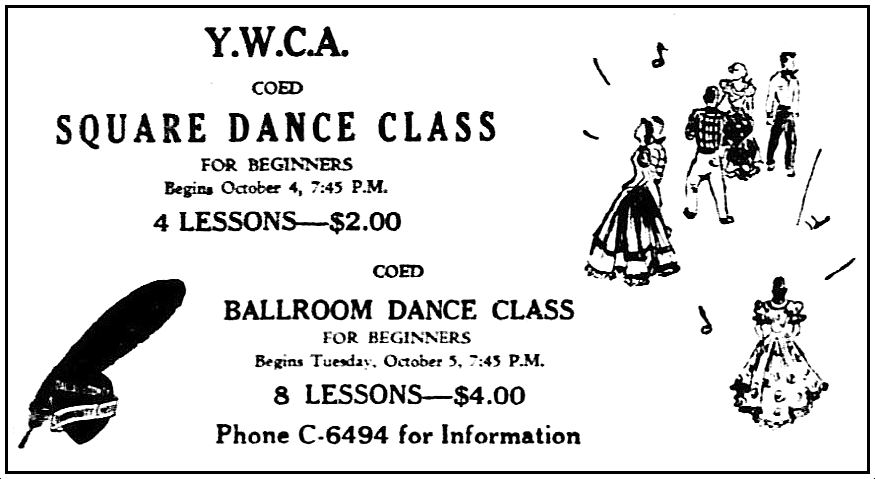
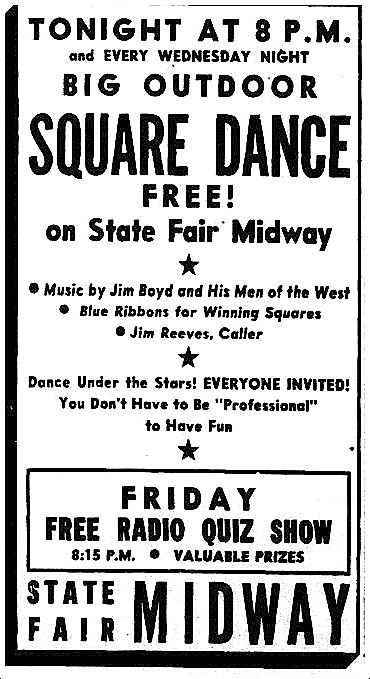
Not only were there lessons available everywhere, but there were clubs and weekly events all over town — every Wednesday in the summer of 1949, there was a big outdoor square dance held at the Fair Park Midway, with music courtesy of local celeb Jim Boyd.

I’m not sure when it stopped (…I’m assuming it has…), but for decades, a lot of us participated in square dancing as part of gym class in elementary school. This interesting throw-back take on physical fitness seems to have begun around 1950 or ’51. Not everyone was thrilled about this odd-but-charming grade-school rite of passage — some ultra-conservative communities complained, but the wholesome and old-timey dancing won out and became a standard part of Texas schools’ physical education curriculum.  Forget young people’s cotillions — most Texas children had their first experience dancing with a partner to the strain of a cowboy fiddle and a voice telling us to “allemande left” and “do-si-do.” And I’m sure we’re all better for it.

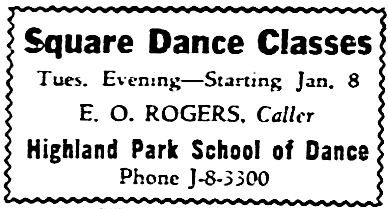
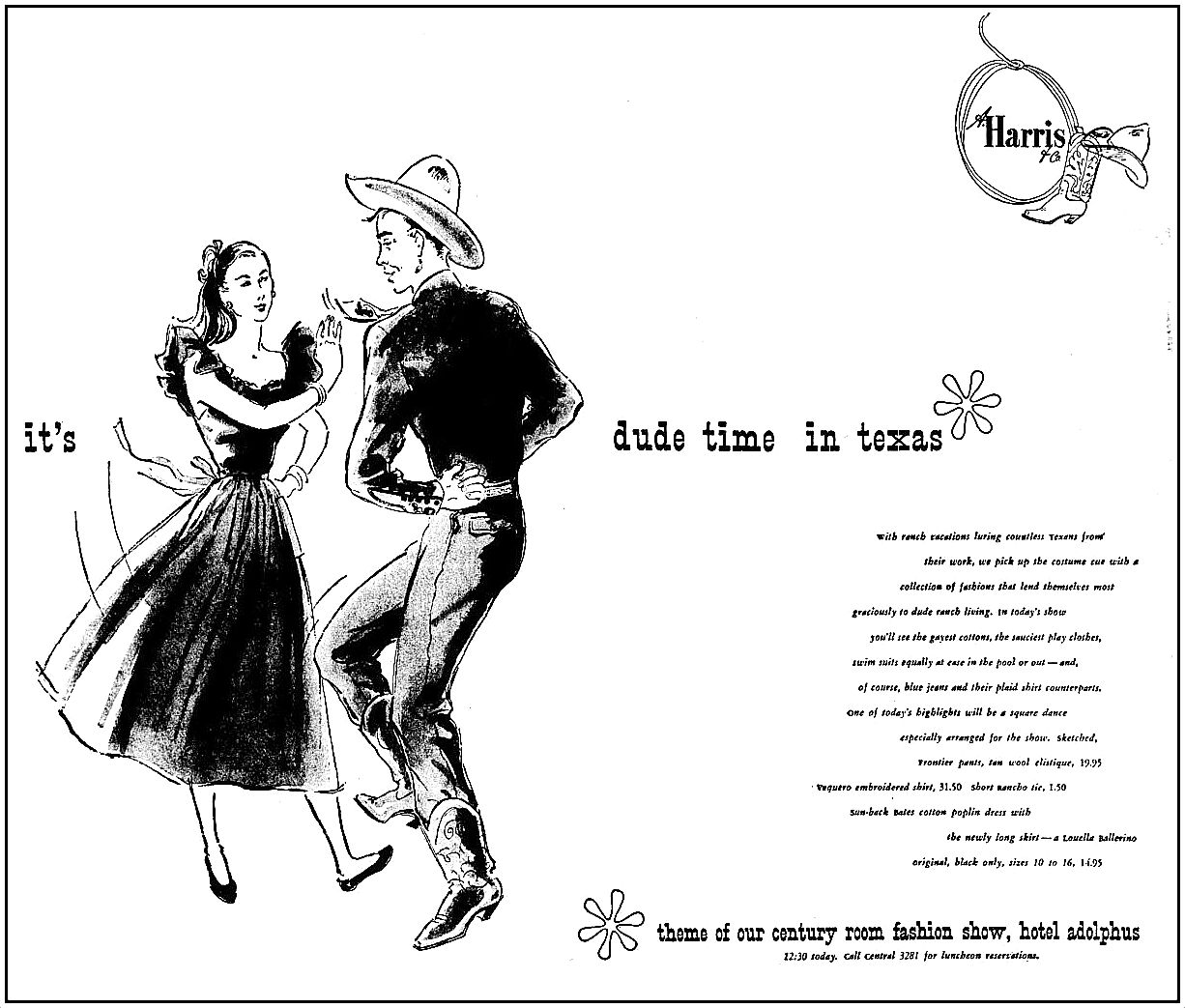
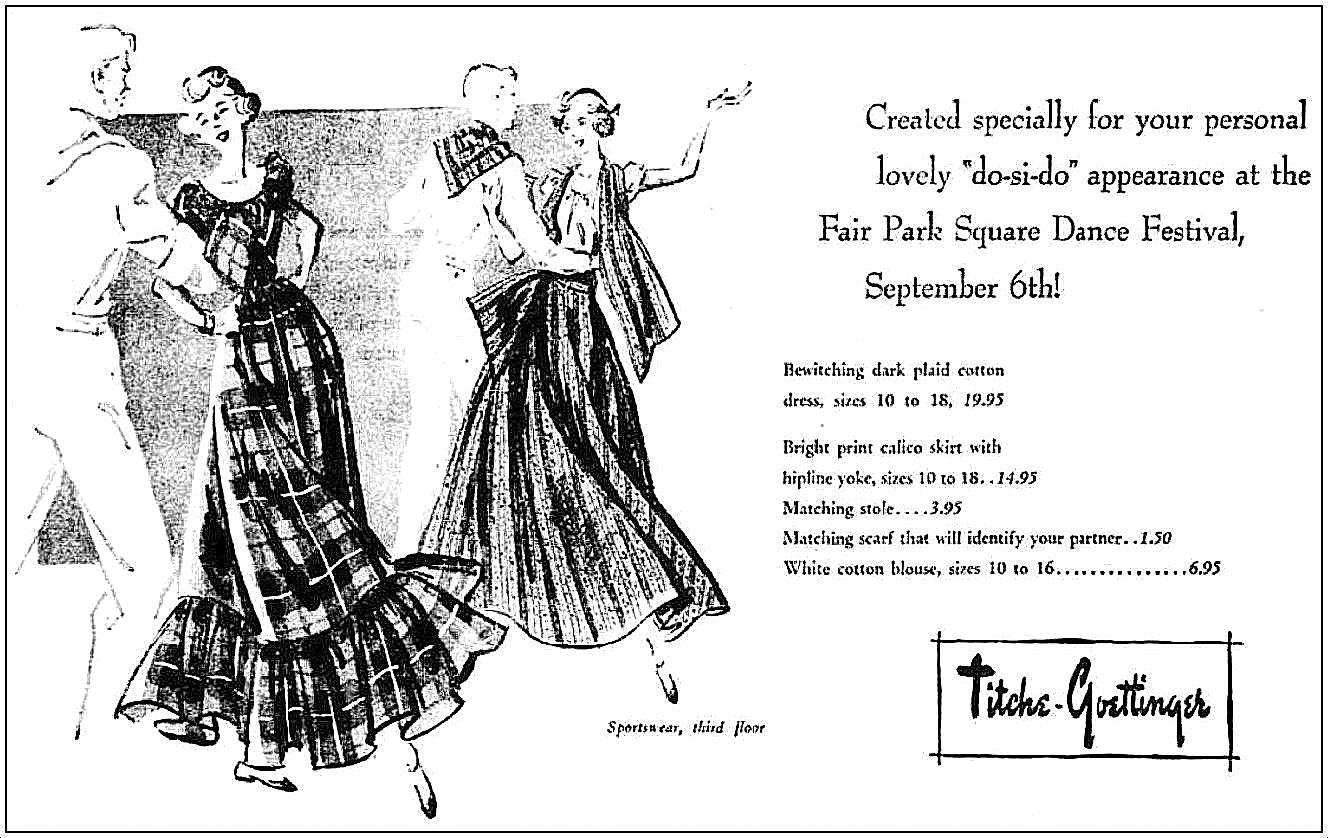
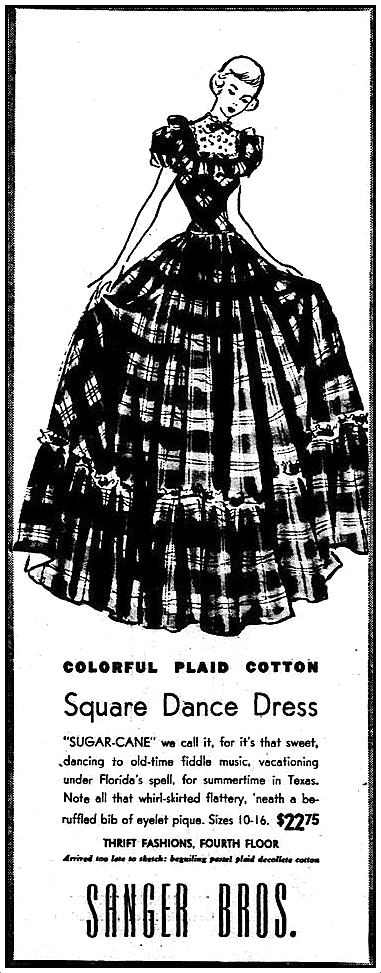
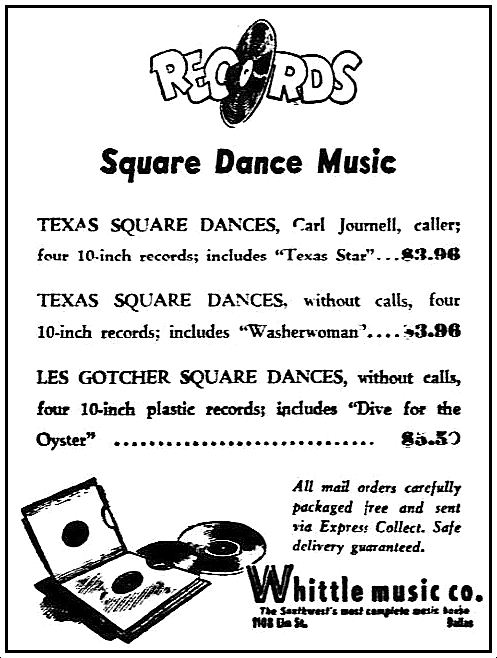
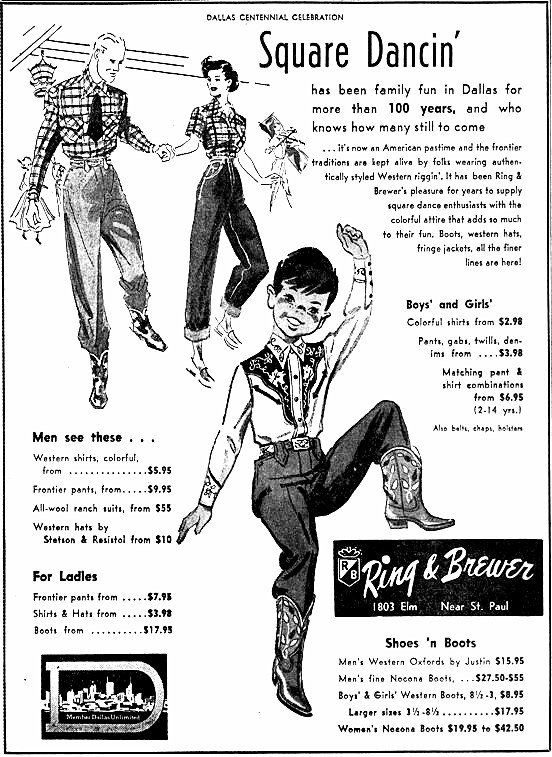
Here are a bunch of ads and things (click pictures to see larger images):

square-dance_la-reunion-place_squire-haskins_dallas-municipal-archivesSquare dance at La Reunion Place (Dallas Municipal Archives)

square-dance_jan-1946_highland-park
1946

square-dance_may-1947_a-harris
1947

square-dance_aug-1948_titches
1948

square-dance_jan-1948_sanger-bros1948

square-dance_oct-1948_neiman-marcus
1948

square-dance_april-1948_a-harris
1948

square-dance_oct-1948
1948

square-dance_dec-1950_e-m-kahn
1949

square-dance_june-1949_w-a-green
1949

square-dance_may-1949_fair-park-midway
1949

square-dance_nov-1949_a-harris
1949

square-dance_march-1949_whittles
1949

square-dance_oct-1949_a-harris
1949

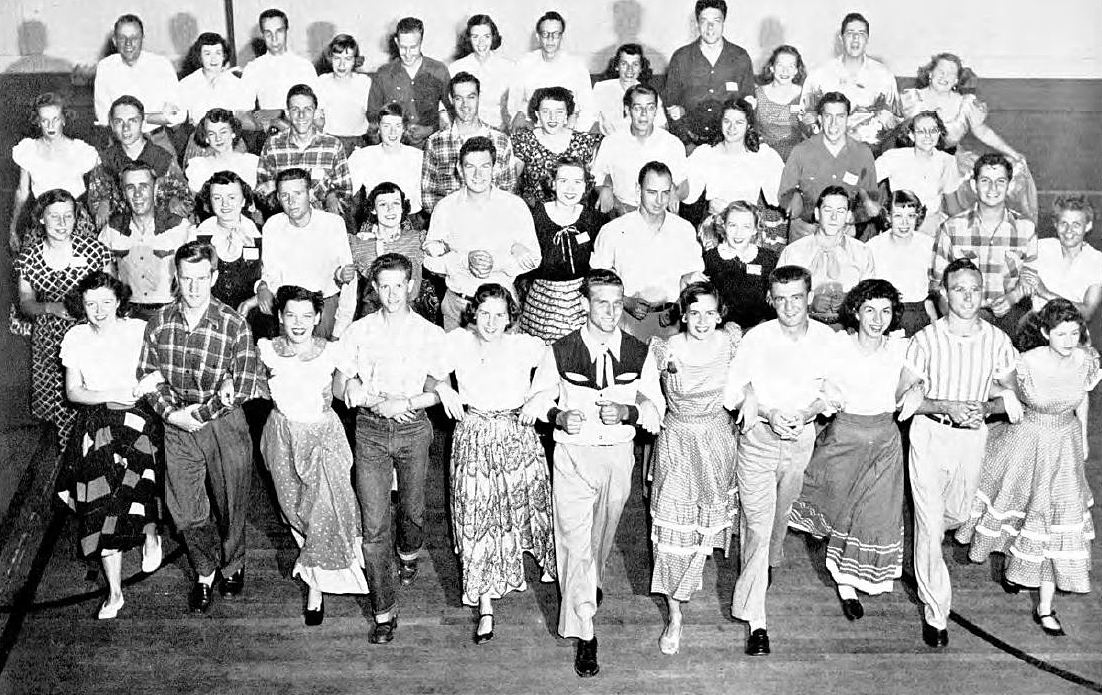
square-dancing_promenaders_smu_1951-yrbk1951

Above, a photo of the Promenaders, a group of SMU students whose purpose is described in the 1951 yearbook as being “to promote the appreciation of square and folk dancing on this campus.” (Think you recognize any of those faces? See who’s in the photo here.)

dallas_ringandbrewer_1956
1956

***

Sources & Notes

Premiere of “Calamity Jane and Sam Bass” was held at the Majestic Theatre on June 8, 1949, and it seems to have been a pretty big deal. There was newsreel footage filmed that night — wonder if it’s floating around anywhere?

square-dance_calamity-jane_majestic_june-1949

Photo of the square dance taken at La Reunion Place is by Squire Haskins and is from the Dallas Municipal Archives; is can be seen on UNT’s Portal to Texas History site, here.

Photo of the SMU Promenaders square- and folk-dancing group is from the 1951 Rotunda, the yearbook of Southern Methodist University.

Jim Boyd was a country-western singer who appeared in a few Hollywood films and was a Dallas disc jockey for many years. He also appeared around town often as a performer and personality. Dallas filmmaker Hugh V. Jamieson, Jr. and director Milton M. Agins made a short film called “Saturday Night Square Dance” (made in either 1949 or 1950); it features Boyd and his Men of the West band, plus square dance groups Silver Spur Square Set and Thompson Square Dance Club. I can find nothing on the two groups, but it seems likely that this film was made in Dallas. The quality of the film uploaded to YouTube is not very good, but, who knows — you might see your parents or grandparents in there if they were big square dancers! You can watch it here.

All images larger when clicked.

*

Copyright © 2017 Paula Bosse. All Rights Reserved.


Historic Neon: The Super-Cool Sigel’s Sign

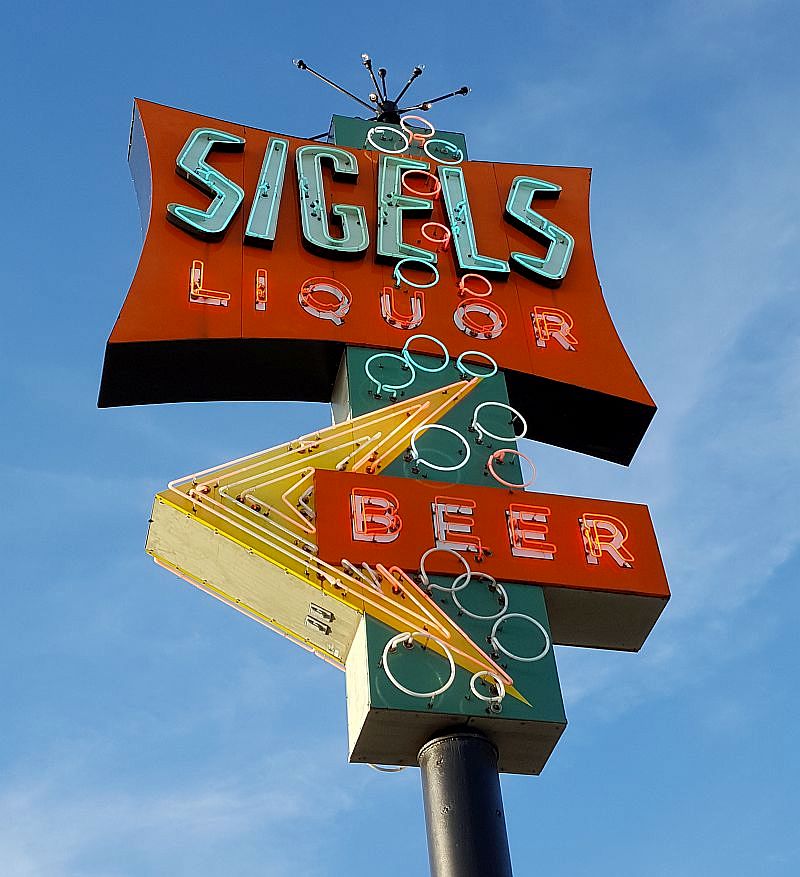
sigels-neon-sign_greenville-ave_072717One of Dallas’ favorite neon signs… (photo: Paula Bosse)

by Paula Bosse

I stopped by Sigel’s liquor store the other day (as one does…) and saw this legendary Sigel’s sign, recently installed in its new home in the parking lot of the Sigel’s store on Greenville Avenue, between Lovers Lane and Southwestern Boulevard, across from the Old Town Shopping Center. I love this neon sign. (See a very large image of it here.)

The sign’s design can be traced back to Dallas artist Marvin M. Sigel (whose great-uncle Harry Sigel founded the business in 1905) — this Fabulous Fifties design was created around 1953 specifically for the then-new store at 5636 Lemmon Avenue (at Inwood). When that store closed in 2009, the sign was refurbished and moved up to the company’s Addison location until that store fell victim to the company’s bankruptcy and was closed. Here’s a video of the fabulous sign when it was in Addison, with close-ups of its flashing neon and dancing bubbles:


*

Marvin Meyer Sigel was born in Poland in 1932 and settled in Dallas in 1937 with his immigrant parents, both of whom had been doctors in Poland (his mother a dentist, his father an M.D.), although only his father continued to practice medicine in the United States. He lived in the vibrant Jewish enclave of South Dallas and went to Forest Avenue High School where he seems to have been a popular kid, interested in art, drumming, and ROTC. Below, a photo from the 1949 yearbook with the caption “Marvin ‘Hot Drums’ Sigel plays with the Swing Band.”

sigel-marvin_forest-avenue-high-school_drums_1949

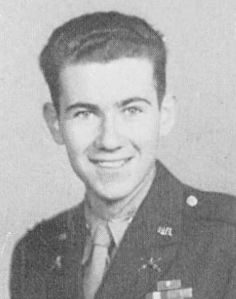
His Forest Avenue High School senior photo, from 1949:

sigel-marvin_forest-avenue-high-school_1949

And his 1953 senior photo from the University of Texas:

sigel-marvin_university-of-tx_1953_senior

After studying art at both SMU (under Ed Bearden and DeForrest Judd) and the University of Texas and receiving his B.F.A. from UT in 1953, Sigel served a stint in the Eighth Army in Korea. Back in Dallas, he was remarkably active in the local art community — for decades — as both a fine artist and as an art instructor. He also worked for a while at Peter Wolf Associates, in advertising (on projects for companies like Braniff), and he even did a lot of the tedious paste-up work for Sigel’s ads (back when every picture of a bottle of wine or spirits had to be cut out individually and pasted into one of those huge ads!). But his passion was art, and at the same time he had those regular-paycheck gigs, he also managed to maintain a furious pace of painting new pieces to exhibit at a dizzying number of art shows. Below is an example of one of his watercolors, from 1957 (which was recently offered at auction by David Dike Fine Art). The title? “Cocktail Abstraction” — appropriate subject matter for a member of the Sigel family!

sigel-marvin_cocktail-abstraction_1957_david-dike-fine-art_jan-2016
“Cocktail Abstraction” by Marvin Sigel (1957)

When the Sigel’s Liquor store No. 7 opened at Lemmon & Inwood, it was suggested by family members that, hey, we have an artist in the family, let’s get Marvin to design a sign for us. According to Marvin, his cousin Sidney Sigel, who ran the company, probably just wanted a “rectangular sign with block letters,” but other family members wanted something newer and more exciting — something modern that would jump out of a sea of boring rectangular signs with block letters and draw attention. And it certainly did just that. If, as reports have it, that dazzling neon sign was designed in 1953, Marvin Sigel was only 21 years old!

When news broke 56 years later, in 2009, that the Lemmon & Inwood store was closing, there was a concerned uproar from the public about what would happen to the sign. Mr. Sigel was a bit taken aback by how much the people of Dallas had grown to love that sign and considered it a city landmark. Marvin Sigel, then 77 years old, said in a 2009 Dallas Morning News interview, “It was clever, but I figured it would be replaced by something more clever in a half-dozen years.”

The sign was built by the venerable Dallas firm of J. F. Zimmerman & Sons (est. 1901) who for generations had installed decorative neon elements all around town and had built innumerable lighted signs for companies big and small — their work could be seen on the Mercantile Building’s wonderful tower, on the exterior of the downtown Titche’s store on Main Street, and in the instantly recognizable signs for places as varied as the Cotton Bowl, Big Town, and, presumably, various other Sigel’s stores around the city.

The sign which was moved from Store No. 7 at Lemmon & Inwood to Addison had on its pole a small plaque (seen here) which said:

This Non-Conforming Sign designed by Marvin Sigel was built in the early 1950s. It was moved from Dallas, TX at Lemmon Ave. & Inwood. After being granted a variance it was refurbished to Code and installed here in June of 2009. Sign refurbished and installed by Starlite Sign of Denton, TX.

Interestingly, the plaque on the new location of the sign has a slightly different text:

sigels-sign-plaque_greenville-ave_072717

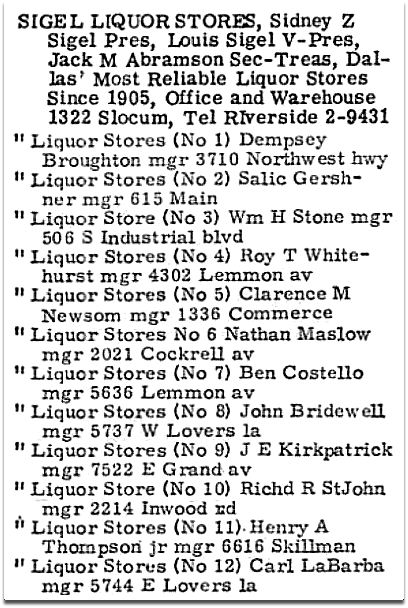
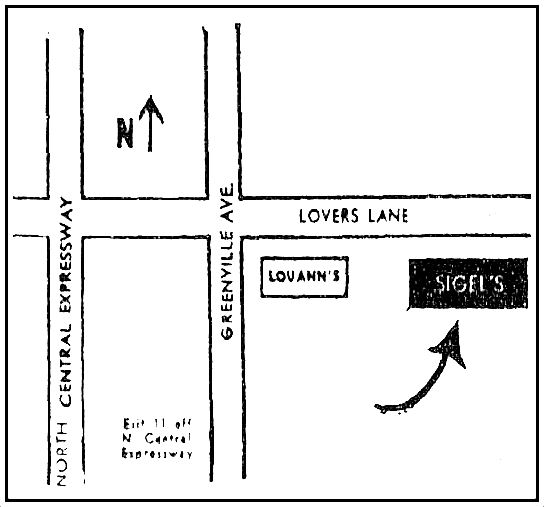
It appears that this is a different Sigel’s sign. In 1965, there were two Sigel’s stores on Lovers Lane: Store No. 8 was along the Miracle Mile on West Lovers Lane, near what is now the Dallas North Tollway, and Store No. 12 was on East Lovers Lane at Greenville (then near Louanns nightclub).

sigels-stores_1965-dallas-directory
1965 Dallas directory

In an April 22, 2009 Dallas Morning News article by Jeffrey Weiss (“The Story Behind That Sigel’s Sign”), is this quote from Mr. Sigel’s son, David S. Z. Sigel, about the original sign at Lemmon & Inwood, with mention of another similar sign: “He created the designs for this sign, as well as a similar but smaller sign which stood outside the Lovers Lane store (where Central Market now stands) for many years.” Here’s a map from a November, 1964 grand opening ad for the new store at 5744 E. Lovers Lane:

lovers-lane_new-store_110664
Detail from a grand opening ad, Nov. 6, 1964

So is the sign currently standing in the parking lot of the Sigel’s Fine Wines & Great Spirits at 5757 Greenville Avenue the sign which originally stood only a short four-tenths of a mile away? I hope so! And if it is, welcome back to the neighborhood, cool sign!

Whichever sign this is, it is one of the greatest neon designs Dallas has ever had, and I’m so happy it’s survived for over a half-century, through phenomenal city growth, physical displacement, and even company bankruptcy.

Thanks, Marvin, for designing this wonderful sign! And thanks, Starlite Sign of Denton, for the beautiful refurbishing!

***

Sources & Notes
*

Top photo and photo of blue plaque taken by me on July 27, 2017 at the Sigel’s store at 5757 Greenville Avenue.

YouTube video by Andrew F. Wood, shot in Addison in 2013.

Sources for other images as noted.

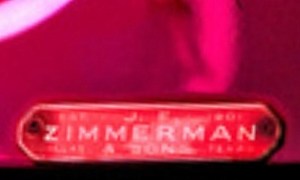
The Zimmerman & Sons nameplate can be seen on the original Lemmon & Inwood sign here (click to enlarge), posted on Flickr by Tim Anderson (a detail of his photo can be seen below) (there is another Zimmerman nameplate posted in the comments on that Flickr page); what appears to be a Zimmerman plate is on the side of the sign at the Greenville Avenue location facing the store’s entrance, not on the side seen in my photo at the top.

zimmerman-nameplate_sigels-sign_lemmon-inwood_flickr-det

Please check out the Dallas Morning News article in the DMN archives titled “Sigel’s Sign Designer Surprised by Its Fame — Project for Family’s Liquor Store Wasn’t a Hit with Boss, He Recalls” by Jeffrey Weiss (April 28, 2009) in which Marvin Sigel discusses his famous sign.

Also, check out these related (online) DMN articles:

  • “Sigel’s Beverages, A 111-Year-Old Dallas Chain, Filed for Bankruptcy; Wants to Close 5 Stores” by Maria Halkias (Oct. 21, 2016), here
  • “Sigel’s Iconic Neon Sign Returning to Dallas After Years Wasting Away in Addison” by Robert Wilonsky (March 27, 2017), here

If anyone can verify that this sign is, in fact, the sign from Store No. 12 (Lovers & Greenville), please let me know!

UPDATE: Marvin Sigel died on Feb. 23, 2019 at the age of 87 (his obituary is on the Dallas Morning News website, here). After I wrote this post, Marvin’s son, David, contacted me to let me know his father had seen this and was delighted to know that people still appreciated his work. This was one of the most popular posts of the year. People absolutely still love your sign, Marvin! RIP.

sigels-sign_rain_bosse_121520photo: Paula Bosse, 2020

sigels-sign_night_bosse_121520photo: Paula Bosse, 2020

*

Copyright © 2017 Paula Bosse. All Rights Reserved.

The WFAA Studios, Designed by George Dahl, Rendered by Ed Bearden — 1961

wfaa_george-dahl_ed-bearden_postcard“Communications Center”

by Paula Bosse

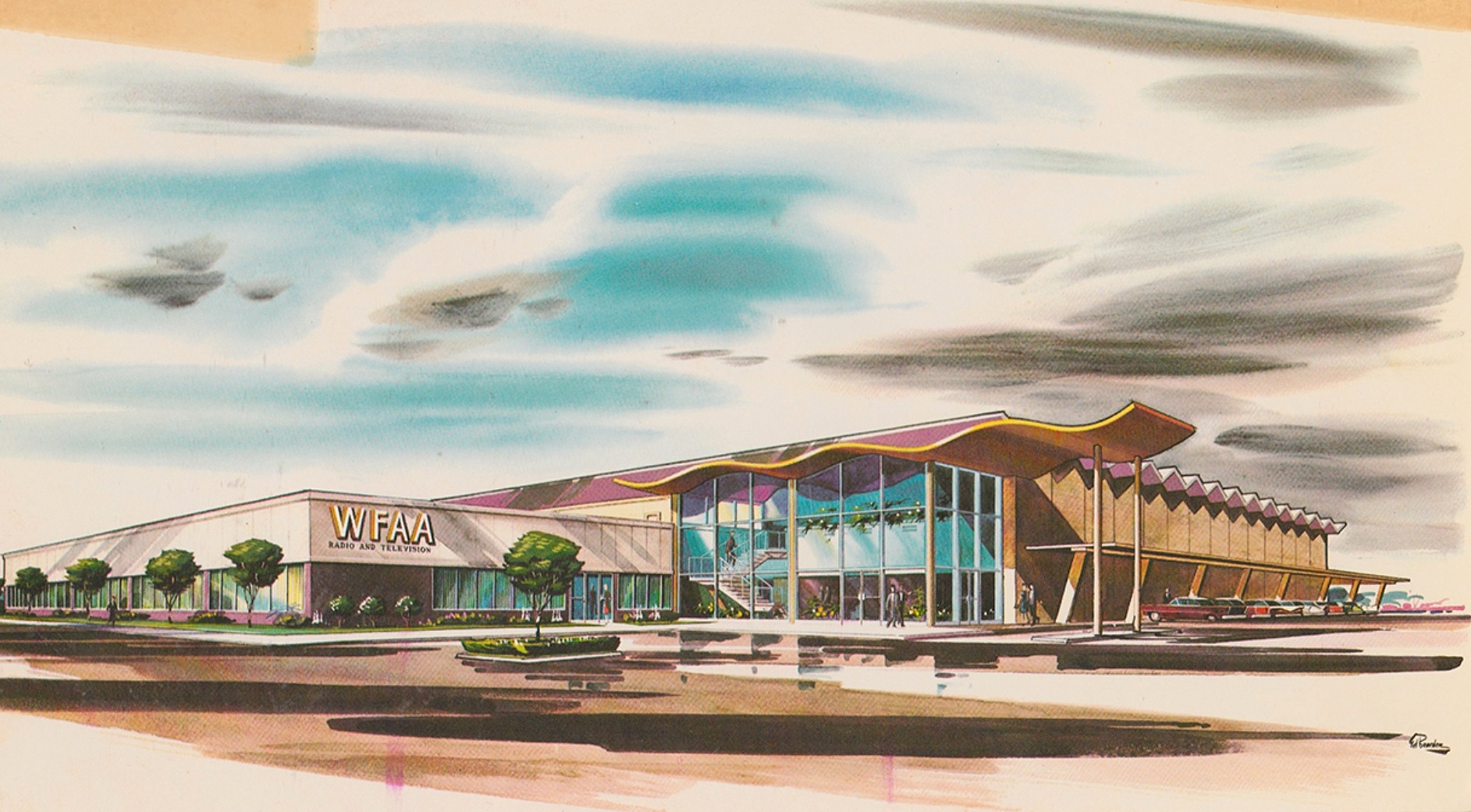
Above, the WFAA studios, seen in a wonderful painting by Dallas artist Ed Bearden. The image is from a postcard touting the brand new ultra-modern building designed by one of Dallas’ top architects, the prolific George L. Dahl. The building still stands at Young and Record streets, next to the home of its then-sister-company, The Dallas Morning News (appropriately, the News building was also designed by Dahl … as was the soon-to-be HQ of The News, the old Dallas Public Library at Commerce and Harwood).

The super-cool mid-century “WFAA AM-FM-TV broadcasting plant” was completed in 1961. It opened to much fanfare in April of that year, with star-studded festivities featuring personal appearances by a host of ABC stars such as Connie Stevens, Johnny Crawford, and Nick Adams. If catching a glimpse of “Cricket” or the Rifleman’s son didn’t wow you, the public was also invited to tour the building and gawk at its state-of-the-art radio and television studios. This large 68,000-square-foot building allowed WFAA radio and WFAA-TV to be housed under the same roof. Before this, the AM and FM radio stations were broadcasting from studios atop the Santa Fe Building, and Channel 8 was broadcasting from their television studios on Harry Hines, at Wolf (studios which they sold to KERA at the end of 1959).

Aside from the innovative “folded-plate” concrete roof, one of the first things I noticed about this building was the staircase behind a “wall” of plate glass — I was instantly reminded of the staircase from the old Rogers Electric building (now Steinway Hall) on the Central Expressway service road at McCommas — all it needed was a gigantic ficus tree. (Unsurprisingly, that building — built in 1959 — was also designed by the very, very busy George Dahl.)

Cool building, cool architectural design, cool artistic rendering.

**

Below is an early pre-construction rendering of the WFAA building, from 1959.

wfaa_bw_rendering_1959

*

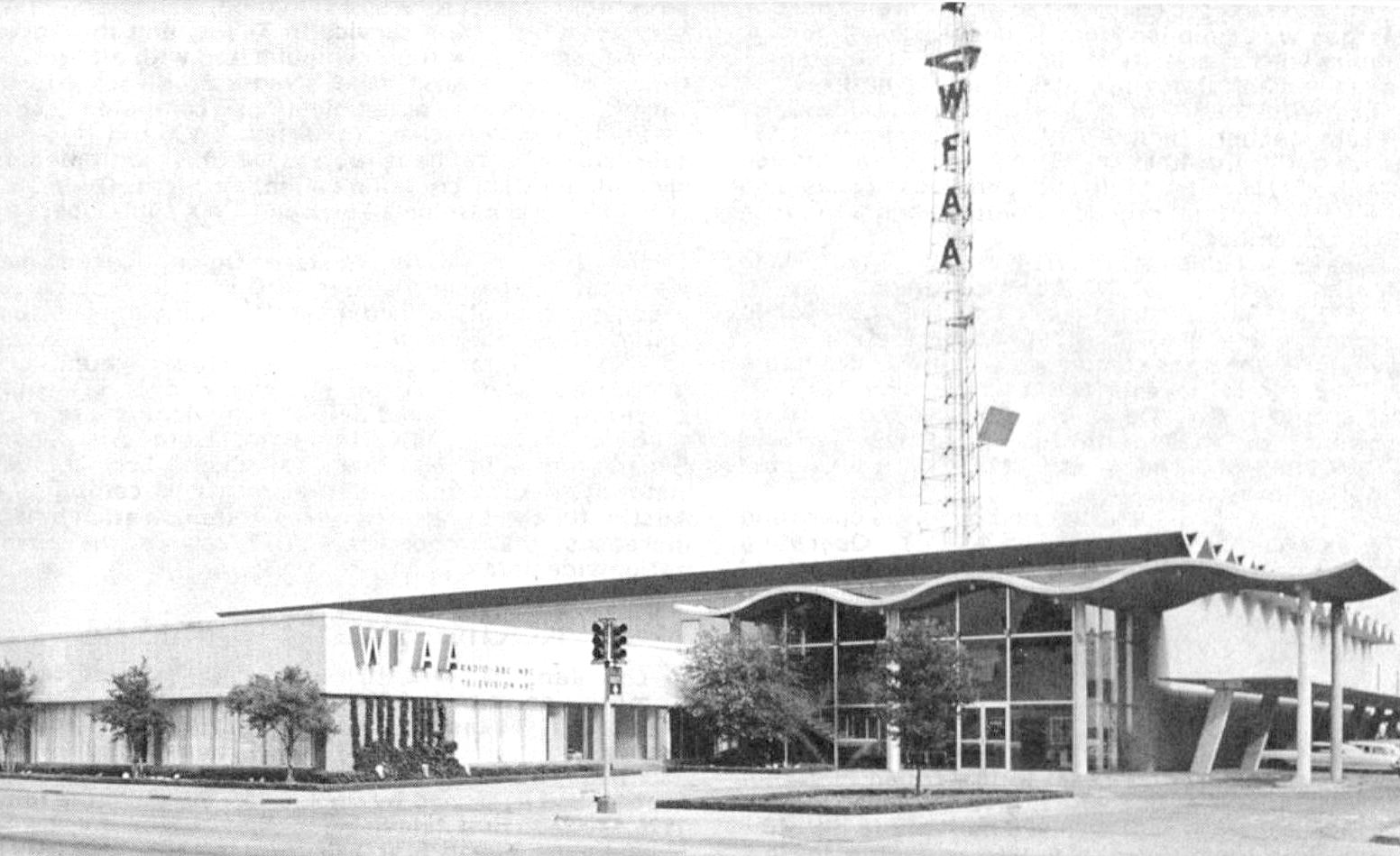
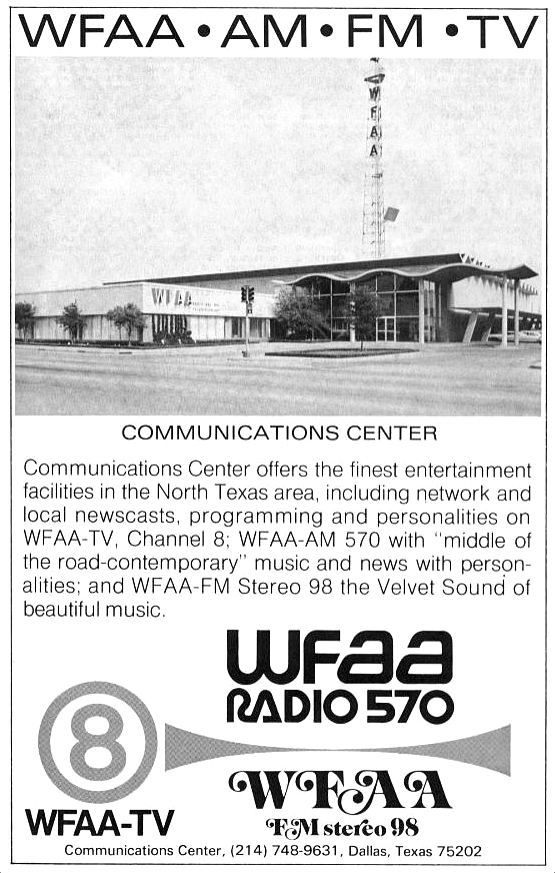
And a photo from the early 1970s.

wfaa_texas-almanac_1974-75

*

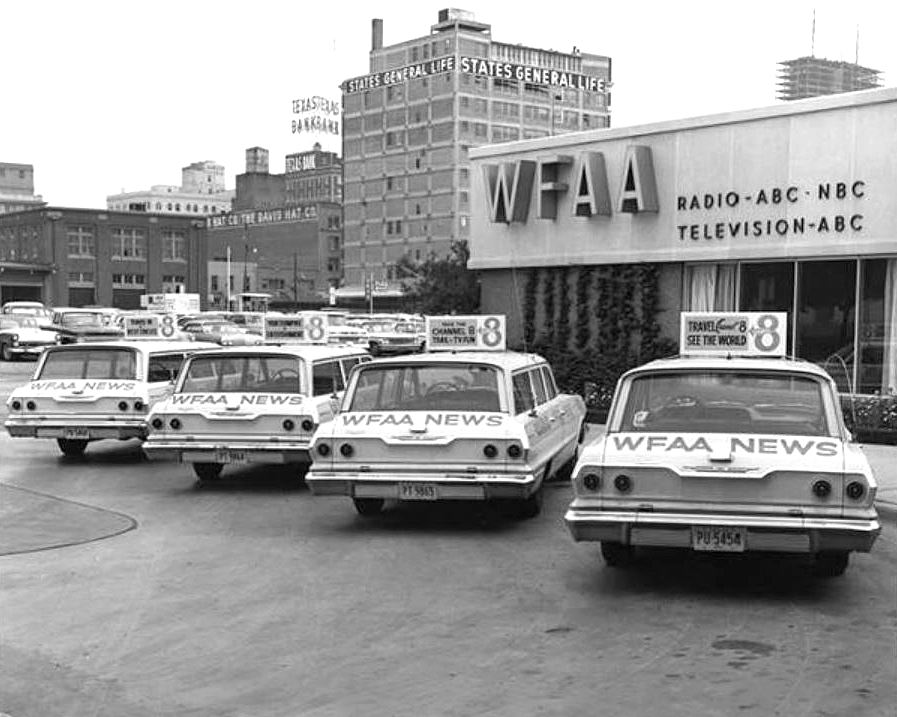
And here’s a view taken from the side of the building in 1963, looking toward Young Street.

wfaa_news-vehicles_belo-records_degolyer_smu_1963

*

The early-’70s photo above was taken from this ad from the 1974-75 Texas Almanac. Ah, “Communications Center.” (I have to say, I’ve never heard of “WFAA-FM Stereo 98” nor their slogan “The Velvet Sound of Beautiful Music.” In fact, by the time this edition of the Almanac was published, WFAA-FM no longer existed — it had changed both its name — to KZEW — and its format — to rock.)

wfaa_texas-almanac_1974-75_portal

***

Sources & Notes

Color postcard found on the entertaining blog Texas Pop Culture; see the post — which includes scans of the reverse side of the card — here.

Bearden’s signature is a bit hard to make out — the slightly distorted magnified signature can be seen here.

The more I see of Ed Bearden’s work, the more I like it. See his Dallas skyline from 1958 here; see his Dallas skyline from 1959 here.

Photo of the Channel 8 news vehicles is from the Belo Records collection, DeGolyer Library, Central University Libraries, Southern Methodist University; more info on this photo is here.

More on architect George L. Dahl can be found at the Handbook of Texas, here, and at Wikipedia, here.

Read more about the history of FM radio in Dallas — including histories of WFAA-FM and KZEW — at the indispensable website of local broadcasting history — DFW Retroplex, here.

*

Copyright © 2017 Paula Bosse. All Rights Reserved.

“Meet Me in Dallas, On June the 23rd…”

jeannie-c-riley_flickrJeannie C. Riley

by Paula Bosse

Until last week, I don’t think I’d ever heard the 1969 song “The Back Side of Dallas,” sung by Jeannie C. Riley, who had had the blockbuster hit “Harper Valley PTA” the previous year. How have I never heard this? I was going to post it last week until I realized that it would be better to wait until today, because of this line from the song: “Meet me in Dallas on June the 23rd, his letter read.” And here we are, June 23rd.

The song, written by Jerry Foster and Bill Rice, was released in October, 1969. It wasn’t the huge, crossover, multi-award-winning monster hit that “Harper Valley PTA” was, but it did earn Jeannie another Grammy nomination (she lost to Tammy Wynette’s “Stand By Your Man” — if you’re going to lose, that’s a pretty great performance to lose to!).

Like “Harper Valley PTA,” it was one of several songs of the era which brought country music into the somewhat seedy realm of 1960s American culture. “The Back Side of Dallas” is about a small-town girl who finds herself a lonesome “working girl” in Dallas, chain-smoking king-size cigarettes, drinking in dingy bars, and popping pills. This ain’t no Kitty Wells song, y’all. (I’d love to hear Miranda Lambert — who also has an incredible country voice — cover this.)

back-side-of-dallas_jeannie-c-riley_label

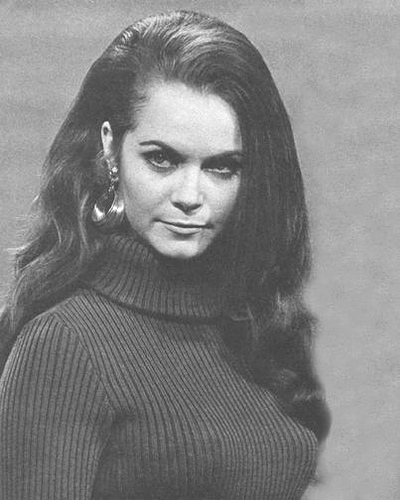
Jeannie C. Riley — born in Anson, Texas in 1945 — was one of the first certifiable sex symbols in country music, always gorgeous, outfitted in miniskirts and go-go boots, with sky-high hair teased to a fare-thee-well. AND she had an absolutely fantastic voice. Below is video of a 24-year-old Jeannie C. Riley singing “Back Side of Dallas” on Del Reeves’ Country Carnival in 1969 (Del Reeves had some great songs in the ’60s, but his TV persona was a little too Dean Martin-wannabe for my taste … and … oh dear … that set!):

*

I prefer the studio version, below. I’ve listened to this song dozens of times now, and I haven’t gotten tired of it yet!

*

And here’s Jeannie singing it in 2011, still sounding great! (Her thick Texas accent is the absolute best, and her laugh is fantastic.) She talks about the song a bit at the beginning with Jerry Foster, one of the writers of the song — the song itself starts at about the 3:10 mark.

*

And, to round out this “June the 23rd” post, a few photos of Jeannie C. — surely one of the most photogenic faces and bad-ass vocalists in the history of country music. As my father used to say, “hot damn.”

jeannie-c-riley_motorcycle

jeannie-c-riley_3

jeannie-c-riley

jeannie-c-riley_2

***

Sources & Notes

Most, if not all, photos of JCR from Pinterest.

Record label image found here.

A biography of Jeannie C. Riley is here.

“Harper Valley PTA” — you know you want to hear it. This is a great live version she did on, I think, the Wilburn Brothers Show, with Harold Morrison on dobro.

*

Not that anyone’s going to confuse the two songs, but this song has nothing to do with the 1915 song of the same name by Adolphus Hotel orchestra leader Jack Gardner (which you can read about here).

*

Copyright © 2017 Paula Bosse. All Rights Reserved.

“Pickle Brine Ryan” — 1968

baseball_nolan-ryan_pickle-juice_1968_corbisBrining the blisters away….

by Paula Bosse

I give you a 21-year-old Nolan Ryan soaking his pitching finger in pickle juice. As one does.

Years before the future Baseball Hall of Famer made it to DFW, young Nolan was the star pitcher of the New York Mets. He was prone to blisters on the middle finger of his pitching hand, so Mets trainer Gus Mauch put him on a strict pickle juice regimen of soaking the affected finger between innings to toughen the skin and prevent blisters from popping up at inopportune moments. And, of course, this weird pickle juice thing became really big news in May, 1968. Sportswriters jumped all over it, and a few began calling him “Pickle Brine Ryan,” because it sort of rhymes.

The delicatessen where Ryan’s pickle juice of choice was purchased tried to cash in on what they hoped would become a fad by placing jars of the brine in the window with a sign proudly proclaiming that they were the source of the famous “Mets’ Pitching Juice.” According to a UPI story, when another pickle company offered the Mets five gallons of their pickle juice, trainer Mauch responded, “Gosh, you could embalm a whole swimming team with five gallons!”

And the rest, as they say, is history.

pickle-brine-ryan_may-1968

***

Sources & Notes

Photo ©Bettmann/CORBIS, from May 6, 1968; it appeared in newspapers with the following caption:

While teammates relax before a game, using anything handy for a pillow, New York Mets’ pitcher Nolan Ryan (left) soaks his pitching fingers in pickle juice. That’s right — pickle juice! Ryan says the juice toughens his fingers so that he doesn’t get blisters.

I wonder if he kept it up? By the time he got back home to Texas and signed with the Rangers, I’d love to know that he upped his brine game by using pickled jalapeño juice.

An earlier Nolan Ryan-related Flashback Dallas post — “Nolan Ryan’s Celebratory Pancake Breakfast — 1972” — is here.

*

Copyright © 2017 Paula Bosse. All Rights Reserved.

Country Music — Every Saturday Night on Channel 11

country-music_saturday-night_channel-11_ktvt_1969The warm-up for wrestling…

by Paula Bosse

I have a surprisingly deep knowledge of classic country music. And it can all be traced back to sitting with my father every Saturday night as he watched the jam-packed lineup of country music TV shows on KTVT-Channel 11.

Followed by wrestling.

Which I also have a surprisingly deep knowledge of. If only by osmosis.

Thank you, Channel 11, for providing this bonding time with my father, which I didn’t really appreciate as a child, but I do now.

(And, yes, I’m happy that my antiquarian bookseller father and Comparative Literature-degree-holding mother often took our family to the Sportatorium to see both country music package-shows and wrestling matches. You can’t say our family wasn’t well-rounded.)

***

Sources & Notes

1969 ad from an odd little local publication (which probably used to belong to my father) called Country and Western — The Sound That Goes Around the World, published in DFW by PegAnn Production.

*

Copyright © 2017 Paula Bosse. All Rights Reserved.