Flashback : Dallas

A Miscellany: History, Ads, Pop Culture

Category: Shopping

Neiman-Marcus / France-Texas / A-Z — 1957

n-m_french_ad_cover-smMais oui!

by Paula Bosse

Bastille Day again already? It seems to come earlier every year. Last year I wrote about the 1957 Neiman-Marcus French Fortnight — the very first fortnight celebration. This year I thought I would present a few of the pages from the lavish advertising supplement Neiman’s placed in the October, 1957 issues of American and French Vogue. The mini-catalog was titled “Neiman-Marcus Brings France to Texas, Everything From A to Z.” (Link to the entire ad insert is below.) Here we have “C,” “R,” “V,” and “Z.” Enjoy a flashback to fabulous ’50s fashion photography. And Happy Bastille Day!

n-m_french-ad_cn-m_french_ad_rn-m_french_ad_vn-m_french-ad_zClick to read a list of events and exhibits happening around the store.

***

These pages are from a reprint of a 30-plus-page 1957 Neiman-Marcus advertising spread; from the collection of Stanley Marcus’ papers at the DeGolyer Library, Central University Libraries, Southern Methodist University. This is the very epitome of high-fashion advertising of the 1950s, and the sophisticated-but-fun-and-frothy art direction is wonderful. The entire mini-catalog has been scanned by SMU, and it can be viewed in a PDF, here.

My previous post “Neiman-Marcus Brings France to Big D — 1957” — which gives some background on this first N-M fortnight celebration and contains a great photo of the exterior of the downtown store elaborately decorated to resemble the Rue du Faubourg Saint-Honoré — can be found here.

All images larger when clicked.

*

Copyright © 2015 Paula Bosse. All Rights Reserved.

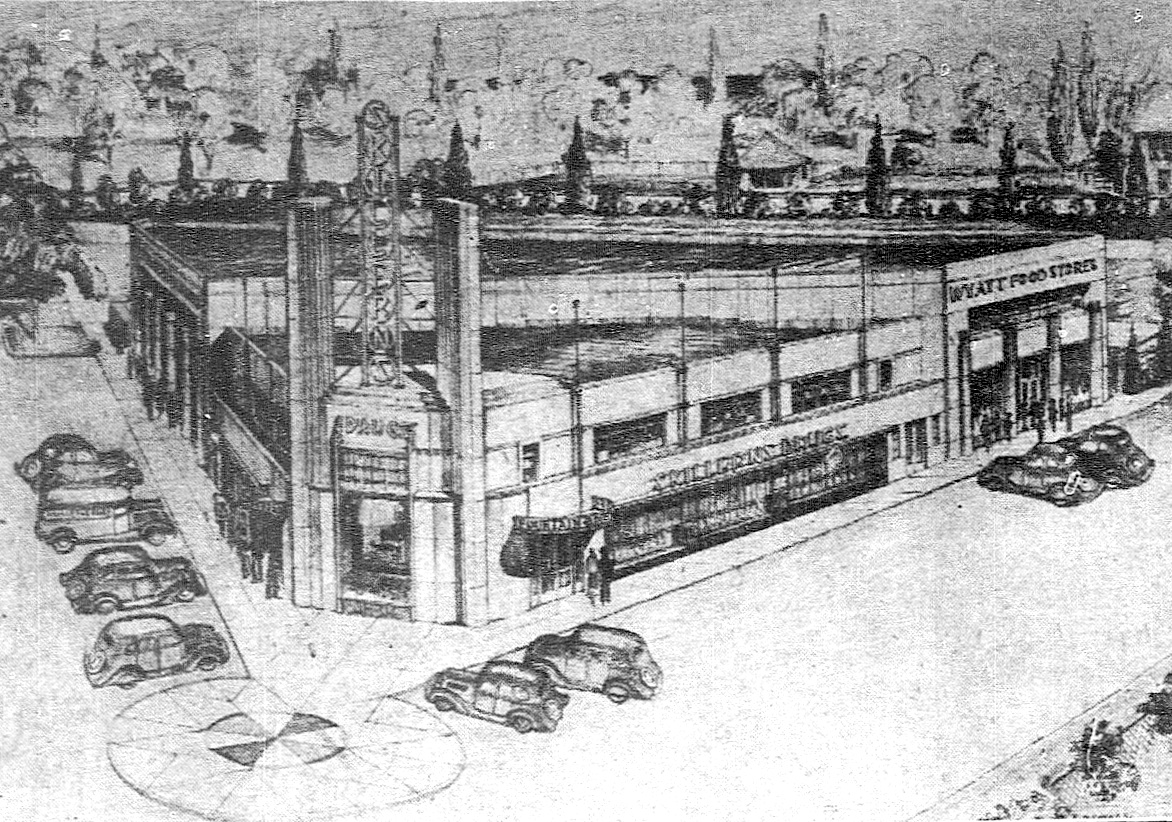
Lakewood’s “Modernistic” Skillern’s Drug Store — 1934

skillerns-lakewood_architects-rendering_1934
Architect’s drawing, 1934 — Abrams & Gaston…

by Paula Bosse

The drawing above was architect J. N. McCammon’s design for a new 14,000-square-foot concrete-and-stucco building of a new Lakewood development, at Abrams and Gaston (a stone’s throw from land now occupied by the parking lot of the Lakewood Whole Foods). It was to be built by Rae Skillern, whose Skillern’s drug store would anchor the development, with a Wyatt Food Store also occupying a large chunk of the property. The “retail village” was to be modeled (…somewhat) after the much-lauded Highland Park Village shopping center, and its design was described in articles as being “modernistic.”

Construction was to begin in early 1934 and be completed in 90 days, but things hit a bit of a roadblock when Lakewood residents objected to a shopping area in their “high-class” residential neighborhood (charming though Skillern’s design might have been…). A zoning classification change from “local retail” to “residential” was sought by concerned Lakewood inhabitants, but the City Plan Commission nixed this and gave the builders the go-ahead.

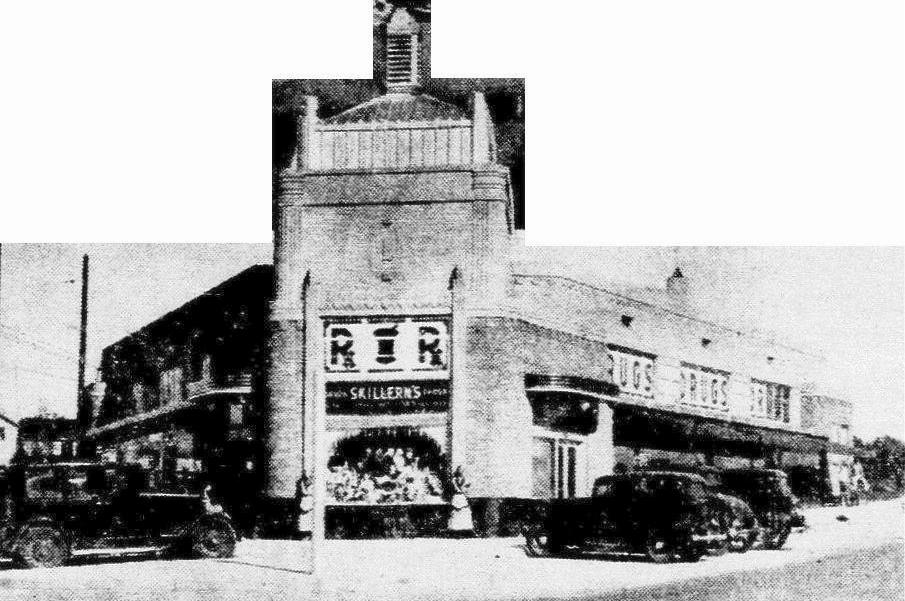
Skillern’s No. 4 opened in December of 1934 at 6401 Gaston and humbly hailed its newest emporium as “America’s most beautiful drug store.” It was, by far, the largest in the local company’s quickly expanding chain, and it featured a large, varied inventory, beautiful fixtures and innovative merchandising, a large soda fountain (with curb service), a “perfume bar,” and an open view into the “prescription department” where customers could watch the pharmacists doling out their medications.

The small shopping area quickly became a popular shopping destination (along with the larger Lakewood Shopping Center across Gaston), and the big, new Skillern’s — which sat at the point of the triangular-shaped “village” — was its focal point.

lakewood-skillerns_1930s
Dec., 1934

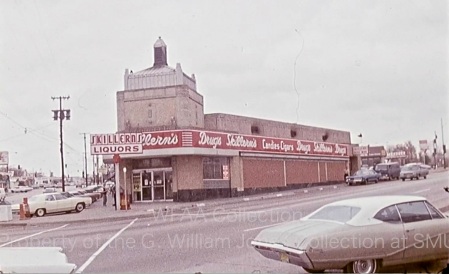
Skillern’s left its cool building sometime around 1971, after a fire caused heavy damages in November, 1970. It moved across the street, into the equally cool old Gaston Avenue Pharmacy (known familiarly as Doc Harrell’s drug store, the place with the iconic conical roof), not long after Harrell’s death in 1969. The Lakewood outpost of the Mickey Finn’s chain of pool halls opened in the old Skillern’s space in February, 1972. In 1978 the property was condemned by the city to make way for the weird Abrams Bypass, which cut through that northeast corner of the Gaston-Abrams intersection; several buildings in the immediate vicinity deemed to be in the way of progress were demolished, including Rae Skillern’s “modernistic” drug store, a Lakewood landmark for over 40 years. Pity.

Below, a screenshot of footage from WFAA-Channel 8 News, in late November 1970. A last hurrah.

skillerns_lakewood_nov-29-1970

 ***

Sources & Notes

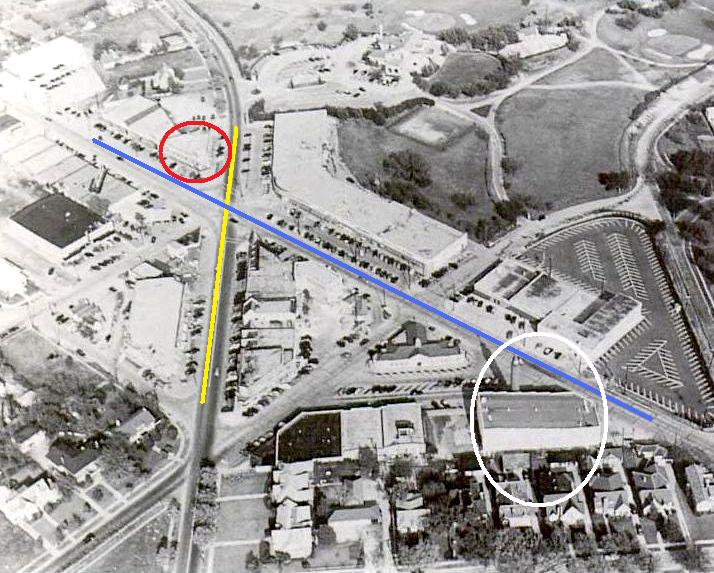
Skillern’s was located on the northeast corner of Gaston and Abrams at the tip of a triangular-shaped piece of land. The drawing at the top shows Abrams running vertically (to its west), and Gaston running horizontally (to its south). It would have faced the old Dixie House space. The Abrams Bypass skewed everything, but it was about where the little triangular “park” is now — between Abrams Parkway and Abrams Road, just west of the Whole Foods parking lot. (UPDATE: I now know that that greenspace has a name: Harrell Park!) Below is an aerial photo of what this part of Lakewood used to look like. Gaston is in yellow, Abrams is in blue, the Skillern’s building is circled in red, and the Lakewood Theater (for reference, because this all looks pretty freaky to us today and it’s hard to get one’s bearings) is circled in white. Looking northeasterly.

lakewood_aerial_marked

To see a larger image of this aerial photo — without the markings — click here. (Photo from the book The Dallas Public Library, A Century of Service by Michael V. Hazel, presumably from the collection of the Dallas Public Library.)

An interesting account of the how the bizarro Abrams Bypass happened can be found in the D Magazine article “Why Lakewood Doesn’t Trust Itself” by Charles Matthews (Oct., 1978), here. A Dallas Morning News article on the same topic — “Lakewood Plan May Benefit Bank” by Henry Tatum (March 12, 1978) — can be found in the Dallas Morning News archives.

*

Copyright © 2015 Paula Bosse. All Rights Reserved.

Luncheon at The Zodiac Room, Darling

zodiac-room_smFood, fashion, & the unmistakable whiff of Old Money (click for larger image)

by Paula Bosse

Two cool and sophisticated postcards from the cool and sophisticated Neiman-Marcus (although it’s debatable whether the truly cool and sophisticated N-M shopper would, in fact, mail anyone something as bourgeois as a postcard of a department store, Neiman-Marcus or not). Perhaps these were done up for the sizable tourist trade. I love these cards. Commercial art of this period is wonderful.

The description on the back reads: “One of the great dining spots of the Southwest … N-M’s famed ZODIAC ROOM. The superlative food specialties of Director Helen Corbitt and her staff are enjoyed during modeling of fashions a la Neiman-Marcus at luncheon and dinner. Also, tea served daily.”

Below, the Carriage Entrance:

neimans_postcard_c1950s-carriage-entrance-sm(click for larger image)

The description: “‘The Carriage Entrance’ — famous passageway into one of the world’s great specialty stores.”

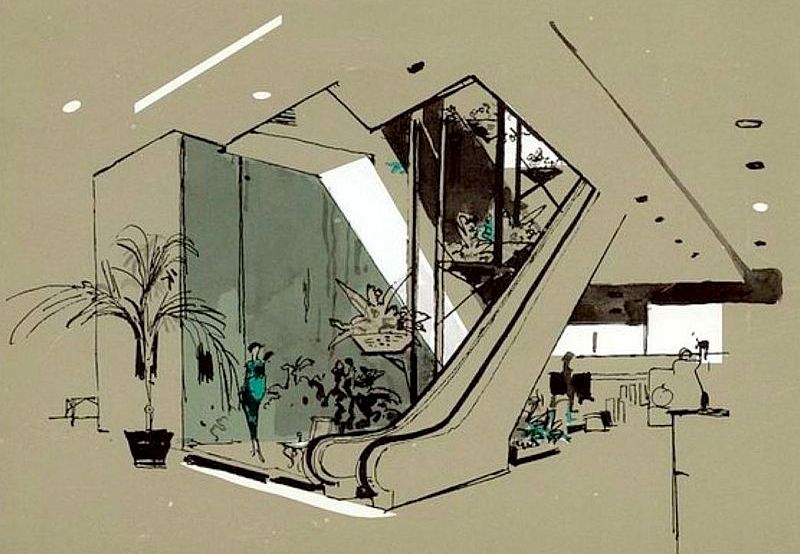
And another (I’d love to see the whole series of these postcards.) Sadly, no description on this one, featuring a fashionable escalator.

n-m_escalator_pinterest

I fear I shall never reach the level of swan-like sophistication needed to become an habitué of The Zodiac Room. Tant pis.

***

I have no idea where these postcards came from. I’m not sure of the date, either, but … “1950s”? Maybe very early 1960s? Let’s go with “Mid-Century” — everyone loves that! Whenever this was, this was a period when fashion was chic and fabulous. As was Neiman-Marcus. (I still miss that hypen!)

Need to make a reservation at The Zodiac? Info is here.

*

Copyright © 2015 Paula Bosse. All Rights Reserved.

Neiman’s Will Welcome You With Open Arms When Your Gusher Finally Comes In

neiman-marcus_cartoon_1956New Yorker cartoon by Mischa Richter, 1956

by Paula Bosse

I came across this cartoon in — of all things — a historical journal, without a source. Google informs me that this was a cartoon by Mischa Richter, and that it appeared in the Oct. 27, 1956 issue of the New Yorker, one month before the release of the heavily-promoted epic movie “Giant.” You know Jett Rink was no stranger to N-M after his gusher came in.

***

Cartoon from the TSHA journal Texas Historian, Nov. 1978, used as an illustration in the article “Neiman-Marcus: A Dream of Elegance” by Margaret Lucas.

Details on the New Yorker cartoon by Mischa Richter (and the possibility that the original artwork may be available for purchase from Condé Nast, if you are so inclined) can be found here.

*

Copyright © 2015 Paula Bosse. All Rights Reserved.

Back When Bookstore Fixtures Were a Thing of Beauty! — 1940s

baptist-book-storeErvay & Pacific — “Book Corner” (click for larger image)

by Paula Bosse

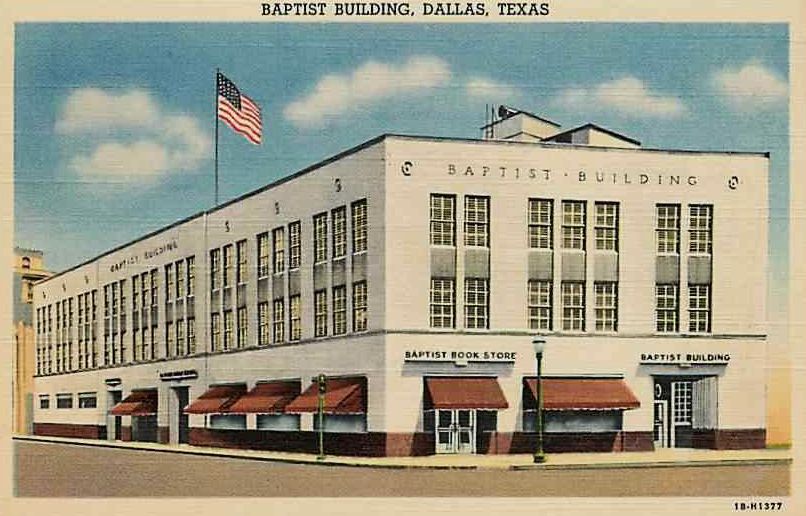
In July of 1941 the Baptist Building opened at Ervay and Pacific. Part of the ground floor (“the Book Corner”) was occupied by the Baptist Book Store, which sold mostly religious material, but which also stocked dictionaries (“and other items of similar nature”) and children’s books (“We have books for every type and age of juvenile from the Picture Books of Children from three to five to the vigorous youth wanting stories of the romantic west”). The ad below appeared in a booklet put together to welcome newcomers to the city, about 1946:

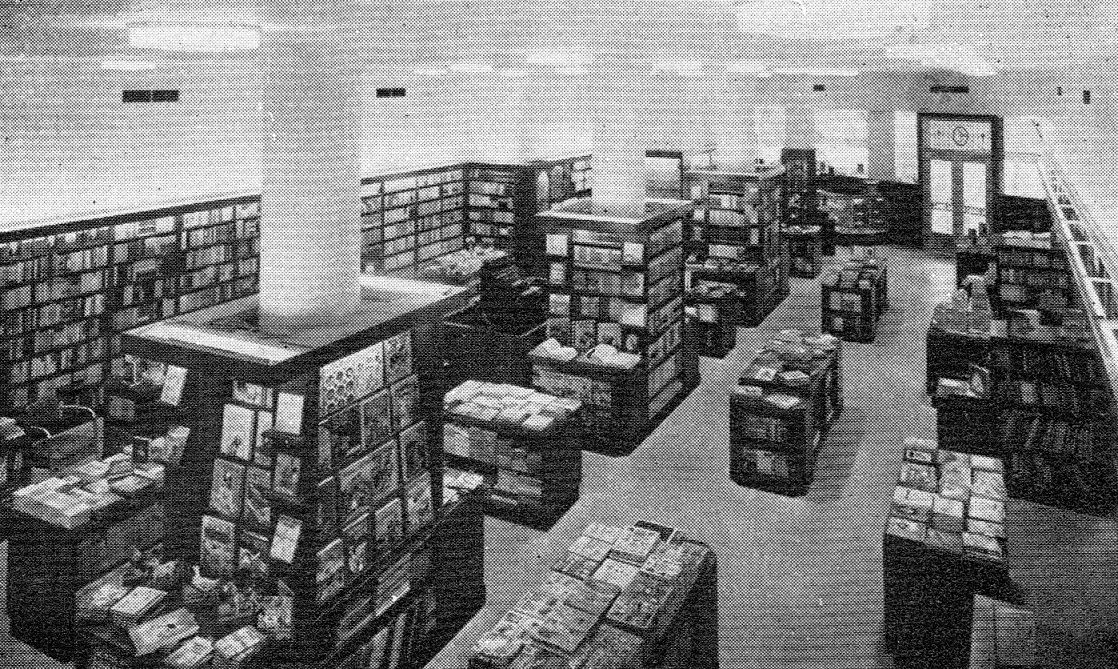
baptist-book-store_ca1946(click for larger image of bookstore interior)
*

Having grown up in a family-run bookstore (and having worked in various other bookstores for a large chunk of my life), I’m always fascinated by old photos of bookstore interiors, and this one is just great. (Click the image above to see the photo of the store much larger.) I’m particularly fascinated by the fixtures encircling the pillars — I’m not sure I’ve ever seen the problem handled in such a sophisticated way. And is that recessed lighting shining down on the slatwalls? This is a really wonderful-looking bookstore. The only thing that looks out of place is what appears to be an old-fashioned chunky cash register, center left. Everything else in this photo makes the bookseller in me practically giddy with nostalgia.

baptist-book-store_dmn_092847-det

***

Ad is from a publication called “So This is Dallas” published by “The Welcome Wagon.” It is undated but is probably from immediately after the war. This slim booklet was printed for several years in slightly different editions for people who were considering a move to Dallas or for people who had just moved here. These booklets are wonderful snapshots of the time, with everything the prospective Dallasite would need: facts, photos, and ads.

Bottom image is a detail from a 1947 ad.

*

I am fascinated by photographs of vintage bookstore interiors — especially Dallas bookstore interiors, of which there are precious few to be found. I would love to see any photos of Dallas bookstores before, say, 1970. If you have any, please send them my way! My contact info is in the “About/Contact” tab at the top of the page. Thanks!

*

Copyright © 2014 Paula Bosse. All Rights Reserved.


Dallas’ Ford Dealerships in the 1920s: Authorized for Your Protection

ford_dal-exp_091622-smAuthorized Ford dealers, 1922

by Paula Bosse

Dallas has always been a big car town, getting its first look at a “horseless carriage” way back in 1899 when E.H.R. Green sped into town at 15 m.p.h. and startled the citizenry. By 1903, The Dallas Morning News was bragging that Dallas had more privately owned cars than any other city its size in the South (“over 40”). By 1909, the Ford Motor Company had a Model T service center in the city, and in 1914, Ford opened an important regional assembly plant downtown (which later moved to more spacious digs on East Grand).

For many years, there were six — and only six — authorized Ford dealers in town. In several ads of the period, “automobilists” were stringently warned to avoid “bogus” agents offering counterfeit Ford parts. (Accept no knock-offs!) Below, the six authorized Ford dealers operating in Dallas in the 1920s. (All photos are larger when clicked.)

ford-dealer_fishburn_houston_dmn_101329Above, Fishburn Motor Company, 101 N. Houston St. Long gone, Dealey Plaza now occupies this site. Behind the building, at the right, is the Southern Rock Island Plow Company building, better known today as the School Book Depository.

ford-dealer_flippen_ross_dmn_101329The Flippen Auto Company, 1917 Ross Ave. The building took up part of the block now occupied by the Dallas Museum of Art.

ford-dealer_lamberth_dmn_101329Lamberth Motor Company, 3800 Main St. This building, not far from Fair Park, is at Main and S. Washington and later became part of the Fritos factory. With the building’s renovations over the years, it’s a little difficult to tell, but I think this building is still standing (and is the only one of these six buildings that has survived). To see what this building has looked like over the years, see my previous post, “3800 Main: Fritos Central,” here.

ford-dealer_morriss_lancaster_dmn_101329aThe John E. Morriss Company, 132 North Lancaster Ave., Oak Cliff. I’m not positive, but I think this may have been where Hector P. Garcia Middle School now stands.

ford-dealer_rose-wilson_ervay_dmn_101329Rose-Wilson Company, 1218 South Ervay St. In the Cedars, one block north of the Ambassador Hotel.

ford-dealer_shelton_main_dmn_101329J. H. Shelton & Company, 2311 Main St., at the very edge of Deep Ellum. The buildings seen here were right about where Central Expressway crosses over Main.

ford-logo_19221922

*

Copyright © 2014 Paula Bosse. All Rights Reserved.


The Runyonesque Pearl Street Market, Full of Colorful Characters and an Army of Rats

bob-taylors-cafe_ebayProduce seller, Pearl Street Market

by Paula Bosse

Last week I wrote about the produce market area in the neighborhood where the Farmers Market was eventually built, mainly because I had come across the above undated and unidentified photograph. I really wanted to know more about this photo, and the more I read about the area known in the ‘teens through the ’50s as the Pearl Street Market, the more I became fascinated by it.

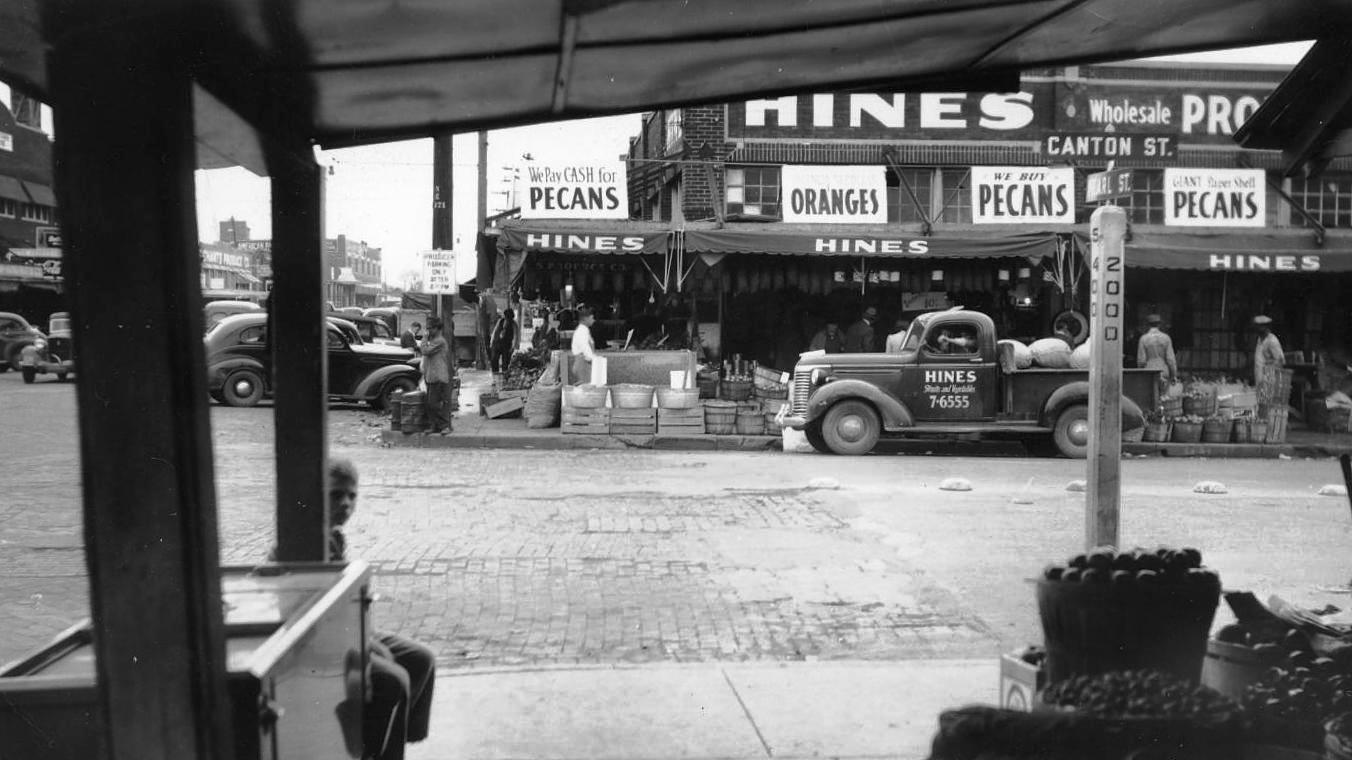
I love this photo, but, sadly, I never found out who cafe-namesake Bob Taylor was, and I never discovered the identity of the man sitting on the sidewalk with his produce. BUT, I did realize that this produce seller was right across the street from one of the biggest wholesale produce sellers in Dallas, the Hines Produce Company. In fact, the photo below might show my mystery man’s view across the street. Both photos show the intersection of the 2000 block of Canton and the 400 block of South Pearl, the heart of the Pearl Street Market.
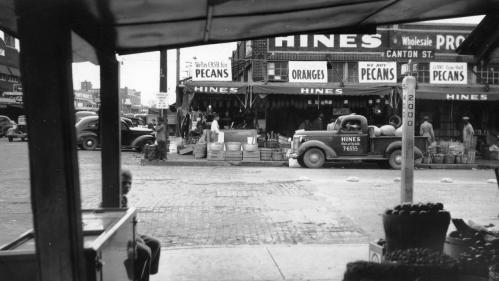
hines_canton-pearlHines Wholesale Produce Company, Canton & S. Pearl

These two scenes look so wholesome — produce peddlers selling their fresh fruits and vegetables, quaint old cars and trucks parked along streets that are still vaguely familiar-looking, and the overall old-fashioned-ness of everything — all presented in nice, sharp, black-and-white photographs that always make me feel a little nostalgic, even though I wasn’t actually around back then and have nothing, really, to be nostalgic about.

But “wholesome” is not a word that would have been associated with the Pearl Street Market. In fact, this was a part of town your mother would probably strongly suggest you not visit. Here are a few of the illicit activities that went on here on a fairly regular basis:

  • Brawls in cafes, often involving weaponized broken beer bottles
  • Shootings
  • Stabbings
  • Pickpocketing
  • Burglary
  • Robberies (of victims both asleep and awake)
  • Gambling
  • Muggings
  • Drug dealing
  • Arson
  • Hit-and-runs
  • Vehicular homicides
  • Regular homicides
  • Prostitution (I’m just guessing…)
  • Shoplifting
  • Vagrancy
  • Selling another man’s melons and fleeing with the money
  • The occasional being “severed” by a train
  • Etc.

A typical police blotter story went something like this:

[Miss Esther Lee Bean] told physicians she was attacked by another woman who broke a beer bottle on her head and then used the jagged neck of the bottle as a weapon, cutting her several times on the right arm…. The affray occurred in a cafe in the 400 block of South Pearl. (Dallas Morning News, Dec. 17, 1938)

So … yes, very nostalgic.

Crime was a big problem, but what seems to have been even more upsetting to the people of Dallas was the general squalor of the place. Sanitary conditions were appalling. Rotting fruit and vegetables were thrown in the street, and live chickens were kept in cages, doing things that chickens do (which probably shouldn’t be done that close to things people might eat). And there were NO public toilets in the area — visiting farmers (who often bypassed the flea-bag hotels and slept in their trucks — or even on the sidewalks) routinely used the alleys as “comfort stations.” And then there were the rats. LOTS of rats. A staggering number of rats. Rats absolutely everywhere. Typhus? Not just a rumor. City sanitation crews would come by daily to hose the place down, but there was so much solid matter going down the drains that sewers were frequently clogged. It was, in a word, disgusting.
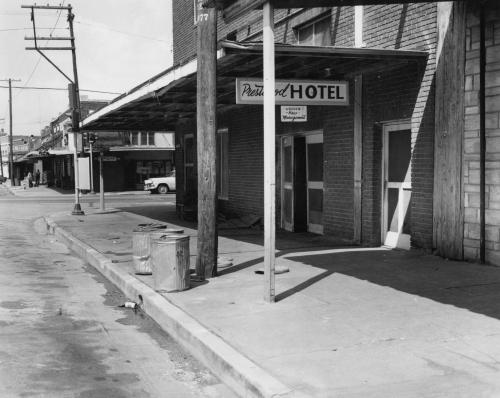
hotel_pearl_1959_portalA typical hotel near Pearl & Canton, a bit cleaner by the ’50s

For years this part of Dallas, just south of the central business district, had been a place where farmers (and produce brokers) had been selling their fruits, vegetables, poultry, eggs, pecans, and whatever else they could haul into town. It was all very informal, and for much of that time it was completely unregulated. This part of town had been the base of the “truck farmers” since at least 1912. Before that, the market was at Pearl and Main, and in the earliest days it was at Ervay and Elm.

In 1914 a city-sanctioned (and presumably regulated) municipal retail market where vendors would sell directly to consumers was proposed, but eventually consumers became irritated that the produce they bought at the municipal market was significantly more expensive than that which could be purchased from the “hucksters” who parked along Pearl Street and roamed residential neighborhoods. The Pearl Street vendors sold primarily to wholesale customers, but over time, they opened up their stalls to the public and did a bustling business with housewives. The wholesale market was hit pretty hard by the 1930s as the number of independent grocers — once the major buyers on Pearl Street — diminished as chain stores took over. Those housewives became more and more important as time went on.

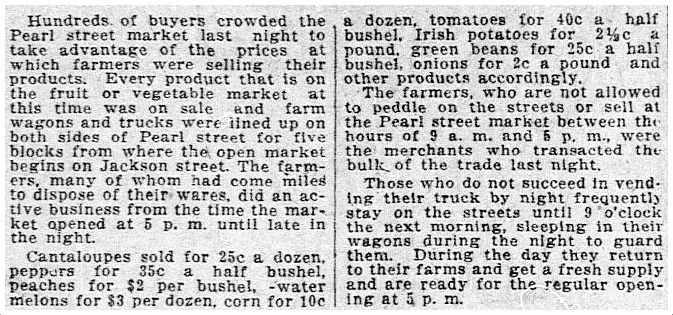
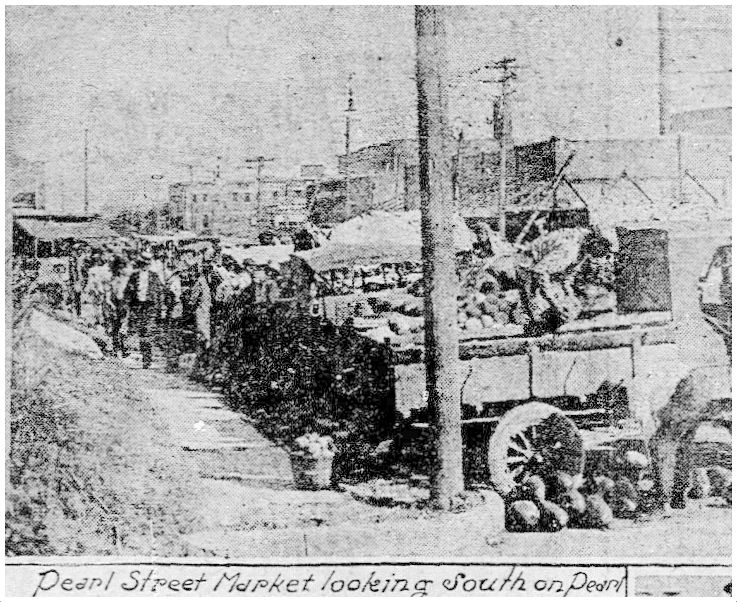
farmers_dmn_071721DMN, July 17, 1921 (click to enlarge)

farmers_dmn_071721afarmers_dmn_071721c

farmers_dmn_071721bDMN, July 17, 1921

By the 1920s, the Pearl Street Market was well-established, and it was where one went to buy fresh (and “fresh”) fruits and vegetables. And according to this real estate ad, business was booming:

produce-mkt-dist_dmn_110423DMN, Nov. 4, 1923

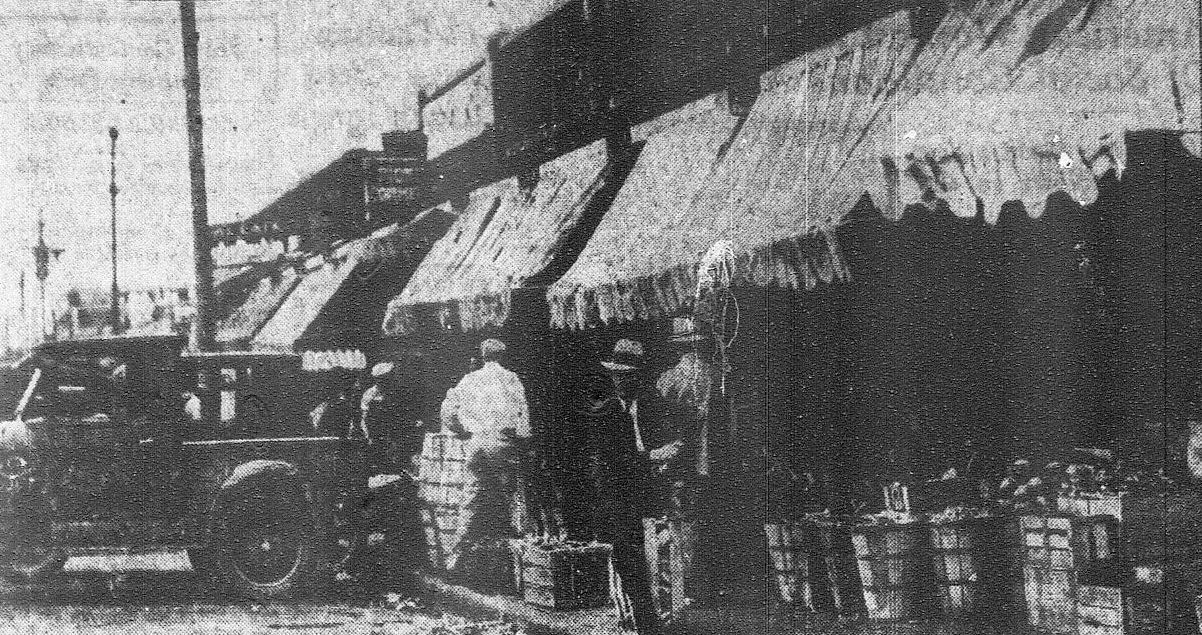
In 1933, The Dallas Morning News printed a fantastic, full-page, Runyonesque article about the “Pearl Streeters,” written by Eddie Anderson, who interviewed the colorful characters of the area and described the buzzing street life. With tongue only partially in cheek, he wrote: “Chicago has its Water Street. In New York you will find it on Washington. And if you go abroad there is the famous Smithfield Market of London and the vaulted bazars of Constantinople. In Dallas, it is Pearl Street.” Below, a photo that accompanied the story (click for larger image).
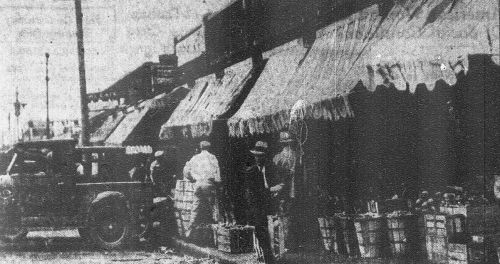
pearl-st-mkt_dmn_051433a

Anderson’s story was certainly entertaining, but it mostly glossed over the area’s more unsavory aspects. By 1938, there were louder and louder demands to clean up the neighborhood. Housewives organized and protested the deplorable conditions of the area, echoing points covered in a scathing Morning News editorial in which it was described as “a hazard to the health of the city because of the number of persons who visit it and because 75 per cent of the vegetables and poultry consumed in Dallas pass through that market” (DMN, Aug. 17, 1938).

In the early 1940s, the city finally stepped in and built the forerunner to the Farmers Market that we know today. By the 1950s, things in the squalor department had settled down a bit, and photos featuring pretty suburban housewives examining the produce and smiling children sampling fresh strawberries.

Nary a rat to be seen.

*

A street map of the Canton & Pearl area in about 1920, back when Canton Street was still part of an uninterrupted grid. (Note that many of the street names have changed over the years.)

1919-map

***

Sources & Notes

Top photo (with Bob Taylor’s Cafe in the background) is from the author’s collection.

Photos of the Hines Produce Co. and the Prestwood (?) Hotel are from the Dallas Municipal Archives’ Dallas Farmers Market / Henry Forschmidt Collection, via the Portal to Texas History. You can browse this great collection here.

Map detail is from the very large “1919 Map and Guide of Dallas & Suburbs” (C. Weichsel Co.), via the Portal to Texas History, here.

The following DMN articles on the Pearl Street Market/Farmers Market are worth a read:

  • “Pearl Street Market in Morning, Dallas’ Most Picturesque and Busiest Place in City” (July 19, 1925)
  • “$1,500 Dope Cache Found Under Pile of Pineapples” (July 15, 1936), a story about a heroin bust with a headline that seems right out of The Weekly World News
  • “Let’s Keep Our Pantry Clean,” editorial by Harry C. Withers (DMN, Aug. 17, 1938)
  • “Dallas: The Old Public Market” by Tom Milligan (Aug. 15, 1966)

And even though I linked to it above, it’s so good and such a fun read that I’m going to mention it again: I highly recommend Eddie Anderson’s “Pearl Street Market As It Sees Itself” (May 14, 1933), here. Edward Anderson was an interesting guy: read about him at the Handbook of Texas here; read about his novels and see photos, here. All these years I’ve had his novel Thieves Like Us on my bookshelf, but I had never gotten around to reading it. Now I have a reason to!

I’ve gathered a pretty entertaining collection of crime reports from the Pearl & Canton neighborhood into one handy document, which can be read in all its seedy glory, hereSERIOUSLY. THIS IS FANTASTIC STUFF!

*

Copyright © 2014 Paula Bosse. All Rights Reserved.

Neiman-Marcus Brings France to Big D — 1957

neiman-marcus_french-fortnight-poster_1957

by Paula Bosse

In 1957, Neiman-Marcus presented their very first Fortnight celebration — a tribute to France, which included filling the department store with French products and couture, hosting celebrated fashion icon Coco Chanel on her first visit to Texas, promoting French culture and tourism, and even elaborately decorating the outside of their downtown building to resemble the Rue du Faubourg Saint-Honoré. It was a huge success, and it became a much-anticipated annual event in Dallas.

n-m_french-fortnight_stanley-marcus-papers_degolyer-lib_SMU_color_1957A little bit of Paris on Ervay Street (via DeGolyer Library)

The Fortnights became very popular and were celebrated city-wide. There were all sorts of non-N-M events around town that tied in with whatever country was being honored that year (plays, art exhibits, lectures, etc.), and businesses soon realized that it was easy to share in the Fortnight spotlight and momentum by either blatantly or subtly customizing their advertisements to have a bit more international flavor for two weeks every year.

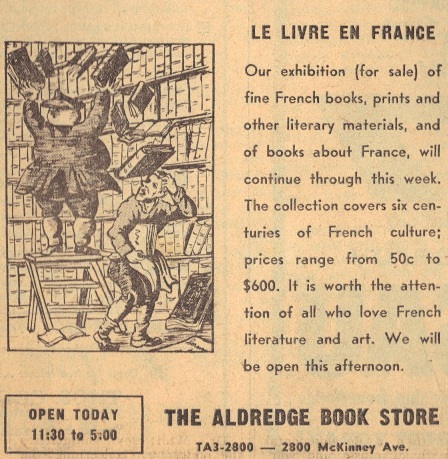
As I have a personal connection to The Aldredge Book Store, I’ll use them as an example. The ad below is one of the earliest examples of a Fortnight tie-in ad. Sawnie Aldredge, the original owner of the store, was an enthusiastic Francophile, and Stanley Marcus had been a regular customer from the day the doors opened in 1947. It seems likely that the two would have discussed the event at some point, and this type of piggy-backing seems like a mutually beneficial sales opportunity made in heaven. Even though N-M was not specifically mentioned, readers of the ad would certainly have known of the connection to the well-publicized promotion. As the Fortnights became more and more popular, everyone in town began jumping on the bandwagon, and between 1957 and 1986, the whole city went crazy for one specific country for two weeks every year. It was great. And I still miss them.

ABS_lelivreenfrance_1957“From 50¢ to $600” (1957)

***

Sources & Notes

Neiman-Marcus “France Comes to Texas” poster by Raymond Savignac.

Photograph of the Frenchified facade of the N-M building from the Stanley Marcus Papers collection, DeGolyer Library, SMU Libraries, Southern Methodist University; more information on this photo is here.

Aldredge Book Store ad from October, 1957.

One of my favorite pieces of ephemera from this first French Fortnight is a lavish advertisement insert that appeared in the October 1957 issues of American and French editions of Vogue. The 30-plus page insert has been scanned by SMU (it is in the collection of Stanley Marcus’ papers at the DeGolyer Library). It is great. If you are interested in fashion advertising of the 1950s, you’ll enjoy the sophisticated-but-fun-and-frothy art direction, seen in a PDF, here.

For an entertaining look back at the various Fortnights (including the year when Mr. Stanley & Co. had to invent a country one year when Australia pulled out at the last minute!), read “Fabulous Fortnight” by Si Dunn in D Magazine (Oct. 1984), here.

And for my previous post on Coco Chanel’s visit to Dallas (during which she attended a barbecue!), “When Coco Chanel Came to Dallas — 1957” can be found here. This wasn’t an official part of the first Fortnight, but it was a sort of prelude, preceding the 1957 French Fortnight by a month.

*

Copyright © 2014 Paula Bosse. All Rights Reserved.

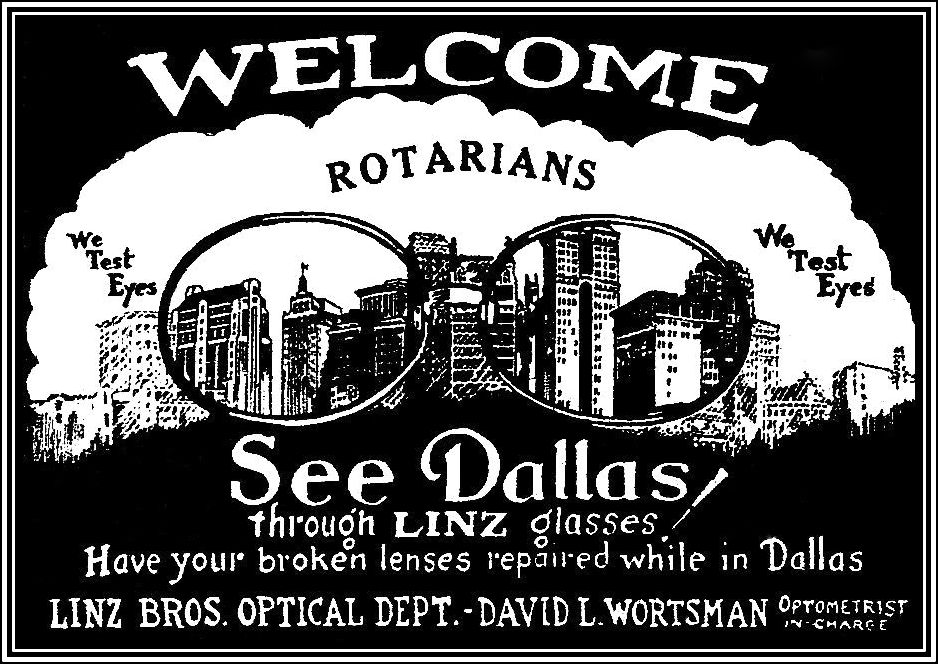
“See Dallas Through Linz Glasses!” — 1929

ad-linz_rotarians_dmn_052629

by Paula Bosse

What a great ad from 1929!

The huge annual convention of the Rotarians was underway in Dallas at this time — 10,000 people were flooding the city from around the world, and all the larger businesses had specially-branded advertisements aimed at the pool of potential new customers.

*

Copyright © 2014 Paula Bosse. All Rights Reserved

Cokesbury Book Store — 1959

cokesbury_dallas_1959

“For a summer of pleasure, grab a good book.”

*

Copyright © 2014 Paula Bosse. All Rights Reserved.