English actress Jane Asher — who has acted since the age of 5 — will probably forever be referred to somewhere (like here) as “Paul McCartney’s former girlfriend.” They dated from 1963 to 1968, and Jane always asserted that her acting career was what was important to her, not being a celebrity (or the girlfriend of a celebrity). But if you were dating a Beatle, that was probably an impossible thing to escape.
In 1967, Jane toured the United States for several months as part of the Bristol Old Vic company. One of their longest stays was in Dallas (April 10-15, at the State Fair Music Hall), where the company performed Shakespeare’s Measure For Measure, Hamlet, and Romeo and Juliet (in which Jane appeared as Juliet). The Dallas performances (“The theatrical event of the season!” “Only Southwestern engagement…”) were co-sponsored by Neiman-Marcus.
It appears that Jane popped into Dallas early — on April 4 and April 5 — in order to do some publicity, catch a Dallas Theater Center production of Julius Caesar (as the guest of Richard Marcus who, afterwards, hosted a small dinner party), and, the next day, celebrate her 21st birthday at a noon luncheon in Neiman’s Zodiac Room.
Her arrival at Love Field was captured by Channel 8 news cameras (sadly, without sound).
*
AP wire photo, taken in Dallas on April 4, 1967
AP wire photo, taken in Dallas at Neiman-Marcus on April 5, 1967
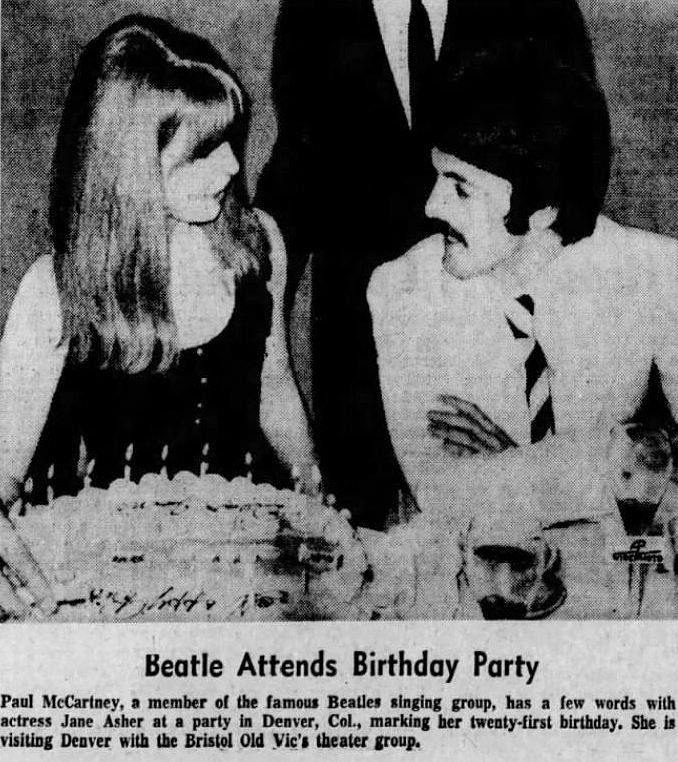
After cake at the Zodiac Room on her birthday — April 5, 1967 — she left for Denver, the next stop on the tour. That night her famous boyfriend joined her there for even more cake.
Denver, April 5, 1967
After the run in Denver, the Bristol Old Vic company came to Dallas for six days (and seven performances). A reviewer complained about the Music Hall’s poor acoustics and thought that the productions of the three plays were a bit “mod” for his taste (“considerable stage movement and fast-paced dialogue caused many of the lines to be lost”), but he thought Jane acquitted herself well as Juliet in a good, if somewhat undistinguished production.
In an interview with Maryln Schwartz of The Dallas Morning News, Jane — probably for the thousandth time — had to steer the conversation back to her acting and away from her famous boyfriend. When Schwartz asked who her favorite “singing group” was she told her it was the Grateful Dead.
**
Austin American-Statesman, Jan. 15, 1967 (click to see larger image)
***
Sources & Notes
Top photo by Harry Benson, Daily Express, Hulton Archive, Getty Images. The Getty caption has the date as April 25, 1967, which is incorrect — the photo was most likely taken on April 5, 1967 (Jane is wearing the same outfit seen in the Zodiac Room photo, and on April 25th, the theatrical company had been in Illinois for over a week). I have to admit, I love seeing celebrities awkwardly wearing Texas cowboy hats. But Jane looks pretty cute.
The WFAA-Ch. 8 news footage is from the G. William Jones Film Collection at SMU. The short, 49-second clip shows her arriving on a Delta flight at Love Field, met by a no doubt Stanley Marcus-approved be-costumed young man with a trumpet and a woman bearing some sort of official proclamation of “welcome.” The two color photos are my screen captures.
The birthday cake photo is from a blog post teeming with fantastic photos of Jane Asher and her stunning red hair, here.
More on the Beatles and Dallas can be found in the Flashback Dallas post “The Fab Four in Big D — 1964,” here. (It’s interesting to note that two important people in the orbit of the Beatles celebrated milestone birthdays in Dallas: Jane Asher turned 21 here, and manager Brian Epstein turned 30 while here with “the boys” in 1964.)
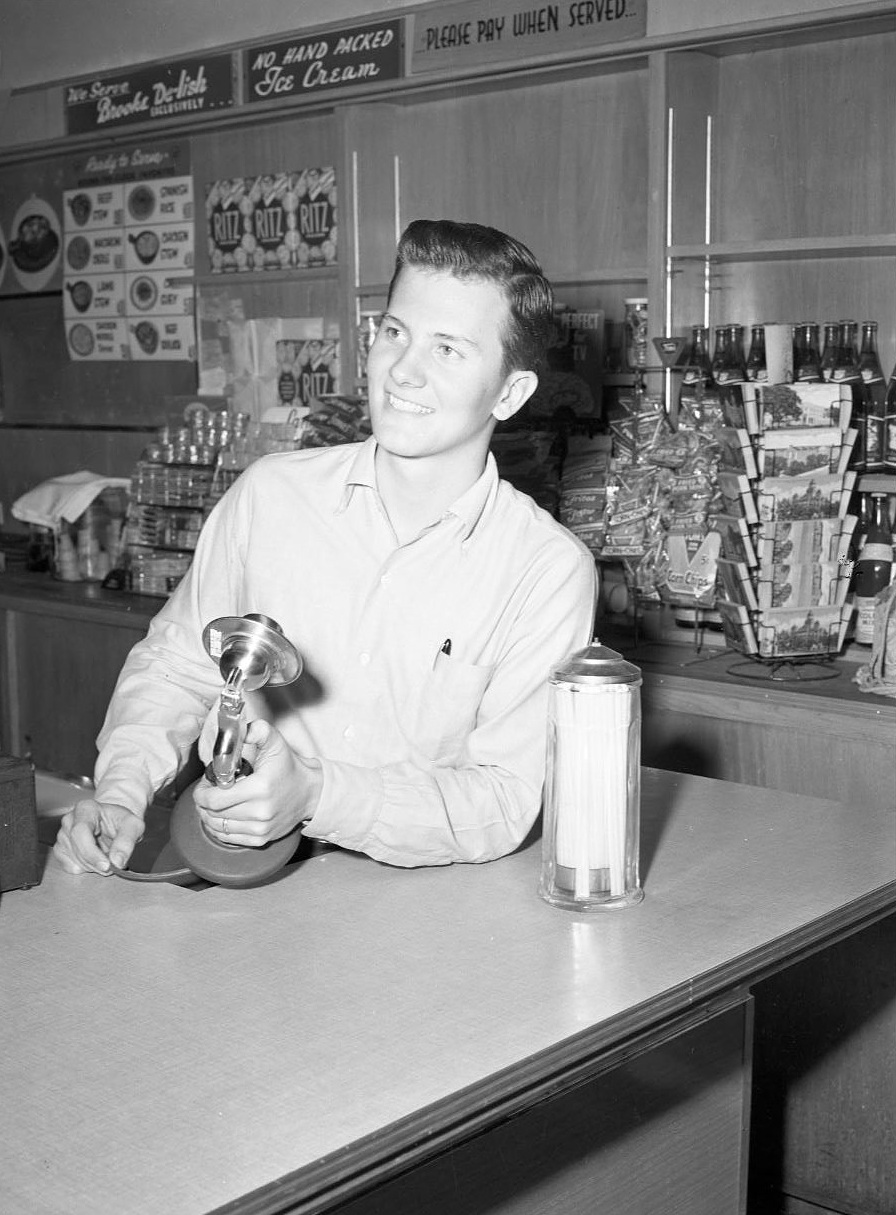
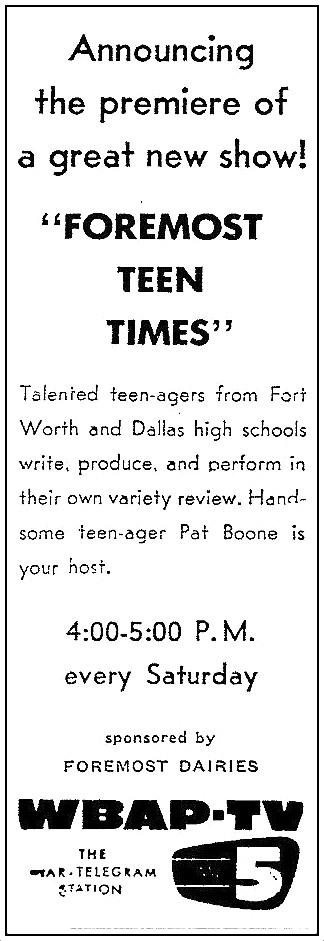
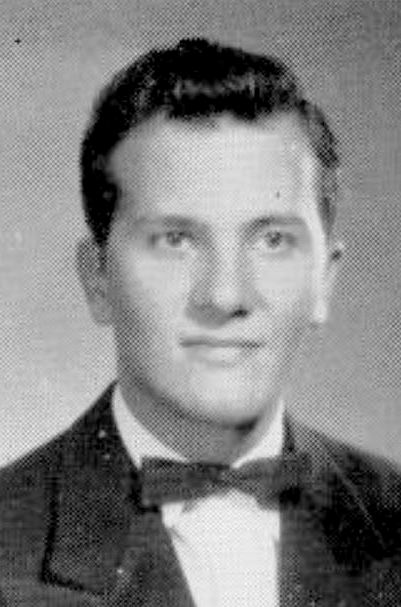
“Handsome teen-ager” Pat Boone, host of WBAP’s “Teen Times”
by Paula Bosse
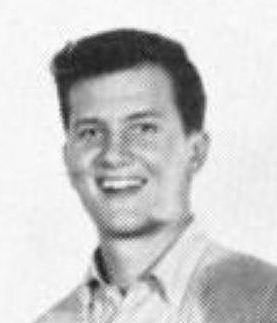
In January, 1954, soon-to-be pop-star Pat Boone transferred from a college in Nashville to North Texas State College (now the University of North Texas) in Denton — he was 19 years old and recently married with a baby on the way. An entertainer since childhood, he had recently appeared on (and won) Ted Mack’s nationally televised “Amateur Hour” and had a few minor recordings under his belt. He entered the Denton college in the middle of the school year, majoring in speech and minoring in music.
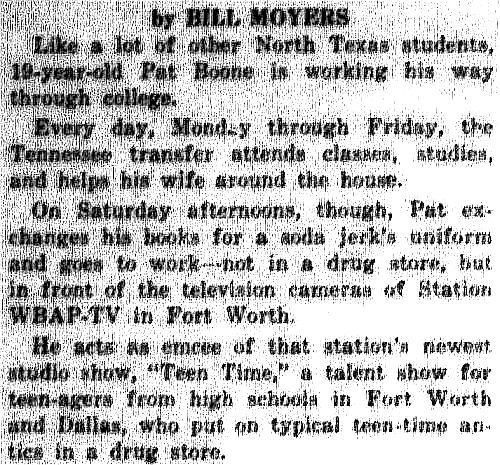
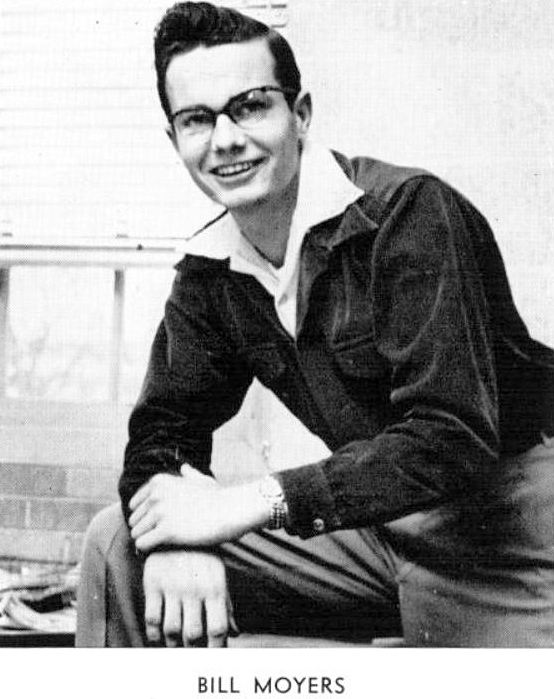
In an interview with the college newspaper, The Campus Chat, student reporter Bill Moyers (yes, that Bill Moyers) asked the scrupulously clean-cut Boone what career he saw for himself. His answer: “I want to preach on Sundays at churches that can’t afford pastors, and perhaps I’ll even become a full-time pastor.” He said that even though he had devoted years to being an entertainer and his father-in-law was a bona fide star, he did not envision a career as a professional singer because, for one reason, he did not approve of night clubs, on moral grounds: “I don’t want to sing at night clubs, and that’s where most of the singers do much of their work” (Campus Chat, Feb. 24, 1954).
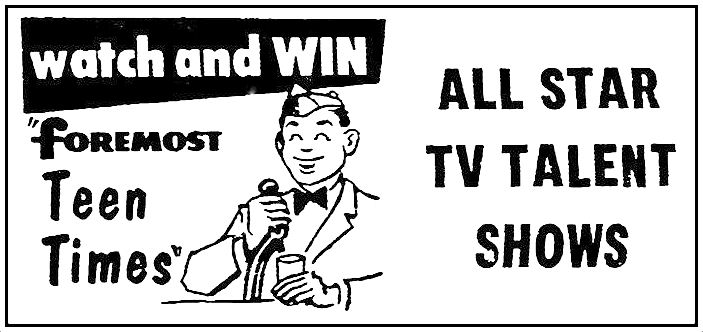
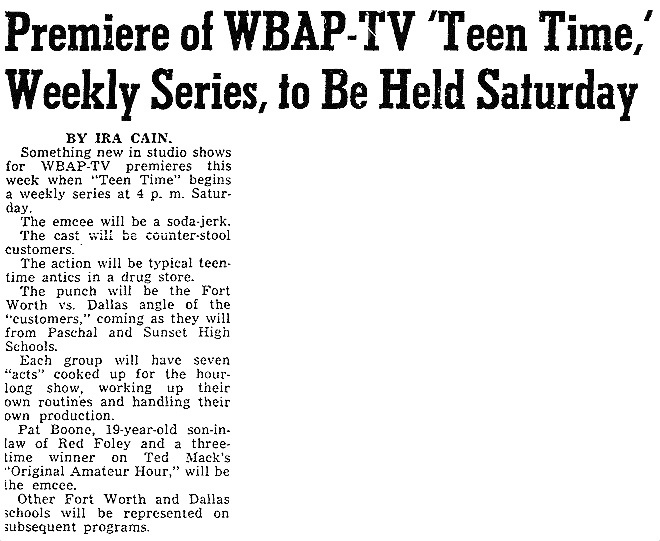
The reason he was being interviewed in the first place — after only a couple of months in town — was because he had been named as the host of a Dallas-Fort Worth television show called “Teen Times,” sponsored by Foremost Dairies and broadcast on Saturday afternoons on WBAP-Ch. 5; the show premiered in February, 1954. Boone acted as host, dressed as a soda jerk behind a drugstore soda fountain, with teenaged guests who represented one Dallas school and one Fort Worth school (the schools changed each week), competing in a sort of talent show. Boone kept things moving, performed a few songs, and, in between, sang the praises of Foremost milk and ice cream.
Boone hosted the show through the spring of 1955. During the run of this local show, his popularity grew quickly on a national level, the result of several national TV appearances and ever-increasing record sales. After his year-and-a-half time in Denton, he moved to New York in the summer of 1955 and enrolled at Columbia University; before the end of the year, Pat Boone’s fame exploded: he had a huge hit with a cover of Fats Domino’s “Ain’t That a Shame” and was appearing regularly on national TV. By the late ’50s his record sales were reportedly second only to Elvis Presley’s, even though Boone’s squeaky-clean and sincere wholesomeness was the polar opposite of the suggestive, hep-cat abandon of Elvis’ earthier style.
Even though Pat Boone was a North Texas student for only a short time, whenever he has returned to Denton over the years he has always received something of a hero’s welcome. With formative years spent here, and with his star-turn in the 1962 filmed-at-Fair-Park movie State Fair, Pat Boone has every right to be considered an honorary Texan.
*
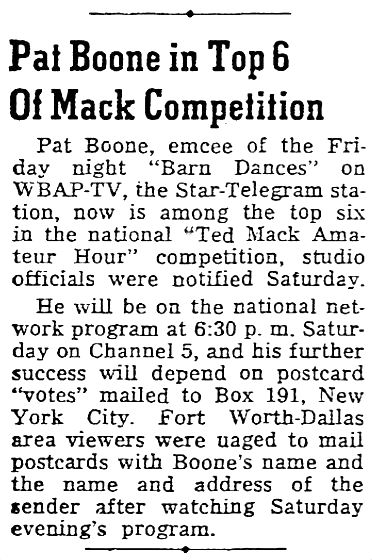
During his time in Denton, Pat Boone hosted two television shows for WBAP-Channel 5: the Foremost Dairies-sponsored “Teen Times” (often referred to as “Teen Time”) on Saturday afternoons, and the Bewley Mills-sponsored “Barn Dance” on Friday nights. (It looks like “Teen Times” was revamped a few years later and returned to Channel 5 in a somewhat similar format as “Teen-Age Downbeat” in January, 1958.)
1954
Fort Worth Star-Telegram, Feb. 7, 1954 (click to read)
Feb. 13, 1954
FWST, Feb. 12, 1954
Below, a super-blurry excerpt from Bill Moyers’ article in The Campus Chat (read the full interview here):
Campus Chat (North Texas State College newspaper), Feb. 24, 1954
FWST, June 20, 1954
In June, 1955, Les Handy — a voice teacher at Texas Wesleyan College — took over as emcee at “Teen Times.”
1955
And in September, 1955, Pat and Shirley and their new baby moved from Denton to New York City.
Student Religious Council (detail from group photo)
***
Sources & Notes
Top photo of Pat Boone behind a soda fountain holding a microphone appeared in the Feb. 24, 1954 edition of Campus Chat, the college paper of what was then North Texas State College; it is from the UNT Libraries Special Collections, and may be accessed on UNT’s Portal to Texas History, here.
Pat Boone’s wife, Shirley, was the daughter of the legendary Nashville “hillbilly” singer, Red Foley. Here’s a video of a nervous Boone and his father-in-law on Foley’s “Ozark Jubilee” TV show, two weeks after Pat and Shirley had left Denton for New York. They are singing “Tennessee Saturday Night,” Red Foley’s big hit from 1949 (hear his great original hillbilly boogie version here).
Because it involves Pat Boone and UNT, check out the 20-minute informational film all about the college, made for students by students in 1963, available to watch on the Portal to Texas History, here — Pat Boone offers a few enthusiastic bits of narration.
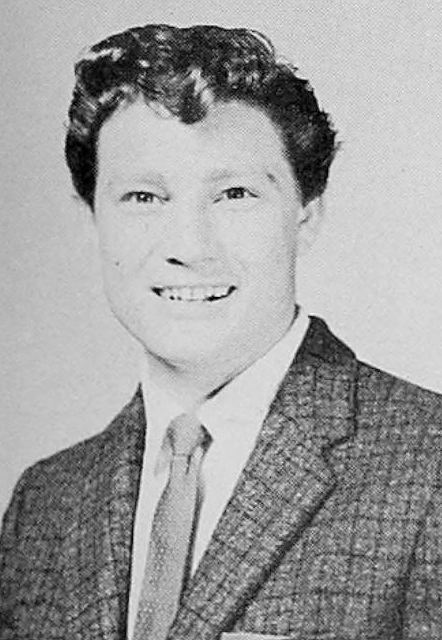
And, why not, here’s a photo of journalist Bill Moyers from the 1953 North Texas yearbook.
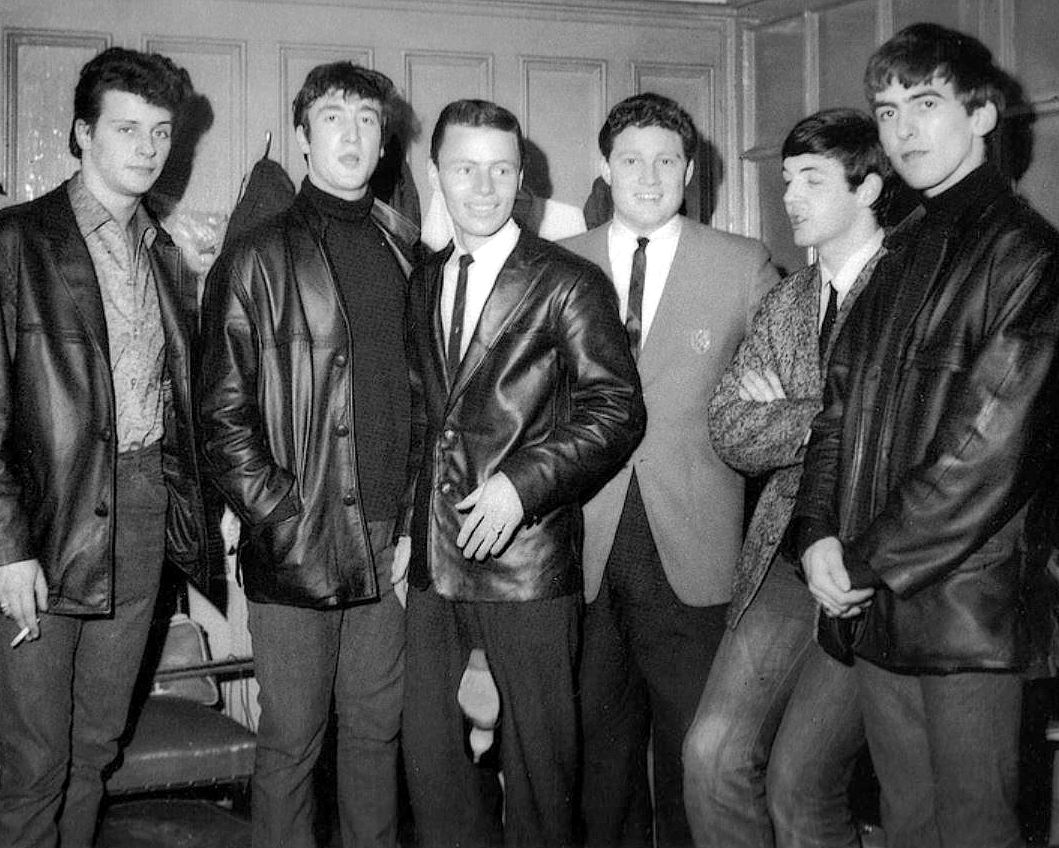
The Ringo-less Beatles with Delbert and Bruce, June 21, 1962
*
(CLICK HERE TO WATCH THE FILM DISCUSSED IN THIS POST)
*
by Paula Bosse
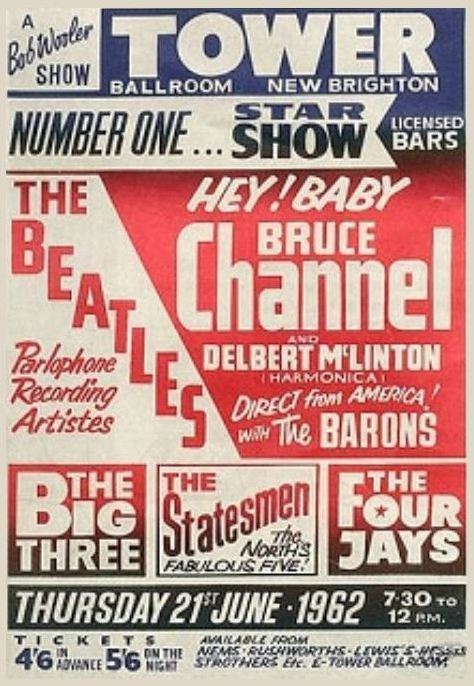
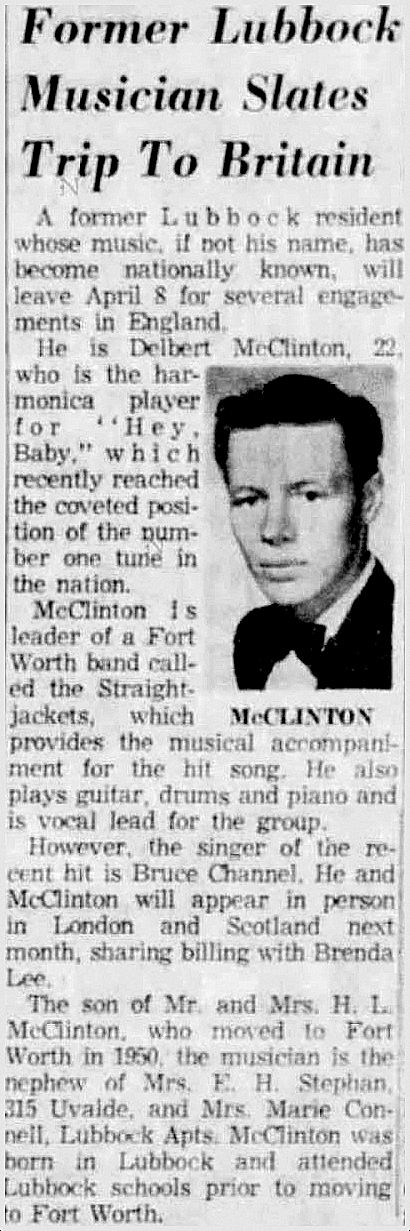
You know how you’re all excited about one thing only to discover something even more exciting sitting all alone over off to the side? That’s what happened when I took a look at the “Light Crust Doughboys collection” which has recently been uploaded to the Portal to Texas History site as part of the Spotlight on North Texas project via the UNT Media Library. I’m a huge fan of Western Swing and classic country music, and I spent an enjoyable hour or two watching home movies of the Light Crust Doughboys as they toured around Texas. When I looked to see what else comprised this collection, I saw the words “England Tour,” “Bruce Channel,” and “Delbert McClinton,” and a jolt went through me: oh my god, could there be film footage of the legendary meeting between the Beatles and North Texas musicians Bruce Channel and Delbert McClinton? Every Beatles fan worth his/her salt knows about the June 21, 1962 meeting when John Lennon eagerly chatted with Delbert McClinton about his harmonica prowess.
I watched the 27-minute home movie (shot by Marvin “Smokey” Montgomery, member of the Light Crust Doughboys and, from what I gather, Bruce Channel’s musical collaborator and, possibly, acting manager), and it does, in fact, capture glimpses of the famed tour in which Grapevine’s Channel, riding high on his #1 hit Hey! Baby, toured England with Fort Worth musician Delbert McClinton, who played harmonica on the record. One of their dates was the English town of Wallasey, just across the Mersey from Liverpool. On June 21, 1962 Bruce and Delbert played the New Brighton Tower Ballroom — their opening act was a popular local band on the brink of superstardom, The Beatles. Backstage, John Lennon asked for a few harmonica tips from Delbert whose Hey! Baby sound John really liked, and Delbert was happy to share. The photo above was taken at that meeting by Paul’s brother, Mike McCartney: from left to right, Pete Best (who would soon be replaced by Ringo Starr), John Lennon, Delbert McClinton (is he wearing Paul’s jacket?), Bruce Channel, Paul McCartney, and George Harrison. Another one, with Bruce and Paul, is below (I’m not sure who the girl is).
The home movie shot by Smokey Montgomery shows Bruce and Delbert (both only 21 years old at the time), their Fort Worth record producer “Major Bill” Smith, as well as several members of the package show of British performers that toured with Bruce, including Frank Ifield, Jay and Tommy Scott, and Beryl Bryden. …But, argh, no Beatles! So close! Still, this is great film footage of a famous tour — footage which may never have been seen by the public — and it is now available online for all to see, courtesy of the University of North Texas!
The 27-minute (silent) film can be viewed here(the good stuff is really only in the first 11 minutes or so — the rest is mostly tourist footage of the changing of the guards at Buckingham Palace).
This may be thrilling to only a handful of people, but I am definitely one of those people!
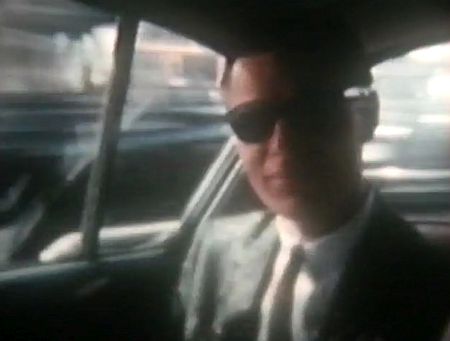
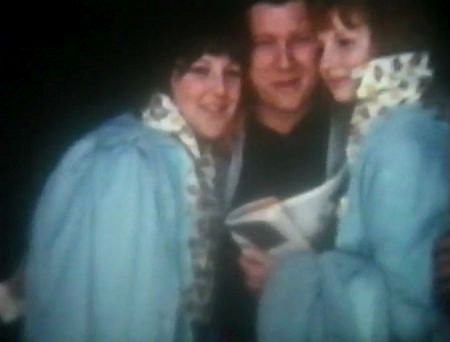
A few screen captures from Smokey Montgomery’s 1962 “England Tour” film (all images are larger when clicked):
Bruce on the bus
Delbert in a taxi
Bruce with fans
Perks of the trade
More perks
Delbert
Bruce and Delbert, London
You just never know what you’re going to stumble across…. Below is Bruce Channel’s monster 1962 hit, recorded in 1961 at the Clifford Herring Studios in Fort Worth, Hey! Baby, kicked off by Delbert McClinton’s distinctive harmonica.
**
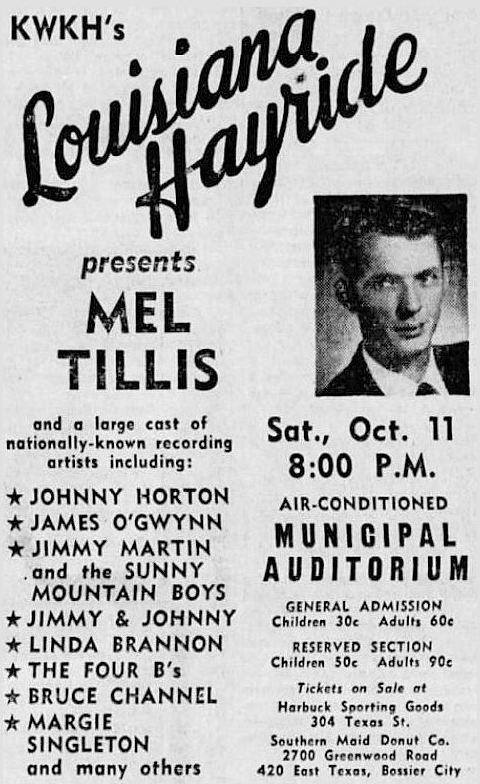
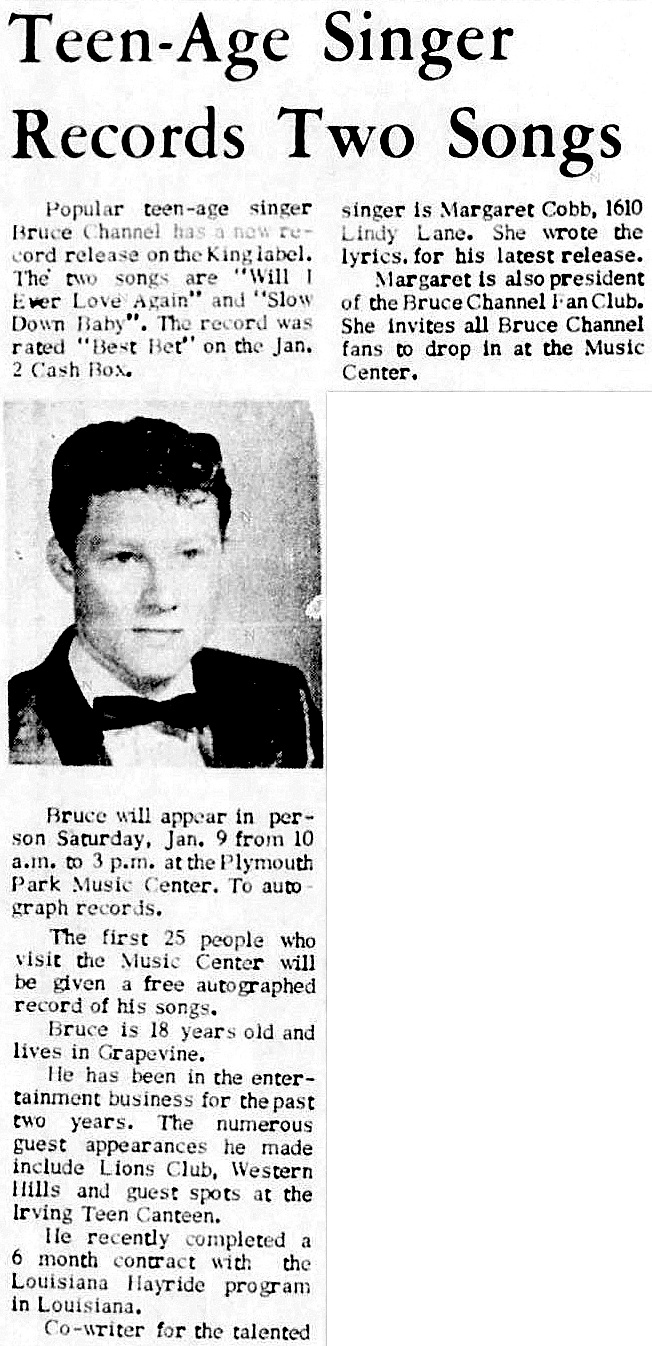
Bruce Channel (born Bruce McMeans — the “Channel” was his mother’s maiden name), was born at the end of 1940 and attended Grapevine High School. During his high school days he gained popularity as a performer, complete with lengthy commutes between Dallas and Shreveport, where he was a regular performer on the star-making Louisiana Hayride. Around this time he began writing songs with Margaret Cobb, an Irving woman who was 10-15 years older and the sister of a musician acquaintance. Dallas-Fort Worth-area musician Smokey Montgomery (known for decades as the banjo player in the Light Crust Doughboys) not only helped arrange those songs, but he also produced and played on some of Channel’s early singles, such as the cool (and fast!) rockabilly number, Slow Down, Baby (hear it here) and a song I like even more, Come On, Baby (hear it here).
The Cobb-Channel-penned Hey! Baby was recorded in 1961 and soon became a local radio hit, most notably on KLIF in Dallas, then worked its way up charts around Texas. The song finally reached #1 in the country in March, 1962. Channel had a few other lesser hits, but none ever reached the heights of Hey! Baby. He moved to Nashville in the ’70s and embarked on a successful songwriting career.
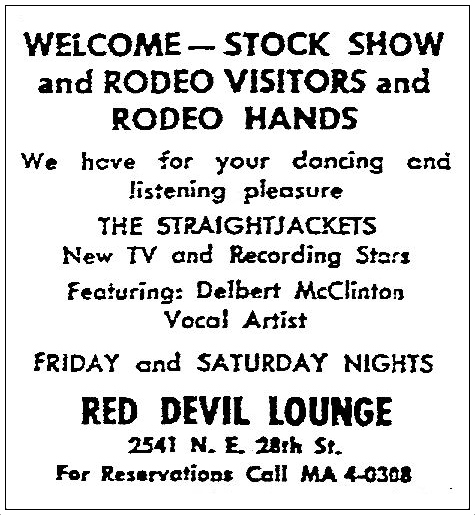
Delbert McClinton was born in Lubbock, also at the end of 1940, but grew up in Fort Worth where he, too, was a teenage musician, first gaining attention with his band The Straitjackets/Straightjackets and later the Rondels. He’s a bona fide Texas blues legend and continues to perform.
Bruce McMeans, Grapevine High School, 1960
Shreveport Times, Oct. 10, 1958
Irving (TX) News-Texan, Jan. 7, 1960 (click for larger image)
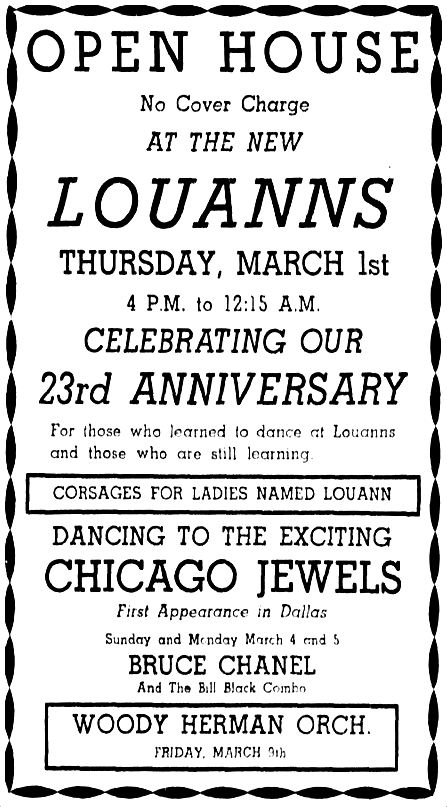
Louann’s, Dallas, March, 1962
British tour program photo, June, 1962, via Flickr
Delbert McClinton, Arlington Heights High School, 1959
Red Devil Lounge, Fort Worth, Jan., 1958
Lubbock Avalanche-Journal, March 21, 1962 (click to read)
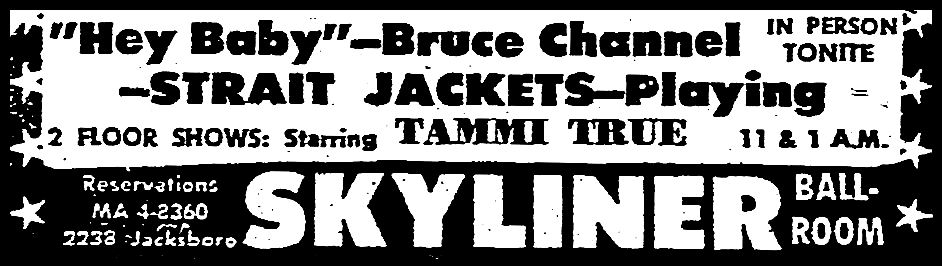
Bruce with Delbert (and stripper Tammi True), FW, Jan. 1962
***
Sources & Notes
The film featuring Bruce Channel and Delbert McClinton is titled “[The Light Crust Doughboys, No. 16 — England Tour]” and is part of the Spotlight on North Texas collection; it was provided by UNT Media Library to The Portal to Texas History and may be viewed here. It was filmed by Marvin “Smokey” Montgomery (who can be seen near the very end, sitting almost in silhouette in front of an airplane window). The film is part of a collection of Light Crust Doughboys and LCD-related materials donated by Art Greenhaw. (Special thanks to Laura Treat!)
Speaking of UNT, there may also be a film clip somewhere in the Denton vaults in which Bruce Channel, the “Grapevine farmboy,” was the subject of a WBAP-Ch. 5 news story (the April 18, 1962 script is here).
See the full printed program for Bruce Channel’s June, 1962 British package tour here.
Bruce Channel’s website is here. Read an interesting interview with him here. More Bruce on Wikipedia, here.
Delbert McClinton’s website is here. He’s constantly touring. Go see him!
The producer of (among other recordings) Hey! Baby and Hey, Paula (the song which has followed me around my whole life) was “Major Bill” Smith who was quite a polarizing character and was often described as a “hustler” (Delbert was not a fan). Read about him here. (Also, rockabilly god Ronnie Dawson might be one of the musicians on Hey! Baby — I’ve always heard he played drums on Hey, Paula.)
Marvin “Smokey” Montgomery is listed, along with Major Bill Smith, as a co-producer of Hey! Baby, which sold well over a million copies, but it rankled him that he did not get a songwriting credit (and, perhaps more importantly, did not earn royalties), which he contended he deserved: in a 1973 Dallas Morning News profile he said somewhat bitterly, “[*Now*] if I have anything to do with making the music or writing the words… you can bet your sweet life my name will be on that record.” (“The Man Who’ll ‘Listen To Your Song'” by David Hawkins, DMN, Oct. 18, 1973). More on Smokey’s long career can be found at the Handbook of Texas, here.
Read about the Beatles’ use of a perhaps Delbert-inspired harmonica sound on several of their early recordings, most notably Love Me Do, here.
Side note: Hey! Baby broke first locally on Dallas radio station KLIF and then on Houston’s KILT — both stations were owned by Gordon McLendon, which might explain why Bruce Channel was appearing at an April, 1964 political rally at Reverchon Park in support of McLendon’s race for U.S. Senate (?!) — see the ad here. (McLendon lost his Democratic primary challenge against Sen. Ralph Yarborough, who ultimately went on to defeat Republican contender, the elder George Bush.)
Bruce and Delbert weren’t the only DFW musicians with whom pre-Beatlemania Beatles hobnobbed: they also shared a bill in Paris with Dallas son Trini Lopez in 1963 — the Flashback Dallas post “Trini Lopez: Little Mexico’s Greatest Export” is here.
A few years ago, when writing about one of the many attempts in the never-ending saga of trying to make the Trinity River a navigable waterway, I stumbled across the 99% Invisible podcast website where I discovered Julia Barton and her long audio piece on the very same topic. I was surprised — and excited — to find someone with a similar background to mine tackling Dallas’ history and looking at it from a thoroughly 21st-century perspective. I felt she and I had been separated at birth, and I enthusiastically contacted her via Twitter. Since then we’ve met a couple of times, chatted back and forth online, and, this year, she asked if I would help with research for a radio piece about Dallas she was preparing for BBC Radio. Of course I would!
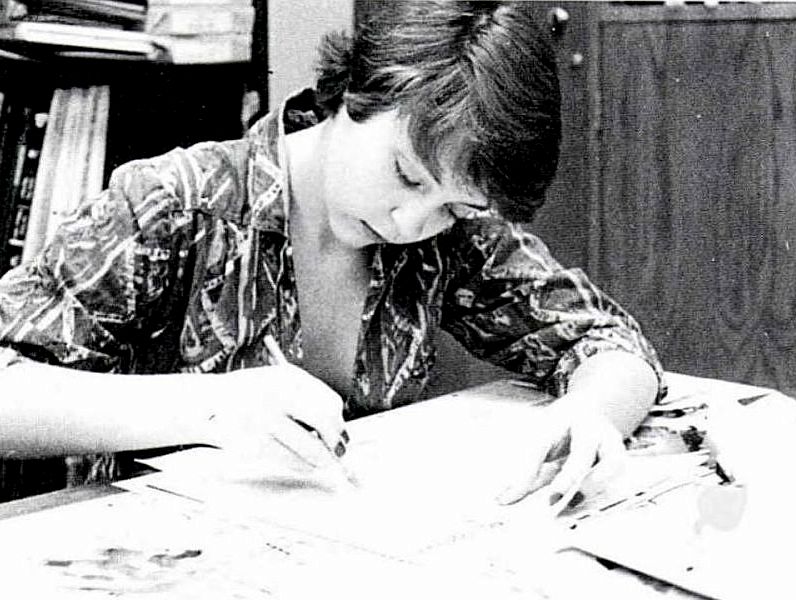
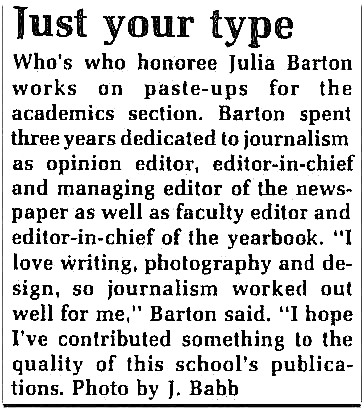
Julia Barton is a radio and podcast editor and has worked extensively in public radio; she is currently working on Malcolm Gladwell’s hugely successful Revisionist History podcast. She also presents stories, some of which are about Dallas, a city she seems to have a lingering fascination with, even though she hasn’t lived here in decades. Though born in Minnesota, Julia spent most of her childhood in Dallas, growing up in the Little Forest Hills area, attending Alex Sanger Elementary, Gaston Middle School, and Skyline High School (Class of ’87) where she appears to have been an overachieving student journalist. She lives in New York City now, where she puts those journalism tools to good use.
Julia Barton, 1987 Skyline High School yearbook
The first tidbit I heard about Julia’s story for the BBC involved another former Dallas resident, Dennis Rodman (of basketball and North Korea diplomacy fame), who grew up in both South Dallas and South Oak Cliff and attended Sunset High School for a couple of years before transferring to South Oak Cliff High School, where he graduated in 1979.
Senior photo, South Oak Cliff High School, 1979
I’m not sure about the chronology of the piecing-together of the various aspects of Dallas history which comprise the finished half-hour BBC program, but an important kernel was Rodman’s childhood memory of hiking for miles with friends through underground sewage tunnels to Fair Park in order to get into the State Fair of Texas without the burden of paying — they just popped up a manhole cover when they’d reached their destination and … voilà! — they were inside Fair Park. He wrote about this in his autobiography Bad As I Wanna Be, and you can read this passage here (if bad language offends you, buckle up). I really love Rodman’s story about these tunnels — so much so that after Julia shared it with me, it got to the point where I was asking everyone I ran into if they’d ever heard about what I assumed was an apocryphal story. But the tunnel-to-Fair-Park-legend was true. And that weird kernel snowballed into a half-hour personal narrative about Dallas, race, inequality, education, school desegregation, and, yes, Big Tex. History isn’t always pretty, but let’s hope we can learn from past mistakes.
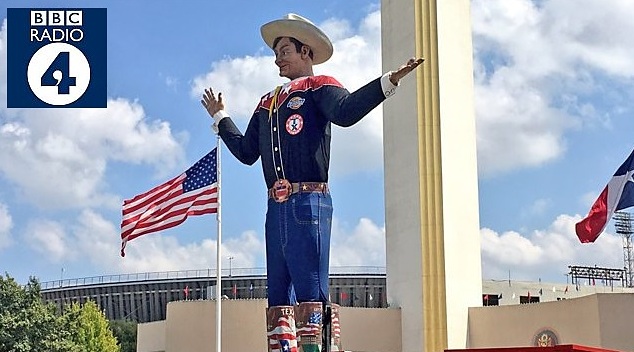
“Big Tex” was presented by Julia Barton for the UK’s BBC Radio 4. It features Julia’s classmates Sam Franklin (Class of ’86) and Nikki Benson (Class of ’87), her former teacher at Skyline Leonard Davis (an all-around great guy and fellow Dallas Historical Society volunteer — hi, Leonard!), as well as former teenage tunneller Melvin Qualls, local historian Donald Payton, and sixth graders from Julia’s alma mater, Alex Sanger Elementary School. It is a Falling Tree production, produced by Hannah Dean and Alan Hall. The link to the audio — and background on the production — is here. (Top photo is from the BBC page.)
Jim Schutze of the Dallas Observer wrote a great piece on this radio program (“Before Desegregation, Black Kids Had a Secret Tunnel Into the State Fair. Truth!”) — read it here (it includes a few production photos taken as Julia researched the story in Dallas).
Julia Barton’s website is here; a collection of her stories for Public Radio International (PRI) is here.
Two of Julia’s Dallas narratives:
“Port of Dallas” — history of the attempt to navigate (and monetize) the Trinity River: as an audio-only podcast, and as a video presentation done as a TEDx Talk at SMU
“The Failed Socialist Utopian Dream That Helped Dallas Become a Major City” — a look at the La Réunion community of the 1850s, from the PRI “World in Words” podcast (starts at about the 5:30 mark)
Thanks for asking me to help with research, Julia — I particularly enjoyed fact-checking the question “was-Mussolini-*really*-invited-to-the-Texas-Centennial?” (He was!)
Yessirree! Elm & Akard, 1936/1937… (click for larger image)
by Paula Bosse
One of the best collections of historical Dallas photos — and certainly one of the easiest to access online — can be found in SMU’s DeGolyer Library. I can’t say enough good things about the astounding quality of their vast collection or the willingness to make large scans of their photos available online, free to share, without watermarks (higher resolution images are available for a fee, for publication, etc.). I love you, DeGolyer Library (and all the people and entities behind your impressive digitization process)!
When going through recently uploaded photos, I came across photos from different decades showing the same intersection: the southeast corner of Elm and Akard streets (now the 1500 block). The building appears to be the same in each of the photos, and that is interesting in itself — but I was excited to find a connection in one of them to one of my favorite weird Texas historical events.
And that is the photo below. It’s a cool photo — there’s some sort of parade underway. This is Elm Street looking toward the east (or, I guess, the southeast), and the photographer is just west of Akard Street. At the bottom left of the photo is the United States Coffee & Tea Co. (which I wrote about here); in the background at the right is the Praetorian Building on Main; and just left of center is the Wilson Building addition under construction (which dates this photo to 1911). But the building that interested me the most is the one at the bottom right, the one at the southeast corner of Elm and Akard. I noticed “Deane’s Photo Studio” on the exterior of the upper part of the building. I recognized the name, having seen it on various Dallas portraits over the years, but now I realize there were two photographers named Deane in Dallas in the first half of the 20th century: Granville M. Deane (who had a longer career here) and his brother, Jervis C. Deane — J. C. Deane was the photographer who occupied the upper-floor studio at 334 Elm (later 1502 Elm) between 1906 and 1911. His studio was above T. J. (Jeff) Britton’s drugstore.
Elm Street, looking east from Akard, 1911 (DeGolyer Library, SMU)
J. C. Deane (born in Virginia in 1860) worked as an award-winning photographer around Texas, based for much of his career in Waco. He was in Dallas only a decade or so, leaving around 1911, after a divorce, noting in ads that he had to sell his business as he was “sick in sanitarium.” After leaving Dallas he bounced around Texas, working as a studio photographer in cities such as Waco and San Antonio. I have been unable to find any information on his death.
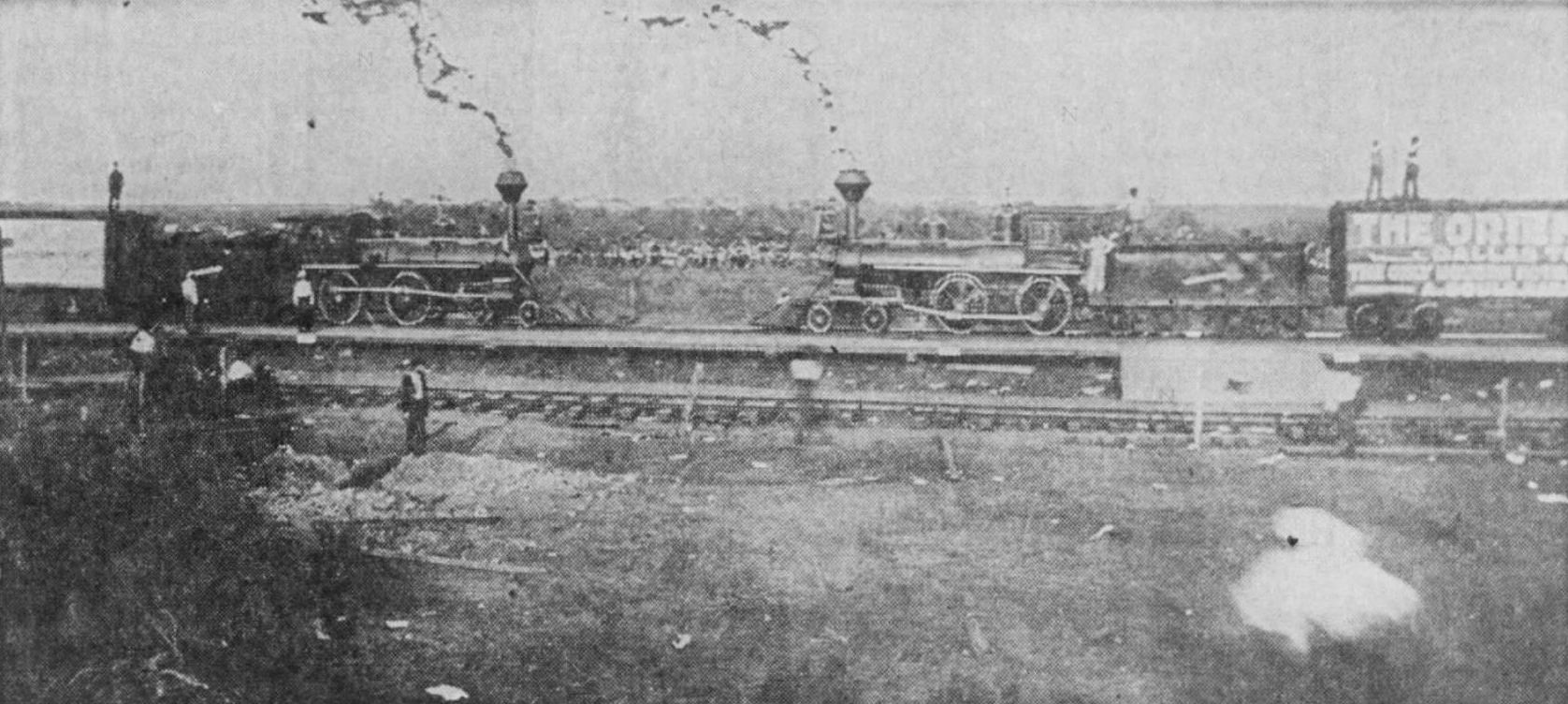
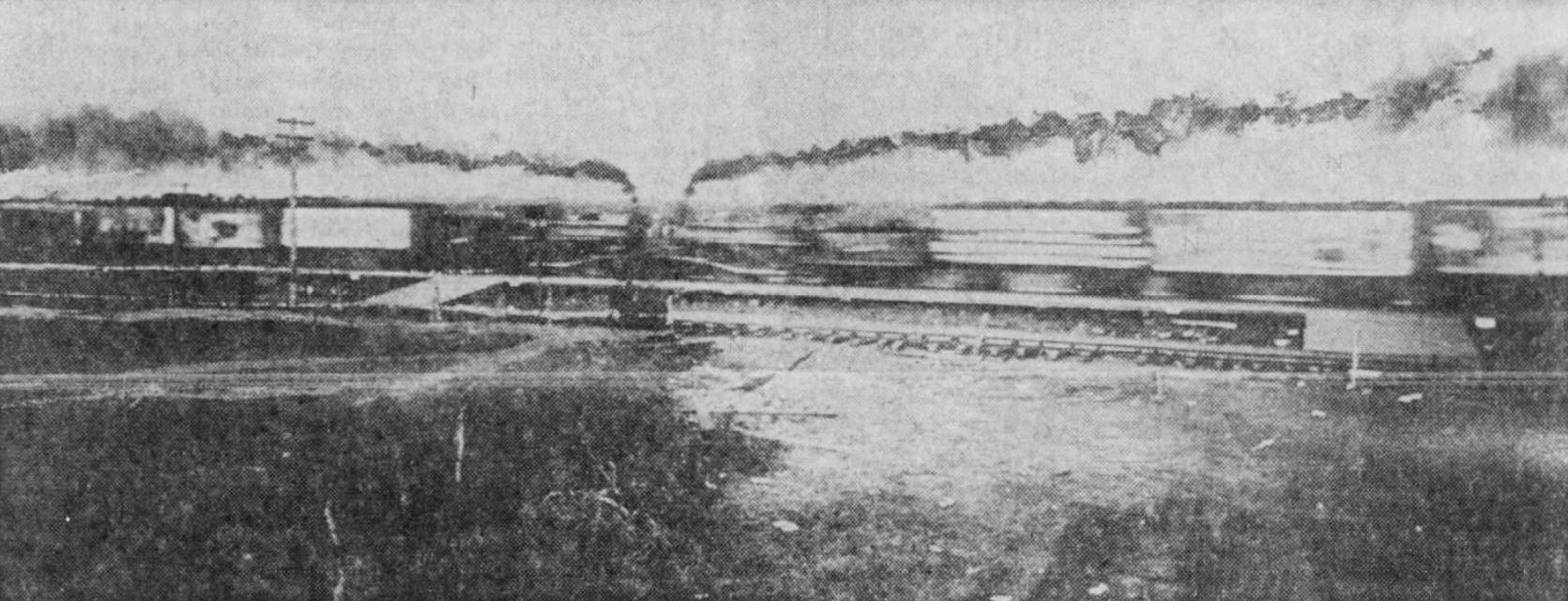
The reason that J. C. Deane holds a place in the annals of weird Texas history? He was one of the photographers commissioned to photograph the supremely bizarre publicity stunt now known as The Crash at Crush, wherein a crowd upwards of 30,000 people gathered in the middle of nowhere, near the tiny town of West, Texas, in September, 1896, to watch the planned head-on collision of two locomotives (read more about this here). Long story short: things did not go as planned, and several people were injured (a couple were killed) when locomotive shrapnel shot into the crowd — one of those badly injured was J. C. Deane who was on a special platform with other photographers. For the sake of the squeamish, I will refrain from the details, but Deane lost his right eye and was apparently known affectionately thereafter as “One Eye Deane.” (For those of you not squeamish, I invite you to read all the gory details, related by Deane’s wife, in an interview with The Dallas Morning News which appeared on October 1, 1896, here.) The photos below are generally credited to Deane, back when he was just good ol’ happy-go-lucky “Two-Eye Jervis.” (All these photos are larger when clicked.) (Scroll down to the bottom of the page for a link to contemporary coverage of the event as reported in The Dallas Morning News.)
Before…
During…
And after…
I’ve been fascinated by the Crash at Crush ever since I heard about it several years ago, and now I know there’s a Dallas connection — and photos of the building where he worked.
Back to Elm Street.
For a brief time (a few months in 1936?) the building was referred to as the “Hutton-Drake Building” and a major renovation of the old building began at the beginning of 1936, when the whole of Dallas was on overdrive to spruce up the city ahead of the crush of Centennial visitors. Here’s an undated “before” photo….
What the heck kind of craziness is this?! I mean I LOVE it, but… it’s very… unusual. I would absolutely never have guessed that this building had been in downtown Dallas. And it appears to be the same building seen in the 1911 photo, just with a very fashion-forward new face. Those little hexagonal windows! Along with that fabulous B & G Hosiery sign, there was a nice little bit of art deco oddness sitting there at the corner of Elm and Akard. The Kirby Building, seen at the far right, seems like a creaky older statesman compared to this overly enthusiastic teenager. The businesses seen here — Ellan’s hat shop, B & G Hosiery, and Berwald’s — were at this corner together only in 1936 and 1937. I could find nothing about this very modern facelift — if anyone knows who the architect is behind this, please let me know! (See a postcard which features a tiny bit of this fabulous building here — if the colors are correct, the building was green and white.)
In November, 1941, Elm Street’s Theater Row welcomed a new occupant, the Telenews theater, which showed only newsreels and short documentaries. By that time the A. Harris Co. had purchased the building at the southeast corner of Elm and Akard and expanded into its upper floors. Telenews opened at the end of 1941 and Linen Palace was gone from this Elm Street location by 1943, dating this photo to 1941 or 1942.
Elm Street, 1941/1942 (DeGolyer Library, SMU)
All of these are such great photos. Thanks for making them available to us, SMU!
***
Sources & Notes
The three Dallas photos are from the George A. McAfee collection of photographs at the DeGolyer Library at Southern Methodist University — some of the photos in this large and wonderful collection were taken by McAfee, some were merely photos he had personally collected. The top photo (taken by McAfee) is listed on the SMU database with the title “[Looking Southeast, Corner of Elm and Akard, Kirby Building at Right]” — more info on this photo is here. The second photo, “[Looking East on Elm West of Akard / Praetorian Building (Main at Stone) Upper Right Center]” is not attributed to a specific photographer; this photo is listed twice in the SMU database, here and here. The third photo, “[Looking East on Elm from Akard on “Theatre Row” (Including on North Side on Elm from Left to Right — Telenews, Capitol, Rialto, Palace, Tower, Melba and Majestic],” appears to have been taken by McAfee, and it, too, appears twice in the online digital database, hereand here. (I’ve updated this post with additional photos from the DeGolyer Library relating to the building’s remodeling in 1936 — links are below the images.)
The three photos from the “Crash at Crush” event are attributed to Jervis C. Deane, and were taken on September 15, 1896 along the MKT railroad line between West and Waco; the images seen above appeared in the Austin American-Statesman on Sept. 16, 1962. More on the Crash at Crush from Wikipedia, here— there is a photo there of the historical marker and, sadly, Jervis Deane’s name is misspelled. Sorry, Jervis!
Read the Dallas Morning News story of the train collision aftermath in the exciting article lumberingly titled “CRUSH COLLISION: The Force of the Blow and Damage Done. Boilers Exploded with Terrific Force, Scattering Fragments of the Wreckage Over a Large Area. The Showers of Missiles Fell on the Photographer’s Platform Almost as Thick as Hail – Description of the Scene,”here.
The southeast corner of Elm and Akard is currently home to a 7-Eleven topped by an exceedingly unattractive parking garage — see the corner on Google Street View here.
There is a handy Flashback Dallas post which has TONS of photos of Akard Street, several of which have this building in it: check out the post “Akard Street Looking South, 1887-2015,” here.
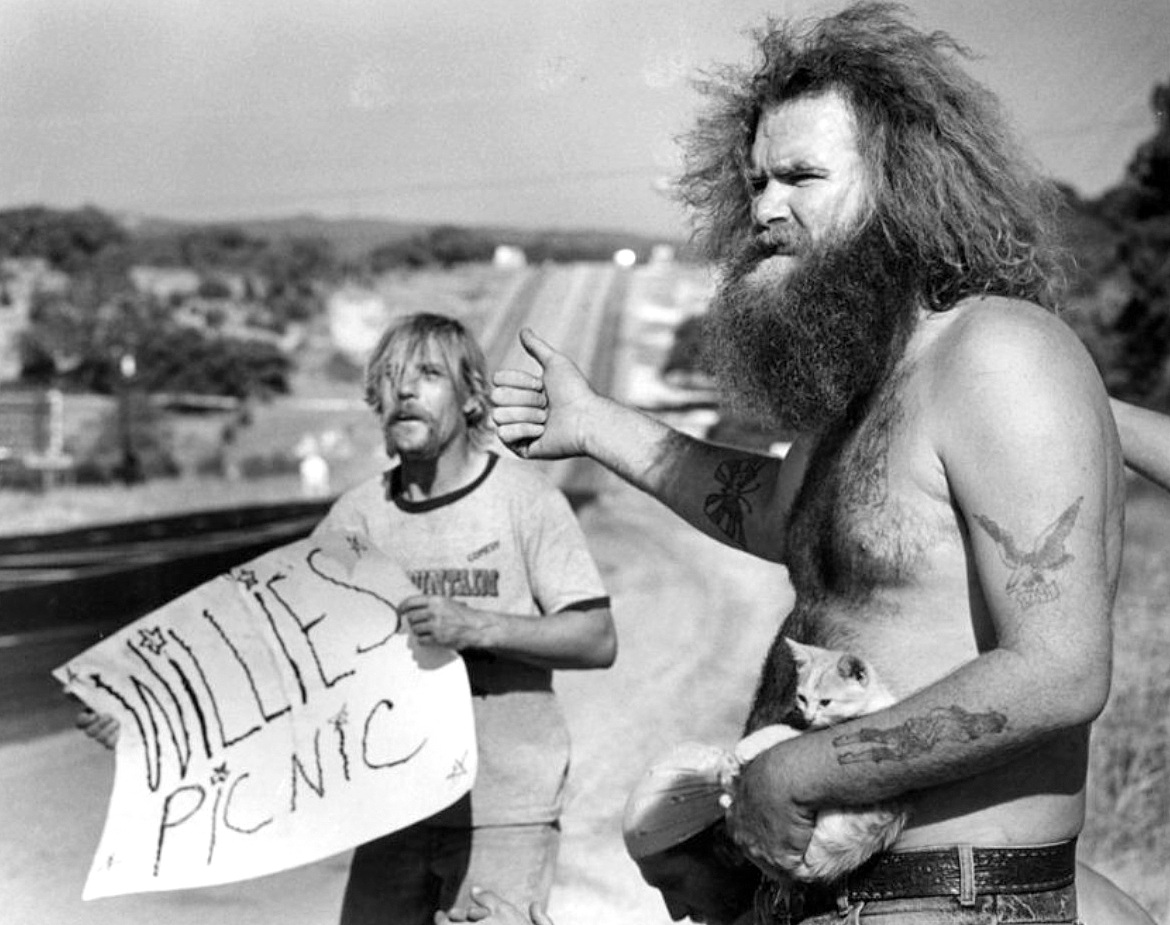
“All’s we need is a ride, man…” (photo: Austin American-Statesman)
by Paula Bosse
Today is July 4th, 2018 — the 45th anniversary of the first Willie Nelson 4th of July Picnic. The photo above — taken by Austin photographer Stanley Farrar — ran in The Austin American-Statesman in 1980 and shows hitchhikers (including a bare-chested Jerry Rundell and his go-with-the-flow cat “Precious”) thumbing it on Highway 71, hoping for a ride to that year’s picnic at Willie’s Pedernales Country Club, near Austin.
Take a look at the full illustrated program for the second Picnic, which was held at the Texas World Speedway in College Station, July 4-6, 1974, in a PDF, here. The huge line-up included Dallas natives Michael Murphey, B. W. Stevenson, Ray Wylie Hubbard (all three of whom attended Adamson High School in Oak Cliff), and singer-turned-DJ-turned-singer, Johnny Dallas (aka Groovey Joe Poovey). To make this a somewhat Dallas-y, I’ve pulled out a few of the local ads (click ’em to see larger images).
KZEW — from the Zoo’s “Progressive Country” years?
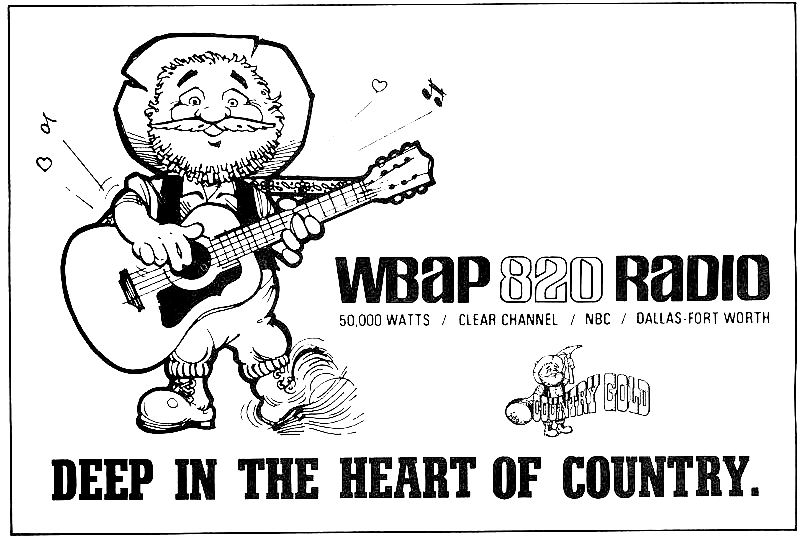
WBAP — how much Ray Wylie Hubbard was WBAP playing?
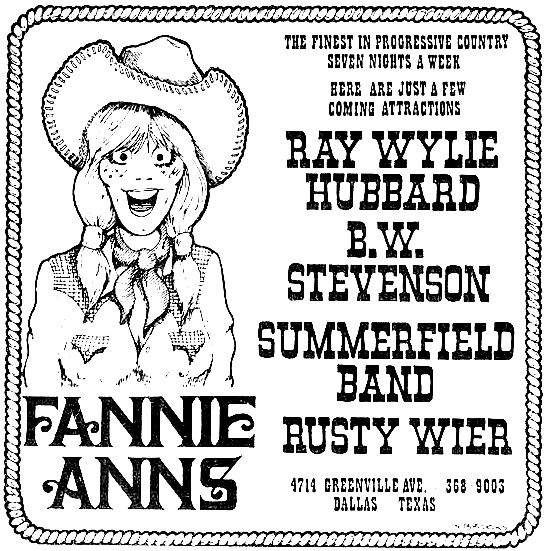
Speaking of Ray Wylie Hubbard:
Mother Blues had a one-buck cover charge, and Gertie’s was rocking until 5 a.m.
Lyon’s Pub, 5535 Yale Street.
Fannie Ann’s, 4714 Greenville Avenue, the lower part of Upper Greenville.
The Lone Star Opry House, 1011 S. Industrial, at Cadiz (formerly the Aragon Ballroom). Willie appeared during its first week in business.
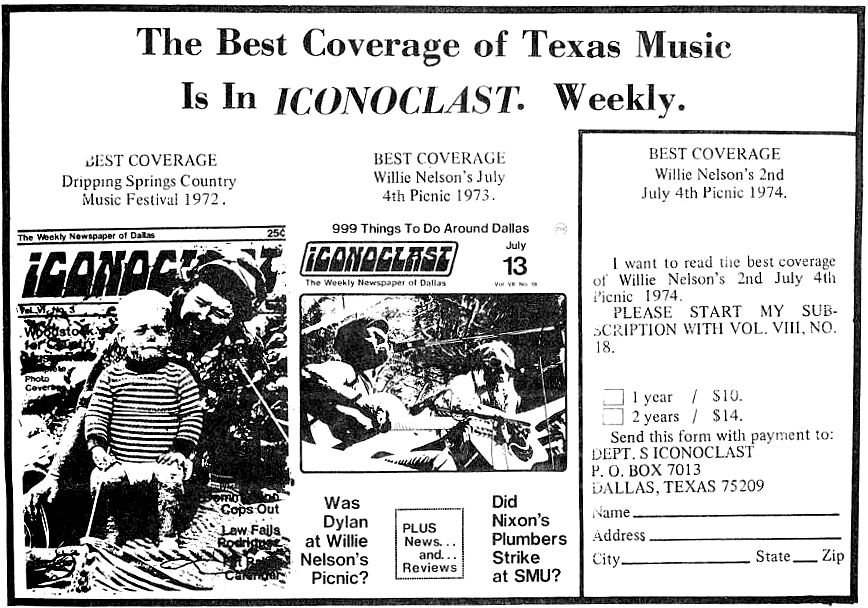
The Iconoclast, Dallas’ underground newspaper, which began as Stoney Burns’ Dallas Notes.
Ethyl’s (“Only Bluegrass Club in Dallas”), 3605 McKinney Avenue.
***
Sources & Notes
Top photo from The Austin American-Statesman (July 4, 1980); photo taken by photographer Stanley Farrar. See many more photos of Willie Nelson 4th of July Picnics in an American-Statesman slideshow, here.
I wonder if Willie’s picnics have their own Wikipedia page? Of COURSE they do! Have at it.
I’ve written about it before, but, hey, it’s the 4th of July, so here’s Willie’s very … um, unusual ode to Dallas:
I’ve written about the interesting old WFAA Channel 8 news footage which was either never aired or was aired decades ago and hasn’t been seen since (such as newly discovered Jack Ruby footage and a fantastic short interview with Jimi Hendrix at Love Field), which is part of an ongoing digitization project by SMU’s Hamon Arts Library as part of the G. William Jones Film and Video Collection. There are so many (SO MANY!) quirky clips that are being uploaded to the web almost daily that it’s easy to miss the super-quirky.
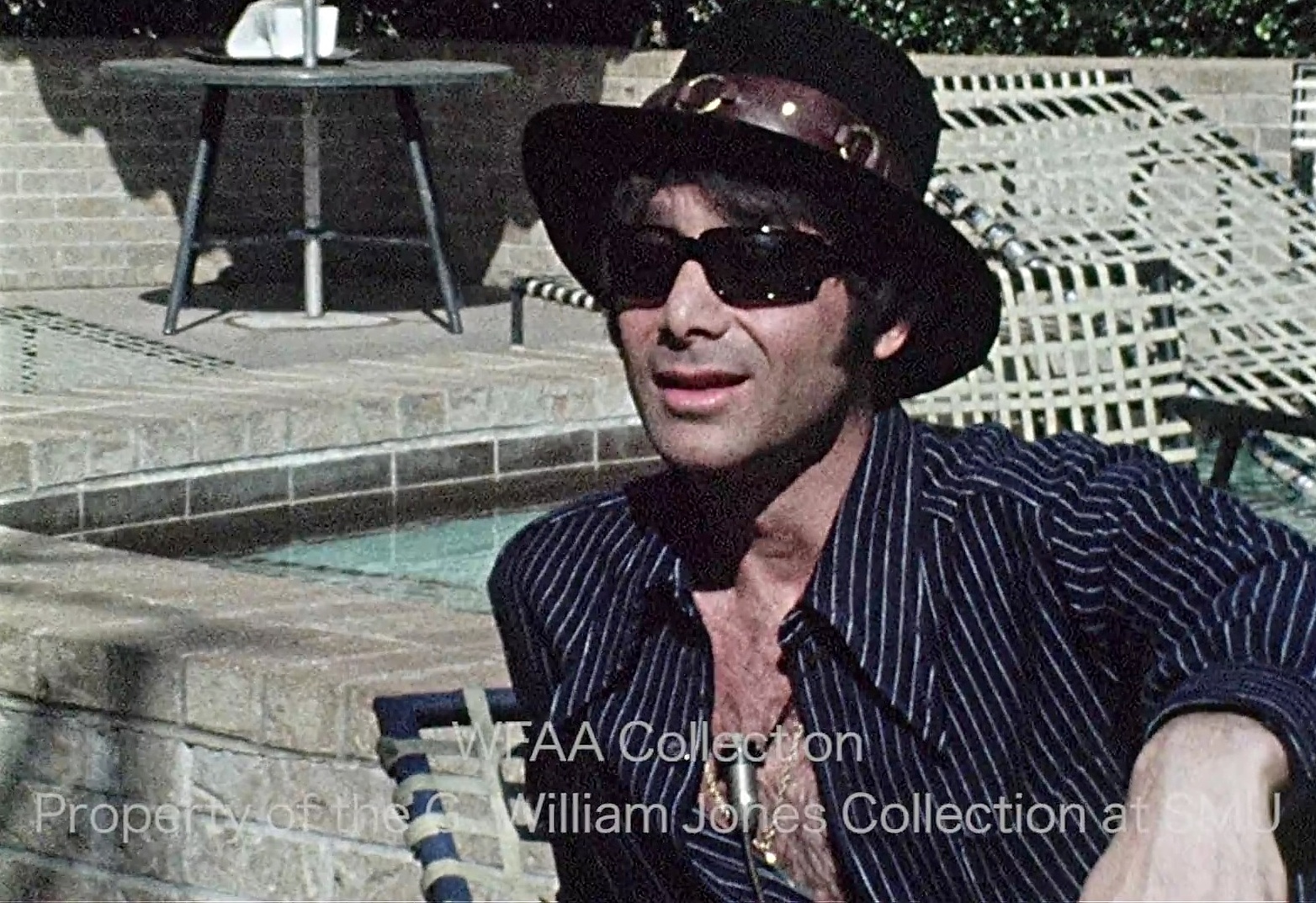
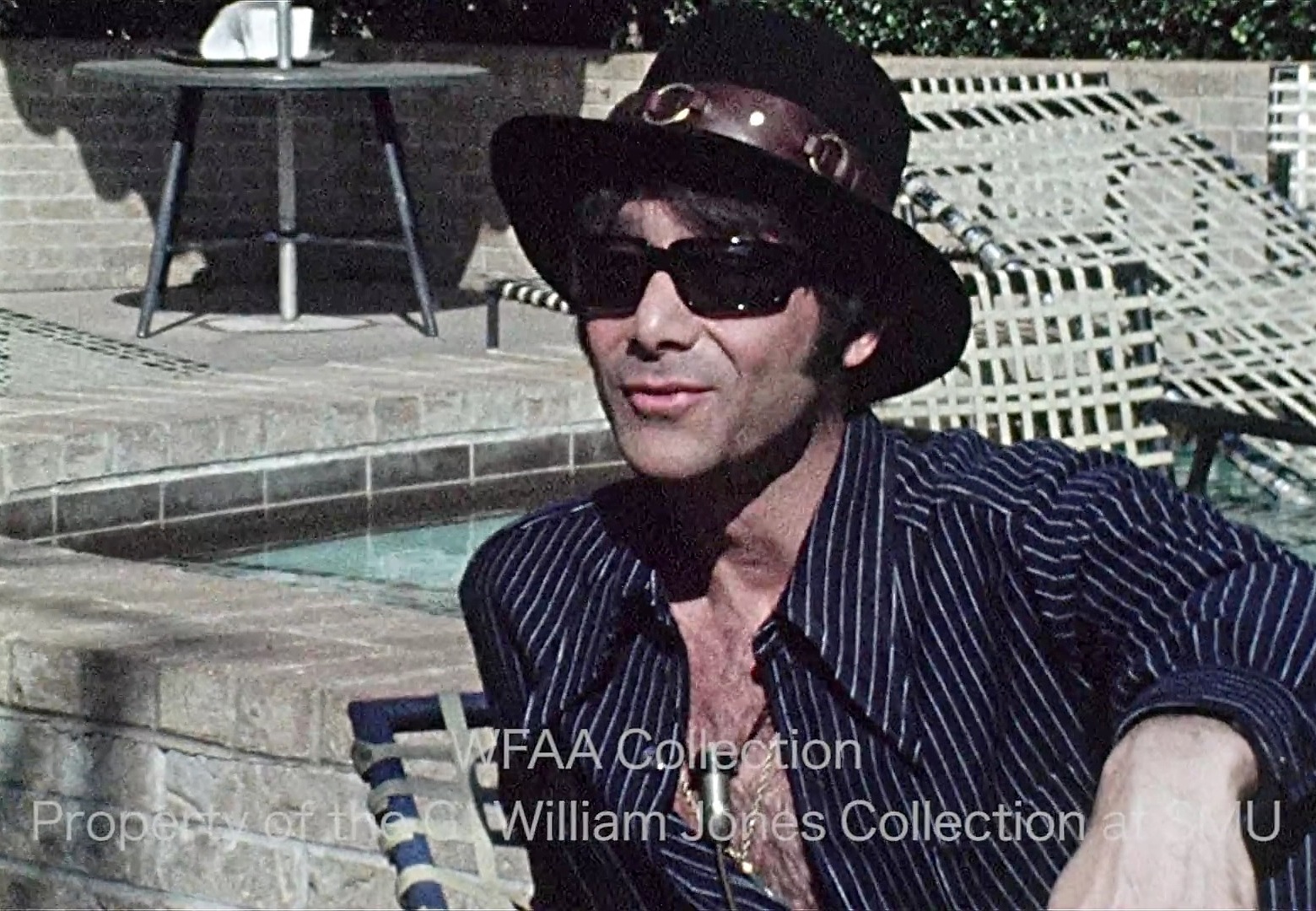
A week and a half ago the clip below was posted online, featuring an unidentified man who was much groovier-looking than one would normally have seen on the nightly Channel 8 newscast — he said that someone had shot at him from a car, just before dawn, near the Hilton Inn at Mockingbird and Central. He seemed pretty sure they were associates of Frank Sinatra, who was not at all happy that our mystery man had been fraternizing with his daughter, the singer Nancy Sinatra. Take a look at this short (1:43) footage from May, 1970.
*
Okay, that was weird. “I’ve been shot at *many* times — for one reason or another….” Add in an unexpected mention of Mrs. Baird’s bakery and, yeah, weird.
Who was that guy? The only information the SMU digitizers had on the out-of-context snippet was that it was filmed on May 21, 1970. It was obvious the guy was not local and, with that voice (and apparent ready access to Nancy Sinatra), he was most likely in the entertainment business. I could find no mention of this incident in The Dallas Morning News archives — I tried using every conceivable keyword I could think of. Nothing. So I checked Newspapers.com and found an AP story about this which had run all over the country — just not in the city where the incident had occurred.
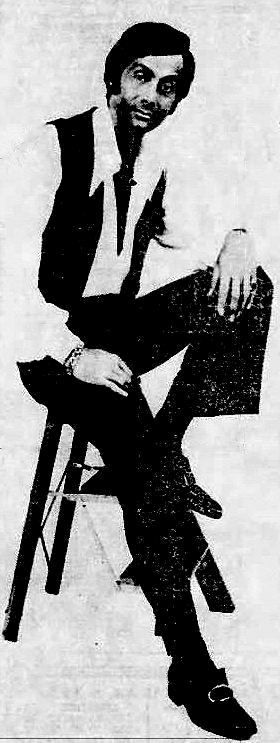
The guy is Ronald Dante, who has gone by a variety of aliases but is generally known as “Dr. Dante,” the stage name he used for decades as a successful nightclub hypnotist. (According to a 1985 Dallas Morning News profile, he had legally changed his name from Ronald Hugh Pellar to “Dr. Dante” — with “Doctor” being his legal first name.) (This may not be true.) (Most of what Dr. Dante has said is not true.) At the time of the shooting described in the video above, he was performing at The Losers Club at 5438 E. Mockingbird, about 2 blocks from his hotel, the Hilton Inn.
To describe Ron Dante (who was born in Chicago on Feb. 5, 1930) (and is not to be confused with the Ron Dante who was the lead singer of The Archies) as “colorful” is an understatement. His extraordinarily … um … extreme life as a performer, con-man, fraudster, schemer, opportunist, convicted felon, etc., is too much to cover here, but there is a fantastic 2006 profile of him from the San Diego Union-Tribunehere (seriously, READ THIS! — the part about him being orphaned in Kuala Lumpur when his family was attacked by Malaysian insurgents is great — in actuality, U.S. Census records from 1930 and 1940 show that he grew up in a nice Chicago neighborhood with his very-much-alive parents and brother).
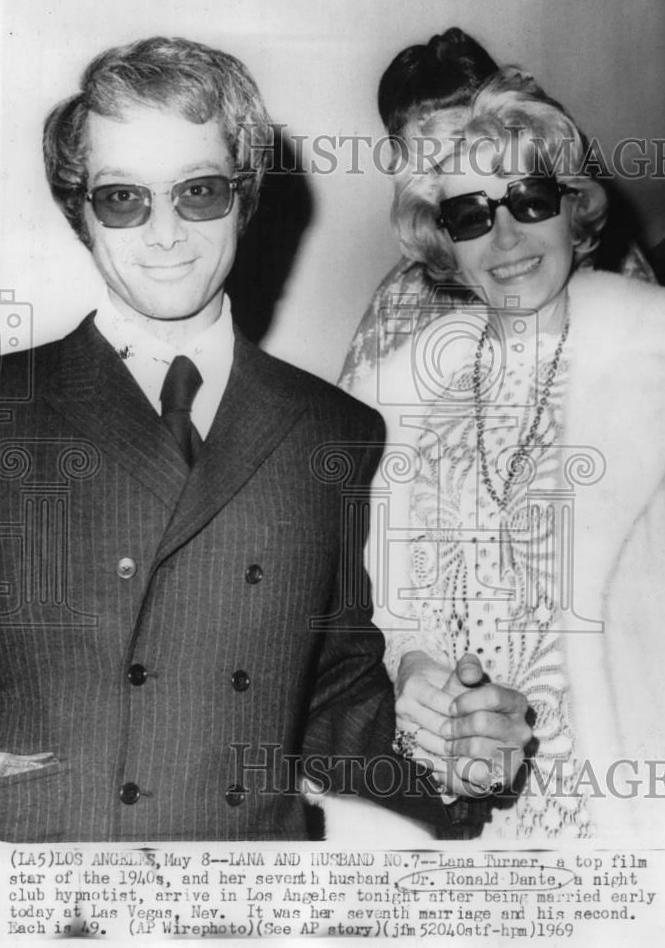
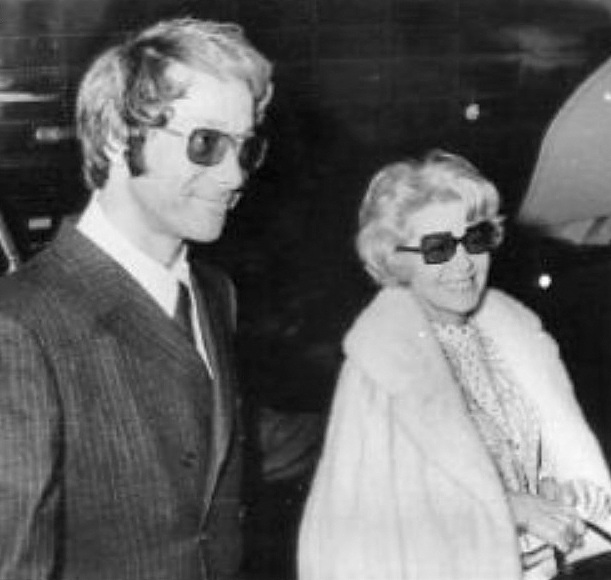
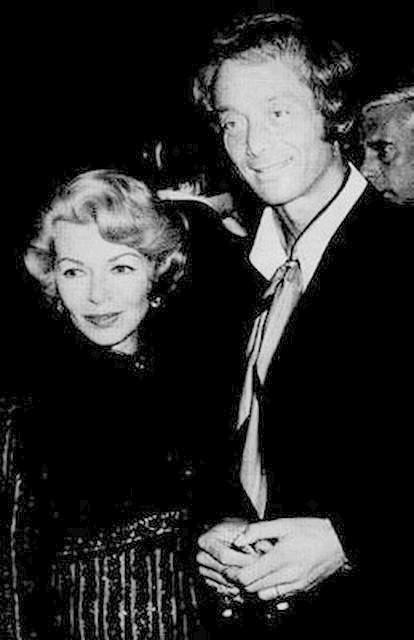
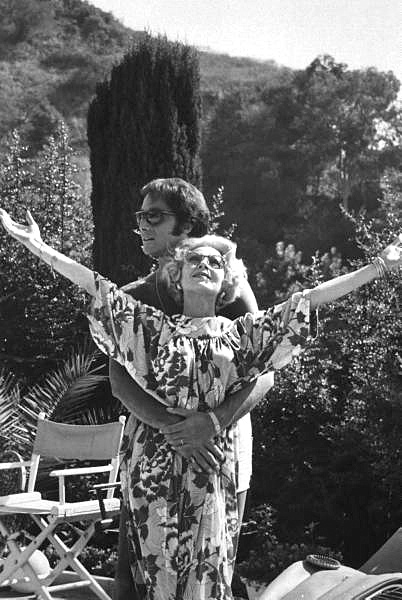
But back to Dallas in May, 1970. Dante was, at the time, the estranged husband of Hollywood icon Lana Turner. They had married in May, 1969; it was Lana’s seventh (and final) marriage. In news reports of the nuptials, Dante was reported to be the same age as his new bride, but he was actually almost 10 years younger. (In the Channel 8 video above he is 40.) Below are some photos of the happy couple before Lana began to realize what she’d gotten herself into.
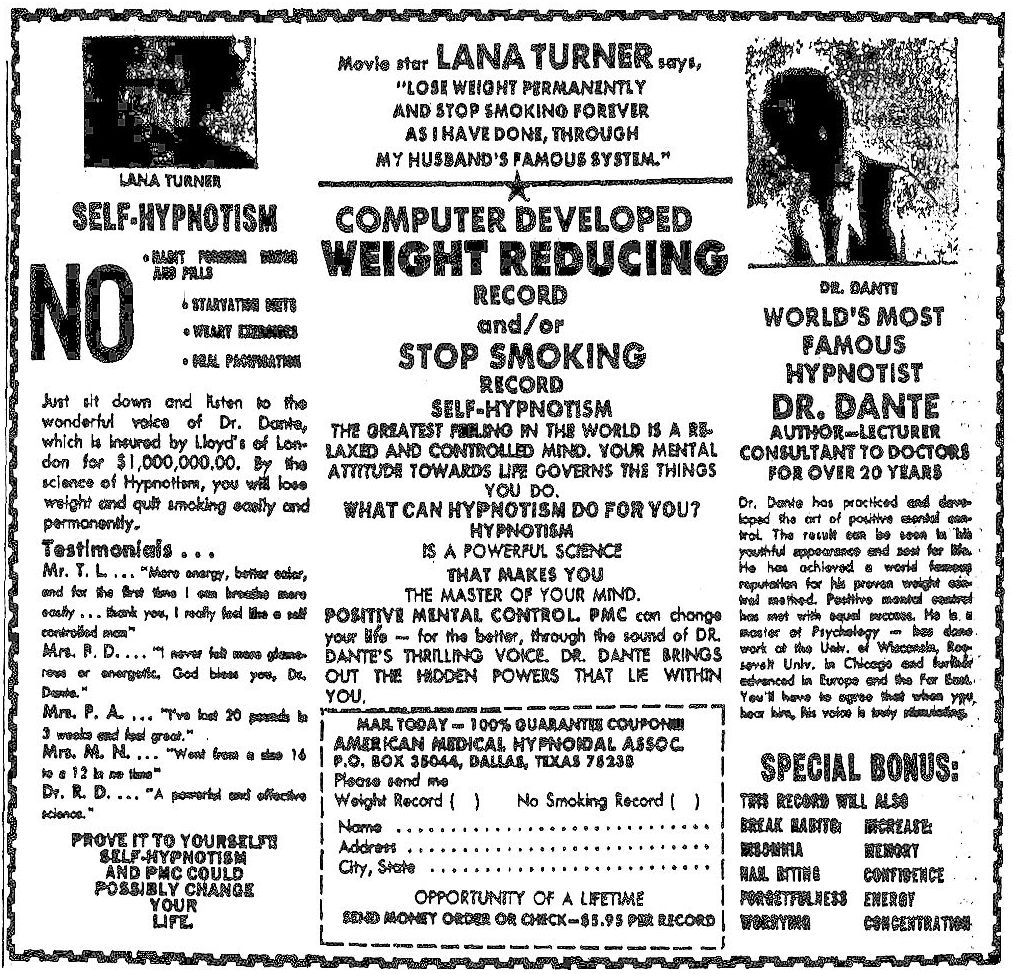
Their marriage hit the skids within 6 months, with Turner accusing Dante of misappropriating $35,000 of her money and, later, disappearing with many of her jewels, worth $100,000; on Nov. 14, 1969, Dante (not Lana!) filed for divorce on grounds of “extreme mental cruelty.” Two days later, the ad below touting a “computer-developed” self-hypnosis recording by Dante appeared in a Dallas paper, complete with a suspect thumbs-up testimonial attributed to estranged and recently-bilked Lana Turner (also worth a raised eyebrow was the inclusion of the even more suspect “American Medical Hypnoidal Assoc.” office which resided in a Dallas post office box) (click to see larger image):
Nov. 16, 1969
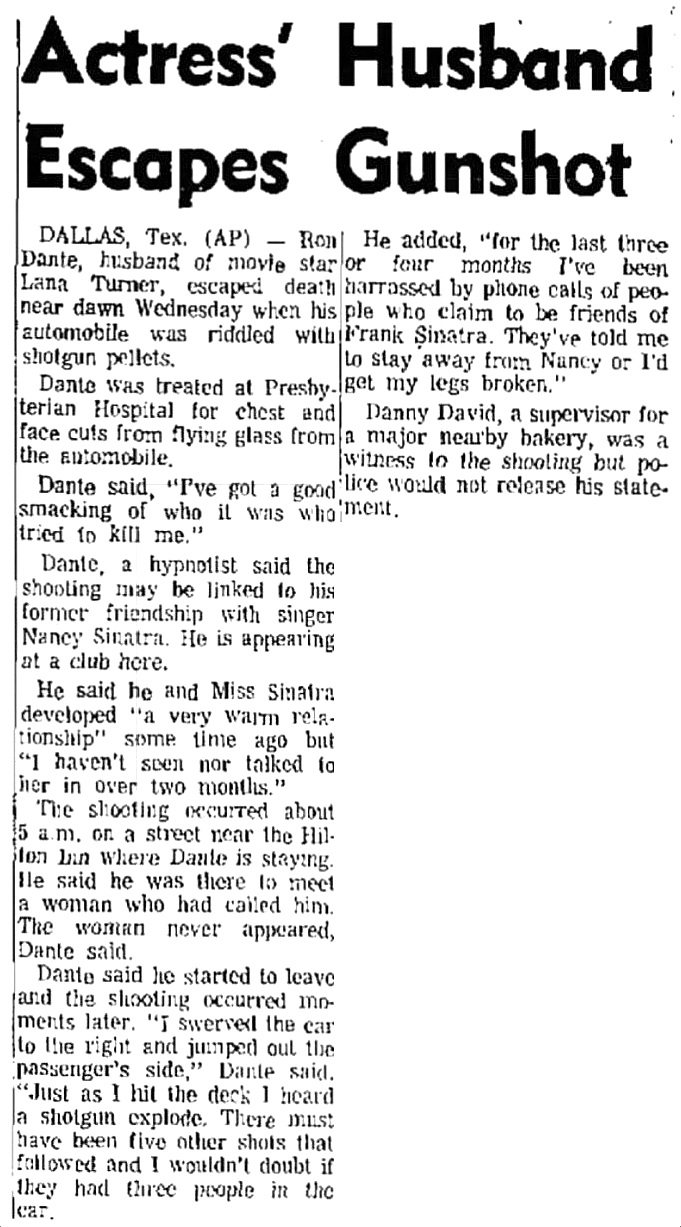
Six months later, Dante was in Dallas, claiming to have been shot at by men sent by Frank Sinatra to warn him to stop seeing his daughter Nancy. (A similar “being shot at” scenario was reported by Dante in Los Angeles in June, 1969 — photo here — Sinatra was not implicated by Dante in that shooting, but Lana Turner wondered about it in her 1982 autobiography: “Shortly after our wedding he was shot at, or so he said, in an underground garage, by a gunman wearing an Australian bush hat. It got a lot of attention in the papers — maybe that was what he wanted.”) One might reasonably wonder whether Dante was lying about the shooting in Dallas, but there seems to have been a witness: a Mrs. Baird’s employee, David Davis (whose name was misspelled in wire reports). Here’s the Associated Press report of the incident:
AP wire story, May 21, 1970 (click to read)
Other reports noted that “a spokesman for Miss Sinatra said she did not know [Dante]” or had even ever heard of him; a spokesman for Miss Turner said they had been separated for several months and “she doesn’t even know where he is.” (It should be noted that Frank Sinatra had had a very steamy affair with Lana Turner in the 1940s — a tidbit which just adds all sorts of weird tangents to this story.)
I never saw a follow-up, but whether the story was true or not, it was pretty ballsy to accuse Frank Sinatra (a man of known “connections”) of being behind something like this. Someone should crack open this cold case!
“Groovy hypnotist,” Reno Gazette-Journal, Aug. 7, 1970
*
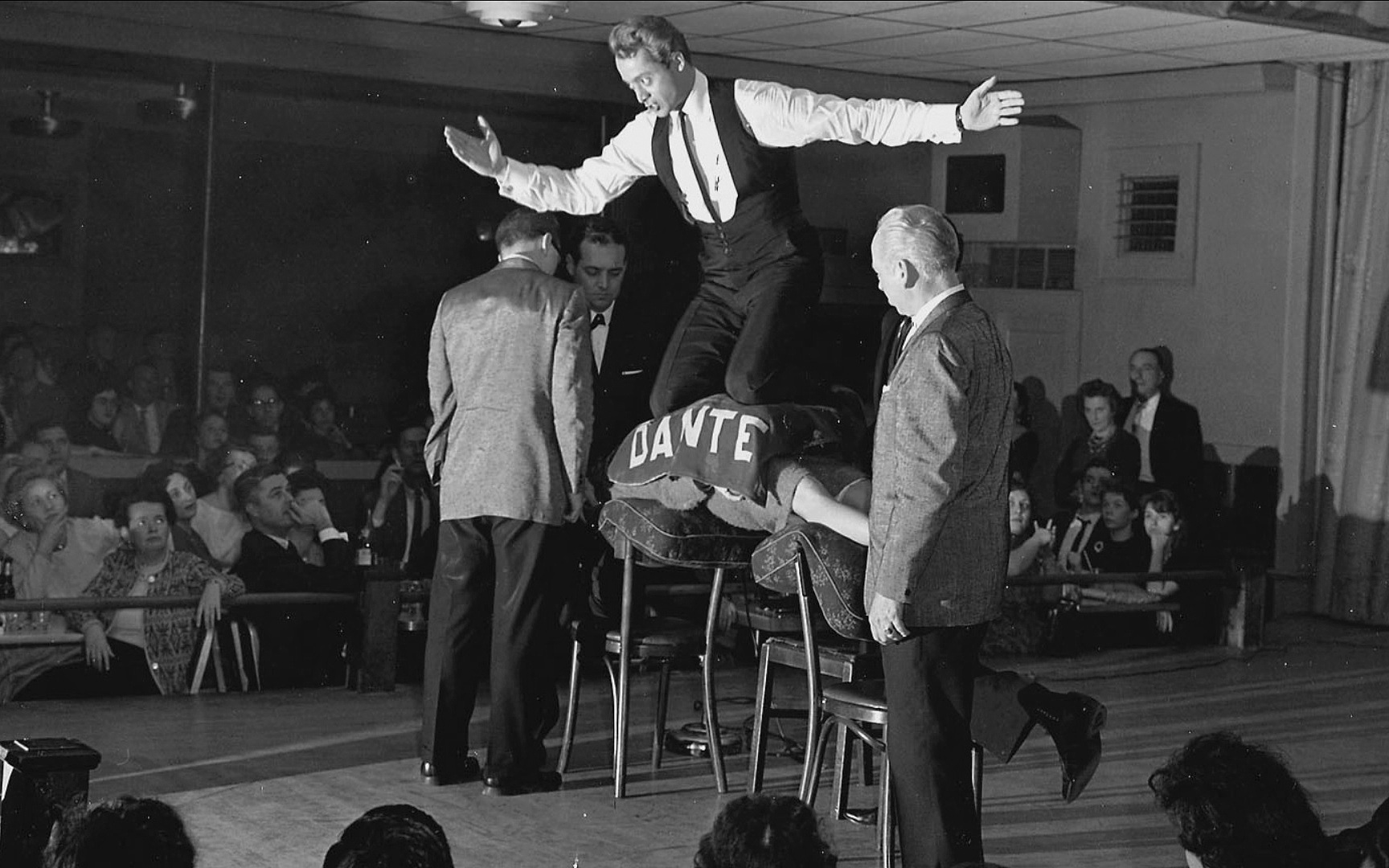
Ronald Dante’s first appearance in Dallas was at the Adolphus Hotel’s tony Century Room in January, 1963, back when he was known simply as “Dante.” Tony Zoppi, who covered the city’s nightclub scene for The News, wrote, “The handsome showman entertained his Century Room crowd with one of the most amazing hypnotic acts in the business” (DMN, Jan. 3, 1963). Back then his act looked something like this:
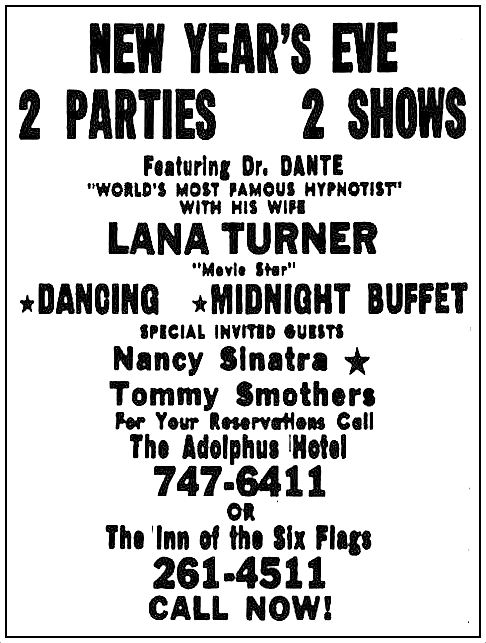
An interesting New Year’s Eve engagement at the Adolphus’ Rose Room was announced in The News in December, 1970 (same year as the shooting…):
The Adolphus Hotel has lined up a star-studded evening for its New Year’s Eve celebration, including hypnotist Dr. Ronald Dante, reportedly to be accompanied by his wife, actress Lana Turner. (DMN, Dec. 17, 1970)
An appearance by Lana Turner seems … unlikely. Others rumored to be appearing on the star-studded bill? Actor Ralph Bellamy, comedian Tommy Smothers, and … singer Nancy Sinatra. Unsurprisingly, none of the special guests showed up.
Dec. 20, 1970
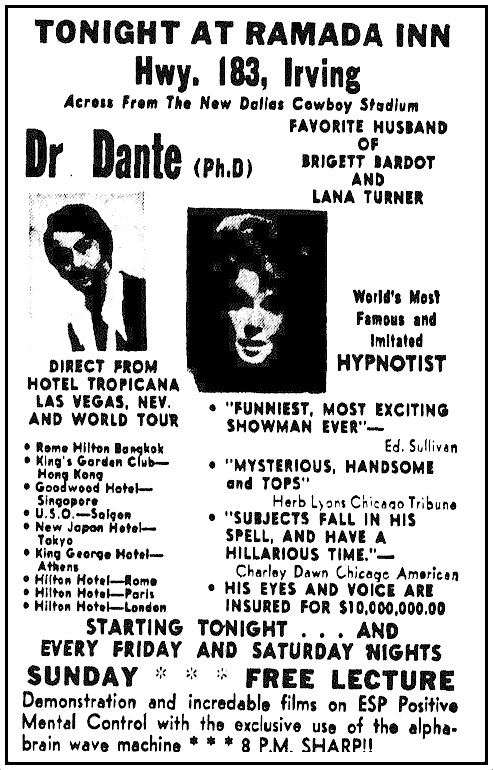
A couple of weeks after the New Year’s Eve engagement, an ad appeared in the paper filled with SO MUCH odd stuff in it: after a “world tour” which had him playing at swanky venues in Rome, Paris, London, Athens, Japan, and Bangkok, the next stop by Dr. Dante (“Ph.D.”) was none other than the somewhat less exotic Ramada Inn in the somewhat less exotic Irving, Texas; he billed himself as the “favorite husband” of both Lana Turner and “Brigett” [sic] Bardot (to whom he had never been married); and his eyes and voice were said to have been insured for 10 million dollars. Etc. In general, statements made by Dr. Dante were more likely than not to be absolutely untrue … untrue but usually pretty entertaining.
Jan. 15, 1971
A year later, Lana Turner and Ron Dante were divorced — the judge ruled that Dante had defrauded Turner, dissolved the marriage, and “postponed indefinitely a ruling on community property.” That was soon followed by a string of weirdness including the bizarre case of Dante’s being charged with soliciting an undercover cop to kill a rival stage hypnotist (!), creating a “school” to teach aspiring cosmeticians to administer permanent makeup (via tattoos), suing Johnny Carson for one billion dollars (“billion” with a “b”), and running an extremely lucrative diploma mill. (And that’s just the tip of the iceberg.) There were convictions and there was prison time.
Ron Dante appears to have died in 2013. (I believe nothing at this point.) A short documentary about him, “Mr. Hypnotism,” was shown at SXSW in 2009 (watch it here). It’s entertaining, but he really deserves a much longer documentary — and I really hope someone is working on a book. (PLEASE let someone be working on a book!)
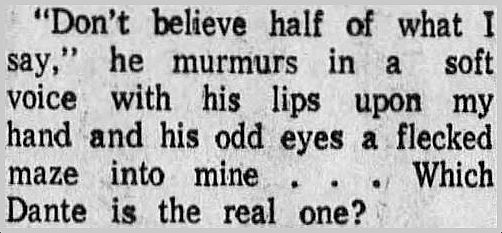
In a lengthy Dallas Morning News profile/exposé of Dante (“Dr. Dante’s Traveling Hypnotherapy Show,” Feb. 24, 1985), reporter Glenna Whitley wrote:
Whatever else Dante is, he is likable. Even the most outrageous statements seem strangely plausible when coming from his lips. That may be the secret to his success, says [District Attorney] Gary Kniep, who was alternately amused and exasperated during Dante’s attempted-murder trial.
“Yeah, I kind of like him,” Kniep says. “He’s got some sort of magnetism that gets people into his confidence.” (DMN, Feb. 24, 1985)
I can see that.
*
This was Dante’s closing statement to Muncie, Indiana reporter Betty Harris after a 1970 interview absolutely LOADED with whoppers. Can’t say she wasn’t warned!
Muncie Evening Press, Oct. 23, 1970
***
Sources & Notes
Screen captures at top and bottom are from the digitized WFAA Channel 8 News film footage from May 21, 1970; the video is from the WFAA Newsfilm Collection, held at the Hamon Arts Library, Southern Methodist University. The direct link to the Ron Dante clip on YouTube is here. Follow the WFAA clips as they are added by SMU digitizers to YouTube here, and on Facebook here. (Thanks for your tireless dedication, Jeremy and Scott!)
Photos of Lana Turner and Ron Dante are from Pinterest and eBay.
The photo of Dante performing in a nightclub was found on a page about Lana Turner on the University of Alabama site, here.
I HIGHLY recommend listening to Jennifer Sharpe’s 6-minute 2007 NPR story on Dr. Dante (“Lana Turner’s Ex Maintains Dreams of Grandeur”), here (click the “play” button in the blue circle at the top of the page). The short film “Mr. Hypnotism” was made by her and Austin-based director Bradley Beesley — the full film is here, the trailer is here.
Charlie Drum and Dick Bosse… (click for larger image)
by Paula Bosse
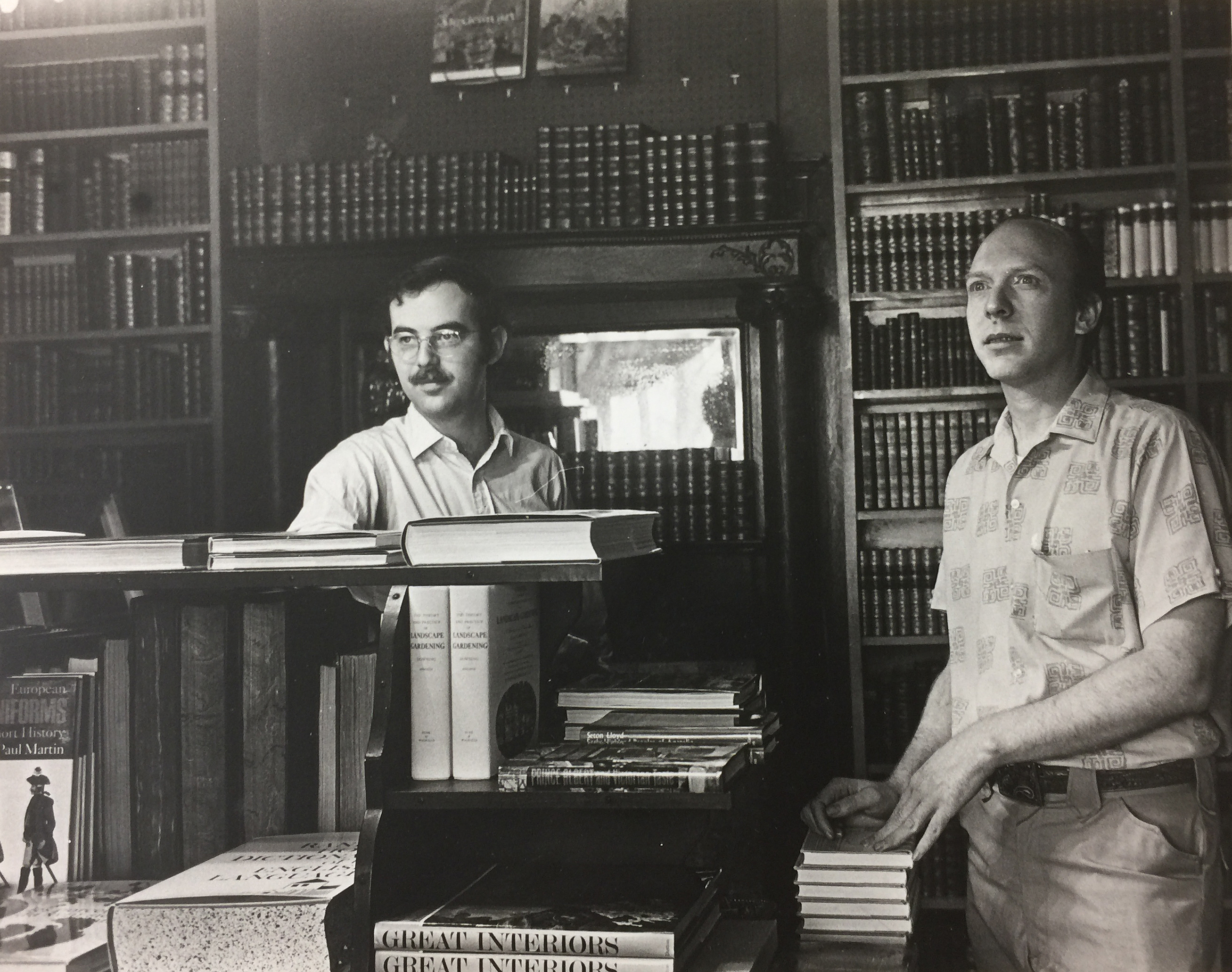
Today my father, Dick Bosse, would have been 84 years old. A very nice person at the DeGolyer Library at SMU (who knew my father) sent me this photo a couple of days ago. It’s from the DeGolyer’s Andy Hanson collection (Hanson was a long-time photographer for the Dallas Times Herald). Taken in the original location of The Aldredge Book Store at 2800 McKinney Avenue, the photo shows bookseller Charles Sartor Drum at the left, and my father — the then-manager of the store — at the right. My father looks really young here! Dig that cool shirt — worn with a paisley belt buckle and western-cut slacks. Hey, man, it was 1968.
***
Sources & Notes
Photo is from the Collection of Photographs by Andy Hanson, DeGolyer Library, Central University Libraries, Southern Methodist University. (Thank you, friendly DeGolyerite — I now have a 50-year-old photograph of my father I’d never seen before!)
I’ve written several posts about The Aldredge Book Store, the store my father worked at fresh out of college and after eventually owned. The ABS-related Flashback Dallas posts can be found here.
More on the career of photographer Andy Hanson can be found here and here.
“Fritts & Dagnal,” Deep Ellum saloon… (photo: Brent Burton)
by Paula Bosse
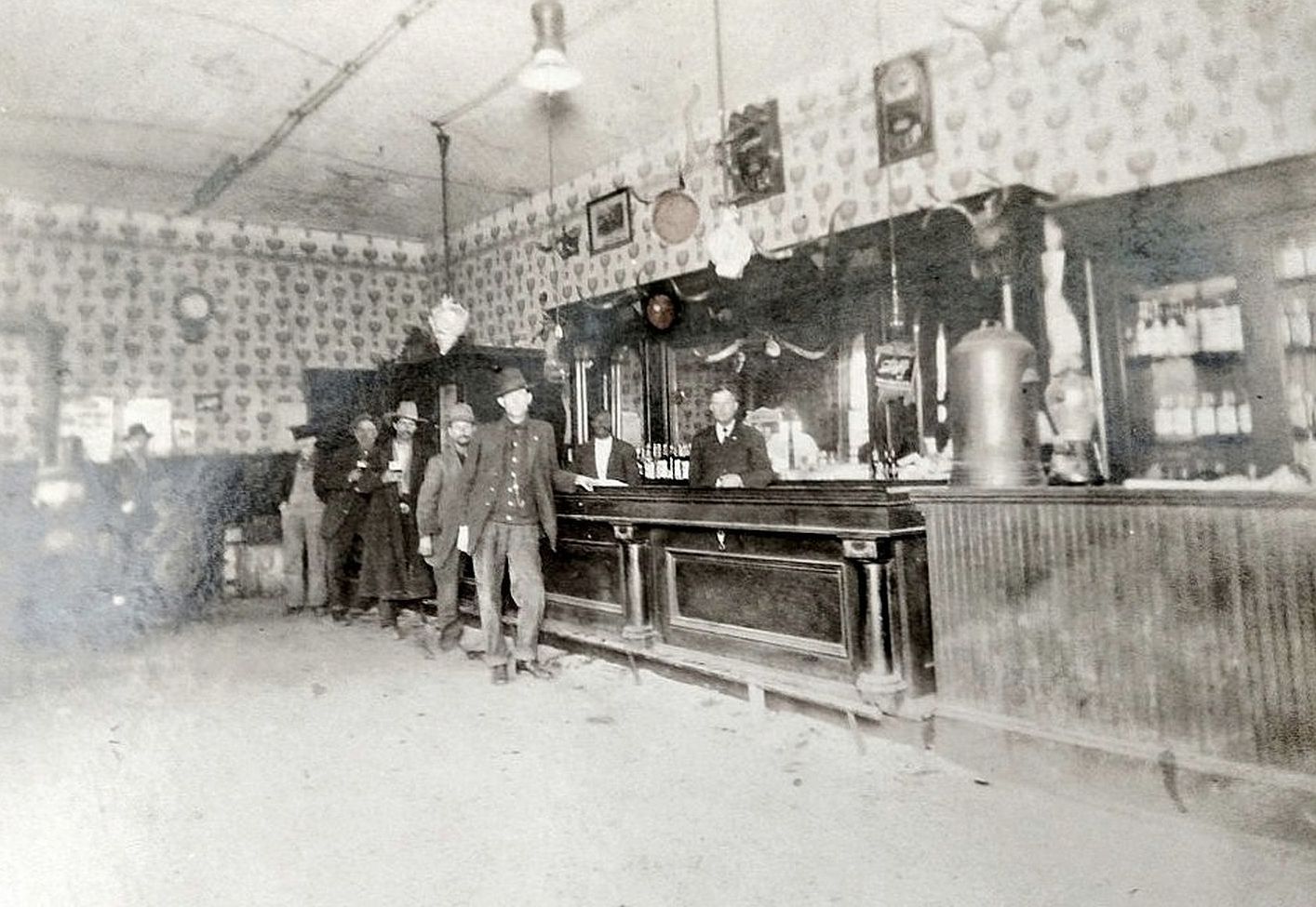
Reader Brent Burton commented on one of my tweets on Twitter to say that he had an old photo showing his great-great-grandfather standing in a saloon he had owned in Dallas around the turn-of-the-century and wanted to know how he might access old Dallas directories in order to try to determine where the bar had been. I told him that online scans of city directories are available for free from the Dallas Public Library and the Portal to Texas History (more on this is in my post “How to Access Historical Dallas City Directories Online”). I also offered to see what I could find out.
The photo is the one above (click it to see a larger image). All he knew was that it was taken in a bar owned by his great-great-grandfather Jefferson Davis Dagnall (whose last name is most often spelled “Dagnal” in various documents such as census records, directories, and his death certificate, so I will refer to him with this spelling) and that the photo was taken in the late 1800s or early 1900s. I figured it would be pretty easy to find the info because his name was so uncommon, but that was complicated by the fact that his name was spelled and misspelled many different ways — I think I came across five or six permutations. It took a long time to figure out where that photo was most likely taken — mainly by going through census records and looking at all the city directories — year by year — to pin down where he was working each year. And he got around — he lived at a new address almost every year, and changed jobs almost as frequently.
Jefferson Davis Dagnal was born in 1861, probably in Fort Bend, Texas. His father, a South Carolina native, appears to have died fighting in the Civil War; Jeff (…I call him Jeff…) was 3 years old when his father died. By 1880 he was a teenager, working on a Dallas-area farm. In 1883, Jeff was working as a blacksmith. According to city directories, he held the following jobs: store clerk, laborer, streetcar driver, house-mover, electrician, and bartender.
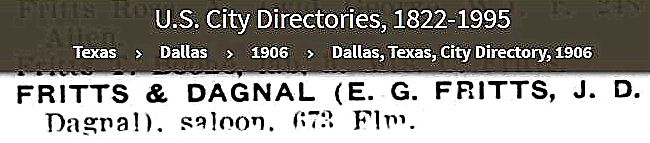
1905 was the year he seems to have settled into bartending, a job he held in various establishments in Deep Ellum for a decade, until his death in 1915. He appears to have owned (or co-owned) only one of these bars: Fritts & Dagnal. It seems the venture with partner E. G. Fritts was short-lived: its only listing is in the 1906 directory — by 1907 Jeff had moved on, tending bar elsewhere.
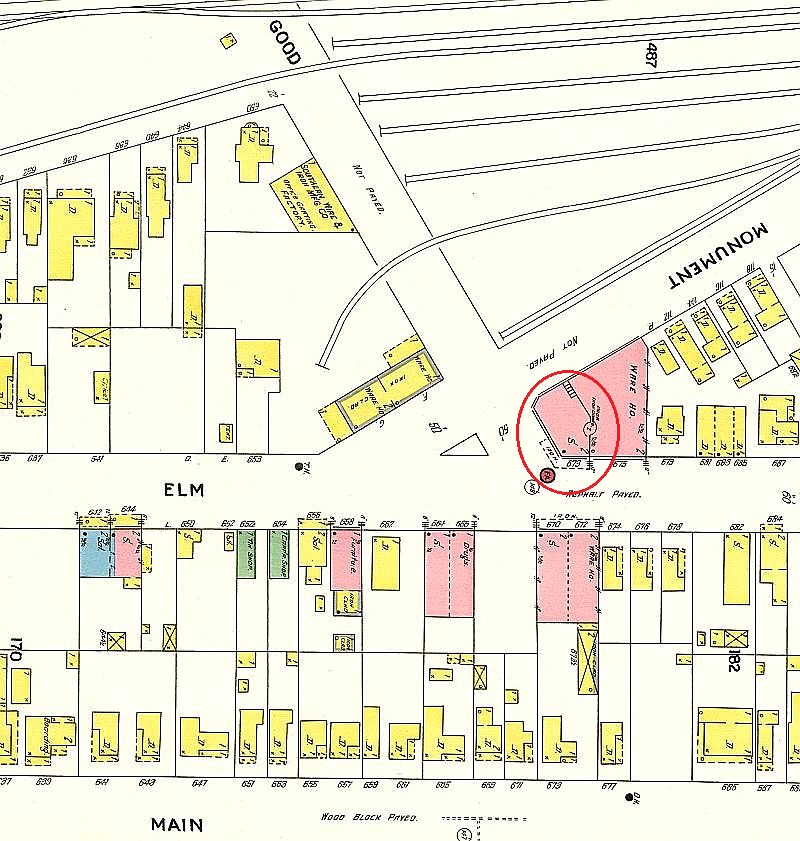
The saloon was listed in the 1906 city directory as being at 673 Elm — that address was changed in 1911 and became 2603 ½ Elm. This was in Deep Ellum, at the northeast corner of Elm and Good (possibly on the second floor). Below is a 1905 Sanborn map showing the location (the full map is here).
1905 Sanborn map, detail
The lot that building stood on at Elm and what is now Good-Latimer is empty, but a current-ish look at the location, from Google Street View, can be seen here (I am attempting to post a view from 2015, before all the construction work was going on near the Elm and Good-Latimer intersection — but just move up or down Elm a bit on Google and you’ll see construction images take over).
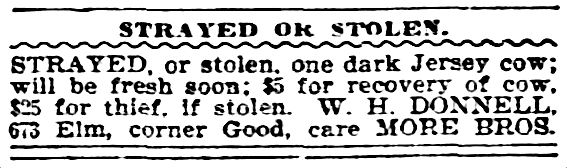
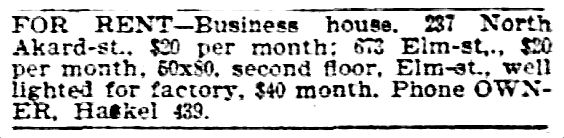
Below, a couple of ads from around the time Jeff Dagnal and E. G. Fritts decided to start up their short-lived saloon at 673 Elm: the first ad shows that it was not unusual in 1905 for large livestock to be kept in Deep Ellum (where they might even have been “rustled”), and the second ad shows that both the upstairs and downstairs spaces of the building at 673 Elm were available to rent:
Dallas Morning News, May 13, 1905
DMN, May 6, 1906
(According to the Inflation Calculator, those 1906 rents of $20 and $40 would be about $550 and $1,100 in today’s money.)
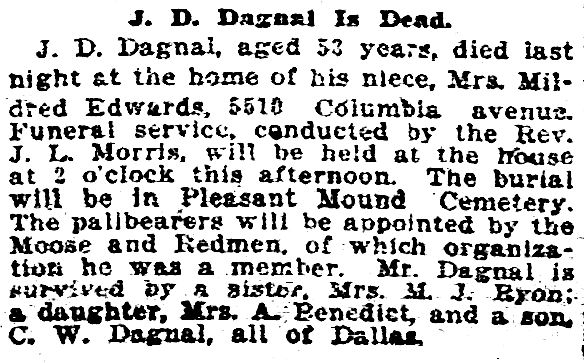
Jefferson Davis Dagnal died in Dallas on Feb. 25, 1915. His death certificate — with information provided by his daughter, Cora — listed his occupation as “blacksmith,” even though he had been a bartender (and, briefly, a saloon owner) for at least the last ten years of his life.
DMN, Feb. 26, 1915
*
One interesting thing about Mr. Dagnal, was his relationship with his wife Alice, the mother of his second child, Clarence, who was born in 1893. Alice and Jeff appear to have hit a rough patch in their marriage pretty early on. In the 1900 census, they were living in different cities, and each claimed to be widowed. I don’t know if they ever officially divorced (or even if they officially married), but I suppose it was easier in that era to claim a spouse had died rather than admit the shame of divorce or abandonment. By 1903 both were living in Dallas — at the same address. But by 1904 they were living apart, and Alice was, again, claiming to be a widow — even though an alive-and-kicking Jeff was listed in the directory right under her name!
1904 Dallas directory
I have come across this phenomenon so frequently that I now question every “widow” or “widowed” claim I come across. Information from the U. S. Census (where people give false ages and incorrect marital status ALL THE TIME) should be taken with a grain of salt!
***
Sources & Notes
Photo of Jefferson Dagnal’s saloon was shared with me by Dagnal’s great-great-grandson, Brent Burton and is used here with his permission. Jeff is probably in the photo — in 1906 he would have been 45 years old. Thank you for the great photo, Brent!
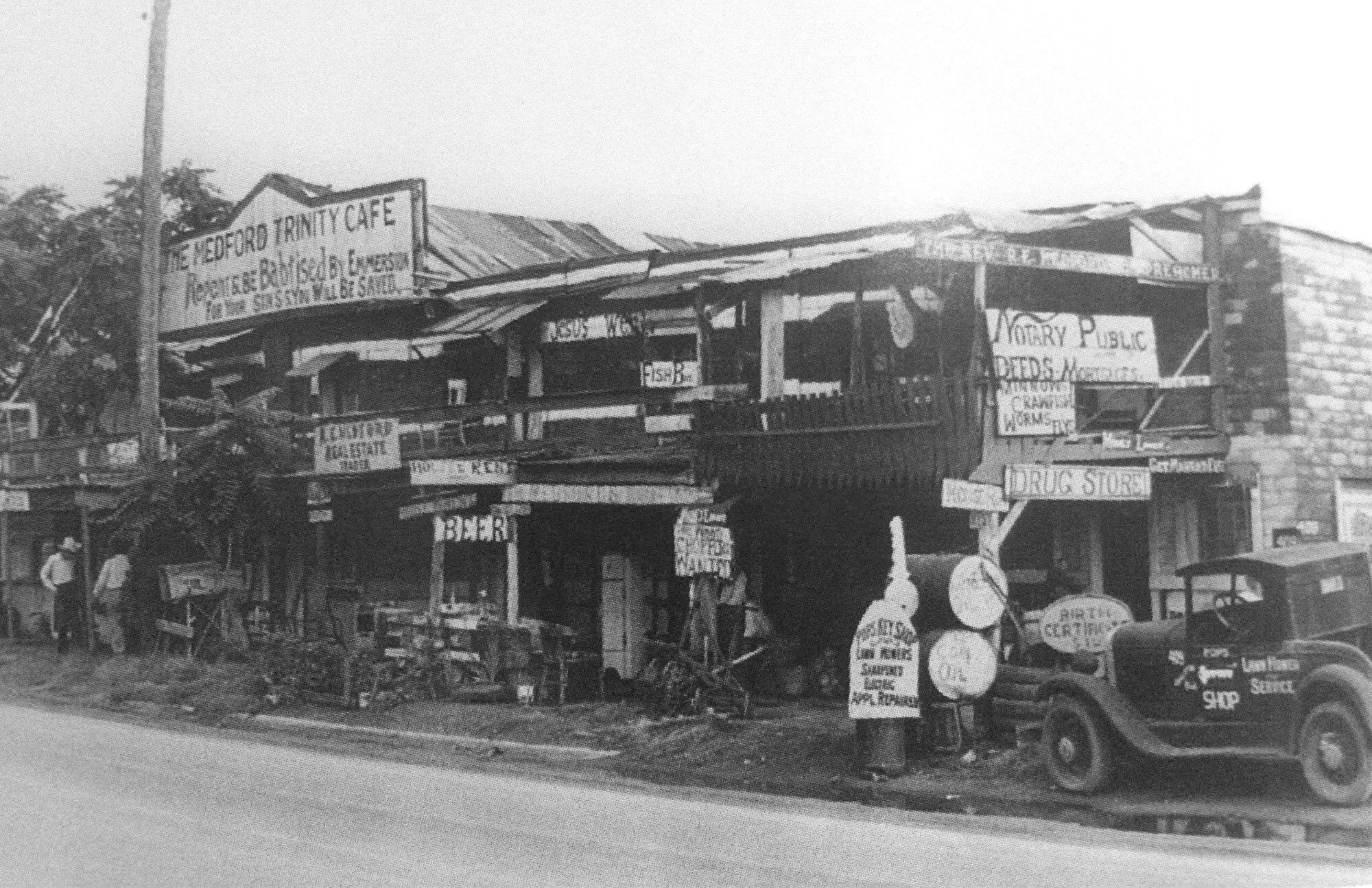
Above, 409-413 Singleton Blvd. in West Dallas, not long after the name of the street had been changed from Eagle Ford Road. The name-change happened in 1942 because of “unfavorable incidents in the past which had been associated with Eagle Ford Road” (The Dallas Morning News, April 26, 1942) — “Singleton” was Vernon Singleton, a former Oak Cliff County Commissioner. Today, this area is part of the super-hipstery Trinity Groves neighborhood; the block seen in the photo is now mostly occupied by a parking lot and looks like this.
Back then, “Eagle Ford Road” would have conjured up all sorts of unsavory images of bad behavior and illegal activities, and, even now, one tends to think immediately of the area’s most notorious exports: Bonnie and Clyde. Immediately after World War II, the population of West Dallas (an area which would not become part of the City of Dallas until its annexation in December 1952) was about 12,000, and its residents were generally poor and living in substandard housing with inadequate water and drainage and little in the way of sanitary facilities.
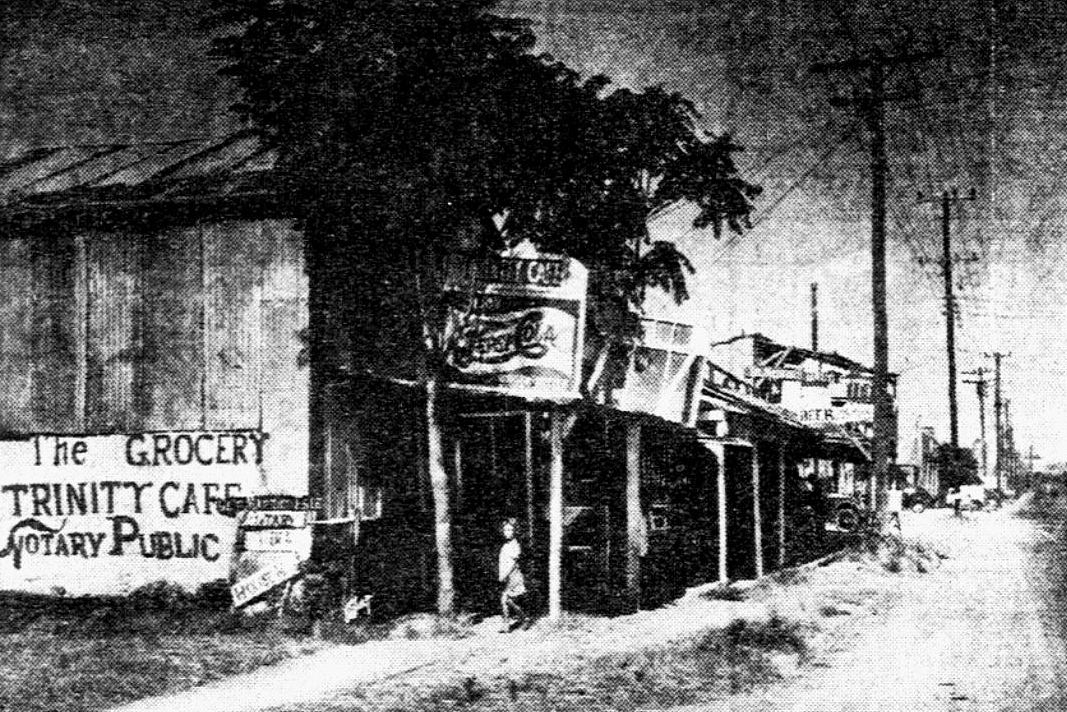
The “complex” above — which consisted of, basically, the Trinity Cafe, a grocery/drug/dry-goods store, and a residence — was perhaps a bit more colorful than most of the businesses that lined Eagle Road/Singleton Blvd. in post-war West Dallas. The property was owned by Richard Elbert Medford (1864-1950), who, as one of the signs says, was also known as “The Rev. R. E. Medford, Preacher” (I’m not sure if he was an actual ordained minister or just a self-styled preacher). In 1944 or 1945 — after several years of selling mattresses — Medford took over the collection of rickety buildings seen in the photo above and began to sell a wide-ranging collection of unrelated stuff and painted a lot of signs. He remained in business there until his death in 1950 at the age of 86 (the cause of death was “senile exhaustion” which I gather means “died of old age”).
The signage in the photo is … well … it’s fantastic. It’s verging on Outsider Art. Medford offered everything, including (but not limited to):
Real estate
Beer
Notary Public services (deeds, mortgages, birth certificates…)
Keys
Appliance repair
Lawn mowers
Oil
Fish bait (minnows, crawfish, worms, and “flys”)
He also offered religious advice (“Repent & Be Babtised By Emmersion For Your Sins You Will Be Saved”).
Mr. Medford’s personal life was not a happy one, and perhaps the unrelenting family dramas caused him to become more and more eccentric as the years went by. Many of his children found themselves caught up in the crime and violence West Dallas had become known for.
One teenage son was shot and wounded during an attempted robbery in 1930, two months before one of his daughters married at the age of 13.
Another son, who was 11 years old, was killed when he attempted to intervene in a fight between his sister and her husband and was fatally kicked in the abdomen by his brother-in-law.
Another son was a habitual criminal who committed an eye-popping range of crimes and was in and out of city, county, state, and federal correctional facilities throughout his life. (This son, Homer, was also married for a short time to the ex-wife of Clyde Barrow’s brother L. C. Barrow, but that marriage hit the skids when she shot Homer, sending him to the hospital with critical — but not fatal — wounds.)
And in 1951, after Rev. Medford’s death, the son who had been shot in 1930 while attempting to break into a store in Irving, shot and killed his wife and young son before killing himself.
So, yeah, Rev. Medford’s life was a rough one, and there were definitely some dark days in hardscrabble West Dallas. I’d like to think his store, plastered with its kooky signs, offered him some respite from the incessant melodramas percolating all around him.
Singleton Blvd., late 1940s, not yet part of Dallas
*
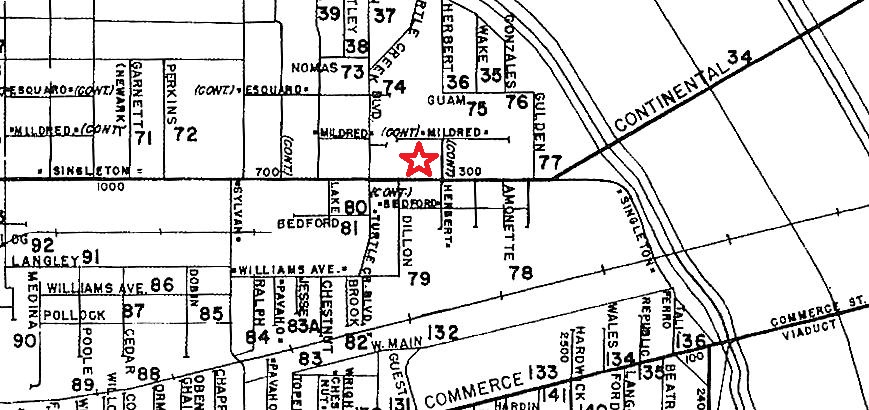
The location of the Medford house/cafe/store, seen on a 1952 Mapsco (click for larger image).
1952 Mapsco
***
Sources & Notes
I came across the photo years ago on the Dallas History Facebook group. There was no source, but there appears to be a copy of this photograph in the Jim Doster Collection at the Dallas Public Library titled “Meford [sic] Trinity Cafe on Singleton Blvd.,” incorrectly dated as 1930 (call number PA97-7/147). I’m sure a higher resolution image of this would offer up quite a few amusing details and discoveries.


 AP wire photo, taken in Dallas on April 4, 1967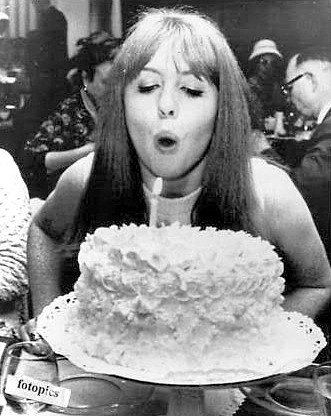



















 Flashback : Dallas