Flashback : Dallas

A Miscellany: History, Ads, Pop Culture

Category: Manufacturing

MORE Random Still-Standing Buildings Featured in Ads From 1929

ad-southern-fountain-fixture_directory_1929-detSoda fountains came from here…

by Paula Bosse

A few more photos of buildings that are still standing, from the ad-pages of the 1929 city directory.

First up is the Southern Fountain & Fixture Mfg. Co. at 1900 Cedar Springs.

ad-southern-fountain-fixture_directory_1929

The Southern Fountain & Fixture plant was built in 1925 at the corner of Cedar Springs and N. Akard. They manufactured and sold soda fountains, showcases, and fixtures.

A major new residential high-rise is going up in the 1900 block of Cedar Springs (or has gone up — it’s been a while since I’ve been over there), but I think it’s going up at the other end of the block. (But somehow its address is 1900 Cedar Springs….) So, I’m not absolutely sure this building IS still there. Here’s a 2014 image from Google Street View. It’s a cool building — hope you’re still there, cool building!

southern-fountain-fixture-now_googleGoogle Street View

*

Next, the Loudermilk-Sparkman Funeral Home at 2115 Ross Avenue.

ad-loudermilk-sparkman_belo_directory_1929(click for larger image of house)

The “home-like” Loudermilk-Sparkman funeral home moved into the former home of Col. A. H. Belo in June 1926 and settled in for a 50-year lease. (An article titled “Morticians In New Quarters” appeared on June 27, 1926 in The Dallas Morning News, complete with descriptions of interior decoration and architectural details.)

That place was a funeral home for 50 years — longer than it’s been anything else. That’s a lot of dearly departeds. (Clyde Barrow is probably the most famous cadaver to be wheeled through its portals.) In the ’70s, the granddaughter of Col. A. H. Belo sold the house — which was built in 1899/1900 — to the Dallas Bar Association, and today it is a swanky place to get married or eat canapés. And, thankfully, it’s still beautiful.

belo-today_googleGoogle Street View

*

 The Evangelical Theological College, 3909 Swiss Avenue, in Old East Dallas.

ad-evangelical-theological-college_directory_1929sm(click for larger image)

This “denominationally unrelated” seminary — where tuition and rooms were free, and board was at cost — was built in 1927 for $65,000. When the three-story-plus-basement building was finished, the college was in its fourth year, having moved from its previous location in The Cedars. “The college now has forty-five students representing fifteen states of the United States, three Canadian provinces and Ireland…. The faculty is composed of thirteen men…” (DMN, Dec. 25, 1927).

ad-evangelical-theological-college_directory_1929-det

The college has grown by leaps and bounds and is now the Dallas Theological Seminary, and the original building is still there.

dallas-theological-seminary_now_googleGoogle Street View

*

Lastly, the Melrose Court Apartments and Hotel, 3015 Oak Lawn.

ad-melrose_directory_1929

The Melrose, designed by architect C. D. Hill, was built in 1924, and as it was about to throw open the doors of its bachelor apartments to eager Dallas bachelors (and whomever), it advertised itself thusly: “Of palatial splendor, rivaling in dimensions the best appointed apartment hotel buildings of this modern day, it is equal to the best of any of America’s cities of a million.” (DMN, Aug. 31, 1924) Well, of course it is!

ad-melrose_directory_1929-det

It’s been a landmark in Oak Lawn for over 90 years. I know it’s officially now the Warwick Melrose Hotel, but I’ve never heard anyone call it anything but The Melrose.

melrose-today

***

Sources & Notes

All ads from the 1929 city directory.

My previous post “Random Still-Standing Buildings Featured in Ads From 1927” is here.

*

Copyright © 2015 Paula Bosse. All Rights Reserved.

The Continental Gin Complex — 1914

continental-gin-bldg_1914_cook-degolyer-smu-bwPhoto by Chas. Erwin Arnold (DeGolyer Lib., SMU) (click for larger image)

by Paula Bosse

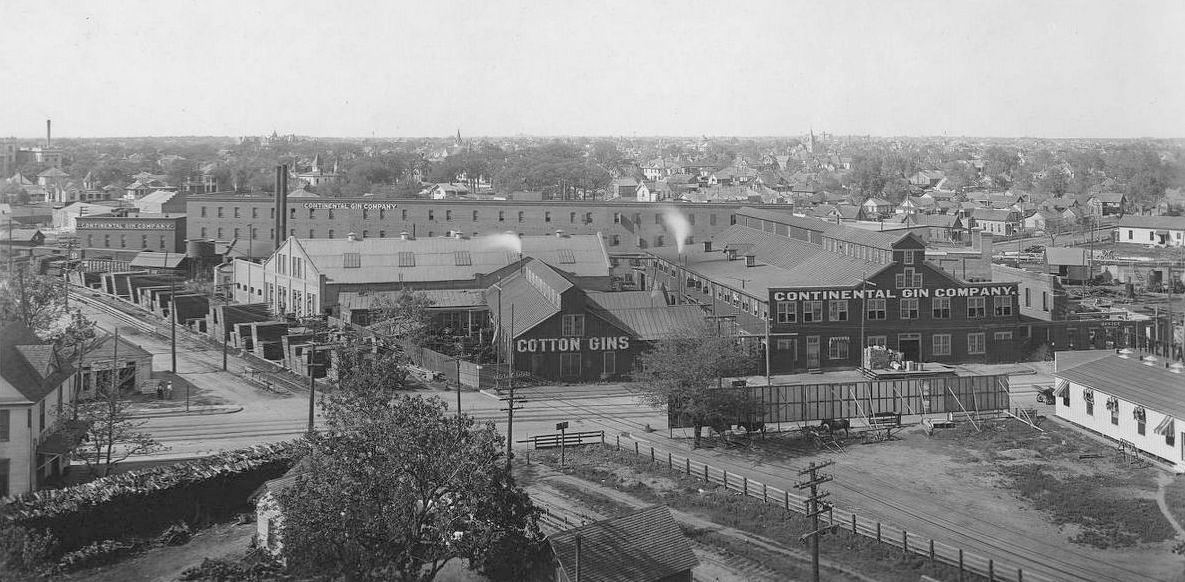
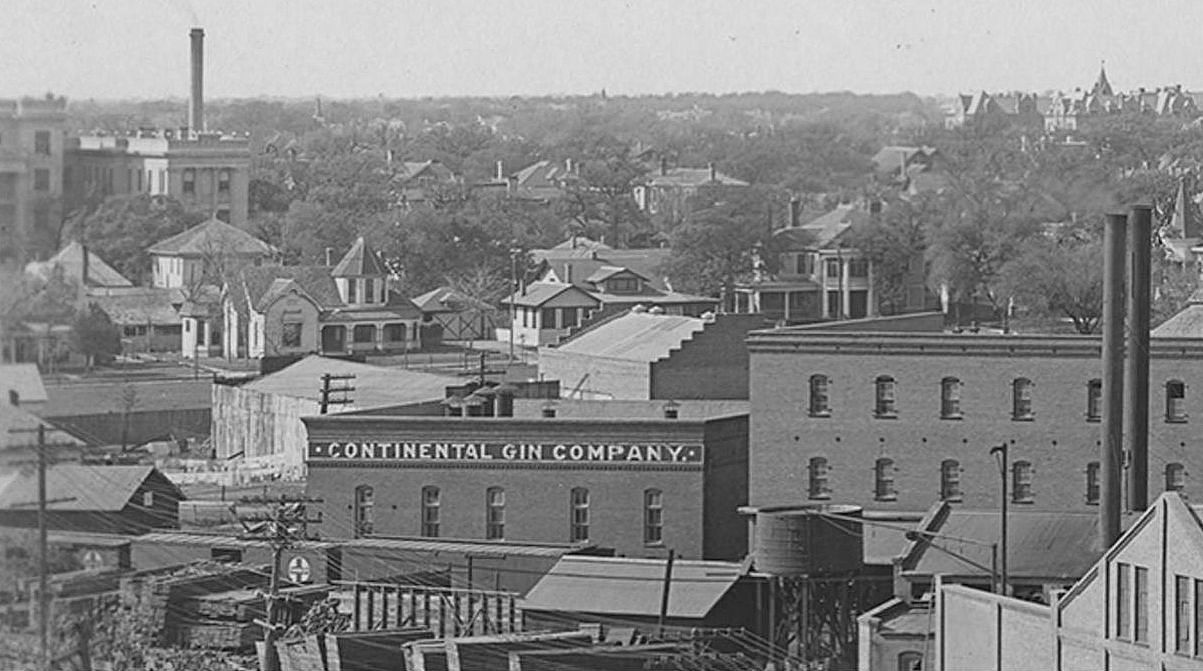
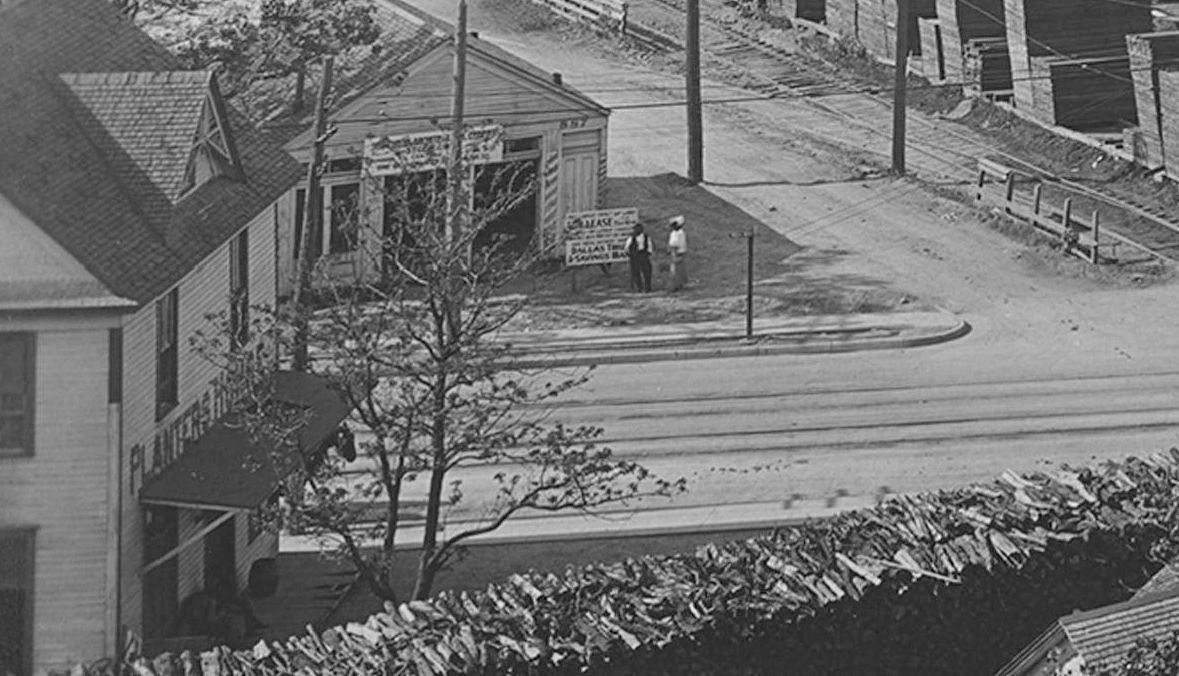
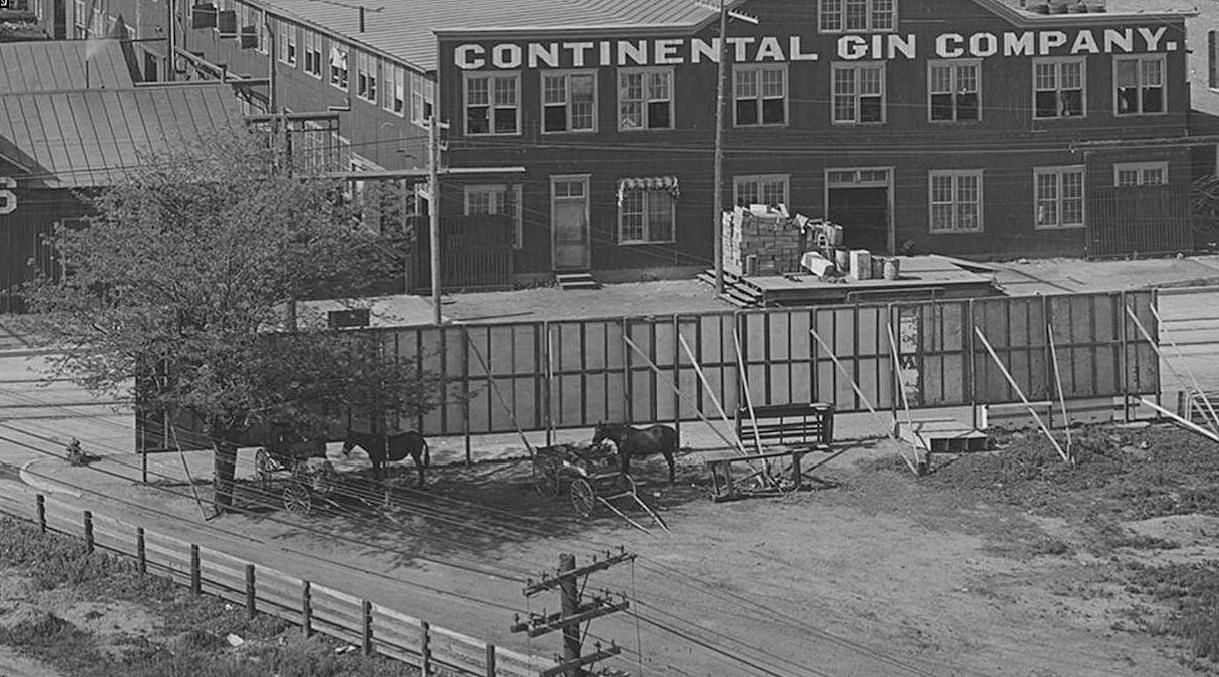
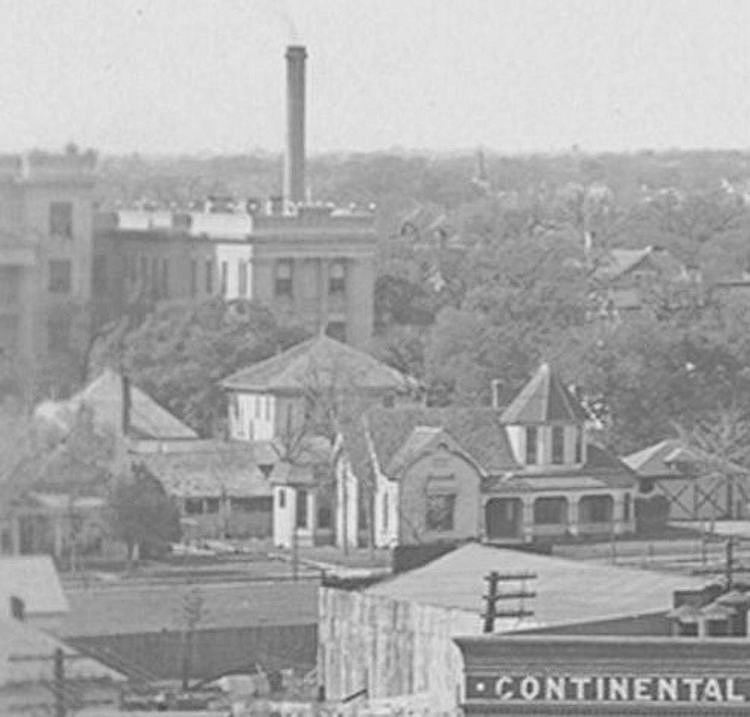
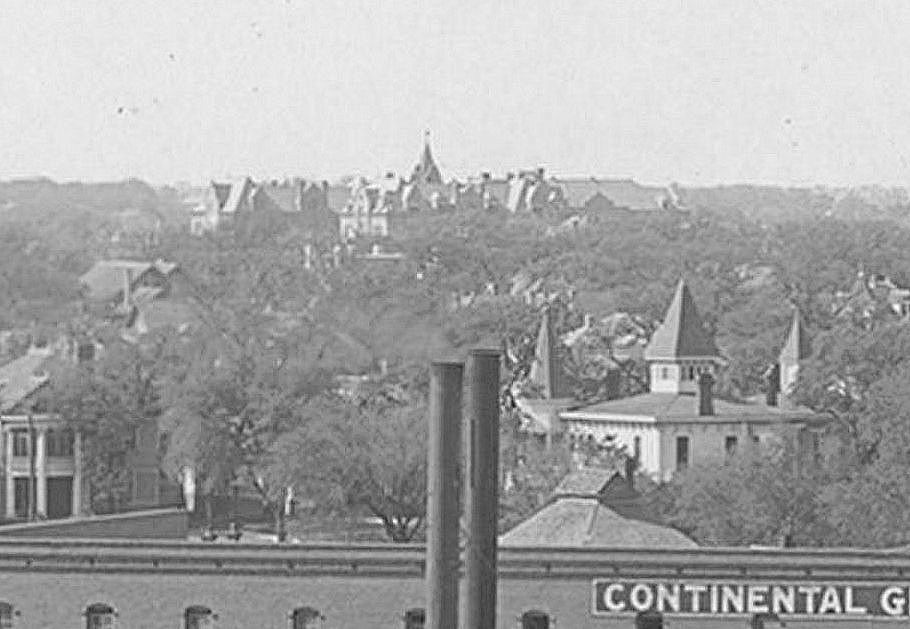
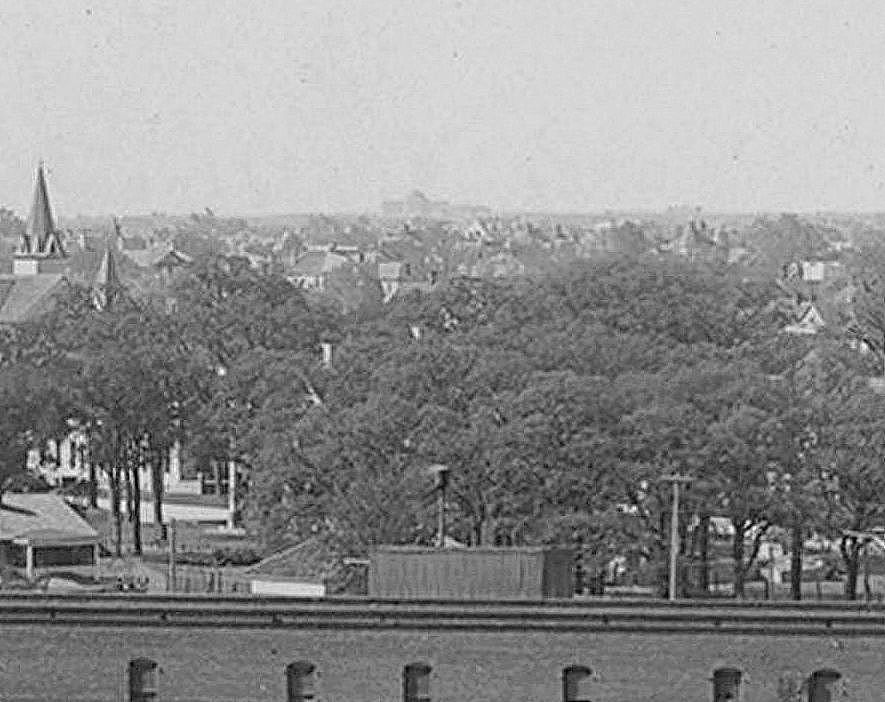
This is a really wonderful view of the Continental Gin Company complex, a Dallas landmark, much of which is, remarkably, still standing in Deep Ellum. Granted, my experience is limited, but I’ve never seen a photograph from this period showing the manufacturing end of Deep Ellum and the residential neighborhood just beyond it to the north. This is another incredible image from the George W. Cook Collection at the DeGolyer Library at SMU. A few magnified details, below. (Click for much larger images.)

continental-gin-bldg_1914_cook-degolyer-det1_bw

continental-gin-bldg_1914_cook-degolyer-det2_bw

continental-gin-bldg_1914_cook-degolyer-det3_bw

And zooming into the distance….

continental-gin_baylor_1914_bwThe back side of Baylor, at the top left. See it from the front here.

continental-gin_ursuline_1914_bwIn the middle at the top, Ursuline. (See more views of it here.)

continental-gin_smu_1914_bwAnd, my favorite, SMU’s Dallas Hall, waaaaaaaaaaaaaay in the distance. SMU hadn’t even officially opened when this photo was taken!

map_1919_continental-gin-bldg1919 map

***

Photograph titled “Continental Gin Company on Elm Street, Facing North” by Charles Erwin Arnold; from the George W. Cook Dallas/Texas Image Collection housed at the DeGolyer Library, Central University Libraries, Southern Methodist University. The photo and its details can be viewed here (I have altered the color in the images seen in this post).

Map detail from a large 1919 Dallas street map (which can be seen via the Portal to Texas History, here).

A view of this area from the 1921 Sanborn maps can be found here (click to make larger). (What’s a Sanborn map? Wikipedia tells you here.)

I wrote at length about the history of the Continental Gin complex of buildings in the post “Munger’s Improved Continental Gin Company,” here.

All images larger when clicked.

*

Copyright © 2015 Paula Bosse. All Rights Reserved.


The Marietta Mask

marietta-mask_doak_boys-life_oct55SMU football star Doak Walker in an ad from Boys’ Life, Oct. 1955

by Paula Bosse

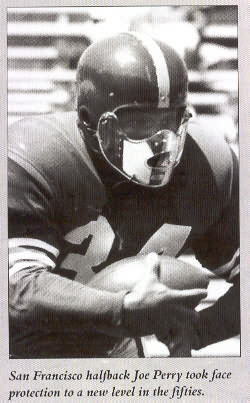
Dr. Thomas M. Marietta (1910-1995), a Dallas dentist, devised a startlingly new invention in 1947: a specially-made facemask. Initially, the mask was created to protect the face of a Dallas hockey player who had recently sustained a broken nose and would have been unable to play without a mask for fear of further injury. Marietta’s creation was a success — not only did the player get back on the ice, but tentative inquiries from other sports teams began to trickle in. But what changed everything were the masks he made for TCU’s star quarterback Lindy Berry, who had suffered a broken jaw, and Texas A&M’s fullback Bob Smith, who had a badly broken nose. Without the odd-looking masks that protected their entire faces, they would not have been able to play out the seasons. The masks were an unqualified success, and the doc went commercial.

marietta-face-mask_marion-OH-star_112251_wireDr. Marietta (Marion Ohio Star, Nov. 22, 1951 — full article is here)

In 1951, football players did not generally wear facemasks. It was commonplace for players to rack up a dizzyingly large number of injuries such as broken and dislocated jaws and noses, knocked-out teeth, facial lacerations, major bruising, concussions, etc. An article appeared in The Dallas Morning News on Aug. 31, 1951 describing what this whole facemask thing was about and how the Texas Aggies were about to try a revolutionary experiment by equipping “possibly half of the A&M team” with Dr. Marietta’s newfangled masks. Coach Ray George approved a trial test of the masks, saying that his primary concerns were reduction of facial injuries, elimination of head injuries, and improvement of athletic performance. A&M’s trainer, Bill Dayton, predicted that the wearing of facemasks would become universal among players in the coming years.

Many head injuries happen as the result of a player ducking his head. We believe that by the use of this face gear we can eliminate head ducking, and our players will see where they are going. When they watch their opponents, they are able, by reflective action, to keep their heads out of the way. (A&M trainer Bill Dayton, DMN, Aug. 31, 1951)

The various incarnations of the Marietta Mask over the next couple of decades were used in various sports by children, by college athletes, and by professionals. Dr. Marietta patented several designs for masks and helmets and had a lucrative manufacturing business for many years. In 1977 the business was sold, and the Marietta Corp. became Maxpro, a respected name in helmets.

Football and hockey will always be extremely physical sports with the very real possibility of injury, and though there’s need for further improvement, Dr. Marietta’s invention helped lower the danger-level quite a bit. Thanks to a mild-mannered dentist from Dallas, a lot of athletes over the years managed to avoid all sorts of nasty head and facial injuries. Thanks, doc.

*

marietta-mask_corbis_oct1954Oct. 1954 (©Bettmann/CORBIS)

marietta_joe-perry

marietta-mask_envelope

***

Sources & Notes

Photo ©Bettmann/CORBIS; the original caption: “An outer-space look is given by this all-plastic mask lined with foam rubber. It was designed by Dr. M. T. Marietta, a Dallas, Texas dentist.”

Joe Perry photo from HelmetHut. To see some pretty wacky versions of early masks from a Marietta catalog, see images from HelmetHut.com, here.

Read the following newspaper articles:

  • “Mask Maker: Dentist Helped Wolves Win Title (Abilene Reporter-News, Nov. 29, 1950) — regarding the Colorado City (TX) Wolves and their injured player, Gerald Brasuell, the team’s tackle who wore Dr. Marietta’s mask and was able to play despite having a triple-fracture to his jaw, here
  • “Broken Jaw Protection: Doctor’s Face Mask Enables Injured Gridders To Play” (Marion, Ohio Star, Nov. 22, 1951), here

To see several of Marietta’s patents (including abstracts and drawings), see them on Google Patents, here.

And to read an interesting and entertaining history of the football facemask (and I say that as someone who isn’t really a sports person), check out Paul Lukas’ GREAT piece “The Rich History of Helmets,” here. (If nothing else, it’s worth it to see the cool-but-kind-of-weird-and-scary, crudely-fashioned, one-of-a-kind facemask made out of barbed wire wrapped in electrical tape!)

And because a day without Wikipedia is like a day without sunshine, the facemask/face mask wiki is here.

*

Copyright © 2015 Paula Bosse. All Rights Reserved.

The Texas Bookbindery, Arcadia Park

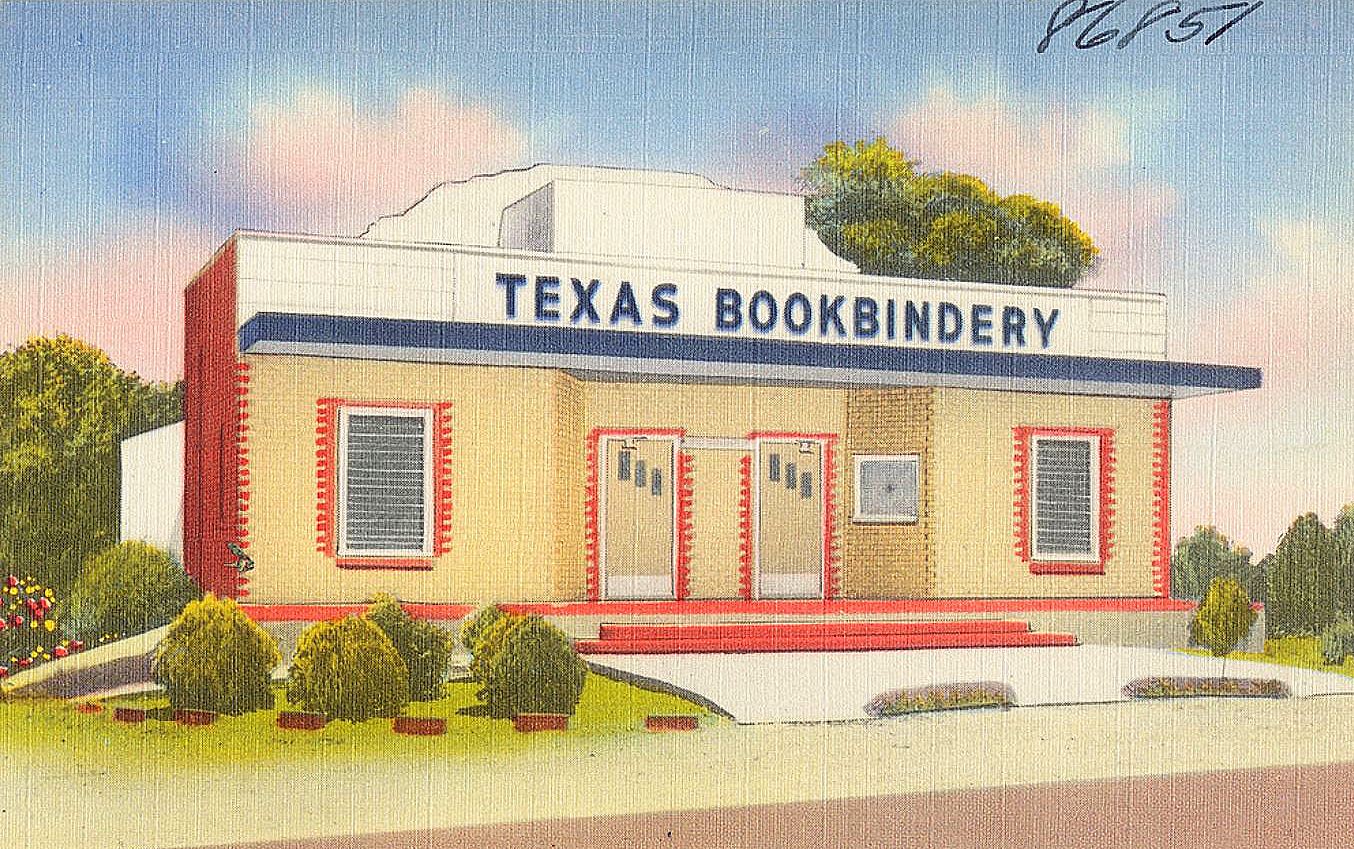
texas-bookbindery_oak-cliff_tichnorThe Texas Bookbindery, be-shrubbed and gleaming in Oak Cliff’s Arcadia Park

by Paula Bosse

Old postcards, such as the one above, are perfect little fictional jewels. One knows instinctively when looking at them that they show a highly idealized version of reality. I almost didn’t want to find out too much about the Texas Bookbindery, because I love this image so much, and I was pretty sure that if the simple-but-charming building still stood, it wouldn’t really look like a happy little place atop a slight hill, with lovely landscaping, where butterflies flitted among the flowers and bluebirds sang in the nearby trees.

I didn’t find out much about the Texas Bookbindery, except that it seems to have been in business from at least the late 1940s until the late ’60s or early ’70s. It was managed by a man named T. Bernard White, who was featured in a 1948 Dallas Morning News article about the horrible things people do to library books (the Dallas Public Library sent the bindery what sounds like an unending stream of not-quite-destroyed books which were still repairable).

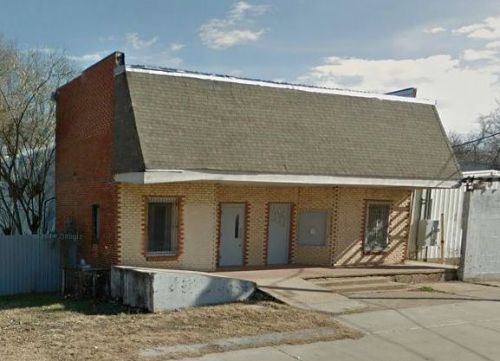
Apparently bookbinderies keep a pretty low profile, because the only other mention I found in the newspaper about this one was in 1962 when a large number of the 37 employees (“mostly women”) were overcome by fumes from poorly-vented gas heaters in the “one-story sheet-metal plant” (yes, a large sheet-metal structure extends behind the deceptively cheery street view). That story listed the address as 714 N. Justin, in the Arcadia Park area of Oak Cliff. I was almost afraid to plug that address into Google. As well I should have been. Here’s what that sweet little building looks like now (but …the shrubs! …the flowers! …the BLUEBIRDS!!):

tx-bookbindery-nowToday, via Google Street View

Poor little bookbindery.

UPDATE: A month after I wrote this post in November, 2014 the Google car drove down N. Justin and snapped a new Google Street View of the poor little bindery — it looked even sadder: it had a big hole in its roof. In March of 2017, that hole-in-the-roof image from December, 2014 has yet to be updated. See it here.

***

Sources & Notes

Postcard from the fantastic Boston Public Library Tichnor Brothers Postcard Collection on Flickr, here.

Click top pictures for larger image.

*

Copyright © 2014 Paula Bosse. All Rights Reserved.


Giant Zeppelin Balloons, Straight Outta Big D

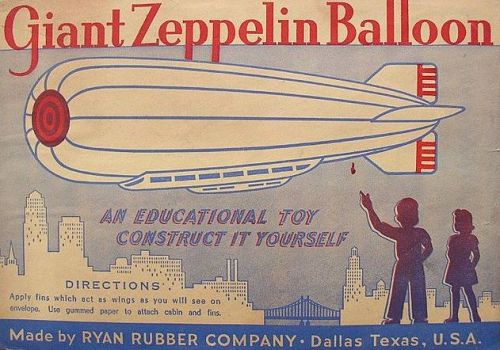
ryan-rubber-co-zeppelin

by Paula Bosse

Bet you didn’t know that giant Zeppelin balloons were made in Dallas (or maybe Forney…). They were. The Ryan Rubber Company’s balloon factory opened in Forney in 1946, managed by Lester G. Norris with the help of his wife, Gladys.

***

Sources & Notes

Source of Zeppelin ad unknown.

See a photo of the Norrises at work and read the accompanying article “Picture Blocks and Balloons Big Business for These Men” (Dallas Morning News, Nov. 28, 1949).

*

Copyright © 2014 Paula Bosse. All Rights Reserved.

Empire Mills — Grinding Wheat Into Wedding Presents Since the Cleveland Administration

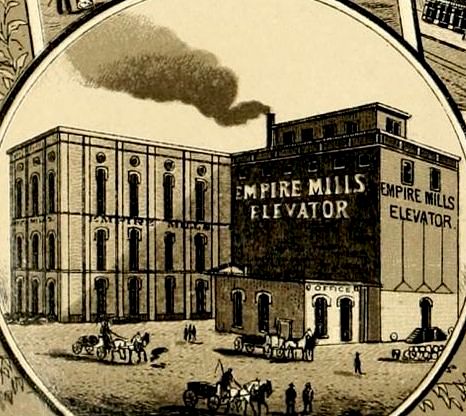
empire-mills_imm-gd_1889aFlour central!

by Paula Bosse

Exciting news hit the pages of The Dallas Herald on March 26, 1885:

A contract was closed last night for the erection of a mammoth 250-barrel, full roller flouring mill with all the latest machinery in this city. The promoters are W.C. Howard, J. Rauch and S.T. Stratton. It will be called the Empire Mills.

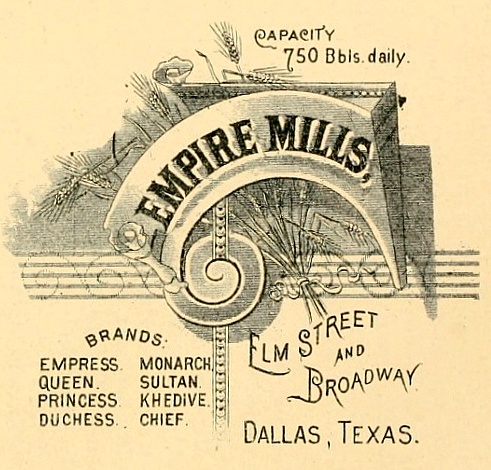
The mill opened in September, with the company’s proclamation that their new “roller mills” were “the largest and finest ever erected in the South.” It was located at Elm and Broadway, near the Trinity River. In a newspaper interview, John Neely Bryan’s son described the location of his father’s famous cabin as being “at the top of the hill, about where Empire mills are now located” (Dallas Morning News, Aug. 11, 1889). So, about where Dealey Plaza is today. Wheat was a major crop in North Texas, and the mill was a successful and important addition to the growth of the city.

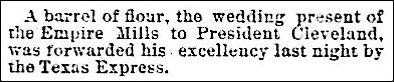
But it wasn’t all crushing and grinding. One must occasionally participate in the world of social niceties. So when the president of the United States is getting married, what better way to commemorate the occasion than by presenting the happy couple with a romantic and self-promoting barrel of flour?

cleveland-flour_dmn_053086DMN, May 30, 1886

cleveland-flour_dmn_070586DMN, July 5, 1886

One wonders what the newlyweds exclaimed as they tore the bow from that barrel? It probably wasn’t, “Oh! Flour! How stupendous!”

empire-mills_clifton-church_1894

empire-mills_souv-gd

empire-mills_imm-gd_1889b

***

Sources & Notes

Top and bottom images from an ad in The Immigrants Guide to Texas (1889).

Photograph by Clifton Church, ca. 1894.

Next to last illustration from Souvenir of Dallas, Texas (c. 1888).

Roller mill? Right this way.

*

Copyright © 2014 Paula Bosse. All Rights Reserved.

Dallas Steam Coffee & Spice Mills — 1880s

babcock-foot-brown_imm-gd_1889

by Paula Bosse

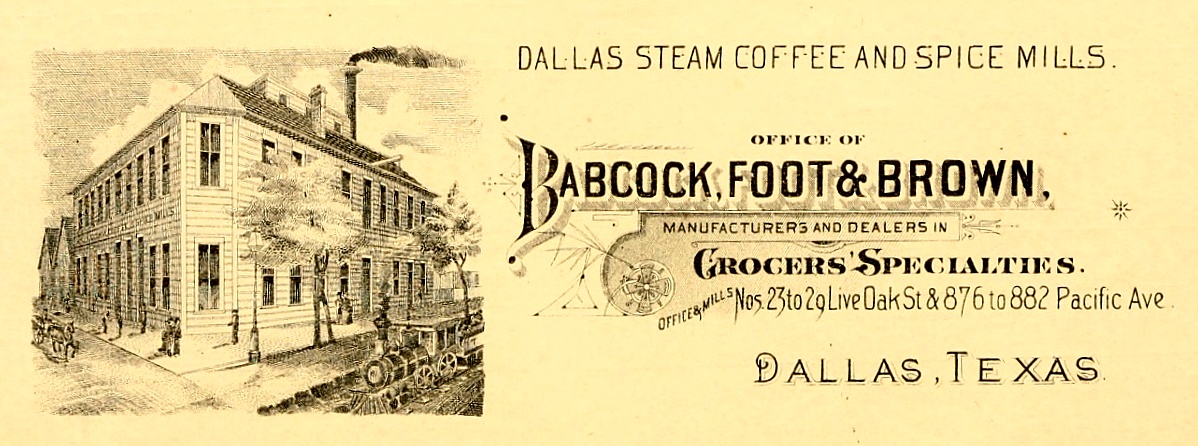
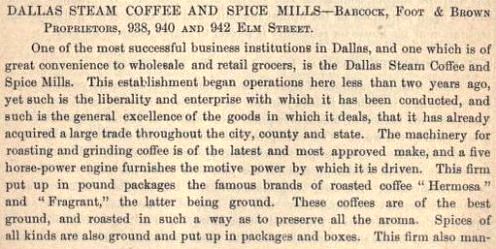
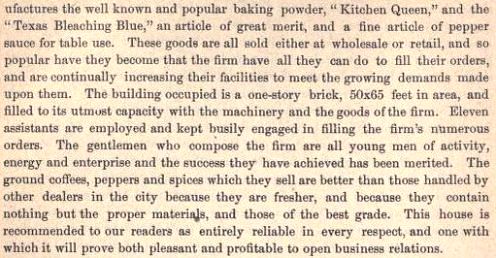
It’s 1880-something. You’re in Dallas. You need a pound of coffee. Some ground mustard seed. Maybe some “Texas Bleaching Blue.” Where, oh where, do you turn?

babcock-foot_1884ababcock-foot_1884b

Messrs. Babcock, Foot & Brown will be happy to supply you with everything you need. And that five-horsepower engine? Top-of-the-line!

***

Sources & Notes

Ad from The Immigrant’s Guide to Texas, 1889. Click for larger image.

Description of the business from The Historical and Descriptive Review of the Industries of Dallas, 1884-85.

*

Copyright © 2014 Paula Bosse. All Rights Reserved.

Oriental Oil Company: Fill ‘er Up Right There at the Curb

gas-pump_commerce_c1912An Oriental Oil Co. competitor, at 1805 Commerce

by Paula Bosse

I cropped this detail from a much larger view of Commerce Street because this incidental, everyday moment caught my attention. Was that man filling his automobile with gasoline? Was that square, boxy, hip-high thing full of gas, right there at the curb of one of the city’s busiest streets? The sign above the pump reads “PENNSYLVANIA AUTO OIL GASOLINE SUPPLY STATION.” I looked into it, and now I know more about early gas pumps and stations than I ever thought I would.

In the very early days of automobiles, one would have to seek out a supplier of gasoline (such as a hardware store or even a drugstore) where you would buy a gallon or two and carry it home with you in a bucket or something and then carefully pour it into your car’s gas tank using a trusty funnel. After a few years of this inconvenient way to gas up, these curbside pumps began to pop up in larger cities. The pump seen above was at 1805 Commerce St. and belonged to the Pennsylvania Oil Company. It opened in early 1912. That got me to wondering about other such fueling stations, and it seems the first in Dallas may have belonged to the Oriental Oil Company, just down the street from the one seen above, at 1611 Commerce. Here is a fuzzy image of it, from the same, larger photo the detail above was taken from. (Click for larger image.)
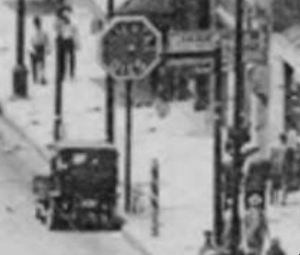
oriental-oil_1611-commerce_skyline-det

Could this photo have been taken there? It was listed on eBay merely as “Oriental Oil Company, Dallas, 1910-1920.”

oriental-oil-co_ebay

Oriental Oil’s first “auto station” opened in February, 1911, where “facilities have been arranged so as to fill the cars along the sidewalk.”

oriental-oil_dmn_022611(Dallas Morning News, Feb. 26, 1911)

Drive-up “stations” had begun to appear a few years before, on the West Coast.
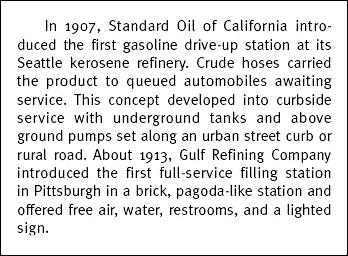
gas-stations_dot-pdf_p33(Texas Dept. of Transportation, 2003)

In a 1924 Dallas Morning News article (see below), the pump seen in the above photos was described thusly:

Dallas’ first gas filling station had a one-gallon blind pump on the curb which was then thought to be the last word in equipment. Now if a filling station is not equipped with a visible five-gallon pump it is thought to be behind the times and the gas now sold must be water white, when in the old days it was most any color.

This, I think, is what the Oriental and Pennsylvania rolling tanks looked like — the make and model may be different, but I think the general design is the same:

gas-pump-1913

When it was empty, it would be rolled away to be re-filled. I’m not sure about the payment system. Coupon books are mentioned in one of the ads, but I don’t know how (or with whom) one would redeem them as these pumps appear to be self-serve. Perhaps there was a slot for coins/coupons, and everyone worked on the honor system.

It seems that its placement would cause a lot of congestion on a major street like Commerce (which at the time was still shared with skittish horses), but Commerce was also a hotbed of automobile dealerships (Studebaker, Stutz, and Pierce-Arrow dealerships, for example, were within a couple of blocks of the Oriental and Pennsylvania filling stations).

The Oriental Oil Company — a forgotten, early oil company — had an interesting history. The Dallas-based company began business in 1903, starting their company “in a barn in the rear of the Loudermilk undertaking establishment.”

oriental-oil_mercury_123103(Southern-Mercury, Dec. 31, 1903)

They were a fast-growing oil company (“an independent concern which in spite of the strong opposition of the oil trust is now enjoying permanent and growing prosperity”Greater Dallas Illustrated, 1908), and they were one of the first to open a refinery in Texas (they eventually had two refineries in West Dallas). The company’s primary concern in its early years was the manufacture of various oils and greases for industrial use.
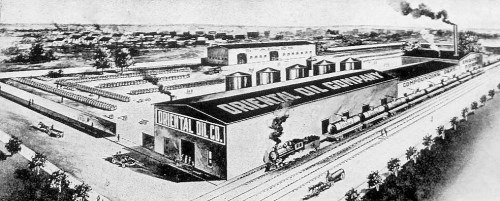
oriental-oil-factory-c1908Oriental Oil Company Factory, corner of Corinth St. and Santa Fe tracks, circa 1908

In 1911, understanding just how profitable the new world of retail gasoline sales could be, they installed their first pump at the curb of 1611 Commerce St., near Ervay (“right behind the Owl Drug Store”). A 1924 Dallas Morning News account of the company (see below) states that this was the first gas pump … not only in Dallas … but in the entire state of Texas. I’m not sure if that’s true, but the Smith Brothers who ran Oriental Oil were certainly go-getters — the Smiths were grandsons of Col. B. F. Terry, organizer of the famed Terry’s Texas Rangers, and one of the brothers, Frank, was an early mayor of Highland Park and a three-term president of the Dallas Chamber of Commerce.

ad-1911_oriental-oil_dmn_100811(DMN, Oct. 8, 1911)

ad-1912_oriental-oil_dmn_012812(DMN, Jan. 28, 1912)

Shortly after opening their first pump on Commerce, demand was such that a second pump was soon opened at 211 Lane St. (a mere half a block away!). The DMN reported on Oct. 19, 1911 that a competitor — Consumers’ Oil and Auto Company — was going to be right across the street: “Permission was given to the Consumers’ Oil and Auto Company to place a gasoline tank under the sidewalk at 214 Lane street.” And in March 1912 the Pennsylvania Oil Company was installing ITS underground tank for the pump seen in the photo at the top — again, less than a block away. And in 1916 Oriental opened its splashy new “‘Hurry Back’ Auto Station” right across the street from where that Pennsylvania tank had been. (That Commerce-Ervay area was certainly an early gas station hotbed!)

ad-1916_oriental-oil_dmn_082916(DMN, Aug. 29, 1916)

Newspaper reports also cite claims made by the company that the station mentioned in the ad above — at Commerce and Prather — was the first drive-in gas station in the United States. I’m sure this was good truth-stretching PR for Oriental more than anything, because this claim was not true (Seattle and Pittsburgh seem to be battling each other for that honor). It might not have been the first, but when this “auto station” opened in 1916 (assuming it was “new” as this ad states), it was still pretty early in the history of the drive-in filling station. Also, by 1916, “Hurry Back” had become the company’s slogan as well as the name of its gasoline.

ad-1918_oriental-oil_dmn_102218(DMN, Oct. 22, 1918)

ad-1920_oriental-oil_jewish-monitor_1920(Jewish Monitor, 1920; detail)

ad-oriental-oil_dmn_041121(DMN, Apr. 11, 1921)

oriental-oil_ad_dmn_030522(DMN, Mar. 5, 1922)

I love these ads!

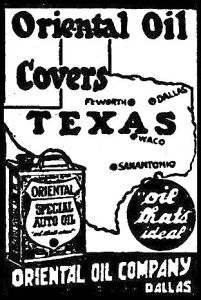
By 1927, the company boasted at least 18 filling stations, two refineries, and branches in Fort Worth and San Antonio. In 1927 they had moved into new offices in the “Oriental Building” at the nexus of Live Oak, St. Paul, and Pacific. A newspaper report described the building as being “finished in Oriental colors with Oriental decorations and is marked at night by very attractive lighting” (DMN, May 1, 1927).
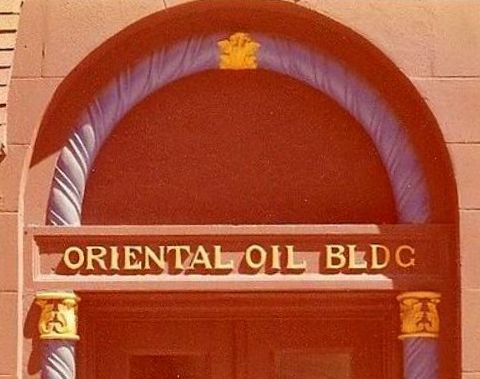
oriental-oil_bldg_1977_flickr

The Oriental Oil Company declared bankruptcy in 1934, selling off their property, refineries, and their name. No more Oroco gas. A lot of companies went bust during the Great Depression, but I’m not sure what precipitated Oriental Oil’s bankruptcy. Actually, I’m surprised by how little information about the Oriental Oil Company I’ve been able to find. Afterall, it and its “Hurry Back” gasoline played a major role in getting the residents of Dallas off their horses and behind the wheel, a major cultural and economic shift that changed the city forever. And it all started at that weird little curbside gas pump on Commerce Street.

***

Sources & Notes

The first two images are details of a photograph by Jno. J. Johnson (“New Skyline from YMCA”), 1912/1913, from the DeGolyer Library, Central University Libraries, Southern Methodist University, viewable here.

Snippet of text from A Field Guide to Gas Stations of Texas by Dwayne Jones (Texas Department of Transportation, 2003).

Illustration of the two 1913 Tokheim portable gas pumps from An Illustrated Guide to Gas Pumps, Identification and Price Guide, 2nd Edition by John H. Sim (Iola, WI: Krause Publications, 2008).

Drawing of the Oriental Oil Company Factory from Greater Dallas Illustrated (Dallas: American Illustrating Co., 1908 — reprinted by Friends of the Dallas Public Library in 1992).

All ads and articles, unless otherwise noted, from The Dallas Morning News.

Color photo of the pink, purple, and gold Oriental Oil Bldg. is a detail from a photo taken around 1977, on Flickr, here.

For an interesting (and mostly accurate) mini-history of the Oriental Oil Company, then in its 20th year of operation, see the Dallas Morning News article “First Dallas Filling Station on Commerce Had One-Gallon Pump” (June 22, 1924).

Some nifty info on early gas stations (yes, really) here.

More info with some really great illustrations and photos here.

Another surprisingly fun and informative article is here.

*

Copyright © 2014 Paula Bosse. All Rights Reserved.

Nardis of Dallas: The Fashion Connection Between “The Dick Van Dyke Show” and the Kennedy Assassination

by Paula Bosse

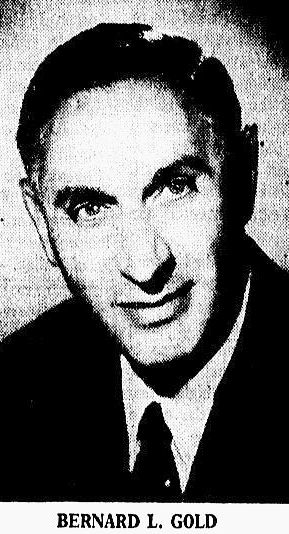
I started watching reruns of The Dick Van Dyke Show on Channel 11 when I was a kid. I still love the show, and I’ve seen every episode countless times. Which is kind of an odd jumping-off point for a post on a Dallas clothing manufacturer, but there you are. The company was Nardis of Dallas, a successful manufacturer of women’s apparel, owned by the Russian-born Bernard “Ben” Gold who arrived here in 1938 from New York City where he had operated a taxi company for many years.

Gold moved to Dallas at the request of his brother who, along with a man named Joe Sidran (“Sidran” spelled backwards is “Nardis”) was an owner in a near-bankrupt dress company. Ben Gold became a part-owner (and later the sole owner) and quickly turned the business around. When he brought in the International Ladies’ Garment Workers’ Union, other Dallas garment manufacturers were shocked (Time magazine used the word “horrified”). He also shook things up by employing African-American workers, the first such company in town to do so. The company eventually grew to become the largest clothing manufacturer in Dallas, with clients around the country and around the world. Nardis was one of the first Dallas clothing companies to have an apparel collection made in a foreign country: his upscale “House of Gold” boutique line specialized in silk, beaded, and sequined dresses and gowns, hand-made in Hong Kong.

Nardis of Dallas was originally located at 409 Browder, with factories at 211 North Austin, the 400 block of S. Poydras (at Wood Street), and, finally, at 1300 Corinth (at Gould St.), where they built their 75,000-square-foot “million-dollar plant” in 1964 (a quick check of Google Maps shows the building still there, but it appears to be vacant). Below are two photos of their S. Poydras location.

nardis_squire-haskins_UTA_wood-and-poydras

Above, Wood Street at the left (Andrew’s Cafe is listed at 1008 Wood St. in the 1960 Dallas directory); below, Nardis garment workers.

AR447-R812

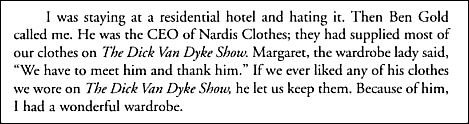
So how does this all connect to The Dick Van Dyke Show? If you’re a fan of the show and a faithful reader of closing credits like I am, you’ve probably seen the “Fashions by Nardis of Dallas” credit at the end of some episodes, right under the Botany 500 credit. And, like me, you might have wondered, “How did THAT happen?” How does an apparel-maker from Dallas network itself into a primo gig supplying fashions to a top Hollywood television show? I have no idea how the initial contact was made, but I DO know that Dick Van Dyke Show star Rose Marie and Nardis owner Ben Gold became very good friends while she was appearing in a production of Bye, Bye Birdie at the Dallas Summer Musicals in 1965. She mentions Gold several times in her autobiography.

Excerpt from “Hold the Roses” by Rose Marie

She spent much of her off-stage time in Dallas with Gold and his wife, and, in fact, when Gold was fatally injured in a traffic accident that summer, Rose Marie (then recently widowed herself) stayed with his wife Tina for several days at Tina’s request.

So, no big Dick Van Dyke Show story, but, as is no doubt known to the hyper-vigilant members of the JFK-assassination community, Nardis of Dallas DOES have an interesting connection to that. In 1941, Abraham Zapruder, who had worked in the garment industry in New York, moved to Dallas and began working for Ben Gold as a Nardis pattern-cutter. His name even appears in a couple of classified ads in The Dallas Morning News.

June 1945

Jan. 1948

While at Nardis — before he left to start his own clothing company — Zapruder worked with a woman named Jeanne LeGon (later Jeanne De Mohrenschildt) who, with her husband George (suspected by some of being a CIA operative), was friends with Lee Harvey Oswald in the early ’60s. Yep. That’s an interesting, head-spinning coincidence.

And I owe all this trivial Nardis-related knowledge to wondering for years about a single card seen in the closing credits of the unquestionably stylish and fashion-forward Dick Van Dyke Show.

nardis-label_ebay

***

Sources & Notes

Fashion photographs from MyVintageVogue.com (1952, 1955, and 1956, respectively). Other Nardis fashion photos from My Vintage Vogue can be found here. (If you’re interested in vintage fashion, fashion photography, and vintage advertising, this is a great website.)

Photos of the Nardis plant at S. Poydras and Wood are by Squire Haskins, from the Squire Haskins Photography Inc. Collection, University of Texas at Arlington Libraries, Special Collections — more info on the exterior shot is here; more on the interior shot here.

Passage about Gold from Rose Marie’s autobiography, Hold the Roses (Lexington: University Press of Kentucky, 2002), p. 192.

Dick Van Dyke Show closing credits card from a 1965 episode.

Nardis of Dallas logo from a clothing tag, found on eBay.

Additional background information on Gold from Time magazine, June 12, 1950.

See another Flashback Dallas post on Nardis — “Nardis Sign-Painters: ‘Everything in Sportswear’ — 1948” — here.

nardis_texas-jewish-post_122354
1954 ad, detail

*

Copyright © 2014 Paula Bosse. All Rights Reserved

O, Fritatos, We Hardly Knew Ye — 1936

fritos_potato-chips_kaleta“Another Load of Pampered Potatoes”

by Paula Bosse

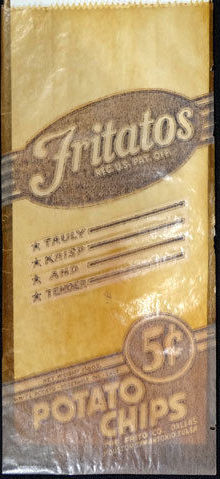
Hey! Did you know that the Frito Company also made potato chips for a while? They were called “Fritatos” and they were introduced in 1935. Here’s one of their snazzy-looking trucks making a much-appreciated snack delivery to Fair Park during the Centennial Exposition in 1936.

***

Sources & Notes

Photo of the “pampered potatoes” truck from Kaleta Doolin’s wonderful book about the family business, Fritos Pie: Stories, Recipes, and More (College Station: Texas A & M University Press, 2011).

*

Copyright © 2014 Paula Bosse. All Rights Reserved.