Flashback : Dallas

A Miscellany: History, Ads, Pop Culture

Category: Military

A Somber Armistice Day Observance — 1922

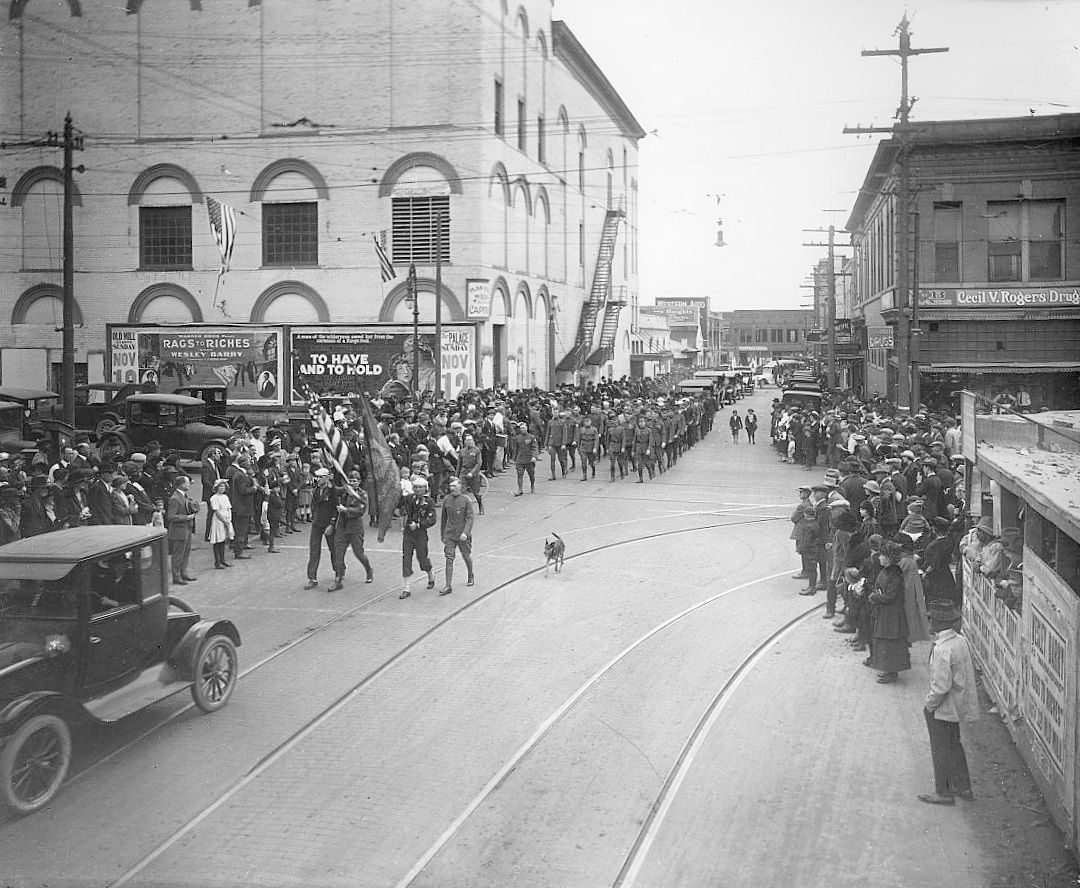
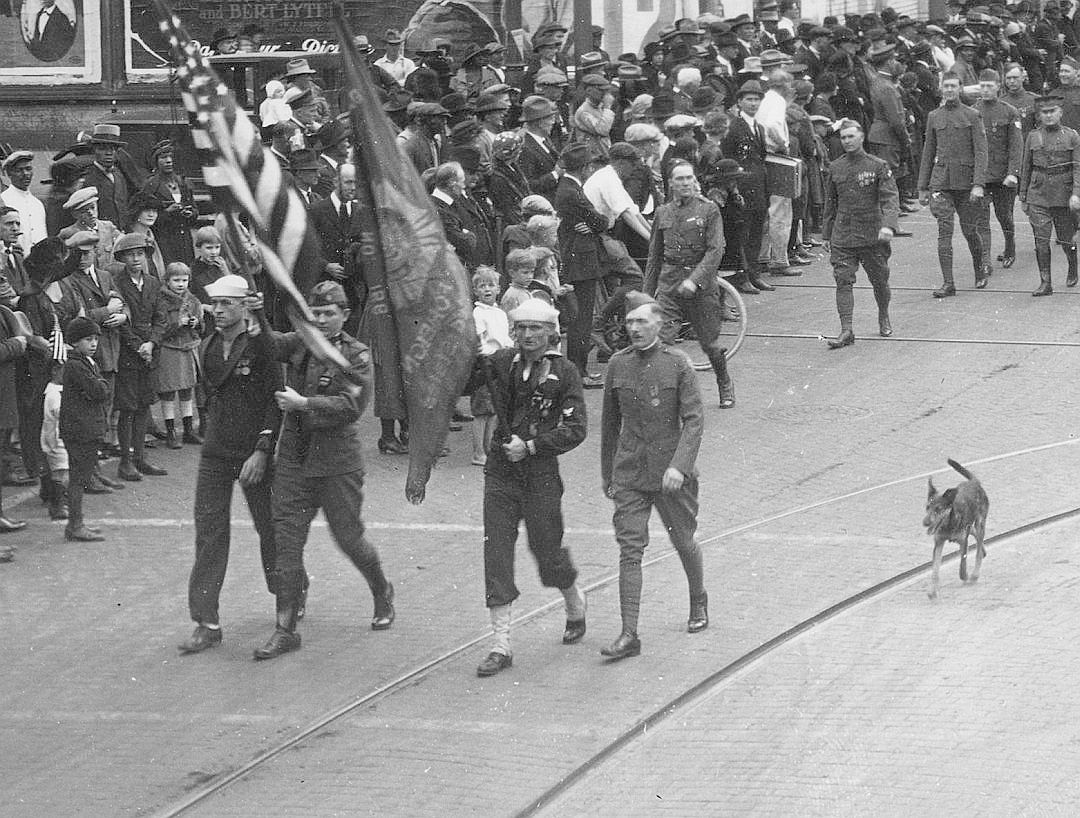
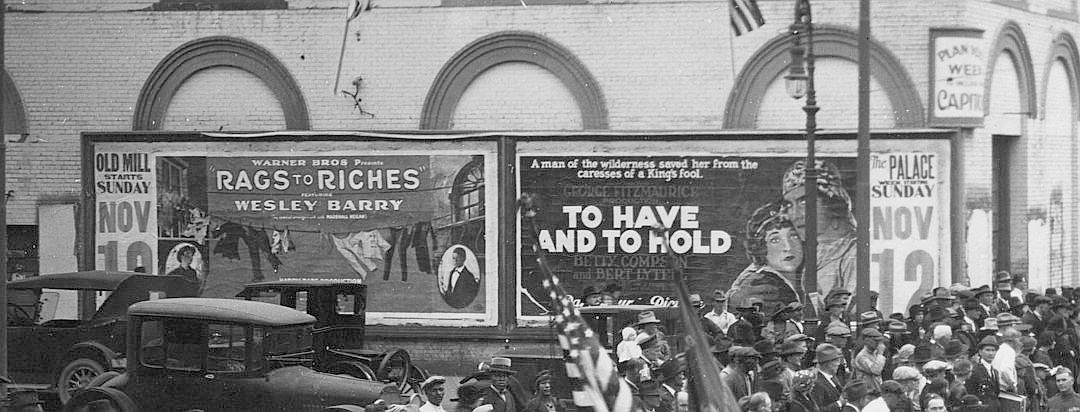
Veterans march in Dallas (Dallas Public Library)

by Paula Bosse

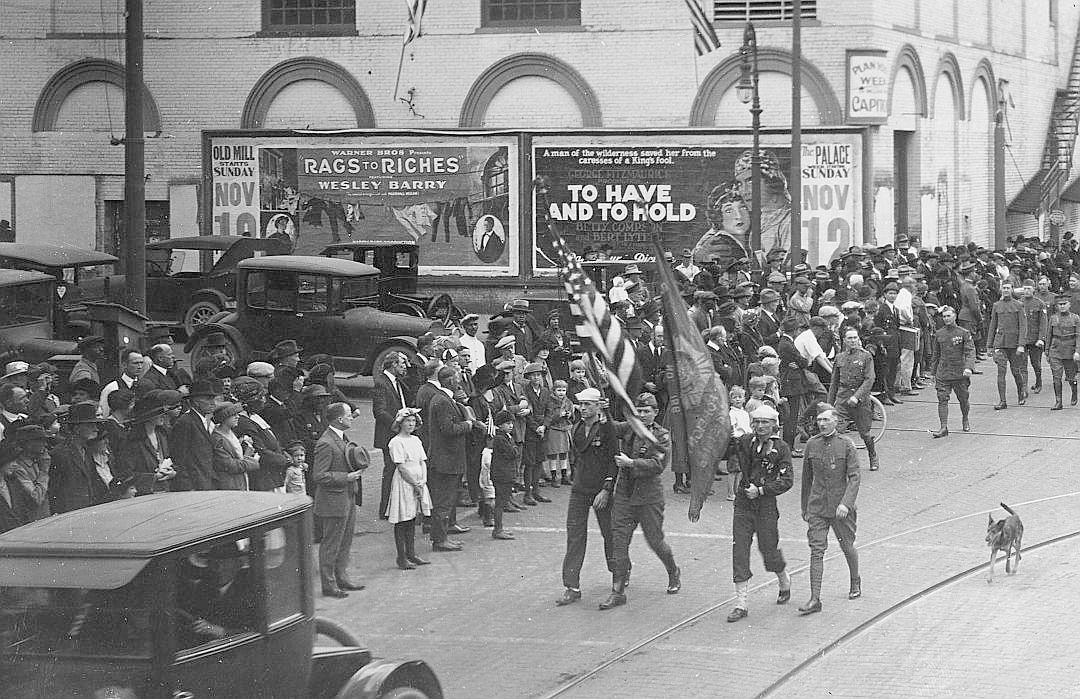
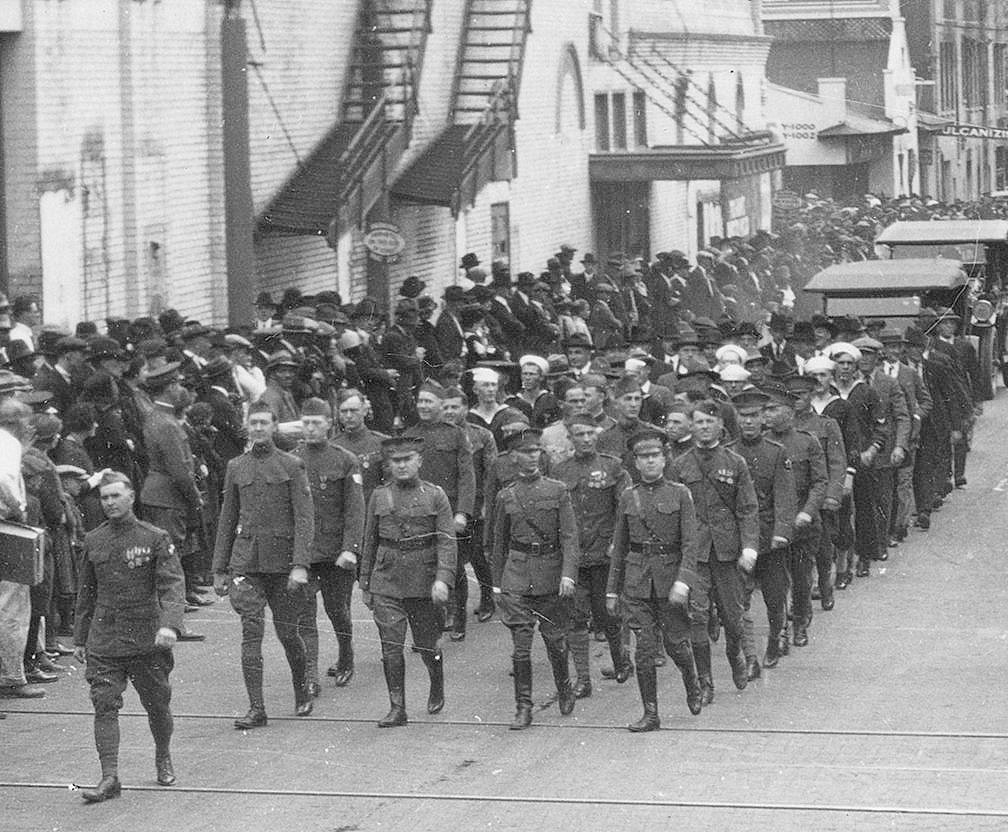
On November 11, 1922, Dallas observed the 4th anniversary of the end of World War I. The photo above, taken by Dallas photographer Frank Rogers, shows veterans of the devastating war marching north on Masten (N. St. Paul) from Main Street — they are headed to First Baptist Church for a special remembrance service.

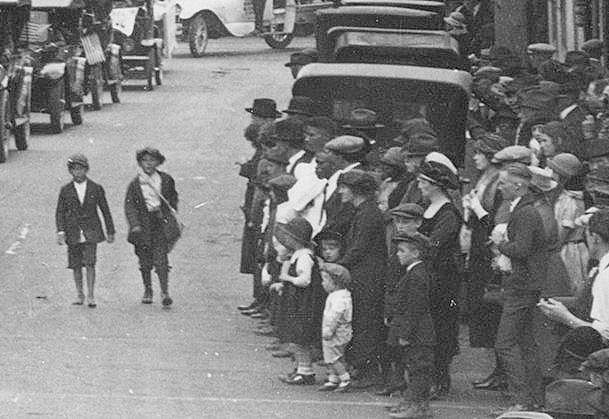
The crowd is somber, with the war still fresh in their memories. From The Dallas Morning News:

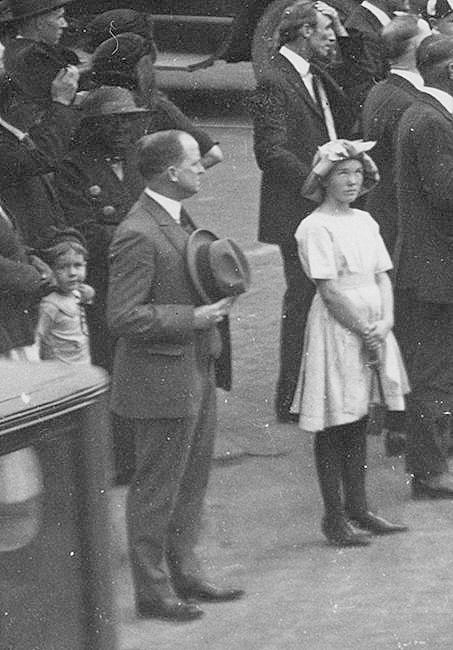
Soberly and without show of emotion Dallas celebrated Saturday, the fourth anniversary of the stilling of the guns of the World War. Their faces mirroring no more than idle curiosity, tens of thousands of men, women and children flowed lazily along the Main Street waiting for the parade of men who had been part of the glorious adventure, but there was no evidence of that high-racing blood that filled the hearts of Americans on Nov. 11, 1918. (Dallas Morning News, Nov. 12, 1922)

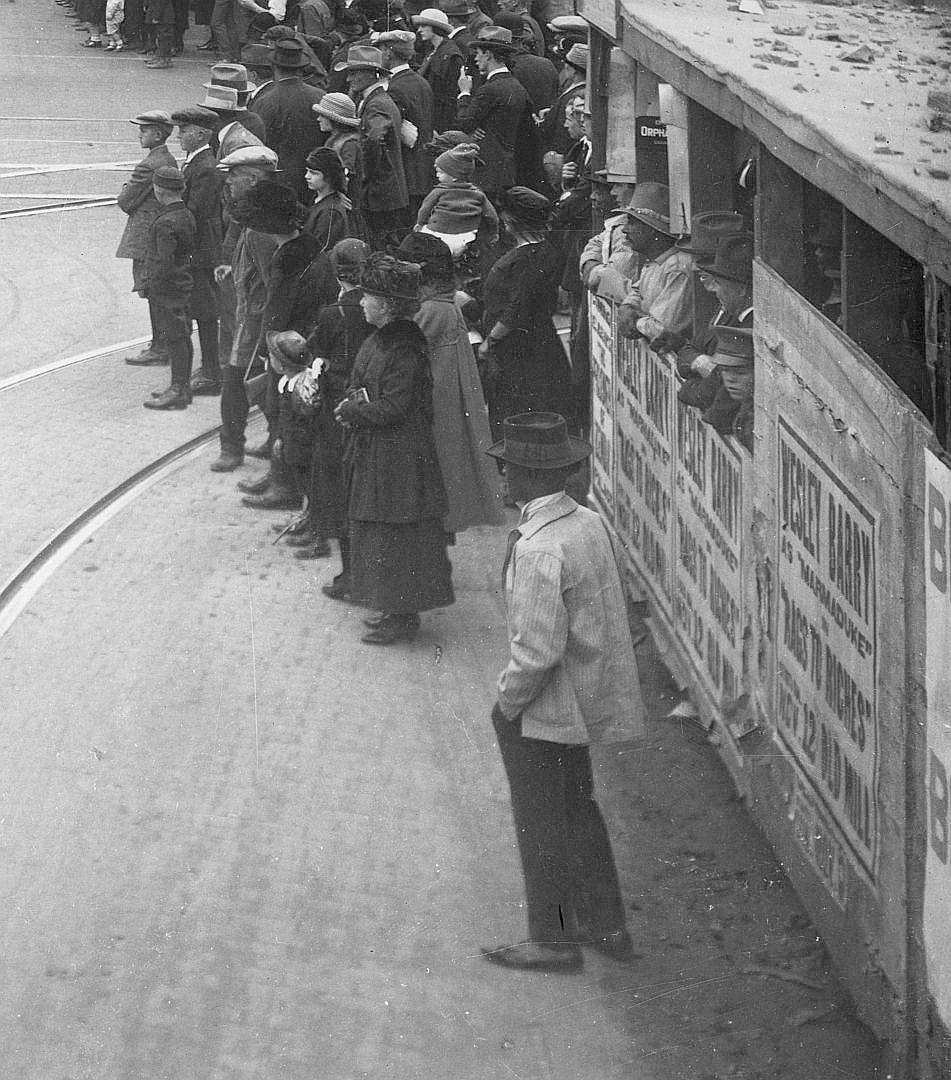
More details of the scene can be seen when zooming in on the photo and on the faces of the participants and the spectators (images are larger when clicked).

by John Knott, DMN, Nov. 11, 1922

***

Notes and Sources

Photo of the Nov. 11, 1922 Armistice Day parade is from the Frank Rogers Collection, Dallas History and Archives, Dallas Public Library (photo accession number is PA78-2-1003).

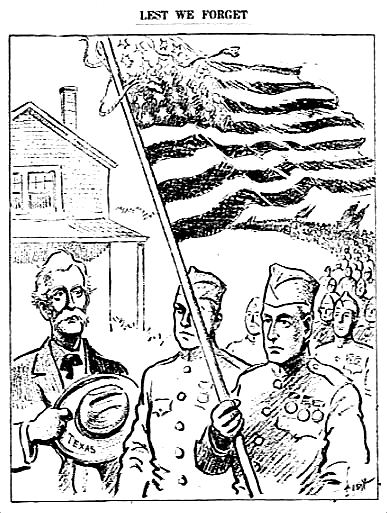
The address of the Cecil V. Rogers drug store was 1814 Elm Street. The movie posters for the silent films “Rags To Riches” (playing at the Old Mill) and “To Have and To Hold” (playing at the Palace) are posted on the back of the old Majestic Theatre (its second “temporary” location, which, I believe, had once been the old opera house — see the 1921 Sanborn map here). The cartoon is by Dallas Morning News cartoonist John Knott.

See other Flashback Dallas posts on Dallas and World War I here.

*

Copyright © 2024 Paula Bosse. All Rights Reserved.

Rudolph Gunner: Dallas Bookseller and Emperor Maximilian’s “Best Friend”

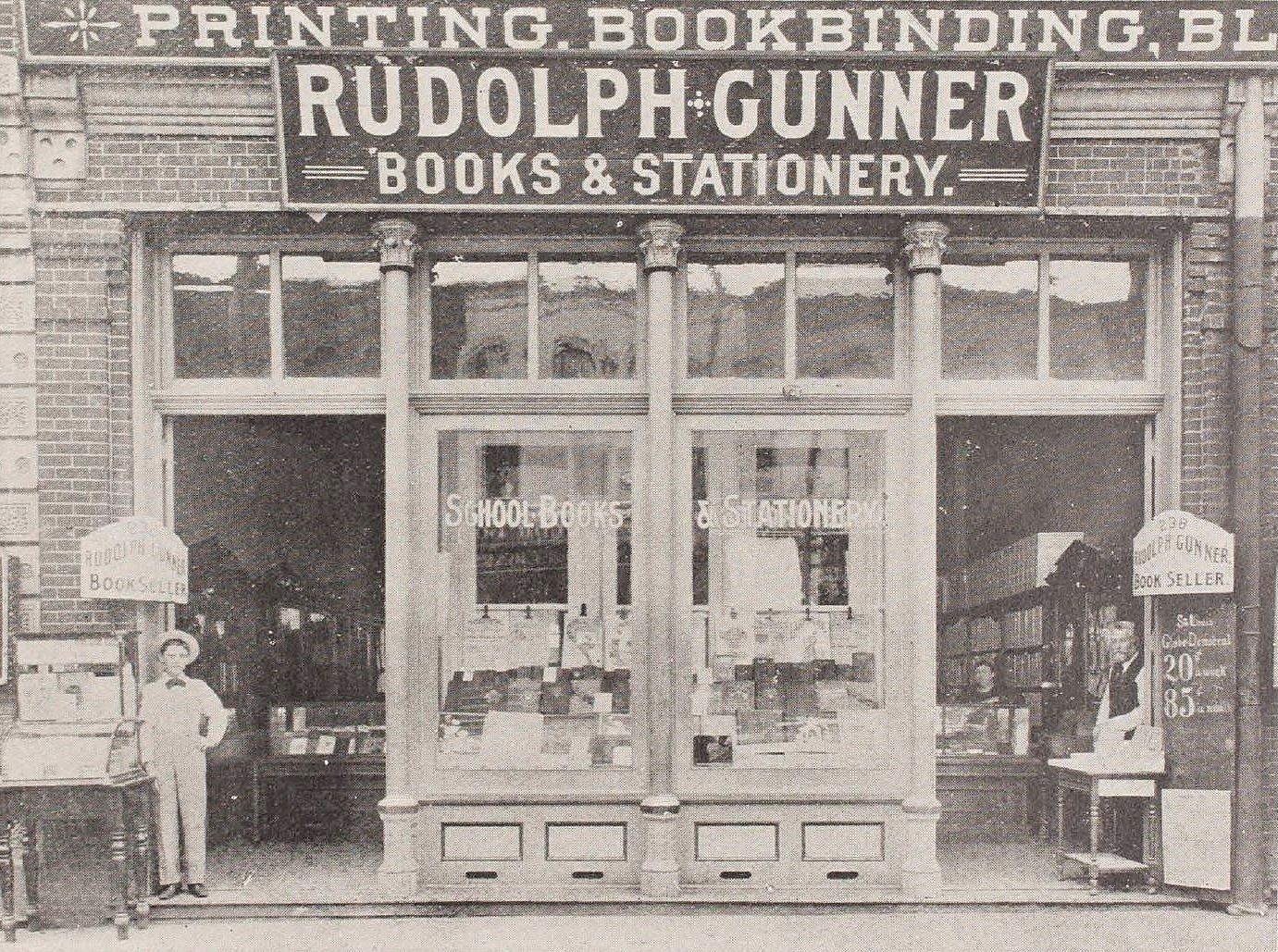
books_rudolph-gunner_dallas-through-a-camera_1894_degolyer-lib_SMU238 Main, circa 1894

by Paula Bosse

For the past several years, I’ve been posting bookstore-related posts on the birthday of my late father, Dick Bosse, an antiquarian bookseller who began his career straight out of SMU at The Aldredge Book Store, a literary landmark to many, which he eventually ended up owning. This year’s offering goes back to 19th-century Dallas.

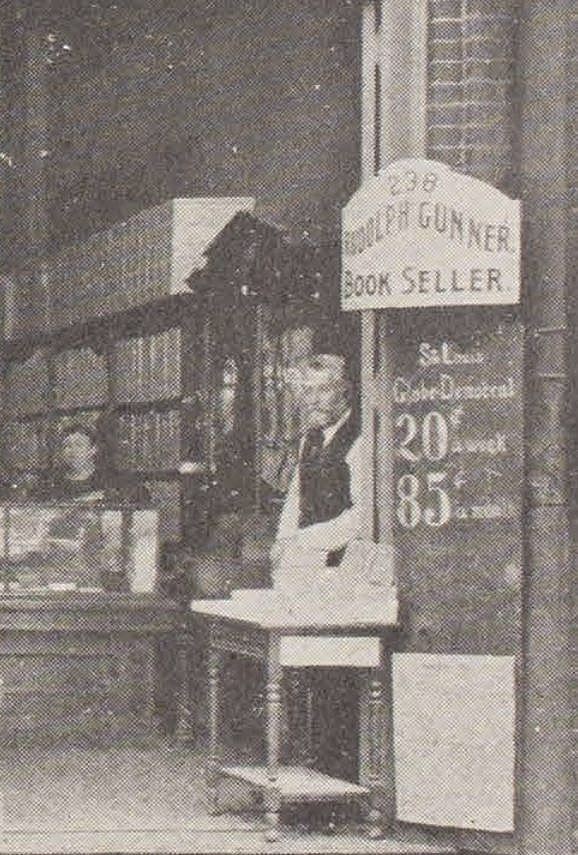
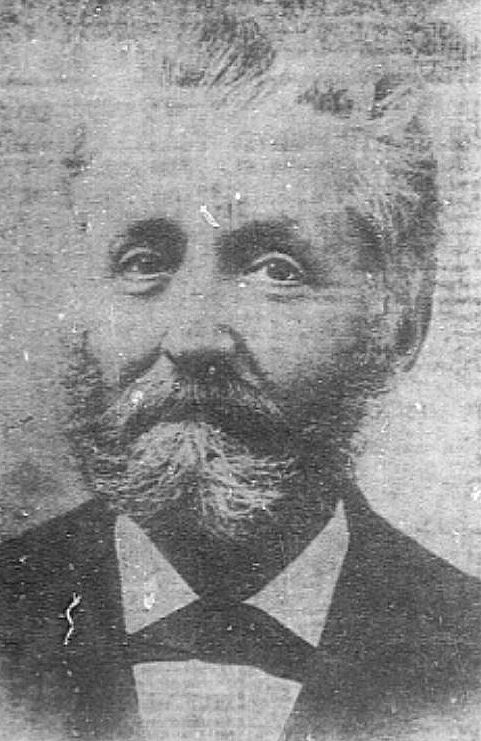
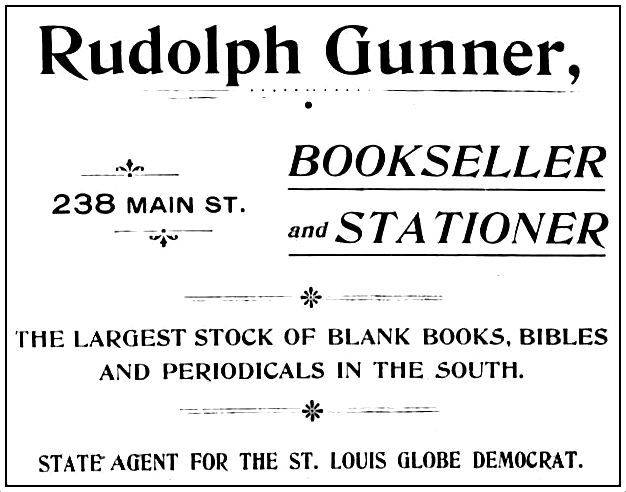
Above is a photo of the bookstore owned by Austrian immigrant Rudolph Gunner, located at 238 Main (later 1006 Main), between Poydras and Martin. Gunner (1833-1911) had, perhaps, one of the most impressive and colorful historical pedigrees of any Dallas resident. He served in the Austrian navy all over the world, but his most important service was as confidante and aide-de-camp to Emperor Maximilian and Empress Carlota of Mexico in the 1860s. That story is too big to tell here (Wikipedia is here to help), but it’s interesting that a man who was often referred to as “Maximilian’s best friend” eventually wound up in Dallas in 1885 and opened a bookstore, first on Elm Street, later on Main.

My father had a fascination with Mexico and used to talk about Maximilian quite a bit. I wonder if he knew Maximilian’s right-hand man lived out his days in Dallas, having spent several years as a bookseller?

books_rudolph-gunner_dallas-through-a-camera_1894_degolyer-lib_SMU_det_gunner

gunner-rudolph_photo

rudolph-gunner_1896-directory_adDallas city directory, 1896

*

In a sidenote, Gunner mentioned in several interviews that he had a LOT of historical documents and souvenirs from his military career serving in the Crimea, Egypt, Africa, and, especially, Mexico. I winced when I read this passage from an article by A. C. Greene in The Dallas Morning News (“Bookstore Owner Once Was Colorful General — He Headed Maximilian’s Mexico Palace Guard.” DMN, Apr. 18, 1993):

[A]t the time of his death in 1911 [his] home was at 1506 Fitzhugh. [His wife] was still living there, with a considerable collection of historic memorabilia, books, medals and military items, when the home burned, destroying everything but Gen. Gunner’s sword with the emperor’s crest.

Wow. All of that, gone. (And to answer my question above, I’m pretty sure my father would have known this, if only because he read A. C. Greene’s columns and probably even discussed this with him on a visit to the store.)

***

Sources & Notes

Top photo by Clifton Church, from his book Dallas, Texas, through a camera: a collection of half-tone engravings from original photographs (1894) — from the DeGolyer Library, SMU, here.

Read a first-hand account of Gunner’s time in Mexico in a Dallas Morning News article from Jan. 14, 1886 here; his DMN obituary (Aug. 25, 1911) is here.

Read previous Flashback Dallas articles on Dallas bookstores here.

I would love you to join me over on Patreon, where I upload Dallas history posts daily for subscribing members (as little as $5 a month!). If you would like to support what I do, check out Flashback Dallas on Patreon.

books_rudolph-gunner_dallas-through-a-camera_1894_degolyer-lib_SMU

*

Copyright © 2024 Paula Bosse. All Rights Reserved.

Love Field Aviation Camp, World War I

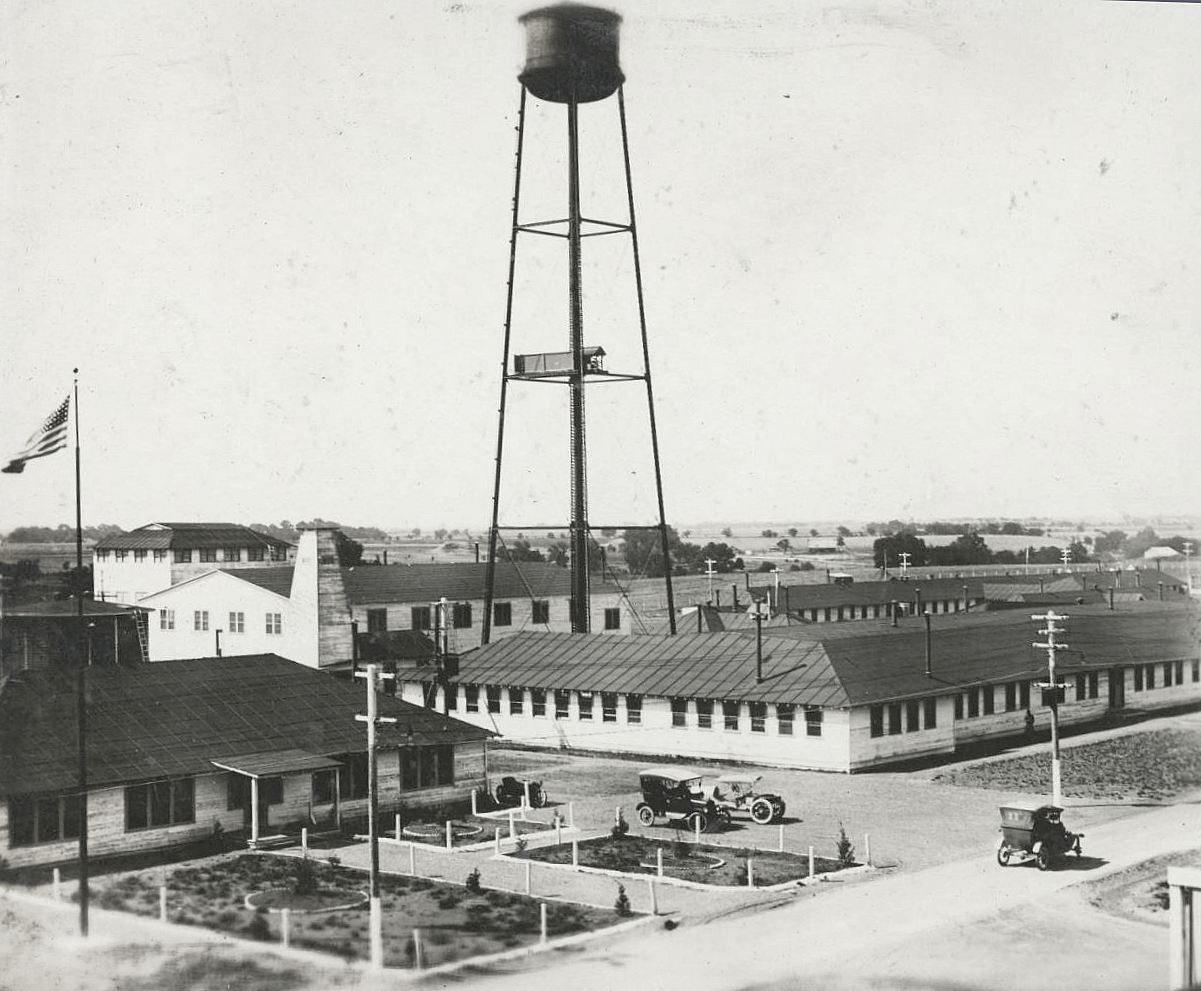
WWI_love-field_water-tower_ca-1918_degolyer-library_SMULove Field, with water tower, 1918

by Paula Bosse

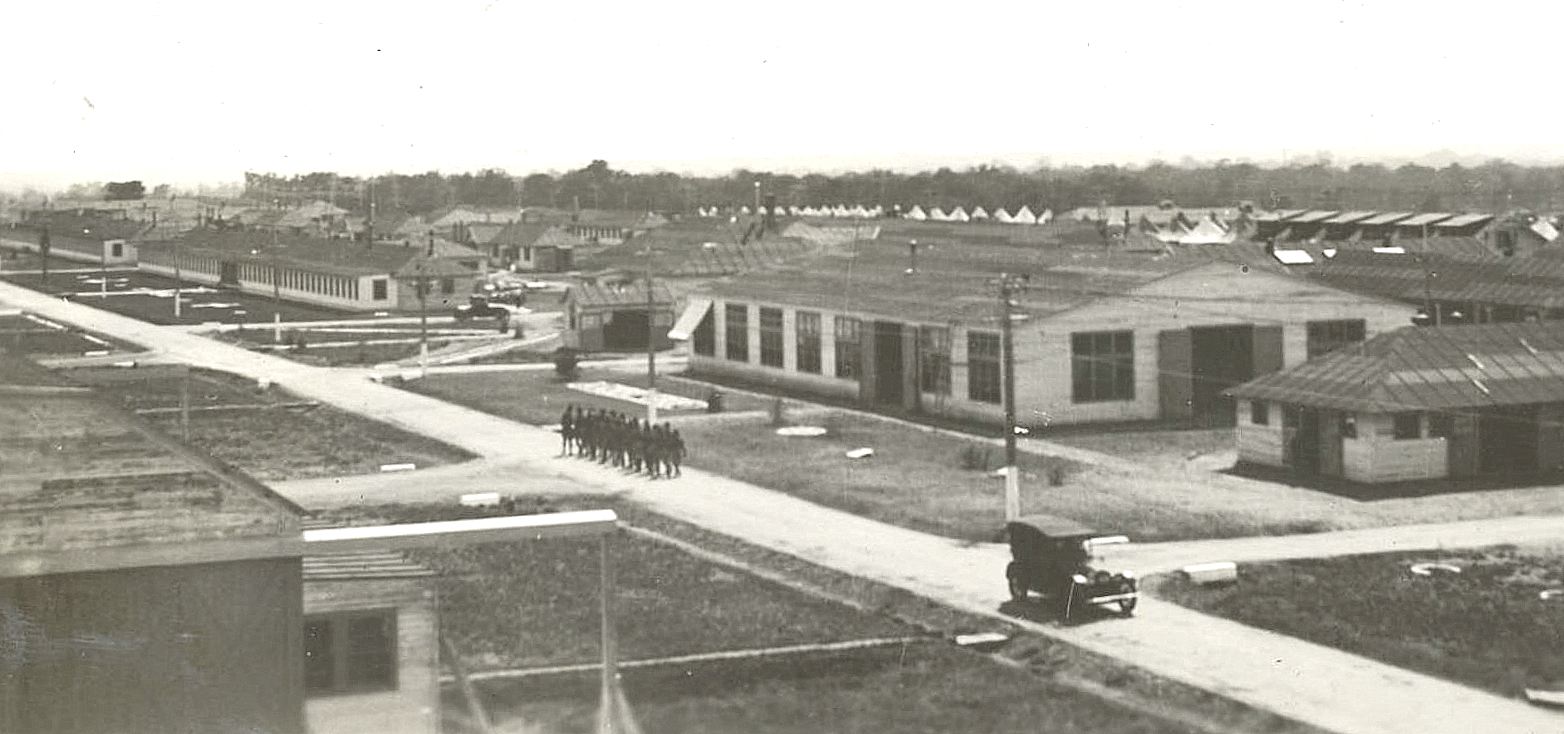
On Memorial Day, a few photos of Love Field, which began as an aviation training camp during World War One. Read more on its history in an article by the City of Dallas Office of Historic Preservation, here.

WWI_love-field_marching-drills_ca-1918_degolyer-library_SMUvia DeGolyer Library, SMU

WWI_love-field_pilots_nov-1918_degolyer-library_SMUvia DeGolyer Library, SMU

WWI_love-field-aviation-camp_1918_LOCvia Library of Congress

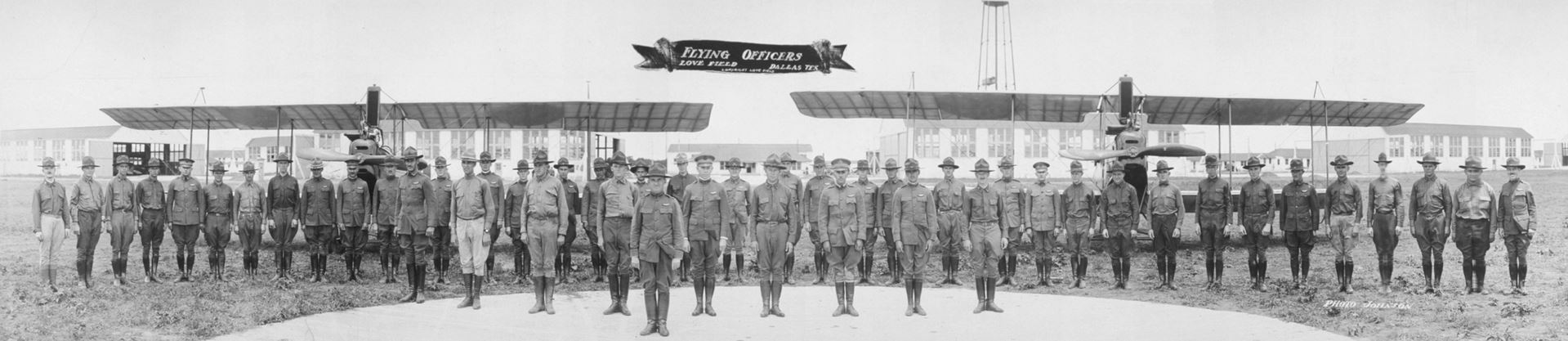
WWI_love-field_flying-officers_1918_LOCvia Library of Congress

***

Sources & Notes

Top photo is from the collection “Love Field Air Corps Training Depot and Dallas Aviation School, Texas” at the DeGolyer Library, SMU; more information on this photo can be found here. The second and third photos are from this same collection and are linked directly below the images. (The entire collection can be viewed here.)

More on WWI-era Love Field can be found in the 2014 Flashback Dallas (Valentine’s Day) post “From Deep in the Heart of Texas, I Give You Love Field — 1919.”

If you would like to support my work, please consider following me on Patreon for as little as $5 a month — I post exclusive content there daily.

WWI_love-field_water-tower_ca-1918_degolyer-library_SMU_sm

*

Copyright © 2023 Paula Bosse. All Rights Reserved.

Businessmen’s Lunchtime Mobilization Drills — 1917

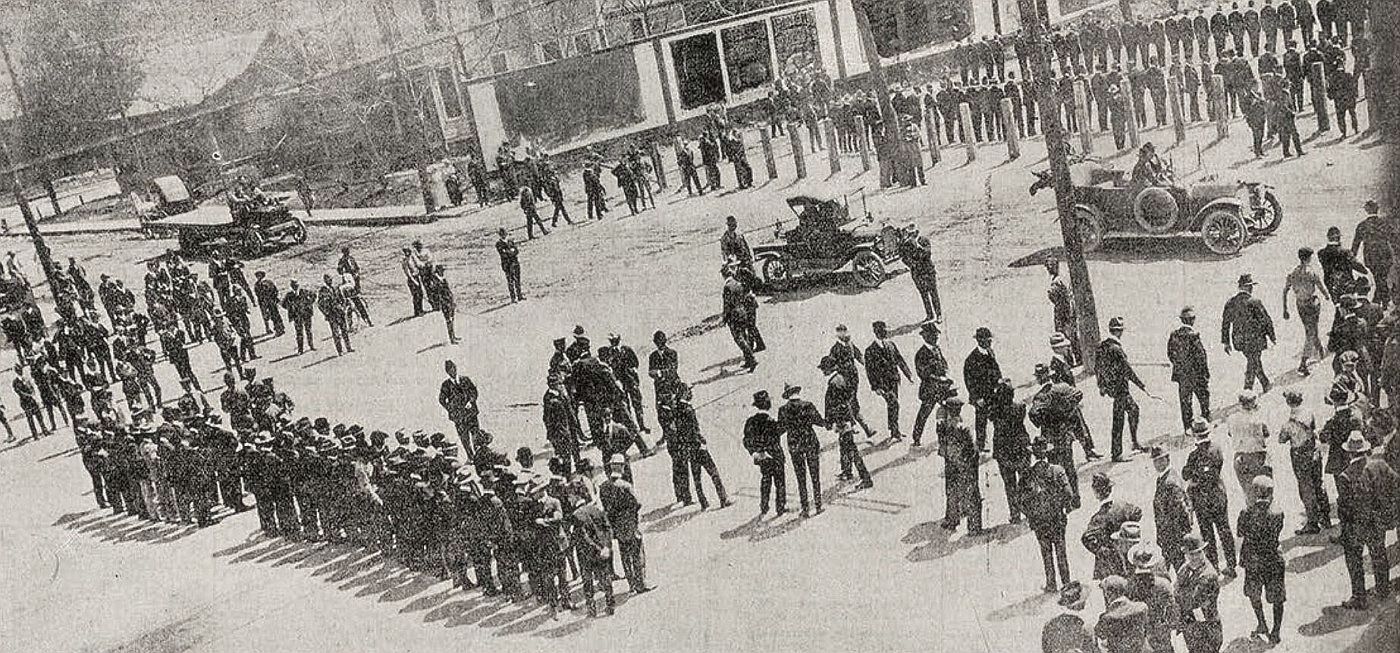
wwi_businessmen_noon-drills_dmn_040117_photoDrilling behind the depot, March 1917

by Paula Bosse

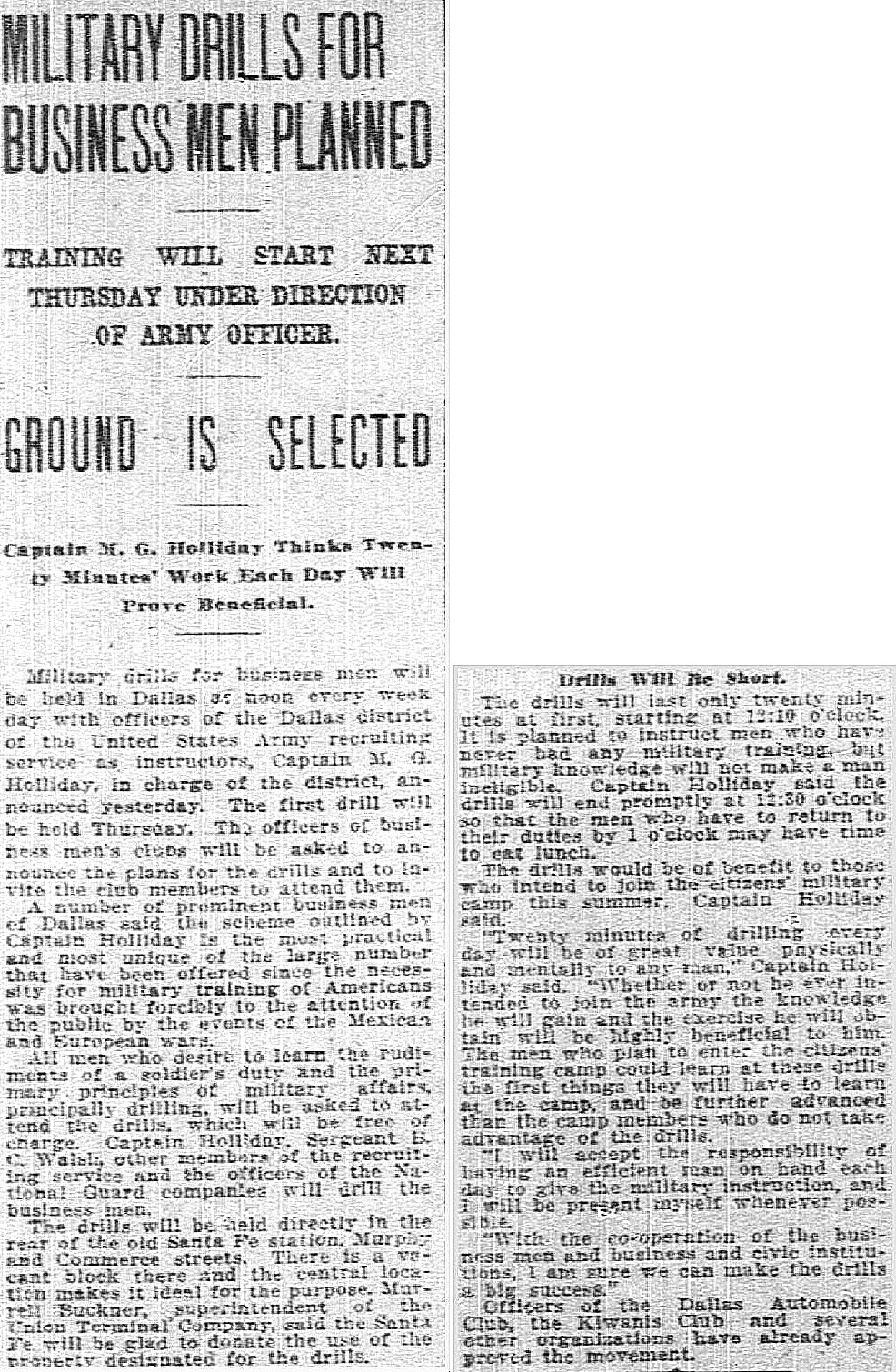
In March 1917, just days before the United States entered World War I, it was announced that there would be lunchtime military training drills in downtown Dallas for any man who wished to participate. This was part of the “Preparedness Movement” which was sweeping the country, in which citizens readied themselves for war. The idea for these drills came from Oswin K. King, a Dallas sportswriter, and they were organized and conducted by Capt. M. G. Holliday, with help from other officers of the Texas National Guard. The drills were held “in the rear of the old Santa Fe station, Murphy and Commerce streets. There is a vacant block there and the central location makes it ideal for the purpose” (“Military Drills for Business Men Planned,” Dallas Morning News, March 25, 1917). (See this location on a 1905 Sanborn map, here.)

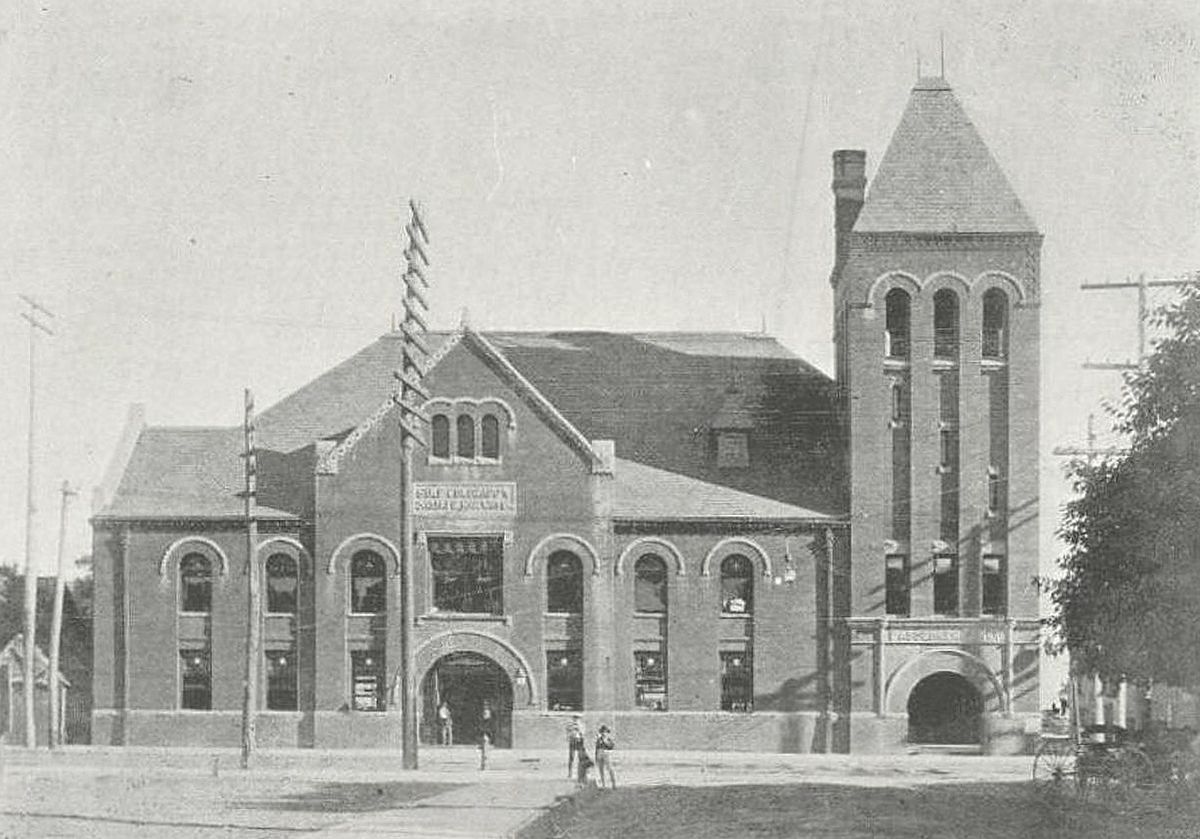
Seems like a good time to insert a photo of the Gulf, Colorado, and Santa Fe depot (when it was still in operation), behind which all this drilling activity was taking place:

santa-fe-depot_ca-1899_fire-dept-souvenir-bk_portalca. 1899, via Portal to Texas History

Military-style drills involving local civilians hadn’t really been done like this before, and news of this swept the country’s newspapers. It was a BIG story. Dallas became the city everyone copied. Cities all over the United States began their own drilling exercises, and Capt. Holliday was kept busy traveling around Texas to advise towns on how to establish such civilian units for themselves. There was a lot of marching in formation going on in April 1917.

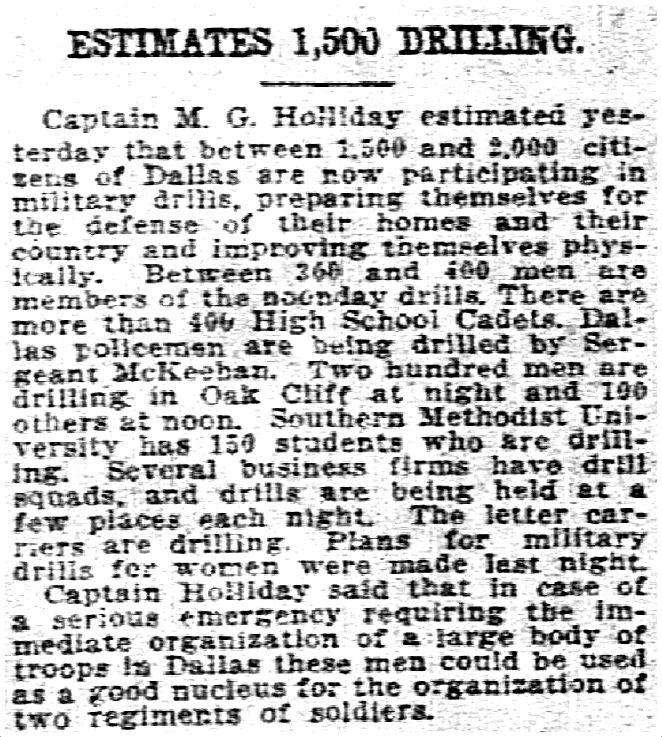
Two weeks in, drill-mania had taken over Dallas. It was estimated that 600 men were showing up daily for the downtown noon drills, and that many more — perhaps as many as 2,000 — had joined smaller groups and clubs which were drilling on their own all over town. There was a large contingent in Oak Cliff, lots of students in high schools and at SMU, policemen, letter carriers, businessmen, etc. There was even a suggestion that women should form their own groups. Any way you looked at it, the endeavor was a success (or at least fervently supported). Capt Holliday said that, should the need arise, a large body of troops could be immediately organized in Dallas — perhaps two regiments’ worth. 

This training lasted about a month, which seems like sufficient time for bank clerks and grocerymen and automobile mechanics and upholsterers to get the hang of doing whatever this was. By the spring of 1917, Dallas was prepared.

**

The April 1, 1917 Dallas Morning News article accompanying the photo above is transcribed here:

DALLAS BUSINESS MEN MOBILIZE FOR MILITARY TRAINING

First City in United States to Start New Drills in Rudiments of Soldier Knowledge

From Few Dozen the First Day to 600 or More Saturday, Shows Rapid Increase of Interest in the Noon Drills. Captain in U.S. Cavalry and Number of Non-Commissioned Officers Instructing Men and Rudiments of Knowledge of Soldier Life

Dallas enjoys the distinction of being the first city in the United States to inaugurate the new mobilization of business men for the purpose of learning the rudiments of military training. There were those who said it could not be done, but the movement has gotten under full swing and the attendance is increasing daily.

Oswin K. King, of the Evening Journal, originated the idea, and becoming enthused of the possibilities, Mr. King suggested the matter to Captain M. G. Holliday of the 12th United States Calvary. Captain Holliday at once took up the plan as suggested by Mr. King and agreed to supervise the work. 

For several days now, hundreds of Dallas business men have been in line on the spacious vacant property to the south of the Commerce Street station of the Santa Fe Railroad. The site is convenient to hundreds of business offices and not over five minutes’ walk from the skyscraper district.

That interest is increasing in the movement is evidenced by the number of business men who are enrolling. From a few dozen on Wednesday, last, to 400 on Thursday, and probably 200 more Friday and Saturday, shows that Dallas men are anxious to learn the rudiments of military training.

The idea is to teach the rudiments of close-order formation, including everything in what is known as the “Soldier’s School Without Arms.”

The instruction will continue indefinitely. Captain Holliday is assisted by several non-commissioned officers and civilian military experts.

*

WWI_noon-drills_dmn_032517DMN, Mar. 25, 1917 (click for larger image)

*

wwi_businessmen_noon-drills_dmn_041317DMN, Apr. 13, 1917

***

Sources & Notes

Top photo from The Dallas Morning News, April 1, 1917, sent to me by Julia Barton (thanks, JB!).

Photo of the Santa Fe depot is from a Dallas Fire Department publication from 1899, provided by the Dallas Firefighters’ Museum to the Portal to Texas History — more information is here.

More Flashback Dallas posts on the WWI era can be found here.

wwi_businessmen_noon-drills_dmn_040117_photo_sm

*

Copyright © 2023 Paula Bosse. All Rights Reserved.

Soldier Fishing from a Viaduct — 1948

soldier-fishing-viaduct_feb-28-1948_DPLHope this isn’t dinner…

by Paula Bosse

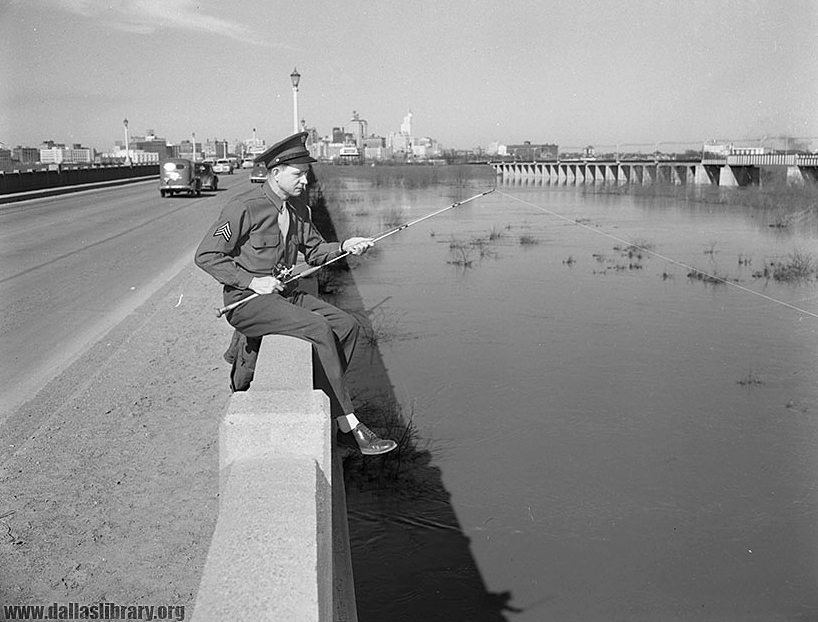
A soldier in uniform, sitting on the concrete railing of a viaduct, casting into the Trinity. 

When I posted this in a Dallas history group several years ago and asked which viaduct is shown, there was no consensus — Houston Street was mentioned most often, but just about all of them got several votes!

***

Sources & Notes

I can’t remember where I came across this photo (which is dated Feb. 28, 1948), but it is from the collection of the Dallas Public Library.

soldier-fishing-viaduct_feb-28-1948_DPL_sm

*

Copyright © 2021 Paula Bosse. All Rights Reserved.

World War I Cadets, Commerce Street — 1918

ww1_cadets_commerce-street_1918_natl-archives_fullStanding at attention in the 2100 block of Commerce

by Paula Bosse

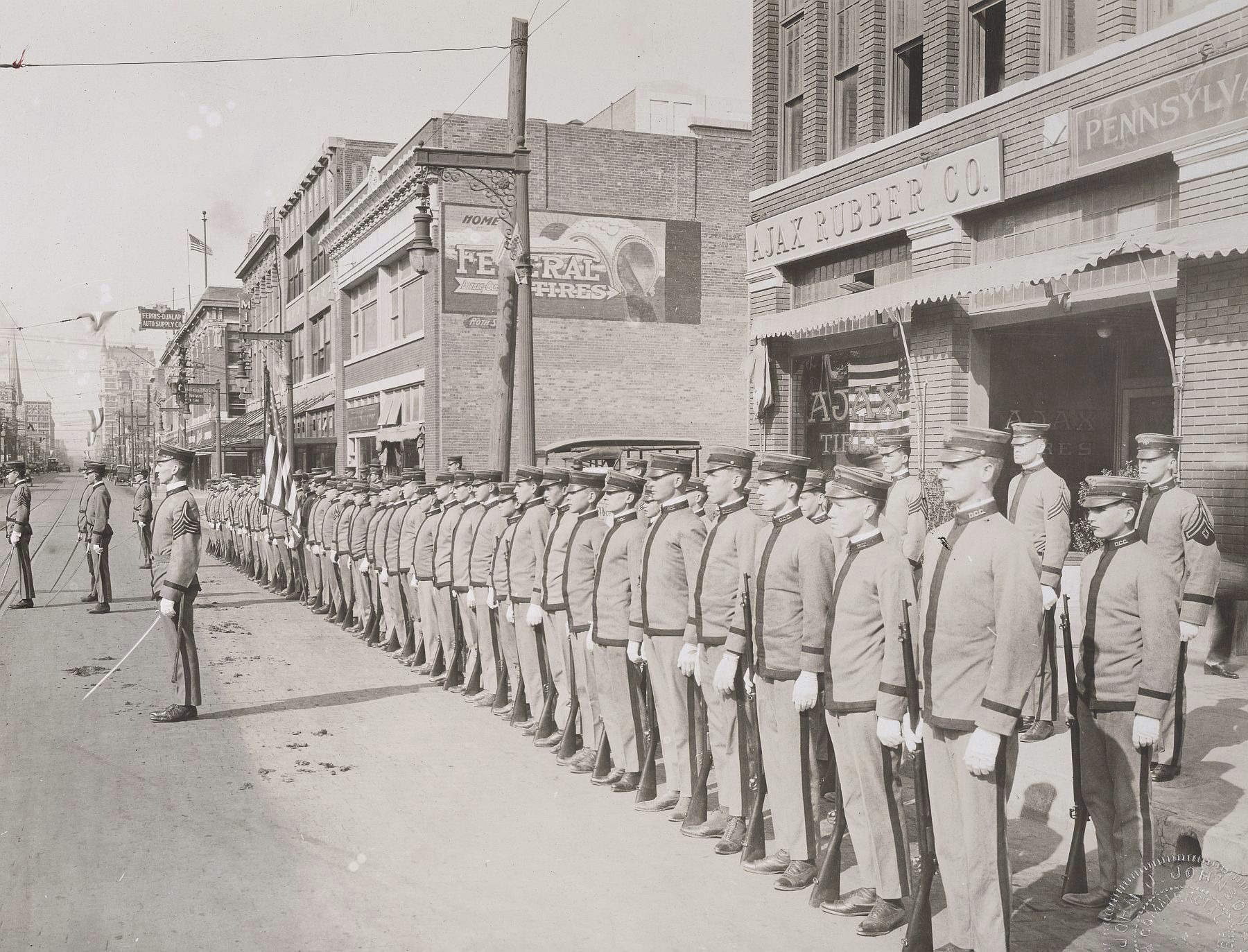
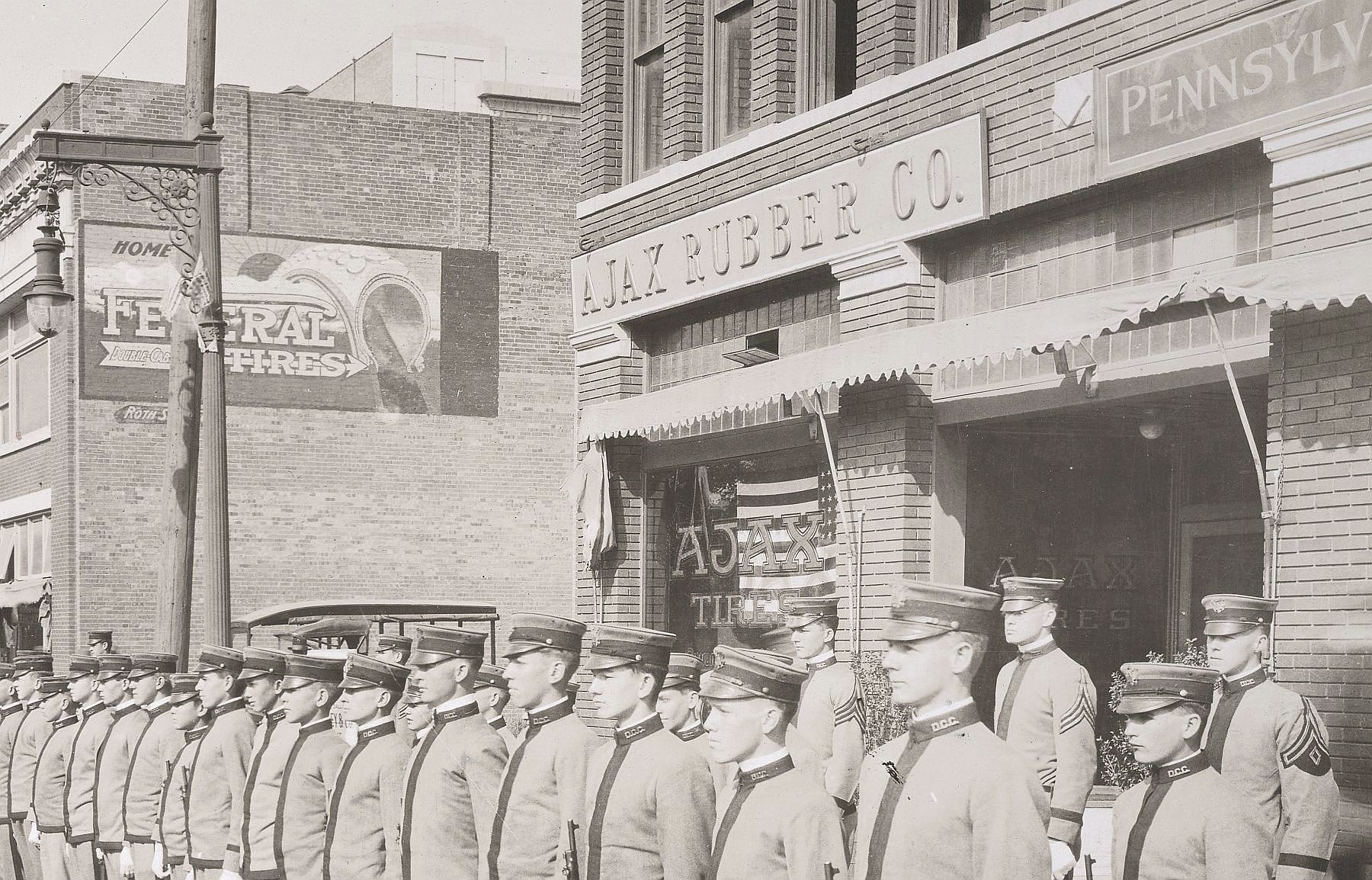
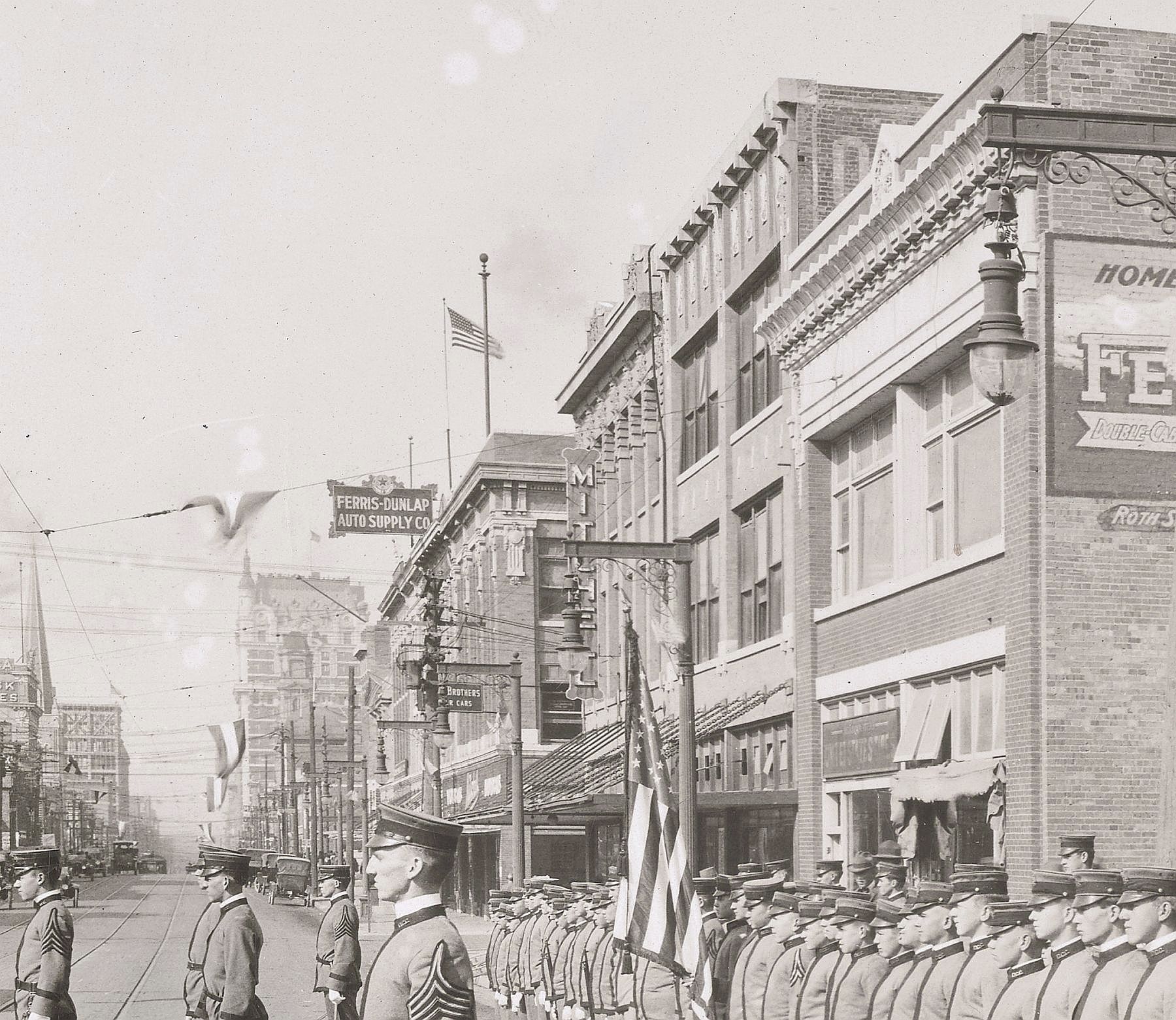
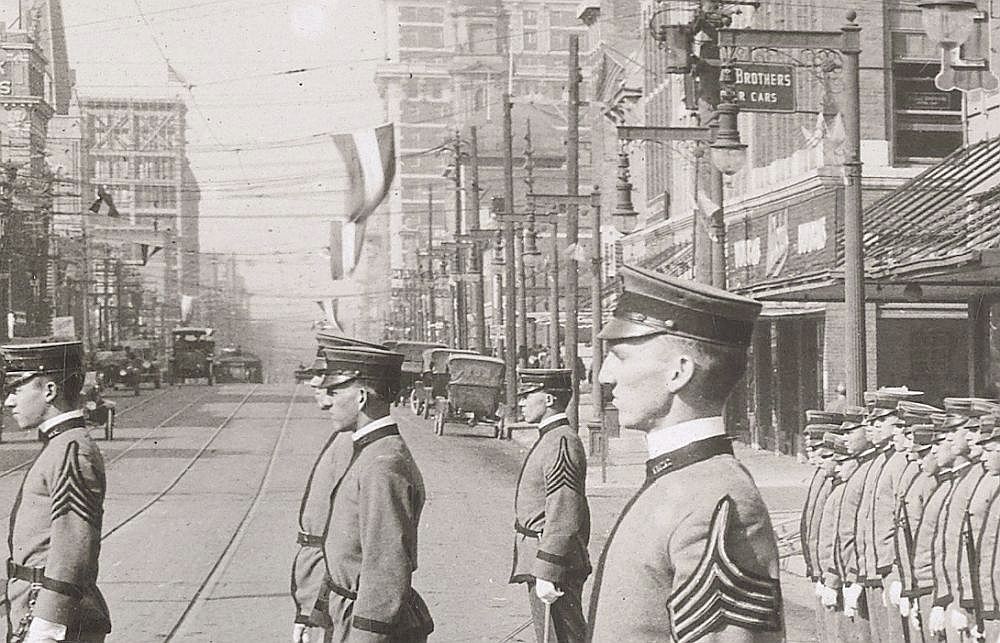
Great photo by John J. Johnson showing high school cadets standing in formation in the 2100 block of Commerce Street — the view is to the west (the Adolphus Hotel can be seen all the way at the end of the street, on the right). Here are a couple of zoomed-in details (click to see larger images).

ww1_cadets_commerce-street_1918_natl-archives_det-1

ww1_cadets_commerce-street_1918_natl-archives_det-2

ww1_cadets_commerce-street_1918_natl-archives_det-3

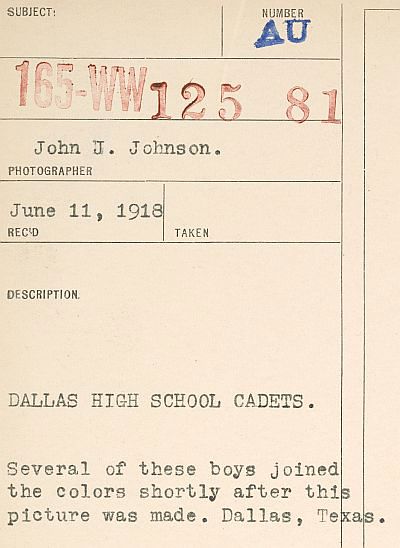
The official Records of the U.S. War Department description of this photo:

ww1_cadets_commerce-street_1918_natl-archives_description

The buildings in the foreground are, amazingly, still standing — over a hundred years later (a rarity for downtown Dallas buildings). See the same view today on Google here.

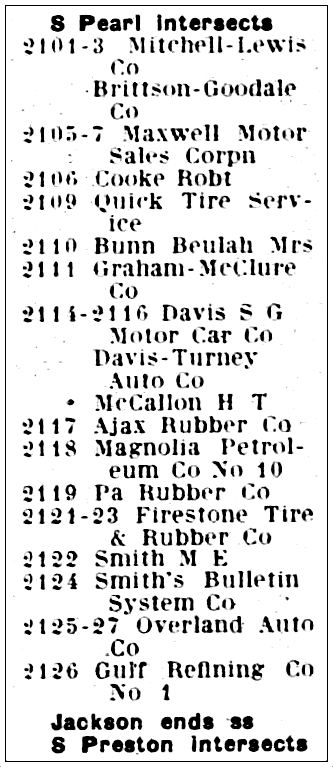
The Ajax Rubber Co. building the cadets are standing in front of is the “Waters” building (2117 Commerce), which has been very nicely restored by the East Quarter people:

ww1_cadets_commerce-street_google-street-view_2020Google Street View, Feb. 2020

Below, a clipping from the 1917 Dallas directory, showing the businesses on Commerce between Pearl and Preston (now Cesar Chavez):

ww1_cadets_commerce-street_1917-dallas-directory

Two years after this photo was taken — in 1920 — the Magnolia gas station (better known as the KLIF building) was built on the spot the cadets were looking at. See that building in the post “Magnolia Gas Station No. 110 — 1920.”

***

Sources & Notes

This photo, titled “Dallas High School Cadets,” was taken by Dallas photographer John J. Johnson (usually seen as Jno. J. Johnson) on June 11, 1918. It is from the American Unofficial Collection of World War I Photographs 1917-1918, Records of the War Department General and Special Staffs 1860-1952, National Archives — more info on this photo can be found on the National Archives site here.

Other Flashback Dallas posts on World War I can be found here.

ww1_cadets_commerce-street_1918_natl-archives_sm

*

Copyright © 2020 Paula Bosse. All Rights Reserved.

Awaiting the “Victory Fair” of 1946…

sfot_victory-fair_ebay_1946

by Paula Bosse

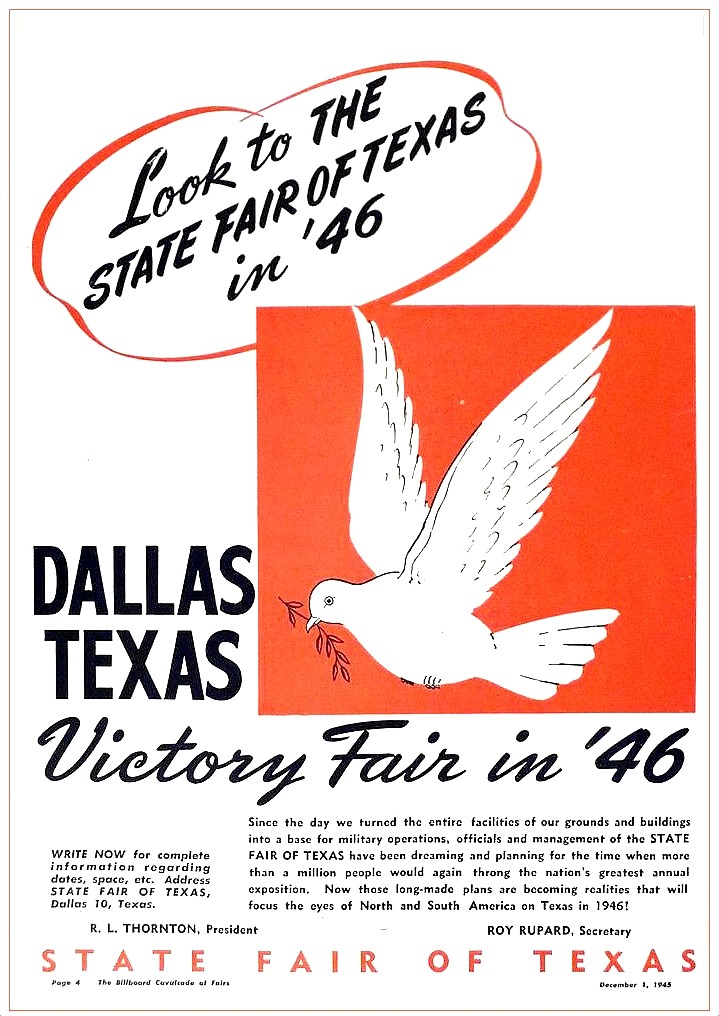
Many of us are missing the State Fair of Texas, canceled this year due to the COVID-19 pandemic. The last time the fair was canceled was during World War II. Here is an ad from 1945, assuring everyone that the State Fair would be back in 1946.

*

Dallas Texas Victory Fair in ’46

Since the day we turned the entire facilities of our grounds and buildings into a base for military operations, officials and management of the STATE FAIR OF TEXAS have been dreaming and planning for the time when more than a million people would again throng the nation’s greatest annual exposition. Now those long-made plans are becoming realities that will focus the eyes of North and South America on Texas in 1946!

***

Sources & Notes

Ad found on eBay (originally published in the “Billboard Cavalcade of Fairs,” Dec. 1, 1945).

More Flashback Dallas posts on the State Fair of Texas can be found here.

*

Copyright © 2020 Paula Bosse. All Rights Reserved.

Influenza Pandemic Arrives in Dallas — 1918

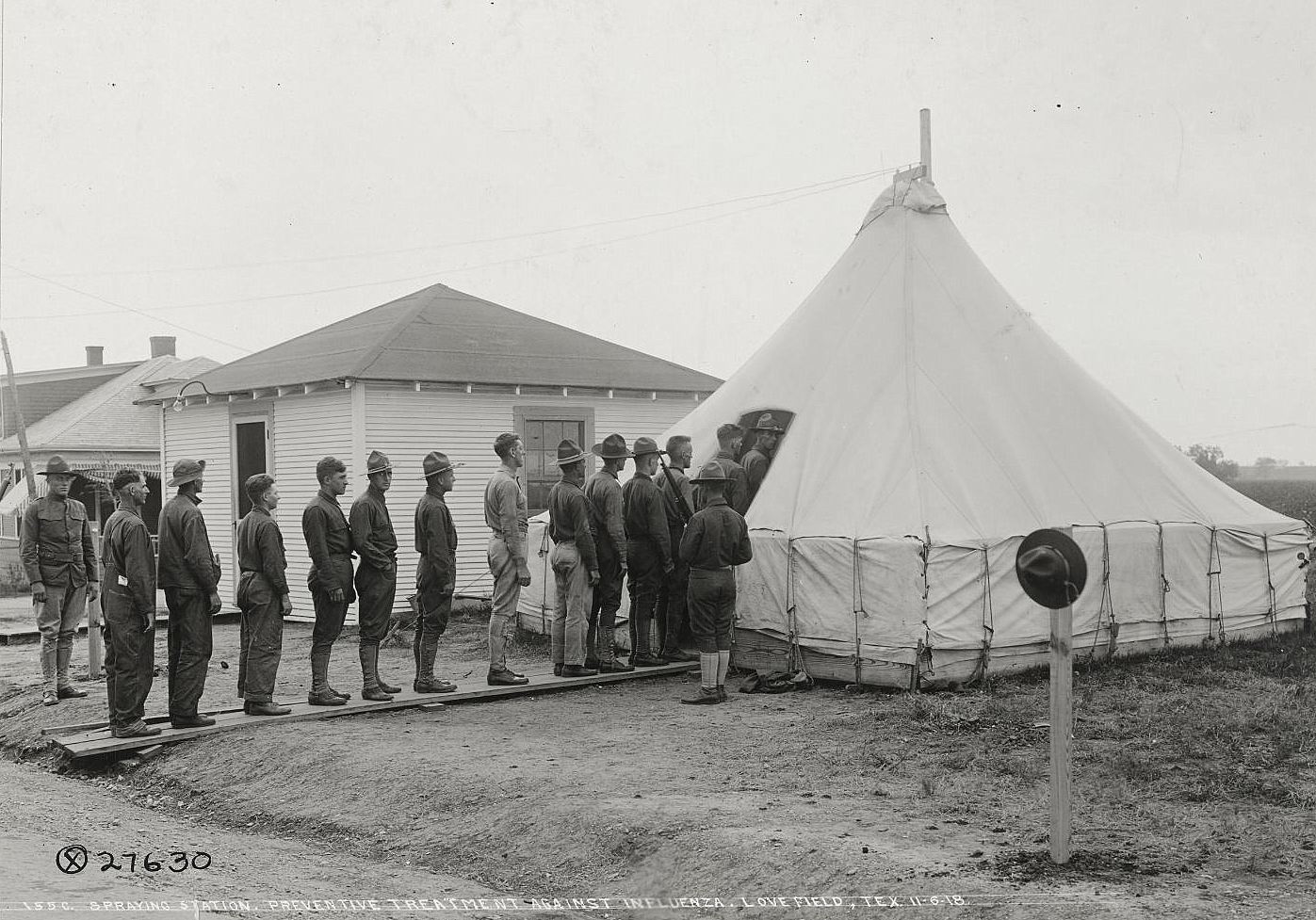
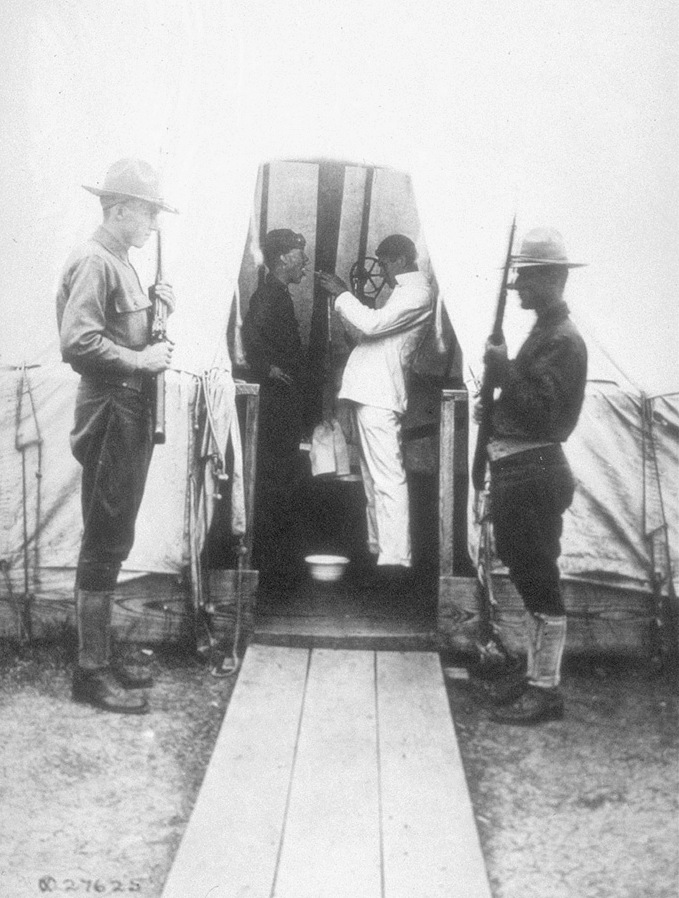
influenza-epidemic_love-field_1918_natl-archivesIn line at the Love Field “spraying station” (click for larger image)

by Paula Bosse

I write this as the U.S. is bracing for the spread of COVID-19, the novel coronavirus which has just been declared a world-wide pandemic by the World Health Organization — this inescapable news item reminds me of a previous post I wrote about the local response to another major epidemic. In 2014, Dallas (of all unlikely places) was ground-zero in the U.S. for a feared Ebola outbreak — back then I wondered how Dallas had handled health crises in the past, specifically the spectre of the Spanish Influenza, which, like the coronavirus, swept around the globe. So I wrote “When the Spanish Influenza Hit Dallas — 1918,” and I have to say, it was pretty interesting. The flu first hit the regional military bases during World War One: Love Field, Camp Dick at Fair Park, and Camp Bowie in Fort Worth. It wasn’t long before people beyond the WWI camps were contracting the Spanish Flu, and then it just spread and spread and spread.

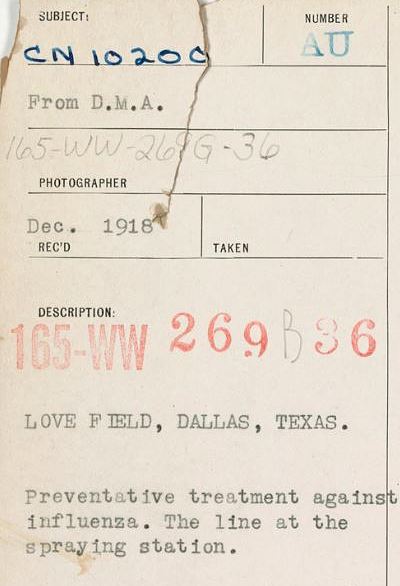
The photo above, from December, 1918, shows Love Field military personnel waiting in line to be “sprayed” — the caption reads:

Love Field, Dallas, Texas: Preventative Treatment against influenza.
The line at the spraying station.

influenza-epidemic_love-field_1918_natl-archives_INFO

Here’s the throat-sprayer waiting inside the tent:

spanish-influenza_love-field_otis-historical-archives_nmhm_110618Love Field, Nov. 6, 1918

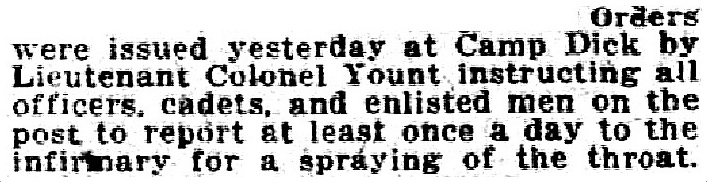
spanish-influenza_dmn_100118_sprayingDallas Morning News, Oct. 1, 1918

I’m not sure how effective this spraying was, but the advice given to Dallasites in 1918 is still good today: wash your hands, keep your surroundings clean, and do not spit in streetcars!

***

Sources & Notes

Top photo is from the National Archives at College Park; more info is here.

Second photo, showing the inside of the “spraying station,” is from the Otis Historical Archives, National Museum of Health and Medicine; more info is here

For a more detailed post about how Dallas dealt with the Spanish Influenza, read the 2014 Flashback Dallas post “When the Spanish Influenza Hit Dallas — 1918.”

influenza-epidemic_love-field_1918_natl-archives_sm

*

Copyright © 2020 Paula Bosse. All Rights Reserved.


Marching to Mess — 1918

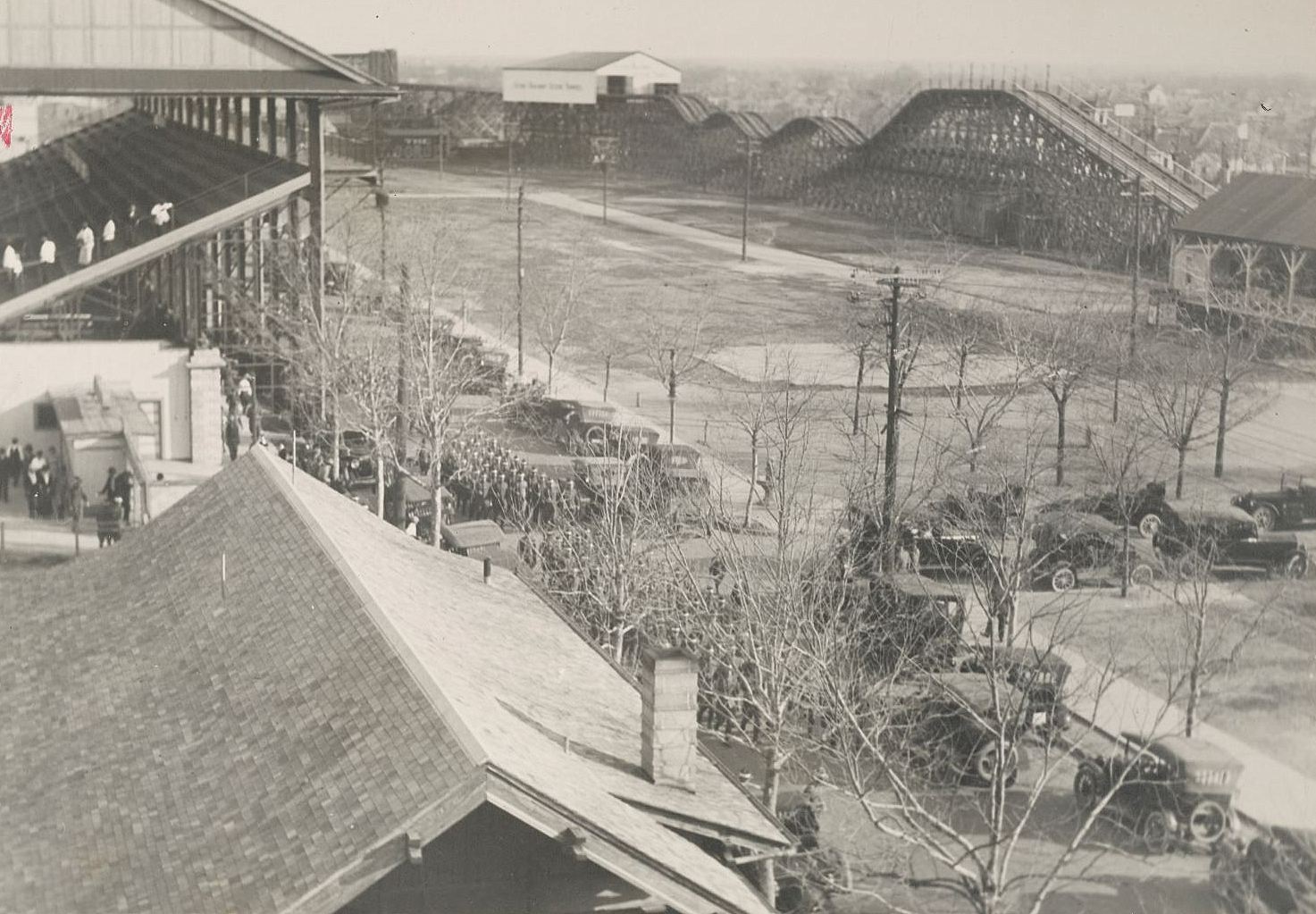
ww1_fort-dick_fair-park_marching-to-mess_roller-coaster_1918_natl-archivesNot your typical boot camp setting…

by Paula Bosse

Above, Camp Dick, an Air Service training camp which took over Fair Park during World War I. The War Department caption of this 1918 photo:

Camp Dick, Dallas, Texas: Men marching to mess after evening parade. Roof in foreground is the Officers’ house.

At the right is a roller coaster, a popular ride when the State Fair of Texas (rather than the U.S. military) is occupying the park.

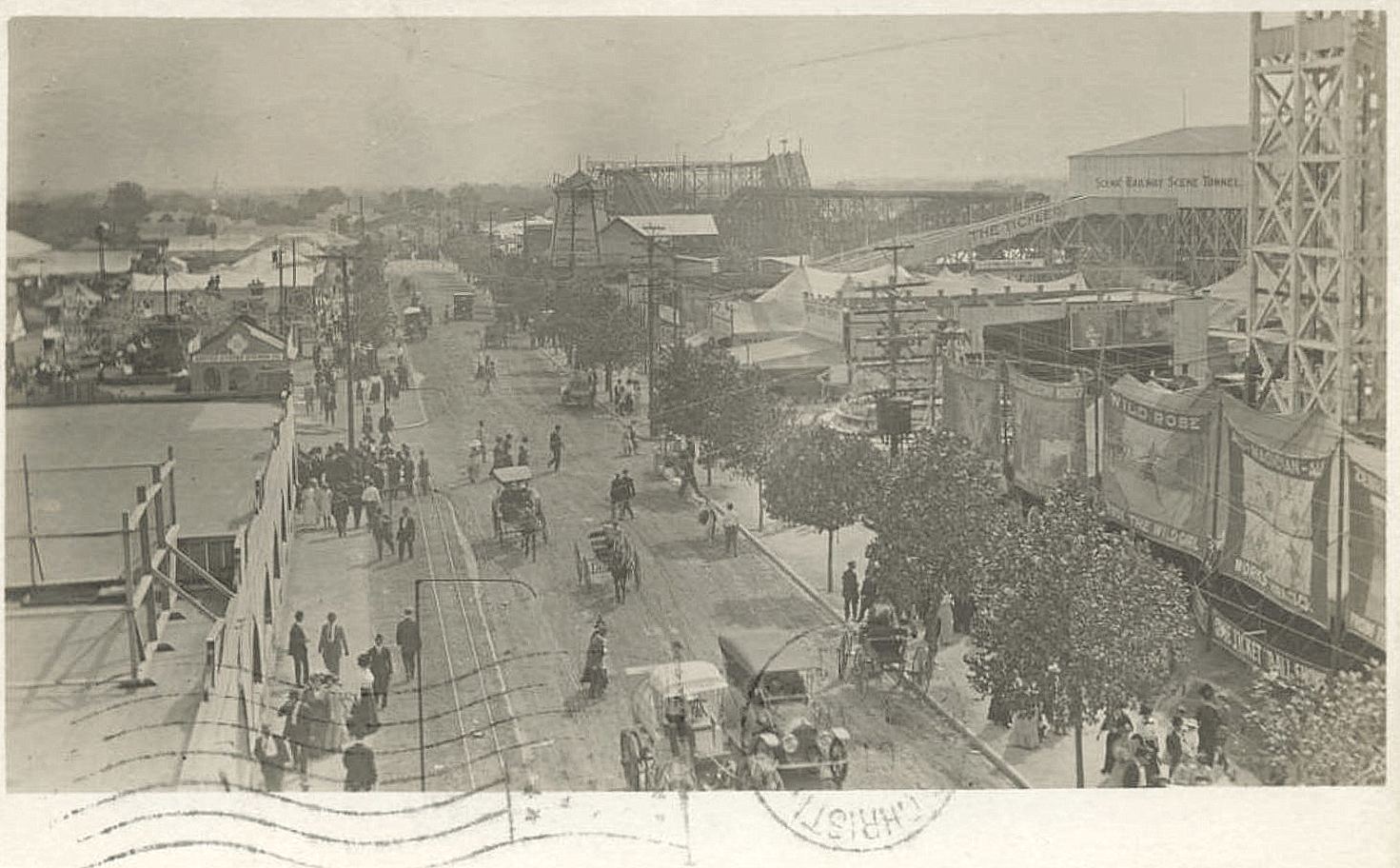
Here’s a photo from 1911:

state-fair_street-scene_john-minor_1911_cook-colln_degolyer

When Preston Sturges trained at Camp Dick — well before he became a legendary Hollywood writer and director — he and his fellow cadets did not let that roller coaster go to waste. He wrote this in his autobiography, Preston Sturges by Preston Sturges:

Out on the parade ground, boys fell over from [the intense heat] all the time and had to be revived with cold water and a sponge. Nights we would climb up the shaky apex of the large roller coaster in the corner of the fairgrounds to try to find a breeze.

An unexpected perk of basic training.

***

Sources & Notes

Top photo is from the National Archives at College Park; more info is here.

State Fair photo is a real photo postcard, taken by John R. Minor, and is from the George W. Cook Dallas/Texas Image Collection, DeGolyer Library, SMU Libraries, Southern Methodist University; more info is here.

More Flashback Dallas posts on Camp Dick can be found here.

ww1_fort-dick_fair-park_marching-to-mess_roller-coaster_1918_natl-archives_sm

*

Copyright © 2020 Paula Bosse. All Rights Reserved.

Orphaned Factoids: Year-End Grab Bag, 2019

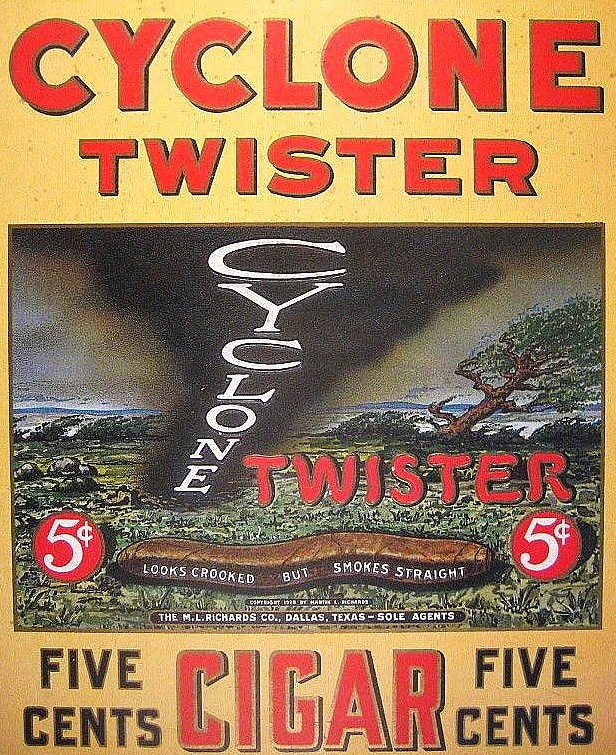
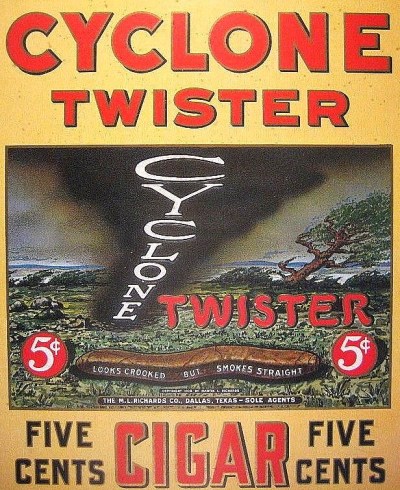
cyclone-twister_tornado_cigars_1928_ebay“Looks crooked but smokes straight…”

by Paula Bosse

As another year crawls to an end, it’s time to collect the odd bits and pieces that have  piled up over the past few months which struck me as interesting or funny or… whatever. I had nowhere else to put them, so they’re going here! (Most images are larger when clicked.)

**

First up, the ad above for the “Cyclone Twister” 5-cent cigar, distributed by Dallas wholesaler Martin L. Richards in 1928. Note the shape of the cigar. “Looks crooked but smokes straight.” Probably looked a little strange when smoked. I guess it might help break the ice at parties. Found on eBay.

*

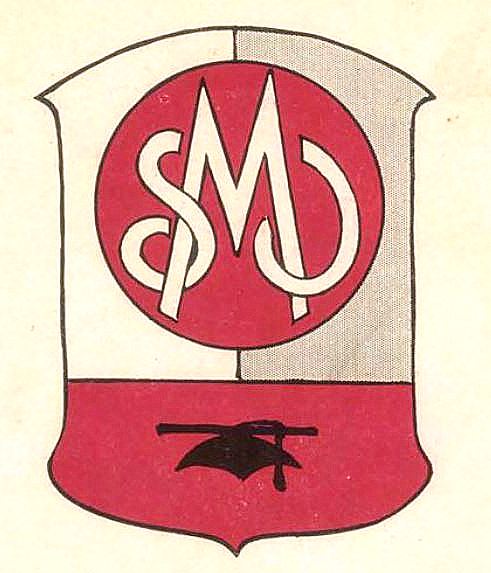
Here’s a nice little crest for SMU I’ve never seen — I’m not sure how long this lasted. From the 1916 Rotunda yearbook.
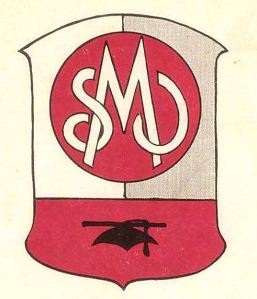
smu_crest_1916-rotunda

*

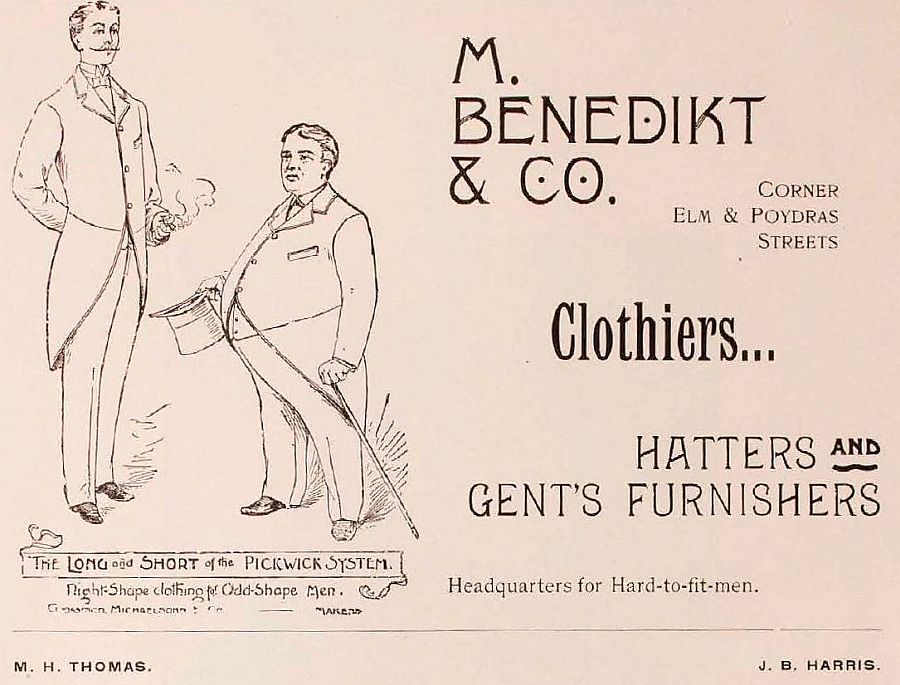
M. Benedikt & Co. was the “Headquarters for Hard-to-fit-men” — in other words, they specialized in “Right-Shape clothing for Odd-Shape Men.” Here are a couple of examples of what they might consider “odd-shape men” in an ad from 1899.
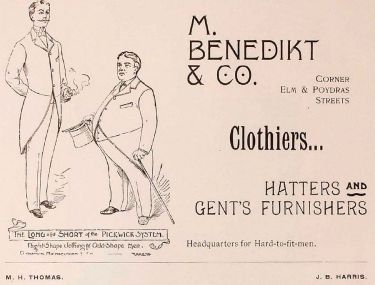
benedikt-clothiers_odd-shape-men_dallas-fire-dept-souvenir_1899_degolyer-lib_SMU

*

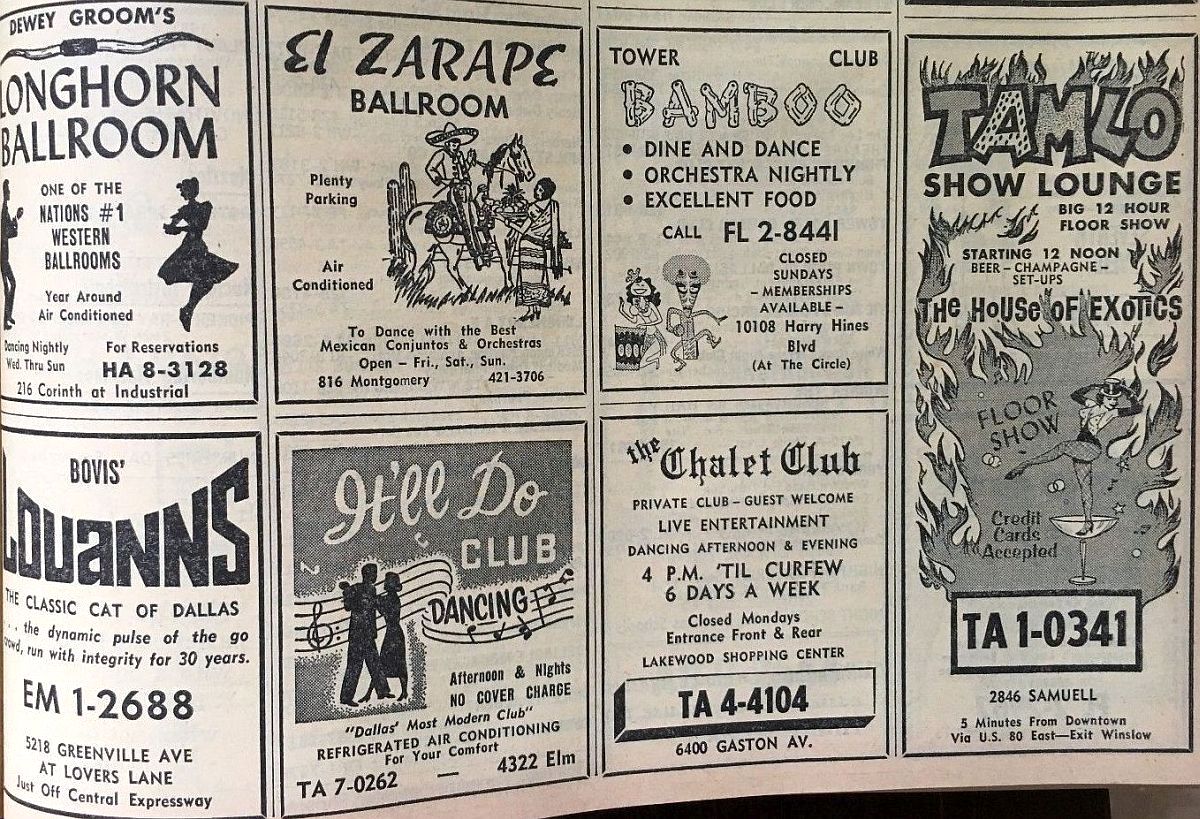
This is an interesting selection of ads from a 1968 edition of the Yellow Pages: Dewey Groom’s Longhorn Ballroom, Louanns, El Zarape Ballroom, the It’ll Do Club, the Bamboo Room at the Tower Hotel Courts, the Chalet Club, and the Tamlo Show Lounge (a couple of these show up in the…um… informative story “The Meanest Bars in Dallas” (D Magazine, July, 1975).
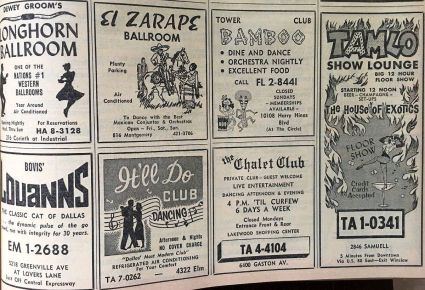
clubs_yellow-pages_1968_ebay

*

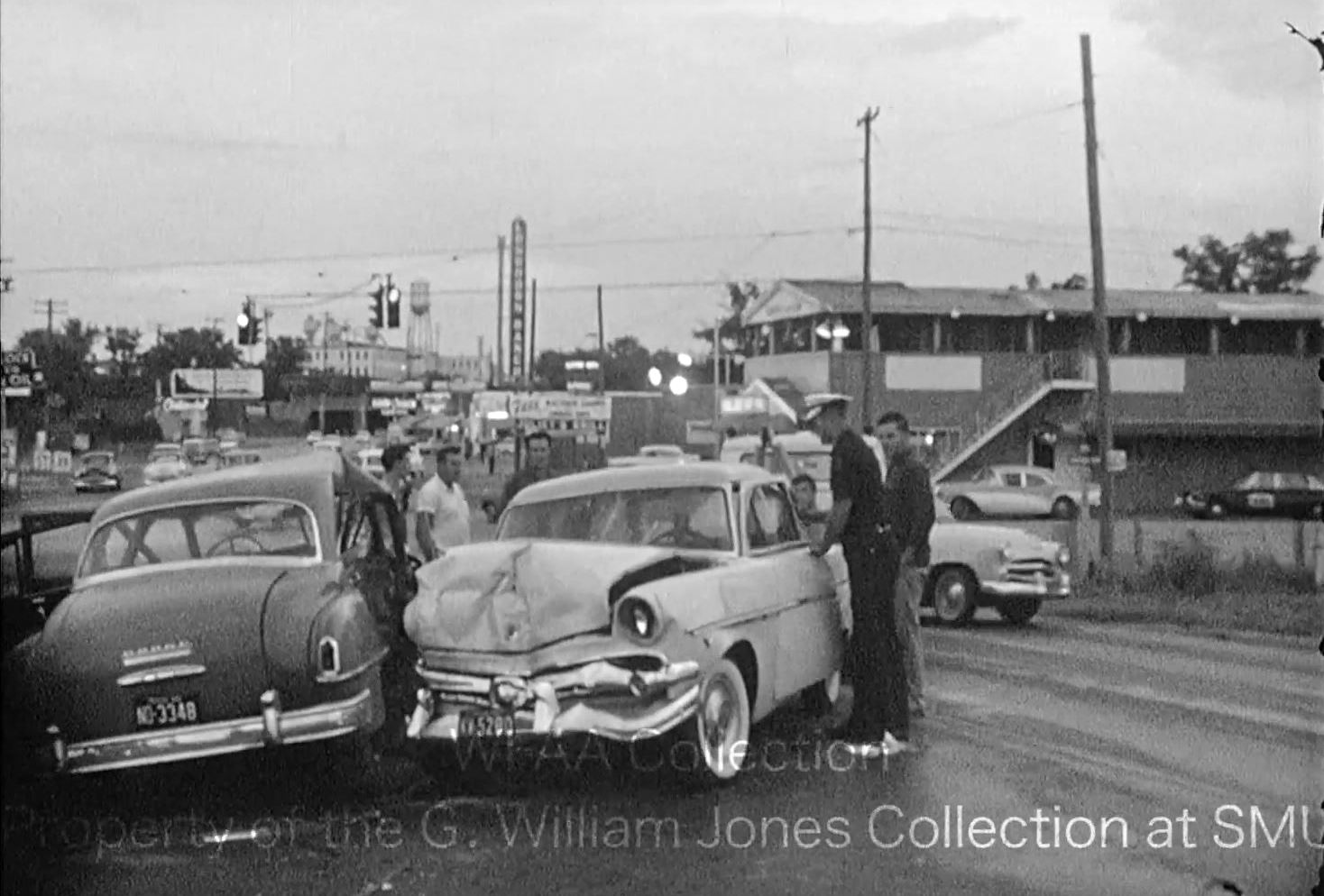
I’ve been working in the G. William Jones Film and Video Archives at SMU for the past few months, and this was something I came across while viewing a 1960 WFAA-Channel 8 News clip which made me really excited (it’s an awful screenshot, but, what the heck): while covering a car wreck at Corinth and Industrial, the Ch. 8 camera panned across the scene, and in the background, just left of center, was a very tall sign for the Longhorn Ranch, which I’d never seen before. Before it was the Longhorn Ranch it was Bob Wills’ Ranch House, and after it was the Longhorn Ranch it was the Longhorn Ballroom (more history of the legendary honky-tonk is in a Texas Monthly article here). So, anyway, it’s a fuzzy screenshot, but I think it’s cool. (The footage is from June, 1960 but the clip hasn’t yet been uploaded online.)
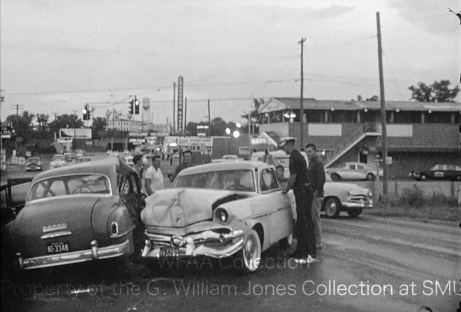
longhorn-ranch_wfaa-june-1960_jones-film_SMU

*

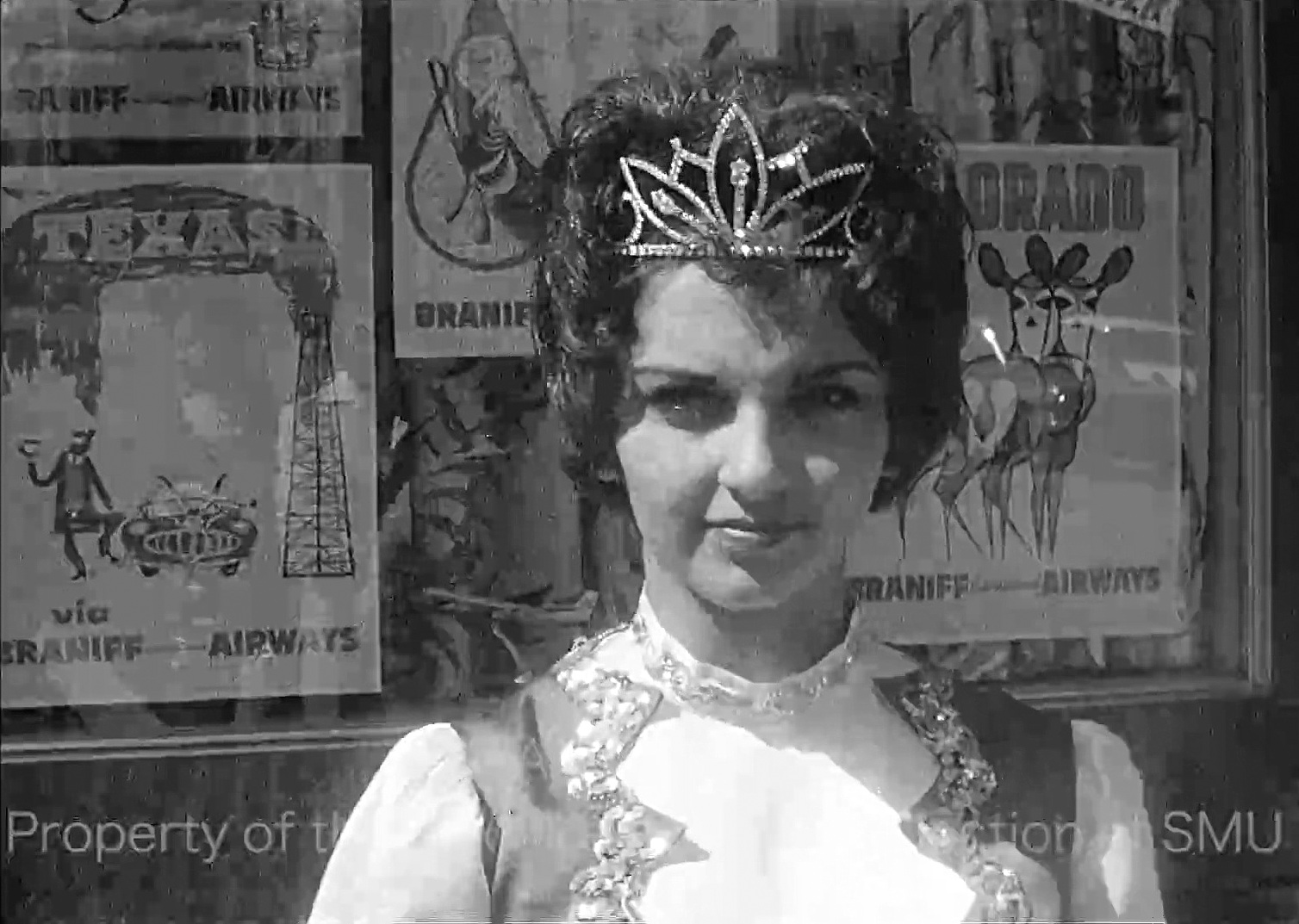
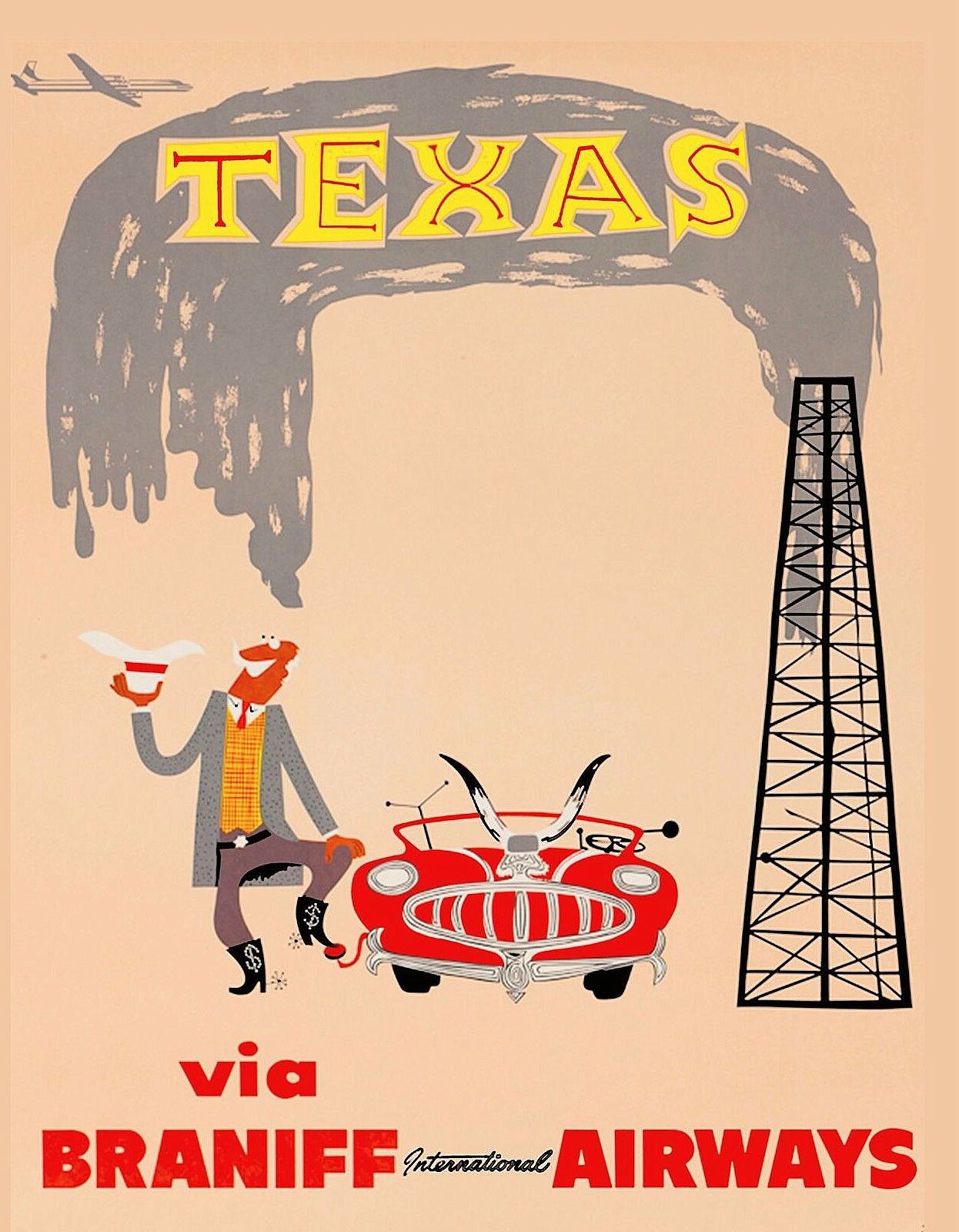
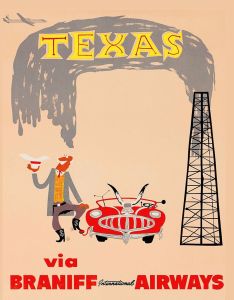
Speaking of WFAA footage in the Jones Film collection, there was some sort of story about comely young women in skimpy outfits handing out samples of some sort of food to passing pedestrians on Commerce Street (the one-minute clip is here). In addition to seeing sights associated with downtown streets in 1962 (including businesses such as Sigel’s and the Horseshoe Bar, as well as a large sign advertising the Theatre Lounge), I was really happy to see a few Braniff Airways posters in a window — I love those late-’50s/early-’60s Braniff travel posters! So here’s another screenshot and, below that, the Texas-kitsch poster I was so happy to see in color.
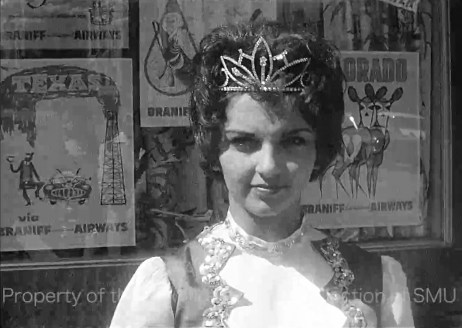
braniff-poser_oil-well_jones-film_SMU_041262

braniff-poser_oil-well_ebayBraniff Airways, Inc., Copyright 1926 2019

*

I don’t have an image for it, but I was amused to learn that in 1969 the powers-that-be at the Texas Turnpike Authority nixed the suggestion that the Dallas North Tollway be renamed in honor of president Dwight D. Eisenhower, who had recently died — the idea was turned down because 1) new signage would have been very expensive, and 2) officials were afraid that “irreverent motorists” would inevitably refer to the toll road as the “Ike Pike” (I know I would have!).

*

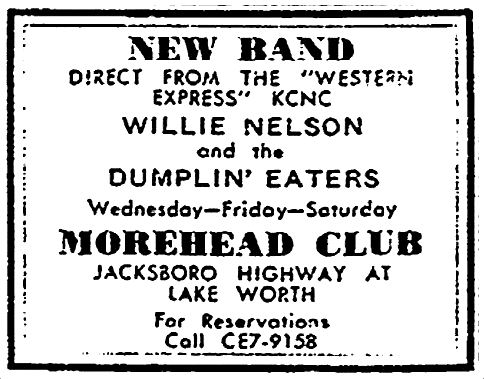
Not Dallas, but there’s always time for a little love for Fort Worth: here’s a nice ad from 1955 for a 22-year-old Fort Worth DJ named Willie Nelson, back when he was gigging out on the Jacksboro Highway with his band the Dumplin’ Eaters.
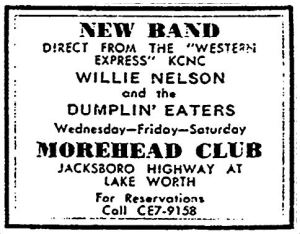
nelson-wilie_FWST_090955Fort Worth Star-Telegram, Sept. 9, 1955

*

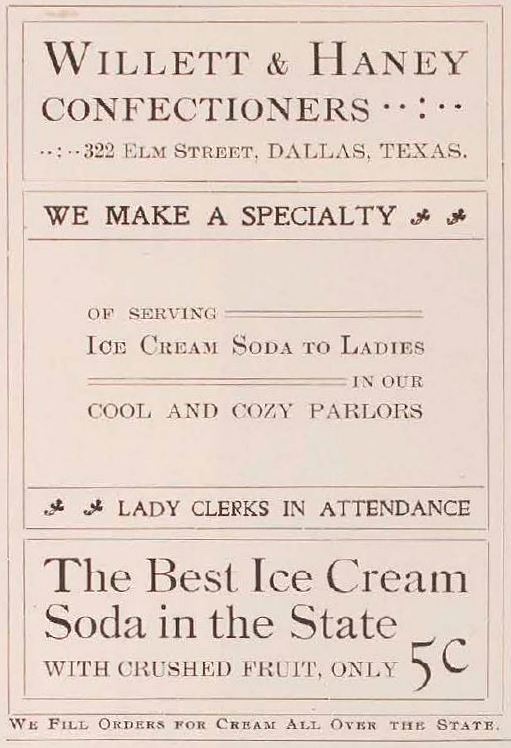
Apparently there was a time when ladies were uncomfortable patronizing an establishment in which m*n served them ice cream, so this ad from 1899 made sure to note that “lady clerks” were in attendance. (See the back side of the Willett & Haney Confectioners parlor a couple of years before this ad, when the “cool and cozy parlor” was located on Main Street — it’s at the far left in this circa-1895 photo detail from this post.) The parlor was owned by John B. Willett and John S. Haney, and in addition to ice cream and candy, their specialty was oysters, and I can only hope that there was some experimenting with new food combos involving mollusks, ice cream sodas, and crushed fruit.

willett-and-haney_ice-cream-parlor_dallas-fire-dept-souvenir_1899_degolyer-lib_SMU

*

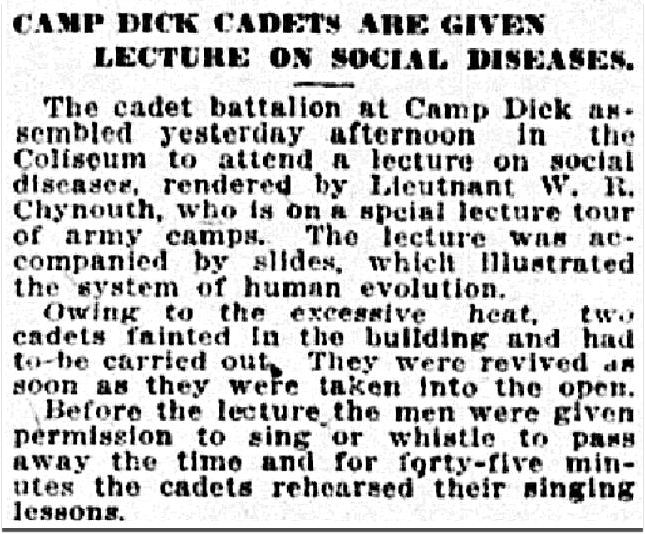
This is an odd little tidbit from The Dallas Morning News about a couple of cadets from Camp Dick (at Fair Park) and what happened to them when they attended a lecture on “social diseases.” (The jokes write themselves….) Who knew singing and whistling were so therapeutic”
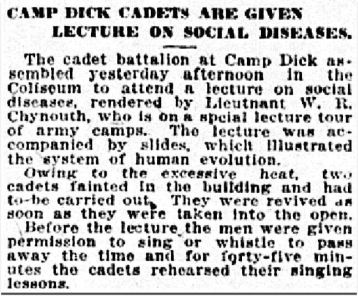
camp-dick_dmn_081718DMN, Aug. 17, 1918

*

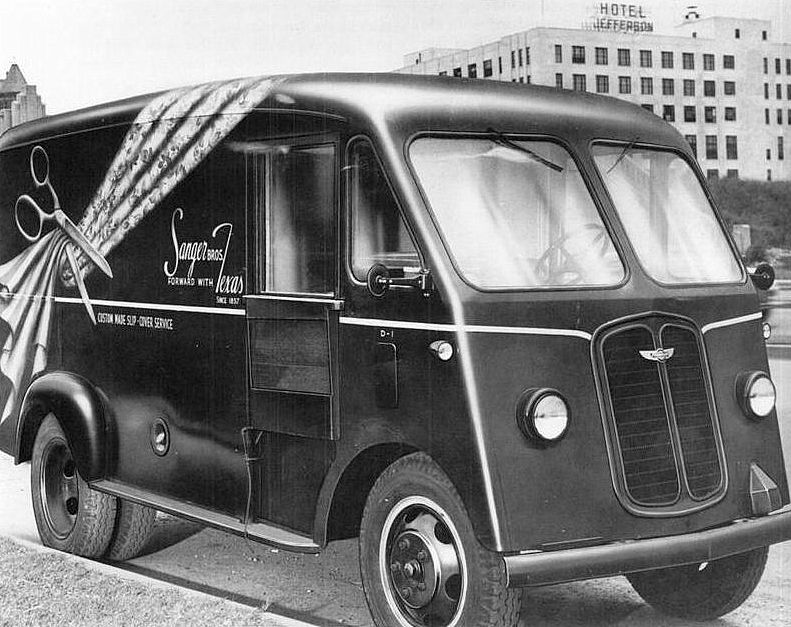
The caption for this photo (which appeared in the article “Going Downtown to Shop” by Jackie McElhaney, from the Spring, 2009 issue of Legacies): “In 1946, Sanger’s introduced a portable drapery shop. Two seamstresses sewed draperies in this truck while parked in the customer’s driveway.” Now that’s service!
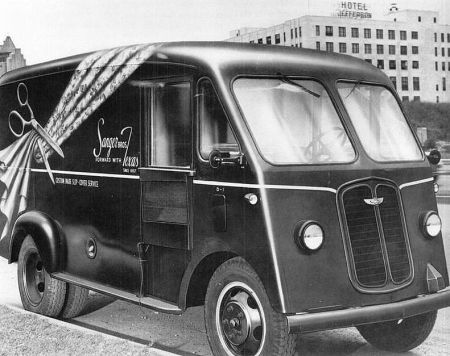
sangers_drapes_legacies_2009

sangers_logo_1947_forward-with-tx
“Forward with Texas,” 1947 ad detail

*

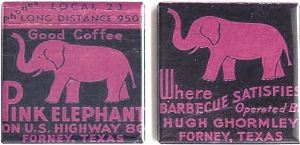
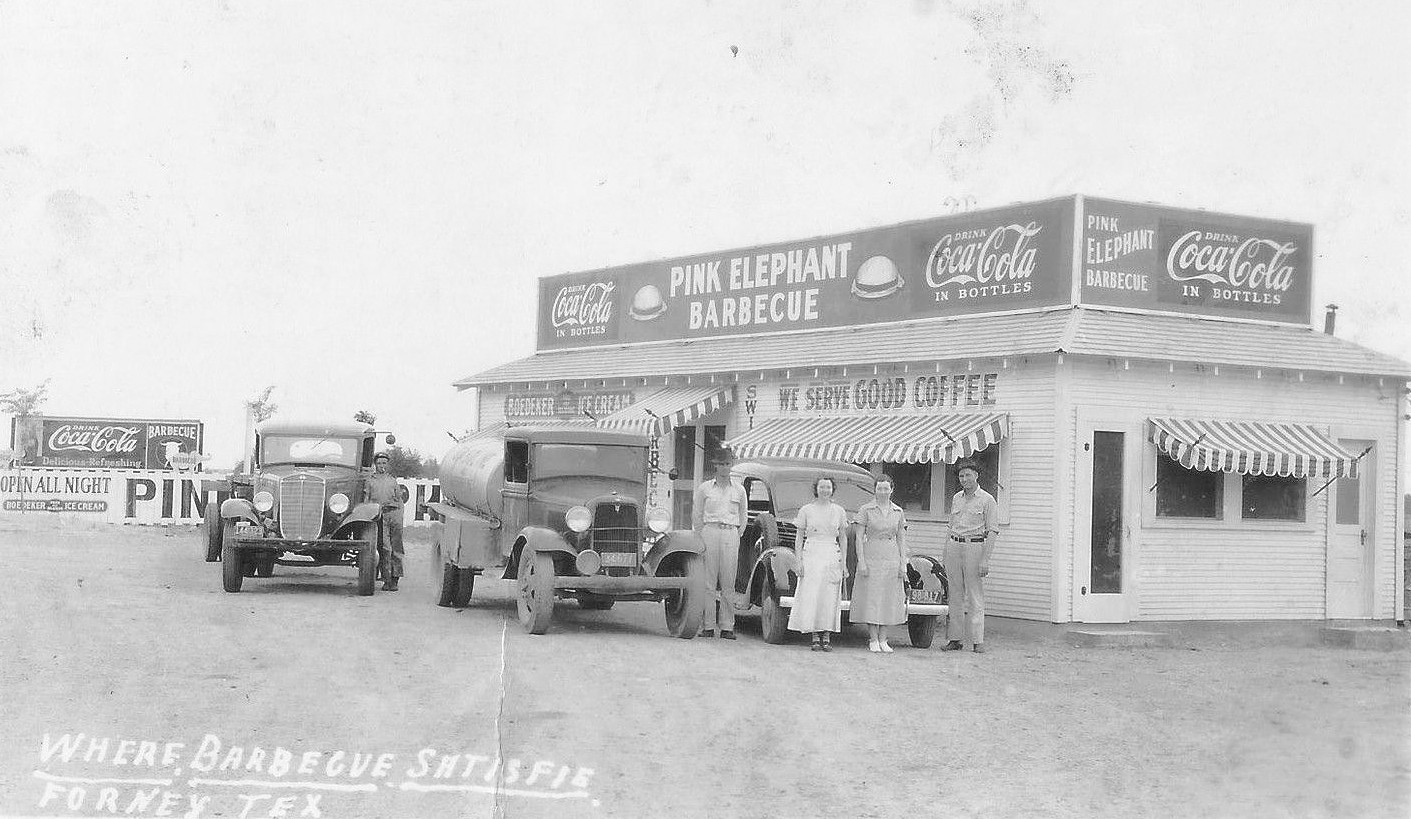
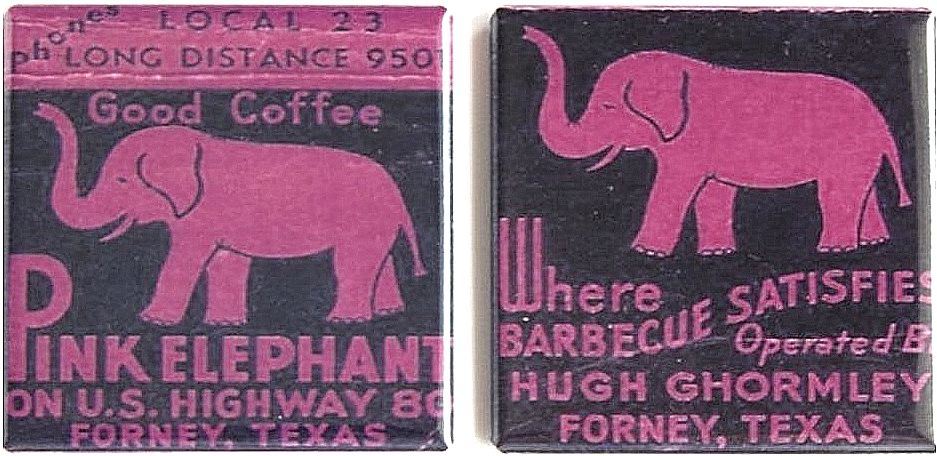
Two more. This first was a real-photo postcard I found on eBay. It shows the Pink Elephant cafe on Hwy. 80 in Forney (not Dallas, but pretty close!). I love the idea of Forney having a place called the Pink Elephant — it was quite popular and was in business from at least the 1930s to the 1950s. The card below was postmarked in 1936.
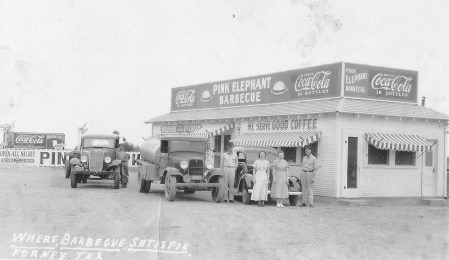
pink-elephant-bbq_forney_ebay_mailed-1936

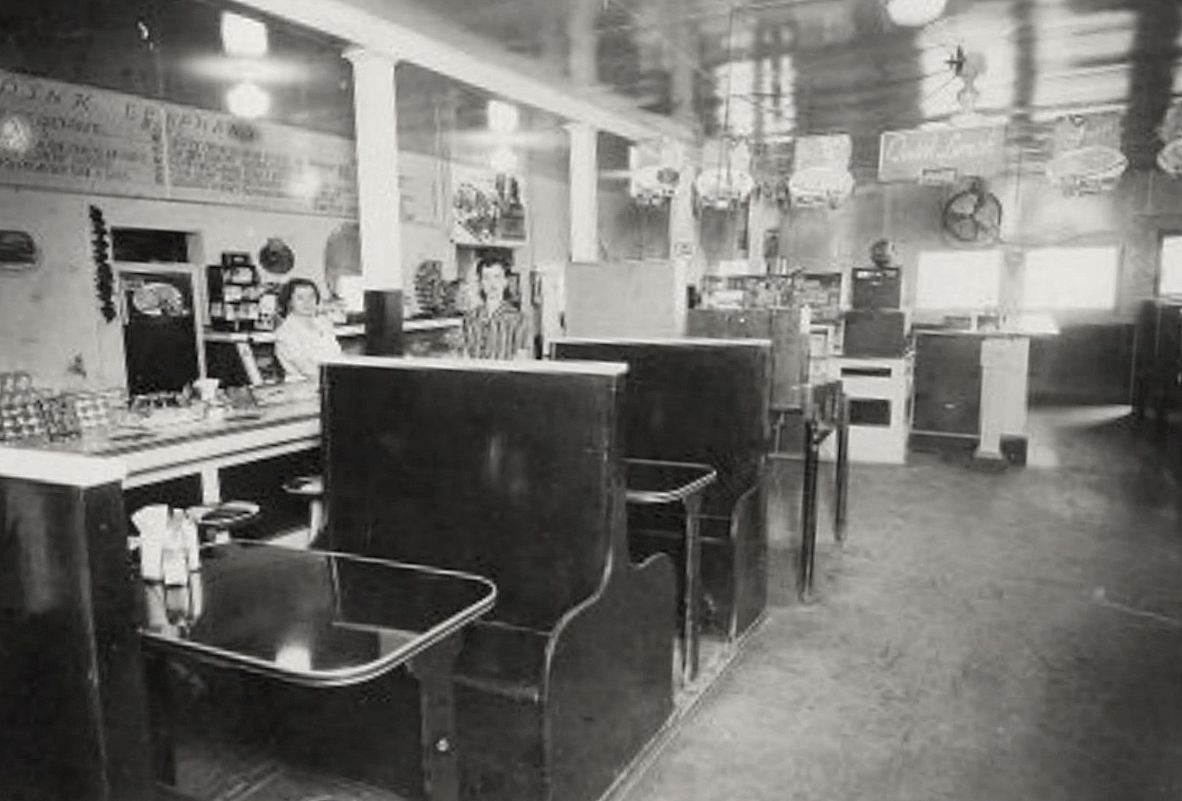
This photo of the interior is from the Spellman Museum of Forney Museum Facebook page.
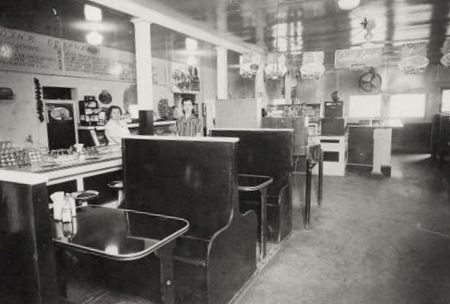
pink-elephant-bbq_forney_FB_spellman-museum-forney-history

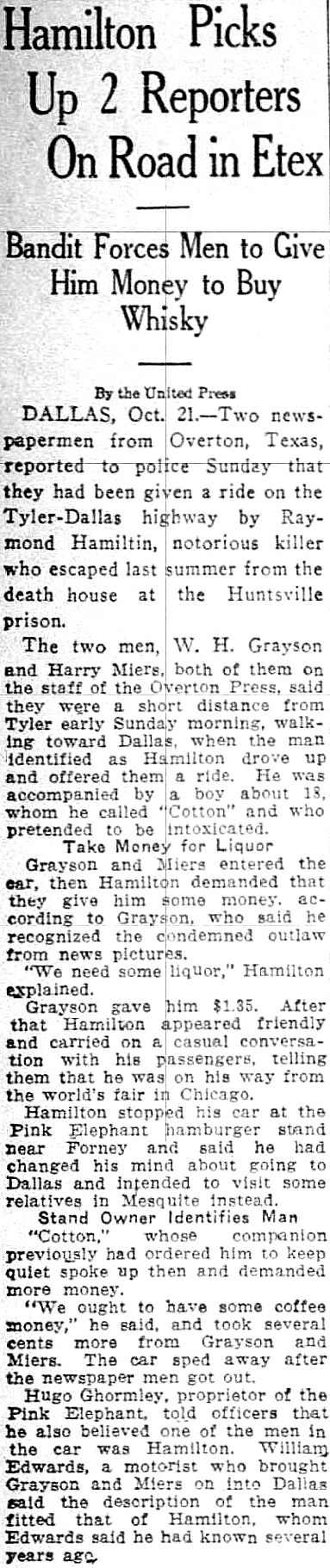
I wondered if the place was still around (sadly, it is not), and in looking for info about it found this interesting article from 1934 about outlaw Raymond Hamilton, the escaped killer who grew up in Dallas (…there’s the Dallas connection!) and was notorious for having been a member of Bonnie and Clyde’s “Barrow Gang.” (Click to read.)
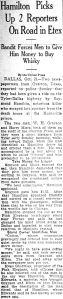
pink-elephant-bbq_forney_austin-american_102234Austin American, Oct. 22, 1934

pink-elephant_forney_matchbook_pinterest

*

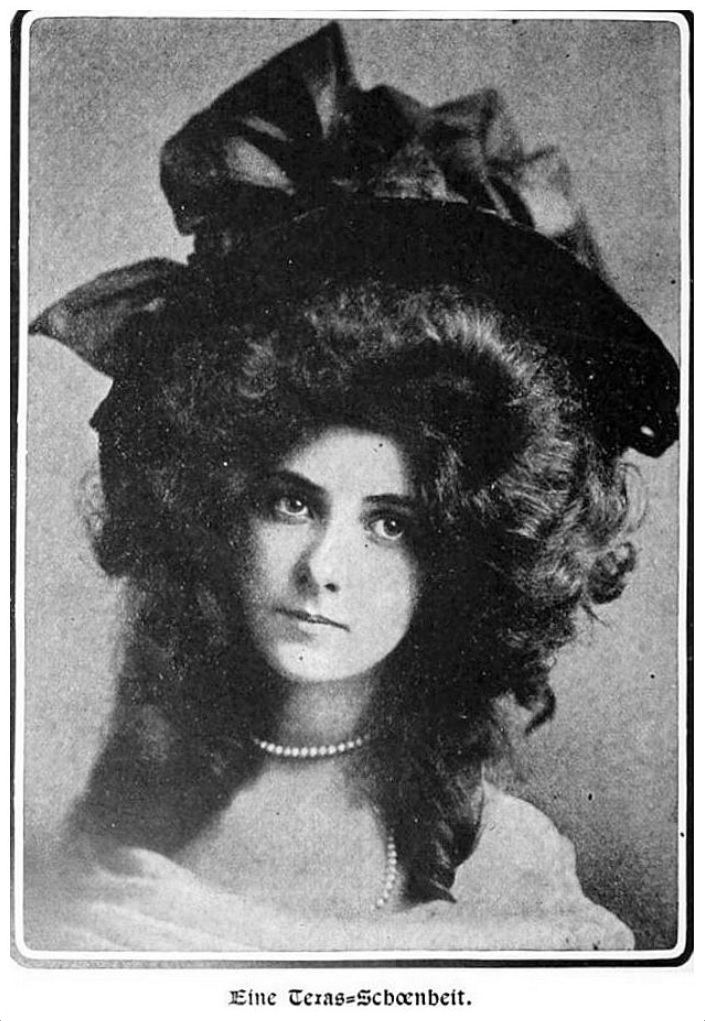
And, lastly, a photo of a young woman which appeared in a German-language magazine, captioned simply “Eine Texas Schönheit (A Texas Beauty).” Is the hair wearing the hat, or is the hat wearing the hair?
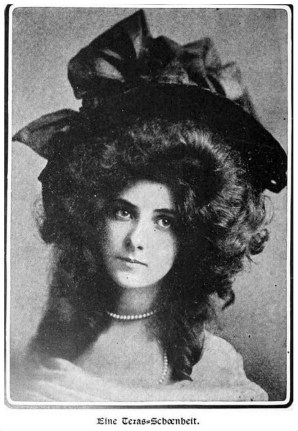
texas-beauty_1902

***

Previous installments of Flashback Dallas “Orphaned Factoids” can be found here.

Until next year!

cyclone-twister_tornado_cigars_1928_ebay_sm

*

Copyright © 2019 Paula Bosse. All Rights Reserved.