Flashback : Dallas

A Miscellany: History, Ads, Pop Culture

Category: Neighborhoods

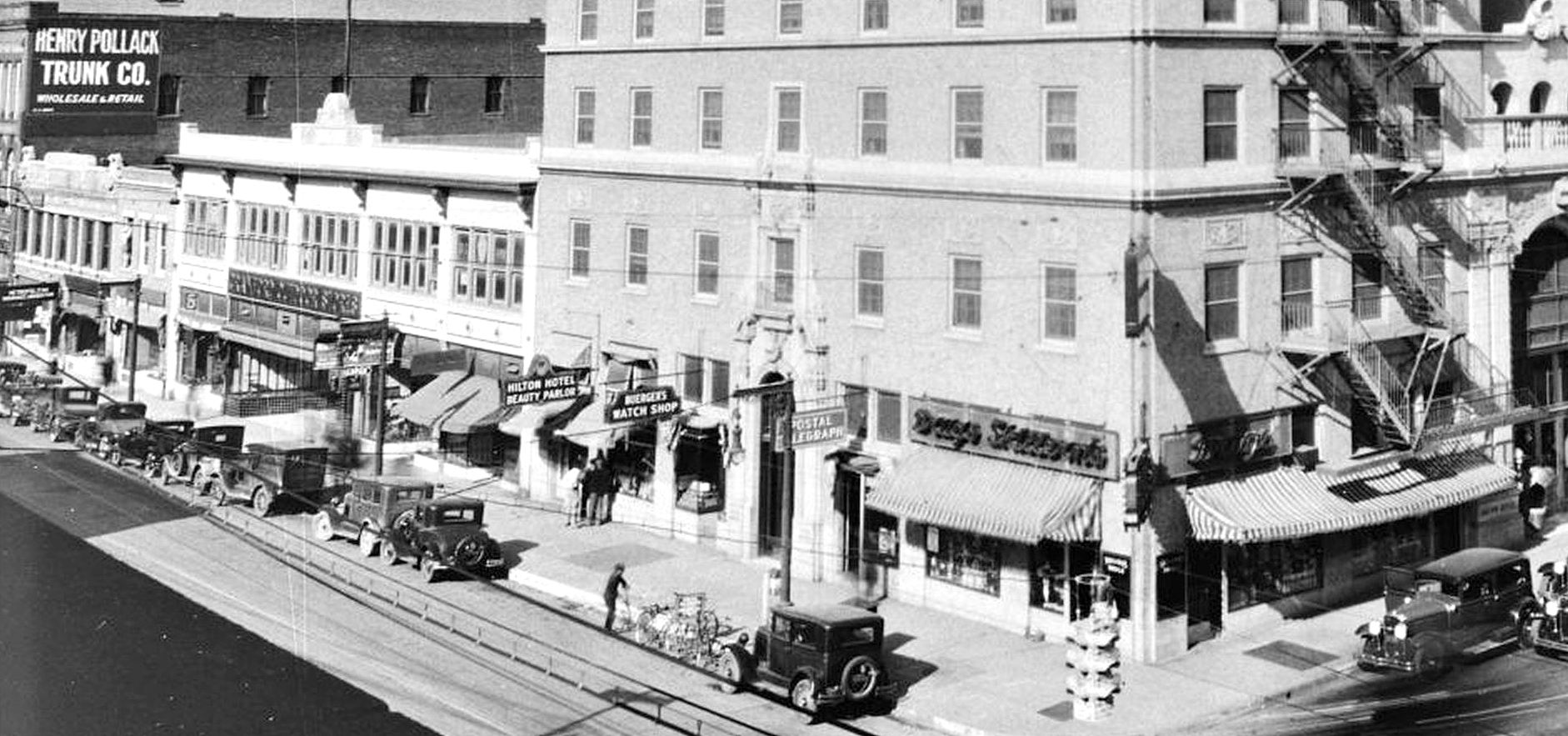
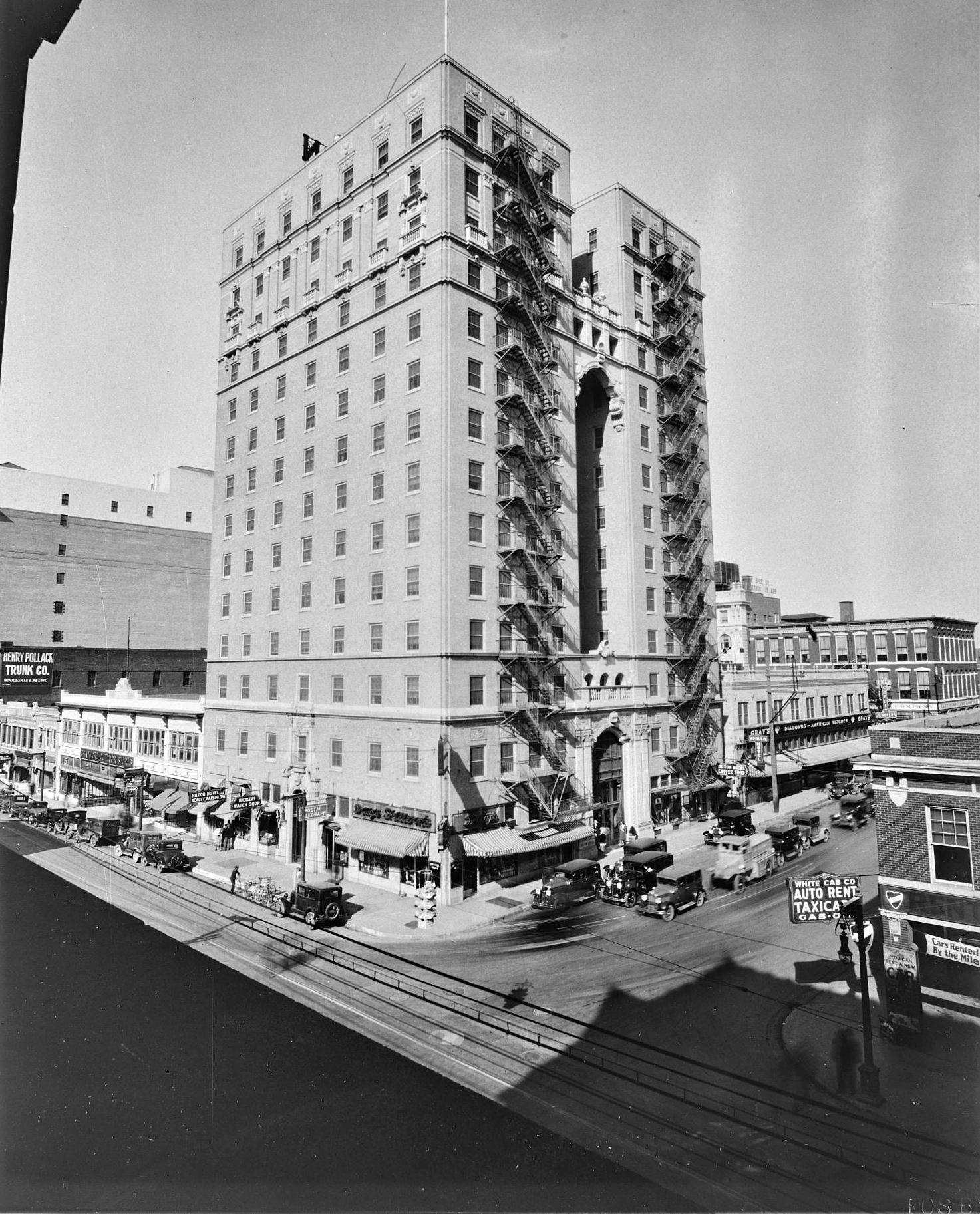
The Hilton Hotel, Main & Harwood

hilton-hotel_1930_portal_smThe Hilton, Main & Harwood, 1930 (click for much larger image)

by Paula Bosse

When Conrad Hilton built the Lang and Witchell-designed Hilton Hotel in Dallas in 1925, it was the first hotel he had built from the ground up. It’s been through several name changes over the years (its White Plaza Hotel incarnation was its longest), and, remarkably (for Dallas), the building still stands — it is now Hotel Indigo

Above, a photo from 1930, with so much going on, it’s worth zooming in to see some of the details. All images are pretty big when clicked.

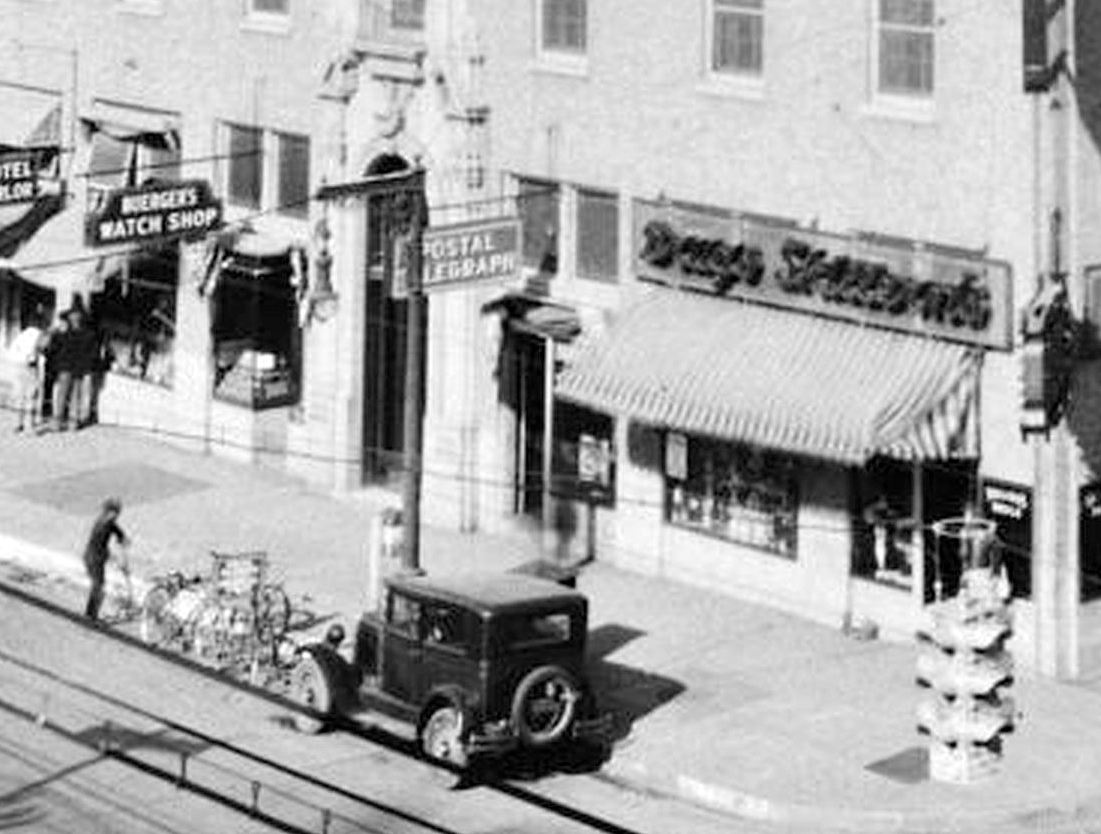
The left side of the photo shows Main Street looking west.

hilton_1930_det-1

I’m not sure what’s going on with the man at the curb — construction? Street cleaning? And I’ve looked and looked at that small tower-like thing on the corner but can’t figure out what it is. (UPDATE: Ha! Thanks to a helpful comment below, I now see that this “tower” which was confusing me so much is, not, in fact, an odd structure set on the sidewalk but is — of course! — a traffic light suspended above the street!) (UPDATE #2: I think another commenter was right when he said it is a uniformed telegram boy at a bicycle stand. I’ve never considered that telegram offices would have had bike stands — but of course they would!)

hilton_1930_det1a

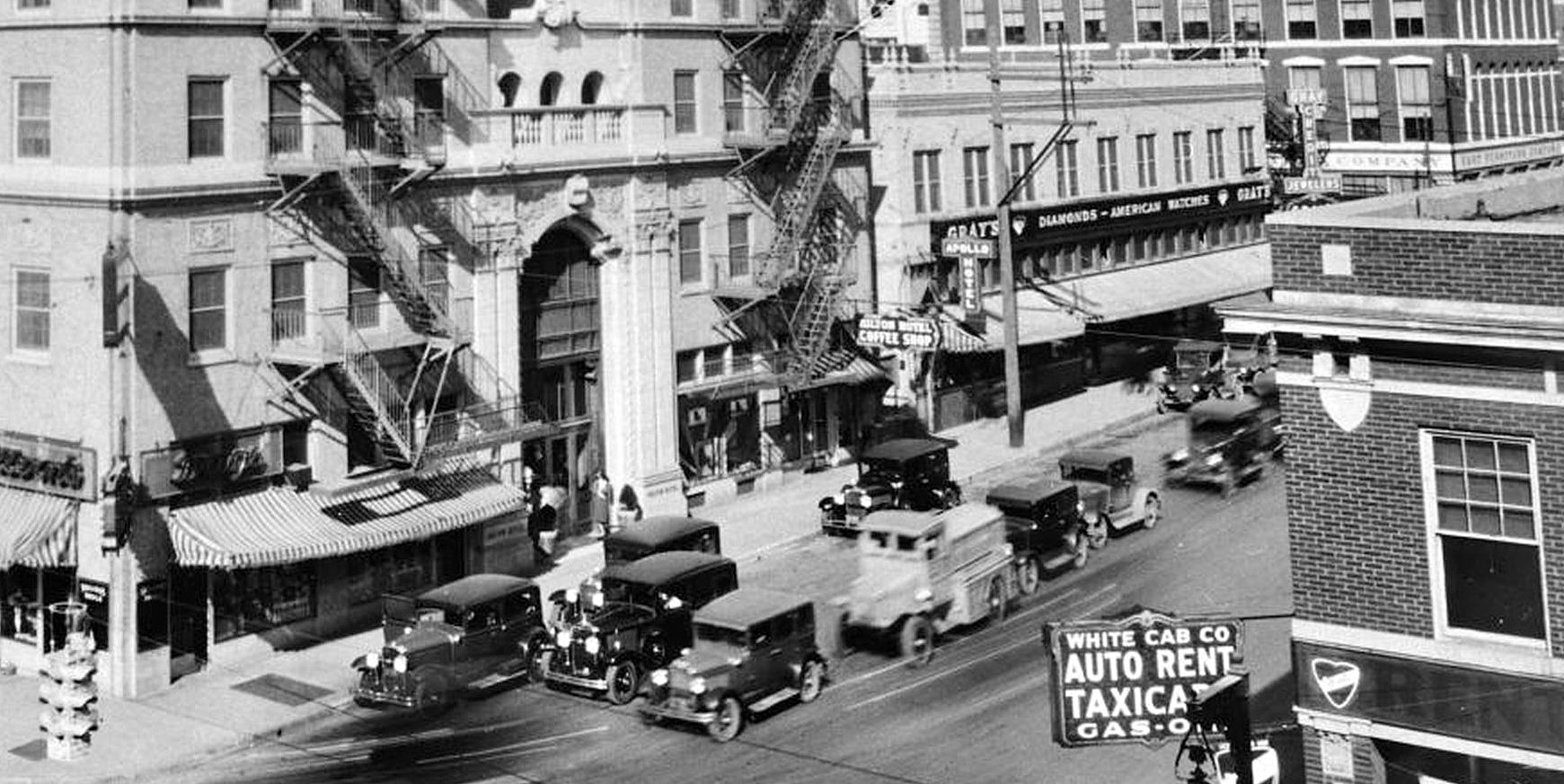
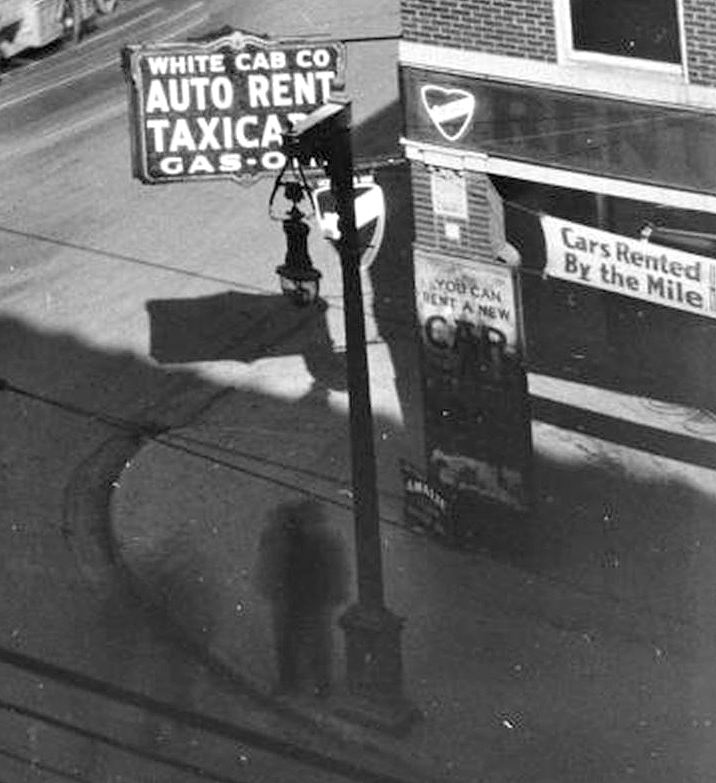
The right side shows Harwood looking north.

hilton_1930_det-2

hilton_1930_det3

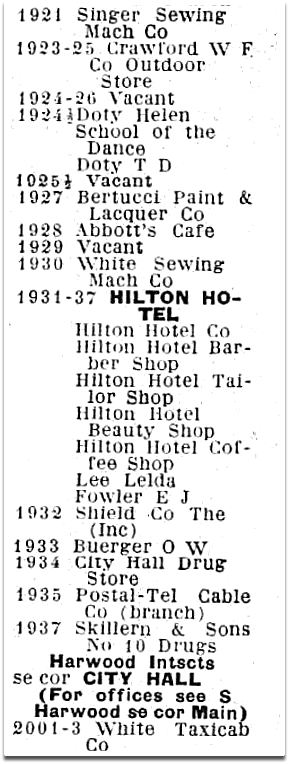
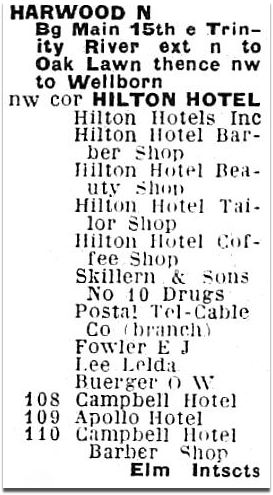
Here are the businesses listed in these blocks in 1930:

hilton_main_1930-directory1930 Dallas directory

hilton_harwood_1930-directory1930 Dallas directory

As a bonus, here’s a detail of another photo, showing the same intersection, around the same time, taken from the steps of the Municipal Building (then the city hall). The Drake’s Drug Store would be replaced by a Skillern’s in later years.

hilton_from-municipal_1927_det

***

Sources & Notes

Top photo from the Texas Historical Commission Historic Resources Survey Collection, via the Portal to Texas History, here.

The Wikipedia entry for Dallas’ first Hilton Hotel (not to be confused with the Statler-Hilton of the ’50s) is here.

The Hotel Indigo website is here.

All images larger when clicked.

*

Copyright © 2016 Paula Bosse. All Rights Reserved.

The Blue House on Browder

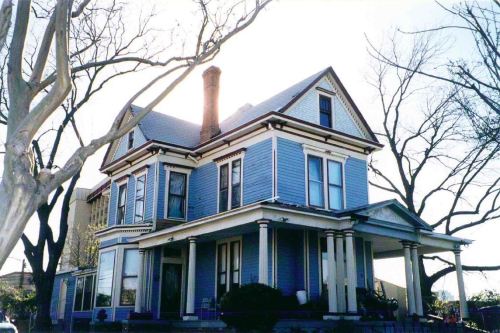
blue-house_homewardboundinc_2000
The Rosenfield house, in about 2000 (photo courtesy Homeward Bound, Inc.)

by Paula Bosse

Perhaps you’ve been following the recent brouhaha over the plans to demolish one of the last remaining 19th-century residences in the Cedars area, south of downtown — Robert Wilonsky of The Dallas Morning News has been covering the story here and here and here. The house is in terrible disrepair, but it has the beautiful details of the period, and it’s obvious that it was once a lovely house in a well-to-do neighborhood. Preservation Dallas posted this in-better-days photo on their Facebook page:
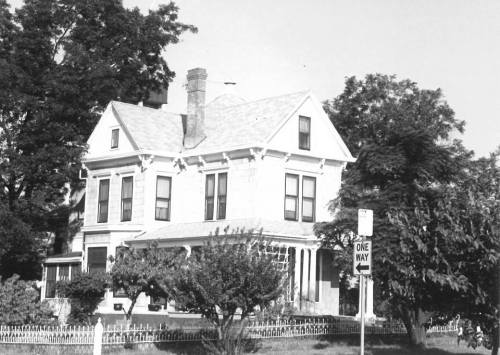
browder-house_preservation-dallas-FB-page

I thought I’d see what I could find about the history of the house — mainly I wanted to see if I could find who built it and when.

The house currently has the address 1423 Griffin, but before highways were built and streets were moved around, its address was 1015 Browder. Dallas changed almost every address in 1911, so I checked Jim Wheat’s very helpful scan of that year’s directory which tells us both the new and the old addresses of houses and businesses and also shows what cross-streets those addresses are between.
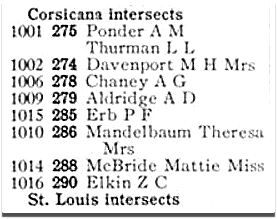
browder-house_1911-directory1911 directory, Browder Street

The original address of the Blue House was 285 Browder Street, between Corsicana and St. Louis. In 1911, P. F. Erb was living there.

Next, I checked the Sanborn maps. The earliest Sanborn map I could find which actually showed this part of Browder was the one from 1892. Here’s a detail showing the two-story frame house on the northwest corer of Browder and St. Louis, with Browder running horizontally along the top. The address is 285 Browder. (The house next to it is 169 St. Louis — more on that house later.)
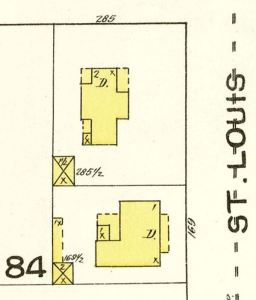
sanborn_1892_285-browder_nw-corner-st-louis_sanborn-1892_sheet-21

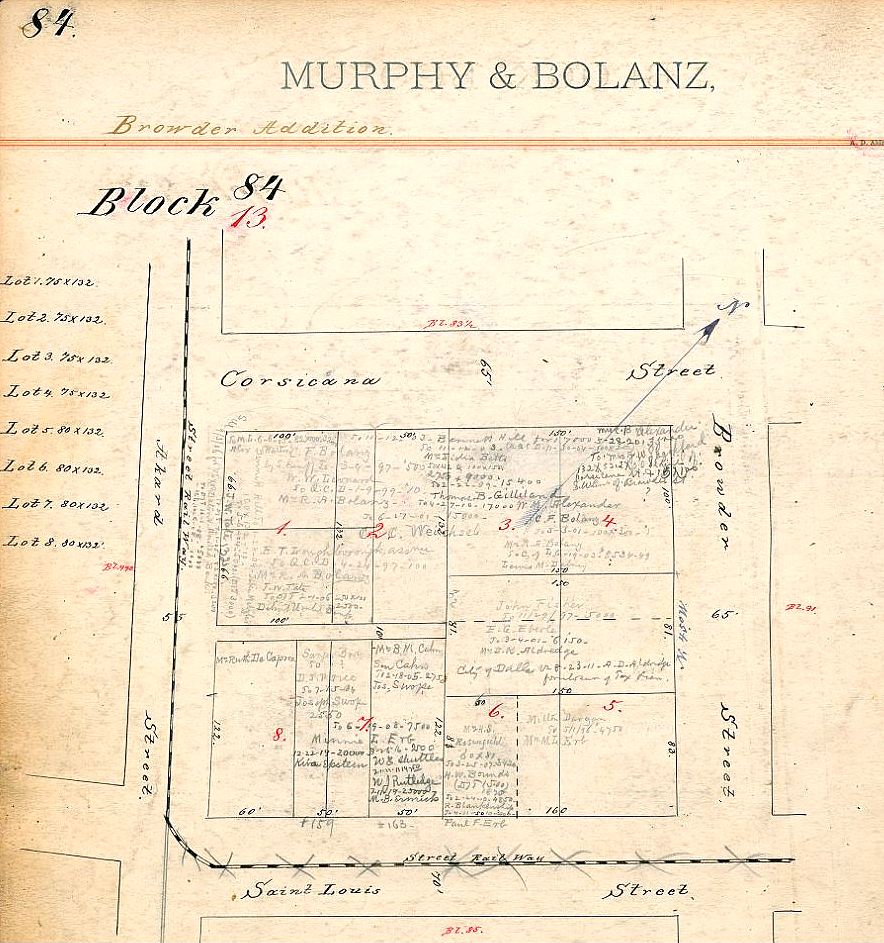
When you look at the full-page map this detail comes from (here), you’ll see larger numbers in the middle of the blocks. The block I’m interested in is block 84. Then I hopped over to the Murphy & Bolanz block book to see what I could find there. (I haven’t actually used this block book much, mostly because my old computer would not work with the plug-in required to view the pages, and it takes a while to figure out what you’re looking at.) When I clicked on “Block 84” in the index, I found this (click for larger image):
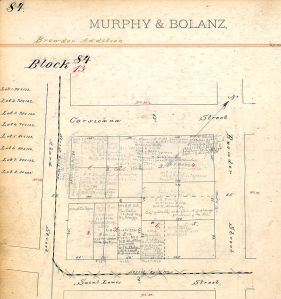
murphy-bolanz_block-13_block-84

Here’s the detail of the pertinent block:
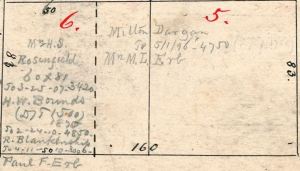
murphy-bolanz_det

The names and other assorted scrawls indicate title change (I think). This page was very helpful, because it told me that this block was originally part of Browder/Browder’s Addition, and it was originally classified as Block 13. The lot in question is Lot 5 (and probably Lot 6, because Erb’s name shows up under both. So now I had terms to search on.

And then it was just a tedious slog through the Dallas Herald archives (not to be confused with the Dallas Times Herald archives), the Dallas Morning News archives, and old city directories. Here’s what I found.

First mention of this particular parcel of land was in The Galveston News on March 24, 1883. P. S. Browder, a Browder family executor, transferred a lot of property — including the two lots I was interested in — to Mr. & Mrs. Nathan Godbold as part of a quitclaim deed (I’m probably not using the correct terminology here…). For one dollar.
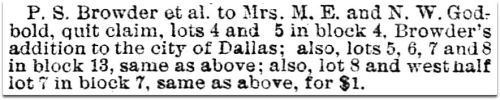
1883-march_browder_galveston-news_032483_QUIT-CLAIMGalveston News, Mar. 24, 1883

A few inches of print over, the record shows that Godbold immediately sold Lots 5 and 6 to Dallas real estate czar Charles Bolanz (misspelled below). For $1,000.

1883-march_browder_galveston-news_032483_to-bolanzGalveston News, Mar. 24, 1883

A few months later, in July, it was reported that Bolanz had sold the adjoining two lots to T. S. Holden, a young man who worked as a salesman for a wholesale grocery firm but seemed to be engaged in land speculation on the side. (It’s a little odd that Bolanz sold it so quickly for a $200 loss, but I’m sure there was probably more to the story.)

1883-july_browder_galveston-news_070283_HOLDENGalveston News, July 2, 1883

At some point, these two lots were sold to Max Rosenfield, another young man who was buying up land in the hopes that its value would increase. From Dallas Rediscovered by William L. McDonald:

“The year 1884 also saw the opening of a new housing subdivision by two Jewish real estate speculators, Gerson Meyer and Max Rosenfield. Their development, bounded by Akard, Corsicana, Browder, and St. Louis streets, was sold primarily to Jewish families who had begun to arrive as early as 1872 as part of the ‘Corsicana crowd’ — the terminal merchants who followed the construction of the H&TC.”

[I couldn’t find anything else about this block being a “sub-division,” but there definitely was a “Rosenfield & Meyer’s Addition” in East Dallas as early as 1886 — see the bottom of this post for more information on Gerson Meyer and the Murphy & Bolanz map of their East Dallas addition.]

In the 1886 city directory, Max Rosenfield is listed as residing at 1118 Browder, which may well have been an address that lasted for a very, very short time — Browder is a very short street, and I wonder if Rosenfield was renumbering addresses in his new development. It does appear to be Lot 5 of the block he and Meyer were developing, though. (Henrietta Rosenfield, widow of Jonas Rosenfield, was Max’s mother, and she lived with or near Max for several years.)

1886_rosenfield_1886-directory_1118-browder1886 Dallas directory

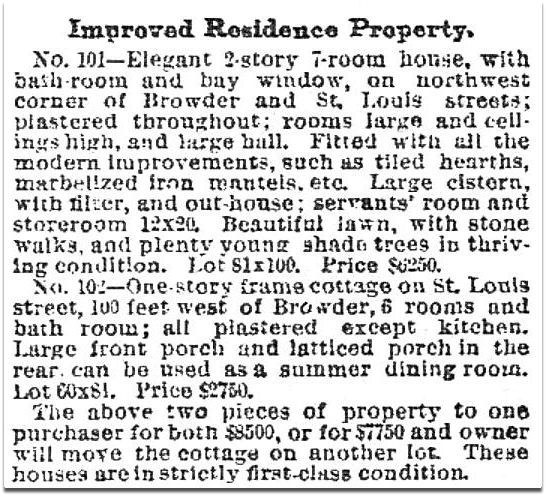
In early 1887, a For Sale ad appeared in the Herald — real estate agents Ducker  & Dudleigh were offering what appears to be Lots 5 and 6. By this time, houses had been built on both lots. (The  numbers 101 and 102 are confusing here, but the property being offered is the lot at the northwest corner of Browder and St. Louis and the lot adjoining it.) The price for the two-story house on Lot 5 was $6,250, which the Inflation Calculator adjusts to being about $166,000 in today’s money, taking into account inflation (but not taking into account Dallas’ outrageous real estate prices!).
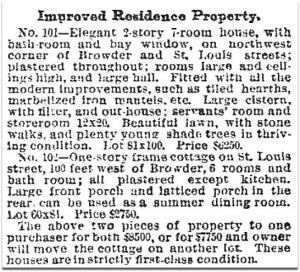
1887_browder_dmn_050887-FOR-SALEDMN, May 8, 1887 (click for larger image)

It doesn’t look like either property sold, because a few months later, the 1888 directory showed Max still living in the Lot 5 house facing Browder and mother Henrietta living in the Lot 6 house at 169 St. Louis.

1888_rosenfield_1888-directory1888 Dallas directory

Rosenfield placed a For Rent ad in the paper in Feb. of 1889, offering his corner house on Browder.
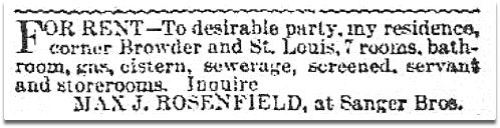
1889_rosenfield_dmn_021389DMN, Feb. 13, 1889

This appears to have been when businessman Milton Dargan moved in. He is listed as moving into the house at about this time in the addenda section of late changes for the 1889 directory (directories were usually compiled in the year before they were actually published).

1889_dargan_1889-addenda-listing1889 Dallas directory

In that same directory, Rosenfield had moved in with his mother in the adjoining property.

1889_rosenfield_1889-directory1889 Dallas directory

At some point Dargan bought the corner house. Henrietta continued to live in the St. Louis-facing house until about 1892, when she moved in with Max at his new home on Akard.

And, finally, the “285” address shows up in a directory, in 1891.

1891_dargan_1891-directory1891 Dallas directory

Paul F. Erb bought the Browder house from Dargan in 1896 (he also bought the adjoining Lot 6 house facing St. Louis in 1910).

1897_erb_1897-directory1897 Dallas directory

And we’re back to Paul Erb, seen in the 1911 directory listing old and new addresses at 1015/285 Browder.

browder-house_1911-directory1911 Dallas directory

Yay!

**

That was a long way to go to establish a chain of ownership. (I’m sure it would have been faster and easier to have consulted city records.)

So. Without access to building permits, it looks as if Max Rosenfield (who, by the way, was the father of John Rosenfield — born Max John Rosenfield, Jr. — legendary arts critic for The Dallas Morning News) was the person who built the 130-year-old house now going through the process of probably being torn down soon. It appears to have been built in 1884 or 1885. In a 1935 Dallas Morning News article celebrating the 50th wedding anniversary of Mr. and Mrs. Max Rosenfield, the house is mentioned: “…their first home, a house built by Mr. Rosenfield and still standing on the northwest corner of Browder and St. Louis streets…” (see the article “Mr. and Mrs. M. J. Rosenfield To Observe 50th Anniversary,” DMN, Jan. 6, 1935).

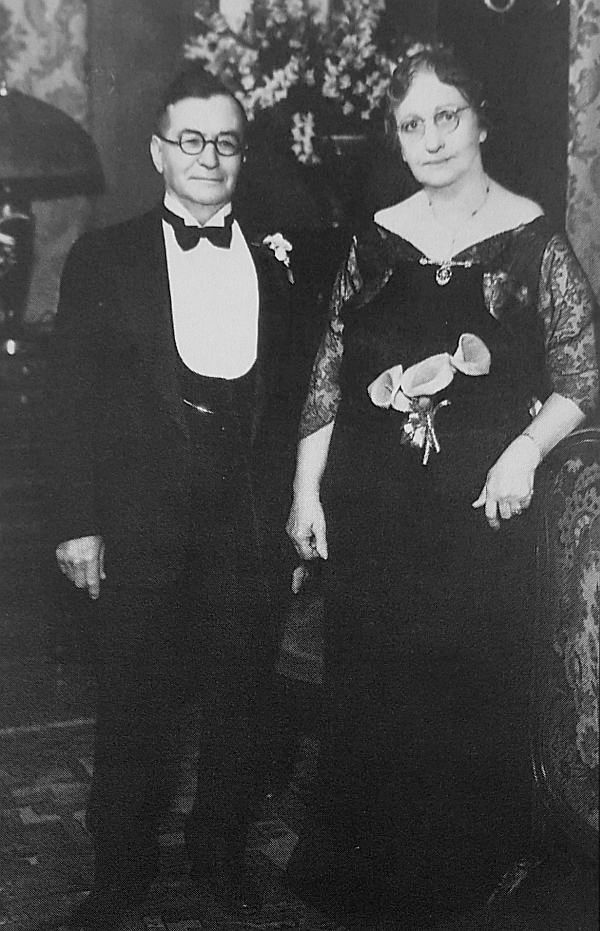
Below is a photo of Max Rosenfield and his new bride, Jenny, probably taken the same year the house was built, 1885-ish, when Max was 26 years old.
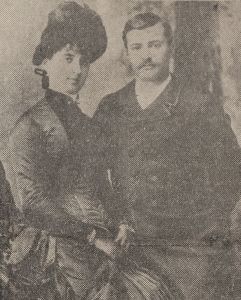
rosenfields_ca-1885_ancestry

Thank you for building such a pretty  house, Mr. Rosenfield. Maybe some magnanimous person with deep pockets can have it moved to a new location and restore it to its former loveliness.
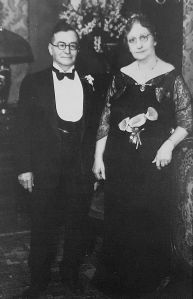
rosenfield-max_1935Mr. and Mrs. M. J. Rosenfield, on their 50th anniversary

**

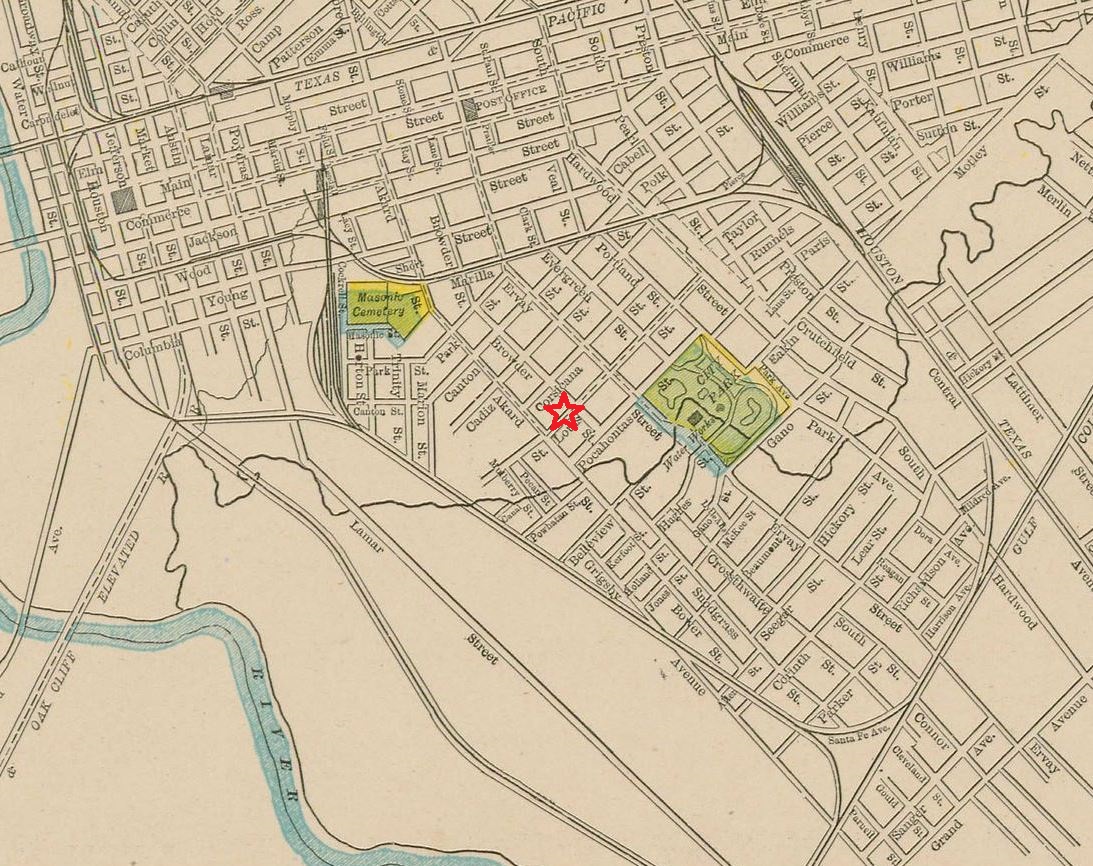
Here’s a detail of an 1893 map of the area, with the house in question marked.
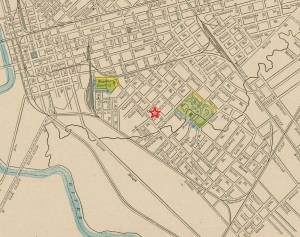
browder-house_1893-map

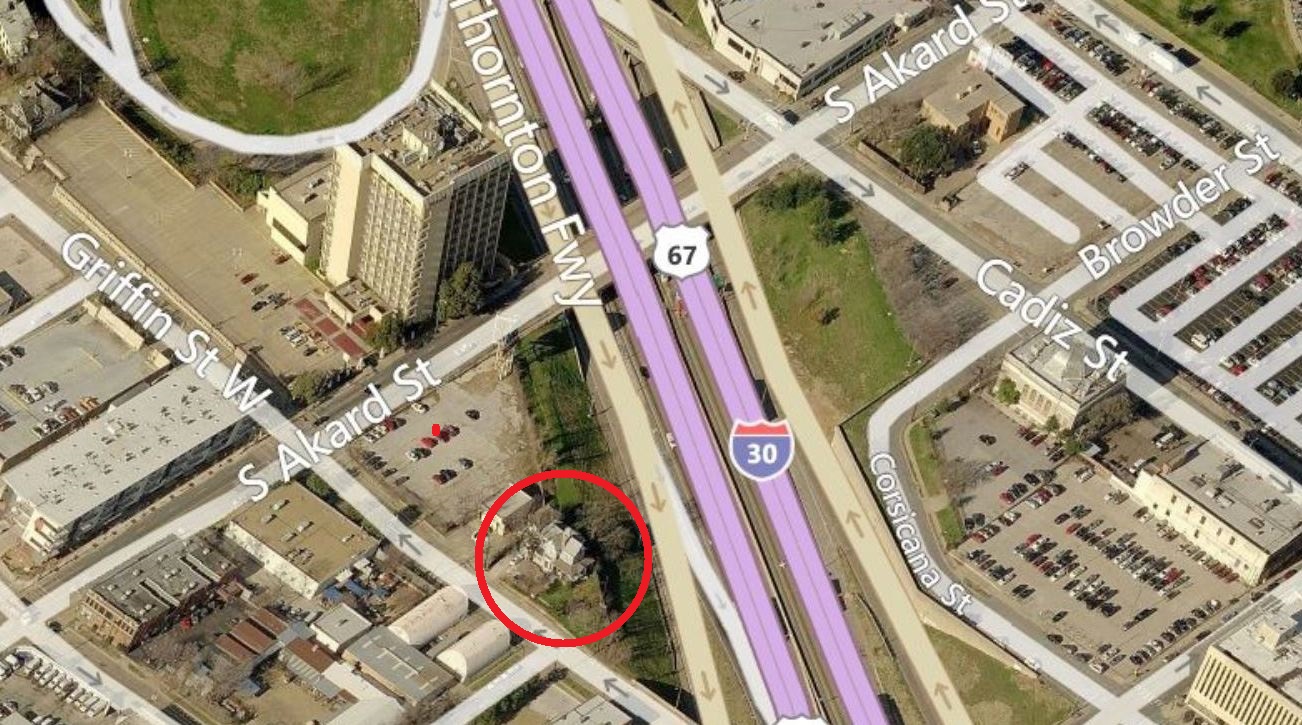
And here’s the lonely little house in its present hemmed-in location.
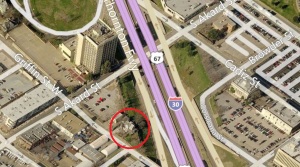
browder-house_bingBing Maps

***

Sources & Notes

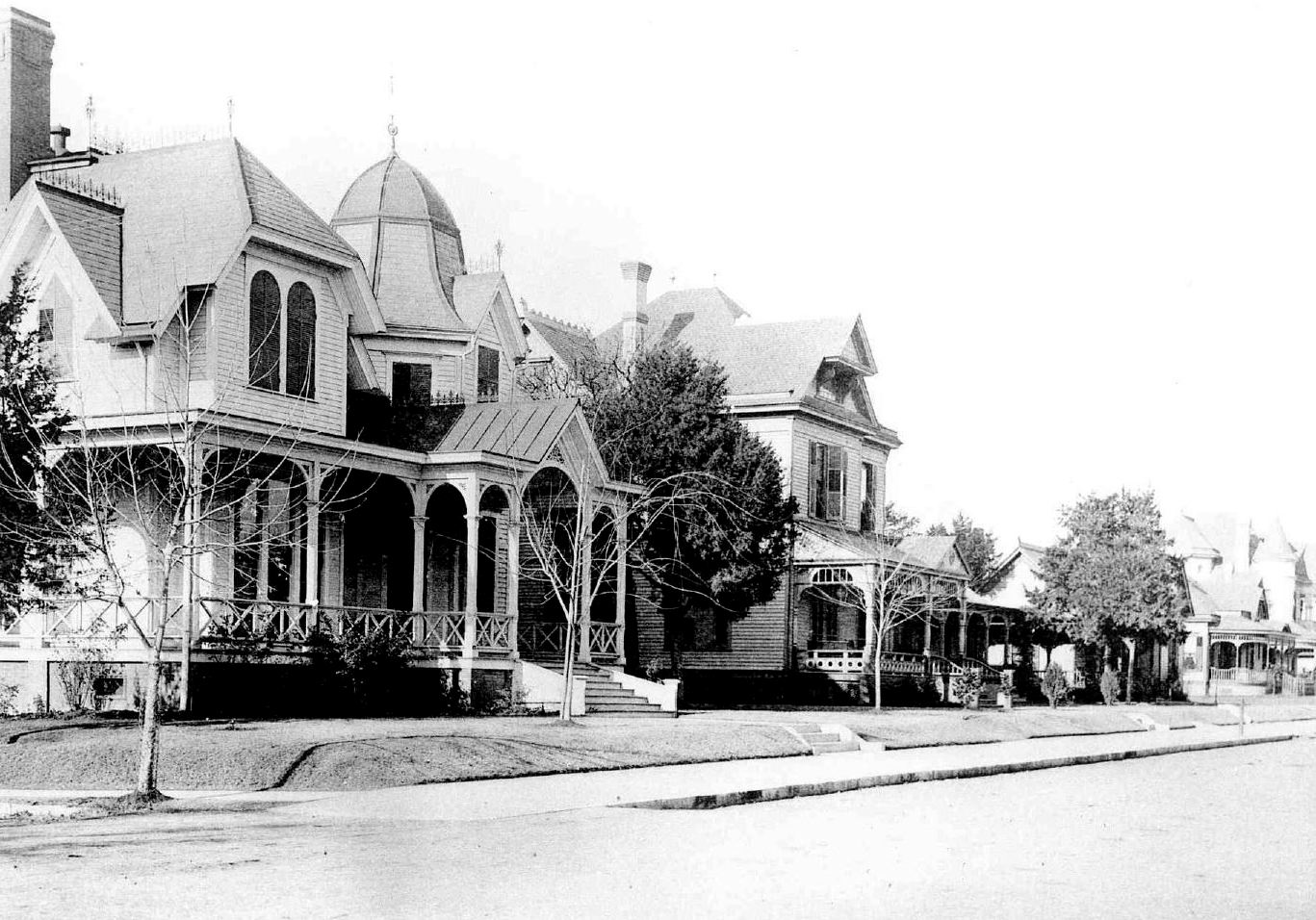
Top photo, taken around 2000, from Homeward Bound, Inc., used with permission. Homeward Bound, Inc. took over the house in 1986 (and owned it until October, 2015) for use as Trinity Recovery Center, a substance abuse treatment center. The organization tried hard to save the house, but, according to Homeward Bound, Inc. Executive Director Douglas Denton, when they approached Dallas’ Landmark Commission in the 1990s, “they were not interested in the building.” Thanks to Mr. Denton for allowing me to use this photo, which shows the beauty of the old house better than any other photo of it that I’ve seen. He points to the photo below as an example of what this Cedars neighborhood once looked like. The caption for the photo in McDonald’s Dallas Rediscovered (p. 125): “Looking north toward downtown along Browder Street near the corner of Cadiz, 1895. These homes, built in the early 1890s, began to be razed in the late 1930s and early 1940s for parking space in the expanding business district.” (Photo: Dallas Public Libary)
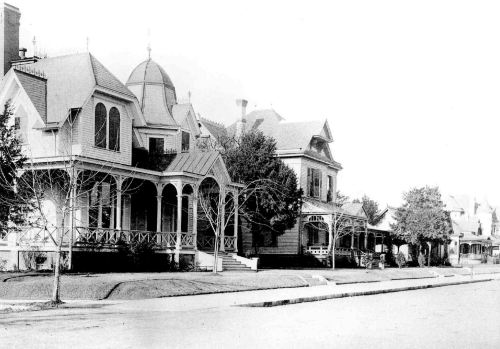
browder-near-cadiz_ca1895

This would have been about two blocks from the Rosenfield house. Imagine what that neighborhood once looked like!

Watch a news report on the outcry over the possible demolition of this house on the WFAA website, here.

The Dallas Morning News article on the 50th wedding anniversary of Mr. and Mrs. Max Rosenfield in which it is mentioned that Max built the house (“…their first home, a house built by Mr. Rosenfield and still standing on the northwest corner of Browder and St. Louis streets…”) is “Mr. and Mrs. M. J. Rosenfield To Observe 50th Anniversary” (DMN, Jan. 6, 1935).

Photo of the Rosenfields as a newly married couple found on Ancestry.com.

50th anniversary photo of Mr. and Mrs. Rosenfield is from the book John Rosenfield’s Dallas by Ronald L. Davis (Dallas: Three Forks Press, 2002).

All other sources as cited.

Max J. Rosenfield died in 1935 at the age of 76. His very interesting obituary (probably written by his son, John Rosenfield, amusements editor of The Dallas Morning News), can be found in the Dec. 2, 1935 edition of The News: “M. J. Rosenfield, Business Leader Many Years, Dies.”

It’s worth trying to figure out how to use the Murphy & Bolanz block books, courtesy of the Texas/Dallas History and Archives Division of the Dallas Public Library. Background on these very useful books can be found here.

If I’ve made any mistakes or have drawn any incorrect assumptions, please let me know!
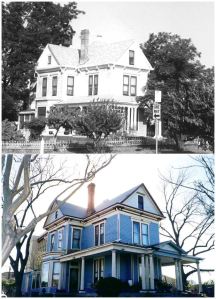
browder-house_then-now

*

UPDATE: Max Rosenfield developed a real estate partnership with Gerson Meyer, both of whom worked for Sanger Bros. department store. They bought and sold real estate (often to fellow Sanger’s employees), apparently as a lucrative side-business (Rosenfield even conducted his real estate transactions from his Sanger Bros. office). They apparently had acquired enough land by 1886 to have their own “addition” — “Rosenfield and Meyer’s Addition” in East Dallas. The earliest mention I found of it was this ad from May, 1886.

rosenfield-and-meyer-addition_dmn_052786DMN, May 27, 1886

Their addition was in East Dallas. Below, the map from the Murphy & Bolanz block book (click for larger image):
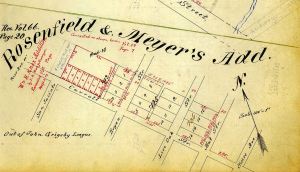
rosenfield-and-meyers-addition_murphy-bolanz

Gerson Meyer (a Jewish German immigrant, just a couple of years older than Rosenfield), moved to St. Paul, Minnesota in 1897 and continued working for several years in men’s clothing.

If something looks too small, click it!

*

Copyright © 2016 Paula Bosse. All Rights Reserved.


The Forney Car

forney-fair-park-car_ebayEastbound on Commerce (click for larger image)

by Paula Bosse

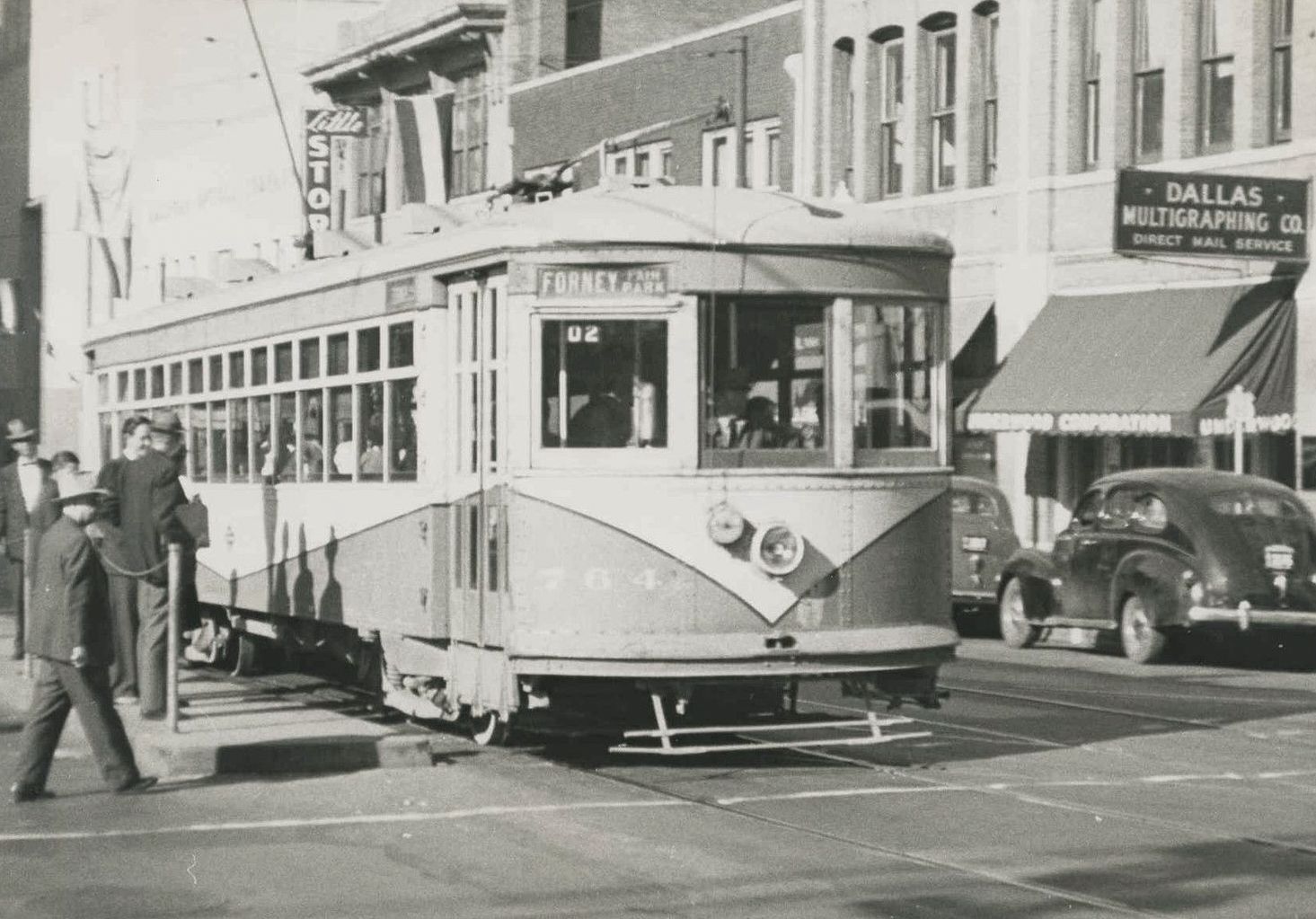
I’m a sucker for streetcars. Here’s car 764 heading east on Commerce, between Prather and S. St. Paul.

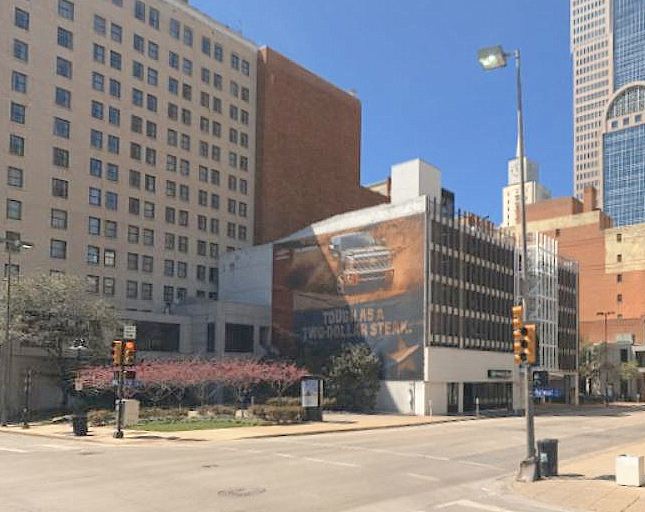
forney-car_1800-block-commerce_googleGoogle Maps

***

Photo from eBay.

The Underwood Corporation was at 1805-7 Commerce, and Dallas Multigraphics was at 1807 1/2 Commerce — they both moved to this location sometime between 1936 and 1943. This stretch of Commerce was once jam-packed with typewriter companies.

Forney Avenue ran along the northeastern side of Fair Park, about where Haskell does today, starting at Parry — if one continued along it past the city limits, one would reach the town of Forney. In 1922 Interurban track was laid between Dallas and Terrell, with the train entering Dallas along Forney Avenue, terminating at Union Station. The Forney streetcar and the Interurban traveled over the same tracks.

terrell-forney-ave_dmn_061621Dallas Morning News, June 16, 1921

forney-ave_1919-mapDetail of a map from 1919

For more on the Dallas-Forney-Terrell Interurban, check out the 1925 publication “Making Neighbors of the People of Dallas and Kaufman Counties and the Towns of Terrell, Forney, Mesquite and Dallas by the Opening of the Texas Interurban Railway” — the 16-page pamphlet has been scanned by the fine folks at UNT’s Portal to Texas History, and it can be accessed here.

Images larger when clicked.

*

Copyright © 2016 Paula Bosse. All Rights Reserved.
Elm & N. Harwood — ca. 1960

elm-harwood_ca-1960_dmn-tumblrIt’s 4:50 — where’s all the traffic? (click for larger image)

by Paula Bosse

A nice shot of the 1900 block of Elm Street, looking vastly more interesting in 1960 than it does now.

elm-harwood_bingBing StreetSide

***

Sources & Notes

Top photo by Hank Tenny.

Google Street View of this corner is here.

*

Copyright © 2016 Paula Bosse. All Rights Reserved.


“The Pause That Refreshes at the Texas Centennial” — 1936

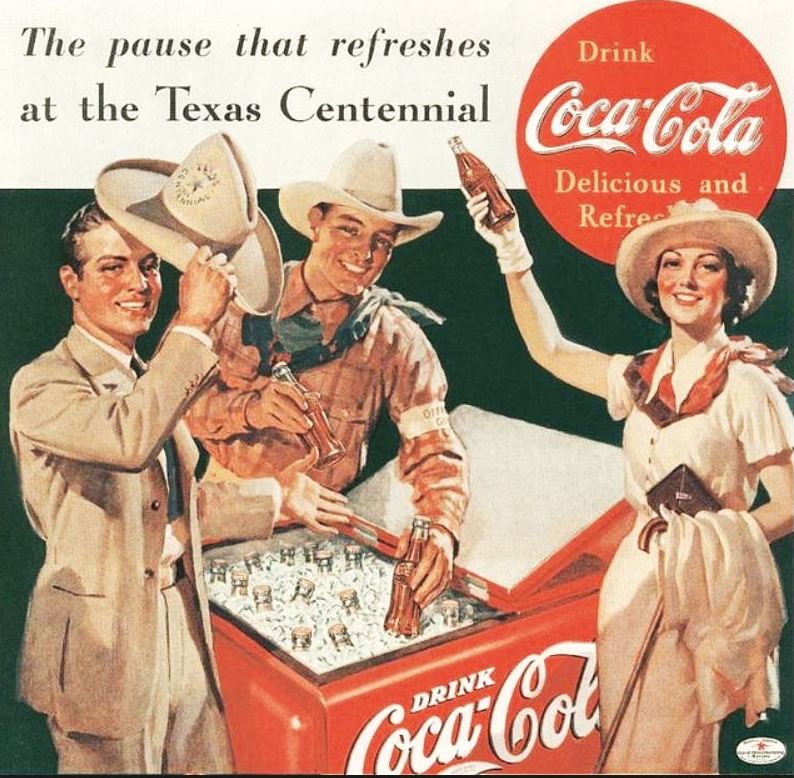
tx-centennial_coke-ad_pinterestBelly on up to the Coke cooler, pardner… (click for larger image)

by Paula Bosse

What do Stetson-wearing Texans enjoy drinking more than sarsaparilla? Coca-Cola, of course!

This ad led me to discover that the Coca-Cola Bottling Company of Dallas set up a working mini bottling plant in Fair Park during the Texas Centennial, costing a cool $60,000 and taking up 4,100 square feet of the Varied Industries Building. 100 bottles a minute were produced, destined for thirsty customers who bought the five-cent drinks there at the plant or at concession stands around the park. A photo accompanying a Dallas Morning News blurb about the mini bottling plant — which will be marked by a thirty-foot electric tower brought from the Century of Progress…” (DMN, Feb. 6, 1936), looked like the stunning Century of Progress photo seen here.

tx-centennial_coca-cola_ebay_1936

***

Top ad found on Pinterest; full ad found on eBay.

The “Varied Industries Building” apparently burned down in 1942 and was replaced in 1947 by the Automobile Building.

*

Copyright © 2016 Paula Bosse. All Rights Reserved.

Muriel Windham — An Oak Cliff Teenager’s 1940s Diary

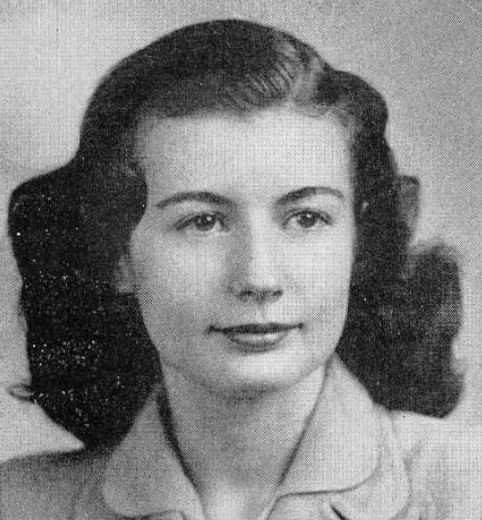
muriel_colorMuriel, via Muriel Windham’s Diary

by Paula Bosse

About this time last year, Robert Wilonsky of The Dallas Morning News wrote an interesting article about a black-out imposed by the city of Dallas in January, 1942, just a few weeks after the attack on Pearl Harbor. In the middle of it, he linked to a diary entry written by a 14-year-old describing the event. For me, the most interesting thing about Wilonsky’s piece was the fact that someone had transcribed diary entries of a teenage girl growing up in Dallas in the 1940s. So I read the whole thing. And I loved it.

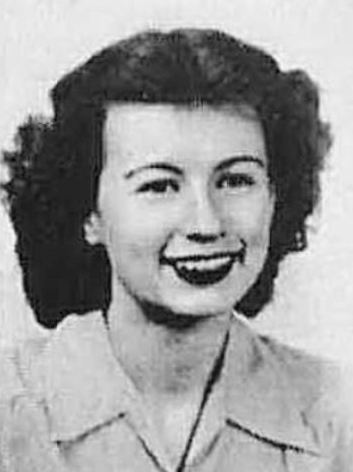
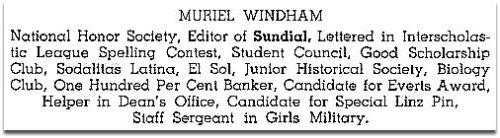
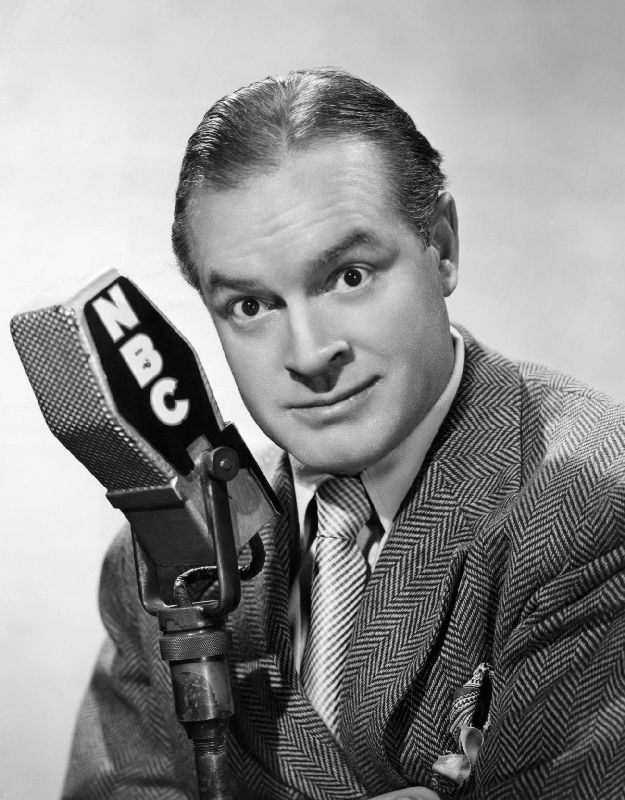
The teenager in question is Muriel Windham (1926-2005) who grew up in Oak Cliff and attended Peeler Elementary, Greiner Jr. High, and Sunset High School. She was a top student who was involved in lots of extracurricular activities, but her greatest joy was going to the movies and listening to comedians on the radio. She was absolutely obsessed — OBSESSED! — with Bob Hope. She attended SMU where she ultimately received a Master in English Literature degree and Master in Library Science degrees; she was head of the children’s department of the Dallas Public Library (as Muriel Brown) for many years and was a specialist in children’s literature. Somewhere in there she married G. W. Brown II and had three children.

But back to the diary. After her death in 2005, Muriel’s son David began transcribing his mother’s teenage diary — exactly as written, complete with misspellings and grammatical errors. It begins on January 1, 1940 (six weeks after she had turned 13) and ends in the summer of 1942. David Brown says he has years and years worth of her diaries — I hope he gets  back to transcribing them one day, because what’s on his blog now is utterly charming.

The diary is exactly like every other teenage girl’s diary. If you’re not of the female persuasion, you might not be able to handle the deep, deep plunge into teenybopperdom. It reads just like MY diary from when I was 13, except that my obsession wasn’t Bob Hope but a TV star from a 1970s TV show that might prove highly embarrassing were it to be revealed. If you have a low threshold for incessant mentions of Bob Hope by a moony adolescent or are not at all interested in entertainment of the early 1940s, this may not be for you. As I said, I loved it. I wish there were more Dallas-specific entries, because when those pop up, it’s pretty cool.

An introduction to the diary is here. The blog is written in reverse order — and it really should be read chronologically, so I suggest starting here at the very bottom and reading up the page; when it’s time for the next page, scroll down to the bottom and click  “Next Entries.” (You’ll get used to it.) There are 8 pages, and each entry is very short. It’s the perfect sort of thing to read when you stay in on a cold weekend. …But I’m not going to sugar-coat it: there is a LOT of Bob Hope to slog through! You’ve been warned!

**

muriel-windham_sunset-high-school_1943Muriel, 1943

muriel-windham_sunset-high-school_1944Muriel, 1944 — editor of the Sunset yearbook

muriel-windham_sunset-high-school_1944-clubsSenior, over-achiever — 1944 yearbook
***

Sources & Notes

Black and white photos are from the Sunset High School yearbook, the Sundial.

Muriel Windham Brown’s obituary can be read here.

Muriel does actually get to meet Bob Hope once or twice, but the diary entries stopped before a pretty incredible meeting on April 22, 1943 at a benefit to sell war bonds at the Dallas Country Club. There was even a short article in The Dallas Morning News which chronicled what must have been the biggest moment in her 16 years: “Hope Thrills Girl As He Sells Bonds” (DMN, April 23, 1943). A couple of sentences from the article:

In the hustle and bustle of his bond sale at Dallas Country Club Wednesday afternoon a pretty, young girl shyly stepped up to Hope and caused him to sink to his knees in a swoon as she whispered she would pay $10,000 for his autograph. […] Hope treated her beautifully. He sat her down on the platform, left the mike occasionally to dash over, feel her pulse, stroke her brow and leave a light kiss on her forehead. (DMN, April 23, 1943)

I can’t even imagine how stunned Muriel must have been! (Her father worked as an executive, mostly in insurance and banking, and I have a feeling that the $10,000 check came from his employer, not his own bank account.)

Muriel’s family lived at 817 Brooks. No movie theater was all that far away by streetcar.

muriel_817-brooksGoogle Maps

A few more photos as she made her way through Sunset and SMU are here.

And, well, I kind of feel I have to….

bob-hope

*

Copyright © 2016 Paula Bosse. All Rights Reserved.


The Eisenlohr Family and Dallas’ First Christmas Tree — 1874

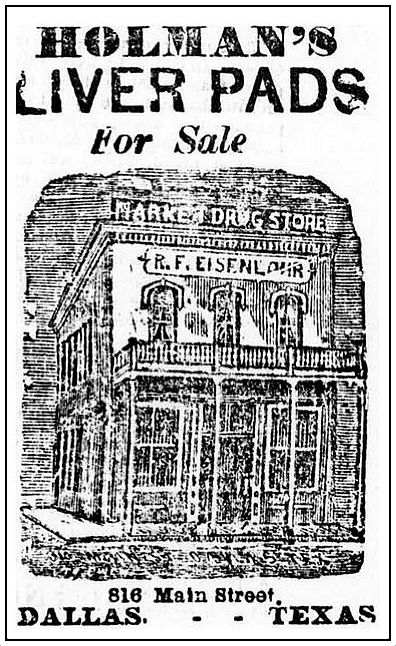
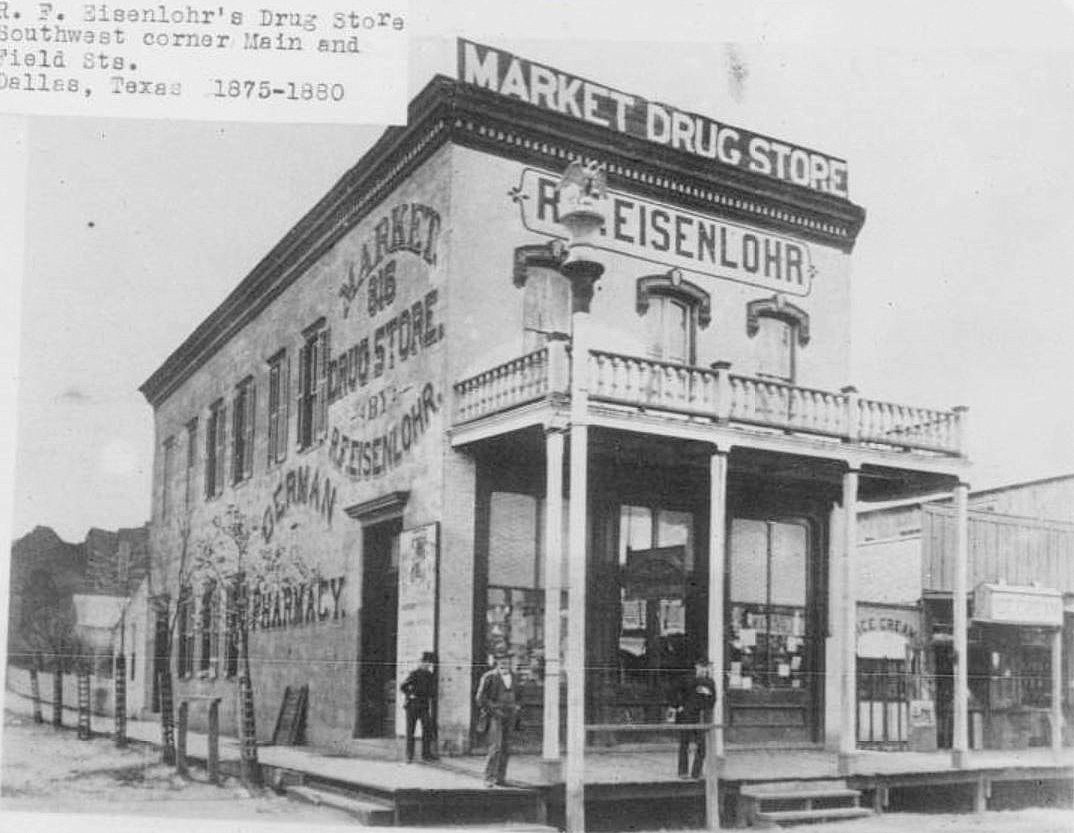
eisenlohr_1885_ebayThe Eisenlohr Market Drug Store, 1885 (click for larger image)

by Paula Bosse

According to the memories of Dallas artist E. G. Eisenlohr (1872-1961), his German-born parents brought the first decorated Christmas tree to Dallas in 1874 (or, according to a version of the story published a few years later, 1876). There had been Christmas trees in Dallas before this, but the Eisenlohrs’ tree may have been the first tree — or one of the first — to be brought inside and decorated with tinsel and ornaments.

According to E. G. Eisenlohr’s Christmas memories which appeared in The Dallas Morning News on Oct. 1, 1935:

The candles, holders and tinsel for that first Christmas tree in the village of Dallas in 1874 was ordered from the East. For days my mother baked cookies in the shapes of stars, ships, [and] boots [using] hand-carved molds, some more than 100 years old, that illustrated folk tales…. For days before Christmas Eve the children had been locked out of the room where Kris Kringle was decorating the tree and permitted to enter only after our parents played their Christmas concert and appeared at the window in answer to the cheers from the crowd in the streets. There may have been other trees in the village before we had ours but I have not heard of any and many persons said ours was the first here. I believe we had the first tinsel and glass decorations, for many persons told me later that their parents had told them of the decorated trees back in their old homes before they came to Texas.

eisenlohr-store_degolyer-lib_SMUThe store, ca. 1875-1880 (via DeGolyer Library, SMU)

But what kind of tree was it? According to Kenneth Foree’s 1946 News article about the Eisenlohr tree, it was “a beautiful cedar tree (cut from an Akard and Young thicket by moonlight when the children were asleep” (DMN, Dec. 24, 1946).

Eisenlohr’s father, Rudolph F. Eisenlohr, owned the Market Drug Store (seen above), which was at the southwest corner of Main and Field (the current view of that corner can be seen here, via Google Street View, and the 1885 Sanborn map of that block can be found here.) The family lived upstairs. Imagine that first decorated tree — actually inside someone’s home! — lit with candles in one of those upper windows, attracting a crowd of people below who had never before seen such a sight in the little village of Dallas.

eisenlohr_photoR. F. Eisenlohr (1846-1933)

eisenlohr_market-drug-store_dallas-herald_021877
The Dallas Herald, Feb. 18, 1877

eisenlohr_dallas-directory_1878
Dallas city directory, 1878

eisenlohr_nortons-union-intelligencer_102383
Norton’s Union Intelligencer, Oct. 23, 1883

***

Sources & Notes

More on this tree can be found in these three Dallas Morning News articles:

  • “Christmas of ’74 Featured by First Yule Tree in City — Intended for Eisenlohr Children, but Served for All of Youngsters ” (DMN, Oct. 1, 1935)
  • “Happy Citizens of the Little Town of Dallas Saw Their First Glass and Tinsel Ornaments in 1876 on a Tree Which Glittered Through the Eisenlohrs’ Window Upstairs Over Their Drug Store” (…that is one crazy-long headline…) by Mattie Lou Frye (DMN, Dec. 18, 1932)
  • “First Tree” (crazy-short headline…) by Kenneth Foree (DMN, Dec. 24, 1946)

Photo of the Eisenlohr store found on eBay.

More on artist E. G. Eisenlohr here and here.

*

Copyright © 2015 Paula Bosse. All Rights Reserved.


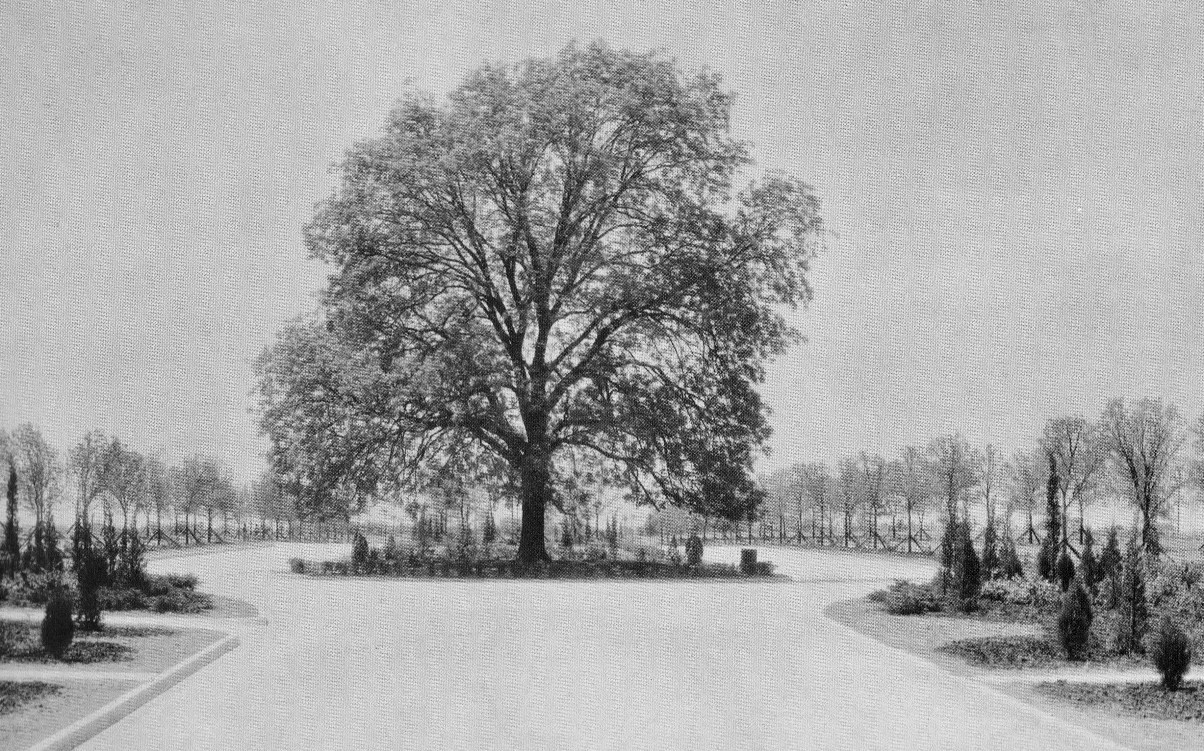
Celebrate the Pecan Tree’s 150th Christmas!

pecan-tree_bigOur beautiful Pecan Tree! (click for larger image)

by Paula Bosse

Ever since I realized that 2015 was the sesquicentennial for what may the world’s most famous pecan tree, I’d planned to do a nice post worthy of such an occasion. Except that, as usual, time seems to be slipping away from me, and I have time today to post only a few photos of one of my very favorite local landmarks.

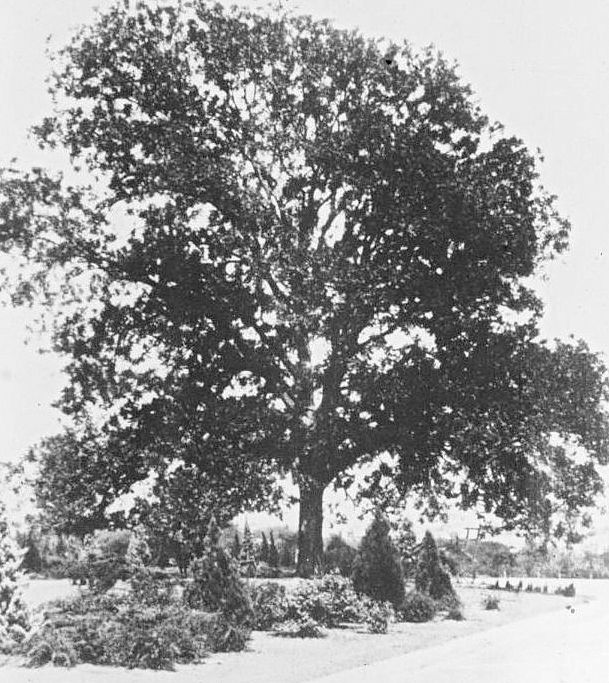
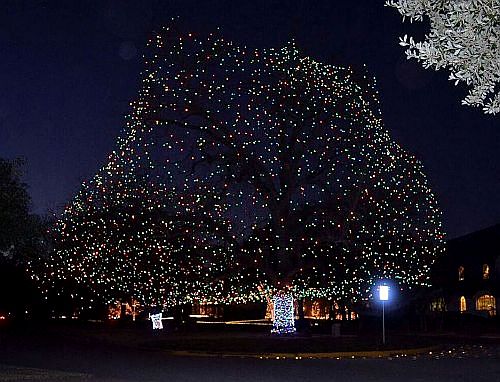
The pecan tree — or, the Pecan Tree (it deserves to be capitalized) — is in Highland Park on Armstrong Parkway at Preston Road, and if you grew up in the Dallas area, driving past the huge tree decorated with lights is an annual Christmas ritual. I remember when I was going through my sullen teen years how I always rolled my eyes when my parents said we were going to go see the Pecan Tree — but when we got to the tree and saw it … it was just wonderful.

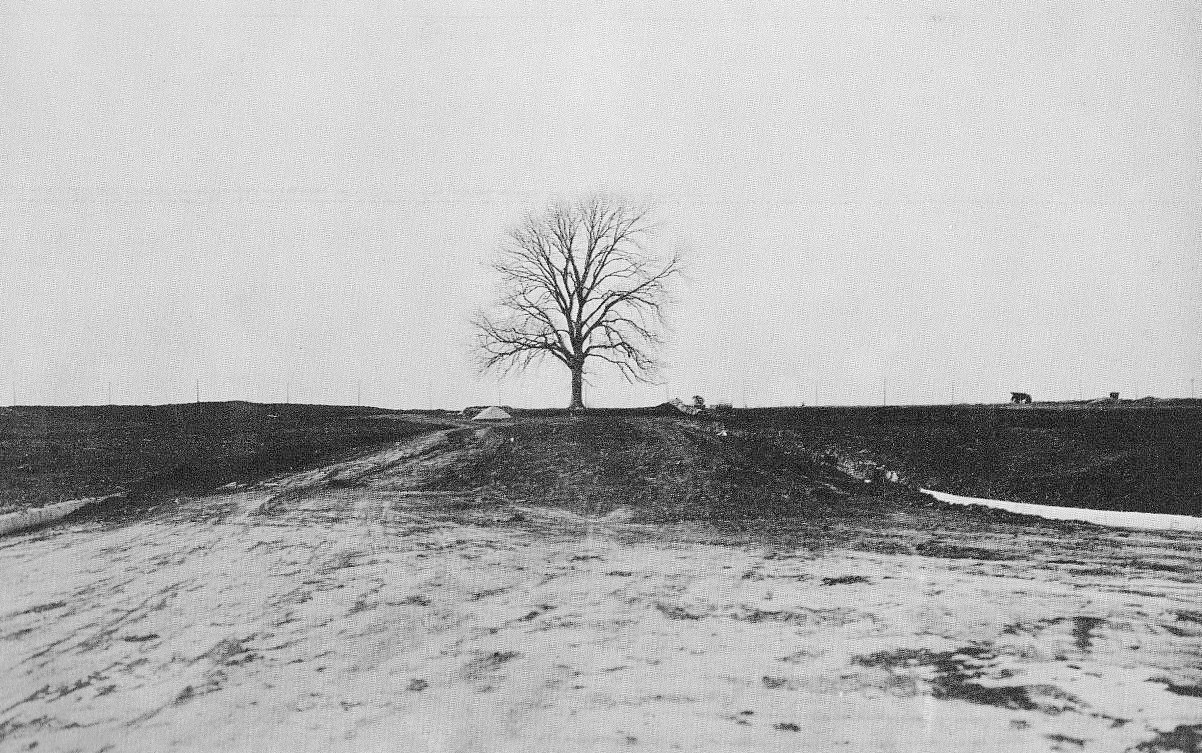
The tree began life in 1865 (!) as a sprout in the middle of a cornfield owned by the Coles, one of Dallas’ pioneer families. In October of that year, young Joe Cole, just returned from the Civil War, was working the field and discovered the little plant in a furrow, crushed under the wheels of his wagon. The story goes that Joe, still overwhelmed from the horrors of war, got out of his wagon and replanted the sprig, taking pains over the years to make sure it grew into a large healthy tree. And it did.

I discovered recently that the very first house I lived in was Joe’s old farmhouse, part of which, somehow, was still standing across from North Dallas High School into the 1980s. I’ve always felt a kinship with that tree, and it’s nice to know that my very first home was the home of the man responsible for the tree that has given so much pleasure to so many people. Thank you, Joe!

Below, a short, six-and-a-half-minute film about the history of the tree, produced by KERA: “Million Dollar Monarch,” directed by Rob Tranchin.

*
pecan-tree_small

pecan-tree_degolyer-lib_c1909
1909 (via DeGolyer Library, SMU)

pecan-tree_lee-hite
Photo by Lee Hite

**

UPDATE: Sadly, the Pecan Tree did not make it to its 154th Christmas. The Highland Park landmark was cut down in October, 2019, a victim of age and disease. The nearby “sister tree,” which was grafted from the older tree in the 1950s, has taken its place on center stage. Several articles on this sad development can be read on the Park Cities People website here.

***

Sources & Notes

First two photos were reproduced as promotional postcards by the Park Cities Bank in the 1970s; thanks to the Lone Star Library Annex for allowing me to use these images. Source of other photos as noted.

Read about the tree on the Highland Park website, here.

More about the history of the tree can be found in a 1933 article from The Dallas Morning News, with memories from the then-92-year-old Joseph Cole: “Million-Dollar Tree of Dallas, Big Pecan Centering Parkway, Set Up by Hand of Man Now 92” (DMN, March 5, 1933).

A 2012 report on the aging tree can be found in a Dallas Morning News article by Melissa Repko, here.

This famed Pecan Tree was planted in the fall of 1865, which would make this its 150th anniversary. I haven’t seen any mention of this. I know the tree has been in bad shape at times throughout the years, but I’m pretty sure it’s still standing. I haven’t seen the tree this year, but it was still looking pretty impressive last year. Happy 150th, Pecan Tree!

Click photos for larger images.

*

Copyright © 2015 Paula Bosse. All Rights Reserved.


“A Haven From the Usual Turmoil of Holiday Shopping”

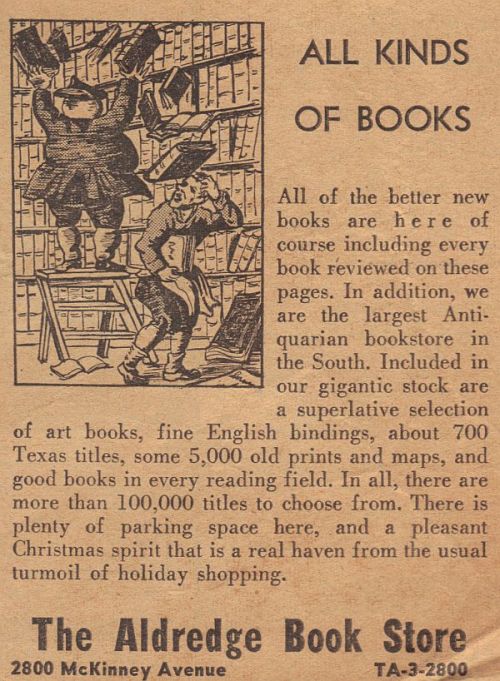
ABS_xmas_haven_nd“A superlative selection…”

by Paula Bosse

Remember the quiet joy of shopping in bookstores? Remember bookstores? In celebration of the completion of this year’s Christmas shopping, I give you two ads from The Aldredge Book Store, where there’s “plenty of parking  space […] and a pleasant Christmas spirit.”

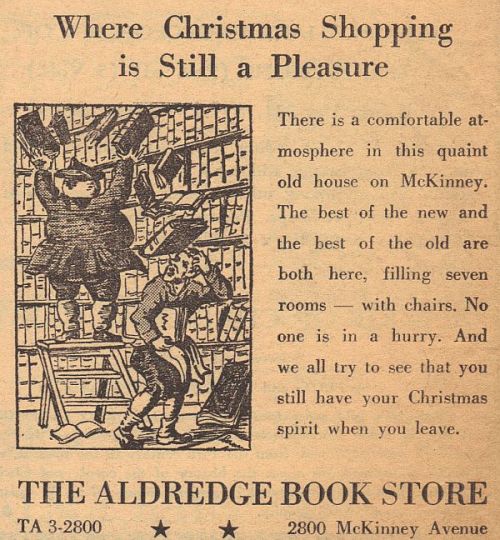
ABS_xmas_19631963

No one is in a hurry. And we all try to see that you still have your Christmas spirit when you leave.

I practically grew up in this store, and I miss it.

***

Sources & Notes

Both ads from the early 1960s. They appeared in the Sunday book sections of The Dallas Morning News and The Dallas Times Herald. (Remember when we had two newspapers? Remember when we had Sunday book sections?)

Previous posts on The Aldredge Book Store can be found here.

*

Copyright © 2015 Paula Bosse. All Rights Reserved.


Christmastime in Lakewood — 1951

xmas_WWW_1952Mad tree-trimming fun ahead (click for larger image)

by Paula Bosse

Above, Woodrow kids with a Christmas tree crammed into their convertible, taking a moment to wave at someone in the distance, probably a classmate coming out of Harrell’s Drug Store. Next stop, wholesome 1950s tree-trimming fun, complete with mugs of warm cocoa and Perry Como singing about Christmas on the radio.

If you’re familiar with Lakewood, it might take a second to get your bearings, but this was Abrams Road. It’s now the short stretch known as Abrams Parkway, directly across Abrams from the Lakewood Whole Foods — it basically serves as a parking lot for the businesses now occupying these buildings.

Here is a list of the businesses seen in this 1951 photo, along with what currently occupies those same buildings:

  • 2015 Abrams: then, Abrams Road Cleaners; now, The Heights (formerly Legal Grounds)
  • 2017 Abrams: then, Massey’s Beauty Salon & Barber Shop; now, part of Blow Hair Salon
  • 2019 Abrams: then, Lakewood Shoe Service; now, Blow Hair Salon
  • 2021 Abrams: then, Lakewood Recreation Club; now, Scalini’s Pizza & Pasta
  • 2023 Abrams: then, Lakewood Sporting Goods; now, part of Curiosities
  • 2025 Abrams (mostly out of frame): then, Teter Plumbing Co.; now, Curiosities (an emporium of eclectic antiques and overall super-cool stuff)

Just out of frame to the right, a couple of doors down, was the old El Chico restaurant, now Hollywood Feed.

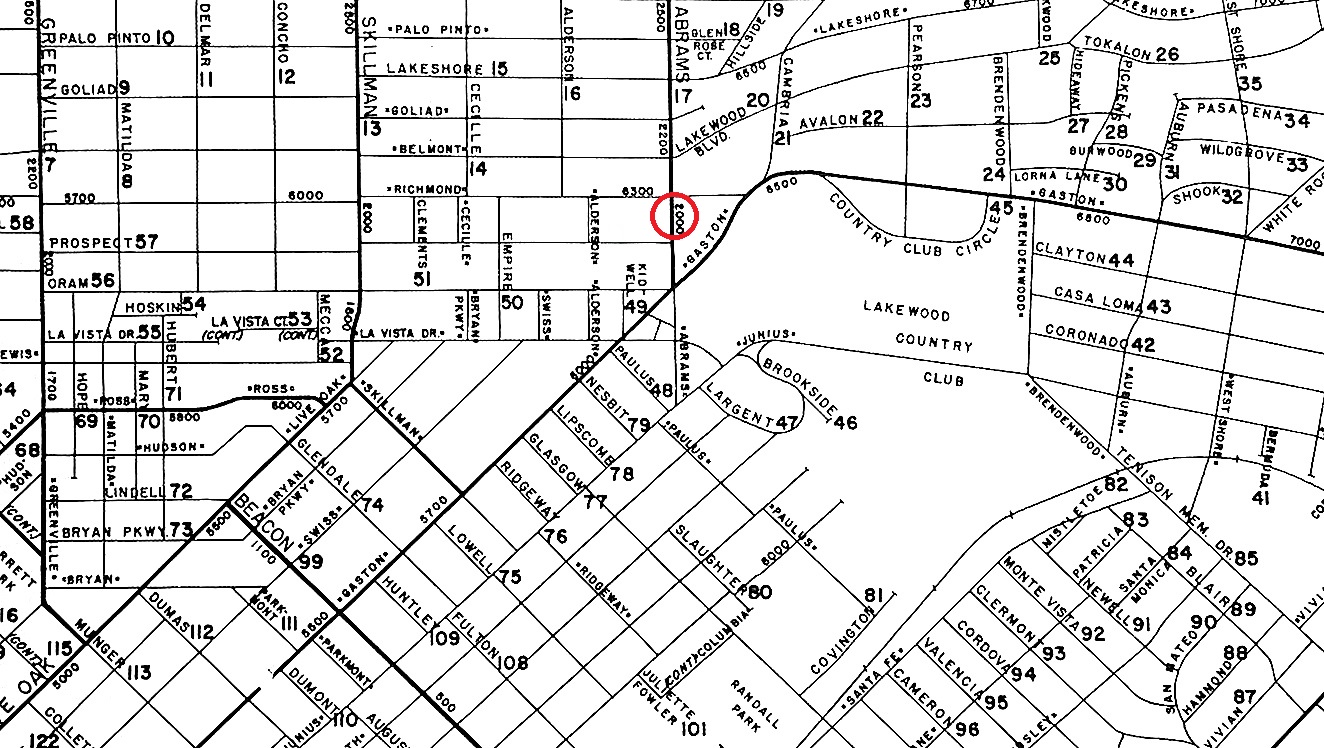
A detail of a page from the 1952 Mapsco, which will be confusing to those who might not know about the weird “Abrams Bypass” that happened in the early ’80s (click for larger image).

1952-mapsco_lakewood-det

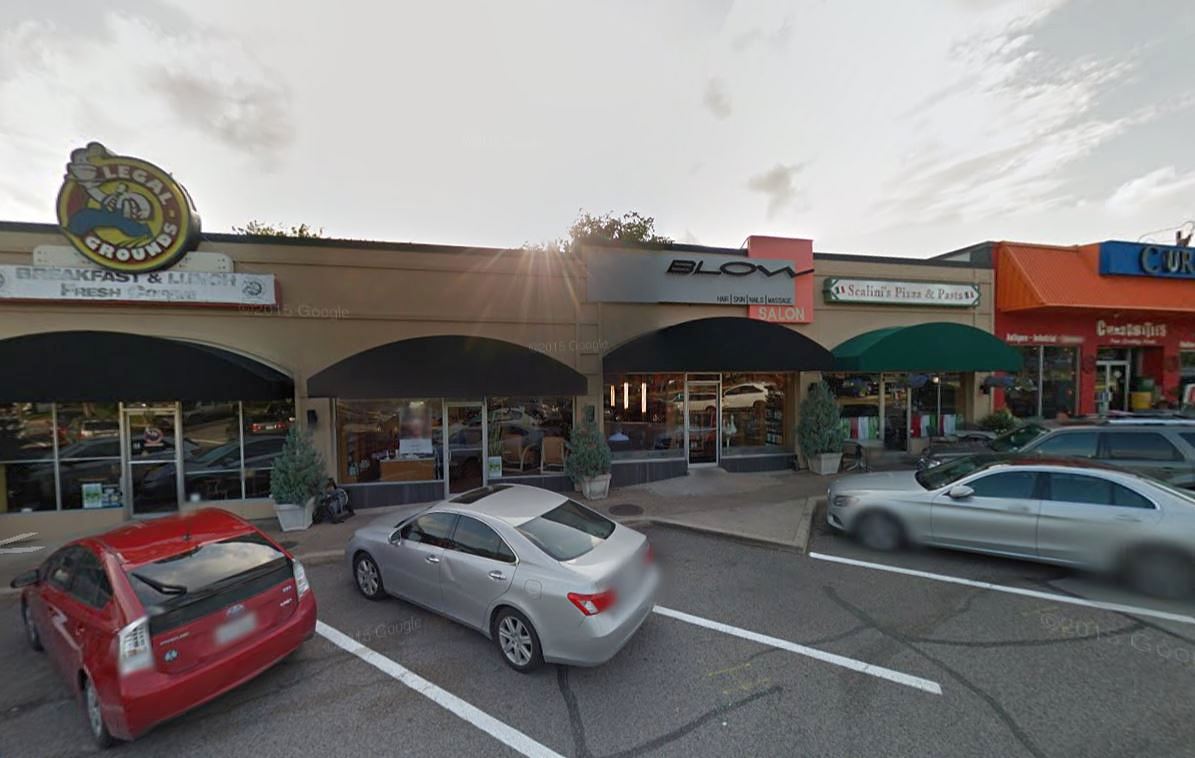
Here’s what this strip looks like today (or recently, anyway — Legal Grounds is now The Heights):

abrams_today_google-street-viewGoogle Street View

***

Photo from the 1952 Woodrow Wilson High School yearbook, The Crusader. Apologies for the quality — the photo appeared across two pages and was scanned at a pretty low resolution. It’s still pretty cool, though.

To see a magnified detail of the businesses on the left half of the photo, click here; for those on the right half, click here.

Since I don’t have access to a street directory showing this block’s info in 1951, here are the businesses that occupied that block per the 1948 and 1953 directories:

48-53

When in doubt, click pictures to see if they get bigger — they usually do!

*

Copyright © 2015 Paula Bosse. All Rights Reserved.