Flashback : Dallas

A Miscellany: History, Ads, Pop Culture

Category: Neighborhoods

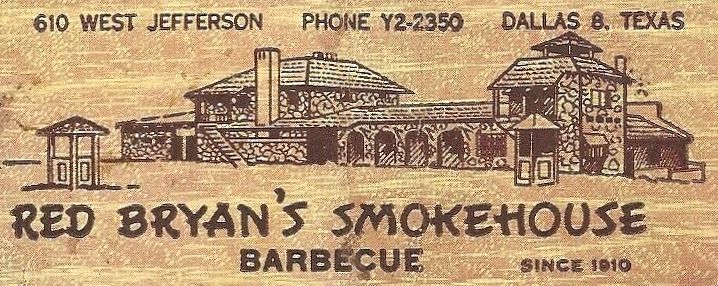
Red Bryan’s Smokehouse — BBQ, Oak Cliff-Style

red-bryans-smokehouse_bbq_postcard_ebay_ca-1950

by Paula Bosse

Everybody in Dallas knows about Sonny Bryan, and some remember Red Bryan, but I didn’t know there was another Bryan forebear, who started the family barbecue dynasty: Elias Bryan. Elias and his wife, Sadie, arrived in Oak Cliff from Cincinnati in 1910 and opened a barbecue stand. Elias begat Red, and Red begat Sonny. And there was much trans-generational smoking of meat. The Bryans have been a BBQ fixture in Dallas for over 100 years.

Fun facts about William Jennings “Red” Bryan:

  • Red studied botany at SMU, which might explain his initial career as a florist until he was inevitably pulled back into the family business. He opened his first place in the early 1930s in a retired Interurban car, known affectionately as “The Tin Shack.”
  • In the late ’40s, now well established and wanting swankier digs, he commissioned the respected architect Charles Dilbeck to design the new restaurant. (Dilbeck designed some of the most beautiful homes in Dallas, several of which are in Lakewood, but this was probably his first — and only — barbecue joint.)

And the rest is, as they say, barbecue — and Oak Cliff — history.

*

red_bryan_bbq_dth_0205561

*

Red, 1951

*

red-bryans-bbq_matchbook_ebay

***

Sources & Notes

Postcard (circa 1950) at top from eBay. This is printed on the back:


red-bryans-smokehouse_bbq_postcard_caption_ebay

Ad from 1956.

Much more on Red Bryan’s Smokehouse, with lots of photos of its construction, can be found in the Oak Cliff Advocate article “The King of Oak Cliff Barbecue” by Gayla Brooks, here.

Even more cool stuff, including early photos of the family business, can be found in the Texas Monthly article “Bryan Family Artifacts and Mementos” by Daniel Vaughn, here.

Sonny Bryan’s website is here.

*

Copyright © 2014 Paula Bosse. All Rights Reserved.

Shoveling Apples at the Farmers Market — 1958

An apple a day… (click for larger image)

by Paula Bosse

Cleaning the streets around the Farmers Market.

All in a day’s work for the City of Dallas Public Works Department.

***

Photo taken July 23, 1958. From the Dallas Farmers Market – Henry Forschmidt Collection 1938-1986, Dallas Municipal Archives, via the Portal to Texas History; more info on this photo is here.

Click picture for larger image.

*

Copyright © 2014 Paula Bosse. All Rights Reserved.

From Deep in the Heart of Texas, I Give You Love Field — 1919

Love is in the air

by Paula Bosse

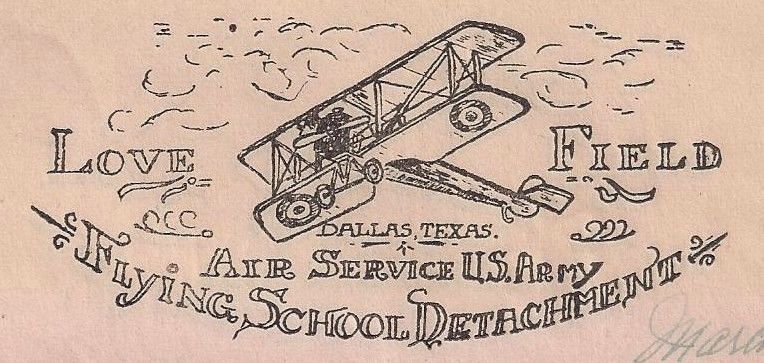
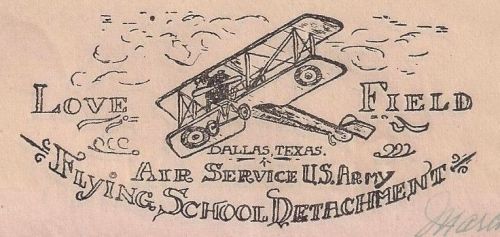
It’s Valentine’s Day — a perfect time to turn to Love Field (…which, like “Lovers Lane,” must sound a little cutesy to outsiders). The above image shows the letterhead of the U.S. Army Air Service Flying School Detachment, a consolidation of World War I squadrons based at Love Field from November 1918 to November 1919.

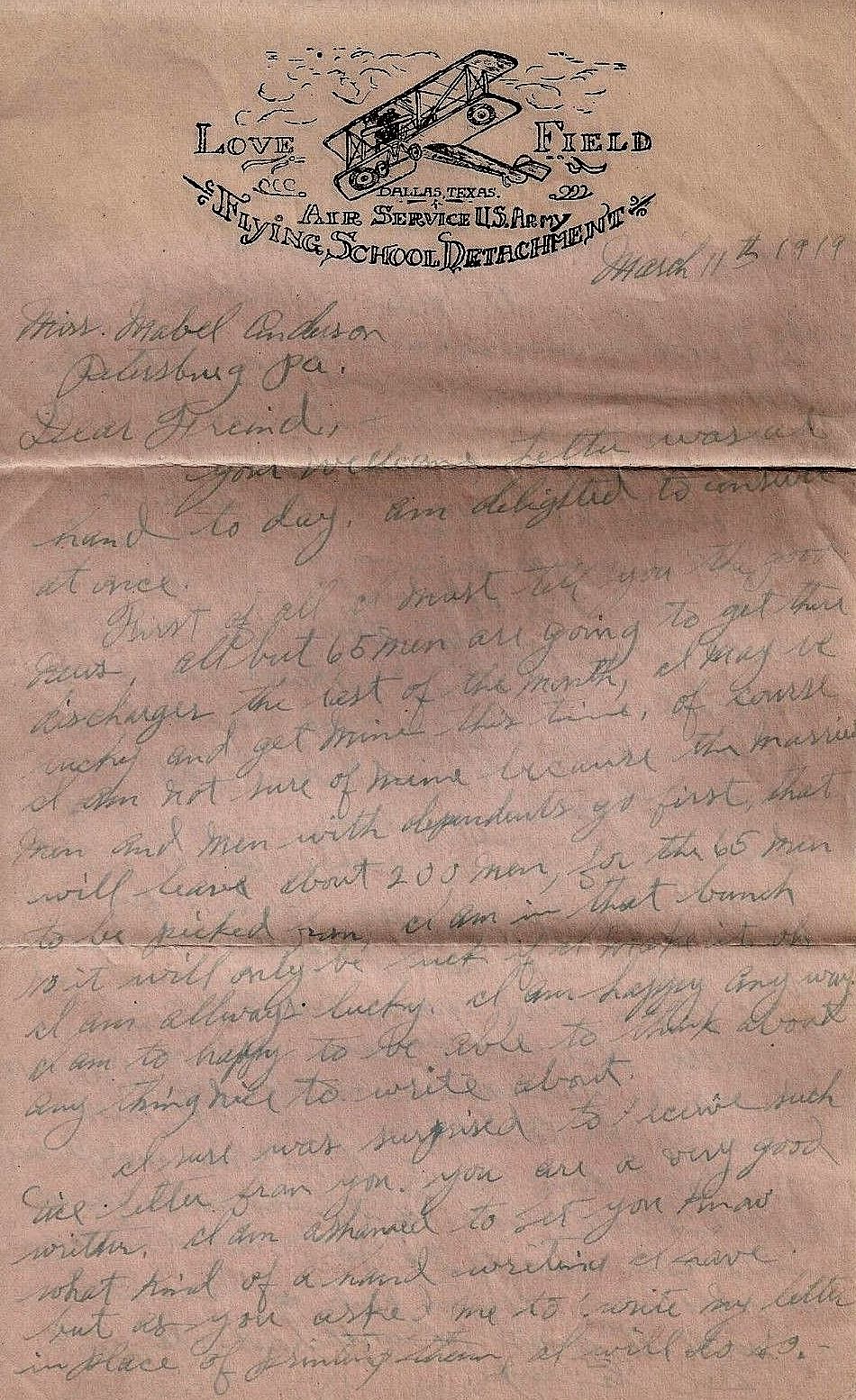
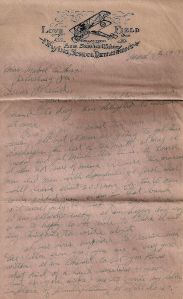
One of the young pilots stationed there wrote a four-page letter on this stationery. The letter, dated March 11, 1919, was addressed to Miss Mabel Anderson in Petersburg, Pennsylvania. They seem to have begun a sort of pen-pal correspondence, and he is certainly very happy to have received a letter from her. (“Your wellcome [sic] letter was at hand today. Am delighted to answer at once.”) He asks if she would send him a photograph and tells her he’d like to meet her. He says that he is hopeful that, the war finally over, he will be discharged at the end of the month — he thinks he will be because, “I am allways [sic] lucky.”

This is an item for sale on eBay, and only the first page is scanned, so the identity of the author of the letter will remain unknown to those of us merely browsing an auction listing, interested but unwilling to cough up the cash to buy it and read any further. I wonder what happened? If he wanted to meet her, then perhaps he, too, was from Pennsylvania — they might have met when he arrived back home. He certainly sounds excited and hopeful and flirtatious, and he should, because not only was he “allways lucky,” but the long war had finally ended and he was headed home with his whole life ahead of him. Where’s Paul Harvey to tell us the rest of the story?

Happy Valentine’s Day!

***

This four-page letter on Love Field letterhead was recently up for auction on eBay, with the following description: “Letter from airman to a young girl asking for her picture and wanting to meet her. Very early US Army Air Service stationery from Love Field in Dallas Texas. Just after the end of WWI. Scarce Item.”

Here is the first page, with a transcription (spelling corrected) below (click to see a larger image).
love-field_letter_1919

Miss Mabel Anderson
Petersburg, Pa.

Dear friend,

Your welcome letter was at hand today. Am delighted to answer at once.

First of all I must tell you the good news. All but 65 men are going to get their discharges the last of the month. I may be lucky and get mine this time. Of course I am not sure of mine because the married men and men with dependents go first. That will leave about 200 men, for the 65 men to be picked from. I am in that bunch, so it will only be luck if I make it ok. I am always lucky. I am happy anyway. I am too happy to be able to think about anything nice to write about.

I sure was surprised to receive such a nice letter from you. You are a very good writer. I am ashamed to let you know what kind of a handwriting I have, but as you asked me to write my letter in place of printing [it], I will do so.

*

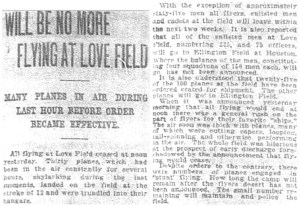
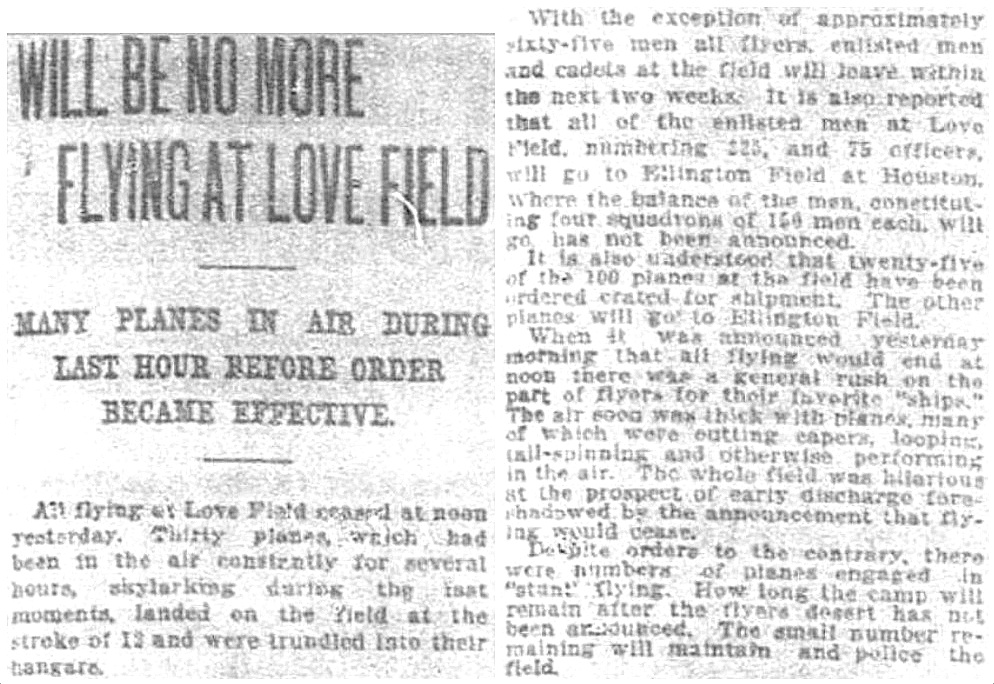
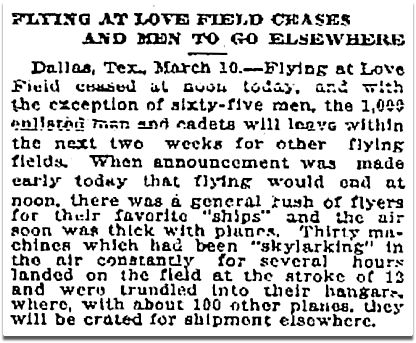
Here are two stories about how the airmen stationed at Love Field responded to the announcement that all flying would cease at noon on March 10, 1919 before demobilization began. It sounds like something from a movie: a sky full of something like 30 airplanes looping and “skylarking,” their pilots celebrating their fast-approaching military discharge by flying their favorite “machines” for the last time.
love-field_galveston-news_031119Galveston News, March 11, 1919

love-field_dmn_031119Dallas Morning News, March 11, 1919 (click for larger image)

*

Copyright © 2014 Paula Bosse. All Rights Reserved.

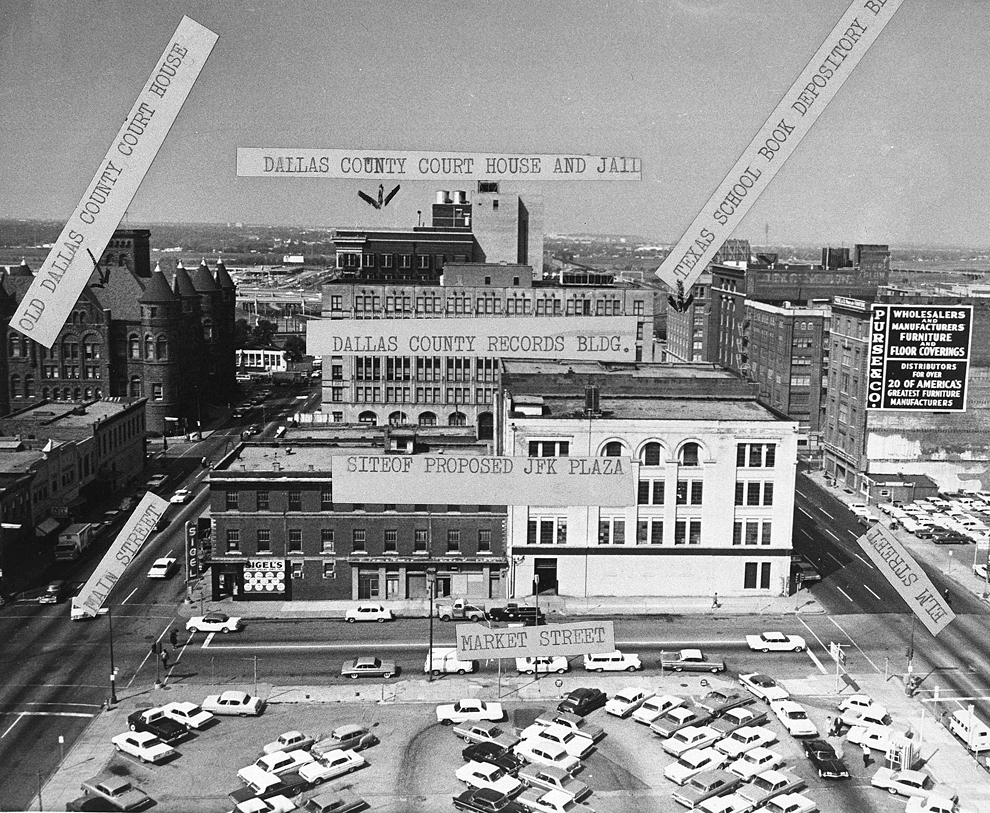
Where to Put That JFK Memorial? — 1964

Looking west, 1964 (AP photo)

by Paula Bosse

I’m not really into the whole assassination thing, which may explain why I’ve never seen this 1964 Associated Press photo (with or without the labels). Despite the connections to “that dark day,” I think this is a really interesting view of the city, from an unusual vantage point.

Here’s another similar photo, from April 1964 — this one from United Press International. UPI’s caption:

DALLAS: Site of Memorial Park. The area outlined in white is the block where the John F. Kennedy Plaza will be created as a memorial to the late president. The outline traces buildings now on the site which will be removed on completion of the new county courthouse.

jfk-memorial_proposed_apr-1964_UPI_ebayApril 1964 (UPI Telephoto)

The original location for the memorial was in the block immediately to the east of the Records Building, not the Old Red Courthouse, where it eventually was placed. I’m not sure why the location changed, but by the time architect Philip Johnson, designer of the memorial, was on board, the site had moved one block south.

*

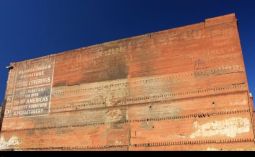
The Purse & Co. sign seen at the right side of the top photo is still visible today — it’s probably the largest and most familiar ghost sign downtown. Here’s a picture that was linked to Google maps. (I think I prefer it as a ghost sign.)

***

Sources & Notes

Top photo by Ferd Kaufman for the Associated Press, 1964.

Bottom UPI Telephoto found on eBay.

*

Copyright © 2014 Paula Bosse. All Rights Reserved.

Start Your Brilliant Career at Dallas Telegraph College — c. 1900

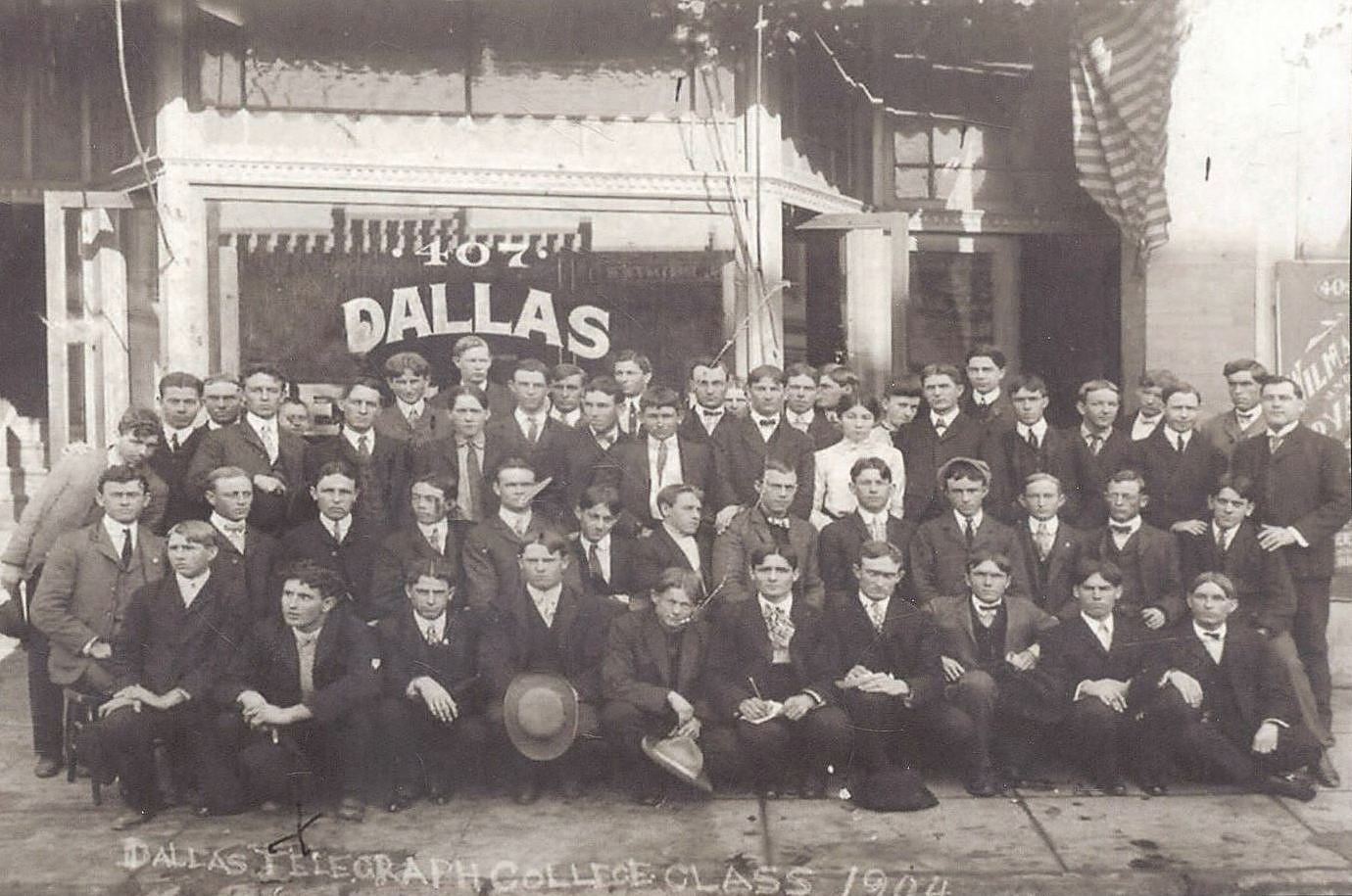
dallas_telegraph_college_ad_1904

by Paula Bosse

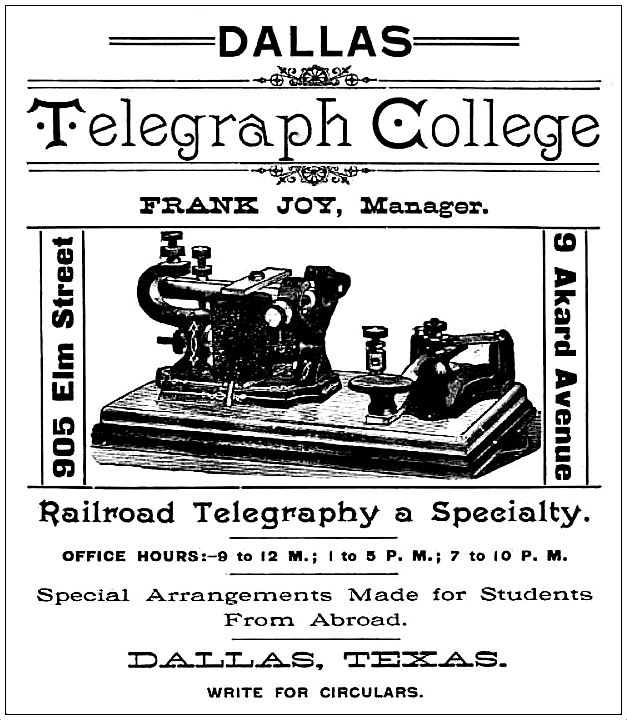
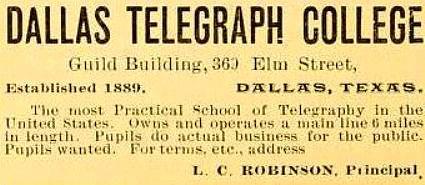
The Dallas Telegraph College opened in 1889 and admitted both men and women as students (if not from the beginning, certainly by the early years of the new century).

dallas-telegraph-college_1889-directory1889 ad (click to see larger image)

In the 1904 photo below, you’ll see one lone woman in the group.

dallas-telegraph-college_1904_ebay1904

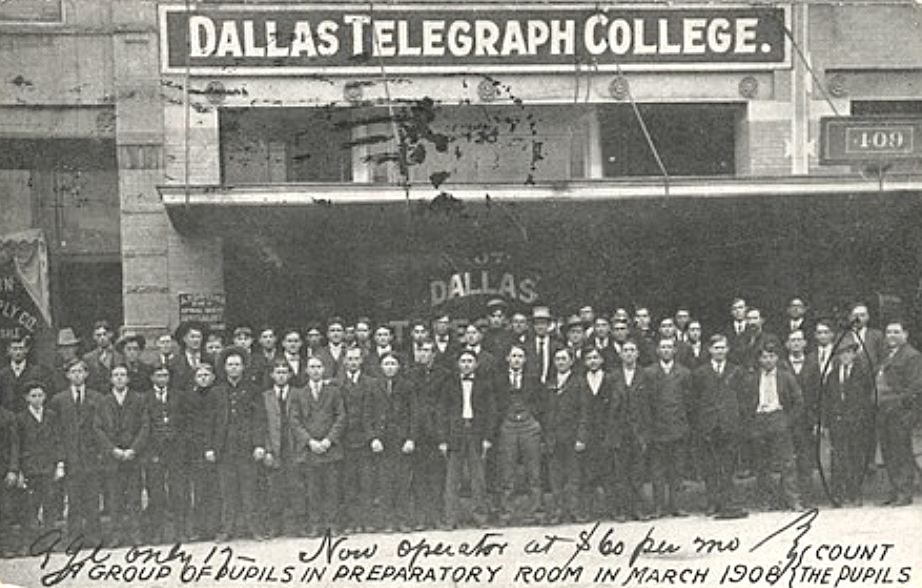
Below, the text of a 1908 ad — published in a San Antonio newspaper in hopes of drawing students to Dallas from around the state — rather optimistically promised hard-working students the possibility of earning an “enormous” salary and maybe even becoming the head of a railroad!

The Dallas Telegraph College is a school of more than state reputation. Prof. L. C. Robinson is president, with J. E. Hyle as superintendent. As is well known, telegraphy is not only one of the pleasantest of studies, but offers a brilliant career to the man who ‘makes good.’ A great many railroad presidents started as operators. The men who have made good now head railroad systems at enormous salaries. What one man has done, another may do. The Dallas Telegraph College has been a chartered institution for fifty [sic — this should be “twenty”] years. Why not send for one of their beautiful catalogues?

dallas_telegraph_college1908 ad

dallas-telegraph-college_1908_cook-coll_degolyer-lib_SMU
1908, via DeGolyer Library, SMU

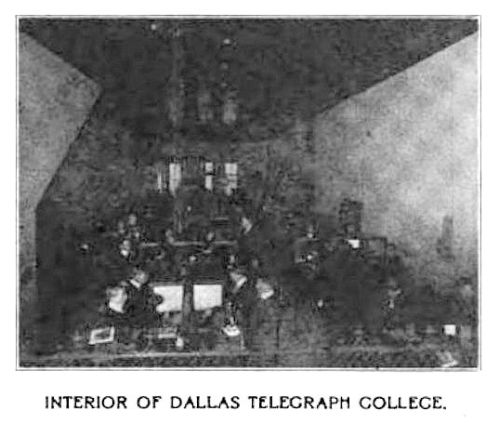
According to a 1912 article by Lewis N. Hale on Texas schools and colleges in Texas Magazine, the students learned to ply their trade by tapping (…as it were) into the actual railroad telegraph lines which, rather conveniently, ran right through their classrooms. A very murky photo from that Texas Magazine article is below.

dallas-telegraph-college_tx-mag_1912_photo

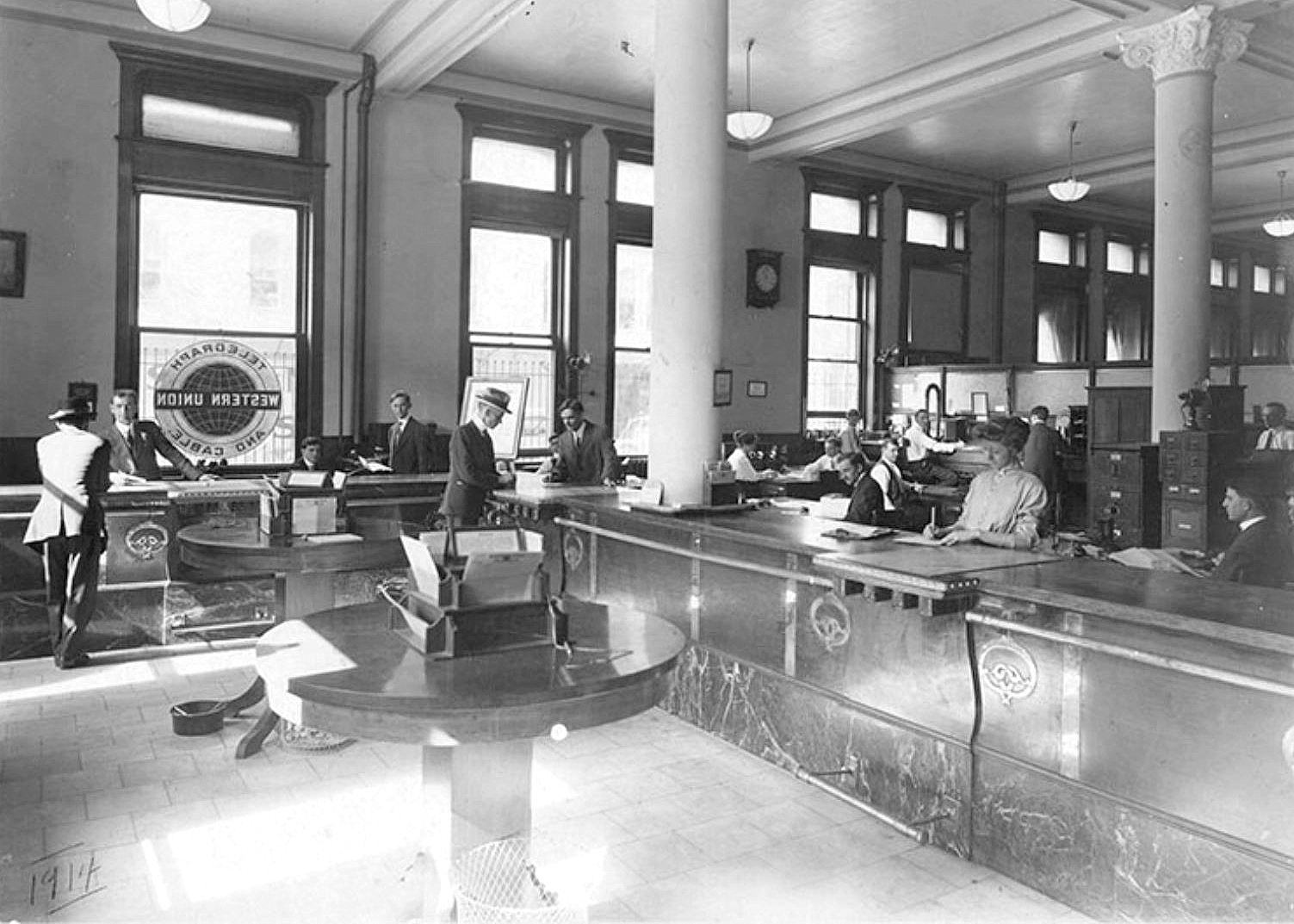
The goal of students was to secure employment in a nice, well-appointed office, such as Dallas’ Western Union headquarters, shown below in 1914.

western-union_trust-bldg_1914_DPLvia Dallas Public Library

Next stop: an enormous salary!

***

Sources & Notes

Top ad (“Learn Telegraphy”) from 1904. Second ad from 1889 (from the pages of the Dallas city directory). Third ad (with Guild Building address) from 1894.

Photo showing 1904 class from eBay.

1908 photo showing students standing in front of the building from the George W. Cook Dallas/Texas Image Collection, DeGolyer Library, Southern Methodist University; more info on this card is here.

Western Union office photograph — “[Western Union Telegraph Company interior main office – Trust building at 801 Main Street]” (1914) — is from the DPL Van Orden Western Union Telegraph collection of the Dallas Public Library Dallas History and Archives Division (Call Number PA2007-2/2).

An entertaining read on the history of telegraph service in Texas by Mike Cox can be found here.

The Handbook of Texas entry on telegraph service in Texas can be found here.

Absolutely EVERYTHING that you (and Ed McMahon) would ever want to know about the telegraph and telegraphy is here.

*

Copyright © 2014 Paula Bosse. All Rights Reserved.

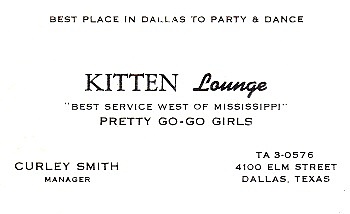
Meet Me at the Kitten Lounge — 1968

kitten-lounge_1968

by Paula Bosse

KITTEN LOUNGE
Best Place in Dallas to Party and Dance
“Best Service West of Mississippi”
Pretty Go-Go Girls
Curley Smith, Manager
TA 3-0576
4100 Elm Street
Dallas, Texas

From the manly, go-go-girl-loving pages of a 1968 issue of Texas Peace Officer magazine. No doubt a happening place, at Elm & Haskell. Peace officers welcome!

*

Copyright © 2014 Paula Bosse. All Rights Reserved.

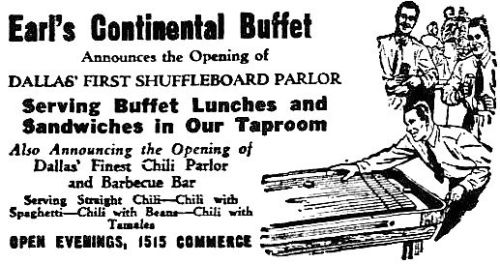
Earl’s Continental Buffet Has Got it ALL — 1947

earls-continental-buffet_shuffleboard_dmn_1947

by Paula Bosse

Earl’s Continental Buffet Announces the Opening of
Dallas’ First Shuffleboard Parlor
Serving Buffet Lunches and Sandwiches in Our Taproom
Also Announcing the Opening of
Dallas’ Finest Chili Parlor and Barbecue Bar
Serving Straight Chili — Chili with Spaghetti –
Chili with Beans — Chili with Tamales
Open Evenings, 1515 Commerce

This place has EVERYTHING!

*

Copyright © 2014 Paula Bosse. All Rights Reserved.

J. Delgado’s Medicinal Bowl of Red — 1893

delgado_chile_parlor_dth_1893

LADIES’ and GENTS’ CHILE PARLOR — 318 Main

I beg to call the attention of the public to the medicinal qualities of J. Delgado’s celebrated Chile con Carne. I can safely recommend it as a preventative of chills and fever, and sure cure for fresh colds. Chile is not only a wholesome food but is a blood purifier. Prepared for family orders. J. DELGADO, 318 Main.

*

Chili-barking, nineteenth-century-style. From an 1893 issue of the Dallas Times Herald, which, at that time, appears to have been in need of a more careful typesetter.

*

Copyright © 2014 Paula Bosse. All Rights Reserved.

Ted Hinton’s Motor Lodge — From Bonnie & Clyde to Motel Heliport

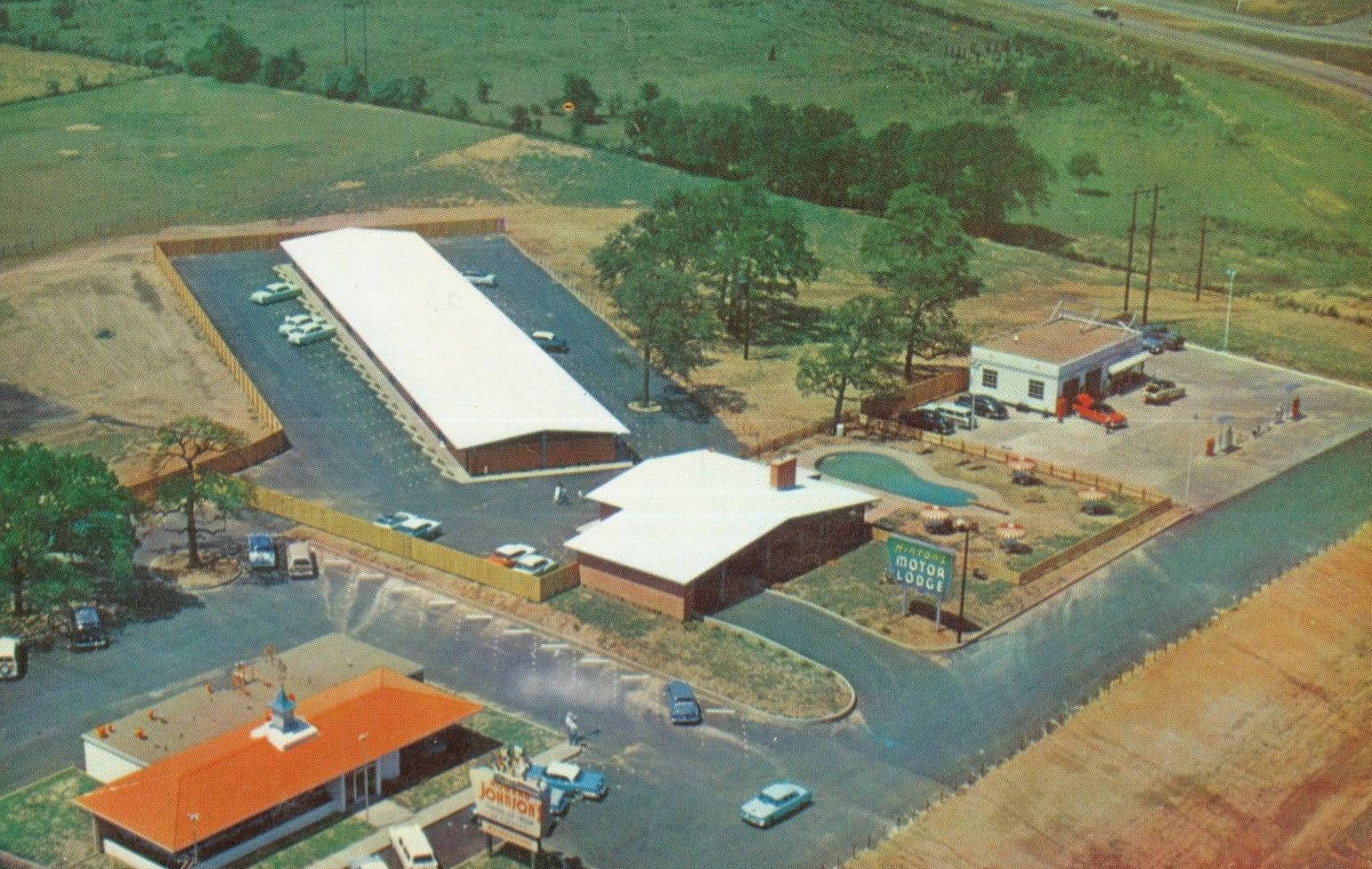
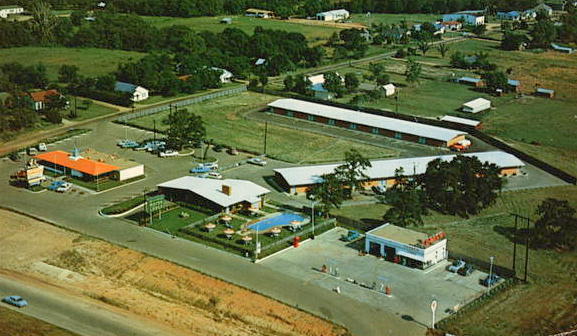
hintons-motor-lodge_front“7 miles from Downtown Dallas” — choppers welcome

by Paula Bosse

What does a man who ambushed and killed Bonnie and Clyde do once he’s retired from law enforcement? He opens a motor lodge, of course!

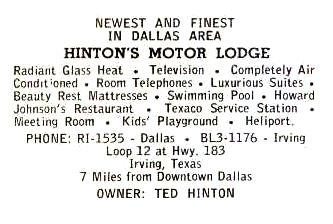
I was initially drawn to this image because of an unexplained lifelong fascination with Howard Johnson’s restaurants (I think I was only ever in one — the one on Mockingbird at Central, where my father introduced me to the inexplicable root beer float). But the interesting thing about this postcard is not the HoJo’s, it’s the motel next door, Hinton’s Motor Lodge, an establishment that was in business from 1955 to 1970, in Irving, very near to where Texas Stadium would be built in 1971 (Loop 12 at Hwy. 183). Why would a motor lodge be interesting? Because the owner was Ted Hinton (1904-1977), the former Dallas County Deputy Sheriff who was one of the six men who tracked down, ambushed, and killed Bonnie and Clyde in 1934. (Hinton was recruited for the posse because he would be able to identify both of them: he had known Clyde Barrow growing up, and he had apparently had a crush on Bonnie Parker in the days when she was working as a waitress and he was working for the post office.)

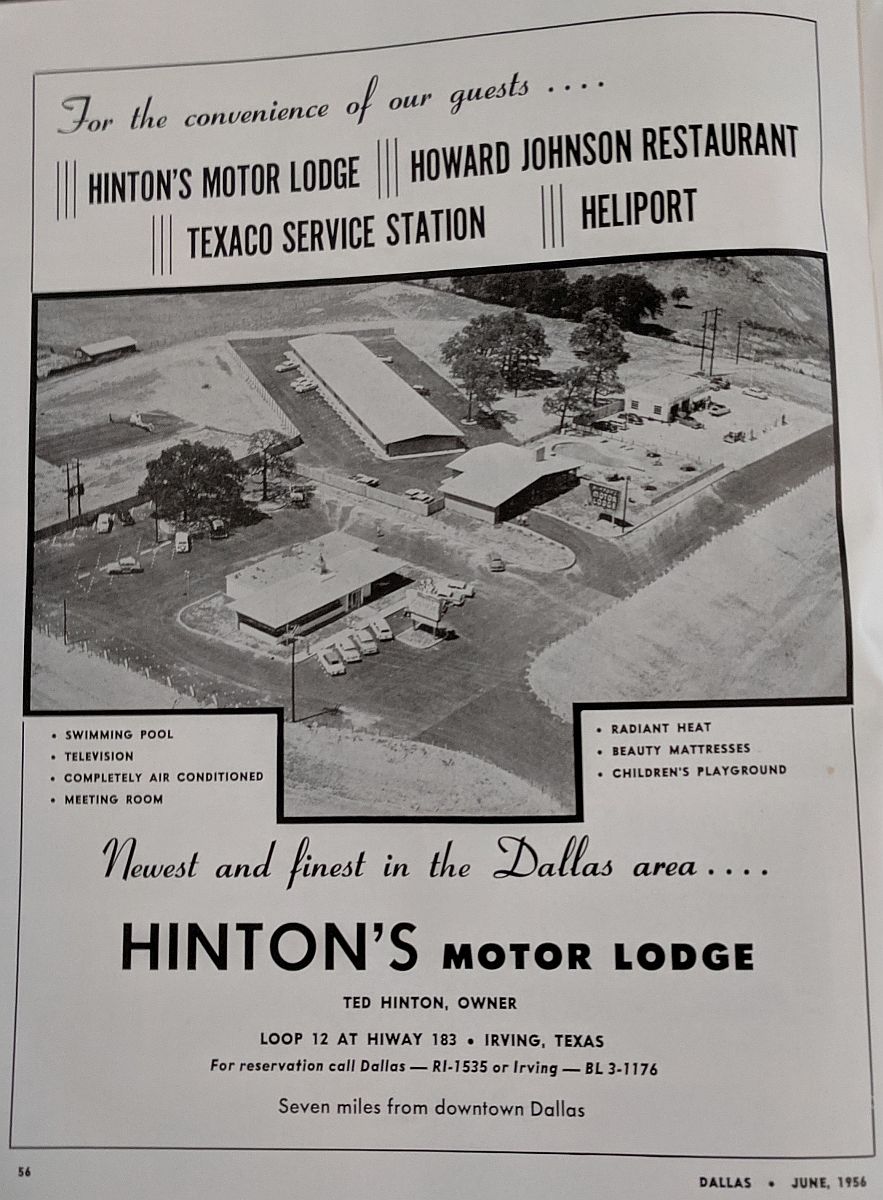
After killing two of the most notorious celebrity outlaws of all-time, it must have been hard to know where to turn next. He retired from the Dallas County Sheriff’s Department in 1941 and, as he was a pilot, he trained flyers for the US Army Air Corps during WWII. The fact that Hinton was a pilot MUST explain the inclusion of a “heliport” (!) in the list of motel amenities, alongside Beauty Rest mattresses, a swimming pool, and a playground for the kids.

I’m sure that, on occasion, Hinton ate next door at Howard Johnson’s. But I bet none of the other patrons had any idea that the guy sipping coffee in the next booth was one of the men who gunned down Bonnie and Clyde in a hail of gunfire that even Sam Peckinpah might have considered “a bit much.”

Aerial View of Hinton's Motor Lodge Dallas

hintons-motor-lodge_back

ad-hinton-motor-lodge_dallas-mag-june-1956_reddit“Dallas” magazine, June 1954 (via Reddit)

***

Sources & Notes

An interesting short video about Ted Hinton’s connections to Bonnie and Clyde in his youth is recounted here by Hinton’s son “Boots.”

And a newsreel featuring film footage of the aftermath of the ambush — and apparently shot by Hinton himself with a 16mm movie camera loaned to him by a Dallas Times Herald photographer — can be seen here.

*

Copyright © 2014 Paula Bosse. All Rights Reserved.

The Triple Underpass — Elm, Main, and Commerce Never Looked Better

triple_underpass_1936

by Paula Bosse

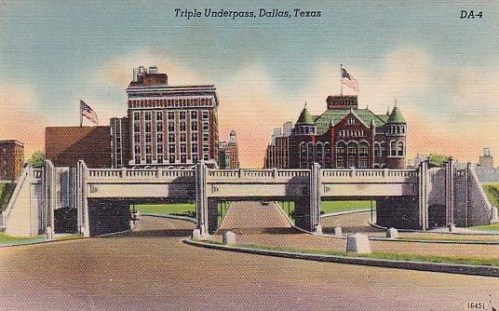
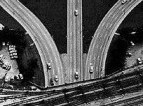
Sometimes a noisy, bustling metropolis really hits the spot, but there are times I long to have completely empty streets all to myself. Which is one reason I love this serene and peaceful (or perhaps “post-apocalyptic,” depending on your half-full/half-empty world-view) scene of Dallas, totally deserted save for a partial view of a single car in the distance. The brand new “triple underpass” was unveiled in 1936, the year Dallas was obsessed with showing off what a fantastically modern city it was to the throngs of visitors flooding in for the Texas Centennial celebrations. G.B. Dealey himself rode the first car through the underpass. Perhaps that’s his little car heading up Main Street.

triple-underpasss_wo-dealey_1930s
Above, the “Business District, from the West.” Note the absence of Dealey Plaza, which wouldn’t be completed until 1941 and not officially named “Dealey Plaza” until 1946. …After that, the place wasn’t thought about in any especially significant way until 1963.

triple-underpass_gateway-to-dallas_1940s

“The Gateway to Dallas, Texas,” with beautiful Dealey Plaza now set in place, one day to become the most-visited historic site in the city. Despite its grim connection to the assassination, every time I drive through that underpass I always get a little thrill. Almost 80 years after it became a landmark, the triple underpass is still a remarkably cool piece of Dallas architecture and engineering.

*

Copyright © 2014 Paula Bosse. All Rights Reserved.