Flashback : Dallas

A Miscellany: History, Ads, Pop Culture

Category: University Park

“The Miracle Mile” and the Utterly Confusing Lovers Lane(s) — 1954
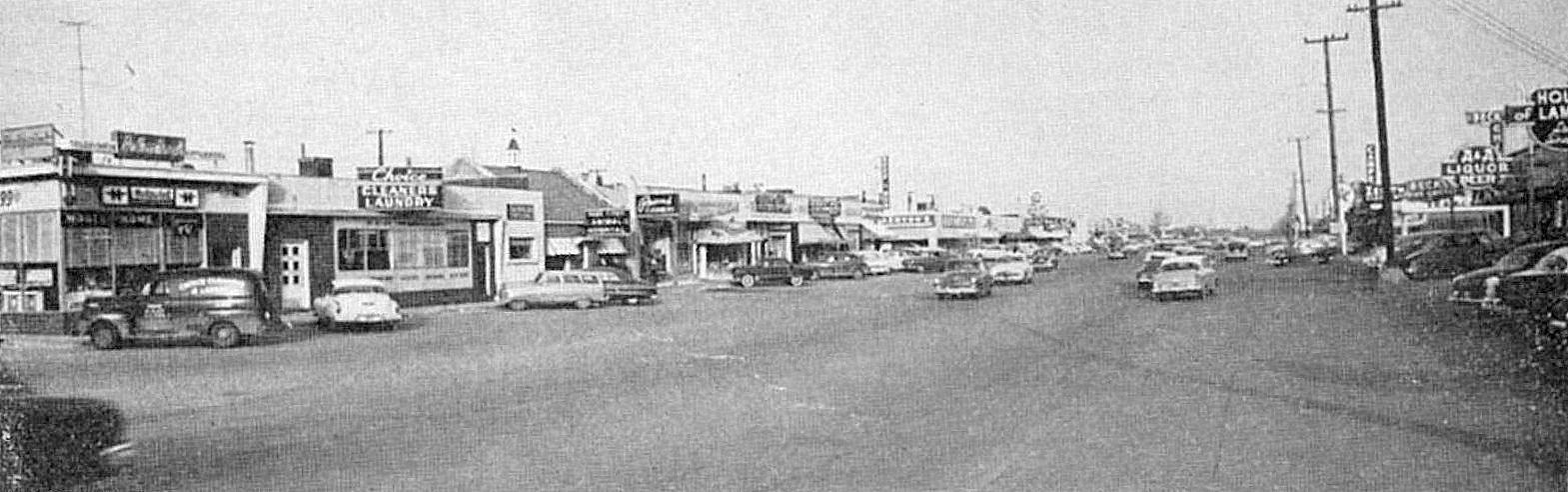
4500 block and/or 5800 block of Lovers and/or W. Lovers Lane

by Paula Bosse

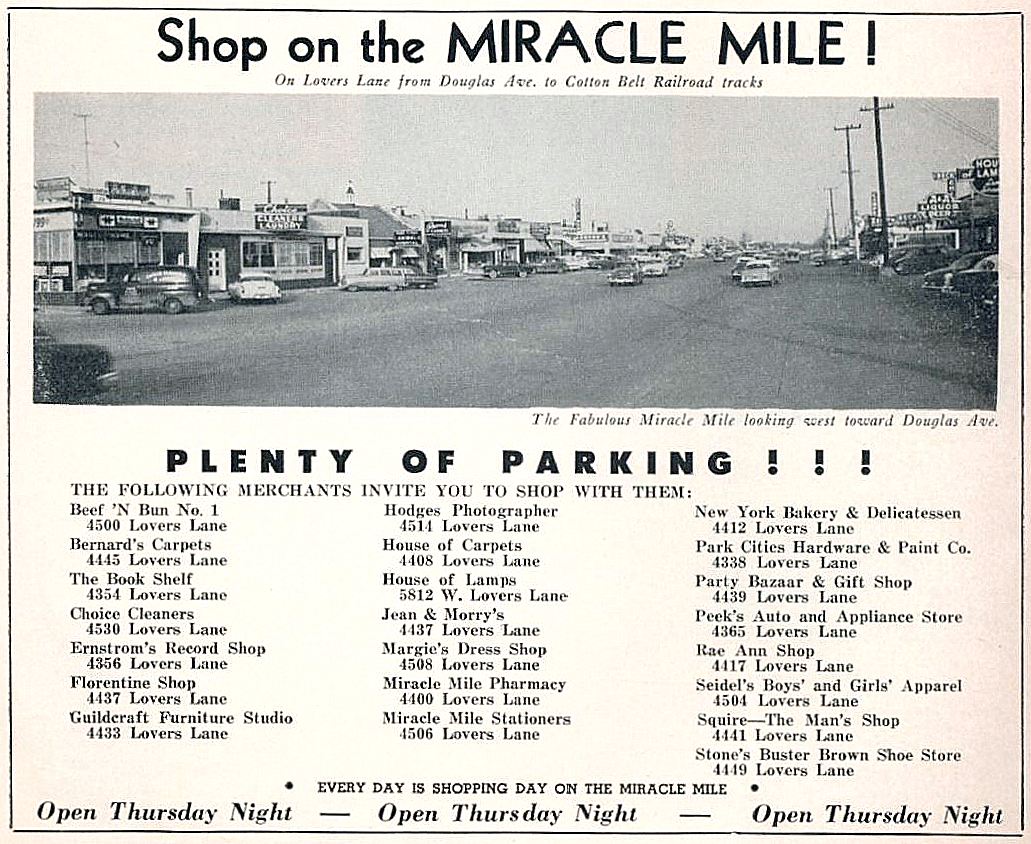
The photo above is a detail from an ad for some of the businesses along the Miracle Mile (Lovers Lane, between about Douglas and what is now the toll road). The caption is: “The fabulous Miracle Mile looking west toward Douglas Ave.” (Surely this is a view to the east?) The same view today can be seen on Google Street View here. The ad appeared in a March 1954 magazine. At that time, the photographer would have been standing in front of Roscoe White’s Easy Way restaurant (5806 W. Lovers Lane). Here’s the ad (click to see a larger image):
*

Shop on the MIRACLE MILE! 
On Lovers Lane from Douglas Ave. to Cotton Belt Railroad tracks
PLENTY OF PARKING!!!
The following merchants invite you to shop with them: 

Beef ‘N Bun No. 1, 4500 Lovers Lane 
Bernard’s Carpets, 4445 Lovers Lane 
The Book Shelf, 4354 Lovers Lane 
Choice Cleaners, 4530 Lovers Lane 
Ernstrom’s Record Shop, 4356 Lovers Lane 
Florentine Shop, 4437 Lovers Lane 
Guildcraft Furniture Studio, 4433 Lovers Lane 
Hodges Photographer, 4514 Lovers Lane 
House of Carpets, 4408 Lovers Lane 
House of Lamps, 5812 W. Lovers Lane 
Jean & Morry’s, 4437 Lovers Lane 
Margie’s Dress Shop, 4508 Lovers Lane 
Miracle Mile Pharmacy, 4400 Lovers Lane 
Miracle Mile Stationers, 4506 Lovers Lane 
New York Bakery & Delicatessen, 4412 Lovers Lane 
Park Cities Hardware & Paint Co., 4338 Lovers Lane
Party Bazaar & Gift Shop, 4439 Lovers Lane 
Peek’s Auto and Appliance Store, 4365 Lovers Lane
Rae Ann Shop, 4417 Lovers Lane 
Seidel’s Boys’ and Girls’ Apparel, 4504 Lovers Lane
Squire — The Man’s Shop, 4441 Lovers Lane 
Stone’s Buster Brown Shoe Store, 4449 Lovers Lane

Every day is shopping day on the Miracle Mile
Open Thursday night — open Thursday night — open Thursday night

**

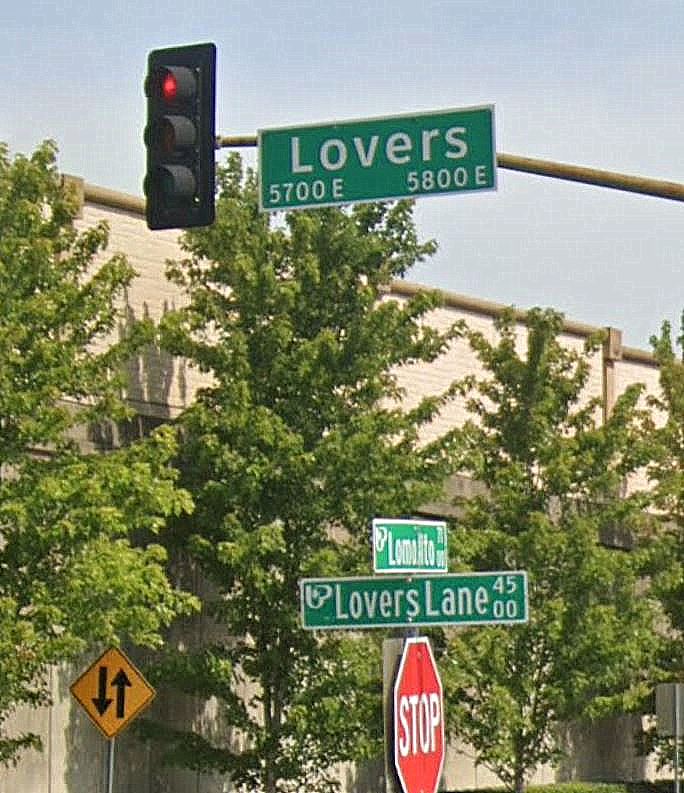
So. Lovers Lane. What’s the deal, Lovers? Your numbering system is insane. For instance, in the photo above, Choice Cleaners (second business on the left) is at 4530 Lovers Lane. It is directly opposite House of Lamps, which is, inexplicably, at 5812 West Lovers Lane. Not only are the block numbers nowhere near the same, the numbers of addresses on both sides of the street are even. There are businesses on both sides of the street, but that block has no odd-numbered addresses. …But only until you pass Beck’s Fried Chicken at 5820 West Lovers (you can see it on the photo at the far right, next door to AAA Liquor at 5814 W. Lovers Lane). Once you cross Lomo Alto, heading east, the numbering suddenly starts at 4455 Lovers Lane (Brady’s Texaco Service Station). West Lovers Lane is no more. You’ve just lost West Lovers Lane and 14 blocks. You might be in the Twilight Zone. I’m pretty sure the whole University Park-thing is the reason, but, oh my god. My brain melts down every time I try to make sense of this! Imagine not knowing your way around this part of town and seeing this confusing collection of signs after getting off the toll road:
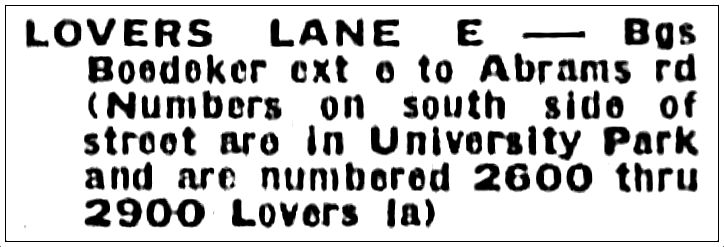
For future reference, here is some even more confusing guidance, from the 1953 city directory. “WEST LOVERS LANE”:
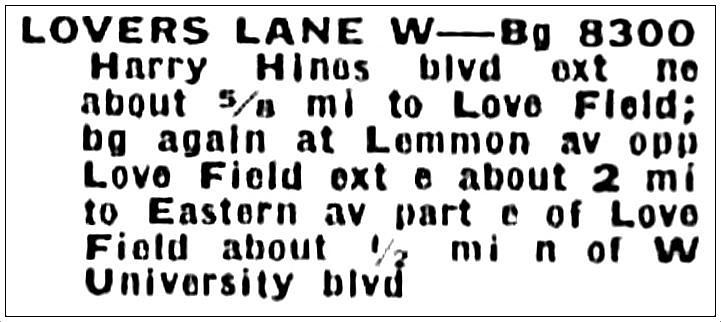
PLAIN OL’ “LOVERS LANE”:
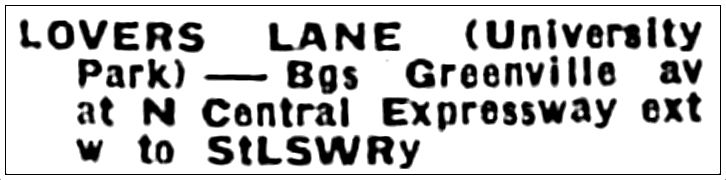
EAST LOVERS LANE”:

Good luck keeping track of that. There will be a quiz. You might need a slide rule, a compass, and a bottle of aspirin.

***

Sources & Notes

Ad is from the March 1954 issue of Town North magazine, a publication by and for super-boosters of the Park-Cities-and-Preston-Hollow area, which they were trying to get people to call “Town North.” It makes about as much sense as Lovers Lane’s numbering system, but it’s a cool magazine that lasted a few years and can be found in the Periodicals Collection of the Dallas History and Archives at the Dallas Public Library.

More on The Miracle Mile (with a handy map, if you’ve ever wondered what its “official” boundaries are) can be found in this Flashback Dallas post: “Stacy’s Lounge on The Miracle Mile — 1950.”

And, heck, here’s a post on Lovers Lane: “Dallas Is For Lovers.”

*

Copyright © 2025 Paula Bosse. All Rights Reserved.

Salih’s, Preston Center: 1953-1977

patreon_salihs_w-t-white_1968-yrbk_ext1968, Preston Center (W. T. White yearbook)

by Paula Bosse

If you’re reading this, chances are pretty good that you have fond memories of Salih’s Barbecue in Preston Center (or its later incarnation in Addison as “Solly’s”). I have to admit, I had never heard of Salih’s until I started this blog in 2014 (I completely forgot to note the landmark of 10 full years of Flashback Dallas a couple of weeks ago!). But, from what I’ve read, this was an incredibly popular place, and people still rhapsodize about the BBQ, the po’ boys, the fries, the cole slaw, and the potato salad.

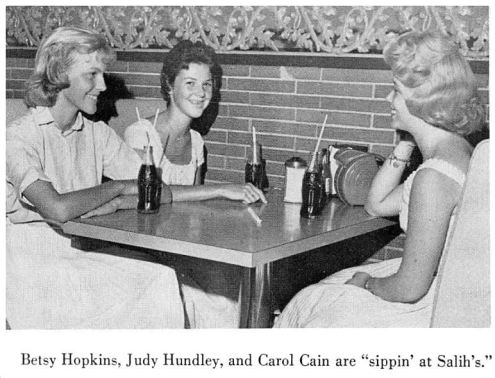
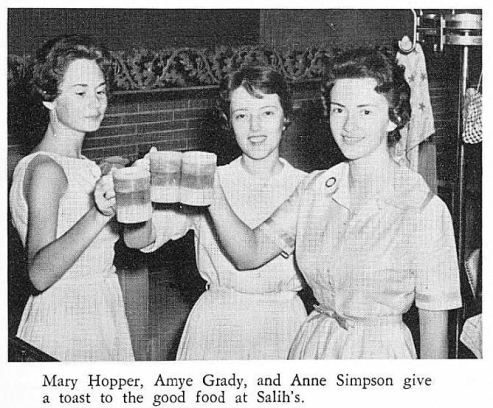
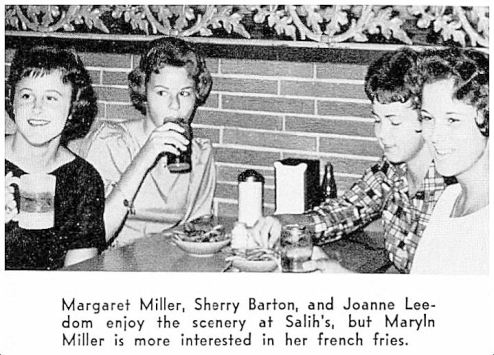
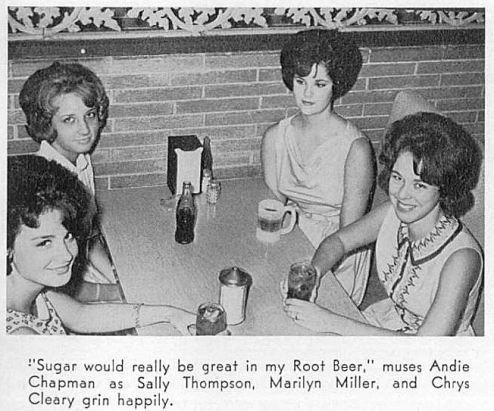
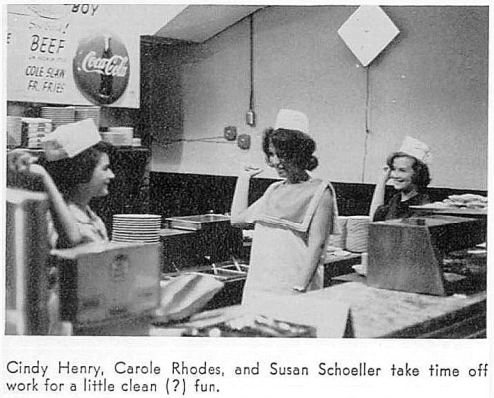
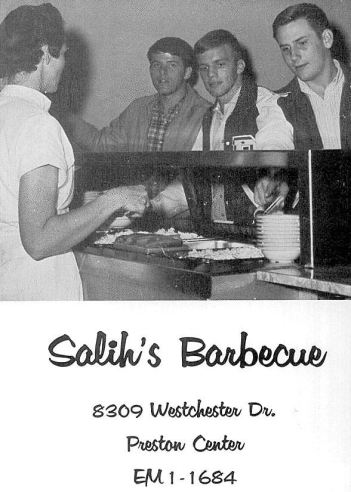
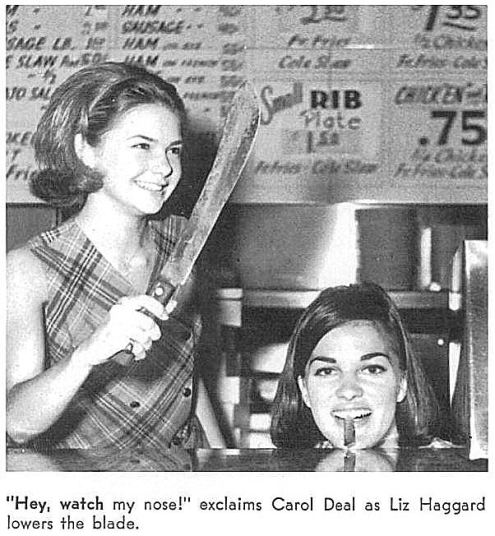
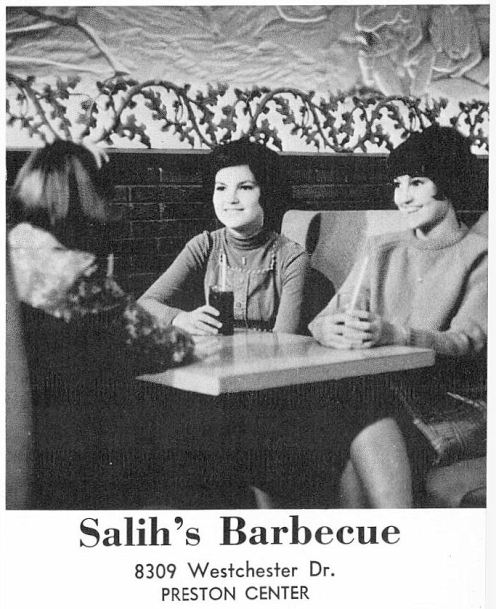
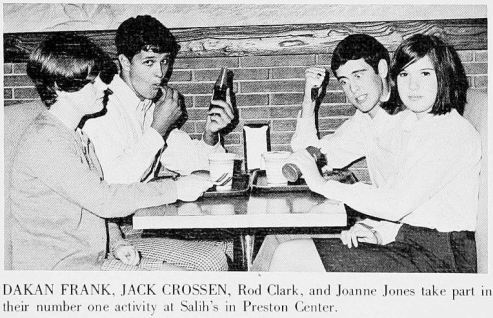
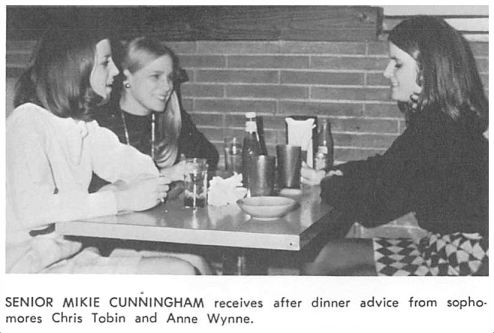
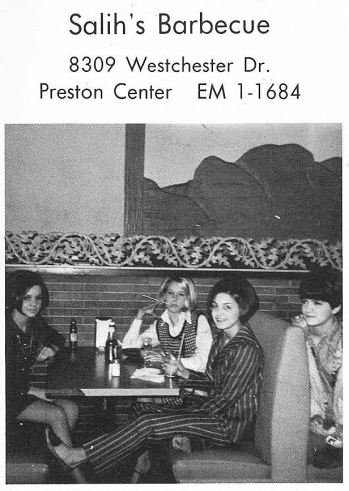
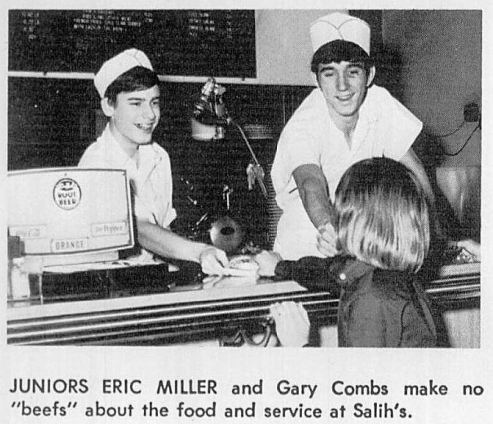
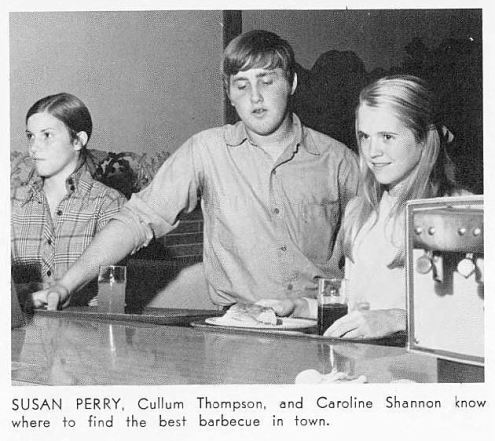
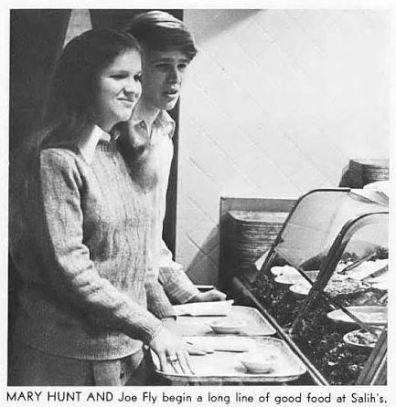
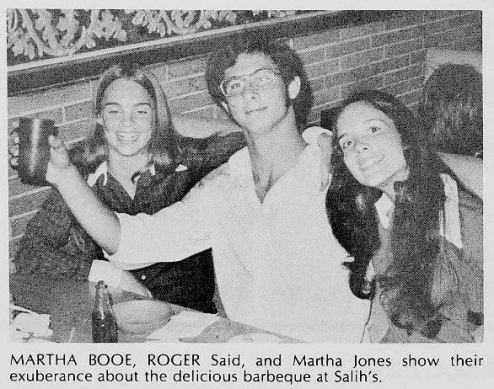
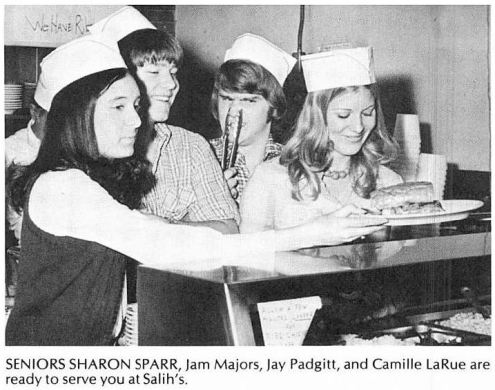
So, I’ve read all these memories… but I can find no good photos of the place! There’s the cropped shot of the exterior above and a lot of not-very-helpful shots which appeared in high school yearbooks over the years, taken inside — but they don’t actually show the restaurant! And I understand there was quite a mural in there. I’d love to see a photo of that! Do YOU have any photos of Salih’s in Preston Center? Exterior? Interior? Mural? Please send me whatever images you have. I really want to see them!

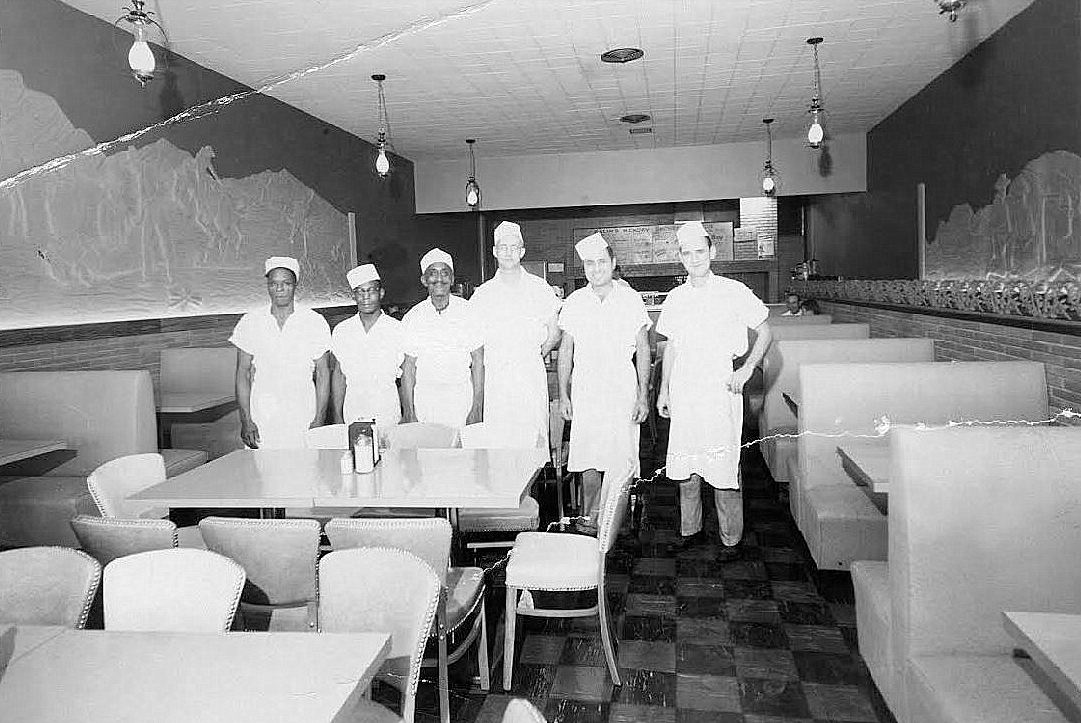
UPDATE: Thanks to Mark Salih, son of co-owner Jack Salih, I have a photo of the interior, with parts of the mural visible. George Salih is on the far right, and his brother Jack is next to him. (Thank you, Mark!)

salihs_mark-salihMark Salih photo, used with permission

*

Salih’s Barbecue was opened by George and Jack Salih on March 20, 1953. The brothers had previously owned a small drive-in and later worked in or managed locations of Lobello’s in Lakewood (2005 Abrams) and Casa Linda (328 Casa Linda Plaza) — either before, during, or after these locations became “Fred’s” BBQ stands (owned by Fred Bell, founder of Kip’s).

That first business, Salih’s Drive-In, was located across from Fair Park at 912 S. Haskell — it opened around 1945. Read George Salih’s memories of serving the “circus people” there in a Feb. 11, 1987 article from the Farmers Branch Times here.

salihs-drive-in_haskell_DMN_081849Aug. 18, 1949

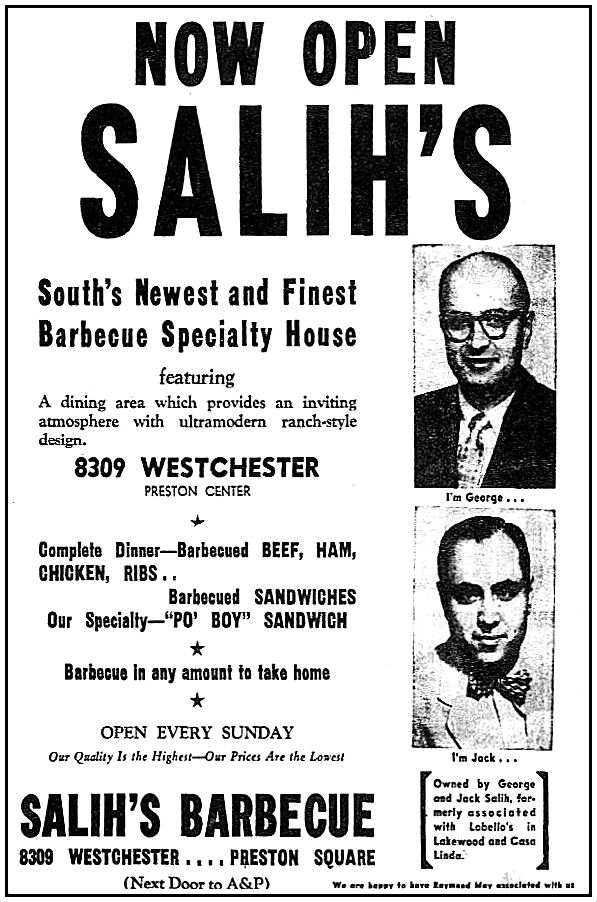
After a few years of working for the Lobello family, George and Jack opened their own place at 8309 Westchester, in Preston Center, not far from the original Lobello’s on Northwest Highway. Eventually, Jack moved to East Texas and opened another barbecue place (the Angus Inn in Longview), and George ran the Dallas restaurant. (Click ad to see a larger image.)

salihs_opening_032053_adMarch 20, 1953 — opening day

An article in the Dallas Morning News describes the new Dallas restaurant thusly:

The restaurant features unique styling in both interior and exterior design. Relief murals decorate the walls inside, while small wooden shutters afford a rustic flavor. The exterior incorporates Roman brick construction, with tall red columns decorated with glass paneling added as a decorative feature. (DMN, March 20, 1953)

It also notes that the Salih brothers were the restaurant’s chefs.

I mentioned this Park Cities landmark in a recent Patreon post, and a kind member described the mural (designed, I believe, by artist Frank J. Boerder):

It was a 3-dimensional cut-out depiction of a cowboy scene, back-lit by a set of red-orange lamps. It ran the length of the south wall of the interior. When you looked at it the scene was in black, back-lit by the lamps. Very striking for a BBQ place. (Plus, the food was very, very good.)

Salih’s is described in the ad above as “a dining area which provides an inviting atmosphere with ultramodern ranch-style design.” I would really like to see this!

Salih’s left Preston Center around 1977, leaving for the then-sparsely populated wilderness of Addison. The restaurant’s name was changed to “Solly’s” (which was either a new name for a new location, a guide for new customers on how to pronounce the Lebanese name, or a sad concession to deal with possible Middle Eastern biases). Solly’s closed in 2004.

*

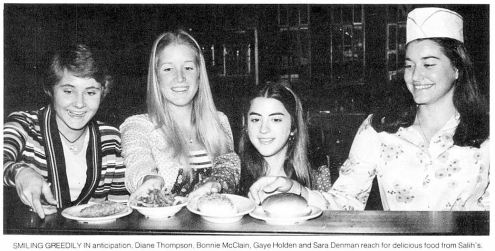
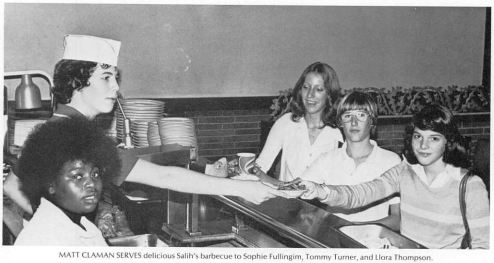
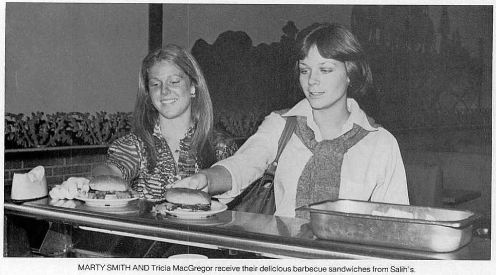
Below are a lot of ads that appeared in the yearbooks of Highland Park High School and W. T. White High School. I was hoping to see more of the interior but, instead, got lots of photos of kids in paper hats (which I still enjoy!). So here they are!

salihs_smu-campus_081656SMU Daily Campus, 1956
*

salihs_HPHS_1960-yrbkHPHS, 1960
*

salihs_HPHS_1961-yrbkHPHS, 1961
*

salihs_HPHS_1962-yrbkHPHS, 1962
*

salihs_HPHS_1963-yrbkHPHS, 1963
*

salihs_HPHS_1964-yearbookHPHS, 1964
*

salihs_w-t-white_1966-yearbookWTW, 1966
*

salihs_HPHS_1967-yrbkHPHS, 1967
*

Part of the mural over their heads?

salihs_w-t-white_1967-yrbkWTW, 1967
*

salihs_HPHS_1968-yearbookHPHS, 1968
*

salihs_HPHS_1969-yrbkHPHS, 1969
*

More of the carved mural?

salihs_w-t-white_1969-yrbkWTW, 1969
*

salihs_HPHS_1970-yrbkHPHS, 1970
*

salihs_HPHS_1971-yrbkHPHS, 1971
*

salihs_HPHS_1972-yrbkHPHS, 1972
*

salihs_HPHS_1973-yrbkHPHS, 1973
*

salihs_HPHS_1974-yrbkHPHS, 1974
*

salihs_HPHS_1975-yrbkHPHS, 1975
*

salihs_HPHS_1976-yrbkHPHS, 1976
*

And, the last one, from 1977 — could that be a another very, very dark part of the mural at the right?

salihs_HPHS_1977-yrbkHPHS, 1977

***

Sources and Notes

All sources as noted.

Read the obituary of George Salih here. Read a longer, more colorful obituary in the Dallas Morning News archives (“George Salih — Operated Barbecue Restaurant in Dallas” by Joe Simnacher, DMN, Aug. 14, 2009).

Jack Salih died in Gilmer in Jan. 1991.

patreon_salihs_w-t-white_1968-yrbk_ext_sm

*

Copyright © 2024 Paula Bosse. All Rights Reserved.

Dallas Hall, The Early Days

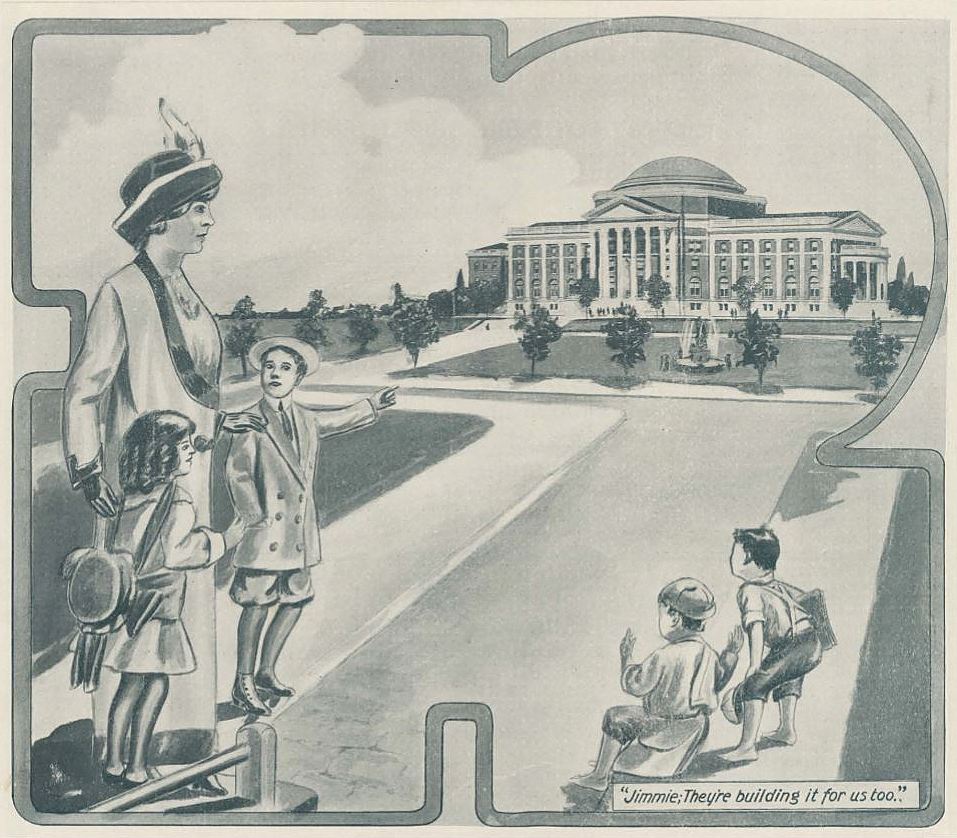
SMU_building_the-campus-mag_july-1912_coverBuild it and they will come, Jimmie…

by Paula Bosse

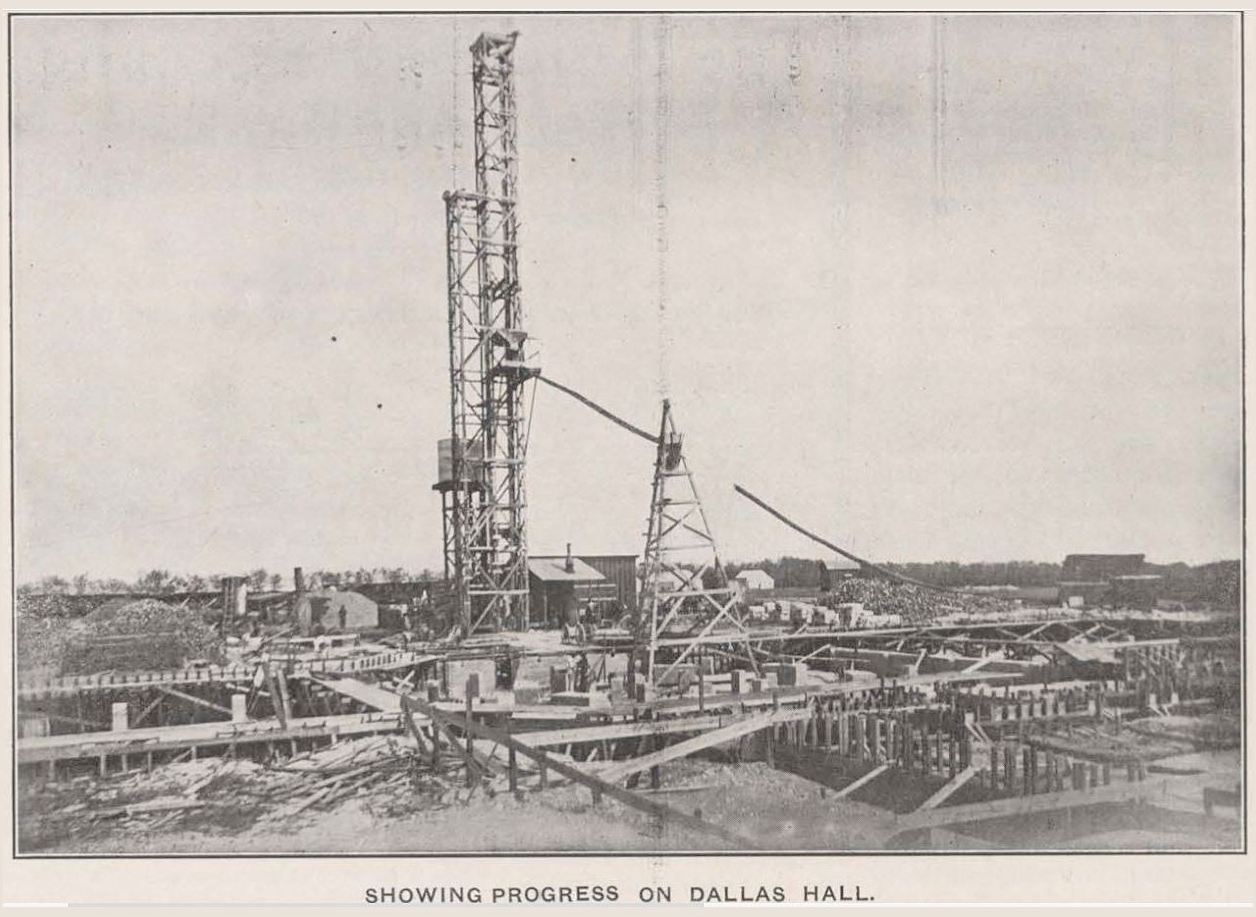
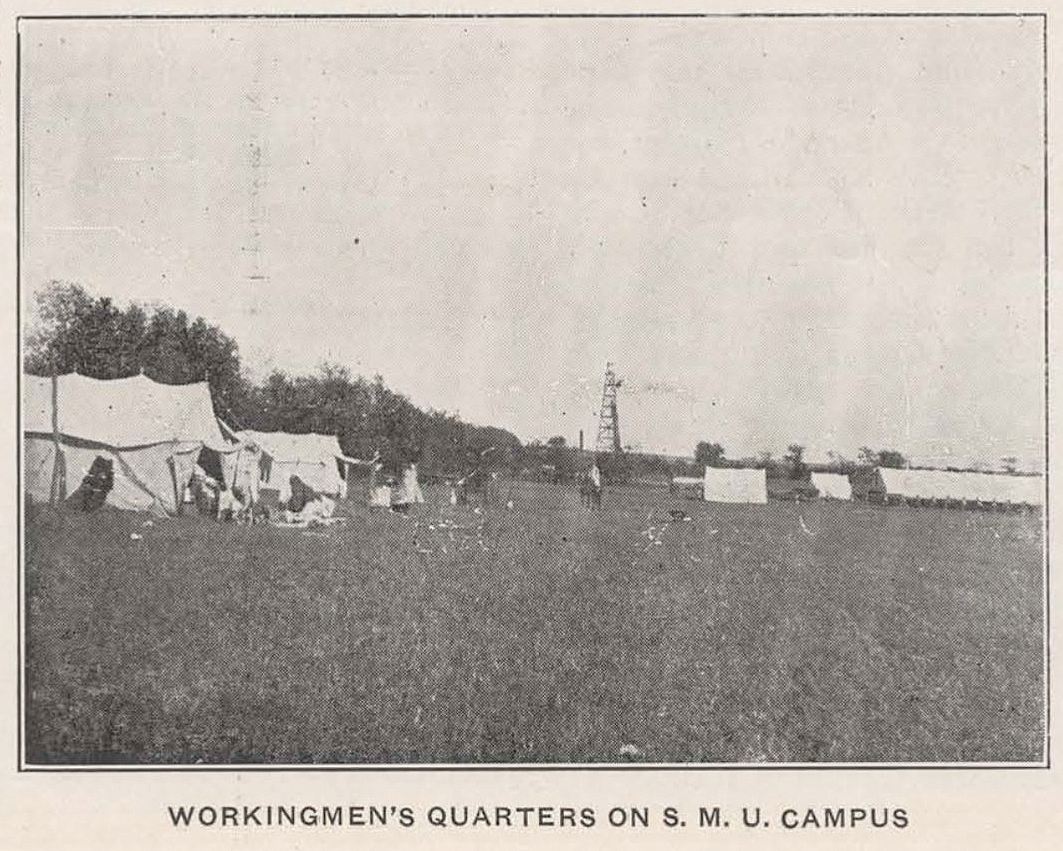
I can’t even remember what I was looking for in the SMU Libraries database when I stumbled across a collection of magazines/newsletters called The Campus, from 1912-1914. It’s pretty dry reading, but they appear to be updates sent out to moneyed Methodists who were actively working on raising funds for construction of the new Southern Methodist University in Dallas. There are the occasional interesting ads (especially for the Methodist-owned real estate which surrounded the campus and would soon generate substantial moolah) and progress reports on the construction of the first building, the magnificent Dallas Hall. Here are a few of the photos.

“Showing progress on Dallas Hall” (1912) — this is great:

SMU_dallas-hall_construction_the-campus-mag_oct-1912

“Workingmen’s quarters on S.M.U. campus” (1912) — this is greater (tents! — is that a horse in there?):

SMU_dallas-hall_construction_the-campus-mag_oct-1912_workers-tents

“Dallas Hall — as it appears today” (1913):

SMU_dallas-hall_construction_the-campus-mag_march-1913

And finally, all shiny and ready to open for business (1915):

SMU_dallas-hall_the-campus-mag_ca-1914_cover

Lastly, an architectural drawing, which I’d like to think construction workers might have glanced at occasionally to make sure everything was going in the right place — like dissectologists using the lid of a jigsaw puzzle box. (Incidentally, $300,000 in 1912 was equivalent to about $9.5 million in today’s dollars. I think it might have ended up costing more by the time it was finished.)

SMU-dallas-hall-drawing_the-campus-mag_july-1912

***

Sources & Notes

All images are from various issues of The Campus, all of which may be accessed on the SMU Libraries site here; (DeGolyer Library, SMU Libraries, SMU Archives, Southern Methodist University).

See a couple of great photos of Dallas Hall under construction: domeless, and mid-dome (DeGolyer Library).

Other Flashback Dallas posts on the very early years of SMU:

This post originated in a post I made last week on my Patreon page, which I update daily. If you would like to subscribe to that page for as little as $5 a month, please hie yourself over there!

*

Copyright © 2023 Paula Bosse. All Rights Reserved.

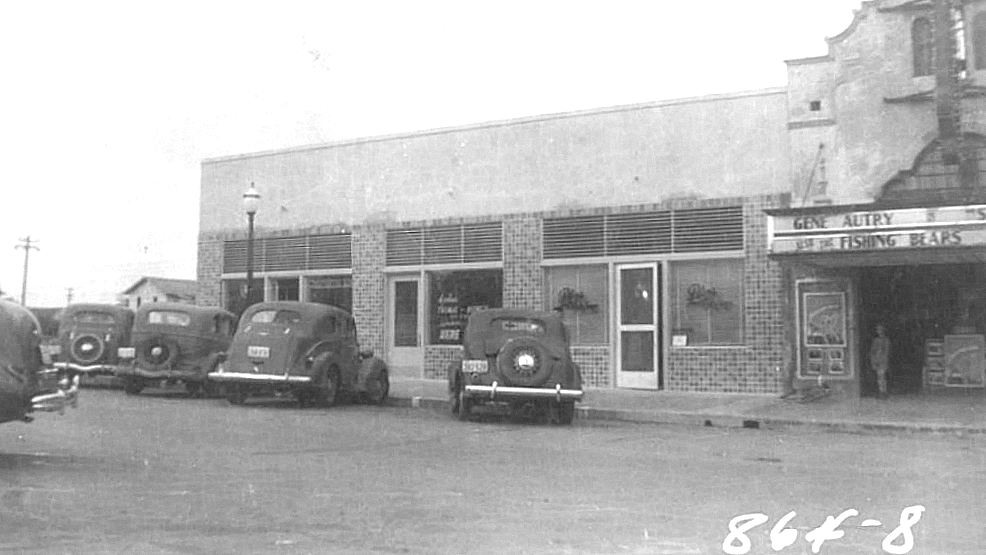
The University Park Brown Books — An Unbelievable Resource!

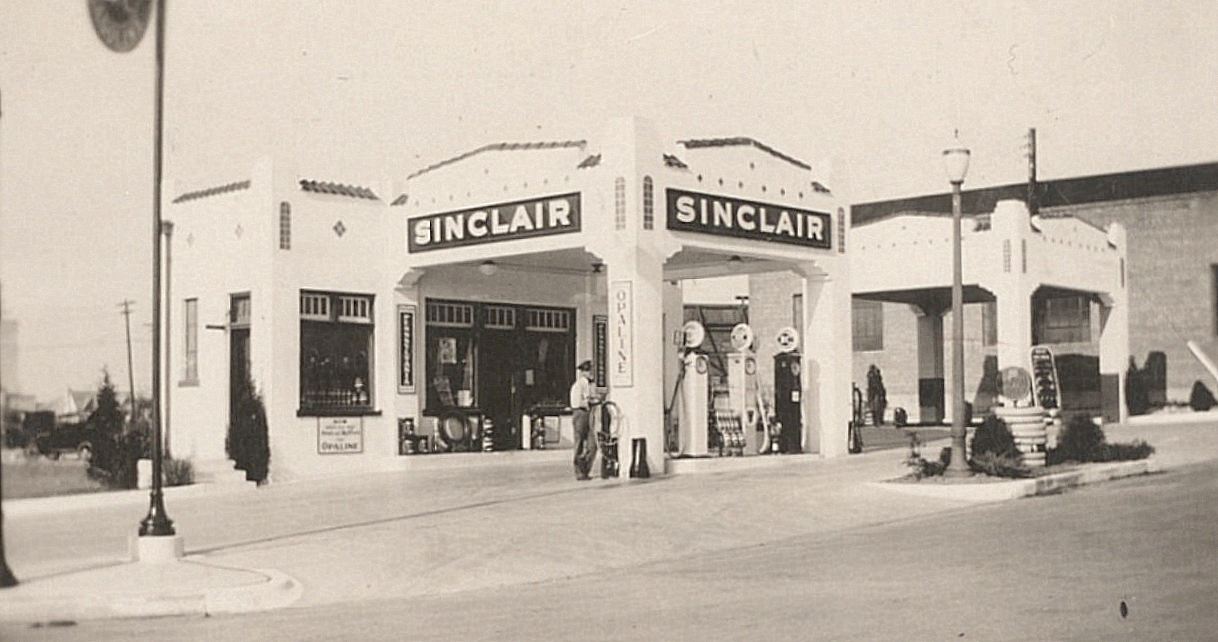
snider-plaza_brown-bks_university-park_6600-1934_sinclalirFill ‘er up in Snider Plaza, 1934

by Paula Bosse

You know how sometimes someone nonchalantly mentions something to you which should have been introduced by a fireworks display? That’s what happened when my friend Rod Hargrave sent me a link he had come across about a new online resource from the University Park Public Library: the city’s “Brown Books,” fully digitized. I made a note to check out the link when I had time but didn’t get to it for a week. I’m not the kind of person who uses “OMG,” but… O..M..G !! This is just unbelievably fantastic. 

Here’s the blurb form the University Park Public Library post

Brown Books at UP Public Library
March 2, 2022

Spend some time with one of the library’s newest resources! The City’s Brown Books contain thousands of subdivision records of individual construction permits for homes and some businesses across several decades. In these pages, you can find interesting and helpful information about the original structure. Data includes notations about square footage, construction date, original building price, along with details about the interior of the building and more. Over 98 percent of all documents include a photograph of the original structure.

PHOTOGRAPHS! Almost everything I looked up had a photo. I looked up addresses of places I’d written about – photos! I looked up businesses along Preston, Hillcrest, and Lovers Lane — photos! I looked at just about every business in Snider Plaza — photos! I even looked up the still-standing house my family lived in for a couple of years on Milton — photo! The earliest photos I found were from 1931. And all of this available to anyone with a computer — for free! Thank you, University Park Public Library!

And as the blurb says, not only are there photographs of the properties, but there is a whole history of the building, complete with renovation info, builder info, a drawing of the original footprint, etc. This includes tons of buildings which have been torn down — nothing ever dies in city/county records.

Below are some of the photos I found. Scroll down below them for instructions on how to access these records yourself on your computer.

*

Here are a few photos of businesses on “the drag” — Hillcrest Avenue, across from SMU. (Click pictures to see larger images.)

6200 block of Hillcrest, at Granada (in 1931). (See this property’s Brown Books page here.)

6200-block-hillcrest_brown-bks_university park_1931

*

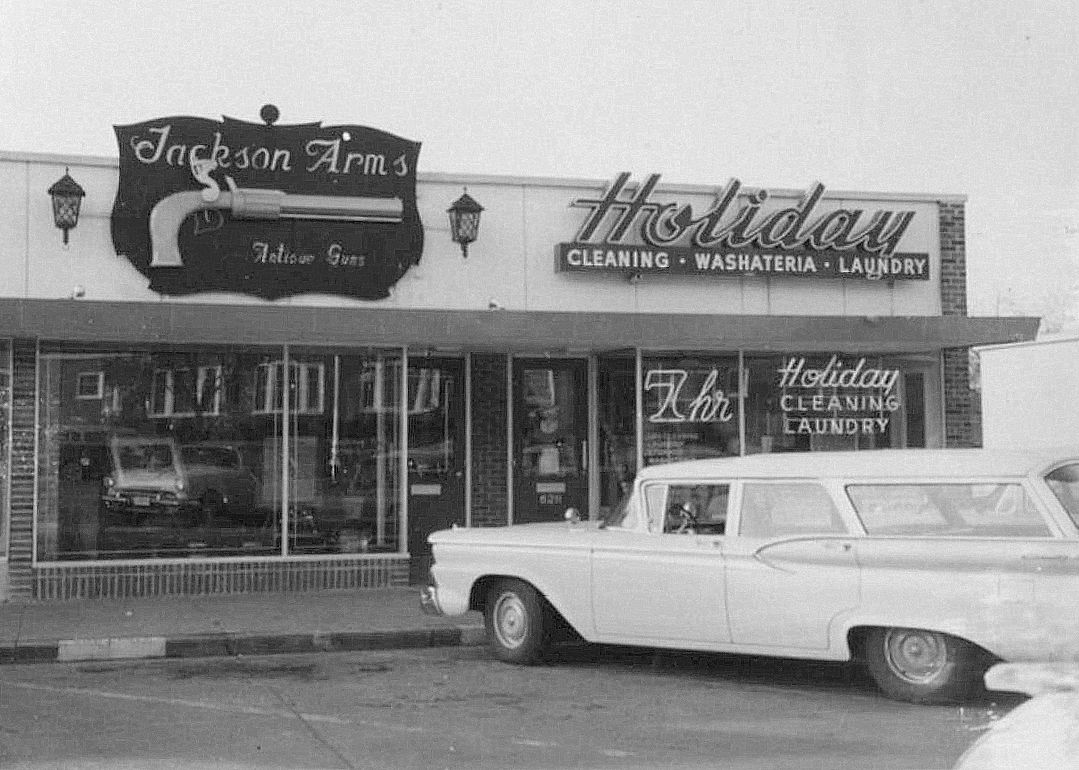
6209 Hillcrest (1959) — Jackson Arms, once my father’s home-away-from-home. (Brown Books page is here.)

6209-hillcrest_brown-bks_university park_1959_jackson-arms

*

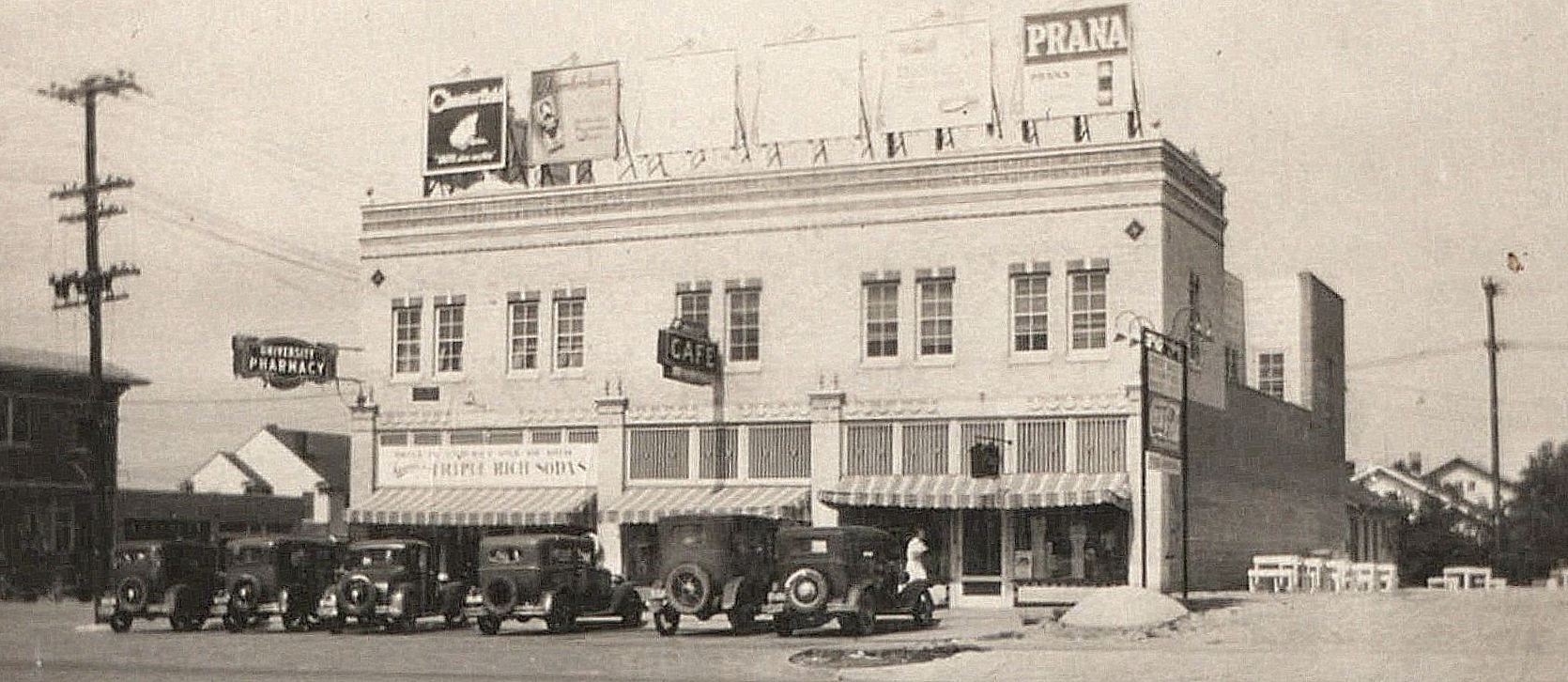
6401 Hillcrest, at McFarlin (1931). The Couch Building, which burned down a few years ago — I wrote about that building here. (Brown Books page is here.) I **LOVE** this photo. I love the billboards on top of the building.

6401-hillcrest_brown-bks_university park_1931_couch-bldg

*

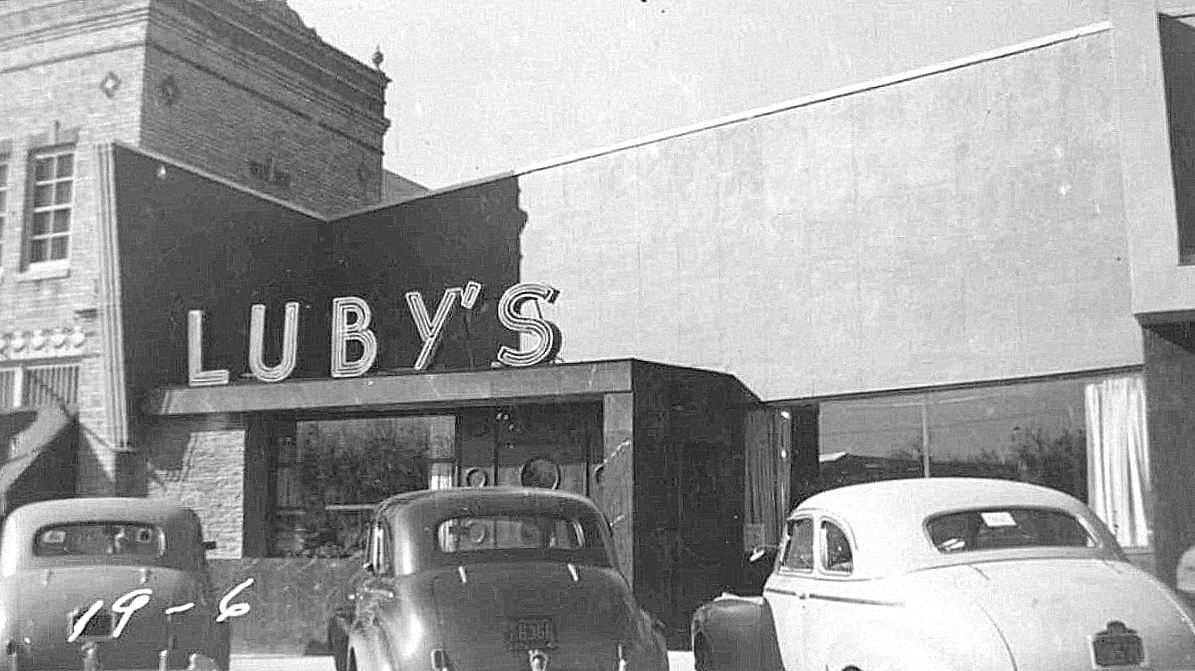
6407 Hillcrest (1948). Luby’s! What an interesting design. (Brown Books page is here.)

6407-hillcrest_brown-bks_univeristy-park_1948_lubys

*

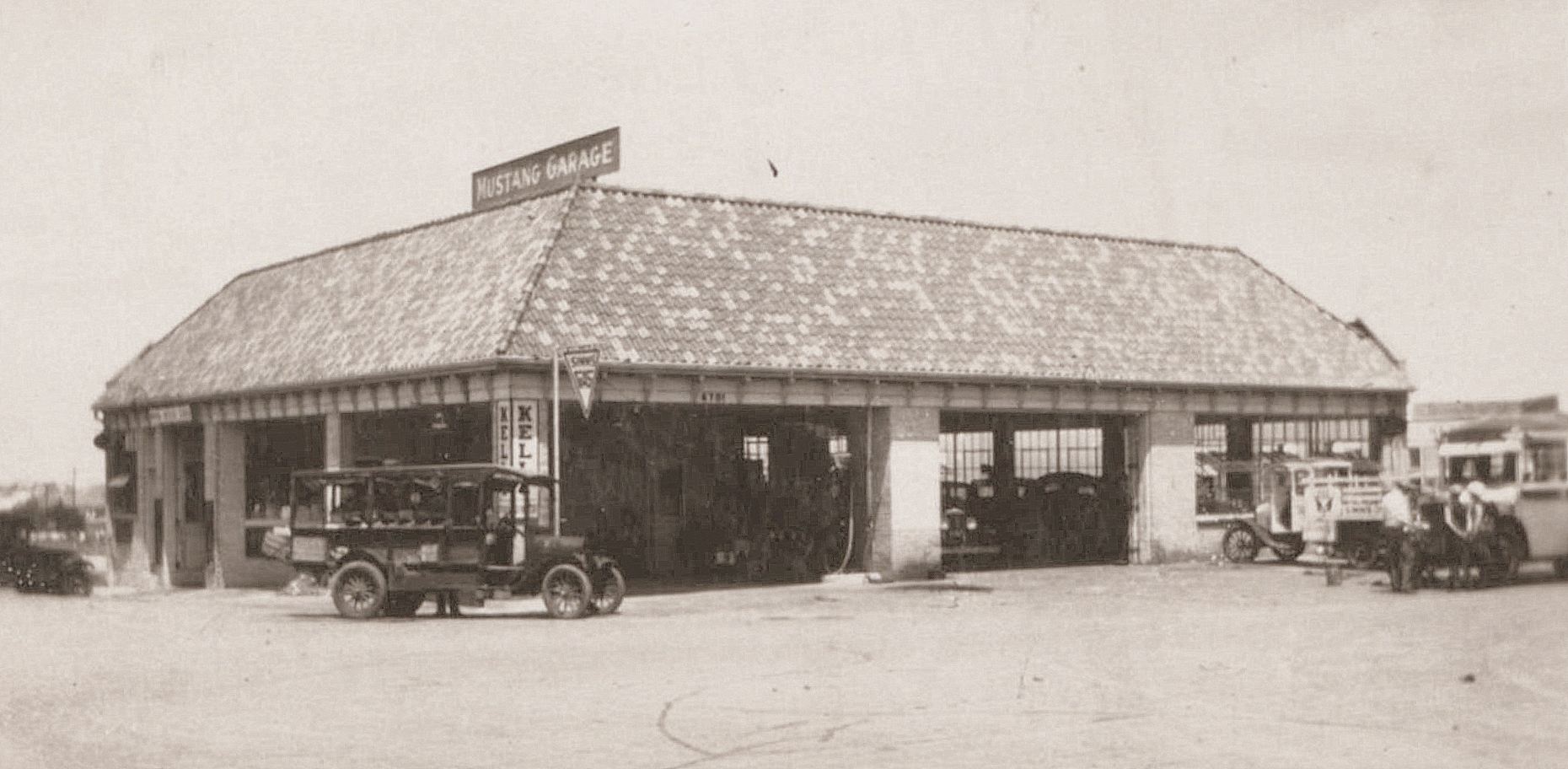
6601 Hillcrest (1931). The Mustang Garage — but instantly recognizable today as the home of JD’s Chippery and Cotton Island. (Brown Books page is here.)

6601-hillcrest_mustang-garage_brown-bks_university-park_1931

*

And, a few Snider Plaza highlights. First, the photo at the top of this post, the Sinclair service station at 6600 Snider Plaza (1934). (Brown Books page is here.)

*

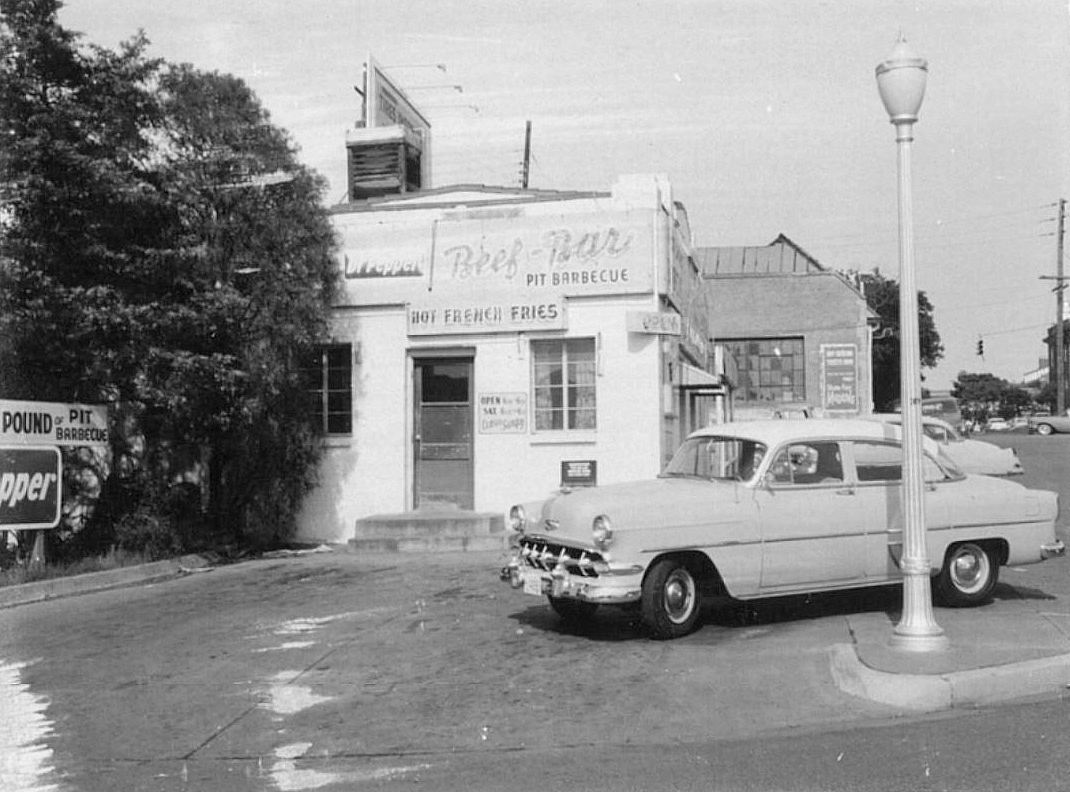
6600 Snider Plaza #313 (no date). The Beef Bar. (Brown Books page is here.) Another fantastic photo! BBQ in UP, before Peggy Sue (RIP).

snider-plaza_brown-bks_university-park_6600-313_nd_beef-bar-pit-barbecue

*

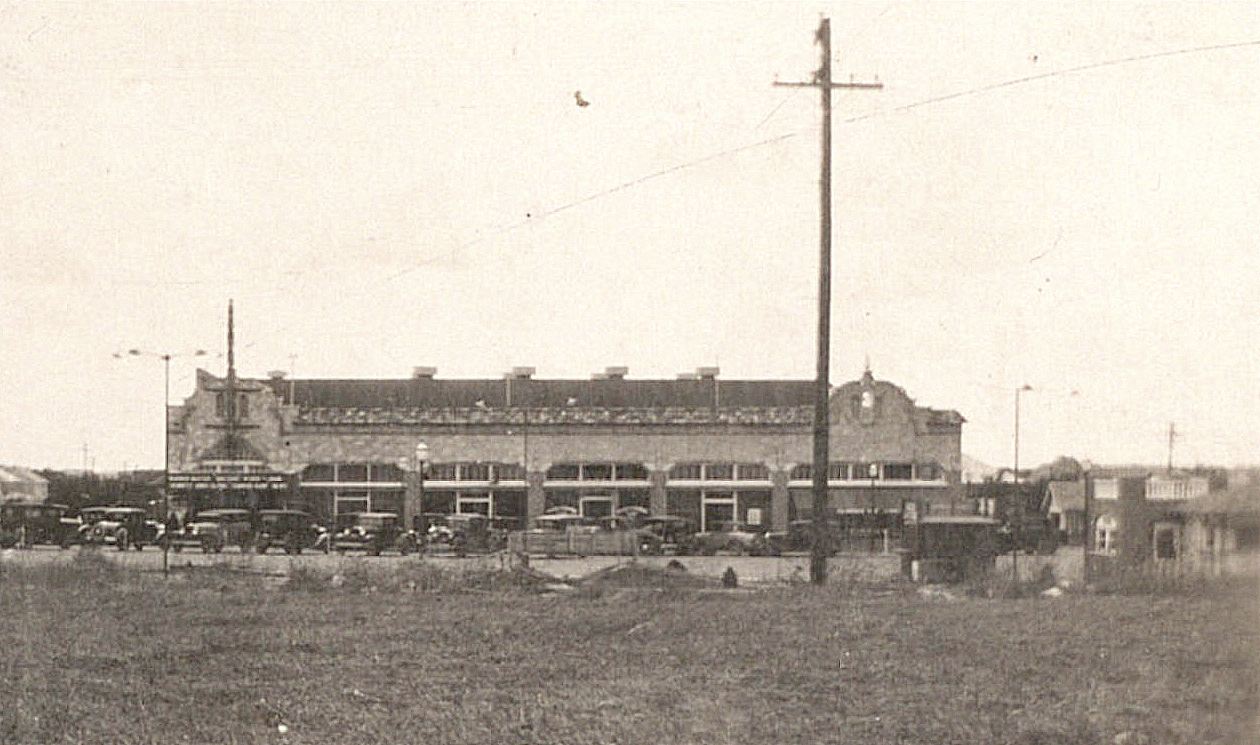
6701 Snider Plaza (1931). Including the Varsity Theater (at the far left) — I wrote about this cool building here. (Brown Books page is here.)

snider-plaza_brown-bks_university-park_6713_1931_movie-theater

*

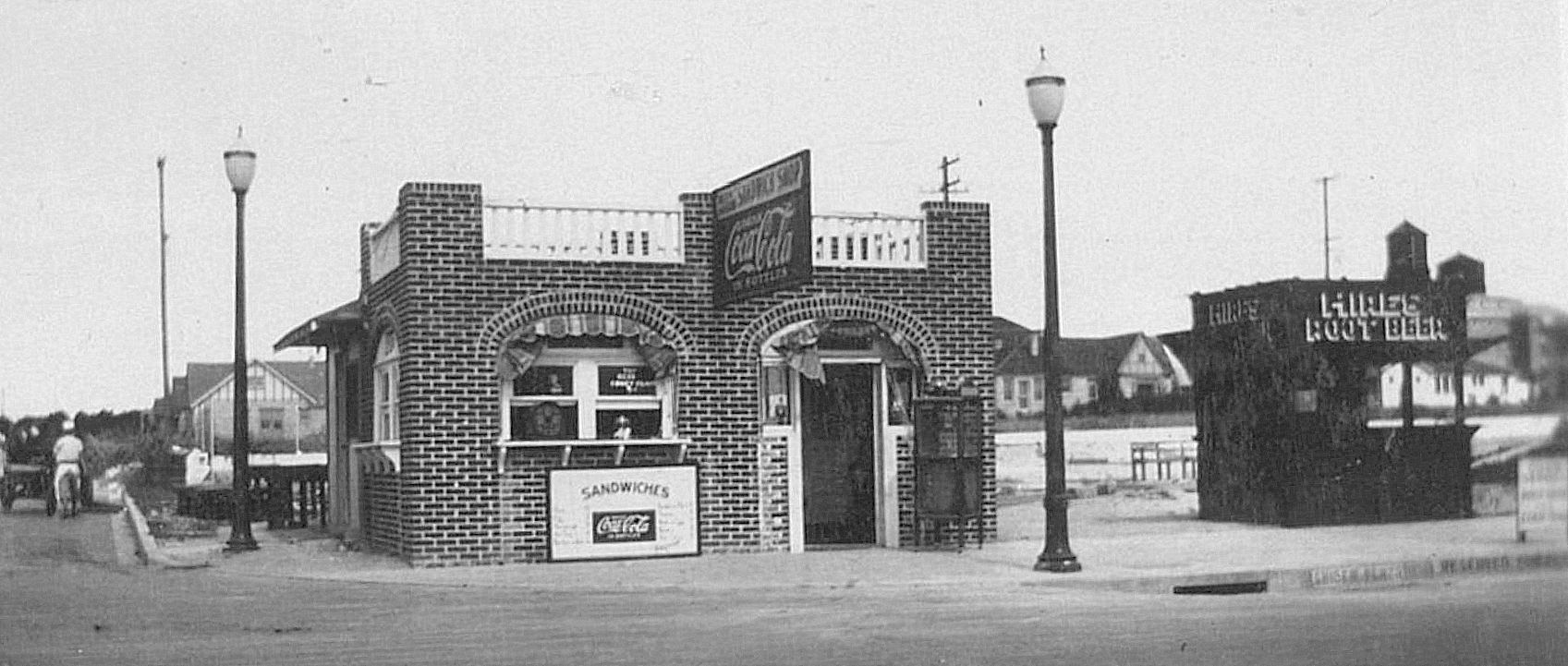
6730 Snider Plaza (1931). A sandwich shop and a Hires Root Beer stand. (Brown Books page is here.)

snider-plaza_brown-bks_university-park_6730_1931_sandwich-shop_hires-root-beer

*

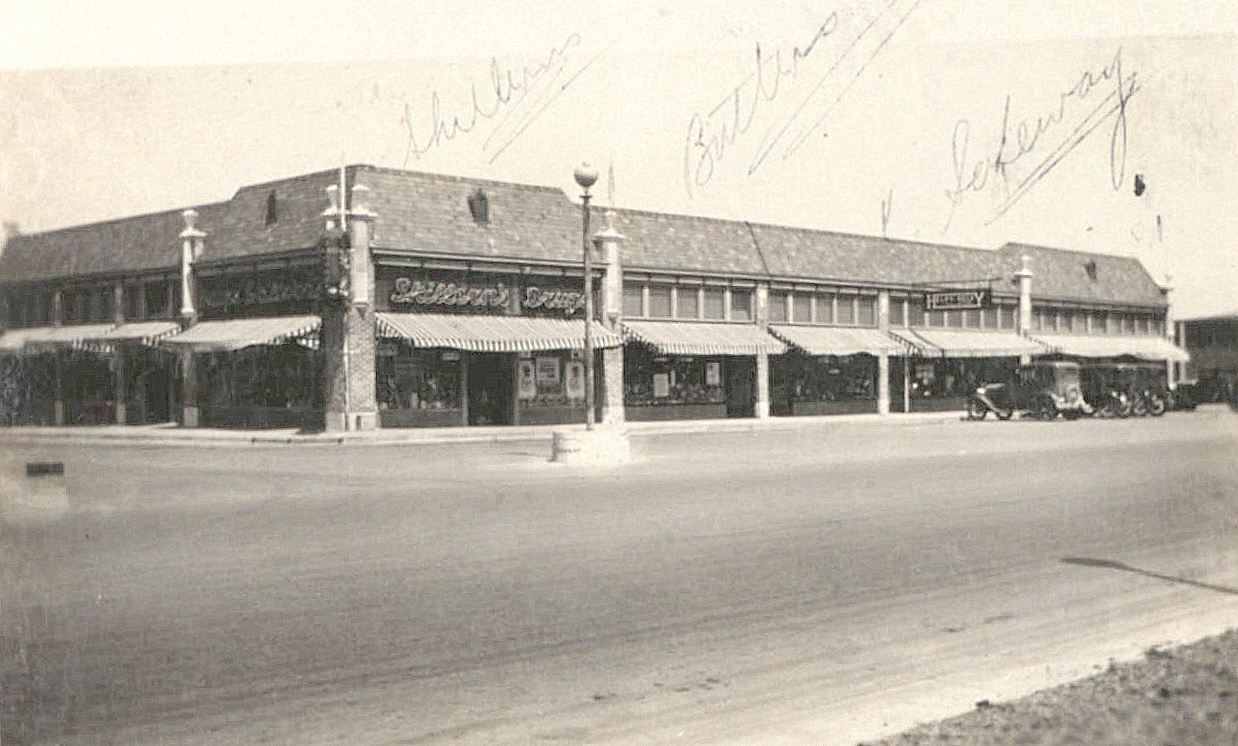
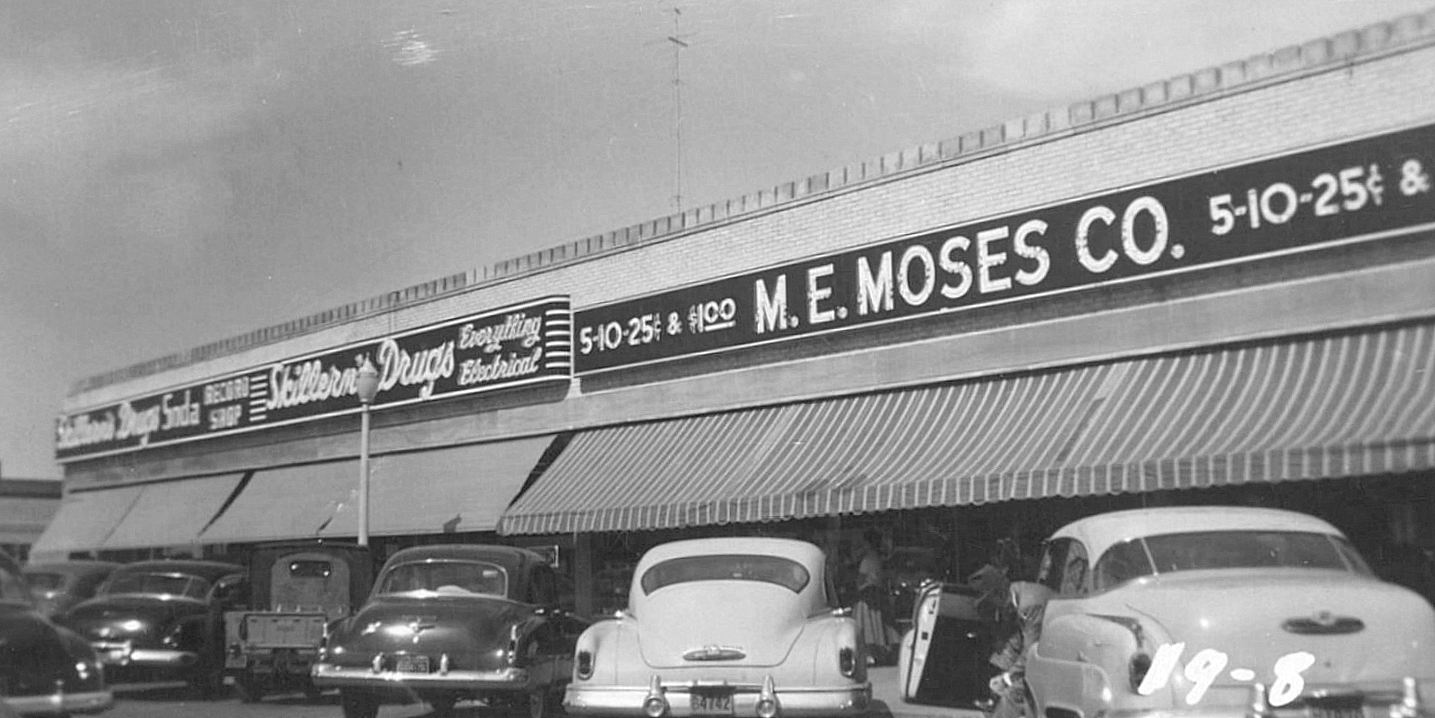
6828 Snider Plaza (1941). Skillern’s Drugs and M. E. Moses. (Brown Books page is here. After a facelift, another photo is here.) I remember spending a lot of time in that dime store when I was a kid — it had a weird change in floor level, which looks like it must have been where a wall had once separated it from the space Skillern’s occupied.

snider-plaza_brown-bks_university-park_6828_1941_moses_skillerns

*

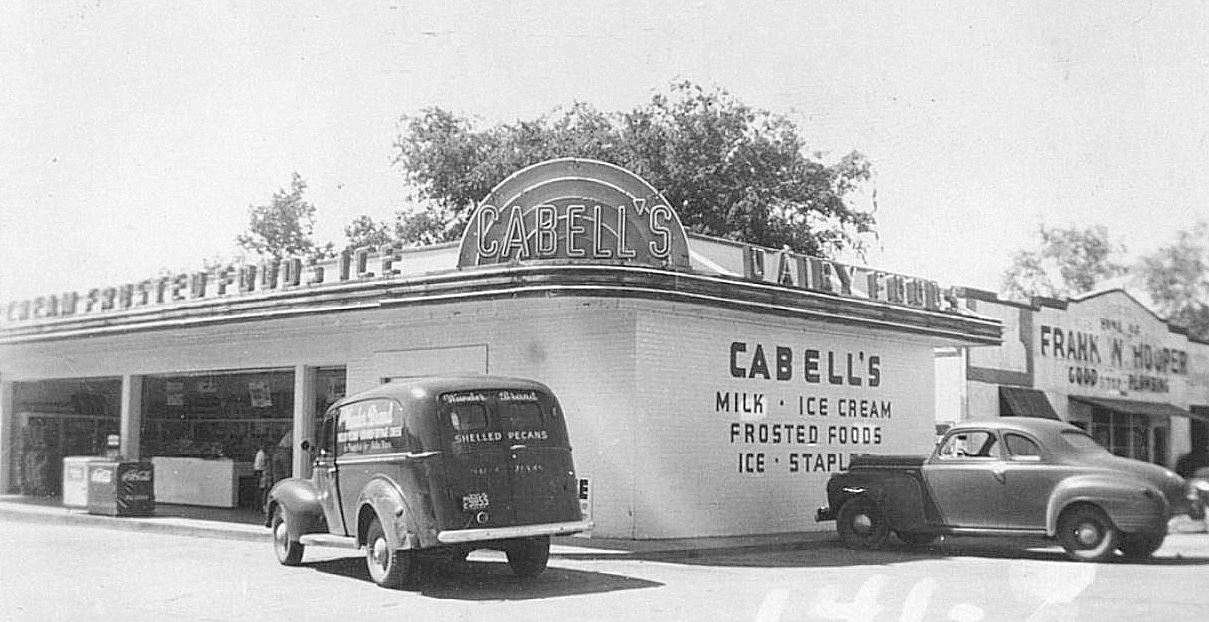
7001 Snider Plaza (1946). Cabell’s. (Brown Books page is here.)

snider-plaza_brown-bks_university-park_7001__1946_cabells

*

A quick jog over to 6001 Preston Road, at Normandy (1931). Country Club Pharmacy (it later moved to Inwood Road). (Brown Books page is here.) My mother worked for a few years as the office manager for the First Unitarian Church diagonally across from this drug store. When I was a kid hanging out waiting for my mother to finish work, I dropped a LOT of cash at the drug store on Archie comic books.

6001-preston_brown-bks_university-park_1931_drug-store

*

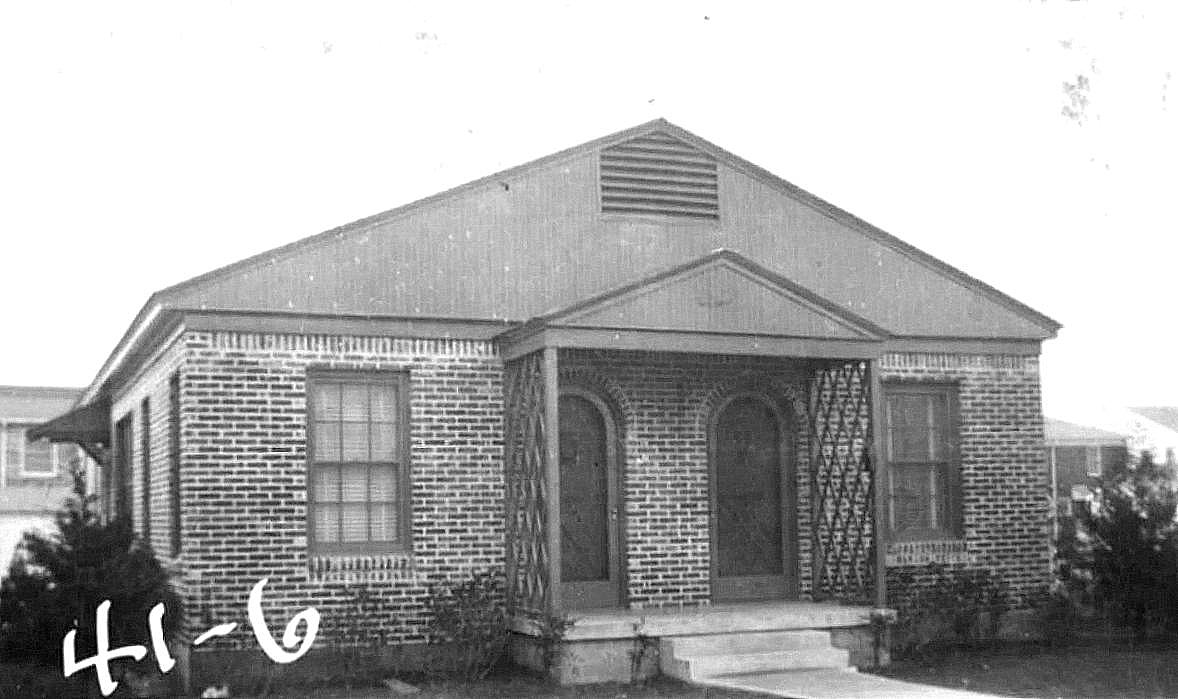
And, lastly, 4129 Lovers Lane (1947). A post-war duplex. (Brown Books page is here.) Every single time I drive down Lovers Lane, I always look forward to seeing this little house which has somehow managed to evade bulldozers. I love this house so much. And this is one of the very few times when I think that it has actually improved in appearance from its original design (see it today on Google Maps here). Hang in there, little house!

4129-lovers-lane_brown-bks_university-park_1947

**

FIND YOUR HOUSE! OR ANOTHER (AT LEAST PRE-1970s) BUILDING IN UNIVERSITY PARK.

  1. Go here. (This is the “welcome page” — if this doesn’t load, go to the UP Public Library blog post here and click through. If you get an error message, go back to “welcome page” and you should see the search page.)
  2. Enter the address (number + street name) you want to find in the search box. You can also just type in a street name, and it will bring up all addresses on that street. (I typed in “Binkley” and got 18 pages of results — seems like overkill, but they’re all in chronological address order.) This works if you enter “Snider Plaza” — take a tour through the Snider Plaza of yesteryear. Some addresses will have more than one sheet. And there’s TONS of info on each property. 

And that’s it! You’ve lost a day! Or several! 

UPDATE: It appears this resource is no longer accessible by the general public. I haven’t checked, but my guess is that it is available only to University Park residents who have a library card. Please say it isn’t so, UP Public Library!

Not 100% sure where the boundaries for University Park are? See a City of University Park map here.

Enjoy!

***

Sources & Notes

Absolutely everything you see here is from the University Park Public Library and the Brown Books in their collection. This is such an amazing resource. Thank you, UPPL and the City of University Park for digitizing these records and putting them online for all of us to use!

And thank you, Rod, for alerting me to this resource which I will be using constantly!

DOES DALLAS HAVE ANYTHING LIKE THIS??? IMAGINE!

snider-plaza_brown-bks_university-park_6600-1934_sinclalir_sm

*

Copyright © 2022 Paula Bosse. All Rights Reserved.

When SMU Theology Students Were Sprayed with Insecticide at a University Park Lunch-Counter Sit-In — 1961

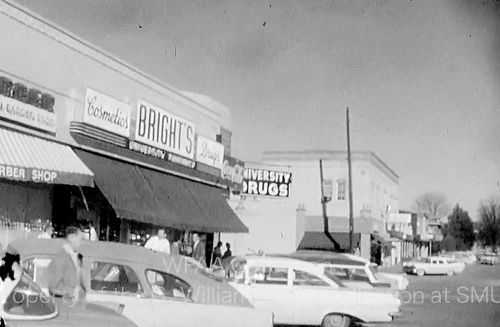
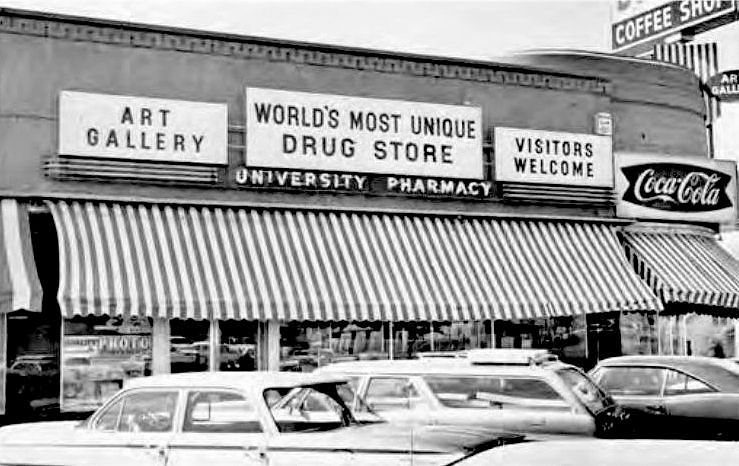
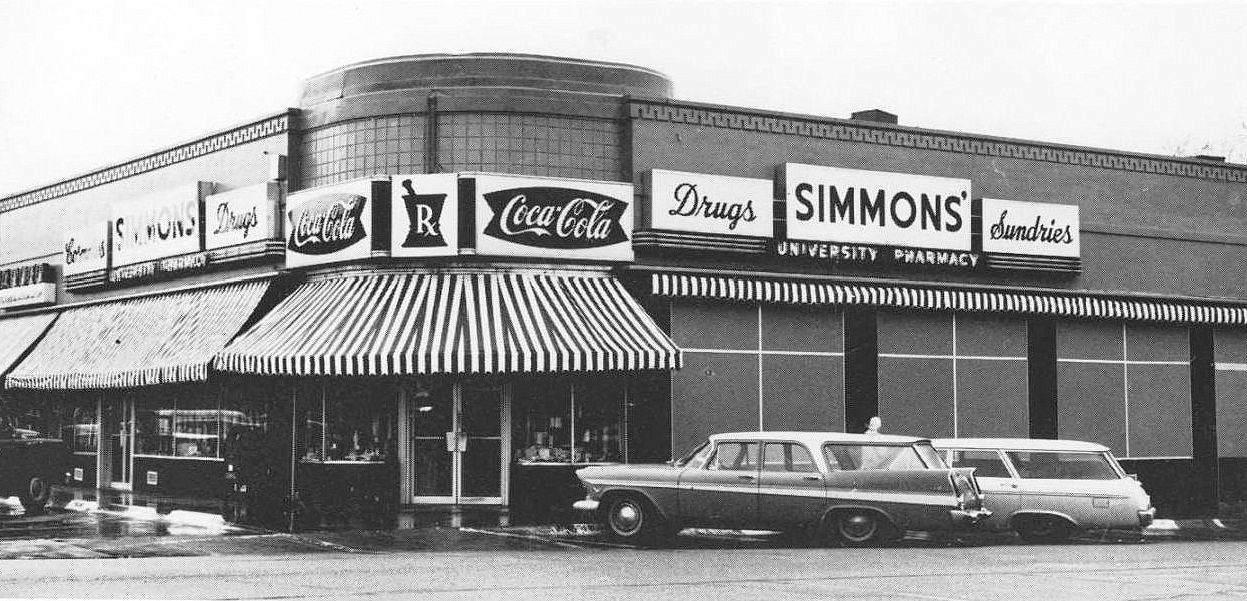
university-pharmacy-protest_WFAA_jan-1961_1Bright’s Drug Store, 6327 Hillcrest, University Park
by Paula Bosse

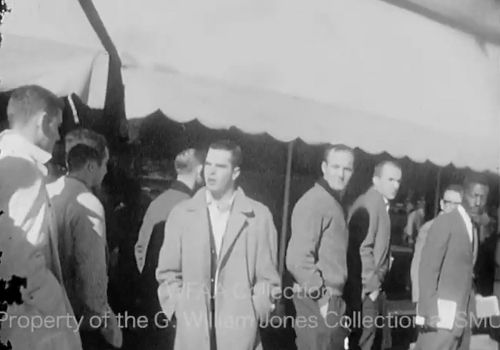
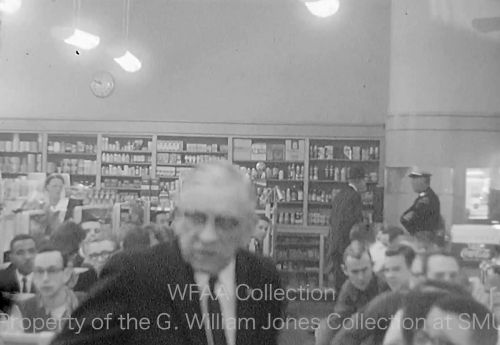
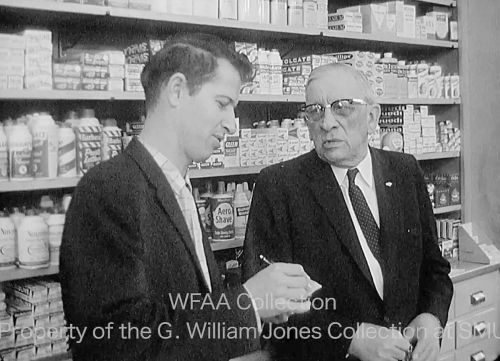
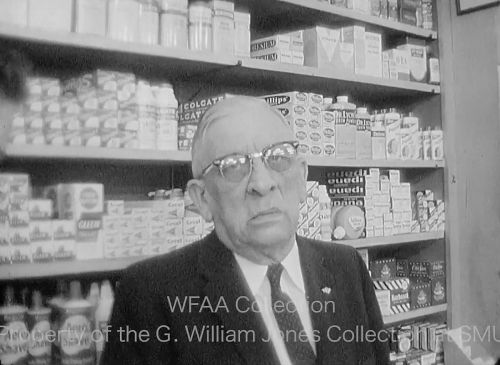
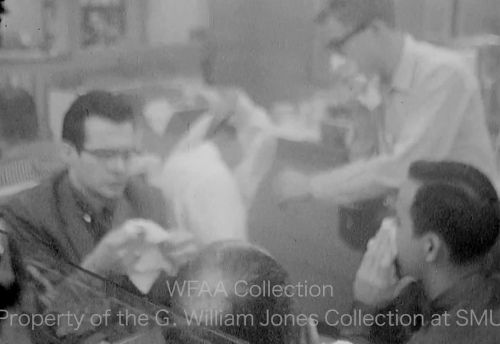
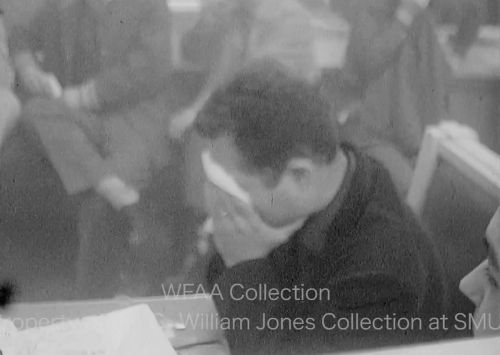
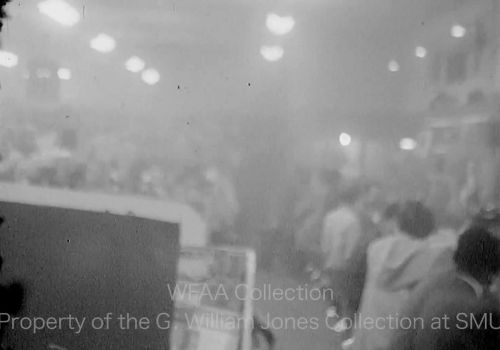
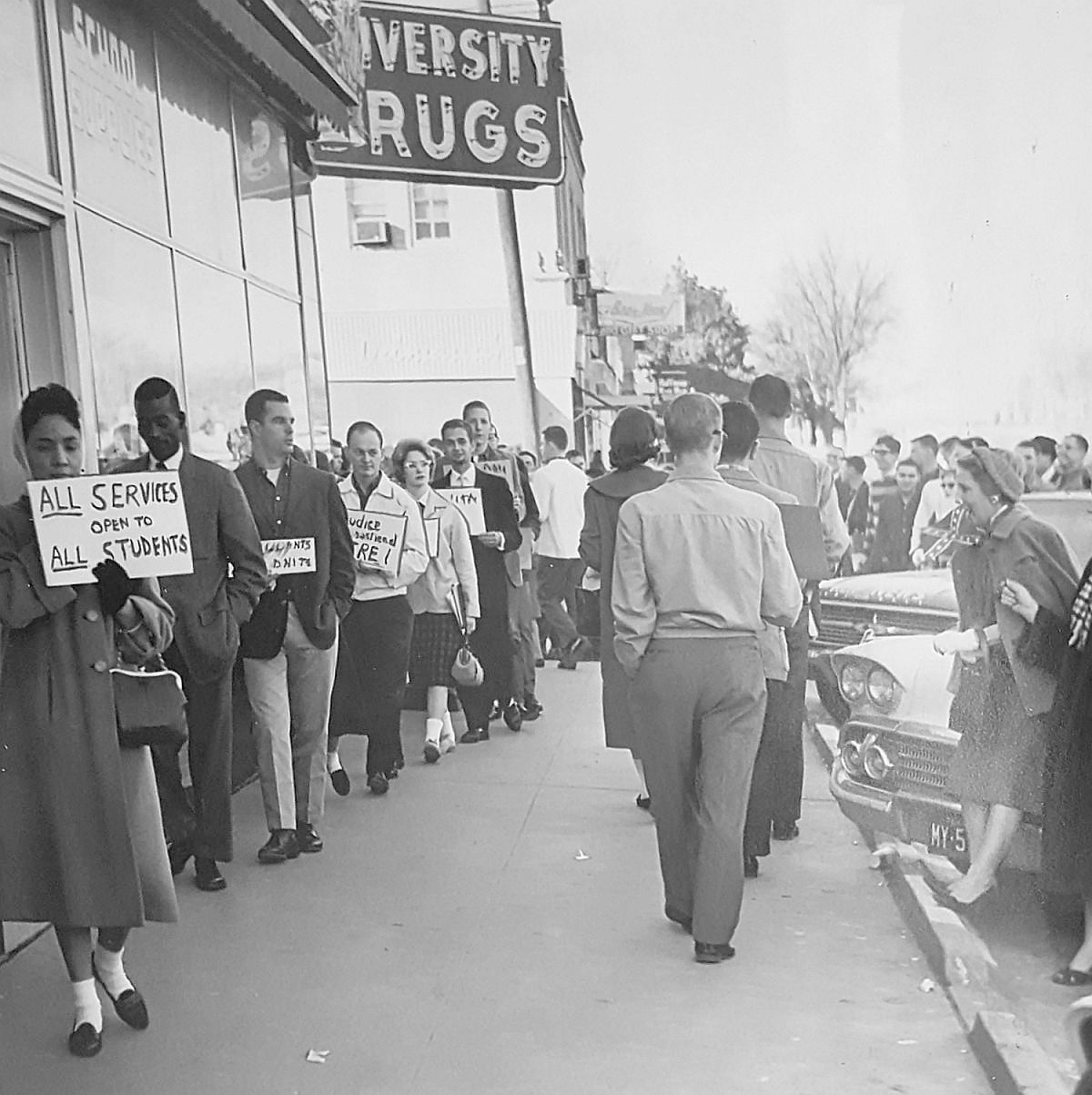
This week the G. William Jones Film & Video Collection at SMU posted another fantastic clip from their WFAA News archive on their YouTube channel. This one shows an incident I had heard about since I was a child. It shows a peaceful “sit-in” demonstration at the University Pharmacy at the southwest corner of Hillcrest and McFarlin, across from the SMU campus. The sit-in was organized by theology students at SMU’s Perkins School of Theology to protest the owner’s refusal to serve Black customers at his lunch counter. The student demonstration was conducted by a group of silent students — it was a peaceful protest without violence. Until, that is, the owner, pharmacist C. R. Bright, called in a fumigator to set off a cloud of insecticide inside the pharmacy in an extreme attempt to run off the protesters. The students did not leave until Bright closed the drug store. Many of the students then picketed in front of the business as anti-protester demonstrators showed up to heckle and jeer, some waving little Confederate flags handed out by Bright. My mother, who lived nearby at the time and had recently graduated from SMU (but was not a theology student) was there, and she says she can still feel the burn of that pesticide in her throat and says that no one present that day could believe a person would do what Bright did. (And she’s in it! She’s seen sitting at the counter, engulfed by a cloud of insecticide.)

Here is the silent clip from January 9, 1961 (the direct link on YouTube is here):


*

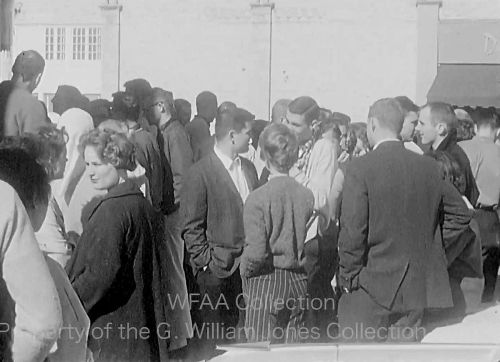
I took the photo below at an exhibit at the downtown Dallas Public Library in 2017. It shows the students outside the pharmacy as a crowd jeers at them.

university-drug-store_strike_DPL-exhibit_apr-2017via Dallas Public Library

In 1961, there were only 4 or 5 Black students attending SMU. Black students were allowed to attend only the theology and law schools — there were no Black undergraduates until 1962, when Paula Elaine Jones became the first African American full-time undergraduate student at SMU.

In 1961, African Americans were routinely refused service at white-owned establishments in Dallas (as they were in the rest of the Jim Crow South). The sit-in at the University Pharmacy was the result of a Black theology student being refused service at Bright’s lunch counter. There had been a small demonstration at the drug store a couple of nights before the one seen in the film above — it ended when Bright closed early. 

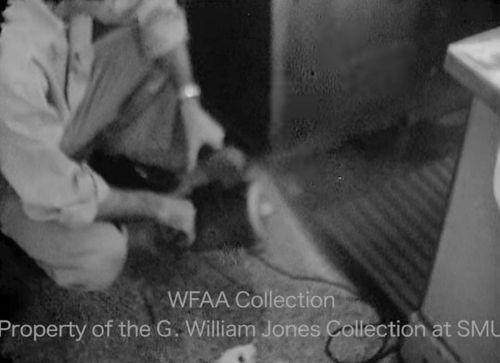
The sit-in that grabbed the headlines began around 10:00 on the morning of Monday, Jan. 9, 1961, when 60-75 SMU students, including Black theology students Earl Allen and Darnell Thomas, entered the drug store and sat silently at the counter and in booths. Allen and Darnell were refused service. In protest, the large group of students refused to leave. After about an hour, Bright was quoted by a WBAP news reporter as saying, “This is a good time to kill some cockroaches…” and called an exterminator service. When the exterminators arrived, they turned on fumigating machines inside the business, filling the place with clouds of kerosene-based insecticide which covered the students, the lunch counters, the dishes, the food, and the store’s merchandise. (Bright was a pharmacist, who was no doubt aware of potential physical harm this would cause.)

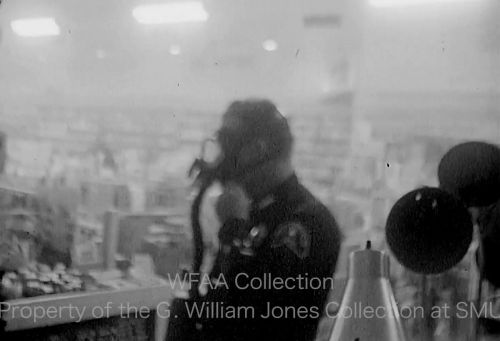
The students sat there, breathing through handkerchiefs and holding their ground, silent. A University Park policeman, Lt. John Ryan was there, but the police were not actively involved (although Ryan did have a handy gas mask). After half an hour, the students left when Bright closed the store. Bright re-opened an hour or two later (the lunch counter remained closed). Students silently picketed as hecklers jeered.

The SMU student newspaper — The SMU Campus — covered the sit-in. The article contained an unsurprising, unapologetic quote from the 75-year-old C. R. Bright: 

Bright steadfastly refuses to integrate his lunch counter. Says the drug store owner, “We are not serving them now and we’ll never serve them.” He continues to explain that it “is against my principle” and “I know it would wreck my business.” (The SMU Campus, Feb. 1, 1961)

Bright retired soon after and sold the business to an up-and-coming young whippersnapper named Harold Simmons, who went on to build a multi-multi-multi-million-dollar empire from that first business investment.

university-drug-store_smu-archivesvia DeGolyer Library, SMU

university-pharmacy_smu-rotunda_1965via 1965 SMU Rotunda

*

university-pharmacy-protest_WFAA_jan-1961_2

university-pharmacy-protest_WFAA_jan-1961_3

university-pharmacy-protest_WFAA_jan-1961_4_c-r-bright

university-pharmacy-protest_WFAA_jan-1961_5_c-r-bright

university-pharmacy-protest_WFAA_jan-1961_6

university-pharmacy-protest_WFAA_jan-1961_7

university-pharmacy-protest_WFAA_jan-1961_8

university-pharmacy-protest_WFAA_jan-1961_9

university-pharmacy-protest_WFAA_jan-1961_10

university-pharmacy-protest_WFAA_jan-1961_11_UP-policeman

*

UPDATE, BURY THE LEDE DEPT: Thanks to comments by two readers, I have learned that Christopher R. Bright was the father of former Dallas Cowboys owner H. R. “Bum” Bright. Oh dear.

***

Sources & Notes

All screenshots are from WFAA news footage from the WFAA News Film Collection, G. William Jones Film & Video Collection, Hamon Arts Library, Southern Methodist University; the clip has been posted to the SMU Jones Film channel on YouTube here.

Read coverage of the sit-in (as well as a critical editorial which called the protest “immoral”) in the Feb. 1, 1961 edition of The SMU Campus, the student newspaper — it can be accessed on the SMU Libraries website here, or it can be read in a PDF I’ve made, here

Read a lively account of the sit-in in a WBAP-Channel 5 news script here (via the Portal to Texas History).

For those with access to the Dallas Morning News archives, the incident is covered in an article by Jim Lehrer: “Protesting Students Sit In, Walk Picket Line at Store” (DMN, Jan. 10, 1961). 

Another great clip showing a historical lunch-counter protest in Dallas (the city’s first, I believe) in April of 1960 is also available on the SMU Jones Film YouTube channel — it can be viewed here. Here is a description of what’s happening in the footage: “Rev. Ashton Jones, a white minister from Los Angeles, and Rev. T. D. R. V. Thompson, Black pastor of the New Jerusalem Institutional Missionary Baptist Church, 2100 Second Avenue, together visit segregated lunch counters in downtown Dallas department stores; the peaceful sit-in protests take place at the counters of the Kress Department Store, the H. L. Green Department Store, and the Tea Room of Sanger Bros. department store. This was the first publicized demonstration against Dallas’ segregated eating establishments, and several members of the media — both white and African American — are covering the historic event (Silent).”

Lastly, in a related Flashback Dallas post, there was a previous University Pharmacy which was located, at separate times, on the northwest and southwest corners of Hillcrest and McFarlin — the owner of the very first University Pharmacy built the Couch Building, which can be seen in the background of the top photo of this post. That earlier post, “University Park’s “Couch Building” Goes Up In Flames (1929-2016),” can be found here. A pertinent 1965 photo from that post which shows Simmons’ University Pharmacy, the Couch Building, and the Toddle House (which was also the site of a 1961 sit-in by SMU students) can be seen here.

university-pharmacy-protest_WFAA_jan-1961_1_sm

*

Copyright © 2022 Paula Bosse. All Rights Reserved.

Snider Plaza & The Varsity Theater — 1920s

varsity-theater_1929_galloway_1600The Varsity Theater, Snider Plaza, 1929

by Paula Bosse

Snider Plaza, the University Park shopping center near the SMU campus, was formally opened on June 2, 1927 when its centerpiece fountain was switched on as a crowd of thousands watched. The buildings weren’t completed yet, but it was a sure sign to everyone that a large project was underway in an area of town which was not yet fully developed.

It was announced in December 1926 that a 30-acre tract at the northwest corner of Hillcrest and Daniel had been purchased by Wichita Falls businessman Charles W. Snider (he had recently funded Snider Hall, the women’s dormitory at SMU) and University Park mayor J. Fred Smith from Miss Fannie B. Daniel, whose family had owned the land since 1851. The purchase price was $82,500 (which would be the equivalent of about $1.25 million in today’s money) (…let that sink in for a moment…). Snider Plaza, along with SMU, was both the heart of University Park and an impetus for real estate development around it.

Here’s an ad from October 1927 from the University Park Development Co. (click to see larger images) — lots were going for $1,890 ($30.000 today):

university-park-develpment-co_ad_100927_a

university-park-develpment-co_ad_100927_bOct. 1929 — Hurry!

*

Below are a couple of VERY early photos of Snider Plaza.

First off, the fountain. It was illuminated at night with rotating colored lights. The view is to the northwest.

snider-plaza-fountain_1927_galloway_dpl_1200

And that was about it. A fountain, paved streets and sidewalks, and lots of streetlights. In the photo below you can see the fountain in the distance. And the office of Ralph Porter, the man who was the driving force behind Snider Plaza (see his photo in the ad above). There is still a Ralph Porter Co. real estate business — and, appropriately, it’s still located in Snider Plaza.

snider-plaza_galloway_dpl_1200

*

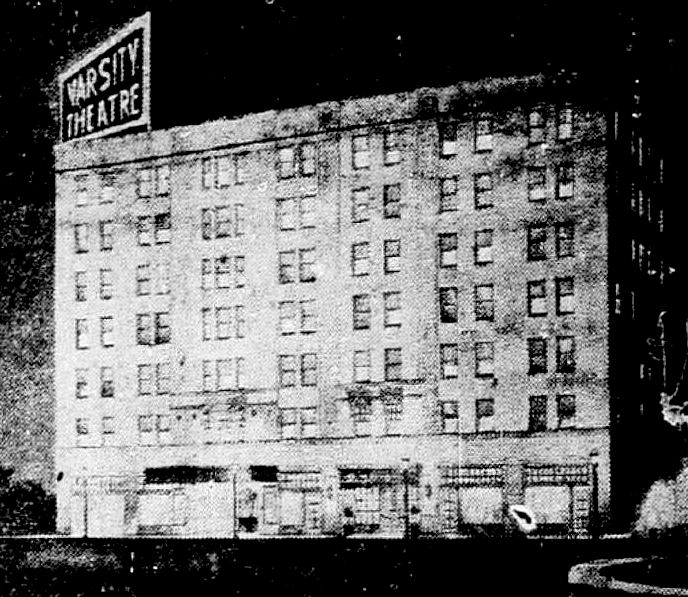
The Varsity Theater wasn’t built until 1929, even though a movie theater was always in the plans. I’m not sure what happened, but in 1928 it was announced that a new theater was going to be built as part of a 7-story building. The theater and retail shops were to occupy the first floor, offices would occupy the second floor, and furnished apartments would fill the top five floors (there would also be a parking garage in the basement). That’s all so weird to imagine. First off, apartments?! Secondly, that would have been the tallest building in the Park Cities! Buildings weren’t that tall in most of “suburban” Dallas in the 1920s. Also, the architecture is pretty bland, and very unlike the rest of the shopping area.

snider-plaza_varsity-apartments_1928Architect’s conception, 1928

The stripped-down plans ended up doing away with the basement and everything but the ground floor for the theater and retail shops. And I’m so glad! I love the photo at the top, from 1929. What a beautiful, beautiful building! The architect of the building was Wyatt C. Hedrick of Fort Worth. The buildings of Snider Plaza were meant to be of uniform design. Like this. (If only they all still looked like that!) (Another photo I posted recently showing that uniform style is here.)

*

A photo from 1940 showing a partial image of the marquee:

snider-plaza_brown-bks_university-park_varsity-theater_19401940, University Park Brown Books
*

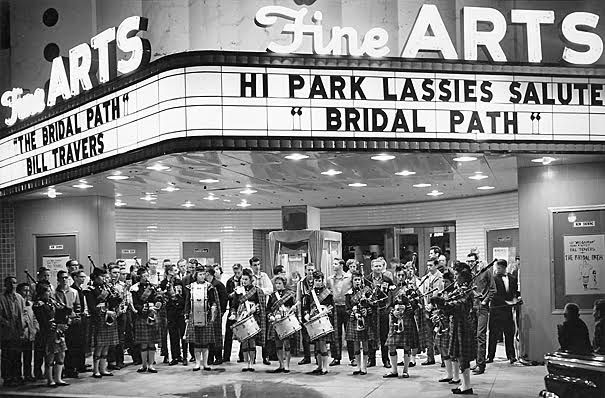
The Varsity opened on Oct. 3, 1929 with “In Old Arizona” (the first talkie to be filmed outdoors). It became the Fine Arts in January 1957. A reader, Malcom Thomson — who was a very youthful theater manager during the early days of the Fine Arts (I think he was an SMU student at the time) — sent me the great photo below from February 1960.

fine-arts-theater_snider-plaza_malcolm-thomson_feb-3-1960Feb. 3, 1960 (courtesy Malcolm Thomson)

At some point — it’s so incredibly hard to believe that it seems like an urban legend — the Fine Arts Theater became an “adult” theater. Yes, Virginia, X-rated movies were screened regularly in the Park Cities. Oh dear.

*

The theater is long-gone, as is almost all of Snider Plaza’s original “look.” But it’s still a cool, quirky place, and it’s always interesting to explore (never quite as interesting as M. E. Moses was to me as a child, but so few places are). And as long as Kuby’s is still around to fulfill my Reuben and warm-potato-salad needs, I’m pretty happy.

**

A couple of quirky tidbits about the very early years:

  • SMU students were responsible in large part for operating the theater, because, of course, it offered them the opportunity to “obtain practical experience in show business.”
  • Also, the streets of the plaza were cleaned by “an automatic street-washing machine.” I’m not sure what that would have entailed, but I would guess that SMU students were glad to be let off the street-cleaning life-experience hook on that one.

And, on a personal note, several decades later, my father owned the very short-lived Plaza Book Store, which was located in the retail space just to the right of the theater (where, just a few short years earlier, he had worked as an usher — i.e. “obtained practical experience in show business” — while attending SMU).

***

Sources & Notes

The two photos of Snider Plaza from 1927 and the top photo of the Varsity Theater from 1929 were found in the absolutely fantastic book The Park Cities: A Photohistory by Diane Galloway. The first two are from the collection of the Dallas Public Library. Ms. Galloway’s credit for the photo of the theater reads, “Photo by Frank Rogers/Courtesy of Jerrry Washam/Ralph Porter Company.” I believe all three photos are by Frank Rogers.

1960 photo of the Fine Arts Theater is used courtesy of Malcolm J. Thomson (thanks, Malcolm!).

varsity-theater_1929_galloway_sm

*

Copyright © 2021 Paula Bosse. All Rights Reserved.

Snider Plaza Safeway: Hillcrest & Lovers — 1930s

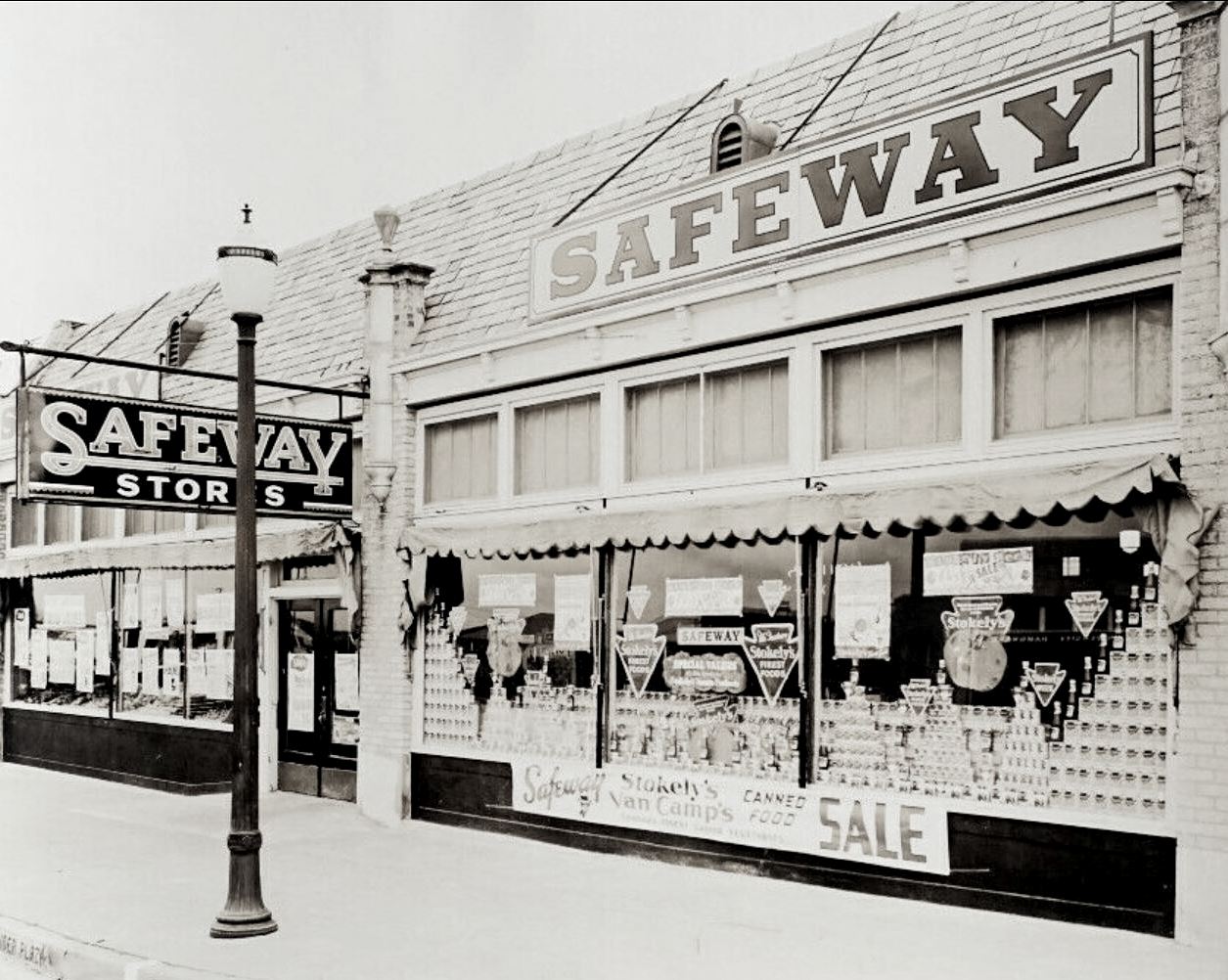
snider-plaza_safeway_ebay_1Safeway, Hillcrest & Lovers Lane

by Paula Bosse

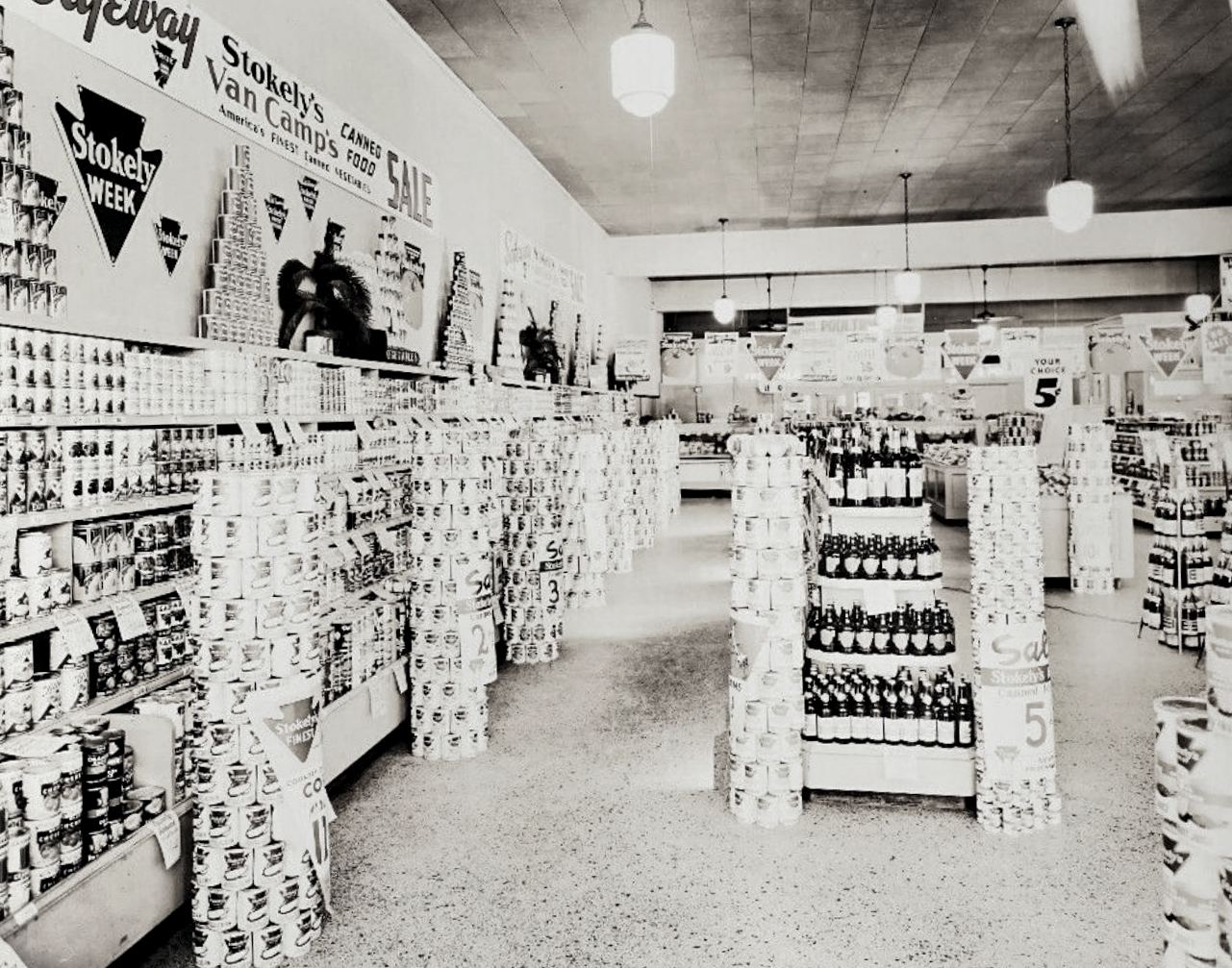
The Snider Plaza shopping area opened in University Park in June, 1927, and an early grocery tenant was Killingsworth Self-Serving Food Store, which opened in 1930 or ’31. In 1934 the small Killingsworth chain of 12 Dallas stores was purchased by the Safeway/Piggly Wiggly company, and in March, 1935 the remodeled store was opened as a Safeway — it was newer, bigger, better, and more crammed-full of Stokely’s canned foods than any grocery store University Park had ever known. But in August, 1941 — before shoppers had gotten too complacent — it moved around the corner into another Snider Plaza location (3412 Westminster) — this one even newer! Even bigger! Even better! (And only half a mile from another Safeway which was just a hop, skip, and a jump away at 6207 Hillcrest.) (You can’t have too many Safeways.)
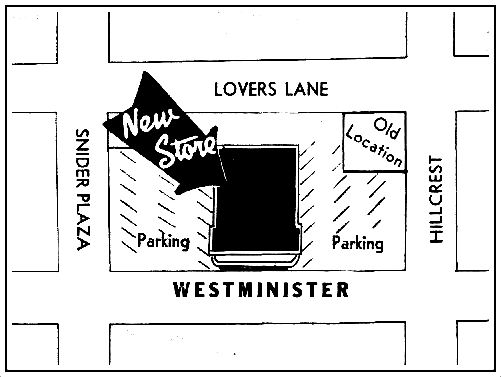
I haven’t seen many photos of the original architecture of Snider Plaza shops, so the photo above is pretty cool. (I really like that “Snider Plaza” was stamped on the curb.) I’m going only by the little map below, which appeared in ads when the bigger 1941 store opened, but I assume that the store seen in the photo above was at the corner of Hillcrest and Lovers Lane. 

snider-plaza_safeway_ad_082941_det_mapAug. 1941, Safeway ad detail

And now I have a sudden craving for canned hominy….

snider-plaza_safeway_ebay_2

snider-plaza_safeway_ebay_3

***

Sources & Notes

Photos found on eBay in 2020.

UPDATE: As mentioned in the comments below, Dallas historian Teresa Musgrove Judd ended up as the winning eBay bidder of these photographs and plans to donate them to the Dallas Public Library.

snider-plaza_safeway_ebay_1_sm

*

Copyright © 2021 Paula Bosse. All Rights Reserved.

SMU Campus, An Aerial View from the North — 1940s

smu-campus_from-the-north_squire-haskins_UTA_nd(Squire Haskins Collection, UTA Libraries)

by Paula Bosse

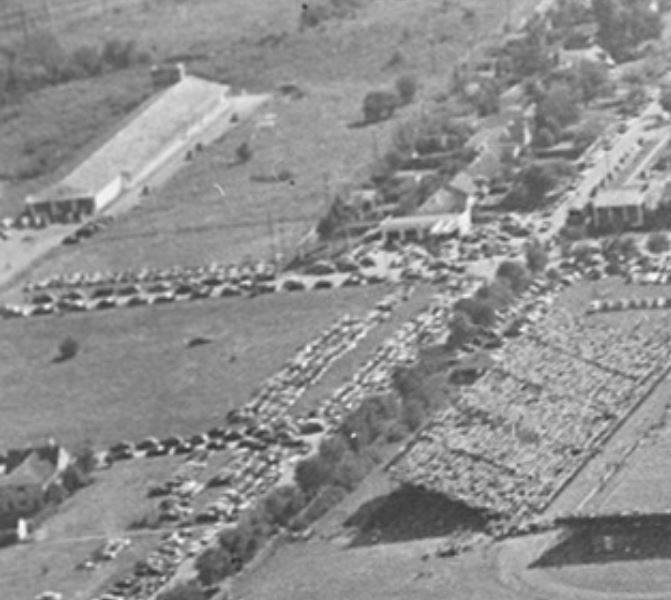
When you see aerial views of the SMU campus, they’re usually looking to the north, toward Dallas Hall. Which is one reason this photo by ace photographer Squire Haskins is interesting. It’s also noteworthy because it shows “Trailerville,” the trailer camp set up on the campus from 1946 to 1953 for married war-vet students, and it also shows the pre-fab men’s dormitories, which look like army barracks. Housing in post-WWII Dallas was was very, very tight, and people had to make do and were crammed into all sorts of spaces. (See a very large image of this photo on the UTA website here.)

For reference, Mockingbird Lane is running horizontally at the top (I was wondering if that might have been the Mrs. Baird’s bakery (built in 1953) at the top left, but it’s not far enough east), Bishop Blvd. is in the center, and Hillcrest Avenue is at the right. And there’s also a whole lot of empty land — a startling sight if you’ve seen the present-day bursting-at-the-seams campus.

Here are a few blurry close-ups. First, Trailerville (which I’ve been meaning to write about for years!) — just northeast of Ownby Stadium:

smu-campus_from-the-north_squire-haskins_UTA_nd_det-2

Men’s dorms in temporary buildings which were removed in 1952/53:

smu-campus_from-the-north_squire-haskins_UTA_nd_det-1

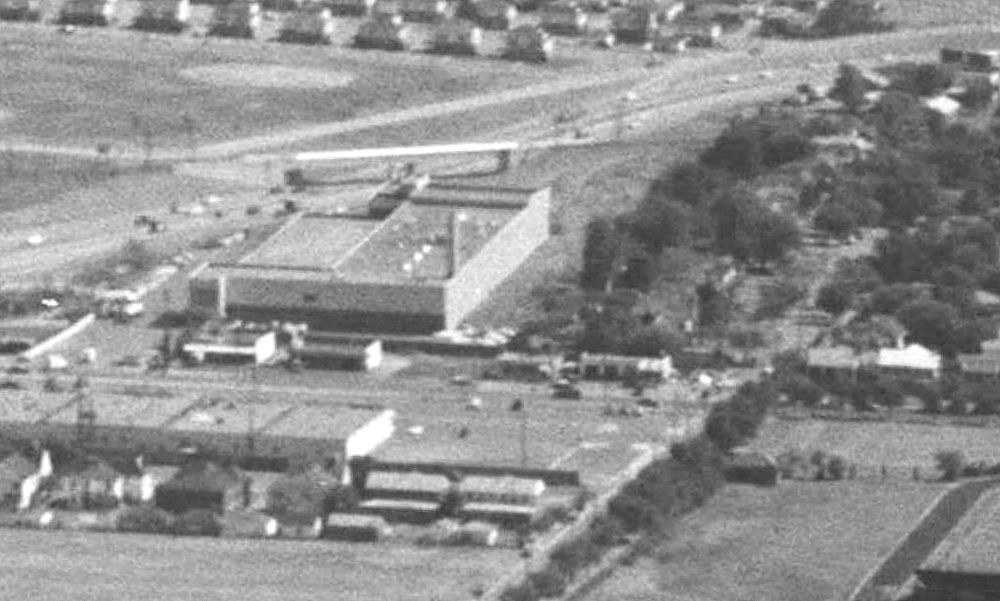
And something that isn’t the Mrs. Baird’s Bread factory (scroll down to see what it was):

smu-campus_from-the-north_squire-haskins_UTA_nd_det-3

*

Thanks to the comments below by reader “Not Bob,” it appears that the photo of the long building at the top left corner — on the site later occupied by Mrs. Baird’s Bread — was once an armory for the 112th Cavalry (Troop A) of the Texas National Guard. The building was originally built in 1921 as the headquarters of the Wharton Motor Company, a short-lived automobile and tractor manufacturer. It appears to have closed by 1922 and the company was bankrupt by 1924. The 112th Cavalry (with about 40 horses) moved in at the end of 1927 — they were forced to move out by the end of 1930 because of neighbor complaints (and a lawsuit) about the horses being in such close proximity to residences. By the time of the photo above, it was the Town and Country food business which rented freezer-locker space to the public. Mrs. Baird’s Bread decided to build on the site in 1949 (with the intention, presumably, to raze the existing building) — construction began in 1952 and the factory opened in 1953 (incidentally, the factory was designed by legendary Dallas architect George Dahl). (I should write about the Wharton building sometime — it has an interesting history.) 

The commenter (“Not Bob”) also linked to a similar view of the campus in 1955, post-Trailerville:

smu_from-the-north_1955_degolyer-library_SMU_cropped(DeGolyer Library, SMU)

By then, Central Expressway had been built and Mrs. Baird’s was cranking out that delicious aroma that filled the neighborhood for decades:

smu_from-the-north_1955_degolyer-library_SMU_det-mrs-bairds

***

Sources & Notes

“Aerial view of the campus of Southern Methodist University, Dallas, Texas” is by Squire Haskins, from the Squire Haskins Photography Inc. Collection, University of Texas at Arlington Libraries; more information on this photo can be found here (click thumbnail photo to see larger image).

“1955 aerial view of campus from the north” — by William J. Davis — is from the collection of the DeGolyer Library, Southern Methodist University; more information on this photo is here.

smu-campus_from-the-north_squire-haskins_UTA_nd_sm

*

Copyright © 2021 Paula Bosse. All Rights Reserved.

SMU Cartoon Timeline — 1935

smu-timeline_1935-rotundaJust the highlights…

by Paula Bosse

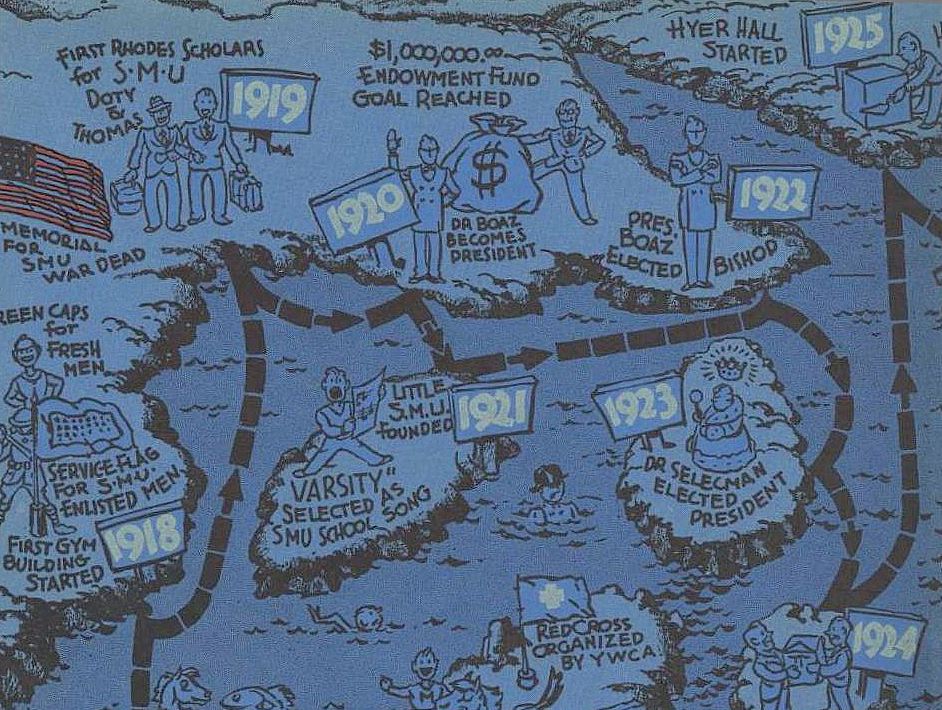
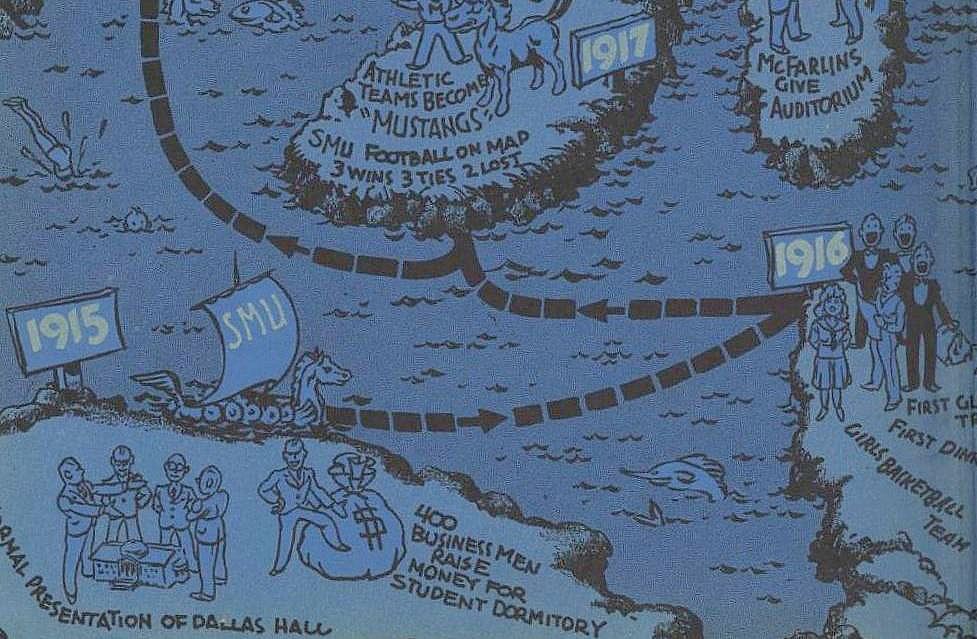
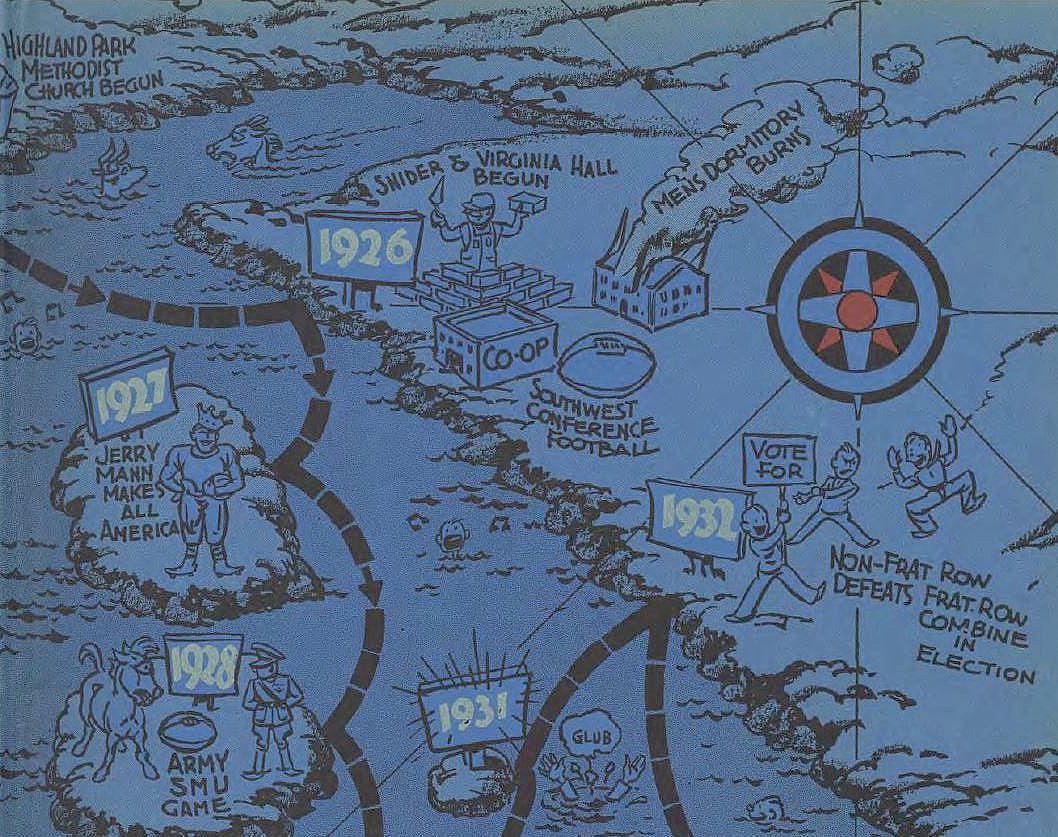
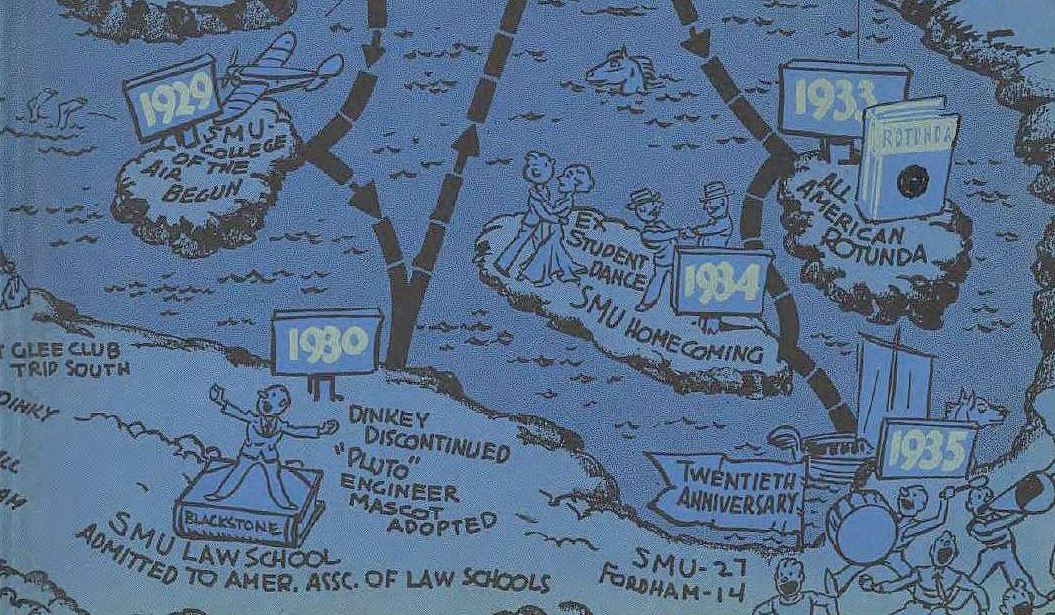
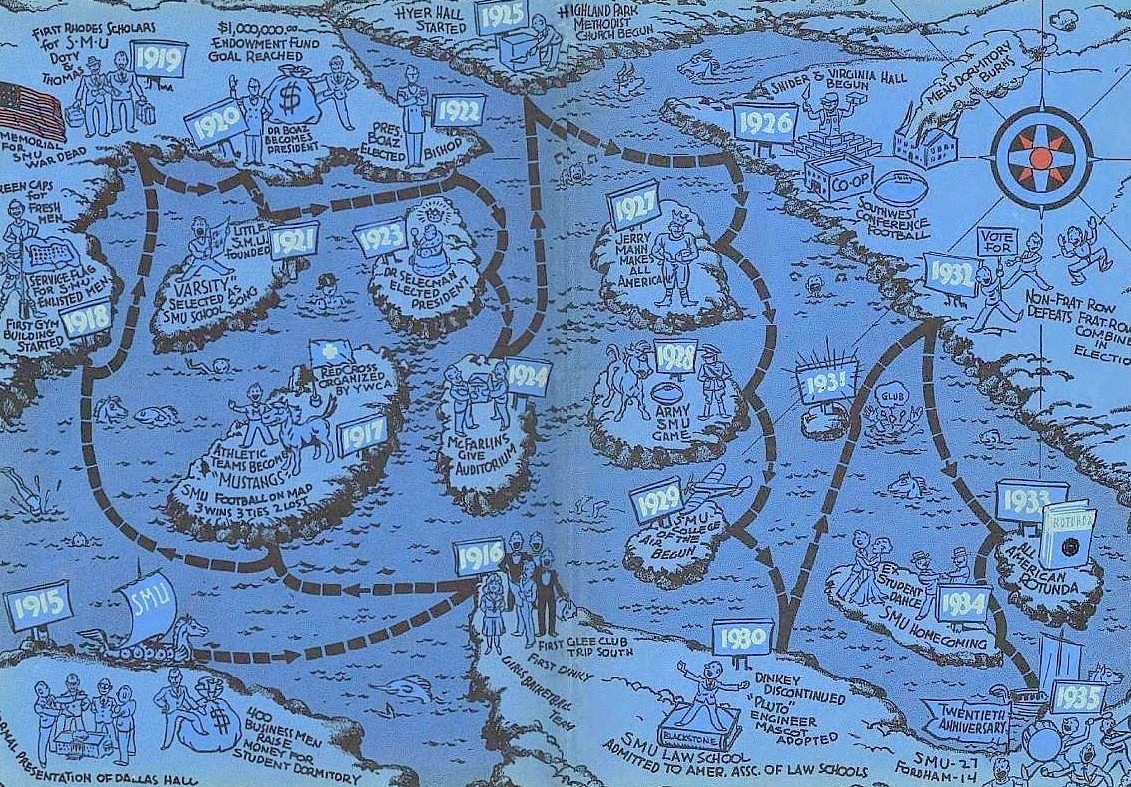
Here’s a handy little chronology of the first 20 years of Southern Methodist University’s history, found on the endpapers of the 1935 SMU yearbook, the Rotunda

Click to explore (“glub”):

smu-timeline_1935-rotunda_crop-1a

smu-timeline_1935-rotunda_crop-1b

smu-timeline_1935-rotunda_crop-2a

smu-timeline_1935-rotunda_crop-2b

***

Sources & Notes

Images from the 1935 Rotunda, yearbook of Southern Methodist University.

For more on SMU’s first year, 1915-1916, see these Flashback Dallas posts:

smu-timeline_1935-rotunda_sm

*

Copyright © 2021 Paula Bosse. All Rights Reserved.

Jerry Bywaters: “City Suburb at Dusk” — 1978

bywaters_city-suburb-at-dusk_1978_amer-art-review_2008Northwest Highway noir…

by Paula Bosse

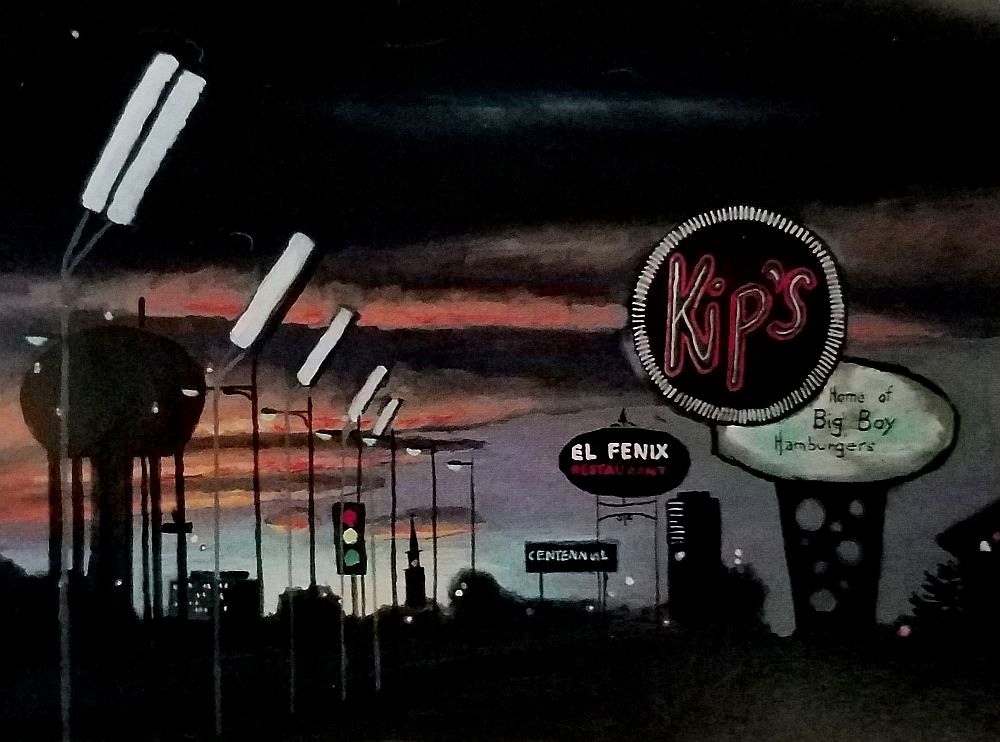
You’re a Dallasite. You’ll probably immediately recognize the location of this (somewhat uncharacteristic) painting by famed Dallas painter Jerry Bywaters: it’s Northwest Highway, looking west from just past Hillcrest. Its title — “City Suburb at Dusk” — is a bit misleading. It was sort of a suburb (Preston Hollow) back when Jerry was a young man, but by 1978, when this was painted, its “suburb” days were long, long gone.

I love this painting. On the “suburb” side it’s got Kip’s, El Fenix, Centennial Liquor, and the cool curved Preston Tower. On the University Park side it’s got the silhouettes of the omnipresent water tower (once a much more pleasing shape than it is today, back when it was painted in a whimsical red-and-white checkerboard pattern), the spire of the Park Cities Baptist Church, and a Preston Center-adjacent office building. West Northwest Highway never looked so tranquil.
***

Sources & Notes

“City Suburb at Dusk” by Jerry Bywaters, 1978 — oil on masonite, 18 x 24, collection of G. Pat Bywaters.

Printed in American Art Review, Vol. XX, No. 1, 2008.

bywaters_city-suburb-at-dusk_1978_amer-art-review_2008_sm

*

Copyright © 2021 Paula Bosse. All Rights Reserved.