Flashback : Dallas

A Miscellany: History, Ads, Pop Culture

Category: Uptown

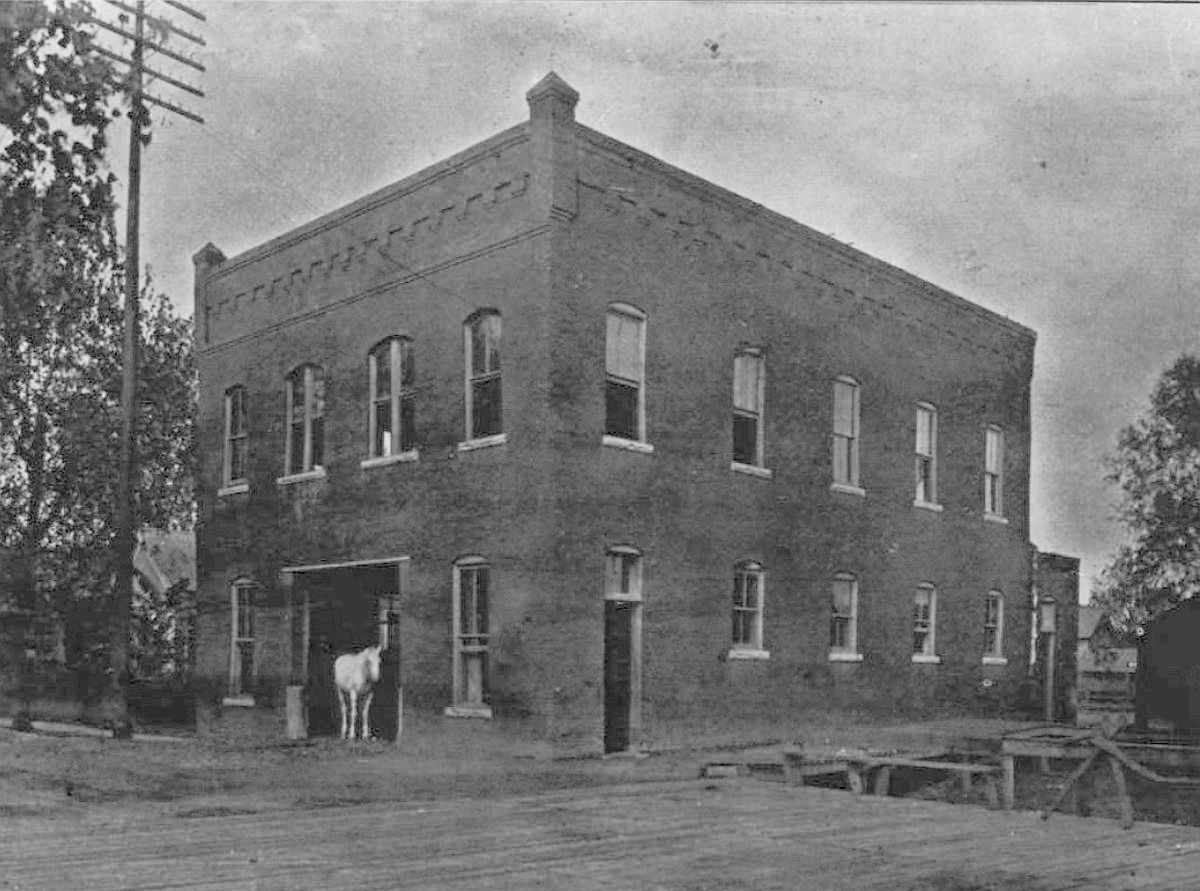
2908 McKinney: The Emergency Home — 1912

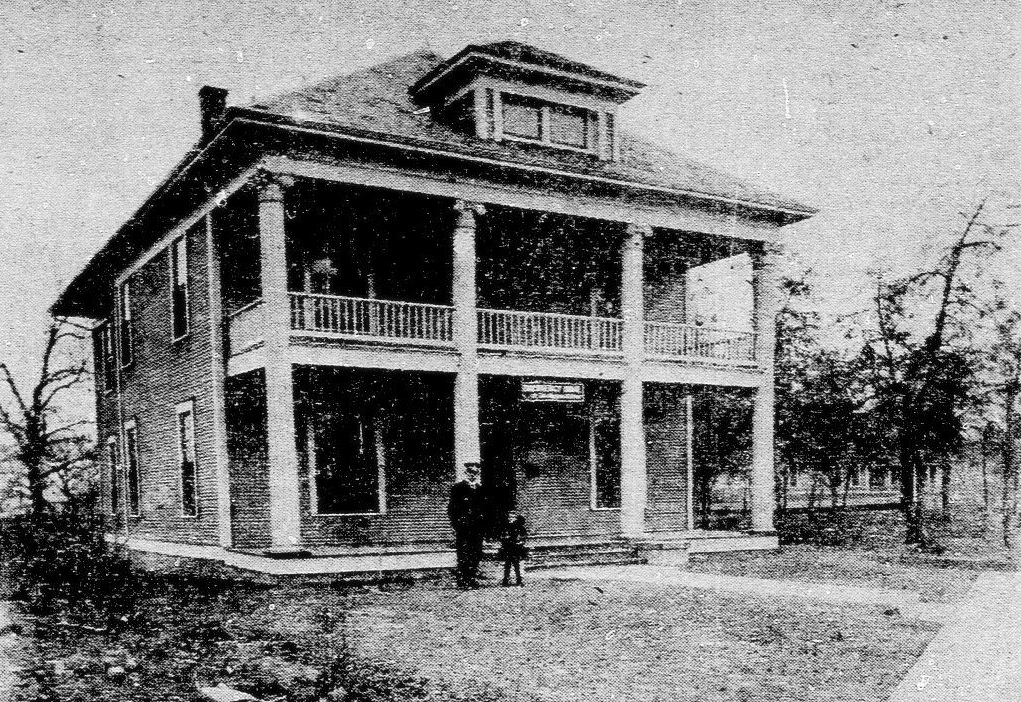
emergency-home_dmn_031312_photo2908  McKinney Avenue, brand new in 1912… (click for larger image)

by Paula Bosse

Above, the brand new Salvation Army “Emergency Home” in 1912. The accompanying headline and caption, from The Dallas Morning News (March 13, 1912):

American Salvation Army Home for Destitute

This place has been secured as shelter for unfortunate women and children. It is centrally located on McKinney Avenue, near Allen Street.

This “haven for unfortunates” was established on McKinney Avenue to temporarily house those (mostly women and children) who needed a helping hand until they were able to secure work and a permanent home.

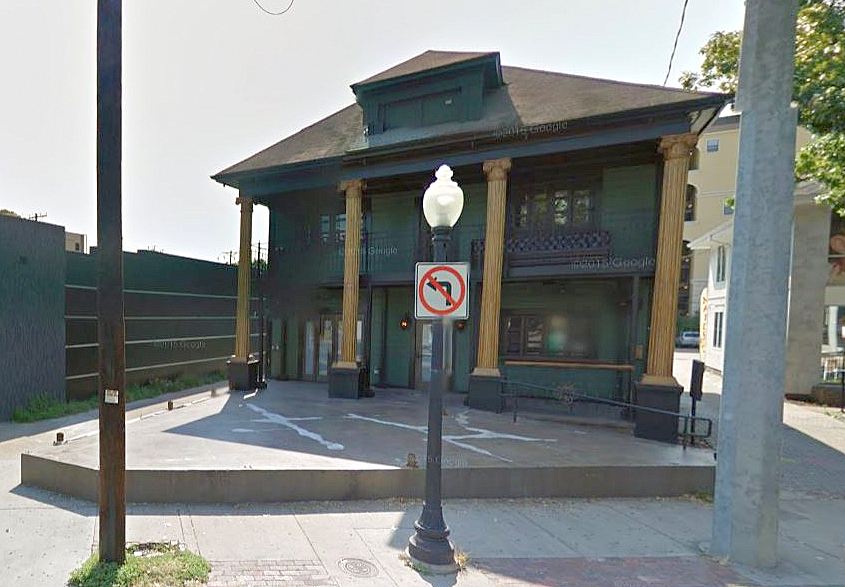
It appears that the home lasted only a couple of years. By the 1915 city directory, the house was vacant. It later became a private residence, a rooming house, a children’s clothing and furniture shop, a crime scene, a marble-top table emporium, a place to buy aquariums, a PR firm, the Dallas bureau of Texas Monthly, and a whole  bunch of bars and restaurants.

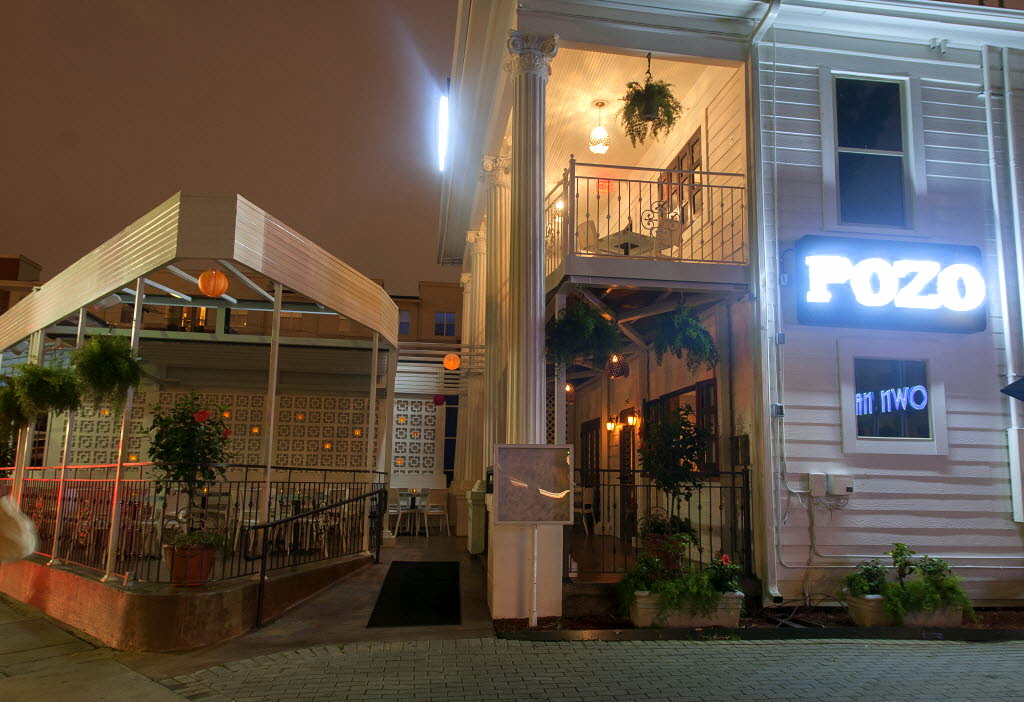
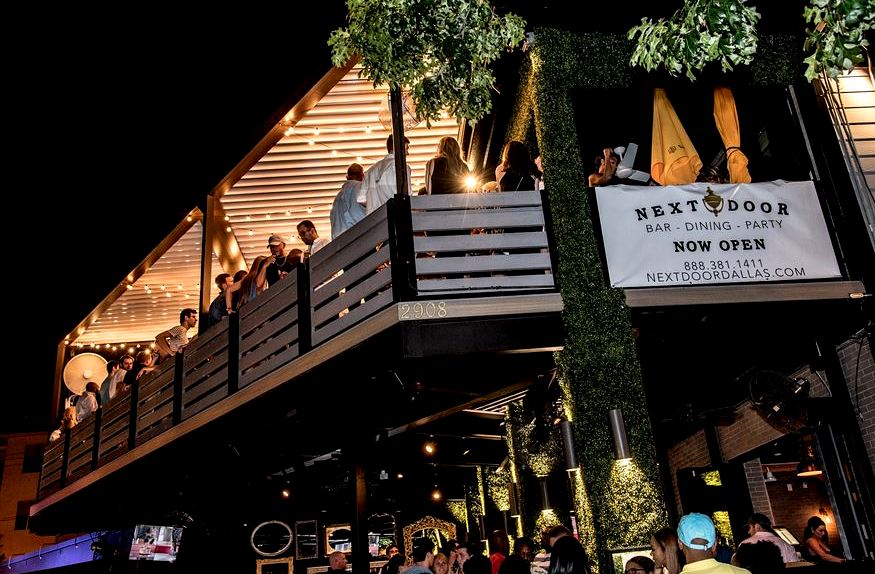
The 1912 house is still standing, and it’s currently a bar and restaurant catering to the young, Uptown party-set. Maybe the Salvation Army should set up a kettle out front this Christmas.

**

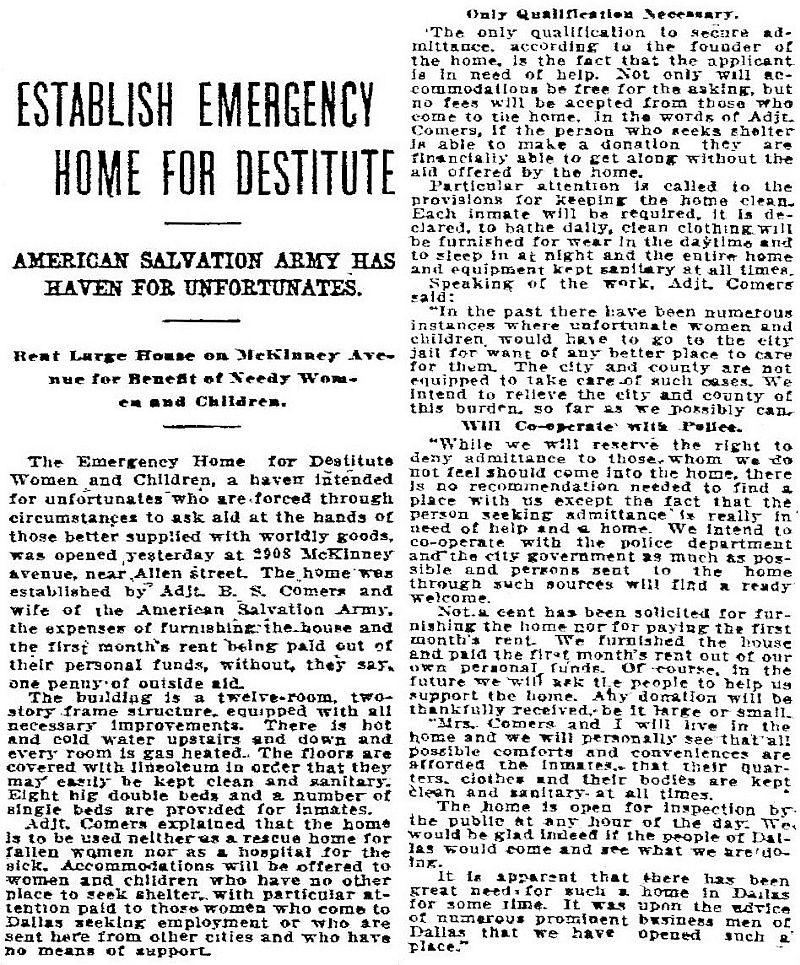
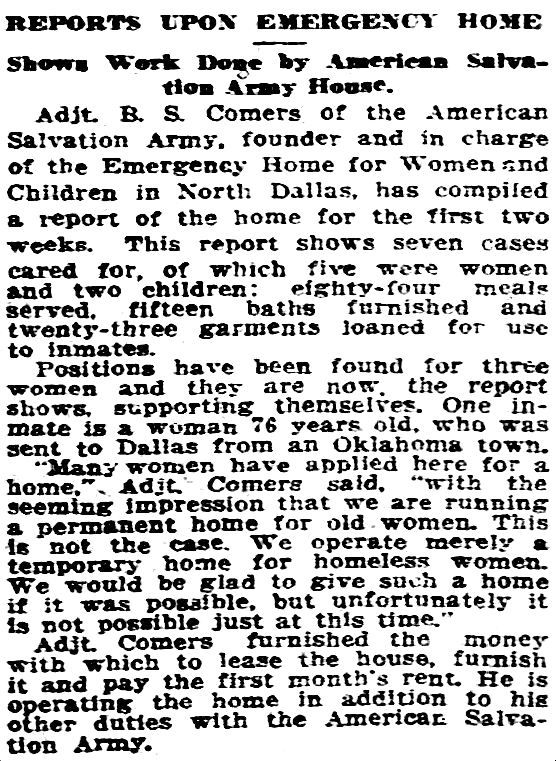
Below, a couple of articles about the first days of the “Emergency Home” (click for larger images):

emergency-home_dmn_022412
DMN, Feb. 24, 1912

emergency-home_dmn_031312
DMN, March 13, 1912

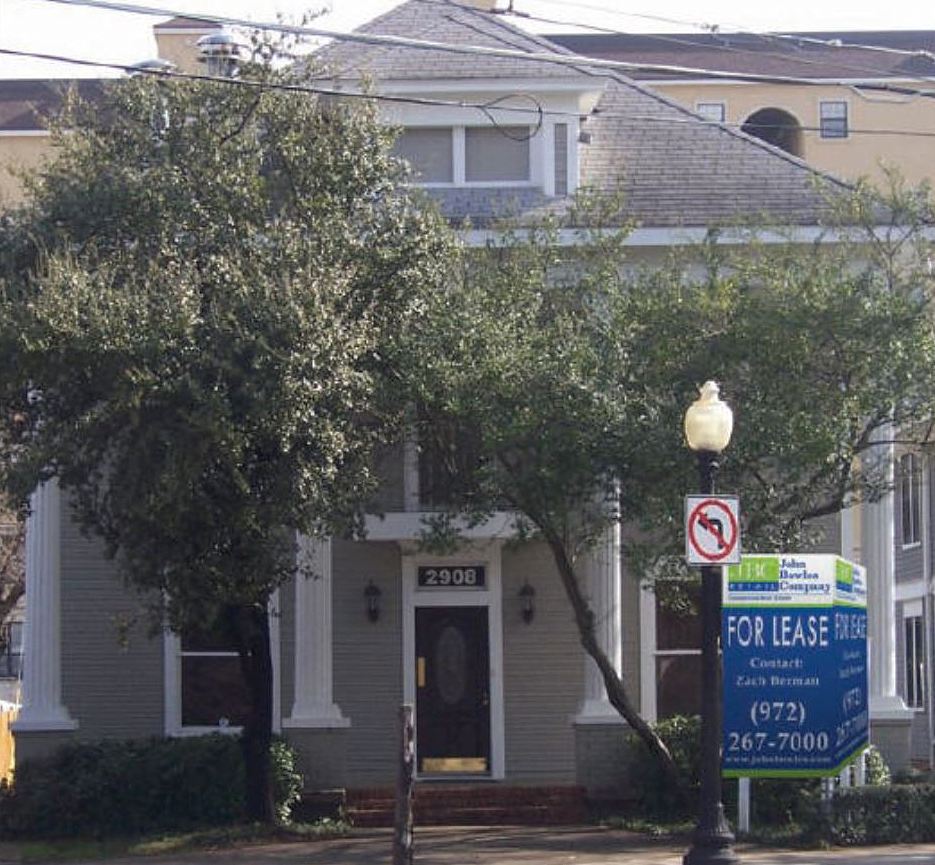
And a few photos of the house in recent years, showing a variety of paint colors and renovations.

2908-mckinney_for-lease

pozo_dmn_eatsblog_062013Dallas Morning News/Eats Blog

2908-mckinney_google_jan-2015Google Street View

2908-mckinney_dcadDallas Central Appraisal District photo — see it HUGE here

2908-mckinney_then-nowThen and now-ish

next-door_d-mag_2016Bret Redman/D Magazine

***

Sources & Notes

Top photo appeared in The Dallas Morning News on March 13, 1912 (photo by Clogenson).

As of this writing, 2908 McKinney Avenue is the bar/restaurant Next Door.

A couple of other Flashback Dallas posts concerning surprisingly old buildings along McKinney Avenue which have been re-purposed to attract Uptown nightlife:

Click photos and clippings for larger images.

*

Copyright © 2016 Paula Bosse. All Rights Reserved.


Dallas Fire Stations — 1901

fire-dept_engine-co-3_gaston-and-college_1901Fire horse in Old East Dallas relaxing between calls (click for larger image)

by Paula Bosse

A few turn-of-the-century photos of Dallas’ fire stations, from a 1901 photographic annual. These seven firehouses were built between 1882 and 1894. One of these buildings is, miraculously, still standing on McKinney Avenue, in the heart of Uptown.

*

At the top, Engine Co. No. 3, at Gaston and College Avenues. In service: January, 1892. Equipment: an Ahrens Steamer, capacity 750 gallons per minute, and a Cooney Hose Carriage. See it on a 1905 Sanborn map here; see the present location (Gaston and Hall) here. (And since I just used it a few days ago, here’s a 1921 Sanborn map, showing Mill Creek running right through the property.)

*

fire-dept_central-station_main-harwood_1901

Above, Central Fire Station, Main and Harwood Streets. In service: October, 1887. Equipment: a double-sixty-gallon Champion Chemical Engine and a City Hook and Ladder Truck. See it on a 1905 Sanborn map here; see the present location here (the site of the old City Hall/Municipal Building).

*

fire-dept_mckinney-leonard_engine-co-1_1901

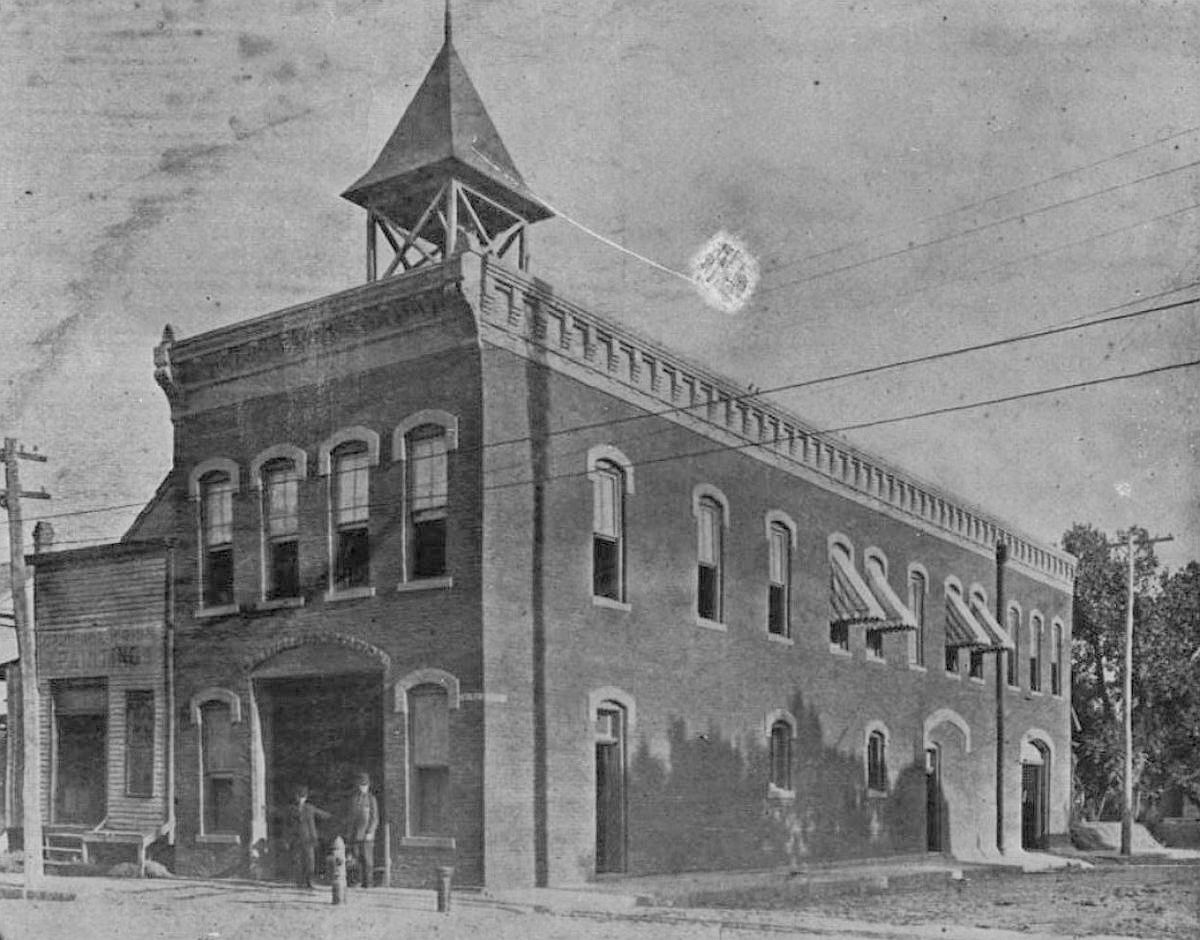
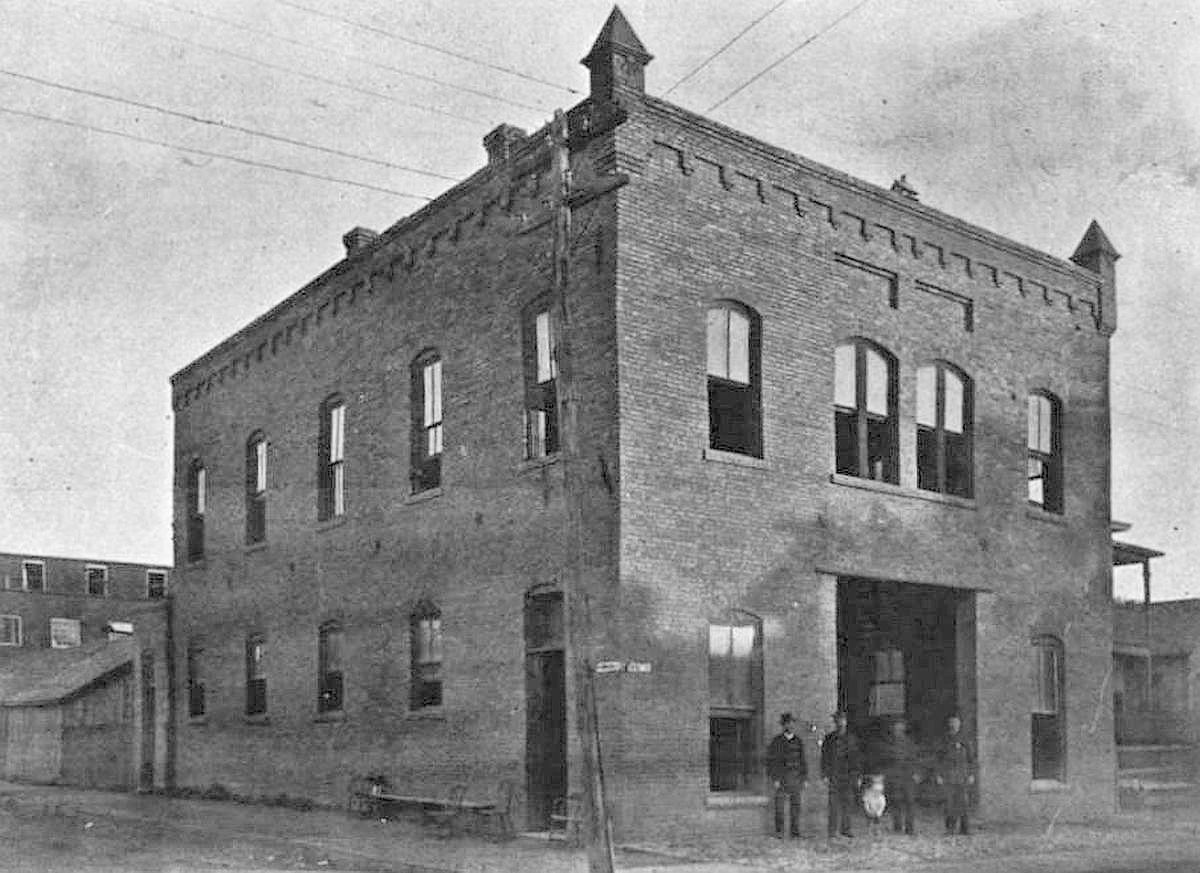
Engine Co. No. 1, McKinney Avenue and Leonard. Equipment: an Ahrens Steamer, 750 gallons per minute, and a Cooney Hose Carriage. In service: August, 1894. See it on a 1905 Sanborn map here; see the present location here. NOTE: This is the only one of these firehouses still standing. I wrote about it here.

UPDATE: Well, sort of. Thanks to a comment on Facebook, I researched this station a bit more and found that it was rebuilt and modernized at the end of 1909 — using materials from the original building seen above, built on the same plot of land. So instead of being 122 years old, the building on McKinney today is a mere 106 years old.

*

fire-dept_commerce-hawkins_engine-co-2_1901

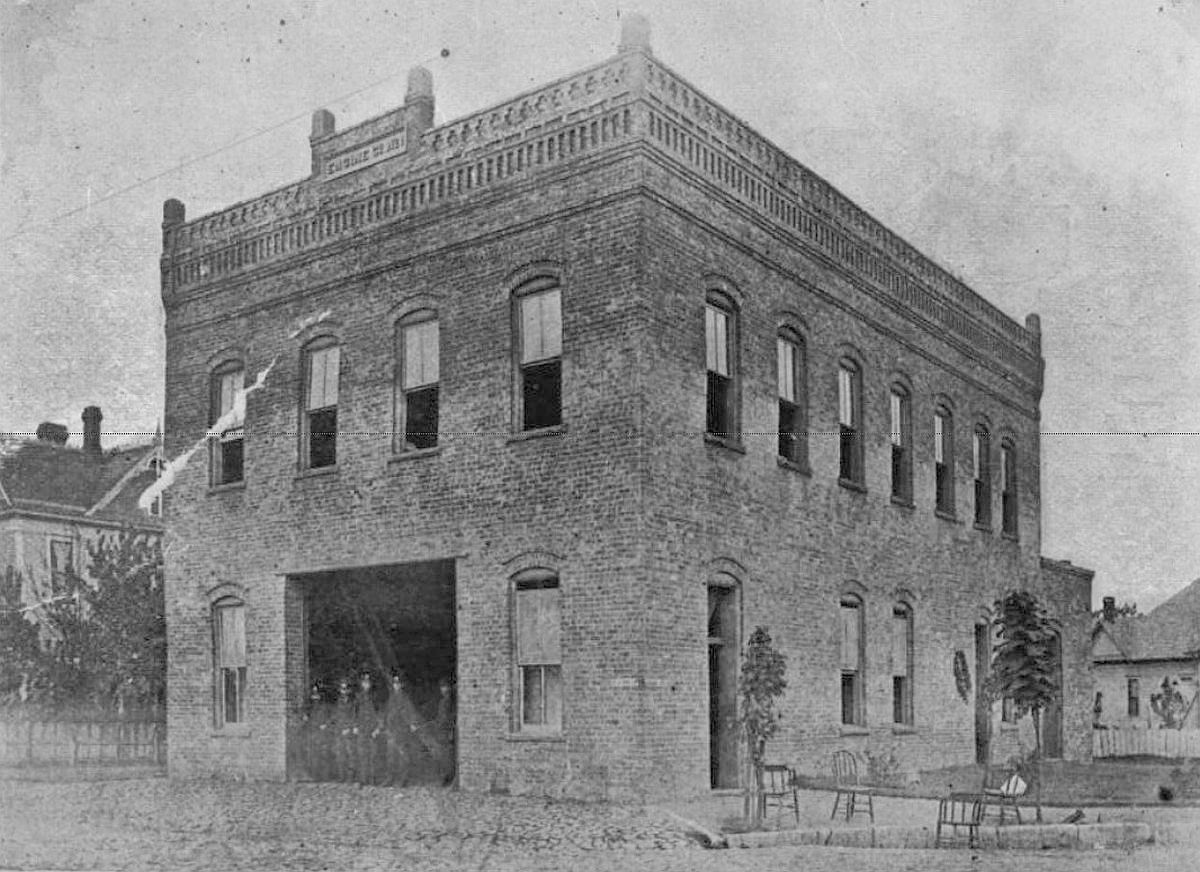
Engine Co. No. 2, Commerce and Hawkins Streets. In service: January, 1882. Equipment: an Ahrens Steamer, capacity 750 gallons per minute, and a Cooney Hose Carriage. See it on a 1905 Sanborn map here; see a shot-in-the-dark guess at a present location here.

*

fire-dept_ervay-kelly_hose-co-2_1901

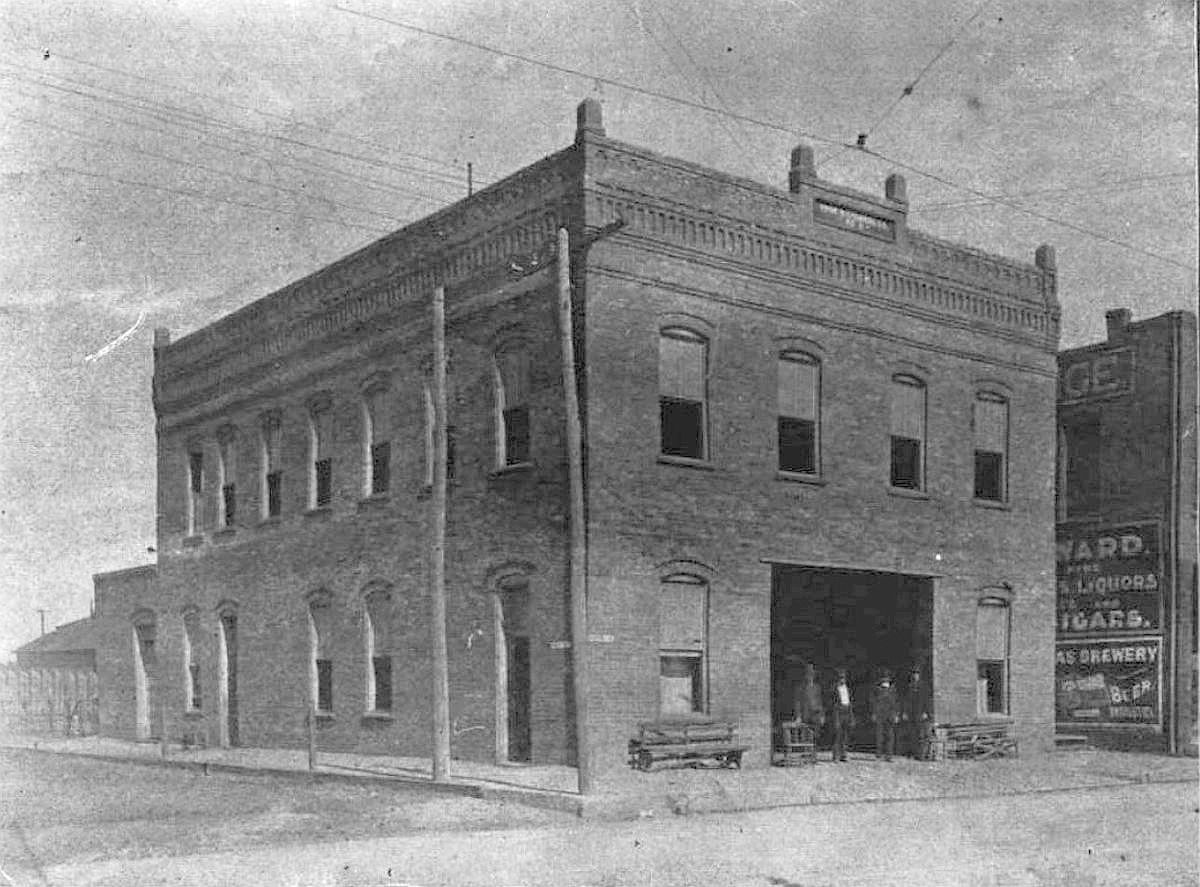
Hose Co. No. 2 and Chemical Co. No. 2, Ervay Street and Kelly Avenue. In service: September, 1894. Equipment: a Cooney Hose Carriage and double-sixty-gallon Champion Chemical Engine. See it on a 1905 Sanborn map here; see the present location here (right behind where the word “Cedars” is).

fire-dept_bryan-hawkins_hook-and-ladder-1_1901

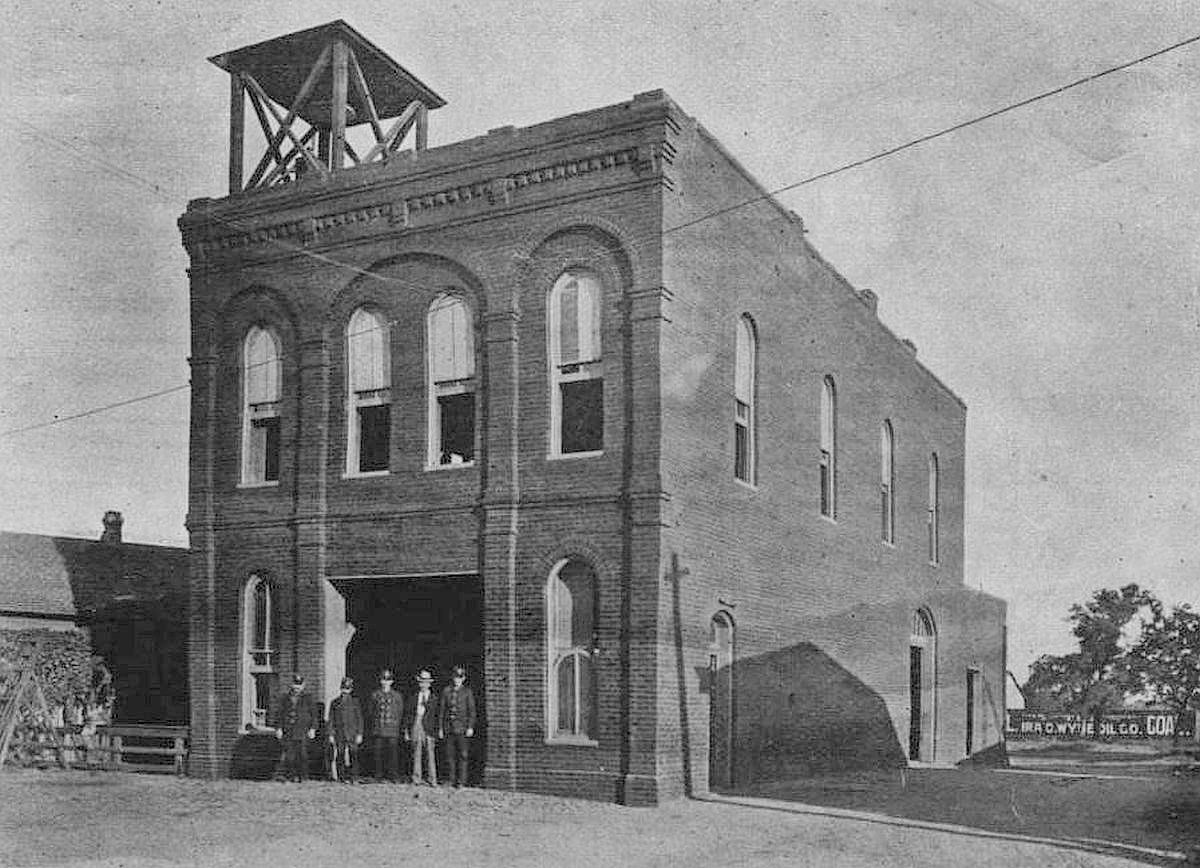
Hose Co. No. 1 and Hook and Ladder Co. No. 1, Bryan and Hawkins Streets. In service: January, 1893. Equipment: Preston Aerial Truck with 75-foot extension ladder, and a Cooney Hose Carriage. See it on a 1905 Sanborn map here; see the approximate present location here.

*

fire-dept_commerce-akard_engine-co-4_1901

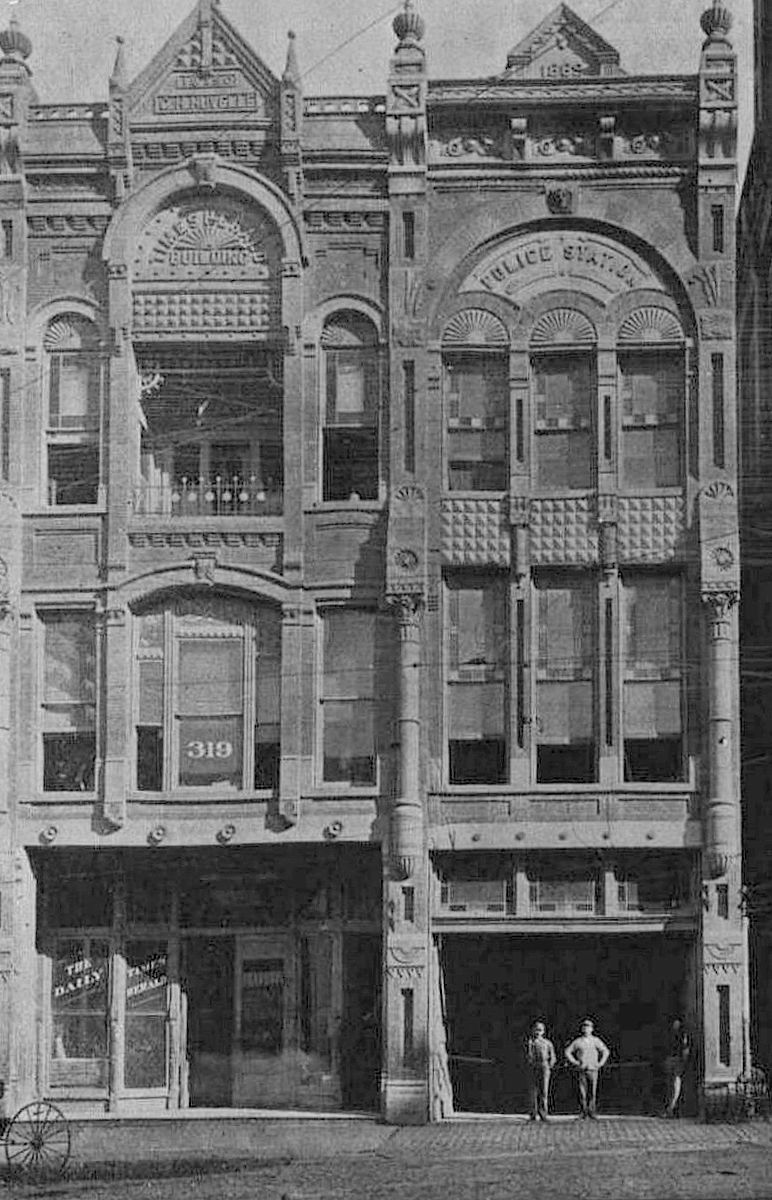
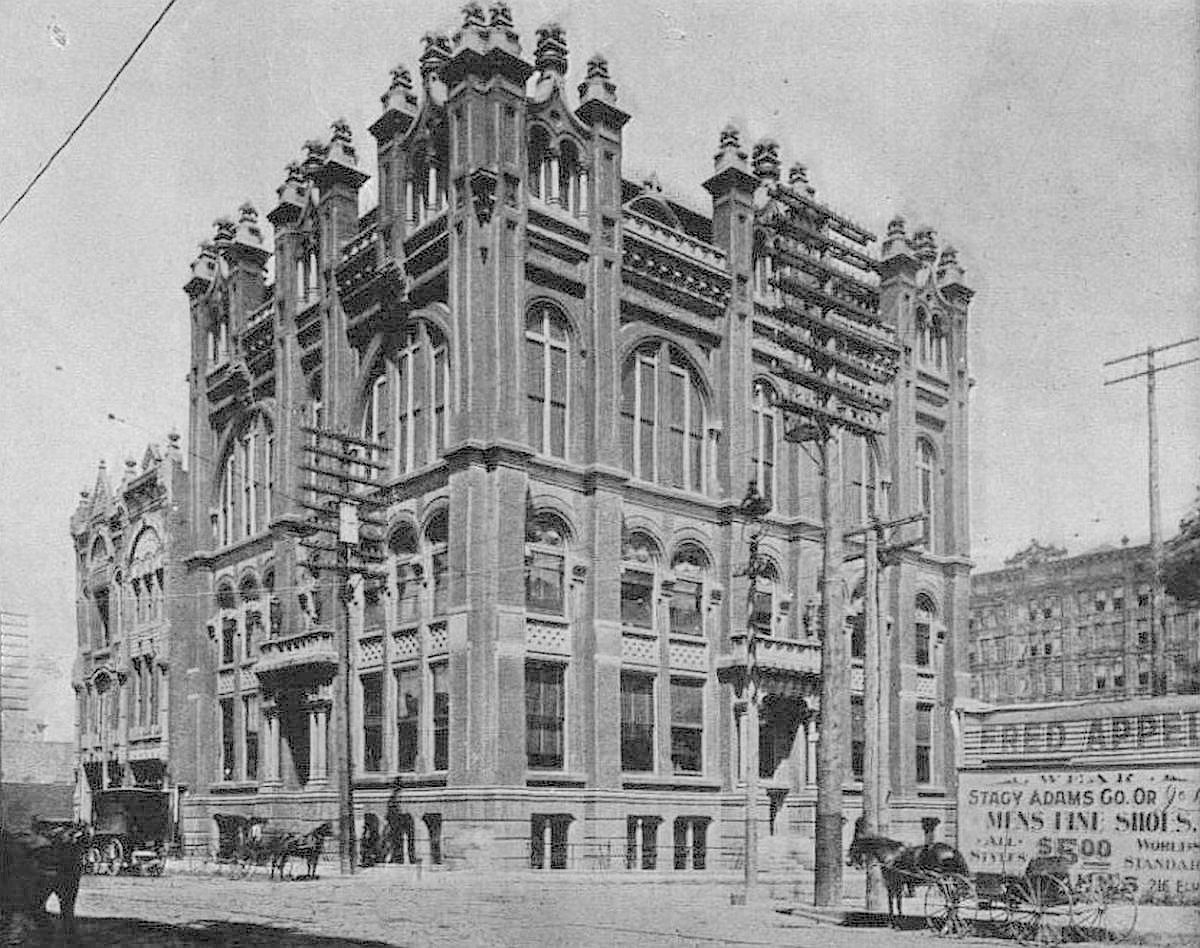
Engine Co. No. 4, Commerce and Akard Streets, next door to the City Hall. In service: August, 1894. Equipment: an Ahrens Steamer, capacity 1,100 gallons per minute, and a Cooney Hose Carriage. See it on a 1905 Sanborn map here; see the present location here (just out of frame at the right was the City Hall; the block is now the site of the Adolphus Hotel).

*

city-hall_1901_fire-dept-annual_portal

City Hall, Commerce and Akard Streets, now the location of the Adolphus Hotel. Half of the shorter building to the left housed the police department and Engine Co. No. 4.

*

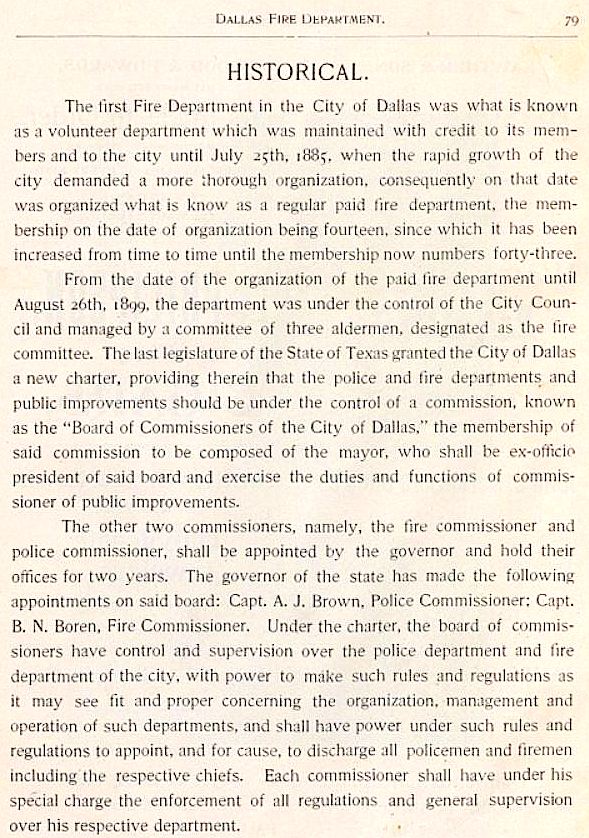
The “Historical” page from the book (click to read).

fire-dept-hist_dallas-fire-dept-annual_1901_portal

**

Since there is no sign of the actual equipment in these photos, here’s what horse-drawn steam engines (Ahrens steamers) looked like at this time. (Photo from the Wisconsin Historical Society).

fire-steam-engine_wisconsin-hist-soc

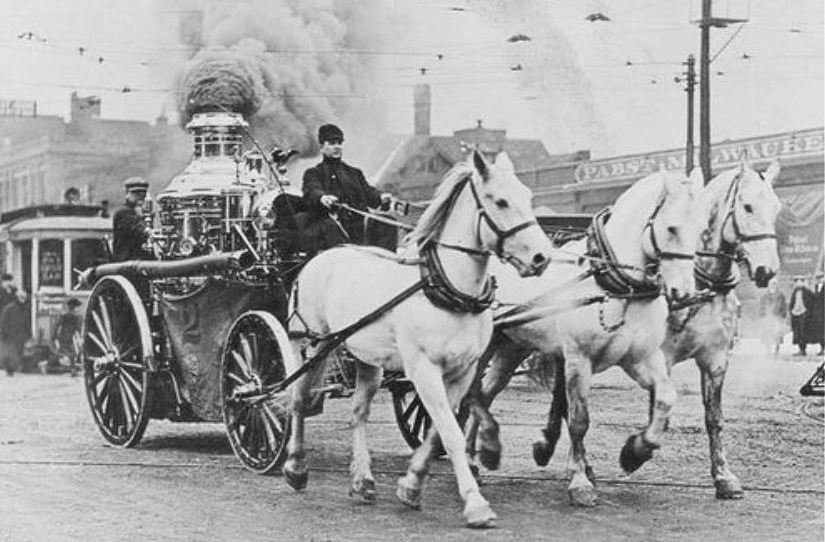
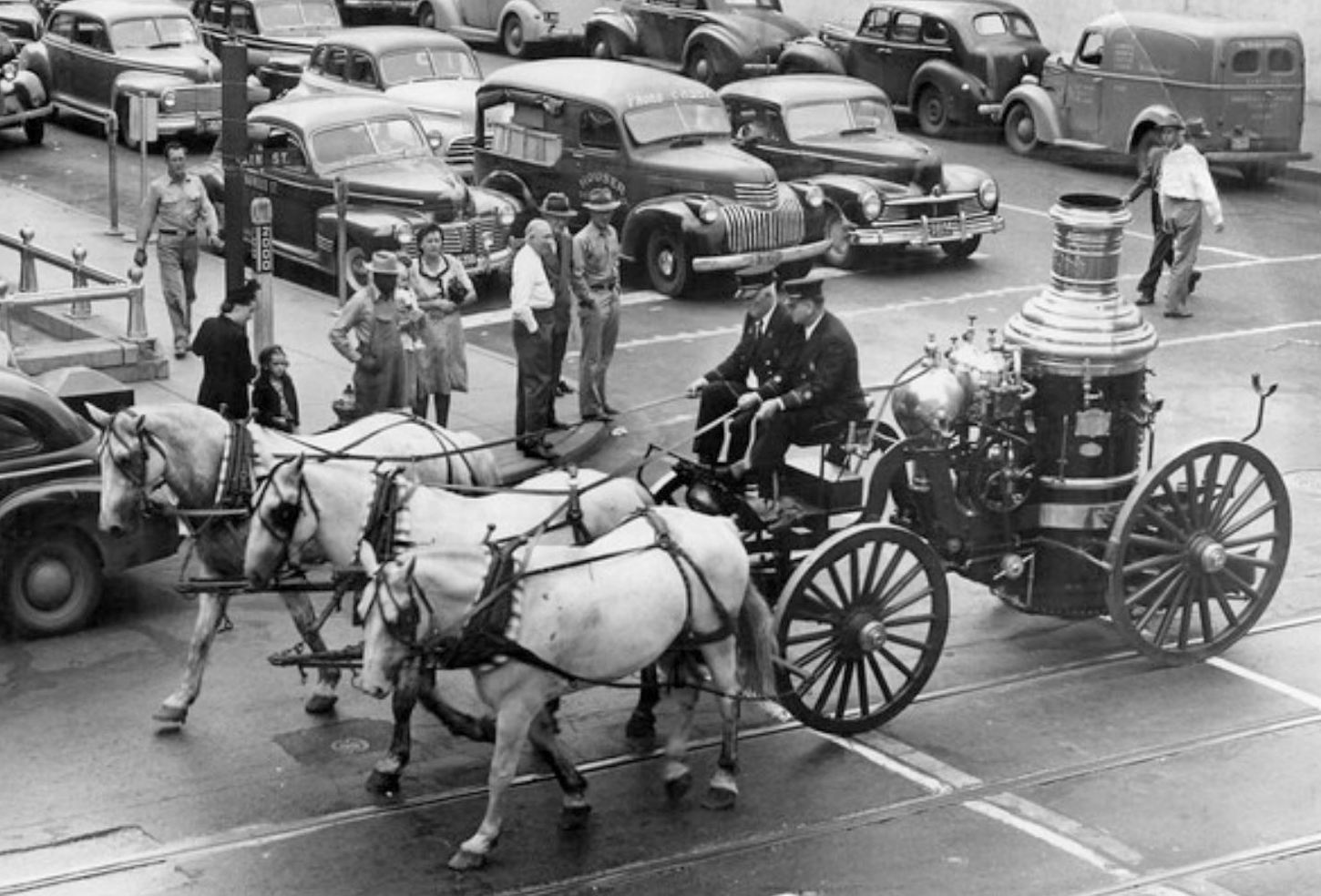
UPDATE: I found this photo on Flickr, showing equipment from those early days being driven through the streets of Dallas during a fire prevention parade.

fire-department_pumper_flickr_coltera

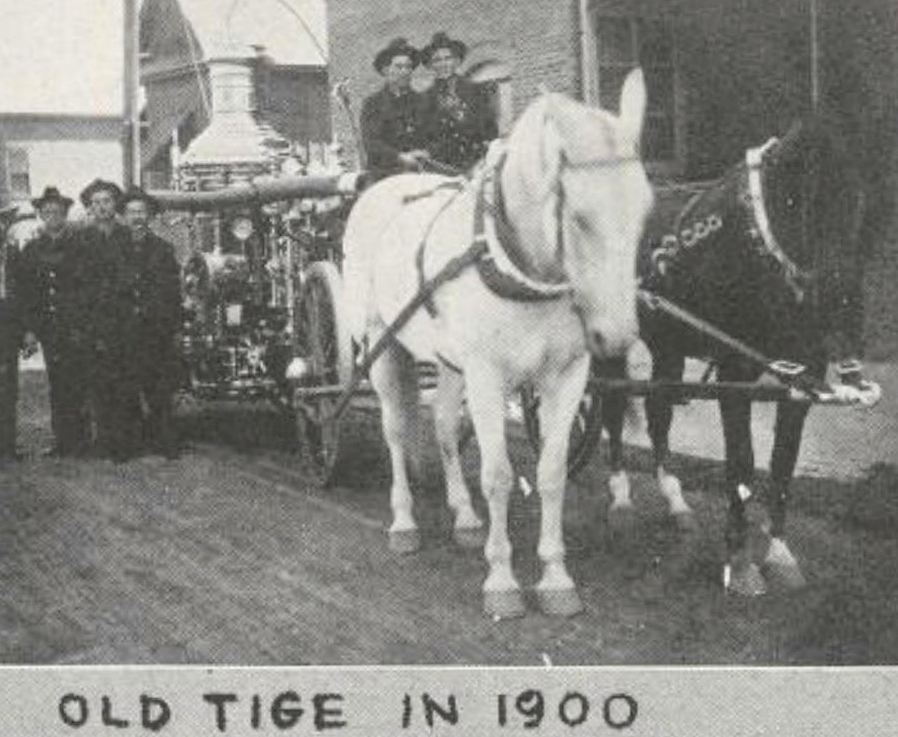
UPDATE: Lo and behold, a photo from 1900 of Old Tige, the 600 gallons-per-minute steam pumper, built in 1884, which was in service with the Dallas Fire Department until 1921. (Old Tige can be seen in the Firefighters Museum across from Fair Park.) Found at the Portal to Texas History.

old-tige_1900_fire-dept-bk_1931_portal

***

Sources & Notes

Photos by Clifton Church, from the Dallas Fire Department Annual, 1901, which can be viewed in its entirety on the Portal to Texas History, here.

A contemporary map of Dallas (ca. 1898) can be viewed on the Portal to Texas History site, here.

More Flashback Dallas posts on historic Dallas firehouses can be found here.

All photos larger when clicked.

*

Copyright © 2016 Paula Bosse. All Rights Reserved.

Ads for Businesses Serving the North Dallas High School Area — Early 1960s

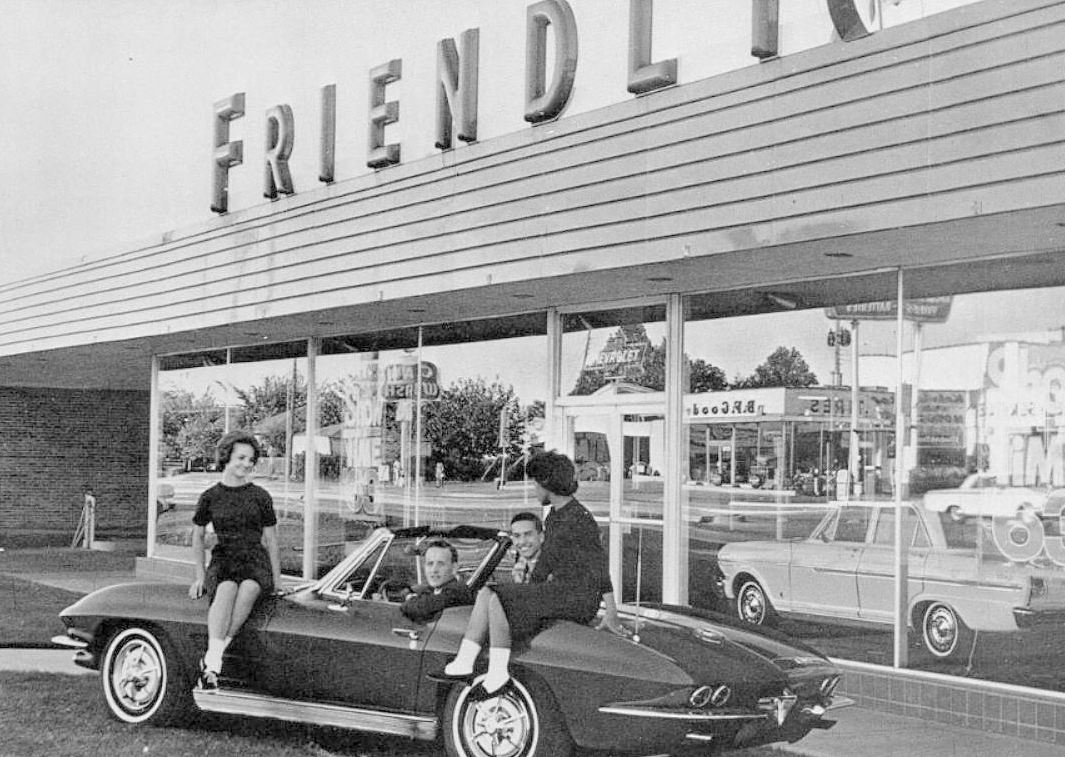
friendly-chevrolet_ndhs_1963-yrbk-photoFriendly Chevrolet, 1963

by Paula Bosse

One of the things I like best about looking through old high school and college yearbooks is seeing the ads in the back — especially the ads that feature students. Here are a whole bunch of ads from the 1960, 1962, and 1963 North Dallas High School annuals, with most of the ads placed by businesses in the Oak Lawn, McKinney Avenue, and Little Mexico areas surrounding the school. Let’s take a walk down memory lane, shall we? (Ads and photos are larger when clicked.)

Above, Friendly Chevrolet at Lemmon and Inwood. I bet the owner was grimacing as he saw those girls perched — gingerly or not — on that brand new Corvette convertible!

friendly-chevrolet_ndhs_1963-yrbk1963

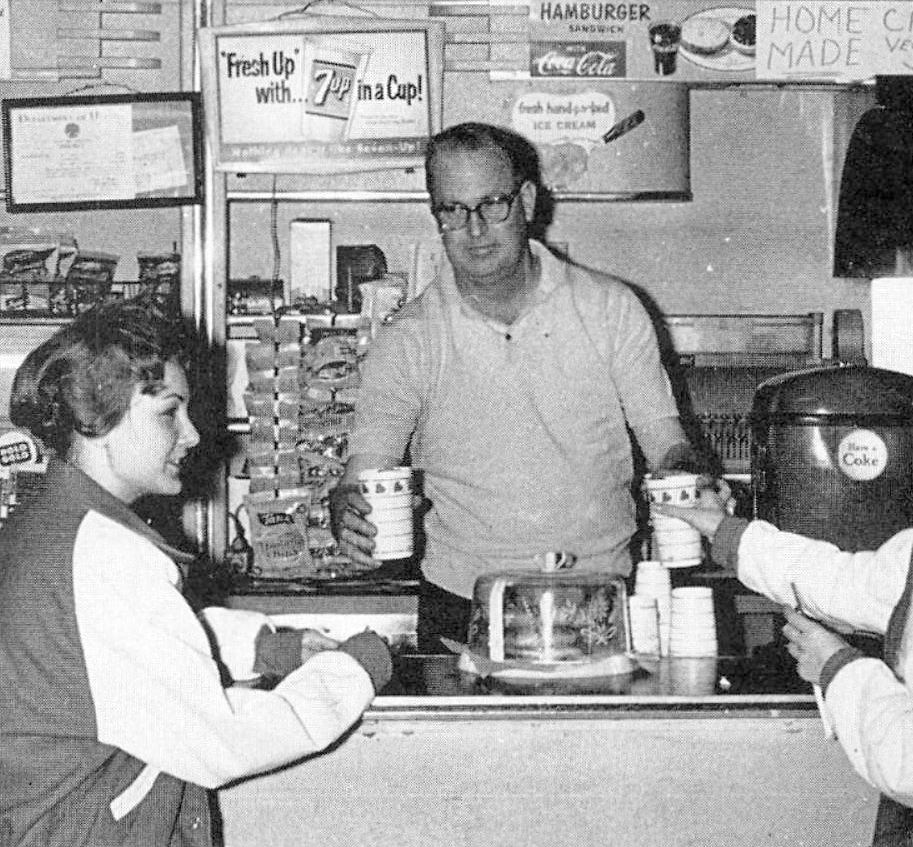
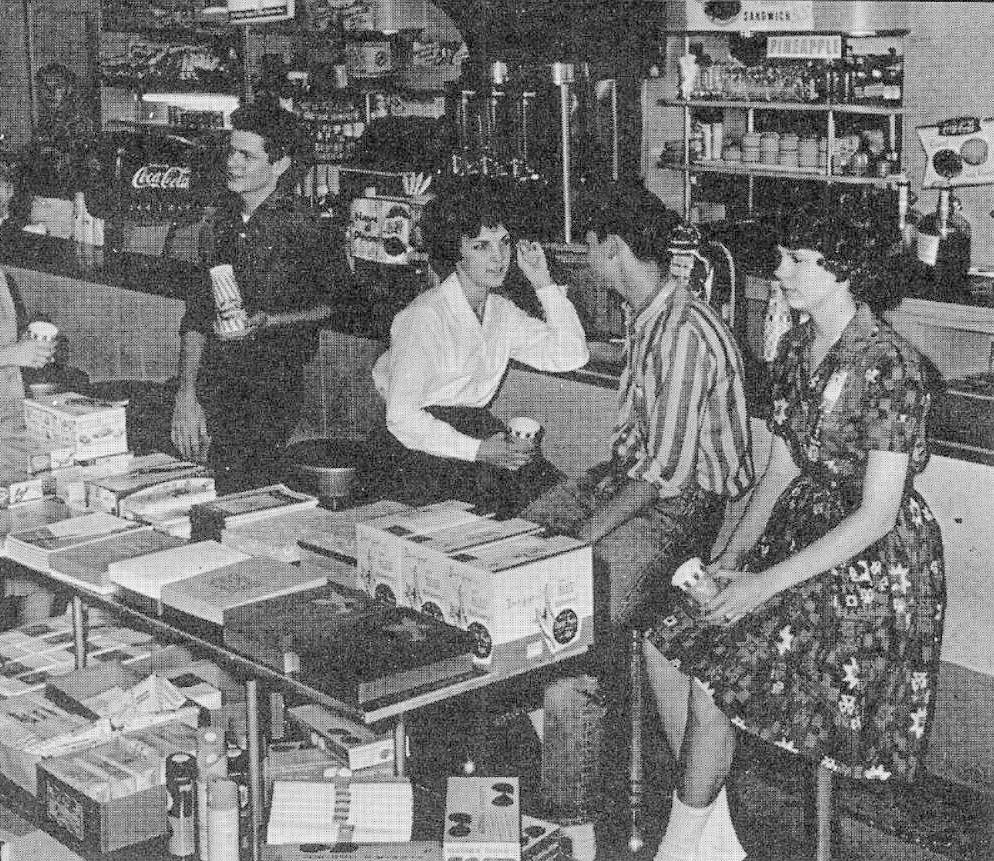
The Cole and Haskell Drug Store, at 3121 N. Haskell — right across the street from the NDHS campus — was no doubt thrilled to be so close to its major source of income, the teenager.

1962_cole-haskell-drugs_ndhs_1962-yrbk1962

cole-haskell-drug-store_ndhs_1963-yrbk-photo
1963

cole-haskell-drugs_ndhs_1963-yrbk
1963

*

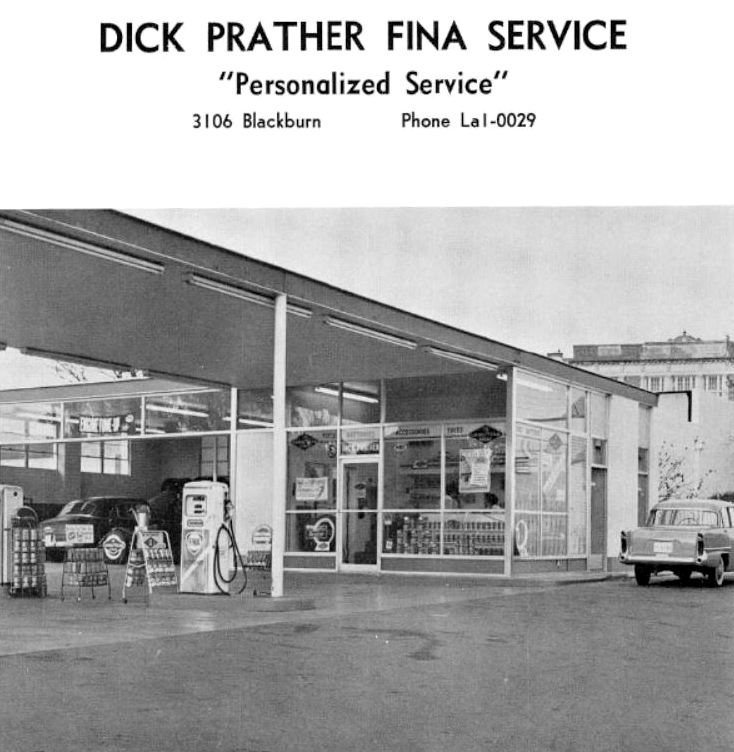
Lots of gas and service stations were nearby. Like Dick Prather Fina Service, at 3106 Blackburn, with the school peeking over the roof.

1960_prather-fina_ndhs_1960-yrbk
1960

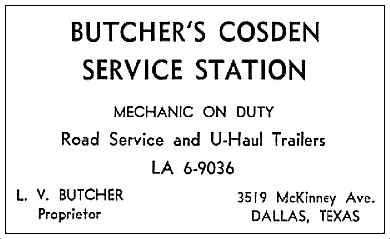
And L. V. Butcher’s Cosden Service Station, at 3519 McKinney. (I love the slouch of the mechanic.)

butchers-cosden-service-stn_ndhs_1963-yrbk-photo

butchers-cosden-service-stn_ndhs_1963-yrbk
1963

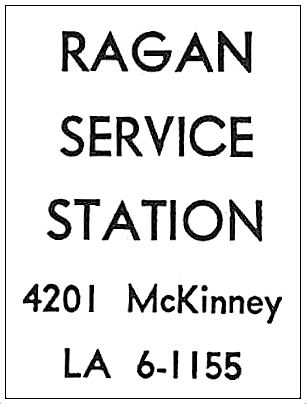
And the Ragan Service Station, at 4201 McKinney.

ragan-servie-stn_ndhs_1963-yrbk-photo

ragan-servie-stn_ndhs_1963-yrbk
1963

*

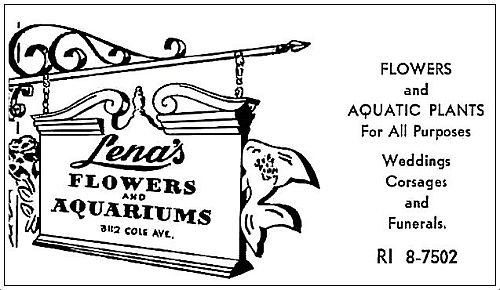
Plant and flower enthusiasts were invited to stop by Lena’s Flowers and Aquariums, at 3112 Cole. …For flowers. And aquariums.

lenas-flowers_ndhs_1963-yrbk
1963

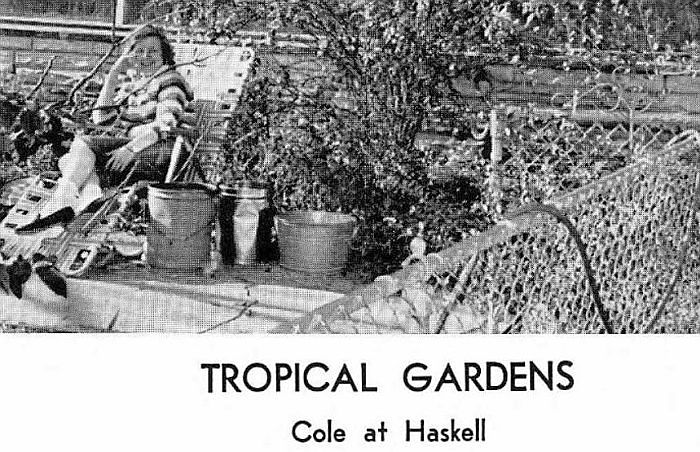
What Tropical Gardens at Cole and Haskell lacked in the way of aquariums, it all but made up for in tropicalness. (Might as well grab a coke at the drug store since you’re right there.)

tropical-gardens_ndhs_1963-yrbk
1963

*

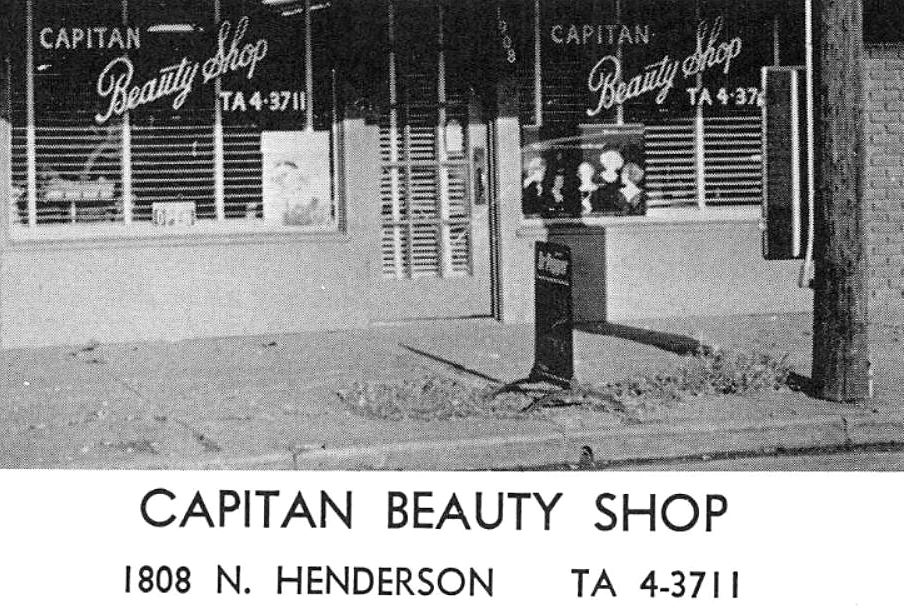
Those who needed their hair extra poufy for the spring formal might have found themselves at the Capitan Beauty Shop, 1808 N. Henderson (now that’s a photo!).

capitan-beauty-shop_ndhs_1963-yrbk1963

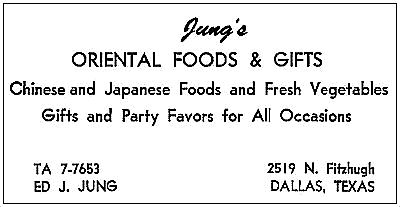
Seekers of Asian foods and/or “party favors for all occasions” could head over to Jung’s Oriental Foods & Gifts at 2519 N. Fitzhugh. (This is the most unexpected ad I came across.)

jungs_ndhs_1963-yrbk
1963

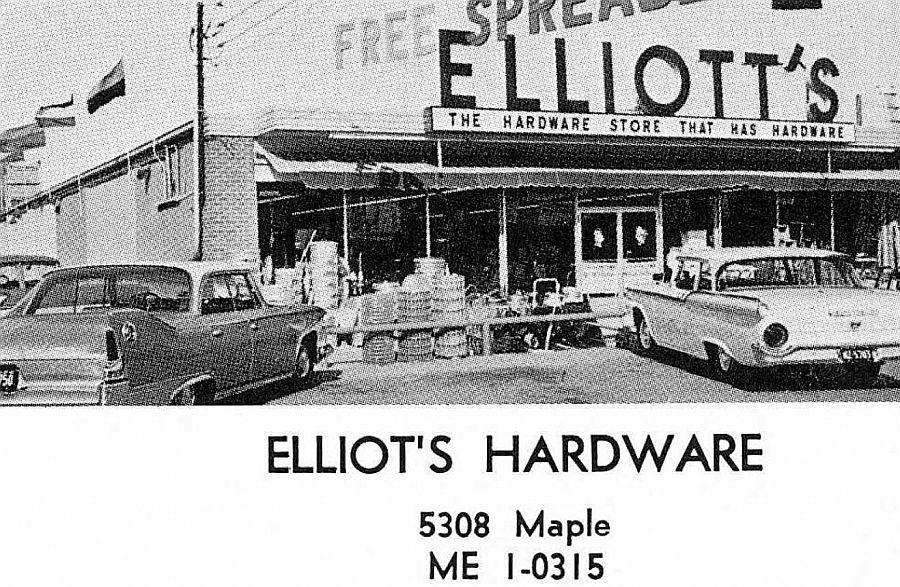
Maybe you just needed a hammer. Where else would you go but Elliott’s Hardware, at its original location at 5308 Maple.

elliotts-hardware_ndhs_1963-yrbk
1963

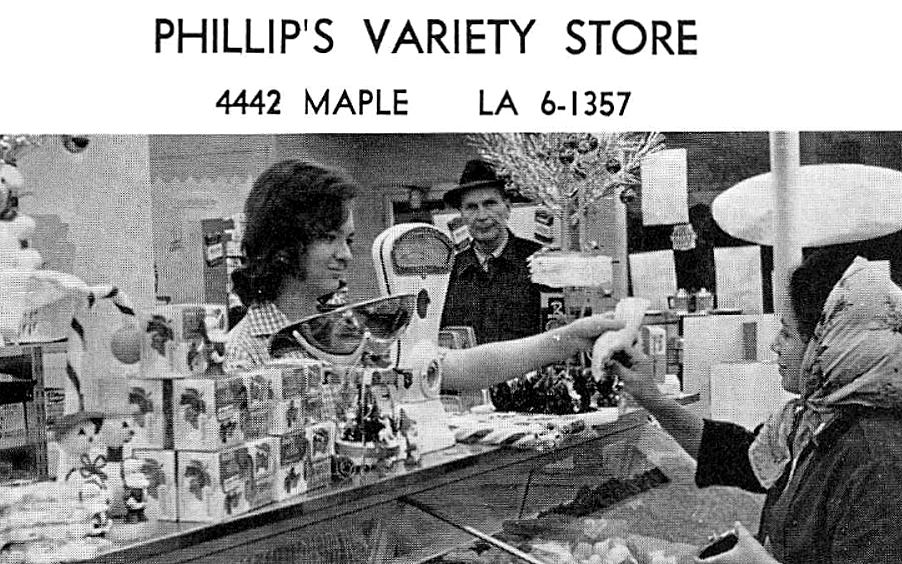
Phillips’ Variety Store at 4442 Maple was probably a good place to get scented talcum powder, a bouncy ball, a bag of peppermints, or a new charm for the charm bracelet.

phillips-variety-store_ndhs_1963-yrbk
1963

*

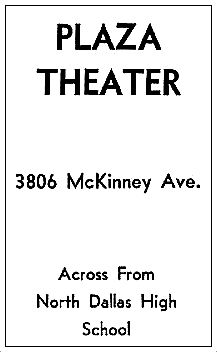
What do high school kids love more than bowling and going to the movies? Apparently there was a movie theater on McKinney Avenue that I’m only just learning about — The Plaza, at 3806 McKinney.

1962_plaza-theater
1962

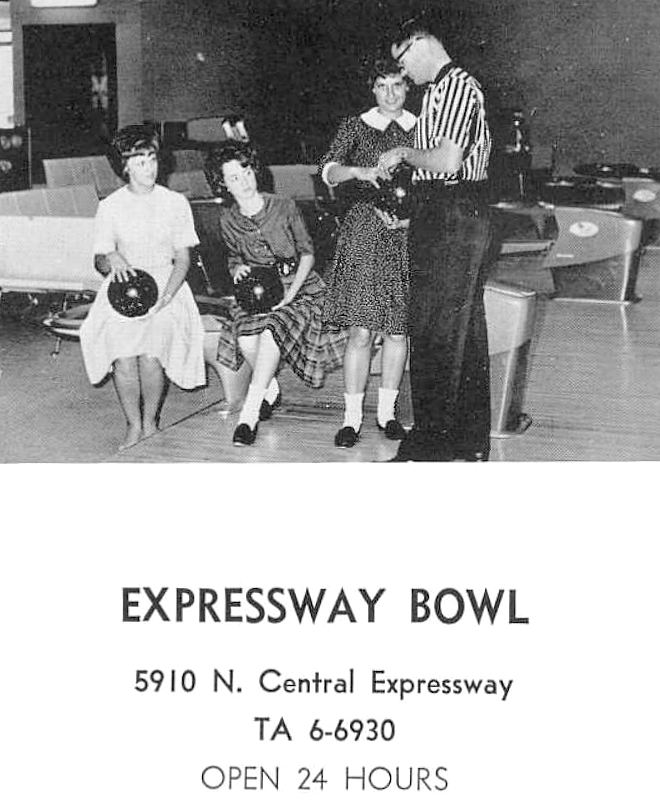
The 24-hour Expressway Bowl was at 5910 N. Central Expressway. (I’m not sure those girls have on the proper footwear.)

expressway-bowl_ndhs_1963-yrbk1963

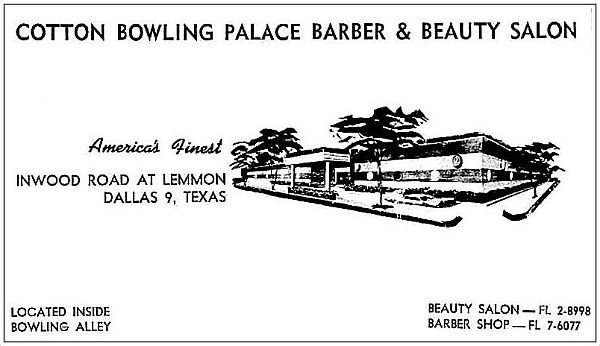
But the place you really wanted to go was the Cotton Bowling Palace on Inwood at Lemmon. When it opened in 1959 (complete with a heavily promoted personal appearance by Dallas gal Jayne Mansfield), it was breathlessly described as “a mixture of the Copacabana, the Taj Mahal and the  MGM Grand.” Imagine bowling in the Taj Mahal! Heck, you could even get a haircut between frames.

1962_cotton-bowling-palace1962

*

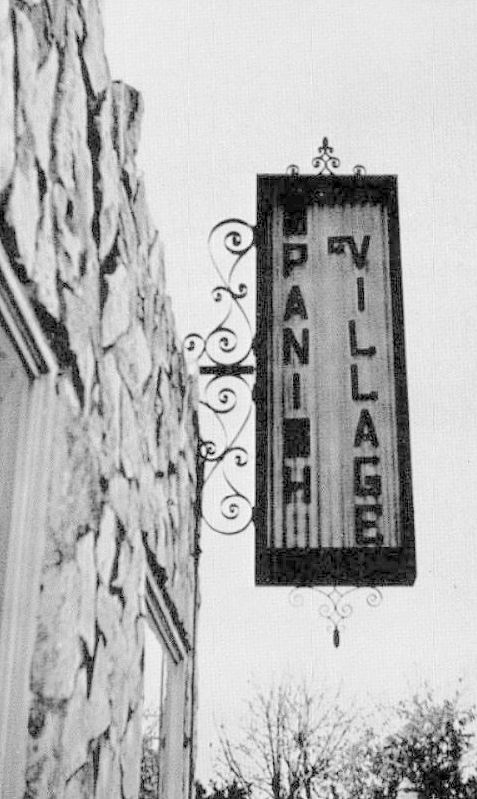
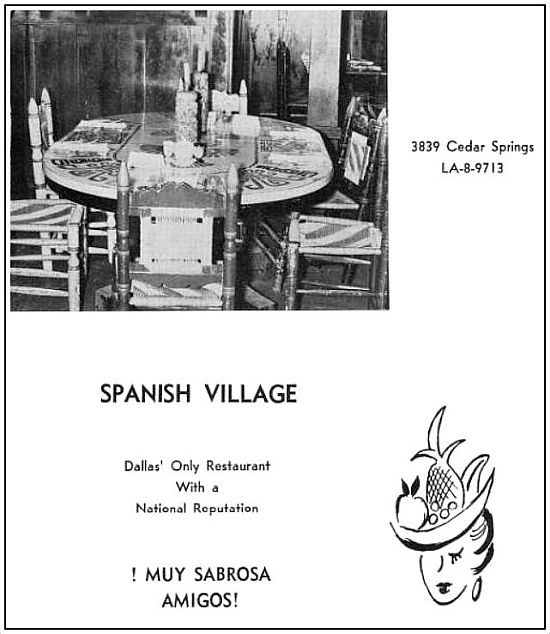
The biggest bang for the buck, nostalgia-wise, is almost always going to be places related to food. Here are a few restaurants and burger places which were probably frequent destinations for North Dallas students and their families. Like Spanish Village at 3839 Cedar Springs.

spanish-village_ndhs_1963-yrbk
1963

1960_spanish-village_ndhs_1960-yrbk
1960

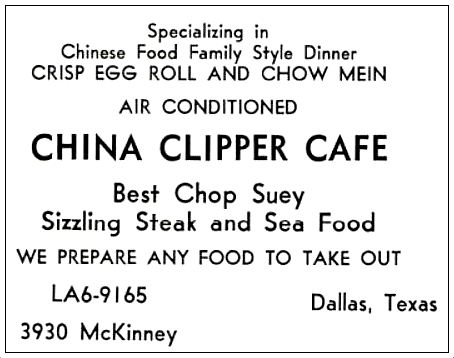
The fondly remembered China Clipper, at 3930 McKinney.

1960_china-clipper_ndhs_1960-yrbk1960

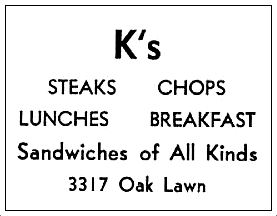
K’s — where you could get “sandwiches of all kinds” — at 3317 Oak Lawn.

1960_ks-sandwiches_ndhs_1960-yrbk
1960

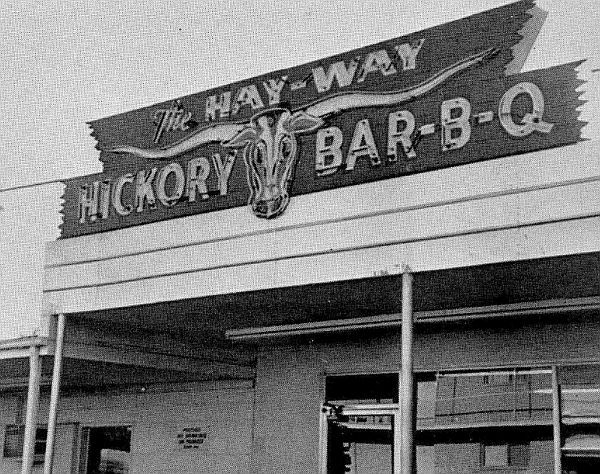
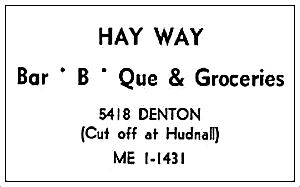
Hay-Way Bar-B-Q & Groceries, at 5418 Denton Drive.

hay-way-bar-b-q_ndhs_1963-yrbk-photo

hay-way-bar-b-q_ndhs_1963-yrbk
1963

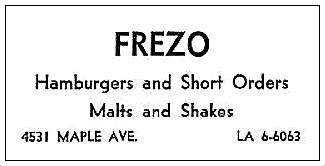
A burger and malt joint with the wonderful name of Frezo, at 4531 Maple. (I WOULD GO TO SOMEPLACE CALLED “FREZO.”)

1962_frezo_ndhs_1962-yrbk
1962

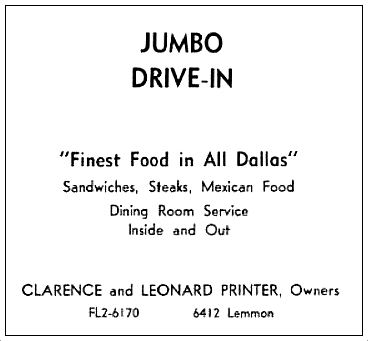
The famed elephant-on-top Jumbo Drive-In, owned by Clarence and Leonard Printer. The location in this ad was at 6412 Lemmon. See what the Haskell location looked like, here.

1960_jumbo-drive-in_ndhs_1960-yrbk
1960

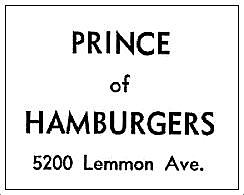
The legendary Prince of Hamburgers at 5200 Lemmon.

prince-of-hamburgers_ndhs_1960-yrbk
1960

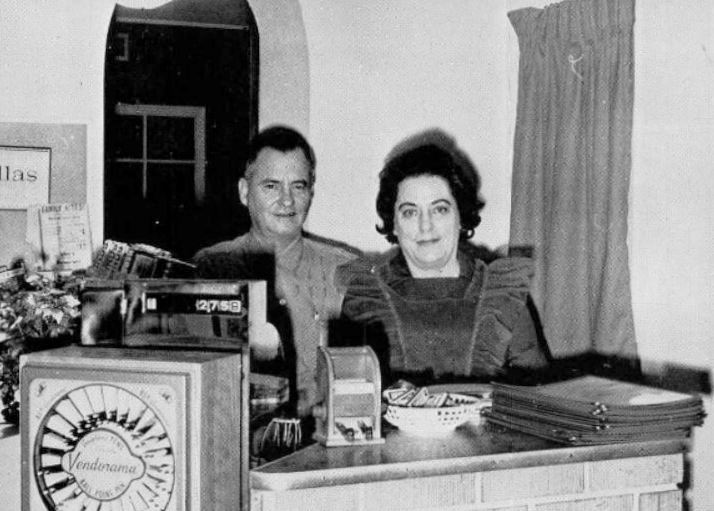
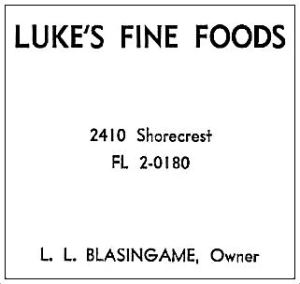
The not-quite-as-legendary Luke’s Fine Foods at 2410 Shorecrest, owned by L. L. Blasingame.

lukes-fine-foods_ndhs_1963-yrbk

lukes-fine-foods_ndhs_1963-yrbk-ad
1963

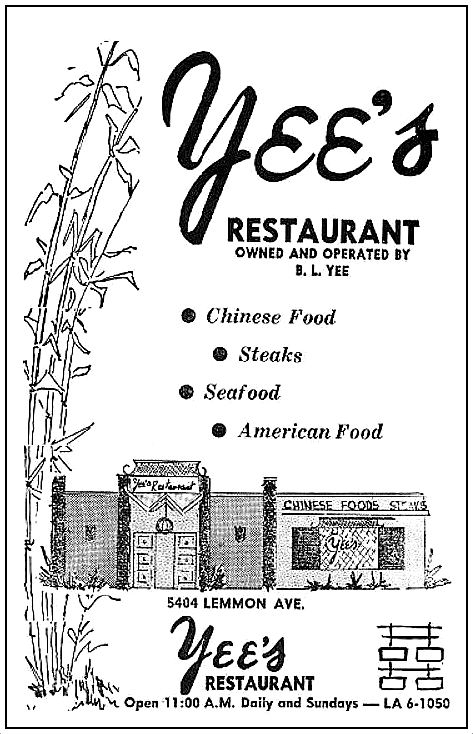
Yee’s Restaurant at 5404 Lemmon, owned by B. L. Yee.

yees-chinese_ndhs_1963-yrbk
1963

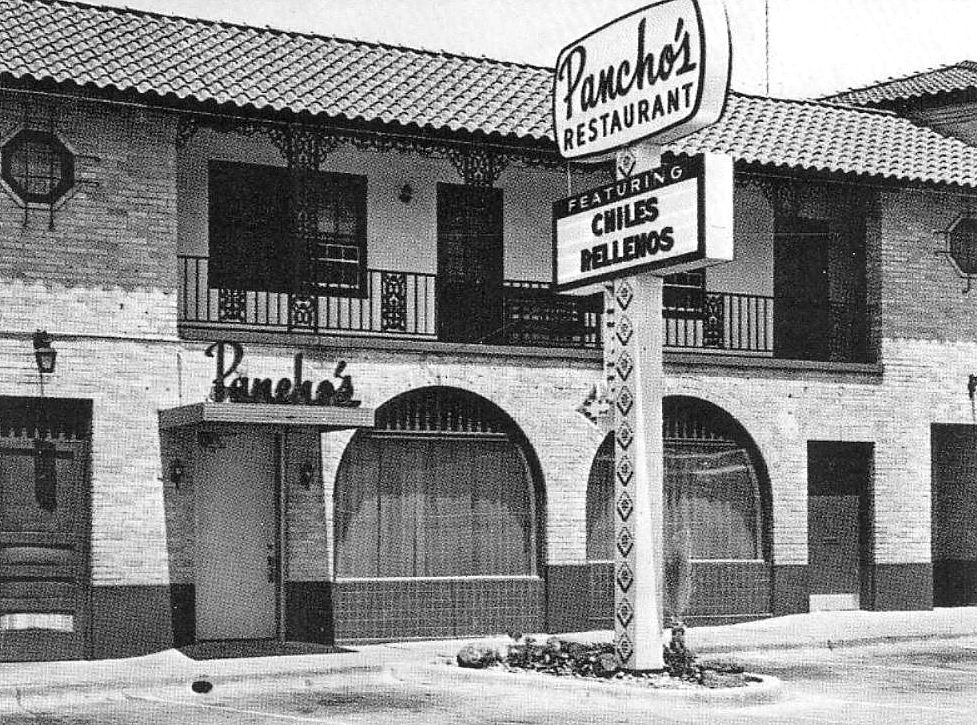
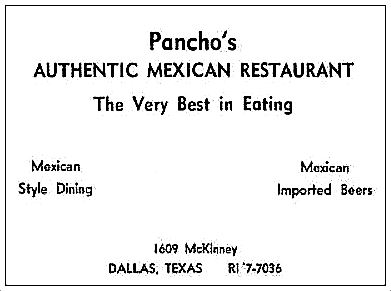
And, of course, Pancho’s — this location at 1609 McKinney. Almost all of the buildings that housed the businesses listed above are long gone, but this building is still hanging in there. It’s next to the downtown El Fenix and is now the home of Meso Maya. I have to admit, I got a happy little jolt to see this building today, still looking pretty much the same as it did in this 1963 ad.

panchos_ndhs_1963-yrbk-photo

panchos_ndhs_1963-yrbk
1963

***

Sources & Notes

All ads from the 1960, 1962, and 1963 editions of the North Dallas High School yearbook, The Viking.

See photos of students and high school activities from these same yearbooks in the post “North Dallas High School, The Pre-Beatles Era,” here.

*

Copyright © 2016 Paula Bosse. All Rights Reserved.

North Dallas High School, The Pre-Beatles Era

1962_before-school_ndhs_1962-yrbkBefore school, 1962 (click for larger image)

by Paula Bosse

Today, a few random photos from the 1960, 1962, and 1963 yearbooks of North Dallas High School.

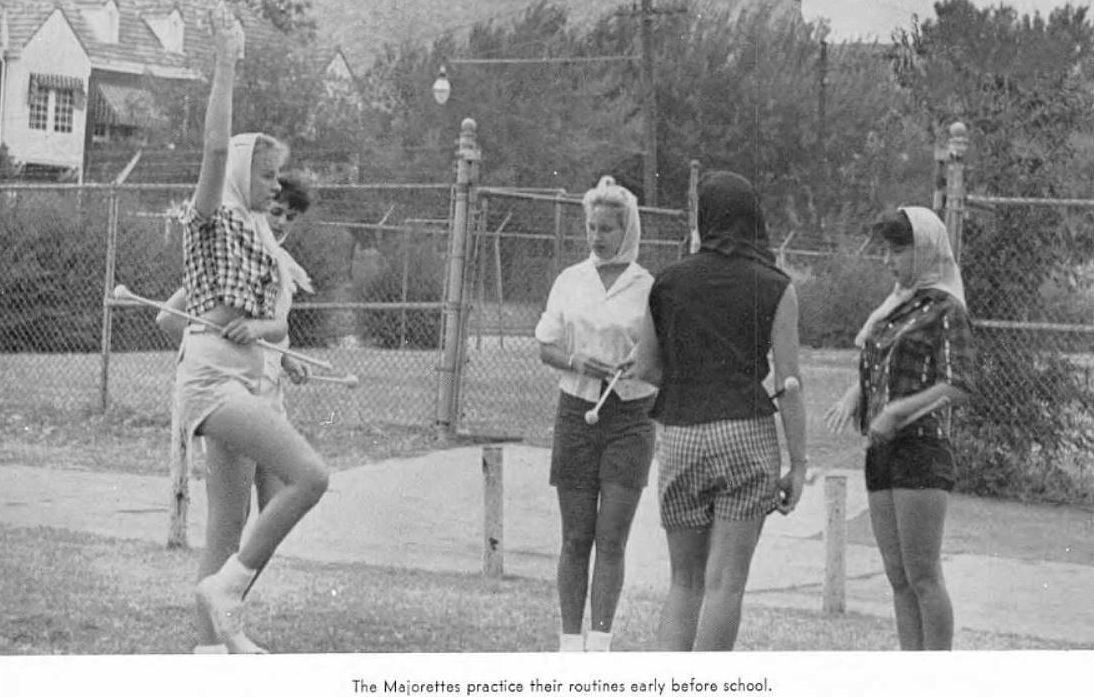
The top photo (from 1962) is my favorite, because, had I not known what part of town this photo was taken in, I would never have guessed. I’m still not 100% sure, but I think this shows Cole Avenue running alongside NDHS. The Cole and Haskell Drug Store (Coke sign) was on the corner of … Cole and Haskell, but things have been so Uptown-ified that this area is now almost completely unrecognizable from even 20 years ago. At least the school and Cole Park remain (mostly) unchanged.

So, a few moments in the life of NDHS students in the days just before The Beatles and Vietnam. (All photos are larger when clicked.)

From 1960, majorettes practicing, with batons and headscarves — two things one doesn’t encounter often these days.

1960_majorettes_ndhs_1960-yrbk

*

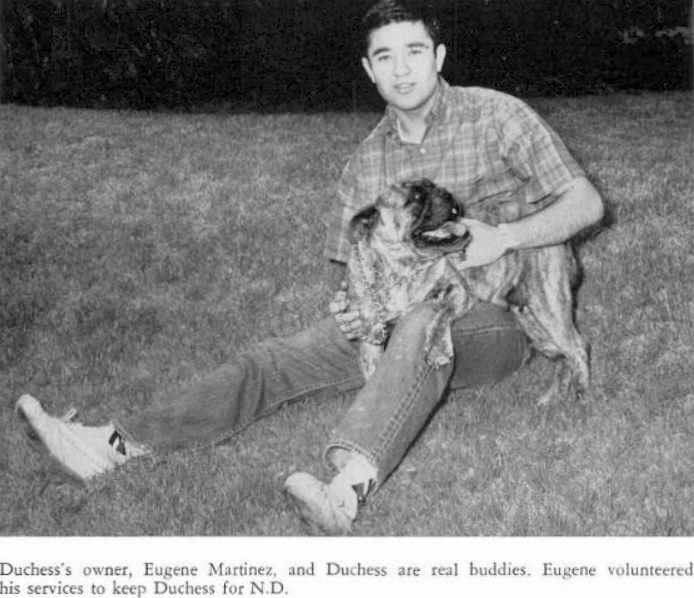
From 1962, cheerleader Gene Martinez with the school’s bulldog mascot, Duchess.

1962_duchess-the-mascot_ndhs_1962-yrbk-photo

*

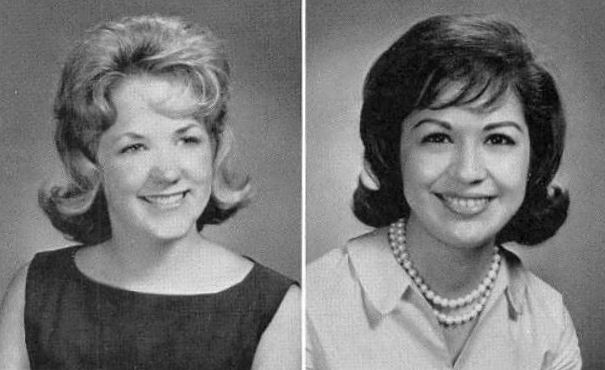
The rest of the photos are from 1963, when most of the girls had the Laura Petrie flip hairstyle. (Seen here are Suzy DeGaw and Olga Delgado.)

girls-hairdos_ndhs_1963-yrbk

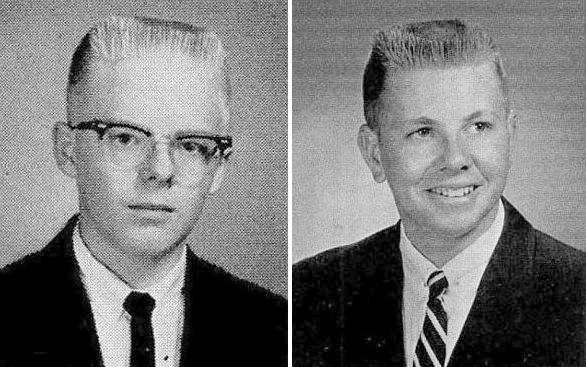
As far as the boys, an alarming number of them sported haircuts like the ones below (although these two seem to be a bit on the extreme side — most were shorter) — it’s a sort of early-’60s version of the ’80s’ Flock of Seagulls hair-do where you look back on it and shake your head in wonderment. I’m not exactly sure what “butch wax” is for, but I’m thinking it’s for this. (Pictured here are Jody Chenoweth and Robert Paul Reid.)

boys-hair_ndhs_1963-yrbk

Girls “gabbed.”

gab-session_ndhs_1963-yrbk

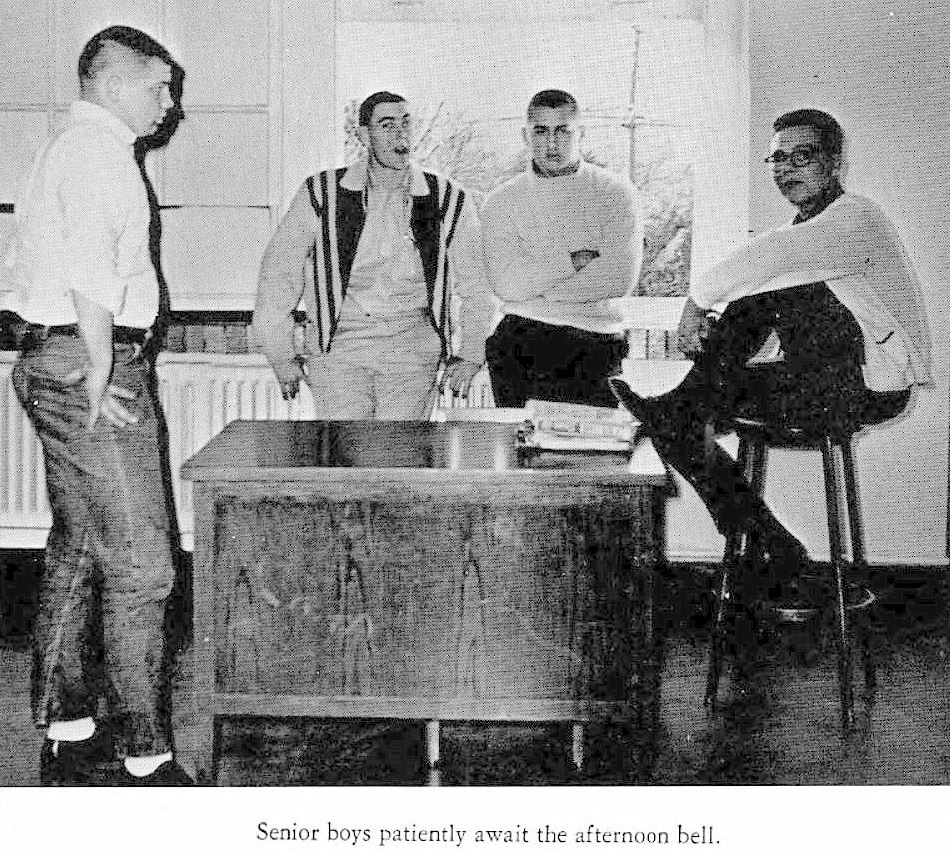
Boys loitered.

senior-boys_ndhs_1963-yrbk

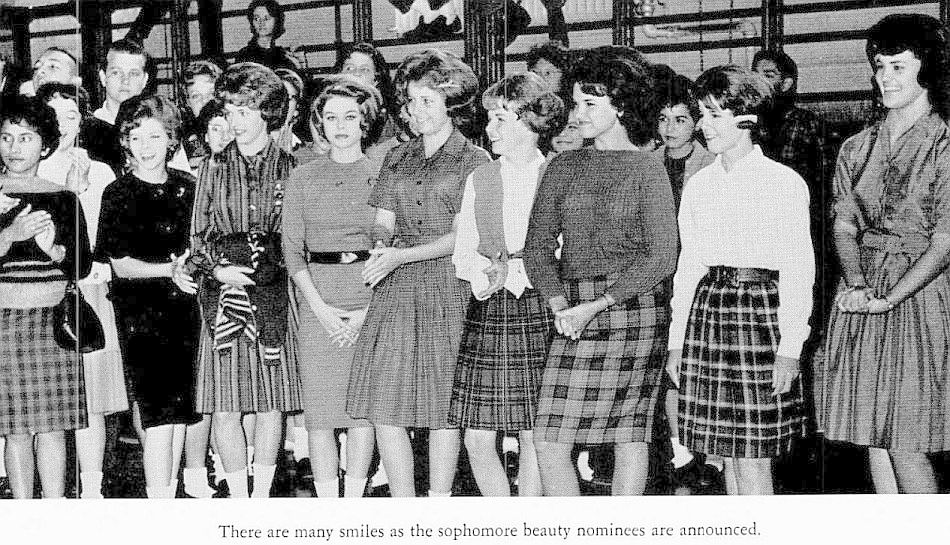
Girls had beauty pageants (and wore a lot of plaid).

sophomore-girls_ndhs_1963-yrbk

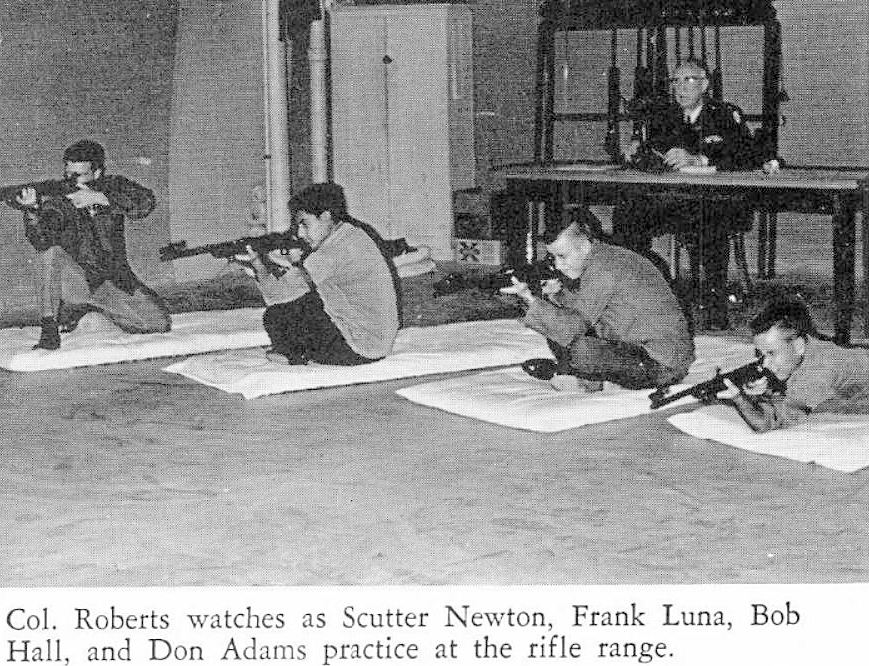
And boys practiced shooting.

rifle-range_ndhs_1963=yrbk

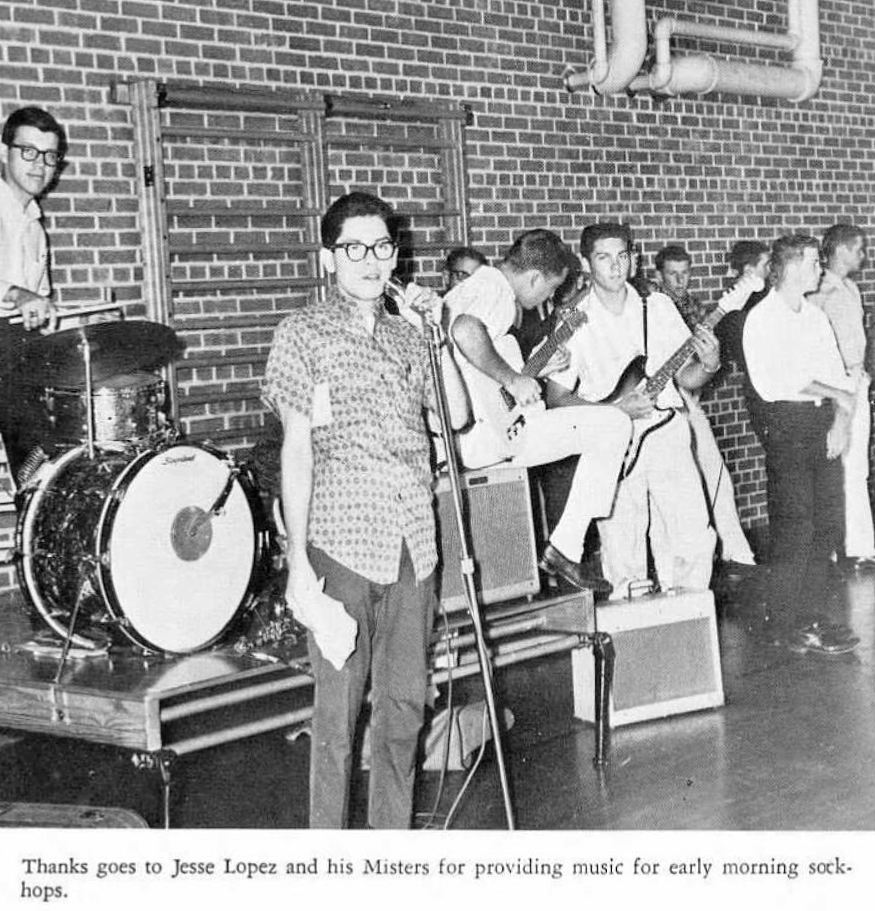
North Dallas had their very own rock and roll band — “The Misters,” headed by the enormously popular Jesse Lopez (younger brother of Trini Lopez, who went to Crozier Tech). (Morning sock hops?!)

jesse-lopez_ndhs_1963-yrbk

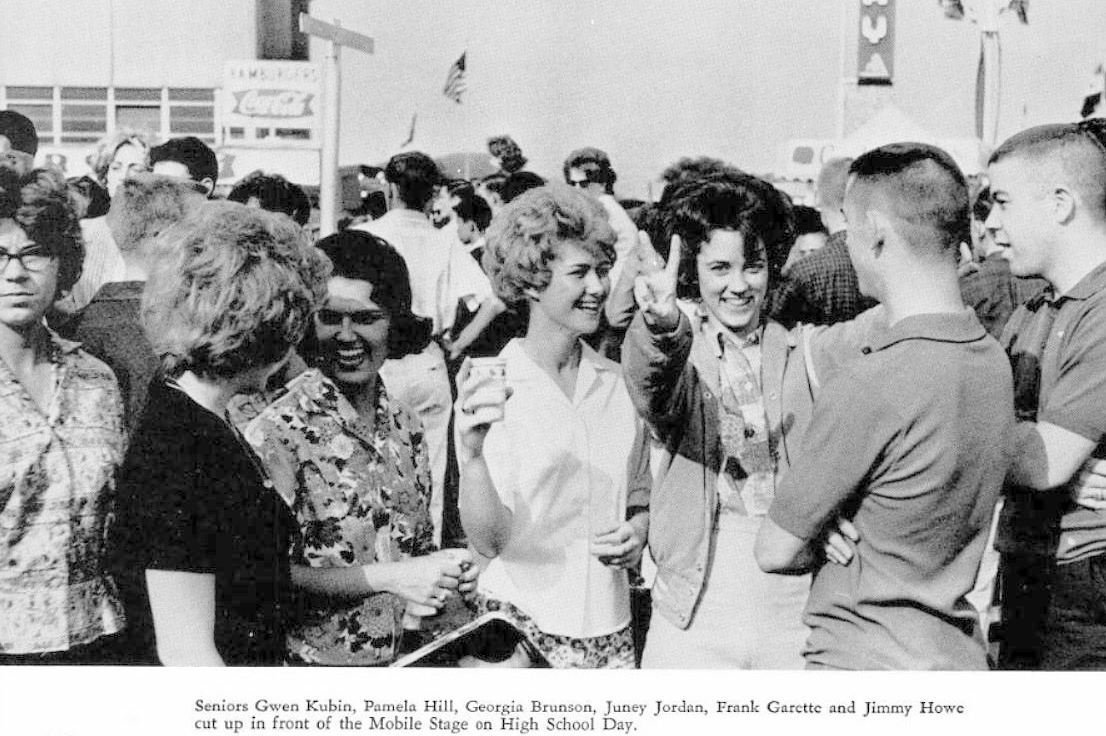
In fact, The Misters won the high school combo contest at the State Fair several times. And speaking of High School Day at the fair….

high-school-day_fair_ndhs_1963-yrbk

And back on campus, I don’t know who you are, Rufus Jara, but I nominate you as Coolest-Looking NDHS Student of 1963. (Caption from the yearbook: “Rufus Jara appears to be bothered by the light in the lunch room.”)

jara-rufus_ndhs_1963-yrbk

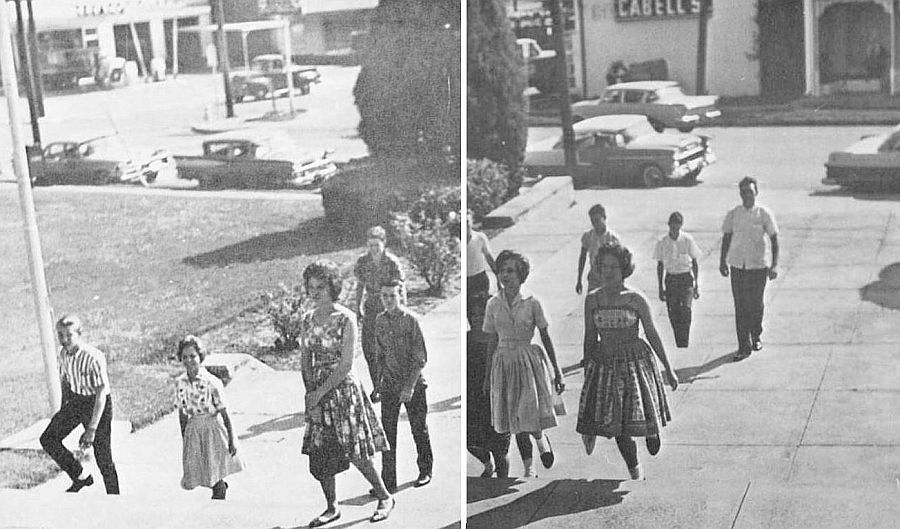
These last two photos leave a lot to be desired in quality (I did my best with yellowed paper and a broken book spine), but I think it’s interesting to see what the street looked like in front of the school, and on McKinney Avenue, to the left. Again, not recognizable today.

ndhs_steps_1963-yrbk

*

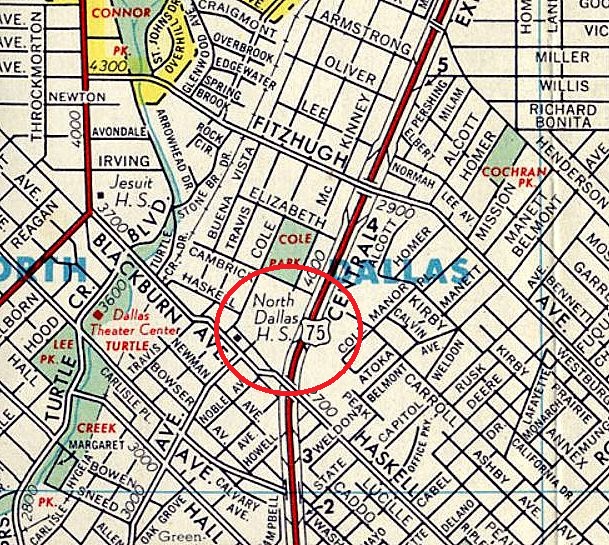
ndhs_map_1962Detail from a 1962 city map

***

All photos from The Viking, the North Dallas High School yearbooks from 1960, 1962, and 1963.

More from these yearbooks: see a LOT of ads in the post “Ads For Businesses Serving the  North Dallas High School Area — Early 1960s,” here. Several feature NDHS students.

All pictures larger when clicked!

*

Copyright © 2016 Paula Bosse. All Rights Reserved.

Woodall Rodgers Freeway Under Construction — 1966

woodall-rodgers_squire-haskins_uta_052466
Land cleared, May 1966 (click for gigantic image) (UTA Libraries)

by Paula Bosse

The photo above shows land partially cleared for the construction of Woodall Rodgers Freeway. The view is to the east, with Central Expressway at the top left and Stemmons Freeway at the bottom left. The land cleared was once part of what used to be called “North Dallas,” and before it was bulldozed away, it was a predominantly black residential neighborhood served by several African-American- and Hispanic-owned businesses. The photo above was taken on May 24, 1966. The photo below was taken on December 8, 1966. The freeway was already years behind schedule when these photos were taken, but nobody would ever have believed it would take until 1983 (!!) for Woodall Rodgers Freeway — a “cute” little highway, less than two miles long — to be completed. Oh, but it did.

woodall-rogers-squire-haskins-uta-120866Dec. 8, 1966 (photo by Squire Haskins; UTA Libraries)

In a Dallas Morning News article published on the May 27, 1983 opening of the freeway, Henry Tatum wrote the following:

Dwight Eisenhower was starting his second term as president of the United States. Elvis Presley had passed his physical examination and was headed for a stint in the Army. And Doris Day was singing up a storm on the screen in “Pajama Game.” The year was 1957 and Dallas city fathers decided it was time to build a downtown connection between Central Expressway and Stemmons Freeway. (“Freeway From the Past” by Henry Tatum, DMN, May 27, 1983)

1957!

When it was completed 26 years later — in 1983 — Ronald Reagan was president, Sally Ride was about to become the first woman to go into space, and Madonna was singing up a storm as her first album was being readied for release. That’s a looong time.

***

Sources & Notes

Both aerial photos by Squire Haskins, from the Squire Haskins Photography, Inc. Collection, UTA Libraries, University of Texas at Arlington. The photo from May can be accessed here, the one from December, here.

“Woodall Rodgers”? James Woodall Rodgers was mayor of Dallas from 1939 to 1947. It was announced that what would become a never-ending headache-of-a-highway-project bedeviled by funding squabbles and right-of-way issues would be named in his honor in 1960.

Those two photos are really, really big when you click them. …REALLY big.

*

Copyright © 2016 Paula Bosse. All Rights Reserved.


“A Haven From the Usual Turmoil of Holiday Shopping”

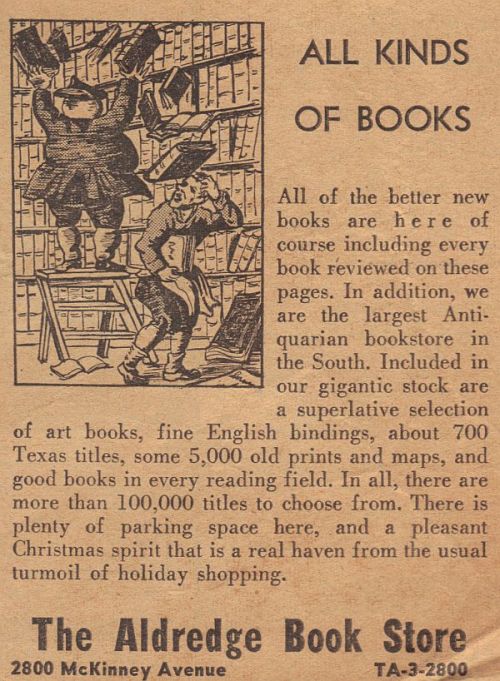
ABS_xmas_haven_nd“A superlative selection…”

by Paula Bosse

Remember the quiet joy of shopping in bookstores? Remember bookstores? In celebration of the completion of this year’s Christmas shopping, I give you two ads from The Aldredge Book Store, where there’s “plenty of parking  space […] and a pleasant Christmas spirit.”

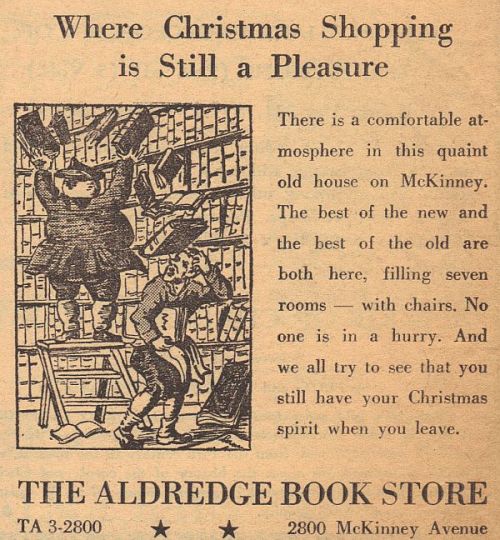
ABS_xmas_19631963

No one is in a hurry. And we all try to see that you still have your Christmas spirit when you leave.

I practically grew up in this store, and I miss it.

***

Sources & Notes

Both ads from the early 1960s. They appeared in the Sunday book sections of The Dallas Morning News and The Dallas Times Herald. (Remember when we had two newspapers? Remember when we had Sunday book sections?)

Previous posts on The Aldredge Book Store can be found here.

*

Copyright © 2015 Paula Bosse. All Rights Reserved.


Turn-of-the-Century Maple Avenue

maple-ave_colteraHope this wasn’t between McKinney & Cedar Springs…

by Paula Bosse

When the fashionable and wealthy began to move their residences north from the downtown area, they built their homes along Maple Avenue, between McKinney and about where the Stoneleigh Hotel now stands. This exclusive neighborhood of imposing houses hit its stride in the first decade of the 20th century.

One of the well-to-do families who lived on Maple at this time was that of G. B. Dealey, founding editor of The Dallas Morning News. His son Ted Dealey wrote at length about all of his boyhood neighbors in his very entertaining book, Diaper Days of Dallas. Rather ominously, though, these amusing and colorful childhood memories end with this paragraph:

I hate to write this paragraph because some people may think I had a pernicious influence on the neighborhood. But there were five men living on Maple between McKinney and Cedar Springs who committed suicide in the 1900s. Not all in one day, or one week, or one month, of course, but over a period of years.

Wow. The distance between McKinney Avenue and Cedar Springs is only two-tenths of a mile!

Beautiful houses, though!

***

Postcard from Flickr, here.

Paragraph from Diaper Days of Dallas by Ted Dealey (Nashville: Abingdon Press, 1966), p. 39.

Click postcard to see larger image.

*

Copyright © 2015 Paula Bosse. All Rights Reserved.

Antique Row: The 3300 Block of McKinney Avenue — 1963

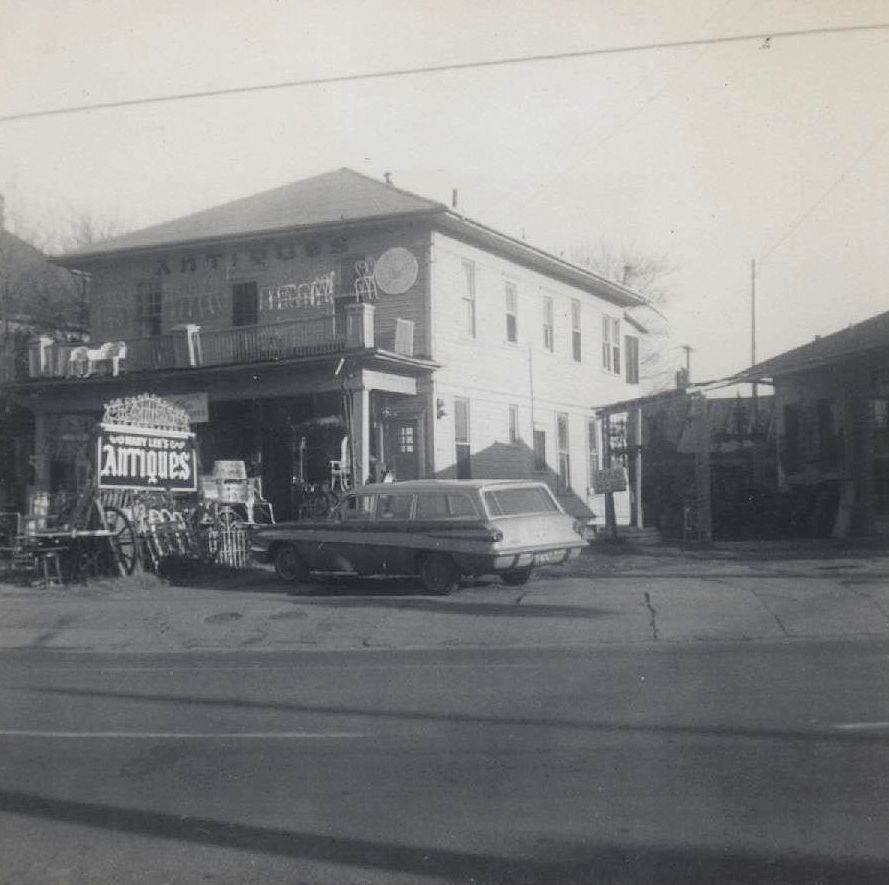
mary-lees-antiques_1963_ebayMary Lee’s Antiques, McKinney & Hall, 1963 (click for larger image)

by Paula Bosse

When I read a Facebook post from Big D History about an eBay collection of 75-or-so photos taken around Dallas in the 1950s and ’60s (links-a-plenty at the bottom of this post), I spent a substantial amount of time browsing though them. They’re just amateur snapshots, oddly framed sometimes and a little muddy, but the person who took them focused on what might seem to most of us as being fairly ordinary (sometimes downright mundane) buildings — and that’s great, because people always take photos of the big, important downtown skyscrapers, but hardly anyone takes a photo of an East Dallas apartment building or a suburban bank.

The two photos I was most excited to see showed buildings I recognized instantly, having seen them practically every day of my childhood, passing them on drives to and from my father’s bookstore. The one at the top of this post is my favorite. I  knew immediately that it was the old antique store at McKinney & Hall — I never knew its name, but I knew that it had been around before I was born and that my mother had bought one of our family’s nicest pieces of furniture there and paid for it in ten-dollar installments.

I now know that the name of the crazy-looking antique shop my  mother bought our hutch from was called Mary Lee’s Antique Center, at 3306 McKinney. It was in business at that location from 1956-ish to the end of 1971. A succession of antique shops moved in when Mary Lee moved out — I never knew the names of any of the businesses in this building, only that they all looked dauntingly FULL (how I managed to never actually go in any of them, I have no idea).

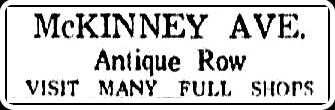
For many years, McKinney Avenue was lined with antique shops, many of which were in very old wood-frame houses which had been converted from homes into businesses.

mckinney-avenue_antique-row_dmn_0901611961

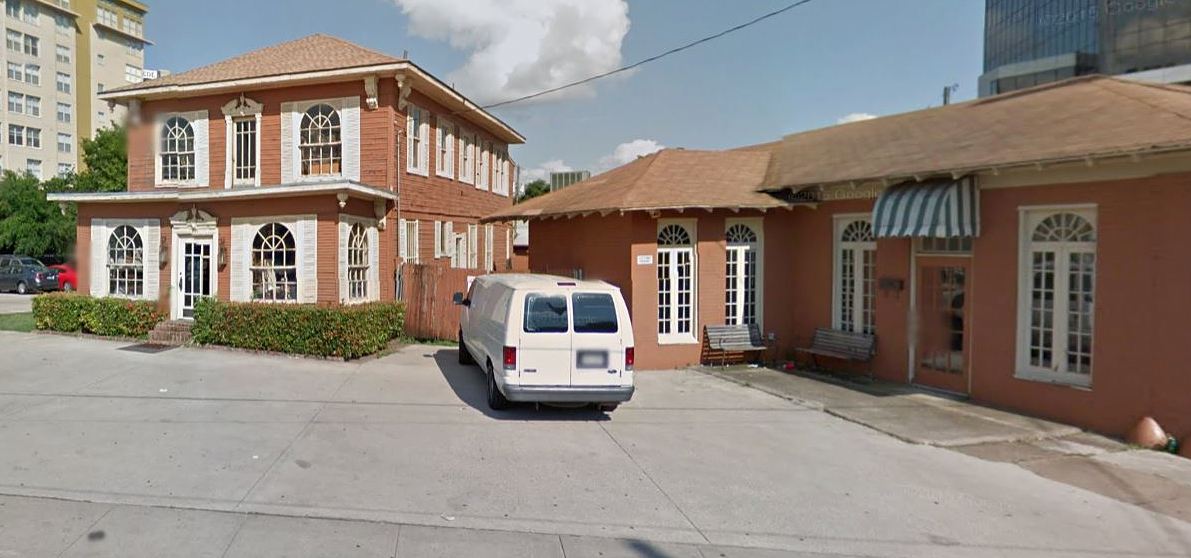
The old two-story house that Mary Lee was in was one of the largest. The house was built sometime before 1909, and, happily, this little remnant of the past is still standing (though with a weirdly updated exterior), next to its smaller companion building. Oddly situated on its lot, it’s been sitting for over a hundred years at the corner of McKinney and North Hall. Today it is the home of a leasing company; it faces Bread Winners and an eclectic-looking block of bars and restaurants.

mckinney-and-hall_google-street-view-2015Google Street View, 2015

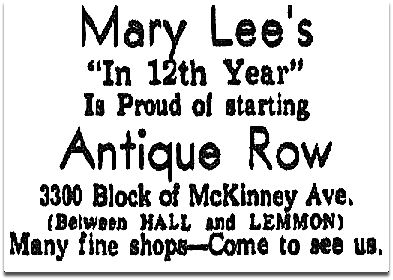
Whether or not it’s true, Mary Lee claimed to have started “Antique Row,” which, in this case, meant the 3300 block of McKinney.

3300-block_dmn_0327681968

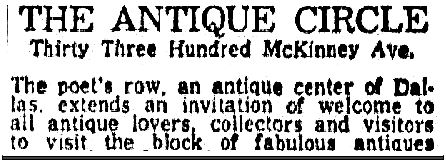
Back in 1959, these dealers were calling themselves “The Antique Circle” and were describing their antique-packed block as “the poet’s row.”

3300-block_dmn_1105591959

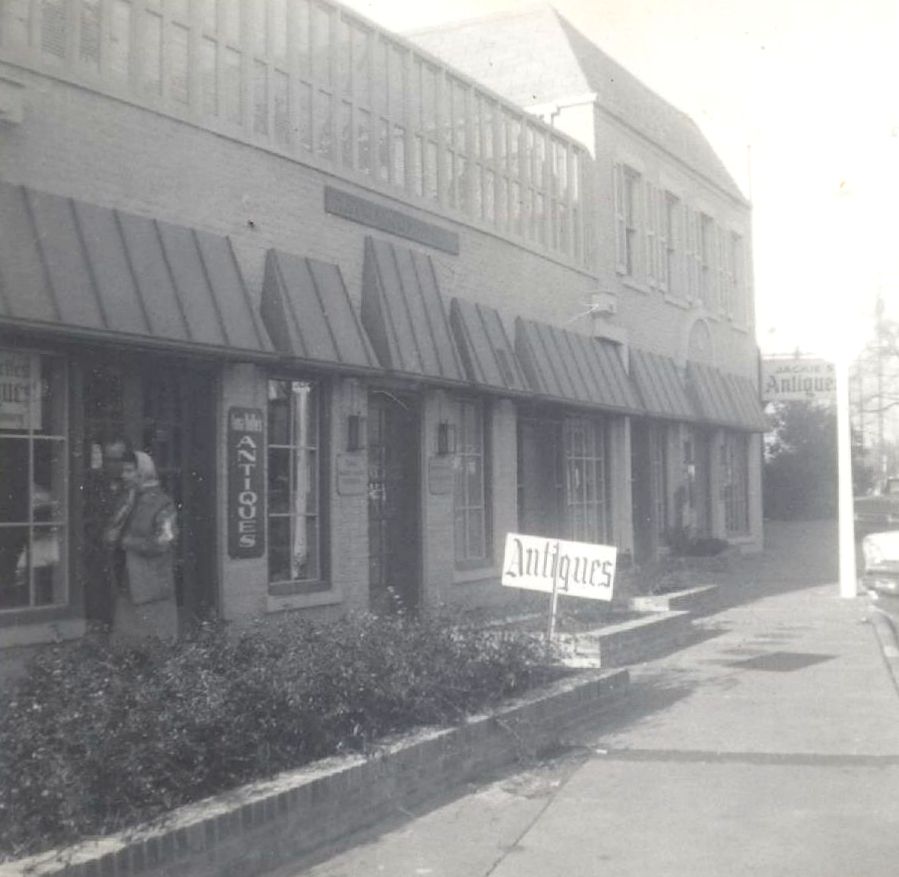
Mary Lee’s — which pretty much sat by itself on the south side of the street — was directly across from a block containing a strip of antique shops. I was glad to see in the same eBay collection a photograph of that north side of the block (probably taken at the same time as the photo at the top of this post).

antique-shops_1963_ebay3300 block of McKinney, north side, 1963 (click for larger image)

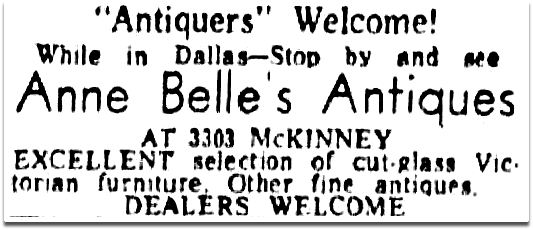
Seen above is part of that block, with Anna Belle’s Antiques (misspelled in the ad below) and Jackie’s Antiques (which was owned by Jackie Woods, a family acquaintance — her father had a clock shop, and my mother thinks that Jackie’s store may have been adjacent to it).

anne-belle_dmn_0401621962

jackies-antiques_dmn_0313611961

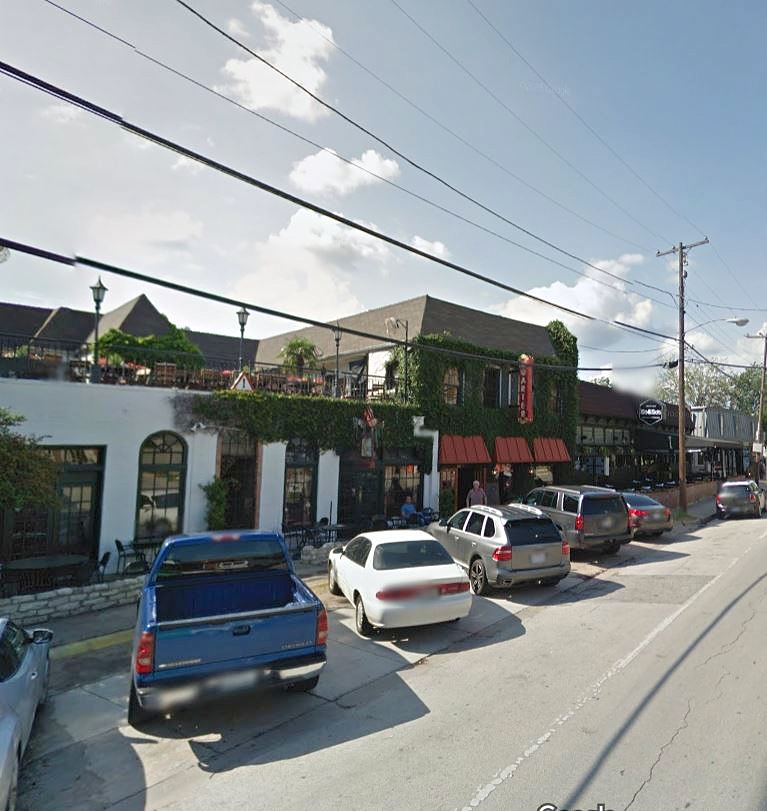
The buildings in that block are also still there — they’re  nowhere near as old as the house across the street, but it’s still nice to see some old and quirky structures still standing (and staying occupied) along a rapidly changing McKinney Avenue.

3300-mckinney_googleGoogle Street View, 2015

In the 1980s, the cute little houses which, for decades, had been occupied by a variety of businesses — antique shops, boutiques, clothing stores, salons, etc. — began to disappear from McKinney Avenue. Granted, some had seen better days and were in various states of disrepair, but, personally, I thought they were all charming, and I was sad to see them replaced by buildings conspicuously lacking in character. I had grown up seeing those houses and was especially fascinated by the cigar store Indians that seemed to stand in every yard and on every porch. (It’s pretty weird remembering that there were a LOT of wooden Indians along McKinney Avenue — almost as weird as remembering that there were once yards and porches along McKinney Avenue!)

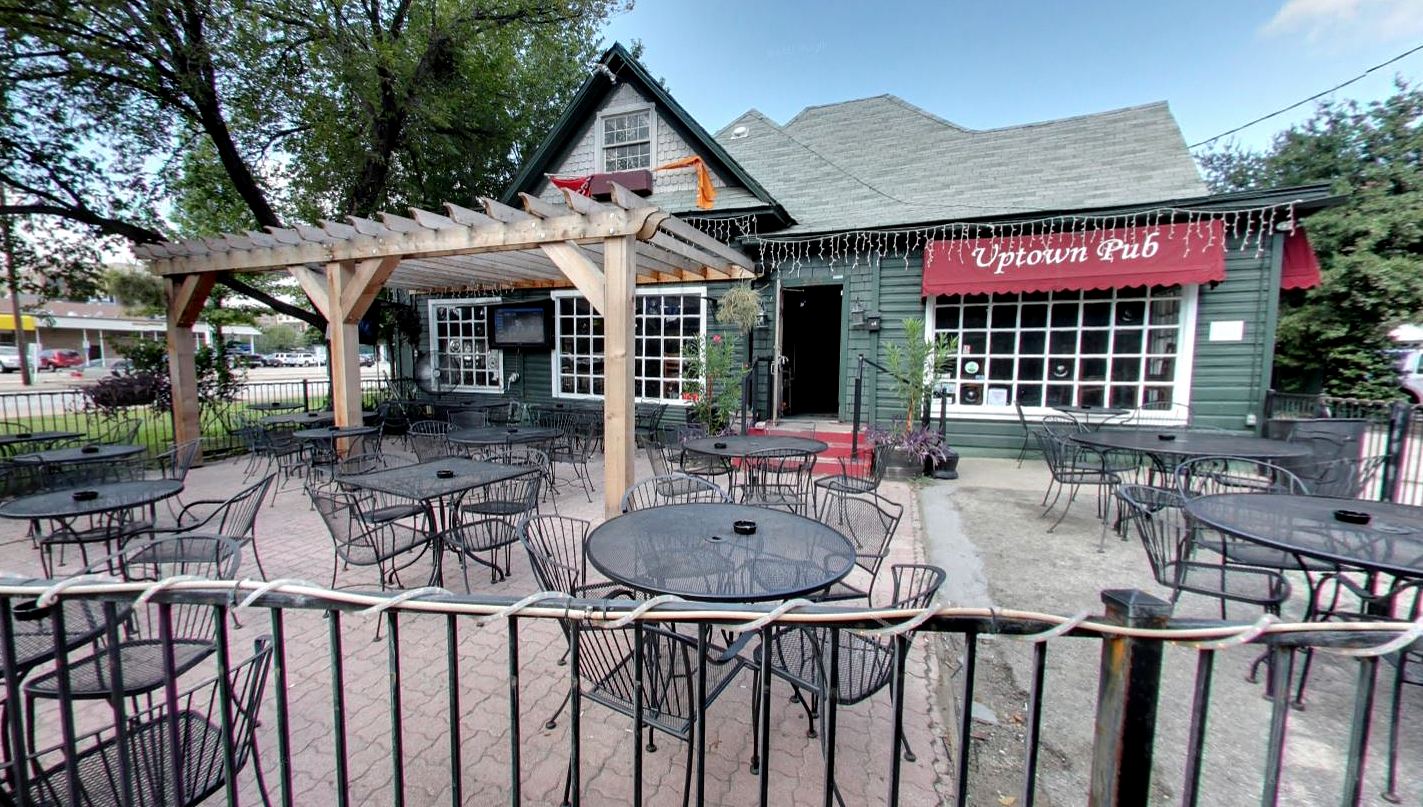
Now, most of those houses are long gone. A handful survive. The one most people might know is the one at 3605 McKinney, at Lemmon Ave. East — I first began lusting after it when it was Jennivine, and it’s nice to see that it’s still around, now as Uptown Pub. From a quick-ish look at its history, it appears to have been built before 1902. I know there are a lot people who love the severely densely-packed 21st-century version of “Uptown,” but wouldn’t that area be a million times nicer if there were still a street full of places like this?

uptown-pub_google-street-view3605 McKinney (Google Street View)

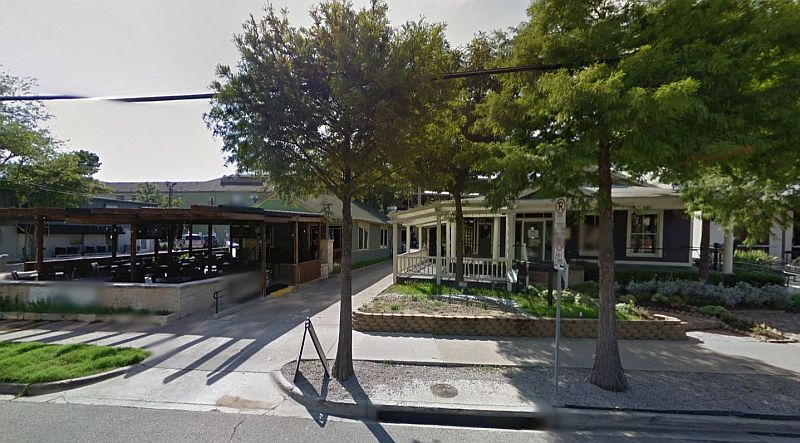
There are also a couple of 100-plus-year-old houses in the 3400 block. Seen below, the one on the left (3403 McKinney, currently occupied by Cliff’s Bar & Grill) appears to have been built in 1897; the very cute house to the right was built before 1909.

3400-block-mckinney_googleGoogle Street View, 2015

Imagine McKinney Avenue lined with these houses — first as homes, later as funky little shops. It wasn’t that long ago, really….

***

Sources & Notes

Both 1963 photos are from eBay, in auctions ending Monday night (Nov. 16, 2015). The top photo showing Mary Lee’s Antiques is here; the one showing Anna Belle’s and Jackie’s antique shops is here. See what the north side of this block looks like today on Google Street View, here; rotate it south and see what Mary Lee’s place looks like these days, and then head one block east to see the two old houses in the 3400  block. Look at what surrounds the wonderful house at McKinney & Lemmon (the old Jennivine), here — rotate the view at your own risk.

The entire eBay collection of Dallas snapshots — being offered in individual auctions which all end over the next couple of days — is here. The descriptions of these photos are written by an eBay seller in Ohio, and now that I’ve seen Big Tex described as “Big Tex Cowboy Man,” I’m all for an official name change. Consider it, SFOT!

I learned about these photos when I saw them mentioned in a Facebook post by the great BigDHistory. Like him on Facebook here, and/or follow him on Twitter @BigDHistory. Thanks, Miles!

For more on McKinney Avenue during this period, read the Dallas Morning News article titled “Poverty, Luxury, Art, Jazz — Changing Scene: The Many Faces of McKinney Ave.” by the always entertaining Helen Bullock (DMN, May 7, 1961).

Click pictures for larger images.

*

Copyright © 2015 Paula Bosse. All Rights Reserved.


Tracking Down a Photo Location & Discovering a City Pioneer: D. M. Clower, The Man Who Brought the Telephone to Dallas

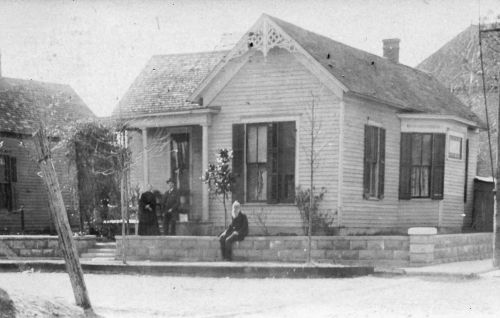
house_RPPC_1909_ebayMystery house, Dallas, ca. 1908 (click for larger image)

by Paula Bosse

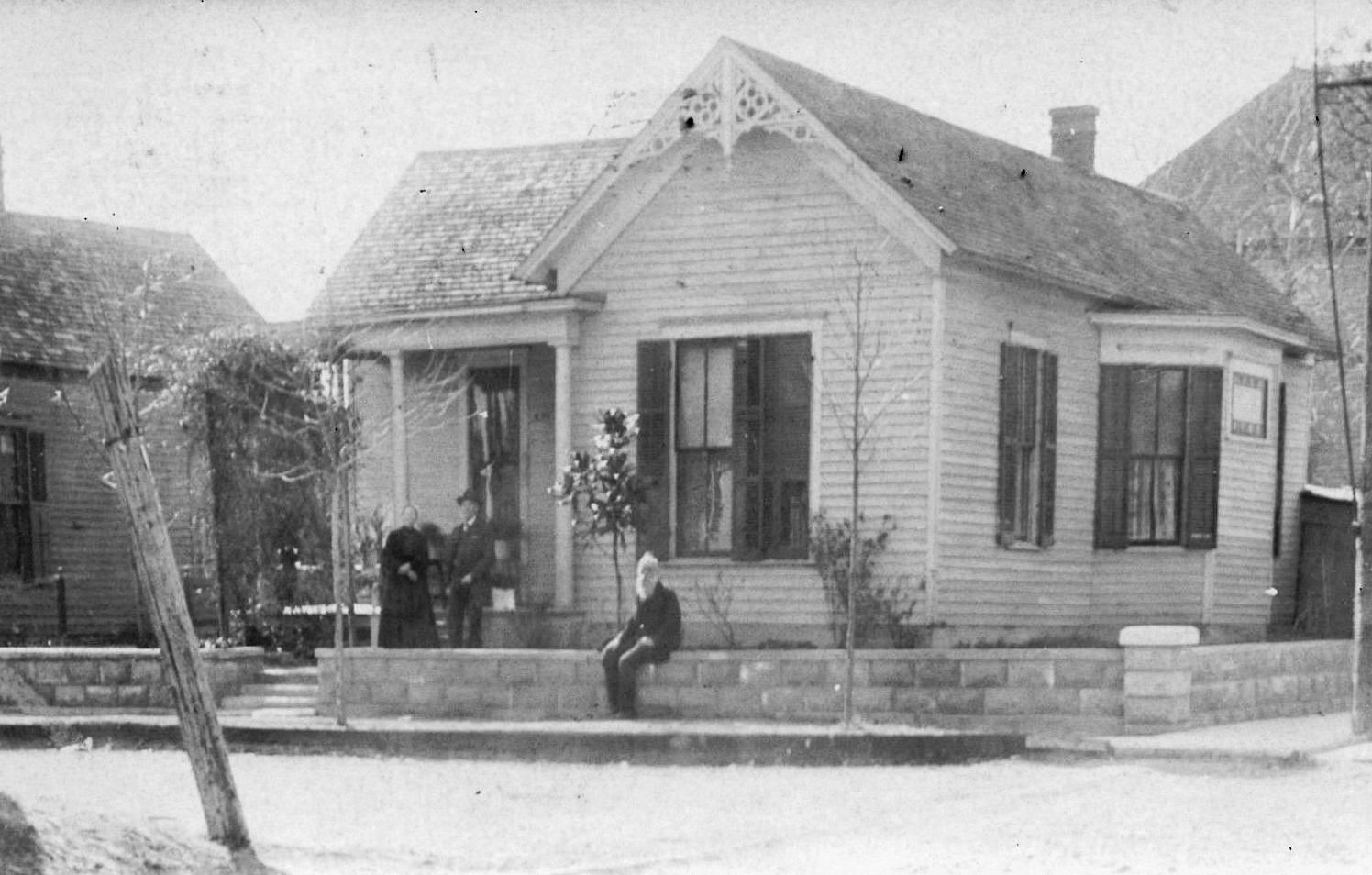
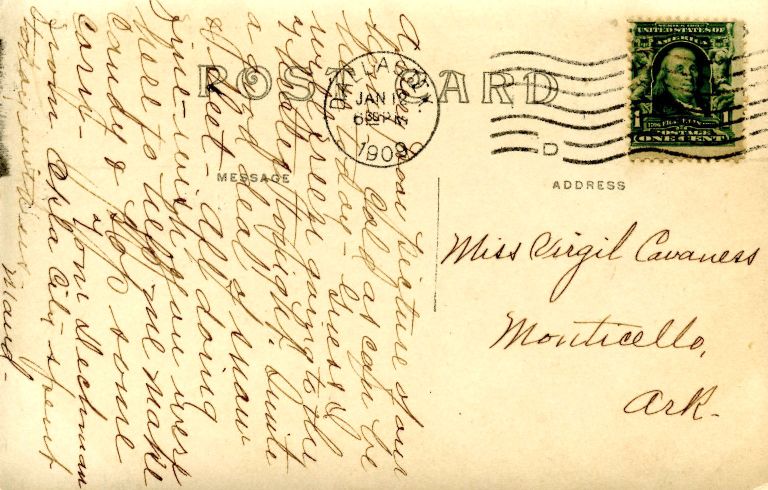
Not too long ago I came across the above photo which had been made into a real photo postcard.” It was postmarked January 12, 1909, and it contained a chatty message.

“A very good picture of our house. Cold as can be here today – guess I will freeze going to the theater tonight. Quite a good deal of snow and sleet. All doing fine – wish you were here to help me make candy & pop some corn. Tom Dechman from Okla. City spent today with us. Maud.”
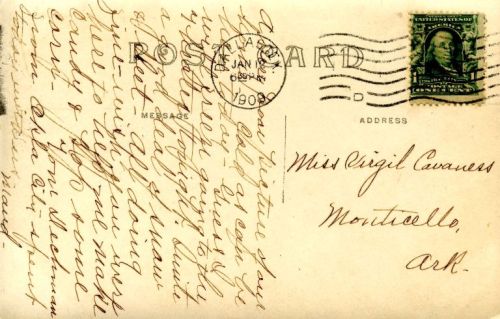
house_RPPC_1909_ebay_back

Such a nice photo of a modest little house in Dallas, probably taken in 1908. When I saw it, I thought it would be cool if I could figure out where it was. There wasn’t much to go on from the postcard, though. But, as it turns out, there was just enough information to put the pieces together and figure it out. Someone asked me recently how I track down things like this. Basically, I look for a long time in a lot of different places. Here’s how I found out where this mystery house was.

Using Ancestry.com, I found Virginia (“Virgil” — sometimes “Virgie”) Cavaness in Monticello, Arkansas. She was born in 1871 and would have just turned 37 years old when she received this card. The familiar tone of the postcard message indicated to me that Virgil was probably a close friend or family member.

I found Thomas Dechman in Oklahoma City — he would have been 23 when he visited Maud. He probably wasn’t a close friend or immediate family member because she writes his full name out. According to the 1909 Oklahoma City directory (accessible on Ancestry.com), he worked alongside his father, A. F. Dechman, at a wholesale produce company.

Then I checked the Dallas Morning News archives and found this from Dec. 30,1909.

clower_dmn_123009DMN, Dec. 30, 1909

Tom Dechman was Mrs. A. F. Dechman’s son. So I searched on “Maud Clower.” Maud, born in 1877, was also D. M. Clower’s daughter. Mrs. A. F. Dechman was Maud’s sister Annie, and Tom was her nephew.

I continued searching the DMN archives for mentions of the Clower family and found that in 1906 Maud Clower had married Jesse (J. D.) Patterson — and, hey, Virgil had attended the wedding.

virgie_dmn_090206DMN, Sept. 2, 1906

I checked to see where Maud and J. D. Patterson were living in 1908/1909. Most directories are available on Ancestry (a subscription site), but, as it happens, the 1909 directory is one of the few historical Dallas city directories that is available online (for free) — you can access it here (a few other directories are here). I found a Jesse D. Patterson listed as living at 491 N. Pearl, but no spouse’s name was listed, so I cross-referenced the address with the street directory section to determine whether this was the right J. D. Patterson. (Street directories are very helpful — not only do they list the occupants for each address, they also help to pinpoint where specific addresses were as they show which cross-streets those addresses were between; this is extremely helpful when trying to figure out where things were when streets had different names and/or when trying to figure out where things were before all of Dallas’ street numbers were changed in 1911. Another useful resource is a page on Jim Wheat’s site, which has links to every page of the 1911 street directory — click on a street name and find your address: the “new” address is on the left, and the “old” address is next to it, in bold.)
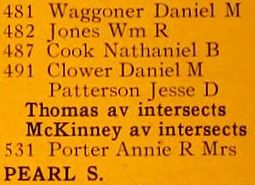
clower-patterson_1909-directory1909 city directory, residents of N. Pearl Street

Even though this didn’t have Maud’s name listed alongside her husband’s, it DID show that her father, D. M. Clower, was living at the same address. Success!

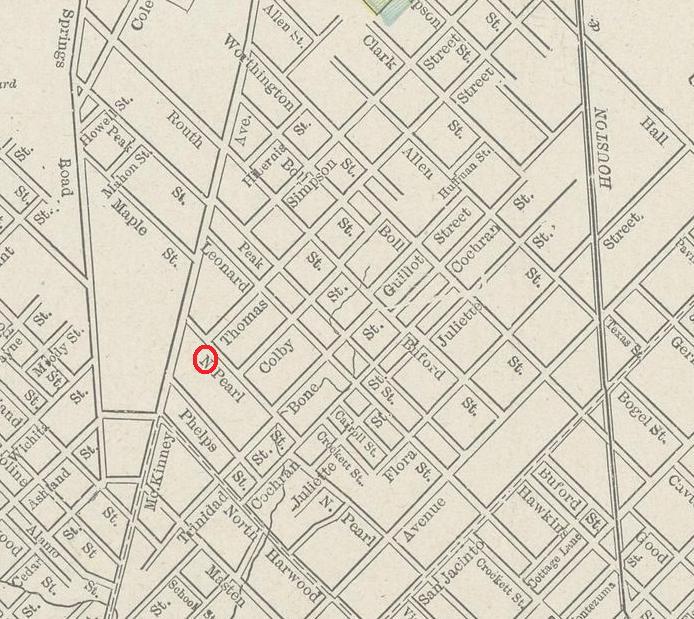
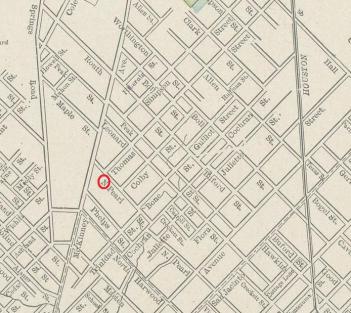
So there it is. When Maud sent that postcard to Virgil, she and her husband were living with her parents at 491 N. Pearl Street. The house in the photo was at the southwest corner of N. Pearl and Thomas. It’s always helpful to check a street map from about the same period for context and to make sure you’re looking at the right location — many street names have changed over the years — if a street named “Forest” is being referenced in the 1940s, for instance, you need to know that the old Forest Avenue and the current Forest Lane are absolutely nowhere near each other. Below is a map drawn about 1900, with the location of the Clower house circled in red (this is one of many maps found on the Portal to Texas History site; the one below is a detail of the map found here).
clower-home_map-ca1898

I also checked out Sanborn maps to see if the house in the photo matched the house that was actually on the lot at N. Pearl and Thomas. It does. To see what the general footprint of the house looked like in 1905 (the Clowers lived at 491 N. Pearl from about 1905 to 1910), see here. In the 1921 map (by which time the address had been changed to 2221 N. Pearl), you can see that additions had been made to the house since 1905 and that it looks more like the house in the photo (a room now juts out at the right and there is an out-building behind the house); see the 1921 Sanborn map here. To see what that Uptown block looks like now, see here (N. Pearl is on the left, looking south). Quite a change! It took me a long time to realize just how essential Sanborn maps can be — they are incredibly useful, and I try to use them whenever I can.

**

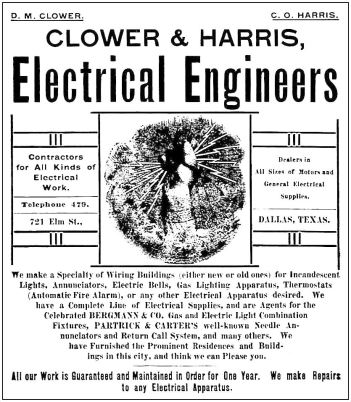
I really didn’t expect to track down the actual address of an unidentified house found on a picture postcard, but persistence pays off. A bonus of this persistence was that I ended up learning about the very interesting man who owned the house — a man who played a pivotal role in the development of Dallas: Daniel Morgan (D. M.) Clower. Clower was an electrical engineer who, in 1881, installed the very first telephone in Dallas (for Judge John Bookhout) and ran the city’s first telephone exchange; he also set up phone systems in other cities. In addition to his work for Bell Telephone, he also ran Dallas’ electric company for many years and was responsible for setting up the city’s first electric street lights and helped in developing electrified rail systems in the region.
clower_electrician_1889-directory1889 Dallas directory (click for larger image)

During the Civil War, Clower was a Confederate telegraph operator in the 1st Louisiana Regiment (see Clower’s fascinating obituary below). When the Union army was advancing after the fall of Vicksburg, Clower directed (and helped in) the destruction of the Confederate telegraph system he had helped set up, in order to prevent its being commandeered by Yankee forces — he and his men raced to pull up over 40 miles of wire and equipment, loaded everything on wagons, bugged out, and then used the same wire and poles to string a new Confederate line into and across Texas.
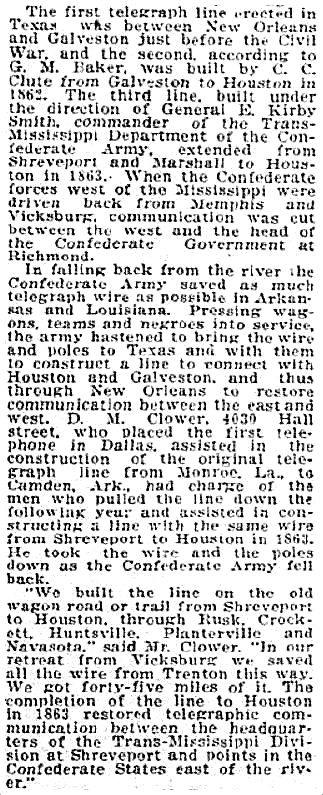
clower-telegrapher_dmn_010822DMN, Jan. 8, 1922

The war ended before Clower had completed his line northward from Houston, but his efforts had helped lay the telegraph infrastructure that the state of Texas relied on for decades afterward.

*

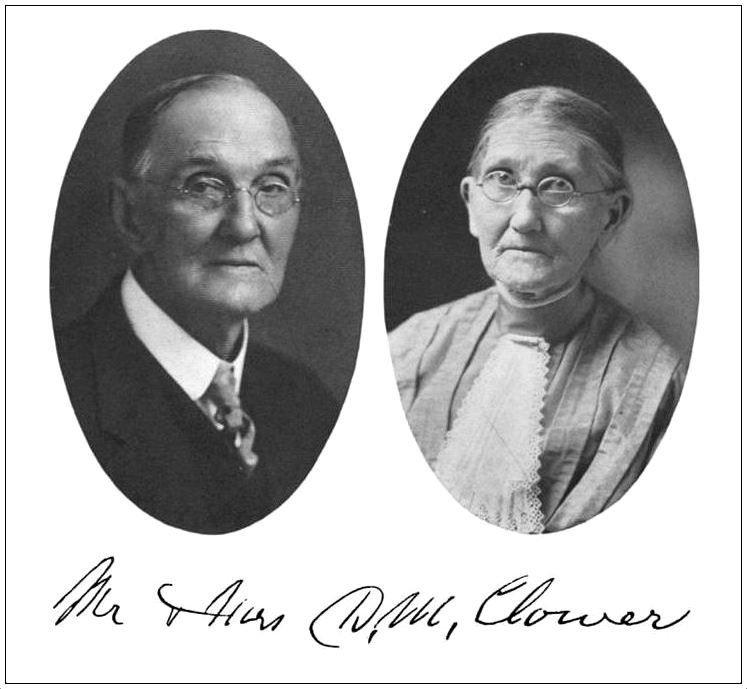
The people in the top photo are not identified. When that photo was taken, D. M. Clower and his wife, Ellender, would have been about 73; their daughter Maud and her husband Jesse would have been in their early 30s. I assume it’s the elder Clowers, with a mystery bearded man in the foreground.
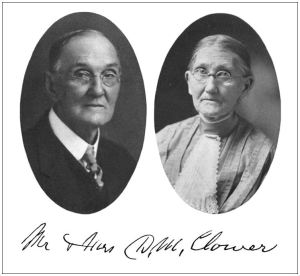
clowers_d-m-and-ellender_hist-of-tx-and-texans_1914_portal
Mr. and Mrs. D. M. Clower, ca. 1914

You never know what you’re going to discover when you read a 106-year-old postcard and wonder where an old house used to be.

***

Sources & Notes

Postcard found on eBay.

Daniel Morgan Clower was born in Alabama in 1835; he arrived in Dallas in 1879, coming from Comanche, where Maud was born in 1877. Clower died in 1927 at the age of 92; Maud died in 1948. His wife, Ellender Paralee Clower, died in 1917 (at which time the couple had been married for more than sixty years).

More on Clower can be found in the pages of The Dallas Morning News:

  • “Telegrapher Tells Civil War Episode” (DMN, Feb. 1, 1924) — a fantastically cinematic account of Clower’s past, in his own words
  • A photo of Clower and Eli Sanger, (DMN, May 1, 1927) — what might well be the last photo of Clower ran in the News just a few months before his death at the age of 92; also in the photo is Eli Sanger, of Sanger Bros. (Clower once had a business in Millican, TX when Sanger’s opened there at the close of the Civil War, and he proudly boasted that he was one of their very first customers)
  • “Daniel Clower Funeral Held” (DMN, Aug. 19, 1927) — Clower’s obituary, with photo

Photo of Mr. Clower with text from a Dallas Times Herald story published on the occasion of his 89th birthday can be found here (scroll down to 1924, about halfway down the page), via Jim Wheat’s site.

The photo of Mr. Clower and his wife Ellender is from the book A History of Texas and Texans, published in 1914; the accompanying entry about Clower’s very interesting life can be found here, via the Portal to Texas History.

*

Copyright © 2015 Paula Bosse. All Rights Reserved.

The Vision In “The Miracle Window” — 1931

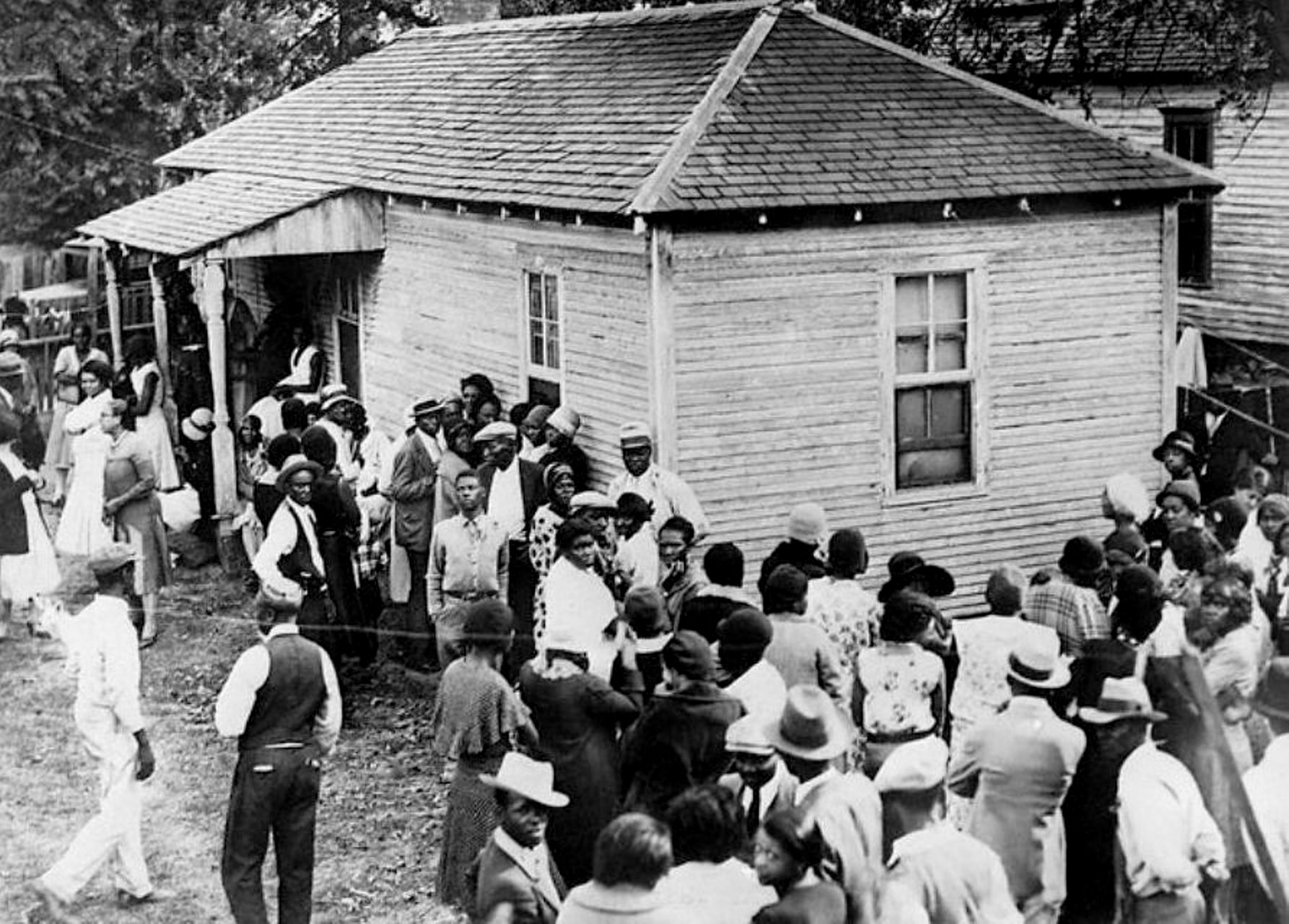
vision_corbis_1931Waiting for a message from God

by Paula Bosse

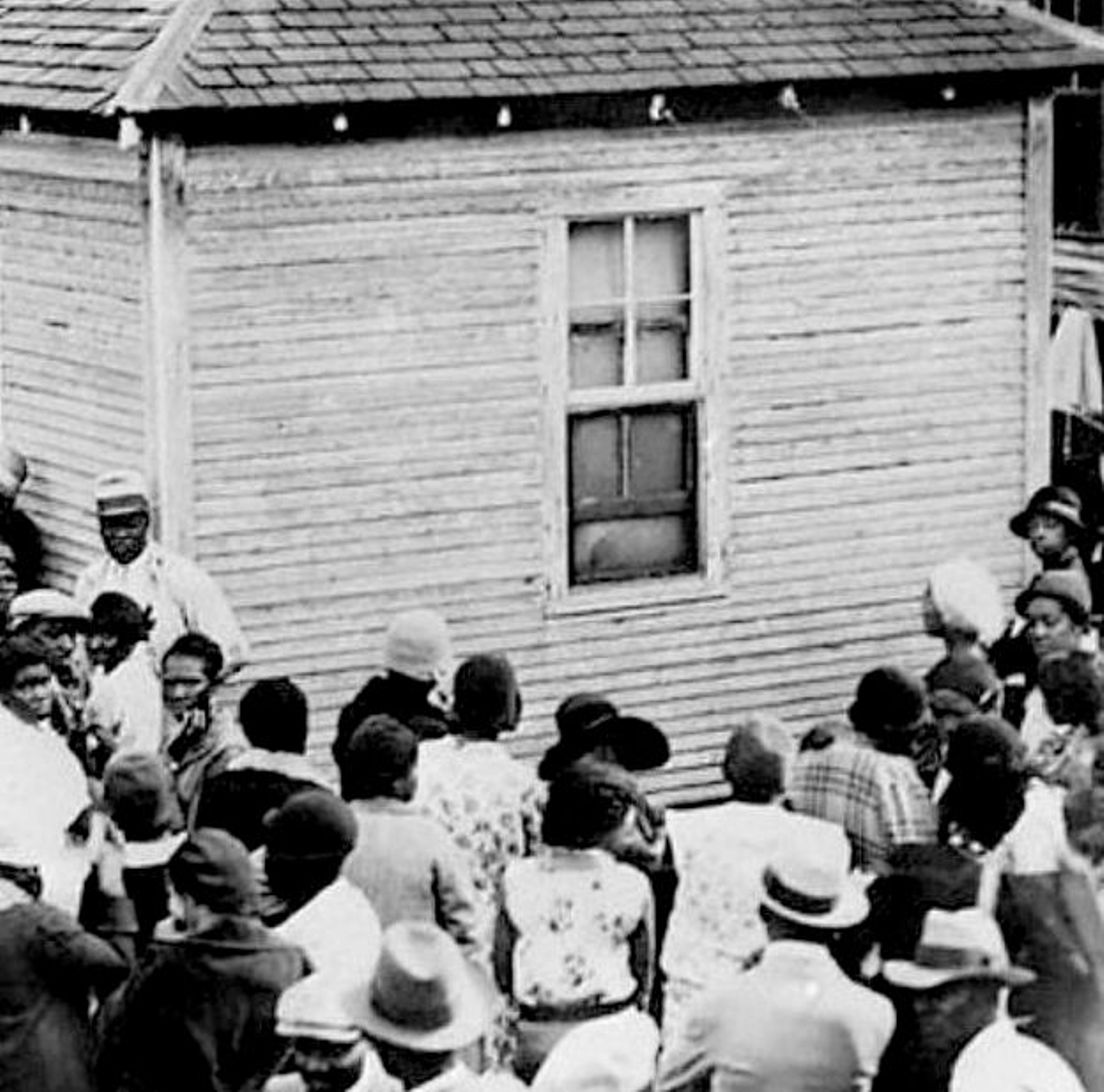
In the winter of 1931, a woman named Hattie Henderson made news when a “vision” appeared on her window shade twice a day. She interpreted the image — which was formed by shadows cast by the sun streaming through her window onto the shade — as a warning from God that “war, pestilence and other calamity” were on their way to wreak havoc. Word of the “miracle window” spread throughout the community, and soon thousands of people were flocking to the little house on Campbell Street to see the vision for themselves.

The Dallas Morning News covered the story:

More than a thousand curious and devout negroes, and a sprinkling of whites, congregated Tuesday afternoon at 3504 Campbell street, near the Greenwood Cemetery, in North Dallas, to witness the miraculous appearance of images on a drawn window shade. […] Sister Hattie Henderson, whose husband is a preacher in the Holiness Church, reports the images have been appearing twice daily, at 8 a.m. and 2:45 p.m. each day since Oct. 19. She firmly believes they are divine warnings. (DMN, Nov. 11, 1931)
vision_corbis_detWaiting patiently….

*

Campbell St. is a short street that runs between the Jewish section of Greenwood Cemetery and the Freedman’s Memorial Cemetery. In 1931 it was in the large African American community of “North Dallas.” The scene in the photograph took place in what is now a Walmart parking lot in the heart of “Uptown.”
vision_google

***

Sources & Notes

Photo by an uncredited photographer, ©Underwood & Underwood/Corbis; found on the Corbis website.

Read more about this in the Dallas Morning News archives in the story “Thousand Negroes Gather to View in Awe Warning Miracle in House Near Cemetery” (DMN, Nov. 11, 1931).

Map — with location of sacred window shade circled in red — from Google Maps.

*

Copyright © 2015 Paula Bosse. All Rights Reserved.