Flashback : Dallas

A Miscellany: History, Ads, Pop Culture

Category: Photographs

Dallas Police Moonlighting as “Bonnie and Clyde” Movie Extras — 1966

bonnie-and-clyde_movie_dallas-police-extras“Action!” (click for BIG image) Photo: Dallas Police Museum

by Paula Bosse

Need to hire a bunch of movie extras who look comfortable toting rifles? When Hollywood came to Dallas and environs in the fall of 1966 to shoot the movie “Bonnie and Clyde,” they found plenty of law enforcement officers happy to don a pair of overalls and add some local color to their production.

I came across this photo on the Dallas Police Department Museum Facebook page. One of the comments under the photo: “I remember when all the overtime slots were allowed (paid by the film company)…. I recognize Chief Curry and the other officers.” Another person commented that an ex-DPD cop told him that he was in the movie, dressed as a farmer, chasing a car across an open field.

Did you have an Uncle Earl who was on the DPD force in 1966? There’s a chance he might be in the movie. Hell, he might be in this photo!

***

Sources & Notes

Photo from the Dallas Police Department Museum Facebook page.

Read the Preston Hollow Advocate article “A Criminal Record: Dallas Police Department Museum,” here.

*

Copyright © 2016 Paula Bosse. All Rights Reserved.

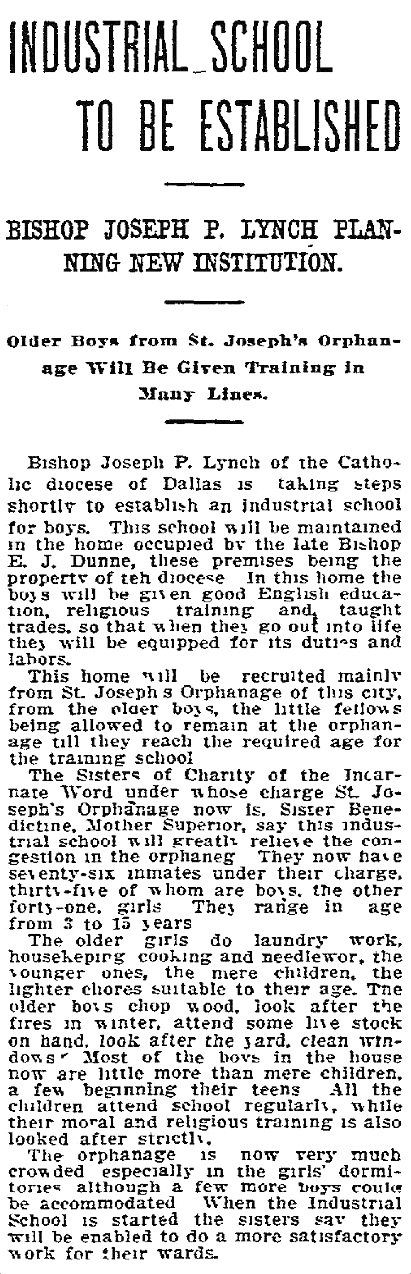
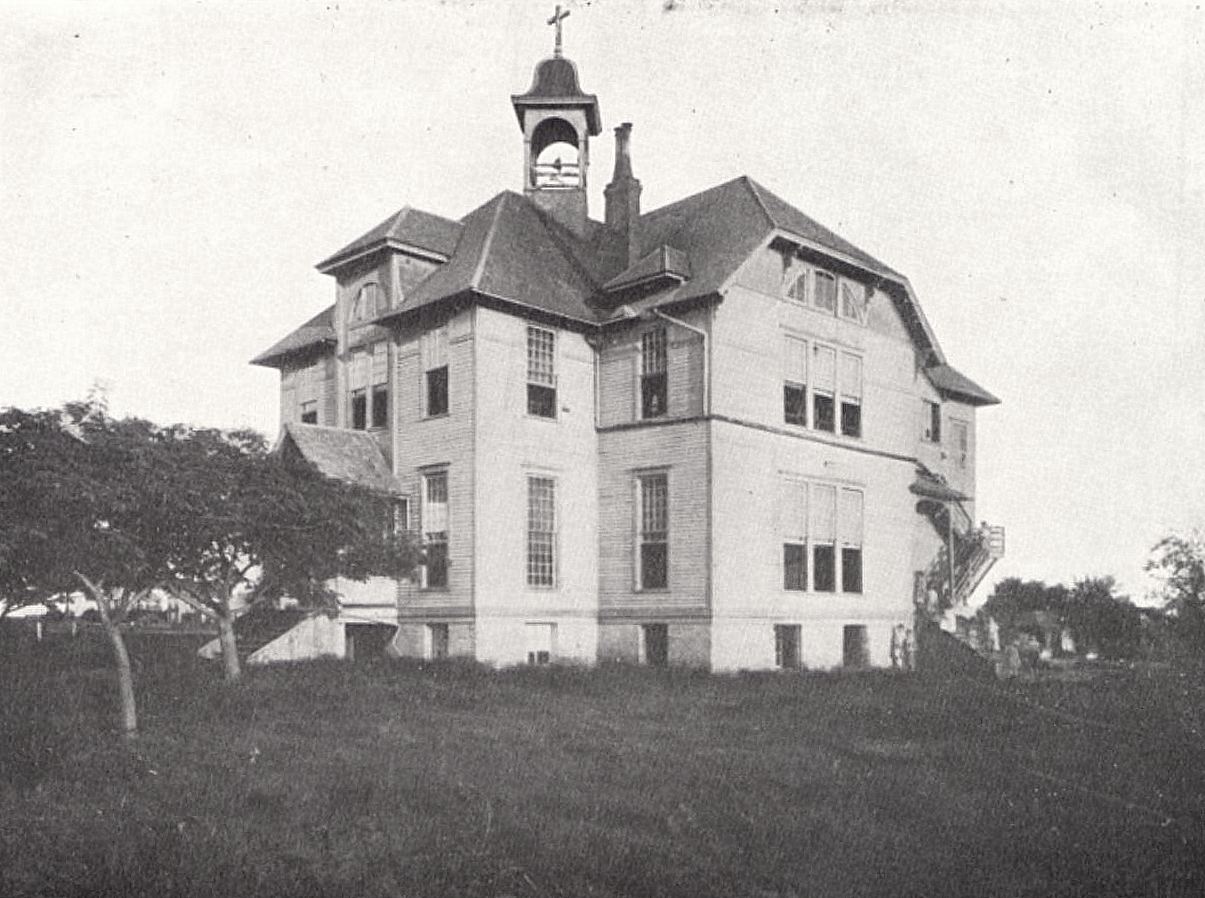
The St. Joseph Orphanage — 1891

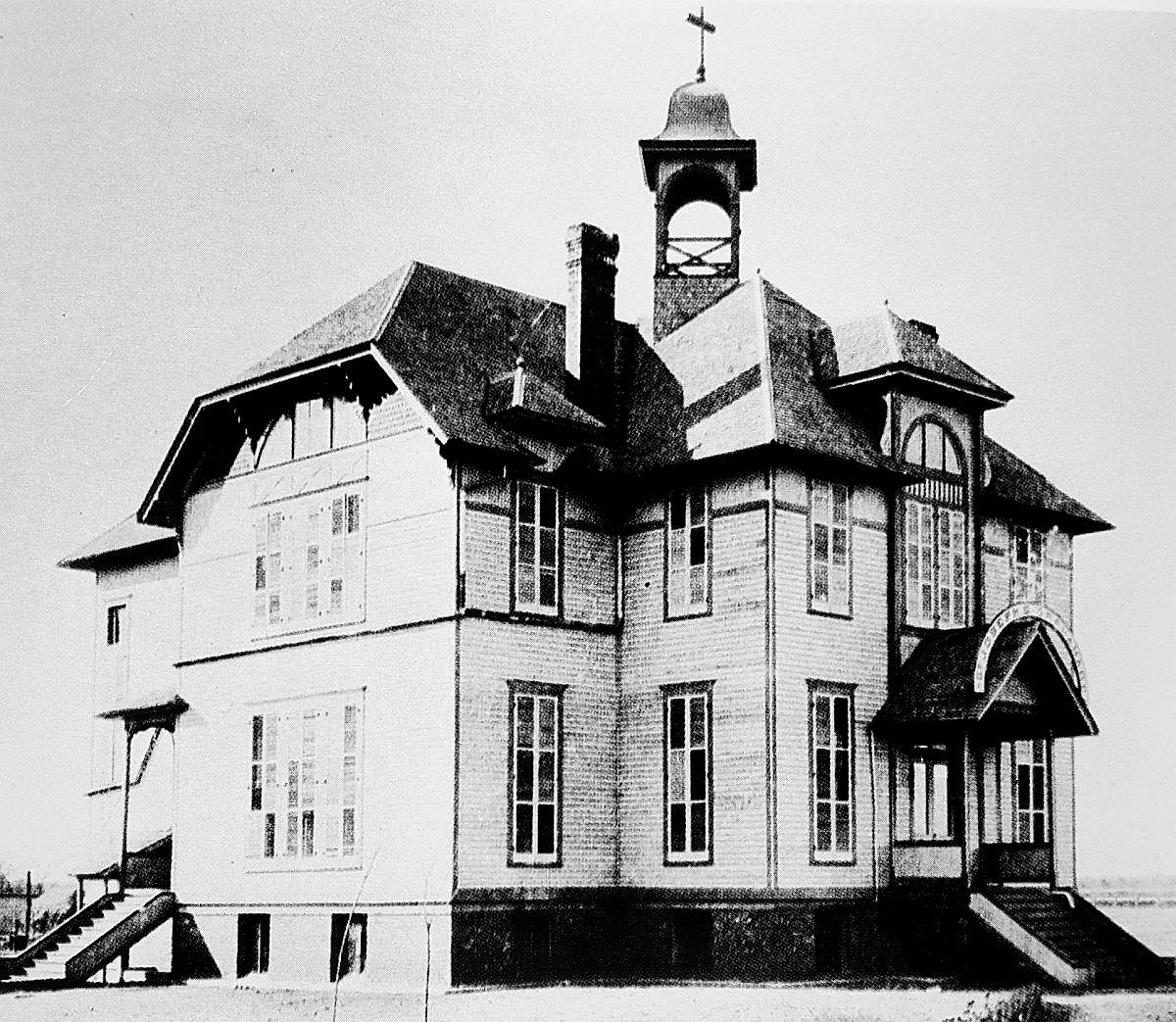
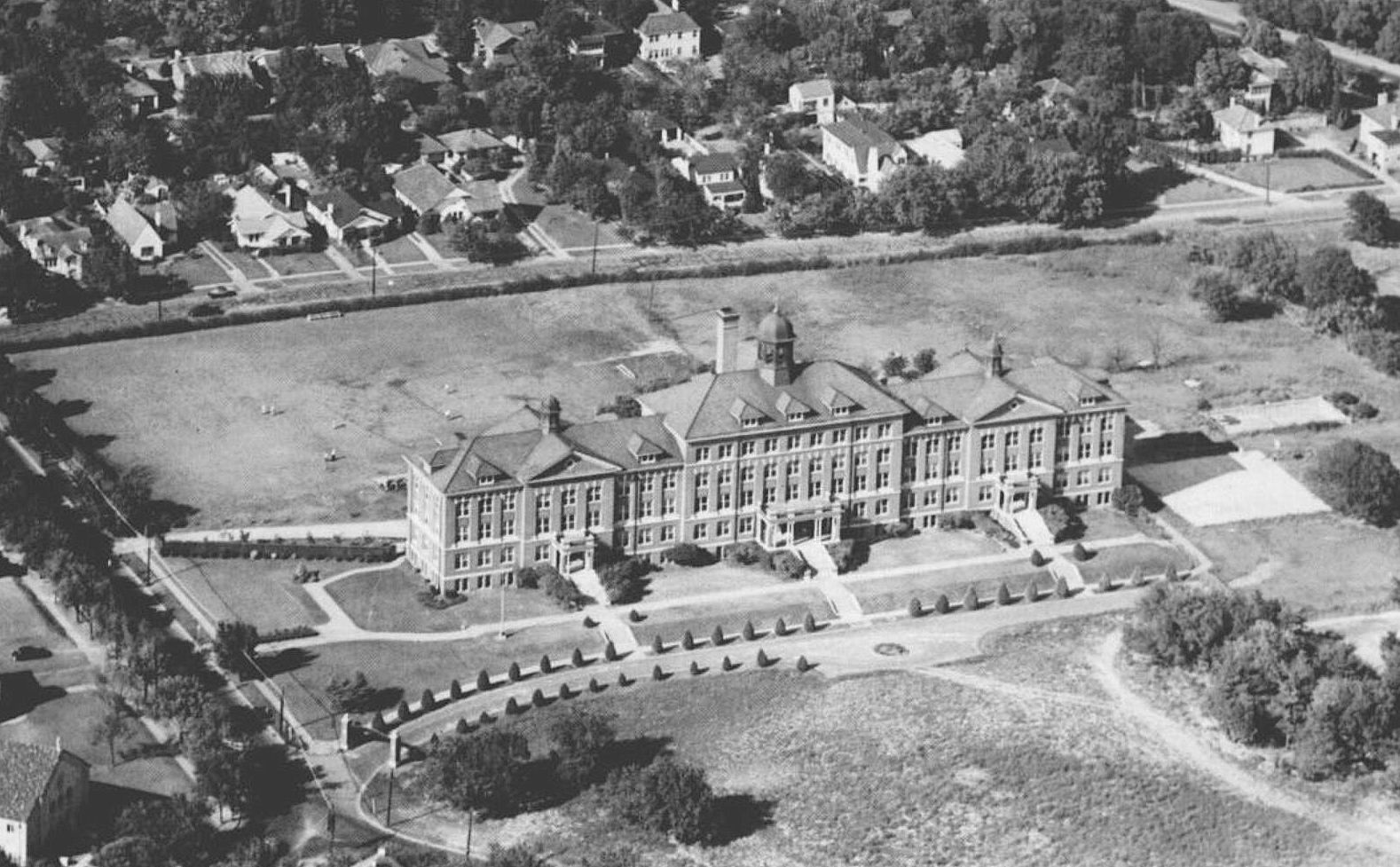
st-josephs-orphanage_dallas-rediscoveredThe new Oak Cliff orphanage, ca. 1891 (click for larger image)

by Paula Bosse

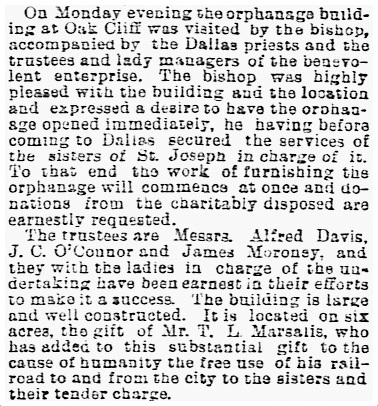
The St. Joseph orphanage was built in Oak Cliff in 1891 on 6-8 acres donated to the Catholic Diocese by Thomas Marsalis. The building was a large house, built and furnished with funds raised from local donations.

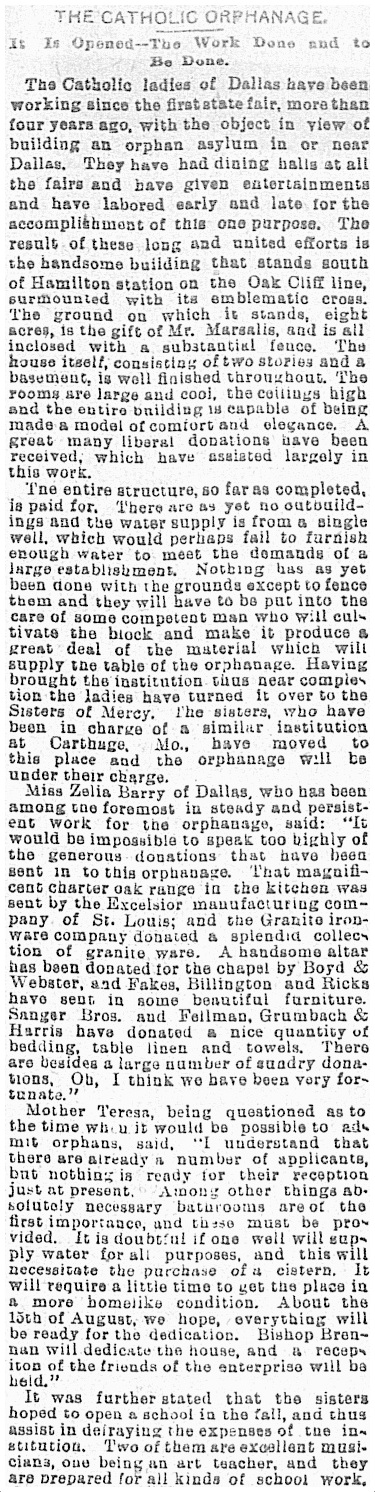
The house itself, consisting of two stories and a basement, is well finished throughout. Rooms are large and cool, the ceilings high and the entire building is capable of being made a model of comfort and elegance. A great many liberal donations have been received which have assisted largely in this work. (Dallas Morning News, July 16, 1891)

The orphanage was a Catholic institution — run at various times by the Sisters of St. Joseph, the Sisters of Mercy, the Sisters of Charity of St. Vincent de Paul, and the Sisters of Charity of the Incarnate Word — but it was “non-sectarian” in that the children or families in need were not required to be of the Catholic faith.

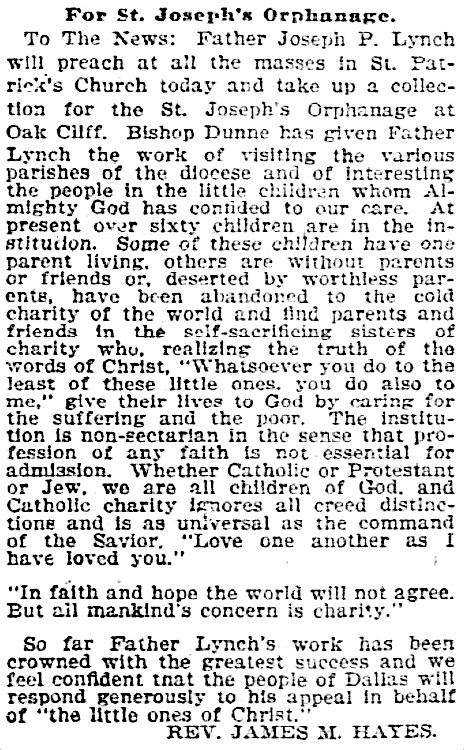
Some of these children have one parent living, others are without parents or friends or, deserted by worthless parents, have been abandoned to the cold charity of the world and find parents and friends in the self-sacrificing sisters of charity…. (DMN, Feb. 9, 1902)

st-josephs-orphanage_smu_ca1913-1919DeGolyer Library, SMU

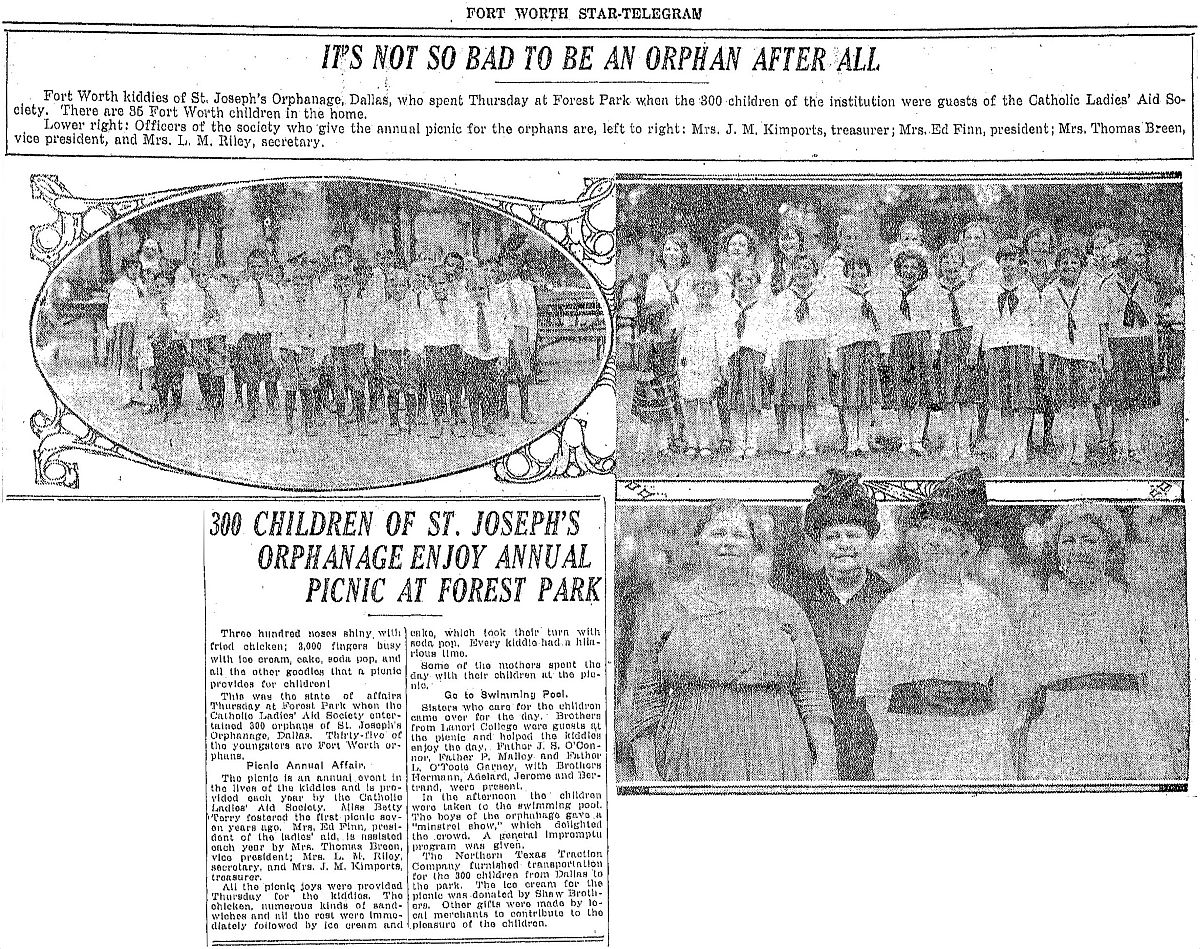
In the late ‘teens or early ’20s, the Catholic Ladies’ Aid Society of Fort Worth began an annual tradition of hosting a party for the children at Forest Park in Fort Worth. The 1923 picnic entertained 300 children. The Fort Worth Star-Telegram ran a story about the event under the unfortunate headline “It’s Not So Bad To Be An Orphan After All.” (Click article for a much larger image.)

st-josephs-orphanage_FWST_060123FWST, June 1, 1923

According to William L. McDonald in his book Dallas Rediscovered, “the orphanage was converted into a Carmelite convent and school in 1929 and demolished in 1945.” In December, 1930, the girls moved into their new (huge!) home in Oak Lawn (at Blackburn), in the old Dallas University building (later the Jesuit campus). The boys, I believe, moved to the Dunne Memorial Home. Here is a photo of the girls’ new home, which was taken over by Jesuit High School in 1941. (The impressive building originally built in 1906 was demolished in 1963.)

jesuit_legacies_fall-2005

**

st-josephs-orphanage_dmn_042991Dallas Morning News, April 29, 1891

st-josephs-orphanage_dmn_071691
DMN, July 16, 1891

orphanage_dmn_020902
DMN, Feb. 9, 1902

orphanage_dmn_113013-inudstrial-school-to-open
DMN, Nov. 30, 1913

st-josephs-orphanage_catholic-charities-of-dallas

***

Sources & Notes

Top photo from Dallas Rediscovered by William L. McDonald, is from the collection of the Dallas Public Library.

Photo titled “Children and Nuns, St. Joseph’s Orphanage, Dallas, Texas” was taken by Frank Rogers and is from the George W. Cook Dallas/Texas Image Collection, DeGolyer Library, Southern Methodist University; more information can be found here.

Photo of the old Dallas University/University of Dallas/Trinity University is from the article “Jesuit High School” by Liz Conrad Goedecke, which appeared in the Fall, 2005 issue of Legacies.

Bottom photo of St. Joseph’s Orphanage is from a PDF titled “A Brief Visual History of the Catholic Diocese of Dallas,” here (p. 19).

More on the original St. Joseph orphanage can be found here (scroll down to the 1902 article, “Charities of Dallas”).

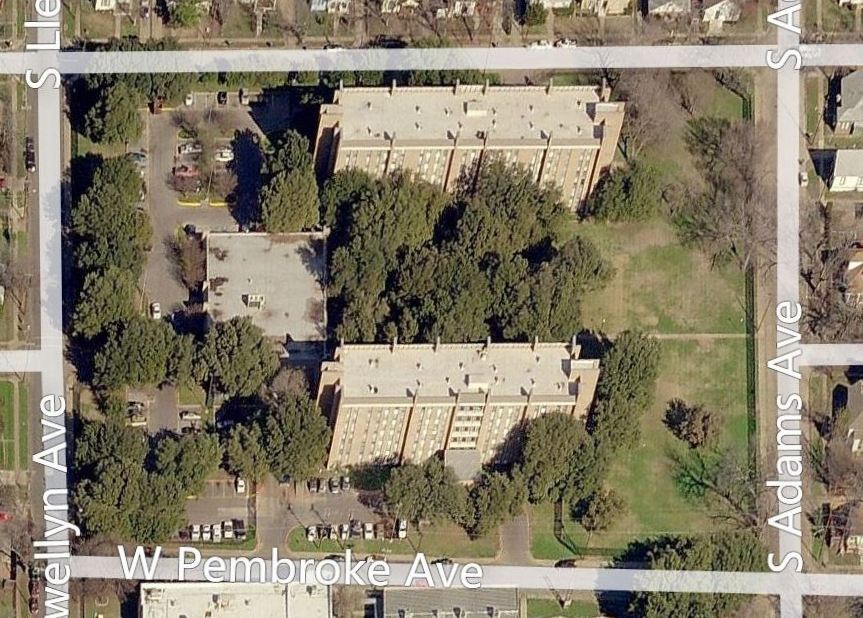
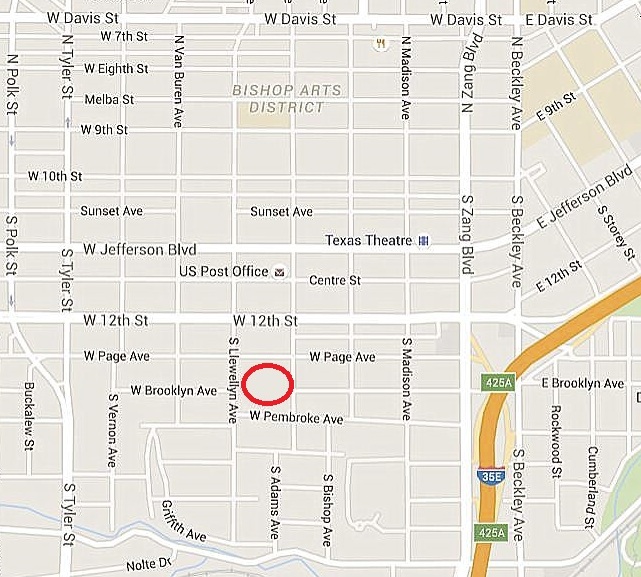
The original St. Joseph orphanage was at the southwest corner of West Page and South Adams, in Oak Cliff. See the 1922 Sanborn map, here. According to the Dallas Central Appraisal District website, the land is currently owned by the Dallas Housing Authority, which, as recently as 2014, had sought permission to build a new “home for the aged” on this property. The Bing Maps aerial view shows the Brooks Manor low-income housing project which had occupied this block for several decades before its recent demolition.

brooks-manor_bing

The Google Street view from Jan. 2016 shows an empty block.

orphanage_googleGoogle Maps

The original building at the top is not to be confused with the later St. Joseph home for girls (or the earlier Virginia K. Johnson home for unwed mothers), which was also on West Page, but a couple of blocks to the east. More on that can be found here. (It was at the Page and Madison, seen on the 1922 Sanborn map, here.) (Perhaps this was the campus the St. Joseph school moved to when Jesuit took over the campus in Oak Lawn in 1941?)

All photos and articles are larger when clicked.

*

Copyright © 2016 Paula Bosse. All Rights Reserved.


South Central Expressway Under Construction — 1955

central-expwy_forest-ave_092955_squire-haskins_UTAComing soon to a neighborhood near you… (UTA Special Collections)

by Paula Bosse

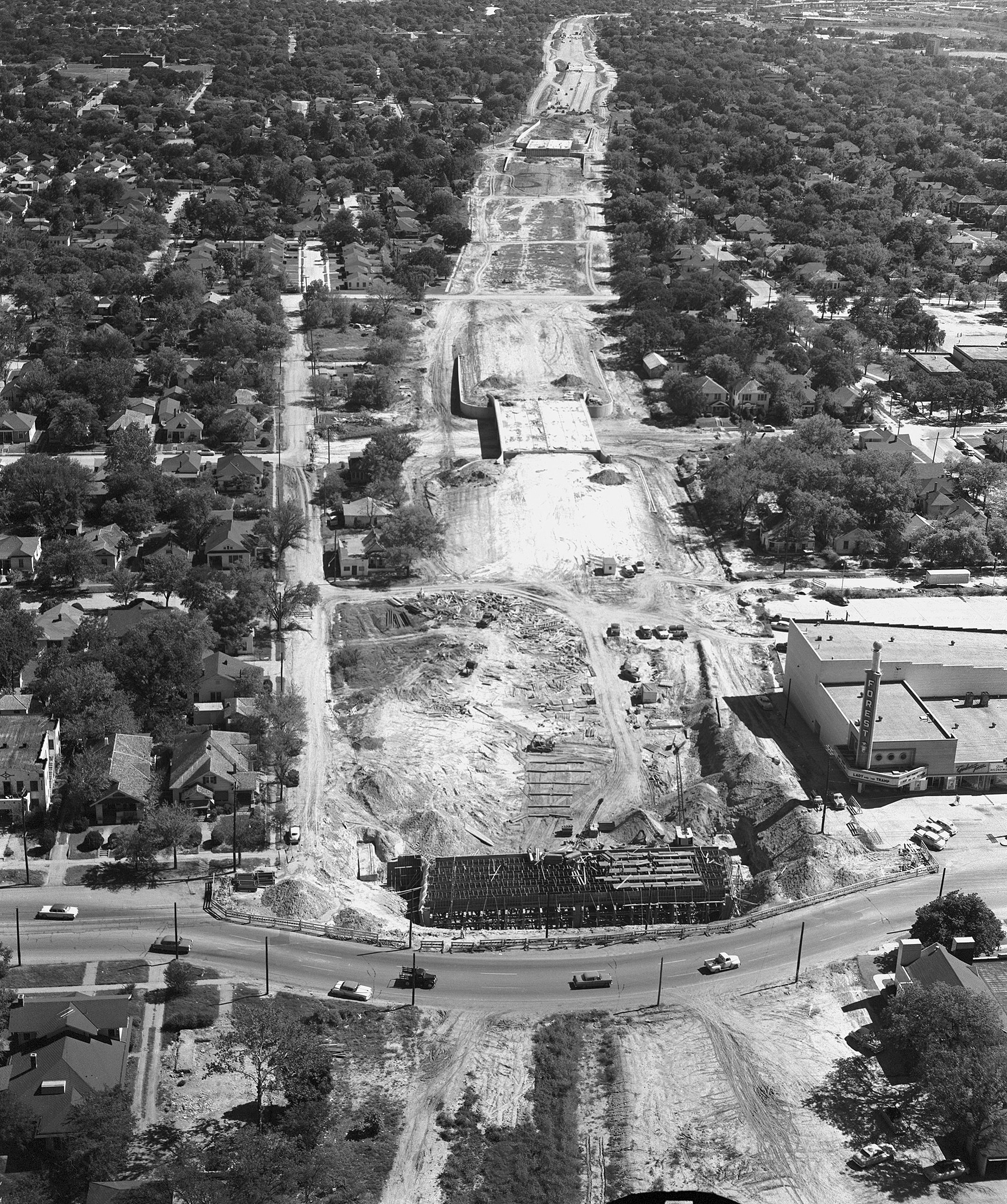
Behold, a photo of South Dallas on Sept. 29, 1955, showing a lengthy stretch of bulldozed land cleared for the imminent construction of South Central Expressway. We’re looking south, with Forest Avenue (now Martin Luther King Blvd.) running horizontally in the foreground. To the right is the Forest Theater (now playing: “Lady and the Tramp”). And if you zoom in, you can just see the post-Ross Avenue location of the famed Jim Beck recording studio to the right of the theater.

This great swath of land cut through an established tree-filled residential area — it ran alongside the once-swanky Colonial Hill neighborhood. Zoom in and take a last look at some of those straggler houses that haven’t yet met their maker. …But they will. …And they did.

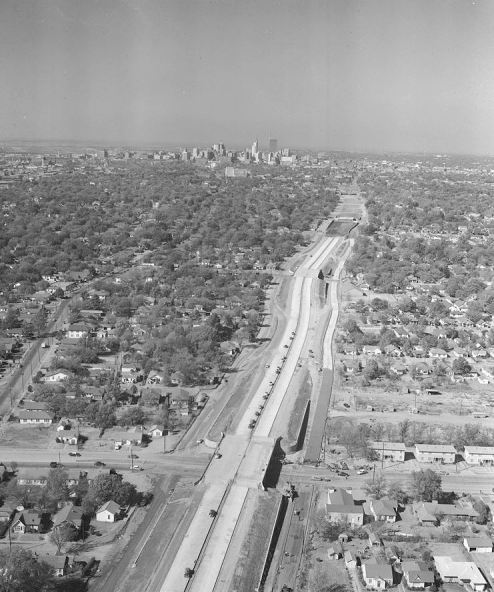
Below is another Squire Haskins aerial photo looking north, toward downtown, taken a few weeks later, on Nov. 11, 1955 (see a very large image of this photo on the UTA website here).

south-central-expwy_squire-haskins_nov-1955_UTASquire Haskins, Nov. 1955, UTA Special Collections

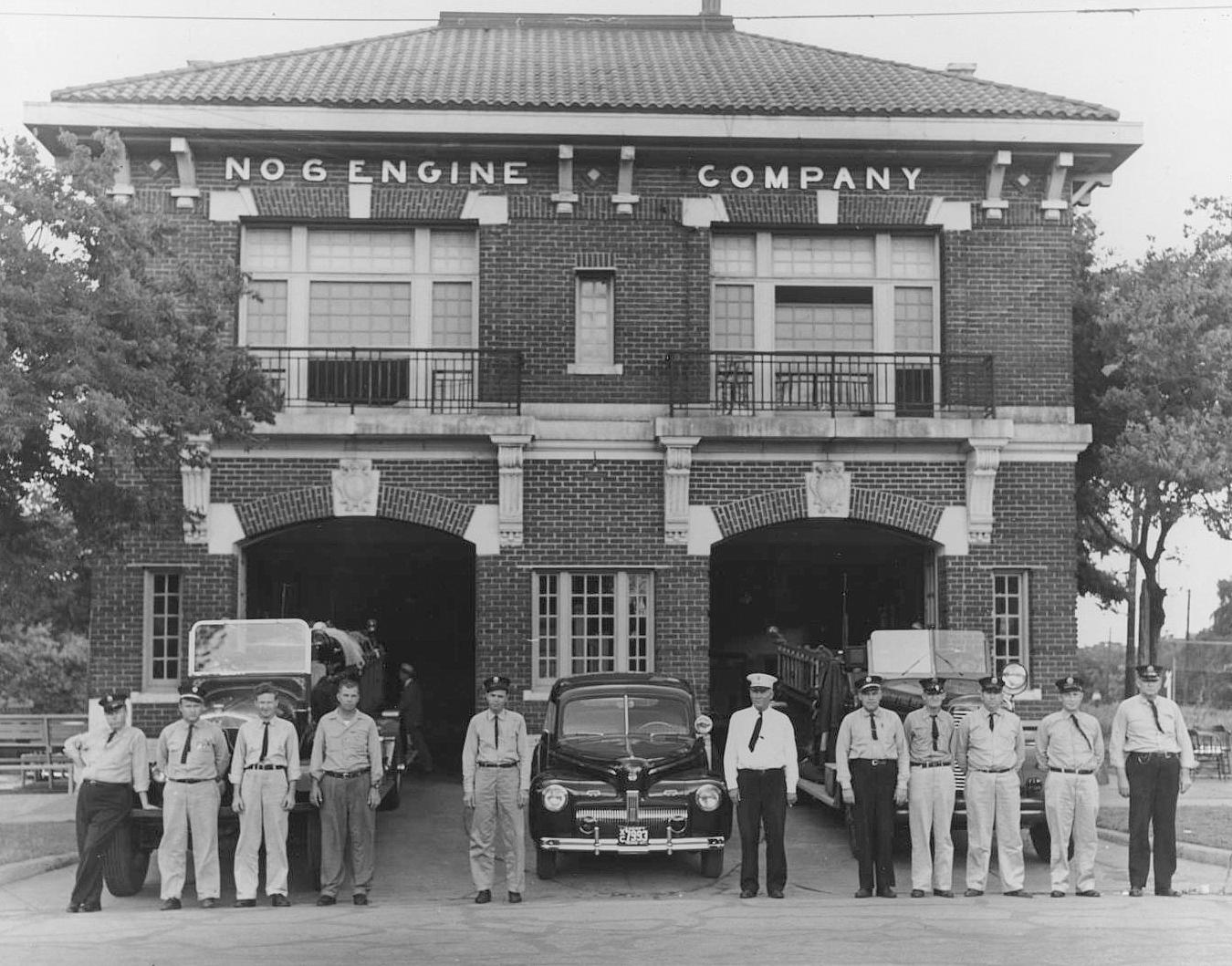
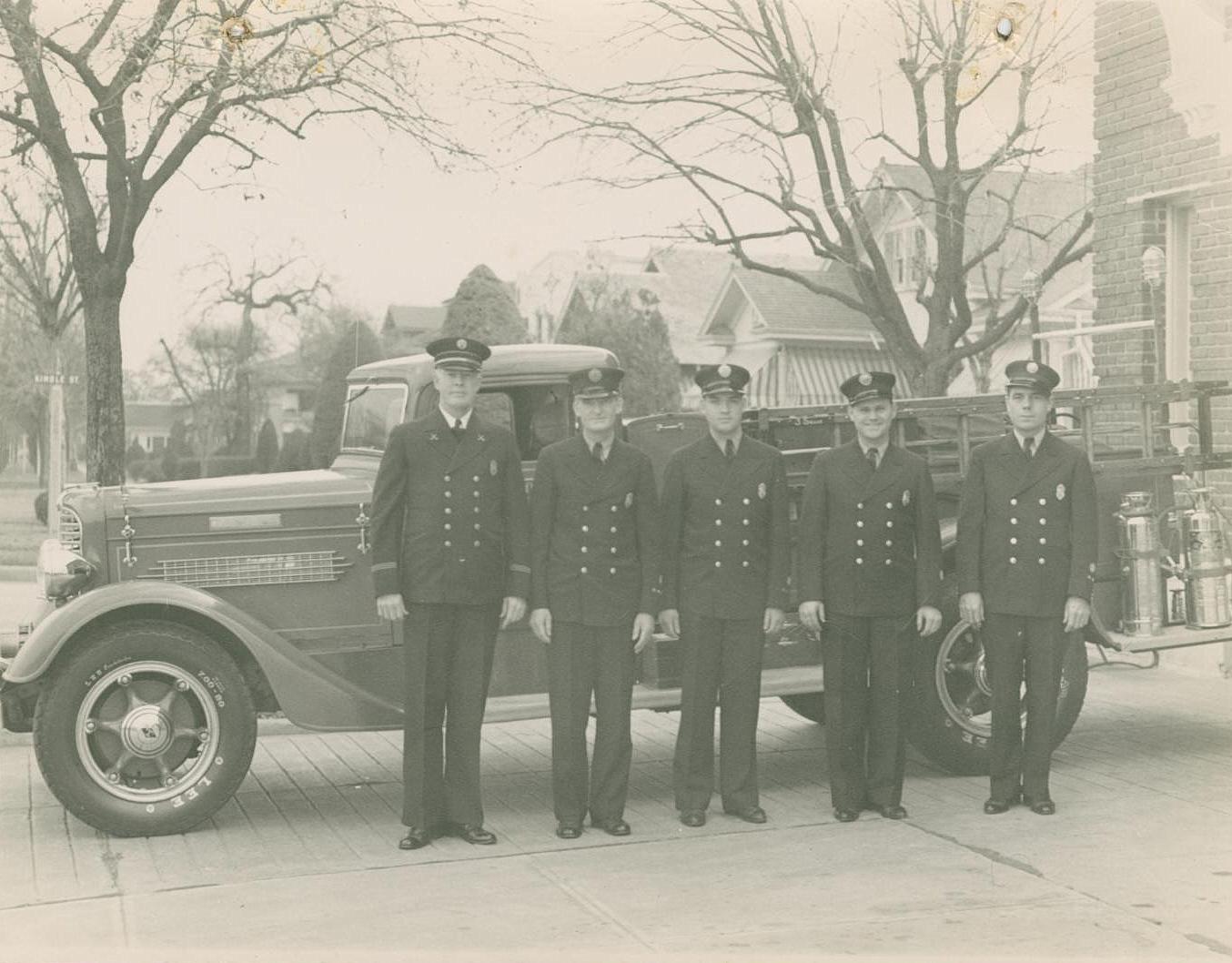
I wondered what had been demolished on Forest between the houses to the left and the theater to the right. It was Fire Station No. 6, at 2202 Forest Avenue. I looked in my bulging file of miscellaneous photos and was surprised to actually find a couple of photos of that No. 6 Engine Company, which was built in 1913.

fire-department_no. 6_forest-ave-mlk

The station was on the south side of Forest Avenue, alone in a very short block. As we look at the station in the photo above, the H&TC railroad runs just to the right of the station, and Kimble Street runs along the left. See a Sanborn map of this area in 1922, here.

The photo  below shows what Forest Avenue once looked like, from the front of the firehouse looking east (the intersection with Kimble is on the other side of the firetruck — you can see the street sign). These houses are still standing in the 1955 photo at the top.

forest-central_fire-station_portal

When you know what this intersection looks like today (see this same view today, here), it’s hard to believe it ever looked like a cozy neighborhood. Progress is a helluva thing, man.

**

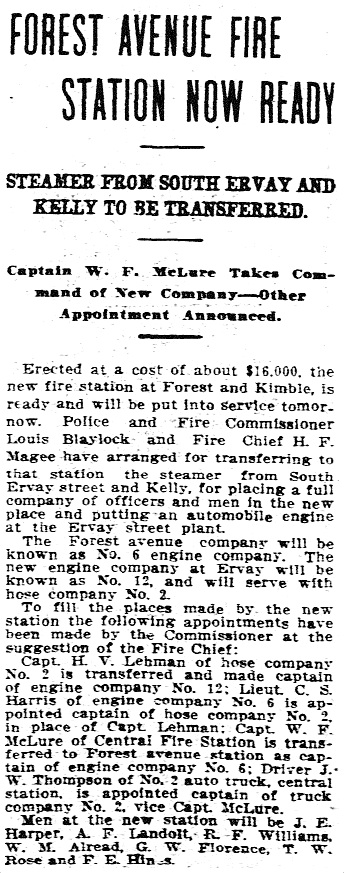
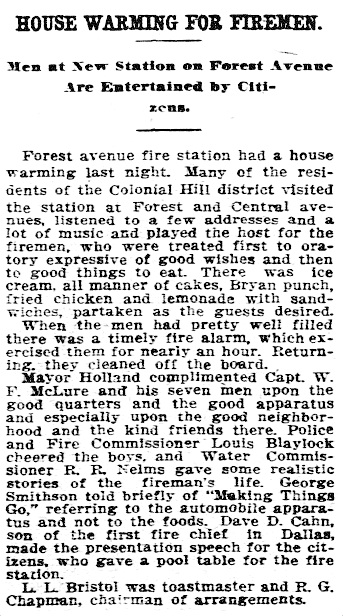
A couple of short articles for those who might want a little more info about the fire station, which was demolished sometime between April and September of 1955. (Click articles for larger images.)

forest-central_fire-station_dmn_070613
Dallas Morning News, July 6, 1913

forest-central_fire-station_dmn_072213
DMN, July 22, 1913

*

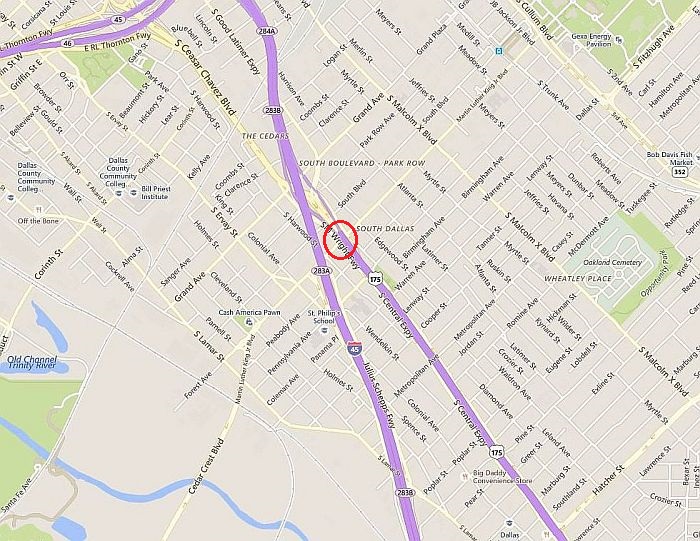
forest-ave-central_today_bing
Bing Maps

***

Sources & Notes

Top photo by Squire Haskins, from the Squire Haskins Photography, Inc. Collection, UTA Libraries, Special Collections, University of Texas at Arlington; it is accessible here.

Second photo by Squire Haskins, from the Squire Haskins Photography, Inc. Collection, UTA Libraries, Special Collections, University of Texas at Arlington; it is accessible here.

The two fire station photos are from the collection of the Dallas Firefighters Museum, via the Portal to Texas History, University of North Texas. The first photo can be viewed here, the second photo here.

*

Copyright © 2016 Paula Bosse. All Rights Reserved.

The Union Depot Hotel Building, Deep Ellum — 1898-1968

union-depot-hotel_1909_uta-detThe old Union Depot Hotel, about 1909 (click for larger image)

by Paula Bosse

Above, we see the hotel known originally as the Union Depot Hotel, built in 1898 across from the very busy old Union Depot, at the intersection of two major rail lines: the Houston & Texas Central (the H&TC, which ran north-south) and the Texas & Pacific (the T&P, which ran east-west). The tracks crossed at the intersection of Central and Pacific — streets named after the two railroads — in the area east of downtown we now call Deep Ellum. The hotel was on the southwest corner of that intersection.

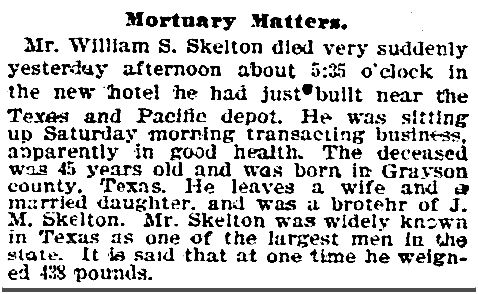
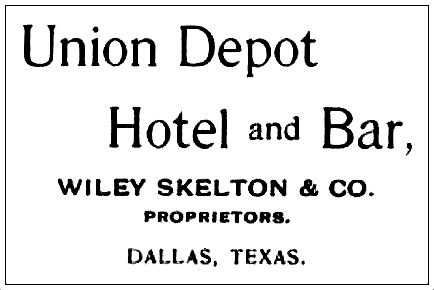
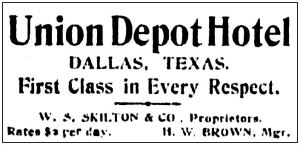
The large, two-story hotel (which also housed a popular cafe and bar) was built by William S. Skelton — more commonly known as Wiley Skelton — to cash in on the large number of travelers coming to Dallas via the bustling passenger depot right across the street. When it opened, it was charging a hefty two bucks a day (the equivalent of about $60.00 in today’s money) — a large-ish sum in 1899, but … location, location, location. This two-dollar-a-day rate to stay at Skelton’s hotel was the same as the base rate of Dallas’ ritziest, priciest hotels, The Windsor and The Oriental. How could Skelton’s “wrong side of the tracks” hotel charge similar rates as the city’s most elegant hotels? Convenience, convenience, convenience. The Union Depot Hotel could not have been more convenient to weary travelers unless it had been located inside the depot.
union-depot-hotel_houston-post_012599Houston Post, Jan. 25, 1899

Skelton was a popular and successful businessman (and noted saloon pugilist) who was known far and wide for his substantial physical bulk. He was a founding member of the city’s “fat men’s club” and was reported to be the heaviest man in the city. When he died suddenly at the age of 45 (probably not a huge surprise, as his obituary mentioned that his weight had, at one time, reached 438 pounds), his new hotel had been open only weeks (perhaps only days).
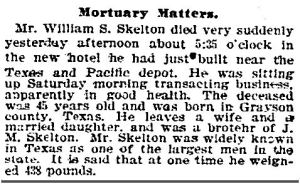
skelton_dmn_011699Dallas Morning News, Jan. 16, 1899

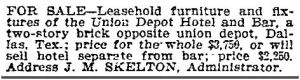
His unexpected death threw the running of the hotel into confusion. His brother (another famed “fighting fat man”) took over the business side of its operations and occasionally placed ads in the paper seeking a hard-to-find buyer.
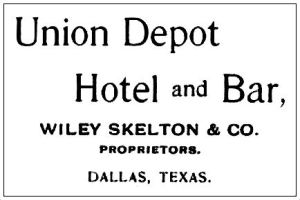
union-depot-hotel_1901_portal1901 ad

union-depot-hotel_dmn_111602DMN, Nov. 16, 1902

Eventually the hotel was sold, and it went through several owners and name changes over the years. Then, in 1916, a major catastrophe struck: brand new Union Station, which was waaaay on the other side of town, opened, consolidating passenger rail service to one depot, resulting in the shuttering of most of the city’s smaller depots. Location, location, location wasn’t such a great thing for the old Skelton hotel after this.

The hotel went through many changes over the years, but after the closing (and later razing) of the old Union Depot, it was on a general, inevitable, slide downward. By the time it was demolished in 1968 — when large swaths along Central Avenue were leveled to facilitate highway construction — the building was in disrepair and, apparently, long-vacant. It stood for 70 years.

*

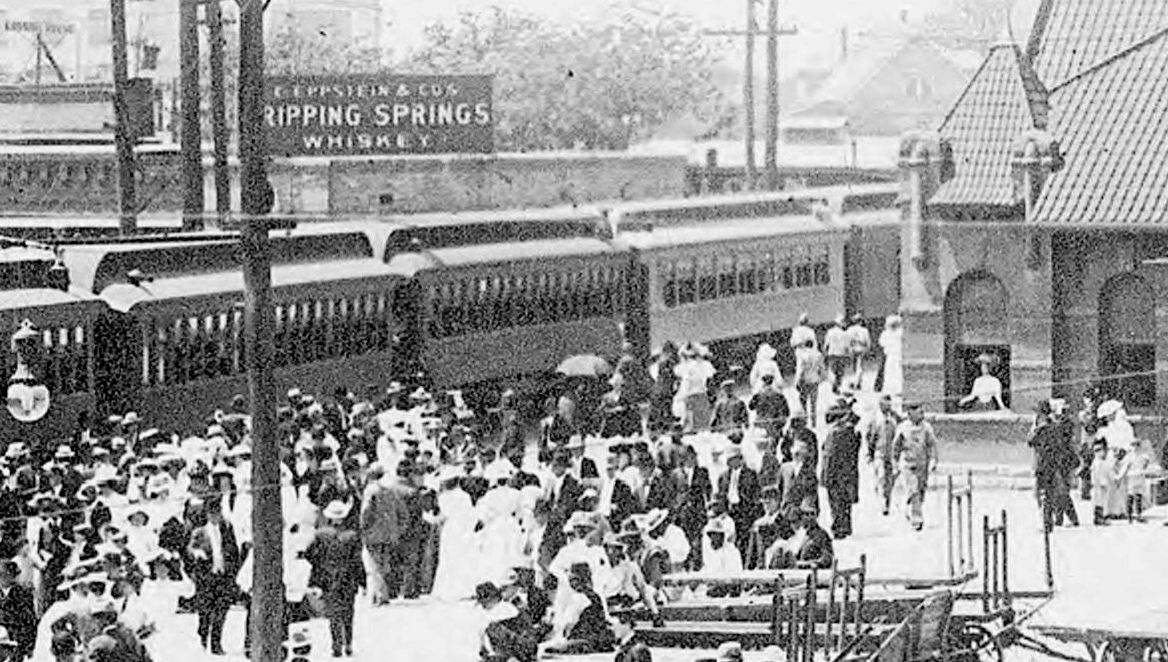
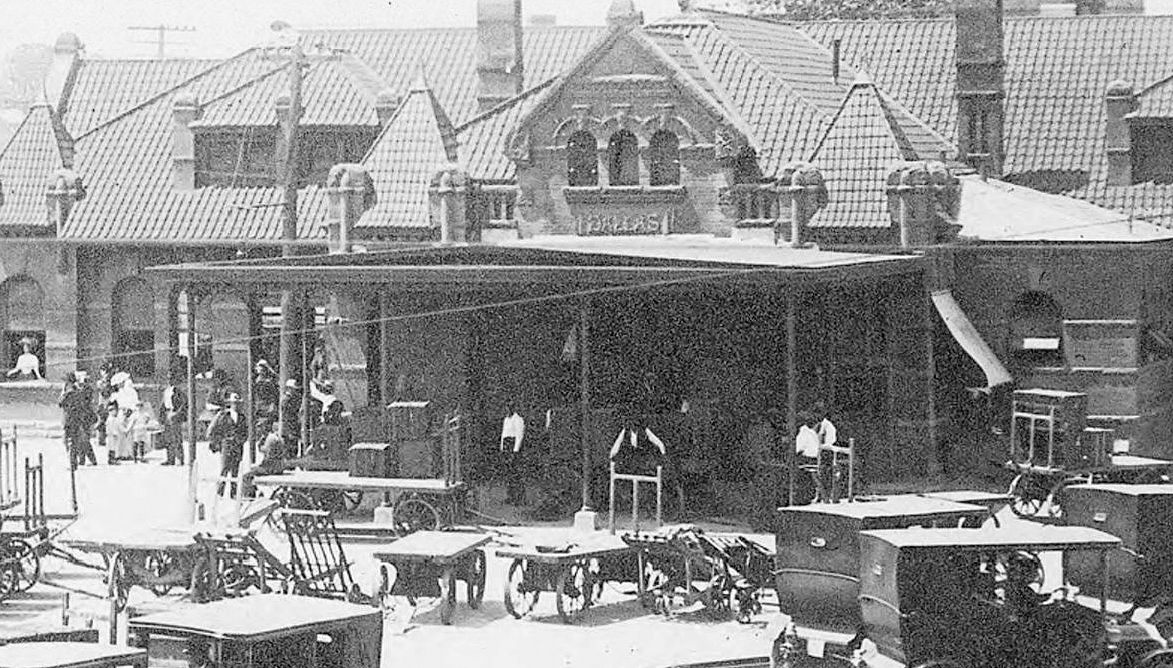
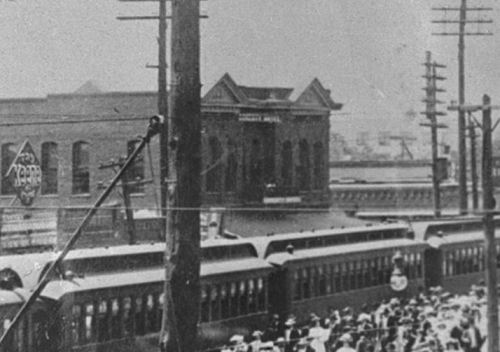
Below is a photo taken from Elm Street in 1908 or 1909, when the hotel (seen at the top left) was owned by Charles S. Conerty and named the Conerty Hotel (you can see the name on two signs, but you have to really zoom in to make them out). Conerty, an Irishman who had previously run bars, owned the hotel very briefly. By May of 1909, plagued with legal troubles stemming from his being charged with selling liquor on a Sunday, Conerty sold the hotel (which he seems to have been running as a boarding house), stating in his classified ad that he was “leaving city.” (He did not leave the city.) In 1910, with a new owner, the hotel was once again known as the Union Depot Hotel.

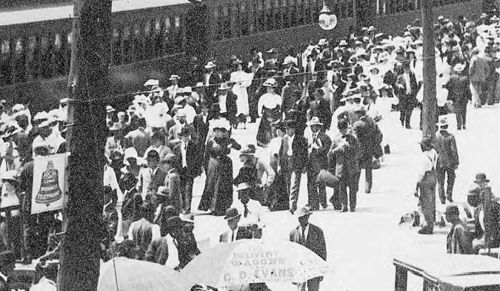
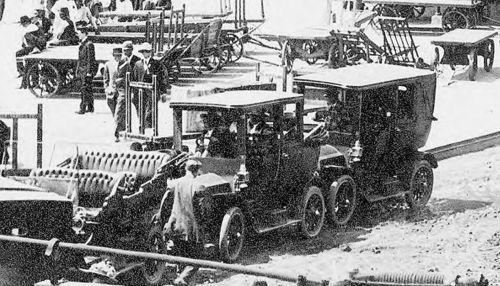
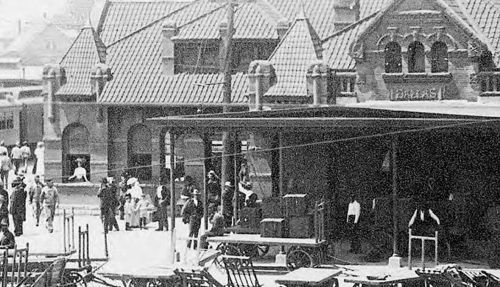
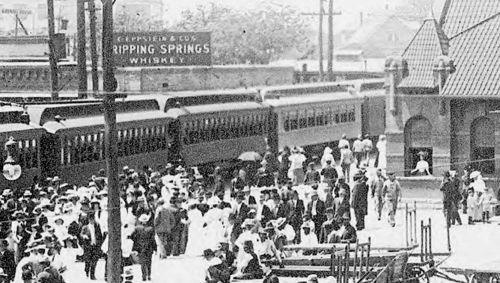
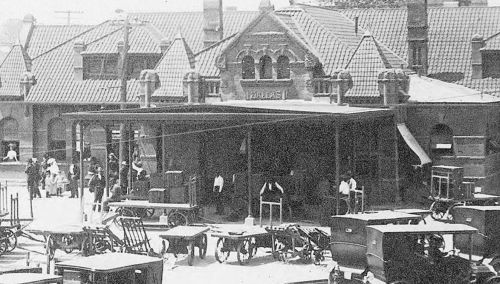
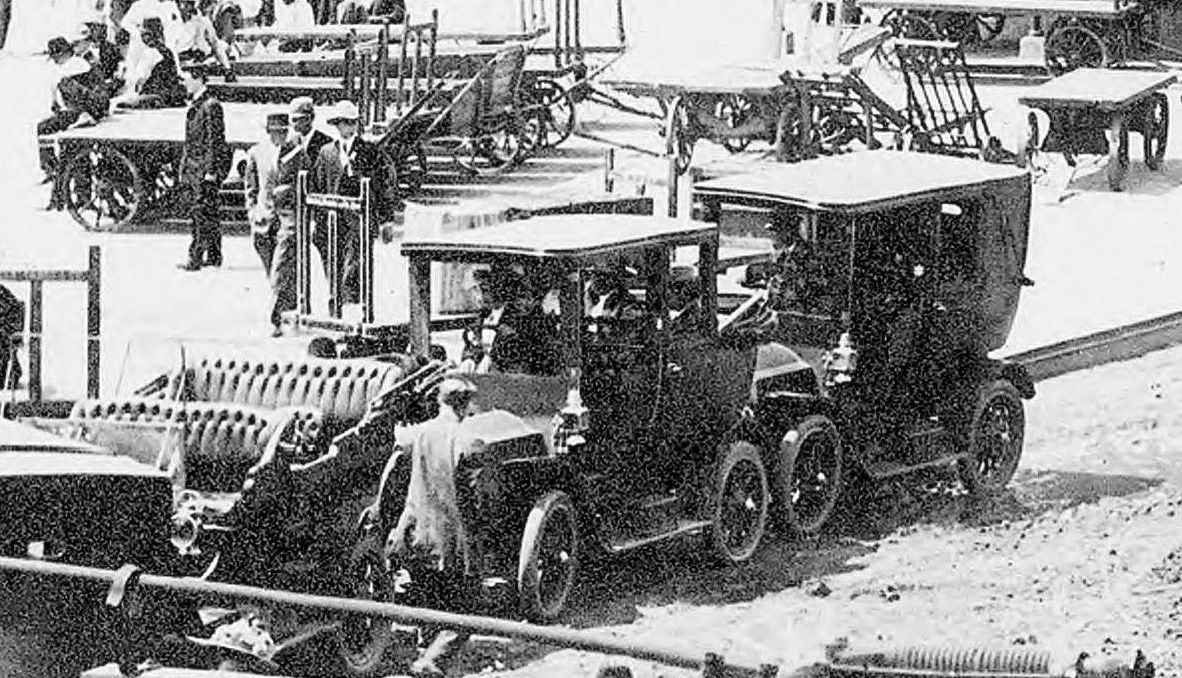
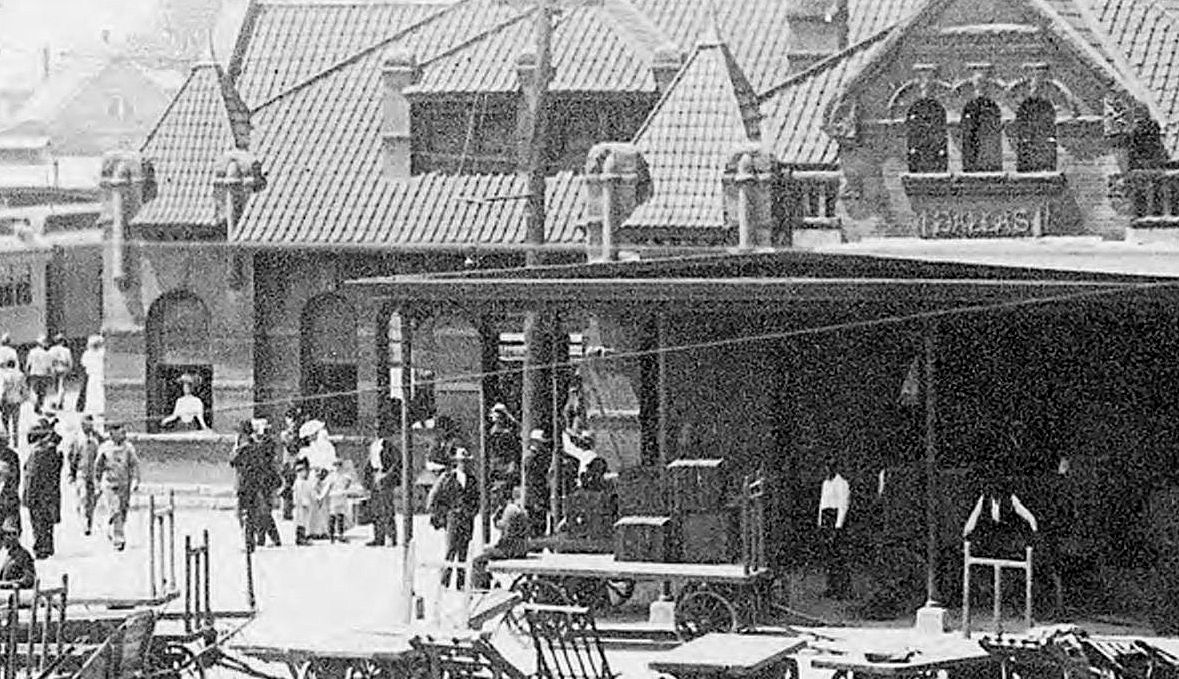
Back to the photo. Across Central Avenue from the hotel is the old Union Depot, where there was always a lot going on. Let’s look at the photo a little more closely. (Click photos to see larger images.)
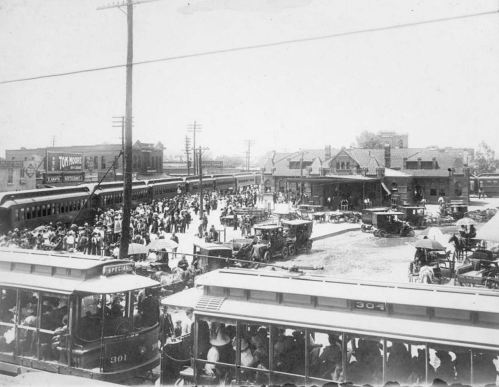
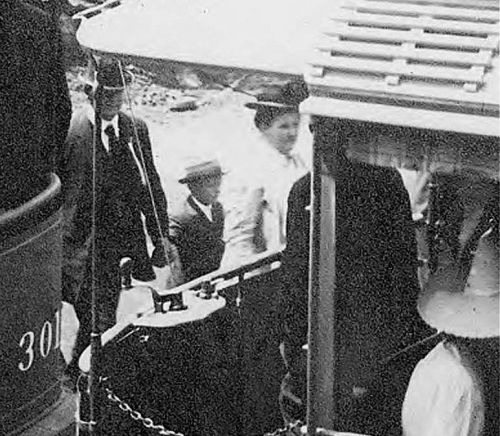
old-union-depot_degolyer_ca1910

old-union-depot_degolyer_det1

old-union-depot_degolyer_det2

old-union-depot_degolyer-det3

old-union-depot_degolyer_det4

old-union-depot_degolyer_det5

old-union-depot_degolyer_det6

Just seven or eight years after this photo was taken, all that human traffic was gone.

In the fall of 1968, having been vacant for years and counting down its final hours, Dallas Morning News writer Doug Domeier wrote about the old run-down hotel which had long outlived the passenger depot it had been built to serve (see the article “Demolition Leveling Once-Noisy Deep Elm,” DMN, Oct. 19, 1968). Domeier’s entertaining article about those early days includes memories of Lizzie Mae Bass, who once worked in the hotel’s cafe as a waitress and remembers when “horses back[ed] away in fright when a locomotive pulled in at the lively intersection linking the Houston and Texas Central with the Texas & Pacific.”

And today? You’d never EVER suspect that that patch of empty land at the edge of Deep Ellum was ever occupied by one of the city’s busiest train depots.

*

So where was it? Get a good visual idea of how things were laid out in the Sanborn map from 1905, here. Below is a street map that shows where the hotel was (red star) and where the train depot was (blue star). These days? Depressing. See it here (the view is looking north from Elm — the hotel would have been under the overpass, the train station straight ahead).
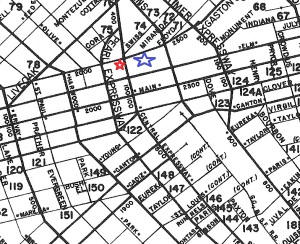
union-depot-hotel_1952-mapsco1952 Mapsco

It’s interesting to note that during the heyday of the Union Depot, the west side of the block of Central Ave. which ran between Elm and Pacific was the only block in this area not filled with black-owned businesses or residences. When the depot shut down and white-owned businesses moved out, the block began to fill with popular African-American establishments. It’s also interesting (to me, anyway!) to realize that the Gypsy Tea Room of the 1930s was just a few steps to the left of the hotel in the top photo. It took me forever to try to figure out where the Gypsy Tea Room had been — I wrote about it here.

***

Sources & Notes

Top photo is a detail of a larger photo, from the Squire Haskins Photography, Inc. Collection, University of Texas at Arlington Libraries; it is accessible here. The same photograph is shown in full farther down the post — this copy is from the DeGolyer Library, Central University Libraries, Southern Methodist University, and it is accessible here. The quality of both photos makes it difficult to zoom in on them with much clarity, but both sites offer very large images to view.

As mentioned above, an entertaining Dallas Morning News article full of historical info about the area around the depot is highly recommended: “Demolition Leveling Once-Noisy Deep Elm” by Doug Domeier (DMN, Oct. 19, 1968). (I’m not sure why the hotel is referred to as the “Grand Central Station Hotel” throughout — just substitute “Union Depot Hotel” whenever you come across that incorrect name.) The article also has a few paragraphs about the Harlem Theater which was also about to be torn down as part of what Domeier described as the “brutal change” then affecting Deep Ellum.

See a great early-’20s photo of the hotel building (the Tip-Top Tailors moved in around 1922) in the book Deep Ellum: The Other Side of Dallas by Alan Govenar and Jay Brakefield, here (the view is from Pacific to the southwest).

A related Flashback Dallas post — “The Old Union Depot in East Dallas: 1897-1935” — can be read here.

All images larger when clicked.

*

Copyright © 2016 Paula Bosse. All Rights Reserved.


On the Grounds of the Ursuline Academy and Convent

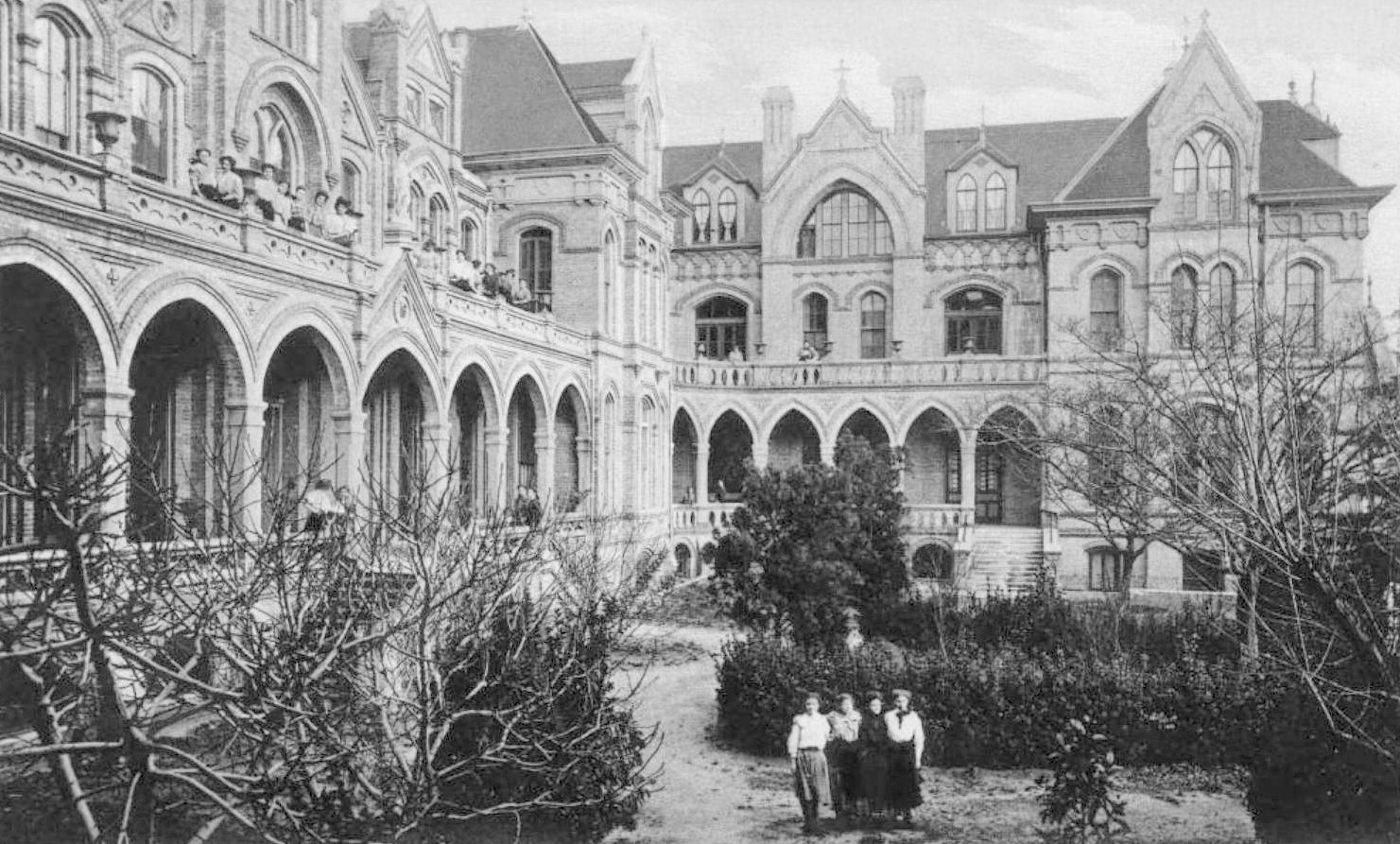
ursuline-convent_cook-colln_degolyer_smuBetween classes… (click for much larger image)

by Paula Bosse

I love this photo of Ursuline girls at the fantastically ornate school and convent in Old East Dallas. See more photos of the school, convent, and grounds in my post “Nicholas J. Clayton’s Neo-Gothic Ursuline Academy,” here.

***

Sources & Notes

Photo by Clogenson, from a postcard in the George W. Cook Dallas/Texas Image Collection, DeGolyer Library, Central University Libraries, Southern Methodist University; it is accessible here. I have un-colorized it.

See the scale of the Ursuline property on a 1922 Sanborn map, here. It is now mostly a parking lot, across from the Dallas Theological Seminary; a sad 21st-century view of what the former campus property looks like is here.

*

Copyright © 2016 Paula Bosse. All Rights Reserved.


900 Block of Main, South Side — 1950s

900-block-main_squire-haskins_utaTake a stroll down Main… (click for larger image)

by Paula Bosse

I’m not terribly knowledgeable in photographic techniques, but this appears to be some sort of panoramic shot by noted Dallas photographer Squire Haskins — it looks as if several photos have been joined together. By magic!

UPDATE: No magic, afterall. Here’s the same block from a different view.

main-poydras_squire-haskins_uta

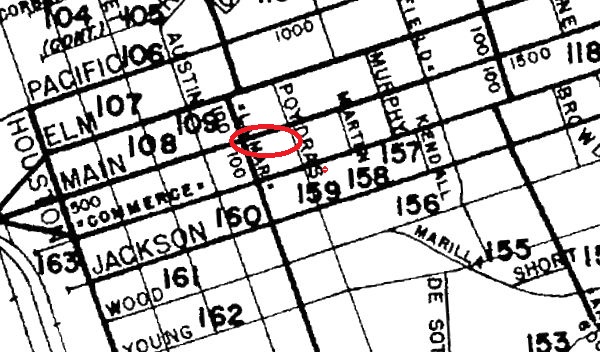
These photos show the south side of the 900 block of Main, between Poydras (on the left) and Lamar (on the right). I love this block. So of course it’s now a parking lot which faces the Bank of America behemoth. Times change.

The photos were taken 1952-ish.

900-block-main_1953-directory1953 city directory

900-main_1952-mapsco
1952 Mapsco

***

Sources & Notes

Photos from the Squire Haskins Photography, Inc. Collection, University of Texas at Arlington; more info on the top photo is here; more info on the second photo is here. Click the thumbnails on the UTA pages to see even larger images. (Thanks to Peter K. for posting the second photo in the Dallas History Guild Facebook group — I recognized that Do-Nut Merchant sign right away! One more Do-Nut Merchant view is here.)

That top photo is really, really big. Click it and scroll!

UPDATE: See a photo of the north side of Main, taken by Squire Haskins at the same time as the photos above in the Flashback Dallas post “900 Block of Main, North Side — 1952.” here.

*

Copyright © 2016 Paula Bosse. All Rights Reserved.

“The Times Herald Stands For Dallas As a Whole”

dallas-times-herald-lobby_UTA_squire-haskinsCool and sleek (click for very large image)

by Paula Bosse

Above, the Dallas Times Herald lobby, in all its gleaming mid-century style.

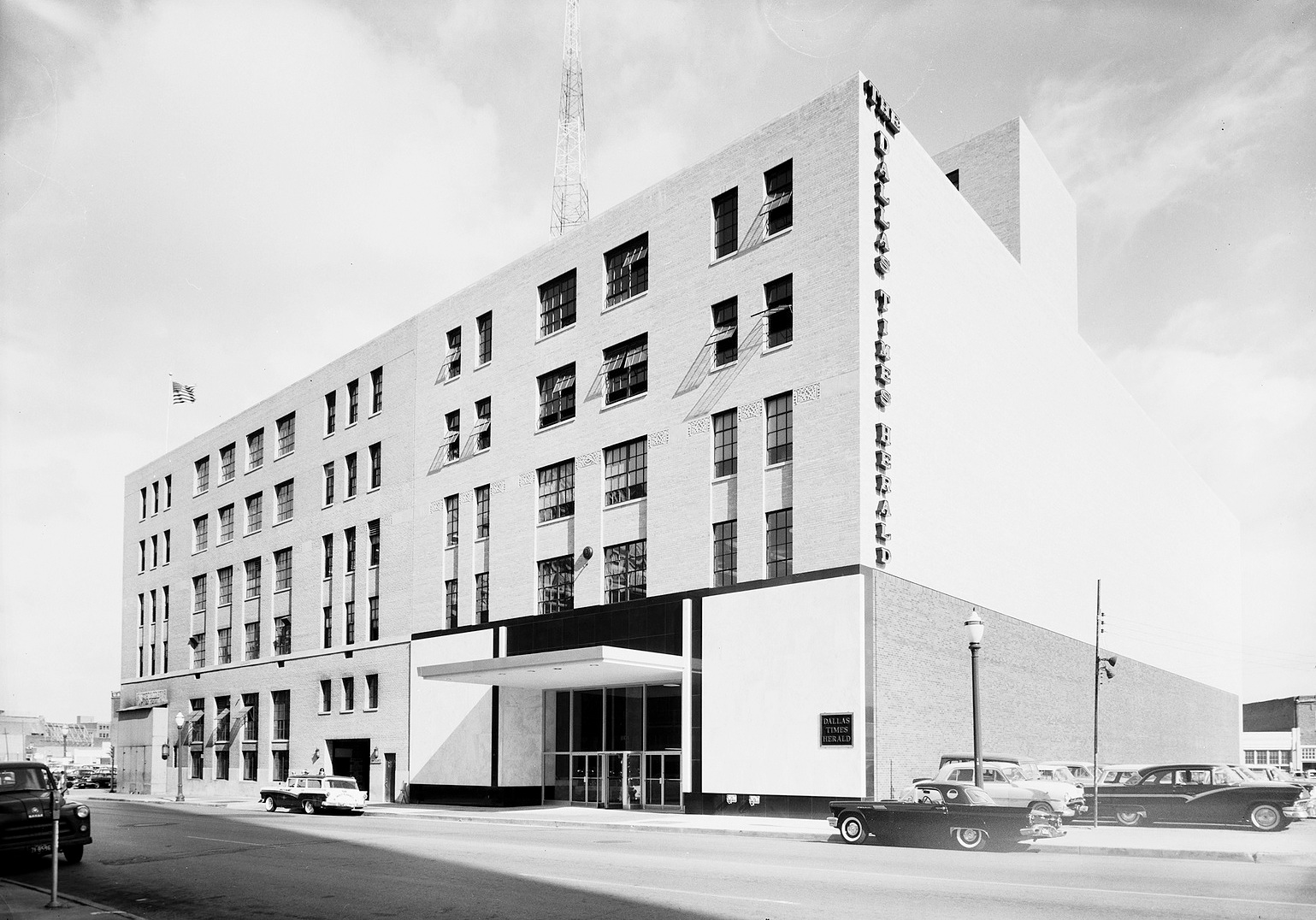
And, below, its smart, crisp exterior (taken on July 28, 1958).

dallas-times-herald-bldg_squire-haskins_uta

RIP, DTH. (And, yes, I’m still bitter.)

***

Sources & Notes

Photos by Squire Haskins, from the Squire Haskins Photography Inc. Collection, UTA Libraries, University of Texas at Arlington; more info on the interior photo is here; more on the exterior photo is here.

The Dallas Times Herald building was located at 1101 Pacific Ave., bounded by Pacific, Griffin, and Patterson. The building was demolished in 1993 and replaced by a parking lot.

*

Copyright © 2016 Paula Bosse. All Rights Reserved.

Tomatoes, Cokes, Dominoes: Cadiz Street — 1959

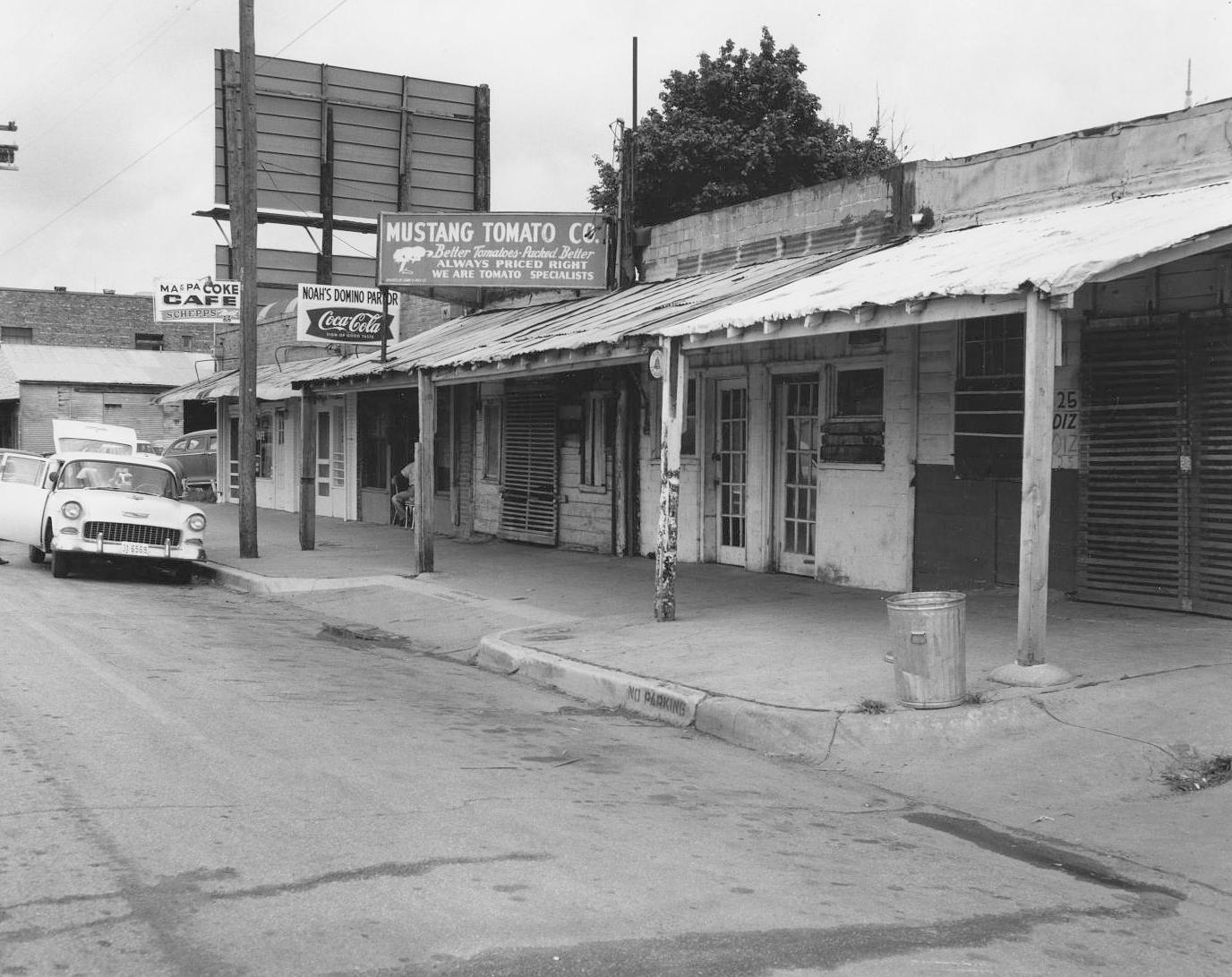
farmers-mkt-area_dominoes_portalThe farmers market area in 1959

by Paula Bosse

Above, a photo showing the block of Cadiz Street between what was then the S. Pearl Expressway and S. Central Expressway (now Cesar Chavez). The view is southwesterly, with the (oddly placed) billboards facing toward Pearl.

I’m sure most people considered such a view urban blight in 1959 when this photo was taken, but (I know I sound like a broken record…), I will always prefer this seedy and run-down version of the farmers market area to the current, relentlessly sterilized, pre-fab, insta-city which took its place. By 1961, this little stretch of businesses had been leveled for a parking lot, which, frankly, was probably more of an eyesore than a ramshackle domino parlor with peeling paint.

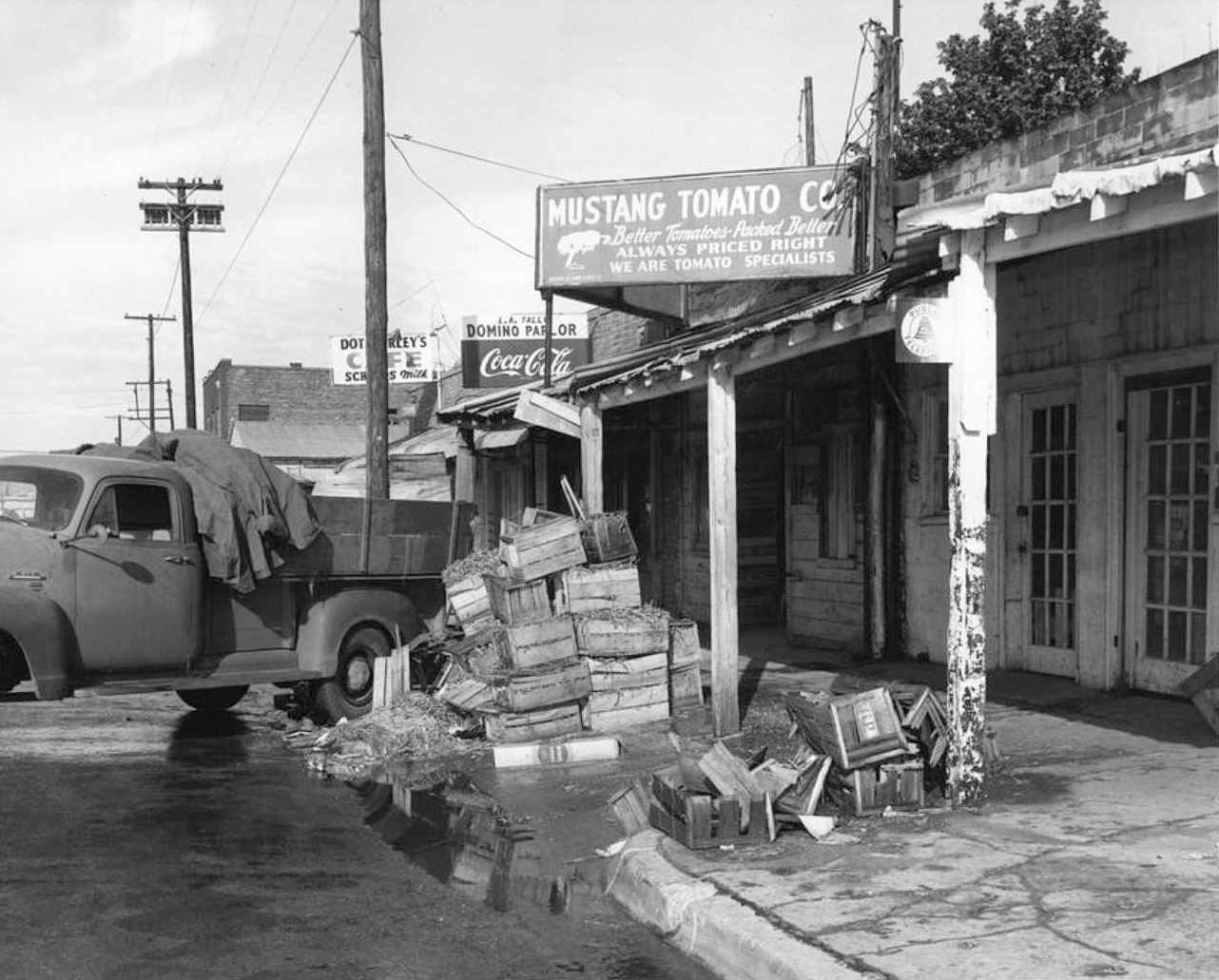
Below, a photo taken in the same block, about a year earlier. It’s not quite as interesting to look at as the top photo, but it does show that this was a working neighborhood, where vegetable crates frequently spilled into the streets as part of the day’s activities.

cadiz-businesses_1958_portal

*dot-curley-cafe_1958-directory1958 city directory

talley-domino_1957-directory
1957 directory

ma-and-pas-cafe_1960-directory
1960 directory

noahs-domino-parlor_1960-directory
1960 directory

This part of Cadiz doesn’t exist anymore. Here’s the view from S. Pearl these days, looking east (these businesses would have been on the left).

Here’s a map from 1962, when the area was a thriving wholesale and retail produce district.

cadiz_1962-map_det

***

Sources & Notes

Both photos are from the  Dallas Farmers Market/Henry Forschmidt Collection, Dallas Municipal Archives, via the Portal to Texas History; the top one can be found here, the bottom one, here.

See other Flashback Dallas posts about the Dallas Farmers Market here — every time I see these great old photos I just shake my head and wish I’d been around to see this part of the city when it was at its grittiest.

*

Copyright © 2016 Paula Bosse. All Rights Reserved.

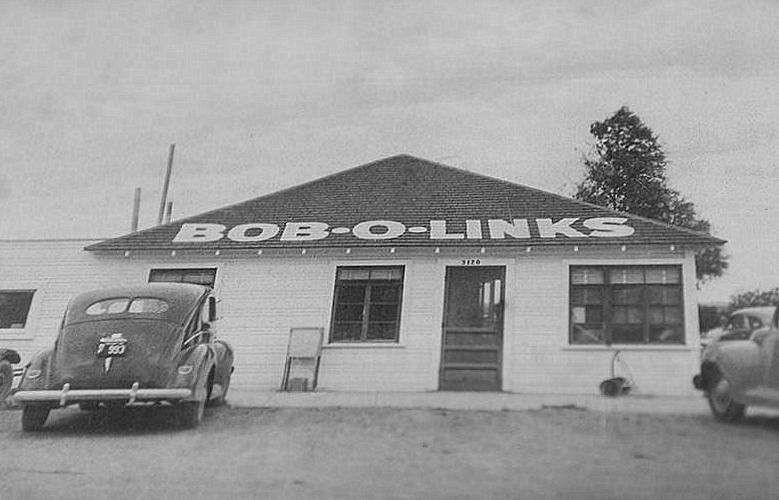
Bob-O-Links Golf Course — 1924-1973

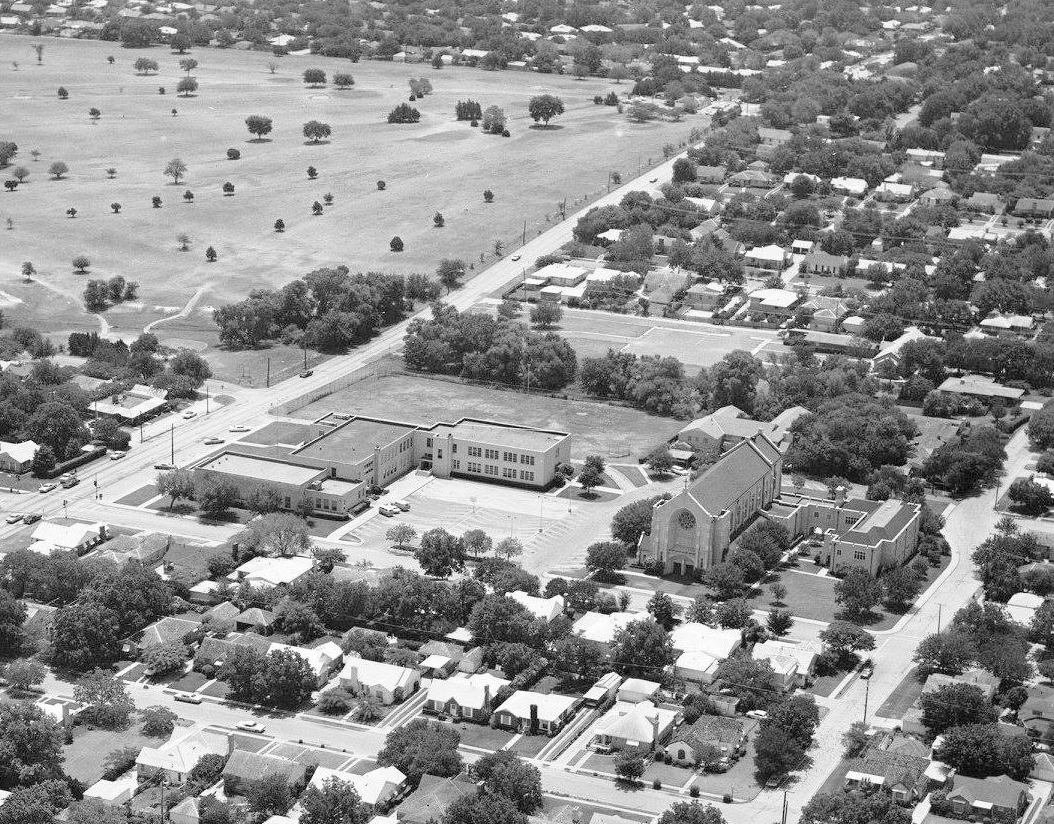
bob-o-links_abrams-rdBob-O-Links golf and St. Thomas Aquinas… (click for larger image)

 by Paula Bosse

The photograph above (with a view to the southeast) shows Abrams Road (at the left), a few blocks south of Mockingbird. On the right is St. Thomas Aquinas Catholic Church and school, and on the left, part of the Bob-O-Links Golf Course, Lakewood’s only public golf course. If you’re familiar with that part of town, it’s pretty incredible to see all that open land right in the middle of it.

Bob-O-Links, a 9-hole course, was opened by Harry McCommas in 1924 on 60 acres of the land originally owned by the pioneer McCommas family (the family’s full 640 acres covered land that stretched from what is now Abrams Road to White Rock Lake). Despite a creek meandering through seven of the course’s nine holes, the course was an immediate hit, mainly because it was one of the few public courses in town. This is where East Dallas residents with golf-fever would go to play if they couldn’t afford to join the Lakewood County Club.

From an article by John Anders in The Dallas Morning News:

When [Harry] McCommas, 75, decided to build a golf course on his grandfather’s sheep pasture in 1928 [sic], there were only three other golf courses in Dallas. And two of those three are now gone. “We were really out in the country then. There was no water, gas or electricity so we hauled in our water by truck. We didn’t need much since it was originally a sand course.” (DMN, July 6, 1973)

When the course opened in 1924, it was pretty much out in the sticks. By the late 1950s, though, Lakewood was booming, and developers were eager to build things — much to the dismay of nearby residents. Development was staved off for over a decade, but during that whole time, developers never stopped trying to get the area re-zoned, either for commercial use or for apartments and townhouses. Eventually — inevitably — the land was sold, and the days of the little golf course came to an end. The only “victory” the neighborhood could claim is that only single-family homes would be built on the land.

Bob-O-Links Golf Course closed on July 4, 1973. And as one drives down Abrams Road these days, it’s almost impossible to believe that it was ever there.

bob-o-links

bob-o-links_matchbook_flickr
via Flickr

bob-o-links_matchbook_2b
via Flickr

patreon_bob-o-links_harry-mccommas_matchbk_ebay_a

patreon_bob-o-links_harry-mccommas_matchbk_ebay_b

bob-o-links_dallas-park-board-minutes_070858Dallas Park Board minutes, July 4, 1958

bob-o-links_1962-map
1962 map detail (click for larger image)

***

Sources & Notes

I have no information about the top photo. It was posted on the Lakewood neighborhood group on Facebook by local bon vivant Michael Vouras. Comments on his post suggest that it may be a photo in the possession of St. Thomas Aquinas, taken around the mid 1960s. I welcome more info! (UPDATE: Below in the comments, other dates are suggested.)

A present-day aerial view of the same area can be seen here. The golf course (formerly on the left) has been gobbled up by houses.

A great article on Bob-O-Links — “The Bygone Days of Bob-O-Links Golf Course” — was written by Patti Vinson and appeared in a 2015 issue of The Lakewood Advocate; read it here.

Further reading from the archives of The Dallas Morning News:

  • “Re-zoning Denied for Bob-o-Links” (DMN, Sept. 17, 1960): this re-zoning request was to build a 35-acre shopping center; it was shot down by angry neighborhood residents
  • “Negotiations Finished To Buy Bob-o-Links” (DMN, Feb. 9, 1973): purchaser was long-time Dallas developer Hal McGraw who promised to build only single-family homes
  • “Farewell, Bob-O-Links” by John Anders (DMN, July 6, 1973): very entertaining article about Anders’ last round on the course, with memories of his earlier experiences on the course and quotes from owner Harry McCommas 

Wish I’d been there. “FORE!”

*

Copyright © 2016 Paula Bosse. All Rights Reserved.

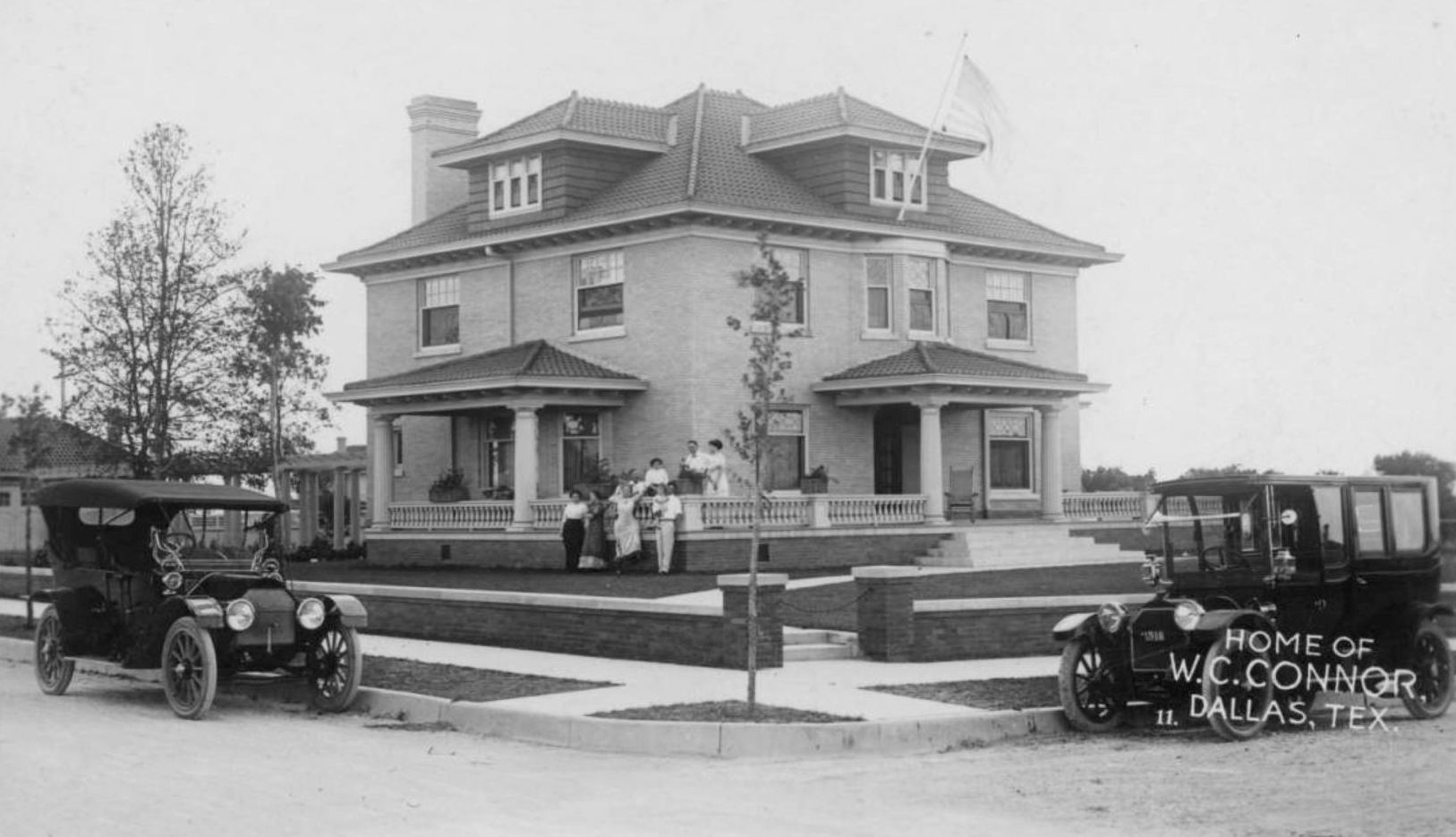
The House at Crescent & Byron, Highland Park

connor-home_cook-colln_degolyerWelcome…

by Paula Bosse

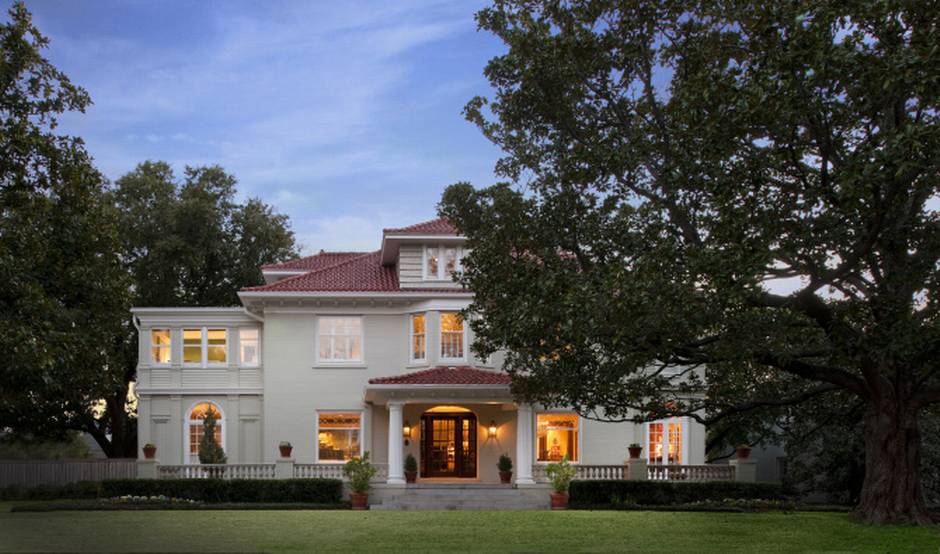
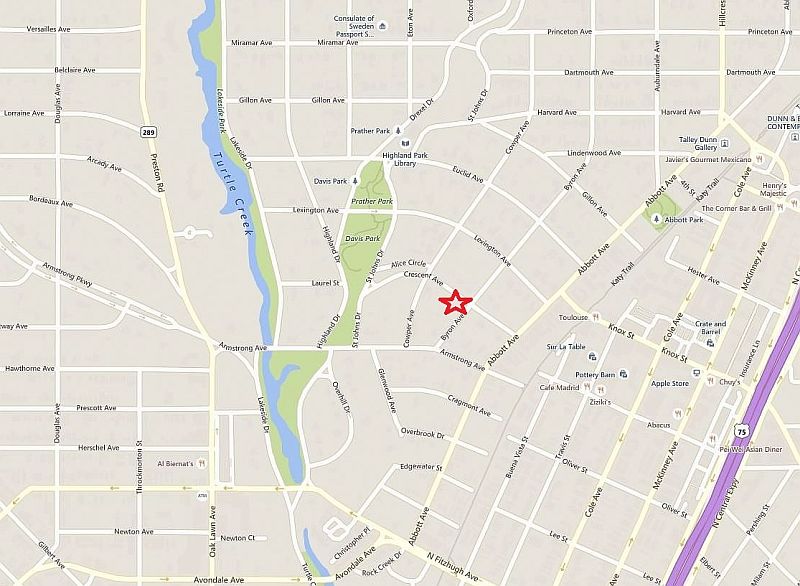
The photo of the house above caught my attention the other day. It’s exactly the sort of house I love, but I couldn’t get a good feel for the part of town it had been in. It took a while to track down, but when I did, I found that it was in Highland Park, at the southwest corner of Crescent and Byron, built about 1910. I had actually been leaning more in the direction of Old East Dallas, because when I think of Highland Park, I tend to imagine that it sprang fully landscaped and jam-packed with trees, even in its earliest days. But more surprising than learning that the house in this photograph was in Highland Park was discovering that it is STILL in Highland Park! It is still standing, and, more exciting, it is still recognizable and largely un-tampered-with! Take a look at it today, here.

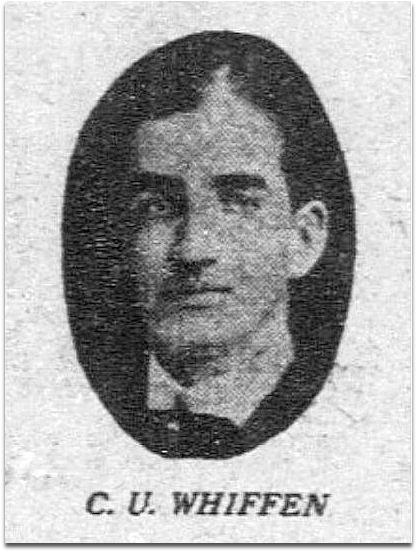
After rummaging around various online databases, I determined that this lovely house was built sometime in 1910 for its first occupants, the C. U. Whiffen family, whose name appeared under a picture of their photogenic house in ads placed by Hann & Kendall, the real estate agents in charge of selling lots for the developers of Highland Park. A photo of the house first showed up in an ad from September, 1910 and was used again in May, 1911. (See the full ads here.)

whiffen_dmn_051411-ad-det

The Whiffen family moved into the house in 1910 from their previous home on McKinney Avenue.

whiffen_dmn_010811-NCR-ad-detCalvin U. Whiffen, seen in an NCR ad, DMN, Jan. 8, 1911

whiffen_1911-directory1911 city directory

Whiffen had interests in a couple of different businesses but was primarily associated with NCR, the National Cash Register company. When Whiffen was transferred to Los Angeles by NCR, he sold the house to former Dallas mayor W. C. Connor for $18,000 (a little under $500,000 in today’s  money).

connor_whiffen_dmn_122211DMN, Dec. 21, 1911

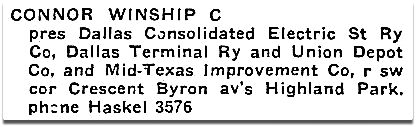
connor_1912-directory
1912 city directory

Winship C. Connor (also widely known as “Bud” Connor) was an interesting man whose contributions to the city were extremely important in its becoming a major metropolitan area. Not only did he serve multiple terms as mayor of Dallas (from 1887 to 1894), but, among other accomplishments, he also built the first waterworks system, the first streetcar line, and the first electric light plant. In later years, he presided over several companies, including the Consolidated Electric Street Railway Co.

connor_fuel-oil-journal_oct-1915Connor, pictured in the Fuel Oil journal, Oct. 1915

Connor moved from the house on Crescent Avenue to a house on Miramar in 1918 or 1919, and, in 1921, he died, at the age of 73. The top photo of the house was taken sometime between 1912 and 1919. He can be seen with his family, sitting on the porch, in this detail.

connor-home_cook-colln_degolyer-det1

The house has had very few owners throughout its 106 years. In one of those odd, happy coincidences, I’ve just discovered that one of those owners was Edward L. Wilson, Jr. (1920-2011). Ed Wilson was an engineer who had his office in a small building (now razed) on Maple Avenue, next door to the Stoneleigh Hotel. He leased out the ground floor to my father who ran The Aldredge Book Store there for over 20 years. Mr. Wilson was a man of few words, but very, very nice and an understanding landlord. I’m happy to learn that he and his family lived in this beautiful house for several years.

Here it is today.

crescent_dmn_032913DMN, Mar. 29, 2013

***

Sources & Notes

Top photo, titled “Home of W. C. Connor, Dallas, Tex.,” is from the George W. Cook Dallas/Texas Image Collection, DeGolyer Library, Central University Libraries, Southern Methodist University; it can be viewed here.

See inside this house in a Dallas Morning News video, here (for some reason, I am unable to view this video on my computer, but I can watch it on my phone). The house was a featured stop on a Highland Park Centennial celebration tour of homes in 2013. More photos of the house today can be seen on Douglas Newby’s Architecturally Significant Homes page, here.

Where is it?

crescent-byron_bing
Bing Maps

W. C. Connor was a man of great accomplishment — his Dallas Morning News obituary (Aug. 6, 1921) is here; his citation in A History of Greater Dallas and Vicinity is here; his Wikipedia page, here.

*

Copyright © 2016 Paula Bosse. All Rights Reserved.