Flashback : Dallas

A Miscellany: History, Ads, Pop Culture

Category: Restaurants

Carhops as Sex Symbols — 1940

male-car-hops_AP_1940“At your service, ma’am…” / AP Photo

by Paula Bosse

In 1940, Dallas was in a tizzy about the sudden fad of scantily-clad “girl carhops.” This scourge had made its way to Dallas from Houston (brought to Oak Cliff by the enterprising husband and wife team behind Sivils Drive-In), and in April of 1940, it was a newspaper story with, as it were … legs. For a good month or two, stories of sexy carhops were everywhere.

The girls started wearing uniforms with very short skirts — or midriff-baring costumes with cellophane hula skirts. Some of the women reported an increase in tips of $25 or more a week — a ton of money for the time.

The public’s reaction ranged from amusement to outrage. There were reports of community matrons who reported the “indecent” attire to the police department and demanded action. Other women were annoyed by the objectification of young womanhood. Lawmakers in Austin discussed whether the practice of waitresses exposing so much extra skin posed a health risk to consumers.

But it wasn’t until a woman from Oak Cliff piped up that something actually happened. She complained that she didn’t want to look at girls’ legs when she stopped in at her local drive-in — she wanted to look at men’s legs. Drive-in owners thought that was a GREAT idea, and the idea of the scantily-clad male carhop was born.

carhops_FWST_042840Fort Worth Star-Telegram, Apr. 28, 1940 

One might think that the woman behind this “equal ogling” campaign was sort of proto-feminist, until you get to the part where she said that the whole girl carhop thing was “wrong socially and economically and should not be tolerated” (DMN, Apr. 27, 1940) — not because of the skin flashed, but because men needed jobs, not girls. And that also raised hackles. Two married women who had been carhops wrote to the Dallas News to speak up for these girls and women who were “at least coming nearer to making a living wage than at any other time of their existence. […] The girl carhops are either supporting their family or sharing the expenses. […] Why all the storm about a leg? It is nothing more than you see at a movie and a vaudeville” (DMN, May 5, 1940).

The photo at the top ran in newspapers around the country with the headline: “Adonis and Apollo of Roadside Bring Trade to Daring Stand.”

First large roadside stand Friday to bow to the demand of Dallas women and feature husky young male carhops in shorts was the Log Lodge Tavern at Lemmon and Midway where four six-footers found jobs. Above, in blue shorts, white sweatshirt and cowboy boots, Joe Wilcox serves Pauline Taylor who smiles her approval of the idea. Bound for another car is James Smith, at right.

April, 1940 must have been a slow news month, because this story really got around (click to see a larger image).

sexy-carhops_corsicana-daily-sun_042740Corsicana Daily Sun, April 27, 1940

One intrepid reporter even tracked down a Texas Ranger (!) to ask his opinion, to which the Ranger replied, “…letting those roadside glamor boys wear boots is nothing more than a slam at the state. People think of booted Texans as men, not as fancy-panted carhops.” The whole article, below, is pretty amusing.

sexy-carhops_anniston-AL-star_042840Anniston (AL) Star, April 28, 1940

There were other male carhops around town, some not quite so hunky. This guy — game as he was — really needed to reconsider his outfit.
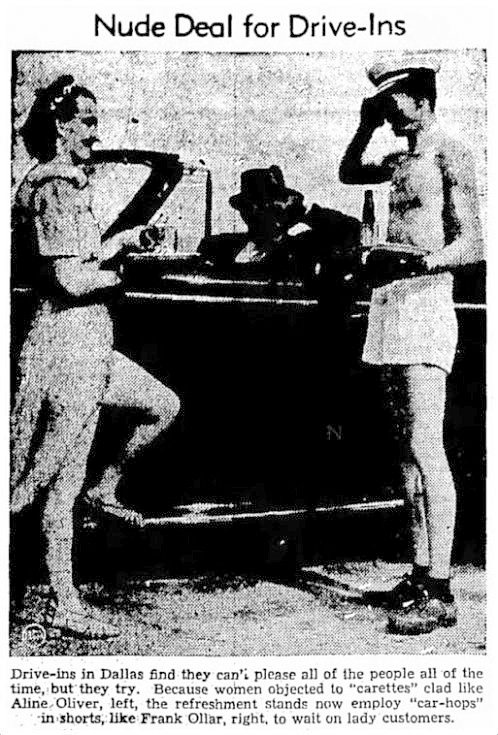
carhops_xenia-ohio-daily-gazette_050340Xenia (Ohio) Daily Gazette, May 3, 1940

But back to the female carhops and their siren-like hold over their male customers. This was, by far, the best story to hit the wires:

sexy-carhops_waxahachie-daily-light_071640
Waxahachie Daily Light,  July 16, 1940

***

Sources & Notes

Top image from the Associated Press, 1940. 

The Log Lodge Tavern was located at 7334 Lemmon Avenue, which was across from Love Field and adjacent to the Log Lodge Tourist Court. It was located approximately where the red circle is below, on a page from the 1952 Mapsco (click for larger image).

lemmon-ave_mapsco-1952

Check out these related articles from The Dallas Morning News:

  • “Skimpiest Costumes Bring Biggest Wages” (DMN, April 24, 1940)
  • “Women To Fight Girl Carhops; Slogan: Let Us See Men’s Legs” (DMN, April 26, 1940)
  • “Adonis and Apollo of Roadside Bring Trade to Daring Stand” (DMN, April 27, 1940)
  • “Word For Carhops Grass Skirts And All” (letter to the editor) (DMN, May 5, 1940)
  • “Went Crazy Over Car Hops, Wife Says of Fugitive” (DMN, July 16, 1940)

UPDATE: This has been a weirdly popular post — it’s gotten thousands and thousands of hits and even resulted in a short radio interview on Dallas’ public radio station, KERA. I don’t really add anything new to this story, but if you’d like to listen to the interview conducted by Justin Martin, it is here.

If you like what you’ve seen on Flashback Dallas, please consider supporting me on Patreon, where for as little as $5 a month, you can receive all-new updates several times a week (if not daily!). More information can be found at Patreon, here.

*

Copyright © 2015 Paula Bosse. All Rights Reserved.

Luncheon at The Zodiac Room, Darling

zodiac-room_smFood, fashion, & the unmistakable whiff of Old Money (click for larger image)

by Paula Bosse

Two cool and sophisticated postcards from the cool and sophisticated Neiman-Marcus (although it’s debatable whether the truly cool and sophisticated N-M shopper would, in fact, mail anyone something as bourgeois as a postcard of a department store, Neiman-Marcus or not). Perhaps these were done up for the sizable tourist trade. I love these cards. Commercial art of this period is wonderful.

The description on the back reads: “One of the great dining spots of the Southwest … N-M’s famed ZODIAC ROOM. The superlative food specialties of Director Helen Corbitt and her staff are enjoyed during modeling of fashions a la Neiman-Marcus at luncheon and dinner. Also, tea served daily.”

Below, the Carriage Entrance:

neimans_postcard_c1950s-carriage-entrance-sm(click for larger image)

The description: “‘The Carriage Entrance’ — famous passageway into one of the world’s great specialty stores.”

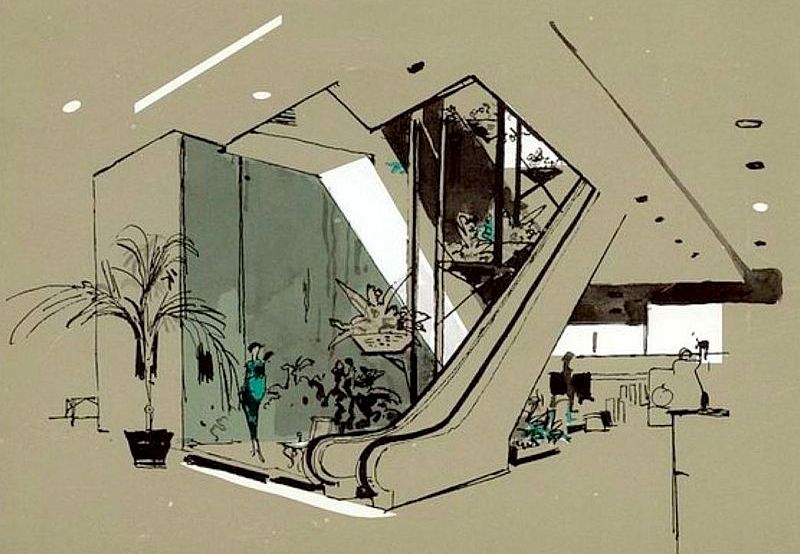
And another (I’d love to see the whole series of these postcards.) Sadly, no description on this one, featuring a fashionable escalator.

n-m_escalator_pinterest

I fear I shall never reach the level of swan-like sophistication needed to become an habitué of The Zodiac Room. Tant pis.

***

I have no idea where these postcards came from. I’m not sure of the date, either, but … “1950s”? Maybe very early 1960s? Let’s go with “Mid-Century” — everyone loves that! Whenever this was, this was a period when fashion was chic and fabulous. As was Neiman-Marcus. (I still miss that hypen!)

Need to make a reservation at The Zodiac? Info is here.

*

Copyright © 2015 Paula Bosse. All Rights Reserved.

The Century Room’s Retractable Dance Floor

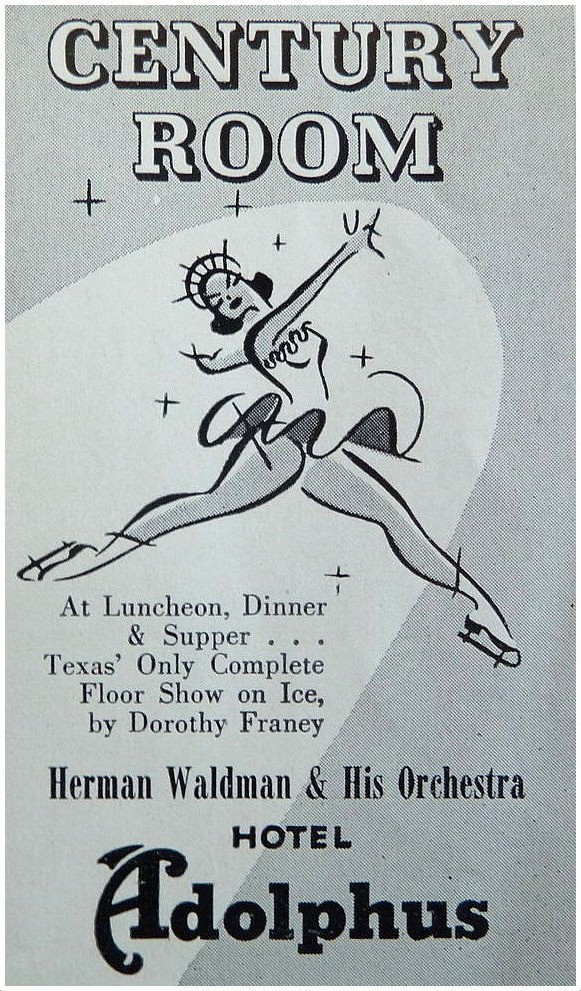
ad-adolphus-hotel_century-room_sm(click for larger image)

by Paula Bosse

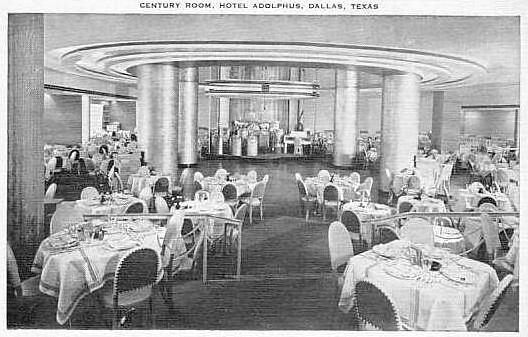
If you’re getting all dressed up for a night on the town, you want to make sure you get your money’s worth, entertainment-wise. That’s why you head to the tony Century Room at the swank Hotel Adolphus. Not only is there dining and dancing, there’s also an ice show. Yep, an ice show. When “Texas’ Only Complete Floor Show on Ice” has wrapped up, a dance floor magically covers the ice, and you and your honey can trip the light fantastic to the fabulous strains of Herman Waldman & His Orchestra. Skates optional.

adolphus_hotel_century-room

adolphus_century-room

*

Copyright © 2014 Paula Bosse. All Rights Reserved.
Snapshots of the Fair, 1936-1940

tx-centennial_strolling_fwplCentennial Exposition, 1936 — photo by Lewis D. Fox (click for larger image)

by Paula Bosse

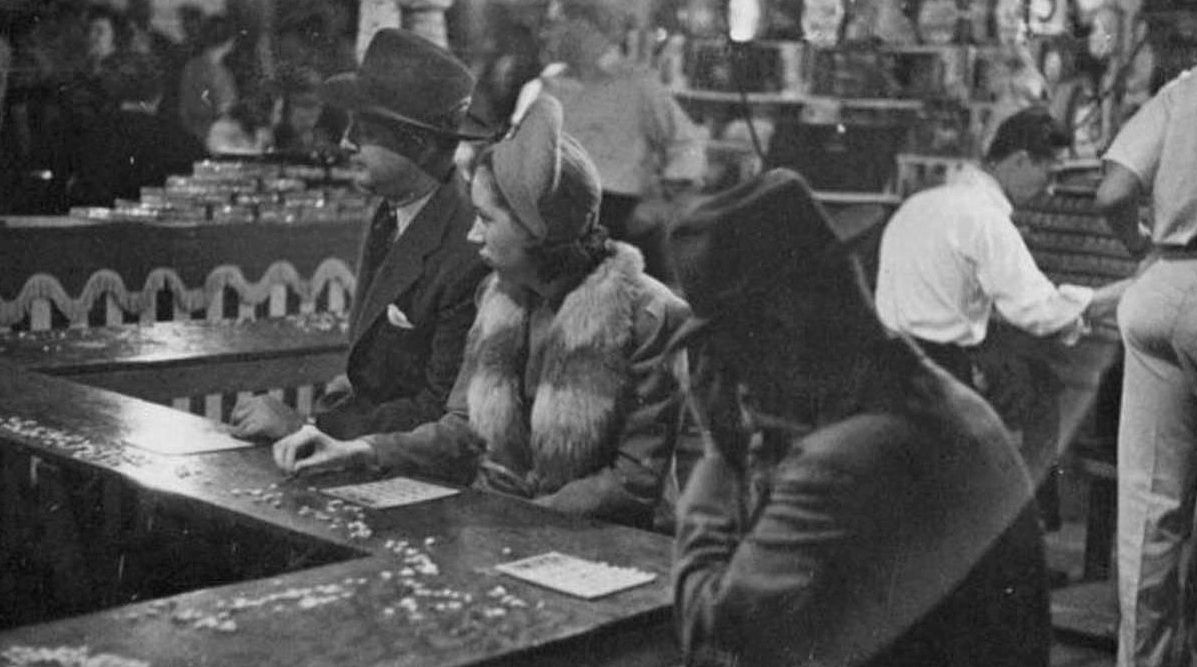
An amateur photographer named Lewis D. Fox took a lot of photos at the State Fair of Texas — from the Texas Centennial in 1936 through 1940. The Centennial photos are particularly interesting, because they show what the “Exposition” was like to the average visitor — there was more going on than just the spectacular extravaganza we usually see — there are also shots of people doing un-spectacular things like just walking around or enjoying a quiet, late-afternoon cup of coffee. There are also photos of the people who do the heavy-lifting at a state fair — the men and women who work the Midway shows and the concession stands (a link to a larger collection of Mr. Fox’s State Fair photos — almost a hundred snapshots — is below).

Enjoy this look at a time when going to the fair meant dressing up and, apparently, often leaving the children at home! (Click photos to see larger images.)

tx-centennial_spirit-of-centennial_fwpl

state-fair_texas-state-bldg_fwpl

state-fair_circus_c1939_fwpl

state-fair_grandstand_fwpl

tx-centennial_swing-revue_fwpl

state-fair_beanery_fwpl

state-fair-midway_fwpl

tx-centennial_cashier_fwpl

tx-centennial_side-view_fwpl

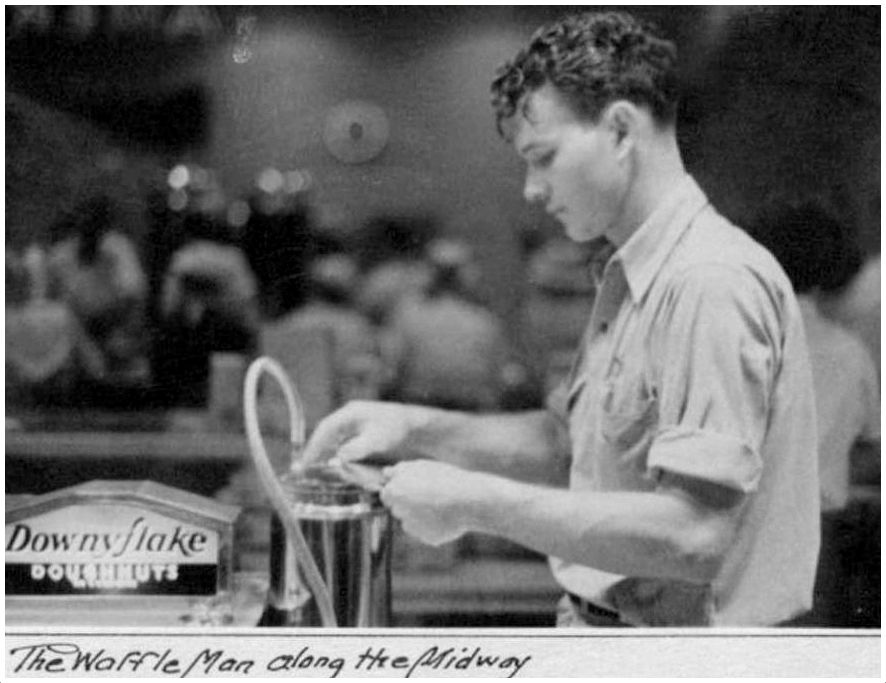
tx-centennial-midway_waffle-man_fwpl

***

Sources & Notes

All photos taken by Lewis D. Fox, from the Fox Photograph Collection in the Fort Worth Public Library Archives, courtesy of the Genealogy, History and Archives Unit, Fort Worth Public Library. Mr. Fox took a lot of snapshots at the fair — see  more here.

On a personal note, I’m mesmerized by “The Waffle Man.” He looks just like a young Lefty Frizzell! Lefty was from nearby Corsicana and he spent a lot of time in Dallas, but he wasn’t born until 1928, so it can’t be him — but check out this photo of Lefty as a teenager and see the remarkable resemblance! Not only did the (no doubt syrup-scented) young man above look like one of my favorite singers, but he also had ready access to waffles. What’s not to love? Oh, Waffle Man….

All images larger when clicked.

*

Copyright © 2014 Paula Bosse. All Rights Reserved.


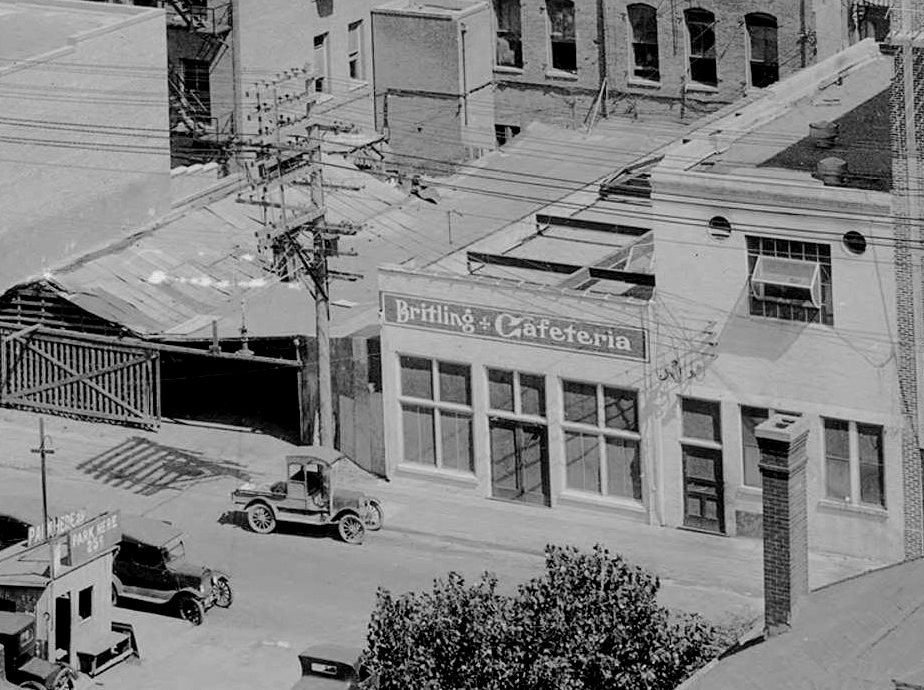
The Britling Cafeteria Serves Those Who Serve Themselves

britling-cafeteria_rear-entrance_degolyerBritling Cafeteria’s rear entrance on Jackson St., 1920s

by Paula Bosse

A few weeks ago, I was zooming in on a view of the Dallas skyline when I saw an interesting restaurant sign: the Britling Cafeteria. After a little research, I learned that Britling Cafeterias are something of a cultural institution in Birmingham and Memphis (Elvis’ mother worked the coffee urn station in Memphis, and if that isn’t the sign of a Southern institution, I don’t know what is). Here in Texas, though … I’d never heard of it. It claimed to be the first cafeteria chain in the South, having begun in Birmingham in 1917 (and named for a character in, of all things, an H. G. Wells story). When the Dallas location opened at the end of 1922, it was only the sixth restaurant in the chain, joining others in Birmingham, Atlanta, and Memphis.

The Britling Cafeteria was at 1316 Commerce (“Right in the Heart of Things”), between Field and Akard. There were two entrances, one on Commerce and one on Jackson (seen in the photo above). It sounds pretty nice for a cafeteria — it was lavishly decorated in black and gold, lined with mirrors, filled with flowers, and it had a mezzanine and a raised platform for a live orchestra to provide background music. It had a seating capacity of 450, with an expected daily capacity of 3,000. We’re not talkin’ Luby’s here. Quick “Southern home-cooking” had arrived in Dallas, and it seems to have remained an active advertiser until the ads suddenly stopped in 1926. I hope Dallas enjoyed it while it had it.

Below is the interior of the Atlanta location, from about the same time as the Dallas location. Cafeterias were a whole lot nicer back then.

britling_atlanta

The first non-institutional cafeteria I can find mentioned in The Dallas Morning News was the one in the basement of the Praetorian Building (“Cleanliness, courteous, tipless”) in 1912, but the cafeteria “concept” must have still been fairly new to Dallas as the Britling advertisements that appeared in the week before the grand opening felt it necessary to explain how the system worked. “You’ll wait on yourself — and do it gladly.”

britling_dmn_112722abritling_dmn_112722b1922 (click to read)

But first, stop by for a “Day of Courtesy” preview — flowers for the ladies!

britling_open_dmn_1127221922

britling-cafeteria_forest-ave-high-school-yrbk_19231923

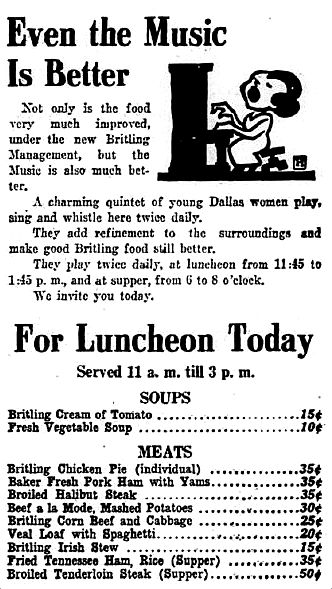
Below, a sample of some of the Southern home-cooking on the menu as well as the warning that there WILL be live music as “a charming quintet of young Dallas women play, sing and whistle (!) here twice daily.”

britling_dmn_030926abritling_dmn_030926b1926

britling_logo_dmn-112722

***

Sources & Notes

Photo is a detail from a larger view of the city from the DeGolyer Library, Southern Methodist University, seen in an earlier post here. The block in which the cafeteria was located is now 2 AT&T Plaza.

Postcard of the interior of the Atlanta Britling Cafeteria from somewhere on the internet.

More can be found in the DMN article “Britling Cafeteria Will Open” (Nov. 26, 1922), with details on the chain and specifics on the Dallas location, here.

Great short history on the cafeteria that every self-respecting citizen of Alabama and Tennessee is apparently familiar with can be found here.

An amusing first-hand account of a Texan (J. J. Taylor) visiting a newfangled cafeteria in San Francisco appeared in The Dallas Morning News on Aug. 25, 1912 and can be read here.

*

Copyright © 2014 Paula Bosse. All Rights Reserved.

Back When Preston Royal Was “Exotic” and Had Its Very Own Elephant

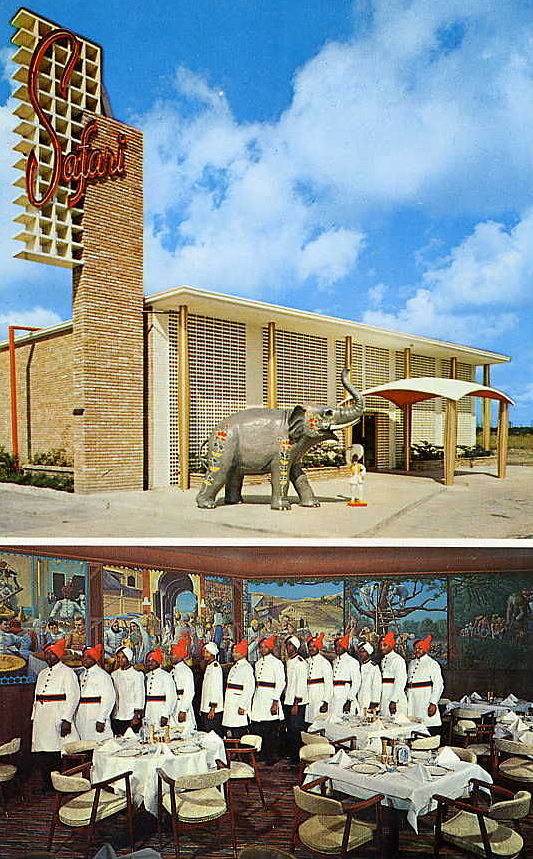
safari-preston-royal

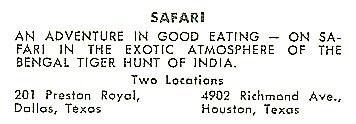
safari-preston-royal-back

by Paula Bosse

Dallas had a restaurant like this?! Yes, it did. (EDIT: It has been brought to my attention in the comments that the image above shows the *Houston* location. But I have been assured that the Dallas location had its very own elephant standing guard outside — so I will not have to ignominiously change the title of this post!)

The Safari Steak House was in the Preston Royal Shopping Center at the northeast corner of Preston & Royal (in the space now occupied by the venerable Royal China restaurant). The decor shown in the postcard above is something else — someone put their whole heart and soul into that, from the elephant and, um, elephant wrangler (“mahout“?) out front, to the ornate wood carving and the somewhat… busy murals inside. And the uniformed staff is pretty impressive, too.

Here are photos of the DALLAS Safari, taken in 1961 by Squire Haskins (photos from the UTA Libraries, Special Collections — click the links below the photos for full descriptions and large images). (Thanks, Tom Bowen, for sharing these links in the comments.)

safari_squire-haskins_1961_UTA_1via UTA Libraries, Special Collections

safari_squire-haskins_1961_UTA_2via UTA Libraries, Special Collections

Guy T. Jones opened the Safari in mid 1956 (I think the Houston location was opened later — it was open by at least 1959). I could find almost no early advertising for the place — perhaps Jones blew his advertising budget on elephants and murals. At this point, the shopping center was basically still under construction — the eastern-edge building (home of the Safari) opened about a year after the larger northern-edge building. There used to be a gap between the two buildings, which can be seen in the photo immediately above and can (sort of) be seen in the 1955 ad below, which shows a model of what the finished shopping center would look like.

preston-royal-shopping-center_032755-adAd detail, March 1955

In 1974, Royal China (which is a fantastic place, by the way) took over the space.

I really wish I’d seen that elephant, which — according to the comment below — “was highly visible and well lit at night.” I certainly hope so!

*

From the cover of the menu:

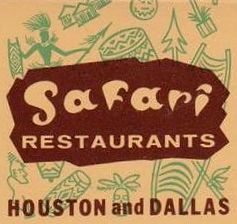
safari-matchbook-a

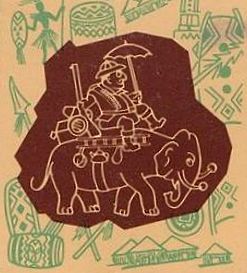
safari-matchbook

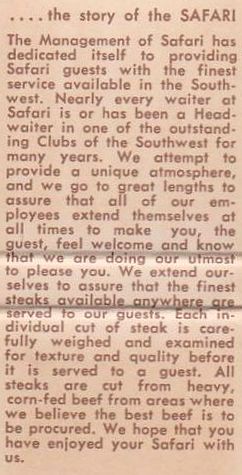
safari-matchbook_story

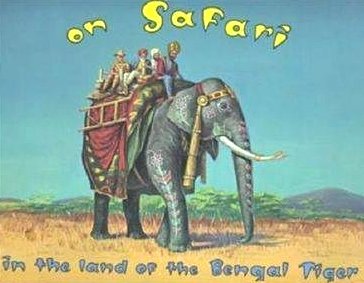
safari-preston-royal_menu-1969

*

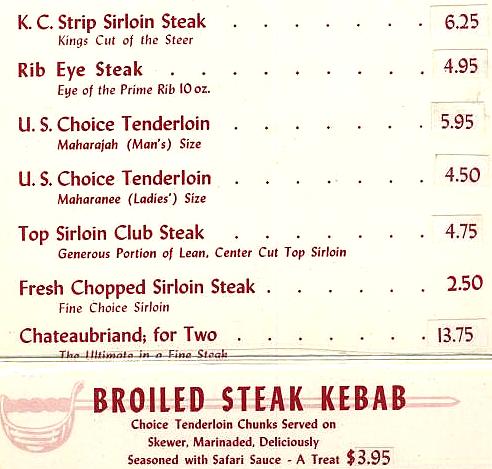
Below, the steak menu. One could choose between the “Maharajah (Man’s) Size” and the “Maharanee (Ladies’) Size.” Or get the kebabs of skewered beef “deliciously seasoned with Safari Sauce — A Treat.”

safari-menu

*

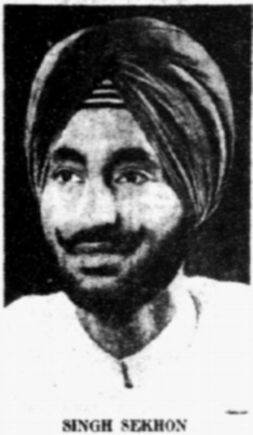
One of the stars of the restaurant was Iqbal “Ike” Singh Sekhon, who started working as the restaurant’s host while studying for his Master’s degree at SMU. He left a few years later to run the fabulous La Tunisia.

safari_dmn_062756-photo

safari-menu-logo

***

Sources & Notes

Edit (Sept. 2022): Wow. This post had a bunch of problems! All I can say is that this was one of my very earliest posts. I was so enamored of that elephant that I made a couple of very glaring errors.

First off, the original title of this post was “Back When Preston Royal Village Was ‘Exotic’ and Had Its Very Own Elephant.” The Safari Steak House was in the Preston Royal Shopping Center, located on the northeast corner of Preston and Royal; the Preston Royal Village shopping center, is on the northwest corner. I’ve (ignominiously) changed the title, but… yikes.

And, as mentioned in the first paragraph, the postcard at the top shows the Houston location, not the Dallas location. Incidentally, the Houston building is still there — it can be seen in a 2011 Google Street View capture here.

The two photos by Squire Haskins (linked below the images) are from the Squire Haskins Photography Inc. Collection, University of Texas at Arlington Libraries, Special Collections (thanks, Tom!). They are dated 1961, one year before a major fire at the restaurant. They reopened the following month, with what sounds like quite an update in decor. I’m not sure when the “gap” between the two shopping center buildings was filled in, but that would have been a good time to expand.

*

Copyright © 2014 Paula Bosse. All Rights Reserved.

Joe Yee Cafe: The Best Chop Suey in Town

joe-yee-cafe-extChop suey *and* famous chicken house…

by Paula Bosse

I came across the above image and was enthralled. I’ve never heard of the Joe Yee Cafe, but this (granted) idealized picture is wonderful. The postcards above and below were from the early 1950s, and if you are familiar with the generally run-down neighborhood around Columbia and Fitzhugh these days, you may well shed a tear that something this charming and picturesque has been gone for many, many years.

joe-yee-cafe-interior

I love the surprising color scheme of the restaurant’s interior — those fabulous purples and greens! (The colors are a bit unexpected because they so loudly clash with the bold tomato red of the exterior.)

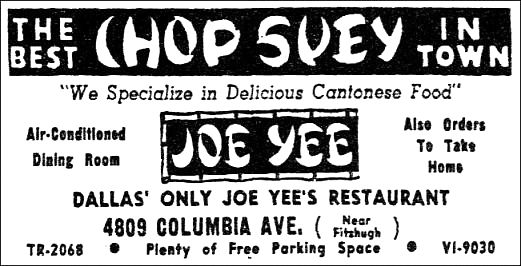
I did a little research to see what I could find out about Joe Yee’s Chinese restaurant. Seems that Mr. Yee’s cafe was in business by the 1930s, downtown, on Main Street near Field. It advertised steadily over the years, and its ads proudly proclaimed that the restaurant served “the best Chinese food you ever tasted” and was “completely air-conditioned.” Several newspaper accounts (particularly the society columns) mentioned it as a popular place for young people to grab a bite before and after dances at nearby downtown hotels. Business must have been pretty good for the place to have lasted so long at such a primo location. The cafe moved to the Columbia Street location in 1950 where it remained in business until at least late 1956 when a major fire struck.

joe-yee-cafe_matchbk

1938-joe-yee_dmn_1125381938

1943-joe-yee_dmn_0812431943

1953-joe-yee_dmn_0830531953

***

Sources & Notes

Top two early-’50s postcards are from the great Boston Public Library Tichnor Brothers Postcard Collection on Flickr, here.

In old photos of downtown Dallas one often sees “Chop Suey” signs along the streets. I’d love to know more about these restaurants in general, and about Chinese and Chinese-Americans in Dallas in the first half of the 20th century, if anyone can point me to a good source.

If background on Chop Suey is needed, might I point you to to the Wikipedia entry here, or the Snopes entry here.

*

Copyright © 2014 Paula Bosse. All Rights Reserved.


My Birthdays at Kirby’s: Filet Mignon for Everyone!

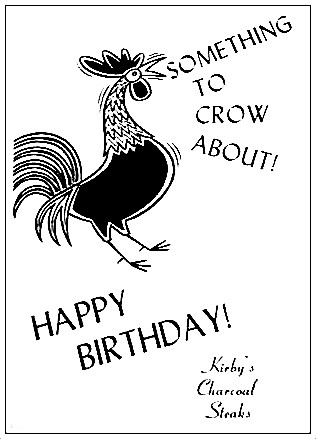
kirbys-birthday

by Paula Bosse

I grew up in the Lower Greenville area, and since we had a nice steakhouse just a couple of blocks away, that’s where we always went for family birthdays and special occasions: Kirby’s. I had forgotten about the birthday cards they sent out until my mother came across one in a recent move which was addressed to “Miss Paula Bosse.” Other than receiving actual mail, the thing that made these cards really exciting for a child was the inclusion of a dime. I always thought of it as a little birthday treat, but my mother suggested it was more of a subtle reminder to the parents to spend that dime on a call for reservations.

I loved that place. It was very dark. My brother and I always had the same thing: a non-alcoholic, super-sweet Shirley Temple from the bar, a salad with big chunks of roquefort in the salad dressing, a baked potato, and, oh my god, a filet mignon. I was mesmerized by the bacon wrapped around the steak. And the little wooden marker that showed how the meat was cooked. It was a nice, friendly neighborhood steakhouse. It was loud and happy. You could hear the steaks sizzling on the grill. It was always a treat to go to Kirby’s. And the place smelled GREAT! Even out on the sidewalk.

I was sad when they tore the building down, and even though there is now a chain of restaurants with the name “Kirby’s” — they even built a new one a couple of blocks down from the original location — there’s no way it could ever be the same.

Looking around for the history of the original “Kirby’s Charcoal Steaks,” I was surprised to discover that the man who owned Kirby’s — B. J. Kirby — was the son of the man who founded the Pig Stand chain of drive-ins. The Pig Stand started in Dallas, and it was the first drive-in restaurant EVER. They had the first carhops. The first onion rings. The first Texas toast. The Kirby’s steakhouse location — 3715 Greenville — had actually been a Pig Stand! B. J. Kirby had grown up working at his father’s restaurants, and when his father died, he sold all the Pig Stands except for the Greenville Avenue location (i.e. Pig Stand No. 4). In 1954 he turned the pig-sandwich-serving drive-in into a nice sit-down steakhouse which remained popular until the restaurant closed in 1987 when Mr. Kirby retired.

Watch Ch. 5 news footage of B. J. Kirby and the auction of the restaurant fixtures at UNT’s Portal to Texas History site, here.

kirbys_ch-5_closing_screencap_portal

I could really go for a bacon-wrapped filet mignon right about now. And one of those Shirley Temples would even hit the spot.

kirbys_1958

kirbys_color

kirbys_1951

***

Sources & Notes

“Something to Crow About!” card from the author’s collection.

Color photo of the Kirby’s sign is a screenshot from the Channel 5 news coverage of the auction of the Kirby’s fixtures, which aired April 14, 1987, viewable here; from the KXAS-NBC 5 News Collection, UNT Libraries, via the Portal to Texas History.

First ad from 1958; bottom ad from 1951.

Watch the 14-minute documentary “Carhops,” in which B. J. Kirby remembers life working as a kid for his father, here (also interviewed are other drive-in Dallas icons, J. D. Sivils and Jack Keller).

An entertaining history of the Pig Stand No. 4 and its transformation into Kirby’s Charcoal Steaks can be found here.

*

Copyright © 2014 Paula Bosse. All Rights Reserved.

Red Bryan’s Smokehouse — BBQ, Oak Cliff-Style

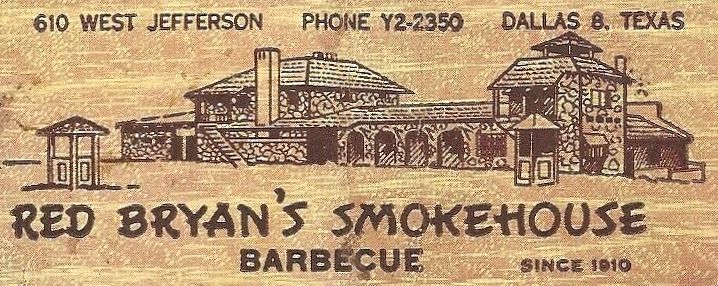
red-bryans-smokehouse_bbq_postcard_ebay_ca-1950

by Paula Bosse

Everybody in Dallas knows about Sonny Bryan, and some remember Red Bryan, but I didn’t know there was another Bryan forebear, who started the family barbecue dynasty: Elias Bryan. Elias and his wife, Sadie, arrived in Oak Cliff from Cincinnati in 1910 and opened a barbecue stand. Elias begat Red, and Red begat Sonny. And there was much trans-generational smoking of meat. The Bryans have been a BBQ fixture in Dallas for over 100 years.

Fun facts about William Jennings “Red” Bryan:

  • Red studied botany at SMU, which might explain his initial career as a florist until he was inevitably pulled back into the family business. He opened his first place in the early 1930s in a retired Interurban car, known affectionately as “The Tin Shack.”
  • In the late ’40s, now well established and wanting swankier digs, he commissioned the respected architect Charles Dilbeck to design the new restaurant. (Dilbeck designed some of the most beautiful homes in Dallas, several of which are in Lakewood, but this was probably his first — and only — barbecue joint.)

And the rest is, as they say, barbecue — and Oak Cliff — history.

*

red_bryan_bbq_dth_0205561

*

Red, 1951

*

red-bryans-bbq_matchbook_ebay

***

Sources & Notes

Postcard (circa 1950) at top from eBay. This is printed on the back:


red-bryans-smokehouse_bbq_postcard_caption_ebay

Ad from 1956.

Much more on Red Bryan’s Smokehouse, with lots of photos of its construction, can be found in the Oak Cliff Advocate article “The King of Oak Cliff Barbecue” by Gayla Brooks, here.

Even more cool stuff, including early photos of the family business, can be found in the Texas Monthly article “Bryan Family Artifacts and Mementos” by Daniel Vaughn, here.

Sonny Bryan’s website is here.

*

Copyright © 2014 Paula Bosse. All Rights Reserved.

Roscoe-Land: Roscoe White’s Corral & Easy Way

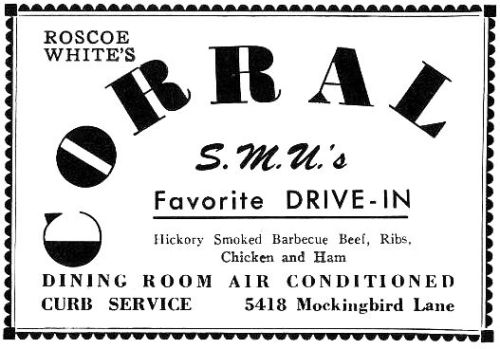
roscoe-whites-corral_1951

by Paula Bosse

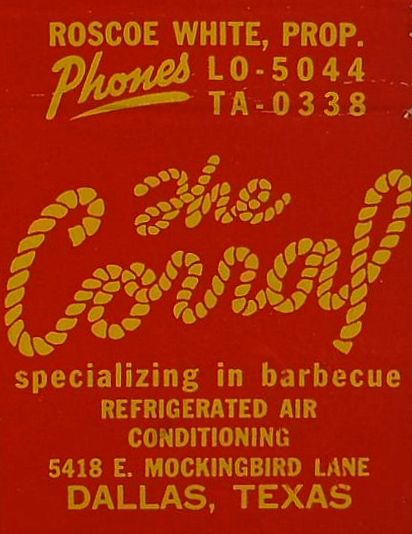
My family had two favorite neighborhood restaurants: Kirby’s Charcoal Steakhouse on Lower Greenville for birthdays and special occasions, and Roscoe White’s Corral on Mockingbird for every other occasion. Conveniently, both were only a short walk from our house. When I came across this ad, I was surprised to see that the Corral had started out as a drive-in, with car-hops. My memories of the place are from the 1970s after it had been rebuilt. in the same block, in a new-ish shopping strip (about where Premiere Video is now), facing the old Dr Pepper plant. It had a diner-like, fairly utilitarian decor, with a slightly fancier banquet room at the back. There was an attached (very dark) bar with a separate entrance. I remember the gleaming cigarette machine. Roscoe must have loved the place, because he was there all the time.

My mother and I always had the chicken-fried steak and a salad with blue cheese dressing. My father and brother tended to go for the still-bubbling cheese enchiladas on a hot metal dish, swimming in a healthy amount of grease (my father’s favorite part). I swear we always had the same waitress — I can’t remember her name, but it was one of those perfect names for a waitress. “Maxine” maybe? (I think my parents had both been customers since their days at SMU in the ’50s, and for all I know, she had been there back then and had been serving them for over twenty years.)

When the Corral closed in the late-’70s or early-’80s, my family was distraught. Loyal patrons that we were, we began making the trek through the Park Cities to Roscoe’s other restaurant, The Easy Way, over on Lovers Lane, by the toll road — the atmosphere was different (it was darker, for one thing), but the food was EXACTLY THE SAME! And, as I recall, even our regular waitress was there — she had also made the move across town. It was almost as if nothing had changed. …Almost.

I loved the Corral My family had so many nice times there. And I miss it. I especially miss that wonderful chicken-fried steak, the yardstick by which I continue to judge all others.

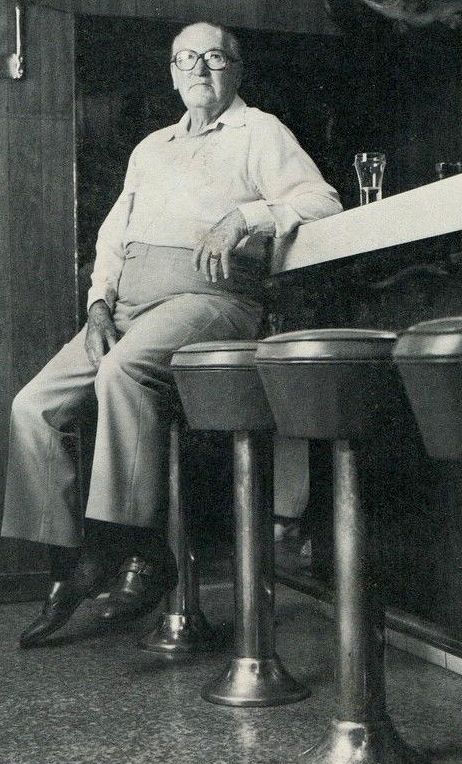
Roscoe White died in 1995 and was remembered in D Magazine:

He moved around, but Roscoe White always had a place for Dallas to eat. He opened his first restaurant in 1939, the Kings Way Grill on Knox and Travis streets. It had an upstairs casino, and the beer was stored in the icehouse next door. Later he opened the Corral on Mockingbird Lane, a drive-in that became a haven for SMU law students. White also owned the Easy Way Grill on Lovers Lane and then Roscoe’s Easy Way on Lemmon Avenue. He died of a stroke at 88.

Thanks for all the great meals, Roscoe!

roscoe-white_d-mag_oct-1985Roscoe White at the Easy Way (D Magazine, Oct. 1985)
*

roscoe-whites-corral_matchbook_flickr

roscoe-whites-corral_dmn_120747

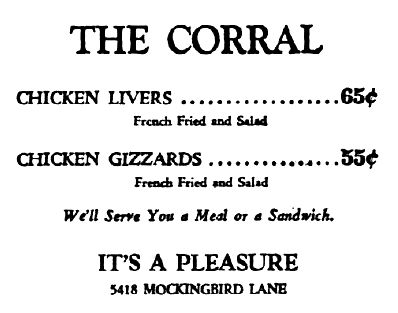
An early ad from 1947. Fried chicken gizzards, only 55 cents — “It’s a Pleasure”!

*

rosecoe-whites_corral_carhop_ad_dmn_091448

roscoe-whites-corral_lady-cashier_dmn_091948

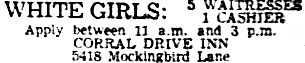
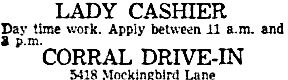
A couple of help-wanted ads for waitresses and a “lady cashier” (Dallas Morning News, 1948). I can only hope that Roscoe’s car-hops were referred to as “White Girls.”

*

roscoe-whites-corral_reopening_dmn_100850

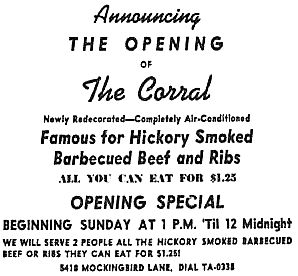
There had been a fire in the summer of 1950 that caused $4,500 worth of damage, the reason, I’m assuming, for the redecoration and re-opening. I’m not sure when the Corral moved into the location I was familiar with, but by mid-1969, ads were appearing with the new address of 5422 Mockingbird.

*

roscoe-whites-easy-way_matchbook_flickr

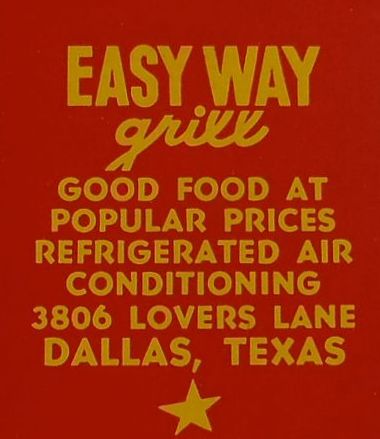
A matchbook from the Easy Way Grill, sadly, with the wrong address on it! The Easy Way was at 5806 Lovers Lane, part of the Miracle Mile, where Dr. Delphinium is now.

*

roscoe-whites-easyway_1951

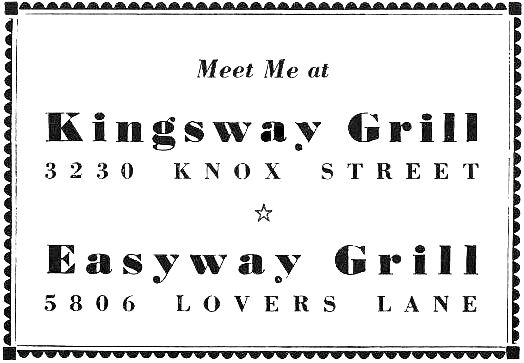
A 1951 ad for the Kings Way Grill and Easy Way Grill.

***

The top ad touting “SMU’s Favorite Drive-In” is from a 1951 SMU-Rice football game souvenir program.

A fond farewell to the Easy Way — “It’s Hard To Say Goodbye to The Easy Way Cafe” — from D Magazine is here. (Above photo of Roscoe accompanied the print article.)

Red matchbook covers from Flickr.

*

Copyright © 2014 Paula Bosse. All Rights Reserved.