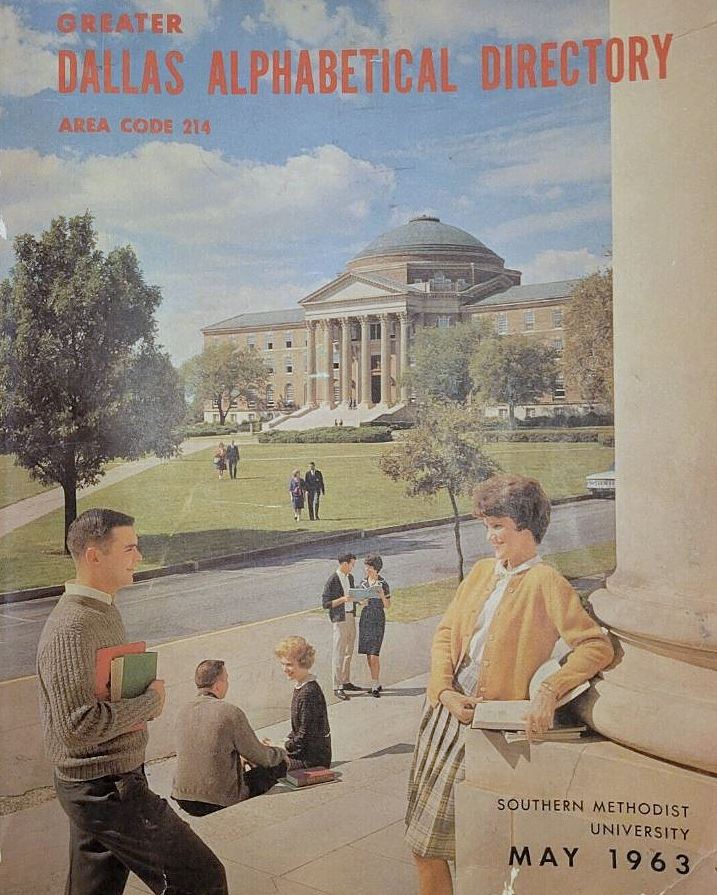
This seems like a timely image. Sort of a half-photo, half-illustration depiction of dreamy campus life, in which SMU appears to be populated entirely by smiling paired-off couples, as a soft-focus Dallas Hall rests serenely in the background.
***
Sources & Notes
Cover of the 1963 Greater Dallas Yellow Pages, which popped up sometime last year on eBay.
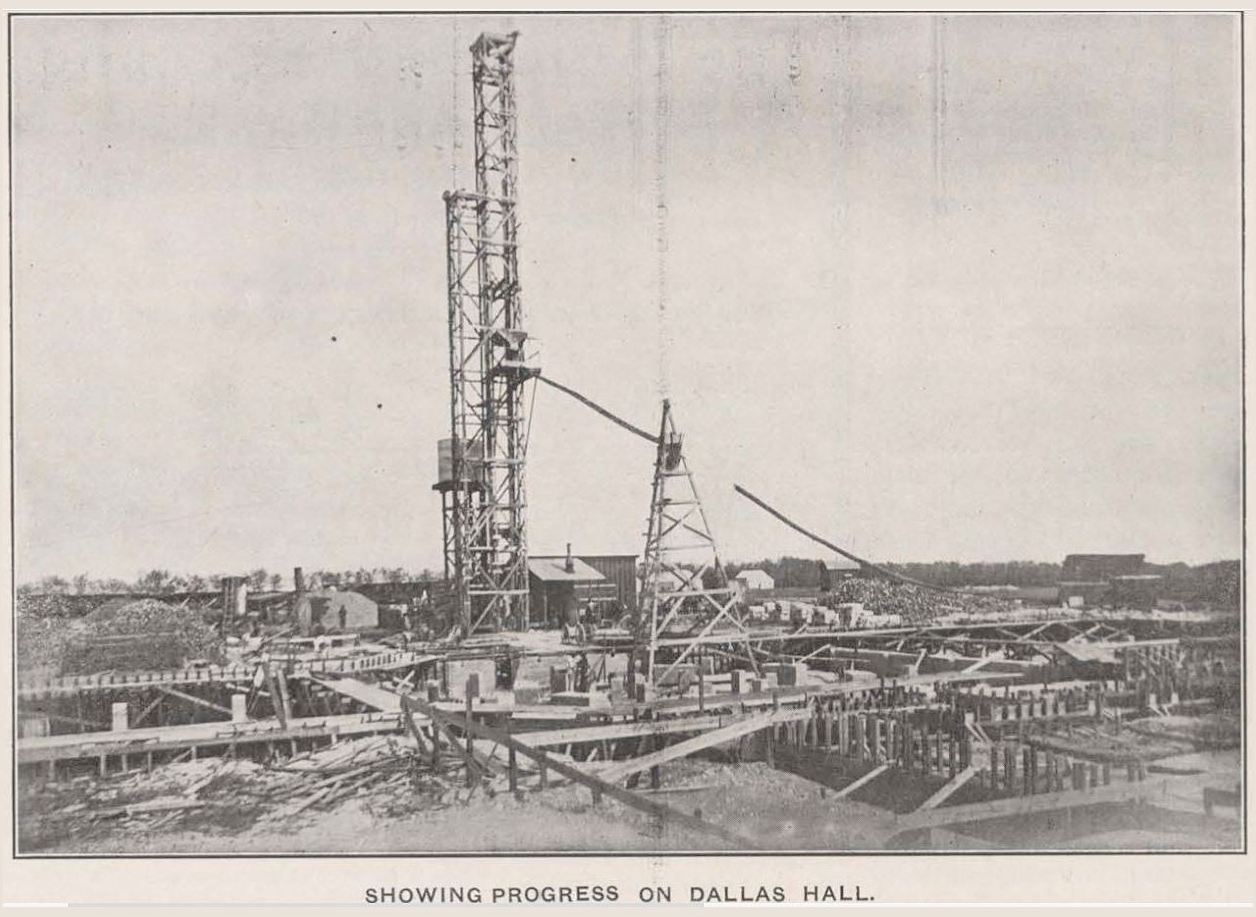
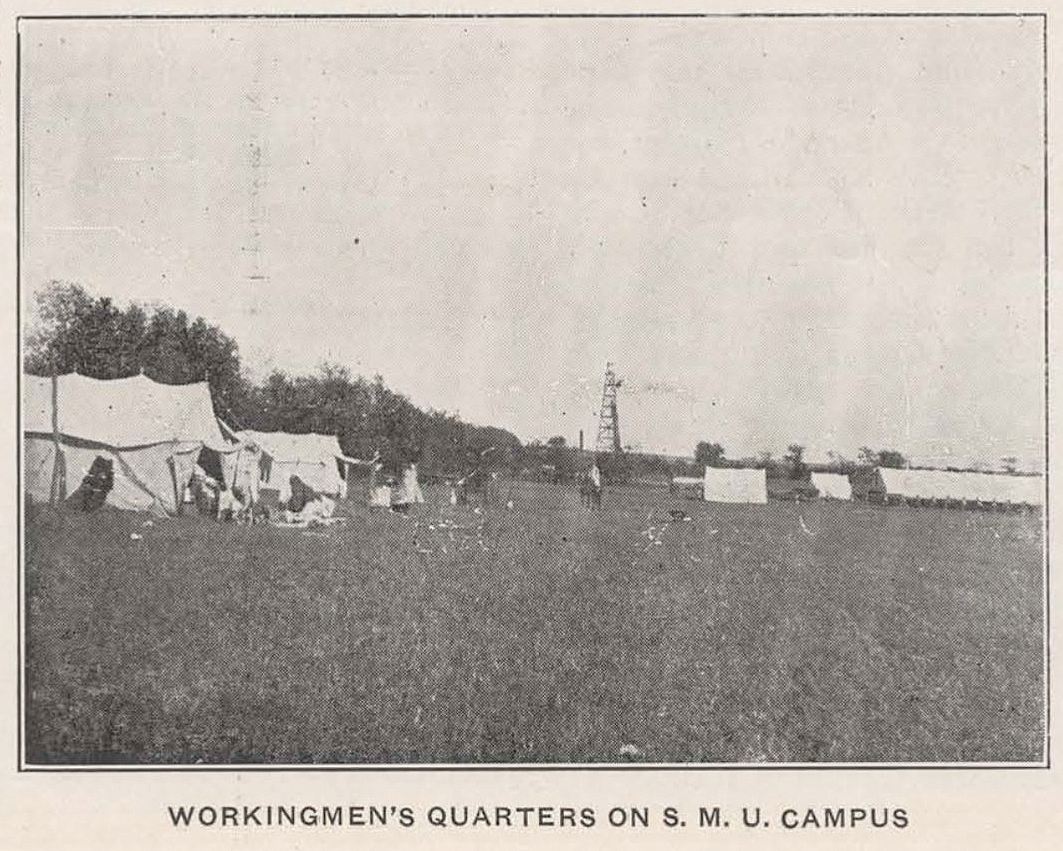
I can’t even remember what I was looking for in the SMU Libraries database when I stumbled across a collection of magazines/newsletters called The Campus, from 1912-1914. It’s pretty dry reading, but they appear to be updates sent out to moneyed Methodists who were actively working on raising funds for construction of the new Southern Methodist University in Dallas. There are the occasional interesting ads (especially for the Methodist-owned real estate which surrounded the campus and would soon generate substantial moolah) and progress reports on the construction of the first building, the magnificent Dallas Hall. Here are a few of the photos.
“Showing progress on Dallas Hall” (1912) — this is great:
“Workingmen’s quarters on S.M.U. campus” (1912) — this is greater (tents! — is that a horse in there?):
“Dallas Hall — as it appears today” (1913):
And finally, all shiny and ready to open for business (1915):
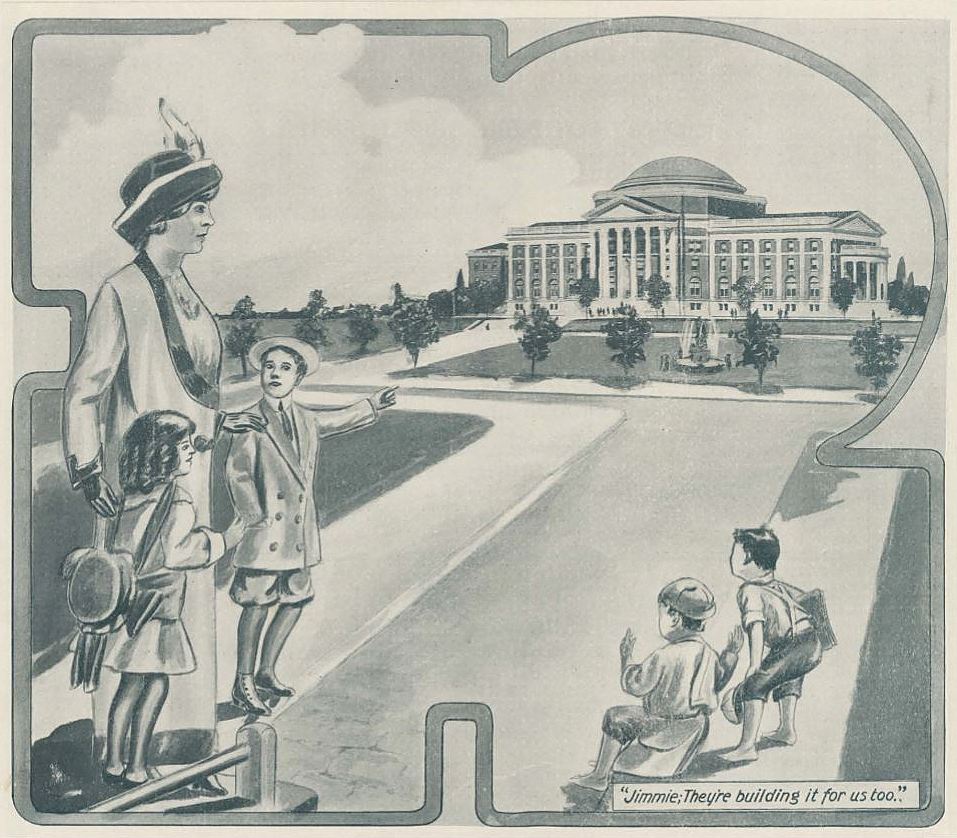
Lastly, an architectural drawing, which I’d like to think construction workers might have glanced at occasionally to make sure everything was going in the right place — like dissectologists using the lid of a jigsaw puzzle box. (Incidentally, $300,000 in 1912 was equivalent to about $9.5 million in today’s dollars. I think it might have ended up costing more by the time it was finished.)
***
Sources & Notes
All images are from various issues of The Campus, all of which may be accessed on the SMU Libraries site here; (DeGolyer Library, SMU Libraries, SMU Archives, Southern Methodist University).
See a couple of great photos of Dallas Hall under construction: domeless, and mid-dome (DeGolyer Library).
Other Flashback Dallas posts on the very early years of SMU:
This post originated in a post I made last week on my Patreon page, which I update daily. If you would like to subscribe to that page for as little as $5 a month, please hie yourself over there!
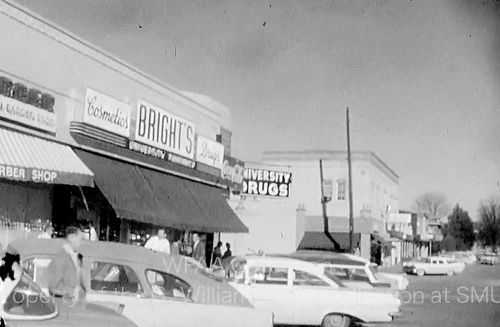
Bright’s Drug Store, 6327 Hillcrest, University Park
by Paula Bosse
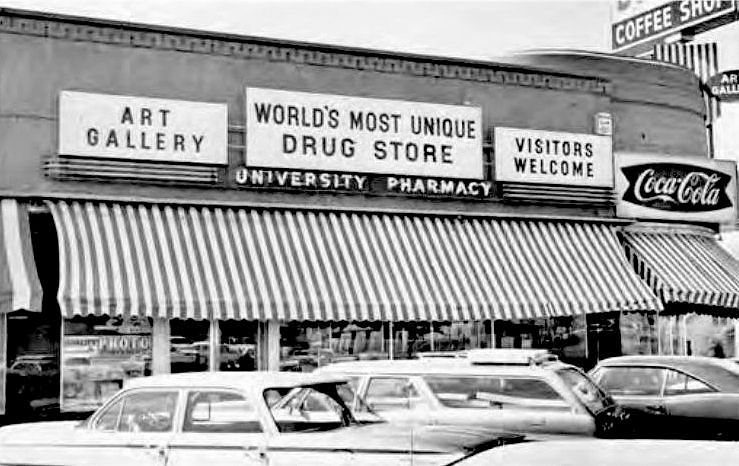
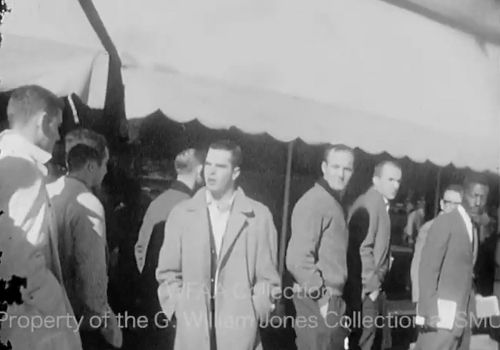
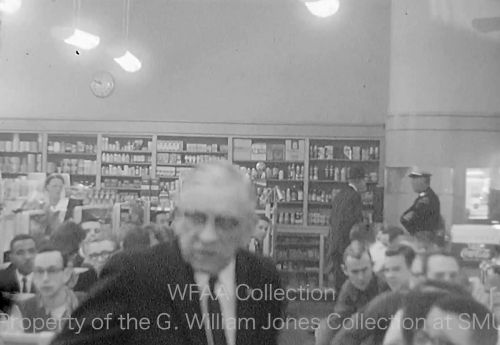
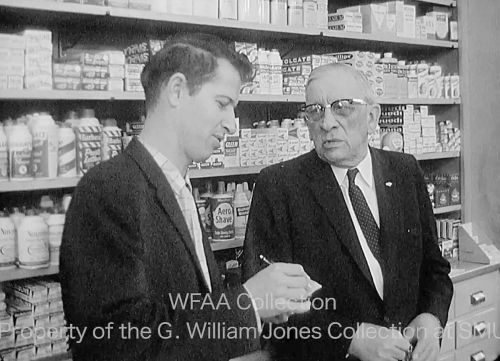
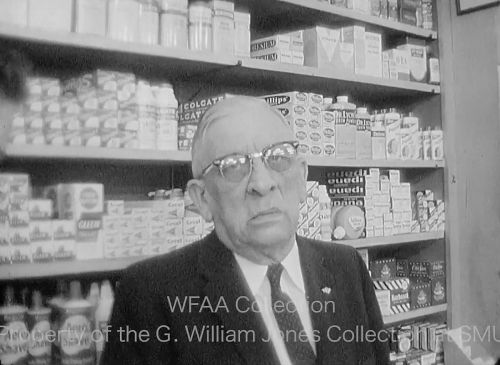
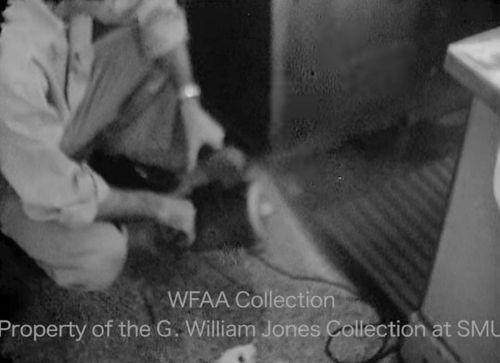
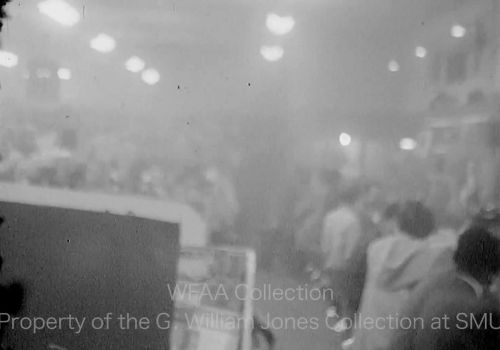
This week the G. William Jones Film & Video Collection at SMU posted another fantastic clip from their WFAA News archive on their YouTube channel. This one shows an incident I had heard about since I was a child. It shows a peaceful “sit-in” demonstration at the University Pharmacy at the southwest corner of Hillcrest and McFarlin, across from the SMU campus. The sit-in was organized by theology students at SMU’s Perkins School of Theology to protest the owner’s refusal to serve Black customers at his lunch counter. The student demonstration was conducted by a group of silent students — it was a peaceful protest without violence. Until, that is, the owner, pharmacist C. R. Bright, called in a fumigator to set off a cloud of insecticide inside the pharmacy in an extreme attempt to run off the protesters. The students did not leave until Bright closed the drug store. Many of the students then picketed in front of the business as anti-protester demonstrators showed up to heckle and jeer, some waving little Confederate flags handed out by Bright. My mother, who lived nearby at the time and had recently graduated from SMU (but was not a theology student) was there, and she says she can still feel the burn of that pesticide in her throat and says that no one present that day could believe a person would do what Bright did. (And she’s in it! She’s seen sitting at the counter, engulfed by a cloud of insecticide.)
Here is the silent clip from January 9, 1961 (the direct link on YouTube is here):
*
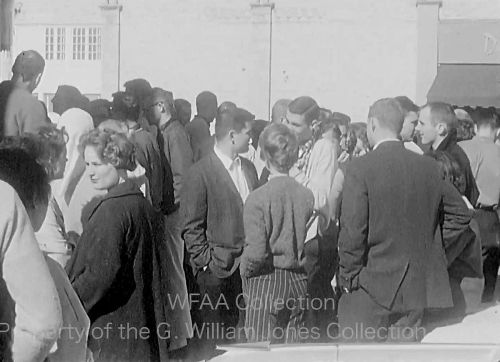
I took the photo below at an exhibit at the downtown Dallas Public Library in 2017. It shows the students outside the pharmacy as a crowd jeers at them.
via Dallas Public Library
In 1961, there were only 4 or 5 Black students attending SMU. Black students were allowed to attend only the theology and law schools — there were no Black undergraduates until 1962, when Paula Elaine Jones became the first African American full-time undergraduate student at SMU.
In 1961, African Americans were routinely refused service at white-owned establishments in Dallas (as they were in the rest of the Jim Crow South). The sit-in at the University Pharmacy was the result of a Black theology student being refused service at Bright’s lunch counter. There had been a small demonstration at the drug store a couple of nights before the one seen in the film above — it ended when Bright closed early.
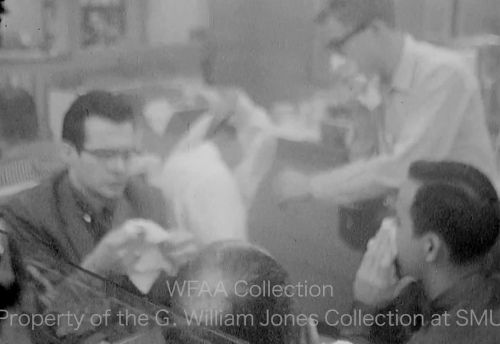
The sit-in that grabbed the headlines began around 10:00 on the morning of Monday, Jan. 9, 1961, when 60-75 SMU students, including Black theology students Earl Allen and Darnell Thomas, entered the drug store and sat silently at the counter and in booths. Allen and Darnell were refused service. In protest, the large group of students refused to leave. After about an hour, Bright was quoted by a WBAP news reporter as saying, “This is a good time to kill some cockroaches…” and called an exterminator service. When the exterminators arrived, they turned on fumigating machines inside the business, filling the place with clouds of kerosene-based insecticide which covered the students, the lunch counters, the dishes, the food, and the store’s merchandise. (Bright was a pharmacist, who was no doubt aware of potential physical harm this would cause.)
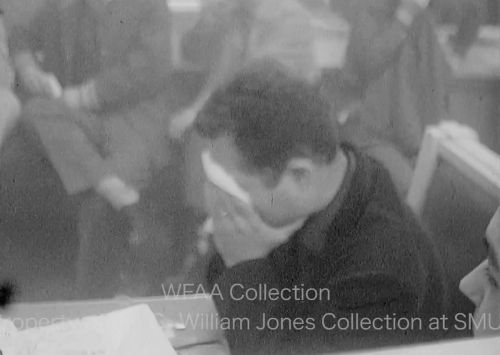
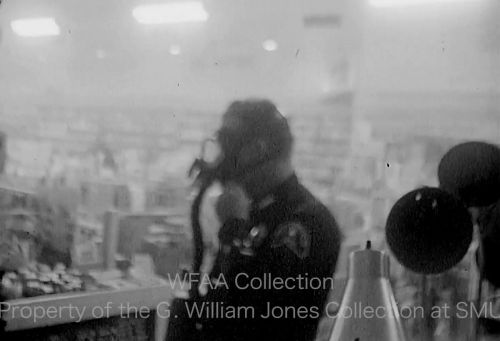
The students sat there, breathing through handkerchiefs and holding their ground, silent. A University Park policeman, Lt. John Ryan was there, but the police were not actively involved (although Ryan did have a handy gas mask). After half an hour, the students left when Bright closed the store. Bright re-opened an hour or two later (the lunch counter remained closed). Students silently picketed as hecklers jeered.
The SMU student newspaper — The SMU Campus — covered the sit-in. The article contained an unsurprising, unapologetic quote from the 75-year-old C. R. Bright:
Bright steadfastly refuses to integrate his lunch counter. Says the drug store owner, “We are not serving them now and we’ll never serve them.” He continues to explain that it “is against my principle” and “I know it would wreck my business.” (The SMU Campus, Feb. 1, 1961)
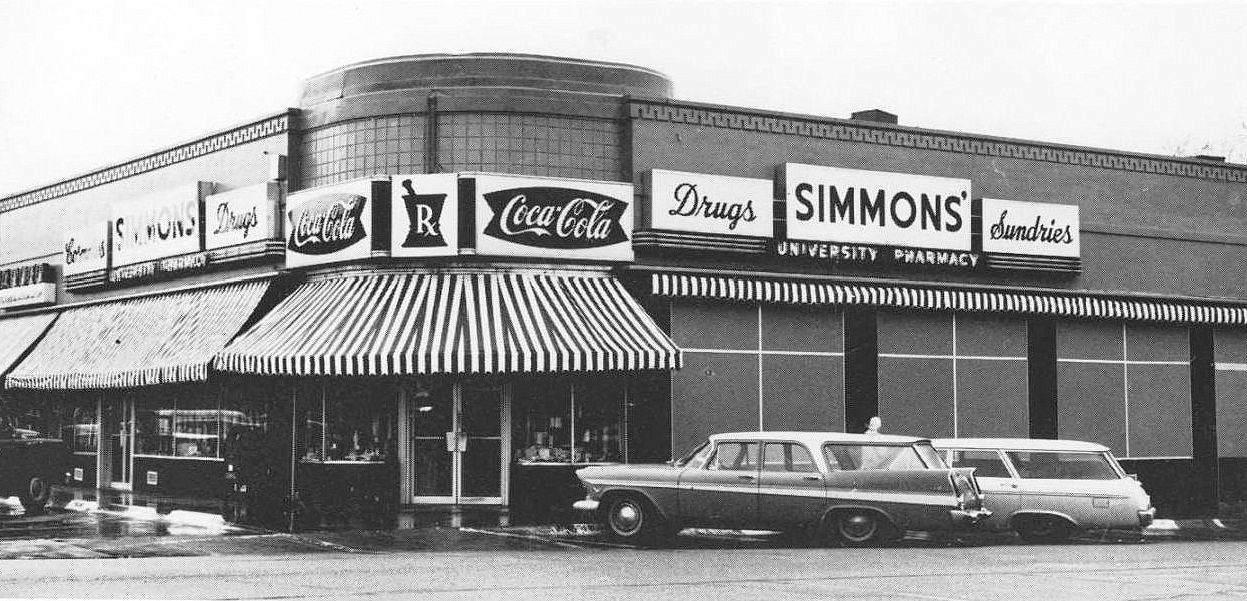
Bright retired soon after and sold the business to an up-and-coming young whippersnapper named Harold Simmons, who went on to build a multi-multi-multi-million-dollar empire from that first business investment.
UPDATE, BURY THE LEDE DEPT: Thanks to comments by two readers, I have learned that Christopher R. Bright was the father of former Dallas Cowboys owner H. R. “Bum” Bright. Oh dear.
***
Sources & Notes
All screenshots are from WFAA news footage from the WFAA News Film Collection, G. William Jones Film & Video Collection, Hamon Arts Library, Southern Methodist University; the clip has been posted to the SMU Jones Film channel on YouTube here.
Read coverage of the sit-in (as well as a critical editorial which called the protest “immoral”) in the Feb. 1, 1961 edition of The SMU Campus, the student newspaper — it can be accessed on the SMU Libraries website here, or it can be read in a PDF I’ve made, here.
Read a lively account of the sit-in in a WBAP-Channel 5 news script here (via the Portal to Texas History).
For those with access to the Dallas Morning News archives, the incident is covered in an article by Jim Lehrer: “Protesting Students Sit In, Walk Picket Line at Store” (DMN, Jan. 10, 1961).
Another great clip showing a historical lunch-counter protest in Dallas (the city’s first, I believe) in April of 1960 is also available on the SMU Jones Film YouTube channel — it can be viewed here. Here is a description of what’s happening in the footage: “Rev. Ashton Jones, a white minister from Los Angeles, and Rev. T. D. R. V. Thompson, Black pastor of the New Jerusalem Institutional Missionary Baptist Church, 2100 Second Avenue, together visit segregated lunch counters in downtown Dallas department stores; the peaceful sit-in protests take place at the counters of the Kress Department Store, the H. L. Green Department Store, and the Tea Room of Sanger Bros. department store. This was the first publicized demonstration against Dallas’ segregated eating establishments, and several members of the media — both white and African American — are covering the historic event (Silent).”
Lastly, in a related Flashback Dallas post, there was a previous University Pharmacy which was located, at separate times, on the northwest and southwest corners of Hillcrest and McFarlin — the owner of the very first University Pharmacy built the Couch Building, which can be seen in the background of the top photo of this post. That earlier post, “University Park’s “Couch Building” Goes Up In Flames (1929-2016),” can be found here. A pertinent 1965 photo from that post which shows Simmons’ University Pharmacy, the Couch Building, and the Toddle House (which was also the site of a 1961 sit-in by SMU students) can be seen here.
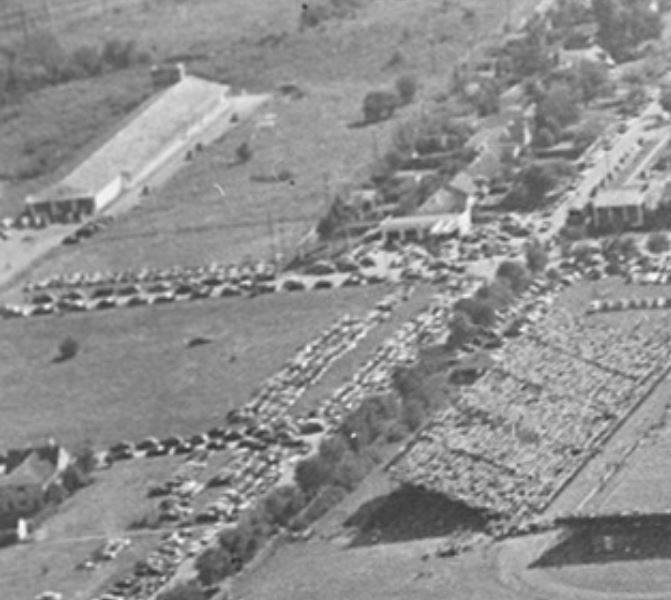
When you see aerial views of the SMU campus, they’re usually looking to the north, toward Dallas Hall. Which is one reason this photo by ace photographer Squire Haskins is interesting. It’s also noteworthy because it shows “Trailerville,” the trailer camp set up on the campus from 1946 to 1953 for married war-vet students, and it also shows the pre-fab men’s dormitories, which look like army barracks. Housing in post-WWII Dallas was was very, very tight, and people had to make do and were crammed into all sorts of spaces. (See a very large image of this photo on the UTA website here.)
For reference, Mockingbird Lane is running horizontally at the top (I was wondering if that might have been the Mrs. Baird’s bakery (built in 1953) at the top left, but it’s not far enough east), Bishop Blvd. is in the center, and Hillcrest Avenue is at the right. And there’s also a whole lot of empty land — a startling sight if you’ve seen the present-day bursting-at-the-seams campus.
Here are a few blurry close-ups. First, Trailerville (which I’ve been meaning to write about for years!) — just northeast of Ownby Stadium:
Men’s dorms in temporary buildings which were removed in 1952/53:
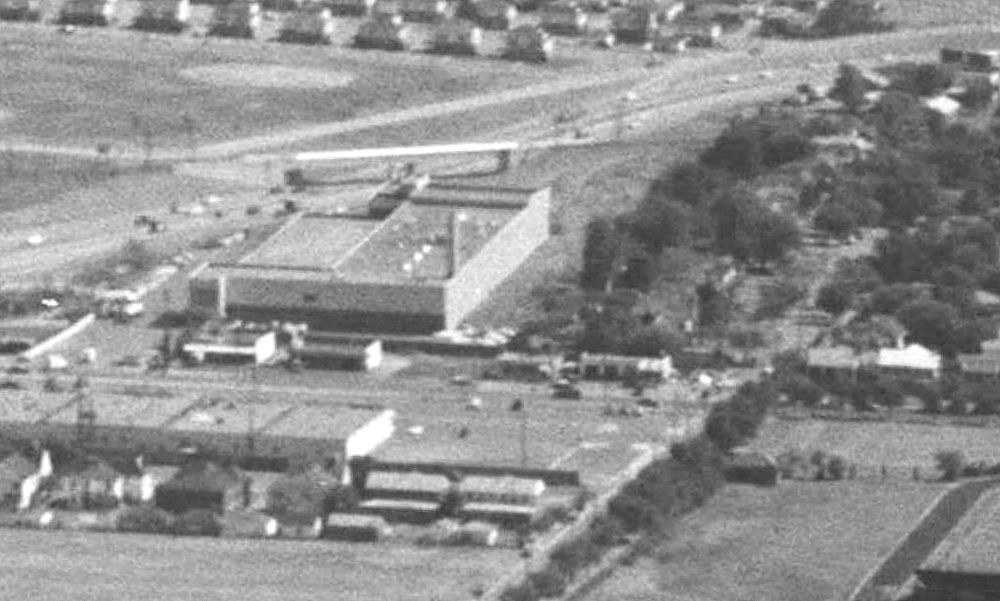
And something that isn’t the Mrs. Baird’s Bread factory (scroll down to see what it was):
*
Thanks to the comments below by reader “Not Bob,” it appears that the photo of the long building at the top left corner — on the site later occupied by Mrs. Baird’s Bread — was once an armory for the 112th Cavalry (Troop A) of the Texas National Guard. The building was originally built in 1921 as the headquarters of the Wharton Motor Company, a short-lived automobile and tractor manufacturer. It appears to have closed by 1922 and the company was bankrupt by 1924. The 112th Cavalry (with about 40 horses) moved in at the end of 1927 — they were forced to move out by the end of 1930 because of neighbor complaints (and a lawsuit) about the horses being in such close proximity to residences. By the time of the photo above, it was the Town and Country food business which rented freezer-locker space to the public. Mrs. Baird’s Bread decided to build on the site in 1949 (with the intention, presumably, to raze the existing building) — construction began in 1952 and the factory opened in 1953 (incidentally, the factory was designed by legendary Dallas architect George Dahl). (I should write about the Wharton building sometime — it has an interesting history.)
The commenter (“Not Bob”) also linked to a similar view of the campus in 1955, post-Trailerville:
By then, Central Expressway had been built and Mrs. Baird’s was cranking out that delicious aroma that filled the neighborhood for decades:
***
Sources & Notes
“Aerial view of the campus of Southern Methodist University, Dallas, Texas” is by Squire Haskins, from the Squire Haskins Photography Inc. Collection, University of Texas at Arlington Libraries; more information on this photo can be found here (click thumbnail photo to see larger image).
“1955 aerial view of campus from the north” — by William J. Davis — is from the collection of the DeGolyer Library, Southern Methodist University; more information on this photo is here.
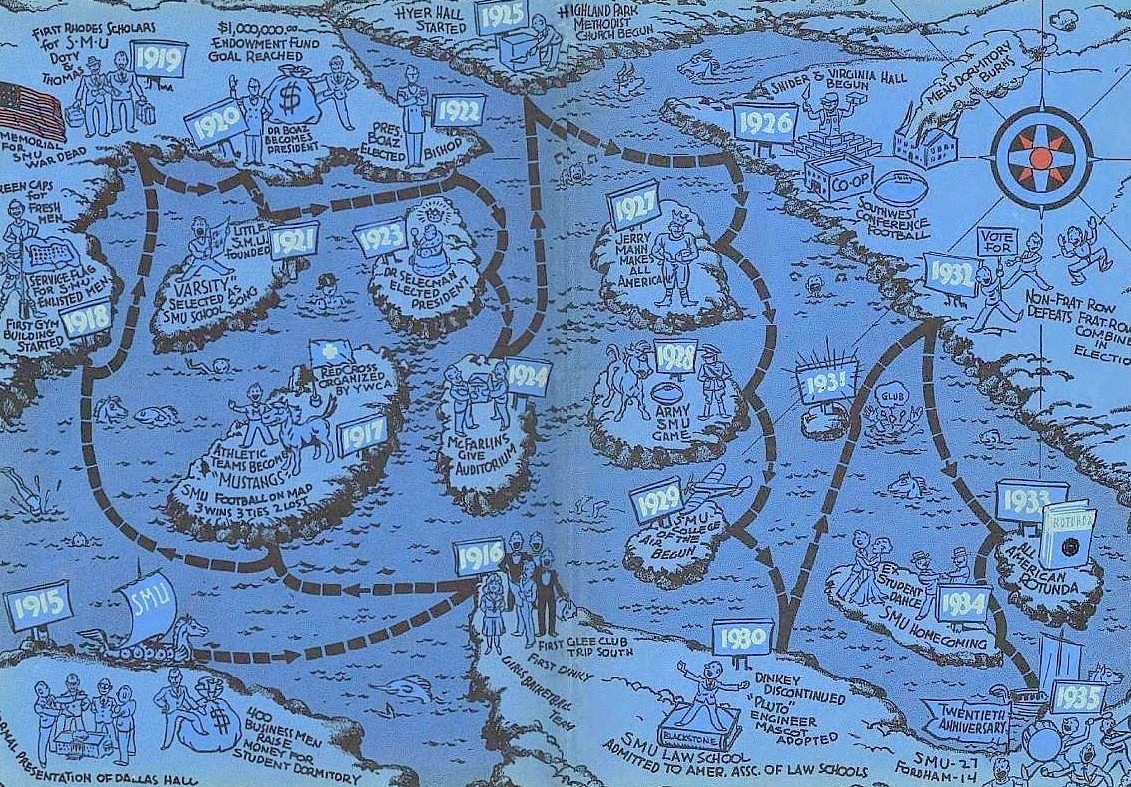
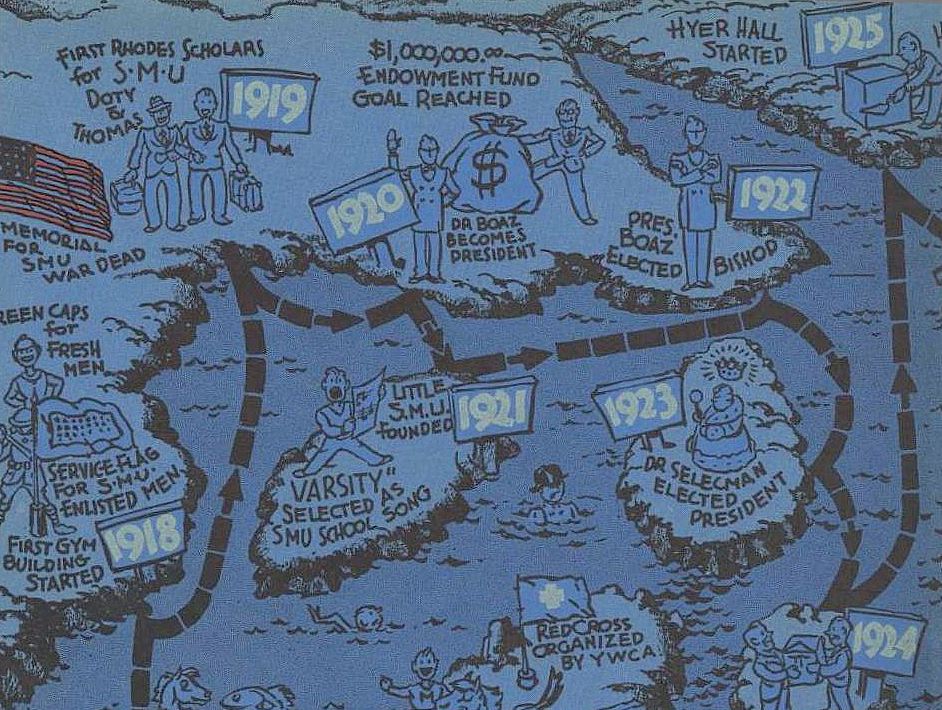
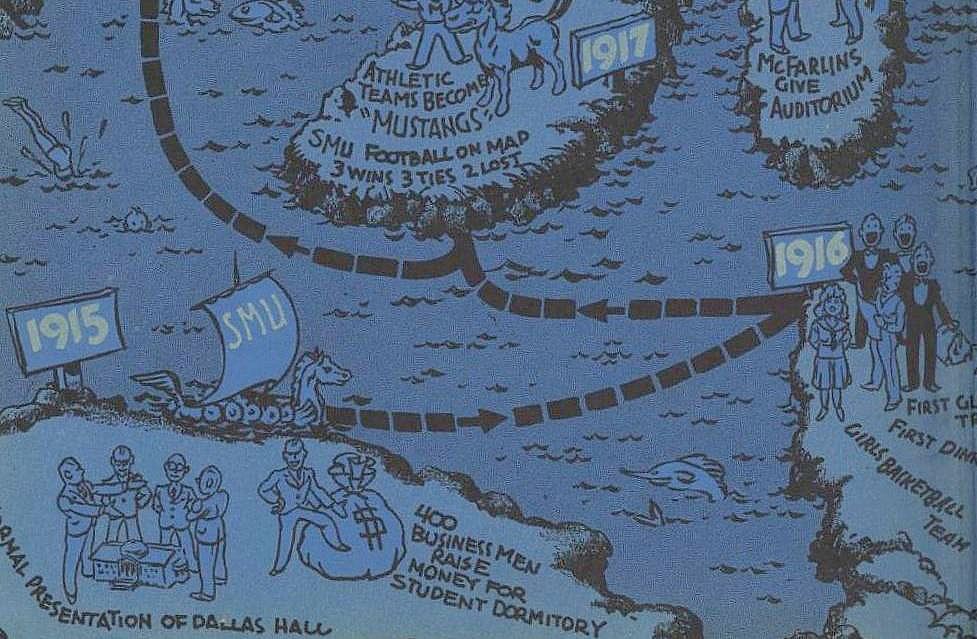
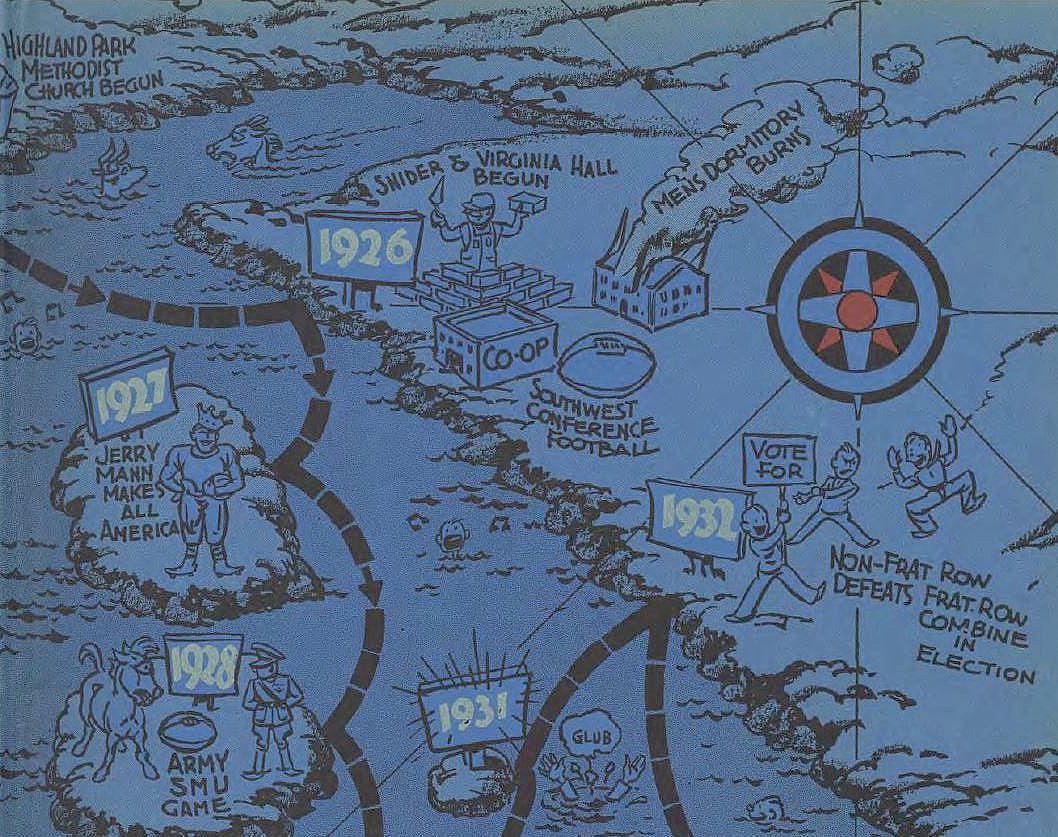
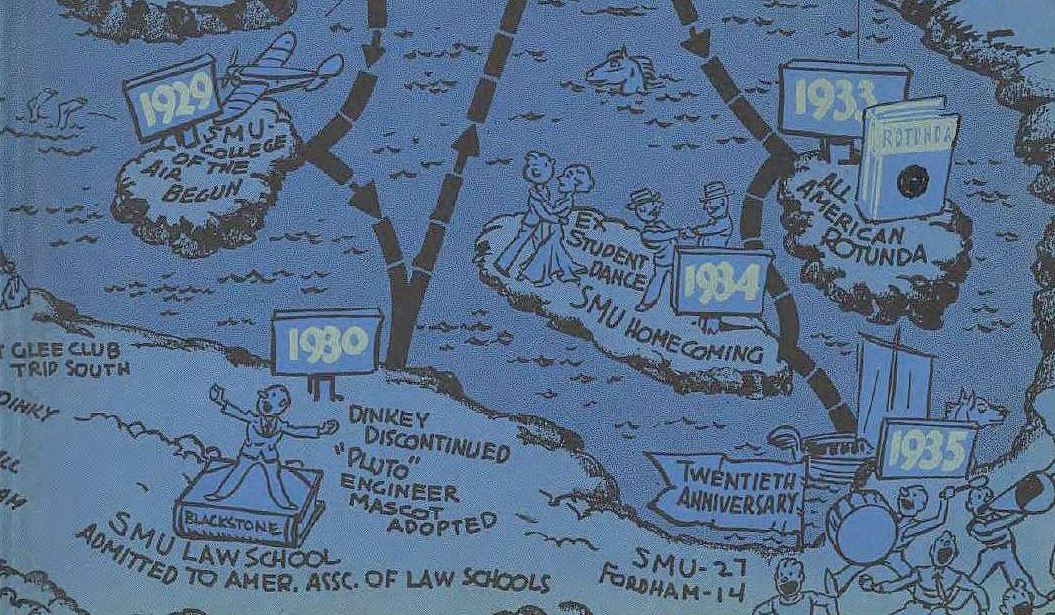
Here’s a handy little chronology of the first 20 years of Southern Methodist University’s history, found on the endpapers of the 1935 SMU yearbook, the Rotunda.
Click to explore (“glub”):
***
Sources & Notes
Images from the 1935 Rotunda, yearbook of Southern Methodist University.
For more on SMU’s first year, 1915-1916, see these Flashback Dallas posts:
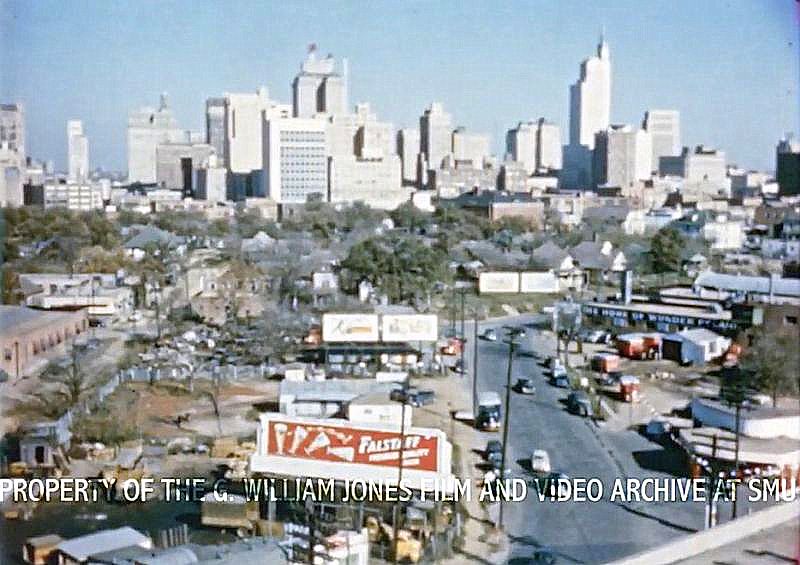
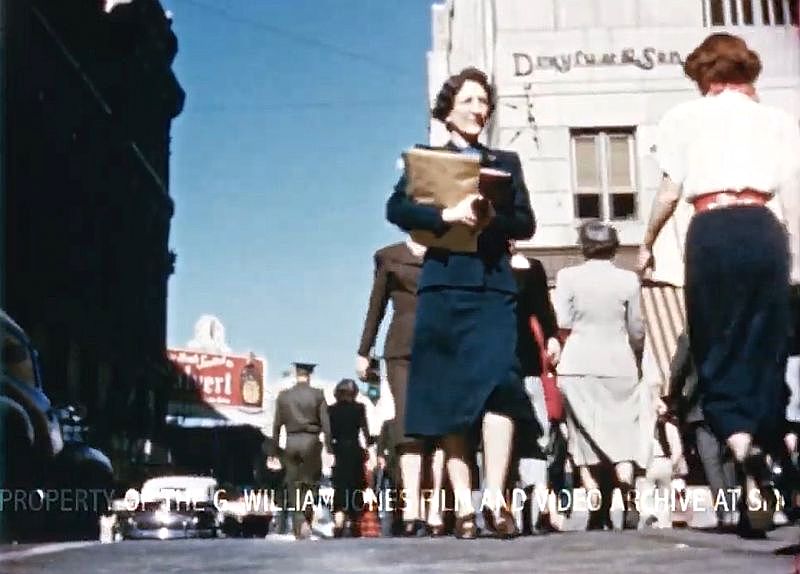
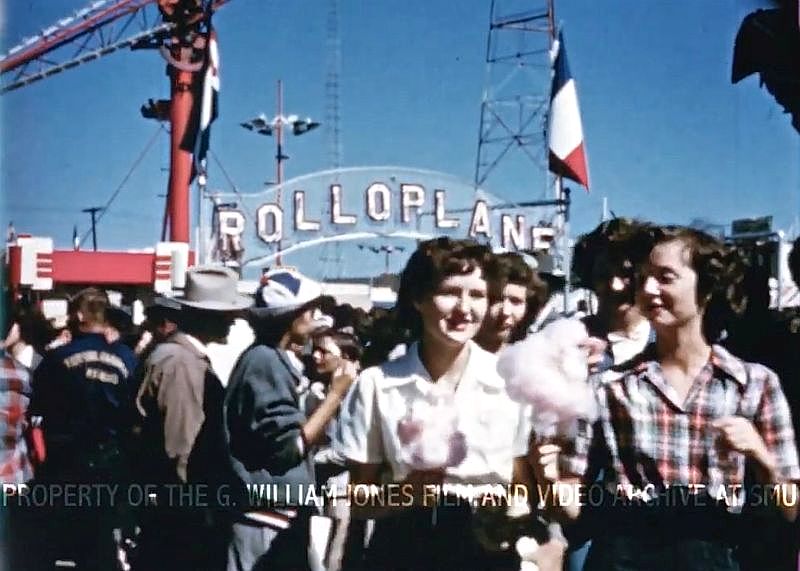
It’s always fun to see Dallas on film — and it’s even better when it’s a Technicolor film. Below are a few screenshots from “Texas — The Big State,” a 1952 travelogue produced by Santa Fe Railroad as a promotional film. It’s very enthusiastic. …Very. Dallas’ Norma-Desmond moment lasts only about three and a half minutes, but visits to downtown, Chance Vought, SMU, Fair Park, a Cotton Bowl game, and the State Fair of Texas manage to get crammed in, surrounded by a warm bath of dynamic adjectives.
Above, a scenic view of the triple underpass and the approach to downtown Dallas from the west. Nice foliage.
Below, a birds-eye view from the south (the same shot as the one by Eisenstaedt in the ’40s seen here, only a decade later — even the Falstaff Beer billboard is still there).
The well-dressed mean streets of Big D:
A woman walking on water at the Esplanade in Fair Park:
Rolloplane, cotton candy, etc., at the State Fair of Texas:
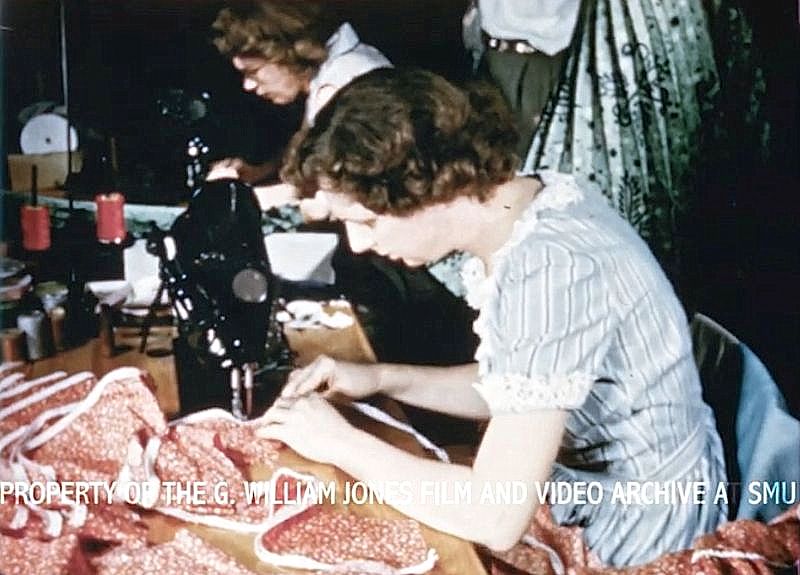
And, lastly, a fun fact I bet no one alive on this planet knows (or remembers): in 1952 Dallas was the second largest manufacturer of WASH DRESSES in the country. Probably the world. What a random piece of information for the Chamber of Commerce to have given to the Santa Fe people to include in a fluffy little film like this. Forget Neiman’s — we were number two in wash dresses! Number TWO!! (“Wash dresses”? Apparently they were house dresses made from washable fabrics. Like what Lucy Ricardo used to wear around the house when she didn’t have to don a hat and gloves to go pick up Ricky’s tux at the dry cleaners. Like the one seen in this “wash frocks” ad from 1950.) And here you go, two of the women who pushed us to runner-up wash-dress greatness:
*
The 24-minute film — which premiered in Austin on May 28, 1952 and was included for months afterward as a “featurette” on double bills across the country — can be seen in its entirety on the SMU Jones Film YouTube channel. The Dallas bit starts at 9:43, followed by the Fort Worth bit at 13:19. I understand there are other cities, too.
***
Sources & Notes
All images are screenshots from the 16mm film posted on YouTube by the G. William Jones Film Archive, Hamon Library, Southern Methodist University.
Special thanks to Erik Swanson for bringing this to my attention.
University Park gets Hoefle-ized… (click for larger image)
by Paula Bosse
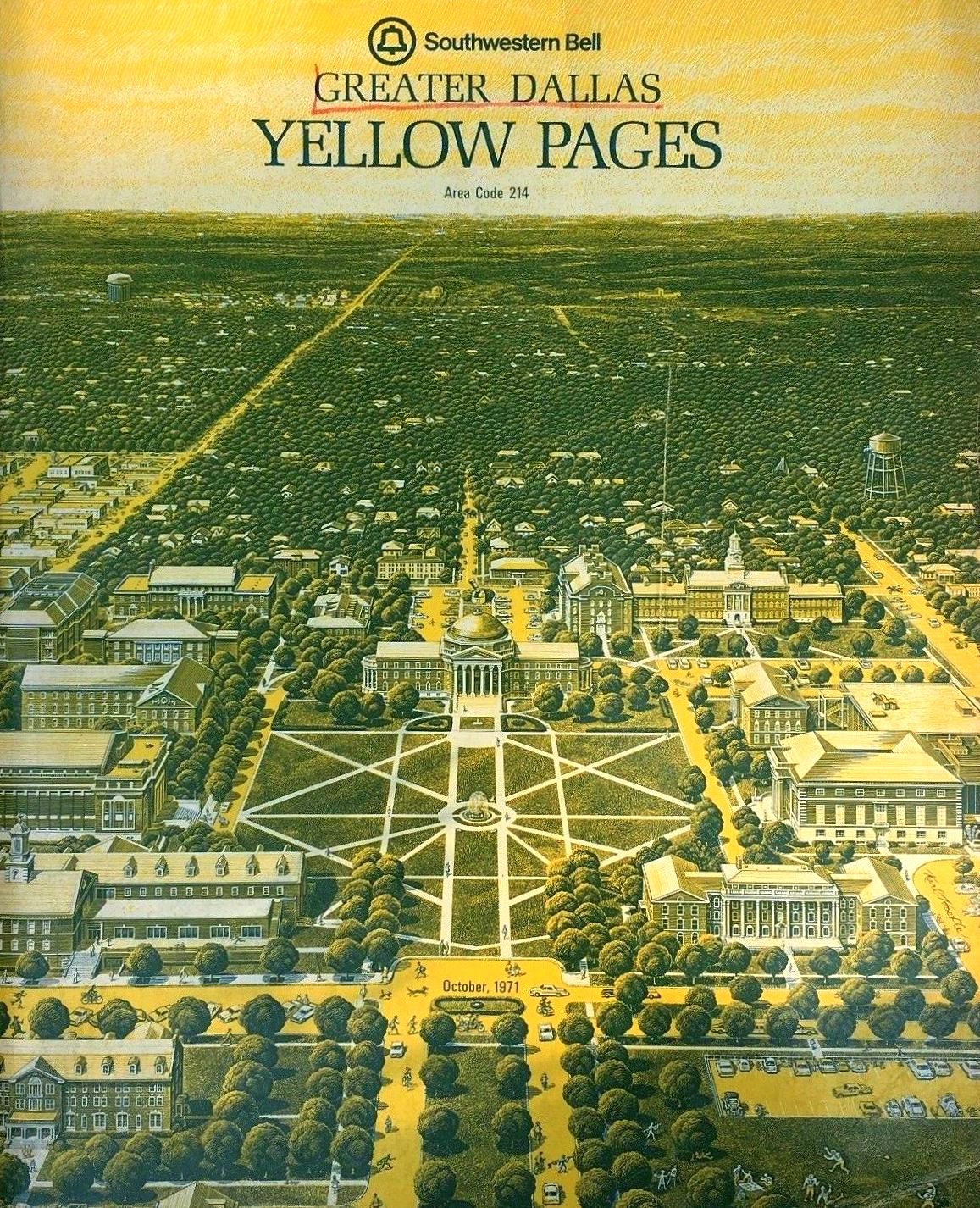
Karl Hoefle’s wonderfully detailed (and painstakingly rendered) Yellow Pages illustrations were pretty much loved by everyone who saw them. As a kid, I loved searching for the hidden jokes — the dinosaurs, the cowboys, the rocket ships. I’ll try to write something in-depth about Karl someday. But, in the meantime, here is one of his covers from 1971, showing the SMU campus, Hillcrest, Snider Plaza, that water tower on Northwest Highway, and, heck, even an observatory. And possibly an elephant (although it might just be an elephant-ish-looking mustang…). (Click the image!)
Life on the SMU quad, 1951… (click to see larger image)
by Paula Bosse
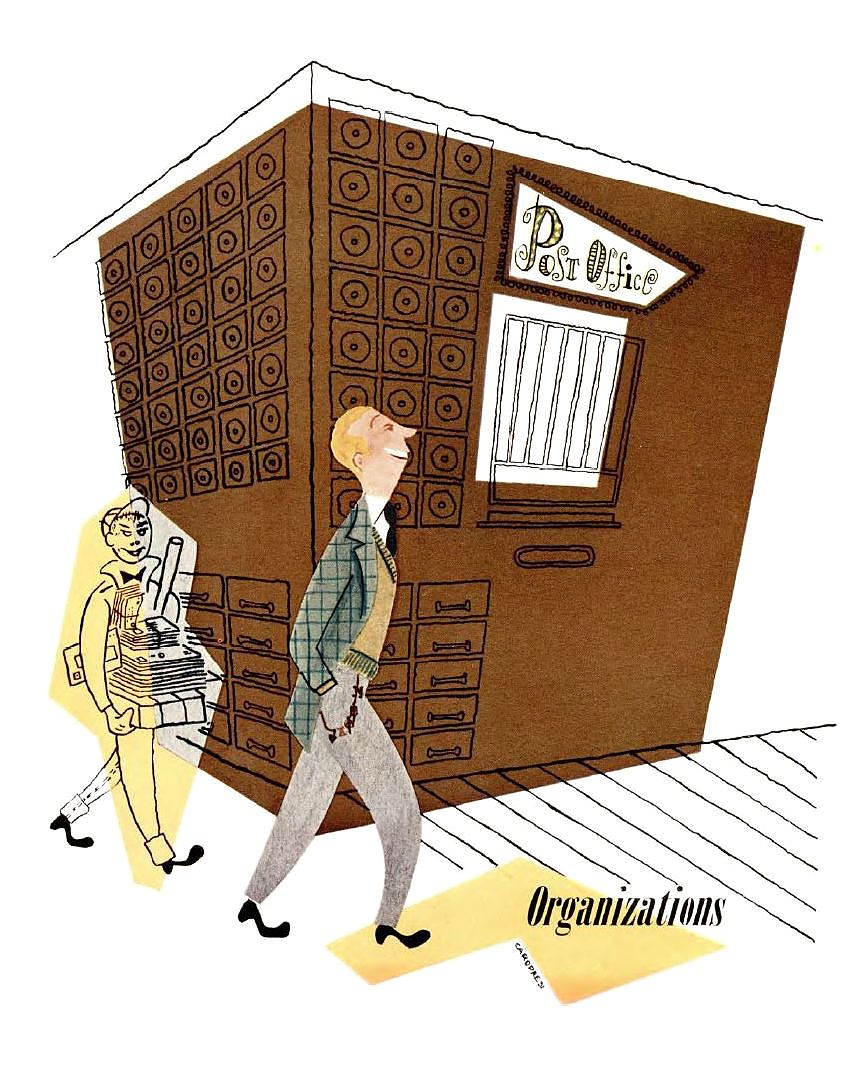
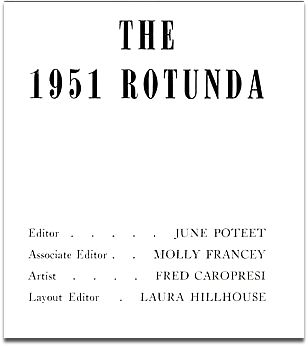
I’m not sure why I happened across the artwork of Fred Caropresi (1921-1985), but I must have been looking for something in the 1951 SMU yearbook, The Rotunda — Caropresi’s work is all over it! Caropresi (or as he was known to fellow students, “Freddy”) had attended SMU in the 1940s, before and after World War II. His degree was in mechanical engineering, but after the war, he returned to study art as a grad student and eventually opened his own advertising firm in Pittsburgh, Pennsylvania.
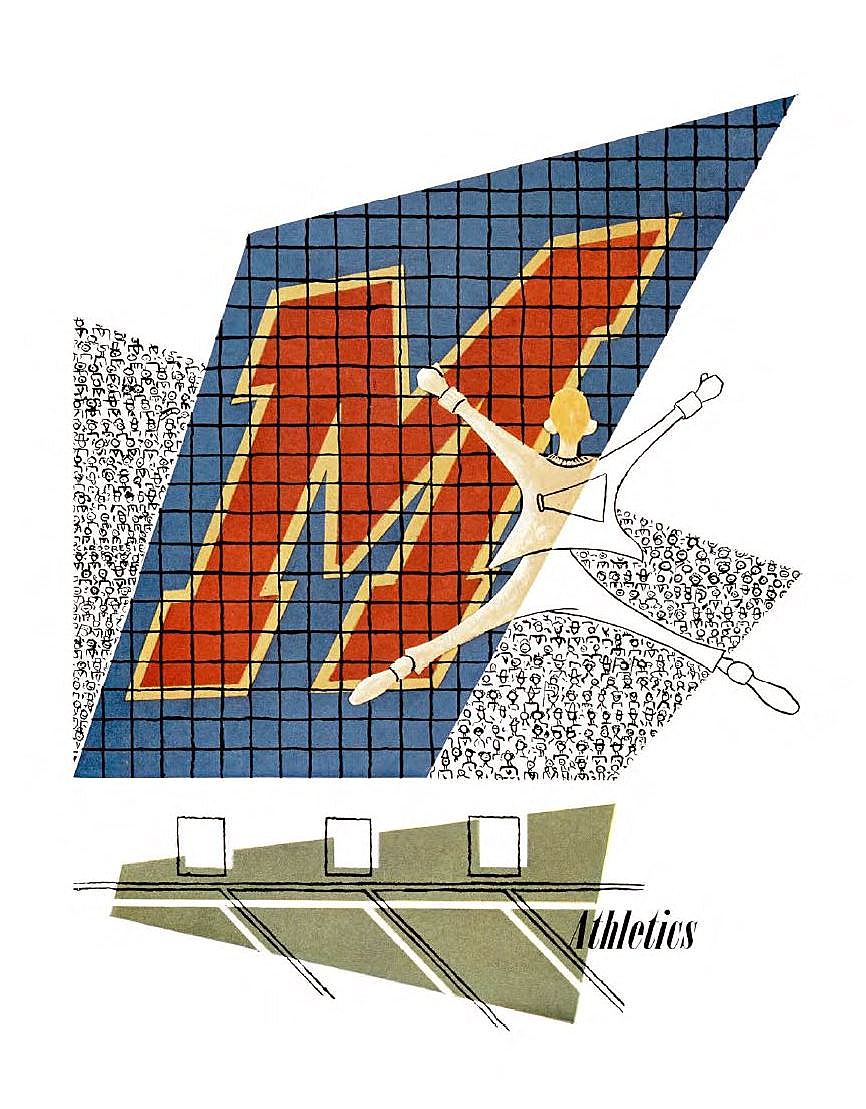
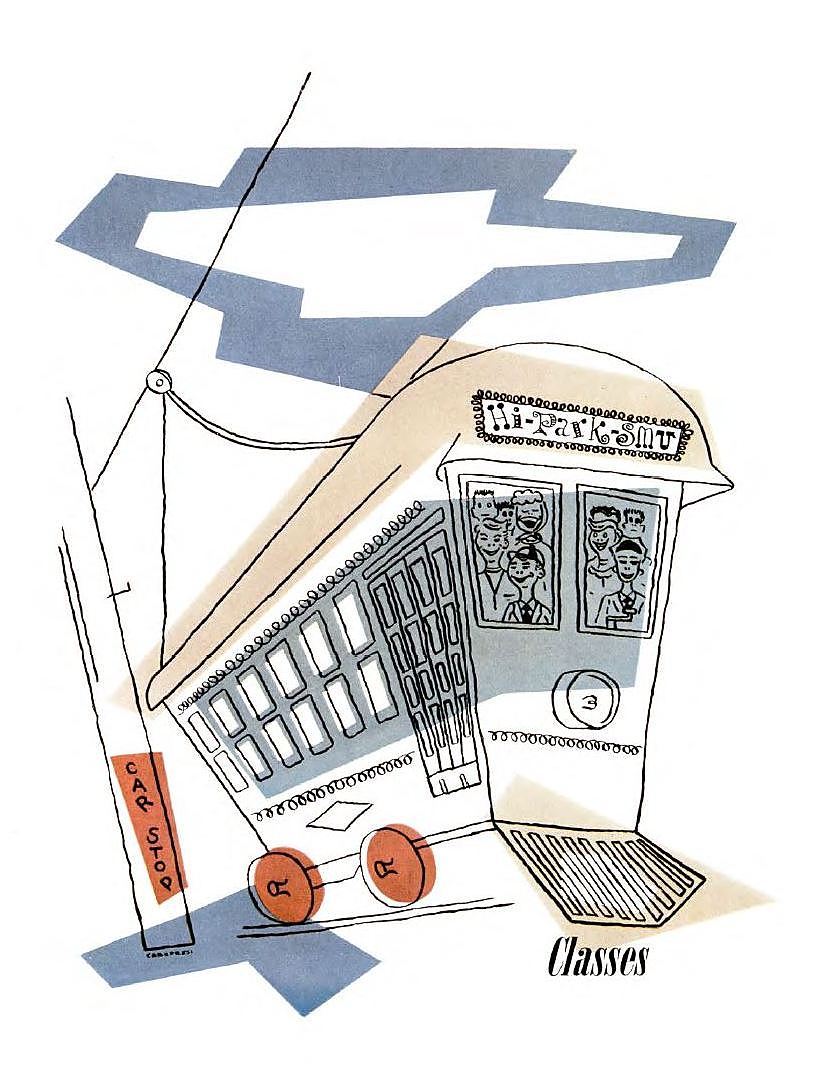
Below are some examples of his work from the 1951 SMU annual — his drawings are reminiscent of the silkscreen process with their off-kilter, off-register areas of flat vibrant color. This type of 1950s “mid-century modern” commercial art is definitely one of my personal favorites.
Here they are (click pictures to see larger images).
Peppy Mustangs:
The packed “Hi-Park SMU” streetcar (which ran along Hillcrest — see a photo here):
Bulletin board — pipes and the Arden Club:
Post office (this is great — I’d love to see a photo of the real thing:
Relaxing with a drink and TV:
Cokes al fresco and another college boy smoking a pipe:
The drawings below — also from the 1951 Rotunda — show a completely different style. The first one (“Beauties”) is fantastic. (Click a thumbnail image to open a slideshow.)
Like I said, Caropresi’s work was ALL OVER the 1951 Rotunda!
*
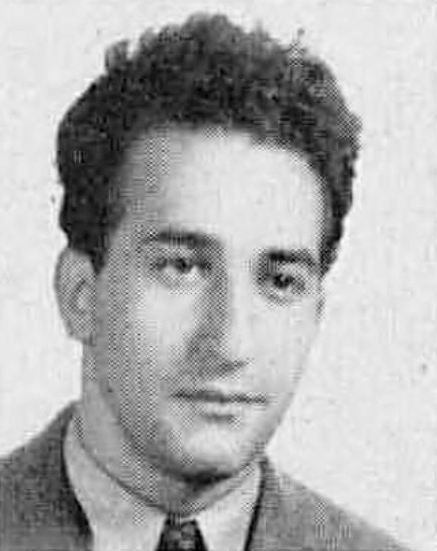
New York native Frederick V. Caropresi (1921-1985) grew up in the Bronx with his parents (his father, a pharmacist, had immigrated from Italy), his grandmother, and his older brother Gregory. For some reason both Fred and Greg decided to attend SMU in Dallas. Fred originally studied mechanical engineering, receiving his degree in 1944. He returned to Dallas after his service in the navy during World War II, and took post-graduate art courses. He was busy around Dallas as a both a fine artist (his first one-man show was in 1952) and as a very busy commercial artist, working in local theater, industrial design, and advertising. He was an active president of the Dallas Print Society in the early 1950s, at the same time he was designing college yearbooks. He left Dallas in the 1950s and settled in a suburb of Pittsburgh where he established his own advertising agency. I hope he continued his own art, because I’m a fan.
Fred Caropresi, 1942, SMU yearbook photo
He is represented in the collection of the Dallas Museum of Art with this silkscreen/serigraph, a view of Reims Cathedral from about 1948.
Fred Caropresi died in in 1985 in North Hills, Pennsylvania.
North Hills (PA) News Record, April 2, 1985
Thank you, Fred.
***
Sources & Notes
All artwork by Frederick V. Caropresi from the 1951 edition of SMU’s yearbook, The Rotunda, is from the Southern Methodist University Yearbooks collection, DeGolyer Library, Central University Libraries, SMU; all editions are fully downloadable in PDFs, here.
The silkscreen print “Reims Cathedral” (23/30, signed “F. V. Caropresi”) is from the collection of the Dallas Museum of Art; a Dallas Art Association purchase, it was accessioned in 1948.
UPDATE: The screening was great! For those of you who might have missed this event — or who would like to see the films again — the one-hour program is airing on KERA-Channel 13’s “Frame of Mind” on Thurs. Nov. 16, 2017 at 10:30 p.m., with another airing at 2:00 a.m. on Nov. 20.
*
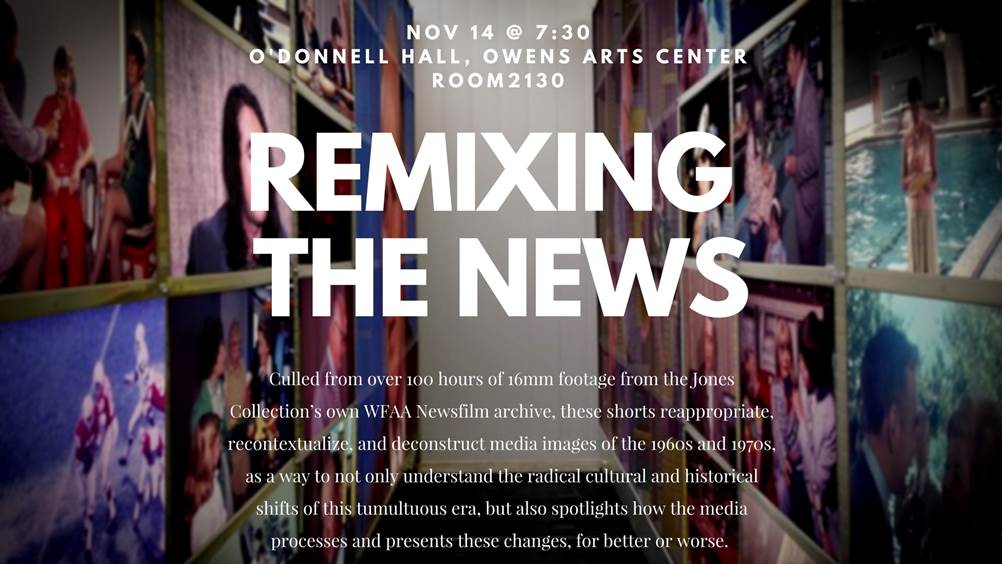
I’m really late announcing this event — WHICH TAKES PLACE TUESDAY, NOV. 14!! — but it sounds like something that people who are interested in Dallas history and/or video art would really enjoy: “Remixing the News,” presented by the G. William Jones Film and Video Collection at the Hamon Arts Library (SMU), in collaboration with KERA television and Dallas VideoFest.
So what is it?
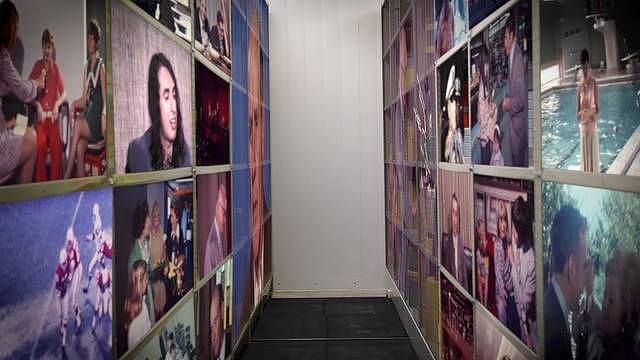
The Jones Collection at SMU includes the WFAA Newsfilm archive which contains what must be thousands of hours of 16mm film footage from the 1960s and ’70s, originally shot to be used as part of Channel 8 News broadcasts (this includes tons of B-roll footage shot to supplement the stories, but not always used in newscasts). As you can imagine, this is an unusual treasure trove of local news, history, and pop culture. I’ve dipped in and showcased some of the offerings in previous posts about the StateFair of Texas, and on Dallas appearances by Jimi Hendrix,Tiny Tim, and Glen Campbell.
Jeremy Spracklen, head curator of the Jones Collection, describes how this interesting local news archive was “reappropriated, recontextualized, and deconstructed” to become something altogether different:
We went in a unique direction in this — we did an experiment where we gave 10 local filmmakers a hard-drive with several hundred hours’ worth of footage on it and had them create their own interpretation of it. So, it is part history and part new video art.
I love this sort of thing. Eleven short films were produced by ten Texas filmmakers (Spracklen himself contributed two). Here are the films which will be shown Tuesday night, November 14:
“2,000 Hours in Dallas” by Jeremy Spracklen
“The Story of Jane X” by Christian Vasquez
“Dallas Circle” by Justin Wilson
“Lawmen & Cowpokes” by Gordon K. Smith
“History Lessons” by Steve Baker
“Beyond 10” by Carmen Menza
“Glass” by Madison McMakin
“Poofs are New” by Blaine Dunlap
“Divided” by Michael Thomas & Dakota Ford
“The Night in the Last Branches” by Michael Alexander Morris
“Echoes of the Past” by Jeremy Spracklen
The FREE advance screening of this collection (which will air at a later time on KERA’s long-running “Frame of Mind” series) will be held at SMU in the Owen Art Center on Tuesday, Nov. 14 (which might be TODAY!) — it begins at 7:30 p.m. After the screening, Bart Weiss, artistic director of the Video Association of Dallas, will host a Q&A with several of the filmmakers in attendance.
ALSO, Jeremy Spracklen tells me that those who are interested are invited to tour his very chilly subterranean film-archive lair after the event. So much Texas film history lurks beneath the SMU campus!
This event sounds great. Be there!
“Remixing the News”
Presented by the G. William Jones Film and Video Collection, Hamon Arts Library, in collaboration with KERA and VideoFest
O’Donnell Hall, room 2130, Owen Arts Center (see map below)
FREE to the public
***
Resources & Notes
More on this event can be found on the SMU website here and on the Hamon Arts Library blog here; the Facebook event page is here.
The event is free, and parking on the SMU campus after 7:00 p.m. is also free. Parking at SMU scares me, but here is what Jeremy advises: “The closest parking is in the meters in front of the Meadows building (they are not active after 7:00), the ‘U’ lot just south of the building, and, if those are full, the Meadows Museum parking garage is open — it is just down Bishop Blvd. and about a 5-minute walk.”
His map is below, with the parking areas highlighted in red. (Click to see larger image.)
More on the WFAA Newsfilm archive can be found in a Flashback Dallas post “How the News Got Made.”
One of the filmmakers who has contributed a film to this event is Blaine Dunlap — I have posted links to two of his films, both of which I really enjoyed: “Sunset High School on Film — 1970″ (which he made while he was a Sunset student) and “‘Sometimes I Run’: Dallas Noir — 1973”(about a philosophizing downtown street cleaner).
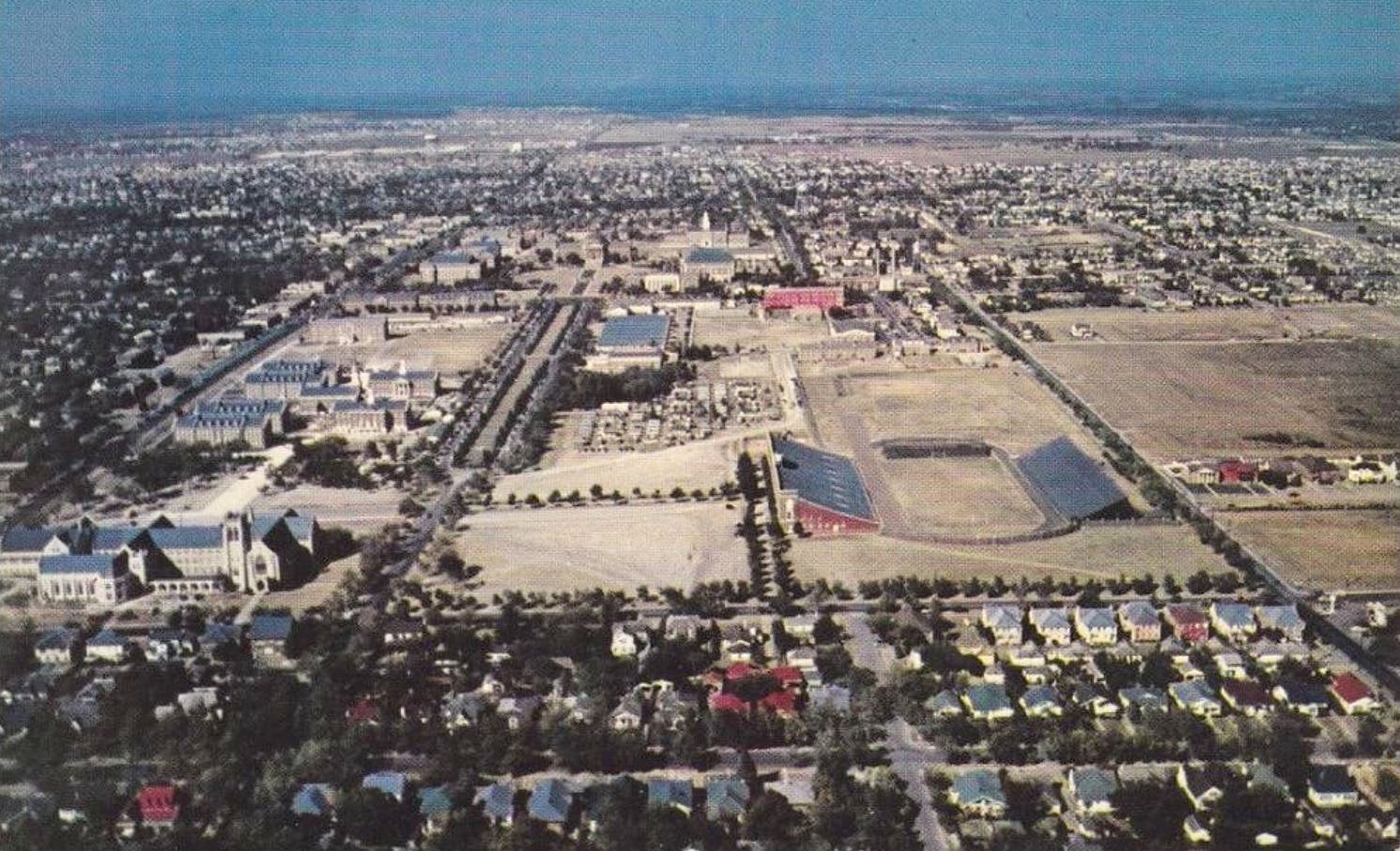
This undated postcard — captioned on the back “Southern Methodist University Campus and Owen [sic] Stadium from the Air, University Park, Dallas, Texas.”
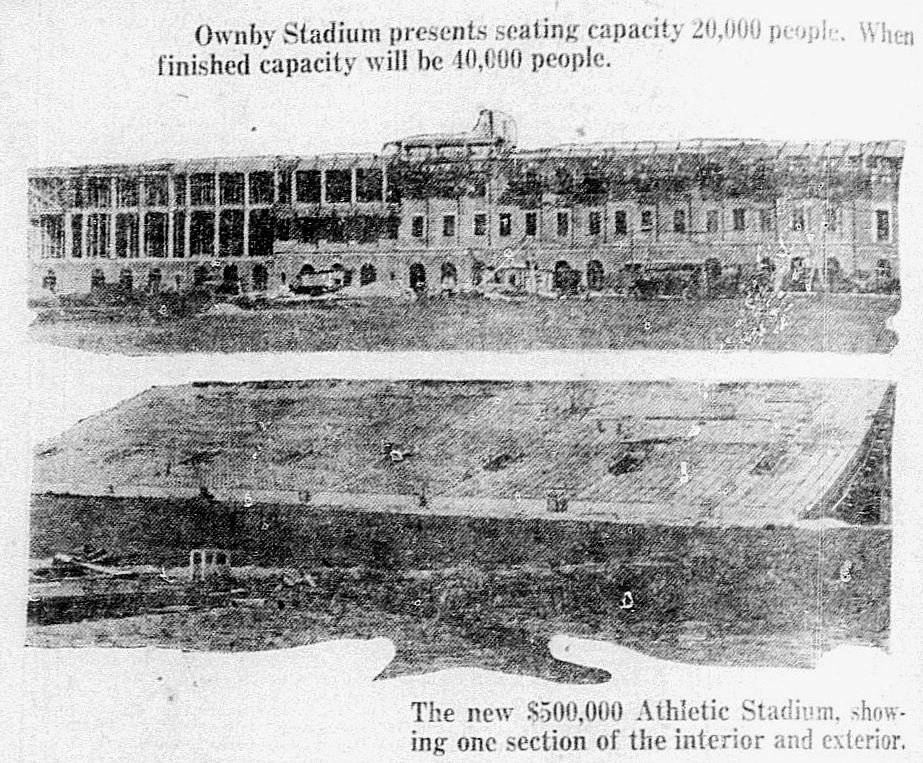
What many of us think of as Ownby Stadium began life as the much smaller Ownby Oval, named after SMU alumnus Jordan Ownby who had donated $10,000 toward the construction of the new stadium. The oval was dedicated on Oct. 10, 1923 during its inaugural football game in which the SMU Mustangs defeated the Austin College Kangaroos 10-3.
Info and specs can be found in this captioned drawing that appeared in The Dallas Morning News on July 23, 1923 (click to see larger image).
DMN, July 23, 1923
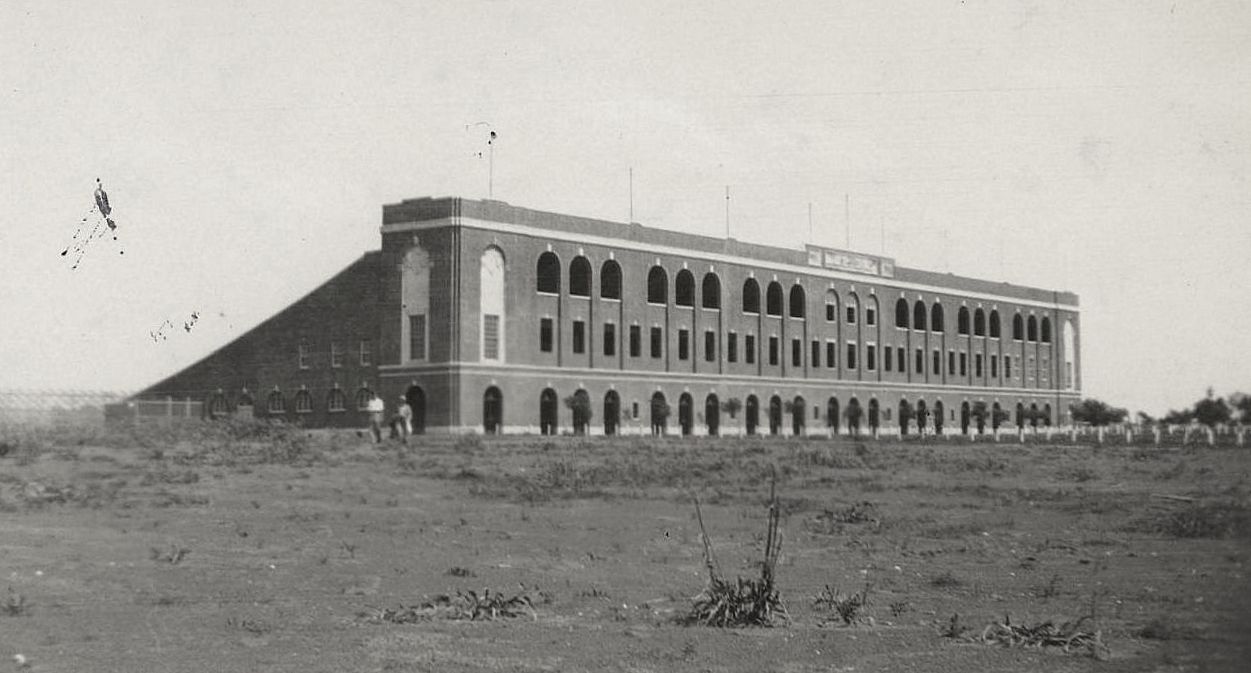
The first phase of Ownby Stadium — much enlarged and improved from the old 8,000-seat oval — was built in 1926. The two steel stands from the old field were moved to form the temporary east section of the new stadium, and a new $190,000 “west unit” (designed by Dallas architects DeWitt and Lemmon) was built, adding more than 12,000 seats. Jordan Ownby Stadium was formally opened on Oct. 2, 1926 during half-time ceremonies of the football game between SMU and Trinity University (SMU won, 48-0).
Here’s a scrubby, somewhat desolate photo from 1927, taken by Joseph Neland Hester, from the DeGolyer Library, Central University Library, Southern Methodist University; more info on this photo can be found here.
The new stadium was even featured in an ad for the University Park Development Co., which used the ever-expanding SMU campus as a selling point to attract potential investors.
Ad detail, Oct. 1926
And a postcard showing the stadium during a football game between SMU and TCU in 1926, a game which clenched the Southwest Conference championship for SMU. The back of this postcard (from the Park Cities Bank series) directs attention to “Oliver Mowatt’s dairy operation at the upper right — he rented the land along Airline Road from the Caruth family.”

 Love is in the air…


 Bright’s Drug Store, 6327 Hillcrest, University Park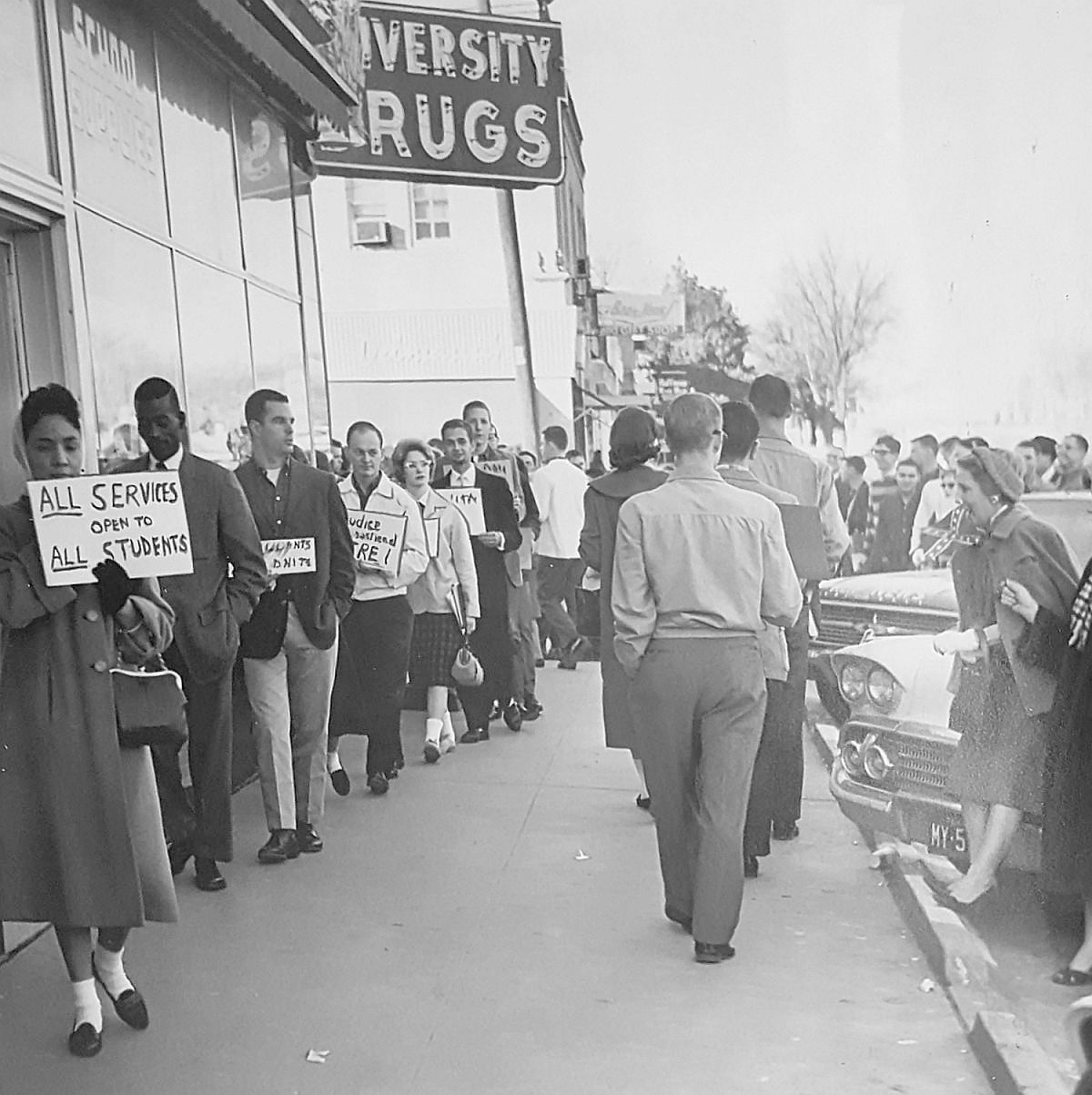





















 Flashback : Dallas