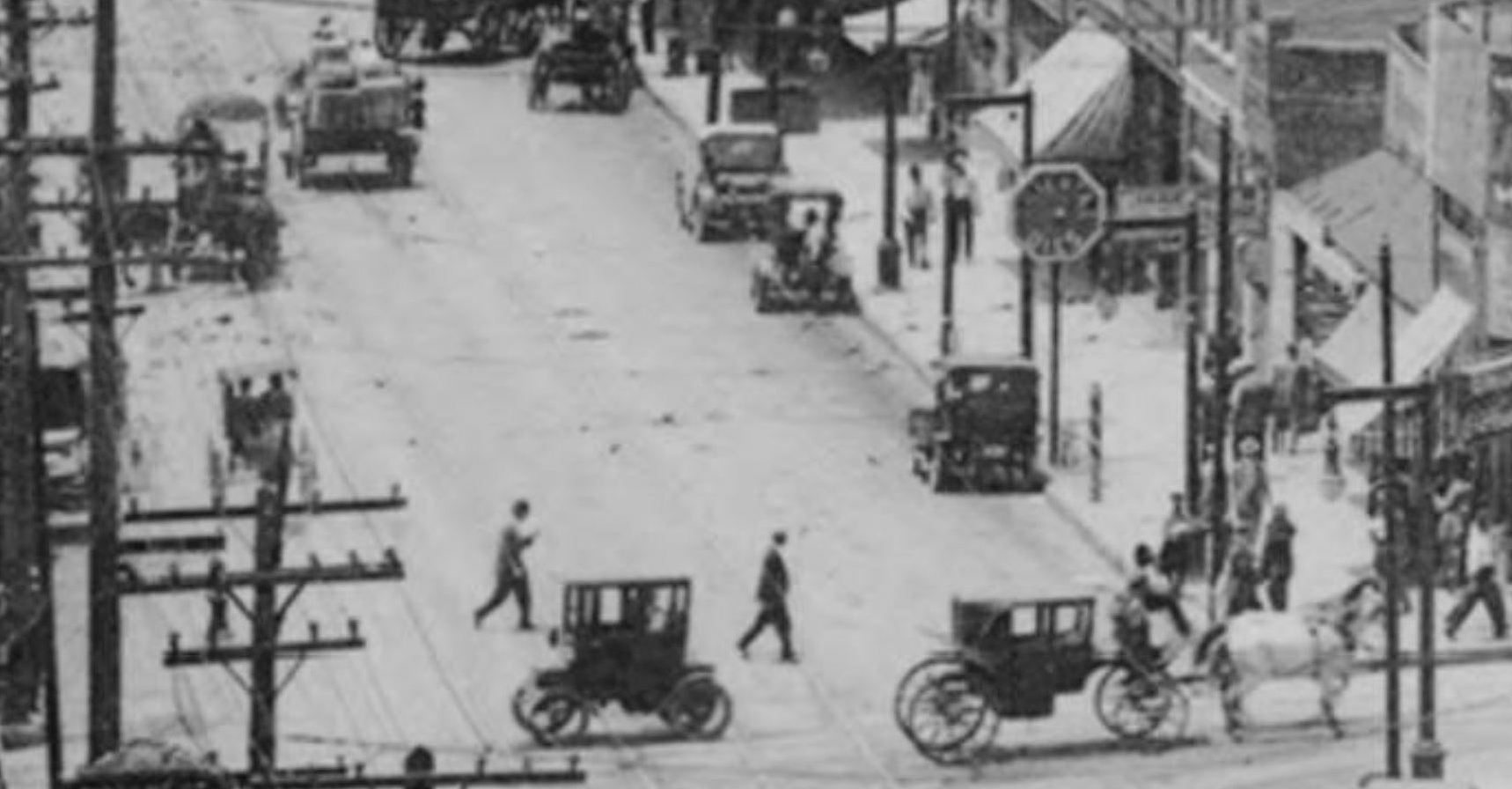
Flashback : Dallas

A Miscellany: History, Ads, Pop Culture

Category: Horse-drawn Conveyances

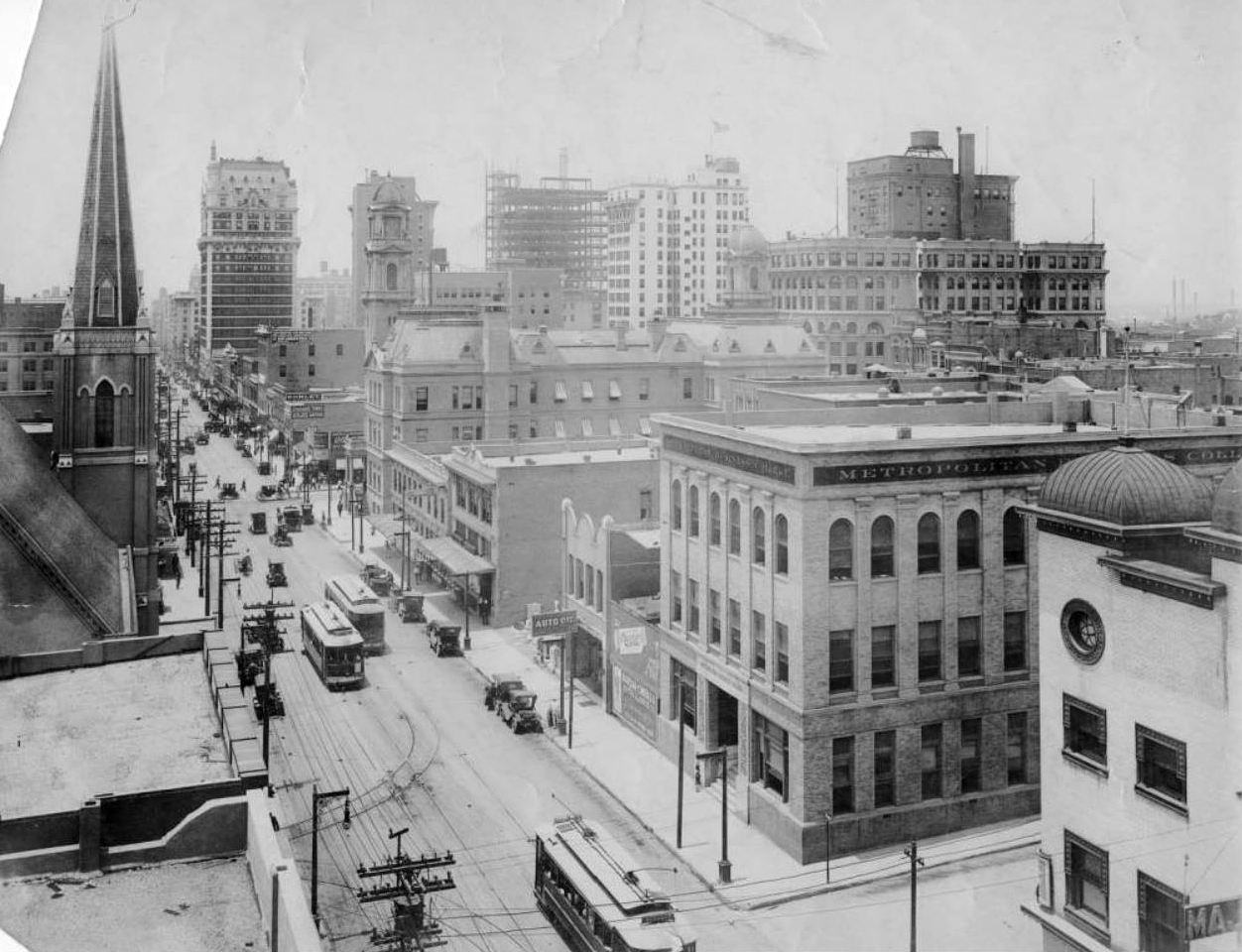
Main Street’s Varied Modes of Transport — ca. 1909

main-street_tsha-meeting-1977_portalPowered by oats, electricity, and gasoline…

by Paula Bosse

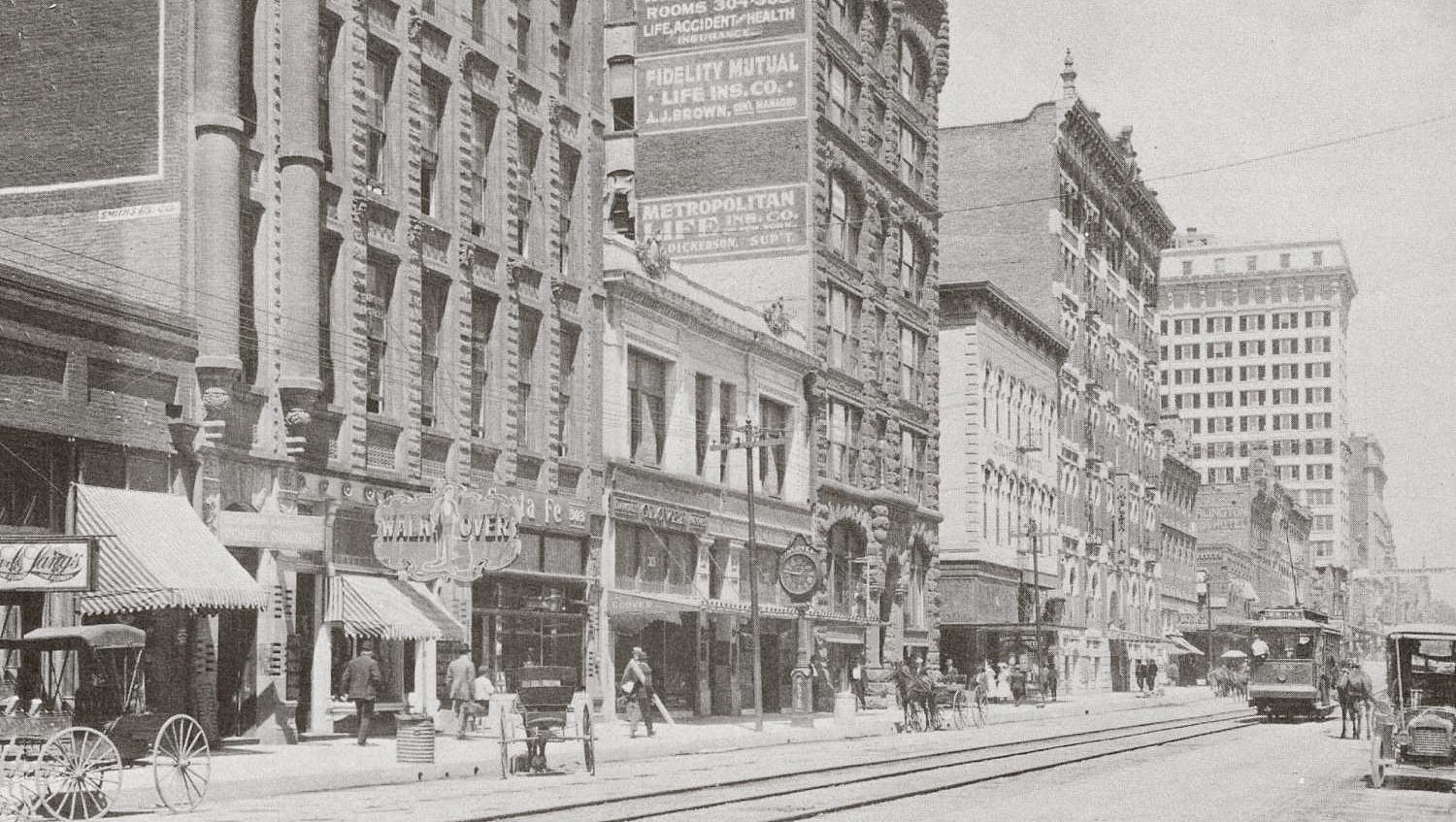
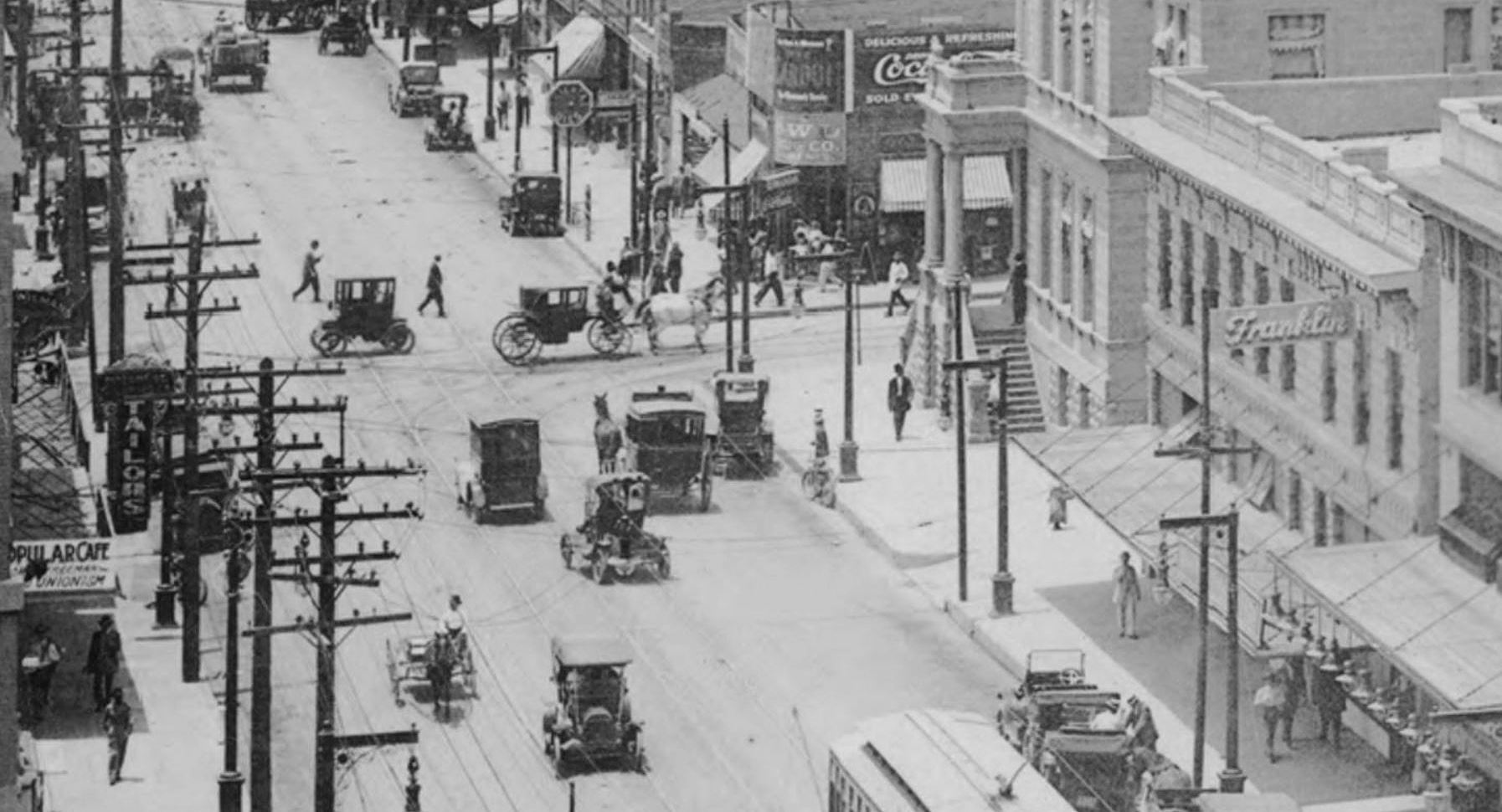
Here’s Main Street, looking east, from about Field. This is another of those odd photos showing streets shared by horse-drawn buggies and automobiles. And an electric streetcar. The days of those horses clip-clopping down Main Street were running out. (And I’m sure the horses were much relieved.)

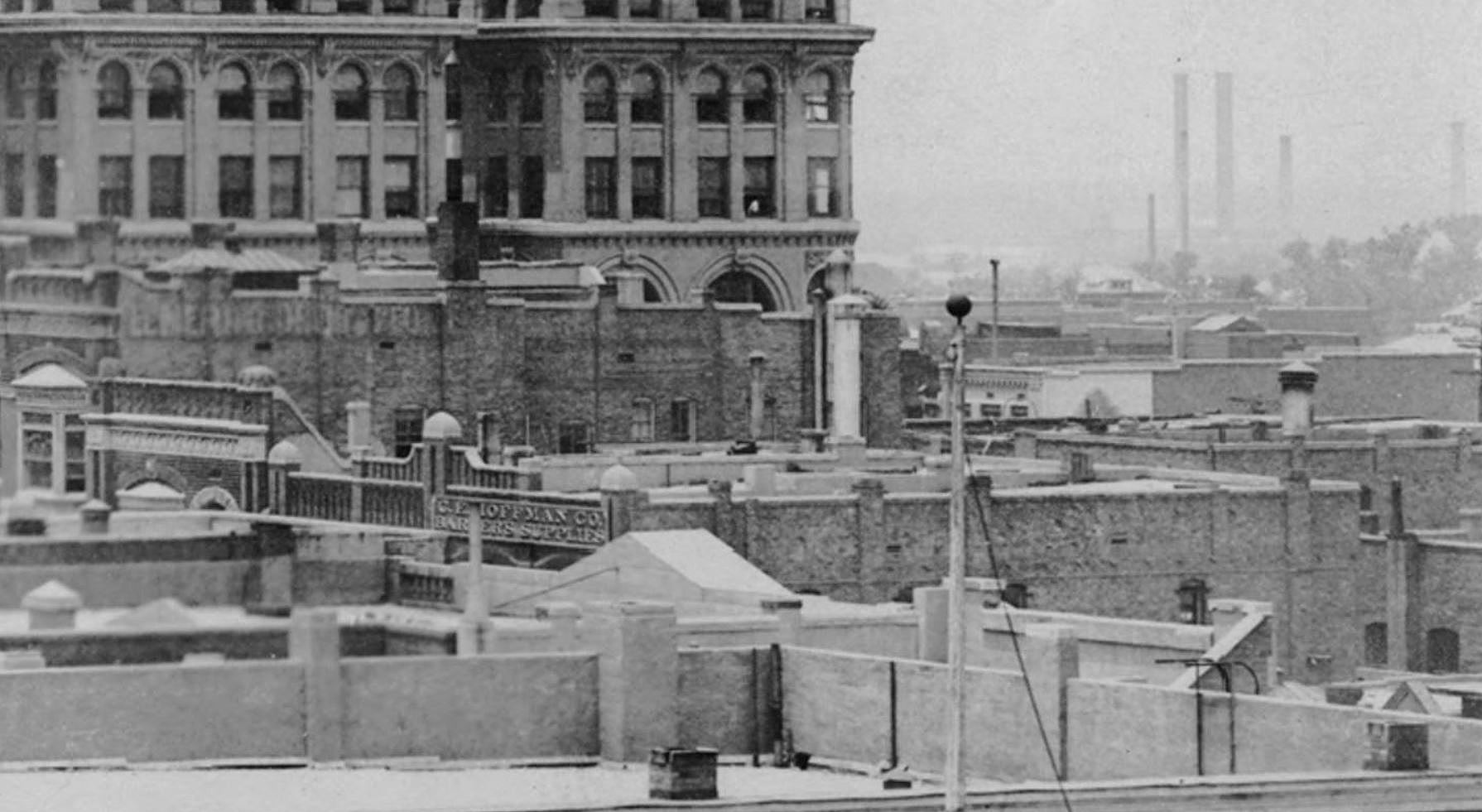
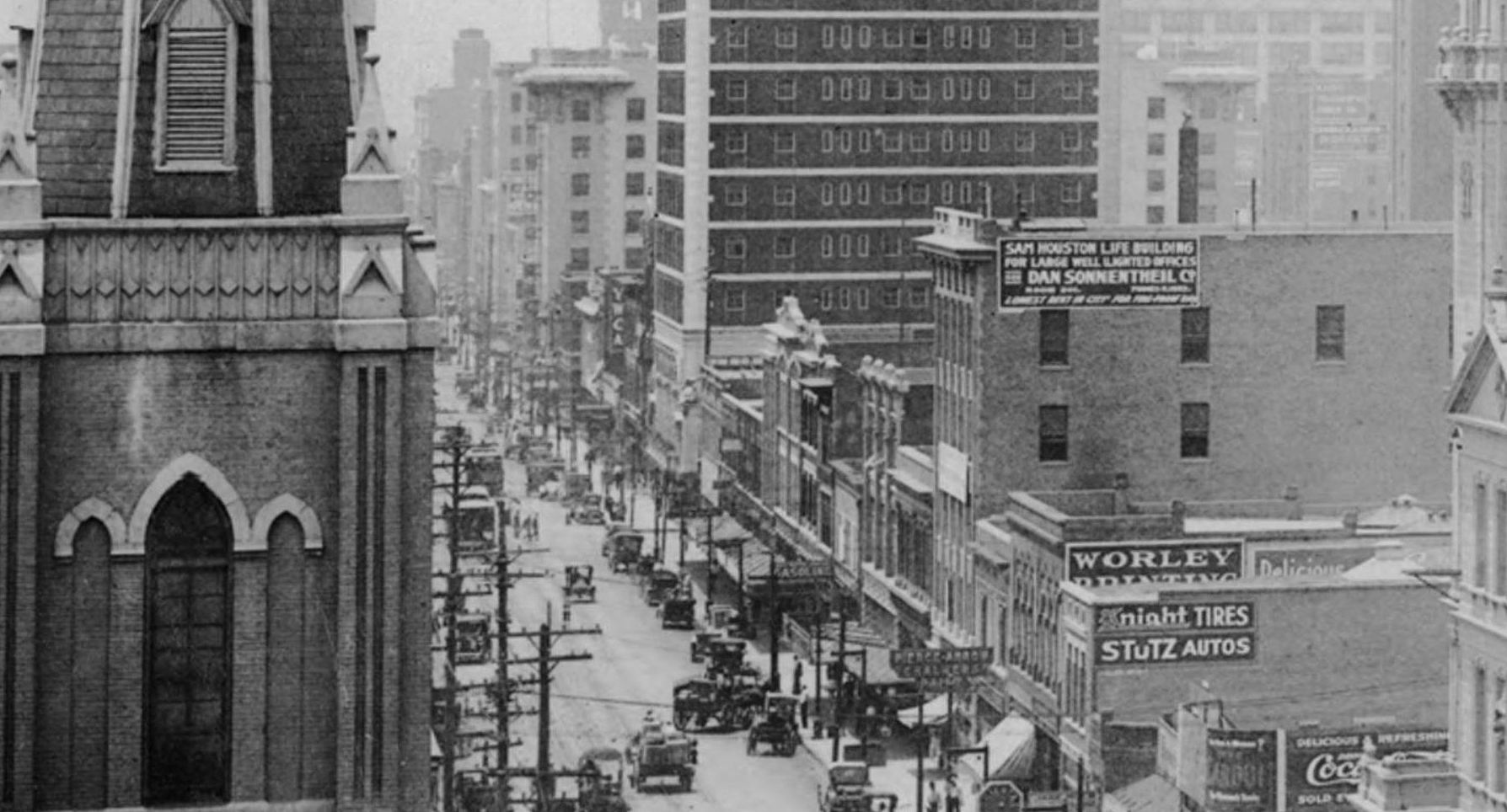
This photo was taken sometime between 1909, when the Praetorian Building opened (it’s the tall white building in the background, with the Wilson Building behind it at the other end of the block), and 1911, when the street numbers changed (you can see the address of “303” next to the words “Santa Fe” — the Gulf, Colorado & Santa Fe Railway offices were at 303 Main Street in the 1909 city directory).

Also seen in this photo are the tall Scollard Building (the one with the advertising painted on its side) and, one building away, the Imperial Hotel.

See what it looks like now, here.

***

Sources & Notes

Photo from a pamphlet for the Texas State Historical Association’s annual meeting in Dallas in 1977, found on the Portal to Texas History, here. Sadly, the photo was printed in sepia ink, which, argh. As always, if you know of a sharper image, please let me know!

*

Copyright © 2017 Paula Bosse. All Rights Reserved.

Wilson & Co., Their Clydesdales, and the Dallas Jaycees’ Safety Committee — 1951

wilson-and-co_clydesdales_ebay_1951Giant horses at the ready… (click for larger image)

by Paula Bosse

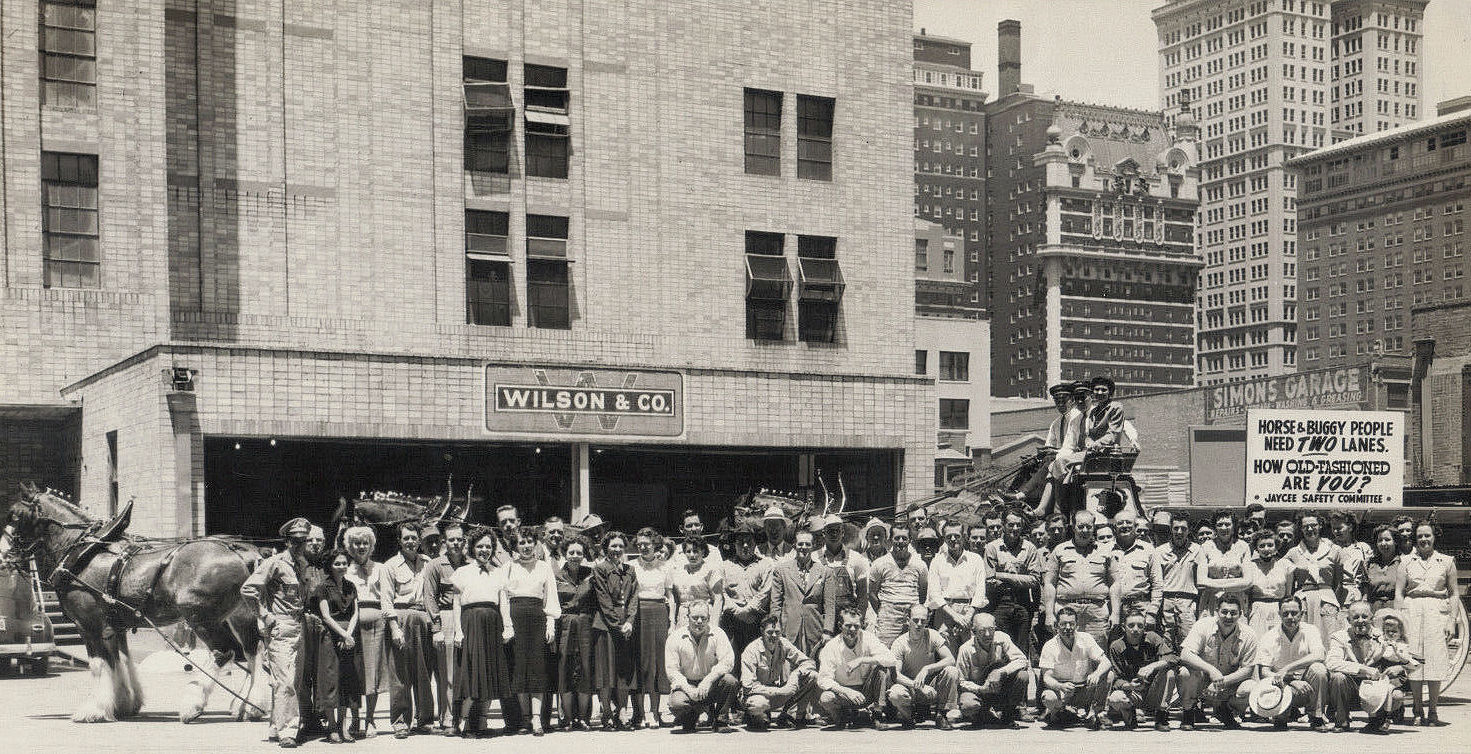
I came across this undated photo a couple of years ago on eBay, and it took a little bit of digging to come up with just what was going on here.

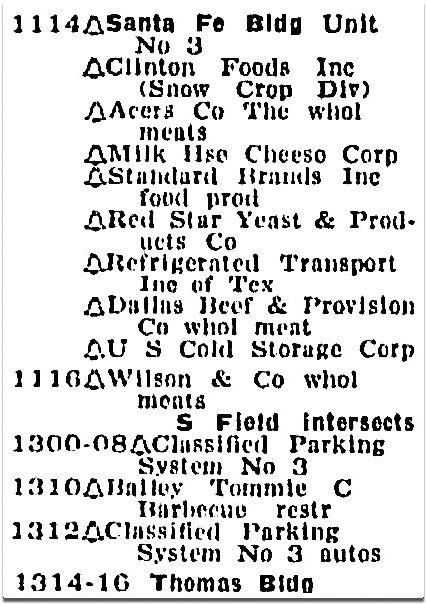
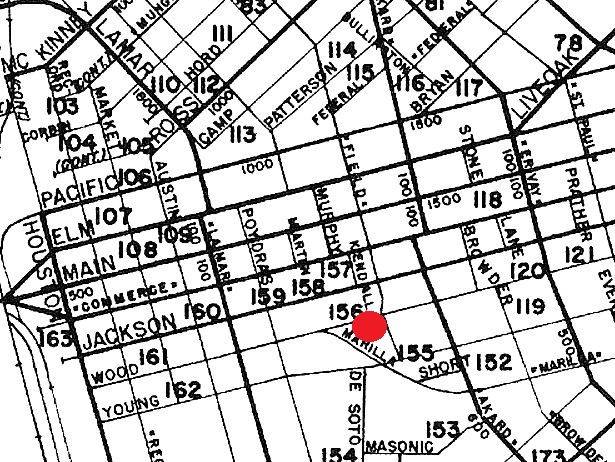
The Wilson & Co. meat packing and processing business began in Chicago in 1916 and quickly became one of the nation’s largest meatpackers, right up there with Armour and Swift. It expanded across the country, and one of its plants was in Dallas — in Unit 3 of the Santa Fe complex of buildings, located on Wood Street, between Field and what is now Griffin. (This building was later known as the Ingram Freezer Building and was demolished in 1988.) The Wilson company was acquired by Dallas-based LTV in 1967, and was later “spun off” from LTV in 1981

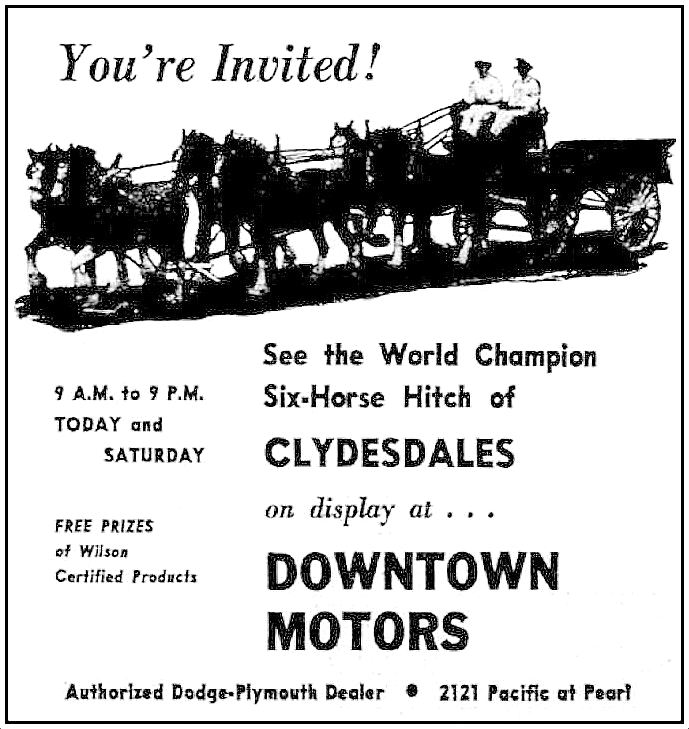
The Wilson company had owned a prize-winning “six-horse hitch” of Clydesdale horses since 1917, and they were sent around the country to promote the company and its line of processed meats. Not only were the horses prize-winners at livestock shows, they were also incredibly popular with the public. (They had made a huge splash at the Chicago World’s Fair in 1933, and it seems Budweiser took note of the promotional possibilities of the impressive animals, as the Anheuser-Busch Co. ended up buying the original team from Wilson that same year. So there were at least two competing Clydesdale teams clomping along the downtown streets of America, through at least the late ’60s.)

The photo above was taken when Wilson & Co.’s horse celebs visited Dallas in May, 1951. During their time in Big D they paraded through downtown at noontime and entertained workers on lunch breaks; at night they bunked in temporary stables in the service department of a Pacific Avenue car dealership. The photo at the top shows a public service event in which the Dallas Junior Chamber of Commerce promoted traffic safety in conjunction with the visiting horses. In the photo, the Wilson company employees (who have somehow managed to block the view of several thousand pounds of horseflesh and the huge 1890s wagon behind them) look happy during their little photo-op break from work. And in the background, we see the Adolphus Hotel (…built by the man behind Budweiser beer…), the Magnolia Building, and the Baker Hotel.

All this kind of makes me want a ham sandwich and a bottle of beer…. 

wilson_clydesdales_amazon
via Amazon

wilson-clydesdales_dmn_051151
May, 1951

wilson_1953-directory
Wood Street, Dallas city directory, 1953

wilson-and-co_1952-mapsco
1952 Mapsco

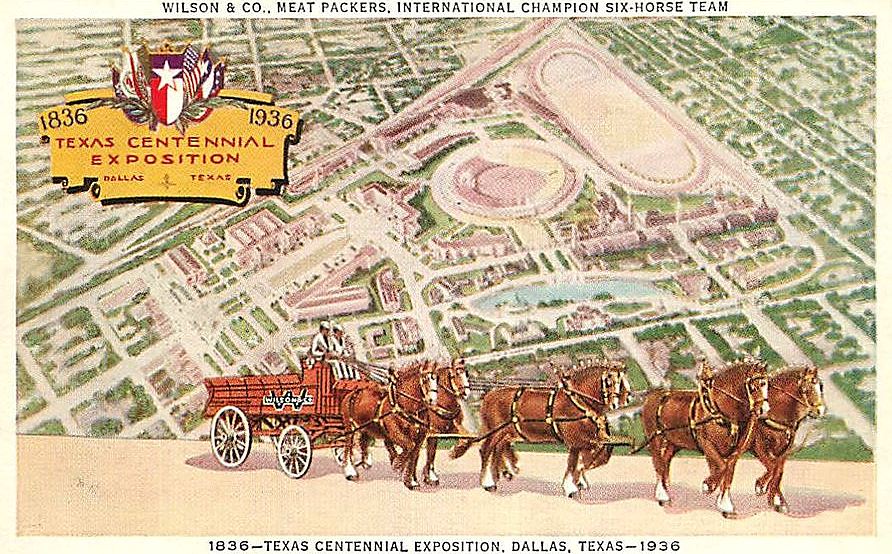
Below, a postcard advertising the appearance of the Wilson “Champion Six-Horse Team” at the 1936 Texas Centennial:

wilson-co_clydesdales_1936_ebay

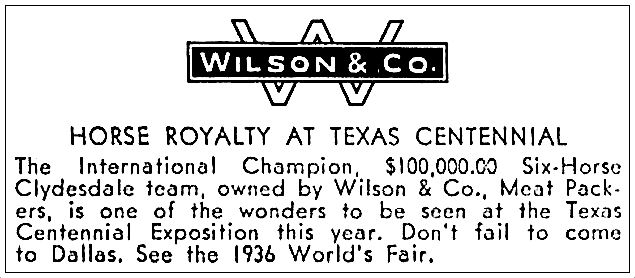
wilson-co_clydesdales_1936_ebay_back

***

Sources & Notes

Photo found on eBay in 2014; on the back is the stamp of photographer Denny Hayes.

Texas Centennial postcard from eBay.

See an unimpeded view of the famous six-horse team of Clydesdales (each of which weighed, on average, two thousand pounds) in a 1954 Cedar Rapids Gazette photo, here.

A couple of interesting tidbits about the Wilson company and about the horses:

  1. Thomas E. Wilson, the founder of the meatpacking company also founded Wilson Sporting Goods
  2. As a celebratory nod to the end of Prohibition, the famed Budweiser Clydesdales were purchased from Wilson in 1933 — this was Wilson’s original team from 1917. (Clydesdale horses generally live for 20-25 years.)

Pictures and clippings are larger when clicked.

*

Copyright © 2016 Paula Bosse. All Rights Reserved.

Dallas Fire Stations — 1901

fire-dept_engine-co-3_gaston-and-college_1901Fire horse in Old East Dallas relaxing between calls (click for larger image)

by Paula Bosse

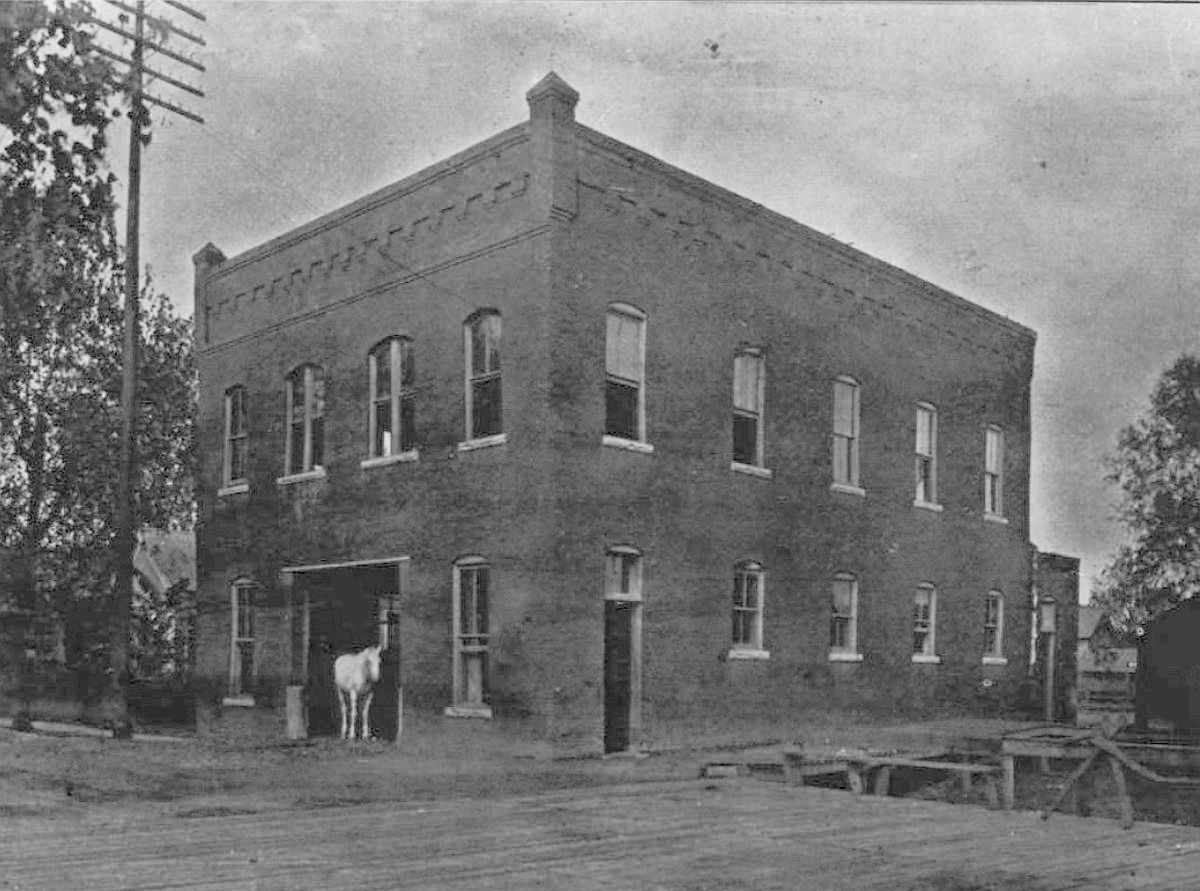
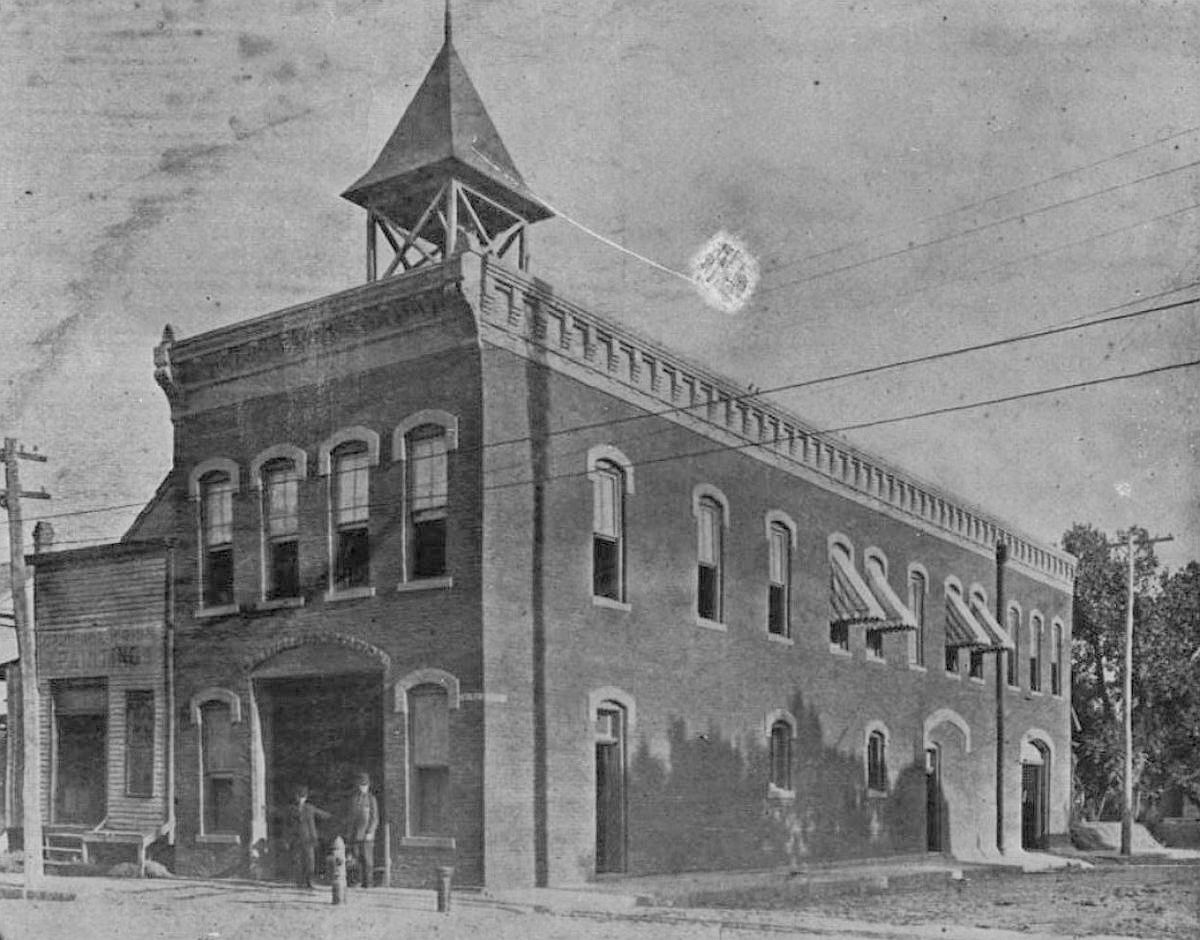
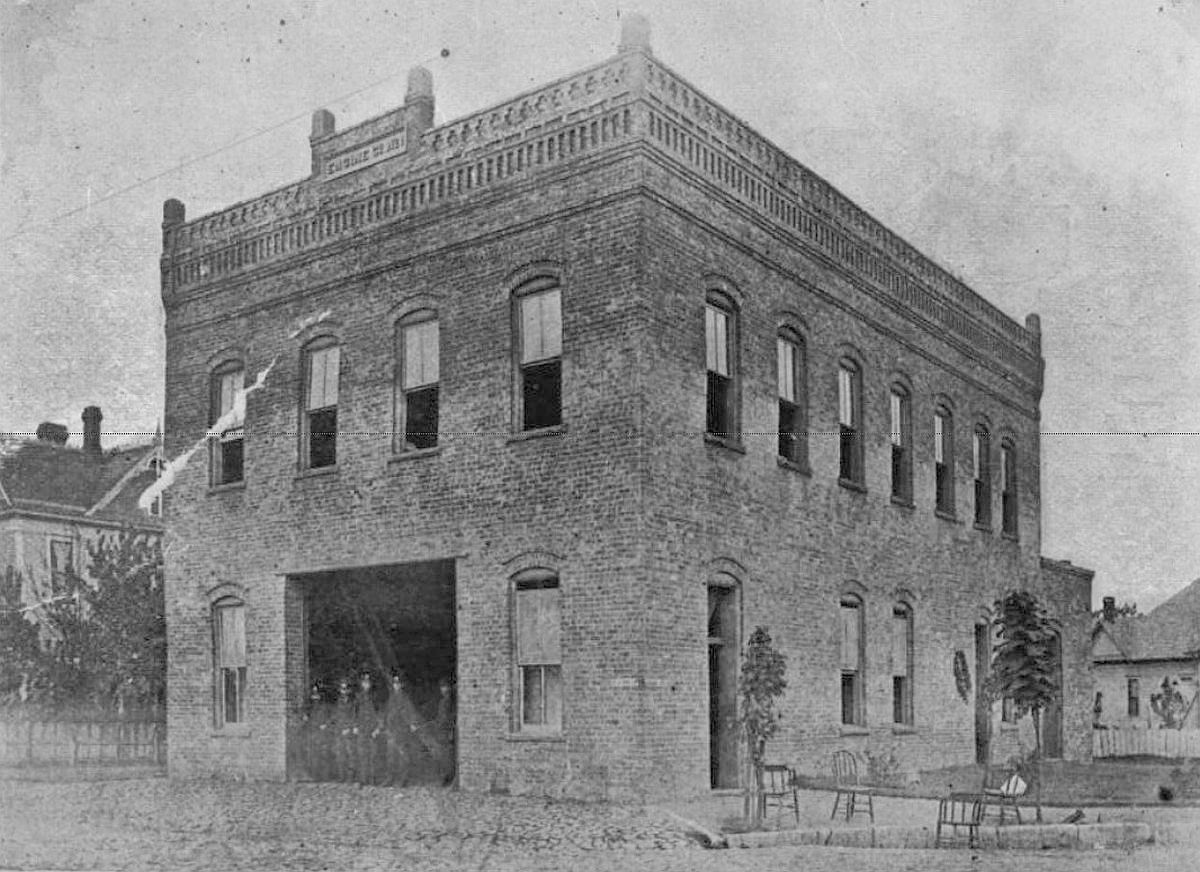
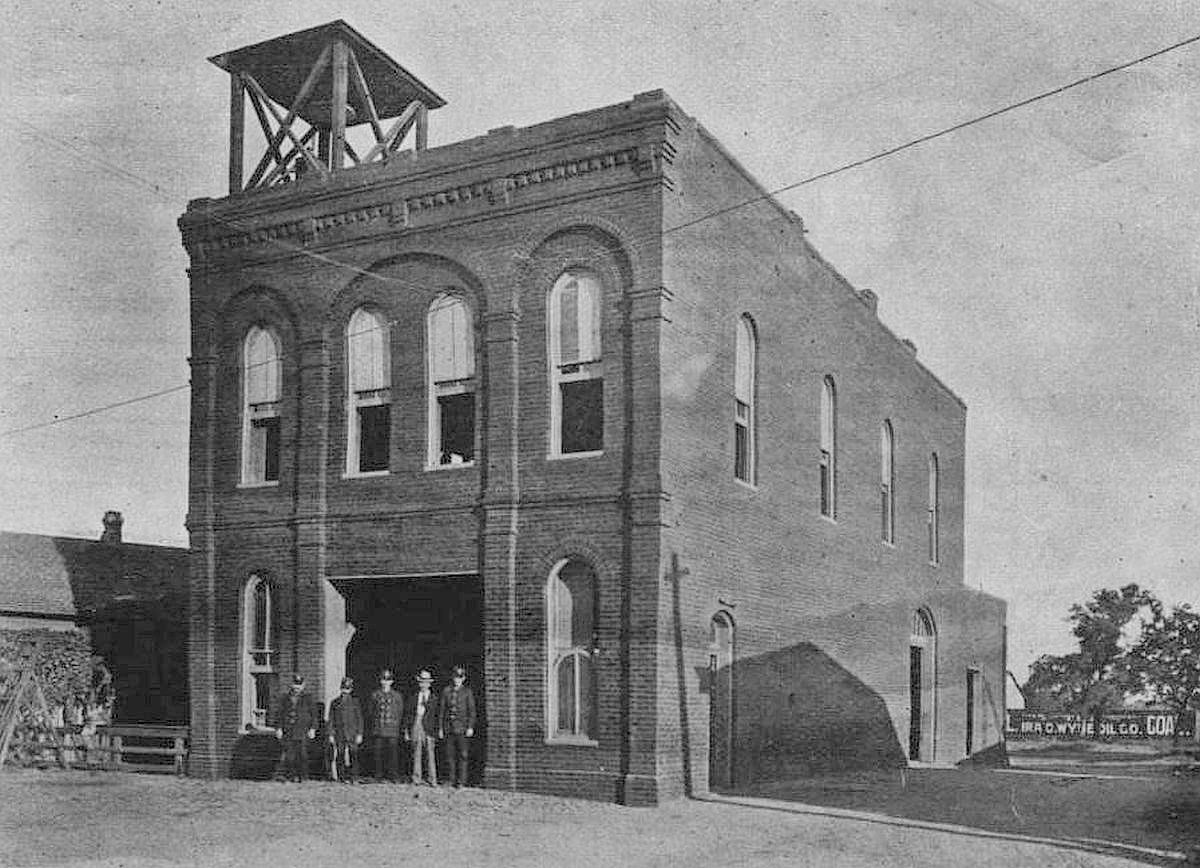
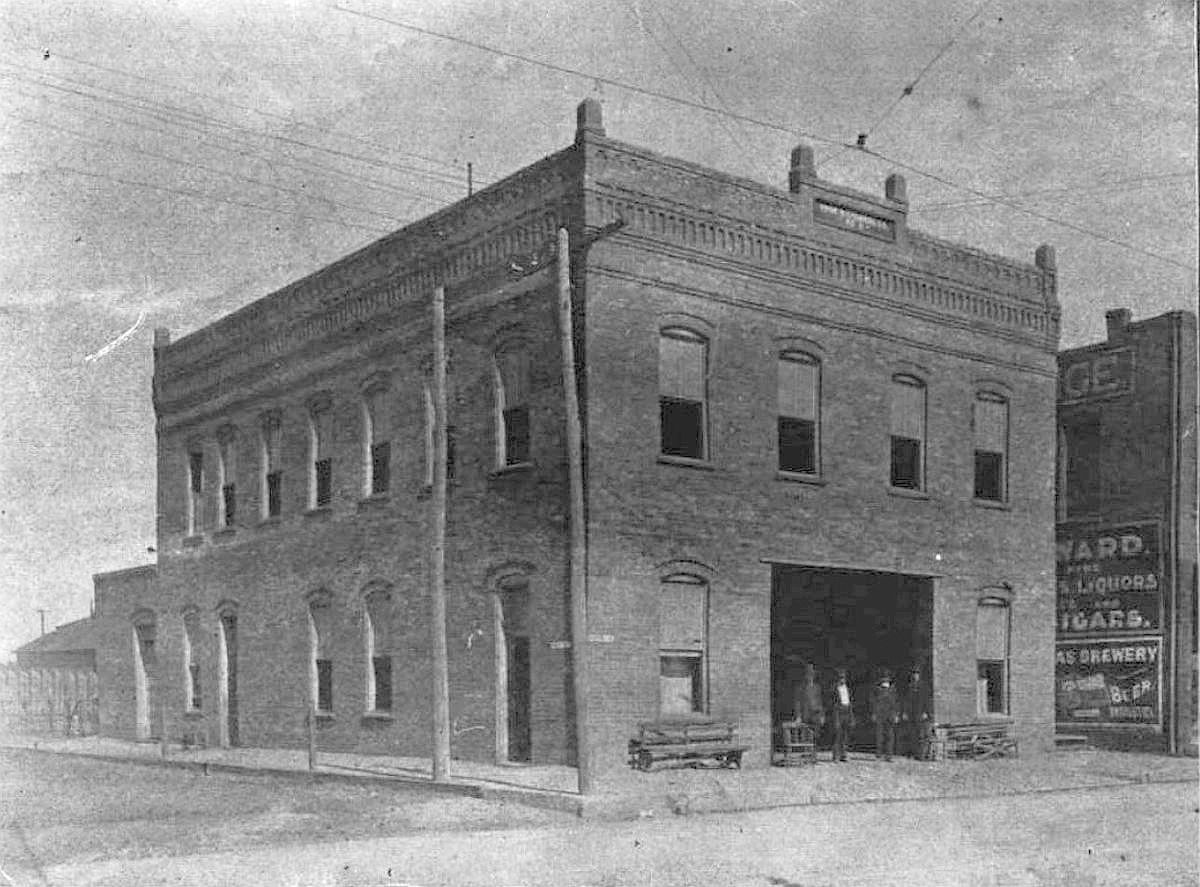
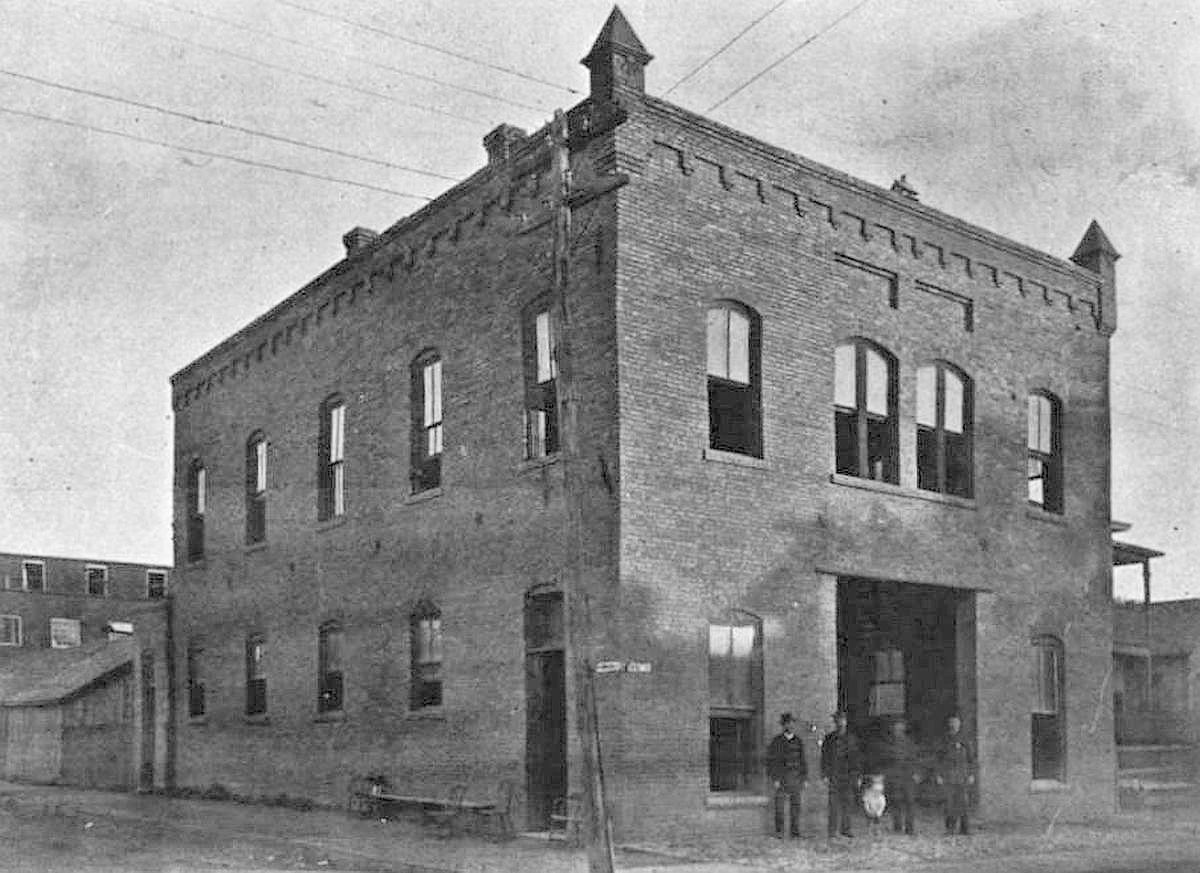
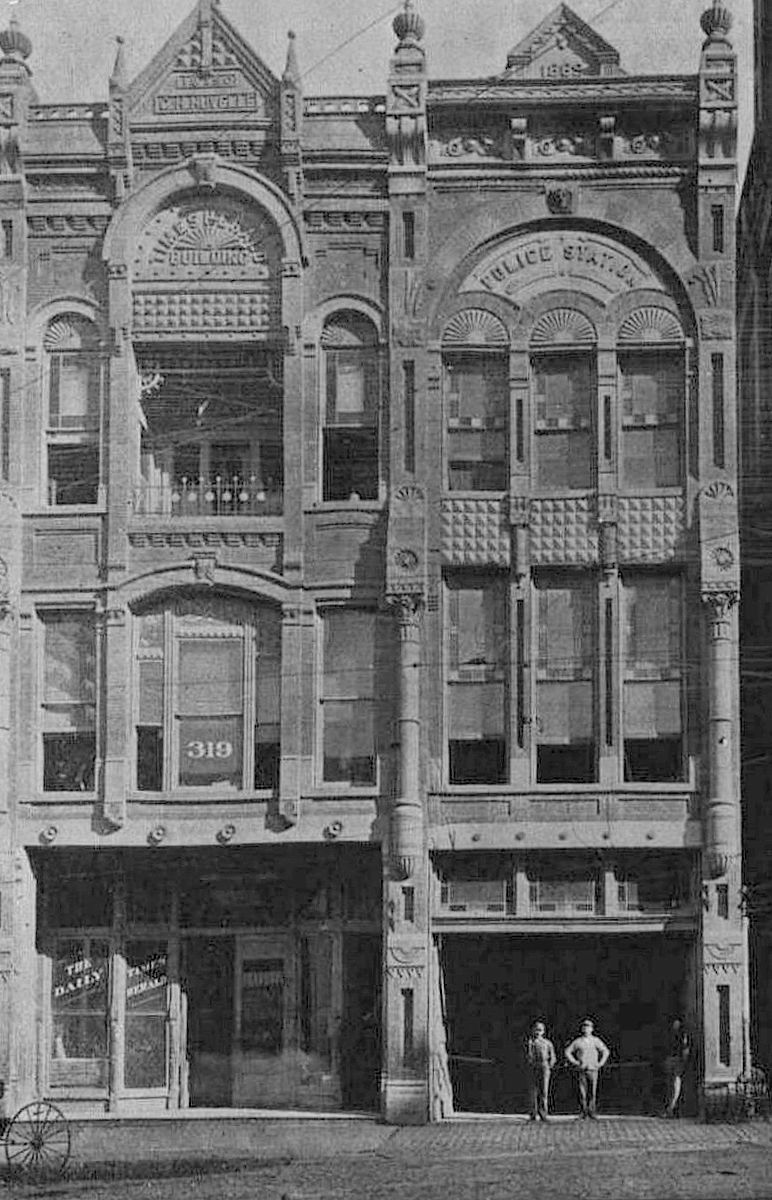
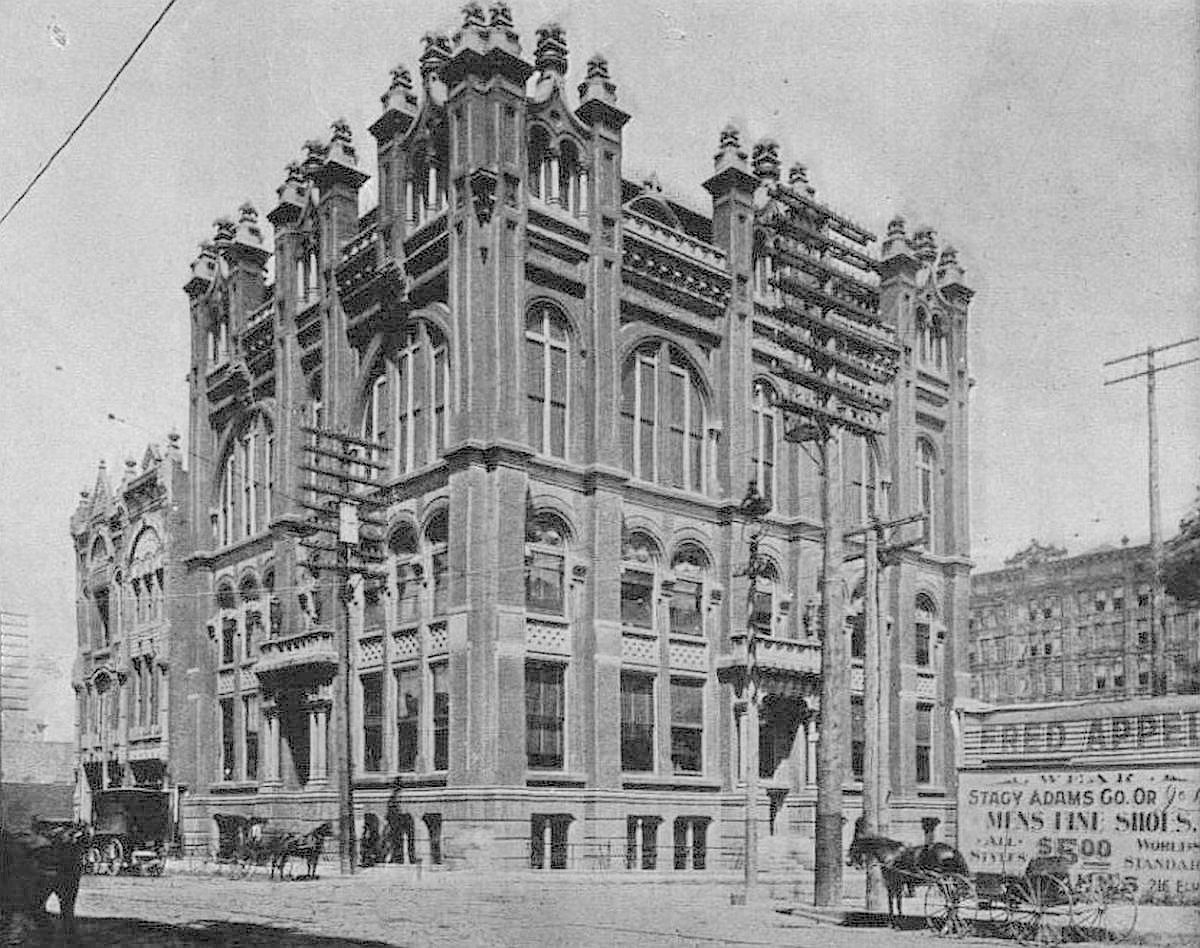
A few turn-of-the-century photos of Dallas’ fire stations, from a 1901 photographic annual. These seven firehouses were built between 1882 and 1894. One of these buildings is, miraculously, still standing on McKinney Avenue, in the heart of Uptown.

*

At the top, Engine Co. No. 3, at Gaston and College Avenues. In service: January, 1892. Equipment: an Ahrens Steamer, capacity 750 gallons per minute, and a Cooney Hose Carriage. See it on a 1905 Sanborn map here; see the present location (Gaston and Hall) here. (And since I just used it a few days ago, here’s a 1921 Sanborn map, showing Mill Creek running right through the property.)

*

fire-dept_central-station_main-harwood_1901

Above, Central Fire Station, Main and Harwood Streets. In service: October, 1887. Equipment: a double-sixty-gallon Champion Chemical Engine and a City Hook and Ladder Truck. See it on a 1905 Sanborn map here; see the present location here (the site of the old City Hall/Municipal Building).

*

fire-dept_mckinney-leonard_engine-co-1_1901

Engine Co. No. 1, McKinney Avenue and Leonard. Equipment: an Ahrens Steamer, 750 gallons per minute, and a Cooney Hose Carriage. In service: August, 1894. See it on a 1905 Sanborn map here; see the present location here. NOTE: This is the only one of these firehouses still standing. I wrote about it here.

UPDATE: Well, sort of. Thanks to a comment on Facebook, I researched this station a bit more and found that it was rebuilt and modernized at the end of 1909 — using materials from the original building seen above, built on the same plot of land. So instead of being 122 years old, the building on McKinney today is a mere 106 years old.

*

fire-dept_commerce-hawkins_engine-co-2_1901

Engine Co. No. 2, Commerce and Hawkins Streets. In service: January, 1882. Equipment: an Ahrens Steamer, capacity 750 gallons per minute, and a Cooney Hose Carriage. See it on a 1905 Sanborn map here; see a shot-in-the-dark guess at a present location here.

*

fire-dept_ervay-kelly_hose-co-2_1901

Hose Co. No. 2 and Chemical Co. No. 2, Ervay Street and Kelly Avenue. In service: September, 1894. Equipment: a Cooney Hose Carriage and double-sixty-gallon Champion Chemical Engine. See it on a 1905 Sanborn map here; see the present location here (right behind where the word “Cedars” is).

fire-dept_bryan-hawkins_hook-and-ladder-1_1901

Hose Co. No. 1 and Hook and Ladder Co. No. 1, Bryan and Hawkins Streets. In service: January, 1893. Equipment: Preston Aerial Truck with 75-foot extension ladder, and a Cooney Hose Carriage. See it on a 1905 Sanborn map here; see the approximate present location here.

*

fire-dept_commerce-akard_engine-co-4_1901

Engine Co. No. 4, Commerce and Akard Streets, next door to the City Hall. In service: August, 1894. Equipment: an Ahrens Steamer, capacity 1,100 gallons per minute, and a Cooney Hose Carriage. See it on a 1905 Sanborn map here; see the present location here (just out of frame at the right was the City Hall; the block is now the site of the Adolphus Hotel).

*

city-hall_1901_fire-dept-annual_portal

City Hall, Commerce and Akard Streets, now the location of the Adolphus Hotel. Half of the shorter building to the left housed the police department and Engine Co. No. 4.

*

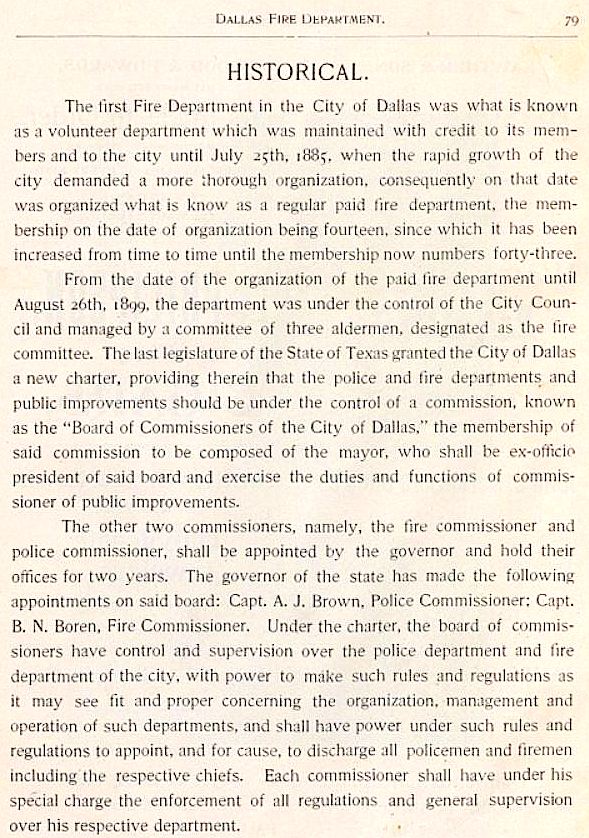
The “Historical” page from the book (click to read).

fire-dept-hist_dallas-fire-dept-annual_1901_portal

**

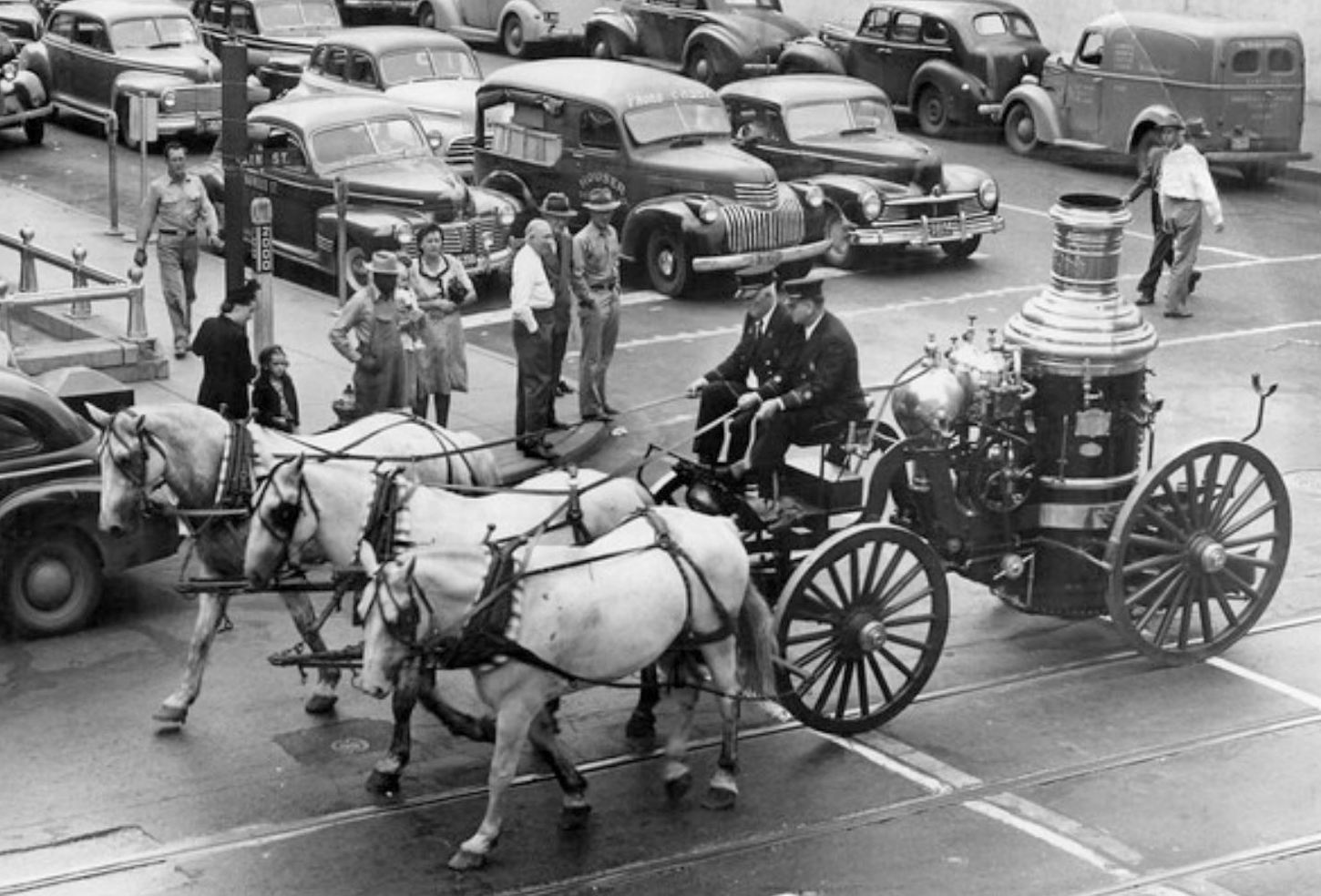
Since there is no sign of the actual equipment in these photos, here’s what horse-drawn steam engines (Ahrens steamers) looked like at this time. (Photo from the Wisconsin Historical Society).

fire-steam-engine_wisconsin-hist-soc

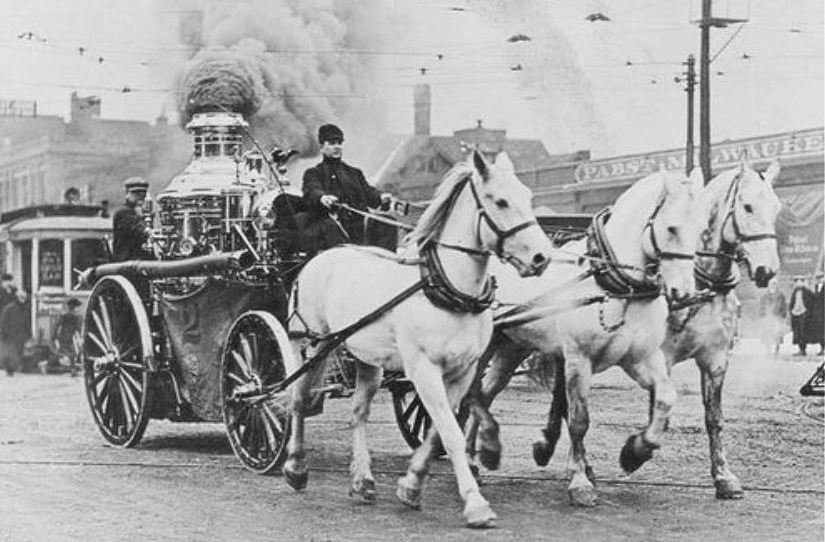
UPDATE: I found this photo on Flickr, showing equipment from those early days being driven through the streets of Dallas during a fire prevention parade.

fire-department_pumper_flickr_coltera

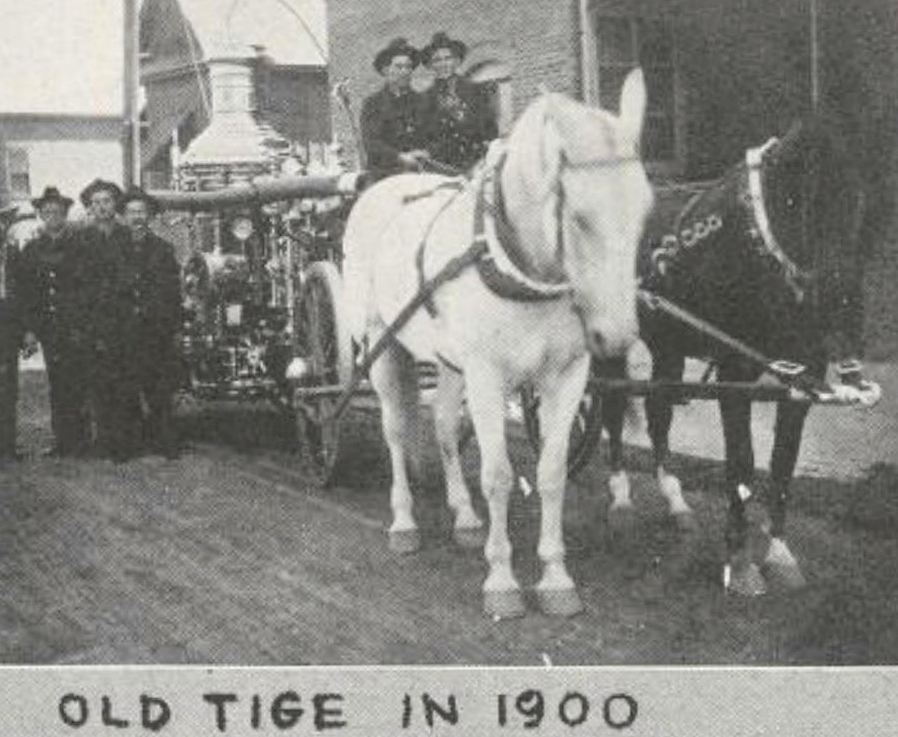
UPDATE: Lo and behold, a photo from 1900 of Old Tige, the 600 gallons-per-minute steam pumper, built in 1884, which was in service with the Dallas Fire Department until 1921. (Old Tige can be seen in the Firefighters Museum across from Fair Park.) Found at the Portal to Texas History.

old-tige_1900_fire-dept-bk_1931_portal

***

Sources & Notes

Photos by Clifton Church, from the Dallas Fire Department Annual, 1901, which can be viewed in its entirety on the Portal to Texas History, here.

A contemporary map of Dallas (ca. 1898) can be viewed on the Portal to Texas History site, here.

More Flashback Dallas posts on historic Dallas firehouses can be found here.

All photos larger when clicked.

*

Copyright © 2016 Paula Bosse. All Rights Reserved.

“Melons on Ice” — 1890s

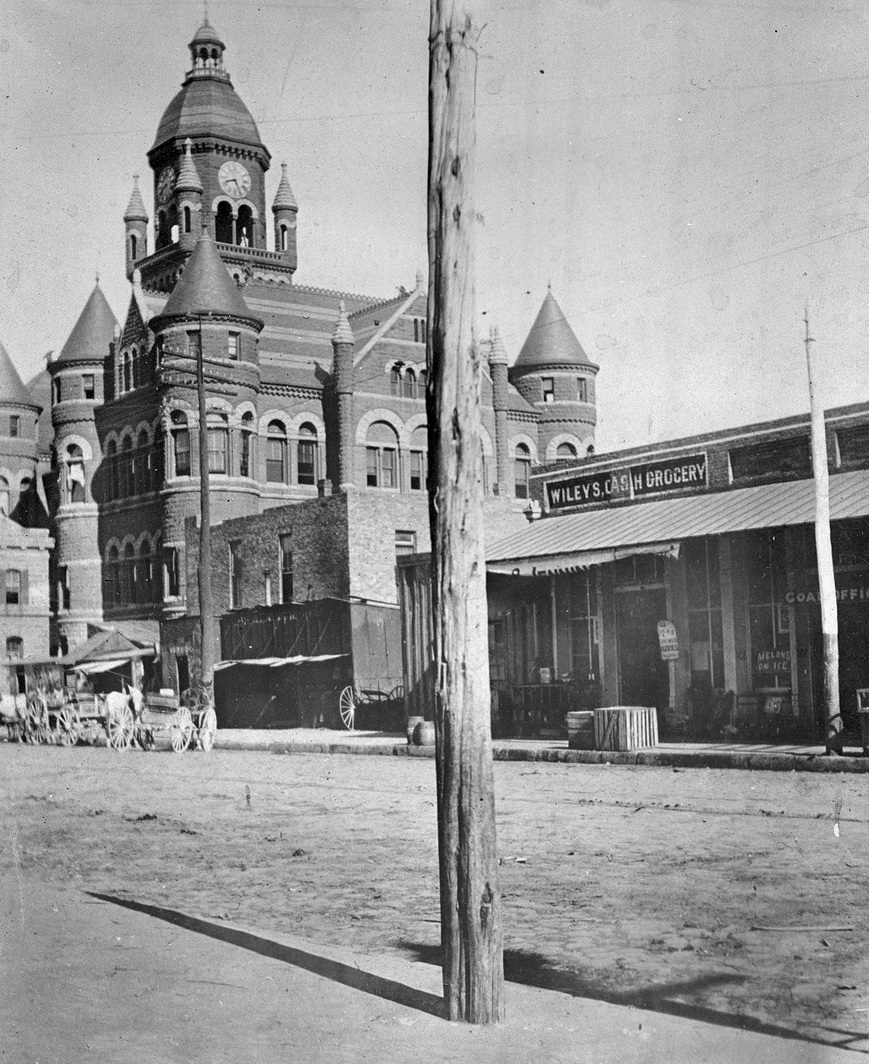
wiley-grocery_1890s_haskins-coll_utaA sleepy little town…

by Paula Bosse

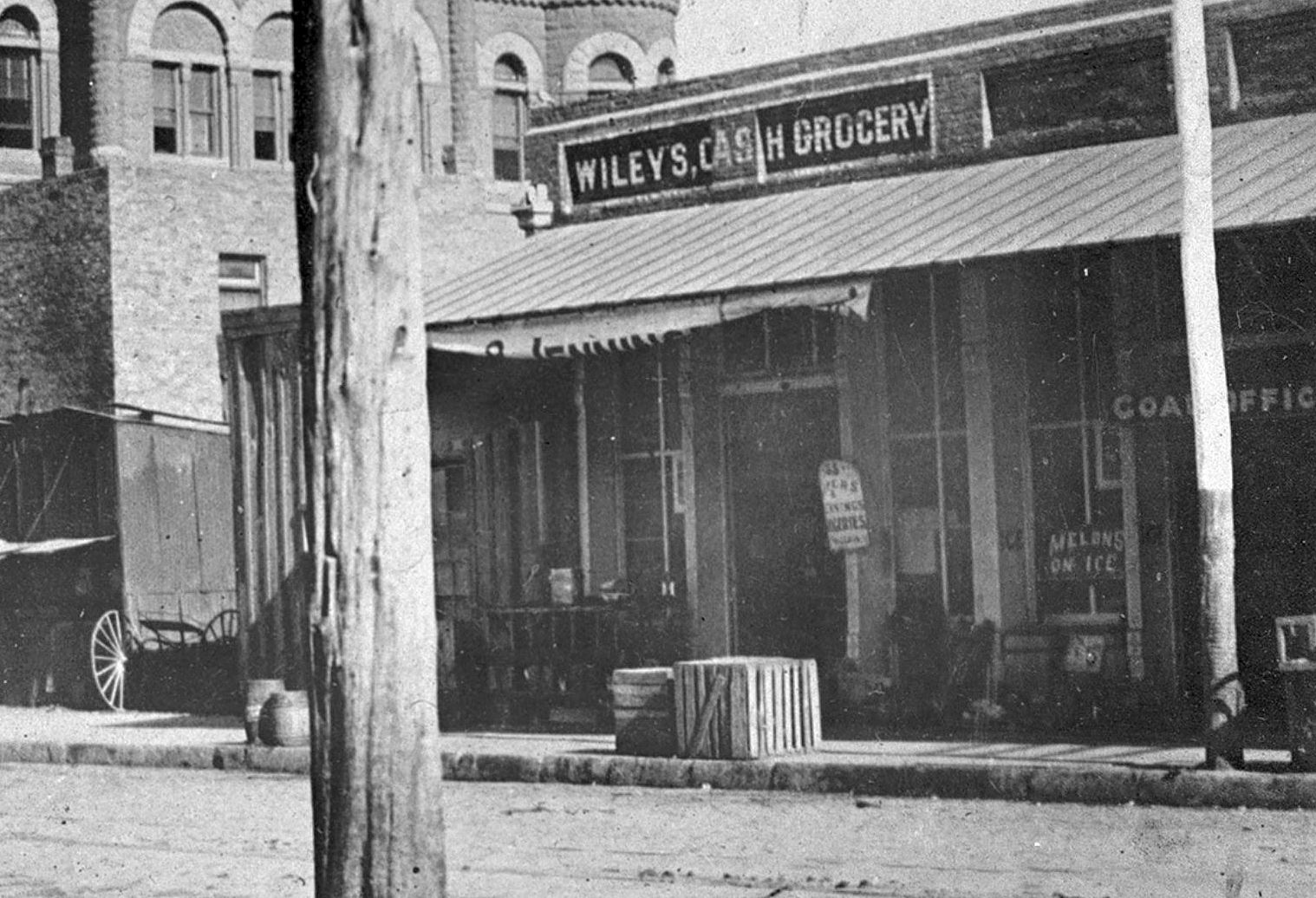
It looks hot in this photo from the 1890s. I bet those “Melons On Ice” in front of Wiley’s grocery store really hit the spot.

wiley-grocery_melons_det-1

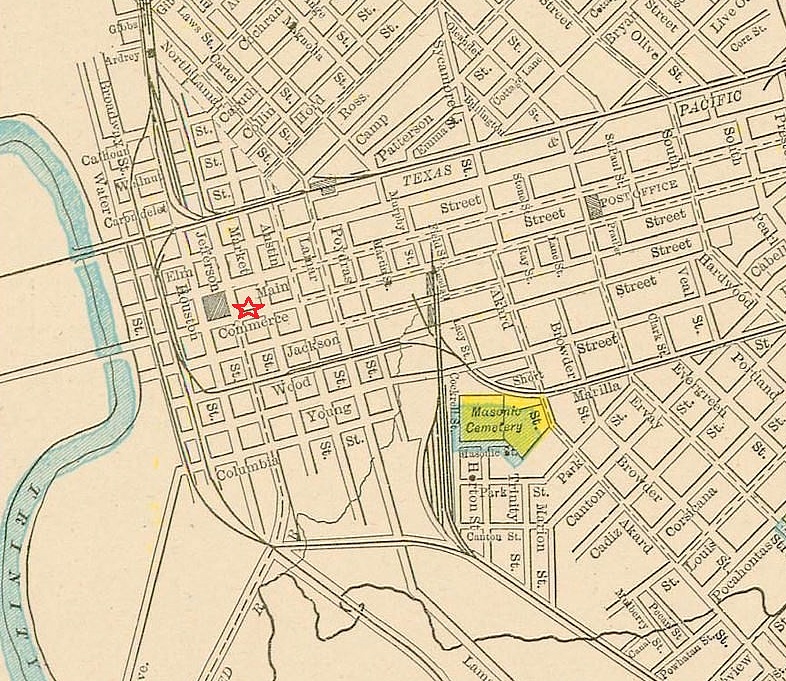
I love this photo. The Wiley Cash Grocery was in business for only a few years — from about 1892 to 1896. It was located at 153 Commerce, one block east of the brand-new county courthouse.

wiley-grocery_1893-directory1893 Dallas directory

wiley-grocery-1893-map
1893 map of Dallas, det.

The business was owned by Anna E. Wiley (~1862-1930) and her husband Jesse P. Wiley (~1863-1942). When they arrived in Dallas around 1887 their address in the city directory was simply “¾ mile w of river.”

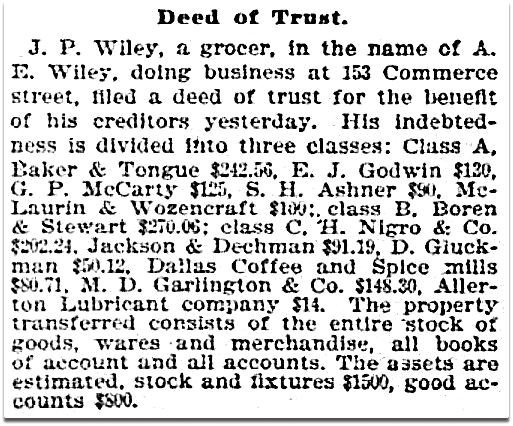
Even though the store seems to have been in Anna’s name, Jesse was forced to file a deed of trust in 1896 when the store was faced with crippling debt. The Wileys owed approximately $1,545 to creditors (about $45,000 in today’s money), but their assets were only about $1,500, plus $800 of “good accounts.” Unsurprisingly, the store was gone by 1897. (Click article below to see a larger image.)

1896-wiley-grocery_dmn_021596
Dallas Morning News, Feb. 15, 1896

This photo captures such an odd view of downtown Dallas — it’s hard to believe that the site once occupied by the Wiley store is now the site of the John F. Kennedy Memorial. A present-day view can be seen here.

***

Sources & Notes

This photo is from the Squire Haskins Photography, Inc. Collection, University of Texas at Arlington Libraries; additional info is here. See this great photo REALLY big here.

The map is a detail from an 1893 map of Dallas from the collection of the Texas State Library and Archives Commission.

*

Copyright © 2016 Paula Bosse. All Rights Reserved.

The Mail Wagon

mail-wagon_dallas-jewish-historical-societyPhoto: Dallas Jewish Historical Society

by Paula Bosse

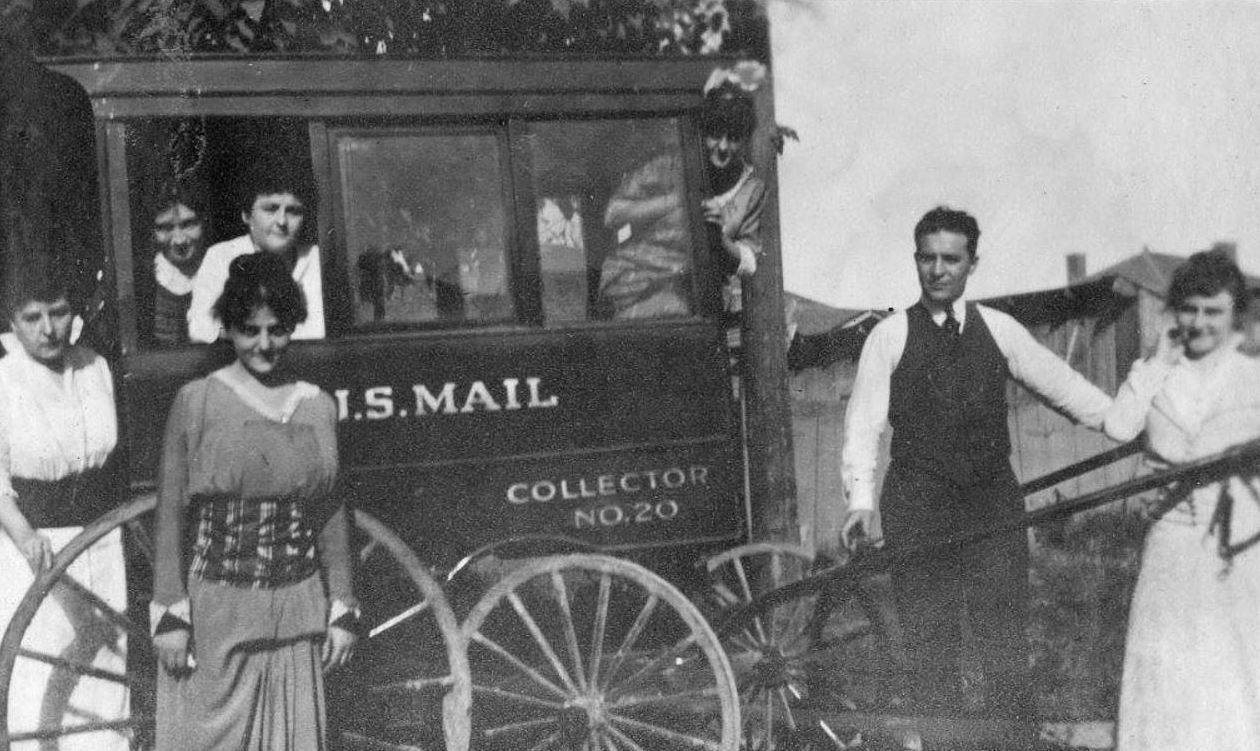
My mailman-hating duck post of yesterday reminded me of this photo I’ve had tucked away in a digital file for months but have never used because I have no information about it. It shows several people — possibly a family? — gathered in and around a U.S. Mail wagon — “Collector No. 20.” The horse team is probably close by. As this photograph was found on the Dallas Jewish Historical Society website, one must presume that the people seen here are Jewish. Why they’re posing with an unhitched mail wagon is unknown, but it’s a cool photo.

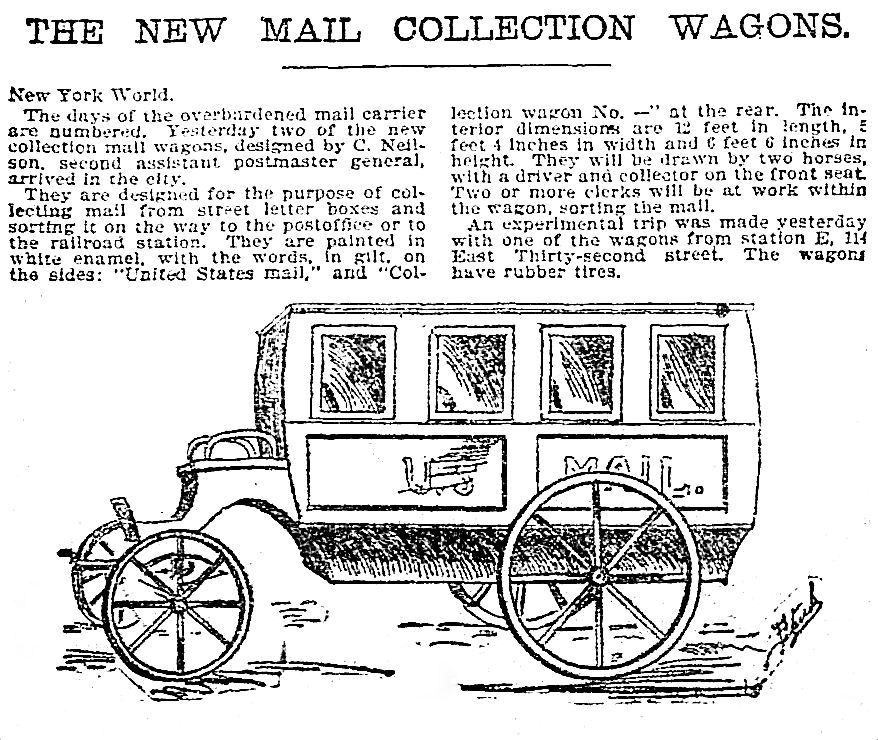
I read a bit about these wagons, which were used to collect mail from boxes around the area and from train depots. The larger ones had a driver for the team of horses, a collector, and two clerks in the back who sorted mail as they headed back to the main post office. (Click for larger image.)

mail-wagon_dmn_100296Dallas Morning News, Oct. 2, 1896

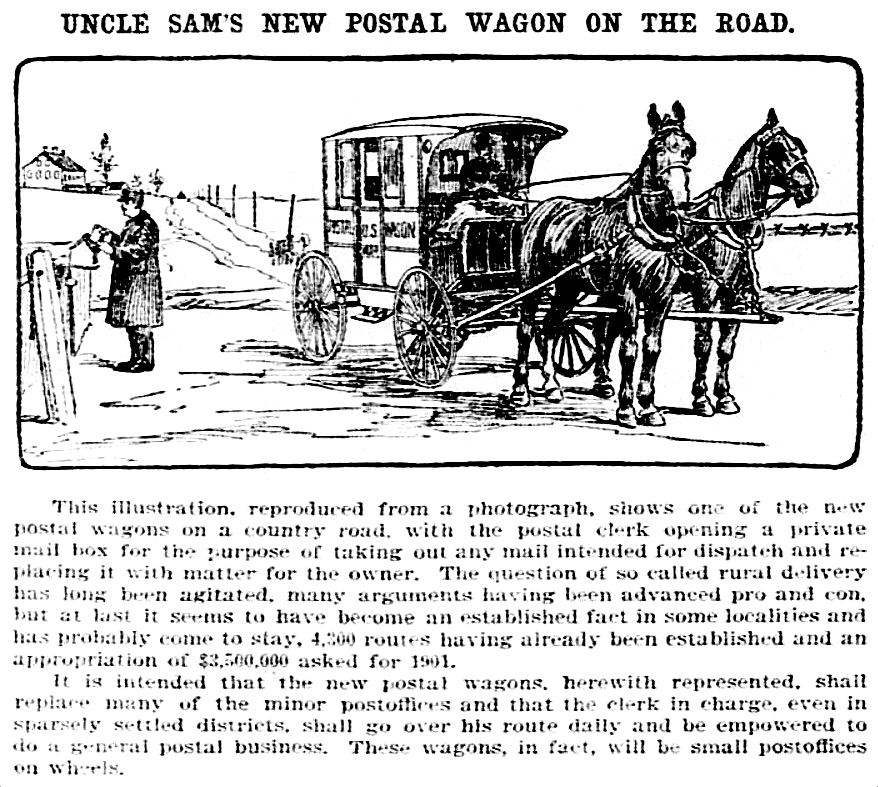
Rural mail delivery began in Dallas in 1901, and wagons like this were eventually used to reach far-flung areas beyond the city. Some of them were set up to be mini mobile post offices, out of which the mail carrier could sell things like stamps and money orders while they were on their appointed rounds of delivering and collecting mail (these mobile post offices actually caused several rural post offices to close).

mail-wagon_FWST_032301
Fort Worth Star-Telegram, March 23, 1901

There were two main problems with these horse-drawn wagons which showed up time and time again in newspaper reports:

  1. They were constantly involved in collisions, mostly with electric streetcars slamming into them. I’m not sure why this happened so much — perhaps the trolleys were too fast and too quiet — but it was a constant problem.
  2. Also, these wagons, stuffed with letters and packages (and whatever goodies might have been contained therein), were often hijacked at gunpoint or stolen when left unattended. Kind of a holdover from frontier days of holding up stagecoaches.

The life of a turn-of-the-century mailman was fraught with danger.

***

Sources & Notes

Top photo from the Dallas Jewish Historical Society; I’d love to know some — any! — information about who these people were and why they were posing with a mail wagon.

Read the 1925 memories of mail carrier James H. Jackson, who began his career with the Dallas post office in 1884, in the Dallas Morning News article “Dallas Postoffice Grew As City Grew” by W. S. Adair (DMN, Feb. 1, 1925).

Another Dallas-mailman-related story I found interesting can be found in my post “Jim Conner, Not-So-Mild-Mannered RFD Mail Carrier,” here.

Images larger when clicked.

*

Copyright © 2016 Paula Bosse. All Rights Reserved.


Selling Kidd Springs Heights, 1909-1910

gaston-bldg_1910_cook-degolyerThe L. A. Wilson Co. is having a sale! (photo: SMU)

by Paula Bosse

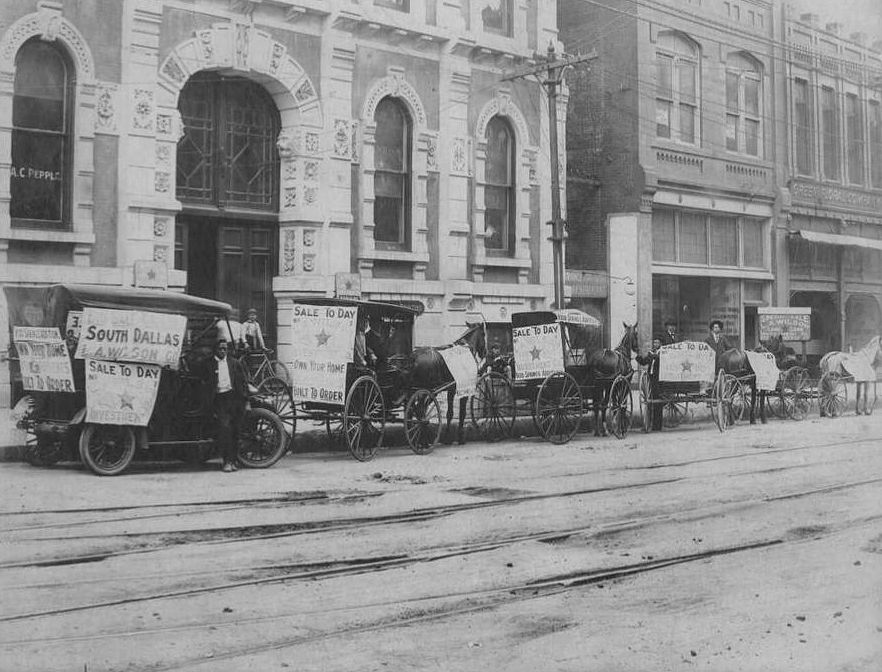
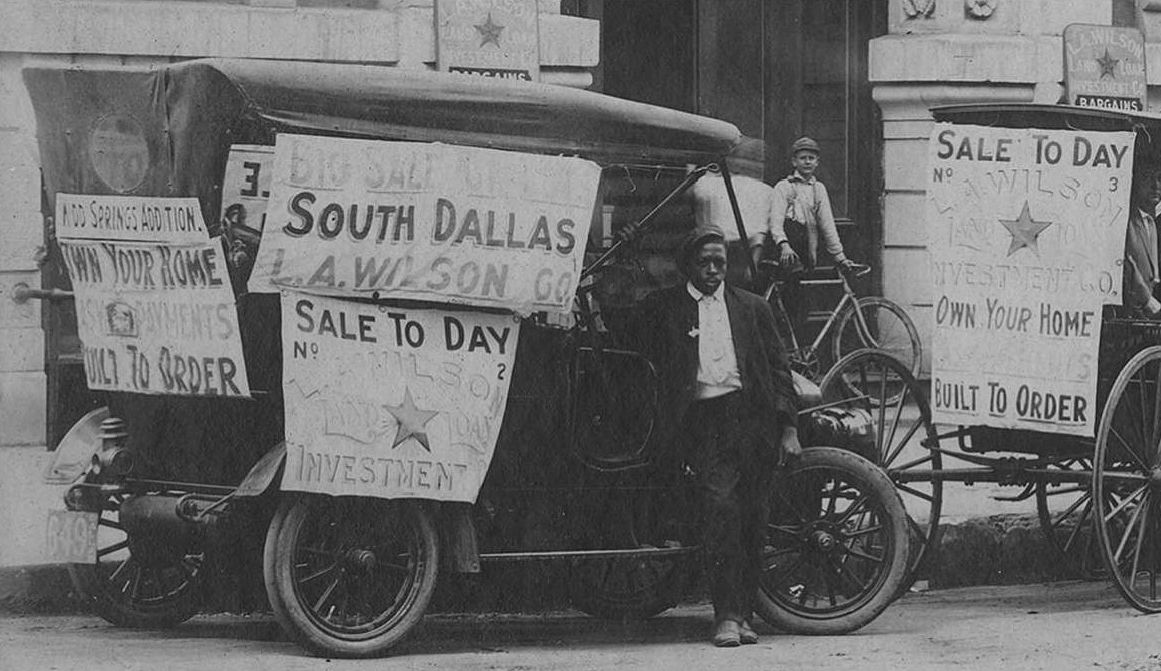
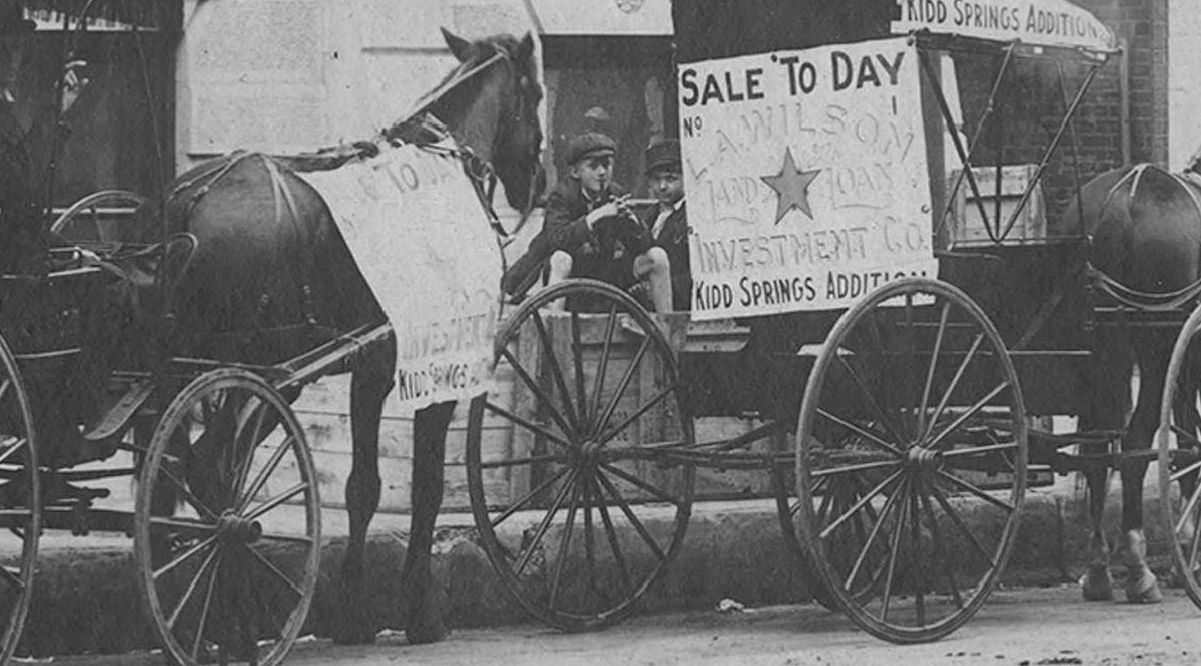
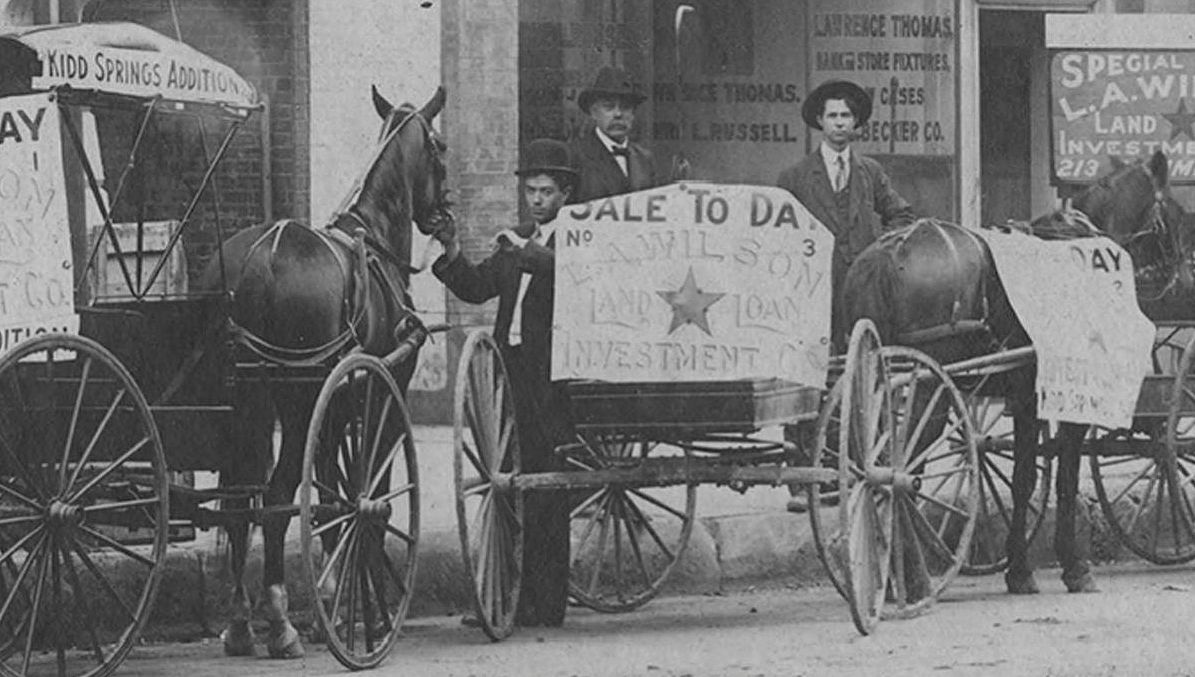
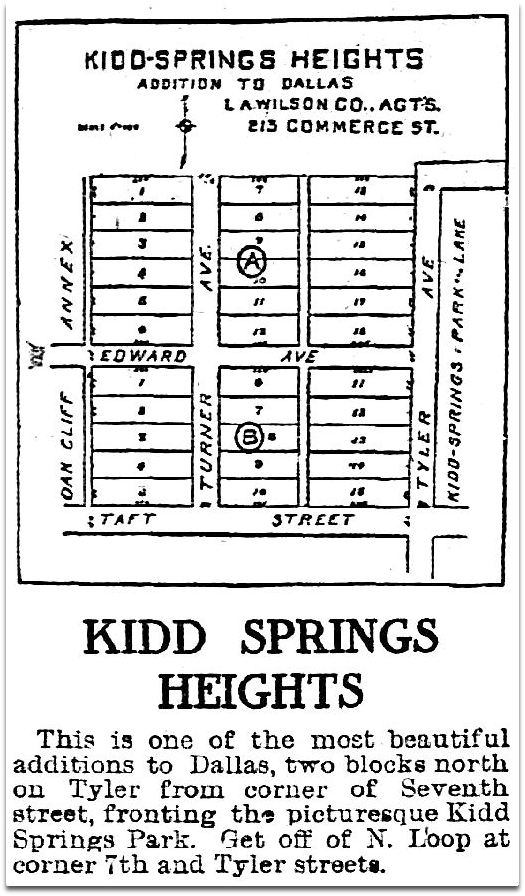
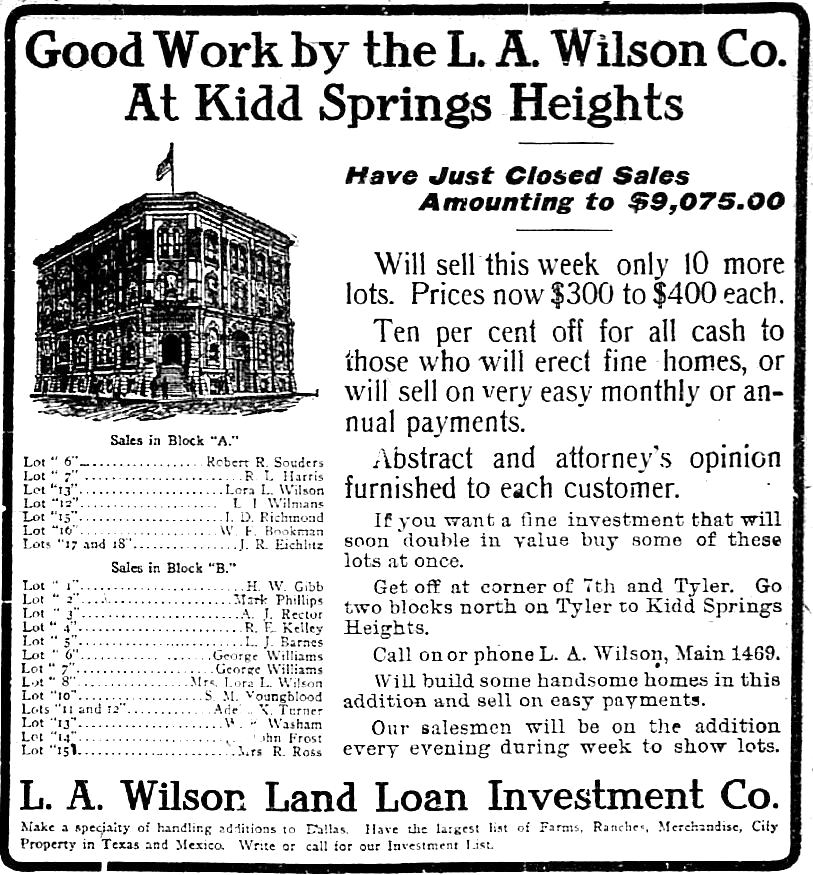
The above photo shows a car-and-buggy convoy belonging to the L. A. Wilson Land, Loan & Investment Company, stretched out in front of the Gaston Building at Commerce and S. Lamar. There’s a “Sale To Day” and they’re really pushing property in the Kidd Springs Addition in Oak Cliff. The date “April 20, 1910” is written on the back of the photo, and if that’s true, the big show here might be rooted more in desperation than in enthusiasm. The Wilson company began selling the 30-or-so lots in the new Kidd Springs Heights neighborhood in July of the previous year. An ad that appeared seven months before this photo was taken announced that there were only ten lots left. It looks like this was an impassioned display to make Kidd Springs seem more exciting and move that remaining property. People love parades.

(This is another great photo to zoom in on to see the details. All images are larger when clicked.)

gaston-bldg_1910_cook-degolyer-det1

gaston-bldg_1910_cook-degolyer-det4

gaston-bldg_1910_cook-degolyer-det5

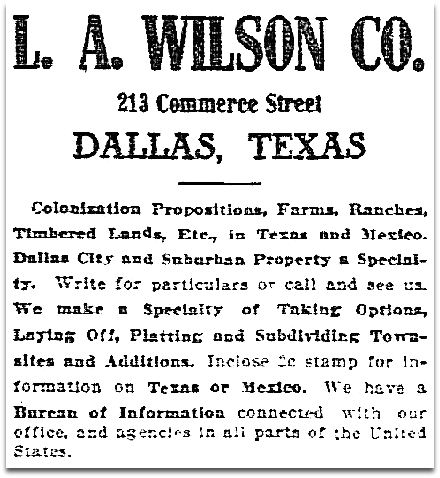
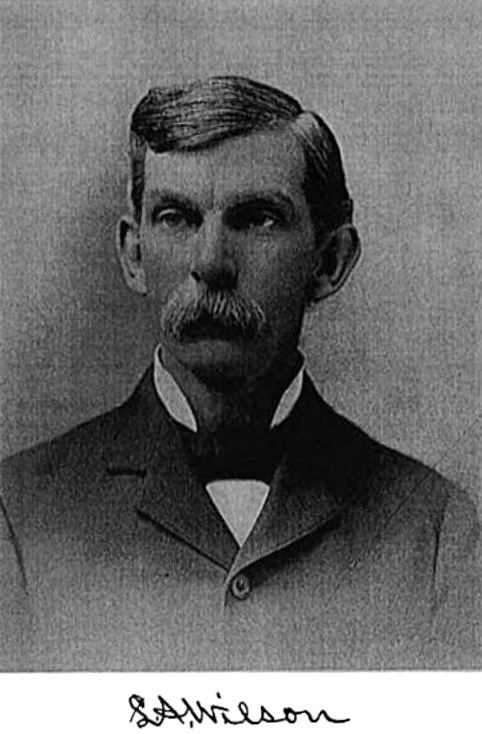
The L. A. Wilson Co. was a fairly large real estate company founded by Missouri-born Lewis A. Wilson (1851-1926); at the time of this photo, the company’s offices were in the Gaston Building at 213 Commerce. (In the photo immediately above, I think the man with the moustache is Mr. Wilson.)

wilson_dmn_070409-detDallas Morning News, July 4, 1909 (ad detail)

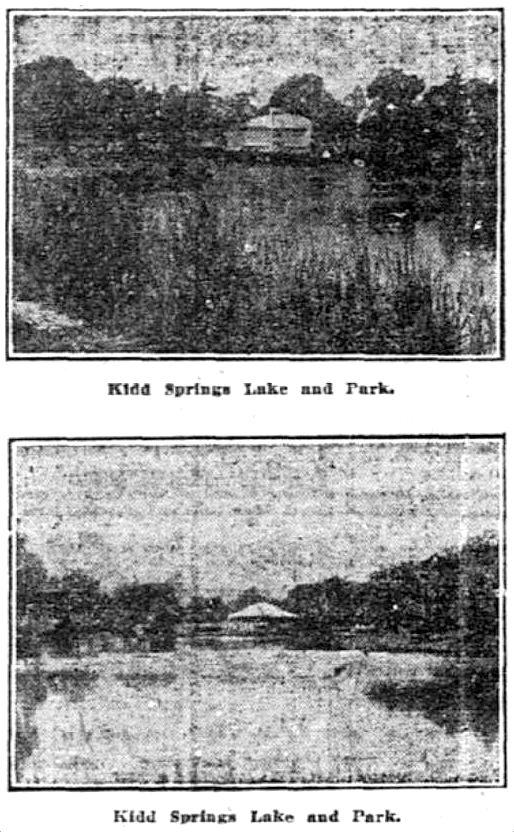
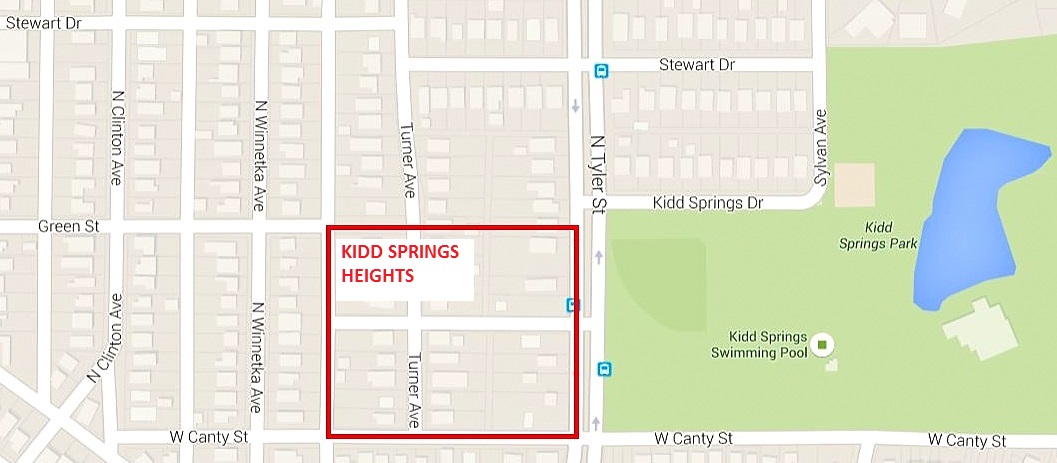
The first ad announcing the sale of lots in the Kidd Springs Heights area of Oak Cliff appeared on July 4, 1909. It included the two blocks north of what is now W. Canty, bounded by Turner Ave. on the west and N. Tyler (and Kidd Springs Park) on the east.

ad-wilson_dmn_070409-text

ad-wilson_dmn_070409-photosDMN, July 4, 1909

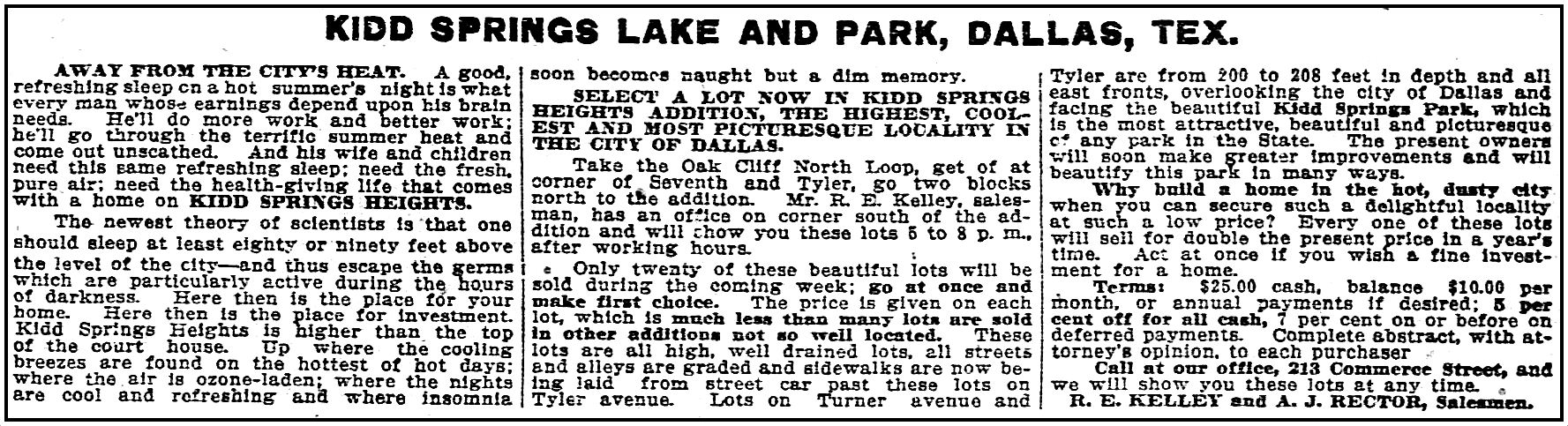
Four weeks later, a huge half-page ad ran in The Dallas Morning News, full of wonderful reasons why life would be better in Kidd Springs Heights:

The newest theory of scientists is that one should sleep at least eighty or ninety feet above the level of the city – and thus escape the germs which are particularly active during the hours of darkness. Here then is the place for your home. Here then is the place for investment. Kidd Springs Heights is higher than the top of the court house. Up where the cooling breezes are found on the hottest of hot days; where the air is ozone-laden; where the nights are cool and refreshing and where insomnia soon becomes naught but a dim memory.

The effusive sales copy is definitely worth a read (click ad below to read the full sales pitch).

wilson_kidd-springs-heights_dmnn_090109DMN, Aug. 1, 1909

Six weeks later the following self-congratulatory ad appeared. (It’s interesting to note that of the twenty lots sold, two of them had been sold to Mrs. L. A. Wilson, and one each had been sold to the two salesmen. The next year’s telephone directory showed that the Wilsons lived on Live Oak, and the two salesmen lived in boarding houses.)

wilson-kidd-springs_dmn_091209DMN, Sept. 12, 1909

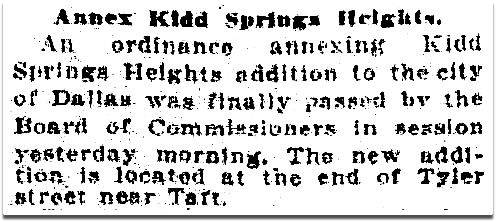
It wasn’t until 1921 that the tiny little Kidd Springs Heights was annexed to the city of Dallas.

annexed_dmn_051421DMN, May 14, 1921

Things may be different today, but in 1909, these were the boundaries of Kidd Springs Heights.

kidd-springs-heights_google_2015

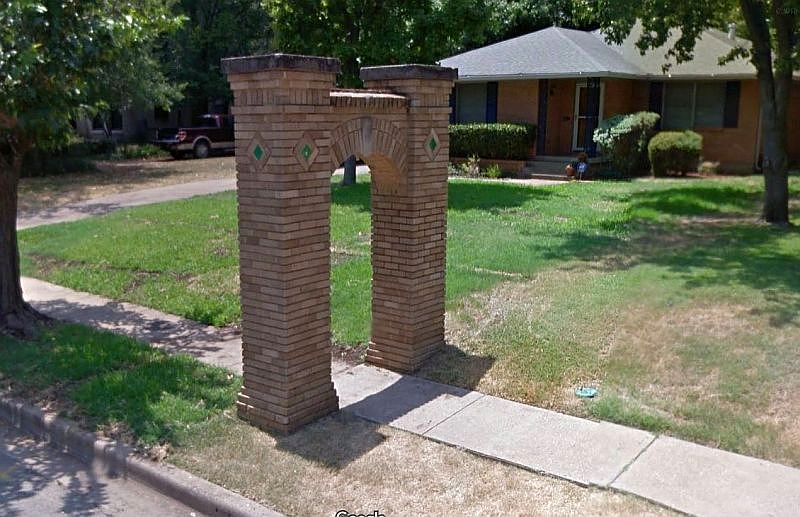
The most interesting odd thing about Kidd Springs Heights? There appear to be two brick archways placed (very awkwardly) across Turner Avenue from one another — each spanning the sidewalk. I can’t find any information about these, but it looks as if they were set right at the northern boundary of the Kidd Springs Heights Addition. Old maps (such as this one from 1919) show no development to the north of this boundary up into at least the ’20s (it doesn’t look as if this addition is even in Oak Cliff proper), so I guess they were there before those sidewalks and served as a welcoming gateway to a new development where germs did not dwell after nightfall.

arch_google
900 block of Turner Avenue (Google Street View)

(Check out both of these markers on Google Street View, here. It’s pretty strange-looking.)

If anyone has information on these markers, please pass it along!

***

Sources & Notes

Top photo is titled “L. A. Wilson Land Loan Investment Company, Gaston Building, Commerce Street” — the photographer’s name and the date are written on the back: W. R. Lindsay, April 20, 1910. It is from the George W. Cook Dallas/Texas Image Collection, DeGolyer Library, Central University Libraries, Southern Methodist University, and it can be viewed here. I have adjusted the color.

Lewis A. Wilson’s biography can be read in A History of Greater Dallas and Vicinity (1909), here. His photo:

wilson_hist-greater-dallas

The Kidd Springs Wikipedia entry is here.

The Sanborn map from 1922 showing this tiny neighborhood at about the middle of the page on the right can be found here. Note how few lots actually have houses built on them. (Taft is now W. Canty; Edwards is now Everts.)

The Murphy & Bolanz map can be seen here. (If the link doesn’t work, you may need to download the plug-in — information on how to do that is here.)

*

Copyright © 2015 Paula Bosse. All Rights Reserved.

Horses, Carriages, Horseless Carriages: Commerce Street — 1913

new-skyline_c1912_degolyer_smuWest on Commerce, from about St. Paul (click for larger image) / SMU

by Paula Bosse

The photo above is from the indispensable collection at SMU’s DeGolyer Library. It shows a very busy Commerce Street in 1913, taken from the top of the YMCA building at St. Paul, looking west. The two landmarks at either end of Commerce are the first location of the Majestic Theatre at 1901 Commerce (northeast corner of Commerce and St. Paul), seen in the bottom right corner, and the Adolphus Hotel at the top left. I love this photo, mostly because it shows horse-drawn conveyances and automobiles sharing the streets in an already car-crazy Dallas, something that might not be that noticeable at first glance until you start zooming in to see magnified details. Let’s zoom in. Way in. (All images much larger when clicked.)

1-rooftops-skyline

2-traffic-skyline-1

Dallas has begun to look like a big city.

3-traffic-skyline-2

Below, the building on the right with the steep steps is the old Post Office/Federal Building at Ervay. The Mercantile Bank Building was built on that site in 1942.

4-traffic-skyline-3

I love the detail below for a couple of reasons: first, the car at the curb at the lower right is parked next to what is purported to be the first gas pump in Dallas (the sign next to it that looks like a stop sign says “Oriental Oils” — more below); secondly, the ratio of cars to horses is pretty even.

5-traffic-skyline-4

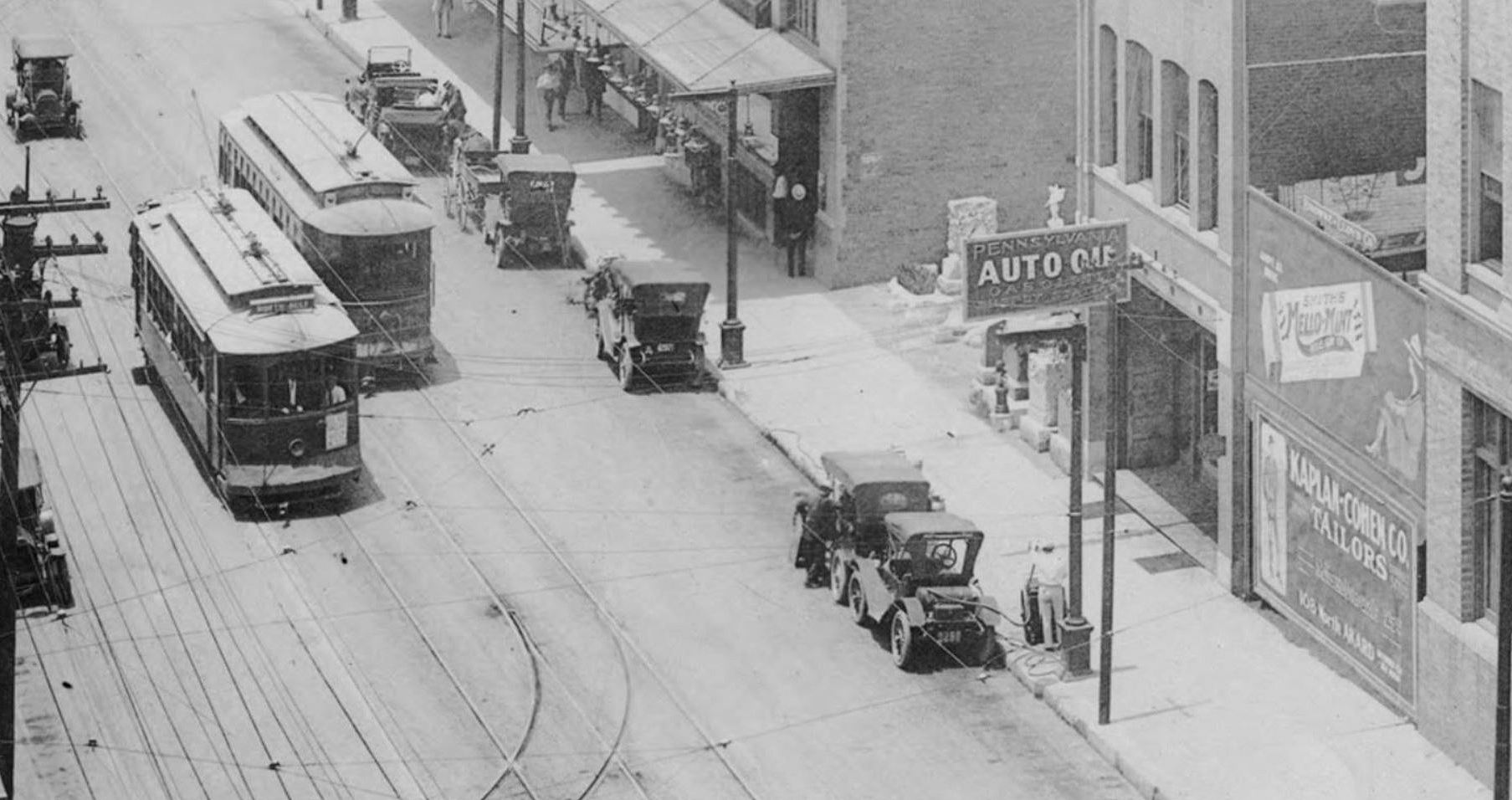
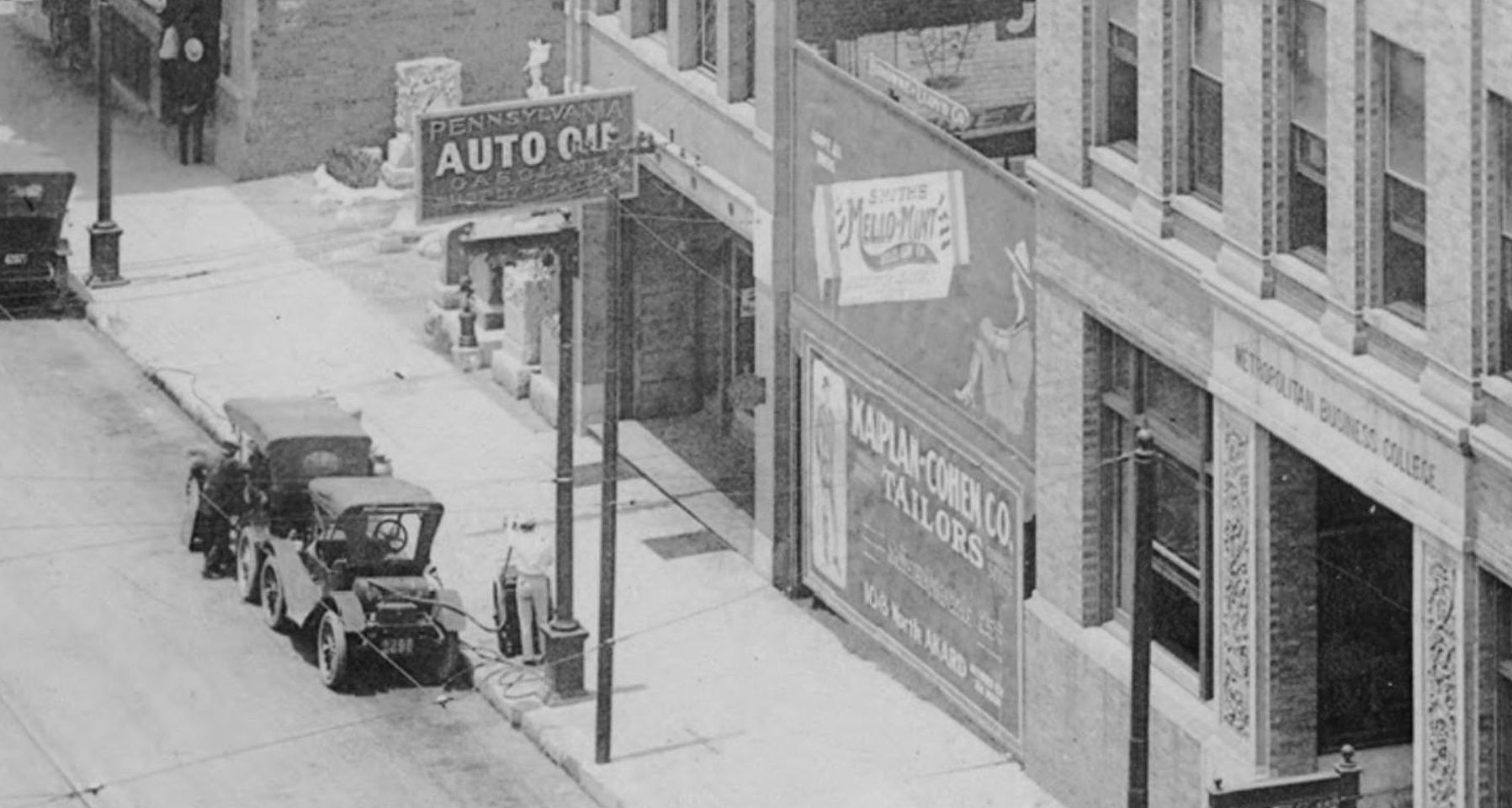
A block east of the Oriental Oil gasoline feuling station is the Pennsylvania Oil Company feuling station, at 1805 Commerce. When I first saw this last year, I was so excited to discover this seemingly mundane little detail that I wrote an entire post about these early curbside gas pumps (read “Oriental Oil Company: Fill ‘er Up, Right There at the Curb” here).

7-gas-skyline-1

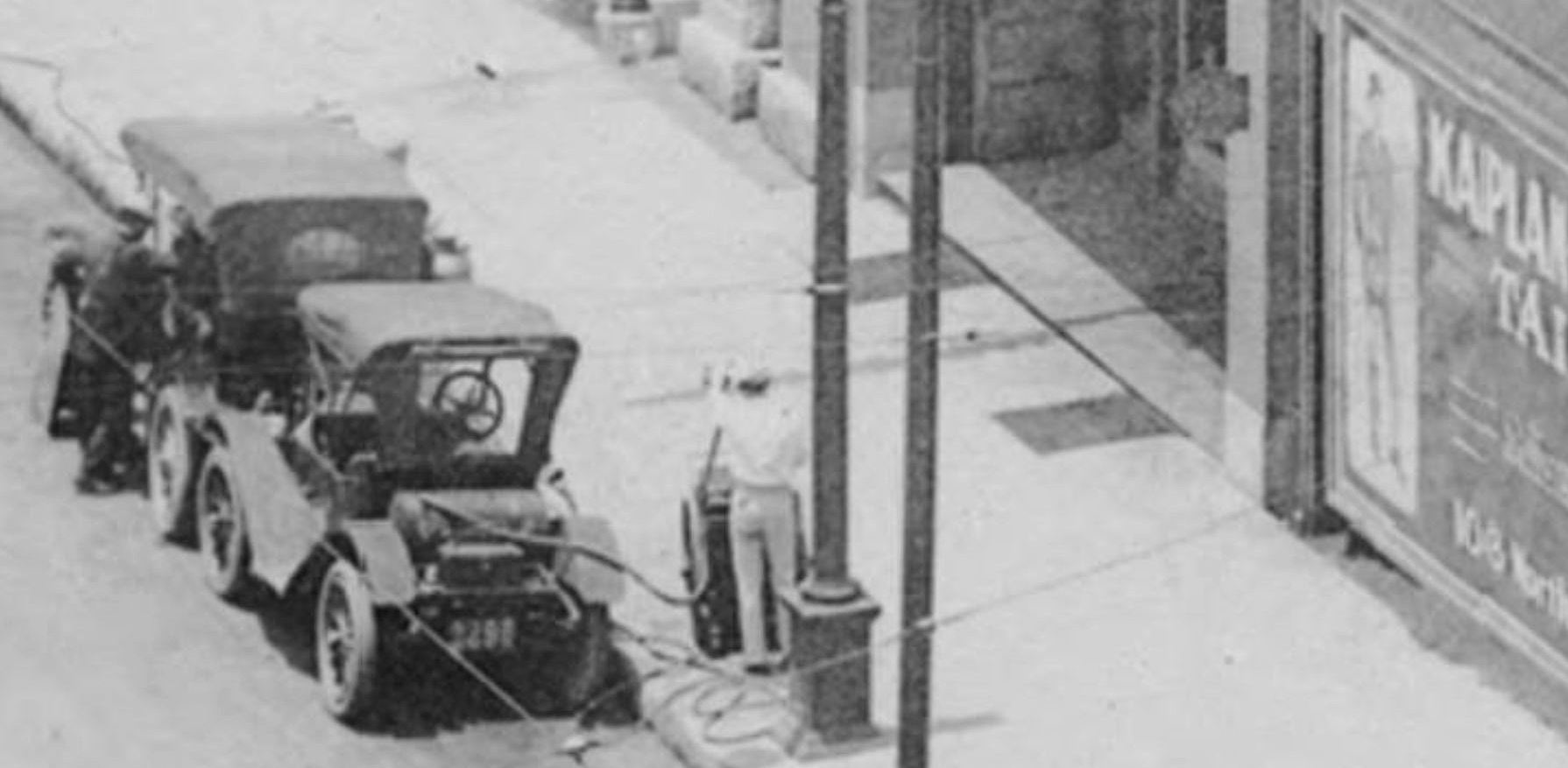
And a couple more close-ups of this exotic thing which I still find inexplicably fascinating.

8-gas-skyline-2

9-gas-skyline-3

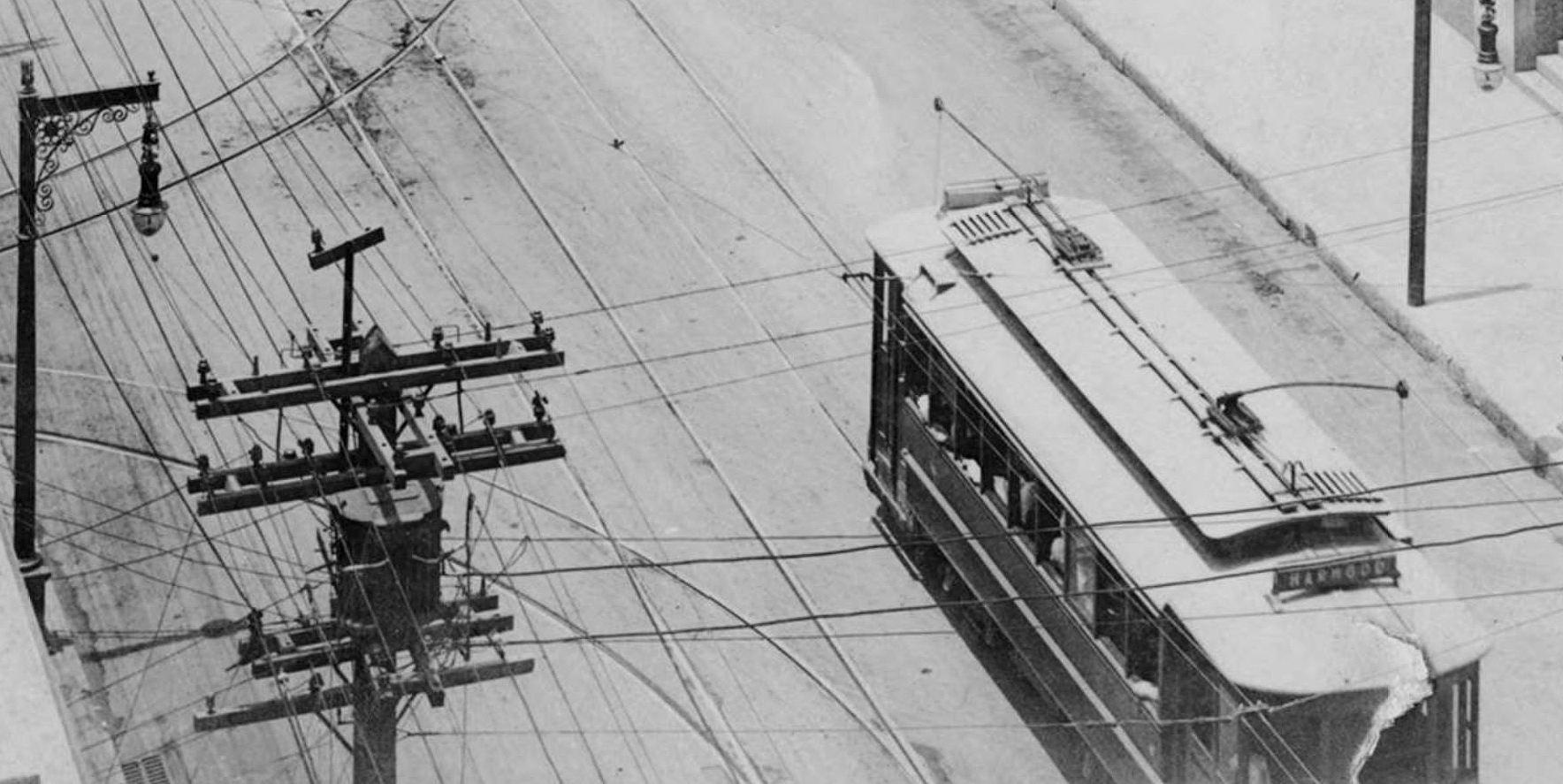
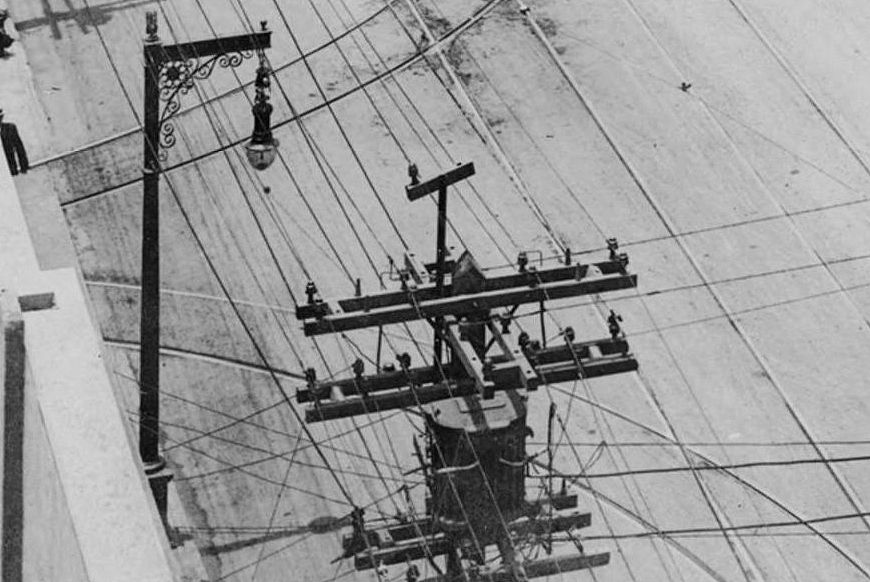
So many wires, and tracks. The Harwood streetcar is cool, but that streetlight is cooler.

10-lamp-skyline-1

11-lamp-skyline-2

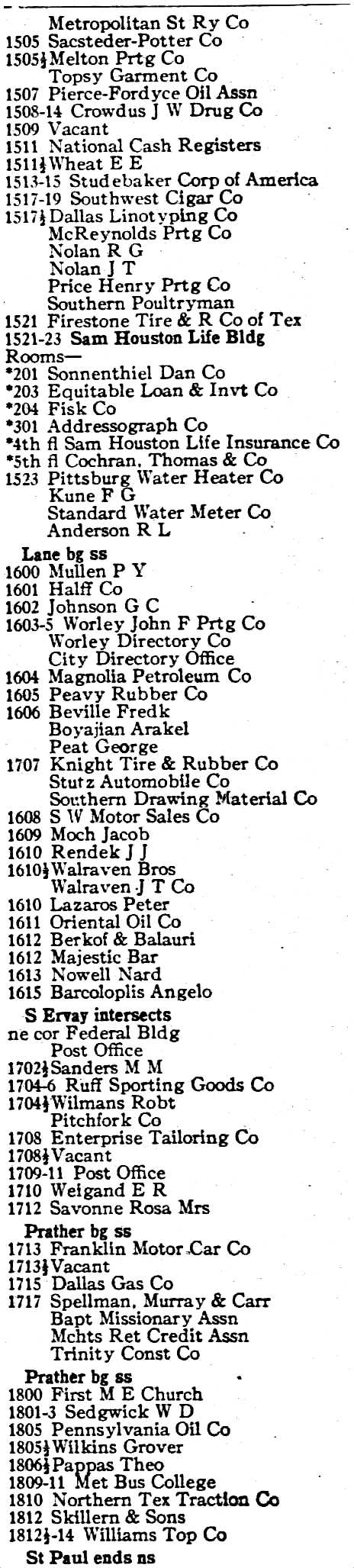
Below, a listing of most of the businesses seen along this stretch of Commerce, from the 1913 Dallas directory.

commerce-street_1913-directory***

Original photo is titled “New Skyline from Y.M.C.A., 1912 & 1913,” taken by Jno. J. Johnson, from the DeGolyer Library, Central University Libraries, Southern Methodist University; it can be viewed here. I have corrected the color.

The current Google Street View of Commerce looking west from St. Paul can be seen here. Very different.

UPDATE: This photograph is from 1913. The Busch Building (later the Kirby Building) began construction on the steel superstructure of the building at the end of December, 1912. The building had reached 13 stories by May, 1913 and was completed in November or December, 1913. I have updated the title from “ca. 1912” to “1913.”

All of these images are really big. Click them!

*

Copyright © 2015 Paula Bosse. All Rights Reserved.

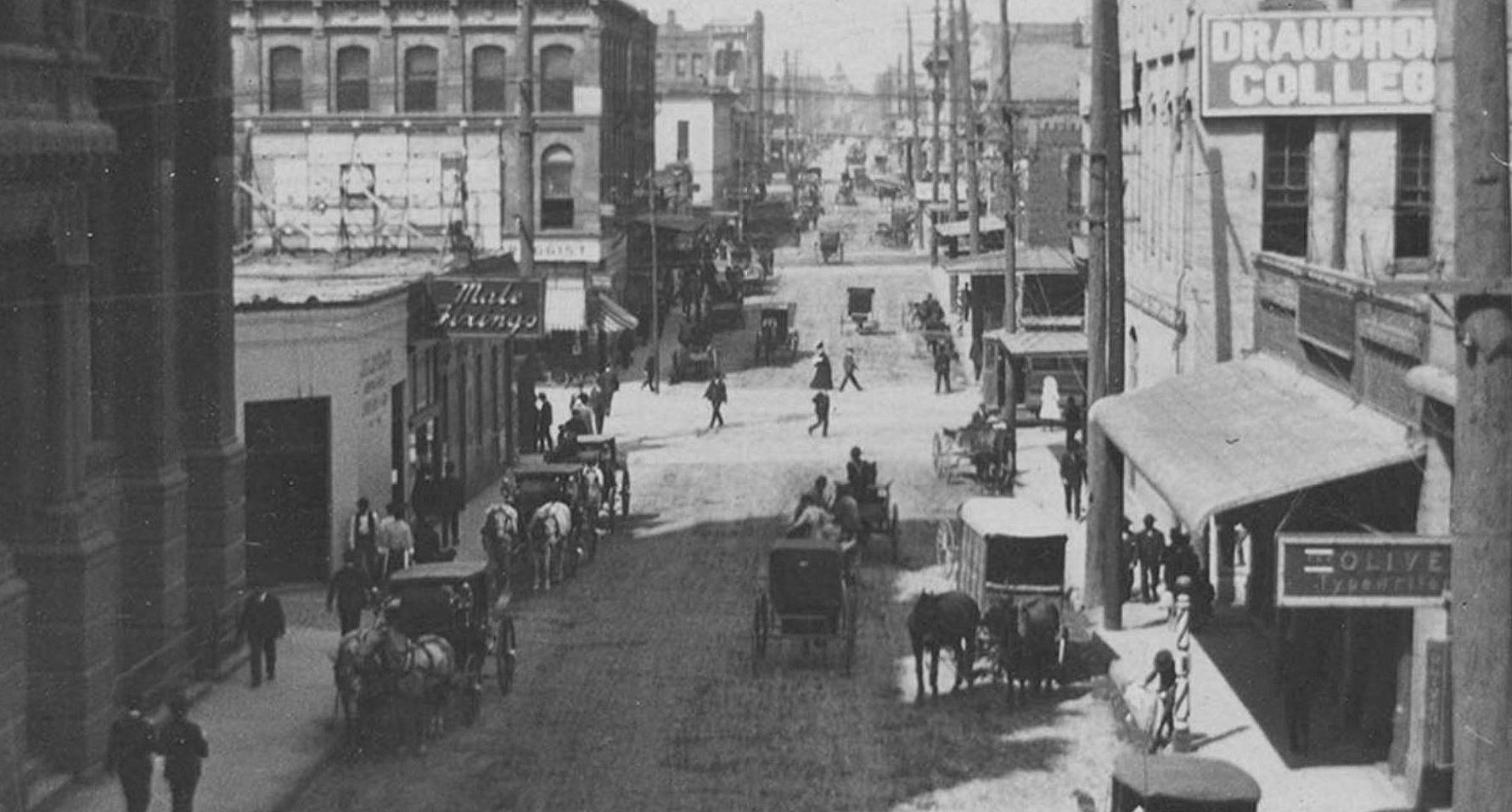
“Male Fixings” and Horse Manure — Akard Street, ca. 1906

akard-looking-north_cook-colln_degolyer_smu_ca-1906George W. Cook Collection, SMU

by Paula Bosse

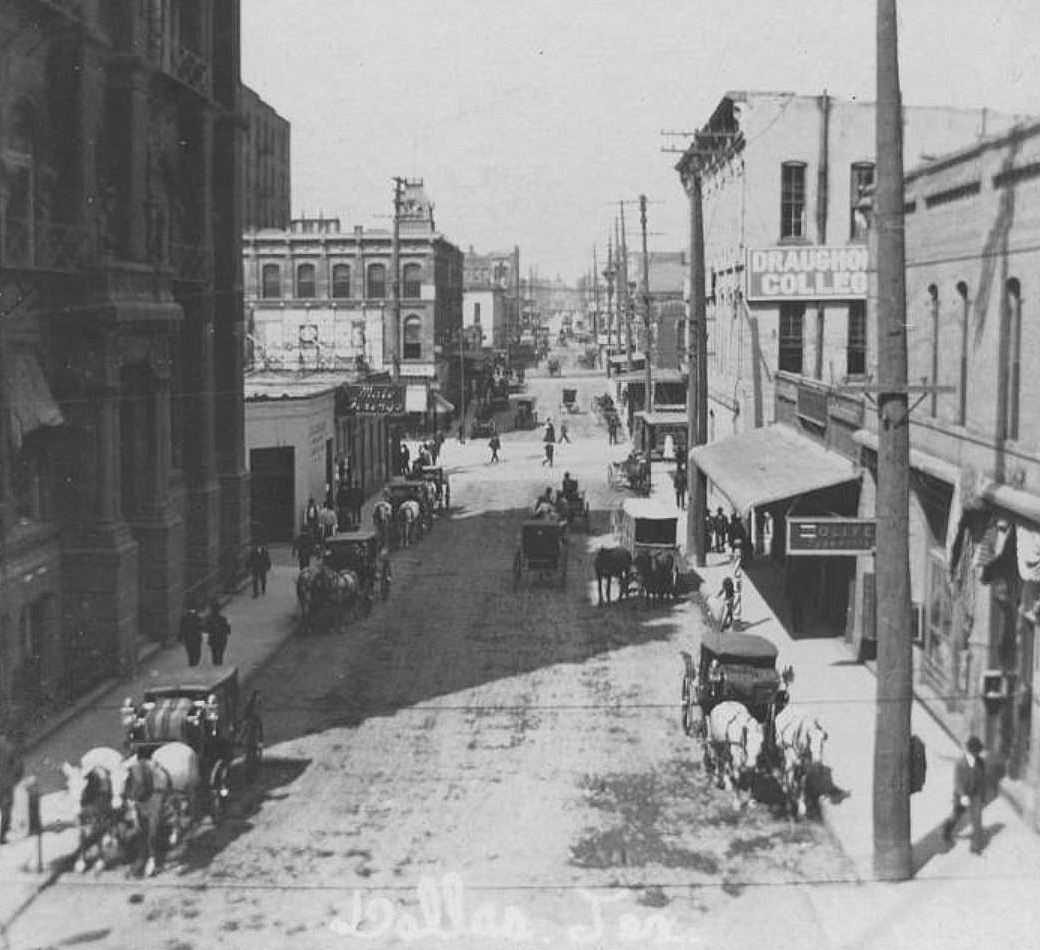
This great photograph shows Akard Street looking north from just south of Main. I especially like the sign for “Male Fixings” (a store selling men’s clothing accessories). Let’s zoom in to see that sign better (click photo to see a much larger image).

akard-looking-north_cook-colln_degolyer_smu_ca-1906-det

I also like the guy with the bicycle, next to the barber pole at the lower right, and the lone woman crossing the street. (There is a little girl in a white dress on the sidewalk on the right — about to cross Main — but everyone else in this photo is of the gender that might well patronize a business called “Male Fixings.”)

As indelicate as it may be to bring up the subject … I assume there were people employed to walk around the streets with shovels to clean up after all those horses? I’ve actually thought of this fairly often. It had to have been a major, major problem back then. I’ve just looked it up. The average horse pulling wagons and carriages produced, on average, 30+ pounds of manure and several gallons of urine daily, deposited willy-nilly whenever the need arose (which was often). Multiply that by hundreds. This article isn’t about Dallas, but I highly recommend “The Great Horse Manure Crisis of 1894” — you’ll learn way more about the subject than you may want to — read it here. That lady crossing the street? I bet she spent a good part of every day hiking her skirts and dodging dung.

*

UPDATE: I’ve updated the title to this post several times (you’ll notice that the URL of this post shows a different location and year). After spending time to pin down the date, it appears this photo was taken between 1906 and 1909, when the Draughon Practical Business College was located at the southeast corner of Main and Akard — and the Oliver Typewriter Agency was located at 114 South Akard. The original annotation of this photo says the view is Main Street, with Akard in the midground, but it appears this photo was taken just south of Main Street looking north on Akard. The photo is confusing because the Draughon’s sign is seen here on the Akard Street side, not the Main Street side. The main tip-off is the cupola seen atop the building standing at the northwest corner of Main and Akard — it is the Rowan Building, which housed the Marvin Drug Store, which I wrote about here.

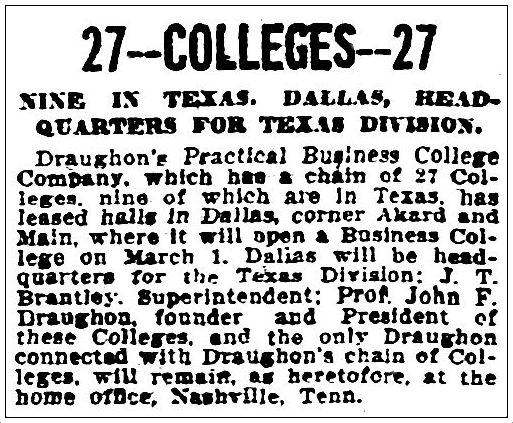
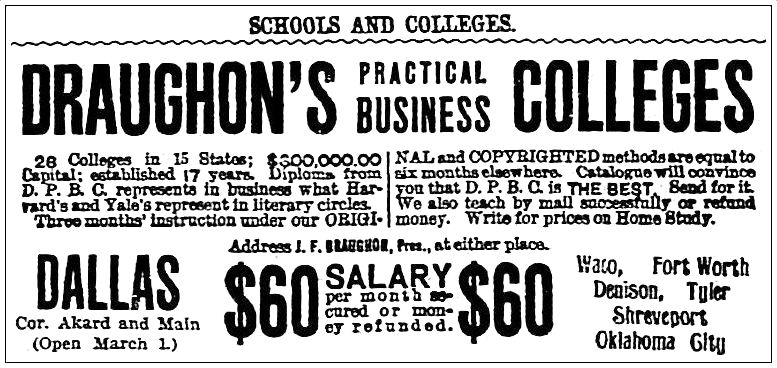
Draughon’s Practical Business College opened its first Dallas campus (but its 27th location across the major cities of the south) at the southeast corner of Main and Akard in March, 1906. By the time the 1910 city directory was printed, they had moved to another location (in fact, in their first ten years in Dallas they had moved five times!). I’m not sure how long the business college lasted in Dallas — at least through the 1970s, possibly longer — but the institution seems to still be in business after something like 130 years. (Click ads below to see larger images.)

draughon-business-school_dmn_0304061906

draughon-business-school_dmn_0315061906

***

This is another wonderful photo from the George W. Cook Dallas/Texas Image Collection, DeGolyer Library, Central University Libraries, Southern Methodist University; it can be accessed (and zoomed in on) here.

Another interesting article on the “manure problem” is “When Horses Posed a Public Health Hazard” — a blog post from The New York Times (which tantalizingly mentions herds of pigs roaming the streets of NYC) — read it here.

*

Copyright © 2015 Paula Bosse. All Rights Reserved.

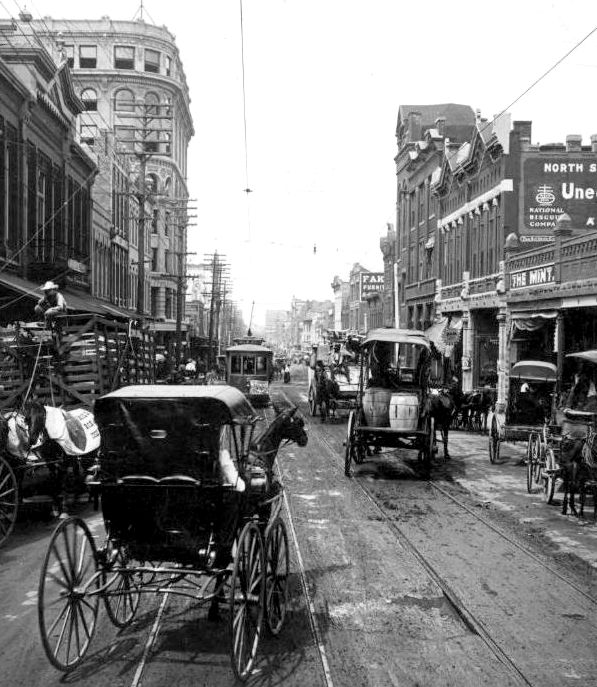
“Everyday Life” on Elm Street — ca. 1905

elm-street_everyday-life_UCR-smallElm Street rush hour

by Paula Bosse

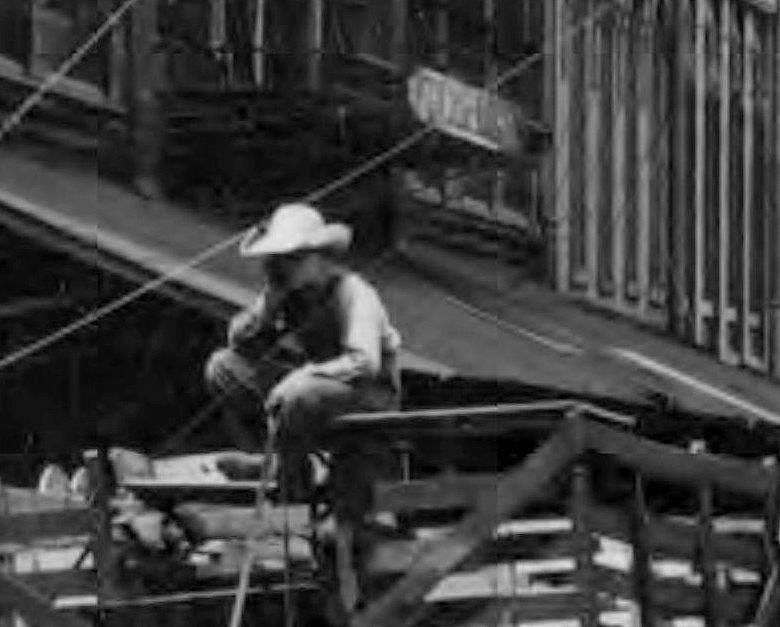
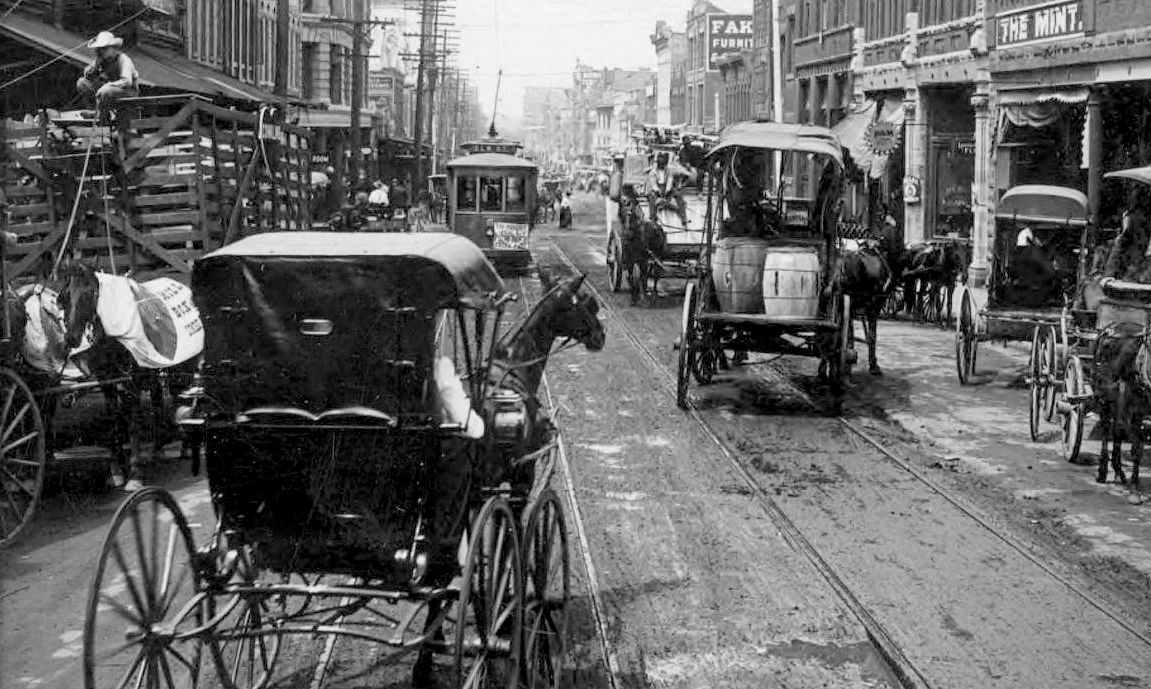
Automobiles would be rolling down Elm Street very soon, but even when the traffic was still mostly horse-related, there’s a lot going on here: horses, buggies, barrels, saloons, a bored kid on a wagon, a street car, and the Wilson Building.

elm-st_everyday-life_UCR-det

elm-st_everyday-life_UCR-zoom(click for larger images)

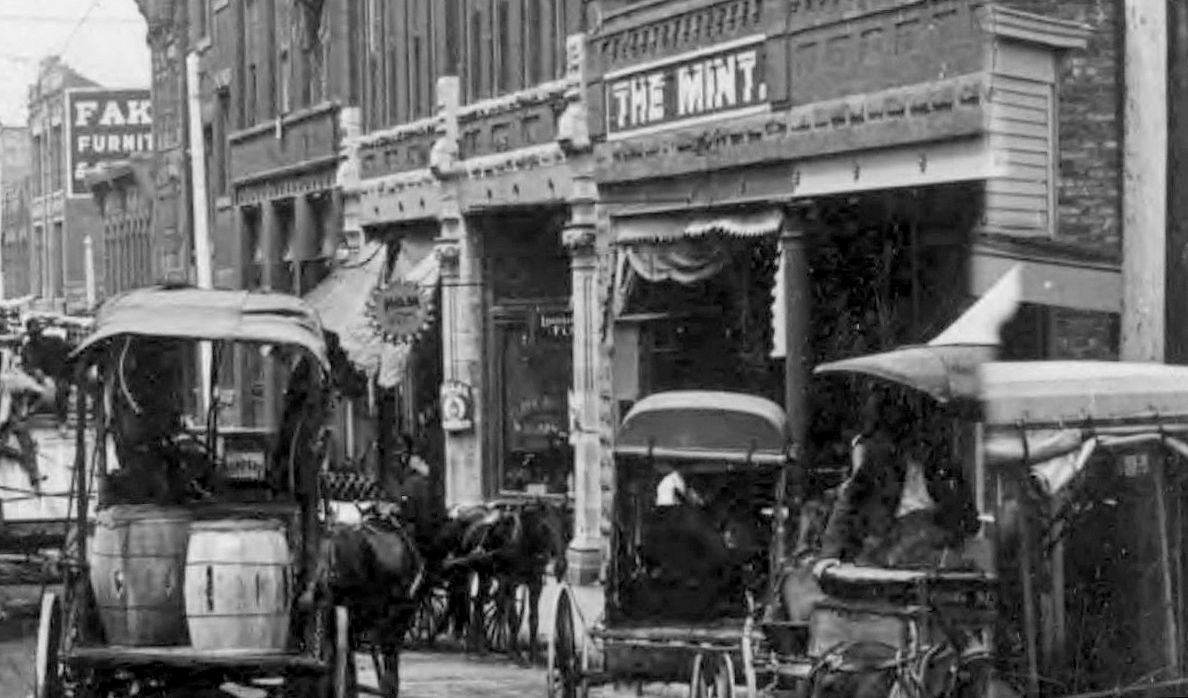
And what was The Mint? The Mint was a saloon. I’m not sure when it first set up shop in Dallas, but it was listed in an 1877 directory, one of the city’s earliest.

elm-st_everyday-life_mint_UCR

Speaking of 1877, read about a typical frontier day at The Mint in two accounts of a stabbing, from The Dallas Herald in April, 1877, here, and the follow-up, here.

***

Sources & Notes

Photo is from a stereograph titled “Everyday Life, Elm Street, Dallas, Tex.” from the Keystone-Mast Collection, UCR/California Museum of Photography, University of California at Riverside; it can be accessed here.

Images larger when clicked.

*

Copyright © 2015 Paula Bosse. All Rights Reserved.

Mardi Gras: “Our First Attempt at a Carnival Fete” — 1876

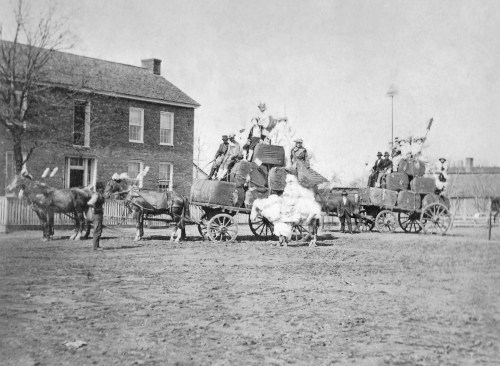
mardi-gras_dhs_1876When cotton was Rex (click for much larger image)

by Paula Bosse

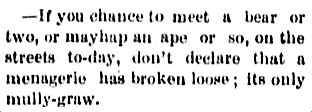
In the 1870s, if a Dallas resident wanted to celebrate the glitzy revelry of Mardi Gras with a parade and balls and didn’t want to travel all the way to New Orleans, the place to go was Galveston. Galveston had a lock on Texas Mardi Gras galas. But Dallas being Dallas, there were soon plans to stage a massive Carnival right here. The day-long celebration debuted on February 24, 1876, which, oddly, was on a Thursday. (Mardi Gras that year was actually on Tuesday, Feb. 29, and it was probably celebrated early in Dallas so as not to interfere with the hey-we-got-here-first celebrations in New Orleans and Galveston.)

It was estimated that the festivities cost the city more than $20,000 (which, if the Inflation Calculator is to be believed, would be the equivalent of almost $450,000 in today’s money). The city was cleaned up in preparation for the anticipated onslaught of visitors and was decorated with flags and bunting along the lengthy parade route of Main, Elm, and Commerce streets. Revelers had elaborate costumes made for the processions and the grand masked balls, some with fabric imported for the occasion from France
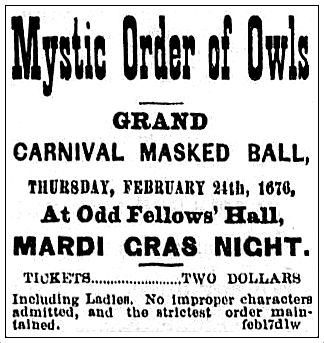
mardi-gras_dal-herald_021876Dallas Herald, Feb. 18, 1876 (not 1676!)

The Dallas Herald and The Dallas Commercial were incessant in their whipping up of excitement for the big day. And it worked. People streamed into town from all over Texas. Hotels were packed, and it was estimated that over 20,000 spectators watched one or both of the day’s parades.

The following day, The Dallas Herald apparently devoted their entire front page to coverage of the event, under this wordy headline:

A Day in Dallas, Our First Attempt at a Carnival Fete. The City Aglow with Enthusiasm and Wild with Rollicking Revelry. Visit of King Momus — His Cordial Reception by the People — The Procession in His Honor. The Season of Merry-Making Brought to a Happy Close with Balls and Bouts — Well Done, Dallas!

(Sadly, this issue is not available online, perhaps because there were none found to scan as it sold out more than five editions and was probably the paper’s best-selling edition to-date.)

Dallas’ first Mardi Gras had been an unqualified triumph, and newspaper editors and city leaders were beside themselves with joy. The parade — and the city — had been covered enthusiastically and favorably by newspapers around the country, and the success of the huge celebration was seen as having been better advertising for the exuberant and growing city than could ever have been hoped.

Galveston? Pffft!

**

A few tidbits from that first Mardi Gras.

There were very few “incidents” reported surrounding the festivities. That’s not to say there weren’t a lot of incidents that occurred that day, just that not a lot of them found their way into the newspapers (apparently whiskey was free-flowing all day long, and one suspects there were “incidents” aplenty connected with that). Among the very few non-“jolly” things that happened on Carnival Day and the day following included the following:

  • A small boy had been run over by a carriage (“but not dangerously hurt”)
  • A child and a horse had been burned severely when a can of gasoline was thrown into a bonfire “to increase the flame”
  • A member of the Stonewall Greys who had participated in the noontime parade had fallen whilst “foolishly scuffling” and had “received a slight but painful wound from a bayonet”

Also, there was some sort of “fireball discharged from a rocket” which caused some consternation:
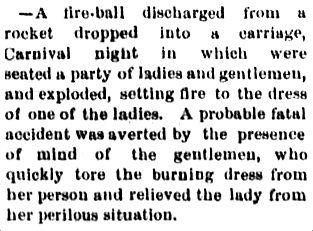
fireball_dal-herald_022676Dallas Herald, Feb. 26, 1876

*

All residences and businesses along the parade route during the evening procession were “commanded” to be illuminated. Even if gasoline-fueled bonfires were raging along the parade route, the elaborate procession was probably poorly lit.

*

My favorite “float” was the huge wagon of lumber meant to draw attention to East Texas timber and the thriving lumber industry in Dallas. One report said “the immense moving forest of pine” was drawn by “32 yoke of oxen” — another said “nearly 100 Texan steers.” Whatever it was, that must have been spectacular to see.
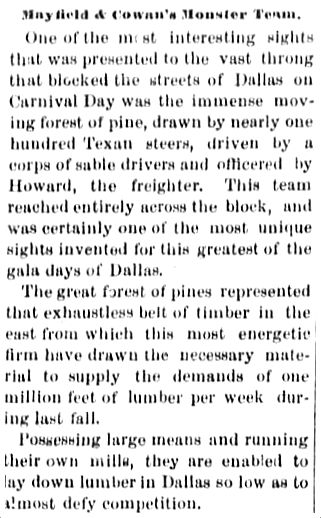
oxen-team_dal-herald_022676Dallas Herald, Feb. 26, 1876

*

The massive amount of publicity and praise that Dallas received quite clearly irked other cities. Austin seemed especially perturbed. There had been a small outbreak of smallpox in McKinney preceding the big day, and several digs at Dallas (like the one below) appeared in newspapers around Texas, accusing the city’s leaders of knowingly endangering the welfare of the entire state just so they could put on their little parade. The exaggerated furor passed fairly quickly, and the het-up schadenfreude expressed by rival cities was amusing.
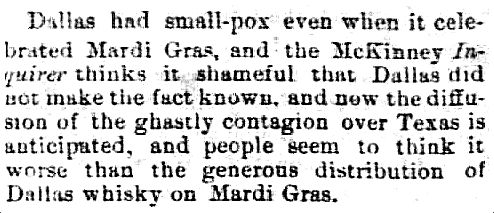
small-pox_austin-weekly-standard_031676Austin Weekly Standard, Mar. 16, 1876

*

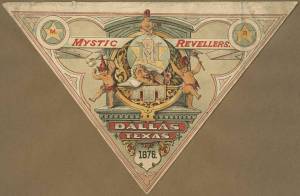
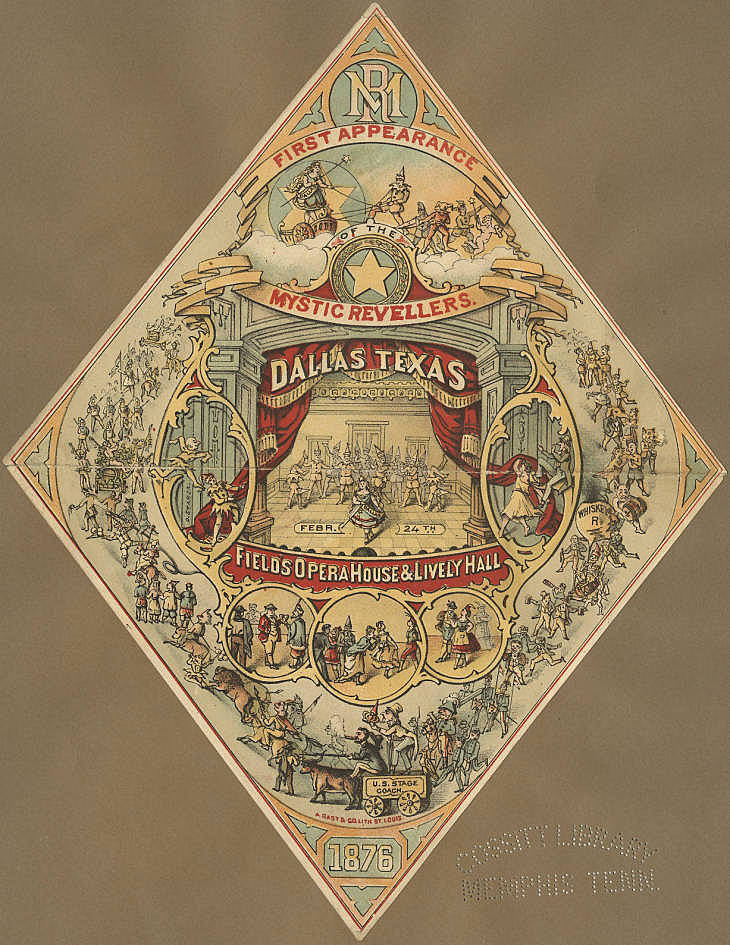
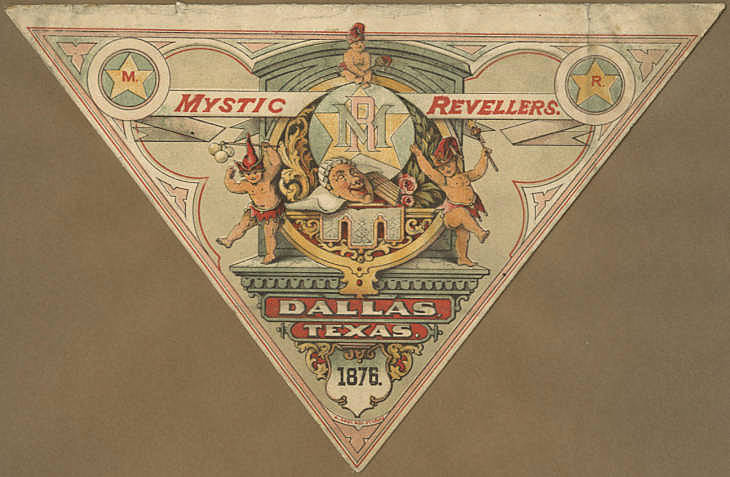
An invitation issued by the Mystic Revellers:
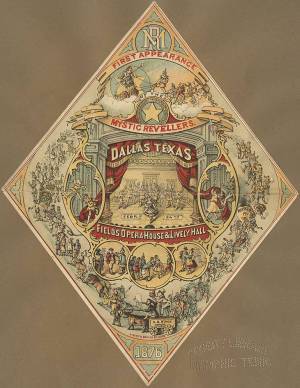
mardi-gras_mystic-revellers_invitation_1876_memphis-public-library

mardi-gras_mystic-revellers_1876_envelope_memphis-public-libraryColton Greene Collection, Memphis Public Libraries

*

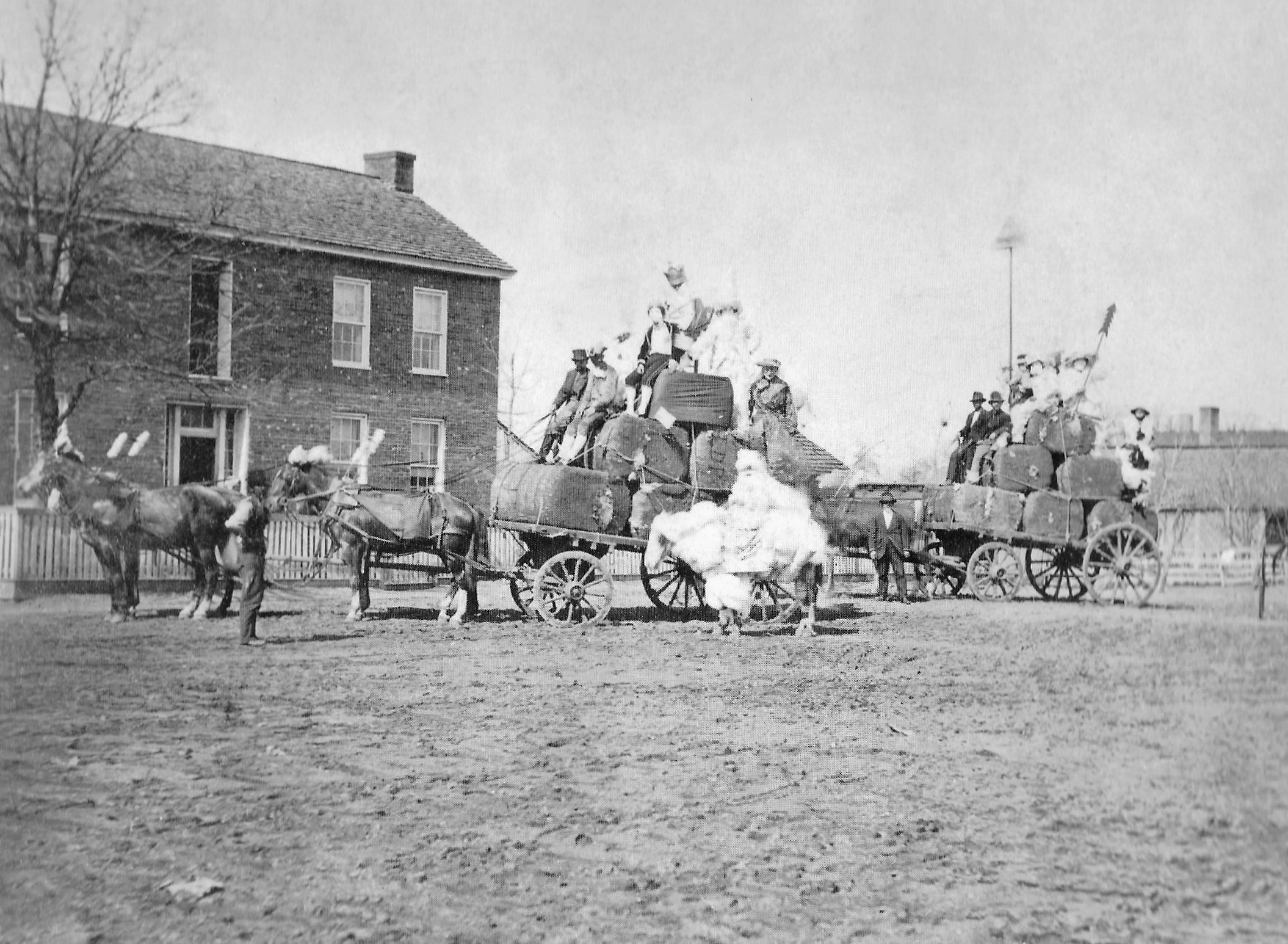
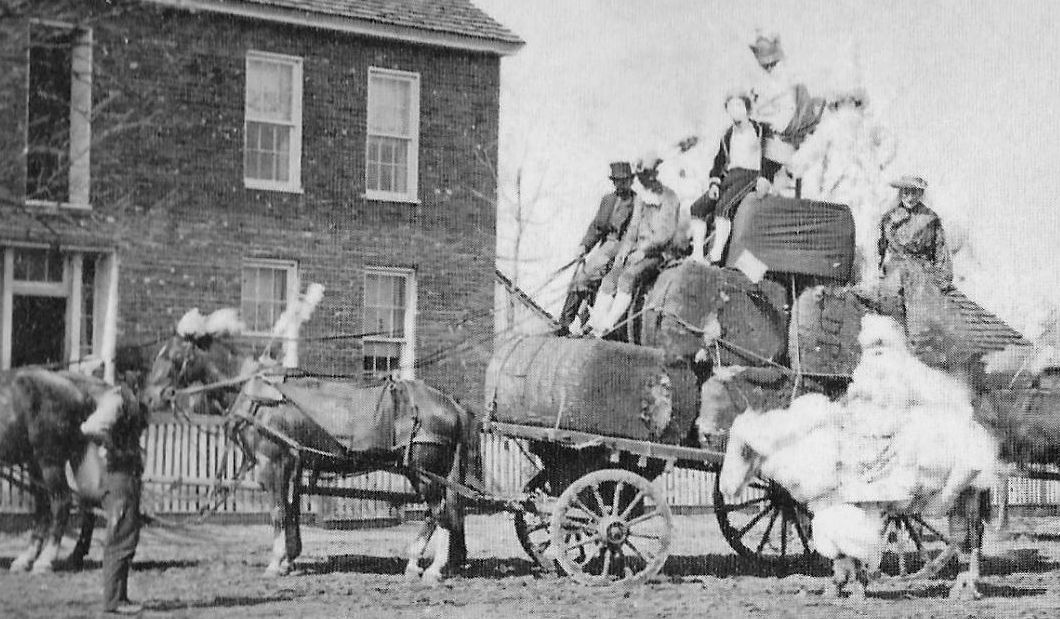
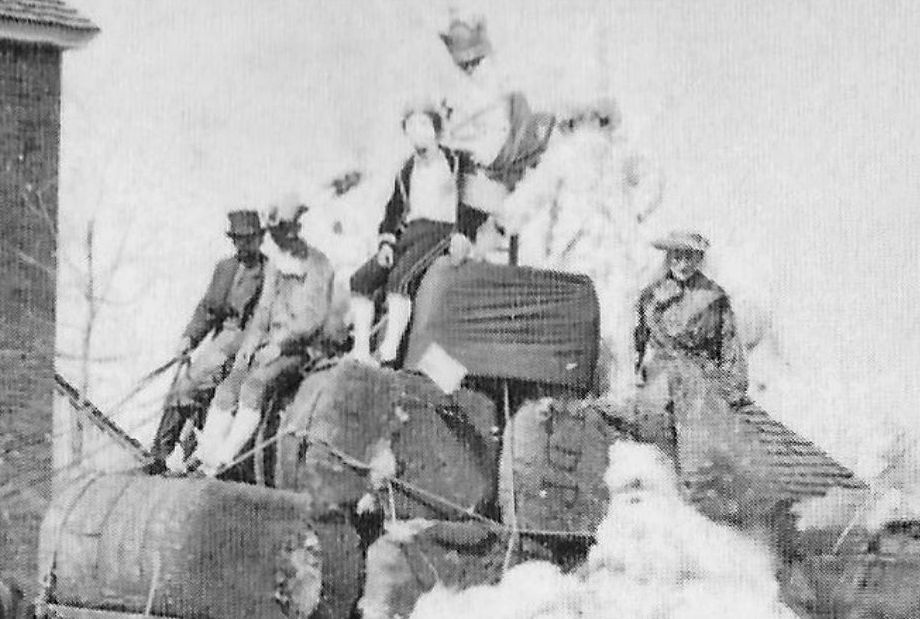
The photo at the top shows the parade wagons representing the brand new Dallas Cotton Exchange (which seems to have been organized the previous month). As described in The Galveston Daily News, the Cotton Exchange’s offering “represent[ed] King Cotton enthroned on six bales of cotton, with numerous subjects appropriately costumed, and occupying two cars” (Feb. 25, 1876). Below are a couple of magnified details of the photo. I’m not sure, but it looks as if the horse and rider in the foreground are covered with cotton. Like tarring and feathering … but fun … and with cotton. The King of Cotton is surrounded by what look like henchmen. The masked man on the right in the elaborate costume is both cool and kind of creepy. (Click both photos for larger images.)
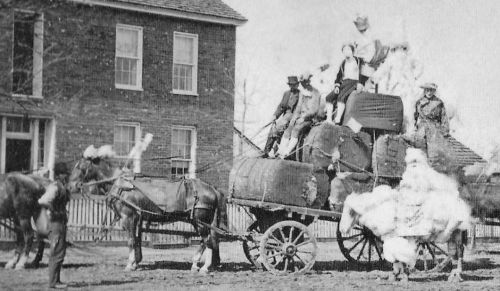
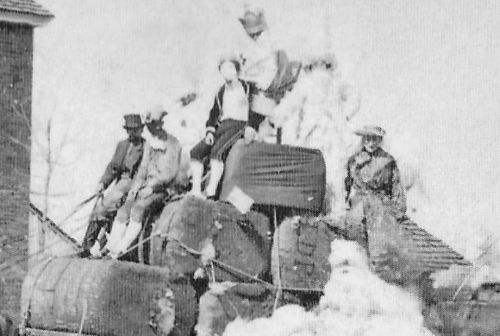
mardi-gras_1876-det1

mardi-gras_1876-det2

***

Sources & Notes

Top photo appeared in the book Historic Photos of Dallas by Michael V. Hazel (Nashville: Turner Publishing Co., 2006); photo from the Dallas Historical Society.

Newspaper clippings as noted.

To read the coverage of Dallas’ Mardi Gras parades and balls —  “a grand pageant and general jollification” — see the front page of The Galveston Daily News (Feb. 25, 1876), here (third column, top of page — zoom controls are on the left side of page).

I wrote a previous post called “Mardi  Gras Parade in Dallas — ca. 1876” which features a photograph which might be from this first Mardi Gras. That post and photo can be seen here.

Happy Mardi Gras!
mully-graw_dal-herald_022476Dallas Herald, Feb. 24, 1876

Photos larger when clicked.

*

Copyright © 2015 Paula Bosse. All Rights Reserved.