Flashback : Dallas

A Miscellany: History, Ads, Pop Culture

Category: Women

On the Grounds of the Ursuline Academy and Convent

ursuline-convent_cook-colln_degolyer_smuBetween classes… (click for much larger image)

by Paula Bosse

I love this photo of Ursuline girls at the fantastically ornate school and convent in Old East Dallas. See more photos of the school, convent, and grounds in my post “Nicholas J. Clayton’s Neo-Gothic Ursuline Academy,” here.

***

Sources & Notes

Photo by Clogenson, from a postcard in the George W. Cook Dallas/Texas Image Collection, DeGolyer Library, Central University Libraries, Southern Methodist University; it is accessible here. I have un-colorized it.

See the scale of the Ursuline property on a 1922 Sanborn map, here. It is now mostly a parking lot, across from the Dallas Theological Seminary; a sad 21st-century view of what the former campus property looks like is here.

*

Copyright © 2016 Paula Bosse. All Rights Reserved.


Girls’ Softball in Dallas, Hugely Popular

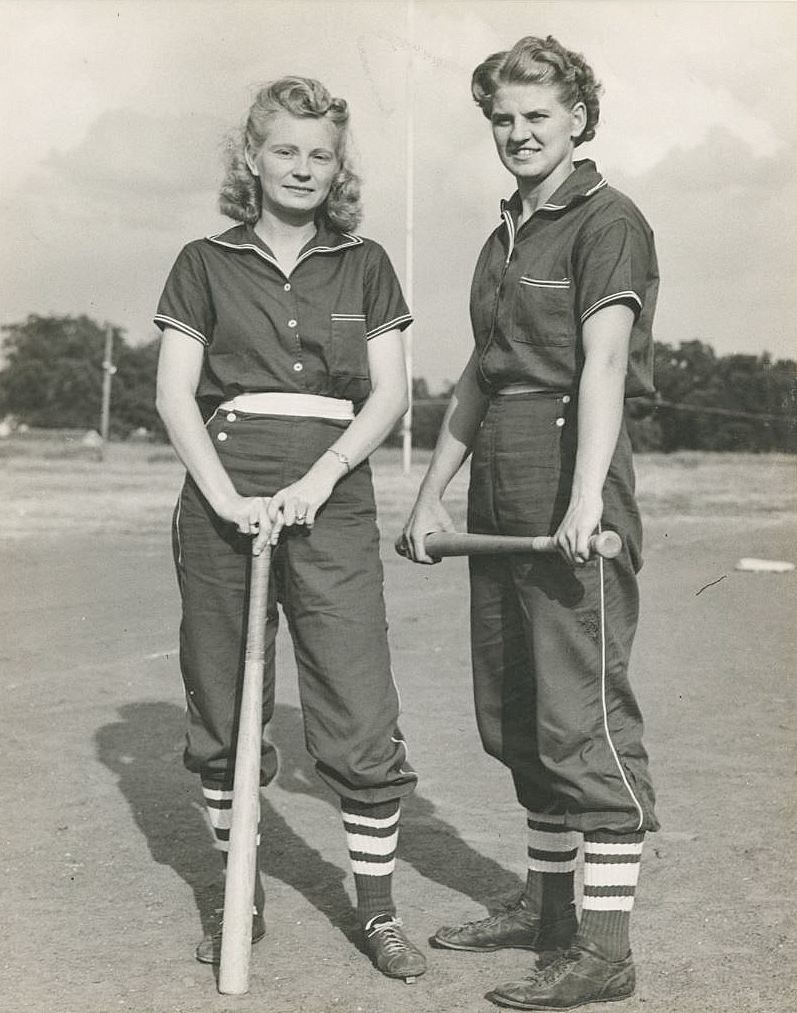
girls-softball_WPA-GD_dallas-park-rec-deptSoftball in the park… 

by Paula Bosse

Around 1938, softball suddenly became very, very popular in Dallas. Absolutely everyone seemed to be playing it: boys, girls, moms, dads, kids, businessmen, college students, and senior citizens. By 1939, The Dallas Morning News was calling the sport “the newest Dallas crazy custom.” There were more than 18,000 players playing on more than 300 organized teams, which meant that most of the roughly 100 softball diamonds in the city were constantly in use. It was estimated that more than 700,000 spectators had filled softball bleachers in 1938. These were all, of course, non-professional teams and players,  but there was some concern that this new-found softball enthusiasm might be cutting into attendance for the professional baseball games.

…[B]ut the fact remains that softball is cutting into the gate receipts of professional baseball. When more than 100 softball teams play almost every night in Dallas and hundreds of fans watch the games there certainly must be vacant seats at the stadium where professionals are doing their stuff for the Texas League. (Dallas Morning News, June 16, 1939)

Most interesting about this “fad” is that girls’ softball league games became extremely popular. These teams were often affiliated with local companies (Metzger’s Milk, Dunlap-Swain, etc.), and their sponsored games drew very large crowds, usually more than the men’s games did. The Dallas Morning News reported that attendance at the regular Friday night games in 1939 was something like five or six thousand. Some of the girls even became minor local celebrities.

baseball_teammates-of-fort-worth-cats_william-langley_nd_portal
Fort Wort at bat (via Portal to Texas History)

Coverage of the women’s games by the local press was solid, but coverage of the women themselves seemed more like a good excuse to run photos of the “girls” in skimpy uniforms rather than focus on their athletic ability. But I’m sure the girls shrugged it off and were just happy to be playing a sport they loved.

girls-softball_1940

**

Below, the 1943 Dallas Girls’ Softball League champions, the Metzer Dairy Maids. I love their names so much I want to type them out:

Tinker Tarker
Mutt McFanning
Aubrey Ray
Thelma Lowe
Pat Bell
Faustine Riley
Beatrice Draper
Flo Dyer
Opal Ritter
Annie Jo Floyd
Alma Floyd
Genevieve Dobbins
Pud Adams

girls-softball_dmn_071843
DMN, July 18, 1943

***

Sources & Notes

Top photo from the WPA Dallas Guide and History.

Second photo by Dallas photographer William Langley, from the collection of the Birdville Historical Society, via the Portal to Texas History.

Even though these company-sponsored teams were often in city- and state-wide leagues, they were all comprised of amateur players. That’s not to say money wasn’t being made. A lot of tickets were being sold, and companies got a lot of publicity for their winning teams. In fact, companies often scouted for players and hired them solely based on their athletic prowess — this is exactly how Babe Didrikson, generally considered one of the greatest all-round athletes in history, ended up working for an insurance company in the Interurban Building in downtown Dallas. (Read all about that in my previous post, “Babe Didrikson, Oak Cliff Typist.”)

*

Copyright © 2016 Paula Bosse. All Rights Reserved.

Bonnie Parker: “Buried In an Ice-Blue Negligee” — 1934

bonnie-parker_mortician-account_cook-colln_degolyer(George W. Cook Collection, DeGolyer Library, SMU)

by Paula Bosse

This amazing (and amazingly gruesome) first-hand account of an unnamed McKamy-Campbell Funeral Home undertaker details the incredible amount of work required to prepare the bullet-ridden body of celebrity outlaw Bonnie Parker for burial. This odd little historical document comes from the absolutely fantastic George W. Cook Dallas/Texas Image Collection housed in SMU’s DeGolyer Library. The four-page handwritten document can be viewed in its entirety on SMU’s Central University Libraries’ website here. Below is the full account, transcribed by SMU, with a few corrections/additions made by me.

*

Tear this up please? Tear this up please?

Heres [sic] first hand on Bonnie & Clyde as we had Bonnie. She was about the size of Rose Grace, weighing a 100 pounds. (a thousand pounds of dynamite though) She was very pretty of course her skin was somewhat tan. Her nails were beautiful. Likewise her toe nails. Her toes looked like fingers. The cuticles pushed back, the nails filed to a point, and a deep coral shade polish on them, the most beautiful toes I ever saw, just perfect. Her permanent just a month old we had it waved. Her face, right side was blown off. We fixed this and you could hardly tell it. Just one bullet went through her brain, however and number grazed her head as there were 3 big holes in her scalp, but not through skull. Her left eye terribly black, however I used eye shadow on other eye to match, so that was covered up. Now, her body was just mutilated and torn to pieces from shots. Her right hand nearly blown off (known as her trigger hand) her body besides being full of bullet holes was full of buckshot, pellets all over her

[Page 2] body. We received body ten minutes of nine. Joe and I sewed on her until three that afternoon. At that time they say 25,000 people were lined up outside. It took 2 hours picking dirt, rocks etc. from her hair then to wash it and have waved. A tattoo on right leg two hearts one read Roy, the other Bonnie. Roy you know was her Husband (Roy Thornton now in Pen) All fluid the undertaker in Arcadia La. used leaked out she was torn up so she was a a [sic] mass of blood, caked & dried. Several hours in bathing her. Had to scrape some of it off, and used gold dust to remove most of it. Had skin slip that night account Fluid leaking from it, began to smell the next morning, turning dark, smelling worse. The last day was rotten so to speak The odor was awful. Her Mother thought [sic] sat in room alone with her head over casket. How she stood it Lord knows. The other children couldn’t. Mother fainted 2:30 that night I asked if she wouldn’t like to go home, she went. By then the entire house smelt. We had to keep her so Sister Billy that was in jail in Ft Worth could get out & come to Funeral. She was buried in an all steel metal casket. Paper said $1000.00 wrong about $600 maybe less. Paper said $1000.00 vault Wrong there was no vault Page 2

[Page 3] Buried in an ice Blue Neglegee [sic] (is this spelled right) She was dressed in expensive clothes when killed. About 40,000 people came to view her. Paper said $1,500.00 damages done to Funeral Home. Wrong about the extent of $2.50. They did not tear windows etc as stated. The woman next door though turned Hose on Them to keep her flowers from being walked on. We had 38 officers stationed (3 shifts) all over house and front & back yard keeping crowd in order and all of us as well. 4 operators on the 4 phones. They rang every minute for two days & nights. More people came to see Bonnie then [sic] to see Clyde. Our new Porch Furniture was damaged. We had a Rubber mat about ½ inch in thickness all over Funeral House. Officers

[Page 4] stationed to keep people on it so as not to wear rug out (Big movie Star) my picture was shown in Movies. The paper stretched their stories. She was not to become a Mother as stated. She was diseased slightly though as stated. Now you have it first hand as I worked on her. Joes [sic] & My work was praised very highly in every other line in papers. And if I do say it, It was good. And she looked swell no trace of disfigures showing. The crowd did not steal anything to take home. All paper talk. Example crowd lined up as Far as Fair Park, now judge how it looked. They brought their Lunches. Such Fools.

*

Below, two photographs of the McKamy-Campbell Funeral Home, located at 1921 Forest Avenue in South Dallas, besieged by curious spectators.

mckamy-campbell

mckamy-campbell_dallas-municipal-archives

**

I’m unsure who the “Rose Grace” was who was mentioned on the first page.

The “gold dust” mentioned in the account as being used to remove caked blood from Bonnie’s body was actually Gold Dust Washing Powder or Gold Dust Scouring Soap, a popular, commercially-available “all-purpose cleaning agents” — Wikipedia article is here.

***

Sources & Notes

Top image of the handwritten account on Adolphus Hotel stationery is from the aforementioned George W. Cook Dallas/Texas Image Collection, DeGolyer Library, Central University Libraries, Southern Methodist University, viewable here.

First photo of the McKamy-Campbell Funeral Home is reproduced all over the internet; the second photo is from the files of the Dallas Police Dept., Dallas Municipal Archives, via the University of North Texas’ Portal to Texas History database, here.

Even though the identity of the person who wrote this account is not known, he (…it was probably a man) mentions that he was seen in newsreel footage of the funeral of Bonnie Parker. My wild guess is that he can be seen in this clip from a longer newsreel on the funerals and burials of Bonnie and Clyde at the 2:34 mark. I could never find who his co-worker “Joe” was.

*

Is this our man laying flowers on Bonnies casket?

bonnie-burial_newsreel-screengrab

If you really want to see the state of the bodies of Bonnie (and Clyde) — before and after their time with their undertakers — they’re easy to find via your favorite search engine.

More Flashback Dallas posts on Bonnie & Clyde here.

If you like what you’ve seen on Flashback Dallas, please consider supporting me on Patreon, where for as little as $5 a month, you can receive all-new updates several times a week (if not daily!). More information can be found at Patreon, here.

*

Copyright © 2016 Paula Bosse. All Rights Reserved.

The Moskovitz Cafe

moskovitz-cafe_winegarten-schechterA stool is waiting for you… (click for larger image)

by Paula Bosse

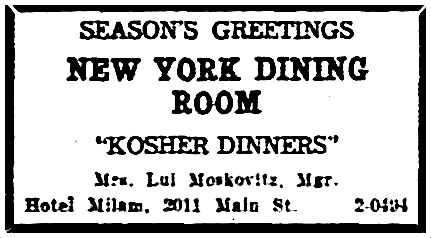
The Moskovitz Cafe was located at 2216 Elm Street, between S. Pearl and what is now Cesar Chavez Blvd., in an area of predominantly Jewish businesses. The restaurant served “Kosher and American cooking” and was owned and run by Lui Moskovitz, a Romanian immigrant, and his Polish-born wife, Eva. Eva, recently widowed, had arrived in Dallas in about 1928 with her three children and seems to have married Lui that same year. They had run another restaurant before the Moskovitz Cafe: the New York Kosher Dining Room on Commerce had been located across from the Adolphus Hotel for several years before it moved to 2011 Main, around the corner from City Hall. After that closed, they ran the Moskovitz Cafe between about 1937 and about 1944.

In 1945 there was no Lui or Eva Moskovitz in the Dallas directory. There was, however, an Eva Haberman — it appears that the Moskovitzes had split, Lui had left town, and Lui’s ex-wife had taken back the name of her late first husband. At this time she must have been about 60 years old, but she worked for the next few years as a department store seamstress and lived with one or more of her three sons from her marriage to Nathan Haberman. She died in April, 1961. Not only is there no trace of Lui after his time in Dallas, there is also no trace of 2216 Elm.

moskovitz_dmn_0101361936 ad

moskovitz-cafe_elm-st_1943-directory
Elm St. businesses, 1943 Dallas directory (click for larger image)

moskovitz_map
Location of Moskovitz Cafe (det. of a 1919 map)

***

Sources & Notes

Photo appeared in the book Deep in the Heart: The Lives & Legends of Texas Jews, A Photographic History by Ruthe Winegarten and Cathy Schechter (Austin: Eakin Press, 1990); from the collection of the Dallas Jewish Historical Society.

I’m not sure who the people in the photo are. When the Moskovitz Cafe opened, Lui would have been in his mid-40s and Eva would have been in her early 50s. UPDATE: Per the comment below (from Eva’s grandson), the woman in the white apron is the proprietress, Eva Moskovitz, and the man at the cash register is her son, Jack Haberman.

More information about Mrs. Eva Haberman can be found in her obituary, published in The News on April 19, 1961.

All images larger when clicked.

*

Copyright © 2016 Paula Bosse. All Rights Reserved.


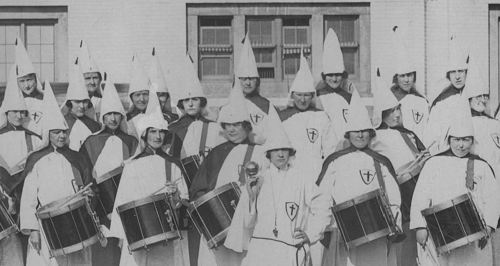
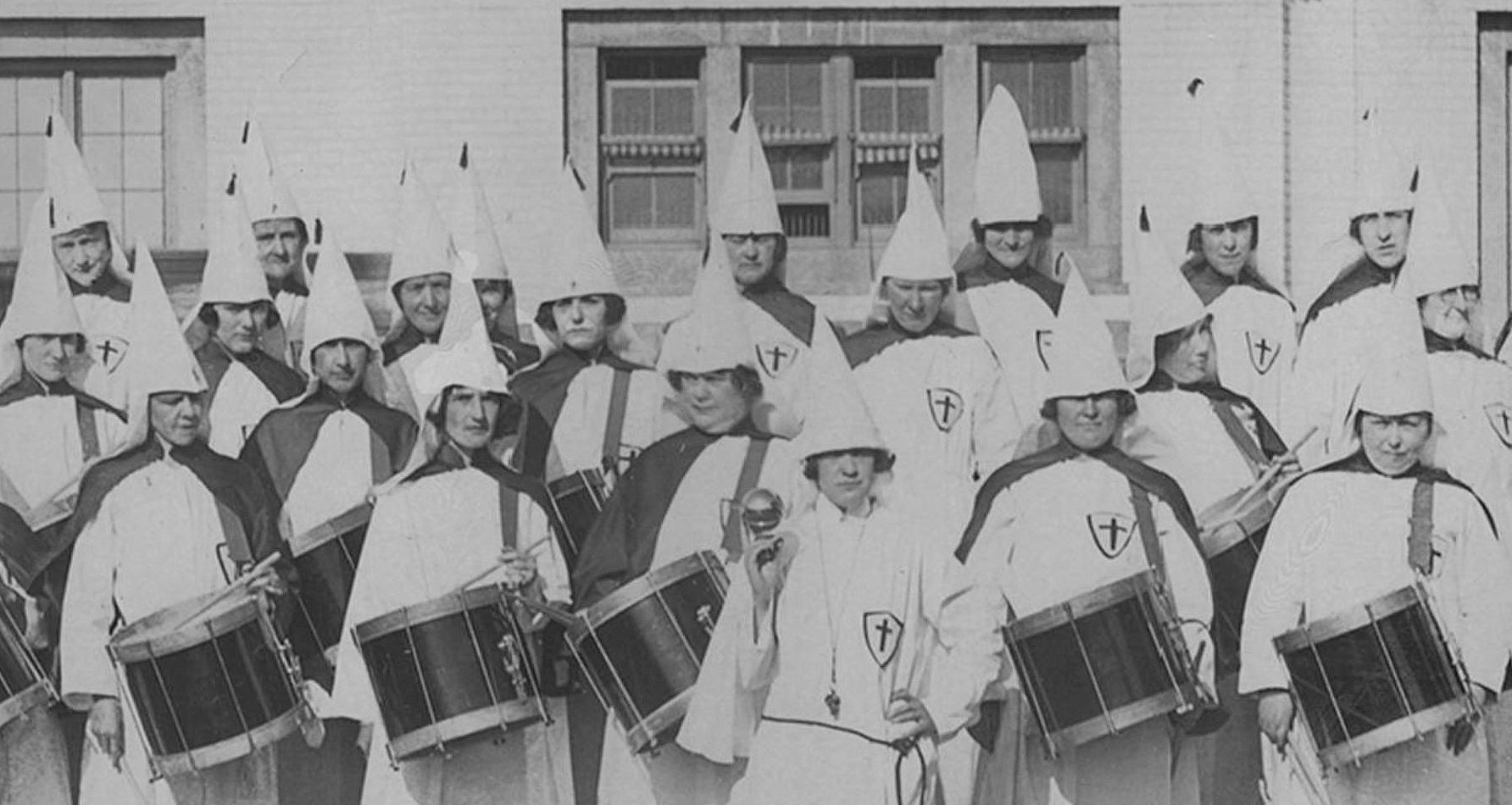
The Dallas Chapter of “The Women of the Ku Klux Klan” — 1920s

kkk-women_1920s_cook-degolyer

by Paula Bosse

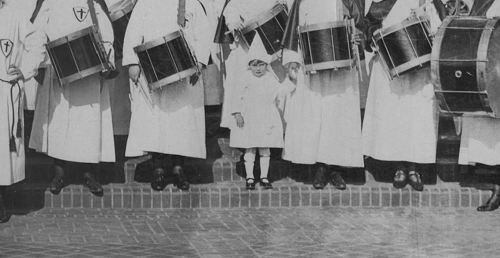
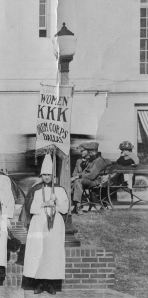
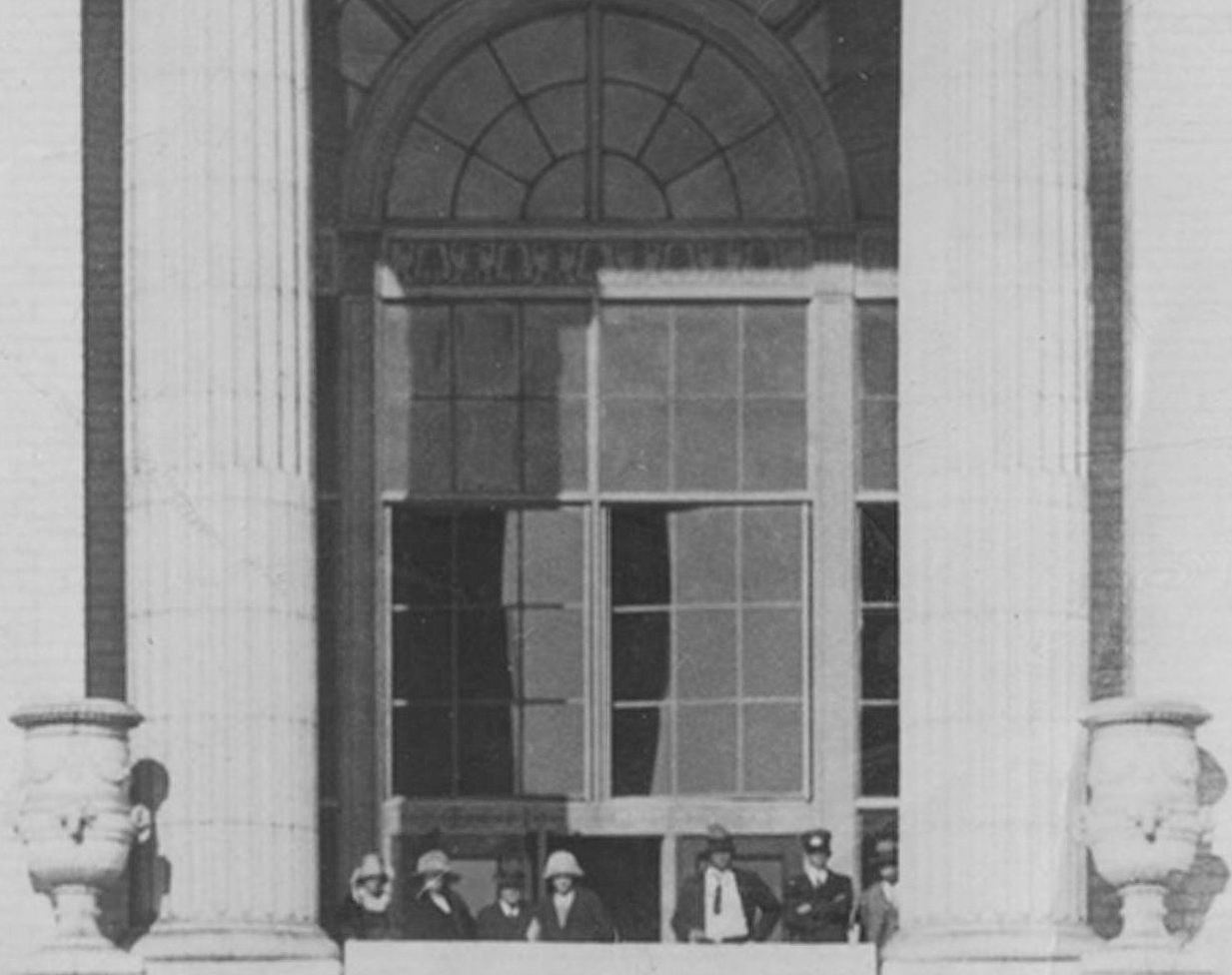
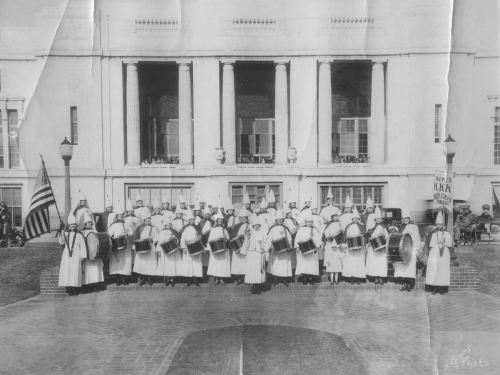
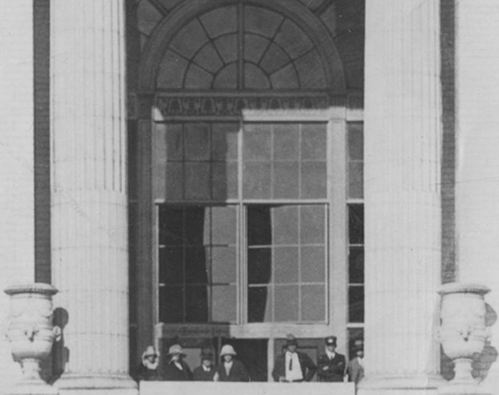
I’ve managed to avoid mention of the Ku Klux Klan since starting this blog a couple of years ago, which is saying something, because the KKK pretty much ruled this city for a good chunk of the 1920s. The Dallas chapter — Klan No. 66 — had more than 13,000 men as members; it was one of the largest chapters in the nation (by some accounts, THE largest chapter). Members included politicians, judges, and law enforcement officials. But what of the Klan-leaning ladies who were not allowed to join? Before I plunge into that, let’s look at what’s going on in this weird, be-robed group shot, a photo taken around 1924 in Ferris Plaza with poor Union Station as a backdrop. (Click these for much larger images.)
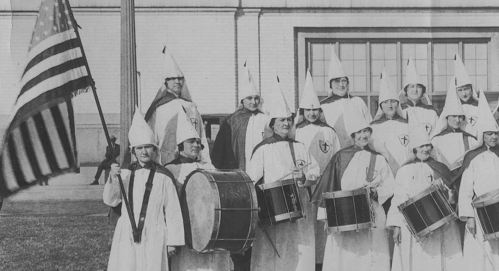
wkkk_det1

wkkk_det2

wkkk_det3

wkkk_det4

wkkk_det5

**

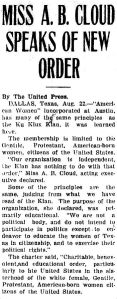
In the early 1920s, women — who had led the temperance movement and whom had recently been given the right to vote — began to form groups that tackled social issues. Some of these groups espoused the same general rhetoric as the KKK. One of these groups was formed in Dallas in 1922 — the “American Women” group was the brainchild of three women, including Alma B. Cloud, who appears to have been only 21 years old. One of the other founders was her partner in a short-lived ladies’ clothing boutique. Cloud immediately hit the lecture circuit, giving free lectures on “Americanism” to (white Protestant) women around Texas.
cloud_taylor-tx-daily-press-08222Taylor Daily Press, Aug. 22, 1922

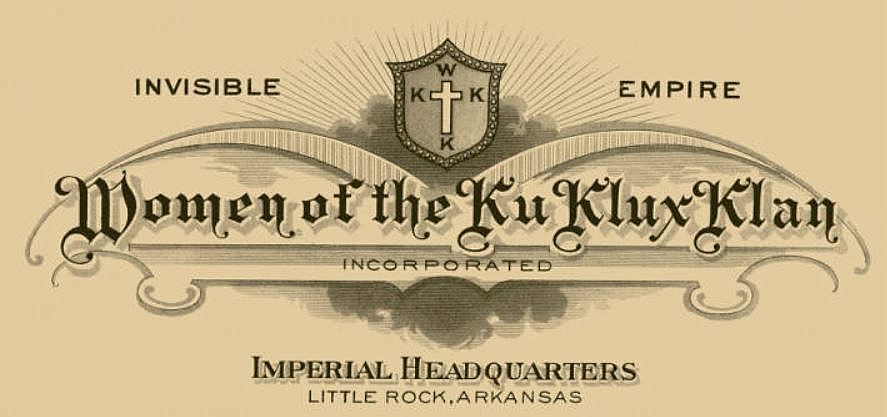
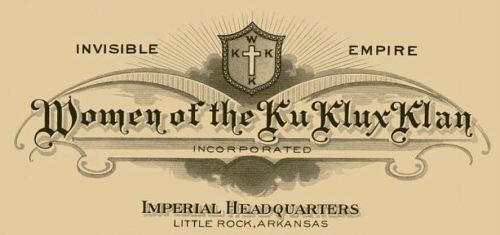
By the following summer, the male leadership of the Klan allowed a “Women of the Ku Klux Klan” to be created; its national headquarters was in Little Rock.
wkkk_letterhead_olemiss

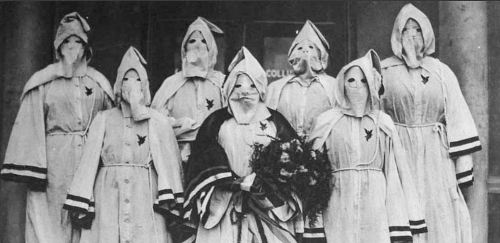
They were not officially part of the KKK but were, in theory, a separate entity. While not, perhaps, as outwardly extreme as their male counterparts, they were certainly as virulently racist and intolerant. They might not have been lynching people and threatening violence, but they were busy pushing their exclusionary, white supremacy agenda. And both the men and the women liked to dress up in white robes and hoods. Here’s what the women looked like when they added masks to the ensemble (not Dallas — location of photo unknown).
wkkk

Several of the independent women’s groups founded previously were happily absorbed by the WKKK — including Miss A. B. Cloud’s group. In fact, Miss Cloud became the leader of the Dallas chapter. The “Klaliff.” The headquarters for this group — which campaigned for “progressive morality”– was in a little space on North Harwood.

WKKK_1924-directory1924 Dallas directory

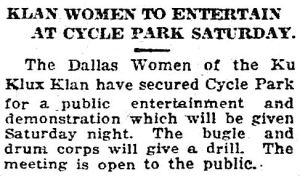
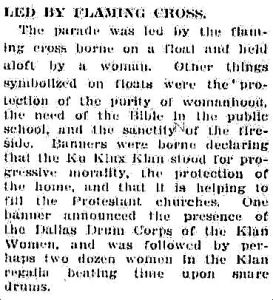
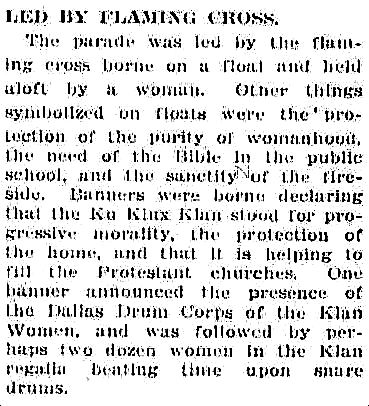
1924 seems to have been the big year for both the KKK and the WKKK. The women found themselves at lots of parades with burning crosses and other … “functions” — so why not form a drum corps? A few clippings. (Click for larger images.)
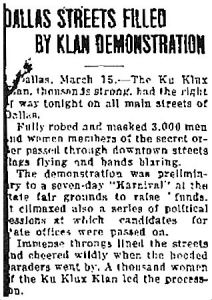
kkk-women_amarillo-globe-times_031624Amarillo Globe-Times, March 16, 1924

klan-women_dmn_073124Dallas News, July 31, 1924

kkk-women_mckinney-courier-gazette_111224McKinney Courier-Gazette, Nov. 12,1924

By 1926, the KKK was starting to lose its power, and the fear and intimidation they had instilled in much of the public began to wane. The (men’s) KKK had had to downsize and move into the women’s headquarters, and their candidates began losing elections. Even worse, you know things were getting bad if someone was suing the KKK for delinquent robe-payment!

KU KLUX KLAN WOMEN SUED FOR ROBES BILL: Suit for $4,463.80 was filed in the Forty-Fourth District Court on Friday afternoon by John F. Pruitt against the Women of the Ku Klux Klan, Inc. The petition alleges that the plaintiff sold the defendant, a corporation, 6,000 robes at $2.50 each during the two years preceding the filing of the suit, for which the defendant agreed to pay $15,000 to the plaintiff. It is alleged that $4,463.80 remains unpaid. (DMN, Nov. 28, 1925)

The power once exerted by the Ku Klux Klan had diminished greatly by the end of the 1920s, and while the Klan has never disappeared completely, it will never again reach the heights it had attained in the 1920s.

Whatever happened to Miss A. B. Cloud? After having been ousted from her “imperial” position (for reasons I don’t really care enough about to investigate), she had a few sales jobs and eventually began to present motivational sales talks. There was an Alma B. Cloud in California who was mentioned in several news stories from the 1930s — she presented motivational lectures to students on how best to plan their future adult lives. Um, yes. I’m not 100% sure this was the same A. B. Cloud who was the former WKKK gal from Big D, but it seems likely. I wonder what those students would have thought had they known of her pointy-hooded past?

***

Sources & Notes

Links-a-plenty.

Top photo is titled “Ku Klux Klan Women’s Drum Corps Dallas in Front of Union Station,” taken by Frank Rogers; it is from the George W. Cook Dallas/Texas Image Collection, DeGolyer Library, Central University Libraries, Southern Methodist University — it can be accessed here. I have manipulated the color.

Women of the Ku Klux Klan letterhead comes from the Women of the Ku Klux Klan Collection, Archives and Special Collections, University of Mississippi Libraries; the collection can be accessed here.

The photo of the masked WKKK women is all over the internet — I don’t know its original source or any details behind it, but it’s creepy.

“Women of the Ku Klux Klan” on Wikipedia, is here.

“Women of the Klan: Racism and Gender in the 1920s” by Kathleen M. Blee, is here.

“Charity by Day, Punishment by Night: The Ku Klux Klan in Fort Worth” — from the great FW history blog Hometown by Handlebar — is here.

And, probably best of all, the Dallas Morning News article “At Its Peak, Ku Klux Klan Gripped Dallas,” by the wonderful and much-missed Bryan Woolley, can be read here. This article contains facts and figures, describes the sort of “madness of crowds” atmosphere in the city at the time, and details some of the horrible atrocities committed by the KKK in Dallas. Woolley cites historian Darwin Payne’s assertion that if one considered every adult man in Dallas who would have been eligible to have joined the Klan (this excludes, of course, those of African-American, Hispanic, Asian, Catholic, or Jewish descent), one in three of them was a member of the Dallas chapter of the Ku Klux Klan. ONE IN THREE.

A few short mentions of the Dallas WKKK have been compiled here.

UPDATE: For a look at racism in modern Dallas, watch the half-hour film “Hate Mail,” made in 1992 by Mark Birnbaum and Bart Weiss, here. It includes interviews with several prominent Dallasites, as well as interviews with a couple of Klan leaders.

Click pictures and clippings to see larger images.

*

Copyright © 2016 Paula Bosse. All Rights Reserved.

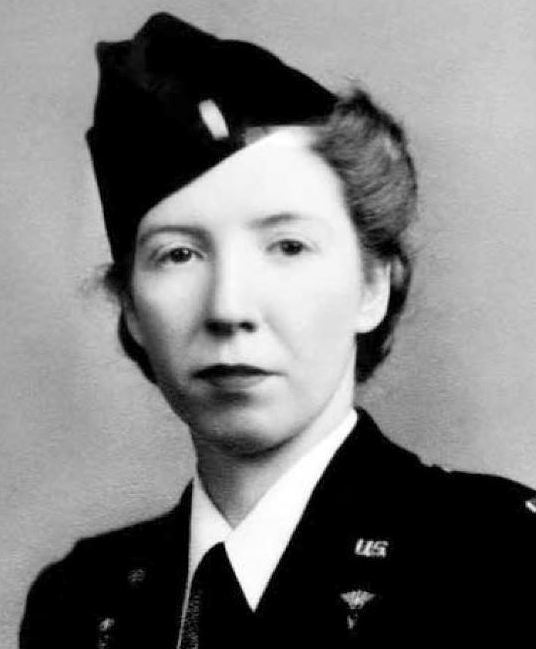
Lt. Mary L. Roberts, The “Angel of Anzio” — The First Woman Awarded the Silver Star

silver-star_feb-22-1945Roberts (left) and two fellow Army Nurse Corps nurses receiving the Silver Star

by Paula Bosse

The opening paragraph from a chapter in Tom Brokaw’s book The Greatest Generation:

There are so many impressive numbers connected to World War II that it’s difficult for one or two to catch your eye. Here are a few that caught me by surprise: more than sixty thousand women served in the Army Nurse Corps. Sixteen died as a result of enemy action. Sixty-seven nurses were taken prisoner of war. More than sixteen hundred were decorated for bravery under fire or for meritorious service.

The chapter is titled “Mary Louise Roberts Wilson,” a profile of Mary L. Roberts, a Methodist Hospital nurse who enlisted in the Army Nurse Corps in 1942. She served with the 56th Evacuation Hospital Unit alongside many other medical professionals from Dallas (the unit — sometimes called the “Baylor Unit” — was organized by the Baylor University College of Medicine in Dallas). She knew she would be serving overseas in field hospitals in combat zones.

As far as seeing action, the worst of the worst for the 56th was on February 10, 1944 when their hospital tents on the Anzio beachhead in Italy were attacked by German long-range artillery shells for a full thirty minutes. Several operations were underway during the attack, and Roberts, the chief nurse of the operating tent, managed to keep a calm head and help to maintain as much order as possible.

“I wanted to jump under the operating table, but first we had to lower litter cases to the floor. Pieces of steel already were ripping through tents. There were four litters. I saw a patient on the operating table had his helmet near him so I put it over his head to give him that much protection.” (Mary L. Roberts, Dallas Morning News, Feb 23, 1944)

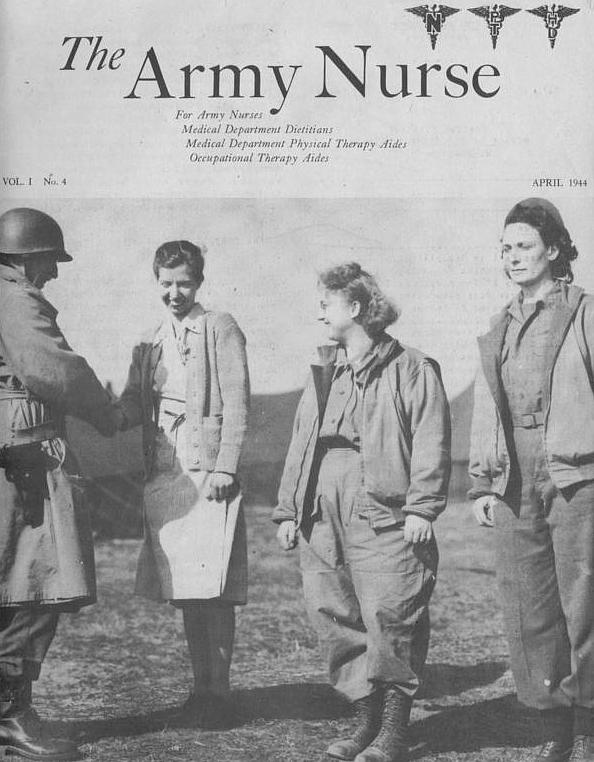
When the shelling ended, two enlisted men in the operating tent had been wounded, and elsewhere in the field hospital, two nurses had been killed and several other personnel wounded. As a result of their exceptional bravery, outstanding leadership, and “gallantry in action,” Roberts and two other nurses, 2nd Lt. Rita Virginia Rourke and 2nd Lt. Elaine Arletta Roe were awarded the Silver Star. No women had ever received the medal. As 1st Lt. Roberts had seniority, she was the first woman in history to be decorated for heroism in action.

Maj. General John P. Lucas surprised her and the other two nurses on Feb. 22, 1944 with an informal presentation of the medals at the same Anzio hospital that had been shelled only twelve days earlier. After the brief pinning ceremony, the nurses immediately returned to their duties, all feeling they were accepting acknowledgement for their team, not for themselves alone. Roberts spent 29 months overseas, and tended to more than 73,000 patients.

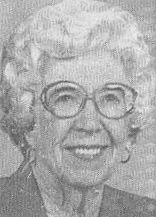
After the war, when Lufkin-native Mary Roberts returned home, she worked for almost 30 years as a nurse at a VA hospital in Dallas, and, rather late in life, she married fellow veteran Willie Ray Wilson. Mrs. Wilson died in 2001 at the age of 87. She was buried with full military honors.

roberts_texas-women-first_mcleroy_UTA1944 (Fort Worth Star-Telegram Archives, UTA)

roberts_dmn_022344-photo1944

roberts-cover_army-nurse_april-1944Presentation of the Silver Star at Anzio

roberts_obit-photoMary Roberts Wilson (1914-2001)

***

Sources & Notes

Top photo and first quote from The Greatest Generation by Tom Brokaw (New York: Random House, 1998).

For an exceedingly detailed history of the 56th Evacuation Hospital Unit, with several photographs, see here.

Articles on Mary Roberts from The Dallas Morning News archives:

  • “Baylor Unit In Action” (DMN, Aug. 26, 1942): photo of unit, including Roberts, working around an operating table
  • “Dallas Nurse, Two Others Win Medals” (DMN, Feb. 23, 1944): “The award, denoting exceptional bravery went to Lt. Mary L. (Pinky) Roberts, 1205 North Bishop, Dallas, Texas, chief nurse in an operating room hit by shell fragments.”
  • “Nurses of Dallas Unit Serving at Anzio Doing Jobs Cheerfully Despite Many Hardships” by Wick Fowler (DMN, March 31, 1944)
  • “Ends Military Career: WWII Recalled By Heroic Nurse” (DMN, July 26, 1964): photo and interview with Mary Roberts Wilson on her retirement from the U. S. Army Reserve
  • “Happiness Is Being Part of a Team” by Jane Ulrich Smith (DMN, May 16, 1972), photo and interview, on her retirement from the Veterans Administration Hospital
  • “Compassion Revisited: Nurse Reunites With GI She Treated For Serious Injuries In WWII” (DMN, Nov. 4, 1999): a reunion with former patient Dewey Ellard of Mobile, Alabama, brought together by Tom Brokaw
  • “Distinguished Career In Medicine Followed — WWII Gallantry — VA Hospital Honors Longtime Nurse — Who Won Silver Star in ’44” (DMN, Nov. 6, 2001): interview with the then-87-year-old Mrs. Wilson, published two-and-a-half weeks before her death
  • “Mary Wilson, ‘Angel of Anzio,’ Dies at 87 — WWII Nurse Known For Kindness Was Decorated For Bravery Under Fire” (DMN, Nov. 24, 2001)

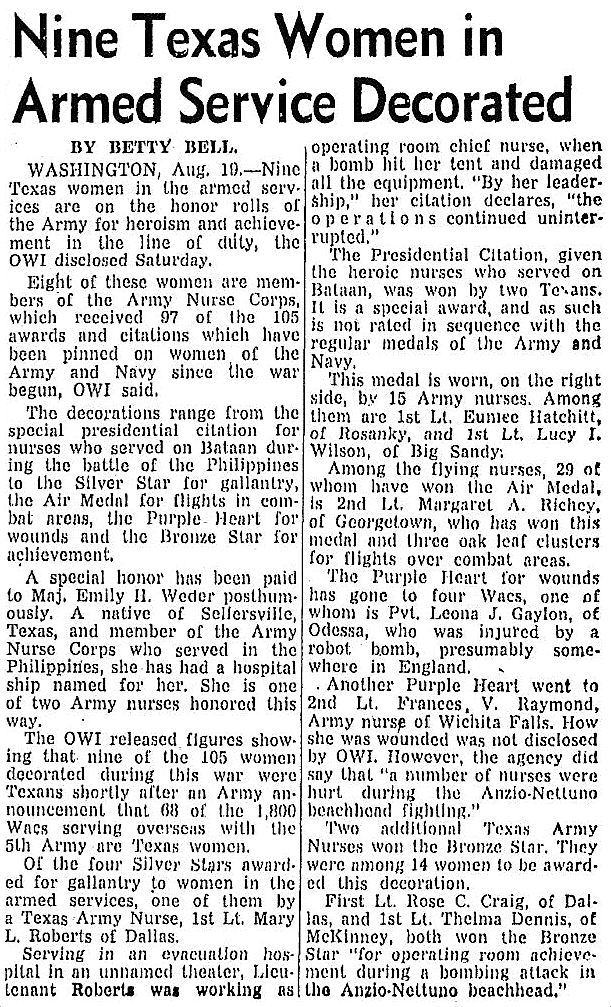
Other women who were honored in 1944 for heroism and achievement in the line of duty:

women_ww2_medals_FWST_082044Fort Worth Star-Telegram, Aug. 20, 1944

Click pictures and articles for larger images.

*

Copyright © 2016 Paula Bosse. All Rights Reserved.
 

Parasols on the SMU Campus — 1917

smu_parasols_1917_degolyerSMU, sparsely populated

by Paula Bosse

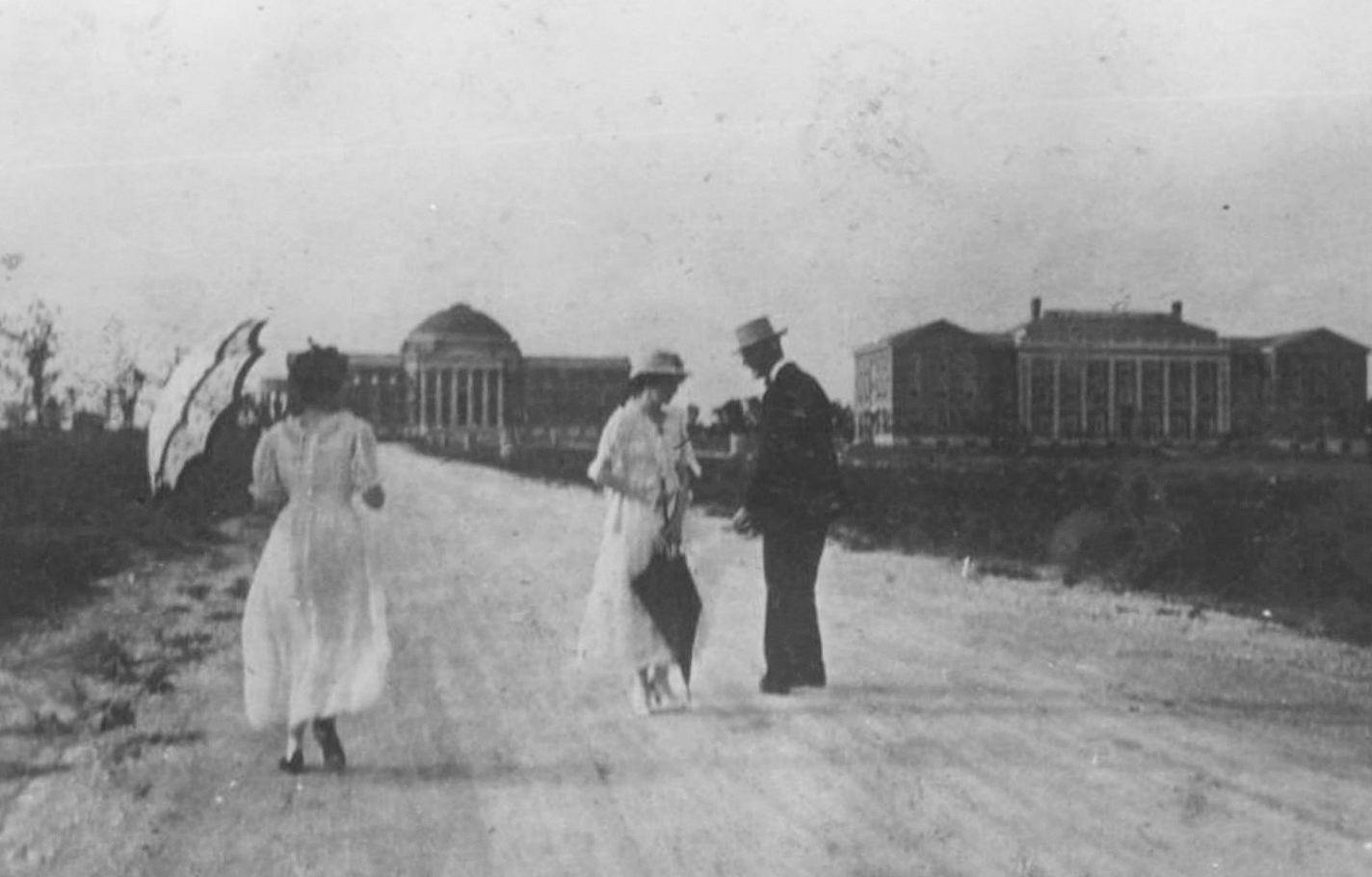
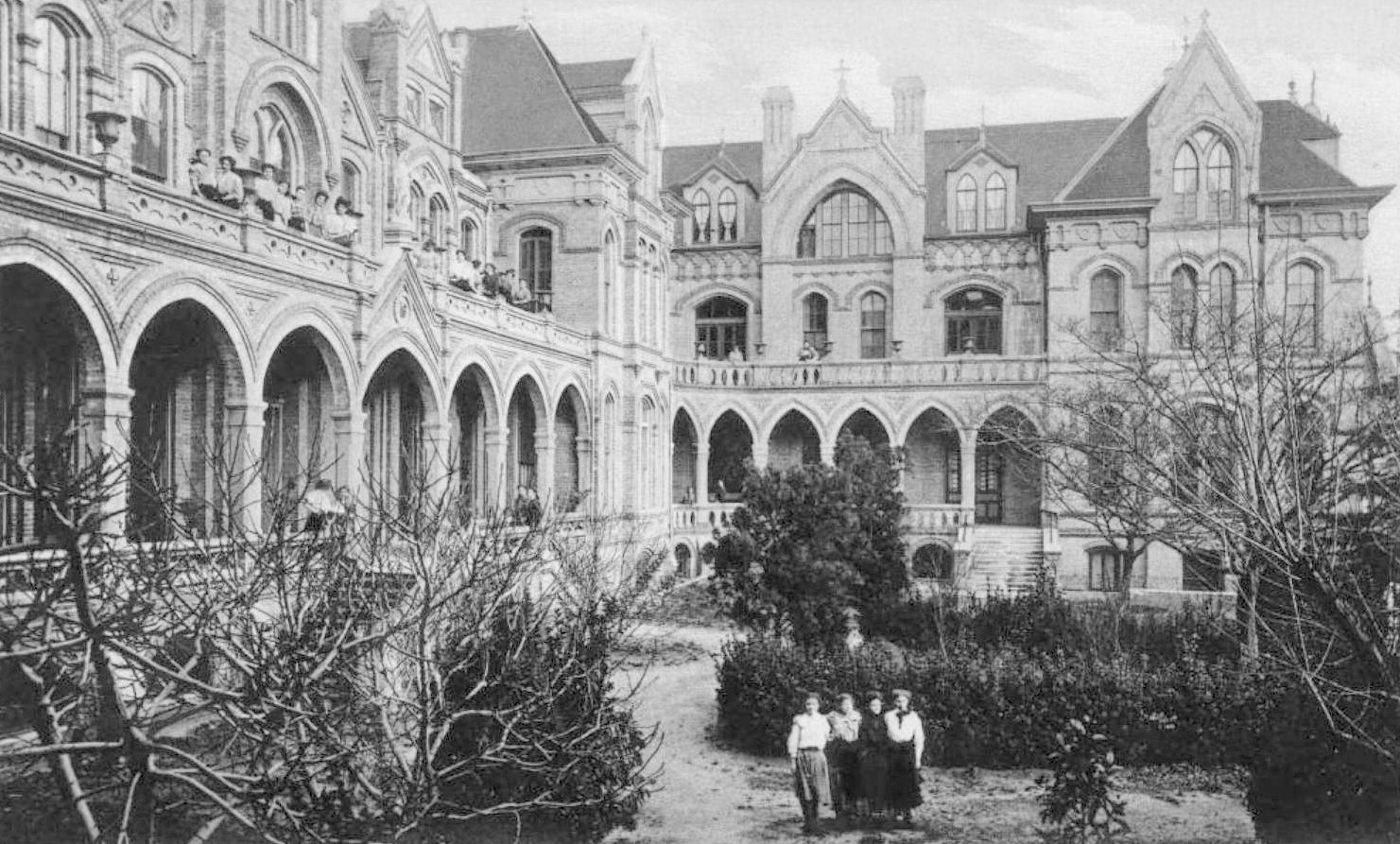
I love this photo showing a man and two women with parasols walking up an unpaved Bishop Blvd. toward Dallas Hall. The women’s dormitory, Atkins Hall, is on the right. …And that’s it.

***

Sources & Notes

Photo titled “Dallas Hall and women’s dormitory in 1917” is from the DeGolyer Library, Central University Libraries, Southern Methodist University; more information is here. (I have straightened the image, and corrected the color somewhat.)

*

Copyright © 2016 Paula Bosse. All Rights Reserved.

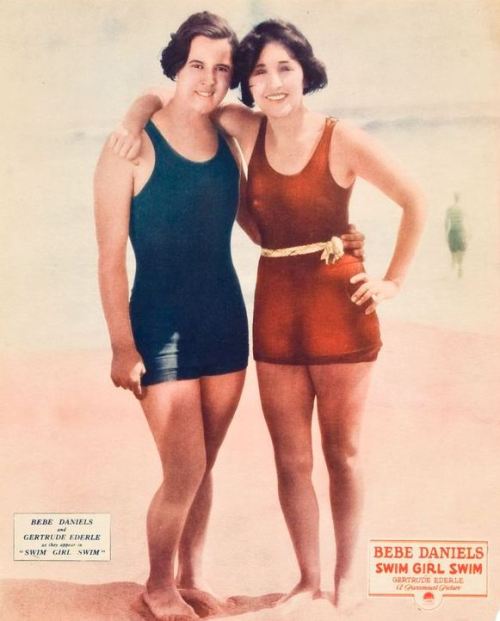
The First Woman to Swim the Channel Helped Search the Trinity for Drowned Victims — 1927

swim-girl-swim_haGertrude Ederle (l) with co-star, Dallas native Bebe Daniels / via HA.com
by Paula Bosse

In 1926, Gertrude Ederle, a 19-year-old American, became the first woman to swim the English Channel — her time of 14 hours and 39 minutes was the fastest time ever. She became an instant international celebrity. When she returned to New York, she was given the very first ticker-tape parade, and over two million people turned out to see her.

After this momentous achievement, Ederle turned for a while to entertainment. She made a cameo appearance in a (now lost) silent film called Swim, Girl, Swim (which, incidentally, starred two Dallas natives, Bebe Daniels and James Hall), and she also toured for a while with a vaudeville company.

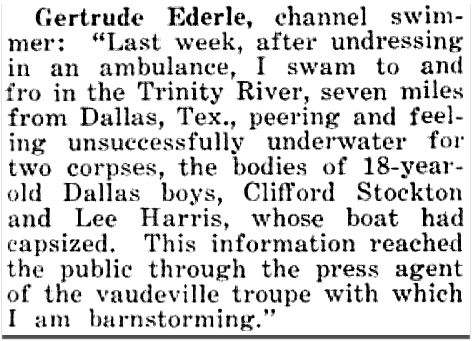
It was during one of these tours in April, 1927 that she arrived in Dallas, just as torrential rains began to fall. There was severe flooding along the West Fork of the Trinity, especially in the area of Record Crossing. The boat in which two young men were riding had capsized and they had been caught in the undertow and drowned. There had  been an unsuccessful search for their bodies, and I’m not sure who came up with the idea of contacting Miss Ederle, but someone did. Why NOT call in the world’s most famous swimmer to see if she could lend a hand while authorities dragged the river? Miss Ederle did, in fact, join in the underwater search, but the bodies were not found. I bet she never forgot that Dallas stop!

The news was reported in Time magazine:

trinity_bodies_time-mag_041827Time, April 18, 1927

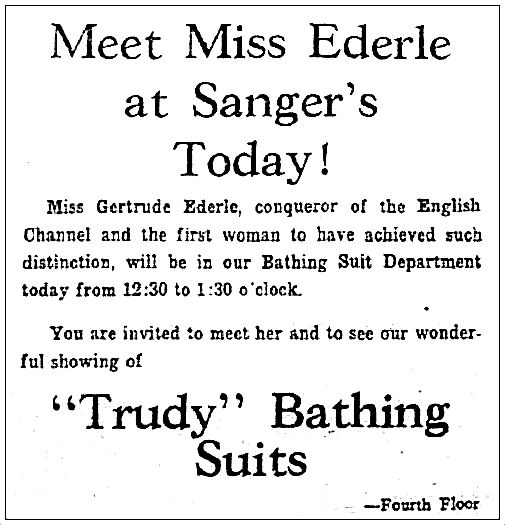
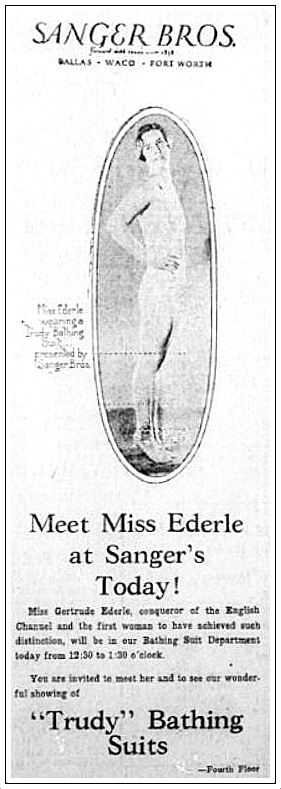
While in town, Trudy also squeezed in a personal appearance at Sanger Bros., hawking what looks to be her own line of swimsuits.

ederle_sangers_dmn_041427-det

ederle_sangers_dmn_041427Apr. 14, 1927

***

Sources & Notes

More on the Trinity River search can be found in The Dallas Morning News article “River Claims Two Victims; Gertrude Ederle Makes Vain Attempt to Recover Bodies” (DMN, April 5, 1927).

Newsreel footage of Gertrude Ederle can be seen here.

Photos of Ederle in action are here.

Ederle’s Wikipedia entry is here.

*

Copyright © 2016 Paula Bosse. All Rights Reserved.


Muriel Windham — An Oak Cliff Teenager’s 1940s Diary

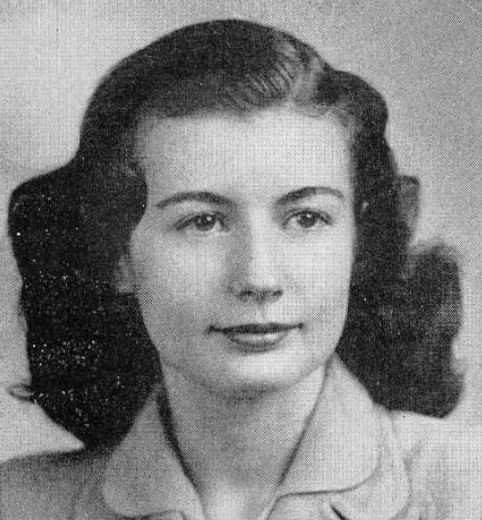
muriel_colorMuriel, via Muriel Windham’s Diary

by Paula Bosse

About this time last year, Robert Wilonsky of The Dallas Morning News wrote an interesting article about a black-out imposed by the city of Dallas in January, 1942, just a few weeks after the attack on Pearl Harbor. In the middle of it, he linked to a diary entry written by a 14-year-old describing the event. For me, the most interesting thing about Wilonsky’s piece was the fact that someone had transcribed diary entries of a teenage girl growing up in Dallas in the 1940s. So I read the whole thing. And I loved it.

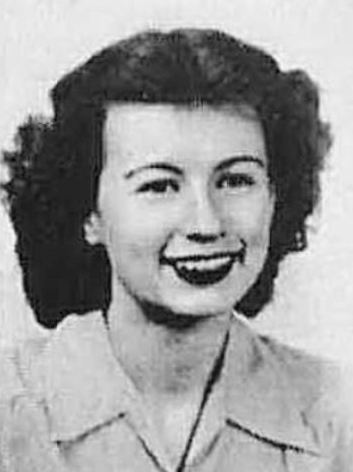
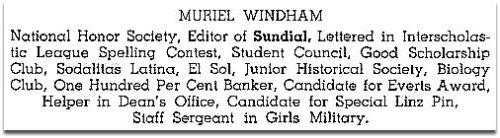
The teenager in question is Muriel Windham (1926-2005) who grew up in Oak Cliff and attended Peeler Elementary, Greiner Jr. High, and Sunset High School. She was a top student who was involved in lots of extracurricular activities, but her greatest joy was going to the movies and listening to comedians on the radio. She was absolutely obsessed — OBSESSED! — with Bob Hope. She attended SMU where she ultimately received a Master in English Literature degree and Master in Library Science degrees; she was head of the children’s department of the Dallas Public Library (as Muriel Brown) for many years and was a specialist in children’s literature. Somewhere in there she married G. W. Brown II and had three children.

But back to the diary. After her death in 2005, Muriel’s son David began transcribing his mother’s teenage diary — exactly as written, complete with misspellings and grammatical errors. It begins on January 1, 1940 (six weeks after she had turned 13) and ends in the summer of 1942. David Brown says he has years and years worth of her diaries — I hope he gets  back to transcribing them one day, because what’s on his blog now is utterly charming.

The diary is exactly like every other teenage girl’s diary. If you’re not of the female persuasion, you might not be able to handle the deep, deep plunge into teenybopperdom. It reads just like MY diary from when I was 13, except that my obsession wasn’t Bob Hope but a TV star from a 1970s TV show that might prove highly embarrassing were it to be revealed. If you have a low threshold for incessant mentions of Bob Hope by a moony adolescent or are not at all interested in entertainment of the early 1940s, this may not be for you. As I said, I loved it. I wish there were more Dallas-specific entries, because when those pop up, it’s pretty cool.

An introduction to the diary is here. The blog is written in reverse order — and it really should be read chronologically, so I suggest starting here at the very bottom and reading up the page; when it’s time for the next page, scroll down to the bottom and click  “Next Entries.” (You’ll get used to it.) There are 8 pages, and each entry is very short. It’s the perfect sort of thing to read when you stay in on a cold weekend. …But I’m not going to sugar-coat it: there is a LOT of Bob Hope to slog through! You’ve been warned!

**

muriel-windham_sunset-high-school_1943Muriel, 1943

muriel-windham_sunset-high-school_1944Muriel, 1944 — editor of the Sunset yearbook

muriel-windham_sunset-high-school_1944-clubsSenior, over-achiever — 1944 yearbook

***

Sources & Notes

Black and white photos are from the Sunset High School yearbook, the Sundial.

Muriel Windham Brown’s obituary can be read here.

Muriel does actually get to meet Bob Hope once or twice, but the diary entries stopped before a pretty incredible meeting on April 22, 1943 at a benefit to sell war bonds at the Dallas Country Club. There was even a short article in The Dallas Morning News which chronicled what must have been the biggest moment in her 16 years: “Hope Thrills Girl As He Sells Bonds” (DMN, April 23, 1943). A couple of sentences from the article:

In the hustle and bustle of his bond sale at Dallas Country Club Wednesday afternoon a pretty, young girl shyly stepped up to Hope and caused him to sink to his knees in a swoon as she whispered she would pay $10,000 for his autograph. […] Hope treated her beautifully. He sat her down on the platform, left the mike occasionally to dash over, feel her pulse, stroke her brow and leave a light kiss on her forehead. (DMN, April 23, 1943)

I can’t even imagine how stunned Muriel must have been! (Her father worked as an executive, mostly in insurance and banking, and I have a feeling that the $10,000 check came from his employer, not his own bank account.)

Muriel’s family lived at 817 Brooks. No movie theater was all that far away by streetcar.

muriel_817-brooksGoogle Maps

A few more photos as she made her way through Sunset and SMU are here.

And, well, I kind of feel I have to….

bob-hope

*

Copyright © 2016 Paula Bosse. All Rights Reserved.


School Lunches of Yesteryear

lunch-ladies_frontier-top-tier_dplMorning prep work: the calm before the storm

by Paula Bosse

Above, Dallas lunch ladies shelling what looks like black-eyed peas for an unidentified school’s midday meal. I can’t say I’ve ever imagined lunchroom employees ever doing something like this. In the 1920s and ’30s, schools used fresh foods when they could, but they were definitely using a lot of canned fruits and vegetables, too. All this effort — and all these women — for peas.

In a quick search for what school lunch menus were like in the late ’20s and early ’30s, here were a few delicacies that would never be found in a school cafeteria these days:

  • Roast veal
  • Sardine sandwiches
  • Creamed onions
  • “Italian hash”
  • Banana and peanut salad
  • Salmon loaf
  • Tongue salad
  • Stuffed dates
  • Prune whip/prune salad/prune pudding

Yummy!

***

Sources & Notes

Photo from the Texas/Dallas History & Archives Division, Dallas Public Library.

*

Copyright © 2015 Paula Bosse. All Rights Reserved.