Flashback : Dallas

A Miscellany: History, Ads, Pop Culture

Category: Zooming in on Details

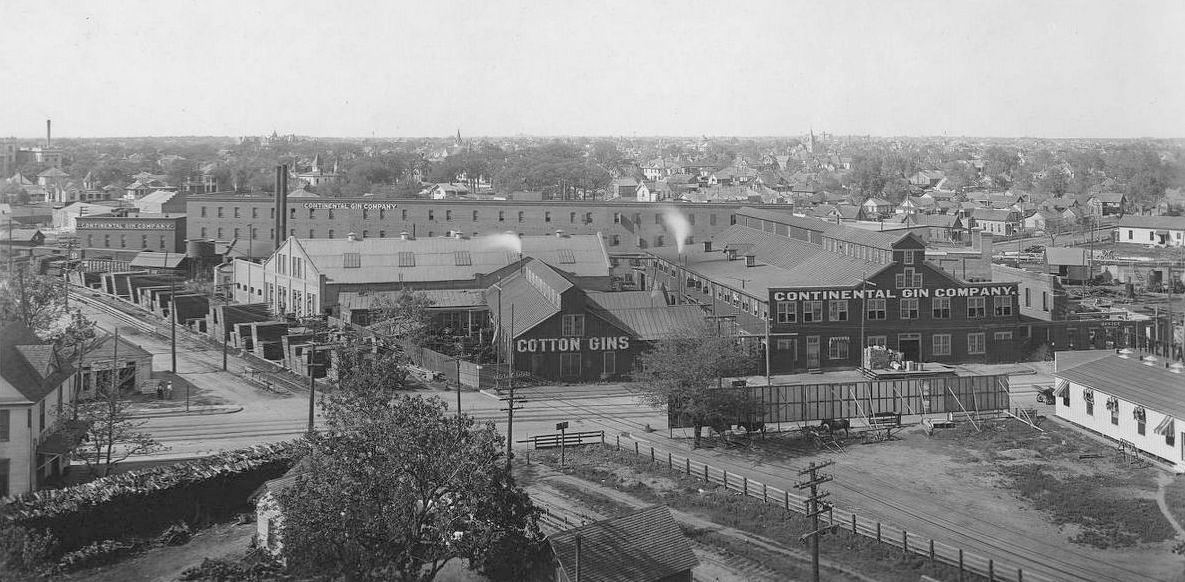
The Continental Gin Complex — 1914

continental-gin-bldg_1914_cook-degolyer-smu-bwPhoto by Chas. Erwin Arnold (DeGolyer Lib., SMU) (click for larger image)

by Paula Bosse

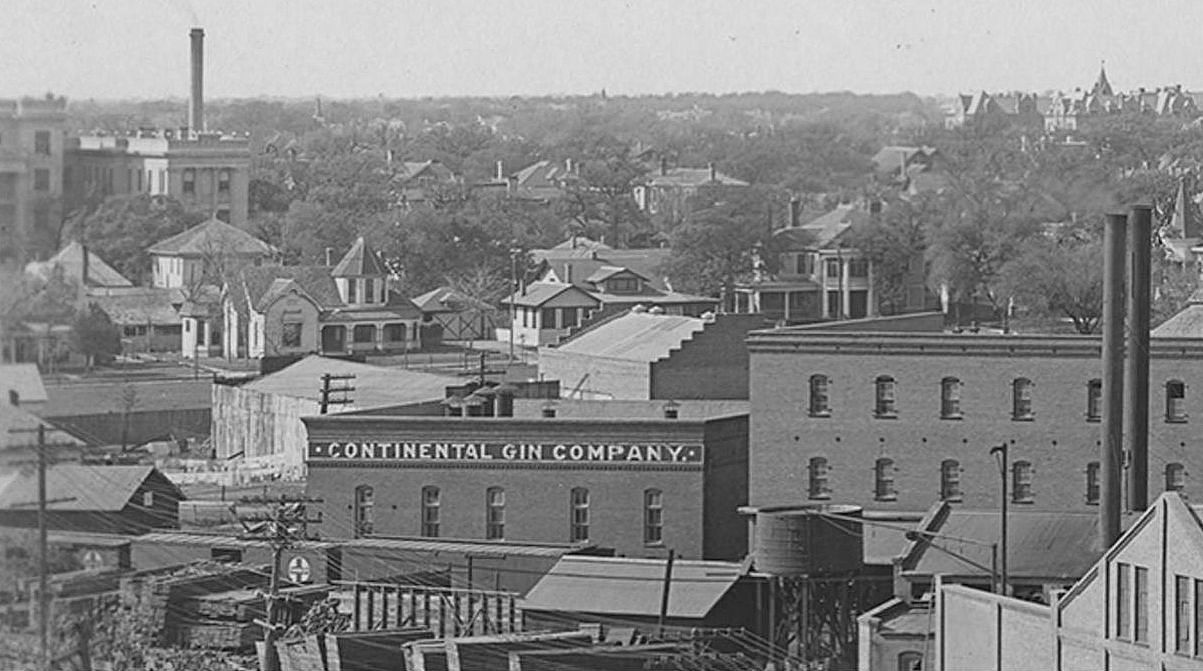
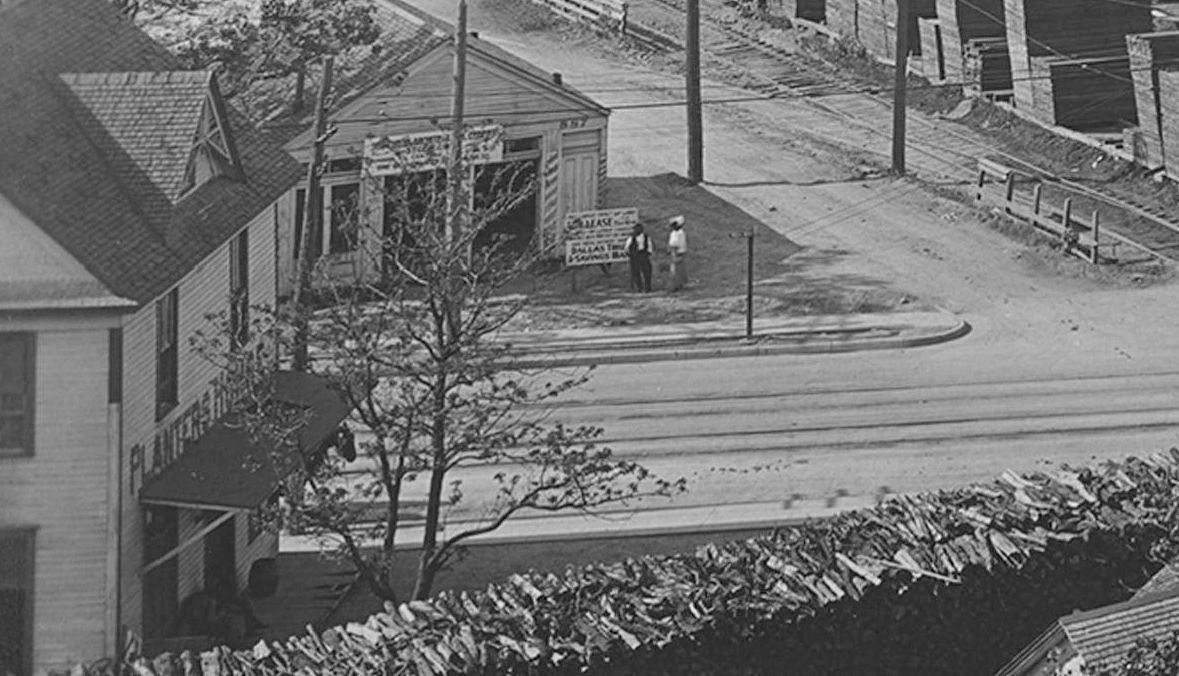
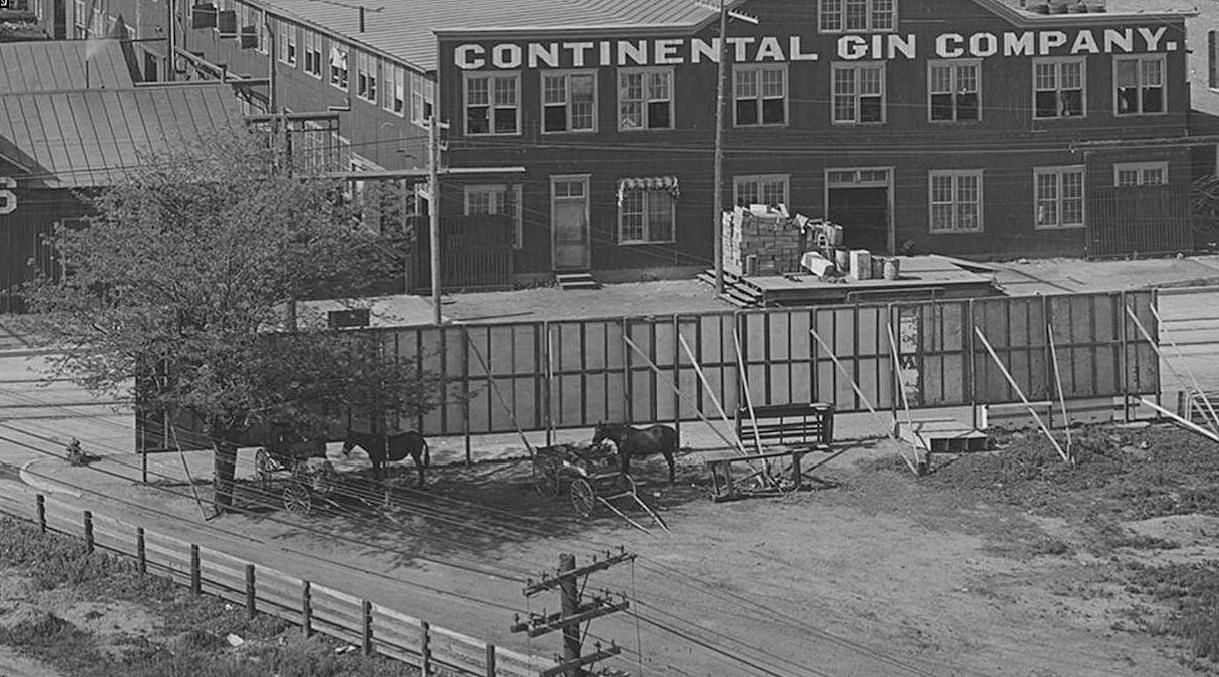
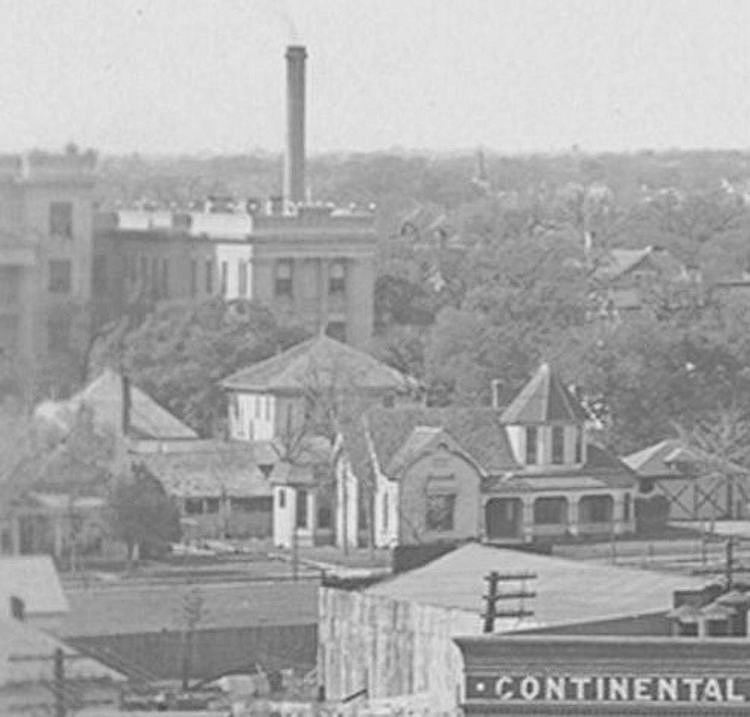
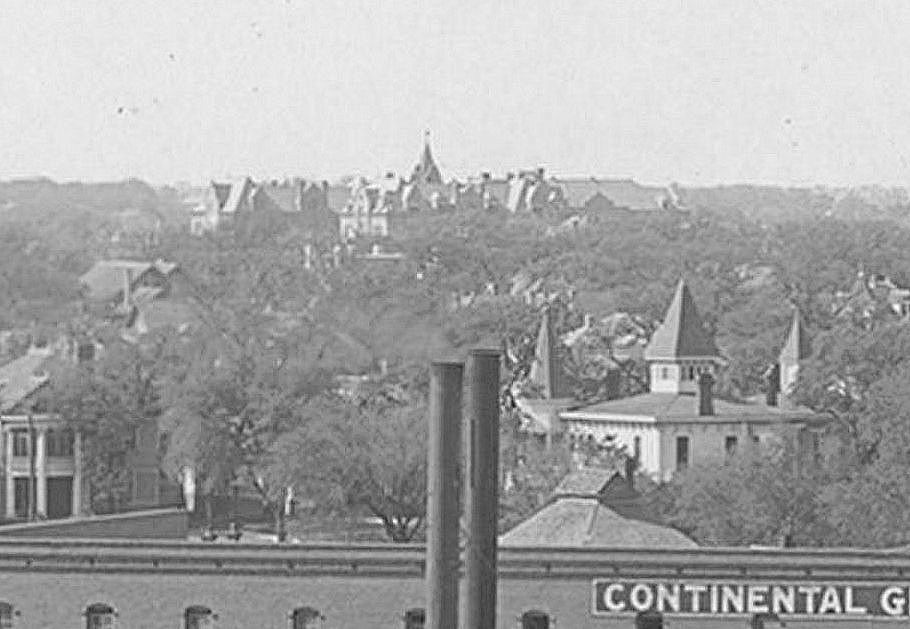
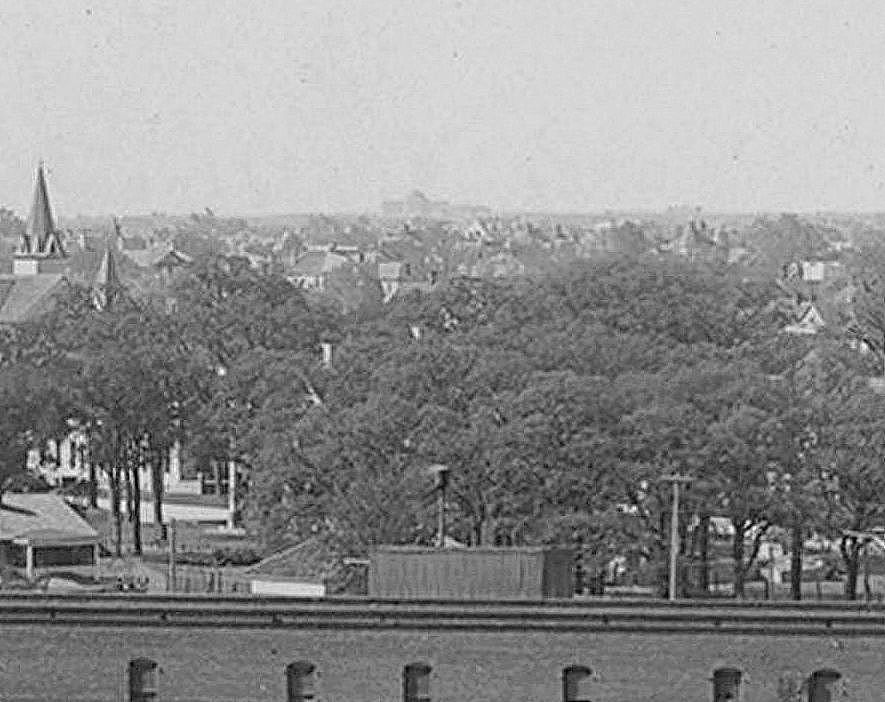
This is a really wonderful view of the Continental Gin Company complex, a Dallas landmark, much of which is, remarkably, still standing in Deep Ellum. Granted, my experience is limited, but I’ve never seen a photograph from this period showing the manufacturing end of Deep Ellum and the residential neighborhood just beyond it to the north. This is another incredible image from the George W. Cook Collection at the DeGolyer Library at SMU. A few magnified details, below. (Click for much larger images.)

continental-gin-bldg_1914_cook-degolyer-det1_bw

continental-gin-bldg_1914_cook-degolyer-det2_bw

continental-gin-bldg_1914_cook-degolyer-det3_bw

And zooming into the distance….

continental-gin_baylor_1914_bwThe back side of Baylor, at the top left. See it from the front here.

continental-gin_ursuline_1914_bwIn the middle at the top, Ursuline. (See more views of it here.)

continental-gin_smu_1914_bwAnd, my favorite, SMU’s Dallas Hall, waaaaaaaaaaaaaay in the distance. SMU hadn’t even officially opened when this photo was taken!

map_1919_continental-gin-bldg1919 map

***

Photograph titled “Continental Gin Company on Elm Street, Facing North” by Charles Erwin Arnold; from the George W. Cook Dallas/Texas Image Collection housed at the DeGolyer Library, Central University Libraries, Southern Methodist University. The photo and its details can be viewed here (I have altered the color in the images seen in this post).

Map detail from a large 1919 Dallas street map (which can be seen via the Portal to Texas History, here).

A view of this area from the 1921 Sanborn maps can be found here (click to make larger). (What’s a Sanborn map? Wikipedia tells you here.)

I wrote at length about the history of the Continental Gin complex of buildings in the post “Munger’s Improved Continental Gin Company,” here.

All images larger when clicked.

*

Copyright © 2015 Paula Bosse. All Rights Reserved.


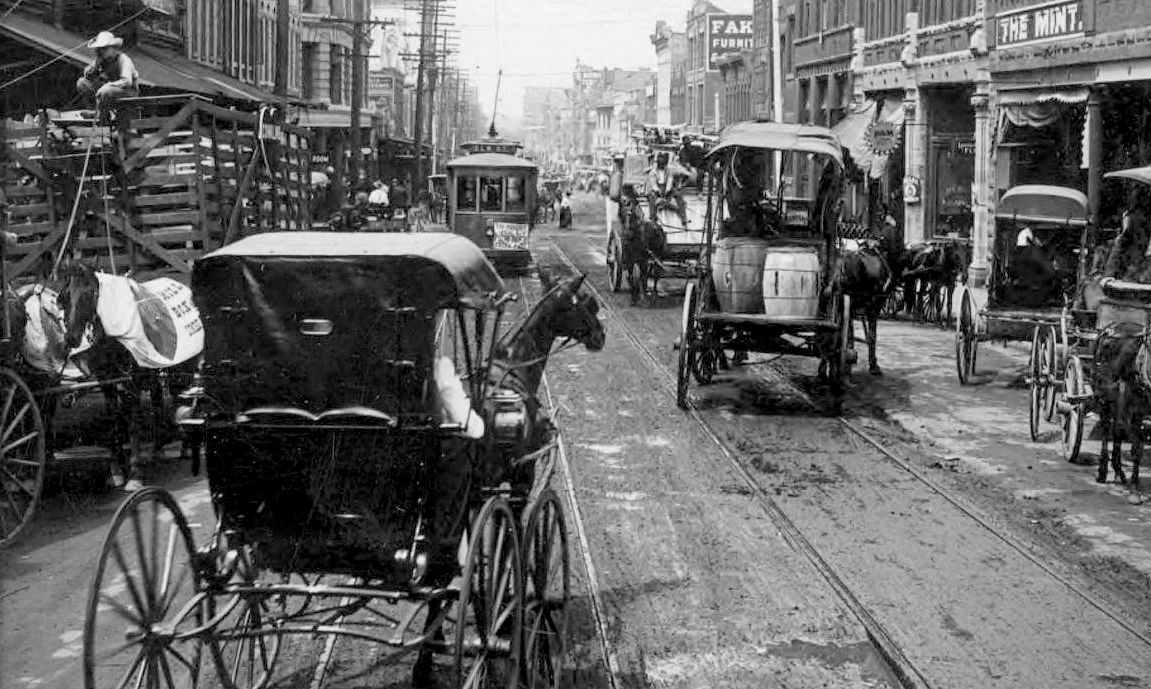
“Everyday Life” on Elm Street — ca. 1905

elm-street_everyday-life_UCR-smallElm Street rush hour

by Paula Bosse

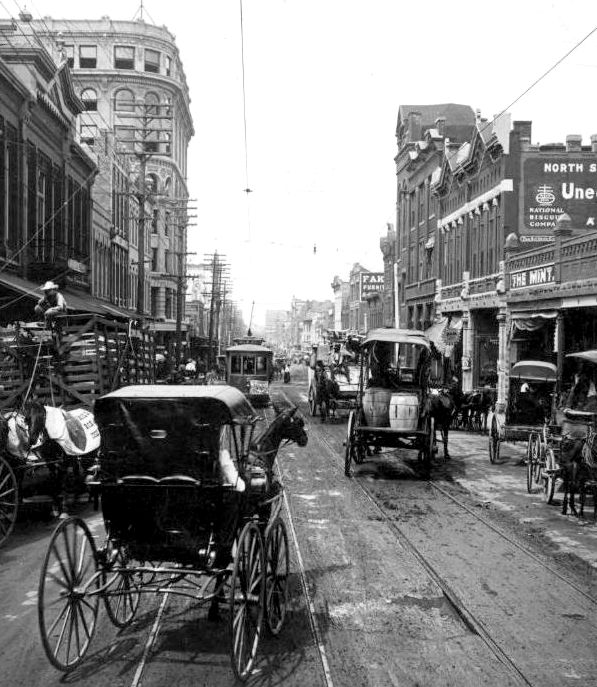
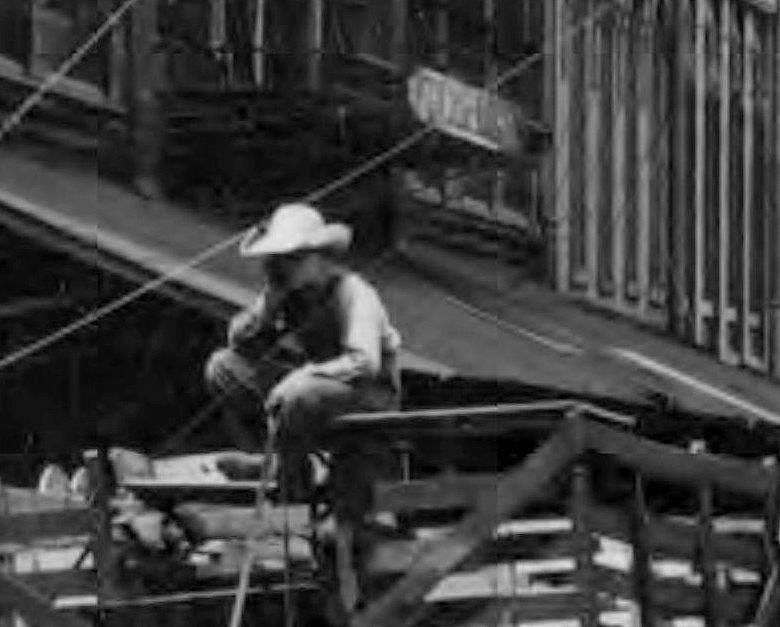
Automobiles would be rolling down Elm Street very soon, but even when the traffic was still mostly horse-related, there’s a lot going on here: horses, buggies, barrels, saloons, a bored kid on a wagon, a street car, and the Wilson Building.

elm-st_everyday-life_UCR-det

elm-st_everyday-life_UCR-zoom(click for larger images)

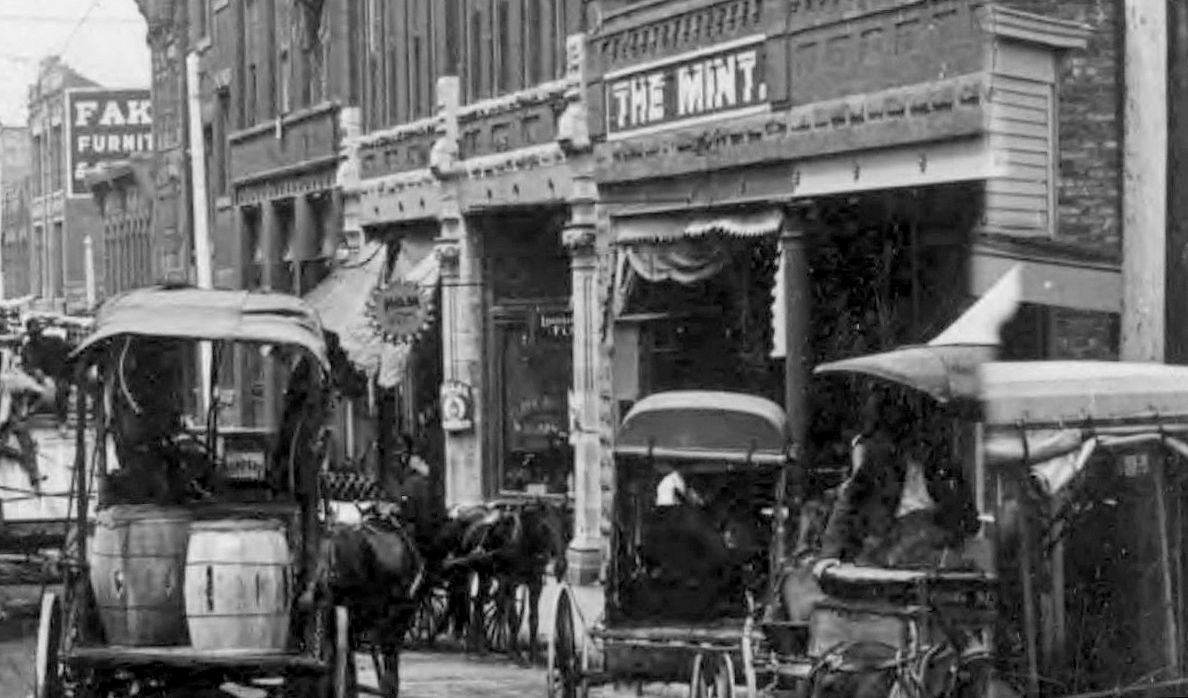
And what was The Mint? The Mint was a saloon. I’m not sure when it first set up shop in Dallas, but it was listed in an 1877 directory, one of the city’s earliest.

elm-st_everyday-life_mint_UCR

Speaking of 1877, read about a typical frontier day at The Mint in two accounts of a stabbing, from The Dallas Herald in April, 1877, here, and the follow-up, here.

***

Sources & Notes

Photo is from a stereograph titled “Everyday Life, Elm Street, Dallas, Tex.” from the Keystone-Mast Collection, UCR/California Museum of Photography, University of California at Riverside; it can be accessed here.

Images larger when clicked.

*

Copyright © 2015 Paula Bosse. All Rights Reserved.

Mardi Gras: “Our First Attempt at a Carnival Fete” — 1876

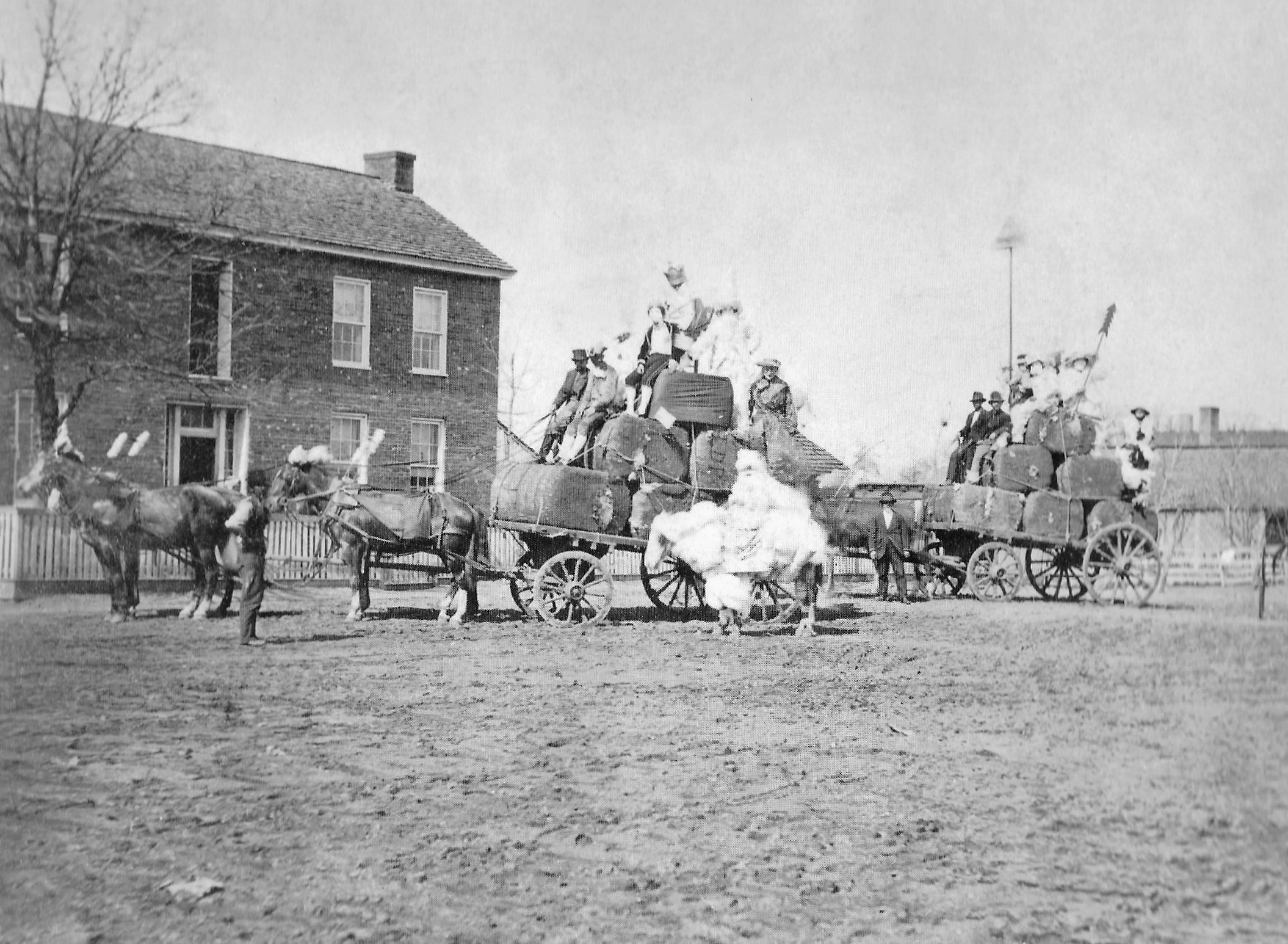
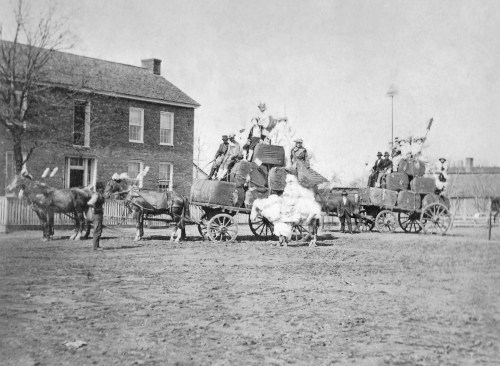
mardi-gras_dhs_1876When cotton was Rex (click for much larger image)

by Paula Bosse

In the 1870s, if a Dallas resident wanted to celebrate the glitzy revelry of Mardi Gras with a parade and balls and didn’t want to travel all the way to New Orleans, the place to go was Galveston. Galveston had a lock on Texas Mardi Gras galas. But Dallas being Dallas, there were soon plans to stage a massive Carnival right here. The day-long celebration debuted on February 24, 1876, which, oddly, was on a Thursday. (Mardi Gras that year was actually on Tuesday, Feb. 29, and it was probably celebrated early in Dallas so as not to interfere with the hey-we-got-here-first celebrations in New Orleans and Galveston.)

It was estimated that the festivities cost the city more than $20,000 (which, if the Inflation Calculator is to be believed, would be the equivalent of almost $450,000 in today’s money). The city was cleaned up in preparation for the anticipated onslaught of visitors and was decorated with flags and bunting along the lengthy parade route of Main, Elm, and Commerce streets. Revelers had elaborate costumes made for the processions and the grand masked balls, some with fabric imported for the occasion from France
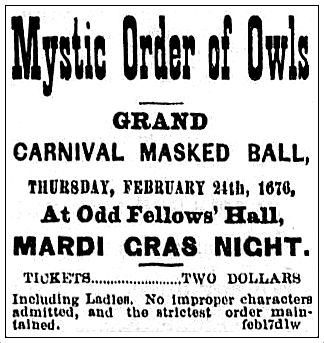
mardi-gras_dal-herald_021876Dallas Herald, Feb. 18, 1876 (not 1676!)

The Dallas Herald and The Dallas Commercial were incessant in their whipping up of excitement for the big day. And it worked. People streamed into town from all over Texas. Hotels were packed, and it was estimated that over 20,000 spectators watched one or both of the day’s parades.

The following day, The Dallas Herald apparently devoted their entire front page to coverage of the event, under this wordy headline:

A Day in Dallas, Our First Attempt at a Carnival Fete. The City Aglow with Enthusiasm and Wild with Rollicking Revelry. Visit of King Momus — His Cordial Reception by the People — The Procession in His Honor. The Season of Merry-Making Brought to a Happy Close with Balls and Bouts — Well Done, Dallas!

(Sadly, this issue is not available online, perhaps because there were none found to scan as it sold out more than five editions and was probably the paper’s best-selling edition to-date.)

Dallas’ first Mardi Gras had been an unqualified triumph, and newspaper editors and city leaders were beside themselves with joy. The parade — and the city — had been covered enthusiastically and favorably by newspapers around the country, and the success of the huge celebration was seen as having been better advertising for the exuberant and growing city than could ever have been hoped.

Galveston? Pffft!

**

A few tidbits from that first Mardi Gras.

There were very few “incidents” reported surrounding the festivities. That’s not to say there weren’t a lot of incidents that occurred that day, just that not a lot of them found their way into the newspapers (apparently whiskey was free-flowing all day long, and one suspects there were “incidents” aplenty connected with that). Among the very few non-“jolly” things that happened on Carnival Day and the day following included the following:

  • A small boy had been run over by a carriage (“but not dangerously hurt”)
  • A child and a horse had been burned severely when a can of gasoline was thrown into a bonfire “to increase the flame”
  • A member of the Stonewall Greys who had participated in the noontime parade had fallen whilst “foolishly scuffling” and had “received a slight but painful wound from a bayonet”

Also, there was some sort of “fireball discharged from a rocket” which caused some consternation:
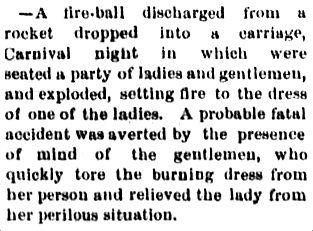
fireball_dal-herald_022676Dallas Herald, Feb. 26, 1876

*

All residences and businesses along the parade route during the evening procession were “commanded” to be illuminated. Even if gasoline-fueled bonfires were raging along the parade route, the elaborate procession was probably poorly lit.

*

My favorite “float” was the huge wagon of lumber meant to draw attention to East Texas timber and the thriving lumber industry in Dallas. One report said “the immense moving forest of pine” was drawn by “32 yoke of oxen” — another said “nearly 100 Texan steers.” Whatever it was, that must have been spectacular to see.
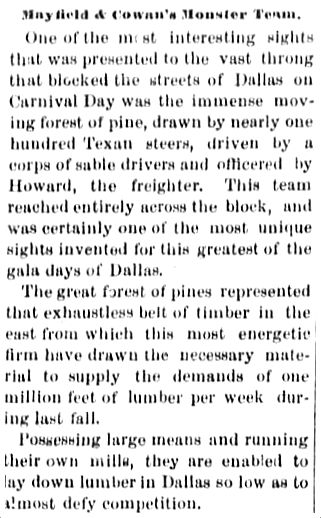
oxen-team_dal-herald_022676Dallas Herald, Feb. 26, 1876

*

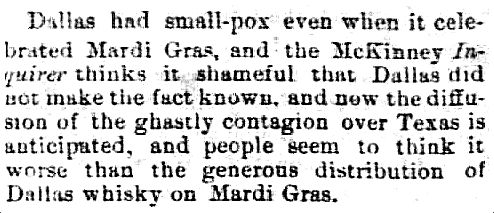
The massive amount of publicity and praise that Dallas received quite clearly irked other cities. Austin seemed especially perturbed. There had been a small outbreak of smallpox in McKinney preceding the big day, and several digs at Dallas (like the one below) appeared in newspapers around Texas, accusing the city’s leaders of knowingly endangering the welfare of the entire state just so they could put on their little parade. The exaggerated furor passed fairly quickly, and the het-up schadenfreude expressed by rival cities was amusing.
small-pox_austin-weekly-standard_031676Austin Weekly Standard, Mar. 16, 1876

*

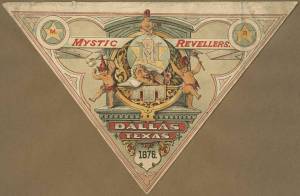
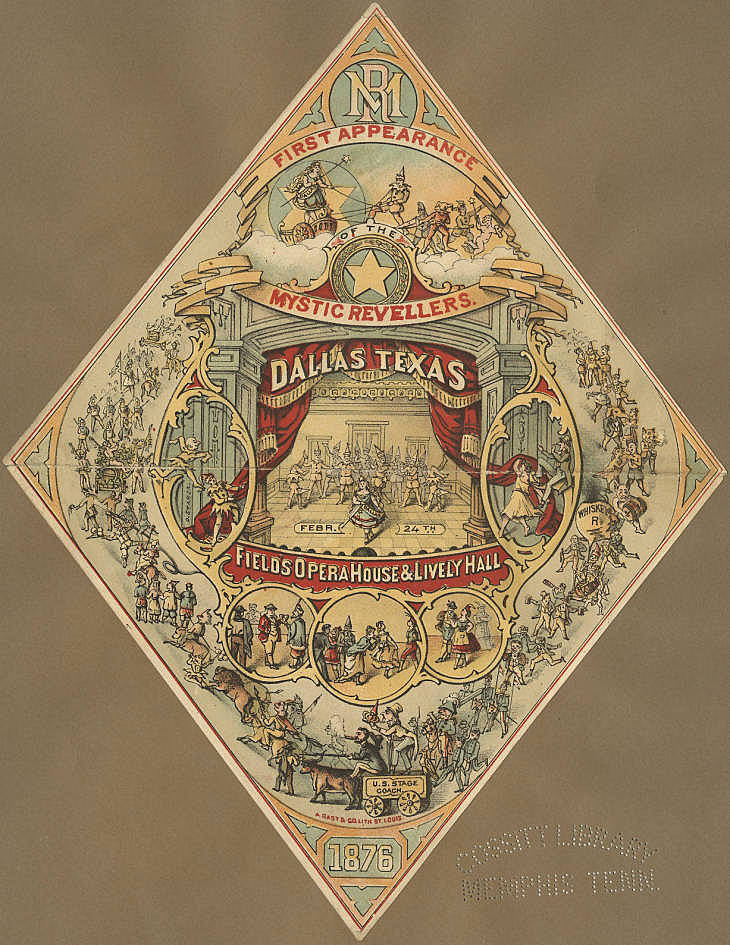
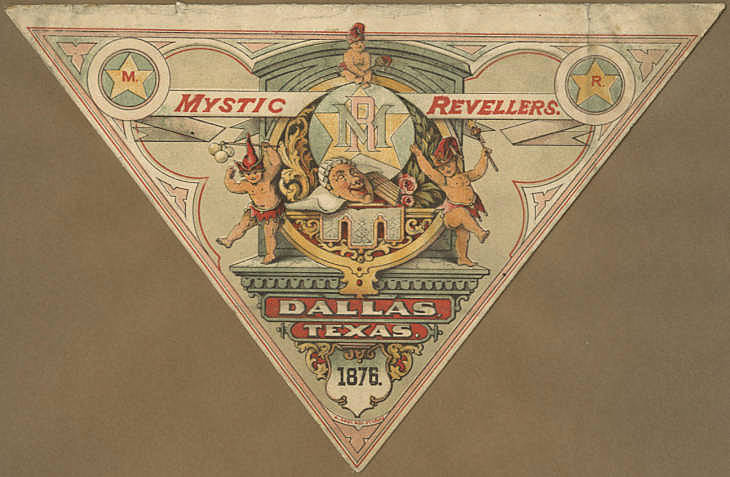
An invitation issued by the Mystic Revellers:
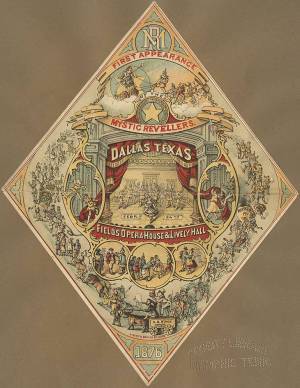
mardi-gras_mystic-revellers_invitation_1876_memphis-public-library

mardi-gras_mystic-revellers_1876_envelope_memphis-public-libraryColton Greene Collection, Memphis Public Libraries

*

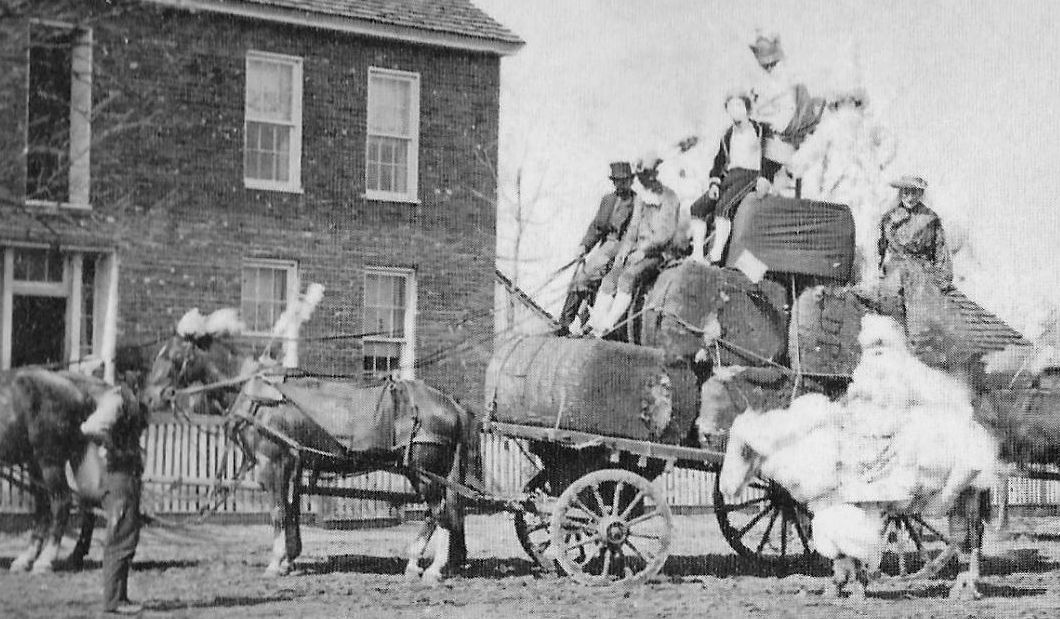
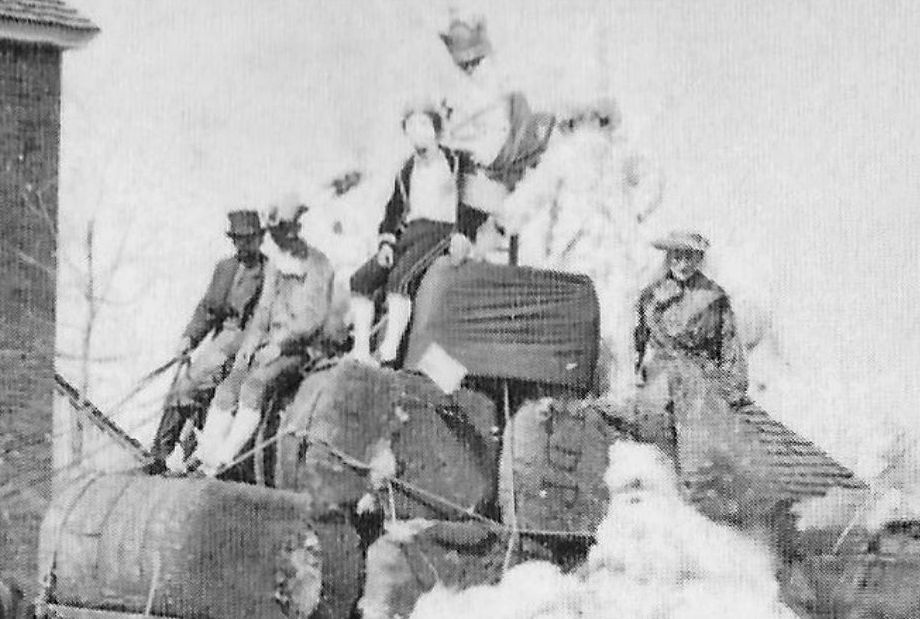
The photo at the top shows the parade wagons representing the brand new Dallas Cotton Exchange (which seems to have been organized the previous month). As described in The Galveston Daily News, the Cotton Exchange’s offering “represent[ed] King Cotton enthroned on six bales of cotton, with numerous subjects appropriately costumed, and occupying two cars” (Feb. 25, 1876). Below are a couple of magnified details of the photo. I’m not sure, but it looks as if the horse and rider in the foreground are covered with cotton. Like tarring and feathering … but fun … and with cotton. The King of Cotton is surrounded by what look like henchmen. The masked man on the right in the elaborate costume is both cool and kind of creepy. (Click both photos for larger images.)
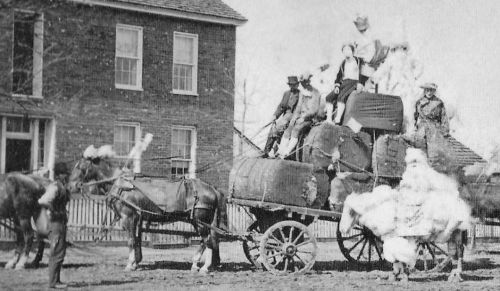
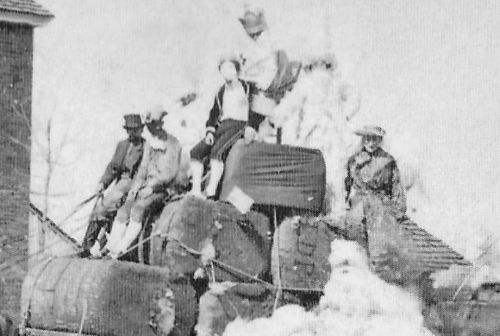
mardi-gras_1876-det1

mardi-gras_1876-det2

***

Sources & Notes

Top photo appeared in the book Historic Photos of Dallas by Michael V. Hazel (Nashville: Turner Publishing Co., 2006); photo from the Dallas Historical Society.

Newspaper clippings as noted.

To read the coverage of Dallas’ Mardi Gras parades and balls —  “a grand pageant and general jollification” — see the front page of The Galveston Daily News (Feb. 25, 1876), here (third column, top of page — zoom controls are on the left side of page).

I wrote a previous post called “Mardi  Gras Parade in Dallas — ca. 1876” which features a photograph which might be from this first Mardi Gras. That post and photo can be seen here.

Happy Mardi Gras!
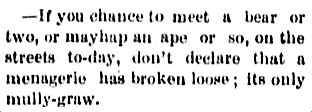
mully-graw_dal-herald_022476Dallas Herald, Feb. 24, 1876

Photos larger when clicked.

*

Copyright © 2015 Paula Bosse. All Rights Reserved.

“Happy Days,” SMU-Style — 1958

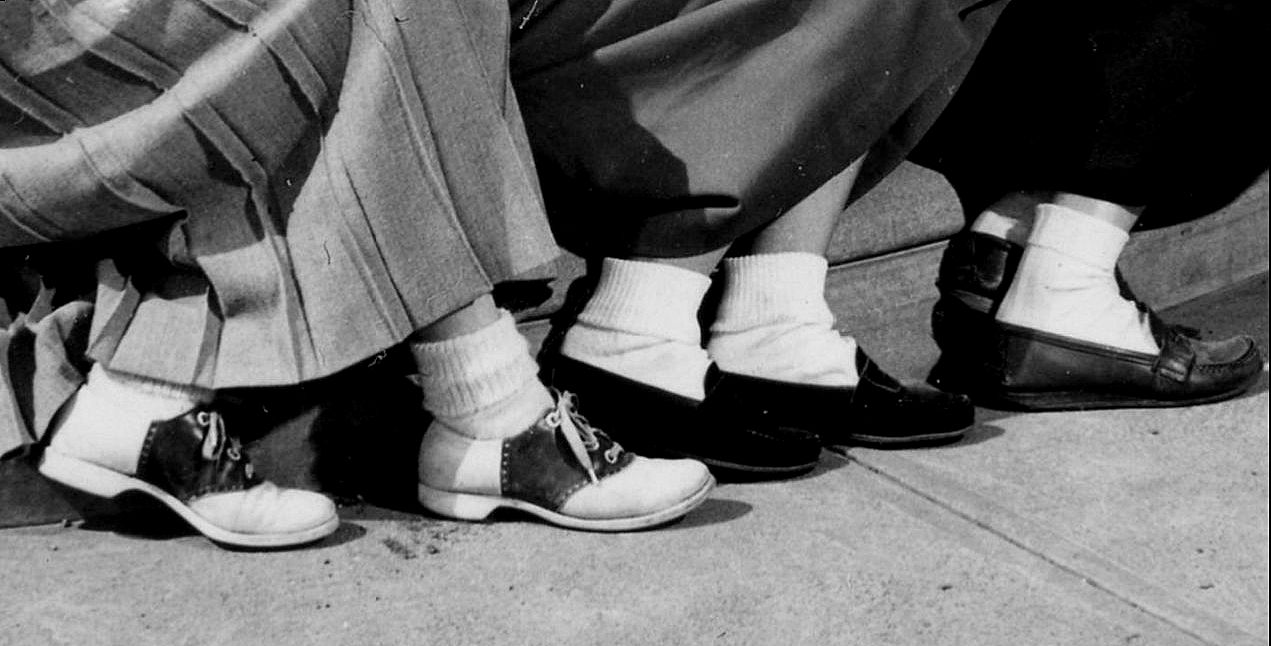
smu_gazing-adoringly_degolyer_1958Oh, the Fifties… (click for larger image) (DeGolyer Library, SMU)

by Paula Bosse

Ralph and Potsie are just out of frame.

smu_gazing_1I love these girls’ faces. And hair! (click for larger image)

smu_gazing_2And their shoes!

smu_gazing_3The Big Men on Campus appear to  be enjoying the attention.

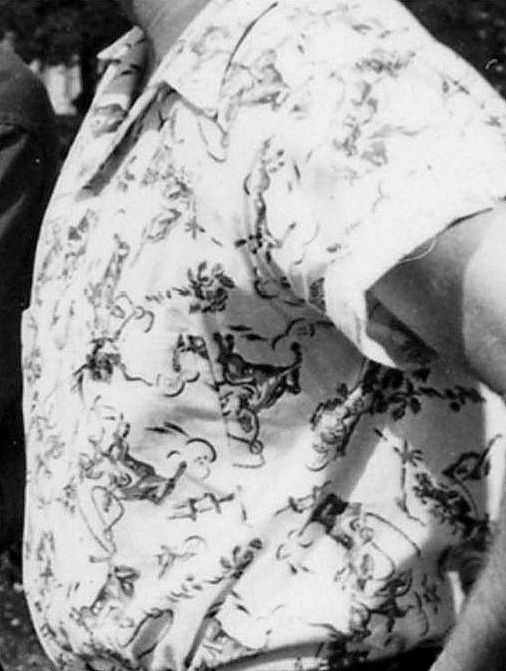
smu_gazing_4That print is kind of … busy. Is it a cowboy motif? Are those horses? Is that Peruna?!

***

Photo titled “Gazing Adoringly,” 1958, from the collection of the DeGolyer Library, Central University Libraries, Southern Methodist University; photo can be viewed here.

UPDATE: Yes, the photo does look odd, doesn’t it? Thanks to a commenter on the Flashback Dallas Facebook page, I now realize that this is a strange superimposition of separate images. The fountain is much closer to Dallas Hall, and the image of the students at the fountain has been superimposed over a long shot up Bishop Blvd., with Dallas Hall way in the distance. I’m pretty sure this photo originated at SMU — it might have appeared in a yearbook or promotional material for the university. Or maybe someone was just having fun in the darkroom. If anyone knows more about this photo — or who any of the students are — let me know!

All images larger when clicked.

*

Copyright © 2015 Paula Bosse. All Rights Reserved.
The Wilson Building Under Construction — 1902

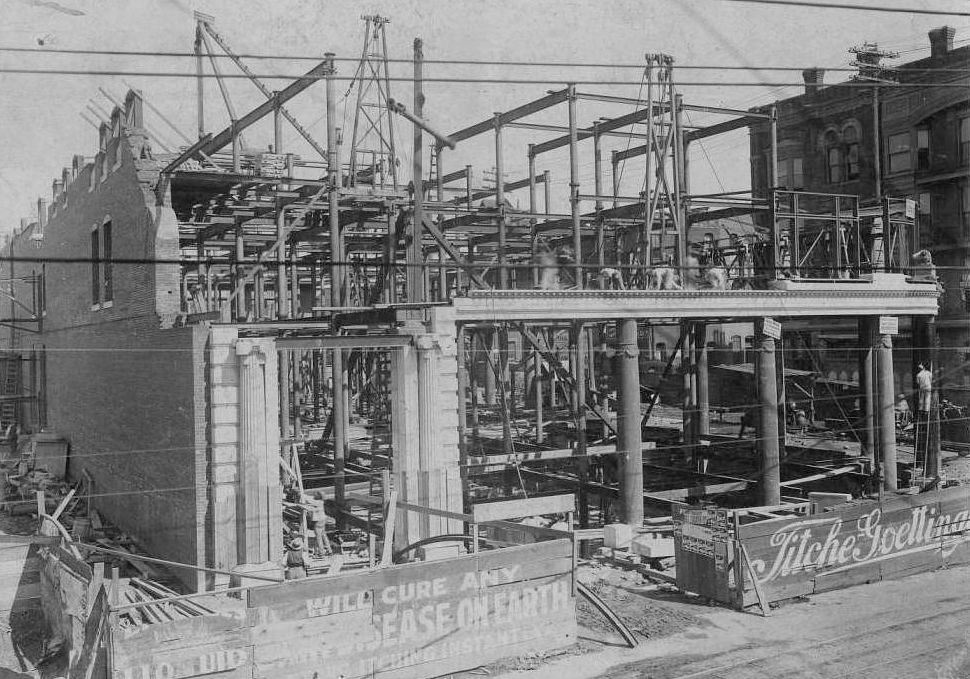
wilson-bldg-construction_cook_degolyer_smu_1902_bwSlowly but surely…. (DeGolyer Library/SMU)

by Paula Bosse

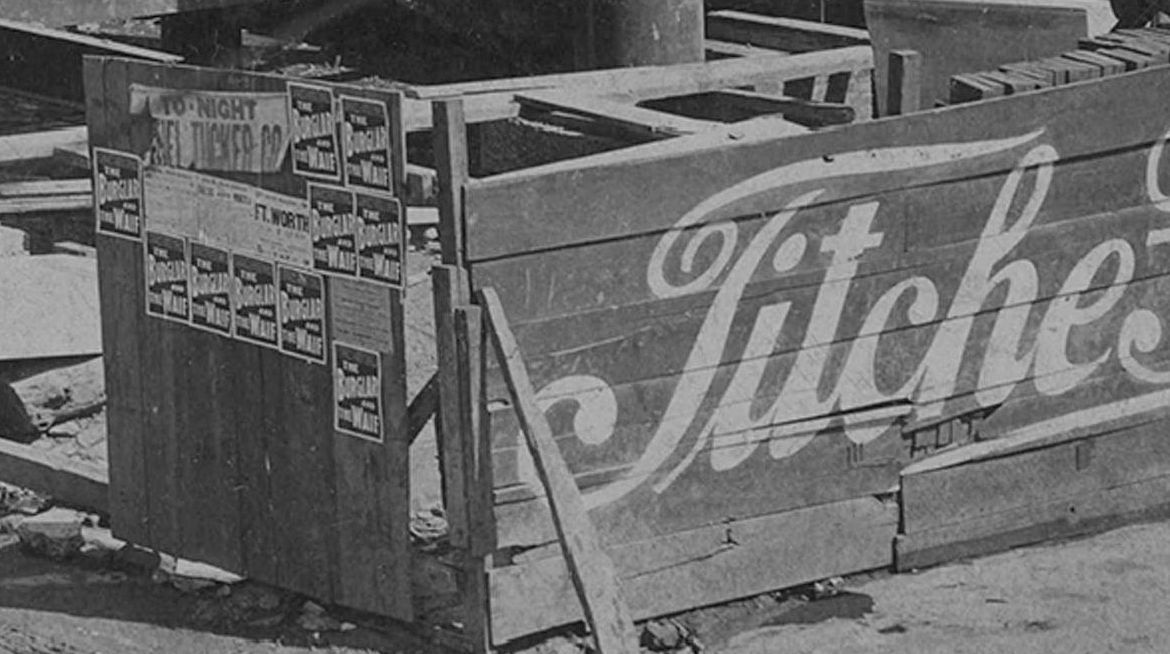
The Wilson Building is one of Dallas’ most beautiful buildings. Designed by the immensely influential Fort Worth firm of Sanguinet & Staats, the building opened in 1904, with its most notable tenant being the Titche-Goettinger department store, which occupied the basement and first two floors.

From the Dallas Public Library’s website:

“J. B, Wilson, a wealthy Dallas cattleman, built this French Renaissance/Second Empire (Beaux Arts) style building, modeled after the Paris Grand Opera House. Craftsman from all over the country came to contribute to the building finish, exterior and interior, with a mahogany and marble interior finish. It was the first eight-story building in Texas. The building originally housed the Titche-Goettinger department store on the bottom floor, with the upper floors used as office space. In 1911, Sanguinet & Staats built a twelve-story annex to the building, which was raised five floors in 1957.”

It was listed in the National Register of Historic Places in 1979.

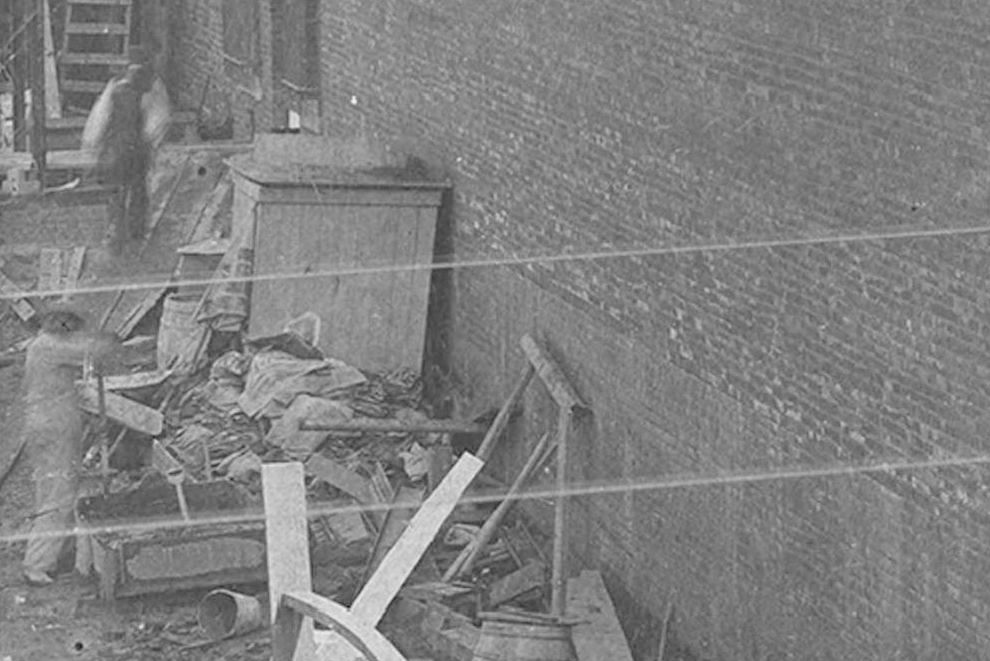
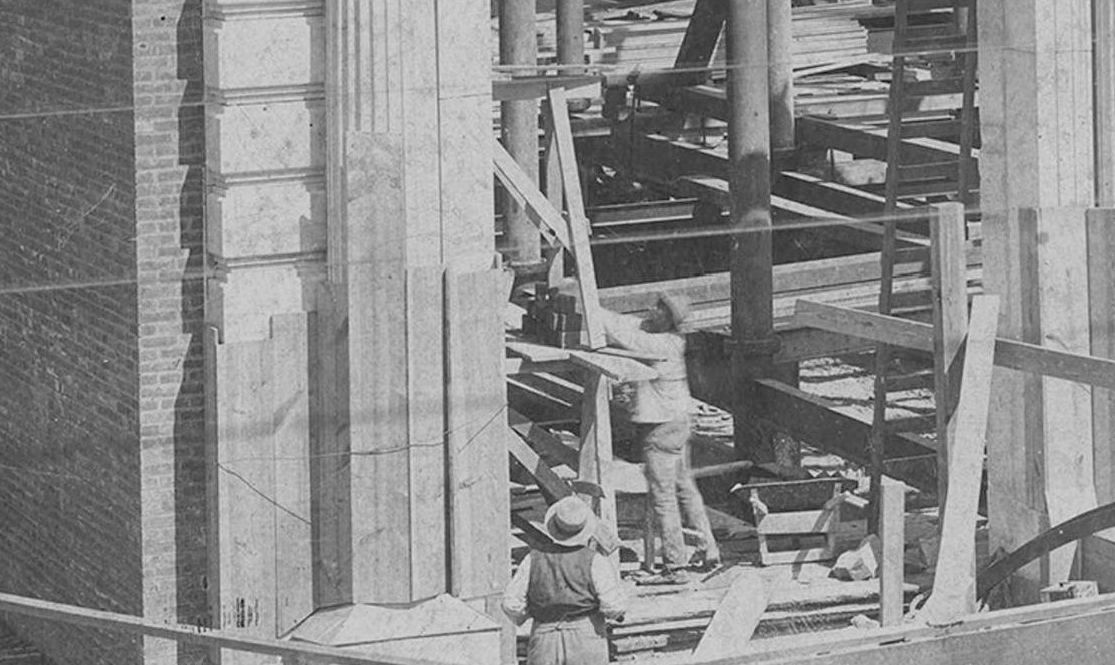
The photo above is part of the incredible George W. Cook Dallas/Texas Image Collection at SMU’s wonderful DeGolyer Library (see note below). Below are a few enlargements of parts of the original photo to see more details. (Click for larger images.)

wilson-bldg-constuction_cook_degolyer_smu_1902-det7_bw

wilson-bldg-construction_cook_degolyer_smu_1902-det4_bw

wilson-bldg-construction_cook_degolyer_smu_1902-det5_bw

wilson-bldg-construction_cook_degolyer_smu_1902-det3_bw

wilson-bldg-constuction_cook_degolyer_smu_1902-det6_bw

wilson-bldg-construction_cook_degolyer_smu_1902-det2_bw

wilsonbldg-det

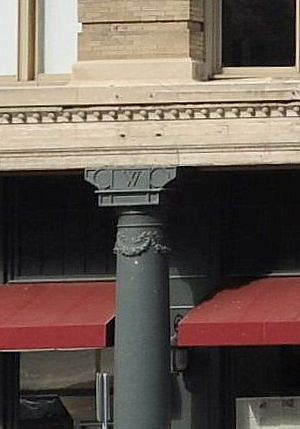
wilsonbldgHere it is today. Beautiful. Click photo for an image so colossally large that you can easily check out all the fabulous intricate architectural details. (Photo by Joe Mabel.)

***

Sources & Notes

This photo (titled “Building Construction at the Intersection of North Ervay and Elm Street”) is from the incredible George W. Cook Dallas/Texas Image Collection, housed at the DeGolyer Library, Central University Libraries, Southern Methodist University; it can be viewed here. It is not currently identified as being the Wilson Building. (UPDATE: The photo is now titled “Wilson Building Construction, Intersection of North Ervay and Elm Street.” And this post is actually cited in the description! Thank you, DeGolyer Library!) (I have altered the color of these images as they were appearing harshly yellow in my photo editor — please see DeGolyer page for correct color of the original gelatin silver photograph.)

The DeGolyer Library is one of Dallas’ very best repositories of important historical images and papers, and just knowing that they are scanning this fantastic collection of Dallas ephemera is making me a little dizzy. So many incredible images!! An exhibit of selected items from the collection opens TOMORROW (Jan. 30, 2015) — details are here.

Credit and photo info for the gigantic present-day photo by Joe Mabel is here.

Read about Sanguinet & Staats here.

More on the Wilson Building from the Dallas Public Library, here. Check out the photo of the excavation of the site before construction began at the top of the page.

And what does Wikipedia say? See here.

*

Copyright © 2015 Paula Bosse. All Rights Reserved.

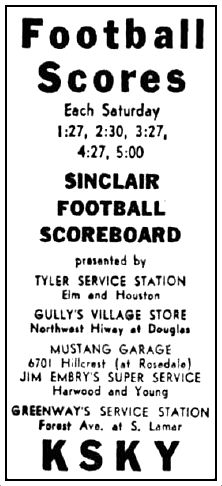
A Downtown Gas Station! — 1949

tyler-service-stn_degolyer_1949-det1Gas station at Elm & Houston! (click for larger image) (SMU Libraries)

by Paula Bosse

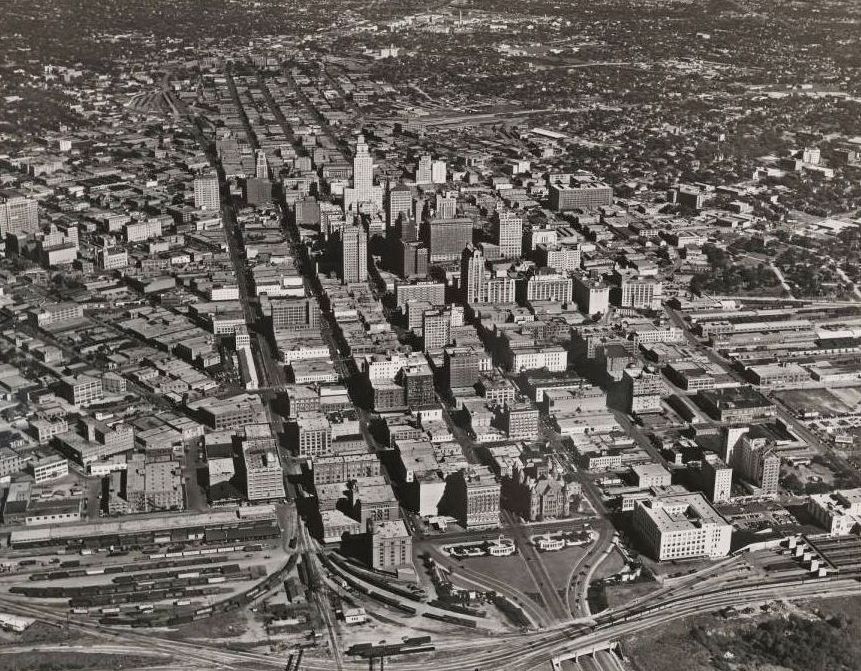
There was a time when gas stations populated the central business district in downtown Dallas. But now? I’m not sure I’ve ever seen a gas station in the heart of downtown. Which is probably why the station seen above (from a detail of a larger aerial view of downtown) stood out so much when I was looking at the photo. And it wasn’t located just anywhere downtown, but it was in the primo location opposite Dealey Plaza at the “gateway” to the city. It doesn’t fit in that space very well — it’s a corner crying out for a more substantial structure — but … wouldn’t it be nice to have an actual full-service gas station downtown again?

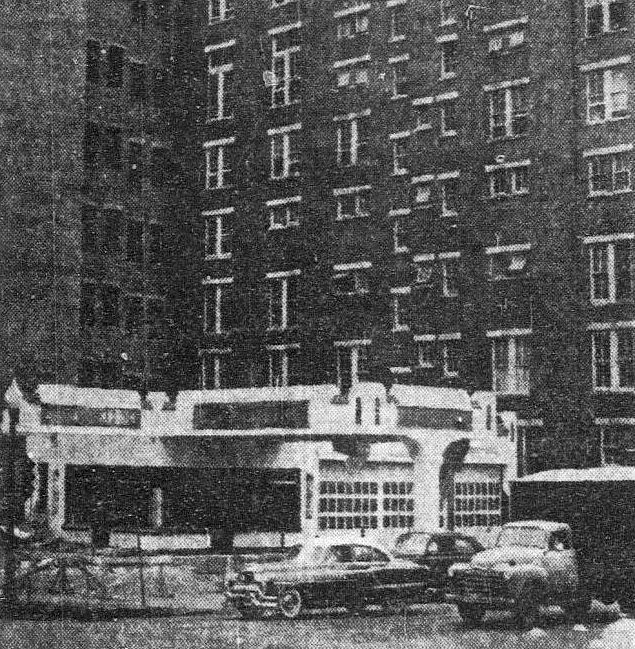
The Tyler Service Station (and before that the Longhorn Service Station) held down the corner at Elm and Houston streets in the 1940s but was demolished in 1953 to make way for the construction of the Records Building/Criminal Courts Building annex. And, hallelujah, I found a photo of the service station from ground-level — and it was pretty cool-looking!

gas-station_elm-and-houston_1950s

tyler-service-stn_dmn_100948Oct. 9, 1948

And, finally, here’s the original photo I saw in which that long-gone gas station jumped out at me, another wonderful photo by Lloyd M. Long, taken in May, 1949. You never know what odd things you’ll discover if you just take the time to explore.

downtown_degolyer_1949Aerial photo by Lloyd M. Long, 1949 (Foscue Map Library, SMU)

***

Sources & Notes

Lloyd M. Long photo (“Downtown Dallas, looking east”), from the Edwin J. Foscue Map Library, Central University Libraries, Southern Methodist University; it can be viewed here.

Click pictures for larger images.

*

Copyright © 2014 Paula Bosse. All Rights Reserved.


Waiting For a Streetcar on a Sunny Winter Day in Oak Cliff — 1946

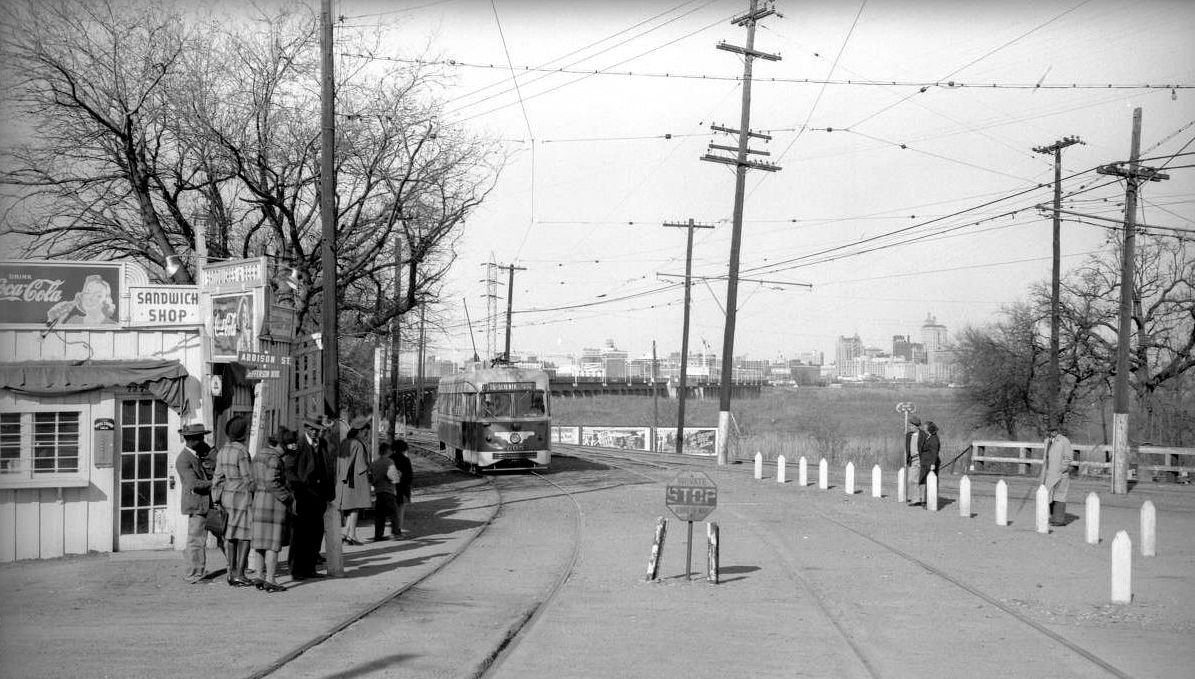
jefferson-addison_denver-pub-lib_1946Addison St. & Jefferson Blvd. in Oak Cliff — Feb., 1946 (click for larger image)

by Paula Bosse

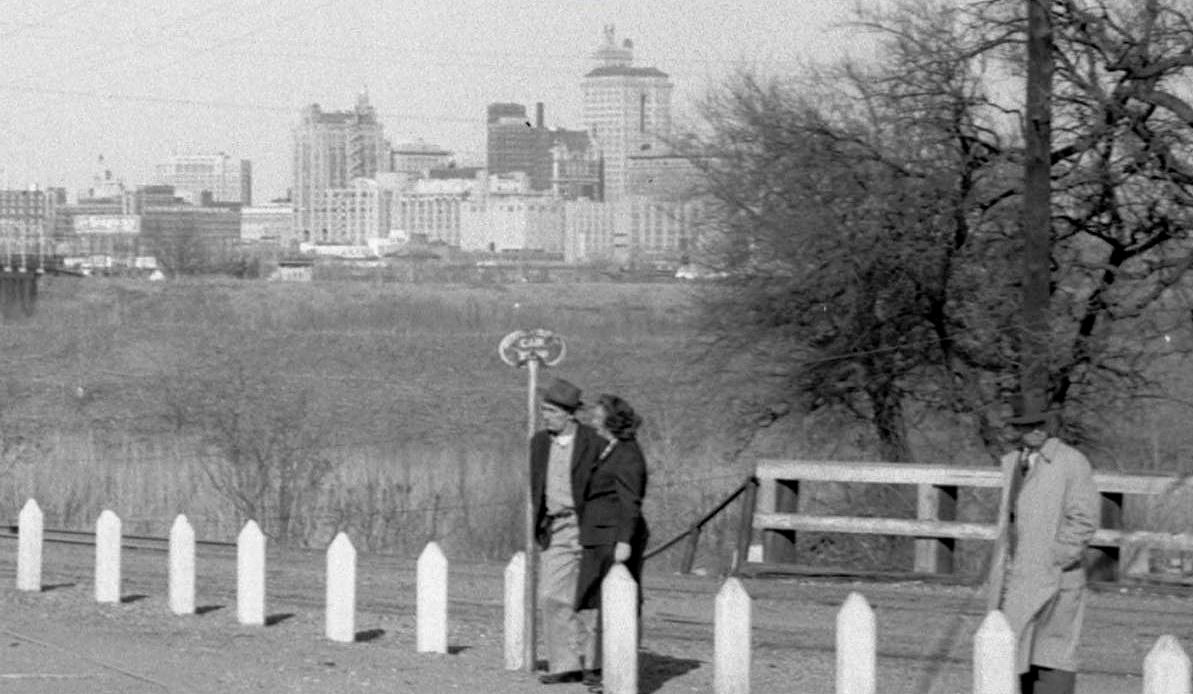
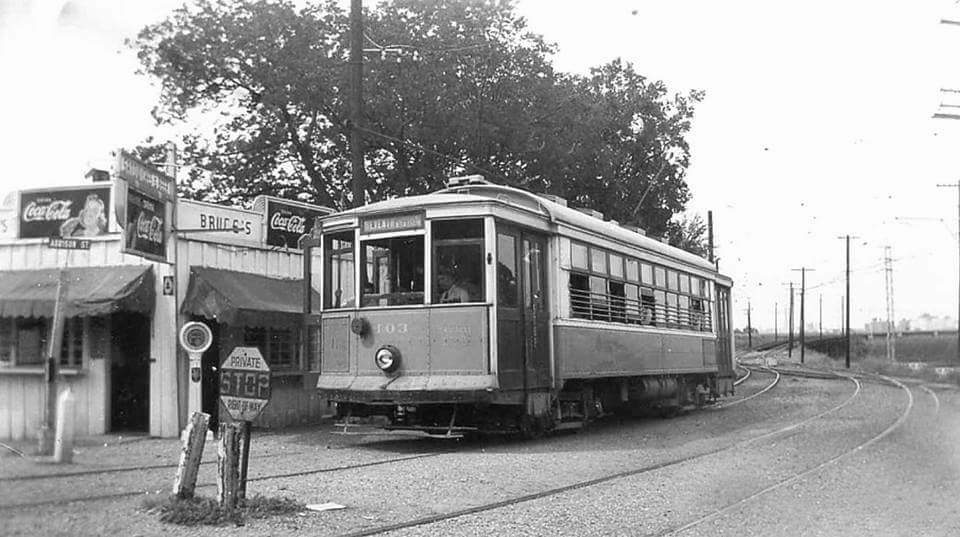
I love streetcars, photos from the 1940s, fashions of the ’40s, and views of the Dallas skyline. And here are all of these things, in one great, GREAT photograph. We see people waiting for the streetcar on a sunny Saturday in February, 1946 — in Oak Cliff, at E. Jefferson Blvd. and Addison St. The people at the left (outside Helen’s Sandwich Shop) are about to catch the car that has just crossed the Trinity River and head into Oak Cliff; the people on the right are waiting to go to Dallas. The Oak Farms Dairy is just out of frame at the top left, and Burnett Field is just out of frame at the bottom right. The Dallas skyline looms across the Trinity.

Below, I’ve zoomed-in a bit and cropped this fantastic photograph into two images to show, a bit more intimately, details of an ordinary moment in an ordinary day of ordinary people. What once was such a commonplace scene — people waiting for a streetcar or interurban — now seems completely out of the ordinary and quaintly nostalgic. (Nostalgic on its surface, anyway — not shown is the interior of the car which had specific black-only and white-only seating areas for passengers.) (As always, click for larger images.)
jefferson-addison-det1

jefferson-addison-det2

***

Photo by Robert W. Richardson, taken on February 2, 1946. From the Western History/Genealogy Dept., Denver Public Library, viewable here. More on rail enthusiast, writer, photographer, and preservationist Bob Richardson, here.

The same stop can be seen in this undated photo (source and photographer unknown):

oak-cliff-streetcar-stop_addison-jefferson

Streetcars ran back and forth across the Trinity River on a special trestle just south of the Oak Cliff Viaduct/Houston Street Viaduct. It had been in use since 1887 (through various renovations) and was demolished in the early 1970s to build the present-day Jefferson Street Viaduct.

To see a photo by the same photographer showing a streetcar actually on the trestle over the Trinity, see the post “Crossing the Trinity River Viaduct — 1946,” here.

Streetcar enthusiasts are incredibly, well, enthusiastic, and they keep precise track of where cars operated over their life spans. The car from the photo — Dallas Railway & Terminal Co. car #605 — was a PCC streetcar, built by the Pullman-Standard company in 1945; it was sold to the MTA in 1958 and was in operation in Boston for many years. See cool photos of the very same streetcar in operation over the years in both Dallas and Boston, here (scroll down to “605”). To see what the retired car looked like in 2002 — a bit worse for wear — click here.

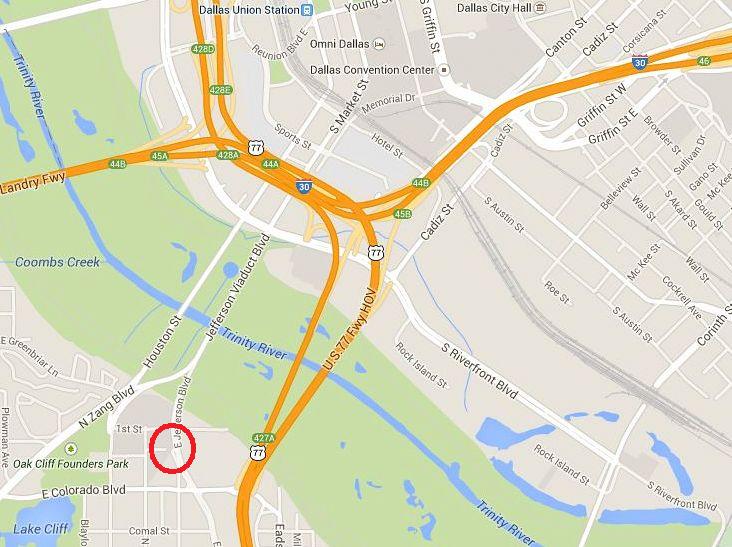
A distinctly less-wonderful view from roughly the same location, seen today, is here.

map_jefferson-addison_googleGoogle

Click pictures for larger images.

*

 Copyright © 2014 Paula Bosse. All Rights Reserved.

McFarlin Auditorium, Following Morning Chapel — 1927

mcfarlin-auditorium_1927McFarlin Auditorium, post-Chapel, 1927 (click for larger image)

by Paula Bosse

Another in the series of wonderful postcards celebrating the history of the Park Cities, this one shows McFarlin Auditorium in 1927, then only two years old. From the back of the card:

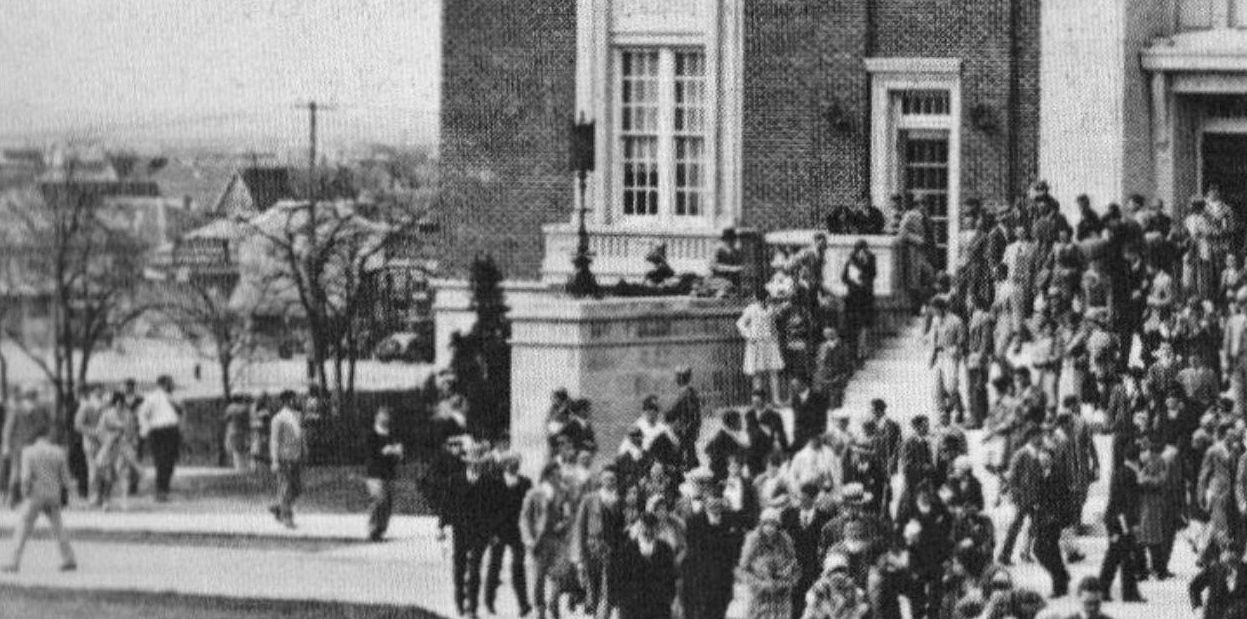
This is a 1927 photograph taken following morning Chapel in McFarlin Auditorium. The building is located at McFarlin Blvd. and Hillcrest on the Southern Methodist University campus. At that time, Chapel attendance was mandatory for SMU students. Dr. R. E. Dickenson was Chaplain and conducted the daily chapel services, and Dr. Charles C. Selecman was the President of the University.

Below are a couple of details of the photo which show, in the background, interesting (if fuzzy) views of houses and other structures along (and beyond) Hillcrest.

mcfarlin_det1

mcfarlin_det2

***

Postcard is from the Park Cities Bank “Heritage Series” issued in the 1970s. Photo credit line on the postcard reads “Donated by Stanley Patterson.” Thanks to the Lone Star Library Annex Facebook group for use of the image.

Click pictures for larger images.

*

Copyright © 2014 Paula Bosse. All Rights Reserved.

Parade Day — 1909

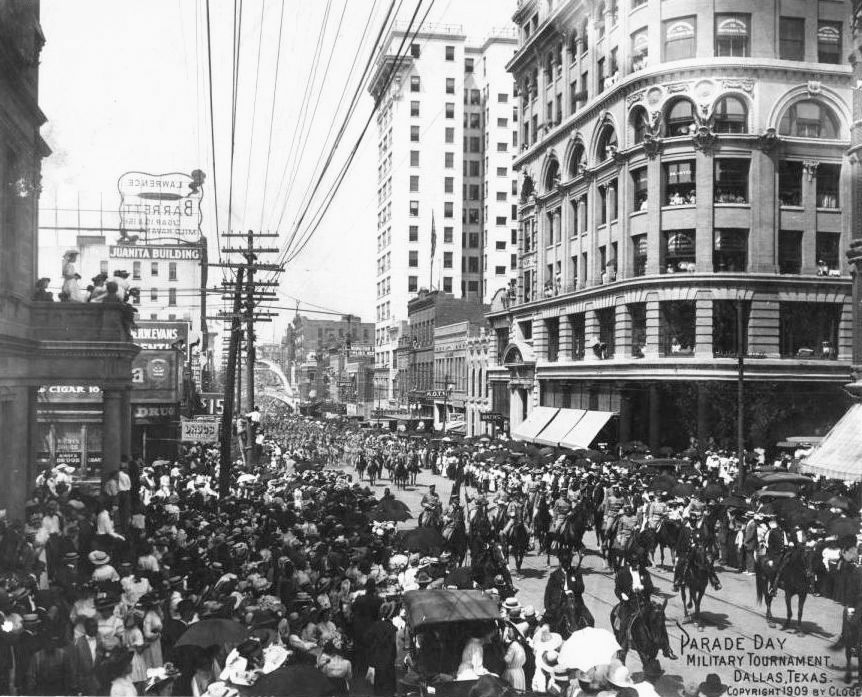
parade-day_1909_clogenson_degolyerMain Street looking west from Ervay, 1909

by Paula Bosse

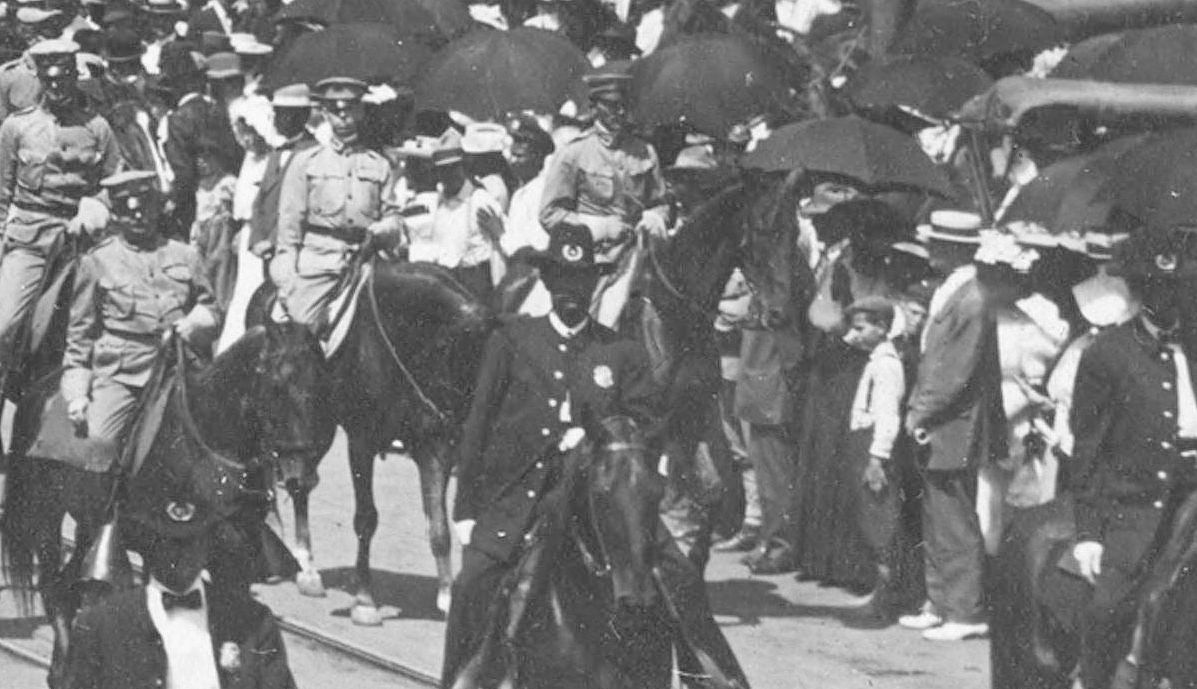
Sun-bronzed, khaki-clad soldiers representing the three important branches of the army, paraded through the city evoking the admiration of 60,000 persons who lined the streets all the way from Fair Park to the end of the downtown business district. (Fort Worth Star-Telegram, Aug. 24, 1909)

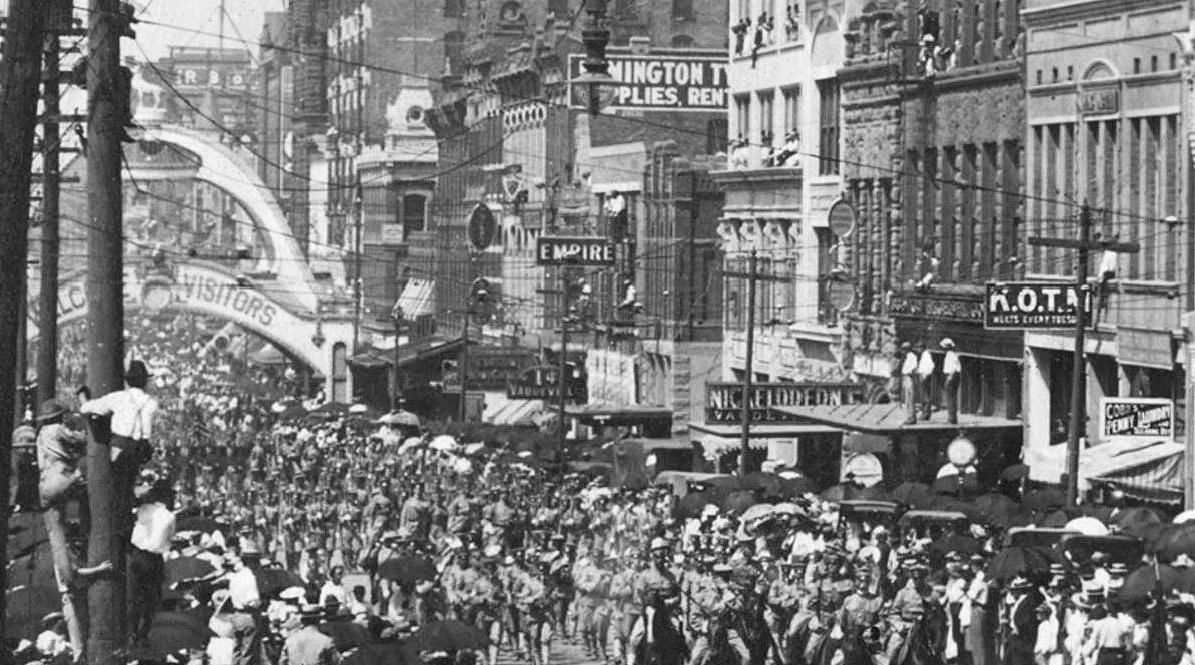
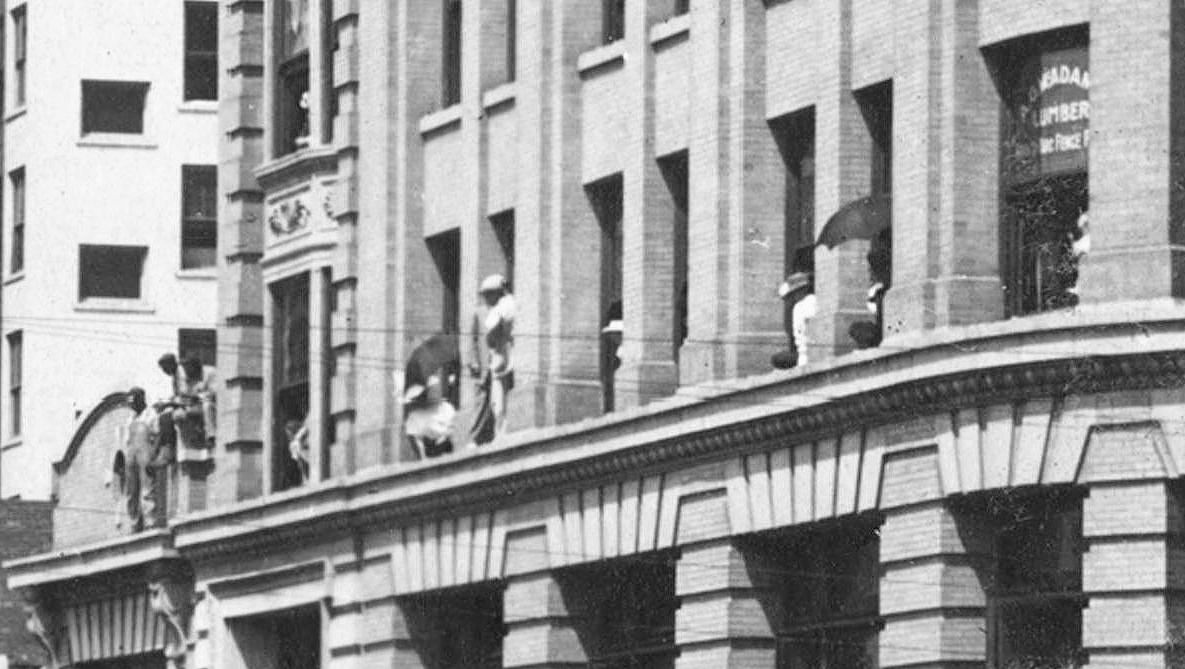
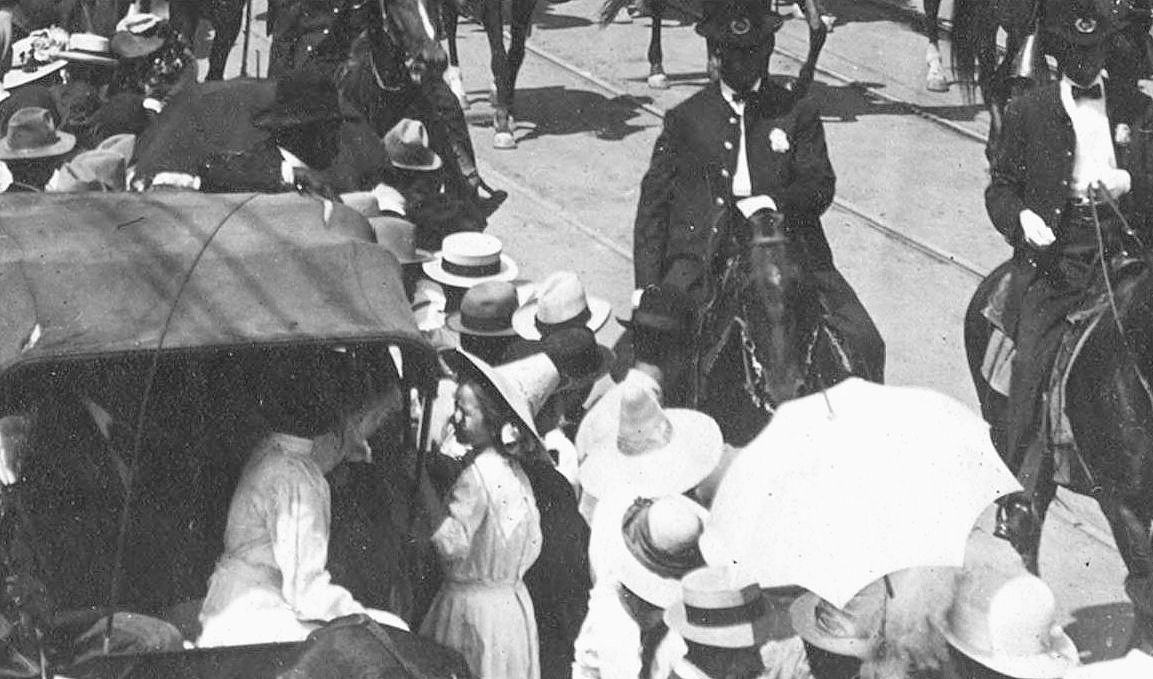
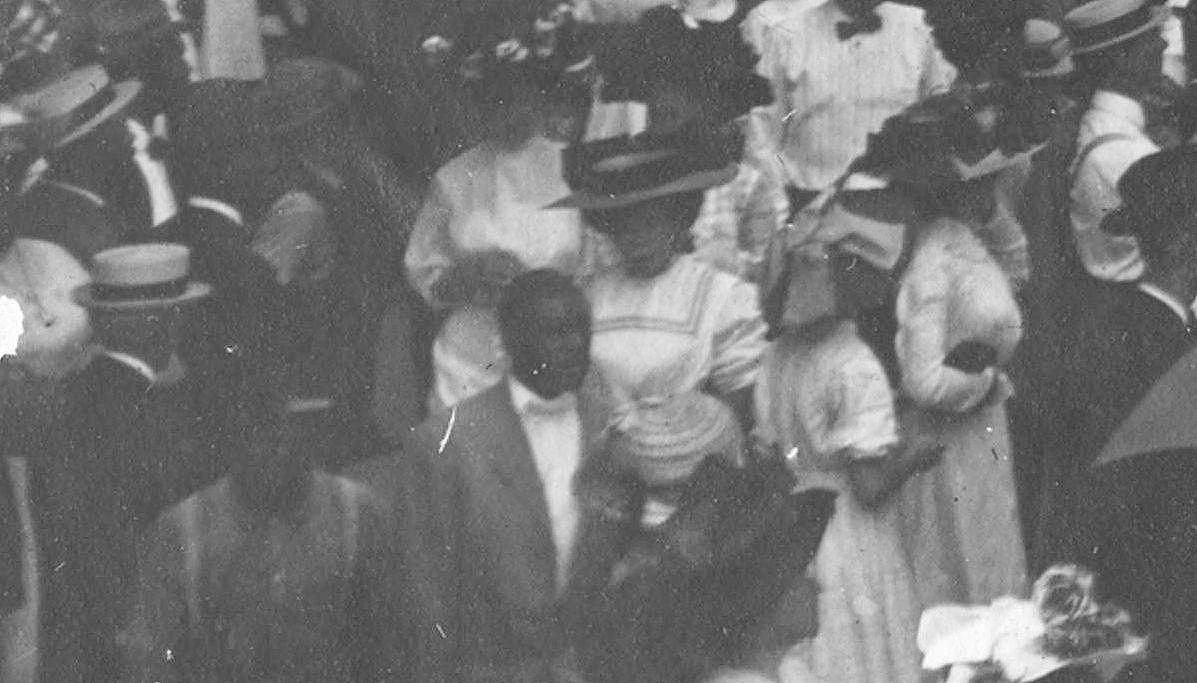
This is a GREAT photograph, looking west on Main Street from Ervay, with the Wilson Building in the foreground at the right, and, a few doors down, the tall white Praetorian Building at Stone Street. With so much going on in this photo, it’s a great opportunity to zoom in on the crowd and look a little more closely at the details. (All photos are much larger when clicked.)

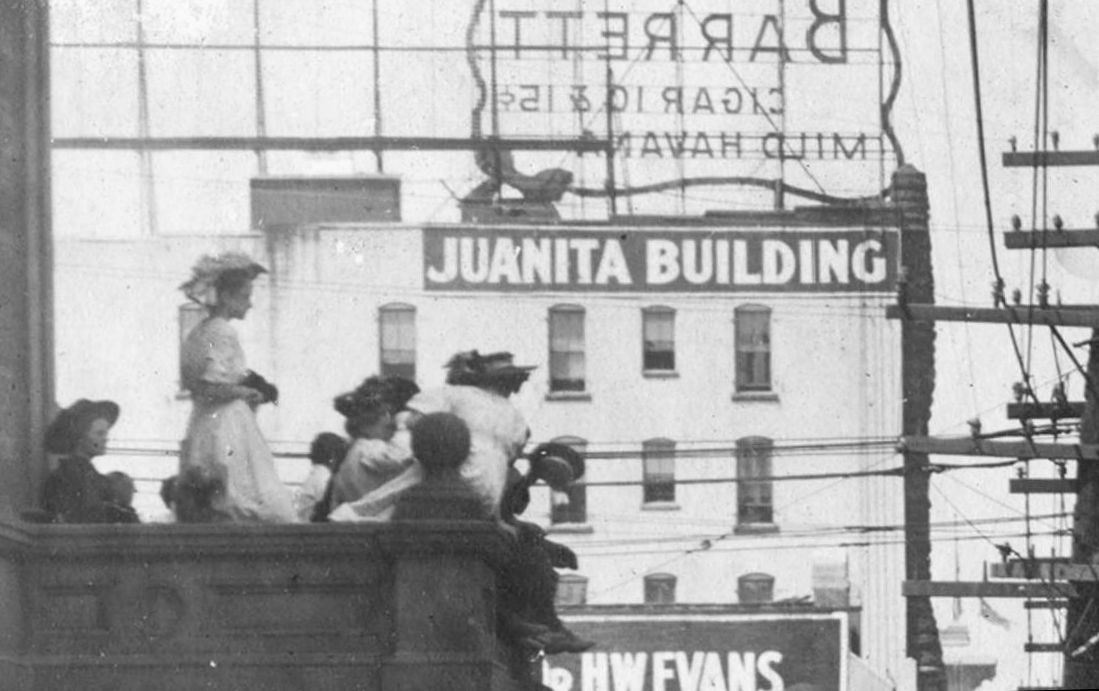
parade-day_1909_det1My favorite “vignette” from this photograph, with the Juanita Building in the background.

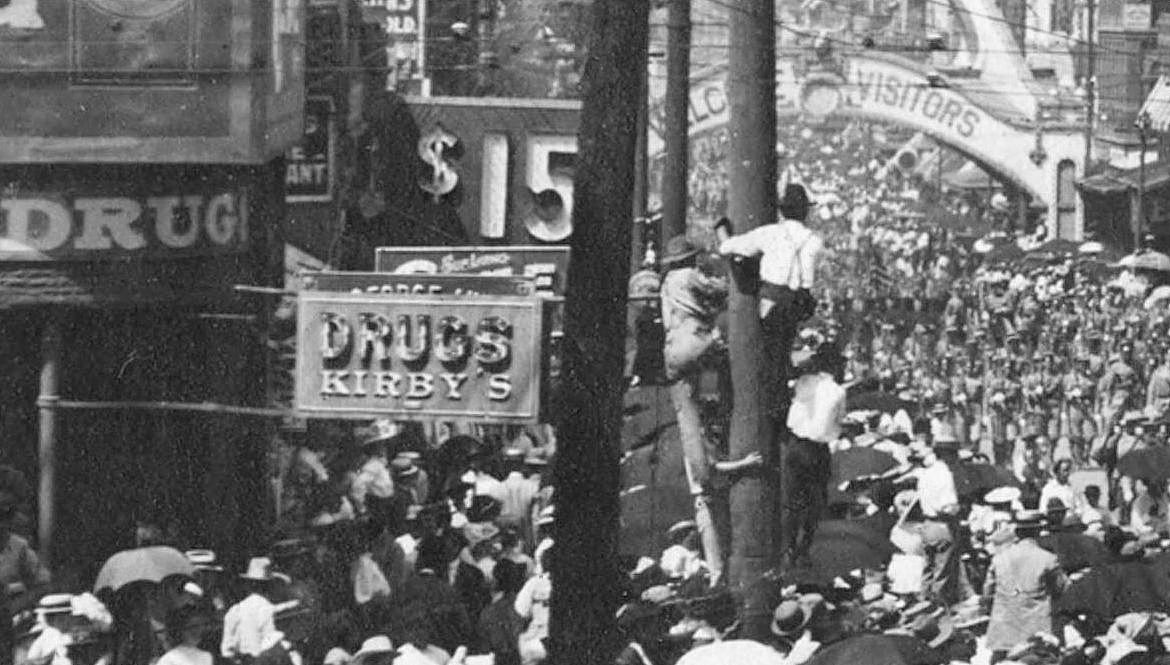
parade-day_1909_det2Dedicated parade-watchers. The Elk’s Arch welcoming visitors spans Main Street, a holdover from the 1908 Elk’s convention.

parade-day_1909_det3The dark-colored three-story building behind the three men in white shirts standing above the crowd (1611 Main) was demolished yesterday, Sept. 21, 2014. (A better view of the full building can be seen in the post “1611 Main Street — Another One Bites the Dust,” here.)

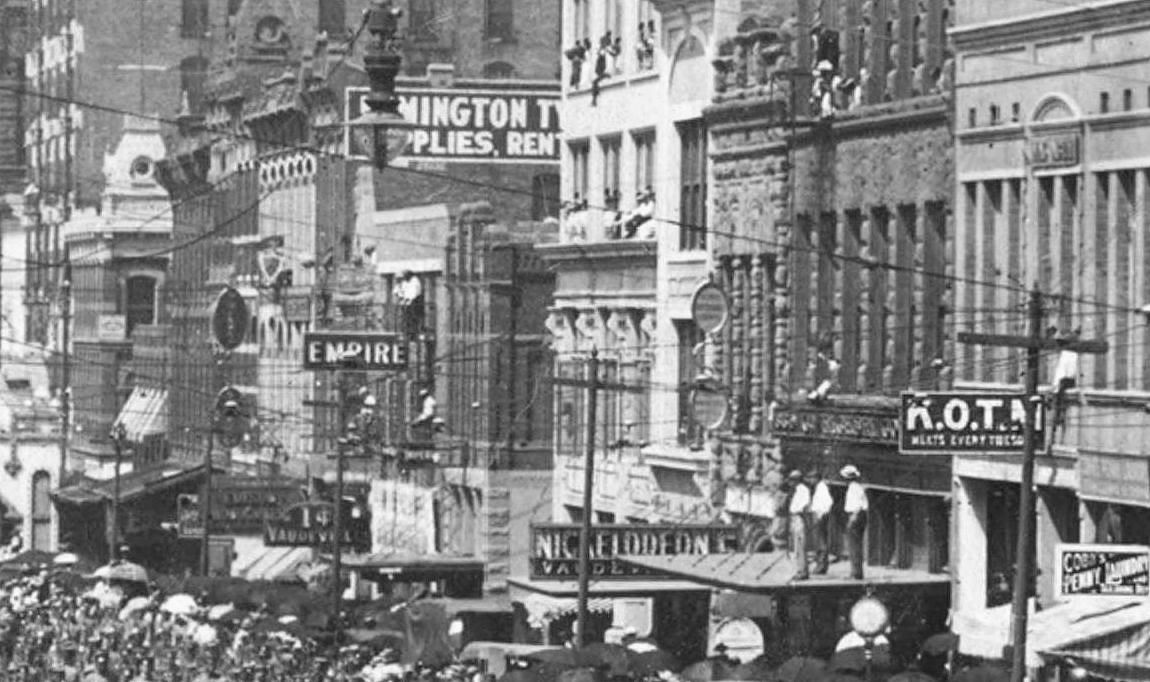
parade-day_1909_det4Note the vaudeville theaters.

parade-day_1909_det4aWorkers in the Wilson Building with a pretty great, unobstructed view.

parade-day_1909_det5When this photo was taken, Labor Day was fast approaching — that guy had two more weeks to wear those shoes.

parade-day_1909_det6Watching from shaded splendor.

parade-day_1909_det7Big hats, cinched waists, and African American bystanders.

***

Sources & Notes

Original photo by Clogenson, titled “Parade Day, Military Tournament, Dallas, Texas,” taken August 24, 1909; in the collection of the DeGolyer Library, Central University Libraries, Southern Methodist University. The photo can be viewed here.

Newspaper articles describing exactly who was involved in the parade and why it was happening can be read in the easily digestible report from the Fort Worth Star-Telegram, here, and the drier, more comprehensive report from The Dallas Morning News, here (each opens as a PDF). (This photo accompanied the DMN article.)

See other photos I’ve zoomed in on, here.

*

Copyright © 2014 Paula Bosse. All Rights Reserved.

Oak Cliff Trolley — 1895

trolley_oak-cliff_stark_1895_hpl“Dallas from Oak Cliff” by Henry Stark, 1895/96 (click for larger image)

by Paula Bosse

As present-day trolley service to Oak Cliff has been in the news in recent months, here’s a pastoral view of a little trolley chugging through the wilds of Oak Cliff in 1895. In the background, across the river, the still-fairly-new courthouse looms like a mirage. Below are a few details, magnified. (All images are much larger when clicked.) Enjoy!

trolley_oak-cliff_det1

trolley_oak-cliff_det2

trolley_oak-cliff_det3

trolley_oak-cliff_det4

***

Photo (labeled by the Houston Public Library as “Trolley moving through the woods”) is by Henry Stark, taken on a visit to Dallas in the winter of 1895/96; from the collection of the Houston Public Library — it can be viewed here.

For more on Henry Stark, see the previous post “Henry Stark’s ‘Bird’s Eye View of Dallas,'” here.

Other photos which I’ve “Zoomed In On the Details” can be seen here.

CLICK PHOTOS — REAL BIG.

*

Copyright © 2014 Paula Bosse. All Rights Reserved.