Flashback : Dallas

A Miscellany: History, Ads, Pop Culture

Little Peruna: He Died With His Mustang Bridle On — 1934
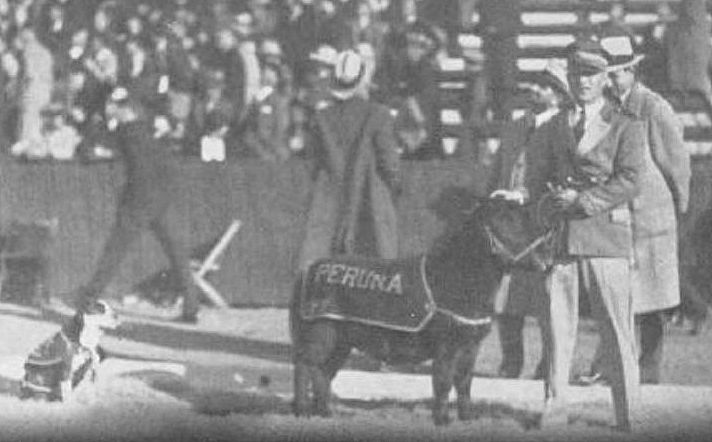
peruna-rotunda_1933Peruna, waiting for the Mustangs to score (photo: SMU)

by Paula Bosse

On October 30, 1934, shortly before midnight, Peruna, the 28-inch-tall little black Shetland pony mascot of the Southern Methodist University Mustangs, somehow liberated himself from his stable and wandered across campus and out into the intersection of Mockingbird and Airline where he was, sadly, struck by a hit-and-run driver and died soon after. As the newspaper account noted the next day, when the tragic accident occurred, “He was wearing a bridle of Red and Blue, the Mustang colors.”

Peruna had been the football team’s mascot for only two years, but he was an immensely popular attraction, and he was treated as something of a celebrity wherever he appeared, both at home and when traveling with the football team and the Mustang band. He did things most horses didn’t do, like ride in taxi cabs and sashay though hotel lobbies. Crowds at football games loved watching the little horse race across the field — even the ardent  supporters of the opposing teams were charmed by him. And he was, of course, much loved at SMU; his death was a hard blow to the student body.

When he was buried at Ownby Stadium, the band played the usually rousing fight song as a mournful dirge, and the flags on campus flew at half mast.

I’m an animal lover, and stories about the demise of animals are not things I normally find entertaining, especially when phrases like “the midget pony,” “the wee mascot,” “the stout-hearted little mascot,” and “the midget wonder horse” are constantly (and effectively) used by journalists to tug at the readers’ heart-strings. But the Peruna obituary/funeral coverage that was printed in The Dallas Morning News is so wonderfully and ridiculously over-the-top that that one yearns to know who wrote the uncredited story. I have created a little scenario in my head in which the writer had been (and I apologize…) “saddled” with writing a story about a horse’s funeral, but instead of handing it in the pedestrian short-and-vaguely-moving report that was expected, he decided — to hell with it — that he would just go full-throttle and produce the most outrageously grief-stricken story ever written about the untimely death of a college mascot. After what one assumes was the downing of much whiskey and much chuckling to himself (I suspect this was written by a sportswriter), a 500-word obit ran on Nov. 1, 1934:

CO-EDS AND GRID STARS SOB AS PERUNA IS BURIED
(The Dallas Morning News, Nov. 1, 1934)

In sight of the very gridiron on which he pranced to lasting fame, Peruna, stout-hearted little mascot of the Southern Methodist University Mustangs, was laid to rest Wednesday afternoon.

As co-eds sobbed openly and hardened football heroes found difficulty in brushing back the tears, the body of the diminutive pony was lowered into its grave in the shadow of Ownby Oval. His coffin was draped in red and blue, the school colors, and a huge M, the Mustang emblem, graced the top of the casket.

Across the way, on the campus of the big university itself, the flag fluttered at half mast. The school band, looking noticeably bare without Peruna prancing about, playing “Peruna,” the varsity song, in the tempo of a dirge. Hundreds of heads were bowed when the strains of the alma mater, “Varsity,” offered a final tribute to the wee mascot.

Peruna’s career was as colorful as that of the team he represented. Given to the school in November, 1932, by T. R. Jones, loyal Mustang supporter, the midget horse immediately became the constant companion of the team on its journeys from one side of the continent to the other.

Only last week Peruna was feted in New York, parading through the lobbies of the city’s swankiest hotels, whose clerks sniff haughtily at the thought of a dog or a cat entering the sacred portals of their hostelries….

In was in Shreveport where he slipped and cut his leg as he started to Centenary Stadium in a taxicab. His wound was stitched, and the faithful little animal pranced proudly with the band during the between-halves parade.

But Peruna prances no more. And if the music of Bob Goodrich and his Mustang band at Austin Saturday fails by a scant margin of being at its peppiest, it will be because the band has dedicated every tune on that day to the memory of its best friend.

That must have been fun to write.

The year following Peruna’s demise, the Rotunda — SMU’s yearbook — featured a two-page illustrated spread “Dedicated to the famous Mascot of the Mustangs … ‘Peruna.'”

peruna_memorial_rotunda_1935

See Peruna’s very, very sweet memorial statue on the SMU campus here.

The loss of Peruna left the Mustangs without a mascot. Peruna’s son was proffered as a replacement, but even though “Little Peruna had been dressed in its father’s blanket and was prepared to give its all for SMU,” the school declined to bring Peruna fils on board. A successor — Peruna II — was eventually appointed, the first of many over the past eighty years. We’re now up to, I believe, Peruna IX, and the little stallion is still as popular as ever. May the “stout-hearted little mascot” continue to prance proudly for the SMU Mustangs.
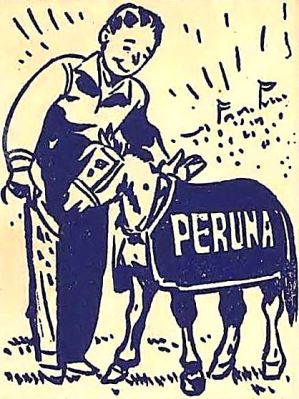
peruna_smu-rotunda_19391939 Peruna (SMU Rotunda)

peruna_varsity-shop_cully-culwell_culwell-ranch_1960-SMU-rotunda1960 Peruna (SMU Rotunda)

***

Sources & Notes

Top photo from the 1933 SMU yearbook, The Rotunda. The two-page spread is from the 1935 Rotunda.

For an idea of what the area looked like at the time of Peruna’s terrible midnight accident — large open fields to the north and east of the campus, and, to the south, a probably dimly-lit Mockingbird Lane — here is a detail from a 1930 aerial map from the Edwin J. Foscue Map Library at Southern Methodist University (the full map can be seen here):
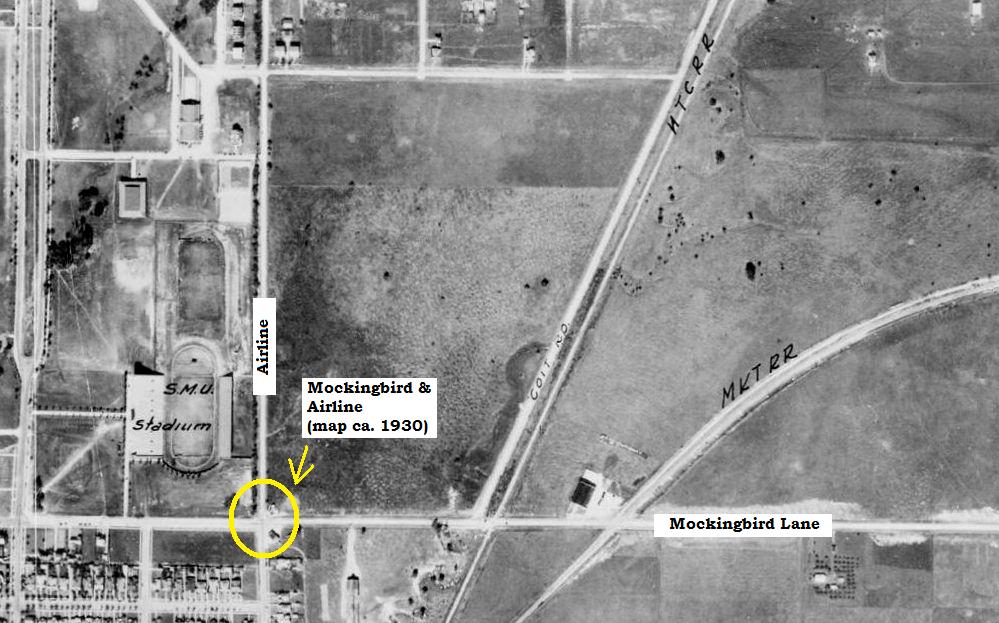
smu-aerial_1930(click for larger image)

Check out these articles in the Dallas Morning News archives:

  • “Car Kills Peruna Back From Victory Over New Yorkers; SMU Mascot Known To Over Half Nation, Dies With Bridle On” (DMN, Oct. 31, 1934)
  • “Co-Eds and Grid Stars Sob As Peruna Is Buried” (DMN, Nov. 1, 1934)
  • “Grieving Mustangs Won’t Take Son of Peruna for Mascot” (DMN, Nov. 11, 1934)

Peruna on Wikipedia, here.

If you really want to know about Peruna, though, you need to go to the horse’s mouth — his page on the SMU website, here.

Read about the Peruna monument by Dallas artist Michael G. Owen, Jr. which was dedicated on the SMU campus in 1937, here.

*

Copyright © 2014 Paula Bosse. All Rights Reserved.

Mercantile National Bank Ad — 1960

merc_ad_1960-det

by Paula Bosse

I love you, Merc! Why aren’t you in EVERY Dallas ad?

ad-mercanitle_city-directory-1960(click for larger image)

***

Ad from the 1960 city directory. I don’t know who did the artwork for this ad, but I love it.

*

Copyright © 2014 Paula Bosse. All Rights Reserved.

A Downtown Gas Station! — 1949

tyler-service-stn_degolyer_1949-det1Gas station at Elm & Houston! (click for larger image) (SMU Libraries)

by Paula Bosse

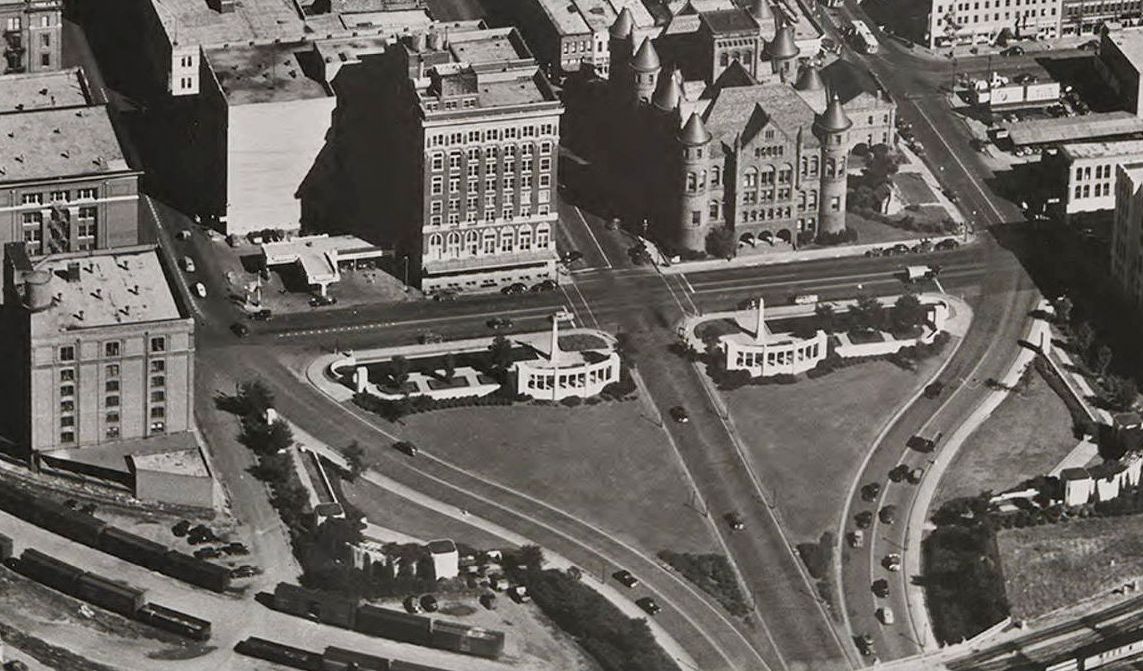
There was a time when gas stations populated the central business district in downtown Dallas. But now? I’m not sure I’ve ever seen a gas station in the heart of downtown. Which is probably why the station seen above (from a detail of a larger aerial view of downtown) stood out so much when I was looking at the photo. And it wasn’t located just anywhere downtown, but it was in the primo location opposite Dealey Plaza at the “gateway” to the city. It doesn’t fit in that space very well — it’s a corner crying out for a more substantial structure — but … wouldn’t it be nice to have an actual full-service gas station downtown again?

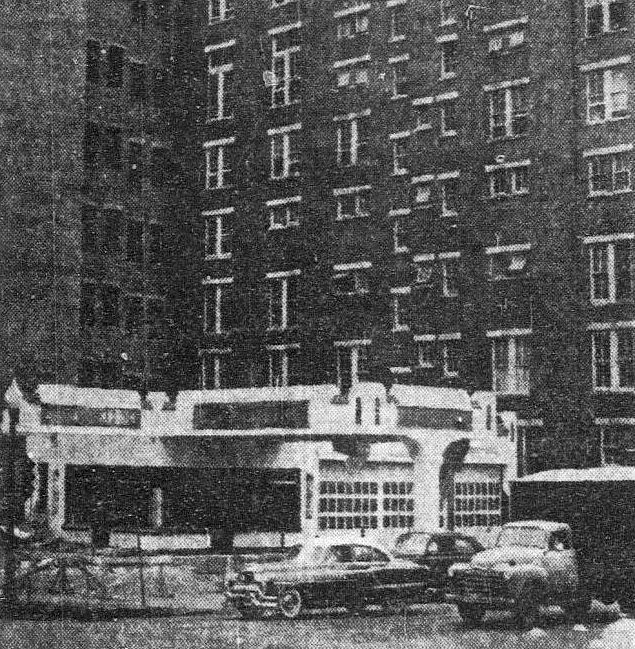
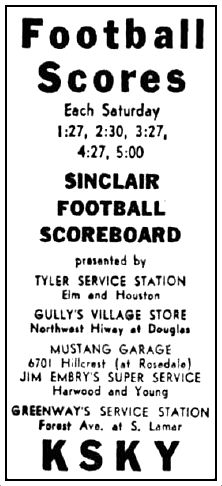
The Tyler Service Station (and before that the Longhorn Service Station) held down the corner at Elm and Houston streets in the 1940s but was demolished in 1953 to make way for the construction of the Records Building/Criminal Courts Building annex. And, hallelujah, I found a photo of the service station from ground-level — and it was pretty cool-looking!

gas-station_elm-and-houston_1950s

tyler-service-stn_dmn_100948Oct. 9, 1948

And, finally, here’s the original photo I saw in which that long-gone gas station jumped out at me, another wonderful photo by Lloyd M. Long, taken in May, 1949. You never know what odd things you’ll discover if you just take the time to explore.

downtown_degolyer_1949Aerial photo by Lloyd M. Long, 1949 (Foscue Map Library, SMU)

***

Sources & Notes

Lloyd M. Long photo (“Downtown Dallas, looking east”), from the Edwin J. Foscue Map Library, Central University Libraries, Southern Methodist University; it can be viewed here.

Click pictures for larger images.

*

Copyright © 2014 Paula Bosse. All Rights Reserved.
 

Cowboys and Indians on Elm Street — 1915

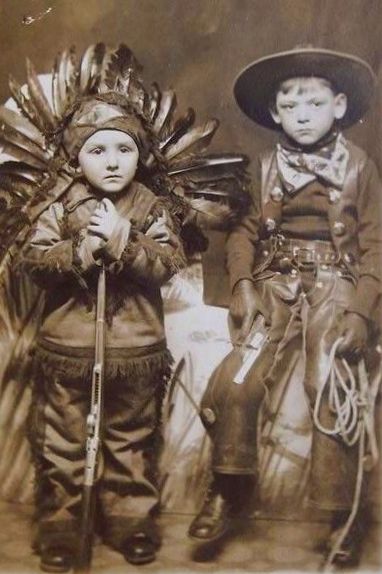
lawrence_kiddie-photoPhoto by Joe Lawrence, circa 1915

by Paula Bosse

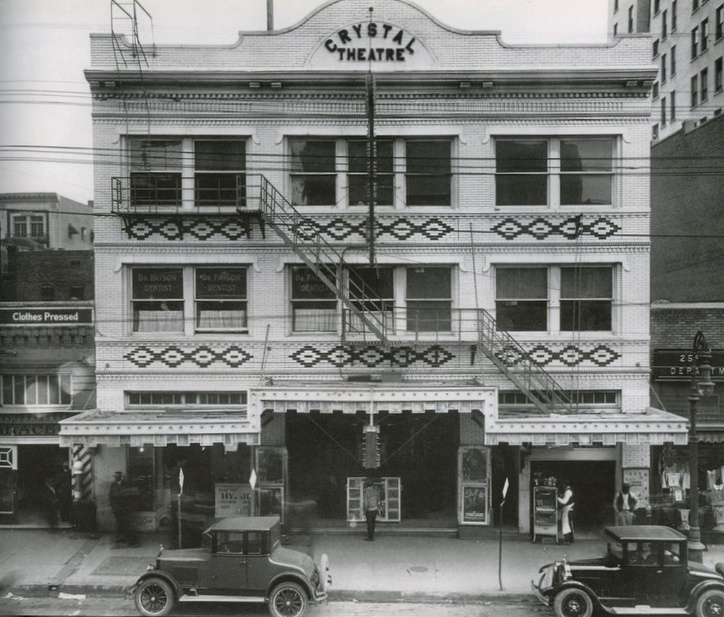
The photo above, showing two not-terribly-thrilled children dressed up in Old West costumes, was taken by Joe Lawrence in his “Crystal Electric Studio” at 1608 Elm Street, one of many small businesses located above the Crystal Theater.

crystal-theaterThe Crystal Theatre — with office space above (click for larger image)

Joseph Z. Lawrence (1884-1943) was born in Romania and settled in Dallas in 1909. In 1915 he was doing business as a photographer at 1608 Elm Street. Lawrence later owned the Lawrence Art Galleries on Pacific Avenue, and, along with his son Harry, was an early supporter of the Dallas Nine artists.

***

Sources & Notes

Top studio photo by Joe Lawrence, found on eBay.

Photo of the Crystal Theater found on Pinterest, here. A photo of the 101-year old building taken during the recent spate of downtown demolition — with the wrecking ball literally INCHES away from it — is here. The Dallas Morning News article it comes from is here.

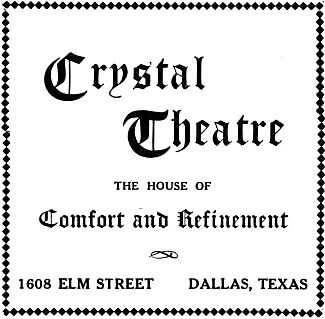
At some point the address of the building (originally 1608-10) became 1610 Elm, perhaps when it was extensively remodeled in the late 1920s and became a retail store.

crystal-theater_building-code-bk_19141914 — “Comfort & Refinement”!

*

Copyright © 2014 Paula Bosse. All Rights Reserved.
Union Station’s Empty Backyard — ca. 1920

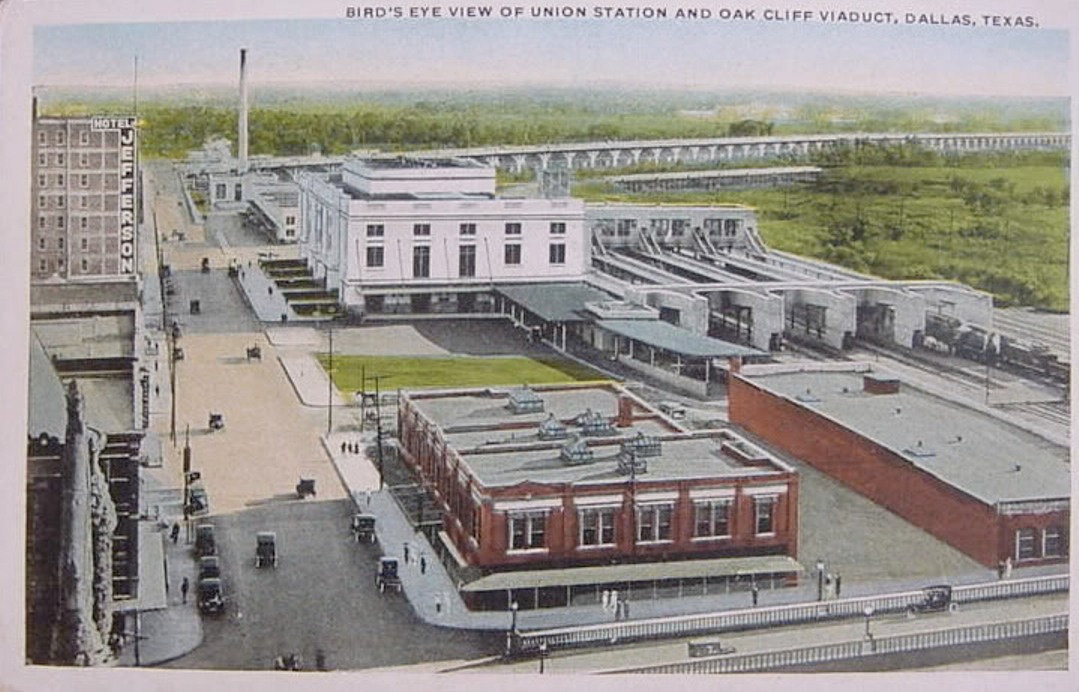
union-stn_ca1920The western edge of downtown, looking south (click for larger image)

by Paula Bosse

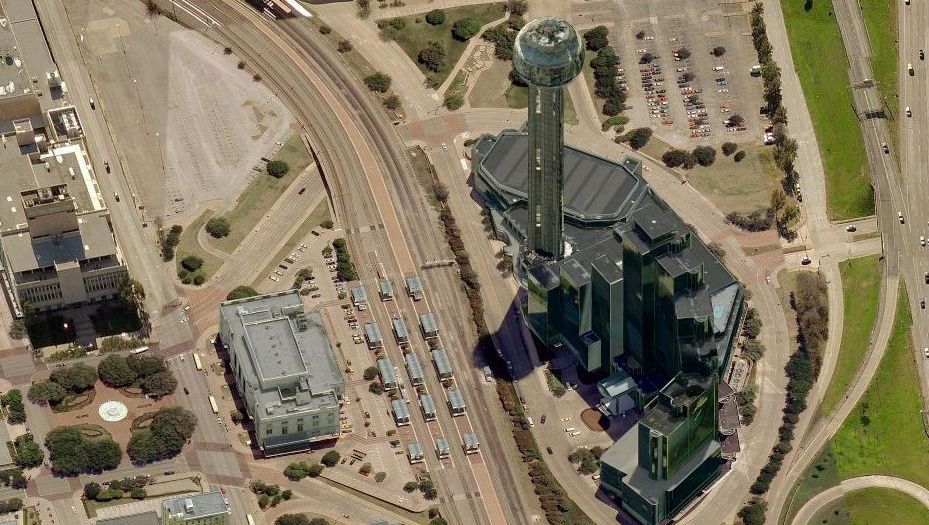
Here’s a postcard view you don’t see that often, Houston Street, looking south, with the Old Red Courthouse at the lower left, the gleaming white Union Station in the upper middle, and the fantastic Houston Street viaduct at the top. It’s a little hard to imagine that sixty-or-so years later, Reunion Tower would be plunked down at the far right of this picture, in that grassy field behind the tracks at Union Station.

union-stn_bing_20014

***

Postcard from the DallasMetropolis.com forum, here (see comment for the very interesting description of what’s what in this image).

Present-day bird’s-eye view from Bing (click for larger image).

*

Copyright © 2014 Paula Bosse. All Rights Reserved.
 

Refusing to Give Up One’s Seat Might Set Off a Melee — 1919

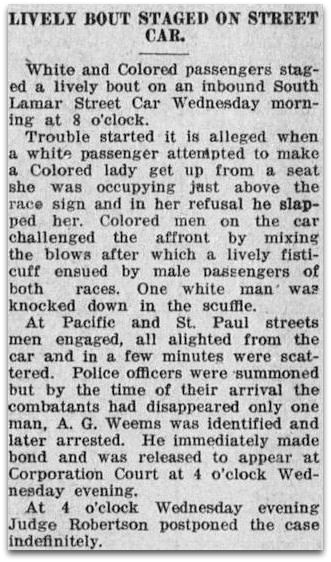
streetcar-fight_dal-express_100419The Dallas Express, Oct. 4, 1919

by Paula Bosse

On this, the anniversary of Civil Rights icon Rosa Parks‘ act of defiance in refusing to give up her seat on a bus to a white passenger in Alabama in 1955, it’s interesting to note a couple of accounts of similar incidents in Dallas, but 36 years earlier. And more violent.

The article above — which appeared in The Dallas Express, a weekly newspaper printed by and for Dallas’ black community — describes a melee (or “riot” as The Dallas Morning News called it) that occurred when an unnamed black woman refused to give up her seat (which was in the part of the streetcar reserved for white passengers) when a white man demanded that she move. When she steadfastly refused, he slapped her (!), and that set off a wild fight between black and white male passengers … on a moving streetcar! When the car stopped, everyone spilled out into the street and scattered. Only one person was arrested, Mr. A. G. Weems, a black businessman and former school teacher who was active in the black community and later represented African-American interests and residents as a member of the Negro Chamber of Commerce.

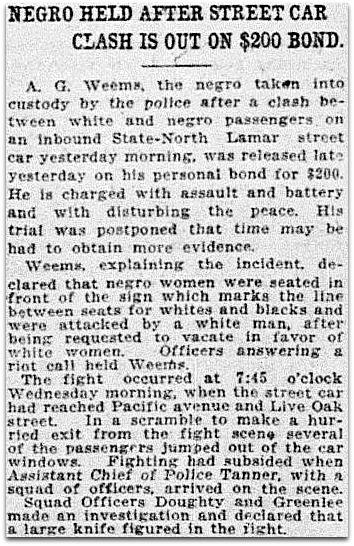
The Dallas Morning News also carried a report of the incident:

streetcar-fight_dmn_092519Dallas Morning News, Sept. 25, 1919

It sounds as if Weems could have gotten away, had he wanted, but perhaps he was making a statement.

In the previous months of 1919, there were several similar incidents reported in the pages of The Dallas Express. Sometimes altercations were a result of black passengers sitting in “whites-only” sections of streetcars, but sometimes trouble arose when the white section was full, and white passengers sat in the seats designated for black passengers:

streetcar-fight_dal-express_071219Dallas Express, July 12, 1919 (click for larger image)

There was also an incident that had occurred in February of that year in Birmingham, Alabama in which a white conductor was shot (and presumably killed) after he threatened to slap a black woman in a dispute over the fare. A black vigilante had appeared out of nowhere, shot the man, and disappeared into the night.

The antagonism, disgust, and violence caused by this “peculiar law of the Southland” continued until 1956 when the Supreme Court finally banned segregation on public transportation.

*

Copyright © 2014 Paula Bosse. All Rights Reserved.

David Wade: Overcoming Childhood Trauma

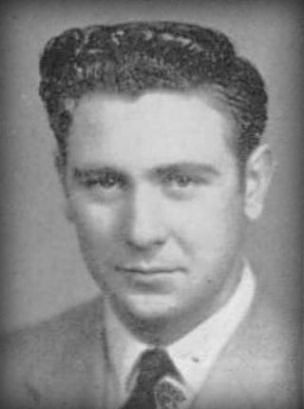
david-wade_waco-high-school-194117-year-old David Wade, Waco High School, 1941
by Paula Bosse

For many Texans, the name David Wade brings to mind a gentle and convivial, deep-voiced TV cooking show host who, for decades, shared his love of food with a legion of faithful fans. Dallas was Wade’s home base — it was where he lived, where he established his business empire, and, for the most part, where he recorded his television programs. He seemed like the kind of guy who had it all. But many of his fans would be shocked to learn that David Wade’s most searing childhood memory was the impossible-to-forget day his father killed his mother.

In 1929 Eugene and Ora Lee Wade lived in Cameron, Texas, about 50 miles south of Waco. They had four daughters, ranging in age from twelve to twenty-one, and one son, five-year old David. Eugene worked as an engineer at the local cotton gin, and Ora Lee raised the children and was a popular and active member of her church.

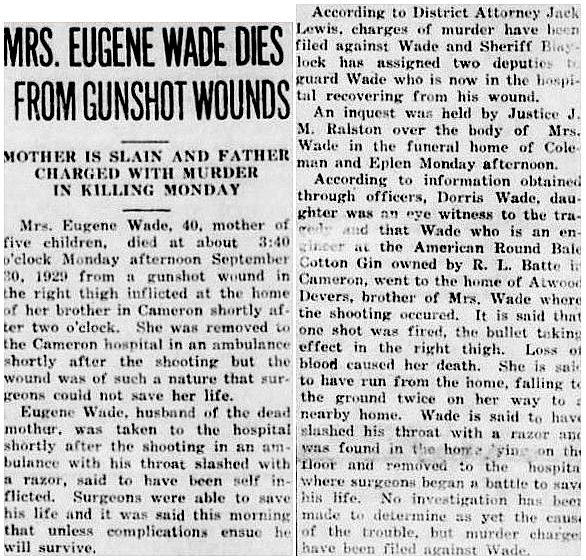
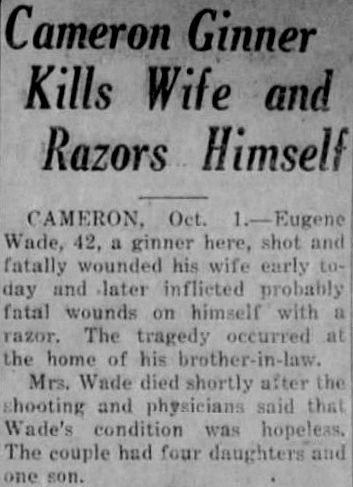
On the afternoon of Sept. 30, 1929, Eugene came home drunk. Very drunk. He began to argue with Ora Lee, and, as things escalated, she ran to the nearby house of her brother. An angry Eugene lurched after her. A gun was drawn, and Eugene drunkenly threatened his wife with it. In an ensuing physical altercation, the gun went off. Mrs. Wade had been shot in the thigh. She attempted to run away but collapsed after only a few steps. She died soon after being rushed to the hospital — her femoral artery had been severed, and she bled to death. Before the police arrived, Eugene Wade had slashed his throat with a razor, and though not initially expected to live, he survived and was charged with the murder of his wife. The horrible, violent, bloody scene had been witnessed by at least one daughter (and, in all likelihood, probably by five-year old David as well).

wade_bryan-eagle_100129The Bryan Eagle, Oct. 1, 1929

wade_cameron-herald-100329The Cameron Herald, Oct. 3, 1929 (click for slightly larger image)

A distraught Eugene Wade pleaded guilty, was sentenced to life in prison, and by the end of the year, he was on his way to Huntsville. Before he left Cameron, he gave a lengthy, sincere, and heartbreaking interview to The Cameron Herald. In it, he expressed his sorrow, his regret, and his love for his wife and children.

“Whiskey was the cause of it all. I am to blame for what has happened to my family and to myself. I can lay it all to drink. I loved my wife as well as any man ever loved his wife and I love my children. My home is destroyed and my wife is dead. My children will suffer the humiliation of this terrible thing. Time may heal their wounds but mine will bleed for all time. I can never escape the horror of it though I should live a thousand years. Nothing but sorrow is left for me, still I might come out of the trouble some day, maybe an old man and broken but maybe I can still do some good in the world.” (Cameron Herald, Dec. 19, 1929)

Five-year old David had been left, basically, an orphan. He spent some time at the Juliette Fowler home for orphans in Dallas and was later moved around between family members and foster families. He went to Waco High School where he was a popular student (the yearbook photo above was accompanied by the motto supplied by the Senior Band, of which he was a member: “And he is oft the wisest man”), and he received arts degrees from Baylor and the University of Texas (he studied music and had a short career as a singer). He seems to have done well in school, despite the terrible incident in his past.

But after college he spent time in California as a “test pilot,” a nerve-wracking job that apparently stressed him out so much that he sought medical treatment (an amateur psychologist might assume that his anxiety was triggered by post-traumatic stress). According to later newspaper profiles, instead of sedatives, the doctors suggested he focus on an enjoyable hobby to settle his nerves. A hobby like cooking. …And the rest is history.

As far as I’ve been able to determine, he rarely — if ever — talked about the tragedy he experienced in his youth. When one knows the details of his past, some of his quotes from interviews carry more weight:

“Any time you have a problem and you overcome it, you have a muscle. You never build a personality unless you have a lot of troubles.” (David Wade in the Fort Worth Star-Telegram, April 25, 1976)

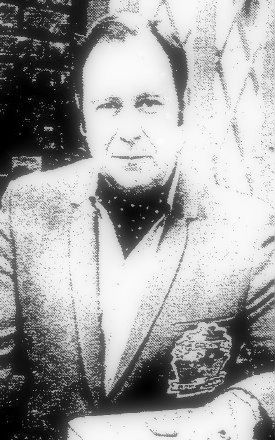
When I was growing up and would frequently come across one of David Wade’s shows on TV, I usually clicked on past it unless there was absolutely nothing else to watch. He and the show felt a little corny and were a little too laid back for my taste. Now, though, having learned about his past — and having always felt that Mr. Wade seemed to be a genuinely nice person — I definitely have a more positive and respectful opinion of the man. Ascot, crest-emblazoned blazer, and all.

david-wade_FWST_042576-photoBon Appétit!

***

Sources & Notes

Top photo of a 17-year-old David Lloyd Wade from the 1941 Waco High School yearbook.

The coverage of Ora Lee Wade’s funeral in the Cameron Herald (Oct. 3, 1929) — which includes quite a bit of genealogical information — can be found here (click for larger image).

The full “jailhouse interview” with Eugene Wade in the Cameron Herald (Dec. 19, 1929) is available in a PDF, here.

Incidentally, Eugene Wade’s “life sentence” lasted four years. He was the recipient of one of Governor Ma Ferguson’s notorious “conditional pardons.” He appears to have lived around the Cameron area until his death in 1967. I don’t know whether he ever re-established relationships with his children.

A nice overview of David Wade’s very successful career can be found in an article from the April 25, 1976 issue of the Fort Worth Star-Telegram, in a PDF, here.

My previous post, “David Wade, Gourmet: Have Ascot, Will Travel” — about his happier days as a successful TV personality — can be read here.

*

Copyright © 2014 Paula Bosse. All Rights Reserved.

The Dallas Cowboys’ Horrible Inaugural Year — 1960

dallas-cowboys-logo_1960

by Paula Bosse

Thanksgiving means different things to different people. For some it’s about spending time with family, for some it’s about ingesting an unimaginable amount of good food, and for others it’s all about watching the Cowboys game.

Here’s a look back at the inaugural season of the Dallas Cowboys, 1960:

  • Head coach: Tom Landry.
  • Home field: Cotton Bowl.
  • Results: 0 wins, 11 losses, 1 tie.
  • They were ranked last in the Western Conference.
  • They had the worst record of any team in the NFL that season.

The team got better, but as far as the Cowboys, there was absolutely nothing for Dallas to be thankful for that year — except that they’d never have to re-live Season 1 again.

***

Yep, Wikipedia. Read it and weep, sports fans.

*

Copyright © 2014 Paula Bosse. All Rights Reserved.

Encouraging Dallasites to Observe Thanksgiving — 1874

thanksgiving

by Paula Bosse

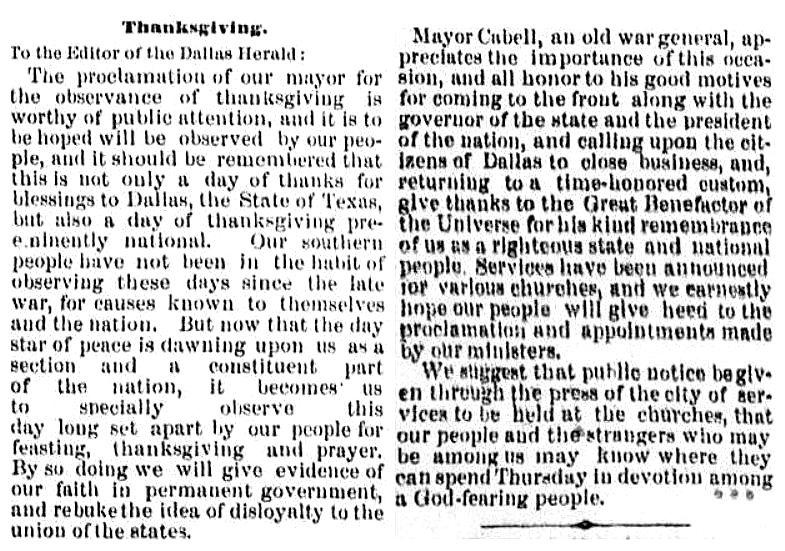
After the Civil War (and even before) many (if not all) Southern states refused to celebrate Thanksgiving, as many felt it was nothing more than a politicized “Yankee abolitionist holiday.” But by 1874, Southerners — and Texans — were finally willing to give it a go.

A letter to the editor of the Dallas Daily Herald that year encouraged the people of Dallas to observe the holiday — suggesting that it was a patriotic (rather than a political) thing to do:

Our southern people have not been in the habit of observing [Thanksgiving] since the late war, for causes known to themselves and the nation. But now […] it becomes us to specially observe this day long set apart by our people for feasting, thanksgiving and prayer. By so doing we will give evidence of our faith in permanent government, and rebuke the idea of disloyalty to the union of the states.

thanksgiving_dallas-herald_112674Dallas Daily Herald, Nov. 26, 1874 (click for larger image)

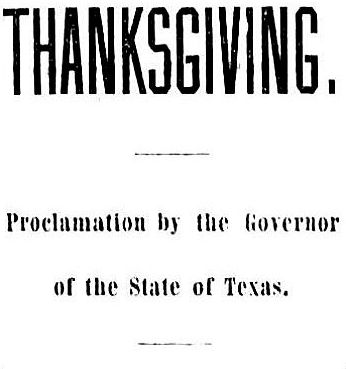
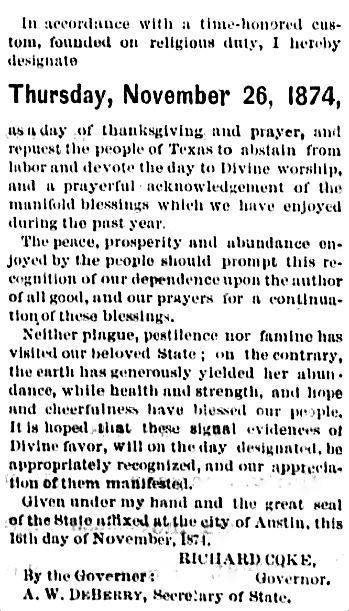
Richard Coke, the governor of Texas, proclaimed Thursday, November 26, 1874 as a day of thanksgiving, noting that “Neither plague, pestilence nor famine has visited our beloved State,” and that, hey, things were actually going pretty well:

thanksgiving_dallas-herald_112174a

thanksgiving_dallas-herald_112174bDallas Daily Herald, Nov. 21, 1874

Happy Thanksgiving!

*

Copyright © 2014 Paula Bosse. All Rights Reserved.

Texas Dashboard Organizer

tx-dashboard_diffee_new-yorker_2006 New Yorker cartoon by DIFFEE, 2006

by Paula Bosse

Not really retro and not specifically Dallas-related, but … close enough.

***

Souces & Notes

Cartoon by Matthew Diffee (a Texan, who grew up in the Dallas area); appeared in the Nov. 13, 2006 issue of The New Yorker

And, WOW, check out Diffee’s homage to Big Tex — it’s GREAT! — and it’s here! Click through all four parts! #WWBTD

His “Twelve Best Toons” selection is pretty good, too, here.

*

Copyright © 2014 Paula Bosse. All Rights Reserved.