Flashback : Dallas

A Miscellany: History, Ads, Pop Culture
June 18, 2014
Dallas Medical College: 1900-1904
 Photos from the UT Southwestern Library (click for larger image)
by Paula Bosse
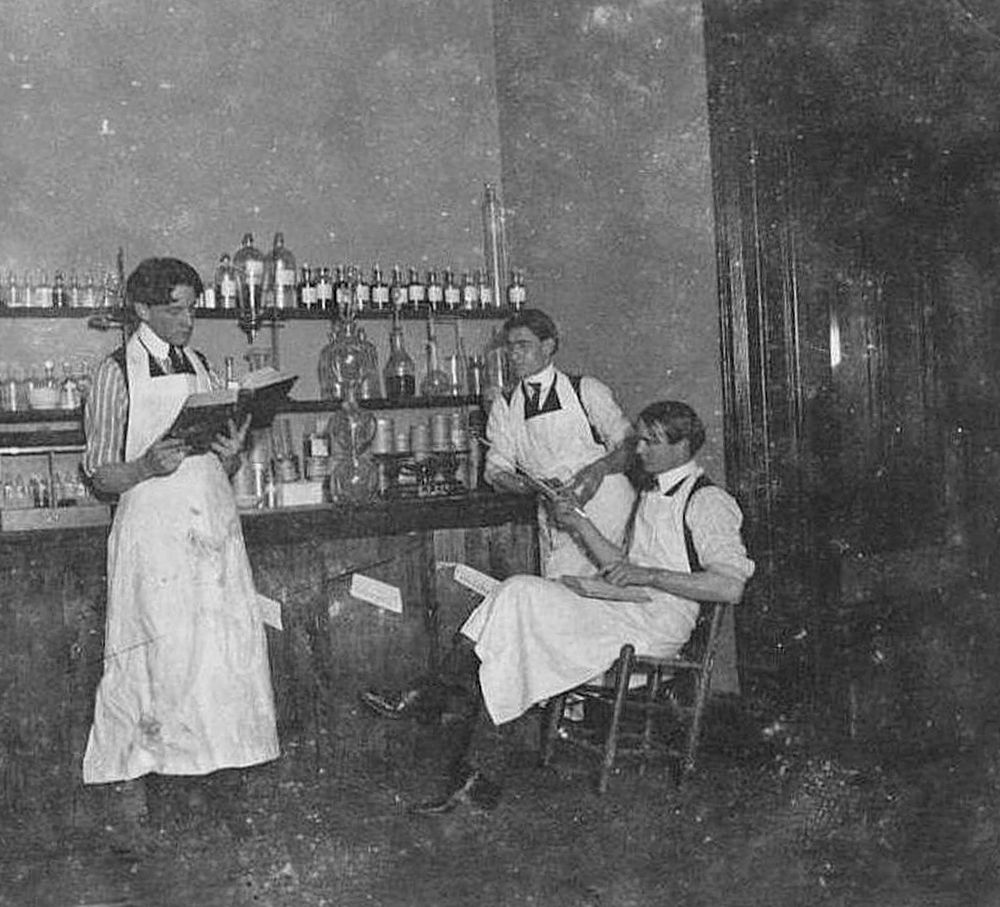
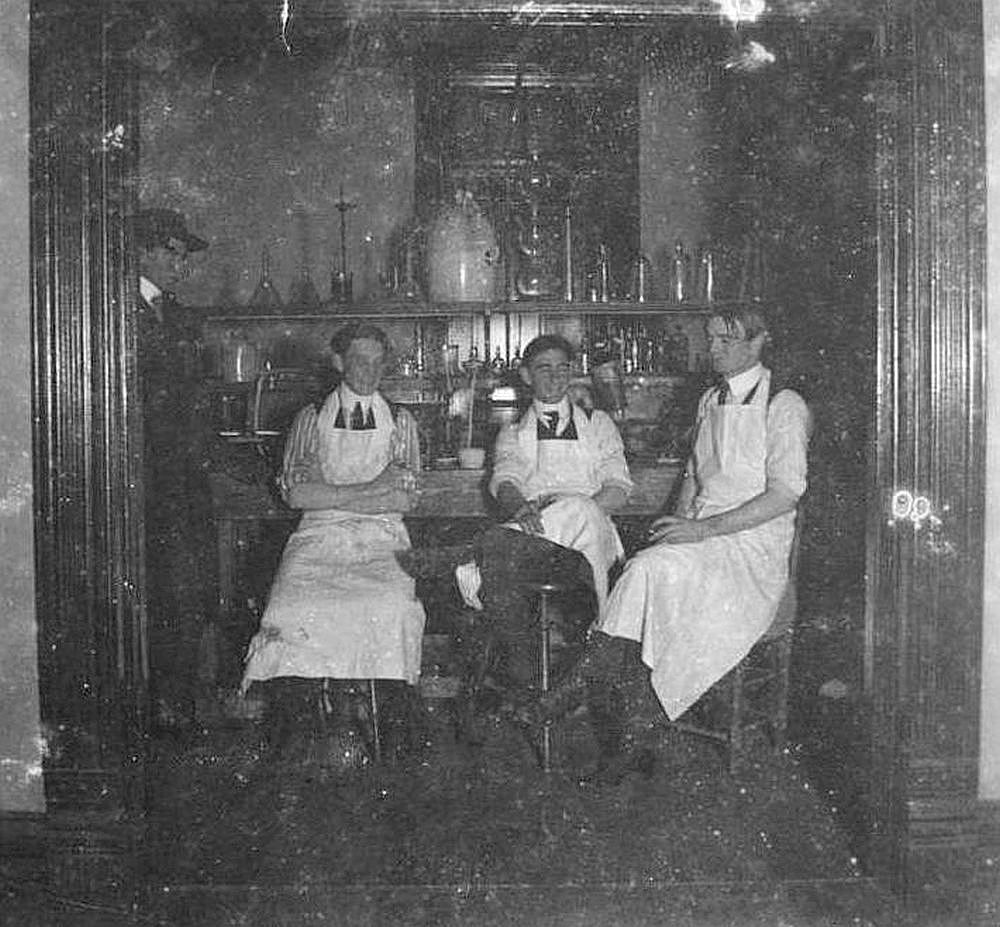
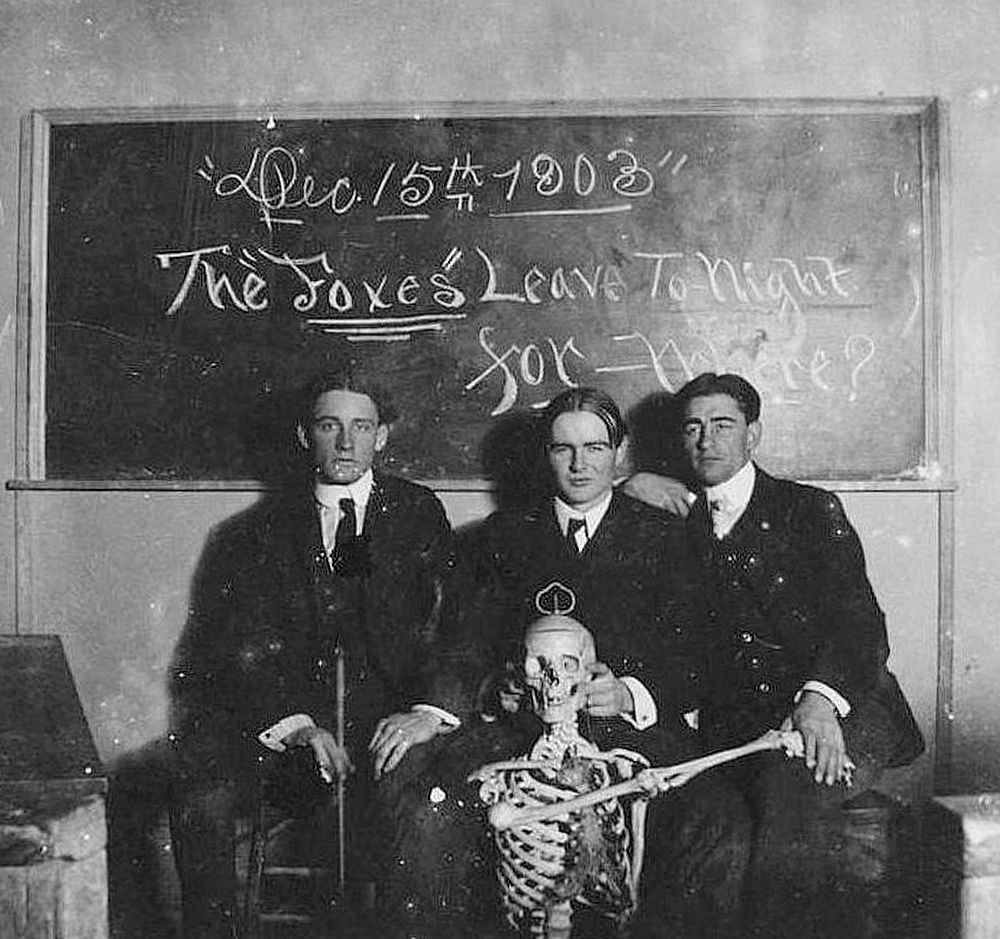
Between 1900 and 1910, Dallas had ELEVEN medical schools, some of dubious distinction. One of the earliest and most successful was Dallas Medical College, an offshoot of Trinity University which was eventually merged with Baylor College of Medicine. It was located on Commerce St. near Akard, neighbors with a fire station and the City Hall (the Adolphus Hotel now occupies this site). Here are several photos from the Dallas Medical College archives, showing three typical medical students engaging in typical medical school hijinks.

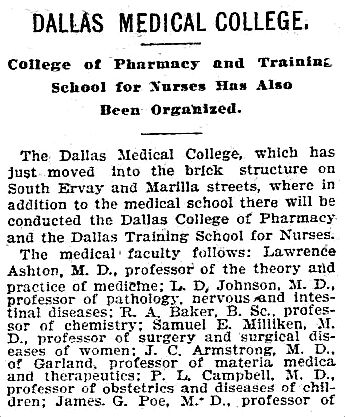
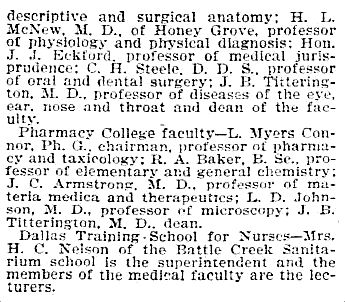 Dallas Morning News, Feb. 3, 1901
 The school’s first location on S. Ervay & Marilla (DMN, Feb. 3, 1901)
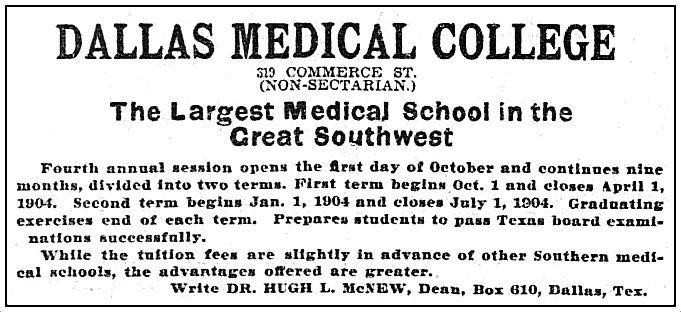 DMN, Sept. 27, 1903
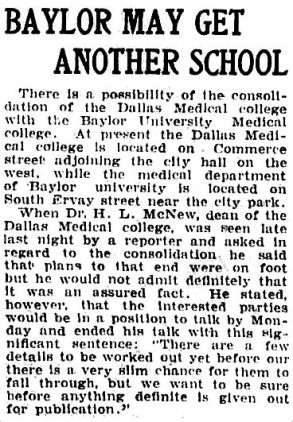 Southern Mercury, Nov. 10, 1904
The official announcement of the merging, with details on how the two schools would function for the rest of the school year can be read here.
***
Sources & Notes
Photographs from the UT Southwestern Library, here and here.
More on early medical schools in Texas, with several paragraphs on Dallas, can be found in “Training the Healers” by Vernie A. Stembridge, M.D., an article from the May, 1999 issue of Heritage magazine (a publication of the Texas Historical Foundation) which can be read here.
*
Copyright © 2014 Paula Bosse. All Rights Reserved.
June 17, 2014
Ads for Slaves Lost, Found, and For Sale in the Pages of The Dallas Herald
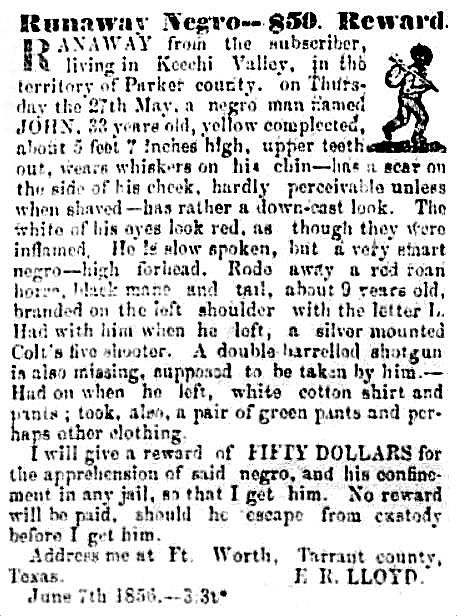 Dallas Herald, June 7, 1856
by Paula Bosse
When one is browsing through Texas newspapers from the 1850s and 1860s, one shouldn’t be surprised to see things like this. But that doesn’t make them any less shocking. Black men and women were not regarded as people, but as property — in all of these “ads” you could easily substitute “horse” for “negro.” I think I always wanted to believe that slavery wasn’t much of an issue in Dallas — but it was. The name of one man, E. M. Stackpole, a successful shopkeeper, kept coming up a lot in these advertisements. In addition to the general merchandise of his store, he seemed to do a pretty brisk trade in buying, selling, hiring (more like leasing from other slave-owners), and hiring out slaves. One of his ads is below. (By the way, the word “likely” was a common adjective for slaves; it meant, basically, “worthy of purchase.”)
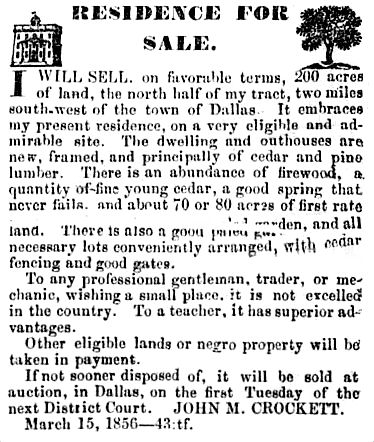 March 15, 1856
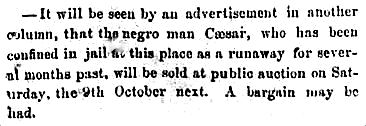 Sept. 15, 1858
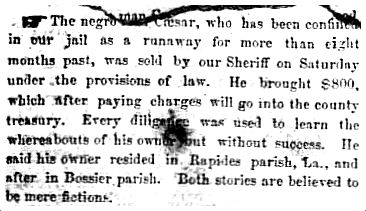 Oct. 20, 1858
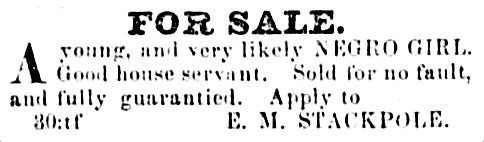 1861
1861
***
Sources & Notes
All advertisements from The Dallas Herald, via UNT’s Portal to Texas History site.
My lack of knowledge about slavery in Texas is appalling. The Wikipedia entry provides a good overview; read it here.
*
Copyright © 2014 Paula Bosse. All Rights Reserved.
June 16, 2014
Plow vs Skyscraper
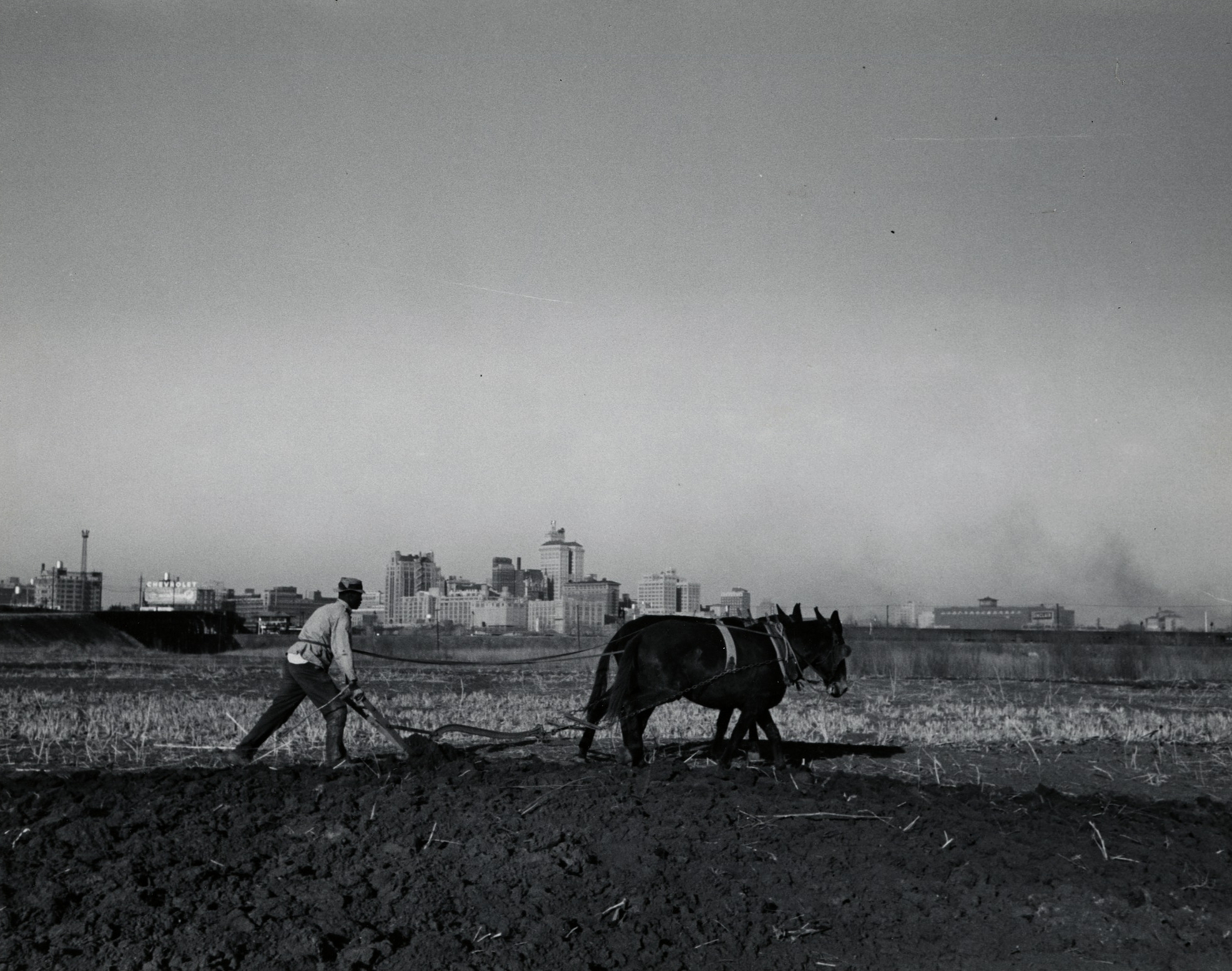 (click for super-gigantic image)
by Paula Bosse
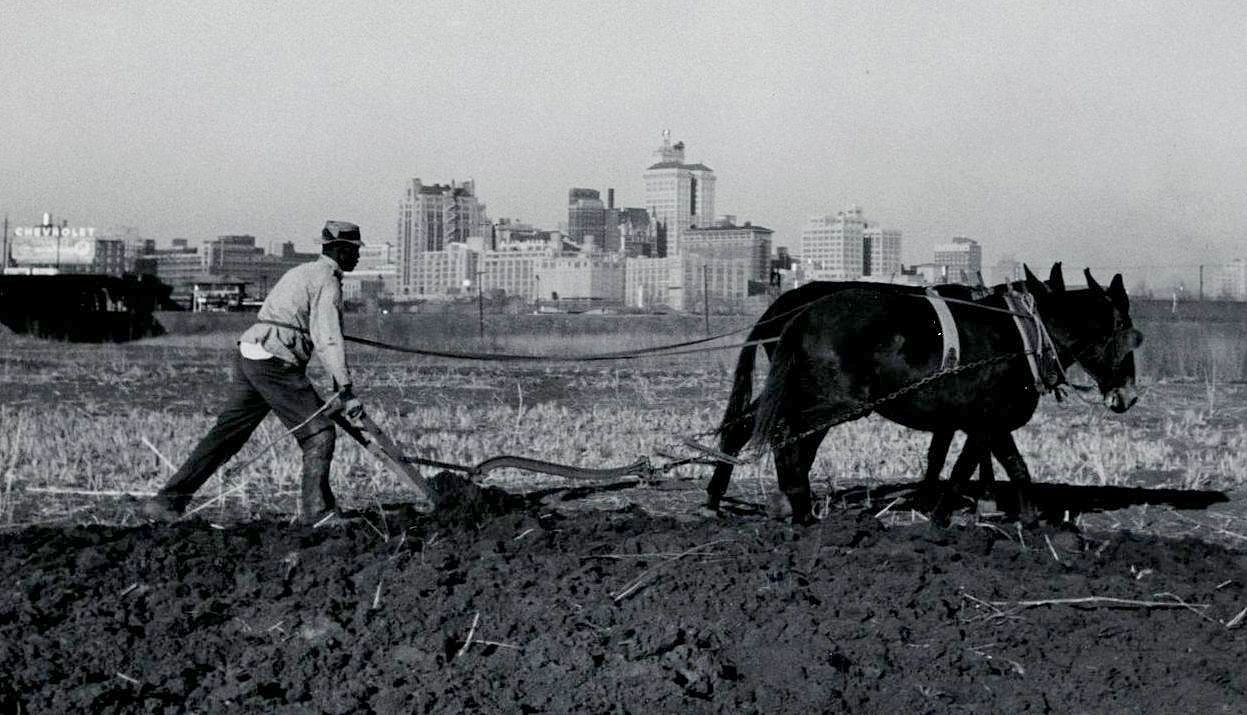
Here’s an unexpected view of the Dallas skyline, by legendary Life magazine photographer Carl Mydans. The photograph — titled “Lucius Washington and Two Mules Plow the Fields Before the Dallas Skyline” — is from the collection of the Smithsonian Institution, with catalog description here. Though the Smithsonian lists this photo as being from 1939, it’s possible that it was taken a year earlier, as The Dallas Morning News reported on April 2, 1938 that Mydans was in town shooting the Dallas skyline. A major article on Texas appeared in Life magazine a year later, in the April 10, 1939 issue, featuring a different, very large photo of the Dallas skyline by Mydans, which can be seen here.
Below, an enlarged detail, lightened a bit.
***
More on Mydans from the Duke University collection here, with examples of his FSA, Life magazine, and WWII reportage here.
Wikipedia article on Mydans here.
Click photos for much larger images.
*
Copyright © 2014 Paula Bosse. All Rights Reserved.
June 15, 2014
Give a 15-Year-Old 8,400 Pounds of Soap and He’ll Carve You a Radio Transmitter — 1930

Michael Owen, Jr., boy soap-carver 1930
by Paula Bosse
In 1930, 15-year-old sculptor Michael G. Owen, Jr. carved a replica of the WFAA transmitter building out of 8,400 pounds of Ivory soap. And why not? It was a big draw at that year’s State Fair of Texas.
Mike Owen, a student at well-to-do Highland Park High School (although Dallas artist Olin Travis, who had him as a pupil at about this time, described him as being “very poor”), had been sculpting all sorts of things, from the age of 3. He had begun winning awards when he was 13 or 14, one in an earlier “soap modeling” contest sponsored by Procter & Gamble. Not only did that soap-carving award result in young Mr. Owen being commissioned by Sanger Bros. to carve a model of the downtown skyline (I’m not sure this commission was ever actually completed), he was also asked to create an attraction for the State Fair: a replica-in-soap of the WFAA transmitter plant located on Northwest Highway near Grapevine (see a photo of the transmitter building and tower here). Owen worked from blueprints of the building and a bronze model supplied by the Belo Corporation (owner of WFAA), and Proctor & Gamble supplied the huge bars of Ivory soap (12 bars, each weighing 700 pounds). The finished piece was an “exact replica” of the 50,000-watt transmitter plant and was touted by Procter & Gamble as being the largest soap sculpture ever executed. It was a big hit at the 1930 State Fair of Texas.
Michael Owen went on to become a professional artist, with early enthusiastic support from Jerry Bywaters. He was associated with the Dallas Nine (and was, by far, the youngest member affiliated with that somewhat amorphous group), and I will address his more serious non-soap forays into the art world in a later post. But, first, back to soap!
The photo below shows Mike Owen’s finished product, which took him 12 days to complete.
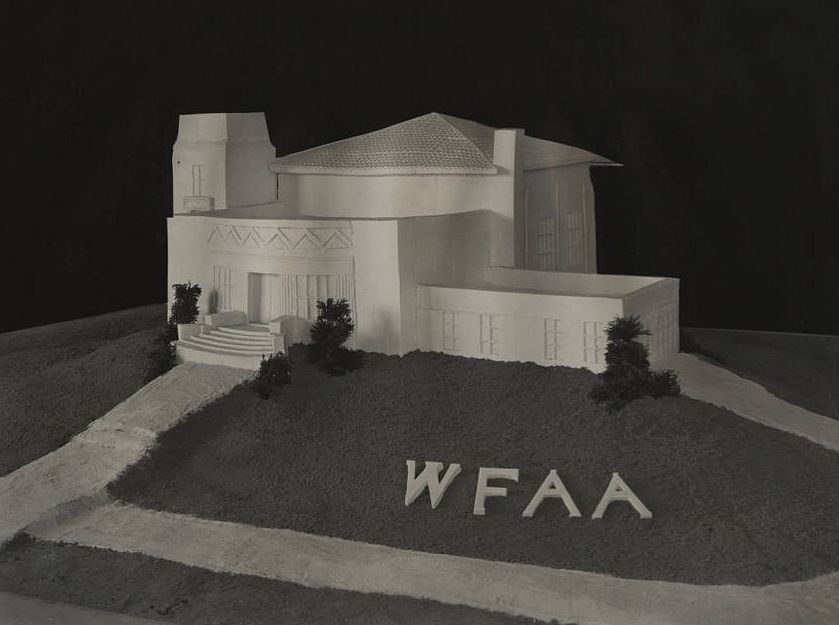 Belo Collection, DeGolyer Library, SMU
It’s difficult to tell what the size of the finished work was from this photo, but it was described as being five feet high and seven feet wide. So… big. When it was displayed at the fair it was, for some reason, bathed in blue light. After the 12 days it took Owen to complete this sculpture, I bet that kid was squeaky-clean and positively reeked of Ivory soap.


***
Sources & Notes
Photo of Owen’s soap carving of the WFAA transmitter plant is from the Belo Records collection, DeGolyer Library. Central University Libraries, Southern Methodist University; more information on this photo can be found on the SMU website here.
Other Flashback Dallas posts on artist and sculptor Michael G. Owen, Jr.:
- For a look at Owen’s professional career as a sculptor, see my post “Michael G. Owen, Jr., Dallas Sculptor of Lead Belly” here.
- To read about the Peruna monument SMU commissioned him to produce in 1937 (when he had just turned 22), see my post here.
UPDATE: Read about a recently discovered large painting by Owen up for auction in Dallas in 2019 here.
*
Copyright © 2014 Paula Bosse. All Rights Reserved.
June 15, 2014
WFAA & WBAP’s Unusual Broadcasting Alliance
by Paula Bosse

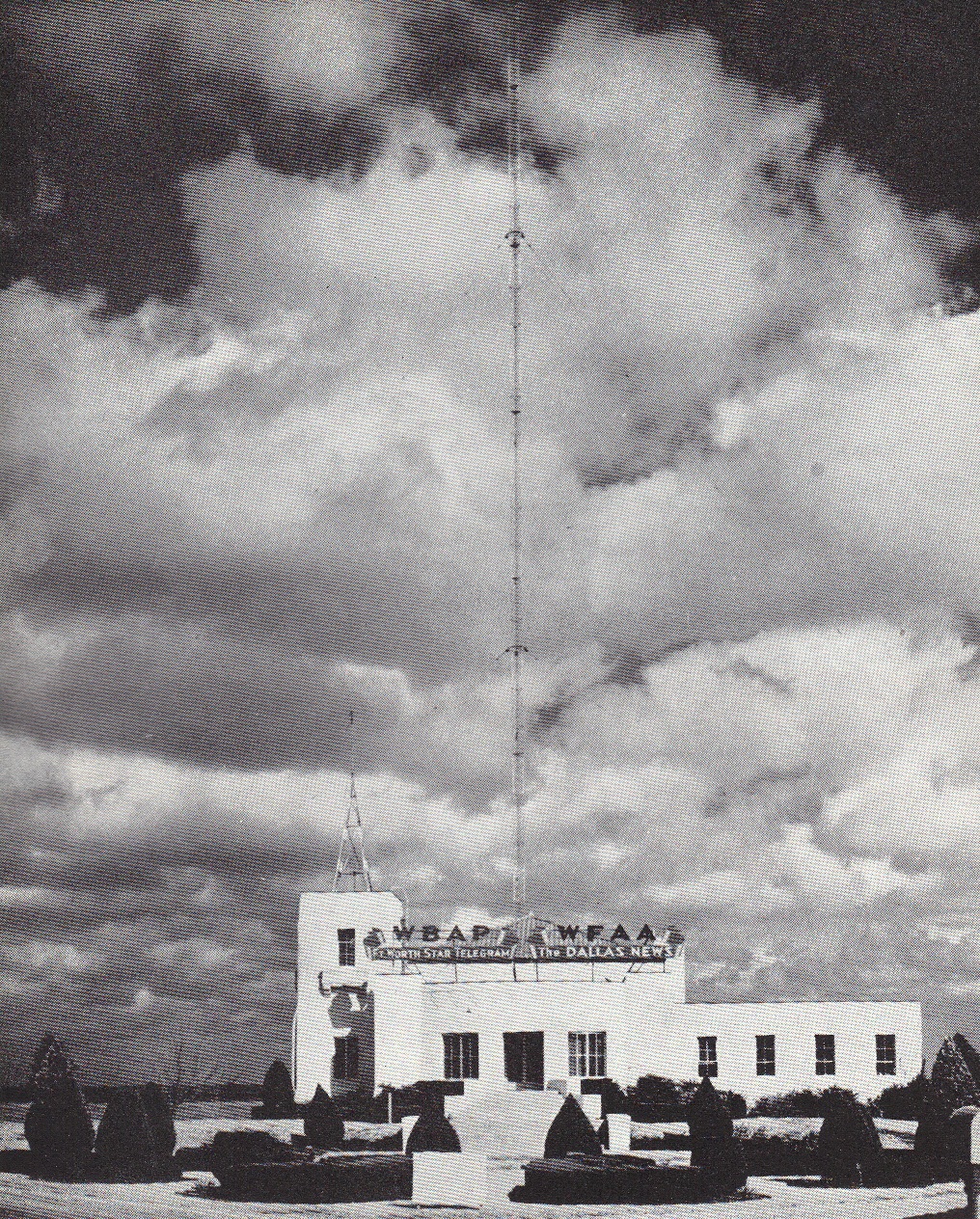
I looked at this photograph and thought, “That’s odd. Two competing radio stations from two competing newspapers from two competing cities used the same radio transmitter. How did that happen?” And then I read about the extremely unusual time-sharing arrangement that WFAA (which was owned by The Dallas Morning News) and WBAP (which was owned by The Fort Worth Star-Telegram) maintained for 41 years.
I’ll link to a story that fully explains this extraordinary arrangement, but, briefly, WFAA and WBAP both broadcast on two frequencies, trading off throughout the day. A typical schedule looked like this:

The two frequencies were 570 and 800 (later 820) kilohertz on the AM band. When WFAA was broadcasting on 570, WBAP was broadcasting on 820. On the agreed-upon time, the stations would switch over to the other frequency. Back and forth. Over and over and over. All day long. They were independent stations with independent programming, network affiliations, on-air talent, and advertising departments. And this went on for FORTY-ONE YEARS! Until 1970! How had I never heard of this?
Apparently it wasn’t all that big a deal to the stations or the listeners. Things were getting a little strained by 1969, though, when WBAP went whole-hog into playing country music (and eventually became one of the most successful country stations in the United States). It was time to go their own ways. The split was amicable, and both stations felt that the unusual partnership had worked well for all concerned.
So why did this happen in the first place? Because of the 820 frequency. 820 was a clear channel frequency, which meant that the station that owned it could broadcast at an incredible 50,000 watts — enough to be heard all over the Western hemisphere; 570 boasted a measly 5,000 watts, and, as someone said, “people might hear you in Sherman … but maybe not.” Neither WFAA or WBAP wanted to give up the clear channel powerhouse, which is why their piggy-backing partnership lasted as long as it did. But, ultimately, WBAP got 820 and was a major broadcasting force to be reckoned with. WFAA radio got the short end of the stick and sputtered along at 570 on the AM dial for a few lackluster years but never recovered from losing its half-share of 820 AM. In the WFAA-WBAP showdown: Fort Worth 1, Dallas 0.
*
Look at this crazy billboard from 1963 — it flashed which frequency WFAA was currently broadcasting on.
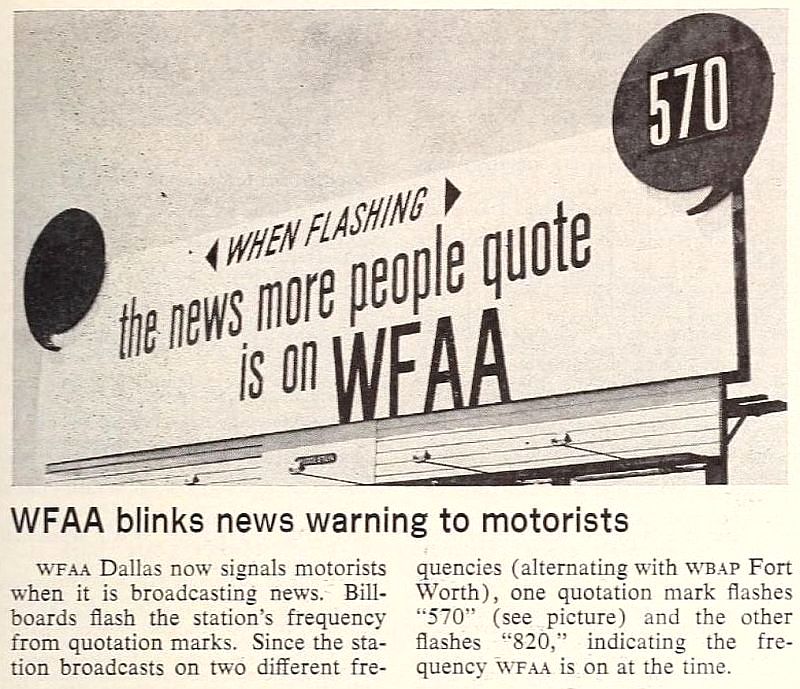 Broadcasting, April 22, 1963
***
Sources & Notes
Photo of the transmitter building from WFAA, WBAP, KGKO Combined Family Album (Dallas-Fort Worth, 1941). Yes, there was actually a THIRD station involved in all of this for a while — KGKO out of Wichita Falls! Here’s an ad from the 1941-42 Texas Almanac, via the Portal to Texas History (click to see a larger image):

Sample schedule is from the definitive article on this bizarre broadcasting alliance: “You Have Half a Station, We Have Half a Station” — How WFAA in Dallas and WBAP in Fort Worth Shared Radio Frequencies for Four Decades by John Mark Dempsey, from the Spring, 1999 issue of Legacies magazine, which can and SHOULD be read, here.
For another photo of this transmitter building, see a previous post here.
*
Copyright © 2014 Paula Bosse. All Rights Reserved.
June 13, 2014
Dallas in 1879 — Not a Good Time to Be Mayor
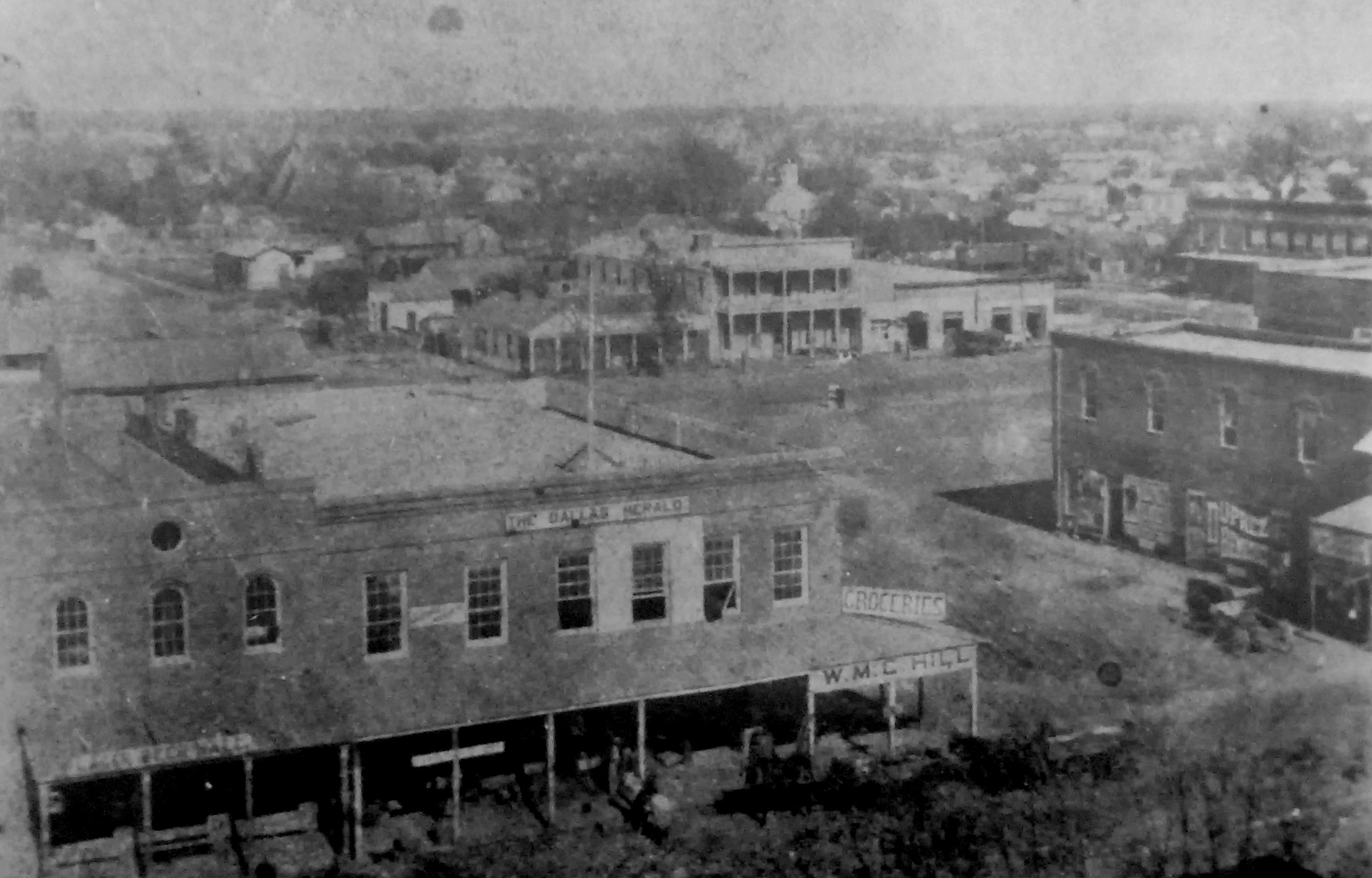 A view from the courthouse, looking north (click for larger image)
by Paula Bosse
Above, a view of Dallas in 1879, looking north from the courthouse (one of many in the city’s past that eventually burned down); the intersection in the right foreground is Main and Jefferson (now Record Street).
This is such a cool photo that, on a whim, I checked to see what exciting things might have happened in Dallas in 1879. I found that the city’s voters had just elected a new mayor, James M. Thurmond, who had run on an “independent reform and morality ticket.” Yawn. On the surface, that hardly seemed very interesting — a historical fact, yes, but not all that exciting. But, wait, there’s more to the story.
Thurmond’s post-election honeymoon was short-lived because, even though he had won a second (one-year) term, he had made some serious enemies in his first term. He was removed from office in 1880 by the city council in a lack-of-confidence vote, the result of a nasty trial and probably slanderous accusations by lawyer Robert E. Cowart.
The feud between Thurmond and Cowart grew more and more bitter as time passed, and on March 14, 1882 — moments after the two men had exchanged angry words in Judge Thurmond’s courtroom — Cowart shot and killed Thurmond. Witnesses described the shooting as an act of self-defense. They said that Cowart shot when the judge reached for his pistol. (For an incredibly gruesome account of this incident, the contemporary newspaper report is linked below.)
The photograph above was taken from the courthouse where this shooting took place. When the photograph was taken in 1879, the animosity between the new mayor and an unhappy lawyer had already begun to percolate. I suppose men with “Esq.” after their names in the 1880s were predisposed to shoot-outs indoors in well-appointed courtrooms rather than out in the dusty streets at high noon. It’s classier.
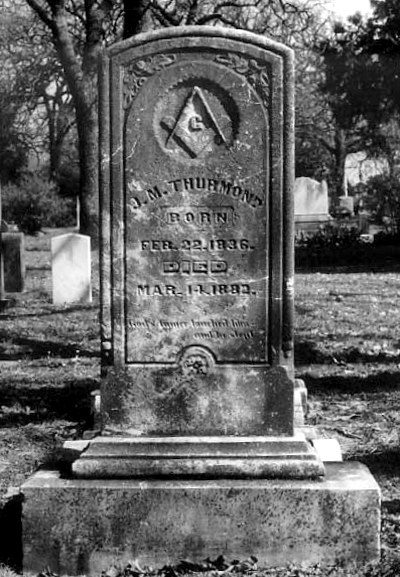 Greenwood Cemetery, Dallas (photo: David N. Lotz)
***
Top photo is from Dallas, The Deciding Years — A Historical Portrait by A. C. Greene. (Austin: The Encino Press for Sanger-Harris, 1973); photo is from the collection of the Dallas Public Library.
Photo of J. M. Thurmond’s headstone in Greenwood Cemetery is from Find A Grave, here. Cowart — who died in 1924 — is buried in a nearby plot in the same cemetery. (Incidentally, Cowart’s claim to fame — other than shooting a judge in his own courtroom — appears to be that he was the person who inadvertently came up with Fort Worth’s nickname, “Panther City” when he wrote a tongue-in-cheek newspaper article about Fort Worth in 1875. Read a great history of this amusing kerfuffle in Hometown by Handlebar’s post, here — scroll to the second story.)
For an interesting contemporary report of the shooting — including gruesome eyewitness accounts — check out the article from the March 15, 1882 edition of The Dallas Herald (under the headline “The Deadly Pistol”), here, via the Portal to Texas History.
A short background on the Thurmond-Cowart feud, from the WPA Dallas Guide and History (which includes the verdicts of Cowart’s two trials for murder), can be read here.
Click top photograph for HUGE image.
*
Copyright © 2014 Paula Bosse. All Rights Reserved.
June 12, 2014
Cokesbury Book Store — 1959

“For a summer of pleasure, grab a good book.”
*
Copyright © 2014 Paula Bosse. All Rights Reserved.
June 11, 2014
When the Flying Red Horse Could Be Seen From Miles Away
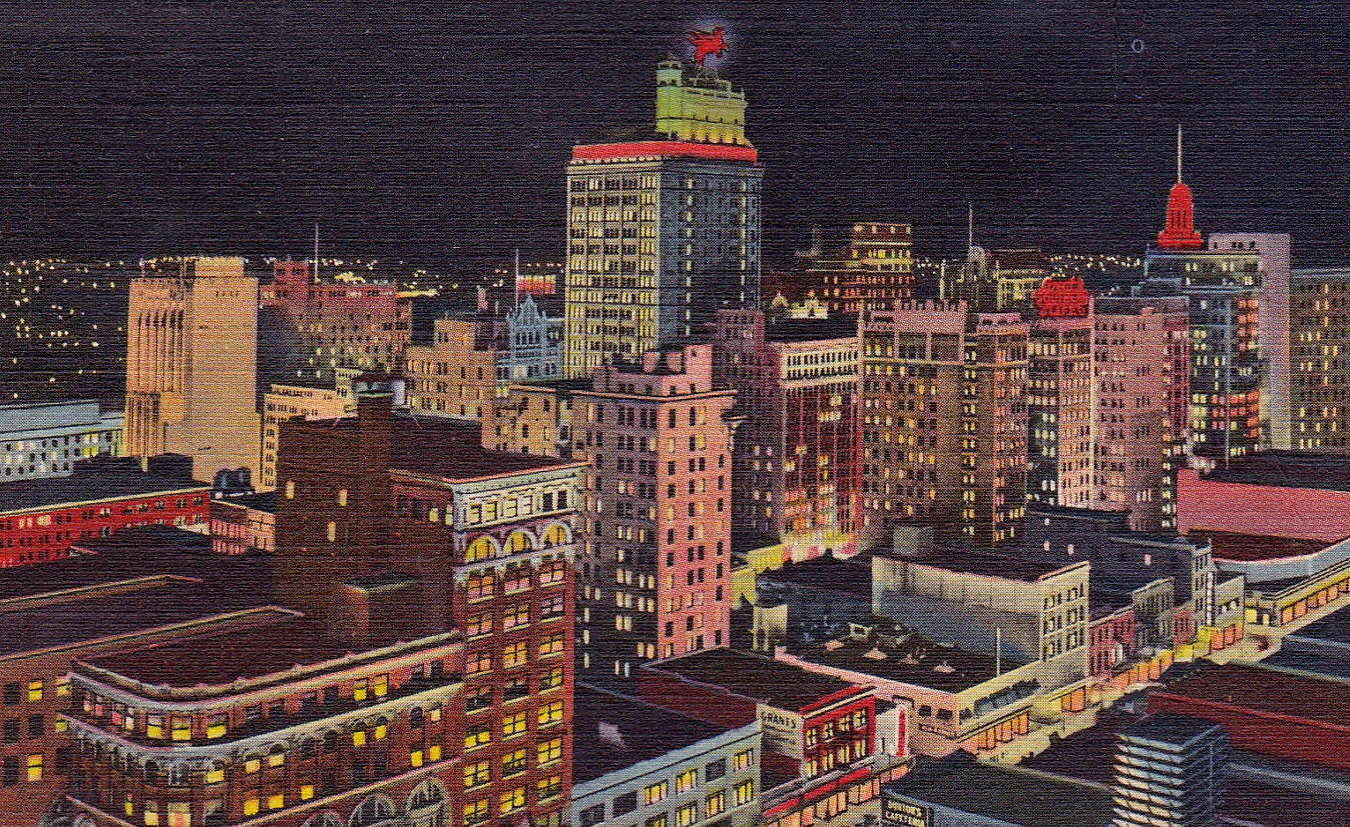 The symbol of Dallas…
by Paula Bosse
One of my favorite views of the skyline — back when Pegasus had no competition.
***
Sources & Notes
Original photograph by Lloyd M. Long, from postcard “Night Scene, Heart of Dallas, Texas” (D-43).
*
Copyright © 2014 Paula Bosse. All Rights Reserved.
June 10, 2014
The Old Union Depot in East Dallas: 1897-1935
 From the collection of Art Hoffman (click for larger image)
by Paula Bosse
I saw the above rendering of the old East Dallas rail depot posted recently in a Dallas history group. It was bought several years ago by Art Hoffman who was told it had belonged to a former employee of the Houston & Texas Central Railroad (which, along with the Texas & Pacific, served this station). It’s an odd thing for an architect to sketch — a boarded-up railroad depot. I couldn’t find anything on E. L. Watson, the architect who did the rendering (perhaps a member of the Watson family who were prominent Dallas contractors?), and I couldn’t find any connection between the depot and the F. J. Woerner & Co. architectural firm. The drawing might have been done in 1931, with what looks like “31” next to the artist’s signature. Could the drawing have been done merely as a study for E. L. Watson’s portfolio?
But back to the building itself. It was referred to by all sorts of names: Union Station, Union Depot, East Dallas Depot, Old Union Station, etc. With all these permutations, it took considerable digging to determine exactly when it had been built and when it had been demolished.
A couple of stations had previously occupied this site (about where Pacific Avenue and Central Expressway would cross), the first being built in 1872 at the behest of William H. Gaston who was developing the area, well east of the Dallas city limits. Due to the presence of the railroad, the area grew quickly, and in 1882, it was incorporated as the city of East Dallas. It thrived and continued to grow and on January 1, 1890 it was annexed and became part of the city of Dallas.
 Location of depot in red — map circa 1890-1900 (click to enlarge)
The depot pictured in the drawing above was built in 1897. The previous station, a woefully inadequate and outdated “shanty,” was, by early 1897, being nudged toward demolition in order to remain competitive with the new Santa Fe depot then under construction. In the Feb. 10, 1897 edition of The Dallas Morning News, it was referred to as “the present eye-sore in East Dallas” which would be better off “abandoned and used for kindling wood.”
On April 4, 1897, it was reported that plans for a new Texas & Pacific passenger depot were nearly completed. By the beginning of June, the shanty had been torn down, and on June 6, 1897, the drawing below appeared in the pages of the Morning News, giving the people of Dallas a first look at what the much grander station would look like when completed. (It’s unfortunate that the actual architectural rendering was not used, but, instead, a more rudimentary staff artist’s version was printed.) The accompanying information revealed that the new depot had been designed by Mr. O. H. Lang, an architect who worked in the engineering department of the Texas & Pacific Railroad. This was an exciting tidbit to find, because I had wondered who had designed the structure but had been unable to find this elusive piece of information. And it was Otto Lang! Eight years after designing this railroad depot, Lang and fellow architect Frank Witchell would form the legendary firm of Lang & Witchell, and they would go on to design some of Dallas’ most impressive buildings.
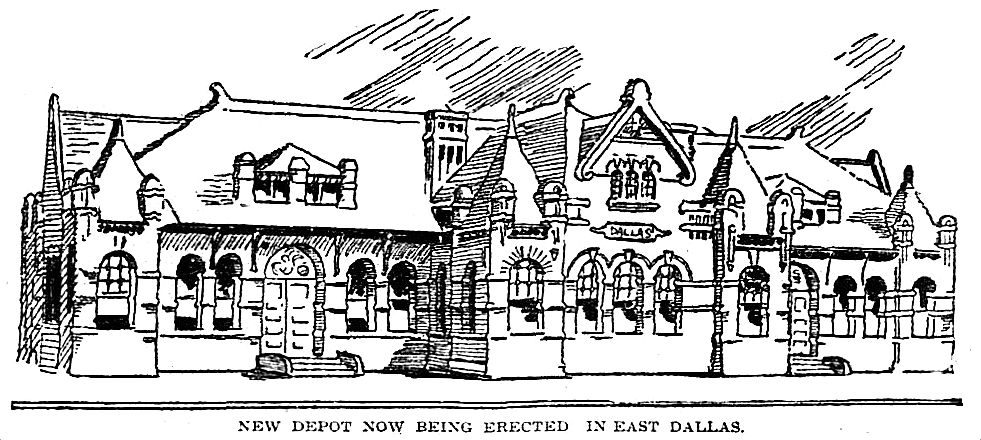
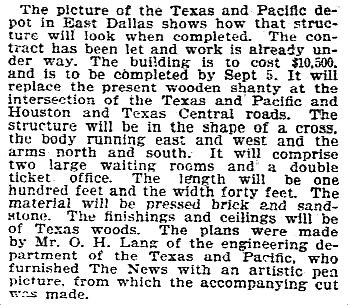 Dallas Morning News, June 6, 1897
The building was completed fairly quickly, and its official opening was announced on Oct. 12, 1897.
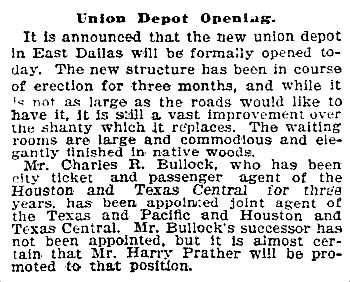 DMN, Oct. 12, 1897
Here’s what the station looked like soon after it opened for business, from an 1898 Texas & Pacific publication (click for larger images):
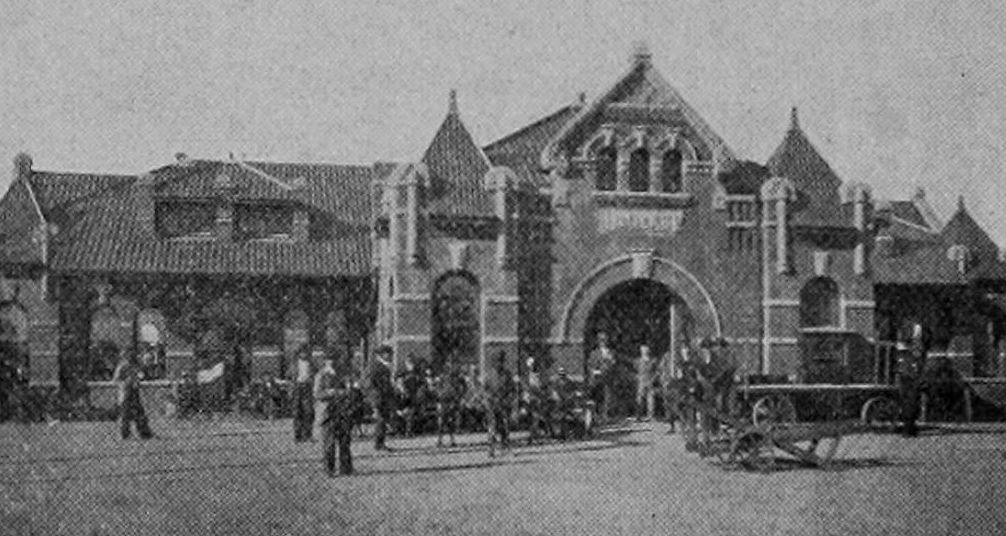
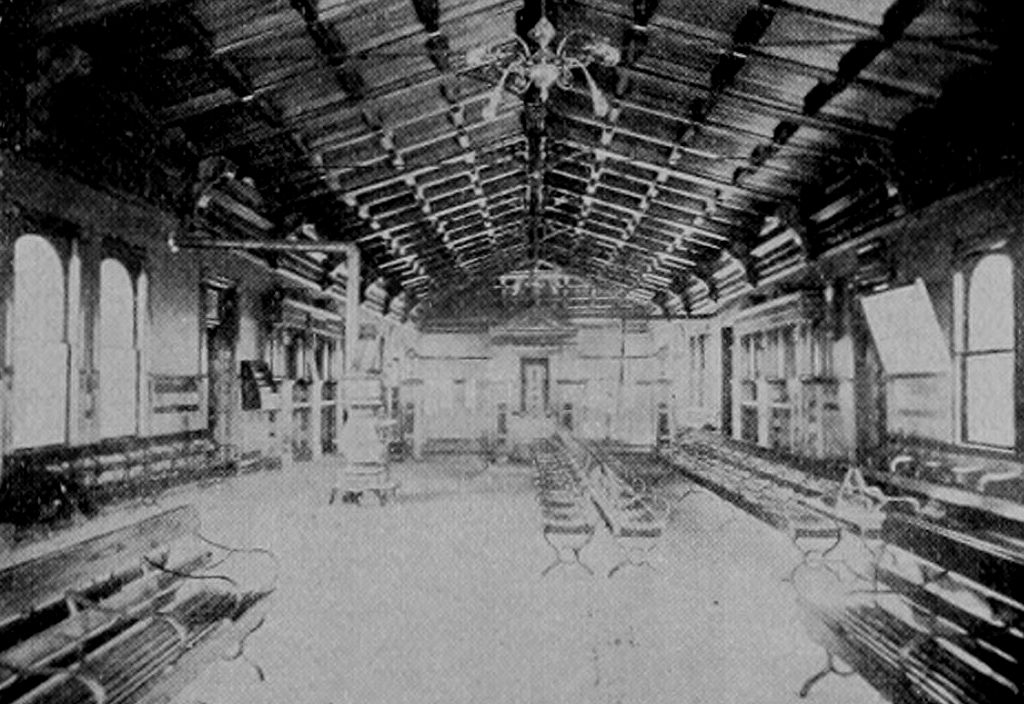
Much better than a shanty!
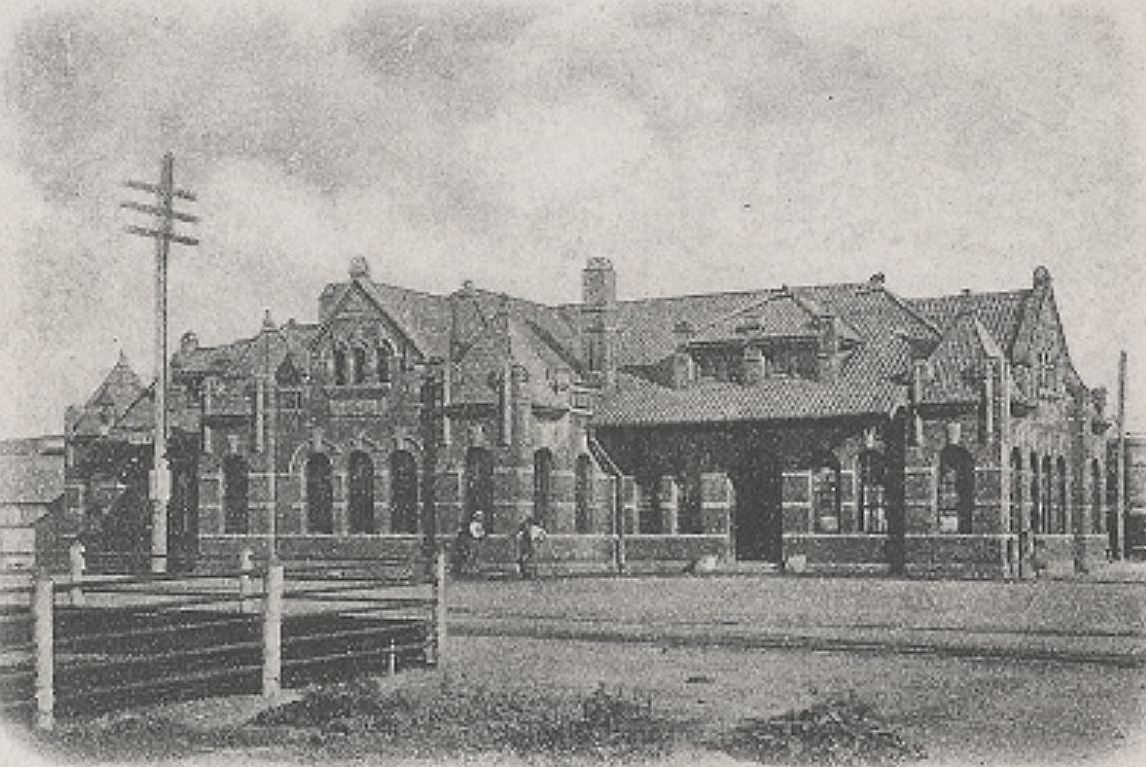
Below in another early photo of the depot:

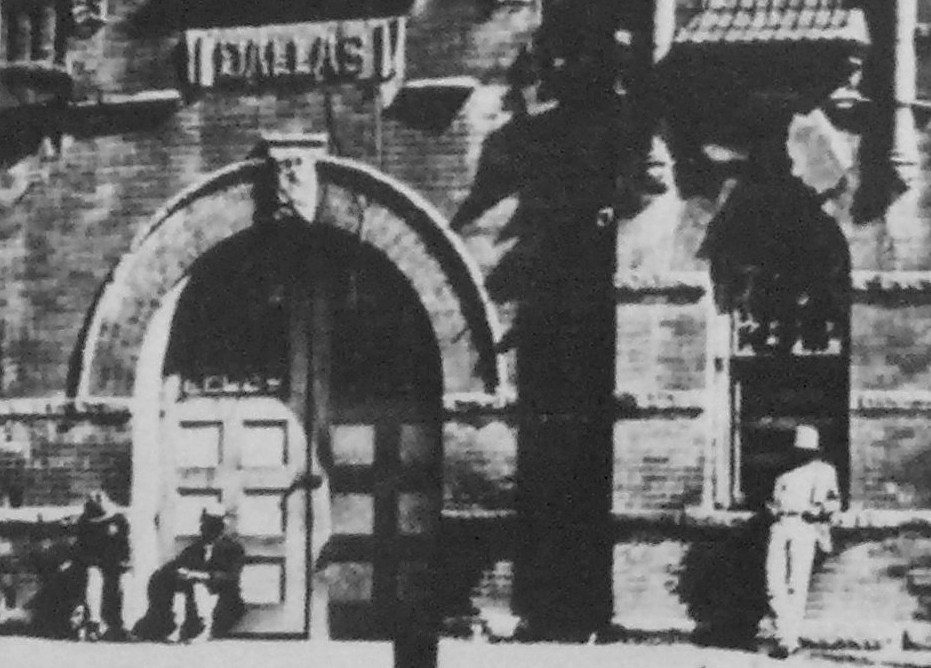
Can’t pass up an opportunity of zooming in on a detail:
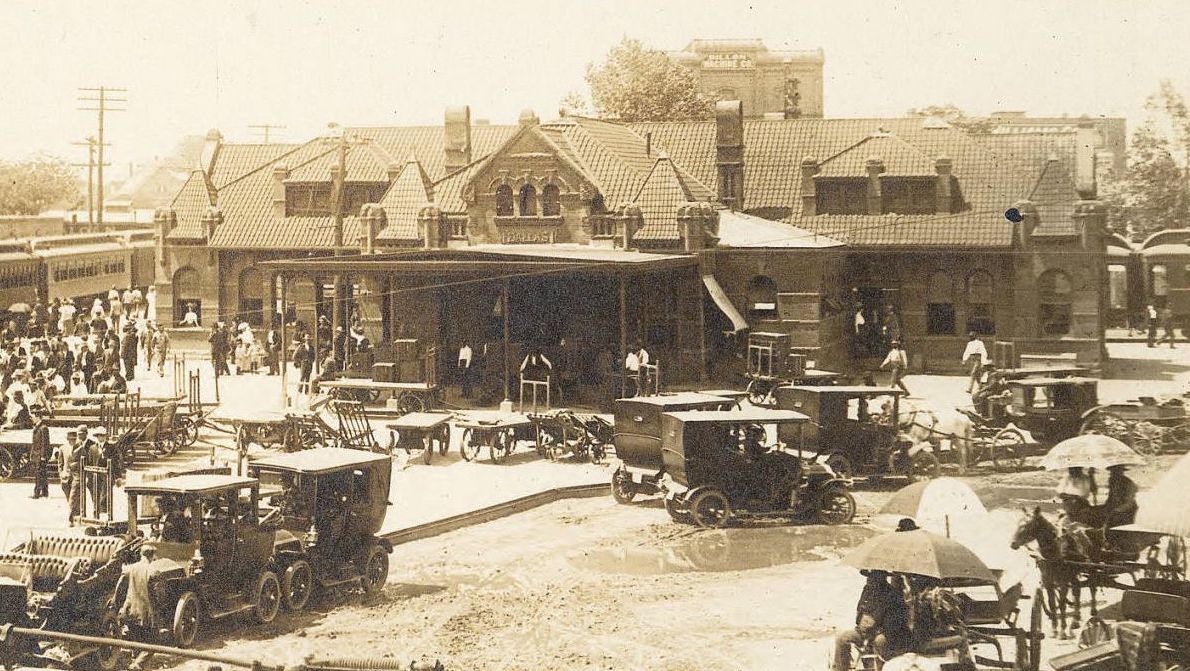
Here it is around 1910, a hotbed of activity, now with the addition of automobiles:
The station served an important role in the growth of (East) Dallas and in the everyday lives of its residents for almost twenty years, but in 1916 the many “independent” passenger and freight depots that had been spread out all over town were shuttered, per the Kessler Plan’s directive to consolidate and run all the rail lines in and out of the new Dallas Union Terminal. (This was when the word “old” began appearing ahead the East Dallas station whenever it was mentioned.)
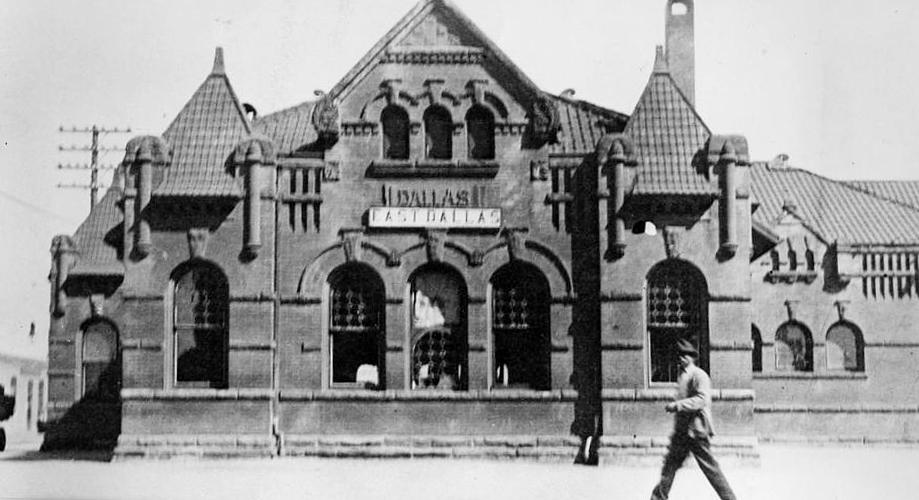 (circa 1916)
So what became of the East Dallas depot? From “Relic of City of East Dallas Being Demolished,” a Dallas Morning News article from Jan. 20, 1935:
Last use of the depot for railroad purposes came in 1933 when it was abandoned as a freight station in August of that year. After that it was used as a station for interviewing destitute clients for the relief board but for several months has been boarded up.
So that original rendering may not have been done in 1931 after all (unless it was a high-concept architect’s vision of what the depot would look like one day all boarded up…).
At some point it was determined that the station would be torn down. It may have been one of those beautify-the-city projects done in preparation for the Texas Centennial Exposition the next year, but it was probably time for the building to come down. It was January of 1935, at the height of the Great Depression, and not only did the city make it a point to hire laborers on relief to assist in the demolition, but it also approved the use of salvaged materials from the site to be used in building homes for “destitute families.”
Relief Administrator E. J. Stephany received approval Saturday of a project to get men to tear down the old structure and use the materials in building homes for destitute families and work is expected to start immediately. (“East Dallas Station To Be Torn Down and Converted Into Homes,” DMN, Jan. 13, 1935)
Demolition of the depot — which The News called “The Pride of the Gay Nineties” — began on January 18, 1935. The first solemn paragraph of an article reporting on the razing of the landmark is below.
Shorn of all the dignity it possessed for years as the East Dallas Union Depot, the old red structure near the intersection of Central and Pacific avenues began crumbling beneath the blows of wrecking tools wielded by laborers from the Dallas County relief board Friday.” (“Relic of City of East Dallas Being Demolished,” DMN, Jan. 20, 1935)
The red stone slabs bearing the word “Dallas” (3 feet long, 18 inches thick) were offered to the Dallas Historical Society “for safekeeping.”
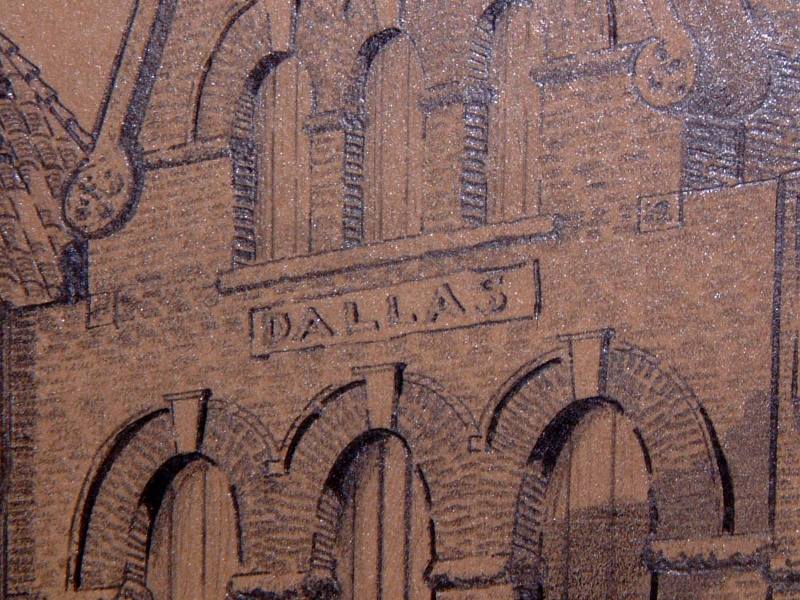
So did that relief housing get built? Sort of. All I could find was an article from June, 1935, which states that one little building was constructed with some of the brick and stone from the razed depot. It wasn’t a house for the needy but was, instead, headquarters for relief caseworkers in donated park land in Urbandale. Presumably there was housing built somewhere, but all that brick and stone salvaged from the old depot may not have been used for its intended purpose. BUT, there is this tantalizing little tidbit:
As a reminder of the historic antecedent, the new structure [in Urbandale Park] has as a headpiece for its fireplace the large carved stone bearing the name Dallas. (“Relief Structure Made of Materials From Razed Depot,” DMN, June 20, 1935)
Does this mean that the Dallas Historical Society might still have the second slab? If not, what happened to it?
I checked Google Maps and looked at tiny Urbandale Park at Military Parkway and Lomax Drive, just east of S. Buckner, but I didn’t see anything, so I assume the building came down at some point. (UPDATE, 3/20/16: Finally got around to driving to this attractive park. Sadly, the little building is no longer there.)
It would have been nice if that little bit of the old depot had survived — a souvenir of an important hub of activity which sprang to life when memories were still fresh of East Dallas being its own separate entity — the “David” Dallas to its neighboring “Goliath” Dallas. I would love to learn more about what might have happened to that “Dallas” sign which, for a while, hung over the fireplace of an odd little building in an obscure park in southeast Dallas where it lived out its days in retirement.
**
Since I keep adding photos of the depot to this post, I’m going to just start putting new additions (with captioned and linked sources) here:
 DeGolyer Library, SMU
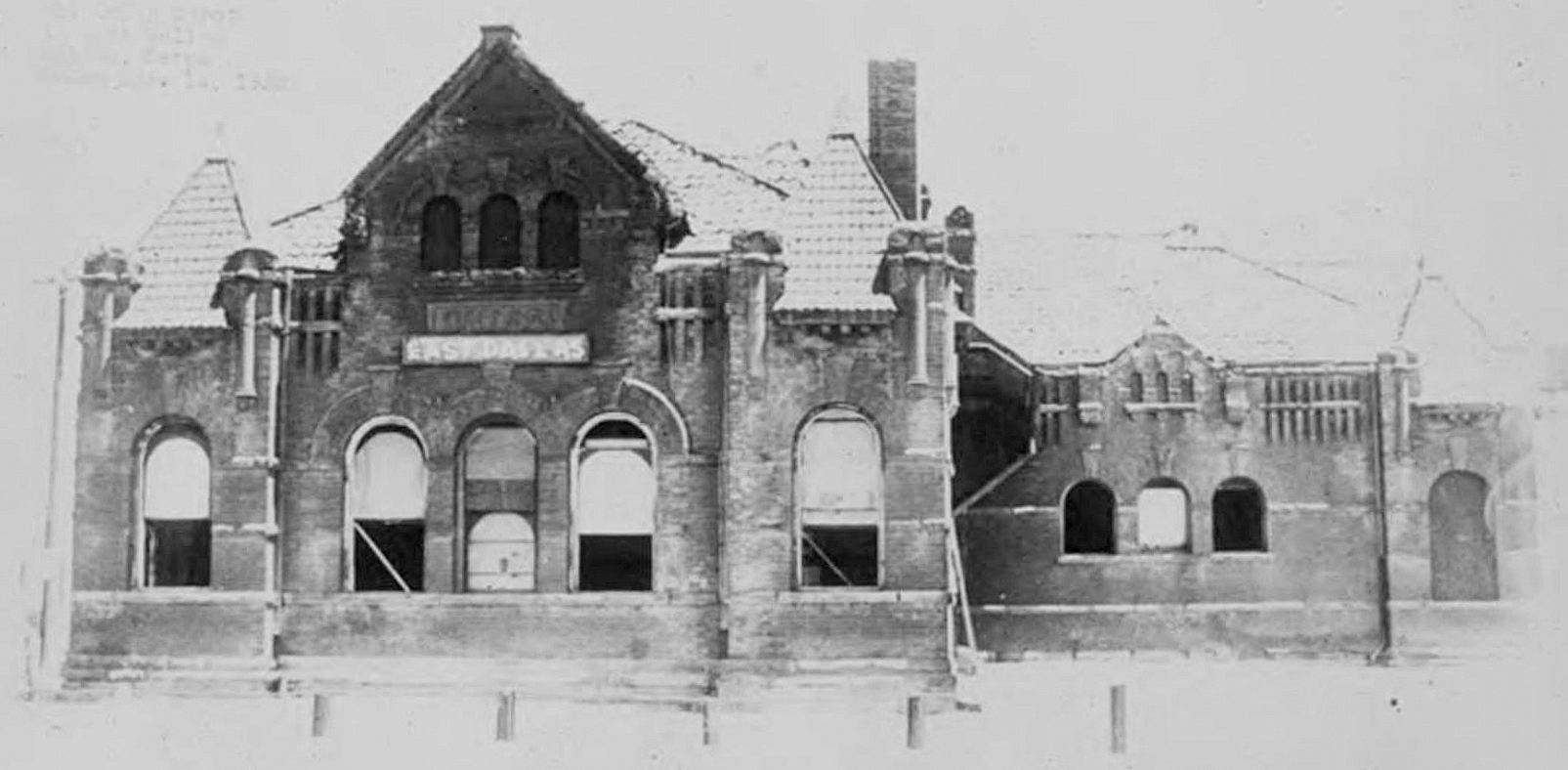 DeGolyer Library, SMU
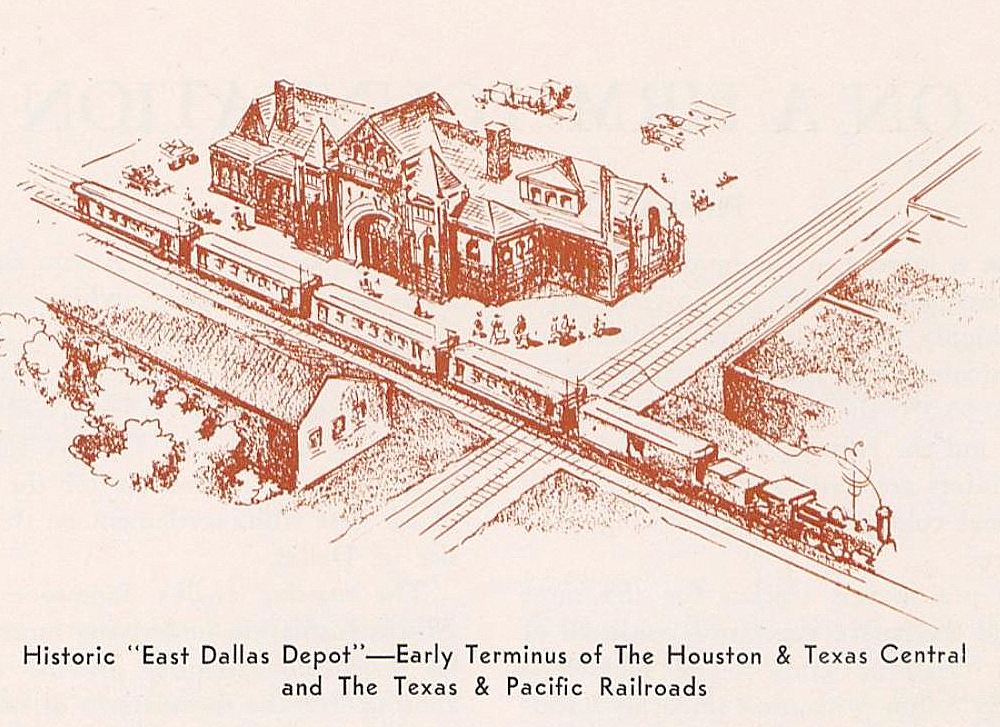
“Your Dallas of Tomorrow” (1943), Portal to Texas History
***
Sources & Notes
Original rendering of the old Union Depot at East Dallas by E. L. Watson is from the collection of Art Hoffman, used with his permission.
More on architect Frank J. Woerner (who designed, among other things, the Stoneleigh Hotel), here (see p. 10 of this PDF).
History of Old East Dallas (and the city of East Dallas), here and here.
More on architects Lang & Witchell here, with an incredible list of some of the buildings designed by their firm here.
1898 photos of the depot’s exterior and interior from Texas, Along the Line of the Texas & Pacific Ry. (Dallas: Passenger Department of the Texas & Pacific Railway, [1898]).
Photo immediately following the photos from the T & P book is from a postcard, found on Flickr, here.
Photo (and accompanying detail) immediately following that is from Dallas Rediscovered by William L. McDonald (Dallas: Dallas Historical Society, 1978). (McDonald identifies the photo as being “c. 1890” — well before the station was built in 1897.) From the collection of the Dallas Historical Society.
Photo of the depot with automobiles is a detail of a larger photograph from the collection of George A. McAfee photographs in the DeGolyer Library, Central University Libraries, Southern Methodist University. The original can be seen here.
Photograph dated 1916 from The Museum of the American Railroad, via the Portal to Texas History site, here.
More information in these Dallas Morning News articles:
- “East Dallas Station To Be Torn Down and Converted Into Homes” (DMN, Jan. 13, 1935)
- “Relic of City of East Dallas Being Demolished” (DMN, Jan. 20, 1935) — very informative
- “Historical Society Will Be Given Slabs of Former Station” (DMN, Jan. 31, 1935)
- “County Gets Land To Install Relief Depot; Later Park” (DMN, Feb. 27, 1935
- “Relief Structure Made of Materials From Razed Depot; Station Occupies Land in Urbandale Donated to County For Park” (DMN, June 20, 1935)
- “Salvaged Materials Go Artistic” (DMN, June 20, 1935) — photo of “relief structure” which accompanied above article
More photos of this immediate area can be found in these posts:
- “The Union Depot Hotel Building, Deep Ellum — 1898-1968,” here
- “The Gypsy Tea Room, Central Avenue, and the Darensbourg Brothers,” here
Many of the pictures and articles can be clicked for larger images.
*
Copyright © 2014 Paula Bosse. All Rights Reserved.
 Flashback : Dallas