Flashback : Dallas

A Miscellany: History, Ads, Pop Culture

“There Are Eight Million Stories in the Naked City…” — ca. 1920

1-ervay

by Paula Bosse

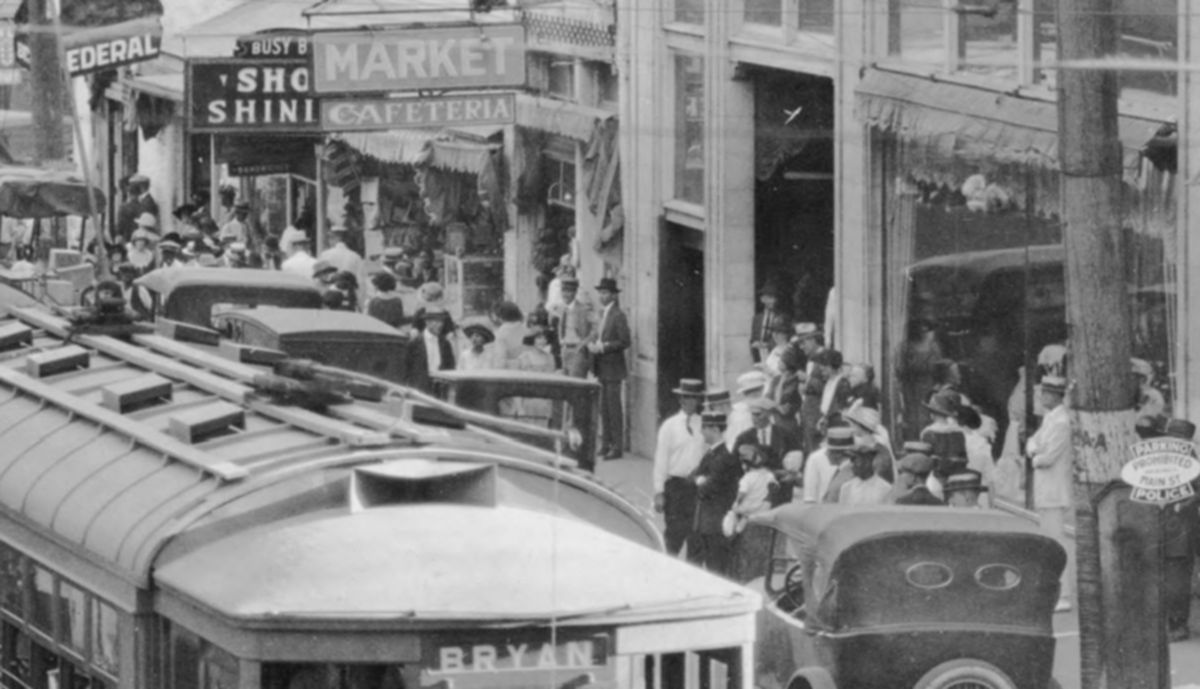
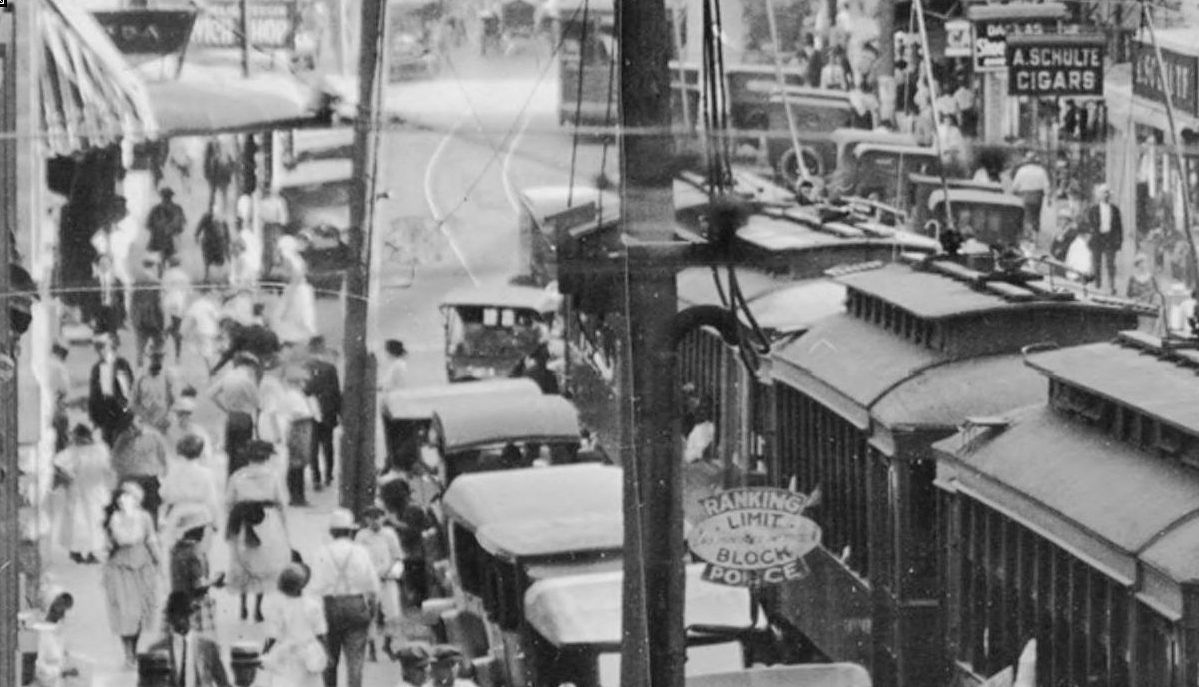
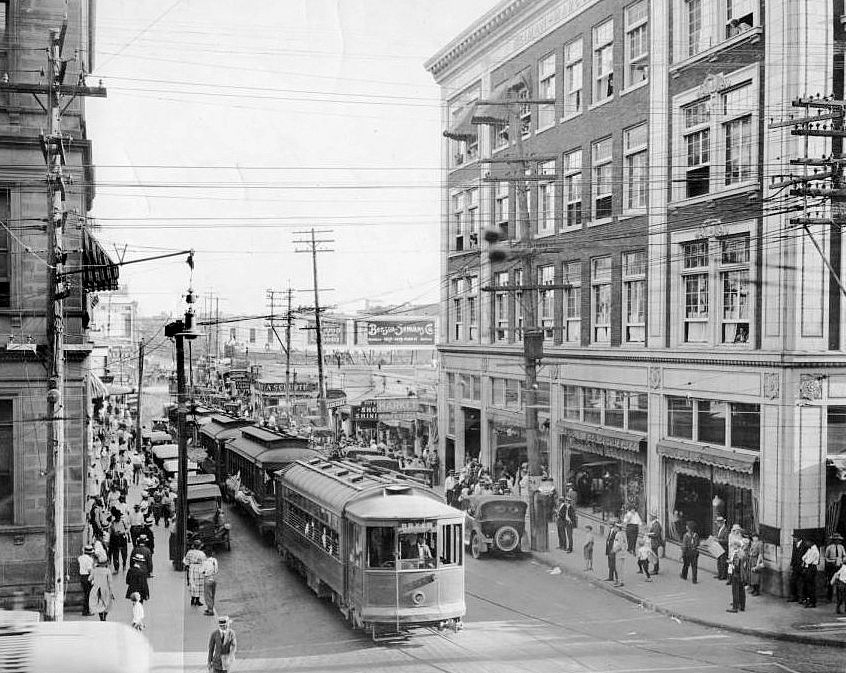
The photograph above, by George A. McAfee, shows Ervay Street, looking south from Main, in about 1920. Neiman’s is on the right. I’m not sure what the occasion was (I see special-event bunting….), but the two things that jump out right away are the number of people on the sidewalks and the amount of  congestion on the streets. In addition to private automobiles (driven by “automobilists” or “autoists,” as the papers of the day referred to them), the street is also packed with cars standing in the taxi rank (cab stand) at the left, and a long line of hulking streetcars. This busy intersection is jammed to capacity.

The city of Dallas was desperately trying to relieve its traffic problems around this time, and there were numerous articles in the papers addressing the concerns of how to manage the congestion of streets not originally designed to handle motor vehicle traffic. Dallas and Fort Worth were working on similar plans of re-routing traffic patterns and instituting something called “skip stop” wherein streetcars would stop every other block rather than every block. Streetcars, in fact, though convenient and necessary, seemed to cause the most headaches as far as backing up and slowing down traffic, as they were constantly stopping to take on and let off passengers. There was something called a “safety zone” that was being tried at the time. I’m not sure I completely understand it, but it allowed cars to pass streetcars in certain areas while they were stopped.

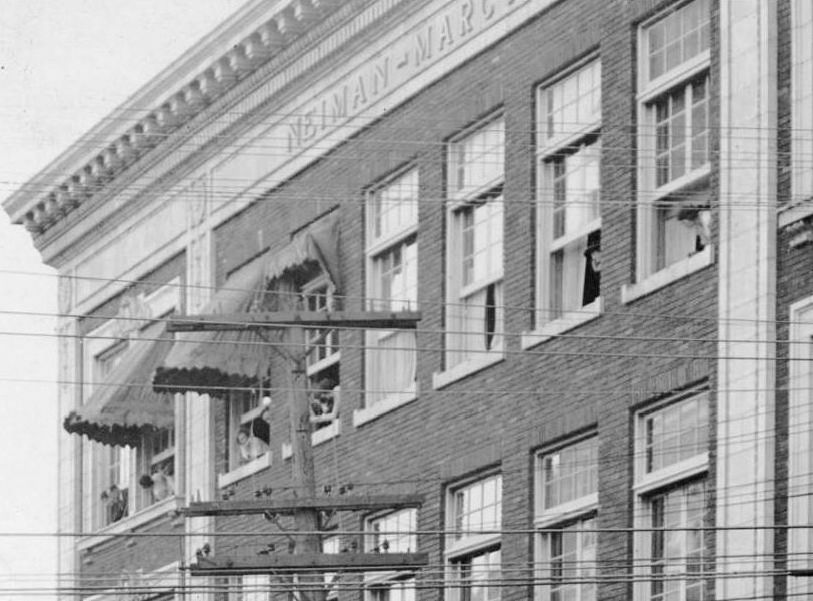
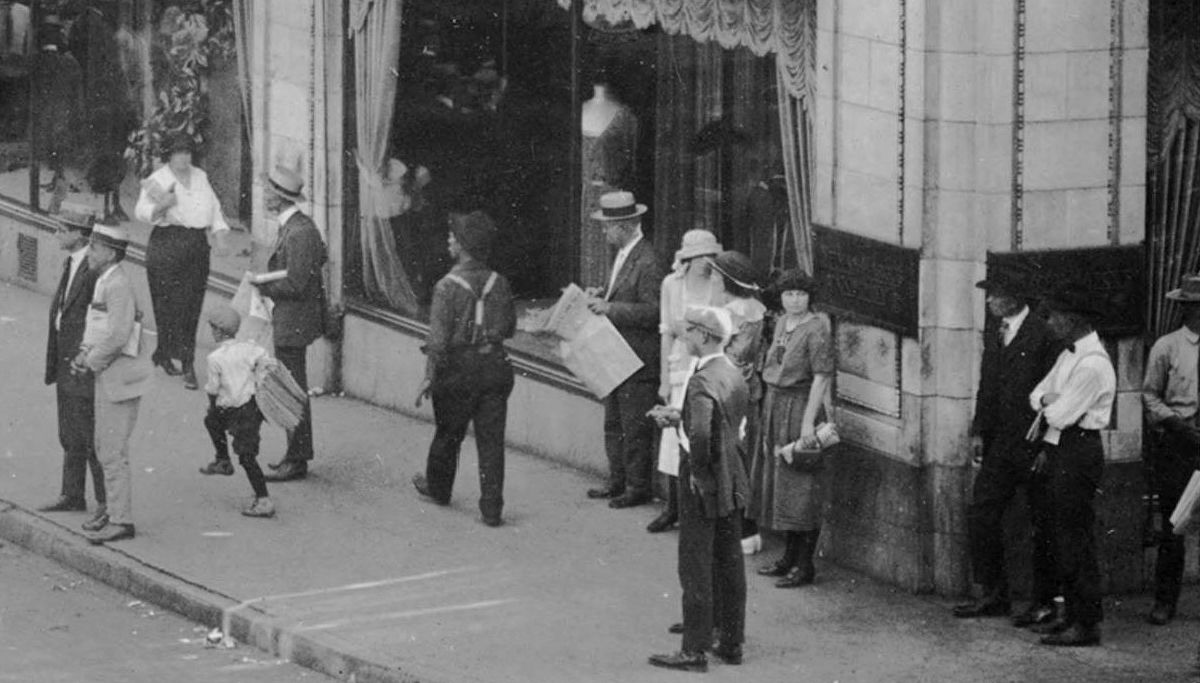
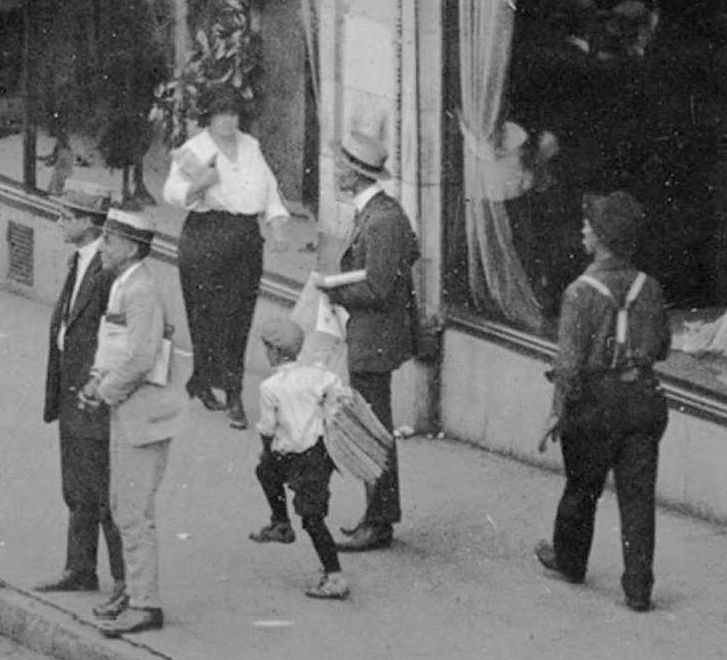
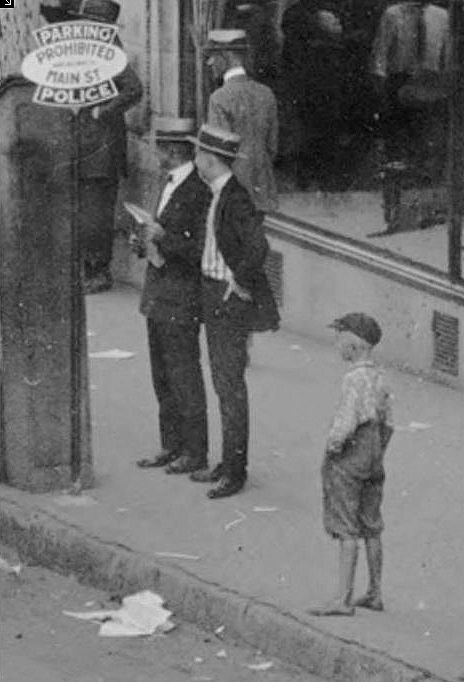
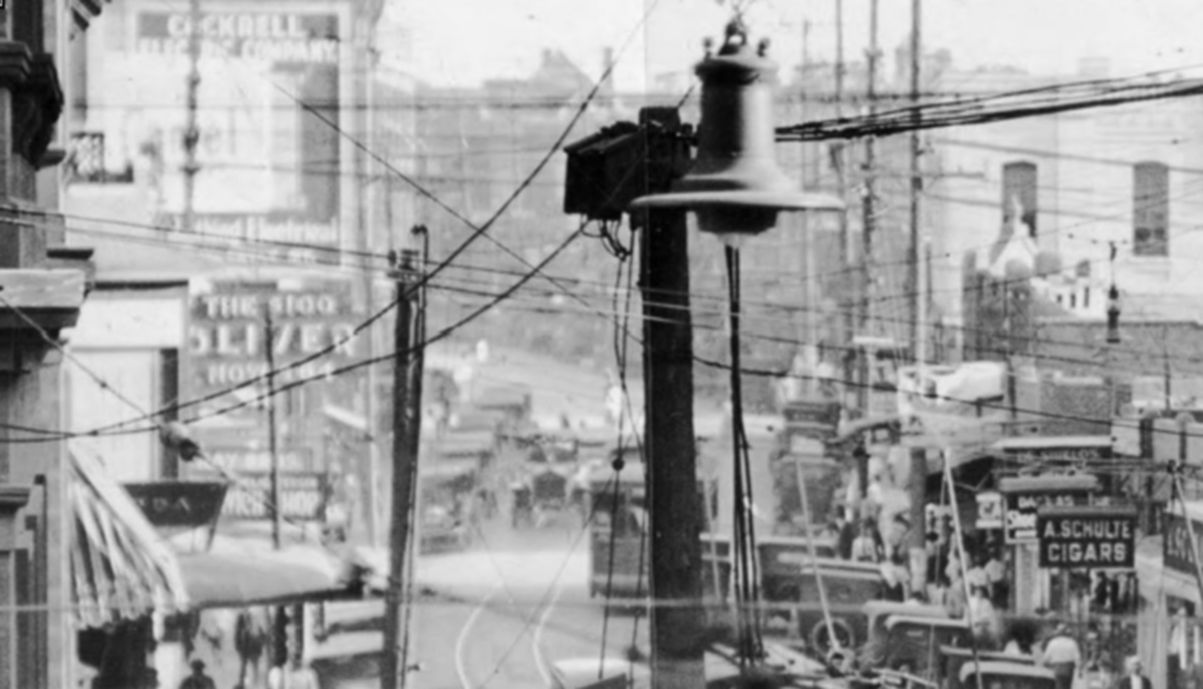
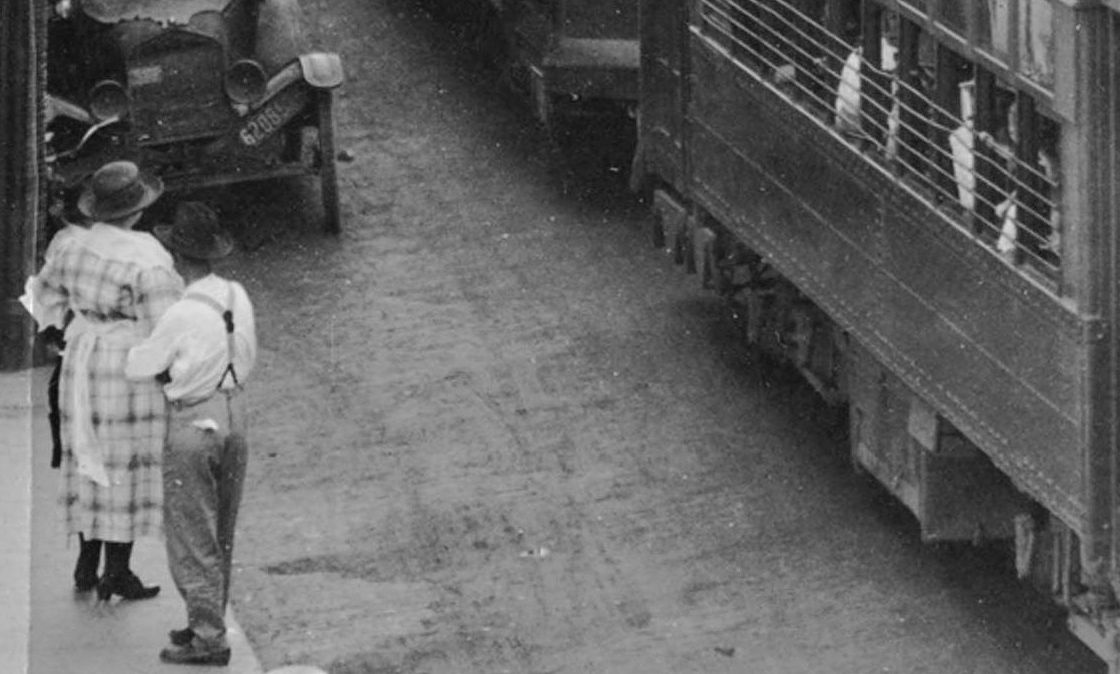
That traffic is crazy. But, to be perfectly honest, it’s far less interesting than all that human activity — hundreds of people just going about their daily business. It’s always fun to zoom in on these photos, and, below, I’ve broken the original photograph into several little vignettes. I love the people hanging out the Neiman-Marcus windows. And all those newsboys! Not quite as charming was all that overhead clutter of power lines and telephone lines; combined with the street traffic, it makes for a very claustrophobic — if vibrant — downtown street scene. (Click photos for larger images.)

2-ervay

3-ervay

4-ervay

5-ervayMy favorite “hidden” image in the larger photograph. The only moment of calm.

6-ervayI love this. The woman in front of the Neiman-Marcus plaque looking off into the distance, the display in the store window, the newsboy running down the street, the man in suspenders, the women’s fashions, and all those hats!

7-ervay

8-ervayA barefoot boy and litter everywhere.

9-ervay

10-ervay

11-ervayThe congestion is pretty bad above the streets, too.

12-ervay

13-ervayCabbies, newsboys, and working stiffs.

14-ervay

15-ervayI swear there was only one streetcar driver in Dallas, and he looked like this! Those motormen had a definite “look.”

***

Sources & Notes

Original photograph attributed to George A. McAfee, from the DeGolyer Library, Central University Libraries, Southern Methodist University, accessible here.

For other photos I’ve zoomed in on the details, see here.

*

Copyright © 2014 Paula Bosse. All Rights Reserved.

The Rolling Hills of Highland Park — 1911

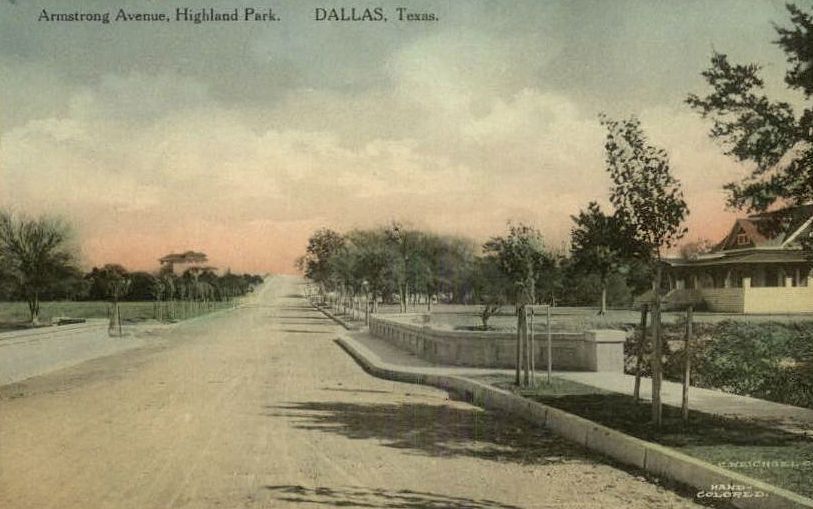
highland-park_armstrong-1911Armstrong Avenue (click for larger image)

by Paula Bosse

Highland Park in its early days of development. The postcards above and below show Armstrong Avenue, looking east, from about Preston Road.

highland-park_armstrong_house

An even earlier view can be seen in the postcard below (ca. 1908), which shows “Berkeley Avenue,” the original name of Armstrong (see newspaper clippings at the bottom of this post for more on Berkeley Ave.).

armstrong_berkeley-avenue_flickr_coltera

All of these postcards show what looks to be the bridge over a stretch of Turtle Creek then called Lake Neoma.

neoma-bridge_over-armstrong

I’m not sure when the name “Lake Neoma” ceased to be used (I believe it’s now Wycliff Ave. Lake), but here is a nifty little drawing of it from a 1915 map from the Flippen-Prather Realty Co., the developers of Highland Park.

neoma-highland-park-map_1915

*

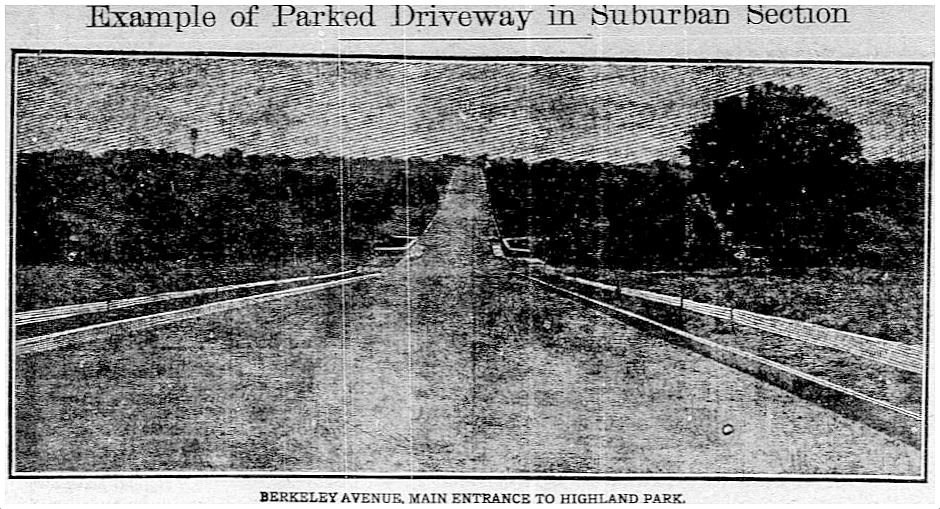
Berkeley Avenue was renamed Armstrong Avenue around 1908 or 1909 in honor of John S. Armstrong, who developed the land that later became Highland Park (East). Below is a photo and paragraph of an article from the Sept. 13, 1908 edition of The Dallas Morning News (the Argyle Avenue mentioned was later renamed as an extension of Oak Lawn Ave.)

armstrong_berkeley_dmn_091308

armstrong_dmn_091308_berkeley
Dallas Morning News, Sept. 13, 1908 (photo and excerpt)

***

Postcards from Flickr. “Berkeley Avenue” from Flickr, here (it is suggested that this shows Berkley Ave. in Oak Cliff, but this is incorrect — it is definitely Highland Park).

Map is a detail from the Flippen-Prather map of 1915, which can be viewed here.

Click pictures for larger images (top image and map are HUGE).

*

Copyright © 2014 Paula Bosse. All Rights Reserved.

Neiman-Marcus Celebrates the Texas Centennial with “Cactus Colors” and Cattlebrands Burned Into Rawhide Belts — 1936

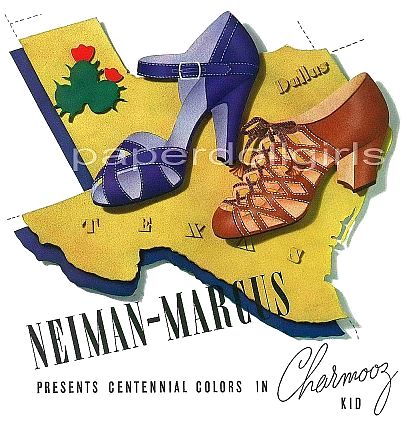
neiman-marcus_shoes_vogue-1936-det

by Paula Bosse

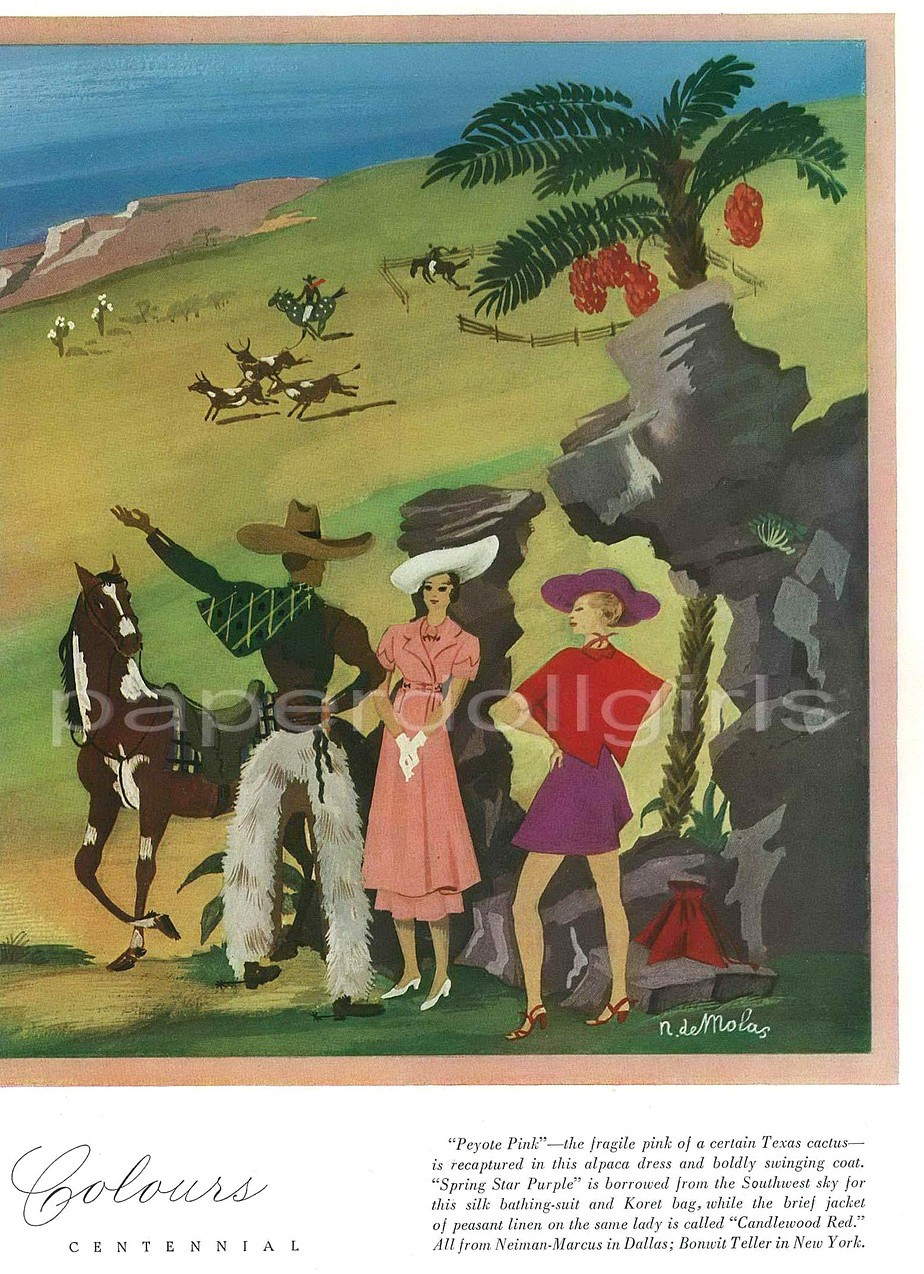
Texans celebrate history with — what else? — fashion! Below, text from a Neiman-Marcus ad which appeared on the eve of the huge Texas Centennial celebrations in 1936.

Five days before the Centennial finds Neiman-Marcus keyed for last-minute demands … both in selections and service … Spectator clothes and accessories in cactus colors (see current Vogue), and Artcraft stockings, thin as a web, in Texas range colors … Cool snowy crepe dresses for the afternoon and printed chiffon jacket dresses for Centennial sightseeing … Cottons gifted with importance … Crownless roof hats and trailing garden party dresses … Cattlebrands burned on a rawhide belt that girdles a crisp white watching dress. All in the best of taste and at a happy range of prices.

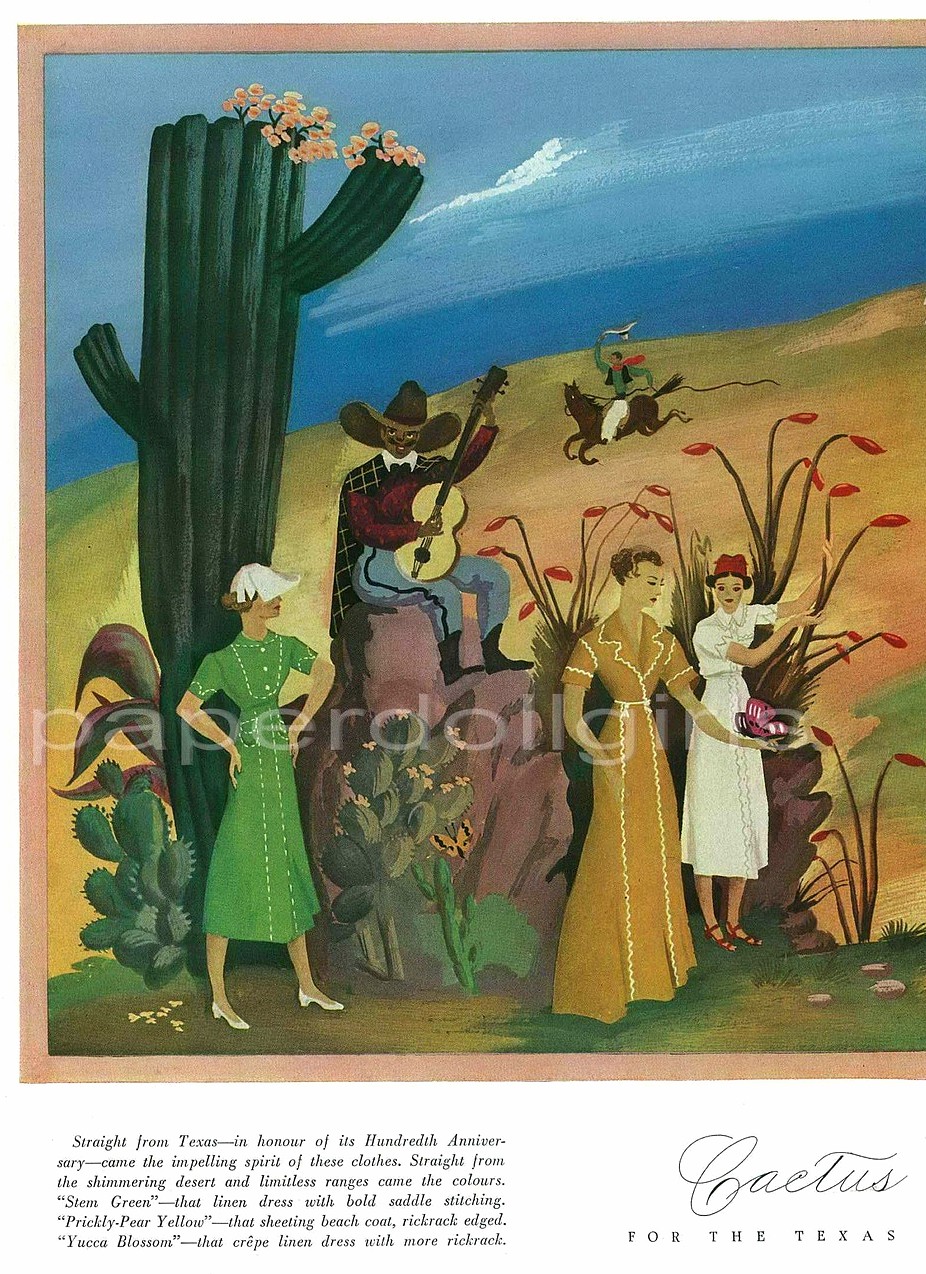
And then I looked for the Vogue ads mentioned and … wow! I’ve had a vintage advertising blog for several years, and I’ve seen a lot of ads … but these may be my favorites! All as a tie-in to the Texas Centennial, celebrated in Dallas in 1936, spear-headed by Stanley Marcus himself. Thanks, Mr. Stanley!

neiman-marcus_shoes_vogue-1936

neiman-marcus_cactus-colours_vogue-1936a

neiman-marcus_cactus-colours_vogue_1936b

***

Color ads from Vogue, June 1936. I found them on Etsy from this seller (the ads have, apparently, been sold). I would LOVE to see these with the watermarks removed, and I’d also love to know what became of the original artwork and who “N. de Molas” was. I love Texas kitsch and I love fashion illustration from this period, and this is fantastic! Click color pictures for much larger images! And read that copy, man.

If you want to wander around a whole bunch of vintage advertising, my Retro Adverto blog is here, but it has been sadly neglected since my immersion into this blog!

*

Copyright © 2014 Paula Bosse. All Rights Reserved.


Black Troops from Dallas, Off to the Great War

WWI_black-soldiers_dallasRecruits in Dallas

by Paula Bosse

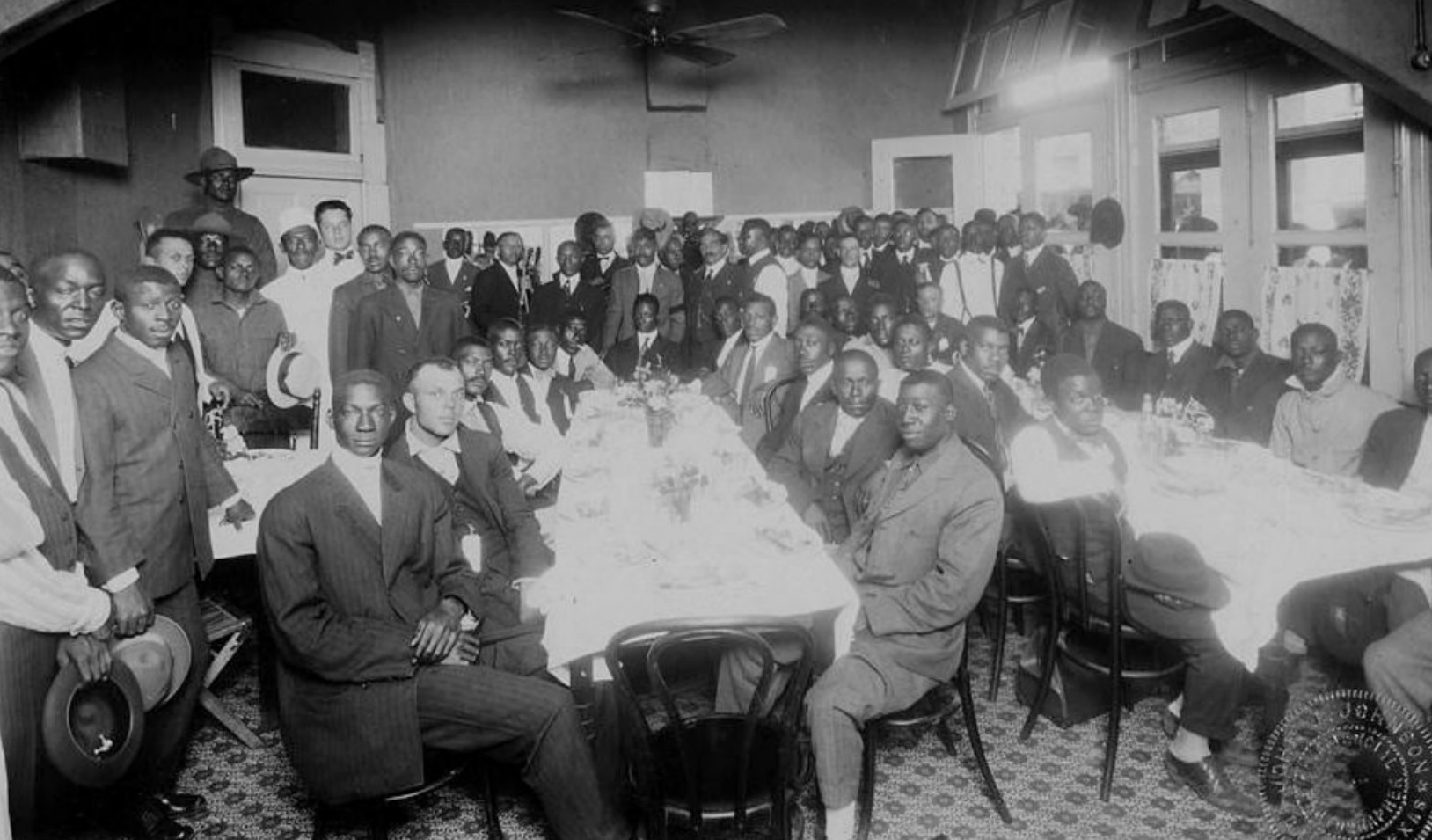
Above is a photo from the National Archives, described only as “Negro recruits having a turkey dinner just before leaving for a training camp. Dallas, Texas.” At the bottom right is the seal of Dallas photographer John J. Johnson who had worked for The Dallas Morning News as a photographer before World War I but was apparently working in a commissioned or freelance capacity here. The photo was taken on June 11, 1918, but the location is not known.

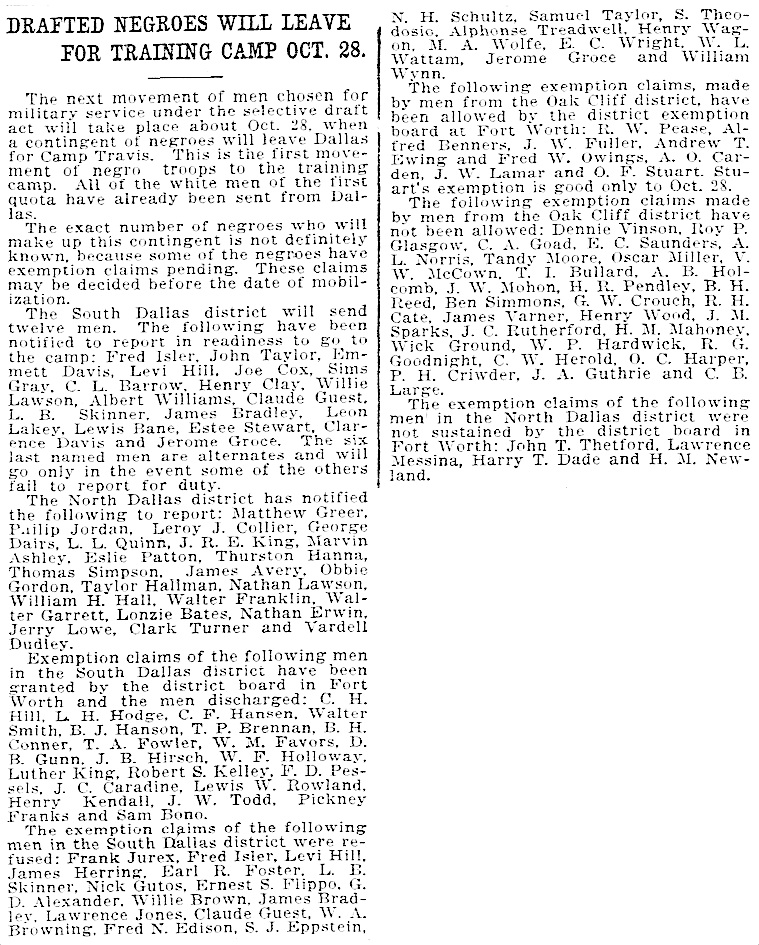
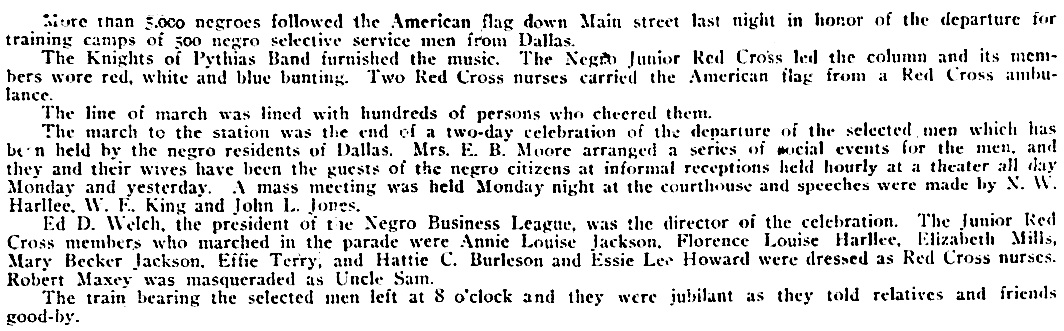
Eight months earlier, Black draftees left Dallas for the first time — they were headed to Camp Travis in San Antonio. (Click articles for larger images.)

WWI_black-draftees_dmn_101817Dallas Morning News, Oct. 18, 1917

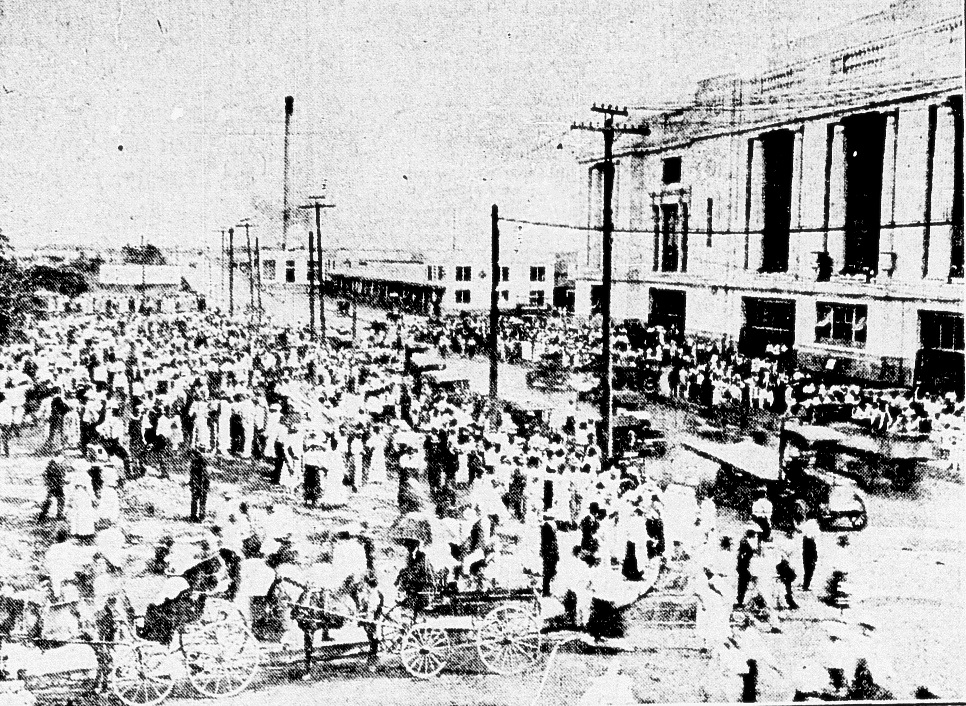
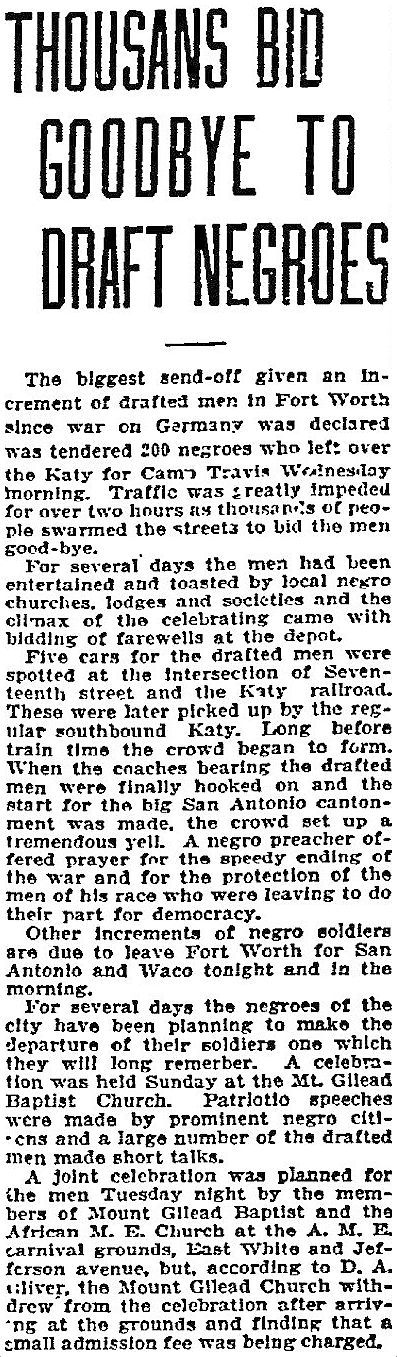
Much larger contingents of Black men left for training camp in the summer of 1918: more than 500 men left from Dallas and more than 200 from Fort Worth at the end of July. The photo below appeared in The Dallas Morning News under the headline “Scene at Union Station Last Night, When 500 Negroes Left for Camp.” (This photo was taken by John J. Johnson, the same photographer who took the photo at the top of this post.)

black-recruits_dmn_073118-photo

black-recruits_dmn_073118_captionPhoto and caption from the DMN, July 31, 1918

black-draftees_FWST_073118
Fort Worth Star-Telegram, July 31, 1918

There was a sizable number of Black soldiers at Camp Bowie in Fort Worth, and many of the reports from Fort Worth on the training of the “negro troops” are hard to read. I don’t think of myself as naive, but the blatant racism that was absolutely everywhere in the mainstream press at the time is stunning. Even when attempting to be complimentary, you see things like this:

If you imagine that the fact that these recruits are negroes made any difference to the white soldiers in camp you are mistaken, for the white soldiers cheered and threw up their hats as truck after truck of negroes passed by, and the darkies shouted back lustily. […]

“I’se glad I got heah at last,” said a big negro as he lined up for classification. “I won’t have to pick no mo’ cotton, no sah; all I’se have to do is to parade in a nice new uniform an’ get three meals an’ a nice new gun….” (Fort Worth Star-Telegram, Sept. 25, 1918)

I’m sure the white soldiers were happy to see fellow recruits showing up, but the journalists — in story after story — treated the “negroes” (they were rarely called “men”) as bumbling caricatures, inevitably quoted in dialect. The United States armed forces were not integrated until 1948, and Black troops were segregated from white troops, both in camp and on the battlefield (when they were allowed to fight — they were largely kept in service positions such as stevedores).

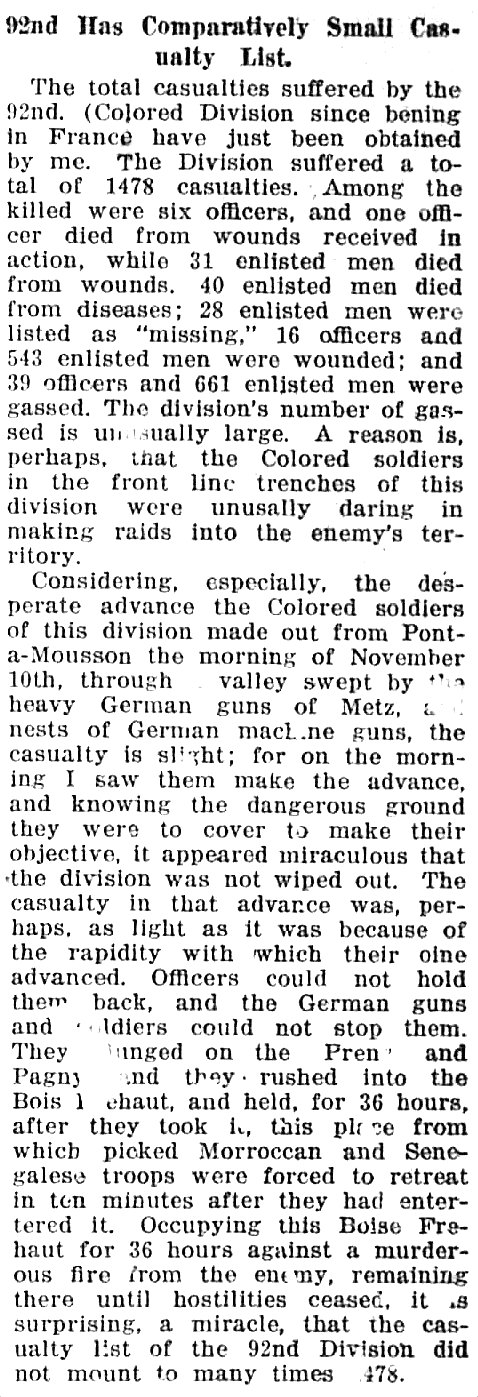
On this Memorial Day, I share a report from Ralph W. Tyler, a Black journalist who had reported throughout the war from the front lines, on the casualties of African American soldiers who died during World War I in the service of the U.S. Army:

casualties_black-troops_dallas-express_011119Dallas Express, Jan. 11, 1919

***

Sources & Notes

Top photo by John J. Johnson, from the National Archives is titled “Negro recuits [sic] having a turkey dinner just before leaving for a training camp. Dallas, Texas”; it can be accessed on the National Archives site here. An annotated version of this same photo appears under the title “Colored Troops — Negro recruits having a turkey dinner just before leaving for a training camp. Dallas, Texas” is here. (If anyone has additional info on the details of this photo, I’d love to know.)

“92nd Has Comparatively Small Casualty List” is an excerpt from Ralph W. Tyler’s article “General Order Commends Colored Officers” which appeared in The Dallas Express, Jan. 11, 1919. The full article can be read here.

For more info on the history of Black American soldiers, see the Wikipedia entry here; for info on the all-Black 92nd Infantry Division, see here.

Also, check out the blurb for the book Unjustly Dishonored: An African American Division in World War I by Robert H. Ferrell, here.

I’ve put a few articles on African American soldiers in WWI (including those cited above) in a PDF. A few of the articles appeared in the major Dallas and Fort Worth newspapers, and a couple appeared in The Dallas Express, the city’s newspaper published for a Black readership (including a rousing article by N. W. Harllee on the parade and celebration thrown by the city to honor the returning Black troops — WELL worth reading). Also included are a couple of unbelievable articles from the national press (including a lengthy one by a noted Stars and Bars reporter titled “Negro Soldiers Stationed at French Ports Sing and Dance While Unloading Ships”). The PDF can be accessed here (with articles in varying degrees of legibility).

The stirring and exhortative article “Dallas Gives Soldiers Befitting Celebration” by N. W. Harllee is in the PDF just mentioned, but it can also be found in a scan of The Dallas Express, here. UPDATE: Every scan of this article is hard to read, so I’ve tweaked the contrast to make it easier to read. You’ll have to magnify this sucker to read it, but it’s in a PDF here.

*

Copyright © 2014 Paula Bosse. All Rights Reserved.

Dallas Steam Coffee & Spice Mills — 1880s

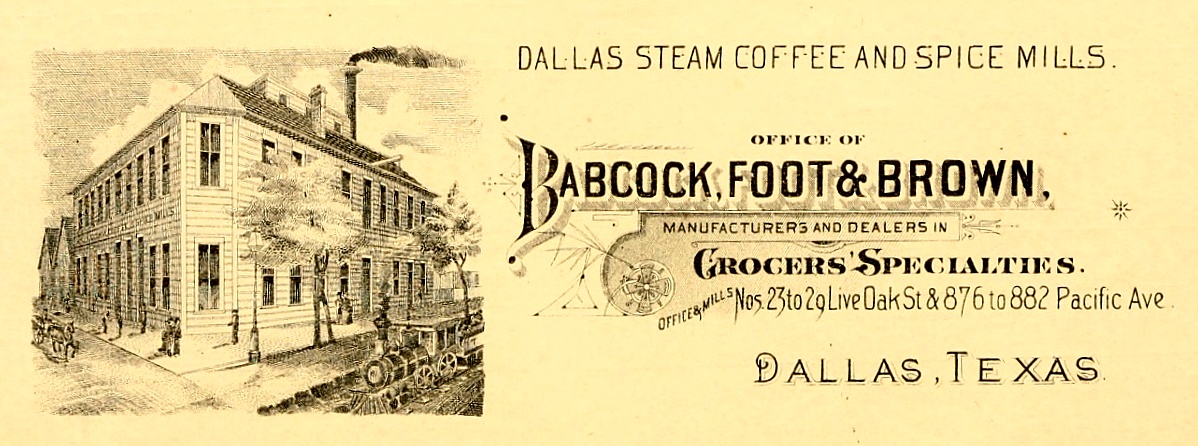
babcock-foot-brown_imm-gd_1889

by Paula Bosse

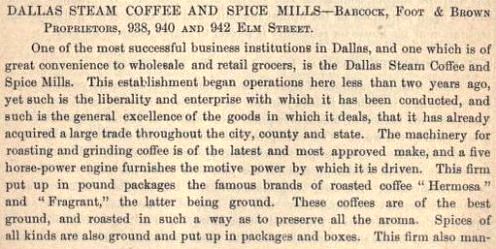
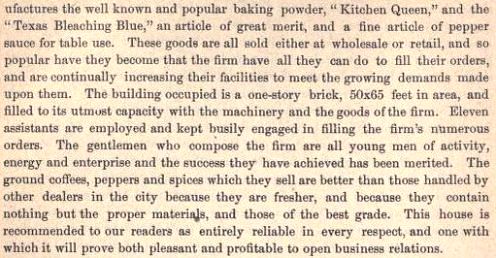
It’s 1880-something. You’re in Dallas. You need a pound of coffee. Some ground mustard seed. Maybe some “Texas Bleaching Blue.” Where, oh where, do you turn?

babcock-foot_1884ababcock-foot_1884b

Messrs. Babcock, Foot & Brown will be happy to supply you with everything you need. And that five-horsepower engine? Top-of-the-line!

***

Sources & Notes

Ad from The Immigrant’s Guide to Texas, 1889. Click for larger image.

Description of the business from The Historical and Descriptive Review of the Industries of Dallas, 1884-85.

*

Copyright © 2014 Paula Bosse. All Rights Reserved.

The Oak Cliff Viaduct & The Weird Composite Photo — 1912

oak-cliff-viaduct-panorama_c1912_LOC

First you take a photo of the beautiful new Oak Cliff Viaduct, above.

Then you take a photo of the Dallas skyline, below.

dallas-panorama-skyline_1912_LOC

Then you put them together and get this bizarro Franken-photo!

oak-cliff-viaduct-panorama_skyline_c1912_LOC

It doesn’t look like any view of Dallas you’ve ever seen, but it still looks pretty damn cool.

***

Sources & Notes

All these panoramic photos are in the collection of the Library of Congress, all from the studio of Johnson & Rogers. The top photo has a copyright date of March, 1912, and the bottom two have copyright dates of August, 1912. See these panoramic photos (as well as one of the Buckner Orphan’s Home in 1911) on the Library of Congress site here.

Would this unusual composite have been done for a fanciful postcard or some other kind of promotional material (for the city or for the photographers)? Was it just done for fun? Tellingly, it’s the only one of the three without the studio’s imprint. If anyone has further info on this, please let me know!

These photos are HUGE. Click to see larger images — and use that horizontal scrollbar!

*

Copyright © 2014 Paula Bosse. All Rights Reserved.

The Shooting of “Bonnie & Clyde” — 1966

bonnie-clyde_unt_113066On location: Greenville Avenue (click for larger image)

by Paula Bosse

Today is the 80th anniversary of the ambush and killing of Bonnie and Clyde. Since I’ve written about Ted Hinton (one of the ambushers and erstwhile motor lodge operator) and Clyde Barrow (as a not-yet-completely-delinquent 17-year old) (and dressed up in a sailor suit), why not a brief look at the movie?

I was hoping to find a bunch of local as-it-was-happening anecdotes in the newspaper archives, but I found very little. (Hey, Dallas — you had a major motion picture with Hollywood celebrites in it — couldn’t you have devoted a little more ink to it?)

The photo at the top is the only one I could find that showed shooting (…as it were) at a Dallas location. The above was shot at the Vickery Courts motor lodge at 6949 Greenville Avenue (just north of Park Lane, across Greenville and up a bit from where the old Vickery Feed Store was).

So photos were practically non-existent, but I did learn that the interiors were shot at a large soundstage on Dyer, just off Greenville, called Stage 2, owned by Bill Stokes of Bill Stokes & Associates (where I spent a blink-of-an-eye interning back in high school).

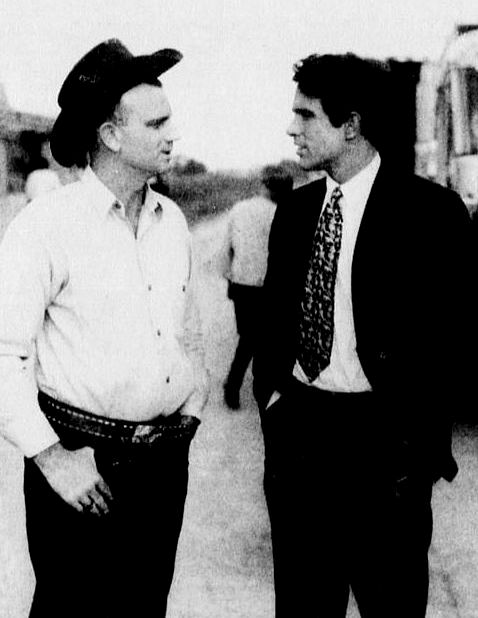
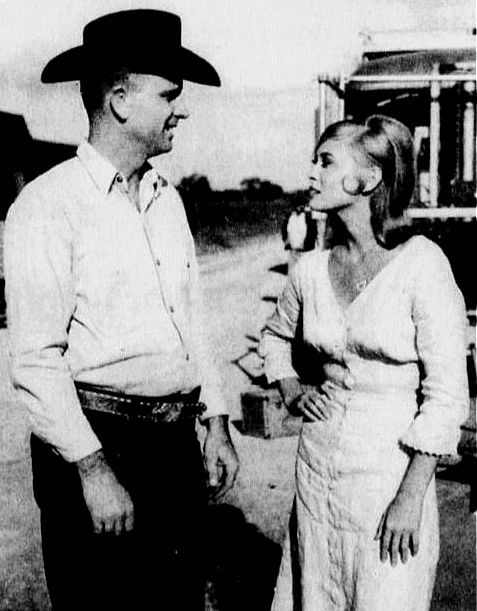
Below are two photos of Warren Beatty and Faye Dunaway between shots in Lavon, Texas, just outside Wylie — talking with one of the extras, Billy Joe Rogers, a saddlemaker from Wylie.

bonnie-clyde_lavon_beatty_102066

bonnie-clyde_lavon_dunaway-102066

The reactions to the finished movie from the local critics was interesting. The reviewer for The Dallas Morning News hated it. Hated it.

Bonnie and Clyde were a couple of rat punks who created terror in a vast area simply because they had no hesitation in gunning down those who stood in their way. […] They became for a brief span the nation’s most hunted outlaws and finally were shot down […] like the mad dogs they were. […] In a word: There is nothing entertaining about mad dogs; they should be killed — and quickly. (William A. Payne, DMN, Sept. 14, 1967)

I don’t know anything about the reviewer, William A. Payne, but my guess is that he vividly remembered the real-life Bonnie and Clyde and, like many other reviewers of the time, deplored the perceived glamorization of violence. (As an aside, I wondered why I wasn’t finding listings for “Bonnie and Clyde” in the early ’30s when I searched through the Dallas Morning News archives. As I learned from Mr. Payne, the two were commonly known as “Clyde and Bonnie” back then. So there you go!)

The review from Elston Brooks of The Fort Worth Star-Telegram, on the other hand, was ecstatic.

“Bonnie and Clyde,” which had every right to be a B-grade gangster shootout in double-breasted suits, is instead a shattering emotional experience, a fascinating film and  — oddly enough — an important motion picture. (Elston Brooks, FWST, Sept. 15, 1967)

My guess is that Brooks was about 30 years younger than Payne and had little, if any, personal connection to the real-life outlaws who killed real people.

*

The film ran up against a lot of studio problems. Warner Bros. head Jack Warner called it “the longest two hours and ten minutes I ever spent,” and the plan was to dump the movie in drive-ins and second-string-movie houses and be done with it. But producer-star Beatty was persistent and got it into the Montreal Film Festival where the positive reviews as well as the 9,000-word rave from Pauline Kael in The New Yorker assured it got the attention it merited. And it did. It was nominated for 10 Academy Awards and is considered a classic move of the 1960s.

*

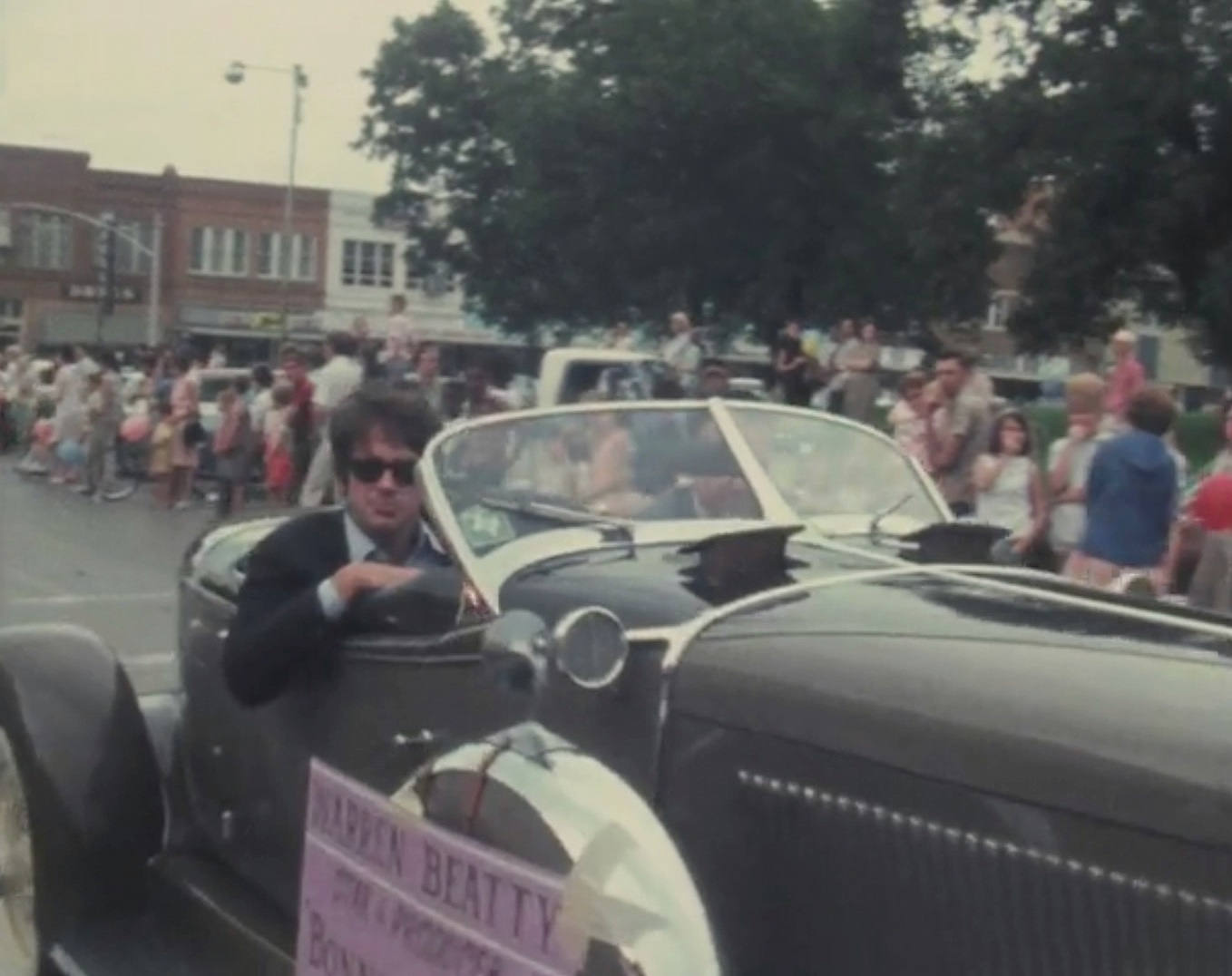
The movie had its Southwestern premiere at the Campus Theater in Denton in September, 1967. Watch (silent) news footage of the premiere from WBAP-TV (Ch. 5) at the Portal to Texas History, here (it begins about the 4:41 mark). Here’s a screen capture of Warren Beatty that day — also appearing were Michael J. Pollard and Estelle Parsons.

bonnie-and-clyde-movie_beatty_denton-premiere_wbap-tv_091367_portal

*

One last little interesting tidbit was what happened after the movie wrapped production in Dallas. Warren Beatty donated the so-called “death car” to a local wax museum. Unfortunately for the wax museum, the car’s bullet holes had been filled in to shoot another scene, so the museum had to search for someone to professionally and authentically re-riddle the car with bullet holes.

It’s always something.

***

Sources & Notes

Top dark and grainy photo of location shooting at Vickery Courts from The Campus Chat (newspaper of North Texas State University, Denton), Nov. 30, 1966.

Photos of Beatty and Dunaway in Lavon, Texas from The Wylie News, Oct. 20, 1966. An article and more photos from the set (local extras, etc.) can be found here and here.

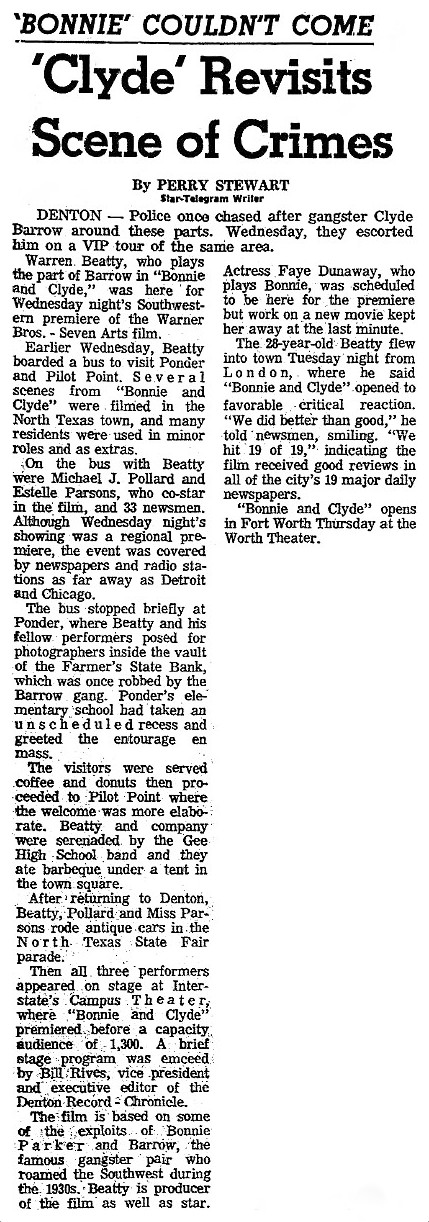
Here’s a bonus Fort Worth Star-Telegram article on the fun and unusual bus trip that Beatty and other stars of the film took to some of the small towns they’d filmed in when they were back in the area for the local premiere in Denton (click to read):

bonnie-clyde_fwst_091467
FWST, Sept. 14, 1967

And a good overview of the making of the film can be found at TCM’s website here.

*

Copyright © 2014 Paula Bosse. All Rights Reserved.


My Father, Dick Bosse — Dallas Bookman

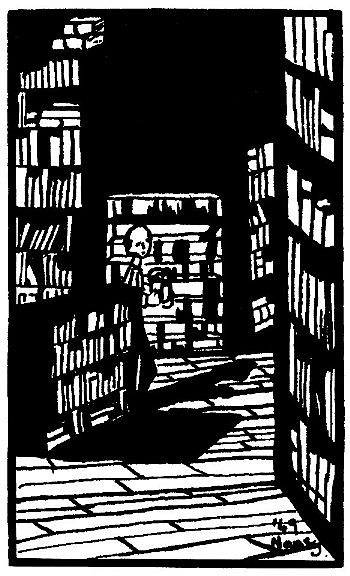
PRB_nancy-sketch_sm

by Paula Bosse

Dick Bosse was my father. When he died in 2000, he had managed (and later owned) The Aldredge Book Store for almost 45 years. He started working for founder Sawnie R. Aldredge, Jr. fresh off a half-hearted attempt at grad school. I’m sure he had no idea when he started working there (at $1.00 an hour) just how important a role the store would play in his life. My parents met at the store when my mother began working there, and they married a couple of years later. My brother and I spent countless hours there and practically grew up in the store. The Aldredge Book Store was a second home to my family, and looking back on all the time I spent there, all the books I read when I was bored, all the literati of the city I met who eventually popped in and sat around talking with my father over a cup of coffee or a beer, all the store cats I loved who became minor celebrities themselves — when I look back on all that, I realize how lucky my brother and I were to have had such interesting parents who brought us up in such an interesting place.

My father had a reputation as a stellar bookman but was known as much for his wit and humor as he was for his deep and wide-ranging knowledge of books, both rare and “chicken-fried.” He was one of the state’s top Texana experts, and his mailing list contained just about every major Texas author. The Aldredge Book Store was one of the oldest antiquarian bookstores in the Southwest, but my father was a remarkably unstuffy, unassuming, and down-to-earth bookseller.

I’ve been working off-and-on at collecting pithy catalog blurbs my father wrote over the years. The bulk of his sale catalogs were straight listings of antiquarian and out-of-print books, but he became fairly well-known in the Texas book trade for descriptions like these which he would insert throughout for his own amusement. I’ve left out the full bibliographical descriptions, but here are a few of my favorites. I realize some of these are a little esoteric, but this has been a fun project, and it’s nice to remember how funny my father was (bad puns and all). (I only wish I had been able to catalog like this when I worked as a rare books cataloger for an auction house!)

Adams, Ramon F. THE RAMPAGING HERD. The shit-kickers’ John Ciardi.

Brown, John Henry. LIFE & TIMES OF HENRY SMITH, The First American Governor of Texas. A rather nice copy, not one of the bugshit-encrusted remainders.

BULLETIN OF THE UNITED STATES FISH COMMISSION FOR 1891. A Texas piscatorial incunable.

Carter, Jimmy. KEEPING THE FAITH. Signed by the author, a former president.

Clary, Annie Vaughan. THE PIONEER LIFE. In HERD, but curiously not in SIXGUNS despite feuds, Texas Rangers, and Daddy popping caps on some badasses.

Clay, John. MY LIFE ON THE RANGE. Nice copy of the consensus bovine biggie.

Cravens, John Park. WITH FINGERS CROSSED: The Truth As Told In Texas. Apparently humor.

Devlin, John C. & Grace Naismith. THE WORLD OF ROGER TORY PETERSON, An Authorized Biography. Peterson, a student of blue bird mores, was known to Brandeis ornithologists as the goy of Jay sex.

Dobie, J. Frank. AS THE MOVING FINGER WRIT. Inscribed to “Mr. Moore,” in which 60-word inscription Dobie alludes (a frequent trick to prove he was not your run-of-the-mill shit-kicker) to Maugham and Schiller.

Eickemeyer, Rudolf. LETTERS FROM THE SOUTH WEST. Puny yankee sopping up the sun in El Paso & Santa Fe.

ENCYCLOPEDIA BRITANNICA. The twelfth edition (the eleventh edition with the supplements). Best encyclopedia in English executed prior to the American greaseballization.

Faulk, John Henry. FEAR ON TRIAL. HUAC to Hee-Haw.

Fuermann, George. RELUCTANT EMPIRE. Fine copy in dust jacket, signed by author and illustrator and marred only by one of those hideous goddam lick-in bookplates.

Gent, Peter. TEXAS CELEBRITY TURKEY TROT. Too much Peter; not enough Gent.

Hardin, John Wesley. THE LIFE OF JOHN WESLEY HARDIN. Mischievous preacher’s kid.

Hargrove, Lottie H. TEXAS HISTORY IN RHYME. Aarghh!

Hudson, Alfred Edward A’Courte. SELECTED BLOOD STUDIES ON SWINE. “Satisfying your antiquarian porcine hematological requisites since 1947.”

Koehler, Otto A. KU-WINDA (To Hunt). African safari by the Texas Beer Baron; well-illustrated, including some comely bare-breasted Somaliettes holding a “Join The Swing To Pearl” banner.

Long, Mary Cole Farrow. STRANGER IN A STRANGE LAND, From Beaufort, South Carolina, To Galveston Island Republic of Texas — A Biography of Judge James Pope Cole (1814-1866). Probably unknown to Heinlein.

McDonald, William. DALLAS REDISCOVERED: A Photographic Chronicle of Urban Expansion, 1870-1925. The reissue was in wraps and had a “perfect binding,” one of the more notable oxymorons of our time.

Pellowe, William C. S. (ed.). MICHIGAN METHODIST POETS. Enthusiasts of The Muse will be relieved to know that Michigan sprinklers are as fully gifted as their Texas colleagues.

Riley, B. F. HISTORY OF THE BAPTISTS OF TEXAS. Covers blemished, apparently sprinkled by a surly Methodist.

Rozelle, Robet V. (ed.). THE WENDY AND EMERY REVES COLLECTION. The greatest Dallas art coup since SMU acquired the wet-paint Spanish Masters collection of Al Meadows.

Schlesinger, Arthur M., Jr. A THOUSAND DAYS, John F. Kennedy in the White House. Most notable fawning since Bambi’s birth.

Slaughter, Bob. FOSSIL REMAINS OF MYTHICAL CREATURES. Profusely illustrated with photos and drawings by the author, apostate bar-fly now a distinguished scientist and sculptor. A grab-ass classic.

White, Owen P. MY TEXAS ‘TIS OF THEE. A nice enough copy except that a cretin at something called “Mary’s Book Nook” was a compulsive rubber-stamper.

 *
PRB-CD_dth_062368-putcamp

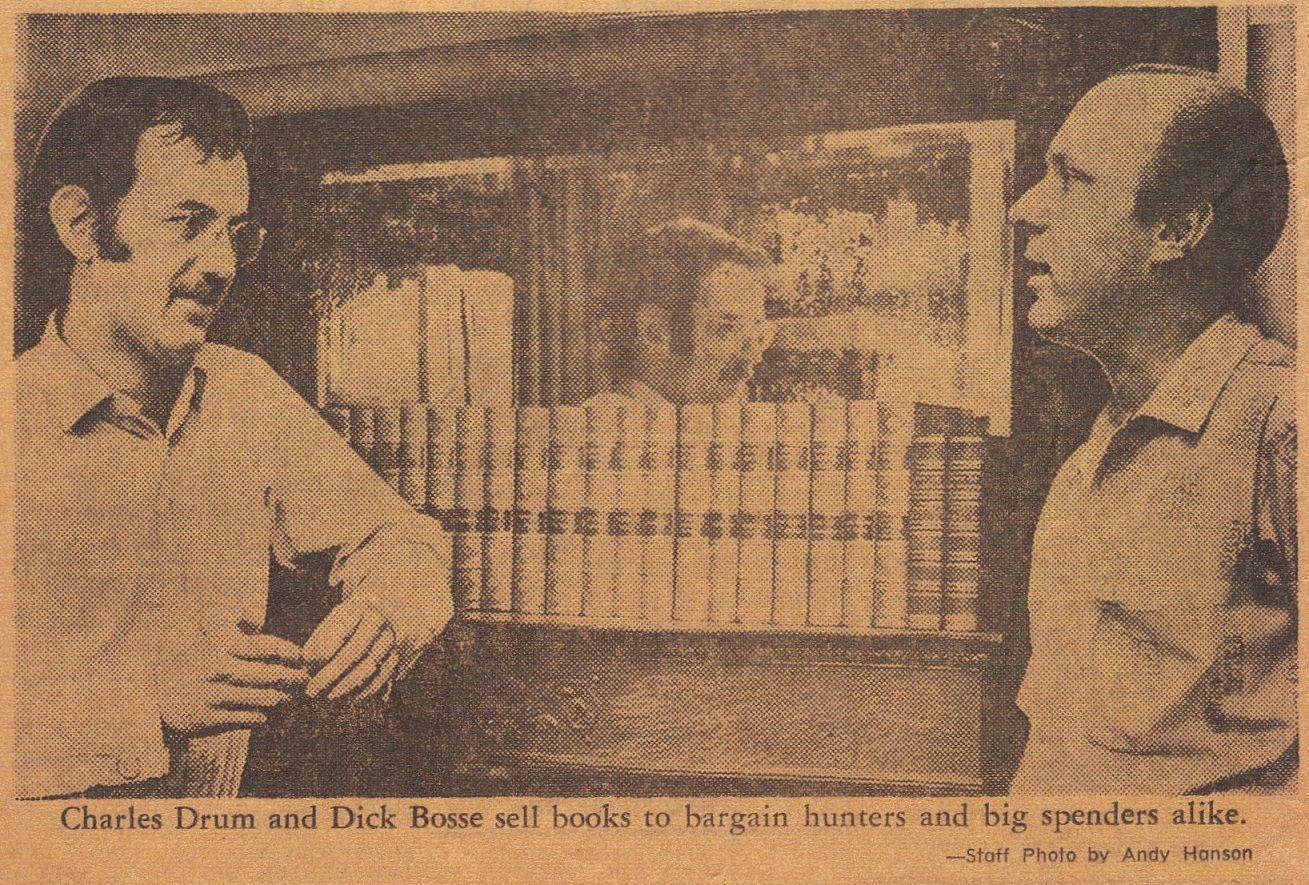
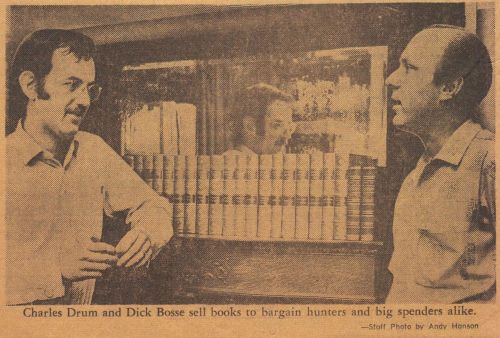
Above, my father, on the right, at the first location of the Aldredge Book Store on McKinney Avenue. The accompanying article by Luise Putcamp, Jr. is here.

*
PB-PRB

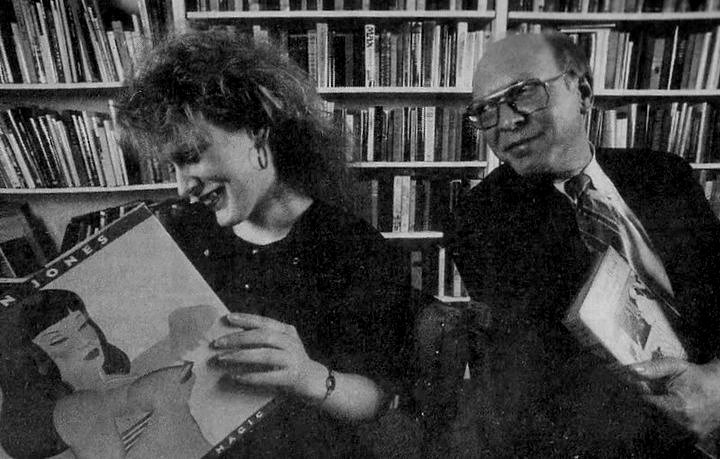
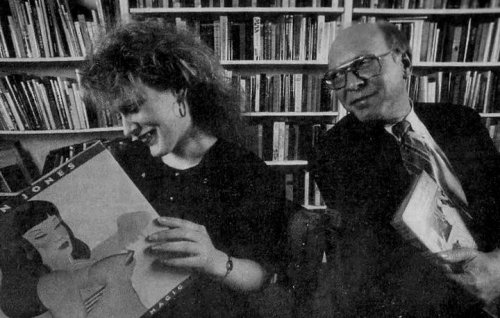
Above is one of my favorite photos of my father, taken in a small used bookstore I had on Lower Greenville Avenue. A newspaper editor thought it would be “cute” to have a photo of father-daughter booksellers. The photographer suggested I hold the newer, cutting-edge art book while my father held the older, obscure British arts journal. Of course, my father would have been more interested in the Allen Jones book, and I would have been more interested in The Yellow Book (a set of which my father gave to me for Christmas one year — and it was one of the best gifts I’ve ever received).

Today would have been my father’s 80th birthday. 80! I think of him all the time, and I miss him terribly. He was a wonderful guy, and — aside from the modest income — I think he would have said that a lifetime career as a bookseller was a pretty sweet deal.

***

Sources & Notes

When my father died in April, 2000, several appreciations of him appeared in print. If you would like to read the appreciations by his friends A. C. Greene (a very sweet tribute) and Lee Milazzo (my personal favorite — very funny), as well as the nice official obituary, they are all transcribed here

My brother, Erik Bosse, wrote a wonderful piece about our father for a catalog we issued after his death. The warm and amusing essay — as well as some of the crazy business cards my father took great joy in printing up — can be found here

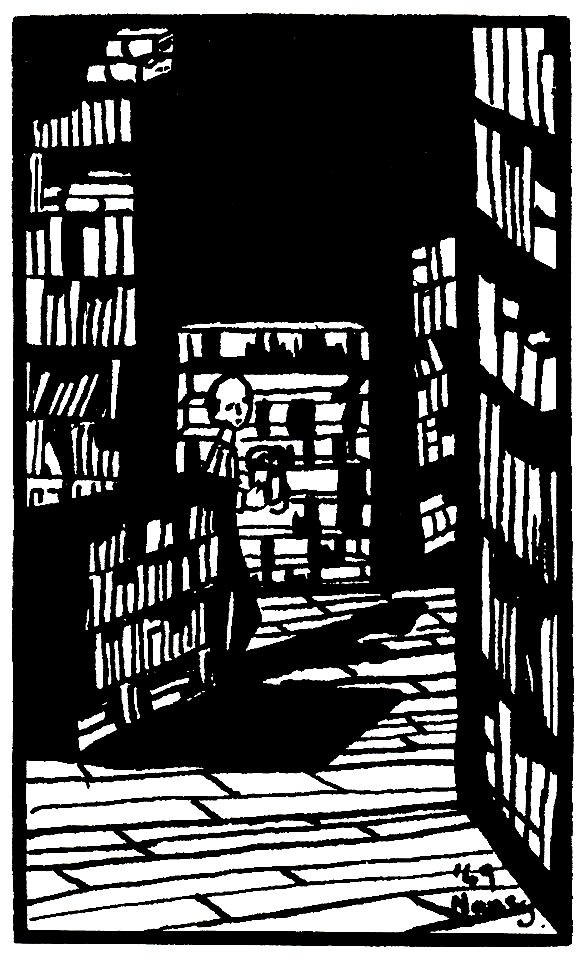
Sketch at the top was done by Nancy C. Dewell (1969). Slightly larger than a business card, it arrived in the mail one day with a short note that read: “I don’t know your name. I think you are Mr. Aldredge. I would be pleased if you would accept my drawing of you in the bookshop. Sincerely, Nancy C. Dewell.” I can’t imagine a better likeness. I really, really love this.

Photo of me and my father from the Dallas Observer.

*

Copyright © 2014 Paula Bosse. All Rights Reserved.

Stemmons and Inwood, Before and After

stemmons-inwood_haskins_1954

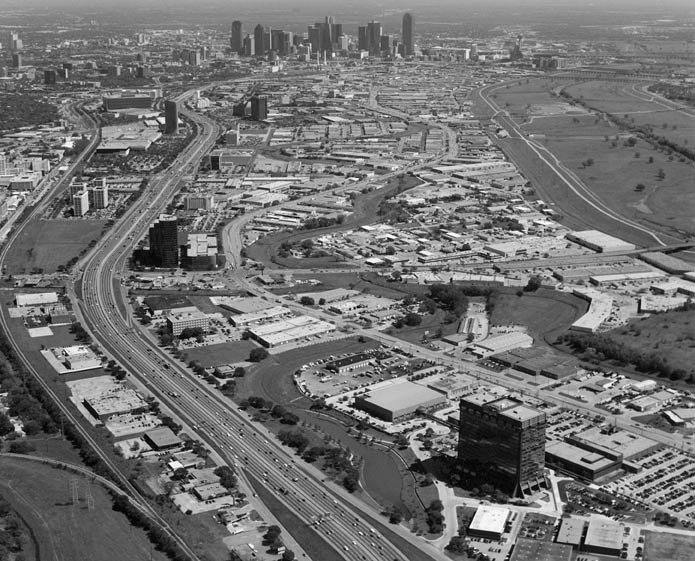
Stemmons and Inwood, looking southeasterly toward town, 1954. Below, pretty much the same shot, 1994.

stemmons-inwood_haskins-jr_1994

***

Top photo by the great Squire Haskins; bottom photo by the firm bearing his name that carried on after his death in 1984. Both from the Squire Haskins Photography Collection, Special Collections, University of Texas at Arlington Libraries.

For more on the life and career of Dallas photographer Squire Haskins, see the article “Squire Haskins: High Flying Images” by Brenda S. McClurkin, here.

Need a visual aid? See a Google Map view of the same area today, here.

Click photos for larger images.

*

Copyright © 2014 Paula Bosse. All Rights Reserved.
Six Flags-Inspired Recipes for the (Gluten-Tolerant) Superfan — 1966

six-flags-ckbk_USA

by Paula Bosse

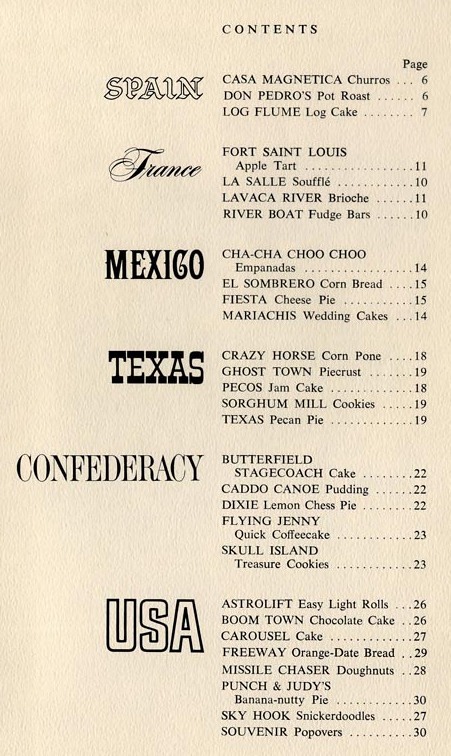
Did you know there was a Six Flages-themed cookbook? Well, there was! Issued in 1966 by the Gladiola Flour company (every recipe — rather unsurprisingly — contains flour), the Six Flags aficionado was presented with dishes such as “Casa Magnetica Churros,” “Log Flume Log Cake,” “Skull Island Treasure Cookies,” and “Sky Hook Snickerdoodles.” From the introduction:
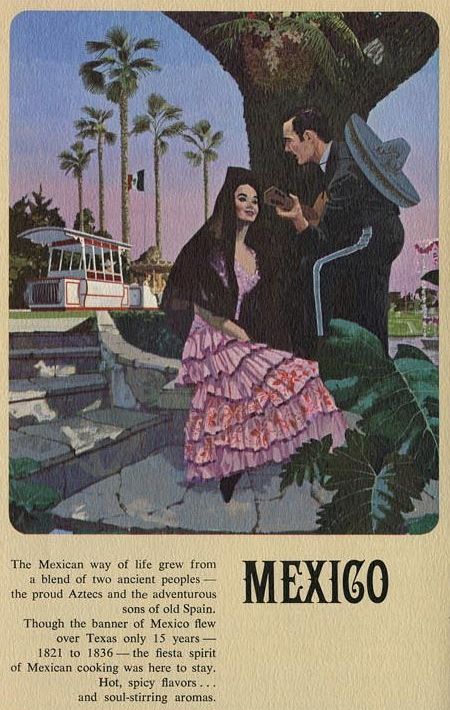
“Names of the recipes have been inspired by attractions and rides at Six Flags Over Texas, the exciting adventureland located midway between Dallas and Fort Worth. Look to the Six Flags Over Texas Cookbook when you want something different — a dish your guests will remember.”

That “Log Flume Log Cake”? Mosey on over here and whip one up this weekend for your gluten-tolerant friends and family.

six-flags-ckbk_cover_1966-sm

six-flags-ckbk_contents

six-flags-ckbk_spain

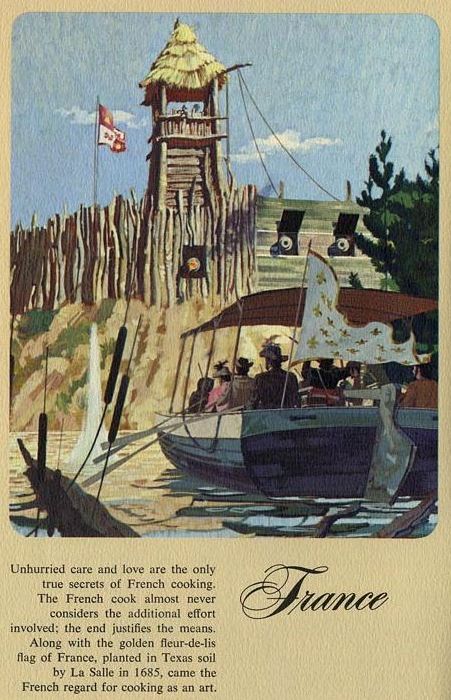
six-flags-ckbk_france

six-flags-ckbk_mexico

six-flags-ckbk_texas

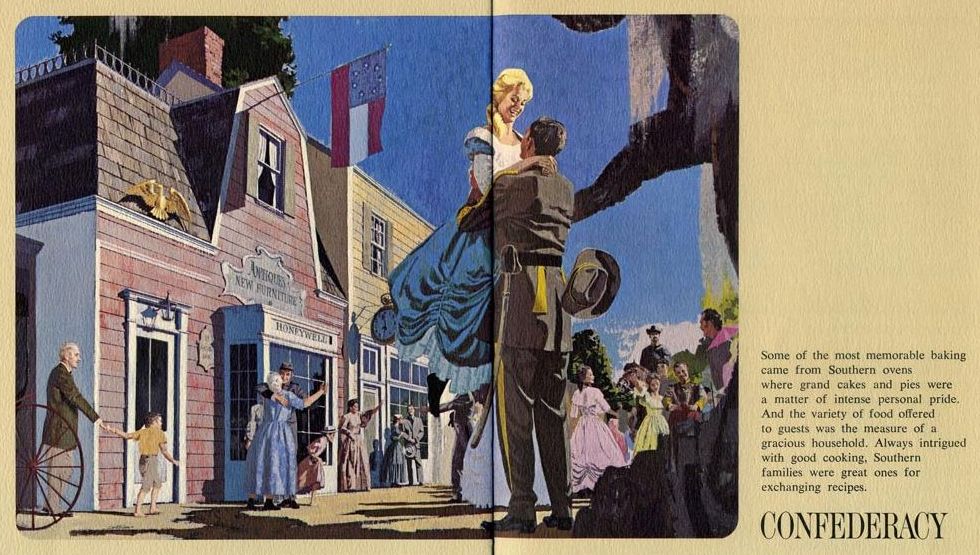
six-flags-ckbk_confederacy

***

All images from The Six Flags Over Texas Cookbook by Gladiola (Sherman: Fant Milling Co., 1966). These images (and the entire cookbook) from Ken Collier’s great Six Flags Over Texas collection. The cookbook can be viewed here; and check out his other Six Flags pages here.

For other Flashback Dallas posts on the early days of Six Flags Over Texas, see here.

Click oblong pictures for larger images.

*

Copyright © 2014 Paula Bosse. All Rights Reserved.