Flashback : Dallas

A Miscellany: History, Ads, Pop Culture

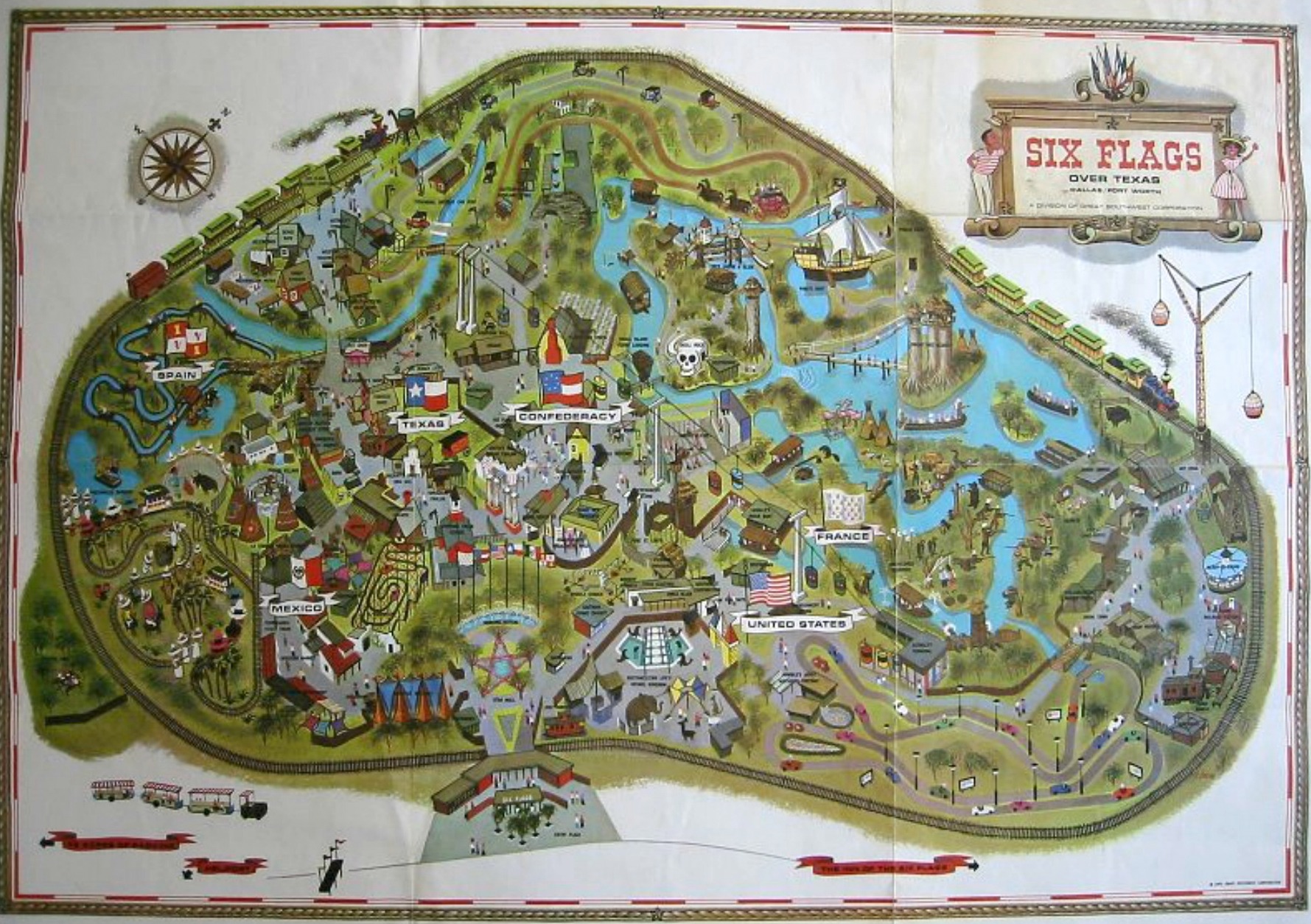
Angus Wynne, Jr.’s “Texas Disneyland” — 1961

six-flags_stagecoach

by Paula Bosse

If you’re reading this, you’ve probably been to Six Flags Over Texas in Arlington. Depending on your age, you may pine for those glorious days of yesteryear when Six Flags was a truly unique theme park. Today it is not. Back then, there was only one Six Flags, and it was a great, weird place. A theme park based on Texas history! Who would come up with such a far-fetched idea? Angus Wynne, Jr. did. Some of it must have sunk in, because, to this day, the way I can remember the “six flags” that have flown over Texas is by remembering rides and attractions at Six Flags Over Texas.

I wasn’t going regularly to Six Flags until the ’70s, when it was still definitely all about Texas, but looking at old postcards that were issued to celebrate the opening of the park in 1961, I was shocked by some of the great stuff that was retired before my annual visits. Like … helicopter rides! Actual helicopter rides that took off from an area near (in?) the parking lot: five minutes for five dollars (this was back when admission was $2.25 for kids and $2.75 for adults — those days are long-gone…).

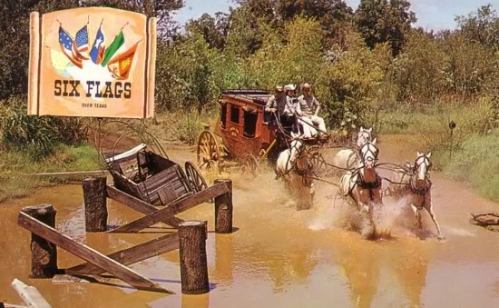
And … a stagecoach ride! I would have LOVED that! Looks kind of dangerous, though — which might be why it didn’t last. The description on the back of the postcard:

Bridge Out — Confederate Section: Butterfield Overland Stagecoach pulled by a team of four matched white horses cuts past washed out bridge on its way to deliver passengers and the U.S. mail back to the safety of the depot — always plenty of exciting action taking place at the multi-million dollar Six Flags Over Texas entertainment park.

*

six-flags_confederate

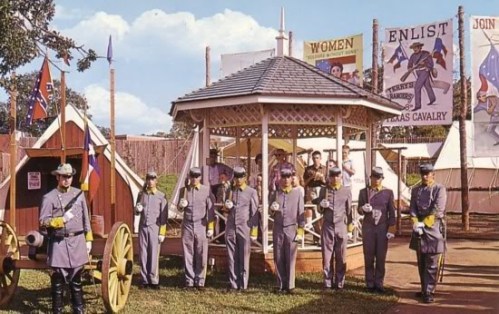
And, yes, the problematic “Confederate” section. The description on the back of this postcard reads:

Call To Arms — Confederate Section: Confederate Drill Team at Six Flags Over Texas. To these men in gray, the South is still ‘a-fightin’ them Yankees.’ Frequent enlistment rallies are held where youngsters join up and receive papers proving their military status in Terry’s Texas Rangers, 8th Texas Cavalry.

Don’t remember seeing that. It probably started to lose its luster somewhere back around the Vietnam War.

*

six-flags_spanish_mule

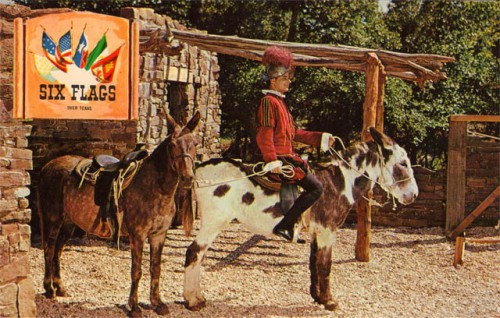
Jack Maguire, in his great Alcalde article (link below) describes this … um … “ride” thusly:

The Spanish section is next. Here guests board pack mules to venture forth with Francisco Vasquez de Coronado, greatest of the conquistadores, as he descends into Palo Duro Canyon searching for the Seven Cities of Cibola.

With the mules and the stagecoach team, Six Flags must have had a busy corral somewhere in the park.

*

six-flags_hanging

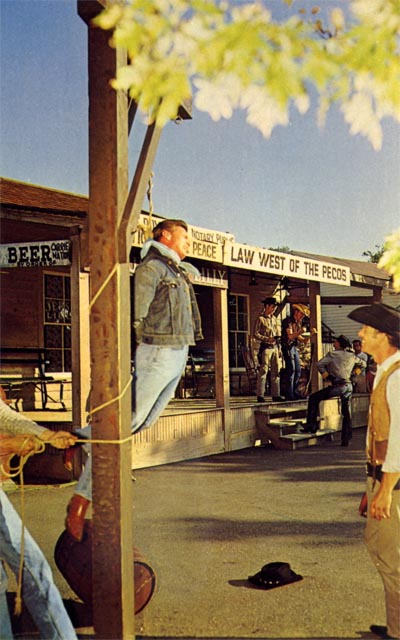
And, well, this is my favorite: a hanging. …At an amusement park. Maybe they’re just a-funnin’. This took place in the “Texas Section,” where the bank was robbed every hour on the hour and there was the show-stopping gunfight in the middle of the street. I remember that. I don’t remember some guy getting strung up, though. I like the fact that this photo was used to promote an amusement park.

*

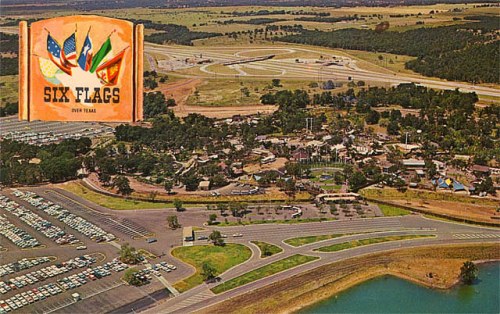
six-flags

And here’s the whole of it, in 1961. I guess there must have been other things in Arlington back then. But it looks pretty empty once you’ve ventured past Skull Island and left the park.

six-flags_map_mid-1960s(Click for much larger image!)

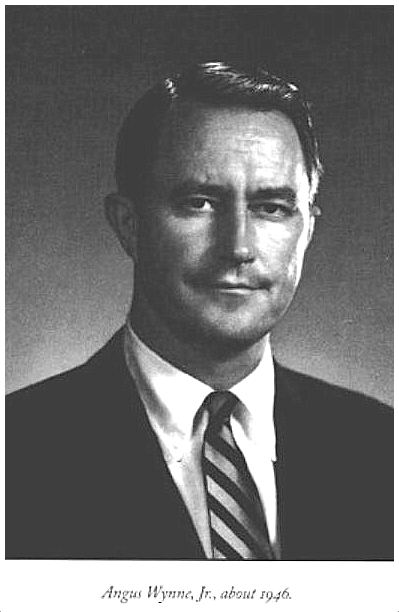
Thank you, Angus Wynne, Jr. — I had so much fun in your park — I wish I had seen it when it opened!

wynne_angus-jr_legacies_fall-2002

***

Sources & Notes

Top two postcards from the jumble of stuff I own.

All other postcards from the INCREDIBLE Six Flags Over Texas postcard collection of Ken Collier, which you can see — page after page after page — here.

I’m not sure where I found the map, but it gets pretty big when clicked.

Photo of Angus Wynne, Jr. from the Fall, 2002 issue of Legacies.

Memories of the helicopter ride by a former park employee (who says it lasted only until 1962 when it was discontinued due to a “hard landing” incident) can be read here.

And for a truly enjoyable look at the then-new theme park, I HIGHLY recommend Jack Maguire’s “The Wynne Who Waves Six Flags” in the November, 1961 issue of The Alcalde, the University of Texas alumni magazine — read it and look at the photos of a Six Flags *I* certainly never knew (but wish I had), here.

For my follow-up post on The Six Flags Over Texas Cookbook (1966) — with a link to the entire booklet and all the Six Flags-inspired recipes — see here.

*

Copyright © 2014 Paula Bosse. All Rights Reserved.

World War II “Victory Huts” at Parkland

parkland-victory-huts_c1945-utswPhoto: UT Southwestern Library

by Paula Bosse

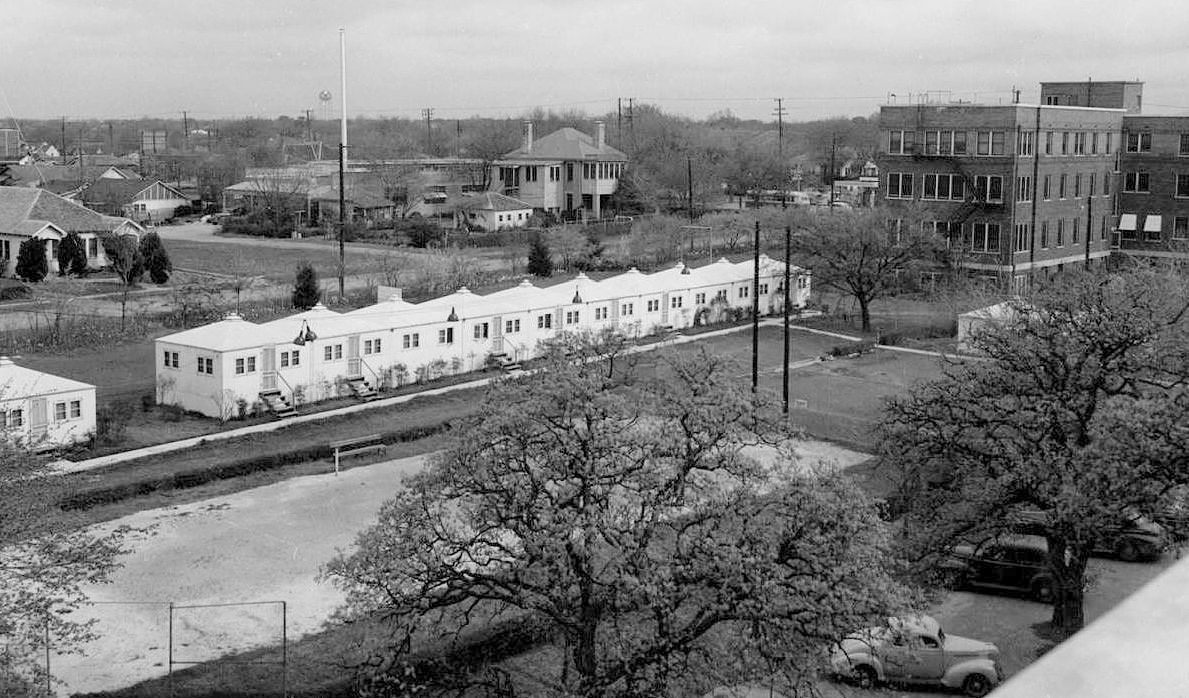
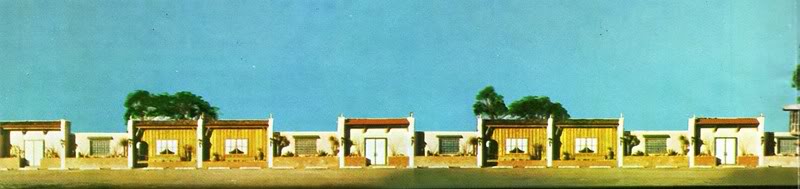
Above are a row of “Victory Huts,” behind the old Parkland Hospital at Maple & Oak Lawn, circa 1945. The description of the photo from the UTSW Library:

“Victory Huts” were prefabricated buildings developed during World War II as a method of providing quick housing for soldiers. The white “Victory Huts” behind the Parkland Nurses’ Home are believed to have been used first as housing for recovering servicemen during World War II, then after the war as housing for nursing students.

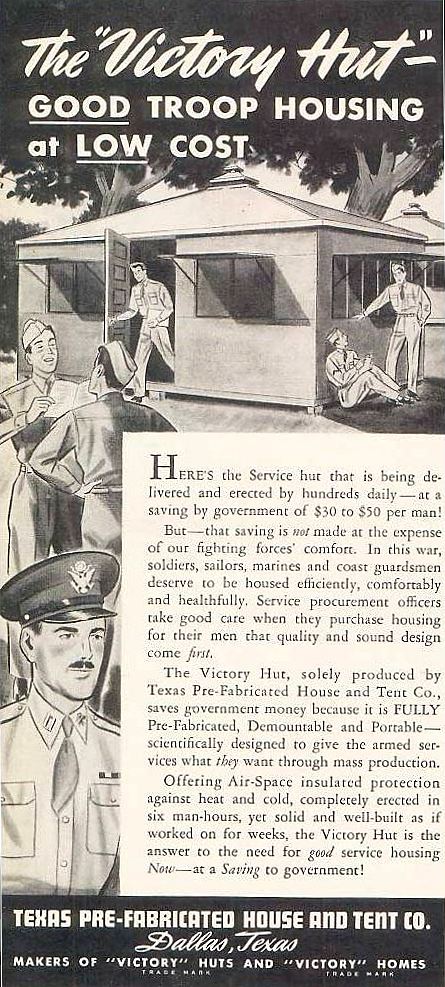
Victory Huts were the brainchild of builder H. F. Pettigrew and wealthy Dallas businessman Winfield Morten. Read about the beginnings of their wildly popular prefab buildings here.

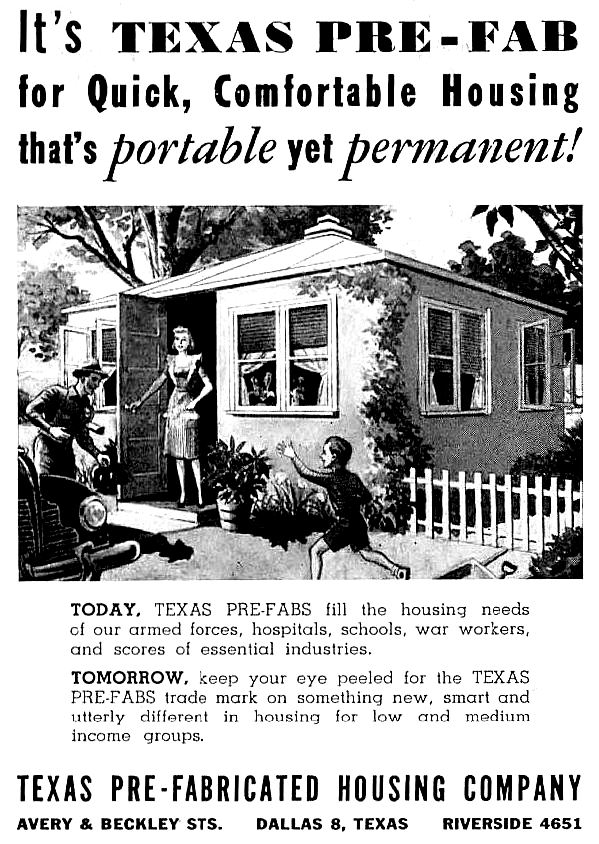
Below, an ad from the Dallas company that manufactured them, Texas Pre-Fabricated House and Tent Co.:

victory-huts_texas-historical-commission_flickr

And, after the war, just add some curtains, a few plants, and a white picket fence.

texas-pre-fabricated-housing-co_southwestern-medical-college_1944-yrbk-ad

***

Sources & Notes

Top photo and quote are from the Parkland Hospital Collection at the UT Southwestern Library, accessible here.

First advertisement from the Flickr stream of the Texas Historical Commission, here. Second ad from the 1944 Southwestern Medical College yearbook.

Victory Huts were widely used during World War II, as cheap housing for military personnel, military families, and as housing in internment camps. See the huts as they were used for Japanese/enemy alien internment camps in Texas, at Camp Kenedy, at Crystal City, and at Dodd Field/Fort Sam Houston.

*

Copyright © 2014 Paula Bosse. All Rights Reserved.

The Britling Cafeteria Serves Those Who Serve Themselves

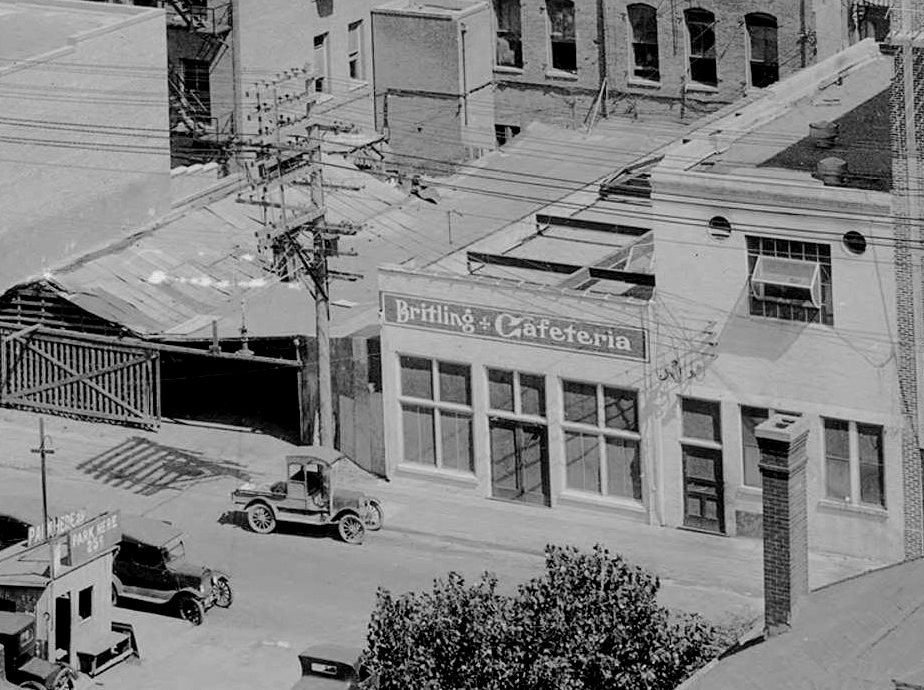
britling-cafeteria_rear-entrance_degolyerBritling Cafeteria’s rear entrance on Jackson St., 1920s

by Paula Bosse

A few weeks ago, I was zooming in on a view of the Dallas skyline when I saw an interesting restaurant sign: the Britling Cafeteria. After a little research, I learned that Britling Cafeterias are something of a cultural institution in Birmingham and Memphis (Elvis’ mother worked the coffee urn station in Memphis, and if that isn’t the sign of a Southern institution, I don’t know what is). Here in Texas, though … I’d never heard of it. It claimed to be the first cafeteria chain in the South, having begun in Birmingham in 1917 (and named for a character in, of all things, an H. G. Wells story). When the Dallas location opened at the end of 1922, it was only the sixth restaurant in the chain, joining others in Birmingham, Atlanta, and Memphis.

The Britling Cafeteria was at 1316 Commerce (“Right in the Heart of Things”), between Field and Akard. There were two entrances, one on Commerce and one on Jackson (seen in the photo above). It sounds pretty nice for a cafeteria — it was lavishly decorated in black and gold, lined with mirrors, filled with flowers, and it had a mezzanine and a raised platform for a live orchestra to provide background music. It had a seating capacity of 450, with an expected daily capacity of 3,000. We’re not talkin’ Luby’s here. Quick “Southern home-cooking” had arrived in Dallas, and it seems to have remained an active advertiser until the ads suddenly stopped in 1926. I hope Dallas enjoyed it while it had it.

Below is the interior of the Atlanta location, from about the same time as the Dallas location. Cafeterias were a whole lot nicer back then.

britling_atlanta

The first non-institutional cafeteria I can find mentioned in The Dallas Morning News was the one in the basement of the Praetorian Building (“Cleanliness, courteous, tipless”) in 1912, but the cafeteria “concept” must have still been fairly new to Dallas as the Britling advertisements that appeared in the week before the grand opening felt it necessary to explain how the system worked. “You’ll wait on yourself — and do it gladly.”

britling_dmn_112722abritling_dmn_112722b1922 (click to read)

But first, stop by for a “Day of Courtesy” preview — flowers for the ladies!

britling_open_dmn_1127221922

britling-cafeteria_forest-ave-high-school-yrbk_19231923

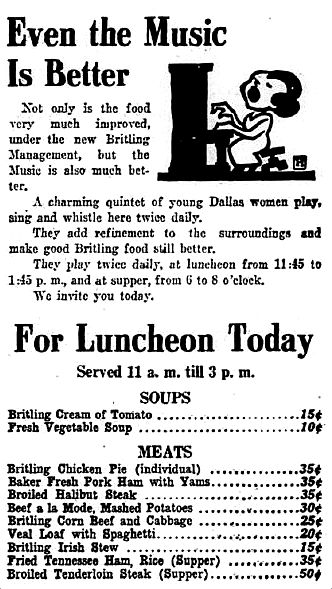
Below, a sample of some of the Southern home-cooking on the menu as well as the warning that there WILL be live music as “a charming quintet of young Dallas women play, sing and whistle (!) here twice daily.”

britling_dmn_030926abritling_dmn_030926b1926

britling_logo_dmn-112722

***

Sources & Notes

Photo is a detail from a larger view of the city from the DeGolyer Library, Southern Methodist University, seen in an earlier post here. The block in which the cafeteria was located is now 2 AT&T Plaza.

Postcard of the interior of the Atlanta Britling Cafeteria from somewhere on the internet.

More can be found in the DMN article “Britling Cafeteria Will Open” (Nov. 26, 1922), with details on the chain and specifics on the Dallas location, here.

Great short history on the cafeteria that every self-respecting citizen of Alabama and Tennessee is apparently familiar with can be found here.

An amusing first-hand account of a Texan (J. J. Taylor) visiting a newfangled cafeteria in San Francisco appeared in The Dallas Morning News on Aug. 25, 1912 and can be read here.

*

Copyright © 2014 Paula Bosse. All Rights Reserved.

Main Street Traffic — c. 1905

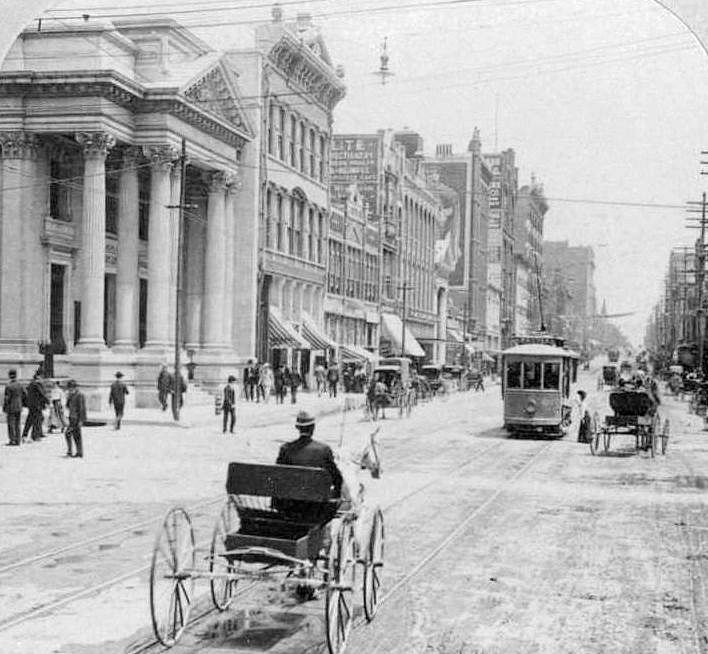
main-murphy_degolyerMain, east from Murphy (DeGolyer Library, SMU)

by Paula Bosse

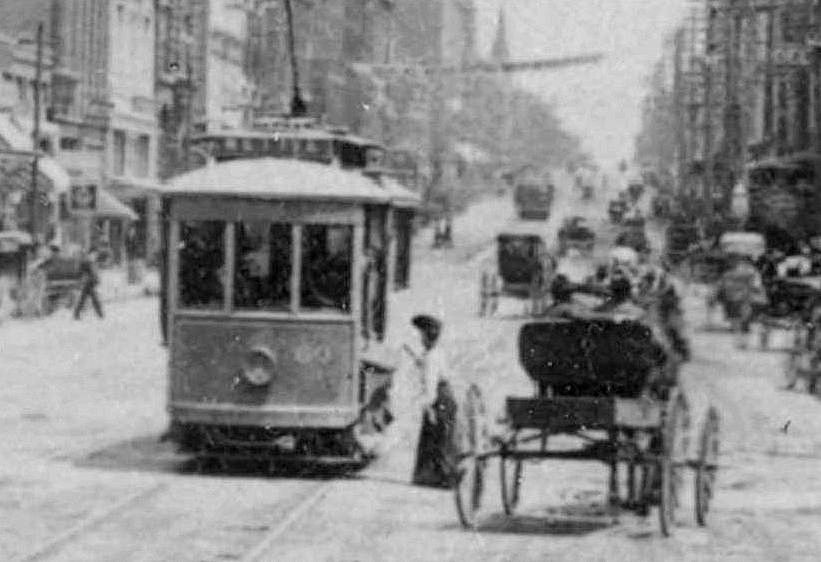
Another day, another dollar. At left, the City National Bank, which was built in 1902-03. At right (and below), a woman dodging traffic to catch a streetcar.

main-murphy_degolyer_det

***

Sources & Notes

Stereograph image from the Lawrence T. Jones III Texas Photography Collection, DeGolyer Library, Southern Methodist University; it is accessible here.

The DeGolyer description reads “Looking east on Main Street.” The City National Bank at the left was at the northeast corner of Murphy and Main, which would be, today, about where One Main Place stands.

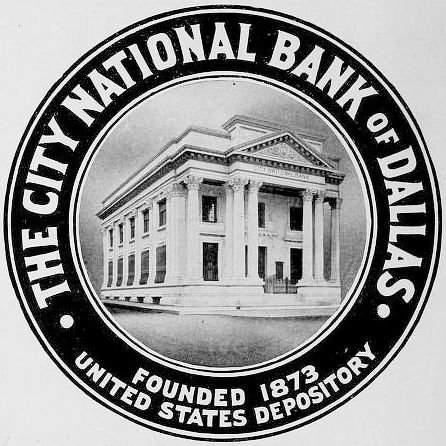
A photo of the City National Bank, from the 1909 Worley’s directory:

city-national-bank_1909-det

*

Copyright © 2014 Paula Bosse. All Rights Reserved.

Dewey Groom and The Longhorn Ballroom

longhorn-ballroom-logo

by Paula Bosse

Growing up in Dallas with a father who was a classic country music fan, I’d always heard of The Longhorn Ballroom. And I’d always heard of Dewey Groom. You can’t have one without the other. The place is still around, but it keeps opening and closing and opening and closing. I don’t even know if it’s active at the moment, which is a real shame, because that place is COOL. I came too late to have seen the place at its glorious height as one of the country’s premiere country ballrooms. And I also came too late to witness the infamous Sex Pistols appearance there in the ’70s. I DID make it once or twice when it was going through its “alternative” period, booking bands that normally played in Deep Ellum. And I loved it. It was HUGE. Western kitsch everywhere. And a regular clientele comprised of people you’d either want to sit down and talk with for three hours or do your best to avoid completely — mostly the former. Below is a transcribed interview with Dewey Groom as it appeared (typos and all) in an old, obscure country music magazine that must have belonged to my father. At the end of this post are a few Dewey-factoids.

Even though his contributions are often overlooked, Dewey Groom was an important figure in the history of entertainment in Dallas. He died in 1997 at the age of 78. Thanks, Dewey!

*
longhorn-ballroom_billboard_112170

***

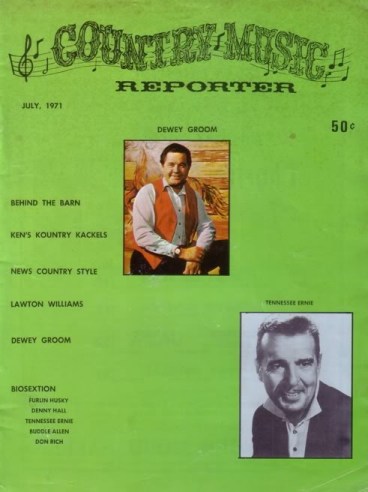
deweygroom_mag-cover-1971-sm*

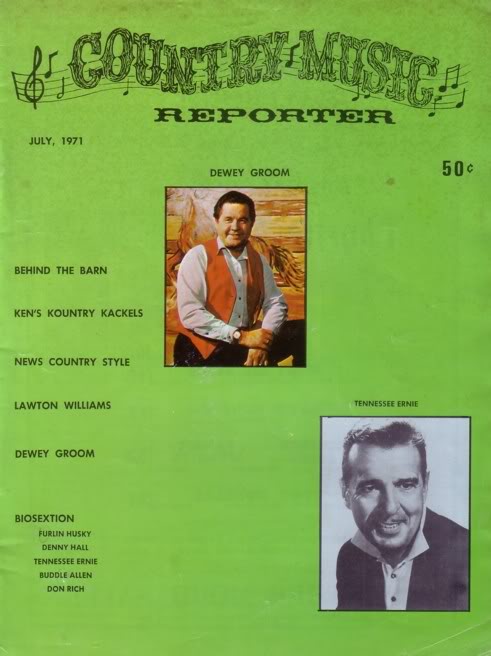
COUNTRY MUSIC REPORTER (Grand Prairie, Texas) – July 1971
“Dewey Groom: From the Mabank Flash To Big Daddy of Country Music”
(writer uncredited — presumably Wayne Beckham, the magazine’s editor)

Back before he combined dancehall-keeping with his country singing, Dewey Groom was known on Dallas radio as the Mabank Flash – a reference to his Van Zandt County origins. He likes to talk of those origins, but he won’t complain nowadays if you call him the Lawrence Welk of country music.

I found him happy about his success as owner of the million-dollar Longhorn Ballroom on Corinth off Lamar [in Dallas, Texas]. But he was more inclined to talk of Angels Inc., the school for retarded children he helped found and hopes to see housed in a big new structure off Buckner, in East Dallas.

If he succeeds, it will be due to the middle-aged faithful who regularly go in thousands to the Longhorn to hear celebrities like Charley Pride or Jerry Lee Lewis, or simply to reassure themselves that the Mabank Flash of Dallas’ immediate postwar years is still in voice.

“I can’t yodel anymore,” Groom told me in the quiet-before-the-storm of a Friday afternoon, “but I still put in my 30 minutes singing and laughing up there with my band every working night – and I’m still hopeful that I don’t have an enemy in the world.”

Likely, he doesn’t; he’s climbed high in his 23 years of dancehall-keeping since he opened at 1925 1/2 Main in the old Bounty Ballroom. He’s on the phone steadily to Nashville picking the talent that makes the Longhorn one of the biggest sound chambers anywhere for the Nashville Sound.

Only big name he’s missed is Johnny Cash – and he, Groom avows, is the biggest: a real philosopher and humanist.
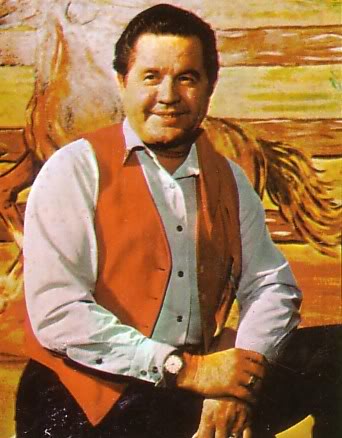
dewey-groom_color

Back in Groom’s youth the big name, he says, was Jimmie Rodgers, the old blues singer who started country music. But even before Rodgers became famous in the ’20s, the Groom family was a gospel singing crowd for certain.

“Daddy sang and my uncle was a singing schoolteacher,” he says. “In Deep East Texas, singing schools were everywhere. I joined. They taught you to read music and keep time. Gospel singing is pretty close to country music; so evenings we’d go across the fields to Uncle Bert Wise’s and listen to Jimmie Rodgers. Uncle Bert had the only phonograph around and got all the new records.”

Dewey imitated what he heard, but his friends said everything came out like Gene Autry. He believed them and went to look for a wider audience. He landed in Dallas at 10 with his guitar, but instead of instant fame, found work in a garage.

“I’d get up in the night and hang around a midnight radio show – I’d drop in on Bill Boyd’s old live 6 a.m. program on WRR,” he recalls. “Sometimes he’d let me sing on that show – the big time.”

But it wasn’t until he donned a uniform in 1941 that Groom had a real chance to stretch his lungs. He started singing in army rec halls and when he got overseas became the “Western part” of a divisional GI band which entertained for 42 months in the New Guinea area and Australia.

“I guess I became a professional then,” he reminisces, “but it was Hal ‘Pappy’ Horton that got me going in civilian life. I won $50 first prize on Pappy’s old Hillbilly Hit Parade in 1946. Then when he started his noon-time Cornbread Matinee, I was the singer. The show was a tremendous hit for 200 miles around Dallas. Pappy brought in Gene Autry and Roy Acuff. I was a hit, too. I played school shows and they used to tear the buttons off my clothes. Nobody knew it, but the Mabank Flash’s wife was making those pretty clothes I wore. I was the biggest thing in country singing around here, but she was the biggest thing in keeping me going.”

But Pappy died and the school shows Groom loved petered out. Too many bands were vying for a chance to put on shows in the schools. So Groom went to playing dances.

He ended up with Jack Ruby at the Silver Spur.

“I made Jack a lot of money,” he recalls, “at the time when he was deep in debt.”

“What kind of man was he?” I asked.

“A driver, and a talker – very emotional. Everybody liked him. He’d do anything in the world for you. But he didn’t understand country music. He wanted a sophisticated place, which you can’t have. He ran away my followers as fast as they turned up. Finally, the police that hung around the place told me I ought to get into business for myself. I borrowed $500 and opened up.”
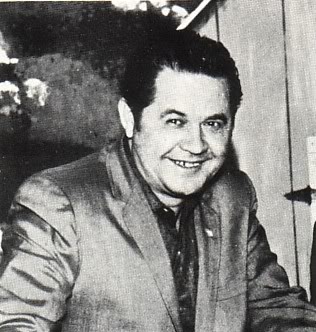
dewey-groom_bw

It’s been a rough haul, says Groom, and he’s made it through several locations only because he understands the business – and that takes years.

Too many men rise and fall. Bob Wills, for instance, was the biggest bandleader in the world at one time – he outdrew Tommy Dorsey. Now – well, Groom will have a “tribute” dance for Wills, a man whom, next to Pappy Horton (whom he reveres as a great and good man), Groom admires most.

He cut his professional teeth on Wills’ songs – especially San Antonio Rose which, he confides, is simply an earlier Wills hit, Spanish Two Step, played backwards. Groom also has a taped narrative of Wills’ life, which has been a big radio hit. He expects the Wills Tribute Night to be a success.

“You can squeeze 2,000 people into the Longhorn,” he says, “and I guarantee the top guest stars from $1,500 to more than $2,000. They always make more than the guarantee. This week, it’s Ray Price. Other big names are Charley Pride, the Negro country singer, who I rank next to Johnny Cash, and people like George Jones, Tammy Wynette, Harold Morrison and Conway Twitty.”

As a lifetime member of the Country Music Hall of Fame, Groom is certain that another gospel-singer-type – Jimmy Davis, former governor of Louisiana – will go in the Hall of Fame this year.

Groom is sentimental about the old times and old-timers, but he knows it’s harder to please people nowadays. Variety is demanded. Even a little pop gets mixed with country music.

“People think I’m rich and I guess sometimes I want them to think so,” he confides, “but I don’t want to be. I want friends and I want to finish that school for Angel Inc. If I can do these two things, I’ll be happier even than I was when I was the Mabank Flash.”

“Daddy Dewey,” as he is known by many artists and fans, knows practically all the stars. He has had many of them on his stage. Dewey has contributed much to many artists in helping to get them started. Through the years he has recorded many records and written many songs as well.

The Longhorn Ballroom came about in October, 1968. Since then he has also purchased the old Guthrie Club and torn out the wall to increase the seating capacity to over 2,000, on a 4 1/2 acre plot that cost nearly $500,000.

Dewey Groom has become an authority on country music. He is often called upon for informative opinions on new country clubs or organizations. Many fellow club owners are personal friends and often obtain information about artists and business – [there’s no] bitterness that often comes in competition.

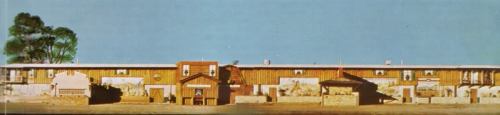
It’s been a long way since Dewey first traded a bull-calf for a guitar to the present-day Longhorn Ballroom. It is without doubt “America’s Most Unique Ballroom.” A landmark in Dallas, and one of the few western ballrooms in America. Hand-painted murals cover the walls and country decor prevails. Top country artists appear here weekly [and] Dewey’s own 12-piece band appear[s] nightly.

**

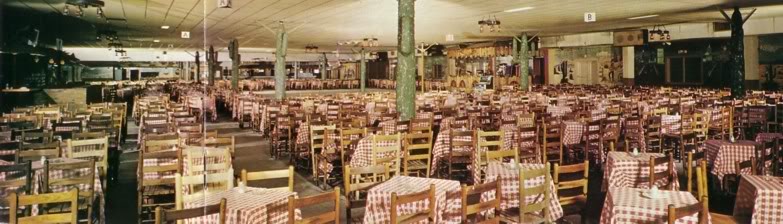
Below, photos from the article showing a partial view of the sprawling interior, complete with fantastic cactus pillars, as well as a couple of exterior shots showing Western street-scenes outside the club in a horseshoe around the parking lot. (Click to see larger images.)
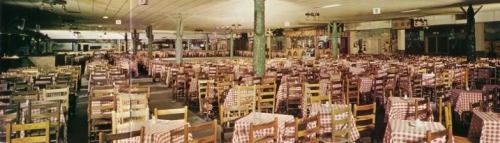
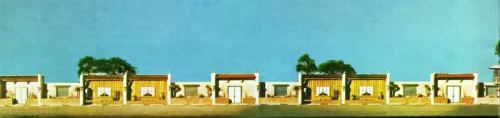
dewey-groom_longhorn-ballroom_int

dewey-groom_longhorn-ballroom_ext1

dewey-groom_longhorn-ballroom_ext2

***

Sources & Notes

Incidentally, I have moved this post from another blog I had a long time ago. Without question, this got more hits and more comments (…more than 50!) than anything else I’d ever posted. People loved the Longhorn Ballroom, and a lot of them miss the days of dancing and drinking at the legendary dancehall (which just happened to be in a very seedy part of town, at Corinth and Industrial). Long live the Longhorn! (Also, I think it’s high time we bring “Dewey” back into the baby-name-pool. Along with “Roscoe.” … And maybe “Lon.” Pass it on.)

A short interview with Dewey on his retirement — “Adios, Longhorn Ballroom” by Mike Shropshire — was printed in Texas Monthly (March 1986) and can be found here.

Dewey Groom’s record label, Longhorn Records, was fairy active. He even put out some recordings of himself. I just listened to “Butane Blues” and I realized it was the first time I’d ever heard his voice (Dave Dudley meets Malcolm Yelvington). Listen to his recording on YouTube here.

Check out a cool photo of Dewey and his band in the early ’50s here.

A weird little detour into Dewey’s 8-page Jack Ruby-related file in the Kennedy assassination investigation (in which “barber” is listed as his profession) can be found here.

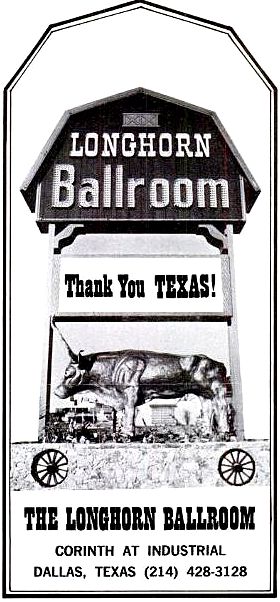
Below a short piece from Billboard (Nov. 21, 1970).
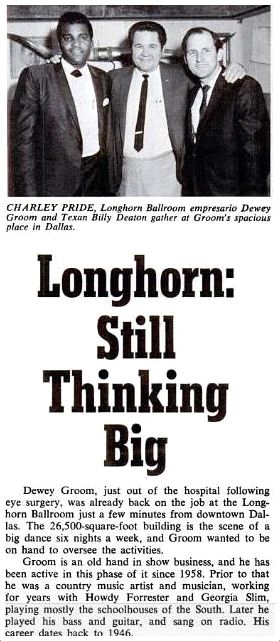
dewey-groom-billboard-112170adewey-groom-billboard-112170b

And, finally, a nice history of the Longhorn Ballroom by Jeff Liles (who booked bands there for a while in the post-Dewey era) can be read on the Dallas Observer website here.

*

Copyright © 2014 Paula Bosse. All Rights Reserved.

The Texas Fire Extinguisher Co. and Hitler — 1942

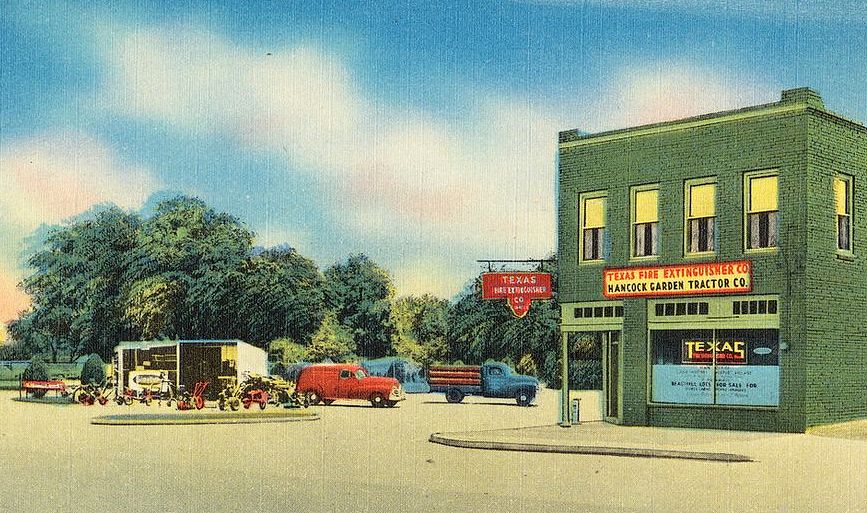
tx-fire-extinguisher-coTexas Fire Extinguisher Co., across from Fair Park

by Paula Bosse

For a place that sells fire extinguishers and tractor equipment, this is a wonderfully comforting image. Hardly even looks like Dallas. The Texas Fire Extinguisher Company — operated for several decades by the Hancock family — was located at the corner of Parry and Second Avenue, across from Fair Park. While checking to see the exact address of this business (which, by the way, was 929 Second Ave.), I came across a 1942 article mentioning it and Hitler.

According to a Dallas Morning News blurblet, the Hancock company owner had placed a want-ad for a painter and paperhanger and received an odd response on a postcard:

Gentlemen: I wish to apply for the job as a paperhanger. Am hunting bears at present, but am about out of ammunition. Anyway, I am a better paperhanger than I am a bear hunter. –Adolph Hitler, Berlin, Germany. (P.S. Please rush answer as this job is playing out and may have to move soon.)

Humor doesn’t always translate successfully across the generations. But, hey, that was weird.

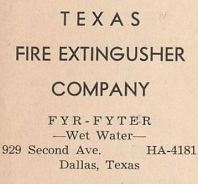
texas-fire-extinguisher-co_texas-fireman_june-1951_portal1951 ad, “Fyr-Fyter, Wet Water”

***

Sources & Notes

Postcard (cropped) from the Boston Public Library Tichnor Brothers Postcard Collection on Flickr, here.

Quote from Dallas Morning News article “Reply to Want Ad Indicates Hitler Wants a New Job” (DMN, Nov. 6, 1942).

Ad from Texas Fireman magazine, June 1951, via Portal to Texas History.

*

Copyright © 2014 Paula Bosse. All Rights Reserved.
Deep Ellum / Deep Elm / Deep Elem Blues

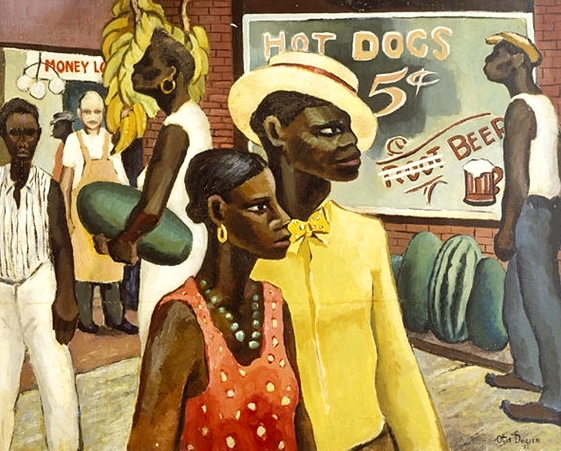
deep-elm-otis-dozier_1932“Deep Elm” – Otis Dozier, 1932

by Paula Bosse

“Deep Ellum Blues” has become a standard blues song, warning of/extolling the vices found in the once-thriving, predominantly black area of town, where a lot of people — black and white — enjoyed themselves (after dark) in clubs and bars, immersed in the sometimes shady goings-on that one tends to find on the other side of the tracks. The song (sometimes irritatingly called “Deep Elem Blues”) was first recorded in 1935 by the Lone Star Cowboys (popular performers in the Dallas area, better known as the Shelton Brothers). And now it’s become a blues standard, sung around the world by people who have no idea what a “Deep Ellum” is.

Below are four versions of the song that I like. (I searched for early performances by black musicians, but, according to Deep Ellum experts Alan Govenar and Jay Brakefield, there is only one that anyone seems to know about — by Booker Pittman, grandson of Booker T. Washington, and I couldn’t find it.)

But first, if you haven’t seen this wonderful short documentary by Alan Govenar about Deep Ellum in its original prime, it’s a must-see. (Bill Neely sings “Deep Ellum Blues” in this — it’s great. Listen for the extra verses.)

Below, the original version by the Lone Star Cowboys, who later changed their name to The Shelton Brothers and were well-known to Dallas audiences through their regular appearances at the Big D Jamboree and on local radio. (Listen to their follow-up, “What’s the Matter with Deep Elem?”)

My personal favorite, this hopping western-swing-big-band-rock-n-roll version by the always fabulous one-time Dallas resident Hank Thompson.

I can’t leave off this turbo-charged rockabilly version by Dallas’ own “Groovey” Joe Poovey!

And, finally, for good measure, one weird version, by the always reliable Charlie Feathers.

Remember y’all: KEEP YOUR MONEY IN YOUR SHOE!

***

Sources & Notes

“Deep Elm” painting by Otis Dozier (1932) — one of the Dallas Nine group — from the collection of the Dallas Museum of Art.

“Deep Ellum” film by Alan Govenar, one of Dallas’ leading blues and cultural historians and archivists. For more on the 1985 short film, see the FolkStreams site here. For Alan Govenar’s Documentary Arts website, see here.

For more on the history of Deep Ellum, I highly recommend Deep Ellum and Central Track, Where the Black and White Worlds of Dallas Converged by Alan B. Govenar and Jay F. Brakefield (Denton: UNT Press, 1998), as well as their recent revised/expanded book Deep Ellum, The Other Side of Dallas (College Station: Texas A & M University Press, 2013). Govenar and Brakefield have written the definitive history of Deep Ellum in these two volumes. You can read a bit about the song from the latter book here.

I wrote about another interesting song, “Dallas Blues” — considered by many to be the first blues song ever published — in the post “I’ve Got the Dallas Blues and Main Street Heart Disease,” here.

*

Copyright © 2014 Paula Bosse. All Rights Reserved.
Dallas Morning News Lobby — c. 1904

dmn-lobby_c1903_degolyer

by Paula Bosse

Suppose it’s 1904 and you’ve placed a classified ad in The Dallas Morning News — looking for a job, looking for a buyer for your business, or looking for your reprobate cousin Harold who’s skipped town without re-paying you the money you loaned him. You want to retain a certain amount of anonymity or you have no fixed abode, so you’ve requested that replies from interested parties be addressed in care of a box number at the newspaper offices. If you had done that in 1904, this is where you would have gone to pick them up: the lobby of The Dallas Morning News, seen here in their first building (built in 1885) at 500-501 Commerce St. I can only assume there is another strategiacally-placed spittoon just out of frame.

Here are a few random classifieds with box numbers, all of which appeared in the paper 110 years ago today. These people would have been wandering in and out of this lobby hoping to see envelopes waiting for them when they arrived. Having watched a LOT of old movies, I picture woefully conspicuous detectives hanging out in the lobby, pretending to read the paper, with one eye fixed on those boxes. Waiting. …Watching. …Spitting.

classified_stenographer_dmn_051704

classifieds_dmn_051704

classifieds-dmn_041704

***

Photo from the Belo/Dallas Morning News collection, DeGolyer Library, Central University Libraries, Southern Methodist University, accessible here.

Classifieds from the May 17, 1904 edition of The Dallas Morning News.

Click photo for larger image.

*

Copyright © 2014 Paula Bosse. All Rights Reserved.
“Mars Needs Women” — The Dallas Locations

1-mars-oak-lawnOak Lawn & Lemmon, 1966

by Paula Bosse

Chances are, if you’re a native Dallasite and you’re a cult movie buff, you’ve heard of Dallas filmmaker Larry Buchanan (1923-2004), the self-described “schlockmeister” who made a ton of low-budget movies in Dallas, almost all of which are considered to fall in the “so-bad-they’re-good” category. I’ve made it through only three of them, and while they’re definitely not great (or even good, really), there were moments I enjoyed.

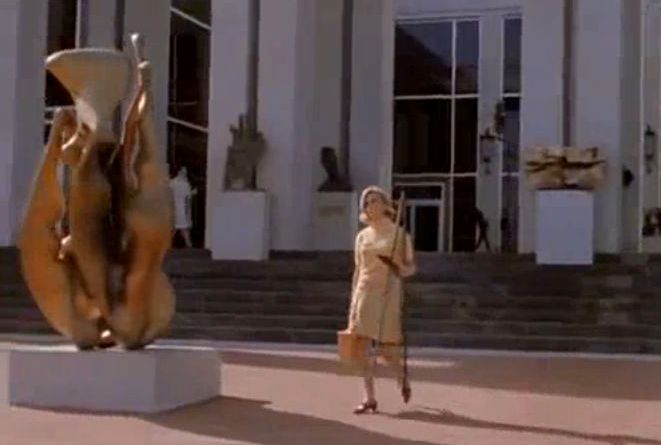
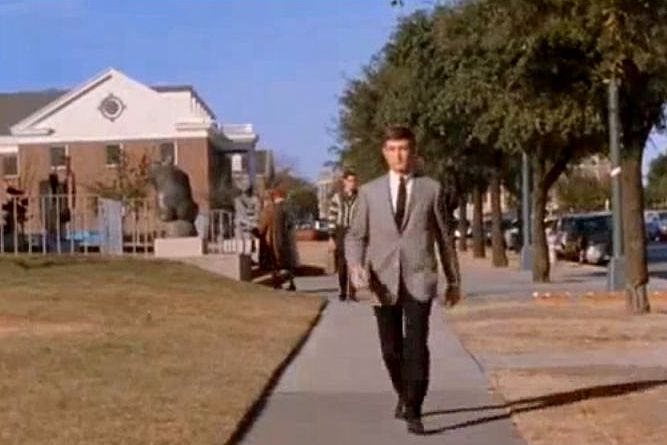
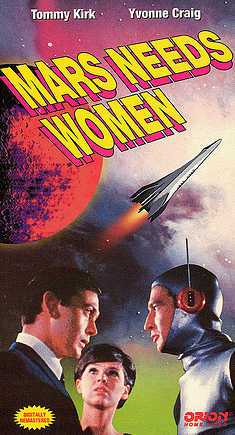
Buchanan’s most well-known movie — if only because the title has worked itself into the sci-fi vernacular — is Mars Needs Women, shot in Dallas in a couple of weeks in late 1966, starring former Disney child star Tommy Kirk and future star of “Batgirl,” Yvonne Craig. For me, the worst thing about the movie is its incredibly slow, molasses-like editing (courtesy of writer-director-editor Buchanan who was working on contract to churn out movies that had to be cut to a very specific running time, and he’s obviously padding here with interminably long scenes that drag and drag). And then there’s the dull stock footage and weird background music that I swear I’ve heard in every cheap Western ever made. Still … it has its charm.

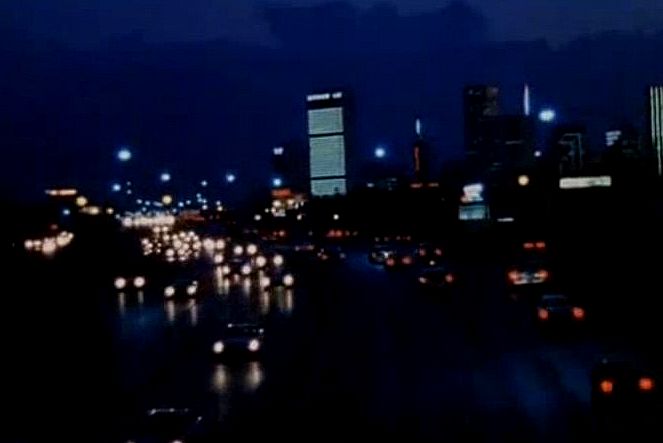
But the BEST thing about this movie (and, presumably, his others) is that it was shot entirely in Dallas, using a lot of instantly recognizable locations. (Every time I saw a place I knew, I perked up — it reminded me a bit of seeing Bottle Rocket for the first time — almost shocked to see common every-day places in an honest-to-god MOVIE!) So, if you don’t feel you can sit through the whole thing (available, by the way, in its entirety online — see link at bottom), I’ve watched it for you, with a whole bunch of screen shots. So feast your eyes on what Dallas looked like in November of 1966. (By the way, because the movie revolves around …. Mars needing women, the movie is actually set in Houston, home of the Johnson Space Center. Even though you see the very distinctive Dallas skyline — repeatedly. Houston! You wish, Houston!)

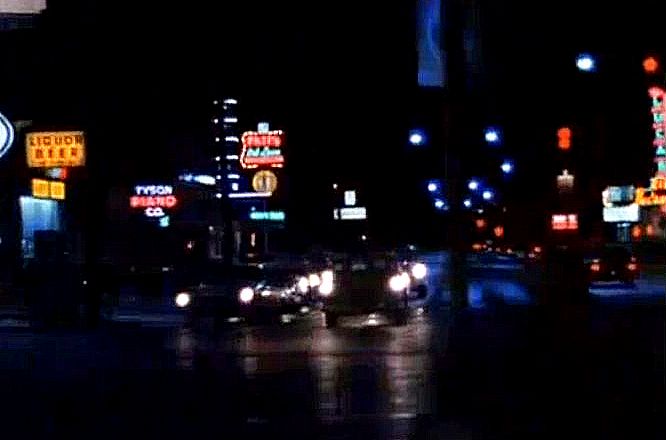
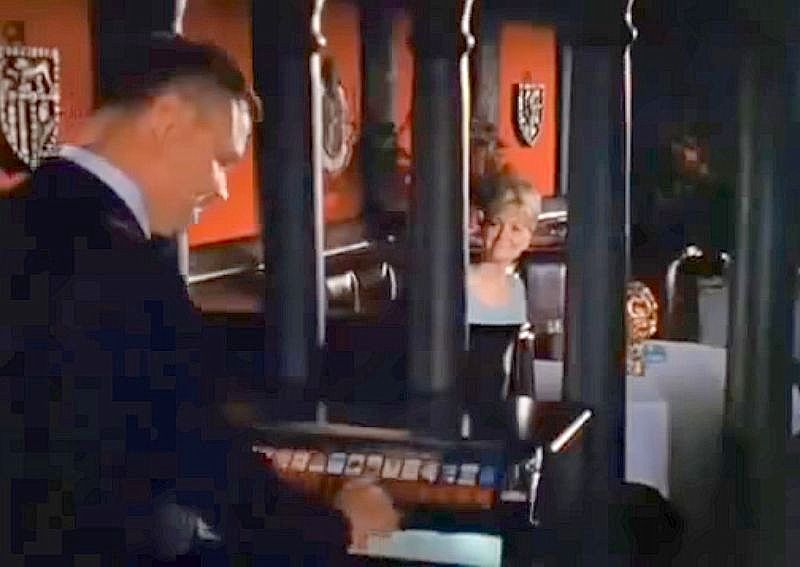
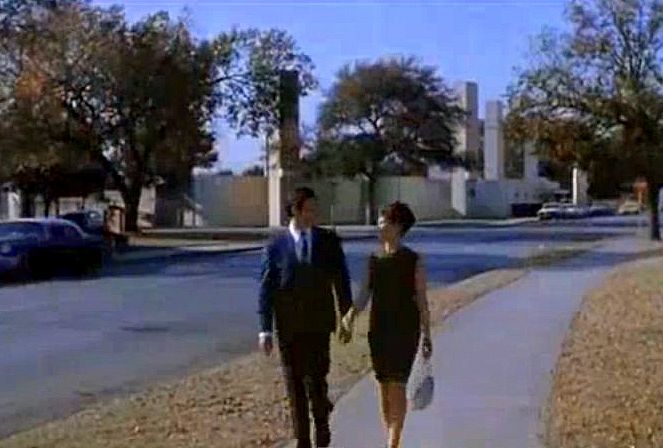
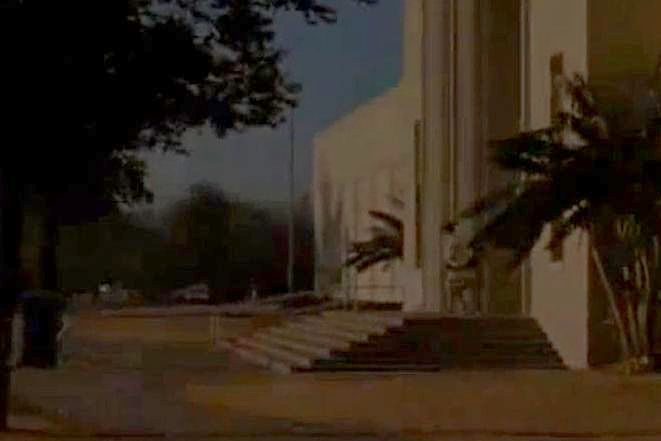
My favorite shot is the one at the top of this page and is seen in the first 90 seconds of the movie: Oak Lawn at Lemmon, with the familiar Lucas B & B sign at the right. This area was used a few more times. One character goes into the old Esquire theater, but, sadly, there was no establishing shot showing that great old neon sign. I think the first interior — showing a couple at a lounge — was shot in the swanky private club, Club Village, at 3211 Oak Lawn (at Hall), just a short hop from Oak Lawn and Lemmon.

1966_club-village_mars-needs-women

Next, we’re off to White Rock Lake.

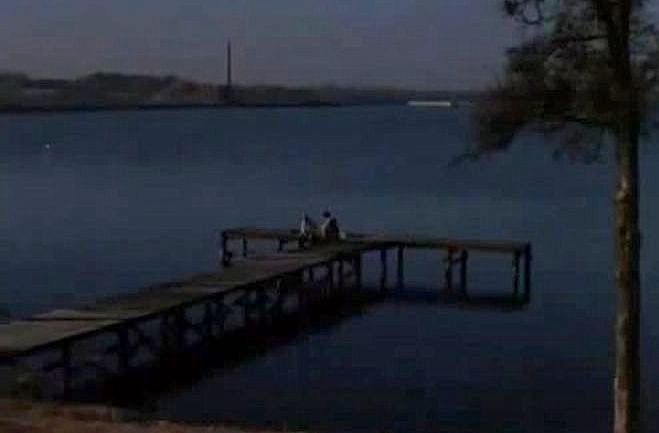
2-mars_pump1White Rock Lake. Shot day-for-night, with the pump station in the distance.

3-mars-pump2White Rock Lake pump station, where the Martians are headquartered as they search for healthy, single women to take back to Mars to help re-populate the planet.

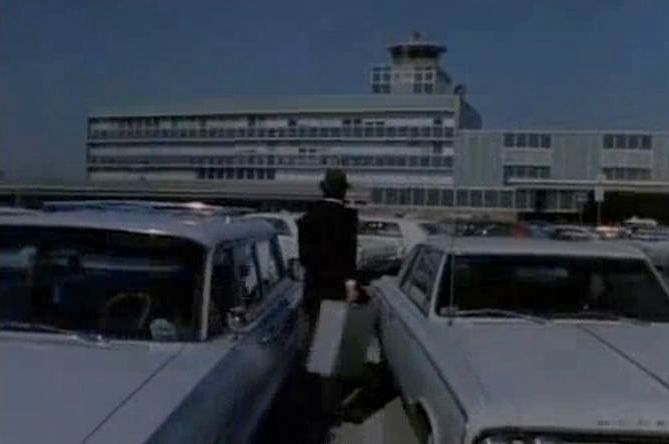
4-mars_love-field-extLove Field parking lot. Still shooting day-for-night. Badly.

5- mars-southland-lifeThe Southland Life Building, etc., magically transported to Houston.

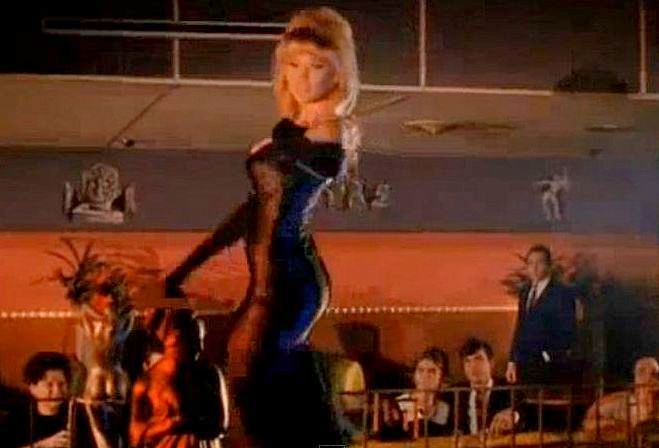
7-mars-athens-stripAthens Strip — a strip joint on Lower Greenville, one block north of the old Arcadia Theater. I’ve never heard of this place, but I came across the story of a guy who had visited the place back around this time and remembered one of the VERY unhappy dancers who hurled handfuls of the coins (!) that had been tossed onstage back into the audience, with such force that his face and chin sustained minor lacerations.

8-mars-needs-women_athens-strip_bubbles-cashLocal celebrity-stripper “Bubbles” Cash, inside Athens Strip. Plainclothes Martian (standing) ponders whether she has what it takes to birth a nation. (She does.)

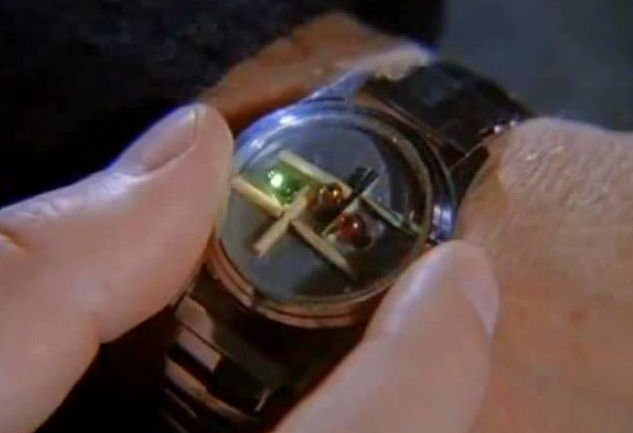
9-mars-watchMy favorite example of what a director is forced to resort to when there is no budget. This is some sort of sophisticated communication device. I think those are matchsticks.

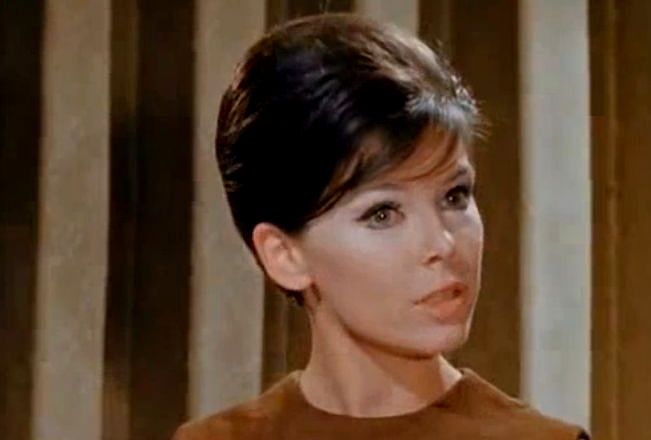
10-mars-yvonne-craigYvonne Craig, without a doubt the best actor in the movie. In fact, she’s really good. She had already made a few movies in Hollywood at this point, but the lure of a starring role brought her back to her hometown (where the newspapers reported she was happily staying with her parents during the two-week shoot).

11- mars-band-shellMartian #1 and sexy space geneticist strolling through Fair Park — band shell behind them, to the left.

12-mars-planetariumThe Fair Park planetarium.

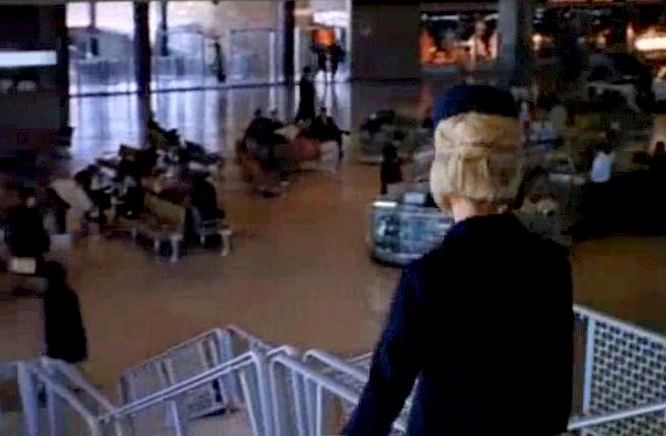
13-mars_love-fieldLove Field. I love the interior shots of the airport in this movie. (The stewardess walking down the stairs? Destined for Mars.)

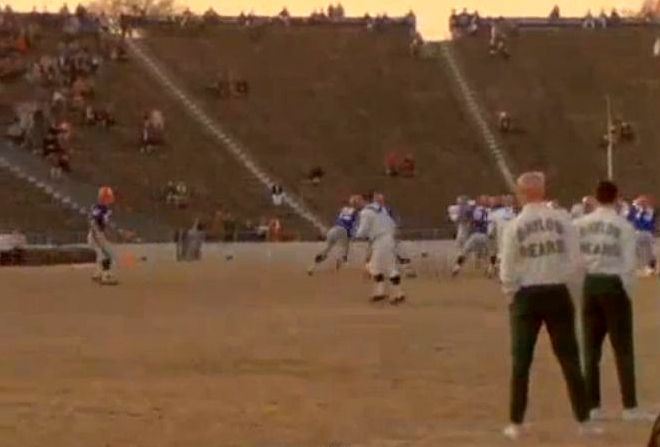
14-mars-cotton-bowlCotton Bowl, shot during a homecoming game between SMU and Baylor. Some shots show a packed stadium, some show this. Word of warning to the homecoming queen, Sherry Roberts: do NOT accept that flower delivery!

15-mars-meadowsSMU, Meadows School of the Arts. I love the pan across the front of the building. Mars Needs Co-Eds.

17-mars_BMOCSMU. BMOC (Big Martian On Campus).

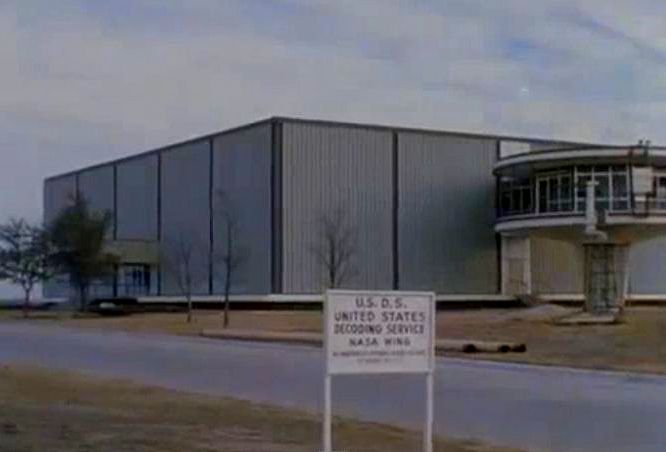
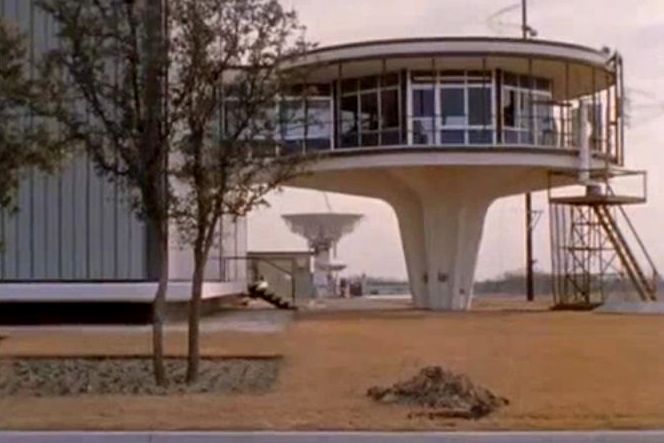
18-mars-collins-radioThe one location I couldn’t figure out. And it’s because it isn’t in Dallas. It’s the Collins Radio building in Richardson, a company that was absorbed by/bought out by/merged with Rockwell International. I think all the interior and exterior shots which are supposed to be NASA were shot here. How did a low-budget director like Larry Buchanan get into a place like that? According to a 1986 Texas Monthly article, Buchanan, in his day-job career as an ad-man, was hired by Collins Radio in 1961 to work in their “audio-visual” department” (the man who hired him was Harold Hoffman, whose later film work with Buchanan was done under the name Hal Dwain).

19-mars-collins-radioSo, yeah — COOL location.

20-mars_fair-parkMore Fair Park, more murky day-for-night.

21-mars_pump3White Rock Lake pump station, aka the Martian lair.

22-mars-saucerFANTASTIC flying saucer. Do the Martians get their five healthy, single women on board the ship and get them back home? You’ll have to watch it for yourself to find out.

23-mars-endYou tell ’em, Konnie.

mars-needs-women_VHS-box

Check back in a few days for more on Larry Buchanan (including a long-lost photo of him at work back in his advertising days in the 1950s).

UPDATE: Here it is — Larry Buchanan filming a Chrysler spot in the Katy railyard in 1955 for Dallas’ Jamieson Film Company, here.

***

Sources & Notes

The entire movie is on YouTube in a pretty good print. Watch it here.

Larry Buchanan Wikipedia page is here.

Mars Needs Women Wikipedia page is here.

Collins Radio/Rockwell Collins Wikipedia page is here.

Consult the Dallas Morning News archives to read a somewhat sarcastic Dallas Morning News article by Kent Biffle on the shooting of the Cotton Bowl sequence (I miss his Texana columns!): “That UFO Was a Field Goal” (Nov. 20, 1966).

*

Copyright © 2014 Paula Bosse. All Rights Reserved.
“Electricity in Every Form” — 1909

ad-sanitarium_moran_1909(Click for larger image)

by Paula Bosse

There was a lot going on in 1909 on the 7th floor of the Wilson Building in the “extensive apartments” occupied by a local “institution” affiliated with the Battle Creek Sanitarium. Individuals could (and apparently did) avail themselves of the following treatments:

Some of the therapeutic measures employed are: Baths of various kinds scientifically administered by trained attendants. Electricity in every form. Every kind of general and special Massage. Mechanical Vibration by the most recent and efficient apparatus. Hydrotherapy (the scientific use of water) in its great variety of application. Electric Light Baths. Physical Culture.

Just let that soak in. Or surge through you. Administering your voltage? Say hello to Dr. F. B. Moran, below.

moran_sanitarium_dmn_102730

Yes, indeed.

***

Sources & Notes

Ad from the 1909 Worley’s city directory.

Photo of Dr. Moran from a 1930 ad so long-winded and dull I couldn’t finish reading it or fit it in here.

See the Battle Creek Sanitarium contraptions in action here.

Click ad for larger image.

*

Copyright © 2014 Paula Bosse. All Rights Reserved.