Flashback : Dallas

A Miscellany: History, Ads, Pop Culture

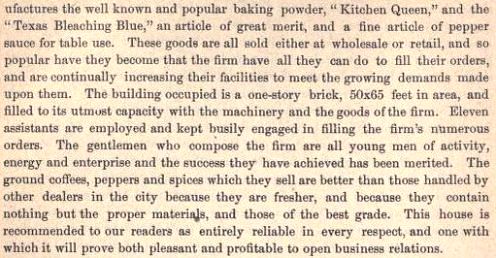
Dallas Steam Coffee & Spice Mills — 1880s

babcock-foot-brown_imm-gd_1889

by Paula Bosse

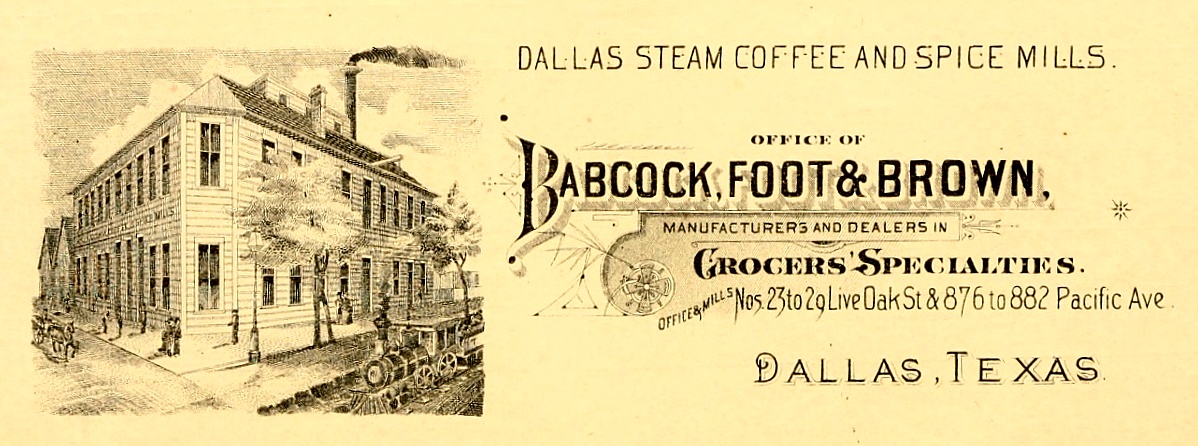
It’s 1880-something. You’re in Dallas. You need a pound of coffee. Some ground mustard seed. Maybe some “Texas Bleaching Blue.” Where, oh where, do you turn?

babcock-foot_1884ababcock-foot_1884b

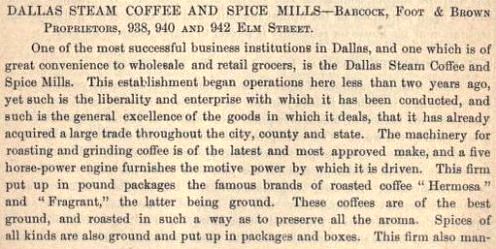
Messrs. Babcock, Foot & Brown will be happy to supply you with everything you need. And that five-horsepower engine? Top-of-the-line!

***

Sources & Notes

Ad from The Immigrant’s Guide to Texas, 1889. Click for larger image.

Description of the business from The Historical and Descriptive Review of the Industries of Dallas, 1884-85.

*

Copyright © 2014 Paula Bosse. All Rights Reserved.

The Oak Cliff Viaduct & The Weird Composite Photo — 1912

oak-cliff-viaduct-panorama_c1912_LOC

First you take a photo of the beautiful new Oak Cliff Viaduct, above.

Then you take a photo of the Dallas skyline, below.

dallas-panorama-skyline_1912_LOC

Then you put them together and get this bizarro Franken-photo!

oak-cliff-viaduct-panorama_skyline_c1912_LOC

It doesn’t look like any view of Dallas you’ve ever seen, but it still looks pretty damn cool.

***

Sources & Notes

All these panoramic photos are in the collection of the Library of Congress, all from the studio of Johnson & Rogers. The top photo has a copyright date of March, 1912, and the bottom two have copyright dates of August, 1912. See these panoramic photos (as well as one of the Buckner Orphan’s Home in 1911) on the Library of Congress site here.

Would this unusual composite have been done for a fanciful postcard or some other kind of promotional material (for the city or for the photographers)? Was it just done for fun? Tellingly, it’s the only one of the three without the studio’s imprint. If anyone has further info on this, please let me know!

These photos are HUGE. Click to see larger images — and use that horizontal scrollbar!

*

Copyright © 2014 Paula Bosse. All Rights Reserved.

The Shooting of “Bonnie & Clyde” — 1966

bonnie-clyde_unt_113066On location: Greenville Avenue (click for larger image)

by Paula Bosse

Today is the 80th anniversary of the ambush and killing of Bonnie and Clyde. Since I’ve written about Ted Hinton (one of the ambushers and erstwhile motor lodge operator) and Clyde Barrow (as a not-yet-completely-delinquent 17-year old) (and dressed up in a sailor suit), why not a brief look at the movie?

I was hoping to find a bunch of local as-it-was-happening anecdotes in the newspaper archives, but I found very little. (Hey, Dallas — you had a major motion picture with Hollywood celebrites in it — couldn’t you have devoted a little more ink to it?)

The photo at the top is the only one I could find that showed shooting (…as it were) at a Dallas location. The above was shot at the Vickery Courts motor lodge at 6949 Greenville Avenue (just north of Park Lane, across Greenville and up a bit from where the old Vickery Feed Store was).

So photos were practically non-existent, but I did learn that the interiors were shot at a large soundstage on Dyer, just off Greenville, called Stage 2, owned by Bill Stokes of Bill Stokes & Associates (where I spent a blink-of-an-eye interning back in high school).

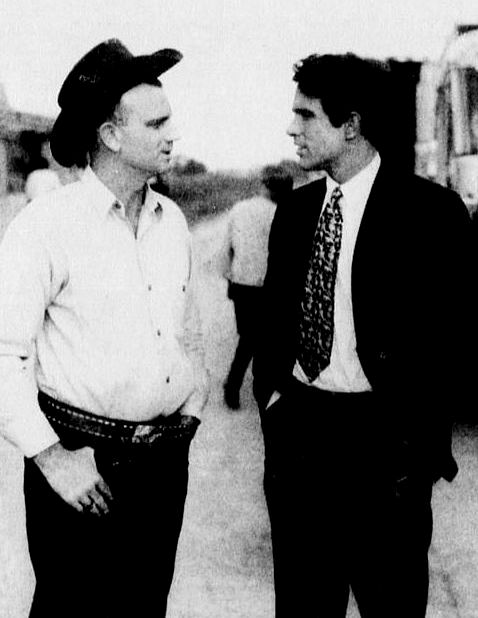
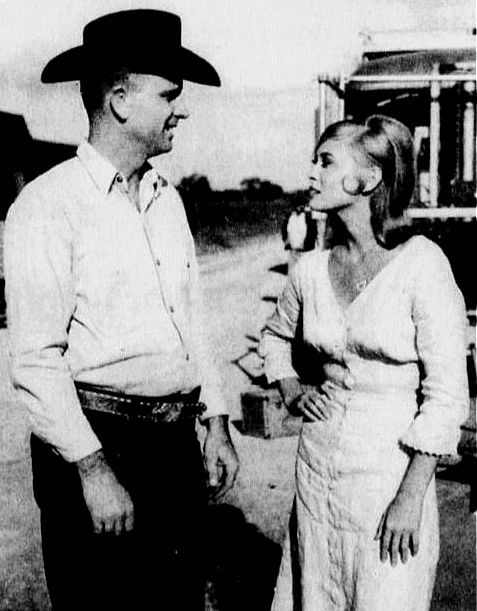
Below are two photos of Warren Beatty and Faye Dunaway between shots in Lavon, Texas, just outside Wylie — talking with one of the extras, Billy Joe Rogers, a saddlemaker from Wylie.

bonnie-clyde_lavon_beatty_102066

bonnie-clyde_lavon_dunaway-102066

The reactions to the finished movie from the local critics was interesting. The reviewer for The Dallas Morning News hated it. Hated it.

Bonnie and Clyde were a couple of rat punks who created terror in a vast area simply because they had no hesitation in gunning down those who stood in their way. […] They became for a brief span the nation’s most hunted outlaws and finally were shot down […] like the mad dogs they were. […] In a word: There is nothing entertaining about mad dogs; they should be killed — and quickly. (William A. Payne, DMN, Sept. 14, 1967)

I don’t know anything about the reviewer, William A. Payne, but my guess is that he vividly remembered the real-life Bonnie and Clyde and, like many other reviewers of the time, deplored the perceived glamorization of violence. (As an aside, I wondered why I wasn’t finding listings for “Bonnie and Clyde” in the early ’30s when I searched through the Dallas Morning News archives. As I learned from Mr. Payne, the two were commonly known as “Clyde and Bonnie” back then. So there you go!)

The review from Elston Brooks of The Fort Worth Star-Telegram, on the other hand, was ecstatic.

“Bonnie and Clyde,” which had every right to be a B-grade gangster shootout in double-breasted suits, is instead a shattering emotional experience, a fascinating film and  — oddly enough — an important motion picture. (Elston Brooks, FWST, Sept. 15, 1967)

My guess is that Brooks was about 30 years younger than Payne and had little, if any, personal connection to the real-life outlaws who killed real people.

*

The film ran up against a lot of studio problems. Warner Bros. head Jack Warner called it “the longest two hours and ten minutes I ever spent,” and the plan was to dump the movie in drive-ins and second-string-movie houses and be done with it. But producer-star Beatty was persistent and got it into the Montreal Film Festival where the positive reviews as well as the 9,000-word rave from Pauline Kael in The New Yorker assured it got the attention it merited. And it did. It was nominated for 10 Academy Awards and is considered a classic move of the 1960s.

*

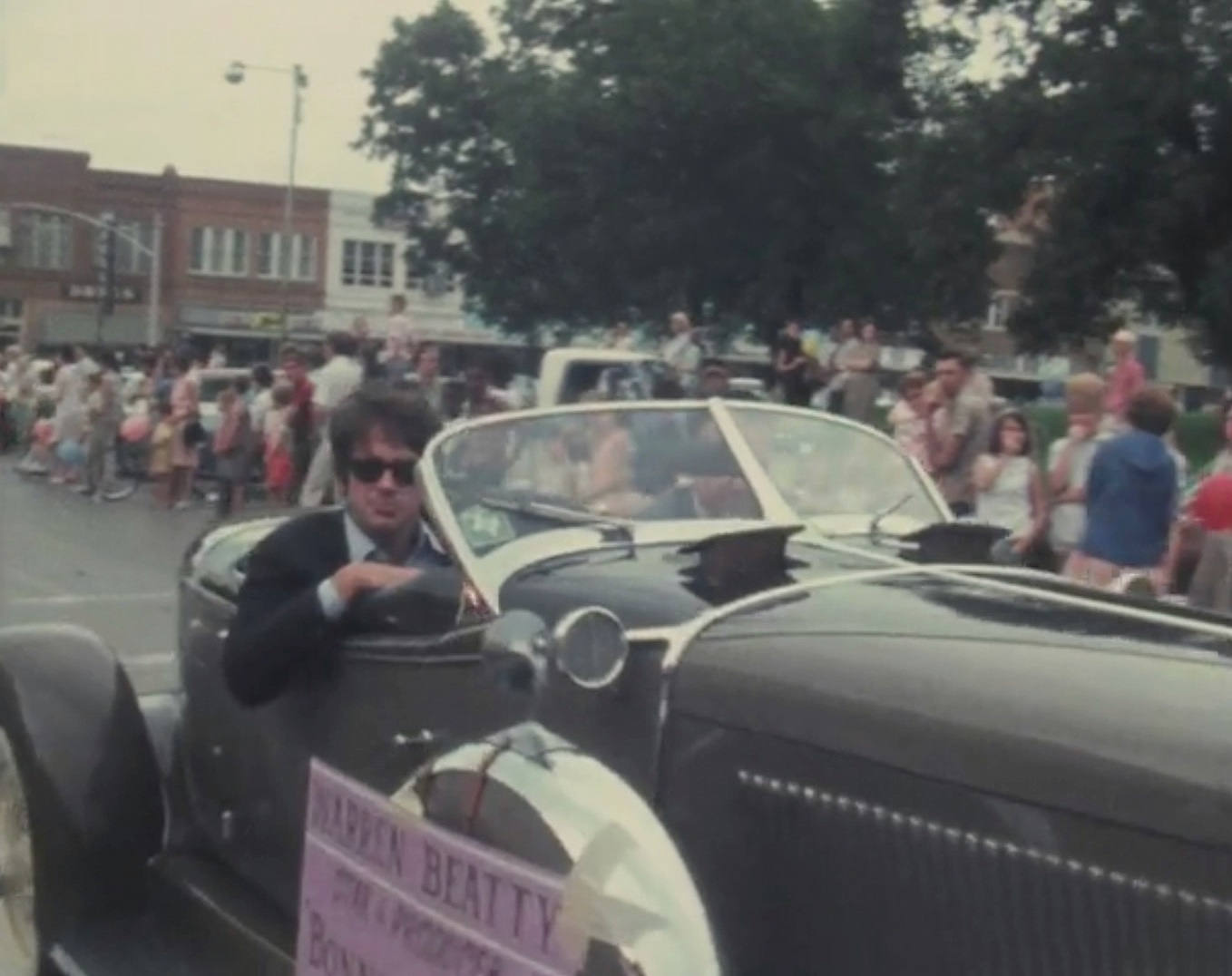
The movie had its Southwestern premiere at the Campus Theater in Denton in September, 1967. Watch (silent) news footage of the premiere from WBAP-TV (Ch. 5) at the Portal to Texas History, here (it begins about the 4:41 mark). Here’s a screen capture of Warren Beatty that day — also appearing were Michael J. Pollard and Estelle Parsons.

bonnie-and-clyde-movie_beatty_denton-premiere_wbap-tv_091367_portal

*

One last little interesting tidbit was what happened after the movie wrapped production in Dallas. Warren Beatty donated the so-called “death car” to a local wax museum. Unfortunately for the wax museum, the car’s bullet holes had been filled in to shoot another scene, so the museum had to search for someone to professionally and authentically re-riddle the car with bullet holes.

It’s always something.

***

Sources & Notes

Top dark and grainy photo of location shooting at Vickery Courts from The Campus Chat (newspaper of North Texas State University, Denton), Nov. 30, 1966.

Photos of Beatty and Dunaway in Lavon, Texas from The Wylie News, Oct. 20, 1966. An article and more photos from the set (local extras, etc.) can be found here and here.

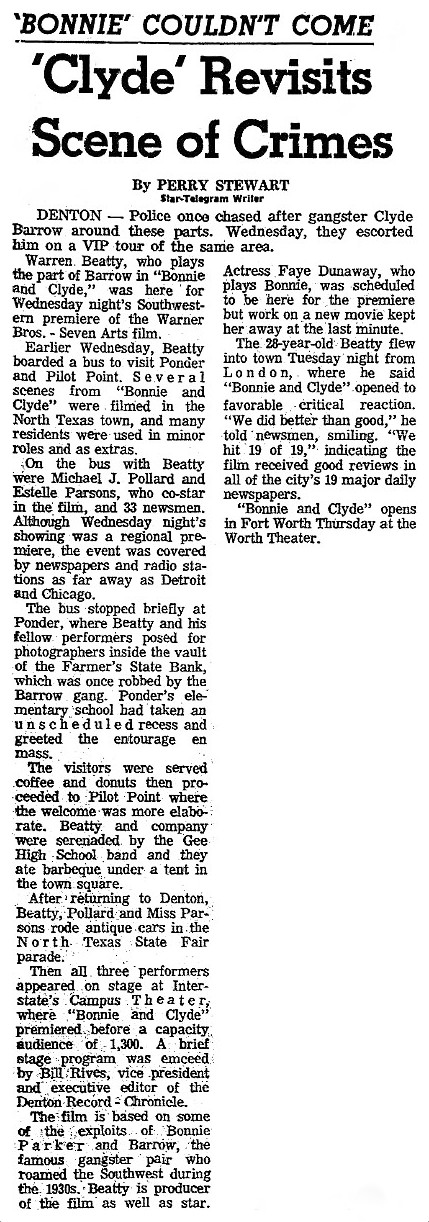
Here’s a bonus Fort Worth Star-Telegram article on the fun and unusual bus trip that Beatty and other stars of the film took to some of the small towns they’d filmed in when they were back in the area for the local premiere in Denton (click to read):

bonnie-clyde_fwst_091467
FWST, Sept. 14, 1967

And a good overview of the making of the film can be found at TCM’s website here.

*

Copyright © 2014 Paula Bosse. All Rights Reserved.


My Father, Dick Bosse — Dallas Bookman

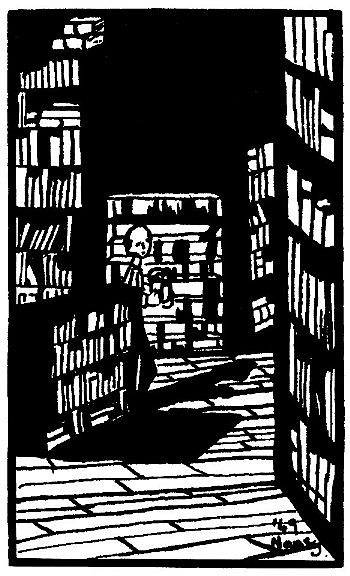
PRB_nancy-sketch_sm

by Paula Bosse

Dick Bosse was my father. When he died in 2000, he had managed (and later owned) The Aldredge Book Store for almost 45 years. He started working for founder Sawnie R. Aldredge, Jr. fresh off a half-hearted attempt at grad school. I’m sure he had no idea when he started working there (at $1.00 an hour) just how important a role the store would play in his life. My parents met at the store when my mother began working there, and they married a couple of years later. My brother and I spent countless hours there and practically grew up in the store. The Aldredge Book Store was a second home to my family, and looking back on all the time I spent there, all the books I read when I was bored, all the literati of the city I met who eventually popped in and sat around talking with my father over a cup of coffee or a beer, all the store cats I loved who became minor celebrities themselves — when I look back on all that, I realize how lucky my brother and I were to have had such interesting parents who brought us up in such an interesting place.

My father had a reputation as a stellar bookman but was known as much for his wit and humor as he was for his deep and wide-ranging knowledge of books, both rare and “chicken-fried.” He was one of the state’s top Texana experts, and his mailing list contained just about every major Texas author. The Aldredge Book Store was one of the oldest antiquarian bookstores in the Southwest, but my father was a remarkably unstuffy, unassuming, and down-to-earth bookseller.

I’ve been working off-and-on at collecting pithy catalog blurbs my father wrote over the years. The bulk of his sale catalogs were straight listings of antiquarian and out-of-print books, but he became fairly well-known in the Texas book trade for descriptions like these which he would insert throughout for his own amusement. I’ve left out the full bibliographical descriptions, but here are a few of my favorites. I realize some of these are a little esoteric, but this has been a fun project, and it’s nice to remember how funny my father was (bad puns and all). (I only wish I had been able to catalog like this when I worked as a rare books cataloger for an auction house!)

Adams, Ramon F. THE RAMPAGING HERD. The shit-kickers’ John Ciardi.

Brown, John Henry. LIFE & TIMES OF HENRY SMITH, The First American Governor of Texas. A rather nice copy, not one of the bugshit-encrusted remainders.

BULLETIN OF THE UNITED STATES FISH COMMISSION FOR 1891. A Texas piscatorial incunable.

Carter, Jimmy. KEEPING THE FAITH. Signed by the author, a former president.

Clary, Annie Vaughan. THE PIONEER LIFE. In HERD, but curiously not in SIXGUNS despite feuds, Texas Rangers, and Daddy popping caps on some badasses.

Clay, John. MY LIFE ON THE RANGE. Nice copy of the consensus bovine biggie.

Cravens, John Park. WITH FINGERS CROSSED: The Truth As Told In Texas. Apparently humor.

Devlin, John C. & Grace Naismith. THE WORLD OF ROGER TORY PETERSON, An Authorized Biography. Peterson, a student of blue bird mores, was known to Brandeis ornithologists as the goy of Jay sex.

Dobie, J. Frank. AS THE MOVING FINGER WRIT. Inscribed to “Mr. Moore,” in which 60-word inscription Dobie alludes (a frequent trick to prove he was not your run-of-the-mill shit-kicker) to Maugham and Schiller.

Eickemeyer, Rudolf. LETTERS FROM THE SOUTH WEST. Puny yankee sopping up the sun in El Paso & Santa Fe.

ENCYCLOPEDIA BRITANNICA. The twelfth edition (the eleventh edition with the supplements). Best encyclopedia in English executed prior to the American greaseballization.

Faulk, John Henry. FEAR ON TRIAL. HUAC to Hee-Haw.

Fuermann, George. RELUCTANT EMPIRE. Fine copy in dust jacket, signed by author and illustrator and marred only by one of those hideous goddam lick-in bookplates.

Gent, Peter. TEXAS CELEBRITY TURKEY TROT. Too much Peter; not enough Gent.

Hardin, John Wesley. THE LIFE OF JOHN WESLEY HARDIN. Mischievous preacher’s kid.

Hargrove, Lottie H. TEXAS HISTORY IN RHYME. Aarghh!

Hudson, Alfred Edward A’Courte. SELECTED BLOOD STUDIES ON SWINE. “Satisfying your antiquarian porcine hematological requisites since 1947.”

Koehler, Otto A. KU-WINDA (To Hunt). African safari by the Texas Beer Baron; well-illustrated, including some comely bare-breasted Somaliettes holding a “Join The Swing To Pearl” banner.

Long, Mary Cole Farrow. STRANGER IN A STRANGE LAND, From Beaufort, South Carolina, To Galveston Island Republic of Texas — A Biography of Judge James Pope Cole (1814-1866). Probably unknown to Heinlein.

McDonald, William. DALLAS REDISCOVERED: A Photographic Chronicle of Urban Expansion, 1870-1925. The reissue was in wraps and had a “perfect binding,” one of the more notable oxymorons of our time.

Pellowe, William C. S. (ed.). MICHIGAN METHODIST POETS. Enthusiasts of The Muse will be relieved to know that Michigan sprinklers are as fully gifted as their Texas colleagues.

Riley, B. F. HISTORY OF THE BAPTISTS OF TEXAS. Covers blemished, apparently sprinkled by a surly Methodist.

Rozelle, Robet V. (ed.). THE WENDY AND EMERY REVES COLLECTION. The greatest Dallas art coup since SMU acquired the wet-paint Spanish Masters collection of Al Meadows.

Schlesinger, Arthur M., Jr. A THOUSAND DAYS, John F. Kennedy in the White House. Most notable fawning since Bambi’s birth.

Slaughter, Bob. FOSSIL REMAINS OF MYTHICAL CREATURES. Profusely illustrated with photos and drawings by the author, apostate bar-fly now a distinguished scientist and sculptor. A grab-ass classic.

White, Owen P. MY TEXAS ‘TIS OF THEE. A nice enough copy except that a cretin at something called “Mary’s Book Nook” was a compulsive rubber-stamper.

 *
PRB-CD_dth_062368-putcamp

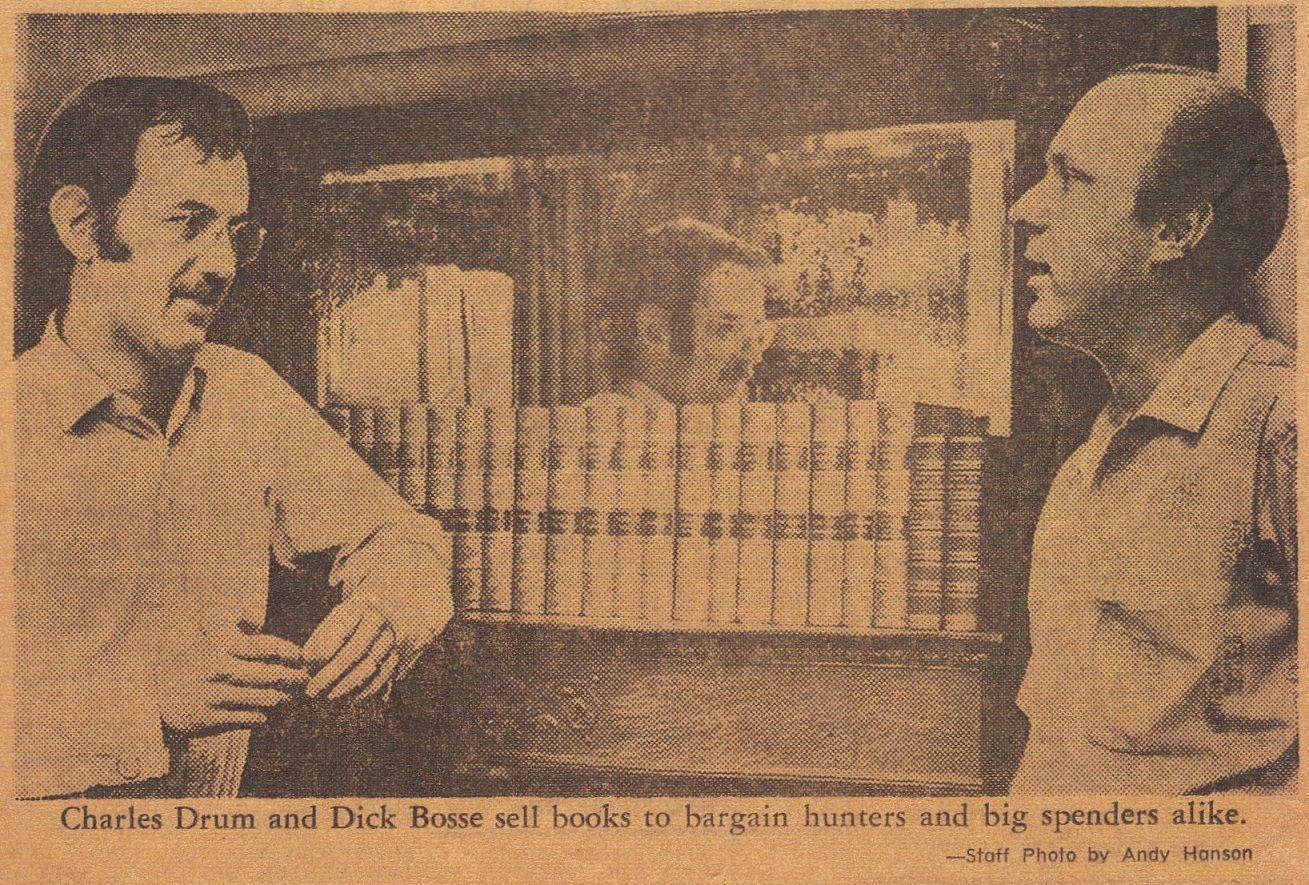
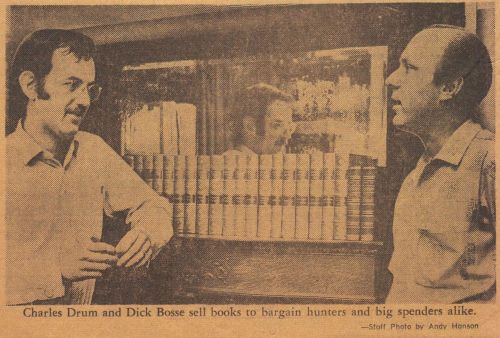
Above, my father, on the right, at the first location of the Aldredge Book Store on McKinney Avenue. The accompanying article by Luise Putcamp, Jr. is here.

*
PB-PRB

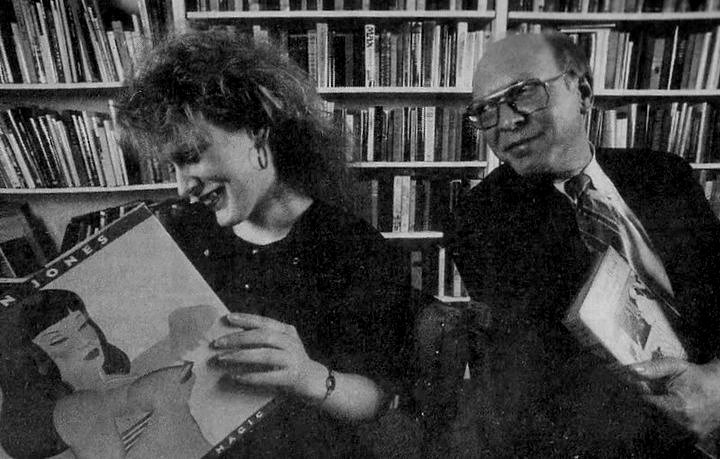
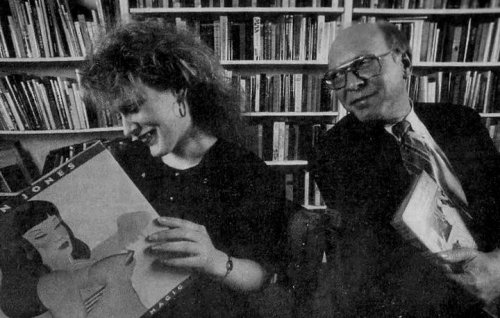
Above is one of my favorite photos of my father, taken in a small used bookstore I had on Lower Greenville Avenue. A newspaper editor thought it would be “cute” to have a photo of father-daughter booksellers. The photographer suggested I hold the newer, cutting-edge art book while my father held the older, obscure British arts journal. Of course, my father would have been more interested in the Allen Jones book, and I would have been more interested in The Yellow Book (a set of which my father gave to me for Christmas one year — and it was one of the best gifts I’ve ever received).

Today would have been my father’s 80th birthday. 80! I think of him all the time, and I miss him terribly. He was a wonderful guy, and — aside from the modest income — I think he would have said that a lifetime career as a bookseller was a pretty sweet deal.

***

Sources & Notes

When my father died in April, 2000, several appreciations of him appeared in print. If you would like to read the appreciations by his friends A. C. Greene (a very sweet tribute) and Lee Milazzo (my personal favorite — very funny), as well as the nice official obituary, they are all transcribed here

My brother, Erik Bosse, wrote a wonderful piece about our father for a catalog we issued after his death. The warm and amusing essay — as well as some of the crazy business cards my father took great joy in printing up — can be found here

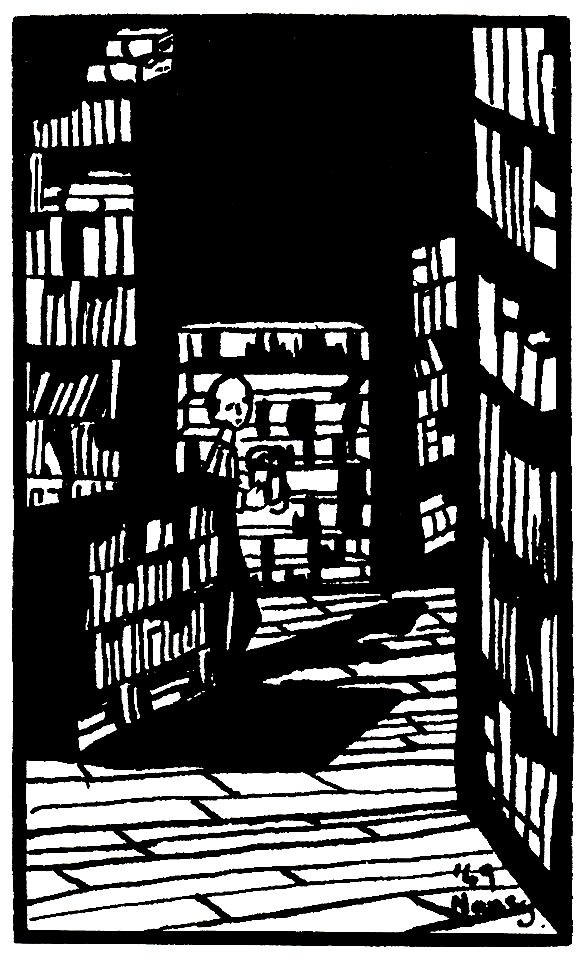
Sketch at the top was done by Nancy C. Dewell (1969). Slightly larger than a business card, it arrived in the mail one day with a short note that read: “I don’t know your name. I think you are Mr. Aldredge. I would be pleased if you would accept my drawing of you in the bookshop. Sincerely, Nancy C. Dewell.” I can’t imagine a better likeness. I really, really love this.

Photo of me and my father from the Dallas Observer.

*

Copyright © 2014 Paula Bosse. All Rights Reserved.

Stemmons and Inwood, Before and After

stemmons-inwood_haskins_1954

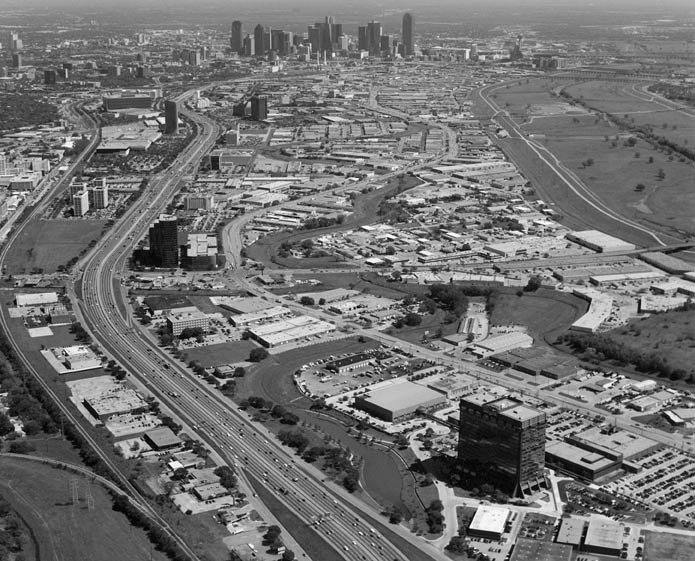
Stemmons and Inwood, looking southeasterly toward town, 1954. Below, pretty much the same shot, 1994.

stemmons-inwood_haskins-jr_1994

***

Top photo by the great Squire Haskins; bottom photo by the firm bearing his name that carried on after his death in 1984. Both from the Squire Haskins Photography Collection, Special Collections, University of Texas at Arlington Libraries.

For more on the life and career of Dallas photographer Squire Haskins, see the article “Squire Haskins: High Flying Images” by Brenda S. McClurkin, here.

Need a visual aid? See a Google Map view of the same area today, here.

Click photos for larger images.

*

Copyright © 2014 Paula Bosse. All Rights Reserved.
Six Flags-Inspired Recipes for the (Gluten-Tolerant) Superfan — 1966

six-flags-ckbk_USA

by Paula Bosse

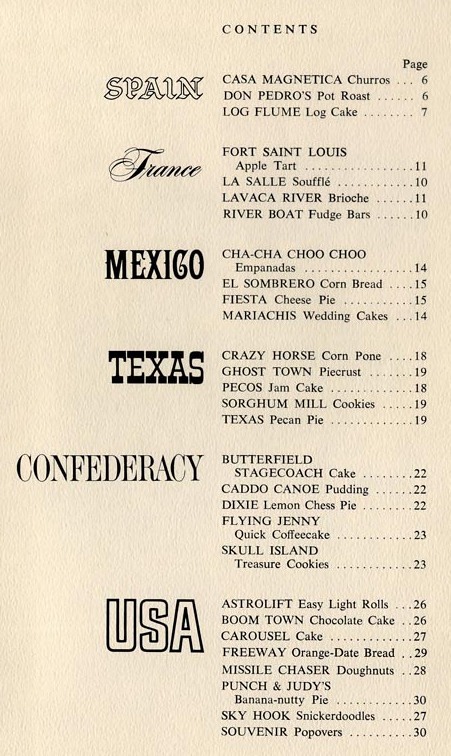
Did you know there was a Six Flages-themed cookbook? Well, there was! Issued in 1966 by the Gladiola Flour company (every recipe — rather unsurprisingly — contains flour), the Six Flags aficionado was presented with dishes such as “Casa Magnetica Churros,” “Log Flume Log Cake,” “Skull Island Treasure Cookies,” and “Sky Hook Snickerdoodles.” From the introduction:

“Names of the recipes have been inspired by attractions and rides at Six Flags Over Texas, the exciting adventureland located midway between Dallas and Fort Worth. Look to the Six Flags Over Texas Cookbook when you want something different — a dish your guests will remember.”

That “Log Flume Log Cake”? Mosey on over here and whip one up this weekend for your gluten-tolerant friends and family.

six-flags-ckbk_cover_1966-sm

six-flags-ckbk_contents

six-flags-ckbk_spain

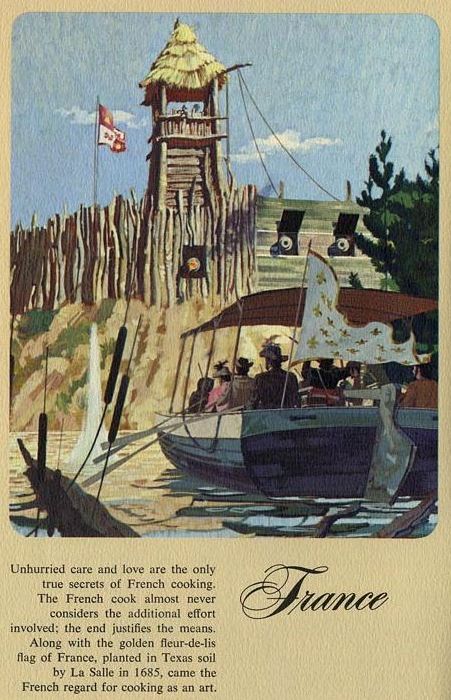
six-flags-ckbk_france

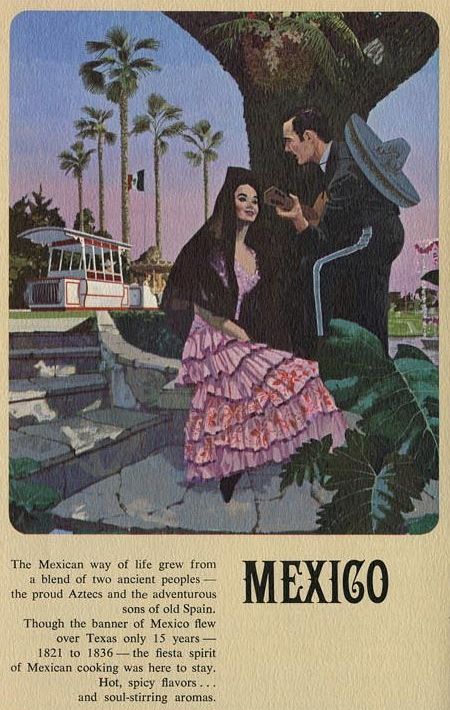
six-flags-ckbk_mexico

six-flags-ckbk_texas

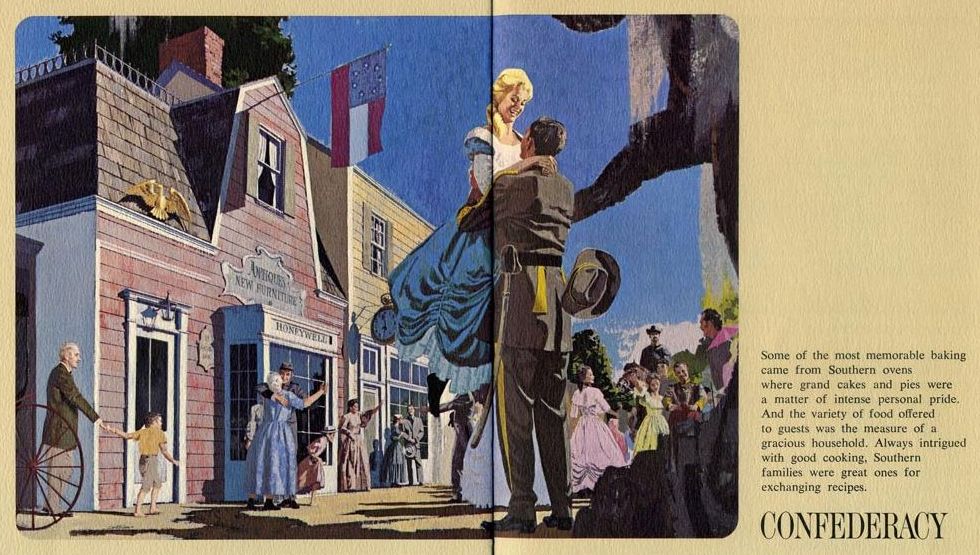
six-flags-ckbk_confederacy

***

All images from The Six Flags Over Texas Cookbook by Gladiola (Sherman: Fant Milling Co., 1966). These images (and the entire cookbook) from Ken Collier’s great Six Flags Over Texas collection. The cookbook can be viewed here; and check out his other Six Flags pages here.

For other Flashback Dallas posts on the early days of Six Flags Over Texas, see here.

Click oblong pictures for larger images.

*

Copyright © 2014 Paula Bosse. All Rights Reserved.
Angus Wynne, Jr.’s “Texas Disneyland” — 1961

six-flags_stagecoach

by Paula Bosse

If you’re reading this, you’ve probably been to Six Flags Over Texas in Arlington. Depending on your age, you may pine for those glorious days of yesteryear when Six Flags was a truly unique theme park. Today it is not. Back then, there was only one Six Flags, and it was a great, weird place. A theme park based on Texas history! Who would come up with such a far-fetched idea? Angus Wynne, Jr. did. Some of it must have sunk in, because, to this day, the way I can remember the “six flags” that have flown over Texas is by remembering rides and attractions at Six Flags Over Texas.

I wasn’t going regularly to Six Flags until the ’70s, when it was still definitely all about Texas, but looking at old postcards that were issued to celebrate the opening of the park in 1961, I was shocked by some of the great stuff that was retired before my annual visits. Like … helicopter rides! Actual helicopter rides that took off from an area near (in?) the parking lot: five minutes for five dollars (this was back when admission was $2.25 for kids and $2.75 for adults — those days are long-gone…).

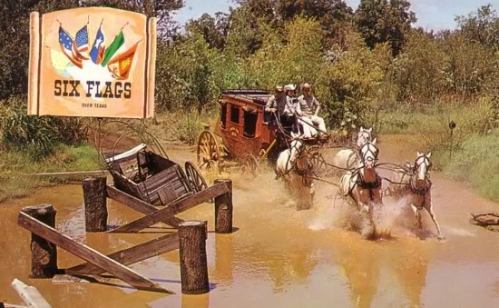
And … a stagecoach ride! I would have LOVED that! Looks kind of dangerous, though — which might be why it didn’t last. The description on the back of the postcard:

Bridge Out — Confederate Section: Butterfield Overland Stagecoach pulled by a team of four matched white horses cuts past washed out bridge on its way to deliver passengers and the U.S. mail back to the safety of the depot — always plenty of exciting action taking place at the multi-million dollar Six Flags Over Texas entertainment park.

*

six-flags_confederate

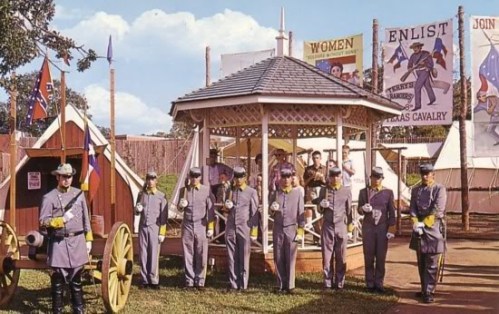
And, yes, the problematic “Confederate” section. The description on the back of this postcard reads:

Call To Arms — Confederate Section: Confederate Drill Team at Six Flags Over Texas. To these men in gray, the South is still ‘a-fightin’ them Yankees.’ Frequent enlistment rallies are held where youngsters join up and receive papers proving their military status in Terry’s Texas Rangers, 8th Texas Cavalry.

Don’t remember seeing that. It probably started to lose its luster somewhere back around the Vietnam War.

*

six-flags_spanish_mule

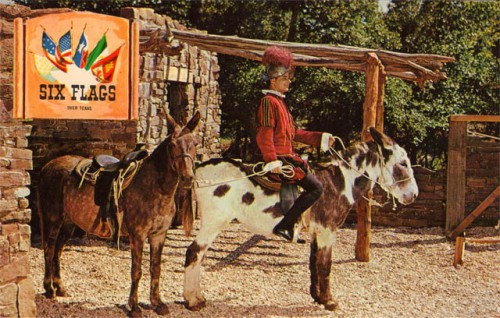
Jack Maguire, in his great Alcalde article (link below) describes this … um … “ride” thusly:

The Spanish section is next. Here guests board pack mules to venture forth with Francisco Vasquez de Coronado, greatest of the conquistadores, as he descends into Palo Duro Canyon searching for the Seven Cities of Cibola.

With the mules and the stagecoach team, Six Flags must have had a busy corral somewhere in the park.

*

six-flags_hanging

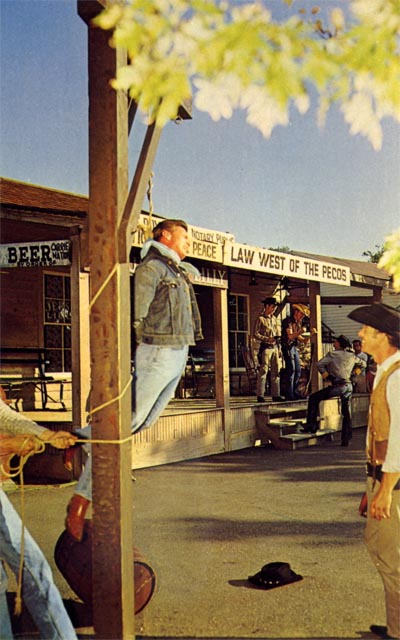
And, well, this is my favorite: a hanging. …At an amusement park. Maybe they’re just a-funnin’. This took place in the “Texas Section,” where the bank was robbed every hour on the hour and there was the show-stopping gunfight in the middle of the street. I remember that. I don’t remember some guy getting strung up, though. I like the fact that this photo was used to promote an amusement park.

*

six-flags

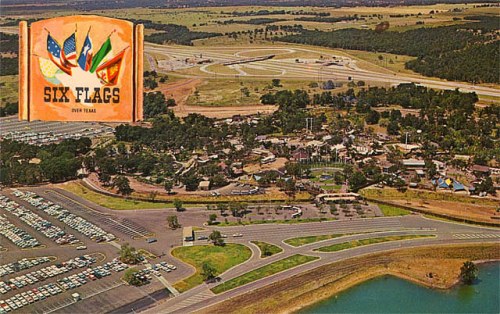
And here’s the whole of it, in 1961. I guess there must have been other things in Arlington back then. But it looks pretty empty once you’ve ventured past Skull Island and left the park.

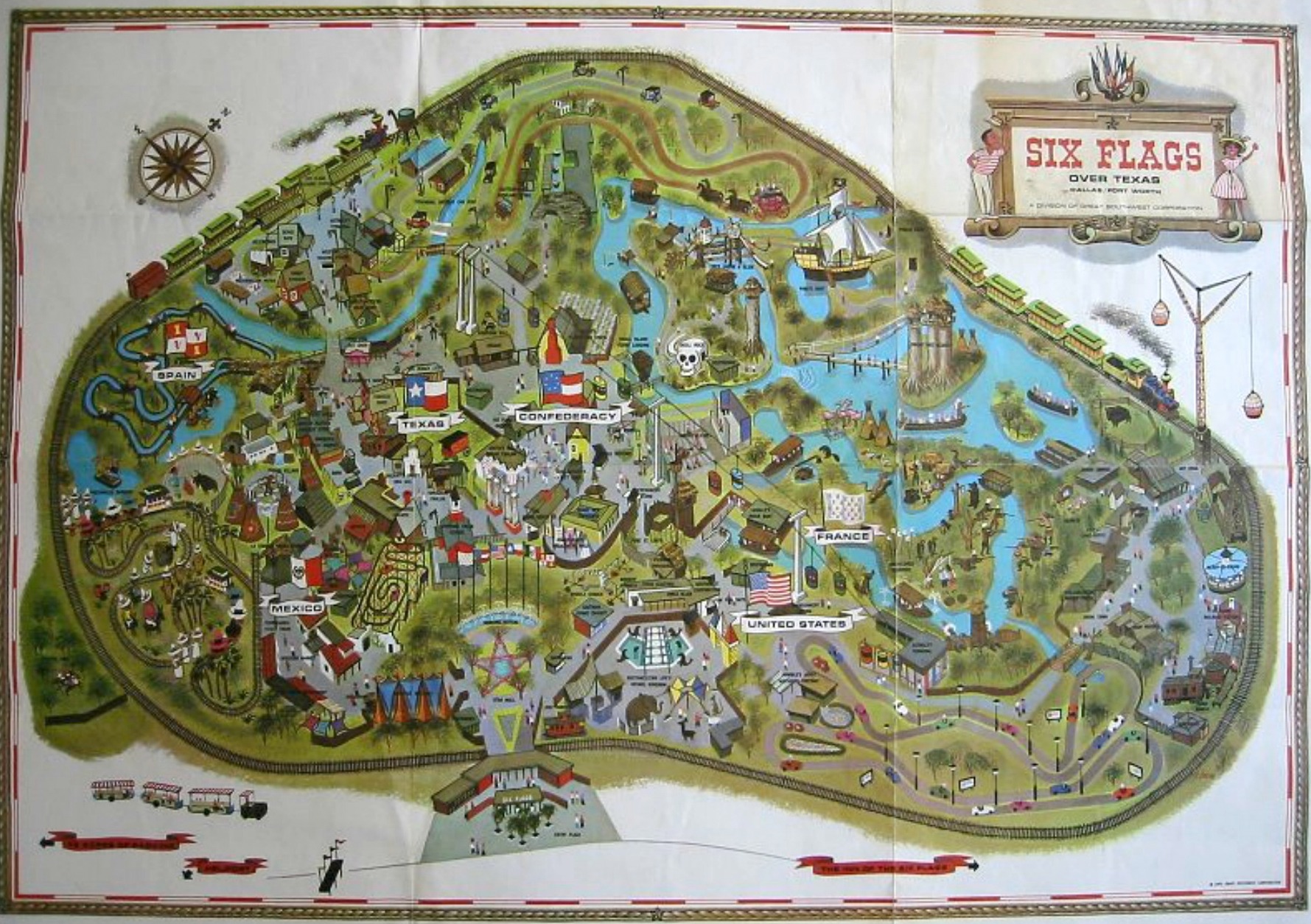
six-flags_map_mid-1960s(Click for much larger image!)

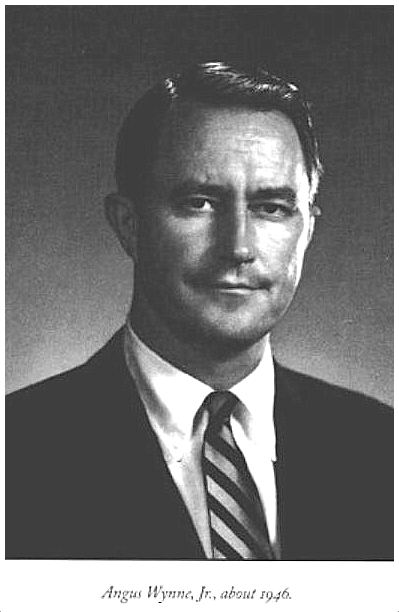
Thank you, Angus Wynne, Jr. — I had so much fun in your park — I wish I had seen it when it opened!

wynne_angus-jr_legacies_fall-2002

***

Sources & Notes

Top two postcards from the jumble of stuff I own.

All other postcards from the INCREDIBLE Six Flags Over Texas postcard collection of Ken Collier, which you can see — page after page after page — here.

I’m not sure where I found the map, but it gets pretty big when clicked.

Photo of Angus Wynne, Jr. from the Fall, 2002 issue of Legacies.

Memories of the helicopter ride by a former park employee (who says it lasted only until 1962 when it was discontinued due to a “hard landing” incident) can be read here.

And for a truly enjoyable look at the then-new theme park, I HIGHLY recommend Jack Maguire’s “The Wynne Who Waves Six Flags” in the November, 1961 issue of The Alcalde, the University of Texas alumni magazine — read it and look at the photos of a Six Flags *I* certainly never knew (but wish I had), here.

For my follow-up post on The Six Flags Over Texas Cookbook (1966) — with a link to the entire booklet and all the Six Flags-inspired recipes — see here.

*

Copyright © 2014 Paula Bosse. All Rights Reserved.
World War II “Victory Huts” at Parkland

parkland-victory-huts_c1945-utswPhoto: UT Southwestern Library

by Paula Bosse

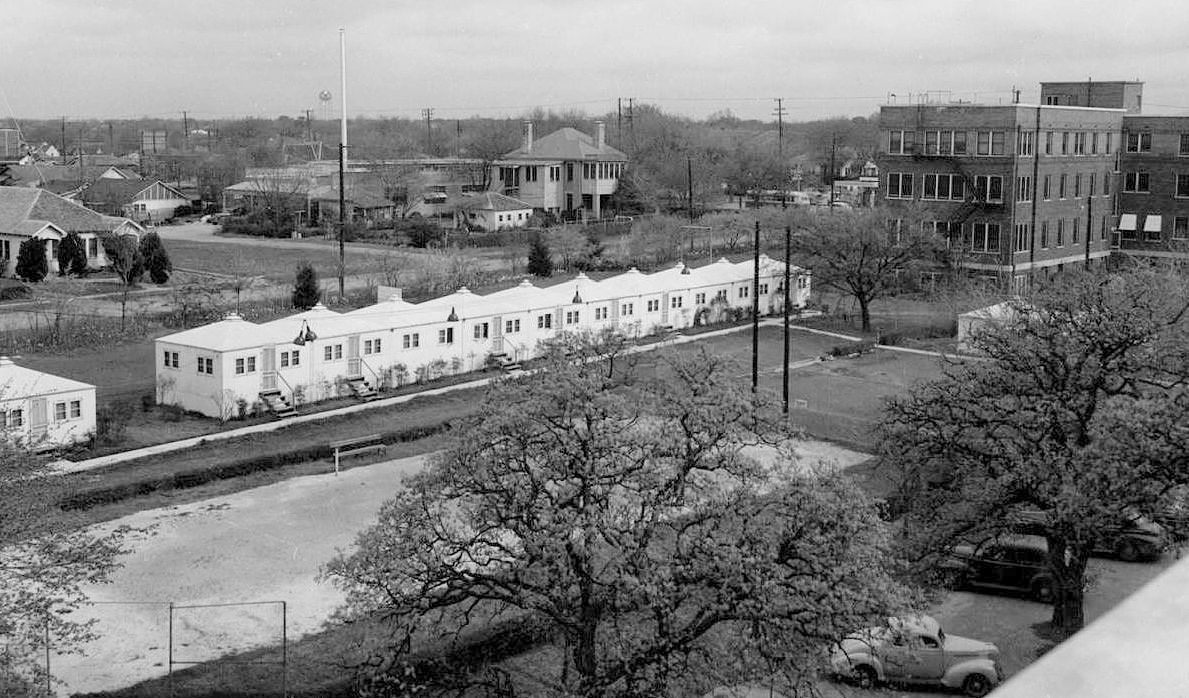
Above are a row of “Victory Huts,” behind the old Parkland Hospital at Maple & Oak Lawn, circa 1945. The description of the photo from the UTSW Library:

“Victory Huts” were prefabricated buildings developed during World War II as a method of providing quick housing for soldiers. The white “Victory Huts” behind the Parkland Nurses’ Home are believed to have been used first as housing for recovering servicemen during World War II, then after the war as housing for nursing students.

Victory Huts were the brainchild of builder H. F. Pettigrew and wealthy Dallas businessman Winfield Morten. Read about the beginnings of their wildly popular prefab buildings here.

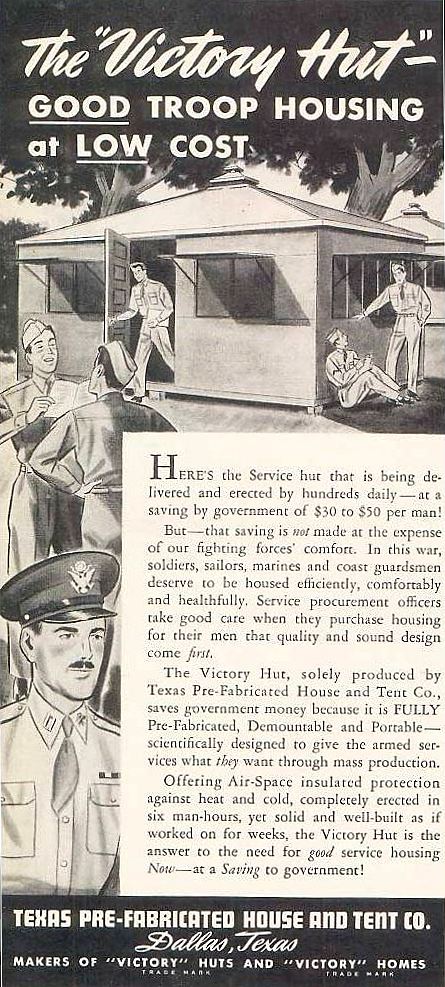
Below, an ad from the Dallas company that manufactured them, Texas Pre-Fabricated House and Tent Co.:

victory-huts_texas-historical-commission_flickr

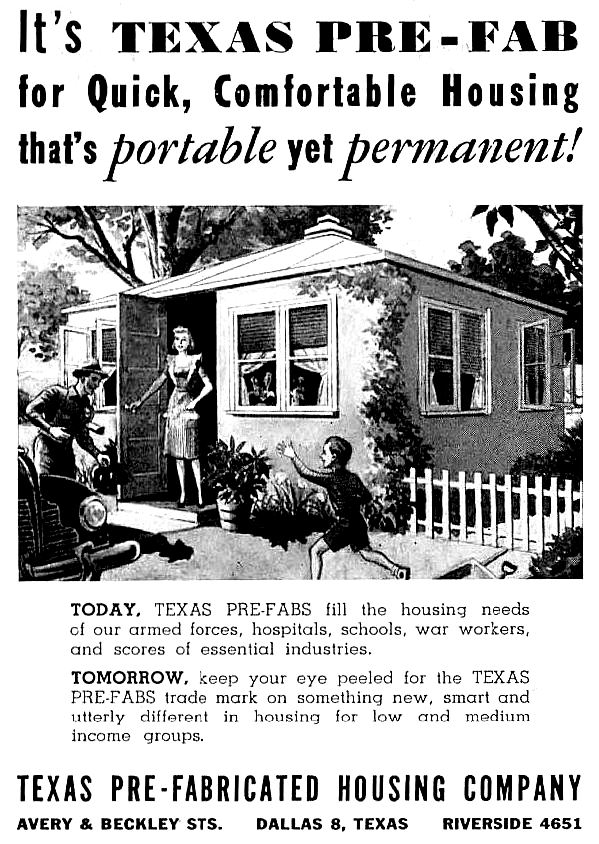
And, after the war, just add some curtains, a few plants, and a white picket fence.

texas-pre-fabricated-housing-co_southwestern-medical-college_1944-yrbk-ad

***

Sources & Notes

Top photo and quote are from the Parkland Hospital Collection at the UT Southwestern Library, accessible here.

First advertisement from the Flickr stream of the Texas Historical Commission, here. Second ad from the 1944 Southwestern Medical College yearbook.

Victory Huts were widely used during World War II, as cheap housing for military personnel, military families, and as housing in internment camps. See the huts as they were used for Japanese/enemy alien internment camps in Texas, at Camp Kenedy, at Crystal City, and at Dodd Field/Fort Sam Houston.

*

Copyright © 2014 Paula Bosse. All Rights Reserved.

The Britling Cafeteria Serves Those Who Serve Themselves

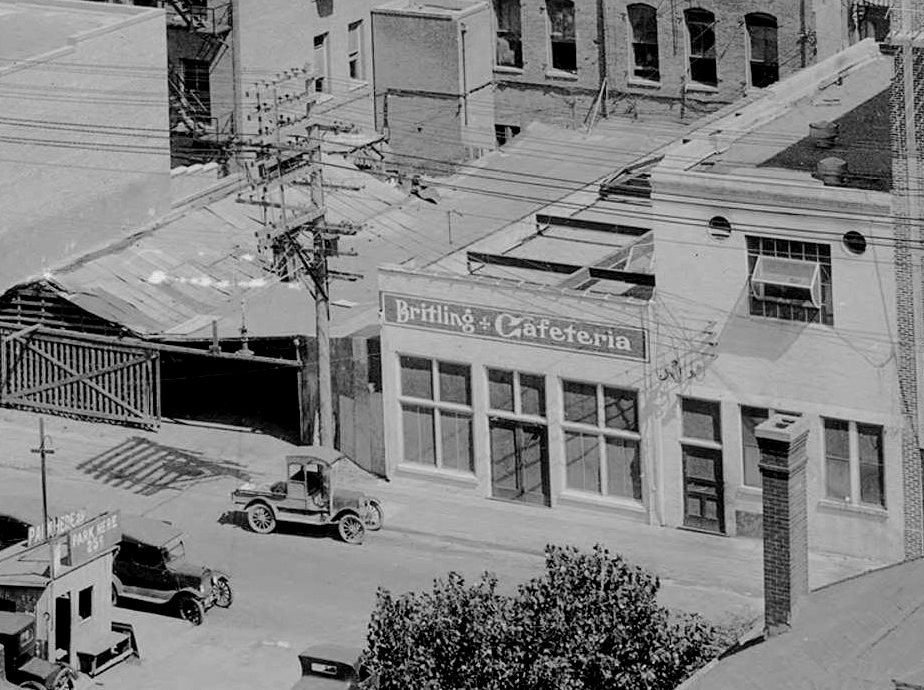
britling-cafeteria_rear-entrance_degolyerBritling Cafeteria’s rear entrance on Jackson St., 1920s

by Paula Bosse

A few weeks ago, I was zooming in on a view of the Dallas skyline when I saw an interesting restaurant sign: the Britling Cafeteria. After a little research, I learned that Britling Cafeterias are something of a cultural institution in Birmingham and Memphis (Elvis’ mother worked the coffee urn station in Memphis, and if that isn’t the sign of a Southern institution, I don’t know what is). Here in Texas, though … I’d never heard of it. It claimed to be the first cafeteria chain in the South, having begun in Birmingham in 1917 (and named for a character in, of all things, an H. G. Wells story). When the Dallas location opened at the end of 1922, it was only the sixth restaurant in the chain, joining others in Birmingham, Atlanta, and Memphis.

The Britling Cafeteria was at 1316 Commerce (“Right in the Heart of Things”), between Field and Akard. There were two entrances, one on Commerce and one on Jackson (seen in the photo above). It sounds pretty nice for a cafeteria — it was lavishly decorated in black and gold, lined with mirrors, filled with flowers, and it had a mezzanine and a raised platform for a live orchestra to provide background music. It had a seating capacity of 450, with an expected daily capacity of 3,000. We’re not talkin’ Luby’s here. Quick “Southern home-cooking” had arrived in Dallas, and it seems to have remained an active advertiser until the ads suddenly stopped in 1926. I hope Dallas enjoyed it while it had it.

Below is the interior of the Atlanta location, from about the same time as the Dallas location. Cafeterias were a whole lot nicer back then.

britling_atlanta

The first non-institutional cafeteria I can find mentioned in The Dallas Morning News was the one in the basement of the Praetorian Building (“Cleanliness, courteous, tipless”) in 1912, but the cafeteria “concept” must have still been fairly new to Dallas as the Britling advertisements that appeared in the week before the grand opening felt it necessary to explain how the system worked. “You’ll wait on yourself — and do it gladly.”

britling_dmn_112722abritling_dmn_112722b1922 (click to read)

But first, stop by for a “Day of Courtesy” preview — flowers for the ladies!

britling_open_dmn_1127221922

britling-cafeteria_forest-ave-high-school-yrbk_19231923

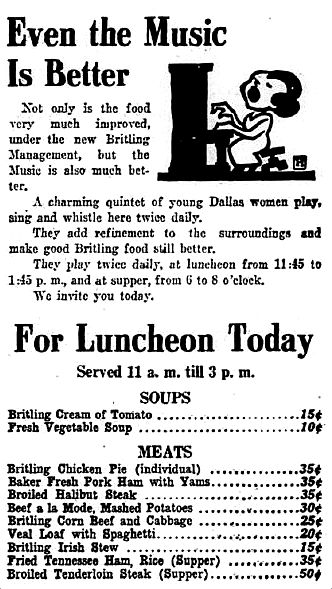
Below, a sample of some of the Southern home-cooking on the menu as well as the warning that there WILL be live music as “a charming quintet of young Dallas women play, sing and whistle (!) here twice daily.”

britling_dmn_030926abritling_dmn_030926b1926

britling_logo_dmn-112722

***

Sources & Notes

Photo is a detail from a larger view of the city from the DeGolyer Library, Southern Methodist University, seen in an earlier post here. The block in which the cafeteria was located is now 2 AT&T Plaza.

Postcard of the interior of the Atlanta Britling Cafeteria from somewhere on the internet.

More can be found in the DMN article “Britling Cafeteria Will Open” (Nov. 26, 1922), with details on the chain and specifics on the Dallas location, here.

Great short history on the cafeteria that every self-respecting citizen of Alabama and Tennessee is apparently familiar with can be found here.

An amusing first-hand account of a Texan (J. J. Taylor) visiting a newfangled cafeteria in San Francisco appeared in The Dallas Morning News on Aug. 25, 1912 and can be read here.

*

Copyright © 2014 Paula Bosse. All Rights Reserved.

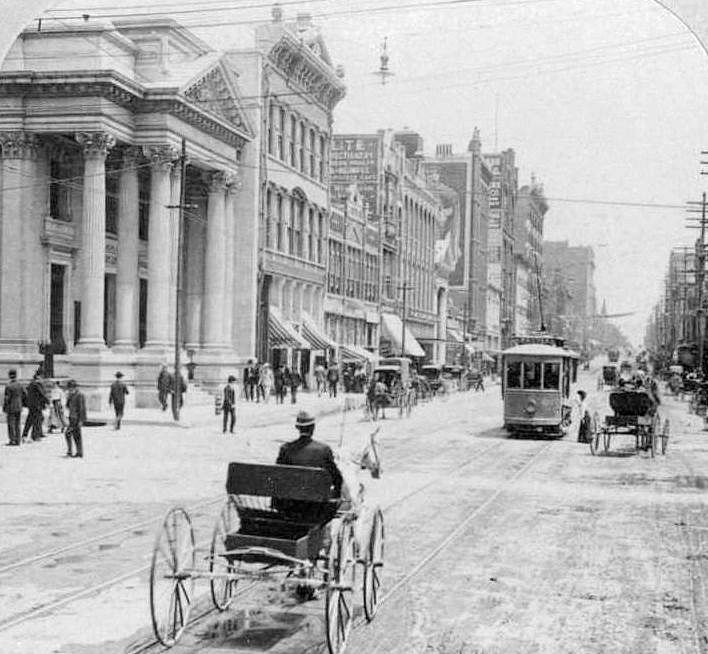
Main Street Traffic — c. 1905

main-murphy_degolyerMain, east from Murphy (DeGolyer Library, SMU)

by Paula Bosse

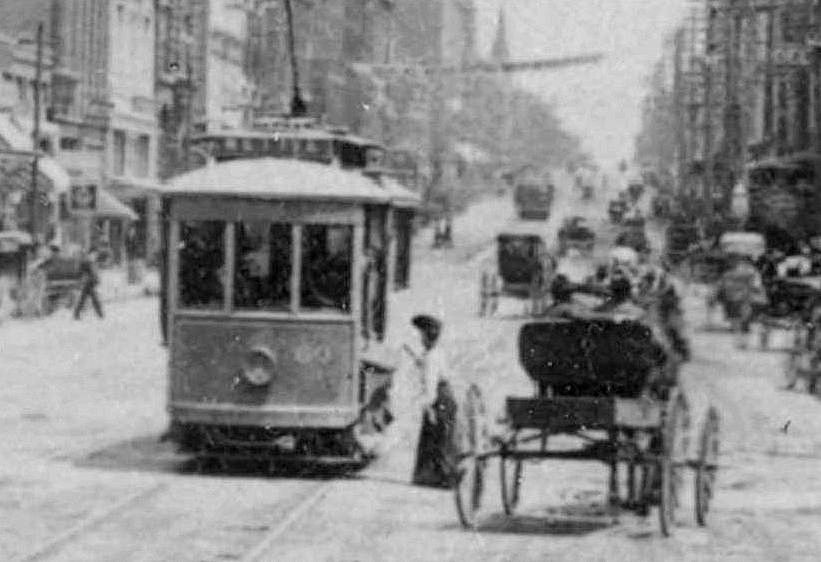
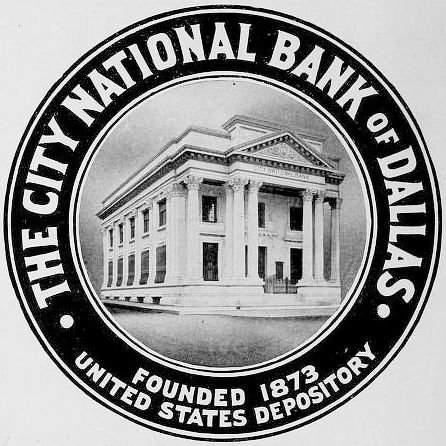
Another day, another dollar. At left, the City National Bank, which was built in 1902-03. At right (and below), a woman dodging traffic to catch a streetcar.

main-murphy_degolyer_det

***

Sources & Notes

Stereograph image from the Lawrence T. Jones III Texas Photography Collection, DeGolyer Library, Southern Methodist University; it is accessible here.

The DeGolyer description reads “Looking east on Main Street.” The City National Bank at the left was at the northeast corner of Murphy and Main, which would be, today, about where One Main Place stands.

A photo of the City National Bank, from the 1909 Worley’s directory:

city-national-bank_1909-det

*

Copyright © 2014 Paula Bosse. All Rights Reserved.