Flashback : Dallas

A Miscellany: History, Ads, Pop Culture

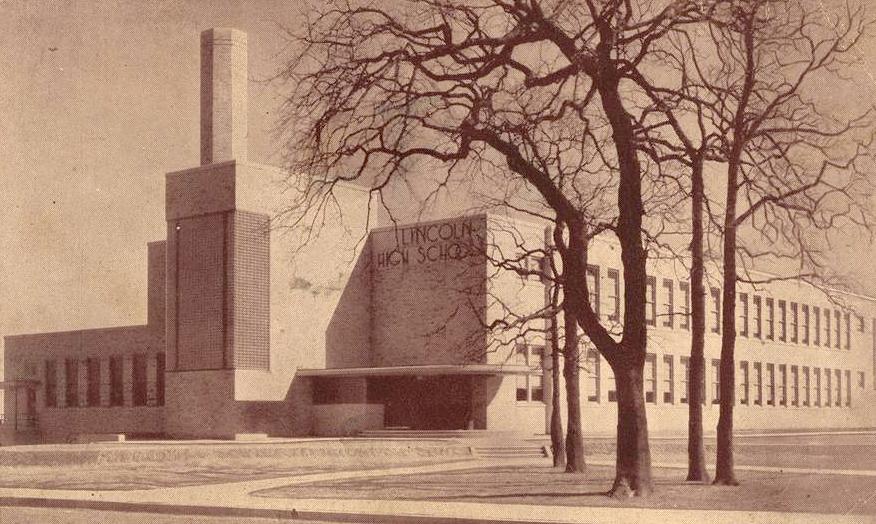
Lincoln High School — 1939

lincoln-high-school_1939The cool deco design of Lincoln High School… (click for larger image)

by Paula Bosse

When it opened on eleven acres in South Dallas in January, 1939, Lincoln High School was one of the largest high schools in Dallas, and one of the largest African-American high schools in the entire South. Shockingly, in 1939 it was one of only TWO (!) high school for black students in Dallas. As one would expect, its opening was greeted with great enthusiasm, and students rushed to enroll, pushing its capacity to a maximum. At its height, it had over 3,000 students. The building was designed by architect Walter C. Sharp, who designed many schools in and around Dallas, and with those clean lines and glass bricks, it’s pretty cool.

***

Photo from the J. L. Patton Collection, Dallas Historical Society.

For more on the background of Lincoln High School, see the info from the “Open Plaques” project here.

Click photo for larger image.

*

Copyright © 2014 Paula Bosse. All Rights Reserved.

Lefty Frizzell: It All Began on Ross Avenue

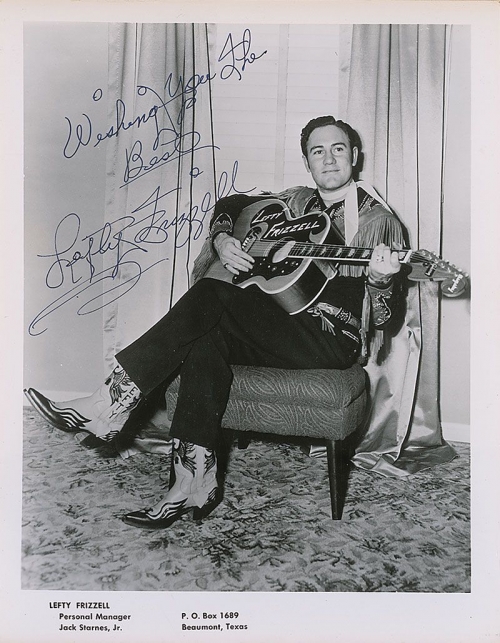
lefty_promoThe Man

by Paula Bosse

Lefty Frizzell was born on this day in 1928 in Coriscana. His Dallas connection? He was “discovered” by Dallas producer Jim Beck and recorded many of his early hits at Beck’s downtown studio. He played a lot of gigs around town, including several appearances over the years on the Big D Jamboree. But even if there weren’t any iron-clad Dallas connections, I’d have to mention him anyway. Not only is he one of country music’s most influential artists (up there in the Holy Trinity with Hank Williams and George Jones), he’s my favorite singer. Of any genre. EVER.

Take a listen to his first single, recorded on July 25, 1950 at the celebrated Jim Beck Studio at 1101 Ross Avenue: “If You’ve Got the Money, I’ve Got the Time” (which the Dallas Morning News — a bit dismissive of the “hillbilly” set — weirdly mangled into “I’ve Got the Money If You Can Spare the Time”). It was an incredible smash hit, and it kicked off a spectacular career, during which he was at almost Beatles-level popularity, with four singles in the top ten at the same time.

*

And another clip, this time a live performance from “The Porter Wagoner Show.”

*

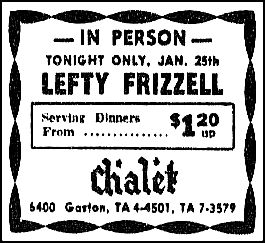
And, lastly, something I just found today, an ad for an appearance by Lefty in January 1963, when his career had dipped a bit (he would have a big come-back hit with “Saginaw, Michigan” at the end of the year). I’ve never heard of The Chalet (a supper club, I think), but its address of 6400 Gaston means that it was in the space where the Dixie House is now, in Lakewood. Maybe it’s only exciting to a superfan such as myself, but knowing that Lefty performed in my neighborhood, in a place in which I’ve actually spent a not insignificant amount of time, well … that’s just damn cool. Happy Birthday, Lefty!

lefty-chalet_dmn_012563January 1963

***

Sources & Notes

To read my post on the untimely death of Jim Beck (and see photos of him, which are few and far between), click here.

*

Copyright © 2014 Paula Bosse. All Rights Reserved.

The Pasadena Perfect Home — 1925

g

by Paula Bosse

A few weeks ago, I wrote about the “Blandings Dream House” promotion in which the marketing department of the studio behind the Cary Grant movie “Mr. Blandings Builds His Dream House” built several houses around the country. The houses were built and furnished locally, with the contractors sharing in the (massive) advertising blitz. Once the home was completed, people toured the  house, with a small admission going to charity. One of those houses was built in Dallas (in Preston Hollow). That was in 1948. Twenty-three years BEFORE that, the Dallas Times Herald sponsored something called “The Pasadena Perfect Home,” built and marketed in a similar manner.

In the early 1920s, land in the general area we now know as Lakewood was pretty much undeveloped. There was a lot of open space — some farmland, the occasional cotton patch. White Rock Lake was becoming a popular recreational destination, but it was still WAAAAY out beyond the center of Dallas. But by the mid-’20s, developers started developing. A few of the neighborhoods that sprang to life at this time were Lakewood, Hollywood Heights, and Santa Monica. In 1925 — in the part of town then being referred to as “New East Dallas” — a 40-acre parcel of land near the Hollywood/Santa Monica subdivisions began to be planned. The small tract of 130 lots was to be known as Pasadena, located just north of Gaston, comprised of Pasadena, Wildgrove, and Shook avenues, bordered by Auburn Ave. and White Rock Rd.

The developer came up with the brilliant idea of marketing his investment by building two “perfect homes” and, while they were under construction, to promote the bejabbers out of them in the pages of the Dallas Times Herald, the project’s sponsor (and namesake). Just like the Blandings builders did a couple of decades later, local construction crews, plumbers, electricians, stone masons, etc. were contracted to build the “Dallas Times Herald Pasadena Perfect Homes” in exchange for their businesses appearing in a veritable onslaught of advertising-slash-publicity (which soon became publicity-slash-advertising). Each step of progress in the months-long construction of the houses was breathlessly reported in the Times Herald in regular reports, and looky-loos (i.e. potential buyers) were heartily encouraged to drive out to watch the goings-on. Make a day of it! This pleasant hard-sell to “own a bit of paradise in the heart of New East Dallas” was covered more as a community event than as the clever marketing gimmick it was.

When the two homes were completed, there was an official opening on February 21, 1926. This boggles the mind, but apparently 20,000 people (TWENTY-THOUSAND PEOPLE!) showed up for this event. All that promotion worked. Lots in the little neighborhood sold quickly.

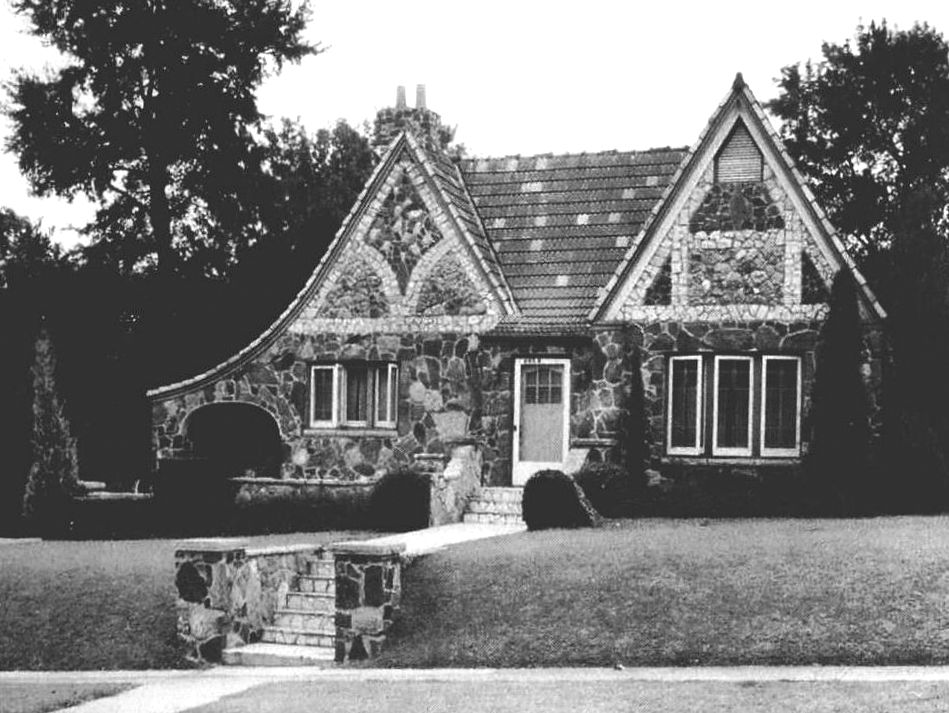
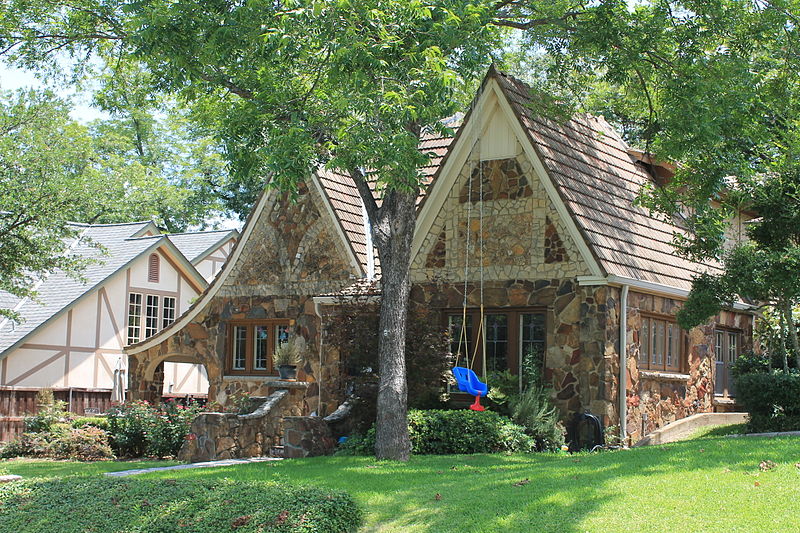
The original “perfect home” pictured above is still there, on Wildgrove. In fact, the house, designed by architect Arthur E. Thomas, was placed on the National Register of Historic Places in 2006 (listed as “The Dallas Times Herald Pasadena Perfect Home”). It’s well worth a nice Sunday drive to check out this home and the other homes in this lovely historic area. The Pasadena neighborhood remains unsullied by the McMansion-ization that has destroyed the charm of much of Dallas’ older neighborhoods, and driving down Pasadena’s tree-lined streets is an absolute joy.
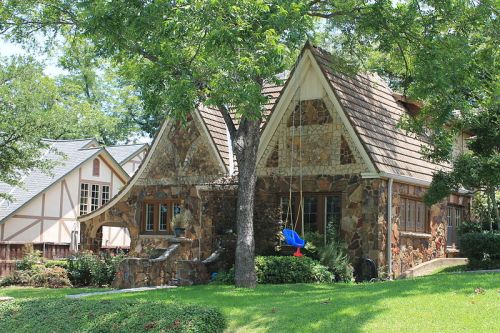
Above, the house from a 2011 Google maps photo.
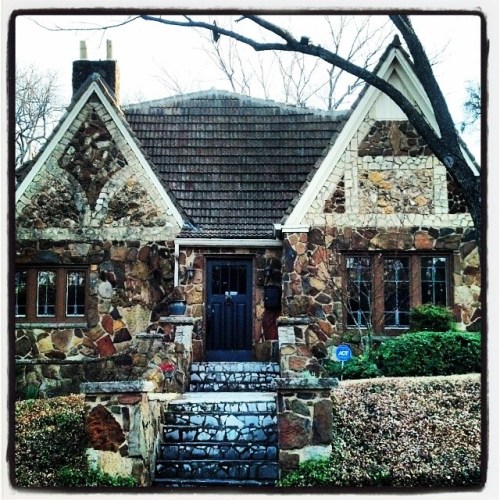
A photo I took at the end of February, 2014, Instagramized.

***

Sources & Notes

For more on the Dallas Times Herald Perfect Home(s) (and a couple of other photos, on pages 2 and 38), see the article by Sam Childers in the Fall, 2002 issue of Legacies, here. There is also some info here.

A little more info on this home (building materials, etc.) is here.

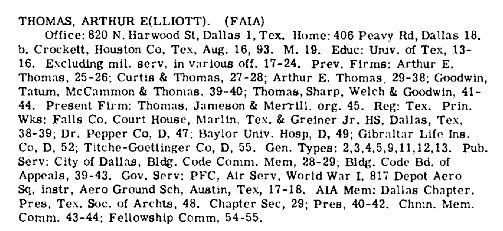
The architect of this house is Arthur E. Thomas, and he designed some pretty impressive buildings in Dallas, such as the Dr Pepper headquarters and Baylor Hospital, and, most impressively, he was one of the Centennial Architects who worked on the Centennial buildings in Fair Park in 1936. But I have found very little about him online. A brief bio is here. The following list of his projects is from a 1956 AIA directory.
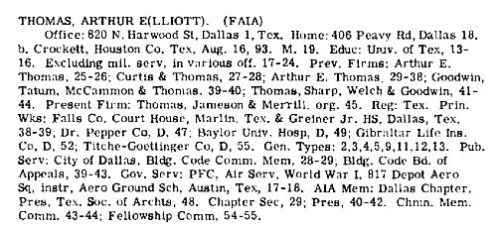
Click pictures for larger images.

*

Copyright © 2014 Paula Bosse. All Rights Reserved.

Phrenology by Mail! — 1894

by Paula Bosse

Distance matters not to this Main Street medium. Prof. A. Henry was, verily, a man of many talents. (In case you do not know what phrenology is, see this. It’s probably not something one can do easily via mail.)

***

Sources & Notes

From A Souvenir Guide of Dallas, 1894.

*

Copyright © 2014 Paula Bosse. All Rights Reserved.
Joe Yee Cafe: The Best Chop Suey in Town

joe-yee-cafe-extChop suey *and* famous chicken house…

by Paula Bosse

I came across the above image and was enthralled. I’ve never heard of the Joe Yee Cafe, but this (granted) idealized picture is wonderful. The postcards above and below were from the early 1950s, and if you are familiar with the generally run-down neighborhood around Columbia and Fitzhugh these days, you may well shed a tear that something this charming and picturesque has been gone for many, many years.

joe-yee-cafe-interior

I love the surprising color scheme of the restaurant’s interior — those fabulous purples and greens! (The colors are a bit unexpected because they so loudly clash with the bold tomato red of the exterior.)

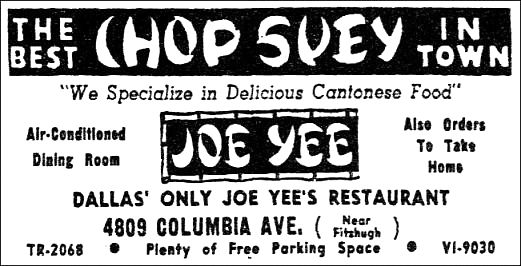
I did a little research to see what I could find out about Joe Yee’s Chinese restaurant. Seems that Mr. Yee’s cafe was in business by the 1930s, downtown, on Main Street near Field. It advertised steadily over the years, and its ads proudly proclaimed that the restaurant served “the best Chinese food you ever tasted” and was “completely air-conditioned.” Several newspaper accounts (particularly the society columns) mentioned it as a popular place for young people to grab a bite before and after dances at nearby downtown hotels. Business must have been pretty good for the place to have lasted so long at such a primo location. The cafe moved to the Columbia Street location in 1950 where it remained in business until at least late 1956 when a major fire struck.

joe-yee-cafe_matchbk

1938-joe-yee_dmn_1125381938

1943-joe-yee_dmn_0812431943

1953-joe-yee_dmn_0830531953

***

Sources & Notes

Top two early-’50s postcards are from the great Boston Public Library Tichnor Brothers Postcard Collection on Flickr, here.

In old photos of downtown Dallas one often sees “Chop Suey” signs along the streets. I’d love to know more about these restaurants in general, and about Chinese and Chinese-Americans in Dallas in the first half of the 20th century, if anyone can point me to a good source.

If background on Chop Suey is needed, might I point you to to the Wikipedia entry here, or the Snopes entry here.

*

Copyright © 2014 Paula Bosse. All Rights Reserved.


O, Fritatos, We Hardly Knew Ye — 1936

fritos_potato-chips_kaleta“Another Load of Pampered Potatoes”

by Paula Bosse

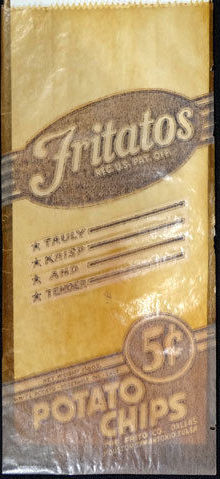
Hey! Did you know that the Frito Company also made potato chips for a while? They were called “Fritatos” and they were introduced in 1935. Here’s one of their snazzy-looking trucks making a much-appreciated snack delivery to Fair Park during the Centennial Exposition in 1936.

***

Sources & Notes

Photo of the “pampered potatoes” truck from Kaleta Doolin’s wonderful book about the family business, Fritos Pie: Stories, Recipes, and More (College Station: Texas A & M University Press, 2011).

*

Copyright © 2014 Paula Bosse. All Rights Reserved.

“How to Use Central Expressway” — 1949

by Paula Bosse

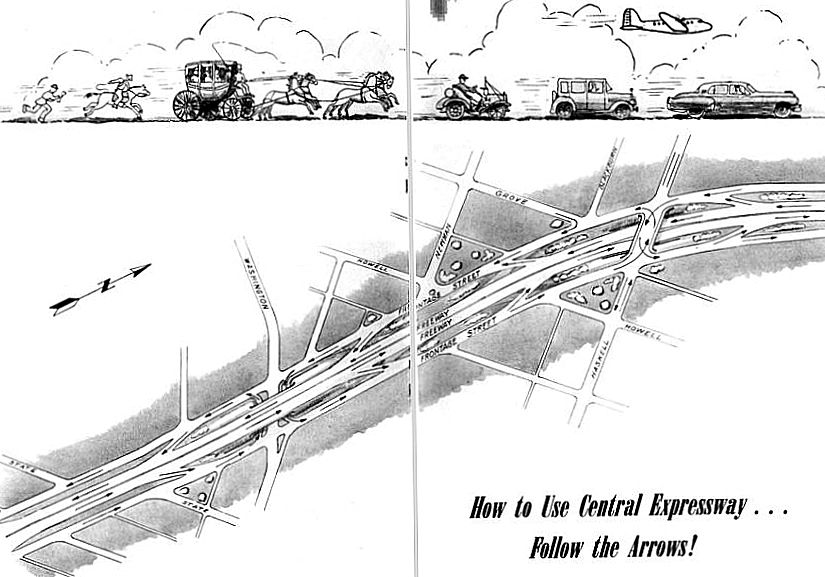
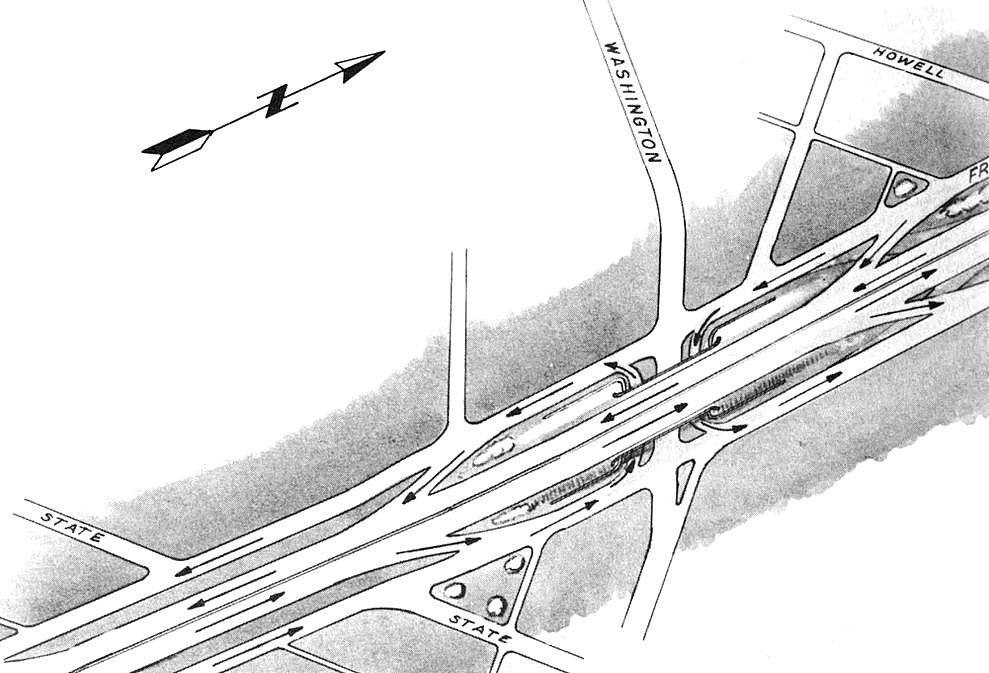
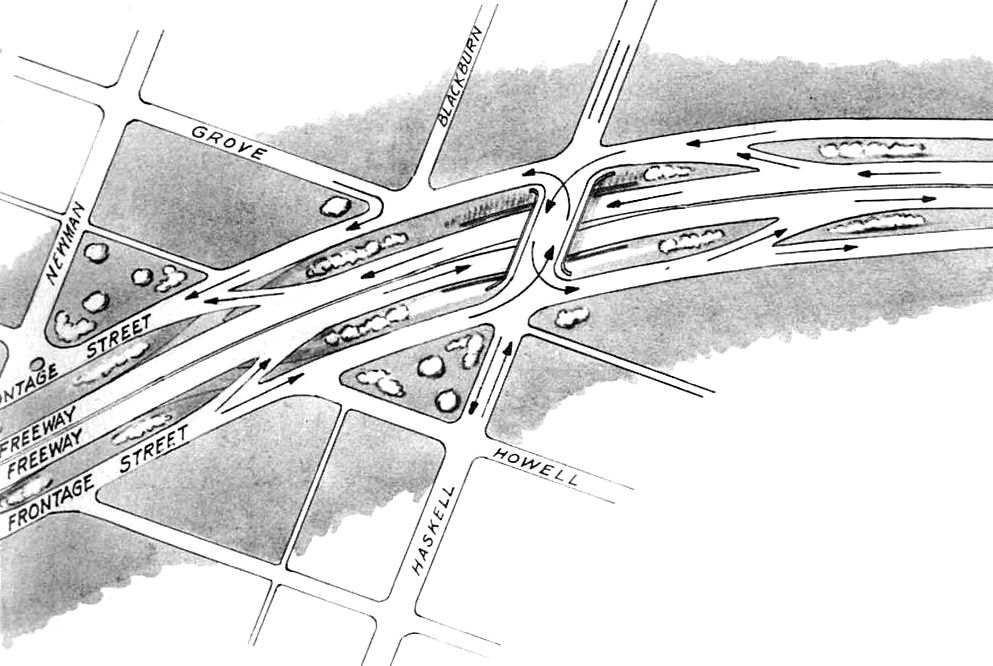
It got only to Fitzhugh from downtown at this point, but the freeway concept was new enough that Dallas drivers needed some instruction on how to use Central Expressway. Cute.

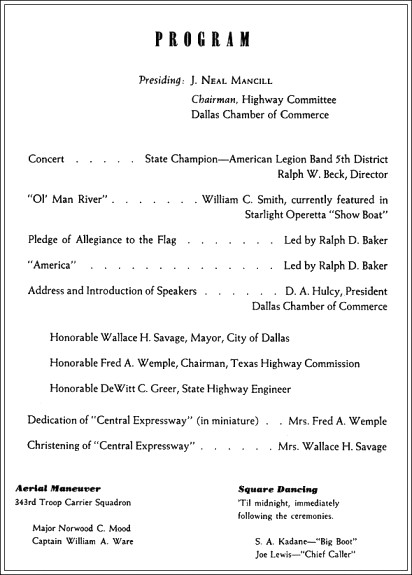
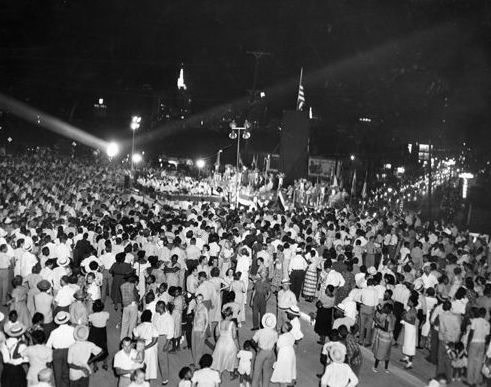
Cuter still, the dedication ceremony. It included the singing of — what else? — “Old Man River,” the Pledge of Allegiance, some sort of aerial fly-over, and, of course, square dancing (two square dances, one for white dancers, one for black). Oh, and the mayor’s wife christened the expressway with a bottle of cologne. (How much more Dallas can you get?) (Many of the images and articles below are larger when clicked.)

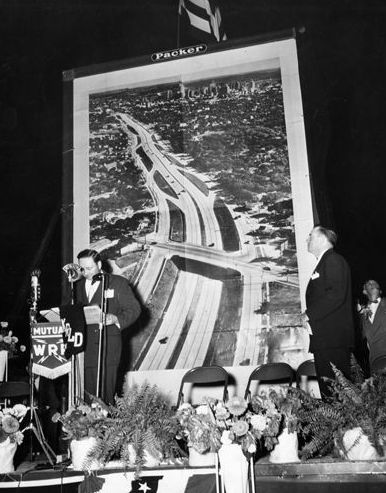
The opening ceremonies were covered extensively by the local papers. My favorite tidbit from the coverage was a quote by Mayor Wallace Savage on how the new highway will psychologically benefit the city’s drivers. His hope and expectation is that driving along Central Expressway will make drivers “more relaxed when they get home from the office, and in a better mood when they get to the office from home.” Again, cute.

*

central_opening_haskins_briscoe-ctr1

Above, Neal Mancill, Chairman of the Highway Committee of the Dallas Chamber of Commerce. Photo by Squire Haskins.

central_opening_haskins_briscoe-ctr2

The segregated celebration had black celebrants in one area and white celebrants in another. Photo by Squire Haskins.

central_opening_haskins_briscoe-ctr3

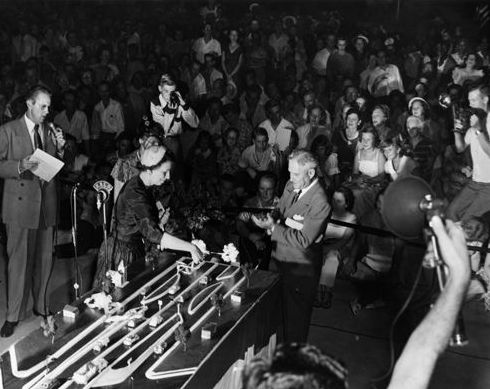
Mrs. Fred Wemple, wife of the Chairman of the Texas Highway Commission, cutting the ribbon on a miniature replica of Central Expressway. Photo by Squire Haskins.

*

But back to the lesson. THIS is how you use Central Expressway — just follow the arrows! The two halves of the larger map above are here magnified (click!) to more easily facilitate wistful inspection of an artifact from a simpler time when the city looked forward to experiencing a calm, restful, non-stop drive along the Central Expressway.

ht-use-central-1

ht-use-central-2

central-expressway

***

To peruse the entire pamphlet titled Central Expressway… San Jacinto to Fitzhugh, Dedication August 19, 1949 (Dallas: Dallas Chamber of Commerce, 1949), click here.

Photos by Squire Haskins from the Dolph Briscoe Center for American History.

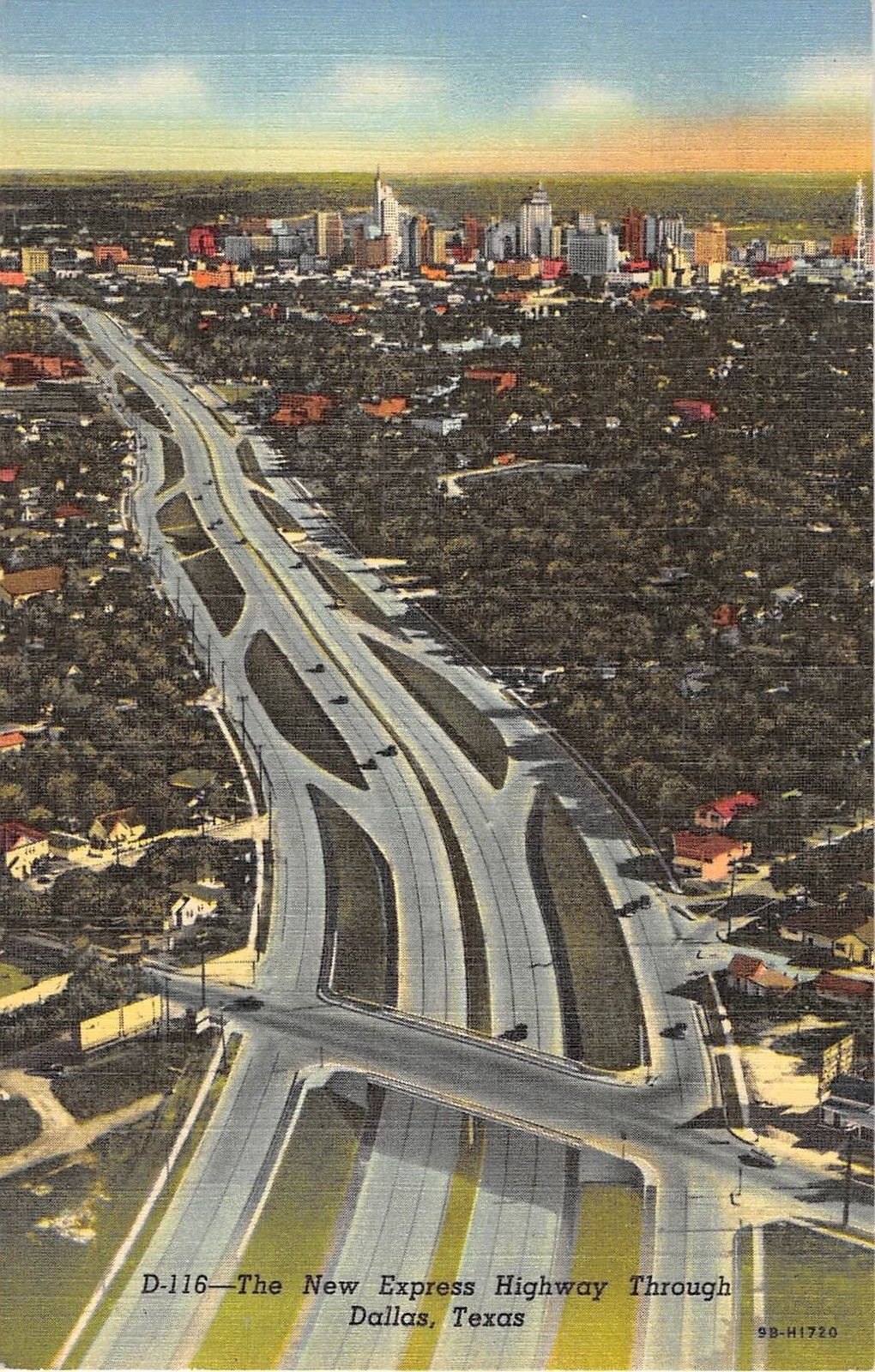
Postcard from a photo by Squire Haskins (click to see GIGANTIC image).

When in doubt, click pictures to see if images are larger.

*

Copyright © 2014 Paula Bosse. All Rights Reserved.

Cattle King C. C. Slaughter Really Knew How to Customize His Ride — 1912

ne

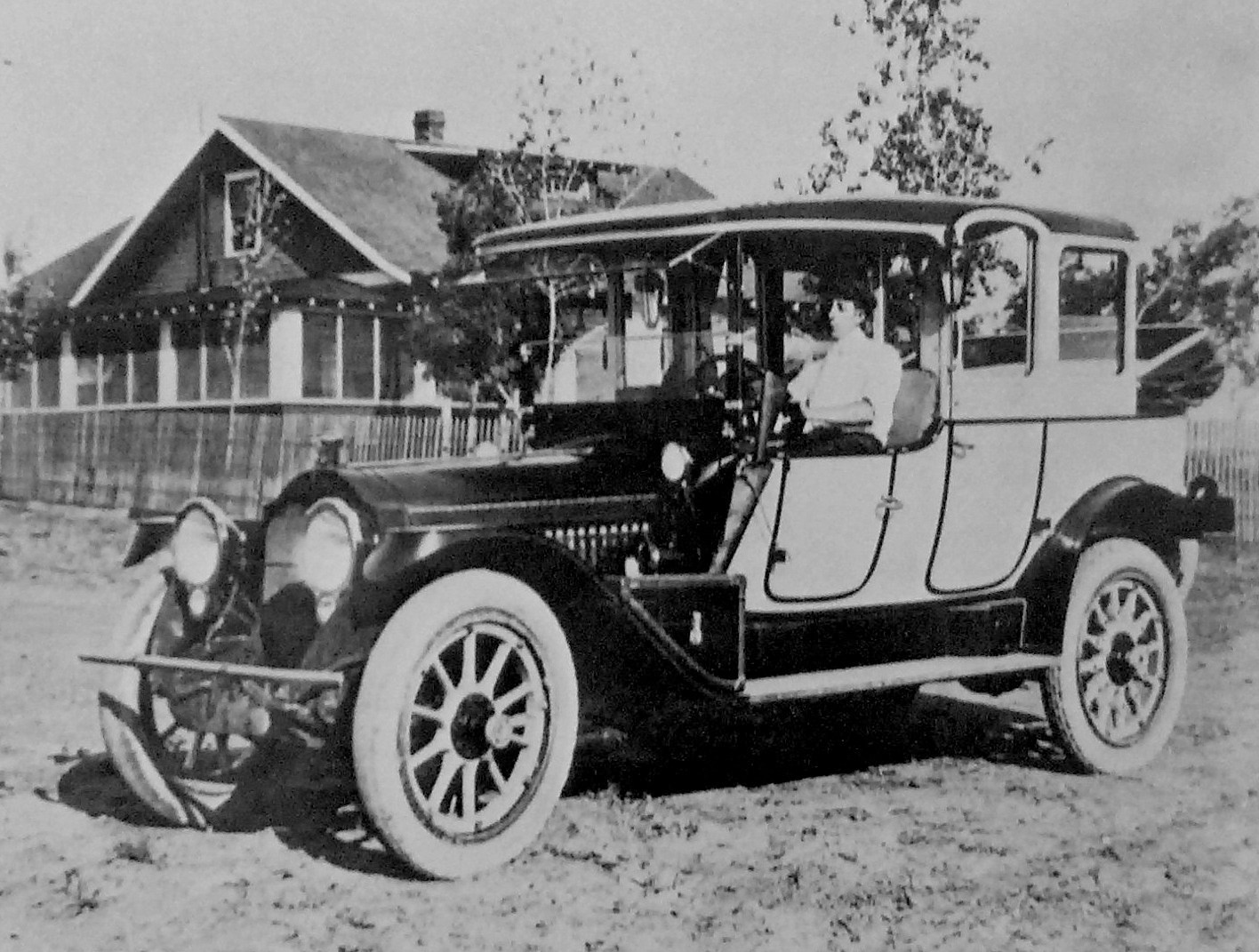
slaughter_car_1912_caption_greene

by Paula Bosse

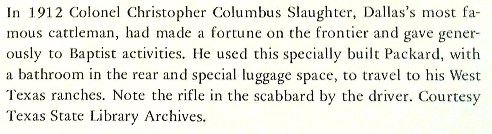
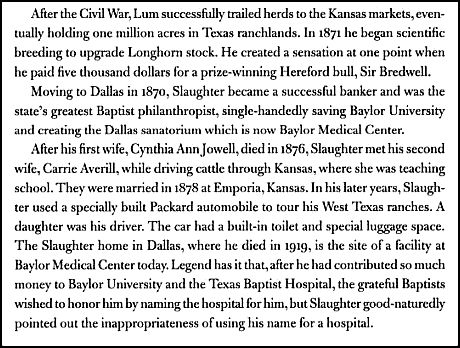
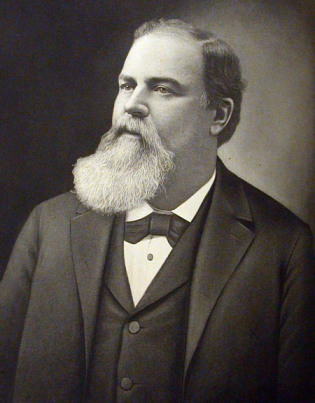
C. C. Slaughter (1837-1919) was known for being a rich cattleman, a rich Baptist, and one of Dallas’ richest pioneer businessmen. He was also pretty rich. He owned over a million acres of ranchland and more than 40,000 head of cattle. After health problems necessitated that he turn over management of his cattle interests to others, Slaughter moved his family to Dallas in 1873 and eased into the sweet life of a wealthy banker. Much of his money went to Baptist causes, including a contribution covering two-thirds of the cost of the construction of the First Baptist Church of Dallas. He was also a major investor in what became Baylor Hospital.

All of that accomplishment, and my favorite thing about Slaughter (“Lum” to his friends) is the tricked-out Packard with a built-in toilet. A. C. Greene — who wrote the caption to the photograph above — seems to have been fascinated by this as well, as he mentions it yet again, 25 years later in another book (with an added amusing tidbit about Slaughter’s response to the Baylor people on their wanting to name the hospital after him):

slaughter_portrait

***

Sources & Notes

Top photo and caption from Dallas, The Deciding Years by A. C. Greene (Austin: Encino Press, 1973).

Passage of text on Slaughter from Sketches from the Five States of Texas by A. C. Greene (College Stateion: Texas A&M University Press, 1998).

 The Handbook of Texas entry detailing the impressive life of Slaughter can be found here.

*

Copyright © 2014 Paula Bosse. All Rights Reserved.

City Park Skating Rink — 1906

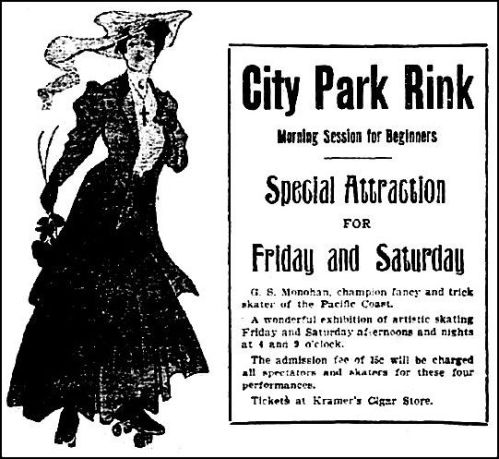
Don’t miss the “artistic skating” exhibition…
by Paula Bosse

CITY PARK RINK
Morning Session for Beginners.Special Attraction for Friday and Saturday
G. S. Monohan, champion fancy and trick skater of the Pacific Coast.
A wonderful exhibition of artistic skating Friday and Saturday afternoons and nights at 4 and 9 o’clock.
The admission fee of 15¢ will be charged all spectators and skaters for these four performances.
Tickets at Kramer’s Cigar Store.

***

Sources & Notes

Ad from the Dallas Morning News, March 14, 1906.

An article by Michael V. Hazel about the short-lived Old City Rink is here.  (Legacies has covered absolutely EVERYTHING!)

*

Copyright © 2014 Paula Bosse. All Rights Reserved.

City Hospital, a Pump Station, and the County Jail — 1894

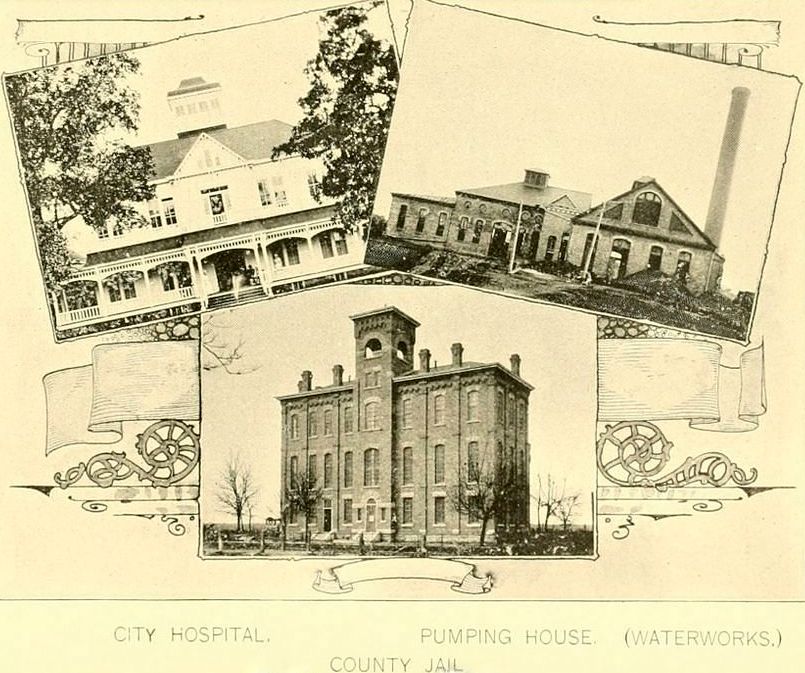
Hospital, pump house, jail (click for larger image)

by Paula Bosse

From 1894, an odd grouping of buildings: the City Hospital, a Dallas Waterworks Pumping House, and the Dallas County Jail. From a distance of 120 years, they’re all rather pleasant-looking, a word that would never be used to describe their 21st-century institutional counterparts. I wondered how many of the buildings had made it to the 20th century. Happily, they all did.

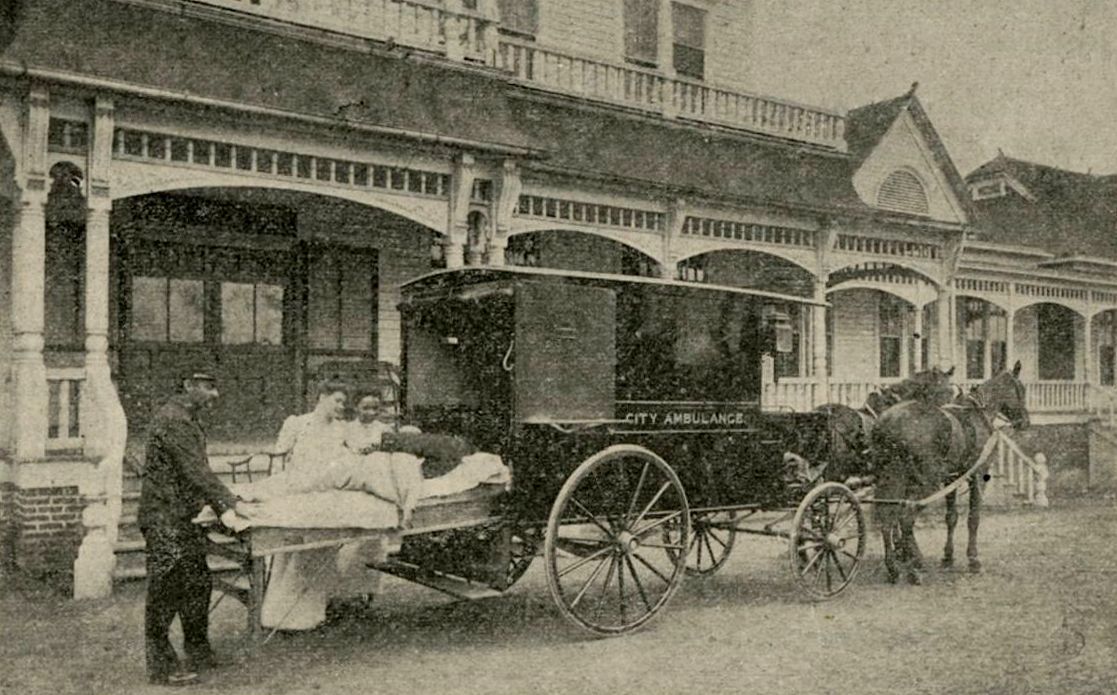
City Hospital opened in May of 1894 at Maple and Oak Lawn (it later became known as Parkland Hospital, the name coming from the 17 acres of land it occupied that had originally been planned as a city park). Here it is in about 1903, as a patient arrives in a horse-drawn ambulance. This wooden building was replaced in 1913 by the brick building that — yay! — still stands (in amongst its recent expansion and expansion and expansion by real estate mogul Crow the younger).

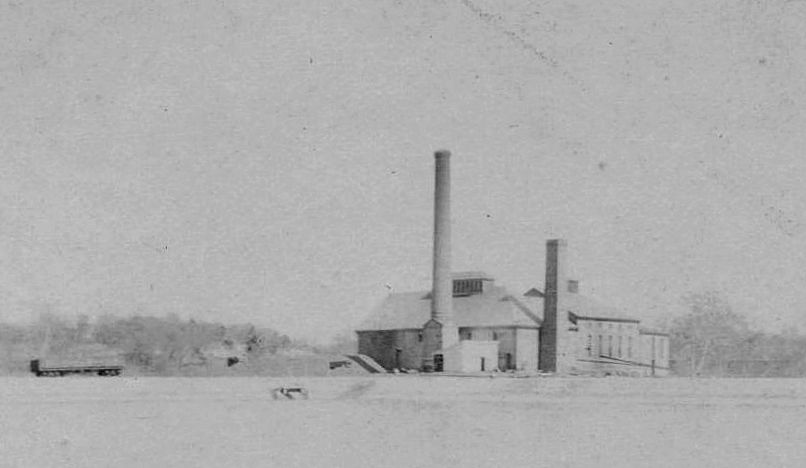
I looked all over for a later photograph of the “pumping station” but was unable to find a definite photo. I knew that it was built after the original pump house at Browder’s/Browder Springs in City Park and before the one now housing the Sammons Center for the Arts and the one at White Rock Lake. I think it might be this one, the Turtle Creek station, shown above during the devastating 1908 flood. If this is the same pump station, it looks as if there was quite a bit of expansion to this structure, too.

Dallas Morning News, Feb. 4, 1914

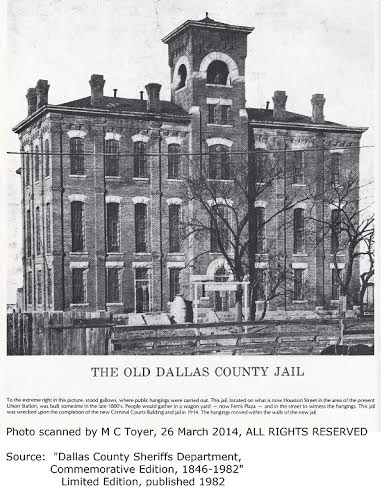
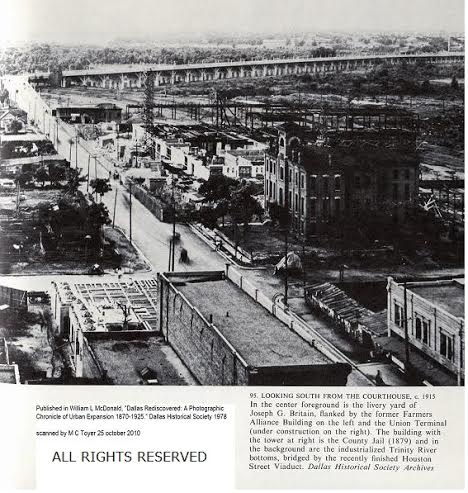
The building that changed the most from the pristine structure in the original 1894 photo was the Dallas County Jail, which was located at Houston and Jackson streets. Built in 1881, it was 13 years old in the original photograph. By the time it was 33 years old, it was almost unrecognizable, as can be seen (…sort of) in this photo, even with the horrible resolution. The jail had to keep expanding to keep up with demand and became a hulking mess. In the first decade of the century, reports began to appear in the newspapers of the deplorable conditions of the old jail and demands were made to improve conditions for prisoners. A new jail was built and the old one was auctioned off to the the Union Terminal Company which demolished the building in 1916, as the finishing touches were put on its Union Station, mere steps away from the former jail.

DMN, May 23, 1916

UPDATE: Thanks to reader M.C. Toyer, I have a couple of really great photos of the Old County Jail!

I’m not sure of the date of the one above, but the one below (such a great photo!) is dated 1915, the year the Old County Jail was finally emptied of its inmates, and a year before it was demolished.

Thanks for the great photos, MC!

***

Original photograph of the three buildings is by Clifton Church and appeared in his wonderful book Dallas, Texas Through a Camera (Dallas, 1894).

The photo of the ambulance in front of City Hospital is from the UT Southwestern Archives, with another photo of the same period here. A collection of newspaper articles on the hospital’s early history is here. An article on the City Hospital that pre-dated this one, with some harrowing descriptions of medical care in Dallas in 1875 is here.

The flooded Turtle Creek pump station is from the Dallas Municipal Archives. Other photos of this station can be seen here.

Bottom two photos of the Old County Jail sources are as captioned.

For more photos on the Dallas Waterworks/Turtle Creek Pump Station/Water Filtration Plant, see a later post of mine, here.

Click photos to enlarge.

*

Copyright © 2014 Paula Bosse. All Rights Reserved.