Flashback : Dallas

A Miscellany: History, Ads, Pop Culture

“Dallas Motor Cycle Cops” — 1910

dallas-police_motorcycles_1910_bReady and on the job…

by Paula Bosse

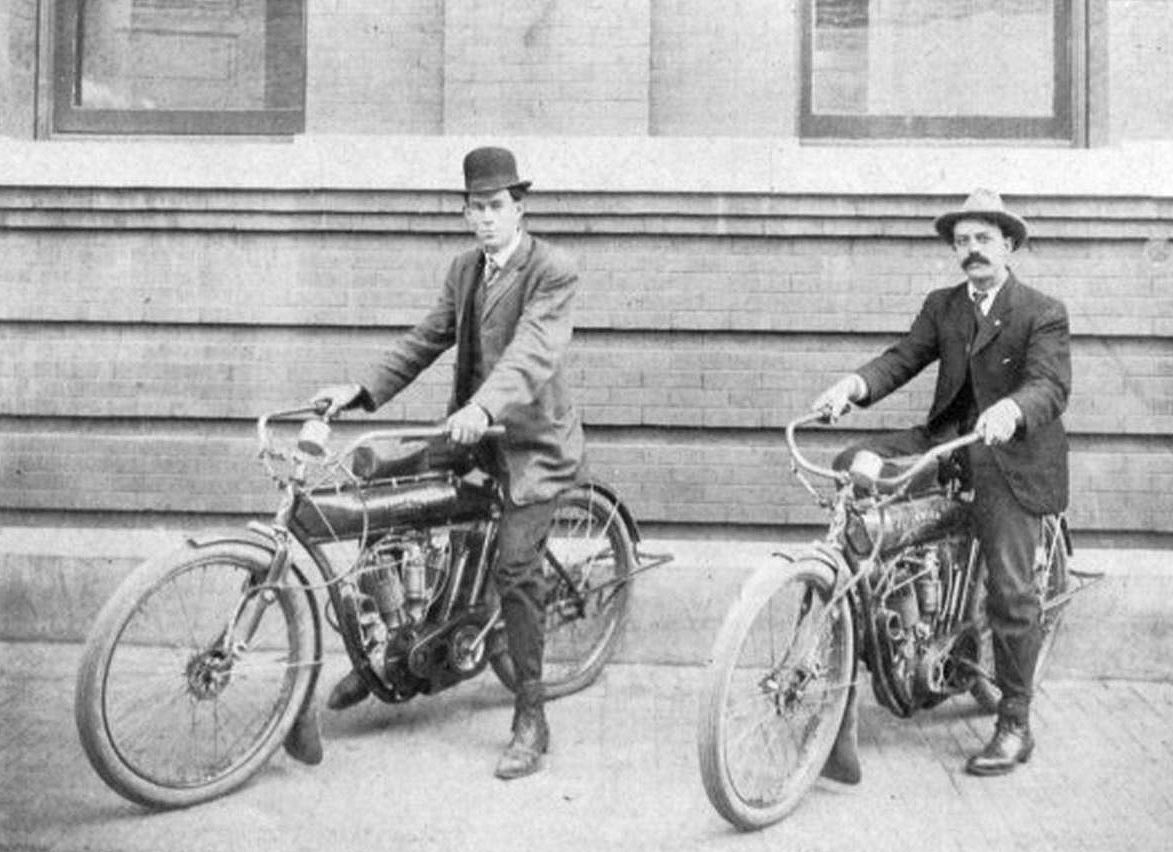
These photos of the Dallas Police Department’s “Motor Cycle Cops” appeared in a police publication from 1910.  We see them astride their machines, — one in a bowler hat — waiting for their call. Above, the “cops” are identified as B. G. Ford and A. W. Schulz; below, T. R. McSwain and S. R. Dean.

dallas-police_motorcycles_1910_a

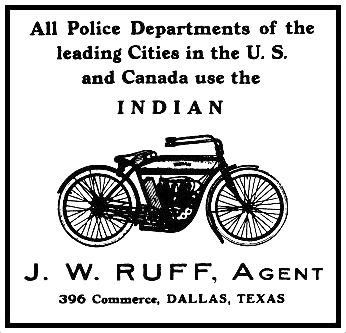
I can’t vouch for the models of the bikes, but this ad for Indian Motorcycles appeared just pages away.

ad-indian-motorcycles_1910

***

Sources & Notes

From a book with almost no publication info; it is presented simply as Dallas Police Department (Dallas, 1910). It’s got great photos and can be found on the Portal to Texas History site, here.

By 1951, the DPD’s allegiance had shifted to Harley-Davidson, as can be seen in the post “The Dallas Police Department & Their Fleet of Harleys — 1951.”

*

Copyright © 2014 Paula Bosse. All Rights Reserved.

Red Bryan’s Smokehouse — BBQ, Oak Cliff-Style

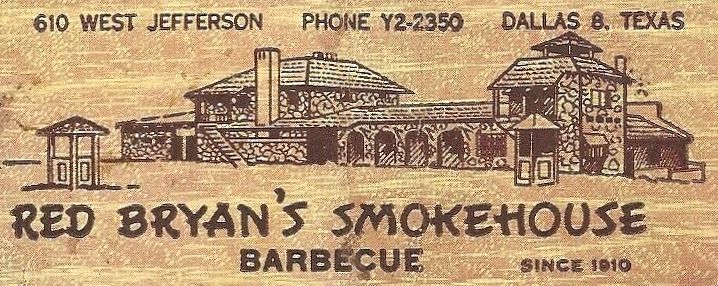
red-bryans-smokehouse_bbq_postcard_ebay_ca-1950

by Paula Bosse

Everybody in Dallas knows about Sonny Bryan, and some remember Red Bryan, but I didn’t know there was another Bryan forebear, who started the family barbecue dynasty: Elias Bryan. Elias and his wife, Sadie, arrived in Oak Cliff from Cincinnati in 1910 and opened a barbecue stand. Elias begat Red, and Red begat Sonny. And there was much trans-generational smoking of meat. The Bryans have been a BBQ fixture in Dallas for over 100 years.

Fun facts about William Jennings “Red” Bryan:

  • Red studied botany at SMU, which might explain his initial career as a florist until he was inevitably pulled back into the family business. He opened his first place in the early 1930s in a retired Interurban car, known affectionately as “The Tin Shack.”
  • In the late ’40s, now well established and wanting swankier digs, he commissioned the respected architect Charles Dilbeck to design the new restaurant. (Dilbeck designed some of the most beautiful homes in Dallas, several of which are in Lakewood, but this was probably his first — and only — barbecue joint.)

And the rest is, as they say, barbecue — and Oak Cliff — history.

*

red_bryan_bbq_dth_0205561

*

Red, 1951

*

red-bryans-bbq_matchbook_ebay

***

Sources & Notes

Postcard (circa 1950) at top from eBay. This is printed on the back:


red-bryans-smokehouse_bbq_postcard_caption_ebay

Ad from 1956.

Much more on Red Bryan’s Smokehouse, with lots of photos of its construction, can be found in the Oak Cliff Advocate article “The King of Oak Cliff Barbecue” by Gayla Brooks, here.

Even more cool stuff, including early photos of the family business, can be found in the Texas Monthly article “Bryan Family Artifacts and Mementos” by Daniel Vaughn, here.

Sonny Bryan’s website is here.

*

Copyright © 2014 Paula Bosse. All Rights Reserved.

Shoveling Apples at the Farmers Market — 1958

An apple a day… (click for larger image)

by Paula Bosse

Cleaning the streets around the Farmers Market.

All in a day’s work for the City of Dallas Public Works Department.

***

Photo taken July 23, 1958. From the Dallas Farmers Market – Henry Forschmidt Collection 1938-1986, Dallas Municipal Archives, via the Portal to Texas History; more info on this photo is here.

Click picture for larger image.

*

Copyright © 2014 Paula Bosse. All Rights Reserved.

From Deep in the Heart of Texas, I Give You Love Field — 1919

Love is in the air

by Paula Bosse

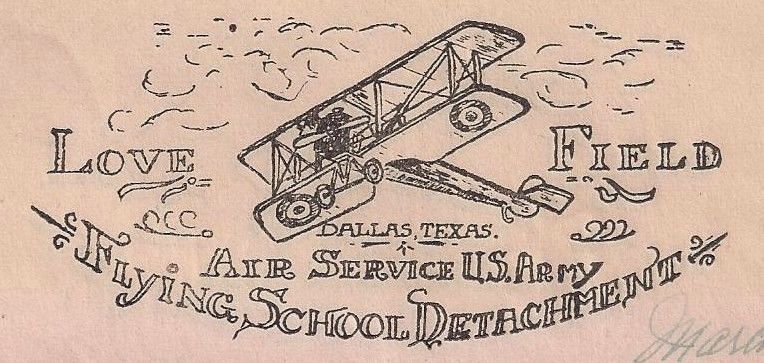
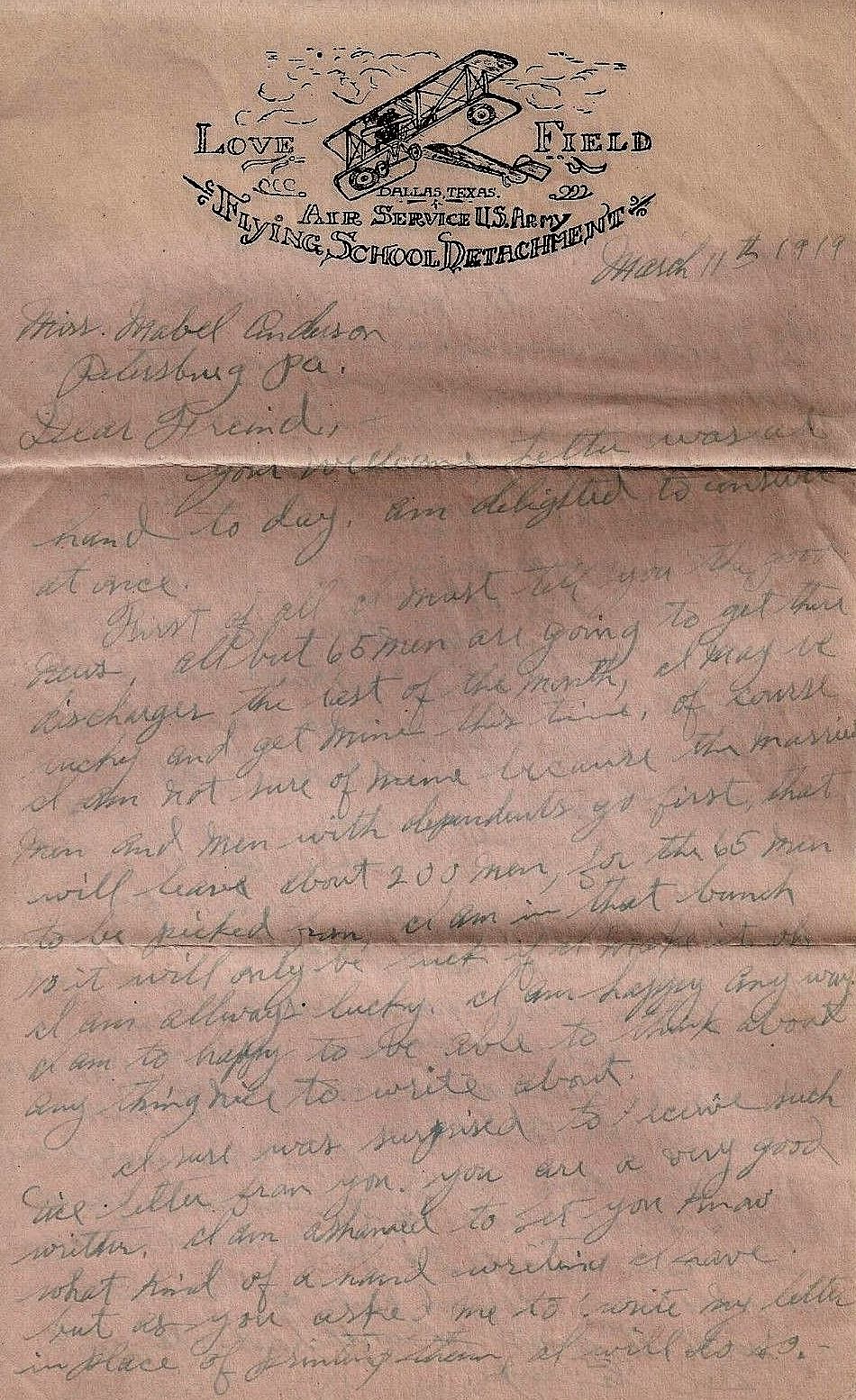
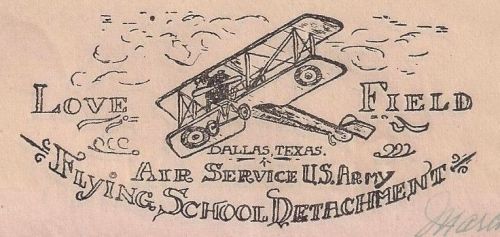
It’s Valentine’s Day — a perfect time to turn to Love Field (…which, like “Lovers Lane,” must sound a little cutesy to outsiders). The above image shows the letterhead of the U.S. Army Air Service Flying School Detachment, a consolidation of World War I squadrons based at Love Field from November 1918 to November 1919.

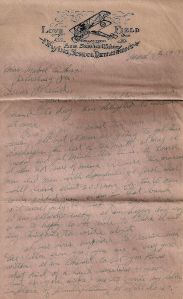
One of the young pilots stationed there wrote a four-page letter on this stationery. The letter, dated March 11, 1919, was addressed to Miss Mabel Anderson in Petersburg, Pennsylvania. They seem to have begun a sort of pen-pal correspondence, and he is certainly very happy to have received a letter from her. (“Your wellcome [sic] letter was at hand today. Am delighted to answer at once.”) He asks if she would send him a photograph and tells her he’d like to meet her. He says that he is hopeful that, the war finally over, he will be discharged at the end of the month — he thinks he will be because, “I am allways [sic] lucky.”

This is an item for sale on eBay, and only the first page is scanned, so the identity of the author of the letter will remain unknown to those of us merely browsing an auction listing, interested but unwilling to cough up the cash to buy it and read any further. I wonder what happened? If he wanted to meet her, then perhaps he, too, was from Pennsylvania — they might have met when he arrived back home. He certainly sounds excited and hopeful and flirtatious, and he should, because not only was he “allways lucky,” but the long war had finally ended and he was headed home with his whole life ahead of him. Where’s Paul Harvey to tell us the rest of the story?

Happy Valentine’s Day!

***

This four-page letter on Love Field letterhead was recently up for auction on eBay, with the following description: “Letter from airman to a young girl asking for her picture and wanting to meet her. Very early US Army Air Service stationery from Love Field in Dallas Texas. Just after the end of WWI. Scarce Item.”

Here is the first page, with a transcription (spelling corrected) below (click to see a larger image).
love-field_letter_1919

Miss Mabel Anderson
Petersburg, Pa.

Dear friend,

Your welcome letter was at hand today. Am delighted to answer at once.

First of all I must tell you the good news. All but 65 men are going to get their discharges the last of the month. I may be lucky and get mine this time. Of course I am not sure of mine because the married men and men with dependents go first. That will leave about 200 men, for the 65 men to be picked from. I am in that bunch, so it will only be luck if I make it ok. I am always lucky. I am happy anyway. I am too happy to be able to think about anything nice to write about.

I sure was surprised to receive such a nice letter from you. You are a very good writer. I am ashamed to let you know what kind of a handwriting I have, but as you asked me to write my letter in place of printing [it], I will do so.

*

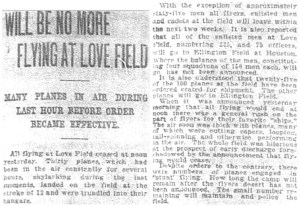
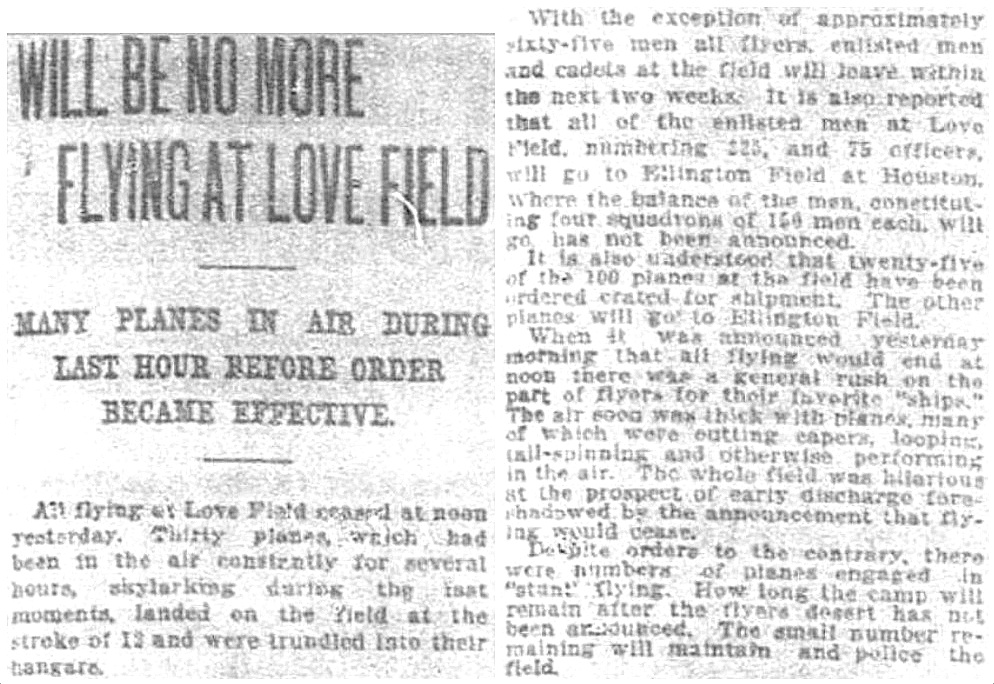
Here are two stories about how the airmen stationed at Love Field responded to the announcement that all flying would cease at noon on March 10, 1919 before demobilization began. It sounds like something from a movie: a sky full of something like 30 airplanes looping and “skylarking,” their pilots celebrating their fast-approaching military discharge by flying their favorite “machines” for the last time.
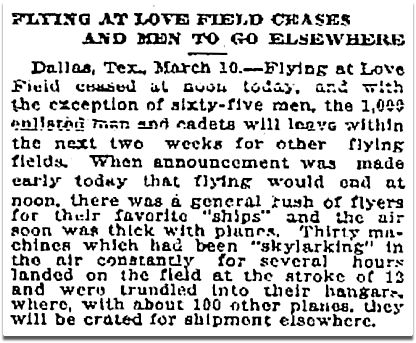
love-field_galveston-news_031119Galveston News, March 11, 1919

love-field_dmn_031119Dallas Morning News, March 11, 1919 (click for larger image)

*

Copyright © 2014 Paula Bosse. All Rights Reserved.

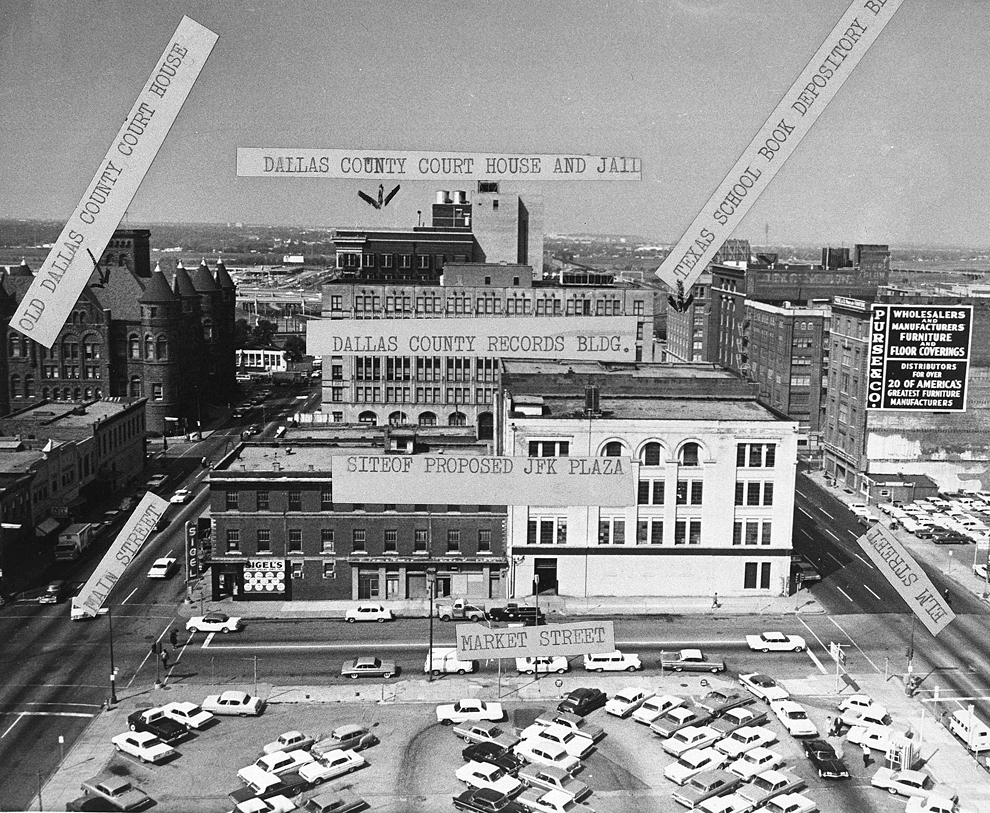
Where to Put That JFK Memorial? — 1964

Looking west, 1964 (AP photo)

by Paula Bosse

I’m not really into the whole assassination thing, which may explain why I’ve never seen this 1964 Associated Press photo (with or without the labels). Despite the connections to “that dark day,” I think this is a really interesting view of the city, from an unusual vantage point.

Here’s another similar photo, from April 1964 — this one from United Press International. UPI’s caption:

DALLAS: Site of Memorial Park. The area outlined in white is the block where the John F. Kennedy Plaza will be created as a memorial to the late president. The outline traces buildings now on the site which will be removed on completion of the new county courthouse.

jfk-memorial_proposed_apr-1964_UPI_ebayApril 1964 (UPI Telephoto)

The original location for the memorial was in the block immediately to the east of the Records Building, not the Old Red Courthouse, where it eventually was placed. I’m not sure why the location changed, but by the time architect Philip Johnson, designer of the memorial, was on board, the site had moved one block south.

*

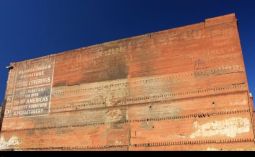
The Purse & Co. sign seen at the right side of the top photo is still visible today — it’s probably the largest and most familiar ghost sign downtown. Here’s a picture that was linked to Google maps. (I think I prefer it as a ghost sign.)

***

Sources & Notes

Top photo by Ferd Kaufman for the Associated Press, 1964.

Bottom UPI Telephoto found on eBay.

*

Copyright © 2014 Paula Bosse. All Rights Reserved.
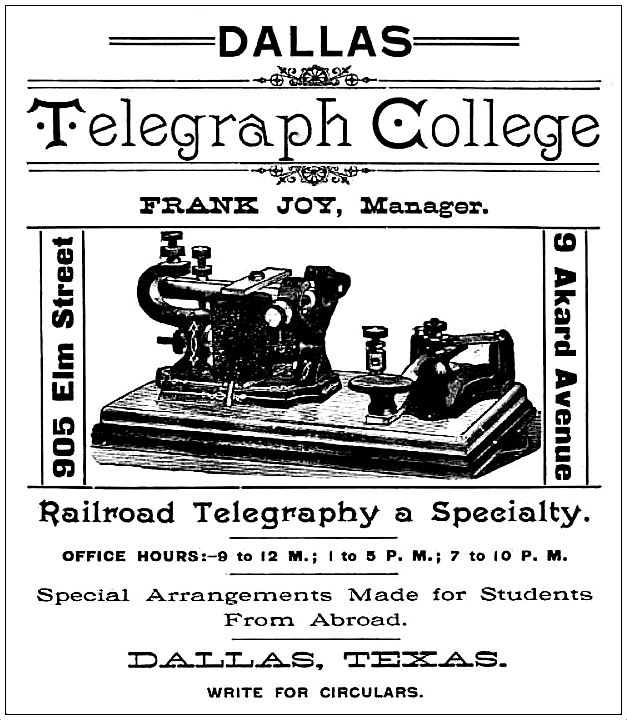
Start Your Brilliant Career at Dallas Telegraph College — c. 1900

dallas_telegraph_college_ad_1904

by Paula Bosse

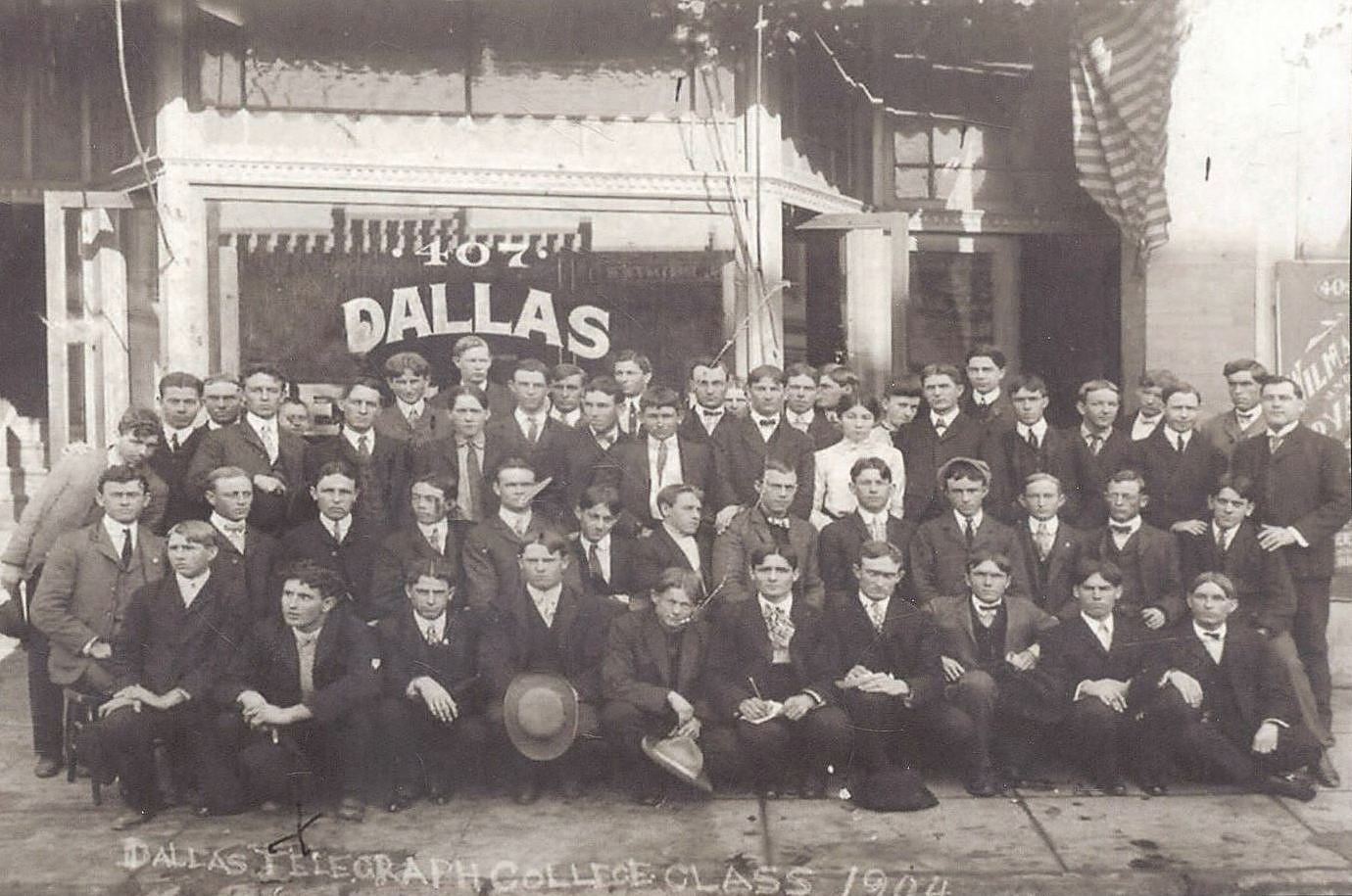
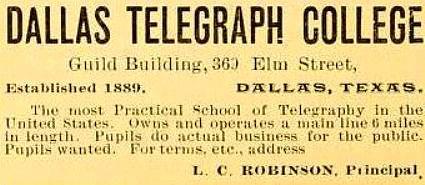
The Dallas Telegraph College opened in 1889 and admitted both men and women as students (if not from the beginning, certainly by the early years of the new century).

dallas-telegraph-college_1889-directory1889 ad (click to see larger image)

In the 1904 photo below, you’ll see one lone woman in the group.

dallas-telegraph-college_1904_ebay1904

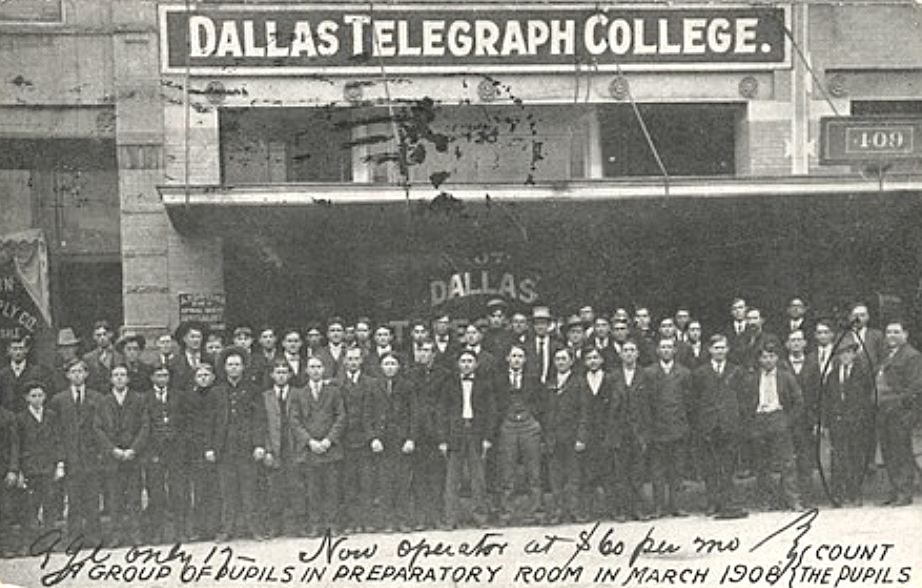
Below, the text of a 1908 ad — published in a San Antonio newspaper in hopes of drawing students to Dallas from around the state — rather optimistically promised hard-working students the possibility of earning an “enormous” salary and maybe even becoming the head of a railroad!

The Dallas Telegraph College is a school of more than state reputation. Prof. L. C. Robinson is president, with J. E. Hyle as superintendent. As is well known, telegraphy is not only one of the pleasantest of studies, but offers a brilliant career to the man who ‘makes good.’ A great many railroad presidents started as operators. The men who have made good now head railroad systems at enormous salaries. What one man has done, another may do. The Dallas Telegraph College has been a chartered institution for fifty [sic — this should be “twenty”] years. Why not send for one of their beautiful catalogues?

dallas_telegraph_college1908 ad

dallas-telegraph-college_1908_cook-coll_degolyer-lib_SMU
1908, via DeGolyer Library, SMU

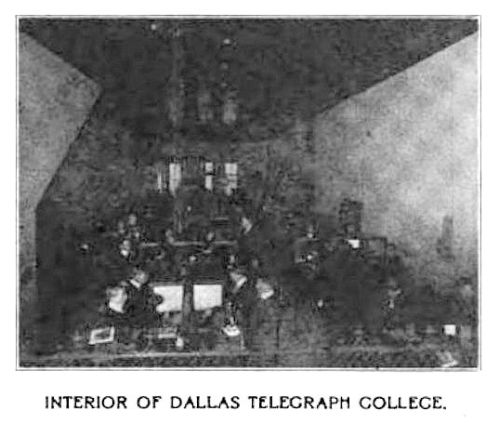
According to a 1912 article by Lewis N. Hale on Texas schools and colleges in Texas Magazine, the students learned to ply their trade by tapping (…as it were) into the actual railroad telegraph lines which, rather conveniently, ran right through their classrooms. A very murky photo from that Texas Magazine article is below.

dallas-telegraph-college_tx-mag_1912_photo

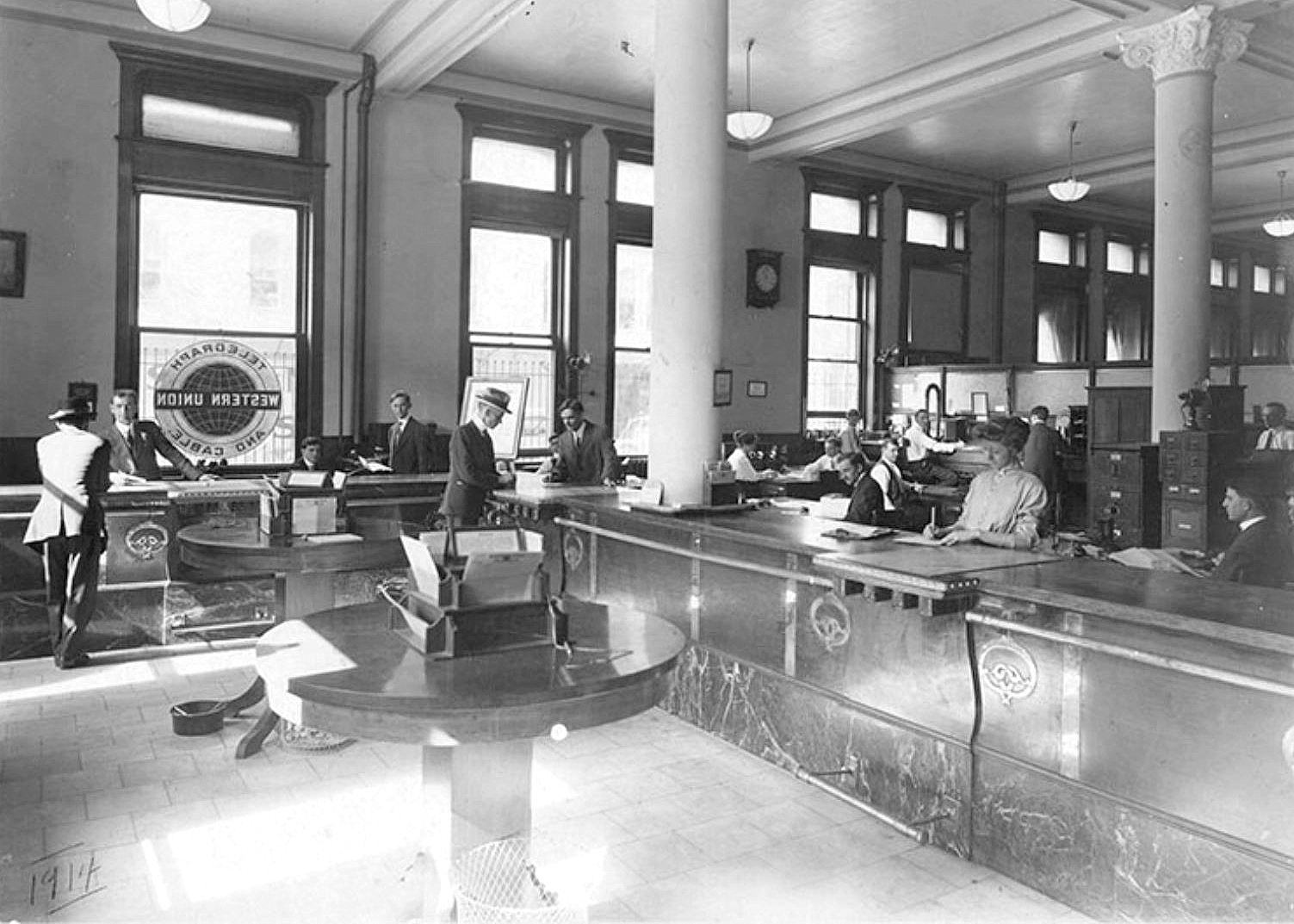
The goal of students was to secure employment in a nice, well-appointed office, such as Dallas’ Western Union headquarters, shown below in 1914.

western-union_trust-bldg_1914_DPLvia Dallas Public Library

Next stop: an enormous salary!

***

Sources & Notes

Top ad (“Learn Telegraphy”) from 1904. Second ad from 1889 (from the pages of the Dallas city directory). Third ad (with Guild Building address) from 1894.

Photo showing 1904 class from eBay.

1908 photo showing students standing in front of the building from the George W. Cook Dallas/Texas Image Collection, DeGolyer Library, Southern Methodist University; more info on this card is here.

Western Union office photograph — “[Western Union Telegraph Company interior main office – Trust building at 801 Main Street]” (1914) — is from the DPL Van Orden Western Union Telegraph collection of the Dallas Public Library Dallas History and Archives Division (Call Number PA2007-2/2).

An entertaining read on the history of telegraph service in Texas by Mike Cox can be found here.

The Handbook of Texas entry on telegraph service in Texas can be found here.

Absolutely EVERYTHING that you (and Ed McMahon) would ever want to know about the telegraph and telegraphy is here.

*

Copyright © 2014 Paula Bosse. All Rights Reserved.

Meet Me at the Kitten Lounge — 1968

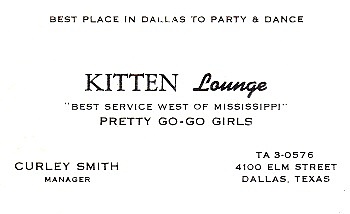
kitten-lounge_1968

by Paula Bosse

KITTEN LOUNGE
Best Place in Dallas to Party and Dance
“Best Service West of Mississippi”
Pretty Go-Go Girls
Curley Smith, Manager
TA 3-0576
4100 Elm Street
Dallas, Texas

From the manly, go-go-girl-loving pages of a 1968 issue of Texas Peace Officer magazine. No doubt a happening place, at Elm & Haskell. Peace officers welcome!

*

Copyright © 2014 Paula Bosse. All Rights Reserved.

Dallas Venetian Blind Company — 1619 Hall Street

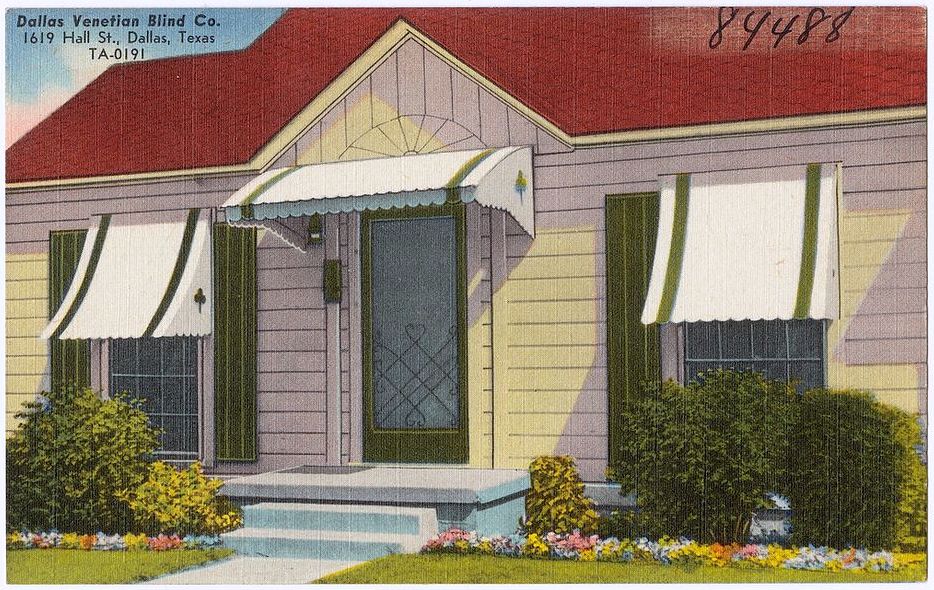
dallas-venetian-blind-company

by Paula Bosse

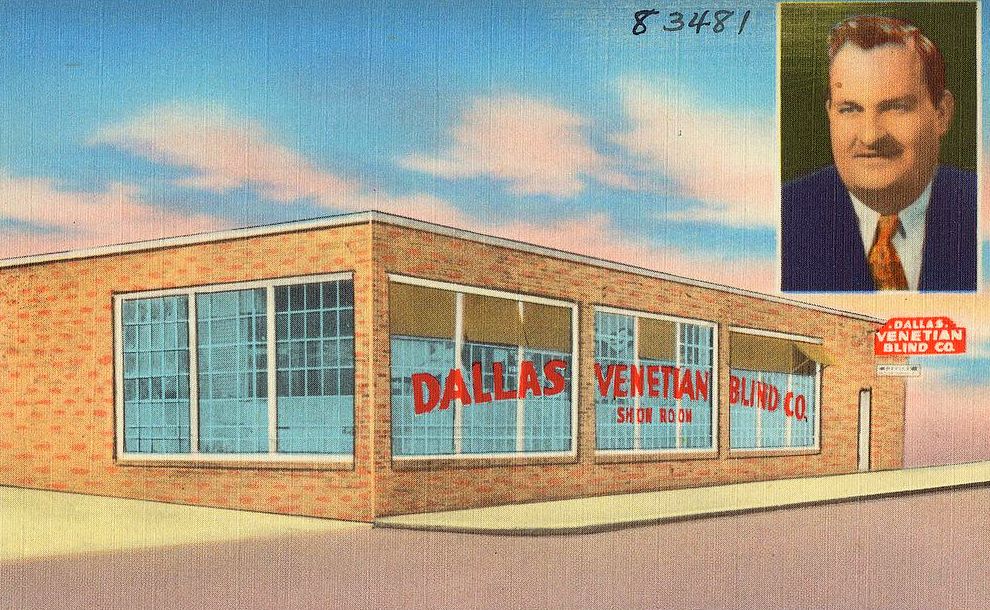
This is the sort of old postcard I love. It shows an impossibly idealized version of the past. This lovely house, with its impeccably manicured lawn and bright, shiny awnings is not a home, but the location of a business. It’s the Dallas Venetian Blind Company, at 1619 Hall Street, a few steps from Ross Avenue. When I see old postcards and photographs of places like this, I always wonder about the people who lived and worked there. So who went to work every day in that cute little house, living and breathing all-things Venetian blinds?

The owner of the Dallas Venetian Blind Company was J.S. “Joe” Herold. He was born in Austin in 1905 and moved to Dallas when he was a teenager. He started out in the floor finishing business and didn’t open his “Venetian blind concern” until many years later, in 1942. He was married, had a daughter, lived on Reiger near Fitzhugh, and enjoyed hunting and fishing. He was a “Square Deal” candidate for an East Dallas seat on the City Council in 1951, running against candidates representing the equally quaintly-named “Nonpartisan Association” and “Citizens’ Charter Association.” By 1960 he seems to have moved to Quitman, still fighting the good fight in the blinds game. But, sadly, far away from this wonderful little house which MUST have had Venetian blinds in those windows, even though I can’t see any! And now, Joe Herold — sit back — this is your life!

room
The showroom, at 3230 Ross Avenue, right around the corner from the cute little house. This expansion had happened by at least 1947.

Business must have been good in those post-war years, because Joe had ads in 1950 boasting three telephone numbers: the main shop, the showroom, and, yes, Joe’s own car phone (which seems very early for car phones)!

dallas-venetian-blind-company_wagonload_postcard

Dallas Morning News, April 19, 19501950 ad

***

Postcards from the absolutely fantastic Boston Public Library Tichnor Brothers Postcard Collection on Flickr, here.

Click postcards for larger images.

*

Copyright © 2014 Paula Bosse. All Rights Reserved.

Delta Air Lines’ First Passenger Flight — 1929

by Paula Bosse

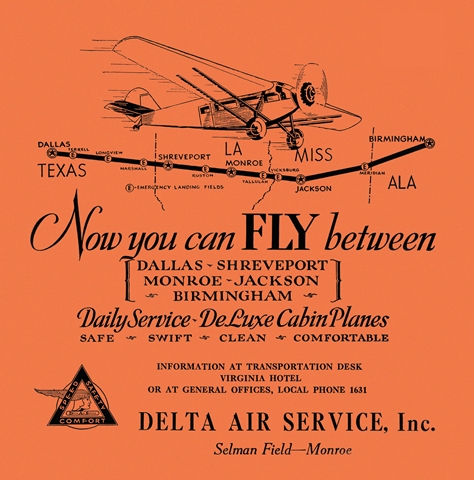
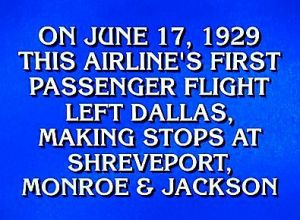
Delta Air Lines has had a longer — and more important — association with Dallas than you might think. On June 17, 1929, Delta made its first-ever passenger flight, from Dallas to Jackson, Mississippi via Shreveport and Monroe, Louisiana. According to the Love Field website, “Early flights operated from a passenger terminal near Bachman Lake, which later served as Southwest Airlines’ first headquarters building.” On that first flight, the five passengers sat in wicker chairs and could roll down windows (!) for needed ventilation. The flight took five hours. One of the first ads, from the Delta Flight Museum page, looked like this:

Delta passenger service ad ca. September 1929.

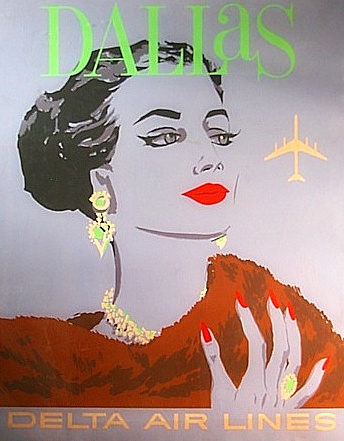
Forty-some-odd years later, the ads — and Dallas — got a bit more sophisticated.

delta_dallas_fur

delta_dallas_fredric-sweney_playing-cardsArtist: Fredric Sweney

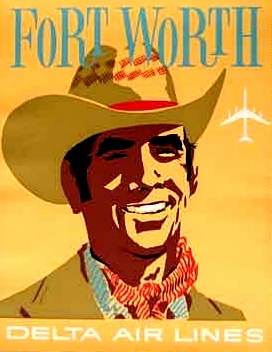
And we can’t leave out Cowtown!

delta_fort-worth

**

UPDATE, June 20, 2017: This almost-three-year-old post got a TON of hits yesterday, and I couldn’t figure out why. Eventually, though, I tracked it down: it had to do with yesterday’s Final Jeopardy question (or is it “answer”?):

delta_jeopardy_061917

Nice to see that Jeopardy is incorporating Dallas history into the show!

***

Top travel poster — showing Fort Worth in the distance, I guess? — by Jack Laycox.

For a really well-researched article by Timothy Harper describing that first flight, click here (the Dallas bit is contained in the last seven paragraphs).

*

Copyright © 2014 Paula Bosse. All Rights Reserved.

Ned Riddle: Dallas Artist and Creator of “Mr. Tweedy”

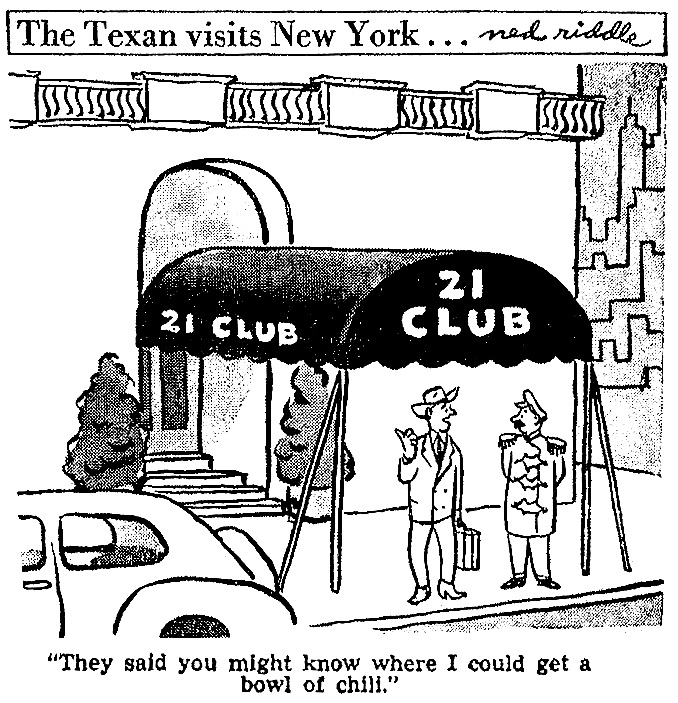
ned_riddle_texan-in-nyc_joe-cooper-bk
The Texan Visits New York City … “New York CITY?!”

by Paula Bosse

A few years ago, I came across the cartoon above in Joe E. Cooper’s chili bible, With or Without Beans, and I was delighted to see that the cartoonist was Ned Riddle, who, though having begun his career as a staff artist for the Dallas Morning News, is known primarily for his syndicated comic panel “Mr. Tweedy,” which I loved as a kid.

A couple of interesting tidbits about Mr. Riddle, who was a Dallas resident until his death in 2003: during WWII, he served on a submarine with the unspeakably perfect name, the USS Piranha, and — unlikely as it seems — while studying art at Washington University in St. Louis, he apparently studied under the great Expressionist artist Max Beckmann.

I loved “Mr. Tweedy” — the look of it, the simple one-panel jokes, and the fact that (as I recall) the somewhat optimistic-though-beleaguered Mr. Tweedy rarely actually spoke. Sort of Mr. Bean-like. I also knew that the cartoonist was from Dallas, and I was always trying to spot any sort of hidden homage to the city (as far as I know that never happened, but it SHOULD have!). “Mr. Tweedy” began in 1954 and ended in 1988. That’s a good run.

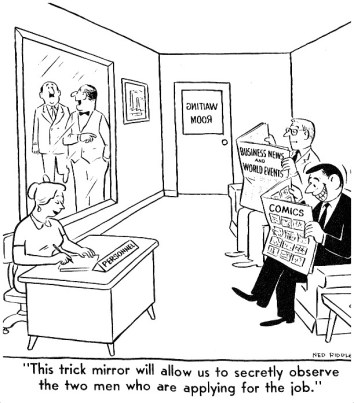
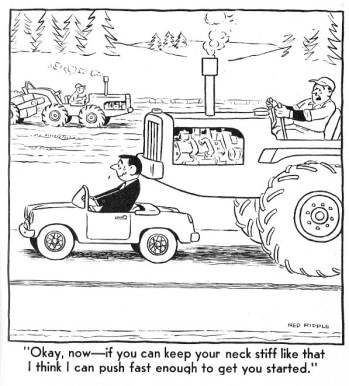
Here are a few Mr. Tweedy panels.

tweedy-21959

*

tweedy31959

*

tweedy_panel_1105691969

**

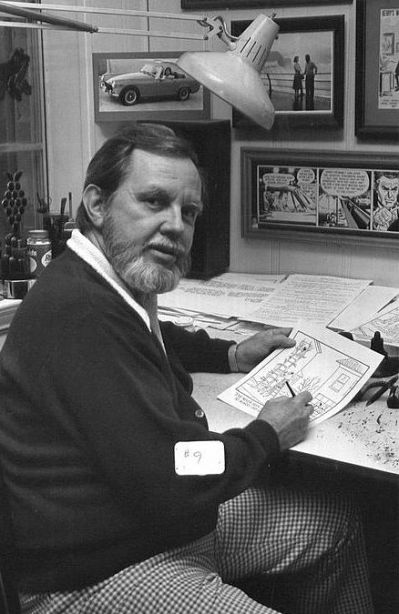
And some photos of Ned Riddle at his drawing board over the years.

tweedy1

*

ned_riddle_drawing_board_flickr

*

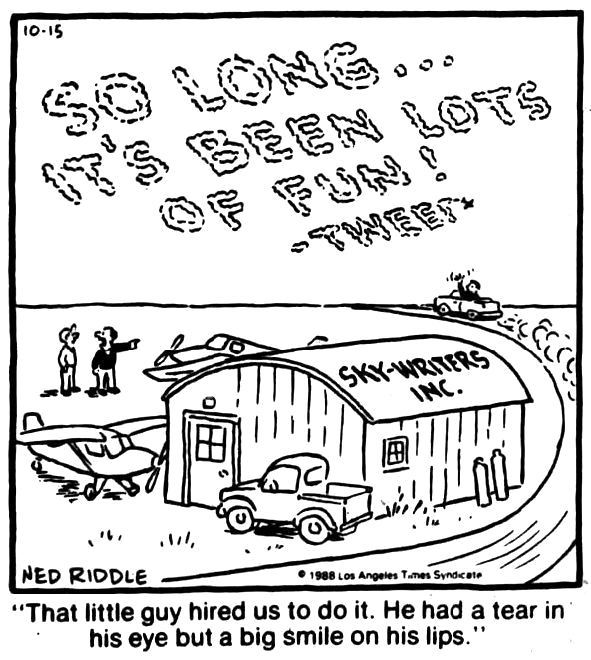
tweedy_last-panel_ned-riddle_101588Oct. 15, 1988, the final panel….

***

Sources & Notes

“The Texan Visits New York” cartoon appeared in With or Without Beans, An Informal Biography of Chili by Joe E. Cooper (Dallas: William S. Henson, Inc., 1952). Find (pricey) out-of-print copies for sale here.

First two “Mr. Tweedy” panels from Mr. Tweedy by Ned Riddle (NY: Fleet Publishing Corporation, 1960; reprinted in 1977). 

Later photo of Ned Riddle found on Flickr here.

*

Copyright © 2014 Paula Bosse. All Rights Reserved.