Flashback : Dallas

A Miscellany: History, Ads, Pop Culture

“There’s No Place Like Home … In Dallas” — 1940s
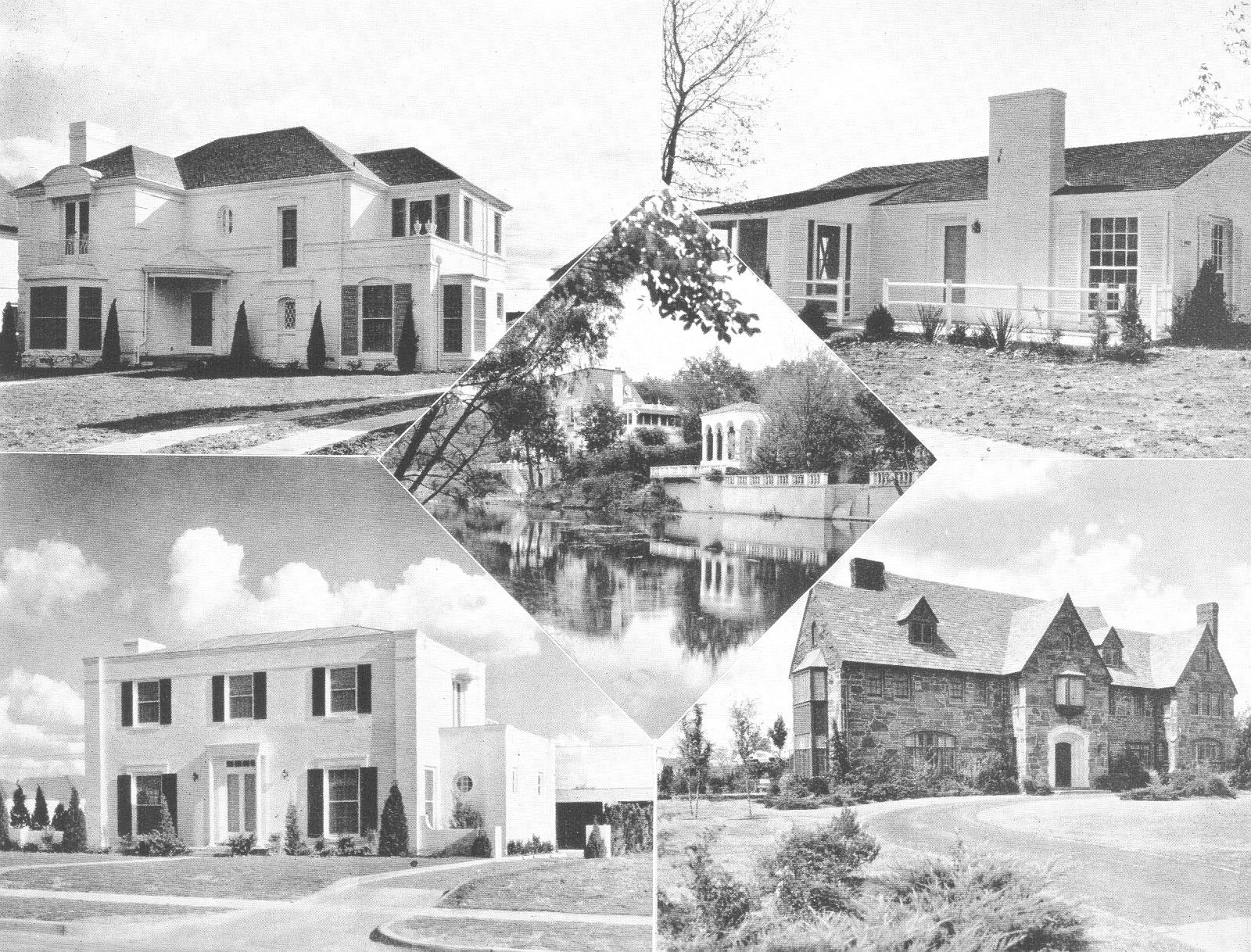
dallas-homes_so-this-is-dallas_ca-1943Dallas homes, ca. 1943 — from modest to palatial… (click for larger image)

by Paula Bosse

These photos are from a Chamber of Commerce-like booklet intended to lure new residents to the city. The photo montage above is from about 1943, and the one below is from about 1946. There are some beautiful houses here. In the photo above, I recognize Highland Park in the center and possibly lower right (the lower right has a lot of empty space behind it — maybe Bluff View or Preston Hollow?). The top right might be Oak Cliff? The house that makes me swoon is the white house at the lower left. It and the house above it look as if they might have been in Lakewood. If anyone knows the location of any of these houses — and if they’re still standing — please let me know!

The text that accompanied the above photo montage (circa 1943):

THERE’S NO PLACE LIKE HOME … IN DALLAS

Visitors to Dallas invariably comment on its beautiful homes, both large and small, and the care with which they are kept modern and clean.

The women of Dallas have their garden clubs, which are organizations of flower lovers. They vie with each other in striving to make their homes attractive to the passerby and homelike to those who live within.

One reason for this is the high percentage of home ownership. A recent study indicates that 60 per cent of families living in one-family residences own their own home. This is far above the national average.

For several years Dallas has been on a truly remarkable building boom in its residential sections. New homes are springing up at the rate of 14 a day and new subdivisions are being opened as rapidly as others are sold out. The outer fringe of Dallas is, in effect, a brand-new city. Lots that were cotton fields a few years ago now contain beautiful new homes and landscaped gardens.

Any type of home plot is available to the prospective home builder here. If he desires a home in a close-in busy section, that can be found in many places. If he prefers a modest cottage on the outskirts, there are a dozen subdivisions where it can be found. If he is seeking a palatial residence or a rustic cottage on a country estate, he can find that too, and on short notice.

Dallas takes much pride in its wide recognition as a city of homes.

*

dallas-home_so-this-is-dallas_ca-1946

The text that accompanied this photo (circa 1946):

HOMES MAKE A CITY

Dallas… Has Planned Beauty

The beauty of Dallas may be attributed to the wide awake and broadminded citizens of some 25 years ago, who at that time, engaged nationally known landscape artists to design and plan the future Dallas. So well was this done and so cooperative were the people of Dallas that in this short time Dallas is known as one of the most beautiful cities in the nation.

Dallas has attractive parks, driveways, public buildings and in fact hardly a house, no matter how humble, that is not improved with planting. As a city of homes the saying, “It is not a home until it is planted well” applies to Dallas. No tenant house is built today that is not surrounded by a setting of nature’s beauty. To the Garden Clubs and various women’s organizations much credit must be given for their untiring efforts to eliminate slum districts, unsightly streets and the planting of our highways.

Much credit is due the nurserymen and landscape architects, who are ever ready to give advice, planting instructions, and who have furnished shrubs, flowers and assistance to many charitable institutions and public places, as well as make talks to the clubs and organizations on when, how and what to plant in order to constantly improve Dallas. The Garden and women’s clubs annually stage flower shows and have garden contests.

All this has made Dallas today, a city beautiful – a place where you want to live.

***

Sources & Notes

Photos are from the booklet So This Is Dallas, published by The Welcome Wagon. The top photo is from the circa-1943 edition, used with permission, courtesy of the Lone Star Library Annex Facebook page. The second photo is from the circa-1946 edition, from the author’s collection.

Photos are larger when clicked.

*

Copyright © 2018 Paula Bosse. All Rights Reserved.
 

Main Street Looking East — 1920s

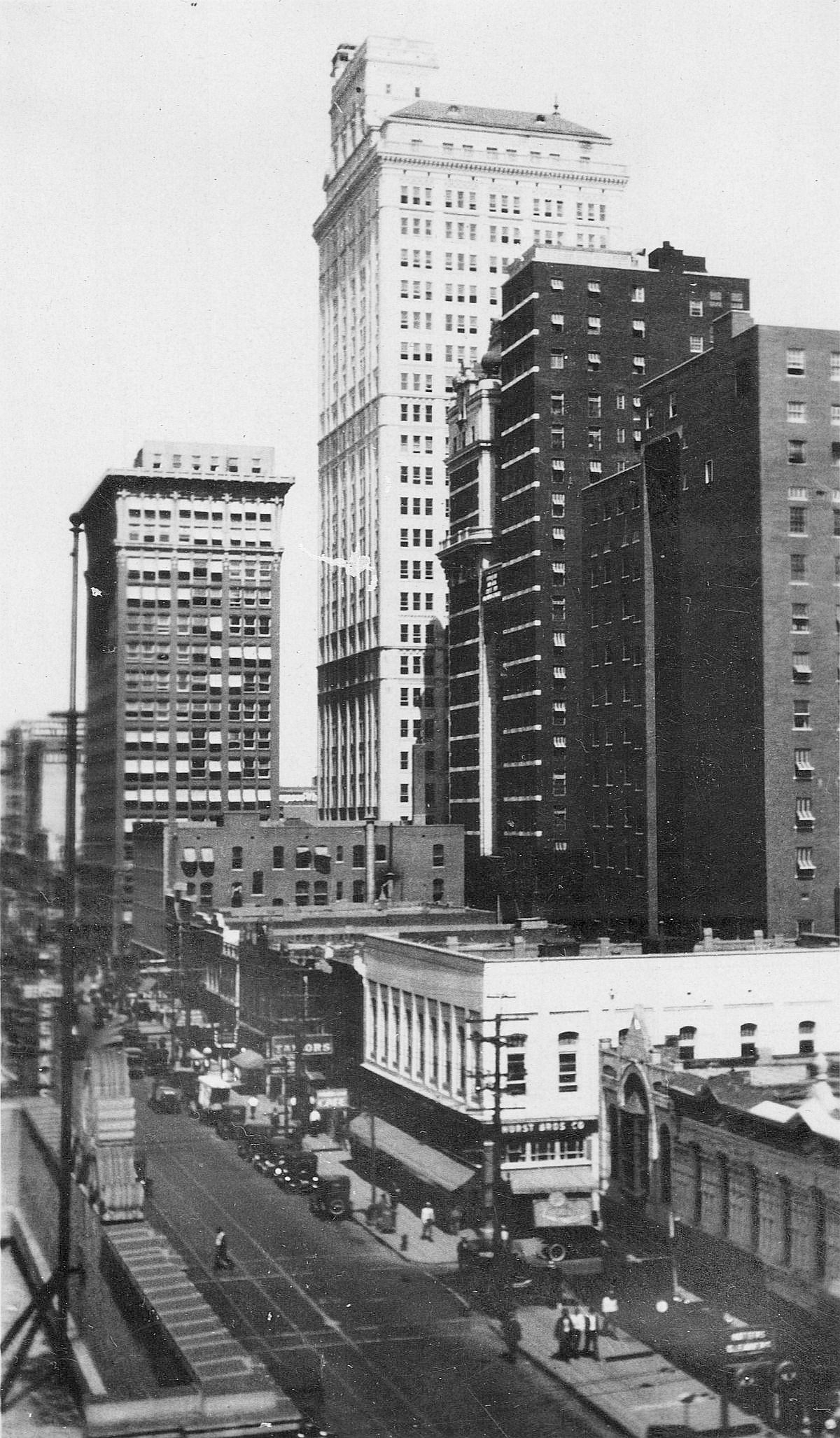
main-street_east_ca-1925_erik-swansonEast from the 1200 block of Main (photo courtesy Erik Swanson)

by Paula Bosse

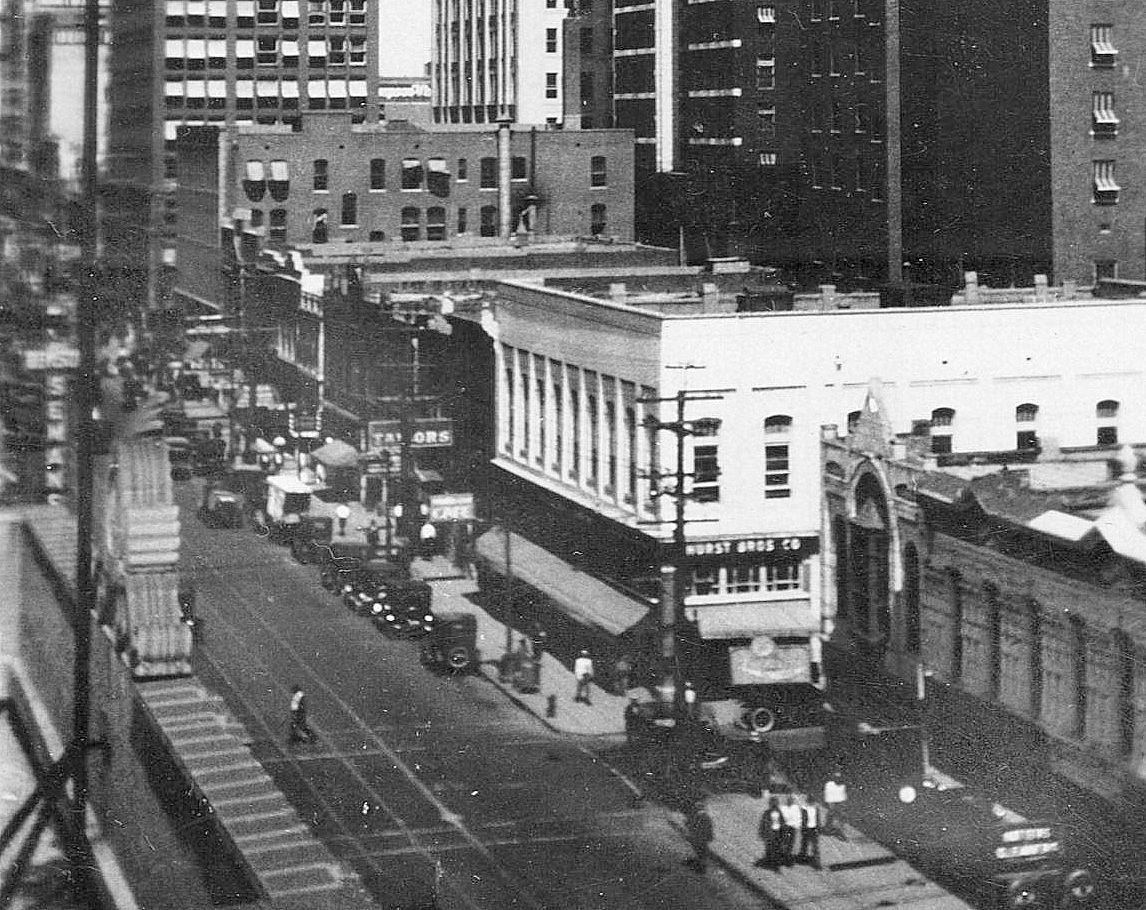
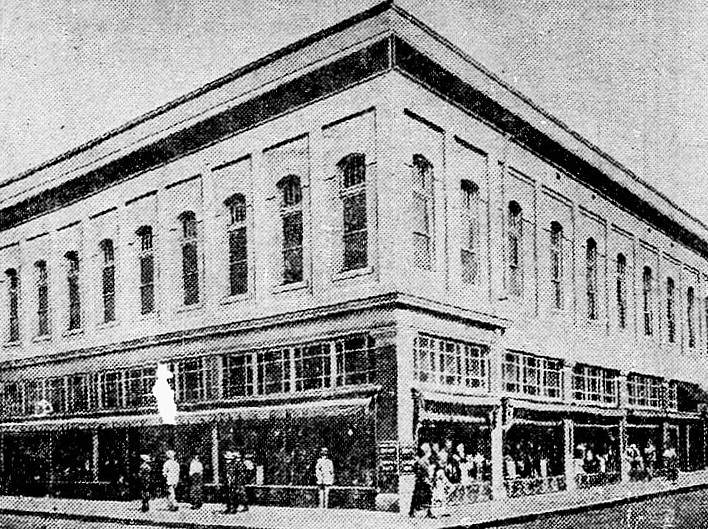
This great photo (sent in by reader Erik Swanson) shows Main Street around 1925. The white building seen in the lower right is Hurst Bros., a men’s clothing shop, which was at the southeast corner of Main and Field (1300-1304 Main). It was a little confusing to me at first because it looks like there is a street behind it (to the south), which would have been Commerce, but then the Magnolia Building and the Adolphus would all be out of place. But what appears to be a street was just a wide alleyway/passage (seen on the 1921 Sanborn map here — Main east of Akard can be seen on the Sanborn map here).

The very tall building is the Magnolia, at Commerce and Akard (it opened in 1922 — Pegasus wasn’t added until 1934); to the right, across Akard, is the Adolphus Hotel and the Adolphus Annex. The tall building to the left of the Magnolia is the Southwestern Life Building (southeast corner Main and Akard, demolished in 1972, now a small open plaza area). The 4-story building at the southwest corner of Main and Akard is the Andrews Building. The white building in the center is Hurst Bros. (southeast corner Main and Field), and across Main can be seen the sign for the men’s clothing shop Benson-Semans.

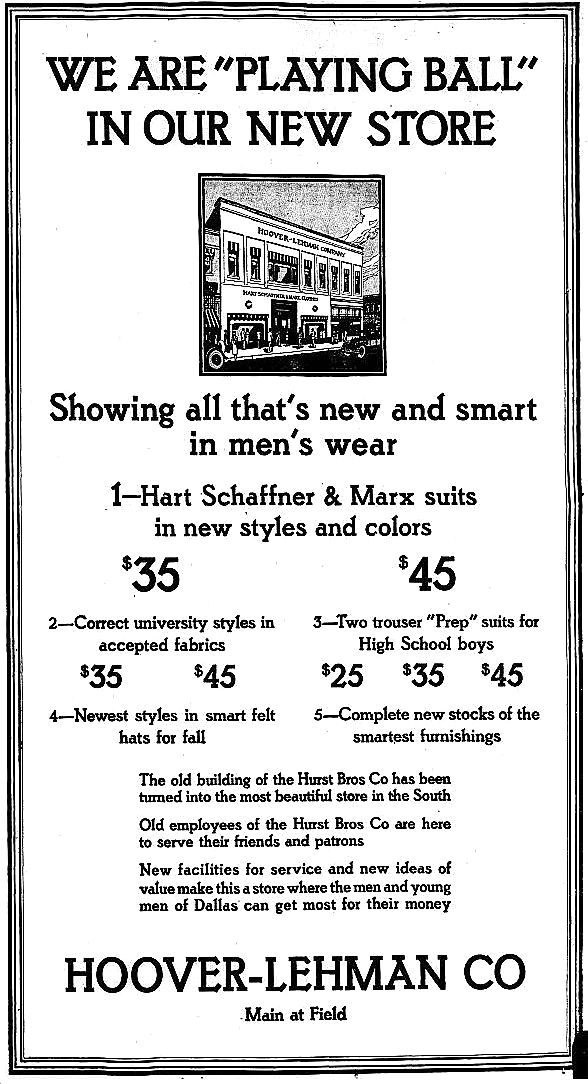
Hurst Bros. was gone by 1929 when it became Hoover-Lehman, another clothing store, and Benson-Semans appears to have vacated that space around 1926, helping to date the photo between 1922 and 1926.

*

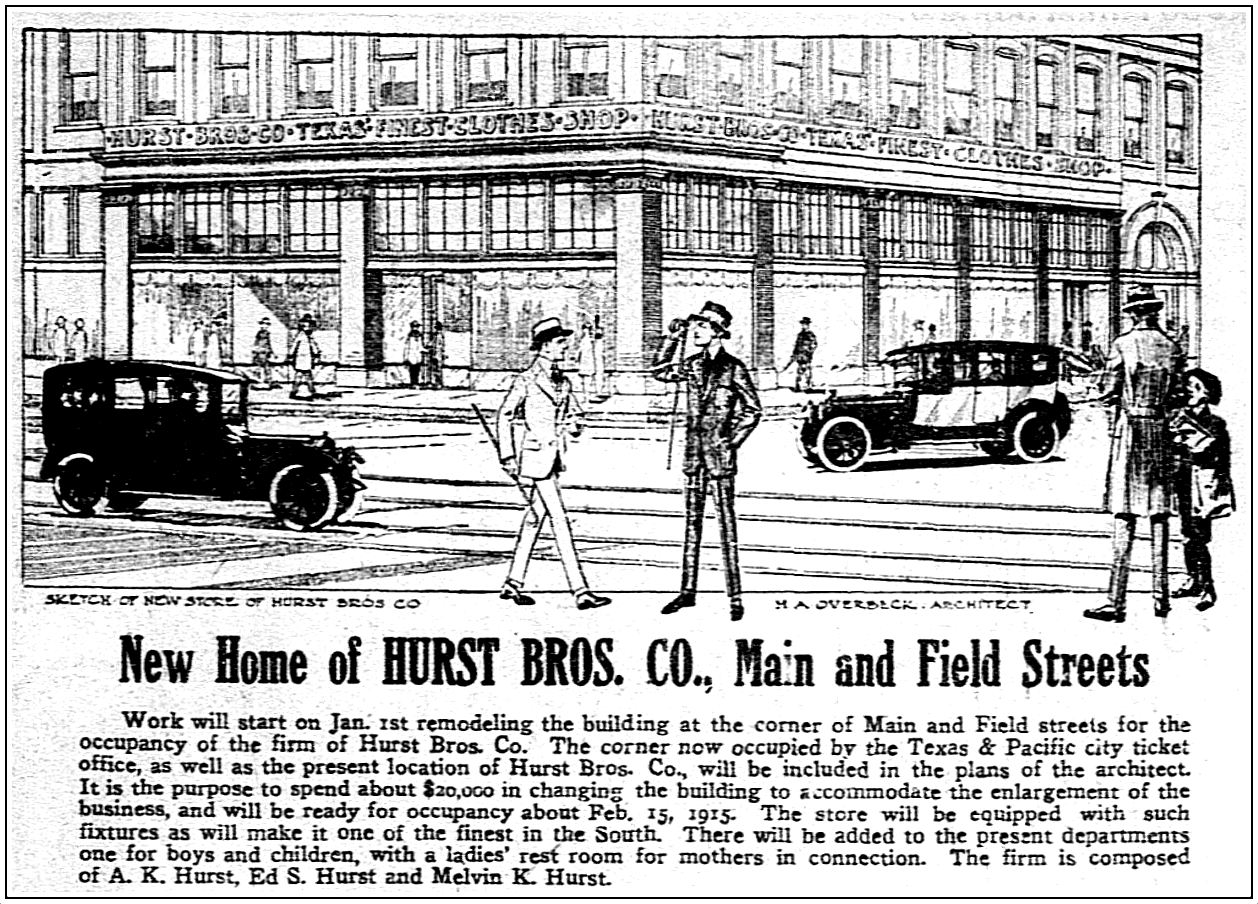
The Hurst brothers, Melvin K. Hurst and Edgar S. Hurst (along with their father, Alfred K. Hurst) began their men’s clothing business around 1912 and moved into the building seen in this photo in 1915 (it was renovated by prominent Dallas architect H. A. Overbeck, whose still-standing courts building and jail was built at about the same time). The business was dissolved in 1929, and its stock, fixtures, and lease were acquired by a longtime employee who, with a partner, remodeled the store and reopened it as the Hoover-Lehman Co. (A present-day Google Street View of this southeast corner of Main and Field can be seen here.)

main-street_east_ca-1925_hurst-bros-det_erik-swansonDetail from top photo, ca. 1925 (click for larger image)

hurst-bros_dmn_112214_adAd from Nov., 1914

hurst-bros_1920sLate 1920s

hurst-bros_hoover-lehman_091329Sept., 1929

***

Sources & Notes

Top photo sent in by Erik Swanson, used by permission. The photo may have been taken by his grandfather, F. V. Swanson, an optometrist (see the post “Thompson & Swanson: ‘The Oldest Exclusive Optical House in Dallas,” here). Thanks for the great photo, Erik! (Update: Sadly, local music favorite Erik Swanson died on Feb. 16, 2021 at the age of 57 — he had been suffering from ALS. RIP, Erik. And thanks for the great music.)

All images are larger when clicked.

*

Copyright © 2018 Paula Bosse. All Rights Reserved.
Thompson & Swanson: “The Oldest Exclusive Optical House In Dallas”

thompson-swanson_1914-ad_erik-swansonDon’t blink… (1914 ad, courtesy Erik Swanson)

by Paula Bosse

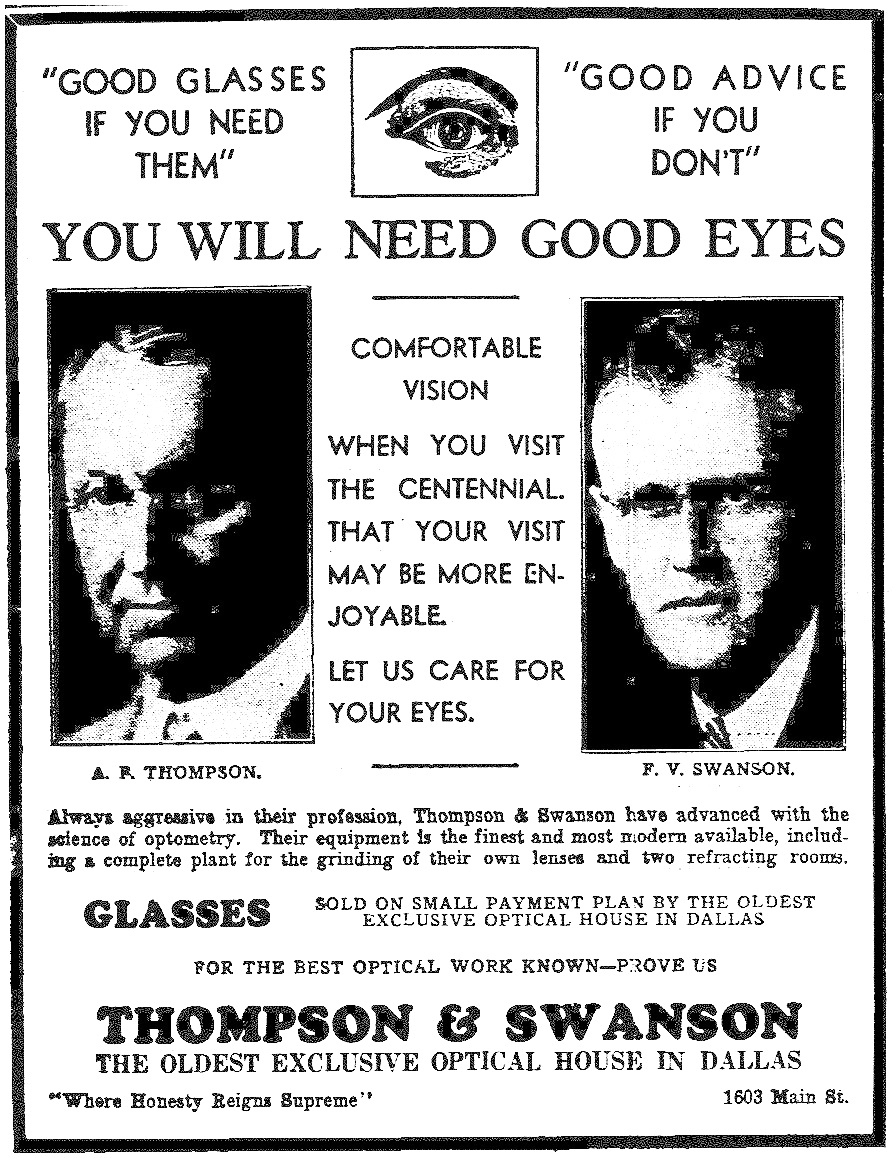
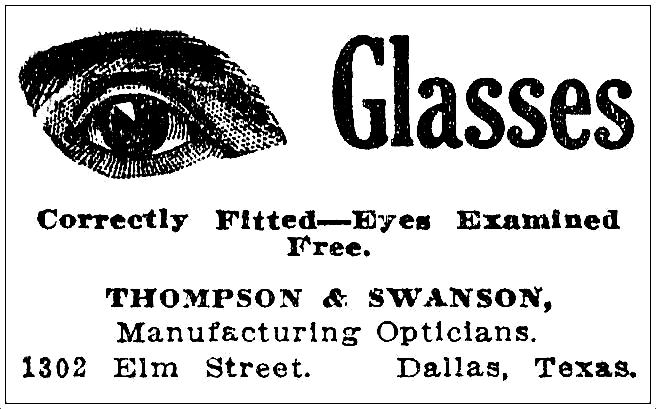
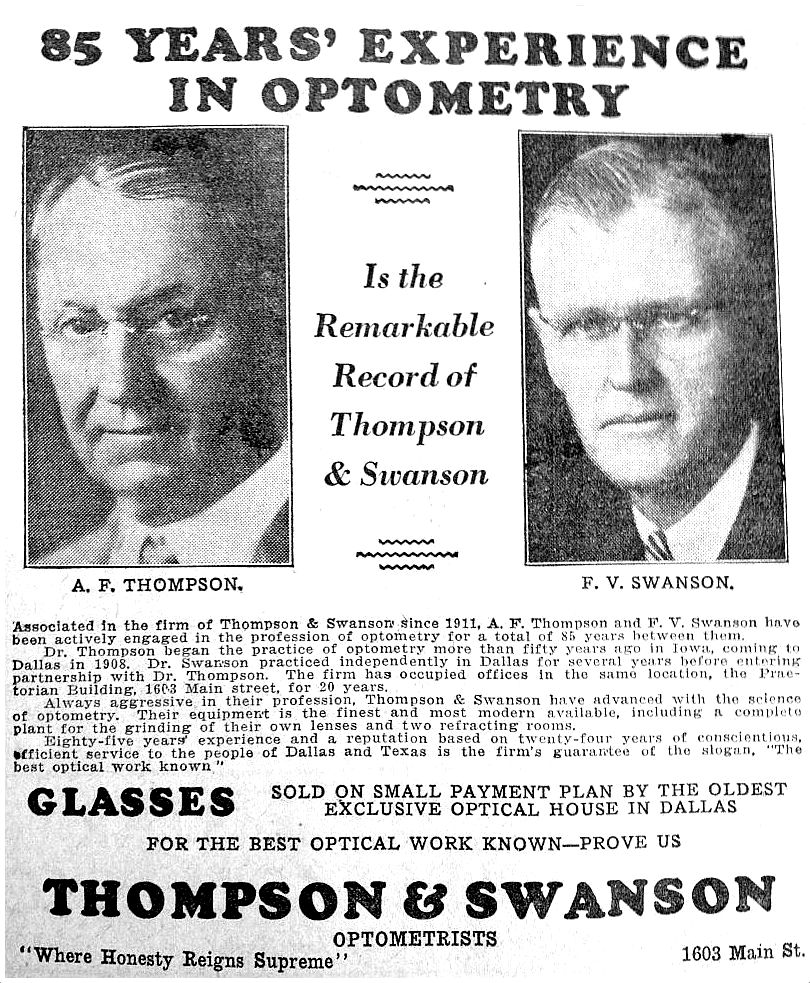
Dr. Alfred F. Thompson (1862-1942) and Dr. Frank V. Swanson (1885-1949) opened their “manufacturing opticians” practice, Thompson & Swanson, in 1911. In addition to examining and treating patients, they also ground lenses and manufactured their own glasses, something which I gather was somewhat unusual in 1911 for such a small practice.

They first set up shop on Elm Street, and their ads — generally eyeball-themed — were always attention-grabbers: not only did they stare at you from newspaper pages, they also seemed to follow you around the room.

thompson-swanson_1911-ad1911 ad

They soon moved to the Sumpter Building, in late 1912 (ad at top), directly across from the brand new Praetorian Building. By February of 1916 they’d hit the big-time and were actually in the Praetorian Building, Dallas’ tallest building and its most impressive address. Not only were they in the building, they were at street-level, which guaranteed that practically everyone who spent time downtown was familiar with Thompson & Swanson, if only because they passed the Praetorian Building. The ad below, featuring the building, is fantastic, in a weird-fraternal-order kind of way. (The ad at the top is also kind of weird — you can practically hear the spooky theremin.) (Click ads to see larger images.)

thompson-swanson_1923-ad_erik-swanson1923 ad (courtesy Erik Swanson)

Thompson & Swanson’s business history:

thompson-and-swanson_erik-swanson(courtesy Erik Swanson)

Similar ad, but aimed at the Texas Centennial visitor. “Good glasses if you need them, good advice if you don’t.”

thompson-swanson_june-1936June, 1936

The successful partnership of Thompson and Swanson lasted into the early 1940s. After Dr. Thompson’s death in 1942, Dr. Swanson continued at the same address as “Swanson & Son,” a practice with his son, Dr. F. V. Swanson, Jr.

***

Sources & Notes

The top ad, the ad with the Praetorian Building, and the “85 Years’ Experience in Optometry” ads were very kindly sent to me by Erik Swanson (grandson of Dr. Swanson); they are used with permission. I love old ads, especially ones that feature Dallas buildings. Regarding the location of his grandfather’s business in the Praetorian Building, Erik wrote: “Little did he know there would one day be a giant eyeball at the location where he had his optician shop.” Ha! Now when I see that giant eyeball I’ll think of Thompson & Swanson (and hear that spooky theremin).

I was doubly happy to exchange emails with Erik because I’ve been a fan of his Western Swing bands for many years. His current band is Shoot Low Sheriff (listen to them here), but I first became a fan when I heard his former band, Cowboys & Indians. Thanks for the ads, Erik!

UPDATE: Sadly, Erik Swanson died on Feb. 16, 2021 at the age of 57. He had been suffering from ALS. RIP, Erik. Thank you for the hours of entertainment your music provided me and thousands of others.

*

Copyright © 2018 Paula Bosse. All Rights Reserved.
Fred Caropresi’s Mid-Century-Modern Illustrations for SMU’s 1951 Yearbook

smu_1951-yrbk_people-places_caropresiLife on the SMU quad, 1951… (click to see larger image)

by Paula Bosse

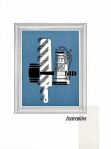
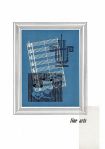
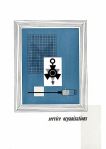
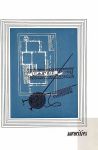
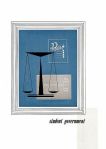
I’m not sure why I happened across the artwork of Fred Caropresi (1921-1985), but I must have been looking for something in the 1951 SMU yearbook, The Rotunda — Caropresi’s work is all over it! Caropresi (or as he was known to fellow students, “Freddy”) had attended SMU in the 1940s, before and after World War II. His degree was in mechanical engineering, but after the war, he returned to study art as a grad student and eventually opened his own advertising firm in Pittsburgh, Pennsylvania.

Below are some examples of his work from the 1951 SMU annual — his drawings are reminiscent of the silkscreen process with their off-kilter, off-register areas of flat vibrant color. This type of 1950s “mid-century modern” commercial art is definitely one of my personal favorites. 

Here they are (click pictures to see larger images).

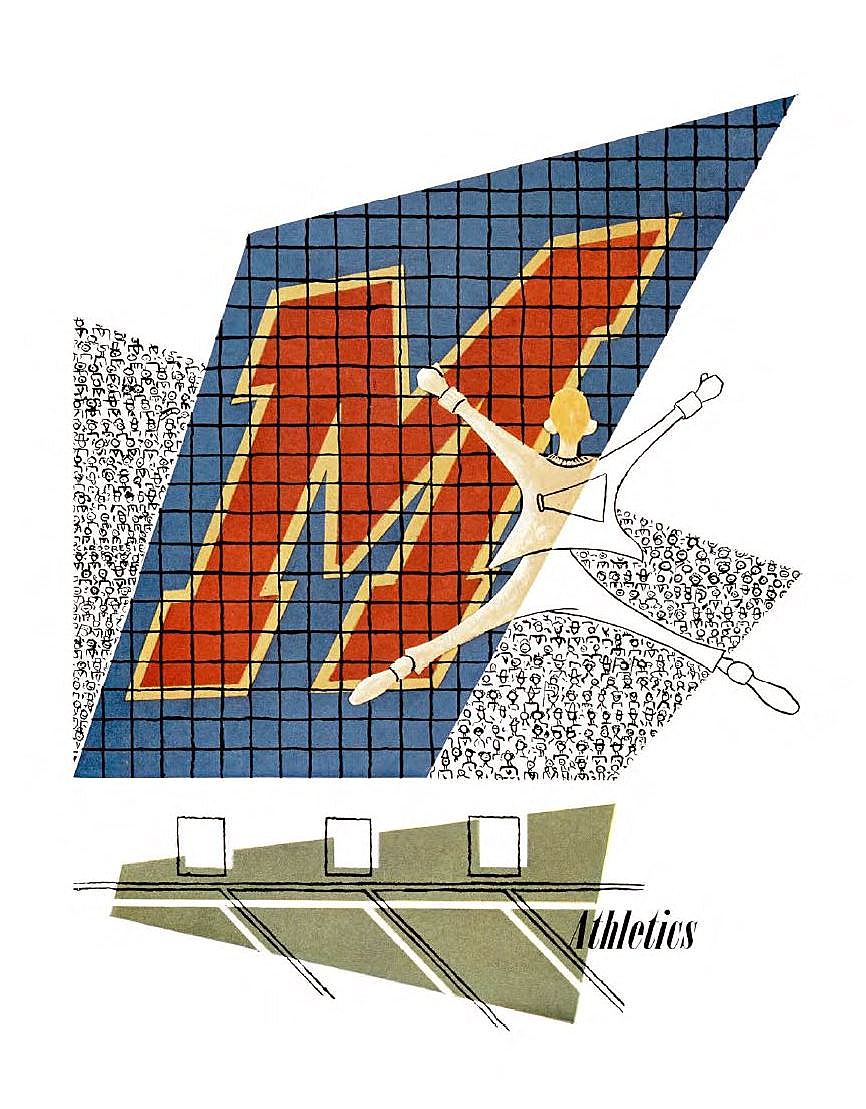
Peppy Mustangs:

smu_1951-yrbk_athletics_caropresi

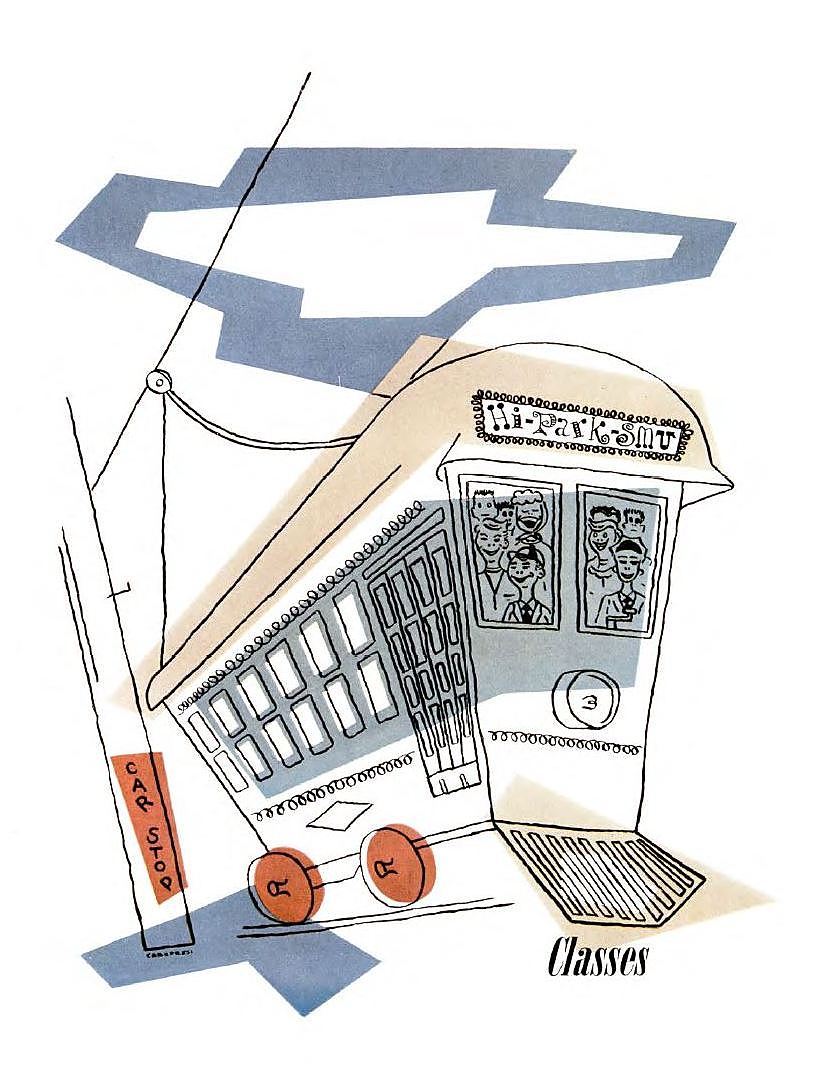
The packed “Hi-Park SMU” streetcar (which ran along Hillcrest  — see a photo here):

smu_1951-yrbk_classes_caropresi

Bulletin board — pipes and the Arden Club:

smu_1951-yrbk_activities_caropresi

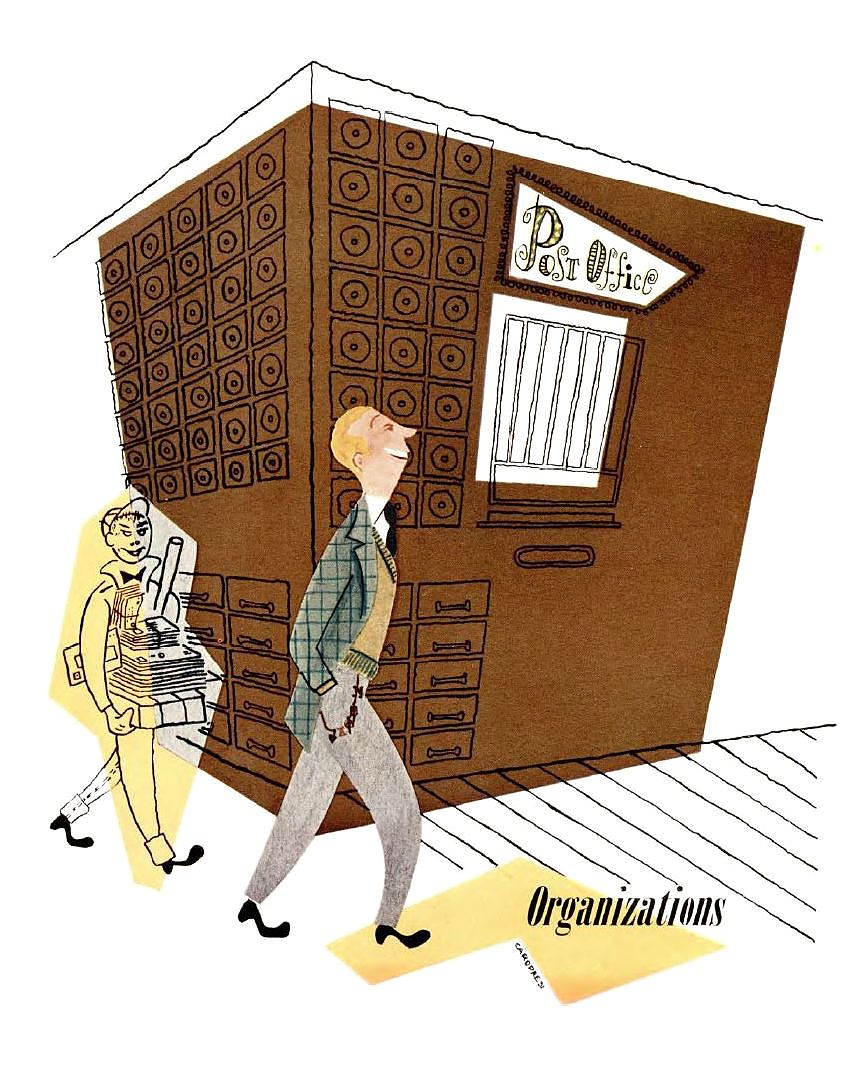
Post office (this is great — I’d love to see a photo of the real thing:

smu_1951-yrbk_organizations_caropresi

Relaxing with a drink and TV:

smu_1951-yrbk_personalities_caropresi

Cokes al fresco and another college boy smoking a pipe:

smu_1951-yrbk_pictorial_caropresi

The drawings below — also from the 1951 Rotunda — show a completely different style. The first one (“Beauties”) is fantastic. (Click a thumbnail image to open a slideshow.)

Like I said, Caropresi’s work was ALL OVER the 1951 Rotunda!

varsity-fight-song_smu-yrbk_1951

*

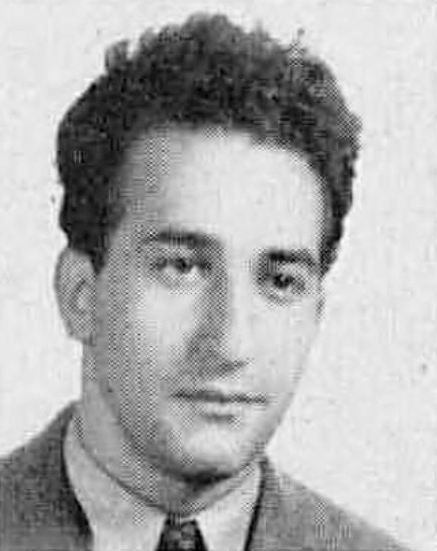
New York native Frederick V. Caropresi (1921-1985) grew up in the Bronx with his parents (his father, a pharmacist, had immigrated from Italy), his grandmother, and his older brother Gregory. For some reason both Fred and Greg decided to attend SMU in Dallas. Fred originally studied mechanical engineering, receiving his degree in 1944. He returned to Dallas after his service in the navy during World War II, and took post-graduate art courses. He was busy around Dallas as a both a fine artist (his first one-man show was in 1952) and as a very busy commercial artist, working in local theater, industrial design, and advertising. He was an active president of the Dallas Print Society in the early 1950s, at the same time he was designing college yearbooks. He left Dallas in the 1950s and settled in a suburb of Pittsburgh where he established his own advertising agency. I hope he continued his own art, because I’m a fan.

caropresi_fred_smu-1942Fred Caropresi, 1942, SMU yearbook photo

He is represented in the collection of the Dallas Museum of Art with this silkscreen/serigraph, a view of Reims Cathedral from about 1948.

caropresi-frederick_reims-cathedral_DMA_1948
Dallas Museum of Art

Fred Caropresi died in in 1985 in North Hills, Pennsylvania.

caropresi_news-record_north-hills-pennsylvania_040285_OBIT
North Hills (PA) News Record, April 2, 1985

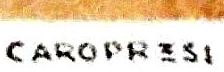
Thank you, Fred.

caropresi-sig_1951

***

Sources & Notes

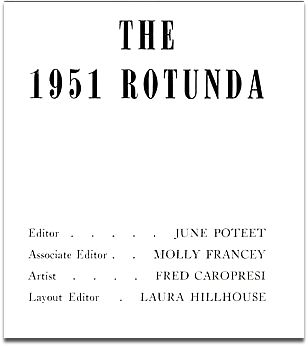
All artwork by Frederick V. Caropresi from the 1951 edition of SMU’s yearbook, The Rotunda, is from the Southern Methodist University Yearbooks collection, DeGolyer Library, Central University Libraries, SMU; all editions are fully downloadable in PDFs, here.

caropresi_1951-rotunda

The silkscreen print “Reims Cathedral” (23/30, signed “F. V. Caropresi”) is from the collection of the Dallas Museum of Art; a Dallas Art Association purchase, it was accessioned in 1948.

All images are larger when clicked.

*

Copyright © 2018 Paula Bosse. All Rights Reserved.
 

“A Glimpse of Dallas” — ca. 1909

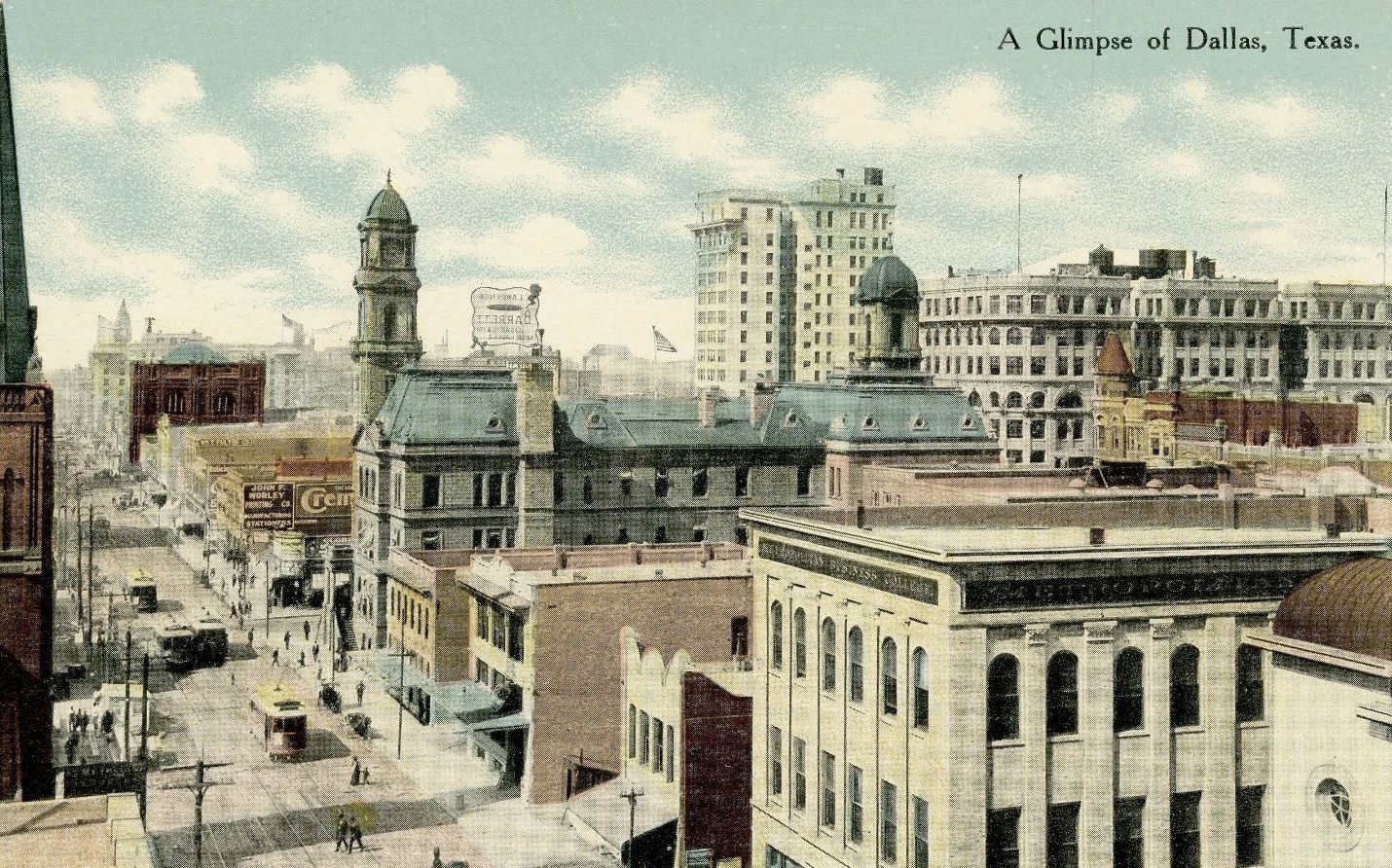
postcard_charles-e-arnoldCommerce Street, looking west from St. Paul…

by Paula Bosse

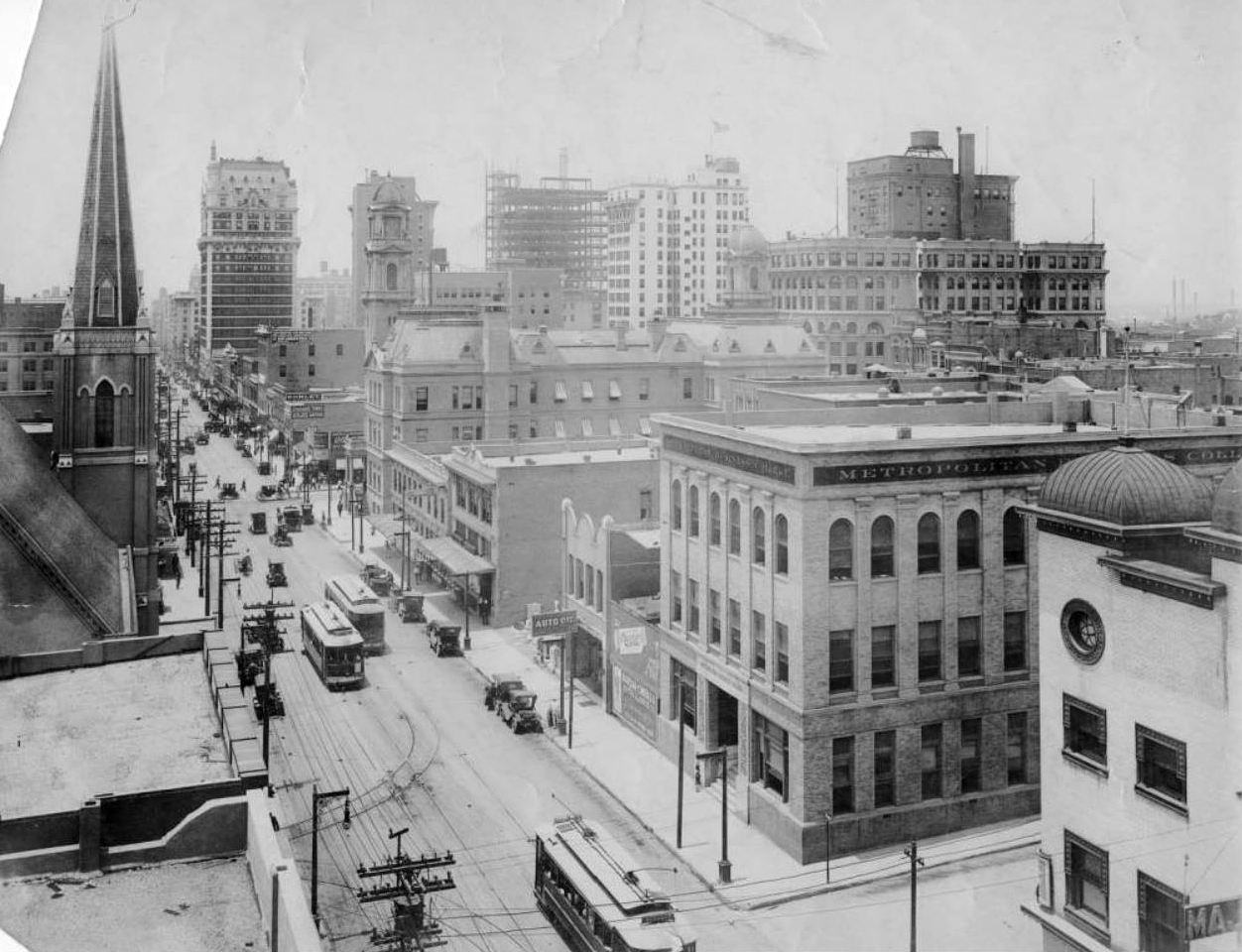
This very attractive postcard shows a growing downtown Dallas, looking west from Commerce and St. Paul, photographed by Charles E. Arnold from the YMCA building (which once sat in the block now occupied by the Statler). The Wilson Building can be seen at the top right, the Praetorian Building (then the tallest building in the city) is to its left, and the Post Office and Federal Building is in the center. The photo was probably taken in 1909 or 1910 (the Praetorian was completed in 1908 and the Adolphus Hotel (not seen in this postcard) was under construction in 1911.

The photo below, taken by Jno. J. Johnson from the exact same vantage point, shows the many changes to the skyline which happened over a very short span of time. The photo below is from about 1913.

new-skyline_c1912_degolyer_smuvia DeGolyer Library, SMU

I zoomed in on this photo in a previous post, “Horses, Carriages, Horseless Carriages: Commerce Street — 1913,” here.

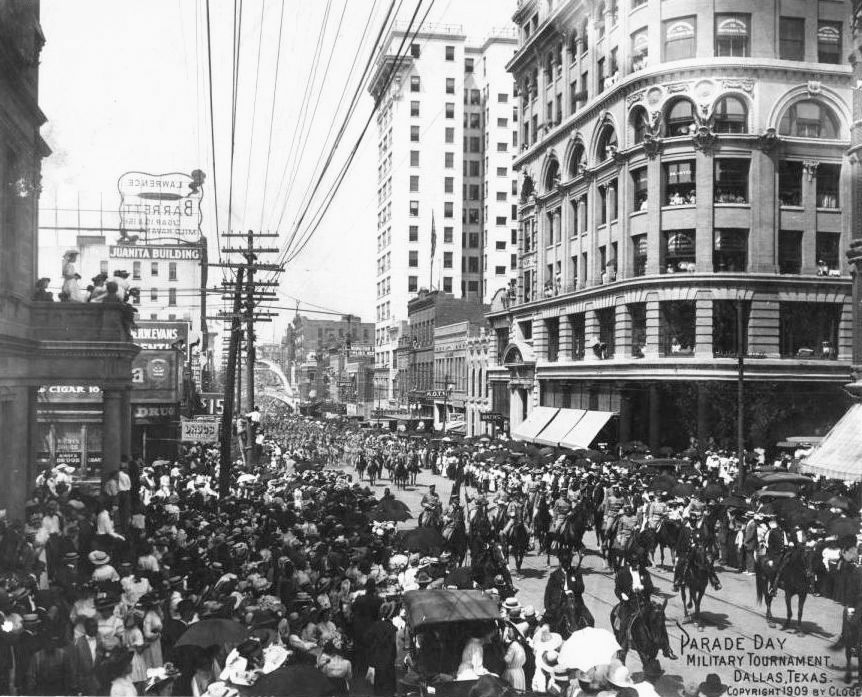
The large “Barrett Cigar” sign seen in the top postcard image is also visible in a 1909 photo by Clogenson, below — it can be seen at the left, atop the Juanita Building on Main Street, opposite the Praetorian.

parade-day_1909_clogenson_degolyervia DeGolyer Library, SMU

I zoomed in on this photo in the post “Parade Day — 1909,” here.

This was the beginning of staggering growth for Dallas, and new skyscrapers seemed to be going up every month.

***

Sources & Notes

I came across the postcard image a couple of years ago — I noted that the photographer was C. E. Arnold, but I did not note the source.

The two photos are from the DeGolyer Library, Central University Libraries, Southern Methodist University; further information on each photo can be found at the links posted immediately below the images.

All images are larger when clicked.

*

Copyright © 2018 Paula Bosse. All Rights Reserved.
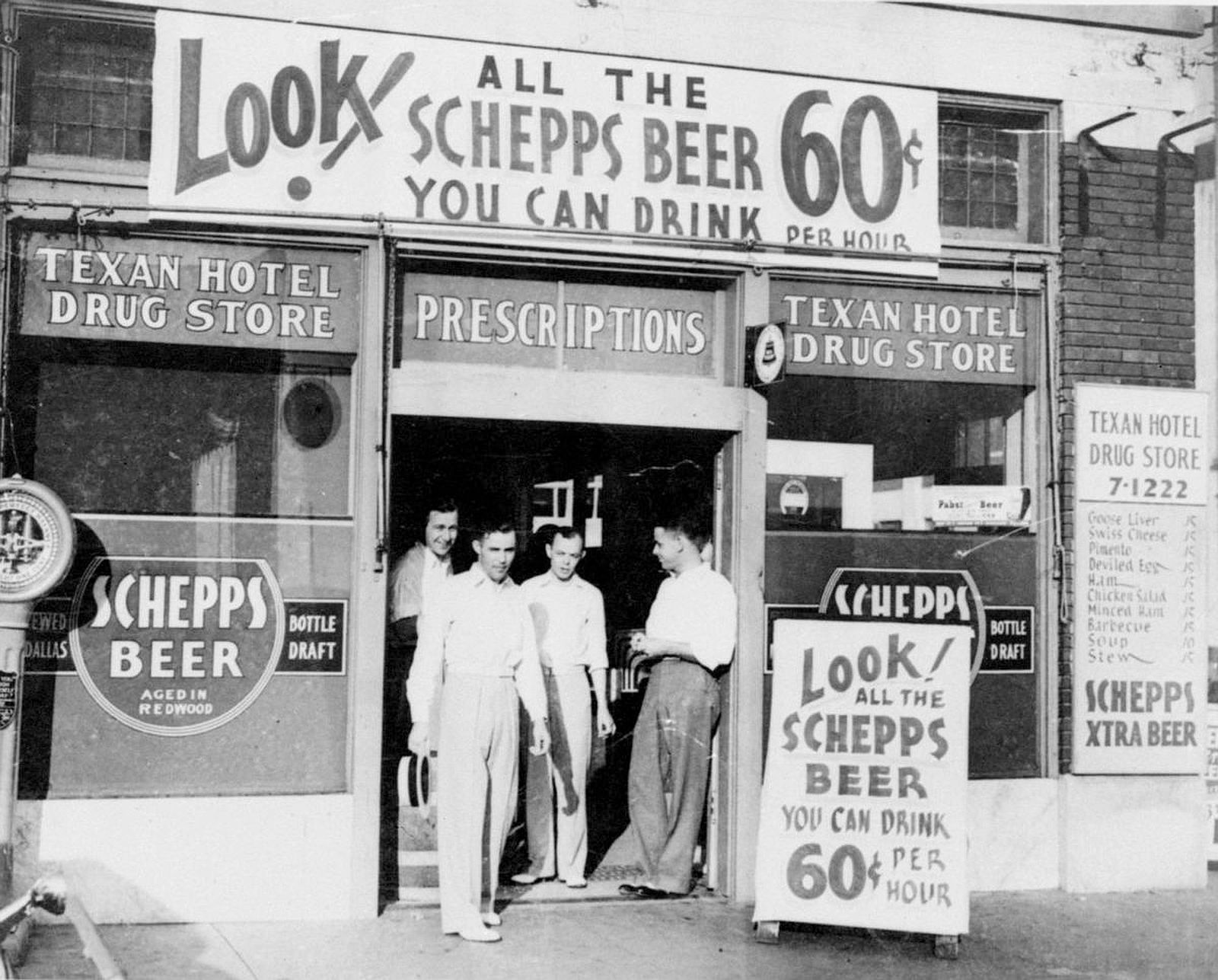
“All the Beer You Can Drink In an Hour For 60 Cents” — 1935

beer_60-cents_AP_1935LOOK!

by Paula Bosse

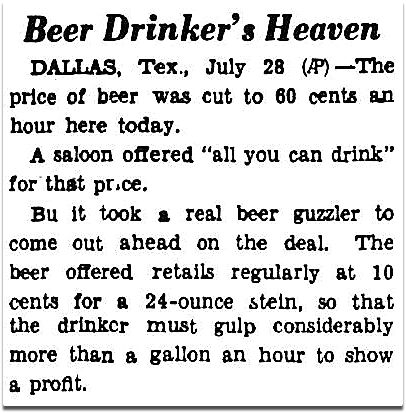
Summertime in Big D. It’s hot. REAL hot. For some, the only way to properly slake that nagging thirst is with a tall frosty mug of beer. In the summer of 1935, the management of the Texan Hotel Drug Store (at the northeast corner of S. Houston and Jackson streets) decided to offer a headline-grabbing promotion: “ALL THE SCHEPPS BEER YOU CAN DRINK: 60¢ PER HOUR!” (60¢ in 1935 would be the equivalent of about $11.00 today.) Sounds like a bargain, right? Maybe. Depends on your constitution — it meant that you would have to consume over a gallon of beer in one hour to save any money. (Not a problem for some, I realize.)

This made national news — there’s even newsreel footage. The photo above is from an AP wire story, accompanied by this caption: “A Dallas beer parlor offered ‘all the beer you can drink’ for 60 cents an hour. There were plenty of takers, but the proprietor said none had beaten him. The drinker would have to consume more than nine pints an hour to show a profit.”

beer_scranton-PA-repubican_072935
Scranton (PA) Republican, July 29, 1935

Speaking of newsreel footage, you can watch it here. As you can see, there certainly were a lot of very enthusiastic Dallas beer-drinkers doing their very best to surpass that gallon hurdle in order to feel they’d spent their money (and their hour) wisely.

Ah, back when you could guzzle beer in a drugstore. (Several drugstores that same year — including this one — were routinely getting busted for selling illicit whiskey.)

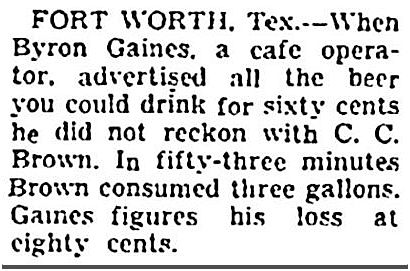
The promotion appears to have been a hit, both publicity-wise and beer-sales-wise. The Dallas proprietor said no drinker had managed to come out ahead, but in Fort Worth, men appear to be made of stronger stuff. Cafe operator Byron Gaines hadn’t anticipated Chauncey C. Brown, a hops-loving patron described as “heavy-set” and “amiable.”

beer_FW_olean-NY-times-herald_081235Olean (NY) Times Herald, Aug. 12, 1935

According to United Press reports (this made national news, too), Brown took 58 minutes (rather than 53), but that “seven minutes of that time was spent in playing a slot machine.” It’s good to have hobbies.

***

Sources & Notes

AP photo, taken in July 1935, from the Press of Atlantic City site, here

Newsreel footage is from Critical Past (and can be purchased), here.

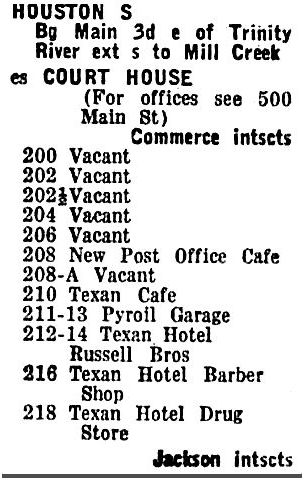
The Texan Hotel Drug Store was located at 218 S. Houston St. (northeast corner of Houston and Jackson) — see what the corner looks like today, here.

texan-hotel_south-houston_1936-directory
1936 Dallas directory

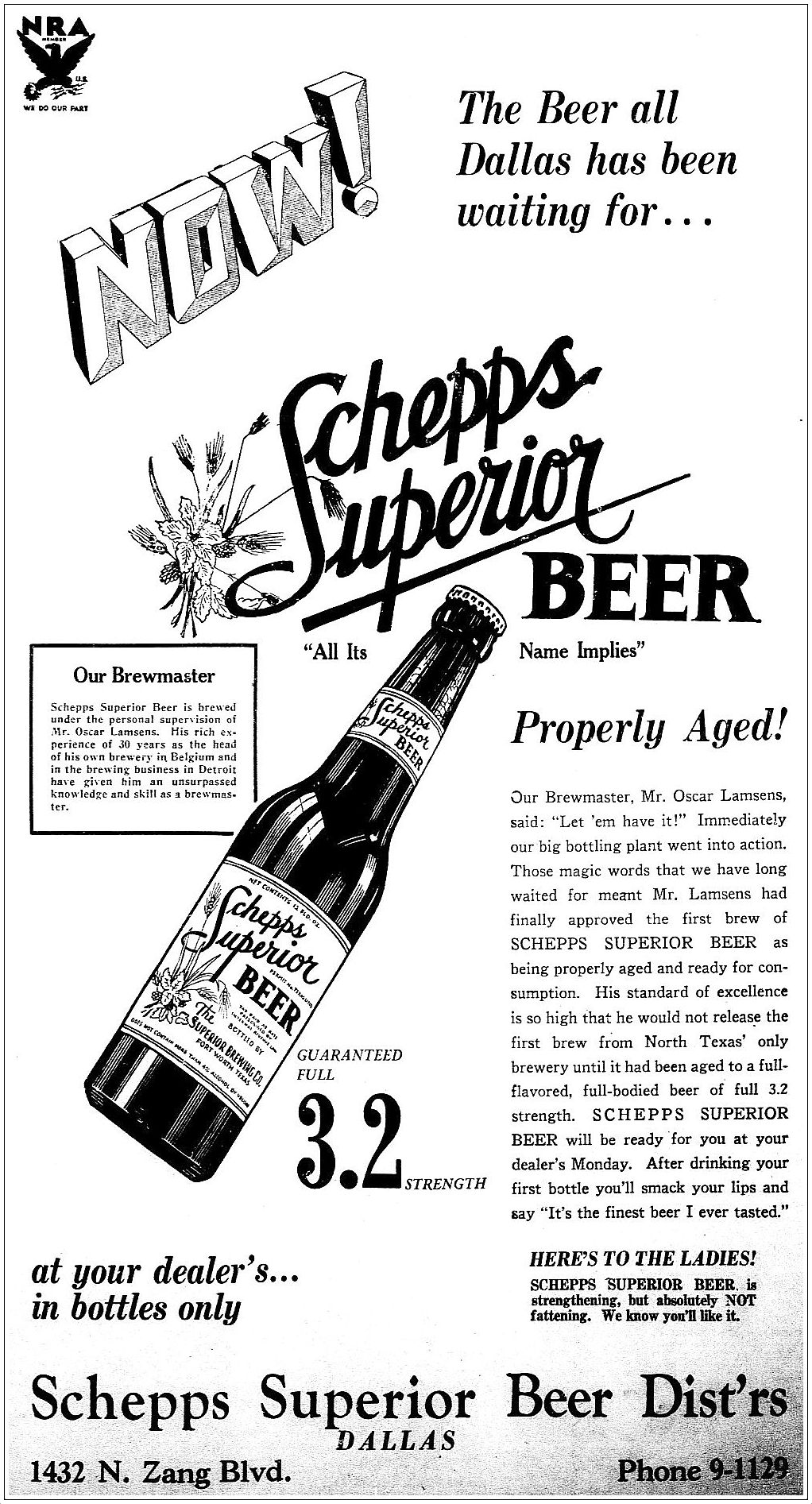
And … Schepps Beer? I was familiar with Schepps dairies, but not a Schepps brewery. But, yes, the same Schepps family produced highly guzzleable beer. The Schepps Brewing Co. launched in 1933 and lasted into the early ’40s; their downtown brewery was located on Young Street, about where the current City Hall/Convention Center now stand. (Schepps Beer was founded by brothers Julius Schepps and George Schepps, sons of pioneer Dallas baker Joe Schepps, whose Schepps Bakery was a highly profitable business. Joe’s brother Nathan Schepps joined his brother in Dallas about 1912 and started his Schepps Dairy by following his brother’s bakery wagons with his dairy wagon and selling his products to his brother’s customers. So even though it’s not a DIRECT family link, it’s pretty close: Julius and George Schepps were the  nephews of the founder of the very long-lived Schepps Dairy. ALSO, their sister, Rebecca Schepps, married Carl Metzger, son of another Dallas dairy titan, Jake Metzger. So the beer guys had close ties to two of the largest local dairies.)

Read a very entertaining interview with George Schepps in the September 1981 D Magazine article “Uncle George” by Connie Durham, here (scroll down for his memories of Schepps Beer).

Scheppps Xtra Light Lager (“light” meaning a light lager, not a beer low in calories) made a brief return to Dallas shelves in 1978 when the Julius Schepps Wholesale Liquor Co. brought it back; it was brewed at the Spoetzl Brewery in Shiner and was sold in “shortnex” bottles (stubby non-longnecks). More can be found in the Dallas Morning News article “Dallas Firm Bottles Touch of Nostalgia” by Dennis Fulton (DMN, July 9, 1978).

(Click pictures and articles to see larger images.)

schepps-beer_nov-1933Nov. 1933

schepps-beer_aug-1934Aug. 1934

schepps-beer-bottle-cap

*

Copyright © 2018 Paula Bosse. All Rights Reserved.

NAACP Southwest Conference in Dallas — 1950

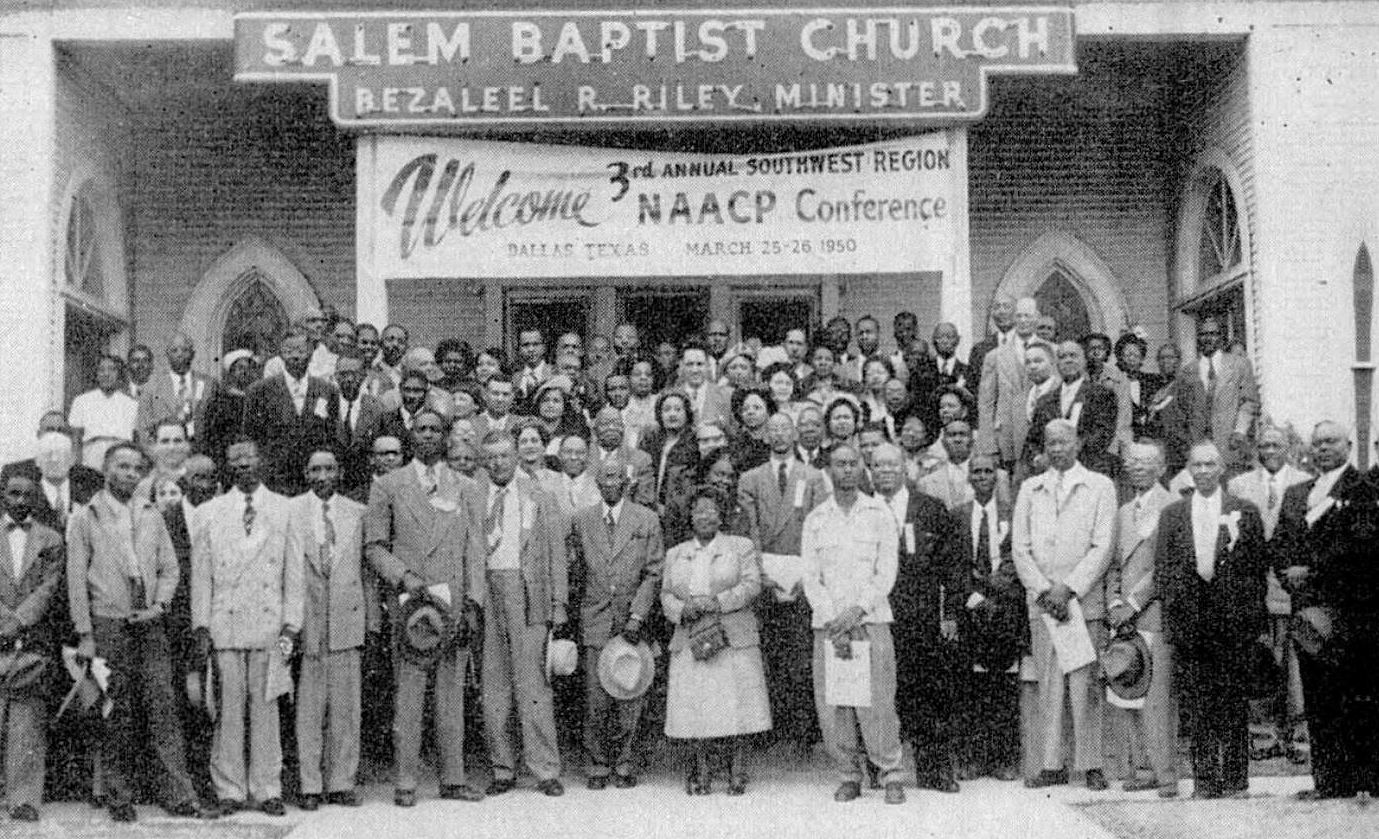
NAACP-conference_the-crisi_june-1950Top delegates of the NAACP regional conference in Dallas, 1950

by Paula Bosse

The third annual NAACP Southwest Region Conference was held in Dallas, March 24-26, 1950. Above we see the top delegates (out of about 200 attendees), standing in front of the Salem Baptist Church, then located at 710 Bourbon in South Dallas. One of their main objectives was to increase NAACP membership in order to more effectively tackle issues of civil rights and social injustice.

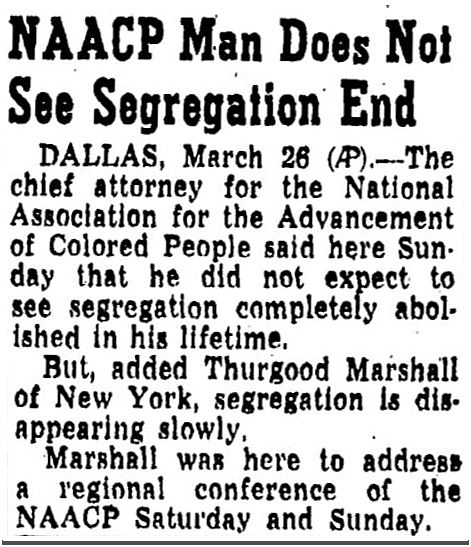
The conference’s main speaker was special counsel to the NAACP, Thurgood Marshall. During the conference, he stated that, although there was slow and steady progress being made by African-Americans in American society, he did not expect to see racial segregation abolished in his lifetime. 17 years after this statement, Thurgood Marshall was appointed by President Lyndon Johnson to serve as a justice on the United States Supreme Court.

NAACP_thurgood-marshall_FWST_032750Fort Worth Star-Telegram, March 27, 1950

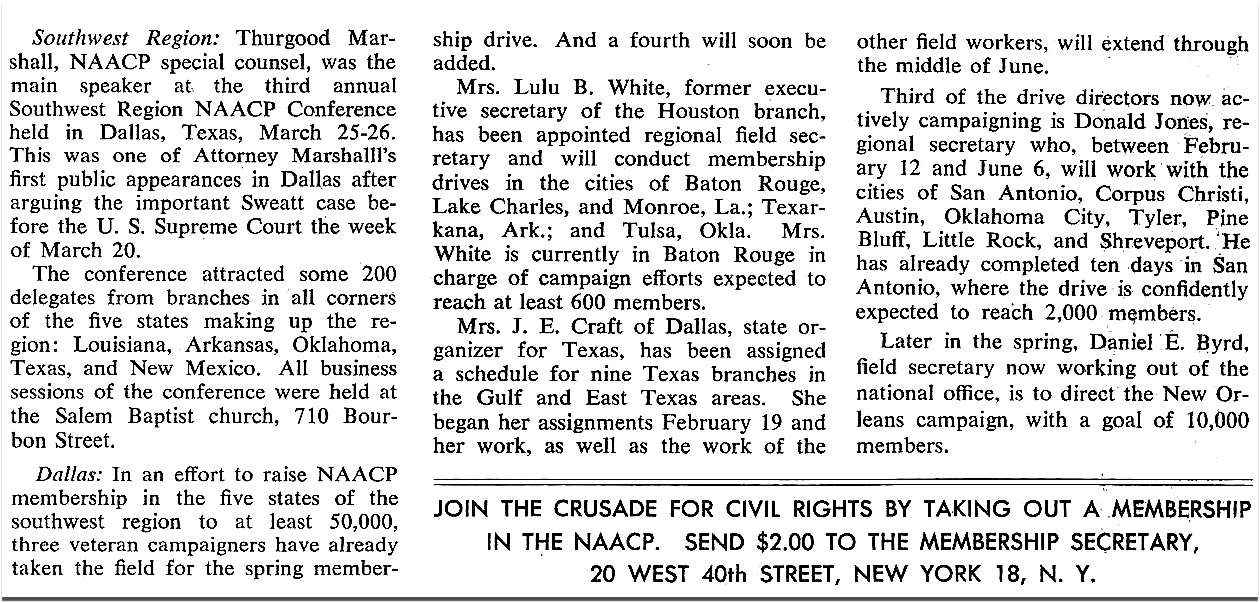
Below, the review of the conference that appeared in the April, 1950 issue of the NAACP magazine, The Crisis (click to see larger image).

NAACP-SW-conference_the-crisi_april-1950The Crisis, April, 1950

***

Sources & Notes

Top photo from the June, 1950 issue of The Crisis, the magazine published by the NAACP. Many decades’ worth of scanned issues of the magazine are viewable via Google Books, here.

The Salem Baptist Church was, at the time of the photo above, located at 710 Bourbon in South Dallas. According to the church’s website, the church moved from that location in the early 1960s when the site was one of many purchased by the Texas Highway Department to be demolished for highway construction.

Click photo and news clippings for larger images.

*

Copyright © 2018 Paula Bosse. All Rights Reserved.
From the Vault: Low-Voltage Weight Loss on Main Street — 1921

ergotherapy_jewish-monitor_090921_det

by Paula Bosse

Dallas has always been image-conscious. I loved discovering this odd “electrically-provoked” weight-loss system which was being, um … executed in a Main Street basement a stone’s throw from Neiman’s. Read the Flashback Dallas post from 2016 — “Zap Those Extra Pounds Away in Mrs. Rodgers’ Electric Chair — 1921” — here.


*

Copyright © 2018 Paula Bosse. All Rights Reserved.

From the Vault: The Roseland Theater — 1916

roseland_terrill-yrbk_1916Grainy photo taken by a teenager in 1916…

by Paula Bosse

Check out the 2015 Flashback Dallas post about a short-lived, little-remembered silent-movie theater on Main Street (which was housed in a building which was demolished soon after this post was written) in “Roseland — 1916,” here.


*

Copyright © 2018 Paula Bosse. All Rights Reserved.
The Cabana Motor Hotel of Dallas

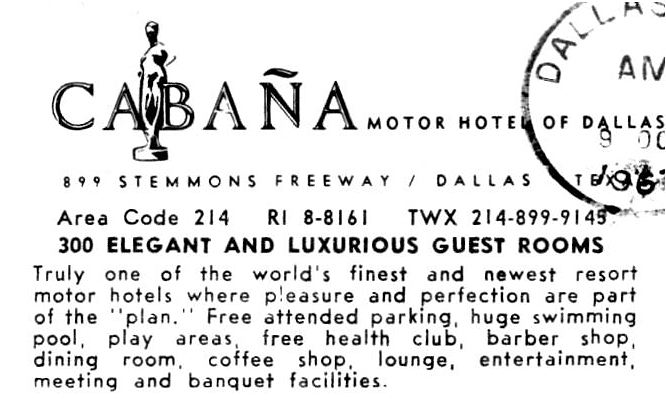
cabana-motor-hotel_portal_postmarked-1967“Elegant and luxurious…”

by Paula Bosse

The Cabaña Motor Hotel is remembered mostly for being where the Beatles stayed when they came to Dallas in 1964 and for being a hotel with high hopes but which fizzled out fairly quickly. …But mostly for being where the Beatles stayed. When the Cabaña opened in January, 1963 on Stemmons Freeway, it was a big deal. It was swanky and even had a very show-bizzy lounge. Celebrities stayed there. The Beatles stayed there.
cabana-motor-hotel_portal_info

The Dallas Cabaña was actually the third in a proposed chain of hotels, following locations in Atlanta and Palo Alto. It even had some Hollywood star-power attached to it: Doris Day’s then-husband Marty Melcher was an investor in the company (turned out it was Doris’ money, and she wasn’t thrilled that he was investing so much of her money in this chain of hotels).

It was fab for a while — but the high point really was John, Paul, George, and Ringo. Before the ’60s had ended, the place was shuttered and mired in litigation. Melcher had died and left Doris $500,000 in debt. Ownership changed hands several times over the years, and each time, more and more of its original hep luster was lost. The building has never really recovered. For a few years it was a rather bizarre site for a minimum-security jail! In recent months it was announced that it has been acquired by the company that has recently renovated the long-moribund Statler Hilton — so there’s hope! It needs a lot of work, but it might actually turn out to be cool again.
cabana_construction_william-langley_nd_DPLUnder construction, by William Langley, via Dallas Public Library

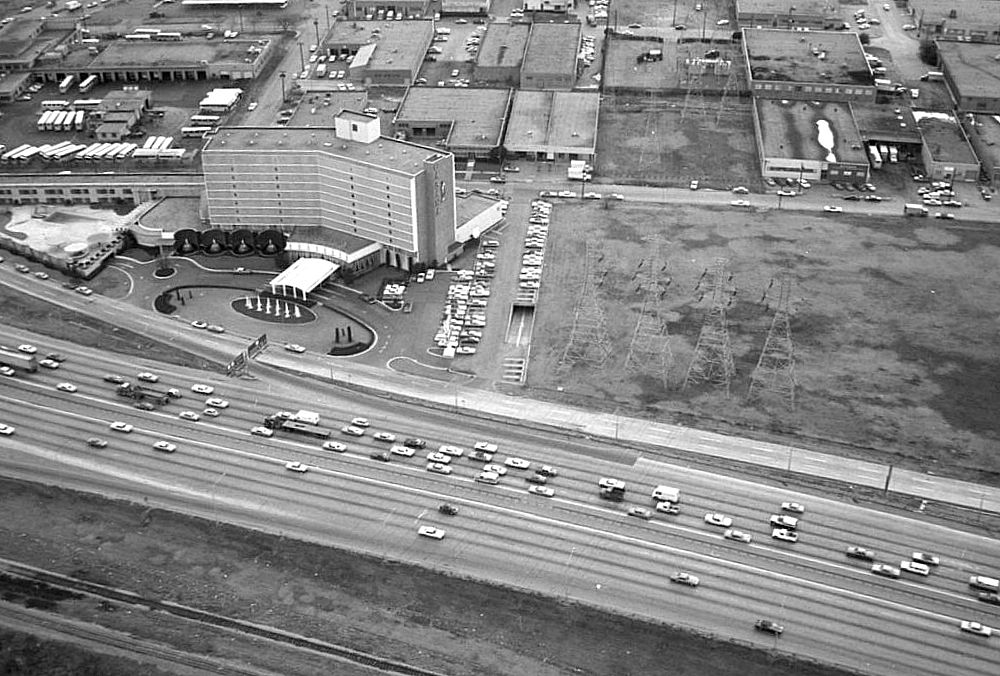
cabana-motel_aerial_squire-haskins_UTA_croppedFrom the air, by Squire Haskins, via UTA

cabana-motel_squire-haskins_UTAFrom the ground, by Squire Haskins, via UTA

***

Sources & Notes

The postcard at the top is from the Texas History Collection, provided by Dallas Heritage Village to the Portal to Texas History, where I found it, hereI have to admit that I’ve never really been a fan of this building until I saw this postcard. It’s like a Dallas version of a subdued Vegas hotel.

Bottom two photos are from the Squire Haskins Collection, University of Texas at Arlington Libraries Special Collections — the aerial image has been cropped; more info on these photos can be found here and here.

For more history of the Cabaña (…whenever I hear reporters in historic footage pronouncing the “n” in “cabana” with that tilde, it’s a bit jarring…), read the informative article “Lost + Found: Cabana Motor Hotel” by Preservation Dallas Executive Director David Preziosi on the AIA Dallas website, here. It’s got some great photos.

*

Copyright © 2018 Paula Bosse. All Rights Reserved.