Flashback : Dallas

A Miscellany: History, Ads, Pop Culture

Highland Park: The Ideal Residence Subdivision — 1907

ad-highland-park_072107Ideal!

by Paula Bosse

HIGHLAND PARK
For natural charms it is in a class by itself.
Beautiful lakes, high altitudes, cool breezes.

And the fishing is great!

***

Sources & Notes

Ad from The Dallas Morning News, July 21, 1907.

*

Copyright © 2016 Paula Bosse. All Rights Reserved.

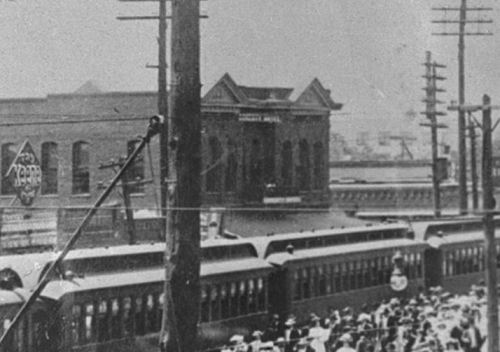
The Union Depot Hotel Building, Deep Ellum — 1898-1968

union-depot-hotel_1909_uta-detThe old Union Depot Hotel, about 1909 (click for larger image)

by Paula Bosse

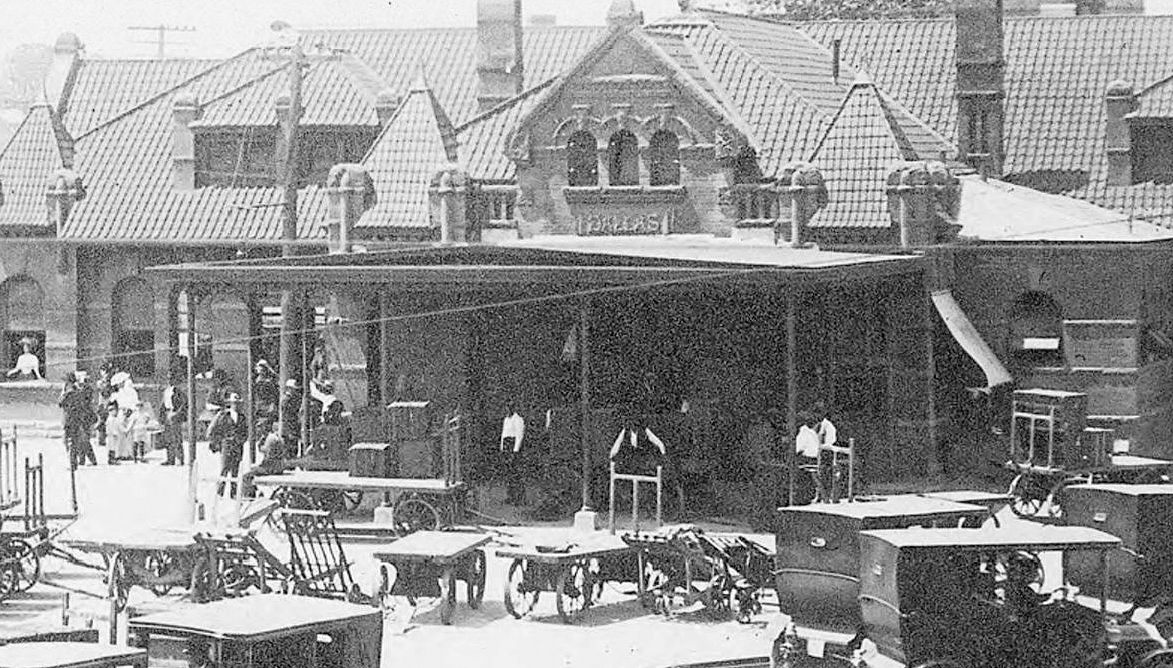
Above, we see the hotel known originally as the Union Depot Hotel, built in 1898 across from the very busy old Union Depot, at the intersection of two major rail lines: the Houston & Texas Central (the H&TC, which ran north-south) and the Texas & Pacific (the T&P, which ran east-west). The tracks crossed at the intersection of Central and Pacific — streets named after the two railroads — in the area east of downtown we now call Deep Ellum. The hotel was on the southwest corner of that intersection.

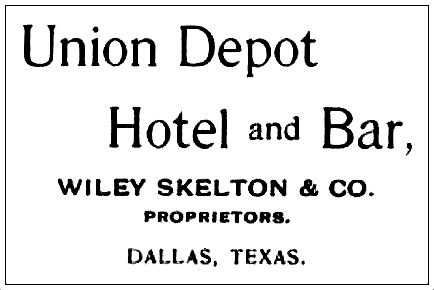
The large, two-story hotel (which also housed a popular cafe and bar) was built by William S. Skelton — more commonly known as Wiley Skelton — to cash in on the large number of travelers coming to Dallas via the bustling passenger depot right across the street. When it opened, it was charging a hefty two bucks a day (the equivalent of about $60.00 in today’s money) — a large-ish sum in 1899, but … location, location, location. This two-dollar-a-day rate to stay at Skelton’s hotel was the same as the base rate of Dallas’ ritziest, priciest hotels, The Windsor and The Oriental. How could Skelton’s “wrong side of the tracks” hotel charge similar rates as the city’s most elegant hotels? Convenience, convenience, convenience. The Union Depot Hotel could not have been more convenient to weary travelers unless it had been located inside the depot.
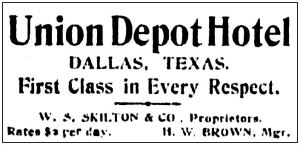
union-depot-hotel_houston-post_012599Houston Post, Jan. 25, 1899

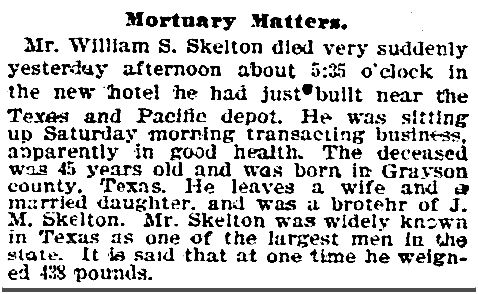
Skelton was a popular and successful businessman (and noted saloon pugilist) who was known far and wide for his substantial physical bulk. He was a founding member of the city’s “fat men’s club” and was reported to be the heaviest man in the city. When he died suddenly at the age of 45 (probably not a huge surprise, as his obituary mentioned that his weight had, at one time, reached 438 pounds), his new hotel had been open only weeks (perhaps only days).
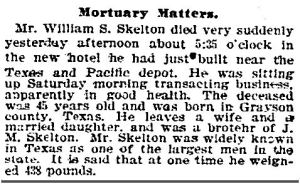
skelton_dmn_011699Dallas Morning News, Jan. 16, 1899

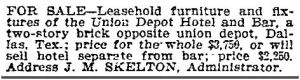
His unexpected death threw the running of the hotel into confusion. His brother (another famed “fighting fat man”) took over the business side of its operations and occasionally placed ads in the paper seeking a hard-to-find buyer.
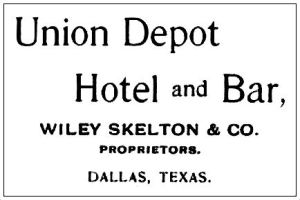
union-depot-hotel_1901_portal1901 ad

union-depot-hotel_dmn_111602DMN, Nov. 16, 1902

Eventually the hotel was sold, and it went through several owners and name changes over the years. Then, in 1916, a major catastrophe struck: brand new Union Station, which was waaaay on the other side of town, opened, consolidating passenger rail service to one depot, resulting in the shuttering of most of the city’s smaller depots. Location, location, location wasn’t such a great thing for the old Skelton hotel after this.

The hotel went through many changes over the years, but after the closing (and later razing) of the old Union Depot, it was on a general, inevitable, slide downward. By the time it was demolished in 1968 — when large swaths along Central Avenue were leveled to facilitate highway construction — the building was in disrepair and, apparently, long-vacant. It stood for 70 years.

*

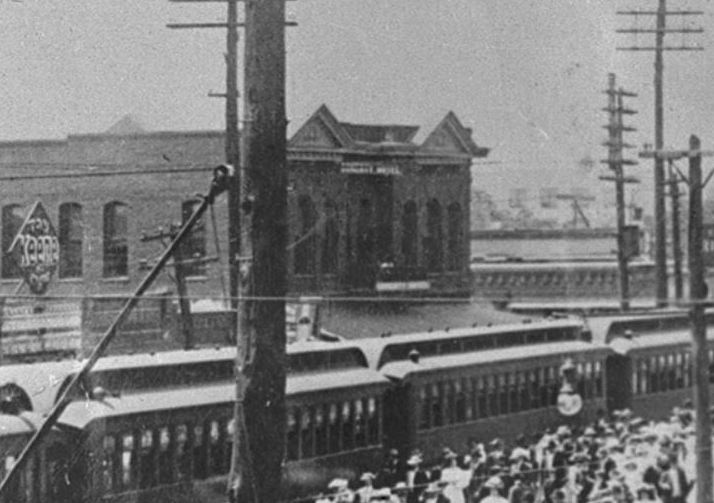
Below is a photo taken from Elm Street in 1908 or 1909, when the hotel (seen at the top left) was owned by Charles S. Conerty and named the Conerty Hotel (you can see the name on two signs, but you have to really zoom in to make them out). Conerty, an Irishman who had previously run bars, owned the hotel very briefly. By May of 1909, plagued with legal troubles stemming from his being charged with selling liquor on a Sunday, Conerty sold the hotel (which he seems to have been running as a boarding house), stating in his classified ad that he was “leaving city.” (He did not leave the city.) In 1910, with a new owner, the hotel was once again known as the Union Depot Hotel.

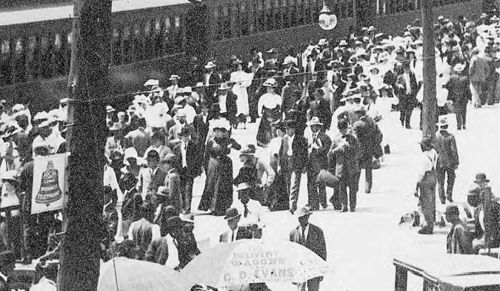
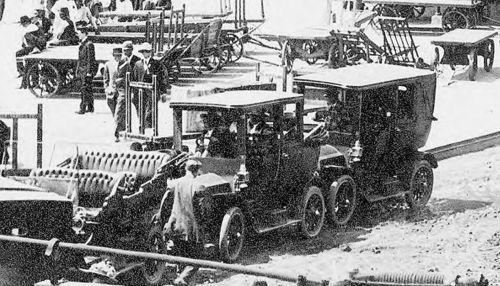
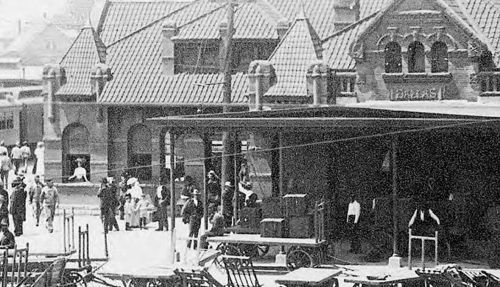
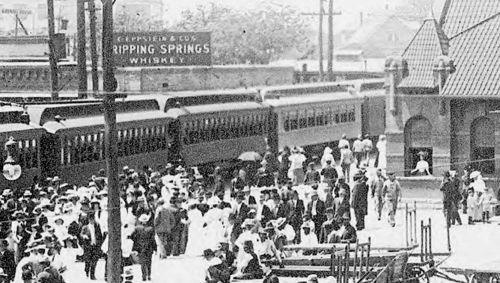
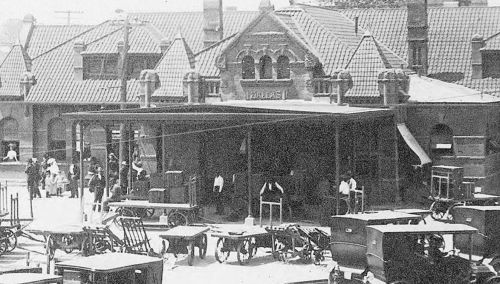
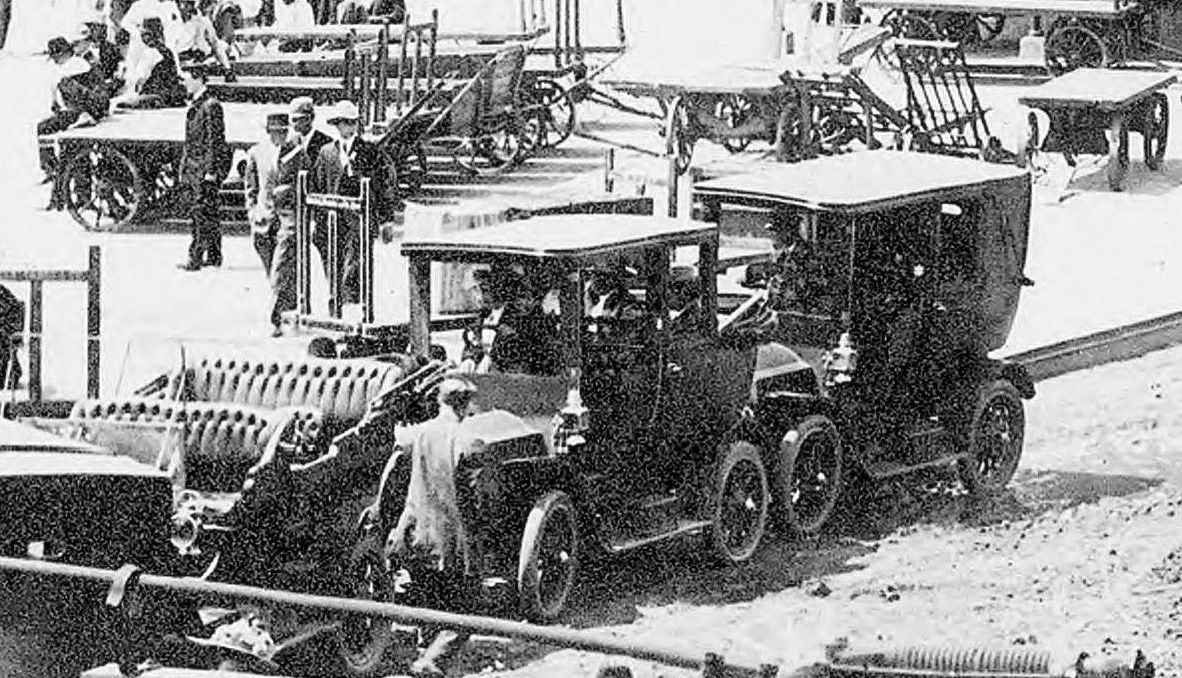
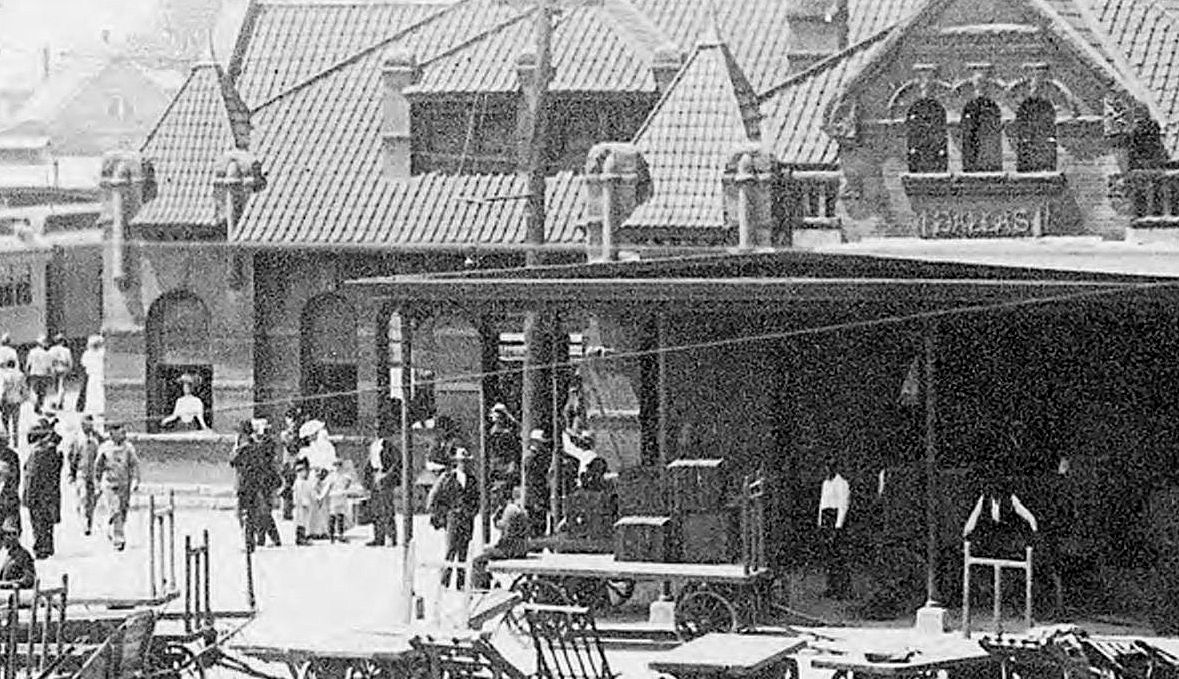
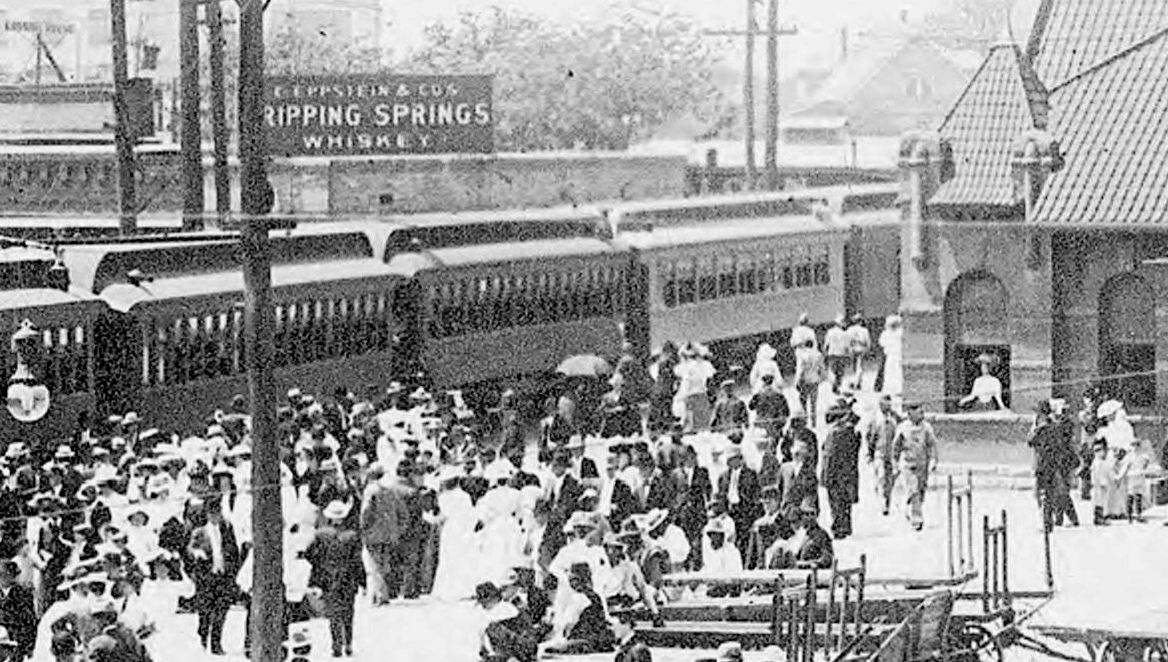
Back to the photo. Across Central Avenue from the hotel is the old Union Depot, where there was always a lot going on. Let’s look at the photo a little more closely. (Click photos to see larger images.)
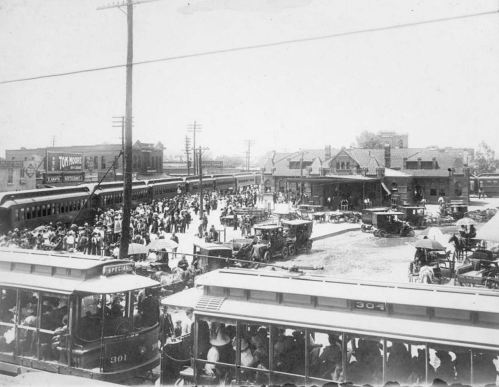
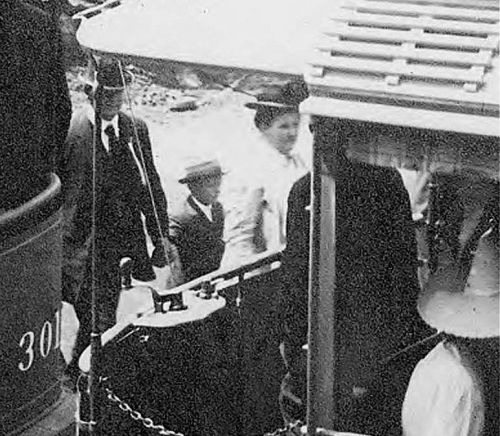
old-union-depot_degolyer_ca1910

old-union-depot_degolyer_det1

old-union-depot_degolyer_det2

old-union-depot_degolyer-det3

old-union-depot_degolyer_det4

old-union-depot_degolyer_det5

old-union-depot_degolyer_det6

Just seven or eight years after this photo was taken, all that human traffic was gone.

In the fall of 1968, having been vacant for years and counting down its final hours, Dallas Morning News writer Doug Domeier wrote about the old run-down hotel which had long outlived the passenger depot it had been built to serve (see the article “Demolition Leveling Once-Noisy Deep Elm,” DMN, Oct. 19, 1968). Domeier’s entertaining article about those early days includes memories of Lizzie Mae Bass, who once worked in the hotel’s cafe as a waitress and remembers when “horses back[ed] away in fright when a locomotive pulled in at the lively intersection linking the Houston and Texas Central with the Texas & Pacific.”

And today? You’d never EVER suspect that that patch of empty land at the edge of Deep Ellum was ever occupied by one of the city’s busiest train depots.

*

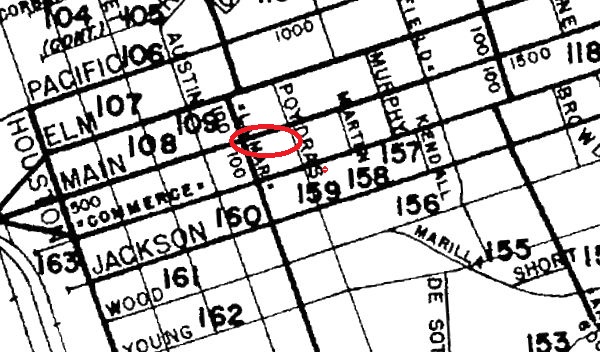
So where was it? Get a good visual idea of how things were laid out in the Sanborn map from 1905, here. Below is a street map that shows where the hotel was (red star) and where the train depot was (blue star). These days? Depressing. See it here (the view is looking north from Elm — the hotel would have been under the overpass, the train station straight ahead).
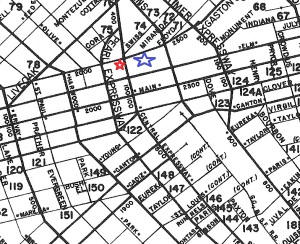
union-depot-hotel_1952-mapsco1952 Mapsco

It’s interesting to note that during the heyday of the Union Depot, the west side of the block of Central Ave. which ran between Elm and Pacific was the only block in this area not filled with black-owned businesses or residences. When the depot shut down and white-owned businesses moved out, the block began to fill with popular African-American establishments. It’s also interesting (to me, anyway!) to realize that the Gypsy Tea Room of the 1930s was just a few steps to the left of the hotel in the top photo. It took me forever to try to figure out where the Gypsy Tea Room had been — I wrote about it here.

***

Sources & Notes

Top photo is a detail of a larger photo, from the Squire Haskins Photography, Inc. Collection, University of Texas at Arlington Libraries; it is accessible here. The same photograph is shown in full farther down the post — this copy is from the DeGolyer Library, Central University Libraries, Southern Methodist University, and it is accessible here. The quality of both photos makes it difficult to zoom in on them with much clarity, but both sites offer very large images to view.

As mentioned above, an entertaining Dallas Morning News article full of historical info about the area around the depot is highly recommended: “Demolition Leveling Once-Noisy Deep Elm” by Doug Domeier (DMN, Oct. 19, 1968). (I’m not sure why the hotel is referred to as the “Grand Central Station Hotel” throughout — just substitute “Union Depot Hotel” whenever you come across that incorrect name.) The article also has a few paragraphs about the Harlem Theater which was also about to be torn down as part of what Domeier described as the “brutal change” then affecting Deep Ellum.

See a great early-’20s photo of the hotel building (the Tip-Top Tailors moved in around 1922) in the book Deep Ellum: The Other Side of Dallas by Alan Govenar and Jay Brakefield, here (the view is from Pacific to the southwest).

A related Flashback Dallas post — “The Old Union Depot in East Dallas: 1897-1935” — can be read here.

All images larger when clicked.

*

Copyright © 2016 Paula Bosse. All Rights Reserved.


On the Grounds of the Ursuline Academy and Convent

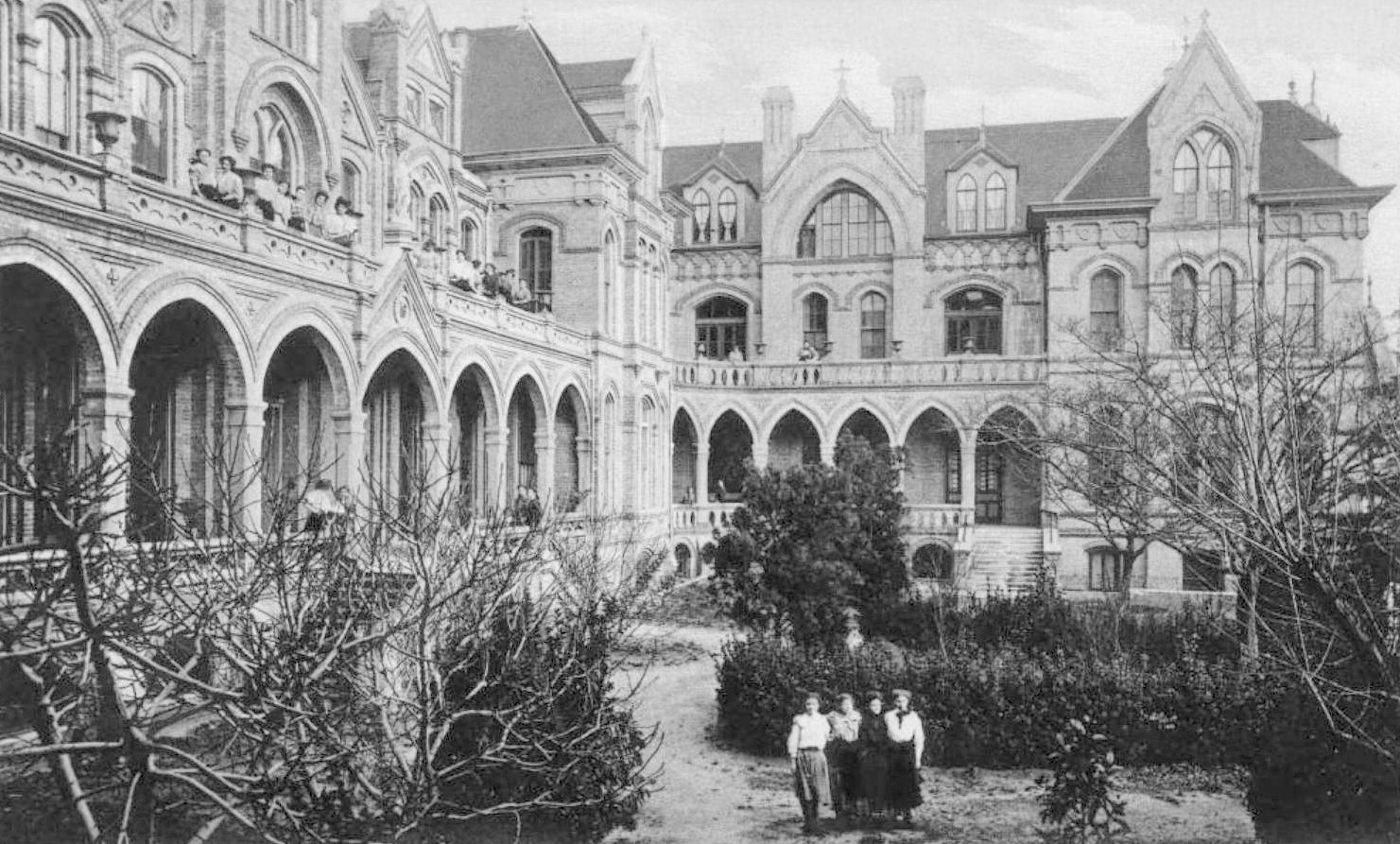
ursuline-convent_cook-colln_degolyer_smuBetween classes… (click for much larger image)

by Paula Bosse

I love this photo of Ursuline girls at the fantastically ornate school and convent in Old East Dallas. See more photos of the school, convent, and grounds in my post “Nicholas J. Clayton’s Neo-Gothic Ursuline Academy,” here.

***

Sources & Notes

Photo by Clogenson, from a postcard in the George W. Cook Dallas/Texas Image Collection, DeGolyer Library, Central University Libraries, Southern Methodist University; it is accessible here. I have un-colorized it.

See the scale of the Ursuline property on a 1922 Sanborn map, here. It is now mostly a parking lot, across from the Dallas Theological Seminary; a sad 21st-century view of what the former campus property looks like is here.

*

Copyright © 2016 Paula Bosse. All Rights Reserved.


900 Block of Main, South Side — 1950s

900-block-main_squire-haskins_utaTake a stroll down Main… (click for larger image)

by Paula Bosse

I’m not terribly knowledgeable in photographic techniques, but this appears to be some sort of panoramic shot by noted Dallas photographer Squire Haskins — it looks as if several photos have been joined together. By magic!

UPDATE: No magic, afterall. Here’s the same block from a different view.

main-poydras_squire-haskins_uta

These photos show the south side of the 900 block of Main, between Poydras (on the left) and Lamar (on the right). I love this block. So of course it’s now a parking lot which faces the Bank of America behemoth. Times change.

The photos were taken 1952-ish.

900-block-main_1953-directory1953 city directory

900-main_1952-mapsco
1952 Mapsco

***

Sources & Notes

Photos from the Squire Haskins Photography, Inc. Collection, University of Texas at Arlington; more info on the top photo is here; more info on the second photo is here. Click the thumbnails on the UTA pages to see even larger images. (Thanks to Peter K. for posting the second photo in the Dallas History Guild Facebook group — I recognized that Do-Nut Merchant sign right away! One more Do-Nut Merchant view is here.)

That top photo is really, really big. Click it and scroll!

UPDATE: See a photo of the north side of Main, taken by Squire Haskins at the same time as the photos above in the Flashback Dallas post “900 Block of Main, North Side — 1952.” here.

*

Copyright © 2016 Paula Bosse. All Rights Reserved.

Girls’ Softball in Dallas, Hugely Popular

girls-softball_WPA-GD_dallas-park-rec-deptSoftball in the park… 

by Paula Bosse

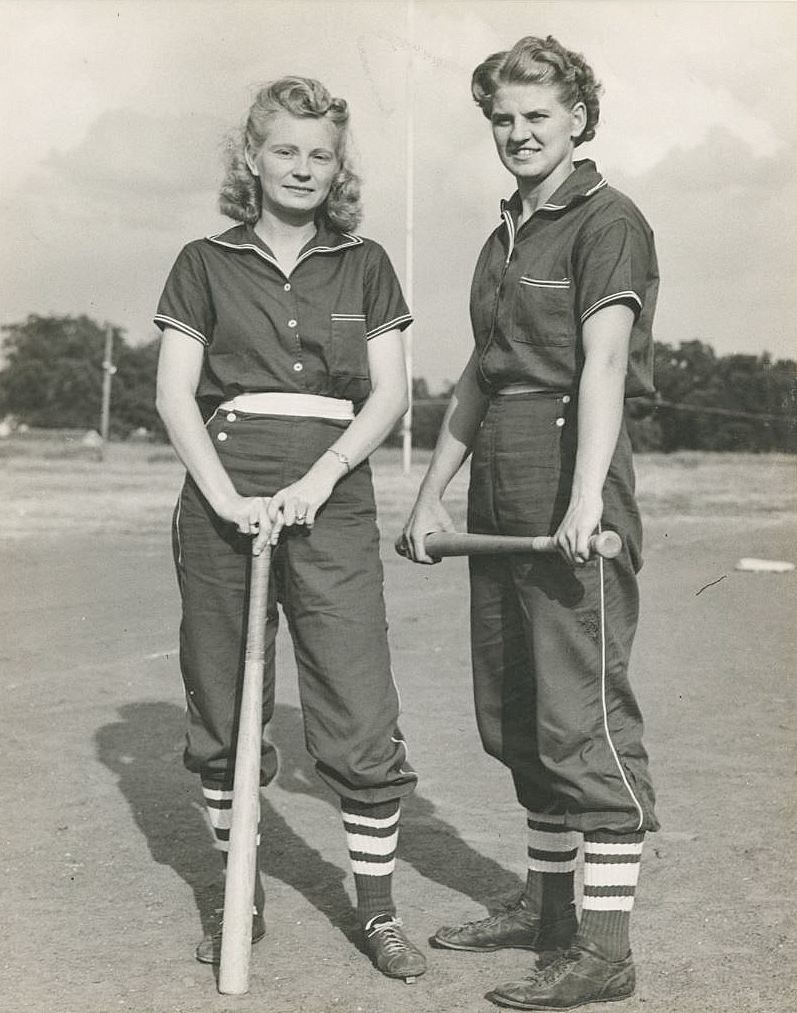
Around 1938, softball suddenly became very, very popular in Dallas. Absolutely everyone seemed to be playing it: boys, girls, moms, dads, kids, businessmen, college students, and senior citizens. By 1939, The Dallas Morning News was calling the sport “the newest Dallas crazy custom.” There were more than 18,000 players playing on more than 300 organized teams, which meant that most of the roughly 100 softball diamonds in the city were constantly in use. It was estimated that more than 700,000 spectators had filled softball bleachers in 1938. These were all, of course, non-professional teams and players,  but there was some concern that this new-found softball enthusiasm might be cutting into attendance for the professional baseball games.

…[B]ut the fact remains that softball is cutting into the gate receipts of professional baseball. When more than 100 softball teams play almost every night in Dallas and hundreds of fans watch the games there certainly must be vacant seats at the stadium where professionals are doing their stuff for the Texas League. (Dallas Morning News, June 16, 1939)

Most interesting about this “fad” is that girls’ softball league games became extremely popular. These teams were often affiliated with local companies (Metzger’s Milk, Dunlap-Swain, etc.), and their sponsored games drew very large crowds, usually more than the men’s games did. The Dallas Morning News reported that attendance at the regular Friday night games in 1939 was something like five or six thousand. Some of the girls even became minor local celebrities.

baseball_teammates-of-fort-worth-cats_william-langley_nd_portal
Fort Wort at bat (via Portal to Texas History)

Coverage of the women’s games by the local press was solid, but coverage of the women themselves seemed more like a good excuse to run photos of the “girls” in skimpy uniforms rather than focus on their athletic ability. But I’m sure the girls shrugged it off and were just happy to be playing a sport they loved.

girls-softball_1940

**

Below, the 1943 Dallas Girls’ Softball League champions, the Metzer Dairy Maids. I love their names so much I want to type them out:

Tinker Tarker
Mutt McFanning
Aubrey Ray
Thelma Lowe
Pat Bell
Faustine Riley
Beatrice Draper
Flo Dyer
Opal Ritter
Annie Jo Floyd
Alma Floyd
Genevieve Dobbins
Pud Adams

girls-softball_dmn_071843
DMN, July 18, 1943

***

Sources & Notes

Top photo from the WPA Dallas Guide and History.

Second photo by Dallas photographer William Langley, from the collection of the Birdville Historical Society, via the Portal to Texas History.

Even though these company-sponsored teams were often in city- and state-wide leagues, they were all comprised of amateur players. That’s not to say money wasn’t being made. A lot of tickets were being sold, and companies got a lot of publicity for their winning teams. In fact, companies often scouted for players and hired them solely based on their athletic prowess — this is exactly how Babe Didrikson, generally considered one of the greatest all-round athletes in history, ended up working for an insurance company in the Interurban Building in downtown Dallas. (Read all about that in my previous post, “Babe Didrikson, Oak Cliff Typist.”)

*

Copyright © 2016 Paula Bosse. All Rights Reserved.

Blackie Sherrod: “The Most Plagiarized Man in Texas” — 1919-2016

blackie-sherrod_dmn-video

by Paula Bosse

Legendary sportswriter Blackie Sherrod died yesterday at the age of 96. My father was not a follower of sports, but I remember he read Blackie Sherrod’s columns because, along with other great, larger-than-life, and exceptionally talented DFW sportswriters such as Bud Shrake, Dan Jenkins, and Gary Cartwright, Blackie was — for want of a better word — a “literary” journalist whose style transcended his subject matter. His writing appealed to everyone who enjoyed and appreciated well-written and caustically funny forays into, around, over, and under the world of sports. Sports fans — and other sportswriters — loved the guy. And so did everyone else.

In the December 1975 issue of Texas Monthly, Larry L. King (forever known as the man who made more money from the best little whorehouse in Texas than any of the girls who plied their trade there) wrote a fantastic profile of Blackie (“The Best Sportswriter in Texas”), in which he described Blackie Sherrod as being “the most plagiarized man in Texas.” Sportswriters around the state routinely stole all of Blackie’s best lines and inserted them, unattributed, into their own columns. King himself admits he was one of the worst offenders. The lengthy profile is great. Great. Read it here.

*

UPDATE: Also, this is a great 9-minute film produced by KERA in the 1970s in which Blackie talks about his career, past and present.

***

Sources & Notes

Video is from the KERA Collection, G. William Jones Film & Video Collection, Hamon Arts Library, Southern Methodist University; the permanent link on YouTube is here.

Watch a Dallas Morning News-produced video tribute to Blackie Sherrod from 2013.

The Dallas Morning News obituary — “Legendary News Sportswriter Blackie Sherrod Dies at 96” — written by Kevin Sherrington, is here.

Several of Blackie’s Sherrod’s books can be purchased online, here.

Moments after I posted yesterday’s photo of the Dallas Times Herald lobby, I read that Blackie had died. He must have walked through that lobby thousands of times. That was an odd bit of synchronicity.

See an early photo of Blackie with his famed co-workers in the post “Legendary Sports Writers of the Fort Worth Press — ca, 1948.”

Thanks, Blackie.

*

Copyright © 2016 Paula Bosse. All Rights Reserved.

“The Times Herald Stands For Dallas As a Whole”

dallas-times-herald-lobby_UTA_squire-haskinsCool and sleek (click for very large image)

by Paula Bosse

Above, the Dallas Times Herald lobby, in all its gleaming mid-century style.

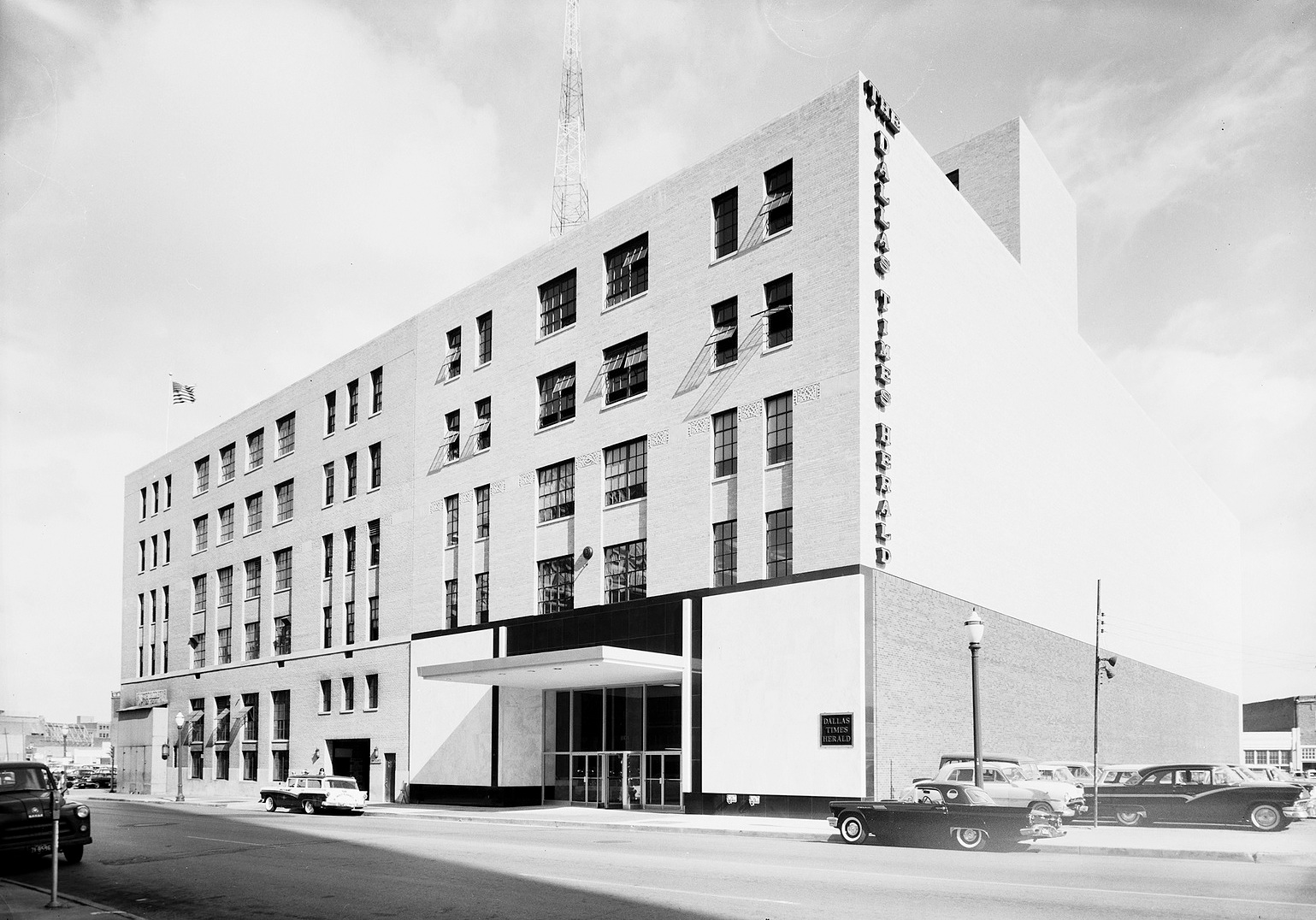
And, below, its smart, crisp exterior (taken on July 28, 1958).

dallas-times-herald-bldg_squire-haskins_uta

RIP, DTH. (And, yes, I’m still bitter.)

***

Sources & Notes

Photos by Squire Haskins, from the Squire Haskins Photography Inc. Collection, UTA Libraries, University of Texas at Arlington; more info on the interior photo is here; more on the exterior photo is here.

The Dallas Times Herald building was located at 1101 Pacific Ave., bounded by Pacific, Griffin, and Patterson. The building was demolished in 1993 and replaced by a parking lot.

*

Copyright © 2016 Paula Bosse. All Rights Reserved.

Six Flags: The Mexican Section — 1961

six-flags_mexican-section-lights_1962_ebayBienvenidos!

by Paula Bosse

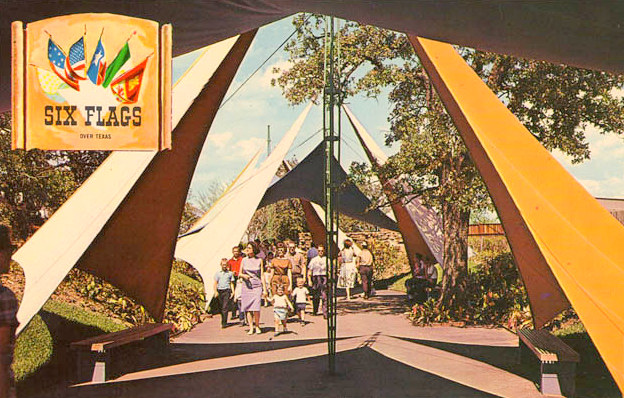
The image above is from a Six Flags Over Texas postcard. The description on the back reads:

Geometric Patterns — Mexican Section
Multi-colored lighting effects reveal a fascinating and beautiful picture of the Canopied Garden Walkway leading into the Mexican Section at this new 105-acre $10,000,000 family entertainment center.

Here it is in the daytime, still kind of attention-grabbing, but nowhere near as cool-looking:

six-flags_canopied-entrance_colliervia Ken Collier

I just wanted to post this Six Flags picture I’d never seen and move along, but why not add a few more postcards showing attractions in this part of the theme park: the “Mexican Section.”

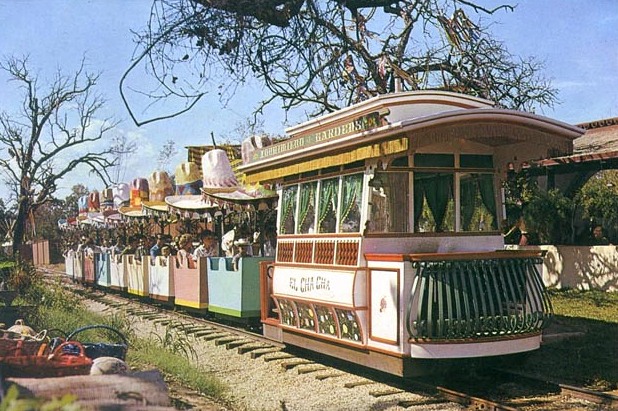
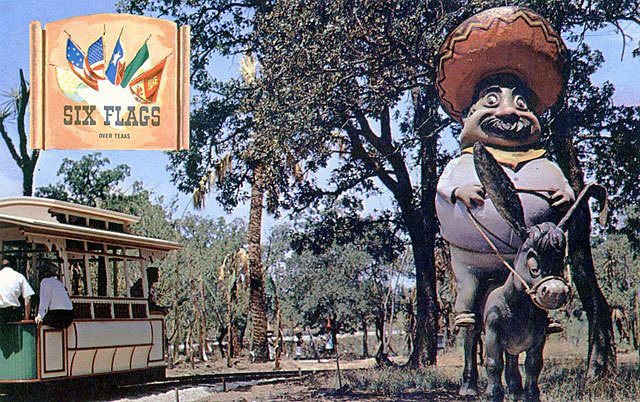
There was the Fiesta Train (which I was surprised to see was originally called Ferrocarril Fiesta), which was topped with colorful sombreros and chugged by all sorts of “festive” scenes which might seem a little culturally eyebrow-raising today.

six-flags_mexican-section-fiesta-train_colliervia Ken Collier

six-flags_mexican-section_burro-ridervia Ken Collier

There were animatronic bull fights. “Olé!”

six-flags_mexican-section_bull-fightvia Gorillas Don’t Blog

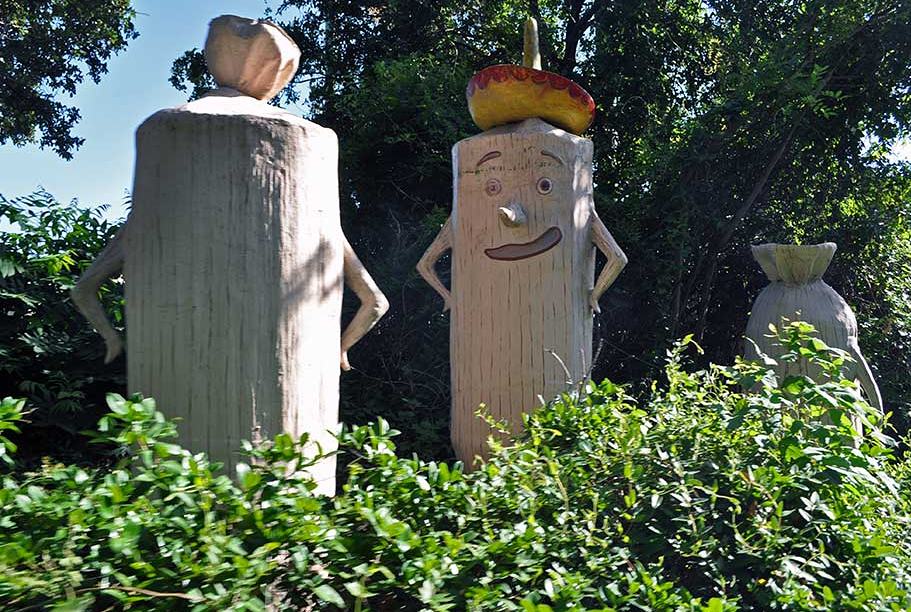
There were … dancing tamales. DANCING TAMALES! (Designed by Peter Wolf.)

Dancing Tamales — Mexican Section
One of the most popular of the many colorful and comical animations on the Fiesta Train ride, this group of Dancing Tamales perform to the gay strains of Mexican music that fills the air.

six-flags_dancing-tamales_flickrvia Flickr

And speaking of Mexican music, there were strolling mariachis.

six-flags_mexican-section_mariachis-flickrvia Flickr

And there was an even an El Chico restaurant.

el-chico_six-flags-gazette_091061Six Flags Gazette, Sept. 10, 1961

Here is an interesting article about what visitors to the brand new amusement park could expect to encounter on their visit to the Mexican Section, written by the Six Flags promotion department (click for larger image).

six-flags_mexican-section_six-flags-gazette_080661a   six-flags_mexican-section_six-flags-gazette_080661b
Six Flags Gazette, Aug. 6, 1961

And, no, I couldn’t find a 1961 photo of the sombrero ride!

UPDATE: Found one (from 1965)!

six-flags_el-sombrero_FWST-collection_1965_UTA

***

Sources & Notes

Sombrero ride photo is from the Fort Worth Star-Telegram Collection, University of Texas at Arlington Libraries, Special Collections — more on this photo is here.

Info about the Six Flags Railroad is here; more about the Ferrocarril Fiesta Train is here.

Apparently those tamales (with a face lift) are still around? I LOVE THESE GUYS!

six-flags_dancing-tamalesvia GuideToSFOT.com

Ken Collier is The Man for all things Six Flags. See his great site, here.

Other Flashback Dallas posts on Six Flags Over Texas can be found here.

*

Copyright © 2016 Paula Bosse. All Rights Reserved.

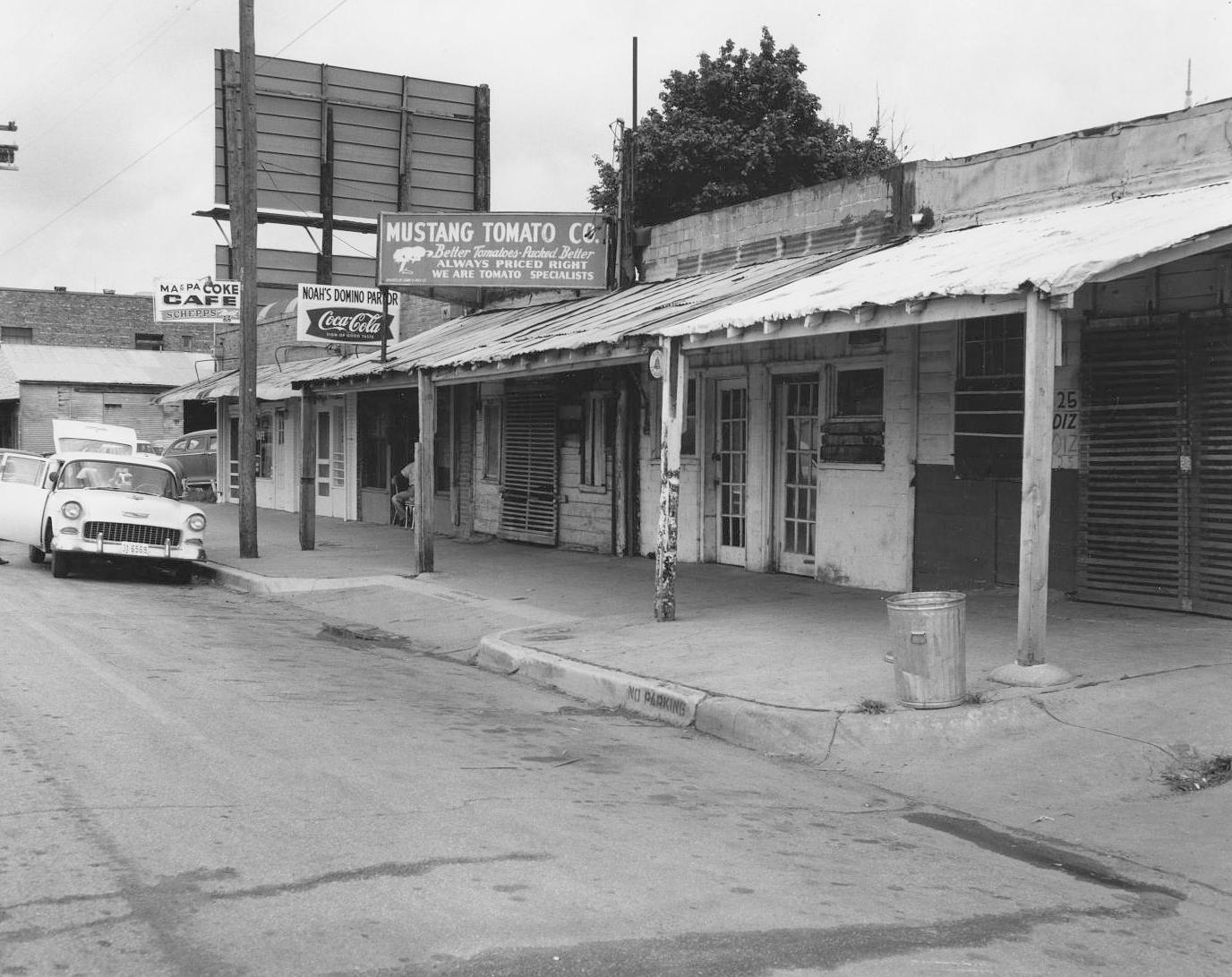
Tomatoes, Cokes, Dominoes: Cadiz Street — 1959

farmers-mkt-area_dominoes_portalThe farmers market area in 1959

by Paula Bosse

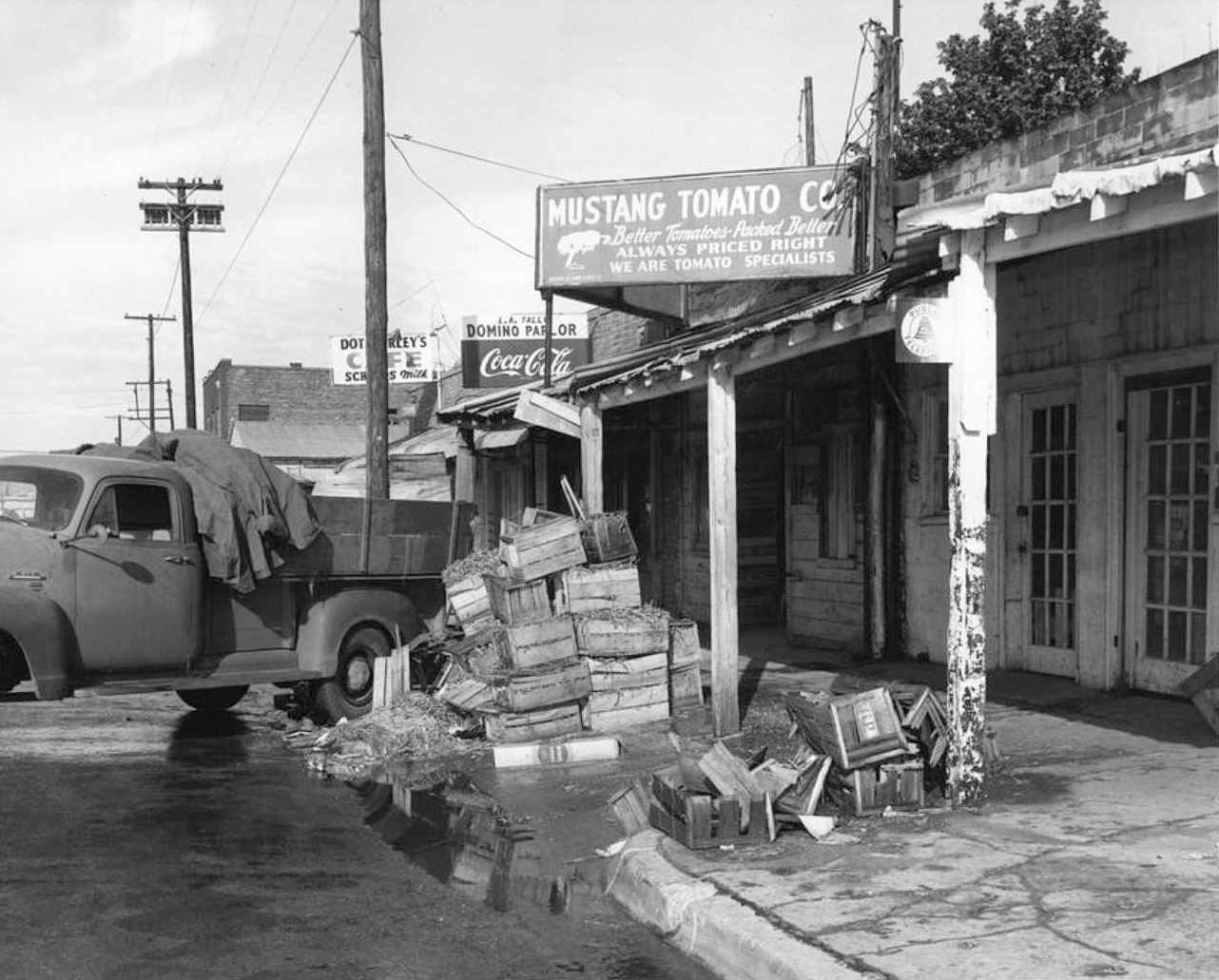
Above, a photo showing the block of Cadiz Street between what was then the S. Pearl Expressway and S. Central Expressway (now Cesar Chavez). The view is southwesterly, with the (oddly placed) billboards facing toward Pearl.

I’m sure most people considered such a view urban blight in 1959 when this photo was taken, but (I know I sound like a broken record…), I will always prefer this seedy and run-down version of the farmers market area to the current, relentlessly sterilized, pre-fab, insta-city which took its place. By 1961, this little stretch of businesses had been leveled for a parking lot, which, frankly, was probably more of an eyesore than a ramshackle domino parlor with peeling paint.

Below, a photo taken in the same block, about a year earlier. It’s not quite as interesting to look at as the top photo, but it does show that this was a working neighborhood, where vegetable crates frequently spilled into the streets as part of the day’s activities.

cadiz-businesses_1958_portal

*dot-curley-cafe_1958-directory1958 city directory

talley-domino_1957-directory
1957 directory

ma-and-pas-cafe_1960-directory
1960 directory

noahs-domino-parlor_1960-directory
1960 directory

This part of Cadiz doesn’t exist anymore. Here’s the view from S. Pearl these days, looking east (these businesses would have been on the left).

Here’s a map from 1962, when the area was a thriving wholesale and retail produce district.

cadiz_1962-map_det

***

Sources & Notes

Both photos are from the  Dallas Farmers Market/Henry Forschmidt Collection, Dallas Municipal Archives, via the Portal to Texas History; the top one can be found here, the bottom one, here.

See other Flashback Dallas posts about the Dallas Farmers Market here — every time I see these great old photos I just shake my head and wish I’d been around to see this part of the city when it was at its grittiest.

*

Copyright © 2016 Paula Bosse. All Rights Reserved.

Ads for Businesses Serving the North Dallas High School Area — Early 1960s

friendly-chevrolet_ndhs_1963-yrbk-photoFriendly Chevrolet, 1963

by Paula Bosse

One of the things I like best about looking through old high school and college yearbooks is seeing the ads in the back — especially the ads that feature students. Here are a whole bunch of ads from the 1960, 1962, and 1963 North Dallas High School annuals, with most of the ads placed by businesses in the Oak Lawn, McKinney Avenue, and Little Mexico areas surrounding the school. Let’s take a walk down memory lane, shall we? (Ads and photos are larger when clicked.)

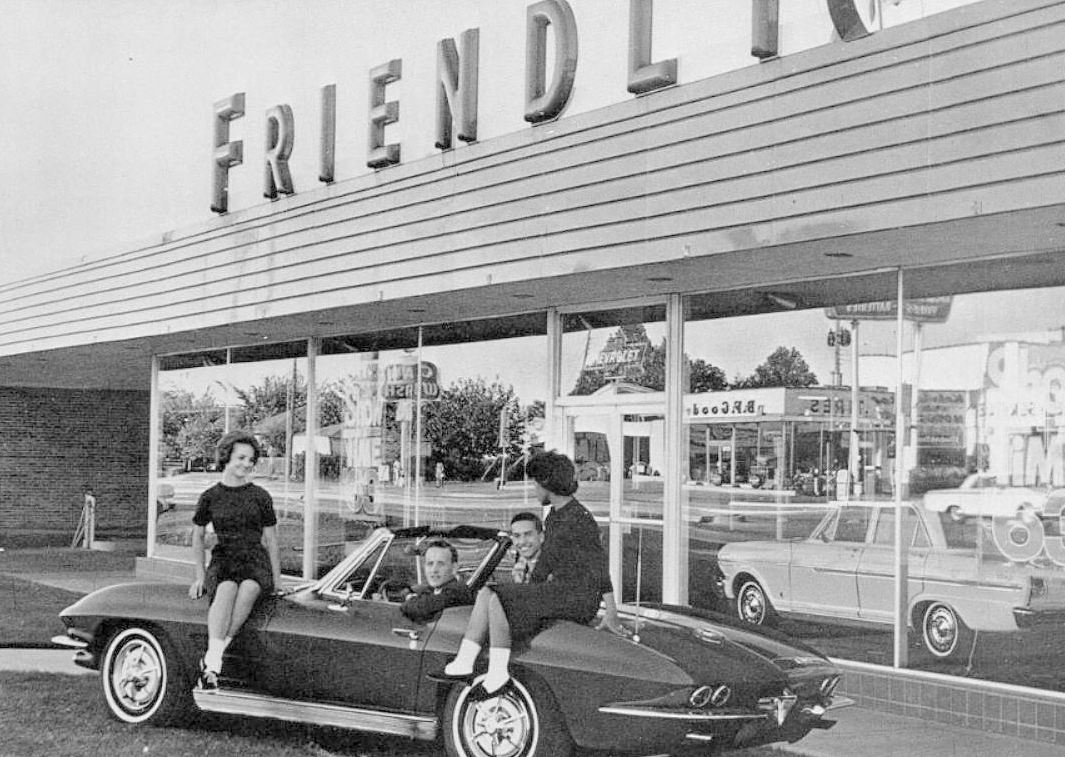
Above, Friendly Chevrolet at Lemmon and Inwood. I bet the owner was grimacing as he saw those girls perched — gingerly or not — on that brand new Corvette convertible!

friendly-chevrolet_ndhs_1963-yrbk1963

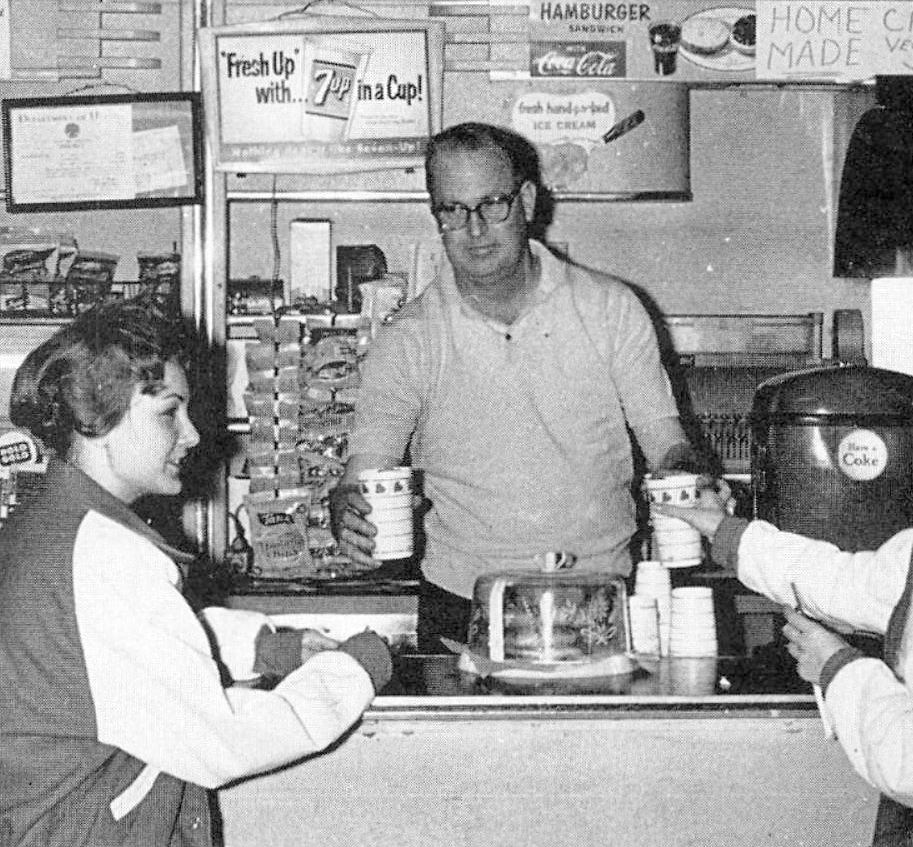
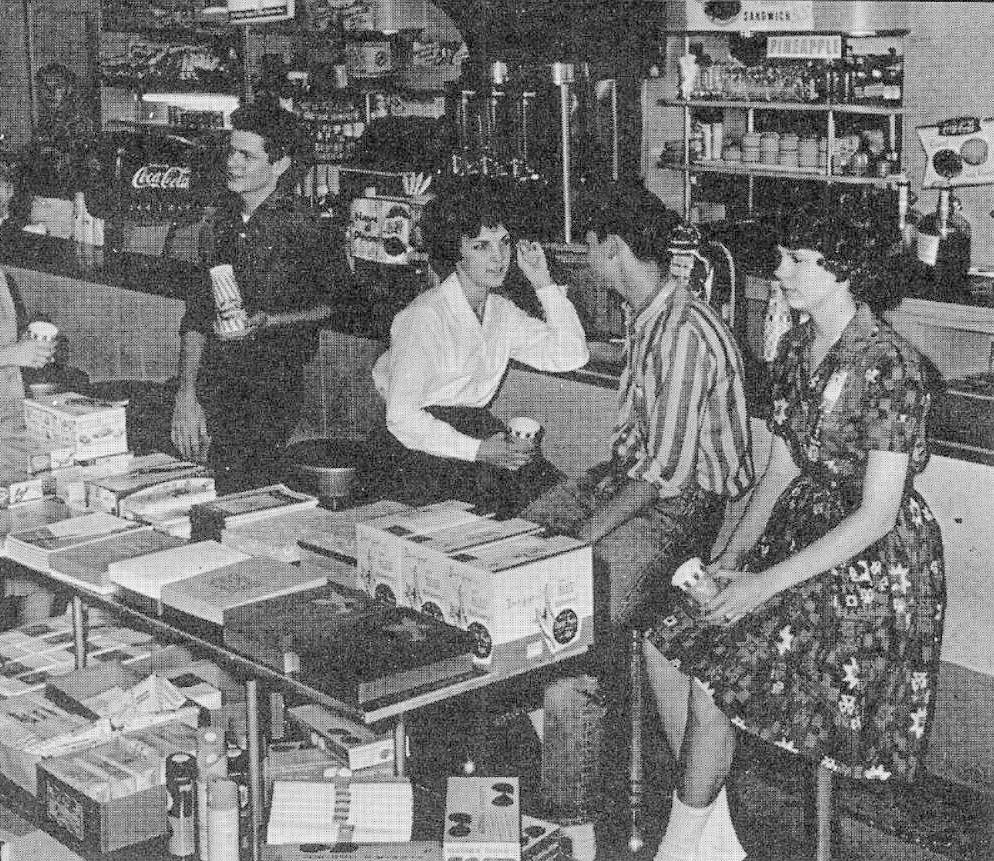
The Cole and Haskell Drug Store, at 3121 N. Haskell — right across the street from the NDHS campus — was no doubt thrilled to be so close to its major source of income, the teenager.

1962_cole-haskell-drugs_ndhs_1962-yrbk1962

cole-haskell-drug-store_ndhs_1963-yrbk-photo
1963

cole-haskell-drugs_ndhs_1963-yrbk
1963

*

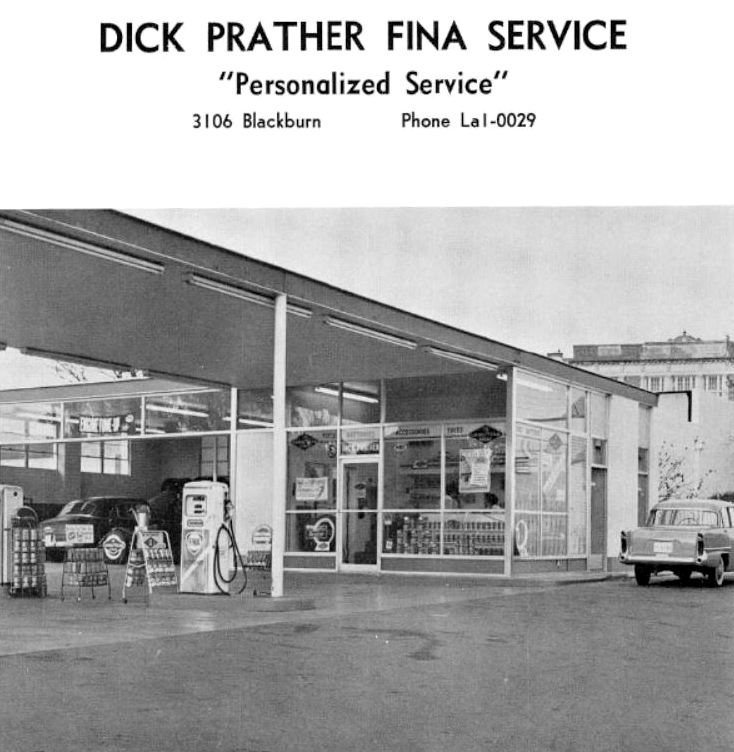
Lots of gas and service stations were nearby. Like Dick Prather Fina Service, at 3106 Blackburn, with the school peeking over the roof.

1960_prather-fina_ndhs_1960-yrbk
1960

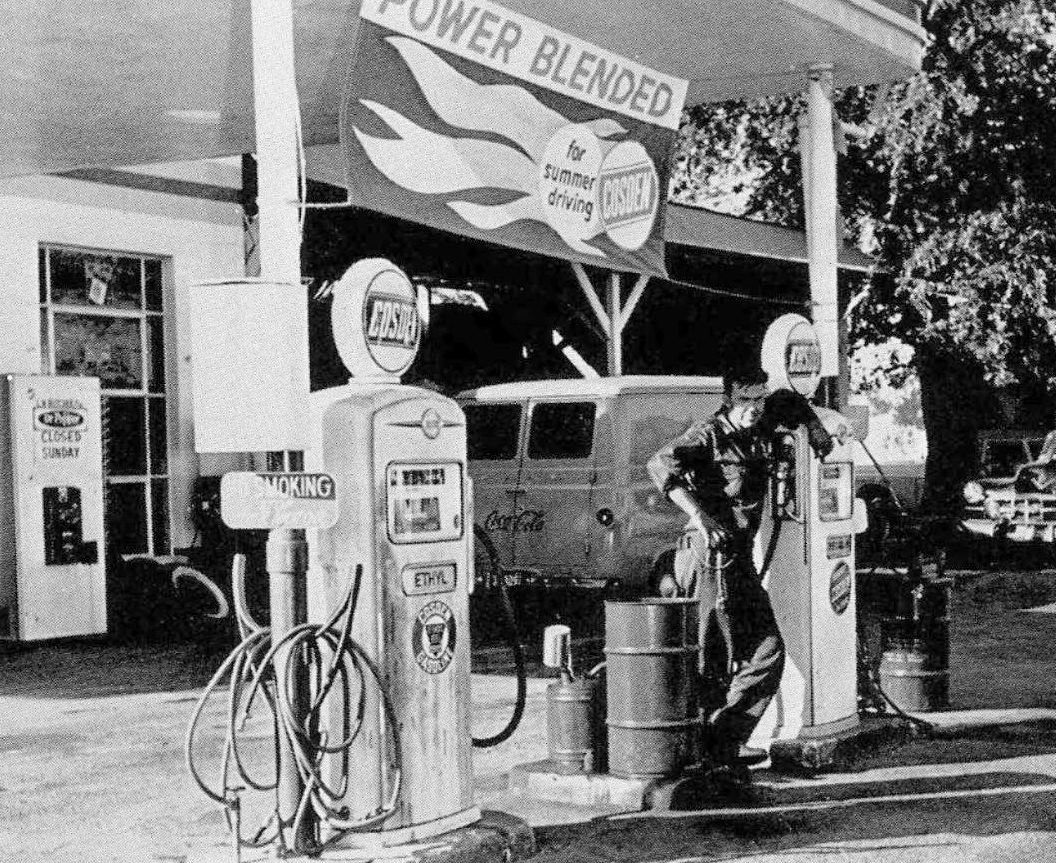
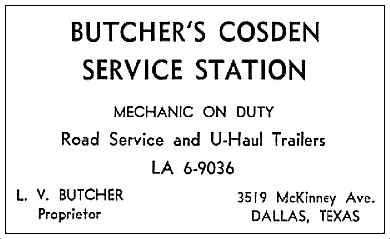
And L. V. Butcher’s Cosden Service Station, at 3519 McKinney. (I love the slouch of the mechanic.)

butchers-cosden-service-stn_ndhs_1963-yrbk-photo

butchers-cosden-service-stn_ndhs_1963-yrbk
1963

And the Ragan Service Station, at 4201 McKinney.

ragan-servie-stn_ndhs_1963-yrbk-photo

ragan-servie-stn_ndhs_1963-yrbk
1963

*

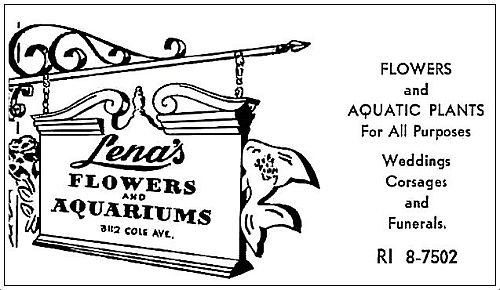
Plant and flower enthusiasts were invited to stop by Lena’s Flowers and Aquariums, at 3112 Cole. …For flowers. And aquariums.

lenas-flowers_ndhs_1963-yrbk
1963

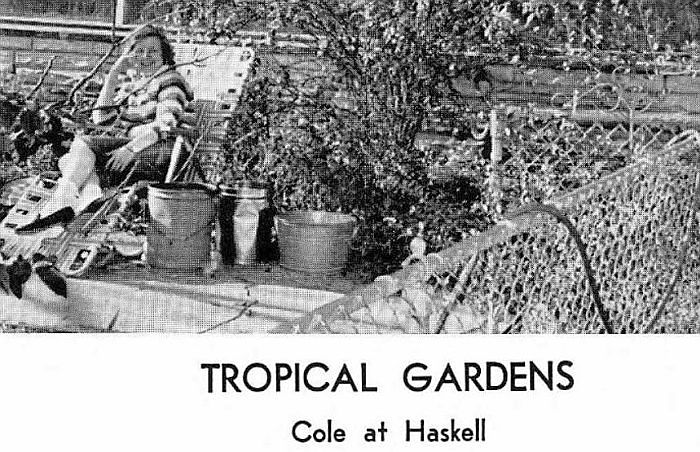
What Tropical Gardens at Cole and Haskell lacked in the way of aquariums, it all but made up for in tropicalness. (Might as well grab a coke at the drug store since you’re right there.)

tropical-gardens_ndhs_1963-yrbk
1963

*

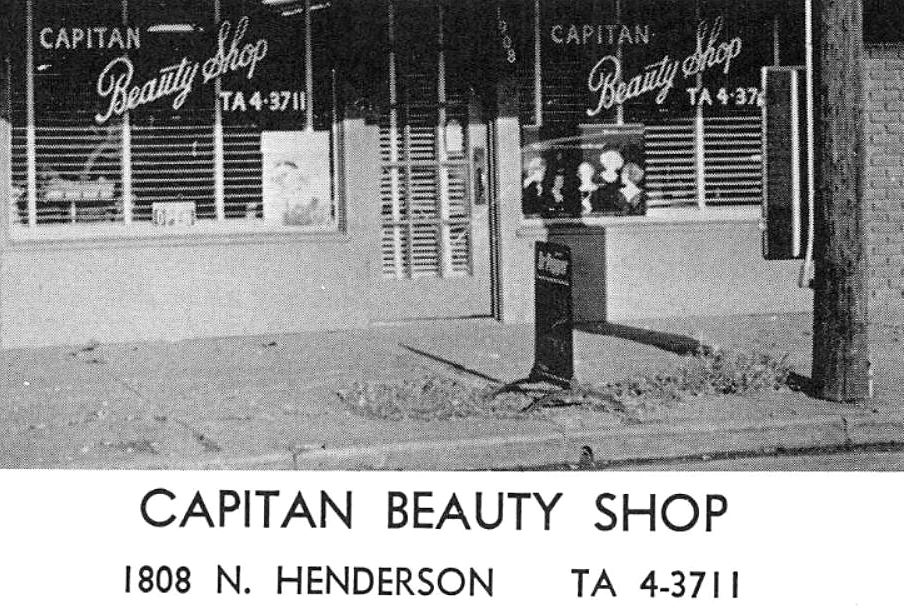
Those who needed their hair extra poufy for the spring formal might have found themselves at the Capitan Beauty Shop, 1808 N. Henderson (now that’s a photo!).

capitan-beauty-shop_ndhs_1963-yrbk1963

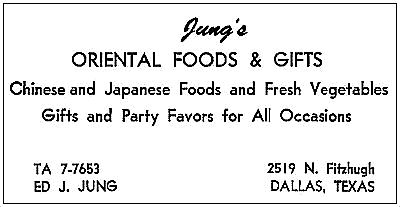
Seekers of Asian foods and/or “party favors for all occasions” could head over to Jung’s Oriental Foods & Gifts at 2519 N. Fitzhugh. (This is the most unexpected ad I came across.)

jungs_ndhs_1963-yrbk
1963

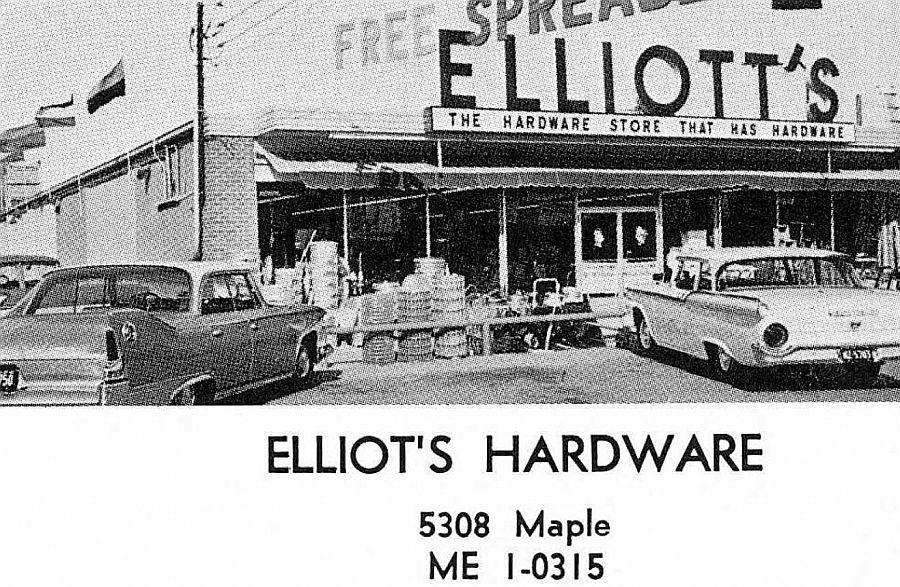
Maybe you just needed a hammer. Where else would you go but Elliott’s Hardware, at its original location at 5308 Maple.

elliotts-hardware_ndhs_1963-yrbk
1963

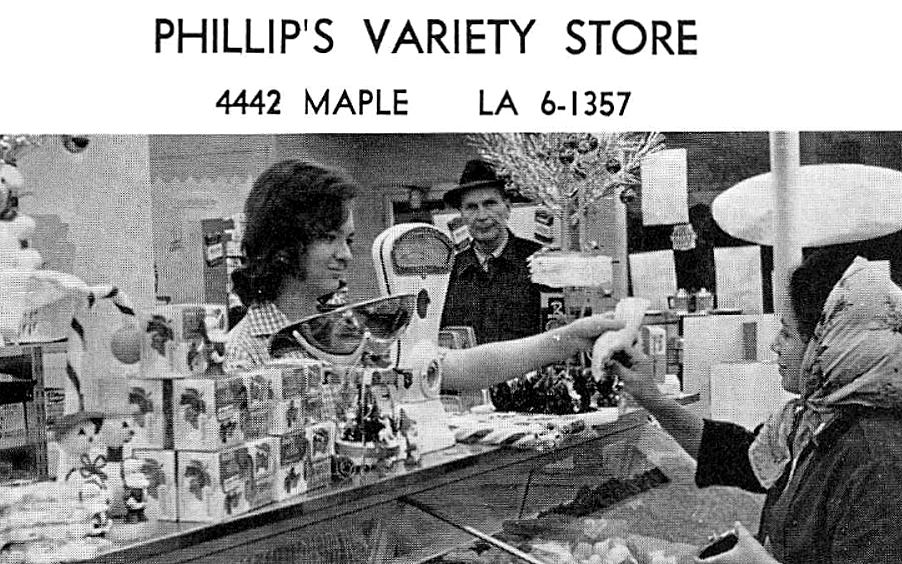
Phillips’ Variety Store at 4442 Maple was probably a good place to get scented talcum powder, a bouncy ball, a bag of peppermints, or a new charm for the charm bracelet.

phillips-variety-store_ndhs_1963-yrbk
1963

*

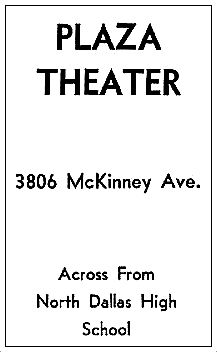
What do high school kids love more than bowling and going to the movies? Apparently there was a movie theater on McKinney Avenue that I’m only just learning about — The Plaza, at 3806 McKinney.

1962_plaza-theater
1962

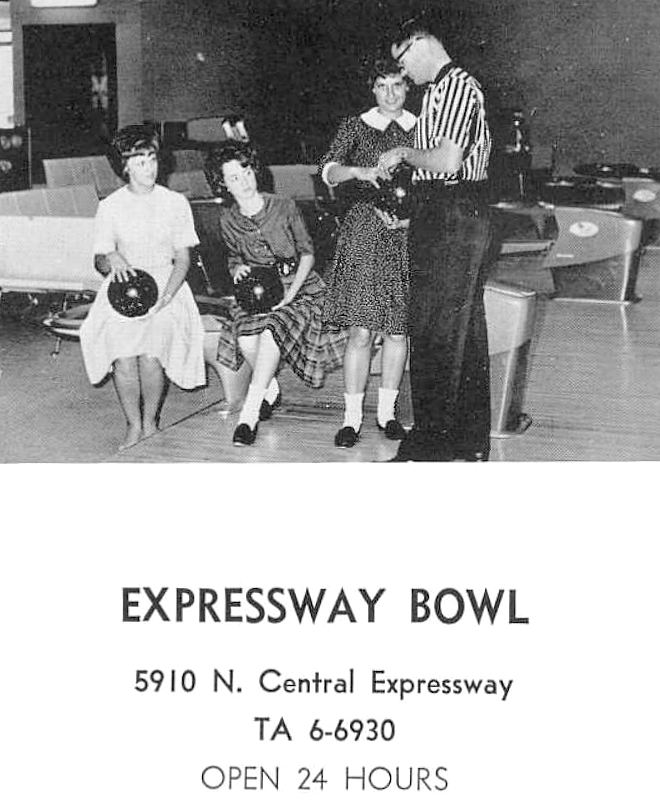
The 24-hour Expressway Bowl was at 5910 N. Central Expressway. (I’m not sure those girls have on the proper footwear.)

expressway-bowl_ndhs_1963-yrbk1963

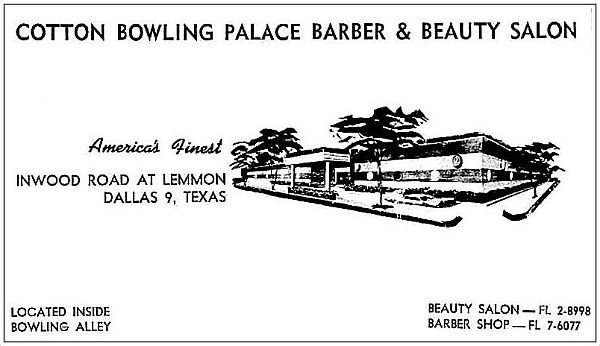
But the place you really wanted to go was the Cotton Bowling Palace on Inwood at Lemmon. When it opened in 1959 (complete with a heavily promoted personal appearance by Dallas gal Jayne Mansfield), it was breathlessly described as “a mixture of the Copacabana, the Taj Mahal and the  MGM Grand.” Imagine bowling in the Taj Mahal! Heck, you could even get a haircut between frames.
1962_cotton-bowling-palace1962

*

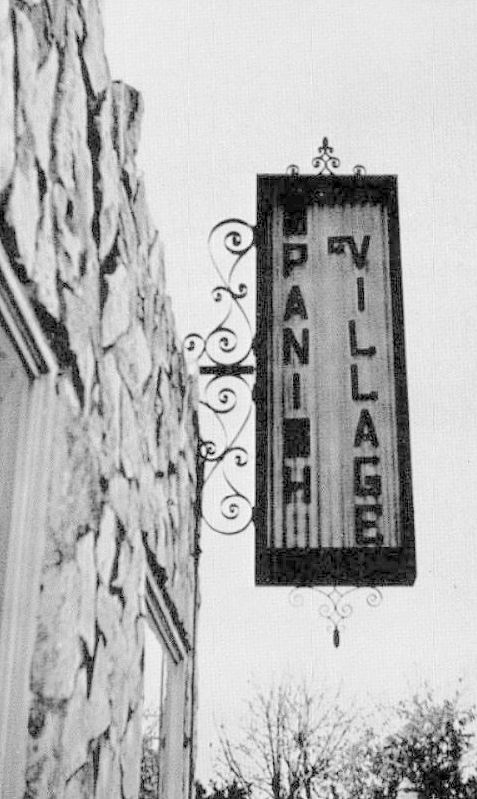
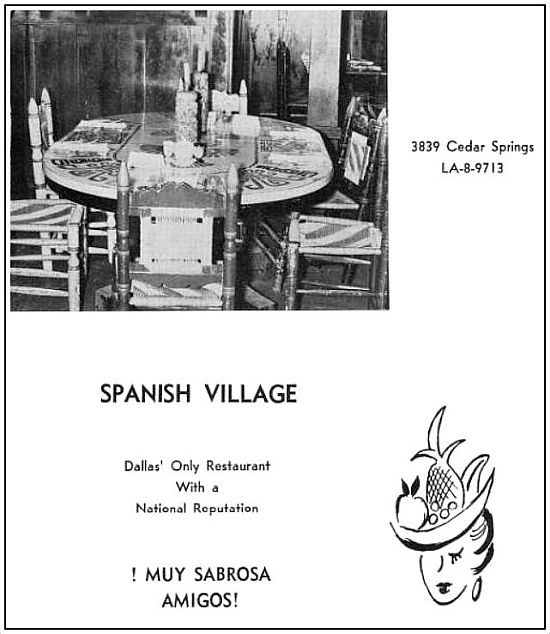
The biggest bang for the buck, nostalgia-wise, is almost always going to be places related to food. Here are a few restaurants and burger places which were probably frequent destinations for North Dallas students and their families. Like Spanish Village at 3839 Cedar Springs.

spanish-village_ndhs_1963-yrbk
1963

1960_spanish-village_ndhs_1960-yrbk
1960

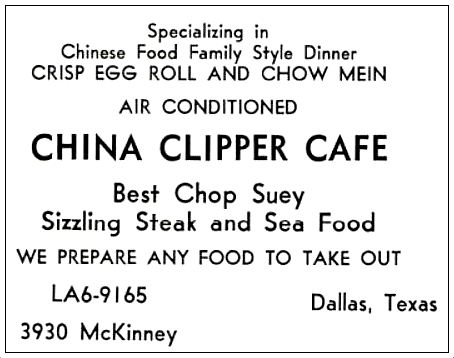
The fondly remembered China Clipper, at 3930 McKinney.

1960_china-clipper_ndhs_1960-yrbk1960

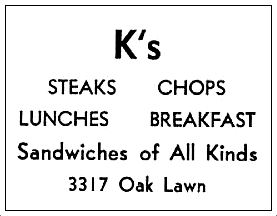
K’s — where you could get “sandwiches of all kinds” — at 3317 Oak Lawn.

1960_ks-sandwiches_ndhs_1960-yrbk
1960

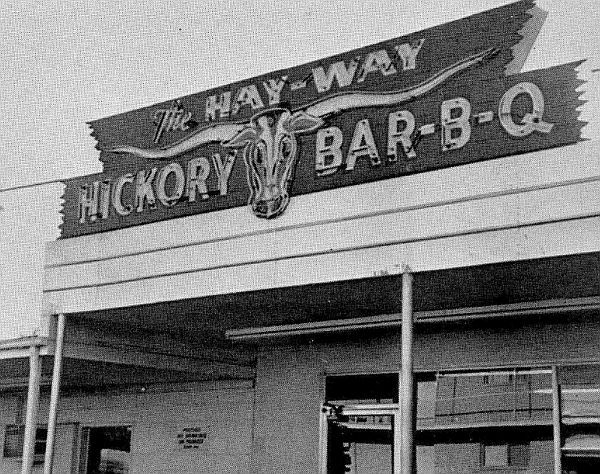
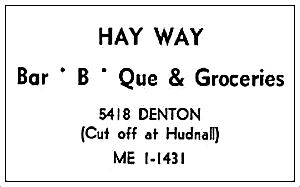
Hay-Way Bar-B-Q & Groceries, at 5418 Denton Drive.

hay-way-bar-b-q_ndhs_1963-yrbk-photo

hay-way-bar-b-q_ndhs_1963-yrbk
1963

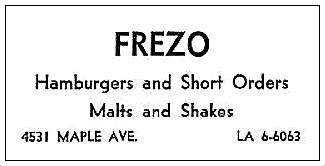
A burger and malt joint with the wonderful name of Frezo, at 4531 Maple. (I WOULD GO TO SOMEPLACE CALLED “FREZO.”)

1962_frezo_ndhs_1962-yrbk
1962

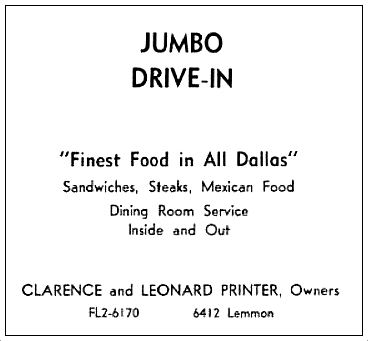
The famed elephant-on-top Jumbo Drive-In, owned by Clarence and Leonard Printer. The location in this ad was at 6412 Lemmon. See what the Haskell location looked like, here.

1960_jumbo-drive-in_ndhs_1960-yrbk
1960

The legendary Prince of Hamburgers at 5200 Lemmon.

prince-of-hamburgers_ndhs_1960-yrbk
1960

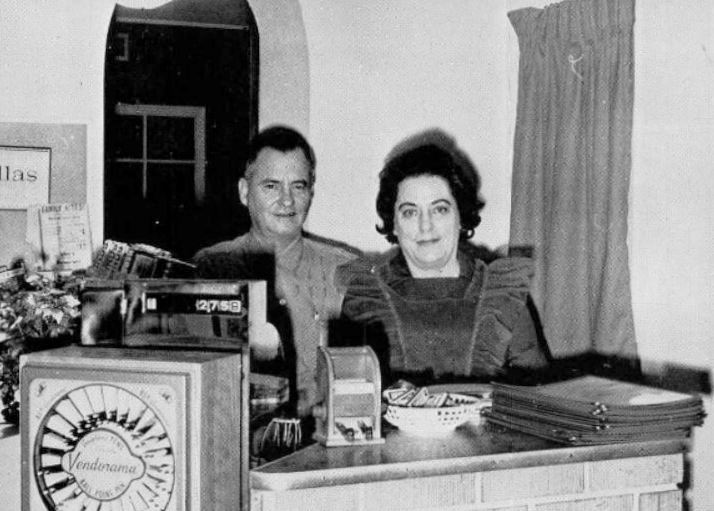
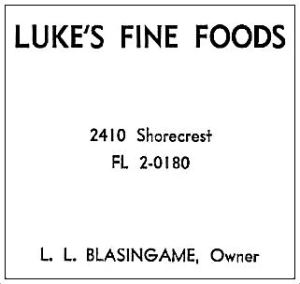
The not-quite-as-legendary Luke’s Fine Foods at 2410 Shorecrest, owned by L. L. Blasingame.

lukes-fine-foods_ndhs_1963-yrbk

lukes-fine-foods_ndhs_1963-yrbk-ad
1963

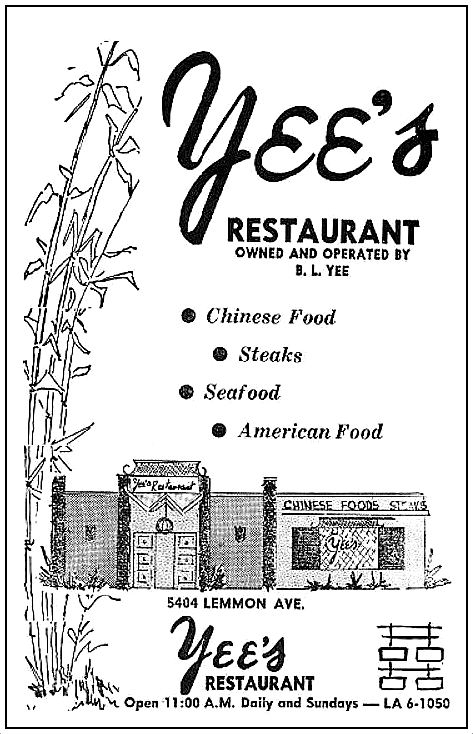
Yee’s Restaurant at 5404 Lemmon, owned by B. L. Yee.

yees-chinese_ndhs_1963-yrbk
1963

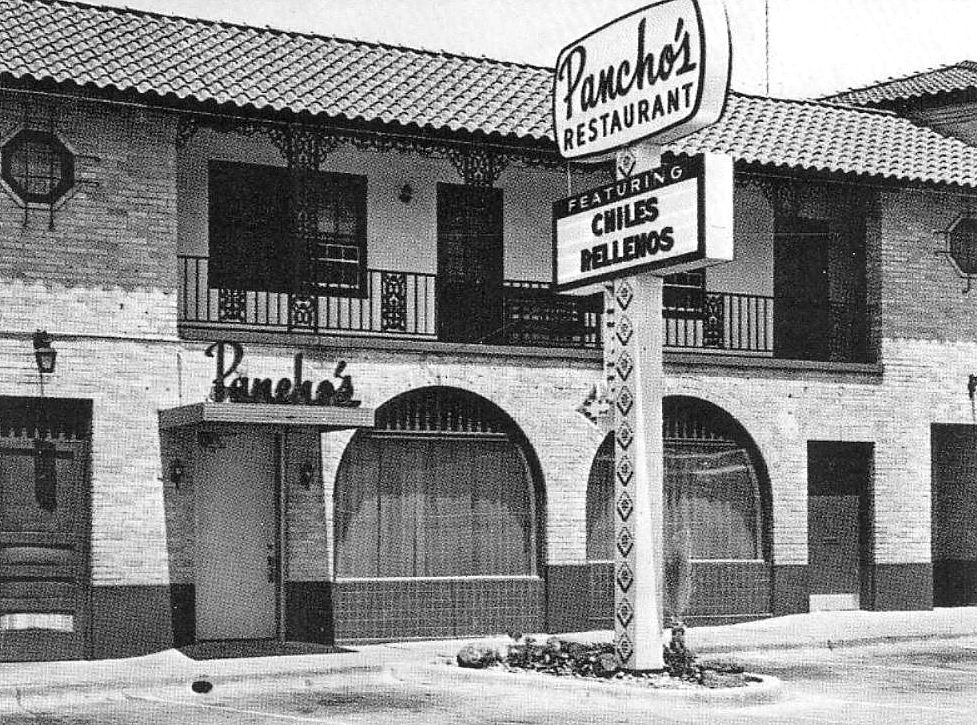
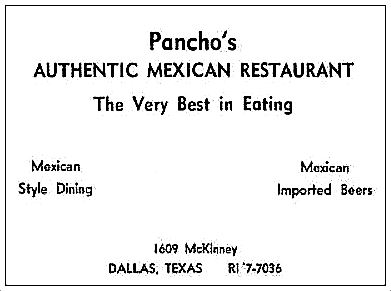
And, of course, Pancho’s — this location at 1609 McKinney. Almost all of the buildings that housed the businesses listed above are long gone, but this building is still hanging in there. It’s next to the downtown El Fenix and is now the home of Meso Maya. I have to admit, I got a happy little jolt to see this building today, still looking pretty much the same as it did in this 1963 ad.

panchos_ndhs_1963-yrbk-photo

panchos_ndhs_1963-yrbk
1963

***

Sources & Notes

All ads from the 1960, 1962, and 1963 editions of the North Dallas High School yearbook, The Viking.

See photos of students and high school activities from these same yearbooks in the post “North Dallas High School, The Pre-Beatles Era,” here.

*

Copyright © 2016 Paula Bosse. All Rights Reserved.