Flashback : Dallas

A Miscellany: History, Ads, Pop Culture

North Dallas High School, The Pre-Beatles Era

1962_before-school_ndhs_1962-yrbkBefore school, 1962 (click for larger image)

by Paula Bosse

Today, a few random photos from the 1960, 1962, and 1963 yearbooks of North Dallas High School.

The top photo (from 1962) is my favorite, because, had I not known what part of town this photo was taken in, I would never have guessed. I’m still not 100% sure, but I think this shows Cole Avenue running alongside NDHS. The Cole and Haskell Drug Store (Coke sign) was on the corner of … Cole and Haskell, but things have been so Uptown-ified that this area is now almost completely unrecognizable from even 20 years ago. At least the school and Cole Park remain (mostly) unchanged.

So, a few moments in the life of NDHS students in the days just before The Beatles and Vietnam. (All photos are larger when clicked.)

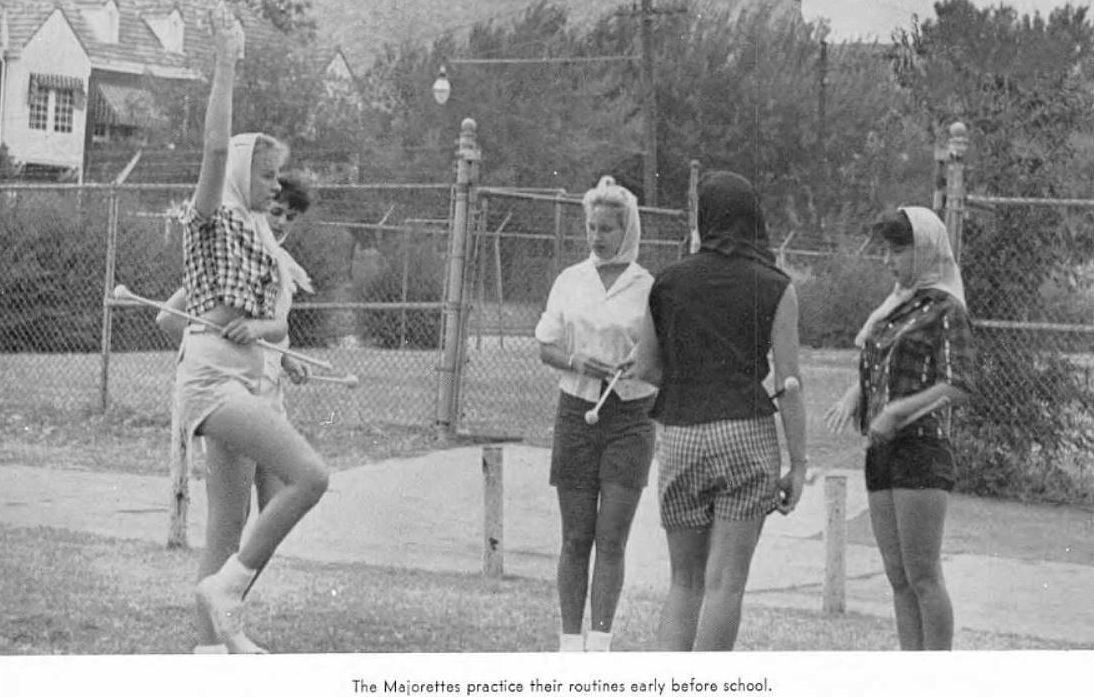
From 1960, majorettes practicing, with batons and headscarves — two things one doesn’t encounter often these days.

1960_majorettes_ndhs_1960-yrbk

*

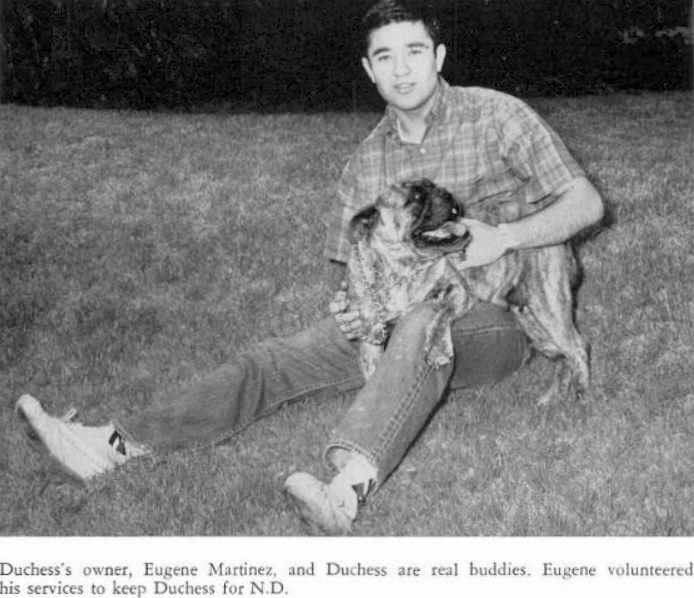
From 1962, cheerleader Gene Martinez with the school’s bulldog mascot, Duchess.

1962_duchess-the-mascot_ndhs_1962-yrbk-photo

*

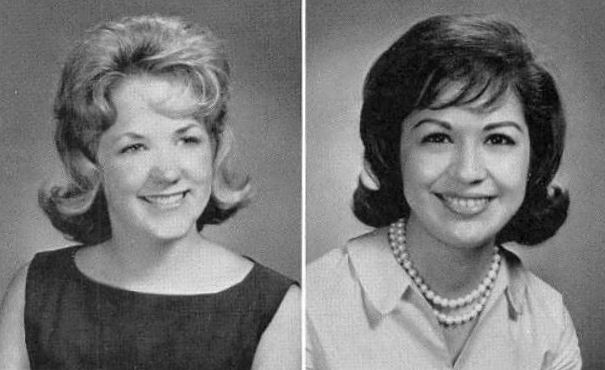
The rest of the photos are from 1963, when most of the girls had the Laura Petrie flip hairstyle. (Seen here are Suzy DeGaw and Olga Delgado.)

girls-hairdos_ndhs_1963-yrbk

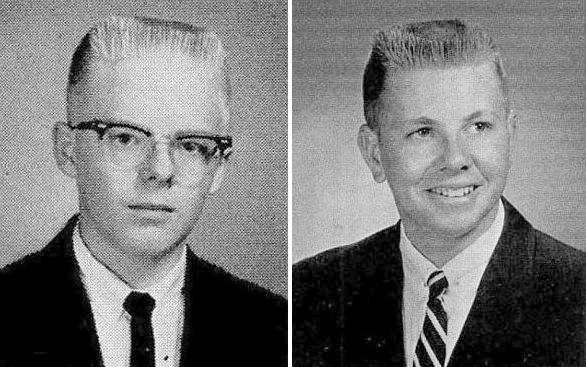
As far as the boys, an alarming number of them sported haircuts like the ones below (although these two seem to be a bit on the extreme side — most were shorter) — it’s a sort of early-’60s version of the ’80s’ Flock of Seagulls hair-do where you look back on it and shake your head in wonderment. I’m not exactly sure what “butch wax” is for, but I’m thinking it’s for this. (Pictured here are Jody Chenoweth and Robert Paul Reid.)

boys-hair_ndhs_1963-yrbk

Girls “gabbed.”

gab-session_ndhs_1963-yrbk

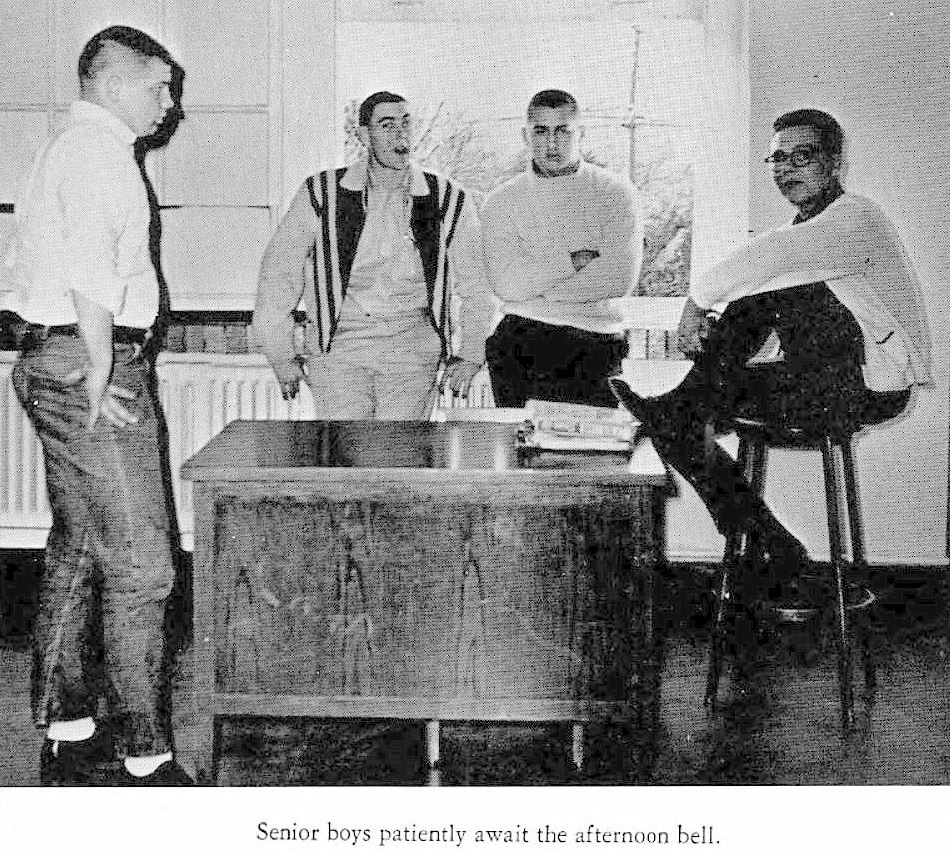
Boys loitered.

senior-boys_ndhs_1963-yrbk

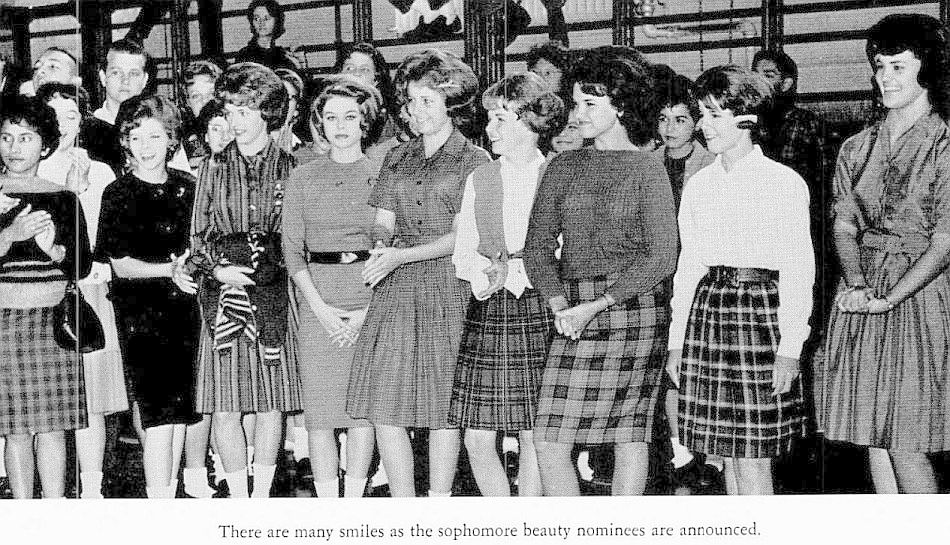
Girls had beauty pageants (and wore a lot of plaid).

sophomore-girls_ndhs_1963-yrbk

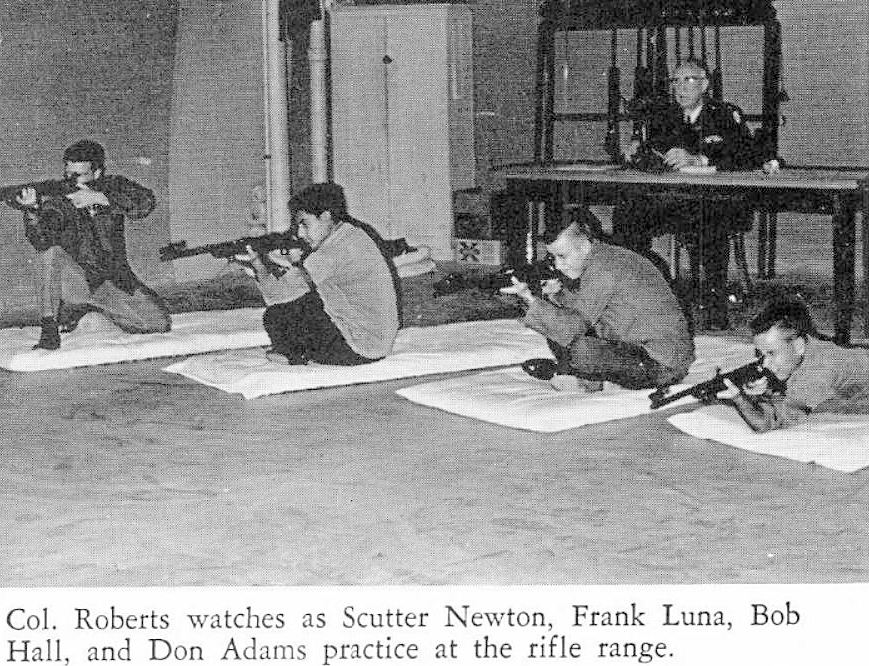
And boys practiced shooting.

rifle-range_ndhs_1963=yrbk

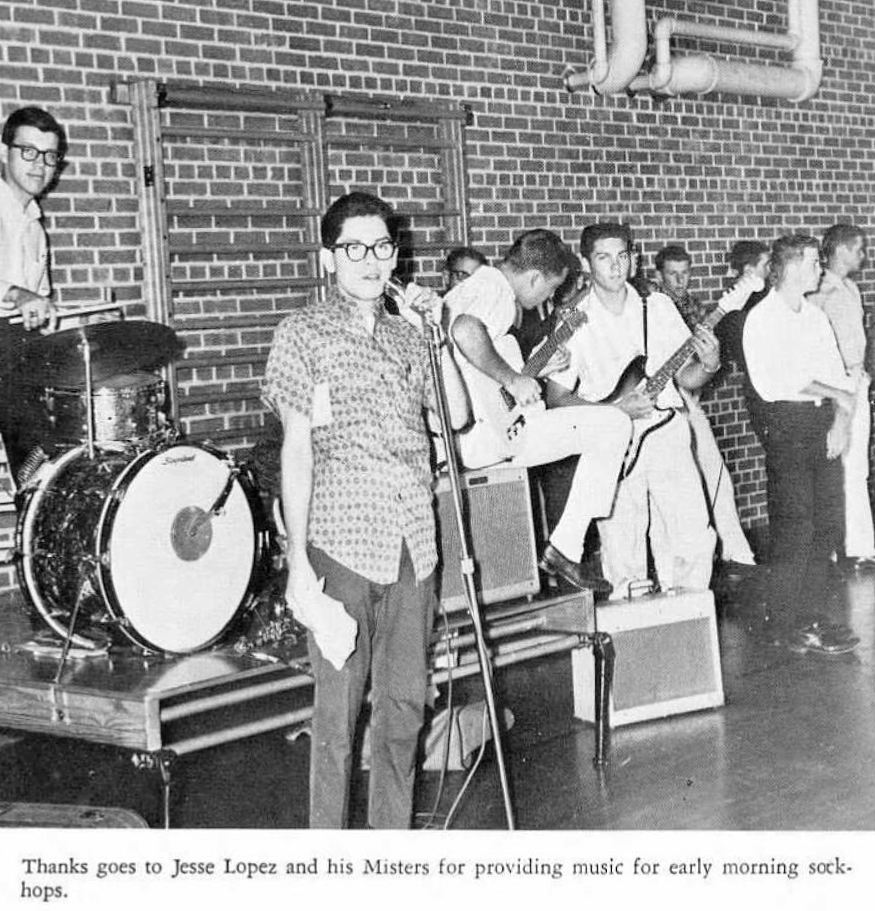
North Dallas had their very own rock and roll band — “The Misters,” headed by the enormously popular Jesse Lopez (younger brother of Trini Lopez, who went to Crozier Tech). (Morning sock hops?!)

jesse-lopez_ndhs_1963-yrbk

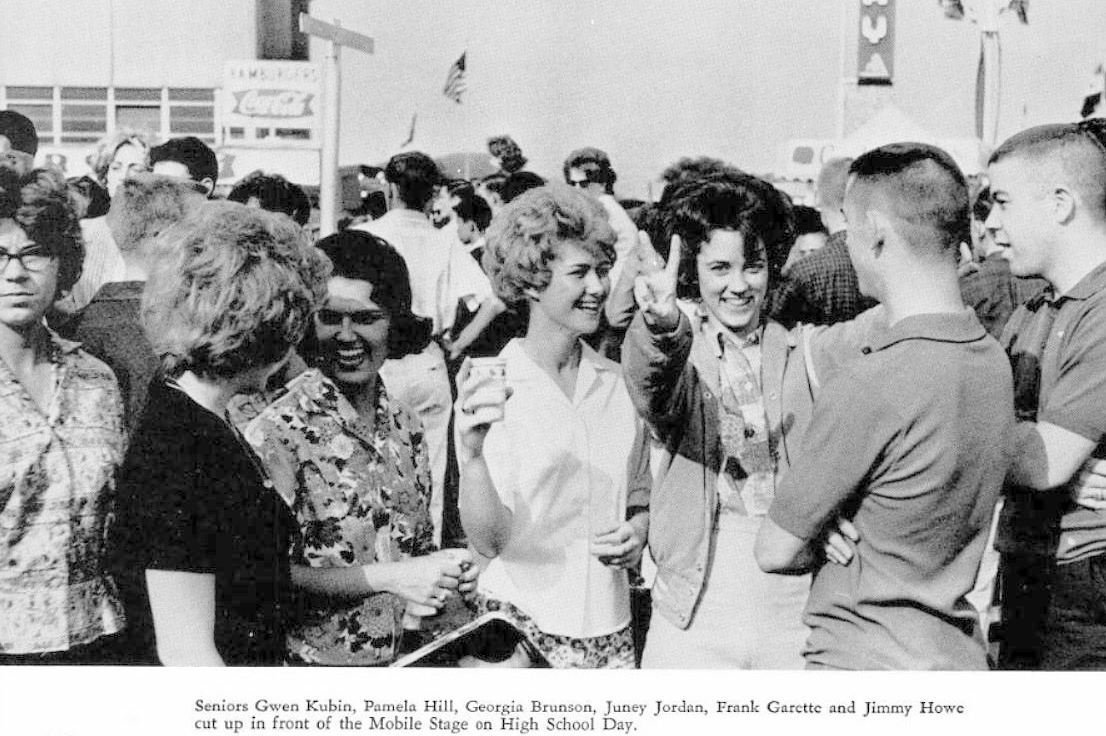
In fact, The Misters won the high school combo contest at the State Fair several times. And speaking of High School Day at the fair….

high-school-day_fair_ndhs_1963-yrbk

And back on campus, I don’t know who you are, Rufus Jara, but I nominate you as Coolest-Looking NDHS Student of 1963. (Caption from the yearbook: “Rufus Jara appears to be bothered by the light in the lunch room.”)

jara-rufus_ndhs_1963-yrbk

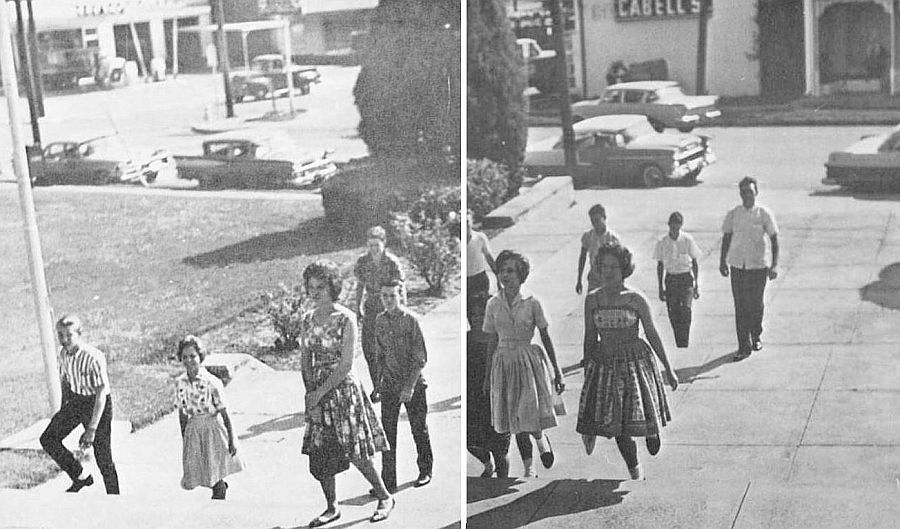
These last two photos leave a lot to be desired in quality (I did my best with yellowed paper and a broken book spine), but I think it’s interesting to see what the street looked like in front of the school, and on McKinney Avenue, to the left. Again, not recognizable today.

ndhs_steps_1963-yrbk

*

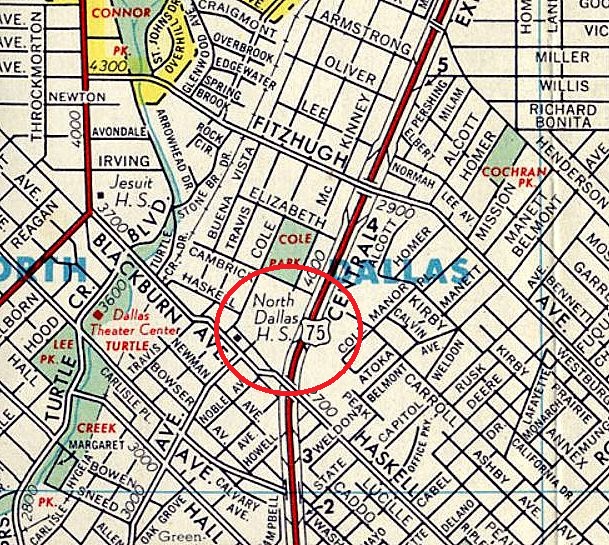
ndhs_map_1962Detail from a 1962 city map

***

All photos from The Viking, the North Dallas High School yearbooks from 1960, 1962, and 1963.

More from these yearbooks: see a LOT of ads in the post “Ads For Businesses Serving the  North Dallas High School Area — Early 1960s,” here. Several feature NDHS students.

All pictures larger when clicked!

*

Copyright © 2016 Paula Bosse. All Rights Reserved.

Bob-O-Links Golf Course — 1924-1973

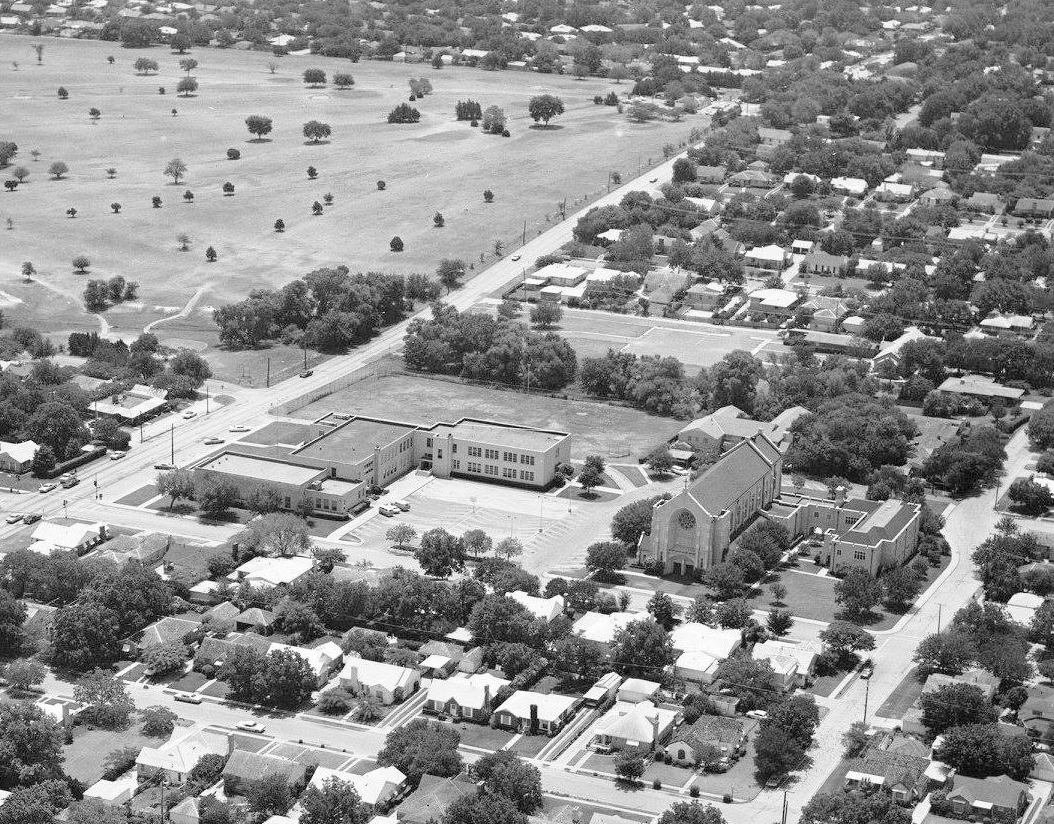
bob-o-links_abrams-rdBob-O-Links golf and St. Thomas Aquinas… (click for larger image)

 by Paula Bosse

The photograph above (with a view to the southeast) shows Abrams Road (at the left), a few blocks south of Mockingbird. On the right is St. Thomas Aquinas Catholic Church and school, and on the left, part of the Bob-O-Links Golf Course, Lakewood’s only public golf course. If you’re familiar with that part of town, it’s pretty incredible to see all that open land right in the middle of it.

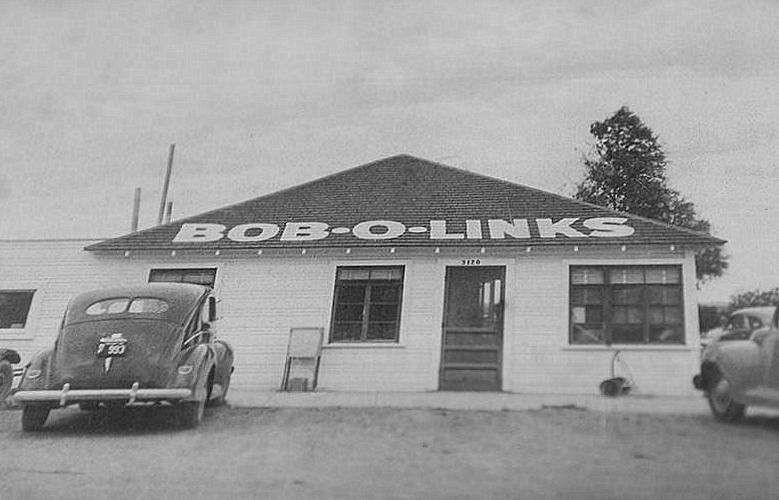
Bob-O-Links, a 9-hole course, was opened by Harry McCommas in 1924 on 60 acres of the land originally owned by the pioneer McCommas family (the family’s full 640 acres covered land that stretched from what is now Abrams Road to White Rock Lake). Despite a creek meandering through seven of the course’s nine holes, the course was an immediate hit, mainly because it was one of the few public courses in town. This is where East Dallas residents with golf-fever would go to play if they couldn’t afford to join the Lakewood County Club.

From an article by John Anders in The Dallas Morning News:

When [Harry] McCommas, 75, decided to build a golf course on his grandfather’s sheep pasture in 1928 [sic], there were only three other golf courses in Dallas. And two of those three are now gone. “We were really out in the country then. There was no water, gas or electricity so we hauled in our water by truck. We didn’t need much since it was originally a sand course.” (DMN, July 6, 1973)

When the course opened in 1924, it was pretty much out in the sticks. By the late 1950s, though, Lakewood was booming, and developers were eager to build things — much to the dismay of nearby residents. Development was staved off for over a decade, but during that whole time, developers never stopped trying to get the area re-zoned, either for commercial use or for apartments and townhouses. Eventually — inevitably — the land was sold, and the days of the little golf course came to an end. The only “victory” the neighborhood could claim is that only single-family homes would be built on the land.

Bob-O-Links Golf Course closed on July 4, 1973. And as one drives down Abrams Road these days, it’s almost impossible to believe that it was ever there.

bob-o-links

bob-o-links_matchbook_flickr
via Flickr

bob-o-links_matchbook_2b
via Flickr

patreon_bob-o-links_harry-mccommas_matchbk_ebay_a

patreon_bob-o-links_harry-mccommas_matchbk_ebay_b

bob-o-links_dallas-park-board-minutes_070858Dallas Park Board minutes, July 4, 1958

bob-o-links_1962-map
1962 map detail (click for larger image)

***

Sources & Notes

I have no information about the top photo. It was posted on the Lakewood neighborhood group on Facebook by local bon vivant Michael Vouras. Comments on his post suggest that it may be a photo in the possession of St. Thomas Aquinas, taken around the mid 1960s. I welcome more info! (UPDATE: Below in the comments, other dates are suggested.)

A present-day aerial view of the same area can be seen here. The golf course (formerly on the left) has been gobbled up by houses.

A great article on Bob-O-Links — “The Bygone Days of Bob-O-Links Golf Course” — was written by Patti Vinson and appeared in a 2015 issue of The Lakewood Advocate; read it here.

Further reading from the archives of The Dallas Morning News:

  • “Re-zoning Denied for Bob-o-Links” (DMN, Sept. 17, 1960): this re-zoning request was to build a 35-acre shopping center; it was shot down by angry neighborhood residents
  • “Negotiations Finished To Buy Bob-o-Links” (DMN, Feb. 9, 1973): purchaser was long-time Dallas developer Hal McGraw who promised to build only single-family homes
  • “Farewell, Bob-O-Links” by John Anders (DMN, July 6, 1973): very entertaining article about Anders’ last round on the course, with memories of his earlier experiences on the course and quotes from owner Harry McCommas 

Wish I’d been there. “FORE!”

*

Copyright © 2016 Paula Bosse. All Rights Reserved.

The House at Crescent & Byron, Highland Park

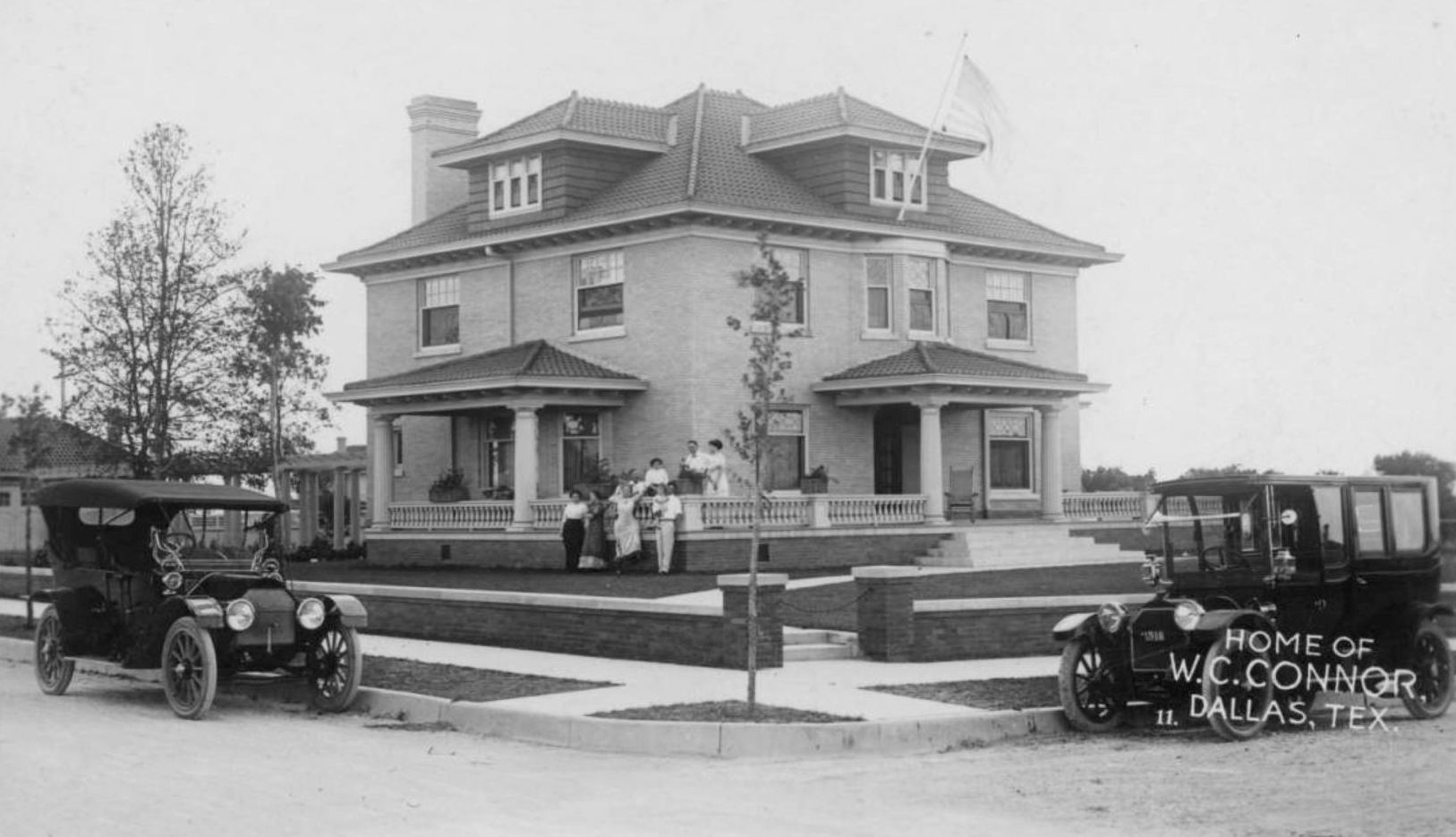
connor-home_cook-colln_degolyerWelcome…

by Paula Bosse

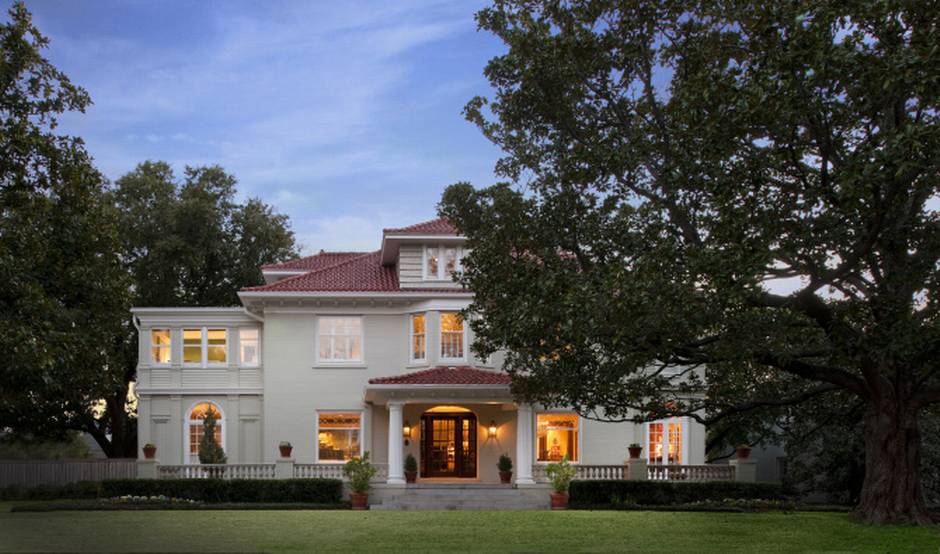
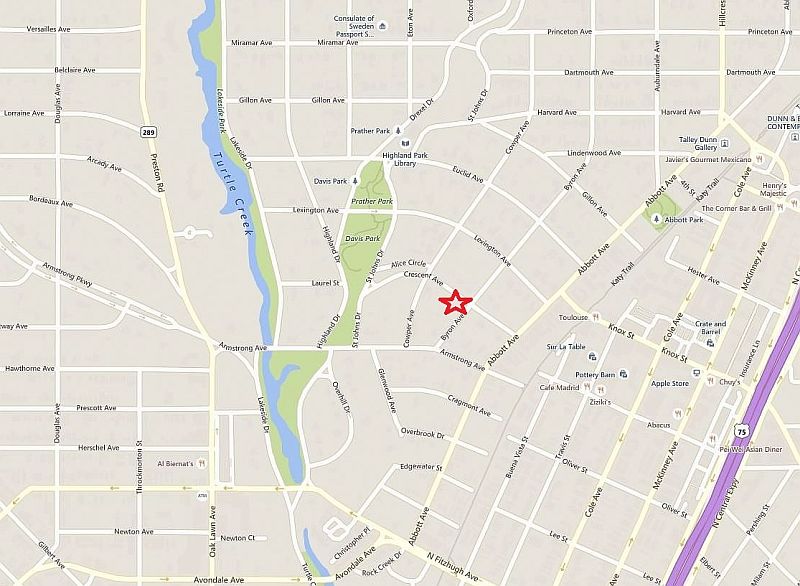
The photo of the house above caught my attention the other day. It’s exactly the sort of house I love, but I couldn’t get a good feel for the part of town it had been in. It took a while to track down, but when I did, I found that it was in Highland Park, at the southwest corner of Crescent and Byron, built about 1910. I had actually been leaning more in the direction of Old East Dallas, because when I think of Highland Park, I tend to imagine that it sprang fully landscaped and jam-packed with trees, even in its earliest days. But more surprising than learning that the house in this photograph was in Highland Park was discovering that it is STILL in Highland Park! It is still standing, and, more exciting, it is still recognizable and largely un-tampered-with! Take a look at it today, here.

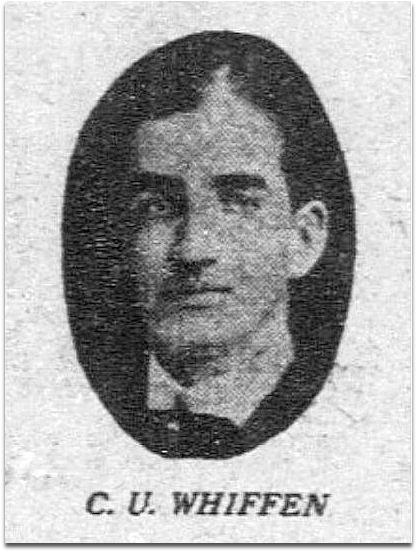
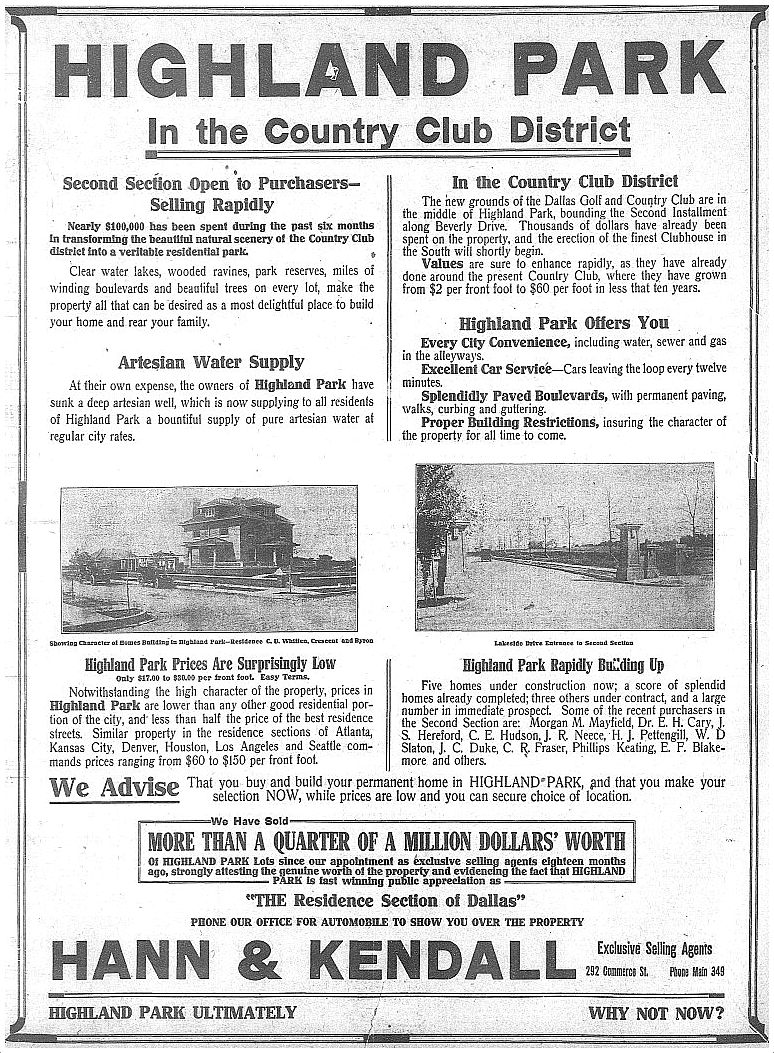
After rummaging around various online databases, I determined that this lovely house was built sometime in 1910 for its first occupants, the C. U. Whiffen family, whose name appeared under a picture of their photogenic house in ads placed by Hann & Kendall, the real estate agents in charge of selling lots for the developers of Highland Park. A photo of the house first showed up in an ad from September, 1910 and was used again in May, 1911. (See the full ads here.)

whiffen_dmn_051411-ad-det

The Whiffen family moved into the house in 1910 from their previous home on McKinney Avenue.

whiffen_dmn_010811-NCR-ad-detCalvin U. Whiffen, seen in an NCR ad, DMN, Jan. 8, 1911

whiffen_1911-directory1911 city directory

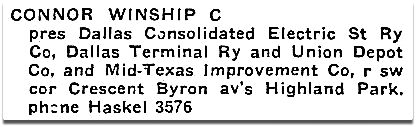
Whiffen had interests in a couple of different businesses but was primarily associated with NCR, the National Cash Register company. When Whiffen was transferred to Los Angeles by NCR, he sold the house to former Dallas mayor W. C. Connor for $18,000 (a little under $500,000 in today’s  money).

connor_whiffen_dmn_122211DMN, Dec. 21, 1911

connor_1912-directory
1912 city directory

Winship C. Connor (also widely known as “Bud” Connor) was an interesting man whose contributions to the city were extremely important in its becoming a major metropolitan area. Not only did he serve multiple terms as mayor of Dallas (from 1887 to 1894), but, among other accomplishments, he also built the first waterworks system, the first streetcar line, and the first electric light plant. In later years, he presided over several companies, including the Consolidated Electric Street Railway Co.

connor_fuel-oil-journal_oct-1915Connor, pictured in the Fuel Oil journal, Oct. 1915

Connor moved from the house on Crescent Avenue to a house on Miramar in 1918 or 1919, and, in 1921, he died, at the age of 73. The top photo of the house was taken sometime between 1912 and 1919. He can be seen with his family, sitting on the porch, in this detail.

connor-home_cook-colln_degolyer-det1

The house has had very few owners throughout its 106 years. In one of those odd, happy coincidences, I’ve just discovered that one of those owners was Edward L. Wilson, Jr. (1920-2011). Ed Wilson was an engineer who had his office in a small building (now razed) on Maple Avenue, next door to the Stoneleigh Hotel. He leased out the ground floor to my father who ran The Aldredge Book Store there for over 20 years. Mr. Wilson was a man of few words, but very, very nice and an understanding landlord. I’m happy to learn that he and his family lived in this beautiful house for several years.

Here it is today.

crescent_dmn_032913DMN, Mar. 29, 2013

***

Sources & Notes

Top photo, titled “Home of W. C. Connor, Dallas, Tex.,” is from the George W. Cook Dallas/Texas Image Collection, DeGolyer Library, Central University Libraries, Southern Methodist University; it can be viewed here.

See inside this house in a Dallas Morning News video, here (for some reason, I am unable to view this video on my computer, but I can watch it on my phone). The house was a featured stop on a Highland Park Centennial celebration tour of homes in 2013. More photos of the house today can be seen on Douglas Newby’s Architecturally Significant Homes page, here.

Where is it?

crescent-byron_bing
Bing Maps

W. C. Connor was a man of great accomplishment — his Dallas Morning News obituary (Aug. 6, 1921) is here; his citation in A History of Greater Dallas and Vicinity is here; his Wikipedia page, here.

*

Copyright © 2016 Paula Bosse. All Rights Reserved.

“The Trend is Highland Parkward”– 1909-1911

lakeside_dmn_092510Lakeside Drive, 1910 (click for larger image)

by Paula Bosse

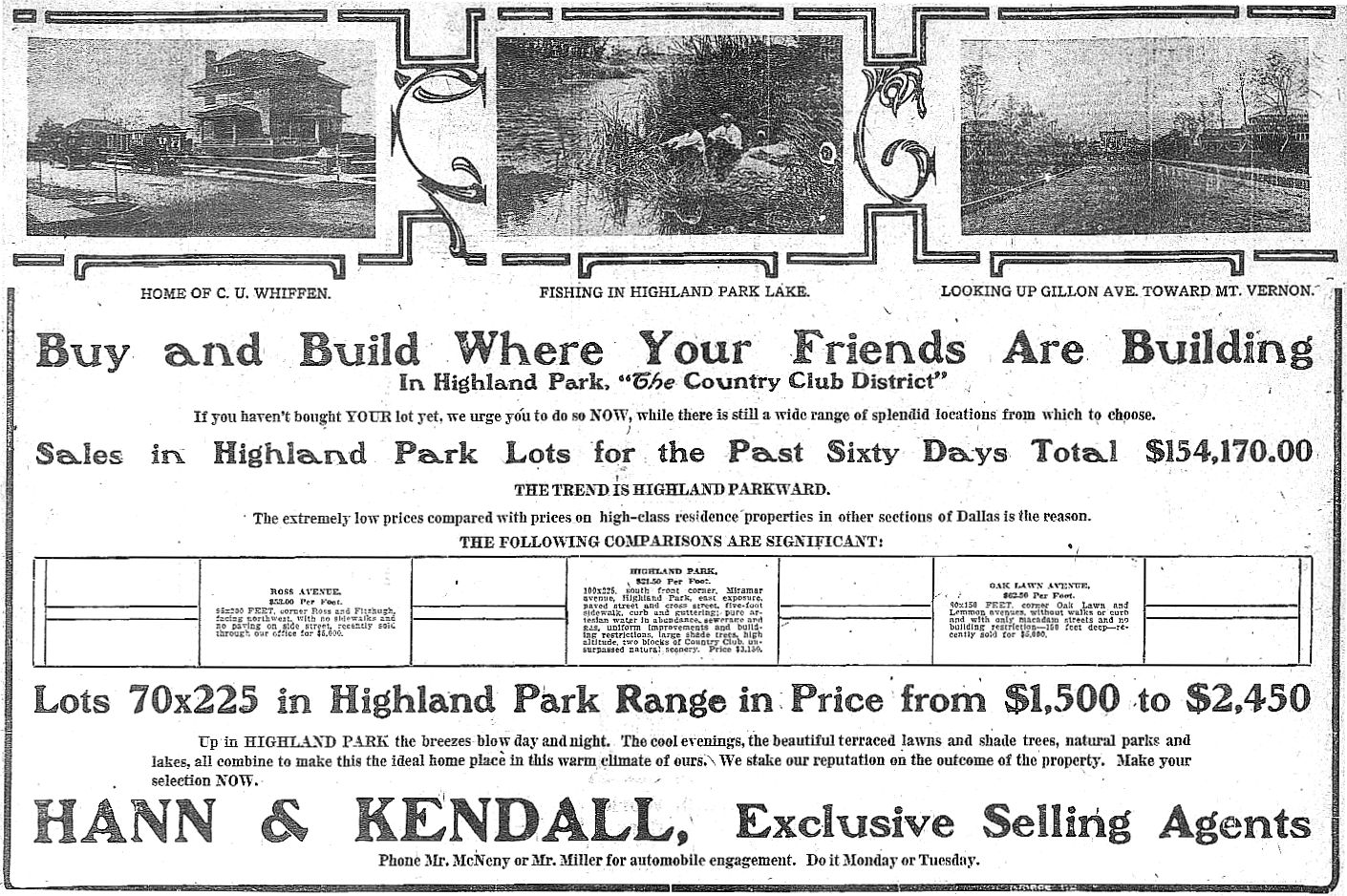
Three early Hann & Kimball Highland Park real estate ads urging people to “Buy and Build Where Your Friends Are Building, In Highland Park, ‘THE Country Club District’!” (Click to see larger images.)

highland-park_second-installment_dmn_070409Dallas Morning News, July 4, 1909

*

“Highland Park Ultimately. Why Not Now?”

ad-highland-park_dmn_092510
DMN, Sept. 25, 1910

*

“Up in Highland Park the breezes blow day and night. The cool evenings, the beautiful terraced lawns and shade trees, natural parks and lakes, all combine to make this the ideal home place in this warm climate of ours. We stake our reputation on the outcome of the property. Make your selection NOW.”

highland-park_dmn_051411_ad
DMN, May 14, 1911

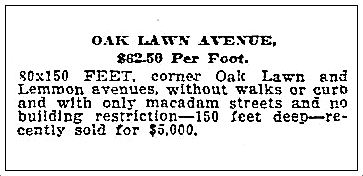
The hard-to-read “significant comparison” text from the middle of the ad above:

ad-highland-park_dmn_051411-det1

ad-highland-park_dmn_051411-det

ad-highland-park_dmn_051411-det3

*

Is this the same view as seen in the top photo showing “Lakeside Drive Entrance to Second Section” (off Armstrong)?

lakeside_armstrong-google
Google Street View

Hope your forebears didn’t miss out! (Mine did!)

***

Sources & Notes

Read more about the C. U. Whiffen house featured in both the 1910 and 1911 ads here. I’m happy to report the lovely house at Crescent and Byron is still standing.

Click pictures for larger images!

*

Copyright © 2016 Paula Bosse. All Rights Reserved.


“Delusions of Affability” — Marijuana in 1930s Dallas

marihuana-film_poster
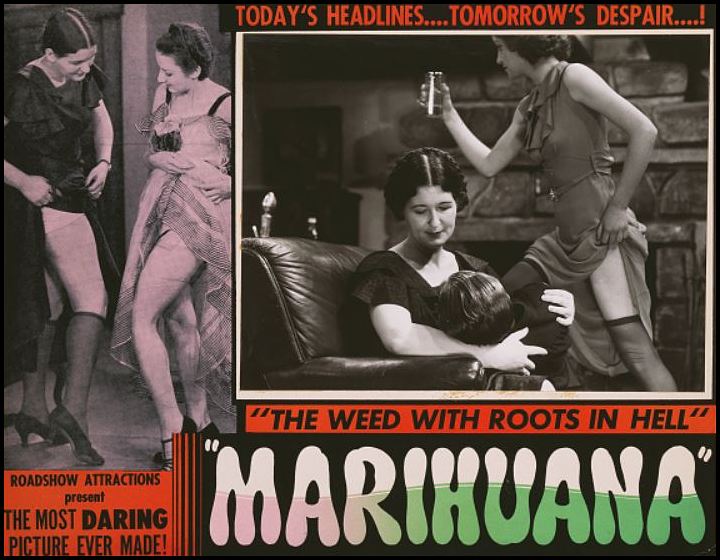
“The weed with roots in hell…”

by Paula Bosse

Today is April 20, also known as the cannabis-friendly “4/20 Day.” So why not take a look at the early days of marijuana awareness in Big D?

The “marijuana problem” in Dallas didn’t really start to be reported regularly in the pages of The Dallas Morning News until the 1930s, but there were a few stories that showed up in the early 1920s, such as this one about a raid on an opium-den-style house in Little Mexico in 1921 (click for larger image).

marijuana_dmn_041321DMN, April 13, 1921

Heading into the 1930s, the legality of the possessing and selling marijuana was fairly vague. After reading a bit about what was happening in Dallas in regard to “Mexican cigarettes,” I’m still not sure when the possession and selling of marijuana became illegal. The federal, state, and local laws all seemed to be different, and all were constantly in flux. There might even have been conflicting laws on the city and county books. Like I said, confusing. Nevertheless, here are a couple of interesting tidbits from the opening months of 1931 concerning the first charge in Dallas County against a person selling marijuana and the first conviction in Dallas County for a person selling marijuana. (According to the Inflation Calculator, today’s equivalent to the $25-to-$500 fine of 1931 would be, approximately, a $395-to-$7,900 fine.)

A Mexican was placed in the county jail Wednesday after a charge of selling marijuana had been filed against him in County Criminal Court, the first time in history of that body such a charge has been brought against a defendant. […] The Mexican was still ‘smoked up’ when arrested. (DMN, Jan. 29, 1931)

The penalty for selling “Mexican dope weed” was a fine of $25-$500 or a jail sentence of one month to one year.

The first conviction on record in County Criminal Court for selling marijuana, Mexican ‘loco weed,’ was given Thursday when Judge Noland G. Williams sent Manuel Garino to the county jail for thirty days. (DMN, Feb. 6, 1931)

Still, marijuana was considered only a minor annoyance locally — the Asst. D.A. even went so far as to say that there was “little use of the drug in Dallas.”

Actually, throughout the ’30s, a lot of policemen didn’t even know what marijuana plants looked like — one wonders how much marijuana-related activity was going on all around them in plain view? In these early days, when the police did stumble onto large quantities of “loco weed,” it was sometimes merely by accident while investigating something else.

And then, suddenly — around the mid ’30s — marijuana was everywhere. Just in time for the Texas Centennial, when thousands and thousands of potential new customers would be flooding into the city! Enterprising individuals were growing it all over the place — in their yards, in their fields with other crops, and even on a little island called Bois d’Arc Island in the middle of the Trinity River bottoms, a few miles south of Dallas (where 3,000 pounds was seized in July, 1938).

Even though the purchasing, the selling, the use, and the growing of marijuana was going on all over the city — in white, black, and Hispanic neighborhoods — the main areas of enforcement were, unsurprisingly, in Little Mexico and Deep Ellum, areas populated by minority citizens.

Police Sergt. O. P. Wright stopped a 22-year-old Negro languidly puffing a cigarette as he walked in the 400 block of North Central Tuesday.

“What kind of a cigarette is that, boy” inquired the Sergeant.

“Rough cut,” replied the languid one. (“Policeman Sniffs Air, Catches Marijuana Smoker,” DMN, June 22, 1938)

The federal government was attempting to deal with the marijuana problem — by taxing it so highly that it would discourage those participating in the loco weed trade: $100 tax on every ounce! At a time when you could buy a joint for anywhere from a dime to a quarter. Talk about your “sin tax”!

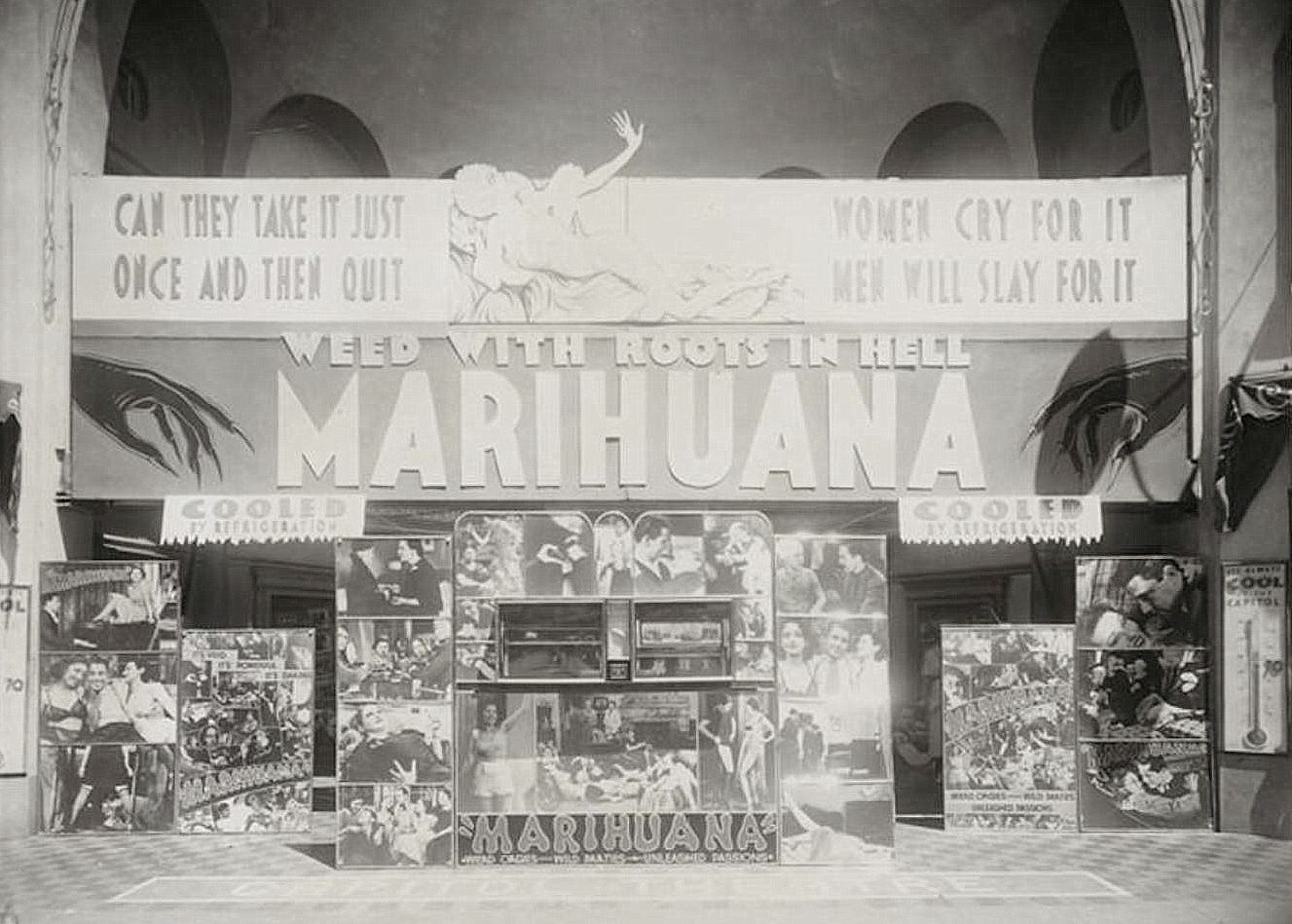
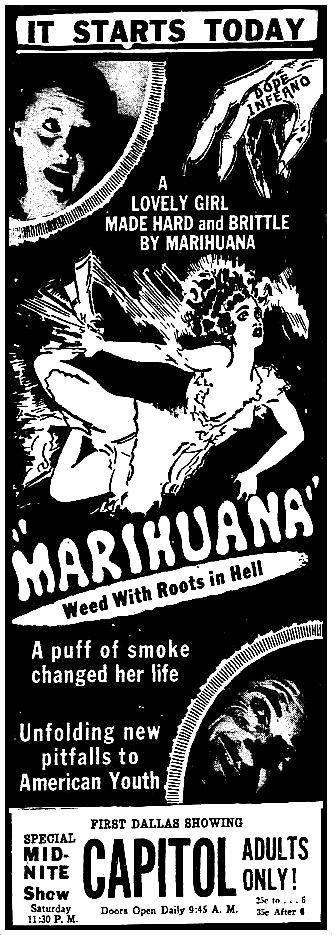
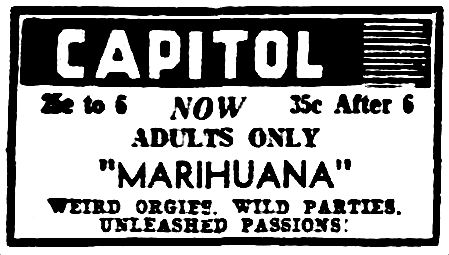
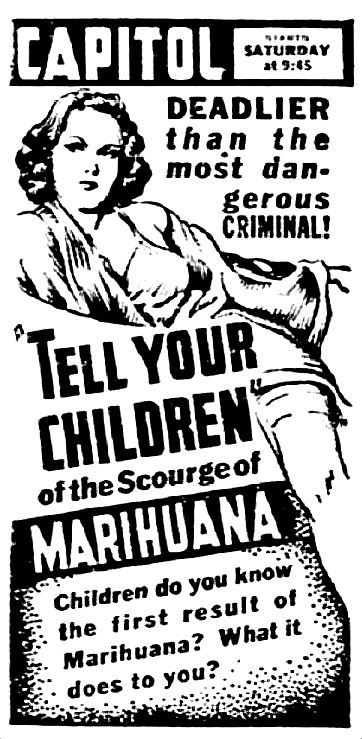
Marijuana/marihuana was generally demonized as a highly addictive drug which caused psychosis and led, inevitably, to all sorts of heinous acts and/or lewd behavior. …Or death. A lot of helpful, cautionary exploitation movies began to appear on Dallas screens, such as Marihuana from 1936 (which, incidentally, had an Oak Cliff child actor — Gloria Brown — in the cast). Below, the pomp and bug-eyed bally-hoo adorning the entrance to the lovely Capitol Theater, beckoning the Elm Street passerby to check out the film. …In order to be well-informed.

marihuana_capitol_1936_cook-collection_degolyer-library_SMU
George W. Cook Collection, DeGolyer Library, SMU

marihuana-film_dmn_080136
Aug., 1936

marihuana-film_dmn_080536
Aug. 1936

marihuana-film_dmn_061639June, 1939 (back by popular demand!)

(The full Marihuana film can be viewed free here, although it’s surprisingly dull.)

Even though most marijuana warnings were dire and filled with exclamation marks, I kind of like this more subdued one: “Smoking of the weed gives the subject delusions of riches, success and affability” (DMN, Dec. 21, 1936).

And there you have it, a little slice of unexpected Dallas historical trivia.

***

Sources & Notes

A few pertinent articles from the archives of The Dallas Morning News:

  • “Marijuana Smallest Worry of Dallas in Narcotic Violations” (DMN, March 6, 1931)
  • “Uncover Cache of Loco Weed, Lock Up Seven; Police Led to Mexican Dope Trailing Bogus Coin Milling” (DMN, March 30, 1932) — great story about cops who stumbled across marijuana when tracking down counterfeit half-dollar coins (counterfeit 50-cent pieces?!). My favorite part of this story is at the very end: “One of the Mexicans carried twenty-seven of the coins in one of his shoes.” Wow.
  • “Stalk of Marijuana Seven Feet Tall Is Found in Oak Cliff” (DMN, Aug. 7, 1934)
  • “3,000 Pounds of Marijuana Seized By Raiders on River Bottom Farm; Haul Valued at $25,000” (DMN, July 30, 1938)
  • “Marijuana Den With Open Air Resort Raided; 6 Arrested; $100 Worth of Cigarettes Found; Plants in Back Yard Destroyed by Officers” (DMN, June 25, 1936) — “This is the first open-air marijuana den I have ever encountered in all my years of service.”
  • “Policeman Sniffs Air, Catches Marijuana Smoker, Three Others” (DMN, June 22, 1938)

Related Flashback Dallas post: “3800 Main: Fritos Central — 1947,” here

*

Copyright © 2016 Paula Bosse. All Rights Reserved.

White Rock Lake From Above — 1925-1926

white-rock-lake_fairchild-aerial_1925_legacies_fall-2002Fairchild Aerial Survey photograph, 1925 (click for larger image)

by Paula Bosse

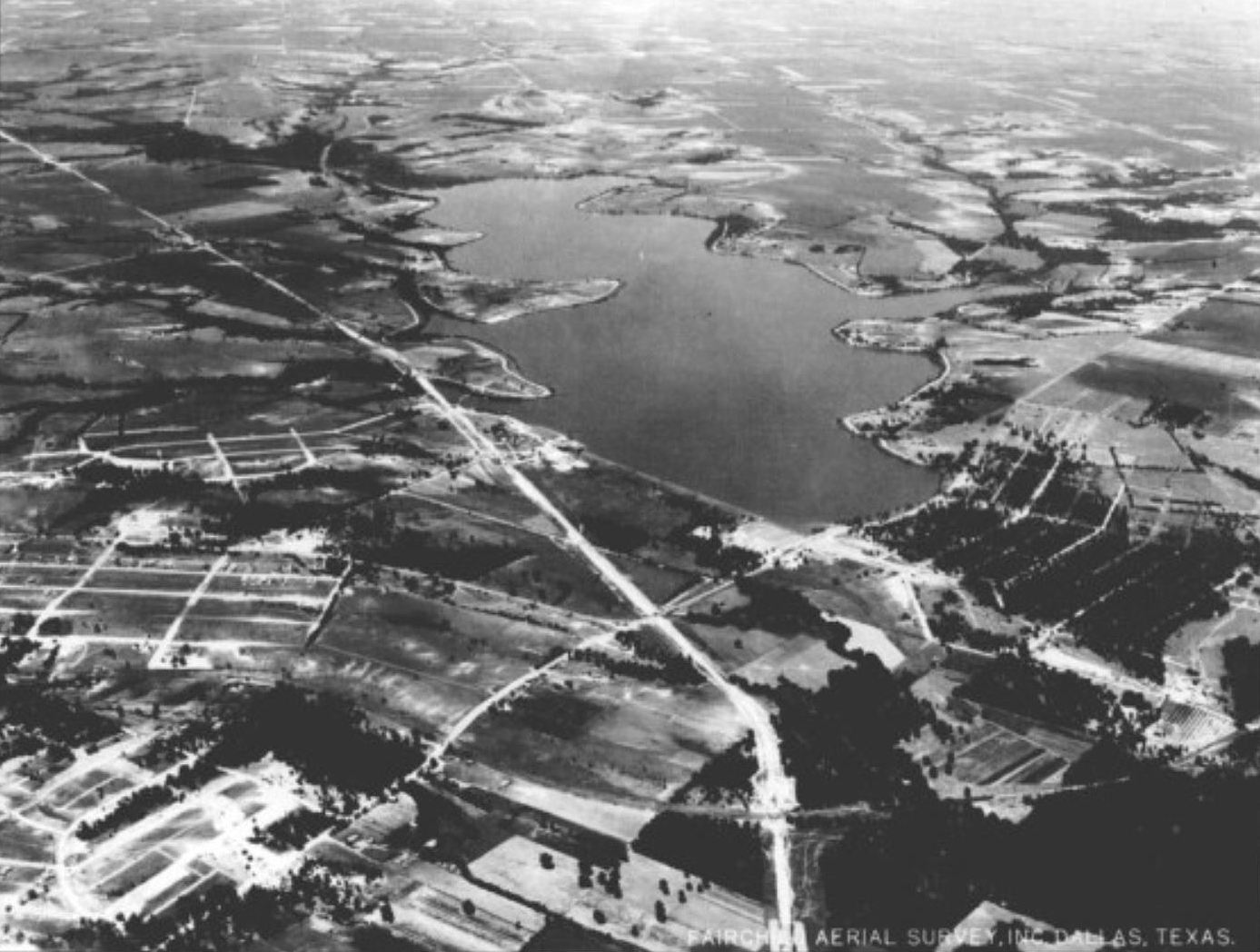
Above, a striking view of White Rock Lake, looking north, with Garland Road and the Houston & Texas Central Railroad tracks (becoming the Texas & New Orleans Railroad tracks in 1934) crossing at the lower center of the photograph, just southwest of the lake. Another Fairchild Aerial Survey photo is below — this one is from 1926, and its wider view shows just how undeveloped this area was at the time.

white-rock-lake_fairchild-aerial_degolyer_smu_1926Fairchild Aerial Survey photo, 1926 (DeGolyer Library, SMU)

*

Here’s a present day view. (Click the image below to see a huge Google Earth image.)

white-rock-lake_google-earth_sm

***

Sources & Notes

Top photo from the very interesting article “From Water Supply to Urban Oasis: A History of the Development of White Rock Lake Park” by Steven Butler (Legacies, Fall 2002), here.

Bottom photo, titled “White Rock Lake Aerial Overview (Unlabeled)” is from the DeGolyer Library, Central University Libraries, Southern Methodist University; it can be accessed (and magnified greatly) here. The “labeled” version — which identifies roads and landmarks — is here. From the SMU description: “This is one of 38 photographic prints taken by Fairchild Aerial Survey, Inc. of White Rock Lake for Dr. Samuel G. Geiser, SMU.” The full set of the White Rock Lake aerial photos is here. A map here shows where the grid maps are in relation to the lake as a whole.

Thanks to “Not Bob” for linking to the Google Earth image in the comments!

These photos are big. Click them!

*

Copyright © 2016 Paula Bosse. All Rights Reserved.


Bonnie Parker: “Buried In an Ice-Blue Negligee” — 1934

bonnie-parker_mortician-account_cook-colln_degolyer(George W. Cook Collection, DeGolyer Library, SMU)

by Paula Bosse

This amazing (and amazingly gruesome) first-hand account of an unnamed McKamy-Campbell Funeral Home undertaker details the incredible amount of work required to prepare the bullet-ridden body of celebrity outlaw Bonnie Parker for burial. This odd little historical document comes from the absolutely fantastic George W. Cook Dallas/Texas Image Collection housed in SMU’s DeGolyer Library. The four-page handwritten document can be viewed in its entirety on SMU’s Central University Libraries’ website here. Below is the full account, transcribed by SMU, with a few corrections/additions made by me.

*

Tear this up please? Tear this up please?

Heres [sic] first hand on Bonnie & Clyde as we had Bonnie. She was about the size of Rose Grace, weighing a 100 pounds. (a thousand pounds of dynamite though) She was very pretty of course her skin was somewhat tan. Her nails were beautiful. Likewise her toe nails. Her toes looked like fingers. The cuticles pushed back, the nails filed to a point, and a deep coral shade polish on them, the most beautiful toes I ever saw, just perfect. Her permanent just a month old we had it waved. Her face, right side was blown off. We fixed this and you could hardly tell it. Just one bullet went through her brain, however and number grazed her head as there were 3 big holes in her scalp, but not through skull. Her left eye terribly black, however I used eye shadow on other eye to match, so that was covered up. Now, her body was just mutilated and torn to pieces from shots. Her right hand nearly blown off (known as her trigger hand) her body besides being full of bullet holes was full of buckshot, pellets all over her

[Page 2] body. We received body ten minutes of nine. Joe and I sewed on her until three that afternoon. At that time they say 25,000 people were lined up outside. It took 2 hours picking dirt, rocks etc. from her hair then to wash it and have waved. A tattoo on right leg two hearts one read Roy, the other Bonnie. Roy you know was her Husband (Roy Thornton now in Pen) All fluid the undertaker in Arcadia La. used leaked out she was torn up so she was a a [sic] mass of blood, caked & dried. Several hours in bathing her. Had to scrape some of it off, and used gold dust to remove most of it. Had skin slip that night account Fluid leaking from it, began to smell the next morning, turning dark, smelling worse. The last day was rotten so to speak The odor was awful. Her Mother thought [sic] sat in room alone with her head over casket. How she stood it Lord knows. The other children couldn’t. Mother fainted 2:30 that night I asked if she wouldn’t like to go home, she went. By then the entire house smelt. We had to keep her so Sister Billy that was in jail in Ft Worth could get out & come to Funeral. She was buried in an all steel metal casket. Paper said $1000.00 wrong about $600 maybe less. Paper said $1000.00 vault Wrong there was no vault Page 2

[Page 3] Buried in an ice Blue Neglegee [sic] (is this spelled right) She was dressed in expensive clothes when killed. About 40,000 people came to view her. Paper said $1,500.00 damages done to Funeral Home. Wrong about the extent of $2.50. They did not tear windows etc as stated. The woman next door though turned Hose on Them to keep her flowers from being walked on. We had 38 officers stationed (3 shifts) all over house and front & back yard keeping crowd in order and all of us as well. 4 operators on the 4 phones. They rang every minute for two days & nights. More people came to see Bonnie then [sic] to see Clyde. Our new Porch Furniture was damaged. We had a Rubber mat about ½ inch in thickness all over Funeral House. Officers

[Page 4] stationed to keep people on it so as not to wear rug out (Big movie Star) my picture was shown in Movies. The paper stretched their stories. She was not to become a Mother as stated. She was diseased slightly though as stated. Now you have it first hand as I worked on her. Joes [sic] & My work was praised very highly in every other line in papers. And if I do say it, It was good. And she looked swell no trace of disfigures showing. The crowd did not steal anything to take home. All paper talk. Example crowd lined up as Far as Fair Park, now judge how it looked. They brought their Lunches. Such Fools.

*

Below, two photographs of the McKamy-Campbell Funeral Home, located at 1921 Forest Avenue in South Dallas, besieged by curious spectators.

mckamy-campbell

mckamy-campbell_dallas-municipal-archives

**

I’m unsure who the “Rose Grace” was who was mentioned on the first page.

The “gold dust” mentioned in the account as being used to remove caked blood from Bonnie’s body was actually Gold Dust Washing Powder or Gold Dust Scouring Soap, a popular, commercially-available “all-purpose cleaning agents” — Wikipedia article is here.

***

Sources & Notes

Top image of the handwritten account on Adolphus Hotel stationery is from the aforementioned George W. Cook Dallas/Texas Image Collection, DeGolyer Library, Central University Libraries, Southern Methodist University, viewable here.

First photo of the McKamy-Campbell Funeral Home is reproduced all over the internet; the second photo is from the files of the Dallas Police Dept., Dallas Municipal Archives, via the University of North Texas’ Portal to Texas History database, here.

Even though the identity of the person who wrote this account is not known, he (…it was probably a man) mentions that he was seen in newsreel footage of the funeral of Bonnie Parker. My wild guess is that he can be seen in this clip from a longer newsreel on the funerals and burials of Bonnie and Clyde at the 2:34 mark. I could never find who his co-worker “Joe” was.

*

Is this our man laying flowers on Bonnies casket?

bonnie-burial_newsreel-screengrab

If you really want to see the state of the bodies of Bonnie (and Clyde) — before and after their time with their undertakers — they’re easy to find via your favorite search engine.

More Flashback Dallas posts on Bonnie & Clyde here.

If you like what you’ve seen on Flashback Dallas, please consider supporting me on Patreon, where for as little as $5 a month, you can receive all-new updates several times a week (if not daily!). More information can be found at Patreon, here.

*

Copyright © 2016 Paula Bosse. All Rights Reserved.

Radio Mobile Units — ca. 1940

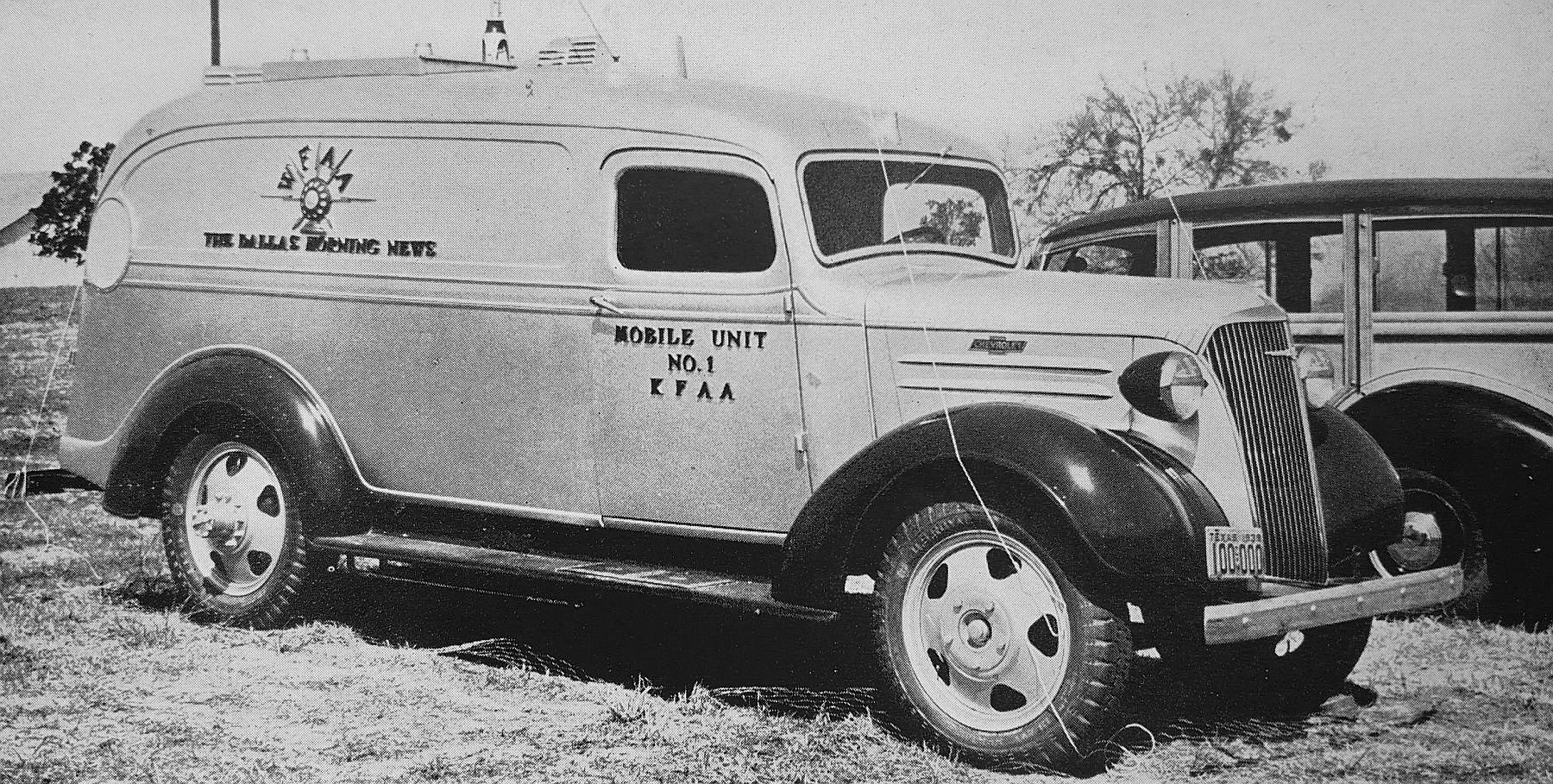
kfaa_mobile-unit_wfaa-fam-albumWhat? You’ve never heard of KFAA? (click for larger image)

by Paula Bosse

Check out these pre-war mobile units for radio stations WFAA and WBAP. The unit above actually had its own call letters — KFAA — and was licensed as a separate station. (That logo!) The caption, from a 1941 promotional booklet issued by stations WFAA (Dallas), WBAP (Fort Worth), and KGKO (Wichita Falls):

The WFAA Mobile Unit shown here is a complete short wave broadcasting station on wheels. The unit has its own call letters, KFAA, because it is a self-contained and separately licensed station. The amazing array of facilities contained in this one-and-one-half-ton truck includes a transmitter, generator, receiving equipment, public address system and pre–amplifiers. The transmitter tower on top of the truck can be raised to a height of 35 feet, making it possible to pick up the mobile unit’s signals for re-broadcast from a distance of 50 miles.

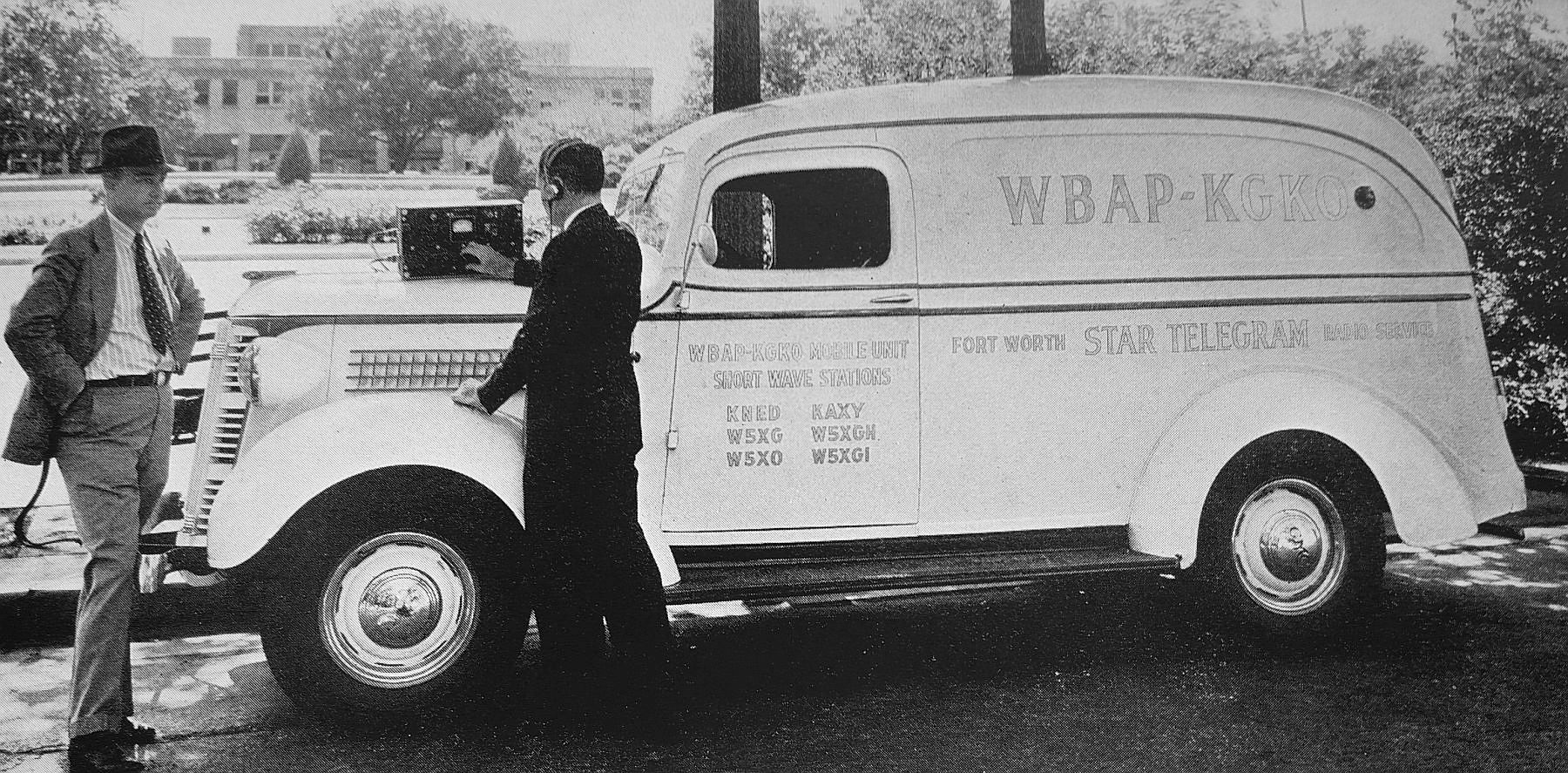
Here’s the WBAP/KGKO unit:

wbap-mobile-unit

Fort Worth Star-Telegram Mobile Radio Unit – with Chief Engineer R. C. “Super” Stinson, left, and A. M. Woodford, production man, handling a remote or “nemo” pickup from Burnett Park, Fort Worth. The WBAP-KGKO Mobile Unit carries six short wave transmitters and receivers besides a power plant capable of generating electricity for a small town of 500 people. This unit “swam” through a recent flood in Brady, Texas, established communication from the stricken area and received the congratulations of the Texas Highway Patrol. It also played a star role in the Amarillo storm.

***

Photos from the booklet WFAA, WBAP, KGKO Combined Family Album (Dallas-Fort Worth, 1941).

Why were arch-rivals WFAA (owned by The Dallas Morning News) and WBAP (owned by The Fort Worth Star-Telegram) co-publishing a promotional booklet? Because they shared the same transmitter and had an extremely odd broadcasting agreement. Read about it in my previous post “WFAA & WBAP’s Unusual Broadcasting Alliance,” here.

Click those photos!

*

Copyright © 2016 Paula Bosse. All Rights Reserved.

The Moskovitz Cafe

moskovitz-cafe_winegarten-schechterA stool is waiting for you… (click for larger image)

by Paula Bosse

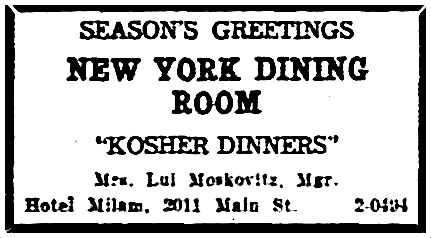
The Moskovitz Cafe was located at 2216 Elm Street, between S. Pearl and what is now Cesar Chavez Blvd., in an area of predominantly Jewish businesses. The restaurant served “Kosher and American cooking” and was owned and run by Lui Moskovitz, a Romanian immigrant, and his Polish-born wife, Eva. Eva, recently widowed, had arrived in Dallas in about 1928 with her three children and seems to have married Lui that same year. They had run another restaurant before the Moskovitz Cafe: the New York Kosher Dining Room on Commerce had been located across from the Adolphus Hotel for several years before it moved to 2011 Main, around the corner from City Hall. After that closed, they ran the Moskovitz Cafe between about 1937 and about 1944.

In 1945 there was no Lui or Eva Moskovitz in the Dallas directory. There was, however, an Eva Haberman — it appears that the Moskovitzes had split, Lui had left town, and Lui’s ex-wife had taken back the name of her late first husband. At this time she must have been about 60 years old, but she worked for the next few years as a department store seamstress and lived with one or more of her three sons from her marriage to Nathan Haberman. She died in April, 1961. Not only is there no trace of Lui after his time in Dallas, there is also no trace of 2216 Elm.

moskovitz_dmn_0101361936 ad

moskovitz-cafe_elm-st_1943-directory
Elm St. businesses, 1943 Dallas directory (click for larger image)

moskovitz_map
Location of Moskovitz Cafe (det. of a 1919 map)

***

Sources & Notes

Photo appeared in the book Deep in the Heart: The Lives & Legends of Texas Jews, A Photographic History by Ruthe Winegarten and Cathy Schechter (Austin: Eakin Press, 1990); from the collection of the Dallas Jewish Historical Society.

I’m not sure who the people in the photo are. When the Moskovitz Cafe opened, Lui would have been in his mid-40s and Eva would have been in her early 50s. UPDATE: Per the comment below (from Eva’s grandson), the woman in the white apron is the proprietress, Eva Moskovitz, and the man at the cash register is her son, Jack Haberman.

More information about Mrs. Eva Haberman can be found in her obituary, published in The News on April 19, 1961.

All images larger when clicked.

*

Copyright © 2016 Paula Bosse. All Rights Reserved.


Bull Pen Barbecue/Austin’s Barbecue — 1949-2000

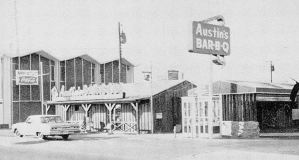
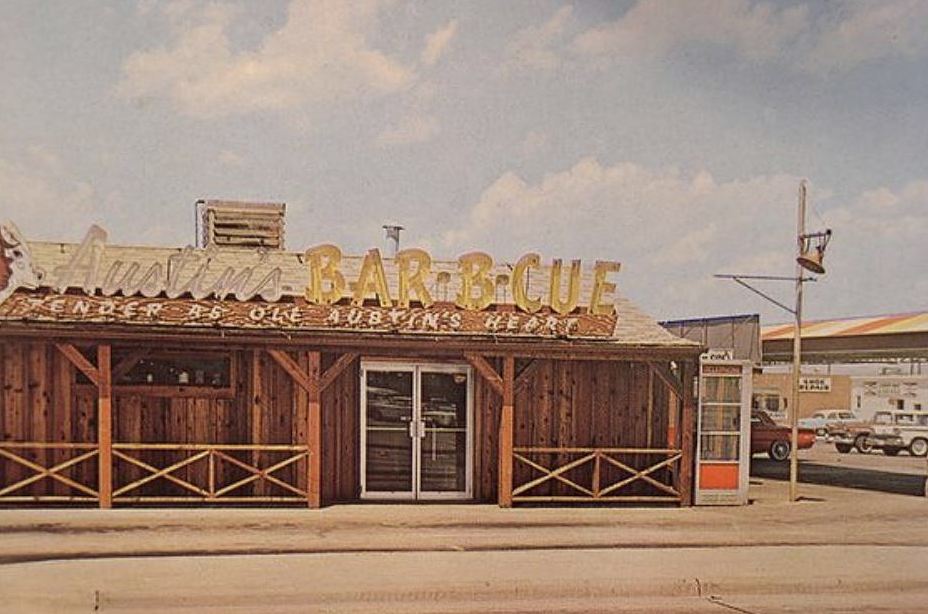
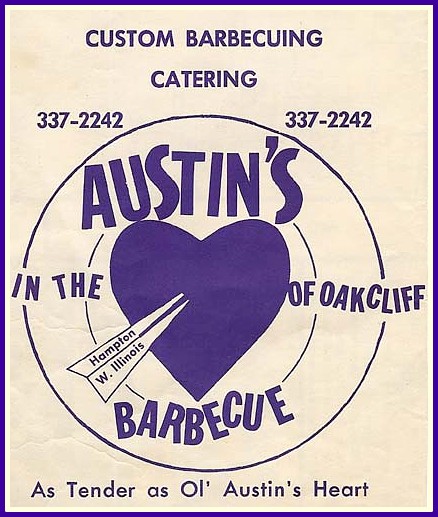
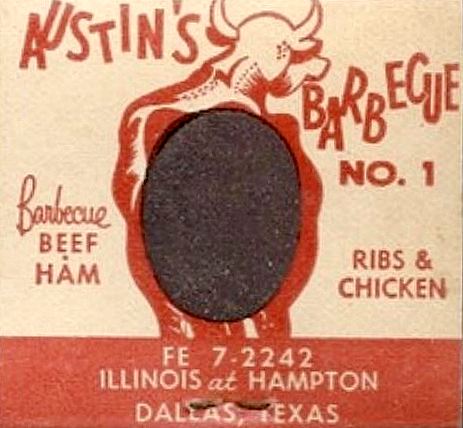
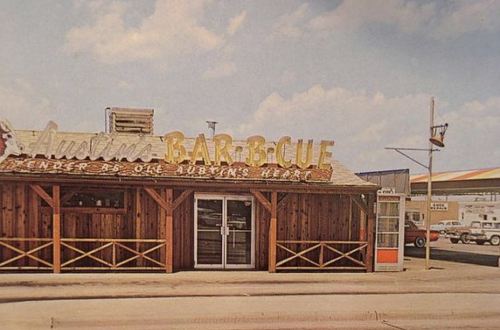
austins-barbecue_postcard_pinterest“As Tender as Ole Austin’s Heart…”

by Paula Bosse

One of my major failings as a Dallasite is that I don’t know Oak Cliff. Like at all. Every time I go over there, I get lost. I can’t remember my family ever going to Oak Cliff when I was a kid, except to visit the zoo. This explains why I had no idea how important a cultural landmark Austin’s Barbecue was when I posted a bunch of Oak Cliff ads the other day. That post has been shared hundreds and hundreds of times now and, inevitably, the only thing people mention — and rhapsodize about — is Austin’s Barbecue. …I had no idea!

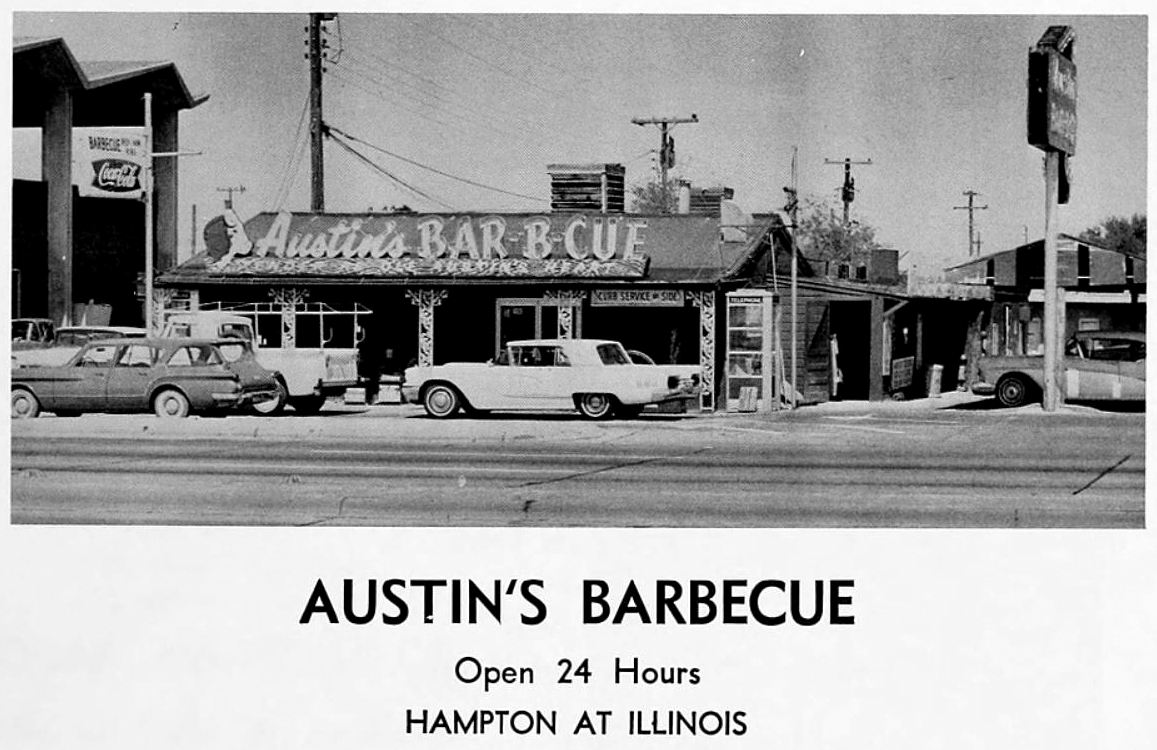
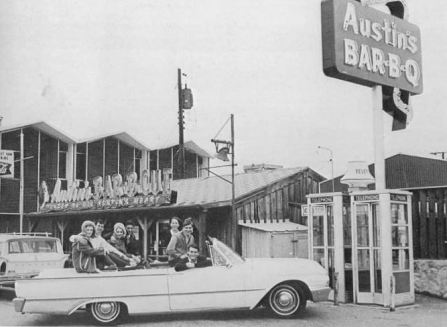
The famed BBQ joint at the northeast corner of Illinois Avenue and Hampton Road opened in 1949 as B & G Barbecue but soon became known as Bull Pen Barbecue, run jointly by owners Bert Bowman and Austin Cook. In 1956 or 1957, another Bull Pen opened in Arlington. After Oak Cliff went dry (a dark day for many Oak Cliffites), Bowman — who firmly believed that BBQ and beer were a match made in heaven — left for Arlington and Cook stayed in Oak Cliff and changed the restaurant’s name to Austin’s Barbecue. (“Bull Pen Barbecue” was still appearing in ads as late as Oct. 1957 — the official name changeover seems to have  happened in 1958.)
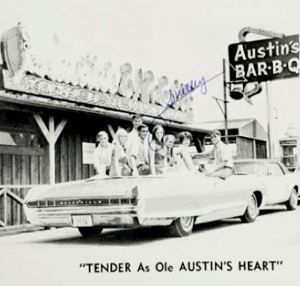
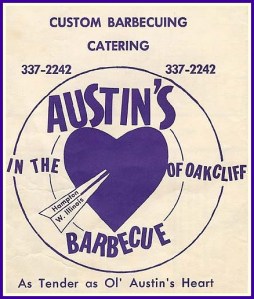
austins-bar-b-q_sunset-high-school_1967-yrbk1967 Sunset High School yearbook

*

The following memory of starting the business was apparently written by Austin Cook in 1990:

Dear Family & Friends,

I will try to tell you a little more about my being in the restaurant business. We borrowed $10,000 and bought out some one and it was B and G Barbecue. You see I always spell out Barbecue because when I went in business they hadn’t started abbreviating it like it is today.

After we had been there awhile we changed the name to The Bull Pen. Our slogan was “Come in and Shoot the Bull with Austin and Bert.” We used that name until they voted beer out of Oak Cliff. That really set us back, but maybe it was the best thing for us. We put another place in Arlington and that place was going pretty good. My partner wanted to get rid of the place in Oak Cliff. I traded him my part of the one in Arlington for his part in the one in Oak Cliff. Everyone said I was crazy.

When we bought that first place it was way out in the country, but they were building a bunch of houses not too far away. There was an airport across the street from the place. They kept talking about building a shopping center where the airport was. I remember the first day we ran a hundred dollars, and I thought we would never make it.

We started making money and we paid that ten thousand dollars back and we drew fifty dollars a week just like I was making in the grocery store. We started out with a barbecue sandwich and a hamburger. Then we started adding different things until we had a menu. We started getting those workers in the houses, and the business took off. We had beer also to go with the barbecue. My mother wasn’t too happy about that, but Dad said if that was the way I wanted to make my living it would be all right. In about a year or two we had a customer make us up a menu and we put in Barbecue plates for one dollar and twenty five cents. When I left they we were getting $4.99 for them. After I left I think they went to over seven dollars.

They always told me that you weren’t a success until you were in debt a hundred thousand dollars, and I went to the bank and borrowed all they would let me have. Then I went to my landlord and sold him the idea that I wanted to improve his property, and he loaned me the balance I needed to remodel, and I built a restaurant that held a hundred and twenty-five. Many times I was almost broke and didn’t know what I was going to do, but something always happened and I came out of it.

*

Both the Bull Pen in Arlington and Austin’s in Oak Cliff were successful and long-lived. Austin Cook retired at the end of 1993, and the business was taken over by his stepson, John Zito who had already been working at the restaurant for several years. Austin’s Barbecue closed in July, 2000, and the building was demolished soon after, replaced with an Eckerd drug store (now a CVS). Bert Bowman (born Glynbert Lee Bowman) died in 1989 at the age of 66; Austin O. Cook died at in 2006 at 86. And now I kind of feel like I know them, and I’m really sorry I never sampled their sandwiches.

*

Below, a Bowman and Cook timeline (most pictures and clippings are larger when clicked).
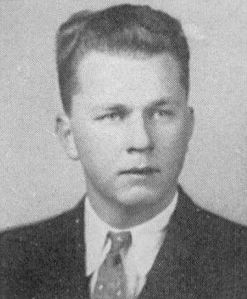
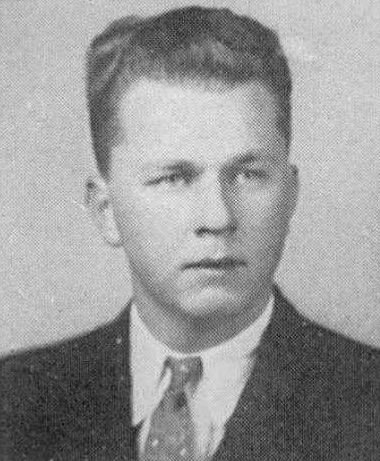
austin-cook_sunset-high-school_1937Austin Cook, Sunset High School, 1937

Before Cook and Bowmen met — probably around 1947 — each had been dabbling in different businesses. In early 1947, Cook leased a Clover Farm Store building at 203 N. Ewing and opened the Libby & Cook grocery with partner Lendal C. Libby.
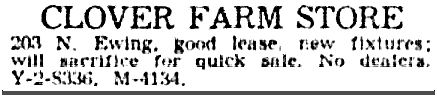
LIBBY-COOK_dmn_021047February, 1947

LIBBY-COOK_1947-directory1947 Dallas directory

Bert Bowman worked there as a meat-cutter.

bowman_1947-directory_GROCERY-w-AUSTIN1947 Dallas directory

The grocery store was in business at least into 1949, the year that Bowman and Cook decided to ditch the groceries and start their own business at 2321 W. Illinois, in a part of Oak Cliff which was just starting to be developed. Their BBQ place was originally called B & G Barbecue, which — according to Cook’s letter above — was the name of the restaurant he and Bowman bought out. I guess they felt it was easier to keep the name for awhile.

b-and-g-1951-directory1951 Dallas directory

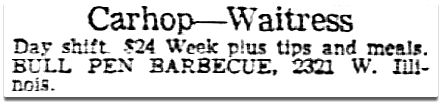
The name “Bull Pen Barbecue” didn’t come until later. In fact, the first appearance of the Bull Pen name associated with this address doesn’t show up in local newspaper archives until a want-ad placed in the summer of 1952.
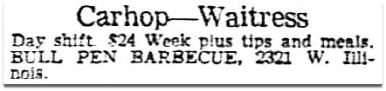
bull-pen_dmn_082652_FIRSTAugust, 1952

A probably related “Bull Pen No. 2” opened in South Dallas in 1953. It appears to have been very short-lived.
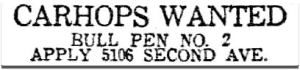
bull-pen-no-2_dmn_100853
October, 1953

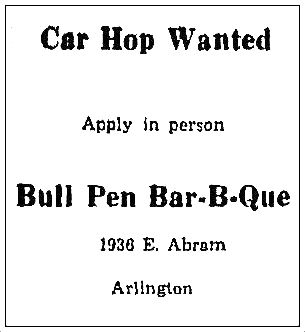
By the fall of 1957, Cook and Bowman had opened another Bull Pen — this one in Arlington, and this one a success.
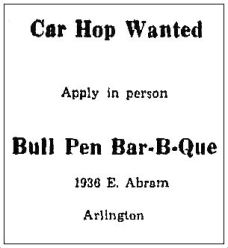
bull-pen_arlington_grand-prairie-daily-news_091557
September, 1957

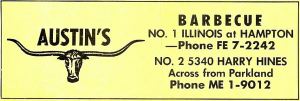
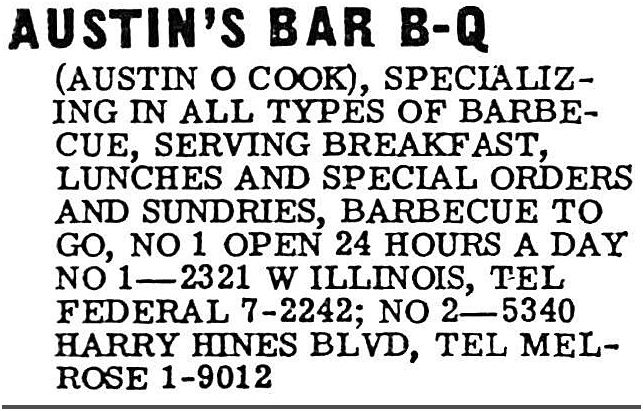
And then Oak Cliff went dry, the worst thing that could happen to a restaurant that sold a lot of beer. Similar businesses which relied heavily on beer sales began to desert Oak Cliff. Bowman did not think their original drive-in could survive, but Cook disagreed. Bowman sold his half-interest in the Oak Cliff location to Cook, and Cook sold his half-interest in the Arlington location to Bowman. Cook changed the name of his now solely-owned restaurant to Austin’s Barbecue, and his success continued, despite the fact that he could no longer sell beer. He was doing well enough that, in 1961, he opened a second location, on Harry Hines across from Parkland Hospital (a location which lasted through 1964).
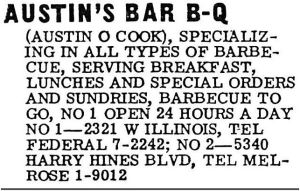
austins-barbecue_1962-directory_two-locations
1962 Dallas directory

austins-barbecue_1963-directory_two-locations_ad
1963 Dallas directory

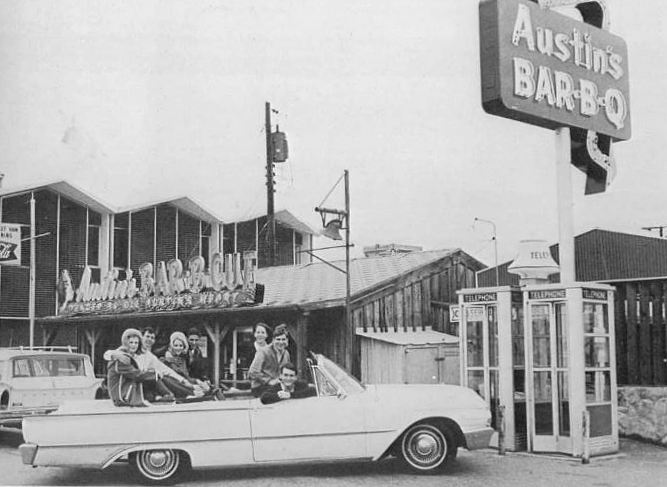
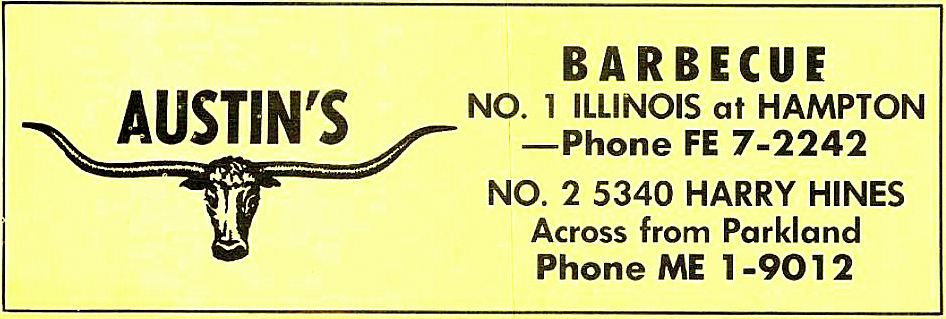
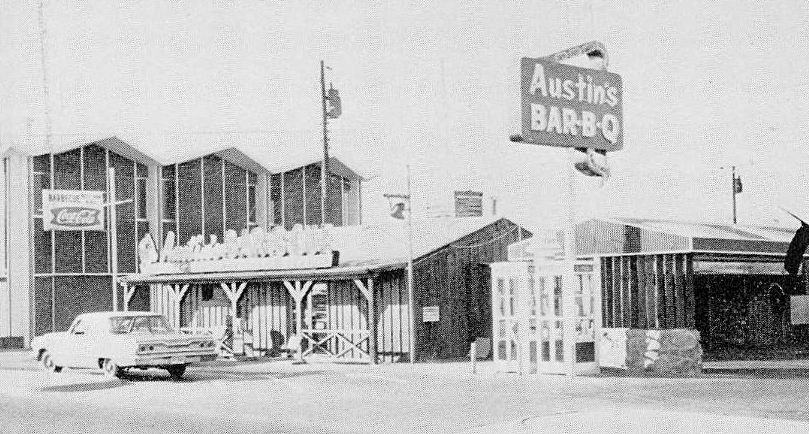
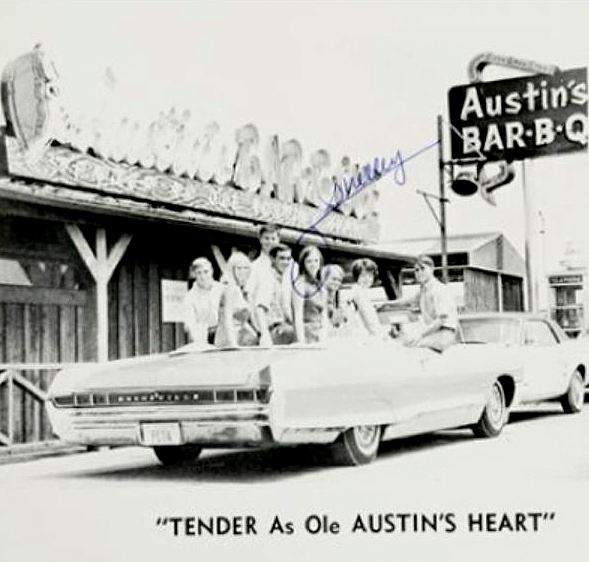
By 1963, Austin’s was a well-established teen hang-out and wisely placed ads in Oak Cliff high school annuals. Apparently everyone went there!
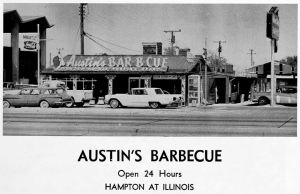
oak-cliff_austins_bar-b-cue_kimball-yrbk_19631963 Kimball High School yearbook

austins-bar-b-q_sunset-high-school_1964-yrbk.det1964 Sunset High School yearbook

austins_car-teens_flickr-coltera
Date and source unknown, via Flickr

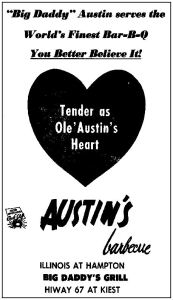
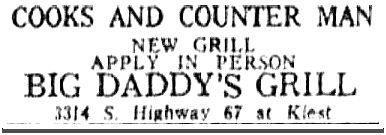
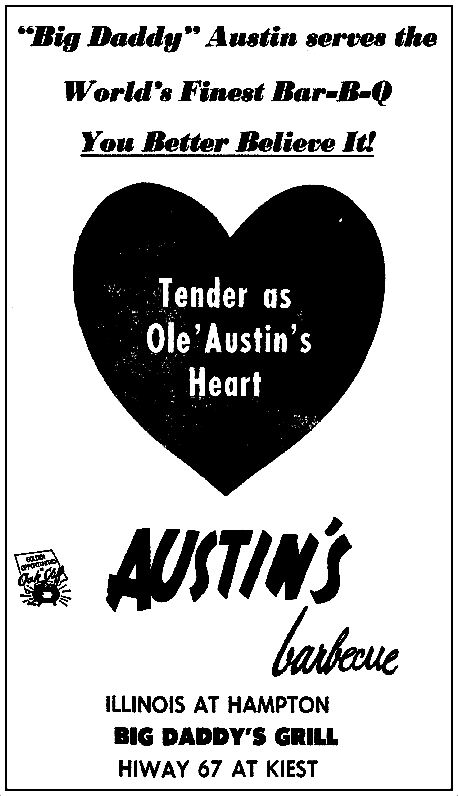
In 1964, Cook — known as “Big Daddy” — opened another restaurant, this one called Big Daddy’s Grill.
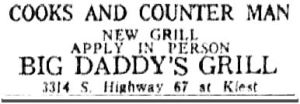
big-daddys_dmn_063064June, 1964

austins-barbecue_dmn_081466-adAugust, 1966

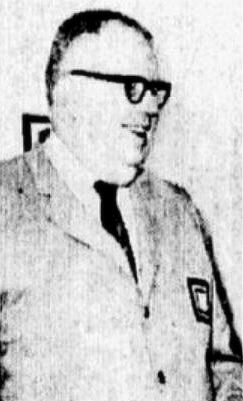
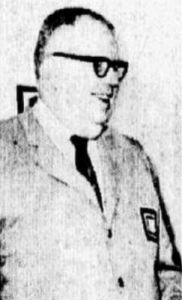
The restaurant was a bona fide Oak Cliff landmark, and Cook was an active participant in community business affairs. Below, a detail of a photo showing Cook as a member of the Oak Cliff Chamber of Commerce.
austin-cook_dmn_082568-photo-det
late 1960s

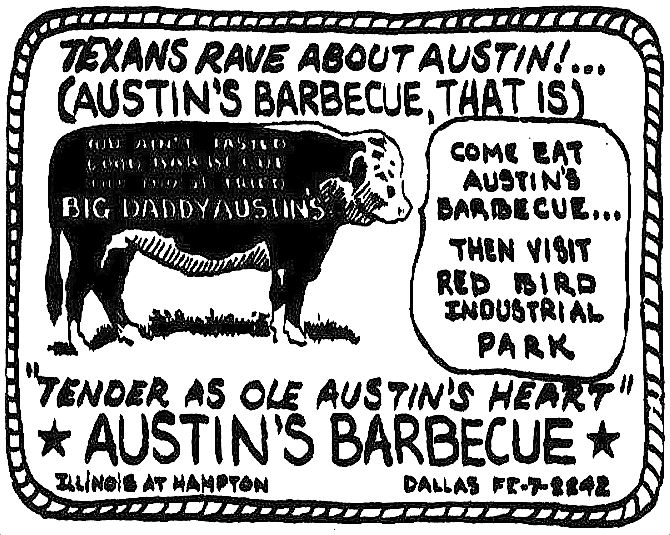
Cook participated in a series of Oak Cliff Chamber of Commerce campaigns and even included oddities like “Come eat Austin’s barbecue… and then visit Red Bird Industrial Park” in his ads. Make a day of it!

austins-barbecue_092968
September, 1968

ad_austins-barbecue
via OakCliff.org

austins_matchbk_flickr_coltera
via Flickr

***

Sources & Notes

Color postcard at the top found on Pinterest, here.
The letter from Austin Cook was quoted on the DHS Phorum, here. More from the Phorum on The Bull Pen/Austin’s is here.

More can be found in the Dallas Morning News archives in the following stories:

  • “Austin’s Bar-B-Q Grows With Oak Cliff” (DMN, Aug. 14, 1966)
  • “Barbecue To Go — Staff, Customers Mourn Closing of Oak Cliff Institution” (DMN, July 13, 2000)
  • “Closed But Not Forgotten — Oak Cliff Eatery Marks Half-Century of Barbecue With Memorable Auction” (DMN, Aug. 27, 2000)
  • “John P. Zito — Operated Oak Cliff Landmark Austin’s Barbecue For 19 Years” by Joe Simnacher (DMN, Oct. 14, 2003)

Read the obituaries of Bert Bowman (1989) and Austin O. Cook (2006) here.

The Oak Cliff Advocate article “A Look Back at Austin’s Barbecue” by Gayla Brooks is here (with tons of memories from readers in the comments).

Not mentioned in this post is the connection of Officer J. D. Tippit (who moonlighted as a keeper of the peace at Austin’s) and other tangential/coincidental associations to the Kennedy assassination. It’s well documented elsewhere. Google is your friend.

*

Copyright © 2016 Paula Bosse. All Rights Reserved.