Flashback : Dallas

A Miscellany: History, Ads, Pop Culture

1615 South Ervay: The Eagle Apartment Building
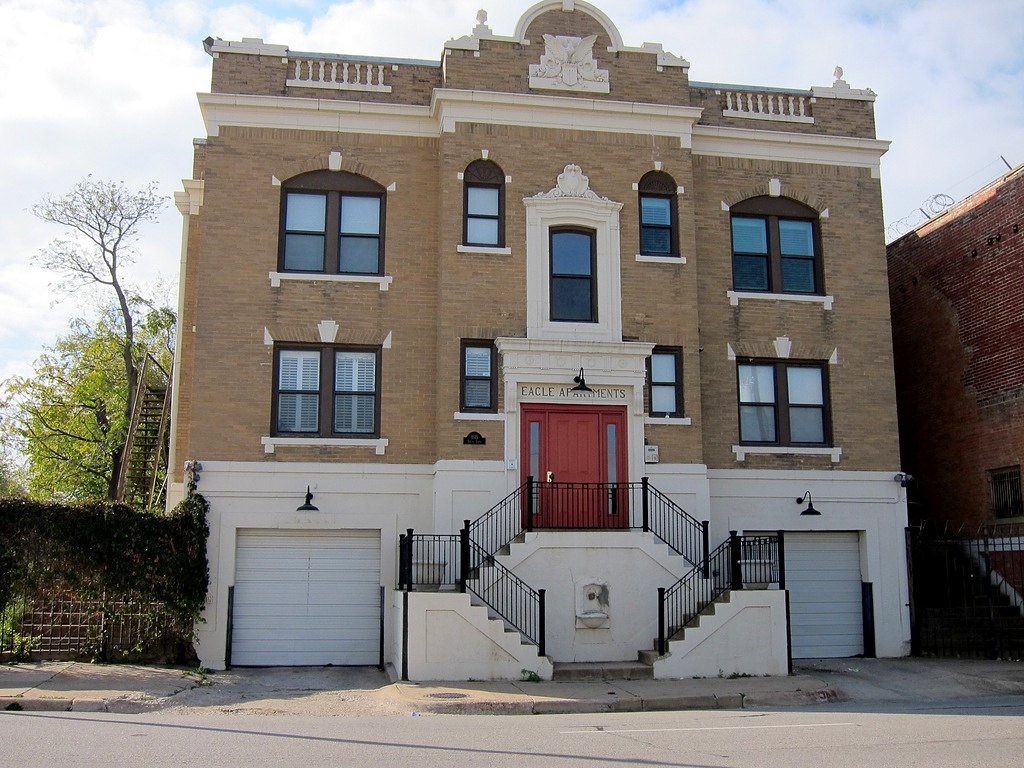
1615-s-ervay_zillowThe Eagle, today (click for larger image) / Photo: Zillow

by Paula Bosse

Whenever I drive along South Ervay, I always slow down — or pull over — to take a look at this building. It doesn’t look like anything else around it, and I’ve wondered about it from the first time I saw it.

It was built in 1924 and was announced in a newspaper advertorial beneath the headline “New Apartment Building on South Ervay Street to Have Garage Space in Basement.” It was accompanied by a drawing of a fairly grand-looking building.
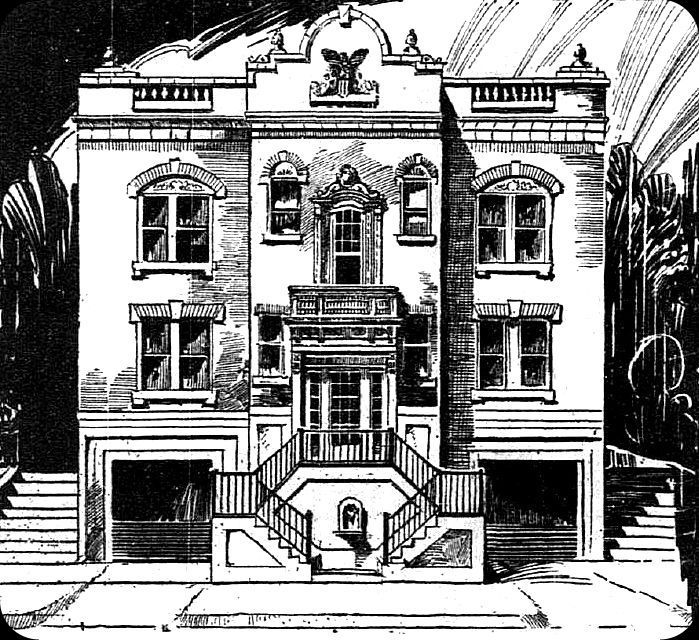
1615-s-ervay_dmn_0622241924

This new apartment building at 1615 South Ervay street, now being completed by George Kean, embodies many new and novel features in the construction of buildings of this character, one of these being provision of garage space for tenants in the basement. The building will contain eight four-room apartments and sixteen two-room efficiency apartments. J. W. Lindsley & Co. are leasing agents, and contract has been given to Sanger Bros. for furnishings of the building.

A basement garage for a small apartment building like this was pretty unusual for the time. And when they said Sanger’s was supplying the furnishings, they meant everything from furniture down to bed linens and kitchen utensils!

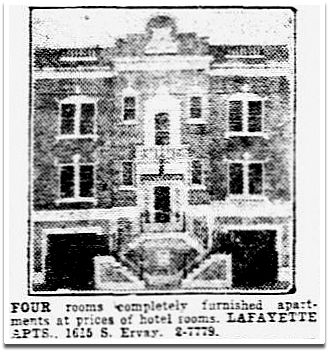
The first “for rent” ads began appearing a week after this announcement. Below, the photo and text of an ad from June 29, 1924.

eagle-apts_dmn_062924-deteagle-apts_dmn_062924-textJune, 1924

Hey, I’d take a look!

But renting’s for chumps — how about owning the entire building? (“Can care for 50 cars”!)

eagle-apts_dmn_080324Aug., 1924

Below, an ad with rates and a bit more info (it sounds like all units had a Murphy bed — even the apartments with a bedroom):

eagle-apts_dmn_071225July, 1925

They were kind of pricey. According to the Inflation Calculator, prices in today’s money would be about $825-$900 for a 2-room efficiency, and about $1,225-$1,375 for a 4-room apartment.

By the fall of 1931, the building had changed hands, was under new management, and had been re-named. It was now the Lafayette Apartments, and units were now being rented “by day, week or month.”
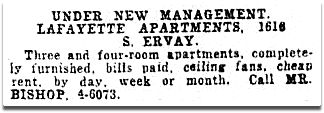
lafayette_dmn_100131Oct., 1931

lafayette-apartments_dmn_101532Oct., 1932

Today this stretch of South Ervay is not the crowded and busy thoroughfare it once was. Though there were several businesses and small industrial buildings, it was also a residential area, lined with houses, apartment buildings, and the large Park Residence Hotel (better known in recent years as the Ambassador Hotel). The Eagle apartment building is in the 1600 block of South Ervay — when it opened in 1924, there were also apartment buildings in the 1500 and 1700 blocks. It’s interesting to take a look at a page from the 1924 city directory to see who and what occupied this South Ervay neighborhood in 1924 (click for larger image):
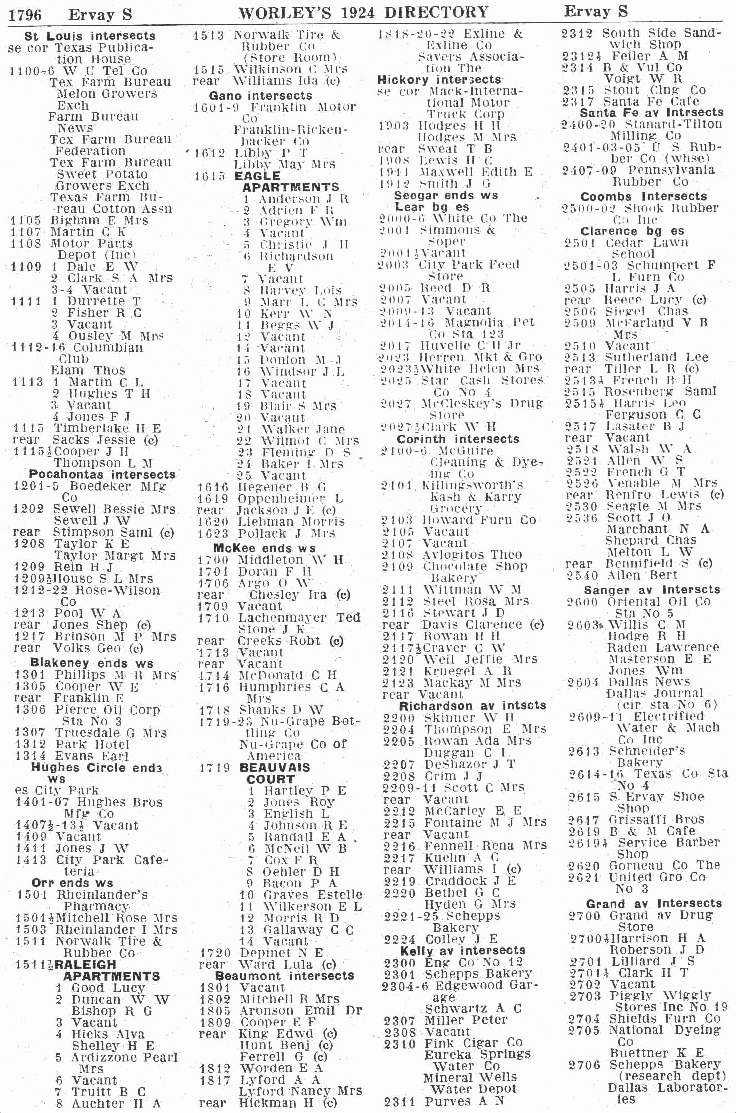
south-ervay_1924-directory1924 Dallas directory

The building right next door to the Eagle Apartments was the Franklin-Rickenbacker Motor Co., a car dealership (part of the word “Franklin” can be seen painted on the brick wall in the 1924 photograph). For context, here are the automobiles that would have been for sale next door to the Eagle when it opened.
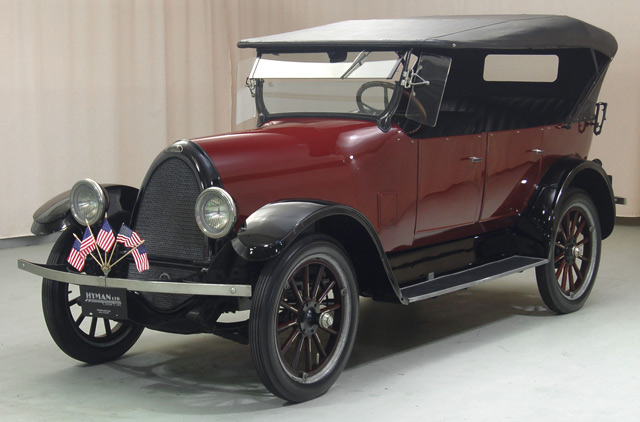
1924-franklin_secondchancegarage1924 Franklin

1924-rickenbacker1924 Rickenbacker

Today, people are still living in 1615 South Ervay. I’m not sure how many condominiums are in the building, but if you search around on the internet, you can find several real estate listings that show what various of the units look like inside. They’re very nice! It’s a much larger building than I realized, as can be seen in this aerial view.
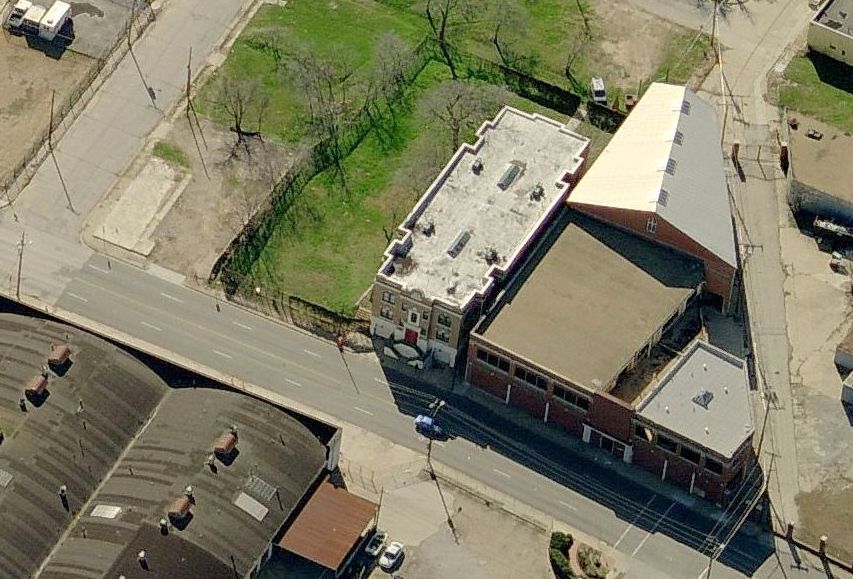
south-ervay_bingBing

I love that red door. Here’s to the continued revitalization of South Dallas and The Cedars!

***

Sources & Notes

Top photo from Zillow.

Photo of the Franklin automobile from SecondChanceGarage.com, here. I found the Rickenbacker photo on a Rickenbacker guitar site which froze my computer and which shall remain unlinked; more photos of Rickenbacker cars (as well as a history of the company) can be found here (the car was named after WWI flying ace Eddie Rickenbacker, a cousin of the guitar maker).

1615 S. Ervay is located catty-corner to Old City Park/Dallas Heritage Village, near the intersection of S. Ervay and Gano streets.
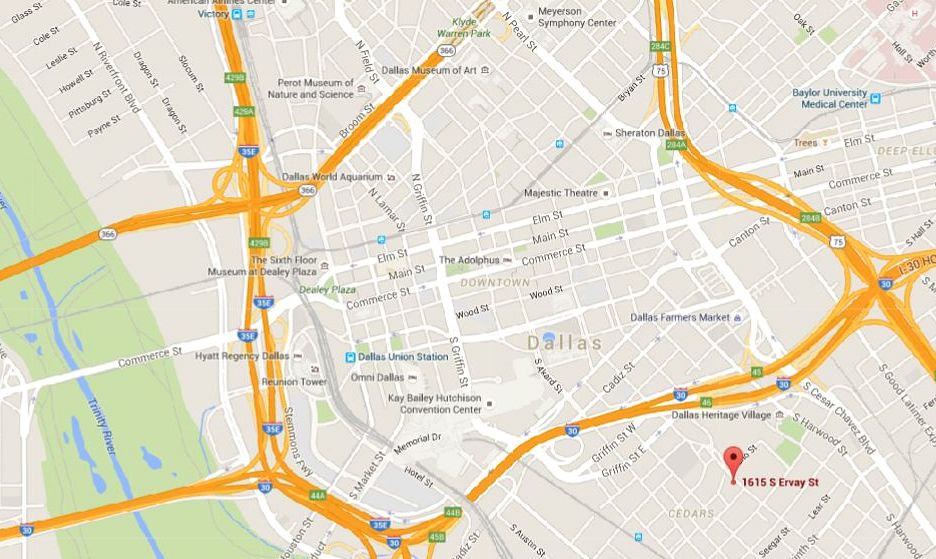
1615-s-ervay_googleGoogle

Street view of the building, looking north on Ervay toward downtown, here.

*

Copyright © 2015 Paula Bosse. All Rights Reserved.

Young Bucks at the Fair — 1915

state-fair_men-touring-car_1915_degolyerRaring to go…

by Paula Bosse

Some of these guys look like they’d be fun to spend a day with at the fair. …Some of them don’t.

***

Sources & Notes

Real photo postcard titled “Men in a touring car with 1915 State Fair of Texas in Dallas banner” is from the Collection of Texas Postcards, DeGolyer Library, Central University Libraries, Southern Methodist University; it can be accessed here.

*

Copyright © 2015 Paula Bosse. All Rights Reserved.
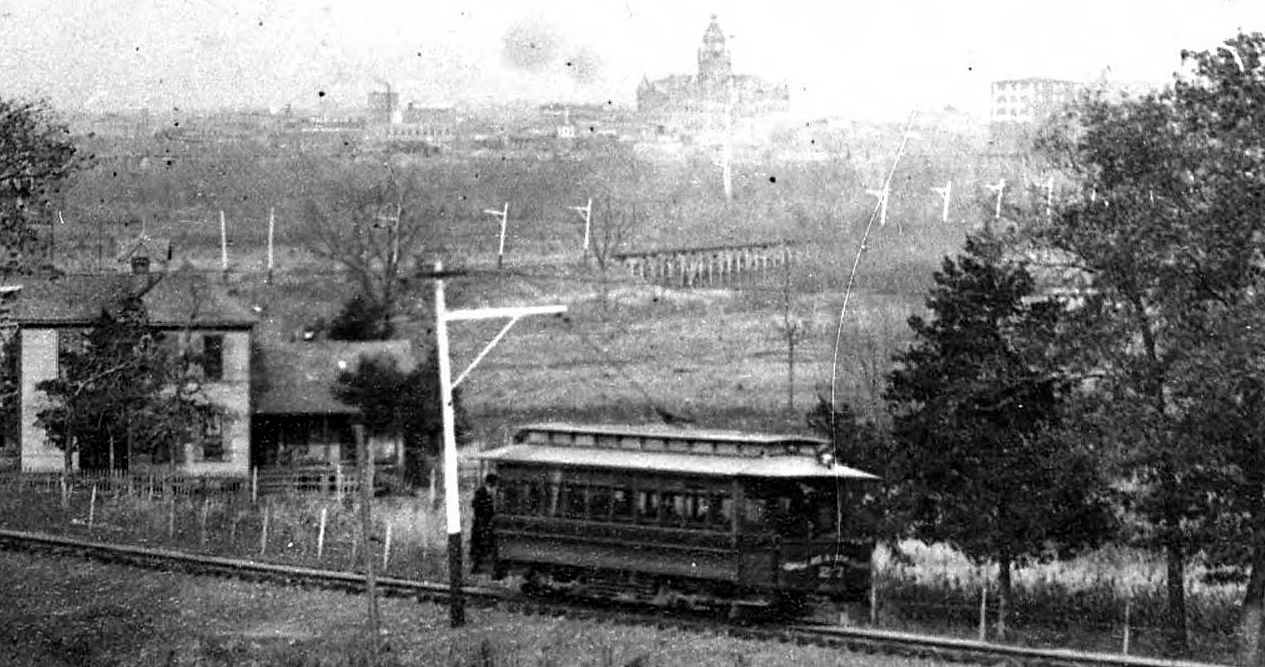
From the Vault: Oak Cliff Trolley — 1895


trolley_oak-cliff_det1“Dallas from Oak Cliff” (detail), Henry Stark (click for much larger image)

by Paula Bosse

This wonderful detail of a photograph by Henry Stark shows a trolley chugging through a rural and woody Oak Cliff in 1895: an example of 19th-century mass transit in Dallas. See the full post from last year — which includes the original photo and three other magnified details — here.

*

Copyright © 2015 Paula Bosse. All Rights Reserved.
SMU Turns 100: A Look Back at Its Very First Days — 1915

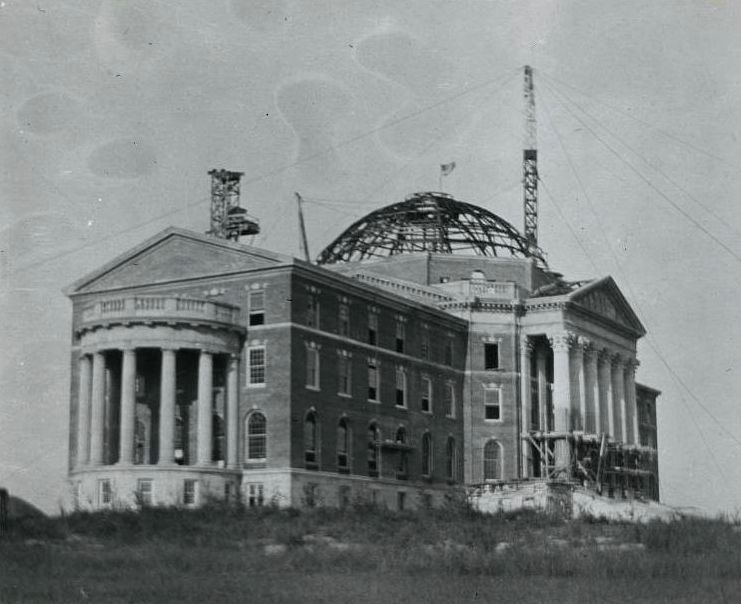
smu_dallas-hall-dome-under-construction_1914Dallas Hall’s dome under construction, 1914 (SMU Archives)

by Paula Bosse

Classes began for the very first time at brand new Southern Methodist University on September 28, 1915 — 100 years ago today! Where HAS the time gone? Below, a few photos from those early days (click pictures for larger images).

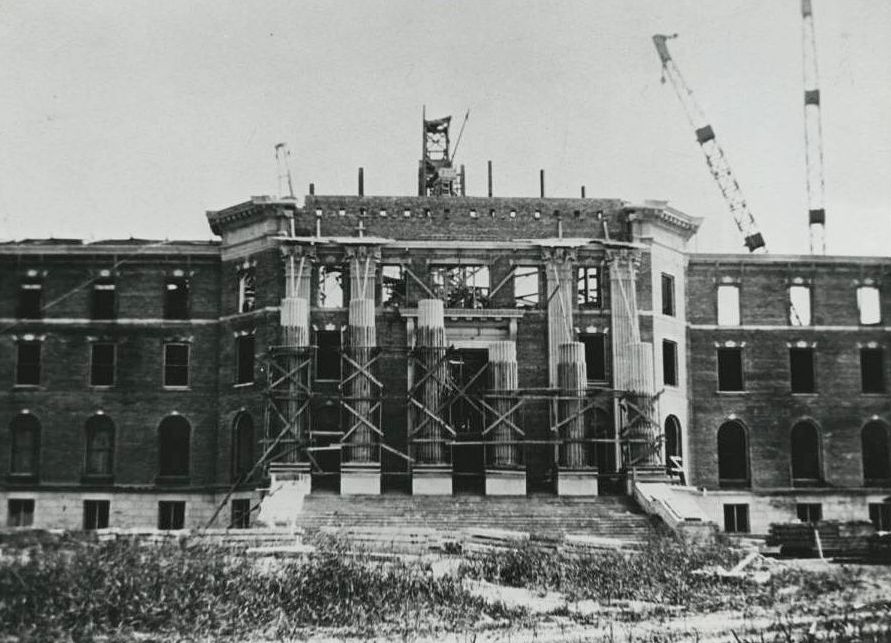
smu_dallas-hall-columns-under-construction_1914_degolyerDallas Hall’s columns going up, 1914, out in the middle of a mostly empty prairie, well beyond the Dallas city limits.

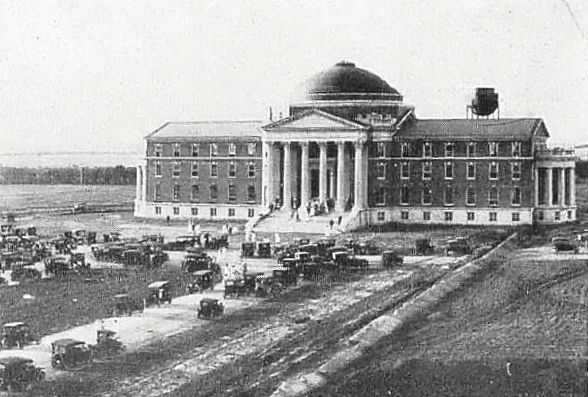
smu_week-before-opening_1935-rotundaVisitors checking out the new campus, a week before its opening.

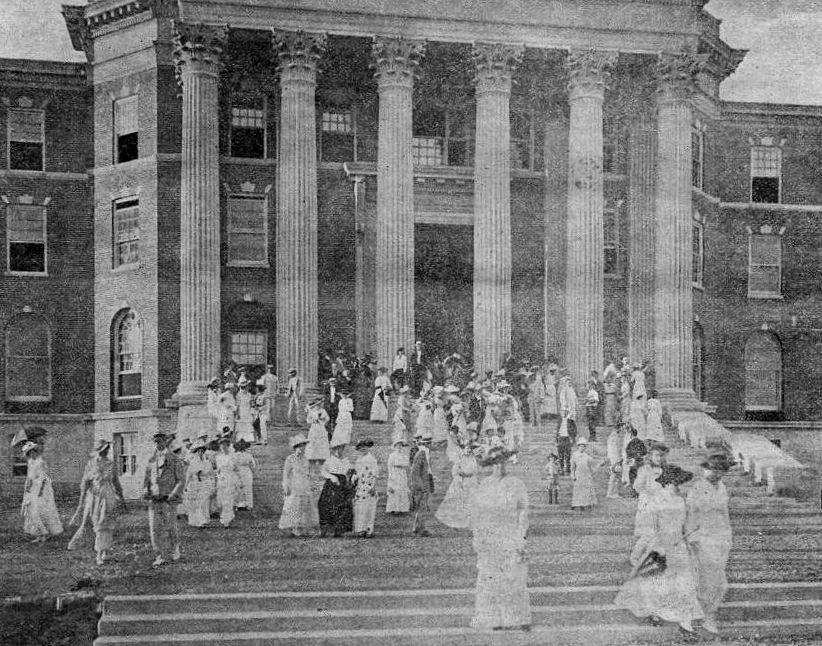
smu_visitors-before-opening_091115Genteel visitors on the steps of Dallas Hall, the only building on campus in which classes were actually held.

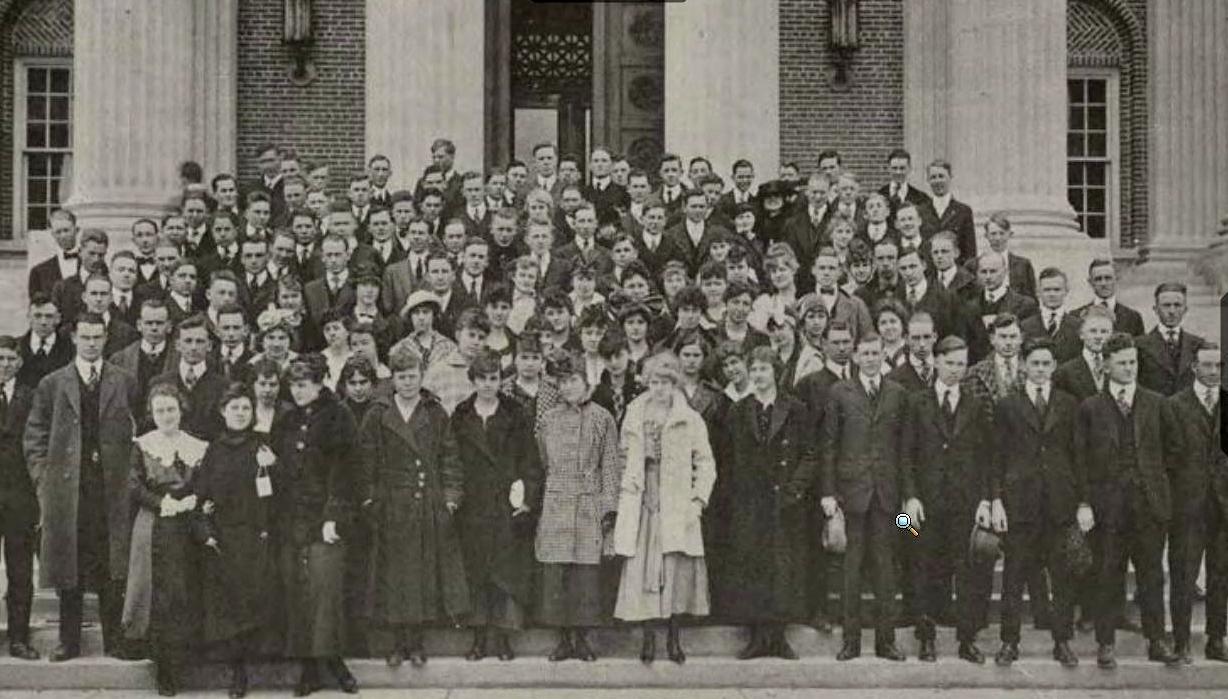
12smu-rotunda-1916_freshman-classSMU’s first freshman class.

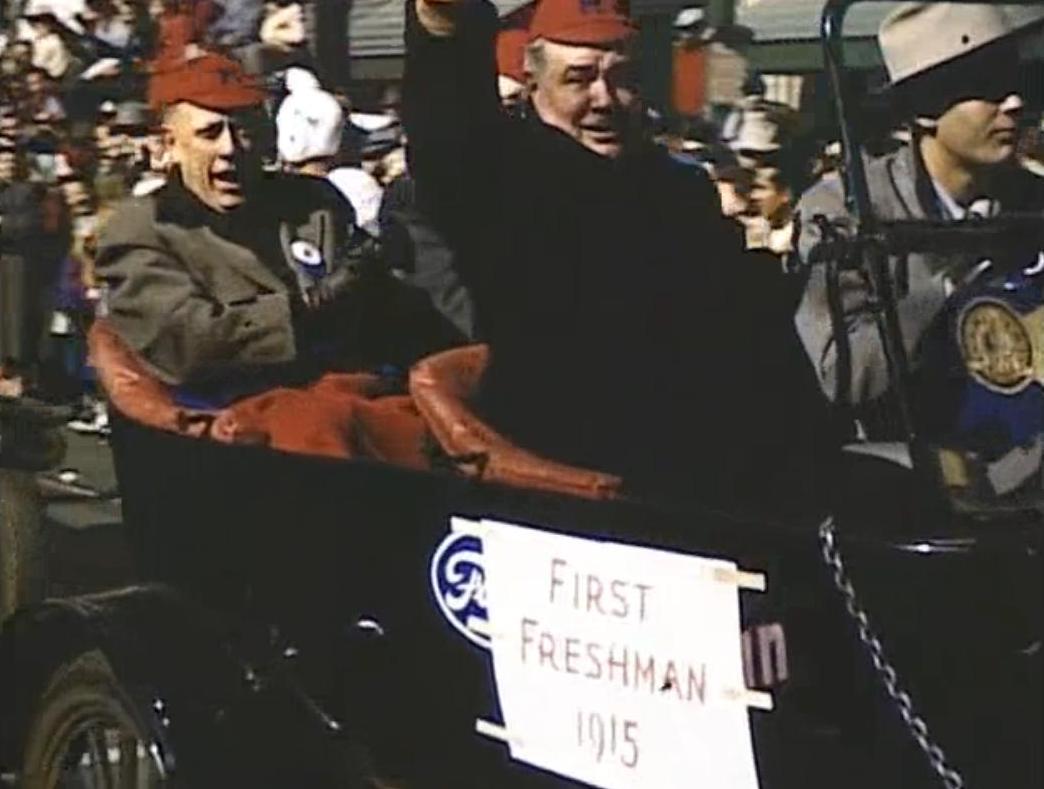
smu_first-freshmen_1950-homecoming-paradeAnd a couple of those freshmen, 35 years later, riding in a car in the 1950 Homecoming Parade downtown.

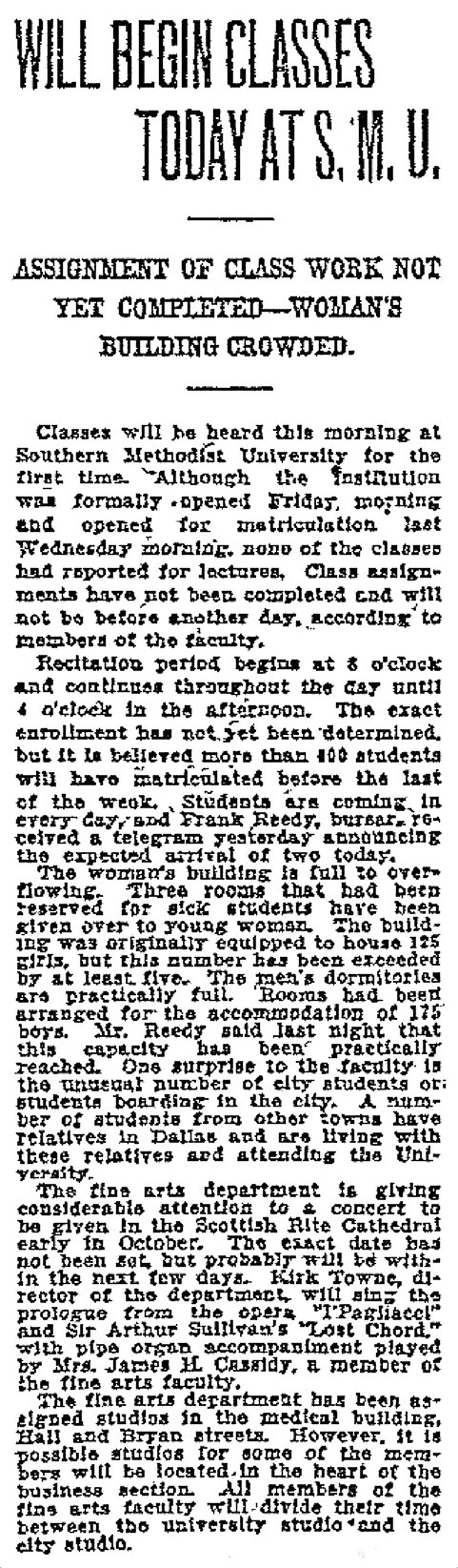
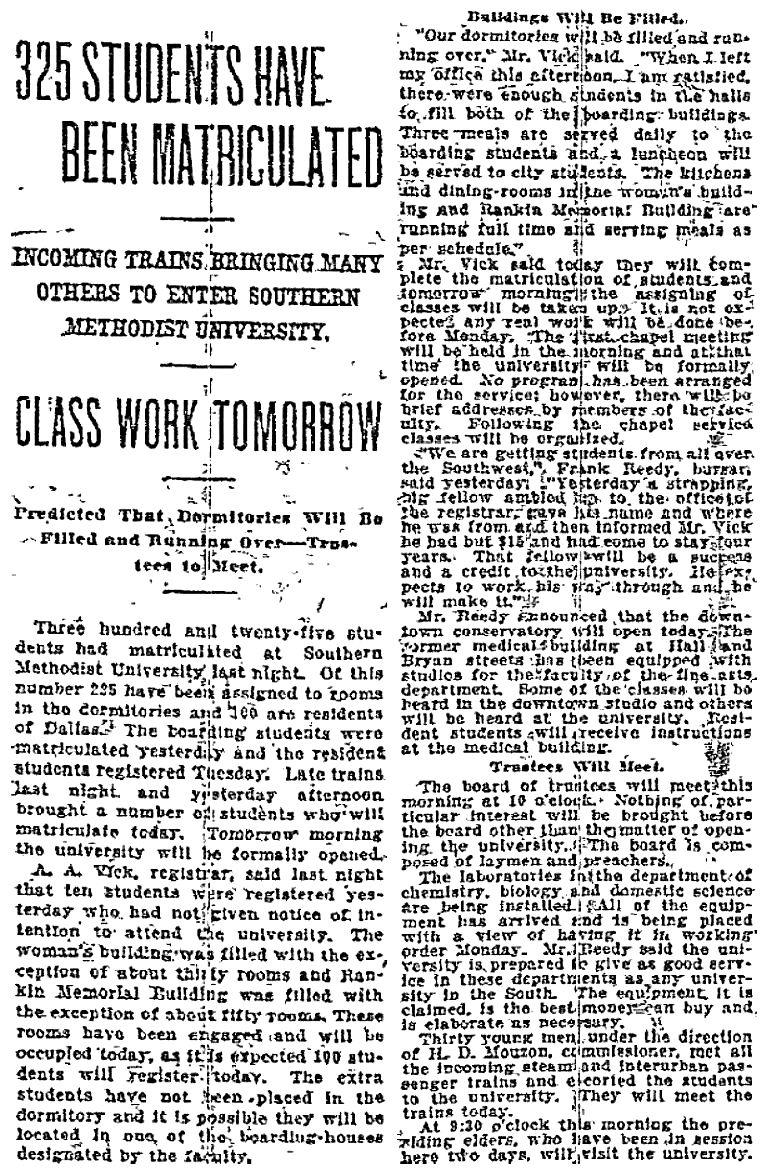
Below are a couple of logistical and progress-report articles from the week when students began arriving for that first year’s classes. Most interesting is that several classes were held off-campus, because of lack of space in an already crowded Dallas Hall. The fine arts department was housed at the “downtown conservatory” which was located in a former medical building at Hall and Bryan streets. The fine arts faculty had studios there and would move between downtown and the SMU campus. (Click articles for larger images.)

smu_first-day_dmn_092315Dallas Morning News, Sept. 23, 1915

smu_first-day-classes_dmn_092815DMN, Sept. 28, 1915

Happy Centennial, SMU!

***

Sources & Notes

The photos of Dallas Hall under construction are from the DeGolyer Library, Central University Libraries, Southern Methodist University. The photo of the dome under construction is here; the photo of the columns going up is here.

The photo of campus visitors and their cars lined up in front of Dallas Hall is from the 1935 edition of the SMU Rotunda yearbook; the caption: “Dallas Hall, a week before opening of SMU.”

The photo of visitors on the steps of Dallas Hall is from Bridwell Library, Special Collections, Perkins School of Theology, Southern Methodist University, and it can be accessed here. The photo was taken on Sept. 11, 1915 and was printed in the Sept. 23, 1915 edition of The Texas Christian Advocate above the caption “[Snapshot] of visitors at entrance to Dallas Hall on occasion of the reception given Saturday the 11th by the citizens of Dallas to the faculty.” (The article and another photo can be seen at the link above.)

The photo of SMU’s first freshman class is from the 1915-16 SMU Rotunda yearbook.

The image of the former SMU freshmen is a screen capture from a home movie of SMU’s 1950 Homecoming Parade which is part of the DeGolyer Library’s collection; the entire 17-minute silent color film can be watched on the SMU Central Libraries site, here. The very entertaining film contains the parade, a tour around campus, an elaborately decorated Fraternity Row, and the football game against Texas A & M at the Cotton Bowl.

These other Flashback Dallas posts related to SMU’s first year may also be of interest:

  • “SMU, ‘The School of the Future’ — 1915-16,” here
  • “SMU’s First Year: The Dinkey, Campus Hijinx, and The Basket Ball — 1915-16,” here
  • “University Park, Academic Metropolis — ca. 1915,” here
  • “Send Your Kids to Prep School ‘Under the Shadow of SMU’ — 1915,” here (Incidentally, the Powell University Training School opened on the same day as SMU as a sort of “sister school” — the building it occupied is still standing, on Binkley, just off Hillcrest — this building celebrates its Centenary, too!)

Click photos and clippings to see larger images.

*

Copyright © 2015 Paula Bosse. All Rights Reserved.
 

Trinity Heights: The Tallent Furniture Studio and The Sunshine Home

tallents-furniture-store_oak-cliff_tichnorVermont & South Ewing… (click for larger image)

by Paula Bosse

The postcard image above shows a bird’s eye view of a few blocks in the Trinity Heights neighborhood of Oak Cliff, from the late 1940s. As I looked at it, I wondered a) what does this intersection look like now, b) what is that unlabeled building that looks like a jail behind the furniture store, and c) what was Tallent’s Furniture Studio?

Tallent’s Furniture Studio, owned by Raymond E. Tallent, was located at 815 Vermont Avenue.

tallent_dmn_010350-obit-photo

tallents-ad_dmn_081256-det1956

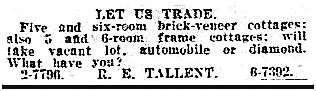
Not only did it house a furniture store, but it also served as an office for Tallent’s real estate business. According to Tallent’s obituary, he came to Dallas in 1920 and started his real estate business five years later. Starting out, he’d’ve been happy to trade you property for diamonds. “What have you?”

tallent_dmn_042928-real-estate-adApril, 1928

The first mention I found for the furniture store is this Christmas ad from 1947.

tallents_ad_121147Dec., 1947

Tallent died in January of 1950 at the age of 53. Both of his businesses continued after his death, and the furniture store was still going in the late 1960s.

So, nothing out of the ordinary — just a small business, like thousands of other small Dallas businesses. Probably the most interesting thing about Tallent was that he had the good taste to have that great promotional postcard made. That strange little building behind the store was a lot more interesting.

*

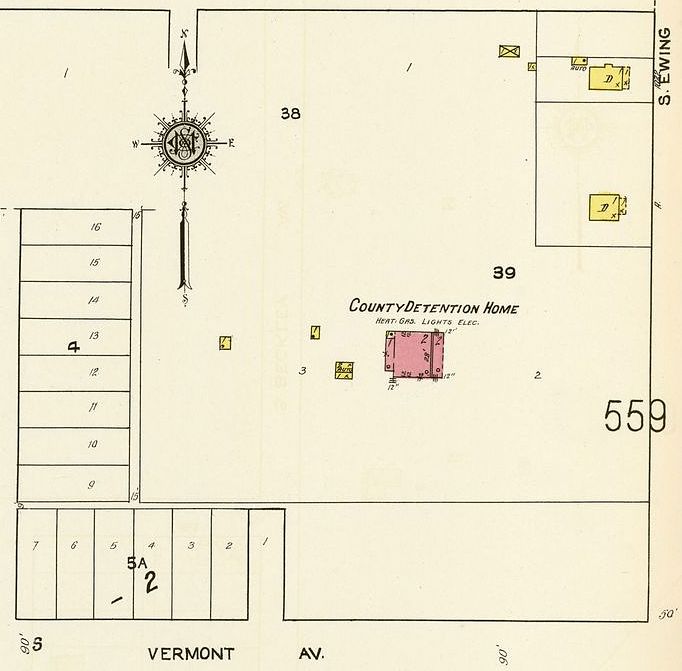
What was that building? The first time it popped up on a Sanborn map was 1922: it was identified as a “County Detention Home” (click for larger image).

detention-home_sanborn_19221922 Sanborn map detail — see full page here

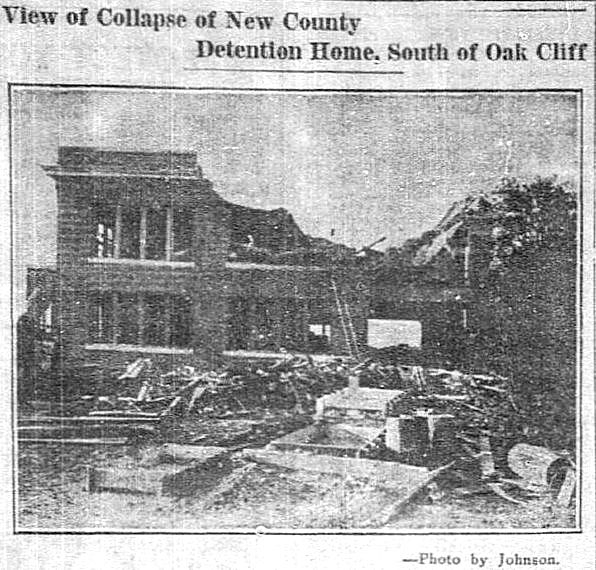
Despite its name, the “detention home” was not a correctional facility for juvenile delinquents, but it was a home for dependent children who had been made wards of Dallas County because of neglect or abandonment or because parents had died or were simply unable to care for them. This detention home was built in 1917 at 1545 South Ewing (“south of Oak Cliff”). During its construction in 1917, its roof collapsed, killing one of the workers.

detention-home-collapse_dmn-041317Dallas Morning News, Apr. 13, 1917

The home was almost immediately overcrowded, and its superintendents were constantly scrambling for an increase in funding. Children, ranging in age from toddlers to teenagers, lived there as long as they needed — some for a few months, some for several years. They attended nearby schools, and even though they were wards of the court and were living in an institution, the people who ran the place tried to make it as home-like as possible. In January, 1934, the name of the county facility was changed to the much more cheerful “Sunshine Home.”

In 1950, the Sunshine Home received $165,000 in bond money for improvements and expansion, adding modern structures to the large campus but still retaining the original two-story red brick building built in 1917.

In 1975, the Dallas County Sunshine Home and the Girls’ Day Center merged, and the former Sunshine Home was renamed Cliff House.

In 2014, the 28,000-square-foot property on just under five acres was put up for sale, and in early 2015 plans for a charter elementary school were approved.

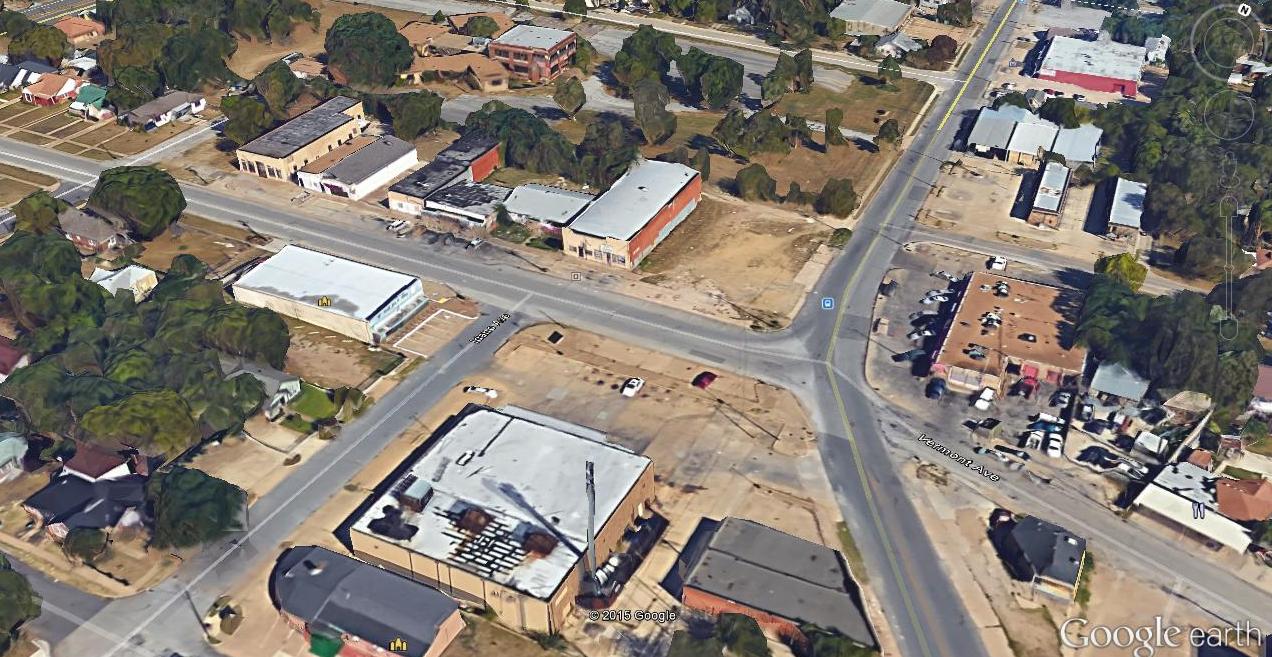
Below, a Google Earth image of the same view as the postcard featuring Tallent’s Furniture Studio, captured before the old Sunshine Home buildings had been demolished (click for larger image).

tallent_birdseye-google-earthGoogle Earth

The view is remarkably similar to the one taken more than 65 years earlier. A little bleaker these days, perhaps, but certainly still recognizable.

***

Sources & Notes

Top postcard is from the Boston Public Library Tichnor Brothers Postcard Collection; it is viewable here.

Information on the plans for the KIPP Truth Academy submitted to the City of Dallas (with interesting illustrations/maps on pages 10 and 11) can be found in a PDF, here.

A recent Google Street View of this block of Vermont Avenue can be seen here. The Tallent furniture store occupied the building to the left of the Vermont Grocery.

The heart-tugging article “For All Loving Care Bestowed, Sunshine Home, Space Small, Needs Much to Cheer Children” (DMN, July 24, 1941) — written by popular Dallas Morning News columnist Paul Crume — describes daily life in the Sunshine Home and can be found in the Dallas Morning News archives.

A then-and-now comparison (click for larger image):

tallent_then-now

*

Copyright © 2015 Paula Bosse. All Rights Reserved.
 

“Clean, Delightful, Refined” — The 1908 State Fair of Texas

ad-1908_sfot_dmn_101508_katzenjammer-castleDon’t miss the Katzenjammer Castle!

by Paula Bosse

As it’s State Fair of Texas time again and I’ve recently reposted the wonderful 1908 panoramic photo of a crowd-filled entrance to Fair Park (seen here), I thought I’d look to see what kinds of attractions that particular fair had to offer.

The 23rd State Fair of Texas was held from October 17 to November 1, 1908. Below are two ads that ran before the opening of the fair, the first one in The Dallas Morning News, the second in The Fort Worth Star-Telegram. The very wordy ad copy is similar in both, but they’re different enough to warrant taking a look at each one (click for larger images).

ad-1908_sfot_dmn_101508-textDMN, Oct. 15, 1908

An excerpt:

The very best features of every species of entertainment, from the Olympian games of old down to the creations and inventions of this year. Our permanent amusements represent an investment of $100,000. In addition to the Scenic Railway, Katzenjammer Castle [pictured at top], Hall of Mirth, Electric Theater, Figure Eight, Laughing Gallery, we have constructed this year the latest in the field of amusement and novelty – the ‘Tickler’ – the most laughable and fun-producing creation yet devised by man. Our Amusement Park an ensemble brilliantly spectacular and educational – a miniature Oriental City as it were. Here will be gathered a grand ethnological congress – Turks, Arabs, Cinghalese, Igorrotes, Bedouins, Turcomen, Japanese and Zulus – the strange peoples of the world, living as they do in their native lands.

Wow. The Hall of Mirth, the Tickler, and a “grand ethnological congress” — it had everything! But, wait — there’s more!

Here’s the ad for Fort Worth:

ad-1908-sfot_FWST_ 101608FWST, Oct. 16, 1908

And an excerpt:

Clean, Delightful, Refined

More than 100 new and superb shows constitute our amusement department. Permanent attractions alone represent an investment of $100,000. A grand aggregation of the latest and most ingenious attractions and revived sensations from all parts of the world. A cosmopolitan gathering of Oriental dancing girls, wrestlers, whirling dervishes, magicians, torture dancers, rough riders of the world, in a strange display of barbaric splendor. Marvelous free attractions, including the great Velaire, in his act “Beyond the Limit.”

Wonderful Exhibitions

Six acres of implement and vehicle displays. Three thousand birds in the poultry department. Over two thousand head of exhibition stock. Magnificent arena program. Agricultural and industrial growth of the state exemplified. Notable display of the handiwork of the women of the South in all departments of home life. Superb art display. Great dog show.

Martial Pyrotechnic Display Thrilling to Thousands.

Barbaric splendor, whirling dervishes, and a “great dog show.” And that mysterious “torture dance” (which I’m sure was “clean, delightful, and refined”).

Here’s one more ad promoting “Fort Worth Day,” which was held as “The Greatest Fair on Earth” was winding down:

ad-1908_sfot_FWST_102808FWST, Oct. 28, 1908

So, lots of interesting stuff was going on. But apparently the thing that people were most excited about was the horse racing (…and the wagering). Back then, people looked forward to the races with the same manic enthusiasm that people today look forward to the fried food. Racing aficionados were such a huge source of SFOT revenue that it seemed only fair they got a brand new grandstand that year.

state-fair_grandstand_dmn_082308DMN, Aug. 23, 1908

state-fair_grandstand_dmn_082308_textDMN, Aug. 23, 1908

There was also a new Grand Gateway at the main entrance to Fair Park, designed by one of Dallas’ most notable early architects, James Edward Flanders (read about him here).

fair-park-entrance_gate_flanders_dmn_052208DMN, May 22, 1908

fair-park-entrance_gate_flanders_dmn_090608DMN, Sept. 6, 1908

You can see it in this detail from the panoramic photo by Henry Clogenson mentioned earlier:

fair-park-entrance_gate_clogenson-photo_1908_loc-det

There was an exhibit of thousands of live bees in a mesh-enclosed apiary.

state-fair_bees_dmn_092908DMN, Sept. 29, 1908

And fireworks. Gotta have fireworks. Somehow they managed to recreate a pyrotechnic display which simulated a Crash at Crush scenario of two locomotives colliding with each other head-on. I’m not quite sure how that worked, but it seems to have been effective. (I’m not a fireworks connoisseur, but this “set-list” is really great.)

fireworks_trains-colliding_dmn_103108DMN, Oct. 31, 1908

fireworks_trains-colliding_dmn_110108DMN, Nov. 1, 1908

I have to say, I’m a big fan of the exhibit that was set up in the new Agricultural Building: three figures of women, each about seven feet tall, one made of rice (from Beaumont), one made of salt (from Grand Saline), and one made of coal (I’m going to guess from somewhere like Thurber),

state-fair_salt_lots-wife_dmn_092408DMN, Sept. 24, 1908

That last sentence:

She will stand in the attitude of looking over her shoulder, and in the direction in which she is represented as looking will be placed paintings of the Cities of the Plain in flames, and the terrified inhabitants making desperate though vain attempts to escape the wrath which they have called down on their stiff necks.

How fun! (When I visited Grand Saline a few years ago, I saw a little cabin in the center of town purported to be made of salt. I was curious, and when no one was looking, I licked it. Yep. Salt. I’m sure I wasn’t the first to have done that, disgusting as it was. But I digress….)

Lastly, my favorite little throwaway factoid mentioned in one of the many endless articles that appeared in the weeks leading up to the opening of the fair was that the walkways were paved with “finely crushed pink granite.”

state-fair_pink-granite_dmn_092708DMN, Sept. 27, 1908

I’d like to have seen that.

***

The photo at the top shows the Katzenjammer Castle, a popular attraction that had appeared the previous year and which sounds like the old German Funhouse (the thing *I* used to look forward to every year). The photo accompanied the ad that appeared in The Dallas Morning News on Oct. 15, 1908 (the first ad posted above). It looks as if it shows part of the Shoot the Chute water ride. (You can see several pictures of this ride, which was right next to that brand new grandstand, in a previous post “The Chute,” here.

*

Copyright © 2015 Paula Bosse. All Rights Reserved.
From the Vault: Panoramic View of the Entrance to the State Fair of Texas — 1908

state-fair_clogenson_1908_LOC

by Paula Bosse

Frequently I post links to previous Flashback Dallas posts on Facebook, Twitter, and Instagram — usually on days when I’m unable to post anything new, due to lack of time, computer issues, or just general malaise. I might experiment with posting those links here.

Today, for instance, is the first day of the 2015 State Fair of Texas. Last year I posted a very, very cool panoramic photograph (taken by the always dependable Henry Clogenson) showing the crowded entrance to the 1908 fair. To read the post and to view a very large image of the above photo, check out last year’s very popular post here.

*

Copyright © 2015 Paula Bosse. All Rights Reserved.
 

Texas Texas Texas Texas Texas Texas Texas — 1930

woodrow_texas-endpaper_1930-yrbk

by Paula Bosse

Cool endpaper from the 1930 Woodrow Wilson High School yearbook.

I really like this, for a variety of reasons:

  • I have a book background, and I love unusual decorative endpapers and bookplates.
  • I love Texas kitsch (which I’m going to say this is, even if that wasn’t the original intent).
  • I’m a Woodrow alum.

Thank you, anonymous budding (or professional!) typographer!

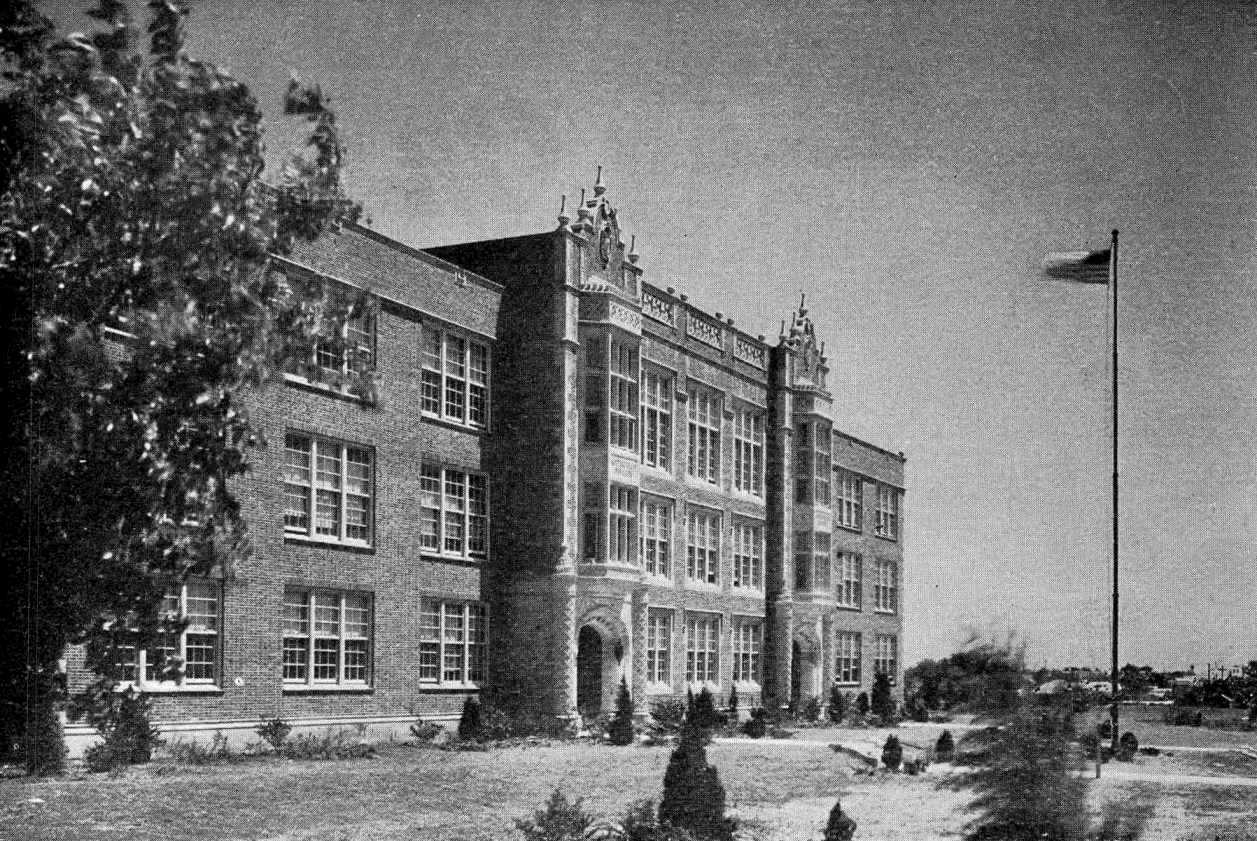
While we’re at it, here’s the rather oddly and unattractively landscaped school in 1930. (All those “Texases” and no Texas flag?!)

woodrow_1930-yrbk

***

Sources & Notes

Both images from the 1930 Woodrow Wilson High School yearbook, The Crusader.

*

Copyright © 2015 Paula Bosse. All Rights Reserved.
Old Parkland — 1950

parkland_aerial_1950_utsw_smThe *OLD* Old Parkland… (click for larger image)

by Paula Bosse

Fantastic aerial view of Parkland Hospital, looking south toward Reverchon Park (you can see the baseball diamond at the very top, just west of the old Turtle Creek pump station — now the Sammons Center — in the upper right corner). Maple is running north and south at the left of the photograph, Oak Lawn, east and west, just above the center.

Here’s the same view today.

maple-oak-lawn_google-earthGoogle Earth

***

Sources & Notes

Photograph titled “Aerial view of Parkland Hospital on Maple with Southwestern Medical School adjacent,” is from the UT Arlington Special Collections Library, hosted on the UT Southwestern Archives Collection site, here. You can zoom in and see incredible magnified details here.

The photo was taken August 15, 1950, by an unknown photographer. It looks a lot like a photo by Squire Haskins, taken a couple of blocks south — see it in the previous Flashback Dallas post “Reverchon Park Flyover,” here.

*

Copyright © 2015 Paula Bosse. All Rights Reserved.
 

Cadillac + Neiman-Marcus = “Practical” — 1956

ad-cadillac_neiman-marcus_1956Gowns and storefront by N-M, bumpers by Cadillac

by Paula Bosse

One need not be “prominent” to own a Cadillac or to shop at Neiman’s (… but it certainly helps).

***

Sources & Notes

Thanks to reader Kevin Smith for sending this to me!

Click ad to read text and to see those N-M gowns practically life-size.

*

Copyright © 2015 Paula Bosse. All Rights Reserved.