Flashback : Dallas

A Miscellany: History, Ads, Pop Culture

Category: 1900s

Happy 3rd Anniversary, Flashback Dallas!

postcard_greetings_pre-1909_cook-coll_smuCook Collection/DeGolyer Library/SMU

by Paula Bosse

Today marks the third anniversary of this blog. It seems like I’ve been doing this a lot longer, if only because I’ve been pretty immersed in it for the past three years. I say this all the time, but researching and writing about Dallas history is one of the most fun things I’ve ever done. I’ve written 851 posts about Dallas’ past (compiled in a continuously updated list which can be found at the link on this page) — about big things and small things — and I’ve learned more about my hometown in the past three years than I had in all the years before I started doing this. It’s gratifying to know that a lot of people out there read the blog: as of this morning, the number of followers of this mini archive stands a few short of 7,400. I sincerely appreciate all of you who read, comment, and share my posts. Thank you!

On to Year 4!

***

Postcard (postmarked 1909) from the George W. Cook Dallas/Texas Image Collection, DeGolyer Library, Central University Libraries, Southern Methodist University; more info on the postcard can be found here.

It shows Main Street looking east toward the white Praetorian Building in the background, Dallas High School (Crozier Tech), the Old Red Courthouse, and the Park Hotel (better known to most of us as the Ambassador Hotel on S. Ervay), built in 1904 as the Majestic Hotel and then renamed by new owners as the Park Hotel in June, 1907. Someday I’ll write more about this history of this still-standing 113-year-old building  — it’s just one of a dizzying number of subjects I’ve researched pretty thoroughly but haven’t gotten around to writing about yet — there are just too few hours in the day…).

Click postcard to see larger image.

*

Copyright © 2017 Paula Bosse. All Rights Reserved.

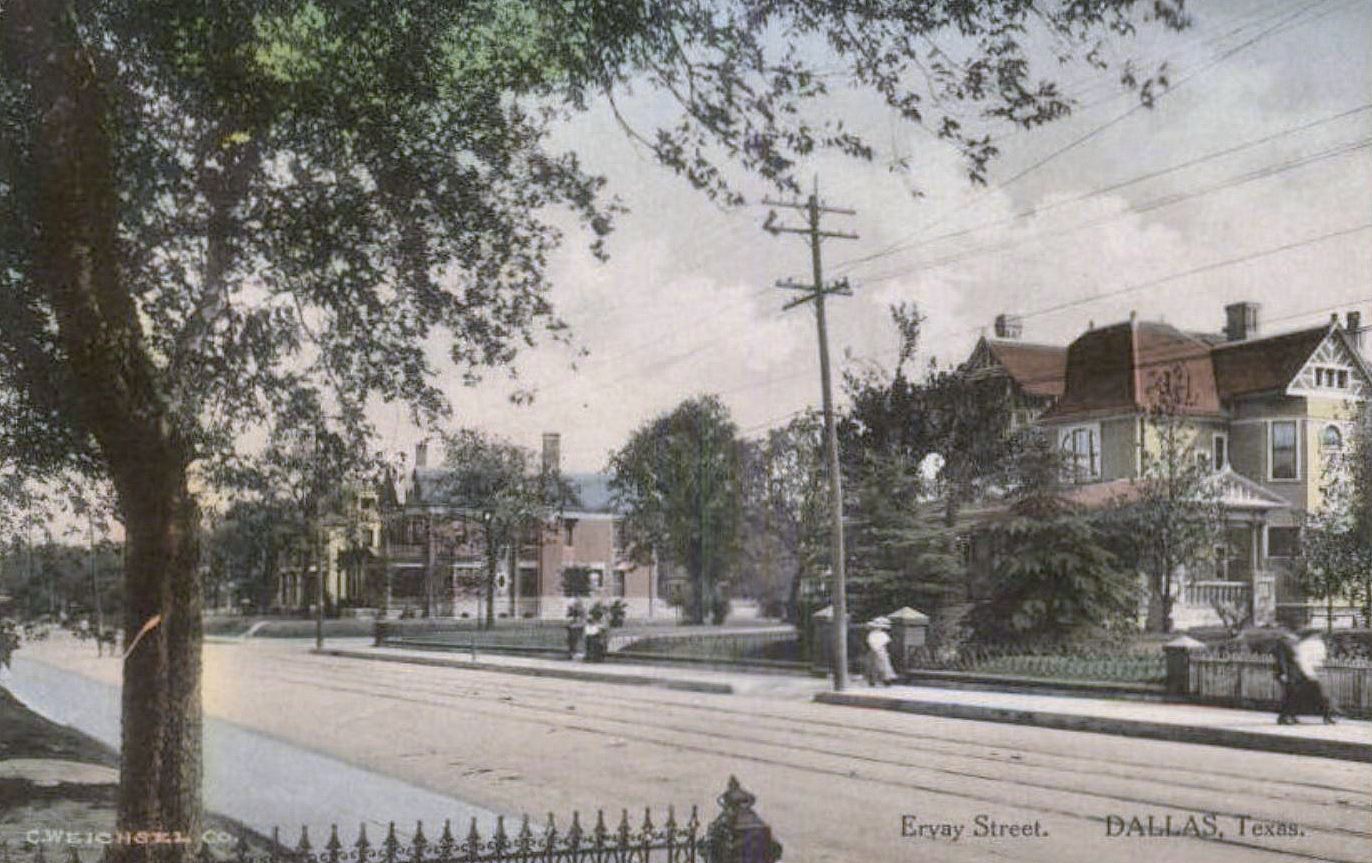
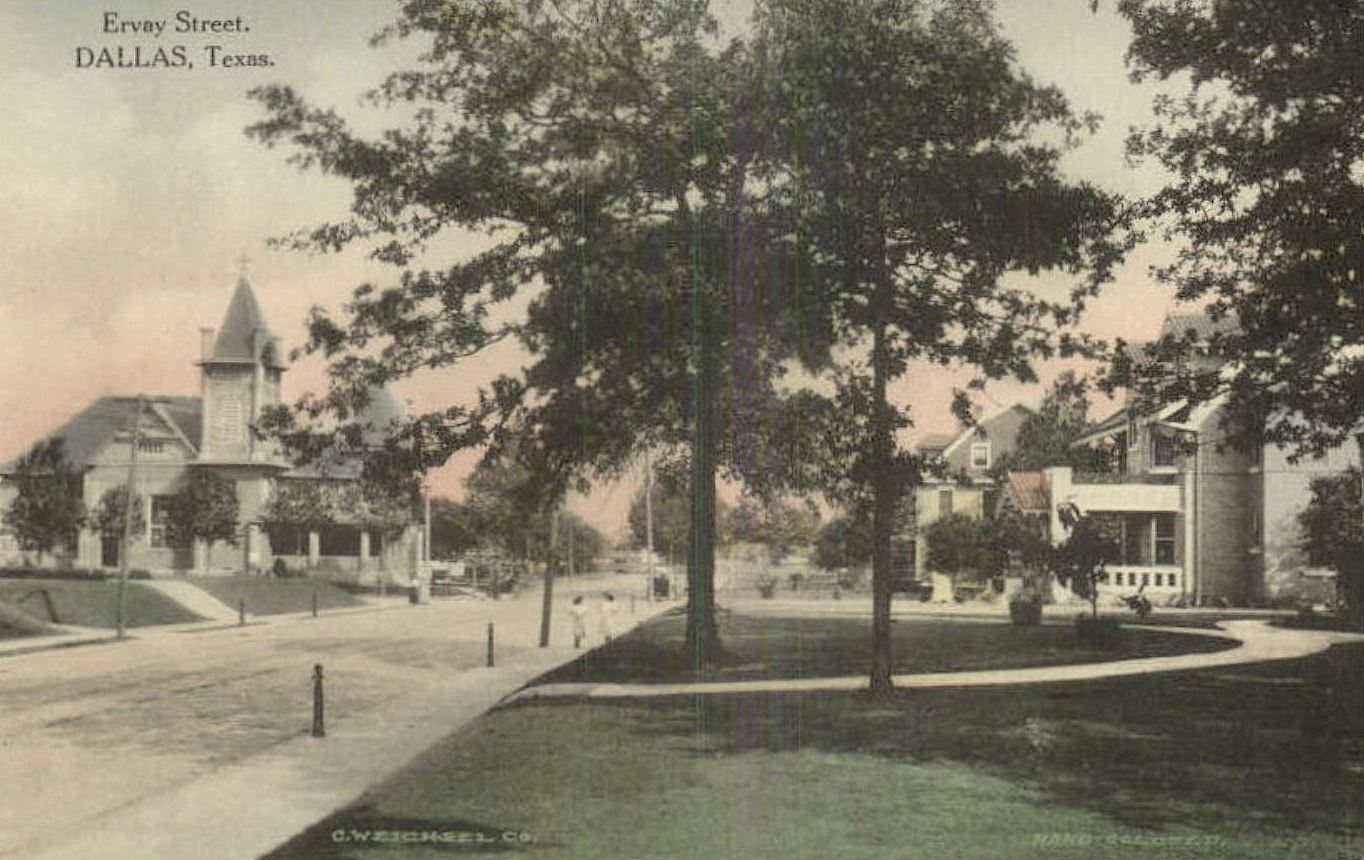
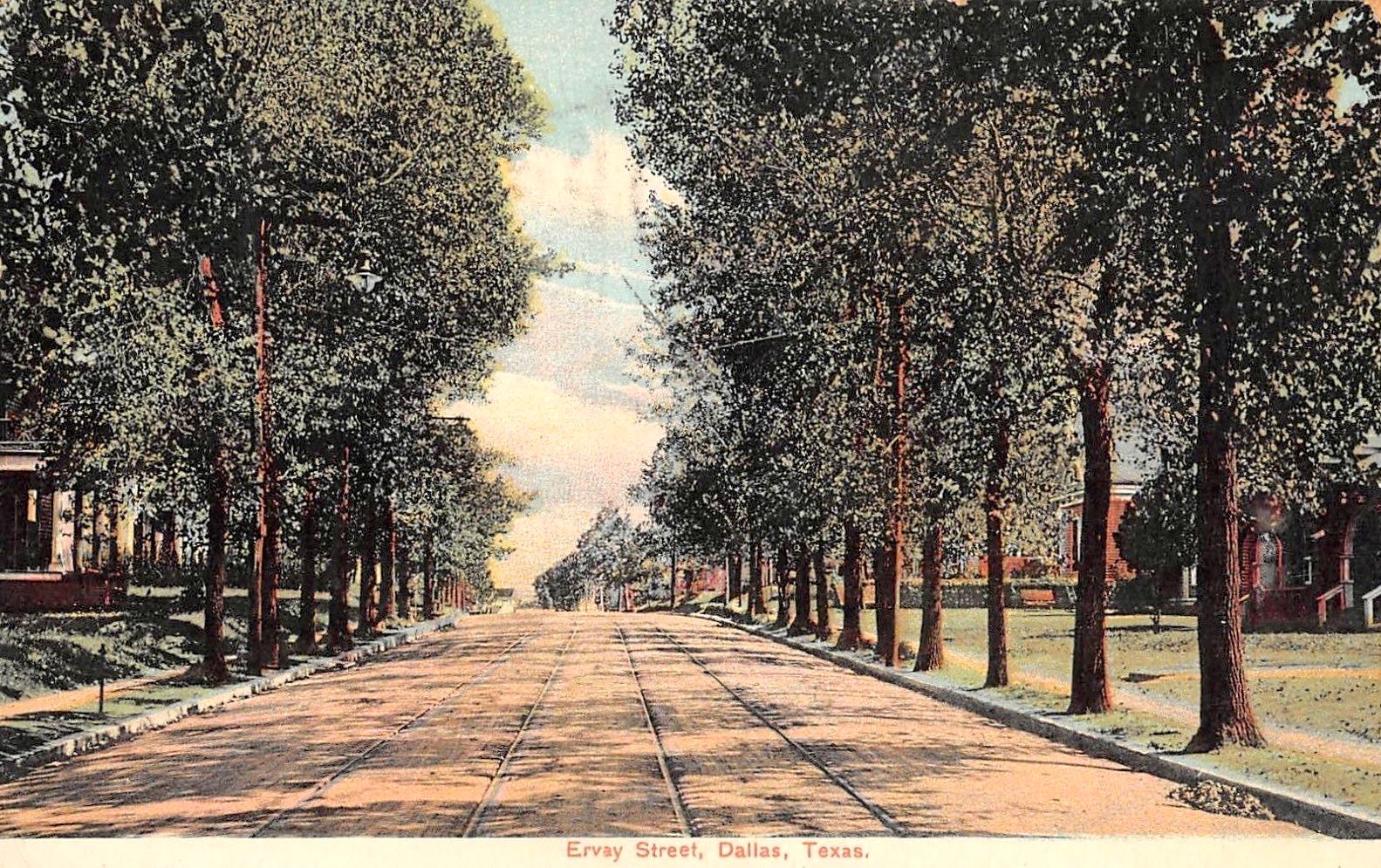
Beautiful South Ervay Street — ca. 1910

ervay_coltera_flickrStreet life in South Dallas

by Paula Bosse

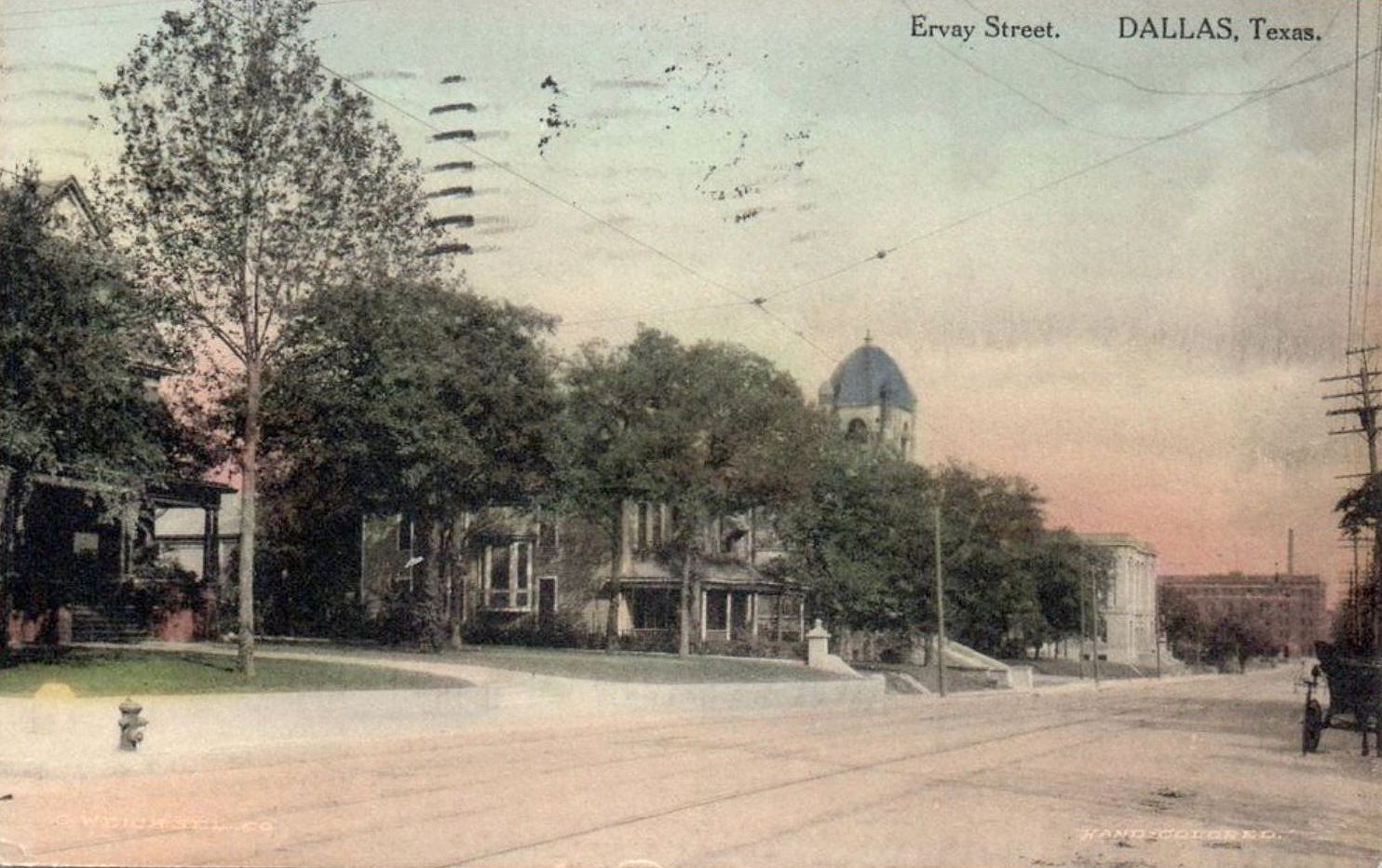
Today, a few hand-colored postcards from around 1910 showing the lovely houses that used to line Ervay Street in South Dallas. Hard as it is to believe today, the stretch of South Ervay from just outside the central business district down to its end at Forest Avenue (now Martin Luther King, Jr. Blvd.), was once a very nice area where many of the city’s most fashionable and well-to-do Jewish families (and, later, African American families) lived. The intervening century has not been kind to South Dallas. I’m not sure of the location in the postcard above, but it certainly looks like a very pleasant neighborhood — one that no longer exists in this mostly blighted area.

*

Below, S. Ervay looking south. The rounded top of Temple Emanu-El can be seen at the left. The light-colored building in the next block was the Columbian Club. The hotel most recently known as the Ambassador (which burned down three years after I originally wrote this post) is set back on a curve of the street and is hidden by the Columbian Club. The red building is the Hughes candy plant (still standing). A Google Street View of this area today can be seen here.

ervay-street_ebay

*

Below, we see a view still looking south, but now much farther down Ervay, almost to Forest Avenue (now MLK). The church on the left is the James Flanders-designed Ervay Street Methodist Episcopal Church (South), built in 1908 at the corner of corner of Ervay and South Boulevard — it’s interesting that a Methodist church was located in the center of Dallas’ largest Jewish residential neighborhood. (More on the church from a Dallas Morning News article from July 1, 1908, here. See this area on a 1922 Sanborn map here.)

ervay-residence_coltera

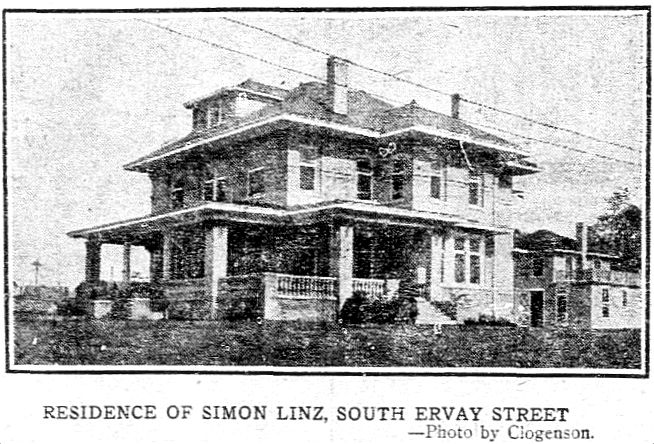
Not seen in the view above is one house worth mentioning. The house — just out of frame at the left, with the steps leading up to it, was the home of Simon Linz, of Linz Jewelers fame. Here is what the Linz house looked like in 1908:

linz-house_dmn_010108Dallas Morning News, Jan. 1, 1908

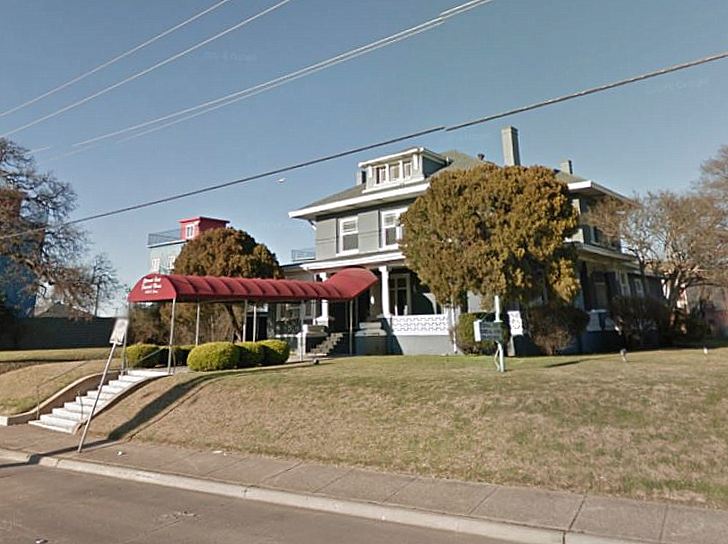
Remarkably, this house is still standing. It is currently a funeral home at 2830 S. Ervay. The present-day image below, showing the pretty house and the neatly landscaped yard, is a little deceptive; see what the Google Street View looks like just south — where the Flanders church once stood — here. (If you’re up to it, reverse the Google view and move back toward town.)

linz-house_2830-828-s-ervay_google
Google Street View

Hold on, little house!

This was once such a beautiful part of Dallas….

ervay_postcard_clogenson_postmark-1908

**

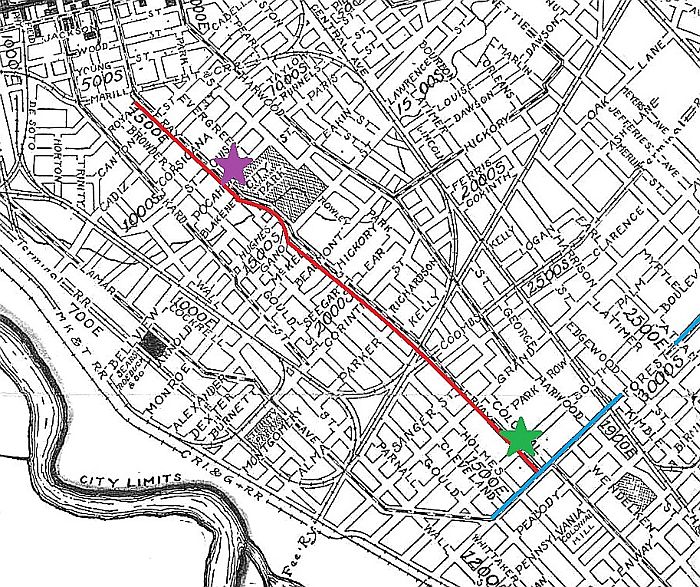
Below, a detail of a 1919 map showing S. Ervay down to Forest. The purple star shows the location of Temple Emanu-El and the Columbian Club. The green star shows the location of the Linz house and the Ervay St. Methodist Episcopal church. (Click for larger image.)

e-ervay_map_1918_portal
1919 map via Portal to Texas History

 ***

Sources & Notes

First and third postcards are from Flickr: here and here. Others found on eBay.

*

Copyright © 2016 Paula Bosse. All Rights Reserved.

Thomas Marsalis’ Spectacular Oak Cliff Hotel: 1890-1945

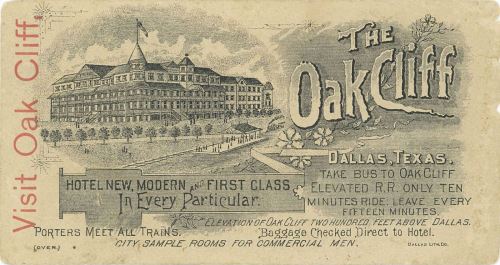
oak-cliff_cook-coll_degolyer_smu_front“Visit the Oak Cliff…” (click for much larger image) Photo: SMU

by Paula Bosse

I saw this image yesterday while browsing through the George W. Cook Collection (DeGolyer Library, SMU). It’s from about 1890. It’s great. BUT, the other side of this card is even better:

oak-cliff_cook-coll_degolyer_smu_back

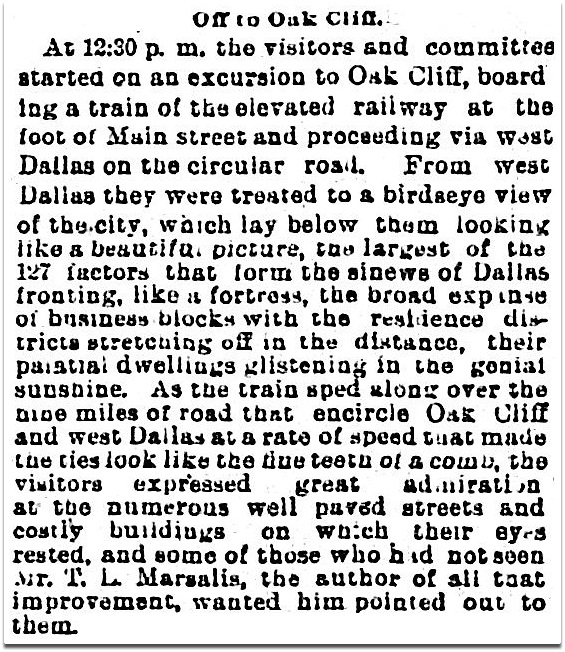
I’m not sure how realistic this drawing is, but it’s great! Oak Cliff never looked so … quaint. The best part is the depiction of the little commuter railway that Oak Cliff developer Thomas L. Marsalis built in the 1880s to handle commuter traffic between Oak Cliff and Dallas — a necessity if his development west of the Trinity was to grow. There were two little steam trains which made a complete circle and offered spectacular views of  Dallas as they headed toward the river. Here’s an account of visitors from Kansas City who enjoyed their scenic ride (click to see a larger image):
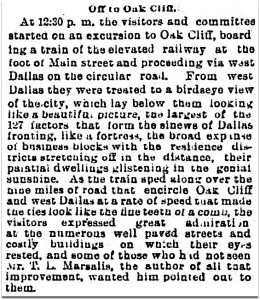
oak-cliff-train_dmn_112490
Dallas Morning News, Nov. 24, 1890

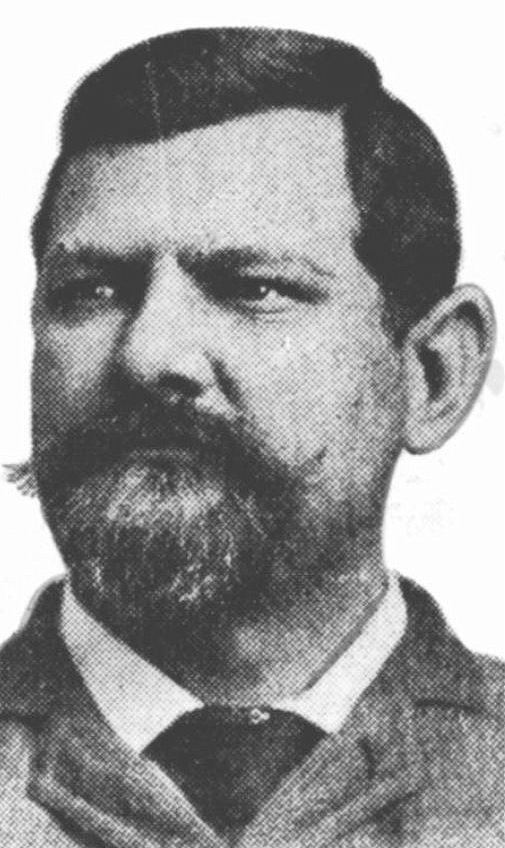
Marsalis had made his fortune in the grocery business, and much of that fortune was funneled into making his vision a reality: Oak Cliff would become a large, beautiful, prosperous community. He spent huge amounts of money developing the then-separate town of Oak Cliff. A wheeler-dealer and an obsessive whirlwind, money was no object to Marsalis as he charged at full speed to make Oak Cliff a booming North Texas garden spot.

marsalis_legacies_fall-2007
Thomas L. Marsalis — the “Father of Oak Cliff”

The jewel in T. L.’s O.C. crown was the 100-room resort, the Oak Cliff Hotel (which in its early planning had been called the Park Hotel). Ground was broken on Dec. 21, 1889. Projected to cost $75,000, it is said to have cost over $100,000 when construction was completed, or, over $2.6 million in today’s money.
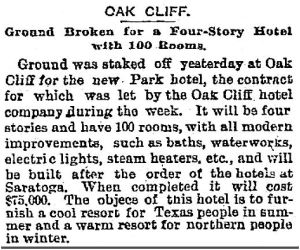
oak-cliff-hotel_dmn_122289_groundbreaking
DMN, Dec. 22,1889

A thorough description of the spectacular $100,000 showplace can be read in a Dallas Morning News article from May 25, 1890, here. When it opened on July 10, 1890, the News’ coverage of the opening included the following lyrical passage:

When darkness had settled down over the cliff the large hotel showed off to its best advantage, as at a short distance away it looked like some living monster with hundreds of fiery eyes. The lights showing from every window made a startling sight to those who coming upon it had previously seen a dark pile looming up in the night.
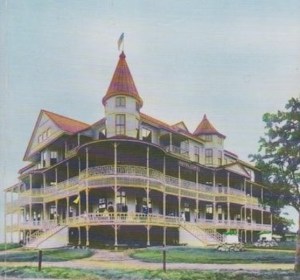
oak-cliff-hotel_minutaglio

It was, by all accounts, a popular hotel and social gathering place. But, in November of 1891 — having been open only a little over a year — a notice appeared in the papers that the hotel would be closing for the winter for “renovations.” It never reopened. Marsalis had over-extended himself. His dreams for Oak Cliff began to dim as the stacks of unpaid bills mounted, and he found himself mired in lawsuits for the next several years. He eventually had to admit defeat, and he and his family moved to New York.

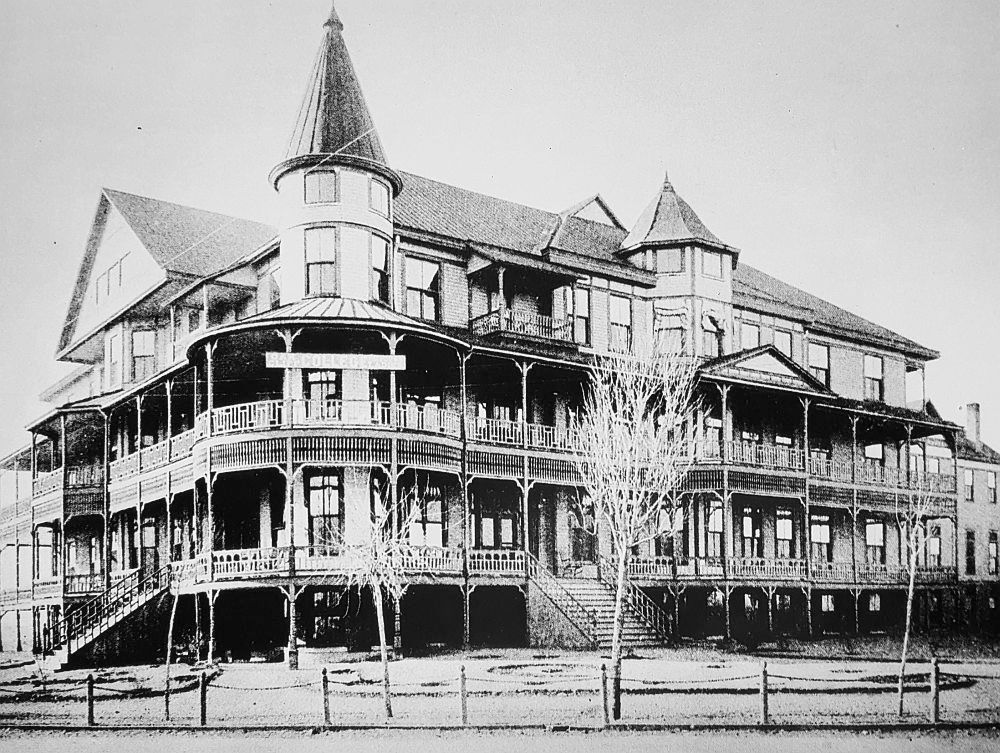
Six months after that notice of “renovations” appeared, the huge building was leased to Prof. Thomas Edgerton, who planned to open a “female seminary.”

oak-cliff-college_flickr

The Oak Cliff College For Young Ladies opened  in the fall of 1892. And it was a spectacular-looking schoolhouse.

oak-cliff-college_dallas-rediscoverd_dpl

The college lasted until the beginning of 1899 when it changed hands and became Eminence College for a brief year and a half.
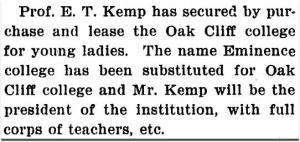
eminence-college_southern-mercury_062299
Southern Mercury, June 22, 1899

After Eminence College appears to have gone bust, the building was vacant by 1901. There was talk that Oak Cliff should purchase the property and reinstall a school, but, eventually, the building went up for auction in September, 1903.

oak-cliff-hotel_dmn_082603_for-sale
DMN, Aug. 26, 1903

The building sold to T. S. Miller, Jr. and L. A. Stemmons for $6,850, a fraction of what Marsalis had spent building it. That’s a pretty steep depreciation.
oak-cliff-hotel_dmn_090203_sold
DMN, Sept. 2, 1903

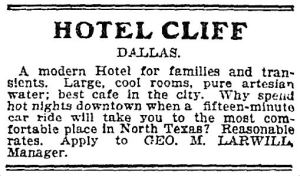
But, no fear, Hotel Cliff opened on April 18, 1904. Still looking good.

hotel-cliff_degolyer

hotel-cliff_dmn_071104
DMN, July 11, 1904

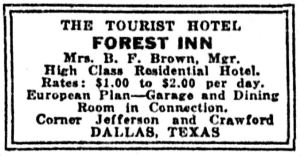
Hotel Cliff was in business through about 1915. There were some “lost” years in there when it seemed to be in limbo (during some of this time it was undergoing extensive renovation), but in 1921 it re-opened as the Forest Inn.

forest-inn_dmn_042421
DMN, April 24, 1921

forest-inn_bartlett-tribune-and-news_070424
Bartlett News, July 4, 1924

The Forest Inn had a long run — 24 years. In 1945 the property was sold, and T. L. Marsalis’ spectacular resort hotel was demolished. It was estimated that it would take ten weeks to finish the demo job — Marsalis had spared no expense building his hotel, and it had been built to last.

The destruction is a tough job, Jack Haake, wrecking contractor, said. Despite its age, the building is so well built that much time is being required to take it apart. The lumber is of the best grade and much of it still is in good condition, Haake said. Scores of huge 2×6 planks, thirty-two feet long, were used in the building, and that timber is in excellent condition. (“Historic Oak Cliff Hotel Being Razed For New Structure,” DMN, Sept. 10, 1945)

The land apparently remained vacant until Southwestern Bell Telephone announced plans to build a three-story office building on the property in 1954; the building opened the following year. In 1986, the building was renovated and became the Oak Cliff Municipal Center, which still occupies the site.

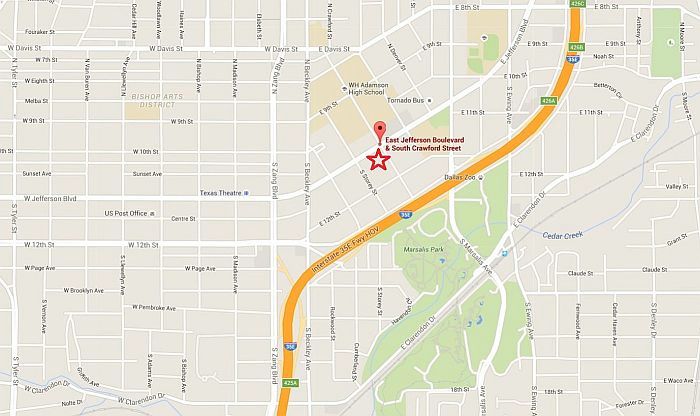
Where exactly was that huge, wonderful hotel that Thomas Marsalis built? It was located at what is now the southwest corner of East Jefferson Blvd. and South Crawford Street. A view of that corner today can be seen here. To get an idea  of how much land the hotel/college once occupied, check out the 1905 Sanborn map, here (and this is after 15 years of explosive growth of Oak Cliff, so it obviously originally had much more open land around it); by 1922, encroachment was well underway, and the property was already being chopped into smaller parcels.

oak-cliff-hotel_map_google
Google Maps

I wonder what Thomas Marsalis would think of Oak Cliff today? And I wonder what Oak Cliff would have become had Marsalis never put his money and energy into its early development?

**

There is a lot of misinformation on various online sources about the timeline of this building. As best I can determine, here is the correct chronology:

  • 1889: groundbreaking for hotel, in December
  • 1890-1891: Oak Cliff Hotel
  • 1892-1899: Oak Cliff College For Young Ladies
  • 1899-1901: Eminence College (also for young women)
  • 1902-1903: vacant
  • 1903: building sold at public auction, in September
  • 1904-1914: Hotel Cliff
  • 1914-1915: Oak Cliff College (reorganized, back for one last gasp)
  • 1915-1920: basically empty, with a couple of token tenants
  • 1921-1945: Forest Inn
  • 1945: demolished

***

Sources & Notes

First two images show both of sides of an advertising card; “Visit Oak Cliff” is from the George W. Cook Dallas/Texas Image Collection, DeGolyer Library, Central University Libraries, Southern Methodist University — more information is here.

Photo of Thomas Marsalis from Legacies, Fall, 2007.

Colorized image of hotel from the front cover of The Hidden City: Oak Cliff, Texas by Bill Minutaglio and Holly Williams. The sign is hard to read, but this may show the building during the Hotel Cliff days.

The detail of an Oak Cliff College envelope comes from the Flickr page for the Texas Collection, Baylor University, here. (Sure hope Mr. Edgerton was able to get a refund on that printing job — having “Oak Cliff” misspelled on official college correspondence probably caused a grimace or two!)

Large black and white photograph of Oak Cliff College appeared in William L. McDonald’s Dallas Rediscovered; photo from the collection of the Dallas Public Library.

Hotel Cliff postcard from the Cook Collection, SMU; information is here.

See the beautiful house Marsalis built for himself (but which he might never actually have lived in) in my post “The Marsalis House: One of Oak Cliff’s ‘Most Conspicuous Architectural Landmarks,'” here.

Thomas L. Marsalis is a fascinating character and an important figure in the development of Oak Cliff, but his post-Dallas life has always been something of a mystery. I never really thought of myself as a “research nerd” until I started this blog, but reading how a few people in an online history group pieced together what did happen to him was surprisingly thrilling. This round-robin investigation began in the online Dallas History Phorum message board, here, and finished as the Legacies article “Where Did Thomas L. Marsalis Go?” by James Barnes and Sharon Marsalis (Fall 2007 issue). If you have some time, I highly recommend reading through the Phorum comments and then reading the article. It’s very satisfying!

All images and clippings larger when clicked. 

*

Copyright © 2016 Paula Bosse. All Rights Reserved.

Dallas Fire Stations — 1901

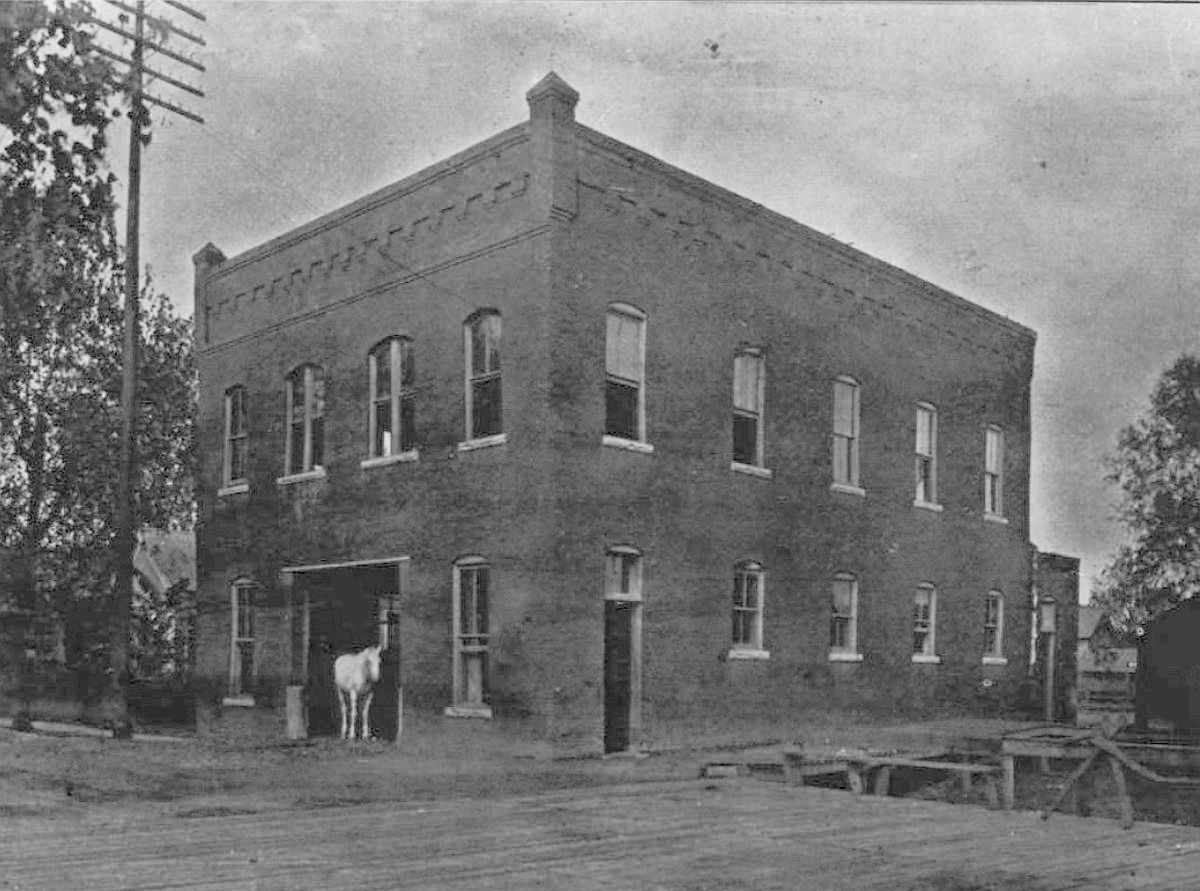
fire-dept_engine-co-3_gaston-and-college_1901Fire horse in Old East Dallas relaxing between calls (click for larger image)

by Paula Bosse

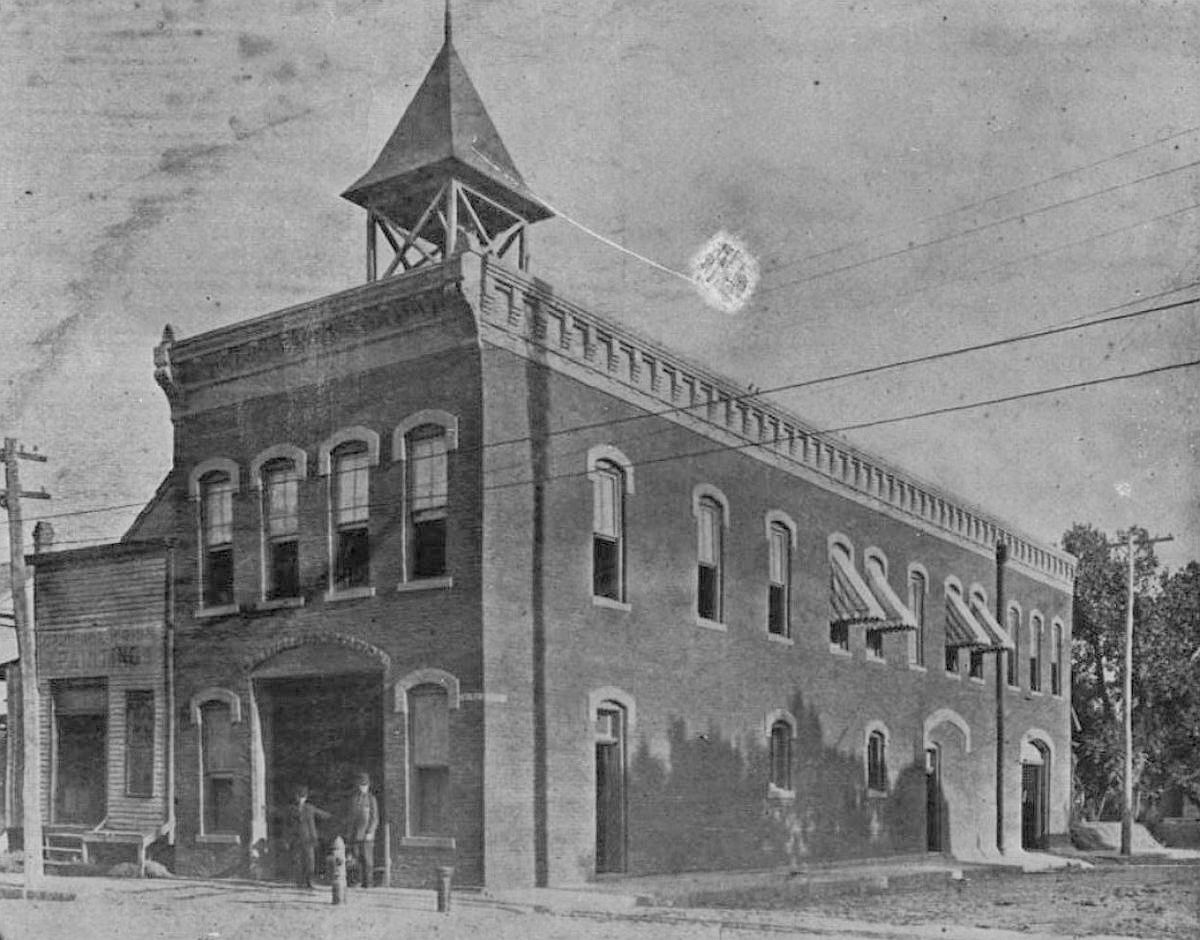
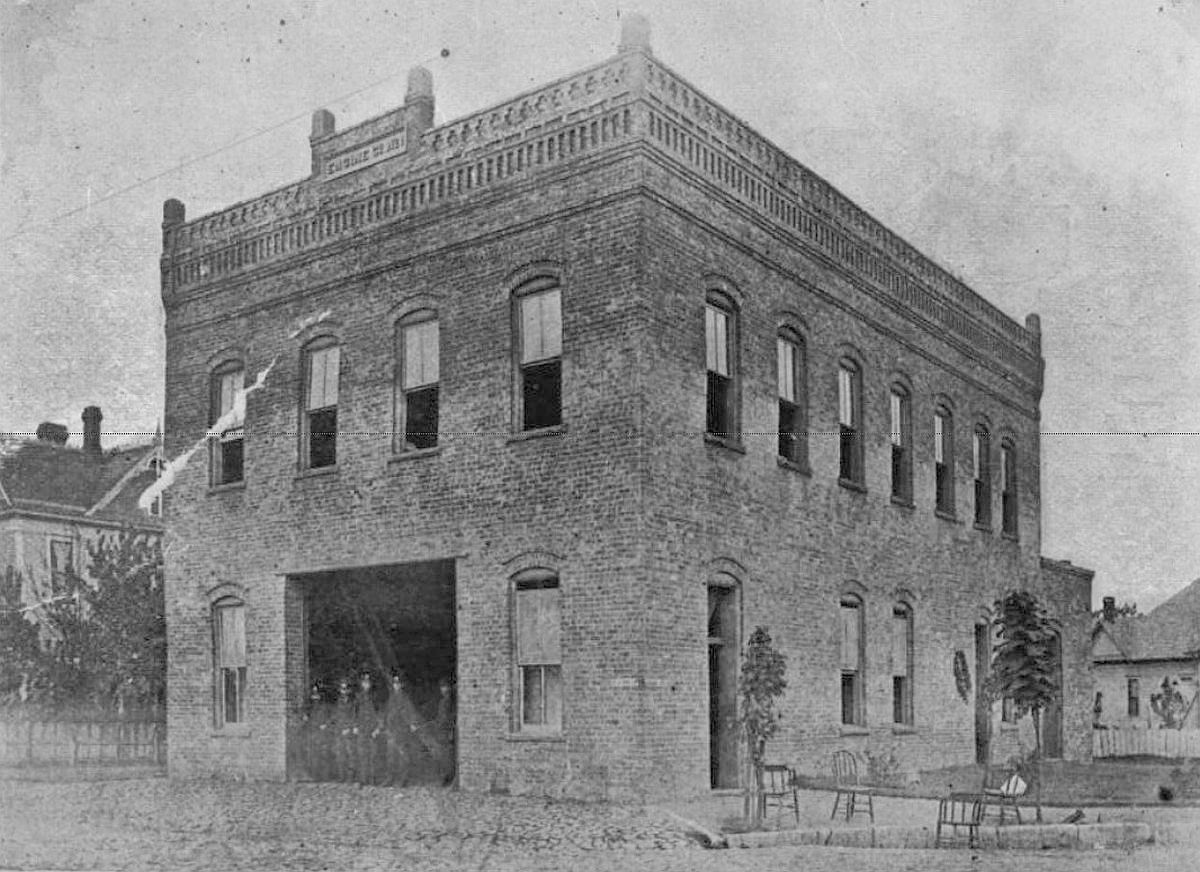
A few turn-of-the-century photos of Dallas’ fire stations, from a 1901 photographic annual. These seven firehouses were built between 1882 and 1894. One of these buildings is, miraculously, still standing on McKinney Avenue, in the heart of Uptown.

*

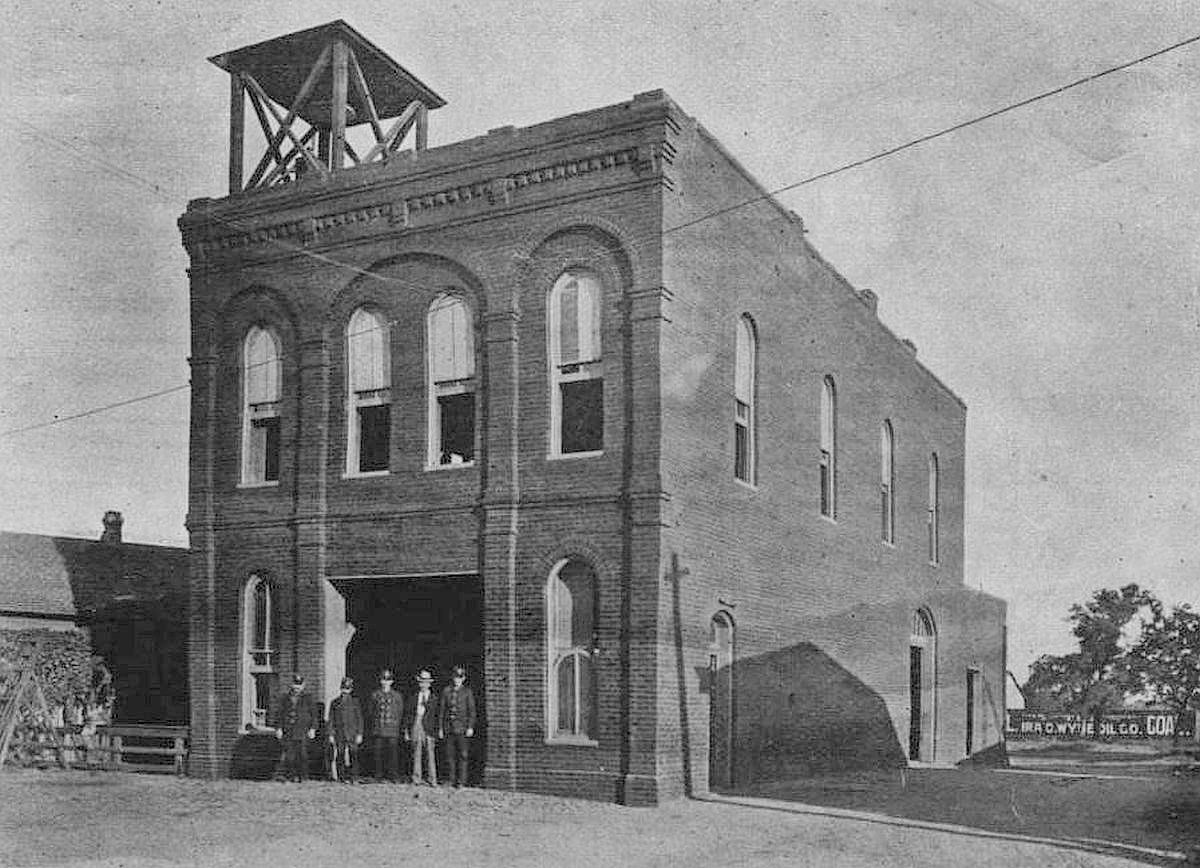
At the top, Engine Co. No. 3, at Gaston and College Avenues. In service: January, 1892. Equipment: an Ahrens Steamer, capacity 750 gallons per minute, and a Cooney Hose Carriage. See it on a 1905 Sanborn map here; see the present location (Gaston and Hall) here. (And since I just used it a few days ago, here’s a 1921 Sanborn map, showing Mill Creek running right through the property.)

*

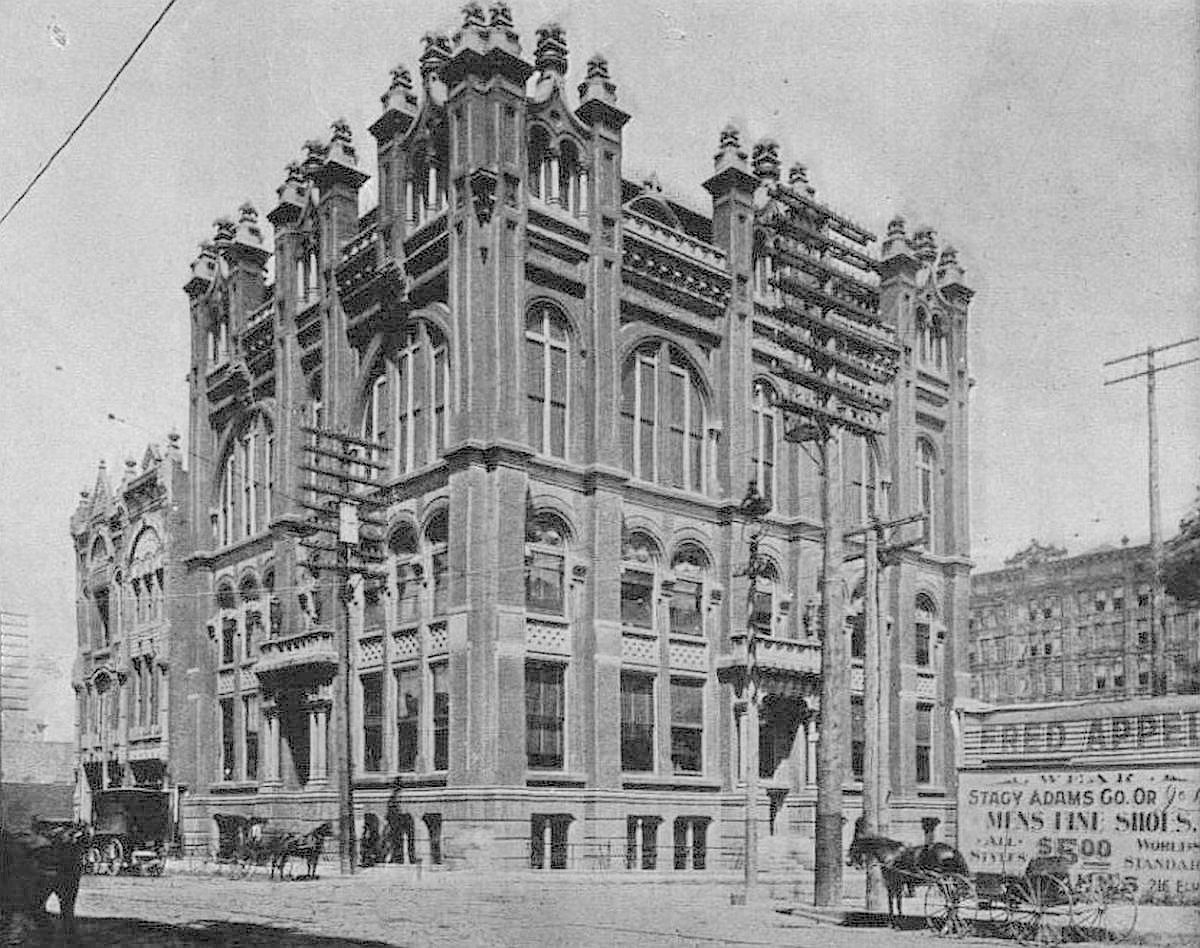
fire-dept_central-station_main-harwood_1901

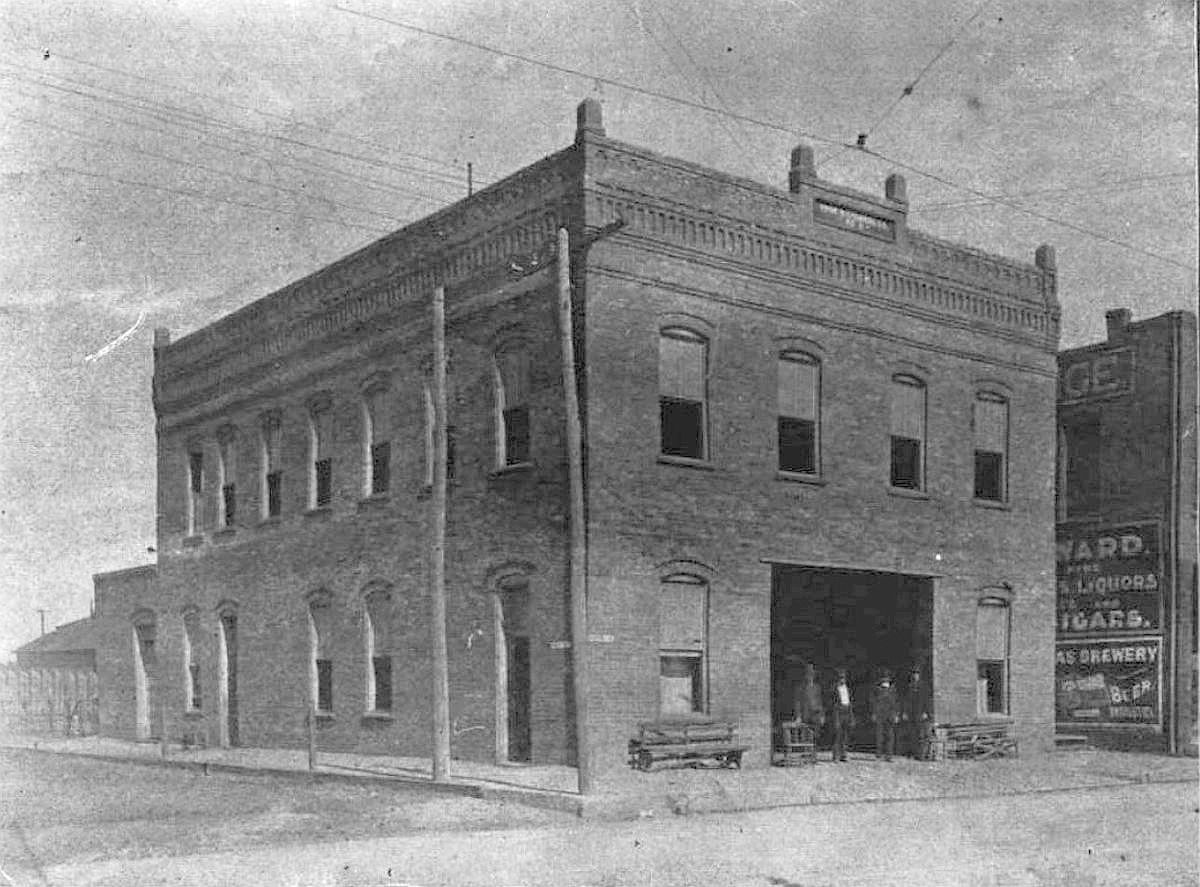
Above, Central Fire Station, Main and Harwood Streets. In service: October, 1887. Equipment: a double-sixty-gallon Champion Chemical Engine and a City Hook and Ladder Truck. See it on a 1905 Sanborn map here; see the present location here (the site of the old City Hall/Municipal Building).

*

fire-dept_mckinney-leonard_engine-co-1_1901

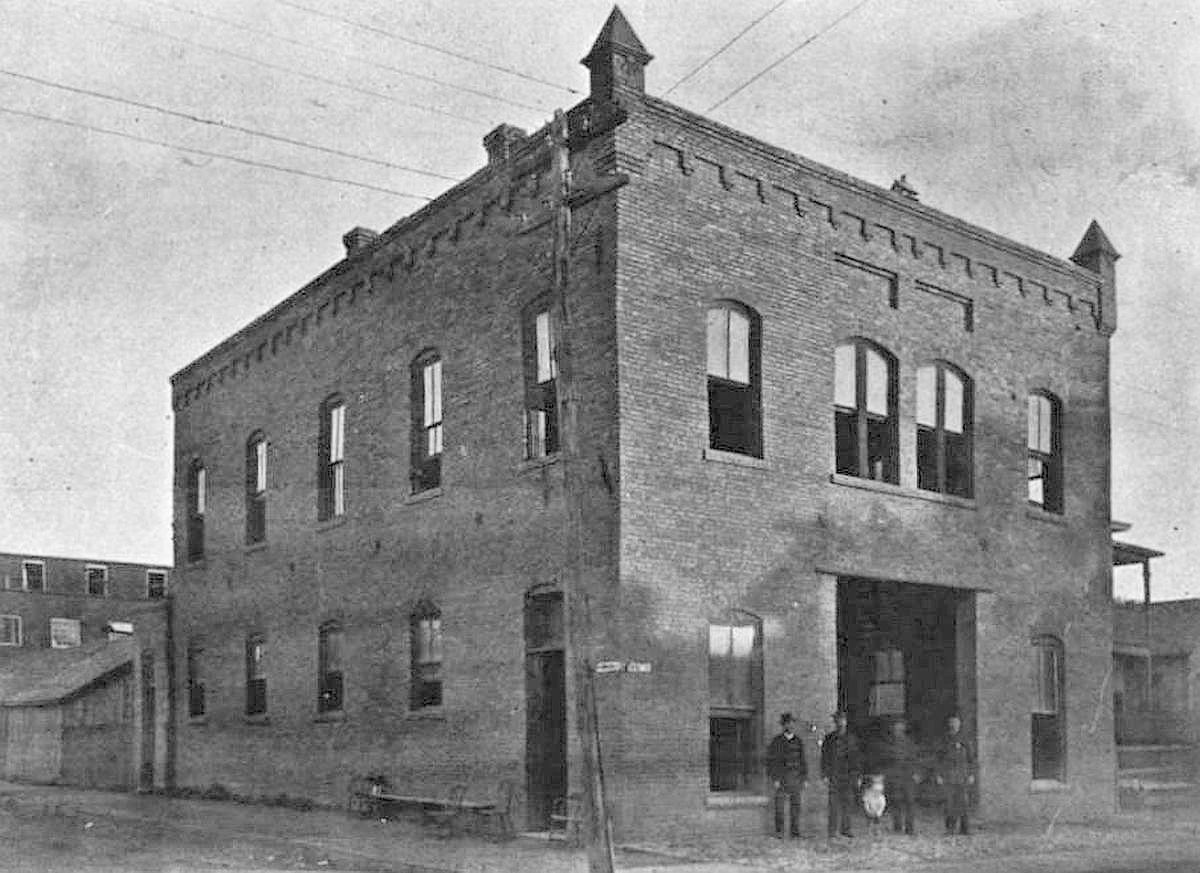
Engine Co. No. 1, McKinney Avenue and Leonard. Equipment: an Ahrens Steamer, 750 gallons per minute, and a Cooney Hose Carriage. In service: August, 1894. See it on a 1905 Sanborn map here; see the present location here. NOTE: This is the only one of these firehouses still standing. I wrote about it here.

UPDATE: Well, sort of. Thanks to a comment on Facebook, I researched this station a bit more and found that it was rebuilt and modernized at the end of 1909 — using materials from the original building seen above, built on the same plot of land. So instead of being 122 years old, the building on McKinney today is a mere 106 years old.

*

fire-dept_commerce-hawkins_engine-co-2_1901

Engine Co. No. 2, Commerce and Hawkins Streets. In service: January, 1882. Equipment: an Ahrens Steamer, capacity 750 gallons per minute, and a Cooney Hose Carriage. See it on a 1905 Sanborn map here; see a shot-in-the-dark guess at a present location here.

*

fire-dept_ervay-kelly_hose-co-2_1901

Hose Co. No. 2 and Chemical Co. No. 2, Ervay Street and Kelly Avenue. In service: September, 1894. Equipment: a Cooney Hose Carriage and double-sixty-gallon Champion Chemical Engine. See it on a 1905 Sanborn map here; see the present location here (right behind where the word “Cedars” is).

fire-dept_bryan-hawkins_hook-and-ladder-1_1901

Hose Co. No. 1 and Hook and Ladder Co. No. 1, Bryan and Hawkins Streets. In service: January, 1893. Equipment: Preston Aerial Truck with 75-foot extension ladder, and a Cooney Hose Carriage. See it on a 1905 Sanborn map here; see the approximate present location here.

*

fire-dept_commerce-akard_engine-co-4_1901

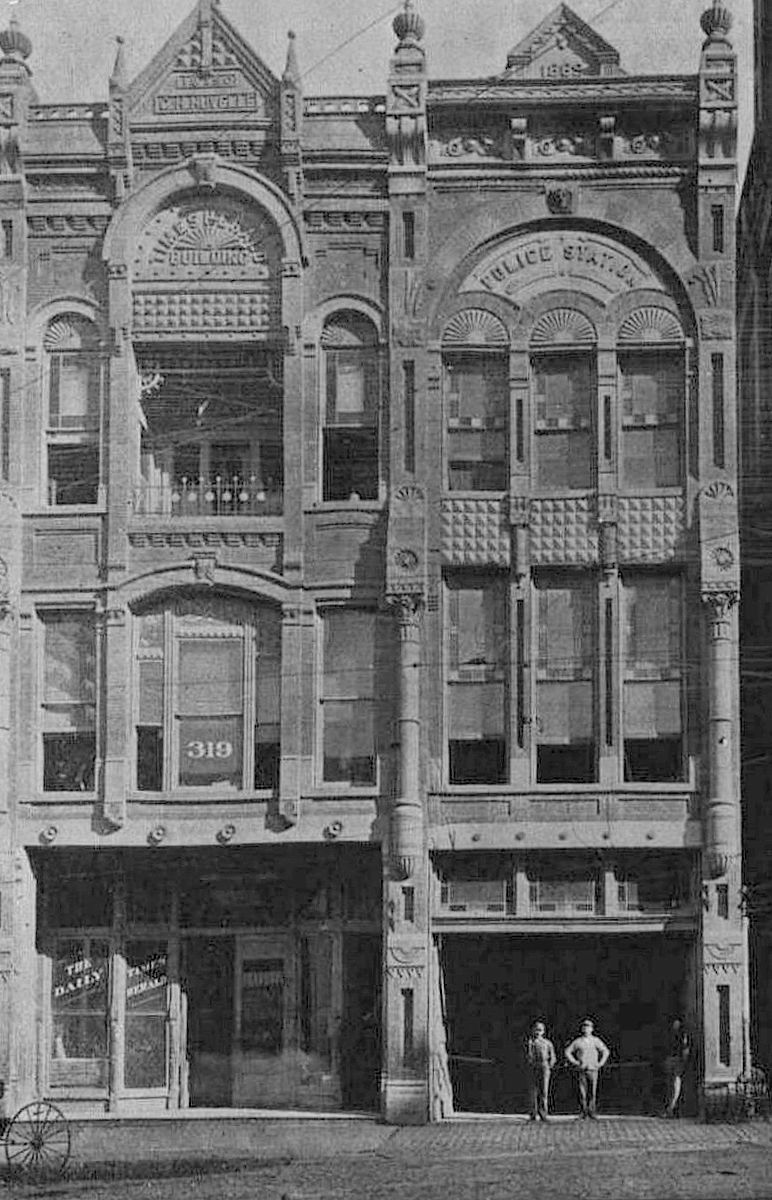
Engine Co. No. 4, Commerce and Akard Streets, next door to the City Hall. In service: August, 1894. Equipment: an Ahrens Steamer, capacity 1,100 gallons per minute, and a Cooney Hose Carriage. See it on a 1905 Sanborn map here; see the present location here (just out of frame at the right was the City Hall; the block is now the site of the Adolphus Hotel).

*

city-hall_1901_fire-dept-annual_portal

City Hall, Commerce and Akard Streets, now the location of the Adolphus Hotel. Half of the shorter building to the left housed the police department and Engine Co. No. 4.

*

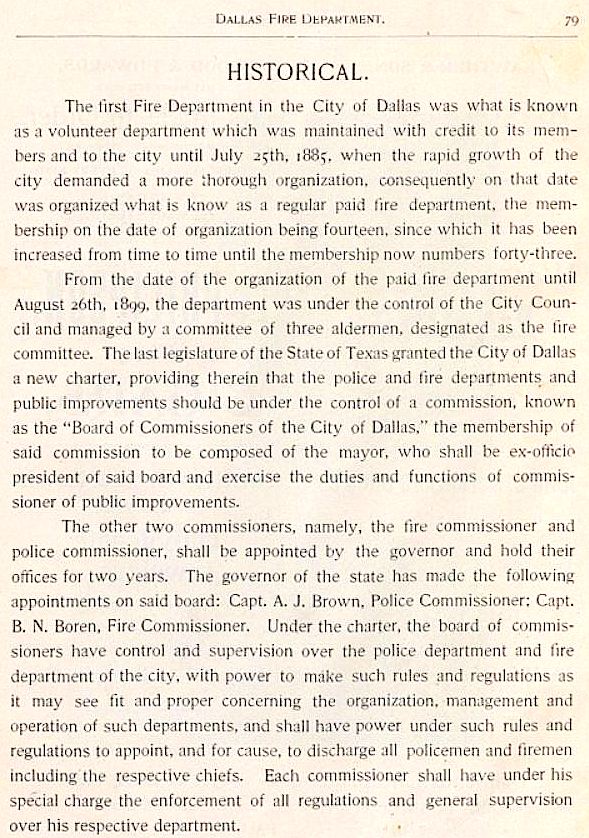
The “Historical” page from the book (click to read).

fire-dept-hist_dallas-fire-dept-annual_1901_portal

**

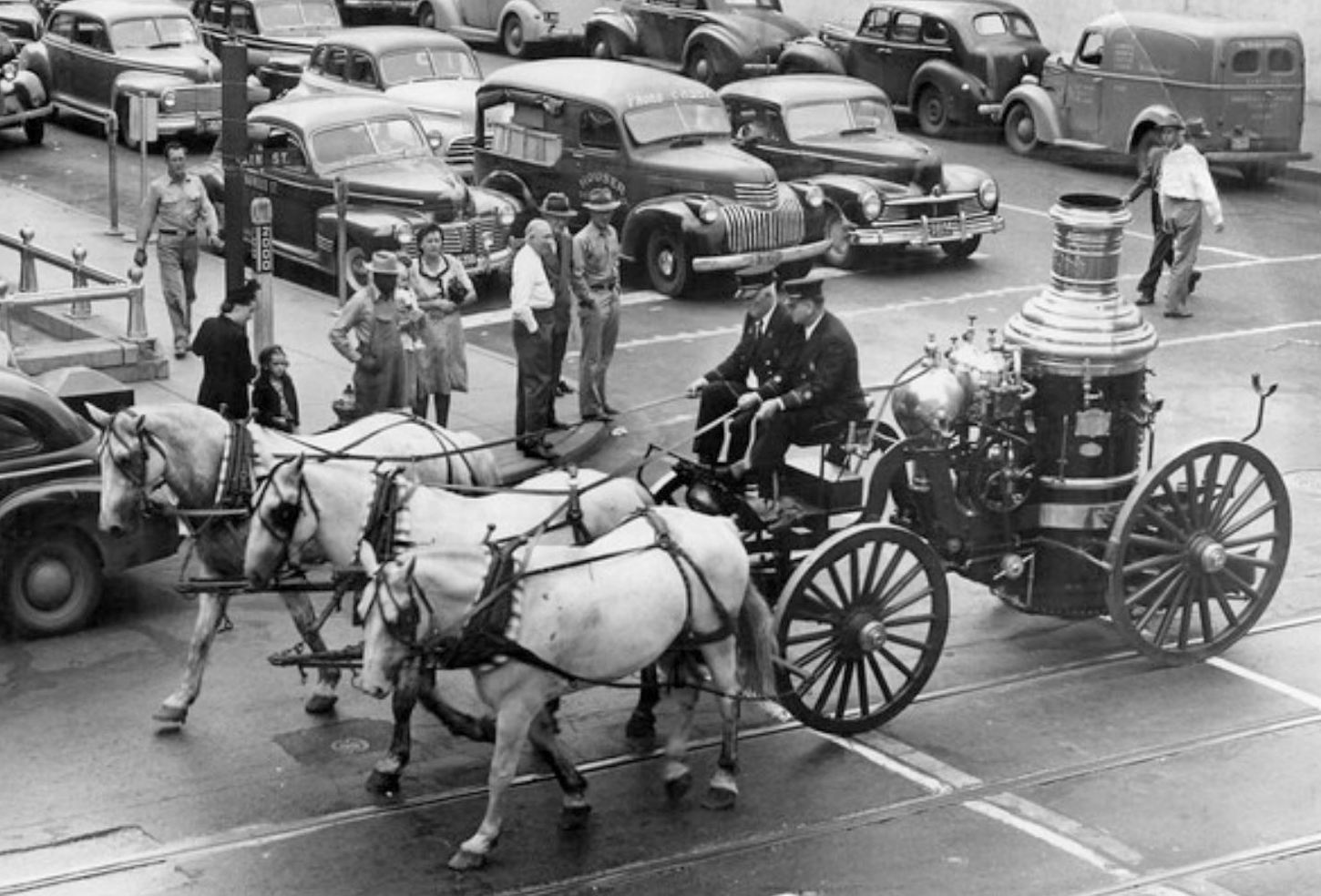
Since there is no sign of the actual equipment in these photos, here’s what horse-drawn steam engines (Ahrens steamers) looked like at this time. (Photo from the Wisconsin Historical Society).

fire-steam-engine_wisconsin-hist-soc

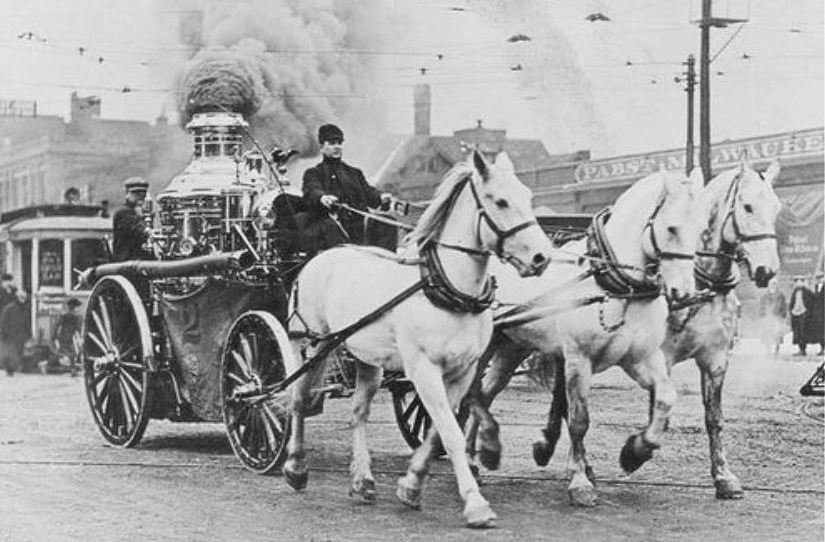
UPDATE: I found this photo on Flickr, showing equipment from those early days being driven through the streets of Dallas during a fire prevention parade.

fire-department_pumper_flickr_coltera

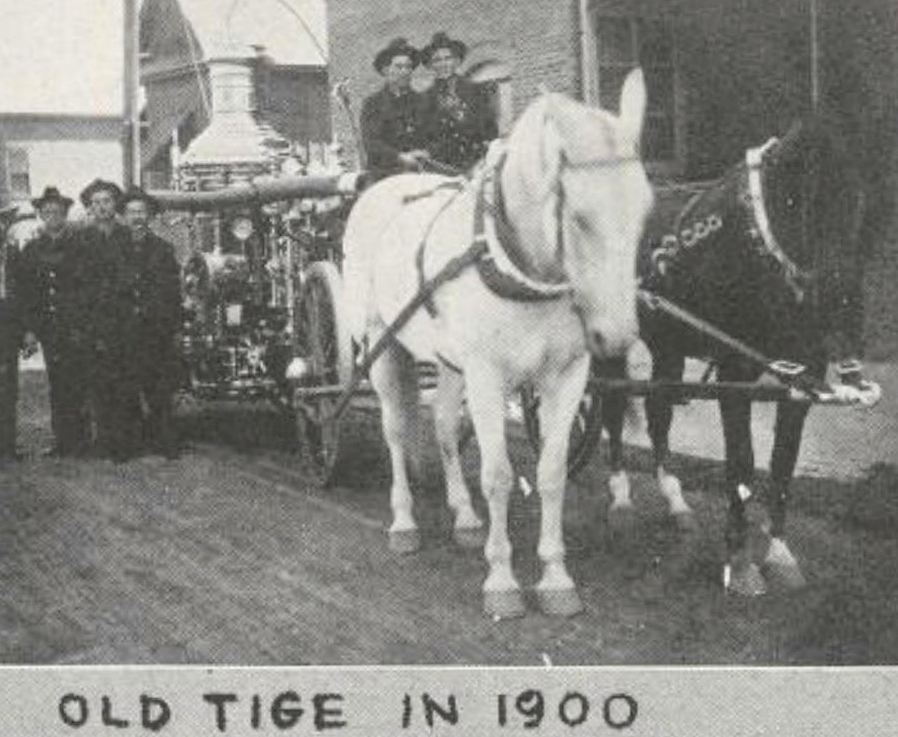
UPDATE: Lo and behold, a photo from 1900 of Old Tige, the 600 gallons-per-minute steam pumper, built in 1884, which was in service with the Dallas Fire Department until 1921. (Old Tige can be seen in the Firefighters Museum across from Fair Park.) Found at the Portal to Texas History.

old-tige_1900_fire-dept-bk_1931_portal

***

Sources & Notes

Photos by Clifton Church, from the Dallas Fire Department Annual, 1901, which can be viewed in its entirety on the Portal to Texas History, here.

A contemporary map of Dallas (ca. 1898) can be viewed on the Portal to Texas History site, here.

More Flashback Dallas posts on historic Dallas firehouses can be found here.

All photos larger when clicked.

*

Copyright © 2016 Paula Bosse. All Rights Reserved.

The Mail Wagon

mail-wagon_dallas-jewish-historical-societyPhoto: Dallas Jewish Historical Society

by Paula Bosse

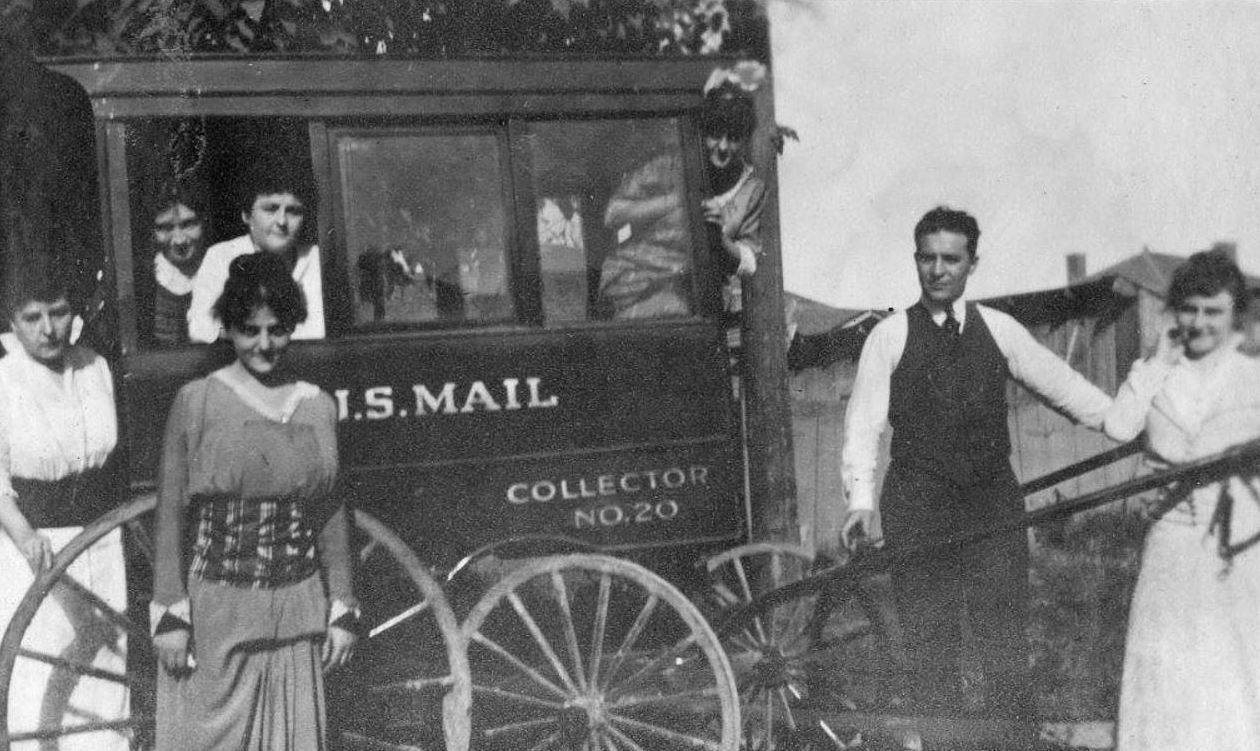
My mailman-hating duck post of yesterday reminded me of this photo I’ve had tucked away in a digital file for months but have never used because I have no information about it. It shows several people — possibly a family? — gathered in and around a U.S. Mail wagon — “Collector No. 20.” The horse team is probably close by. As this photograph was found on the Dallas Jewish Historical Society website, one must presume that the people seen here are Jewish. Why they’re posing with an unhitched mail wagon is unknown, but it’s a cool photo.

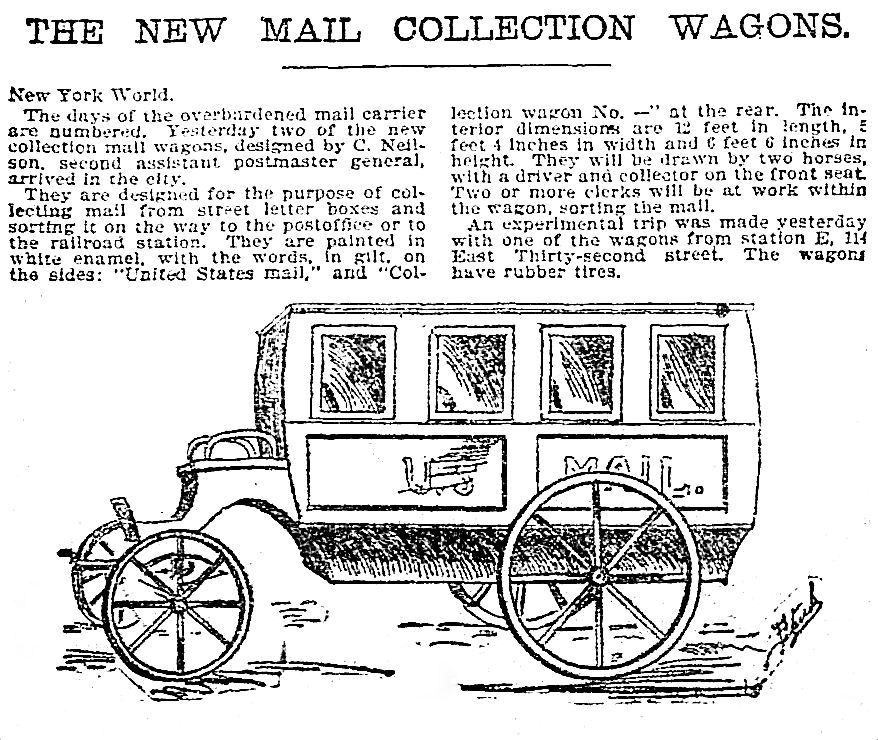
I read a bit about these wagons, which were used to collect mail from boxes around the area and from train depots. The larger ones had a driver for the team of horses, a collector, and two clerks in the back who sorted mail as they headed back to the main post office. (Click for larger image.)

mail-wagon_dmn_100296Dallas Morning News, Oct. 2, 1896

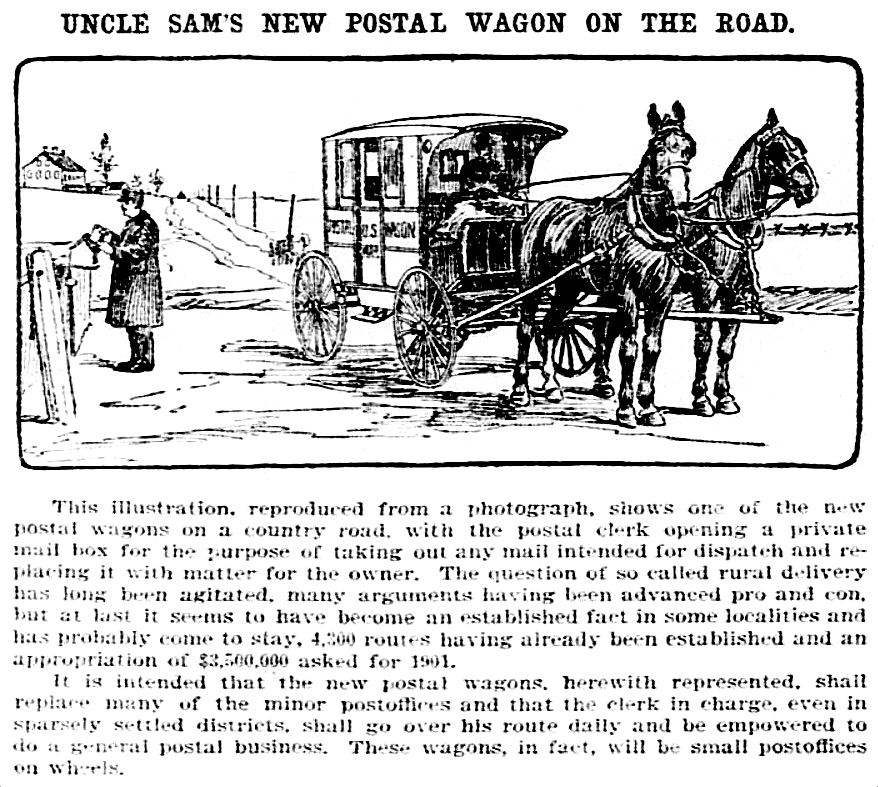
Rural mail delivery began in Dallas in 1901, and wagons like this were eventually used to reach far-flung areas beyond the city. Some of them were set up to be mini mobile post offices, out of which the mail carrier could sell things like stamps and money orders while they were on their appointed rounds of delivering and collecting mail (these mobile post offices actually caused several rural post offices to close).

mail-wagon_FWST_032301
Fort Worth Star-Telegram, March 23, 1901

There were two main problems with these horse-drawn wagons which showed up time and time again in newspaper reports:

  1. They were constantly involved in collisions, mostly with electric streetcars slamming into them. I’m not sure why this happened so much — perhaps the trolleys were too fast and too quiet — but it was a constant problem.
  2. Also, these wagons, stuffed with letters and packages (and whatever goodies might have been contained therein), were often hijacked at gunpoint or stolen when left unattended. Kind of a holdover from frontier days of holding up stagecoaches.

The life of a turn-of-the-century mailman was fraught with danger.

***

Sources & Notes

Top photo from the Dallas Jewish Historical Society; I’d love to know some — any! — information about who these people were and why they were posing with a mail wagon.

Read the 1925 memories of mail carrier James H. Jackson, who began his career with the Dallas post office in 1884, in the Dallas Morning News article “Dallas Postoffice Grew As City Grew” by W. S. Adair (DMN, Feb. 1, 1925).

Another Dallas-mailman-related story I found interesting can be found in my post “Jim Conner, Not-So-Mild-Mannered RFD Mail Carrier,” here.

Images larger when clicked.

*

Copyright © 2016 Paula Bosse. All Rights Reserved.


Police Blotter — Drunks, Vagrants, Adulterers

jail-cell

by Paula Bosse

Today, a few snippets from the police and court reports about Dallas people doing things they shouldn’t have been doing. (All clippings are larger when clicked.)

*

Drunkenness seems to have been the most common reason for arrest in the 1870s and 1880s (and probably still is today). The city “popped it to” a lot of people back in the 1880s.

drunk_dal-herald_021483Dallas Herald, Feb. 14, 1883

A “crazy boy” from Collin County eluded lawmen by running off into the Cedars (back when the area we still call “The Cedars” was actually full of cedar trees).

cedars_dallas-herald_042178Dallas Herald, April 21, 1878

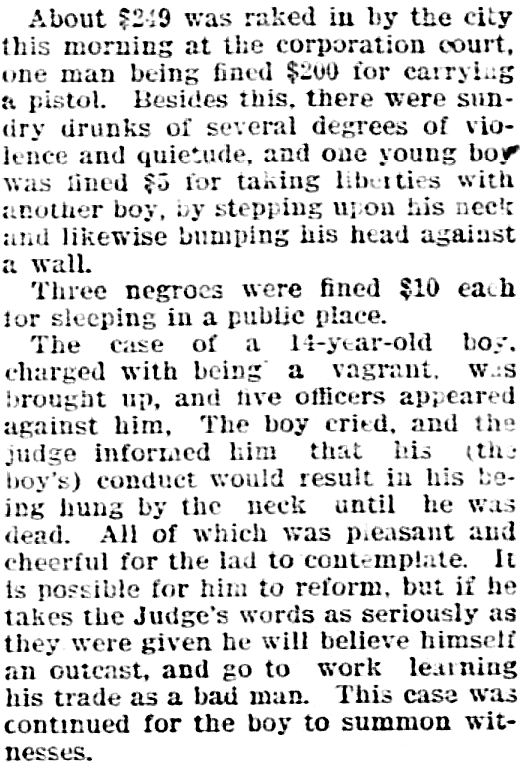
A 14-year-old vagrant was given the scared-straight treatment. (Click for larger image.)

blotter_dallas-notes_FW-morning-register_021601“Dallas Notes” section in The Fort Worth Register, Feb. 16, 1901

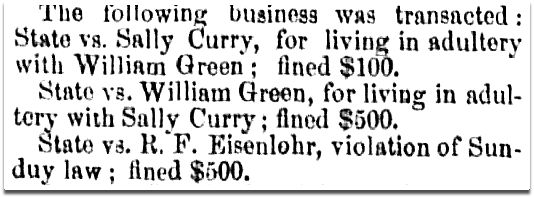
But the real jackpot for the city looks like it might have been in ferreting out adulterers and violators of the Sunday Law (which in the 1880s usually meant selling alcohol on a Sunday, although it was a violation to operate any business or place of amusement on a Sunday).

In the adultery case below — in which the cheating couple was actually living together outside the bounds of legally-sanctioned wedlock — both parties were fined: the woman’s fine was a surprisingly high $100 (in today’s money about $2,500!), but the man’s fine was — let me find a chair — an unbelievably exorbitant $500 (equivalent today to over $12,000!!). And those who pooh-poohed the Sunday Law took an equally incredible hit. Sunday Law scofflaws such as Mr. R. F. Eisenlohr (who ran a respected market and pharmacy) (and who was the father of noted artist E. G. Eisenlohr) were punished with more than slaps on the wrists — in 1880, they were getting “popped” to the tune of five hundred bucks. (These fines seem excessive. Perhaps because they’re cases brought by the state rather than the city or county? I know that at this time the state was hell-bent on enforcing the Sunday Law because, basically, it was being flagrantly disregarded everywhere, so I’m wondering if a fine this steep was meant to send a message to others. But the adultery fine still seems outrageously high.)

courts_dallas-herald_022580Dallas Herald, Feb. 25, 1880

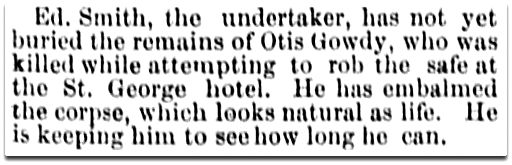
And sometimes crime beat reporters (and enterprising undertakers) have something of a slow day and can just kick back and ponder.

corpse_dal-herald_020982Dallas Herald, Feb. 9, 1882

***

Sources & Notes

Top photo is from Flickr — as I recall, it is not a Texas jail — it might be one in Missouri. As I understand it, the 19th-century Dallas cell most drunks and vagrants would have been thrown into was nowhere near as luxurious as the one seen in this photo. More on that to come.

Interested in what those court fines of yesteryear would be equivalent to in today’s money? Check out the handy-dandy Inflation Calculator, here.

See the previous police blotter round-up — “Police Blotter — 1880s” — here.

*

Copyright © 2016 Paula Bosse. All Rights Reserved.


Highland Park: The Ideal Residence Subdivision — 1907

ad-highland-park_072107Ideal!

by Paula Bosse

HIGHLAND PARK
For natural charms it is in a class by itself.
Beautiful lakes, high altitudes, cool breezes.

And the fishing is great!

***

Sources & Notes

Ad from The Dallas Morning News, July 21, 1907.

*

Copyright © 2016 Paula Bosse. All Rights Reserved.

The Union Depot Hotel Building, Deep Ellum — 1898-1968

union-depot-hotel_1909_uta-detThe old Union Depot Hotel, about 1909 (click for larger image)

by Paula Bosse

Above, we see the hotel known originally as the Union Depot Hotel, built in 1898 across from the very busy old Union Depot, at the intersection of two major rail lines: the Houston & Texas Central (the H&TC, which ran north-south) and the Texas & Pacific (the T&P, which ran east-west). The tracks crossed at the intersection of Central and Pacific — streets named after the two railroads — in the area east of downtown we now call Deep Ellum. The hotel was on the southwest corner of that intersection.

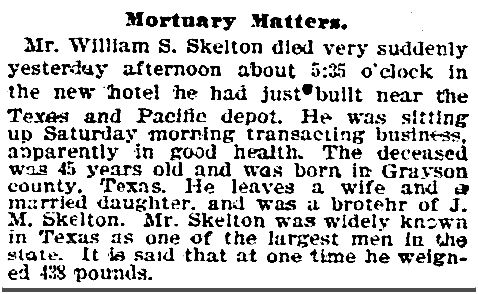
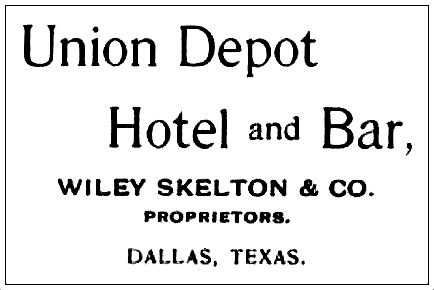
The large, two-story hotel (which also housed a popular cafe and bar) was built by William S. Skelton — more commonly known as Wiley Skelton — to cash in on the large number of travelers coming to Dallas via the bustling passenger depot right across the street. When it opened, it was charging a hefty two bucks a day (the equivalent of about $60.00 in today’s money) — a large-ish sum in 1899, but … location, location, location. This two-dollar-a-day rate to stay at Skelton’s hotel was the same as the base rate of Dallas’ ritziest, priciest hotels, The Windsor and The Oriental. How could Skelton’s “wrong side of the tracks” hotel charge similar rates as the city’s most elegant hotels? Convenience, convenience, convenience. The Union Depot Hotel could not have been more convenient to weary travelers unless it had been located inside the depot.

union-depot-hotel_houston-post_012599Houston Post, Jan. 25, 1899

Skelton was a popular and successful businessman (and noted saloon pugilist) who was known far and wide for his substantial physical bulk. He was a founding member of the city’s “fat men’s club” and was reported to be the heaviest man in the city. When he died suddenly at the age of 45 (probably not a huge surprise, as his obituary mentioned that his weight had, at one time, reached 438 pounds), his new hotel had been open only weeks (perhaps only days).

skelton_dmn_011699Dallas Morning News, Jan. 16, 1899

His unexpected death threw the running of the hotel into confusion. His brother (another famed “fighting fat man”) took over the business side of its operations and occasionally placed ads in the paper seeking a hard-to-find buyer.

union-depot-hotel_1901_portal1901 ad

union-depot-hotel_dmn_111602DMN, Nov. 16, 1902

Eventually the hotel was sold, and it went through several owners and name changes over the years. Then, in 1916, a major catastrophe struck: brand new Union Station, which was waaaay on the other side of town, opened, consolidating passenger rail service to one depot, resulting in the shuttering of most of the city’s smaller depots. Location, location, location wasn’t such a great thing for the old Skelton hotel after this.

The hotel went through many changes over the years, but after the closing (and later razing) of the old Union Depot, it was on a general, inevitable, slide downward. By the time it was demolished in 1968 — when large swaths along Central Avenue were leveled to facilitate highway construction — the building was in disrepair and, apparently, long-vacant. It stood for 70 years.

*

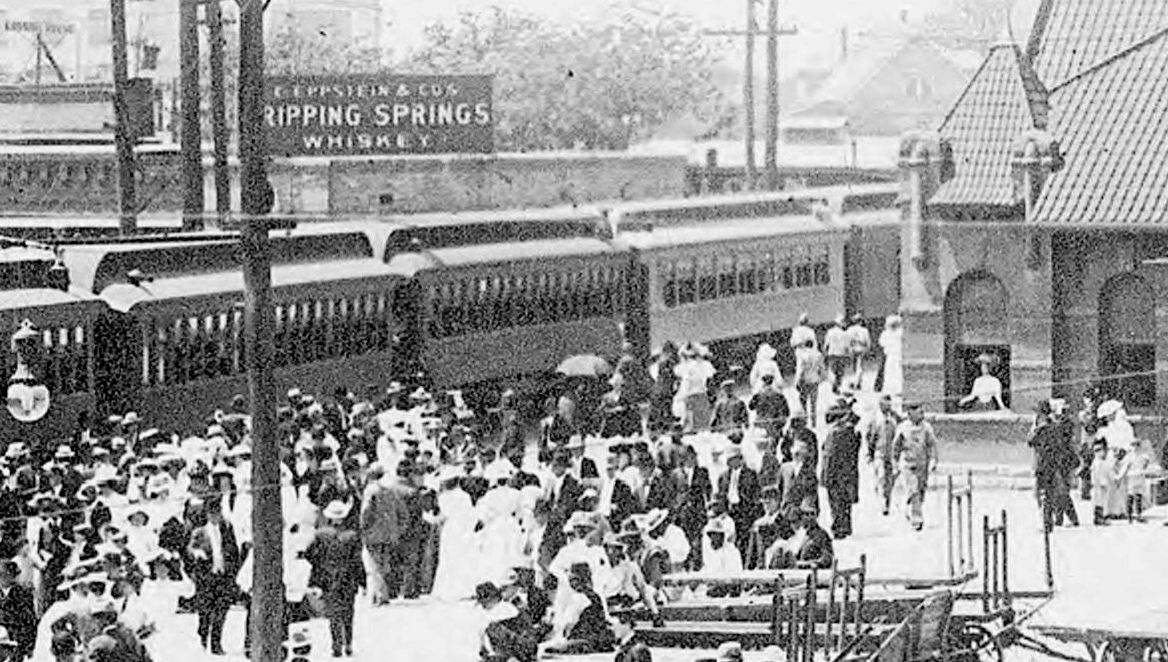
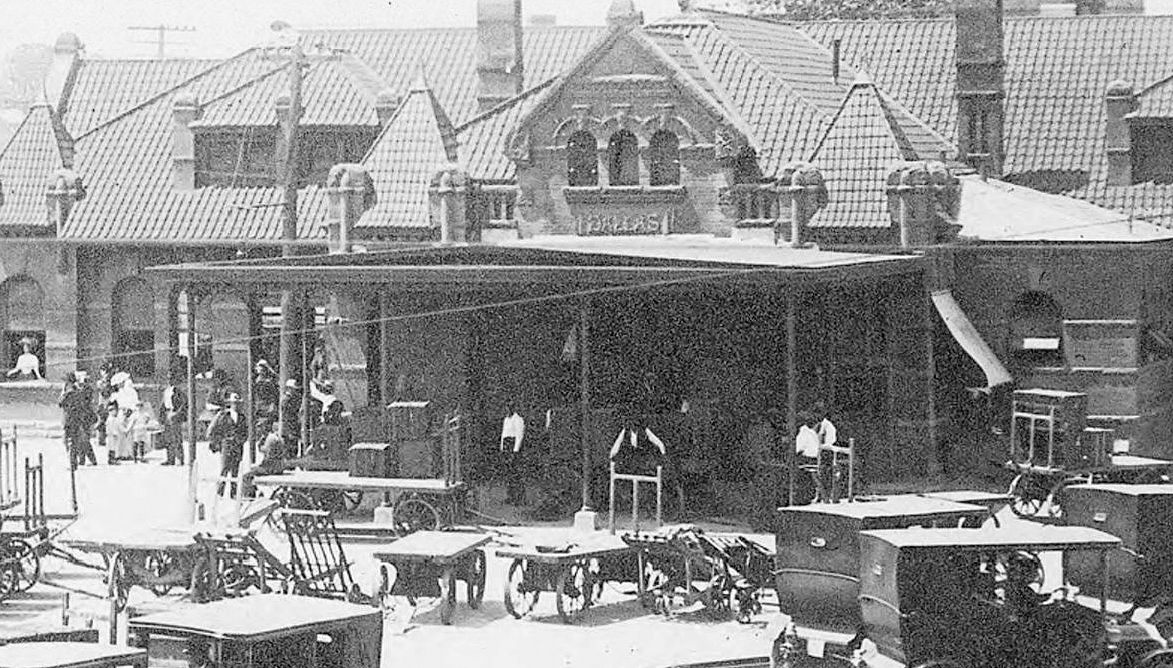
Below is a photo taken from Elm Street in 1908 or 1909, when the hotel (seen at the top left) was owned by Charles S. Conerty and named the Conerty Hotel (you can see the name on two signs, but you have to really zoom in to make them out). Conerty, an Irishman who had previously run bars, owned the hotel very briefly. By May of 1909, plagued with legal troubles stemming from his being charged with selling liquor on a Sunday, Conerty sold the hotel (which he seems to have been running as a boarding house), stating in his classified ad that he was “leaving city.” (He did not leave the city.) In 1910, with a new owner, the hotel was once again known as the Union Depot Hotel.

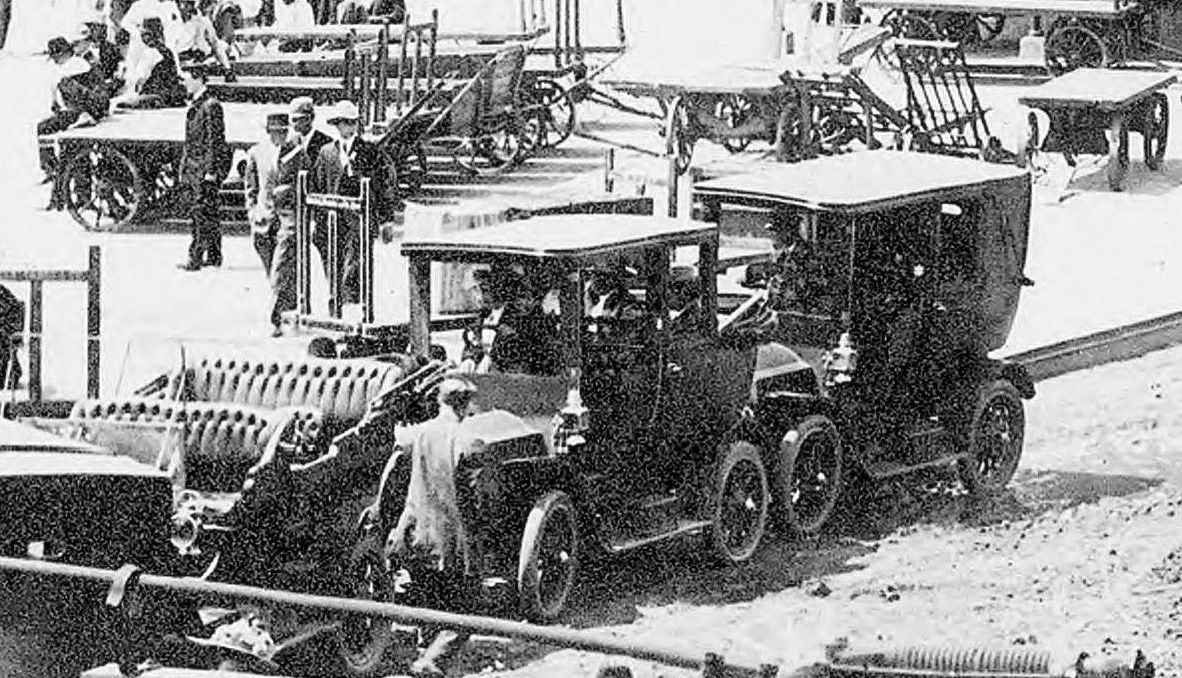
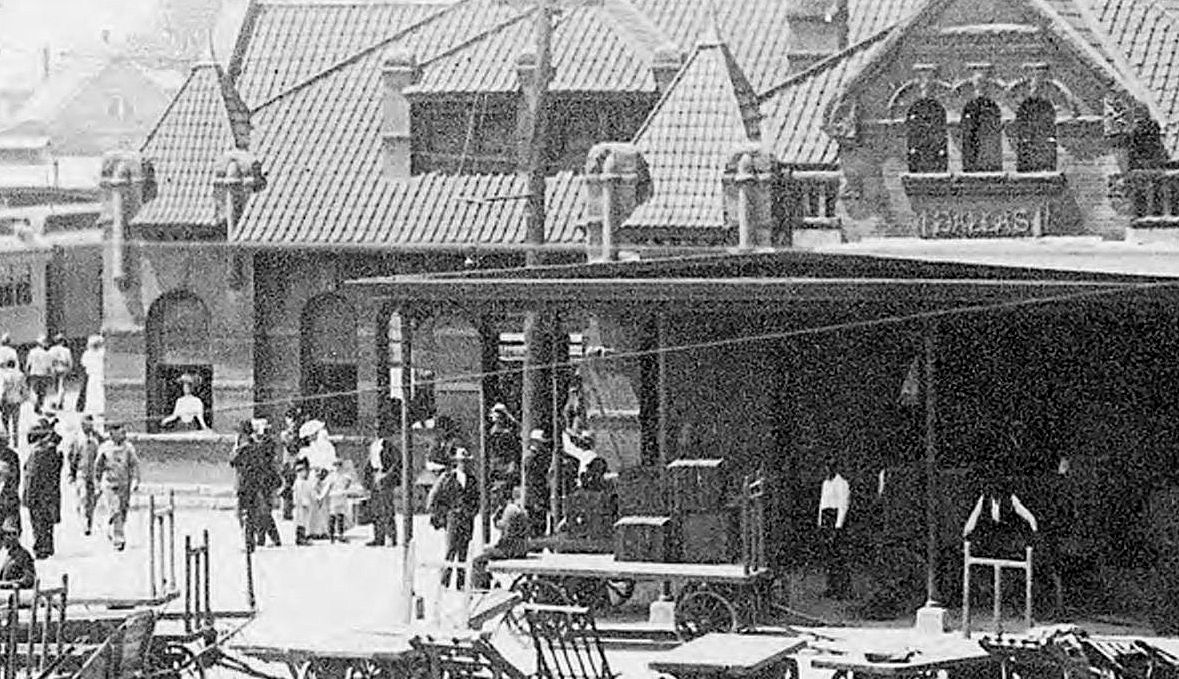
Back to the photo. Across Central Avenue from the hotel is the old Union Depot, where there was always a lot going on. Let’s look at the photo a little more closely. (Click photos to see larger images.)

old-union-depot_degolyer_ca1910

old-union-depot_degolyer_det1

old-union-depot_degolyer_det2

old-union-depot_degolyer-det3

old-union-depot_degolyer_det4

old-union-depot_degolyer_det5

old-union-depot_degolyer_det6

Just seven or eight years after this photo was taken, all that human traffic was gone.

In the fall of 1968, having been vacant for years and counting down its final hours, Dallas Morning News writer Doug Domeier wrote about the old run-down hotel which had long outlived the passenger depot it had been built to serve (see the article “Demolition Leveling Once-Noisy Deep Elm,” DMN, Oct. 19, 1968). Domeier’s entertaining article about those early days includes memories of Lizzie Mae Bass, who once worked in the hotel’s cafe as a waitress and remembers when “horses back[ed] away in fright when a locomotive pulled in at the lively intersection linking the Houston and Texas Central with the Texas & Pacific.”

And today? You’d never EVER suspect that that patch of empty land at the edge of Deep Ellum was ever occupied by one of the city’s busiest train depots.

*

So where was it? Get a good visual idea of how things were laid out in the Sanborn map from 1905, here. Below is a street map that shows where the hotel was (red star) and where the train depot was (blue star). These days? Depressing. See it here (the view is looking north from Elm — the hotel would have been under the overpass, the train station straight ahead).

union-depot-hotel_1952-mapsco1952 Mapsco

It’s interesting to note that during the heyday of the Union Depot, the west side of the block of Central Ave. which ran between Elm and Pacific was the only block in this area not filled with black-owned businesses or residences. When the depot shut down and white-owned businesses moved out, the block began to fill with popular African-American establishments. It’s also interesting (to me, anyway!) to realize that the Gypsy Tea Room of the 1930s was just a few steps to the left of the hotel in the top photo. It took me forever to try to figure out where the Gypsy Tea Room had been — I wrote about it here.

***

Sources & Notes

Top photo is a detail of a larger photo, from the Squire Haskins Photography, Inc. Collection, University of Texas at Arlington Libraries; it is accessible here. The same photograph is shown in full farther down the post — this copy is from the DeGolyer Library, Central University Libraries, Southern Methodist University, and it is accessible here. The quality of both photos makes it difficult to zoom in on them with much clarity, but both sites offer very large images to view.

As mentioned above, an entertaining Dallas Morning News article full of historical info about the area around the depot is highly recommended: “Demolition Leveling Once-Noisy Deep Elm” by Doug Domeier (DMN, Oct. 19, 1968). (I’m not sure why the hotel is referred to as the “Grand Central Station Hotel” throughout — just substitute “Union Depot Hotel” whenever you come across that incorrect name.) The article also has a few paragraphs about the Harlem Theater which was also about to be torn down as part of what Domeier described as the “brutal change” then affecting Deep Ellum.

See a great early-’20s photo of the hotel building (the Tip-Top Tailors moved in around 1922) in the book Deep Ellum: The Other Side of Dallas by Alan Govenar and Jay Brakefield, here (the view is from Pacific to the southwest).

A related Flashback Dallas post — “The Old Union Depot in East Dallas: 1897-1935” — can be read here.

All images larger when clicked.

*

Copyright © 2016 Paula Bosse. All Rights Reserved.


On the Grounds of the Ursuline Academy and Convent

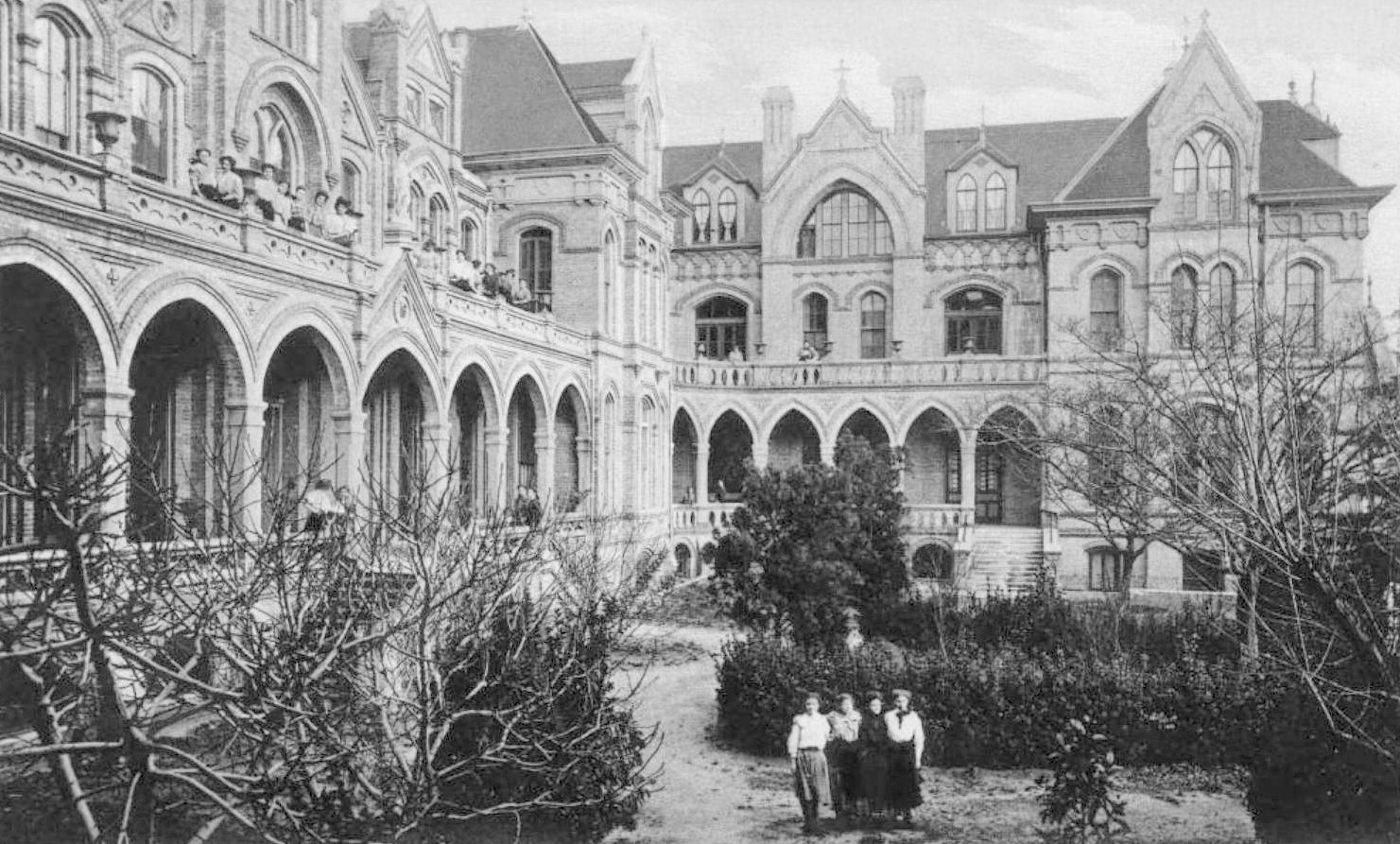
ursuline-convent_cook-colln_degolyer_smuBetween classes… (click for much larger image)

by Paula Bosse

I love this photo of Ursuline girls at the fantastically ornate school and convent in Old East Dallas. See more photos of the school, convent, and grounds in my post “Nicholas J. Clayton’s Neo-Gothic Ursuline Academy,” here.

***

Sources & Notes

Photo by Clogenson, from a postcard in the George W. Cook Dallas/Texas Image Collection, DeGolyer Library, Central University Libraries, Southern Methodist University; it is accessible here. I have un-colorized it.

See the scale of the Ursuline property on a 1922 Sanborn map, here. It is now mostly a parking lot, across from the Dallas Theological Seminary; a sad 21st-century view of what the former campus property looks like is here.

*

Copyright © 2016 Paula Bosse. All Rights Reserved.


“The Trend is Highland Parkward”– 1909-1911

lakeside_dmn_092510Lakeside Drive, 1910 (click for larger image)

by Paula Bosse

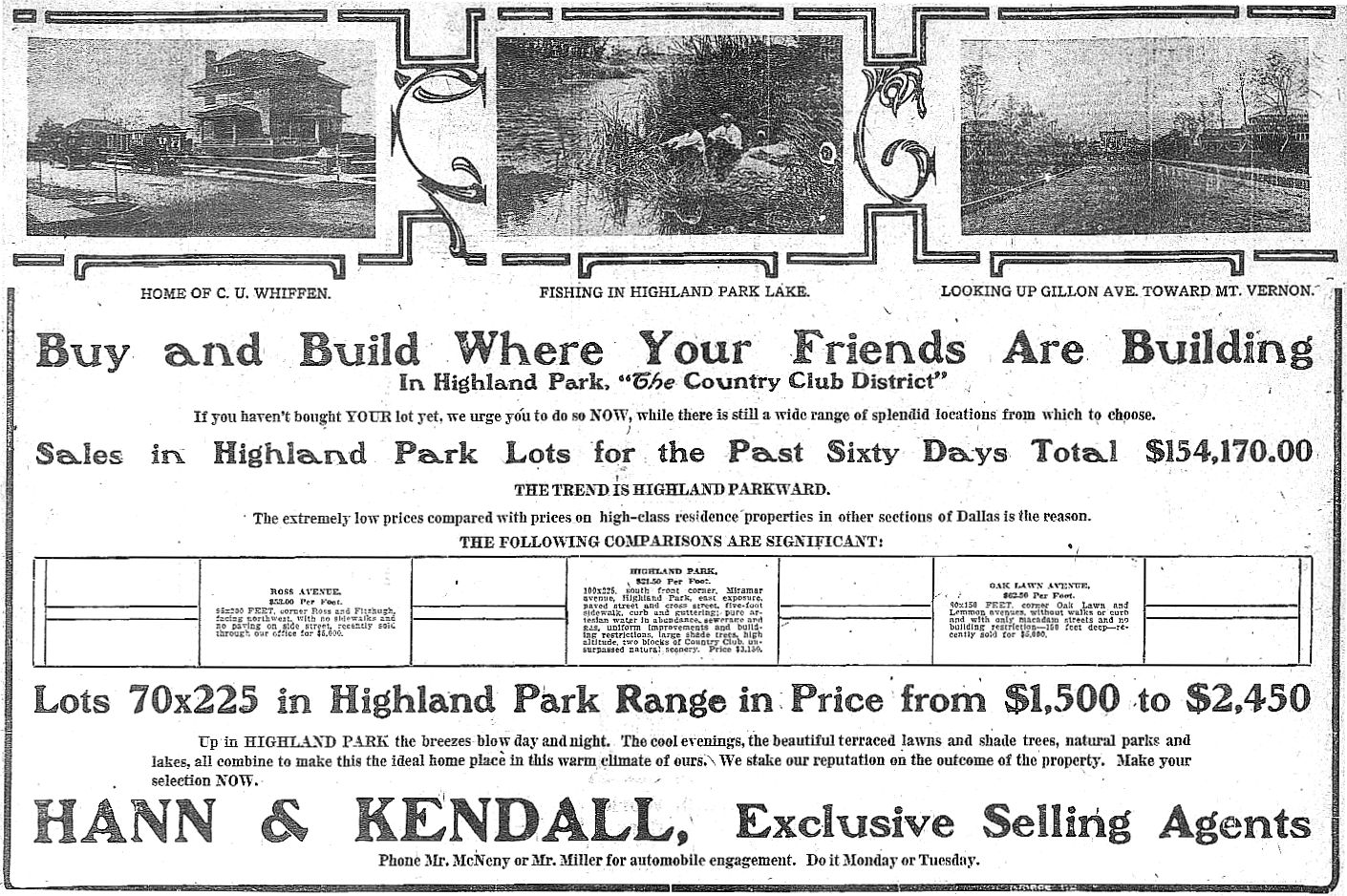
Three early Hann & Kimball Highland Park real estate ads urging people to “Buy and Build Where Your Friends Are Building, In Highland Park, ‘THE Country Club District’!” (Click to see larger images.)

highland-park_second-installment_dmn_070409Dallas Morning News, July 4, 1909

*

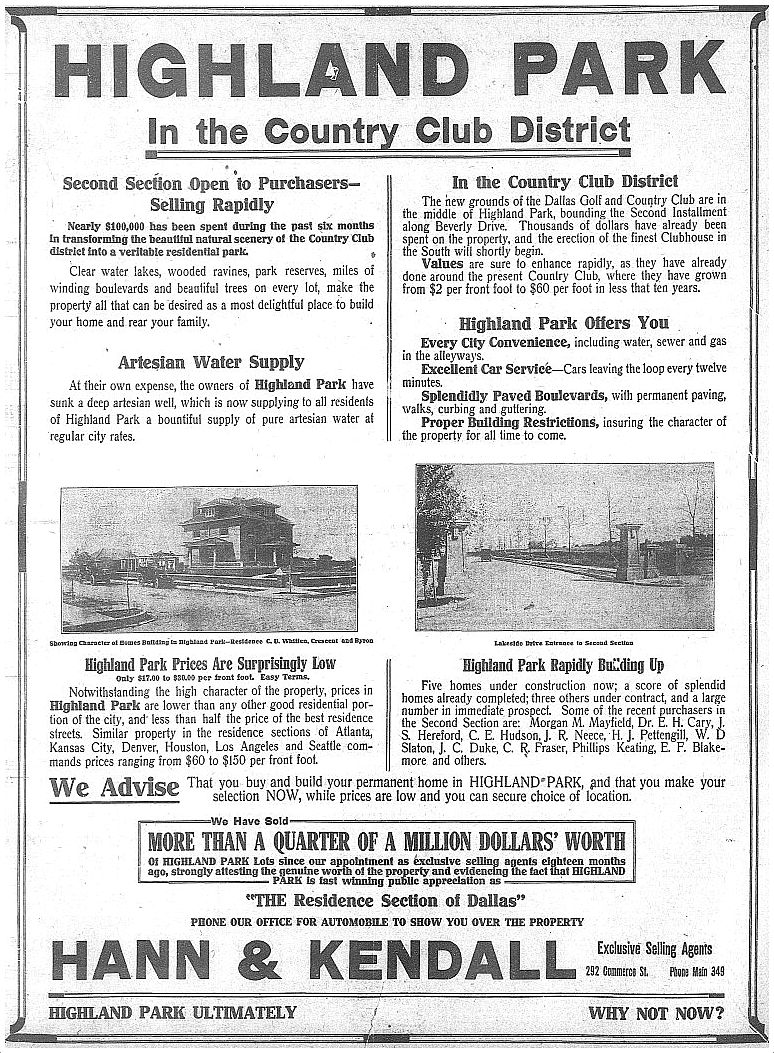
“Highland Park Ultimately. Why Not Now?”

ad-highland-park_dmn_092510
DMN, Sept. 25, 1910

*

“Up in Highland Park the breezes blow day and night. The cool evenings, the beautiful terraced lawns and shade trees, natural parks and lakes, all combine to make this the ideal home place in this warm climate of ours. We stake our reputation on the outcome of the property. Make your selection NOW.”

highland-park_dmn_051411_ad
DMN, May 14, 1911

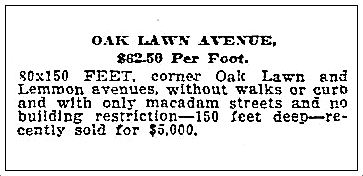
The hard-to-read “significant comparison” text from the middle of the ad above:

ad-highland-park_dmn_051411-det1

ad-highland-park_dmn_051411-det

ad-highland-park_dmn_051411-det3

*

Is this the same view as seen in the top photo showing “Lakeside Drive Entrance to Second Section” (off Armstrong)?

lakeside_armstrong-google
Google Street View

Hope your forebears didn’t miss out! (Mine did!)

***

Sources & Notes

Read more about the C. U. Whiffen house featured in both the 1910 and 1911 ads here. I’m happy to report the lovely house at Crescent and Byron is still standing.

Click pictures for larger images!

*

Copyright © 2016 Paula Bosse. All Rights Reserved.