Flashback : Dallas

A Miscellany: History, Ads, Pop Culture

Category: 1970s

The Last Traces of Vickery Park Are Now Definitely Gone

vickery-park_demo_062118_d_PEBThe last vestige of a one-time summer destination…

by Paula Bosse

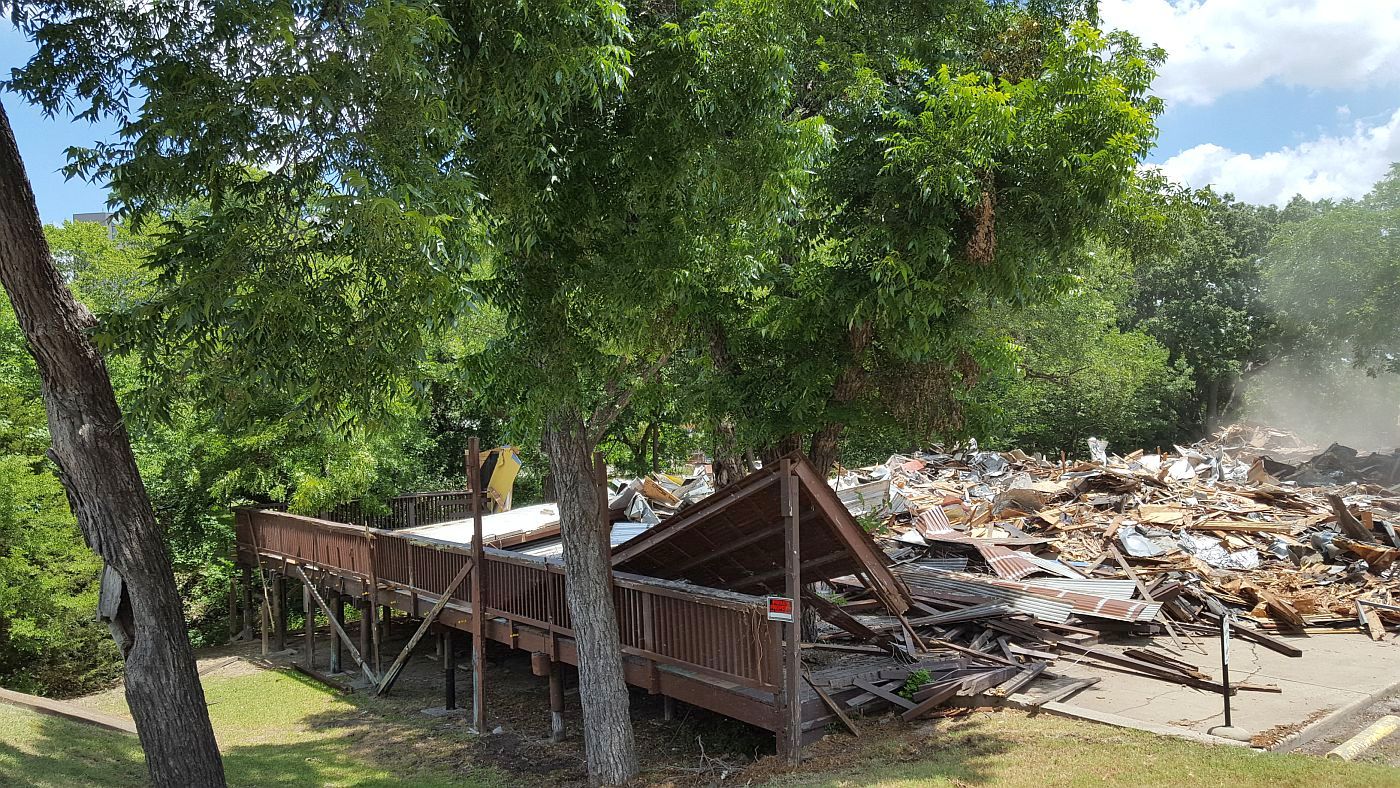
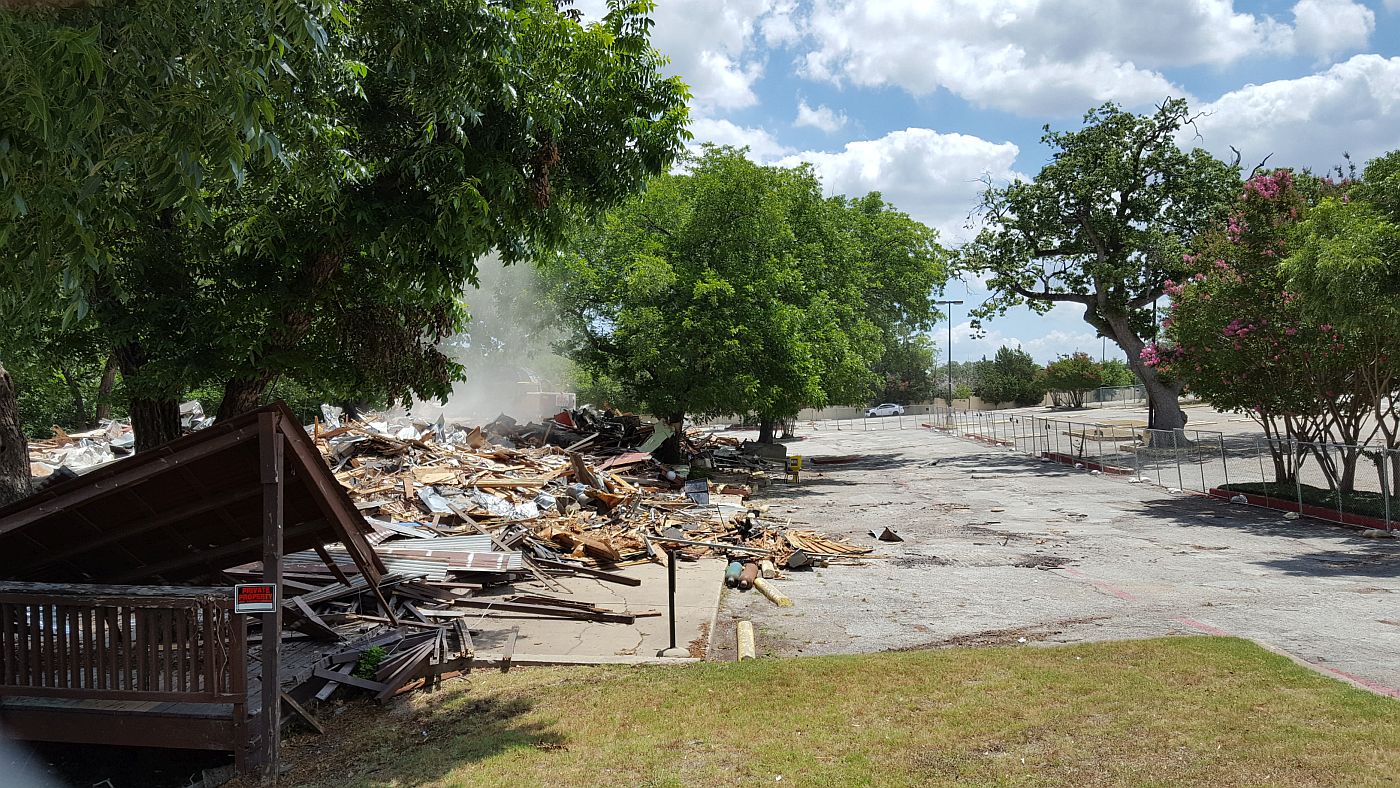
Driving along Greenville Avenue this morning, I noticed a pile of rubble where Vickery Park once stood (just south of Walnut Hill, across from Presbyterian Hospital). It seemed sadly ironic that the land which was once occupied by a fondly-remembered swimming pool and picnic area was heaped with demolished buildings on the first day of summer.

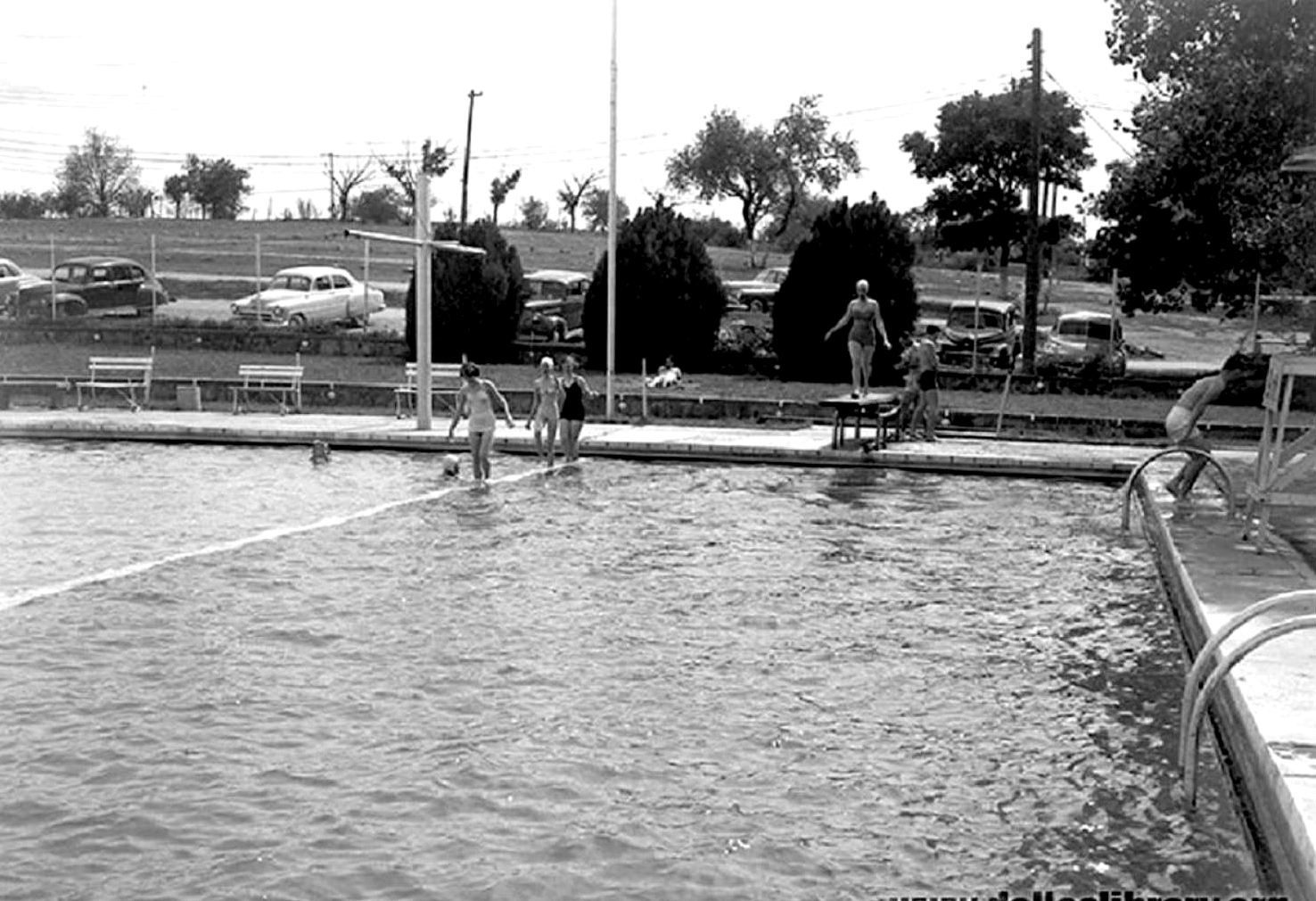
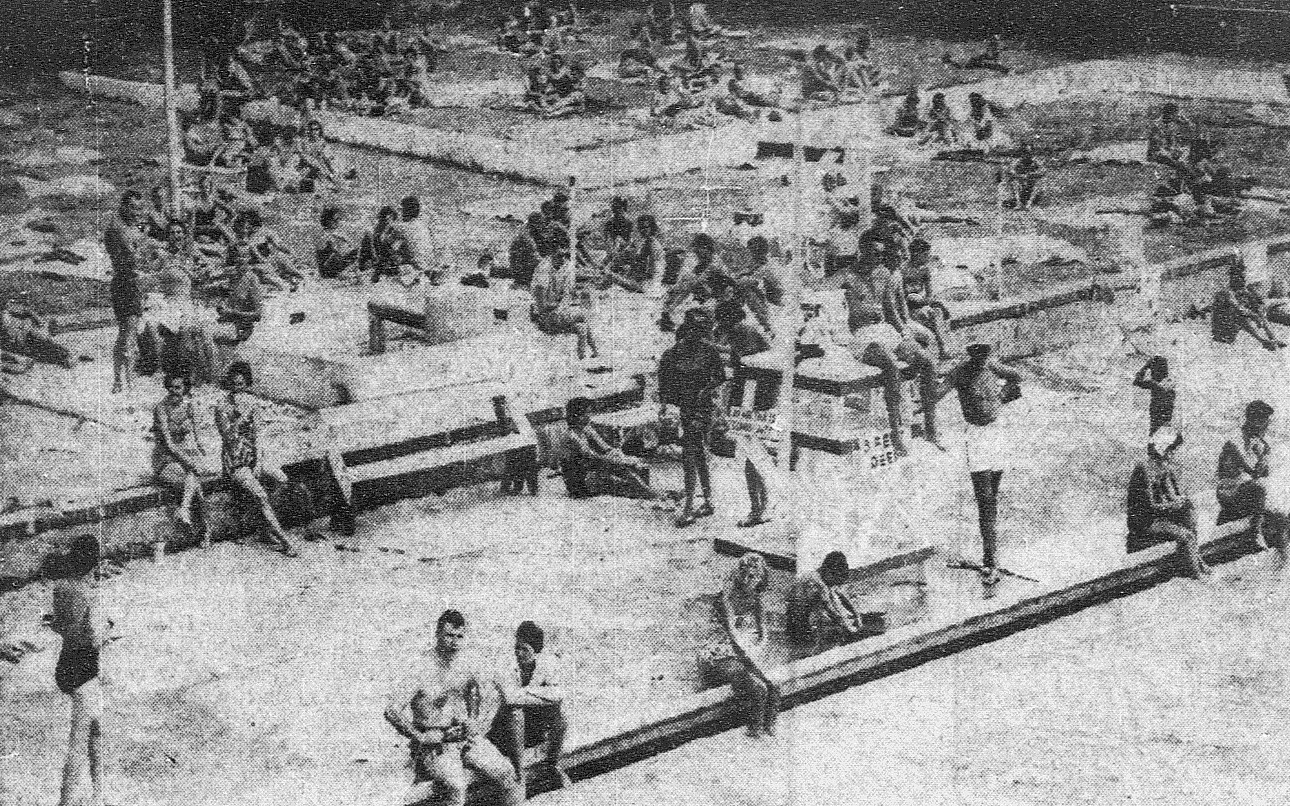
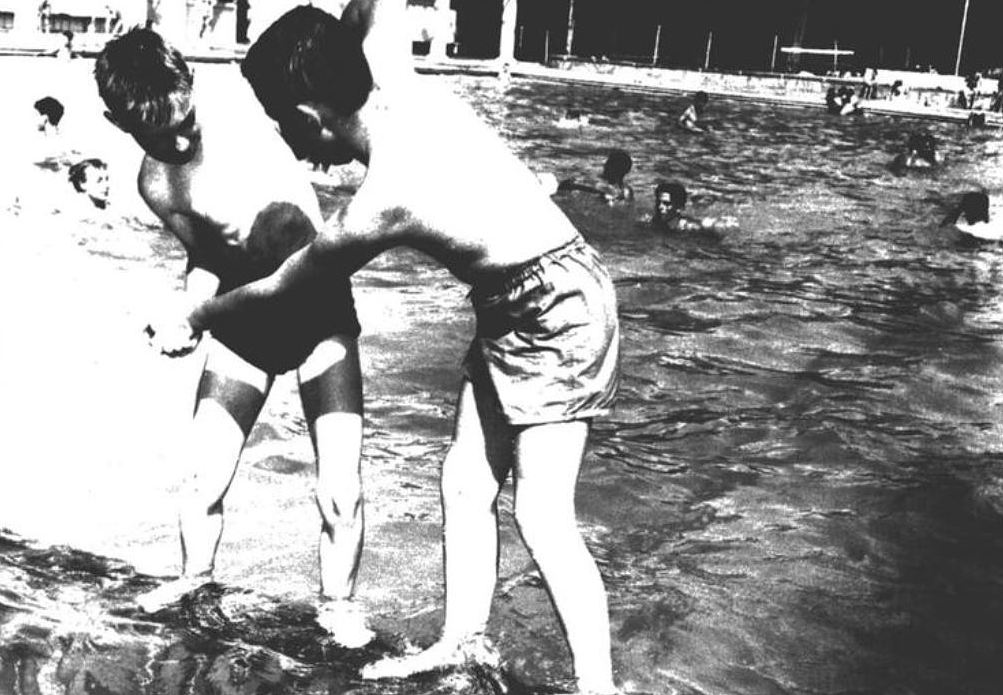
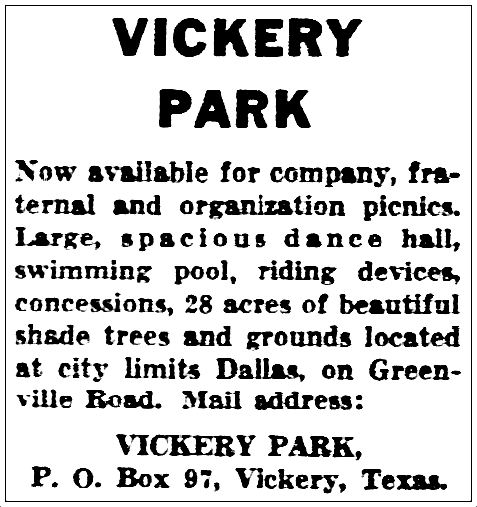
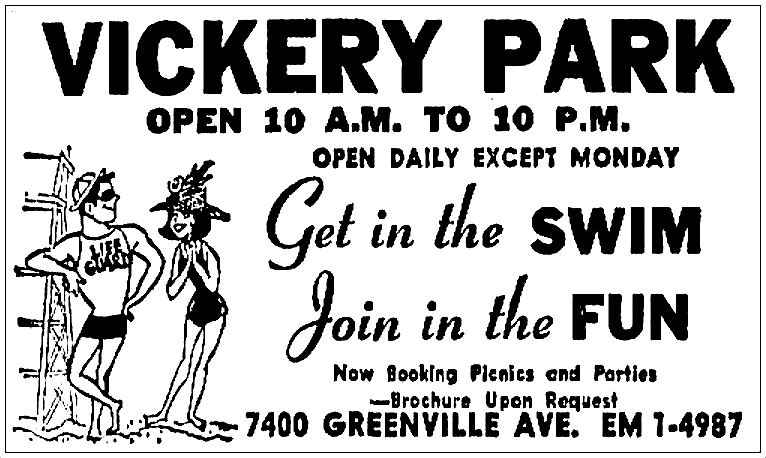
I never saw the huge swimming pool myself, but from everything I’ve read about it over the years, it seems to have been very, very popular with generations of Dallasites. It was built in the then-rural community of Vickery as far back as the 1930s (well before Vickery was annexed by the city of Dallas), and it was still open at least through the ’60s.

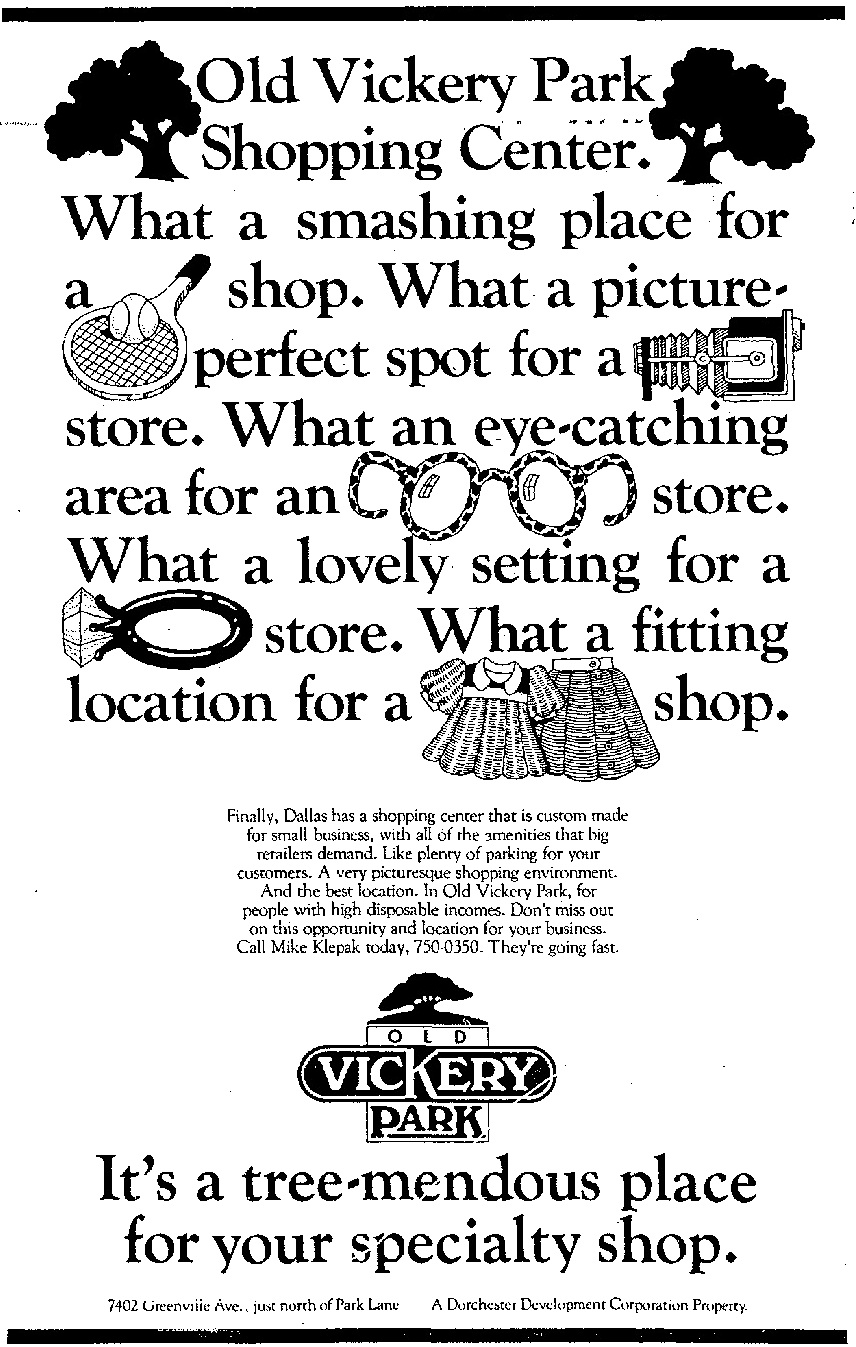
The pool and amusement park were long gone when the (now-demolished) small shopping and restaurant area was built in the mid-1970s on a very pretty wooded site alongside White Rock Creek. Initially, the developer envisioned lots of quaint little boutiques and cafes (similar to those found in the Quadrangle) dotting the banks of White Rock Creek, creating Dallas’ version of San Antonio’s River Walk. …No one has ever accused real estate developers of dreaming small.

It’s sad to see this anachronistic, funky little area go away. My vague memories of childhood games of miniature golf in the ’70s are about to get vaguer.

vickery-park_demo_062118_a_PEB

*

vickery-park_demo_062118_b_PEB

I’ve never known exactly where the pool was, but I think it might have been at the back right of the photo above, just off Pineland.

vickery-park-pool_dpl_pinterest

vickery-park-swimming-pool_1950s

vickery-park-swimming-pool_legacies_fall-2002

vickery-park-pool_19461946

swim_vickery-park_19651965

1978_vickery-park_sept-1978Sept., 1978

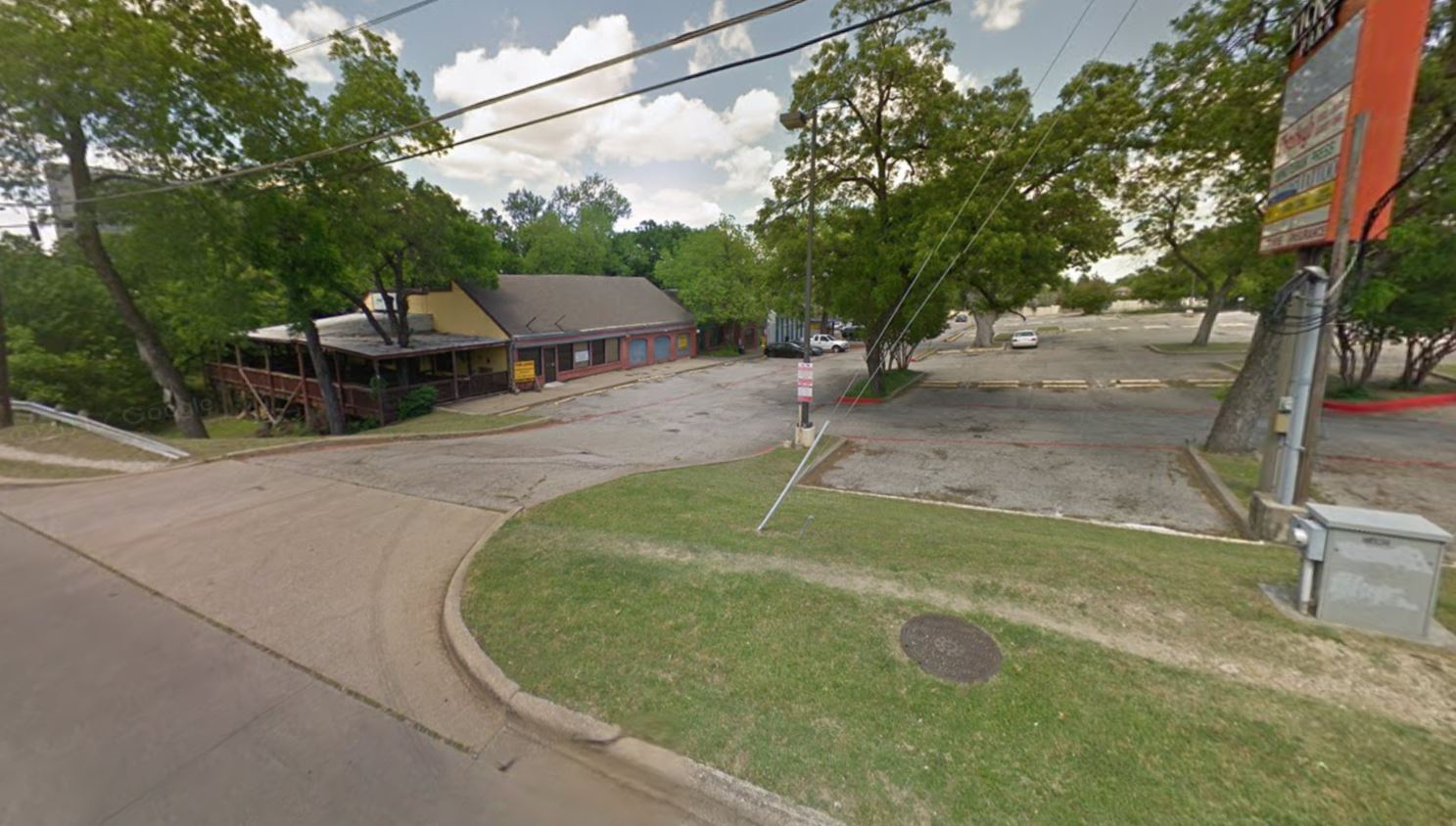
vickery_google_may-2017Google Street View

Above is a Google Street View from May, 2017. If you’d like to take a little virtual “drive” through the parking lot, hie yourself over to Google, here.

*

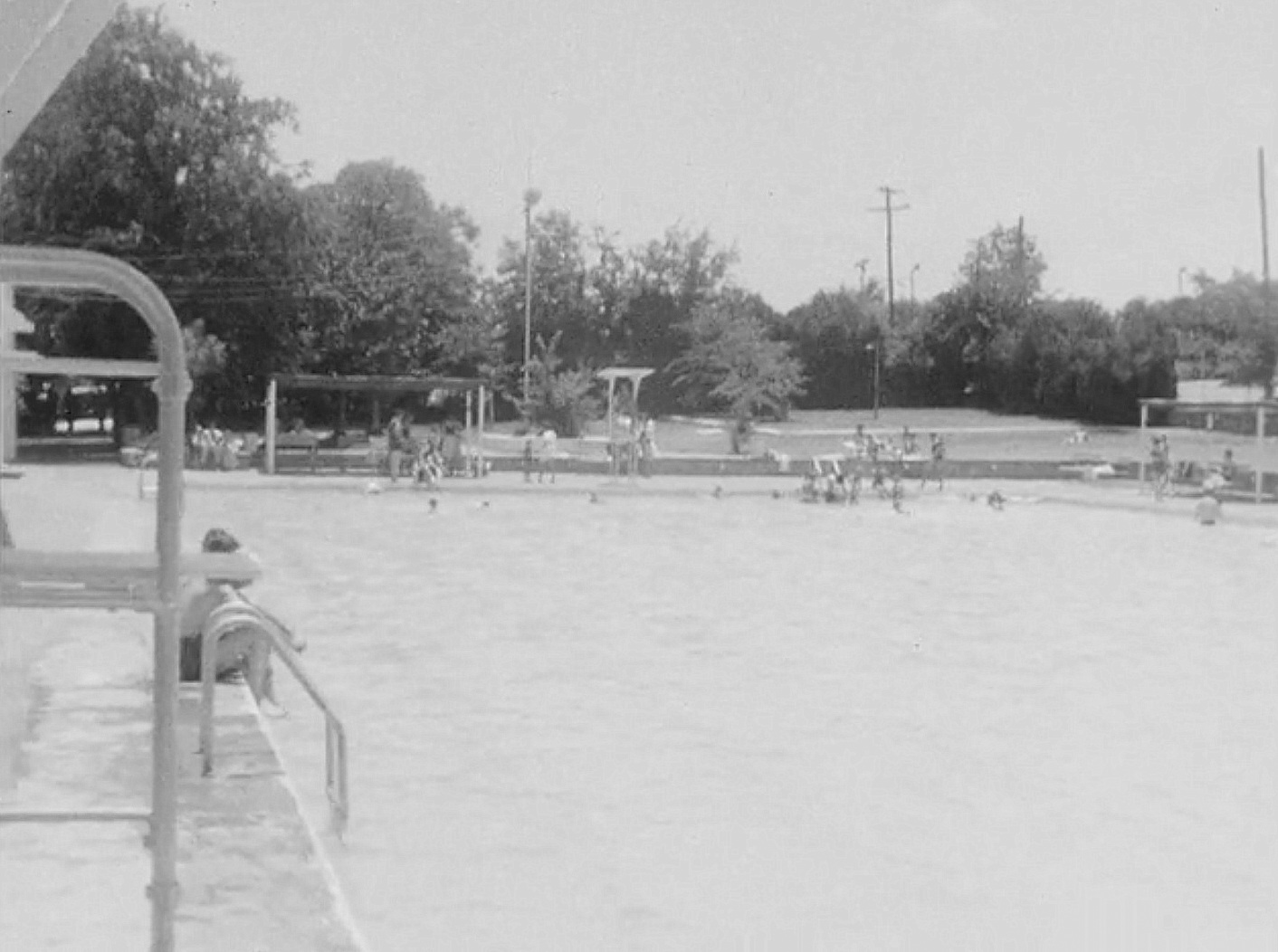
Here are two pieces of film footage showing the pool. The first one is from June, 1964 and is (silent) news footage shown on WBAP Channel 5. It’s a little unsettling, as it shows a boy being rushed off by ambulance after an accident, but it does have some interesting shots of the pool and the park, which I’ve certainly never seen before. I am unable to embed the video, but you can watch it here. (The script for the story is here.) (Footage is from the WBAP-TV News collection, UNT Libraries Special Collections.) Here is a screen capture:

vickery-pool_WBAP_portal_062364

The second is undated, but the clips are from home movies.

***

Sources & Notes

Rubble photos taken by me on June 21, 2018 — construction was underway. And it was extremely HOT.

The first historic photo appears to be a Dallas Public Library photo, with most of the watermark cropped off. I found it on Pinterest, here.

The third photo, showing two boys, was found in the Fall 2002 issue of Legacies.

There are memories-galore of Vickery here.

A couple of interesting tidbits:

  • The Vickery pool was used as an officers’ recreation club during World War II by the Fifth Ferrying Group; an aquatic meet was held there in June, 1945 which featured a variety of exhibitions, including a water ballet performed by “half a dozen mermaids from University Park.”
  • In the early 1970s, Vickery Park (…not to be confused with Vickery Place…) was owned by the Seventh Day Adventist Church. They reopened the park as a “family recreation center” — unlike the earlier days, alcohol was no longer sold. They sold the land to developers around 1974 or 1975; in the summer of 1975, the recreation center was bulldozed and the pool was paved over (and became a parking lot).

Articles on the disappearing community of Vickery can be found in the archives of The Dallas Morning News:

  • “Progress Overtakes Old Vickery” by Rena Pederson, with photos by Eli Grothe (DMN, August 3, 1975)
  • “Store Provides Feed For Thought On Town’s Past” (Vickery Feed Store) by Steve Kenny (DMN, Nov. 18, 1979)

*

Copyright © 2018 Paula Bosse. All Rights Reserved.
“Dr. Dante” Dodges Bullets in Dallas — 1970

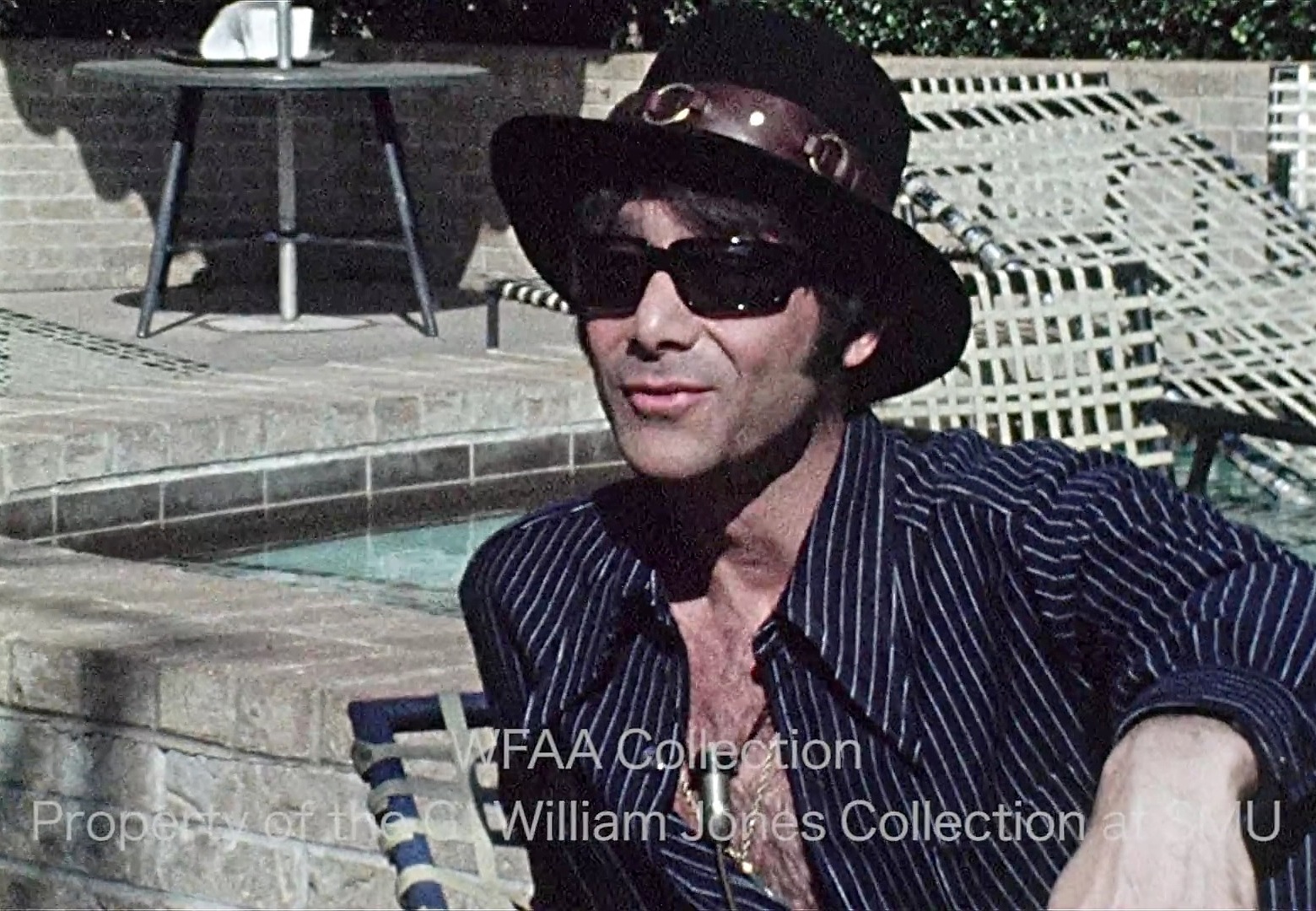
dante_wfaa_SMU_1The Dr. is in…

by Paula Bosse

I’ve written about the interesting old WFAA Channel 8 news footage which was either never aired or was aired decades ago and hasn’t been seen since (such as newly discovered Jack Ruby footage and a fantastic short interview with Jimi Hendrix at Love Field), which is part of an ongoing digitization project by SMU’s Hamon Arts Library as part of the G. William Jones Film and Video Collection. There are so many (SO MANY!) quirky clips that are being uploaded to the web almost daily that it’s easy to miss the super-quirky.

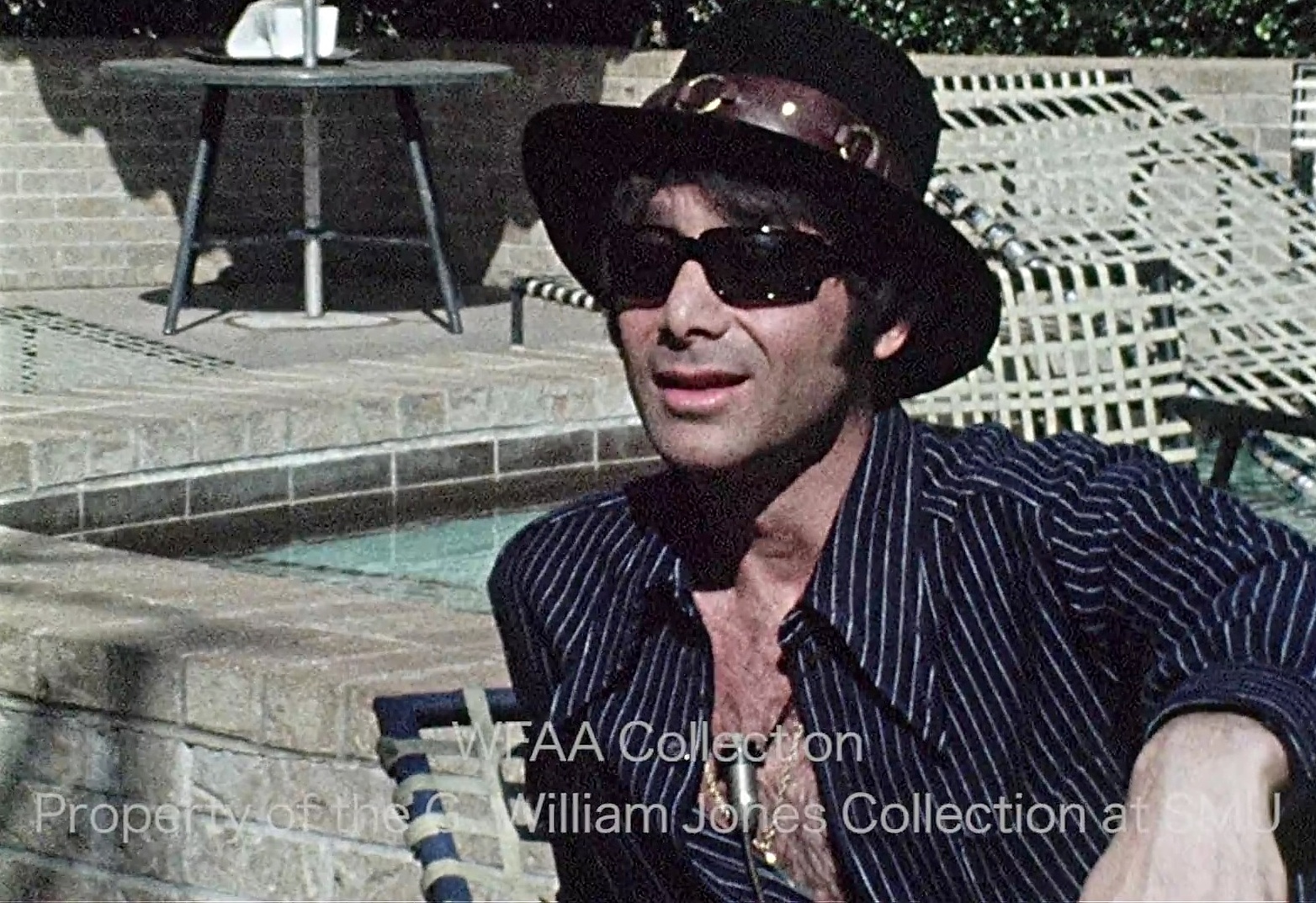
A week and a half ago the clip below was posted online, featuring an unidentified man who was much groovier-looking than one would normally have seen on the nightly Channel 8 newscast — he said that someone had shot at him from a car, just before dawn, near the Hilton Inn at Mockingbird and Central. He seemed pretty sure they were associates of Frank Sinatra, who was not at all happy that our mystery man had been fraternizing with his daughter, the singer Nancy Sinatra. Take a look at this short (1:43) footage from May, 1970.

*

Okay, that was weird. “I’ve been shot at *many* times — for one reason or another….” Add in an unexpected mention of Mrs. Baird’s bakery and, yeah, weird.

Who was that guy? The only information the SMU digitizers had on the out-of-context snippet was that it was filmed on May 21, 1970. It was obvious the guy was not local and, with that voice (and apparent ready access to Nancy Sinatra), he was most likely in the entertainment business. I could find no mention of this incident in The Dallas Morning News archives — I tried using every conceivable keyword I could think of. Nothing. So I checked Newspapers.com and found an AP story about this which had run all over the country — just not in the city where the incident had occurred.

The guy is Ronald Dante, who has gone by a variety of aliases but is generally known as “Dr. Dante,” the stage name he used for decades as a successful nightclub hypnotist. (According to a 1985 Dallas Morning News profile, he had legally changed his name from Ronald Hugh Pellar to “Dr. Dante” — with “Doctor” being his legal first name.) (This may not be true.) (Most of what Dr. Dante has said is not true.) At the time of the shooting described in the video above, he was performing at The Losers Club at 5438 E. Mockingbird, about 2 blocks from his hotel, the Hilton Inn.

To describe Ron Dante (who was born in Chicago on Feb. 5, 1930) (and is not to be confused with the Ron Dante who was the lead singer of The Archies) as “colorful” is an understatement. His extraordinarily … um … extreme life as a performer, con-man, fraudster, schemer, opportunist, convicted felon, etc., is too much to cover here, but there is a fantastic 2006 profile of him from the San Diego Union-Tribune here (seriously, READ THIS! — the part about him being orphaned in Kuala Lumpur when his family was attacked by Malaysian insurgents is great — in actuality, U.S. Census records from 1930 and 1940 show that he grew up in a nice Chicago neighborhood with his very-much-alive parents and brother).

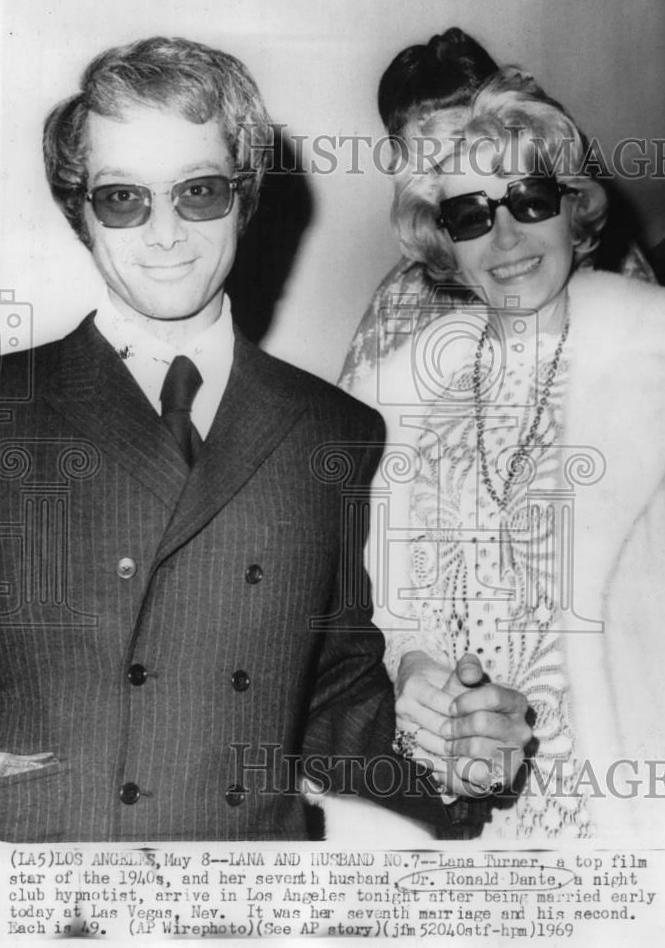
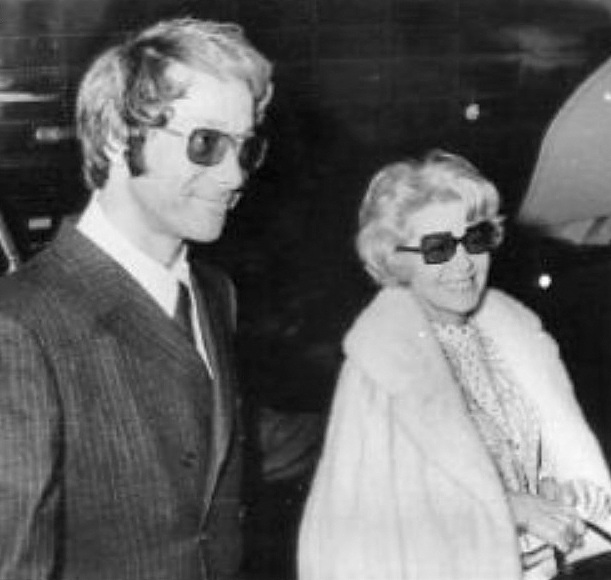
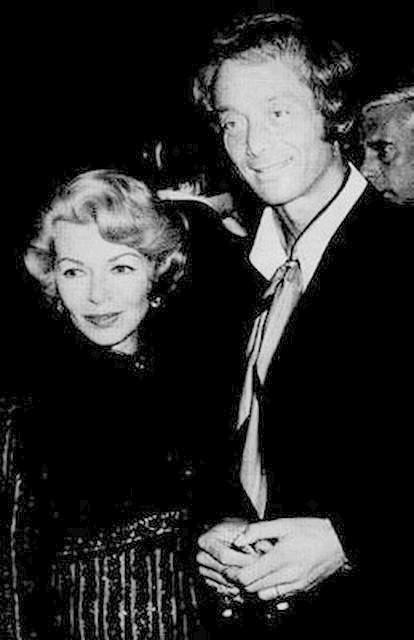
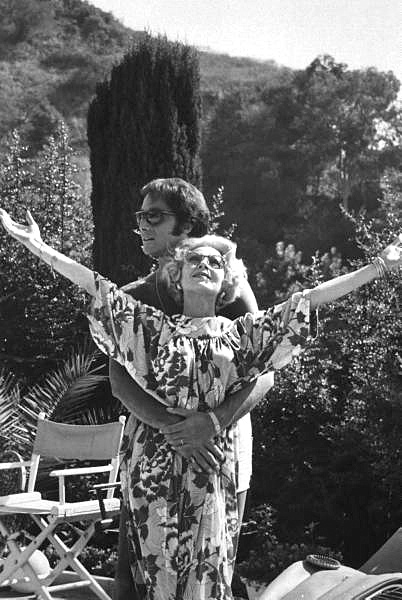
But back to Dallas in May, 1970. Dante was, at the time, the estranged husband of Hollywood icon Lana Turner. They had married in May, 1969; it was Lana’s seventh (and final) marriage. In news reports of the nuptials, Dante was reported to be the same age as his new bride, but he was actually almost 10 years younger. (In the Channel 8 video above he is 40.) Below are some photos of the happy couple before Lana began to realize what she’d gotten herself into.

dante-lana_just-married_1969_ebay    dante_lana_pinterest

lana_dante_pinterest    dante_turner_california_ua

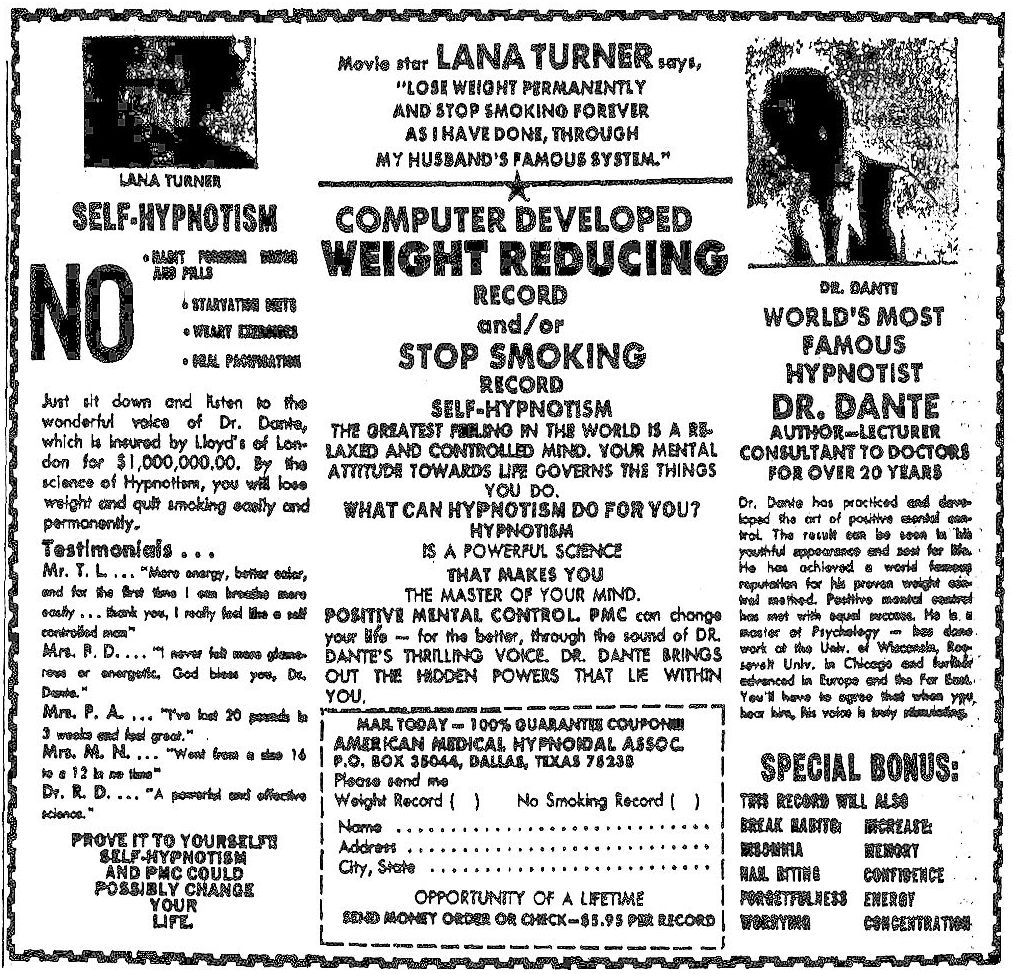
Their marriage hit the skids within 6 months, with Turner accusing Dante of misappropriating $35,000 of her money and, later, disappearing with many of her jewels, worth $100,000; on Nov. 14, 1969, Dante (not Lana!) filed for divorce on grounds of “extreme mental cruelty.” Two days later, the ad below touting a “computer-developed” self-hypnosis recording by Dante appeared in a Dallas paper, complete with a suspect thumbs-up testimonial attributed to estranged and recently-bilked Lana Turner (also worth a raised eyebrow was the inclusion of the even more suspect “American Medical Hypnoidal Assoc.” office which resided in a Dallas post office box) (click to see larger image):

dante_ad_nov-1969
Nov. 16, 1969

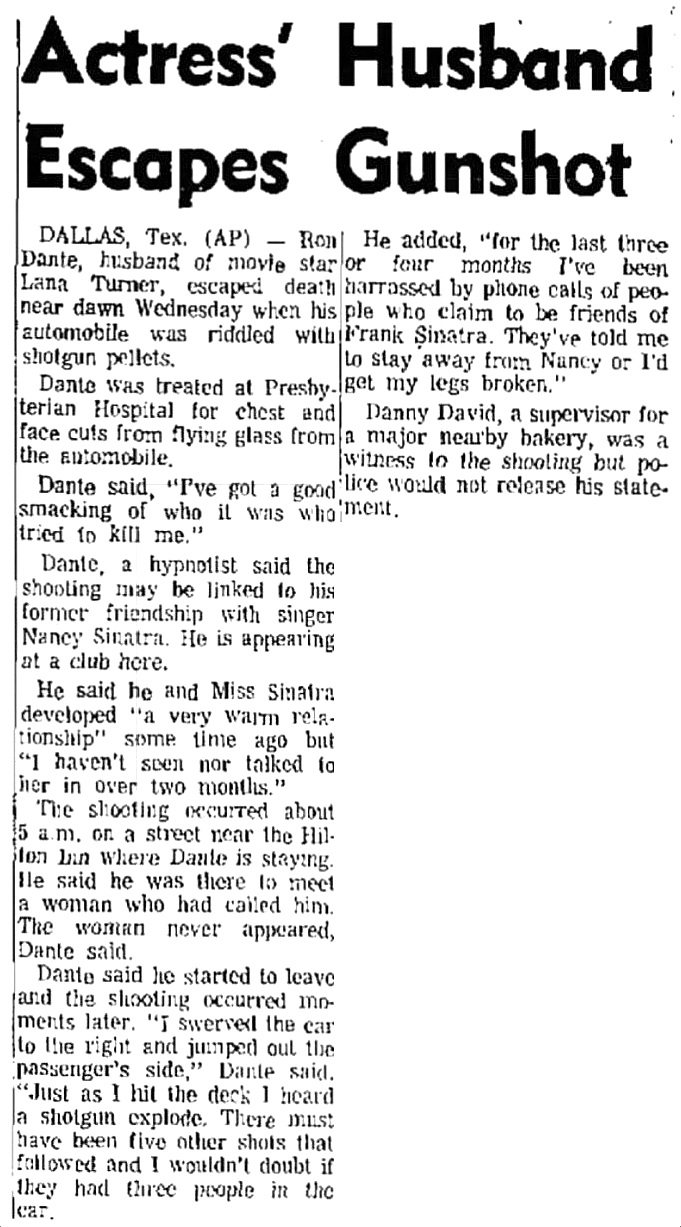
Six months later, Dante was in Dallas, claiming to have been shot at by men sent by Frank Sinatra to warn him to stop seeing his daughter Nancy. (A similar “being shot at” scenario was reported by Dante in Los Angeles in June, 1969 — photo here — Sinatra was not implicated by Dante in that shooting, but Lana Turner wondered about it in her 1982 autobiography: “Shortly after our wedding he was shot at, or so he said, in an underground garage, by a gunman wearing an Australian bush hat. It got a lot of attention in the papers — maybe that was what he wanted.”) One might reasonably wonder whether Dante was lying about the shooting in Dallas, but there seems to have been a witness: a Mrs. Baird’s employee, David Davis (whose name was misspelled in wire reports). Here’s the Associated Press report of the incident:

dante-ron_ap-wire_abilene-TX-reporter-news_052170AP wire story, May 21, 1970 (click to read)

Other reports noted that “a spokesman for Miss Sinatra said she did not know [Dante]” or had even ever heard of him; a spokesman for Miss Turner said they had been separated for several months and “she doesn’t even know where he is.” (It should be noted that Frank Sinatra had had a very steamy affair with Lana Turner in the 1940s — a tidbit which just adds all sorts of weird tangents to this story.)

I never saw a follow-up, but whether the story was true or not, it was pretty ballsy to accuse Frank Sinatra (a man of known “connections”) of being behind something like this. Someone should crack open this cold case!

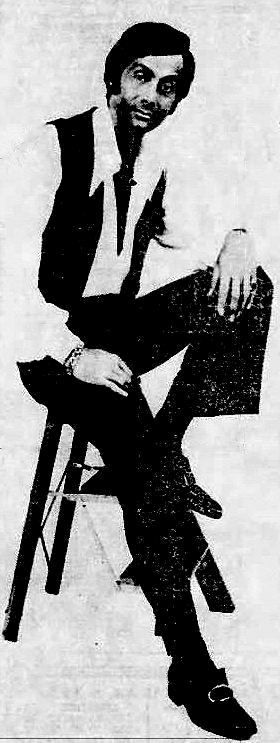
dante_reno-gazette-journal_080770_groovy-hypnotist
“Groovy hypnotist,” Reno Gazette-Journal, Aug. 7, 1970

*

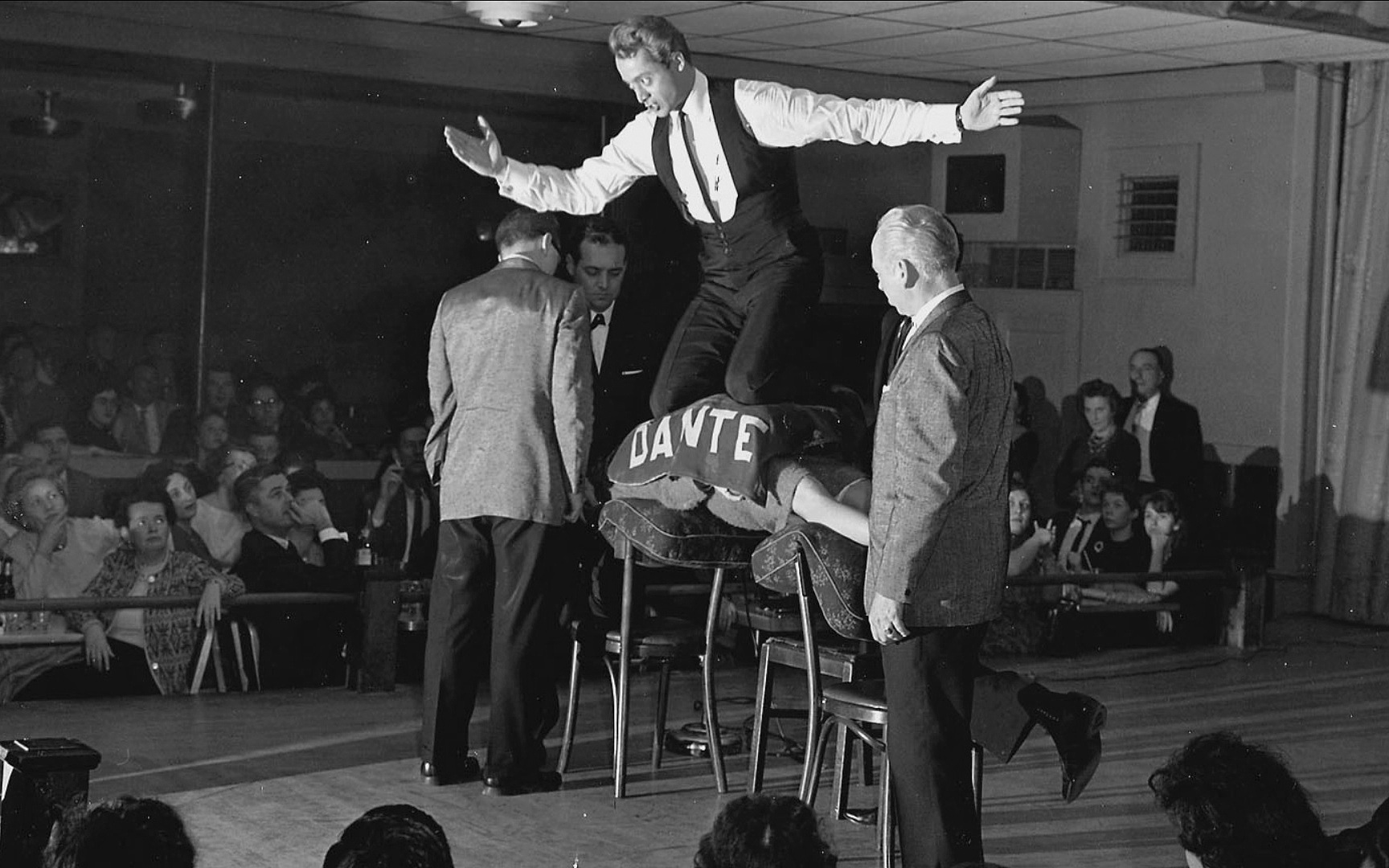
Ronald Dante’s first appearance in Dallas was at the Adolphus Hotel’s tony Century Room in January, 1963, back when he was known simply as “Dante.” Tony Zoppi, who covered the city’s nightclub scene for The News, wrote, “The handsome showman entertained his Century Room crowd with one of the most amazing hypnotic acts in the business” (DMN, Jan. 3, 1963). Back then his act looked something like this:

dante_on-stage_ua

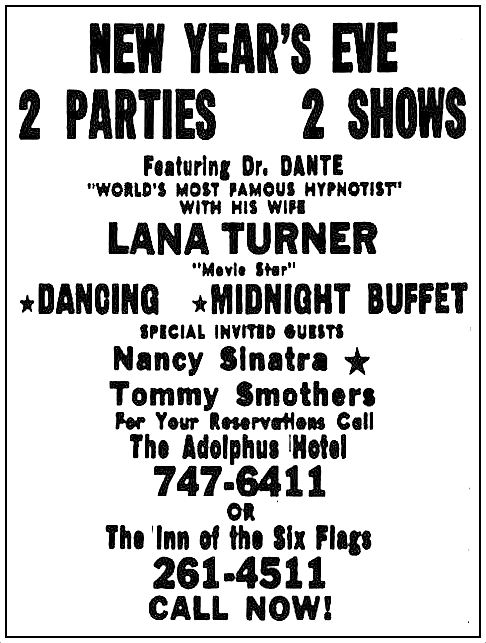
An interesting New Year’s Eve engagement at the Adolphus’ Rose Room was announced in The News in December, 1970 (same year as the shooting…): 

The Adolphus Hotel has lined up a star-studded evening for its New Year’s Eve celebration, including hypnotist Dr. Ronald Dante, reportedly to be accompanied by his wife, actress Lana Turner. (DMN, Dec. 17, 1970)

An appearance by Lana Turner seems … unlikely. Others rumored to be appearing on the star-studded bill? Actor Ralph Bellamy, comedian Tommy Smothers, and … singer Nancy Sinatra. Unsurprisingly, none of the special guests showed up.

dante_dallas-new-years-eve_dec-1970
Dec. 20, 1970

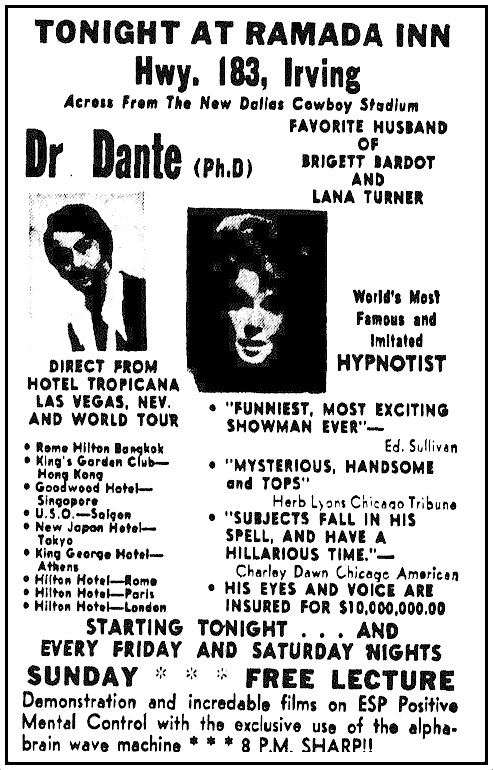
A couple of weeks after the New Year’s Eve engagement, an ad appeared in the paper filled with SO MUCH odd stuff in it: after a “world tour” which had him playing at swanky venues in Rome, Paris, London, Athens, Japan, and Bangkok, the next stop by Dr. Dante (“Ph.D.”) was none other than the somewhat less exotic Ramada Inn in the somewhat less exotic Irving, Texas; he billed himself as the “favorite husband” of both Lana Turner and “Brigett” [sic] Bardot (to whom he had never been married); and his eyes and voice were said to have been insured for 10 million dollars. Etc. In general, statements made by Dr. Dante were more likely than not to be absolutely untrue … untrue but usually pretty entertaining.

dante_ramada-inn_jan-1971
Jan. 15, 1971

A year later, Lana Turner and Ron Dante were divorced — the judge ruled that Dante had defrauded Turner, dissolved the marriage, and “postponed indefinitely a ruling on community property.” That was soon followed by a string of weirdness including the bizarre case of Dante’s being charged with soliciting an undercover cop to kill a rival stage hypnotist (!), creating a “school” to teach aspiring cosmeticians to administer permanent makeup (via tattoos), suing Johnny Carson for one billion dollars (“billion” with a “b”), and running an extremely lucrative diploma mill. (And that’s just the tip of the iceberg.) There were convictions and there was prison time.

Ron Dante appears to have died in 2013. (I believe nothing at this point.) A short documentary about him, “Mr. Hypnotism,” was shown at SXSW in 2009 (watch it here). It’s entertaining, but he really deserves a much longer documentary — and I really hope someone is working on a book. (PLEASE let someone be working on a book!)

In a lengthy Dallas Morning News profile/exposé of Dante (“Dr. Dante’s Traveling Hypnotherapy Show,” Feb. 24, 1985), reporter Glenna Whitley wrote:

Whatever else Dante is, he is likable. Even the most outrageous statements seem strangely plausible when coming from his lips. That may be the secret to his success, says [District Attorney] Gary Kniep, who was alternately amused and exasperated during Dante’s attempted-murder trial.

“Yeah, I kind of like him,” Kniep says. “He’s got some sort of magnetism that gets people into his confidence.” (DMN, Feb. 24, 1985)

I can see that.

dante_wfaa_SMU_3

*

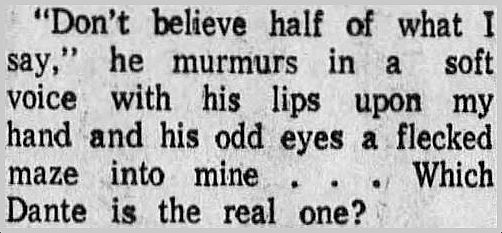
This was Dante’s closing statement to Muncie, Indiana reporter Betty Harris after a 1970 interview absolutely LOADED with whoppers. Can’t say she wasn’t warned!

dante_muncie-IN-evening-press_102370_reporter-betty-harris
Muncie Evening Press, Oct. 23, 1970

***

Sources & Notes

Screen captures at top and bottom are from the digitized WFAA Channel 8 News film footage from May 21, 1970; the video is from the WFAA Newsfilm Collection, held at the Hamon Arts Library, Southern Methodist University. The direct link to the Ron Dante clip on YouTube is here. Follow the WFAA clips as they are added by SMU digitizers to YouTube here, and on Facebook here. (Thanks for your tireless dedication, Jeremy and Scott!)

Photos of Lana Turner and Ron Dante are from Pinterest and eBay.

The photo of Dante performing in a nightclub was found on a page about Lana Turner on the University of Alabama site, here.

See Wikipedia for more on Dr. Dante and Lana Turner.

I HIGHLY recommend listening to Jennifer Sharpe’s 6-minute 2007 NPR story on Dr. Dante (“Lana Turner’s Ex Maintains Dreams of Grandeur”), here (click the “play” button in the blue circle at the top of the page). The short film “Mr. Hypnotism” was made by her and Austin-based director Bradley Beesley — the full film is here, the trailer is here.

UPDATE, 2023: Well, there is now an 8-episode podcast about the exploits of Dante: “Chameleon: Gallery of Lies, Dr. Dante.” He was weirder than I thought!

*

Copyright © 2018 Paula Bosse. All Rights Reserved.

Paving Matilda — 1971

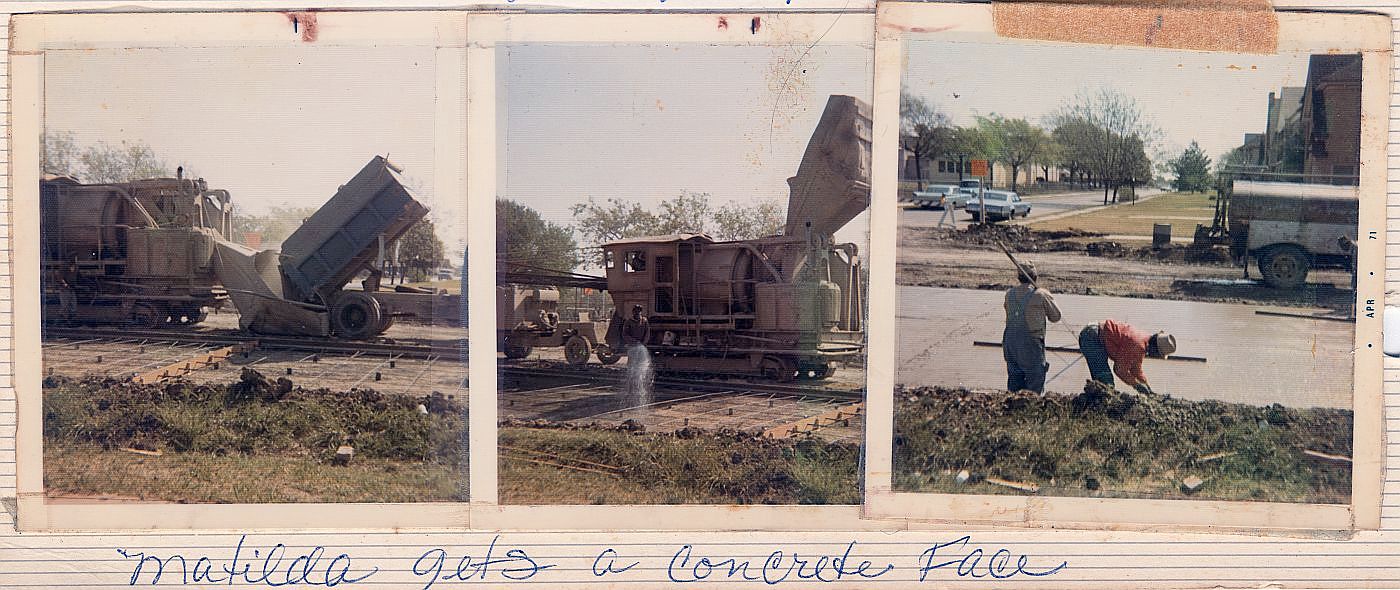
milazzo_album_matilda_1971_3_120“Matilda gets a concrete face”… (click for larger image)

by Paula Bosse

A couple of days ago I wrote about the history of Matilda Street in regard to its role as a railway for the Sherman-Denison interurban and the Belmont streetcar line. I noted that I had childhood memories from the 1970s of Matilda being a dirt street — which seems hard to believe these days since it carries a fair amount of traffic and is generally a quicker drive than Greenville Avenue, one block west. 

In response, one of the many Milazzo siblings (whom I remember not as individuals but as one large flock of children who regularly accompanied their parents to visit my father’s bookstore in the 1970s and ’80s) sent me some photos from a family album showing, yes, Matilda Street being paved! They lived in the 5700 block of Goodwin, and the photos were taken in 1971, from their yard, looking east across Matilda.

The streetcar tracks were abandoned in 1955 but were not removed — it took a full sixteen years for them to be paved over! Before that? Dirt street. If you look closely at the Google Street View capture from Oct. 2017, you can see the old rails peeking through.

Below are three photos from the Milazzo’s family album showing the Matilda “street improvements.” The construction vehicle seen in the first two photos is pretty weird-looking — like a cross between a locomotive and a tank. In fact, at first I thought the thing was actually running on the rails it was working to pave over, until I saw that what I had thought were train wheels look more like tank treads. Whatever it is, it doesn’t look like something you’d expect to see on a residential street in the 1970s. In the third photo, you can see part of Robert E. Lee Elementary School at the left. (All photos are larger when clicked.)

matilda_milazzo_1971_a_120

matilda_milazzo_1971_b_120

matilda_milazzo_1971_c_120

Thank you, Milazzo family!

***

Sources & Notes

Photos from the collection of the Milazzo family, used with permission. The third photo shows a date-stamp of April, 1971.

The related Flashback Dallas post “Ghost Rails of the Belmont Streetcar Line” is here.

All photos are larger when clicked.

*

Copyright © 2018 Paula Bosse. All Rights Reserved.
 

Event: “Remixing the News” Screening at SMU

remixing_hamon-library-blog-header

by Paula Bosse

UPDATE: The screening was great! For those of you who might have missed this event — or who would like to see the films again — the one-hour program is airing on KERA-Channel 13’s “Frame of Mind” on Thurs. Nov. 16, 2017 at 10:30 p.m., with another airing at 2:00 a.m. on Nov. 20.

*

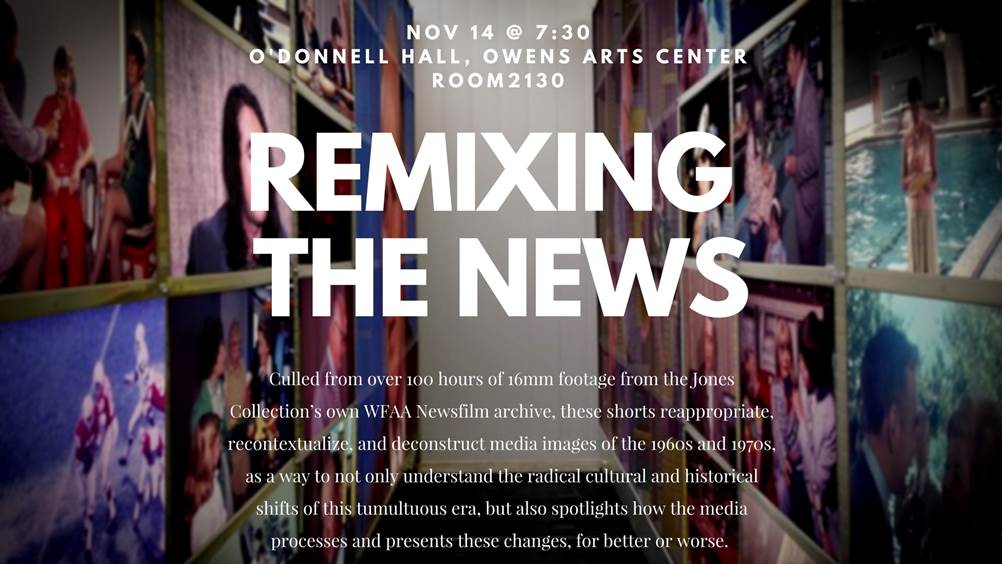
I’m really late announcing this event — WHICH TAKES PLACE TUESDAY, NOV. 14!! — but it sounds like something that people who are interested in Dallas history and/or video art would really enjoy: “Remixing the News,” presented by the G. William Jones Film and Video Collection at the Hamon Arts Library (SMU), in collaboration with KERA television and Dallas VideoFest.

So what is it?

The Jones Collection at SMU includes the WFAA Newsfilm archive which contains what must be thousands of hours of 16mm film footage from the 1960s and ’70s, originally shot to be used as part of Channel 8 News broadcasts (this includes tons of B-roll footage shot to supplement the stories, but not always used in newscasts). As you can imagine, this is an unusual treasure trove of local news, history, and pop culture. I’ve dipped in and showcased some of the offerings in previous posts about the State Fair of Texas, and on Dallas appearances by Jimi Hendrix, Tiny Tim, and Glen Campbell.

Jeremy Spracklen, head curator of the Jones Collection, describes how this interesting local news archive was “reappropriated, recontextualized, and deconstructed” to become something altogether different:

We went in a unique direction in this — we did an experiment where we gave 10 local filmmakers a hard-drive with several hundred hours’ worth of footage on it and had them create their own interpretation of it. So, it is part history and part new video art.

I love this sort of thing. Eleven short films were produced by ten Texas filmmakers (Spracklen himself contributed two). Here are the films which will be shown Tuesday night, November 14:

  • “2,000 Hours in Dallas” by Jeremy Spracklen
  • “The Story of Jane X” by Christian Vasquez
  • “Dallas Circle” by Justin Wilson
  • “Lawmen & Cowpokes” by Gordon K. Smith
  • “History Lessons” by Steve Baker
  • “Beyond 10” by Carmen Menza
  • “Glass” by Madison McMakin
  • “Poofs are New” by Blaine Dunlap
  • “Divided” by Michael Thomas & Dakota Ford
  • “The Night in the Last Branches” by Michael Alexander Morris
  • “Echoes of the Past” by Jeremy Spracklen

The FREE advance screening of this collection (which will air at a later time on KERA’s long-running “Frame of Mind” series) will be held at SMU in the Owen Art Center on Tuesday, Nov. 14 (which might be TODAY!) — it begins at 7:30 p.m. After the screening, Bart Weiss, artistic director of the Video Association of Dallas, will host a Q&A with several of the filmmakers in attendance.

ALSO, Jeremy Spracklen tells me that those who are interested are invited to tour his very chilly subterranean film-archive lair after the event. So much Texas film history lurks beneath the SMU campus!

This event sounds great. Be there!

remixing-the-news_smu_hamon

“Remixing the News”

Presented by the G. William Jones Film and Video Collection, Hamon Arts Library, in collaboration with KERA and VideoFest

Date: Tuesday, November 14, 2017
Time: 7:30 p.m. – 9:00 p.m.

O’Donnell Hall, room 2130, Owen Arts Center (see map below)

FREE to the public

***

Resources & Notes

More on this event can be found on the SMU website here and on the Hamon Arts Library blog here; the Facebook event page is here.

The event is free, and parking on the SMU campus after 7:00 p.m. is also free. Parking at SMU scares me, but here is what Jeremy advises: “The closest parking is in the meters in front of the Meadows building (they are not active after 7:00), the ‘U’ lot just south of the building, and, if those are full, the Meadows Museum parking garage is open — it is just down Bishop Blvd. and about a 5-minute walk.”

His map is below, with the parking areas highlighted in red. (Click to see larger image.)

SMUCampusMapNamesBLK

More on the WFAA Newsfilm archive can be found in a Flashback Dallas post “How the News Got Made.”

One of the filmmakers who has contributed a film to this event is Blaine Dunlap — I have posted links to two of his films, both of which I really enjoyed: Sunset High School on Film — 1970″ (which he made while he was a Sunset student) and “‘Sometimes I Run’: Dallas Noir — 1973” (about a philosophizing downtown street cleaner).

More on “Frame of Mind” here.

*

Copyright © 2017 Paula Bosse. All Rights Reserved.
 

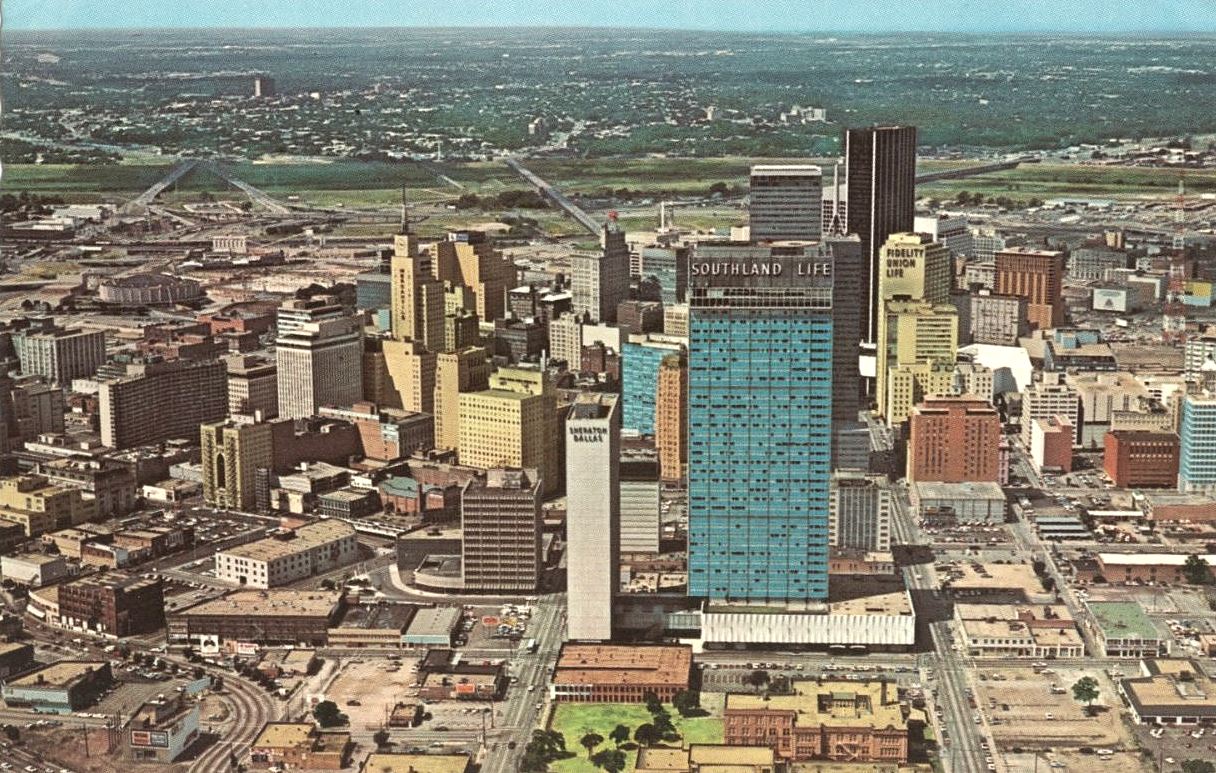
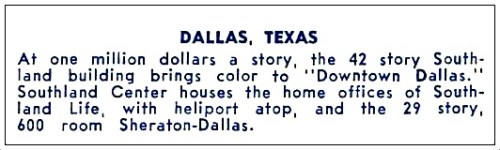
Dallas Skyline, Looking West — 1970

skyline-looking-west_southland-center_1970_portalSouthland Life welcomes you to Big D…

by Paula Bosse

This is a view of the Dallas skyline that isn’t seen that often — a view across downtown toward the west. This 1970 Southland Center postcard has the heliport-topped Southland Life Building (one of the few downtown buildings designed to face to the east) and the Sheraton Hotel front and center. It’s really interesting to zoom in on this photo and look around — for instance, the sight of the Hilton/White Plaza/Indigo hotel at the left, at Harwood and Main across from the Municipal Building, is a little disorienting (I think it’s the empty lot/parking lot at Elm and Harwood).

Have a little fun and zoom way in on this photo of 1970 downtown Dallas on the Portal to Texas History website, here.

skyline-looking-west_southland-center_1970_portal_info

***

Sources & Notes

Postcard was provided to the Portal to Texas History by Dallas Heritage Village; more info on this can be found on the Portal, here.

*

Copyright © 2017 Paula Bosse. All Rights Reserved.
La Reunion Tower

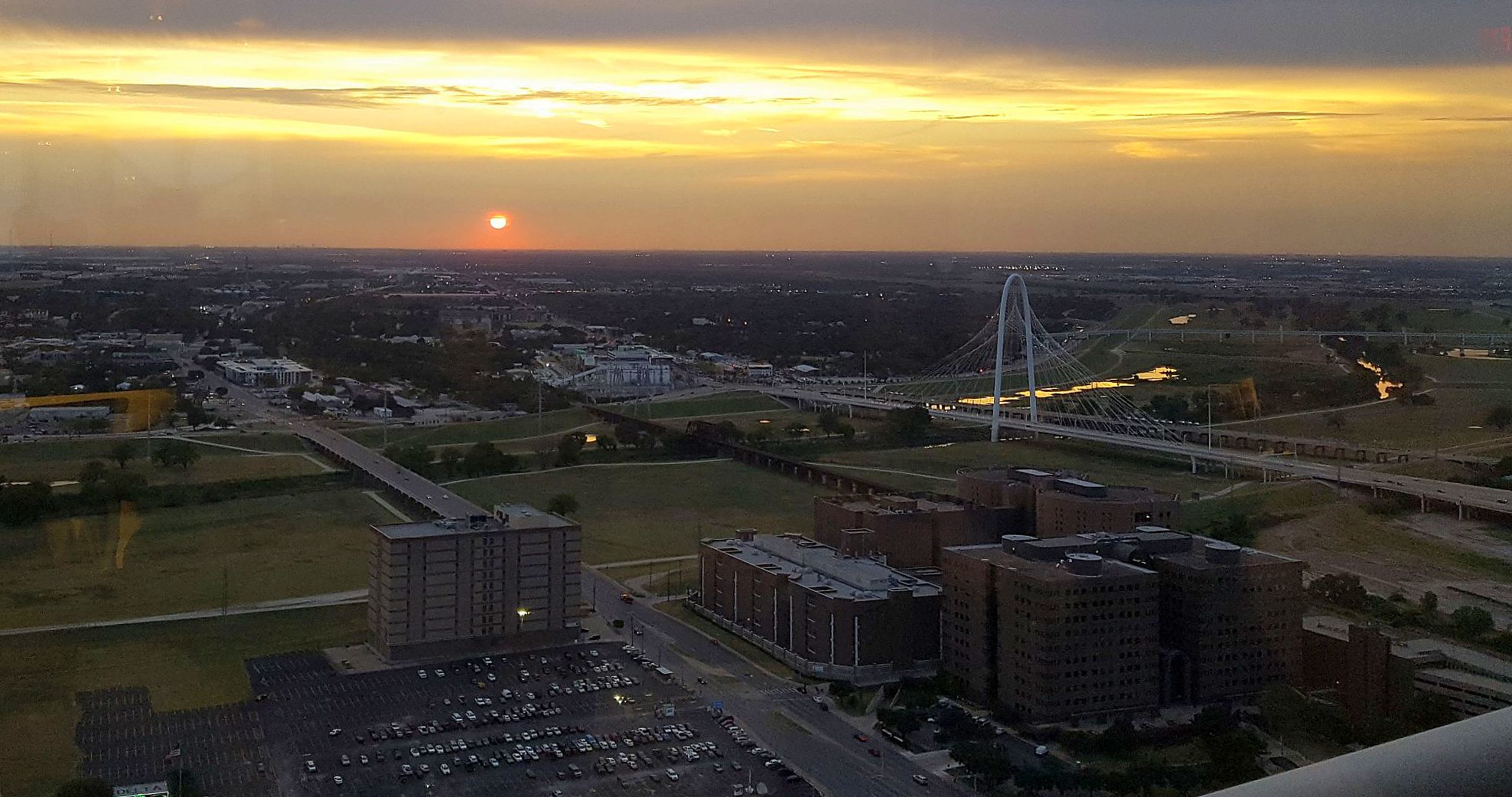
reunion-tower_skyline_091217Big D from inside the ball…

by Paula Bosse

On Tuesday night I gave a little talk on the history of the La Reunion colony as part of the Dallas Historical Society’s Pour Yourself Into History series. The event was held in the *very nice* Five Sixty by Wolfgang Puck restaurant high atop Reunion Tower — right in the ball. I was a bit of a last-minute fill-in presenter, and I hesitated to accept the invitation because I always feel awkward talking in front of more than, say, two or three people, but I really, really wanted to go up to the top of Reunion Tower.

I hadn’t been to Reunion Tower since a family outing back in the ’80s. Back then I was most fascinated by the fact that the restaurant slowly revolved to give diners a leisurely 360-degree view of the city (I always imagined it spinning out-of-control, pinning diners — and their meals — against the walls with centrifugal force, like a fine-dining version of the Spindletop ride at Six Flags, or The Rotor ride at the State Fair of Texas); but now, decades later, as an adult, the image of the spinning restaurant was eclipsed by the real star: the VIEW.

As you can imagine, the view is unbelievably spectacular — especially at night when Dallas is at its most glamorous. The ticket price is fairly steep to get up to the observation deck, and a meal and/or cocktails at the restaurant will set you back a goodly amount, but it is, without question, the most fabulous view of the city you’ll ever see. And you see all of it. When I started my talk about the history of the La Reunion colony of the 1850s (which was located about 5 miles due west of Reunion Tower, in West Dallas) the view was pretty much the one seen in the photo above; by the time I finished, we were, serendipitously, looking out over where the plucky colonists of “French Town” had toiled unsuccessfully 160 years ago. (Estimates on the boundary of La Reunion’s 2,000-acre land is the area now bounded by Westmoreland on the west, Hampton on the east, Davis on the south, and the Trinity River on the north — the southwest corner is marked here on Google Maps.)

It was a little noisy at the event Tuesday night, so if you were one of the very nice people who turned out, you might not have been able to hear anything I said! If you’d like to hear more about the history of La Reunion (and about Reunion Tower — and how, if a marketing agency had had its way, it might have been named “Esplanade” Tower), I enthusiastically recommend this very entertaining radio piece from Julia Barton (the La Reunion segment begins at about the 5:15 mark).

**

I took photos, but they don’t do justice to the view. The really breathtaking vistas are at night, and, sadly, none of those photos came out. Seriously, if you’ve never been up Reunion Tower — or if you haven’t been since it was opened in 1978 — you should definitely go now. Better still, go at sunset and enjoy the best view in Dallas as you sip delicious cocktails.

The view stretches for miles. Here’s a cropped view of Dealey Plaza (click to see it really big).

reunion-tower_dealey-plaza_triple-underpass_091217a

And, at sunset, the jail has never looked lovelier.

reunion-tower_sunset_jail_091217

Back down on terra firma, looking up and saying “goodbye” to the ball.

reunion-tower_the-ball_091217

Thank you, Dallas Historical Society, for inviting me to be part of your event! And thanks to everyone who came out … and up!

***

Sources & Notes*

Photos by Paula Bosse. Click ’em to see ’em bigger.

For more information of the La Reunion colony, see other Flashback Dallas posts here.

*

Copyright © 2017 Paula Bosse. All Rights Reserved.
“Sometimes I Run”: Dallas Noir — 1973

5-sometimes-I-run_stanley-maupin_hoseStanley Maupin at work…

by Paula Bosse

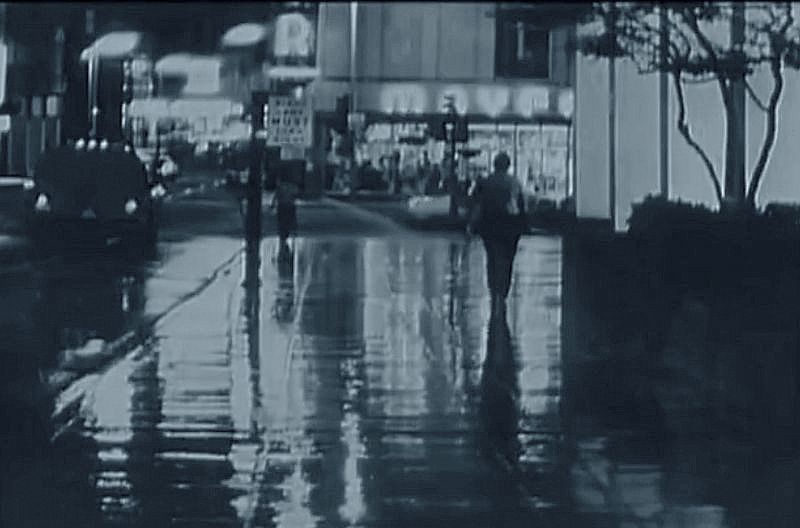
Several years ago, Robert Wilonsky wrote a Dallas Observer article about the short documentary “Sometimes I Run” — I watched it immediately afterward, and it’s stuck with me ever since. The 22-minute film, shot in 1973 by SMU film student Blaine Dunlap (who also made the fun 1970 Sunset High School film I wrote about earlier this year) shows Dallas Public Works Dept. street flusher Stanley Maupin at his job sweeping the downtown sidewalks late at night, accompanied by a soundtrack of jazz music and Maupin’s philosophical musings. It’s cool, gritty, seedy, nostalgic, and somehow life-affirming, all at the same time. Also, Dallas always looks best at night — the wet streets add a definite noir-ness to the overnight municipal goings-on which were happening when most Dallasites were home in bed. (See the bottom of this post for various sites on which you can watch the film in its entirety.)

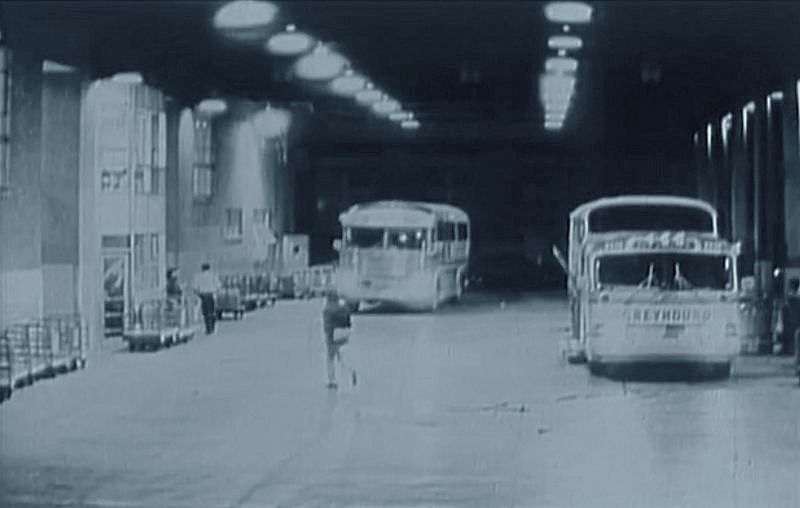
It took the opening moments of this film to remind me that, yes, I DO remember (if vaguely) seeing that revolving beam of light shot from the “rocket” on top of the Republic Bank Building. You can see it at about :35. Also included in the film are Franklin’s, the Greyhound Bus station, the Capri movie theater, a late-night-diner, the Mayfair department store, the Municipal Building, Sanger-Harris, and much more. And while Maupin’s philosophical pronouncements might be a bit heavy-handed at times, I have to admit that I could listen to him talk for hours, if only to hear his accent, a Dallas-area trapping of the past that one doesn’t come across nearly often enough these days.

Here are a few screen captures.

2-franklins_sometimes-when-i-run

3-greyhound_stometimes-when-i-run

6-keep-dallas-clean_sometimes-when-i-run

7-diner_sometimes-when-i-run

8-diner-2_sometimes-when-i-run

9-mayfair_sometimes-when-i-run

10-city-hall_sometimes-when-i-run

11-repub-bank-bldg

***

Sources & Notes

The 44-year-old award-winning student film, “Sometimes I Run,” directed by Blaine Dunlap, can be seen in its entirety in several places online: on Vimeo (good sound and video), on YouTube (via South Carolina Arts Commission), and at the Texas Archive of the Moving Image (from the collection of the Dallas Municipal Archives). Sound by Ron Judkins, music by Ken Watson.

More on filmmaker Blaine Dunlap can be found in “Spotlight on Dallas Filmmakers: Blaine Dunlap” by Laura Treat, here.

I have tried to find some history on Stanley Maupin, but I didn’t come up with much. He lived in Irving as a boy, but as a teenager, he attended North Dallas High School and, later, McMurry College in Abilene.

maupin-stanley_NDHS_1953
North Dallas High School yearbook, 1953

maupin-stanley_mcmurry-college_1956_freshman_portalMcMurry College yearbook, 1956

Born in 1935, he appears to have died in 1985, perhaps in a shocking way (which I have been unable to verify) — see comments from his grandchildren in the YouTube video here.

Some background on the film can be found in an article by Don Clinchy, here.

Read a 1986 interview with Blaine Dunlap (by Bo Emerson, Atlanta Journal-Constitution, Oct. 24, 1986) here.

*

Copyright © 2017 Paula Bosse. All Rights Reserved.
 

Country Music — Every Saturday Night on Channel 11

country-music_saturday-night_channel-11_ktvt_1969The warm-up for wrestling…

by Paula Bosse

I have a surprisingly deep knowledge of classic country music. And it can all be traced back to sitting with my father every Saturday night as he watched the jam-packed lineup of country music TV shows on KTVT-Channel 11.

Followed by wrestling.

Which I also have a surprisingly deep knowledge of. If only by osmosis.

Thank you, Channel 11, for providing this bonding time with my father, which I didn’t really appreciate as a child, but I do now.

(And, yes, I’m happy that my antiquarian bookseller father and Comparative Literature-degree-holding mother often took our family to the Sportatorium to see both country music package-shows and wrestling matches. You can’t say our family wasn’t well-rounded.)

***

Sources & Notes

1969 ad from an odd little local publication (which probably used to belong to my father) called Country and Western — The Sound That Goes Around the World, published in DFW by PegAnn Production.

*

Copyright © 2017 Paula Bosse. All Rights Reserved.
1710 Hall: The Rose Room/The Empire Room/The Ascot Room — 1942-1975

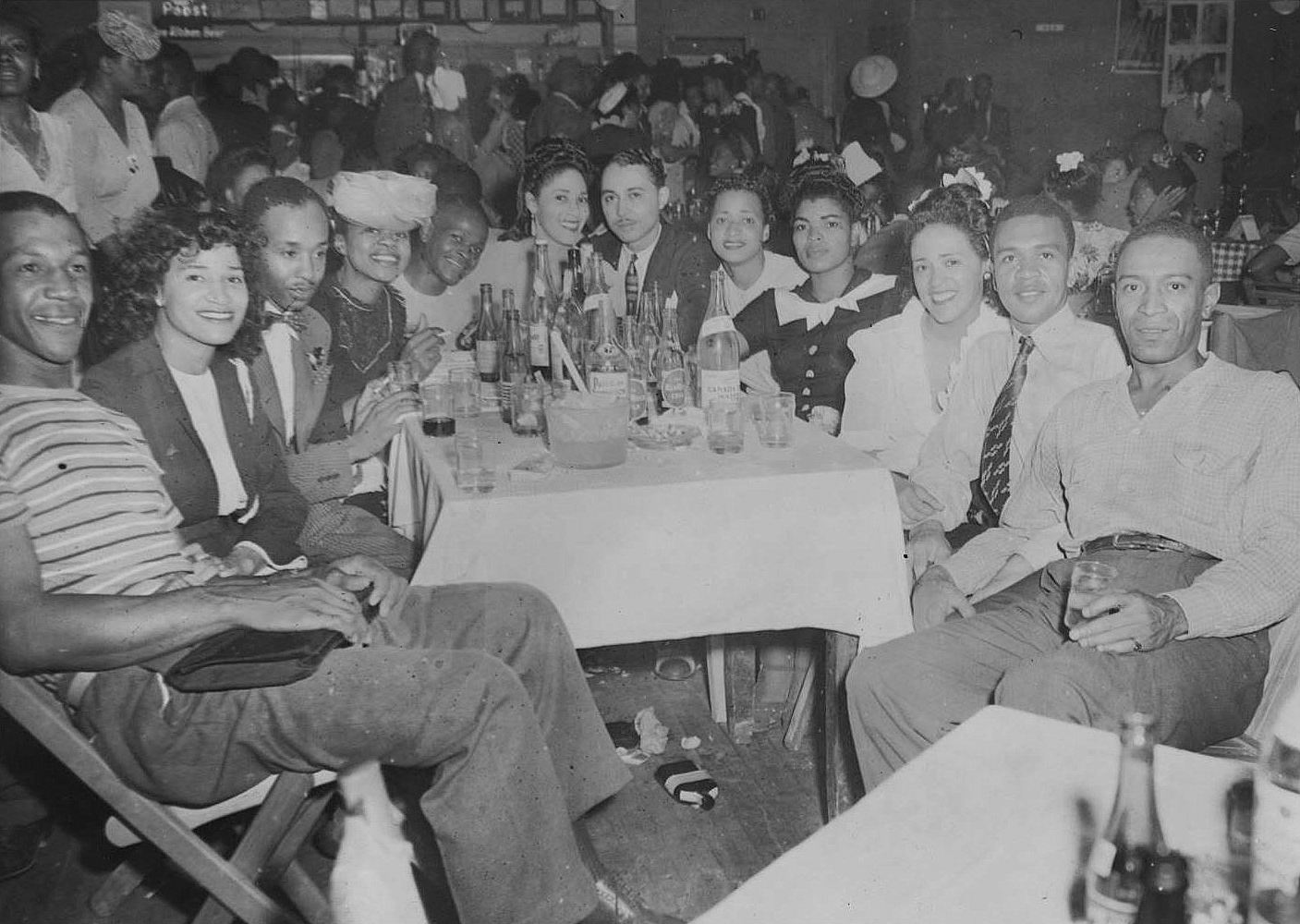
rose-ballroom_aug-1942_cook-collection_degolyer_smuThe Rose Ballroom, 1942

by Paula Bosse

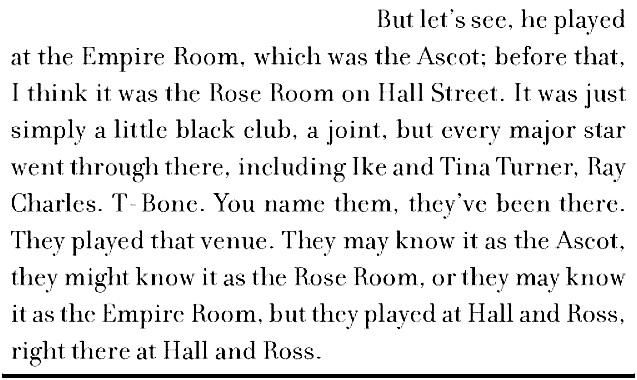
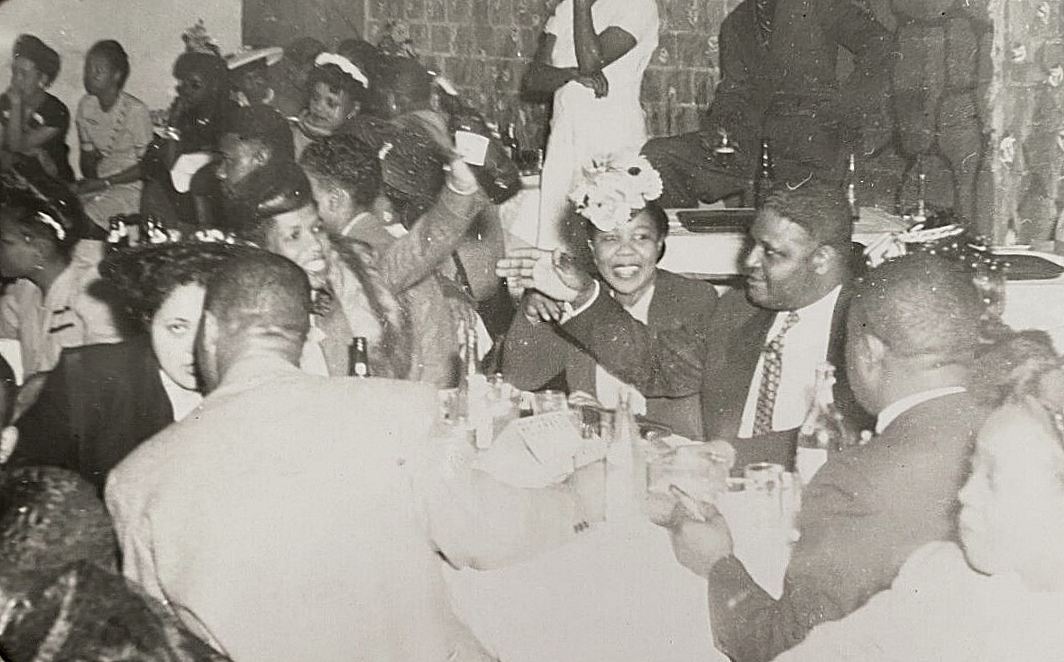
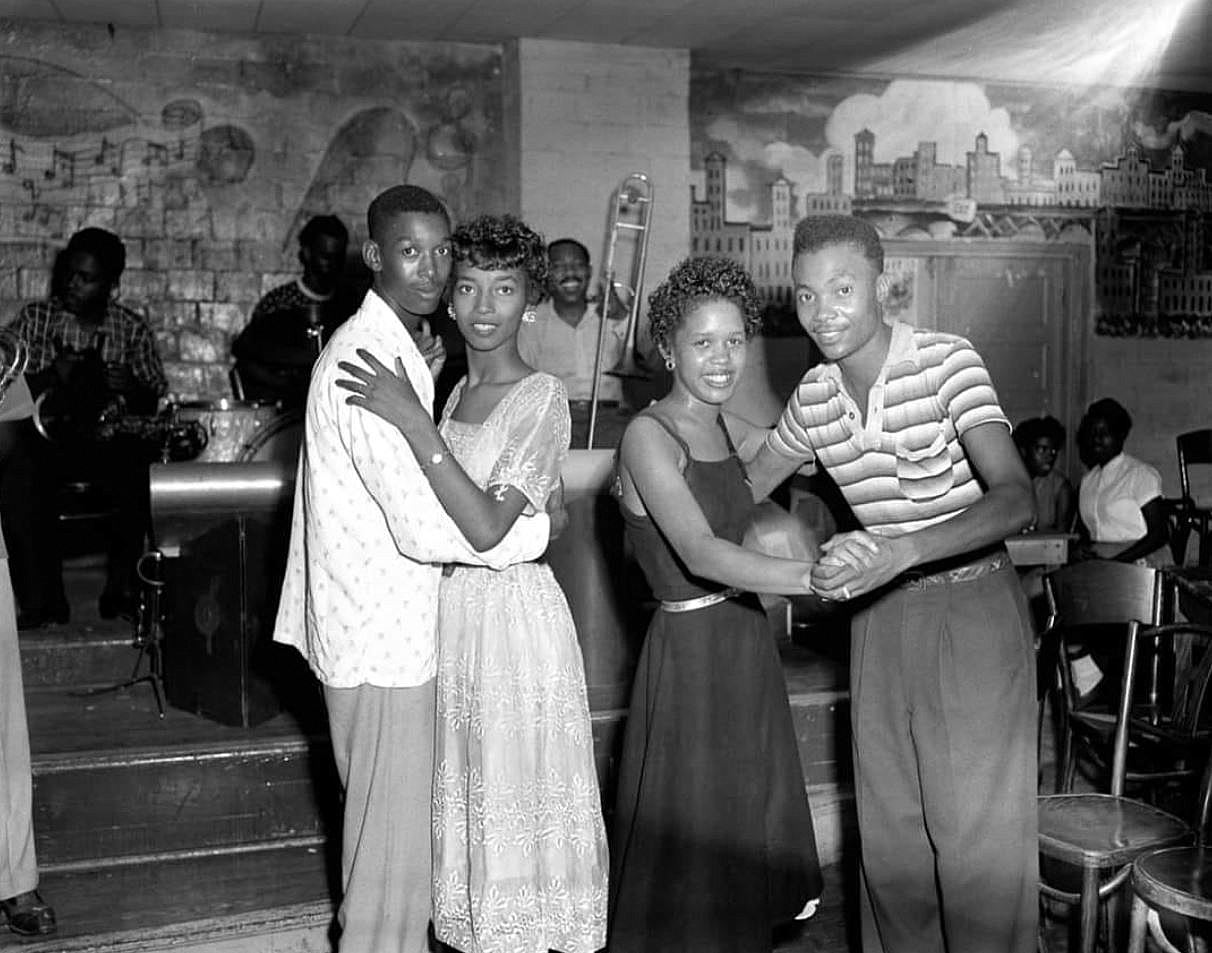
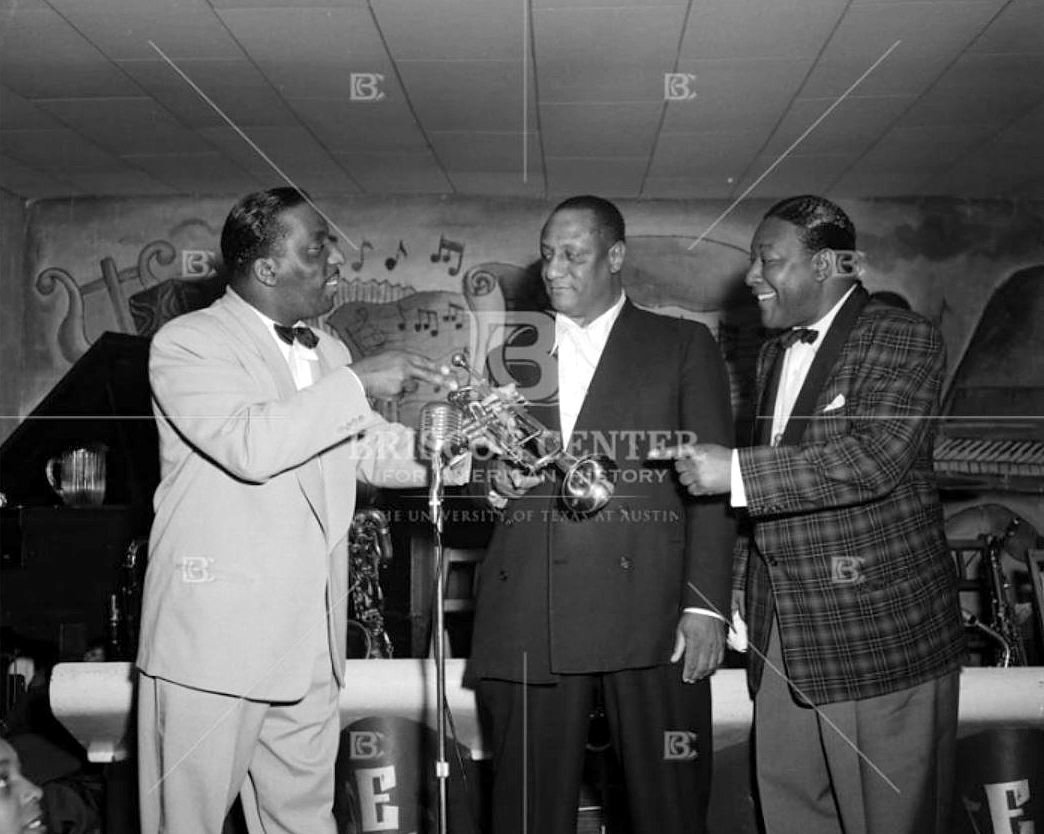
The photo above was taken at the Rose Ballroom at 1710 Hall Street (a few steps off Ross Avenue) in August, 1942. 1710 Hall was the home to a string of very popular black nightclubs: the Rose Ballroom (1942-1943), the Rose Room (1943-1951), the Empire Room (1951-1969) (not to be confused with the nightclub of the same name in the Statler Hilton), and the Ascot Room (1969-1975). There seems to have been some overlap of owners and/or managers and/or booking agents, but they all appear to have been very popular “joints” (as described by Freddie King’s daughter), where both big-name touring musicians as well as popular local acts played. Icons T-Bone Walker and Ray Charles were regulars (there are stories of Ray Charles sleeping on the Empire Room’s stage during the time he was living in Dallas in the ’50s). Everybody seems to have played there. Below, a quote from Wanda King, talking about her father, blues legend Freddie King — from the book Texas Blues: The Rise of a Contemporary Sound by Alan Govenar (all clippings and photos are larger when clicked):

rose-room_freddie-king_wanda-king_texas-blues_govenar

Some of the acts scheduled to appear in early 1946 at the Rose Room were Erskine Hawkins, Louis Armstrong, Lionel Hampton, Buddy Johnson, and Andy Kirk. …Wow.

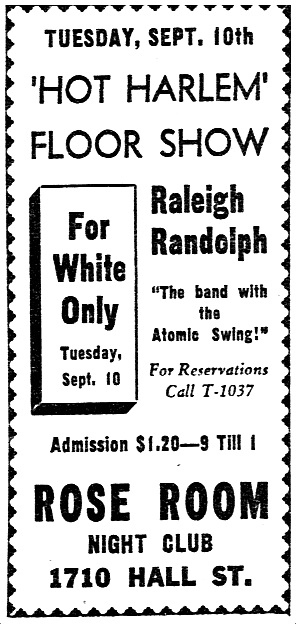
In the days of segregation, when Dallas police threatened to shut the club down if the owner allowed white patrons to mix with black patrons, the club scheduled “white only” nights where Caucasian audiences could see their favorite non-Caucasian performers. (Before these special club nights, which seem to have started in 1945, a revue would be taken “on the road” — over to the Majestic Theatre on Elm Street — to perform live onstage.)

rose-room_dmn_092945-ad
1945

rose-room_dmn_090846_ad
1946

The photo up there at the top showed the audience — here’s the stage (1946 photo of the E F Band by Marion Butts, from the Marion Butts Collection, Dallas Public Library):

rose-room_the-e-f-band_marion-butts_dpl_1946

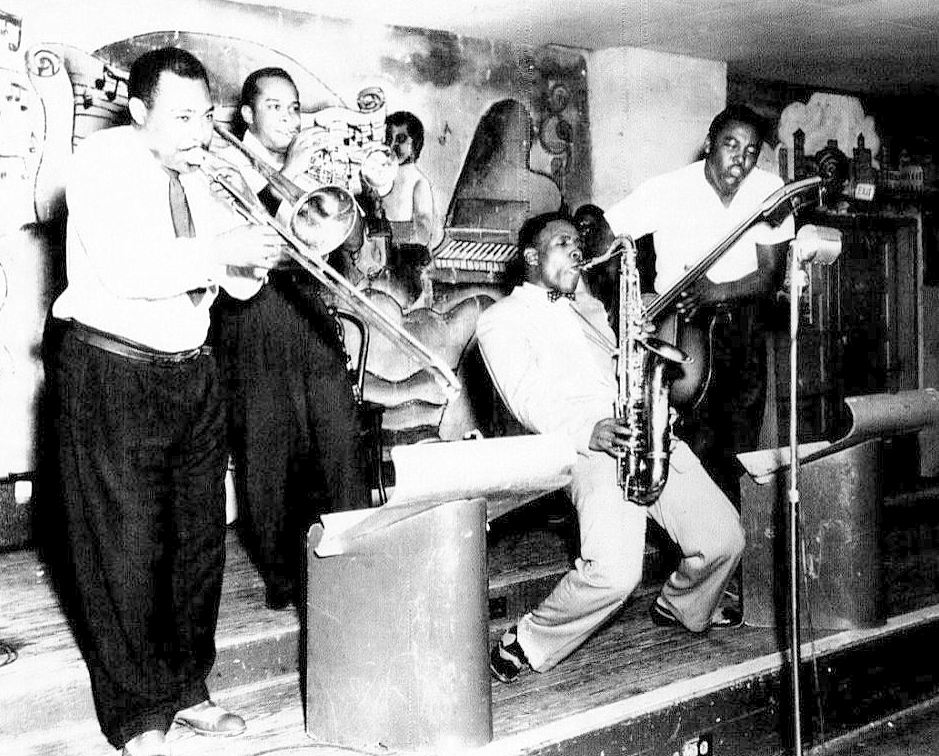
And here’s what the stage looked like when the club became the Empire Room (onstage is Joe Johnson in a 1954 photo by R. C. Hickman, taken from a great article about Hickman in Texas Highways, here):

empire-room_joe-johnson_1954_r-c-hickman_tx-highways_020299

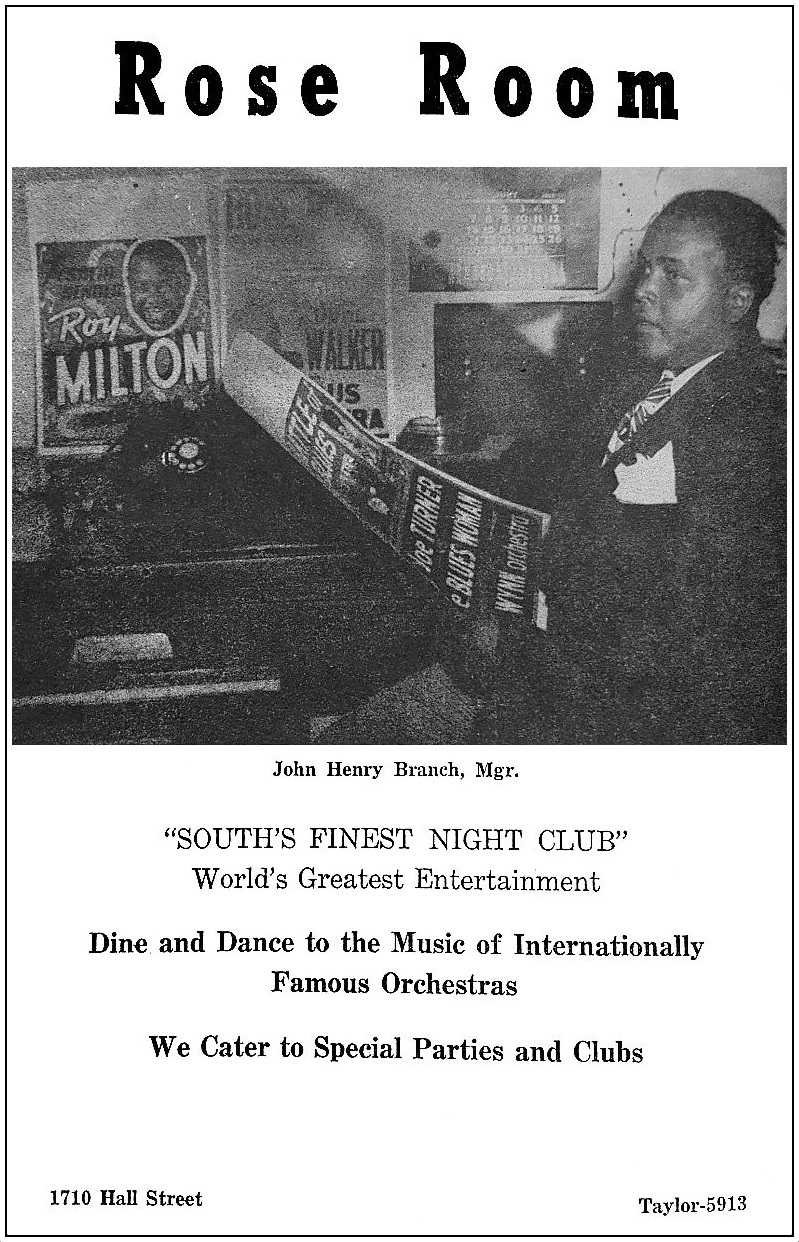
One thing that probably helped set the Rose Room/Empire Room apart from a lot of the other clubs in town at this time was the man who booked the shows — and who booked acts all over the area: John Henry Branch. The guy knew everyone. Here he is in an ad from 1947:

rose-room_1947-1948-negro-directory_dallas

Aside from booking acts and musicians for black clubs, he also booked acts for white clubs — including Jack Ruby’s Carousel and Vegas clubs. In fact, Branch chatted with Ruby at the Empire Room the night before Ruby shot Oswald — Ruby had come in to check on a piano player Branch was booking for a gig at the Vegas Club in Oak Lawn. Branch supplied testimony to the Warren Report, and while it’s not all that riveting (because there wasn’t that much to tell), it’s still interesting to hear how Branch describes his own club and Ruby’s personality (“You can’t never tell about him — he’s a weird person.”) — you can read his testimony here.

I have to admit, I’d never heard of the Rose Room or the Empire Room before I saw the photo at the top of this post. I really missed out. So much fantastic music! And I missed it. It’s just another reminder that Dallas has an incredible music history.

rose-room_texas-blues_govenar-brakefieldfrom the Texas African American Photography Archive

rose-room_1944-45-directory_hall-street
1700 block of Hall Street, 1944-45 city directory

What’s at 1710 Hall these days? A vacant lot — soon to be developed, no doubt. Ross Avenue ain’t what it used to be….

rose-room_photo_green-cover_ebayeBay

empire-room_teenage-dance_hickman_080656Teen dance, Aug. 6, 1956 (photo by R. C. Hickman)

empire-room_l-g-mccutcheon_hickman_042351_briscoe-center_watermarkApr. 23, 1951 (photo by R. C. Hickman, Briscoe Center, Univ. of TX)

**

UPDATE: After many fruitless attempts to find a photo of the exterior of this building, I stumbled across it in a 1973 filmed report from KERA, recently uploaded by the G. William Jones Film and Video Collection at SMU. Below is a screenshot showing the Ascot Room a couple of years before it finally closed, looking a little worse for wear. The 8-minute film (which you can watch here) shows tons of locations in the Black neighborhoods of South Dallas (along Forest Avenue/MLK Blvd.) and “North Dallas” (along Hall Street) — the Ascot Room can be seen briefly at the 1:46 mark. (More on this film can be found in the Flashback Dallas post “Black Dallas — 1973.”)

ascot-room_june-1973_kera-collection_jones-collection_SMUAscot Room, 1973 (screenshot, Jones Collection, SMU)

***

Sources & Notes

Top photo from the George W. Cook Dallas/Texas Image Collection, DeGolyer Library, Central University Libraries, Southern Methodist University; more info on this photo is here. Someone has written this on the photo: “Aug. 42, Dallas, Rose Room” — in August, 1942 the club was known as the Rose Ballroom; it changed its name to the Rose Room in early 1943.

1973 screenshot is from a 1973 film (my guess is that it was broadcast on Channel 13’s “Newsroom”) from the KERA Collection, G. William Jones Film and Video Collection, Hamon Arts Library, Southern Methodist University.

Wanda King quote is from the book Texas Blues: The Rise of a Contemporary Sound by Alan Govenar (College Station: Texas A & M University Press, 2008).

Rose Room ad featuring John Henry Branch is from the 1947-48 Dallas Negro City Directory (with thanks to Pat Lawrence!).

More about the hopping Hall Street area can be found in the Flashback Dallas post “Life on Hall Street — 1947,” here.

*

Copyright © 2017 Paula Bosse. All Rights Reserved.
Sunset High School on Film — 1970

sunset-pt-2_3_pep-rallyPep rally in progress… (click for larger image)

by Paula Bosse

Thanks to the heads-up from UNT media librarian and film/video archivist Laura Treat, I now know about “Spotlight on North Texas,” a collaborative project between the University of North Texas Libraries and the Texas Archive of the Moving Image (TAMI) to preserve North Texas film history. The bulk of the collection centers on Denton County, but there are the occasional glimpses of Dallas, such as the 3-part “Sunset on Film” which was shot by student James Dunlap in and around Sunset High School in 1970 on Super-8 film (without sound). It’s definitely a student effort — nerdy and charming — but it has lots of great footage, and if you are a Sunset alum, you’ll probably see a lot of familiar sights from your Oak Cliff school days. And for those who missed the era when high school students dressed like extras from The Partridge Family or The Brady Bunch — and who swarmed to get their bikes after school (when was the last time you saw that?!) — this will be almost exotic.

PART 1 (running time 7:55) is here (click image on UNT site, then click the “play” arrow — don’t forget to watch in full-screen). The images below are screenshots from the digitized film; they are larger — and grainier — when clicked.

sunset-pt-1_1

sunset-pt-1_2

sunset-pt-1_3_vogue
Vogue Theater alert!

sunset-pt-1_4

PART 2 (running time 11:51) is here.

sunset-pt-2_1

sunset-pt-2_2Pep rally alert!

sunset-pt-2_4

PART 3 (running time 10:43) is here.

sunset-pt-3_1Groovy mini-skirt alert!

sunset-pt-3_2AMC Gremlin alert!

sunset-pt-3_3

***

Sources & Notes

More about last year’s “Spotlight on North Texas” project can be found here. You can see what’s been uploaded here. They also have a Facebook page, here.

All images in this post are screenshots taken from the film(s) “Sunset on Film,” which was donated by Blaine Dunlap to the Spotlight on North Texas collection, University of North Texas Media Library; accessible on the UNT-hosted Portal to Texas History website.

More on filmmaker Blaine Dunlap can be found in “Spotlight on Dallas Filmmakers: Blaine Dunlap” by Laura Treat, here.

See a related Flashback Dallas post about another of Blaine Dunlap’s films, “Sometimes I Run: Dallas Noir — 1973.”

Thanks, Laura!

*

Copyright © 2017 Paula Bosse. All Rights Reserved.