Flashback : Dallas

A Miscellany: History, Ads, Pop Culture

Category: 1970s

Bob-O-Links Golf Course — 1924-1973

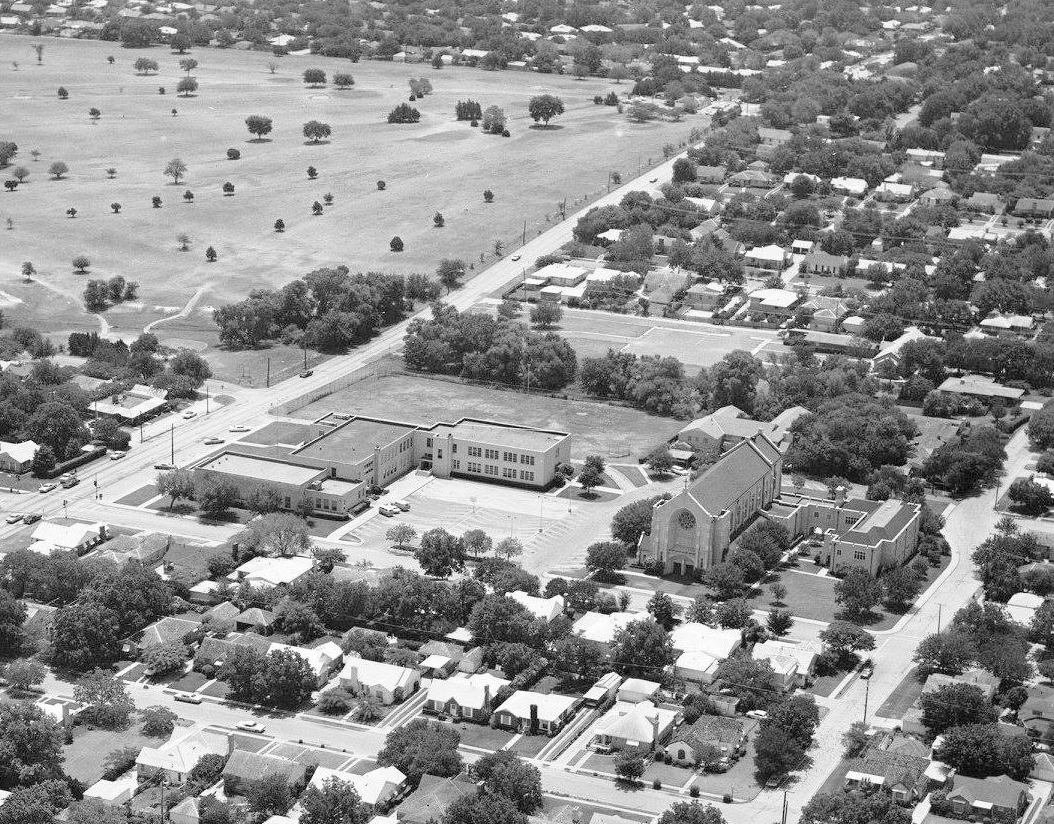
bob-o-links_abrams-rdBob-O-Links golf and St. Thomas Aquinas… (click for larger image)

 by Paula Bosse

The photograph above (with a view to the southeast) shows Abrams Road (at the left), a few blocks south of Mockingbird. On the right is St. Thomas Aquinas Catholic Church and school, and on the left, part of the Bob-O-Links Golf Course, Lakewood’s only public golf course. If you’re familiar with that part of town, it’s pretty incredible to see all that open land right in the middle of it.

Bob-O-Links, a 9-hole course, was opened by Harry McCommas in 1924 on 60 acres of the land originally owned by the pioneer McCommas family (the family’s full 640 acres covered land that stretched from what is now Abrams Road to White Rock Lake). Despite a creek meandering through seven of the course’s nine holes, the course was an immediate hit, mainly because it was one of the few public courses in town. This is where East Dallas residents with golf-fever would go to play if they couldn’t afford to join the Lakewood County Club.

From an article by John Anders in The Dallas Morning News:

When [Harry] McCommas, 75, decided to build a golf course on his grandfather’s sheep pasture in 1928 [sic], there were only three other golf courses in Dallas. And two of those three are now gone. “We were really out in the country then. There was no water, gas or electricity so we hauled in our water by truck. We didn’t need much since it was originally a sand course.” (DMN, July 6, 1973)

When the course opened in 1924, it was pretty much out in the sticks. By the late 1950s, though, Lakewood was booming, and developers were eager to build things — much to the dismay of nearby residents. Development was staved off for over a decade, but during that whole time, developers never stopped trying to get the area re-zoned, either for commercial use or for apartments and townhouses. Eventually — inevitably — the land was sold, and the days of the little golf course came to an end. The only “victory” the neighborhood could claim is that only single-family homes would be built on the land.

Bob-O-Links Golf Course closed on July 4, 1973. And as one drives down Abrams Road these days, it’s almost impossible to believe that it was ever there.

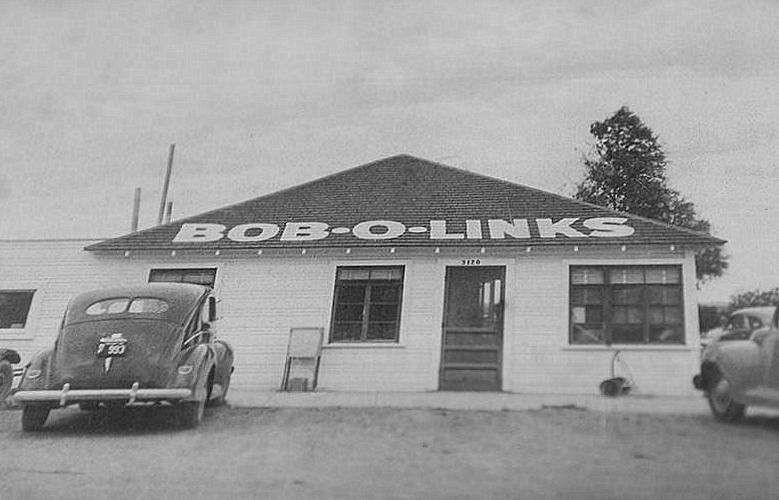
bob-o-links

bob-o-links_matchbook_flickr
via Flickr

bob-o-links_matchbook_2b
via Flickr

patreon_bob-o-links_harry-mccommas_matchbk_ebay_a

patreon_bob-o-links_harry-mccommas_matchbk_ebay_b

bob-o-links_dallas-park-board-minutes_070858Dallas Park Board minutes, July 4, 1958

bob-o-links_1962-map
1962 map detail (click for larger image)

***

Sources & Notes

I have no information about the top photo. It was posted on the Lakewood neighborhood group on Facebook by local bon vivant Michael Vouras. Comments on his post suggest that it may be a photo in the possession of St. Thomas Aquinas, taken around the mid 1960s. I welcome more info! (UPDATE: Below in the comments, other dates are suggested.)

A present-day aerial view of the same area can be seen here. The golf course (formerly on the left) has been gobbled up by houses.

A great article on Bob-O-Links — “The Bygone Days of Bob-O-Links Golf Course” — was written by Patti Vinson and appeared in a 2015 issue of The Lakewood Advocate; read it here.

Further reading from the archives of The Dallas Morning News:

  • “Re-zoning Denied for Bob-o-Links” (DMN, Sept. 17, 1960): this re-zoning request was to build a 35-acre shopping center; it was shot down by angry neighborhood residents
  • “Negotiations Finished To Buy Bob-o-Links” (DMN, Feb. 9, 1973): purchaser was long-time Dallas developer Hal McGraw who promised to build only single-family homes
  • “Farewell, Bob-O-Links” by John Anders (DMN, July 6, 1973): very entertaining article about Anders’ last round on the course, with memories of his earlier experiences on the course and quotes from owner Harry McCommas 

Wish I’d been there. “FORE!”

*

Copyright © 2016 Paula Bosse. All Rights Reserved.

The Filling Station on Greenville Avenue: From Bonnie & Clyde to Legendary Burger Place

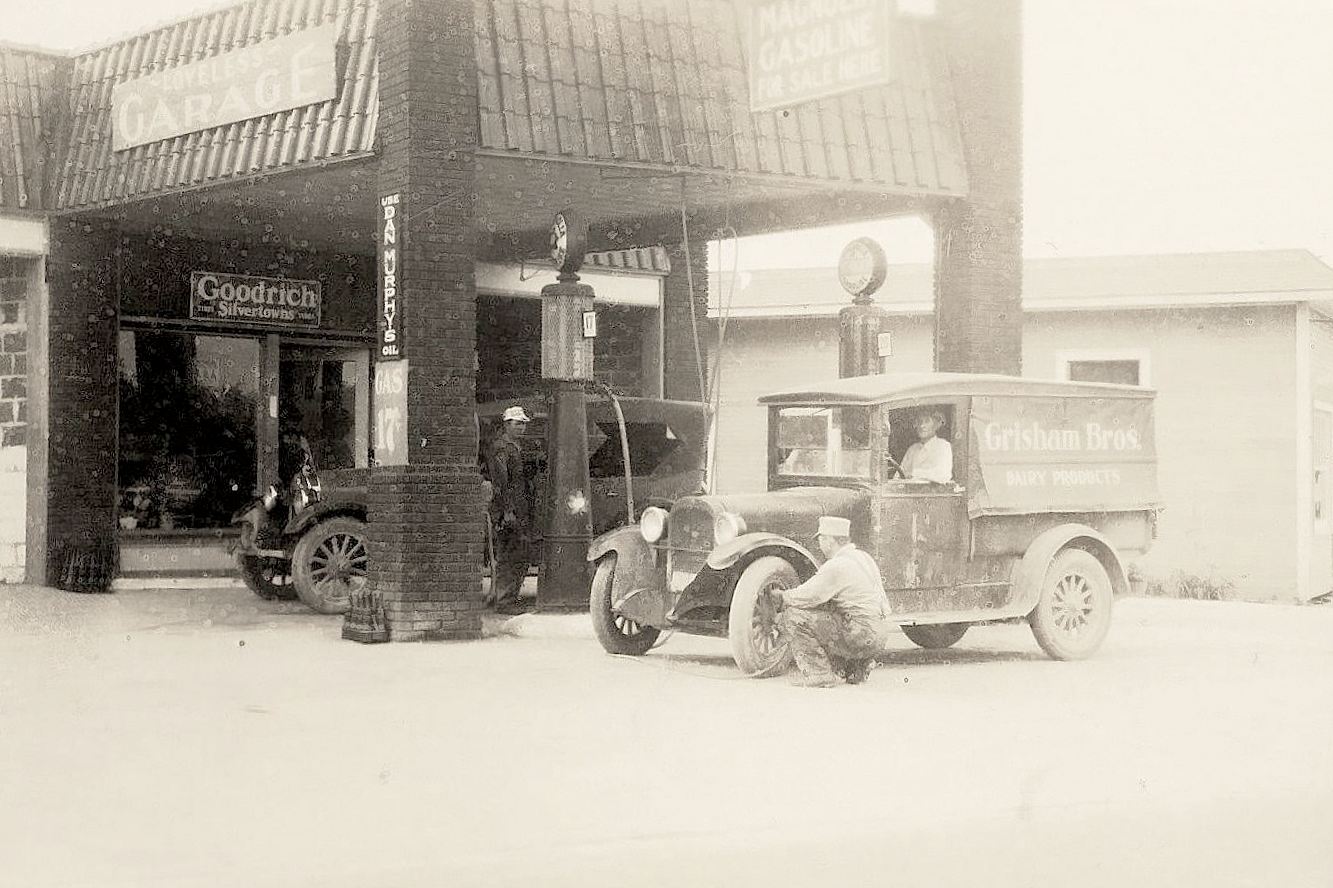
loveless-station_extThe Loveless filling station, Vickery, TX… (click for larger image)

by Paula Bosse

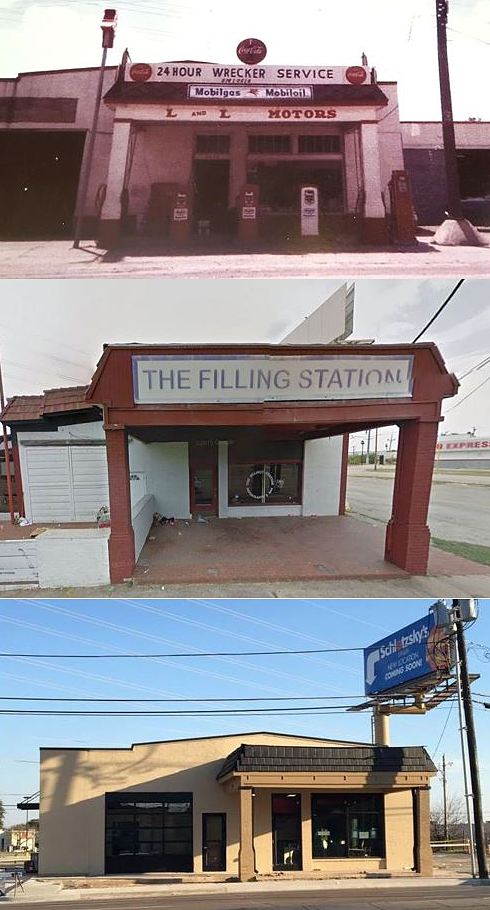
Perhaps you’ve driven past the site of the much-loved former burger place The Filling Station at Greenville Avenue and Park Lane recently and saw that the old building was undergoing renovation. Construction has ended, and a new Schlotzsky’s (the sandwich shop founded in Austin in 1971) has opened at 6862 Greenville Avenue. And it’s pretty cool that they’ve preserved this old 1930s building, a landmark to many Dallasites.

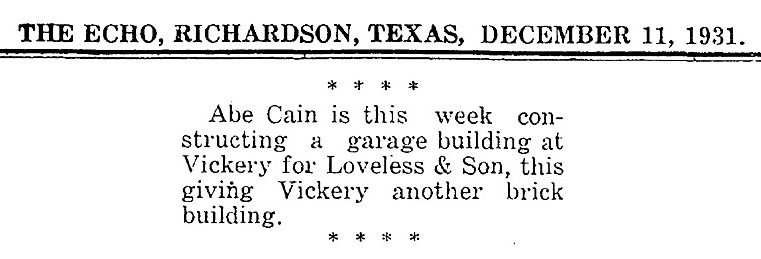
The original filling station and garage was built, according to family members, about 1931 — it was one of the first brick  buildings in the small community of Vickery (which was annexed by Dallas in 1945). The construction even made the columns of the Richardson Echo (Dec. 11, 1931):
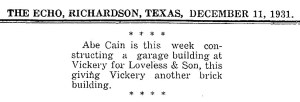
loveless-garage_richardson-echo_121131

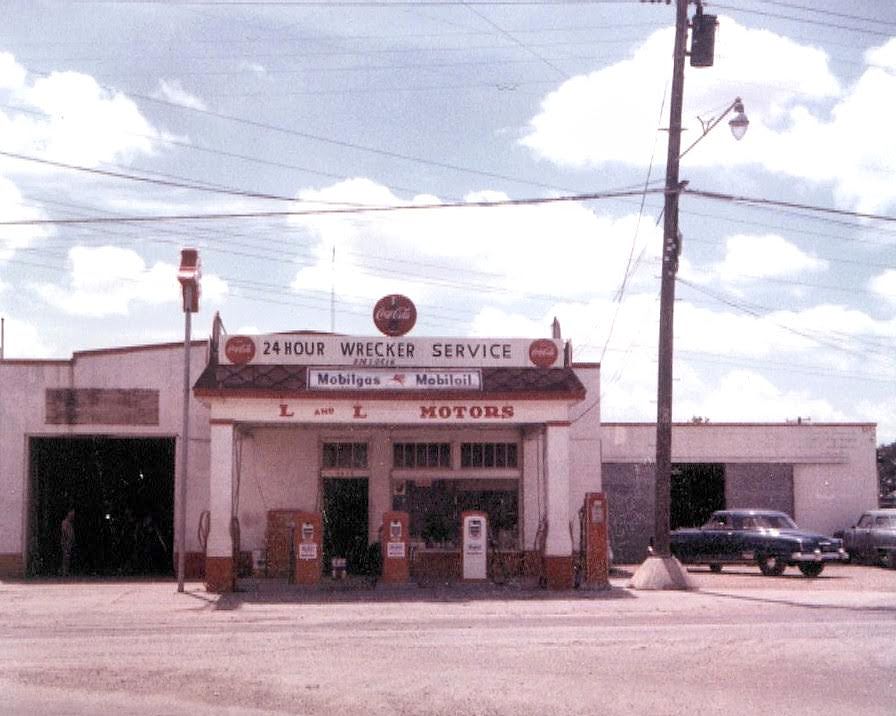
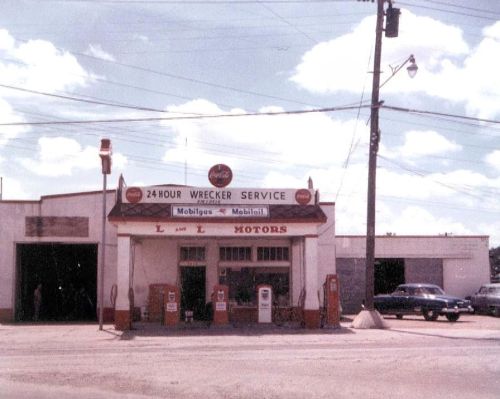
The business had begun in the early ’20s in another building across the street, but things were definitely looking up for the garage and its owners, William Homer Loveless and his son J. W. Loveless, when the new building went up. L & L Motors lasted 50 or so years until the early 1970s, when the once-sleepy Vickery area had exploded into part of “Upper Greenville,” an entertainment mecca lined with bars, restaurants, discos, and strip joints.

The Filling Station, a theme restaurant and bar decorated with gas station memorabilia, opened in 1975 and lasted a remarkable 29 years, closing in 2004. Filling Station super-fans still have fond memories of both the building and its menu of “theme” foods and drinks with names like “sedanwiches,” the Ethyl burger, the Tail Pipe, and the Ring Job.

Beyond being a nostalgic favorite from the go-go days of Upper Greenville, the real reason this place has always had historic appeal to Dallasites is because it is one of the still-standing Dallas-area locations with a tie to Bonnie and Clyde. According to Loveless family lore, the pair bought gas at the station at least once, sometime back in the ’30s. According to Sonya Muncy, whose father, J. W. Loveless, took over the station after her grandfather passed away:

“That was my daddy’s station and his dad’s before. When he got hurt in an auto accident and couldn’t work anymore, he sold it, and it became the first Filling Station restaurant. I think my mom still has pics of Daddy in front of it when he came out of the Army. Gas was 9 cents a gallon with 3 cents tax, for a total of 11 cents a gallon. He had the coldest Cokes around! Across the street where Park and Ride is was my grandmother’s house. I remember playing at the station as a kid and helping Daddy work on cars. When I got my first car, he made me change the oil and rotate the tires! Lol. It was called L & L Motors with Mobil gas. […] Bonnie & Clyde also got gas there and Daddy said they were always nice to him.”

Kevin Wood remembered when his grandparents happened to be at the station when Bonnie and Clyde stopped in:

“The day Bonnie and Clyde came in to fuel, Clyde shook my Pops’ hand.”

And in a later comment:

“My grandmother and grandfather were in the store the day B & C came in … always said they were very nice.”

*

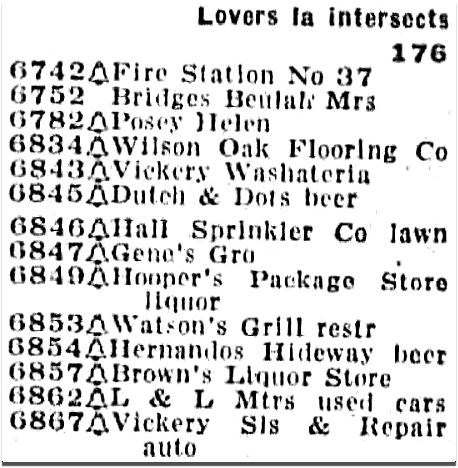
FUN FACT: Jack Ruby apparently ran a short-lived tavern called Hernando’s Hideaway right next door, at 6854 Greenville in the early or mid ’50s (he seems to have owned it and later sold it). It appears the building was torn down at some point. So … Bonnie and Clyde and Jack Ruby, together at last, cheek by jowl.
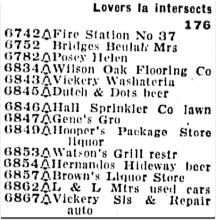
hernandos-hideaway_jack-ruby_1956-directory
Greenville Ave., 1956 directory

*

For as long as I can remember, I’ve checked out this old building every time I drive by it, marveling that it has managed to remain standing all these years, and always afraid it won’t be there the next time I pass it. So thank you, Steve Cole, owner of this Schlotzsky’s, for bringing it back to life and appreciating it as much as a lot of the rest of us do.

**

The photos in this post were kindly sent to me by Jeb Loveless, grandson of Homer Loveless, the original owner. Below, perhaps the oldest photo of the building, in the Bonnie and Clyde era.
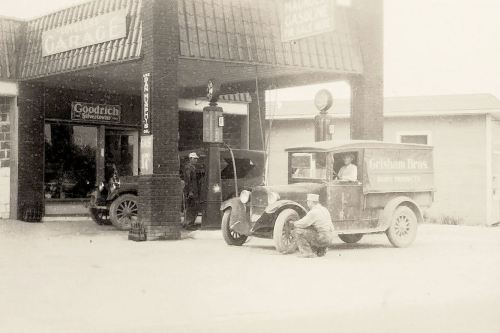
loveless-station_collection-of-jeb-lovelessphoto: collection of Jeb Loveless

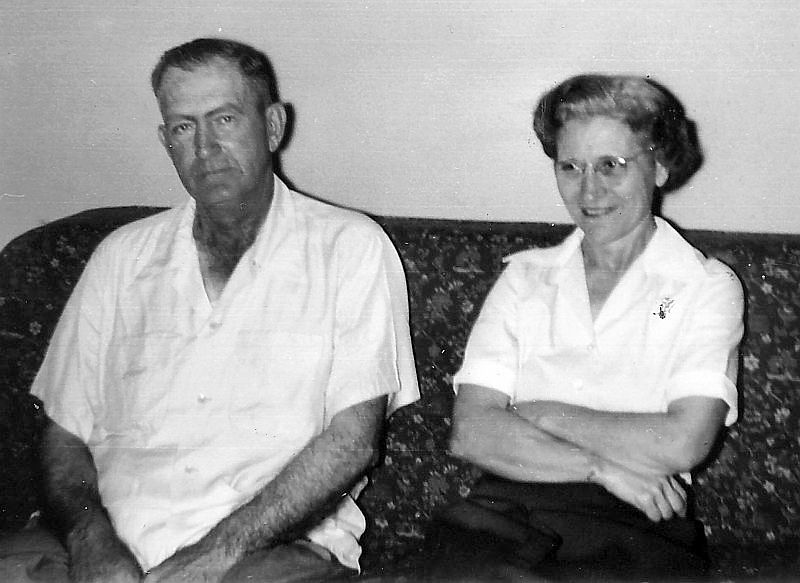
Below, Homer Loveless and his wife Jewel in 1956.
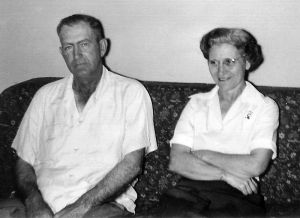
loveless_homer-and-jewel_april-1956

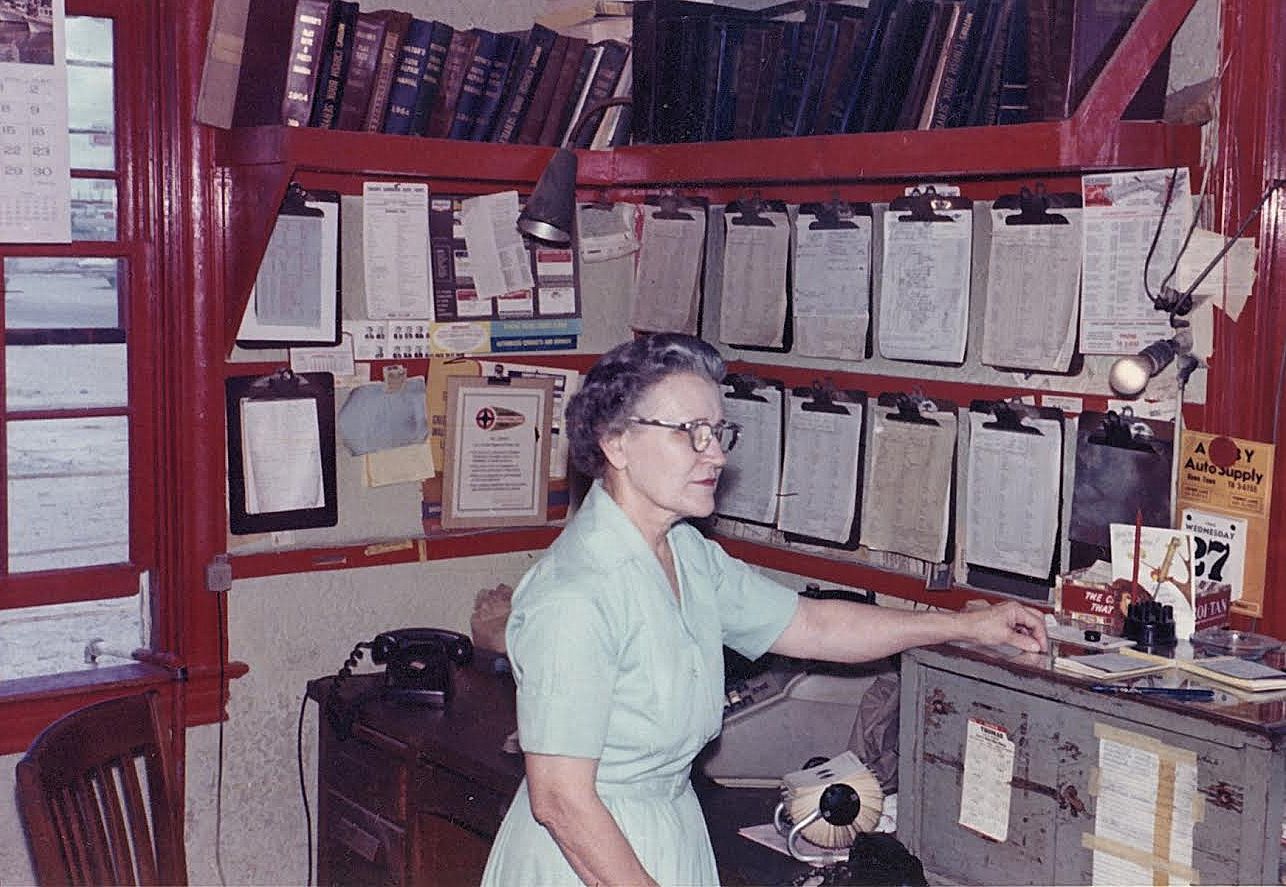
Jewel at work.

loveless-station_jewel-loveless

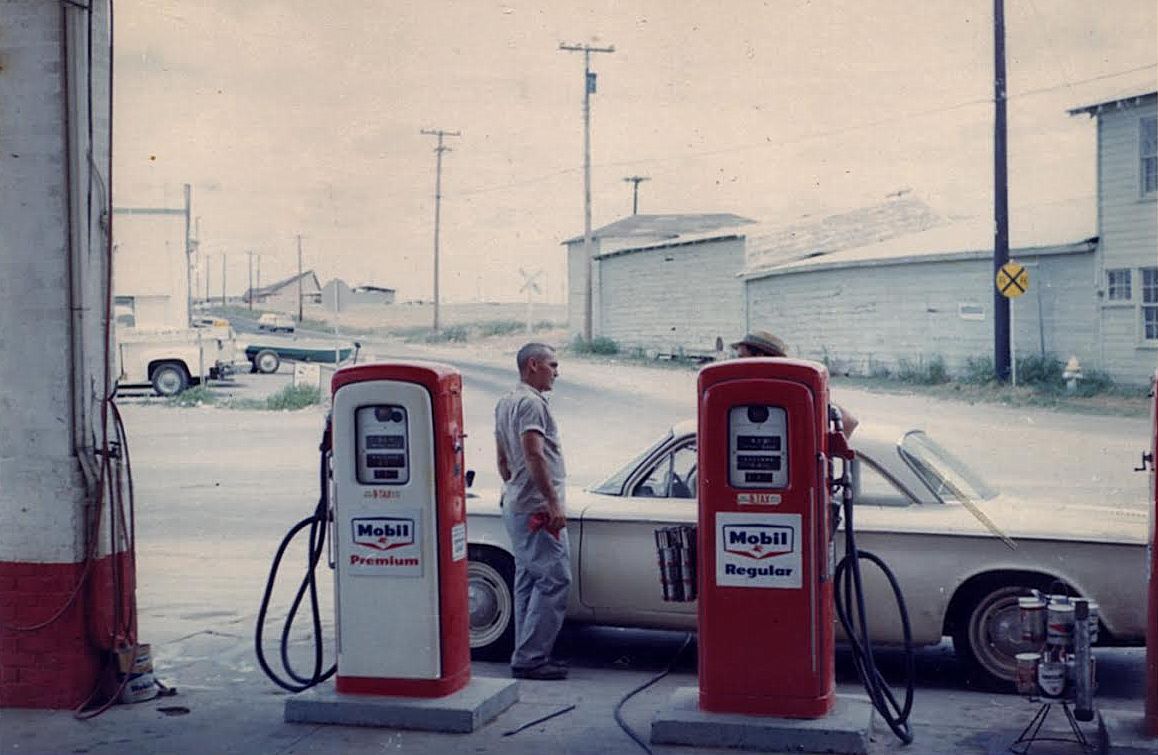
Homer and Jewel’s son (and co-owner) J. W., at the pumps.
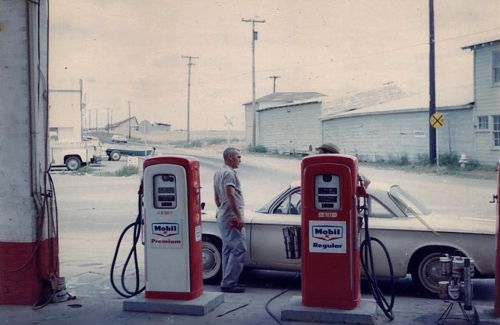
loveless-station_jw-loveless

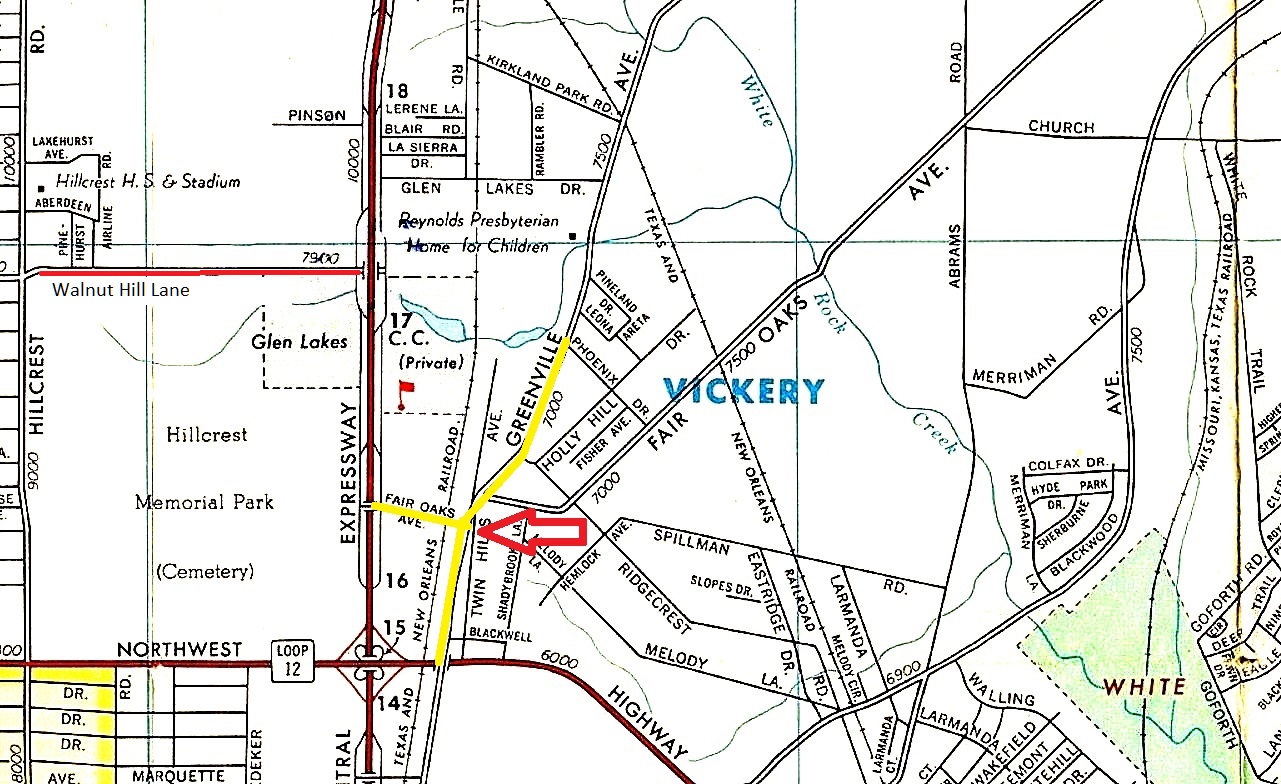
UPDATE: I couldn’t for the life of me figure out what roads I was looking at here. Thanks to Danny Linn, I now know that the road straight ahead is what shows on 1962 maps as being the tail end/very beginning of Fair Oaks (this little bit still exists between Greenville and Central but is restricted to buses) — the view is looking west toward Central Expressway; the Corvair at the pumps is headed south on Greenville. A detail of this area from a 1962 map is below  — note that Park Lane did not yet exist. (The full 1962 Enco map is here.)
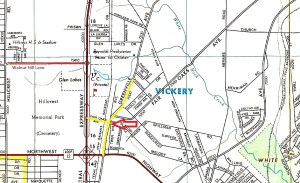
filling-station_vickery_1962-map(click me!)

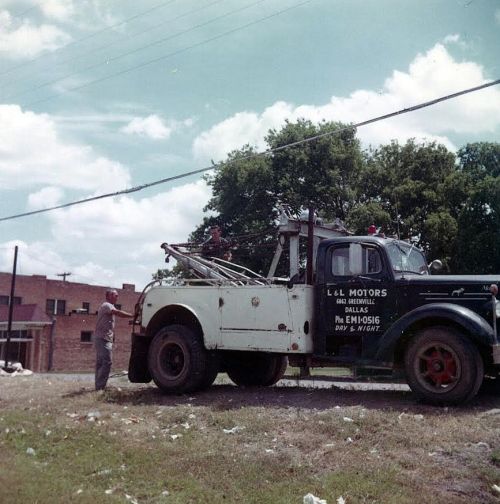
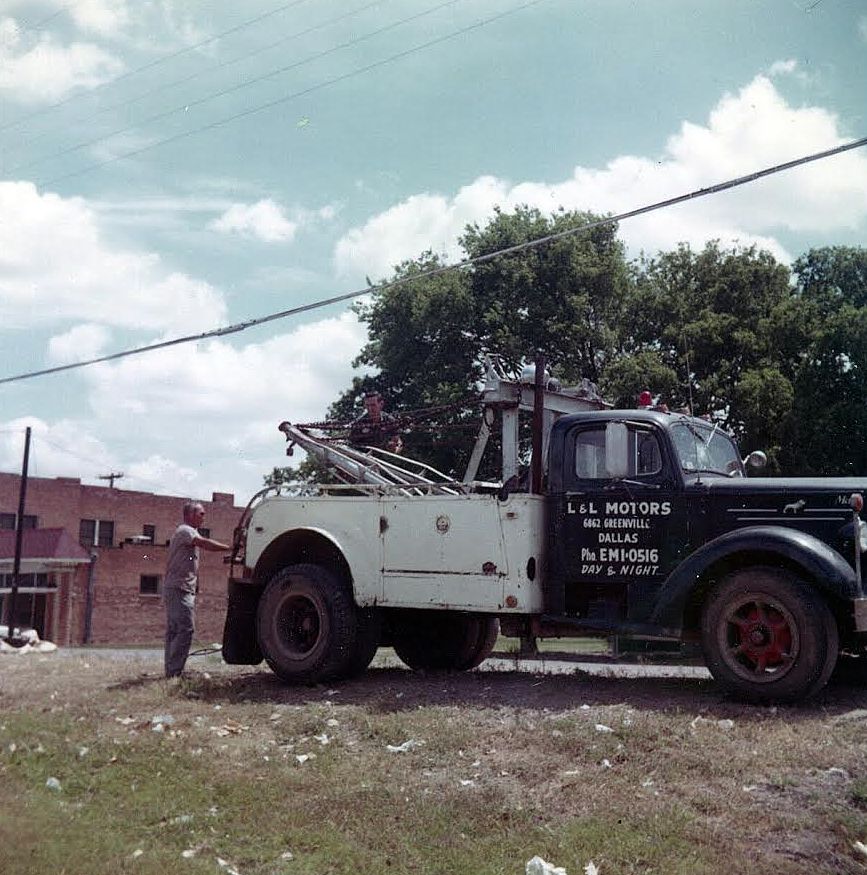
J. W. with the tow truck.

loveless-station_towtruck_1964

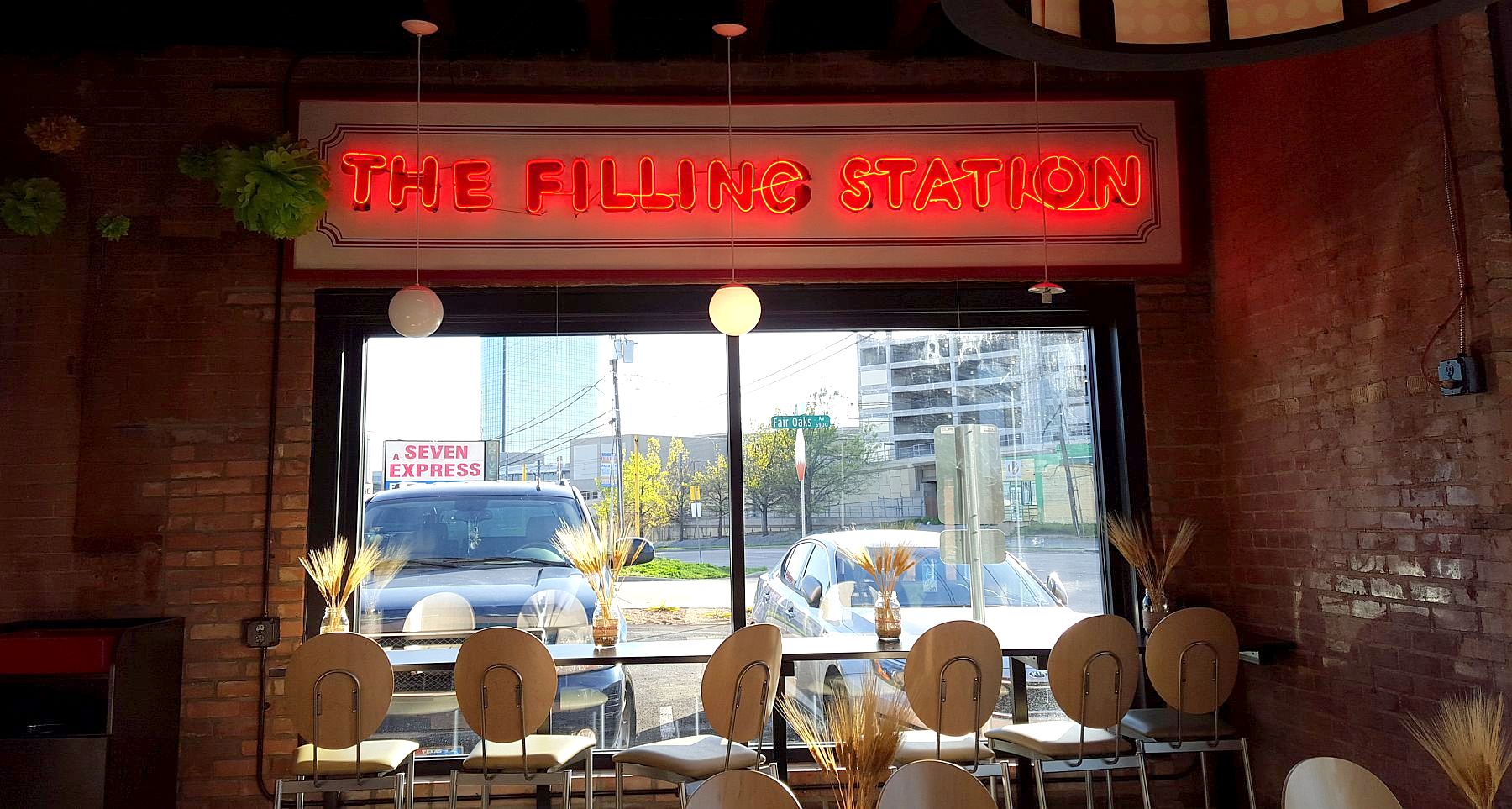
And here is what the old Loveless garage looks like today, as a Schlotzsky’s, decorated with the original neon sign from its days as The Filling Station restaurant as well as with several of the photos reproduced in this post.
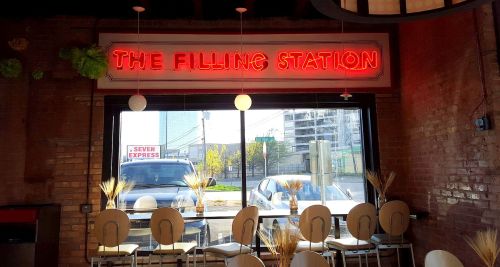
filling-station_neon-sign_2016photo: Paula Bosse

**

Aside from the Bonnie and Clyde connection, this little building (which has managed to stay standing for over 80 years — a feat in Dallas!) is known by most as the home of still-missed Filling Station restaurant.
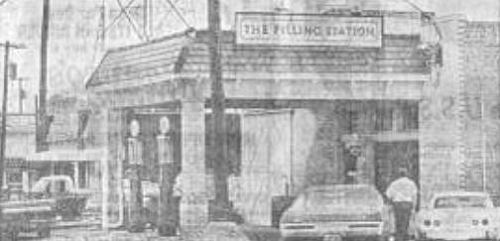
filling-station_dth

Below, an interesting 1976 quote from Filling Station co-owner Bob Joplin about the “cutthroat” competition between ’70s-era Upper Greenville bars and restaurants (numbering at the time more than 50), wondering how long his place might stay alive:

“The average life of a new place on Greenville is probably about 18 months. If that. Hell, around the corner here — the Yellow Rose of Texas — how long was it open? Three months? Maybe less? […] We’re going great right now, but we’ve only been open a little more than a year. Check back with me later — we may be here, we may not.” (DMN, Nov. 14, 1976)

The surprising longevity of The Filling Station — 29 years in business! — is why the strangely unceremonious and surprisingly brief announcement of the Filling Station’s demise (which appeared in the pages of The Dallas Morning News on July 2, 2004) is so odd — its closure merited only ten words: “The Filling Station on Upper Greenville Avenue has also closed.” 29 years! That’s an eternity in the Dallas restaurant world.
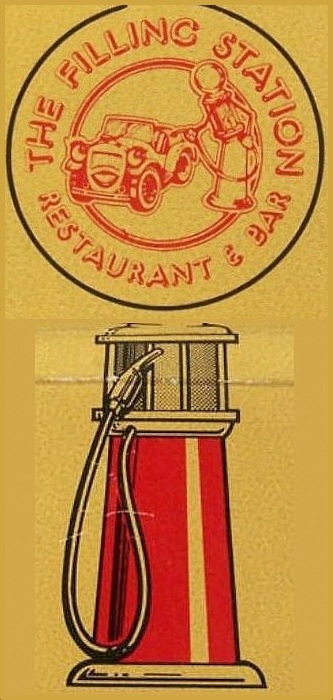
filling-station_matchbook_ebay
eBay

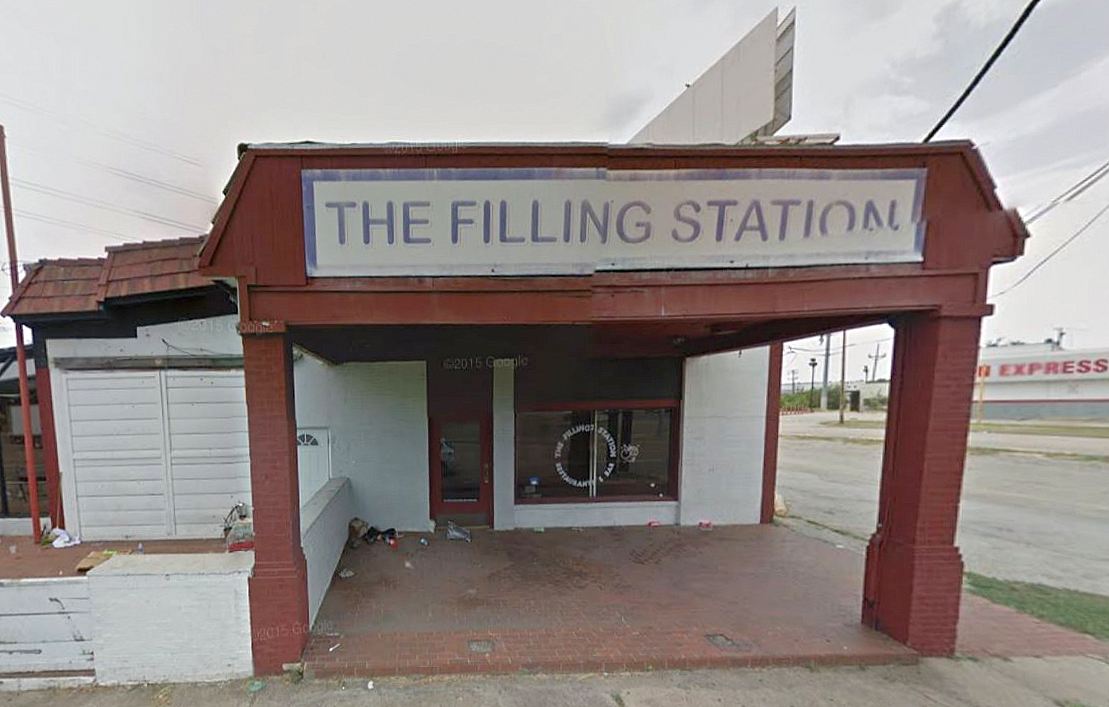
A few other businesses occupied the building, but none managed to stay open very  long. The building was vacant for several years, and it was definitely looking bedraggled when the Schlotzsky’s people came knocking.
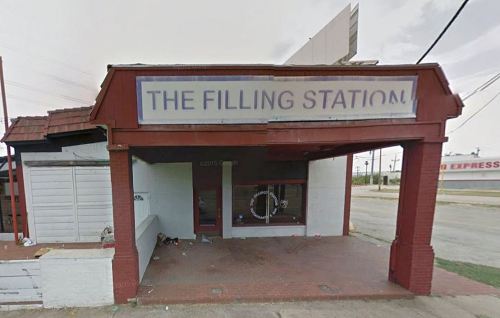
filling-station_google_aug-2015Long-vacant — Google Street View, Aug. 2015

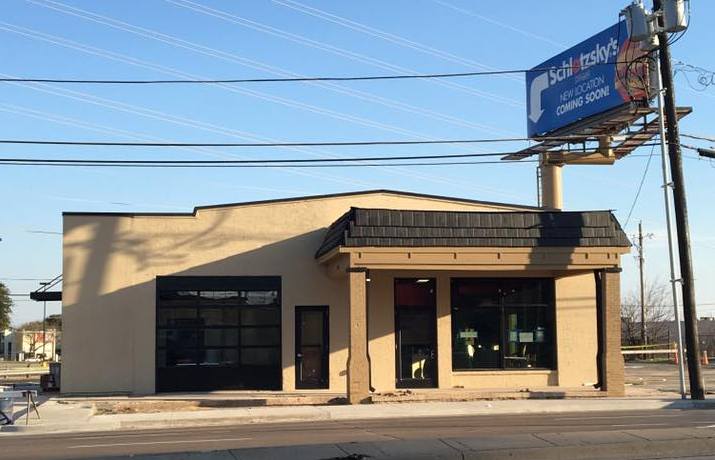
And here it is, after renovation, preparing for its opening day as a Schlotzsky’s — the building now actually looks more like its original design, seen in the photo at the top of this post.
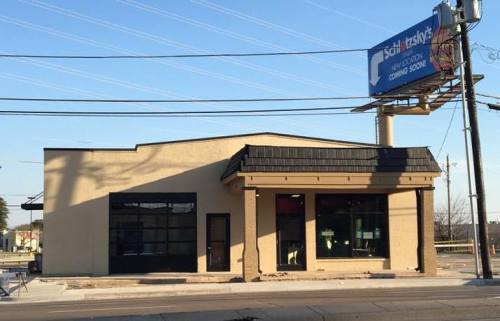
schlotzskys_facebook-pageSchlotzsky’s Facebook page

***

Sources & Notes

The photos of the L & L Motors garage and filling station in Vickery — and the Richardson Echo clipping — were sent to my by Jeb Loveless, grandson of Homer and Jewel Loveless and nephew of J. W. Loveless. He has graciously allowed me to use the photographs in this post. Thanks, Jeb! (Several of these photos were given to the owner of the new Schlotzsky’s and can be seen on the walls inside.)

Quotes from family members whose relatives met Bonnie and Clyde when they stopped in at the gas station are from comments on the Dallas History and Retro Dallas Facebook pages (used with permission).

A Lakewood Advocate interview with the owner of this Schlotzsky’s, Steve Cole, is here. He talks about his dedication to saving as much of the structure as possible, keeping the original brick walls and the wood floors.

To take a photographic tour through what remained of the old Filling Station, see the real estate listing on Zillow here (click on the first picture and a slideshow of large photos will open).

Here’s a then-and-now look at the building over the years:

filling-station_then-now

Related articles in The Dallas Morning News:

  • “William Loveless Dies After Illness” (DMN, June 12, 1960), obituary of the original owner, W. H. Loveless
  • “A Filling Station Which Pumps Beer” by Patty Moore (DMN, Aug. 8, 1975), the first review of the new restaurant, The Filling Station

Click photos and clippings for larger images.

*

Copyright © 2016 Paula Bosse. All Rights Reserved.


Lakewood Post Office — 1946-1976

lakewood_post-office_dmn-123045Lakewood Post Office, 6324 Prospect

by Paula Bosse

I’m often surprised to discover things about the part of Dallas I grew up in which I somehow never knew — in this case: Lakewood’s first post office, which was apparently in operation when I was a living, breathing, sentient human being but which I’d never known about until today. (I actually grew up in the nearby Lower Greenville neighborhood, but even though I went to Long and Woodrow, I don’t remember being all that aware of Lakewood proper until I was able to drive myself around it as a teenager.) Somehow I had never known that there was a post office in Lakewood before the one at Swiss and La Vista. Or, rather, I’d never even thought about it. Until I saw this ad earlier today:

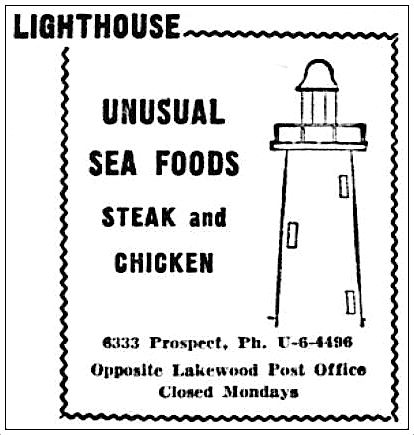
lakewood_lighthouse_dmn_0425471947

“The Lighthouse — Unusual Sea Foods, Steak and Chicken — Opposite Lakewood Post Office.”

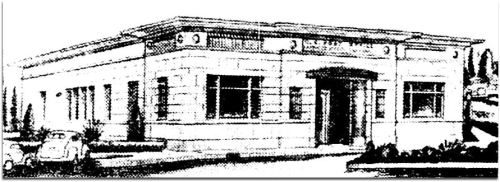
Post office? New to me. I looked it up. It was just west of Abrams, on Prospect at Kidwell, positioned diagonally across the lot. It was the 13th post office substation in Dallas, and it opened on December 2, 1946, over two years after its approval had been announced, during the war, in August, 1944.

A 1945 Dallas Morning News article had this interesting bit of information:

The contractor is Bascomb E. McClesky [sic]. The building will have 4,000 square feet of floor space. Parking space will be provided on the lot. [McCleskey] will retain title to the property and will lease it to the government, Payne said. (“Lakewood To Get Branch Post Office,” DMN, Nov. 18, 1945)

(I’m not sure I was aware developers leased property to the federal government. B. E.  McCleskey lived in the Pasadena area of Lakewood and seems to have spent his 30-year career as a general contractor who also bought, sold, and developed both commercial and residential properties in and around this part of East Dallas. When he began his career, he had an office on Gaston in the new Lakewood Shopping Center; at the time of his death in 1956, his office was right next door to the post office on land which, presumably, he still owned.)

This post office lasted for 30 years until the newer, hulkier, and far less aesthetically appealing station opened at Swiss and La Vista on May 10, 1976.

lakewood-post-office_dmn_112576_swiss.-photo
1976

Some factoids which will come in handy should you ever find yourself in a U.S. Post Office Trivial Pursuit (Lakewood Edition) competition:

  • When the first Lakewood post office opened in 1946, it employed 3 clerks, 1 supervisor, and 16 carriers.
  • When the second post office opened 30 years later, it employed 13 clerks, 2 supervisors, and 47 carriers.

*

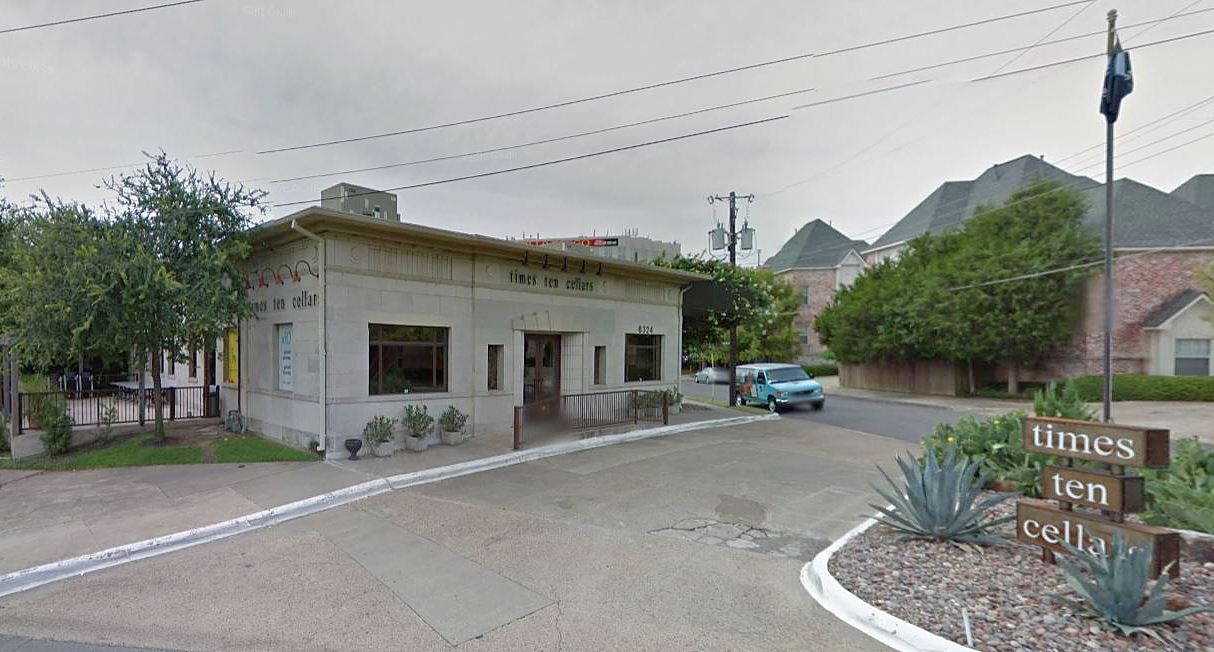
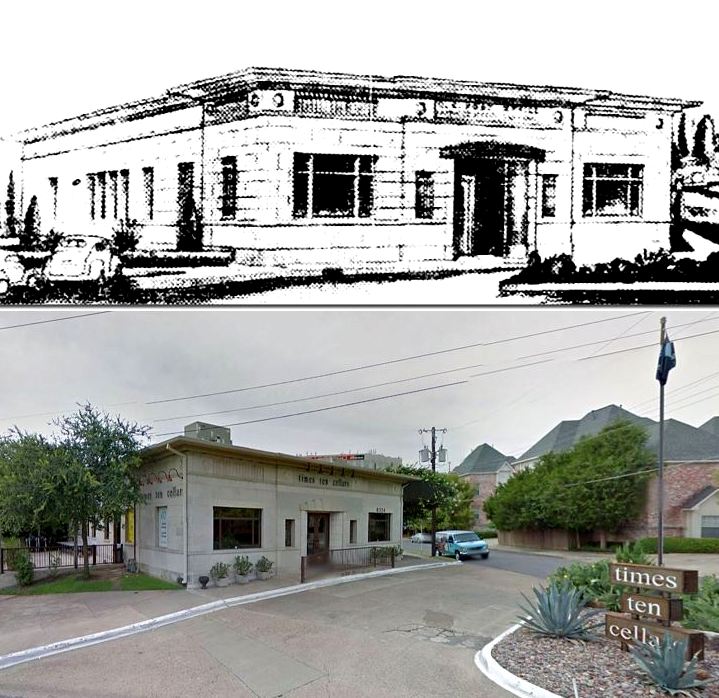
But back to the first post office — the building is still standing and houses the Times Ten Cellars wine bar! I’ve passed that building a lot over the years, but I guess I never paid much attention to it. I don’t know why, because it’s a great little  building. It would never occur to me that it might ever have been a post office. I wish more businesses in Dallas would consider repurposing older buildings rather than building characterless boxes that look like every other characterless box. Thank you, Times Ten Cellars!

times-ten-cellar_google_2015Google Street View (2015)

*

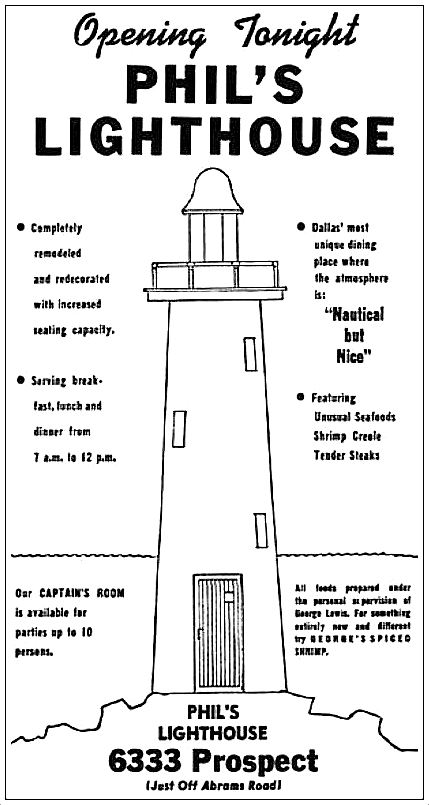
That Lighthouse “unusual sea foods” restaurant? It doesn’t seem to have lasted very long. It changed hands a few times before closing as the Lighthouse Cafe at the end of 1950. At one point it was known as Phil’s Lighthouse — “Dallas’ most unique dining place where the atmosphere is: ‘Nautical But Nice.'”

phils-lighthouse_dmn_121649DMN, Dec. 16, 1949

That’s right … “NAUTICAL BUT NICE”!

***

Sources & Notes

If anyone remembers the Lighthouse restaurant: was it actually shaped like a lighthouse?

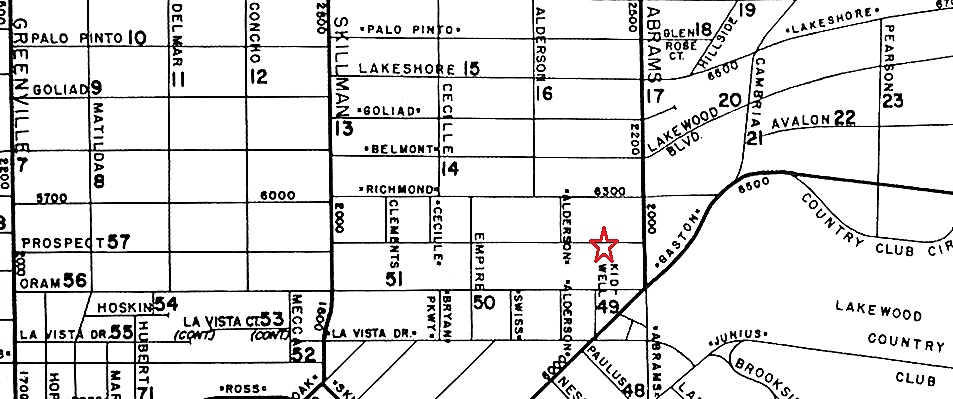
Detail of a page from the 1952 Mapsco showing the location of the old post office (click for larger image):

lakewood-post office_1952-mapsco

lakewood-post-office_then-now

Click pictures for larger images.

*

Copyright © 2016 Paula Bosse. All Rights Reserved.
 

Protected: David Bowie, Dallas Convention Center — 1978

This content is password-protected. To view it, please enter the password below.

Ramon Adams: Violinist, Candy Manufacturer, Old West Expert

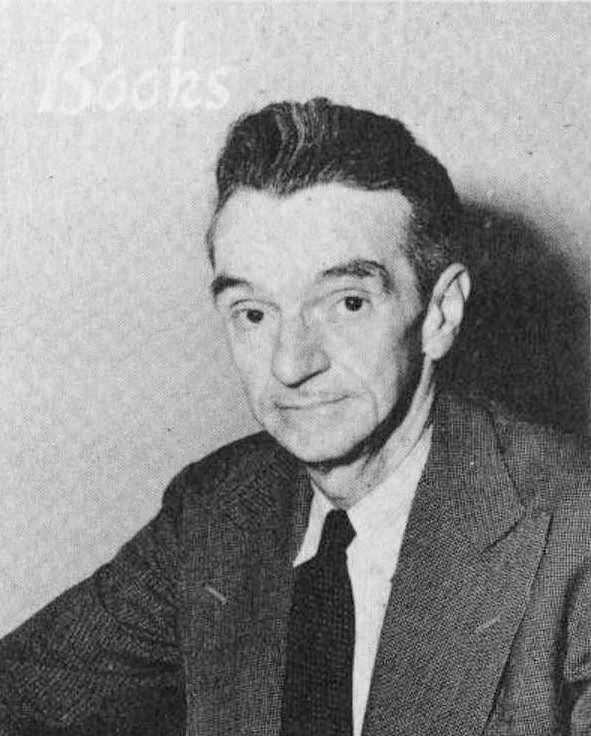
adams-ramon_texas-week-mag_090746_portal-photo_bwRamon F. Adams, 1946

by Paula Bosse

I’ve spent a fair amount of my adult life cataloging Texana books and ending descriptions with the bibliographic citations “Adams, HERD” or “Adams, SIX-GUNS.”* “Adams” was Ramon F. Adams, a respected and prolific writer and bibliographer specializing in the Old West and cowboy life. If you collect books on Texas and The West — or on cowboys and the cattle industry — you have Ramon Adams’ books on your shelves. And he lived in Dallas.

Ramon Adams was born in Moscow, Texas in 1889, near Houston, but left there as a young man to study and teach music. He was a professional violinist who played not only an occasional symphony gig, but after his years of teaching, he made a steady living playing in movie theater orchestras, accompanying silent films. While playing in the orchestra at the Rialto in Fort Worth, he even wore white tie and tails. When the Rialto musicians went on strike in 1923, he and his wife, Allie, moved to Dallas, and he played in the orchestras up and down theater row until the fateful day when he was cranking a stalled Model T Ford in an attempt to start it and broke his wrist. It never healed properly, and his days as a professional violinist came to an abrupt end.

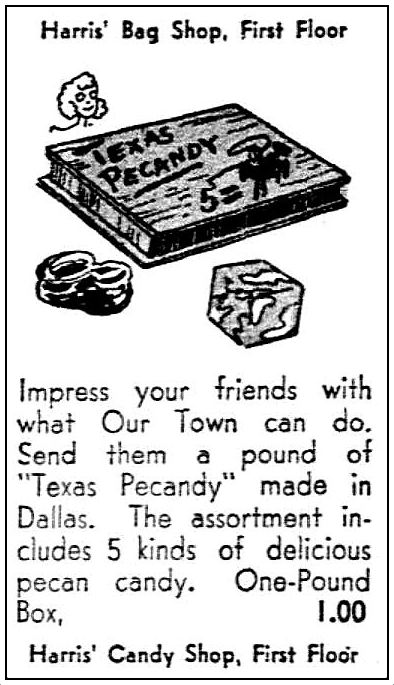
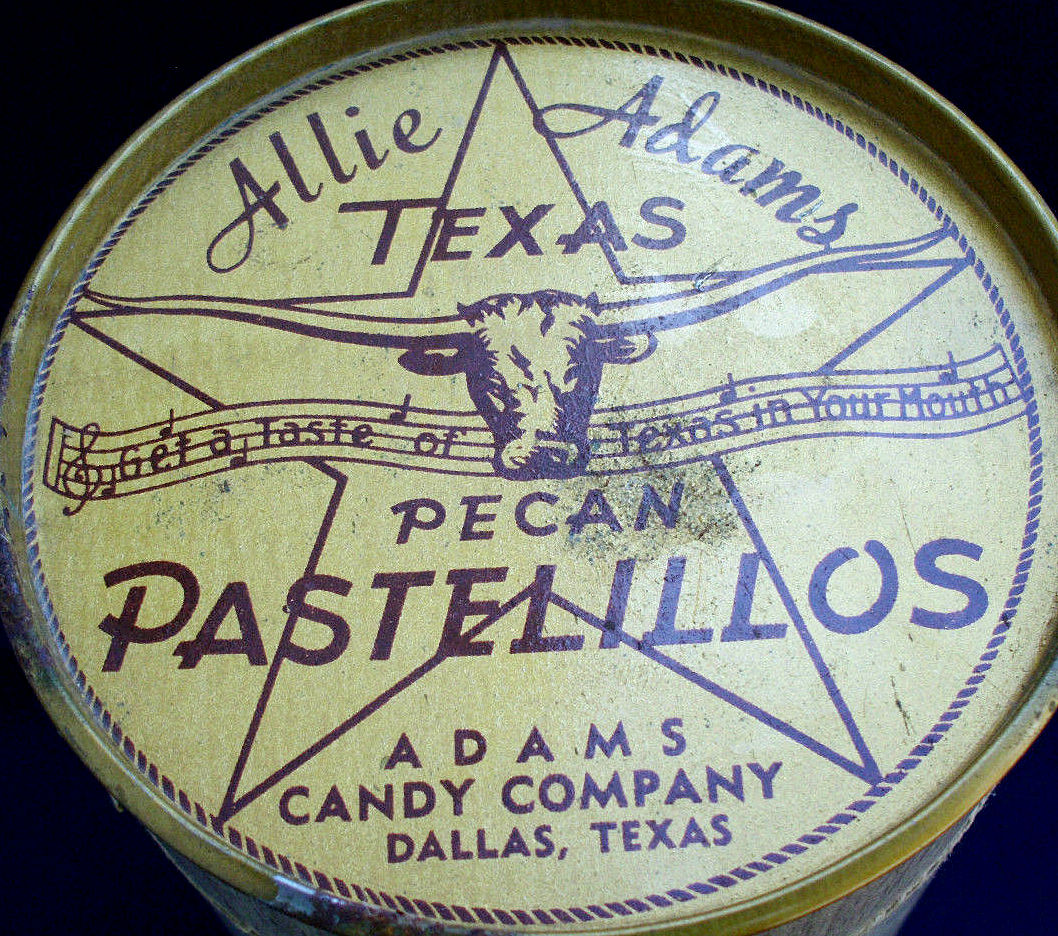
I never knew about his first career as a musician, and I never knew about his second career as a candy merchant! The Candy Years began when he and his wife bought a little candy store on Elm Street between the Melba and the Majestic, and it did such good business that, a few years later, he went into manufacturing and wholesaling candy. The Adams Candy Co. began its successful life in the 1930s, known for its widely available candies such as “Texas Pecandy” and for its “Burnt Offering” (“burnt almonds in chewy caramel and rich chocolate”), which was made specially for Neiman-Marcus.

pecandy_dmn_090940Sept. 1940

The runaway success of his candy business meant that when the Adamses sold the business in the mid-’50s (making, one assumes, a hefty profit) Ramon was able to devote his full attention to researching and writing about cowboy life and culture. He had been writing all along, in his spare time, but only in short bursts, usually at night, at the kitchen table. He had written several very long pieces for The Dallas Morning News in 1927 and 1928, but his first book, Cowboy Lingo, wasn’t published until 1936 — when he was 46 years old. And then the floodgates opened. When he died in 1976, his obituary noted that he had written 24 books — in addition to numerous articles for magazines and journals. He was the expert other experts consulted. And he lived in Dallas. And he made “Pecandy.”

**

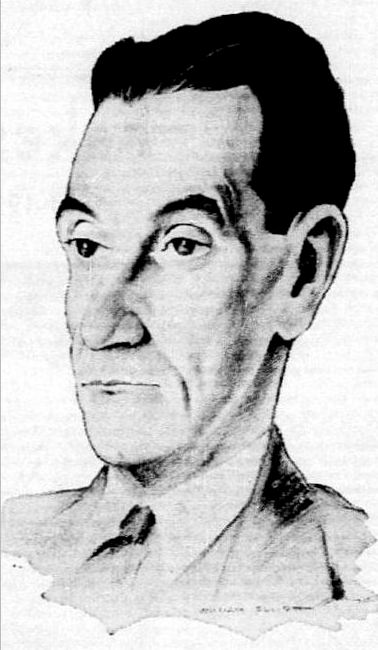
I love this 1936 caricature of Adams. (He looks an awful lot like Dr. Smith of Lost In Space here….)

adams-ramon_caricature_1936

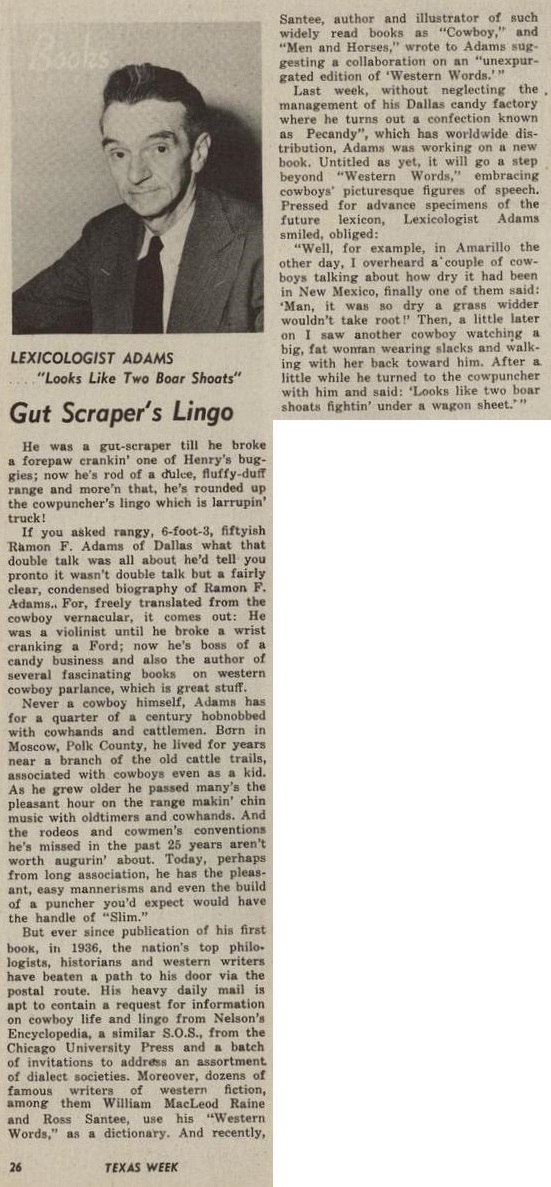
A pleasant little article on Adams, no doubt written by one of his many journalist friends, from 1946 (click for larger image):

adams-ramon_texas-week-mag_090746_portalTexas Week magazine, Sept. 7, 1946

And…

ad-adams-candy-co“Get a taste of Texas in your mouth!”

***

Sources & Notes

The Handbook of Texas entry on Ramon F. Adams is here.

A more comprehensive Biographical Note is on the page devoted to the Ramon Adams Collection, Texas/Dallas History & Archives, Dallas Public Library, here.

* “Adams, HERD” and “Adams, SIX-GUNS” is short-hand used by catalogers of books on Western Americana when noting that the book being cataloged is referenced in Ramon F. Adams’ book The Rampaging Herd: A Bibliography of Books and Pamphlets on Men and Events in the Cattle Industry (Norman: Univ. Oklahoma, 1959) or his book Six-Guns and Saddle Leather, A Bibliography of Books and Pamphlets on Western Outlaws and Gunmen (Norman: Univ. of Oklahoma, 1954).

*

Copyright © 2016 Paula Bosse. All Rights Reserved.
The Obligatory “Star Wars” Post

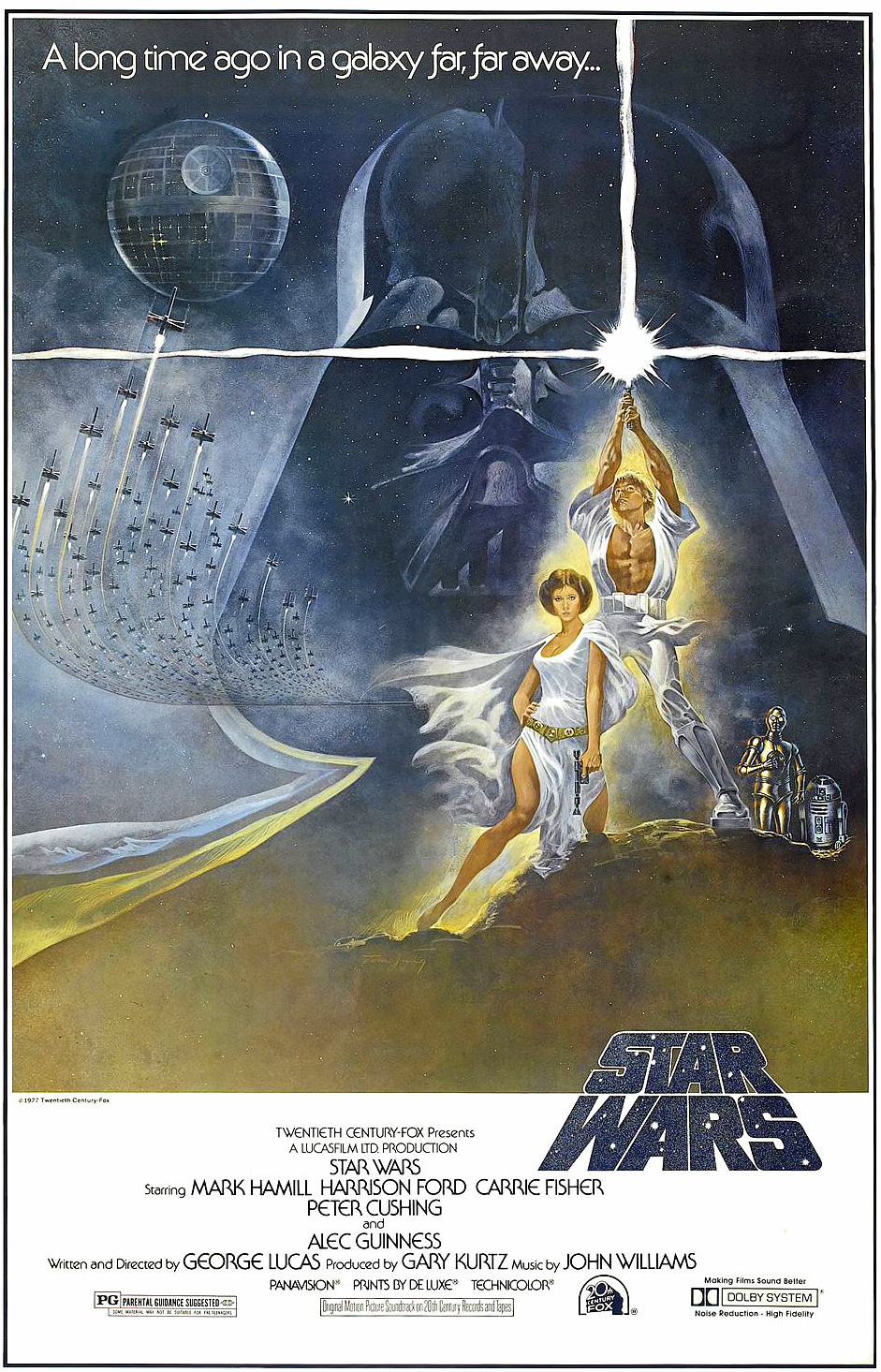
star-wars_jung_sm“A long time ago, in 1977…”

by Paula Bosse

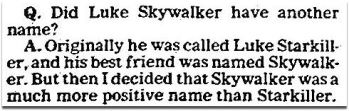
The relentless Star Wars promotional onslaught has been upon us for a while now. I have no idea what episode we’re up to at this point, but let’s look back to overlooked tidbits about that first movie. My favorite is this wire-service blurblet which appeared newspapers in April, 1976 — a full year before the movie was released.

star-wars_dmn_042076_starkiller

“Luke Starkiller” is a great name. Too bad Lucas changed it. Gene Siskel asked him about it in 1983.

star-wars_siskel_FWST_052283

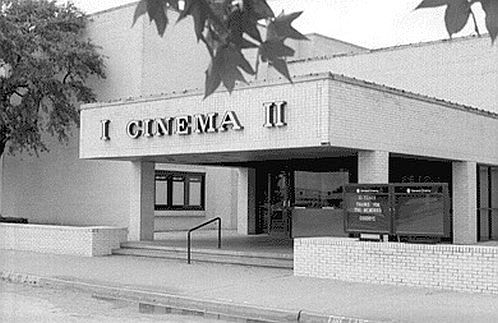
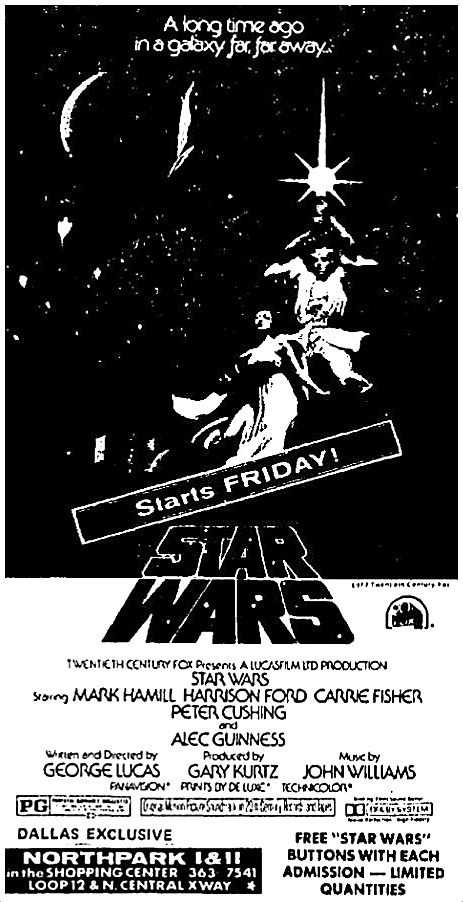
The movie played exclusively at the late, lamented NorthPark I & II; it opened on Friday, May 27, 1977. Lines were around the block. For weeks.

northpark-cinema

star-wars_dmn_052677May 26, 1977 (click for larger image)

(Did you keep your “free Star Wars buttons”?)

Moviegoers were stunned that the ticket price had been boosted to a then-unheard-of $3.75 (the equivalent of about $14.50 today). As one article explained, “Twentieth-Century Fox takes 90 percent of the gross receipts after deduction of expenses” in exchange for allowing theaters to show the movie. (I wonder how much popcorn was!)

Lastly, a fairly enthusiastic social commentary piece about the movie can be found in an article written by Dallas Morning News editor and editorial-page mainstay William Murchison (in fact, the article appeared on the editorial page of the DMN). The moneyed Mr. Murchison likens the exhilaration felt in finally getting into a showing that hadn’t been sold out to “crashing the Astor Ball” and is shocked at the “ungodly” ticket price — “a price that would buy a good Cabernet Sauvignon.”  Even so, he and Lovey apparently were quite taken with the exploits of Mr. Starkiller Skywalker, et al.) (Check the Dallas Morning News archives for the article “Movies to Make You Feel Good” by William Murchison, DMN, Aug. 30, 1977.)

***

Sources & Notes

“Star Wars” poster by Tom Jung found here.

*

Copyright © 2015 Paula Bosse. All Rights Reserved.

The “Dallas” Theme Song You’ve Never Heard — En Français

paris-texas_eiffel-towerNo, not Paris, TEXAS…. (via anatravels.org)

by Paula Bosse

You know that theme music for the TV show Dallas? Actually, that should just be a statement of fact: you KNOW that theme music for the TV show Dallas. We all do. But you know what you DON’T know? You don’t know what the French did to “improve” the J.R.-watching experience. For reasons which I don’t exactly understand, they had someone (Jean Renard) write a theme song for the show. A song. Une chanson. With lyrics. To all-new music. Sounds crazy and unnecessary, but it was a big hit on the French pop charts. And it’s so gloriously awful and fabulously weird that it must be shared. This is not a joke. This is the actual music that accompanied Dallas when it was shown on French television.

I give you a rough approximation of the lyrics (the French lyrics are here).

Dallas, your ruthless world,
Dallas, where might is right,
Dallas, and under your relentless sun,
Dallas, only death is feared.

Dallas, home of the oil dollar,
Dallas, you do not know pity;
Dallas, the revolver is your idol,
Dallas, you cling to the past.

Dallas, woe to him who does not understand,
Dallas, one day he will lose his life.
Dallas, your ruthless world,
Dallas, where might is right.

And here it is. Sing along!

*

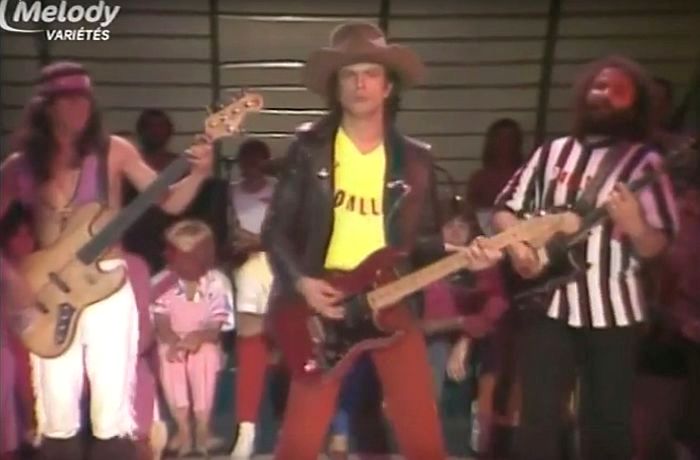
Catchy, huh? What could be better than hearing it sung? Watching it being sung! I’m not sure who the singer is, but he’s attacking this song with a rock attitude that totally isn’t warranted.

*

Nice hat!

This was a big, big hit in France. I’ve even seen the word “beloved” used to describe it. Remember this the next time you might feel a lack of confidence or a twinge of inadequacy in the presence of a chic and sophisticated Parisian. Stand tall, my fellow Texans, and remember OUR Dallas theme.

*

Silly Frenchmen.

 dallas-french_youtube

*

UPDATE: Julia Barton has hipped me to her segment about “Dallas” which aired on public radio’s “Studio 360” in 2011, focusing on the sometimes surprising global and sociopolitical impact of this pop-culture juggernaut. I went to college in the UK, and there wasn’t a day that passed without several people gleefully asking me about J.R. Ewing. It was weird. Had the TV show never existed, I’m sure I would have been queried endlessly (and possibly angrily) about JFK, and I might well have been shunned — yes, shunned! (I remember when people embarking on international trips pre-Southfork were advised to respond to the question “Where are you from?” with the somewhat vague answer “Texas” rather than the explosively specific “Dallas,” because, post-assassination, we were “the city of hate” around the planet.) I’d much rather have had people ask me about a soap opera character than blaming my hometown for killing an American president. So, um, thanks, Lorimar!

Listen to Julia Barton’s 15-minute “Studio 360” segment here (audio plays above J.R.’s silhouette).

***

Read about this odd practice the French have of concocting whole new TV theme songs for American television shows, here.

I can’t believe I’ve never heard of this. All thanks to my friend Carlos Guajardo for passing along this very entertaining nugget of Dallas kitsch! Thanks, Carlos!

*

Copyright © 2015 Paula Bosse. All Rights Reserved.

“Carhops” — A Short Documentary, ca. 1974

carhops_title
Schlitz on its way…

by Paula Bosse

The carhop is an oddly American invention — and it began here in Dallas in the 1920s, with boys and young men serving customers in cars at J. G. Kirby’s Pig Stand drive-in restaurants. In 1940, Sivils hit Dallas, but this time with young women as servers — young women in skimpy outfits. There was no looking back — from then on, pretty girls showing a lot of leg and hoping for big tips carried trays of food, soft drinks, and beer to cars full of waiting customers.

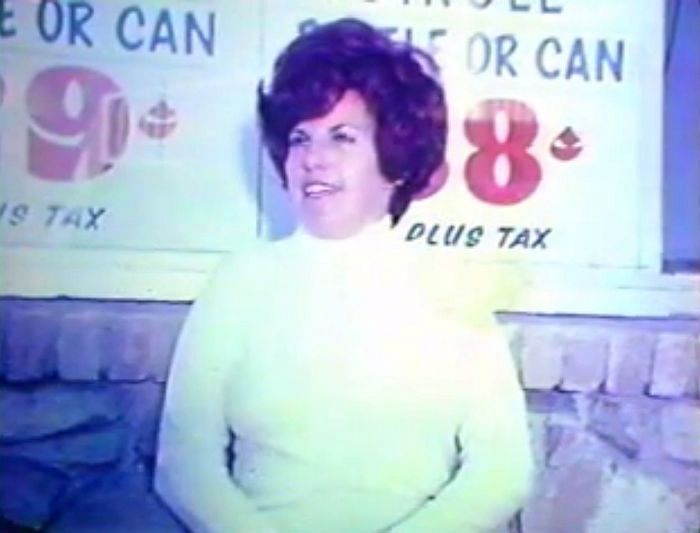
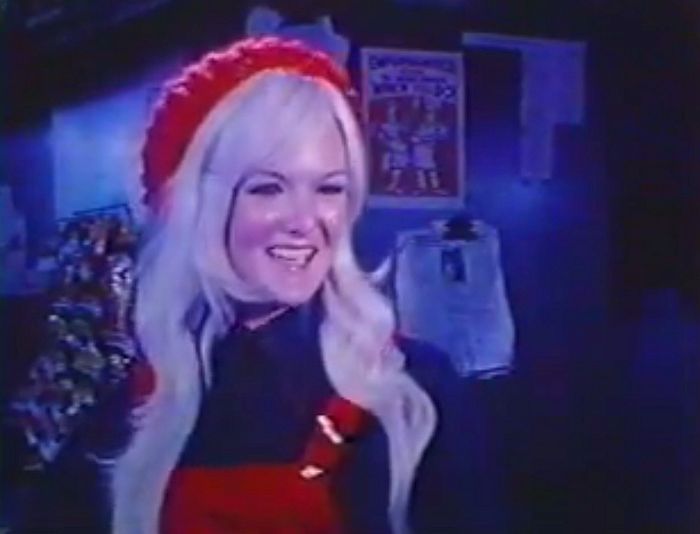
One of the few remaining “old school” drive-ins is Keller’s on Northwest Highway, still doing good business today. Around 1974 or 1975, SMU film teacher Pat Korman made a short documentary about Dallas carhops past and present (the result, it seems, of reading a Dallas Morning News article by Rena Pederson). He interviewed B. J. Kirby (owner of Kirby’s steakhouse on Lower Greenville and son of Jesse Kirby, founder of the Pig Stand pig-sandwich empire, which, as legend has it, had the very first carhops), J. D. Sivils (owner of Sivils drive-ins, who, along with his wife, was an important figure in the evolution of curb-side dining), and Jack Keller (owner of Keller’s Hamburgers). The three businessmen reminisce about the early days of drive-in restaurants in Dallas as a lot of cool historical film footage unspools and photographs from the ’20s to the ’50s are flashed on the screen. Also interviewed are four women carhops who were working at Keller’s at the time, talking about their jobs.

It’s a cool film. Big cotton-candy hair, accents you wish were still around, and cans and cases of Schlitz, Schlitz, Schlitz.

The 14-minute film is in two parts on YouTube. Here is the first part:

*
And here is the second part:

*
Below, screenshots of the interviewees.

sandy-carhopsSandy

shirley-carhopsShirley (as of Jan. 2015, she’s been a fixture at Keller’s for 50 years!)

rita-carhopsRita

nancy-carhopsNancy

kirby_carhopsB. J. Kirby

sivils-carhopsJ. D. Sivils

keller-carhopsJack Keller

kellers-menu-board_carhopsNo. 5 — 80¢

***

Sources & Notes

“Carhops” — filmed sometime in the early ’70s — was directed by Patrick Korman, shot by Ron Judkins, and produced by Don Pasquella. It premiered at Jesuit High School in April 1976. The film is on YouTube in two parts, here and here. (By the way, if you look at the YouTube comments under part two, you’ll see a comment from Sandy herself. She’s still looking good in the avatar photo.) (The music at the beginning and end of the film is great! I’m pretty sure it’s the legendary steel guitarist Ralph Mooney and the equally legendary guitarist James Burton; I love those guys! I urge to go get a copy of their album “Corn Pickin’ and Slick Slidin.'”)

Rena Pederson is thanked in the credits. She wrote a great article in The Dallas Morning News called “Carhops Fading, Those Were the Days” (Aug. 25, 1974) — she interviewed many of the same people seen in the film.

The Keller’s Northwest Highway location celebrates its 50th anniversary this year. Shirley — one of the carhops featured in the film — has worked there since it opened in 1965. As of Jan. 2015, she was still there! Go by and see her! Check out a Lakewood Advocate story on Shirley, here.

Also, take a look at a Dallas Morning News article on Keller’s 50th anniversary, here — scroll down to the slideshow to check out some great photos from its early days.

Read about sexy male carhops who plied their trade in skimpy outfits — a short-lived fad in Dallas inspired by the success of drive-ins like Sivils — in my previous post “Carhops as Sex Symbols — 1940,” here.

*

Copyright © 2015 Paula Bosse. All Rights Reserved.

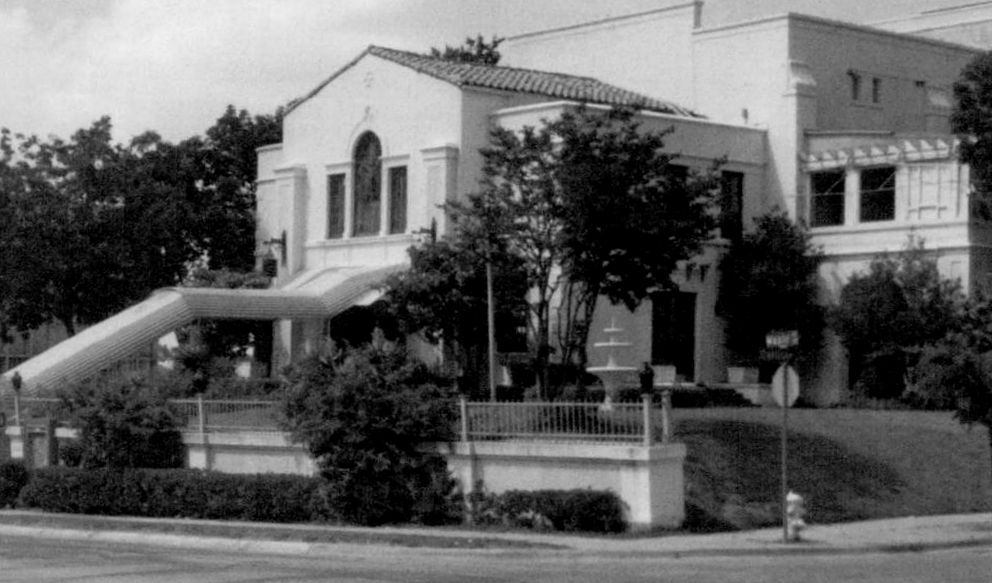
Teatro Panamericano / Cine Festival — 1943-1981

teatro_villasana_1950sEl Panamericano (click for larger image) (Villasana)

by Paula Bosse

In 1937, Joaquin José (J. J.) Rodriguez opened the first theater in Dallas to show Spanish-language movies. It was the Azteca, at 1501 McKinney Avenue, one block away from the still-there El Fenix. He soon changed the name to the Colonia and later to El Patio.

colonia_1938-directory1938 city directory

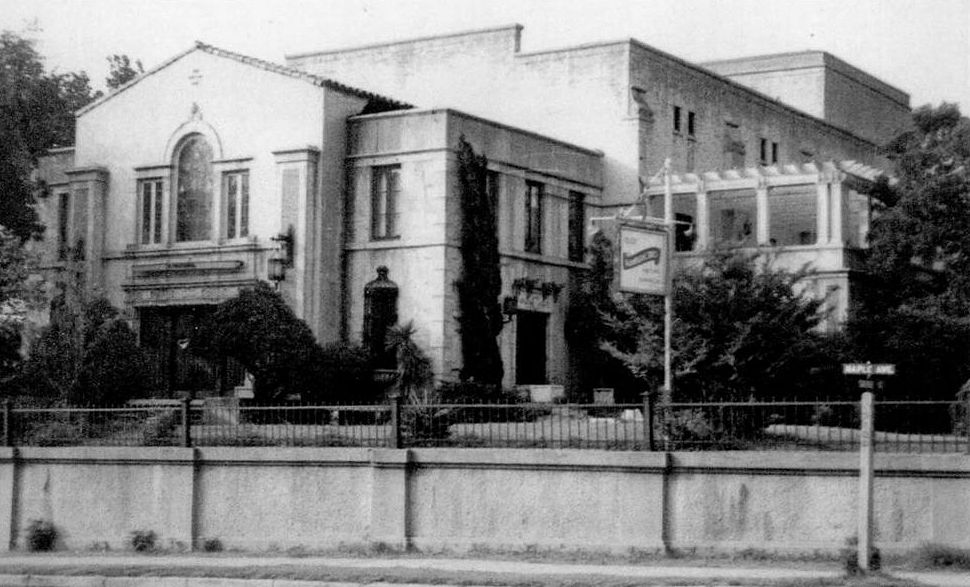
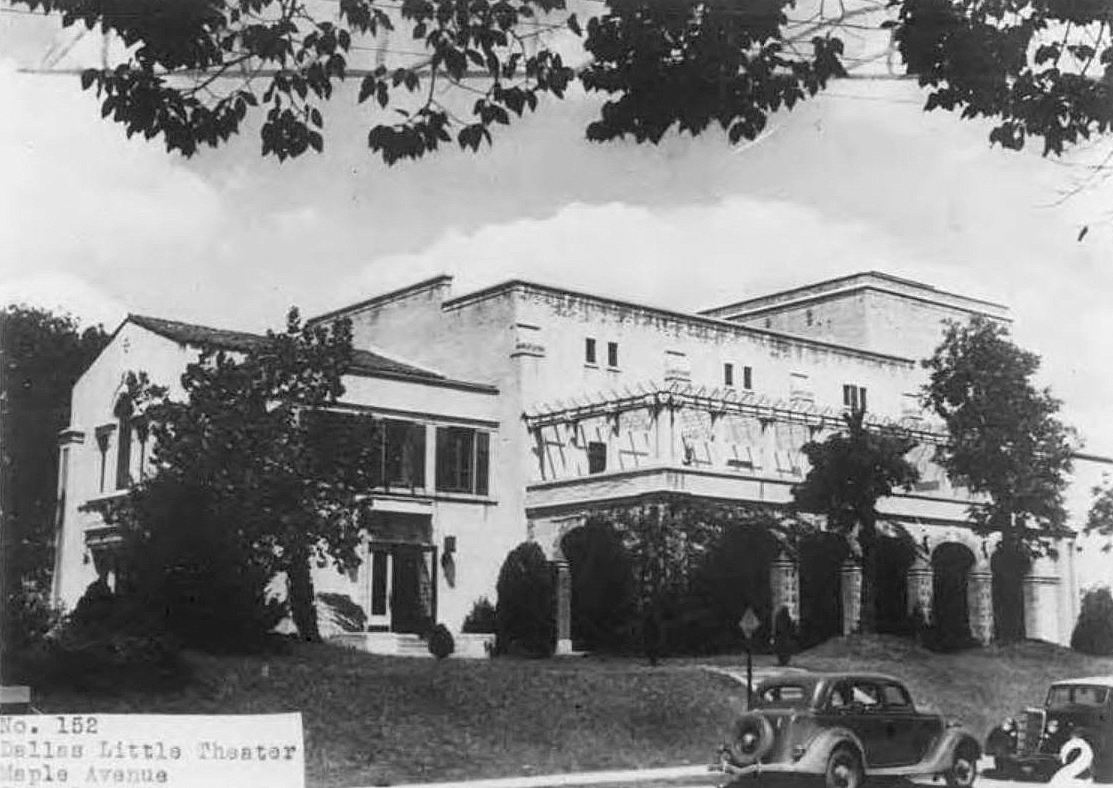
Even though a journalist later described this theater as being “dingy” and “unprepossessing” (DMN, July 31, 1944), the theater was quite successful, little surprise as the Hispanic community of the day was sorely underserved in almost every way. This endeavor was so successful that in the fall of 1943, the 36-year old entrepreneur made a big, BIG move: he bought the stunning and palatial Maple Avenue building that once housed the famed Dallas Little Theatre, an amateur theatrical group that had burst on the scene in 1927, but which had fallen on hard times in recent years.

dallas-little-theater_degolyer-lib_SMU1930s

Rodriguez raised the necessary $35,000 (equivalent to almost half a million dollars in today’s money), bought the beautiful building at 3104 Maple, and renamed it Teatro Panamericano. The angle of the article that appeared in The Dallas Morning News on Sept. 22, 1943 announcing the new theater had the new moviehouse as being a boon to students and Anglo members of the community who might need to brush up on their Spanish rather than as a welcomed entertainment venue for the “Mexican colony” living and working in the adjacent Little Mexico neighborhood.

El Panamericano was an immediate success and soon became not only a place to see movies, but also a place for Dallas’ Spanish-speaking community to meet and mingle, with PLENTY of room for all sorts of events. (It was so big that Rodriguez and his family lived in back. He also had TWO offices and more storage space than he had things to store in it. No skimping on the parking lot either — one ad touted an acre of parking space.)

The theater’s importance to the Hispanic community of Dallas was both cultural and social:

For Mexican-Americans growing up in Dallas during the ’50s and ’60s, the films at El Panamericano, were a link with their historical and cultural heritage. For some, it would be their only exposure to cultural ties; for those whose families were stressing their Americanization by using only English in the home, it was a chance to practice their Spanish. (“Festival Fades, but Mexican Movies Thrive,” DMN, Aug. 9, 1981)

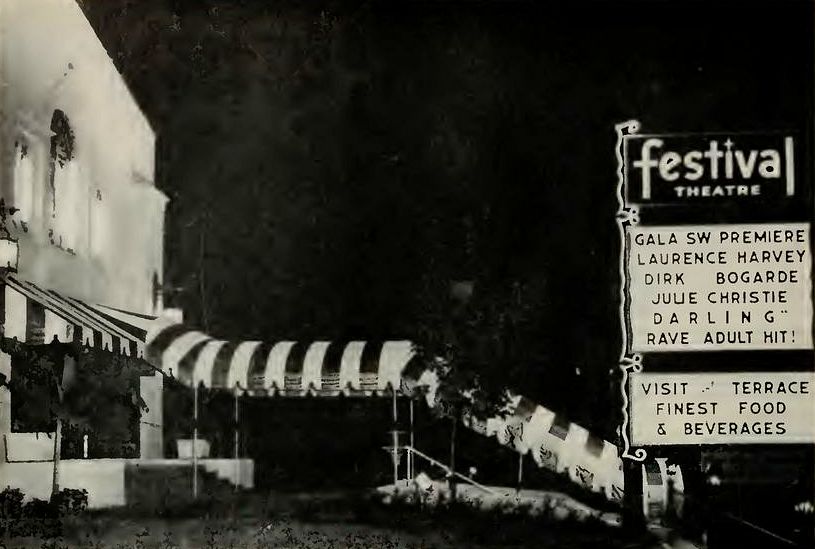
After more than 20 years of running a successful theater that catered to his core niche audience, Rodriguez was persuaded to change the theater’s focus. Mexican families had slowly moved out of the neighborhood, many to Oak Cliff where the Stevens Theater on Fort Worth Avenue had begun showing Spanish-language movies in the early ’60s and had siphoned off a large portion of Rodriguez’s audience. In 1965 the Panamericano became an arthouse cinema which showed mostly subtitled European films (and, later, underground and cult movies) — these were movie bills which were clearly aimed at college students and an upper-class Anglo audience. The Panamericano became the splashy Festival Theatre.

festival_box-office-mag_112265BoxOffice magazine, Nov. 22, 1965

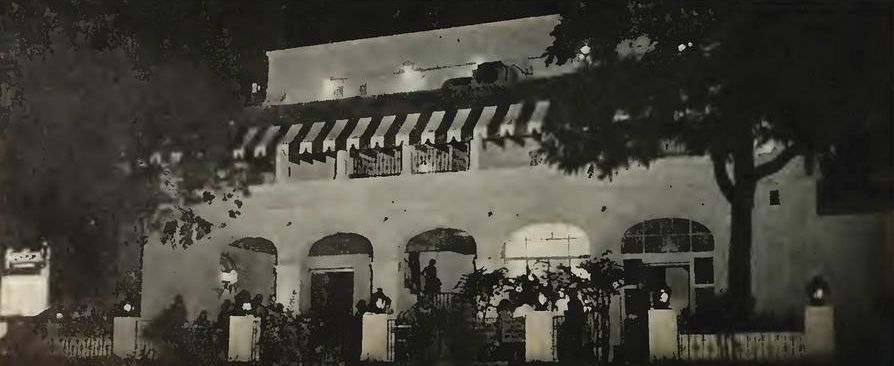
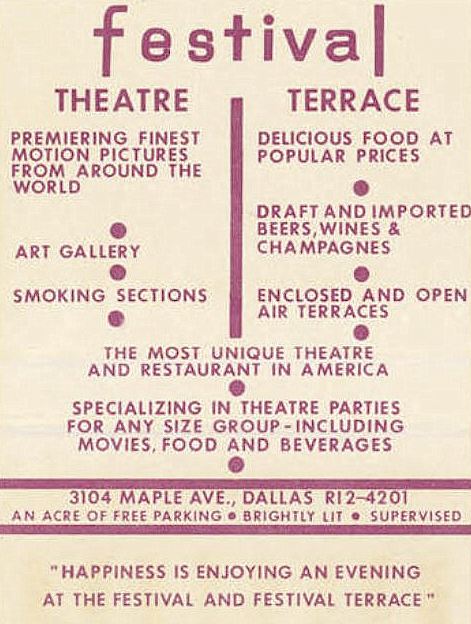
An indoor-outdoor restaurant — the Festival Terrace — was added, and it boasted of being “the only theater in the history of Texas with a wine and beer license.”

festival_box-office-mag_112265-restaurantBoxOffice magazine, Nov. 22, 1965

teatro_villasana_1960s1960s (Villasana)

As impressive as the Festival and its array of films were, the theater struggled, and Rodriguez later called this period a “big mistake.”

“As soon as I could, I changed it back to the way it was before. In fact, I lost money on that deal.” (DMN, Aug. 9, 1981)

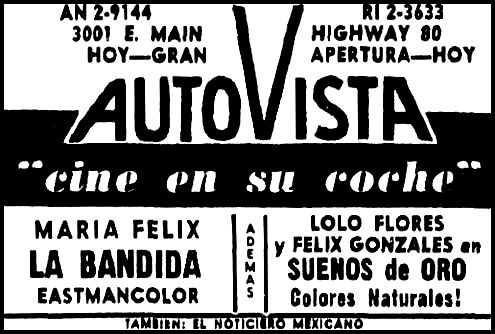
Another unusual misstep for Rodriguez at this time was his decision to open a drive-in that showed only Spanish-language films. What sounded like a great idea was another surprising failure for Rodriguez. Despite its non-stop advertising in the first half of 1965, the wonderfully-named Auto-Vista (located in Grand Prairie) lasted less than a year.

auto-vista_dmn_032565“Cine en su coche”! (March, 1965)

Rodriguez’s new-old Spanish-language theater — now the Cine Festival — was still popular, but it never regained its former glory. Rodriguez retired in 1981 and sold the property. Despite efforts by preservationists to save the beautiful Henry Coke Knight-designed building, it was demolished a few months later — in early January, 1982 — in the dead of night under cover of darkness (… that happens a lot in Dallas…). A nondescript office building was later built in its place.

J. J. Rodriguez died in 1993 at the age of 86, almost exactly 50 years after opening one of the most important entertainment venues for Dallas’ Hispanic population. He was a respected leader in the community and was for many years president of the Federation of Mexican Organizations, an organization he helped found in the 1930s. His theater was both culturally important and beloved by its patrons.

*

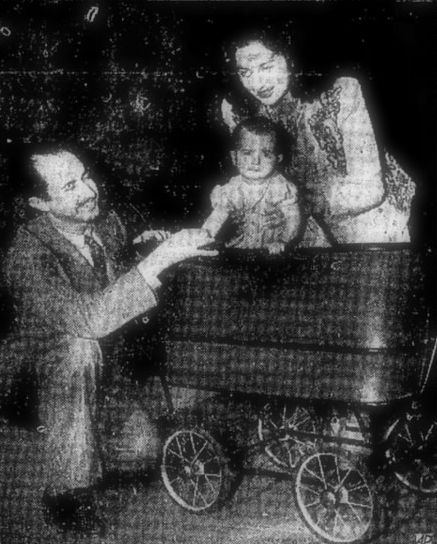
pampa-news_AP-073044J. J. with daughter and wife (Pampa News, July 30, 1944) AP photo

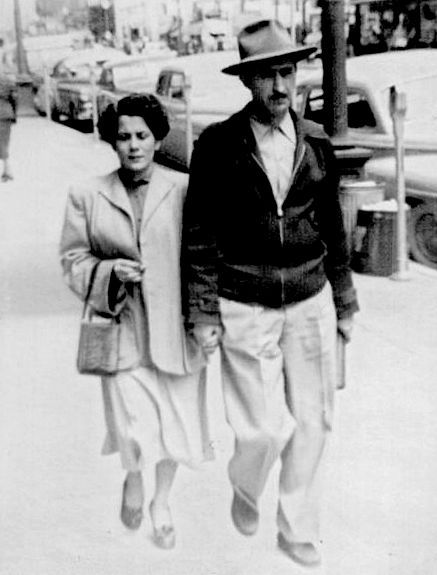
rodriguez_villasana_downtown_1940sWith his wife, Maria, downtown 1940s (Villasana)

rodriguez_villasana_1950sIn the projection booth, 1950s (Villasana)

*

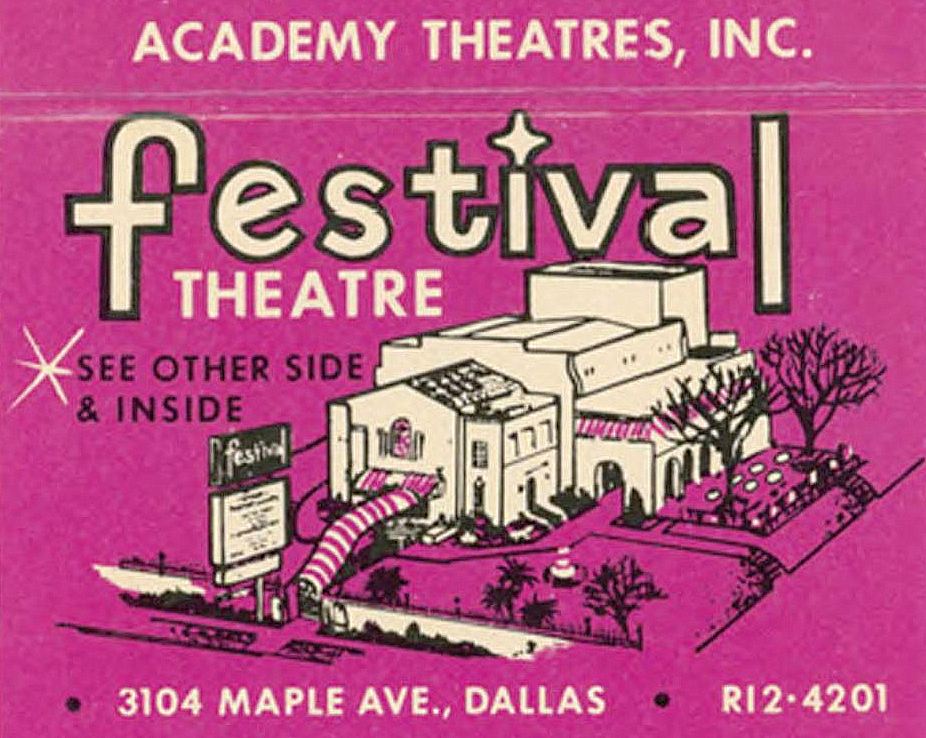
The matchbook cover image below gives an indication of how large the theater was. The building at 3401 Maple — at the corner of Carlisle, across Maple from the Maple Terrace — was gigantic.

festival-theatre_cook-collection_degolyer_smu_matchbook-cover

festival-theatre_cook-collection_degolyer_smu_matchbook-insideMatchbook via George W. Cook Collection, SMU

In a Dallas Phorum discussion (here), the space was described thusly:

It was an interesting building with an outdoor terrace restaurant, a full proscenium stage, rehearsal space downstairs below the stage, dressing rooms, shop/storage areas, and even a puppet theatre built into a wall in the balcony lobby area.

To see what the corner of Maple and Carlisle looks like now, click here (have a hanky ready). Can you imagine how wonderful it would be to still have that elegant building and still see it in use as a theater and restaurant?

**

In what may well be research overkill, I thought it was odd that there was an Azteca Theatre at 1501 McKinney a year before Rodriguez owned it. I wondered if, in fact, Rodriguez had owned the first Spanish-language movie theater in Dallas, or whether that distinction belonged to Ramiro Cortez (whose name is often misspelled as Ramiro Cortes). It seems that Cortez’s theater might have featured live performances rather than motion pictures. Like Rodriguez, Cortez had ties to Dallas entertainment — read about him here.

azteca_1937-directory1937 city directory

***

Sources & Notes

Photos with “Villasana” under them are from the book Dallas’s Little Mexico by Sol Villasana (Charleston, SC: Arcadia Publishing, 2011); all are from the personal collection of Mariangel Rodriguez. More photos of J. J. Rodriguez can be seen here (click “Next” on top yellow bar).

The full article from the Nov. 22, 1965 issue of the industry journal, BoxOffice, includes additional photos and information and can be seen here and here.

All other images and clippings as noted.

Articles on J. J. Rodriguez and his theaters which appeared in The Dallas Morning News:

  • “Pan-American Theater to Aid Spanish Study” (DMN, Sept. 22, 1943)
  • “Teatro Panamericano” by John Rosenfield (DMN, Oct. 12, 1943)– coverage of opening night festivities
  • “Maple Location Regains Swank” by John Rosenfield (DMN, Sept. 18, 1965) — about the change from El Panamericano to the arthouse Festival Theater
  • “Festival Fades, but Mexican Movies Thrive: Theater Owner Says Adios to Film Business” by Mercedes Olivera (DMN, Aug. 9, 1981) — about the closing of the Festival Theater
  • “Encore No More” (DMN, Jan. 4, 1982) — photo of the partially demolished theater
  • “Rites Set for Hispanic Leader J. J. Rodriguez — He Co-Founded Federation of Mexican Organizations” by Veronica Puente (DMN, Sept. 26, 1993) — Rodriguez’s obituary

“Dallas Theater Owner Is One-Man Pan-American Agency” — a syndicated Associated Press article by William C. Barnard — can be read here.

Read about Teatro Panamericano at Cinema Treasures, here.

Read about the competing Stevens Theater in Oak Cliff on Fort Worth Avenue, here.

*

Copyright © 2015 Paula Bosse. All Rights Reserved.

James Surls & David McCullough: Art in Exposition Park — 1973

surls-mccullough_dec-1973From the DMA archives (click for larger image)

by Paula Bosse

Above, a postcard advertising a 1973 art show at 839 1/2 Exposition (Parry & Exposition, across from Fair Park), featuring the work of James Surls (right, next to one of his sculptures) and David McCullough (left, in front of one of his paintings).

James Surls (b.1943), originally from East Texas, came to Dallas in the late-’60s to teach sculpture at SMU’s Meadows School of the Arts, from 1969 to 1976. His first mention in The Dallas Morning News, though, was on Sept. 12, 1967, when a 23-year-old Surls was mentioned as a participant in a group sculpture show at Atelier Chapman Kelley (on Fairmount Street) alongside major artists such as Georges Braque, Henry Moore, Louise Nevelson, and Henry Bertoia. Surls made his first professional impact on the art world while he was living in Dallas, and for years he was known as a “Dallas artist.” Surls eventually left Dallas for Spendora, Texas, and he now lives and works in Colorado and is an important internationally admired and collected sculptor.

After studying in Boston and Kansas City, and after a stint in California working on “happenings” with Allan Kaprow and Dick Higgins, David McCullough (b. 1945) moved to Dallas in 1970 where he quickly became part of the local art scene. After only seven months as a resident of the city, McCullough was commissioned by the Dallas Museum of Fine Arts to execute “Baggie Mantra Sanctorum March,” an art and performance piece which was Dallas’ first outdoor environment “happening.” A respected artist, McCullough continues to create and continues to call Dallas his home.

The McCullough/Surls show touted in the above postcard paired the two local artists and was well-received by local publications. The exhibition space at 839 1/2 Exposition was McCullough’s studio at the time, and the show presented sculptures by Surls and “relief wall paintings” by McCullough.

*

For a FANTASTIC look at this period in Dallas’ contemporary art scene, Ken Harrison’s 1975 documentary “Jackelope” (which aired on KERA, Ch. 13 in January, 1976) is absolutely essential. (Watch it here.)

jackelop_dmn_012576-photo“Jackelope” subjects Wade, Green, and Surls

It profiles Surls, George Green, and Bob “Daddy-O” Wade (who will forever be known in Dallas as the creator of Tango’s dancing frogs), and the Surls and Wade portions are extremely entertaining. I watched this documentary earlier this year, and I’ve found myself thinking about it frequently. I highly recommend this deliberately slow-moving documentary for anyone interested in Texas art (…or just art). Or for anyone who’s a fan of incredible Texas accents (why don’t we hear accents like these anymore?).

*

Here’s a great clip showing Surls with friends and students laboriously transporting one of his pieces, the name of which is given as “Point to Point,” through the streets of Old East Dallas before it is taken to Houston. In 1975, Surls was teaching at SMU and living at 5019 Tremont, in a house which is still standing. (WFAA News Film Collection, Jones Film Archive, Hamon Arts Library, SMU, Oct. 1975)

surls_wfaa_oct-1975_tremont_SMU_2

surls_wfaa_oct-1975-tremont_SMU

surls_wfaa_oct-1975_tremont_SMU_3

***

Sources & Notes

Postcard is from the Paul Rogers Harris Gallery Mailings Collection, Dallas Museum of Art Archives; found as part of the interesting article “Fair Park-South Dallas: The City’s First Arts District” by Leigh Arnold, here.

To see just a few of James Surls’ wonderful pieces, click here. To view a slideshow of the DMA retrospective, “Visions: James Surls, 1974-1984,” click here. His official website is here.

Articles of interest from the Dallas Morning News archives:

  • “Kelley to Unveil Sculpture Show” by John Neville (DMN, Sept. 12, 1967) — first mention of Surls in the pages of The News, this announcement of an upcoming sculpture show at Atelier Chapman Kelley has Surls alongside big-hitters such as Georges Braque, Henry Moore, and Louise Nevelson
  • “Loft Offers ‘Big Art’ Space” by Janet Kutner (DMN, Feb. 16, 1974) — review of the show advertised on the postcard at the top of this post
  • “Surls Casts ‘Sams’ for Movie Awards” by Janet Kutner (DMN, March 11, 1972) — about the bronze movie awards — the “Sams” — which Surls created for the 1972 USA Film Festival
  • “Art for Dog’s Sake” by Janet Kutner (DMN, Dec. 7, 1975) — about a 1975 group show at SMU consisting of over 50 artists (!), which Surls organized (and created a sculpture for) on a $50 budget; contains a thoroughly delightful interview about “The Dog Show” (“It’s both serious and non-serious, maybe ‘arf ‘n ‘arf…”)
  • “Texas Artists in TV Special” by Janet Kutner (DMN, Jan. 25, 1976) — review of the film “Jackelope”

For a profile on David McCullough that appeared in The Lakewood Advocate, click here. To watch an entertaining video in which he paints before a crowd at the Dallas Arboretum as the Dallas Wind Ensemble plays, followed by an interview, see the YouTube video here. McCullough’s website is here.

Read the background of McCullough’s 1971 “Baggie sculpture” — the outdoor “happening” at the lagoon at Fair Park in these Dallas Morning News articles:

  • “Baggie Sculpture in Park Lagoon” (DMN, June 12, 1971)
  • “McCullough Creates ‘Baggie Happening'” by Janet Kutner (…that lady was busy!) (DMN, June 20, 1971)

*

Copyright © 2015 Paula Bosse. All Rights Reserved.