Flashback : Dallas

A Miscellany: History, Ads, Pop Culture

Category: Modern Ads

Zap Those Extra Pounds Away in Mrs. Rodgers’ Electric Chair — 1921

ergotherapy_jewish-monitor_090921_detThrowing the switch in 3-2-1… (click for larger image)

by Paula Bosse

While looking for something completely unrelated (which is always the best way to find unexpected things), I came across this full-page ad which appeared in the Sept. 9, 1921 edition of The Jewish Monitor (click to see a larger image):

ergotherapy_jewish-monitor_090921

Why Be Fat When
E R G O T H E R A P Y
WILL REDUCE YOU?

Within the last few years a method of automatic exercise, known as the Bergonie treatment, has found favor among physicians abroad in the treatment of obesity and other chronic disorders.

One advantage is that with the Sinusoidal current, which is employed, very powerful muscular contractions may be induced without pain or sensation other than that due to the muscular contraction itself.

The Treatment chair is the last word in comfort. It is fitted to meet the physiologic needs of the body as well as being comfortable. The arm and leg electrodes are wide and comfortably curved to fit the arms and legs of the patient easily. 

ERGOTHERAPY

The Kellogg-Bergonie System of Battle Creek, Mich., will reduce you just where you wish to be reduced. No drugs, exercise or inconvenience. We will reduce you from one (1) to three (3) pounds per treatment and improve your physical condition. Trained nurses in attendance (under a registered physician’s supervision).

Treatments by Appointment Only

Hours for Men, 8 A.M. to 1 P.M.
Hours for Women, 1 P.M. to 6 P.M.
Phone X 5759
Ruth Rodgers, Mgr.
1614 1/2 Main Street, Dallas, Texas.

*

“The arm and leg electrodes are wide and comfortably curved” — there’s a line one doesn’t often encounter in an ad!

So what was this treatment of obesity that required “no drugs, exercise or inconvenience”? Well, basically, it was a low-voltage electric chair in which the naked, smock-draped “patient” reclined on wet towels and was covered with sandbags (which weighed up to 100 pounds). Electrodes were attached to the arms, legs, and abdomen. When the switch was flipped, electrically-provoked exercise began, and electric current caused muscular contractions (up to 100 a minute) without fatigue to the “exerciser.” All sorts of physiologic things were happening during these sessions, including a whole bunch of sweating. Patients would lose from 1 to 3 pounds during their time in the chair, hose themselves down and walk away refreshed.

Jean Albard Bergonié (1857-1925) was a French doctor/researcher/inventor who specialized in radiology in the treatment of cancer, and this odd electric chair was something of a departure from his oncology studies. It was used to treat a variety of ailments and conditions such as obesity, heart conditions, diabetes, “suppressed uric acid elimination,” and, later shell-shock. Professor Bergonié died in 1925 as the result of prolonged exposure to radium in his research to find a cure for cancer (in the years before his death, he had lost an arm and fingers to continual X-ray exposure). The Institut Bergonié continues in Bordeaux, France as a cancer research center.

So back to the chair. By the time of the 1921 ad above, Bergonié’s “ergotherapy” had become a weight-loss feature in beauty spas and salons. The ads I found mentioning the electric chair as something corpulent men and women of means might have seen in Dallas newspapers appeared between July and October of 1921, touting the miracle chair at Mrs. Ruth Rodgers’ beauty salon, The Old London Beauty Shoppe at 1614 ½ Main Street, a couple of doors from Neiman-Marcus.

ergotherapy_071721
July, 1921

I don’t know if it didn’t catch on or whether it just wasn’t mentioned in ads, but the chair made its final appearance in an Old London Beauty Shoppe ad in early October of the same year.

The splashiest news about Bergonié’s invention was a few months later, in early 1922, when it was revealed that the UK’s Queen Mary had availed herself of the chair in order to slim down in time for her daughter’s wedding, with Prof. Bergonié himself apparently operating the current flow. The best part of the lengthy and breathless article about the plump royal allowing herself to lie in this electric chair as she was rather unceremoniously weighted down with royal sandbags was this sentence:

[Mrs. David Lloyd George, the wife of the British prime minister] lost no time in telling Queen Mary all she knew about Professor Bergonie, the famous French ergotherapist, and his marvelous electric chair, which is said to jar fat from the human frame with the ease and almost the rapidity of a man peeling a tangerine.

Hey, I want that!

One would assume that sort of free publicity would be a boon to spas and salons offering State-side ergotherapy — I have a feeling Mrs. Rodgers had moved on by then and was probably kicking herself for concentrating on the more mundane treatment of wrinkles and sagging skin and the administering of marcel waves (her specialty).

Below, some views of The Chair over the years (all pictures larger when clicked).
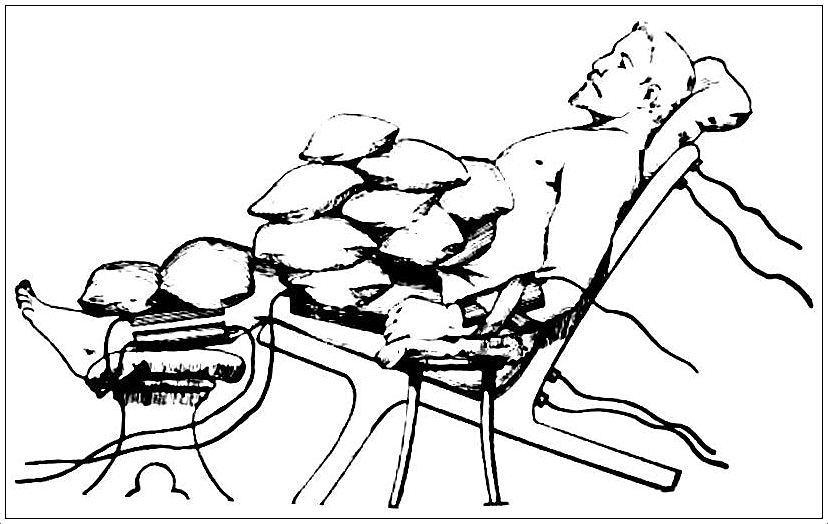
ergotherapy_1913-medical-bk_ebay

Above, a drawing from a 1913 medical book, found here.

*

ergotherapy_medical-record_050115

From the journal Medical Record, May 1, 1915.

*

bergonie-chair_shell-shock_electrical-experimenter_feb-1919

A World War I soldier being treated for shell-shock, from The Electrical Experimenter (Feb. 1919), here (continued here).

*

ergotherapy_012321
Jan., 1921

Ruth Rodgers was the proprietress of the Old London Beauty Shoppe (later the Old London School of Beauty Culture), which seems to have operated in Dallas from the ‘teens to at least the late-1930s. The location during the period of the ergotherapeutic chair was in the basement of 1614 Main Street.

*
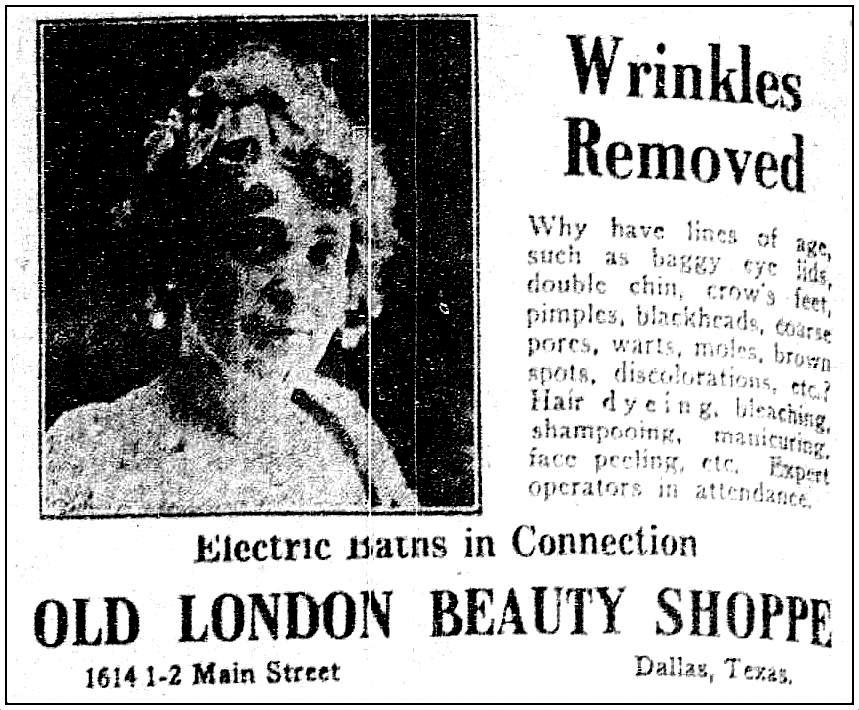
ergotherapy_dmn_081421
Aug., 1921

Mrs. Rodgers did it all. That might be her in the ad.

*

ergotherapy_081421
Aug., 1921

*

ergotherapy_082121
Aug., 1921

It’s a bit unusual seeing ads like this directed toward men.

*

ergotherapy_san-francisco-chronicle_092521
San Francisco Chronicle, Sept. 25, 1925

*

queen-mary_1922

Above, a very Aubrey Beardsley-esque depiction of the “distressingly stout” Queen Mary, ready to undergo her course of treatments. Read the full, widely-circulated article from February, 1922, “Queen Mary’s Jarring Anti-Fat Ordeal; Yearning for a Girlish Figure to Grace Her Daughter’s Wedding, the Queen-Mother Got One by Sitting in an Electric Chair and Losing 3½ Pounds a Week,” here. (They don’t write headlines like that anymore….) The photo below, showing the control panel, was also part of the article.

queen-mary_1922_battery

*

ergotherapy_ogden-standard-examiner_041826

The caption for this photo (which appeared five years after the cutting-edge Ruth Rodgers was offering it to Dallas patrons): “The new French electric chair on which one reclines in comfort while form-fitting electroids [sic] direct the fat-melting current, as demonstrated by Alice Harris, a stage beauty who must keep thin.” (Ogden Standard-Examiner, April 18, 1926)

*

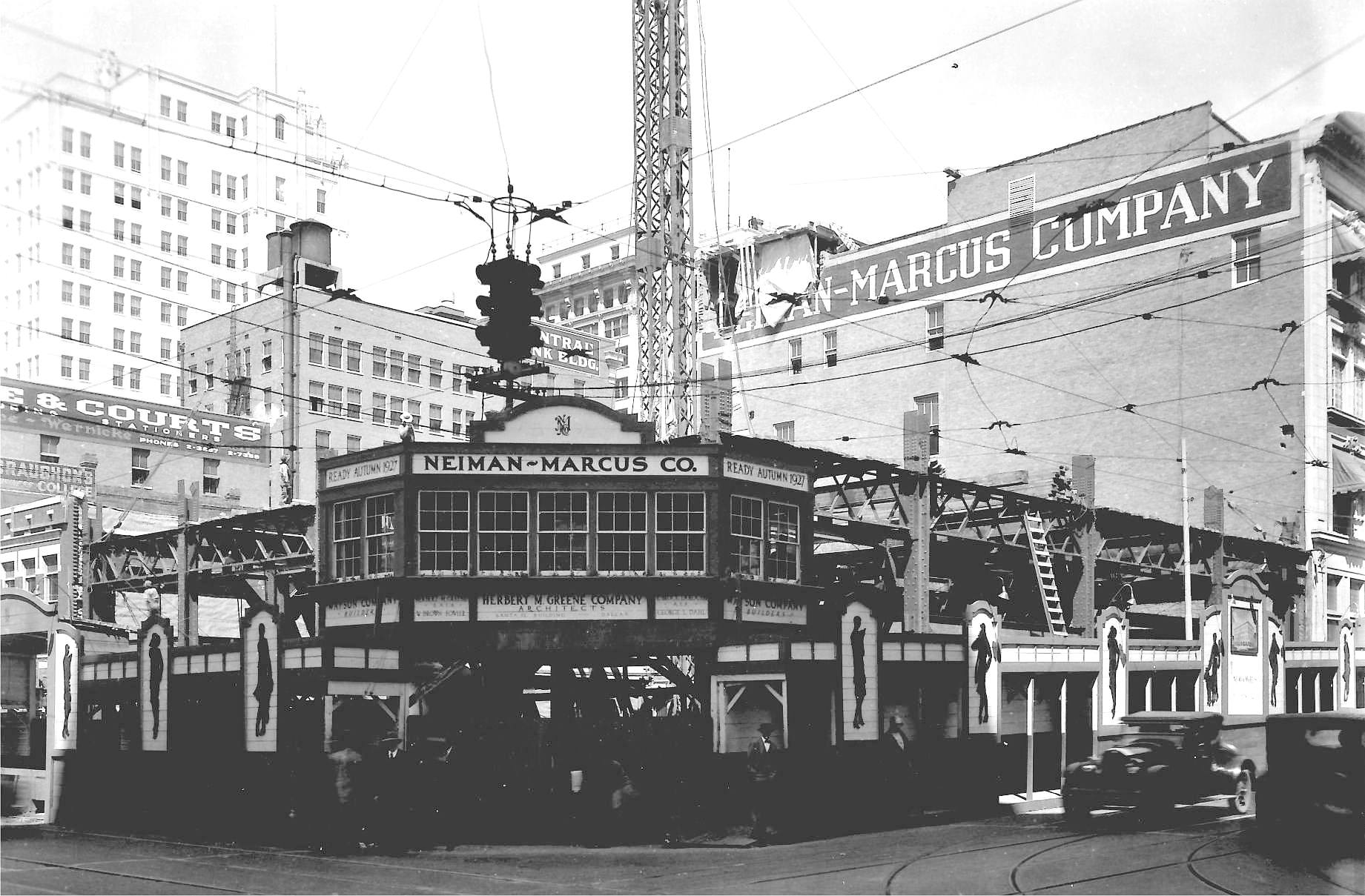
And, finally, to bring this back to Dallas, the location of Mrs. Rodgers’ Old London Beauty Shoppe in 1921 — 1614½ Main Street (basement) — is circled (this building was later the Everts Jewelry store before it moved across the street to the north side of Main). To the left is Neiman-Marcus, at the corner of Main and Ervay. (Full view of this postcard, from the collection of the DeGolyer Library, SMU, is here.)

1614-main_n-m_degolyer_smu_det

***

Sources & Notes

Top photo is a detail from the ad below, which appeared in the Sept. 9, 1921 edition of The Jewish Monitor; it can be accessed via the Portal to Texas History, here.

Read a doctor’s account of just how Bergonie’s chair worked, in the article “Modern Treatment of Obesity” by Edward C. Titus (Medical Record, Jan. 24, 1920), here.

I’m not sure about the connection of this chair to J. H. Kellogg (the treatment in the ad was referred to as “The Kellogg-Bergonie System of Battle Creek, Mich.”). It appears that he and Bergonie might have developed similar chairs independently of one another and decided to form some sort of partnership — either by mutual agreement or court edict. Here is a photo of Kellogg’s “patented electrotherapy exercise bed” used in his Battle Creek sanitarium:

kellogg-chair
via Oobject (more Kellogg contraptions here)

And speaking of Mr. Kellogg, might I direct your attention to a previous Flashback Dallas post — “Electricity in Every Form — 1909” — here.

Click pictures for larger images

*

Copyright © 2016 Paula Bosse. All Rights Reserved.

The “Freshie” Ads for *-@!!@!* Delicious Mrs. Baird’s Bread — 1945-1953

freshie_dmn_111546
Geez, Picasso, get a grip… “YUM!”

by Paula Bosse

There’s nothing like cartoon swearing. The reader is likely to translate those random symbols into words that are probably a lot filthier than was intended by the cartoonist. …Probably.

Here are a few examples of this, found, surprisingly, in cartoon ads for wholesome Mrs. Baird’s Bread. This ad campaign — which, as far as I can tell, lasted from 1945 to 1953 — consisted of a one-panel comic called “Freshie,” illustrated for most of its lifespan by Harry Walsh. There were close to a hundred of these panels produced. (That’s a lot of bread-based humor some poor advertising copywriter had to come up with.) They were often placed directly on the comics page, alongside Pogo, Li’l Abner, and Rex Morgan M.D. “Freshie” was the name of the child with the unwavering/disturbing obsession with Mrs. Baird’s Bread. (UPDATE: I now see that the “Freshie” cartoon ad concept was used all across the country, for various brands of bread. Oh, Freshie, your love for Mrs. Baird’s bread was just for show, wasn’t it?)

Not all of them had cursing — in fact I think it might be just these four. Still, it’s a little unexpected. What would Mrs. Baird think? (Click to see larger images.)

freshie_dmn_122845
Dec. 28, 1945

freshie_dmn_060748
June 7, 1948

freshie_dmn_113049
Nov. 30, 1949

*

Copyright © 2016 Paula Bosse. All Rights Reserved.


Neiman-Marcus Expands — 1927

n-m_construction_1927_pioneers-of-dallas-co-FB-page_coll-frances-james_2The first addition under construction, 1927…

by Paula Bosse

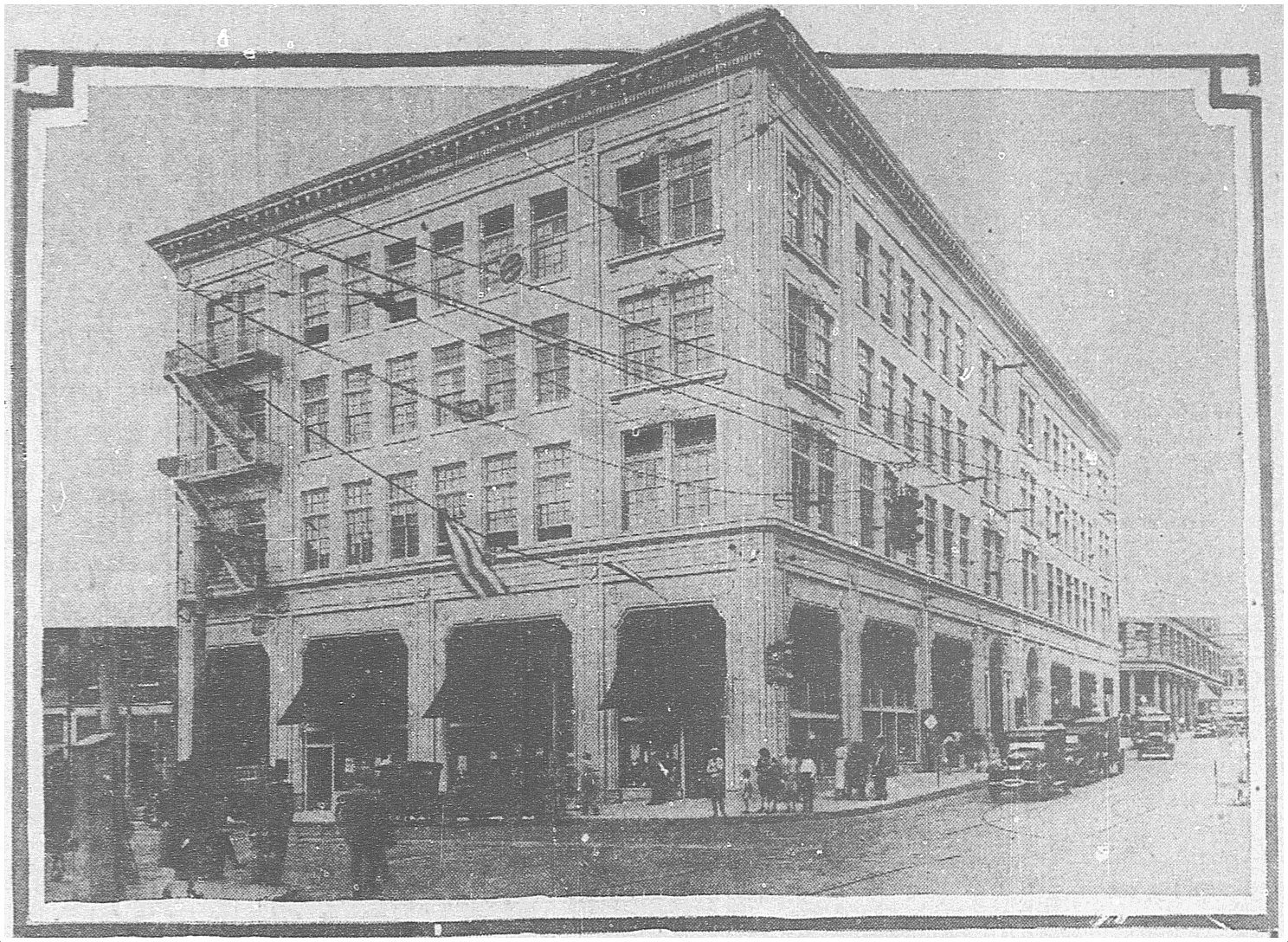
In 1927, construction began on Neiman-Marcus’ first expansion. The addition was adjacent to the famed department store, which had occupied its spot at Main and Ervay since its construction in 1914. (This was the company’s second location – their original store, which opened in 1907 at Elm and Murphy, was destroyed by fire in 1913.) The store had outgrown its old building, and expansion was deemed necessary. The new addition was designed by the Herbert M. Greene architectural firm, led by George L. Dahl. While the new building was going up, the old building was being renovated and updated. 

The photo above shows the construction of the addition, which extended the store’s footprint from Main all the way to Commerce. One of the interesting features of this construction was the look of the site itself.

One of the features of the Neiman-Marcus project is the ornamental barricade, containing window boxes and fashionable silhouettes, which has been put up around the new construction. (Dallas Morning News, May 8, 1927)

It’s the nicest-looking hard-hat area I’ve ever seen!

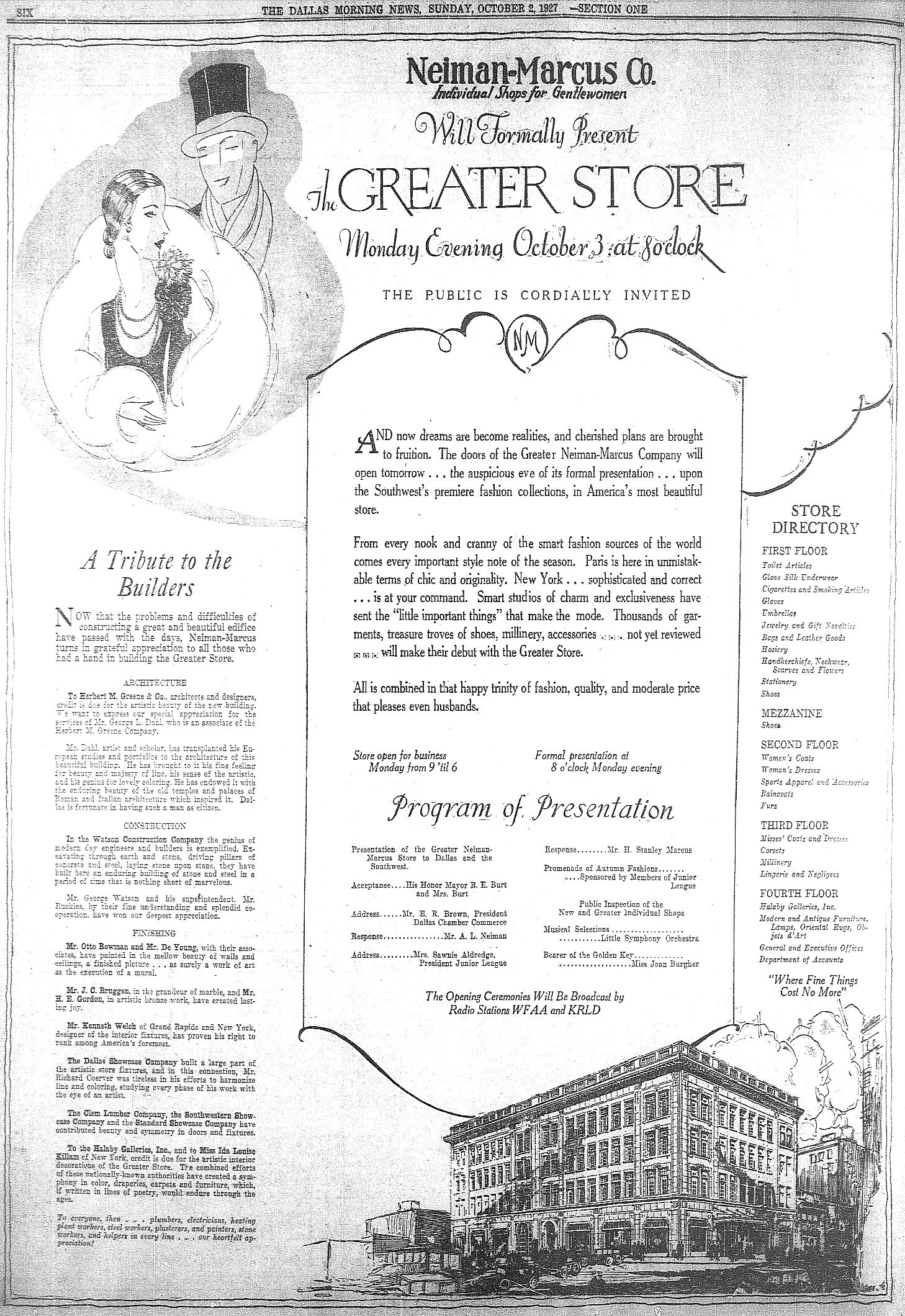
The new building (which was four floors, but was designed so that sixteen additional stories could be added if needed) opened in October, 1927. Less than a month after the formal opening of this new building, another addition was announced — it opened the following year. With that “third unit” opening in 1928, Neiman-Marcus had increased its size by 50% (there would be further expansions over the years), and its sales were the highest in the company’s history. Also, notable at this time was the fact that a full 40% of the store’s sales were to people who lived “in other cities of the Southwest.”

The formal opening on Oct. 3, 1927 attracted a crowd estimated at more than 25,000 people. Invited guests wore gowns and tuxedoes.

n-m_new-addition_dmn_100227
Expansion completed.

*

n-m_construction_dmn_100227_full-page-ad
Oct. 2, 1927 (full-page ad — click to see larger image)

n-m_addition_dmn_100227_architects
Oct., 1927

***

Sources & Notes

Top photo was posted in the Facebook group Pioneers of Dallas County; it is from the collection of Dallas historian Frances James.

A special section of The Dallas Morning News which coincided with the opening of the expanded store appeared in the October 2, 1927 edition of the paper; in it are several photos and articles.

Read more about the history of the Neiman Marcus building on Wikipedia, here.

*

Copyright © 2016 Paula Bosse. All Rights Reserved

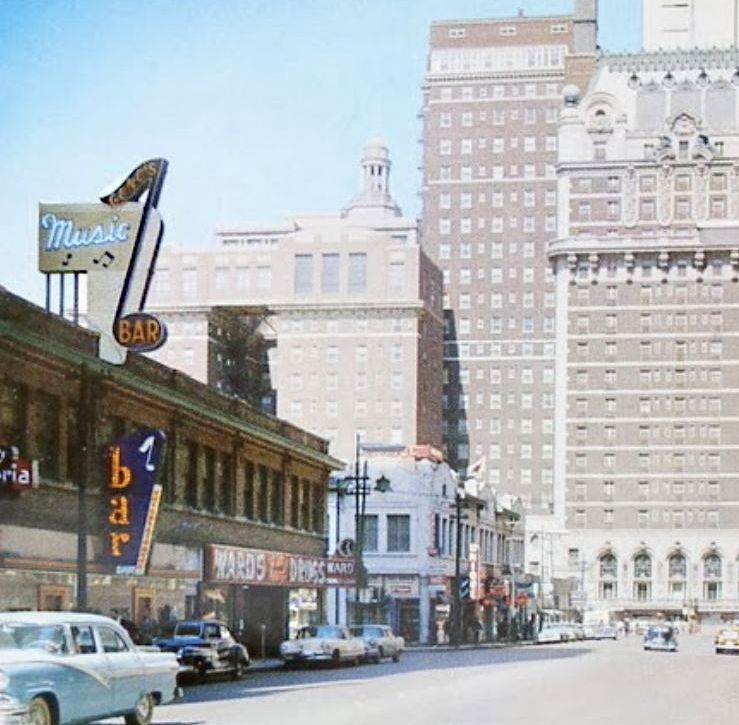
Gene’s Music Bar, The Lasso Bar, and The Zoo Bar

genes-music-bar_dallas-memorabiliaGene’s Music Bar, S. Akard Street (click for larger image)

by Paula Bosse

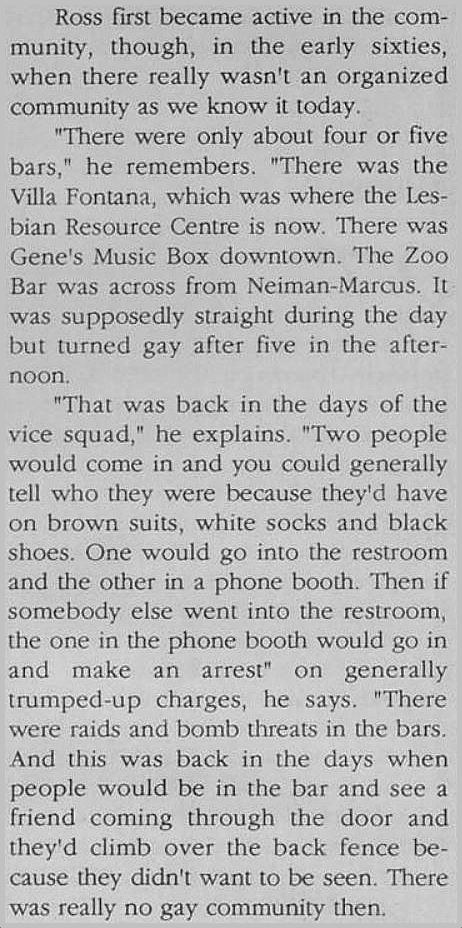
In Dallas’ pre-Stonewall days, there were only a handful of gay bars in the city, and they weren’t widely known beyond those who frequented them. Those were the days when “homosexual behavior” was illegal, and vice raids on gay bars and clubs were frequent occurrences. In an interview with the Dallas Voice Alan Ross remembered what the bar scene was like in Dallas in those days (click for larger image):

gay-dallas_dallas-voice_092190_alan-ross
Dallas Voice, Sept. 21, 1990

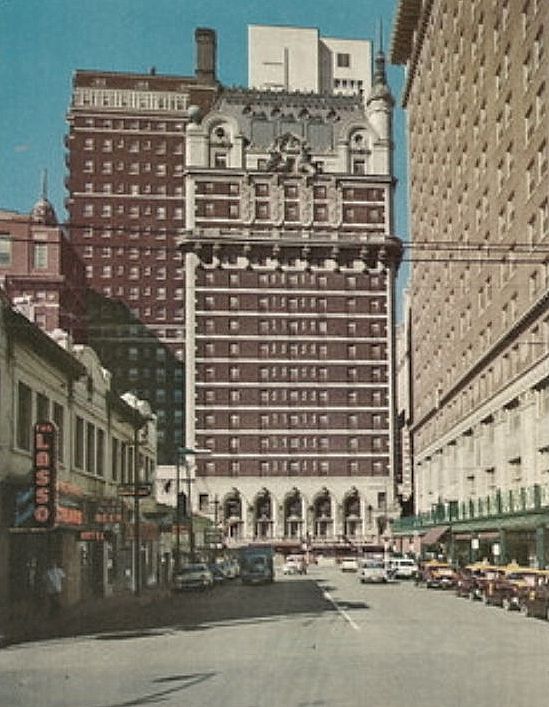
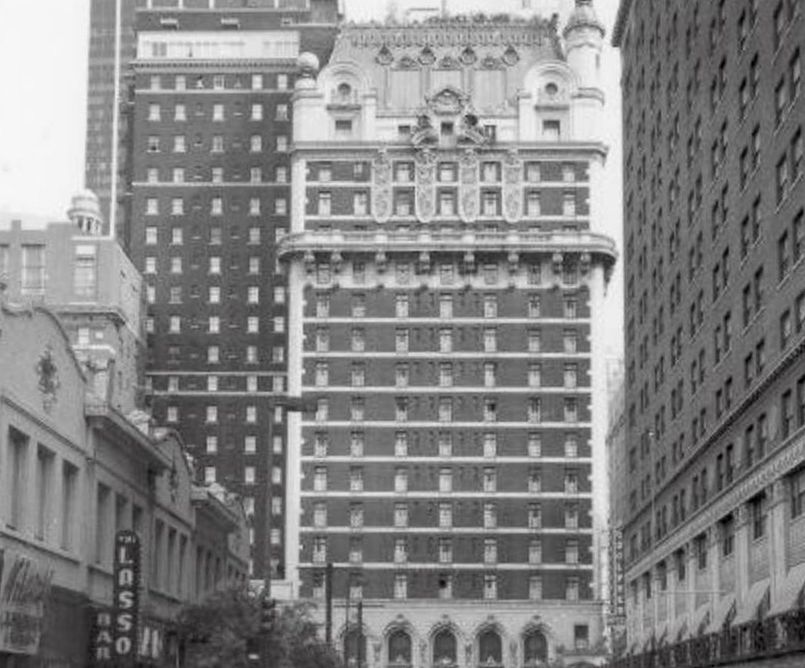
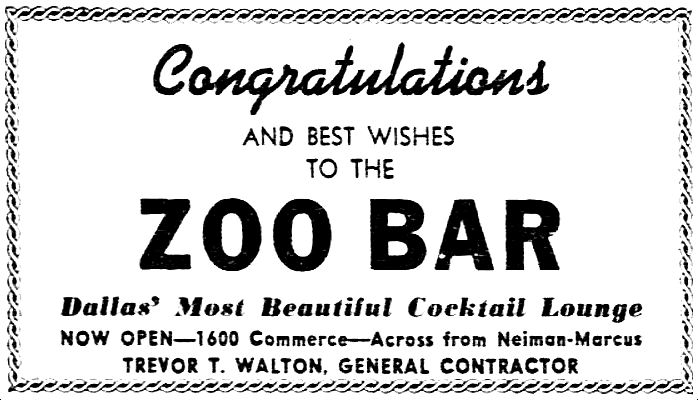
There was the well-appointed Le Boeuf Sur Le Toit (later renamed Villa Fontana), one of Dallas’ earliest gay bars, located on Skiles Street near Exall Park in the area now known as Bryan Place, and there were rougher, seedier places, generally downtown. Three of those downtown bars (which apparently catered to a “straight” clientele during the day and a gay clientele at night) were Gene’s Music Bar and The Lasso — both on S. Akard, in the shadow of the Adolphus Hotel — and The Zoo Bar, on Commerce, “across from Neiman-Marcus.”

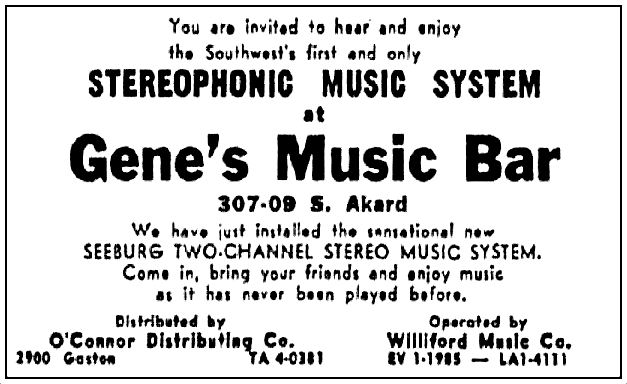
Gene’s Music Bar (pictured above) at 307-09 S. Akard began as a place where hi-fi bugs could sip martinis and listen to recorded music played on “the Southwest’s first and only stereophonic music system.” Not only did it have the sensational Seeburg two-channel stereo system, but it also boasted one of the best signs in town.

genes_dmn_110958
Nov. 1958

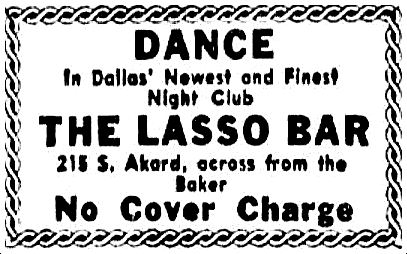
The Lasso Bar at 215 S. Akard was in the next block, across from the classy Baker Hotel, and a hop, skip, and a jump from the elegant Adolphus. Its proximity to the impressive Adolphus meant that the Lasso snuck its way into lots of souvenir picture postcards and Dallas Chamber of Commerce publicity photos. Its sign was pretty cool, too.

lasso-bar_postcard

adolphus_lasso-bar_tx-hist-comm

lasso-bar_dmn_031358
March, 1958

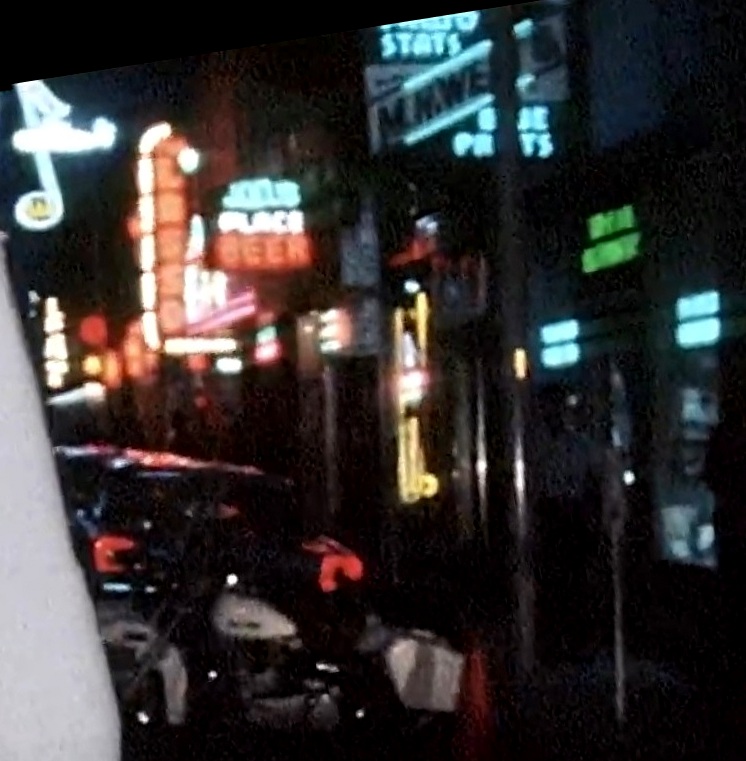
The image below gives you an idea of what that block looked like at night, neon blazing. (This super-blurry screenshot is from WFAA-Channel 8 coverage of 1969’s Texas-OU weekend, here — at 6:16 and 9:13.)

lasso-bar_jones-film_WFAA_101169

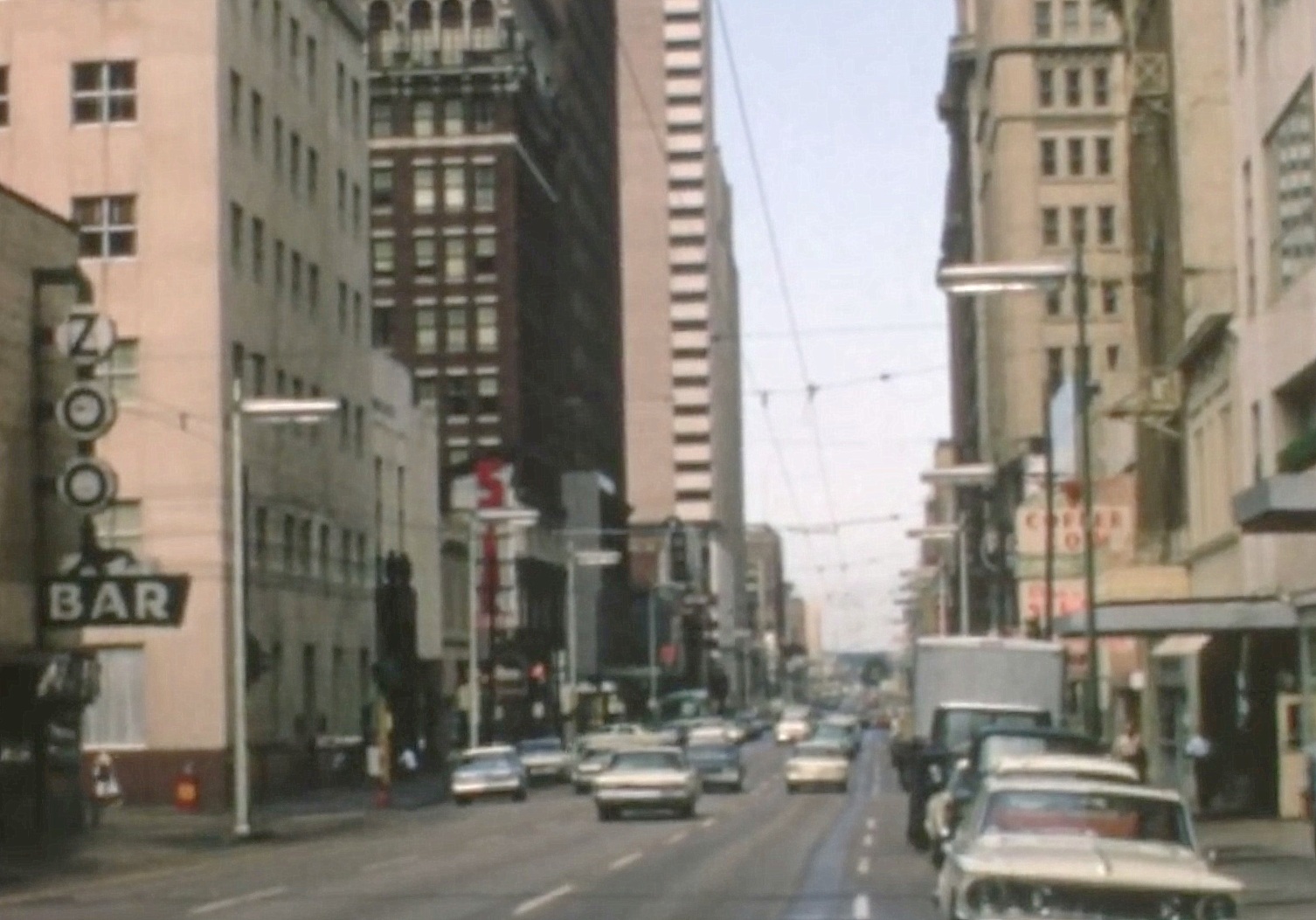
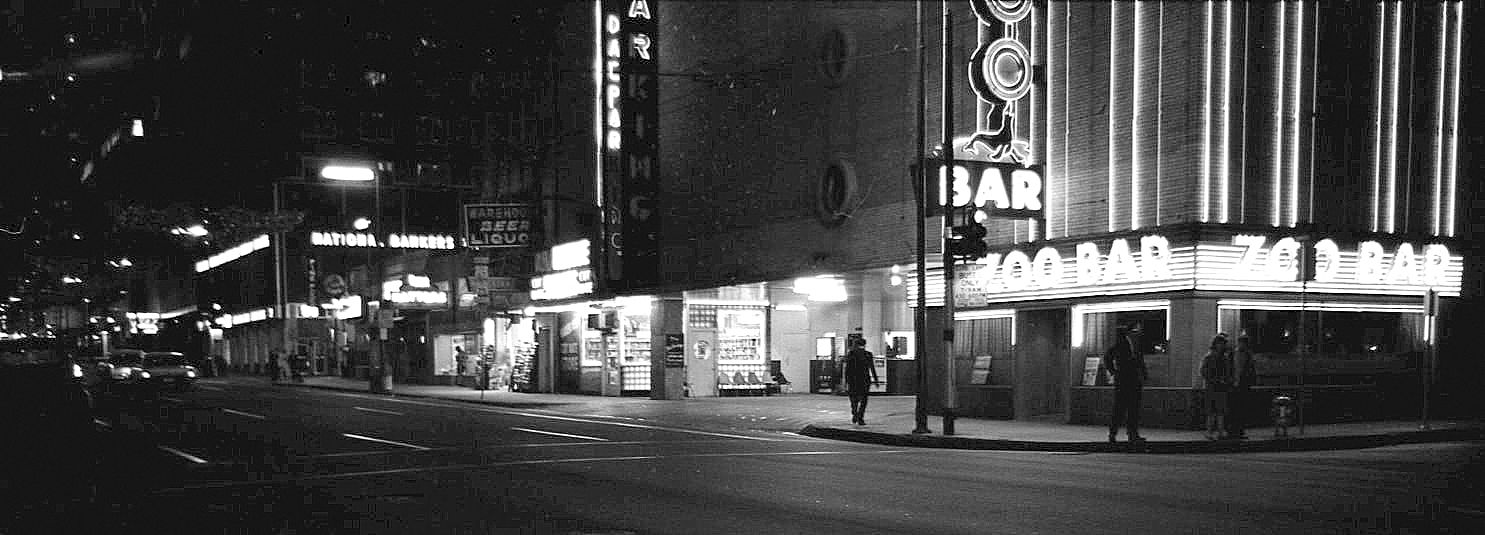
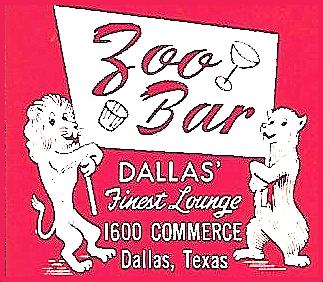
The Zoo Bar at 1600 Commerce began as a cocktail lounge and often had live piano music. It was across from Neiman’s and it was 3 blocks from Jack Ruby’s Carousel Club (downtown Dallas ain’t what it used to be). It also had a better-than-average sign.

zoo-bar_youtube_19661966

zoo-bar_dth-photo_112263_sixth-floor-museum_portal_croppedNov., 1963

zoo-bar_dmn_092752
Sept., 1952

zoo-bar_matchbook_ebay_2     zoo-bar_matchbook_ebay_1

These three downtown bars, popular as hangouts for gay men, had their heyday in the 1960s and ’70s. By the mid 1970s, the LGBT scene was shifting to Oak Lawn. An interesting article about the uneasy relationship between the “old” Oak Lawn and the “new” Oak Lawn can be found in a Dallas Morning News article by Steve Blow titled “Last Oak Lawn Settlers Brought Controversy” (Dec. 9, 1979).

***

Sources & Notes

Top photo of Gene’s Music Bar is from the blog Old Dallas Stuff.

Color photo of the Lasso and the Adolphus is from an old postcard. Black-and-white photo of the Lasso and the Adolphus is from the Texas Historical Commission site, here.

Blurry shot of Gene’s Music Bar and the Lasso Bar at night is a cropped screenshot from daily footage shot by WFAA-Channel 8 on Oct. 11, 1969 — the night before the Texas-OU game; from the WFAA Newsfilm Collection, G. William Jones Film and Video Archive, Hamon Arts Library, SMU.

Color image of the Zoo Bar and Commerce Street is a screenshot from home movie footage of the 1966 Memorial Day parade in downtown Dallas, shot by Lawrence W. Haas, viewable on YouTube. Black-and-white photo of the Zoo Bar from the Sixth Floor Museum Collection, via the  Portal to Texas History, here (I’ve cropped it). Zoo Bar matchbook from eBay.

Read more about Dallas’ gay bar scene in the article I wrote for Central Track, “Hidden in Plain Sight, A Photo History of Dallas’ Gay Bars of the 1970s,” here.

More on the the persistent arrests and police harassment that went on in gay clubs in Dallas for many, many years can be found in the Dallas Voice article by David Webb, “DPD Vice Unit Wages 50-Year War Against Gay Men” (Aug. 3, 2007), here.

*

Copyright © 2016 Paula Bosse. All Rights Reserved.


The Dallas Express — A Look Inside the Offices of the City’s Most Important Black Newspaper — 1924

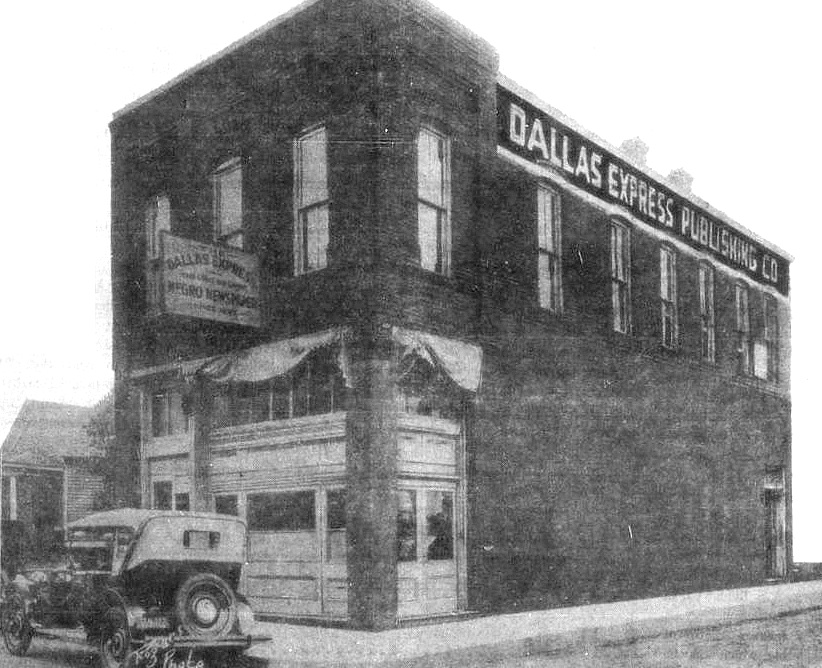
dallas-express-bldg_dallas-express_0607242600 Swiss, home of The Dallas Express (click for larger image)

by Paula Bosse

Without question, The Dallas Express (1892/3-1970) was the most important and most widely-read black-owned newspaper published for Dallas’ African-American community. In addition to stories of particular interest to its Dallas and Texas readership, it also covered national and international news, and in the Jim Crow era, when black Dallasites were rarely mentioned in white-owned newspapers except in crime reports, The Express reported on the people, the businesses, the churches, and the achievements of their large community. They also wrote about politics and issues of race and discrimination. One of the paper’s slogans was “A Champion of Justice, A Messenger of Hope.”

I’ve been interested in newspapers, journalism, and the actual physical process of printing newspapers for as long as I can remember, but until a couple of years ago, I was not aware of The Dallas Express, founded in 1892 by publisher/editor W. E. King. Discovering this paper and its stories about my hometown has been eye-opening. The Dallas Express is an important — and often overlooked — source of Dallas history. I love reading through issues of The Express because unlike white-owned papers of this period, it presents a realistic and human chronicle of the everyday lives of Dallas’ black men and women, something which was almost completely ignored by The Dallas Morning News and The Dallas Times Herald.

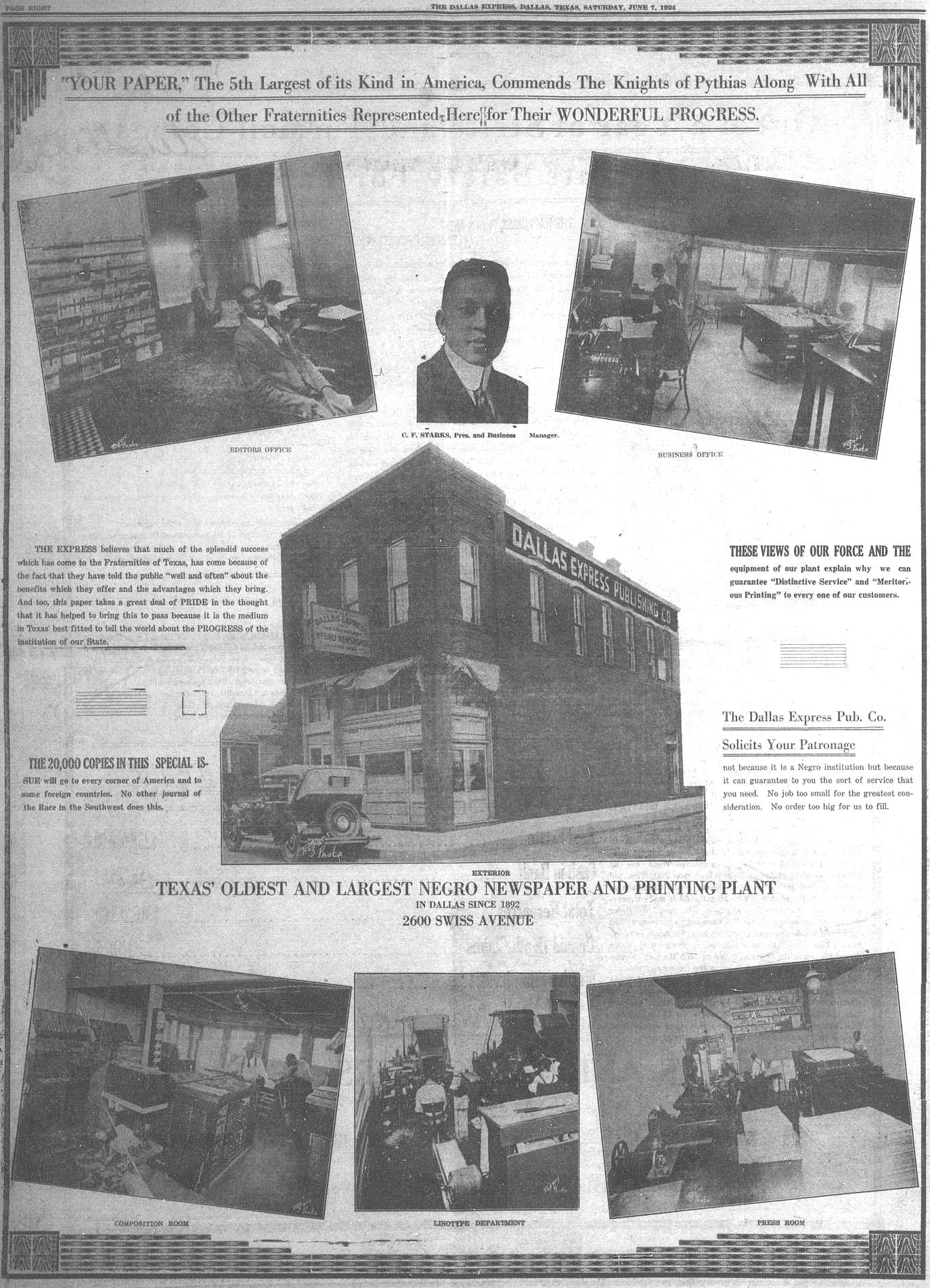
For many years, the offices of the Express were just north of Deep Ellum, at 2600 Swiss — at the corner of Good Street, about where Brad Oldham’s Traveling Man sculpture stands today. (I have a feeling the actual location was in the middle of what is now Good-Latimer. See the location on a 1921 Sanborn map here.) Happily, the Express printed a full-page ad for itself in the June 7, 1924 edition, so we can see what the Swiss Avenue building, its offices, and its production rooms looked like. These photos were taken by noted Dallas photographer Frank Rogers. (Apologies for the muddy quality of these photos — I’d love to see the crisp originals!)

*

These photos show the Dallas Express offices as they looked in 1924, when the newspaper had already been in business for 32 years. The exterior of the two-story building can be seen in the photo at the top — standing next to a private residence. (Click photos to see larger images.)

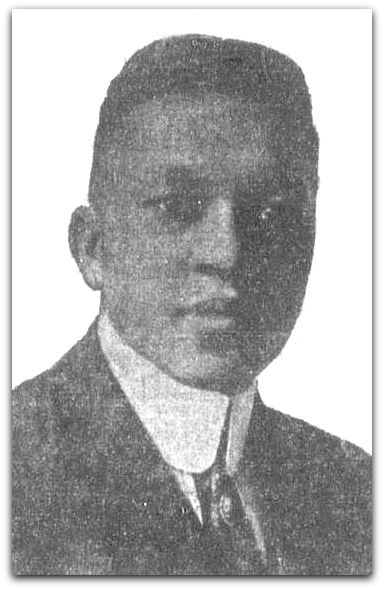
Below, president and business manger (and, later, owner), C. F. Starks:

dallas-express_c-f-starks_pres-business-mgr_060724

The editor’s office (John W. Rice was the editor at this time and is, presumably, the man in the foreground):

dallas-express_editors-office_060724

The business office:

dallas-express_business-office_060724

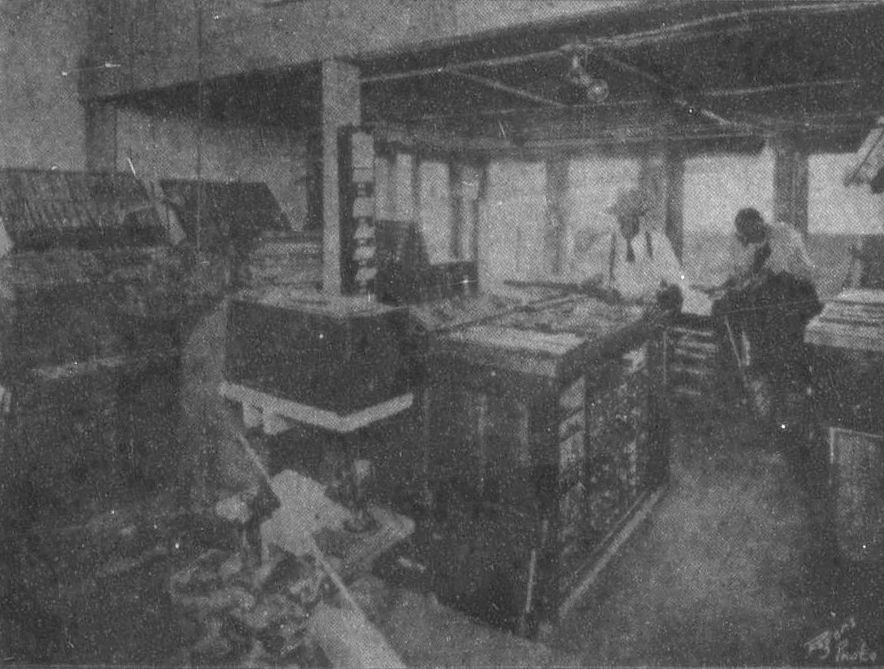
The composition room:

dallas-express_composition-room_060724

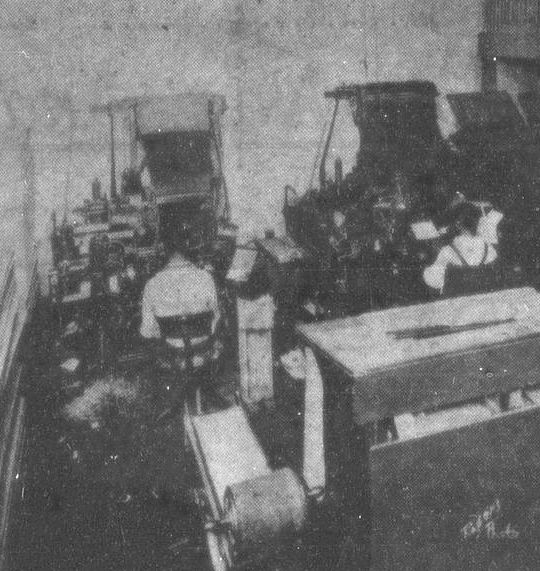
The linotype department (I have written about my fascination with linotype machines here):

dallas-express_linotype_060724

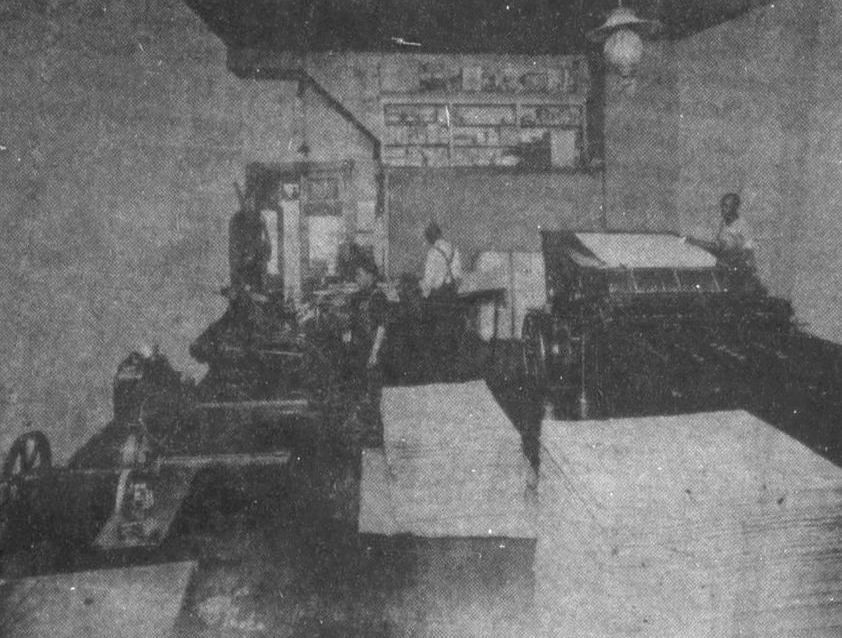
And the press room:

dallas-express_press-room_060724

The text from the ad (this special “Pythian Edition”of the paper was printed to coincide with the 40th annual meeting of the Knights of Pythias):

“YOUR Paper,” The 5th Largest of its Kind in America, Commends The Knights of Pythias Along With All of the Other Fraternities Represented Here for Their WONDERFUL PROGRESS.

THE EXPRESS believes that much of the splendid success which has come to the Fraternities of Texas, has come because of the fact that they have told the public “well and often” about the benefits which they offer and the advantages which they bring. And too, this paper takes a great deal of PRIDE in the thought that it has helped to bring this to pass because it is the medium in Texas best fitted to tell the world about the PROGRESS of the institution of our State.

These views of our force and the equipment at our plant explain why we can guarantee “Distinctive Service” and “Meritorious Printing” to every one of our customers.

The 20,000 copies in this special issue will go to every corner of America and to some foreign countries. No other journal of the Race in the Southwest does this.

The Dallas Express Pub. Co. Solicits Your Patronage not because it is a Negro institution but because it can guarantee to you the sort of service that you need. No job too small for the greatest consideration. No order too big for us to fill.

TEXAS’ OLDEST AND LARGEST NEGRO NEWSPAPER AND PRINTING PLANT
In Dallas Since 1892
2600 Swiss Avenue

*

The full-page ad:

dallas-express_060724_p8_full-page
Dallas Express, June 7, 1924

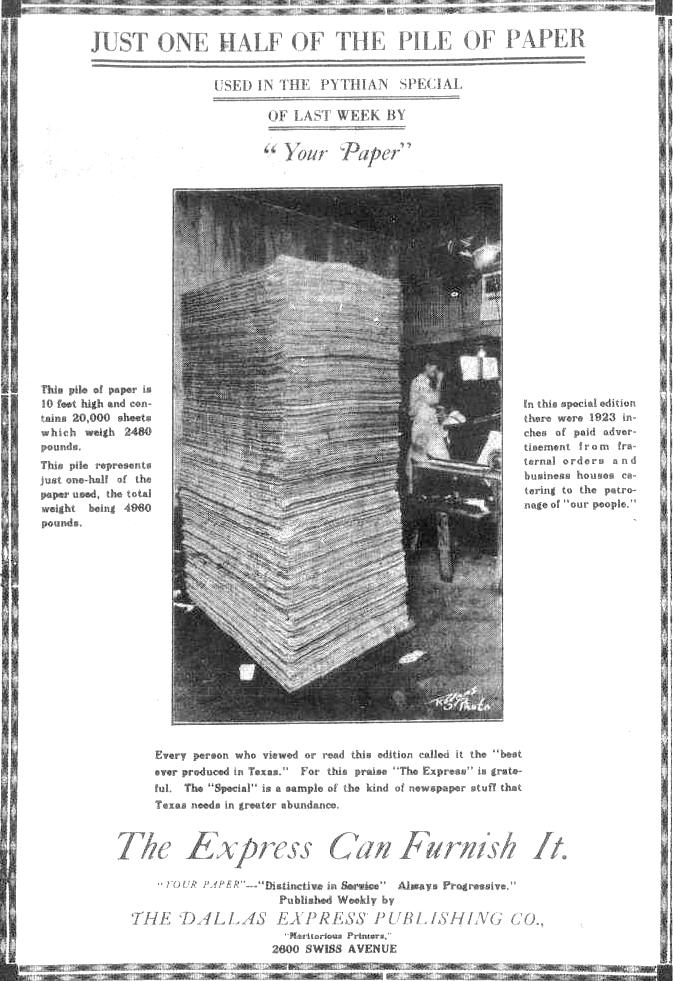
Another photo of the printing room appeared in an Express ad which ran in the paper the following week:

dallas-express_061424_ad
Dallas Express, June 14, 1924

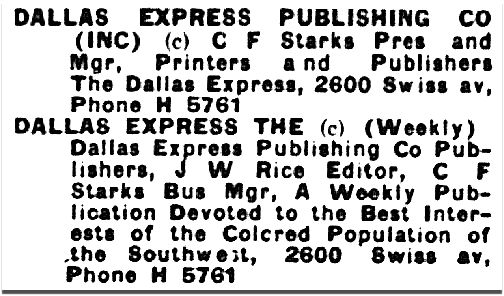
dallas-express_1923-directory
1923 Dallas directory

***

Sources & Notes

Photos by Frank Rogers. Original prints might be in the Frank Rogers Collection at the Dallas Public Library, but nothing showed up when I searched the DPL database. Original crisp prints would be wonderful to see!

Photos appeared in the June 7, 1924 edition of The Dallas Express. The full newspaper can be found here. Only a few years’ worth of scanned issues of The Express are available on UNT’s Portal to Texas History site — mostly 1919-1924 — they can be accessed here.

Read about The Dallas Express at the Portal to Texas History, here; the Wikipedia entry is here.

*

Copyright © 2016 Paula Bosse. All Rights Reserved.


The Inwood Theatre

theater_inwood_oct_1954_d-mag_dplSeven years after opening, in 1954… (click for larger image)

by Paula Bosse

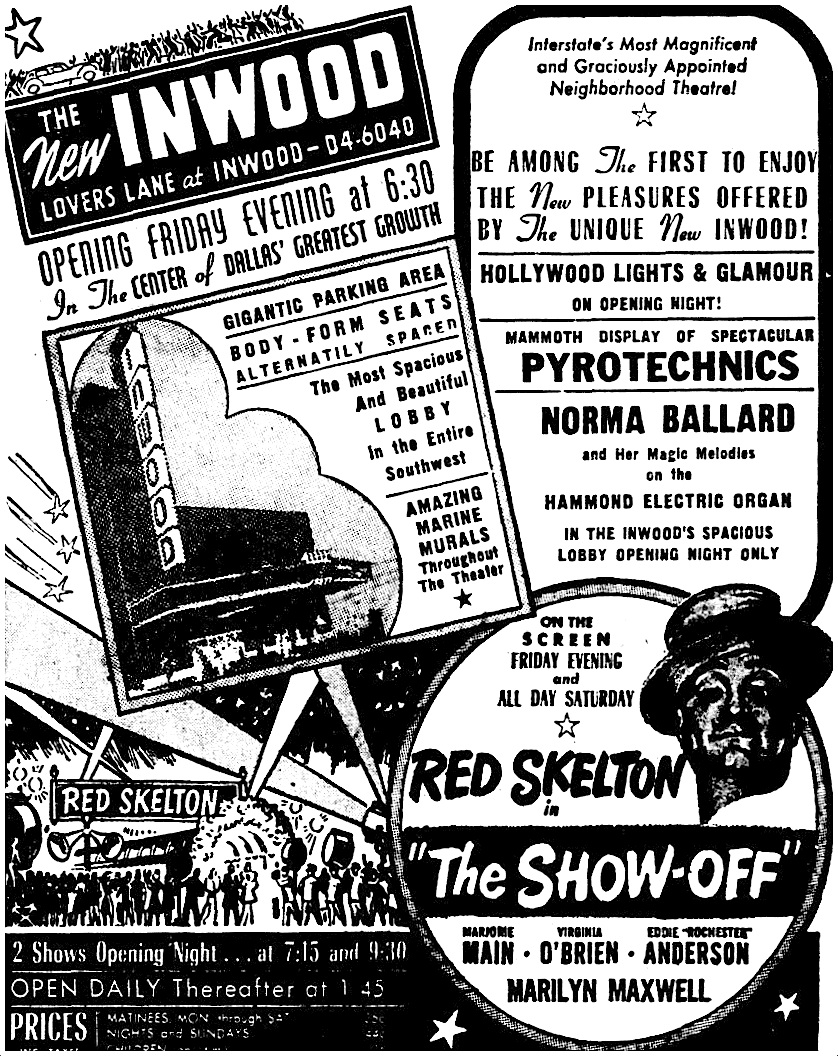
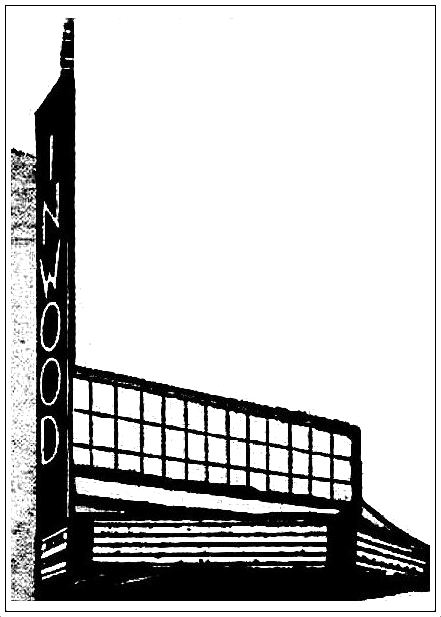
The Inwood Theatre opened at Lovers Lane and Inwood Road on May 16, 1947. Even though the surrounding neighborhood has changed pretty dramatically over the years, the exterior of the H. F. Pettigrew-designed building looks pretty much the same today. Happily, the 69-year old movie theater is still in business.

inwood_dmn_051647_grand-opening
The Grand OpeningMay 16, 1947 (click to see larger image)

theater_inwood_cinema-treasures via Cinema Treasures

inwood_1947_d-mag_dplvia D Magazine

theater_inwood_instagram_architexasvia Architexas on Instagram

inwood_el-chico_dmn-website

inwood_dmn_051947_ad-det
Ad detail, May, 1947

inwood_dmn_051147_ad-det
Ad detail, May, 1947

***

Sources & Notes

Top photo from D Magazine, here; from the Texas/Dallas History and Archives Division, Dallas Public Library. If you zoom in, there seems to be some drama going on inside one of those parked cars:

inwood_1954-zoom

Images are larger when clicked.

*

Copyright © 2016 Paula Bosse. All Rights Reserved.
 

Belmont & Greenville: From Caruth Farmland to Hub of Lower Greenville

hockaday_aerial_squire-haskins_022750_UTA
Hockaday campus, 1950 (UTA Libraries)

by Paula Bosse

If you’ve driven down lower Greenville Avenue lately, you’re probably aware that the buildings that most recently housed a retirement home at the northwest corner of Belmont and Greenville were scheduled to be been torn down. When I drove past that intersection a few weeks ago and saw the entire block leveled, I was shocked. It’s weird suddenly not seeing buildings you’ve seen your entire life. It got me to wondering what had been on that block before. I’d heard that Hockaday had occupied that block for several years, but even though I’d grown up not too far away, I’d only learned of that within the past few years. When I looked into this block’s history, the most surprising thing about it is that it has passed through so few owners’ hands over the past 140 or so years.

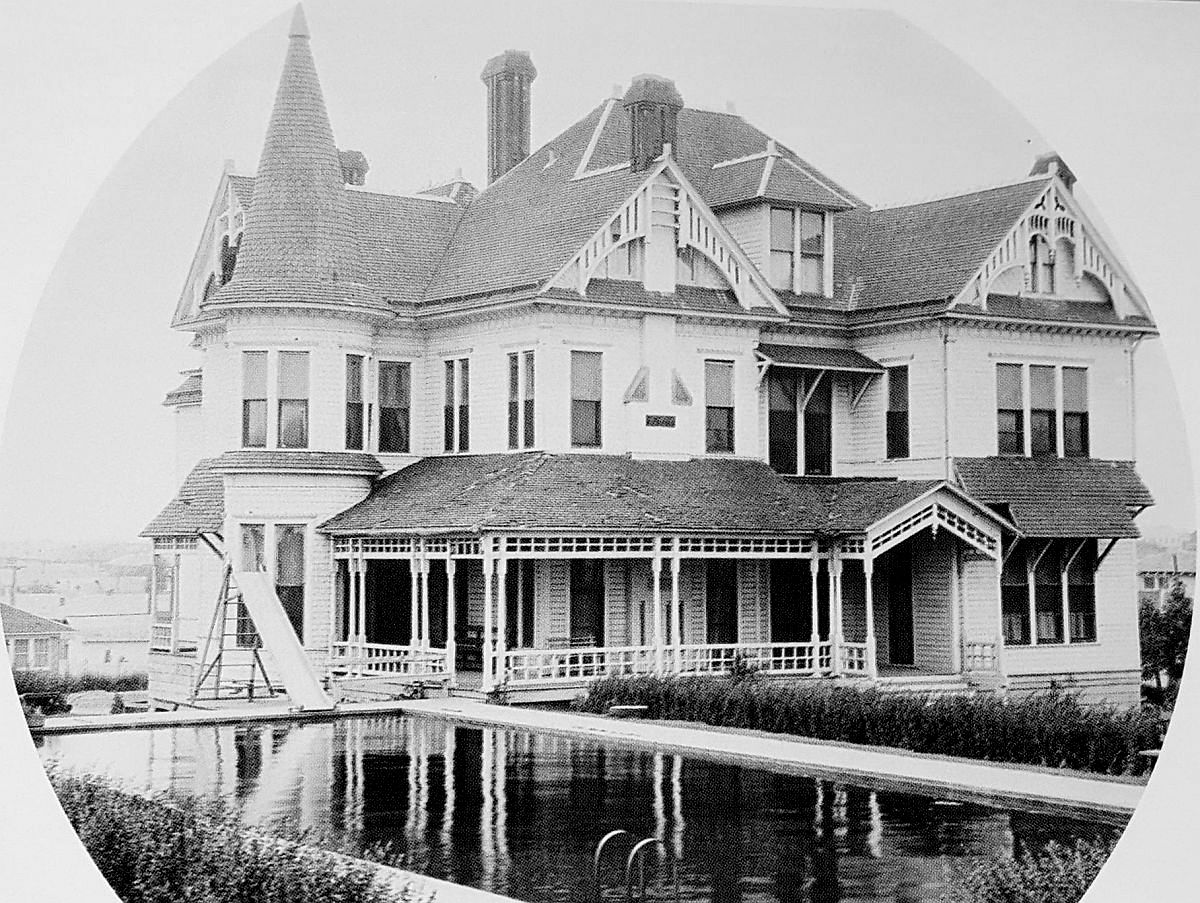
As far as I can tell, the first owner or this land was Walter Caruth (1826-1897), a pioneer merchant and farmer who arrived in this area in the 1840s (some sources say the 1850s), along with his brother, William. Over the years the brothers amassed an absolutely staggering amount of land — thousands and thousands of acres which stretched from about Inwood Road to White Rock Lake, and Ross Avenue up to Forest Lane. One of Walter Caruth’s tracts of land consisted of about 900 acres along the eastern edge of the city — this parcel of land included the 8 or 9 acres which is now the block bounded by Greenville, Belmont, Summit, and Richard, and it was where he built his country home (he also had a residence downtown). The magnificent Caruth house was called Bosque Bonita. Here is a picture of it, several years after the Caruths had moved out (the swimming pool was added later).

caruth_bosque-bonita_dallas-rediscovered

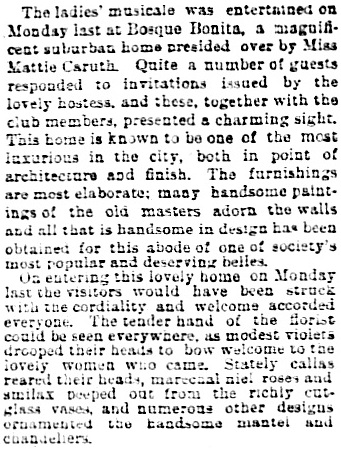
Most sources estimate that the house was built around 1885 (although a 1939 newspaper article stated that one of Walter’s children was born in this house in 1876…), but it wasn’t until 1890 that it began to be mentioned in the society pages, most often as the site of lavish parties. (Click pictures and  articles to see larger images.)

bosque-bonita_dmn_020390Dallas  Morning News, Feb. 3, 1890

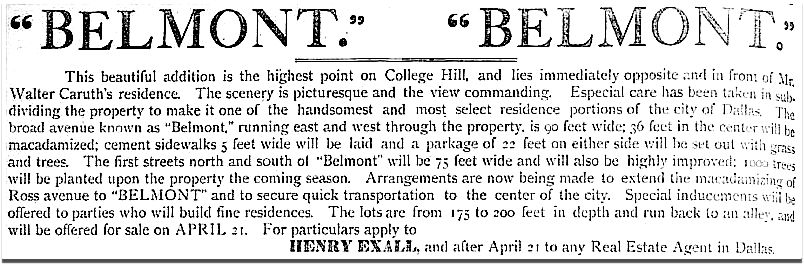
At the time, the Caruth house was one of the few buildings in this area — and it was surrounded by endless acres of corn and cotton crops. It wasn’t long, though, before Dallas development was on the march eastward and northward. This ad, for the new Belmont Addition, appeared in April of 1890, and it mentioned the Caruth place as a distinguished neighboring landmark.

belmont-addition_dmn_041690
DMN, April 16, 1890

By the turn of the century — after Caruth’s death in 1897 — it was inevitable that this part of town (which was not yet fully incorporated into the City of Dallas) would soon be dotted with homes and businesses.

caruth-farm_dmn_092703
DMN, Sept. 27, 1903

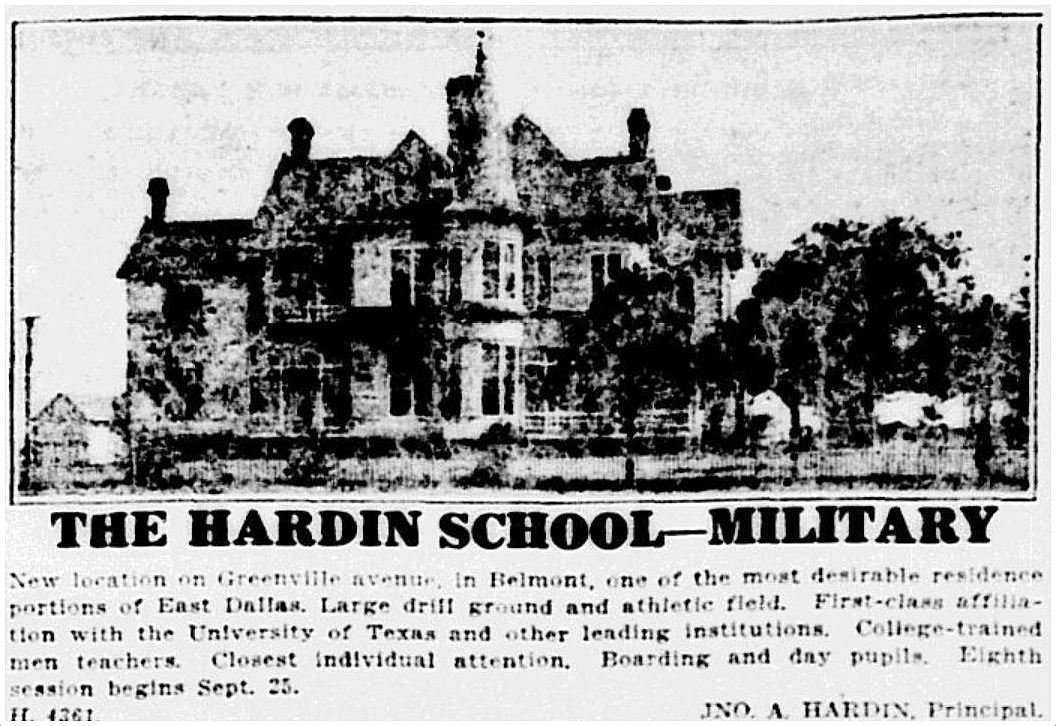
At one time the Caruth family owned land in and around Dallas which would be worth the equivalent of billions of dollars in today’s money. After Walter Caruth’s death, the Caruth family became embroiled in years of litigation, arguing over what land belonged to which part of the family. I‘m not sure when Walter Caruth’s land around his “farmhouse” began to be sold off, but by 1917, the Hardin School for Boys (established in 1910) moved into Bosque Bonita and set up shop. It operated at this location for two years. The Caruth house even appears in an ad.

hardin-school_dmn_071517_bosque-bonita_ad
DMN, July 15, 1917

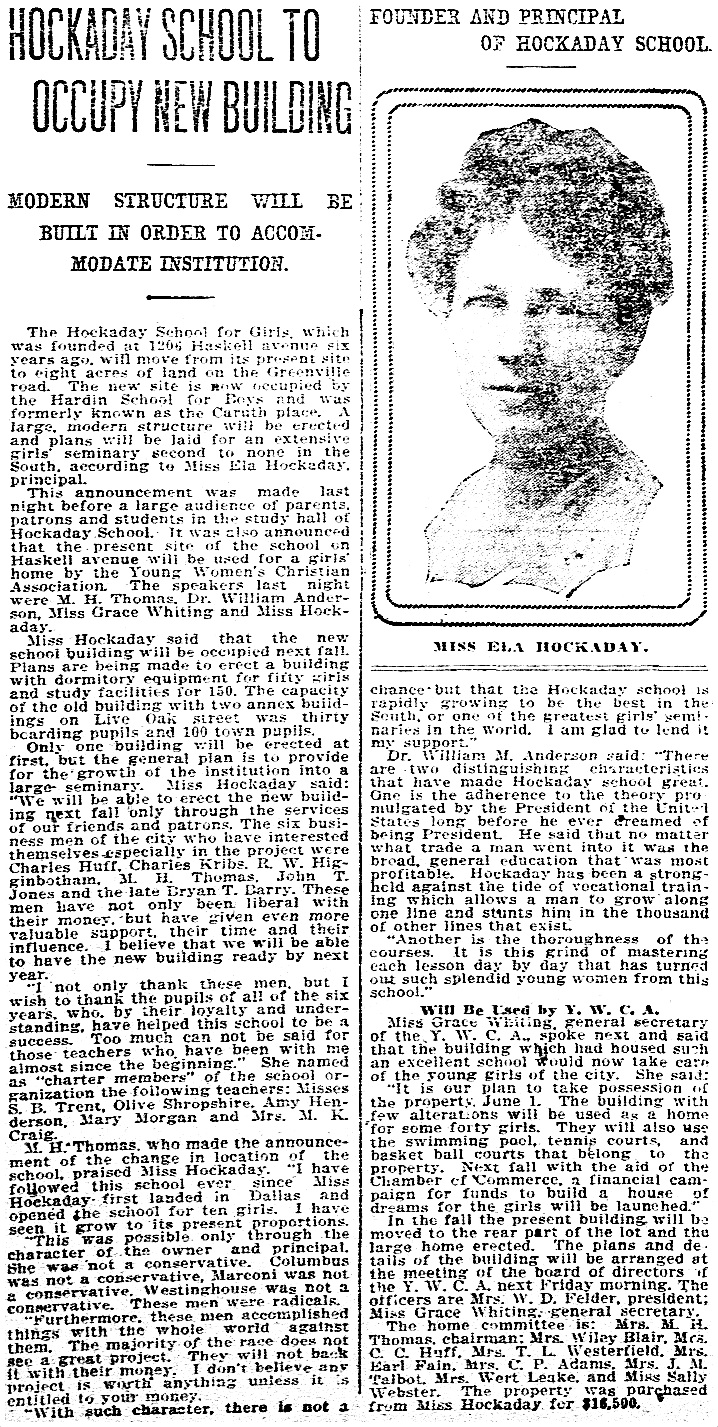
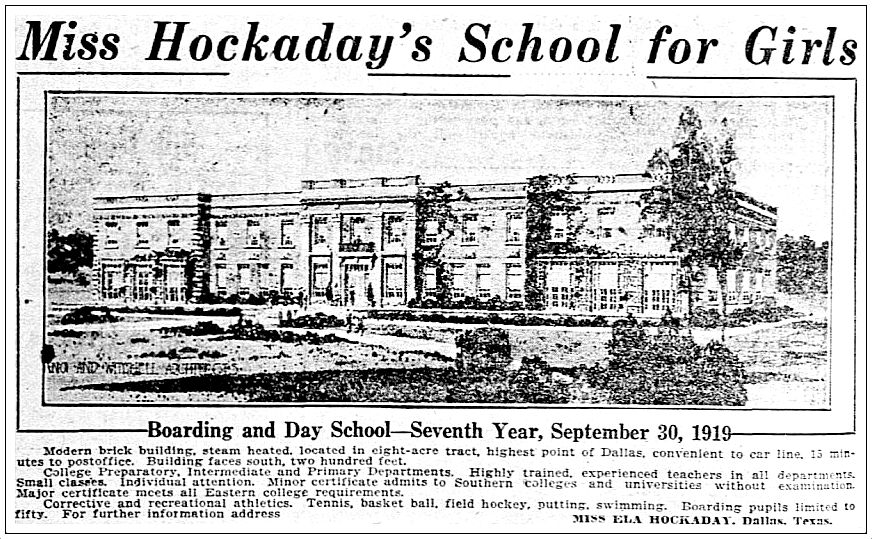
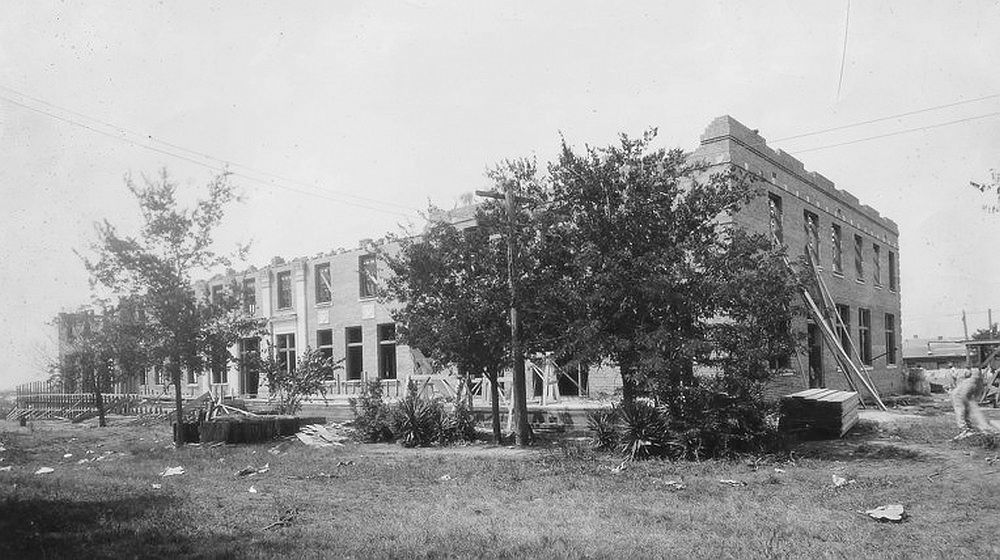
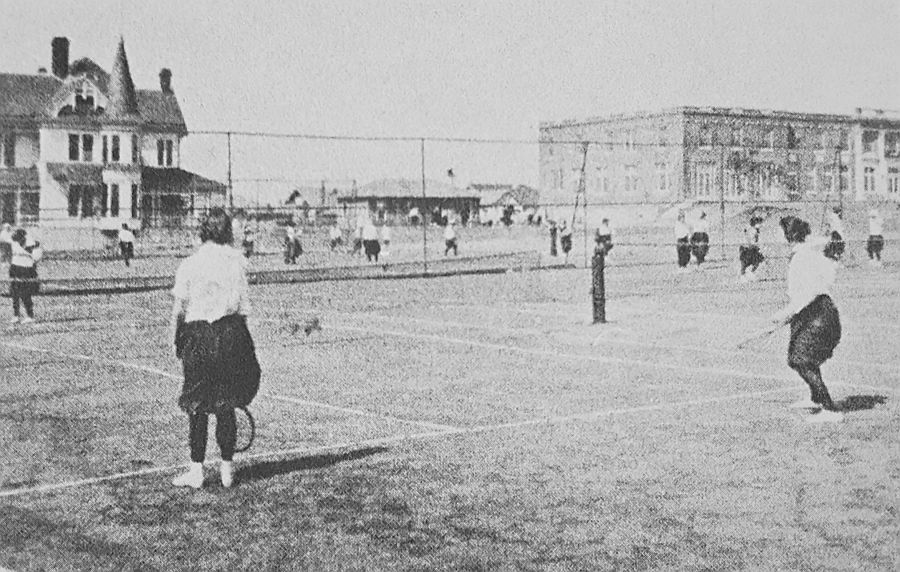
I’m not sure if the Hardin School owned the land or was merely leasing it and the house, but in 1919, Ela Hockaday announced that she had purchased the land and planned to move her school — Miss Hockaday’s School for Girls (est. 1913) — to this block and build on it a two-story brick school building, a swimming pool (seen in the photo above), tennis courts, basketball courts, hockey fields, and quarters for staff and girls from out of town who boarded.

hockaday_dmn_051119DMN, May 11, 1919

hockaday_dmn_070619
DMN, July 6, 1919

Ground was broken in July of 1919, and the first session at the new campus began on schedule in September. Below, the building under construction. Greenville Avenue is just out of frame to the right.

hockaday_greenville_construction_hockaday100Photo: Hockaday 100

hockaday_greenville-ave_1919_reminiscences

hockaday_greenville-belmont_1920s_horses

The most interesting thing I read about the Hockaday school occupying this block is that very soon after opening, the beautiful Caruth house was moved from its original location at the northwest corner of Belmont and Greenville. It was rolled on logs to the middle and back of the property. “Bosque Bonita” became “Trent House.” Former student (and later teacher) Genevieve Hudson remembered the moving of the house in an oral history contained in the book Reminiscences: A Glimpse of Old East Dallas:

caruth-house_hockaday_reminiscences-bk

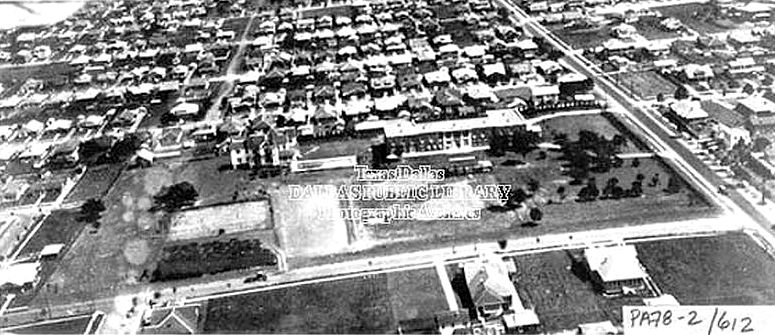
You can see the new location of the house in the top aerial photo, and in this one:

hockaday_aerial_dpl
Dallas Public Library

Another interesting little tidbit was mentioned in a 1947 Dallas Morning News article: Caruth’s old hitching post was still on the property — “on Greenville Avenue 100 feet north of the Belmont corner” (DMN, May 2, 1947). I’d love to have seen that.

After 42 years of sustained growth at the Greenville Avenue location (and five years after the passing of Miss Hockaday), the prestigious Hockaday School moved to its current location in North Dallas just after Thanksgiving, 1961. Suddenly, a large and very desirable tract of land between Vickery Place and the M Streets was available to be developed. Neighbors feared the worst: high-rise apartments.

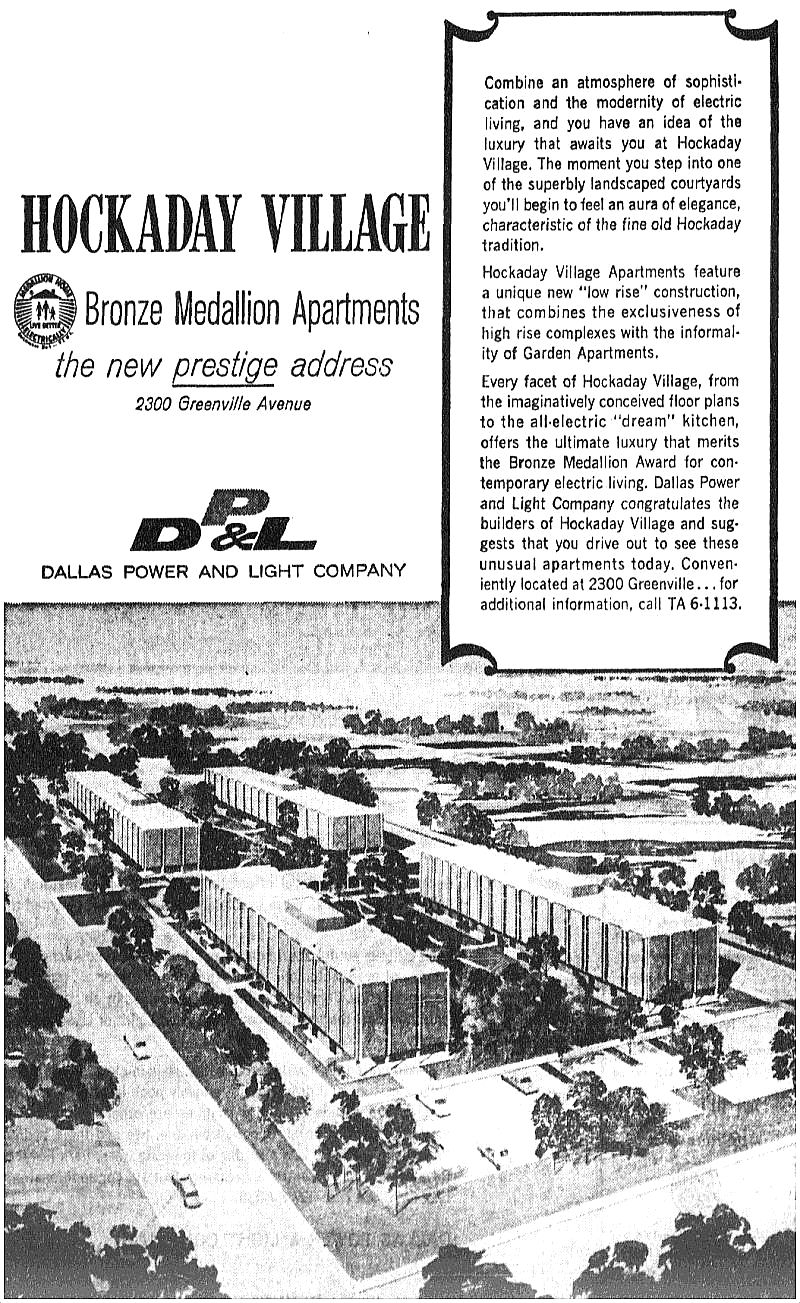
The developer proposed a “low-rise,” “semi-luxury” (?) group of four 5-story apartment buildings, each designed to accommodate specific tenants: one for swinging singles (“where the Patricia Stevens models live”), one for single or married adults, one for families with children, and one for “sedate and reserved adults.” It was to be called … “Hockaday Village.” The architect was A. Warren Morey, the man who went on to design the cool Holiday Inn on Central and, surprisingly, Texas Stadium.

Bosque Bonita — and all of the other school buildings — bit the dust in preparation for the apartment’s construction. Hockaday Village (…what would Miss Hockaday have thought of that name?) opened at the end of 1964.

hockaday-village_dmn_101864
Oct. 1964

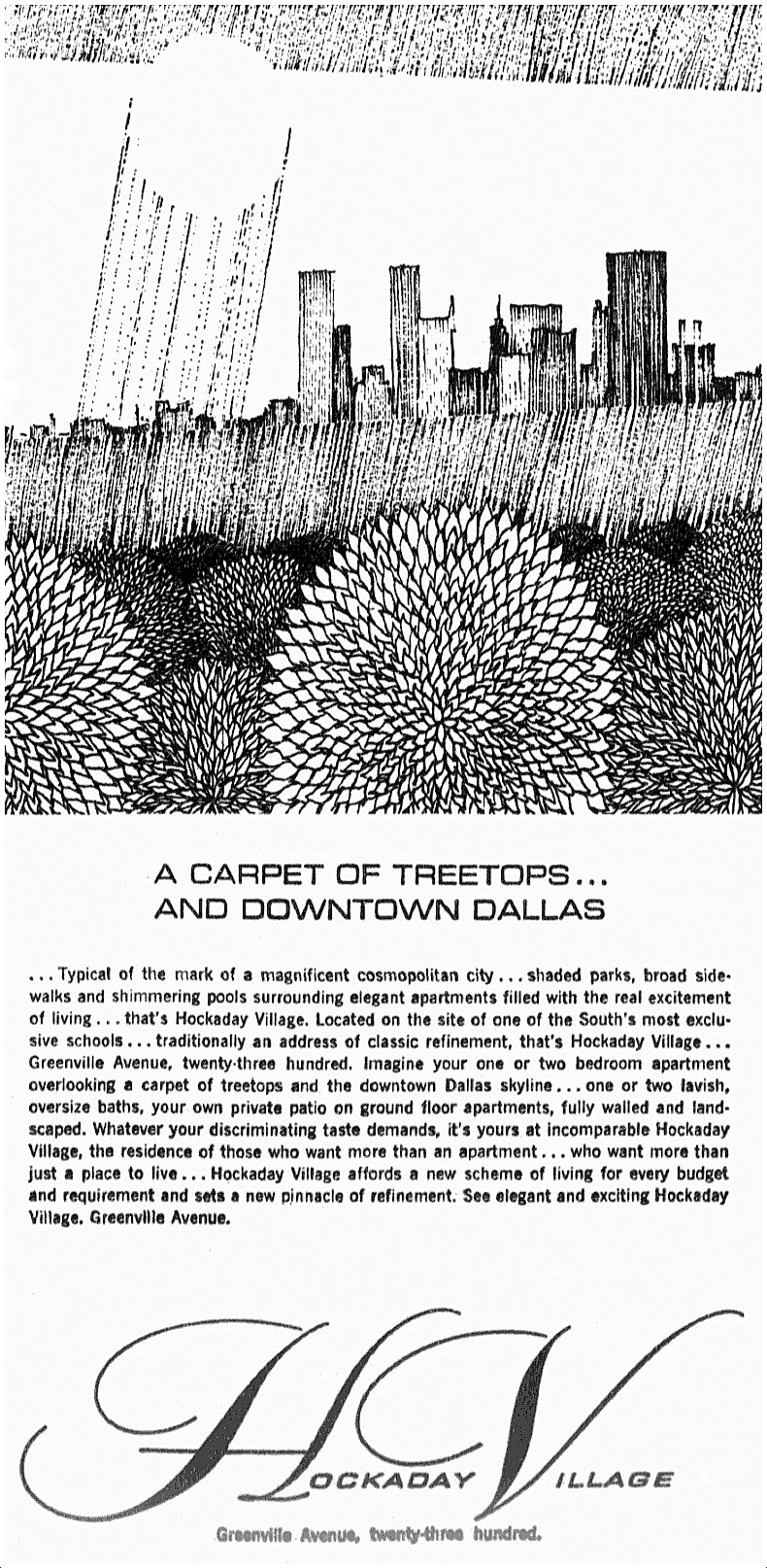
hockaday-village_dmn_101864_carpet-of-treetops
Oct. 1964

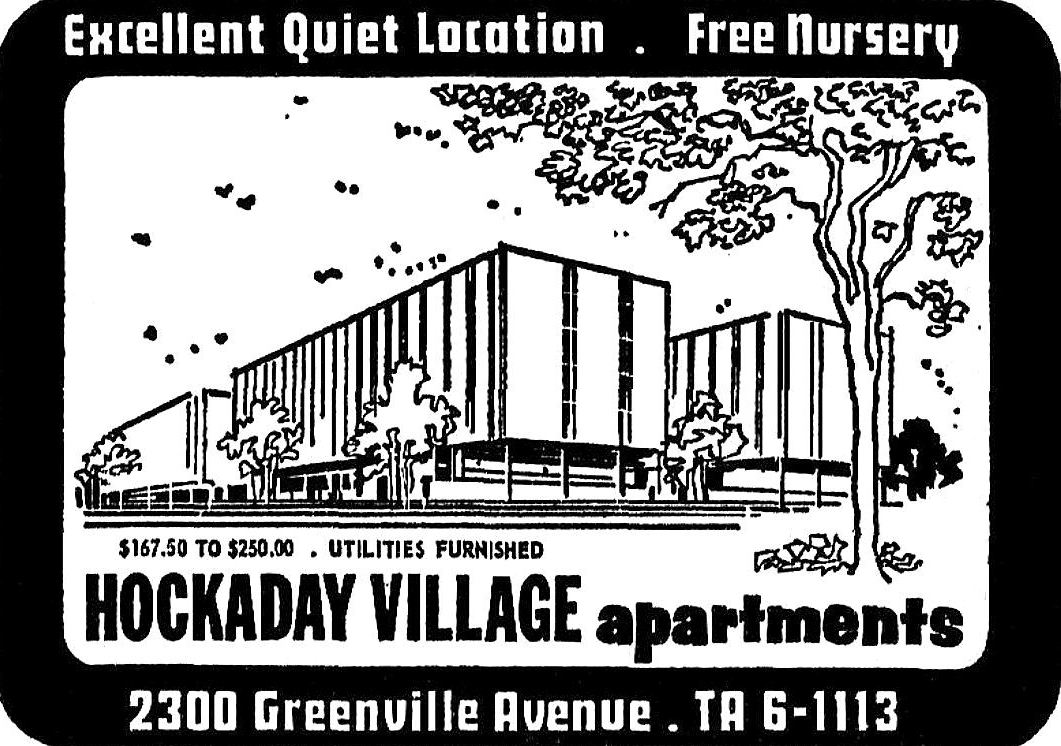
hockaday-village_dmn_031365
March 1965

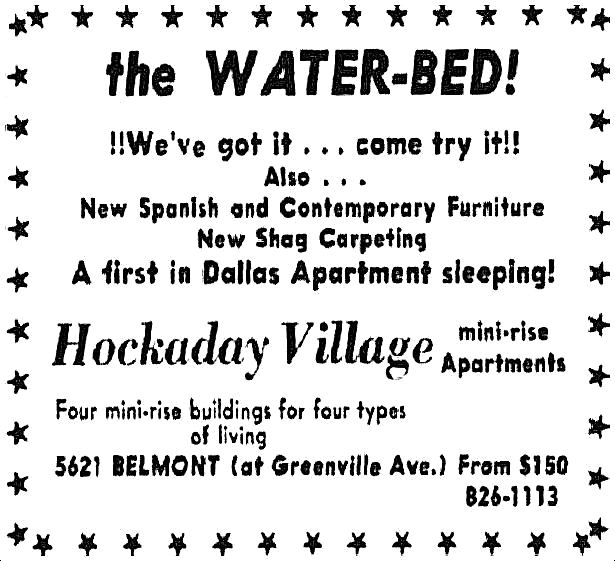
And then before you knew it, it was the ’70s, the era of waterbeds and shag carpeting. (Miss Hockaday would not have tolerated such tackiness, and I seriously doubt that Mr. Caruth would have ever understood why shag carpeting was something anyone would actually want.)

hockaday-village_dmn_052271_waterbeds
1971

Then, in 1973, the insistently hip ads stopped. In April, 1974 this appeared:

hockaday-village_FWST_042874
Fort Worth Star-Telegram, April 28, 1974

The apartments were being offered for public auction by the “Office of Property Disposition” of the Federal Housing Authority and HUD. Doesn’t sound good. So who bit and took the plunge? The First Baptist Church of Dallas, that’s who. The plan was to redevelop the existing apartments into a retirement community called The Criswell Towers, to be named after Dr. W. A. Criswell. But a mere three months later, the Baptists realized they had bitten off more than they could chew — the price to convert the property into a “home for the aged” would be “astronomical.” They let the building go and took a loss of $135,000. It went back on the auction block.

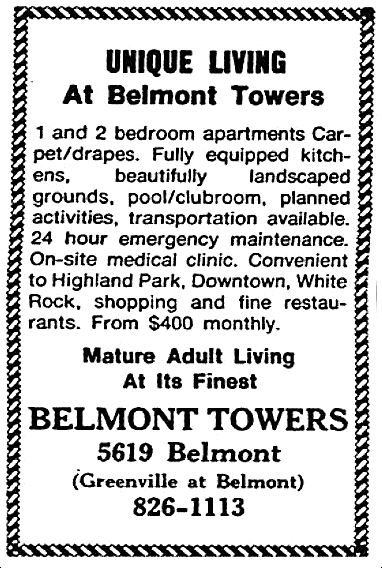
Two years later, in the summer of 1976 … the old Hockaday Village became Belmont Towers — and the new owners must have thought the Baptists’ idea was a good one, because Belmont Towers advertised itself as “mature adult living at its finest” — “perfect for retired or semi-retired individuals.”

hockaday-village_dmn_043083_belmont-towers
April 1983

It was Belmont Towers for 20-or-so years. In 1998, the buildings were renovated and updated, and it re-opened as Vickery Towers, still a retirement home and assisted living facility. A couple of years ago it was announced that the buildings would be demolished and a new development would be constructed in its place. It took forever for the 52-year-old complex to finally be put out of its misery since that announcement. Those buildings had been there my entire life and, like I said, it was a shock to see nothing at all in that block a few weeks ago.

vickery-towers_050516_danny-linn-photoPhoto: Danny Linn

In the 140-or-so years since Walter Caruth acquired this land in the 1870s or 1880s, it has been occupied by Caruth’s grand house, a boys school, the Hockaday School, and four buildings which have been apartments and a retirement community. And that’s it. That’s pretty unusual for development-crazy Dallas. I’ll miss those familiar old buildings. I hope that whatever is coming to replace them won’t be too bad.

greenville-belmont_bing_aerial
Bing Maps

***

Sources & Notes

The top aerial photograph is by Squire Haskins, taken on Feb. 27, 1950 — from the Squire Haskins Photography Inc. Collection, University of Texas at Arlington Libraries, Special Collections, accessible in a massive photo here (click the thumbnail). Greenville Avenue is the street running horizontally at the bottom. The Hockaday Junior College can be seen at the northwest corner of Belmont and Greenville — the original location of Bosque Bonita before it was rolled across the campus.

That fabulous photo of Bosque Bonita is from the book Dallas Rediscovered by William L. McDonald.

Photo of Hockaday girls playing tennis is from the book Reminiscences: A Glimpse of Old East Dallas.

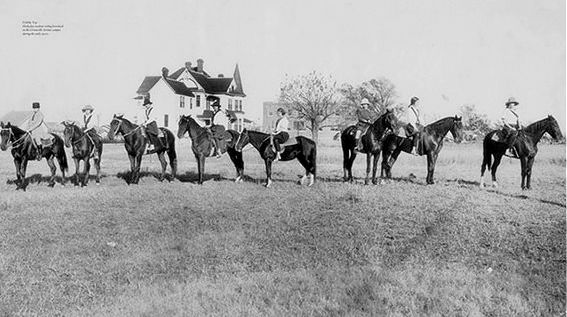
Photo of girls on horseback … I’m not sure what the source of this photo is.

Photo of the block, post-razing is by Danny Linn who grew up in Vickery Place; used with permission. (Thanks, Danny!)

All other sources as noted.

In case you were confused, the Caruth Homeplace that most of us might know (which is just south of Northwest Highway and west of Central Expressway) was the home of Walter Caruth’s brother William — more on that Caruth house can be found here.

The Hockaday School can be seen on the 1922 Sanborn map here (that block is a trapezoid!).

More on the history of the Hockaday School can be found at the Hockaday 100 site; a page with many more photos is here. Read about the history of the school in the article “Miss Ela Builds a Home” by Patricia Conner Coggan in the Spring, 2002 issue of Legacies, here.

Additional information can be found in these Dallas Morning News articles:

  • “Proposal to Change Hockaday Site to Apartment Zoning Opposed” (DMN, Oct. 29, 1961)
  • “Retirement Home Plans Going Ahead” (regarding the purchase by the First Baptist Church of Dallas) (DMN, June 15, 1974)
  • “Church Takes $135,000 Loss on Property” (DMN, Sept. 10, 1974)

*

If you made it all the way through this, thank you! I owe you a W. C. Fields “hearty handclasp.”

*

Copyright © 2016 Paula Bosse. All Rights Reserved.
Dallas’ Texas Centennial Exposition vs. Fort Worth’s Frontier Exposition — 1936

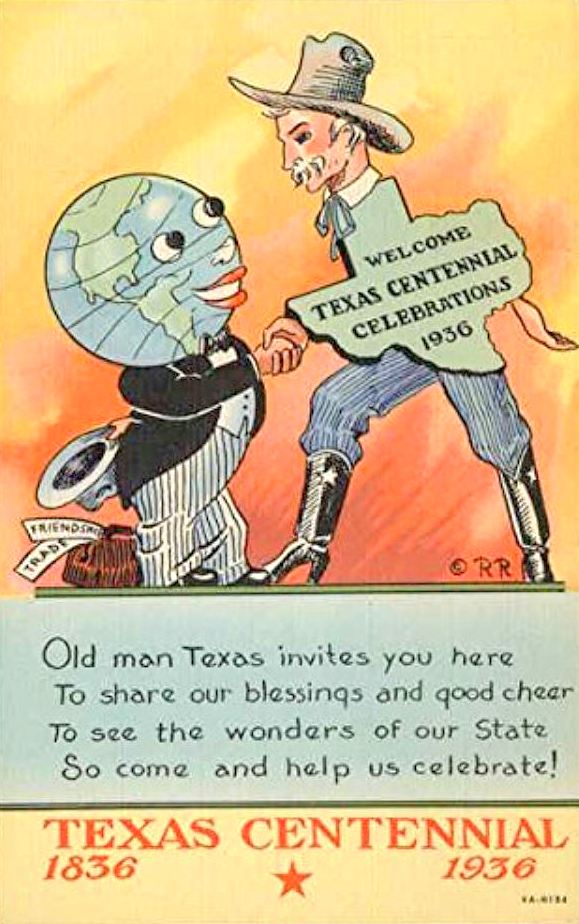
tx-centennial-postcard_old-man-texas_smWelcome to Dallas (and/or Fort Worth)!

by Paula Bosse

The Texas Centennial Exposition opened in Dallas at Fair Park in June, 1936 — 80 years ago this week. It was described in newsreels as “A New City, A Great City, A City of a Thousand Sights and a Thousand Wonders.” Which I guess it kind of was. I’ve written about the Centennial before, but I don’t think I’ve mentioned that my favorite part of the Centennial’s taking place in Dallas is that it seriously rubbed “Mr. Fort Worth,” Amon Carter, the wrong way. Carter’s distaste of Dallas was well-known, so it was no surprise, really, that this caused him to blow his top and, damn it, he created his OWN competing celebration: the Fort Worth Frontier Centennial Exposition. The Dallas-Fort Worth rivalry had already been going strong for years, but the Centennial pushed it into Hatfield-and-McCoy feud territory (although one gets the feeling that most of it was an act that generated a lot of great publicity for both sides).

Watch film footage of ol’ Amon’s blood pressure spike into the danger zone here, in a moment from a March of Time newsreel as he proclaims that Fort Worth will teach “those dudes over there” (in Dallas) a thing or two by outdoing Big D in sheer gigantic spectacle. …And sex. Or, “whoopee.” Nudity was on display absolutely everywhere at both Centennial expositions. Dallas had always planned on having the titillation before Amon Carter got into the act, but the involvement of Billy Rose on the Fort Worth side probably encouraged Dallas to, um … augment the fleshy offerings on display in Fair Park.

Broadway impresario Billy Rose was hired by Amon Carter to sex-up the Fort Worth expo and to do everything he could to draw more visitors to Fort Worth than to Dallas. Rose went so far as to have a HUGE electric sign (supposedly the second largest electric sign in the world) placed on top of a building on Parry directly opposite the entrance to Fair Park which read:

“Fort Worth Frontier — Wild & Whoo-pee — 45 Minutes West.”

Which is pretty hilarious. (Same view today?)

tx-centennial_FW-sign_billy-rose-presents_book_1936

(See a giant image of this photo in the UTA digital collection, here.)

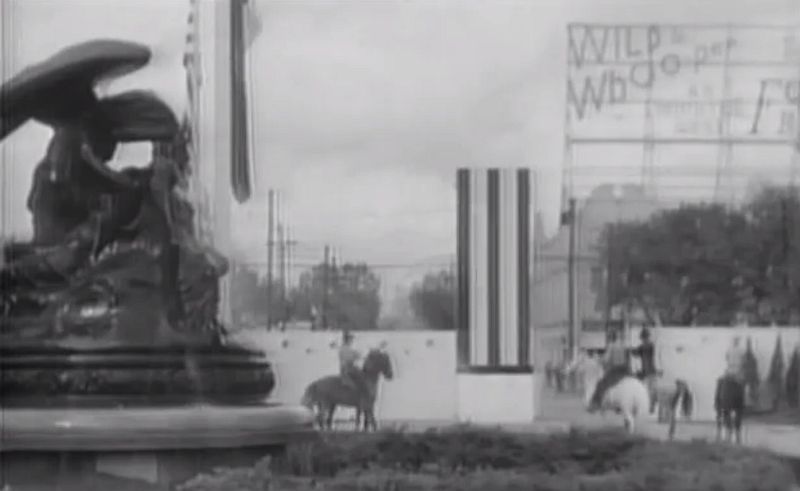
I’m not sure whether the Dallas Centennial organizers were miffed or amused, but one can only imagine that Amon Carter was thrilled to bits when he saw his sign appear (fleetingly) in the Gene Autry movie The Big Show which had been shot in Fair Park during the Centennial.

billy-rose-billboard_big-show-movie_gene-autry

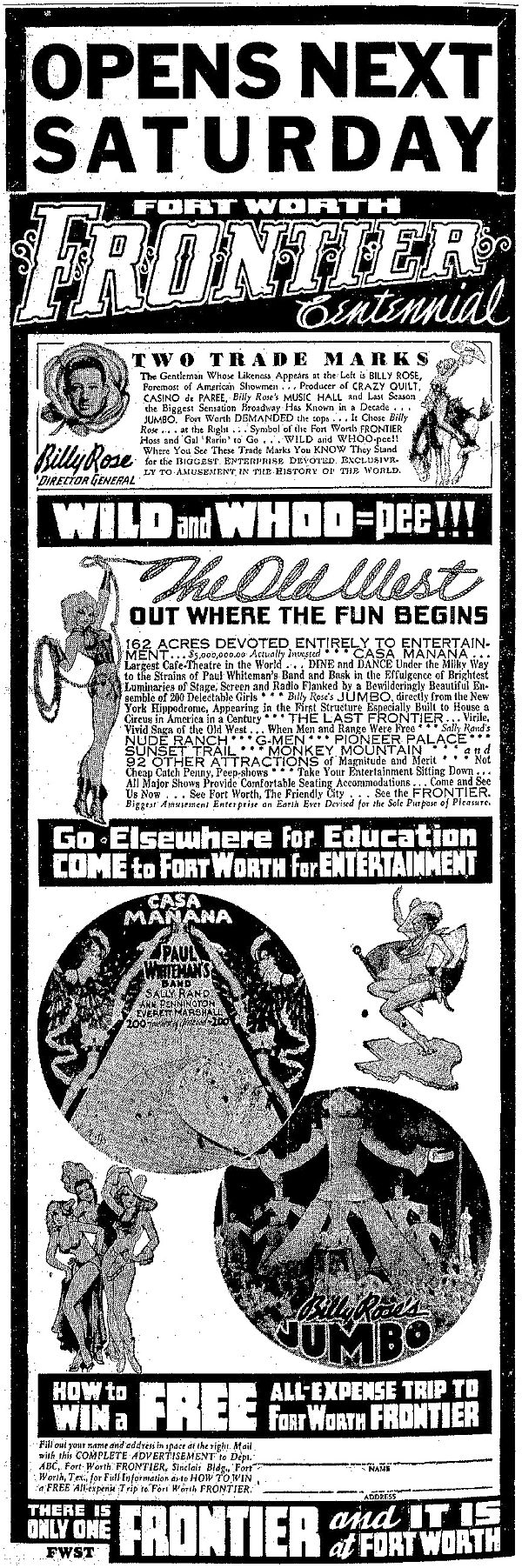
Fort Worth was all about the “whoo-pee,” and the tag-line to their show was “Come to Fort Worth for Entertainment, Go Elsewhere for Education.”

frontier_FWST_071436-detFort Worth Star-Telegram, July 14, 1936

The “feud” (i.e. the publicity machine) really cranked up when the producers of the March of Time newsreel sent their people to film in Dallas and Fort Worth. The result — a splashy look at the inter-city rivalry titled “Battle of a Centennial” — was shown in DFW-area theaters, and boisterous audiences either applauded for Dallas and hissed at Fort Worth (or vice-versa), depending on their allegiance.  (Click ad below for larger image.)

march-of-time_dmn_061736
June, 1936

In the end, the celebrations in both Dallas and Fort Worth were successful (although Dallas was the clear winner!), but the rivalry and competitive showmanship from the two cities probably made the shows much more entertaining than they might otherwise have been. So, thanks, Amon!

frontier_pinterest
via Pinterest

frontier_dmn_073036
July, 1936

frontier-centennial_FWST_071236
July, 1936

tx-centennial_variety-via-decatur-illinois-herald_060336
Variety article reprinted in Decatur (Illinois) Herald, June 3, 1936

billy-rose_casa-manana
via oldimprints.com

 ***

Sources & Notes

Source of postcard at top unknown.

Photo of the “whoo-pee” billboard is from the book Billy Rose Presents … Casa Mañana (Fort Worth: TCU Press, 1999) by Jan Jones. Jones writes that the billboard was on top of the building at Parry and First.

The shot of the billboard hovering over cowboys is a screengrab from the interesting-but-dull Gene Autry movie, The Big Show, shot mostly on the grounds of Fair Park during the Centennial. You can watch the full movie here.

The clip of Amon Carter shaking his fist at “those dudes” in Dallas is from the 1936 March of Times newsreel, “Battle of a Centennial.” I have been unable to find the entire film streaming online, but you can watch a whole bunch of clips (about 13) from Getty Images, here. The full thing appears to be available for purchase here, but only if you are affiliated with a school or institution. (If anyone has access to the full newsreel, let me know!)

Watch a different newsreel/film on the Centennial Exposition — the 11-minute Texas Centennial Highlights, shot and produced by Dallas’ Jamieson Film Co. — at the Texas Archive of the Moving Image site, here.

For more on Fort Worth’s horning-in-on Dallas’ Centennial, read the entertaining article “Makin’ Whoopee — Amon Carter Couldn’t Make Either the Depression or Dallas Go Away, But He Sure Tried” by Jerry Flemmons (D Magazine, April, 1978), here.

Unfortunately, I’m unable to embed the video I linked to above of Amon Carter sputtering about Dallas hosting the state’s Centennial, but I encourage everyone who’s ever been amused by the Dallas-Fort Worth “feud” to watch it here — it’s well worth 17 seconds of your time! As John Rosenfield wrote in the Dallas Morning News review of this March of Time newsreel, “The best actor from across the river is Amon Carter, long a leading man among Texas political Thespians” (DMN, “Centennial Fight in ‘Time’ Release,” June 21, 1936). Newspaperman Carter knew how to parlay outrageous remarks about exaggerated competition into sweet, sweet publicity for himself and his newspaper. Check out the photo of a smiling Carter with his arm around “bitter rival,” G. B. Dealey of The Dallas Morning News, here. Amon knew a thing or two about a thing or two….

Pictures and clippings are larger when clicked.

*

Copyright © 2016 Paula Bosse. All Rights Reserved.
Ads for Businesses Serving the North Dallas High School Area — Early 1960s

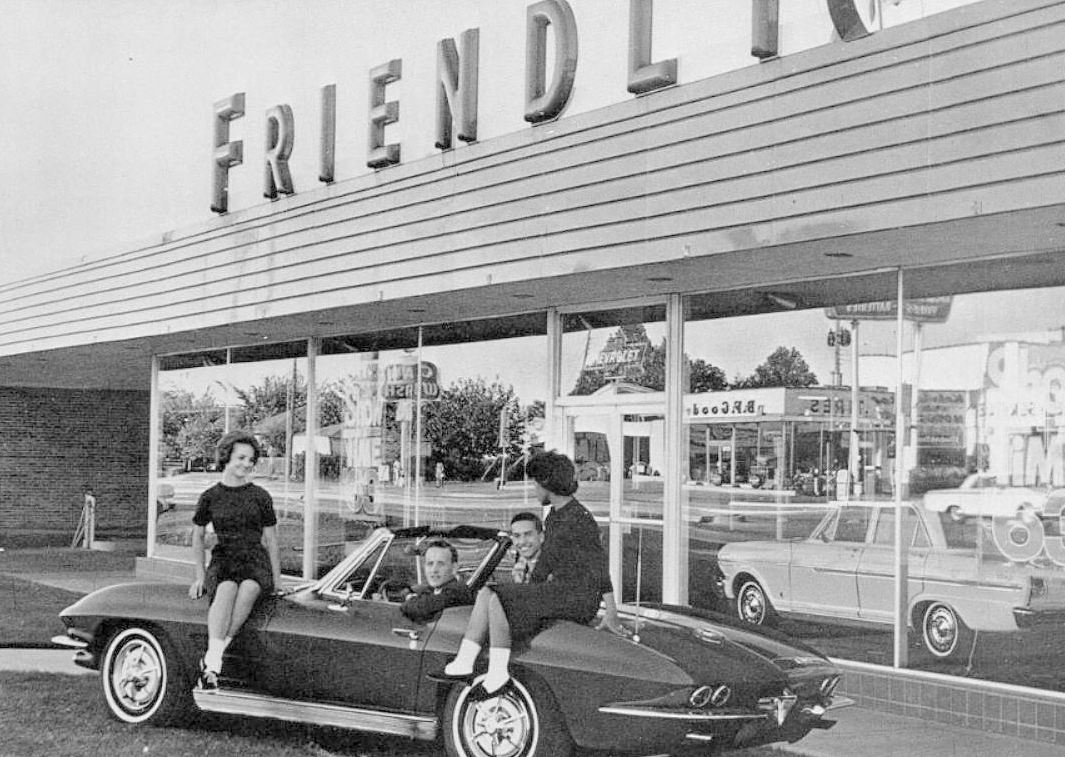
friendly-chevrolet_ndhs_1963-yrbk-photoFriendly Chevrolet, 1963

by Paula Bosse

One of the things I like best about looking through old high school and college yearbooks is seeing the ads in the back — especially the ads that feature students. Here are a whole bunch of ads from the 1960, 1962, and 1963 North Dallas High School annuals, with most of the ads placed by businesses in the Oak Lawn, McKinney Avenue, and Little Mexico areas surrounding the school. Let’s take a walk down memory lane, shall we? (Ads and photos are larger when clicked.)

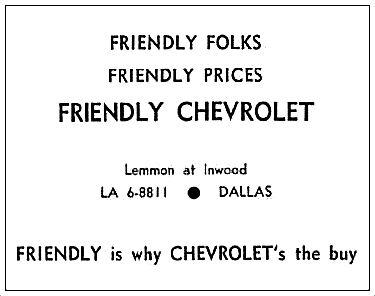
Above, Friendly Chevrolet at Lemmon and Inwood. I bet the owner was grimacing as he saw those girls perched — gingerly or not — on that brand new Corvette convertible!

friendly-chevrolet_ndhs_1963-yrbk1963

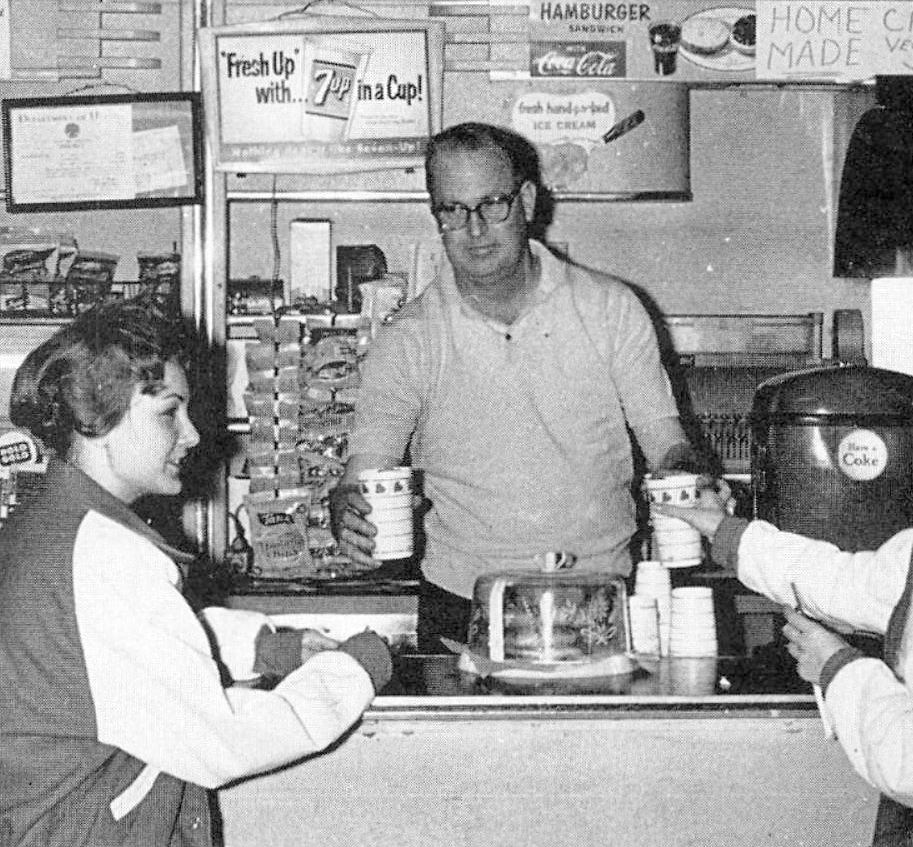
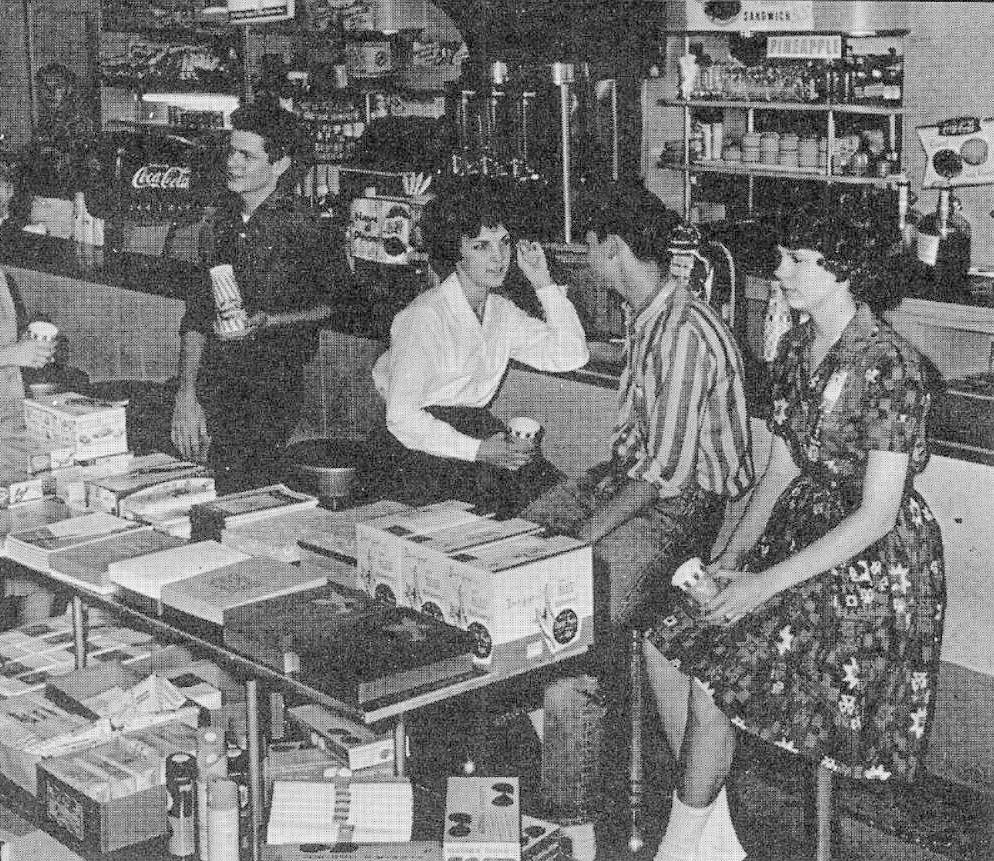
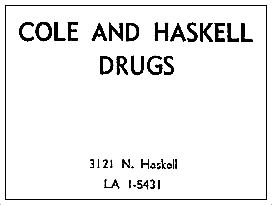
The Cole and Haskell Drug Store, at 3121 N. Haskell — right across the street from the NDHS campus — was no doubt thrilled to be so close to its major source of income, the teenager.

1962_cole-haskell-drugs_ndhs_1962-yrbk1962

cole-haskell-drug-store_ndhs_1963-yrbk-photo
1963

cole-haskell-drugs_ndhs_1963-yrbk
1963

*

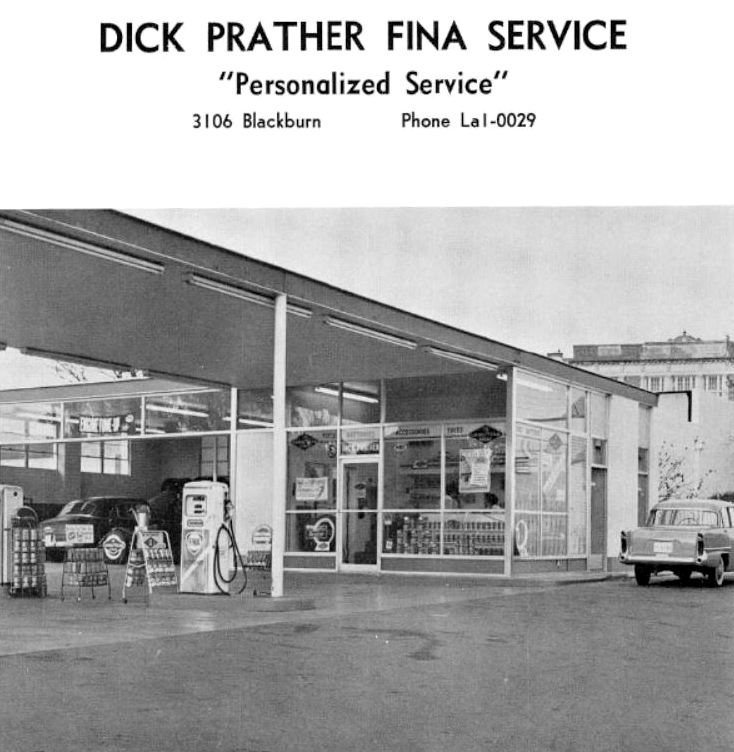
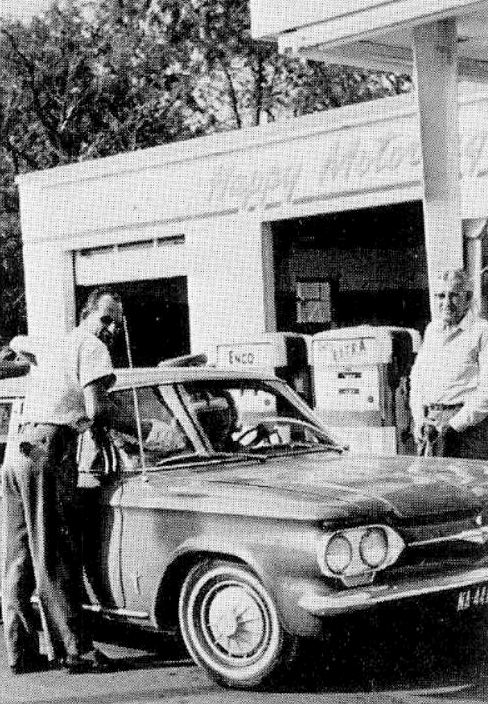
Lots of gas and service stations were nearby. Like Dick Prather Fina Service, at 3106 Blackburn, with the school peeking over the roof.

1960_prather-fina_ndhs_1960-yrbk
1960

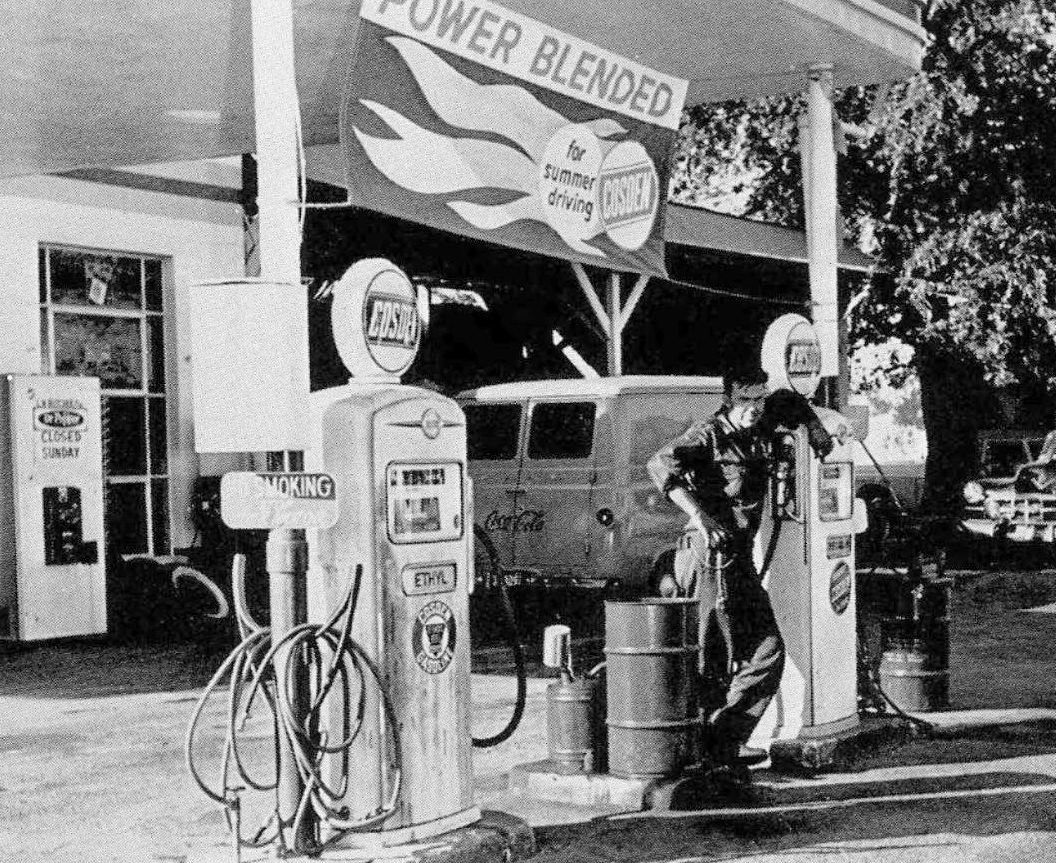
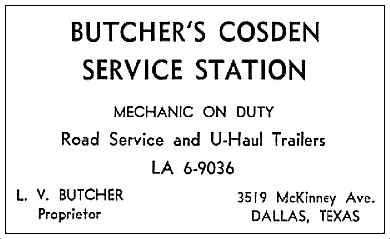
And L. V. Butcher’s Cosden Service Station, at 3519 McKinney. (I love the slouch of the mechanic.)

butchers-cosden-service-stn_ndhs_1963-yrbk-photo

butchers-cosden-service-stn_ndhs_1963-yrbk
1963

And the Ragan Service Station, at 4201 McKinney.

ragan-servie-stn_ndhs_1963-yrbk-photo

ragan-servie-stn_ndhs_1963-yrbk
1963

*

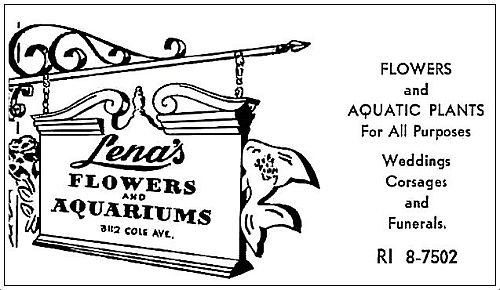
Plant and flower enthusiasts were invited to stop by Lena’s Flowers and Aquariums, at 3112 Cole. …For flowers. And aquariums.

lenas-flowers_ndhs_1963-yrbk
1963

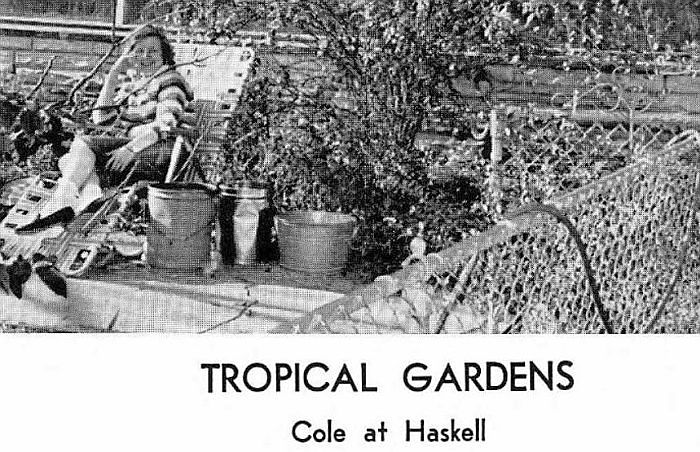
What Tropical Gardens at Cole and Haskell lacked in the way of aquariums, it all but made up for in tropicalness. (Might as well grab a coke at the drug store since you’re right there.)

tropical-gardens_ndhs_1963-yrbk
1963

*

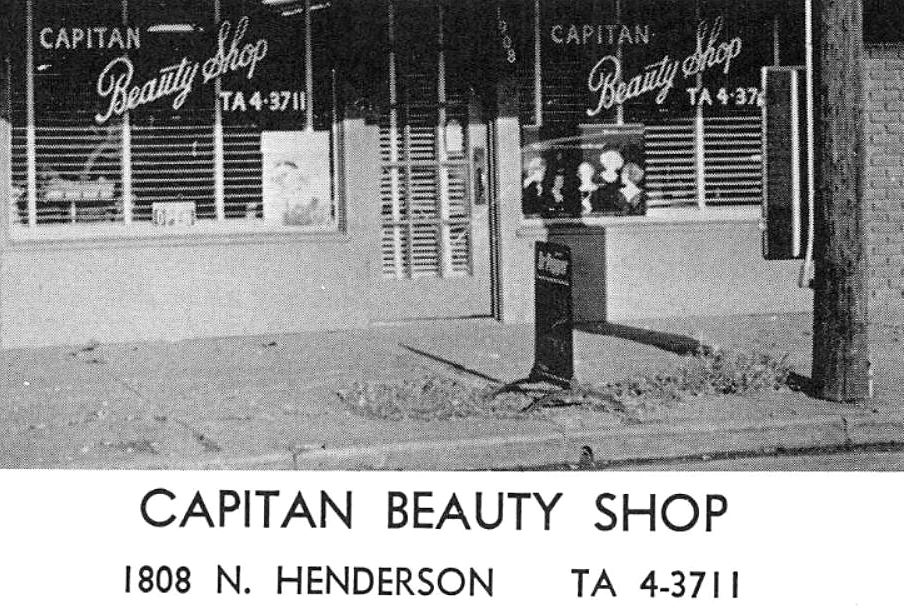
Those who needed their hair extra poufy for the spring formal might have found themselves at the Capitan Beauty Shop, 1808 N. Henderson (now that’s a photo!).

capitan-beauty-shop_ndhs_1963-yrbk1963

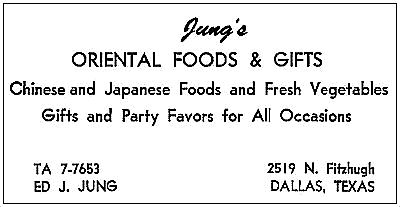
Seekers of Asian foods and/or “party favors for all occasions” could head over to Jung’s Oriental Foods & Gifts at 2519 N. Fitzhugh. (This is the most unexpected ad I came across.)

jungs_ndhs_1963-yrbk
1963

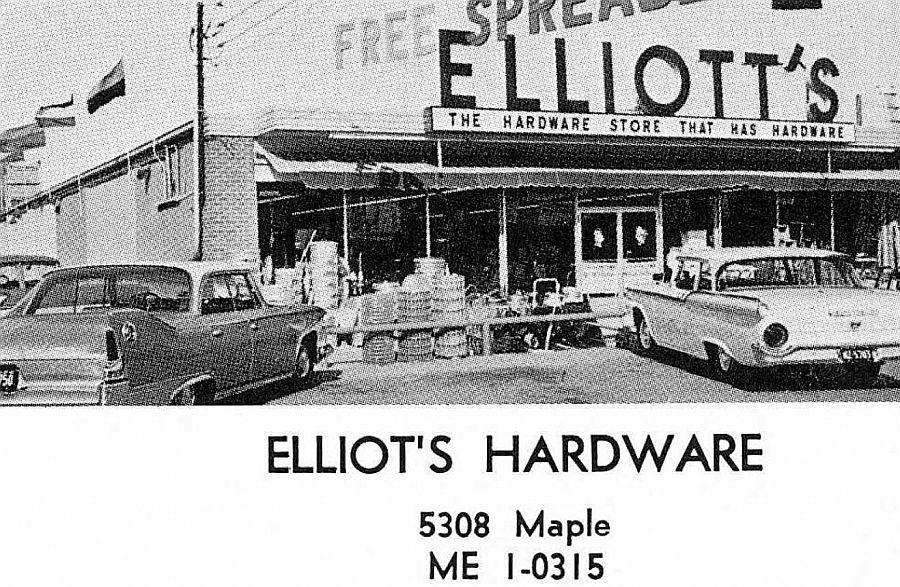
Maybe you just needed a hammer. Where else would you go but Elliott’s Hardware, at its original location at 5308 Maple.

elliotts-hardware_ndhs_1963-yrbk
1963

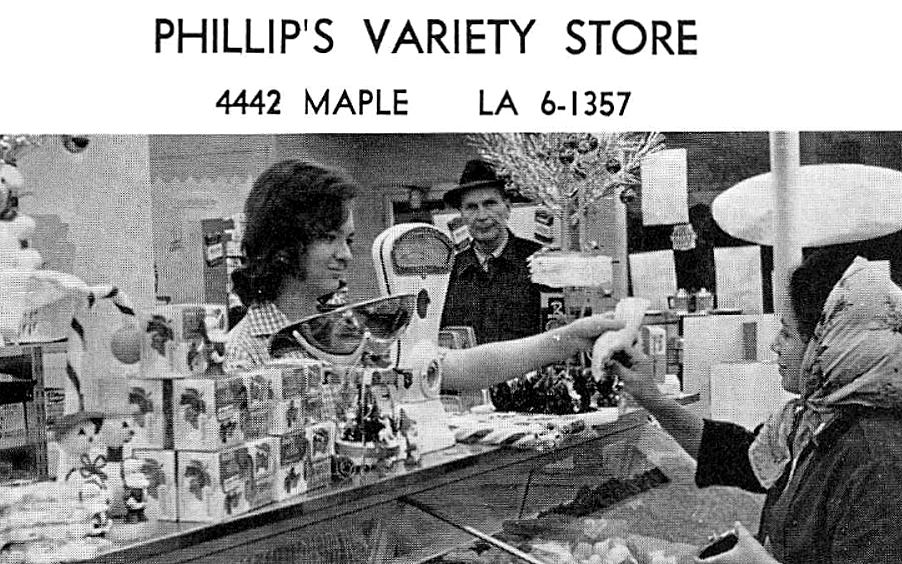
Phillips’ Variety Store at 4442 Maple was probably a good place to get scented talcum powder, a bouncy ball, a bag of peppermints, or a new charm for the charm bracelet.

phillips-variety-store_ndhs_1963-yrbk
1963

*

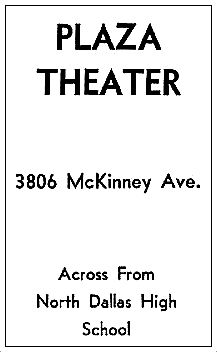
What do high school kids love more than bowling and going to the movies? Apparently there was a movie theater on McKinney Avenue that I’m only just learning about — The Plaza, at 3806 McKinney.

1962_plaza-theater
1962

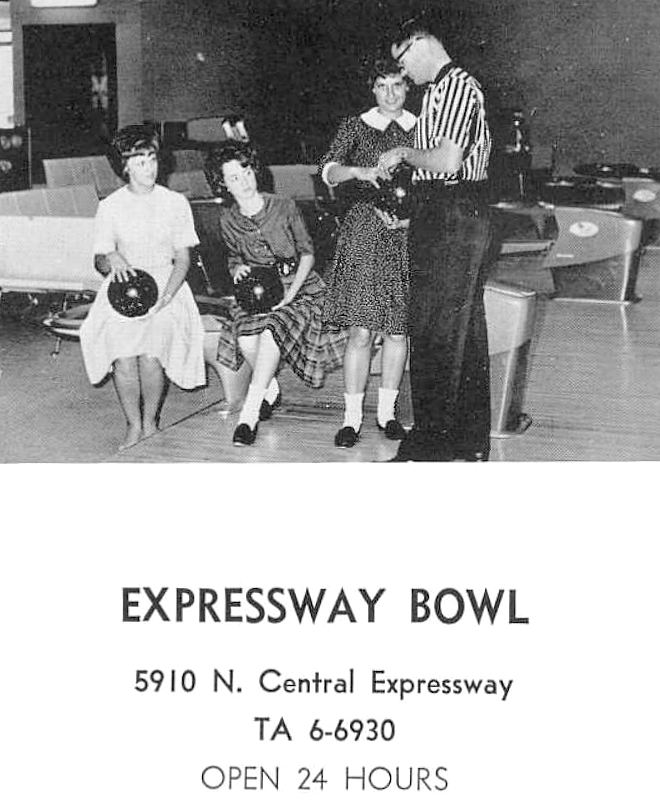
The 24-hour Expressway Bowl was at 5910 N. Central Expressway. (I’m not sure those girls have on the proper footwear.)

expressway-bowl_ndhs_1963-yrbk1963

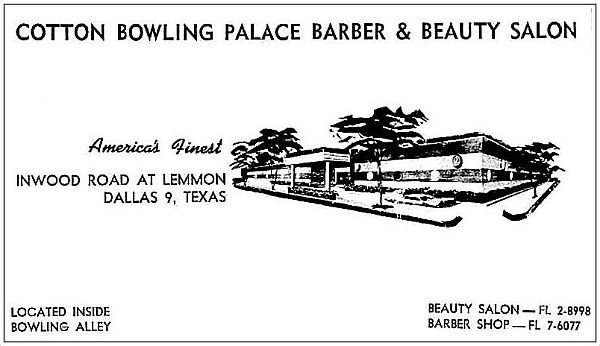
But the place you really wanted to go was the Cotton Bowling Palace on Inwood at Lemmon. When it opened in 1959 (complete with a heavily promoted personal appearance by Dallas gal Jayne Mansfield), it was breathlessly described as “a mixture of the Copacabana, the Taj Mahal and the  MGM Grand.” Imagine bowling in the Taj Mahal! Heck, you could even get a haircut between frames.

1962_cotton-bowling-palace1962

*

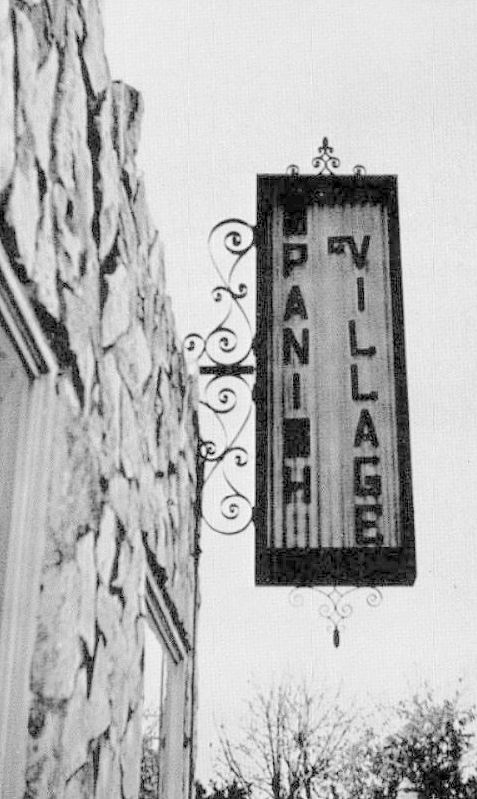
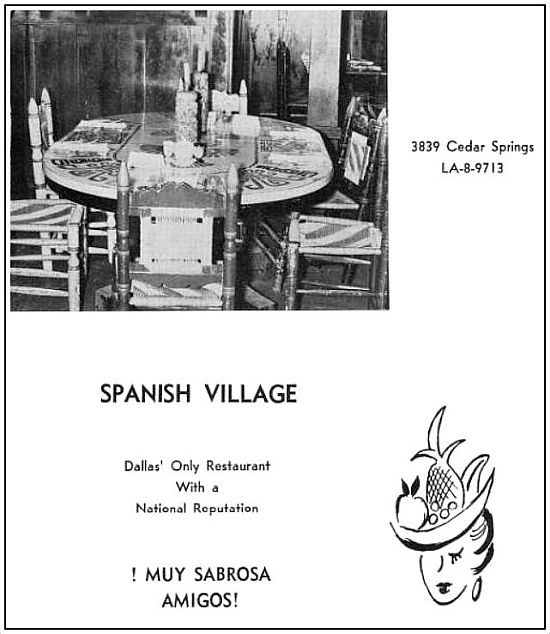
The biggest bang for the buck, nostalgia-wise, is almost always going to be places related to food. Here are a few restaurants and burger places which were probably frequent destinations for North Dallas students and their families. Like Spanish Village at 3839 Cedar Springs.

spanish-village_ndhs_1963-yrbk
1963

1960_spanish-village_ndhs_1960-yrbk
1960

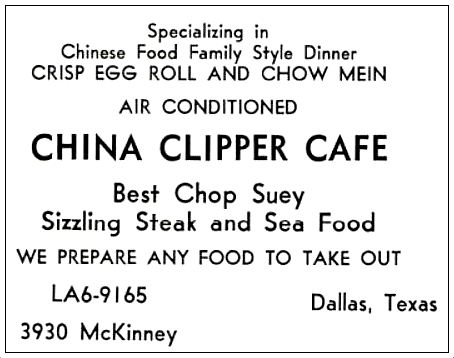
The fondly remembered China Clipper, at 3930 McKinney.

1960_china-clipper_ndhs_1960-yrbk1960

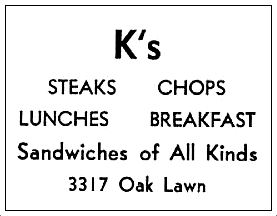
K’s — where you could get “sandwiches of all kinds” — at 3317 Oak Lawn.

1960_ks-sandwiches_ndhs_1960-yrbk
1960

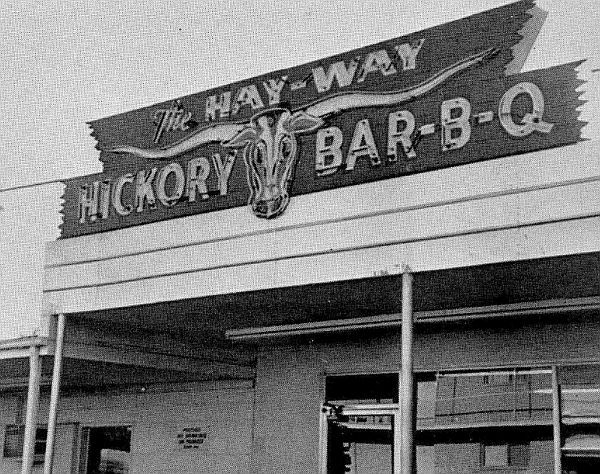
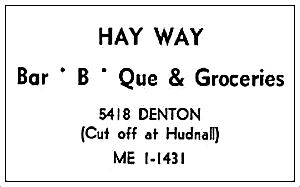
Hay-Way Bar-B-Q & Groceries, at 5418 Denton Drive.

hay-way-bar-b-q_ndhs_1963-yrbk-photo

hay-way-bar-b-q_ndhs_1963-yrbk
1963

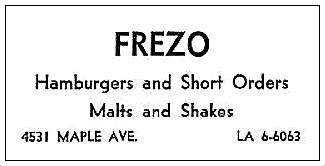
A burger and malt joint with the wonderful name of Frezo, at 4531 Maple. (I WOULD GO TO SOMEPLACE CALLED “FREZO.”)

1962_frezo_ndhs_1962-yrbk
1962

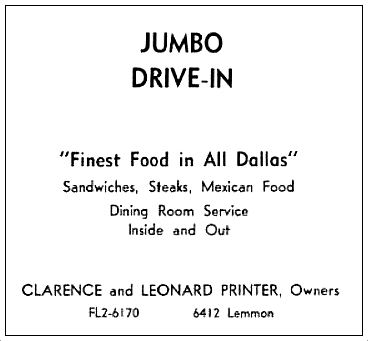
The famed elephant-on-top Jumbo Drive-In, owned by Clarence and Leonard Printer. The location in this ad was at 6412 Lemmon. See what the Haskell location looked like, here.

1960_jumbo-drive-in_ndhs_1960-yrbk
1960

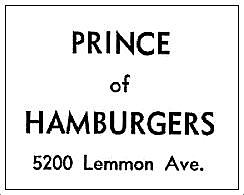
The legendary Prince of Hamburgers at 5200 Lemmon.

prince-of-hamburgers_ndhs_1960-yrbk
1960

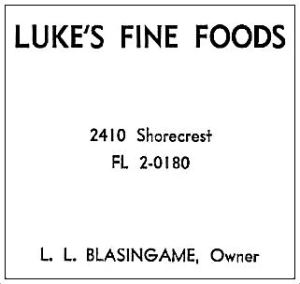
The not-quite-as-legendary Luke’s Fine Foods at 2410 Shorecrest, owned by L. L. Blasingame.

lukes-fine-foods_ndhs_1963-yrbk

lukes-fine-foods_ndhs_1963-yrbk-ad
1963

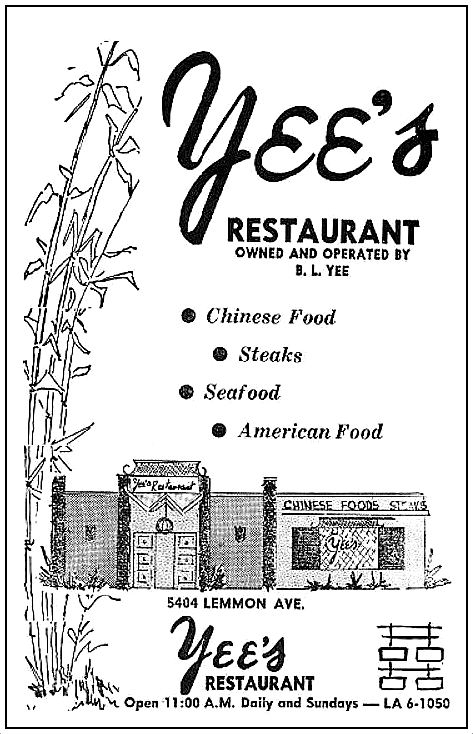
Yee’s Restaurant at 5404 Lemmon, owned by B. L. Yee.

yees-chinese_ndhs_1963-yrbk
1963

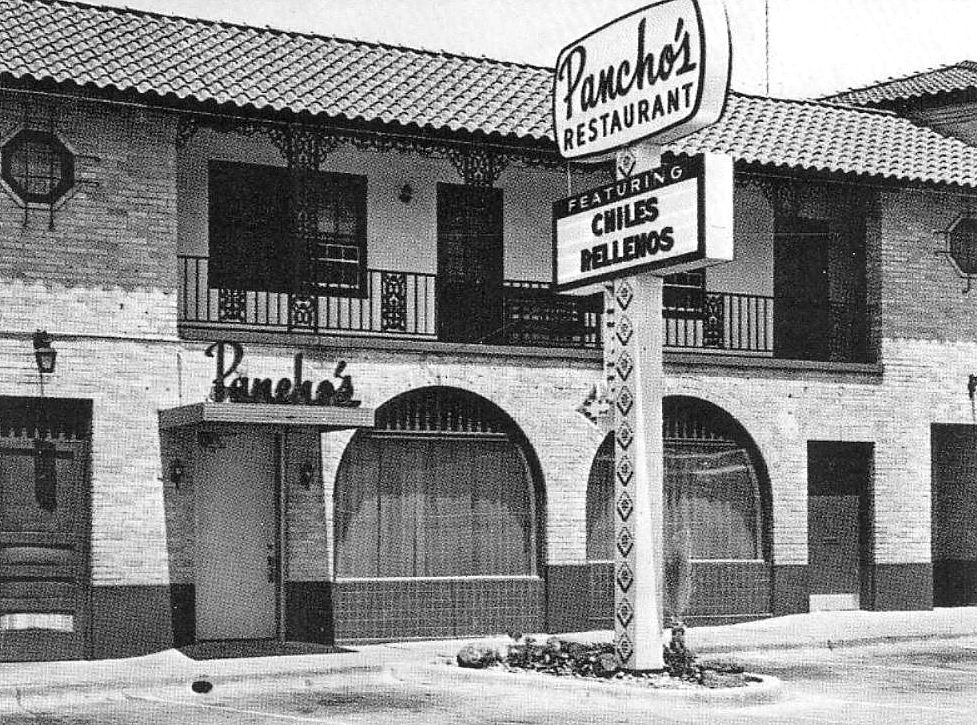
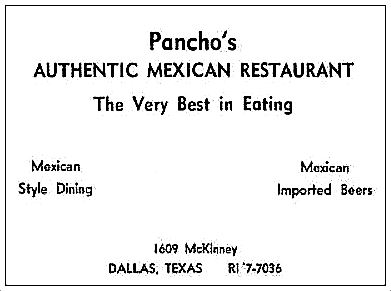
And, of course, Pancho’s — this location at 1609 McKinney. Almost all of the buildings that housed the businesses listed above are long gone, but this building is still hanging in there. It’s next to the downtown El Fenix and is now the home of Meso Maya. I have to admit, I got a happy little jolt to see this building today, still looking pretty much the same as it did in this 1963 ad.

panchos_ndhs_1963-yrbk-photo

panchos_ndhs_1963-yrbk
1963

***

Sources & Notes

All ads from the 1960, 1962, and 1963 editions of the North Dallas High School yearbook, The Viking.

See photos of students and high school activities from these same yearbooks in the post “North Dallas High School, The Pre-Beatles Era,” here.

*

Copyright © 2016 Paula Bosse. All Rights Reserved.
“Delusions of Affability” — Marijuana in 1930s Dallas

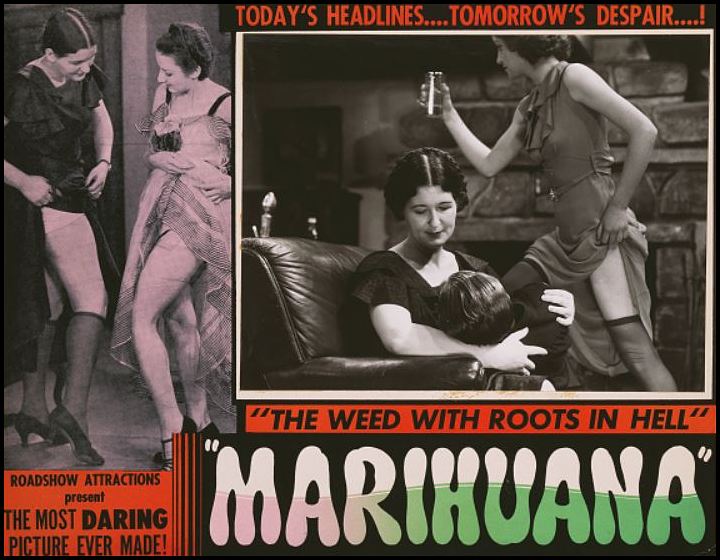
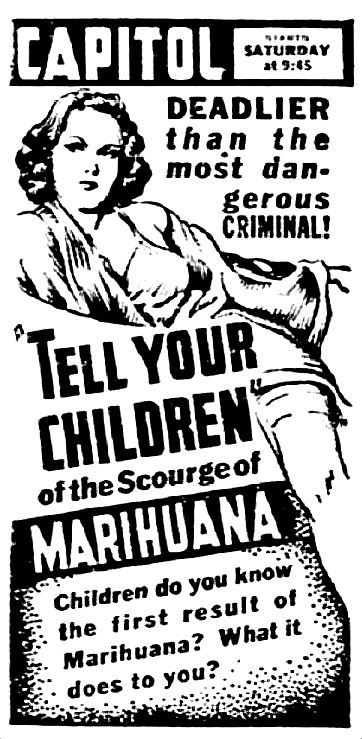
marihuana-film_poster
“The weed with roots in hell…”

by Paula Bosse

Today is April 20, also known as the cannabis-friendly “4/20 Day.” So why not take a look at the early days of marijuana awareness in Big D?

The “marijuana problem” in Dallas didn’t really start to be reported regularly in the pages of The Dallas Morning News until the 1930s, but there were a few stories that showed up in the early 1920s, such as this one about a raid on an opium-den-style house in Little Mexico in 1921 (click for larger image).

marijuana_dmn_041321DMN, April 13, 1921

Heading into the 1930s, the legality of the possessing and selling marijuana was fairly vague. After reading a bit about what was happening in Dallas in regard to “Mexican cigarettes,” I’m still not sure when the possession and selling of marijuana became illegal. The federal, state, and local laws all seemed to be different, and all were constantly in flux. There might even have been conflicting laws on the city and county books. Like I said, confusing. Nevertheless, here are a couple of interesting tidbits from the opening months of 1931 concerning the first charge in Dallas County against a person selling marijuana and the first conviction in Dallas County for a person selling marijuana. (According to the Inflation Calculator, today’s equivalent to the $25-to-$500 fine of 1931 would be, approximately, a $395-to-$7,900 fine.)

A Mexican was placed in the county jail Wednesday after a charge of selling marijuana had been filed against him in County Criminal Court, the first time in history of that body such a charge has been brought against a defendant. […] The Mexican was still ‘smoked up’ when arrested. (DMN, Jan. 29, 1931)
The penalty for selling “Mexican dope weed” was a fine of $25-$500 or a jail sentence of one month to one year.

The first conviction on record in County Criminal Court for selling marijuana, Mexican ‘loco weed,’ was given Thursday when Judge Noland G. Williams sent Manuel Garino to the county jail for thirty days. (DMN, Feb. 6, 1931)

Still, marijuana was considered only a minor annoyance locally — the Asst. D.A. even went so far as to say that there was “little use of the drug in Dallas.”

Actually, throughout the ’30s, a lot of policemen didn’t even know what marijuana plants looked like — one wonders how much marijuana-related activity was going on all around them in plain view? In these early days, when the police did stumble onto large quantities of “loco weed,” it was sometimes merely by accident while investigating something else.

And then, suddenly — around the mid ’30s — marijuana was everywhere. Just in time for the Texas Centennial, when thousands and thousands of potential new customers would be flooding into the city! Enterprising individuals were growing it all over the place — in their yards, in their fields with other crops, and even on a little island called Bois d’Arc Island in the middle of the Trinity River bottoms, a few miles south of Dallas (where 3,000 pounds was seized in July, 1938).

Even though the purchasing, the selling, the use, and the growing of marijuana was going on all over the city — in white, black, and Hispanic neighborhoods — the main areas of enforcement were, unsurprisingly, in Little Mexico and Deep Ellum, areas populated by minority citizens.

Police Sergt. O. P. Wright stopped a 22-year-old Negro languidly puffing a cigarette as he walked in the 400 block of North Central Tuesday.

“What kind of a cigarette is that, boy” inquired the Sergeant.

“Rough cut,” replied the languid one. (“Policeman Sniffs Air, Catches Marijuana Smoker,” DMN, June 22, 1938)

The federal government was attempting to deal with the marijuana problem — by taxing it so highly that it would discourage those participating in the loco weed trade: $100 tax on every ounce! At a time when you could buy a joint for anywhere from a dime to a quarter. Talk about your “sin tax”!

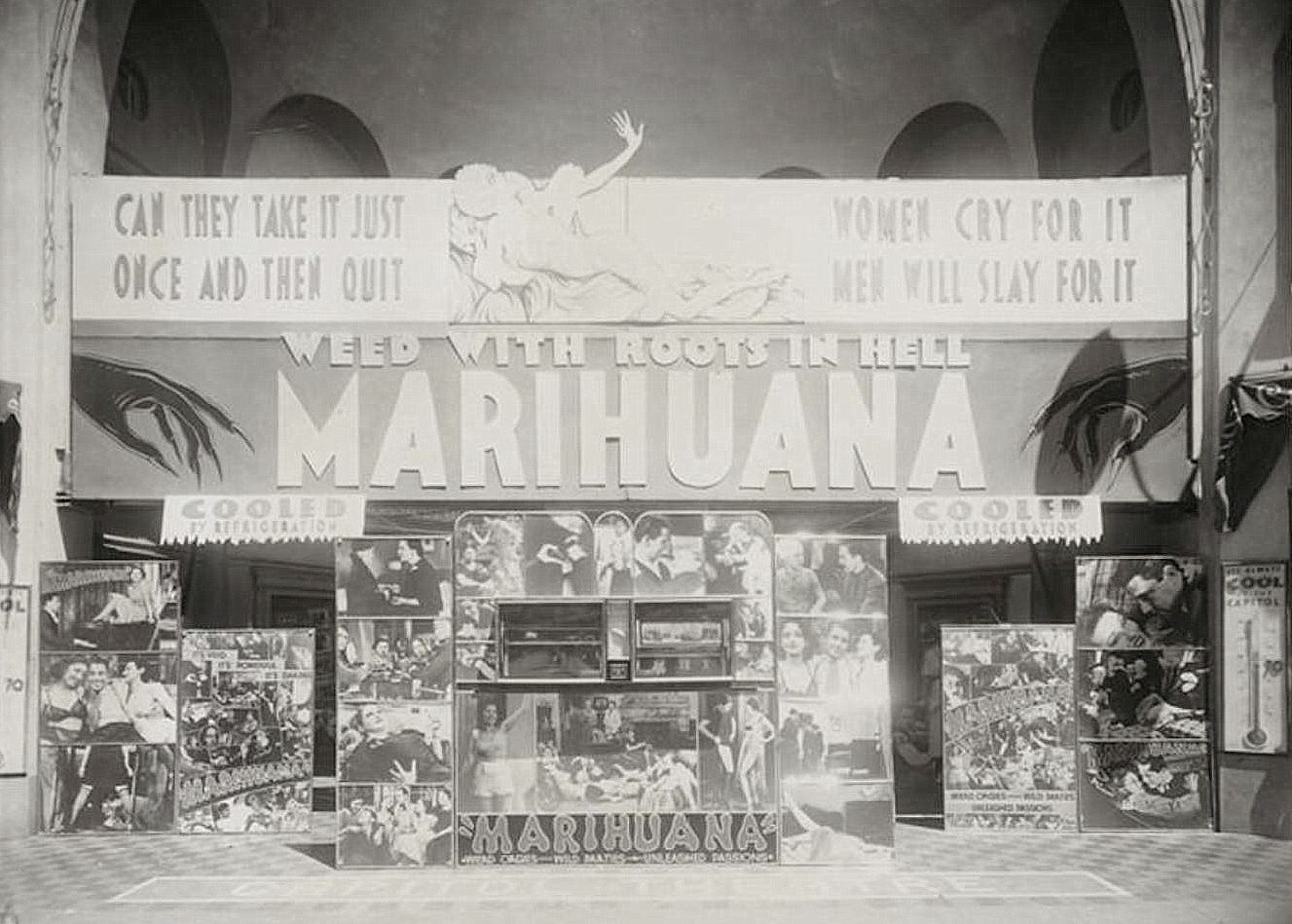
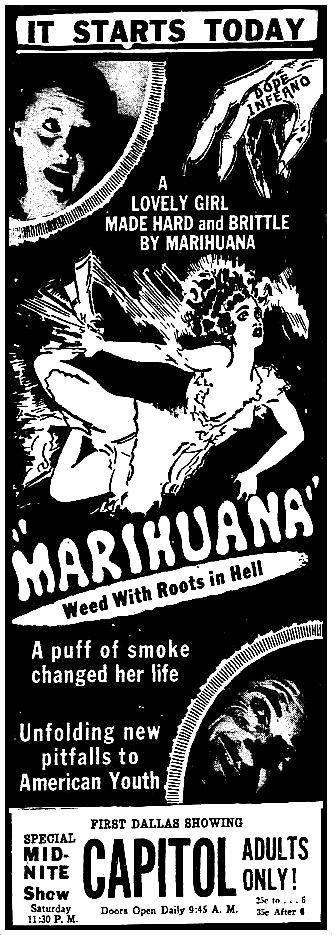
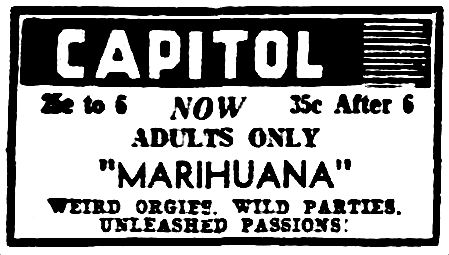
Marijuana/marihuana was generally demonized as a highly addictive drug which caused psychosis and led, inevitably, to all sorts of heinous acts and/or lewd behavior. …Or death. A lot of helpful, cautionary exploitation movies began to appear on Dallas screens, such as Marihuana from 1936 (which, incidentally, had an Oak Cliff child actor — Gloria Brown — in the cast). Below, the pomp and bug-eyed bally-hoo adorning the entrance to the lovely Capitol Theater, beckoning the Elm Street passerby to check out the film. …In order to be well-informed.

marihuana_capitol_1936_cook-collection_degolyer-library_SMU
George W. Cook Collection, DeGolyer Library, SMU

marihuana-film_dmn_080136
Aug., 1936

marihuana-film_dmn_080536
Aug. 1936
marihuana-film_dmn_061639June, 1939 (back by popular demand!)

(The full Marihuana film can be viewed free here, although it’s surprisingly dull.)

Even though most marijuana warnings were dire and filled with exclamation marks, I kind of like this more subdued one: “Smoking of the weed gives the subject delusions of riches, success and affability” (DMN, Dec. 21, 1936).

And there you have it, a little slice of unexpected Dallas historical trivia.

***

Sources & Notes

A few pertinent articles from the archives of The Dallas Morning News:

  • “Marijuana Smallest Worry of Dallas in Narcotic Violations” (DMN, March 6, 1931)
  • “Uncover Cache of Loco Weed, Lock Up Seven; Police Led to Mexican Dope Trailing Bogus Coin Milling” (DMN, March 30, 1932) — great story about cops who stumbled across marijuana when tracking down counterfeit half-dollar coins (counterfeit 50-cent pieces?!). My favorite part of this story is at the very end: “One of the Mexicans carried twenty-seven of the coins in one of his shoes.” Wow.
  • “Stalk of Marijuana Seven Feet Tall Is Found in Oak Cliff” (DMN, Aug. 7, 1934)
  • “3,000 Pounds of Marijuana Seized By Raiders on River Bottom Farm; Haul Valued at $25,000” (DMN, July 30, 1938)
  • “Marijuana Den With Open Air Resort Raided; 6 Arrested; $100 Worth of Cigarettes Found; Plants in Back Yard Destroyed by Officers” (DMN, June 25, 1936) — “This is the first open-air marijuana den I have ever encountered in all my years of service.”
  • “Policeman Sniffs Air, Catches Marijuana Smoker, Three Others” (DMN, June 22, 1938)

Related Flashback Dallas post: “3800 Main: Fritos Central — 1947,” here

*

Copyright © 2016 Paula Bosse. All Rights Reserved.