Flashback : Dallas

A Miscellany: History, Ads, Pop Culture

Category: African American Dallas

Deep Ellum: Life Along Central Track
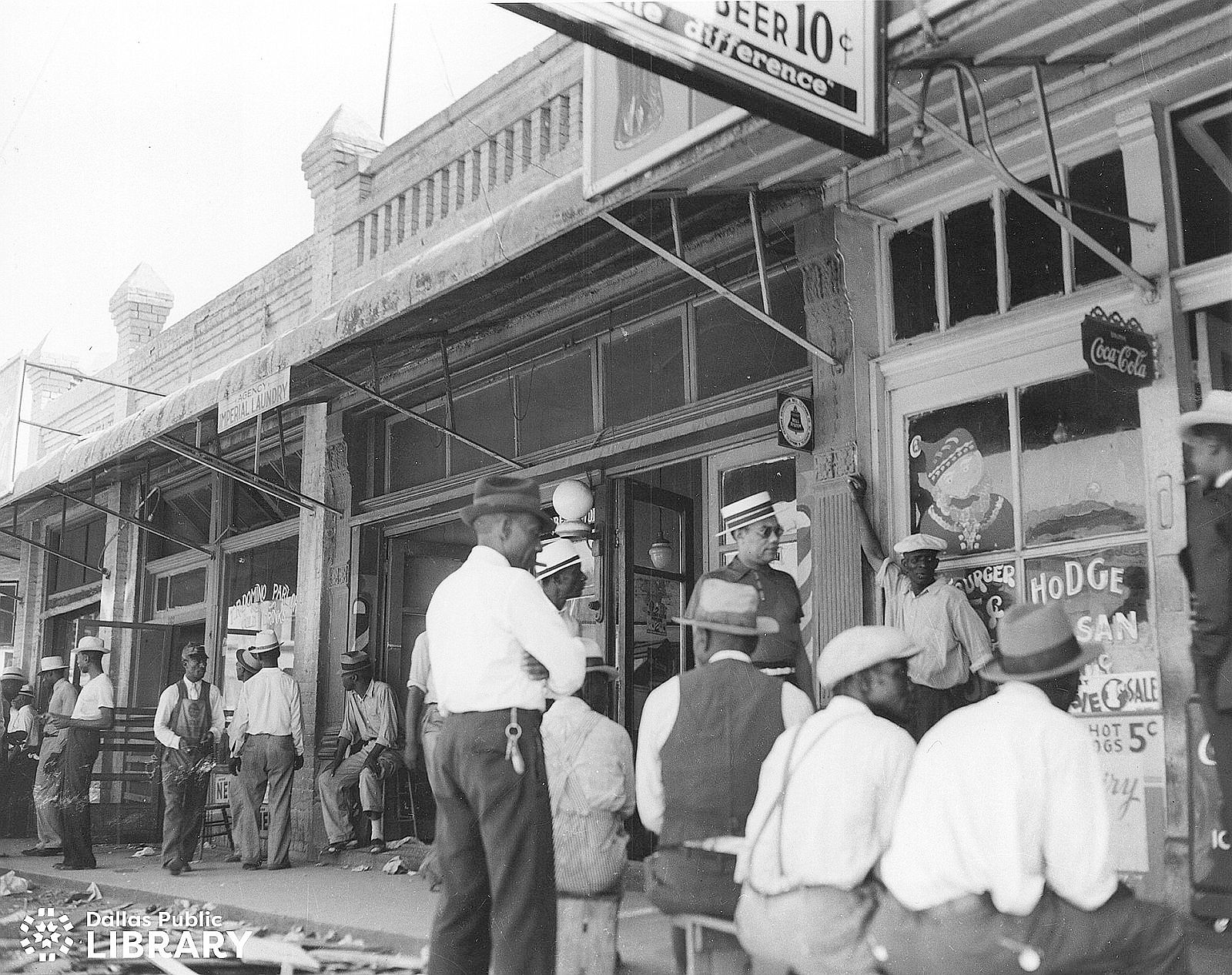
The heart of Deep Ellum… (Dallas Public Library photo)

by Paula Bosse

One of my happiest Flashback Dallas research deep-dives resulted in the post “The Gypsy Tea Room, Central Avenue, and The Darensbourg Brothers.” It was prompted by a photo I had seen for years but had never really known what it showed. I loved writing that, and I’m so happy that it is a perennially popular post. Here is that original photo, below, which shows people walking along the row of barber shops, cafes, pool rooms, domino parlors, taverns, and other businesses:
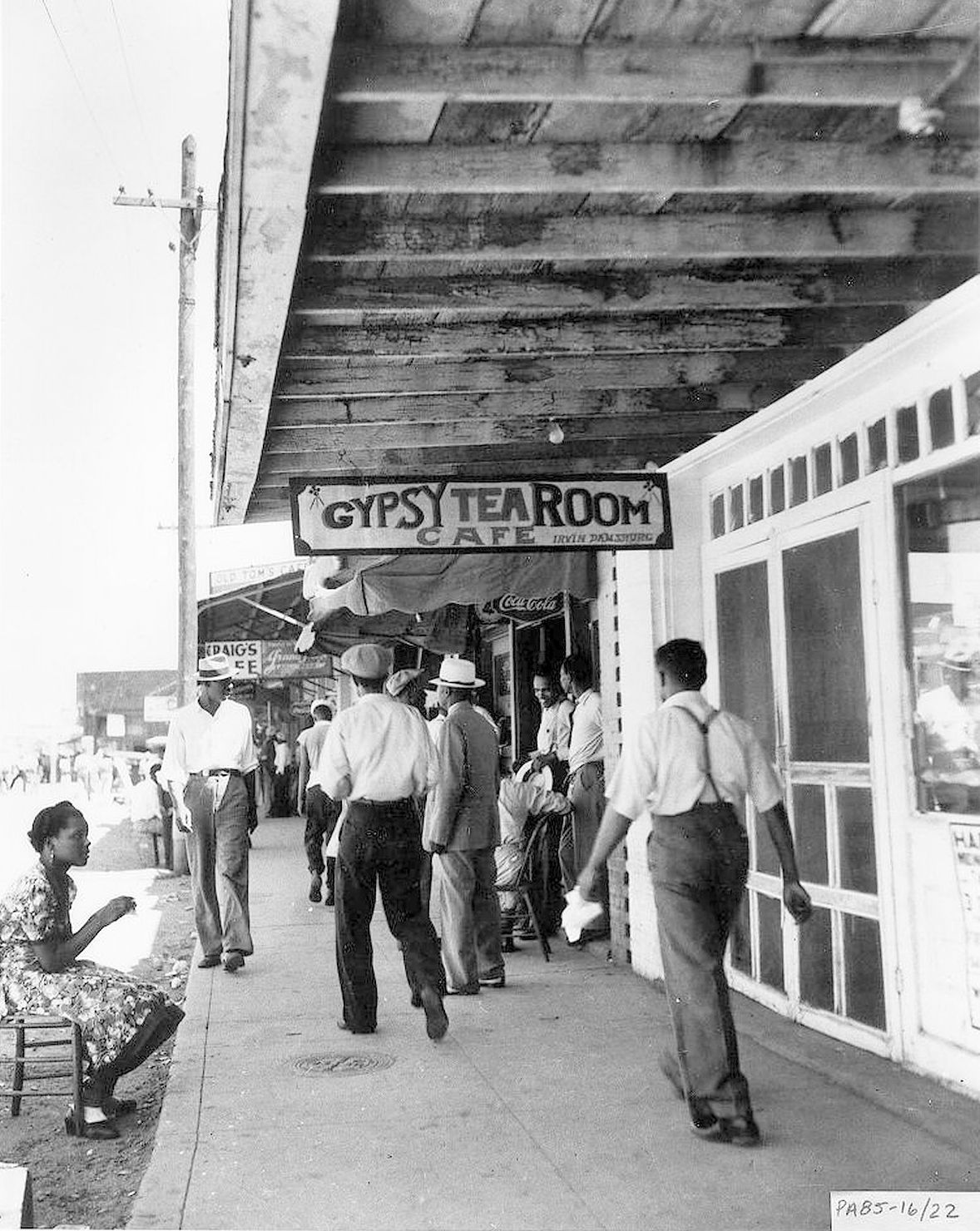
gypsy-tea-room_dallas-public-libraryDallas Public Library photo

The view is to the south — Elm Street is in the distance, where that building juts out to the left. The street about the same distance away to the north (behind the photographer) was Pacific. Someone walking out of the Gypsy Tea Room would have been facing the old train depot. Between the depot and the block of businesses were railroad tracks (not in frequent use in the 1930s, the time of these photos) — the unpaved road that ran alongside the tracks was Central Avenue (when North Central Expressway was built years later, it closely followed the path of these railroad tracks). This general area was considered the heart of Deep Ellum and was filled with Black-owned retail establishments and was a gathering place for social activities and entertainment.

A while back, I came across two other photos, which I recognized as being “companion” photos to the “Gypsy Tea Room” one — the one at the very top of this post, and the one below.
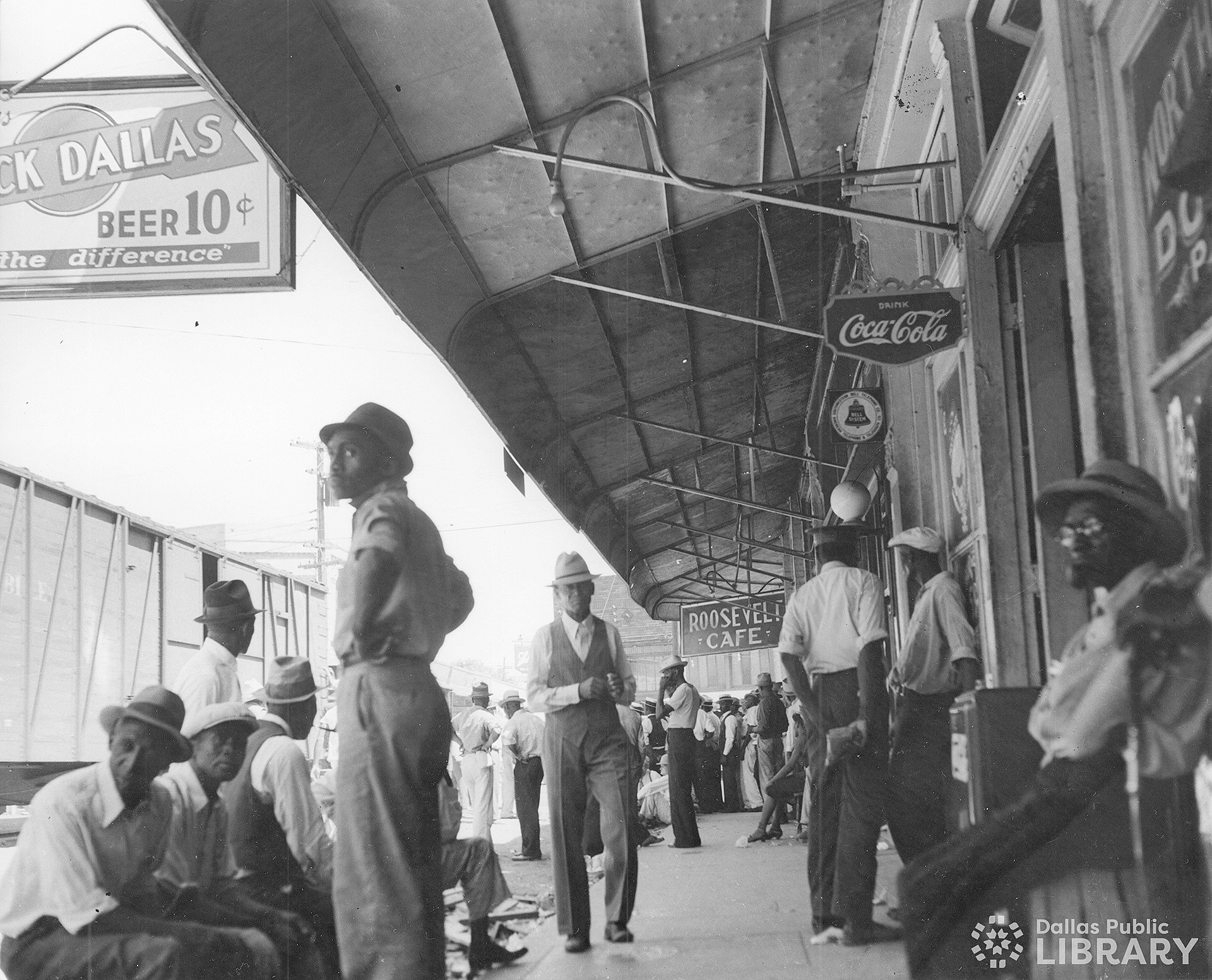
Dallas Public Library photo

The photo immediately above shows the Roosevelt Cafe, which was at 201 N. Central, and the North Pole Domino Parlor (a partial window sign is seen at the right), at 207 Central. A train is passing. This photo and the photo at the very top both show partial signs for Black Dallas beer. (All images are larger when clicked.)

For a better idea of where these photos were taken, see the map below (it shows a detail from a 1921 map — about 15 years before these photos were taken). (See the larger, full Sanborn map here.)
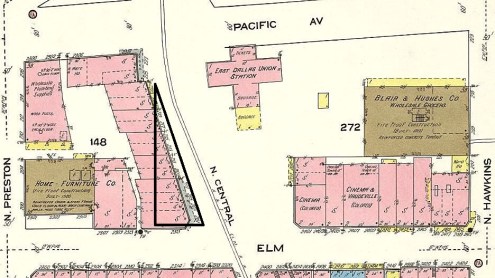
central-ave_1921-sanborn_sheet-17_det1921 Sanborn map (det) showing where photos were taken

*

These are just great, great photos. There aren’t enough photographs like this which capture everyday life in Dallas’ minority communities. Deep Ellum was a thriving Black area at the time. Read a contemporary description of the good things and the bad things going on in this vibrant neighborhood in a (mostly uncondescending) chapter in the WPA Guide to Dallas, “Deep Ellum: Harlem in Miniature.”

**

What about “Black Dallas Beer”? I haven’t found a lot about it, but it apparently began as a Dallas-brewed beer in the 1930s but was later brewed elsewhere. (A mention of its Schepps Beer affiliation is here.)
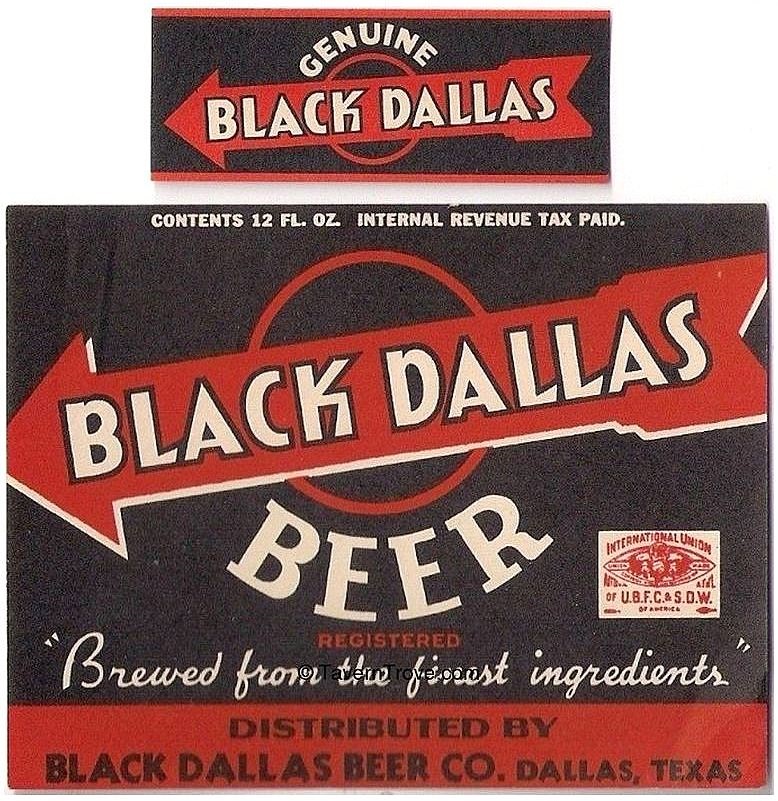
black-dallas-beer_taverntrove_label1937, via Taverntrove.com

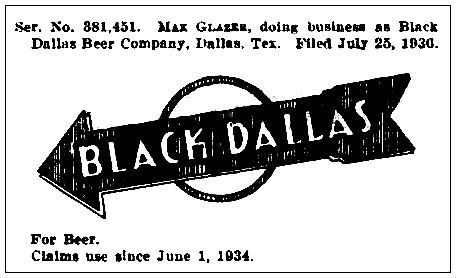
black-dallas_beer_u-s-patent-office_090836U.S. Patent Office bulletin, Sept. 8, 1936

“Don’t be a sissy! Drink Black Dallas Beer — Made Without Sugar.”
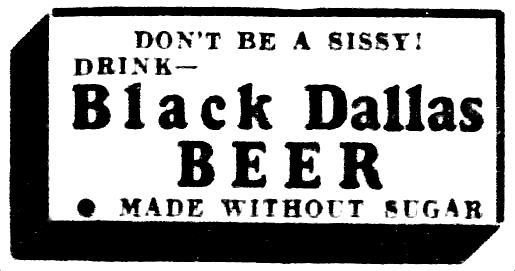
black-dallas_beer_ad_waco-times-herald_052237Waco Times-Herald, May 22, 1937

A “Famous Black Dallas Malt Liquor” popped up a few decades later — at that point, there was no connection to Dallas, except for the name and the fantastic label boasting the Dallas skyline. “Smooth as Evening Dusk.”
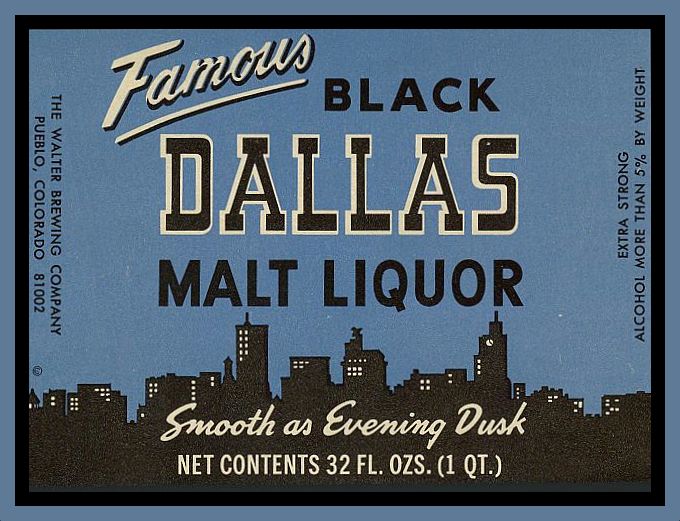
fbd_beer_black-dallas-malt-liquor_ebayeBay

***

Sources & Notes

The top Dallas Public Library photo — “[African American men walking and sitting along North Central Avenue in downtown Dallas in the early 1930’s]” — is from the Saxon Collection, Texas/Dallas History & Archives Division of the Dallas Public Library; its call number is PA85-16/4.

The second photo — “Gypsy Tea Room Cafe located in Deep Ellum” — is from the WPA Dallas Guide & History Collection of the Dallas Public Library — its call number is PA85-16/22.

The third photo — “[African American men seated on benches and standing outside of the Roosevelt Cafe in downtown Dallas in the 1930’s]” — is from the Saxon Collection, Texas/Dallas History & Archives Division of the Dallas Public Library; its call number is PA85-16/5.

Much more info on this Deep Ellum block can be found in the previously linked post from 2015, “The Gypsy Tea Room, Central Avenue, and The Darensbourg Brothers.”

See my other Flashback Dallas posts on Deep Ellum here.

*

Copyright © 2024 Paula Bosse. All Rights Reserved.
Gritty Dallas — 1969

honest-joes-pawn-shop_deep-ellum_perkins-school-recruitment-film_1969_jones-film_SMU_5.13Honest Joe’s: sign overload in Deep Ellum

by Paula Bosse

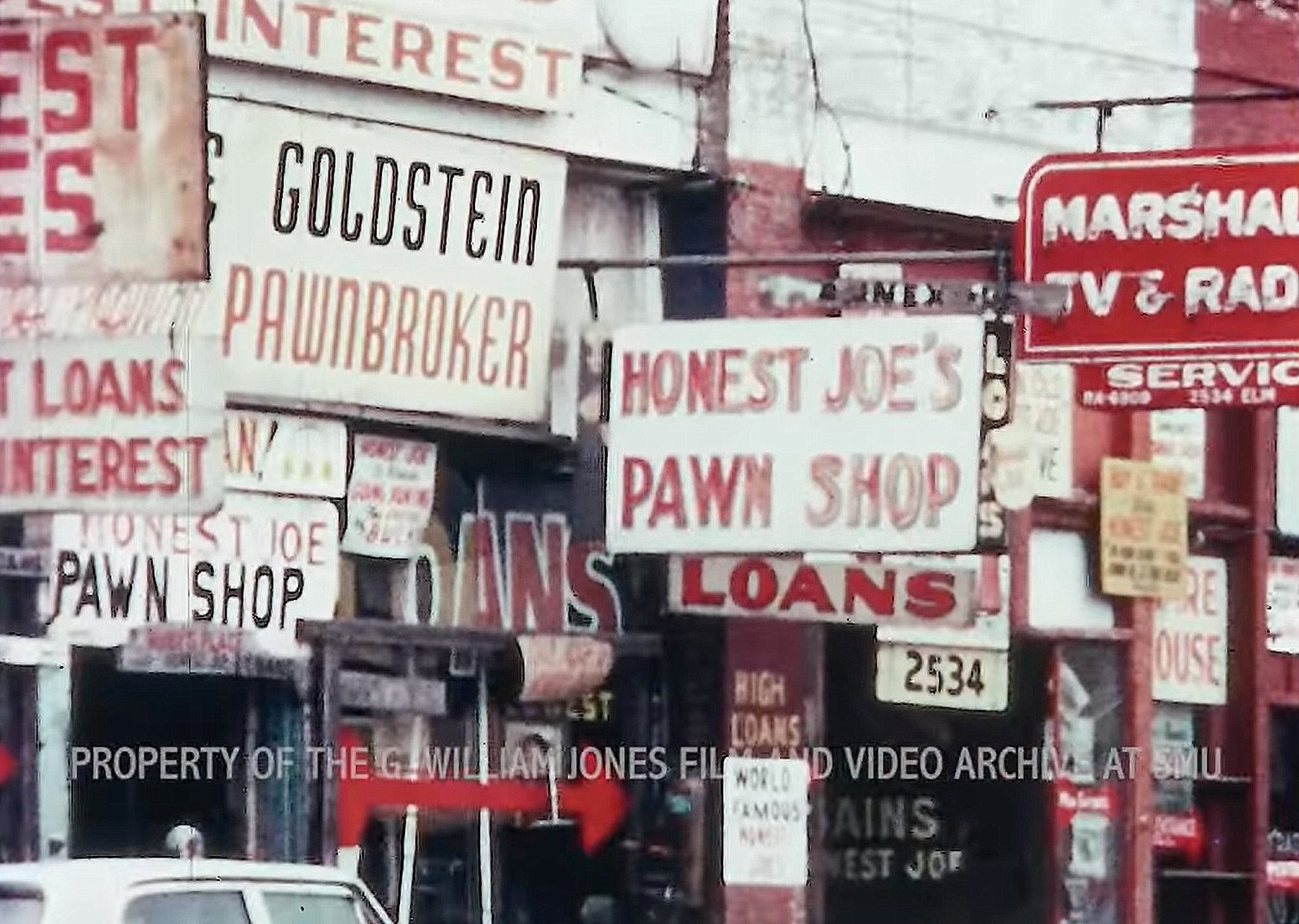
Here are a few things I found when I clicked on something I normally wouldn’t have, but I’m glad I did. These are screenshots from a 20-minute film made in 1969 by SMU’s Perkins School of Theology. (I certainly hope SMU has the original somewhere — or at least a crisper copy — because the quality of this 54-year-old film is, as you can see in these screenshots, pretty low-resolution.) The title of this offering on YouTube is the supremely un-sexy “Perkins School of Theology (SMU) Orientation and Recruiting Film — 1969.” Which is all well and good, but, let’s face it, how many of us would click on that? I wouldn’t! But it was the thumbnail that drew me in — a shot of the Colony Club, the famous burlesque club on Commerce Street. What did that have to do with theology school? I clicked and started fast-forwarding until I found the Colony Club — and it paid off, because I found a bunch of cool shots of places that, for the most part, don’t exist anymore.

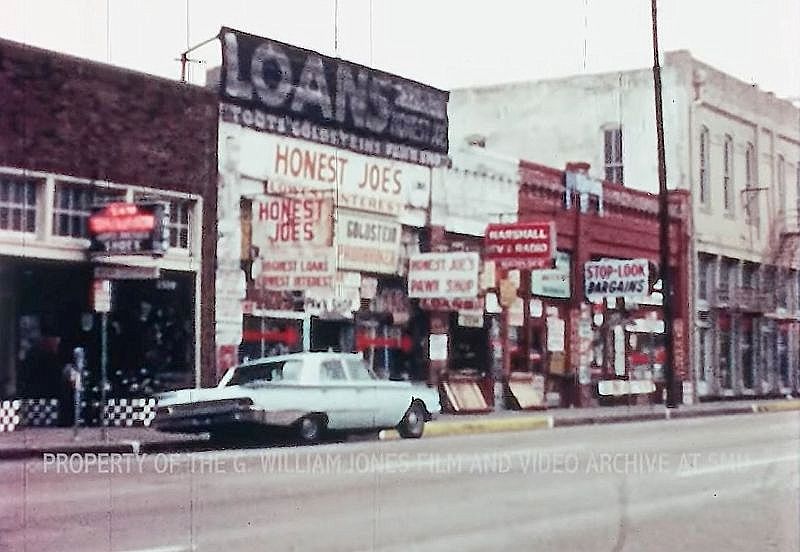
The image above shows one of dozens of pawn shops in Deep Ellum, Honest Joe’s Pawn Shop, owned by Joe Goldstein. (Various Goldstein family members ran a dizzying number of pawn shops in Deep Ellum. I mean a LOT.) In 1969, Honest Joe’s and its adjacent office and warehouse spread from 2516 Elm to 2526 Elm — most of these buildings still stand (see them today, here), but others were torn down to make way for the highway-palooza. (Two more photos of Honest Joe’s are at the end of this post.)

*

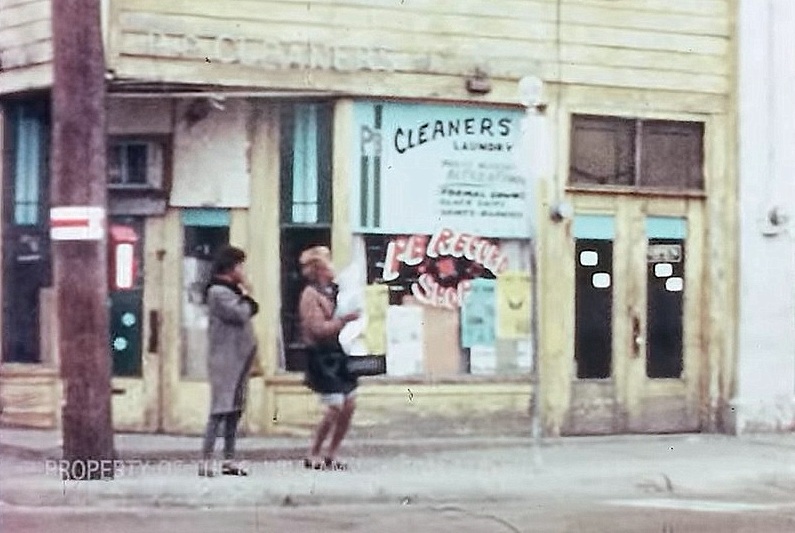
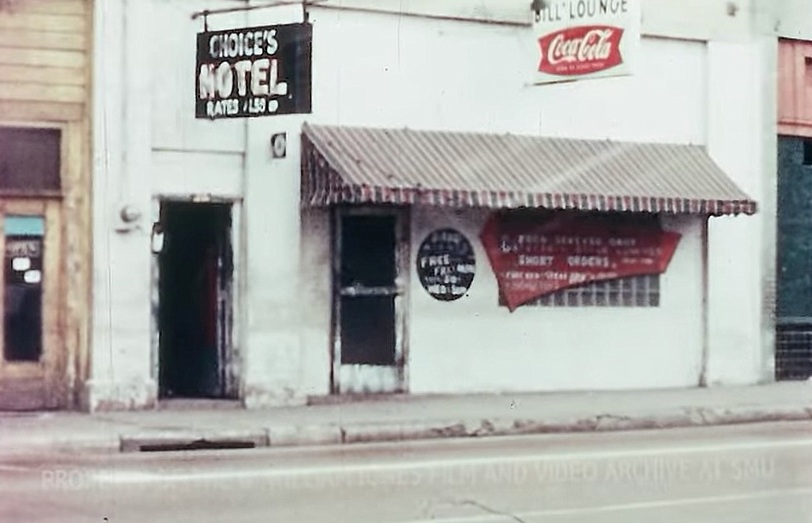
The two shots below were in the same block — keep panning right from the P B Cleaners (2700 S. Ervay, at Grand Avenue — now Al Lipscomb Way), and you’ll see Choice’s Hotel and Bill’s Lounge next door. What’s there now? Nothing.

p-b-cleaners_choices-hotel_perkins-school-recruitment-film_1969_jones-film_SMU_8.38

bills-lounge_choices-hotel_perkins-school-recruitment-film_1969_jones-film_SMU_8.33

*

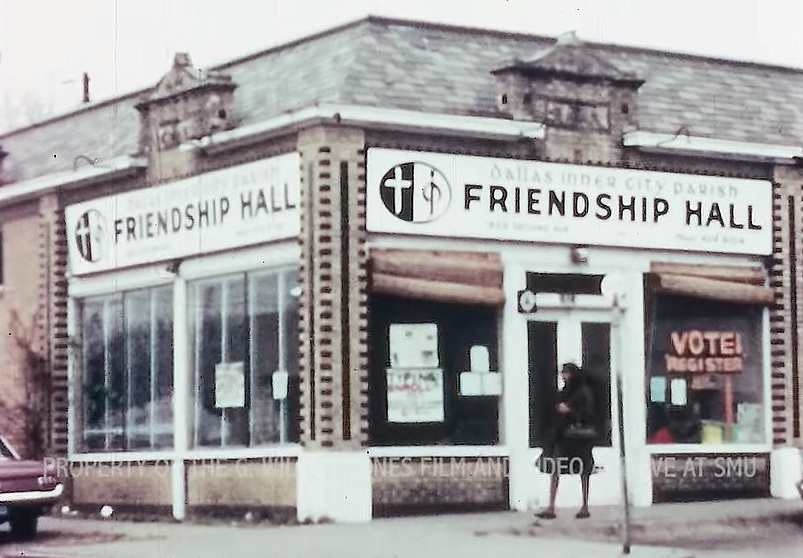
This is Friendship Hall (Dallas Inner City Parish), at 1823 Second Avenue. It was one of many businesses and homes condemned by the city and torn down to expand Fair Park and build new parking lots. See where this used to be, here.

friendshop-hall_perkins-school-recruitment-film_1969_jones-film_SMU_6.25

*

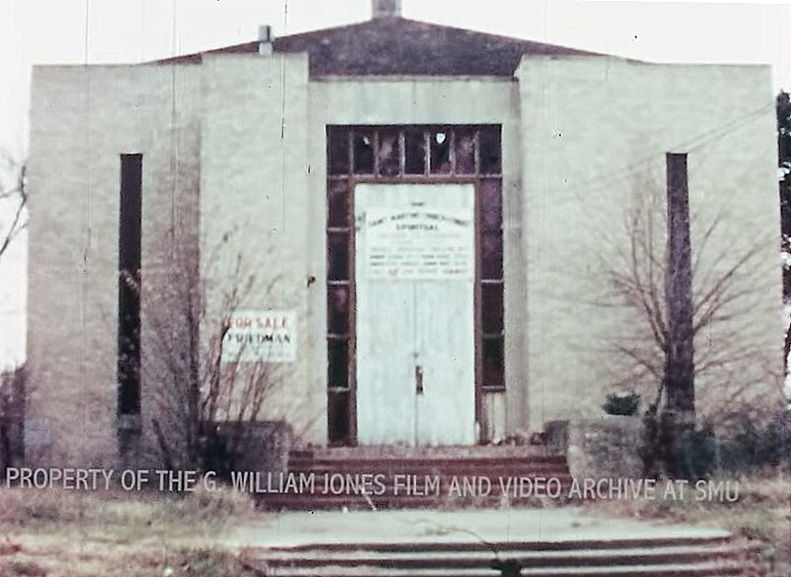
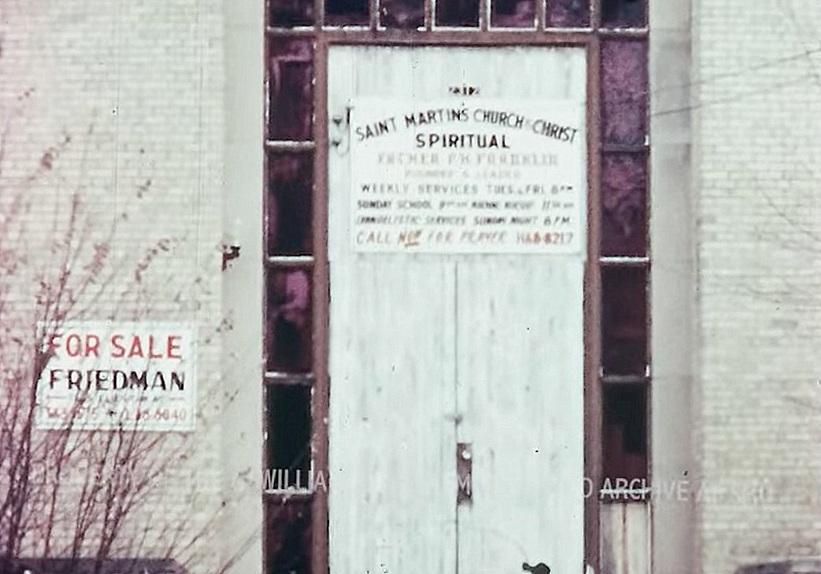
St. Martin’s Spiritual Church of Christ, 2828 Carpenter. This is such an unusual-looking building. It’s gone, but there’s a new church in its place, here.

st-martins-church-of-christ-spiritual_perkins-school-recruitment-film_1969_jones-film_SMU_8.03

st-martins-church-of-christ-spiritual_perkins-school-recruitment-film_1969_jones-film_SMU_8.08

*

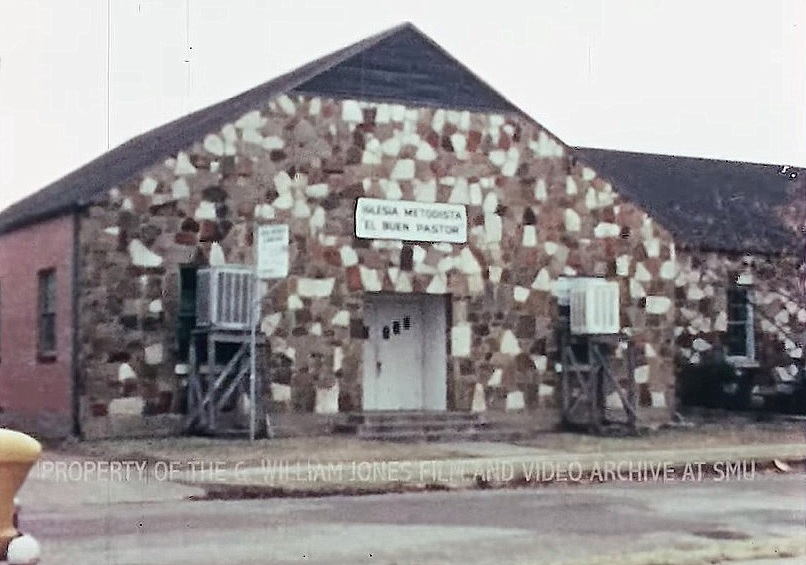
Iglesia Metodista, 1800 Park Avenue (at Beaumont), not too far from Old City Park. Wow, this area (a couple of blocks’ worth, anyway) has been developed way beyond what I would have guessed. The church once stood, I think, in this grassy area.

iglesia-methodista_perkins-school-recruitment-film_1969_jones-film_SMU_5.54

*

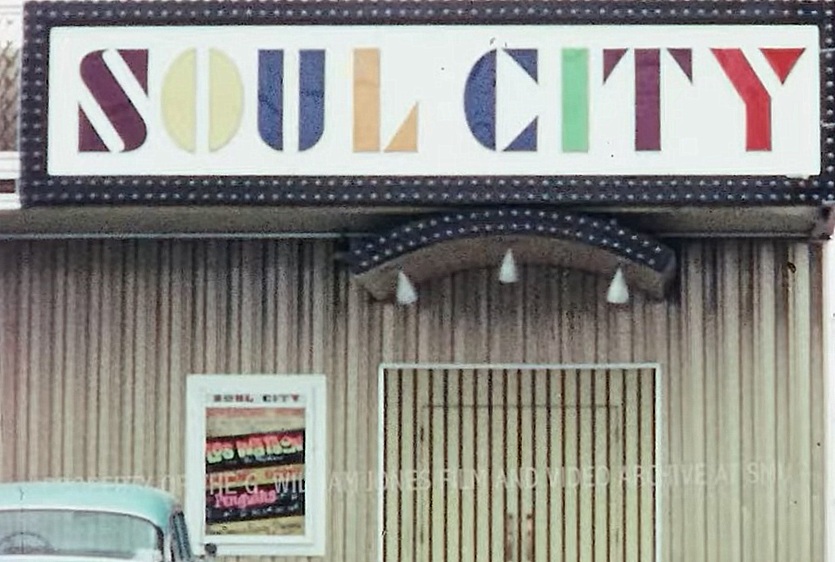
Soul City, 4714 Greenville Avenue, near University Blvd. (you might know it from its recent incarnation as a Vespa dealership). This wasn’t in a “gritty” neighborhood, but it was close to the filmmakers’ home, the SMU campus, and, surely, there were reprobates cavorting inside who could have benefited from a good Methodist sermon. From what I gather, this was a cool place for cool people to see cool bands. The building still stands, here. I don’t think it’s occupied at the moment.

soul-city_choices-hotel_perkins-school-recruitment-film_1969_jones-film_SMU_19.03

*

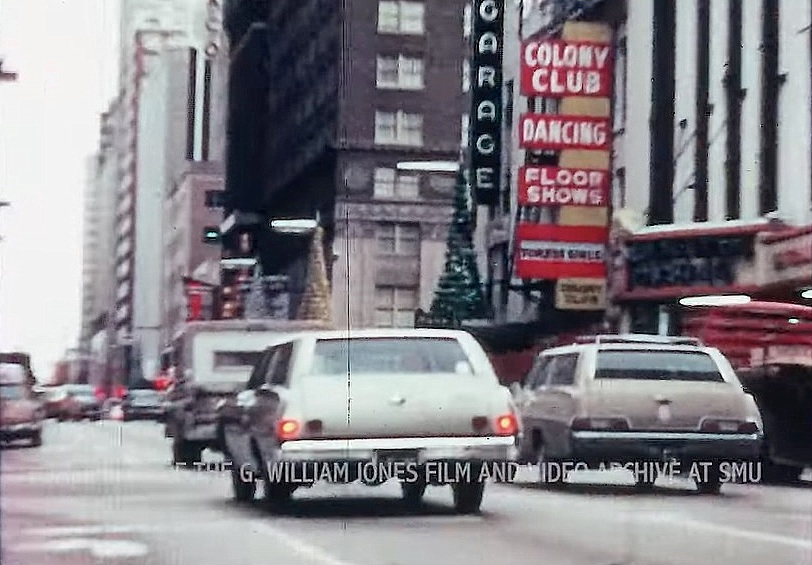
Speaking of reprobates, their Big D mecca for many years was Commerce and Akard, home to all sorts of places you probably wouldn’t book for a Mother’s Day brunch. Clogging up this area at various times were strip joints and dive bars, including the Colony Club, the Theatre Lounge, and the Carousel Club. The Colony Club was at 1322½ Commerce. That whole block (and the one just beyond it — across Akard — home to the Baker Hotel) went bye-bye a long time ago.

colony-club_perkins-school-recruitment-film_1969_jones-film_SMU_4.29

*

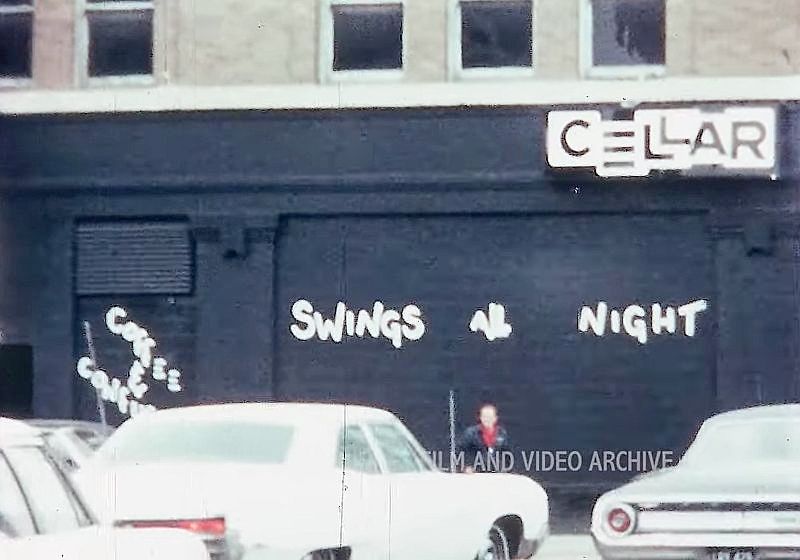
And, like Soul City, the legendary Cellar was cool, but I’ll bet there were more illicit substances in this downtown “coffeehouse” than in the Greenville Ave. club. “Swings all night.” It stood at 2125 Commerce (at what is now Cesar Chavez). This building appears to be gone.

cellar_perkins-school-recruitment-film_1969_jones-film_SMU_4.43

*

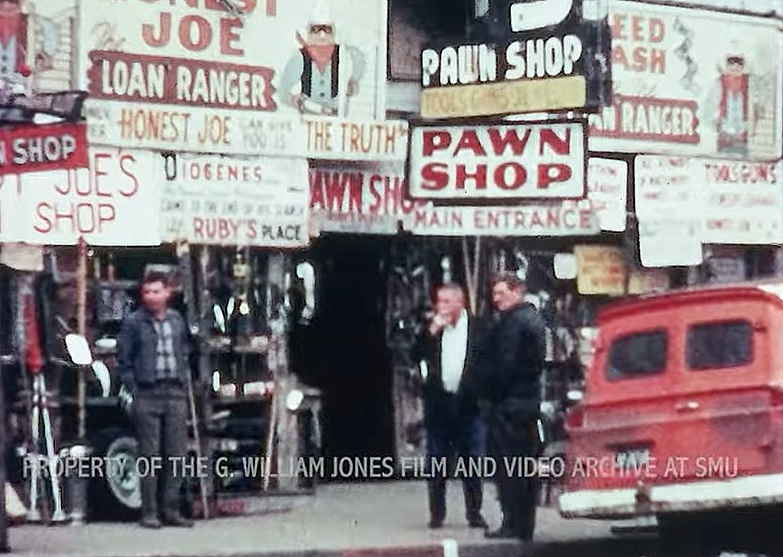
More shots of Honest Joe’s Pawn Shop, which took up a good chunk of the 2500 block of Elm. See what this view looks like today, here (I warn you: do not rotate 180 degrees). I assume the tall white building bit the dust for highway construction. I would have loved to have wandered around that place and chatted with Joe. I bet that guy saw some stuff. Deep Ellum has lost most of its grittiness. It used to be so cool. Thank you, seminary students from 1969, for preserving this for future generations, ’cause in a few years, the place won’t be recognizable.

honest-joes-pawn-shop_deep-ellum_perkins-school-recruitment-film_1969_jones-film_SMU_5.06

honest-joes-pawn-shop_deep-ellum_perkins-school-recruitment-film_1969_jones-film_SMU_17.41

***

Sources & Notes

All images are screenshots from the film “Perkins School of Theology (SMU) Orientation And Recruiting Film – 1969” — see it on YouTube here. It’s odd. It is from the keeps-on-giving G. William Jones Film and Video Archive, Hamon Arts Library, Southern Methodist University.

If you like this kind of thing, perhaps you will consider supporting me on Patreon. I post something there every day. More info is here.

honest-joes-pawn-shop_deep-ellum_perkins-school-recruitment-film_1969_jones-film_SMU_5.13_sm

*

Copyright © 2023 Paula Bosse. All Rights Reserved.
Ex-Slaves in Dallas — 1937

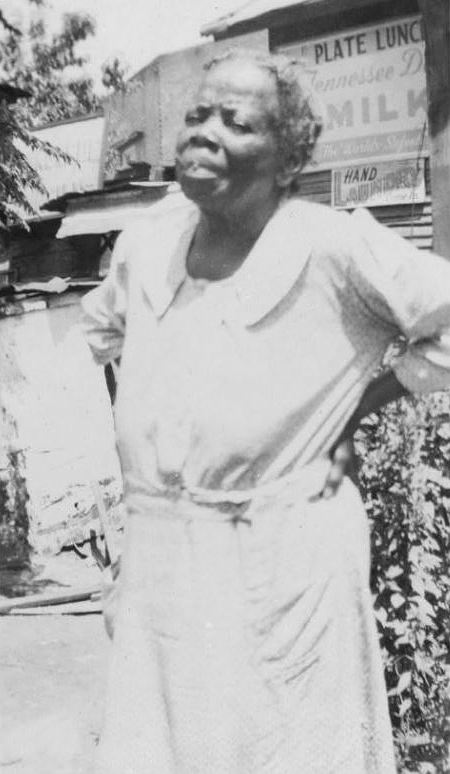
ex-slave_william-moore_WPA_LOC_122137William Moore

by Paula Bosse

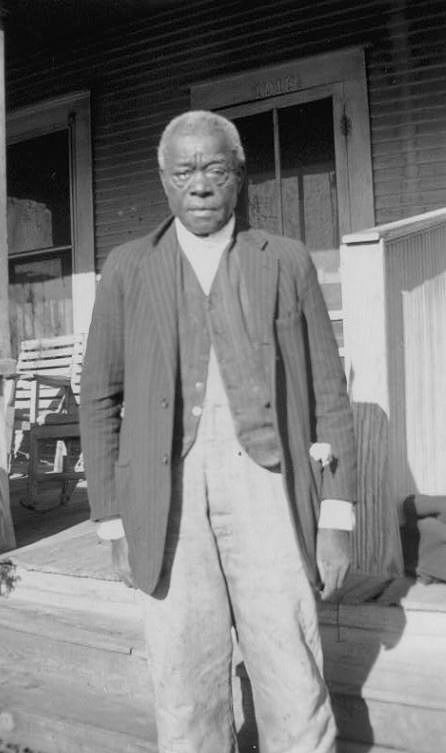
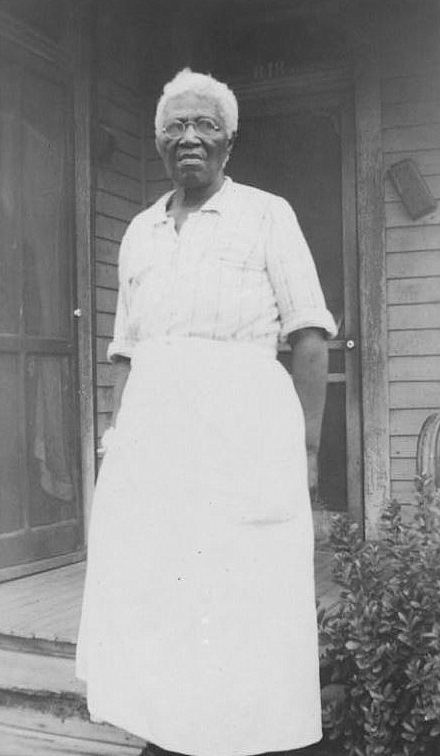
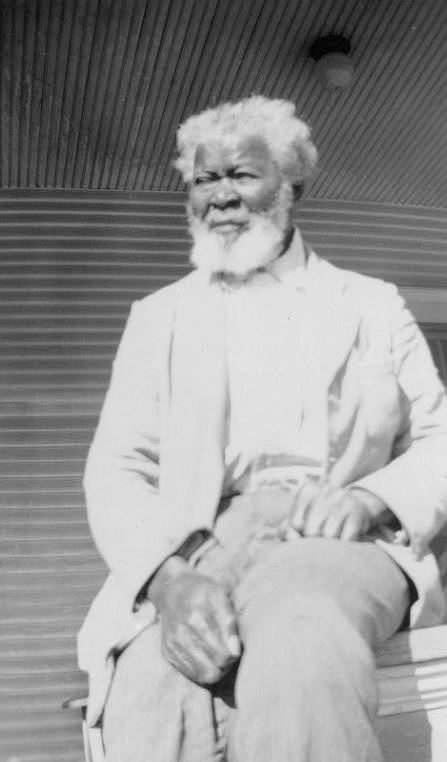
These six portraits of ex-slaves who were living in Dallas in 1937 were included in Born in Slavery: Slave Narratives from the Federal Writers’ Project (Works Progress Administration/Work Projects Administration — WPA). See all of the Dallas portraits here.

UPDATED: Thanks to a comment from a reader, I’ve linked to the oral histories of those photographed. Click the links below the photos to read about their lives.

**

Above, William Moore was born in Selma, Alabama about 1855; in 1937 he was living at 1016 ½ Good Street in Dallas.

*

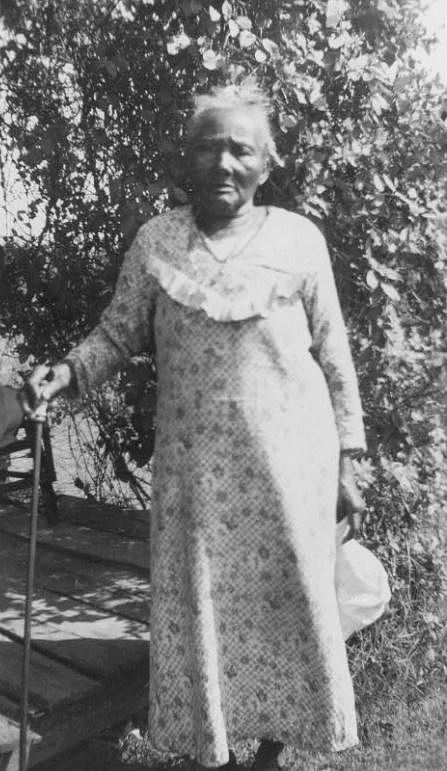
Below, Emma Watson was born in Ellis County about 1852; in 1937 she lived at 318 Allen Street.

ex-slave_emma-watson_WPA_LOC_090537Emma Watson

*

Mose/Moses Hursey was born in Louisiana about 1855; in 1937 he lived at 1120 Tenth Street.

ex-slave_mose-hursey_WPA_LOC_120137Mose Hursey/Moses Hursey

*

Mary Ellen Johnson was born near San Marcos about 1860; in 1937 she owned a cafe at 1301 Marilla.

ex-slave_mary-ellen-johnson_WPA_LOC_ca-1937Mary Ellen Johnson

*

Callie Shepard/Shepherd was born near Gilmer in 1852; in 1937 she lived at 4701 Spring Avenue.

ex-slave_callie-shepard_WPA_LOC_ca-1937Callie Shepard/Callie Shepherd

*

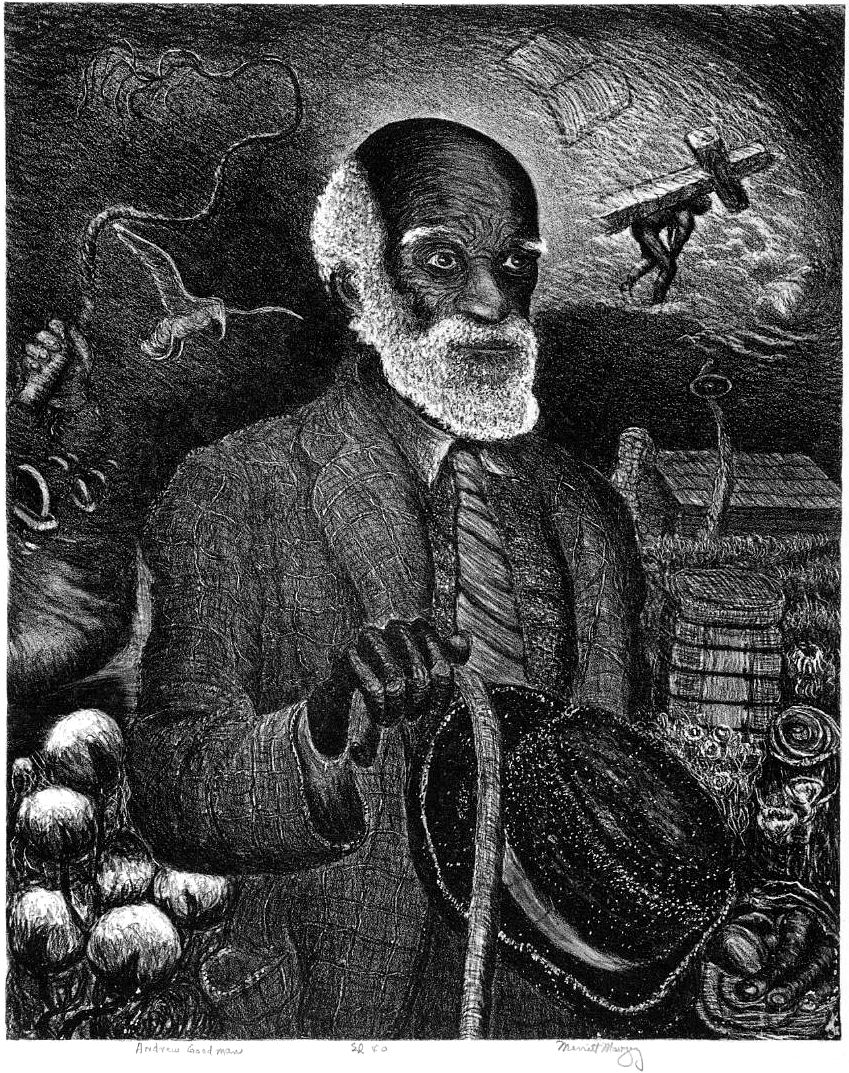
Andrew Goodman was born near Birmingham, Alabama about 1840; in 1937 he lived at 2607 Canton.

ex-slave_andrew-goodman_WPA_LOC_120137Andrew Goodman

Update, Jan. 2024: I came across this portrait of Andrew Goodman by Dallas-trained artist Merritt Mauzey (1946, Smithsonian American Art Museum):

mauzey-merritt_andrew-goodman_portrait_smithsonian-art-museum_1946

*

From the Library of Congress site devoted to this project:

“Born in Slavery: Slave Narratives from the Federal Writers’ Project, 1936-1938” contains more than 2,300 first-person accounts of slavery and 500 black-and-white photographs of former slaves. These narratives were collected in the 1930s as part of the Federal Writers’ Project of the Works Progress Administration (WPA) and assembled and microfilmed in 1941 as the seventeen-volume “Slave Narratives: A Folk History of Slavery in the United States from Interviews with Former Slaves.”

***

Sources & Notes

As noted, all portraits from the WPA “Born in Slavery” project, hosted on the Library of Congress website.

Related posts from Flashback Dallas:

ex-slave_william-moore_WPA_LOC_122137_sm

*

Copyright © 2023 Paula Bosse. All Rights Reserved.
Muhammad Ali Visits Graham’s Barber Shop — ca. 1967

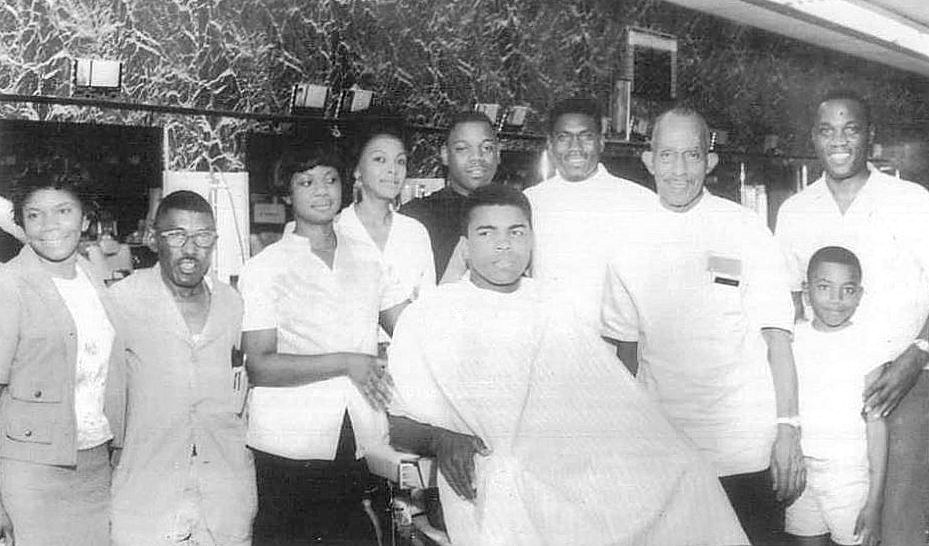
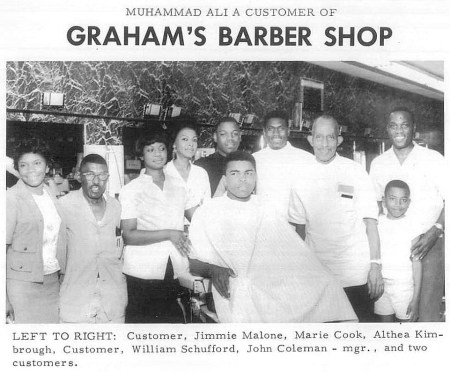
ali-muhammad_grahams-barber-shop_lincoln-high-school-yrbk_1967_photoMuhammad Ali in a Dallas barber chair

by Paula Bosse

I often just browse through the ads of old Dallas high school yearbooks on Ancestry.com. The other day, I saw the photo above and stopped and said to myself, “Is that Muhammad Ali?” I then looked at the text and, yes, that was, in fact, Muhammad Ali. Sitting in a barber chair in Dallas, Texas. What was the story behind that?

In my less-than-extensive research, I found three instances of Ali being in Dallas in or before 1967 (the year of this Lincoln High School yearbook ad). The first was in November 1960, just one month after the 18-year-old Olympic champion had won his first professional fight. He was tagging along with Archie Moore (who was acting as something of a mentor) when Moore came to Dallas to fight local boxer Willie Morris. (Morris had lost to the then Cassius Clay in the Olympic trials, and, in a somewhat bitter interview with The Dallas Morning News said this about the young upstart: “He’s not near as good as all this talk about him.”)

The photo of Ali in the barber chair isn’t from this 1960 visit, but he was specifically mentioned in a Dallas Times Herald article as being in the crowd of a Nov. 1960 event I wrote about a few years ago. There’s film footage of this, and I’ve scanned the crowds, hoping to find him, with no luck. But if you want to look to see if you can find him, that footage is linked in the Flashback Dallas post “Newly Discovered Footage of Jack Ruby — 1960.”

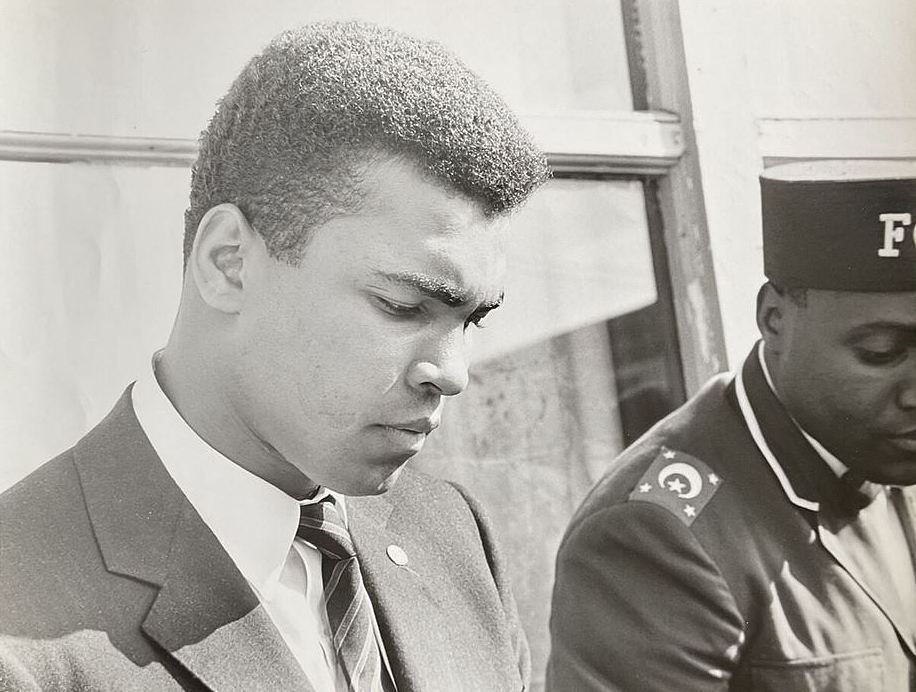
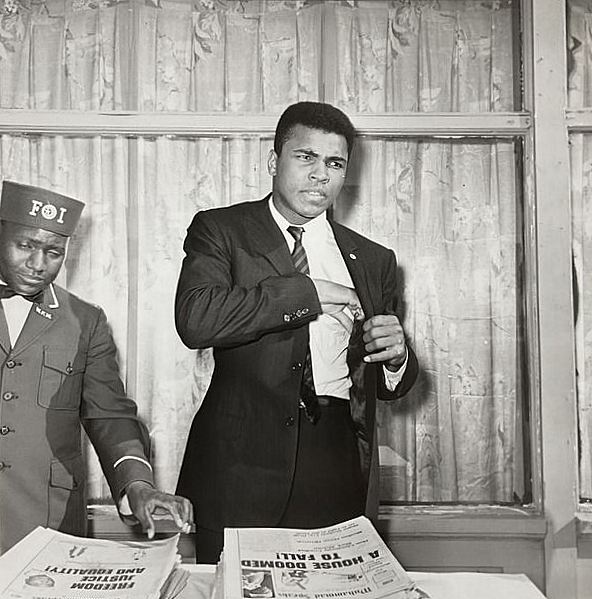
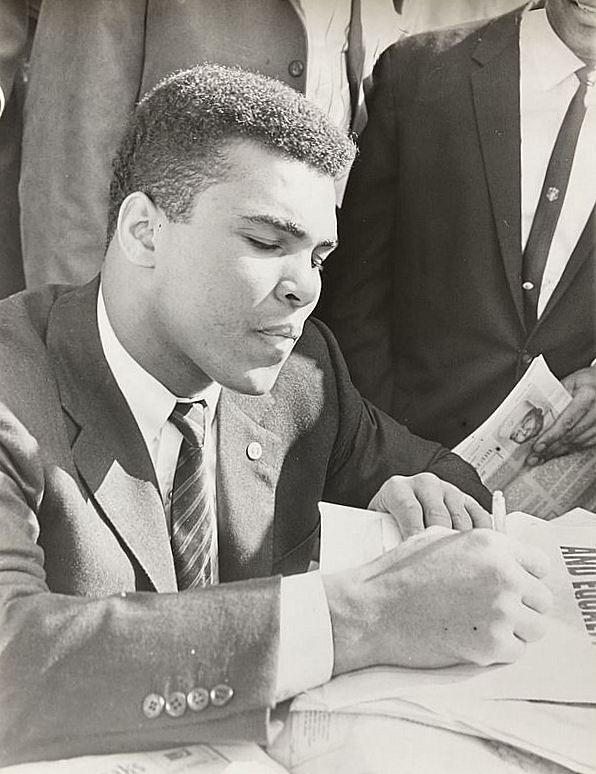
It’s more likely that the barbershop photo was taken in March 1967 when Ali, a Muslim, made two appearances in Dallas: the first was to “preach” at a local mosque, and the second (two days later) was to speak to students at Bishop College.

The mosque appearance was on Easter Sunday — March 26, 1967 — at Muhammad’s Mosque of Islam, described by Dallas Morning News sportswriter Bob St. John as being housed in “an old, pinkish building which used to belong to an insurance company and heretofore rested in reasonable obscurity on the corner across from Booker T. Washington High School.”

St. John continued: “On Sunday afternoon, it was no longer obscure. The old building rocked from its foundation as people filled it and lined the sidewalk outside and even poured into the streets, some coming to see Cassius Clay and others Muhammad Ali….”

The article mentions that Ali was living in Houston at the time, so it’s certainly possible he visited Dallas more often, but he was so famous at this time that it seems likely that the mere hint of his charismatic presence in town would have shown up in the papers. As it was, a visit by him to a Dallas barbershop was memorialized in this ad, which someone like me can now write about in a vaguely historical way (on a day which just happens to be Easter Sunday, the anniversary of Muhammad Ali’s 1967 Islamic sermon delivered across from Booker T. Washington High School).

**

UPDATE: I was very excited to see the three photos below pop up recently on eBay — they show Ali at his mosque appearance (all three were taken on March 26, 1967 by Bob W. Smith, a Dallas news photographer). Ali is seen signing copies of a 20-cent Muslim paper called “Muhammad Speaks.” (A quote from Ali about why he was autographing these newspapers, from Bob St. John’s article: “A fish goes for bait. Then it’s hooked. I’m bait. Many would not buy if I didn’t autograph them. But once they’re bought… they’ll be sittin’ around some evening and pick up the paper. They’ll start reading. First thing you know, they’re hooked.”)

muhammad-ali_dallas_march-1967_a

muhammad-ali_dallas_march-1967_ebay_b

muhammad-ali_dallas_march-1967_ebay_c

**

But back to the barbershop and Johnny Graham and a closer look at the two photos from the ad that originally caught my eye.

ali-muhammad_grahams-barber-shop_lincoln-high-school-yrbk_1967

“Muhammad Ali a Customer of Graham’s Barber Shop.” Ali is shown with an unidentified Graham’s customer, Jimmie Malone, Marie Cook, Althea Kimbrough, a customer, barber William Schufford, manager John Coleman, and two other customers.

*

ali-muhammad_grahams-barber-shop_lincoln-high-school-yrbk_1967_ford

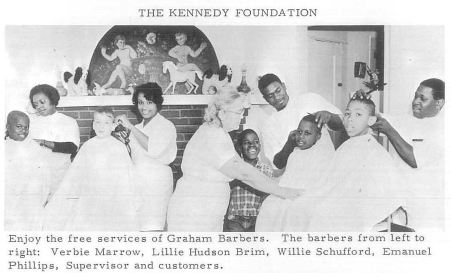
The photo above also appeared in the ad, showcasing Graham’s community service and his work with the Kennedy Foundation. “Enjoy the free services of Graham Barbers. The barbers from left to right: Verbie Marrow, Lillie Hudson Brim, Willie Schufford, Emanuel Phillips, Supervisor, and customers.”

*

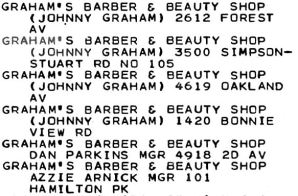
Johnny Graham was one of the most successful Black businessmen in Dallas at the time and was known for his philanthropic generosity. By the end of 1967, he owned eight barber shops and employed 135 barbers. Six of his shops are listed in the 1967 directory:

grahams-barber-shop_19671967 Dallas directory

***

Sources & Notes

Barbershop photos are from an ad in the 1967 Lincoln High School yearbook.

Photos of Muhammad Ali at Muhammad’s Mosque of Islam in Dallas were taken by news photographer Bob W. Smith on March 26, 1967, found on eBay.

The Dallas Morning News articles about Muhammad Ali in Dallas — and one about Johnny Graham:

  • “Morris Prefers Bout with Clay” (DMN, Nov. 26, 1960)
  • “Clay Makes Dallas Stop” by Bob St. John (DMN, Mar. 27, 1967)
  • “Clay Pleases Crowd With Speaking Form” by David Morgan (DMN, Mar. 29, 1967)
  • “Johnny Graham Offers Example” by Julia Scott Reed (DMN, Dec. 28, 1967)

Please consider supporting the work I do at Flashback Dallas by funding me on Patreon.

ali-muhammad_grahams-barber-shop_lincoln-high-school-yrbk_1967_photo_sm

*

Copyright © 2023 Paula Bosse. All Rights Reserved.
Black Women’s Equestrian Company K (American Woodmen) — 1920s

black-womens-equestrian-contingent_cook-coll_degolyer-lib_SMUGeorge W. Cook Collection, DeGolyer Library, SMU

by Paula Bosse

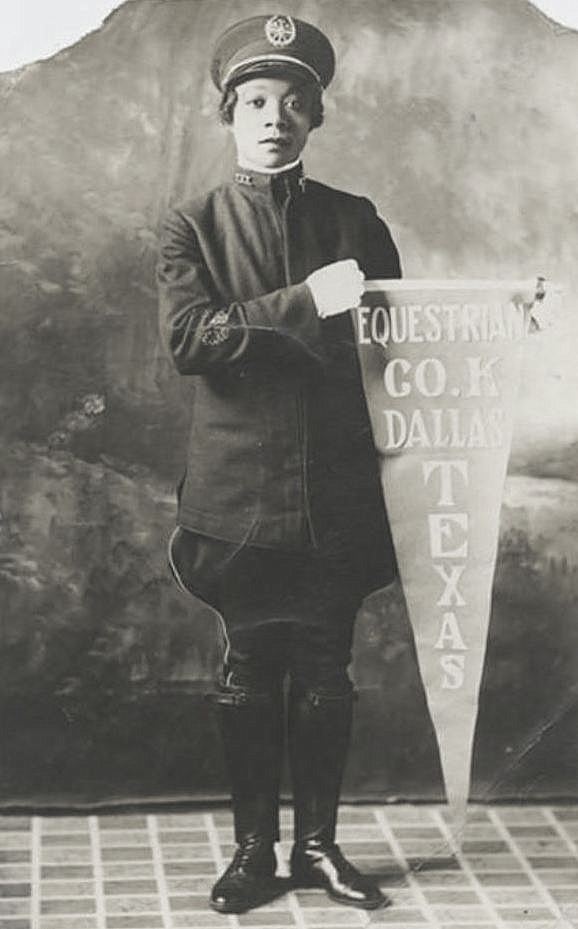
Above, a photograph of an African American woman holding a pennant which reads “Co. K — Dallas, Texas.” Company K was a women’s equestrian unit of Dallas Camp No. 86, consisting of at least 30 members — it was one of the various “uniformed ranks” of the American Woodmen, a Black fraternal organization. These groups competed in drills and marched in parades, and, from what I gather, they were meant to be seen as something of a symbol of strength, purpose, and resolve. Company K won many drilling contests and was active, from what I can tell, from at least 1922 to at least 1930.

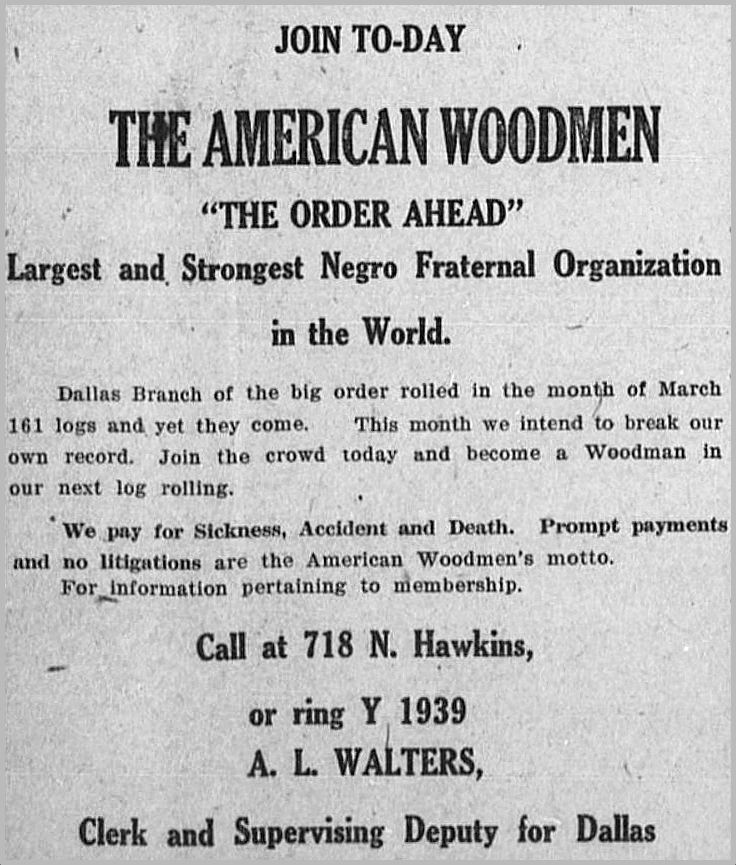
The American Woodmen (not to be confused with the Woodmen of the World, an exclusively white organization) was a national fraternal benefit association which provided loans and insurance coverage to members. It was open to Black men and women. During the 1920s, the Woodmen offices were located at 714 N. Hawkins, at Central (the address was originally 718 N. Hawkins, as seen in the ad below). Members could join various extracurricular “uniform ranks” if they so chose.

american-woodmen_dallas-express_041720Dallas Express, Apr. 17, 1920

The American Woodmen Uniform Ranks were overseen by the national “Commander,” Maj. Gen. John L. Jones (many fraternal organizations borrowed liberally from the military, as seen in their fondness for uniforms, “officer” ranks, precision drilling, etc.). While in Dallas for the Woodmen’s District Encampment in August 1922, Jones told a reporter:

“The American Woodmen in establishing their uniform rank department intended to instill in those who joined it a higher appreciation for the value of the Negro soldier and hero. No other fraternity has thus established that branch of their organization.” (Dallas Express, Aug. 12, 1922)

When uniformed members of these various divisions drilled and paraded — hundreds at a time — it was an impressive, powerful sight. It was good PR, not only for the group selling insurance, but also for Black Americans who rarely had the opportunity to participate in this type of uniformed display of earnest, pillar-of-the-community solidarity. (See a typical group of the “Uniform Ranks” — which also included marching bands and nurses — in a 1924 photo showing the Louisville, Kentucky Camp, here.)

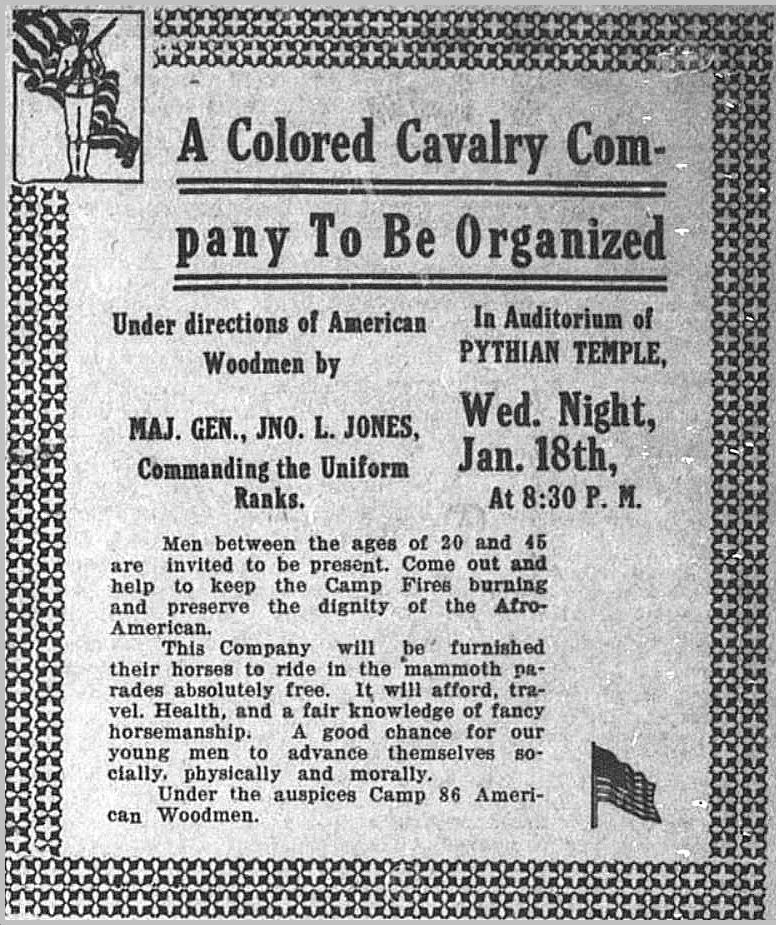
But back to Company K. I haven’t found any photos of them with horses, but I assume they really did ride horses. Below is an ad from January 1922, recruiting men for a Woodmen “cavalry.” I assume there was a similar version of this ad seeking female recruits.

woodmen_american-woodmen_cavalry_dallas-express_011422Dallas Express, Jan. 14, 1922

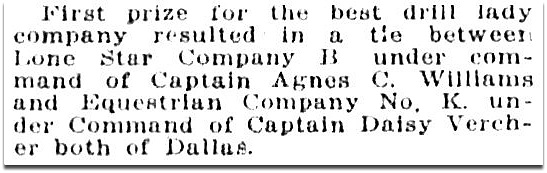
In an early competition at an “encampment” (a meeting of various American Woodmen companies, or “camps”), Company K tied for first place with another Dallas unit, Lone Star Company B. (Read coverage of this huge days-long encampment in the pages of the Black newspaper, The Dallas Express, hereThe Dallas Morning News did not mention the event.) The Dallas Encampment was at Riverside Park, a large open space where visitors set up military-style barracks/tents and competed in various military-like precision drills over the course of a few days. Riverside Park was the former Negro Play Park, at what is now Sabine and Denley in Oak Cliff, near the Trinity (it is now, I believe, Eloise Lundy Park). Not only was Riverside Park the site for several encampments and a place where Black families picnicked and gathered for special occasions, it was also the home of Negro League baseball games (these games were so popular among both Black and white Dallasites that a special section for white fans had to be installed during the Jim Crow era, when racial segregation was enforced by law). But back to Company K.

equestrian-co-k_dallas-express_081922_portal_detDallas Express, Aug. 19, 1922

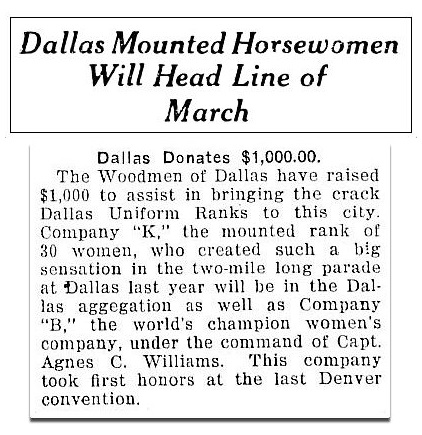
The parade mentioned in the article below is described in the Express article “Woodmen Stage Big Parade” (Aug. 19, 1922). It sounds like it was a pretty big deal.

equestrian-co-k_black-dispatch_OKC_031523_headline_excerptBlack Dispatch (Oklahoma City, OK), Mar. 15, 1923

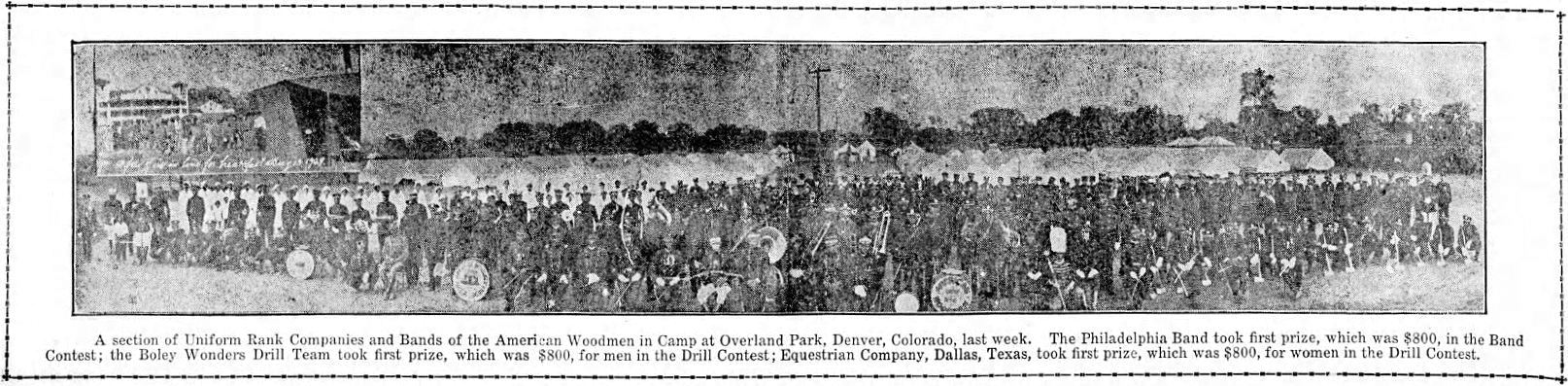
The incredibly low-resolution photo below was taken at the 1929 Encampment in Denver — it shows the scale of an encampment, with tents visible behind the posed participants. The caption says that Dallas’ Equestrian Co. K won the first prize for women in the drill contest — the prize (which, amazingly, was the same as the first prize for men) was $800, which, in today’s inflation-adjusted money would be about $15,000! 

equestrian-co-k_black-dispatch_OKC_090529_photoBlack Dispatch (OKC), Sept. 5, 1929

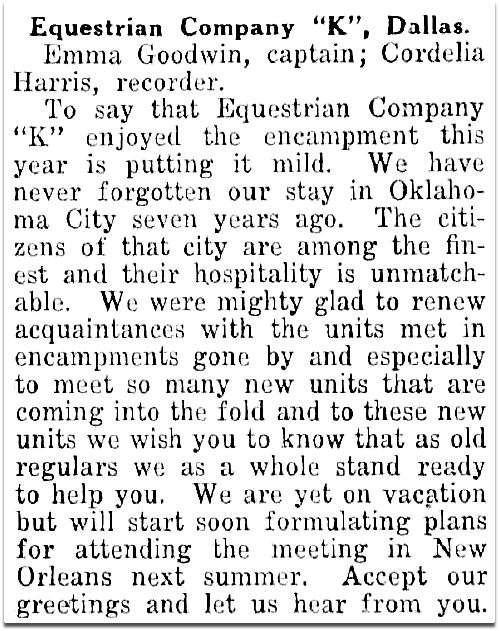
In an excerpt from a chatty overview of the women’s drilling groups, Company K spokeswomen say how happy they are to be back in Oklahoma City.

black-dispatch_OKC_071030_detBlack Dispatch (Oklahoma City), July 10, 1930

Most fraternal organizations are, as the name would imply, men-only. Yeah, they may have their female “auxiliary” organizations to give the women something to do, but the American Woodmen (Woodpeople?) included women in important roles. And it certainly paid off — the women of Equestrian Company K regularly won competitions and regularly brought the bacon home. 

*

100% of what is contained in this post is information I didn’t know until I set out to discover what “Equestrian Co. K, Dallas, Texas” referred to. As always, it’s exciting to learn about something I had never known about.

***

Sources & Notes

Top photo — “[Member of African American Women’s Equestrian Contingent, Company K, of Dallas, Texas]” — is from the George W. Cook Dallas/Texas Image Collection, DeGolyer Library, Southern Methodist University; more information on this photo can be found on the SMU Libraries site, here.

There is very little information on the internet about these American Woodmen women’s companies, so I’ve collected the article “Echoes from the Forest — Uniform Rank Department, American Woodmen” (The Black Dispatch, Oklahoma City, July 10, 1930), which lists female personnel for several Dallas companies, including the equestrian company, drill companies, a hospital company, and a nurse company — read the PDF here.

Read about the American Woodmen Benevolent Society (not to be confused with the (white) Woodmen of the World organization) in two very informative and interesting blog posts, here and here.

Read about Black soldiers during World War I in the sort-of related Flashback Dallas post “Black Troops from Dallas, Off to the Great War,” here.

black-womens-equestrian-contingent_cook-coll_degolyer-lib_SMU_sm

*

Copyright © 2023 Paula Bosse. All Rights Reserved.
Santa Claus Visits Fair Park — 1969 and 1970

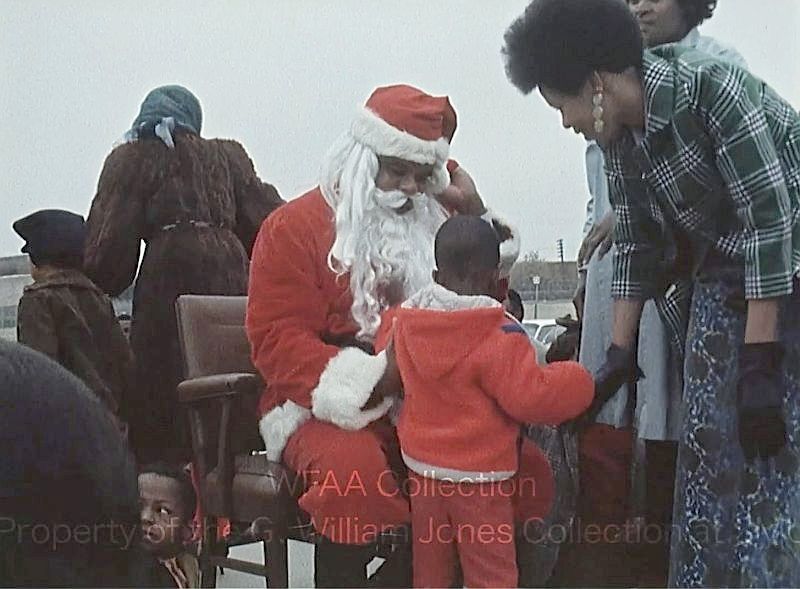
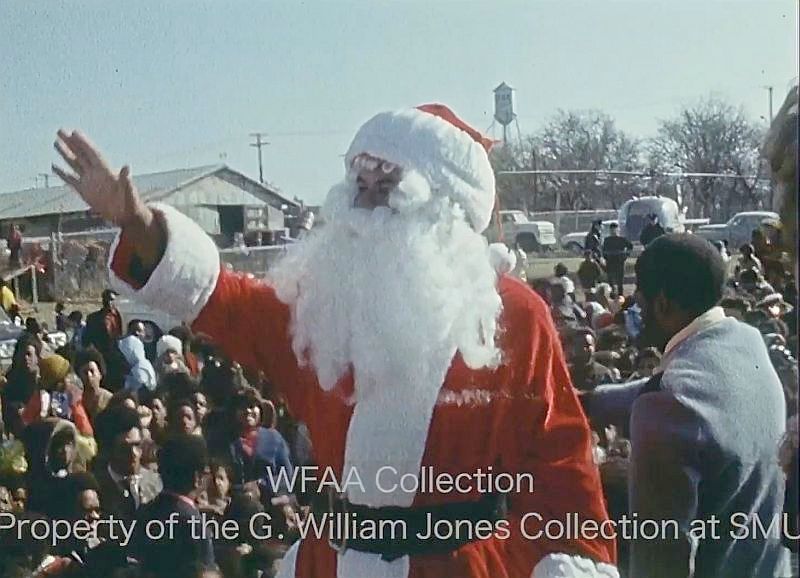
santa_4_WFAA_SMU_122069
The list is ready…

by Paula Bosse

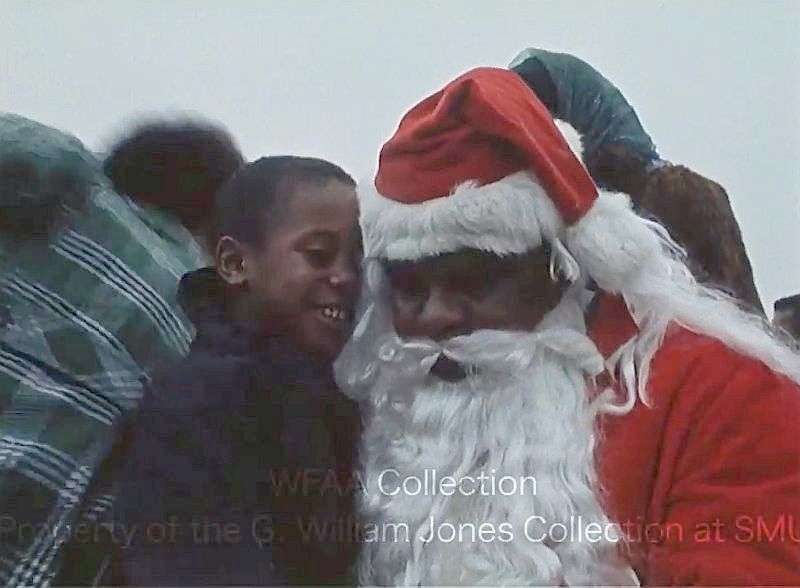
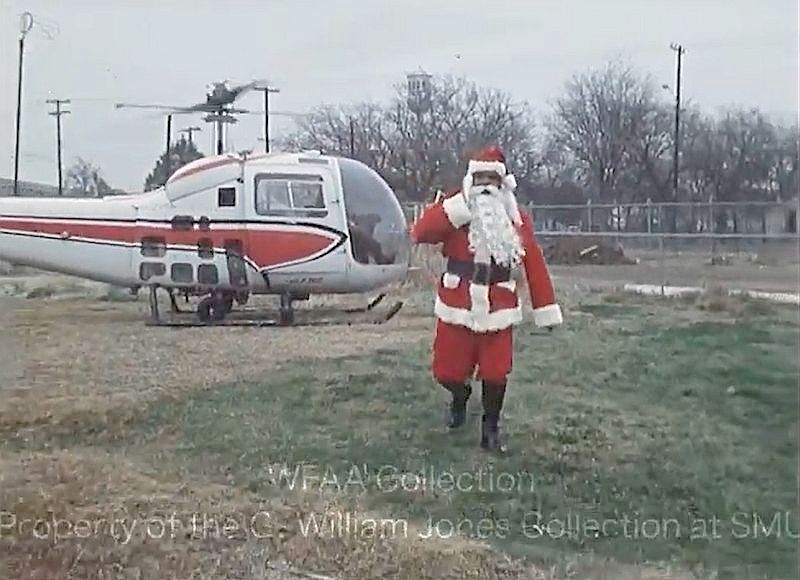
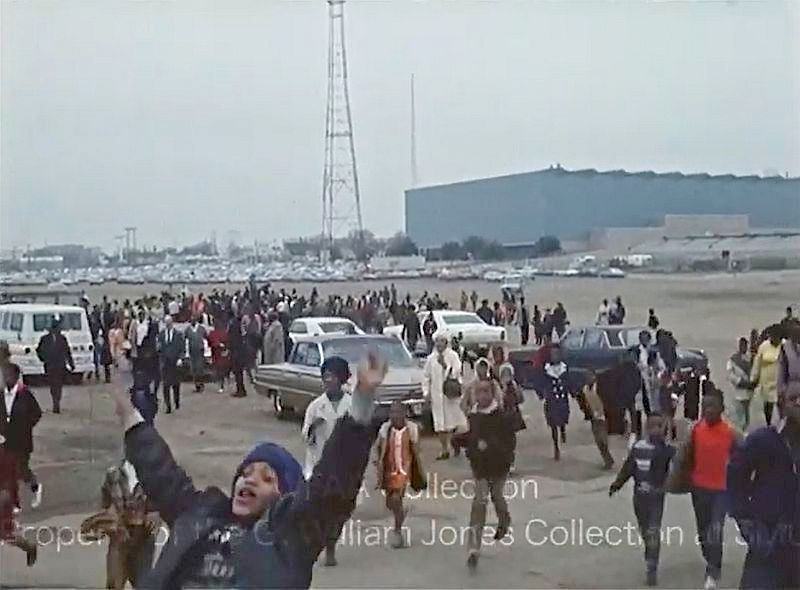
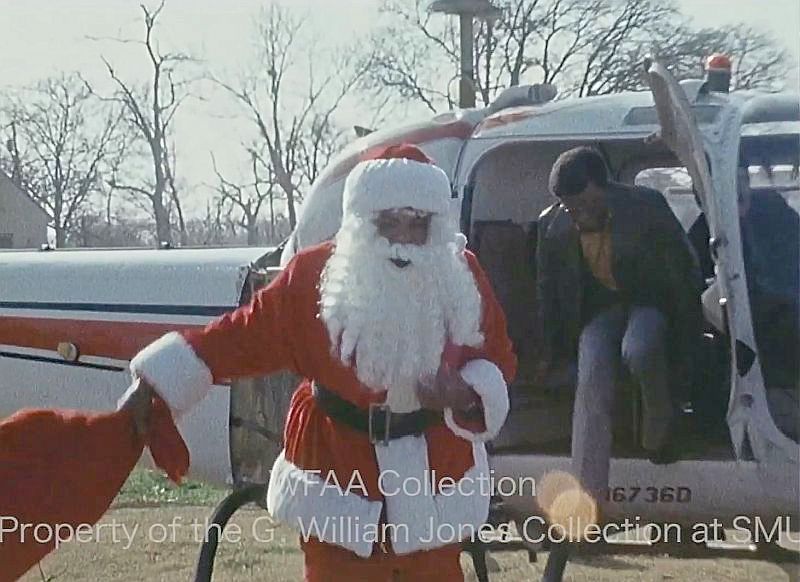
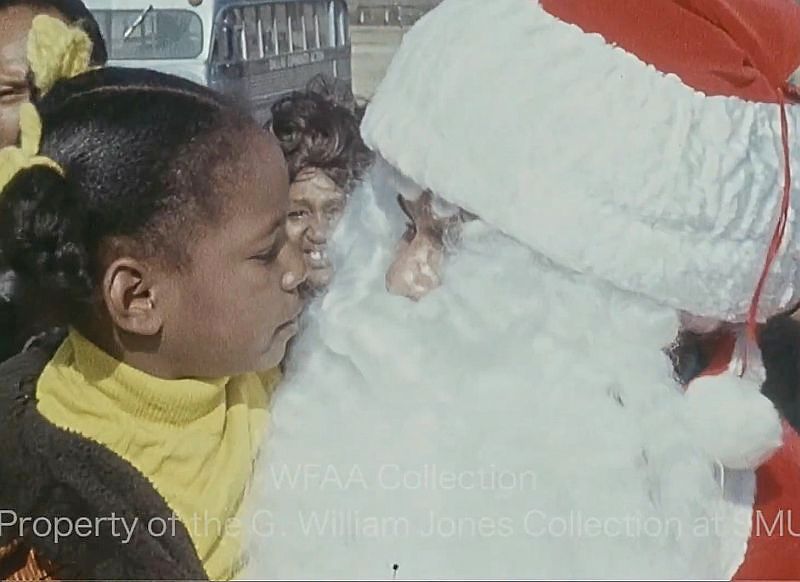
Check out two charming film clips of Santa visiting kids in Fair Park on Dec. 20, 1969 and Dec. 23, 1970 (the links to the clips are below). He arrives, of course, in a helicopter. These events were sponsored by the Negro Chamber of Commerce.

From this clip’s YouTube description:

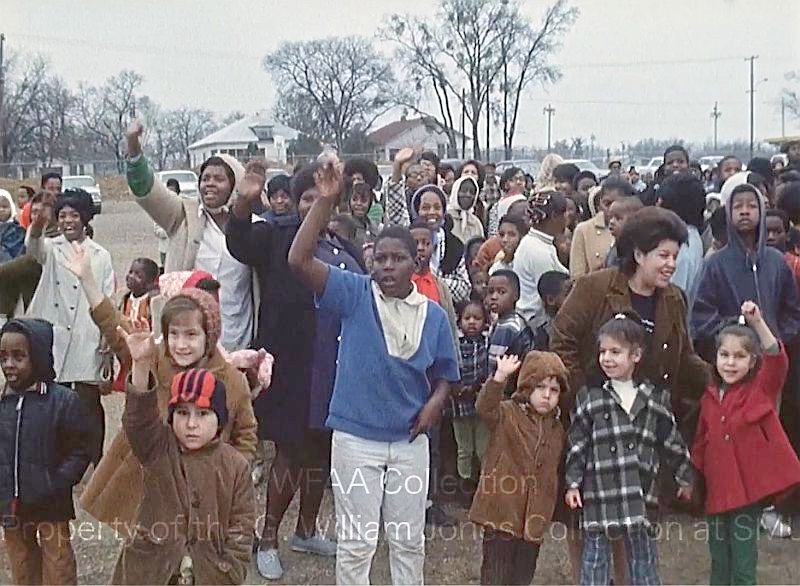
A Black Santa Claus lands via helicopter in Fair Park as a large crowd of predominantly African American children rush to meet him; children are seen on Santa’s lap as parents stand by; a box of wrapped apples is seen. (A “Black Santa” was an unusual sight in the 1960s, and the concept was much in the news in the 1969 Christmas season as the Southern Christian Leadership Conference (SCLC) had issued a demand that department stores in Cincinnati hire African American Santas or face a boycott, and the story was widely covered around the country.) (Silent)

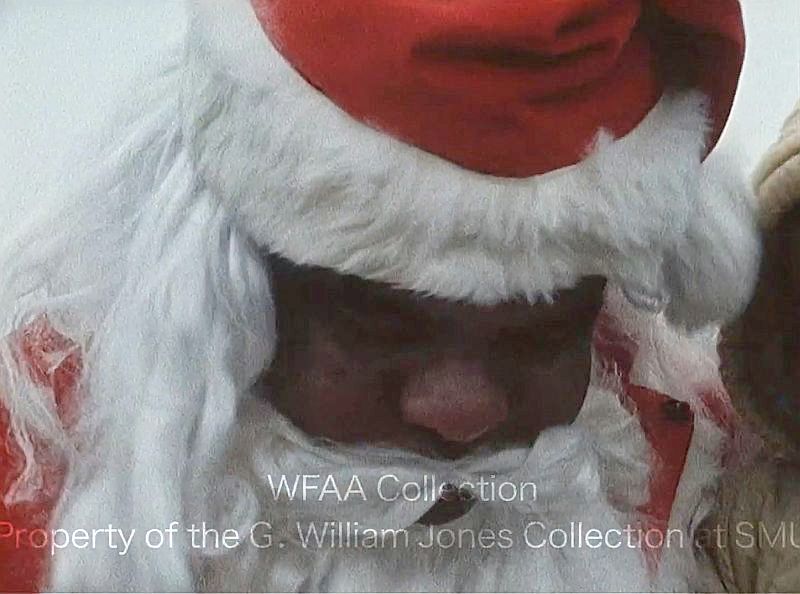
Watch the full 38-second (silent) clip on YouTube here. Below are some screenshots.

santa_2_WFAA_SMU_122069

santa_3_WFAA_SMU_122069

santa_5_WFAA_SMU_122069

santa_6_WFAA_SMU_122069

santa_7_WFAA_SMU_122069

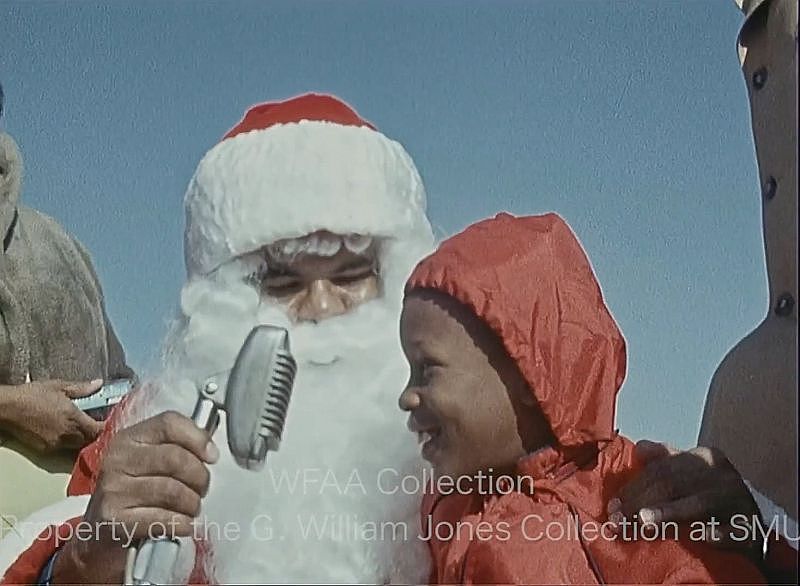
Santa made a return visit the next year — again via chopper — on Dec. 23, 1970. An article appeared in The Dallas Morning News revealing Santa’s helper to be Issac Debois who was quoted as saying with a chuckle, “I’m the only black Santa Claus from the South Pole.” Watch the full 38-second (silent) clip here.

santa-1970_122370_WFAA_SMU_1

santa-1970_122370_WFAA_SMU_2

santa-1970_122370_WFAA_SMU_3

santa-1970_122370_WFAA_SMU_4

Merry Christmas!!

***

Sources & Notes

All images are screenshots from WFAA-Channel 8 news stories — from the WFAA Newsfilm Collection, G. William Jones Collection, Southern Methodist University.

The first clip (from 1969) is contained in the larger video on YouTube here — the specific short clip is here.

The second clip (from 1970) is contained in the larger video on YouTube here — the specific clip is here.

Read the Dallas Morning News story about the second visit in the DMN archives: “Santa Enjoys Happy Visit, With Gifts” (DMN, Dec. 24, 1970).

Find more Flashback Dallas posts on Christmas here and Hanukkah here,

santa_4_WFAA_SMU_122069_sm

*

Copyright © 2022 Paula Bosse. All Rights Reserved.
When SMU Theology Students Were Sprayed with Insecticide at a University Park Lunch-Counter Sit-In — 1961

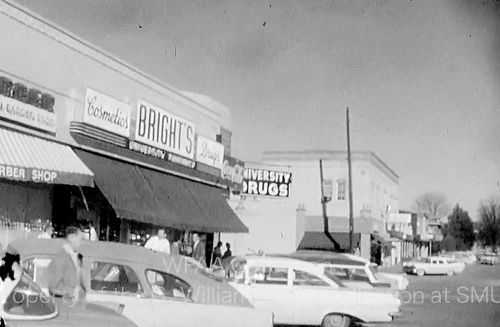
university-pharmacy-protest_WFAA_jan-1961_1Bright’s Drug Store, 6327 Hillcrest, University Park

by Paula Bosse

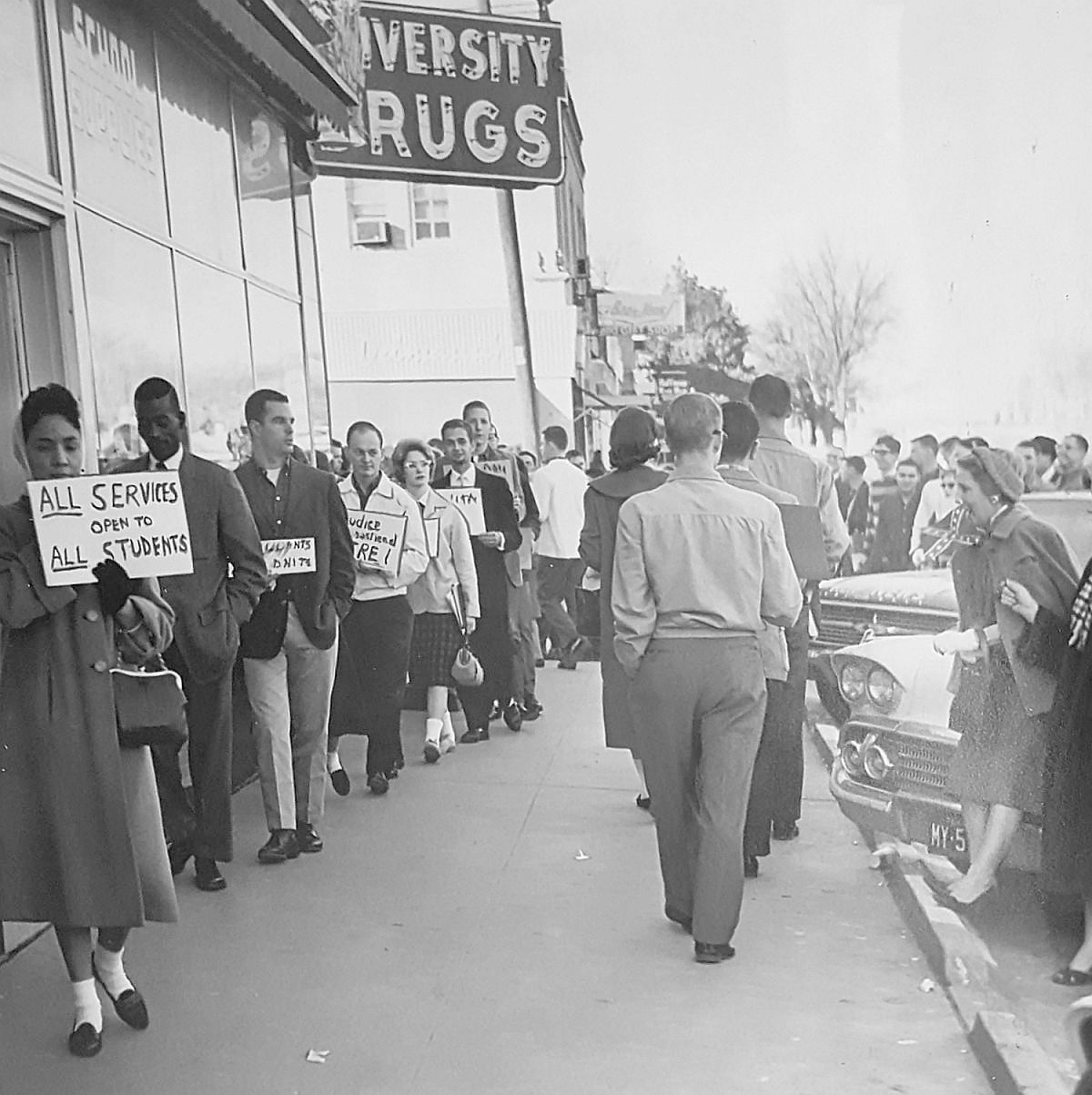
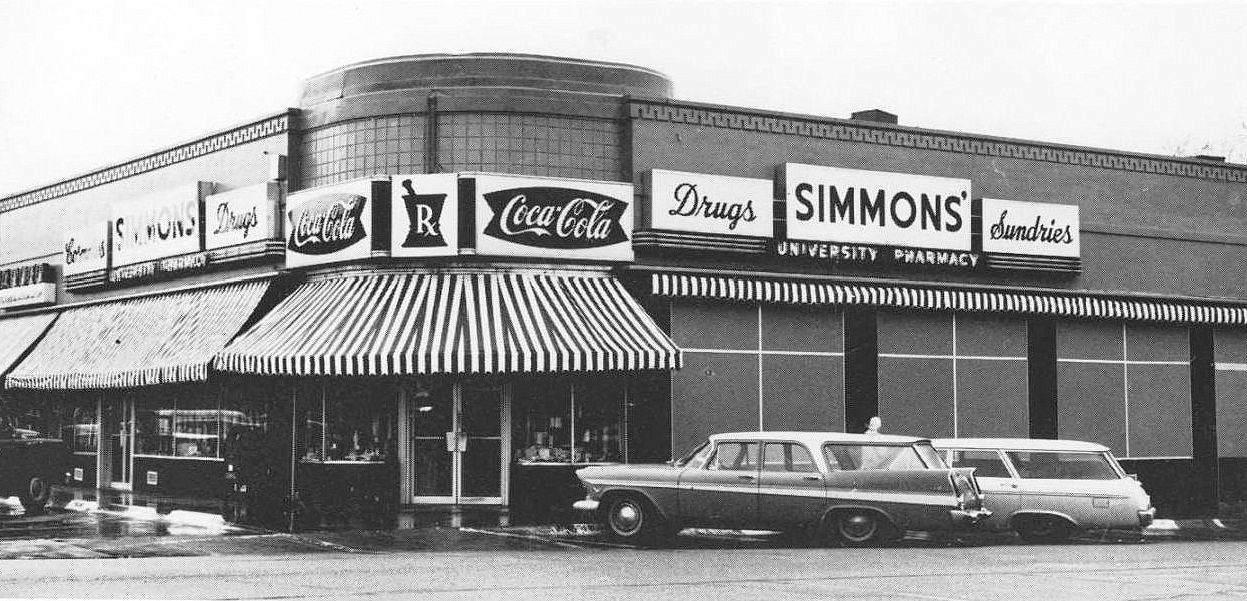
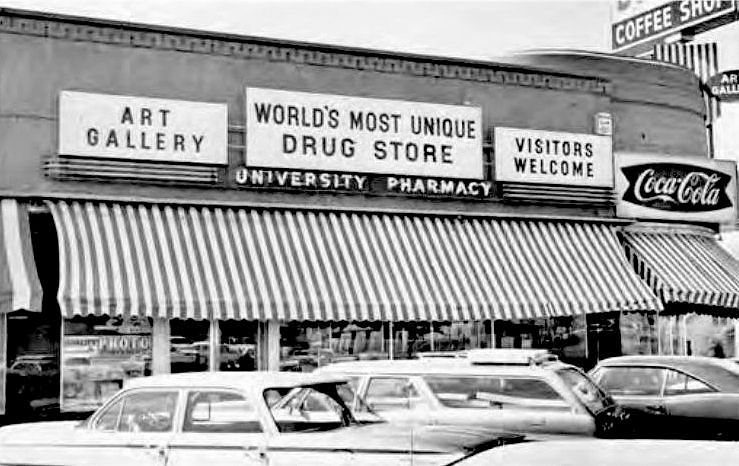
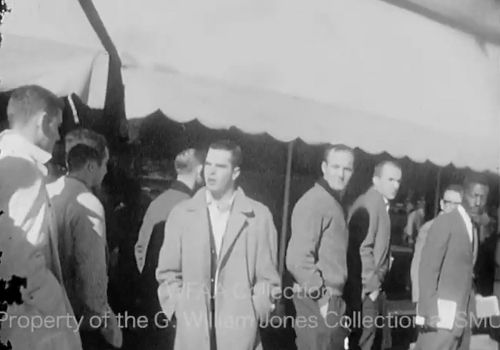
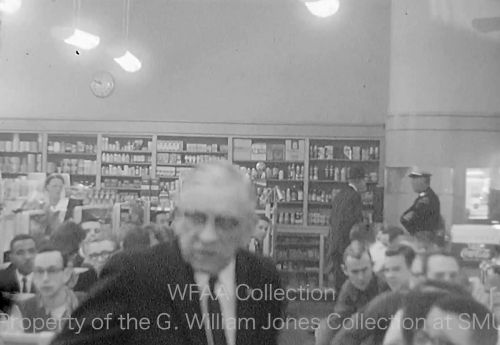
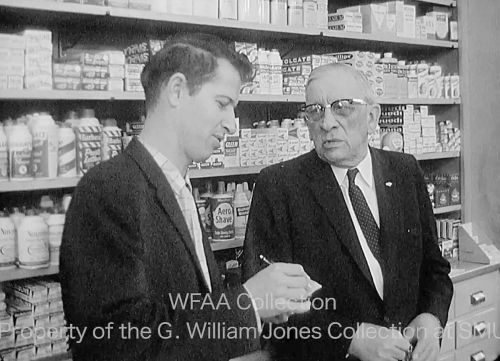
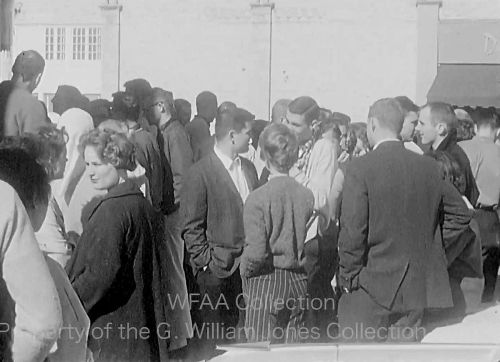
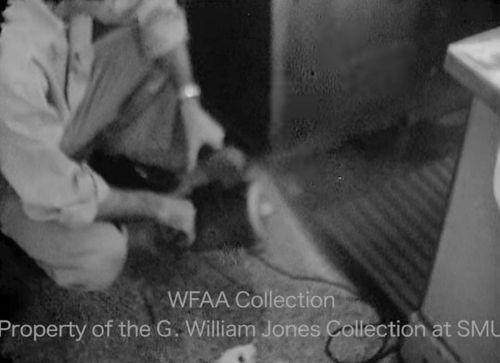
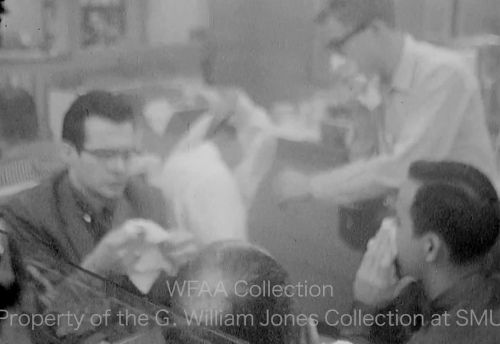
This week the G. William Jones Film & Video Collection at SMU posted another fantastic clip from their WFAA News archive on their YouTube channel. This one shows an incident I had heard about since I was a child. It shows a peaceful “sit-in” demonstration at the University Pharmacy at the southwest corner of Hillcrest and McFarlin, across from the SMU campus. The sit-in was organized by theology students at SMU’s Perkins School of Theology to protest the owner’s refusal to serve Black customers at his lunch counter. The student demonstration was conducted by a group of silent students — it was a peaceful protest without violence. Until, that is, the owner, pharmacist C. R. Bright, called in a fumigator to set off a cloud of insecticide inside the pharmacy in an extreme attempt to run off the protesters. The students did not leave until Bright closed the drug store. Many of the students then picketed in front of the business as anti-protester demonstrators showed up to heckle and jeer, some waving little Confederate flags handed out by Bright. My mother, who lived nearby at the time and had recently graduated from SMU (but was not a theology student) was there, and she says she can still feel the burn of that pesticide in her throat and says that no one present that day could believe a person would do what Bright did. (And she’s in it! She’s seen sitting at the counter, engulfed by a cloud of insecticide.)

Here is the silent clip from January 9, 1961 (the direct link on YouTube is here):


*

I took the photo below at an exhibit at the downtown Dallas Public Library in 2017. It shows the students outside the pharmacy as a crowd jeers at them.

university-drug-store_strike_DPL-exhibit_apr-2017via Dallas Public Library

In 1961, there were only 4 or 5 Black students attending SMU. Black students were allowed to attend only the theology and law schools — there were no Black undergraduates until 1962, when Paula Elaine Jones became the first African American full-time undergraduate student at SMU.

In 1961, African Americans were routinely refused service at white-owned establishments in Dallas (as they were in the rest of the Jim Crow South). The sit-in at the University Pharmacy was the result of a Black theology student being refused service at Bright’s lunch counter. There had been a small demonstration at the drug store a couple of nights before the one seen in the film above — it ended when Bright closed early. 

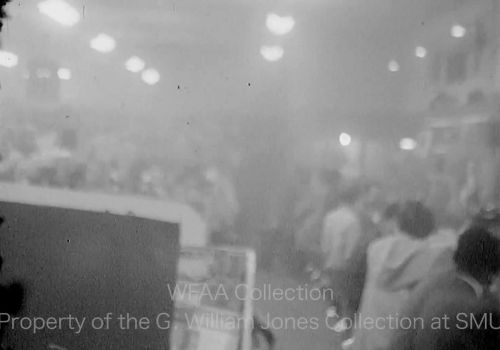
The sit-in that grabbed the headlines began around 10:00 on the morning of Monday, Jan. 9, 1961, when 60-75 SMU students, including Black theology students Earl Allen and Darnell Thomas, entered the drug store and sat silently at the counter and in booths. Allen and Darnell were refused service. In protest, the large group of students refused to leave. After about an hour, Bright was quoted by a WBAP news reporter as saying, “This is a good time to kill some cockroaches…” and called an exterminator service. When the exterminators arrived, they turned on fumigating machines inside the business, filling the place with clouds of kerosene-based insecticide which covered the students, the lunch counters, the dishes, the food, and the store’s merchandise. (Bright was a pharmacist, who was no doubt aware of potential physical harm this would cause.)

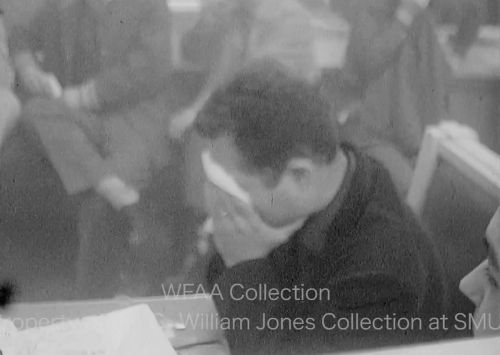
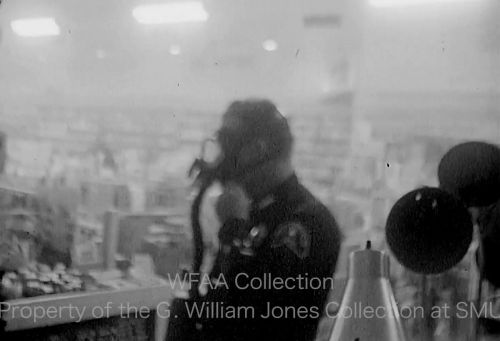
The students sat there, breathing through handkerchiefs and holding their ground, silent. A University Park policeman, Lt. John Ryan was there, but the police were not actively involved (although Ryan did have a handy gas mask). After half an hour, the students left when Bright closed the store. Bright re-opened an hour or two later (the lunch counter remained closed). Students silently picketed as hecklers jeered.

The SMU student newspaper — The SMU Campus — covered the sit-in. The article contained an unsurprising, unapologetic quote from the 75-year-old C. R. Bright: 

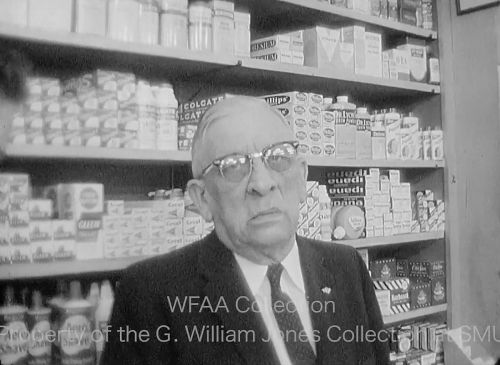
Bright steadfastly refuses to integrate his lunch counter. Says the drug store owner, “We are not serving them now and we’ll never serve them.” He continues to explain that it “is against my principle” and “I know it would wreck my business.” (The SMU Campus, Feb. 1, 1961)

Bright retired soon after and sold the business to an up-and-coming young whippersnapper named Harold Simmons, who went on to build a multi-multi-multi-million-dollar empire from that first business investment.

university-drug-store_smu-archivesvia DeGolyer Library, SMU

university-pharmacy_smu-rotunda_1965via 1965 SMU Rotunda

*

university-pharmacy-protest_WFAA_jan-1961_2

university-pharmacy-protest_WFAA_jan-1961_3

university-pharmacy-protest_WFAA_jan-1961_4_c-r-bright

university-pharmacy-protest_WFAA_jan-1961_5_c-r-bright

university-pharmacy-protest_WFAA_jan-1961_6

university-pharmacy-protest_WFAA_jan-1961_7

university-pharmacy-protest_WFAA_jan-1961_8

university-pharmacy-protest_WFAA_jan-1961_9

university-pharmacy-protest_WFAA_jan-1961_10

university-pharmacy-protest_WFAA_jan-1961_11_UP-policeman

*

UPDATE, BURY THE LEDE DEPT: Thanks to comments by two readers, I have learned that Christopher R. Bright was the father of former Dallas Cowboys owner H. R. “Bum” Bright. Oh dear.

***

Sources & Notes

All screenshots are from WFAA news footage from the WFAA News Film Collection, G. William Jones Film & Video Collection, Hamon Arts Library, Southern Methodist University; the clip has been posted to the SMU Jones Film channel on YouTube here.

Read coverage of the sit-in (as well as a critical editorial which called the protest “immoral”) in the Feb. 1, 1961 edition of The SMU Campus, the student newspaper — it can be accessed on the SMU Libraries website here, or it can be read in a PDF I’ve made, here

Read a lively account of the sit-in in a WBAP-Channel 5 news script here (via the Portal to Texas History).

For those with access to the Dallas Morning News archives, the incident is covered in an article by Jim Lehrer: “Protesting Students Sit In, Walk Picket Line at Store” (DMN, Jan. 10, 1961). 

Another great clip showing a historical lunch-counter protest in Dallas (the city’s first, I believe) in April of 1960 is also available on the SMU Jones Film YouTube channel — it can be viewed here. Here is a description of what’s happening in the footage: “Rev. Ashton Jones, a white minister from Los Angeles, and Rev. T. D. R. V. Thompson, Black pastor of the New Jerusalem Institutional Missionary Baptist Church, 2100 Second Avenue, together visit segregated lunch counters in downtown Dallas department stores; the peaceful sit-in protests take place at the counters of the Kress Department Store, the H. L. Green Department Store, and the Tea Room of Sanger Bros. department store. This was the first publicized demonstration against Dallas’ segregated eating establishments, and several members of the media — both white and African American — are covering the historic event (Silent).”

Lastly, in a related Flashback Dallas post, there was a previous University Pharmacy which was located, at separate times, on the northwest and southwest corners of Hillcrest and McFarlin — the owner of the very first University Pharmacy built the Couch Building, which can be seen in the background of the top photo of this post. That earlier post, “University Park’s “Couch Building” Goes Up In Flames (1929-2016),” can be found here. A pertinent 1965 photo from that post which shows Simmons’ University Pharmacy, the Couch Building, and the Toddle House (which was also the site of a 1961 sit-in by SMU students) can be seen here.

university-pharmacy-protest_WFAA_jan-1961_1_sm

*

Copyright © 2022 Paula Bosse. All Rights Reserved.
Black Dallas — 1973

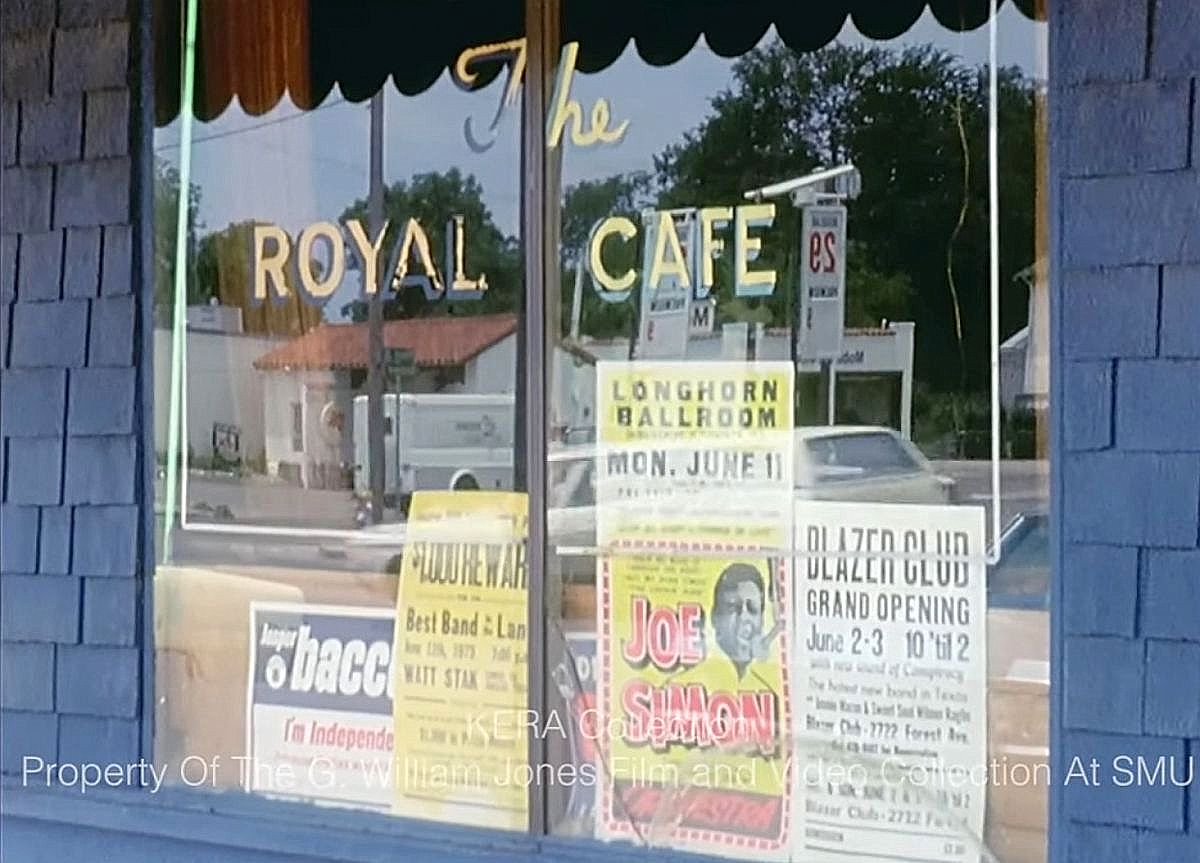
royal-cafe_june-1973_kera-collection_jones-collection_SMURoyal Cafe, 2726 Forest Avenue (now MLK Blvd.)

by Paula Bosse

The G. William Jones Film and Video Collection at SMU is the gift that keeps on giving (see their YouTube channel here). In addition to their vast non-Dallas-history holdings, they are the repository of the WFAA news film archives, which is an incredible collection of local news segments from Channel 8. And now they’ve begun digitizing and uploading film from KERA-Channel 13. There are all sorts of clips posted on the YouTube channel so far — I really, really loved the Blackie Sherrod profile — and I’m not even a sports fan! My guess is that a lot of it comes from the legendary local news show Newsroom, including the one I’m writing about here.

This story from 1973 was about a recent increase in crime in the Black neighborhoods of South Dallas and State-Thomas/Hall Street. Crime stories are pretty much the same decade in and decade out, but this piece is great because of the almost 8 full minutes of footage showing parts of town that the media largely ignored (ignores). I haven’t seen most of these areas as they existed when this piece was shot — many of these buildings don’t exist at all anymore. A couple of these places are “famous,” most are not. But this is just great. (Scroll to the bottom of the post for places and addresses seen in the film.)

*

I was particularly excited to see the exterior of the Ascot Room, which I wrote about in the Flashback Dallas post “1710 Hall: The Rose Room/The Empire Room/The Ascot Room — 1942-1975” — it was an important music club, but I had been unable to find any images of its exterior. Until now! Granted, it’s looking a bit long in the tooth in 1973, but this was so cool to see!

ascot-room_june-1973_kera-collection_jones-collection_SMUAscot Room (1710 Hall, at Ross)
*

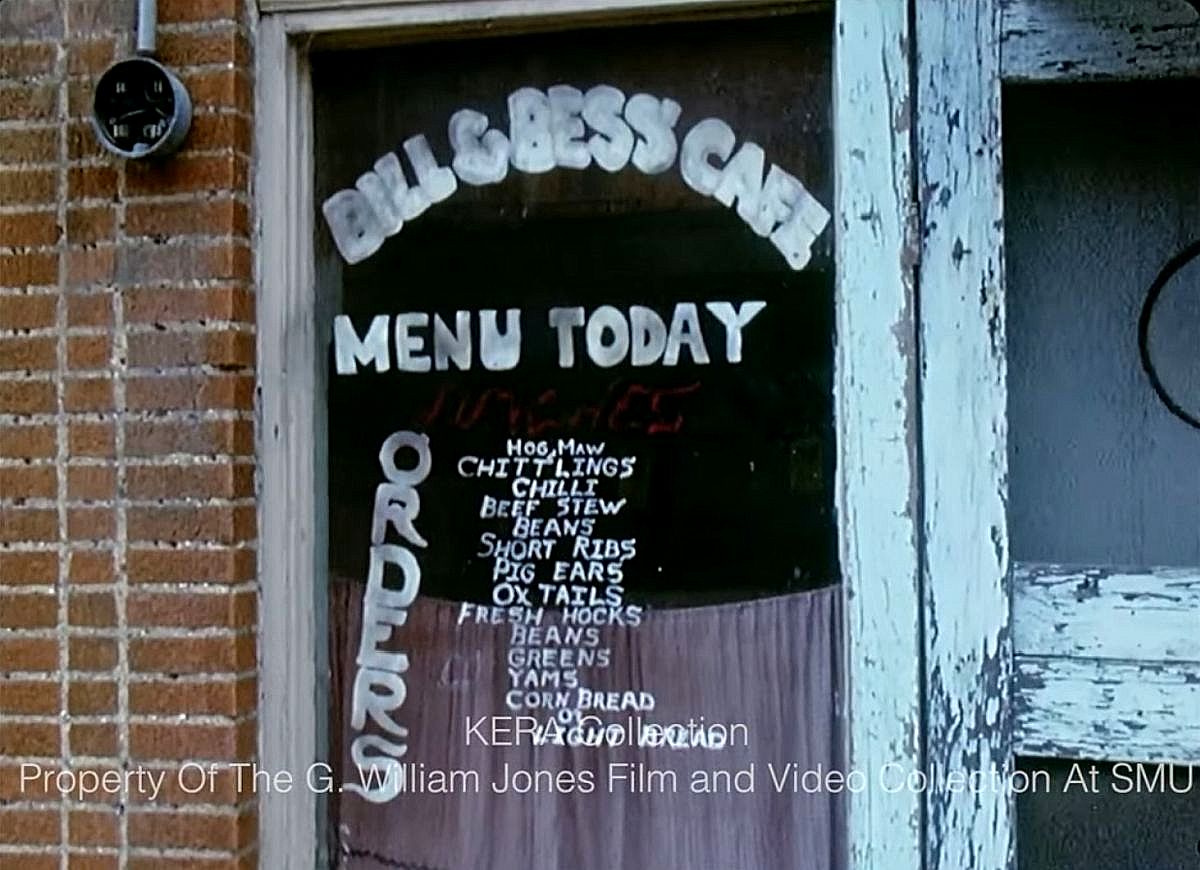
bill-and-bess-cafe_june-1973_kera-collection_jones-collection_SMUBill & Bess’ Cafe
*

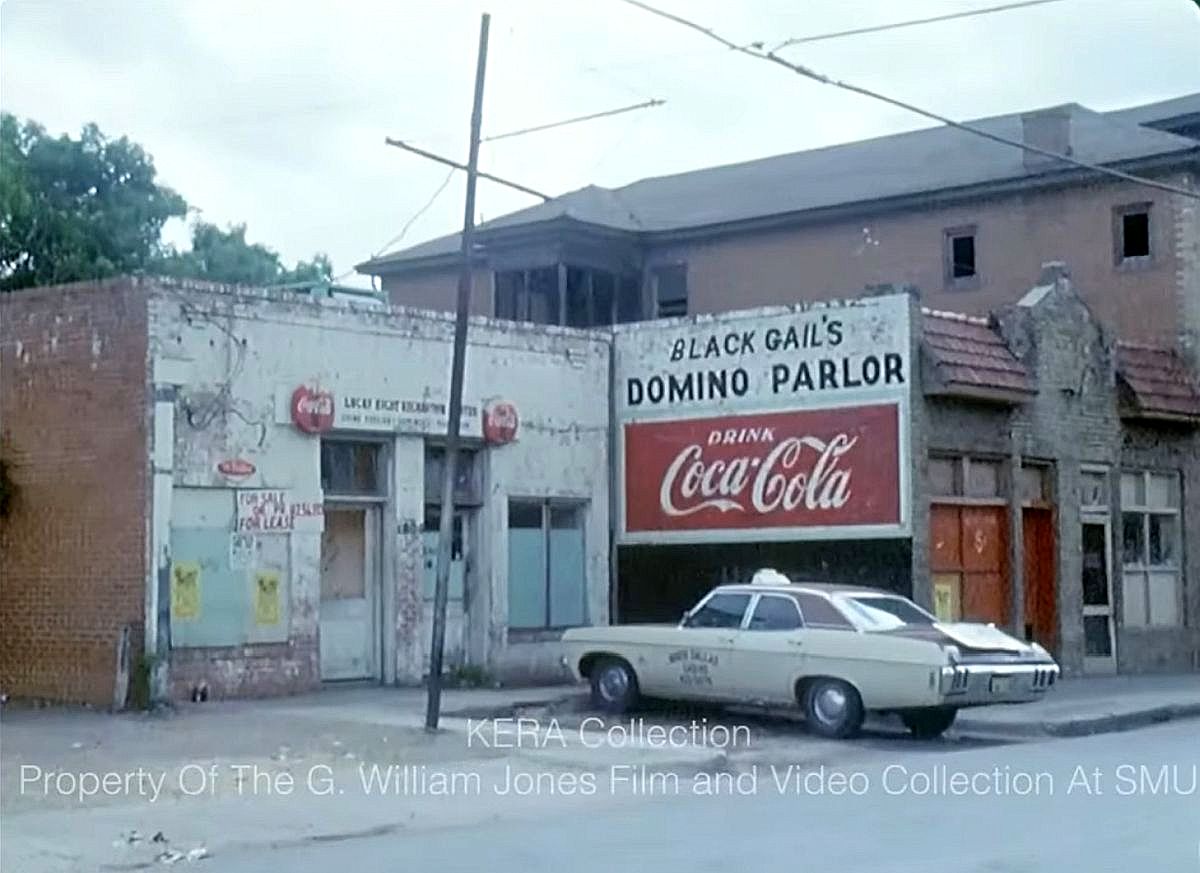
black-gails-domino-parlor_june-1973_kera-collection_jones-collection_SMULucky Eight Recreation Center (1804 Hall); Black Gail’s Domino Parlor
*

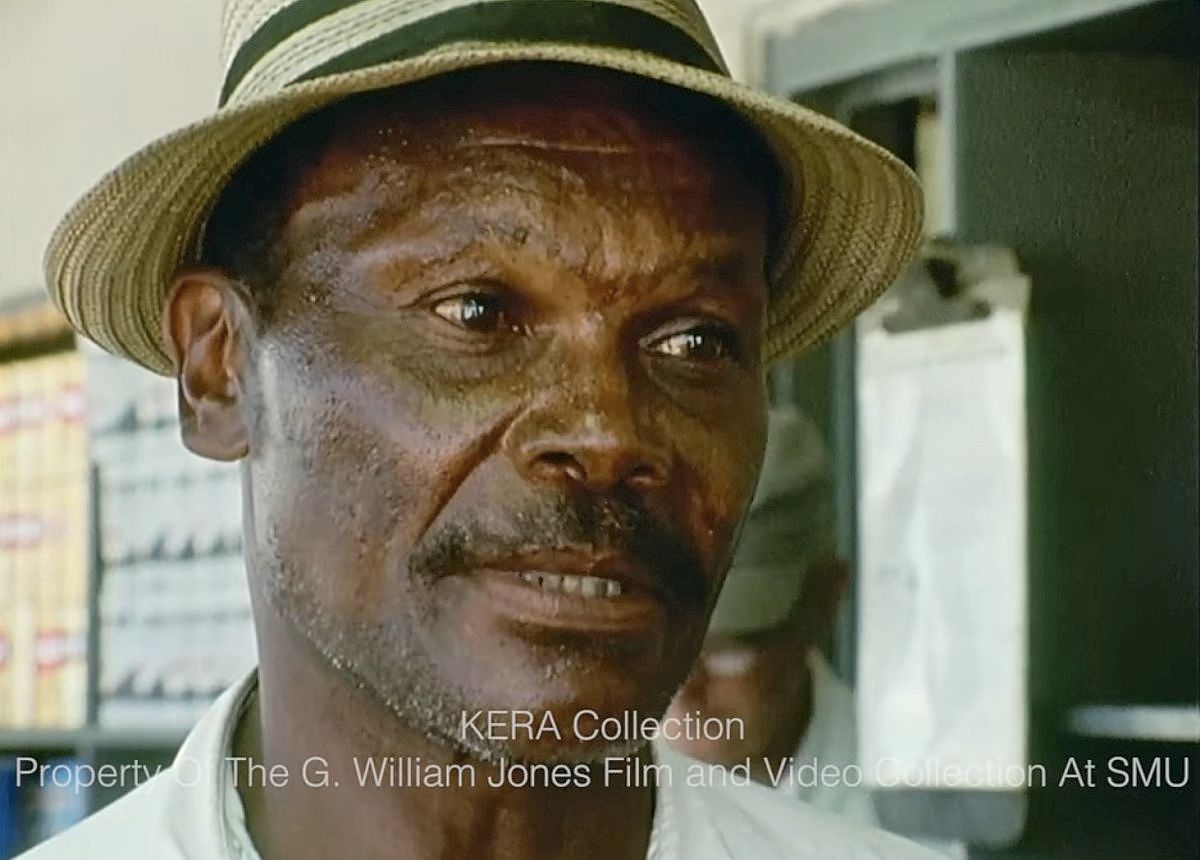
man-1_june-1973_kera-collection_jones-collection_SMU

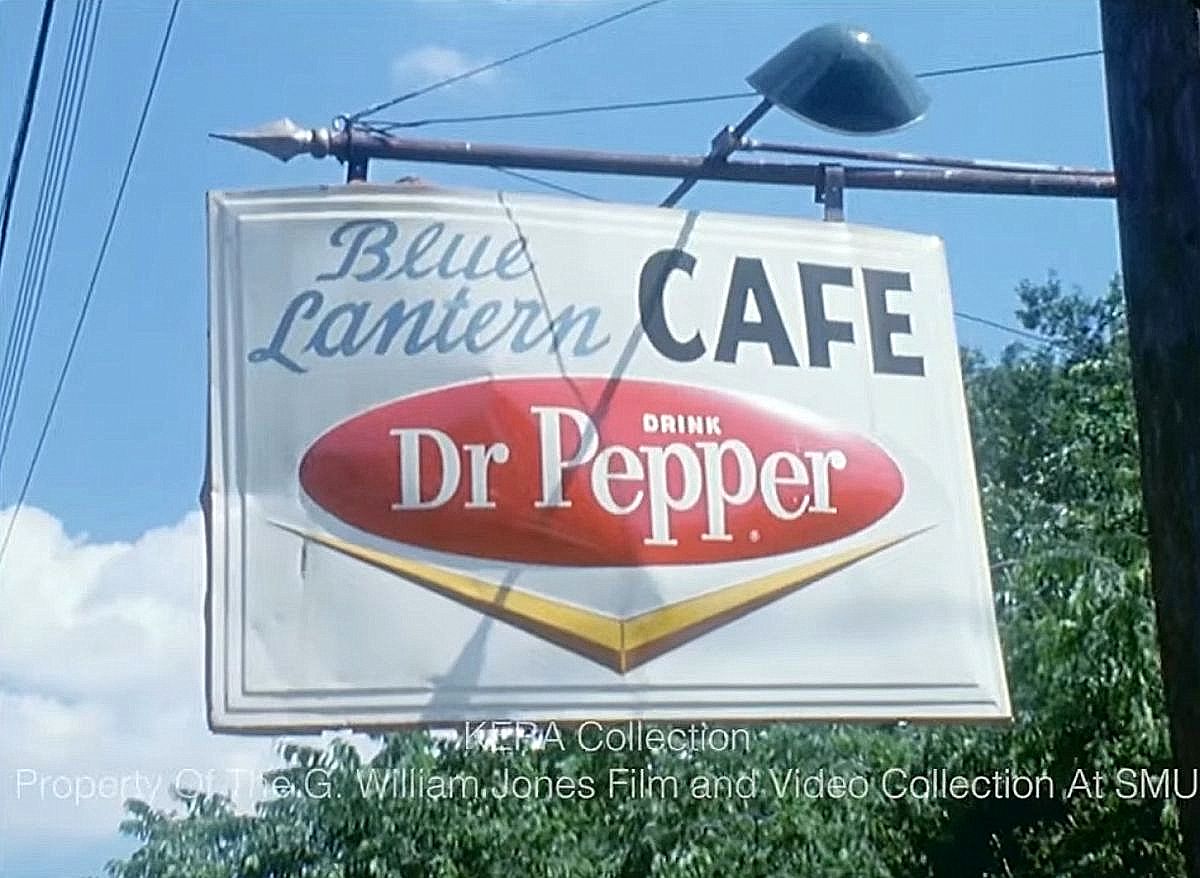
blue-lantern-cafe_june-1973_kera-collection_jones-collection_SMUBlue Lantern Cafe (1609 Hall)
*

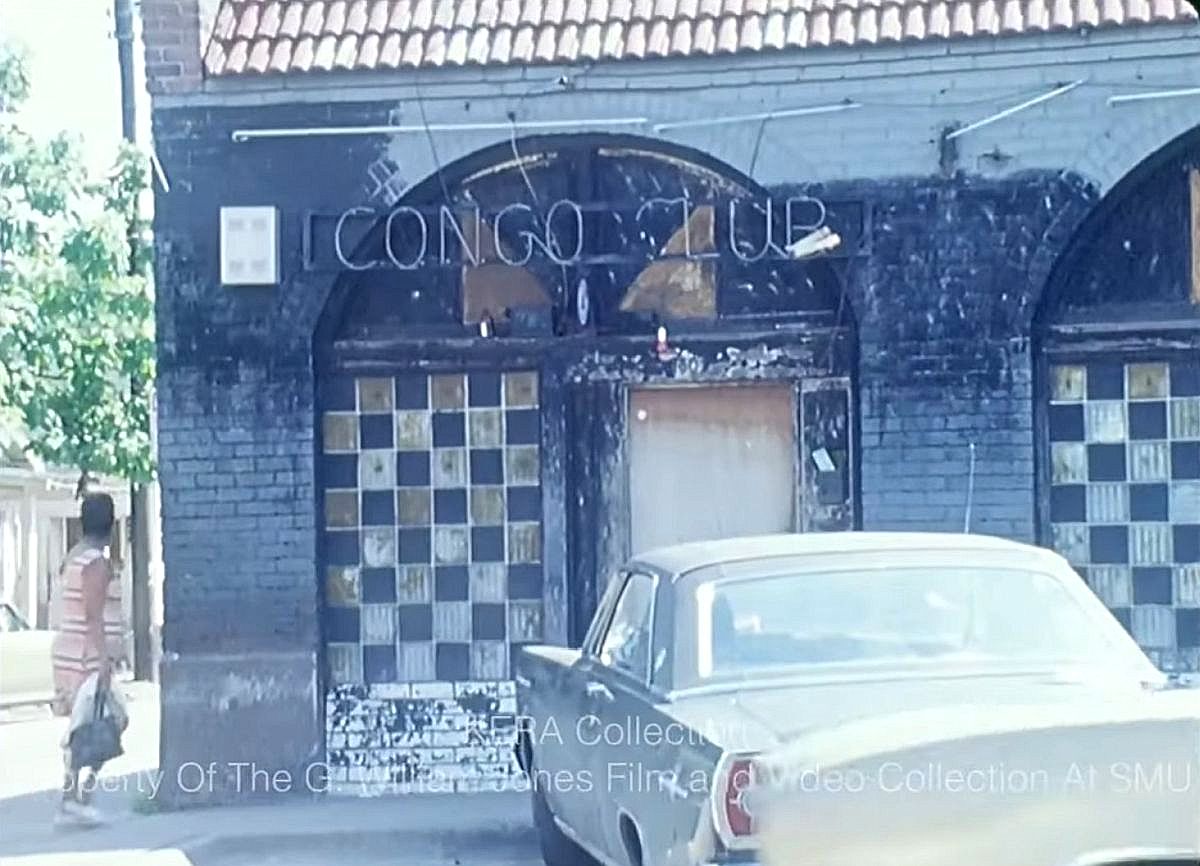
congo-club_june-1973_kera-collection_jones-collection_SMUCongo Club (1801 Hall, at Roseland)
*

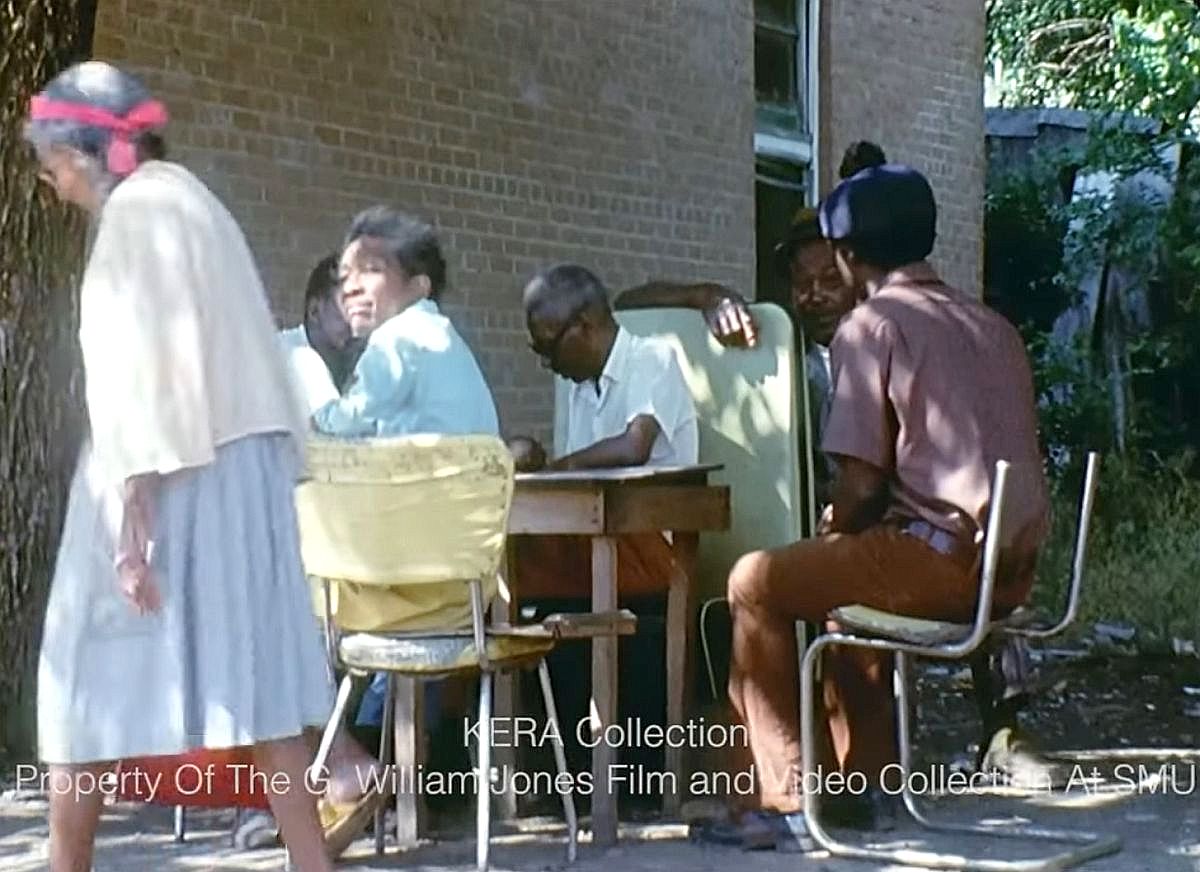
domino-game_june-1973_kera-collection_jones-collection_SMU

e-tx-bbq_june-1973_kera-collection_jones-collection_SMUEast Texas Bar-B-Q/East Texan Barbecue (2311 Hall)
*

man_june-1973_kera-collection_jones-collection_SMU

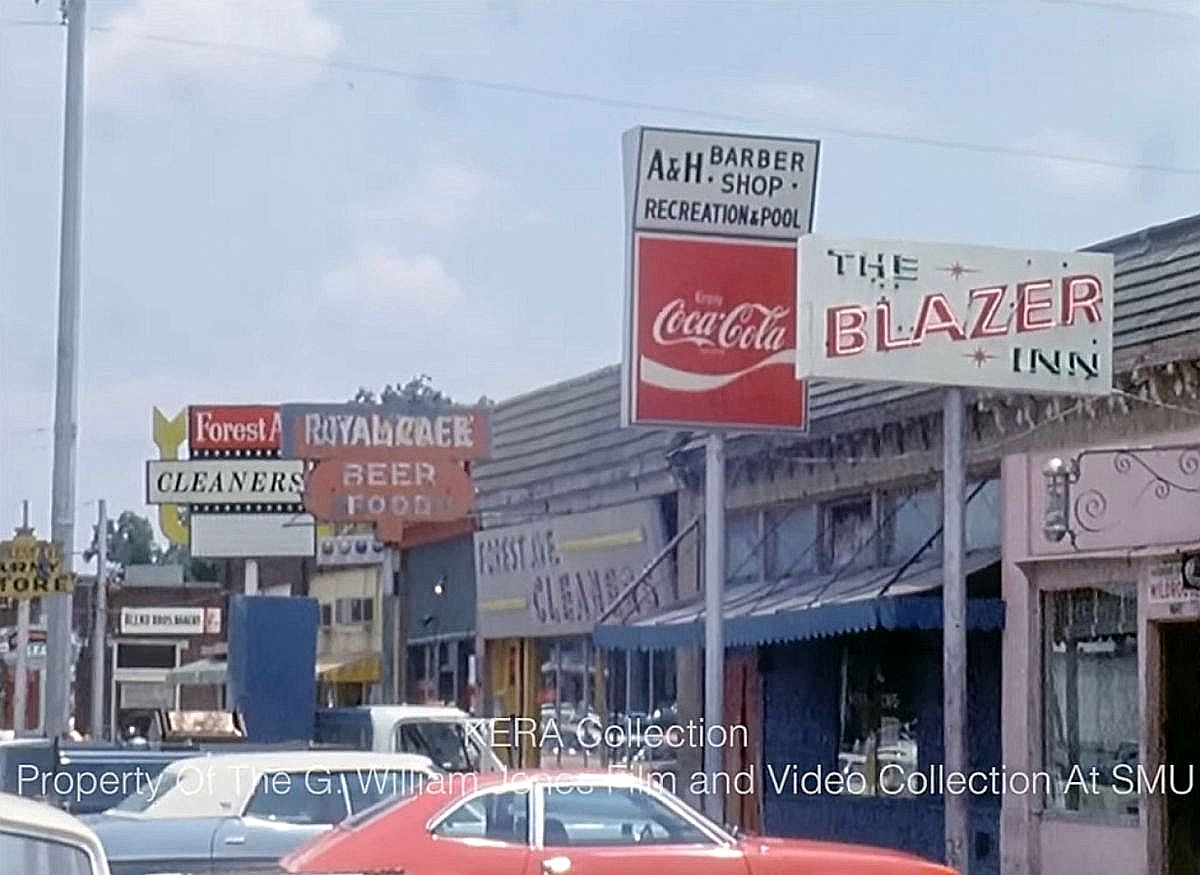
forest-ave_june-1973_kera-collection_jones-collection_SMU2700 block of Forest Avenue (now Martin Luther King Jr. Blvd.)
*

hall-st_june-1973_kera-collection_jones-collection_SMU1700 block of Hall Street, north from Ross
*

houses_june-1973_kera-collection_jones-collection_SMU

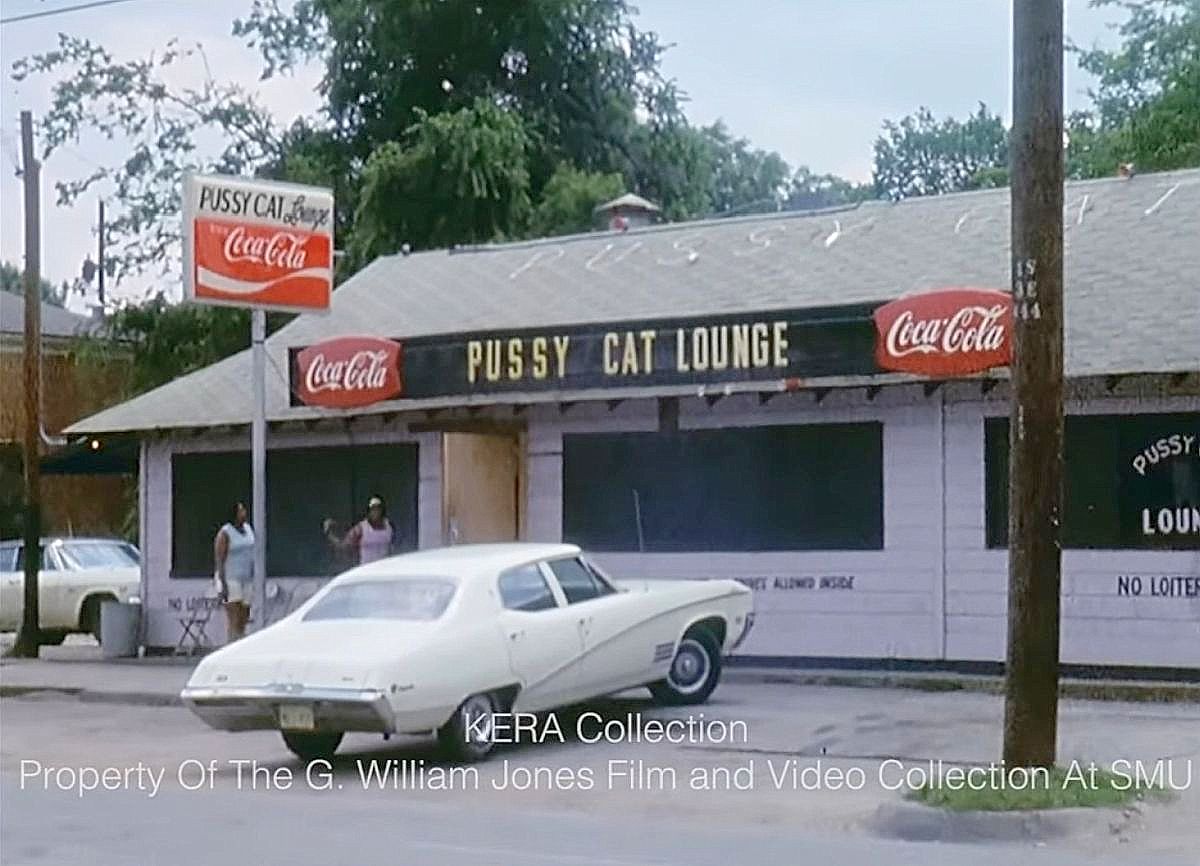
pussy-cat-lounge_june-1973_kera-collection_jones-collection_SMUPussy Cat Lounge (3410 Forest Ave. — now part of Fair Park)
*

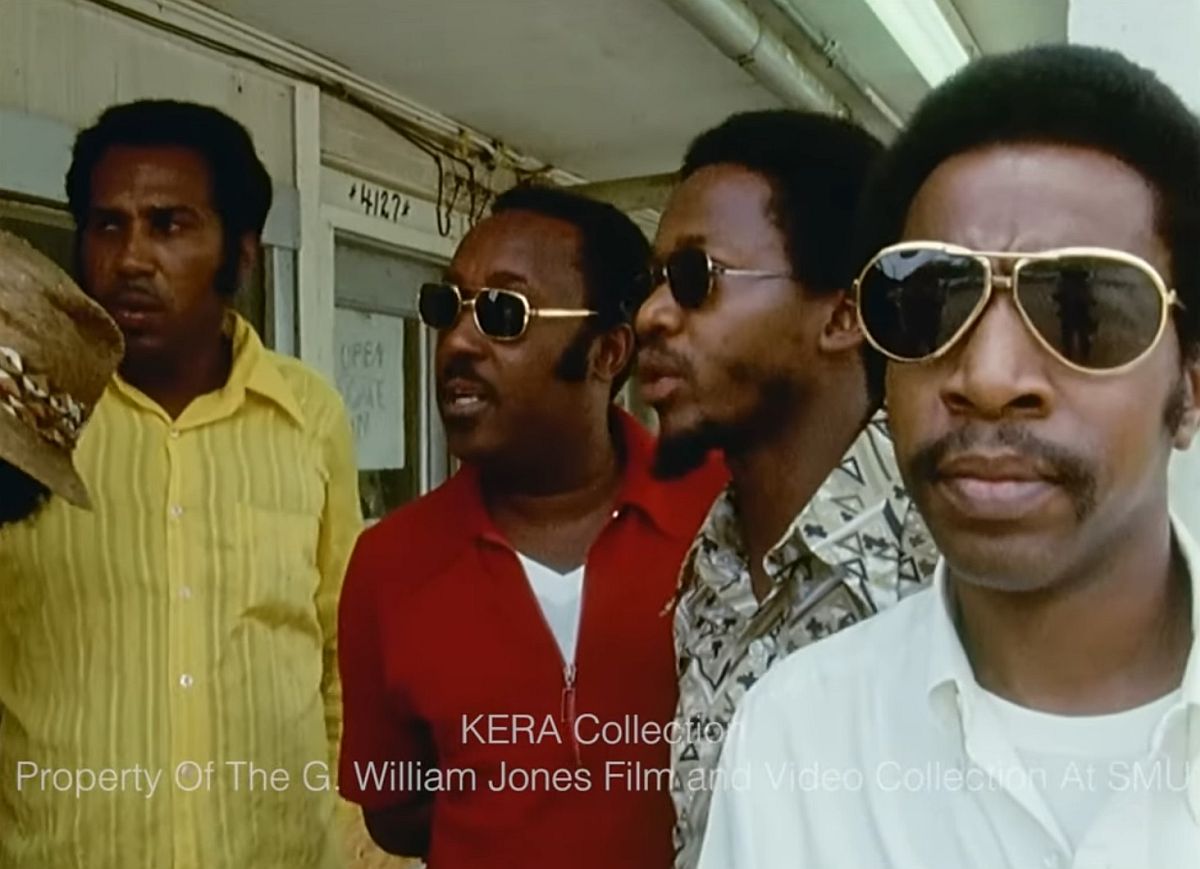
men_june-1973_kera-collection_jones-collection_SMU

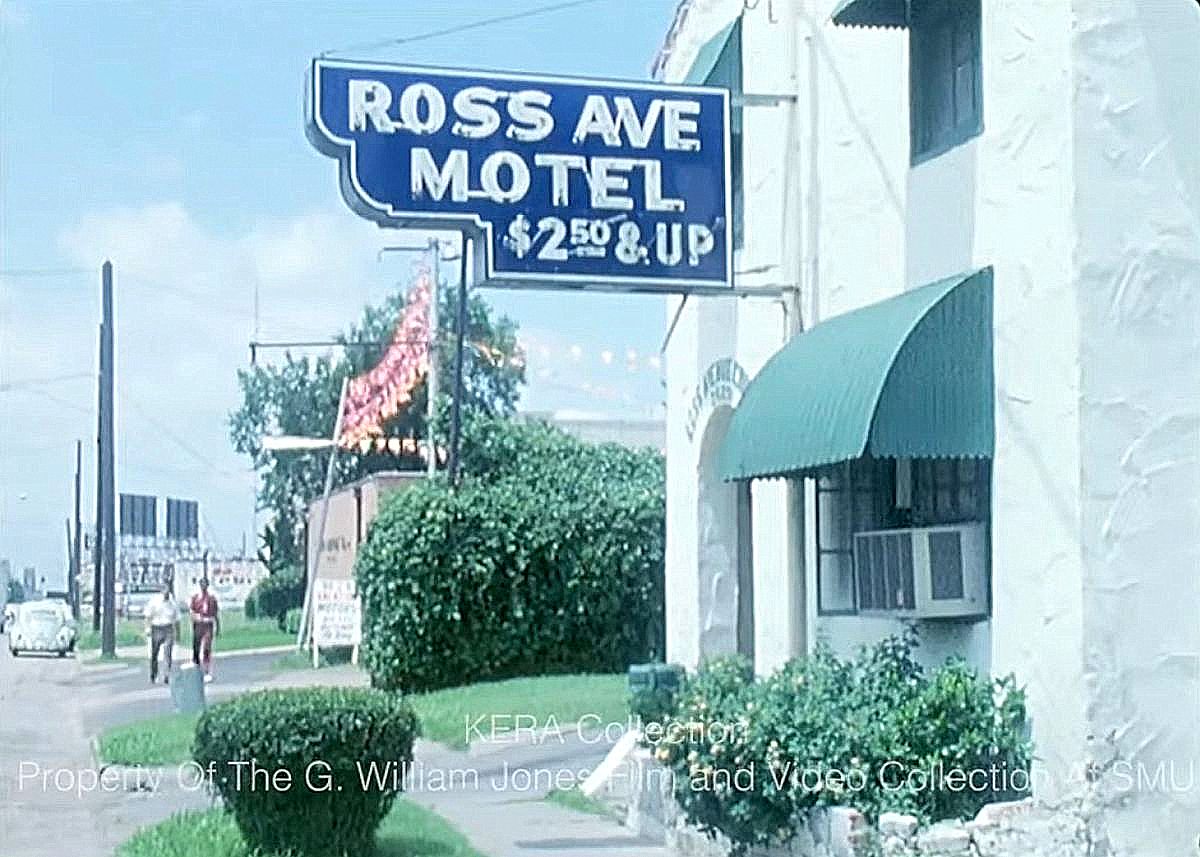
ross-avenue-motel_june-1973_kera-collection_jones-collection_SMURoss Avenue Motel (3629 Ross) — see what it looked like new here
*

south-blvd_june-1973_kera-collection_jones-collection_SMU2700 block of South Boulevard

Very cool! Thanks, SMU!

**

Here are some of the places seen in the film, with addresses (if I could find them), in the order they appear (several places make more than one appearance):

  • Pussy Cat Lounge:  3410 Forest Avenue (now MLK Blvd.)
  • Elite Theater (sign):  2720/2722 Forest Ave. (closed; originally the White Theater, which opened in 1934)
  • Blazer Inn:  2722 Forest (in the old theater)
  • A & H Barber Shop, Recreation, Pool:  2724 Forest
  • Royal Cafe:  2726 Forest
  • Royal Barber Shop:  1813 Hall
  • Soul Shop
  • Hall’s Hotel:  1809 1/2 Hall
  • Corner of Hall & Roseland
  • Busy Bee Cafe:  1612 Hall
  • Red Door
  • Black Gail’s Domino Parlor:  1802 Hall
  • Congo Club:  1801 Hall (at Roseland)
  • Ascot Room:  1710 Hall (at Ross)
  • East Texas Bar-B-Q (listed in directories as East Texan Barbecue):  2311 Hall
  • Mary’s Place
  • Bill & Bess’ Cafe
  • Watson’s Cafeteria:  1715 Hall
  • Jim’s Liquor:  1713 Hall
  • Alvacado Inn:  1726 Hall
  • Stewart Motors:  3509 Ross
  • Vacation Motors:  3623 Ross
  • Ross Avenue Motel:  3629 Ross
  • 1600 block of Hall, looking toward Ross
  • Your Thrift Shop:  1622 Hall (warehouse), 3302 Ross
  • Forest Avenue Store:  2716-A Forest
  • Hooper’s Jeweler:  2720 Forest
  • Front of old Elite Theater, then the Blazer Inn:  2722 Forest
  • 2700 block of South Blvd. shows homes at 2707 South Blvd. and 2711 South Blvd.
  • Liberty Bail Bond Service:  1611 Hall (Theodore Greer, bondsman)
  • Blue Lantern Cafe:  1609 Hall
  • Dallas Police Substation:  Bexar and Municipal streets

***

Sources & Notes

All images are screenshots from the YouTube video “KERA Report On Crime In Dallas — June 1973,” from the KERA Collection, G. William Jones Film and Video Collection, Hamon Arts Library, Southern Methodist University.

royal-cafe_june-1973_kera-collection_jones-collection_SMU_sm

*

Copyright © 2021 Paula Bosse. All Rights Reserved.
Miscellaneous Dallas #2

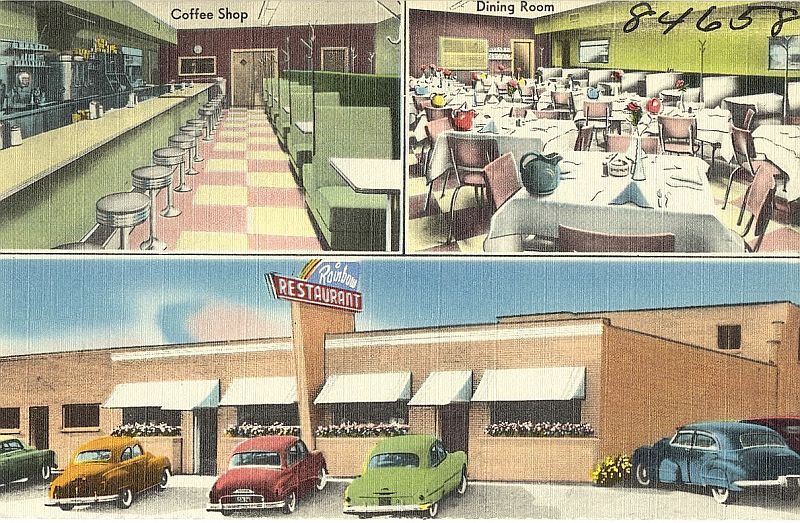
rainbow-restaurant_tichnor-bros-collection_boston-public-libraryOpen 24 hours, plenty of free parking…

by Paula Bosse

And now, a bunch of homeless, random images (all are larger when clicked).

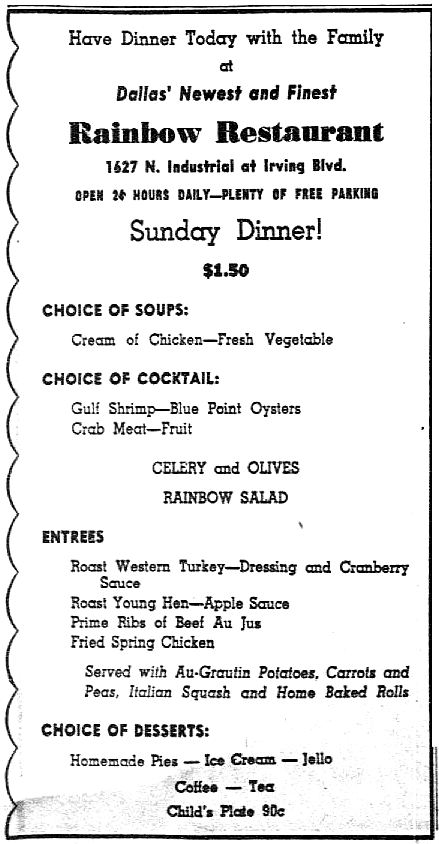
Above, the 24-hour Rainbow Restaurant, 1627 N. Industrial at Irving Blvd. Below, its menu.

rainbow-restaurant_ad_dec-19511951

*

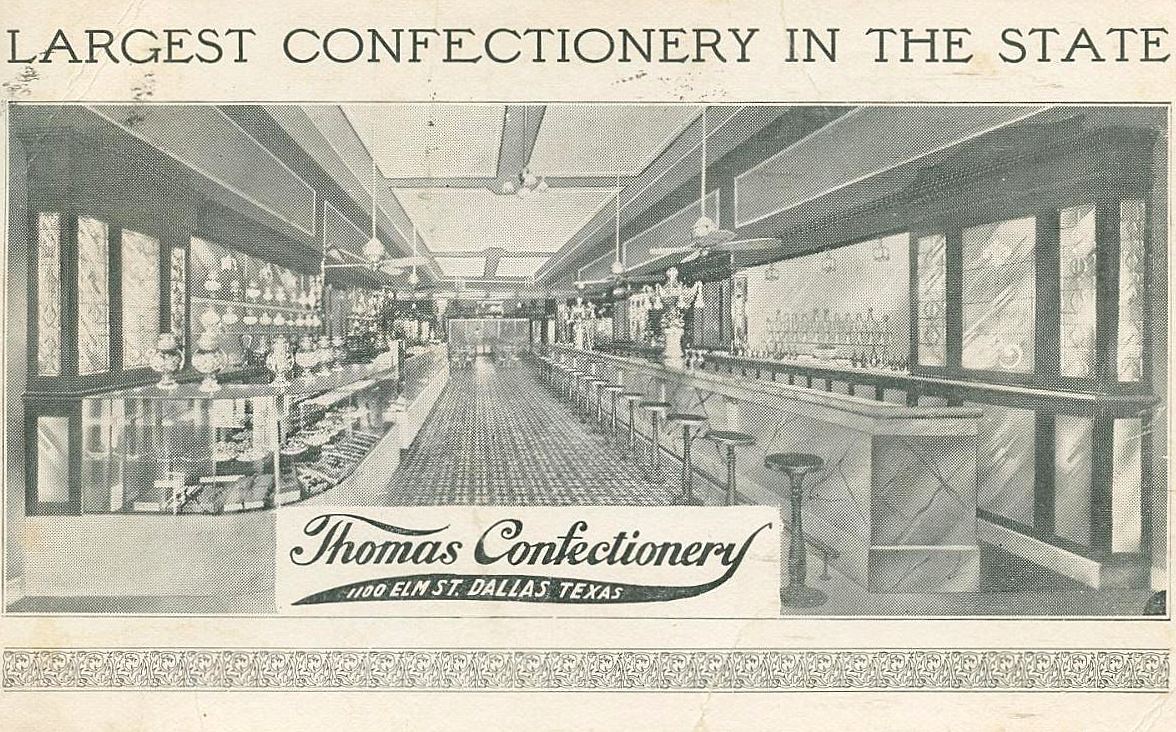
Thomas Confectionery, 1100 Elm Street. “Largest Confectionery In the State.” Popular date spot with the pre-flapper generation.

thomas-confectionary_postcard_1911_sam-rayburn-house-museum-via-portal1911 (via Portal to Texas History)

thomas-confectionery_0915121912. Dallas Morning News want-ad

*

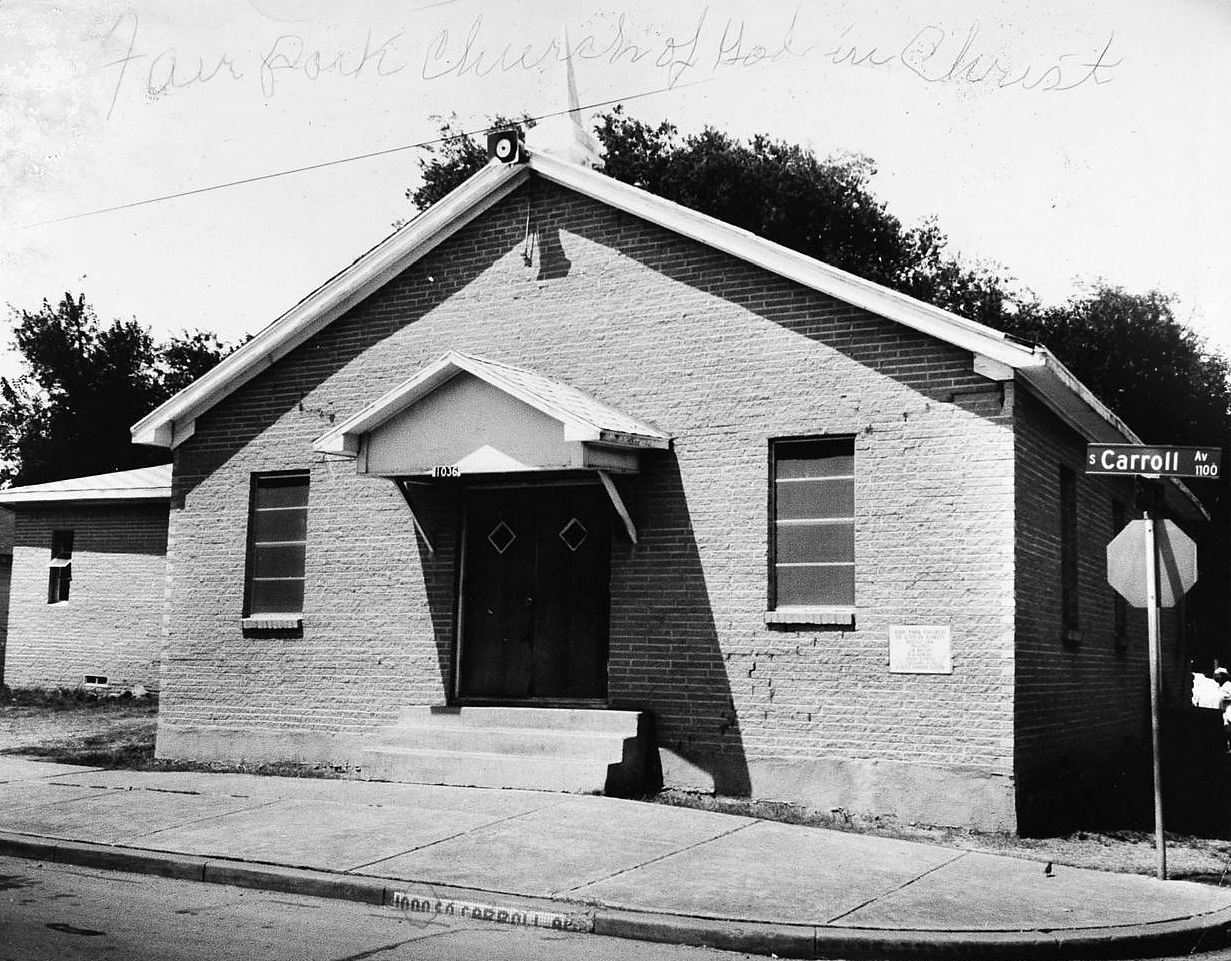
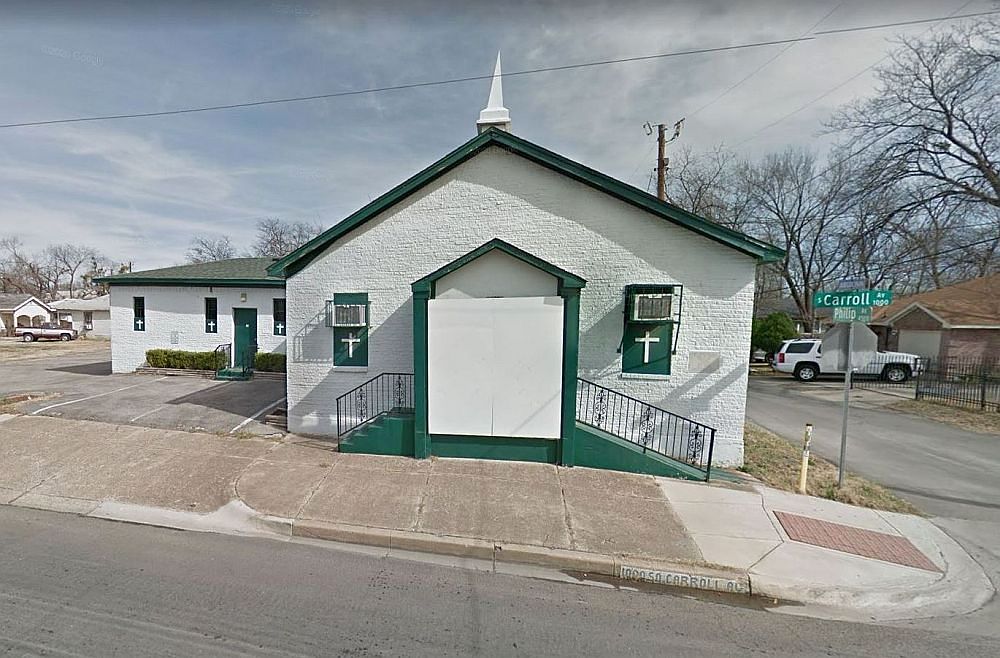
Fair Park Church of God in Christ, 1036 S. Carroll Ave.

fair-park-church-of-god-in-christ_1974_USC-libraries 1974 (via USC Libraries)

And it’s still standing! (I love that the curb tiles are still there.)

fair-park-church-of-god-in-christ_google-street-view-20172017 (via Google Street View)

*

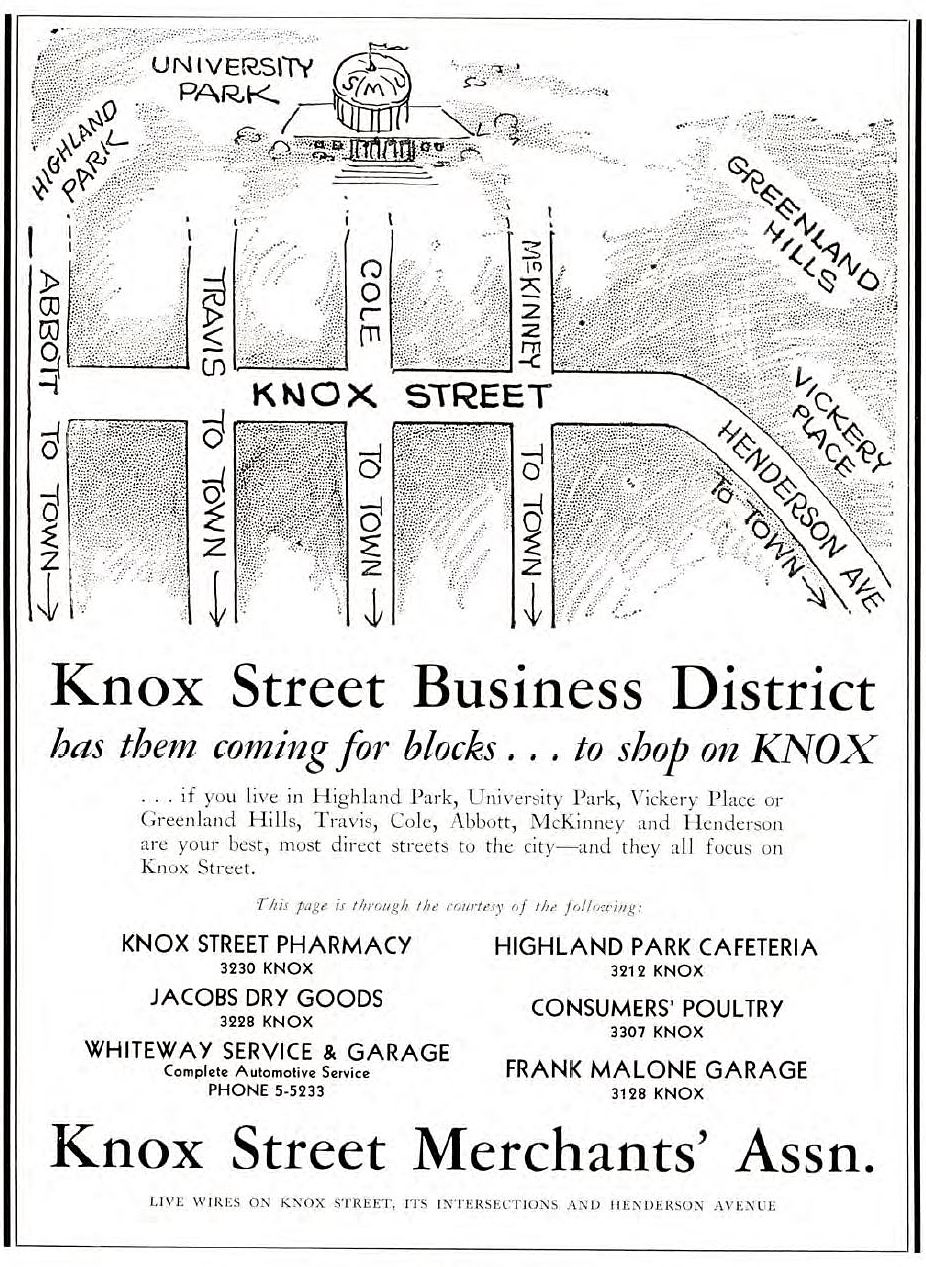
The Knox Street Business District, pre-Central Expressway. …Way pre.

knox-street-business-district_1932-smu-rotunda1932 (via SMU Rotunda)

*

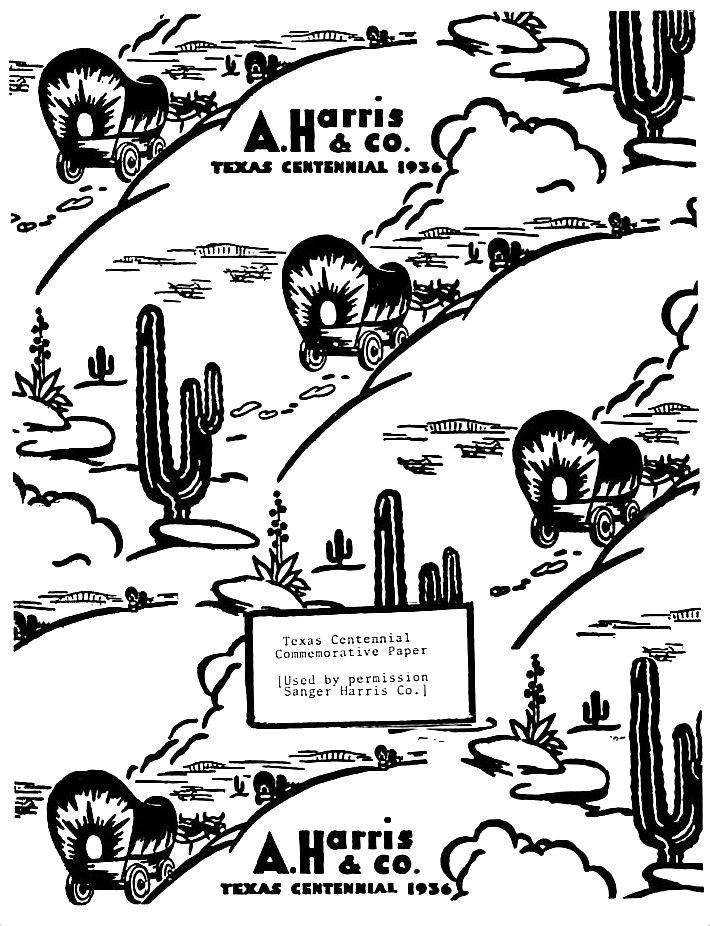
A. Harris & Co. — Texas Centennial Commemorative Paper (gift wrap?).

tx-centennial_a-harris_gift-paper_elm-fork-echoes_april-1986_portal-tx-hist1936 (via Portal to Texas History)

*

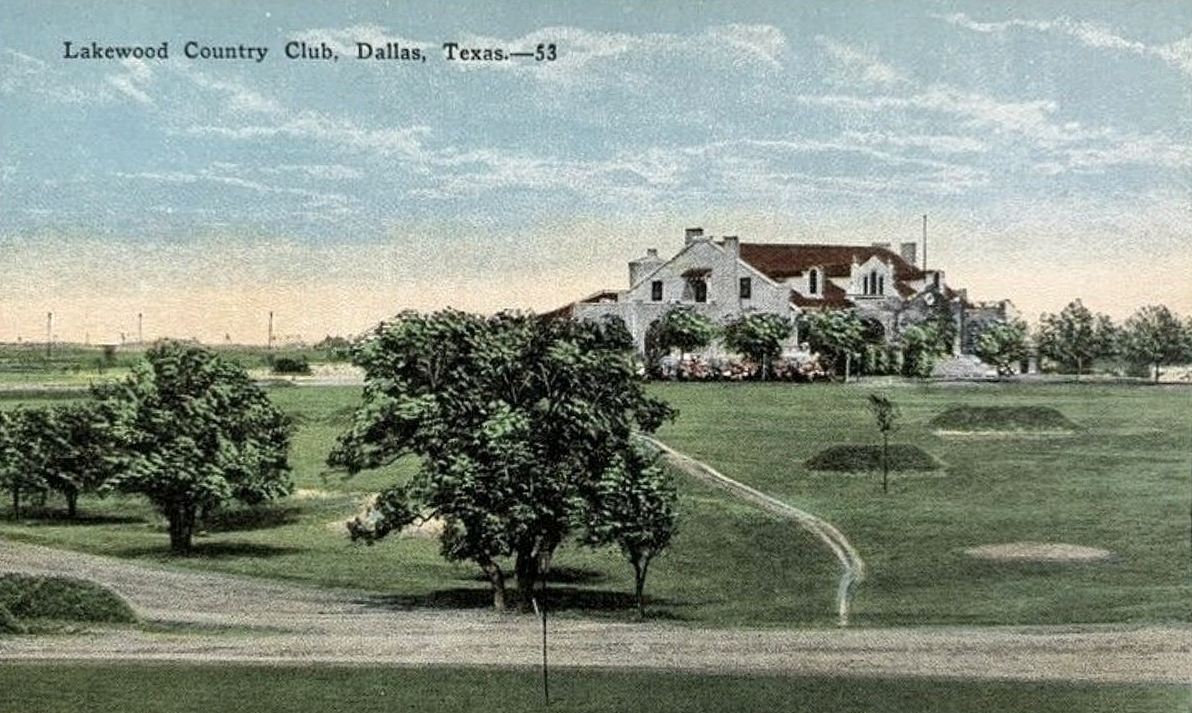
The Lakewood Country Club (see it before the landscaping in this photo from this post).

lakewood-country-club_postcard_ebay(via eBay)

*

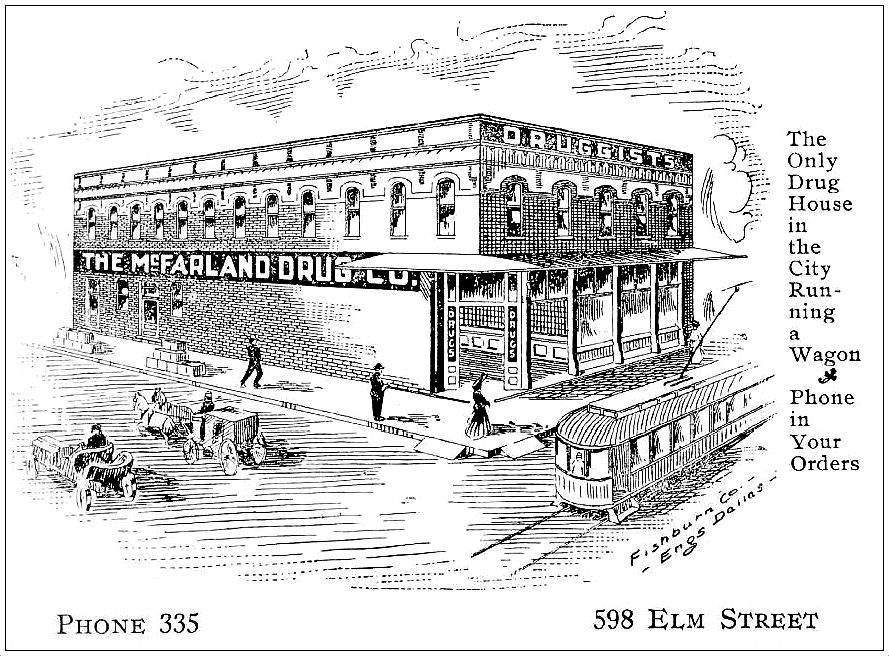
The McFarland Drug Co., 598 Elm, at Hawkins, in Deep Ellum (later became 2424 Elm).

mcfarland-drug-co_hints-to-housekeepers_degolyer_SMU_19051905 (via DeGolyer Library, SMU)

*

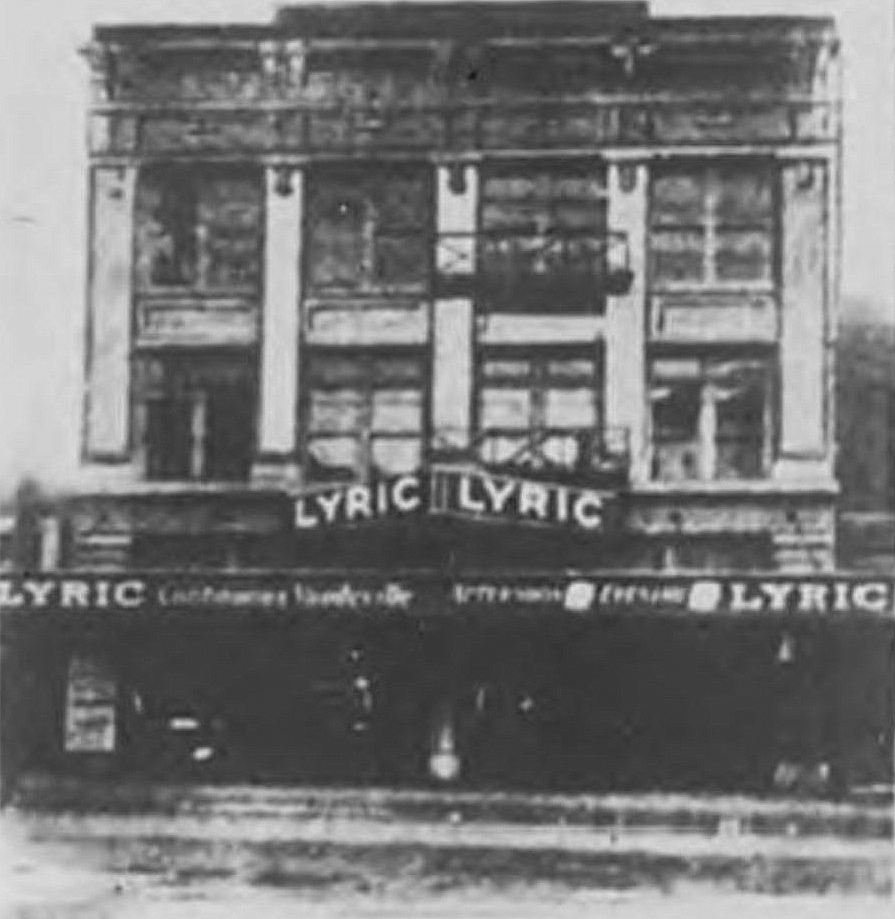
The Lyric Theatre, 364 Elm, near Stone (later 1602 Elm).

lyric-theater_degolyer-lib_SMU_dallas-theaters_nd1907-ish (via DeGolyer Library, SMU)

*

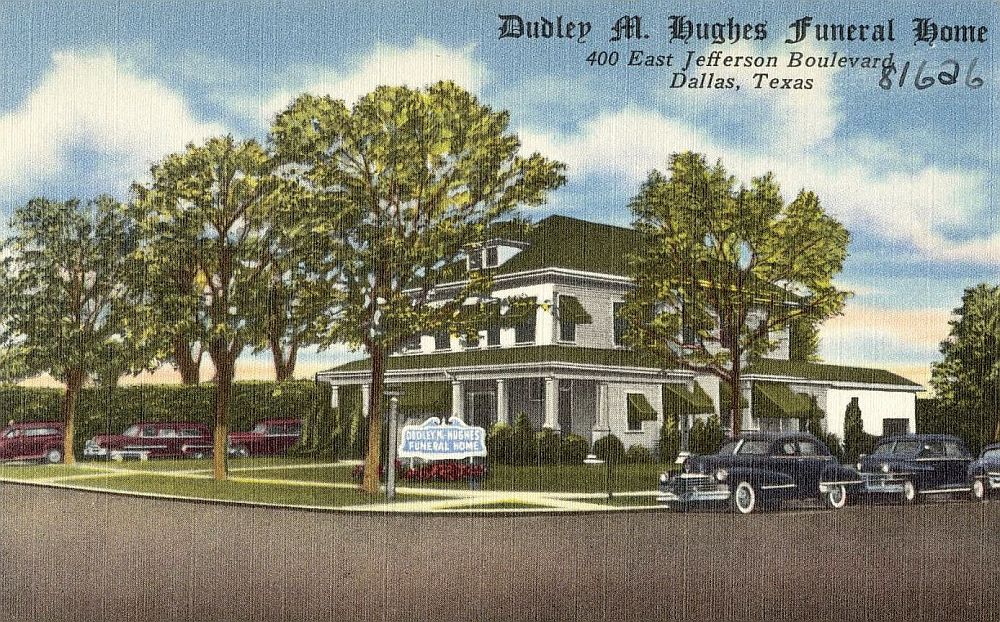
Dudley M. Hughes Funeral Home, 400 E. Jefferson Blvd, Oak Cliff.

dudley-hughes-funeral-home_tichnor-bros_boston-public-library(via Tichnor Bros. Collection, Boston Public Library)

*

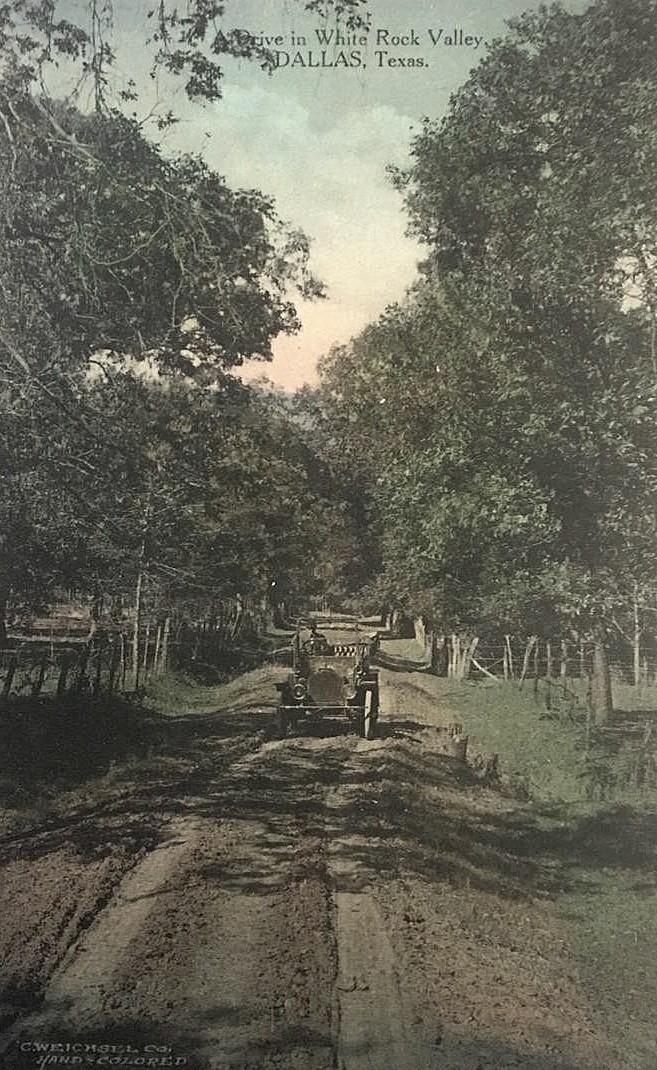
“A Drive in White Rock Valley.” Before the lake.

white-rock-valley_postcard_1912_ebay(via eBay)

***

Sources & Notes

Rainbow Restaurant postcard is from the Tichnor Bros. Postcard Collection, Boston Public Library.

See the first installment of “Miscellaneous Dallas” here.

rainbow-restaurant_tichnor-bros-collection_boston-public-library_sm

*

Copyright © 2021 Paula Bosse. All Rights Reserved.

Ross Graves’ Cafe: 1800 Jackson — 1947

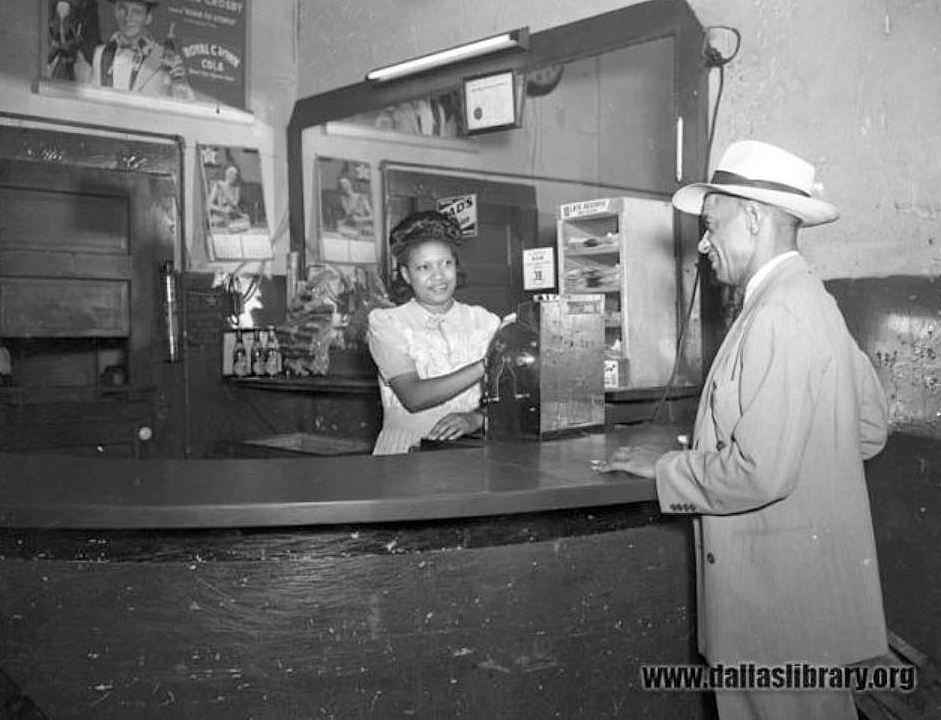
graves-cafe_marion-butts_dpl_1947_cashierGraves Cafe… (photo by Marion Butts/Dallas Public Library)

by Paula Bosse

Ross Graves (1903-1973) seems to have been something of a successful bon vivant who dipped his toe into a variety of businesses catering to Dallas’ African-American community: he was the proprietor of, variously (and often simultaneously), a night club, a liquor store, a gas station, a barber shop, and, most successfully, a restaurant, which was in business for almost 20 years (sometimes referred to as Ross Cafe or Graves Place). Below is a photo from 1947 showing the Ross Graves Cafe at 1800 Jackson Street (at Prather) in downtown Dallas (we see the south side of Jackson, with the view to the west).

graves-cafe_1800-jackson_negro-directory_1947

This photo accompanied an ad with the following text:

graves-cafe_negro-directory_1947-48-text

He opened the cafe around 1937 and kept it going until 1955 when he “retired” (he also dabbled in dice-game-hosting at the cafe and was busted in 1954 on gaming charges — he was given a 2-year probated sentence the next year). (Also, the building was part of a large donation to the city in 1955 — more about that below.)

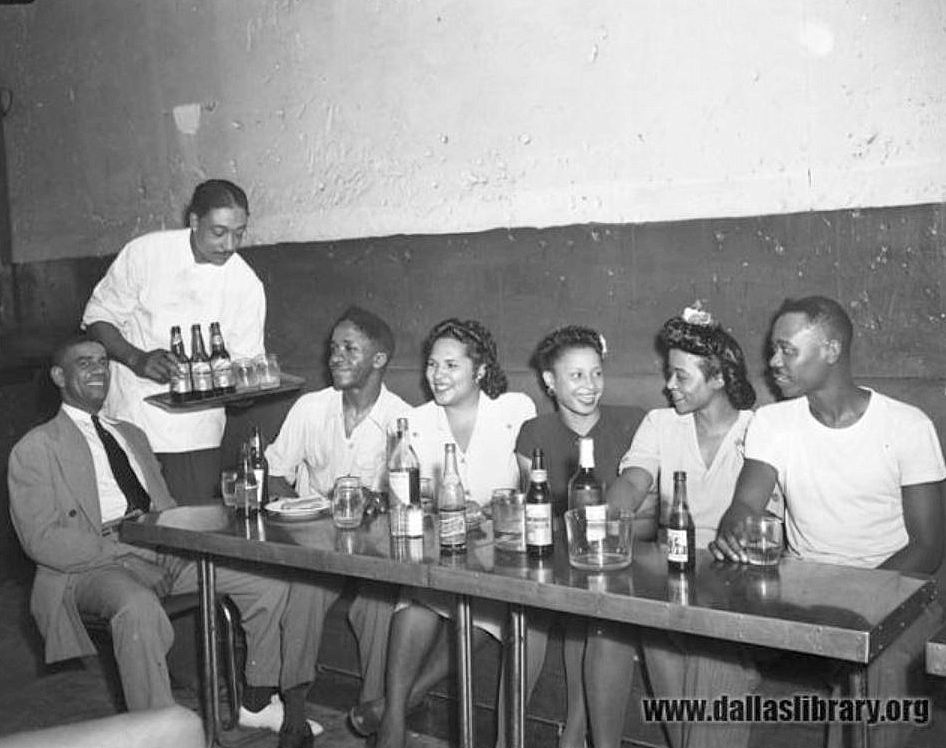
The photo at the top shows, I’m guessing, Mr. Graves standing at the cafe’s cash register with an employee in 1947. He’s also seen in the photo below.

graves-cafe_marion-butts_dpl_1947(photo by Marion Butts/Dallas Public Library)

**

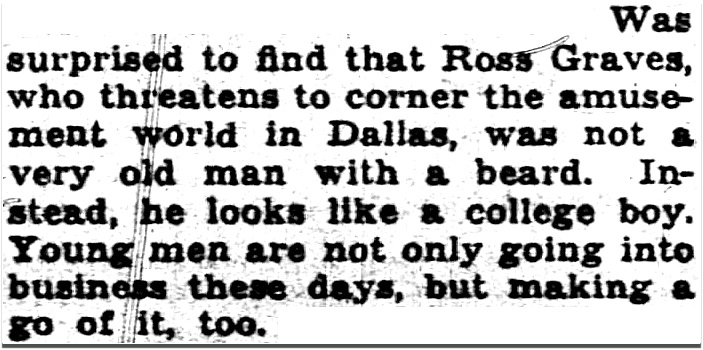
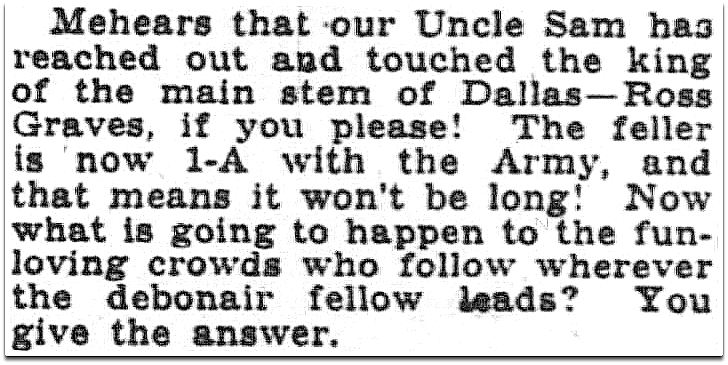
I was originally intrigued by the photo of the exterior of the cafe — I couldn’t picture where it had been. But in trying to find out more about the building, I learned about the life of Ross Graves and came across some interesting little tidbits which paint a a picture of a fun-loving man with an active social life, lots of friends, and a healthy bank account. Below are a few clippings from the Pittsburgh Courier, a newspaper published in Pennsylvania which served as something of a national newspaper for Black America, with political, sports, and entertainment news from around the country. There was always news from Dallas in it — in fact, they had a local office here (3306 Roseland). There was even a Dallas-based society/gossip columnist named Mrs. O. J. Cansler (whose column had the rather unfortunate name of “Kolumn Komments”). She was quite frothy and wrote with the breathless excitement one expects in a society columnist. (I highly encourage anyone with a subscription to Newspapers.com to check out her “kolumn” — it’s a breath of fresh air to read about Dallas’ Black community presented in such a lively and fun manner (or in ANY manner, really — you weren’t going to find any of what she was writing about in the Dallas Morning News or the Dallas Times Herald). Especially interesting are mentions of long-forgotten clubs and nightspots where bands and performers from Dallas’ vibrant musical scene played. Here are a few appearances of Ross (and his wife, Ruby) from the pages of the Pittsburgh Courier.
*

1939_graves_pittsburgh-PA-courier_111139_kolumn-komments_o-j-cansler
Pittsburgh Courier, Nov. 13, 1939

Graves was 36 years old at the time.

*

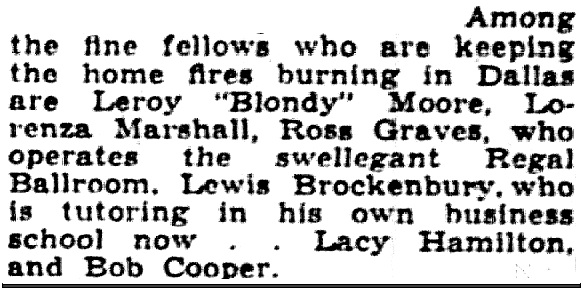
1942_graves_pittsburgh-PA-courier_080842_toppin-the-town_columnPittsburgh Courier, Aug. 8, 1942

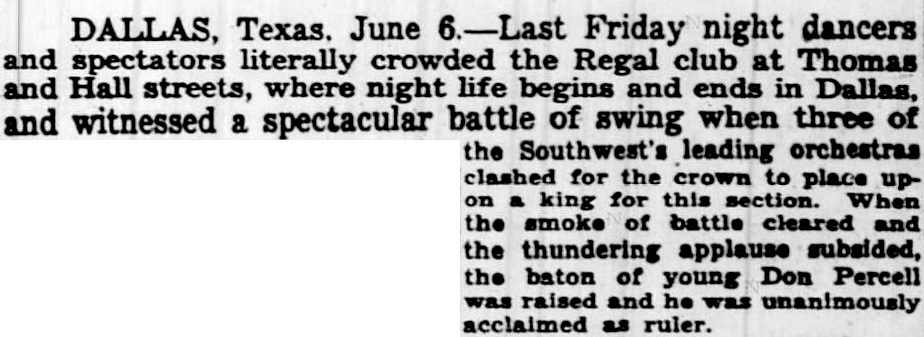
The Regal Ballroom (listed as the Regal Nite Club in city directories) was at 3216 Thomas, at Hall. It didn’t last very long, but while it did, it was, apparently, “swellegant”! Here’s a mention of it as the location of a swing band contest in 1940 (won by Don Percell):

graves_regal-club_pittsburgh-courier_060840Pittsburgh Courier, June 8, 1940

*

1942_graves_pittsburgh-PA-courier_101742_kolumn-komments_mrs-o-j-canslerPittsburgh Courier, Oct. 17, 1942

*

Graves’ second wife, Ruby Graves, was known for her “smart toggery.”

1944_graves_pittsburgh-PA-courier_101444_ruby-gravesPittsburgh Courier, Oct. 14, 1944

*

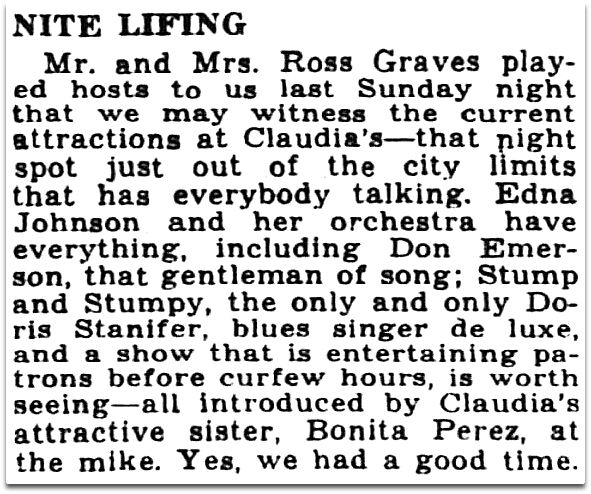
Ross and Ruby were quite the hosts:

1945_graves_pittsburgh-PA-courier_040745_kolumn-komments_mrs-o-j-canslerPittsburgh Courier, Apr. 7, 1945

I love this. This is the sort of thing you would never have read in the Morning News or the Times Herald. I want to know more about Claudia’s — “that night spot just out of the city limits that has everybody talking.”

*

graves-cafe_ad_pittsburgh-courier-051245Pittsburgh Courier, May 12, 1945

*

1946_graves_pittsburgh-PA-courier_062246_kolumn-komments_mrs-o-j-cansler
Pittsburgh Courier, June 22, 1946

Just popping up to NYC in their new Fleetwood to take in a boxing match. As one does.

**

Ross and Ruby eventually ended up living in a house on “swellegant” South Boulevard (2500 South Blvd.). At least one of their daughters was an Idlewild debutante, who made her debut in 1967 (read about the world of Black debutantes in 1937 Dallas here). Milam County native Ross Graves died on Dec. 4, 1973 at the age of 70. He had lived in Dallas for 50 years. And I bet he had a good time.

**

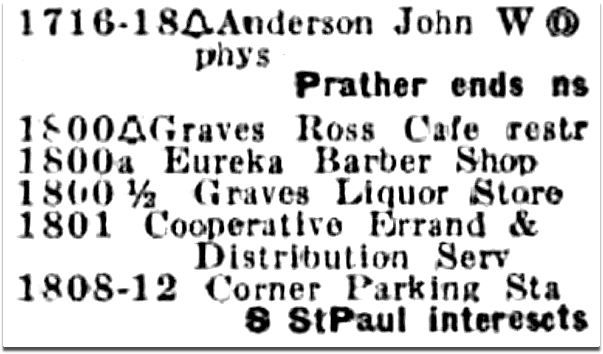
The location of Ross Graves’ Cafe was at 1800 Jackson Street, between Ervay and St. Paul, in a weird stretch of Jackson where two blocks were connected without a  break, in a row of buildings without an intersecting street. (The buildings are long gone, but the location can be seen on Google Maps here.) An interesting detail about these two blocks — the 1700 and 1800 blocks of Jackson Street — is that this property was owned by Dr. John W. Anderson, a prominent Black physician. After his death, his widow, Pearl C. Anderson, deeded the land to the Dallas Community Chest, the proceeds of which would be used to help needy Dallasites. (The donation was conservatively estimated at $200,000 at the time — about $2 million in today’s money). She donated the property in 1955, the same year Graves retired.

graves-cafe_dallas-directory-1947Jackson Street, 1947 Dallas city directory

***

Sources & Notes

Photos of the interior of Ross Graves’ Cafe are from the Marion Butts Collection, Dallas Public Library. Call Number for the top photo is PA2005-4/380.1; Call Number for the second is PA2005-4/380.2 (both are incorrectly identified as being in Deep Ellum).

The photo of the exterior of the cafe is from the Dallas, Texas Negro City Directory, 1947-1948 (many thanks to Pat Lawrence).

graves-cafe_marion-butts_dpl_1947_cashier_sm

*

Copyright © 2021 Paula Bosse. All Rights Reserved.