Flashback : Dallas

A Miscellany: History, Ads, Pop Culture

Category: Architecture/Significant Bldgs.

“The Walls Are Rising” — FOUND!
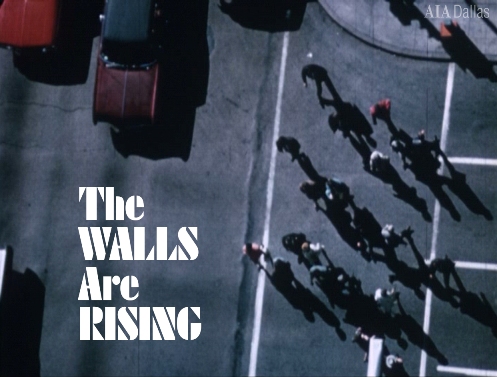
walls_FilmGRAPHIC_AIAAIA Dallas

by Paula Bosse

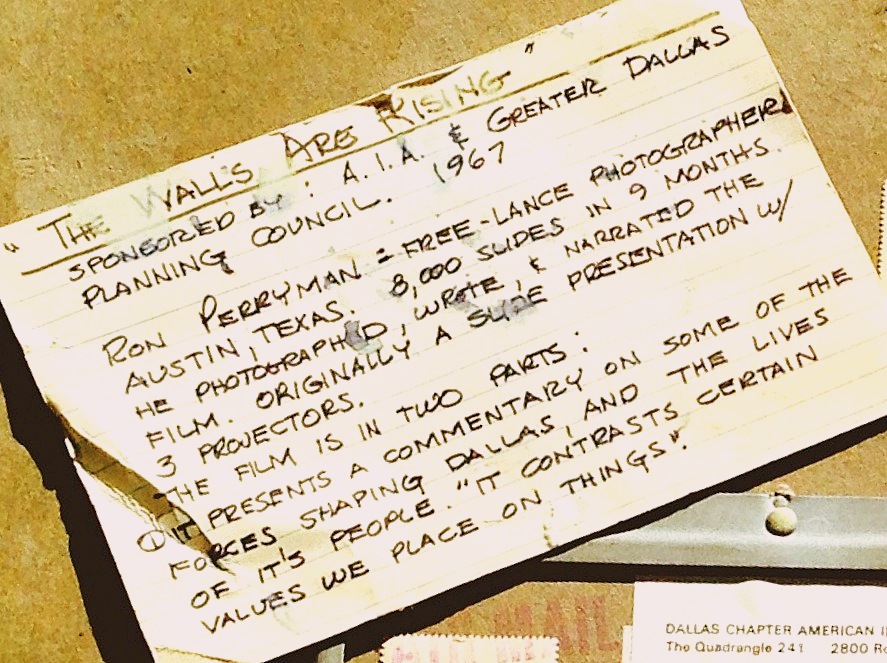
Last month I wrote about “The Walls Are Rising,” a film about the city’s desperate need to address shortcomings in its planning and development if it wanted to avoid an urban crisis which some felt was fast-approaching. The film had been produced by the Dallas chapter of the AIA (American Institute of Architects) in 1966/67, and it was shown to numerous civic and professional organizations. When I read that the film began with an assault of images and sounds followed by an ominous and stern voice saying, “We are living in an accident,” I knew I had to see it. Also, as the film touched on many of the same city planning issues we are still debating almost 50 years later, I knew that it would have a certain amount of news value. If *I* wanted to see it, I felt sure others would, too.

I stumbled across mention of the film in early November of last year and researched it as much as I could using various online sites and databases, but I could find nothing about it after its initial barnstorming tour through the Dallas civic club scene between 1967 and 1972. I contacted the Dallas Municipal Archives and the Dallas/Texas history department of the Dallas Public Library, but neither had any info. I contacted AIA Dallas/Dallas Center for Architecture, and they weren’t familiar with the project either, but Jan Blackmon (Executive Director of AIA Dallas/DCFA) and Greg Brown (DCFA Programs Director) were both extremely enthusiastic and set out to find it.

And now they’ve found it. To be more precise, it was AIA’s Anna Procter who tracked down a copy of the film. Her dogged detective work resulted in not only finding a copy of “The Walls Are Rising” (still on a reel), but also finding other archival material concerning AIA concerns regarding the city’s urban planning and development issues of the late-’60s — a little treasure trove of cool stuff.

The film has been digitized, and it will be screened by AIA Dallas on Jan. 19, 2015. If you’d like to attend the screening and panel discussion, information for the event is here. (If you can’t make it, don’t worry — there are plans to upload the film for online viewing in the near future.)

An enthusiastic article about the film by Robert Wilonsky of The Dallas Morning News (who will also be moderating the panel on Jan. 19), can be found here.

Sometimes spending my days wandering through virtual archives and blowing virtual dust off virtual files pays off. I look forward to seeing “The Walls Are Rising,” and I’m so happy to have played a part in the unearthing of a forgotten part of Dallas’ history!

walls_film_reel_AIAAIA Dallas

walls_film_reel_AIA-det

(The fact that it contains over 8,000 slides and was originally presented with THREE projectors — guaranteeing maximum visual assault — is just fantastically crazy. With the ominous tone, the use of Wagner’s “Flight of the Valkyries,” and what sounds like an experimental use of sound and quick-cutting images, all I can think of is a Dallas version of the sublime “Manchild in Beantown,” the “art” film Diane makes for Woody’s parents — and the funniest thing that “Cheers” ever did — which can be viewed here.)

***

Sources & Notes

Images used with permission of AIA Dallas.

My original post, “Urban Crisis — 1967,” is here.

*

Copyright © 2015 Paula Bosse. All Rights Reserved.


Old Red Goes Hollywood (sort of…) — 1964

buchanan_trial-oswald_1964Old Red’s star turn in The Trial of Lee Harvey Oswald (click for larger image)

by Paula Bosse

An interesting (if a bit fuzzy) screenshot of the Old Red Courthouse from one of Larry Buchanan’s Dallas-made films, “The Trial of Lee Harvey Oswald” (1964), about what might have happened had LHO lived to face trial. As with most of Buchanan’s extremely low-budget films, it drags and has clunky acting (…I have to admit that I didn’t watch the whole thing), but it’s interesting to fast-forward through to see the bits shot out on the streets of downtown. I really like this view of the courthouse. It seems familiar and unfamiliar at the same time.

***

Yes, you can watch the whole film on YouTube — free! Mosey on over here. The movie’s tagline: “Not a Newsreel … A Full-Length Motion Picture Filmed Secretly in Dallas.” Uh-huh. And as far as the movie having been “suppressed” (as is mentioned at the  beginning of the film) … well, let’s just say Larry worked in advertising for many years and knew a thing or two about marketing.

For other posts I’ve written about Larry Buchanan (I kind of feel I know him now — he would have been a lot of fun to shoot a movie with!), click here.

*

Copyright © 2014 Paula Bosse. All Rights Reserved.
Baylor Hospital — 1909-1921

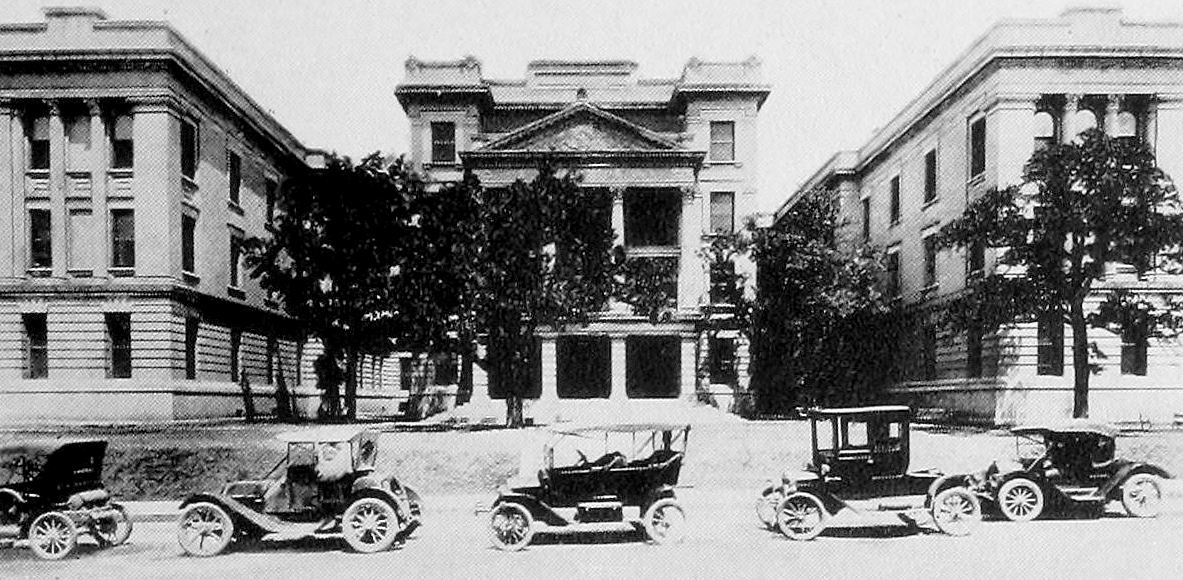
baylor_postcardClassic cars on Junius Street… (click for larger image)

by Paula Bosse

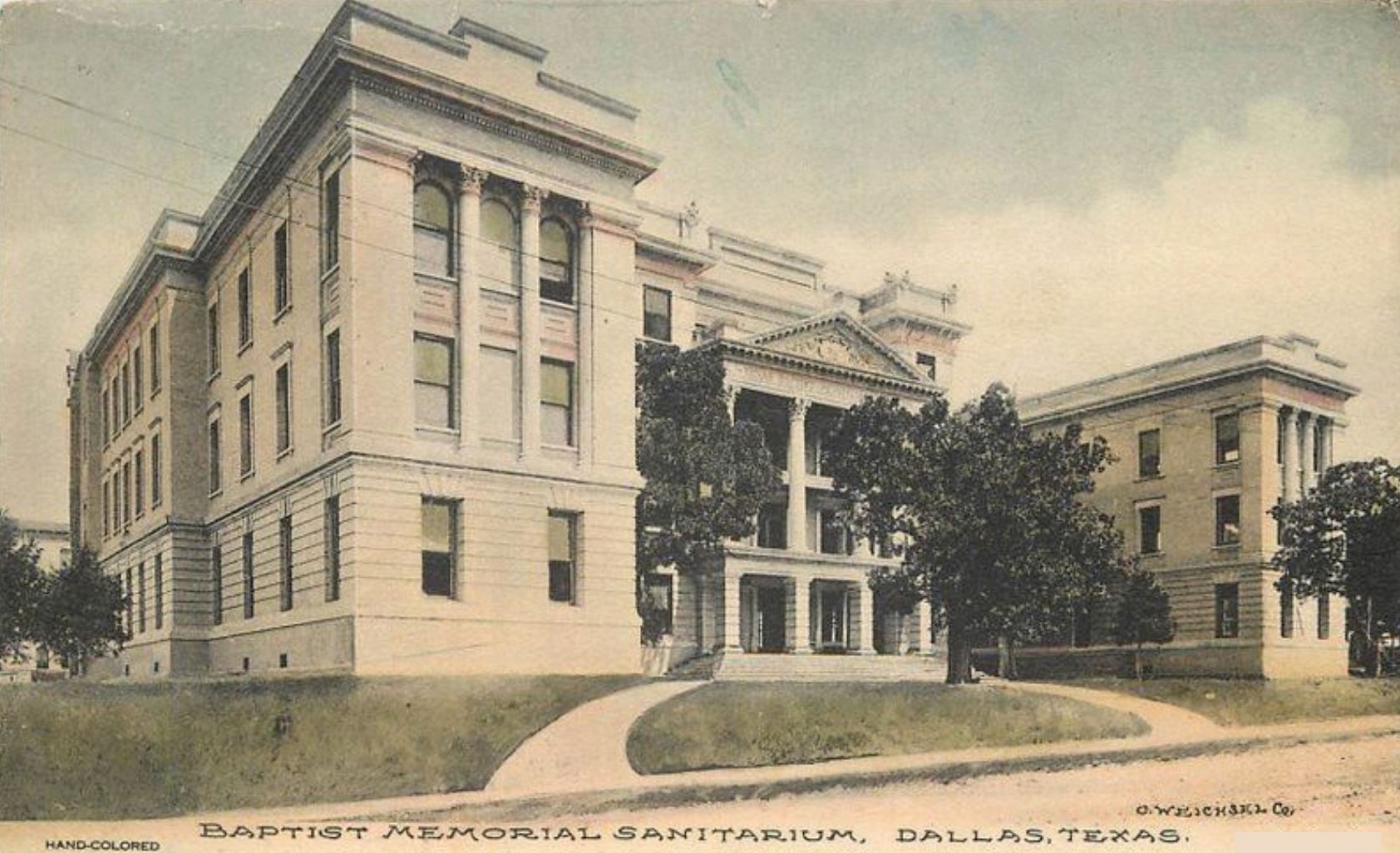
I originally thought the street in front of Baylor Hospital in this postcard was Gaston. But Baylor originally faced Junius Street (see it on a 1921 Sanborn map here), and, in fact, its address was 3315 Junius for many years. I had no idea.

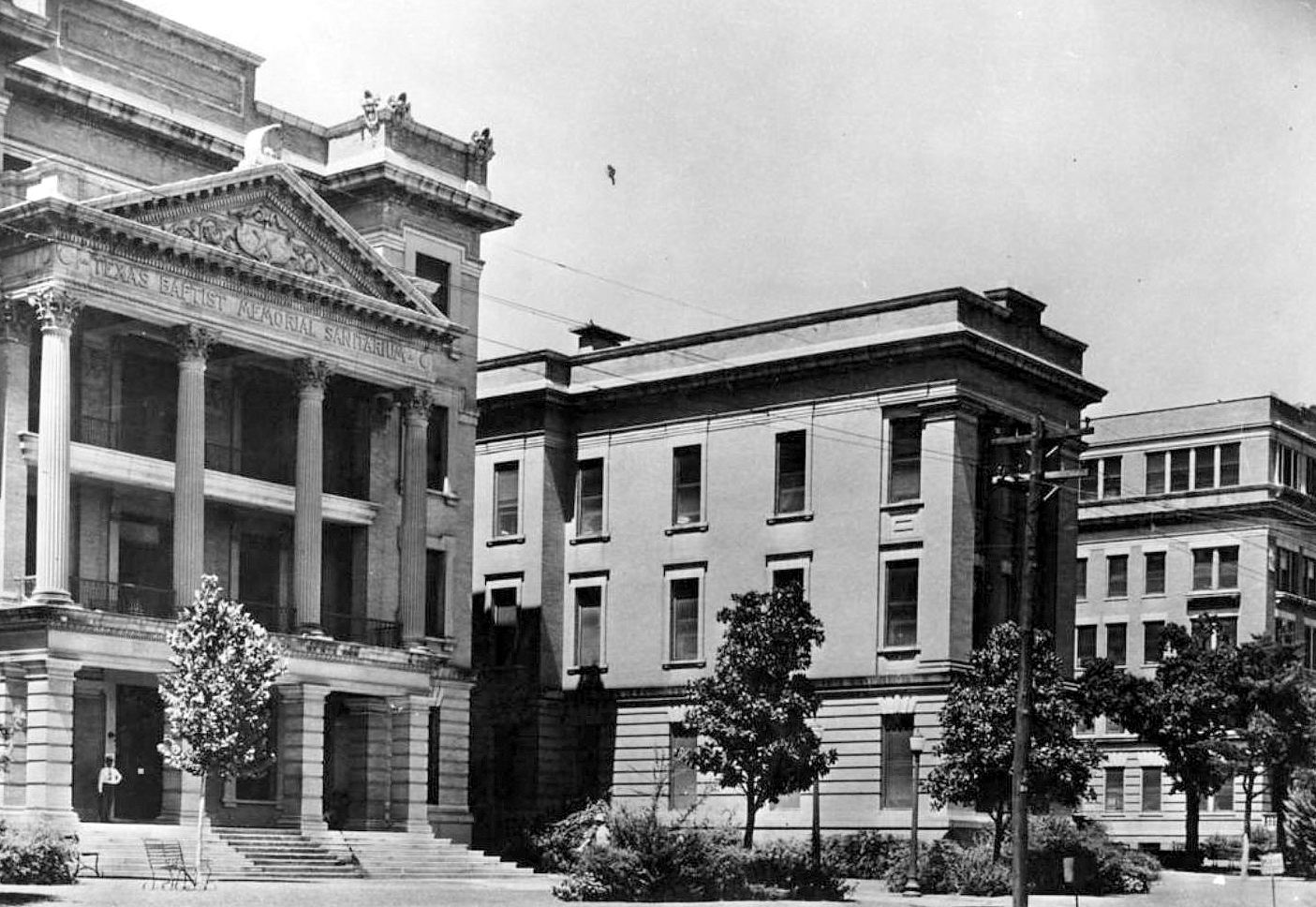
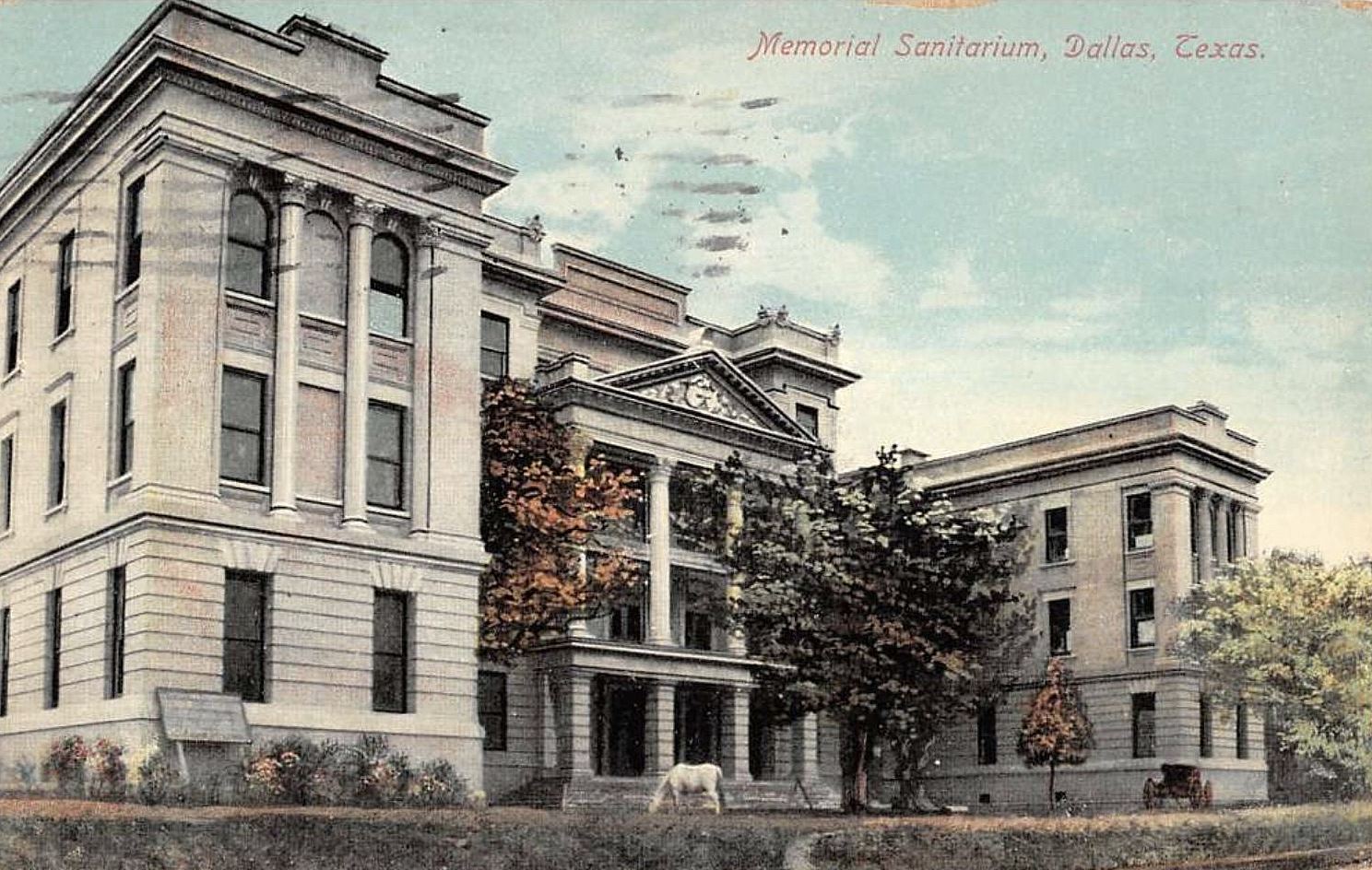
Below are a few more photos and postcards of the medical facility which eventually grew into Baylor Hospital (its Dallas roots go back to 1903, but the buildings seen in these images — buildings designed by noted Dallas architect C. W. Bulger & Co. — were built around 1909). Originally known as the “Texas Baptist Memorial Sanitarium,” it changed its name to the more familiar “Baylor Hospital” in 1920/1921 (and later became “Baylor University Hospital” in 1936). (More on the timeline of Baylor Hospital can be found here and here.)

baylor_postmarked-1919_ebaypostmarked 1919

Dig those cars.

baylor_baylor-univ-waco-yrbk_the-round-up_19171915

baylor-hospital_baptist-sanitarium_postcard

baylor_tx-baptist-memorial-sanitarium_ca-1912_UTSW-libraryca. 1912 (photo: UT Southwestern Library)

This is my favorite one: no cars, but there’s a horse grazing at the entrance!

baylor_horse_postmarked-1911_ebaypostmarked 1911

The postcard below was postmarked 1909, the year these new buildings opened. No cars, no horse, no people. 

baylor_postmarked-1909_ebay1909

And here is the brand new sanitarium, in a photograph that appeared in The Dallas Morning News less than a month after its official opening.

baylor-hospital_exterior_dmn_111009_clogensonDMN, Nov. 10, 1909

***

Sources & Notes

Postcards found on eBay.

The first black-and-white photo is from the 1917 Round-Up, the yearbook of Baylor University in Waco; the same image (uncolorized) appears in the digital archives of UT Southwestern, here, with the date 1915.

The second black-and-white photo is from the UT Southwestern Library archives, here.

The name-change of the Texas Baptist Memorial Sanitarium to Baylor Hospital was proposed in Nov. of 1920 and formally approved by the Board of Trustees of Baylor University in Waco on January 16, 1921. More about the major changes happening to the medical facility/facilities affected can be found in the article “Medical Center For Dallas Is Authorized by Texas Baptists” by Silliman Evans (Fort Worth Star-Telegram, Nov. 13, 1920), here.

Read a detailed description of the Texas Baptist Memorial Sanitarium in the Dallas Morning News article “Baptist Memorial Sanitarium, Just Completed at Dallas, Represents an Investment of More Than Four Hundred Thousand Dollars” (DMN, Nov. 10, 1909), here and here. There are several photographs taken inside and outside (and on top of) the brand new buildings.

*

Copyright © 2014 Paula Bosse. All Rights Reserved.
Back When Bookstore Fixtures Were a Thing of Beauty! — 1940s

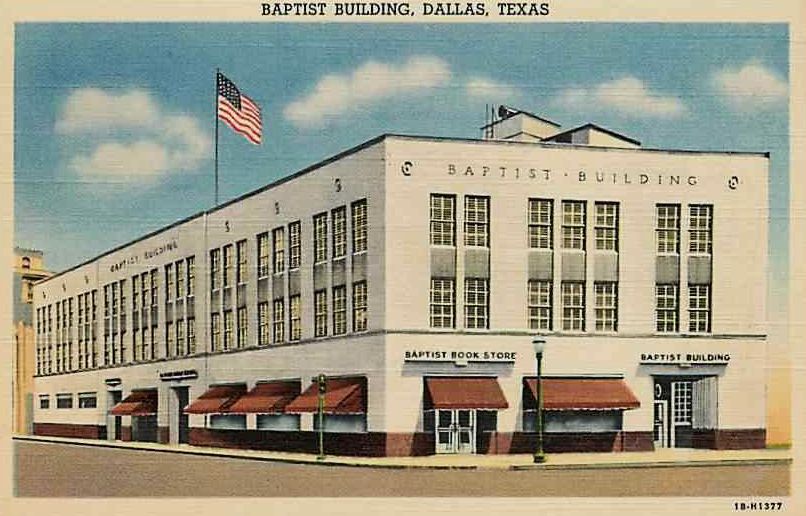
baptist-book-storeErvay & Pacific — “Book Corner” (click for larger image)

by Paula Bosse

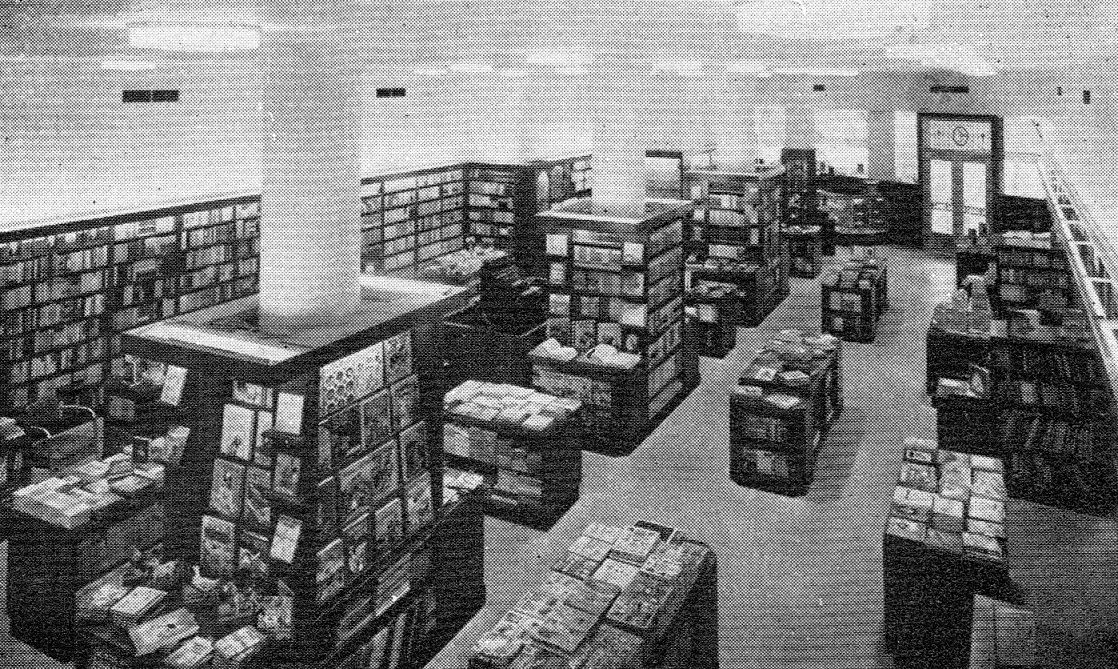
In July of 1941 the Baptist Building opened at Ervay and Pacific. Part of the ground floor (“the Book Corner”) was occupied by the Baptist Book Store, which sold mostly religious material, but which also stocked dictionaries (“and other items of similar nature”) and children’s books (“We have books for every type and age of juvenile from the Picture Books of Children from three to five to the vigorous youth wanting stories of the romantic west”). The ad below appeared in a booklet put together to welcome newcomers to the city, about 1946:

baptist-book-store_ca1946(click for larger image of bookstore interior)
*

Having grown up in a family-run bookstore (and having worked in various other bookstores for a large chunk of my life), I’m always fascinated by old photos of bookstore interiors, and this one is just great. (Click the image above to see the photo of the store much larger.) I’m particularly fascinated by the fixtures encircling the pillars — I’m not sure I’ve ever seen the problem handled in such a sophisticated way. And is that recessed lighting shining down on the slatwalls? This is a really wonderful-looking bookstore. The only thing that looks out of place is what appears to be an old-fashioned chunky cash register, center left. Everything else in this photo makes the bookseller in me practically giddy with nostalgia.

baptist-book-store_dmn_092847-det

***

Ad is from a publication called “So This is Dallas” published by “The Welcome Wagon.” It is undated but is probably from immediately after the war. This slim booklet was printed for several years in slightly different editions for people who were considering a move to Dallas or for people who had just moved here. These booklets are wonderful snapshots of the time, with everything the prospective Dallasite would need: facts, photos, and ads.

Bottom image is a detail from a 1947 ad.

*

I am fascinated by photographs of vintage bookstore interiors — especially Dallas bookstore interiors, of which there are precious few to be found. I would love to see any photos of Dallas bookstores before, say, 1970. If you have any, please send them my way! My contact info is in the “About/Contact” tab at the top of the page. Thanks!

*

Copyright © 2014 Paula Bosse. All Rights Reserved.
 

Urban Crisis: “The Walls Are Rising” — 1967

walls_lake_1967
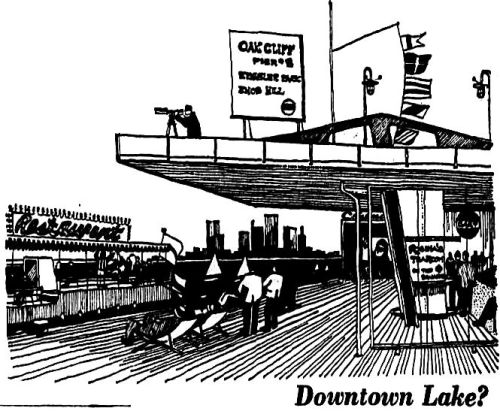
Oak Cliff Pier? Just one part of Dallas’ urban future as envisioned in 1967…

by Paula Bosse

In 1967, the Dallas chapter of the American Institute of Architects unveiled a project it had been working on under the sponsorship of the Greater Dallas Planning Council for over a year — a 40-minute color slide presentation with recorded narration called “The Walls are Rising,” directed by writer-photographer Ron Perryman of Austin. Enslie “Bud” Oglesby — one of Dallas’ top architects and the chairman of the committee behind the project — said of the film:

I saw here an opportunity to demonstrate the problems which poor planning bring and the results that can come from a sound, unified planning program…. (Fort Worth Star-Telegram, June 18, 1967)

The rather more urgent tone of the brochure that accompanied the film was a bit more dire:

We cannot afford to lose any more time in developing a coordinated plan to make Dallas a more beautiful and effective city, for all around us the walls are rising, the city is being built… We are designing by default instead of summoning our vitality, wealth resources, talents and human vision to create a design plan that will give Dallas quality and character all its own.

The goal of the project was to create awareness among city officials, planners, and designers (as well as among the public) of the immediate need to address the conscious physical design of the city in order to improve its future “livability.” The argument was that the city of Dallas was, in 1967, an unplanned and uncoordinated chaotic urban environment dominated by (and practically strangled by) the automobile; it was overwhelmed by traffic, noise, and visual clutter, and it lacked much-needed green spaces and personal “refuges.”

It was stressed that the film was not a plan, per se, but was, instead, an outline of suggestions that the AIA and the Greater Dallas Planning Council were proffering for discussion (and, one assumes, hoping would be implemented). Among their suggestions were the following (some of which have been adopted, but many of which have been “on the table” for decades now and which Dallas leaders continue to debate):

  • A 6-mile hike-and-bike trail from Turtle Creek to Reverchon Park
  • A rapid transit system (the report stressed that it would be urgently needed by 1980)
  • The creation of downtown parks
  • The development of downtown apartment housing
  • A centralized transportation hub (bus, rail, air)
  • The reduction in noise, visual clutter, and traffic
  • More “sensitive” freeway planning, which should be designed (or re-designed) for the driver and not for the automobile
  • More awareness of the pedestrian in designing downtown and neighborhood streets, especially in regard to safety and accessibility
  • Development of, yes, the Trinity River and its levees, including a downtown lake and sailboat-dotted marina, with apartments and a variety of entertainment and shopping venues lining the “shore”
  • And, most unexpectedly, a “scenic link” which would connect Fair Park to the Dallas Zoo, incorporating a sort of shuttle service between the two locations (and across the Trinity) via an elevated gondola ride (!)

As fun and fanciful as fresh ideas on getting to Oak Cliff are, the film seems to have been more of a warning of what the city’s future might be if it continued down its then-current path of … having basically no plan at all. The film started off by assaulting the viewer’s senses with several minutes of “blaring, cacophonous music” and a rush of chaotic images — and opened with the ominous words, “We are living in an accident.” The League of Women Voters issued a report in 1968 called “Crisis: The Condition of the American City” in which they described “The Walls Are Rising” as “a horror film.”

What sounds a bit like a sophisticated A/V presentation was screened for dozens and dozens and dozens of groups in the Dallas area between 1967 and about 1972: it was shown to various Chambers of Commerce, Rotary, Kiwanis, and Lions clubs, women’s groups, church groups, business groups, arts organizations, and on and on and on. The film would usually be introduced by an architect who would also lead a discussion and answer questions afterward. If you were a member of a civic or professional group in the late ’60s, chances are pretty good you saw “The Walls Are Rising.”

Which is why it’s so surprising that all traces of the film seem to have vanished in the intervening years. I contacted the Dallas Municipal Archives, the Texas/Dallas History & Archives Division of the Dallas Public Library, AIA Dallas, and Dallas Center for Architecture. Everyone was very helpful, but … nothing. Designs for Dallas and the later Goals for Dallas are better known projects, but it seems that there would be something connected with this film lying around somewhere. I’d love to see it. It sounds like it would be entertaining and informative … and depressing. We’ve come so far. …We haven’t come far at all.

**

walls_FWST_061867Fort Worth Star-Telegram, June 18, 1967 (click for larger image)

***

Sources & Notes

“The Walls Are Rising” was introduced to the Dallas public in Dorothie Erwin’s article, “A Design for Dallas Proposed,” which ran in the Feb. 12, 1967 edition of The Dallas Morning News. Additional descriptions of the film can be found in the article “A Courageous Look at Today’s City” by Larry Howell (DMN, May 3, 1968).

*

UPDATE: Jan. 9, 2015 — Great news! AIA Dallas has found the film and has scheduled a screening!

  • To read my follow-up post “‘The Walls Are Rising’ — FOUND!” click here.
  • To read Robert Wilonsky’s Dallas Morning News article on the newly-found film, click here.
  • For info on the AIA Dallas screening, click here.

UPDATE: Jan. 20, 2015 — The public screening and panel discussion at the Sixth Floor Museum was great! Read about it here.

UPDATE: May, 22, 2015 — AIA Dallas has digitized and uploaded the film to Vimeo. Watch the complete film here.

*

Copyright © 2014 Paula Bosse. All Rights Reserved.


Mercantile National Bank Ad — 1960

merc_ad_1960-det

by Paula Bosse

I love you, Merc! Why aren’t you in EVERY Dallas ad?

ad-mercanitle_city-directory-1960(click for larger image)

***

Ad from the 1960 city directory. I don’t know who did the artwork for this ad, but I love it.

*

Copyright © 2014 Paula Bosse. All Rights Reserved.
Union Station’s Empty Backyard — ca. 1920

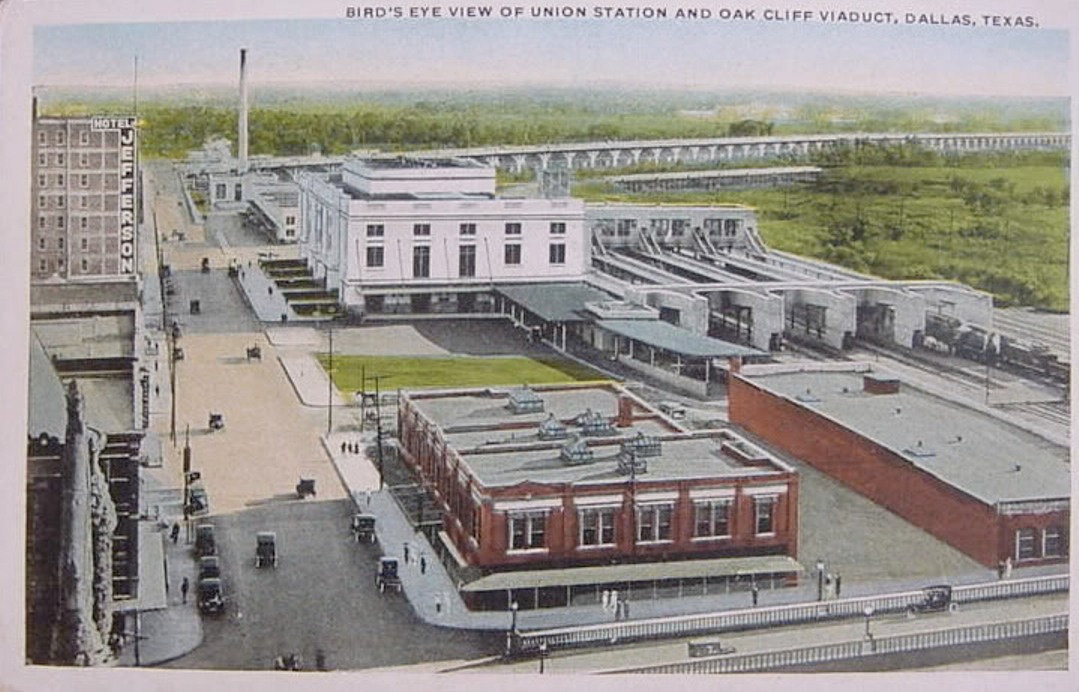
union-stn_ca1920The western edge of downtown, looking south (click for larger image)

by Paula Bosse

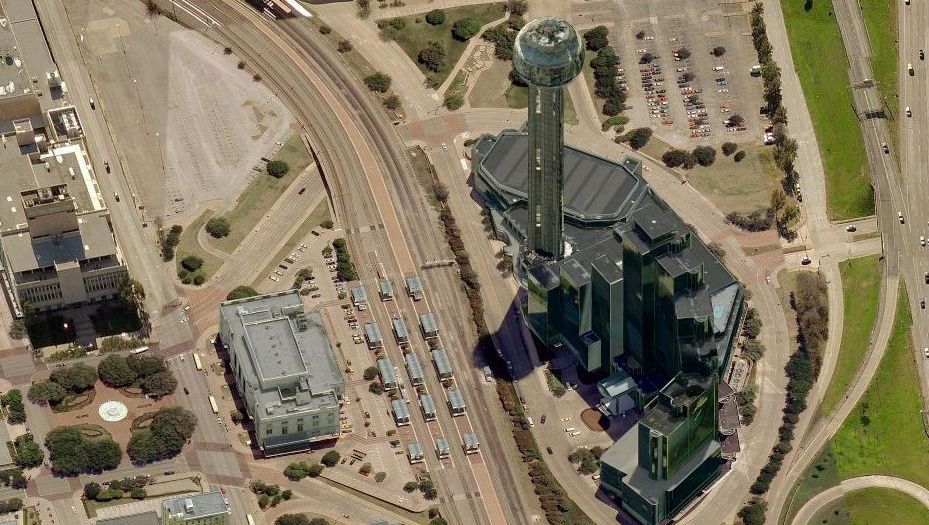
Here’s a postcard view you don’t see that often, Houston Street, looking south, with the Old Red Courthouse at the lower left, the gleaming white Union Station in the upper middle, and the fantastic Houston Street viaduct at the top. It’s a little hard to imagine that sixty-or-so years later, Reunion Tower would be plunked down at the far right of this picture, in that grassy field behind the tracks at Union Station.

union-stn_bing_20014

***

Postcard from the DallasMetropolis.com forum, here (see comment for the very interesting description of what’s what in this image).

Present-day bird’s-eye view from Bing (click for larger image).

*

Copyright © 2014 Paula Bosse. All Rights Reserved.
 

Theater Row Block Party! — 1948

theater-row-block-party_082648_preservation-dallasDallas premiere, “Red River” — Aug. 26, 1948 (click for larger image)

by Paula Bosse

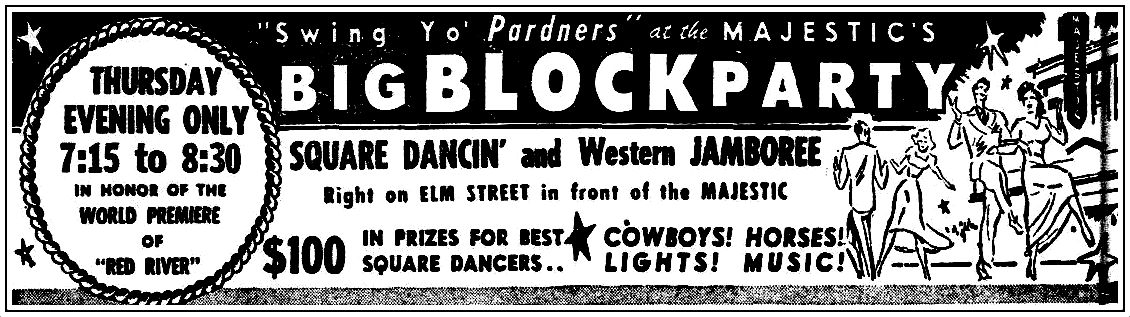
On a rainy night in August, 1948, United Artists premiered the movie “Red River” in Dallas at the Majestic Theatre. The now-classic Western about a Chisholm Trail cattle drive, directed by Howard Hawks and starring John Wayne and newcomer Montgomery Clift, was actually “premiered” simultaneously on August 26, 1948 in 250 theaters in Texas, Oklahoma, Kansas, and New Mexico, the four southwestern states most closely associated with the Chisholm Trail.

red-river_ad_dmn_082648(Aug. 26, 1948)

In Dallas, the publicity machine was seriously cranked up. The main attraction was a free-to-the-public street party in which the 1900 block of Elm Street was closed to traffic for a slate of western-themed festivities. The “jamboree” included square dancing, a musical set by cowboy singer Jim Boyd and his band, “cowboys and cowgirls from the Pleasant Mound Rodeo,” the Dallas Mounted Quadrille, and the Sheriff’s Posse. Or, as the ad said more succinctly, “Cowboys! Horses! Lights! Music!”

red-river_block-party_dmn_082648Great ad! Click to see it bigger! (Aug. 26, 1948)

No Hollywood celebrities were there, but the big Western Jamboree was apparently well-attended, even in the rain and despite rain, people gathered for square dancing.

(Wow. Square dancing in the rain. That’s dedication.)

The movie was a huge hit, so much so that the Majestic added showings, including one at 9:30 in the morning (!). It had a record week in Dallas, and, nationally, by the end of that first week it was reported to be the biggest-grossing picture in the history of United Artists.

The “world premiere” is interesting and all, but that photo of a brightly lit-up Theater Row is even better!

***

Sources & Notes

The original source of the photograph is not known, but I stumbled across it on a Preservation Dallas page, here.

“Red River” is a great movie. If you haven’t seen it, you need to. Even if you think you don’t like Westerns. Roger Ebert’s review/analysis is here.

*

Copyright © 2014 Paula Bosse. All Rights Reserved.
 

Main Street — 1905

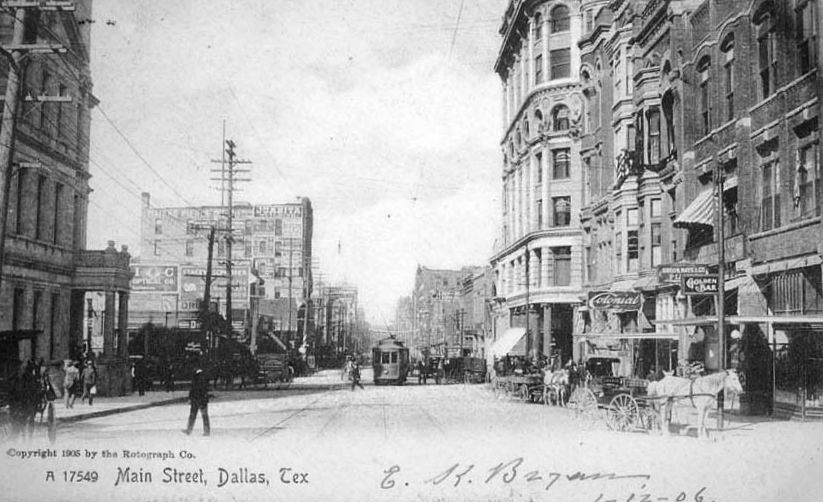
main-st_1905A wide Main Street (click for larger image)

by Paula Bosse

Just another day on Main, here looking west from the middle of the block between Ervay and St. Paul. The Wilson Building is on the right, the Juanita Building is at the top left.

***

Postcard from eBay.

*

Copyright © 2014 Paula Bosse. All Rights Reserved.
Preston Royal Fire Station — 1958

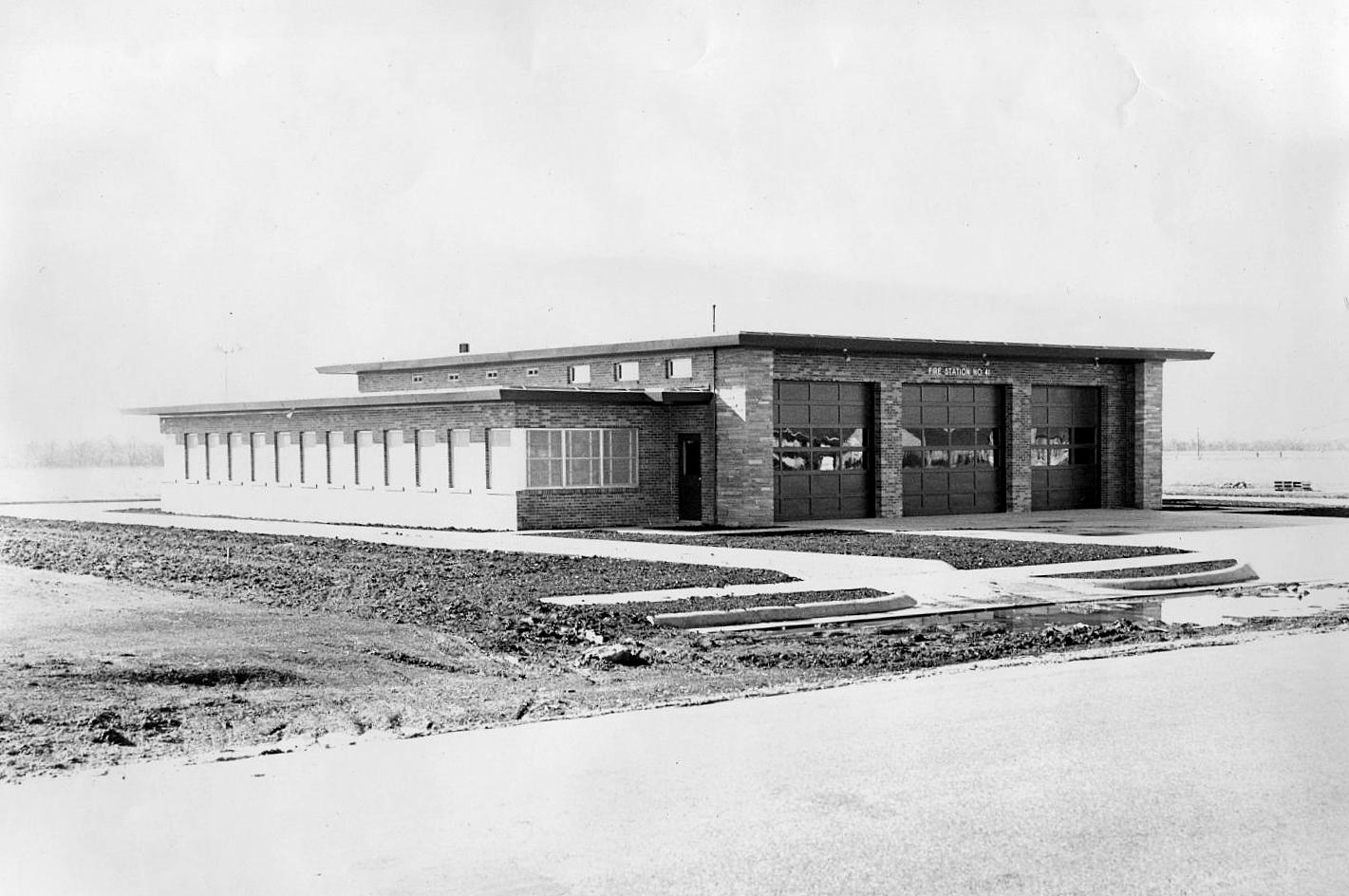
fire-station-41_royal-laneStation No. 41, 5920 Royal Lane (click for larger image)

by Paula Bosse

Above, Dallas Fire Station 41 on Royal Lane, just west of Preston Road, about the time it opened (the back of the photo says service at the station began Jan. 16, 1958). It looks as if it’s been set down upon a bleak and barren piece of land in the middle of nowhere, but, actually, commercial development in this Preston Hollow-area neighborhood was … um … on fire in 1958. The large shopping centers at Preston and Royal were under construction at this time, and even though it was very far north, it was most certainly a desirable area in which to live (as, of course, it still is).

The station was designed by architect Raymond F. Smith who had previously designed a couple of other fire stations in town, but who was known mainly for his work designing movie theaters, such as the Casa Linda (1945), the Delman (1947), and — hey! — the (long-gone) Preston Royal Theatre, which opened in 1959 right across the street from this fire station (both of which were, rather conveniently, a mere four blocks away from Smith’s Royal Lane residence).

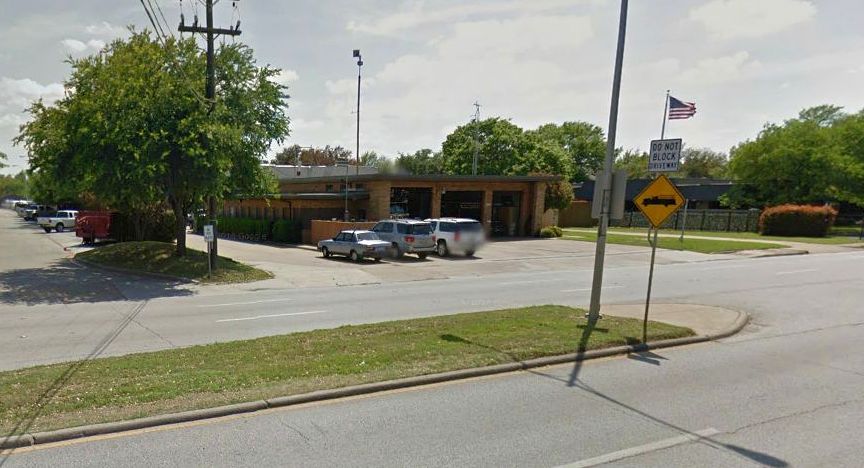
The station is still in operation, working to keep North Dallas flame-free — it just has a few more neighbors (and trees!) now than it did in 1958.

fire-station_royal_google

**

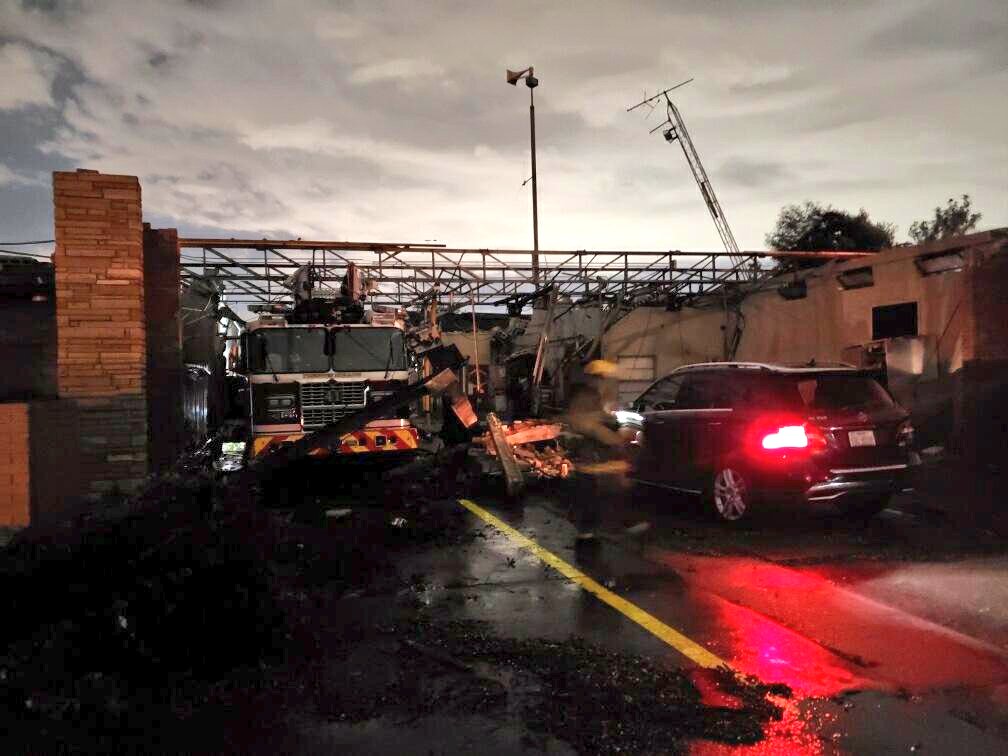
UPDATED Oct. 22, 2019: A powerful tornado hit northwest Dallas on Oct. 20, 2019 and devastated much of the Preston Hollow area. This fire station was hit hard, and it is currently out of commission. Below are photos from DFR’s Twitter feed.

preston-royal-fire-station_dfr-twitter_102119_int

preston-royal-fire-station_dfr-twitter_102119_ext

***

Sources & Notes

Photo from the Dallas Firefighters Museum, via the Portal to Texas History. It can be viewed here.

Second image of the firehouse from Google Street View.

Bottom two photos of the station post-tornado are from the Twitter feed of @DallasFireRes_q.

*

Copyright © 2014 Paula Bosse. All Rights Reserved.