Flashback : Dallas

A Miscellany: History, Ads, Pop Culture

Category: Dallas Radio/TV

Simulcasting the World Series In Dallas In the Days Before Radio, Via Telegraph
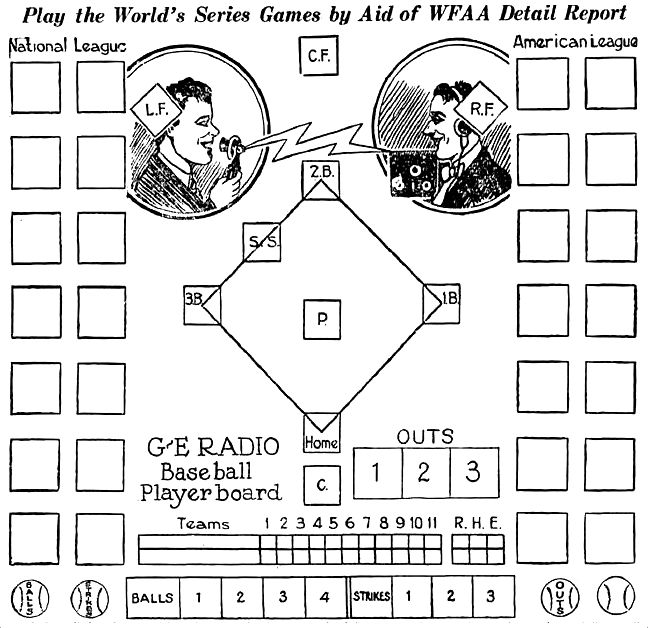
world-series_dmn_100422-smThe later version, for radio listeners, 1922…

by Paula Bosse

It’s 1912. You’re a huge baseball fan, and the World Series is about to begin — New York vs. Boston! But you live in Dallas, a million miles away from the action. You can’t wait for the results in the paper the next day because you’re an impatient S.O.B., and radio won’t be introduced for another ten years. Do you panic? No! Because you live in a big city with a taste for new technology, and the Dallas Opera House is going to present a sort of early simulcast of the games on a “mammoth automatic score board.” Your sports prayers have been answered!

1912_world-series_dmn_100612DMN, Oct. 6, 1912

You lean back in your comfy theater seat and smoke your smokes in plush and civilized surroundings as each play is sent by telegraph to Dallas from the ballpark back East where the game is being played RIGHT NOW, hundreds of miles away. The telegraph operator in Dallas will relay the play-by-play information to personnel in the theater who will somehow do something to some sort of “automatic electric board.” And, according to promoters of these “reproductions” of baseball games, you’ll feel like you’re right there in the thick of the action. You’ll “see” the game played before your eyes!

I’ve read several articles about these boards and these reproductions, but I can’t for the life of me figure out how it worked. I assume there was a large traditional scoreboard on stage that lit up, keeping track of the score, runs, outs, etc. But apparently there’s more, and I just can’t picture it. Here’s a somewhat confusing description of what happened during these productions:

WORLD SERIES WILL BE SHOWN AT THE OLD MILL

Manager Buddy Stewart of the Old Mill Theater announced that he secured the New Wonder Marvel Baseball Player Board to reproduce the World Series baseball games. This board is declared the greatest board ever invented for reproducing baseball games. It is not a mechanical board and no mechanical devices are used, and very little electrical appliances are necessary. The games are reproduced by a crew of six experienced baseball players who are carefully rehearsed and each has a part or position to play. No other board is so complete as this. The board does not require sign cards to denote players as in other boards. You see the ball going and do not have to look in any other direction to see what it means.

Spectators will see each play reproduced in less than two minutes after it is made on the playing fields of the World Series as the board is connected with a direct wire to the baseball field, and as fast as the telegraph operator receives the play it is reproduced with as much realism as on the field. The players are seen to run bases, the ball is seen bouncing or soaring to the infield or outfield, and anyone who is familiar with baseball will know just exactly what is happening on the field by the plays made on the board with very little left for imagination.

Every hit, run, error, strike or ball, the number of strikeouts, or balls made by pitchers, or the number of hits, runs or errors made by the players is always prominently shown on the board which makes it [un]necessary for individual scoring during the progress of the game. (DMN, Oct. 3, 1920)

Doesn’t really help much. It sounds as if people are on the stage acting out each play. That would be weird. These “reproductions” of World Series games were quite popular in Texas (and probably elsewhere) for at least 15 years. If anyone reading this has a photo or diagram of one of these vaunted Marvel scoreboards, I’d love to see it!

*

An earlier description of the 1912 Opera House reproduction sounds more like an audience watching a baseball game on a giant Lite-Brite “score board.”

1912_world-series_dmn_100812DMN, Oct. 8, 1912

The trick to keeping the telegraph operators calm and on-their-toes during a lengthy baseball game? Make sure they have no interest in the game.

1915_world-series_FWST_101415Fort Worth Star-Telegram, Oct. 14, 1915

Fort Worth was also getting in on the action. And they had celebrities — people like Clarence (Big Boy) Kraft and Ziggy Sears (who I’m going to assume have something to do with baseball). I’m not sure what these celebrities were doing exactly, but whatever it was, they were there doing it.

1921_marvel-score-board_FWST_100221FWST, Oct. 2, 1921

These theater programs weren’t for everyone, though. If you couldn’t take the time out of a busy work day to swan over to a theater to leisurely witness one of the early “reproductions” (or if the admission price was too steep for your budget), you could always ring up the operator to have her tell you the current score:

automatic_dmn_101112-world-series
DMN, Oct. 11, 1912

These things seemed to be a popular annual event, but in 1922, something more technologically advanced than the Marvel board appeared on the scene: radio! WFAA and WBAP began broadcasting in 1922, and, suddenly, following sports became a whole lot easier. In something of a transitional technology, there was the outdoor board as described below. The games were not only broadcast live on WFAA, but The Dallas Morning News (WFAA’s parent company) also erected one of those old-fangled “electric boards” out on the street so that passersby could keep up with the scores. (Portable transistor radios were decades and decades away.)

1923_world-series_dmn_101023DMN, Oct. 10, 1923

It was surprising to see that the “Marvel score boards” were still being used as late as 1926 (Yankees vs. Cardinals, at the Capitol Theater). Every baseball fan worth his salt should have had his own radio by then so he could listen to the World Series in the comfort of his own home and curse and cheer as loudly as the vicissitudes of the game demanded. Eat my dust, Marvel board! Radio changed everything, and radio was here to stay.

*

UPDATE: Thanks to Kevin’s link in the comments below, I can share this GREAT article from Uni-Watch.com about another of these boards called the Play-o-Graph: “Photography of Playography by Paul Lukas — it answers all my questions, and it even has photos (and links to photos) of crowds watching the boards. He also links to a 1912 article, “The Automatic Baseball Playograph”  by J. Hunt, in the Yale Scientific Monthly which describes how the board works and has this photo:

play-o-graph_yale-scientific-monthly_1912The “Play-o-Graph,” 1912 (click for larger image)

And, for completists, here’s an ad for the Play-O-Graph, from 1913:
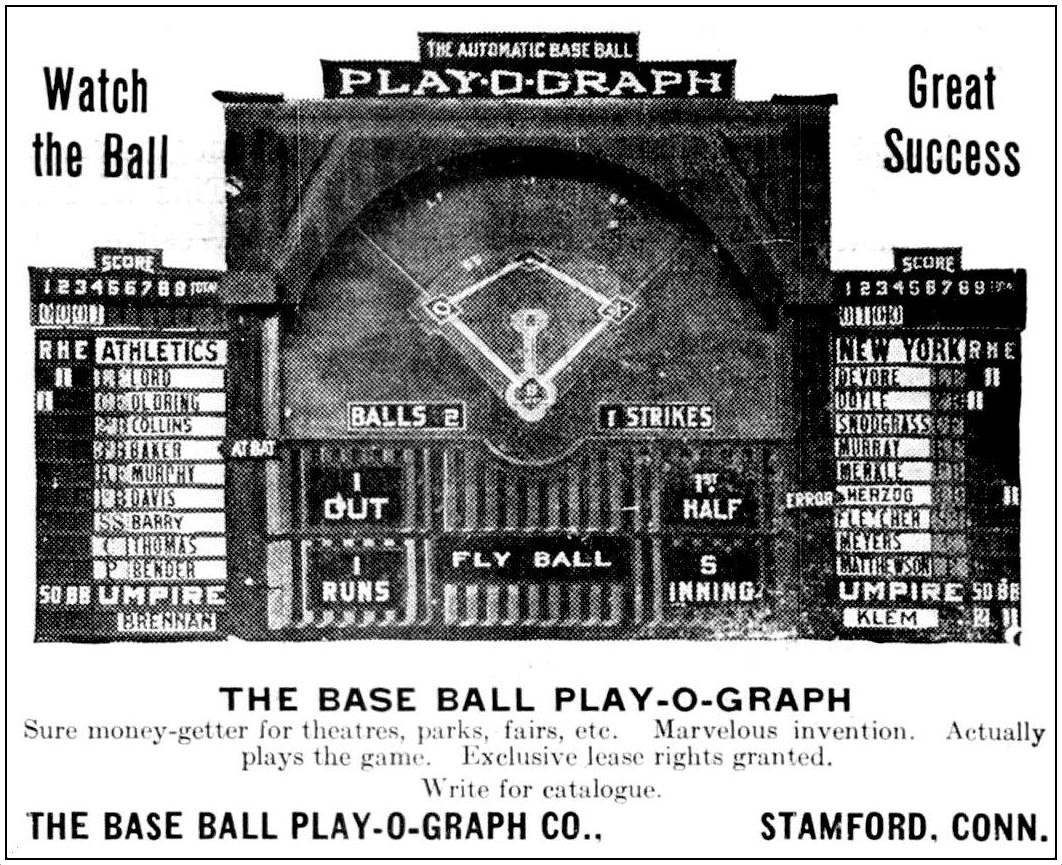
baseball-simulation_play-o-graph_billboard_032213Billboard, Mar. 22, 1913

Makes a bit more sense now! Thanks, Kevin!

***

Sources & Notes

The top image is the “G.E. Radio Baseball Player Board” — a sort of home version of the big scoreboards used in theaters, printed for WFAA listeners in The Dallas Morning News on Oct. 4, 1922. The instructions are in a PDF, here. And feel free to print one out and use it while you watch the Series this year. Still works in the 21st century!

For an article on listener response to the successful first broadcast of the World Series by WFAA radio (listeners picked up the signal in England!), see the DMN article from Oct. 6, 1922 in a PDF, here.

And because they have such great names, you might want to know who Clarence “Big Boy” Kraft and Ziggy Sears were. If you’ve read this far, you owe it to yourself. “Big Boy,” here; Ziggy, here.

*

Copyright © 2014 Paula Bosse. All Rights Reserved.

The Pink Panther-Mr. Peppermint Connection

mr-peppermint_dmn_1961Mr. P. — 1961

by Paula Bosse

I had no idea that the “Mr. Peppermint” theme was by Henry Mancini! It’s from a 1960 movie called “High Time,” which, I have to say, I’ve never heard of. It starred Bing Crosby, Fabian, and Tuesday Weld (I kind of think Bing may have been in it solely for the paycheck). Check out the movie’s main theme music. Sound familiar?

Hearing this brings back a flood of happy memories — an aural version of Proust’s madeleines.

In a recent Los Angeles Times interview, Paul Reubens (aka Pee-wee Herman) had this to say:

“I never met Captain Kangaroo; I probably would have completely freaked out if I met Captain Kangaroo. In fact, when I meet people who are just beside themselves to meet me, I always think they’re reacting like I would react if I met Captain Kangaroo, I was so crazy about that television show as a child.” (LA Times, Oct. 21, 2014)

I ran into Jerry Haynes (aka Mr. Peppermint) several times around town over the years. The first time I saw him, I was in my 20s, and he was doing some sort of promotion (in character) at a store in, I think, Northpark. I was unaware that he would be there, but when I saw him at the top of the escalator, I was shocked. My childhood TV pal right in front of me! It’s a bit of a blur, but I think I giddily foisted myself on him and told him all the things other Dallas kids raised on his show probably told him. I might even have gushed an involuntary “I love you, Mr. Peppermint!” Yikes. I bet he got that ALL THE TIME. He was very sweet and didn’t treat me like a crazy person.

The last time I saw him, he was just Jerry Haynes, shopping for cheese at the Tom Thumb on Mockingbird and Abrams. I didn’t bother him, but I still got a little happy jolt of recognition when I saw him.

And now I find out that the composer who wrote so much of my favorite movie music wrote the music so tied to my childhood. Thanks, Mr. Mancini! Thanks, Mr. Peppermint! Thanks, Mr. Wiggly Worm!

***

Sources & Notes

Quote from Paul Reubens’ Los Angeles Times interview, here.

Wikipedia roundup: madeleines, here; “High Time” movie, here; Henry Mancini, here.

(Thank you, Steve S., for bringing this to my attention!)

*

Copyright © 2014 Paula Bosse. All Rights Reserved.


“Wonderful K-BOX” at 1480 On Your AM Dial

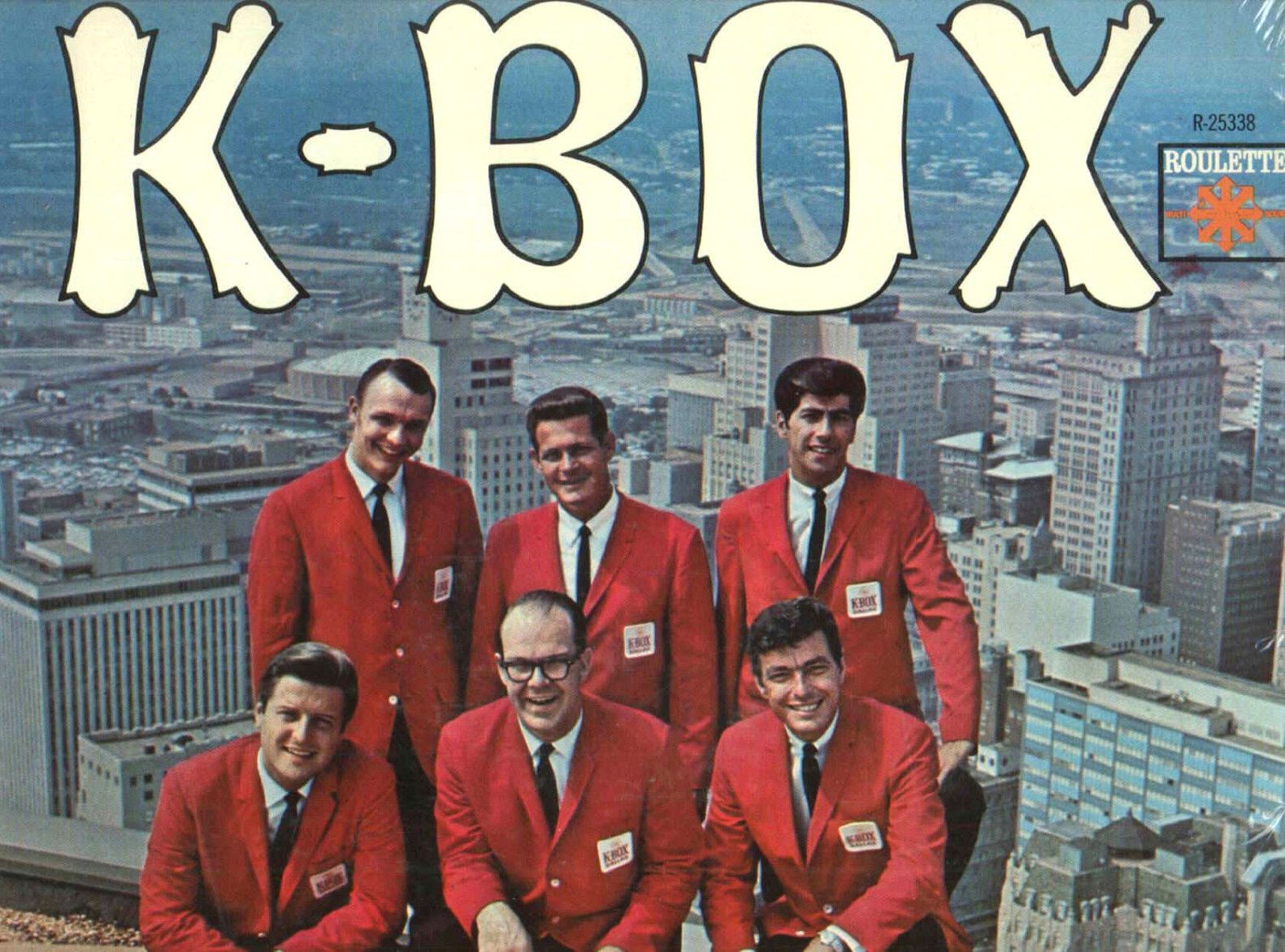
kbox-djs“Wonderful K-BOX” jocks atop the Southland Life Bldg.

by Paula Bosse

When I was a kid, it seems like KBOX was always on in the background. Always. My father was a huge country music fan, and it was one of the (if not THE) top country stations in town. This was in the ’70s. So it’s a bit of a shock to learn that KBOX had been a Top 40 station in the ’50s and ’60s — in fact, it was the major competitor of top-dog KLIF.

The photo above was shot atop the Southland Life Building in 1966 and appeared on an LP called “Dusty Discs.” On-air personalities shown are (top row) Terry Byrd, Ron Rice, Frank Jolle/Jolley, (bottom row) Dan Patrick, Bill Ward, and Bill Holley.

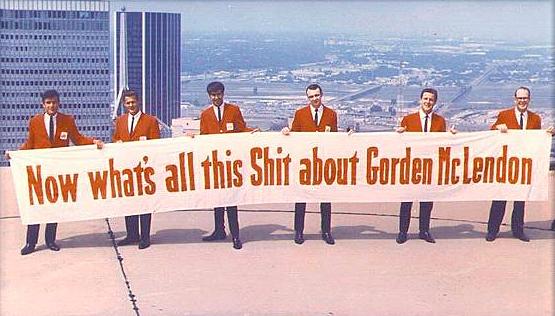
The competition between KBOX (owned by John Box — the “Box” in KBOX) and KLIF (owned by the legendary Gordon McLendon) was fierce. This explains the photo below in which John Box had his DJs hold a special banner during the same photo shoot. Box had this photo printed up and gleefully sent to McLendon as a Christmas card that year (during which KBOX had trounced KLIF in one of the crucial ratings periods). (I’m sure McLendon enjoyed seeing his name misspelled.) AM radio ain’t for the meek.

kbox-mclendon-banner

***

Sources & Notes

Top photo/album cover from eBay.

Second photo from a Frank Jolley site, here. (Jolley’s name is spelled “Jolley” and “Jolle” almost interchangeably all over the internet, so I’m not sure which is correct.)

Absolutely everything you’d ever want to know about KBOX can be found here (and this is just part two of the history!).

BEST OF ALL is this aircheck from 1959, featuring Dan Ingram. It’s crazy. The energy level is exhausting to listen to. They were really pulling out all the stops. (And, hey, you could go see Johnny Cash at the Sportatorium for ONE DOLLAR!) This is great:

 *

Copyright © 2014 Paula Bosse. All Rights Reserved.

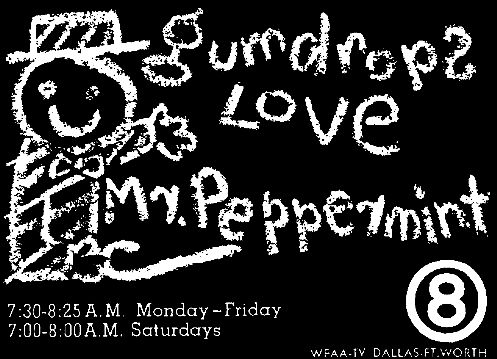
“Gumdrops Love Mr. Peppermint” — 1968

mr-peppermint_1968

by Paula Bosse

When the news is unsettling, remember your “happy place.”

***

1968 TV Guide ad, from eBay.

*

Copyright © 2014 Paula Bosse. All Rights Reserved.


“Go Away! Can’t You See I’m Listening to WFAA?” — 1947

wfaa-ad_dmn_090147

by Paula Bosse

Priorities.

*

Copyright © 2014 Paula Bosse. All Rights Reserved

Give a 15-Year-Old 8,400 Pounds of Soap and He’ll Carve You a Radio Transmitter — 1930

owen-michael_soap_1930a
Michael Owen, Jr., boy soap-carver 1930

by Paula Bosse

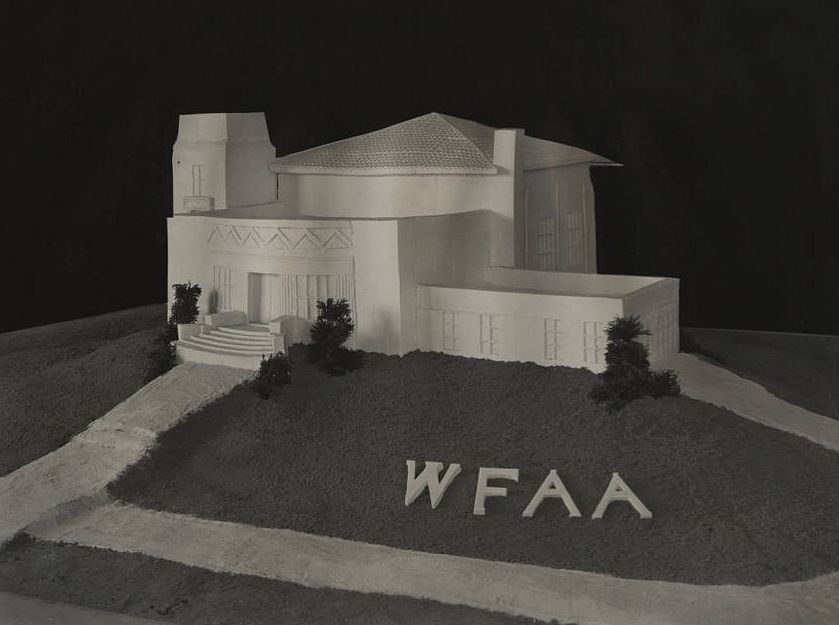
In 1930, 15-year-old sculptor Michael G. Owen, Jr. carved a replica of the WFAA transmitter building out of 8,400 pounds of Ivory soap. And why not? It was a big draw at that year’s State Fair of Texas.

Mike Owen, a student at well-to-do Highland Park High School (although Dallas artist Olin Travis, who had him as a pupil at about this time, described him as being “very poor”), had been sculpting all sorts of things, from the age of 3. He had begun winning awards when he was 13 or 14, one in an earlier “soap modeling” contest sponsored by Procter & Gamble. Not only did that soap-carving award result in young Mr. Owen being commissioned by Sanger Bros. to carve a model of the downtown skyline (I’m not sure this commission was ever actually completed), he was also asked to create an attraction for the State Fair: a replica-in-soap of the WFAA transmitter plant located on Northwest Highway near Grapevine (see a photo of the transmitter building and tower here). Owen worked from blueprints of the building and a bronze model supplied by the Belo Corporation (owner of WFAA), and Proctor & Gamble supplied the huge bars of Ivory soap (12 bars, each weighing 700 pounds). The finished piece was an “exact replica” of the 50,000-watt transmitter plant and was touted by Procter & Gamble as being the largest soap sculpture ever executed. It was a big hit at the 1930 State Fair of Texas.

Michael Owen went on to become a professional artist, with early enthusiastic support from Jerry Bywaters. He was associated with the Dallas Nine (and was, by far, the youngest member affiliated with that somewhat amorphous group), and I will address his more serious non-soap forays into the art world in a later post. But, first, back to soap!

The photo below shows Mike Owen’s finished product, which took him 12 days to complete.

owen_wfaa-soap_degolyerBelo Collection, DeGolyer Library, SMU

It’s difficult to tell what the size of the finished work was from this photo, but it was described as being five feet high and seven feet wide. So… big. When it was displayed at the fair it was, for some reason, bathed in blue light. After the 12 days it took Owen to complete this sculpture, I bet that kid was squeaky-clean and positively reeked of Ivory soap.

owen-michael_soap_1930b

owen-michael_soap_1930

***

Sources & Notes

Photo of Owen’s soap carving of the WFAA transmitter plant is from the Belo Records collection, DeGolyer Library. Central University Libraries, Southern Methodist University; more information on this photo can be found on the SMU website here.

Other Flashback Dallas posts on artist and sculptor Michael G. Owen, Jr.:

  • For a look at Owen’s professional career as a sculptor, see my post “Michael G. Owen, Jr., Dallas Sculptor of Lead Belly” here.
  • To read about the Peruna monument SMU commissioned him to produce in 1937 (when he had just turned 22), see my post here.

UPDATE: Read about a recently discovered large painting by Owen up for auction in Dallas in 2019 here.

*

Copyright © 2014 Paula Bosse. All Rights Reserved.


WFAA & WBAP’s Unusual Broadcasting Alliance

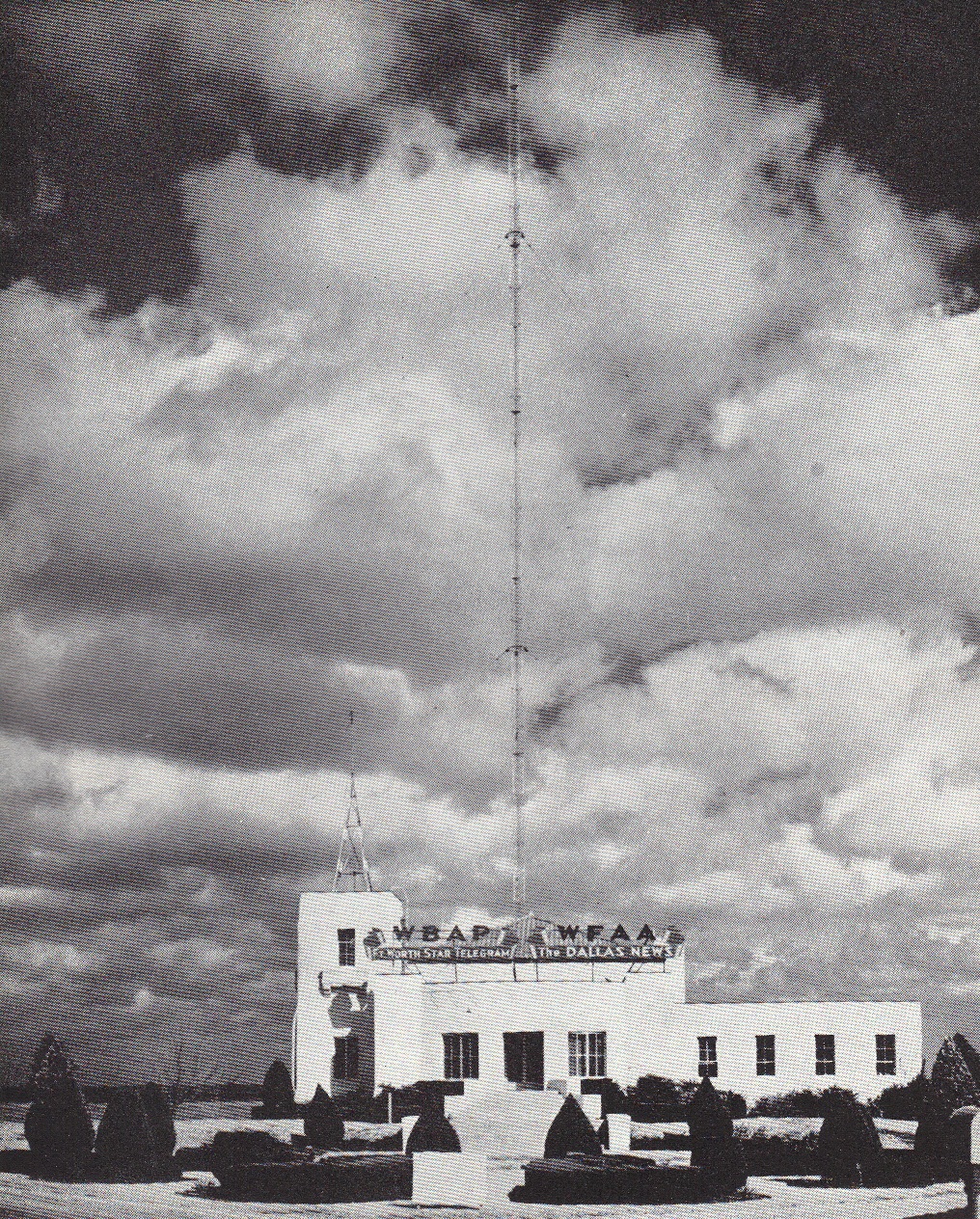
wfaa_wbap_transmitter_1941-sm

by Paula Bosse

wfaa-wbap_transmitter_1941

I looked at this photograph and thought, “That’s odd. Two competing radio stations from two competing newspapers from two competing cities used the same radio transmitter. How did that happen?” And then I read about the extremely unusual time-sharing arrangement that WFAA (which was owned by The Dallas Morning News) and WBAP (which was owned by The Fort Worth Star-Telegram) maintained for 41 years.

I’ll link to a story that fully explains this extraordinary arrangement, but, briefly, WFAA and WBAP both broadcast on two frequencies, trading off throughout the day. A typical schedule looked like this:

wfaa-wbap_schedule

The two frequencies were 570 and 800 (later 820) kilohertz on the AM band. When WFAA was broadcasting on 570, WBAP was broadcasting on 820. On the agreed-upon time, the stations would switch over to the other frequency. Back and forth. Over and over and over. All day long. They were independent stations with independent programming, network affiliations, on-air talent, and advertising departments. And this went on for FORTY-ONE YEARS! Until 1970! How had I never heard of this?

Apparently it wasn’t all that big a deal to the stations or the listeners. Things were getting a little strained by 1969, though, when WBAP went whole-hog into playing country music (and eventually became one of the most successful country stations in the United States). It was time to go their own ways. The split was amicable, and both stations felt that the unusual partnership had worked well for all concerned.

So why did this happen in the first place? Because of the 820 frequency. 820 was a clear channel frequency, which meant that the station that owned it could broadcast at an incredible 50,000 watts — enough to be heard all over the Western hemisphere; 570 boasted a measly 5,000 watts, and, as someone said, “people might hear you in Sherman … but maybe not.” Neither WFAA or WBAP wanted to give up the clear channel powerhouse, which is why their piggy-backing partnership lasted as long as it did. But, ultimately, WBAP got 820 and was a major broadcasting force to be reckoned with. WFAA radio got the short end of the stick and sputtered along at 570 on the AM dial for a few lackluster years but never recovered from losing its half-share of 820 AM. In the WFAA-WBAP showdown: Fort Worth 1, Dallas 0.

*

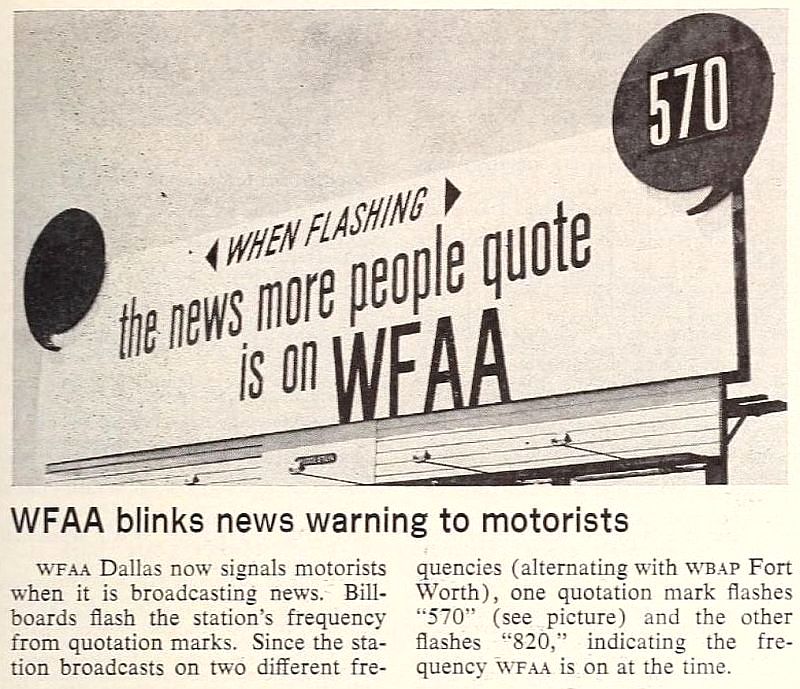
Look at this crazy billboard from 1963 — it flashed which frequency WFAA was currently broadcasting on.

WFAA-WBAP_broadcasting_042263Broadcasting, April 22, 1963

***

Sources & Notes

Photo of the transmitter building from WFAA, WBAP, KGKO Combined Family Album (Dallas-Fort Worth, 1941). Yes, there was actually a THIRD station involved in all of this for a while — KGKO out of Wichita Falls! Here’s an ad from the 1941-42 Texas Almanac, via the Portal to Texas History (click to see a larger image):

wfaa_kgko_tx-almanac_1941-42_portal

Sample schedule is from the definitive article on this bizarre broadcasting alliance: “You Have Half a Station, We Have Half a Station” — How WFAA in Dallas and WBAP in Fort Worth Shared Radio Frequencies for Four Decades by John Mark Dempsey, from the Spring, 1999 issue of Legacies magazine, which can and SHOULD be read, here.

For another photo of this transmitter building, see a previous post here.

*

Copyright © 2014 Paula Bosse. All Rights Reserved.


Early Dallas Radio & “Verified Reception Stamps”

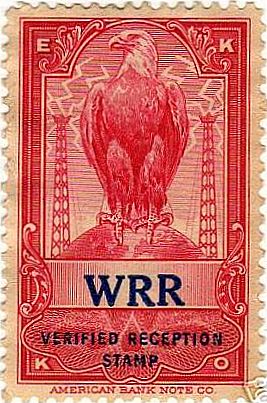
ekko_wrr

by Paula Bosse

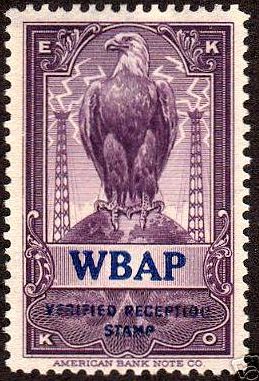
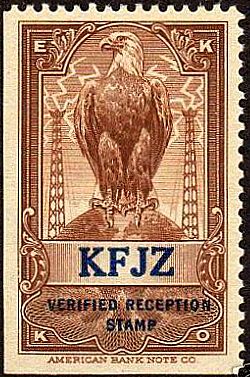
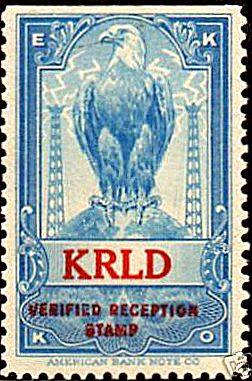
Chances are you’ve never heard of “Verified Reception Stamps” which were issued in the 1920s by a company in Chicago called EKKO. I certainly hadn’t. The stamps (referred to by collectors as “Cinderellas”) were enthusiastically and obsessively collected in the mid-’20s — people were really into it. Basically, it seems to have been a clever form of advertising which banked on both the public’s fascination with early radio and the then-very-popular hobby of stamp collecting.

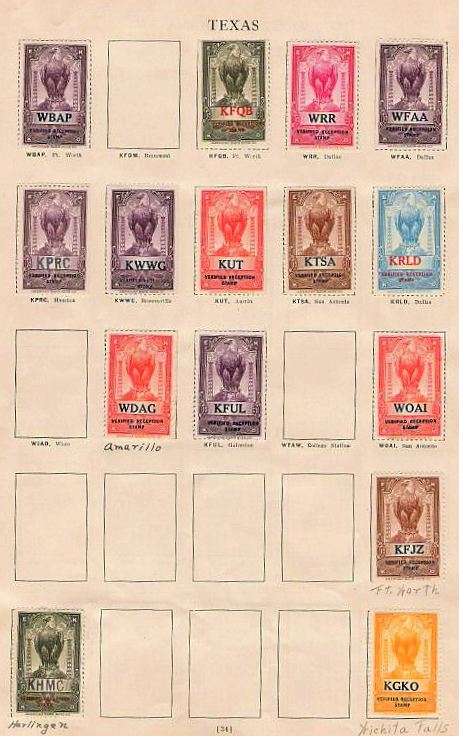
How did it work? Briefly, the EKKO company printed these stamps for subscriber radio stations around the country (and later for stations in Canada, Mexico, and Cuba). Once the radio stations received them, they issued them to listeners who wrote in to affirm that they had, in fact, picked up their station on the wireless. The listener had to prove it by stating the time he or she had tuned in and then give a short synopsis of the program they had heard. Oh, and they had to enclose a dime. (The dime was probably the most important part of this whole fad — at least for the broadcasters.) In return, the station would check their logs and “verify” that the dime-sender probably DID hear the station, and one of these little stamps would be sent out post haste. The EKKO company also conveniently printed up albums for collectors to paste the stamps into. I’m not sure how one was expected to fill up the book (with pages devoted to each state), since there’s no way you’d be able to pick up the signals of all those stations, but I guess that’s what gets collectors’ blood racing. It’s the thrill of the chase. The verified reception stamp-collecting fad died out as the Depression set in, and it became hard to justify spending one’s precious hard-earned dimes on a frivolous hobby.

*

Verified reception stamps were issued by the five main stations in the Dallas-Fort Worth area in the 1920s. WRR, at the top, was the first radio station in Dallas and one of the earliest stations in the country. It began broadcasting as a sort of early police radio in 1920 and received its official broadcasting license in 1922. It remains an oddity in the radio world as it is a commercial radio station that is owned and operated by the City of Dallas.

*

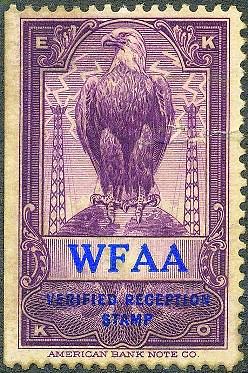
ekko_wfaa

WFAA signed on in 1922 and was part of the nascent Dallas Morning News media empire.

*

ekko_wbap

WBAP, a Fort Worth station, also signed on in 1922. Someone thought it might be cute if “WBAP” stood for “We’ll Be At the Party.” More serious-minded station people went with “We Bring a Program” which, really, isn’t much better.

*

ekko-kfjz

KFJZ (another Fort Worth station) came along in 1923. Its founder sold the station five years later for a good chunk of change and then went to work for WBAP.

*

ekko-krld

KRLD began broadcasting in 1926 and was acquired by The Dallas Times Herald a year later.

*

ekko-texas-stations

A sample page of the “Texas” portion of the official EKKO stamp album.

*

ekko_wrr-globe

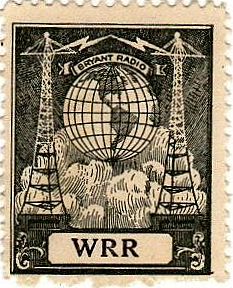
The EKKO company had some competition in the PM Bryant Co. Bryant stamps required no “verification” — you just sent them your dime and got a stamp. Their stamps had no eagle, but they DID have transmitter towers and the essential lightning bolts.

*

And now you (and I) know!

***

Sources & Notes

An incredibly comprehensive history of Dallas radio is the DFW Radio Archives site — its main page is here. The pages dealing with the stations broadcasting in DFW in the 1920s are here and here. I highly recommend reading the very interesting account about how WRR evolved from an experimental police communication transmission tool to a full-fledged entertainment station.

*

Copyright © 2014 Paula Bosse. All Rights Reserved.

Mr. Peppermint!

by Paula Bosse

I have no idea where I came across this photo a couple of years ago, but it is without question my favorite photograph of my childhood pal and idol, Mr. Peppermint!

*

Copyright © 2014 Paula Bosse. All Rights Reserved.

Jerry Scoggins, From WFAA Staff Musician to Pop Culture Icon

jerry-scoggins_wfaa-1941
Jerry Scoggins in the WFAA studios, 1941

by Paula Bosse

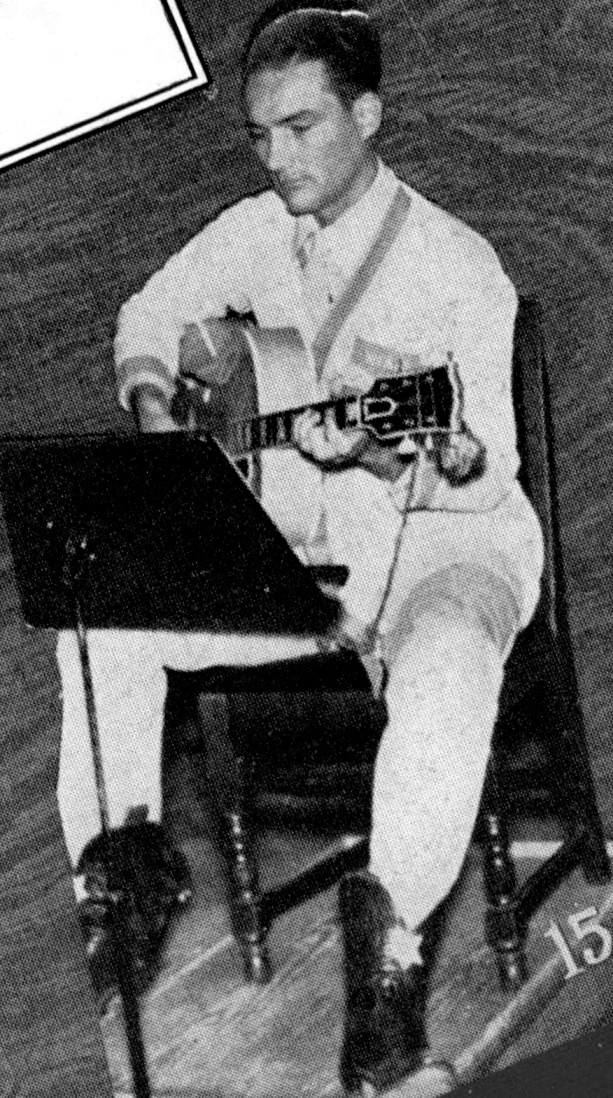
You know Jerry Scoggins. You DO. You can sing along with his most famous recording. But you might not know his name — even if you do know it, you’re not sure why you know it. And you’ve almost certainly never seen a picture of him. But there he is in the photo above, in 1941, at the studios of WFAA radio where he was a staff musician and occasional on-air personality. The caption reads: “Guitarist Jerry Scoggins arrives for a rehearsal in shiny cowboy boots.”

During his time at WFAA (he was there almost a decade — he started when the station still had studios in the Baker Hotel), Jerry was in countless bands — in fact, he often had several going at the same time. Some of his bands were: The Bumblebees, the Tune Tumblers (with a then-unknown Dale Evans as the group’s “girl singer”), Three Cats & a Canary, The Baboleers, and The Cowhands.

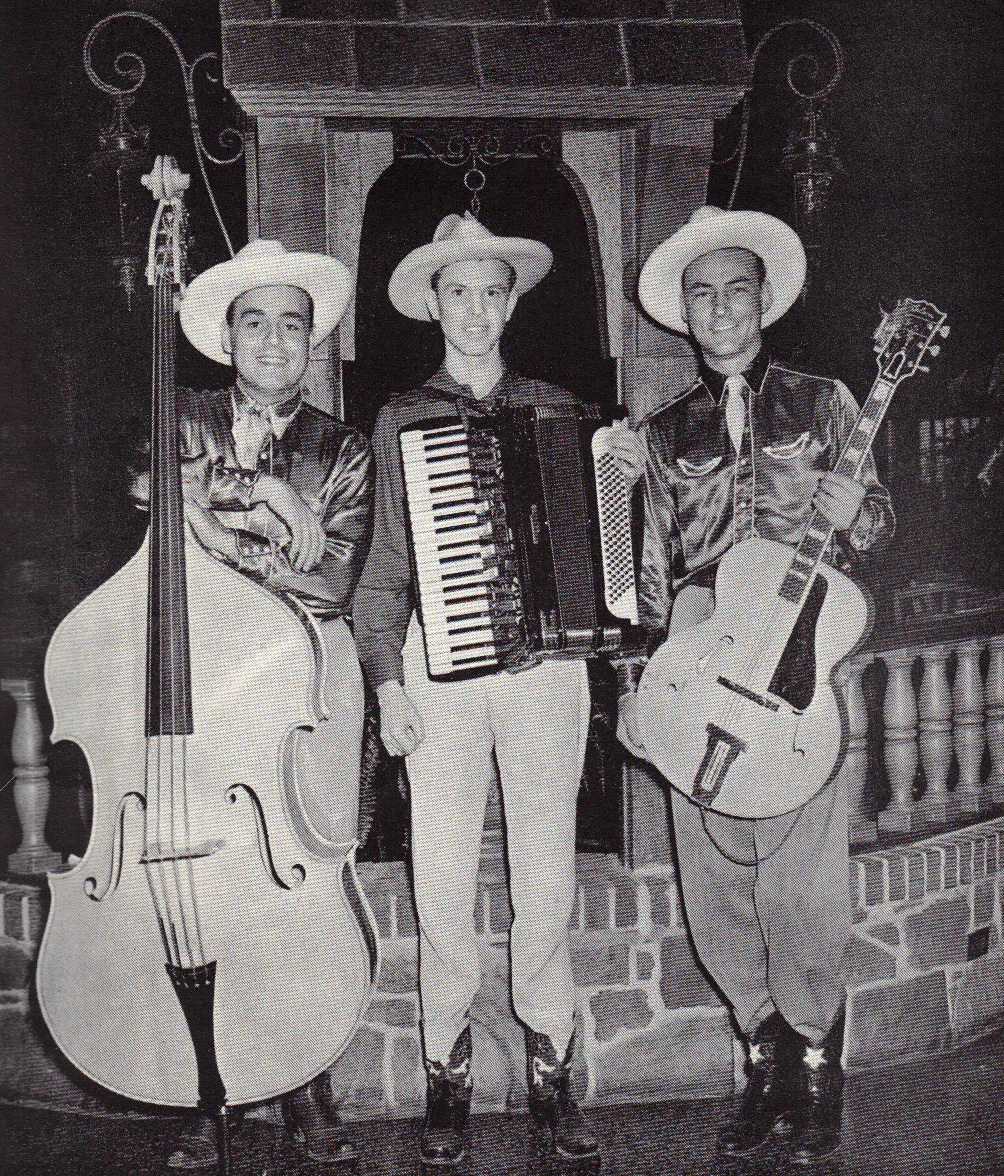
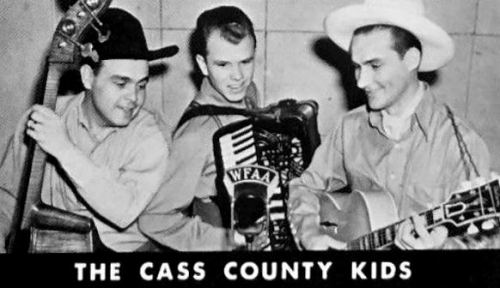
His main group, though, was the Cass County Kids, a popular trio that performed western music and who claimed to have a repertoire of over 500 songs (!).

cass-co_kids_wfaa1_1941_caption

In 1945, after years of working as mostly anonymous radio musicians, the Kids finally hit the big time. Gene Autry asked them to join him, and they left Dallas for Hollywood, changing their name in the process — at Autry’s request — to the (slightly) more age-appropriate Cass County Boys. They appeared in movies, on television, and on record with Autry for several years, and from all accounts, the Cass County Boys had a long and happy career.

cass-county-kids_wfaa-postcard_det_ebay

By 1962, Jerry was still in California, but at that point he was working as a stockbroker, singing only on weekends. I’m not exactly sure how it happened, but — seemingly out of the blue — he was asked by TV producers to sing the theme song for a new CBS television show called The Beverly Hillbillies. Backed by the great Flatt & Scruggs, Jerry sang “The Ballad of Jed Clampett,” and his voice became known to millions of people, overnight. And here it is more than fifty years later, and I bet you know all the words to the song. It has become a permanent fixture in American pop culture.

And that’s why you know Jerry Scoggins.


*

jerry-scoggins_bevhill_end-credits

*

ADDED, Sept. 2023: A reader just sent me this clip showing Scoggins (with Earl Scruggs, Roy Clark, and others) performing the song in 1993 as Buddy Ebsen dances along. This is so great!!

scoggins-jerry_1993_youtubeJerry Scoggins, 1993 (from YouTube video)

*

And here’s Jerry with the Cass County Boys, singing a novelty song called “Which Way’d They Go?” (Jerry’s the good-looking one on the right):

***

Sources & Notes

The top photo of Jerry Scoggins and the large photo of the Cass County Kids are from the WFAA-KGKO-WBAP Combined Family Album (Dallas, 1941). The small photo of the Cass County Kids is from eBay.

Jerry Scoggins was born in 1911 in Mount Pleasant, Texas (in Titus County, right next door to Cass County). He died in 2004 at the age of 93. His obituary in the Los Angeles Times is here. More on Jerry from Wikipedia, here.

A nice overview of the Cass County Kids/Boys is here.

*

Copyright © 2014 Paula Bosse. All Rights Reserved.