Flashback : Dallas

A Miscellany: History, Ads, Pop Culture

Category: Everyday Life

McKell Street’s Golden Age

Veranda-life, Old East Dallas

by Paula Bosse

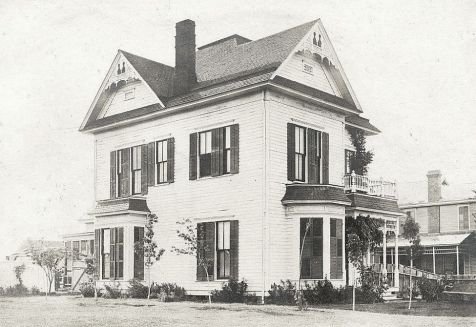
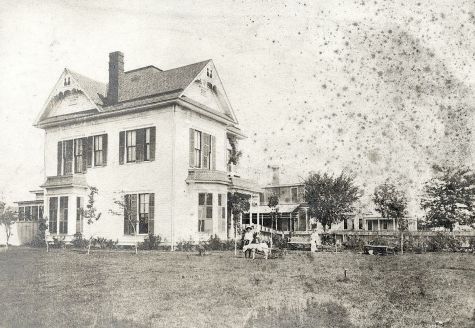
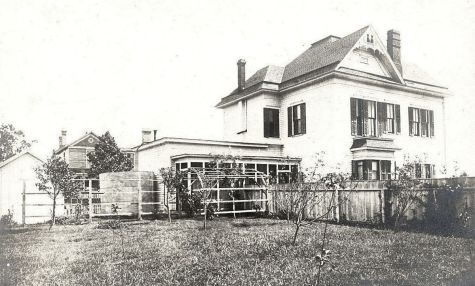
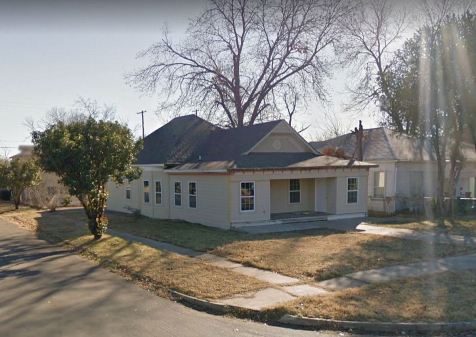
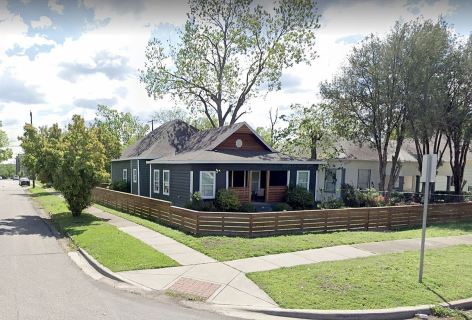
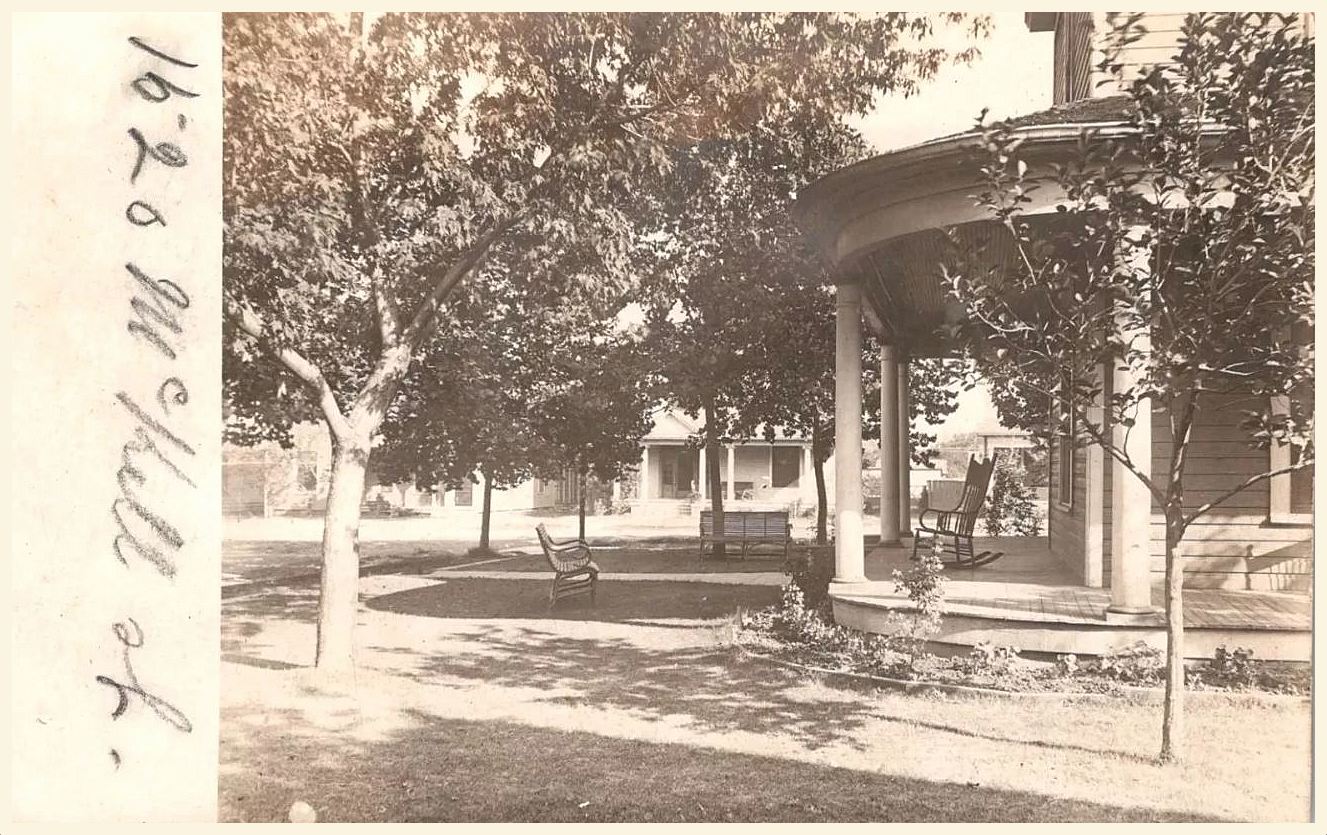
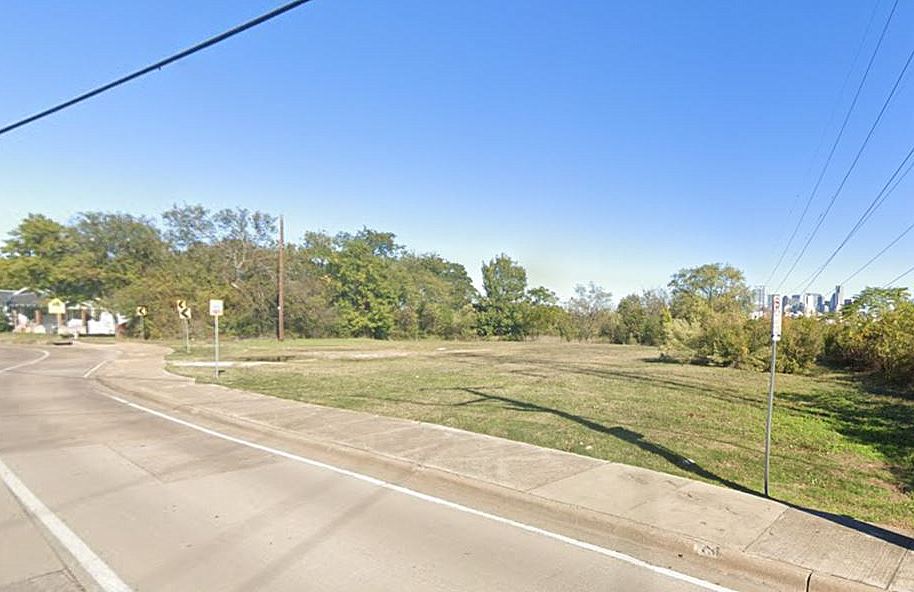
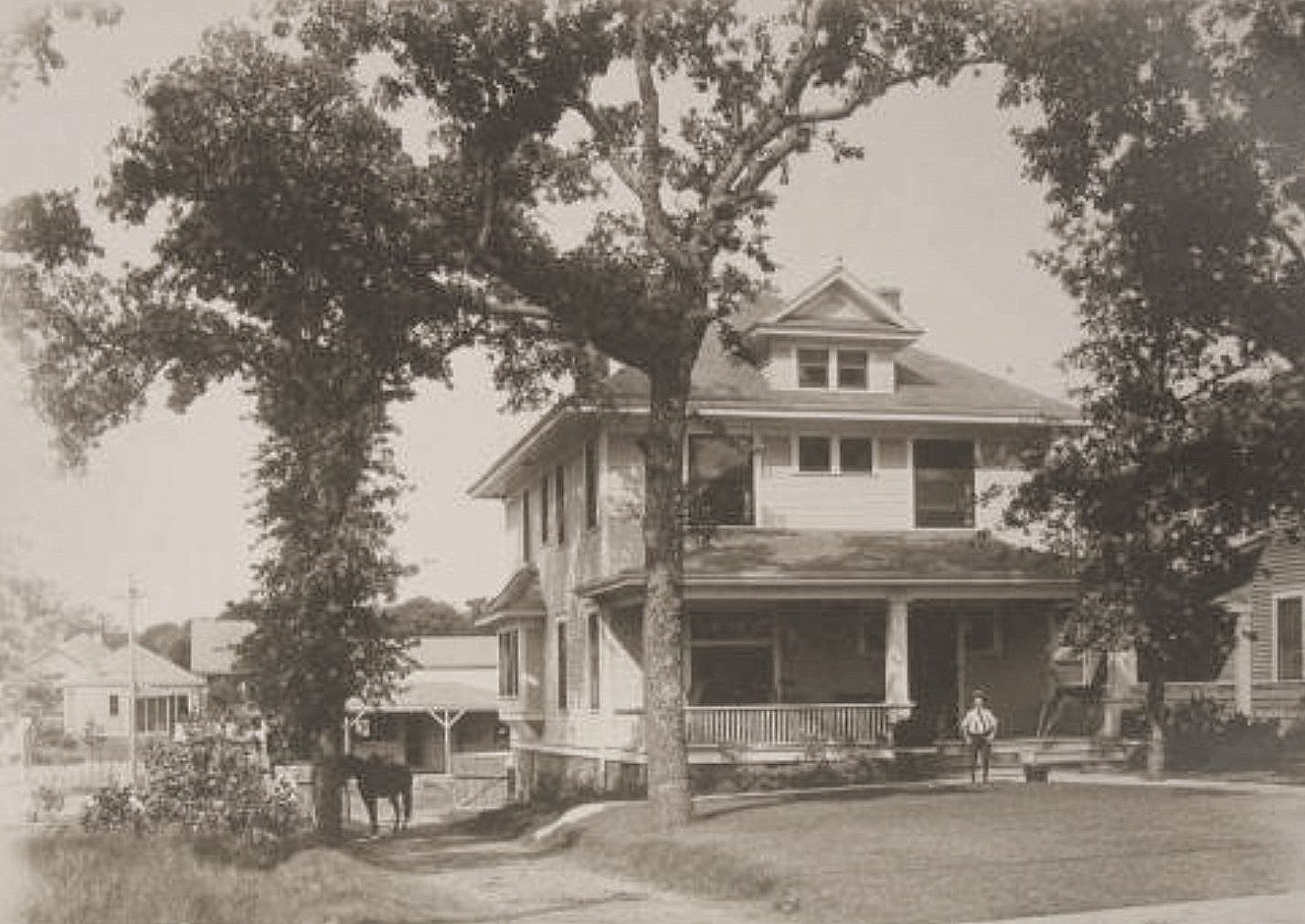
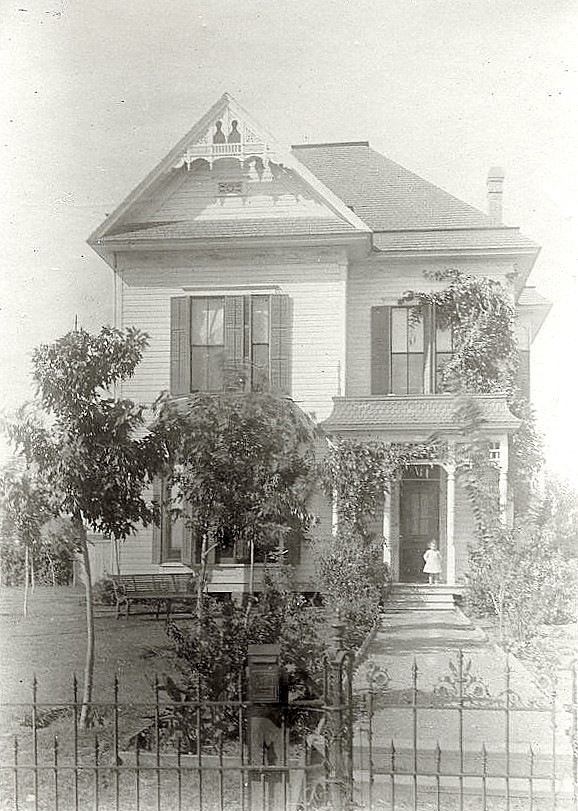
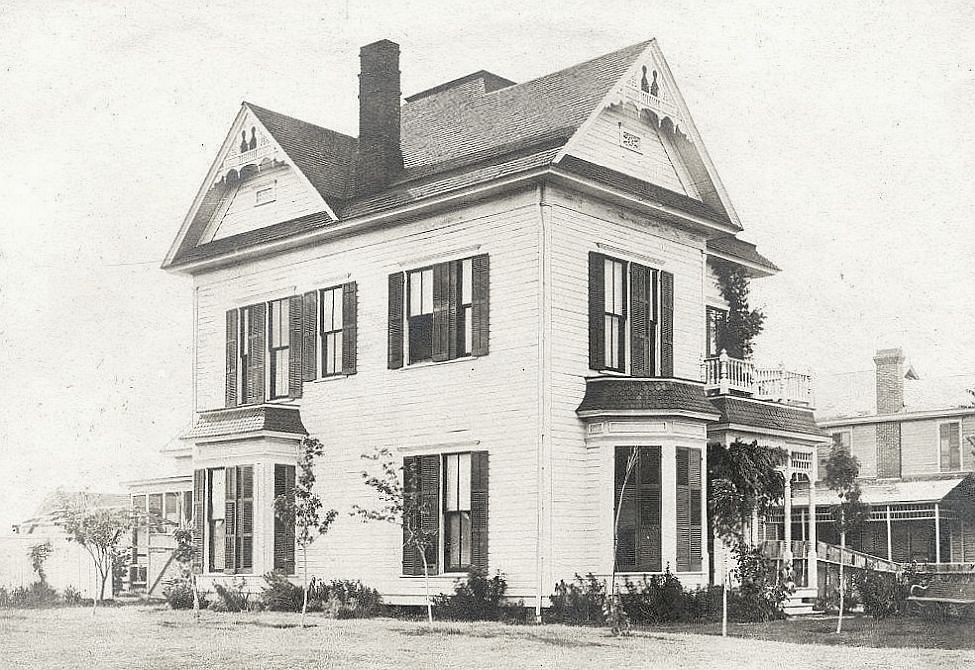
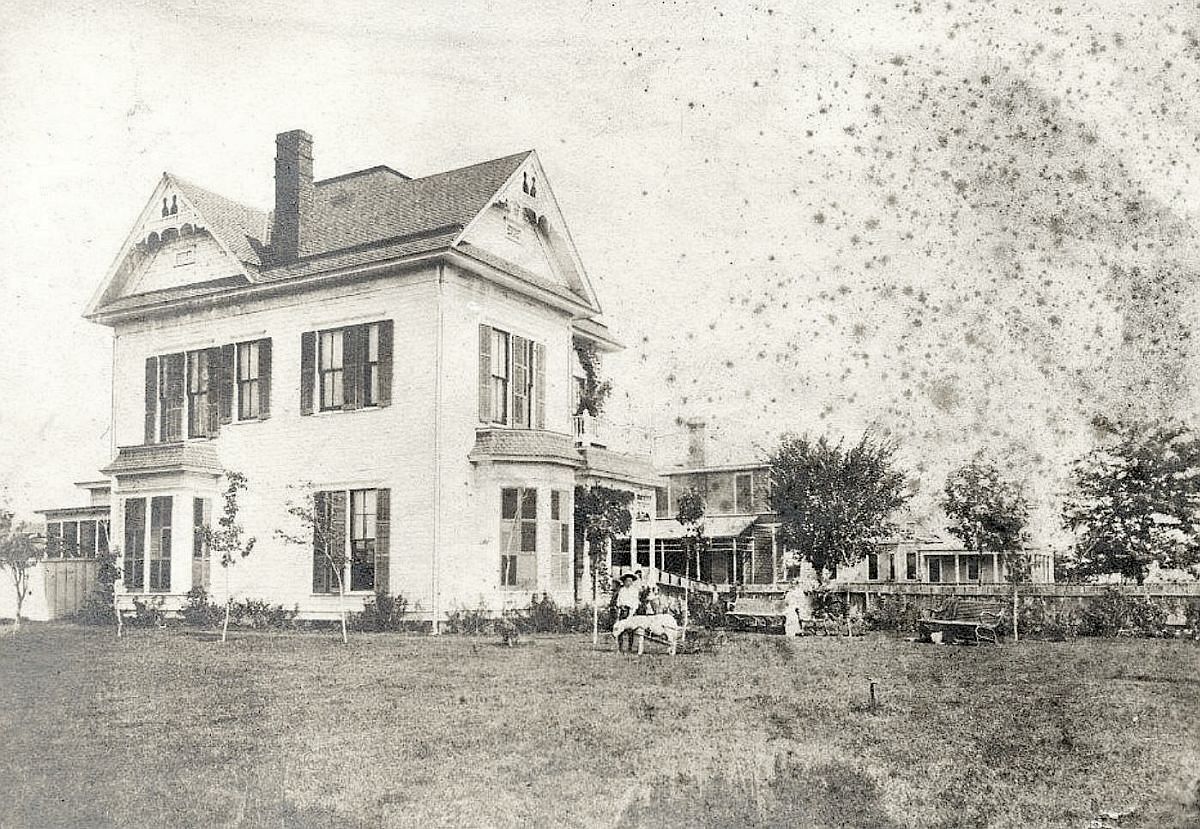
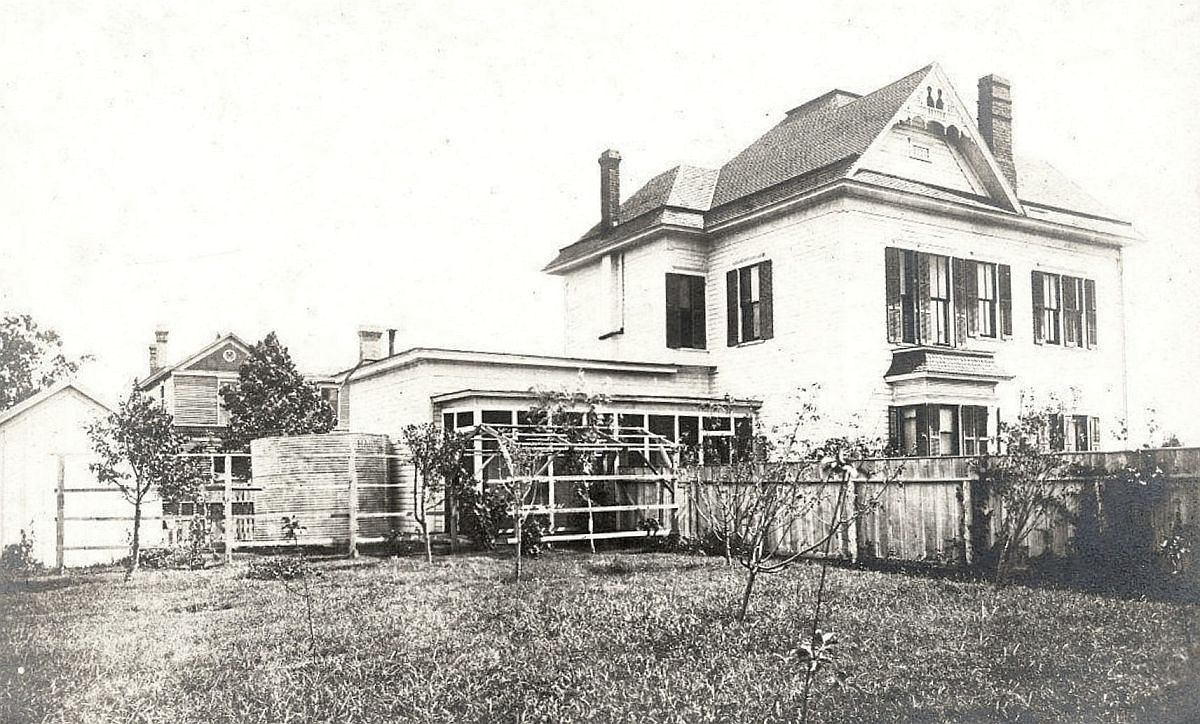
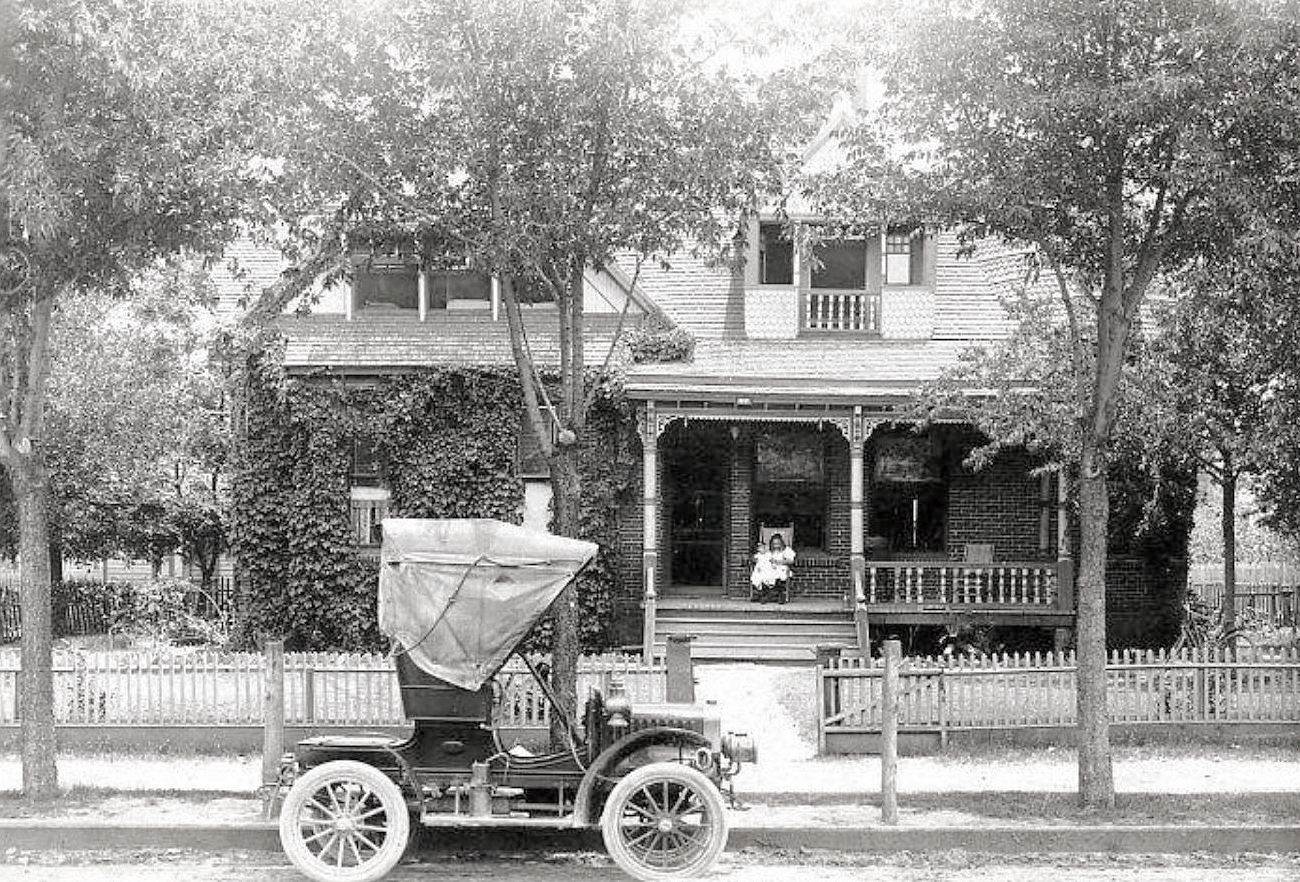
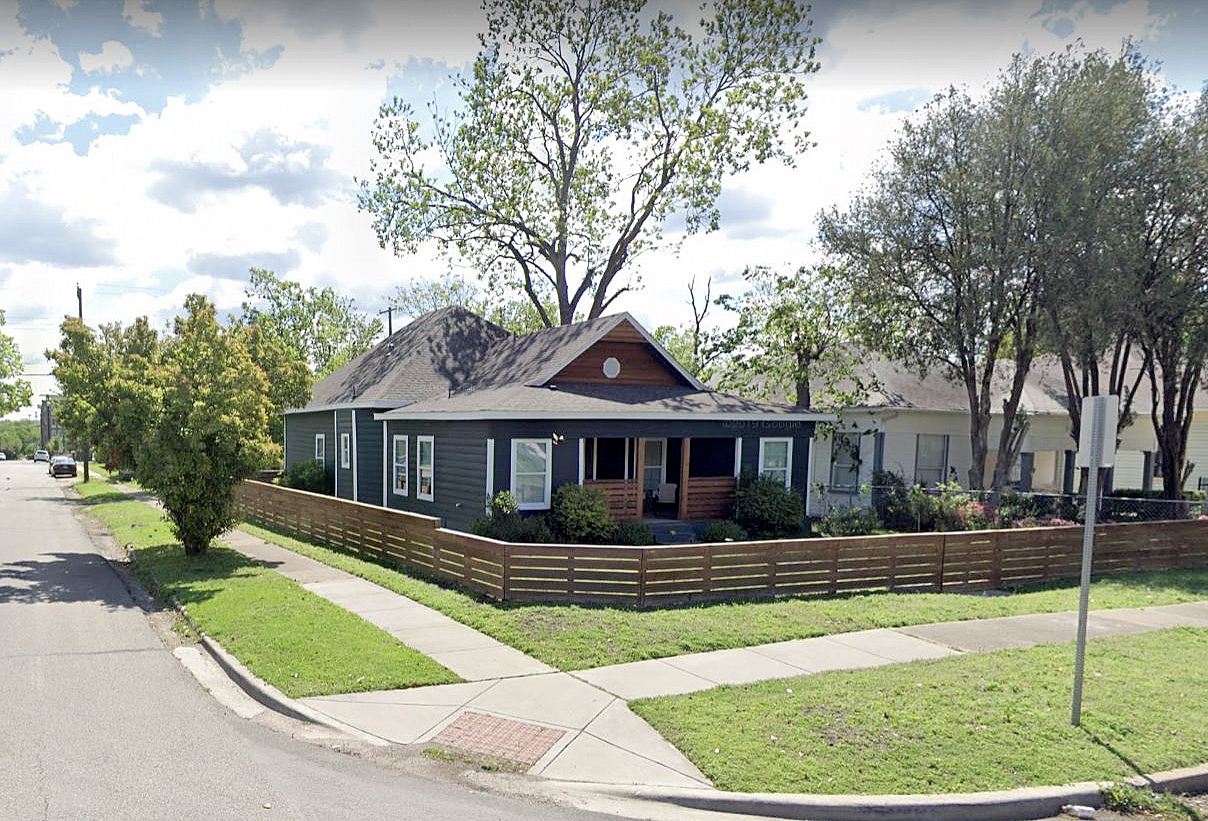
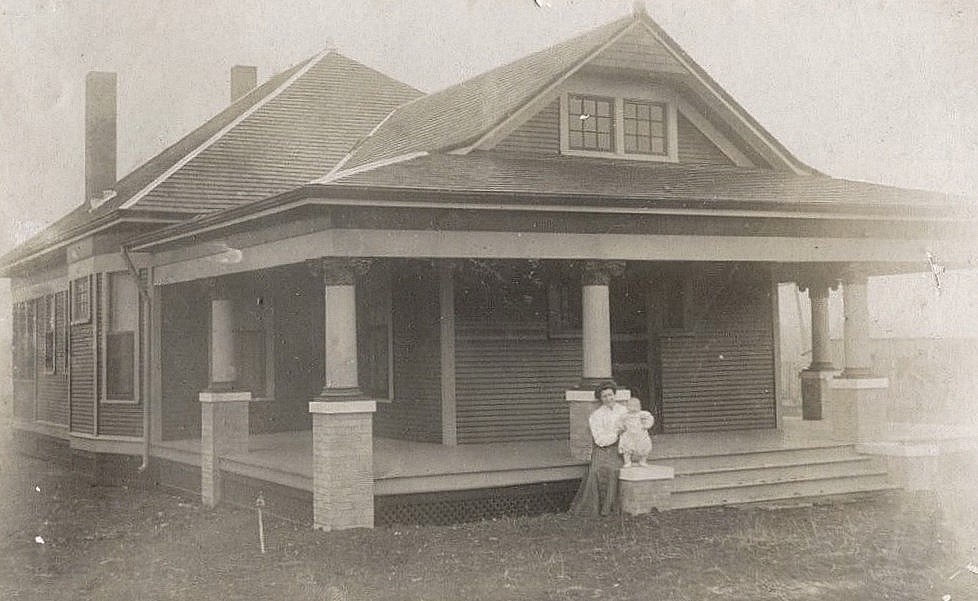
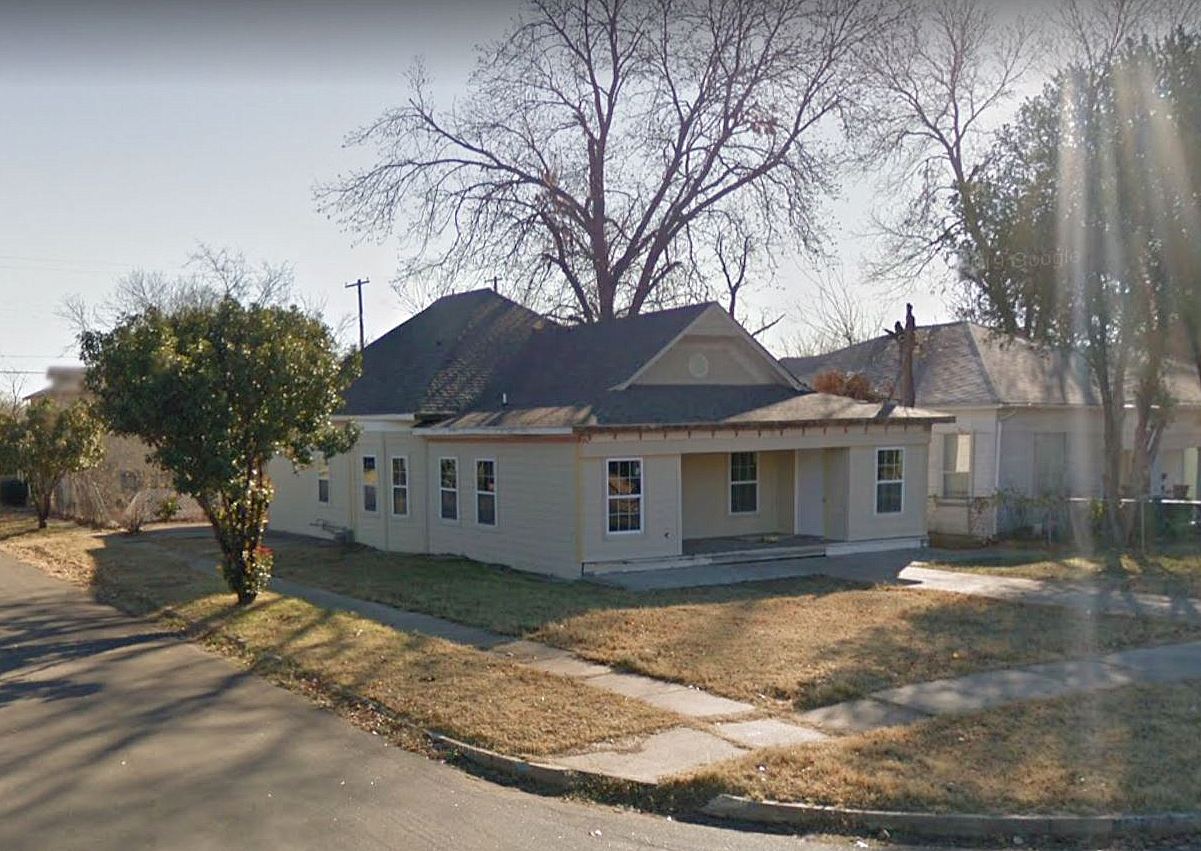
This does not look like Dallas. But it is. I had never heard of McKell Street, but it’s in Old East Dallas and is only two blocks long (it’s actually one long block), between Bryan and San Jacinto. This house stood until 2021 or 2022 at the corner of McKell and San Jacinto (see it in a 2021 Google Street View image here, when it was the very last remaining house on the street).

The address was 1520 McKell (the address written on the card looks like “1620,” but there was never a 1600 block of the street). When the house was built, sometime before 1903, its address was 136 McKell — you can see it and its curved wraparound porch on a 1905 Sanborn map here and on a 1922 Sanborn map here. And the sad empty lot in 2022 is here.

I love stumbling across unexpected photos like this. This was such a lovely little street. I can absolutely imagine Andy and Barney and Aunt Bee on that porch, rocking and chatting on a hot Sunday afternoon, enjoying a bowl of homemade peach ice cream and waving to neighbors as they walk by.

And now it’s nothing but an ugly stretch of parking lots and the powerfully unattractive AT&T building.

***

Sources and Notes

Real photo postcard found on eBay in 2024.

This post appeared in a slightly different version on the Flashback Dallas Patreon page (subscribe for as little as $5 a month!).

*

Copyright © 2025 Paula Bosse. All Rights Reserved.

A Unique Profession: The Curve Greaser — 1935

by Paula Bosse

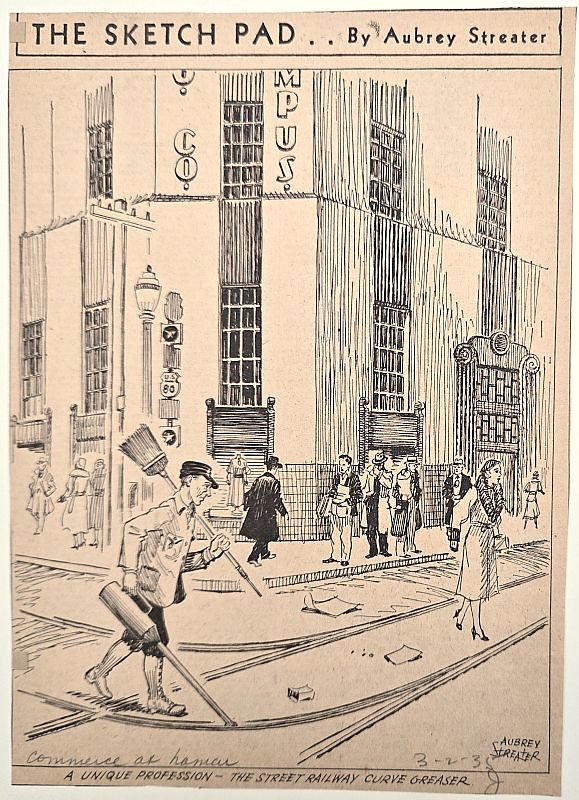
The caption reads: “A unique profession — the street railway curve greaser.”

I have to admit, this is a “profession” I never knew existed. Lubricating the rails would have helped with the constant wear and tear of steel-on-steel friction and would have, presumably, cut down on the incessant squealing of streetcar wheels. This was an essential job at the time, one I’ve only just learned of!

Handwritten notations identify the intersection as “Commerce at Lamar” and the date as “3-2-35.”

***

Sources & Notes

Clipping is from the Dallas History and Archives, Dallas Public Library.

“The Sketch Pad” cartoon panel by Aubrey Streater was a regular feature that appeared in the pages of The Dallas Journal. Streater was a commercial artist and headed the art department of The Dallas Morning News (publisher of The Dallas Journal).

This post appeared in a slightly different version on the Flashback Dallas Patreon page.

*

Copyright © 2024 Paula Bosse. All Rights Reserved.

Deep Ellum: Life Along Central Track

The heart of Deep Ellum… (Dallas Public Library photo)

by Paula Bosse

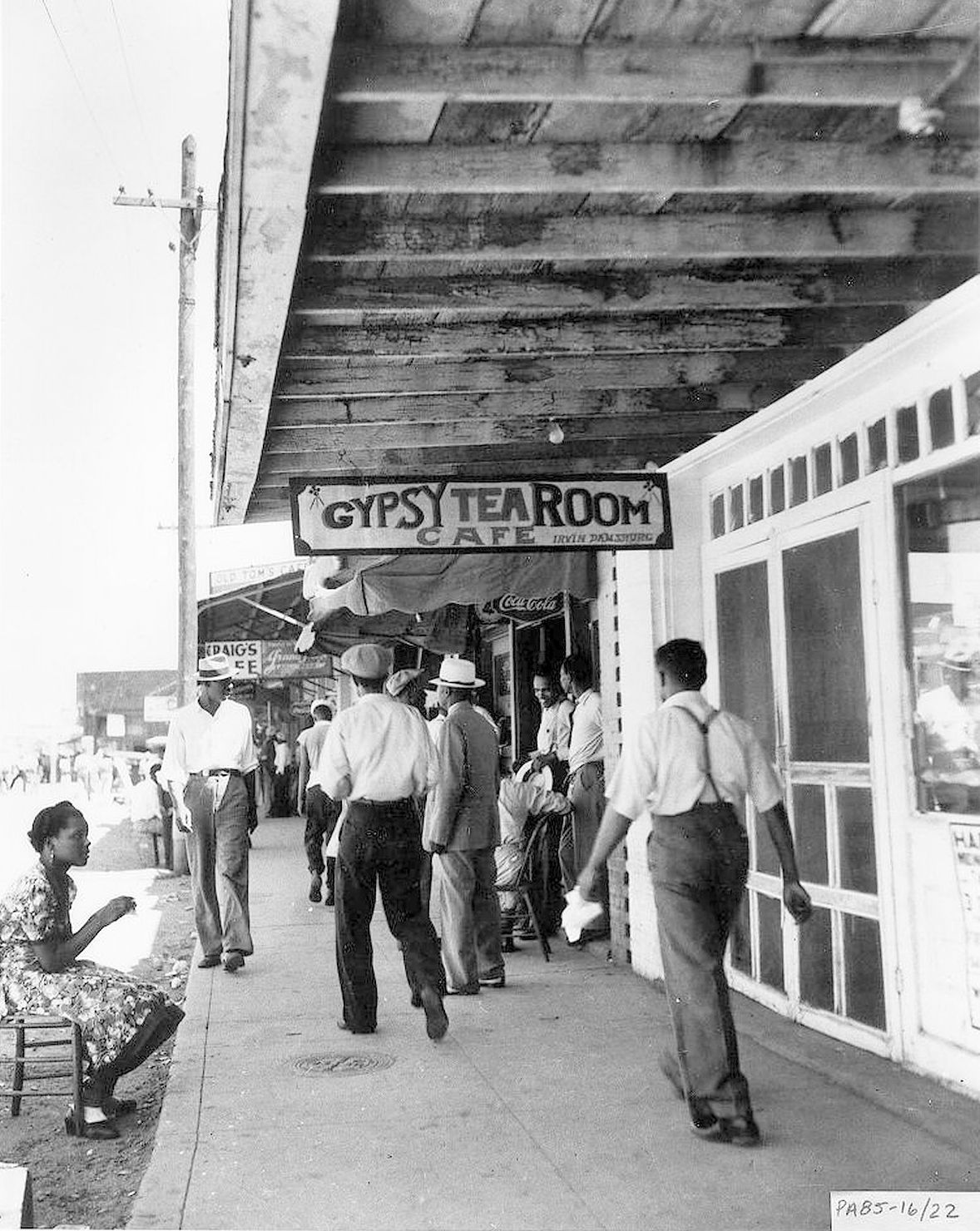
One of my happiest Flashback Dallas research deep-dives resulted in the post “The Gypsy Tea Room, Central Avenue, and The Darensbourg Brothers.” It was prompted by a photo I had seen for years but had never really known what it showed. I loved writing that, and I’m so happy that it is a perennially popular post. Here is that original photo, below, which shows people walking along the row of barber shops, cafes, pool rooms, domino parlors, taverns, and other businesses:

gypsy-tea-room_dallas-public-libraryDallas Public Library photo

The view is to the south — Elm Street is in the distance, where that building juts out to the left. The street about the same distance away to the north (behind the photographer) was Pacific. Someone walking out of the Gypsy Tea Room would have been facing the old train depot. Between the depot and the block of businesses were railroad tracks (not in frequent use in the 1930s, the time of these photos) — the unpaved road that ran alongside the tracks was Central Avenue (when North Central Expressway was built years later, it closely followed the path of these railroad tracks). This general area was considered the heart of Deep Ellum and was filled with Black-owned retail establishments and was a gathering place for social activities and entertainment.

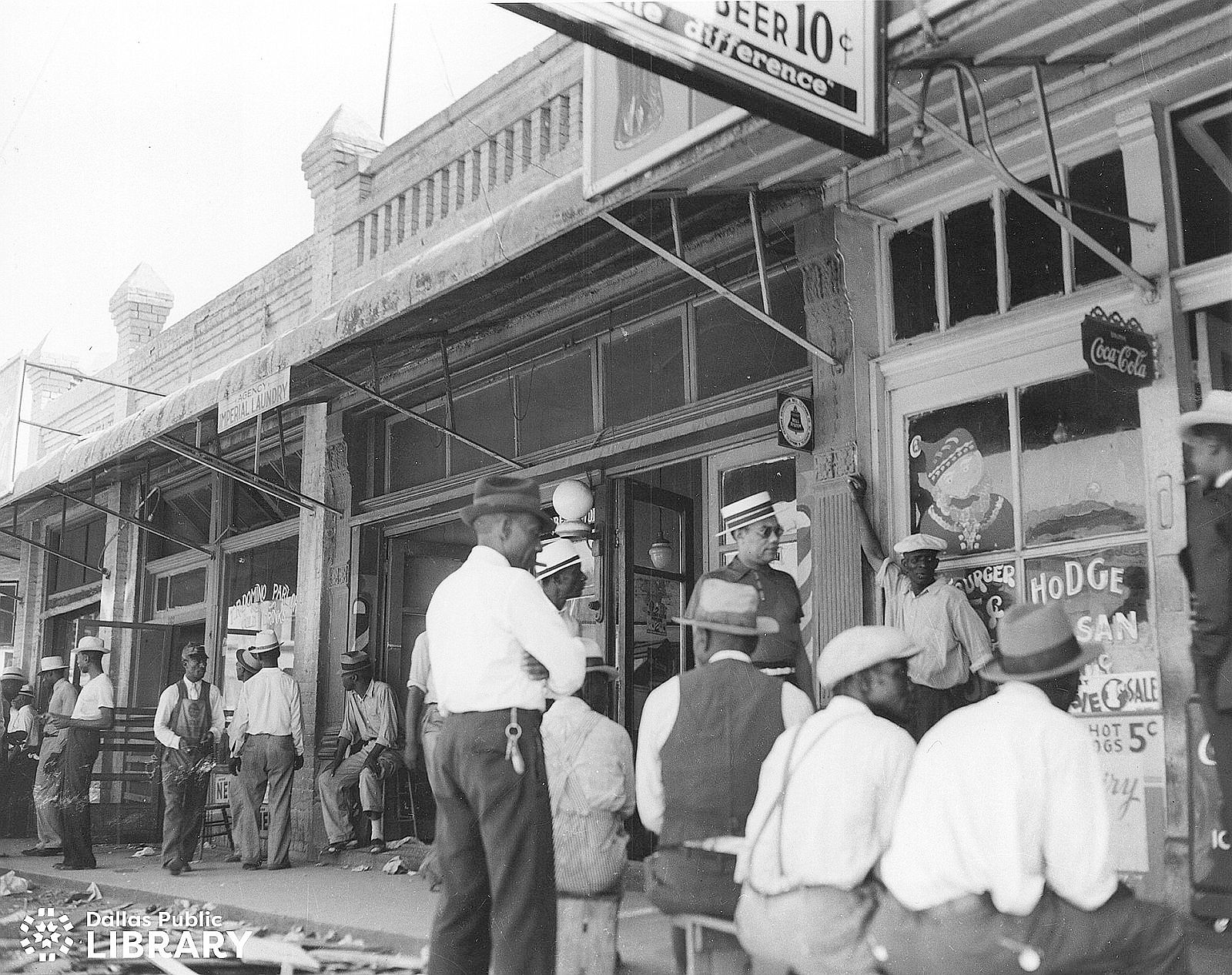
A while back, I came across two other photos, which I recognized as being “companion” photos to the “Gypsy Tea Room” one — the one at the very top of this post, and the one below.

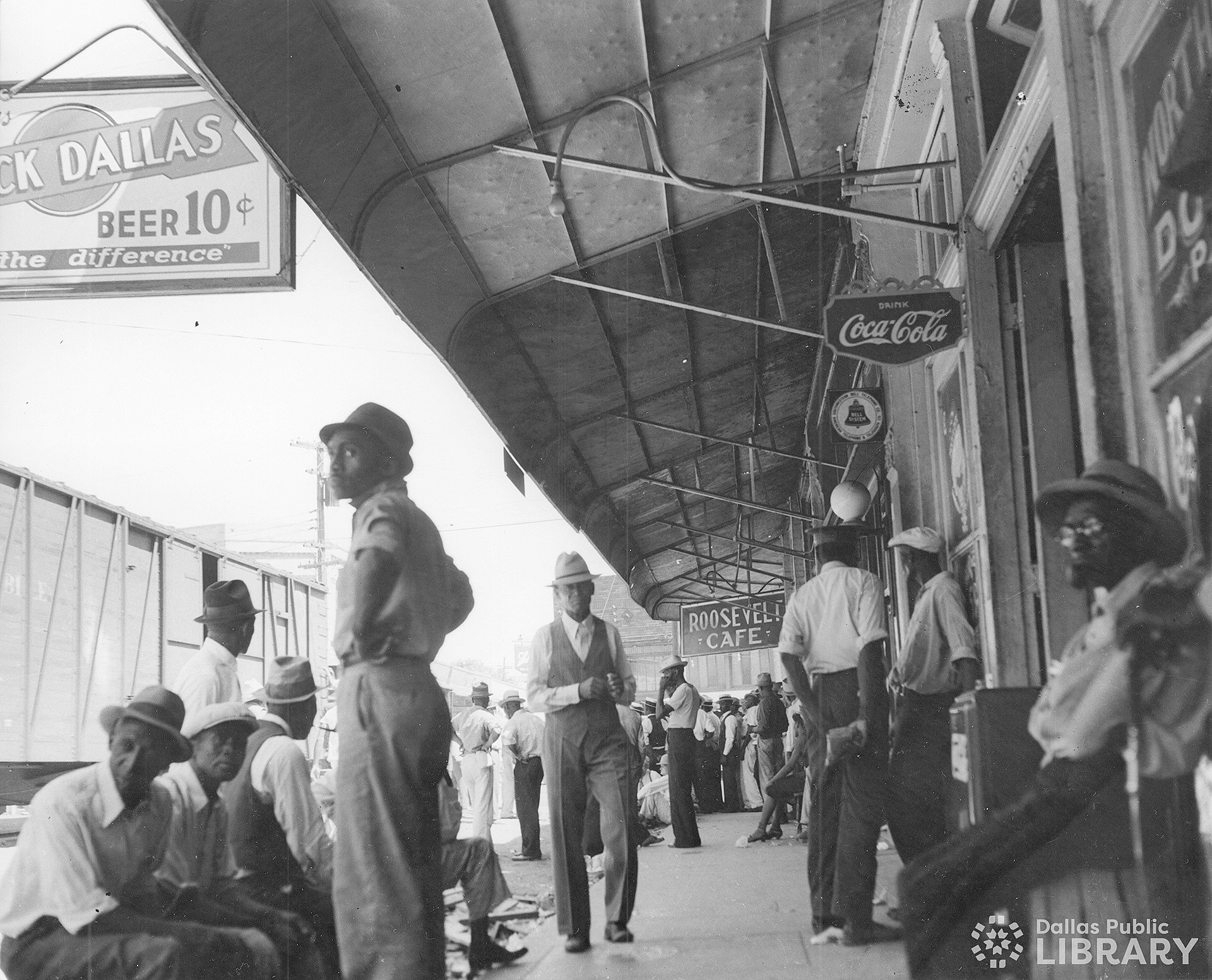
Dallas Public Library photo

The photo immediately above shows the Roosevelt Cafe, which was at 201 N. Central, and the North Pole Domino Parlor (a partial window sign is seen at the right), at 207 Central. A train is passing. This photo and the photo at the very top both show partial signs for Black Dallas beer. (All images are larger when clicked.)

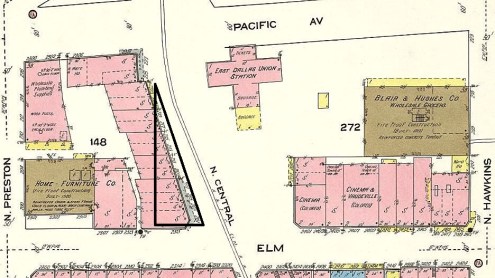
For a better idea of where these photos were taken, see the map below (it shows a detail from a 1921 map — about 15 years before these photos were taken). (See the larger, full Sanborn map here.)

central-ave_1921-sanborn_sheet-17_det1921 Sanborn map (det) showing where photos were taken

*

These are just great, great photos. There aren’t enough photographs like this which capture everyday life in Dallas’ minority communities. Deep Ellum was a thriving Black area at the time. Read a contemporary description of the good things and the bad things going on in this vibrant neighborhood in a (mostly uncondescending) chapter in the WPA Guide to Dallas, “Deep Ellum: Harlem in Miniature.”

**

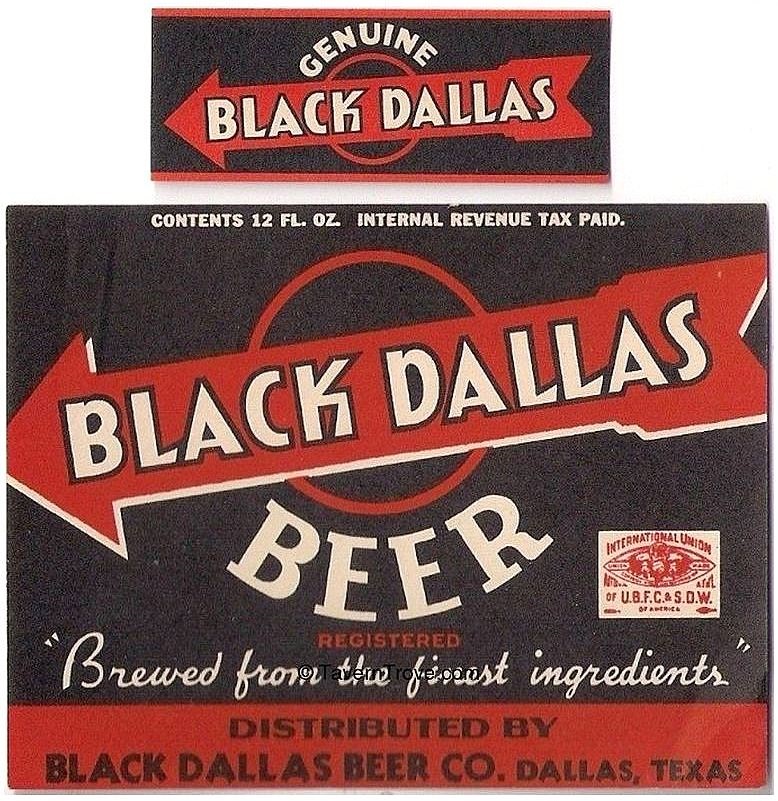
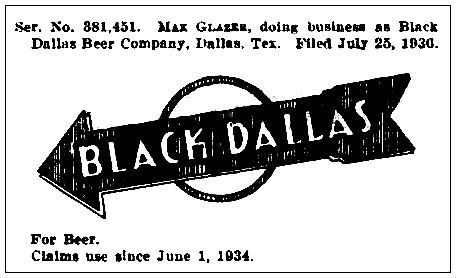
What about “Black Dallas Beer”? I haven’t found a lot about it, but it apparently began as a Dallas-brewed beer in the 1930s but was later brewed elsewhere. (A mention of its Schepps Beer affiliation is here.)

black-dallas-beer_taverntrove_label1937, via Taverntrove.com

black-dallas_beer_u-s-patent-office_090836U.S. Patent Office bulletin, Sept. 8, 1936

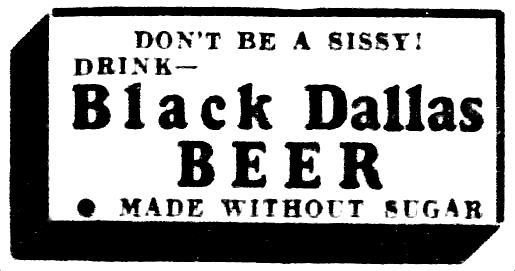
“Don’t be a sissy! Drink Black Dallas Beer — Made Without Sugar.”

black-dallas_beer_ad_waco-times-herald_052237Waco Times-Herald, May 22, 1937

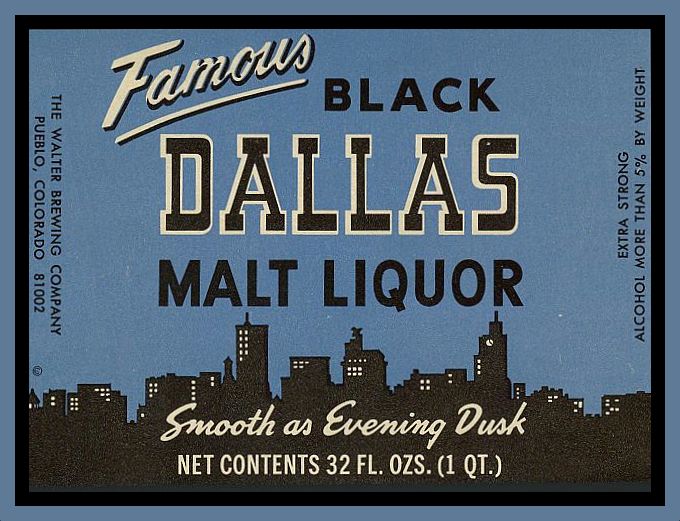
A “Famous Black Dallas Malt Liquor” popped up a few decades later — at that point, there was no connection to Dallas, except for the name and the fantastic label boasting the Dallas skyline. “Smooth as Evening Dusk.”

fbd_beer_black-dallas-malt-liquor_ebayeBay

***

Sources & Notes

The top Dallas Public Library photo — “[African American men walking and sitting along North Central Avenue in downtown Dallas in the early 1930’s]” — is from the Saxon Collection, Texas/Dallas History & Archives Division of the Dallas Public Library; its call number is PA85-16/4.

The second photo — “Gypsy Tea Room Cafe located in Deep Ellum” — is from the WPA Dallas Guide & History Collection of the Dallas Public Library — its call number is PA85-16/22.

The third photo — “[African American men seated on benches and standing outside of the Roosevelt Cafe in downtown Dallas in the 1930’s]” — is from the Saxon Collection, Texas/Dallas History & Archives Division of the Dallas Public Library; its call number is PA85-16/5.

Much more info on this Deep Ellum block can be found in the previously linked post from 2015, “The Gypsy Tea Room, Central Avenue, and The Darensbourg Brothers.”

See my other Flashback Dallas posts on Deep Ellum here.

*

Copyright © 2024 Paula Bosse. All Rights Reserved.

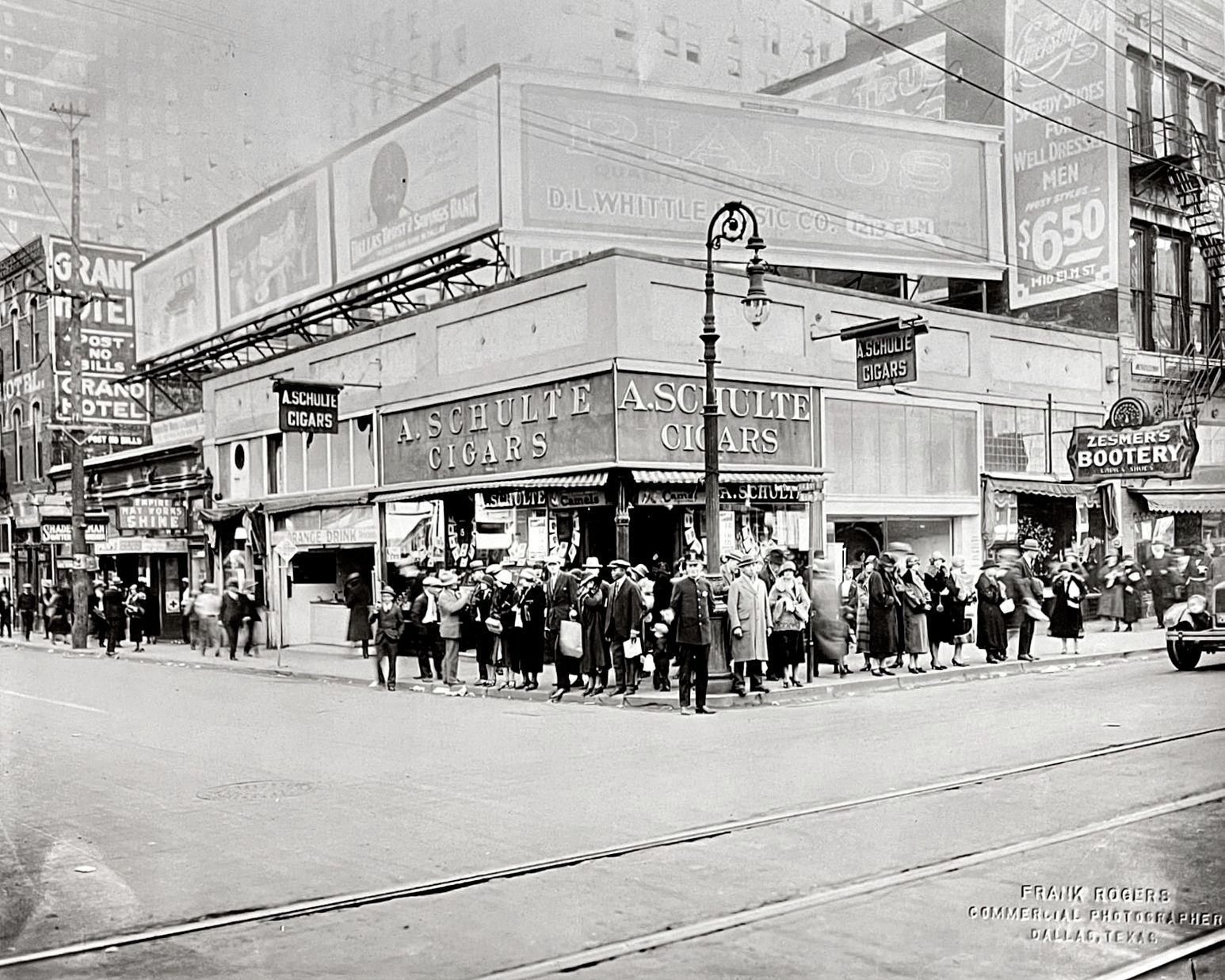
Schulte Cigars, Elm & Akard — ca. 1923

schulte-cigars_elm-akard_frank-rogers_ebay_frank-rogers_bw
Life at Elm & Akard…

by Paula Bosse

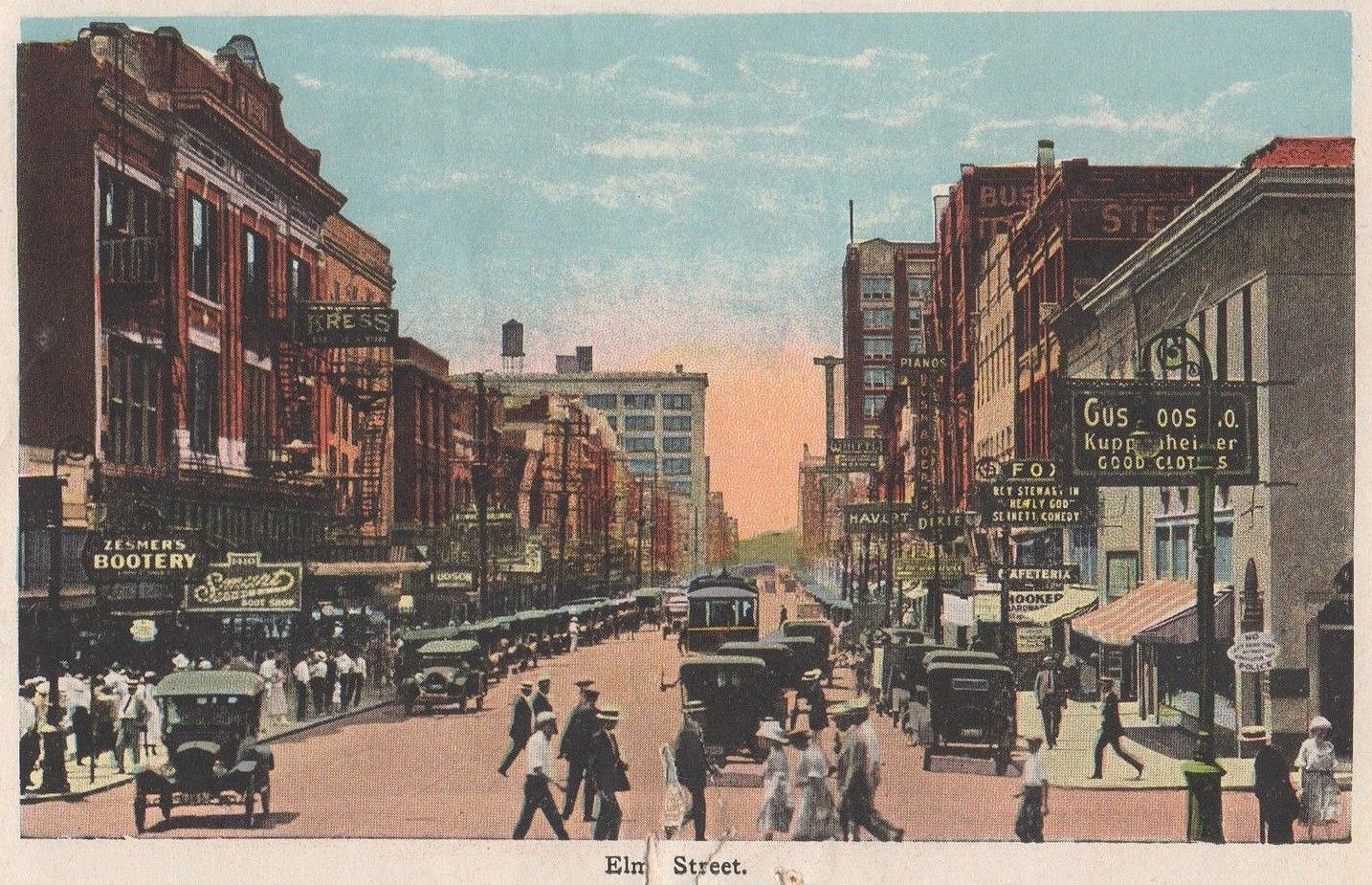
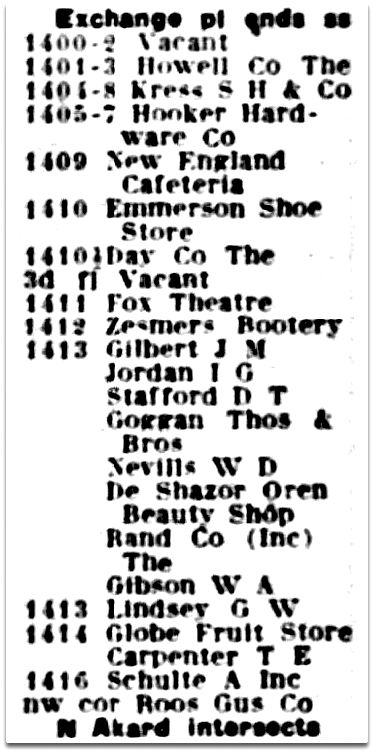
A. Schulte Cigars — at 1416 Elm — held down the southwest corner of Elm and Akard streets (Elm is in the foreground, with the streetcar tracks). The winsomely named Zesmer’s Bootery was at 1412 Elm. Around the corner on Akard was an orange-drink stand. Above the building was a surprising array of billboards. (There is a lot of advertising in this photo.) Here’s another view of the same block, looking west:

elm-st-color_1920s

Every time I see those curlicue lamp posts, they seem to be in photos of Elm Street.

zesmer_schulte_1400-block-elm_1923-directory1400 block of Elm, 1923 city directory

***

Sources & Notes

Top photo by Frank Rogers; found on eBay.

Color postcard from the Flashback Dallas post “Views of Elm Street, With Cameo Appearances by the Fox Theater — 1920s-1960s.”

A previous Schulte location was at 201 S. Ervay, which you can see in the amazing photo in the post “‘There Are Eight Million Stories in the Naked City…’ — ca. 1920.”

Please consider supporting me on Patreon for as little as $5 a month. I post exclusive content there daily!

schulte-cigars_elm-akard_frank-rogers_ebay_frank-rogers_sm

*

Copyright © 2023 Paula Bosse. All Rights Reserved.

Highland Park High School: Photos from the 1964 Yearbook

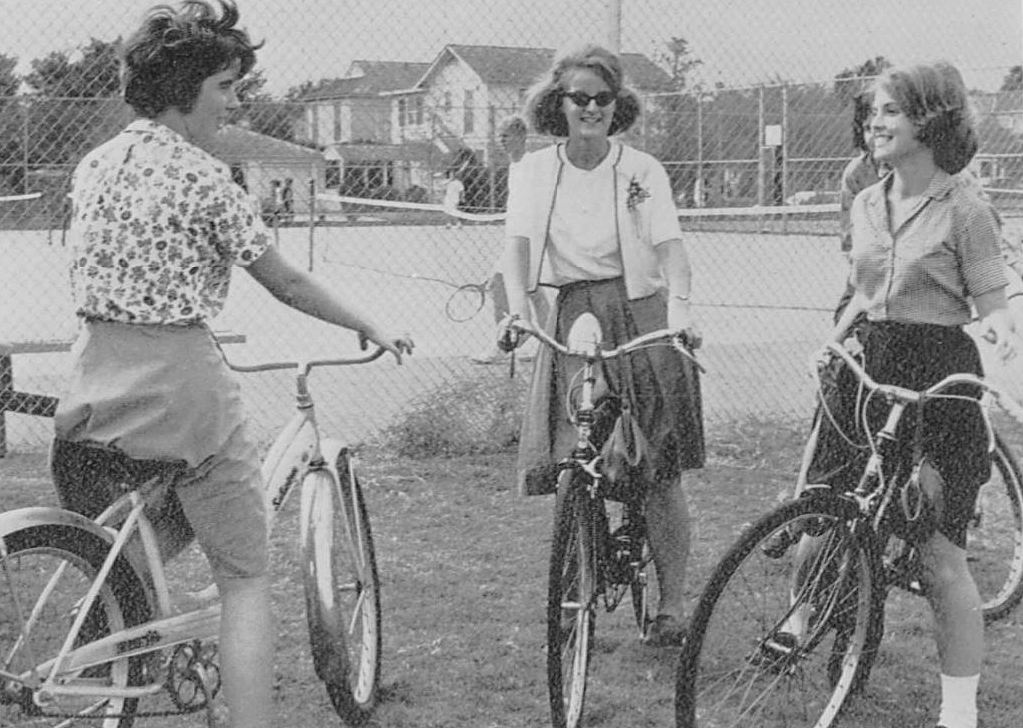
girls-bikes_HPHS-yrbk_1964HPHS senior cyclists after school…

by Paula Bosse

A few random of photos of extra-curricular activities featured in the 1964 Highlander, the yearbook of Highland Park High School.

Above, the caption in the yearbook reads: “Senior cyclists Gay Crowell, Carol Webster, and Margaret Paxson prepare to pedal home.”

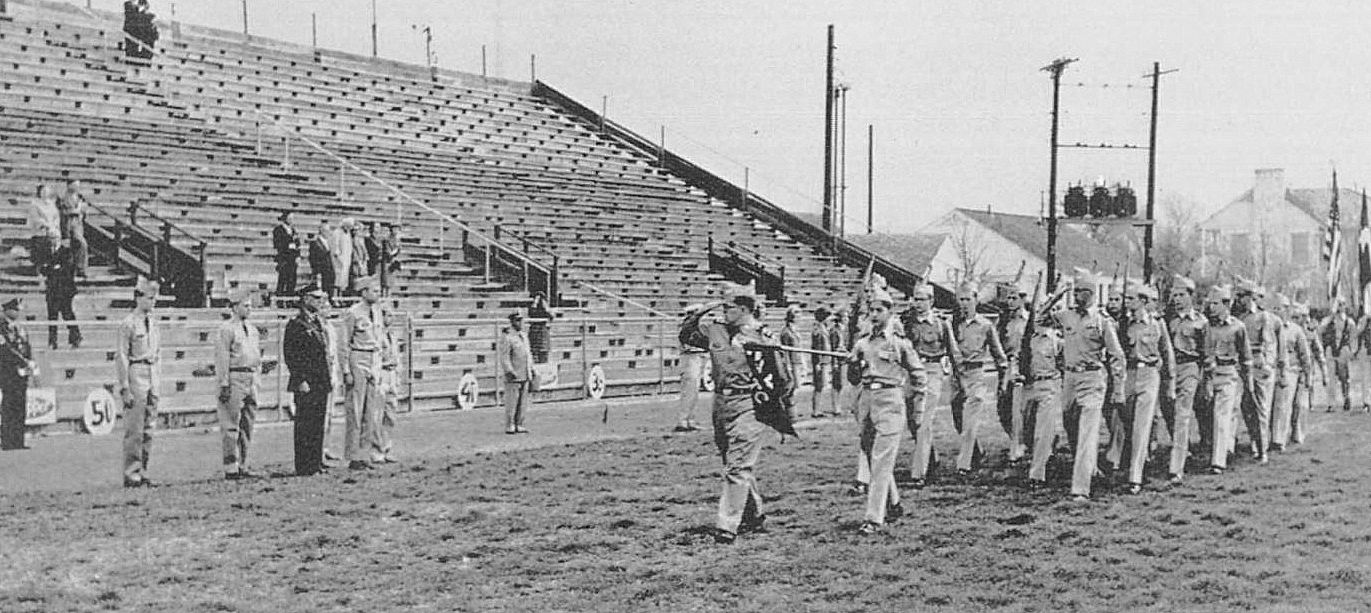
Below, “ROTC cadets salute the inspecting officers at the annual federal inspection.”

rotc-inspection_HPHS-yrbk_1964

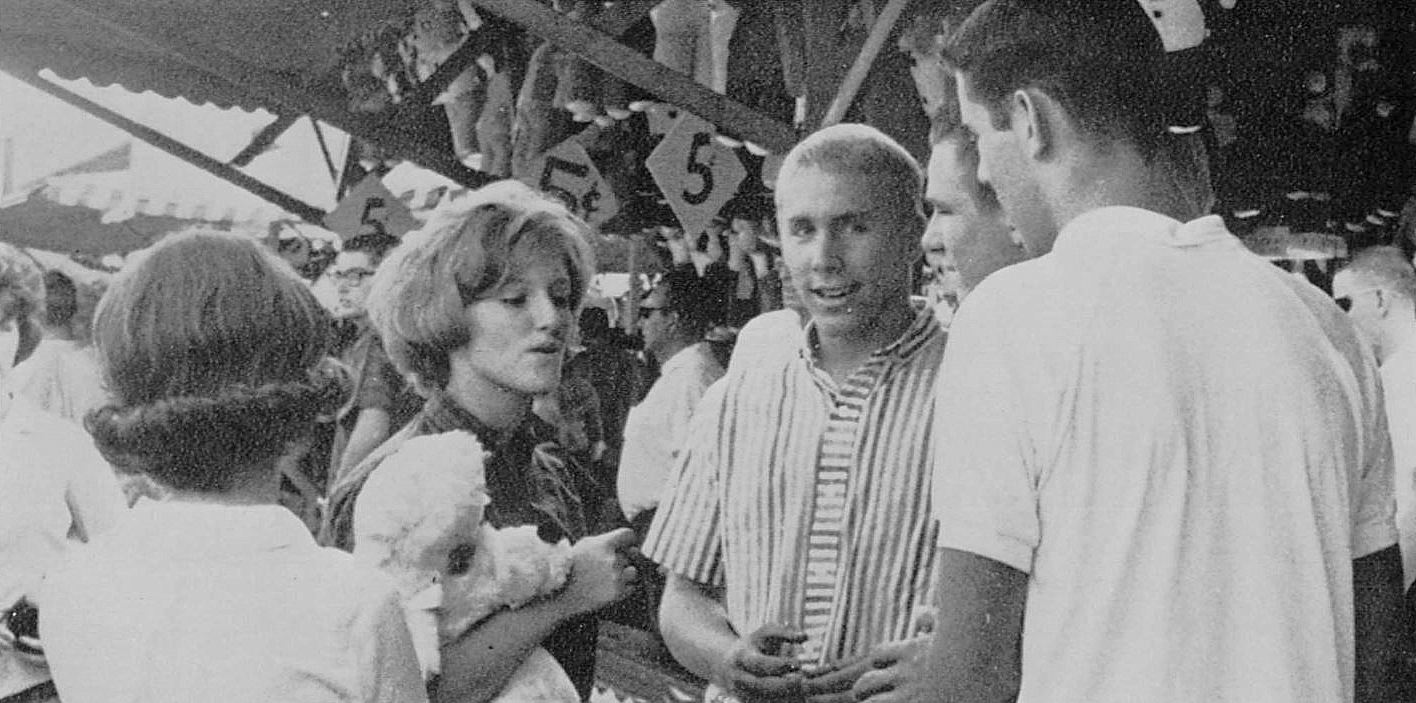
Below, “Ralph Cousins gives Donna Guest and Rick Sable a doubting look as Eloise Hancock tells of her adventures on the Midway during High School Day at the State Fair.”

state-fair_HPHS-yrbk_1964

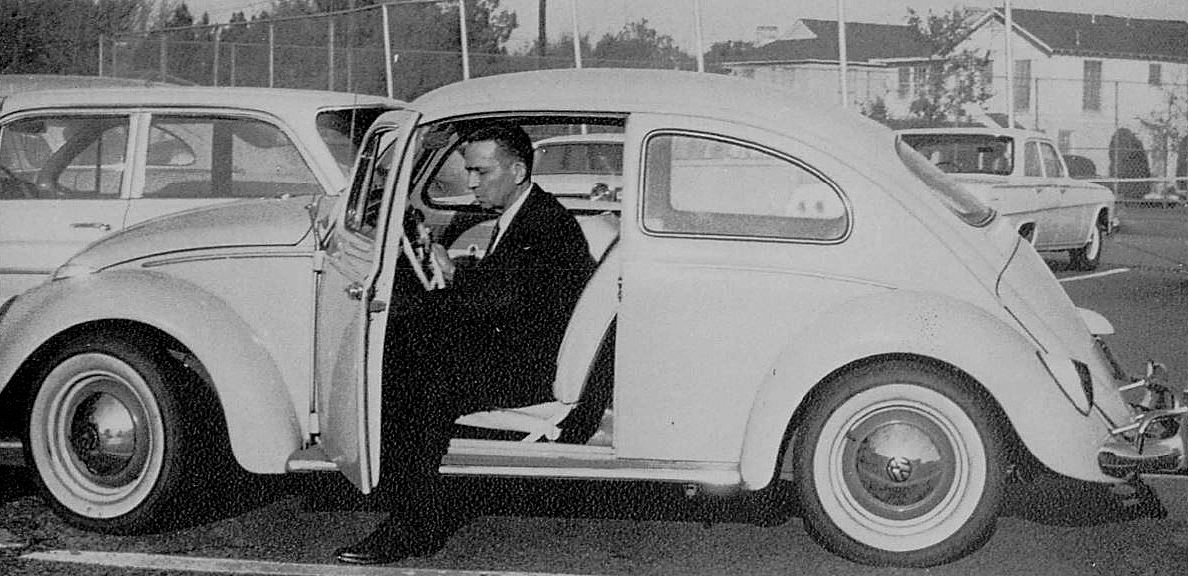
Below, “Maintaining an international atmosphere, French teacher Neil Jarrett leaves his Volkswagen in the teachers’ parking lot.”

french-teacher_volkswagen_HPHS-yrbk_1964

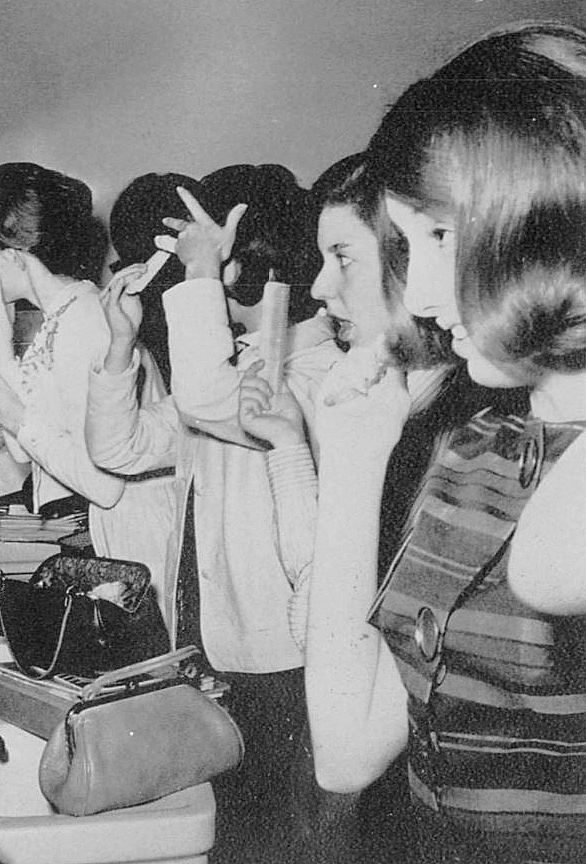
“Early morning finds girls repairing damage caused by gusty March winds.”

girls-mirror_HPHS-yrbk_1964

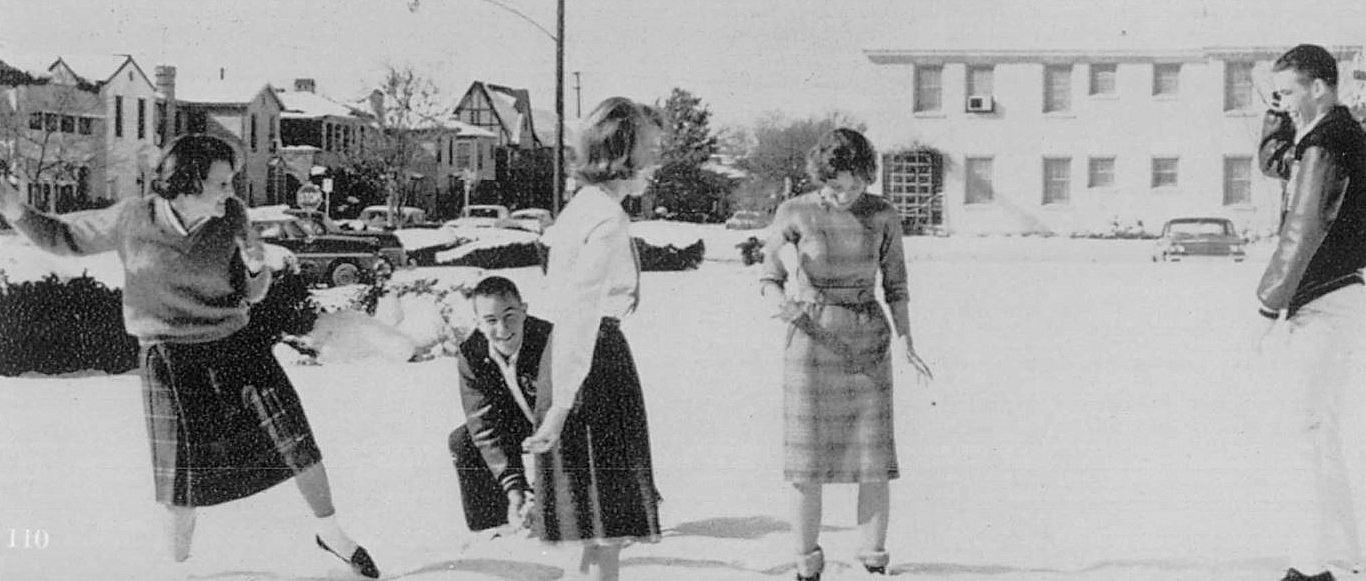
Below, a before-and-after photo featuring a student with the amazing name of “Kitten Quick” (!): “Vice-President Joe Tom Wood, Treasurer Kitten Quick, Sponsor Mrs. Rita Palm, Secretary Susie Urquhart, and President Lewis McMahon resist the temptation to play in the snow-filled schoolyard…”

snow_winter_HPHS-yrbk_1964_a

“…but finally succumb to testing the depth of Dallas’ record snowfall.”

snow_winter_HPHS-yrbk_1964_b

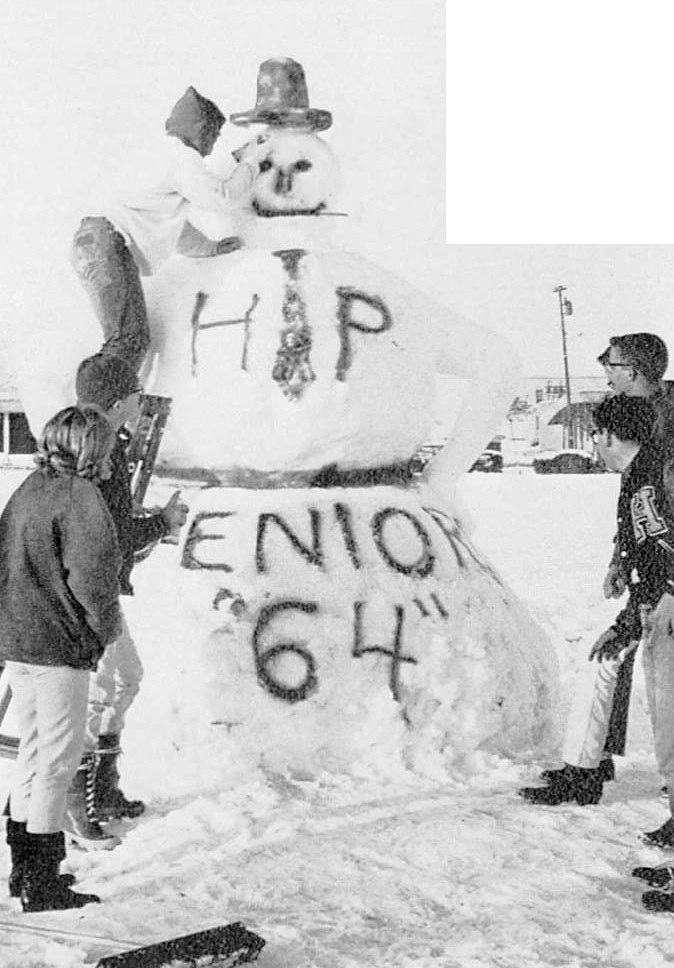
And, lastly, a huge snowman! “‘Seniors ’64’ marks the 14-foot snowman, built during Dallas’s record 7-inch snow.” (A record 7.4 inches of snow fell on Dallas in January, 1964.)

snowman_snow_winter_HPHS-yrbk_1964

*

seal_photo_HPHS-yrbk_1964

***

Sources & Notes

All images from the 1964 Highlander, the yearbook of Highland Park High School.

Other Flashback Dallas posts featuring items from HPHS yearbooks can be found here.

girls-bikes_HPHS-yrbk_1964_sm

*

Copyright © 2020 Paula Bosse. All Rights Reserved.

Oak Cliff’s Star Theatre — 1945-1959

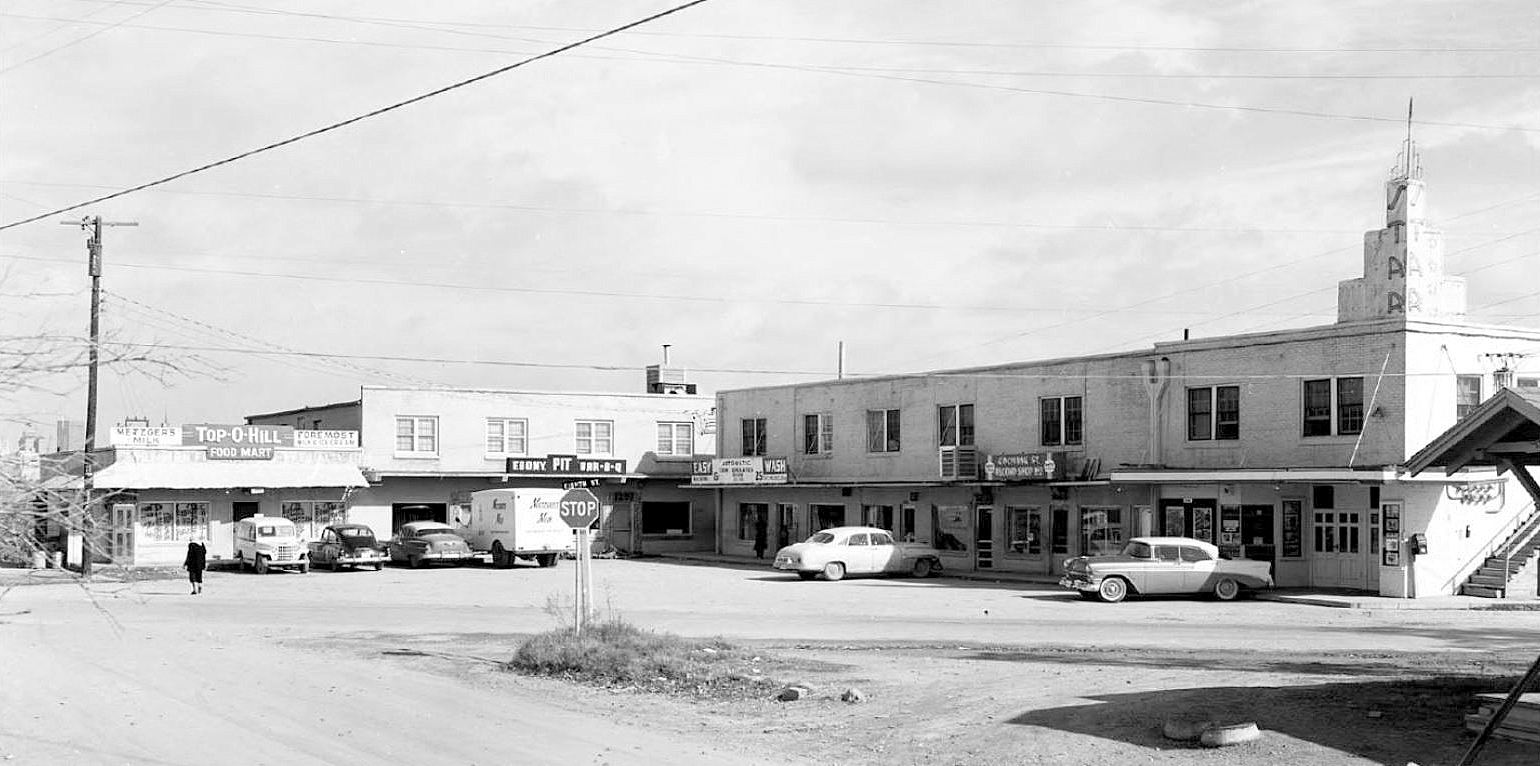
star-theatre_troy-sherrod-hist-dallas-theatres_DPLShow Hill, with the Star Theatre at right

by Paula Bosse

This is one of those photographs I could stare at all day long. It shows a shopping area in East Oak Cliff at the intersection of E. Eighth Street and N. Moore Street — this part of Oak Cliff was originally settled as a freedman’s town, and this photo shows an area between the Tenth Street Historic District and The Bottoms (or The Bottom) neighborhood (see a great map, here).

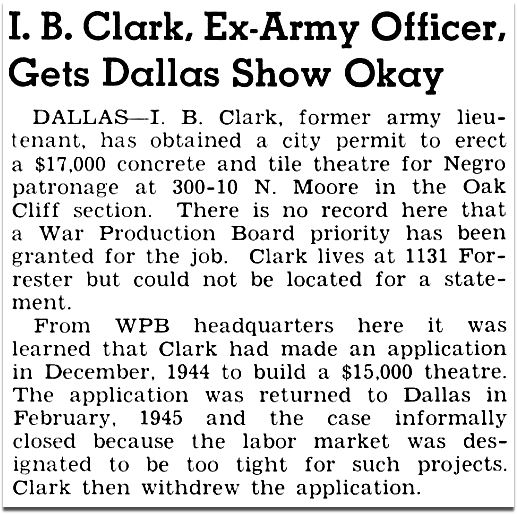
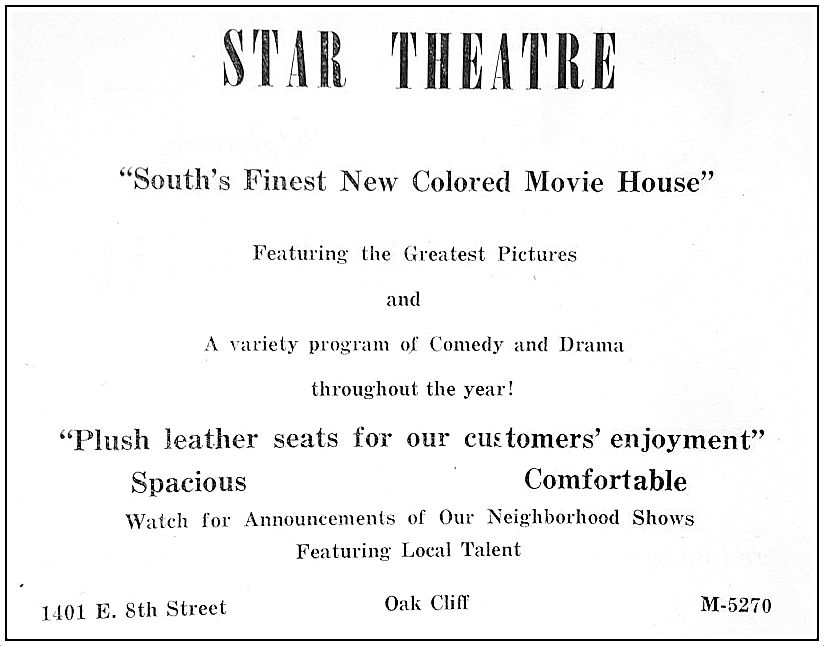
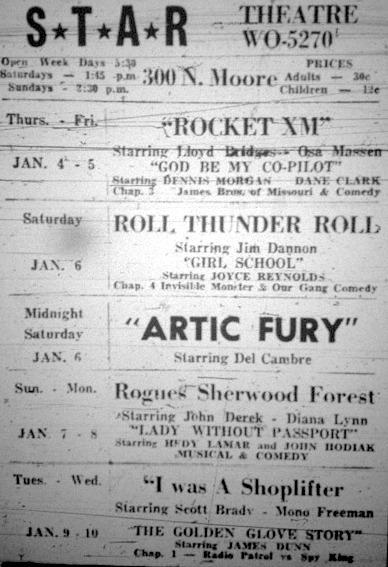
When these buildings were built in 1945 by I. B. Clark, it was an exclusively African-American part of Dallas. The anchor of this strip (which occupied what was described as both the 300 block of N. Moore and the 1400 block of E. Eighth) was the Star Theatre, which was, according to Mr. Clark, the only movie house for black customers in Oak Cliff.

star-theatre_boxoffice_042845
Boxoffice, April 28, 1945

star-theatre_oak-cliff_negro-directory-1947-48_adDallas Negro Directory, 1947-48

I. B. Clark was a white businessman who lived on a ranch in Cedar Hill; he had owned the Southern Fireworks Company before the war and had frequently battled with Dallas lawmakers about the constitutionality of banning the selling and shooting of fireworks within the city limits.

In the undated photo above, businesses in the retail strip are the Top-O-Hill Food Mart, the Ebony Cafe (Pit Bar-B-Q), the Easy-Wash laundromat, the second location of the Cochran Street Record Shop, the Star Theatre, and hotel apartments.

This hub of businesses was popular with neighborhood residents, who referred to this area as “Show Hill” (for the picture show). I stumbled across a really wonderful 2018 oral history of Margaret Benson, who, in 1944, moved with her family to Dallas and attended N. W. Harllee Elementary School and both Lincoln High School and Madison High School. She describes these shops and says that whenever black entertainers such as Dinah Washington or Sister Rosetta Tharpe came to town, they frequently stayed in the apartments above these businesses, as hotel accommodations for African Americans were few and far between. (I loved the entire recording of Mrs. Benson reminiscing about living for most of her life in this area of Oak Cliff — the part where she specifically talks about “Show Hill” is at the 8:25 mark in the recording at the link above.)

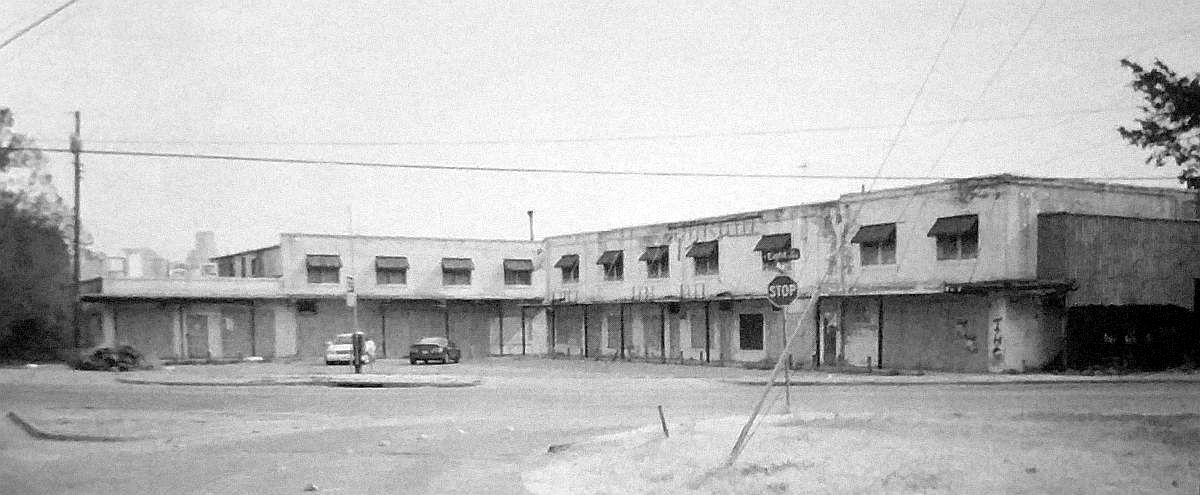
According to Dallas movie theater historian Troy Sherrod, the Star closed in 1959. Over time the area eventually declined and the remaining businesses closed. The strip, which was looking pretty down-at-its-heels in the 1990s, was demolished around 2000. The photo below shows the once-vibrant strip in its later days. (Three more photos, from 1999, can be found here — the addition of more apartments (the “Ebony Hotel Annex”) can be seen in the third one.)

star-theatre_mark-doty_lost-dallas
via Lost Dallas by Mark Doty

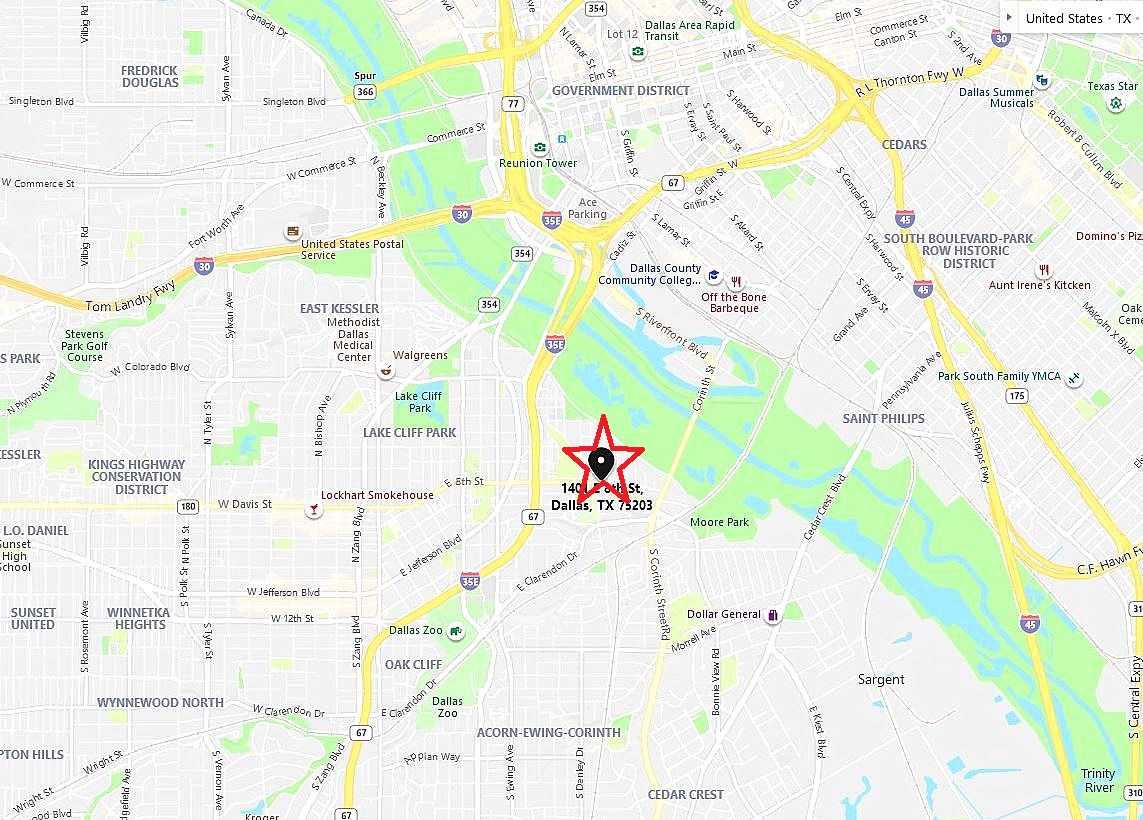
Here is what “Show Hill” vacant lot looks like today on Google Street View:

star-theatre_google-street-view-nov-2019Google Street View, 2019

star-theatre_bing-mapsBing Maps

star-theatre_cinematreasures_advia Cinema Treasures

***

Sources & Notes

Top photo showing the Star Theatre is from the excellent book by D. Troy Sherrod, Historic Dallas Theatres (Arcadia Publishing, 2014); the photo is from the collection of the Dallas Public Library.

Second photo showing the dilapidated buildings is from another excellent book, Lost Dallas by Mark Doty (Arcadia Publishing, 2012).

The ad for the Star Theatre appeared in the Dallas, Texas Negro City Directory, 1947-1948 (many thanks to Pat Lawrence). The address for the theater was listed in various places as both 300 N. Moore and as 1401 E. Eighth.

If you have access to the archives of the Dallas Morning News, I encourage you to read “Inner-City Secret — The Bottoms Residents Say They Are Forgotten” by Bill Minutaglio (DMN, Aug. 28, 1994).

Also worth a read is Texas Tribune article “Dallas Neighborhood Established by Freed Slaves Fights to Keep Its History Alive” by Miguel Perez of KERA News.

More on the Tenth Street Historic District can be found on the City of Dallas website here.

Check out photos of a pop-up market on Show Hill in 2014 here.

Also, of related interest is the Flashback Dallas post “Movie Houses Serving Black Dallas — 1919-1922.”

Thank you to reader Jerry Richburg for contacting me with a question about this old strip shopping area — he remembered attending church services in one of the buildings and asked if I knew more about what had been there and if I might have a photo. Thanks, Jerry! You led me down the path to discovering a little pocket of Dallas history I was completely unaware of!

star-theatre_troy-sherrod-hist-dallas-theatres_DPL_sm

*

Copyright © 2020 Paula Bosse. All Rights Reserved.

August 20, 1945

langley_skyline-horseback_c1945_LOCAug. 20, 1945

by Paula Bosse

Back in 2014 when I started this blog, this is one of the first photos I posted. It is one of those Dallas photos that can actually be described as “iconic”: a cowboy on horseback watches over a herd of cattle grazing just beyond a vibrant mid-century skyline — old Texas meets new Texas. The photo is by Dallas photographer William Langley, and, according to the Library of Congress, it was taken on August 20, 1945. I am posting it again today, August 20, 2020 — 75 years to the day it was taken.

So what was happening 75 years ago today? Here are a few stories from the newspaper.

Gen. Douglas MacArthur was heading to Japan (Hiroshima and Nagasaki had been bombed within the past two weeks, effectively ending the war).

Wartime restrictions on the use of natural gas were lifted by the War Production Board.

Hollywood stars Dick Powell and June Allyson had gotten hitched.

LBJ was being touted as a possible candidate for Texas governor.

The average cost of a meal for a family of four before the war was $2.27 (or about $40 in today’s money); now, after the war, it had risen to $3.70 (about $50). Fruit preserves were almost impossible to find.

Dallasites were chomping at the bit to bid farewell to the war-ordered Daylight Savings Time and return to Standard Time — they wanted go to bed when it was dark outside. 

Annexation had meant that Dallas had increased in size over the past year from 51 square miles to 87 square miles.

Several Dallasites saw a “very large and very luminous” meteor.

Sgt. Jesse Curry, 31, of the Dallas Police Department, had been awarded a fellowship for an 18-week course in traffic administration at Northwestern University Traffic Institute in Chicago.

It was announced that improved trash pickup was on the horizon, as soon as new trucks became available.

War workers were being released from their war-work obligations, and the city’s businesses were beginning to hire, which was good news, except for many Dallas women who were still working but who were met with the announced closure of many “playschools” which were operated around the city on a 12-hour cycle to accommodate shift workers. 

The Texas League announced they would resume minor league play in the spring.

Hockaday would increase its staff from 83 members to 100 for the upcoming school year.

“The Three Musketeers” was opening at the Starlight Operetta in Fair Park. The State Fair of Texas would not resume until 1946.

“Thrill of a Romance” — with Van Jones and Esther Williams — was at the Majestic.

“Pillow to Post”  — with Ida Lupino and Sydney Greenstreet — was at the Palace.

“The Story of G.I. Joe” — with Burgess Meredith and Robert Mitchum — was at the Tower.

“Asi Se Quiere en Jalisco” — with Jorge Negrete — was at the Panamericano.

Interstate Theaters declined to respond to the rumor that a soon-to-be-built theater in Galveston was to be equipped to show television broadcasts. 

High temperature on the Monday Bill Langley took that photo was 92 degrees.          

***

Sources & Notes

Photo by William Langley — titled “Skyline, Dallas, Texas” — is from the collection of the Library of Congress. Langley appears to have been positioned somewhere around the present-day Stemmons Corridor.

*

Copyright © 2020 Paula Bosse. All Rights Reserved.

Random Photos of Turn-of-the-Century-ish Houses

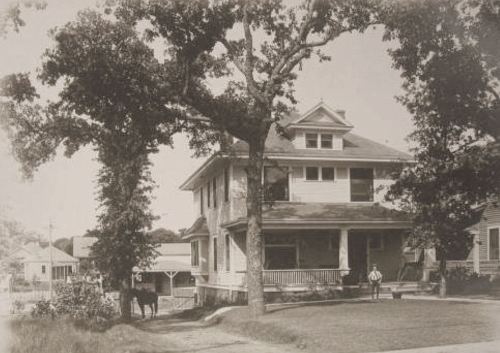
lemmon-avenue_house_rppc_ebayLemmon Avenue home, horse included….

by Paula Bosse

I love looking at old houses — especially ones which once occupied parts of town which are definitely no longer residential areas. It’s always sad to realize that the beautiful house you’re looking at — one which you can imagine living in now, in the 21st century — has, almost always, been torn down decades ago and replaced with something much less interesting. Thankfully, people 120 years ago used to have their homes photographed in order to print up picture postcards which they would then send to friends and relatives. Most of the images below come from these “real photo postcards,” and all show nice little glimpses into Dallas homes from before 1910. Only one of these houses is still standing. (All photos are larger when clicked.)

*

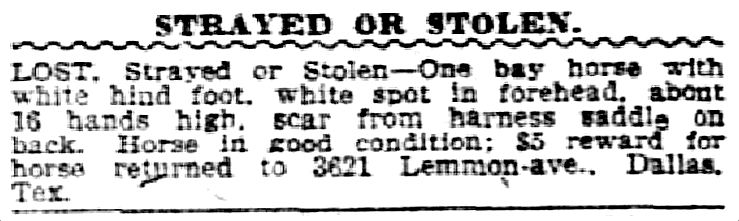
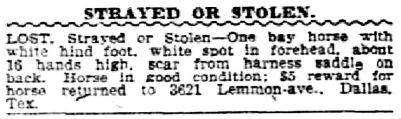
Sadly, the house above is not still standing. It’s a beautiful house. Even comes with a horse! The house was at 405 Lemmon Avenue in Oak Lawn. After the addresses in Dallas changed in 1911, the address became 3621 Lemmon (in the middle of the block between Welborn and Turtle Creek Park/Lee Park — apartments and a parking garage now occupy that whole block) — see it on a 1921 Sanborn map here. The owner was W. Leslie Williams, a real estate man. Family horses wandered off a few times, according to “strayed or stolen” ads placed in the paper, such as the one below.
williams_dmn_111211_strayed-horse
Nov. 1911

*

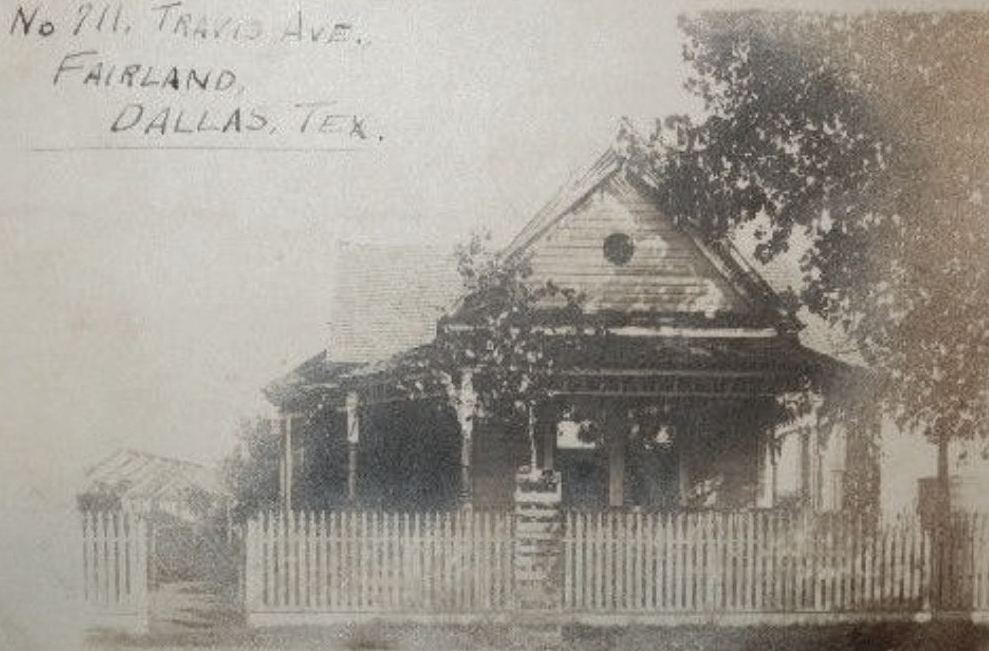
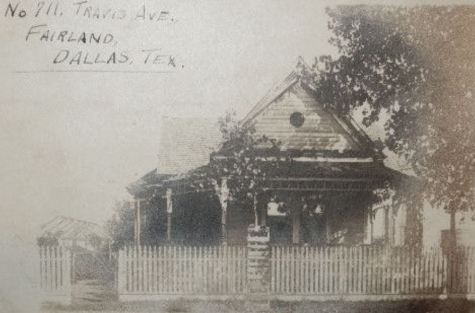
Below, a house which once stood at 711 Travis (which later became 4627 Travis), between Knox and Hester (the Katy railroad tracks would have run right behind the house) — see it on a 1921 Sanborn map here. It was in the “Fairland” addition. The owner of the house was T. B. Baldwin, a traveling agent for The Dallas Morning News. The photo was on a postcard mailed in 1908.
travis-ave-house_fairland_1908_ebay_rppc

*

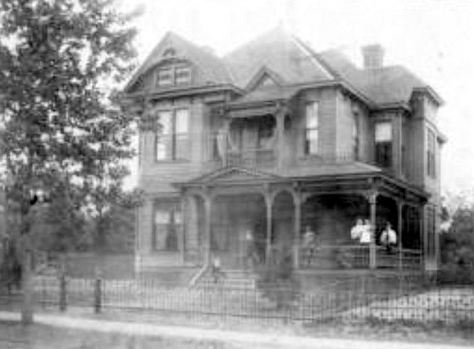
Now to South Dallas (The Cedars?). This house stood at 200 Cockrell Ave. (which became 2130 Cockrell), between Corinth and Montgomery, now part of a large swath of empty land almost certainly being developed in somebody’s head as I type this. See it at the very bottom of this 1921 Sanborn map. The house was owned by Horatio W. Fairbanks, supervisor of the Dallas Cotton Mills, and was later occupied by the Wesley Settlement House for several years. The photo below is from 1896.
fairbanks-h-w_1896._ebay_cockrell-ave

*

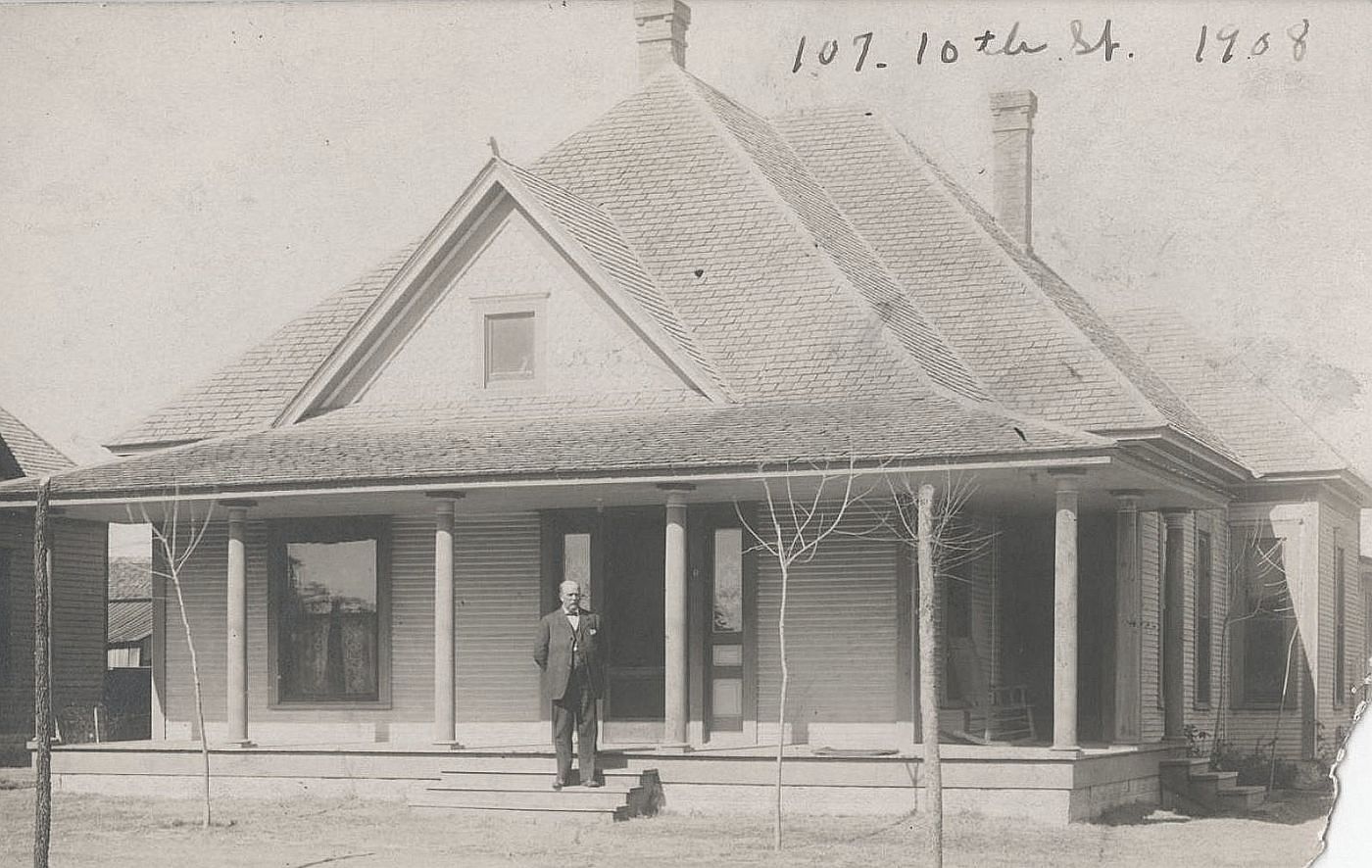
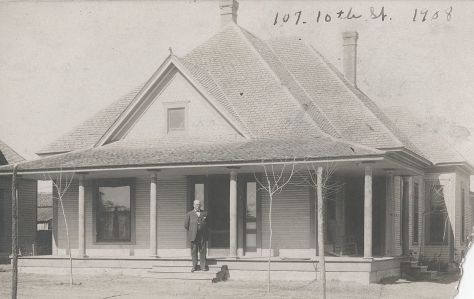
Now to four houses in Oak Cliff. The first stood at 107 10th Street (later 525 E. 10th St.), between Lansing and Marsalis — see it on a 1922 Sanborn map here. This was the home of Dr. William E. King, whom I presume is the man standing in front of the house — he died in 1909, a year after this photo was taken. The land now appears to be occupied by a body-shop parking lot. (This 1908 photo is from the Murphy Historical Society, via the Portal to Texas History, here.)
king-william_oak-cliff_1908_murphy-historical-society_via-portal

*

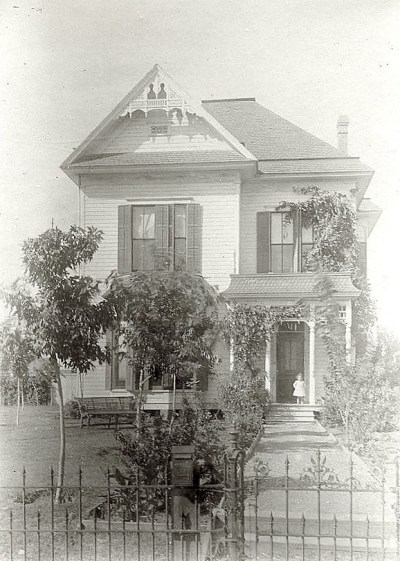
The home of T. Henry Dorsey, a member of the family who founded the Dorsey Printing Co., a pioneer printing establishment in Dallas, was at 161 Grand Ave. (the name of the street was changed to Marsalis, and in 1911 the address of this house became 113 N. Marsalis), between 9th and 10th streets — see it on a 1905 Sanborn map here. The current occupant of this land is, I think, a trucking company. This house — which Dorsey moved into around 1900 — can be seen below from several angles (including one from the back which shows a fence running into part of the house which appears to be encroaching onto a neighbor’s property. 
dorsey_ebay_d

dorsey_ebay_a

dorsey_ebay_b

dorsey_ebay_c

*

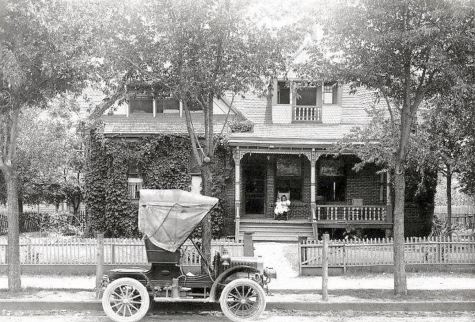
Before 1911, the address of the house below — a house I absolutely love — was 174 South Jefferson; after 1911, the address was, rather confusingly, changed to 516 East Jefferson (between Patton and Denver) — see it on a 1905 Sanborn map here. It was on land now occupied by Felix Botello Elementary School. This house was owned for several decades by Dr. William M. Lively. The image below is from a postcard dated 1909. (Great car!)
lively-house_poss-oak-cliff_rppc_1909_ebay

*

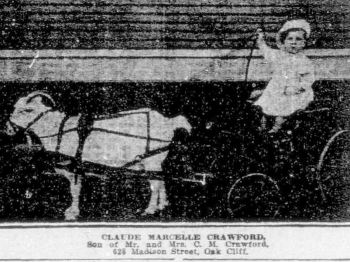
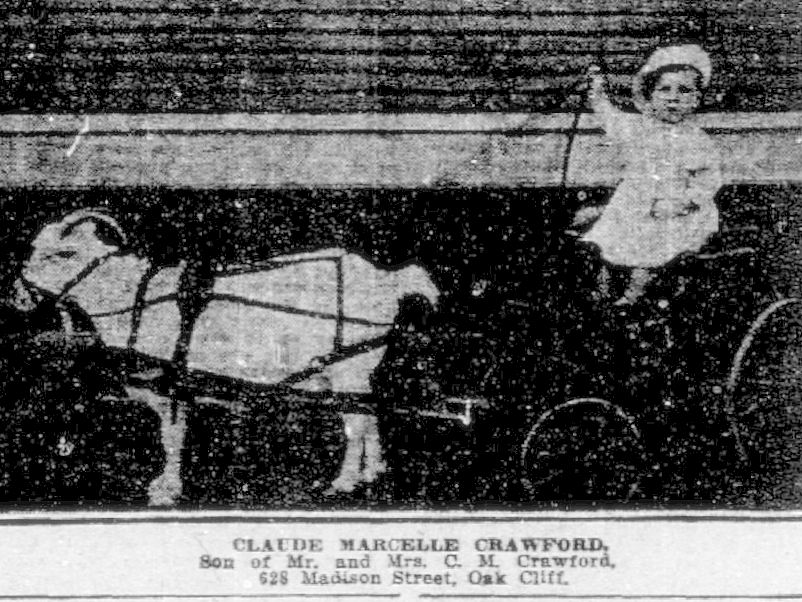
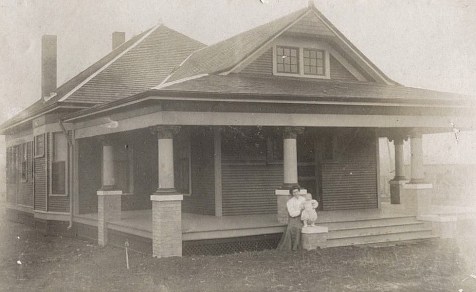
Below is the only one of these houses still standing. It began life as 120 Madison Ave. (which later became 628 N. Madison), at the corner of W. Neely St. in the Kidd Springs neighborhood of Oak Cliff. See it on a 1922 Sanborn map here (bottom left corner). Claude Marcelle (C. M.) Crawford, a traveling salesman, lived here with his wife, Maud, and their infant son, Marcelle Crawford. Maud Crawford (who died in 1913, just a couple of years after this photo was taken) wrote: “What do you think of our ‘cosy corner.’ Every one tells us it is pretty so much until we almost believe it our selves.” Crawford eventually went to work for Bristol-Myers as a regional branch manager, and after 30 years, when he was in ill health, the company retired him on full pay (!) in gratitude for his service. When he retired, he owned a Beverly Drive home in Highland Park, apparently having done very well. His charming little starter-house in Oak Cliff still stands, having recently been remodeled. 
crawford-house_madison_oak-cliff_ebay_cropped
about 1910

crawford-house_madison_google-street-view_2012
2012, Google Street View

crawford-house_madison_google-street-view_20192019, Google Street View

crawford-claude-marcelle_dmn_081311
Claude Marcelle Crawford, Jr., Dallas Morning News, Aug. 13 1911

*

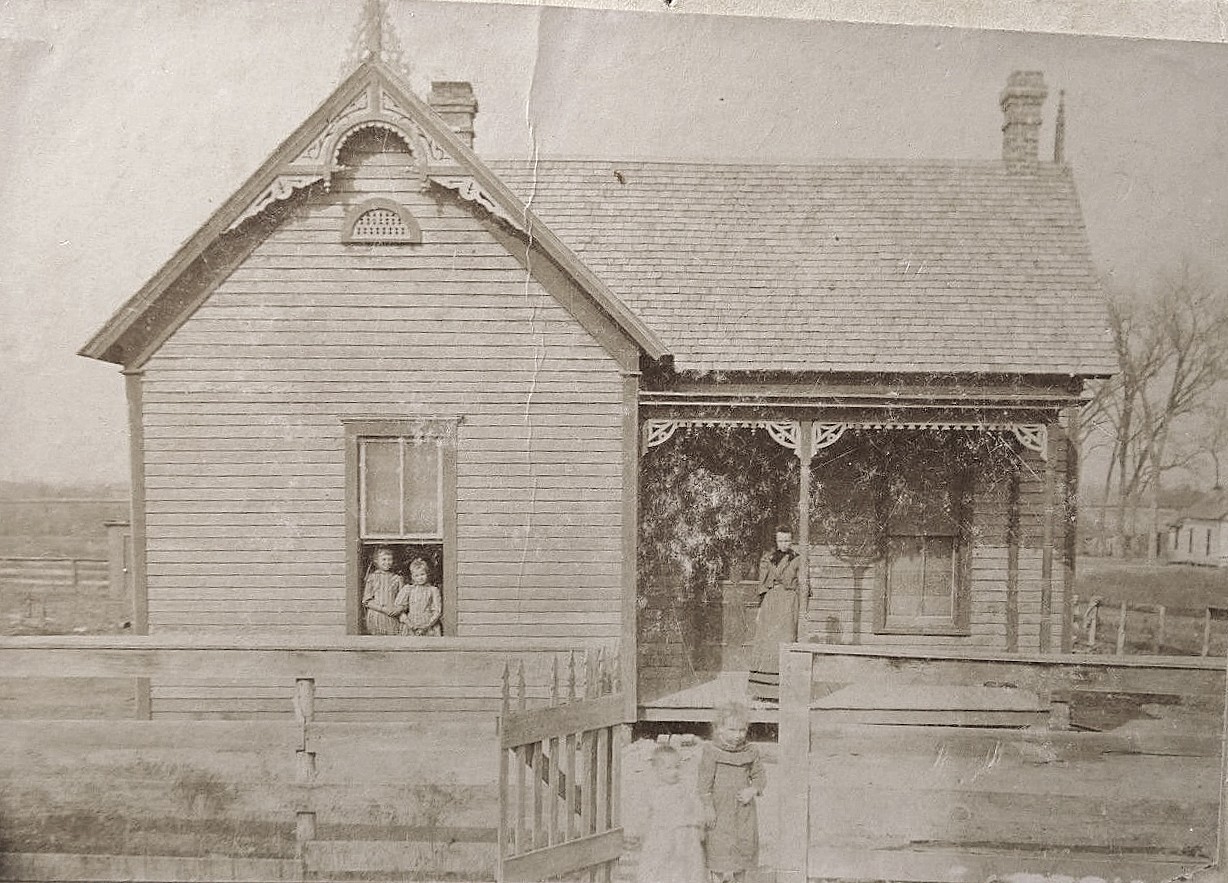
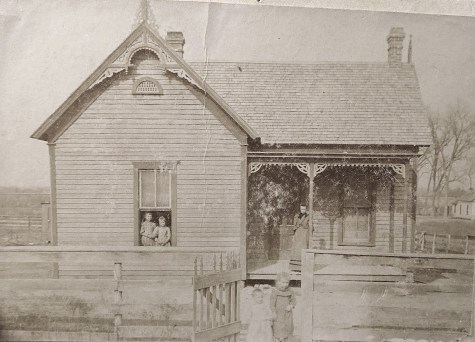
And, lastly, the only house I wasn’t able to determine the location of — it also looks like the oldest. On the back is a faint penciled notation which appears to  be signed “G. P. Taylor.” In a more recent notation in ink, the family members in the photo are identified: “Made in Dallas, Tex. — Elm St. — Mother on porch, Mattie & I in window, Pearl & Joe in gate.” 1870s or 1880s? It’s a mystery!
elm-street-house_ebay_taylor

***

Sources & Notes

All images except the William E. King house are from eBay.

lemmon-avenue_house_rppc_ebay_sm

*

Copyright © 2020 Paula Bosse. All Rights Reserved.

Happy Valentine’s Day from 1883

valentines_dal-herald_021483

by Paula Bosse

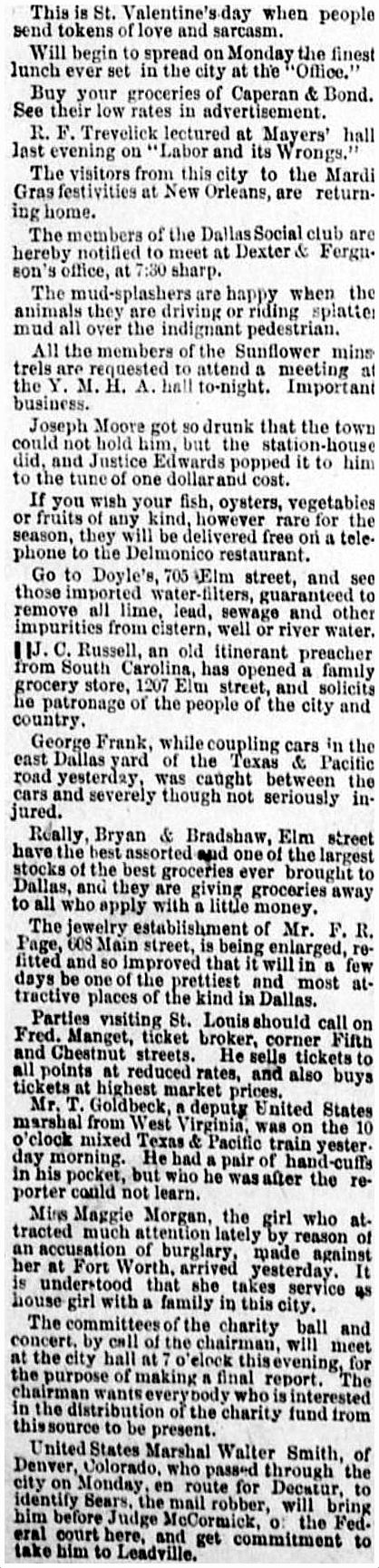
There was a lot going on around Dallas on Valentine’s Day in 1883. Here’s a round-up from The Dallas Herald, started off with the immortal pearl, “This is St. Valentine’s Day when people send tokens of love and sarcasm.”
valentines-day_dallas-herald_021483

***

Sources & Notes

Clipping from the Feb. 14, 1883 edition of The Dallas Herald, courtesy of UNT’s Portal to Texas History. The scanned page may be found here.
*

Copyright © 2019 Paula Bosse. All Rights Reserved.


Main & Ervay, Pedestrians — 1970

DTC_pedestrians-2_main-ervay_1970_SMU

by Paula Bosse

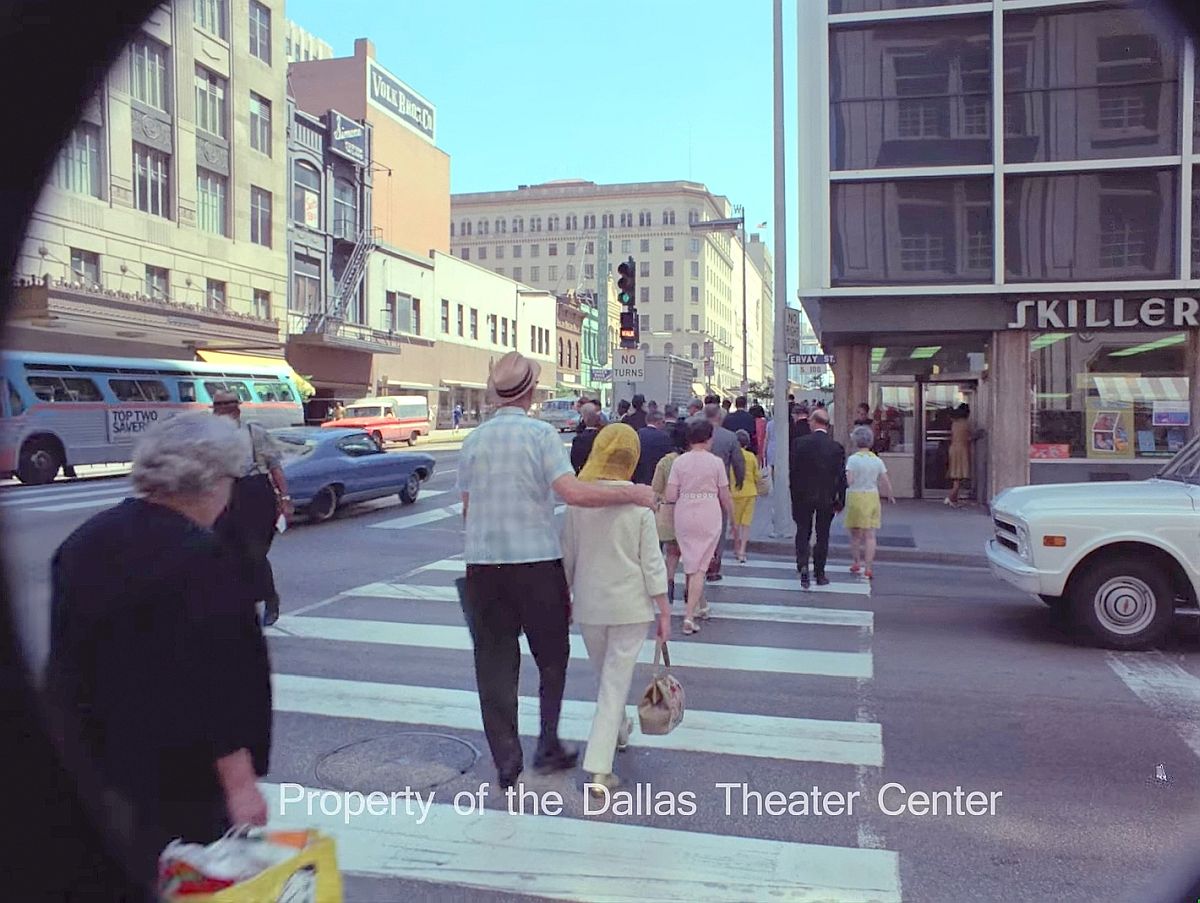
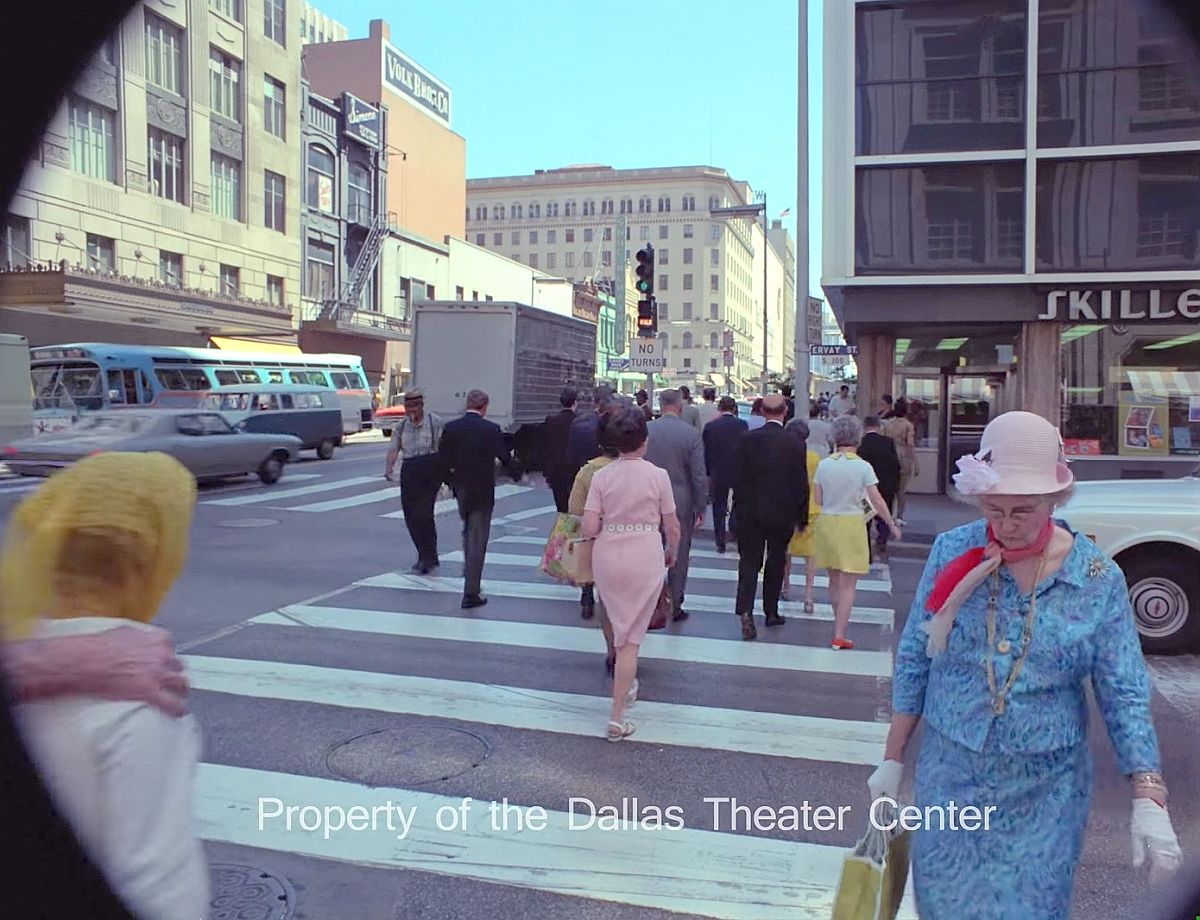
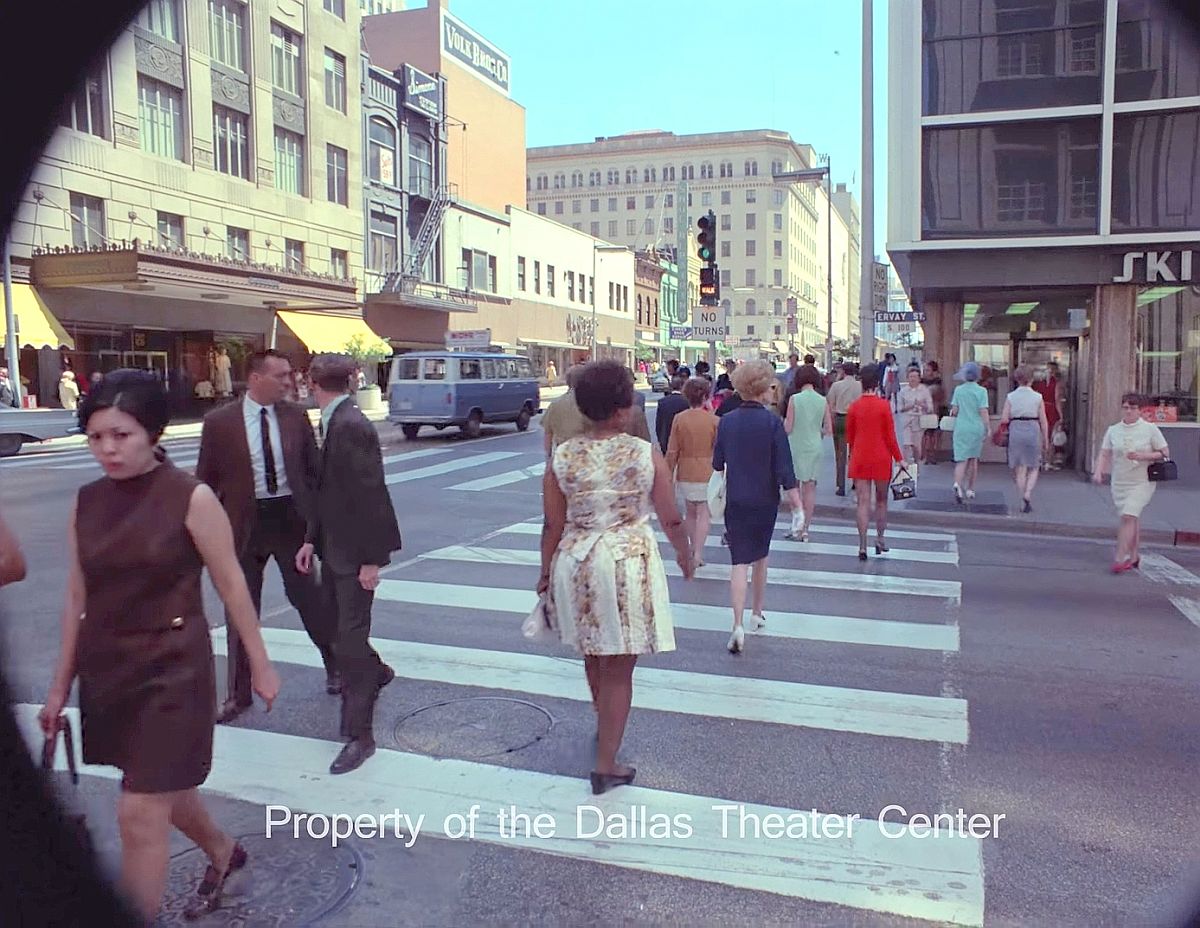
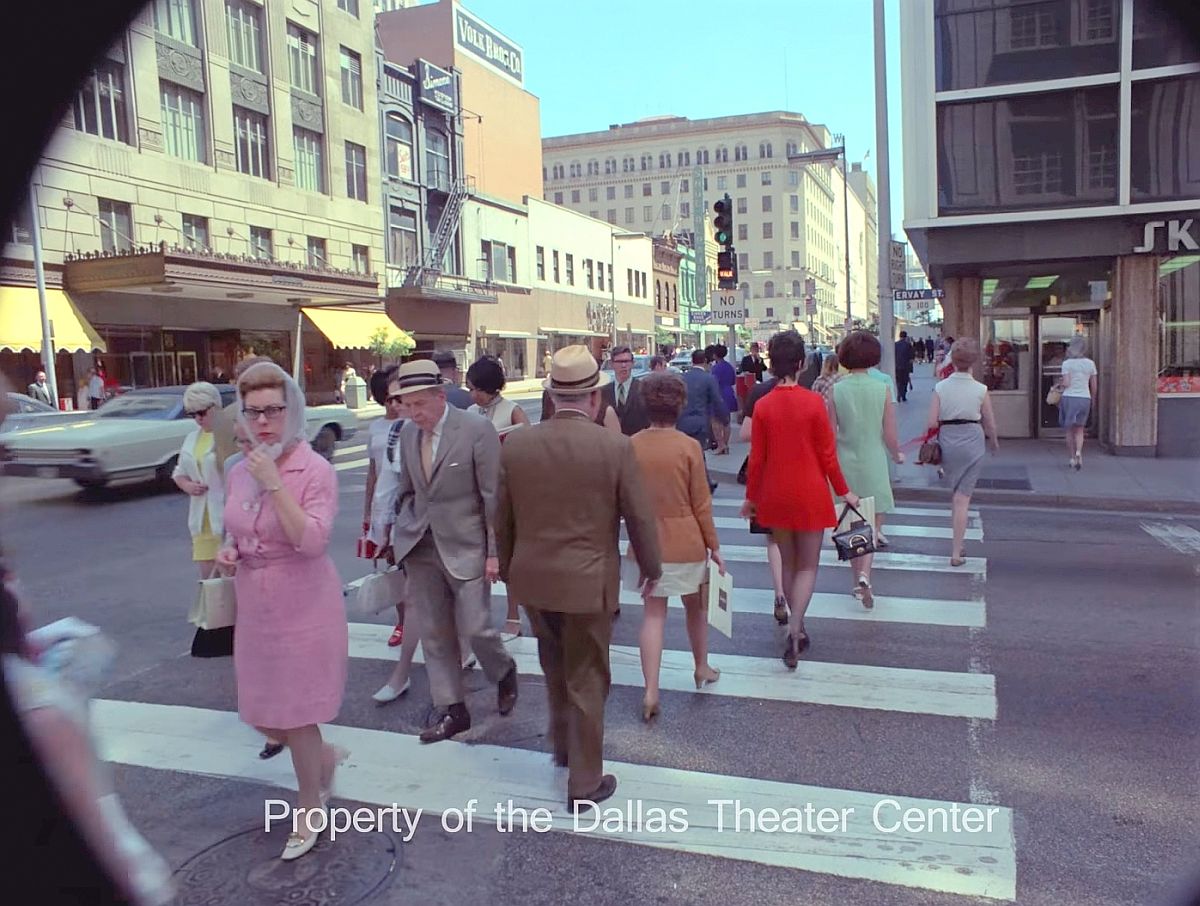
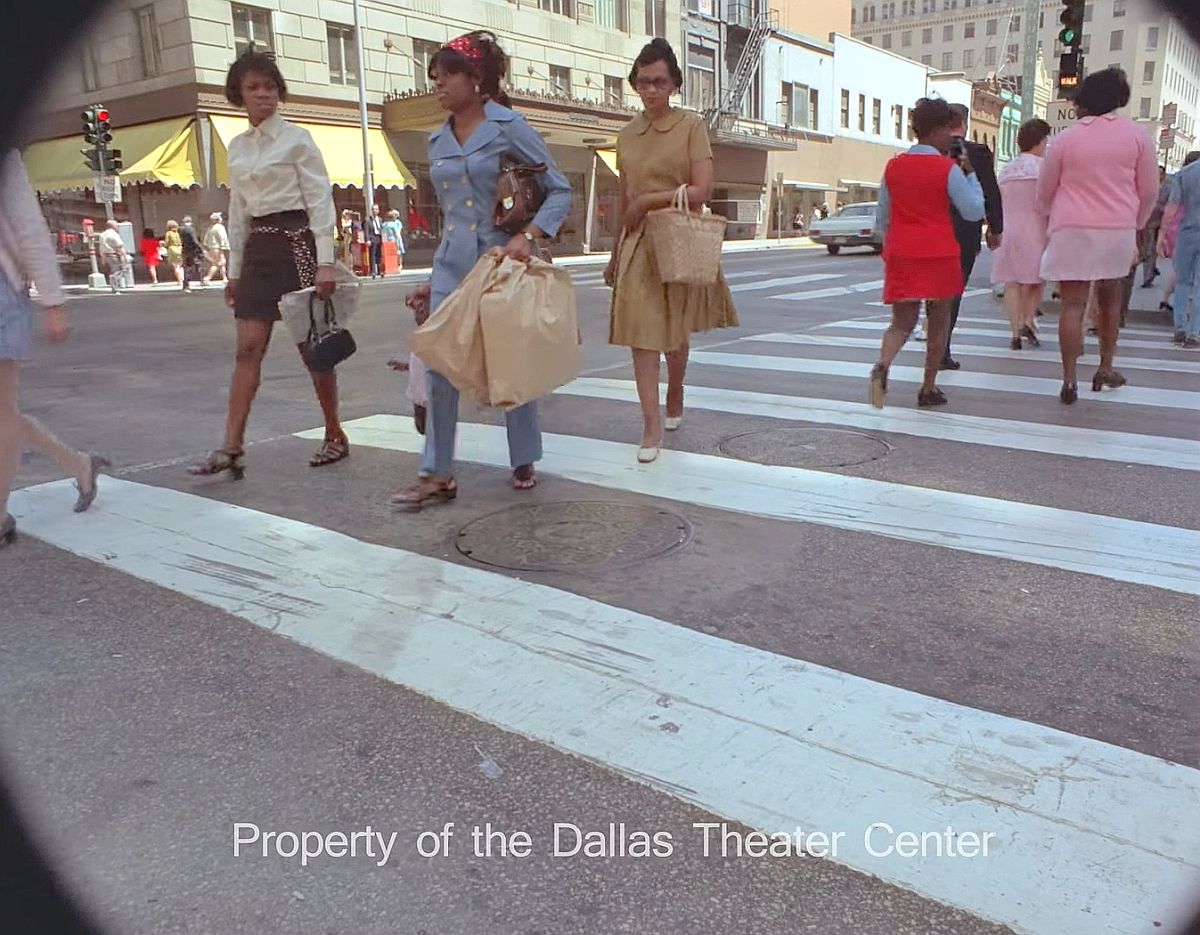
The other day SMU released fantastic 35mm color film footage captured from a camera mounted atop a car cruising downtown streets in 1970. Today they released a little more, this time a short clip showing pedestrians walking across the intersection of Main and Ervay (be sure to watch this silent footage in full-screen mode).


*
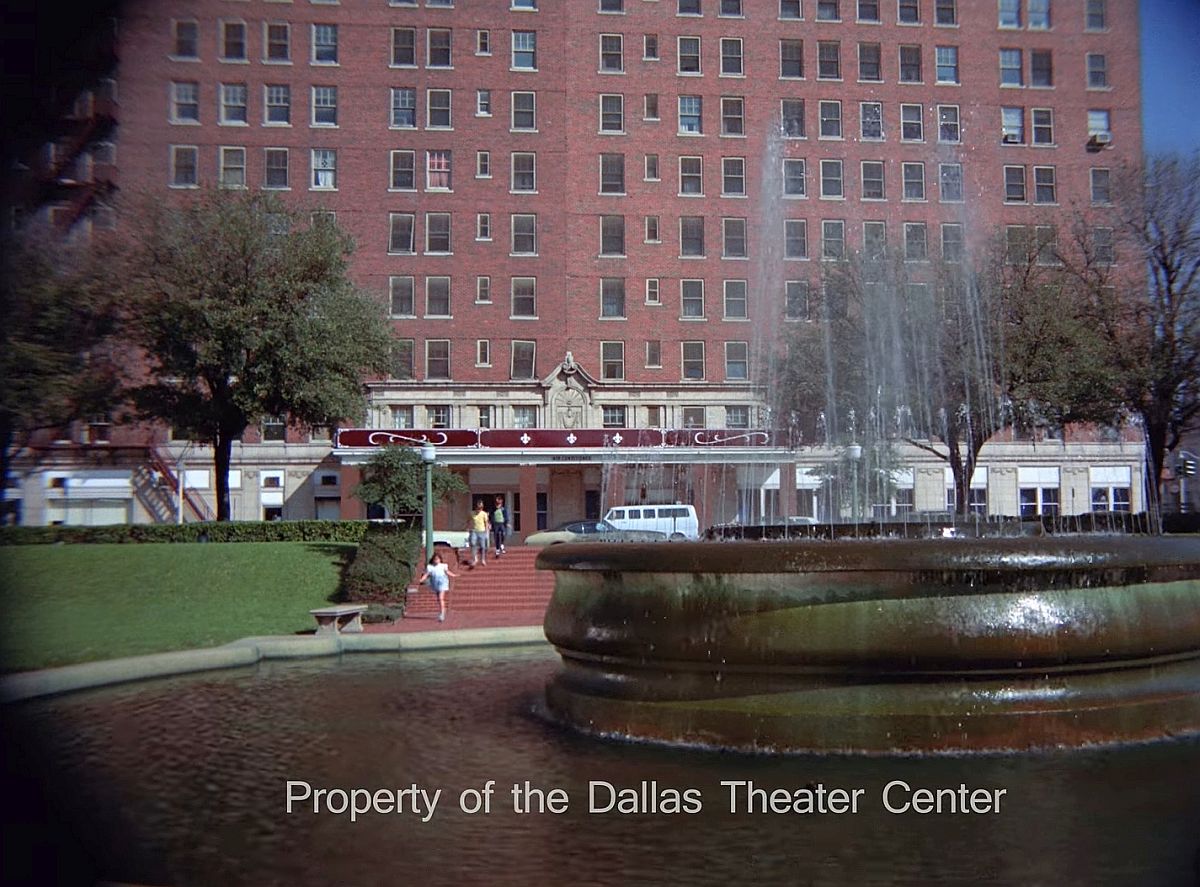
The Skillern’s drug store in this footage was at 1700 Main, on the southeast corner of Main and Ervay, in the Mercantile Bank Building complex; the building across Main on the northeast corner was Dreyfuss & Son Men’s Clothing, and the large building in the distance (at St. Paul) is the Titche’s department store. The end of the clip has shots of the (surprisingly red) (and no longer standing) Jefferson Hotel; sharing the frame is the fountain in Ferris Plaza (Union Station would be to the left of the camera operator, across Houston Street). This footage was shot for Dallas Theater Center productions, which I hope to write about soon.

Cool footage, SMU. Keep it coming!

*

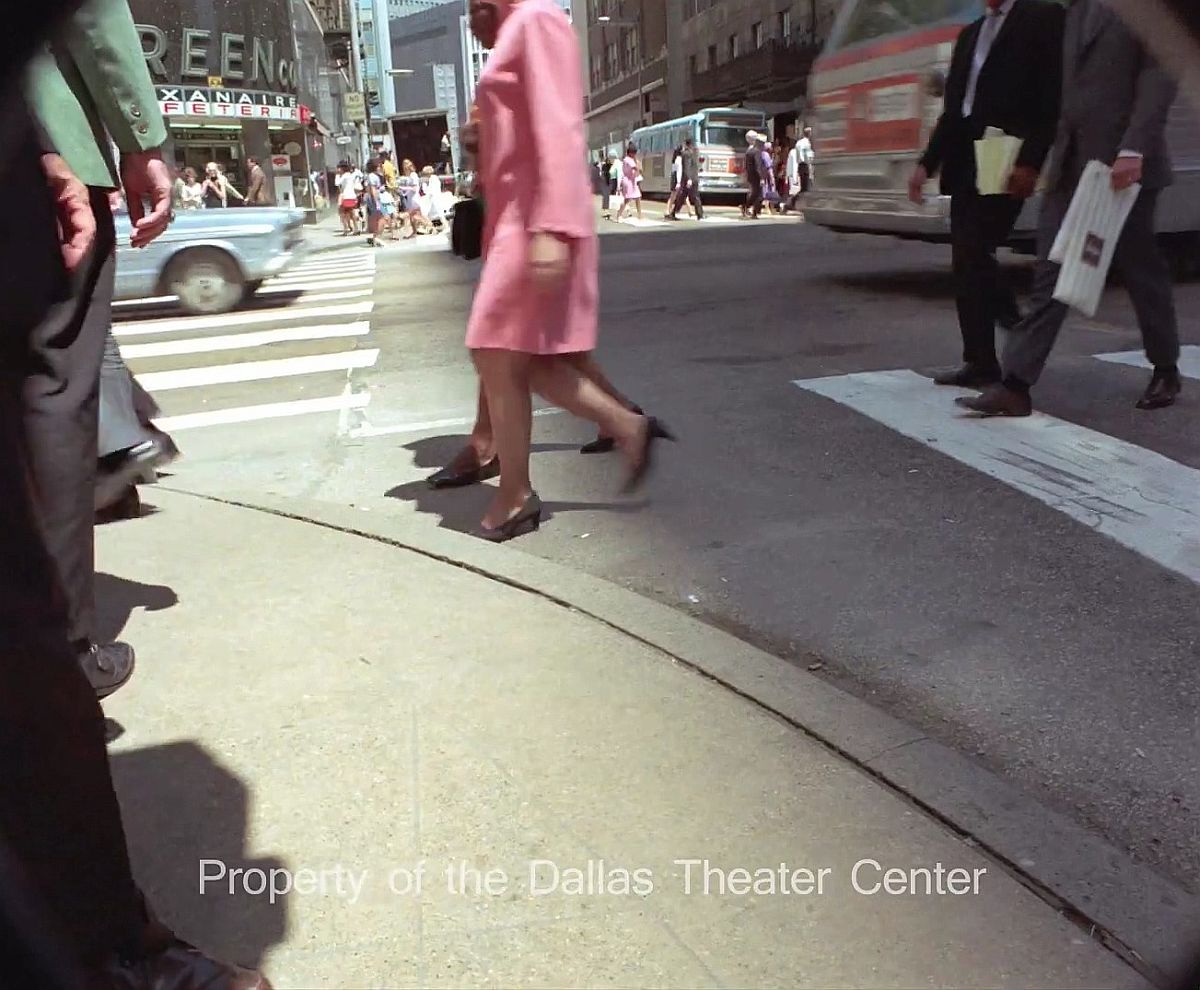
Here are a few screenshots. There were a lot of vivid colors being worn by downtown workers and shoppers in 1970. I’m so accustomed to seeing black-and-white images of Dallas, that all this color is a little startling!

DTC_pedestrians-1_main-ervay_1970_SMU


DTC_pedestrians-4_main-ervay_1970_SMU


DTC_pedestrians-3_main-ervay_1970_SMU


DTC_pedestrians-5_main-ervay_1970_SMU

Below, a brief glimpse of the H. L. Green store, in the Wilson Building on the northwest corner of Main and Ervay. (And evidence that, yes, men also shop on their lunch hour.)

DTC_pedestrians-6_main-ervay_1970_SMU_sm


DTC_jefferson-hotel_1970_SMU

***

Sources & Notes

These screenshots are from 35mm color film footage owned by the Dallas Theater Center, held at Southern Methodist University (the direct link to the YouTube video is here). Again, thanks to SMU curator Jeremy Spracklen.

See more of this fantastic color footage of downtown in the Flashback Dallas post “A Drive Through Downtown — 1970.”

*

Copyright © 2018 Paula Bosse. All Rights Reserved.