I’ve seen SO MANY postcards of Dallas through the years that when I come across one that is completely new to me, it’s pretty exciting. Especially turn-of-the-century-ish cards, like the one above. This is the first I’ve ever heard of the Rodessia Hotel, which opened in Oct. 1904 at 361-363 Elm (the address later became 1601½ Elm). The hotel proprietor (as well as the proprietor of the street-level saloon underneath it) was German immigrant Joseph F. Rode (1858-1911).
Dallas Morning News, Oct. 2, 1904
And, because it’s so unusual to be able to note something like this, I must mention that Rode’s wife, Victoria Virginia “Nannie” Rode, was also a business owner.
DMN, Oct. 7, 1894
Even though I hadn’t heard of the hotel, I did know about the building. In fact, I wrote a whole post about it: “S. Mayer’s Summer Garden, Est. 1881.” It would have been a building everyone knew at the turn of the century. Here’s what it looked like when it was a young whippersnapper:
It was built in 1881 by Simon Mayer and was the site for many years of his very popular beer garden. Around 1902 it became the Clifton Hotel, and in Oct. 1904, J. F. Rode opened his interestingly named Rodessia Hotel, which remained in business until about 1920 (it was run after his death by the Widow Nannie and her second husband). Around 1920, another hotel — the La France — opened. See the building at various times in the post mentioned above, here.
So. The Rodessia was in business for at least 15 years. I still can’t believe I haven’t seen it pop up in at least one Elm Street postcard or photograph until now. Better late than never!
(Note: In the postcard at the top, just to the right of the hotel, is the David Hardie Seed Co., which I believe continues today as Nicholson-Hardie stores.)
***
Sources & Notes
Postcard from eBay.
Photo of Mayer’s Garden from the Dallas Public Library: “[Mayer’s Beer Garden, Dallas, Texas”], Call Number PA87-1/19-27-1.
This post originally appeared in a shorter version on the Flashback Dallas Patreon page, which I enthusiastically invite you to subscribe to!
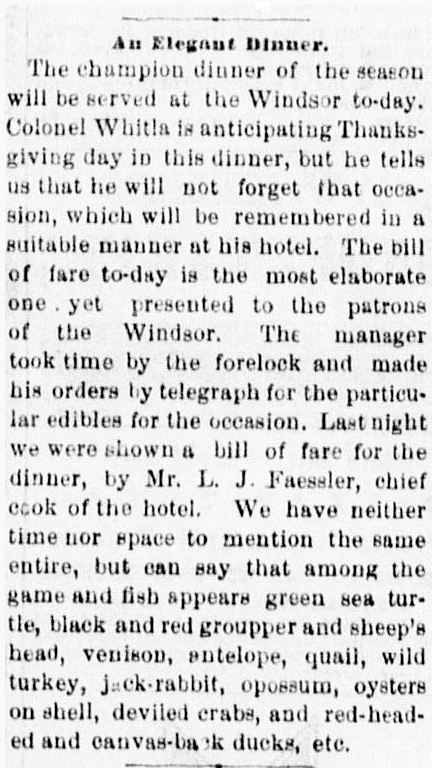
Behold, a feast of yesteryear (and this is just the game and fish dishes):
Dallas Herald, Nov. 25, 1877
**
AN ELEGANT DINNER
The champion dinner of the season will be served at the Windsor to-day. Colonel Whitla is anticipating Thanksgiving day in this dinner, but he tells us that he will not forget the occasion, which will be remembered in a suitable manner at his hotel. The bill of fare to-day is the most elaborate one yet presented to the patrons of the Windsor.
The manager took time by the forelock and made his orders by telegraph for the particular edibles for the occasion. Last night we were shown a bill of fare for the dinner, by Mr L. J. Faessler, chief cook of the hotel. We have neither time nor space to mention the same entire, but can say that among the game and fish appears green sea turtle, black and red groupper and the sheep’s head, venison, antelope, quail, wild turkey, jack rabbit, opossum, oysters on shell, deviled crabs, and red-headed and canvas-backed ducks, etc.
*
Hava a Happy (Possom-Free) Thanksgiving!
***
Sources & Notes
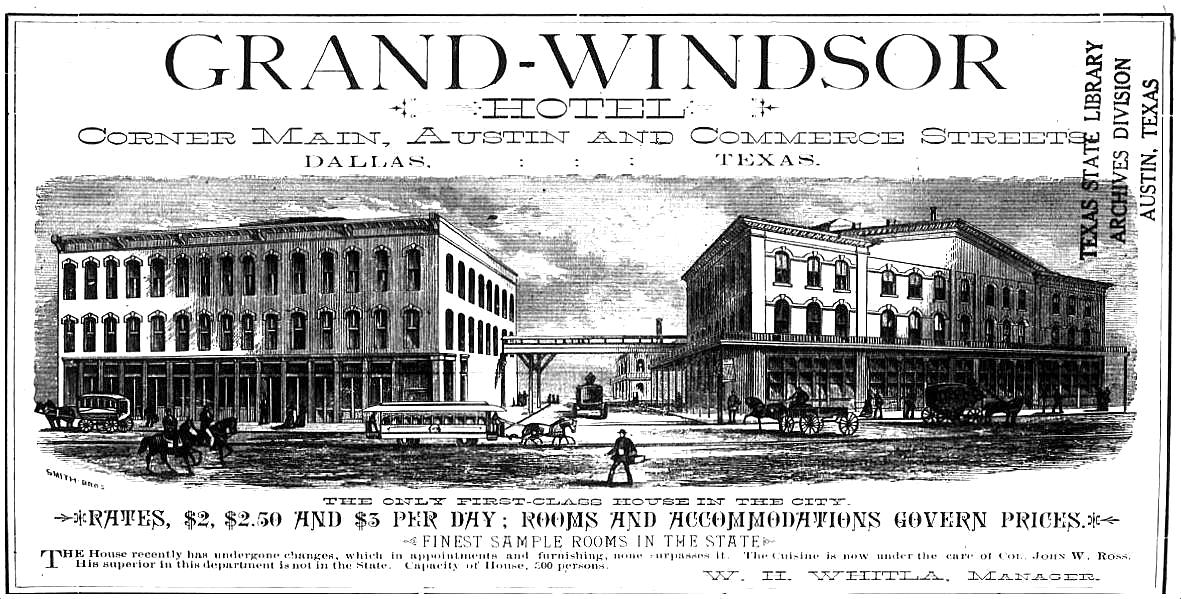
Top ad for the Grand-Windsor Hotel from the 1878 Dallas directory. Originally two hotels (the Le Grande Hotel and the Windsor Hotel), they were joined by a little “sky-bridge” over Austin Street when they merged. See the Grand-Windsor on the 1885 Sanborn map here. (The room rates of $2-$3 back then would be the equivalent of about $60-$90, if you trust inflation calculators.)
Article is from the Nov. 25, 1877 edition of the Dallas Daily Herald, via the Portal to Texas History.
More Flashback Dallas posts on Thanksgiving can be found here;
Occasionally on the Flashback Dallas Facebook page I ask questions, hoping to crowdsource answers — and people on that page know a lot of obscure stuff! I attempted to post the question(s) below on F*cebook, but I apparently crossed some sort of line. I think I used too many “forbidden” words. When I tried to post, the screen froze and ultimately ate my (lengthy) question. *Poof*! So I shall bypass F*cebook and just post it here.
I am looking for anyone who might have first-hand knowledge about the illicit side of downtown Dallas nightlife in the early 1960s. I am particularly interested in the seedier activities which might have been going on in the Baker Hotel. Namely, gambling and prostitution. Please contact me if you worked at the Baker (or the Adolphus) between, say, 1960 and 1964.
I know these activities were going on all around Dallas, but was it common to find illegal card games and prostitution going on inside the swanky hotels? If so, managers – and cops – must have known. Would they have turned a blind eye? Would they have been aware and on the take? Would they have just accepted it as part of the hotel business? I mean, Dallas was/is a huge convention city – this sort of thing must have been everywhere!
Would dancers who performed at the Colony Club have stayed at the Baker or Adolphus? They seem kind of ritzy for people in that line of work. Would management have cared if strippers stayed in their hotels? Would there have been a higher tolerance for more discreet “call girls” than your average run-of-the-mill prostitute? (I don’t mean to suggest that dancers were prostitutes, but, since I’m typing this, was it known that prostitution connected with the Colony Club or Carousel Club was going on?)
There is an amusing Dallas Morning News article titled “Officer Says Syndicated Crime Doubtful in Dallas” (DMN, Oct. 8, 1963) in which a vice cop proudly proclaims organized crime just doesn’t really exist in Big D. That seems highly unlikely, but I’m not even talking about big-time crime – more like high-stakes poker games with local high-rollers and pimping done by small-time operators. How common would it have been for this sort of thing to be going on in Dallas’ two most upscale hotels?
If you worked at the Baker Hotel in the early ’60s — or if you were employed by the Dallas Police Department at that time – or if you, yourself, were a participant in the seedier side of Dallas nightlife and spent significant time hanging around Commerce & Akard doing naughty things! – please comment below or send me an email at FlashbackDallas214@gmail.com.
This has nothing to do with the assassination, even though it’s the same time-period and there is undoubtedly a lot of overlap. But, seriously: NOTHING TO DO WITH YOU-KNOW-WHAT.
Thanks!
–Paula
***
Sources & Notes
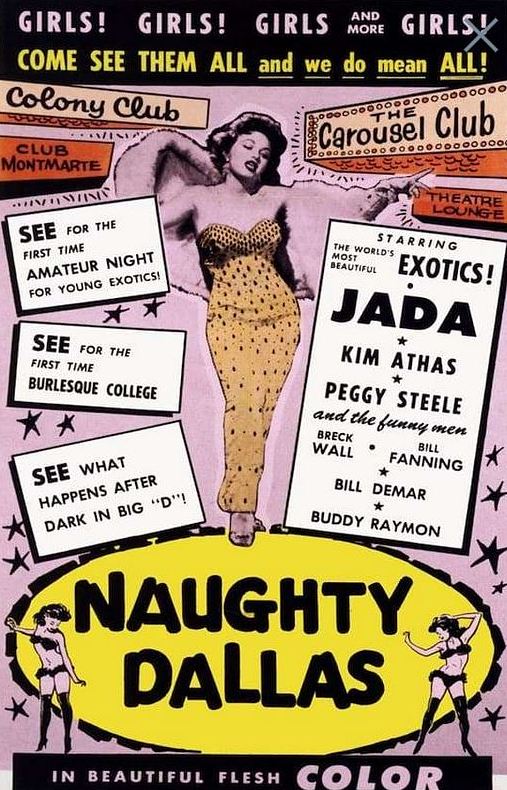
Poster of “Naughty Dallas” (directed by cult Dallas director Larry Buchanan) found somewhere on the internet.
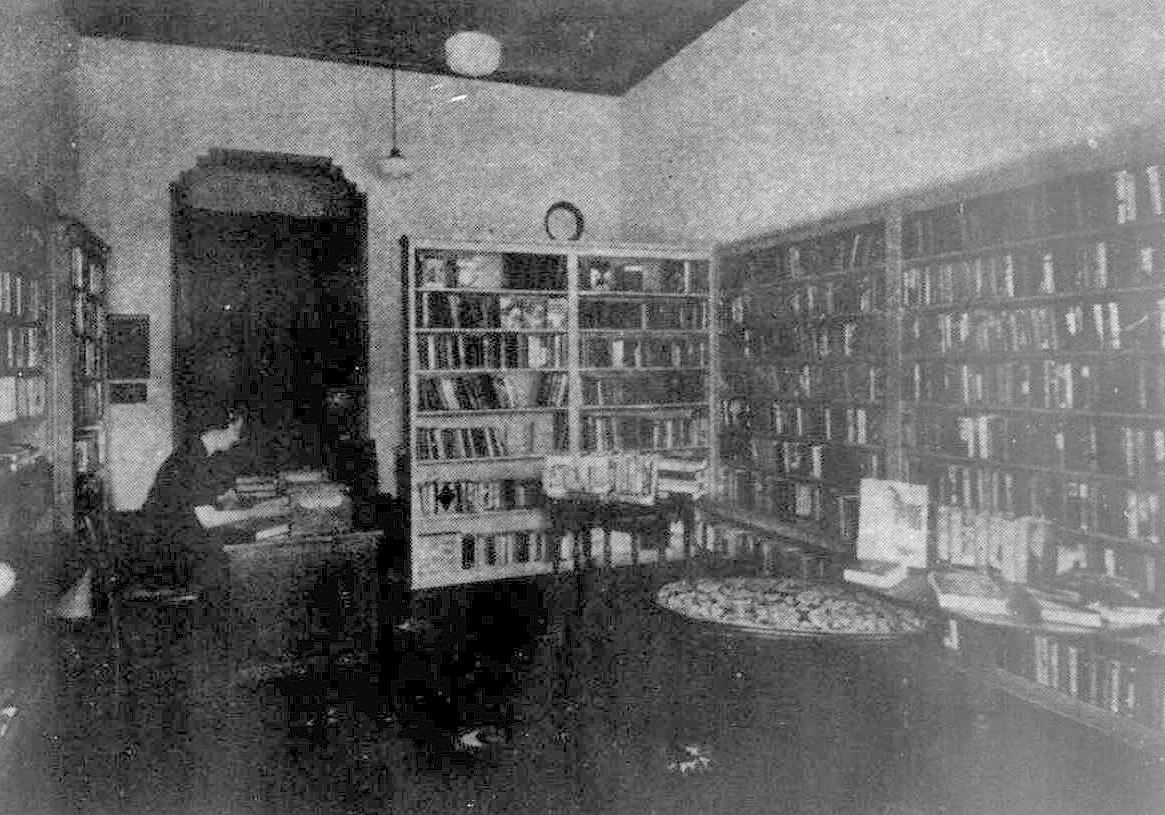
Today is the birthday of my late father, Dick Bosse, owner of the Aldredge Book Store. I always try to post something bookstore-related on his birthday. This year: Miss Eula Wolcott’s Baker Hotel Book Shop & Rental Library, located inside the Baker Hotel.
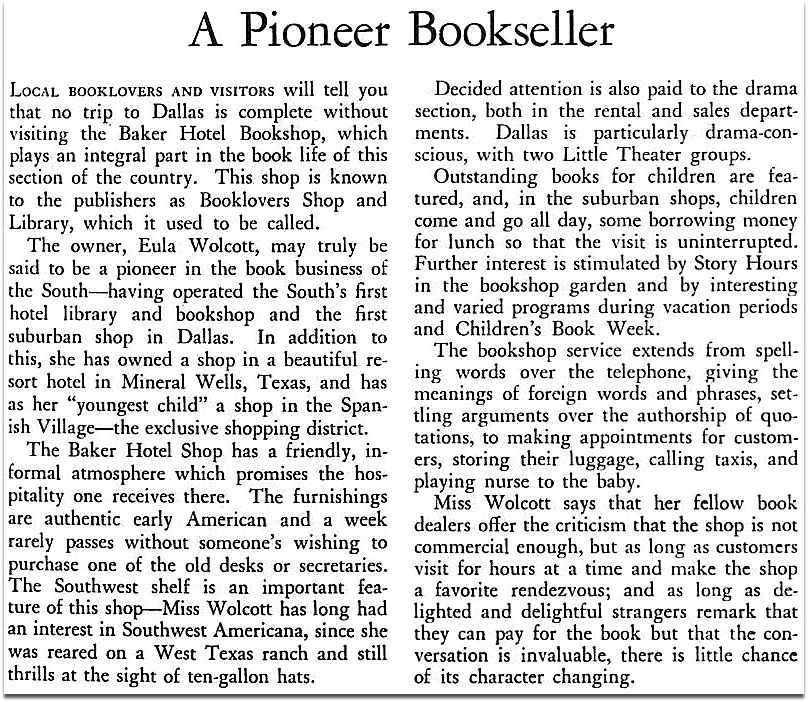
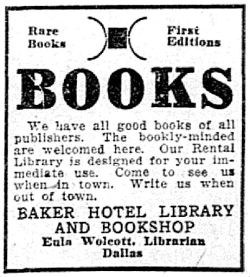
Eula Wolcott (1881-1962) was born in Waxahachie and had moved to Dallas by 1910. She appears to have had theatrical ambitions and studied voice and expression (she was billed as an “Experienced Concert Reader and Story Teller”). She opened a little book store and library in the early 1920s — the Booklovers Shop and Library was first on West Jefferson and later on Swiss Avenue. In 1926, she opened a similar shop inside the glamorous Baker Hotel, an enterprise she ran successfully until at least 1942 when another owner took over (she also apparently had a book shop inside the Baker Hotel in Mineral Wells). In 1931 she opened the rather confusingly-named “Baker Hotel Book Shop and Rental Library” in Highland Park — in the new “Spanish Village” (the original name for Highland Park Village). Below is a very enthusiastic profile from Publishers Weekly (click to see a larger image).
Publishers Weekly, March 24, 1934
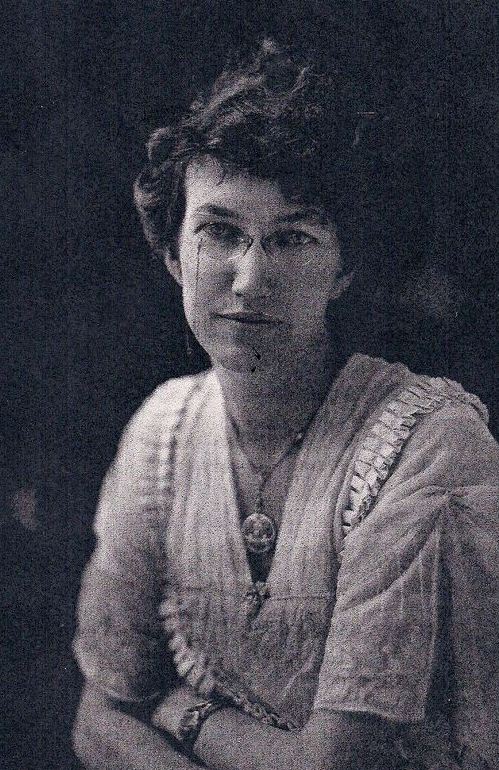
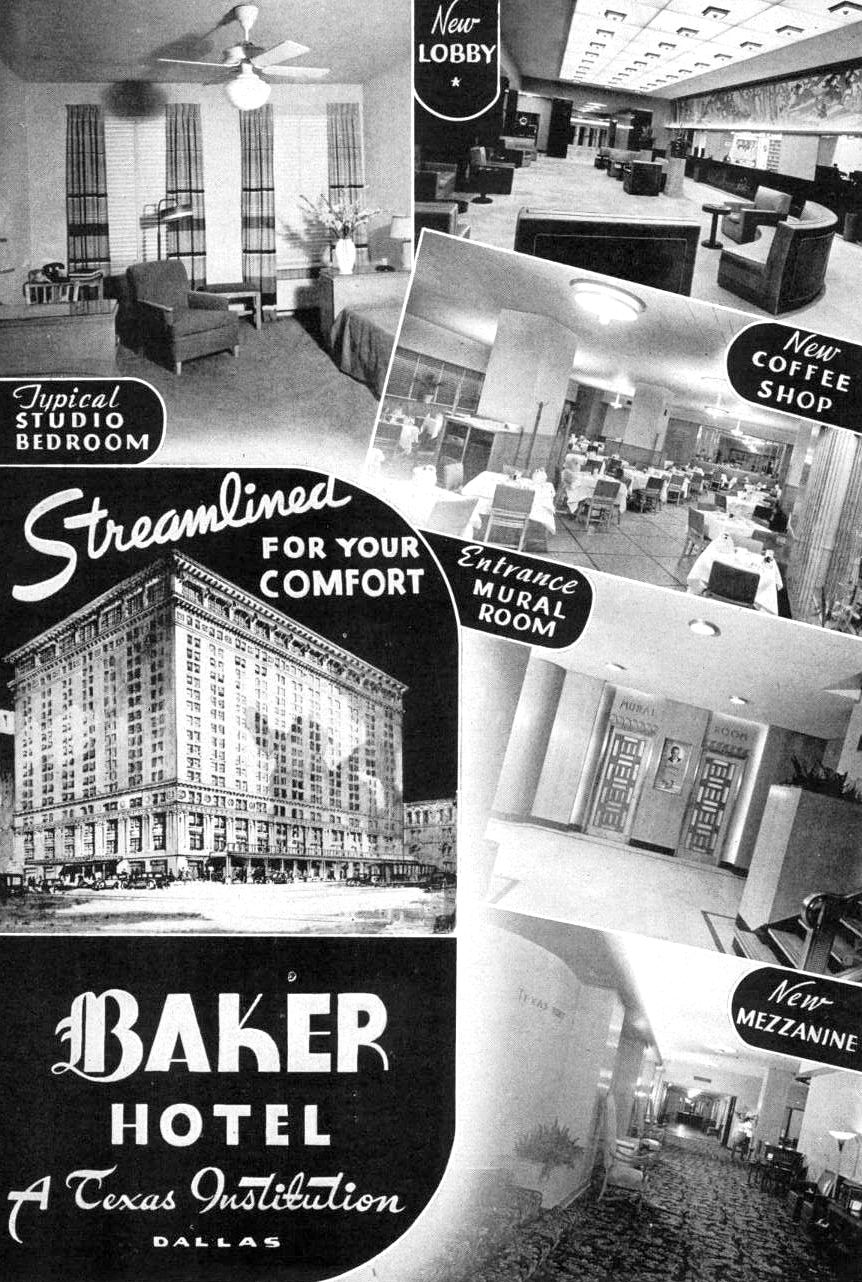
I wish the photo at the top had been better, because I’d love to get a good look at the decor. And Eula. I managed to find a photo of her.
Eula Wolcott, via Ancestry.com
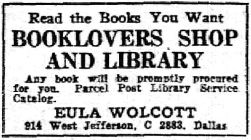
Here are a few ads:
1924
Two shops, one owner — 1926
1927
1937
1940
She was active as a bookseller for many years and was also a familiar voice to radio listeners who tuned in to hear her book reviews on WFAA.
One interesting piece of trivia about Eula’s hotel bookshop, shared with me by a former bookstore client of mine: the Baker Hotel Book Shop was the very first American bookstore that British author H. G. Wells ever visited. A lecture tour brought him to Dallas in 1940 — like many of the celebs of the day, he stayed at the Baker. I’m sure Eula was very happy to have Mr. Wells, a literary powerhouse, in her shop. Let’s hope he exhibited proper bookstore etiquette and purchased something!
Baker Hotel, circa 1940
***
Sources & Notes
Top photo and article from the trade magazine Publishers Weekly, March 24, 1934.
Read more Flashback Dallas articles on the Dallas bookstore scene here.
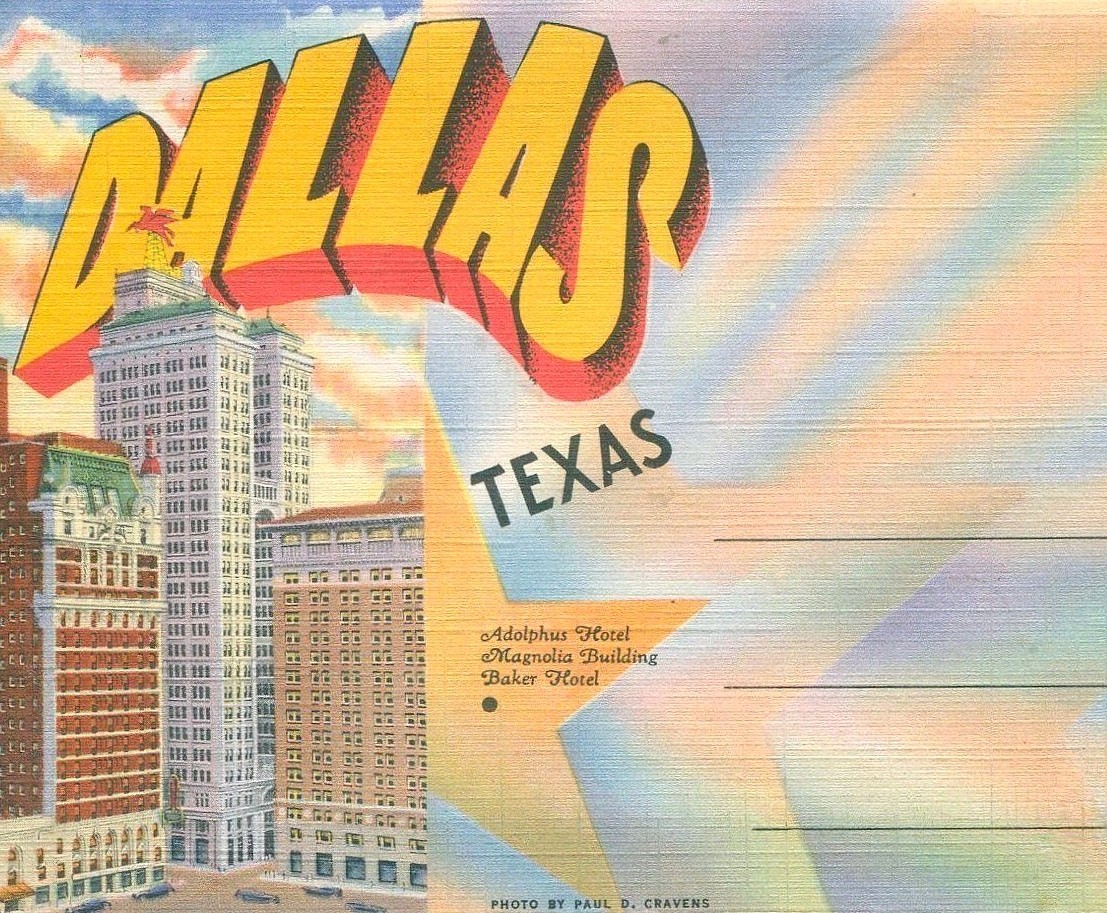
In Dallas’ early days, Commerce Street was once considered so far off the beaten path that major businesses did not build there. By 1925, though, the intersection of Commerce and Akard streets boasted three Dallas showplaces: the Adolphus Hotel (still standing), the Magnolia Building (still standing), and the Baker Hotel (not still standing). (Before that, it was the Adolphus, the Magnolia, and Busch’s other hotel, the swanky Oriental.)
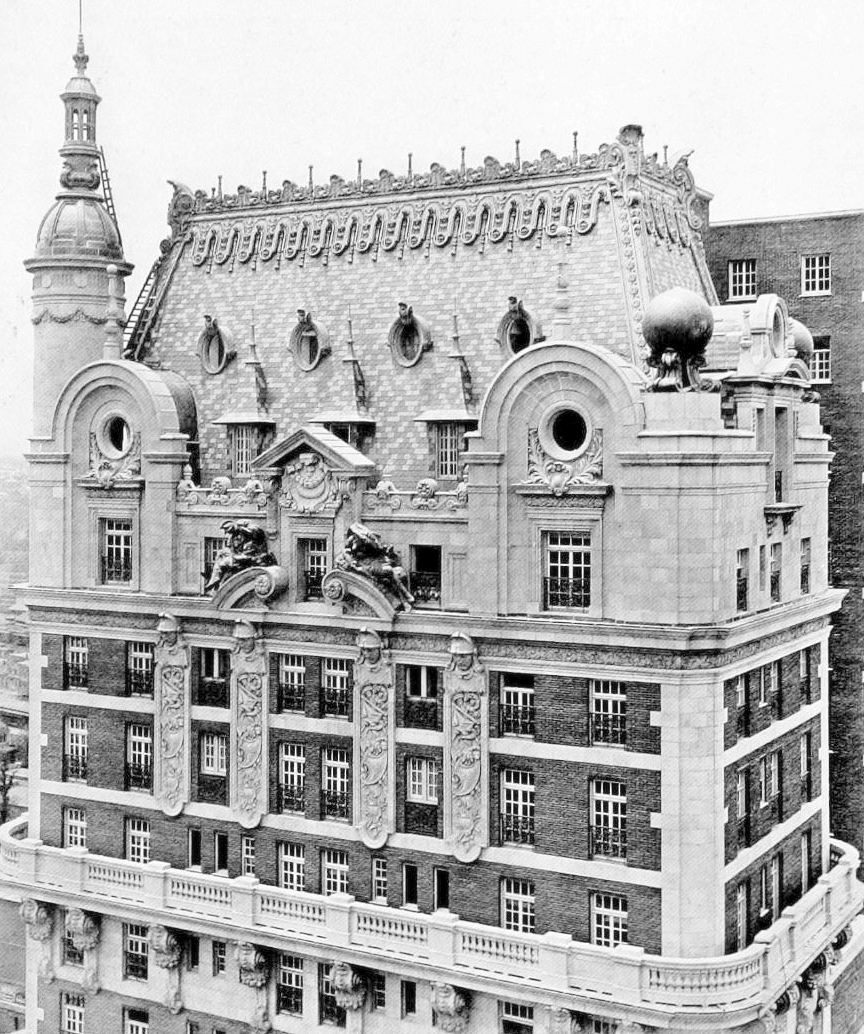
Ever noticed that the corner “turret” of the Adolphus looks like a traditional German beer stein? An ode to the source of namesake Adolphus Busch’s wealth? I certainly hope so!
***
Sources & Notes
Top image is from a pack of postcards, found on eBay.
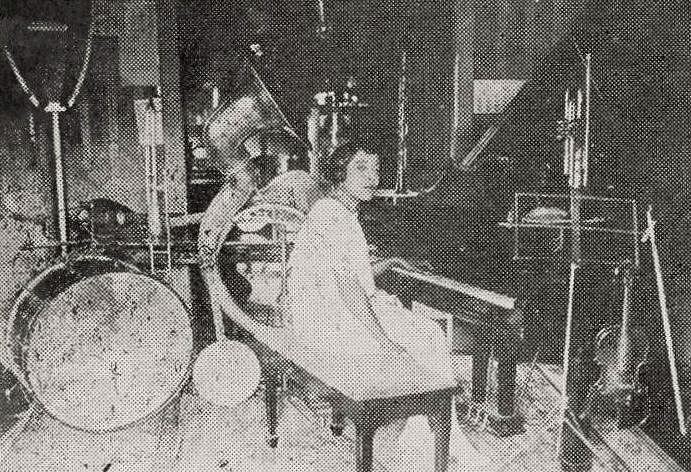
I’ve recently posted lots of photos of black schools and black churches which appeared in the Official Directory: Dallas Negro Churches, Schools and Other Activities; Civic, Business, Fraternal, Social, Etc., an absolutely fantastic historical document (which is scanned in its entirety on the Portal to Texas History site here) — now I thought I’d post some of the businesses and people featured in the directory.
First is the woman seen above, Ella Rice Pratt (1893-1966) who was known professionally as “Madame Pratt” and seems to have taught an extremely wide range of musical instruments. According to this 1930 ad, she was “The only woman of her race in Texas who performs successfully upon two instruments at the same time.” (Most images are larger when clicked.)
1930
Her 1966 obituaries (one of which is here ) list a string of accomplishments, including having studied music at the New England Conservatory in Boston, toured as a concert pianist, trained a 30-piece touring orchestra, and opened what was described as “the first music studio in Dallas where Negro musicians could receive training on all instruments” (Dallas Morning News, Oct. 3, 1966). Not only was she a notable Dallasite, so were members of her family: her father, Charles A. Rice was a principal at Booker T. Washington High School (and is the namesake of Charles Rice Elementary School), her mother, Sally Rice, was the first supervisor of Griggs Park, and her husband, T. W. Pratt was a long-time principal in Dallas schools (at the time of this directory he was the principal of the Pacific Avenue School (he might be seen in this photo which also appeared in the 1930 Negro Directory). The Pratts lived at 3612 Thomas Ave., near Washington, where Madame Pratt also had her studio. (Her headstone in Lincoln Memorial Park has musical notes engraved on it.)
*
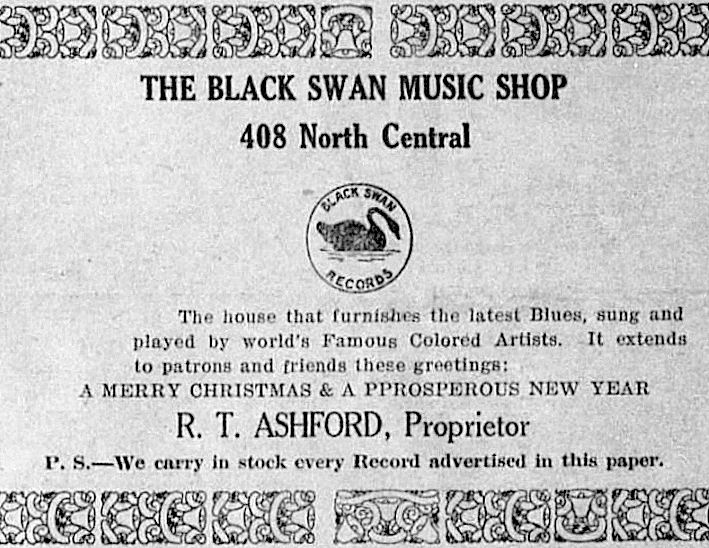
Speaking of music, R. T. Ashford was a prominent businessman (he was one of the founders of the Dallas Negro Chamber of Commerce) who owned R. T. Ashford’s Music Shop, a popular record store at 408 N. Central (at Swiss), just north of Deep Ellum. Before this 1930 directory was issued, Ashford had called his shop “Black Swan Music”(I’m not sure whether this was an “homage” to the Black Swan record label or some sort of partnership). Ashford’s store was apparently very popular and Ashford himself seems to have been taken seriously by record labels whenever he would recommend local talent (he appears to have figured prominently in Blind Lemon Jefferson’s recording career). Ashford moved from Central Avenue to Hall Street in 1931, but he was a Deep Ellum music and business fixture for many, many years. I think the location of Ashford’s record shop (if not the actual store) can be seen in this photo from 1919 (on the street-level floor of the Thorburn Broom & Brush building). (Fun fact, perhaps only to me: Ashford’s Music Shop was next door to a business proprietor named “Simpson.”)
1930
Dallas Express, Dec. 1923
*
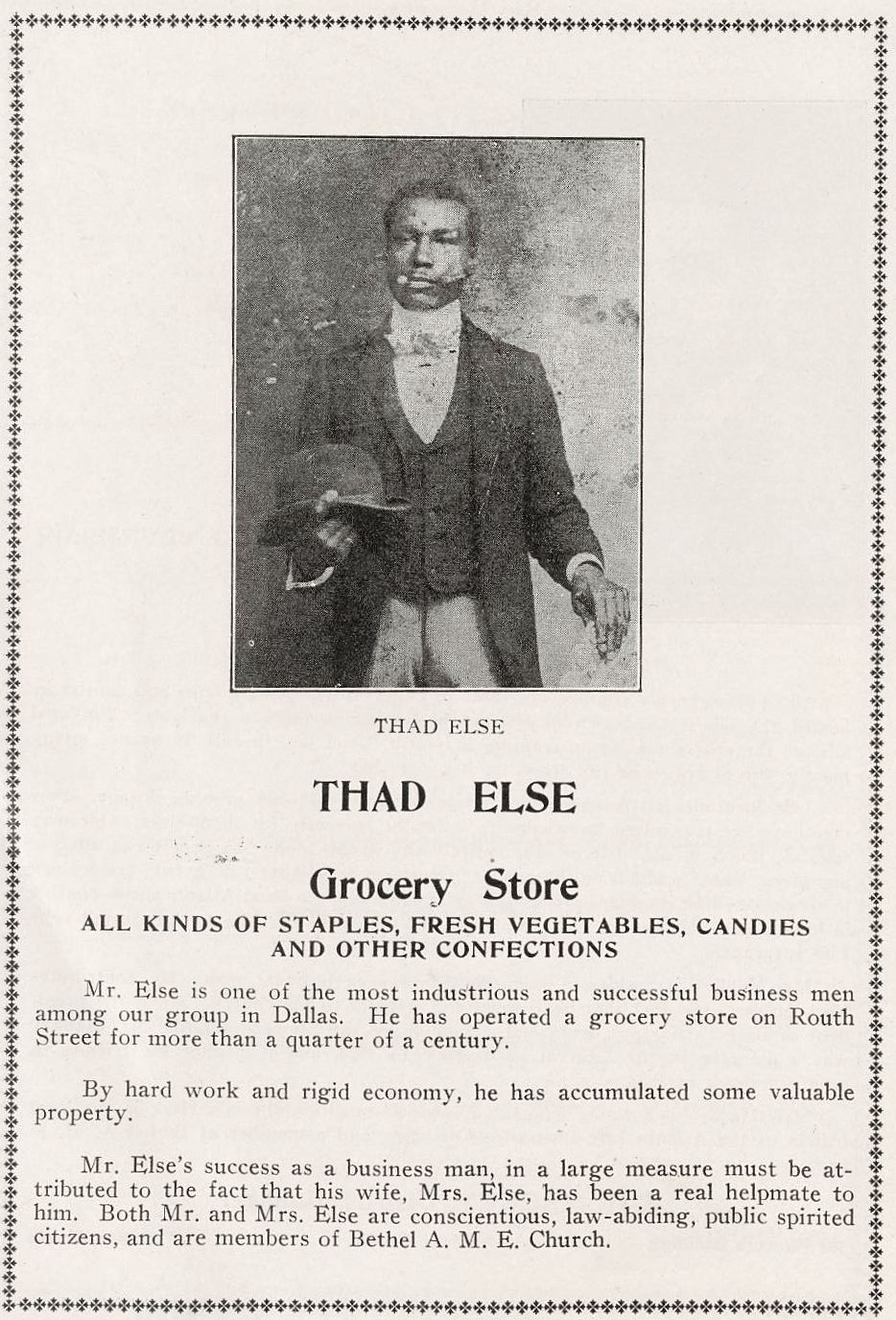
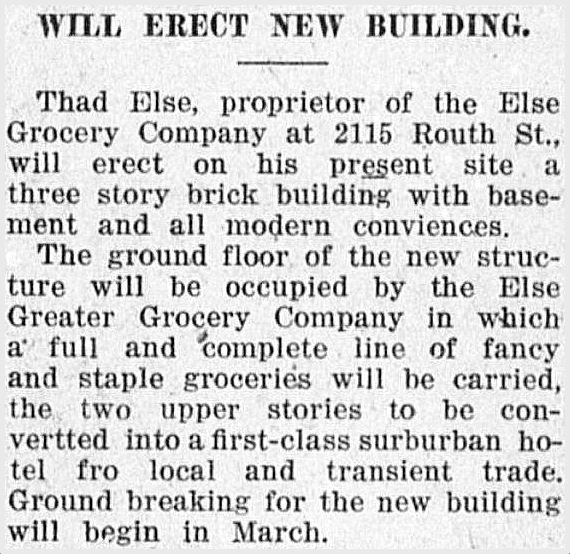
Another entrepreneur was Thad Self, whose main business seems to have been a grocery/general merchandise store on Routh Street south of Colby. He also owned a transfer company, a hotel/boarding house, a barber shop, a cafe, and at least one other general store. Most of his companies were located in buildings on the neighboring lots at 2113 Routh and 2115 Routh, one or both of which he appears to have purchased in 1913 for $100 (about $2,600 in today’s prices). He built a large three-story building on Routh in 1913 (which, according to this 1921 Sanborn map) was built over the Dallas Branch of the Trinity which snaked through downtown and the State-Thomas area — that basement was probably pretty damp.
1930
Dallas Express, Dec. 6, 1919
*
Speaking of hotels, one of the most prominent hotels in the era when blacks were not allowed to stay in “white” hotels by law was the Powell Hotel at 3115 State Street (between Ellis and Hugo), owned by D. H. Powell and his wife Susie. In May, 1929 Powell was issued a permit to tear down a frame house at 3115 State, and he built his 40-room hotel on the property soon after. The Powell Hotel was where almost every notable African-American visitor to the city stayed. By the late 1940s, Powell had built something of a hotel empire in Dallas with several locations. (I will have to write more about him in a future post!) I like this very early ad, from the 1930 directory, describing it as the “Powel Hotel & Pleasure Dome.” The photo shows a pleasant-looking place, but you and I and Kubla Khan and Coleridge would probably agree it’s no Xanadu.
Speaking of “resting places”… another essential element in any community is the funeral home. One of Dallas’ most prominent undertaking firms for black Dallas was the E. J. Crawford Funeral Home at 804 Good (now N. Good-Latimer, between Live Oak and Bryan), founded by Mr. Crawford in 1909. “The last word in funeralizing.”
1930
Dallas Express, Feb. 4, 1922
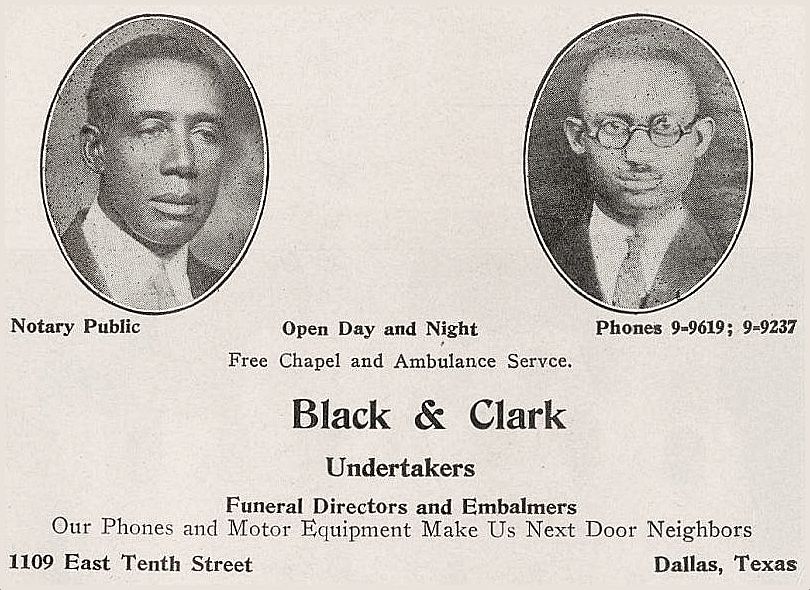
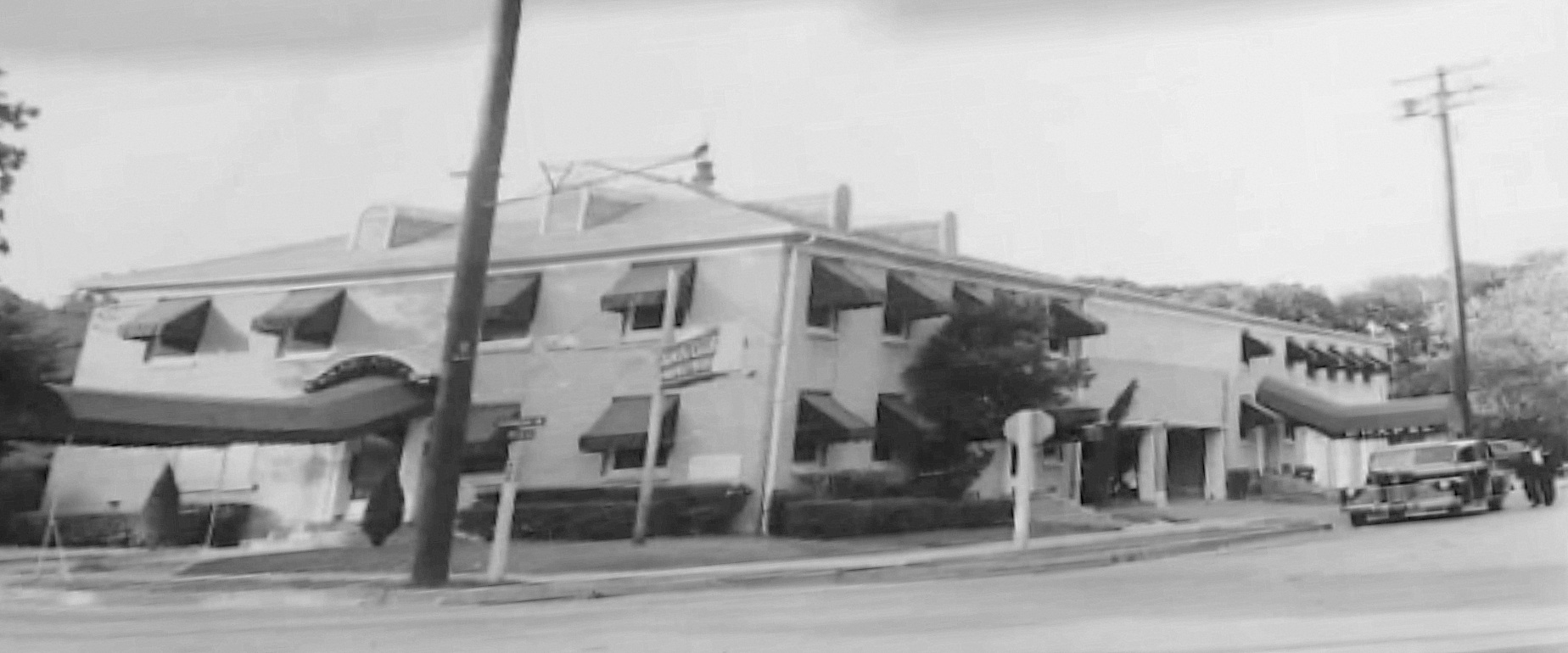
Another prominent funeral home/ambulance service was Black & Clark, founded originally around 1914 by S. C. Black; in 1927 he was joined by his nephew C. J. Clark. For years they were located in Oak Cliff, at 1109 E. Tenth St., west of what is now South R. L. Thornton, near Cliff Avenue. This funeral home is still in business, and there was recently a profile of the Dallas institution on Channel 5 News (watch it here).
1930
1802 N. Washington (woozy screenshot of photo in Ch. 5 news story)
*
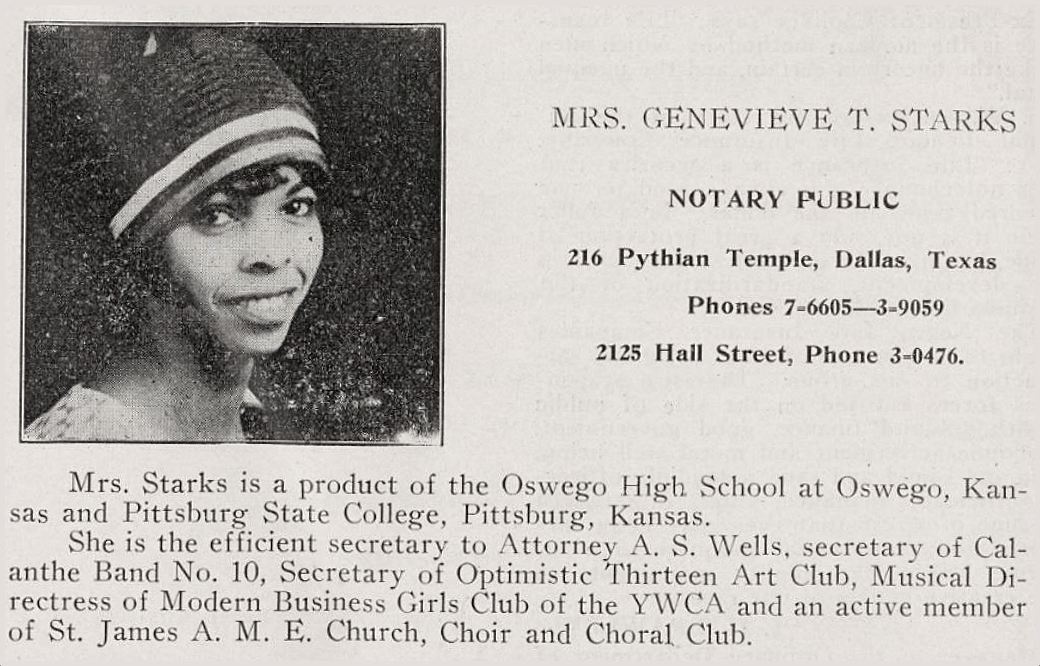
This is Genevieve T. Starks, a woman with a lot of extra-curricular activities! I love this photo.
1930
*
The G Clef Club was organized around 1921 by Lincolnia Hayes Morgan, music supervisor for Dallas’ (black) public schools. A blurb about the group appeared in The Crisis, the official publication of the N.A.A.C.P.: “The objects of the club are to assist worthy music students and to raise the music standard of the community” (June, 1921).
1930
*
A popular singing group was the Belt Sacred Quartette (comprised of J. J. Mollis, J. Poindexter, F. W. Grant, and N. Tisdale) — listen to their recording of “I Have Another Building” below.
1930
Blackwell (OK) Journal-Tribune, July 23, 1932
*
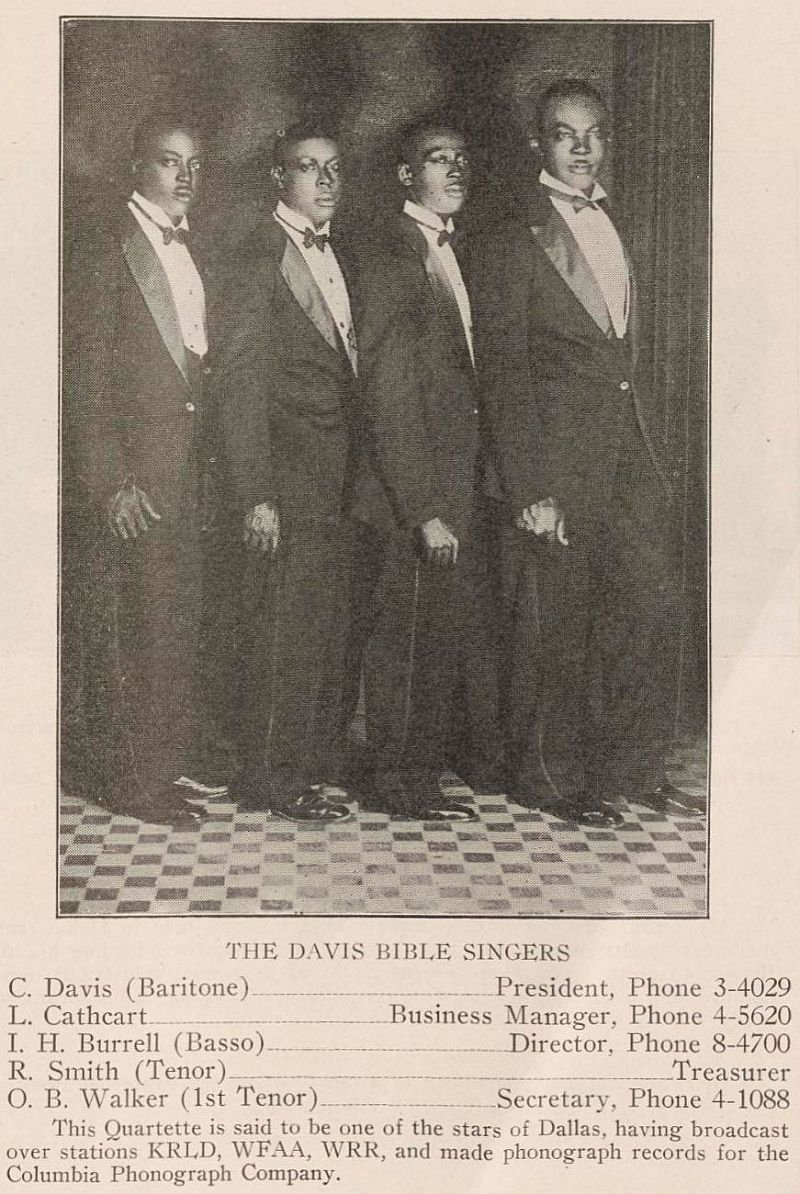
The Davis Bible Singers (C. Davis, I. H. Burrell, R. Smith, and O. B. Walker) seem to have been pretty popular, having appeared on KRLD, WFAA, and WRR radio. They even recorded for Columbia Records (listen to their great recording of “Daniel Saw the Stone” below).
1930
*
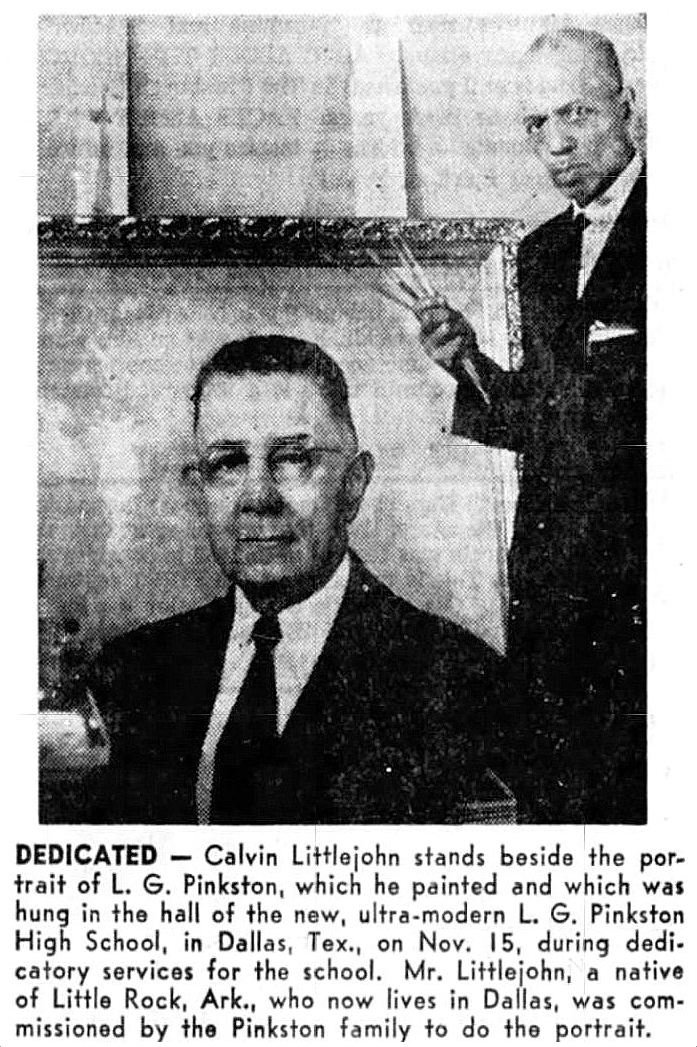
One of the most important doctors in Dallas in the 1920s and ’30s was Dr. Lee Gresham (L. G.) Pinkston (1883-1961), who opened the Pinkston Clinic at 3305 Thomas Avenue, between Hall and Central, in 1928 or 1929 (it made its first appearance in the 1929 city directory). In 1954, Pinkston — physician, surgeon, and civic leader — was one of the first five black doctors allowed to practice in a “white” Dallas hospital (St. Paul’s Hospital) — before that, the only hospital in Dallas where black doctors could practice was the Pinkston Clinic, which had 15 beds (32 beds were allotted for black patients at St. Paul’s in 1954). (See a photo of the five doctors here, Dr. Pinkston is seated.) A new West Dallas school — Pinkston High School — was named in Dr. Pinkston’s honor and opened in 1964, three years after his death.
1930
Dallas Historical Society
Below, a portrait of Dr. Pinkston with the artist, Calvin Littlejohn (whom I’d known only as a photographer previously), destined to hang in the new school.
Pittsburgh (PA) Courier, Nov. 28, 1964
***
Sources & Notes
All 1930 images are from Official Directory: Dallas Negro Churches, Schools and Other Activities; Civic, Business, Fraternal, Social, Etc. compiled by James H. Smith, 1930; from the Tarrant County Black Historical and Genealogical Society, via the Portal to Texas History. This fantastic resource is scanned in its entirety here.
See the two other Flashback Dallas posts which also use this wonderful directory as a source:
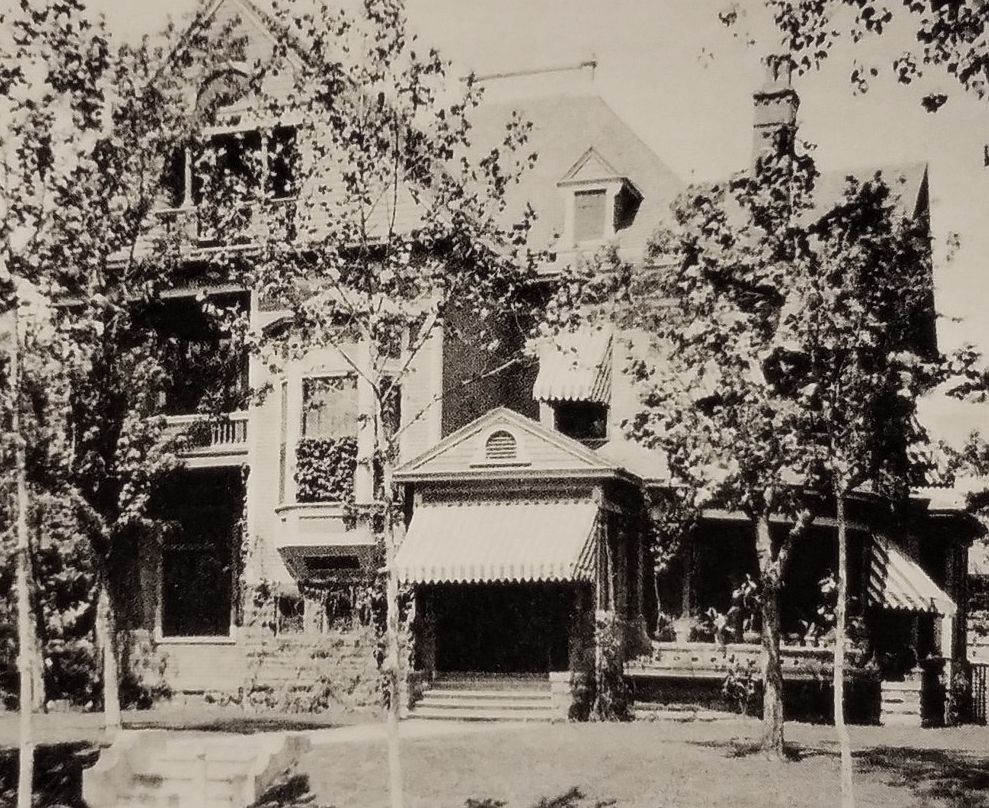
I posted a screenshot of a “mystery house” (here) to see if anyone could figure out where it was — and a few people identified it! The screenshot was from a June, 1960 WFAA Channel 8 news piece on an embezzlement case against the owner of the insurance business that was then occupying the old house — it was the home of the State National Life Insurance Company at 2516 Maple Avenue. And I don’t know what happened with its “remodeling” along the way, but… yikes. Someone did an unbelievably bad job!
According to a 1947 Dallas Morning News article (see “Sources & Notes” at bottom of page), the house was built in 1897. The address then was 154 Maple Avenue, back when Maple Avenue was lined with very nice homes, occupied by well-to-do families who would later move to Highland Park. You can see the house at the corner of Maple and Mahon (which for a while was called Martin) on the 1899 Sanborn map here, the 1905 map here, and the 1921 map here.
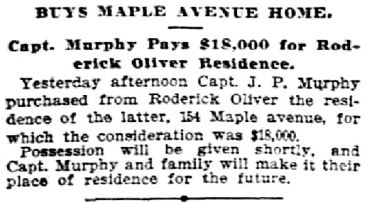
I’m not sure who built it, but in 1901 it was occupied by banker Roderick Oliver who sold it to Capt. John P. Murphy in 1906 for $18,000 — or $500,000 in today’s money. Murphy was the legendary pioneer real estate man of Dallas. He started his real estate company in 1874 and was joined by partner Charles F. Bolanz in 1884 — Murphy & Bolanz was the premier real estate company in the city for decades.
Dallas Morning News, May 18, 1906
The house stayed in the Murphy family for many years. In 1947 the house was elaborately restored by three women (two of whom were Murphy’s daughters) who opened it as The Laurels, an elegant location for weddings and receptions. The house had been slated for sale and demolition, but the women thought that the old house would serve brides well, as “the highlight of any young girl’s life is her marriage, and few places in Dallas offer a suitable environment for such an occasion,” said one of the women (DMN, Oct. 5, 1947). The Laurels appears to have been in business only through the end of 1948 — about a year; a classified ad shows that it had become a boarding house “for young working people” soon after.
It seems to have been sold in the 1950s when it became home to various businesses. After the embezzlement interlude, it was, among other things, a theme club called The Haunted House in the 1960s, community radio station KCHU in the ’70s, and an antique shop in the ’80s.
Below is how it looked in June of 1960 as it was passing into receivership. A news story described it thusly: “…a big house that is a study in contradictions. Outside, flat green paint peels and cracks, gentility sliding headlong toward an ‘arty’ disrespectability” (“Old House on Maple Services Insurance Empire,” Dallas Morning News, June 9, 1960). It looked pretty sad.
1960, G. William Jones Collection, SMU
In the mid-’70s, it became the headquarters of community radio station KCHU (90.0 FM). (Watch Channel 13 story on KCHU on YouTube here.)
1975, G. William Jones Collection, SMU
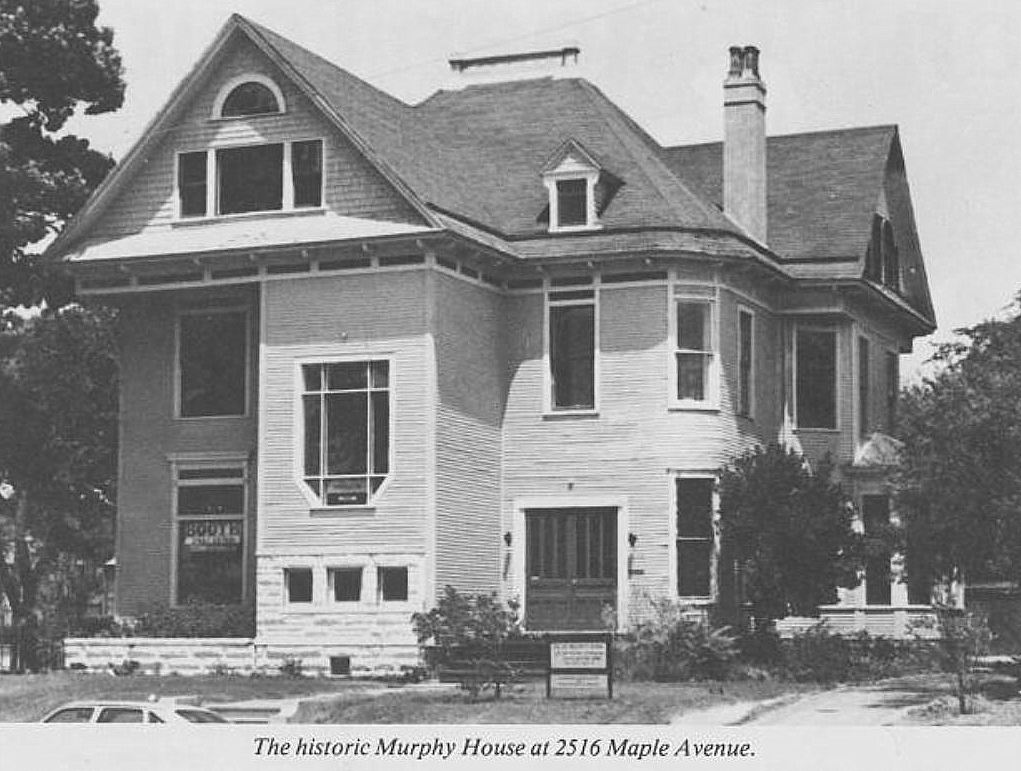
It was spiffed up a bit in the early ’80s for the antique shop, Booth Galleries, but it still looked weird, like someone had sheared off the sides of the house, removing any and all character.
Then — saints preserve us! — the gods smiled down and Claire Heymann bought the decrepit old house (which was waiting for its all-but-inevitable date with the wrecking ball) and worked absolute miracles to transform the house into the stunningly beautiful Hotel St. Germain, located across from the Crescent. This is one instance where a restoration/renovation actually improves on the original! I’ve loved this redone building — Dallas’ first bed and breakfast inn — since it first appeared in 1991. Long may it stand. Thank you, Claire!
2018, Google Street View
2019, Google Street View
***
Sources & Notes
Top photo showing the home of John P. Murphy, circa 1910, is from Dallas Rediscovered by William McDonald, with photo credited to the Dallas Historical Society.
The Dallas Morning News article “Early Dallas Home Restored for Weddings” (DMN, Oct. 5, 1947) states that the house was built in 1897. “The Laurels” was opened by Murphy’s daughters Mrs. Louise Boyce Sanford and Mrs. Eugene P. Locke in partnership with Mrs. Dorothy Doran Walker.
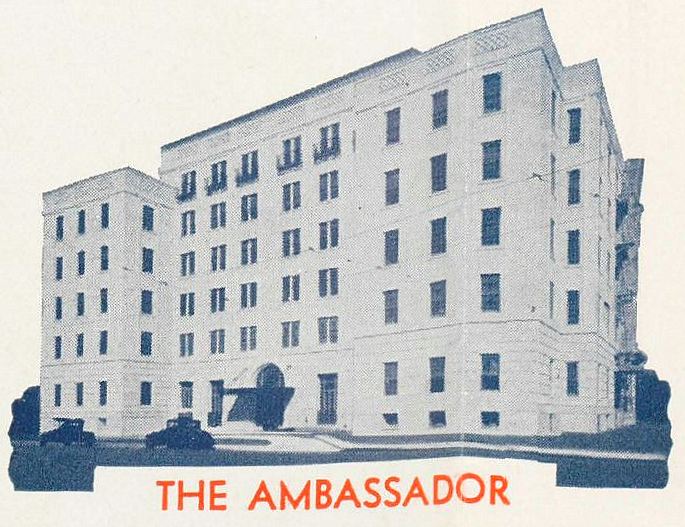
The historic Ambassador Hotel at 1312 S. Ervay in the Cedars was destroyed by fire this morning — the building was 115 years old and was under renovation. Watching news footage of flames engulfing the South Dallas landmark is heart-wrenching.
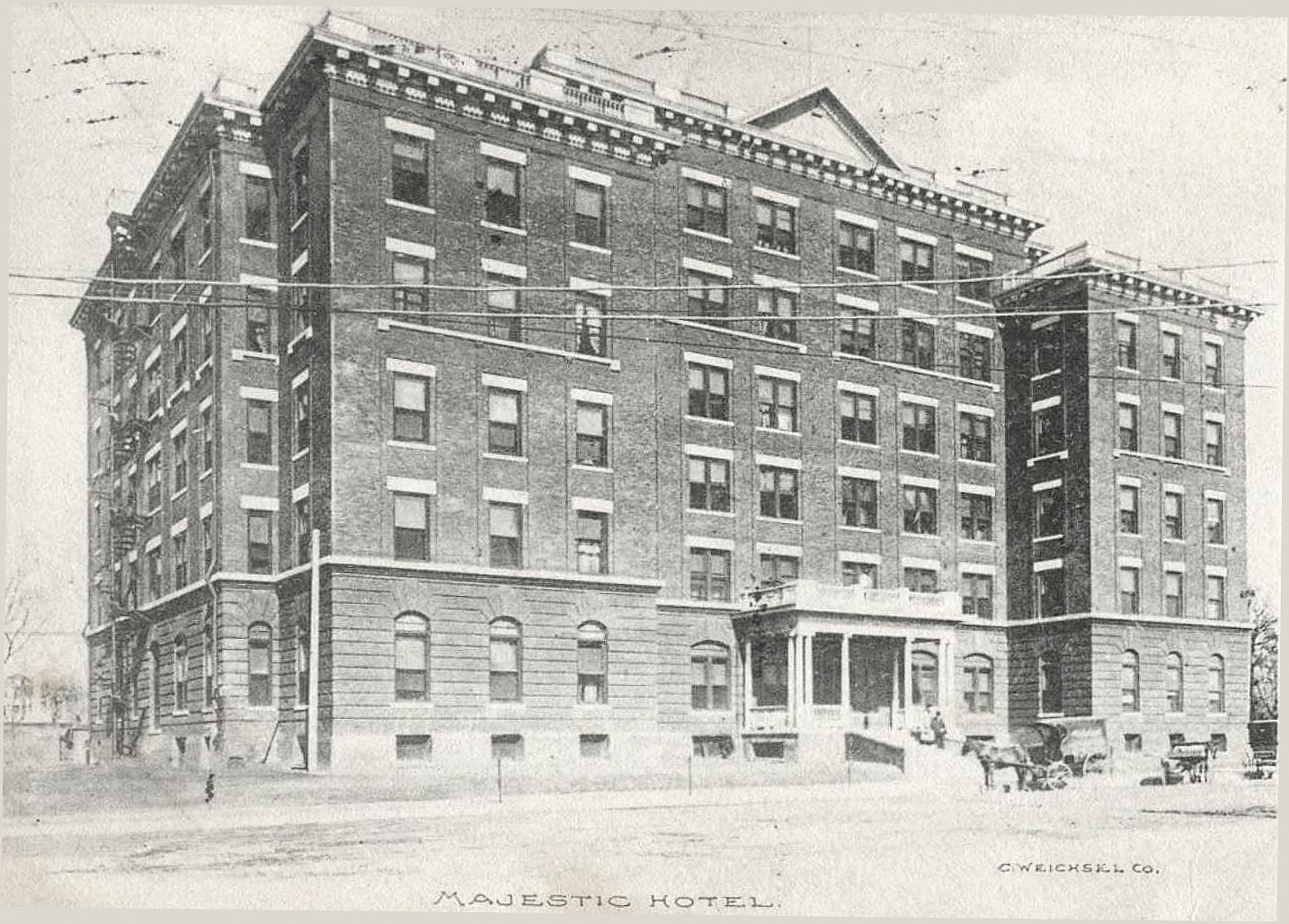
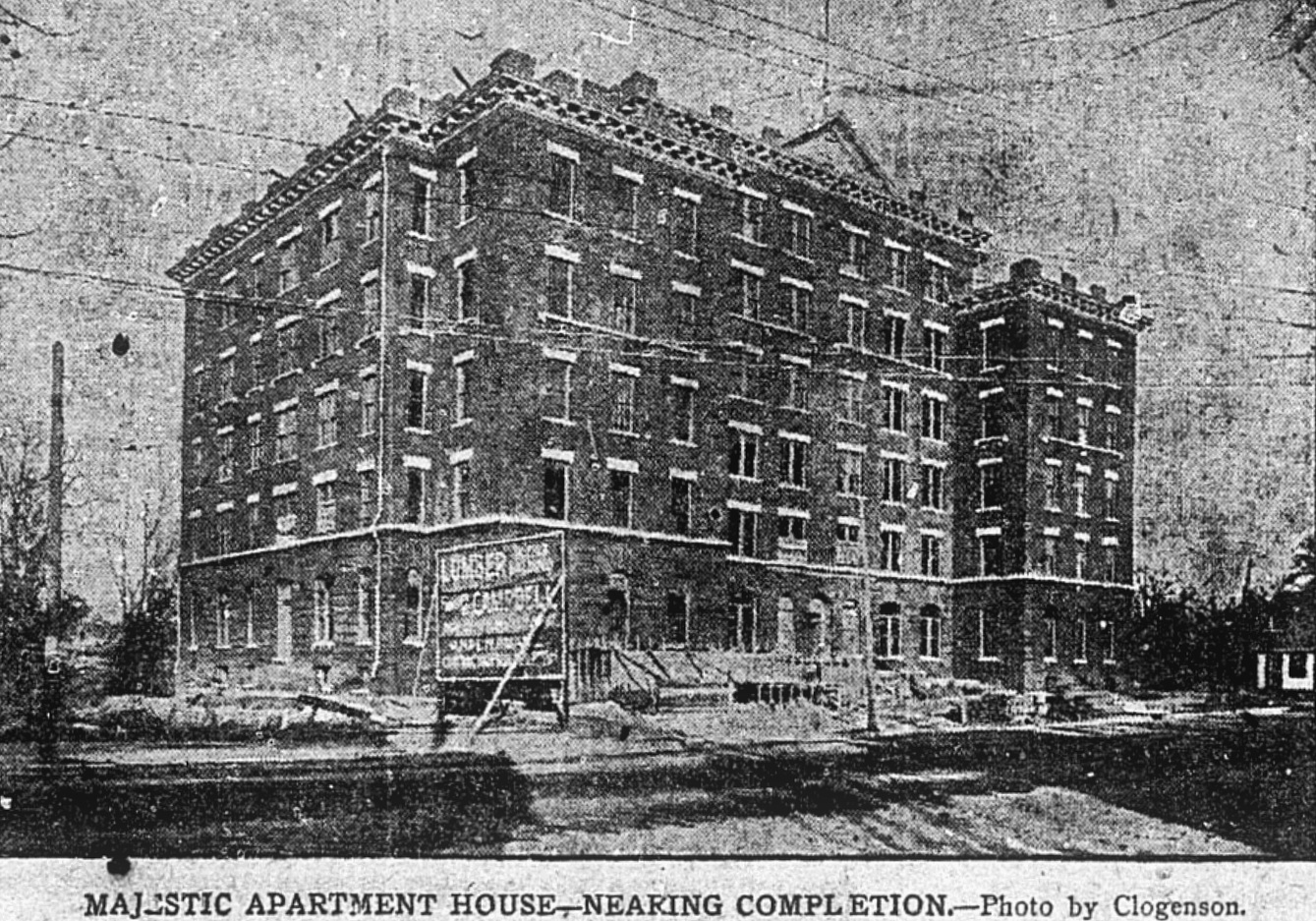
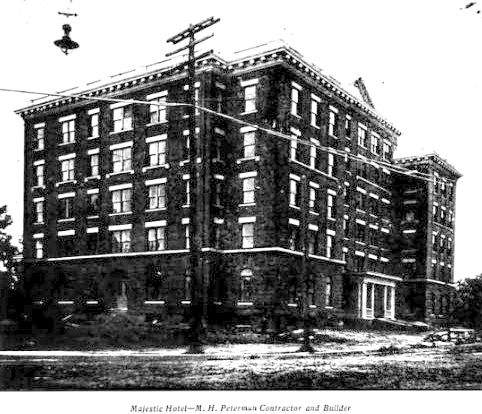
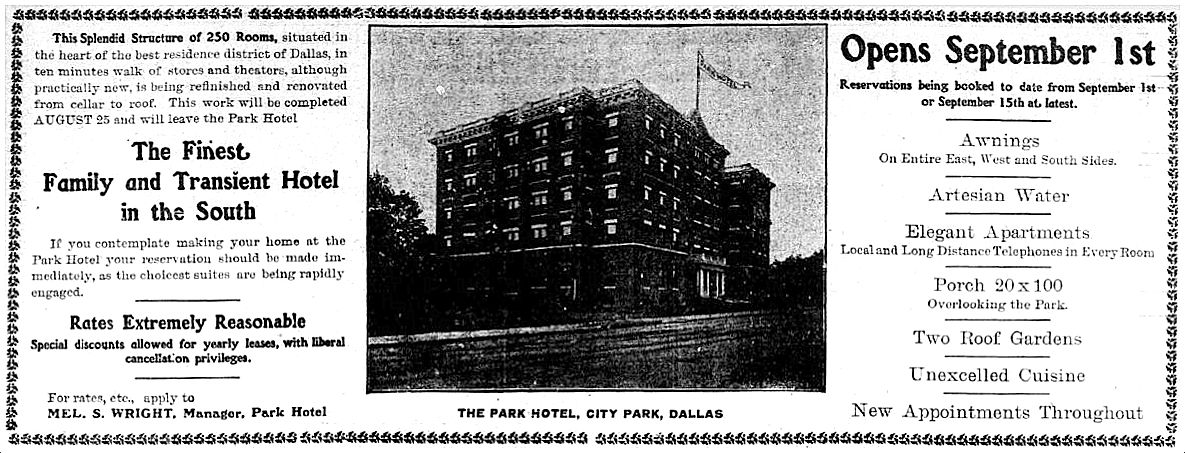
Built in 1904 alongside City Park, the Majestic Apartment Hotel opened in early 1905. It was designed by popular local architect Earle Henri (E. H.) Silven (who, incidentally, was arrested on suspicion of setting fire to the then-historic Knepfly Building in 1906, a fire which resulted in two deaths, but a grand jury declined to prosecute because of insufficient evidence — I actually wrote about this fire in passing a few years ago in a completely unrelated post).
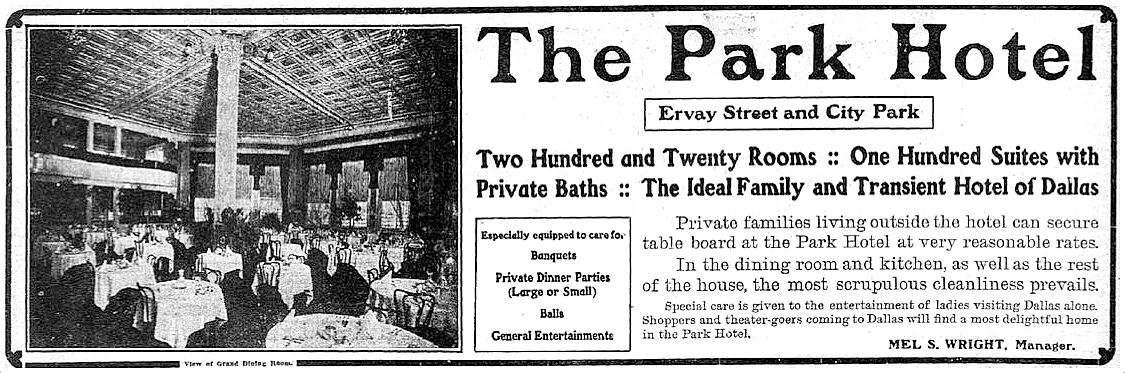
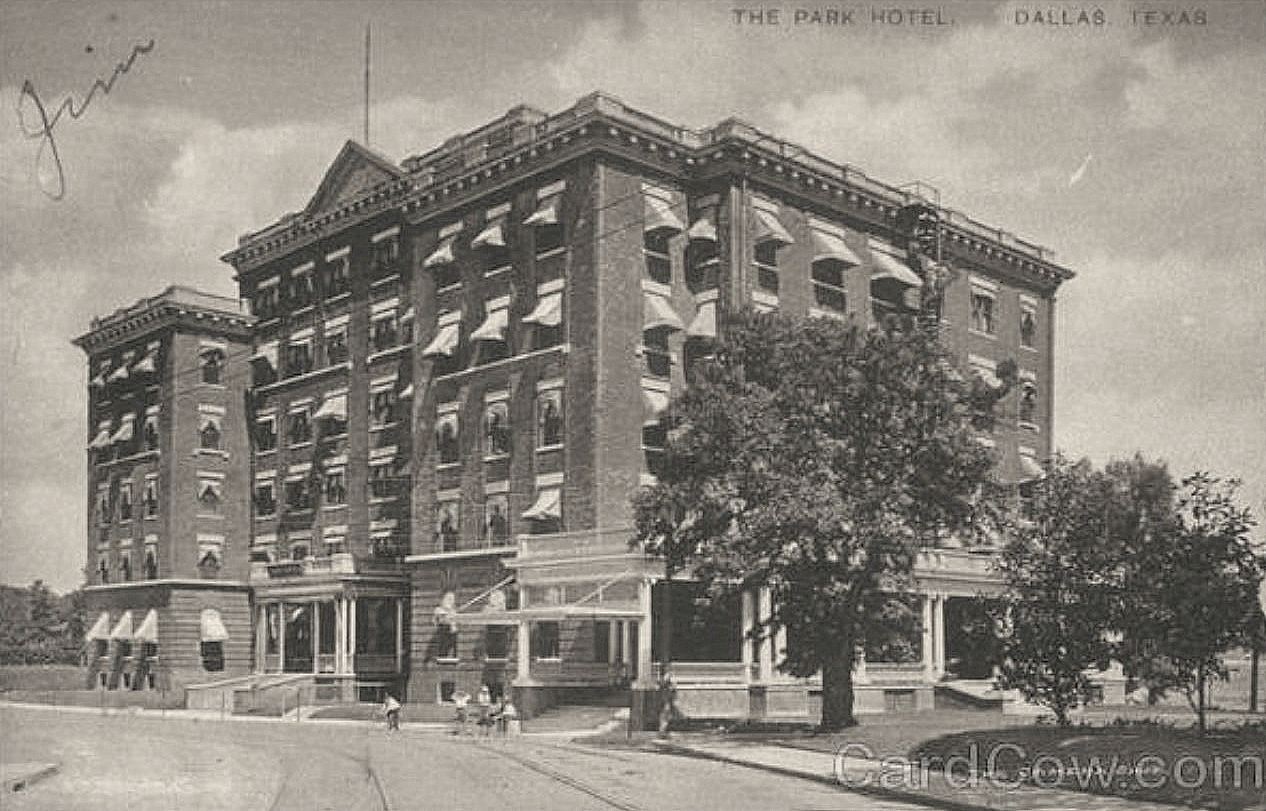
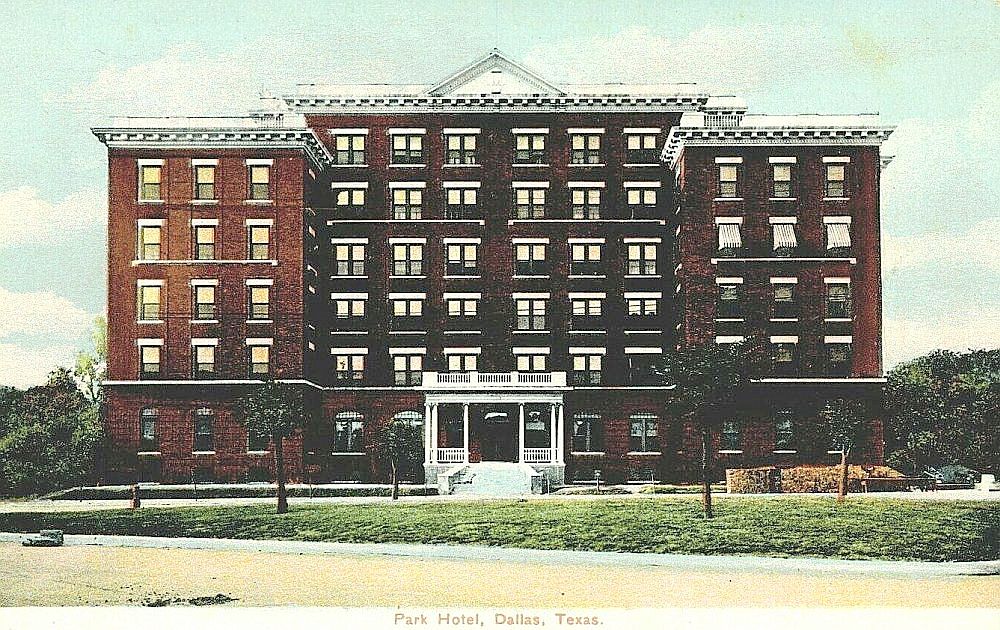
The Majestic was originally an “apartment hotel” which was more apartment house than hotel, intended for long-term residents. Financial backing of this endeavor was shaky, and the Majestic soon fell into receivership; after a change of owners, the newly renamed Park Hotel opened in 1907. Several years later, in 1933, it became the Ambassador Hotel. Over the 115-year life of the building, these various incarnations came with a dizzying number of owners and operators, and news of its impending renovation and rebirth was heard frequently over the past 20 or 30 years. Recent plans, though, seemed like they were actually going to finally happen. …And now, unfortunately, they won’t.
Below are several images of the hotel, beginning back when Dallasites were still using a horse and buggy to get around. (All images are larger when clicked.)
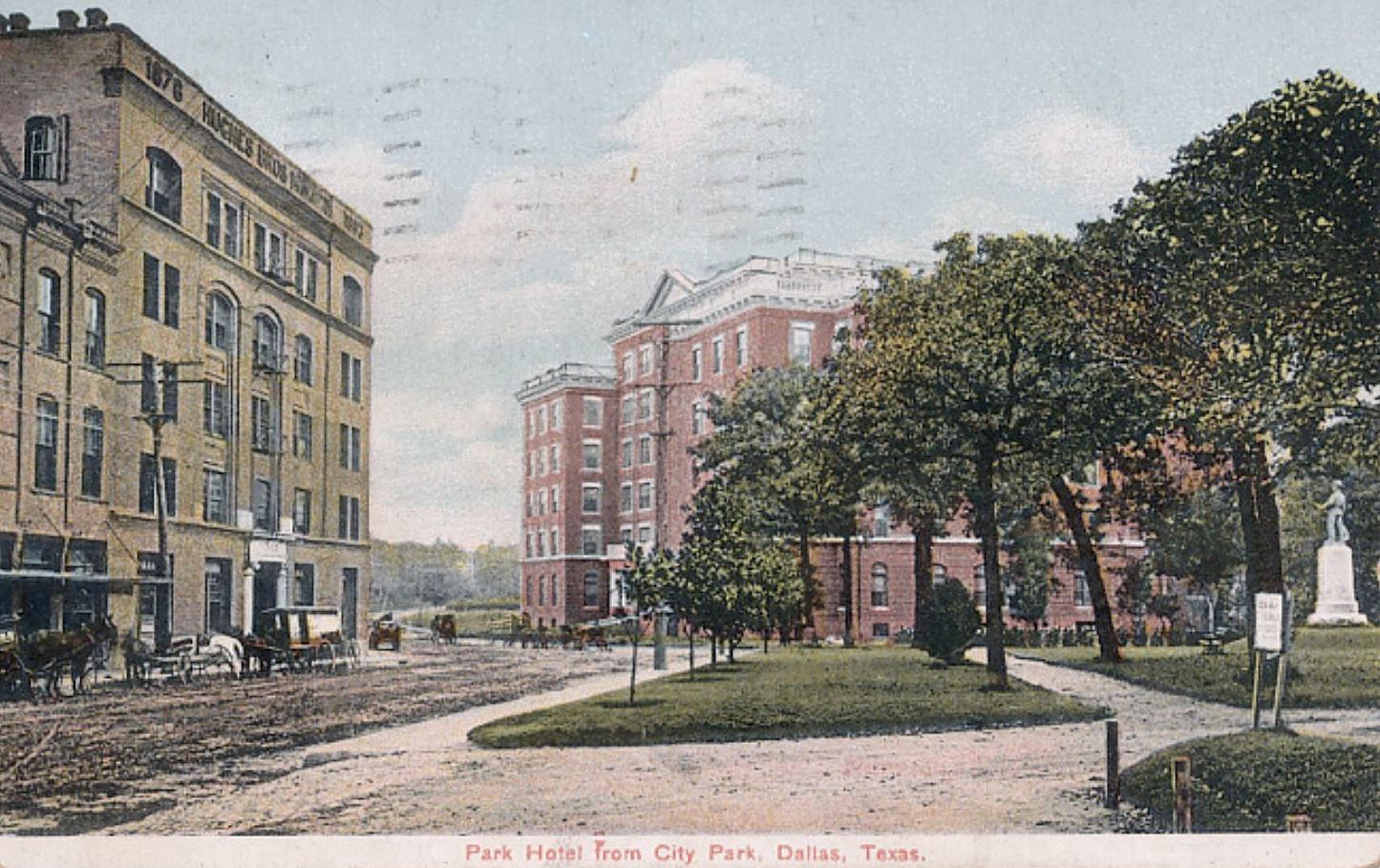
I’m not sure which iteration of the hotel is seen in this postcard, but here it is viewed from City Park, with the Confederate Monument in the foreground:
One of my favorite views of the hotel is the one immediately below, taken from City Park, with the Hughes Candy factory at the left (the original photo is here):
In 1933 the hotel got a new stucco exterior and tile roof and was renamed the Ambassador.
For a while the hotel served as a retirement community — here is an odd, incredibly wordy ad, beckoning retirees with prospects of late-life romance, while also sharing (somewhat) accurate local history:
Ambassador Retirement Hotel ad, Jan. 30, 1972
ca. 1982
This morning:
Dallas Fire Rescue, via Twitter
*
For old time’s sake, a Google Street View from 2018 (here) and from 2021 (here):
2018
2021
***
Sources & Notes
Top image from the Portal to Texas History.
Read a comprehensive history of the building in an article by Harvey J. Graff in Historic Dallashere and here.
Read the City of Dallas Designation Report from 1982 seeking Landmark Status here.
Read the 2018 application for inclusion in the National Register of Historic Places (with MANY pages of photos) here.
Coverage of today’s fire can be found on the NBC-DFW site here; a 2017 video walk-through of the Ambassador in happier, more optimistic times can also be found on the Channel 5 site, here.
City of dreams, city of motels… (click for larger image)
by Paula Bosse
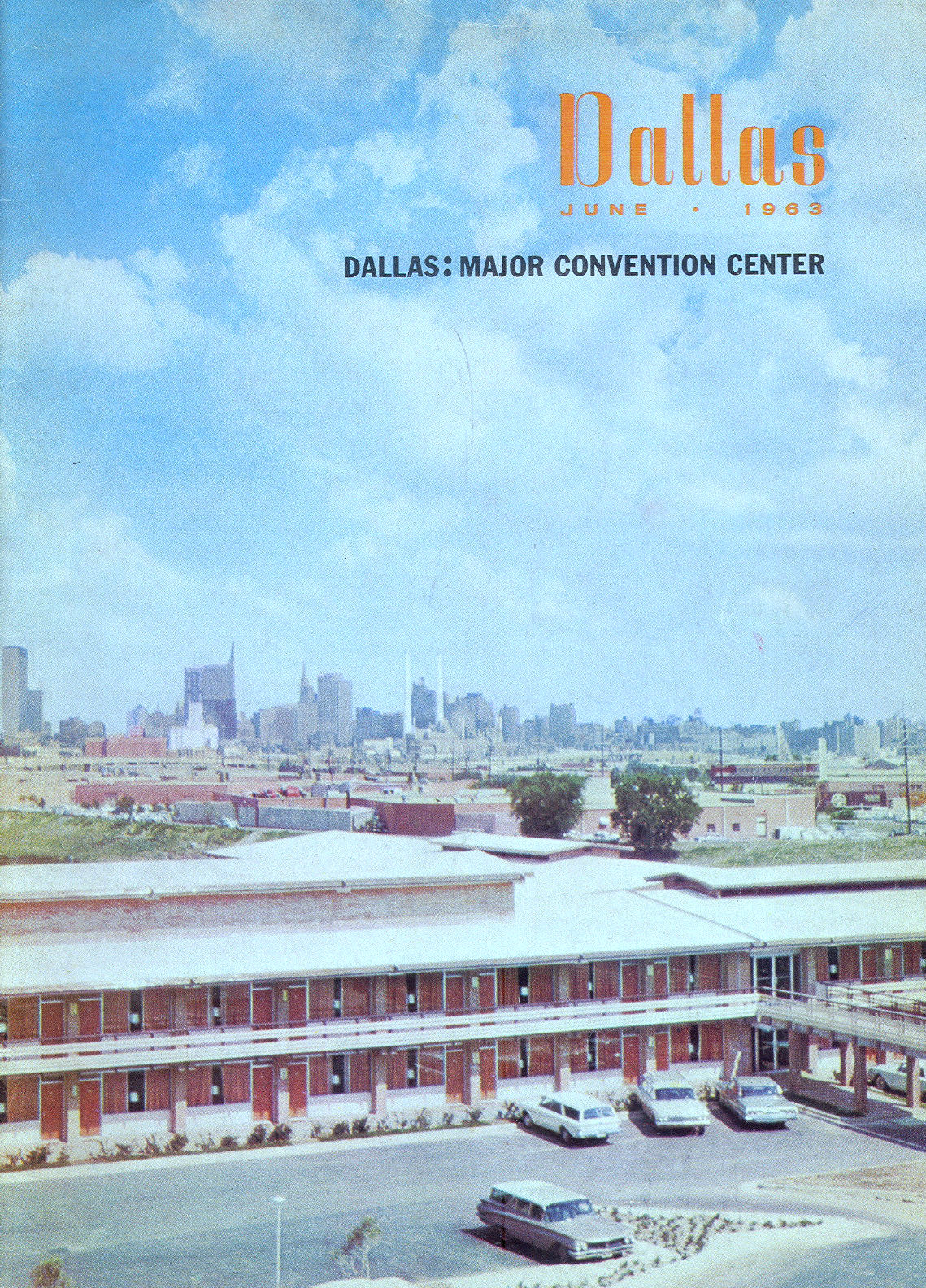
Here’s an interesting shot of the downtown skyline: from an unidentified motel (possibly along Harry Hines?).
This cover of a 1963 Dallas Chamber of Commerce magazine carries the headline “Dallas: Major Convention Center” — that year Dallas was named the #3 convention center (Chicago and New York held the top two spots) in a survey conducted by the trade publication World Convention Dates based upon the number of conventions booked — Dallas had 405 conventions booked, as of July, 1963. The previous year Dallas was ranked #9, so that’s quite an improvement. The GOP was even considering the city as the site of their 1964 Republican National Convention (which, considering the events of November, 1963, is an odd thing to contemplate).
Why was Big D so popular? An advertorial in The Dallas Morning News listed a few reasons:
…clear, dry weather; cosmopolitan atmosphere; numerous modern and attractive hotels and motels – with more being built every day; a marketplace with wares from over the nation and world; fun things to do and see including cultural, sports and theatrical offerings; a world-wide shopping center; easy accessibility via gleaming highways, freeways and an airport which ranks 10th in the nation. (DMN, Oct. 6, 1963)
So… pretty much the same things you hear today (except our highways might not be quite so gleaming — but our (new) airport ranks a lot higher than #10). All these years later, Dallas remains near the top of the convention-attracting cities in the United States. (I have a feeling the motel seen in the photo above did not have such a rosy future….)
***
Sources & Notes
Image shows the cover of the June, 1963 issue of Dallas, the magazine of the Dallas Chamber of Commerce; found in an old eBay listing. (If anyone has any old copies of this magazine they would like to divest themselves of — or loan out for a short time — please contact me at the email address in the About/Contact tab at the top of this page.)
The Delmonico Hotel & Thorburn Broom factory… (click for larger image)
by Paula Bosse
How does one refer to the area just above Pacific and Central, where Swiss once crossed Central? “Deep Ellum-adjacent”? “Far North Deep Ellum”? The “Extreme Western Edge of Old East Dallas”? It was very close to the old union railroad depot, where the T&P and H&TC tracks crossed (about where Pacific and Central crossed). It was once a bustling area, but after the depot closed in the ‘teens, it didn’t bustle so much anymore.
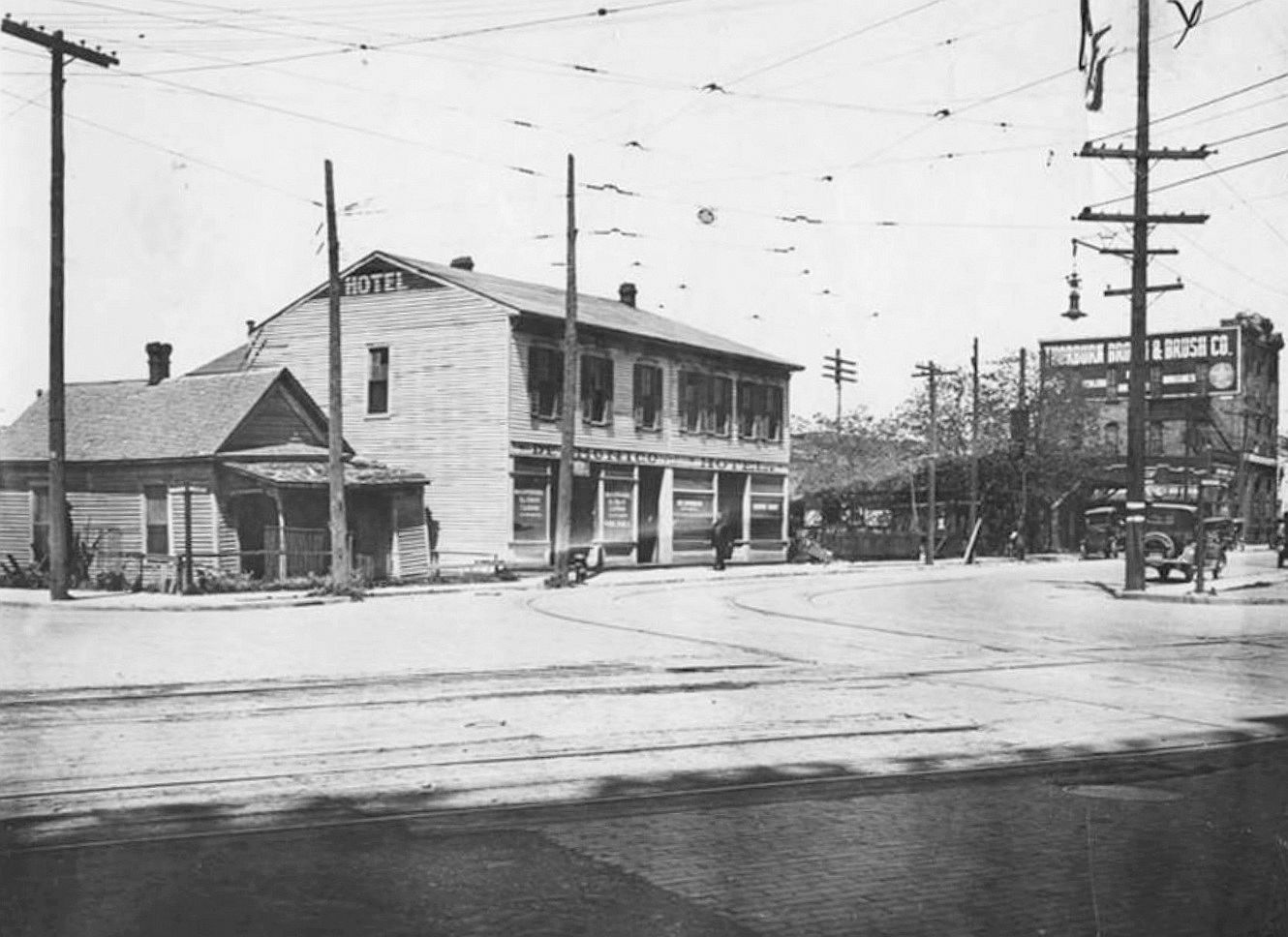
The photo above — looking to the northeast and taken about 1918 or 1919 — shows the Delmonico Hotel (at 2309-2311 Swiss Avenue) and, to the right, the Thorburn Broom & Brush Co. factory (2405-2409 Swiss). (See the Swiss Avenue occupants of these two blocks as listed in the 1919 Dallas directory here.) The street that runs between the two blocks is Central Ave. The railroad tracks running horizontally at the bottom of the photo run along Pacific, and the streetcar tracks curve up and to the right to run along Swiss.
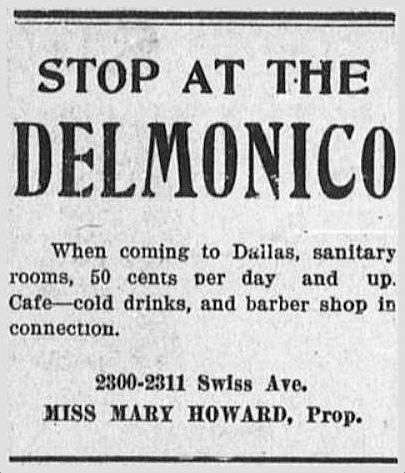
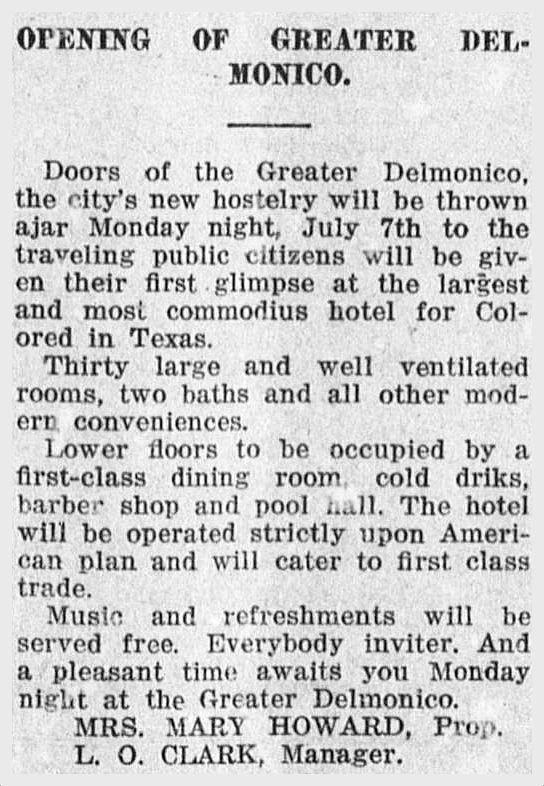
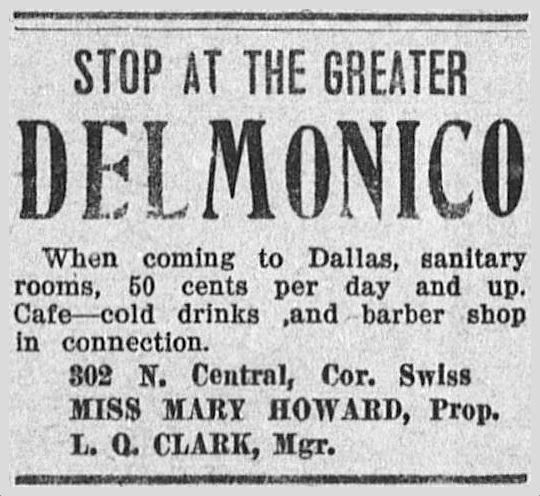
The Delmonico Hotel was at this location for only a couple of years until it moved a block around the corner, facing Central — the new, larger “Greater” Delmonico opened in July, 1919, occupying the upper floor at 302 Central. The proprietress of both locations was Miss Mary Howard (later Mrs. L. O. Clark). Miss Howard was, apparently, an enterprising African American woman who ran what was described in Dallas’ premiere black newspaper as “the largest and most commodious hotel for Colored in Texas… [catering] to first class trade” (Dallas Express, July 5, 1919). It remained in business at its second location on Central Ave. until 1927 or 1928.
Dallas Express, Jan. 11, 1919
Above, an ad for the hotel’s first location (the address should read “2309-2311 Swiss”). Below, a nice article on the opening of the second location on Central.
Dallas Express, July 5, 1919
Dallas Express, Aug. 23, 1919
It’s interesting that the 1919 Dallas directory has a business listing for this hotel (the first location, the one seen in the photo) — it is the sole hotel for “colored” patrons listed (denoted with the letter “c” — you can see the list of hotels from the 1919 directory here).
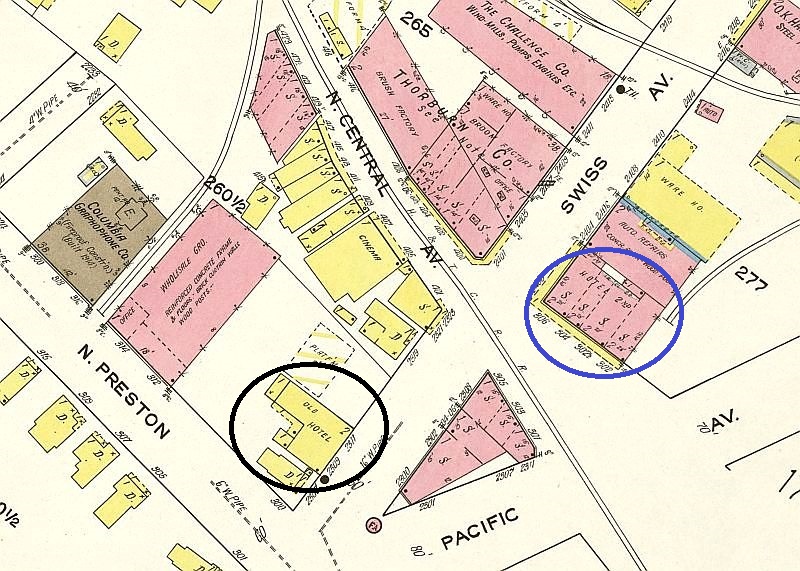
The first location can be seen in this detail of a 1921 Sanborn map, circled in black; the second location is circled in blue; the Thorburn Co. broom factory at Swiss and Central is labeled. (All images are larger when clicked.)
The 2300 block of Swiss is no longer there — it is now empty land beneath the elevated North Central Expressway. The 2400 block (where the broom factory stood) is still there and is the site of a self-storage business (the Thorburn factory once stood here, across from the Lizard Lounge).
*
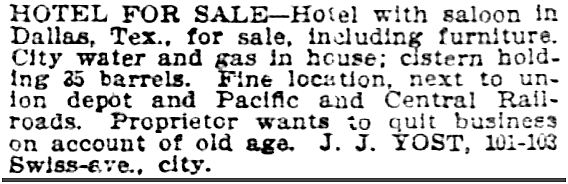
The large white building housing the Delmonico appears to have been built in 1889 by Swiss-born John Jacob (“J. J.”) Yost, who soon opened the Bear Hotel, which seems to have been a popular rooming house/hotel for German immigrants. By 1902 Yost was looking for a buyer for the hotel (“with saloon”) and placed the ad seen below (an ad which appeared not too long after a court notice appeared in the papers showing that Yost had been found guilty of operating a “disorderly house” (a brothel) and had been fined $200, which was a huge fine at the time).
Dallas Morning News, April 26, 1902
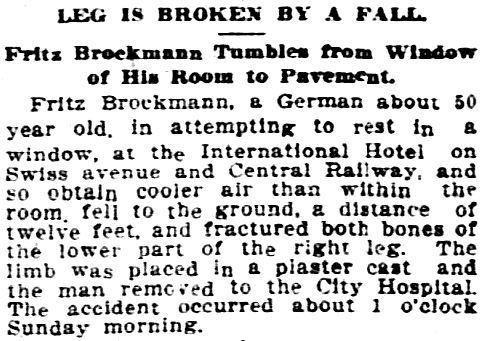
As Yost described it, the hotel really was in “a fine location” — just a block or two from a very busy passenger-train depot. Perhaps he was asking too much for it, but the Bear Hotel appears to have remained in operation until 1906, when it became the International Hotel (which was in business until 1918 when the hotel became the Delmonico, the first of these hotels to be owned by an African American for a strictly black (segregated) clientele). Below is an amusing (or terrifying) news tidbit from 1909 about a guest at the International Hotel. When you find yourself asking “what did people do before air-conditioning?” remember what happened to poor Fritz Brockmann:
DMN, July 5, 1909
**
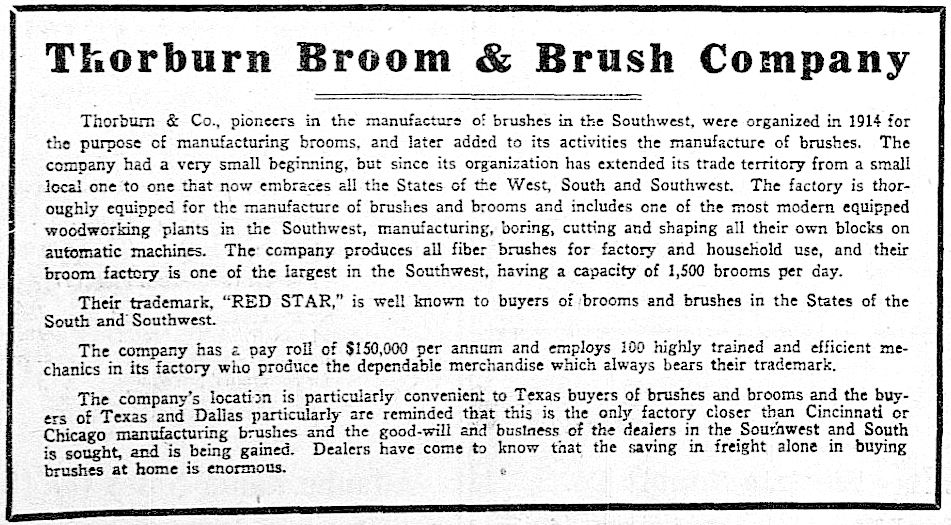
The Thorburn Broom & Brush Co. manufactured … brooms and brushes in their factory seen at the right in the photo above. A few bristly factoids about the company were included in a Chamber of Commerce-like series of ads from 1922.
June, 1922
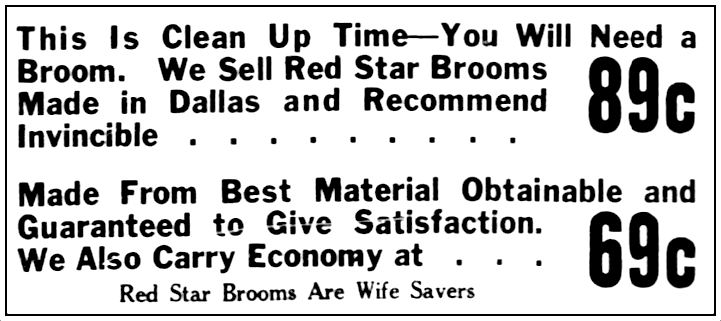
Thorburn’s marquee brand seems to have been the trademarked Red Star brooms (“Red Star brooms are Wife Savers”).
Piggly Wiggly ad, 1924
***
Sources & Notes
Top photo — titled “[Swiss Avenue at Central and the Houston and Texas Central Tracks]” — is attributed to George A. McAfee and is from the DeGolyer Library, SMU Libraries, Southern Methodist University; more information on this photo may be found here.
More info about the old Union Depot — which was one block south from the location seen in the photo above — can be found in these Flashback Dallas posts:
“The Old Union Depot in East Dallas: 1897-1935,” here
“The Union Depot Hotel Building, Deep Ellum — 1898-1968,” here
“The Gypsy Tea Room, Central Avenue, and The Darensbourg Brothers,” here

 “First-class style…”
 Dallas Morning News, Oct. 2, 1904



 1924
1924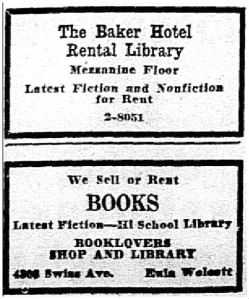 Two shops, one owner — 1926
 1927
1927 1937
1937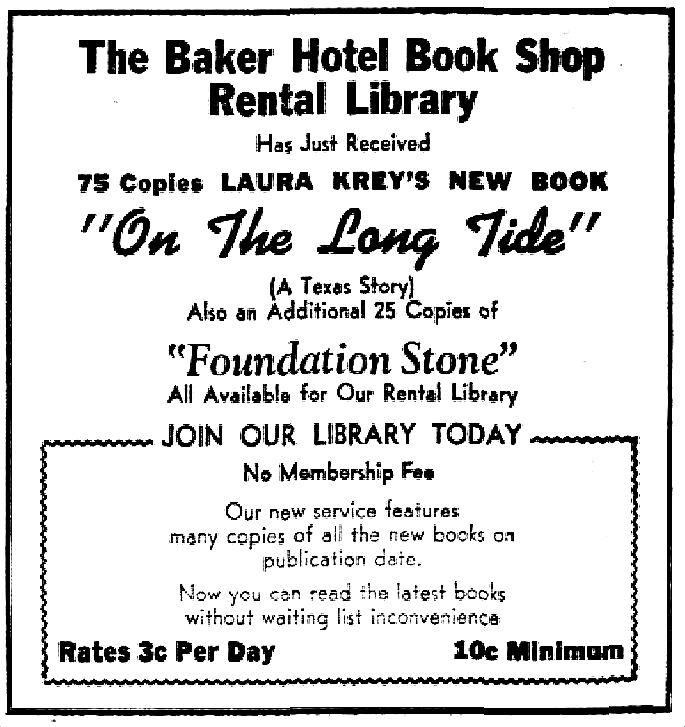










 Dallas Morning News, May 18, 1906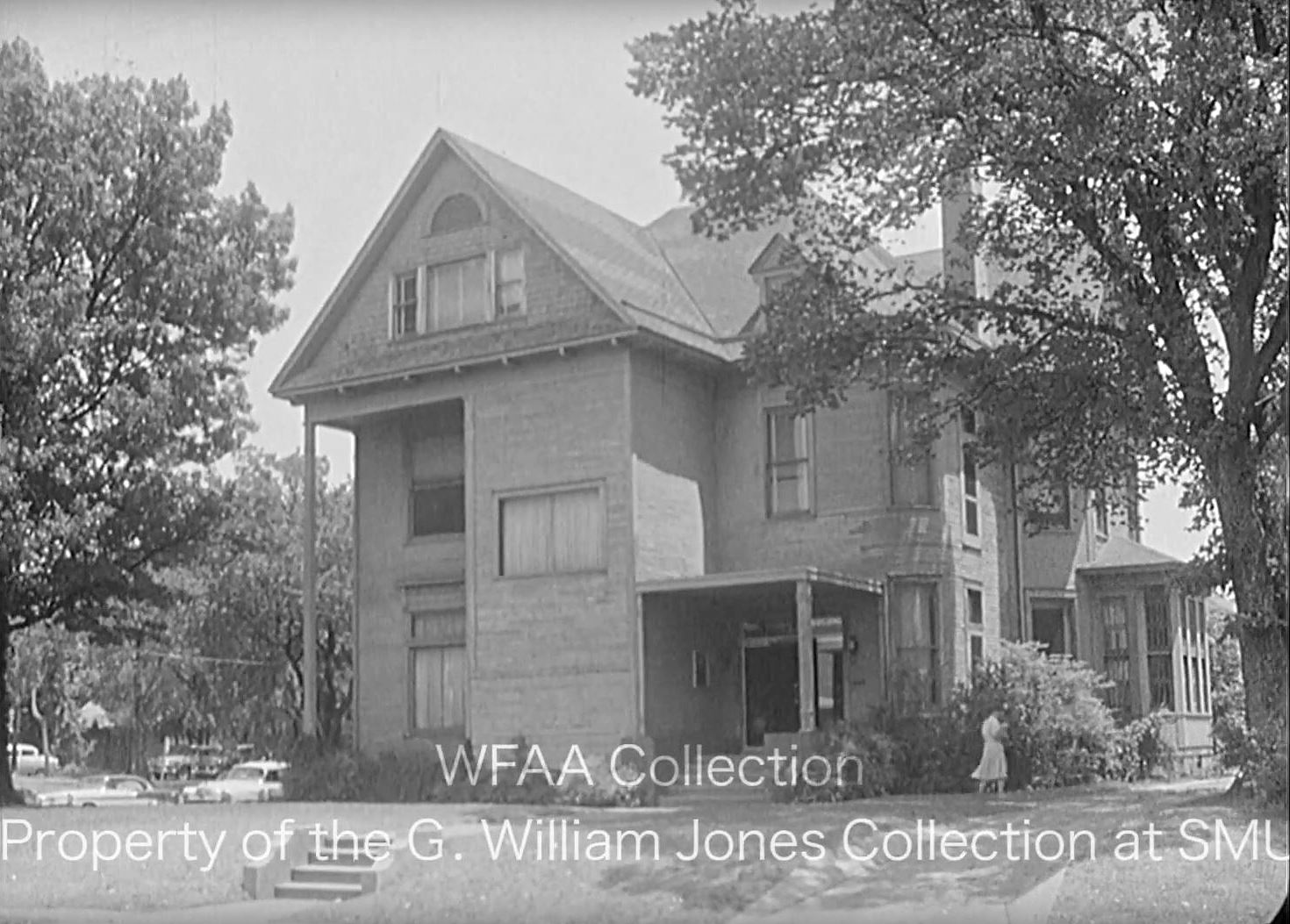









 Flashback : Dallas