Flashback : Dallas

A Miscellany: History, Ads, Pop Culture

Category: Clubs

The Elks Lodge, Pocahontas & Park

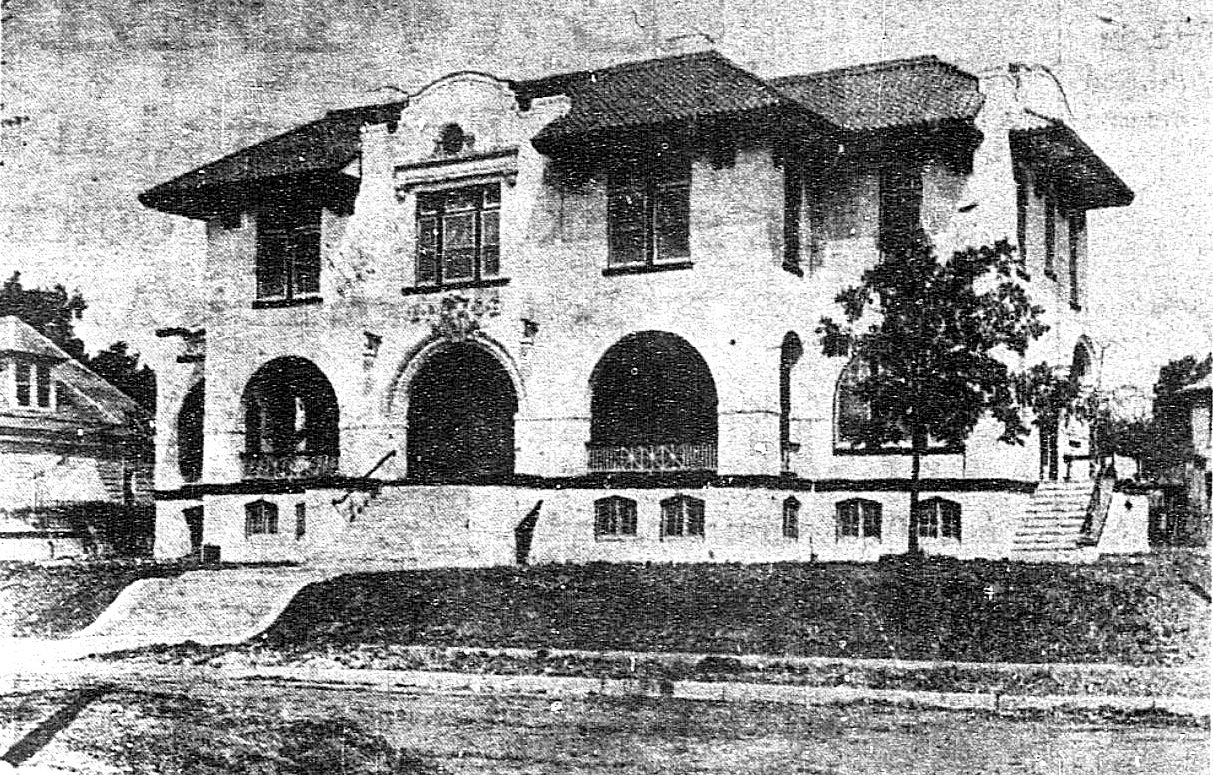
elks-lodge_postcard1817 Pocahontas Street, 1914 (click for larger image)

by Paula Bosse

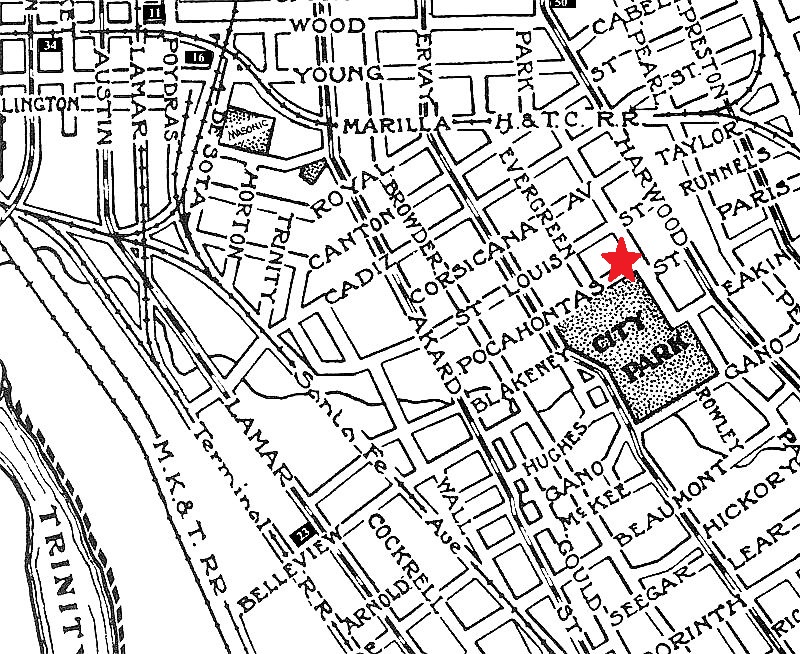
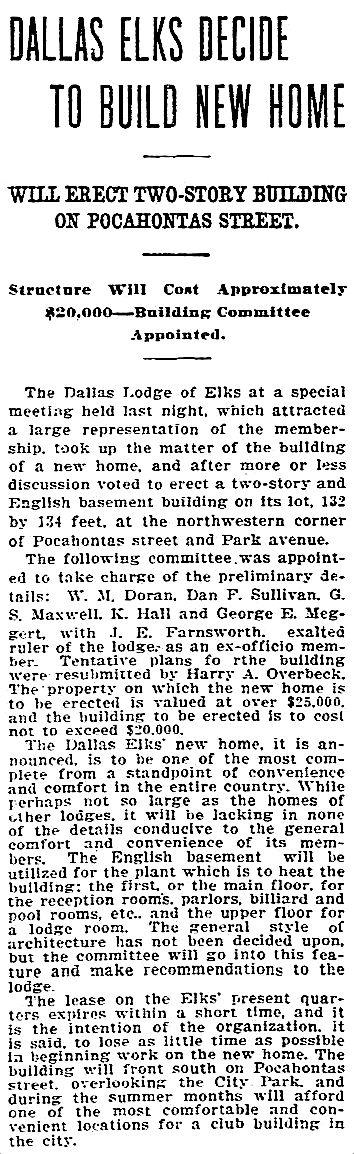
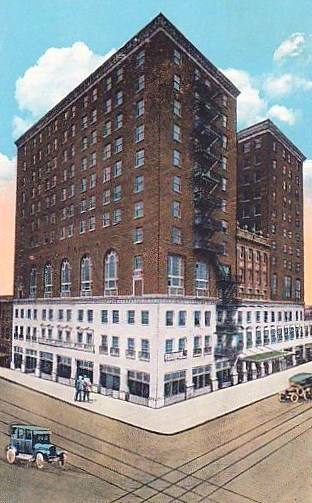
The postcard image above shows the lovely Dallas Elks Lodge No. 71 which once stood at 1817 Pocahontas, at the northwest corner of Pocahontas Street and Park Avenue in the Cedars area, just south of downtown — it had a spectacular view of City Park, which it faced.  Designed by architect H. A. Overbeck (the man behind the still-standing Dallas County Jail and Criminal Courts Building and the long-gone St. Paul’s Sanitarium), the lodge was built in 1914; the land and the construction of the lodge cost $45,000. Surprisingly, this lodge served the Elks for only six years — they returned downtown, where they took over and renovated the old YWCA building on Commerce Street.

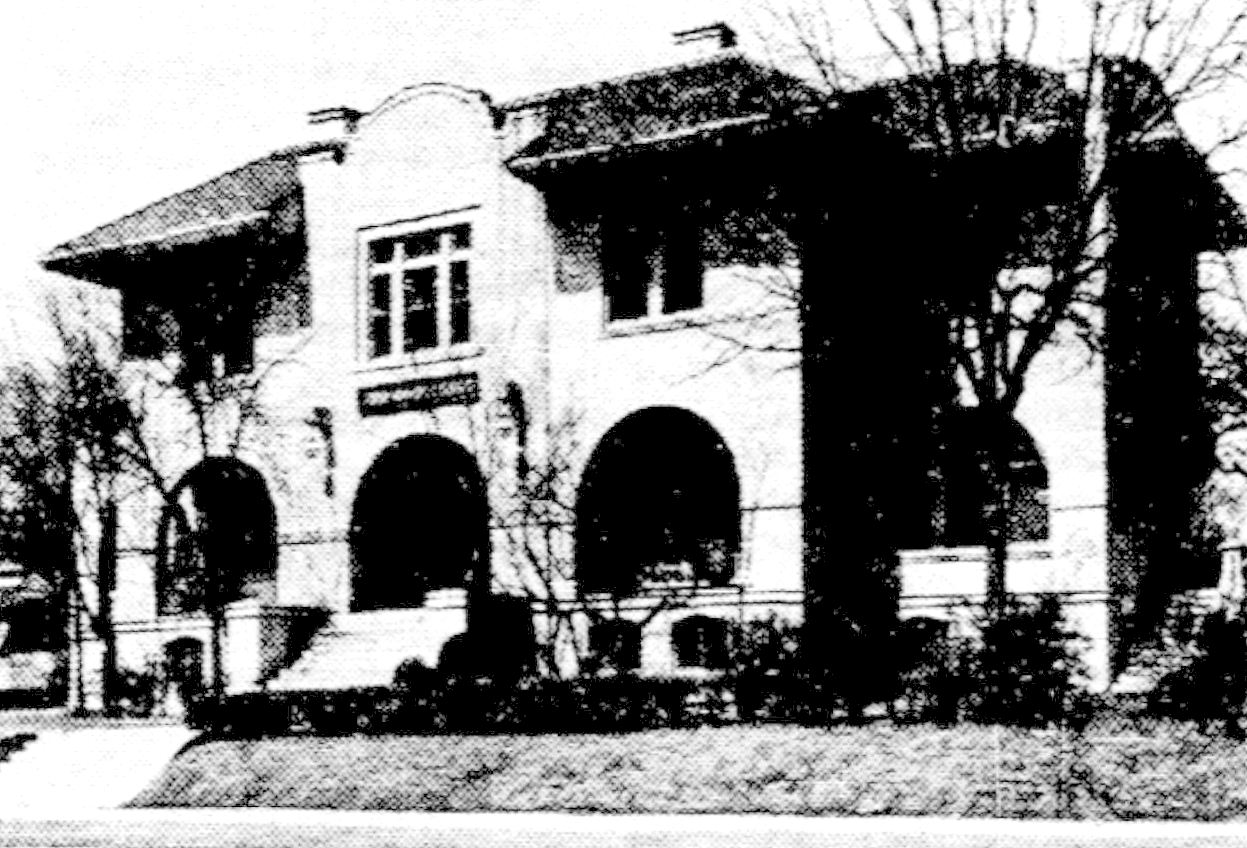
The building on Pocahontas became another clubhouse when it was purchased in 1920 by a group of Jewish businessmen who opened the exclusive Progress Club/Parkview Club (read about the building’s acquisition in a May 14, 1920 article in The Jewish Monitor, here); in 1922 the 65 members of the Parkview Club presented the clubhouse to the Young Men’s Hebrew Association (YMHA). In 1927, use of the building had expanded, and it became the Dallas Jewish Community Center and the headquarters of the Jewish Welfare Federation — in fact, this was the home for these organizations for more than thirty years, until 1958 when the move was made to the new Julius Schepps Community Center in North Dallas. The building ultimately fell victim to the construction of R. L. Thornton Freeway and was demolished in the early 1960s.

But back to the Elks. The Benevolent and Protective Order of Elks was a social club/fraternal order founded in New York in 1868. Dallas Lodge No. 71 was chartered on January 28, 1888 — it was the first Elks Lodge in Texas and one of the oldest clubs in Dallas. And, after 130 years, it’s still around, now located in Lake Highlands. There aren’t a lot of things that have lasted that long in this city!

*

Below, the Overbeck rendering of the Elks’ new home (click for larger image)

elks_dmn_120213_new-lodgeDallas Morning News, Dec. 2, 1913

*

A week before its official dedication on Sept. 7, 1914:

elks-lodge_dmn_083014DMN, Aug. 30, 1914

*

Colorized and made into an attractive postcard:

elks-club_new_postcard

*

In the 1930s, when it was the Jewish Community Center:

jewish-community-center_1817-pocahontas_1930s

*

Where it was:

elks-lodge_ca-1912-map_portal1912-ish map detail

Also, see it on the 1921 Sanborn map (as “B.P.O.E. Home”) here.

**

The announcement of plans for the construction of the Pocahontas Street lodge:

elks_dmn_112313_new-lodgeDMN, Nov. 23, 1913

And its dedication, on Sept. 7, 1914:

elks_dmn_090814_new-homeDMN, Sept. 8, 1914

***

Sources & Notes

Source of postcards unknown. Other images and clippings as noted.

The 1888 report of the first meeting of the Dallas Elks Lodge No. 71 can be read in the Dallas Morning News article “Order of Elks in Dallas; A Lodge Instituted Here Yesterday” (DMN, Jan. 29, 1888), here.

A history of the various Elks’ locations in Dallas between the 1880s and the 1920s can be found in the article “Elks Plan To Have Modern Club Home” (DMN, July 30, 1922), here.

elks_dmn_012903DMN, Jan. 29, 1903

*

Copyright © 2018 Paula Bosse. All Rights Reserved.

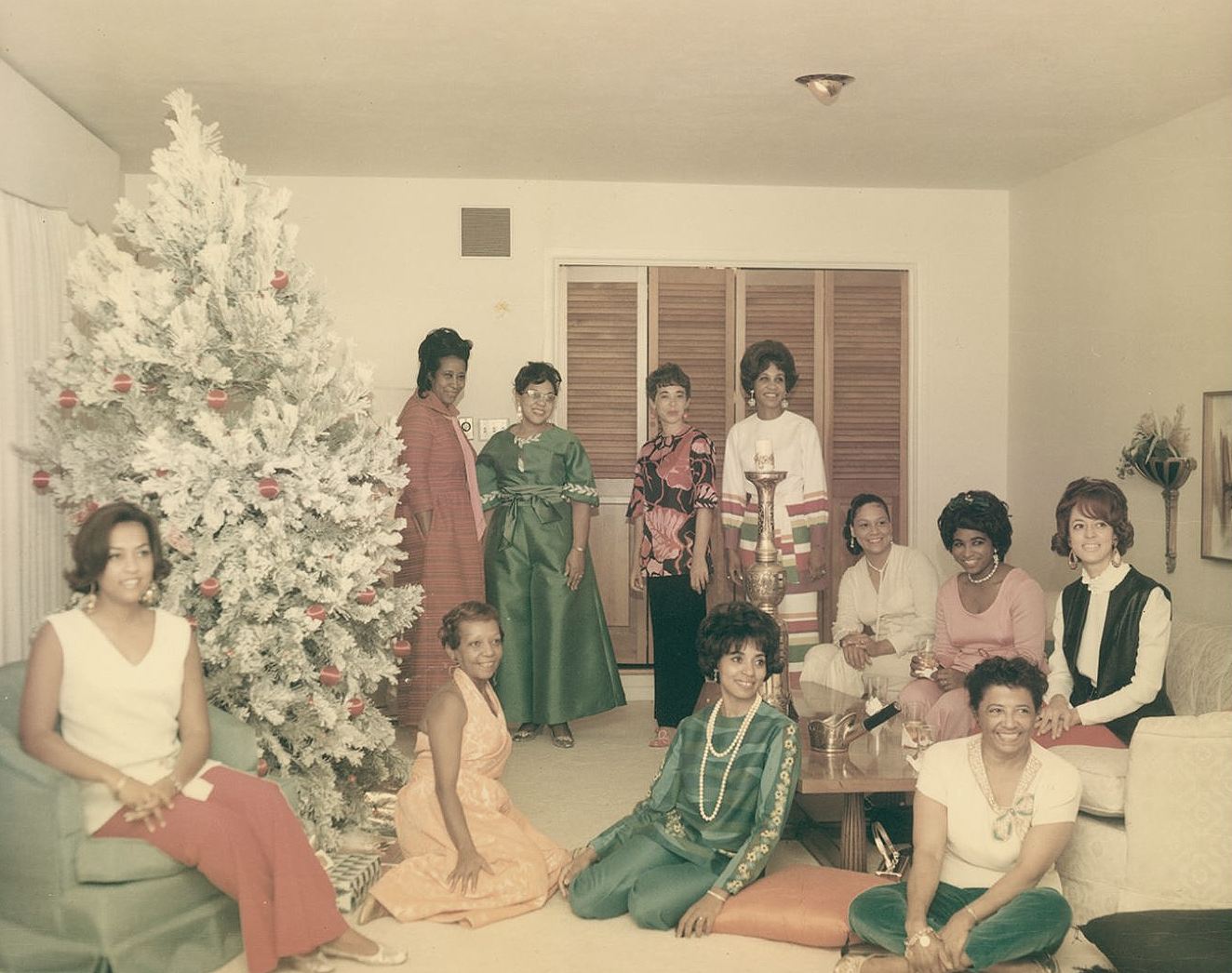
Merry Christmas from the Priscilla Art Club — 1968

xmas_priscilla-art-club_123168_uta“Say ‘fondue’!”

by Paula Bosse

These women look like they’ve stepped out of a catalog — perfectly dressed, perfectly coiffed, perfectly posed. They are members of the Priscilla Art Club, the oldest African-American women’s club in Dallas. The club was formed in 1911, and I think it may still be active — the most recent news I could find of the club was from 2012, when the “centennial legacy quilt,” made by members to celebrate the club’s 100th anniversary, was displayed at the African American Museum. Below, a little history of the club from the press release announcing the exhibit in February, 2012.

THE PRISCILLA ART CLUB CELEBRATES BLACK HISTORY MONTH

In honor of Black History Month, the Priscilla Art Club, the oldest African American women’s organization in Dallas County, will host a display of its centennial legacy quilt made by its members […] at the African American Museum of Life and Culture, Dallas Fair Park.

“The idea of a custom designed legacy quilt started out as a novel idea from our Systems Committee in recognition of our 100th anniversary. The twenty-two club members quickly became engaged in seeing it to fruition and we are happy to honor the beauty, the inspiration and the legacy of our Club” said Shirley Porter Ware, Club President.

The Priscilla Art Club, organized in 1911 as a club for young matrons, was organized under the encouragement and direction of Mrs. Mattie Mansfield Chalmers. The organization’s purposes were to establish and maintain the aesthetic, promote congenial companionship and foster all social and community interests that pertain to the general uplift. The Club was named for Priscilla, a New Testament woman of extraordinary culture and the wife of Aquila, a Jewish tentmaker.

Since its auspicious beginning, the Club has invited into its membership many of Dallas’ most distinguished homemakers. These members have exhibited an interest or are talented in arts and crafts.

Besides being homemakers and mothers, the members have been and some still are principals, school administrators, teachers, business owners, social workers, church leaders and servant volunteers in the local community.

Throughout the century of service and sisterhood, recorded in The Priscilla’s prolific history include mention of service rendered in support of the World War I efforts by rolling bandages that were sent overseas to the field hospitals in France. For several years, the Priscillas decorated the shotgun house, located in Old City Park, in observance of the holiday season. In more recent years, the members have decorated t-shirts and jackets made from sweat shirts to give to men and women in local assisted living facilities. Club members have made crocheted skull caps in a variety of vivid colors and patterns and donated to cancer patients actively engaged in treatment regimens.

Regardless of change, the Priscilla Art Club’s concern for its artistic endeavors and for civic and social uplift will continue with deepening interest and commitment as the tradition of the founders’ legacy is carried forward.

I hope the club is still around. This year marks its 105th anniversary.

***

Sources & Notes

Photo was taken on December 31, 1968; from the Culmer Family Papers, UTA Libraries, Special Collections, accessible here.

The 2012 press release was posted on the Facebook page of the Dallas Fort Worth Association of Black Journalists, here.

More on the history of the club can be found in the Dallas Morning News article “Reception to Honor Art Club’s 65th Year” by Julia Scott Reed (DMN, April 2, 1976).

The most in-depth history of the club that I could find online can be found in the guide to the Culmer Family Papers at UTA, here (scroll down to the paragraph that begins “The Priscilla Art Club was one of the most prestigious, if not elitist clubs for African American women in Dallas….

*

Copyright © 2016 Paula Bosse. All Rights Reserved.

Empire Central and Its Fabulous Empire Club

empire-central_1958_ebay_det“Northwest Dallas” in 1959 — how quaint… (click for larger image)

by Paula Bosse

“Empire Central.”

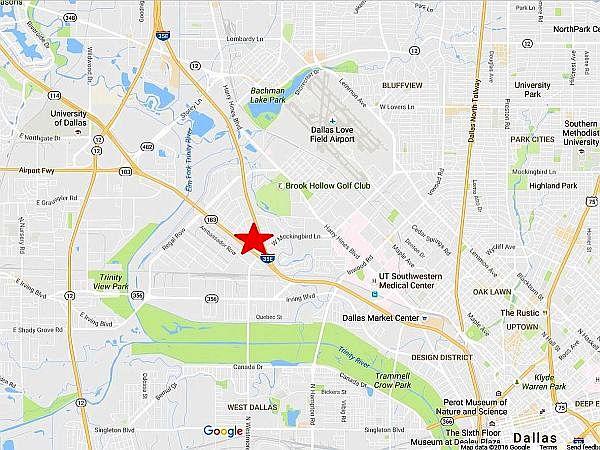
I have to admit that I’d never heard of anyplace in Dallas called Empire Central, but because I wanted to post the picture above (which I love) (and which is  from a 1959 ad), I felt I should at least look into finding out what and where it was and broaden my horizons a bit. So I did. It was (is?) an “office community” built in 1958 on 90 acres of land (later expanded), located in the “V” between Hwy. 77 (soon to be Stemmons Freeway) and Hwy. 183 (aka Empire Freeway, soon to be John W. Carpenter Freeway), with W. Mockingbird on the south and Dividend Drive on the north(-ish). It was developed as an office park as part of the already existing 1,200-acre Brook Hollow Industrial District (which, when its development began in 1953, was beyond the city limits) — both areas were developed by Windsor Properties. Empire Central was announced in 1957.

Unsurprisingly, almost every early newspaper story about plans for the new district mentioned what was considered to be its sexiest, most novel attraction: the Empire Club, an on-site dining and recreation club for employees — executives and underlings alike — who worked in the “community’s” office buildings. It was a round, 45,000-square-foot structure that sat on 9 acres and featured a distinctive roof which utilized 24 tamarack logs “more than 100 feet long, imported here especially for the club from the virgin forests of Washington” (DMN, Nov. 24, 1957). Its amenities included a sunken garden, a terraced dining room, lounge, swimming pool, putting green, and shuffleboard court, all nestled in a “garden-like atmosphere.” What a great perk!

The club was important in the conceptualization of the office park, as the developers insisted that a happy employee was a productive employee, as can be seen in the text from a 1959 advertisement which ran the week the club opened:

Two fundamental concepts were taken into consideration by Windsor Properties, Inc., in designing Empire Central.

First was the realization that the company able to attract the most capable employees at a given wage would be most successful. Second, the urbanization of our population has created the need for a measure of community life.

The Empire Club, as the heart of Empire Central, is designed to accomplish both objectives for management.

And that club looked cool. It was a cutting-edge design from the always impressive George Dahl, one of Dallas’ top architects. (Dahl worked on several other projects with W. C. Windsor — Sr. and Jr. — including a prison (?!) and several other buildings in the Empire Central District.) Dahl’s previous big round building — Memorial Auditorium/Dallas Convention Center — had opened in 1957, just months before construction began on this unusual and sophisticated clubhouse, something one would certainly not expect to find plonked down in the middle of such prosaic surroundings.

empire-central_dmn_101859_empire-club_det

empire-central_dmn_101859_empire-club_pool_det

empire-central_dmn_101859_map_det

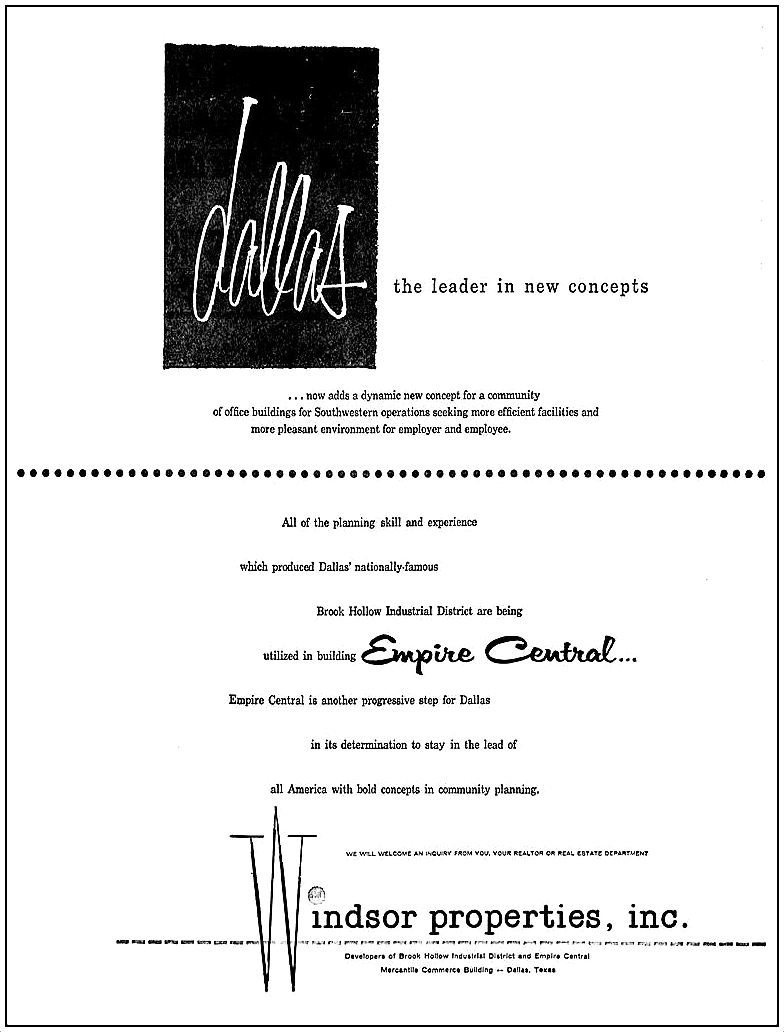
Below, the full ad, which appeared the week the new Empire Club opened in October, 1959 (click to see larger image):

empire-central_dmn_101859_empire-club
Oct., 1959

At some point (or maybe always) the club began to be used by outside groups. In the ’60s, it was the site of a lot of Junior League and debutante activities and dances. In 1966 the Empire Club became The Round House restaurant (in which could be found the Fatted Calf club). The last listing I could find of a restaurant or club at that address (which was, originally, 100 Empire Central Drive and, later, 1100 Empire Central Place) was in 1971. Sadly, that cool-looking building was torn down somewhere along the way. What a shame! I just discover a George Dahl-designed building I’d never seen — in a part of town I’d never heard of — and *poof*! … it’s gone. …At least I didn’t have time to get too attached.

**

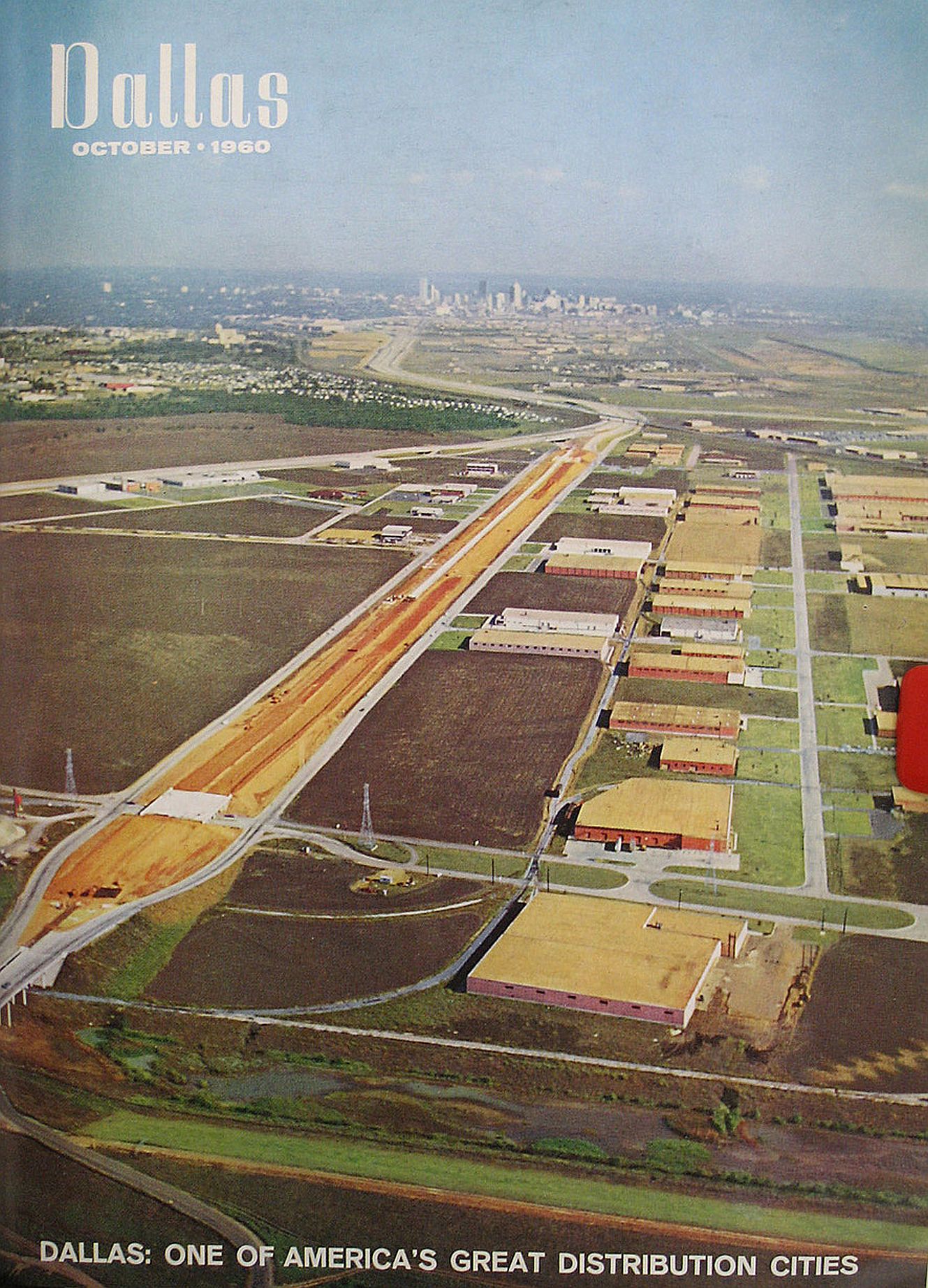
Here’s a great photo from 1960 (click it — it’s really big) looking southeast toward downtown from about Regal Row (bridge in foreground), with the new and improved Carpenter Freeway/Hwy. 183 in the center, and Stemmons — coming in from the left — meeting it in the distance; the Mockingbird bridge is just beyond it, just above the point. The Empire Central district — in between Stemmons and Carpenter — looks kind of puny here. You  might have to squint, but you can see the brown, round Empire Club building in the center of the triangle. If you listen closely, you might be able to hear a Southwestern Drug Company secretary splashing happily in the heated pool.

empire-central_183-construction_1960_dallas-freeways-site

*

empire-central_1958_ebay
1958 ad

empire-central_dmn_011958_ad
Jan., 1958

empire-central_google
Google Maps

***

Sources & Notes

Top image is from a full-page magazine ad from 1958, found on eBay.

The 1960 photo appeared on the cover of Dallas magazine (October, 1960); I found it on the unbelievably thorough Dallas-Fort Worth Freeways site (main page is here, this photo is linked from here).

This area — what is it called? The consensus seems to be “Brook Hollow.” Or maybe “Stemmons Corridor” (the Wikipedia entry for the latter is here).

The Flashback Dallas post on the area’s 1920s-era namesake golf club — “Brook Hollow Country Club — 1940s” — is here.

(Thank you, Dallas History Facebook group for the helpful tidbits!)

Think it should be bigger? Click it!

*

Copyright © 2016 Paula Bosse. All Rights Reserved.


The Dallas Chapter of “The Women of the Ku Klux Klan” — 1920s

kkk-women_1920s_cook-degolyer

by Paula Bosse

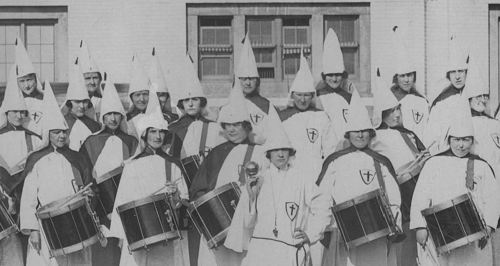
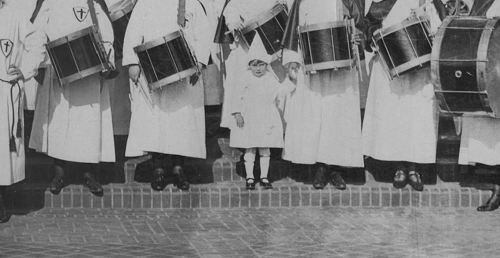
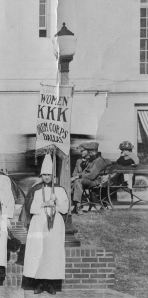
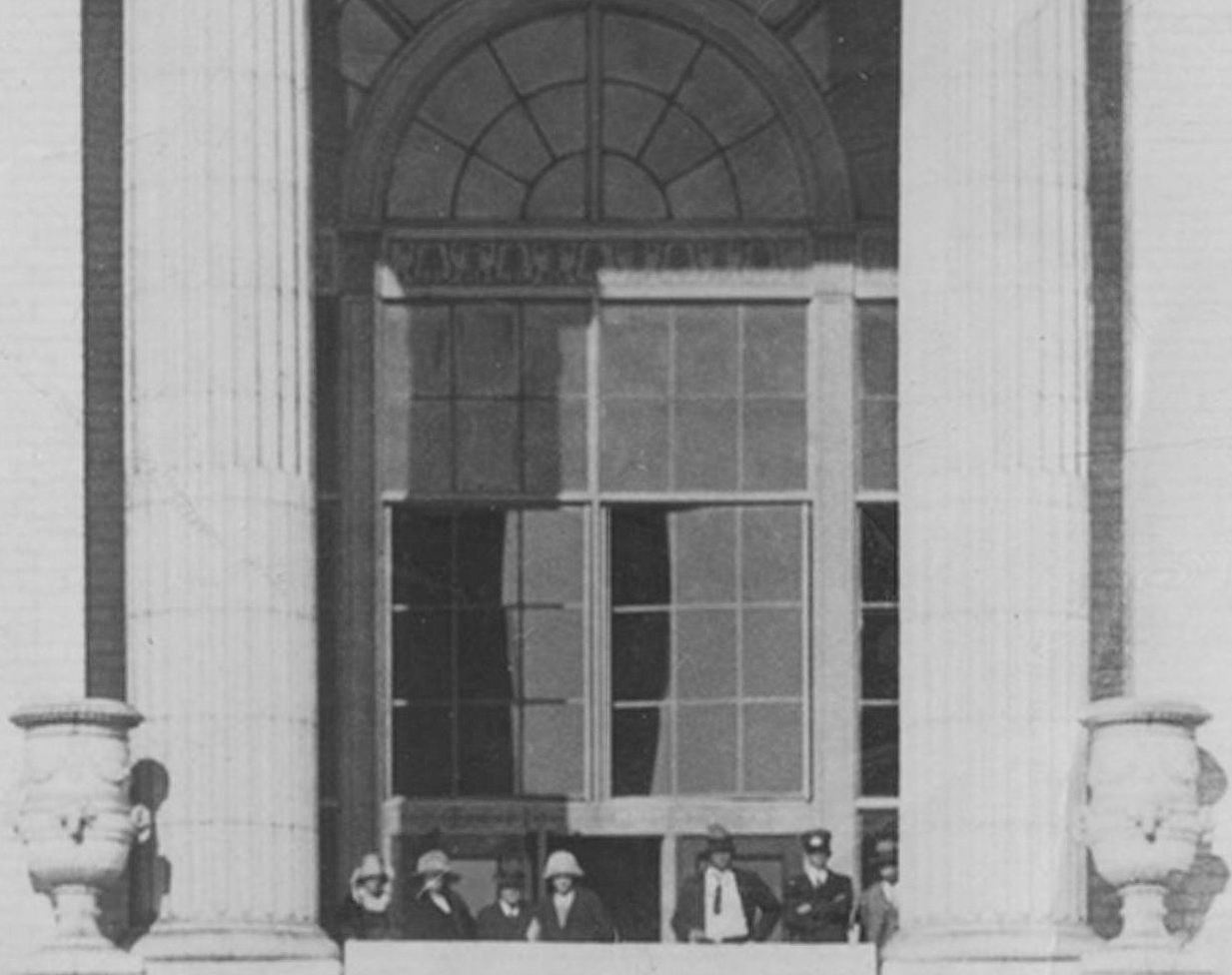
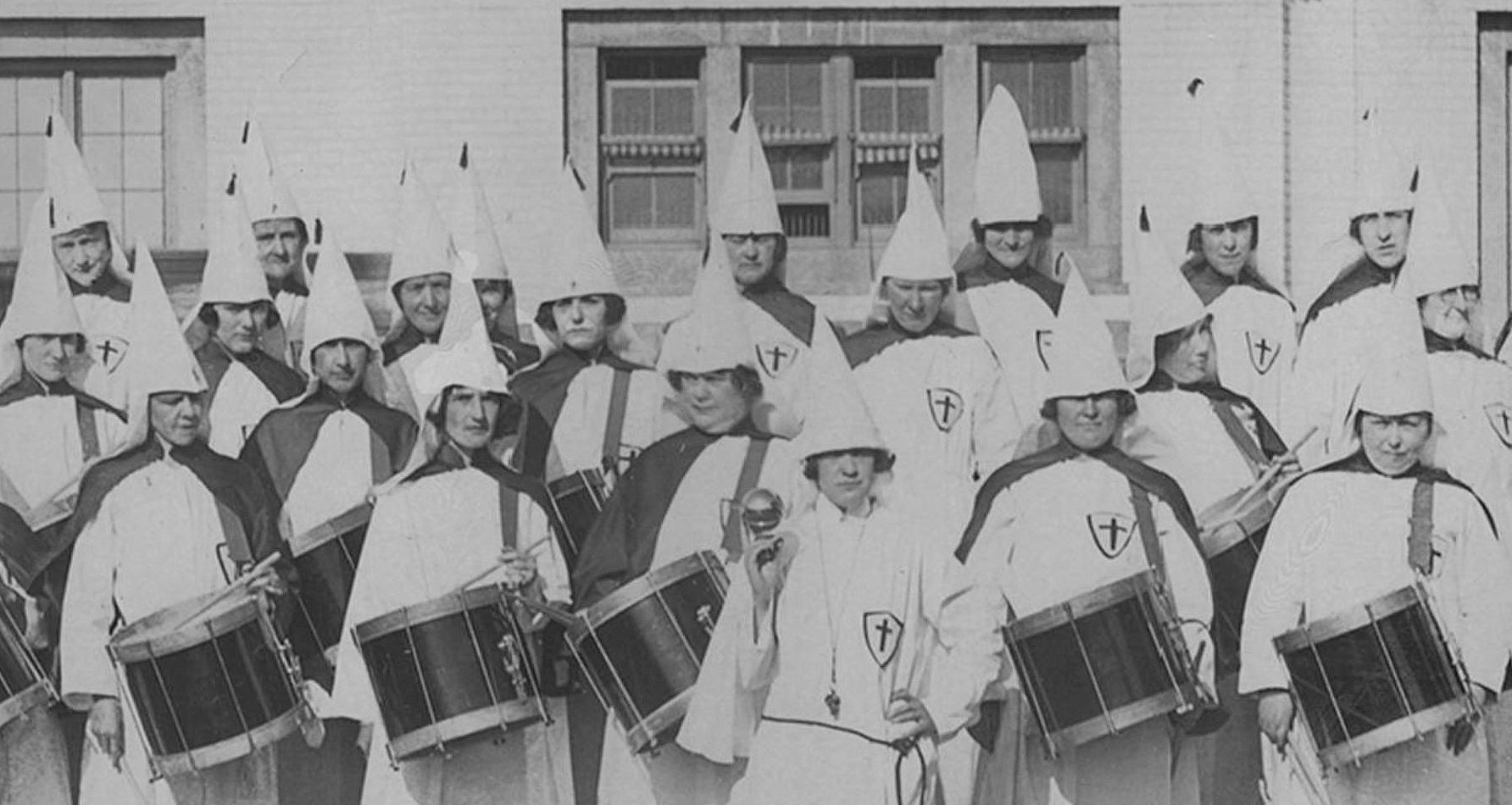
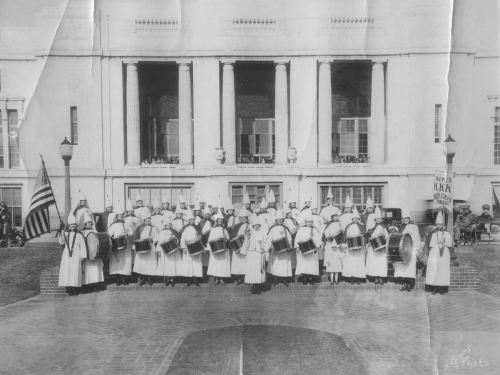
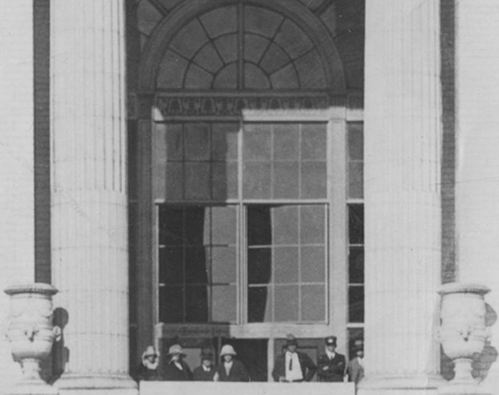
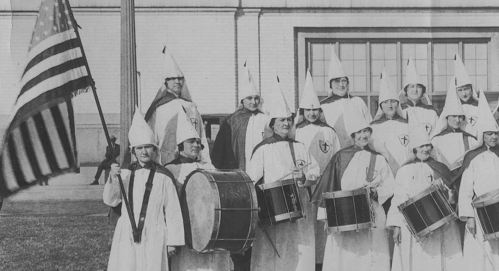
I’ve managed to avoid mention of the Ku Klux Klan since starting this blog a couple of years ago, which is saying something, because the KKK pretty much ruled this city for a good chunk of the 1920s. The Dallas chapter — Klan No. 66 — had more than 13,000 men as members; it was one of the largest chapters in the nation (by some accounts, THE largest chapter). Members included politicians, judges, and law enforcement officials. But what of the Klan-leaning ladies who were not allowed to join? Before I plunge into that, let’s look at what’s going on in this weird, be-robed group shot, a photo taken around 1924 in Ferris Plaza with poor Union Station as a backdrop. (Click these for much larger images.)
wkkk_det1

wkkk_det2

wkkk_det3

wkkk_det4

wkkk_det5

**

In the early 1920s, women — who had led the temperance movement and whom had recently been given the right to vote — began to form groups that tackled social issues. Some of these groups espoused the same general rhetoric as the KKK. One of these groups was formed in Dallas in 1922 — the “American Women” group was the brainchild of three women, including Alma B. Cloud, who appears to have been only 21 years old. One of the other founders was her partner in a short-lived ladies’ clothing boutique. Cloud immediately hit the lecture circuit, giving free lectures on “Americanism” to (white Protestant) women around Texas.
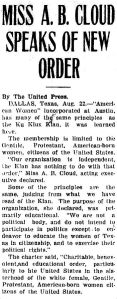
cloud_taylor-tx-daily-press-08222Taylor Daily Press, Aug. 22, 1922

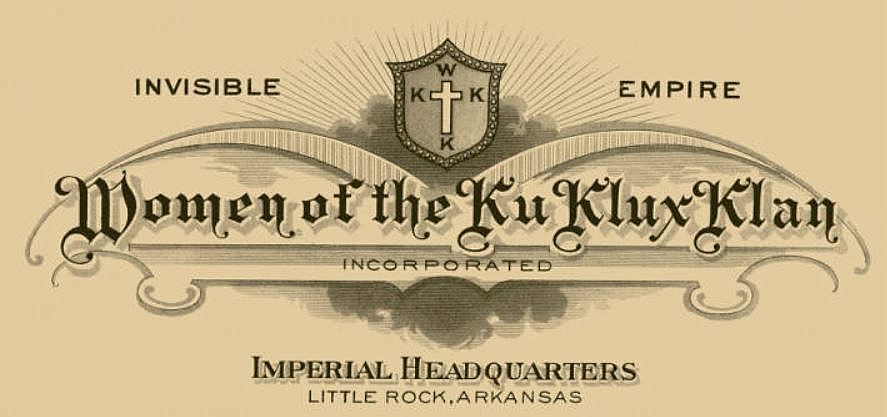
By the following summer, the male leadership of the Klan allowed a “Women of the Ku Klux Klan” to be created; its national headquarters was in Little Rock.
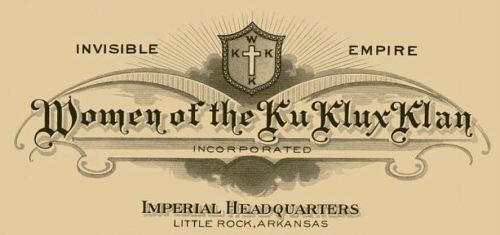
wkkk_letterhead_olemiss

They were not officially part of the KKK but were, in theory, a separate entity. While not, perhaps, as outwardly extreme as their male counterparts, they were certainly as virulently racist and intolerant. They might not have been lynching people and threatening violence, but they were busy pushing their exclusionary, white supremacy agenda. And both the men and the women liked to dress up in white robes and hoods. Here’s what the women looked like when they added masks to the ensemble (not Dallas — location of photo unknown).
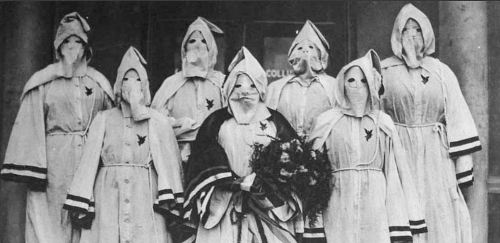
wkkk

Several of the independent women’s groups founded previously were happily absorbed by the WKKK — including Miss A. B. Cloud’s group. In fact, Miss Cloud became the leader of the Dallas chapter. The “Klaliff.” The headquarters for this group — which campaigned for “progressive morality”– was in a little space on North Harwood.

WKKK_1924-directory1924 Dallas directory

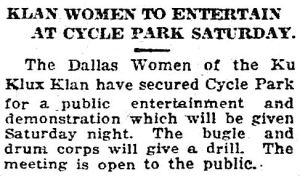
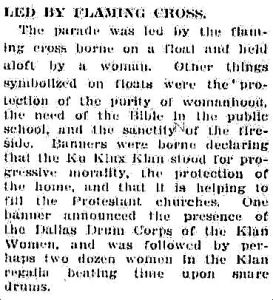
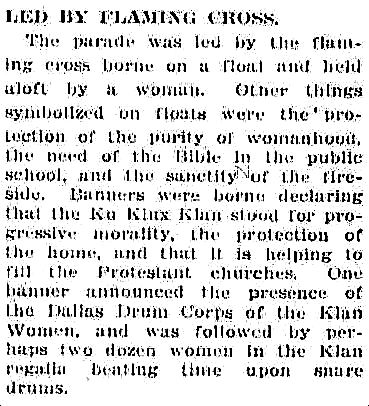
1924 seems to have been the big year for both the KKK and the WKKK. The women found themselves at lots of parades with burning crosses and other … “functions” — so why not form a drum corps? A few clippings. (Click for larger images.)
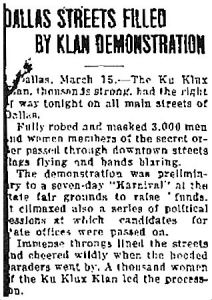
kkk-women_amarillo-globe-times_031624Amarillo Globe-Times, March 16, 1924

klan-women_dmn_073124Dallas News, July 31, 1924

kkk-women_mckinney-courier-gazette_111224McKinney Courier-Gazette, Nov. 12,1924

By 1926, the KKK was starting to lose its power, and the fear and intimidation they had instilled in much of the public began to wane. The (men’s) KKK had had to downsize and move into the women’s headquarters, and their candidates began losing elections. Even worse, you know things were getting bad if someone was suing the KKK for delinquent robe-payment!

KU KLUX KLAN WOMEN SUED FOR ROBES BILL: Suit for $4,463.80 was filed in the Forty-Fourth District Court on Friday afternoon by John F. Pruitt against the Women of the Ku Klux Klan, Inc. The petition alleges that the plaintiff sold the defendant, a corporation, 6,000 robes at $2.50 each during the two years preceding the filing of the suit, for which the defendant agreed to pay $15,000 to the plaintiff. It is alleged that $4,463.80 remains unpaid. (DMN, Nov. 28, 1925)

The power once exerted by the Ku Klux Klan had diminished greatly by the end of the 1920s, and while the Klan has never disappeared completely, it will never again reach the heights it had attained in the 1920s.

Whatever happened to Miss A. B. Cloud? After having been ousted from her “imperial” position (for reasons I don’t really care enough about to investigate), she had a few sales jobs and eventually began to present motivational sales talks. There was an Alma B. Cloud in California who was mentioned in several news stories from the 1930s — she presented motivational lectures to students on how best to plan their future adult lives. Um, yes. I’m not 100% sure this was the same A. B. Cloud who was the former WKKK gal from Big D, but it seems likely. I wonder what those students would have thought had they known of her pointy-hooded past?

***

Sources & Notes

Links-a-plenty.

Top photo is titled “Ku Klux Klan Women’s Drum Corps Dallas in Front of Union Station,” taken by Frank Rogers; it is from the George W. Cook Dallas/Texas Image Collection, DeGolyer Library, Central University Libraries, Southern Methodist University — it can be accessed here. I have manipulated the color.

Women of the Ku Klux Klan letterhead comes from the Women of the Ku Klux Klan Collection, Archives and Special Collections, University of Mississippi Libraries; the collection can be accessed here.

The photo of the masked WKKK women is all over the internet — I don’t know its original source or any details behind it, but it’s creepy.

“Women of the Ku Klux Klan” on Wikipedia, is here.

“Women of the Klan: Racism and Gender in the 1920s” by Kathleen M. Blee, is here.

“Charity by Day, Punishment by Night: The Ku Klux Klan in Fort Worth” — from the great FW history blog Hometown by Handlebar — is here.

And, probably best of all, the Dallas Morning News article “At Its Peak, Ku Klux Klan Gripped Dallas,” by the wonderful and much-missed Bryan Woolley, can be read here. This article contains facts and figures, describes the sort of “madness of crowds” atmosphere in the city at the time, and details some of the horrible atrocities committed by the KKK in Dallas. Woolley cites historian Darwin Payne’s assertion that if one considered every adult man in Dallas who would have been eligible to have joined the Klan (this excludes, of course, those of African-American, Hispanic, Asian, Catholic, or Jewish descent), one in three of them was a member of the Dallas chapter of the Ku Klux Klan. ONE IN THREE.

A few short mentions of the Dallas WKKK have been compiled here.

UPDATE: For a look at racism in modern Dallas, watch the half-hour film “Hate Mail,” made in 1992 by Mark Birnbaum and Bart Weiss, here. It includes interviews with several prominent Dallasites, as well as interviews with a couple of Klan leaders.

Click pictures and clippings to see larger images.

*

Copyright © 2016 Paula Bosse. All Rights Reserved.

HR Meeting at the Carousel Club

ruby-girls_carousel-club“Where do you see yourself in five years?”

by Paula Bosse

Jack and the girls. …Before.

***

Sources & Notes

I think this is the Carousel Club. It might not be. The source of this photo is a bad, bad, bad, spammy site with loud commercials. They get no credit from me. “No soup for you!”

*

Copyright © 2015 Paula Bosse. All Rights Reserved.

The Idle Wild Social Club: Life Magazine Presents Black Debutantes — 1937

debs_life_120637-detThree of 1937’s debs (click for larger image and caption)

by Paula Bosse

In December of 1937, something appeared in a national mainstream magazine that had probably never appeared before: photographs of a society ball celebrating African-American debutantes. In the December 6, 1937 issue of Life magazine — in the recurring “Life Goes To a Party” pictorial feature — four pages were devoted to coverage of the annual Idle Wild Social Club ball (later Idlewild Social Club, and later Cotillion Idlewild Club — none of which is to be confused with Dallas’ 130-plus-year-old super-exclusive, white Idlewild Club). The letters this unusual pictorial elicited were either congratulatory or, dismayingly, shocked and irate. Although today these photos are nothing unusual, in 1937, to see African-Americans depicted in a magazine such as Life as just normal, everyday Americans, was exceedingly uncommon. To see photos of black high-society must have made people’s heads explode. So kudos to Life for running the only slightly patronizing story and for publishing some wonderful photographs.

life_debs_120637_aLife magazine, Dec. 6, 1937

*

The Idle Wild Social Club was started in Dallas around 1918 by a group of socially well-placed black men — perhaps as a response to the white Idlewild Club. By the early 1920s they, like the white club, were presenting the cream of the crop of their young women to society in debutante balls. The ball covered by Life took place on November 18, 1937. The women making their debuts were:

  • Eddy Mae Johnson
  • Glodine Marion Smith
  • Lorene Marjorie Brown
  • Gladys Lee Carr
  • Gladys Lewis Powell
  • Hattie Ruth Green

life_debs_120637The debs and their escorts (Life, Dec. 6, 1927)

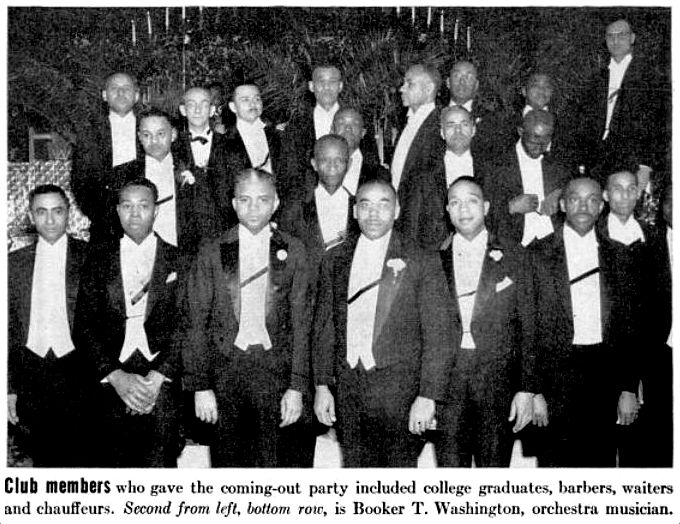
life_debs_120637-club-membersClub members (Life, Dec. 6, 1927)

life_debs_120637-crowd“Social chitchatterers” (Life, Dec. 6, 1927)
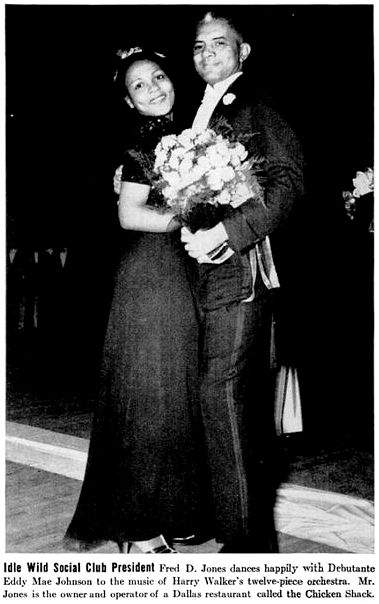
life_debs_120637-couple(Life, Dec. 6, 1927)

Read the article and see additional photos featured in this pictorial here.

There was an outcry in response to the article, and some of it was shockingly ugly — read the letters to the editor about the “Negro Ball” that Life published in the next issue, here (use the magnification tool at the top of the page to increase the size of the text).

Here is the more progressive response, from the Jan. 1938 issue of the NAACP’s magazine, The Crisis:

the-crisis-mag_jan-1938

Progress moves at a snail’s pace, but if coverage of a debutante ball can help to move things forward even a step or two … great!

***

All photos from Life magazine, Dec. 6, 1937; the scanned article (and, in fact, the entire scanned issue) is here.

The January, 1938 issue of The Crisis is available online; the page featuring the editorial is here. (This issue also has an interesting article, “Free Negroes In Old Texas” by J. H. Harmon, Jr., here.) The Crisis Wikipedia page is here.

To read coverage of earlier Idle Wild Social Club balls — published in the black-owned Dallas Express — see this from 1922, and this from 1923.

The African-American debutante ball has been called Cotillion Idlewild for many years now; information on their 2014 ball is here. (Again, this is not to be confused with the (white) Idlewild Club, which has been throwing heart-stoppingly elaborate balls in Dallas since the 1880s.)

Apparently there is a history of the club out there — Idle Wild Social Club History (1940) — and, according to WorldCat, appears to be available at nearby libraries.

Personally, I don’t really “get” debutante balls, but growing up in Dallas, I know that they’ve always been big, big, BIG deals. A. C. Greene’s snarky article “Social Climber’s Handbook” (D Magazine, October, 1976), is both amusing and informative; read it here.

*

Copyright © 2015 Paula Bosse. All Rights Reserved.


The Dallas Athletic Club Building, 1925-1981

dallas-athletic-clubThe Dallas Athletic Club, 1920s

by Paula Bosse

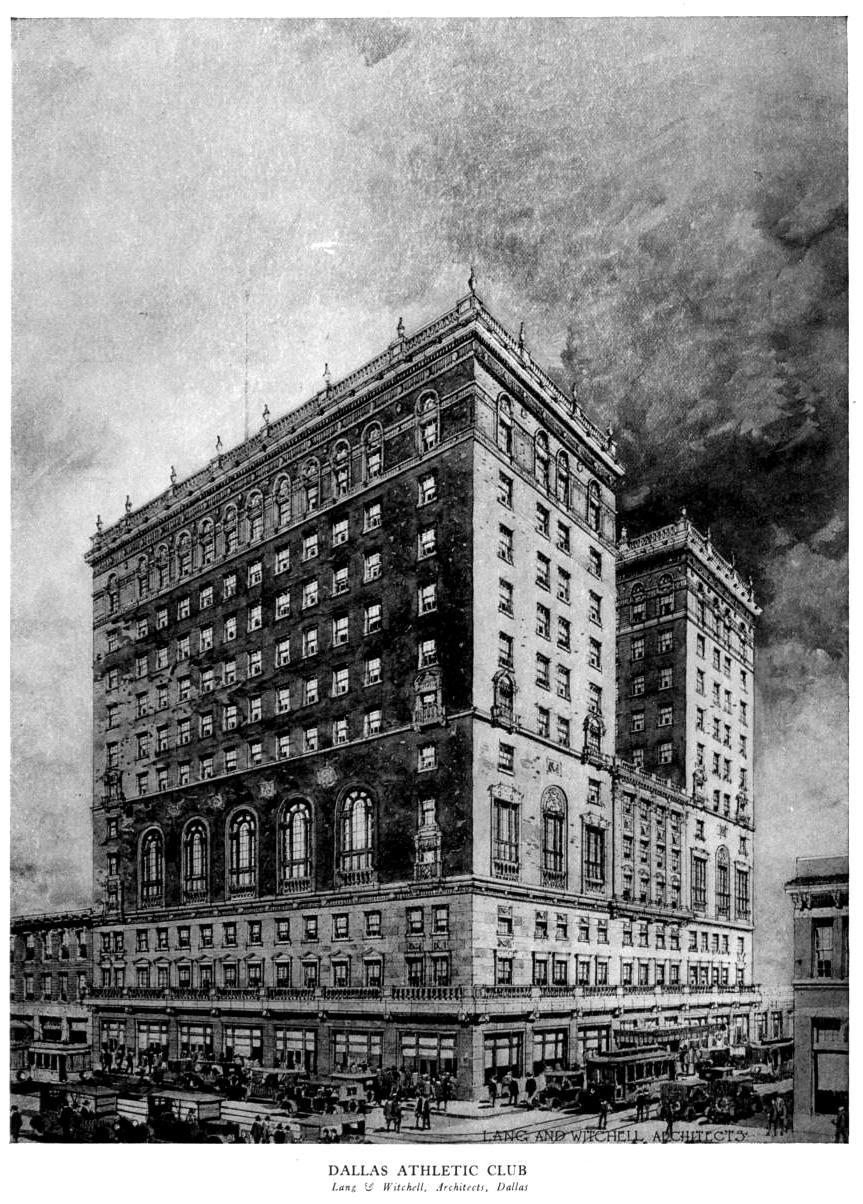
Dallas’s premier architects Lang & Witchell designed the Dallas Athletic Club building. It was built between 1923 and 1925 on a triangular piece of land located at St. Paul, Elm, and Live Oak, its entrance facing St. Paul. It was one of the city’s top private clubs, catering to Dallas’ businessmen. Aside from sports and recreational facilities — swimming pools (for men and women), gymnasiums, games courts, billiard rooms, etc. — the club also offered meeting rooms, a dining room, a ballroom, and lounges. It also offered use of hotel-like “rooms” to members and their guests. (If it was anything like old movies from this period, I assume it was a handy place to stay if a DAC member was in the doghouse with his wife — or in the midst of divorce proceedings. “If the VP from the home-office calls, Miss Klondike, I can be reached at my room at the club.”) The building also housed a variety of non-DAC-related businesses and offices — my great aunt had a hat shop there in the late 1930s and early 1940s.

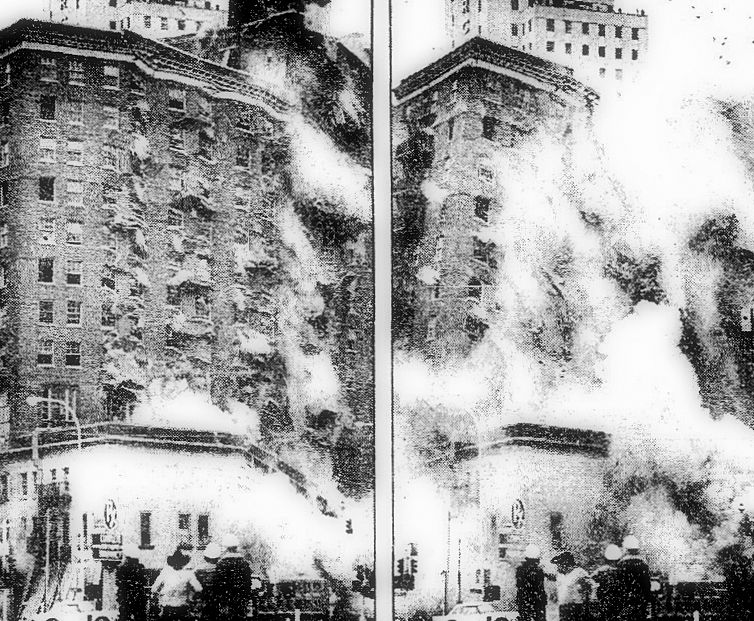
The Athletic Club was a major social and recreational spot for years and was something of a landmark in the east end of downtown. In the 1950s the membership opened a country club and golf course near Mesquite but kept the downtown facility open as well. But with suburbia’s surge and downtown’s decline, it was only a matter of time until the club closed the downtown facility. The DAC finally sold the building in 1978, and it was demolished in 1981 to make way for the 50-story 1700 Pacific tower. It had a good run.

*

Before construction began, an artesian well was dug on the property.

dac_artesian-well_dmn_031722DMN, March 17, 1922

When it was finished five months later, “water sufficient to produce 300,000 gallons of water every twenty-four hours was reached” (Dallas Morning News, Aug. 20, 1922).

*

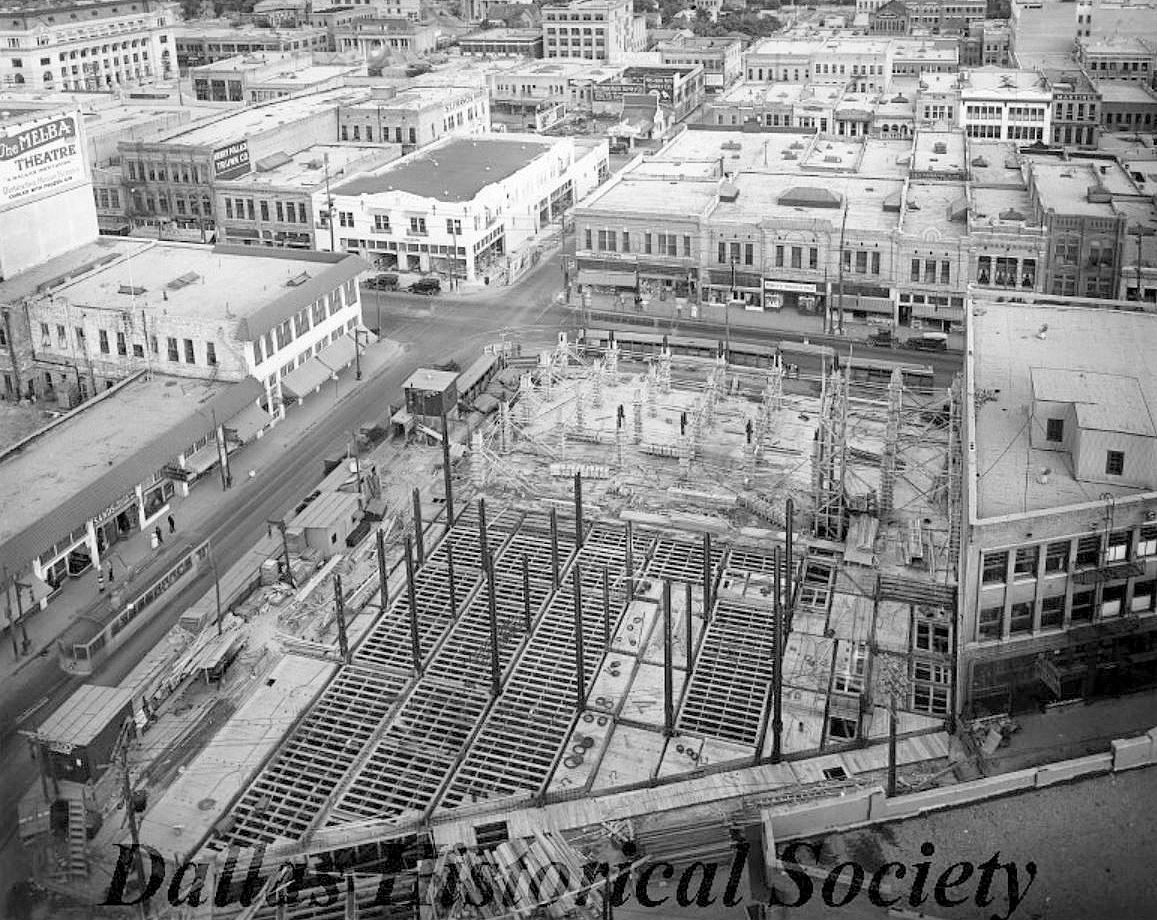
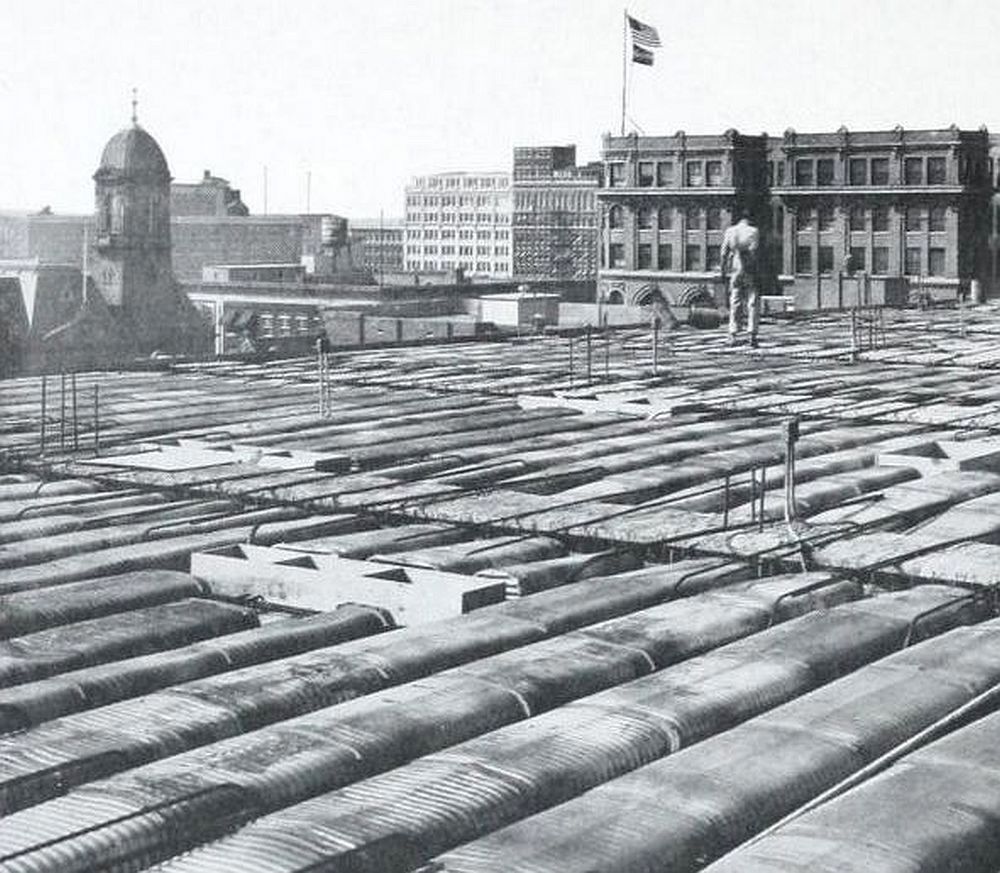
Photo by Charles Erwin Arnold showing construction in progress:

dallas-athletic-club_construction_DHSvia Dallas Historical Society

*

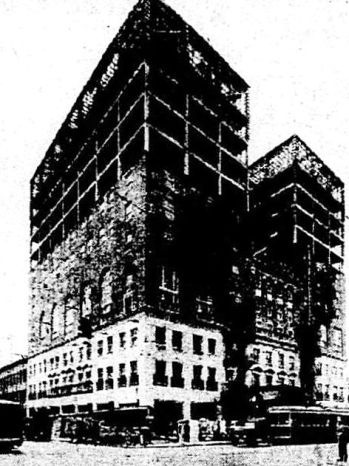
dac_construction_dmn_112523

The progress made to date on the new home of the Dallas Athletic Club Building, which is under construction. […] The picture was snapped from an upper floor of the Medical Arts Building. […] The facing for the three lower floors is of gray Bedford stone. The exterior walls for the upper floors will be of dark red brick. The large openings extending from the fourth to sixth floors will contain the massive windows over the men’s swimming pool. The men’s gymnasium will be on the south side of the fourth floor. When completed, the building will cost approximately $2,000,000, and it will be the most modern athletic club in the United State, according to club officials. (DMN, Nov. 25, 1923)

*

dac_berloy-ad_1924_cropAd for “Berloy Floor Cores” from 1924. Great photo!

*

dac_construction_dmn_111624

Work is nearing completion on the concrete framing for the five upper floors of the thirteen-story Dallas Athletic Club building at Elm and St. Paul street, and bricklaying will be started probably this week. The five upper floors will be used for office purposes, with the club quarters on the eight lower floors, except for some storerooms facing the two streets. (DMN, Nov. 16, 1924)

*

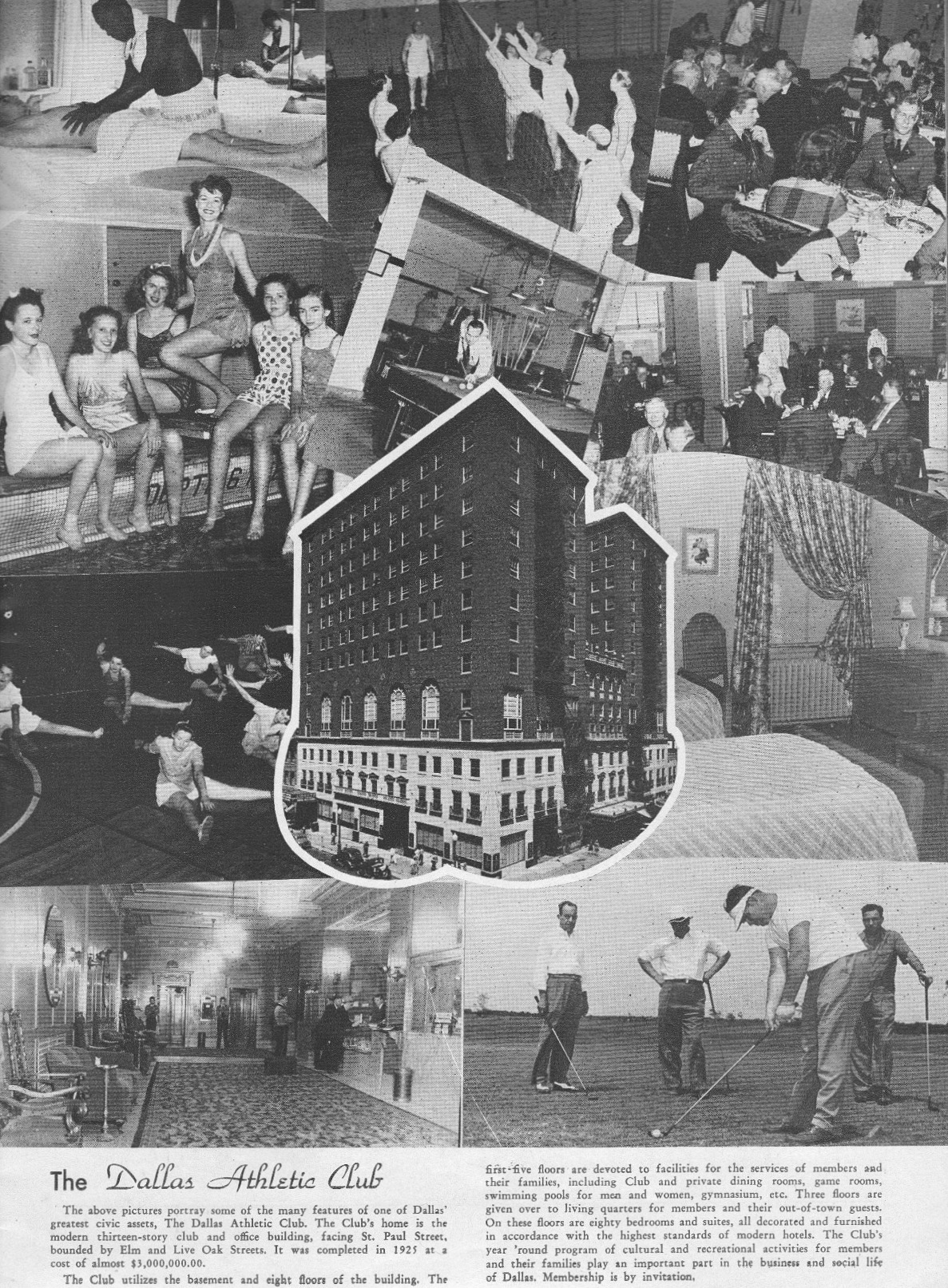
dallas-athletic-club_so-this-is-dallas_c1946_sm1946-ish (click for much larger image)

The above pictures portray some of the many features of one of Dallas’ greatest civic assets, the Dallas Athletic Club. The club’s home is the modern thirteen-story club and office building, facing St. Paul Street, bounded by Elm and Live Oak streets. It was completed in 1925 at a cost of almost $3,000,000.

The Club utilizes the basement and eight floors of the building. The first five floors are devoted to facilities for the services of members and their families, including clubs and private dining rooms, game rooms, swimming pools for men and women, gymnasium, etc. Three floors are given over to living quarters for members and their out-of-town guests. On these floors are eighty bedrooms and suites, all decorated and furnished in accordance with the highest standards of modern hotels. The Club’s year ’round program of cultural and recreational activities for members and their families play an important part in the business and social life of Dallas. Membership is by invitation.  (“So This Is Dallas,” a guide for newcomers to the city, circa 1946)

*

dac_smu_1938-crop

Aerial view from 1938, looking east; the DAC is in the center, with Elm Street to the right. (SMU)

*

dallas-athletic-club_matchbook_cook-collection_degolyer_smu_a     dallas-athletic-club_matchbook_cook-collection_degolyer_smu_b
1950s matchbook, via SMU

*

In March, 1981 it was announced that the building would be imploded.

The former Dallas Athletic Club building, which for 53 years served as a health club and meeting place for Dallas businessmen, will be imploded. […] A 50-story office building will be constructed on the site. The 57-year-old building has been empty since the club moved from the building in 1978. (Dallas Morning News, March 22, 1981)

And on March 22, 1981…

dallas-athletic-club_demo_dmn_032381a

dallas-athletic-club_demo_dmn_032381bDMN, March 23, 1981

The end of an era.

But let’s remember happier times for the Dallas Athletic Club building and gaze at this idealized version from Lang & Witchell’s original drawing (circa 1922).

dallas-athletic-club_drawing_arch-yrbk_1922

***

Sources & Notes

Bird’s-eye view of the construction site is by Charles Erwin Arnold and is from the Arnold Photographic Collection, Dallas Historical Society; its ID number is A.68.28.17.

Aerial view is a detail from a photograph taken by Lloyd M. Long in 1938; it is from the Edwin J. Foscue Map Library, Southern Methodist University. The full photo can be seen here; the same photo, with buildings labeled, is here.

Lang & Witchell drawing from The Yearbook of the Dallas Architectural Club, 1922.

Dallas Morning News clippings and photos are as noted.

Live Oak used to cut through the block bounded by St. Paul, Elm, Ervay, and Pacific. To get an idea of where the building was, here is a 1962 map of the area (the full map can be seen here).

map_1962

The Dallas Athletic Club is still around. Their website is here.

*

Copyright © 2015 Paula Bosse. All Rights Reserved.

Brook Hollow Country Club — 1940s

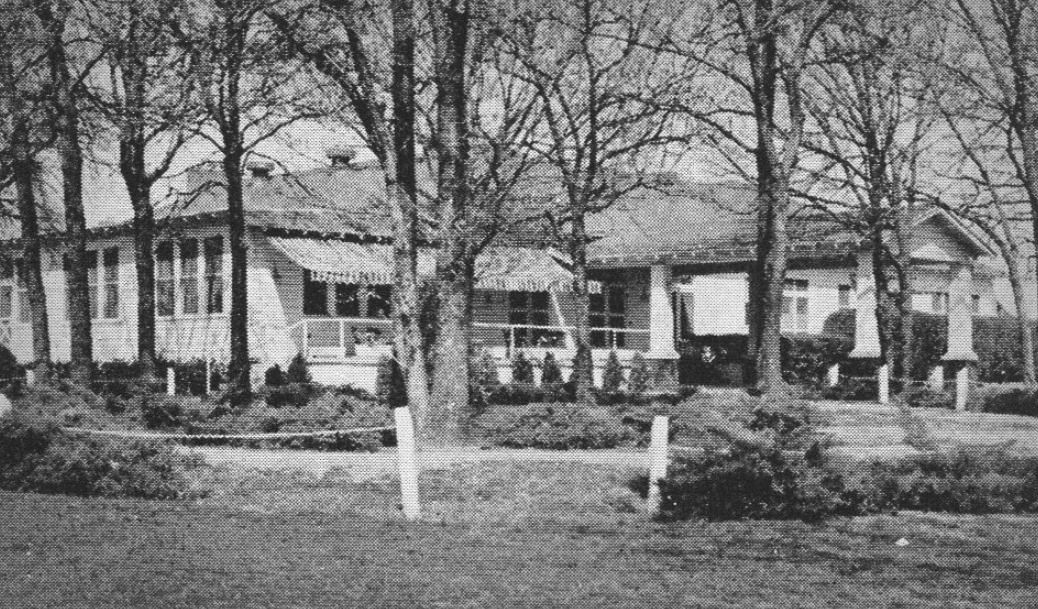
brook-hollow-country-club_1940sA modest clubhouse…

by Paula Bosse

A photo of Brook Hollow Country Club from a 1940s guide for newcomers. This photo is from a page of the area’s country clubs. This looks positively quaint.

***

Sources & Notes

From an early edition of “So This Is Dallas,” a guide for new residents of Dallas — this edition is from the early ’40s. Thanks to the Lone Star Library Annex Facebook group for loan of the image.

The Brook Hollow Golf Club is a bit swankier these days. The official site is here.

*

Copyright © 2014 Paula Bosse. All Rights Reserved.

The Century Room’s Retractable Dance Floor

ad-adolphus-hotel_century-room_sm(click for larger image)

by Paula Bosse

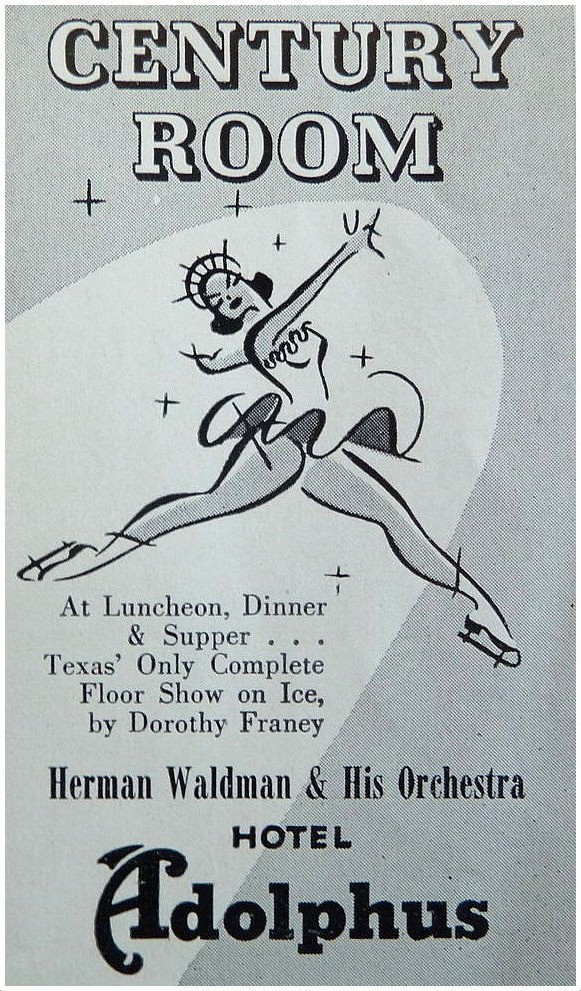
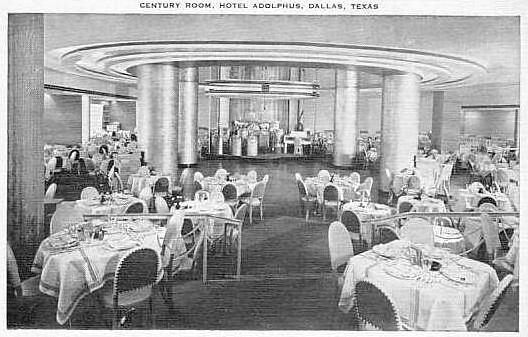
If you’re getting all dressed up for a night on the town, you want to make sure you get your money’s worth, entertainment-wise. That’s why you head to the tony Century Room at the swank Hotel Adolphus. Not only is there dining and dancing, there’s also an ice show. Yep, an ice show. When “Texas’ Only Complete Floor Show on Ice” has wrapped up, a dance floor magically covers the ice, and you and your honey can trip the light fantastic to the fabulous strains of Herman Waldman & His Orchestra. Skates optional.

adolphus_hotel_century-room

adolphus_century-room

*

Copyright © 2014 Paula Bosse. All Rights Reserved.

Society Ladies and Their Great Big Hats

shakespeare-club_c1895The Dallas Shakespeare Club

by Paula Bosse

Had The Graduate been set near the beginning of the twentieth century rather than the middle of it, that famous scene out by the pool (er…near the horse trough) might have gone something like this:

Mr. McGuire: I just want to say one word to you. Just one word.

Benjamin: Yes, sir?

Mr. McGuire: Are you listening?

Benjamin: Yes, sir, I am.

Mr. McGuire: …”Millinery.”

Benjamin: …Exactly how do you mean?

Mr. McGuire: There’s a great future in millinery. Think about it. Will you think about it?

Benjamin: Yes, I will.

Mr. McGuire: Enough said. That’s a deal.

***

Sources & Notes

Photograph of the Dallas Shakespeare Club is from the Dallas Historical Society; it appears in the book Women and the Creation of Urban Life in Dallas, Texas, 1843-1920 by Elizabeth York Enstam (College Station: Texas A & M University Press, 1998). Enstam’s caption of this photograph identifies two women in the front row, on the right as Sallie Griffis Meyer (1863-1932), future president of the Dallas Art Association, and May Dickson Exall (1859-1936), president of the Dallas Shakespeare Club from 1886 until her death. Ms. Enstam has labeled this photo as “about 1895.” 

*

Dialogue (all but one word) from the film version of The Graduate, screenplay by Buck Henry, based on the novel by Charles Webb. “Millinery adaptation” by Paula Bosse, based on the screenplay by Buck Henry which was based on the novel by Charles Webb.

*

Copyright © 2014 Paula Bosse. All Rights Reserved.