Flashback : Dallas

A Miscellany: History, Ads, Pop Culture

Category: Dining and Drinking

Lakewood Post Office — 1946-1976
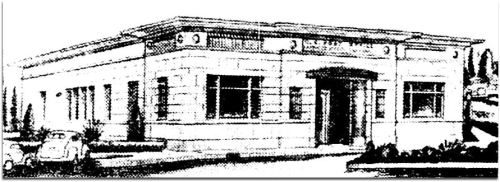
lakewood_post-office_dmn-123045Lakewood Post Office, 6324 Prospect

by Paula Bosse

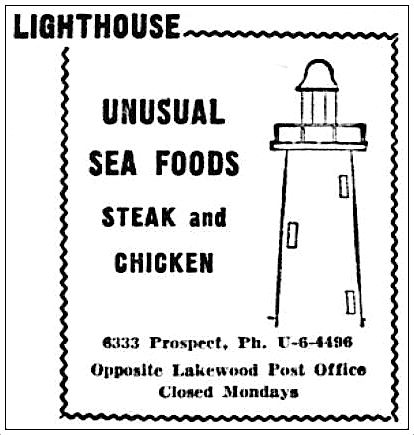
I’m often surprised to discover things about the part of Dallas I grew up in which I somehow never knew — in this case: Lakewood’s first post office, which was apparently in operation when I was a living, breathing, sentient human being but which I’d never known about until today. (I actually grew up in the nearby Lower Greenville neighborhood, but even though I went to Long and Woodrow, I don’t remember being all that aware of Lakewood proper until I was able to drive myself around it as a teenager.) Somehow I had never known that there was a post office in Lakewood before the one at Swiss and La Vista. Or, rather, I’d never even thought about it. Until I saw this ad earlier today:
lakewood_lighthouse_dmn_0425471947

“The Lighthouse — Unusual Sea Foods, Steak and Chicken — Opposite Lakewood Post Office.”

Post office? New to me. I looked it up. It was just west of Abrams, on Prospect at Kidwell, positioned diagonally across the lot. It was the 13th post office substation in Dallas, and it opened on December 2, 1946, over two years after its approval had been announced, during the war, in August, 1944.

A 1945 Dallas Morning News article had this interesting bit of information:

The contractor is Bascomb E. McClesky [sic]. The building will have 4,000 square feet of floor space. Parking space will be provided on the lot. [McCleskey] will retain title to the property and will lease it to the government, Payne said. (“Lakewood To Get Branch Post Office,” DMN, Nov. 18, 1945)

(I’m not sure I was aware developers leased property to the federal government. B. E.  McCleskey lived in the Pasadena area of Lakewood and seems to have spent his 30-year career as a general contractor who also bought, sold, and developed both commercial and residential properties in and around this part of East Dallas. When he began his career, he had an office on Gaston in the new Lakewood Shopping Center; at the time of his death in 1956, his office was right next door to the post office on land which, presumably, he still owned.)

This post office lasted for 30 years until the newer, hulkier, and far less aesthetically appealing station opened at Swiss and La Vista on May 10, 1976.
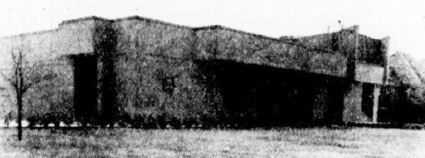
lakewood-post-office_dmn_112576_swiss.-photo
1976

Some factoids which will come in handy should you ever find yourself in a U.S. Post Office Trivial Pursuit (Lakewood Edition) competition:

  • When the first Lakewood post office opened in 1946, it employed 3 clerks, 1 supervisor, and 16 carriers.
  • When the second post office opened 30 years later, it employed 13 clerks, 2 supervisors, and 47 carriers.

*

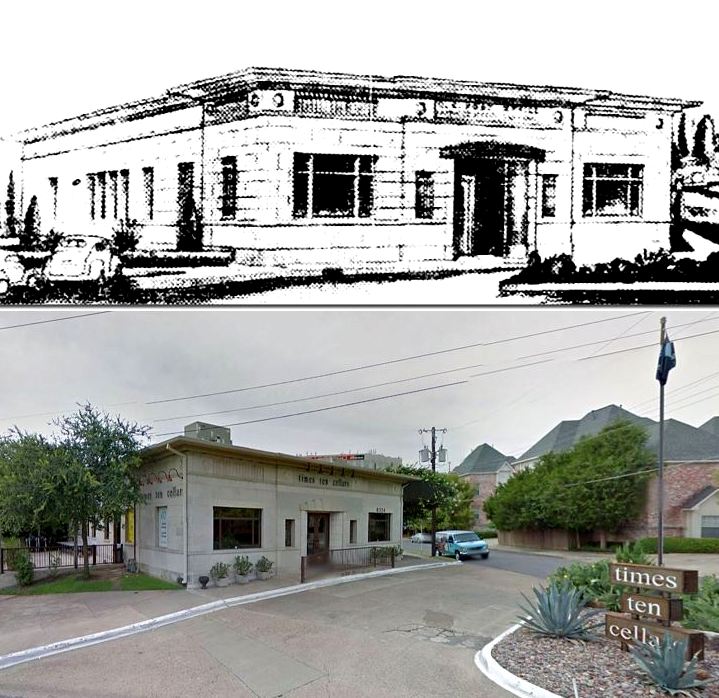
But back to the first post office — the building is still standing and houses the Times Ten Cellars wine bar! I’ve passed that building a lot over the years, but I guess I never paid much attention to it. I don’t know why, because it’s a great little  building. It would never occur to me that it might ever have been a post office. I wish more businesses in Dallas would consider repurposing older buildings rather than building characterless boxes that look like every other characterless box. Thank you, Times Ten Cellars!
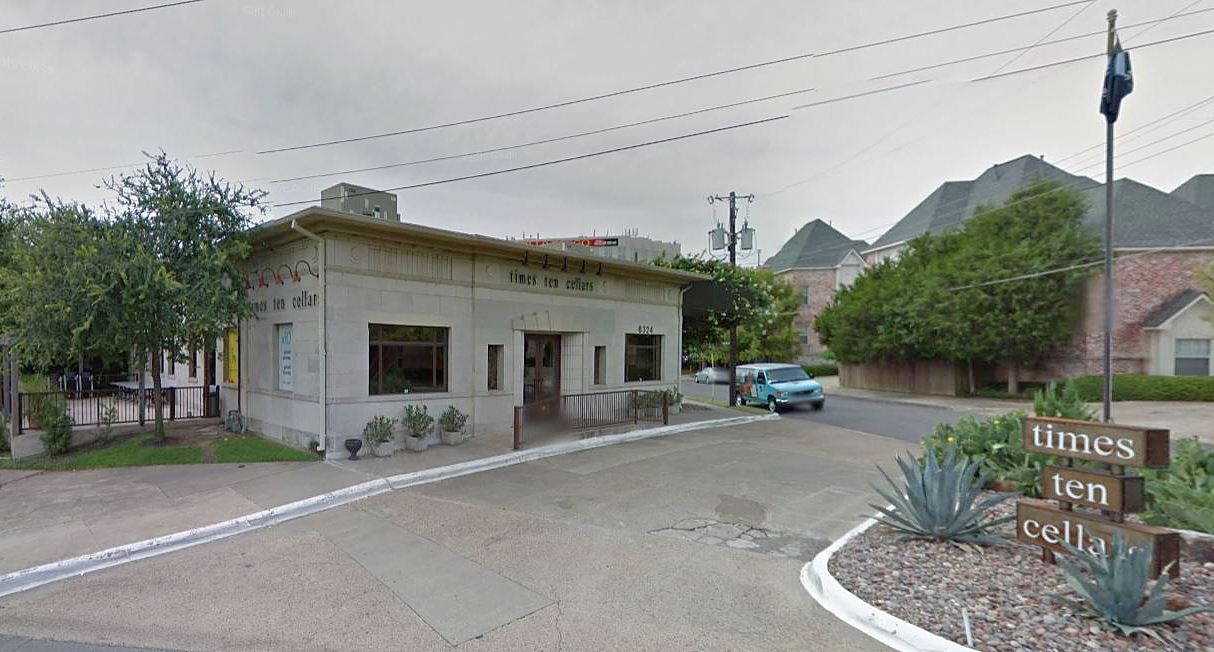
times-ten-cellar_google_2015Google Street View (2015)

*

That Lighthouse “unusual sea foods” restaurant? It doesn’t seem to have lasted very long. It changed hands a few times before closing as the Lighthouse Cafe at the end of 1950. At one point it was known as Phil’s Lighthouse — “Dallas’ most unique dining place where the atmosphere is: ‘Nautical But Nice.'”
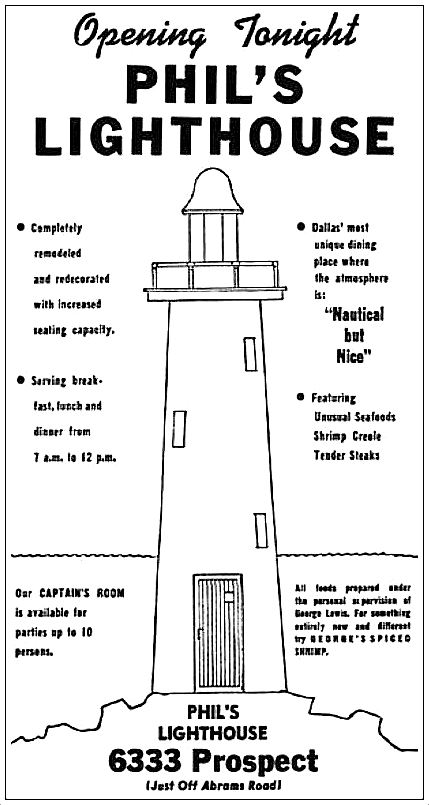
phils-lighthouse_dmn_121649DMN, Dec. 16, 1949

That’s right … “NAUTICAL BUT NICE”!

***

Sources & Notes

If anyone remembers the Lighthouse restaurant: was it actually shaped like a lighthouse?

Detail of a page from the 1952 Mapsco showing the location of the old post office (click for larger image):
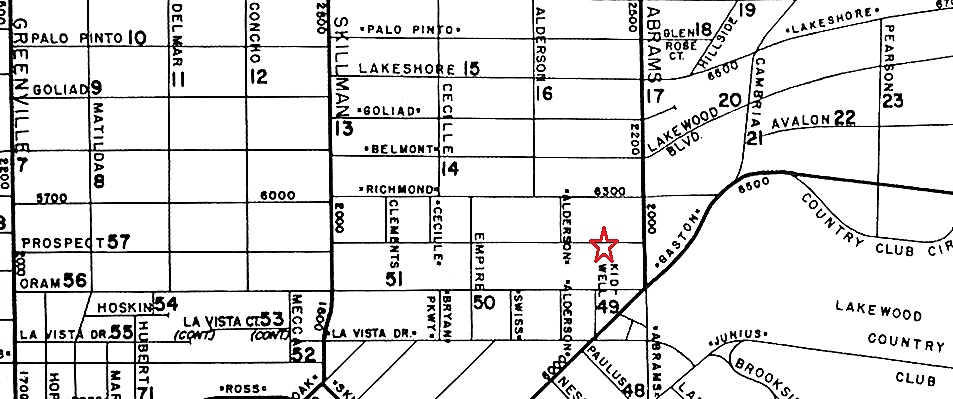
lakewood-post office_1952-mapsco

lakewood-post-office_then-now

Click pictures for larger images.

*

Copyright © 2016 Paula Bosse. All Rights Reserved.
 

Fletcher’s State Fair Drive-In — 1960-1963

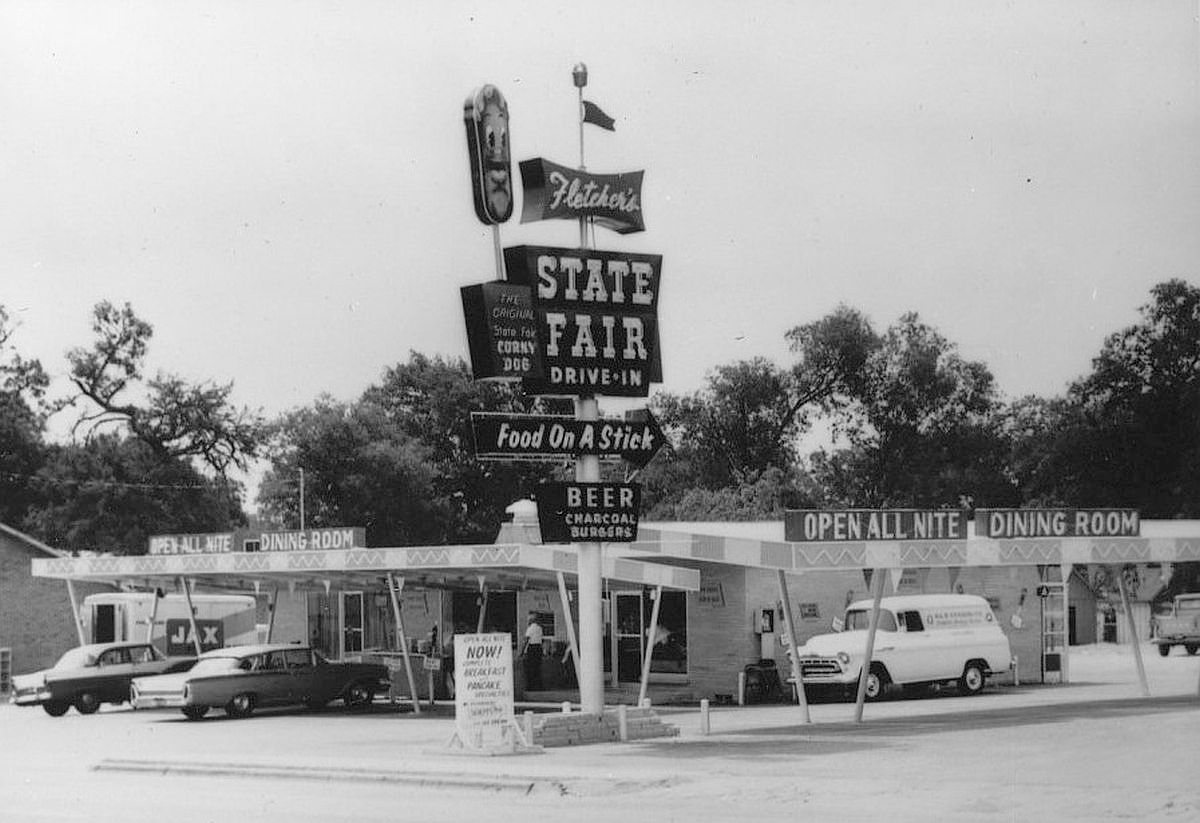
fletchers-state-fair-drive-in_DHSFood-on-a-stick, open all nite

by Paula Bosse

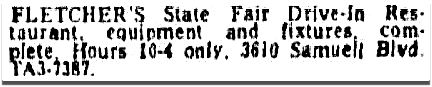
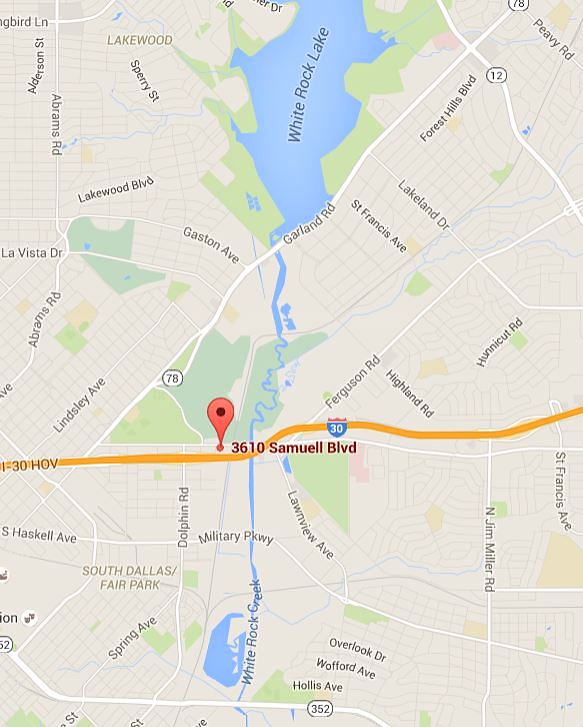
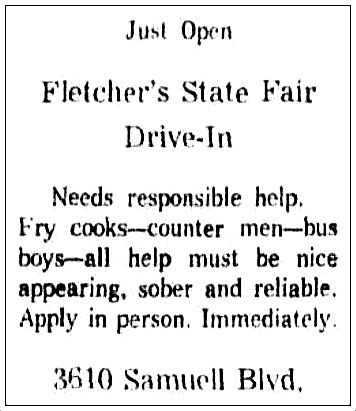
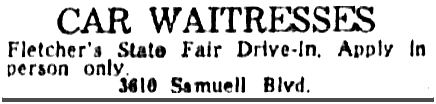
The legendary Fletcher’s Corny Dog once had its own drive-in! You didn’t have to wait until the State Fair of Texas rolled around to get your favorite “food on a stick” fix — you just needed to head to 3610 Samuell Boulevard, across from the Tenison Golf Course.

Sadly, there was a lot of drive-in and tavern competition along Samuell back then (Keller’s was practically next door!), and the State Fair Drive-In seems to have lasted only a little over three years, from the spring of 1960 to the fall of 1963.

I’d love to see this around NOW! Come on, Fletcher’s family: bring this back!

*

fletchers_dmn_051560May , 1960

fletchers_dmn_062960June, 1960

fletchers_dmn_102463_for-sale
Oct., 1963

***

Sources & Notes

Top photo from the Dallas Historical Society.

An article on Neil Fletcher’s new restaurant and a photo of the interior can be found in the archives of The Dallas Morning News: “State Fair Drive’In Fixtures Designed, Installed by Bab’s” (DMN, June 12, 1960).

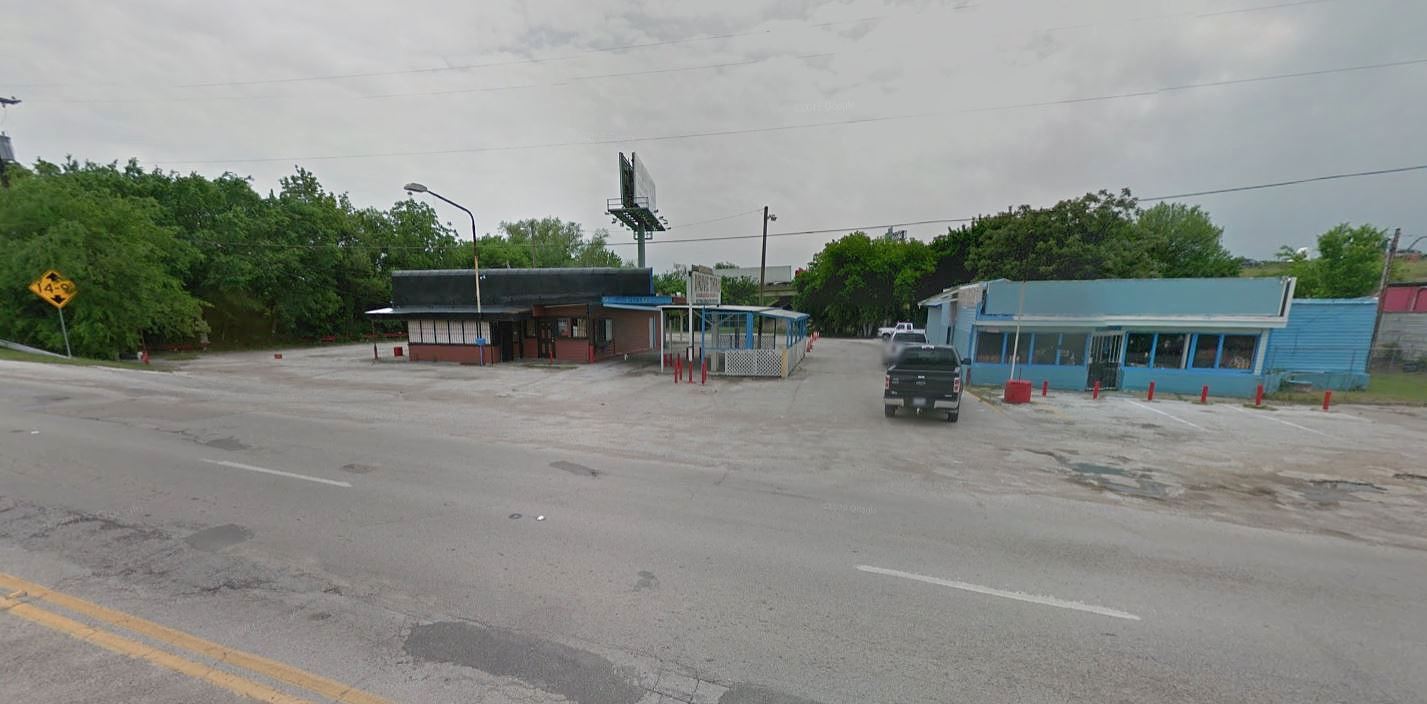
After the Fletcher’s Drive-In closed, it was replaced by a Red Coleman liquor store, and was most recently a club, El Palmeras. Google Street View shows the shabby neighborhood these days, here.

3610-samuall_googleGoogle Maps

An entertaining interview with the late Neil Fletcher appeared in the Oct. 1982 issue of D Magazine, here.

A Travel Channel video focuses on the famed corny dog, here.

A previous Flashback Dallas post about that same stretch of Samuell Blvd. — “Red’s Turnpike Open-Air Dance: An East Pike/Samuell Blvd. Joint — 1946” — is here.

UPDATE: I’ve received many comments that Fletcher’s had several short-lived drive-thru restaurants which started popping up in the mid-’80s. More on the franchise plans can be read in the article “Fletcher and Firm Very Much Alive” by Donna Steph Hansard (DMN, Aug. 5, 1984).

*

Copyright © 2016 Paula Bosse. All Rights Reserved.
Dallas: “Amusement Capital of the Southwest” — 1946

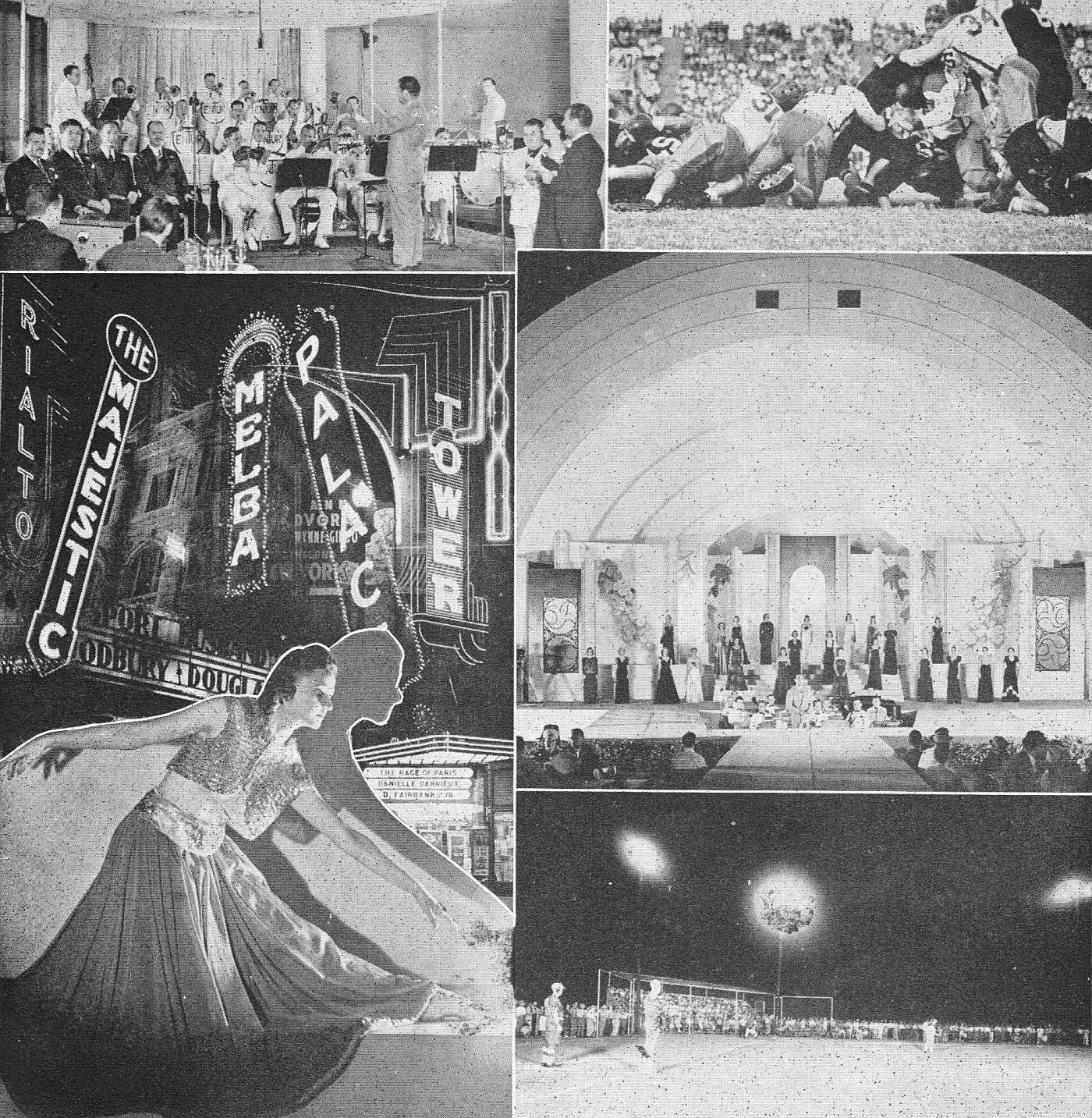
entertainment_so-this-is-dallas_ca-1946-photos_smSomething for everybody! (click for larger image)

by Paula Bosse

Post-war Dallas had it all, man: our unparalleled night life included swanky hotel nightclubs where the beautiful people sipped champagne and danced to the music of tuxedoed big bands, “quieter but none-the-less entertaining taverns on the outskirts of the city” where the less beautiful people drank beer and danced to the non-stop music coming from jukeboxes, “unusual” restaurants (“where there is no music to dull the solid enjoyment of well-seasoned viands served with sparkling wines of appropriate vintage”), theatrical presentations, movies, movies, movies, and outdoor sports and recreation, including baseball at Rebel Stadium. Something for everybody!

entertainment_so-this-is-dallas_ca-1946-text(click for larger image)

***

Photo collage and text from “So This Is Dallas,” edited by Mrs. E. F. Anderson (Dallas: The Welcome Wagon, ca. 1946); photographs by Parker-Griffith.

*

Copyright © 2016 Paula Bosse. All Rights Reserved.
Red’s Turnpike Open-Air Dance: An East Pike/Samuell Blvd. Joint — 1946

reds-turnpike_texas-week-mag_121446-portalThey’re playing your ditty….

by Paula Bosse

I always wonder about those old, decaying buildings — sometimes they’re little more than shacks — which are somehow still standing, in areas that will probably never be gentrified. Like Samuell Boulevard, just south of Tenison Golf Course, two or three miles south of White Rock Lake. The north side of Samuell is a lovely, manicured golf course. The south side? Rough, man.

Before Samuell Blvd. was Samuell Blvd., it was known as East Pike, and it served as the highway to Terrell. This explains the large number of tourist courts and motels which dotted the road. Also, the Tenison golf course was right about at the very edge of the city limits — which explains the large number of bars, taverns, liquor stores, and other assorted dens of iniquity all clustered together at the wet/dry line (wet in Big D, dry beyond).

The local papers were full of a veritable pu pu platter of crimes and offenses committed along the East Pike, almost all of which were generally traced back to alcohol consumption. Police and city inspectors spent a lot of time in the area, called to various of these joints to handle reports of public intoxication, selling alcohol to minors, selling alcohol to those already drunk, general rowdiness, unsanitary conditions, noise, brawls, “suggestive dancing,” gambling, hold-ups, shootings, suicides, and murder.

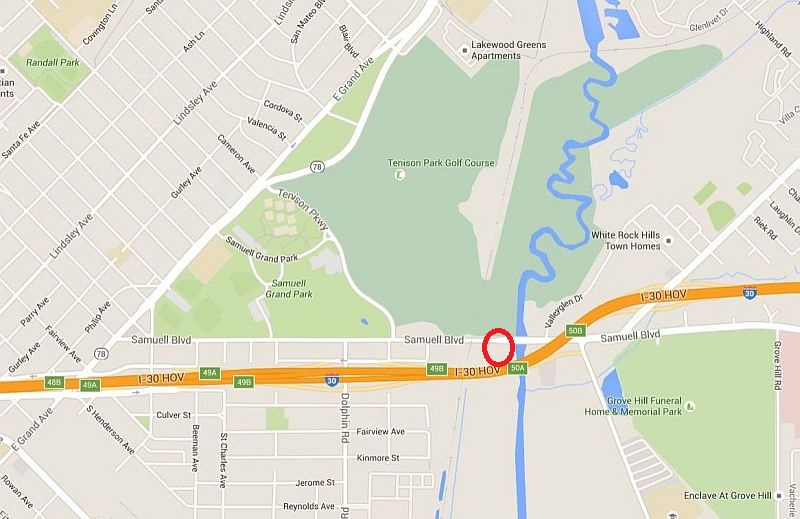
One of those rural drinking establishments was Red’s Turnpike Open-Air Dance, which appears to have opened in 1946 in the 3700 block of Samuell (even though it didn’t have an actual street address in city directories), between the Belt railway and White Rock Creek. In 1948, the tavern burned down in an early morning fire (a not-uncommon fate for these types of businesses). The Dallas Morning News reported that “firemen were hampered by a lack of fire hydrants in the vicinity and pumped water from White Rock Creek to fight the blaze” (DMN, May 3, 1948). …Wasn’t enough.

From its ashes sprang Keller’s drive-in, in 1950, in the same general spot. In a 2015 Lakewood Advocate interview, Jack Keller described the location of his first drive-in as being “the last wet spot going into East Texas, right across from hole number two” of the golf course. “We had a lot of fun down there.”

Who doesn’t love hamburgers? Keller’s probably helped the area’s reputation, as its arrival eventually ushered in a less seedy clientele than the old East Pike of the ’30s and ’40s was known for. Less riff-raff, better food.

***

Sources & Notes

Photo of Red’s Turnpike from the Dec. 14, 1946 issue of Texas Week magazine.

Here’s what the spot where Red’s once stood looks like now (the Keller’s location here closed in 2000):

samuell_google-street-viewGoogle Street View, 2015

reds_map_2015Google Maps

Take a virtual look at the area on Google Street View, here.

*

Copyright © 2015 Paula Bosse. All Rights Reserved.
Sivils Drive-In, An Oak Cliff Institution: 1940-1967

sivils_tichnorOak Cliff’s landmark hangout (click for larger image)

by Paula Bosse

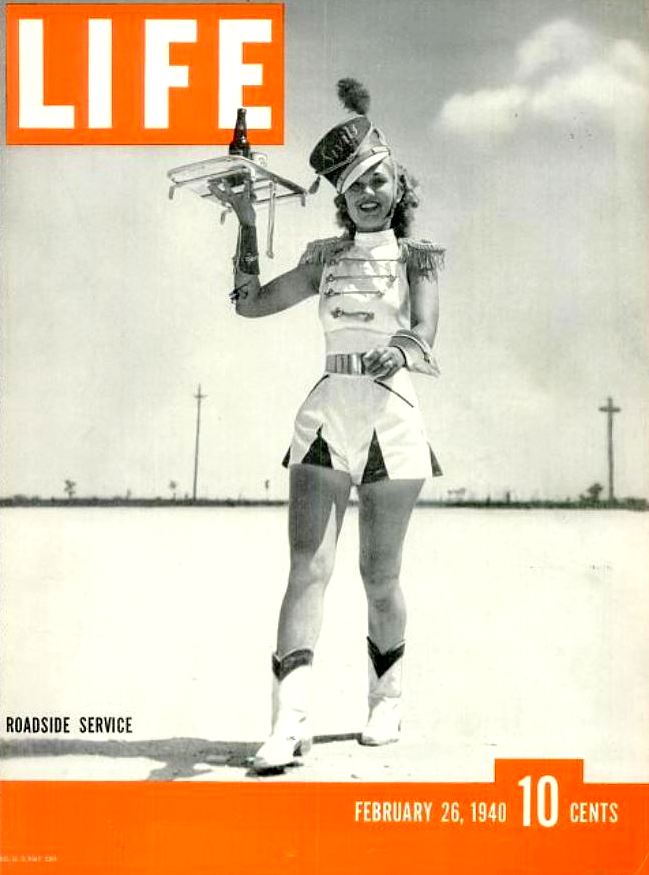
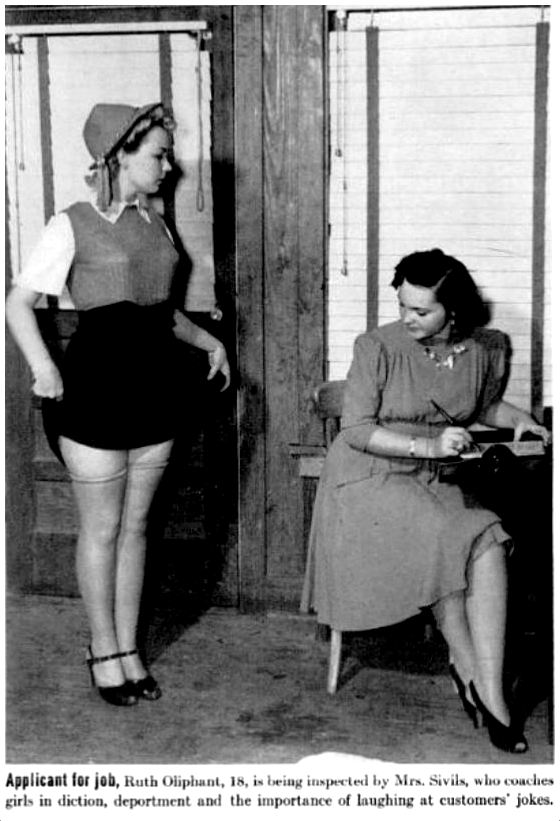
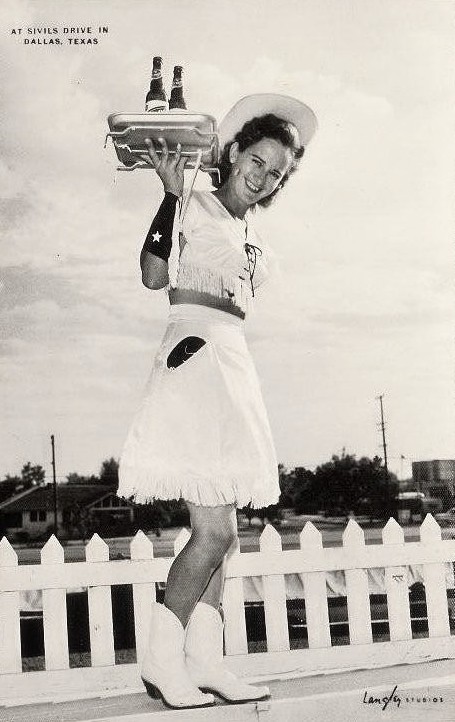
When J. D. Sivils (1907-1986) and his wife, Louise (1918-2006), brought their “Sivils” restaurant to Dallas in June 1940, their Houston drive-in of the same name had already been featured as a Life magazine cover story, garnering the kind of incredible national publicity that any business owner would have killed for! And all because of their carhops — “comely, uniformed lassies” whom Mrs. Sivils insisted on calling “curb girls” (which might have a slightly different connotation these days…). Life — never a magazine to overlook pretty young girls in sexy outfits — not only devoted a pictorial to the “curb girls,” they also put one of them (Josephine Powell of Houston) on the cover, wearing the Sivils’ uniform of (very, very short!) majorette’s outfit, plumed hat, and boots.

sivils_houston_life-mag_022640Feb. 26, 1940

louise-sivils_life-magazine_1940Louise Sivils and a prospective “curb girl” (Life)

Four months after the blitz of national attention the drive-in received from the Life story, Sivils came to Dallas. The drive-in was located in Oak Cliff at the intersection of West Davis and Fort Worth Avenue on “three acres of paved parking space.”

sivils-map

The day the drive-in opened, a photo of the not-yet-legendary Sivils appeared in The Dallas Morning News (see “Sivils to Open Dallas Place Thursday,” DMN, June 27, 1940). Other than this, there is surprisingly little in the pages of The News about this drive-in’s opening — surprising because it became such a huge part of the lives of Oak Cliff’s teens in the ’40s, ’50s, and ’60s. It’s one of those places that seems to have reached almost mythic proportions on the nostalgia scale.

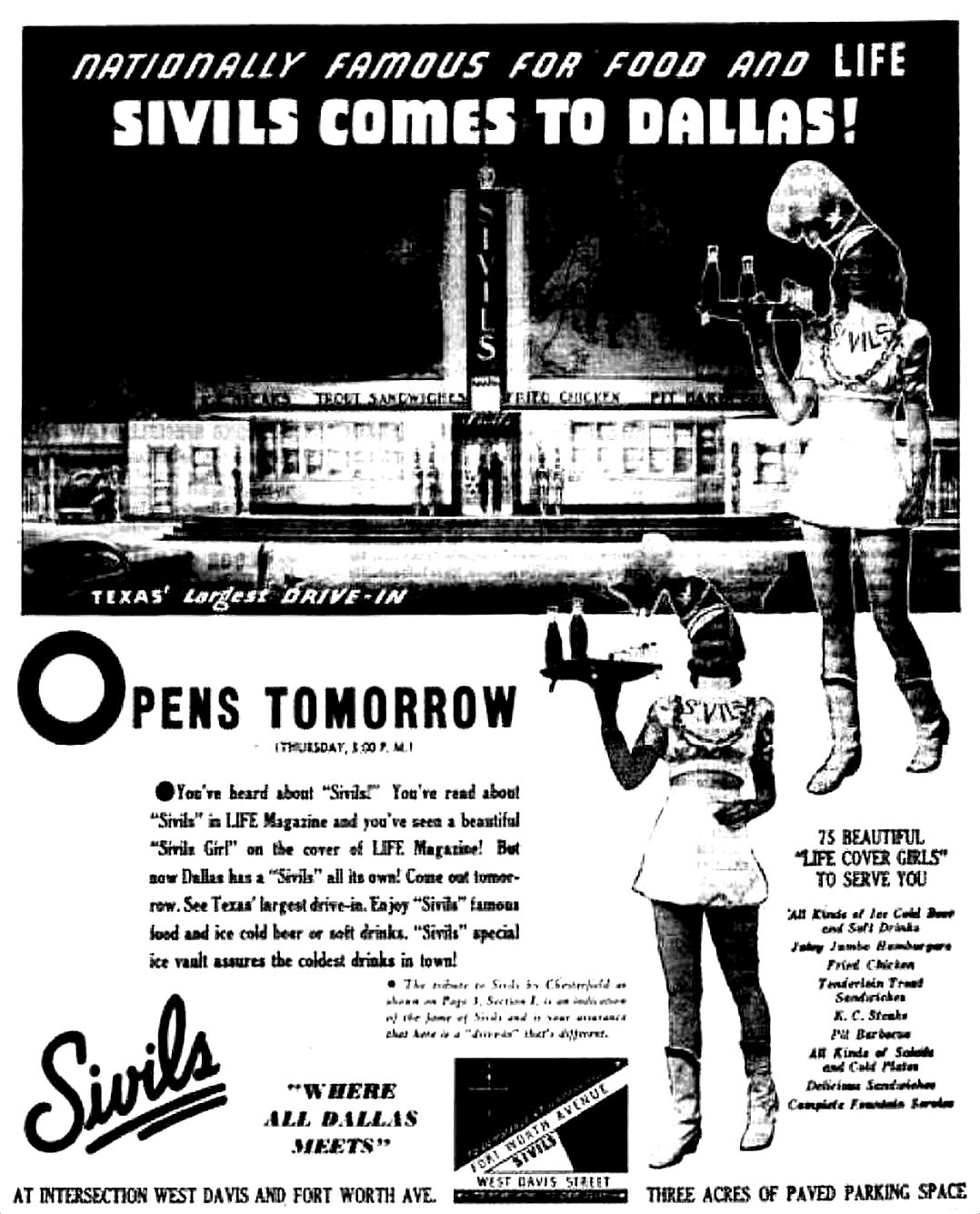
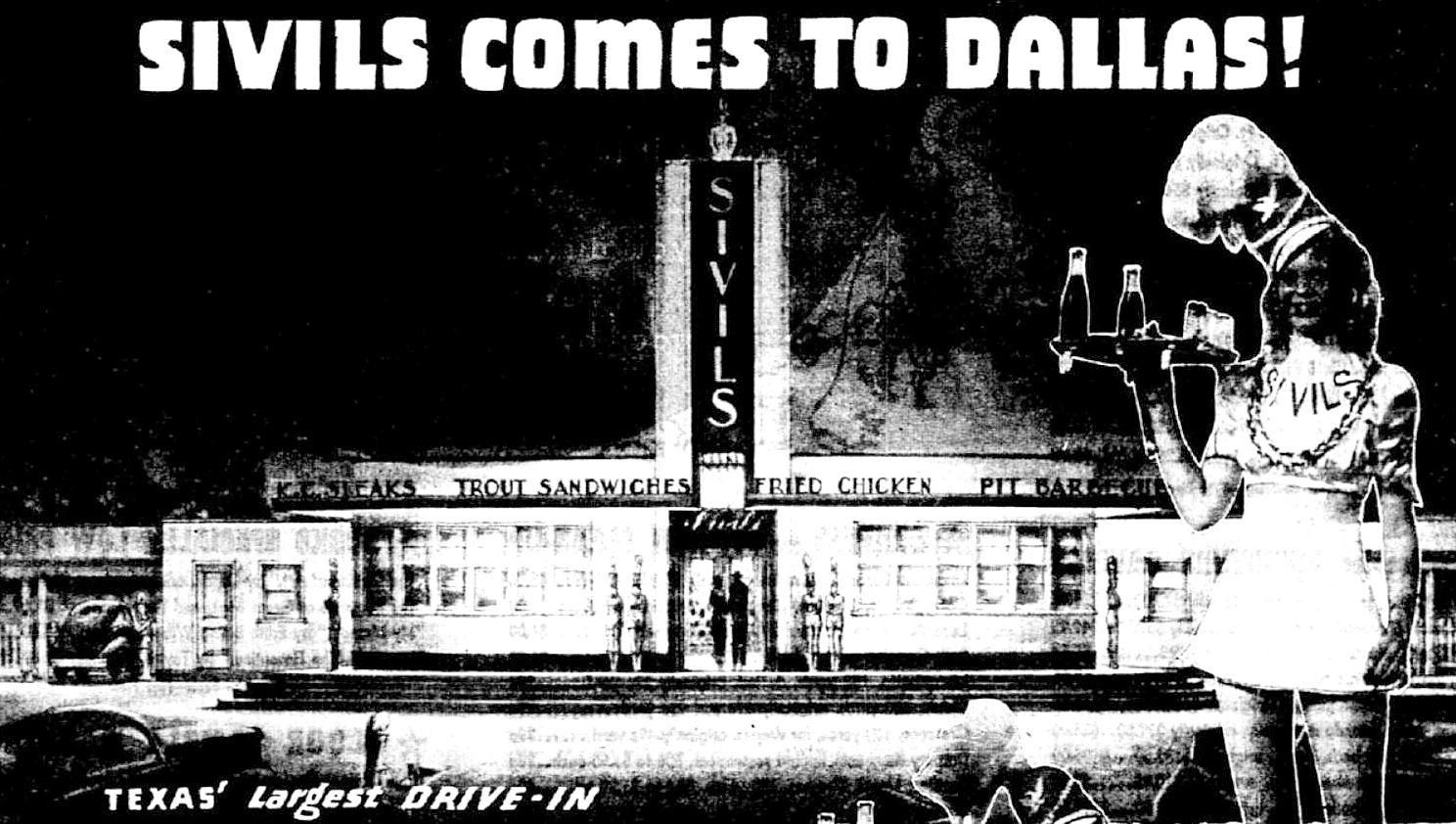
Sivils didn’t quietly sneak into town, though. Take a look at this very large, very expensive newspaper ad, which ran the day before OC’s soon-to-be favorite hang-out opened. (Click for larger image.)

sivils_dmn_062640_lgJune 26, 1940

*

Nationally Famous for Food and LIFE
SIVILS COMES TO DALLAS!

Texas’ largest drive-in
Opens tomorrow

(Thursday 3:00 PM)

You’ve heard about “Sivils”! You’ve read about “Sivils” in LIFE Magazine and you’ve seen a beautiful “Sivils Girl” on the cover of LIFE Magazine! But now Dallas has a “Sivils” all its own! Come out tomorrow. See Texas’ largest drive-in. Enjoy “Sivils” famous food and ice cold beer or soft drinks. “Sivils” special ice vault assures the coldest drinks in town!

75 Beautiful “LIFE Cover Girls” to Serve You

All Kinds of Ice Cold Beer and Soft Drinks
Juicy Jumbo Hamburgers

Fried Chicken
Tenderloin Trout Sandwiches
K.C. Steaks
Pit Barbecue
All Kinds of Salads and Cold Plates
Delicious Sandwiches
Complete Fountain Service

Sivils – “Where All Dallas Meets”
At intersection West Davis and Fort Worth Ave.
Three Acres of Paved Parking Space

*

100-150 “curb girls” were employed by Sivils at any given time in those early days, and it was open 24 hours a day. The place was hopping. Sounds fantastic. Wish I’d seen it.

sivils_matchbook_coltera-flickrvia Flickr

sivils_carhop_postcard_ebay
eBay

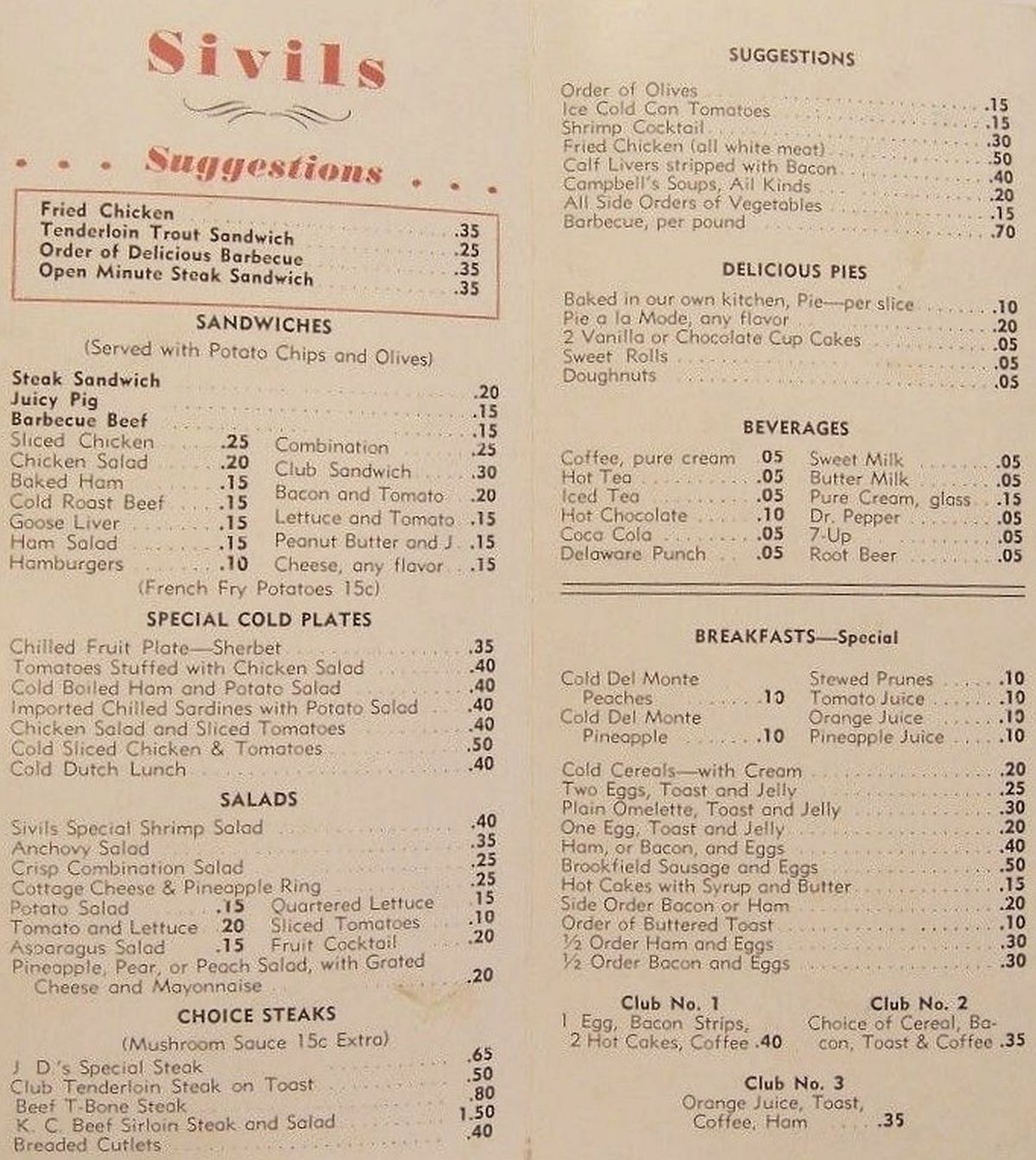
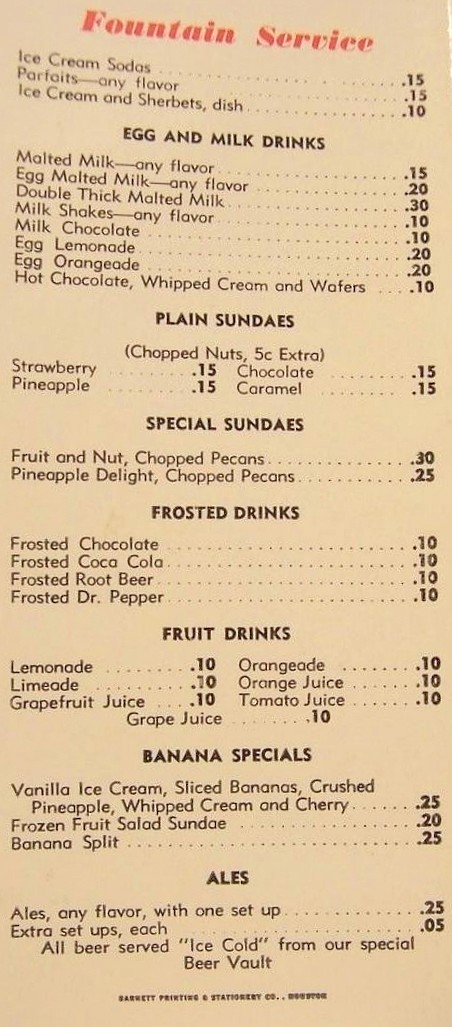
Below, a scanned menu (click to see larger images):

sivils-menu_1940s_ebay_cover

sivils-menu_1940s_ebay_b

sivils-menu_1940s_ebay_avia eBay

***

Sources & Notes

Top postcard from the Boston Public Library Tichnor Brothers Postcard Collection on Flickr, here.

Read the 4-page Life article (and see several photos of the Houston “curb girls”) here (use the magnifying glass icon at the top left to increase the size of the page).

Interesting quote from that article:“They work in 7½-hour shifts, six days a week, for which they get no pay but average $5 a day in tips.” Doesn’t sound legal…. (The Inflation Calculator tells us that $5 in 1940 money is equivalent to just over $83 in today’s money.)

Sivils closed in 1967, possibly because Mr. and Mrs. Sivils wanted to retire, but it seems more likely that Oak Cliff’s being a dry area of Dallas since the 1950s was killing its business. Check out the News article “Big Head Expected as Oak Cliff Beer Issue Foams” by Kent Biffle (DMN, Aug. 17, 1966) which appeared just months before another election in which the “drys” outvoted the “wets.” (More on Oak Cliff’s crazy wet-dry issues, here.)

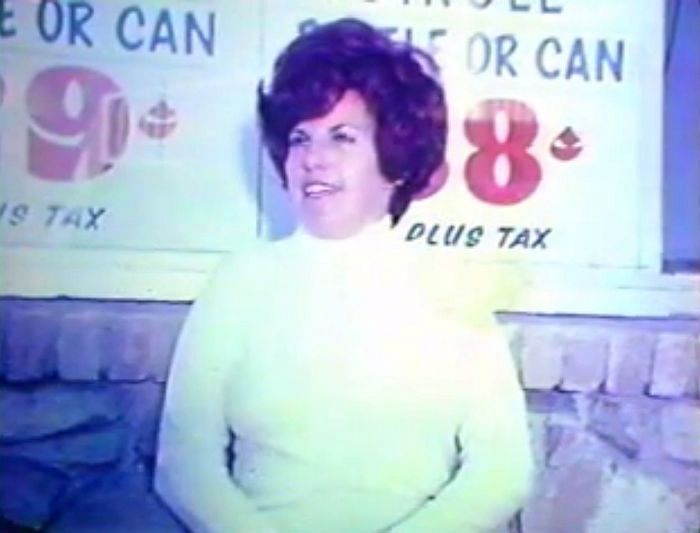
J. D. Sivils was interviewed in a short documentary about Dallas carhops, filmed in the early 1970s. In it, he talks about the early days of Sivils and — best of all — there is film footage galore of the drive-in from his collection. Watch it in my previous post — “‘Carhops’ — A Short Documentary, ca. 1974” — here. (Below a screenshot of Sivils from the film.)

sivils-carhops-film

Read the article “Carhops, Curb Service, and the Pig Sandwich” by Michael Karl Witzel (Texas Highways, Oct. 2006) in a PDF, here (increase size of article with controls at top of page).

Another Flashback Dallas post on drive-in culture — “Carhops as Sex Symbols — 1940” — is here.

sivils_dmn_062640-det

Click pictures for larger images.

*

Copyright © 2015 Paula Bosse. All Rights Reserved.

“Carhops” — A Short Documentary, ca. 1974

carhops_title
Schlitz on its way…

by Paula Bosse

The carhop is an oddly American invention — and it began here in Dallas in the 1920s, with boys and young men serving customers in cars at J. G. Kirby’s Pig Stand drive-in restaurants. In 1940, Sivils hit Dallas, but this time with young women as servers — young women in skimpy outfits. There was no looking back — from then on, pretty girls showing a lot of leg and hoping for big tips carried trays of food, soft drinks, and beer to cars full of waiting customers.

One of the few remaining “old school” drive-ins is Keller’s on Northwest Highway, still doing good business today. Around 1974 or 1975, SMU film teacher Pat Korman made a short documentary about Dallas carhops past and present (the result, it seems, of reading a Dallas Morning News article by Rena Pederson). He interviewed B. J. Kirby (owner of Kirby’s steakhouse on Lower Greenville and son of Jesse Kirby, founder of the Pig Stand pig-sandwich empire, which, as legend has it, had the very first carhops), J. D. Sivils (owner of Sivils drive-ins, who, along with his wife, was an important figure in the evolution of curb-side dining), and Jack Keller (owner of Keller’s Hamburgers). The three businessmen reminisce about the early days of drive-in restaurants in Dallas as a lot of cool historical film footage unspools and photographs from the ’20s to the ’50s are flashed on the screen. Also interviewed are four women carhops who were working at Keller’s at the time, talking about their jobs.

It’s a cool film. Big cotton-candy hair, accents you wish were still around, and cans and cases of Schlitz, Schlitz, Schlitz.

The 14-minute film is in two parts on YouTube. Here is the first part:

*
And here is the second part:

*
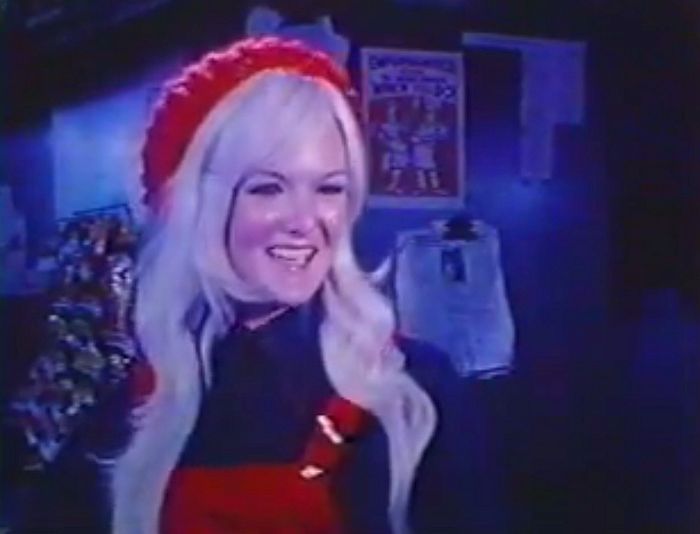
Below, screenshots of the interviewees.

sandy-carhopsSandy

shirley-carhopsShirley (as of Jan. 2015, she’s been a fixture at Keller’s for 50 years!)

rita-carhopsRita

nancy-carhopsNancy

kirby_carhopsB. J. Kirby

sivils-carhopsJ. D. Sivils

keller-carhopsJack Keller

kellers-menu-board_carhopsNo. 5 — 80¢

***

Sources & Notes

“Carhops” — filmed sometime in the early ’70s — was directed by Patrick Korman, shot by Ron Judkins, and produced by Don Pasquella. It premiered at Jesuit High School in April 1976. The film is on YouTube in two parts, here and here. (By the way, if you look at the YouTube comments under part two, you’ll see a comment from Sandy herself. She’s still looking good in the avatar photo.) (The music at the beginning and end of the film is great! I’m pretty sure it’s the legendary steel guitarist Ralph Mooney and the equally legendary guitarist James Burton; I love those guys! I urge to go get a copy of their album “Corn Pickin’ and Slick Slidin.'”)

Rena Pederson is thanked in the credits. She wrote a great article in The Dallas Morning News called “Carhops Fading, Those Were the Days” (Aug. 25, 1974) — she interviewed many of the same people seen in the film.

The Keller’s Northwest Highway location celebrates its 50th anniversary this year. Shirley — one of the carhops featured in the film — has worked there since it opened in 1965. As of Jan. 2015, she was still there! Go by and see her! Check out a Lakewood Advocate story on Shirley, here.

Also, take a look at a Dallas Morning News article on Keller’s 50th anniversary, here — scroll down to the slideshow to check out some great photos from its early days.

Read about sexy male carhops who plied their trade in skimpy outfits — a short-lived fad in Dallas inspired by the success of drive-ins like Sivils — in my previous post “Carhops as Sex Symbols — 1940,” here.

*

Copyright © 2015 Paula Bosse. All Rights Reserved.

Stacy’s Lounge on The Miracle Mile — 1950

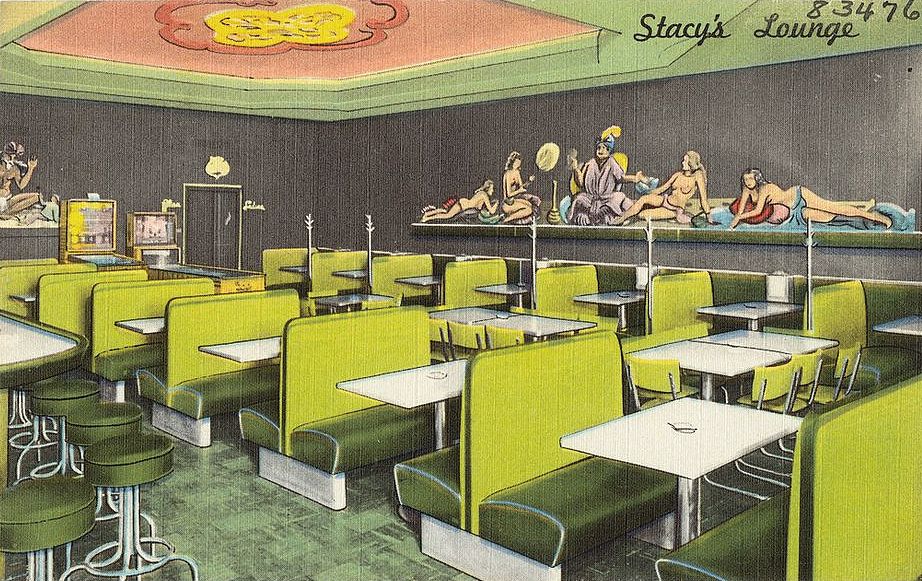
stacys-loungeStacy’s has it all: murals, pinball, ashtrays

by Paula Bosse

Today: a quick look back at a short-lived bar, Stacy’s Lounge, once located along the famed Miracle Mile. Actually, this postcard may be about all that remains from what was, apparently, a fairly short-lived drinking establishment.

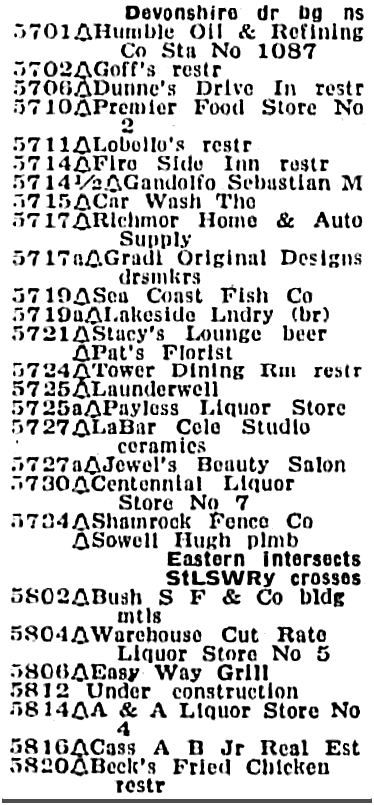
stacys-lounge_1951-dirctry1951 Dallas directory

The above line is from the 1951 city directory, but that listing appears to have been published posthumously. By November of 1950, Stacy’s space at 5721 West Lovers Lane had been taken over by another bar called The Magic Lounge (later the Magic Grille/Herb’s Magic Grill).

Stacy — whomever he or she was — was not afraid of color and decor. I mean … for one thing … those murals. The exotic scenes featuring bare-breasted women, men in turbans, and, I think, a cobra are a little unexpected. They’re either great or awful. Patrons in 1950 might have thought they were awful when they walked in, but by closing time, they probably thought they were … slightly less awful. And the colors! They’ve obviously been pumped up for the postcard, but I’m sure the two-toned green vinyl (great booths!) and the pink and yellow molded and recessed ceiling were attention-grabbing. Imagine it crowded, dark, smoky, and loud. I’ve been in old bars that kind of look like this, just grungier, scuffed up, and sagging. This is pretty much what your favorite dive bar looked like when it was new and shiny. (I just realized I’ve never seen a vintage postcard with a pinball machine in it. And a jukebox. And a cartoon Indian fakir. I’ve hit the trifecta!)

So what other businesses filled that block of Lovers in 1950-51? (Click for larger image.)

stacys-lounge_1951-directory_block1951 city directory

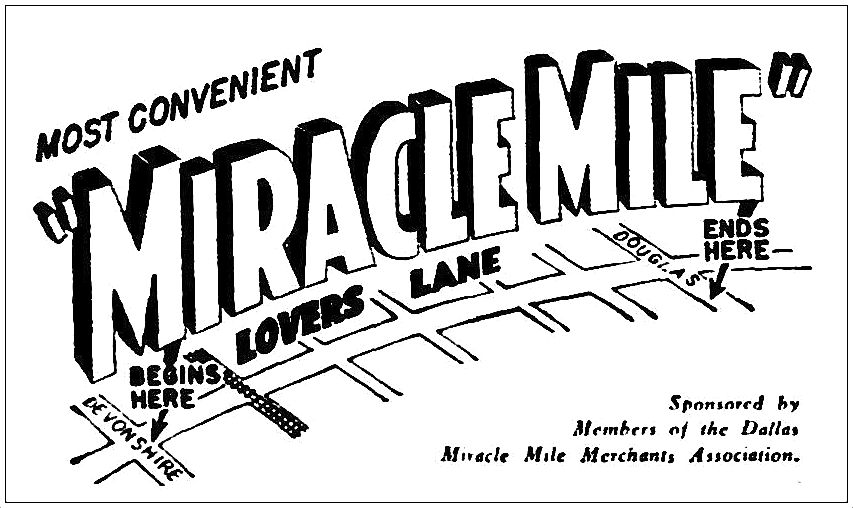
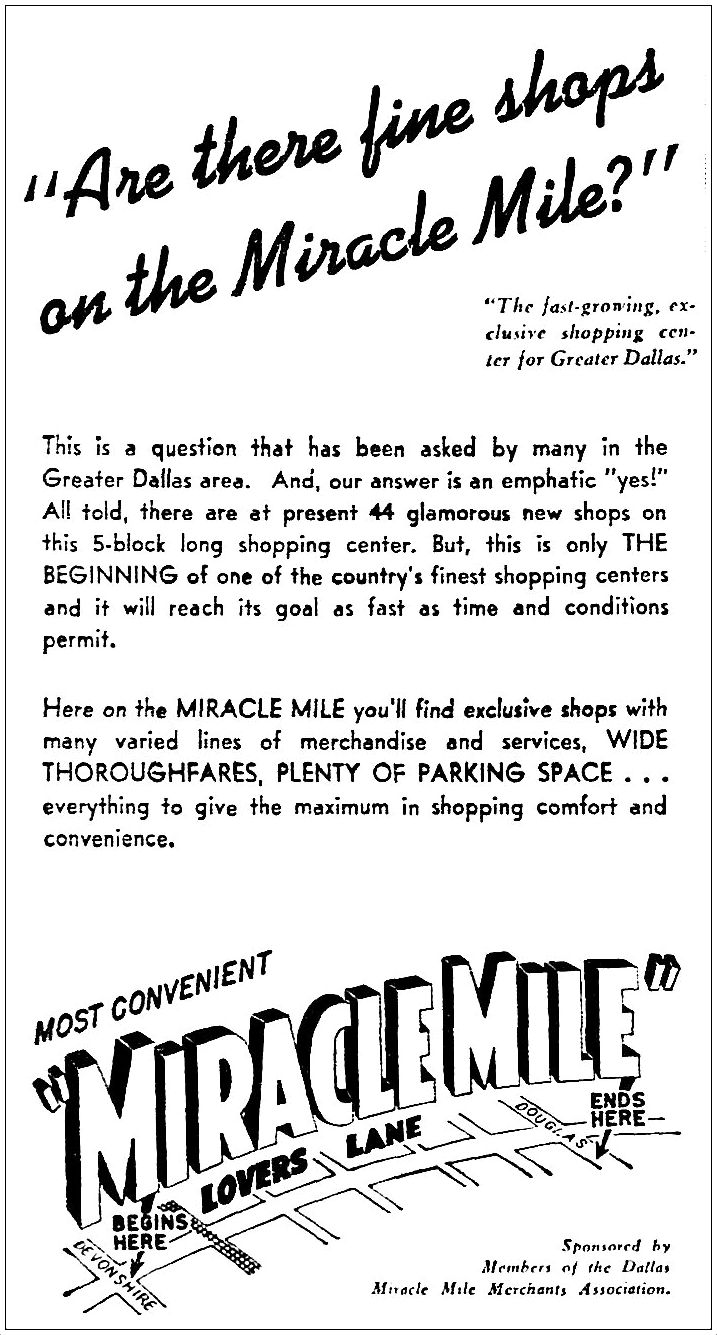
Speaking of The Miracle Mile (you don’t really hear people referring to the Miracle Mile anymore, do you?), when the name of the shopping area debuted in 1947, the official boundaries were Devonshire on the west and Douglas on the east. Some people insist it goes all the way down to the Inwood Theater. This rather adamant Dallas Miracle Mile Merchants Association advertisement illustration would disagree with that notion.

miracle-mile-merchants-assn_ad_april-1947_det

miracle-mile-merchants-assn_ad_april-1947
April, 1947

I’m still not sure why it was called the Miracle Mile, unless it had something to do with the price of real estate. Part of it was in Dallas (the couple of blocks west of what was the St. Louis and Southwestern/Cotton Belt railroad — now the tollway), and part of it was in University Park. (And I suppose still is.) Most of the bars and restaurants were in the Dallas portion, because University Park was dry. Another notable thing about Lovers Lane is that the address numbering is a crazy mess — there’s West Lovers Lane, Lovers Lane, and East Lovers Lane, and every time you pass from one stretch to the next, the abrupt address-changes will make your head spin. (I had no idea it was so crazy until I read Helen Bullock’s very informative and entertaining article about the Miracle Mile in a Sept. 10, 1961 article in The Dallas Morning News, “Walk a Miracle Mile.”)

But back to Stacy — I never actually discovered who Stacy was. Oh well. The particulars of Stacy’s Lounge may be lost to history, but the image of its colorful interior lives on in a 65-year-old garishly-colored postcard.

***

Sources & Notes

Postcard is from the great Boston Public Library Tichnor Brothers Postcard Collection on Flickr, here. I dip into the collection now and again to see what I can find out about those arresting and unreal-looking images — see those past posts here.

Currently at the old Stacy’s Lounge address (though in a newer building) is the Nicholson-Hardie Nursery & Garden Center; the location on a map is here.

You might even say that Stacy’s Lounge has got it going on. Do you have this song going through your head like I do? That’s going to be hard to get out of there.

*

Copyright © 2015 Paula Bosse. All Rights Reserved.
Thirsty For Something Stronger Than a Sarsaparilla? — 1890

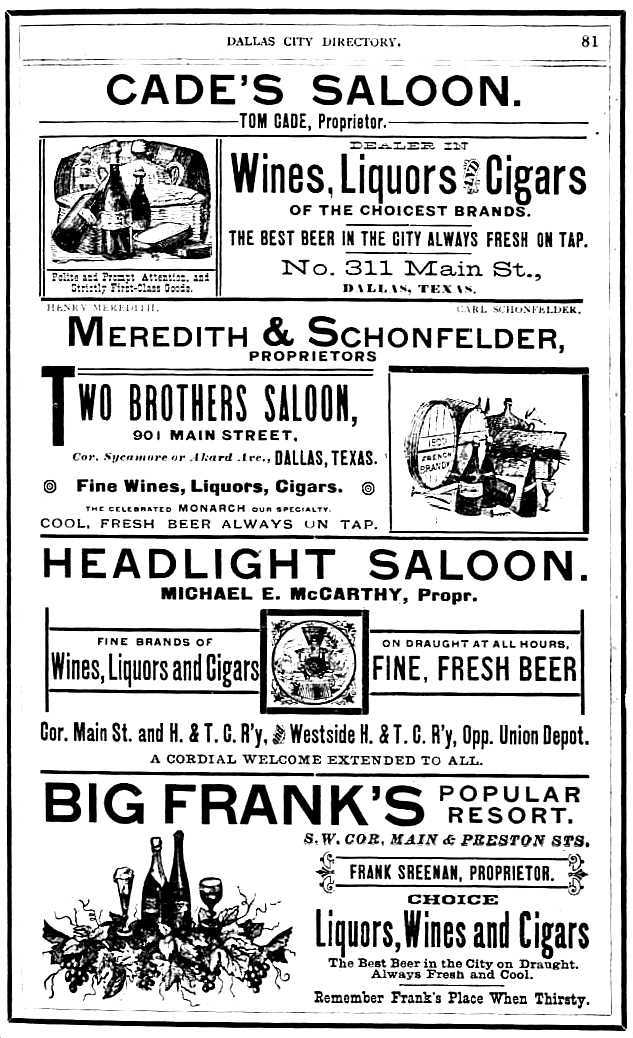
ad-saloons_city-directory_1890-det“Remember Frank’s Place When Thirsty”

by Paula Bosse

According to the 1890 city directory, Dallas had roughly 145 saloons. That seems like a lot when the city’s population was only 38,000. That would be one bar for every 262 people — and this is before you take out all the residents who wouldn’t have been allowed in saloons, like African Americans, Hispanics, women, children, etc. (and I’m sure there MUST have been a few adult white men who didn’t drink…). And there were probably a lot more than 145 bars — this doesn’t include private clubs or “unlicensed” holes in the wall (I’m not sure how heavily enforced “licensing” was back then). So it could have been more like one bar for every 50 imbibing Dallasites. Call me crazy, but this seems like a disproportionate ratio of bars to customers. But depending where you fall on the how-many-bars-is-too-many spectrum, it might have been just the perfect number. It fact it might have been a veritable paradise.

ad-saloons_city-directory_1890(click me!)

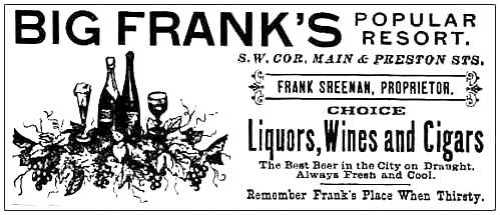
Here are a few of the “popular resorts” of the day into which a white man could mosey and slake his big Texas thirst.

  • Meisterhans’ Garden
  • Mayer’s Garden
  • Glen Lea
  • Planters House
  • Pat’s Place
  • Frank’s Place
  • Ord’s Place
  • Two Johns
  • Two Brothers
  • Louis
  • Bohny’s Hall
  • New Idea
  • U Bet
  • Walhalla
  • Coney Island
  • Butchers’ and Drovers’
  • Q. T.
  • Eureka
  • Gem
  • The Wonder
  • Sample Room
  • Monarch
  • Casino
  • Little Casino
  • Red Front
  • Blue Front
  • Blue Corner
  • Buck Horn Corner
  • Sharp Corner
  • Mikado
  • Apollo Hall
  • Mammoth Cave
  • Headlight
  • Green Tree
  • Live Oak
  • Moss Rose
  • Sunny South
  • White House
  • Cabinet
  • Senate
  • Postoffice
  • Board of Trade
  • First and Last Chance
  • Turf
  • Black Elephant
  • Jockey
  • Union Depot
  • 9-45
  • Dallas Club
  • Wichita Exchange
  • City Hall Exchange
  • Ross’ Exchange
  • Mechanics’ Exchange

That’s a whole lot of places to get drunk in.

***

Sources & Notes

Saloon ad from the 1899/1890 edition of Morrison & Fourmy’s Dallas City Directory.

See the complete list of saloons, with addresses and proprietors’ names, here.

Street names and addresses have changed over the years. Plot the location of your favorite bar by referring to an 1890s map, here.

In the nineteenth century, the word “resort” often denoted places a bit more unsavory than, say, Puerto Vallarta. A list of similar establishments might include “tippling houses, gaming houses, bawdy houses, billiard saloons, lager beer saloons, and other places of public resort” (source here).

I’m wondering if “respectable” women were allowed as customers in the larger beer gardens in Dallas at this time? If anyone has info on this, I’d love to know.

Was drunkenness a goldmine-like source of city revenue? Oh yeah. See my previous post “Police Blotter — 1880s,” here. Building a greater Dallas, five bucks at a time.

*

Copyright © 2015 Paula Bosse. All Rights Reserved.
The Caveteria: “Marvelous Food at Moderate Prices”


caveteria_ebay
The finest in downtown basement dining (click for larger image)

by Paula Bosse

How could you NOT want to dine in a restaurant called a “Caveteria”? It was a cafeteria in the basement — the cave — of the swanky Baker Hotel, and it looks like it was a nice cheap place to grab a quick lunch downtown in the 1920s and 1930s.

caveteria_baker-hotel_postcard_ebay

*

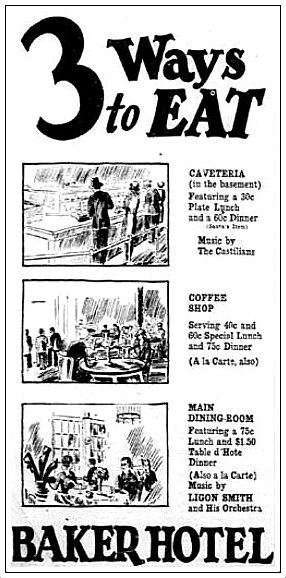
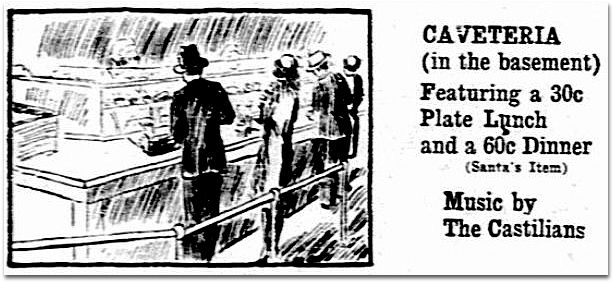
The Baker Hotel had “3 ways to eat”: one could eat cheap in the basement Caveteria (where, according to the Inflation Calculator, a 30-cent lunch in 1927 was the equivalent of about four bucks today), eat sort of cheap in the probably street-level coffee shop (lunch was about $6.75 there), and eat not cheap in the main hotel dining room (where lunch was over $10.00). (There was also the Peacock Terrace night club, well beyond reach of basement-dwelling diners.)

caveteria_dmn_120427

caveteria_dmn_120427-det1927

*

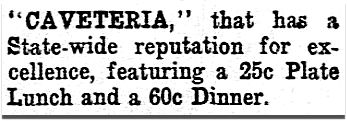
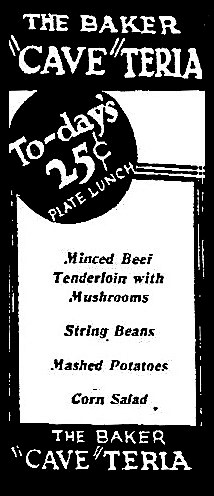
The price actually went down to a quarter by 1931 and had a “State-wide reputation for excellence.”

caveteria_dmn_020131DMN, Feb. 1, 1931

*

A year later the price was holding at 25 cents and it seems like a pretty good deal.

caveteria_dmn_021532DMN, Feb. 15, 1932

*

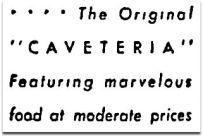
“The Original ‘Caveteria'” — accept no imitations! At least one other hotel in the Baker chain — the Gunter, in San Antonio — had a “Caveteria,” but apparently Dallas’ was first. In fact, the word and the hotel made their way into H. L. Mencken’s The American Language, Supplement One (see here).

caveteria_corsicana-daily-sun_031632Corsicana Daily Sun, Mar. 16, 1932

*

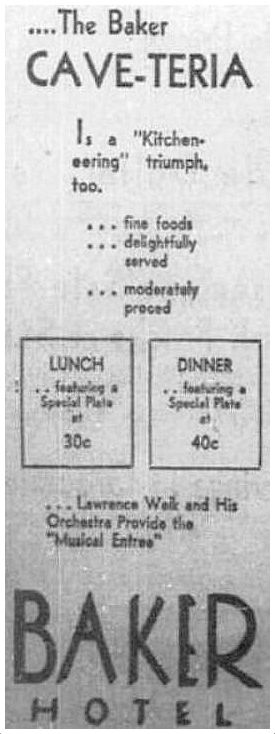
Oh yeah — live bands played while you ate your hearty meal of minced beef tenderloin. Even Lawrence Welk settled in for a stint as the “musical entree” in 1934.

caveteria_dmn_022234-lawrence-welkFeb., 1934

*

In 1942, the space once occupied by the Caveteria was turned over to the USO:

The Baker Hotel has provided the USO with what used to be the Caveteria in the basement of the hotel. It will be known as USO Club in the Cave. The entrance will be through the Akard Street entrance of the hotel.  (Dallas Morning News, Jan. 27, 1942)

*

And there it is — another place I wish I’d been able to visit.

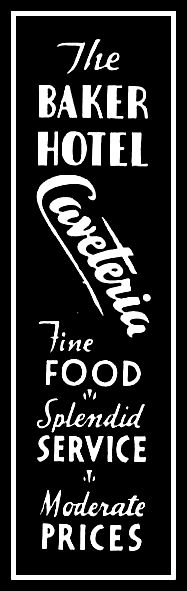
“Fine food. Splendid Service. Moderate prices.”

ad-baker-hotel-caveteria

***

Sources & Notes

Color postcards found on eBay.

The Baker Hotel opened in 1925 at Commerce & Akard on the site where the Oriental Hotel had previously stood, catty-corner from the Adolphus.

*

Copyright © 2015 Paula Bosse. All Rights Reserved.


Dr Pepper Ad: “I’ll Have Another Myself” — 1929

dr-pepper_dmn_052729

by Paula Bosse

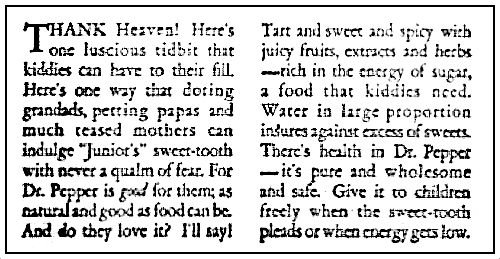
Drink up, kids — Gramps is buying! “It’s pure and wholesome and safe.”

ad-dr-pepper_dmn_052729-text

And the tag line: “It’s A Good Habit To Get — It’s One That Won’t Get You.”

dp-sign

***

Ad from 1929.

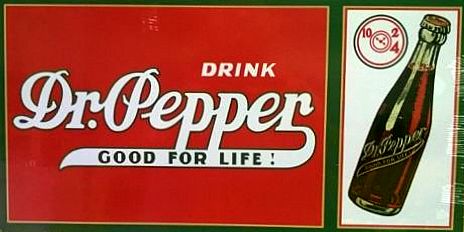
Reproduction of period sign found on eBay.

*

Copyright © 2015 Paula Bosse. All Rights Reserved.