Flashback : Dallas

A Miscellany: History, Ads, Pop Culture

Category: Local Personalities

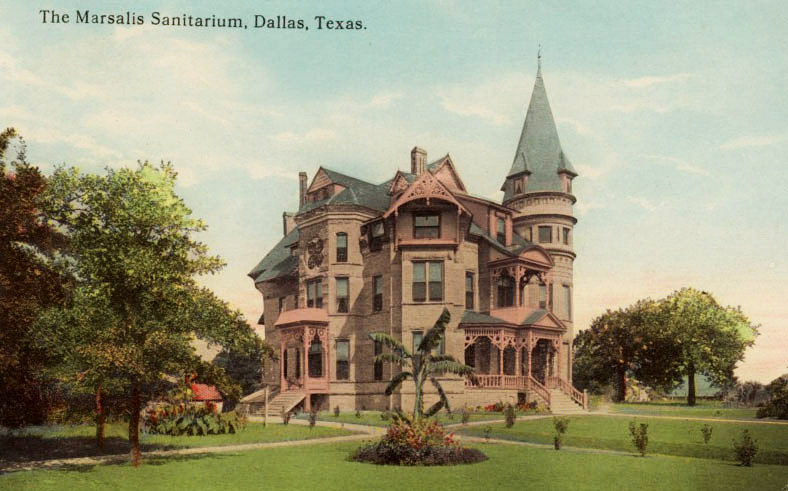
The Marsalis House: One of Oak Cliff’s “Most Conspicuous Architectural Landmarks”

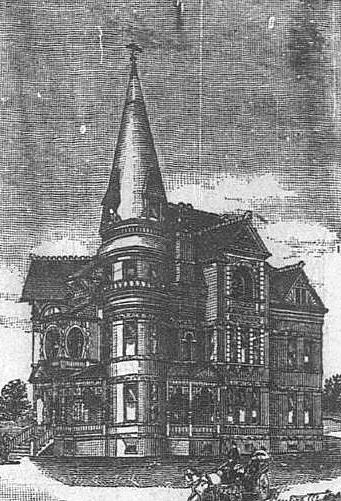
marsalis_sanitarium_oak-cliffThe fabulous Marsalis house in Oak Cliff (click for larger image)

by Paula Bosse

The Marsalis Sanitarium was a 15-bed private surgical and convalescent hospital in Oak Cliff, established in 1905 by Dr. J. H. Reuss and his partner, Dr. James H. Smart. Whether or not that building was actually pink (and I certainly hope that it was!), it was most definitely a show-stopper — one of those stunning structures that one doesn’t expect to see in and around Dallas because almost none of them still stand.

This grand home was built by Oak Cliff promoter and developer Thomas L. Marsalis in about 1889 as his personal residence at a reported cost of $65,000 (the equivalent of more than $1,750,000 in today’s money). It was located at what is now the southwest corner of Marsalis Avenue and Colorado Boulevard. The house was apparently never occupied. Supposedly, Marsalis’ wife did not want to live there because it was “too far from town” (!), but Marsalis’ financial distress throughout this time was probably more to blame.

marsalis-house_drawing
Dallas Morning News

Marsalis’ insolvency resulted in the foreclosure of the house in the early 1890s and its ultimate sale at public auction in 1903. The winning bidder at that auction was Dr. Reuss, and the house became the Marsalis Sanitarium soon after.

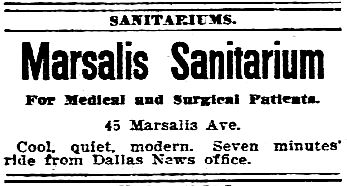
marsalis-sanitarium_tx-state-journal-medical-advertiser_dec-1905_portal
1905 ad (click for larger image)

marsalis_sanitarium_dmn_010109DMN, Jan. 1, 1909

marsalis-sanitarium_worleys-1909
Worley’s City Directory, 1909

Sometime after 1909 it became a girls’ seminary, and then in 1913 it fell into private hands. On August 10, 1914 the poor house burned to the ground. The headlines the next day read:

“Oil Starts Oak Cliff Early Morning Fire; Fisher Asserts Some One Set Old Building Ablaze; Firemen Find Structure Completely Enveloped in Flames and Interior Roaring Furnace.”

marsalis-house-fire_dmn_081114DMN, Aug. 11, 1914

Such a sad ending for such a beautiful house!

marsalis-home

***

Sources & Notes

1905 ad for the Marsalis Sanitarium from the December 1905 issue of the Texas State Journal of Medicine, found on the Portal to Texas History, here.

Black and white photograph of the Marsalis home in 1895 from the article in Legacies magazine, “Where Did Thomas L. Marsalis Go?” by James Barnes and Sharon Marsalis (which can be read here); photo from the collection of the Dallas Public Library.

For a biography of the family of Dr. Joseph H. Reuss, proprietor of the Marsalis Sanitarium, see here.

Click pictures for larger images.

*

Copyright © 2014 Paula Bosse. All Rights Reserved.


The Shooting of “Bonnie & Clyde” — 1966

bonnie-clyde_unt_113066On location: Greenville Avenue (click for larger image)

by Paula Bosse

Today is the 80th anniversary of the ambush and killing of Bonnie and Clyde. Since I’ve written about Ted Hinton (one of the ambushers and erstwhile motor lodge operator) and Clyde Barrow (as a not-yet-completely-delinquent 17-year old) (and dressed up in a sailor suit), why not a brief look at the movie?

I was hoping to find a bunch of local as-it-was-happening anecdotes in the newspaper archives, but I found very little. (Hey, Dallas — you had a major motion picture with Hollywood celebrites in it — couldn’t you have devoted a little more ink to it?)

The photo at the top is the only one I could find that showed shooting (…as it were) at a Dallas location. The above was shot at the Vickery Courts motor lodge at 6949 Greenville Avenue (just north of Park Lane, across Greenville and up a bit from where the old Vickery Feed Store was).

So photos were practically non-existent, but I did learn that the interiors were shot at a large soundstage on Dyer, just off Greenville, called Stage 2, owned by Bill Stokes of Bill Stokes & Associates (where I spent a blink-of-an-eye interning back in high school).

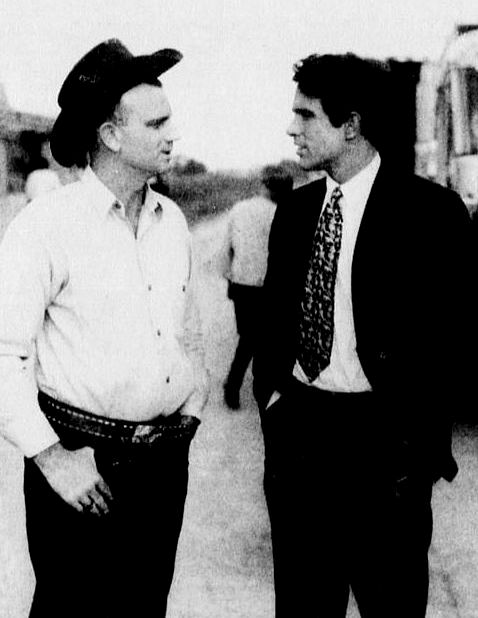
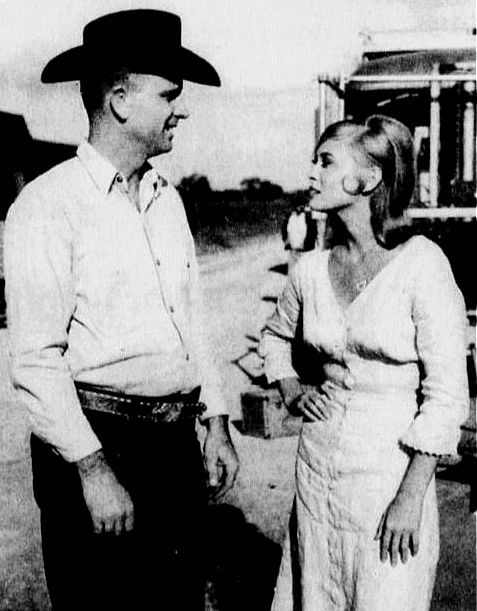
Below are two photos of Warren Beatty and Faye Dunaway between shots in Lavon, Texas, just outside Wylie — talking with one of the extras, Billy Joe Rogers, a saddlemaker from Wylie.

bonnie-clyde_lavon_beatty_102066

bonnie-clyde_lavon_dunaway-102066

The reactions to the finished movie from the local critics was interesting. The reviewer for The Dallas Morning News hated it. Hated it.

Bonnie and Clyde were a couple of rat punks who created terror in a vast area simply because they had no hesitation in gunning down those who stood in their way. […] They became for a brief span the nation’s most hunted outlaws and finally were shot down […] like the mad dogs they were. […] In a word: There is nothing entertaining about mad dogs; they should be killed — and quickly. (William A. Payne, DMN, Sept. 14, 1967)

I don’t know anything about the reviewer, William A. Payne, but my guess is that he vividly remembered the real-life Bonnie and Clyde and, like many other reviewers of the time, deplored the perceived glamorization of violence. (As an aside, I wondered why I wasn’t finding listings for “Bonnie and Clyde” in the early ’30s when I searched through the Dallas Morning News archives. As I learned from Mr. Payne, the two were commonly known as “Clyde and Bonnie” back then. So there you go!)

The review from Elston Brooks of The Fort Worth Star-Telegram, on the other hand, was ecstatic.

“Bonnie and Clyde,” which had every right to be a B-grade gangster shootout in double-breasted suits, is instead a shattering emotional experience, a fascinating film and  — oddly enough — an important motion picture. (Elston Brooks, FWST, Sept. 15, 1967)

My guess is that Brooks was about 30 years younger than Payne and had little, if any, personal connection to the real-life outlaws who killed real people.

*

The film ran up against a lot of studio problems. Warner Bros. head Jack Warner called it “the longest two hours and ten minutes I ever spent,” and the plan was to dump the movie in drive-ins and second-string-movie houses and be done with it. But producer-star Beatty was persistent and got it into the Montreal Film Festival where the positive reviews as well as the 9,000-word rave from Pauline Kael in The New Yorker assured it got the attention it merited. And it did. It was nominated for 10 Academy Awards and is considered a classic move of the 1960s.

*

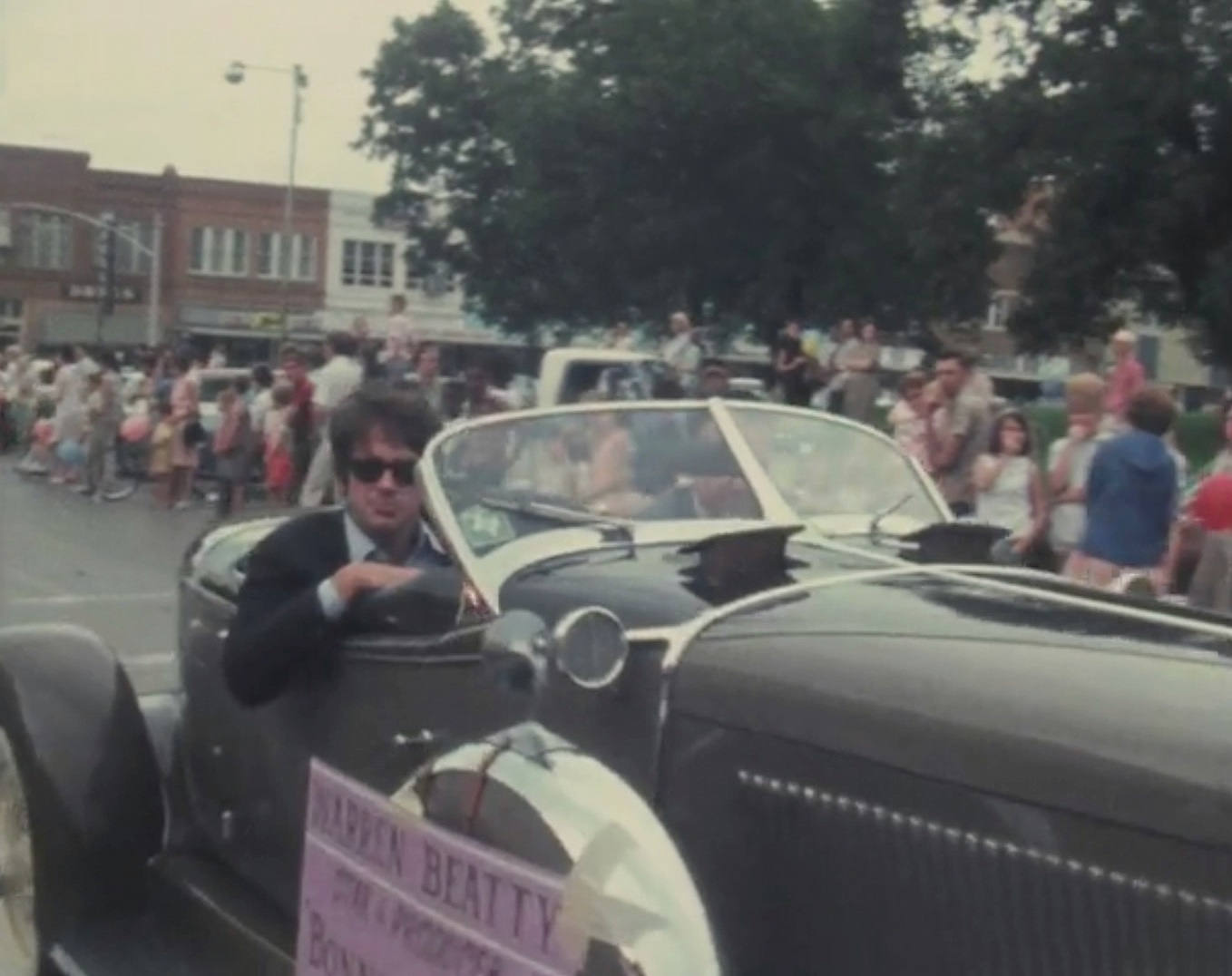
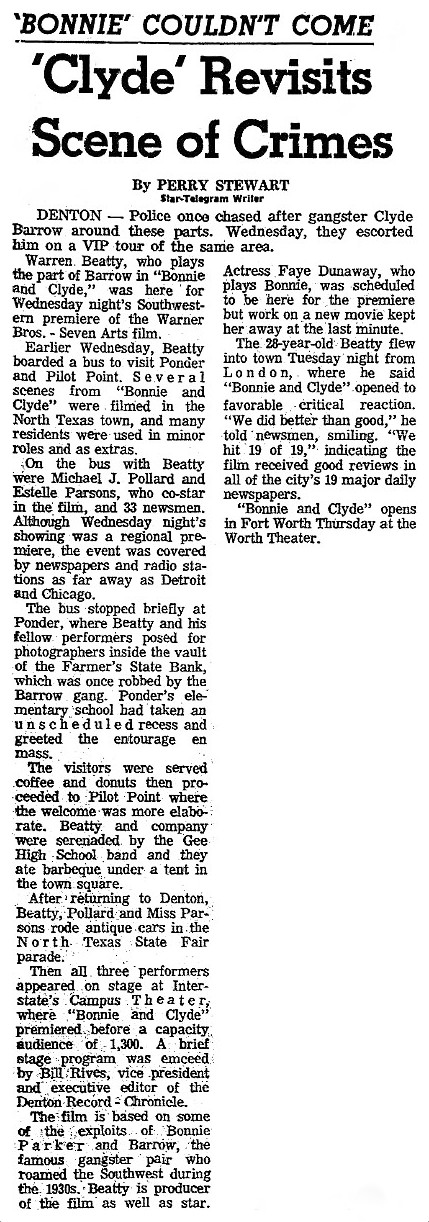
The movie had its Southwestern premiere at the Campus Theater in Denton in September, 1967. Watch (silent) news footage of the premiere from WBAP-TV (Ch. 5) at the Portal to Texas History, here (it begins about the 4:41 mark). Here’s a screen capture of Warren Beatty that day — also appearing were Michael J. Pollard and Estelle Parsons.

bonnie-and-clyde-movie_beatty_denton-premiere_wbap-tv_091367_portal

*

One last little interesting tidbit was what happened after the movie wrapped production in Dallas. Warren Beatty donated the so-called “death car” to a local wax museum. Unfortunately for the wax museum, the car’s bullet holes had been filled in to shoot another scene, so the museum had to search for someone to professionally and authentically re-riddle the car with bullet holes.

It’s always something.

***

Sources & Notes

Top dark and grainy photo of location shooting at Vickery Courts from The Campus Chat (newspaper of North Texas State University, Denton), Nov. 30, 1966.

Photos of Beatty and Dunaway in Lavon, Texas from The Wylie News, Oct. 20, 1966. An article and more photos from the set (local extras, etc.) can be found here and here.

Here’s a bonus Fort Worth Star-Telegram article on the fun and unusual bus trip that Beatty and other stars of the film took to some of the small towns they’d filmed in when they were back in the area for the local premiere in Denton (click to read):

bonnie-clyde_fwst_091467
FWST, Sept. 14, 1967

And a good overview of the making of the film can be found at TCM’s website here.

*

Copyright © 2014 Paula Bosse. All Rights Reserved.


My Father, Dick Bosse — Dallas Bookman

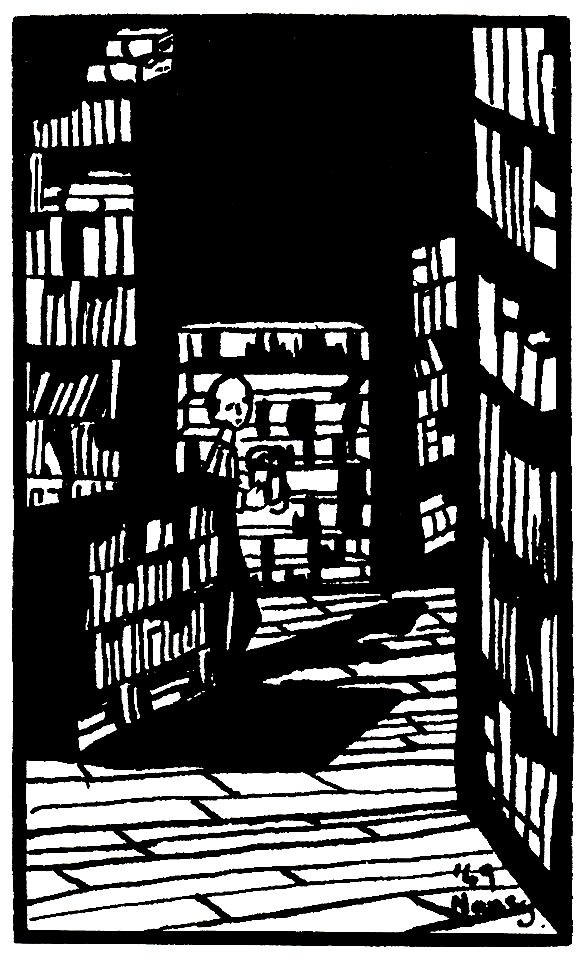
PRB_nancy-sketch_sm

by Paula Bosse

Dick Bosse was my father. When he died in 2000, he had managed (and later owned) The Aldredge Book Store for almost 45 years. He started working for founder Sawnie R. Aldredge, Jr. fresh off a half-hearted attempt at grad school. I’m sure he had no idea when he started working there (at $1.00 an hour) just how important a role the store would play in his life. My parents met at the store when my mother began working there, and they married a couple of years later. My brother and I spent countless hours there and practically grew up in the store. The Aldredge Book Store was a second home to my family, and looking back on all the time I spent there, all the books I read when I was bored, all the literati of the city I met who eventually popped in and sat around talking with my father over a cup of coffee or a beer, all the store cats I loved who became minor celebrities themselves — when I look back on all that, I realize how lucky my brother and I were to have had such interesting parents who brought us up in such an interesting place.

My father had a reputation as a stellar bookman but was known as much for his wit and humor as he was for his deep and wide-ranging knowledge of books, both rare and “chicken-fried.” He was one of the state’s top Texana experts, and his mailing list contained just about every major Texas author. The Aldredge Book Store was one of the oldest antiquarian bookstores in the Southwest, but my father was a remarkably unstuffy, unassuming, and down-to-earth bookseller.

I’ve been working off-and-on at collecting pithy catalog blurbs my father wrote over the years. The bulk of his sale catalogs were straight listings of antiquarian and out-of-print books, but he became fairly well-known in the Texas book trade for descriptions like these which he would insert throughout for his own amusement. I’ve left out the full bibliographical descriptions, but here are a few of my favorites. I realize some of these are a little esoteric, but this has been a fun project, and it’s nice to remember how funny my father was (bad puns and all). (I only wish I had been able to catalog like this when I worked as a rare books cataloger for an auction house!)

Adams, Ramon F. THE RAMPAGING HERD. The shit-kickers’ John Ciardi.

Brown, John Henry. LIFE & TIMES OF HENRY SMITH, The First American Governor of Texas. A rather nice copy, not one of the bugshit-encrusted remainders.

BULLETIN OF THE UNITED STATES FISH COMMISSION FOR 1891. A Texas piscatorial incunable.

Carter, Jimmy. KEEPING THE FAITH. Signed by the author, a former president.

Clary, Annie Vaughan. THE PIONEER LIFE. In HERD, but curiously not in SIXGUNS despite feuds, Texas Rangers, and Daddy popping caps on some badasses.

Clay, John. MY LIFE ON THE RANGE. Nice copy of the consensus bovine biggie.

Cravens, John Park. WITH FINGERS CROSSED: The Truth As Told In Texas. Apparently humor.

Devlin, John C. & Grace Naismith. THE WORLD OF ROGER TORY PETERSON, An Authorized Biography. Peterson, a student of blue bird mores, was known to Brandeis ornithologists as the goy of Jay sex.

Dobie, J. Frank. AS THE MOVING FINGER WRIT. Inscribed to “Mr. Moore,” in which 60-word inscription Dobie alludes (a frequent trick to prove he was not your run-of-the-mill shit-kicker) to Maugham and Schiller.

Eickemeyer, Rudolf. LETTERS FROM THE SOUTH WEST. Puny yankee sopping up the sun in El Paso & Santa Fe.

ENCYCLOPEDIA BRITANNICA. The twelfth edition (the eleventh edition with the supplements). Best encyclopedia in English executed prior to the American greaseballization.

Faulk, John Henry. FEAR ON TRIAL. HUAC to Hee-Haw.

Fuermann, George. RELUCTANT EMPIRE. Fine copy in dust jacket, signed by author and illustrator and marred only by one of those hideous goddam lick-in bookplates.

Gent, Peter. TEXAS CELEBRITY TURKEY TROT. Too much Peter; not enough Gent.

Hardin, John Wesley. THE LIFE OF JOHN WESLEY HARDIN. Mischievous preacher’s kid.

Hargrove, Lottie H. TEXAS HISTORY IN RHYME. Aarghh!

Hudson, Alfred Edward A’Courte. SELECTED BLOOD STUDIES ON SWINE. “Satisfying your antiquarian porcine hematological requisites since 1947.”

Koehler, Otto A. KU-WINDA (To Hunt). African safari by the Texas Beer Baron; well-illustrated, including some comely bare-breasted Somaliettes holding a “Join The Swing To Pearl” banner.

Long, Mary Cole Farrow. STRANGER IN A STRANGE LAND, From Beaufort, South Carolina, To Galveston Island Republic of Texas — A Biography of Judge James Pope Cole (1814-1866). Probably unknown to Heinlein.

McDonald, William. DALLAS REDISCOVERED: A Photographic Chronicle of Urban Expansion, 1870-1925. The reissue was in wraps and had a “perfect binding,” one of the more notable oxymorons of our time.

Pellowe, William C. S. (ed.). MICHIGAN METHODIST POETS. Enthusiasts of The Muse will be relieved to know that Michigan sprinklers are as fully gifted as their Texas colleagues.

Riley, B. F. HISTORY OF THE BAPTISTS OF TEXAS. Covers blemished, apparently sprinkled by a surly Methodist.

Rozelle, Robet V. (ed.). THE WENDY AND EMERY REVES COLLECTION. The greatest Dallas art coup since SMU acquired the wet-paint Spanish Masters collection of Al Meadows.

Schlesinger, Arthur M., Jr. A THOUSAND DAYS, John F. Kennedy in the White House. Most notable fawning since Bambi’s birth.

Slaughter, Bob. FOSSIL REMAINS OF MYTHICAL CREATURES. Profusely illustrated with photos and drawings by the author, apostate bar-fly now a distinguished scientist and sculptor. A grab-ass classic.

White, Owen P. MY TEXAS ‘TIS OF THEE. A nice enough copy except that a cretin at something called “Mary’s Book Nook” was a compulsive rubber-stamper.

 *

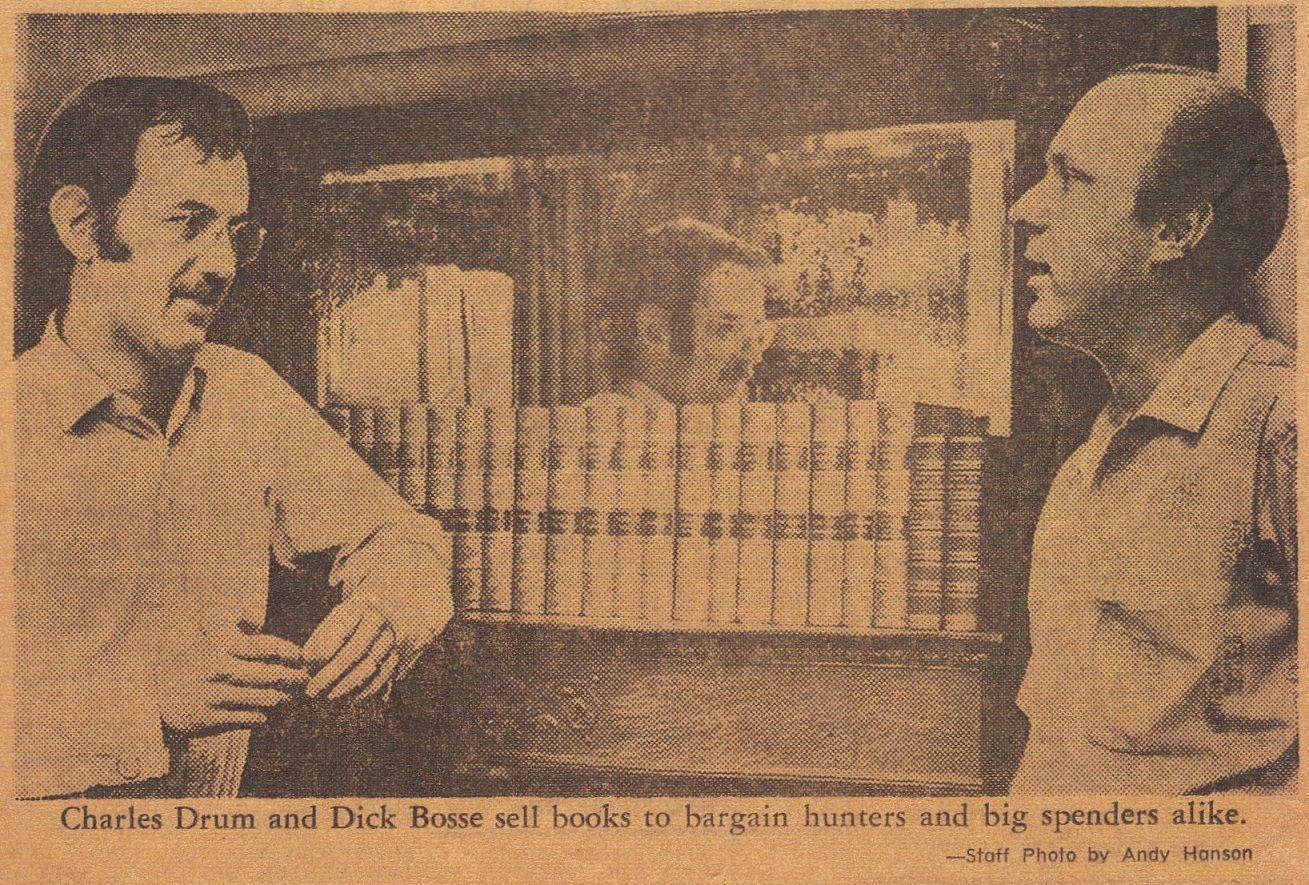
PRB-CD_dth_062368-putcamp

Above, my father, on the right, at the first location of the Aldredge Book Store on McKinney Avenue. The accompanying article by Luise Putcamp, Jr. is here.

*

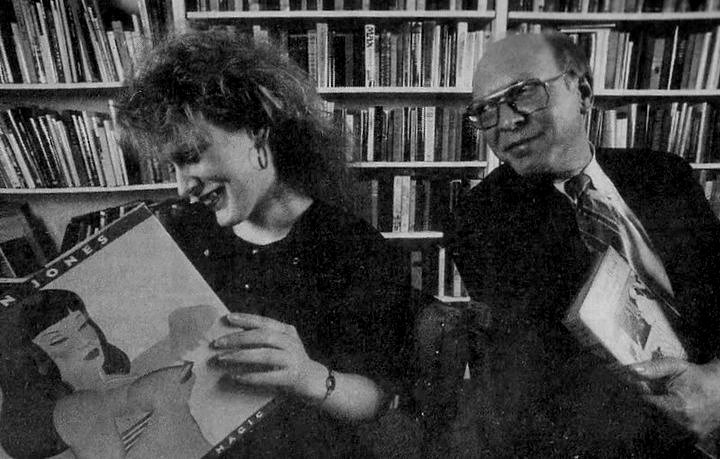
PB-PRB

Above is one of my favorite photos of my father, taken in a small used bookstore I had on Lower Greenville Avenue. A newspaper editor thought it would be “cute” to have a photo of father-daughter booksellers. The photographer suggested I hold the newer, cutting-edge art book while my father held the older, obscure British arts journal. Of course, my father would have been more interested in the Allen Jones book, and I would have been more interested in The Yellow Book (a set of which my father gave to me for Christmas one year — and it was one of the best gifts I’ve ever received).

Today would have been my father’s 80th birthday. 80! I think of him all the time, and I miss him terribly. He was a wonderful guy, and — aside from the modest income — I think he would have said that a lifetime career as a bookseller was a pretty sweet deal.

***

Sources & Notes

When my father died in April, 2000, several appreciations of him appeared in print. If you would like to read the appreciations by his friends A. C. Greene (a very sweet tribute) and Lee Milazzo (my personal favorite — very funny), as well as the nice official obituary, they are all transcribed here

My brother, Erik Bosse, wrote a wonderful piece about our father for a catalog we issued after his death. The warm and amusing essay — as well as some of the crazy business cards my father took great joy in printing up — can be found here

Sketch at the top was done by Nancy C. Dewell (1969). Slightly larger than a business card, it arrived in the mail one day with a short note that read: “I don’t know your name. I think you are Mr. Aldredge. I would be pleased if you would accept my drawing of you in the bookshop. Sincerely, Nancy C. Dewell.” I can’t imagine a better likeness. I really, really love this.

Photo of me and my father from the Dallas Observer.

*

Copyright © 2014 Paula Bosse. All Rights Reserved.

Dewey Groom and The Longhorn Ballroom

longhorn-ballroom-logo

by Paula Bosse

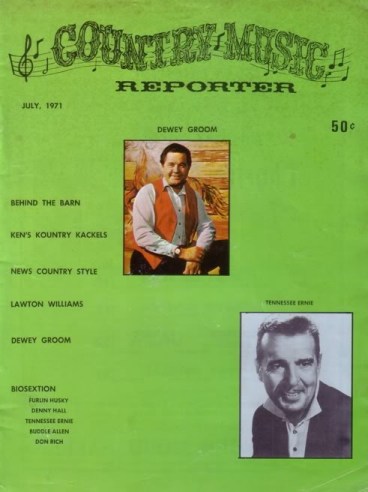
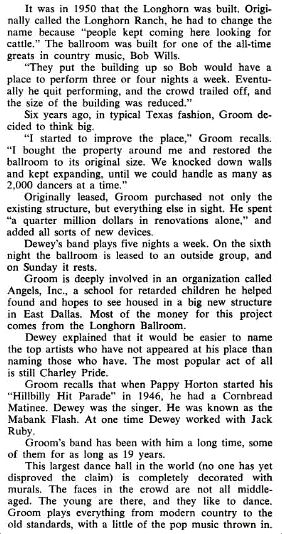
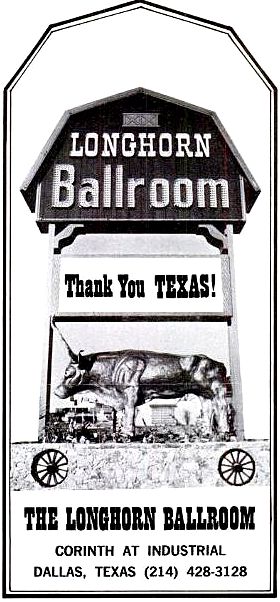
Growing up in Dallas with a father who was a classic country music fan, I’d always heard of The Longhorn Ballroom. And I’d always heard of Dewey Groom. You can’t have one without the other. The place is still around, but it keeps opening and closing and opening and closing. I don’t even know if it’s active at the moment, which is a real shame, because that place is COOL. I came too late to have seen the place at its glorious height as one of the country’s premiere country ballrooms. And I also came too late to witness the infamous Sex Pistols appearance there in the ’70s. I DID make it once or twice when it was going through its “alternative” period, booking bands that normally played in Deep Ellum. And I loved it. It was HUGE. Western kitsch everywhere. And a regular clientele comprised of people you’d either want to sit down and talk with for three hours or do your best to avoid completely — mostly the former. Below is a transcribed interview with Dewey Groom as it appeared (typos and all) in an old, obscure country music magazine that must have belonged to my father. At the end of this post are a few Dewey-factoids.

Even though his contributions are often overlooked, Dewey Groom was an important figure in the history of entertainment in Dallas. He died in 1997 at the age of 78. Thanks, Dewey!

*
longhorn-ballroom_billboard_112170

***

deweygroom_mag-cover-1971-sm*

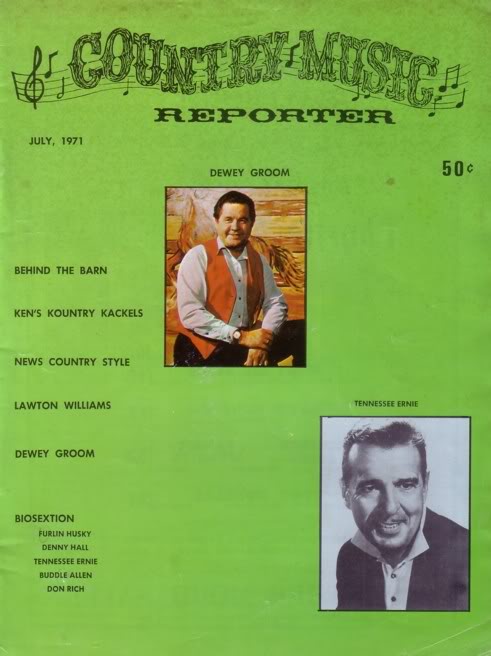
COUNTRY MUSIC REPORTER (Grand Prairie, Texas) – July 1971
“Dewey Groom: From the Mabank Flash To Big Daddy of Country Music”
(writer uncredited — presumably Wayne Beckham, the magazine’s editor)

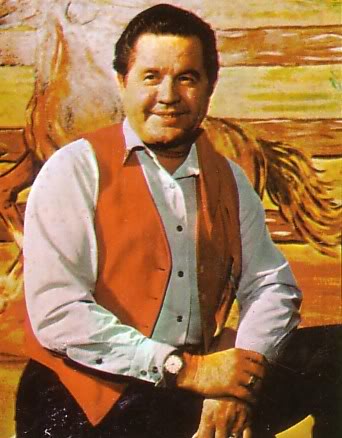
Back before he combined dancehall-keeping with his country singing, Dewey Groom was known on Dallas radio as the Mabank Flash – a reference to his Van Zandt County origins. He likes to talk of those origins, but he won’t complain nowadays if you call him the Lawrence Welk of country music.

I found him happy about his success as owner of the million-dollar Longhorn Ballroom on Corinth off Lamar [in Dallas, Texas]. But he was more inclined to talk of Angels Inc., the school for retarded children he helped found and hopes to see housed in a big new structure off Buckner, in East Dallas.

If he succeeds, it will be due to the middle-aged faithful who regularly go in thousands to the Longhorn to hear celebrities like Charley Pride or Jerry Lee Lewis, or simply to reassure themselves that the Mabank Flash of Dallas’ immediate postwar years is still in voice.

“I can’t yodel anymore,” Groom told me in the quiet-before-the-storm of a Friday afternoon, “but I still put in my 30 minutes singing and laughing up there with my band every working night – and I’m still hopeful that I don’t have an enemy in the world.”

Likely, he doesn’t; he’s climbed high in his 23 years of dancehall-keeping since he opened at 1925 1/2 Main in the old Bounty Ballroom. He’s on the phone steadily to Nashville picking the talent that makes the Longhorn one of the biggest sound chambers anywhere for the Nashville Sound.

Only big name he’s missed is Johnny Cash – and he, Groom avows, is the biggest: a real philosopher and humanist.
dewey-groom_color

Back in Groom’s youth the big name, he says, was Jimmie Rodgers, the old blues singer who started country music. But even before Rodgers became famous in the ’20s, the Groom family was a gospel singing crowd for certain.

“Daddy sang and my uncle was a singing schoolteacher,” he says. “In Deep East Texas, singing schools were everywhere. I joined. They taught you to read music and keep time. Gospel singing is pretty close to country music; so evenings we’d go across the fields to Uncle Bert Wise’s and listen to Jimmie Rodgers. Uncle Bert had the only phonograph around and got all the new records.”

Dewey imitated what he heard, but his friends said everything came out like Gene Autry. He believed them and went to look for a wider audience. He landed in Dallas at 10 with his guitar, but instead of instant fame, found work in a garage.

“I’d get up in the night and hang around a midnight radio show – I’d drop in on Bill Boyd’s old live 6 a.m. program on WRR,” he recalls. “Sometimes he’d let me sing on that show – the big time.”

But it wasn’t until he donned a uniform in 1941 that Groom had a real chance to stretch his lungs. He started singing in army rec halls and when he got overseas became the “Western part” of a divisional GI band which entertained for 42 months in the New Guinea area and Australia.

“I guess I became a professional then,” he reminisces, “but it was Hal ‘Pappy’ Horton that got me going in civilian life. I won $50 first prize on Pappy’s old Hillbilly Hit Parade in 1946. Then when he started his noon-time Cornbread Matinee, I was the singer. The show was a tremendous hit for 200 miles around Dallas. Pappy brought in Gene Autry and Roy Acuff. I was a hit, too. I played school shows and they used to tear the buttons off my clothes. Nobody knew it, but the Mabank Flash’s wife was making those pretty clothes I wore. I was the biggest thing in country singing around here, but she was the biggest thing in keeping me going.”

But Pappy died and the school shows Groom loved petered out. Too many bands were vying for a chance to put on shows in the schools. So Groom went to playing dances.

He ended up with Jack Ruby at the Silver Spur.

“I made Jack a lot of money,” he recalls, “at the time when he was deep in debt.”

“What kind of man was he?” I asked.

“A driver, and a talker – very emotional. Everybody liked him. He’d do anything in the world for you. But he didn’t understand country music. He wanted a sophisticated place, which you can’t have. He ran away my followers as fast as they turned up. Finally, the police that hung around the place told me I ought to get into business for myself. I borrowed $500 and opened up.”
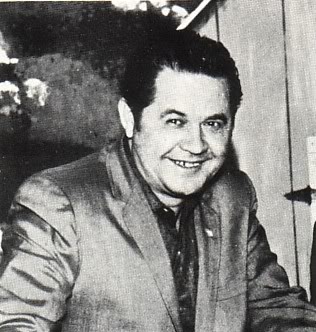
dewey-groom_bw

It’s been a rough haul, says Groom, and he’s made it through several locations only because he understands the business – and that takes years.

Too many men rise and fall. Bob Wills, for instance, was the biggest bandleader in the world at one time – he outdrew Tommy Dorsey. Now – well, Groom will have a “tribute” dance for Wills, a man whom, next to Pappy Horton (whom he reveres as a great and good man), Groom admires most.

He cut his professional teeth on Wills’ songs – especially San Antonio Rose which, he confides, is simply an earlier Wills hit, Spanish Two Step, played backwards. Groom also has a taped narrative of Wills’ life, which has been a big radio hit. He expects the Wills Tribute Night to be a success.

“You can squeeze 2,000 people into the Longhorn,” he says, “and I guarantee the top guest stars from $1,500 to more than $2,000. They always make more than the guarantee. This week, it’s Ray Price. Other big names are Charley Pride, the Negro country singer, who I rank next to Johnny Cash, and people like George Jones, Tammy Wynette, Harold Morrison and Conway Twitty.”

As a lifetime member of the Country Music Hall of Fame, Groom is certain that another gospel-singer-type – Jimmy Davis, former governor of Louisiana – will go in the Hall of Fame this year.

Groom is sentimental about the old times and old-timers, but he knows it’s harder to please people nowadays. Variety is demanded. Even a little pop gets mixed with country music.

“People think I’m rich and I guess sometimes I want them to think so,” he confides, “but I don’t want to be. I want friends and I want to finish that school for Angel Inc. If I can do these two things, I’ll be happier even than I was when I was the Mabank Flash.”

“Daddy Dewey,” as he is known by many artists and fans, knows practically all the stars. He has had many of them on his stage. Dewey has contributed much to many artists in helping to get them started. Through the years he has recorded many records and written many songs as well.

The Longhorn Ballroom came about in October, 1968. Since then he has also purchased the old Guthrie Club and torn out the wall to increase the seating capacity to over 2,000, on a 4 1/2 acre plot that cost nearly $500,000.

Dewey Groom has become an authority on country music. He is often called upon for informative opinions on new country clubs or organizations. Many fellow club owners are personal friends and often obtain information about artists and business – [there’s no] bitterness that often comes in competition.

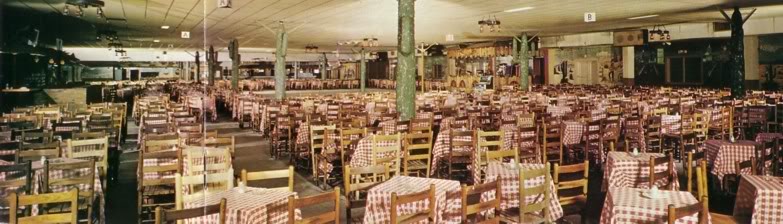
It’s been a long way since Dewey first traded a bull-calf for a guitar to the present-day Longhorn Ballroom. It is without doubt “America’s Most Unique Ballroom.” A landmark in Dallas, and one of the few western ballrooms in America. Hand-painted murals cover the walls and country decor prevails. Top country artists appear here weekly [and] Dewey’s own 12-piece band appear[s] nightly.

**

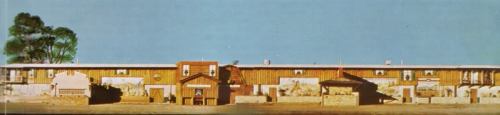
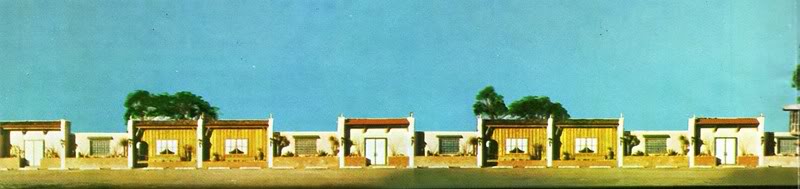
Below, photos from the article showing a partial view of the sprawling interior, complete with fantastic cactus pillars, as well as a couple of exterior shots showing Western street-scenes outside the club in a horseshoe around the parking lot. (Click to see larger images.)
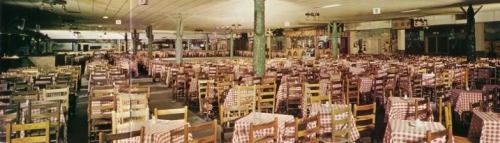
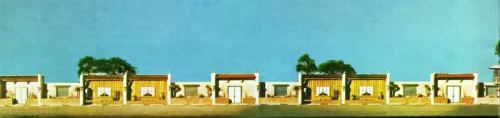
dewey-groom_longhorn-ballroom_int

dewey-groom_longhorn-ballroom_ext1

dewey-groom_longhorn-ballroom_ext2

***

Sources & Notes

Incidentally, I have moved this post from another blog I had a long time ago. Without question, this got more hits and more comments (…more than 50!) than anything else I’d ever posted. People loved the Longhorn Ballroom, and a lot of them miss the days of dancing and drinking at the legendary dancehall (which just happened to be in a very seedy part of town, at Corinth and Industrial). Long live the Longhorn! (Also, I think it’s high time we bring “Dewey” back into the baby-name-pool. Along with “Roscoe.” … And maybe “Lon.” Pass it on.)

A short interview with Dewey on his retirement — “Adios, Longhorn Ballroom” by Mike Shropshire — was printed in Texas Monthly (March 1986) and can be found here.

Dewey Groom’s record label, Longhorn Records, was fairy active. He even put out some recordings of himself. I just listened to “Butane Blues” and I realized it was the first time I’d ever heard his voice (Dave Dudley meets Malcolm Yelvington). Listen to his recording on YouTube here.

Check out a cool photo of Dewey and his band in the early ’50s here.

A weird little detour into Dewey’s 8-page Jack Ruby-related file in the Kennedy assassination investigation (in which “barber” is listed as his profession) can be found here.

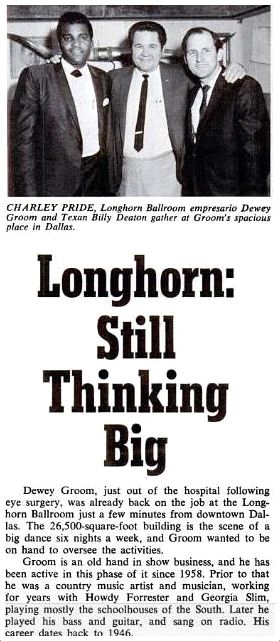
Below a short piece from Billboard (Nov. 21, 1970).
dewey-groom-billboard-112170adewey-groom-billboard-112170b

And, finally, a nice history of the Longhorn Ballroom by Jeff Liles (who booked bands there for a while in the post-Dewey era) can be read on the Dallas Observer website here.

*

Copyright © 2014 Paula Bosse. All Rights Reserved.

“Mars Needs Women” — The Dallas Locations

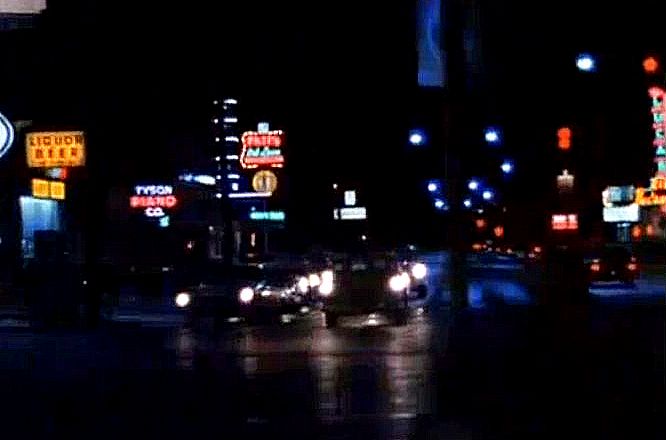
1-mars-oak-lawnOak Lawn & Lemmon, 1966

by Paula Bosse

Chances are, if you’re a native Dallasite and you’re a cult movie buff, you’ve heard of Dallas filmmaker Larry Buchanan (1923-2004), the self-described “schlockmeister” who made a ton of low-budget movies in Dallas, almost all of which are considered to fall in the “so-bad-they’re-good” category. I’ve made it through only three of them, and while they’re definitely not great (or even good, really), there were moments I enjoyed.

Buchanan’s most well-known movie — if only because the title has worked itself into the sci-fi vernacular — is Mars Needs Women, shot in Dallas in a couple of weeks in late 1966, starring former Disney child star Tommy Kirk and future star of “Batgirl,” Yvonne Craig. For me, the worst thing about the movie is its incredibly slow, molasses-like editing (courtesy of writer-director-editor Buchanan who was working on contract to churn out movies that had to be cut to a very specific running time, and he’s obviously padding here with interminably long scenes that drag and drag). And then there’s the dull stock footage and weird background music that I swear I’ve heard in every cheap Western ever made. Still … it has its charm.

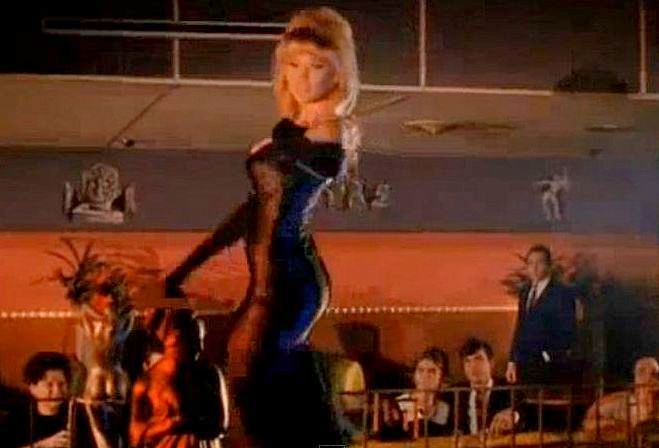
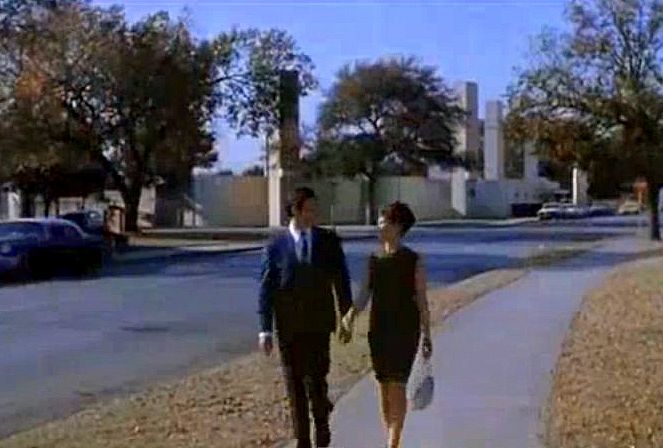
But the BEST thing about this movie (and, presumably, his others) is that it was shot entirely in Dallas, using a lot of instantly recognizable locations. (Every time I saw a place I knew, I perked up — it reminded me a bit of seeing Bottle Rocket for the first time — almost shocked to see common every-day places in an honest-to-god MOVIE!) So, if you don’t feel you can sit through the whole thing (available, by the way, in its entirety online — see link at bottom), I’ve watched it for you, with a whole bunch of screen shots. So feast your eyes on what Dallas looked like in November of 1966. (By the way, because the movie revolves around …. Mars needing women, the movie is actually set in Houston, home of the Johnson Space Center. Even though you see the very distinctive Dallas skyline — repeatedly. Houston! You wish, Houston!)

My favorite shot is the one at the top of this page and is seen in the first 90 seconds of the movie: Oak Lawn at Lemmon, with the familiar Lucas B & B sign at the right. This area was used a few more times. One character goes into the old Esquire theater, but, sadly, there was no establishing shot showing that great old neon sign. I think the first interior — showing a couple at a lounge — was shot in the swanky private club, Club Village, at 3211 Oak Lawn (at Hall), just a short hop from Oak Lawn and Lemmon.

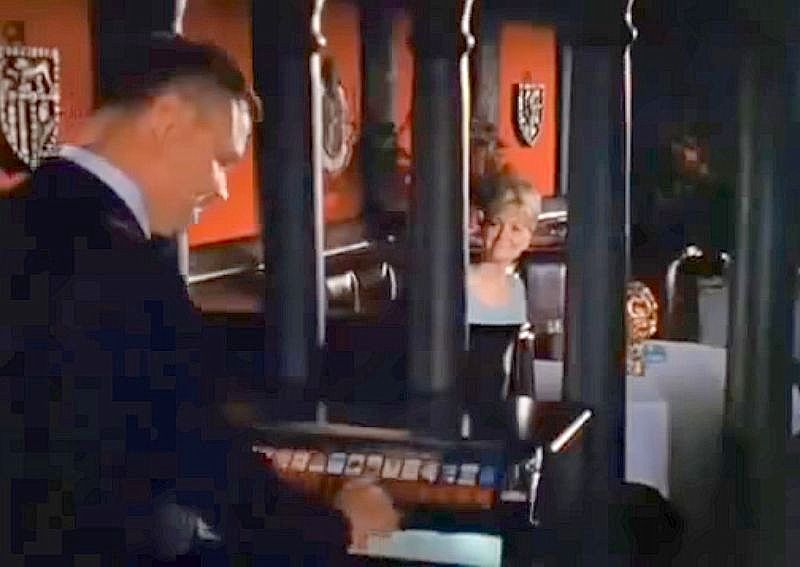
1966_club-village_mars-needs-women

Next, we’re off to White Rock Lake.

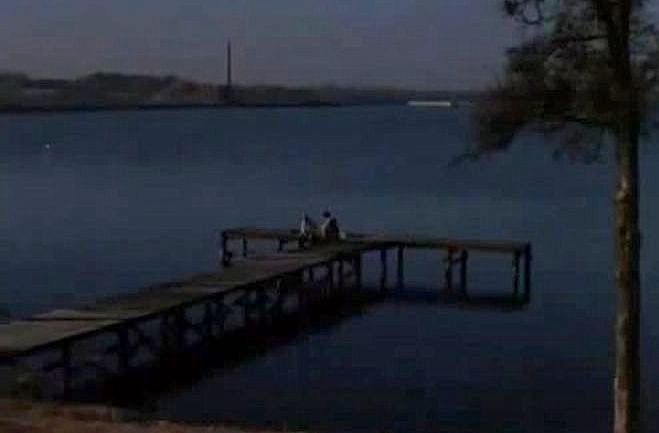
2-mars_pump1White Rock Lake. Shot day-for-night, with the pump station in the distance.

3-mars-pump2White Rock Lake pump station, where the Martians are headquartered as they search for healthy, single women to take back to Mars to help re-populate the planet.

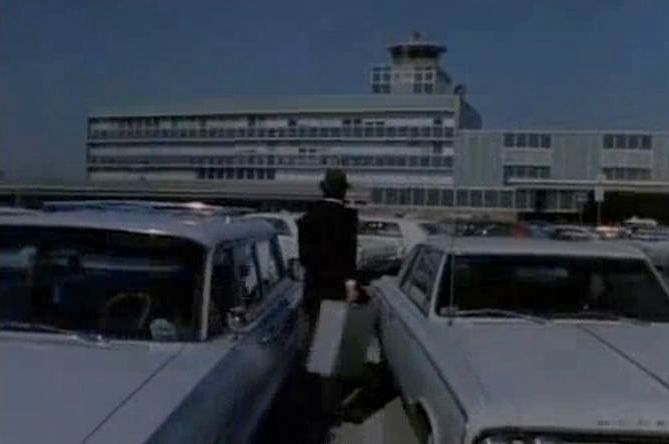
4-mars_love-field-extLove Field parking lot. Still shooting day-for-night. Badly.

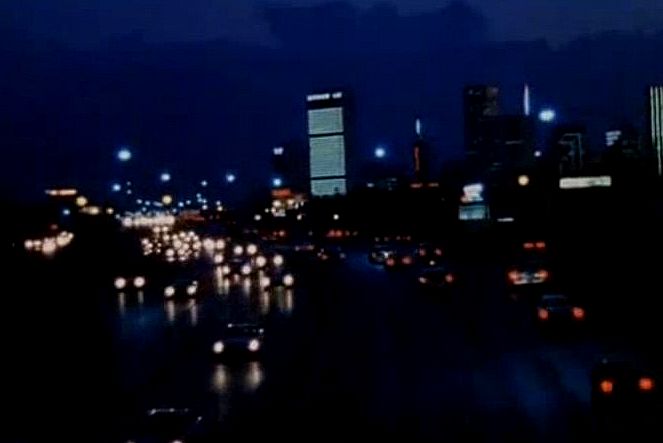
5- mars-southland-lifeThe Southland Life Building, etc., magically transported to Houston.

7-mars-athens-stripAthens Strip — a strip joint on Lower Greenville, one block north of the old Arcadia Theater. I’ve never heard of this place, but I came across the story of a guy who had visited the place back around this time and remembered one of the VERY unhappy dancers who hurled handfuls of the coins (!) that had been tossed onstage back into the audience, with such force that his face and chin sustained minor lacerations.

8-mars-needs-women_athens-strip_bubbles-cashLocal celebrity-stripper “Bubbles” Cash, inside Athens Strip. Plainclothes Martian (standing) ponders whether she has what it takes to birth a nation. (She does.)

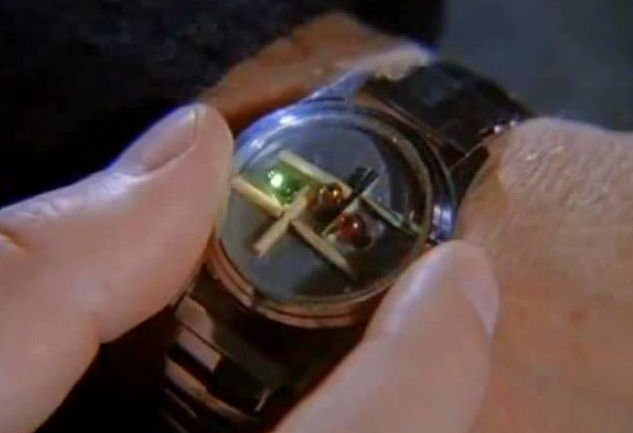
9-mars-watchMy favorite example of what a director is forced to resort to when there is no budget. This is some sort of sophisticated communication device. I think those are matchsticks.

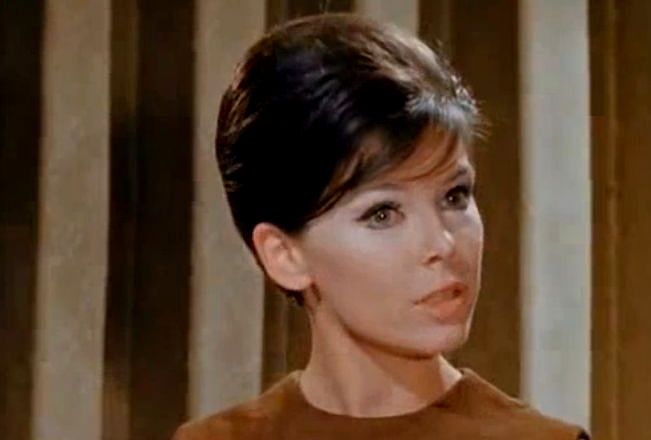
10-mars-yvonne-craigYvonne Craig, without a doubt the best actor in the movie. In fact, she’s really good. She had already made a few movies in Hollywood at this point, but the lure of a starring role brought her back to her hometown (where the newspapers reported she was happily staying with her parents during the two-week shoot).

11- mars-band-shellMartian #1 and sexy space geneticist strolling through Fair Park — band shell behind them, to the left.

12-mars-planetariumThe Fair Park planetarium.

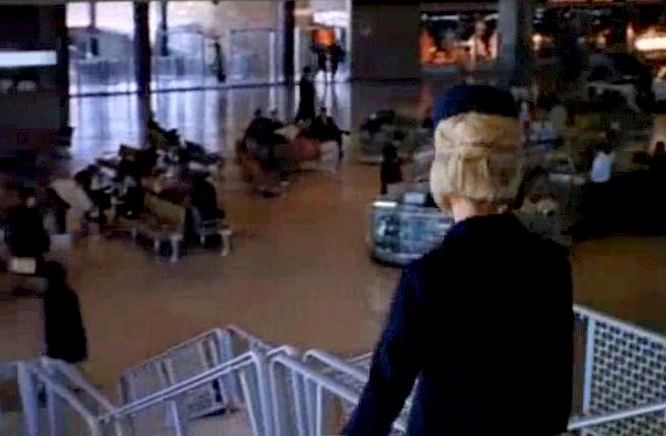
13-mars_love-fieldLove Field. I love the interior shots of the airport in this movie. (The stewardess walking down the stairs? Destined for Mars.)

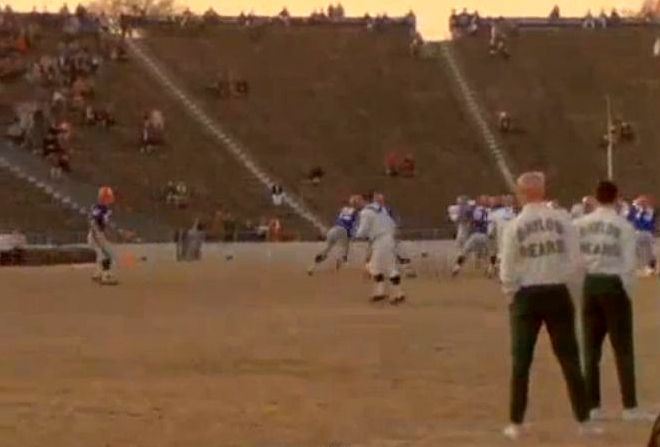
14-mars-cotton-bowlCotton Bowl, shot during a homecoming game between SMU and Baylor. Some shots show a packed stadium, some show this. Word of warning to the homecoming queen, Sherry Roberts: do NOT accept that flower delivery!

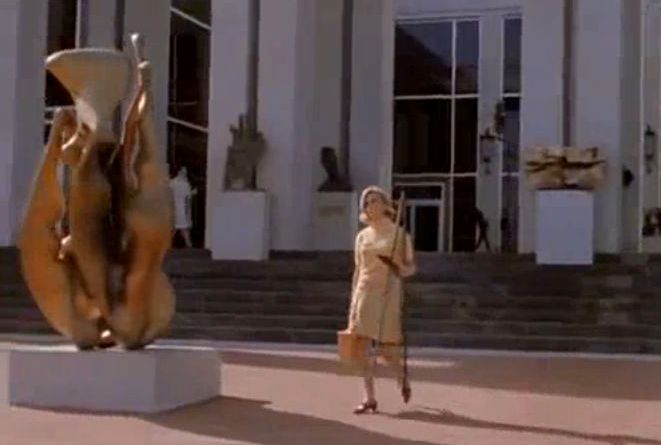
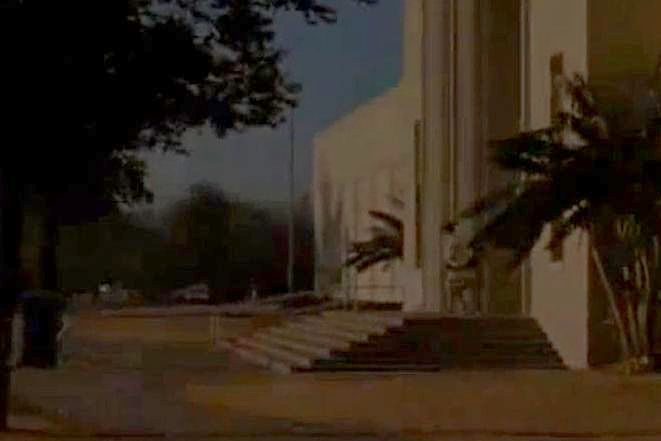
15-mars-meadowsSMU, Meadows School of the Arts. I love the pan across the front of the building. Mars Needs Co-Eds.

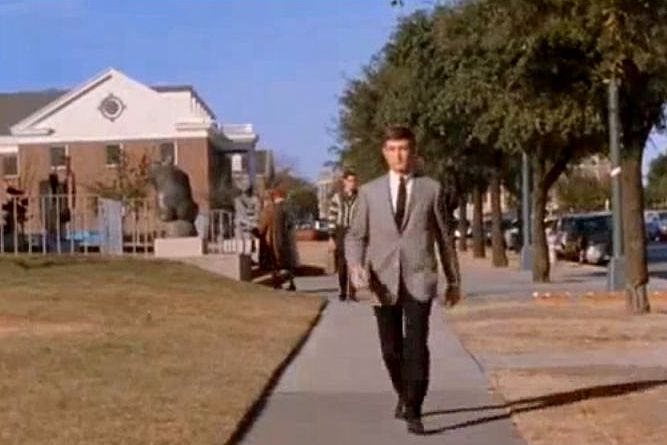
17-mars_BMOCSMU. BMOC (Big Martian On Campus).

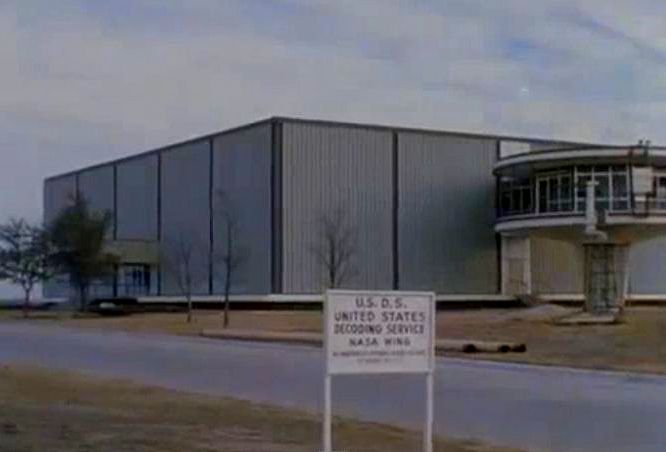
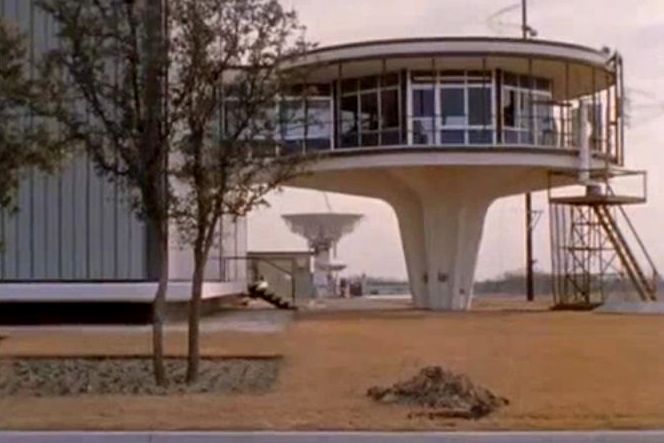
18-mars-collins-radioThe one location I couldn’t figure out. And it’s because it isn’t in Dallas. It’s the Collins Radio building in Richardson, a company that was absorbed by/bought out by/merged with Rockwell International. I think all the interior and exterior shots which are supposed to be NASA were shot here. How did a low-budget director like Larry Buchanan get into a place like that? According to a 1986 Texas Monthly article, Buchanan, in his day-job career as an ad-man, was hired by Collins Radio in 1961 to work in their “audio-visual” department” (the man who hired him was Harold Hoffman, whose later film work with Buchanan was done under the name Hal Dwain).

19-mars-collins-radioSo, yeah — COOL location.

20-mars_fair-parkMore Fair Park, more murky day-for-night.

21-mars_pump3White Rock Lake pump station, aka the Martian lair.

22-mars-saucerFANTASTIC flying saucer. Do the Martians get their five healthy, single women on board the ship and get them back home? You’ll have to watch it for yourself to find out.

23-mars-endYou tell ’em, Konnie.

mars-needs-women_VHS-box

Check back in a few days for more on Larry Buchanan (including a long-lost photo of him at work back in his advertising days in the 1950s).

UPDATE: Here it is — Larry Buchanan filming a Chrysler spot in the Katy railyard in 1955 for Dallas’ Jamieson Film Company, here.

***

Sources & Notes

The entire movie is on YouTube in a pretty good print. Watch it here.

Larry Buchanan Wikipedia page is here.

Mars Needs Women Wikipedia page is here.

Collins Radio/Rockwell Collins Wikipedia page is here.

Consult the Dallas Morning News archives to read a somewhat sarcastic Dallas Morning News article by Kent Biffle on the shooting of the Cotton Bowl sequence (I miss his Texana columns!): “That UFO Was a Field Goal” (Nov. 20, 1966).

*

Copyright © 2014 Paula Bosse. All Rights Reserved.
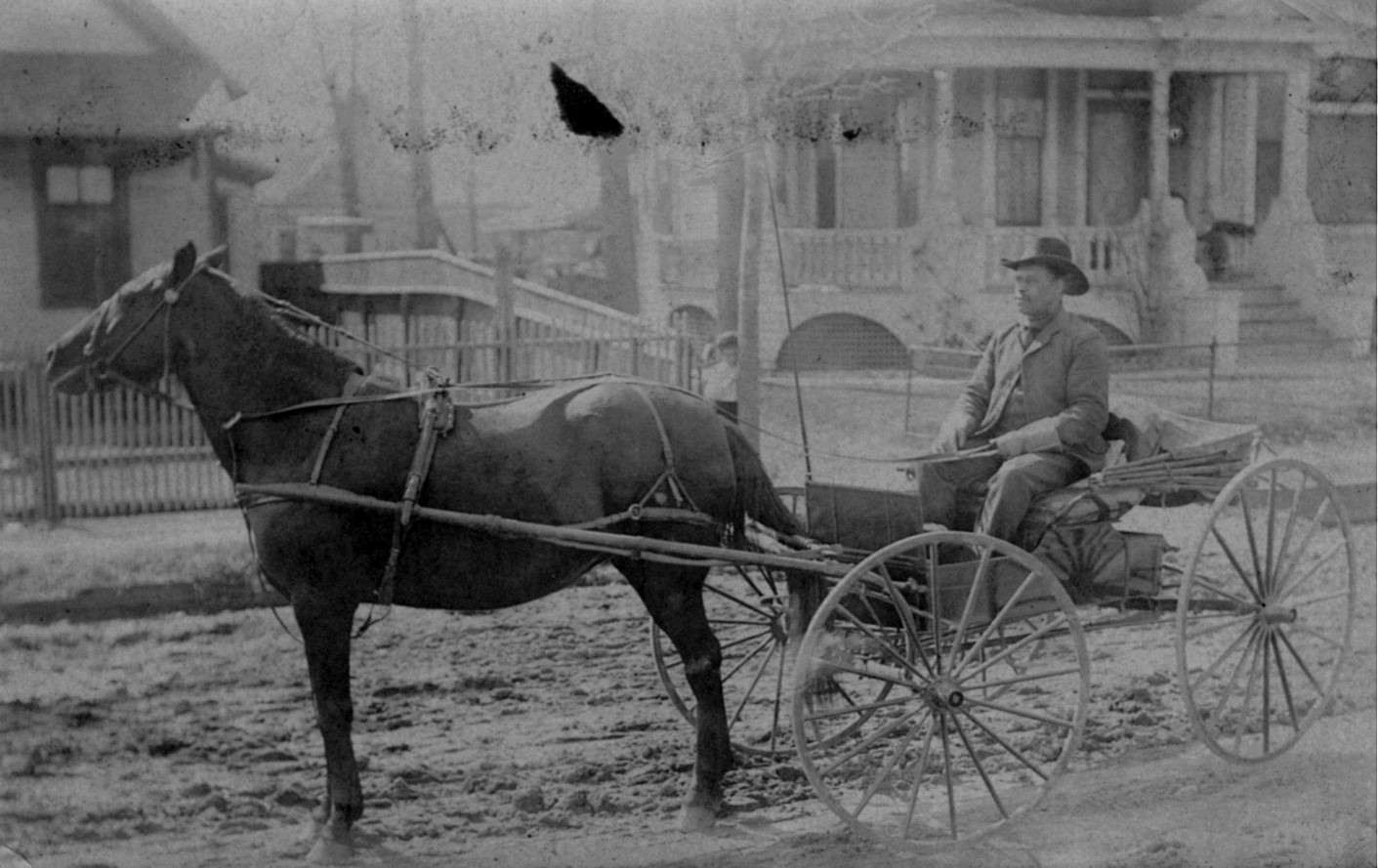
Jordan Moore

jordan-moore-buggy_c1905Jordan Moore, about 1905 (click for larger image)

by Paula Bosse

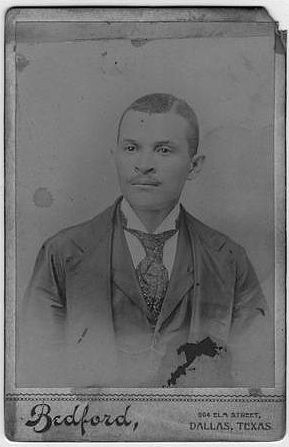
When wandering around the internet, one often encounters arresting images. Like the one above. There’s something about that photograph that grabs your attention. The stoic man in the buggy, the stiff, straight-standing horse, the child hiding behind the pole, the partial view of the porch of a fancy house, and the horrible, horrible condition of that street. The description reads simply: “Photograph of Jordan Moore seated in a horse-drawn carriage. Houses are visible in the background.” I wondered if I should know who Jordan Moore was, because the name wasn’t familiar. The photograph was in the collection that had been donated to the Dallas Historical Society by J. L. Patton, a prominent African-American educator. I found a few more photos of Mr. Moore in Patton’s collection, but I still had no idea who Jordan Moore was. So I did a little research.

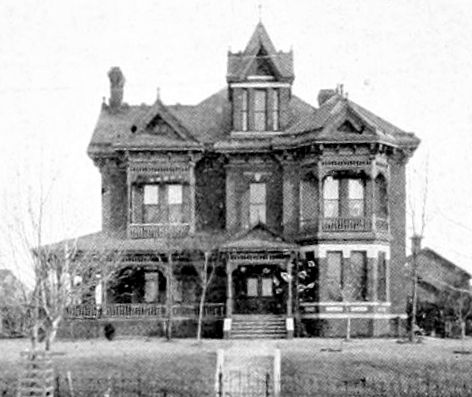
Jordan Moore was born in Virginia in 1863. At some point he made it to Texas, perhaps in the early 1880s, and then to Dallas a few years later. By 1893 he was working for Mrs. Miranda Morrill, who had moved to Dallas in 1886, following the death of her husband, Judge Amos Morrill. Though born in Tennessee, Mrs. Morrill had moved to Texas as a child in 1834 and had strong ties to the state (one of her uncles was a signer of the Texas Declaration of Independence). When she arrived in Dallas, she built an imposing mansion at Ross and Harwood and, as she had no children, she and her servants (as they were listed on census forms) had that huge house to themselves to ramble around in. Mrs. Morrill was a prominent mover-and-shaker in town, devoting her time and money to a host of worthy social causes. In her employ was Jordan Moore, who is listed variously as her coachman and yardman, and who resided on the property. He worked for her until she died in 1906 at the age of 80.

(Mrs. Morrill’s obituary is interesting for many reasons, but particularly because amongst her surviving family members were her half-brothers R. L. Moore and S. J. Moore, sons of Mrs. Morrill’s stepfather. I don’t know if Jordan Moore was born into slavery and was owned by members of Mrs. Morrill’s family, but it’s interesting that he shared a surname with his employer’s family.)

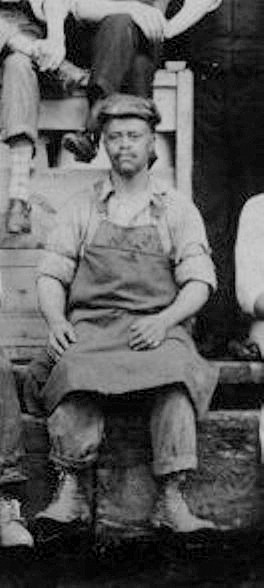
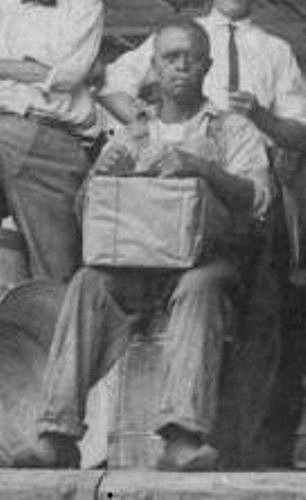
In 1907, after Mrs. Morrill’s death, Mr. Moore had moved to rooms elsewhere and went to work as a porter for the very large, very successful Huey & Philp Hardware Company at Griffin and Elm. Below are a couple of photographs of Moore and co-workers on the loading docks. He does not look very happy. He stayed at the job for 11 years but moved around from rooming house to rooming house — from Ross to Cochran to N. Harwood to Masten. (One of the captions on these photos states that Mr. Moore purchased a house on Cochran St. in 1900. I don’t think that’s correct. If he did buy a house, he doesn’t appear to have ever lived in it.)

Jordan Moore died on January 22, 1918, from complications of  diabetes. He was 54. He never married and had no children, and the friend he had been staying with when he died offered scant and approximate guesses as to dates and places when asked to supply them for the official death certificate.

I wondered why all these photos of a man who apparently left no family and had lived a fairly commonplace life had made their way into the personal collection of J. L. Patton, a principal at Booker T. Washington High School and a pioneer in education for African-American students in Dallas. And then I noticed that the name of the “informant” on the death certificate was Samuel Stanton, a long-time friend with whom Moore had been staying in his last days. Moore was the godfather of Mr. Stanton’s daughter, and Mr. Stanton’s daughter was Mr. Patton’s mother. Patton would have been 12 when Moore died, and he would certainly have remembered him — and one hopes he had fond memories of him.

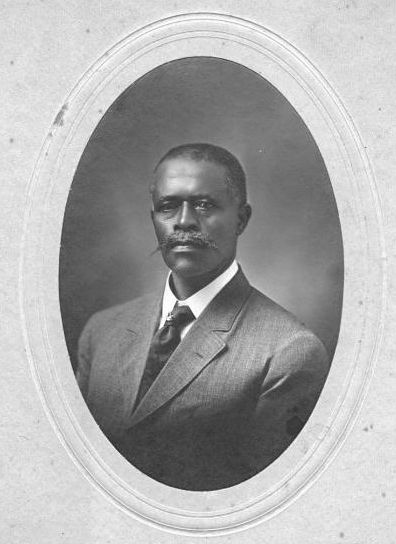
Jordan Moore was buried in Alpha Cemetery, one of the few “negro” cemeteries of the time, near the old freedmen’s town of Alpha, near present-day Preston and Alpha Road. Below are more photographs of Mr. Moore, now in the collection of the Dallas Historical Society.

jordan-moore-portrait_18901890

moore-loading-dock_c1905Mr. Moore (seated, second from left), Huey & Philp loading dock, ca. 1907

moore-det

moore-with-box_loading-dock_c1910Mr. Moore (seated, with box), Huey & Philp loading dock, ca. 1910-15

moore-box-det

jordan-moore-photo_c1910sca. 1910-15

morrill-house_1898Mrs. Morrill’s house at Ross & Harwood, 1894

morrill-house_lost-dallas_doty_dmnThe Morrill house — next stop: demolition, 1920

huey-philp_19091909 ad

huey-philp_1913_dmn_080212Huey & Philp Hardware Co., at Griffin and Elm — ca. 1913

***

Sources & Notes

Photos of Jordan Moore from the Dallas Historical Society’s J. L. Patton Collection, once viewable at UNT’s Portal to Texas History website. Top photo, c. 1905.

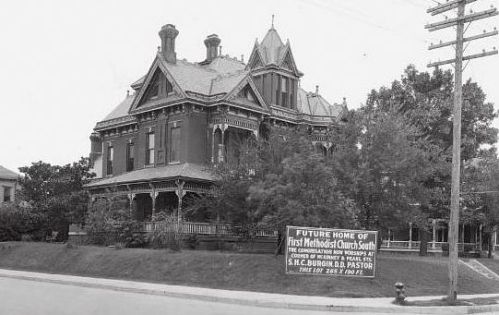
The first photo of Mrs. Morrill’s house at Ross and Harwood is from Clifton Church’s book Dallas, Texas Through a Camera (Dallas, 1894). (As an interesting aside, Church was married to Morrill’s niece.) In the book Dallas Rediscovered, the house is described thusly: “Mrs. Miranda Morrill’s dark, brooding residence, completed in 1886 by A. B. Bristol at the southwest corner of Harwood, was leveled in 1920 for construction of the First United Methodist Church.”

The second photo of the Morrill house is from Mark Doty’s book Lost Dallas (Charleston: Arcadia Publishing, 2012).

Huey & Philp Hardware Co. ad from Worley’s 1909 Dallas directory.

Lang & Witchell drawing of the Huey & Philp building is from a Dallas Morning News blog post by Steve Brown, here.

More on the accomplishments of J. L. Patton from the Handbook of Texas, here.

*

Copyright © 2014 Paula Bosse. All Rights Reserved.


The Lighthouse Church That Warned of Sin’s Penalty with a Beam of Blue Mercury Vapor Shot Into the Skies Above Oak Cliff — 1941

gospel-lighthouse-churchStill standing in Oak Cliff… (click for larger image)

by Paula Bosse

Sometimes an image just grips you. That’s what happened when I saw this postcard featuring The Gospel Lighthouse Church. The building was so odd-looking and cool. Who designed it? Where had it been? And what was that thing on top of it? I did a bit of research on the church and found out that it was organized in Dallas in 1940 by Pentecostal preacher J.C. Hibbard and his wife Nell, who was also a preacher. The two had been preaching at the Oak Cliff Assembly of God Church until J.C.’s divorce from his first wife (and subsequent second marriage to Nell) became such a point of controversy that the two felt compelled to leave (or were asked to leave) the Assemblies of God, and they formed their own church.

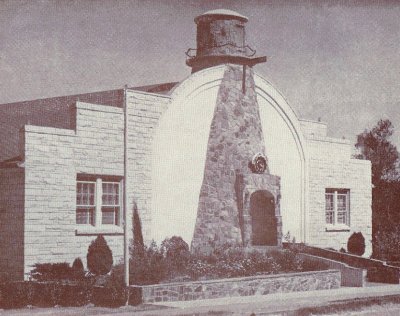
And that was the Gospel Lighthouse Church, located in the 1900 block of S. Ewing (at Georgia) in Oak Cliff. While their first church was being built, they held services in a large circus tent in the parking lot. The congregation helped with the physical labor of the construction, and progress on the building continued non-stop, 24 hours a day. In January of 1941, the church was completed, and an article appeared in The Dallas Morning News soon after with the grabber of a headline, “Lighthouse Church Warns Oak Cliff of Sin’s Penalty.” Sadly, the article has no byline, which is a shame, because I’d love to know who wrote the piece, because he or she pulled out all the purple-prose stops. The introduction is fantastically over-the-top:

A towering forty-foot lighthouse 300 miles from the sea was blinking out its warning signals across the dry land of South Ewing Sunday. At the front of a neat new white stone church house at 1914 South Ewing, near Louisiana, the white stone lighthouse reared far above the other buildings. Eventually, its big circular light tower will shoot a bluish mercury-vapor beam through the night to guide shaken mariners adrift on the sea of sin. Its semi-fog horns will broadcast a soft carillon of sacred music. This is the Gospel Lighthouse, built by a preacher with a new idea of church architecture and a dream of a denomination all his own. (DMN, Feb. 10, 1949)

gospel-lighthouse_first

Wow. A “bluish mercury-vapor beam” shooting through the Oak Cliff skies! (The full article is linked below.)

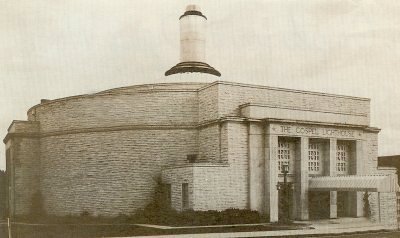
By 1948, J.C. Hibbard had become so popular (largely as a result of his daily radio sermons) that ground was broken on a larger church, designed by J.C. himself. It was right next to the first church. And it was pretty elaborate.

gospel_lighthouse_bw

Yeah, the lighthouse part of it looks a little cheesy, but with a name like “Gospel Lighthouse Church” you kind of have to have it.

*

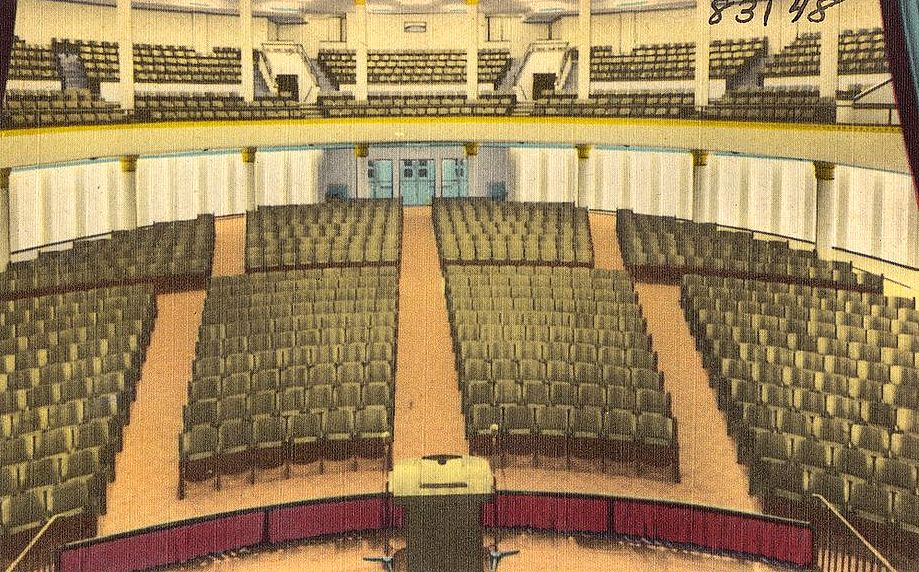
gospel-lighthouse-church_interior

The auditorium and its mezzanine.

*

gospel-lighthouse-nursery

The nursery, with elaborate murals.

*

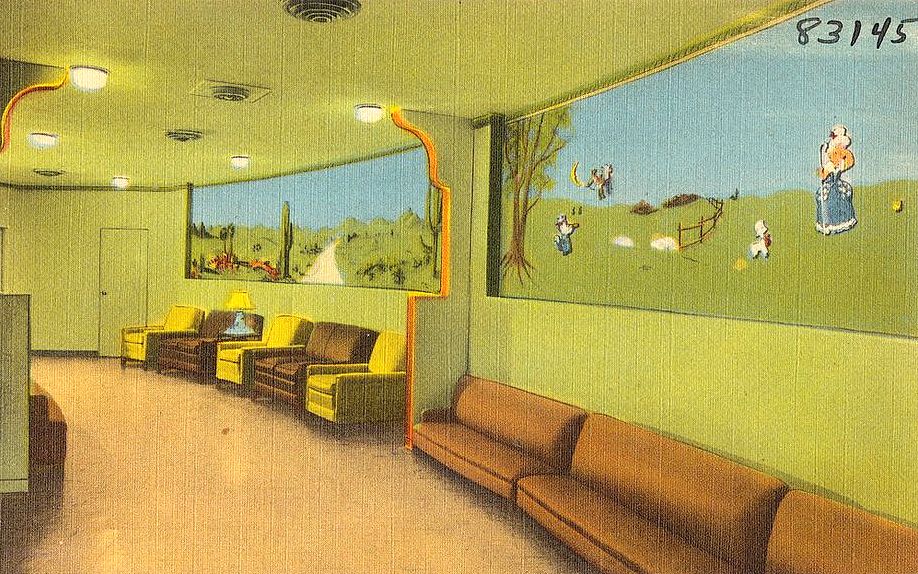
gospel-lighthouse-lounge

The lounge. Like the first church, this one had a nursery with a lounge — a “crying room” for mothers to tend to crying children without having to miss a single moment of the service. The crying was contained behind sound-proof glass while the sermon was piped in through speakers. The church had a lot of other amenities, but these were the only ones I’ve found deemed worthy enough to put on postcards.

*

I wondered if the church still stood, so I drove over to Oak Cliff yesterday and, amazingly, both churches are still there, and they are beautiful! (The original caretaker’s house is still there, too.) I’m not sure what religious group has possession of the buildings at the moment, but they are to be commended for maintaining the structures and the grounds — the 1900 block of S. Ewing really stands out from its fairly ragged surrounding neighborhood. Below are photos I took on April 19, 2014. (Click pictures for larger images.)

gospel-lighthouse_first-church_041914
Above, the first church — “a modern concrete and steel building, overlaid with white Austin stone” — which was built with help from the congregation in 1941. The beam of “bluish mercury-vapor” emanated (somehow) from the squat lighthouse above the foyer.

And, below, the later church, next door. I think the “mercury-vapor” was replaced by neon. But I could be wrong. Does either beacon light up anymore?

gospel-lighthouse_041914_sm

Aside from the “lighthouse,” the most distinctive feature of this building is those rounded walls. So beautiful!

gospel-lighthouse_side_041914-sm

The  building is actually pretty impressive to see up close. Next time you’re in the neighborhood, check it out!

***

Sources & Notes

Postcards from the Boston Public Library Tichnor Brothers Postcard Collection on Flickr, here.

Period black-and-white photos are from a page detailing the history of the Gospel Lighthouse Church, here. A biography of Rev. Hibbard from the same site can be found here.

Wander around the block on Google Street View, here.

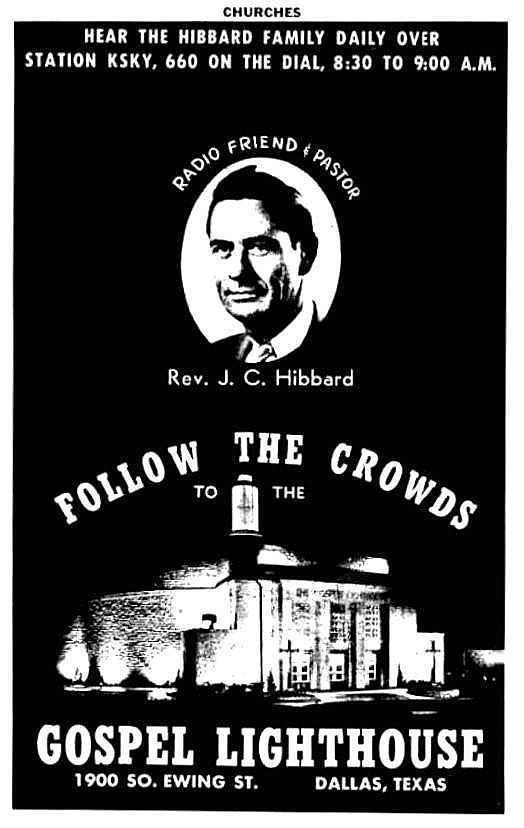
Stumbled across this ad in the 1957 Dallas directory:

gospel-lighthouse_1957-directory

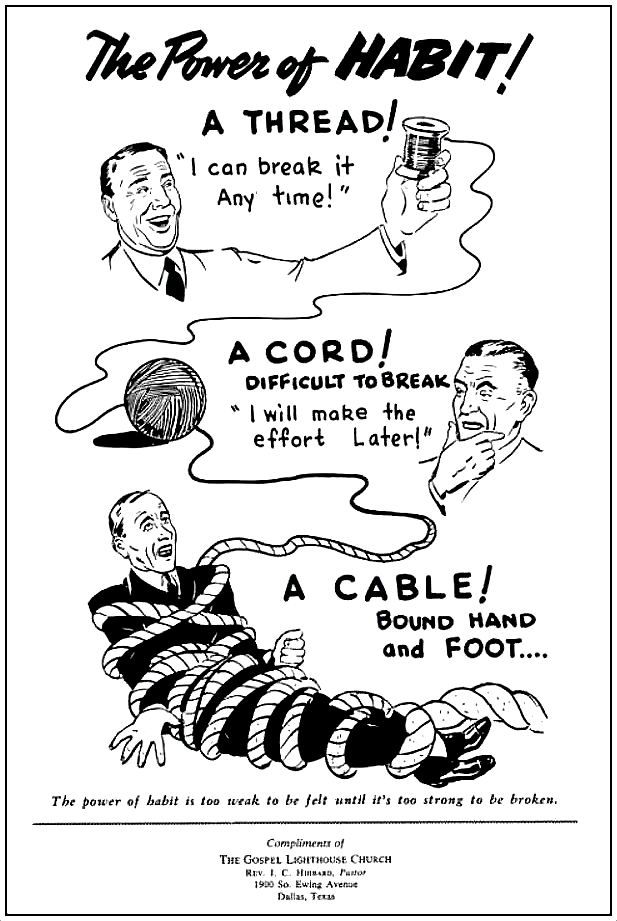
And I found this ad in, of all places, the 1967 Carter High School yearbook:

gospel-lighthouse_carter-high-school_1967-yrbk

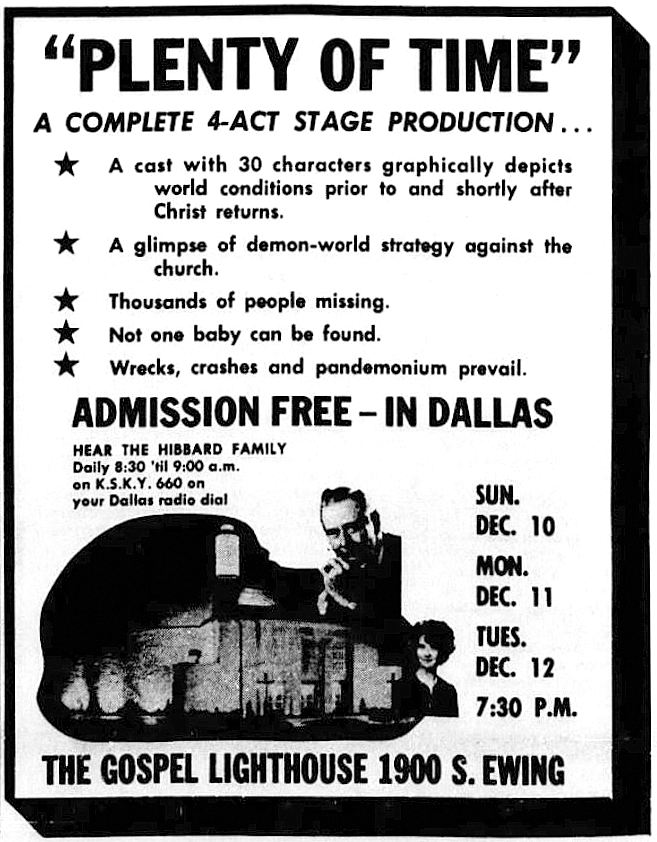
I also found this rather hair-raising ad for a 1967 Christmas-season production — an ad which somehow contains no exclamation marks:

gospel-lighthouse_mckinney-courier-gazette_120867Dec. 8, 1967

*

Copyright © 2014 Paula Bosse. All Rights Reserved.

Babyface Barrow — 1926

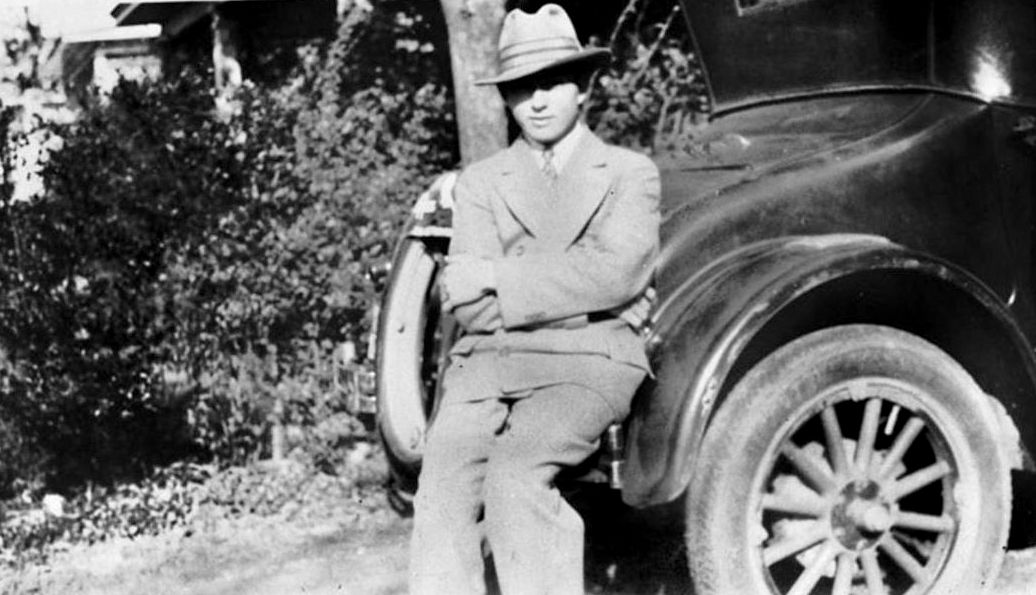
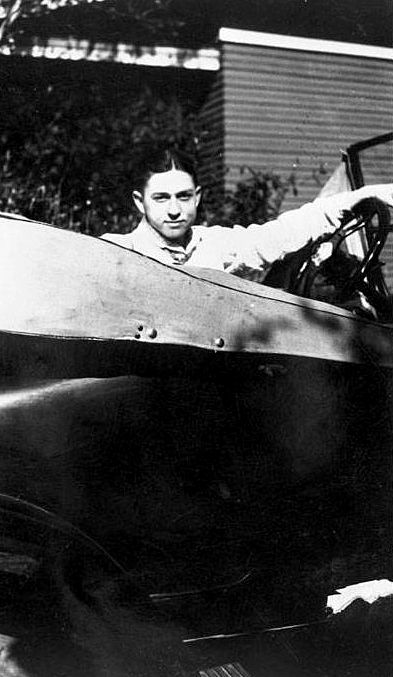
clyde-barrow_with-car_1926_utsa17-year-old Clyde Barrow, 1926

by Paula Bosse

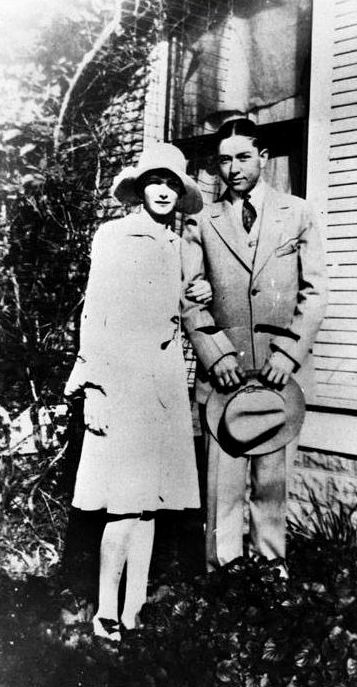
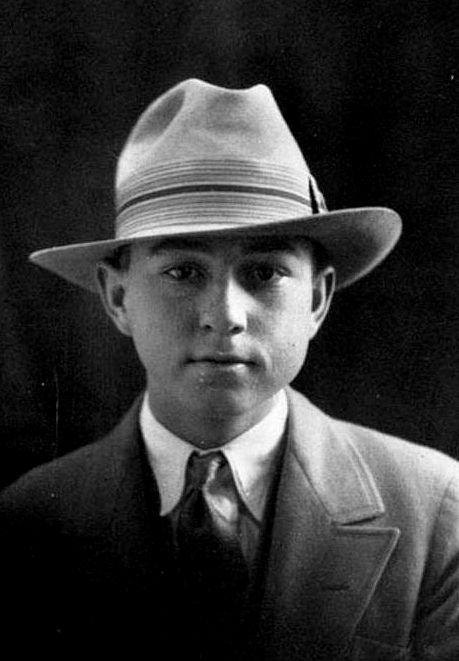
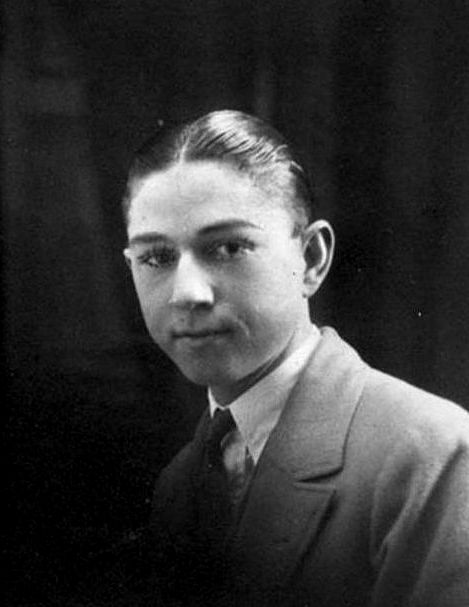
These photos of a 17-year-old Clyde Barrow belonged to one of Clyde’s first girlfriends, Eleanor Williams, a student at Forest Avenue High School in 1926. For all anyone knew, Clyde was just an ordinary kid who liked to dress up and show off his car. (Or “a” car — he was arrested for stealing his first car the same the year this photo was taken — 1926 — so I’m not sure whose car this actually is….)

clyde-barrow_eleanor-williams_1926_utsaEleanor and Clyde (whose unsubtle attempt to appear taller by standing on … something … is unconvincing and a little ridiculous).

clyde-barrow_1926_utsaSuch a babyface. In a few short years, his name and face would be splashed across the country’s newspapers as Bonnie and Clyde’s violent killing spree made him and Bonnie Parker outlaw celebrities.

clyde-barrow_no-hat_1926_utsaHe looks a lot younger than 17 here.

clyde-barrow_car_1926_utsaThe reverse of both this original photo and the top one — the car photos — have a hand-written “1926” on them as well as the film processing stamp “Finished by The National Studio, 1205 1/2 Elm St., Dallas, Texas.”

***

Sources & Notes

Photographs from University of Texas at San Antonio Libraries Special Collections, Copy and Reuse Restrictions Apply. Photos loaned to UTSA by Henry J. Williams, nephew of Eleanor B. Williams. All photos have “1926” on the back.

The Handbook of Texas entry for Clyde Barrow (1909-1934) is here.

Additional photos of Eleanor Williams can be seen on the Bonnie and Clyde “Texas Hideout” site here.

*

Copyright © 2014 Paula Bosse. All Rights Reserved.

The Margules Family’s Passover Seder

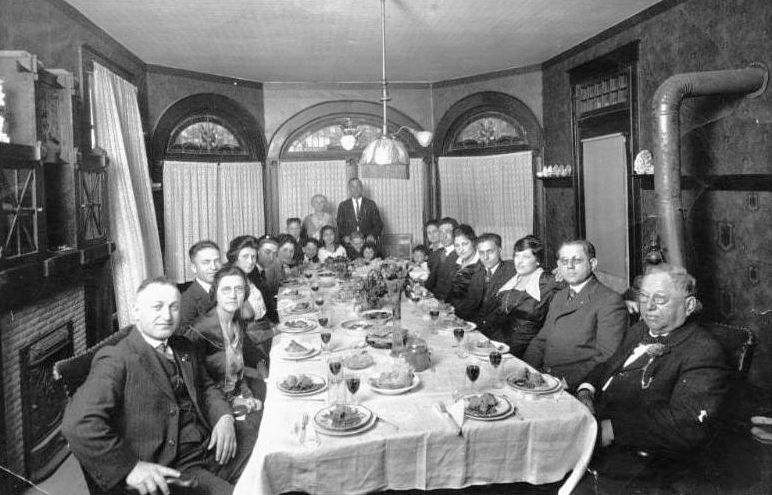
1-passover_djhsClick for larger image (Dallas Jewish Historical Society photo)

by Paula Bosse

Above, a photograph of Passover seder, probably in the 1920s, taken at the South Dallas home of Sam and Dubbie Margules, with some (or all) of their nine children.

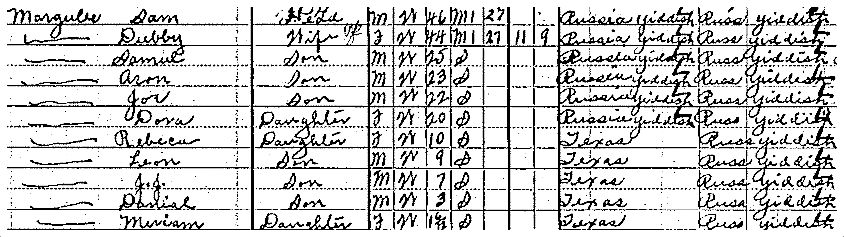
2-margules_census_1910(1910 Census — click for larger image)

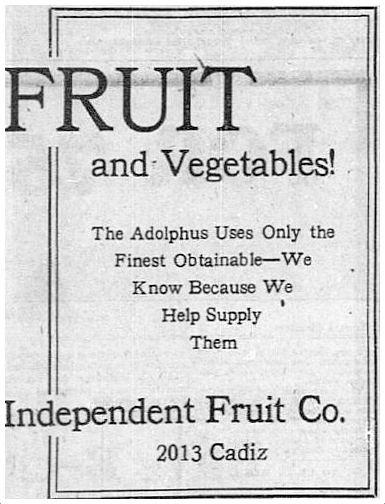
Sam Margules immigrated to the United States from Russia in the late 1880s. By the early 1890s he had made his way to Dallas and had begun working in the wholesale produce business. Once settled and on secure financial footing, he sent for his wife and four children (five more would be born in Dallas). In 1915, Sam established his own business, the Independent Fruit Co.

3-margule_ind-fruit-co_dmn_010116(1916)

4-margules_adolphus_dmn_101224(1924)

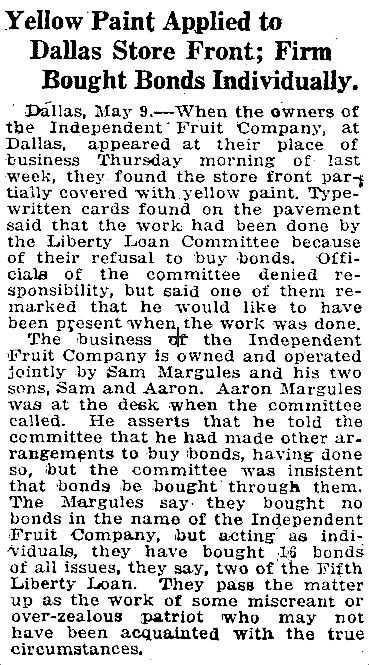
Even thought the Margules family seems to have had a happy and successful life in Dallas, there was one incident that must have been very unsettling for them. In the waning days of World War I, a Chicago trade publication reported an instance of vandalism against the Independent Fruit Co., perpetrated by a thuggish Liberty war bond committee. In what was clearly meant as intimidation, the shakedown “committee” had splashed yellow paint across the Margules storefront in the dead of night, as punishment for what they believed was the family’s refusal to purchase Liberty bonds. These attacks with yellow paint were a common occurrence around the country in those days (as was tarring and feathering!), and they were frequently directed at immigrants, as were nasty accusations that they were “slackers”  (a much-used pejorative at the time meaning “unpatriotic shirker” or even “coward”)

The family seems to have shrugged off the incident, but it must have been a frightening time for them. The Jewish community in Dallas was a large and thriving one, but there was always antisemitism to deal with, and the Ku Klux Klan’s rise to power in the 1920s was particularly difficult for Jews in Dallas. (Click article below to see larger image.)

5-margules_chicago-packer_051019(1919)

Sam Margules died in 1930 at the age of  67, a 40-year resident of Dallas. His wife, Dubbie, died in 1953 at the age of 90, survived by 18 grandchildren and 17 great-grandchildren.

***

Sources & Notes

Photo from the Dallas Jewish Historical Society — the full citation is here.

Ads from The Dallas Morning News.

Article on the yellow paint attack from The Chicago Packer, May 10, 1919.

A passage on other yellow paint attacks on America’s immigrants by Liberty Bond committees can be read here.

A lengthy article on “The Jews Who Built Dallas” by David Ritz  (D Magazine, Nov. 2008) can be read here.

Click top two pictures for larger images.

*

Copyright © 2014 Paula Bosse. All Rights Reserved.


Frank Reaugh or Mark Rothko?

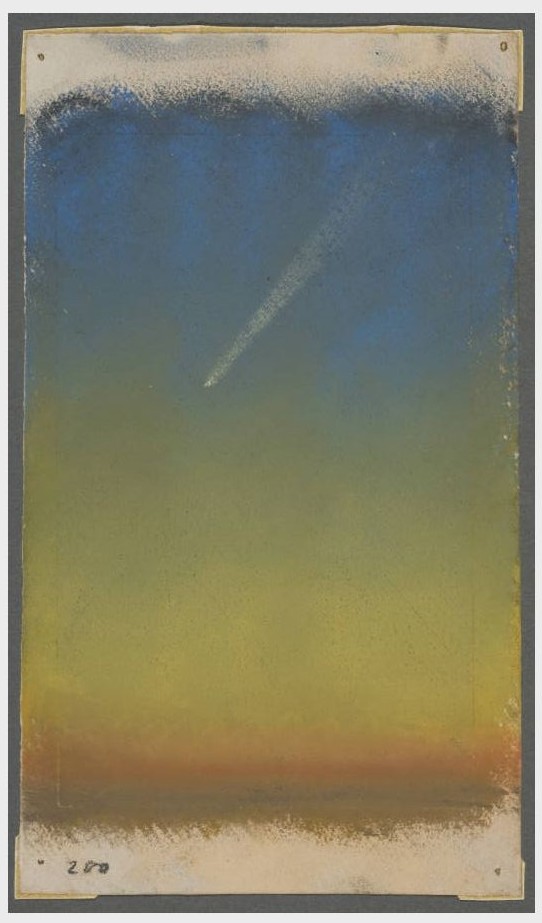
reaugh_meteor_nd_ransom-smu_2“Meteor” by Frank Reaugh (undated)

by Paula Bosse

This is a wonderful (and very uncharacteristic) work by Frank Reaugh, the pastelist who is known for his depictions of cattle and longhorns. Reaugh (1860-1945) lived and taught in Oak Cliff, and his small, delicate, impressionistic works in pastel are not only highly collectible, but are also a glimpse of the waning days of the open, unfenced Western Plains. The word “iconic” is thrown away too much these days, but below is an example of the iconic work of Frank Reaguh.

reaugh_gray-hill_nd_ransom-smu“Gray Hill and Rain” by Frank Reaugh (click for larger image.)

***

Sources & Notes

Both “Meteor” and “Gray Hill and Rain” are undated works from The Frank Reaugh Art Collection, Harry Ransom Center, University of Texas at Austin. Both works are pastel on paper. (And for those wondering, “Reaugh” is pronounced “Ray.”)

The entire collection can be viewed here.

*

Copyright © 2014 Paula Bosse. All Rights Reserved.