Flashback : Dallas

A Miscellany: History, Ads, Pop Culture

Category: Downtown

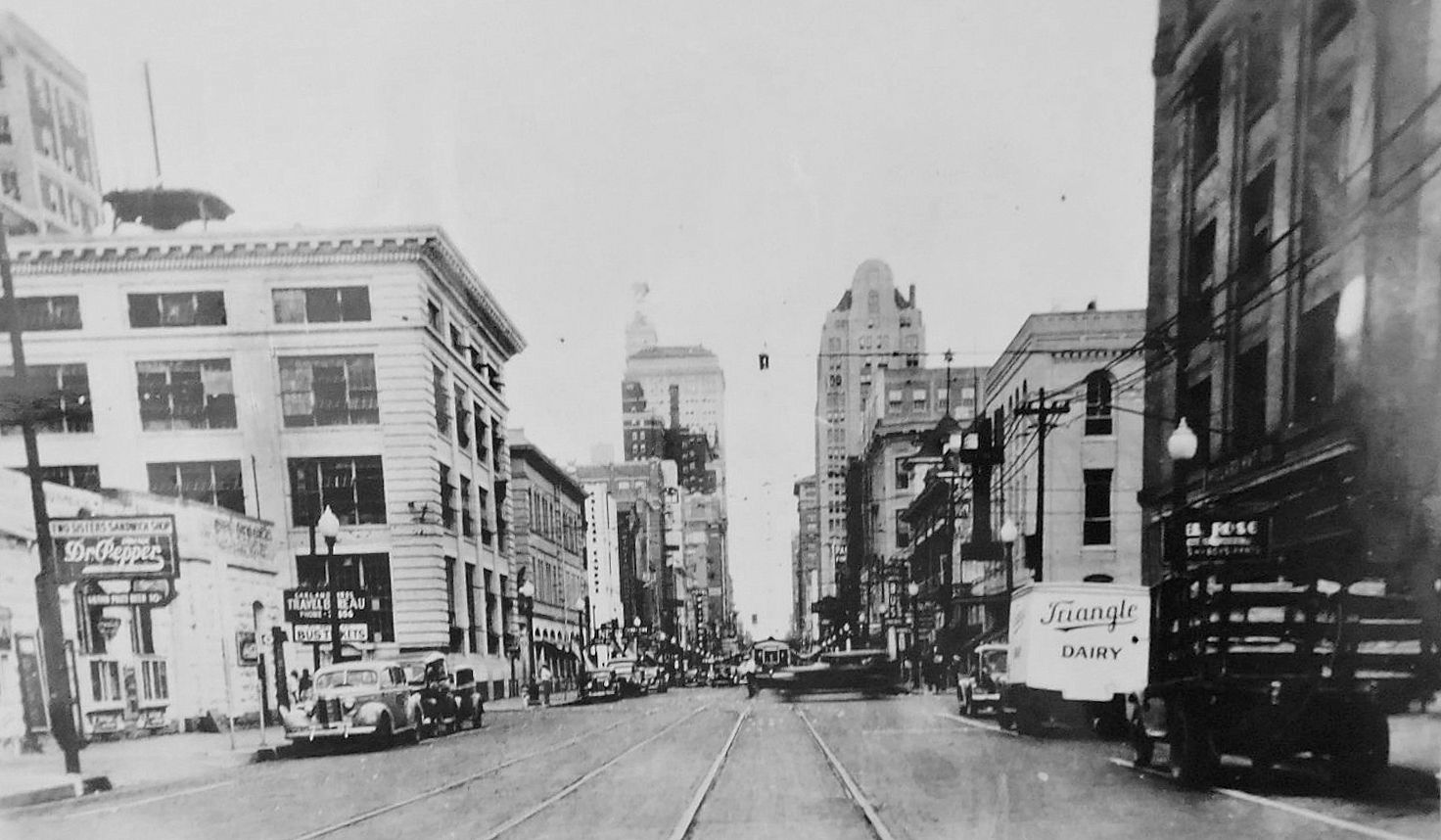
Commerce Street — 1942-ish

commerce-st_RPPC-1942_ebayCommerce St. (click for larger image)

by Paula Bosse

Today, a somewhat random shot of Commerce Street from the early 1940s.

…And now I have a hankering for a Dr Pepper.

***

Cropped shot of an item currently being offered on eBay, here.

*

Copyright © 2015 Paula Bosse. All Rights Reserved.

Clifton Church’s Central Business District — ca. 1894

main_by-church_1894Main Street looking west, toward a ghostly courthouse (click for larger image)

by Paula Bosse

These three photographs were taken by prominent Dallas photographer Clifton Church, probably in 1893 or 1894. The one at the top shows Main Street looking west, taken just east of Poydras. (The then-new courthouse at the end of the street appears to have been lightly fleshed out by the hand of a photo re-toucher, giving it a mirage-like quality.) The Trust Building, on the right, was at the northeast corner of Main & N. Austin; the Dexter insurance office was in the North Texas Building, at 221-223 Main (under the old numbering system), between N. Lamar and Poydras; and the Scruggs & Scruggs wholesale liquor business was at 237-239 Main, two doors east of the Poydras intersection. The present-day view from the same location can be seen on Google Street View, here.

*

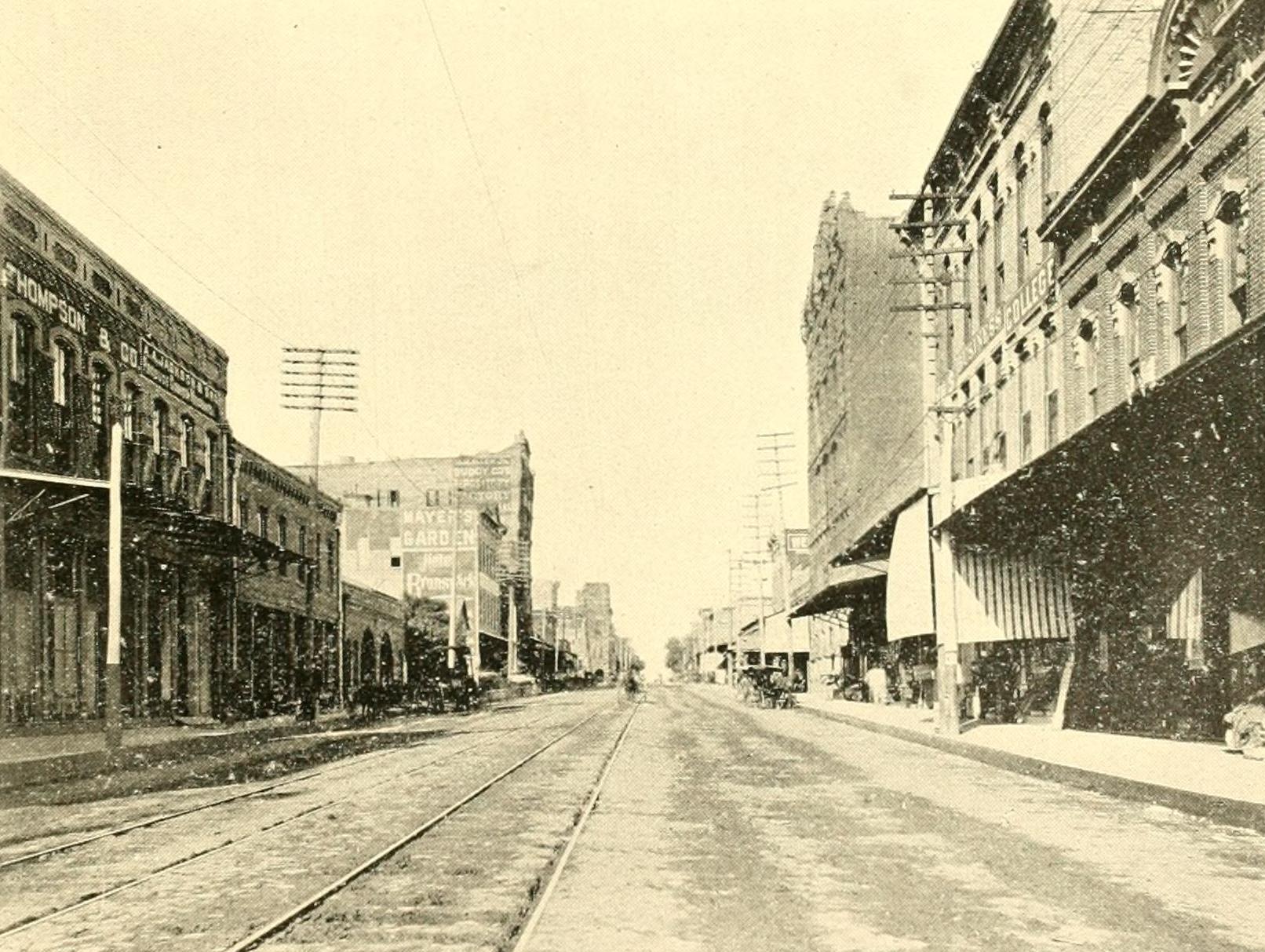
The photo below shows Elm Street looking east, taken just east of Akard. In the middle of the block on the left is Mayer’s Beer Garden & Saloon, at 361-363 Elm; the tall building behind it was the Guild Building at 369-371 Elm. Across the street, the tall building on the right is the Chilton Building. In the foreground at the right is the Dallas Business College at 342 Elm (which, in the 1892 city directory, showed to be where artist Frank Reaugh had studio space). The present-day view can be seen here.

elm_by-church_1894

*

And, below, Commerce Street, looking east from about Poydras. At the bottom left is the L. J. Bartlett Oriental Livery and stables, at 237-241 Commerce; next to it is the St. George Hotel. In the distance, across the street, is the brand new Oriental Hotel at Commerce and Akard with its distinctive rounded topknot. In the middle of the block is the famed Padgitt Bros. Saddlery at 248-250 Commerce, and in the foreground is Ballard & Burnette at 240-242 Commerce, a company that sold “wholesale hats, caps, gloves, and umbrellas.” The present-day view is here

commerce_by-church_1894

*

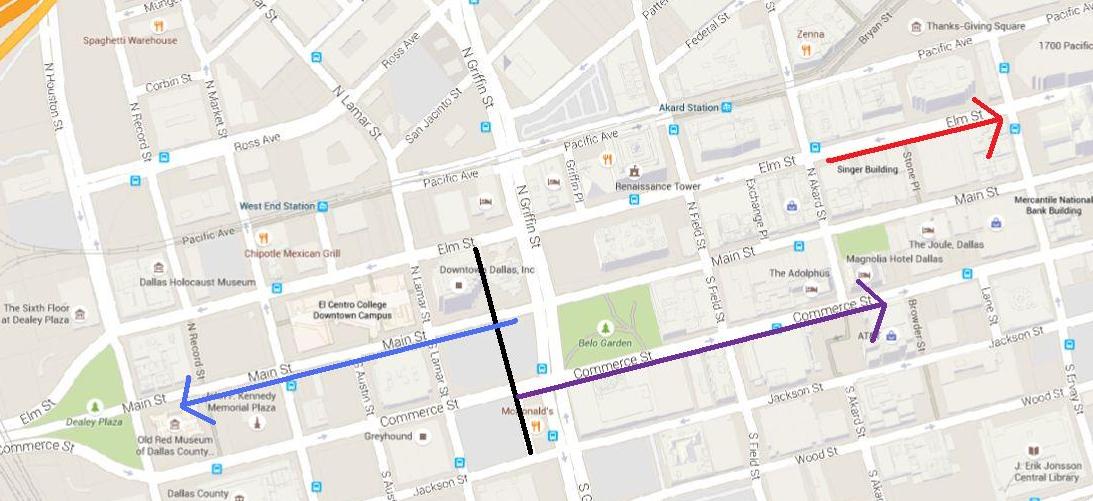
Below is a handy-dandy visual showing the locations of the above photos on a present-day map. (The black line shows where Poydras used to be. It exists today only as an alley-like block-long stretch of asphalt that runs alongside the downtown McDonald’s.) Click for larger image.

downtown_church-photos_googleGoogle Maps

***

Photos by Clifton Church (1855-1943), from his book Dallas, Texas Through a Camera: A Collection of Half-Tone Engravings from Original Photographs (Dallas: J. M. Colville, Franklin Printing House, 1894). (Sadly, these images are a bit washed out. I’d love to see the original photographs — and I’d love to see a copy of the original book.)

Address information from city directories and Sanborn maps.

Click pictures for larger images.

*

Copyright © 2015 Paula Bosse. All Rights Reserved.

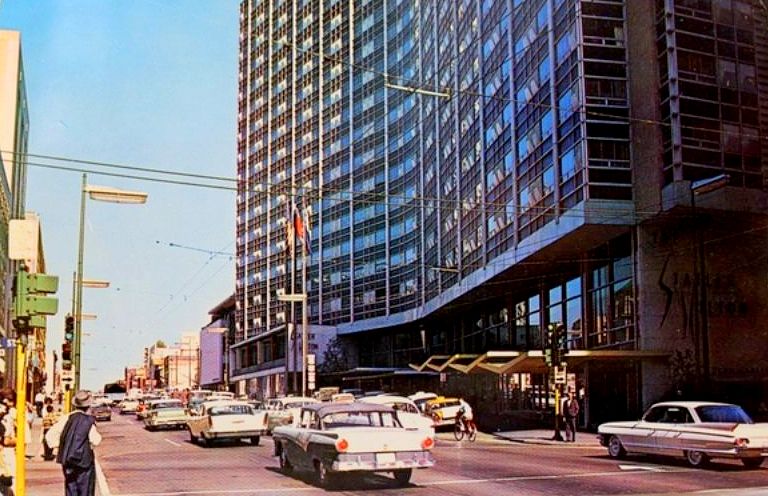
The Statler Hilton, Commerce & St. Paul

statler-hilton_postcard_ebay1956 modes of transport: automobiles, taxis, bikes, & feet

by Paula Bosse

Great shot of the Statler Hilton, looking east down Commerce — looks both hot and cool.

The blurb on the back: “The beautiful facade of the Statler Hilton in busy downtown ‘Big D,’ business and convention center of the Southwest.”

The message on the reverse of this postcard contained the following message to the folks back in Cincinnati:

Hi, folks, we’re having a wonderful time. This is beautiful country. We’ve been to San Antonio for a couple of days. Saw the Alamo, also San Jose Mission and went to Mexico. The children are darling and we’re having fun spoiling them. Love to all — Helen and Walter.

Tourists sure write a lot about San Antonio on picture postcards of Dallas….

***

Sources & Notes

Postcard found on eBay.

Great news! After decades of that beautiful building sitting empty, it has been announced that it will finally be coming back to life — and the Hilton company is going to be part of it. More here.

See a current view of the same corner on Google, here.

*

Copyright © 2015 Paula Bosse. All Rights Reserved.

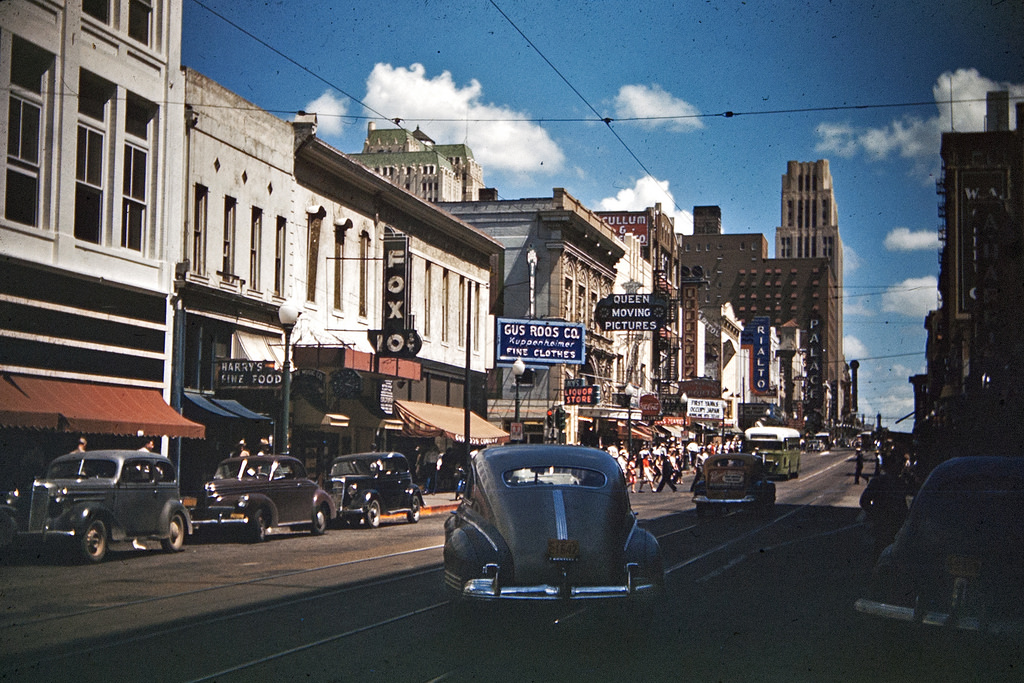
WWII-Era Elm Street … In COLOR — 1945

elm-street-color_1940s_jeppson-flickr(Click to see a larger image of this wonderful color photo!)

by Paula Bosse

This is one of my favorite photos of Dallas — mainly because it’s in COLOR! This absolutely fantastic photograph is from Noah Jeppson’s great website, Unvisited Dallas. Here we see Elm Street, looking east along Theater Row, taken from about the middle of the 1400 block of Elm. (To get your bearings, Gus Roos was at the northwest corner of Elm & Akard.) I LOVE this!

***

Sources & Notes

Photo from Noah Jeppson’s Unvisited Dallas post, “Elm Street 1945” — see the original post and read Noah’s description of the buildings seen in the photograph here. I don’t know where this photo came from, but I hope there are more color photos from this era out there. I would love to see them!

Other photos of this block (sadly, none in color) are in an earlier Flashback Dallas post, “Building Collapse on Elm Street — 1955,” here.

See several other fantastic COLOR photos in the Flashback Dallas post “Downtown Dallas in Color — 1940s and 1950s.”

*

Copyright © 2015 Paula Bosse. All Rights Reserved.

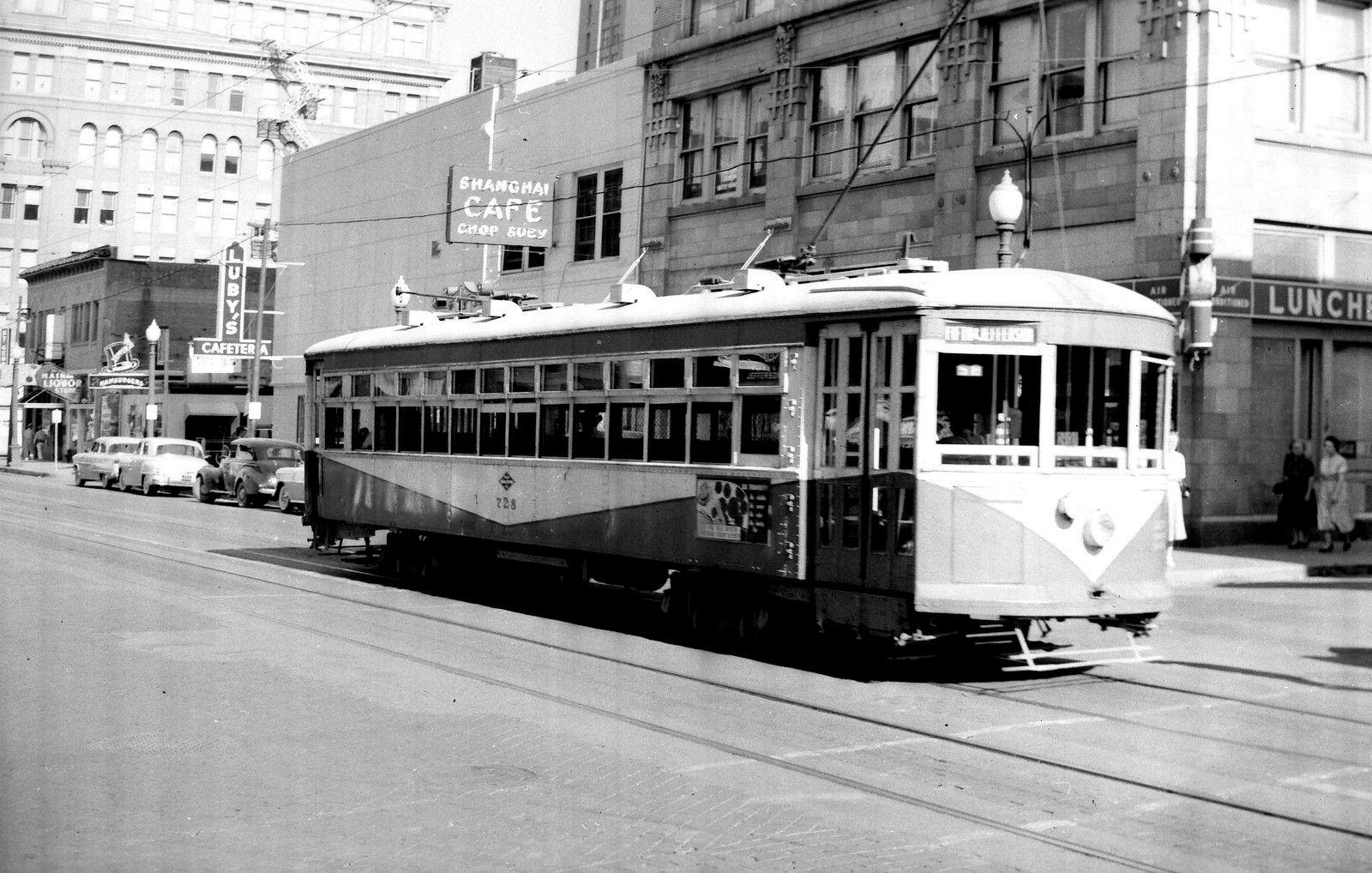
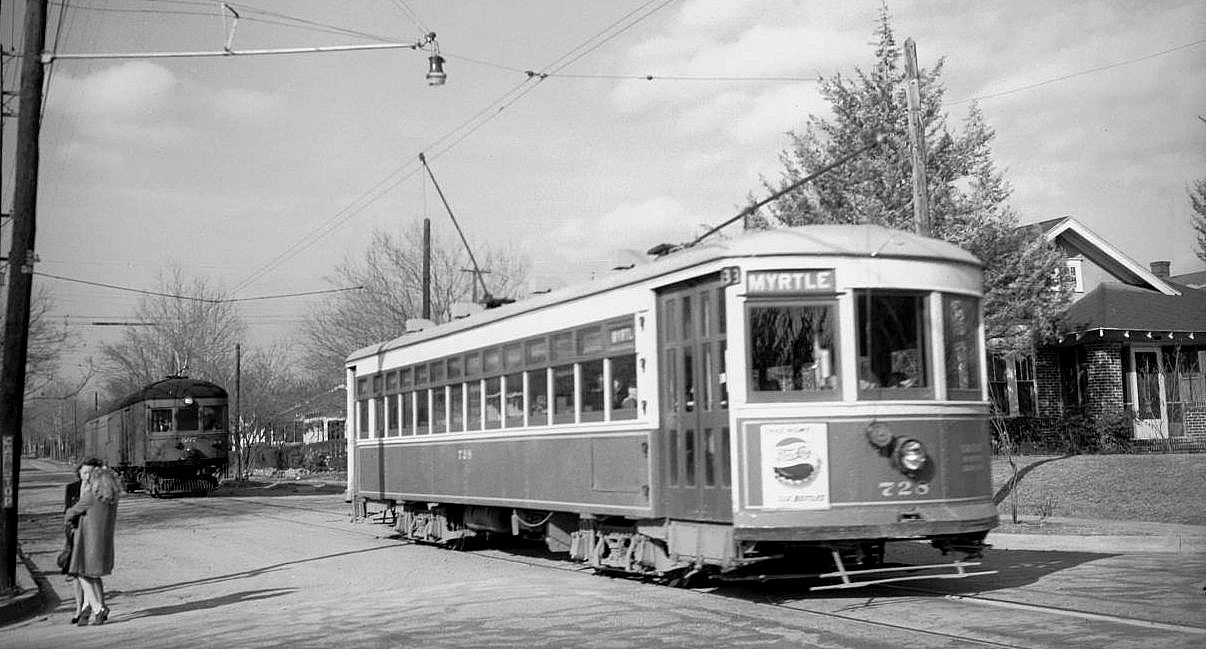
Streetcar #728, Main Street — 1954

streetcar_1000-block-main_090254_ebay1000 block of Main Street, Sept. 2, 1954

By Paula Bosse

Oh, streetcars. In the photo above, we see car #728 heading east on Main Street on September 2, 1954, having come from, I believe, Oak Cliff (the placard reads “Jefferson”). This photo shows Main Street looking east from, I think, Poydras.

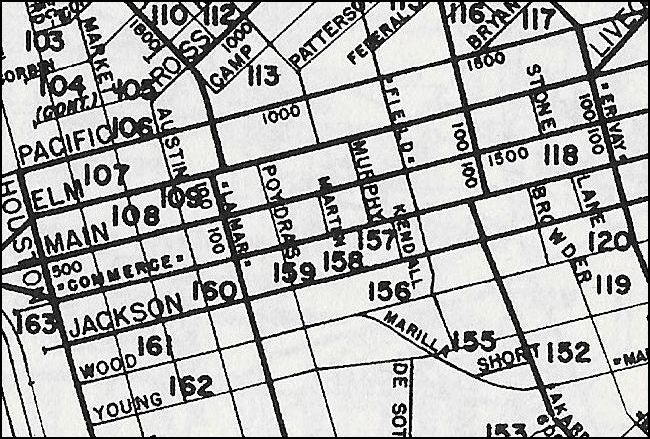
The Shanghai Cafe was at 1004 Main, Luby’s Cafeteria (the second one in Dallas) was at 1006 Main, the Topper restaurant was at 1012 Main, the Main & Martin Liquor Store was at 1016 Main (at Martin Street), and the St. George Hotel was at 1018 Main, all of which can be seen in this photo.

main-st_mapsco-1952-det1952 Mapsco

Car 728 wasn’t always “Jefferson,” whiling away its days crossing back and forth across the Trinity. Back in 1945 it was “Myrtle” and was spending a large part of its time in South Dallas.

myrtle_728_1945_denver-pub-lib

I’m not sure where Myrtle/Jefferson ended up, but, sadly, the Golden Age of streetcars ended in Dallas in 1956.

***

Sources & Notes

Top photo from an old eBay listing.

Bottom photo by Robert W. Richardson; from the Western History/Genealogy Dept., Denver Public Library.

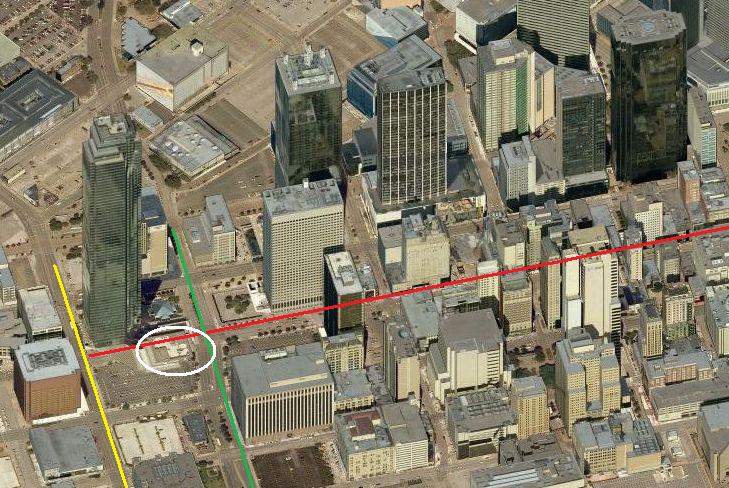
Today, the block seen in the top photo looks completely different. Across the street is where the Bank of America Plaza is now. In the map below, the red line is Main, the yellow is Lamar, and the green is Griffin. The 1000 block of Main Street is circled in white. (Click for larger image.)

1000-block-main_bingBing Maps

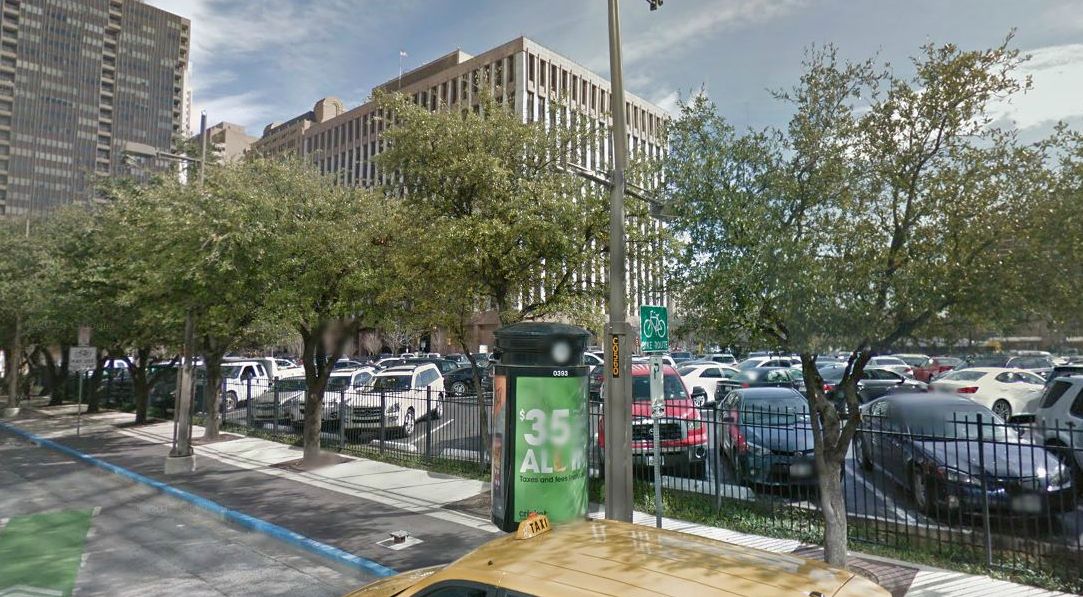
So what’s there now? A parking lot!

1000-block-main_googleGoogle Street View

To read “The Last Day the Streetcars Ran in Oak Cliff” by Ron Cawthon, click here.

*

Copyright © 2015 Paula Bosse. All Rights Reserved.

Elm Street, Looking West from Griffin

elm-west-from-griffin_UTA-special-collThe 1000 block of Elm Street: small-business central

by Paula Bosse

A really incredible view of Elm Street, probably from the late-teens to the early-20s. (Almost all of the businesses seen in this photo were listed in the 1922 city directory.) The landmark businesses seen here — all founded in the 19th century — would be Huey & Philp Hardware, Charles Ott (gunsmith) (the sign can be seen just above the Huey & Philp sign at the right), and down the street on the corner of Lamar, the beautiful 8-story Sanger Bros. department store (now part of El Centro). I know it’s a like hearing a broken record, but I really wish downtown Dallas still had some of this old, quirky flavor. (Click picture for larger image.)

And here’s a shot of the same view, but street-level:

elm-street_UTA

***

Sources & Notes

Photos from the Fort Worth Star-Telegram Collection, Special Collections, University of Texas at Arlington.

If you want to see what the same view looks like today, click here. Personally, I prefer the “before” to the “after.” I’m generally a fan of tall buildings, but all those skyscrapers absolutely decimated street-level businesses, which, sadly, seem to be gone for good. You can’t undo a skyscraper.

*

Copyright © 2015 Paula Bosse. All Rights Reserved.

Post Office, Sunbonnets — ca. 1890s

post-office_hist-photos-of-dallas

“Little Post Office on the Blackland Prairie” (click for larger image)

by Paula Bosse

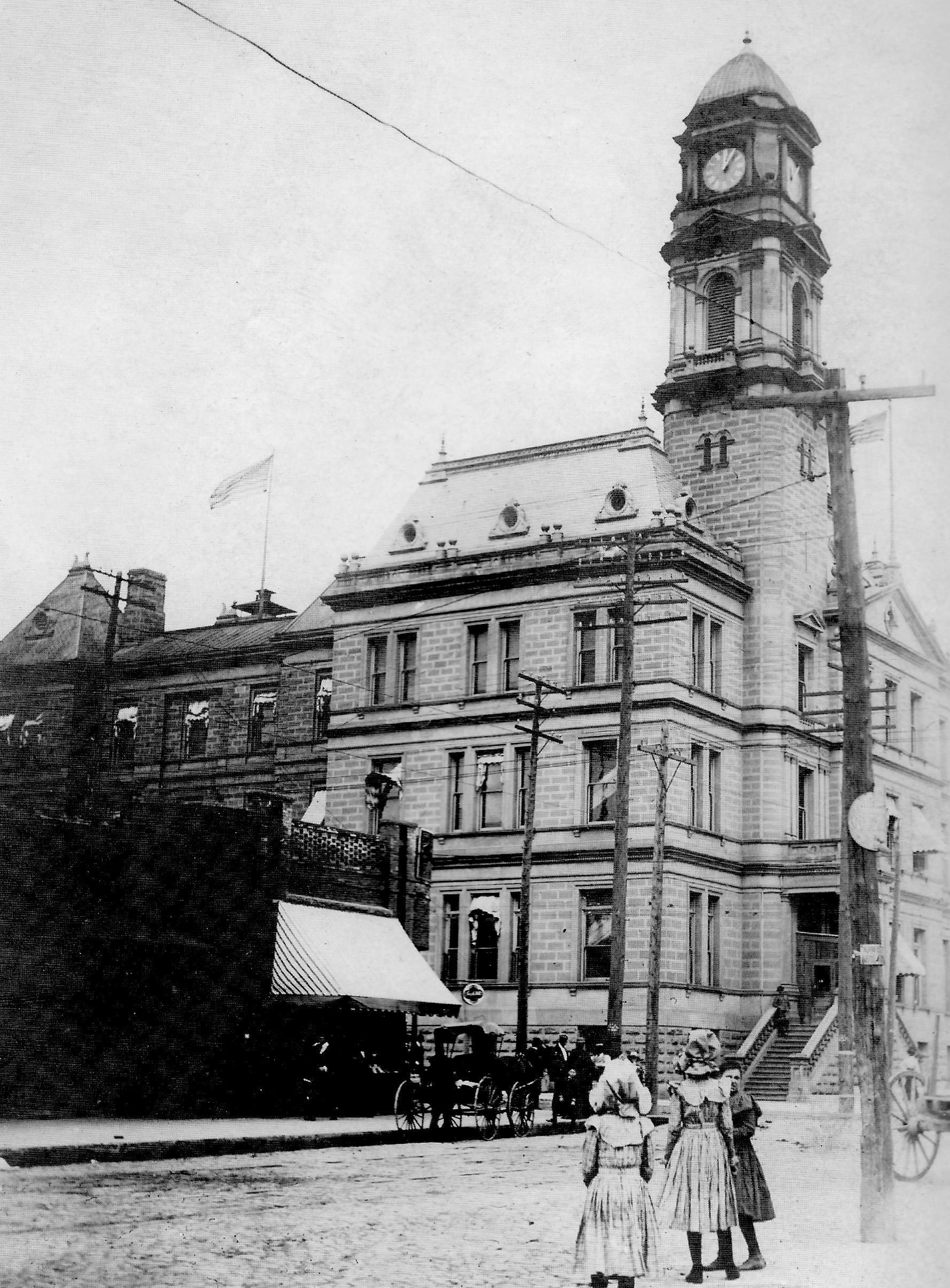
Laura and Mary Ingalls and Nellie Oleson appear to have wandered into Dallas to take a look at the new Post Office clock tower, seen here at Commerce and Ervay, probably in the mid- to late-1890s.

***

Photo from the book Historic Photos of Dallas by Michael V. Hazel (Nashville: Turner Publishing Co., 2006).

For an incredible view of this same spot from 1894, see my previous post “Henry Stark’s ‘Bird’s Eye of Dallas’ — 1895/96” here (click pictures for larger images).

Click picture for very large image!

*

Copyright © 2015 Paula Bosse. All Rights Reserved.

The Adolphus & Its Annex

adolphus_lang-witchell_arch-yrbk_1922The Adolphus Hotel and its annex, circa 1922 (click for larger image)

by Paula Bosse

Built in 1912, the ornate and luxurious Barnett, Haynes, and Barnett-designed Adolphus Hotel (which was modeled on/inspired by the Plaza Hotel in New York) quickly became THE hotel in Dallas. It was so successful that in only four years an expansion was already underway. The 12-story “Annex” (seen above, just to the left of the original building) was designed by preeminent Dallas architects Otto Lang and Frank Witchell. The so-called “Junior Adolphus” was built around 1916/17 and added 229 rooms to Dallas’ most glamorous hotel. A third addition (“Adolphus III”) came along in the 1920s.

Below, a few views of the Adolphus complex at different stages of its growth. (Click photos for larger images.)

*

adolphus-construction_dallas-then-and-nowBuilt at the northwest corner of Commerce and Akard streets, the Adolphus Hotel was built on the spot previously occupied by the City Hall. This photo, looking northeast, shows the site’s excavation by Vilbig Brothers Construction.

*

1913-pano-2In this detail from an April 1913 panoramic photograph of the city’s skyline, the Adolphus can be seen just six months after its opening at the end of 1912. (A previous post devoted to the full panoramic photo can be accessed here.) The Oriental Hotel, with its rounded topknot, can be seen across Commerce from its sister hotel (both were built by beer king Adolphus Busch). Seen in the background is the Praetorian Building — once the tallest structure in Dallas (it is the tall building, second from the right).

*

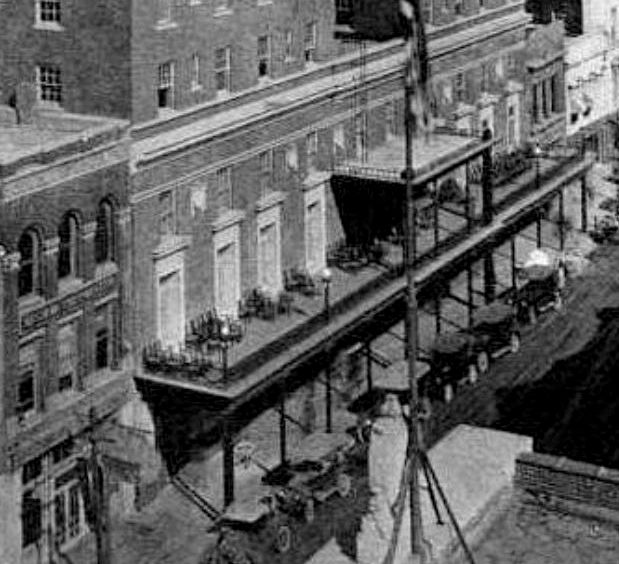
adolphus_lang-witchell_arch-yrbk_1922-detThe the Lang & Witchell-designed annex came along around 1916/17 (see top photo). My favorite detail is what looks like an open-air terrace, with tables and chairs, overlooking Commerce Street.

*

adolphus-annex_dallas-hotelsAnother view, showing the hotel and annex in 1924.

*

adolphus-annex_dallas-hotels-detA closer look shows that the terrace is now enclosed.

*

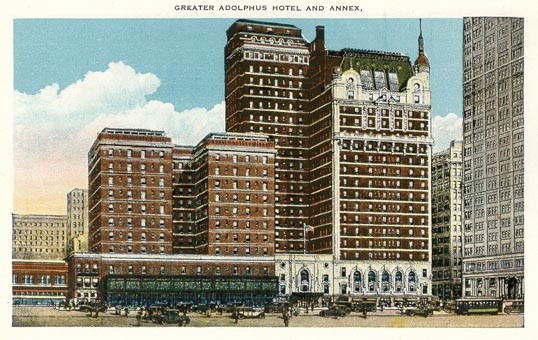
adolphus-hotelA few years later, a further, taller addition was built.

***

Top photo from the 1922 Yearbook of the Dallas Architectural Club.

Photo of the excavation from Dallas Then and Now by Ken Fitzgerald (San Diego: Thunder Bay Press, 2001); photograph from the Texas/Dallas History and Archive Division of the Dallas Public Library. A similar photo can be seen on the fascinating history page of the Vilbig & Associates website, here.

Detail of 1913 panoramic photo from the Jno. J. Johnson photo in the Library of Congress. (For more info, see previous post, “‘New Dallas Skyline’ — 1913,” here.)

Photo of the Adolphus with the Coca Cola sign in the lower left from Historic Dallas Hotels by Sam Childers (Charleston: Arcadia Publishing, 2010). The author’s extremely informative caption can be read here.

See a wonderful pictorial history of the Adolphus Hotel on the Dallas Morning News website here.

The official website for the Adolphus Hotel is here.

Click photos for larger images.

*

Copyright © 2015 Paula Bosse. All Rights Reserved.


The Elegant Municipal Building — 1914

ciA very un-Dallas-looking building … and one of its finest

by Paula Bosse

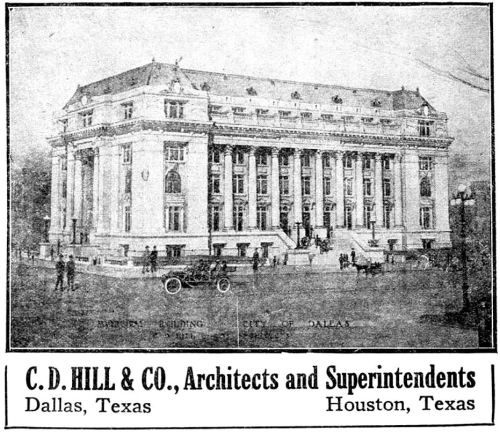
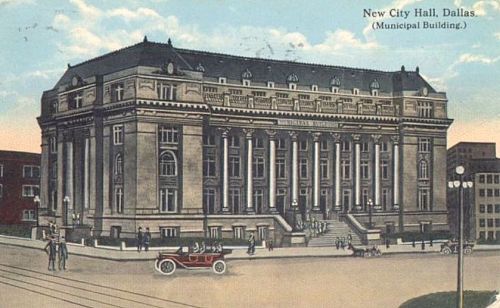
Appearing in the May 7, 1914 issue of Municipal Journal was a short article on Dallas’ then-under-construction Municipal Building and a drawing of what it would look like when completed.
municipal_bldg_watermelon-kid

Dallas Will Have Modern Municipal Building
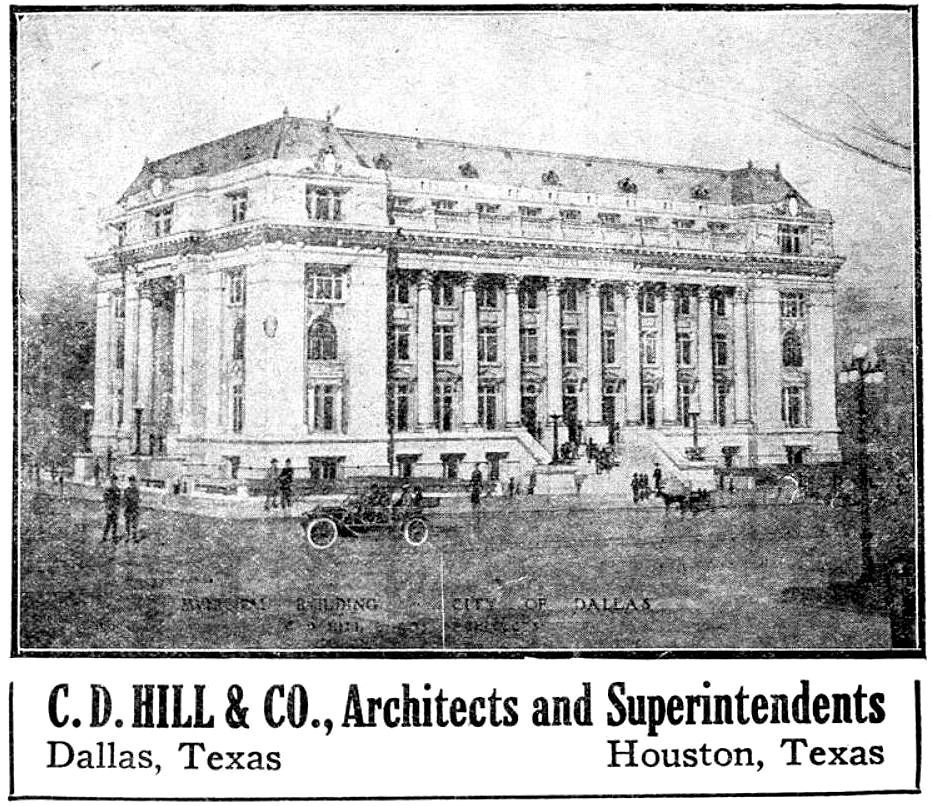
Dallas, Tex. – The new municipal building of the city of Dallas is nearing completion and will be ready for occupancy in a few months. It will house all of the city departments and in addition will have a modern emergency hospital in the basement and public rest rooms for both men and women. The building is said to be a radical departure in architectural design from the usual type of public buildings in the South; it is constructed along simple but dignified lines. The structure will be of steel construction covered with blue Bedford stone, the five stories, basement and sub-basement will be a home worthy of the city of the hour, as Dallas people like to call their town. Ventilating and heating systems are being installed together with vacuum cleaners. The building, without furnishings, will cost about $550,000. C. D. Hill and Company are the architects. The structure was started by the Fred A. Jones Building Company, which failed just as the steel was up, and it is being finished within the estimates by the city under the supervision of the architects.

This new City Hall, located at Main, Harwood, and Commerce, was designed by Dallas architect C. D. Hill. Construction began in late 1913 — by January of 1914, its steel frame was in place.
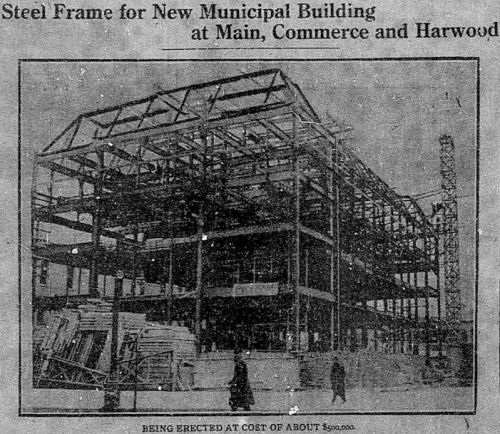
municipal-bldg_dmn_010114Dallas Morning News, Jan. 1, 1914

The cornerstone was laid in a Masonic ceremony on Valentine’s Day, 1914.

municipal- bldg_FWST_021514-cornerstoneFort Worth Star-Telegram, Feb. 15, 1914

As the construction was winding down, workmen complained of an “intolerable” swarm of mosquitoes flying around the site. Apparently an underground spring was flooding the sub-basement and providing palatial digs for endless cycles of constantly-hatching mosquitoes. (I wonder if the basement still floods on occasion?)
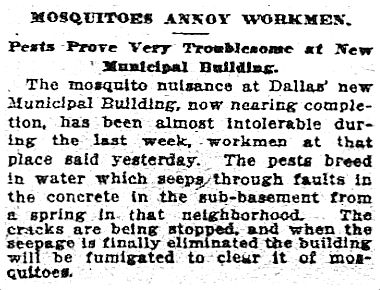
municipal-bldg_dmn_091014-mosquitoesDMN, Sept. 10, 1914

The building was officially opened on October 17, 1914. Here’s a grainy photo that absolutely does not do that beautiful building justice.

municipal-bldg_dmn_101714DMN, Oct. 17, 1914

When the doors were finally opened to the public, it was expected that a few thousand people would show up to tour their new municipal building — in actuality, the much-larger-than-anticipated crowd numbered somewhere between 12,000 and 15,000 curious Dallasites.

municipal-bldg_dmn-101814DMN, Oct. 18, 1914 (click for larger image)

The beautiful exterior was faced with granite and stone, and the interior boasted marble, mosaic tilework, and wood paneling. All of the furniture used in the building was made in Dallas. In addition to the mayor’s office, fire, police, and other municipal departments, the building also housed an emergency hospital, a sub-basement shooting range (!), and, on the 3rd floor, an 1,100-seat auditorium, with a 4th-floor gallery. (The auditorium was designed so that if, in the future, it was determined that it was not needed, it could easily be converted to office space by adding a few columns and beams — a renovation which obviously happened at some point.) Interestingly, the northern half of the top floor was left unfinished as the space was not needed at the time.

ALSO included in the new building’s amenities were much-needed public restrooms (or as they were euphemistically referred to back then, “comfort stations”). A men’s restroom and a women’s restroom (“positively divided with heavy walls”) were located under the Main Street sidewalk, accessible down stairs on either side of the building’s entrance. Up until this point, there was only ONE public “comfort station” in the city (for women and children) — at Fair Park. So for most downtown visitors, this might well have been the most exciting aspect of Dallas’ newest landmark.

The building referred to as both “City Hall” and “the Municipal Building” was considered to be one of the city’s finest and most elegantly imposing. But there are always a few people who just don’t like nice things, and there was a surprising amount of vandalism to the building in its first few weeks.
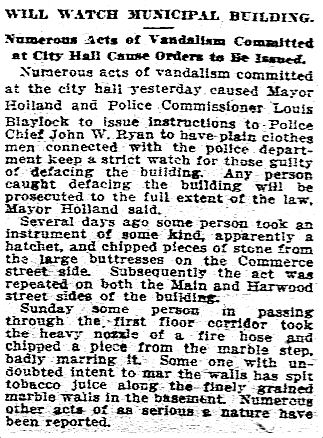
municipal-bldg_dmn_111014-vandalismDMN, Nov. 10, 1914

This is one of the truly great buildings in Dallas, and it just recently celebrated its 100th birthday. It is a Dallas Landmark and a Texas Recorded Historic Landmark. No longer a city property, it is now part of the University of North Texas Dallas College of Law campus (along with the old Titche’s building). UNT is currently working to restore and renovate this beautiful historic building. Thank you, UNT!

*

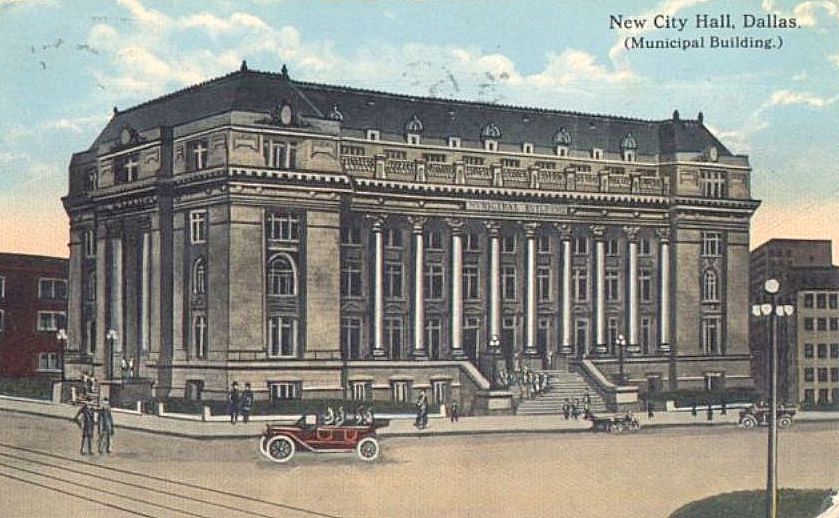
A few images of the building over the years. Here it is in its pristine early days:
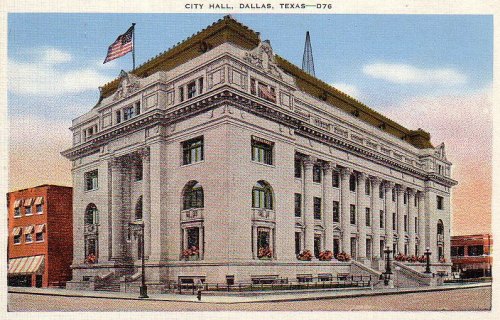
city_hall*

Then there was a weird middle-age-crazy period when someone thought that the addition of awnings would be a good idea (that person was incorrect).

municipal-bldg_color-ebay*

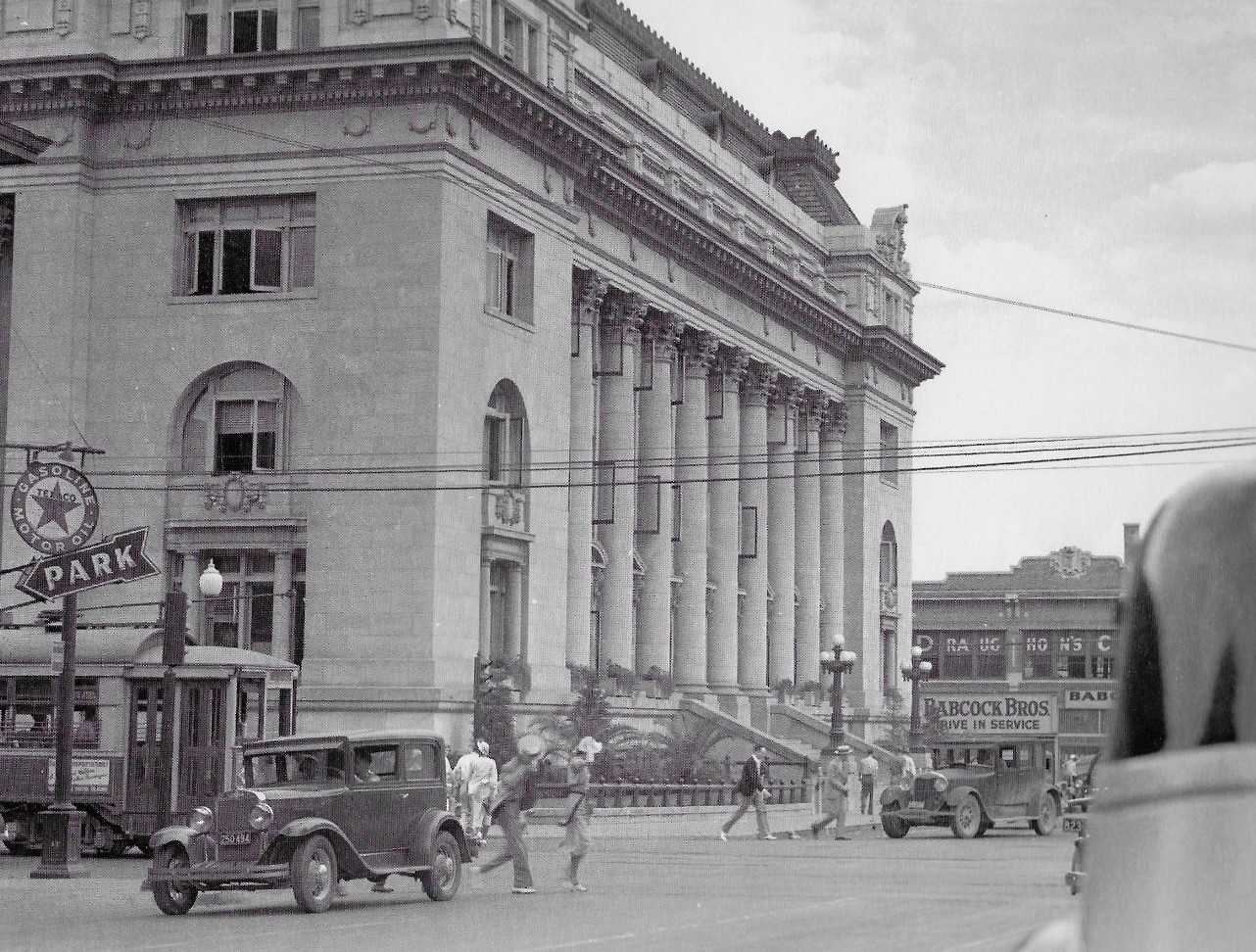
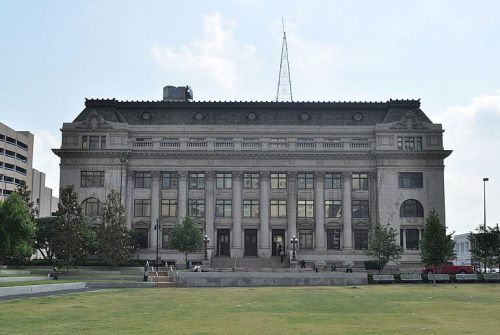
And, today, it’s back to looking distinguished and lovely. Thanks to the wonderful new open park in front of it, it has been given the stately space it deserves — what may be Dallas’ most beautiful building is finally able to be fully admired from a respectful distance.
municipal-bldg-today_wikipediaJoe Mabel, Wikipedia

***

Sources & Notes

Top photo from the book Historic Photos of Dallas by Michael V. Hazel (Nashville: Turner Publishing Co., 2006).

Quote from Municipal Journal, Vol. XXXVI, No. 19 — May 7, 1914.

Photo of the old Municipal Building today by Joe Mabel, from Wikipedia. (And, yes, the parking garage of the Dallas Municipal Building is where Ruby shot Oswald.)

Newspaper photos and clippings as noted.

For a detailed description of the architectural details, design elements, and description of office and department locations within the building, see the article “Municipal Building Handsome Structure” (DMN, Oct. 4, 1914), here.

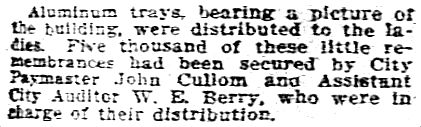
I’d love to know more about the little “aluminum trays, bearing a picture of the building” mentioned as being given away on opening day in an article above. There were FIVE THOUSAND of them given away. Surely there are some still around. Has anyone seen one of the these?
municipal-bldg_dmn_101814_aluminum-traysDMN, Oct. 18, 1914

municipal-bldg_c-d-hill_tx-almanac_19141914 Texas Almanac ad for C. D. Hill & Co.

*

Copyright © 2015 Paula Bosse. All Rights Reserved.

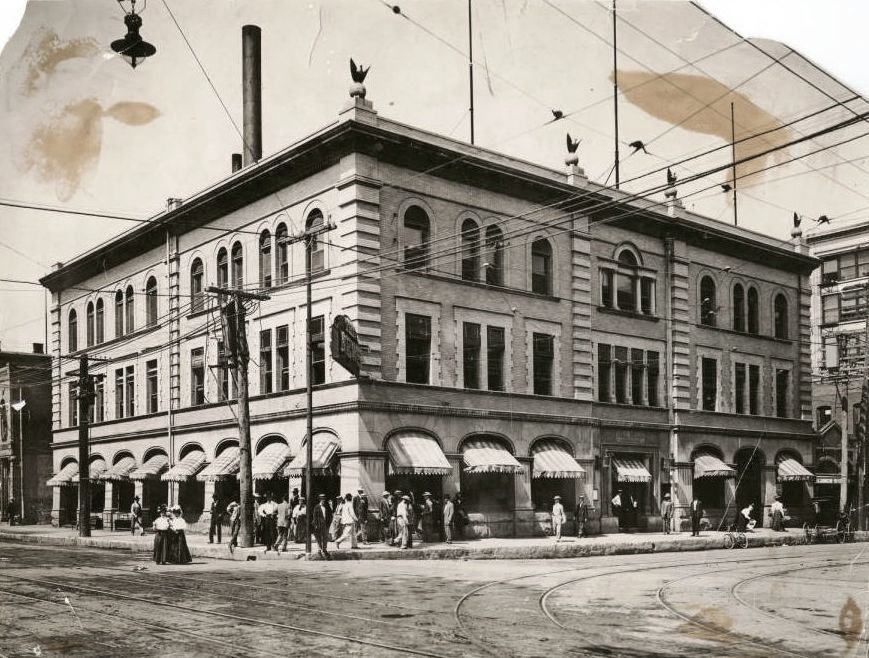
Lively Street Life Outside the Dallas Morning News Building — ca. 1900

dmn-bldg-c1900-degolyer_smuCommerce & Lamar (click for larger image) (DeGolyer Library, SMU)

by Paula Bosse

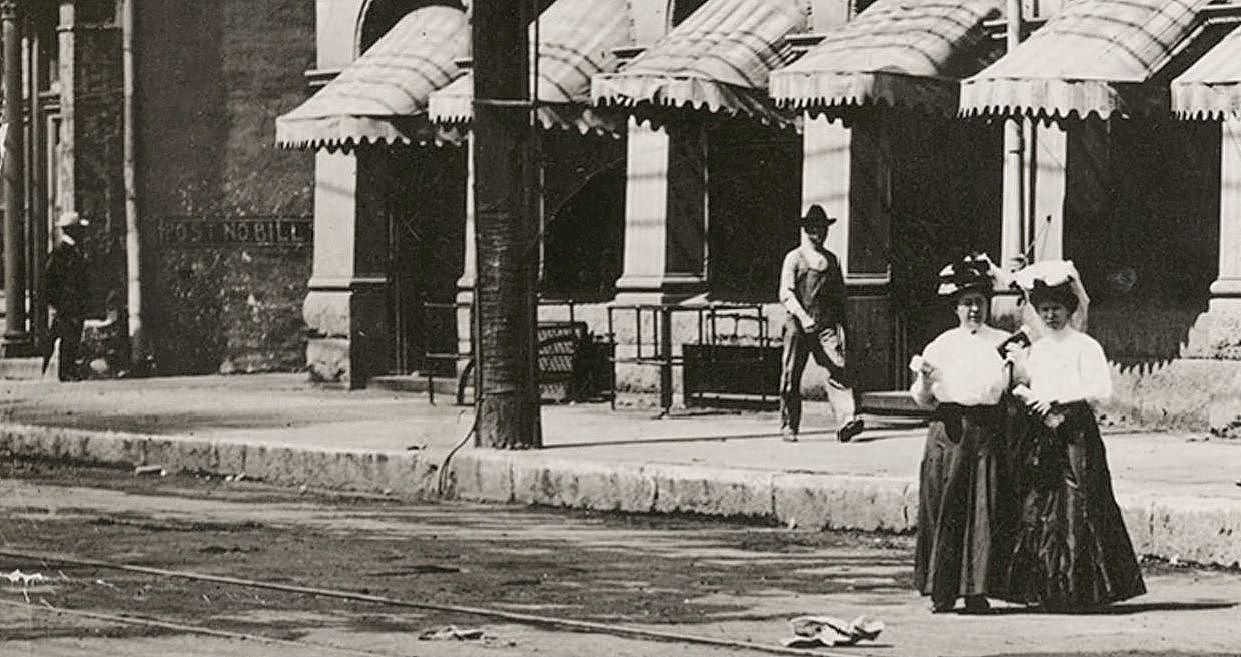
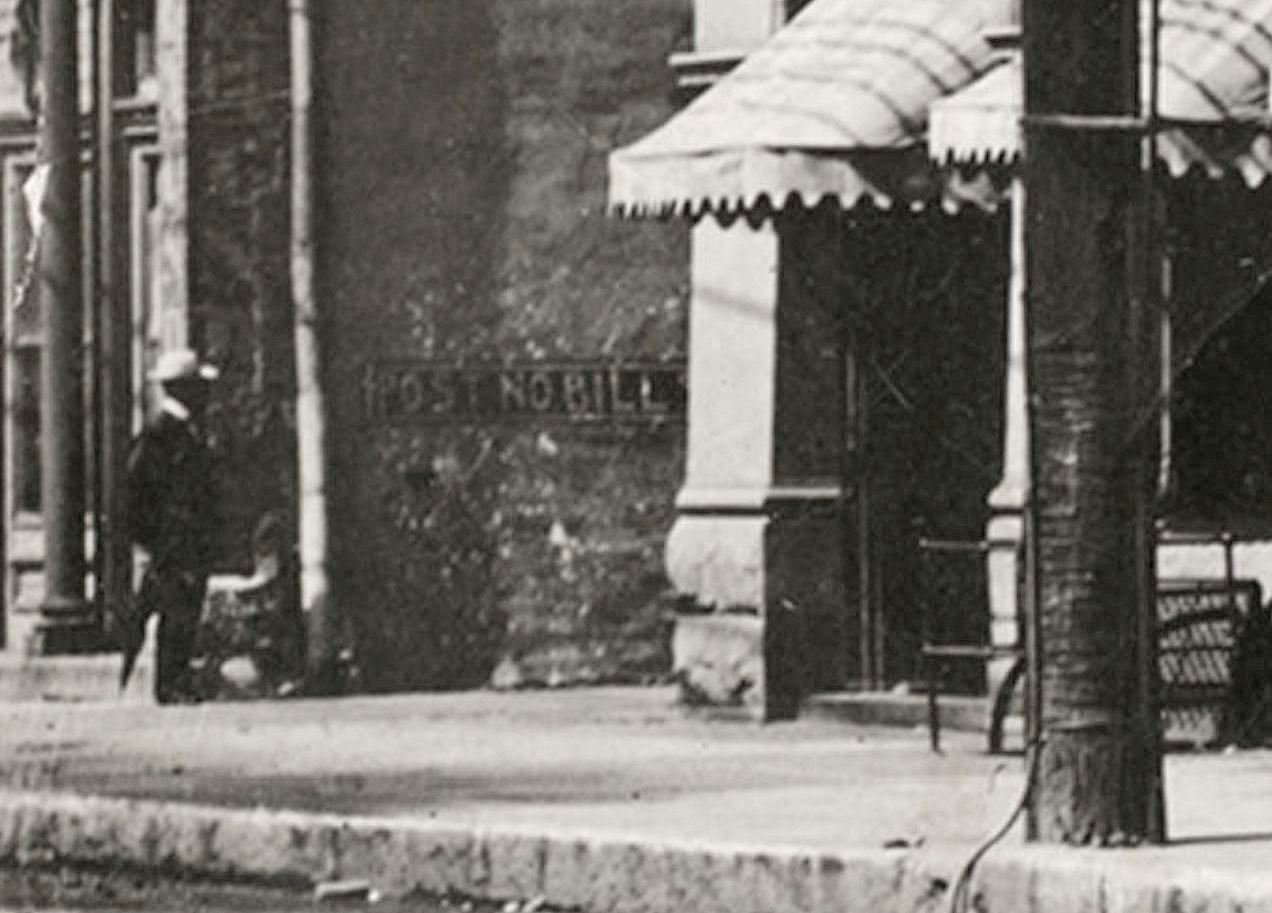
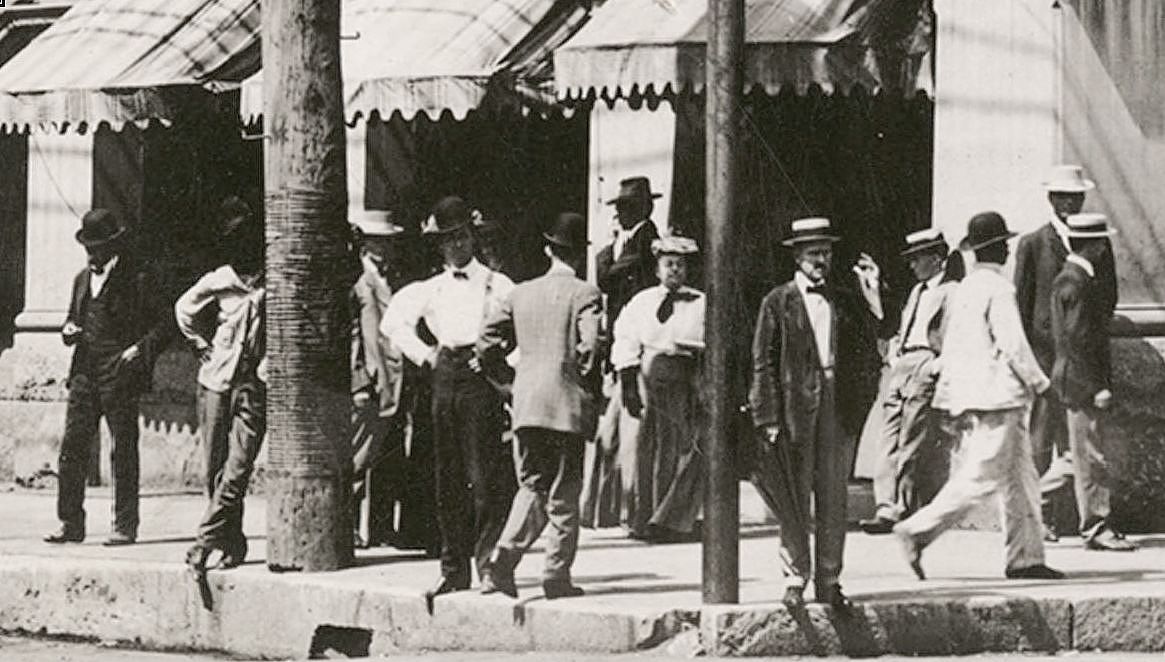
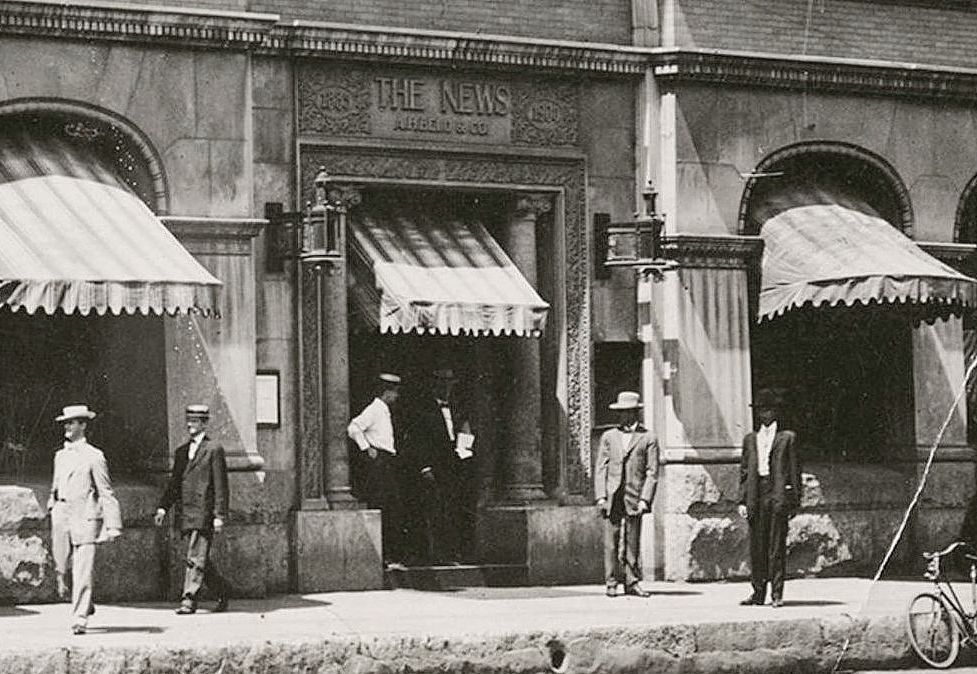
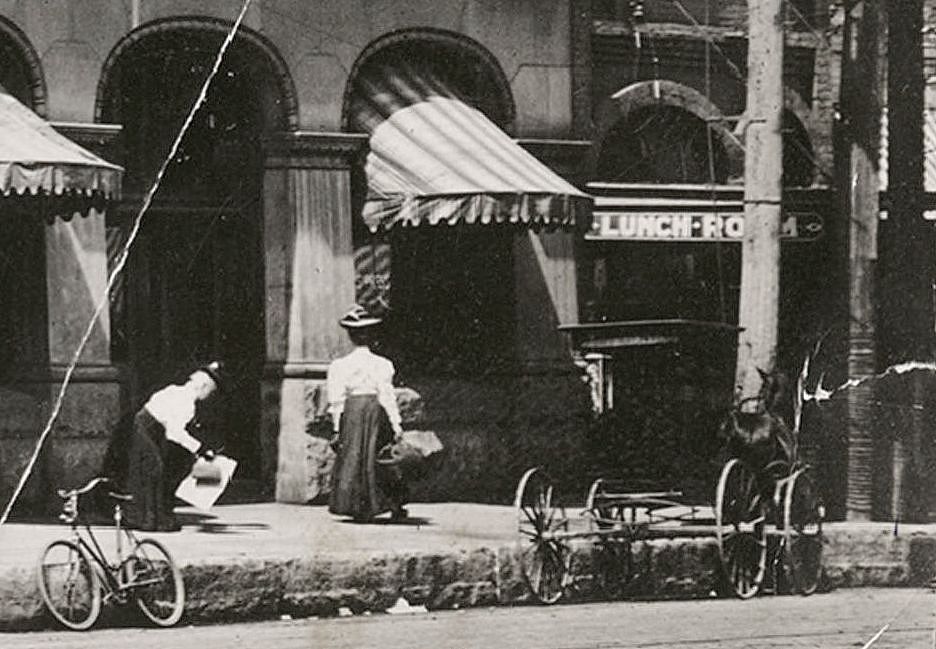
A photo showing the bustling streets surrounding the newly-expanded Dallas Morning News building, back when it was located at Commerce and Lamar streets. Below, a closer look at turn-of-the-century pedestrian traffic. Click pictures for larger images.

*

dmn-bldg-det1I love the man on the far left … contemplating posting a few illicit bills?

dmn-bldg-det5

dmn-bldg-det2Those curbs!

dmn-bldg-det3Journos.

dmn-bldg-det4A woman either stooped by age or bending over to pick something up, a woman with a carpet bag, and a high-off-the-ground buggy which illustrates one reason those curbs needed to be so high.

***

Photo titled “The Dallas Morning News building, Commerce & Lamar” from the Belo Records 1842-2007 collection, DeGolyer Library, Central University Libraries, Southern Methodist University; it can be viewed here.

Other views of the building from 1900 can be seen in these posts:

  • “Loitering In Front of The Dallas Morning News Building — ca. 1900, here
  • “The Dallas Morning News Building, Inside and Out — ca. 1900,” here

More posts where I’ve zoomed in on historic Dallas photos can be found here.

Click pictures for larger images.

*

Copyright © 2015 Paula Bosse. All Rights Reserved.