Flashback : Dallas

A Miscellany: History, Ads, Pop Culture

Category: Downtown

2222 Ross Avenue: From Packard Dealership to “War School” to Landmark Skyscraper
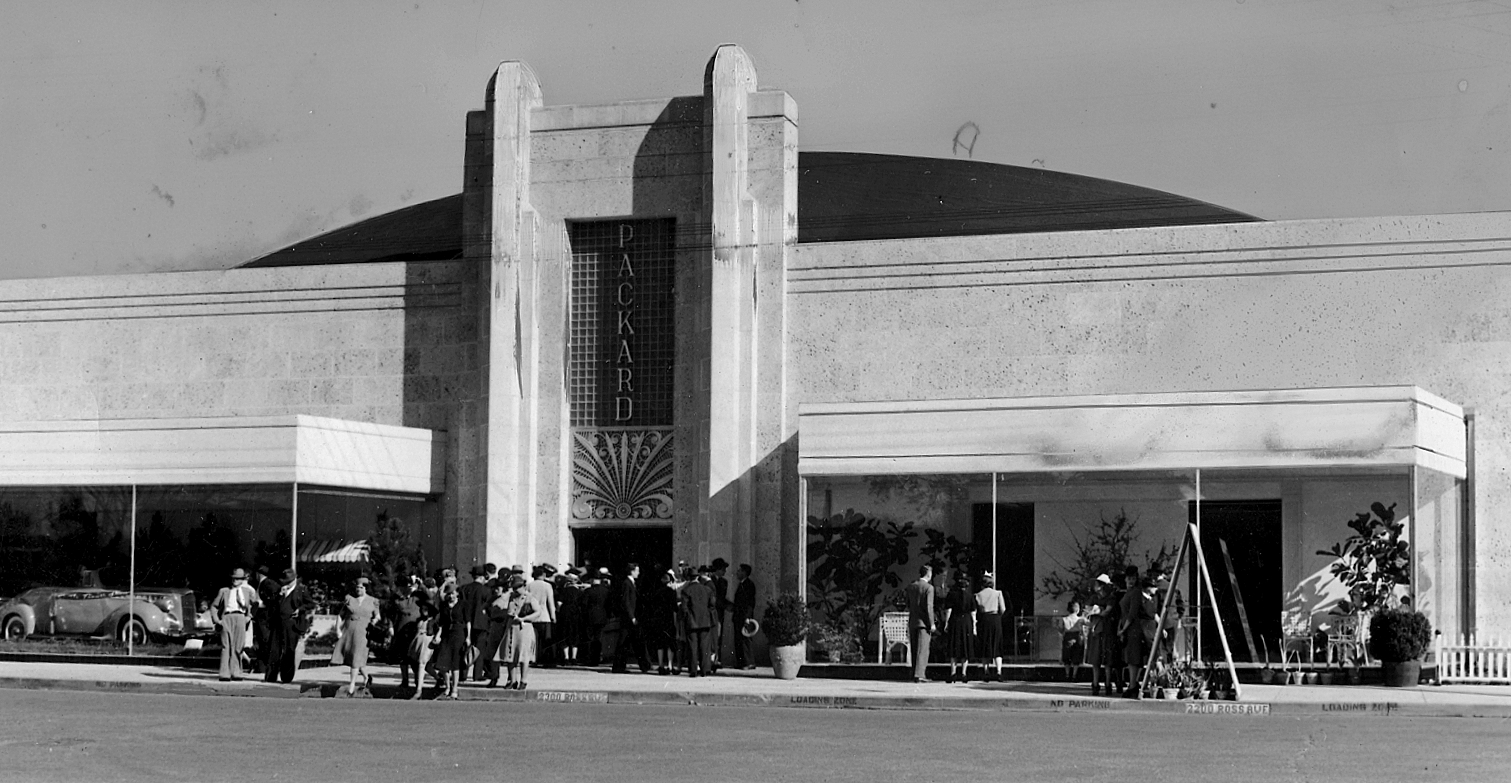
packard-dealership_2222-ross_detroit-pub-lib_1940Packard automobile showplace, 1940

by Paula Bosse

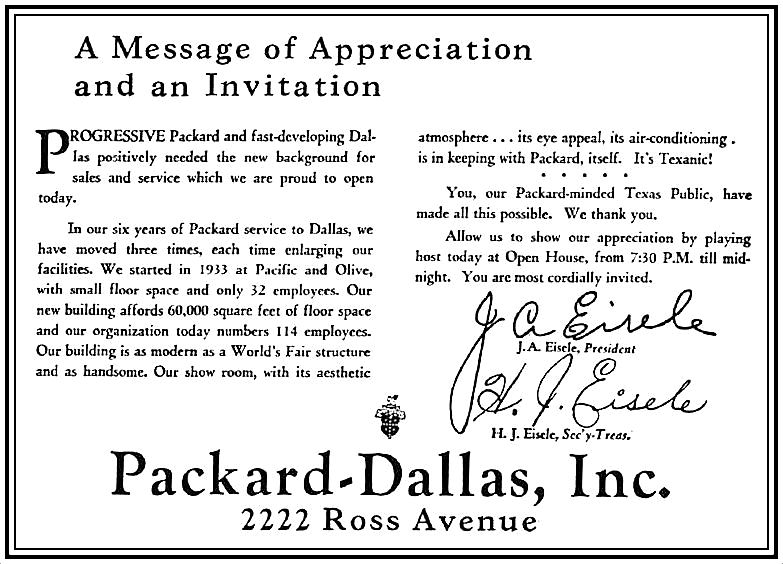
In late summer of 1939, a new 60,000-square-foot. $250,000 home for Packard-Dallas, Inc. featuring a “luxurious showroom” was announced. The first Packard automobile dealership had opened in 1933 at Pacific and Olive, and in the intervening six years, their growth had been tremendous, necessitating several moves and expansions.
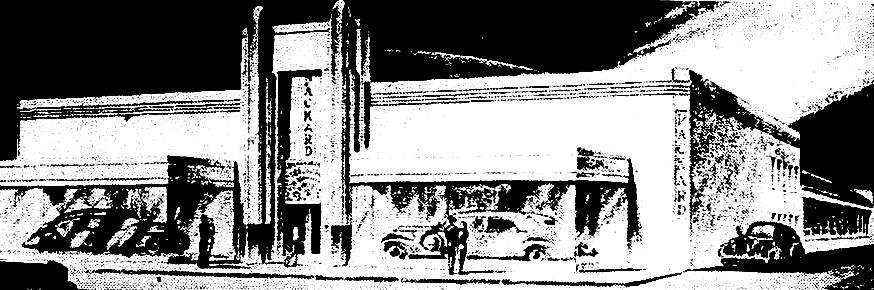
packard_ross_rendering_1939

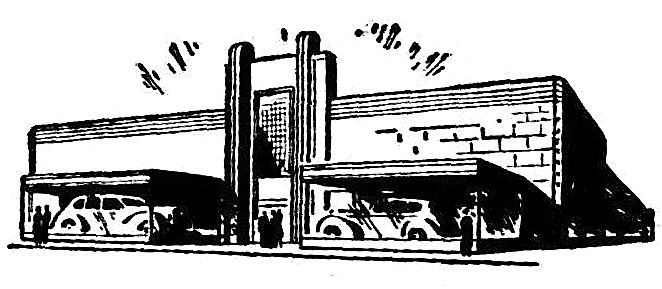
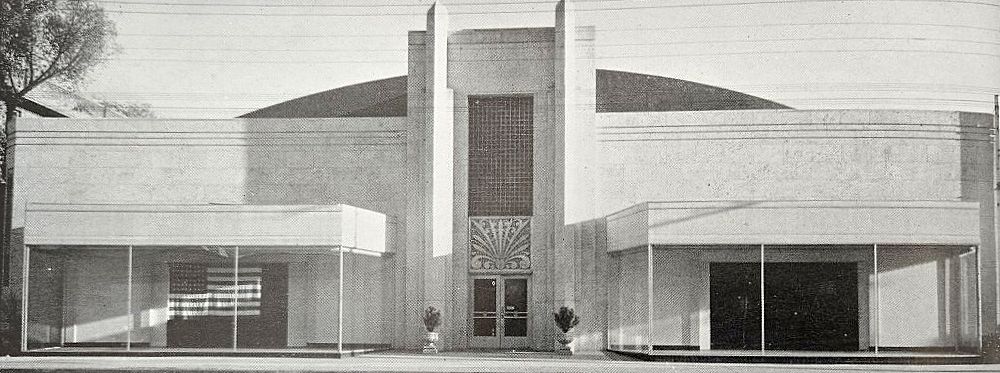
The attractive art deco building, faced with Cordova limestone and decorated with glass bricks, cast aluminum letters, and neon, was designed by J. A. Pitzinger and Roy E. Lane Associates, and was constructed at 2222 Ross Avenue in a mere three months. The large building was right across the street from the Cathedral of the Sacred Heart, in the block bounded by Ross, Crockett, San Jacinto, and N. Pearl. The president of Packard-Dallas was J. A. Eisele and the secretary-treasurer was his son, Horace. The grand opening on Dec. 16, 1939 was a big enough deal that the home-office Detroit honchos flew in, and there was even a 15-minute radio program devoted to it on KRLD.

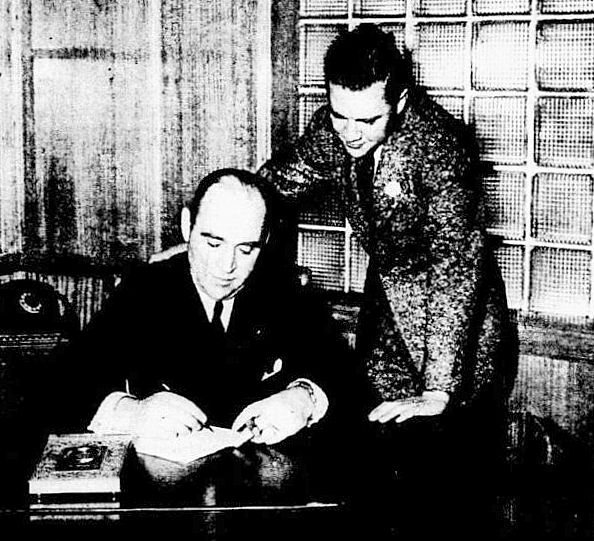
Under the headline “Growing With Dallas,” the opening-day ad featured a photograph of Joe and Horace Eisele and “A Message of Appreciation and an Invitation”:
packard_dmn_121639_ad1

packard_dmn_121639_ad2Ad, Dec. 16, 1939 (click for larger image)

“It’s Texanic!”

And another ad featured this nifty little line drawing of the cool building:
packard_dmn_121639-drawing-detDec. 16, 1939 (ad detail)

One of the stories about the opening of Dallas’ new auto showroom palace boasted that this big, beautiful, brash building was here to stay — Packard-Dallas had a 15-year lease on the place. …Which is why it was surprising to read that the building was sold less than two years later.

The U.S. was on the inevitable brink of involvement in the European war, and the National Defense School had begun operation in Dallas in July 1940. After a year of classes in which young men were taught “to do the technical and mechanical work necessary to warfare” (DMN, March 20, 1941), classrooms at the Technical high school and at Fair Park were bursting at the seams, and a larger facility was necessary. The Dallas Board of Education (which oversaw the program, often called “the War School”), was given the go-ahead to purchase the building (and, presumably, the property) for $125,000 in August 1941.

I’m not sure why J. A. Eisele sold the building (his name was listed as owner, rather than the Packard Company) — it wasn’t even two years old, and he got only half of what it cost to build. Patriotism? His son Horace had been drafted in April, so … maybe. Eisele seems to have left the auto sales business, which he had been in for decades, and had moved out of Texas by 1945.

After the U.S. officially entered the war and it became obvious that “defense schools” around the country would have to admit women in order to maintain manufacturing quotas, women began to work beside men at the Ross Avenue school in January 1942.

Eighty women Saturday pulled their fingers against the triggers of aircraft rivet guns as the Dallas National Defense School, 2222 Ross Avenue, started the state’s first major training course designed to place women side by side with men in Texas war materials plants. (DMN, Jan. 4, 1942)
packard_ross-avenue_war-school_young-america-in-dallas_1942_DPL
1942

This “War School” was a training school for war-time jobs at places like North American Aviation.
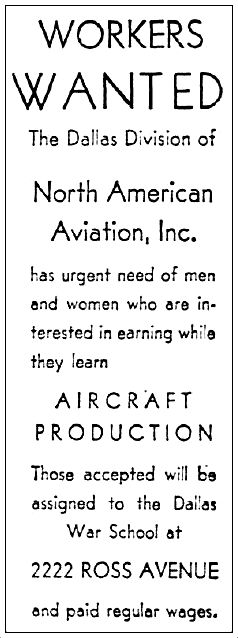
defense-school_dmn_090643Sept. 1943

Thousands of men and women trained at the Ross Avenue facility until the war ended in 1945. The school continued, but no longer as a Defense School — it became Dallas Vocational School, and its first students were veterans.

In 1976, the school was designated as one of the Dallas Independent School District’s magnet schools — it became the Transportation Institute, where “students interested in owning their own dealership, becoming a technician-mechanic or an auto body specialist will receive on the spot training in a laboratory consisting of a new car showroom, a modernly equipped repair center and a complete auto rebuilding facility” (DMN, Aug. 22, 1976). Back to its roots! And it only took 37 years.

The school continued for a while but, inevitably, the property became more and more attractive to developers. In 1981, as the developers were circling, a City Landmark Designation Eligibility List was issued. It contained buildings which had “particular architectural, historical, cultural and/or other significance to the City of Dallas,” and, if approved, were eligible to receive historic landmark designation. I’m guessing 2222 Ross Avenue didn’t make the cut, because Trammell Crow bought the building in 1983 and tore it down the next year.
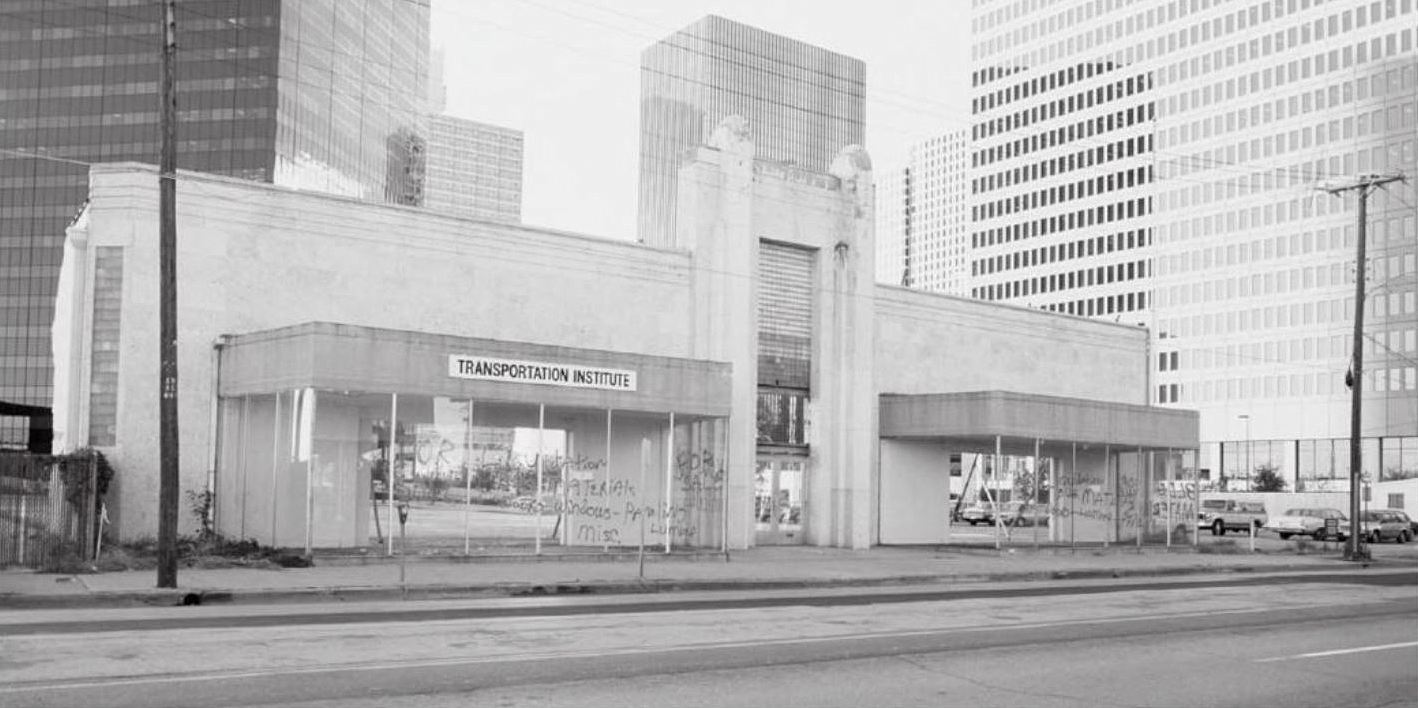
transportation-institute_lost-dallas_dotyvia Lost Dallas by Mark Doty

But … Crow sold the facade to real estate developer and investor Lou Reese, who said that he would reassemble the limestone facade and incorporate it into a restaurant he planned to build in Deep Ellum. That was an interesting plan. (Incidentally, in the same city council meeting in which the demolition/disassembling of the building’s facade was discussed, the council also considered “a request for more than $7 million in federal funds for a project to renovate the Adams Hat Co building into apartments” (DMN, Aug. 8, 1984). …Lou Reese owned the Adams Hat building. What a coincidence!)

The city council’s decision?

The council authorized developer Trammell Crow to disassemble the art deco facade of the former Transportation Institute Magnet High School on the condition that the facade be reconstructed in Deep Ellum…. The company [has] demolished all but the building’s limestone facade, which was determined to be eligible for designation as an historic landmark. (DMN, Aug. 9, 1984)

So? Where’s that facade? There was no mention of it for three years, until an article in the Morning News about another developer who had big plans for a major Deep Ellum complex called “Near Ellum,” which would be bounded by Commerce, Crowdus, Taylor, and Henry streets.

Highlighting Near Ellum will be a 40-foot art deco facade, formerly on the front of the Transportation Institute on Ross Avenue, in the main parking plaza. The plaza will also include an outdoor stage for concerts and special events. (“Developer Plans Deep Ellum Project,” DMN, June 25, 1987)

Aaaaaaaaaaaaaaaand … that never happened. I wonder if that 76-year-old disassembled limestone facade is still crated up somewhere around town. Somehow I doubt it.

So, 2222 Ross Avenue. What’s there now? None other than the 55-story skyscraper, Chase Tower, also known as “The Keyhole Building.”

You could get a lotta Packards in there.

***

Sources & Notes

Top photo from the Detroit Public Library’s Packard Collection in the National Automotive History Collection, viewable here; I’ve straightened and cropped it. The reverse has this notation: “Packard Motor Car Co., branches/dealerships/agencies, 2300 [sic] Ross Avenue Dallas, Texas, exterior, show windows left to right; 1940 Packard 110 or 120, eighteenth series, model 1800 or 1801, 6/8-cylinder, 100-120-horsepower, 122/127-inch wheelbase, convertible coupe (body type #1389/1399), special furniture display.”

1942 photo of the building is from a publication called “Young America in Dallas,” Dallas History and Archives, Dallas Public Library.

The developer who apparently came into possession of the facade after Lou Reese was Ed Sherrill. Perhaps someone associated with the Near Ellum project might know what became of the “saved” facade.

Chase Tower info on Wikipedia here; photo of it here. Imagine a teeny-tiny car dealership at its base.

Packard automobiles? Some of them were pretty cool. Check ’em out here.

A lengthy article on the notorious developer Lou Reese — “Hide and Seek” by Thomas Korosec (Dallas Observer, June 8, 2000) — is here.

*

Copyright © 2015 Paula Bosse. All Rights Reserved.

MORE Random Still-Standing Buildings Featured in Ads From 1929

ad-southern-fountain-fixture_directory_1929-detSoda fountains came from here…

by Paula Bosse

A few more photos of buildings that are still standing, from the ad-pages of the 1929 city directory.

First up is the Southern Fountain & Fixture Mfg. Co. at 1900 Cedar Springs.

ad-southern-fountain-fixture_directory_1929

The Southern Fountain & Fixture plant was built in 1925 at the corner of Cedar Springs and N. Akard. They manufactured and sold soda fountains, showcases, and fixtures.

A major new residential high-rise is going up in the 1900 block of Cedar Springs (or has gone up — it’s been a while since I’ve been over there), but I think it’s going up at the other end of the block. (But somehow its address is 1900 Cedar Springs….) So, I’m not absolutely sure this building IS still there. Here’s a 2014 image from Google Street View. It’s a cool building — hope you’re still there, cool building!

southern-fountain-fixture-now_googleGoogle Street View

*

Next, the Loudermilk-Sparkman Funeral Home at 2115 Ross Avenue.

ad-loudermilk-sparkman_belo_directory_1929(click for larger image of house)

The “home-like” Loudermilk-Sparkman funeral home moved into the former home of Col. A. H. Belo in June 1926 and settled in for a 50-year lease. (An article titled “Morticians In New Quarters” appeared on June 27, 1926 in The Dallas Morning News, complete with descriptions of interior decoration and architectural details.)

That place was a funeral home for 50 years — longer than it’s been anything else. That’s a lot of dearly departeds. (Clyde Barrow is probably the most famous cadaver to be wheeled through its portals.) In the ’70s, the granddaughter of Col. A. H. Belo sold the house — which was built in 1899/1900 — to the Dallas Bar Association, and today it is a swanky place to get married or eat canapés. And, thankfully, it’s still beautiful.

belo-today_googleGoogle Street View

*

 The Evangelical Theological College, 3909 Swiss Avenue, in Old East Dallas.

ad-evangelical-theological-college_directory_1929sm(click for larger image)

This “denominationally unrelated” seminary — where tuition and rooms were free, and board was at cost — was built in 1927 for $65,000. When the three-story-plus-basement building was finished, the college was in its fourth year, having moved from its previous location in The Cedars. “The college now has forty-five students representing fifteen states of the United States, three Canadian provinces and Ireland…. The faculty is composed of thirteen men…” (DMN, Dec. 25, 1927).

ad-evangelical-theological-college_directory_1929-det

The college has grown by leaps and bounds and is now the Dallas Theological Seminary, and the original building is still there.

dallas-theological-seminary_now_googleGoogle Street View

*

Lastly, the Melrose Court Apartments and Hotel, 3015 Oak Lawn.

ad-melrose_directory_1929

The Melrose, designed by architect C. D. Hill, was built in 1924, and as it was about to throw open the doors of its bachelor apartments to eager Dallas bachelors (and whomever), it advertised itself thusly: “Of palatial splendor, rivaling in dimensions the best appointed apartment hotel buildings of this modern day, it is equal to the best of any of America’s cities of a million.” (DMN, Aug. 31, 1924) Well, of course it is!

ad-melrose_directory_1929-det

It’s been a landmark in Oak Lawn for over 90 years. I know it’s officially now the Warwick Melrose Hotel, but I’ve never heard anyone call it anything but The Melrose.

melrose-today

***

Sources & Notes

All ads from the 1929 city directory.

My previous post “Random Still-Standing Buildings Featured in Ads From 1927” is here.

*

Copyright © 2015 Paula Bosse. All Rights Reserved.

An Incredible View From Republic Tower 2 — 1968

republic2_parrish_1_1968
Photo by Bill Parrish, 1968, used with permission (click for larger image)

by Paula Bosse

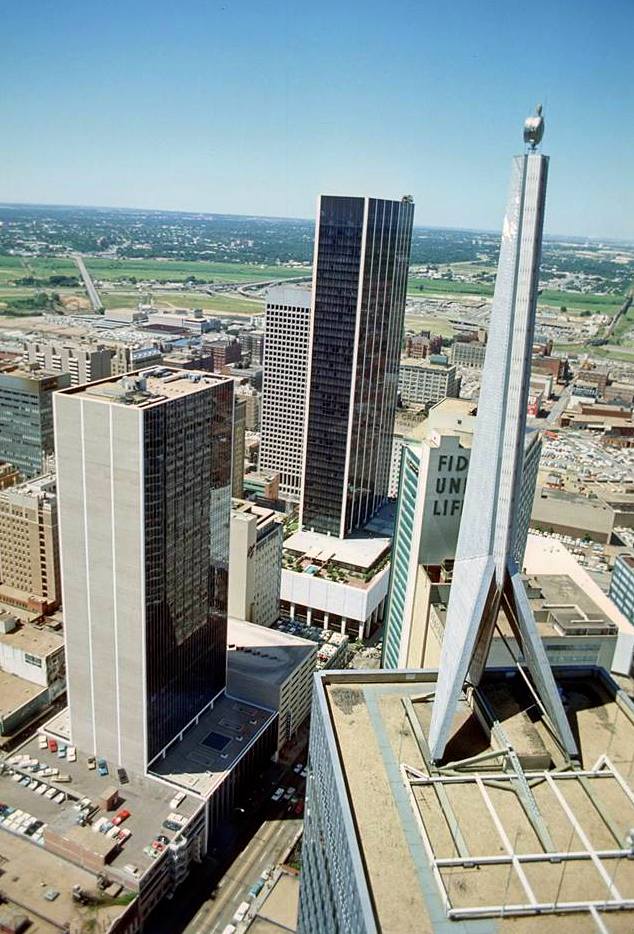
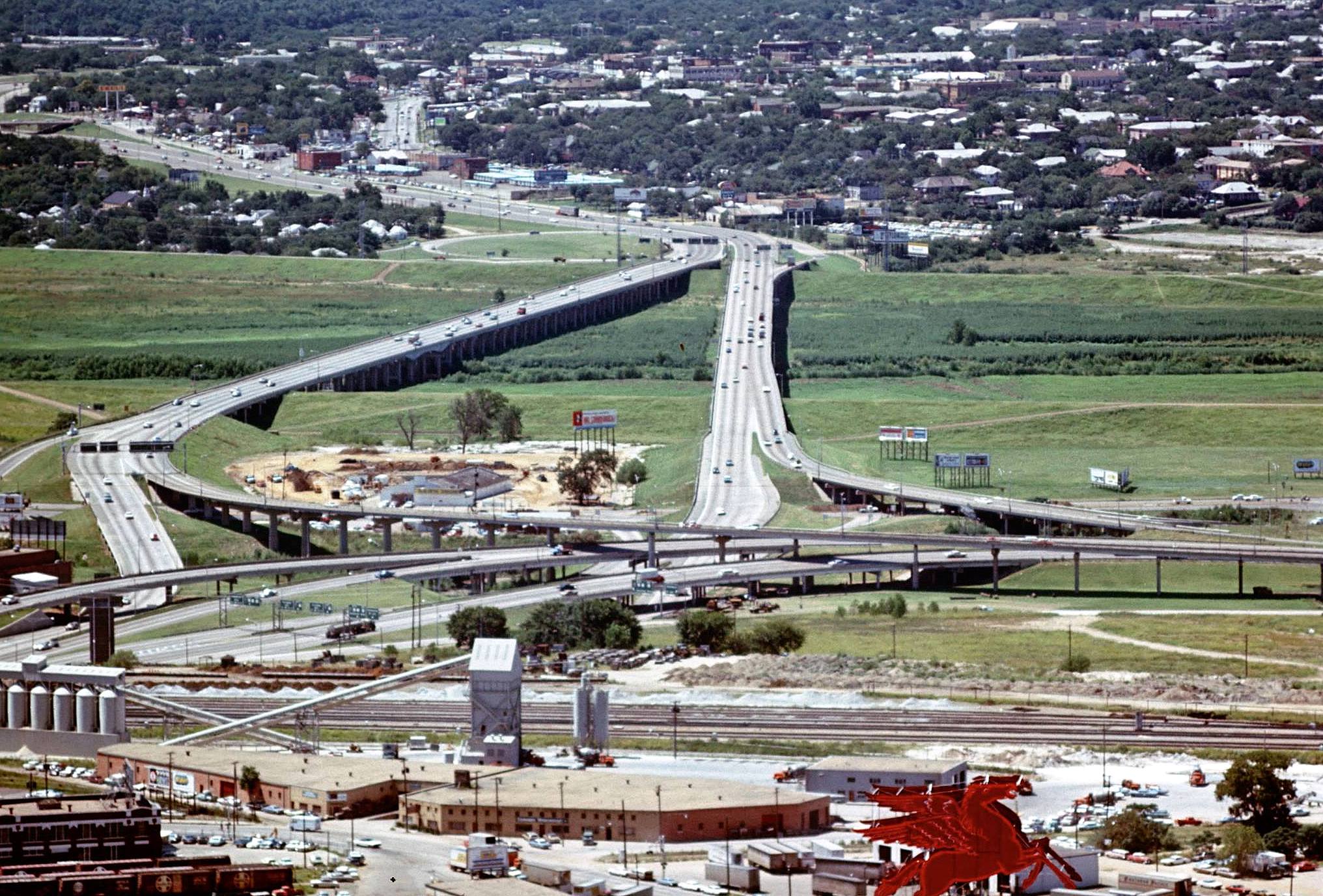
On August 15, 1968, teenager Bill Parrish — a former Dallasite who was back in town on a visit — was surprised to see that a new building has sprung up since he’d left: the 50-story Republic Tower 2 (built in 1964), the much-taller sister-building to one of Dallas’ most famous skyscrapers, the 36-story rocket-topped Republic National Bank Building. He wondered if he could get to the top of the building to take some photos. Bill remembers the day clearly:

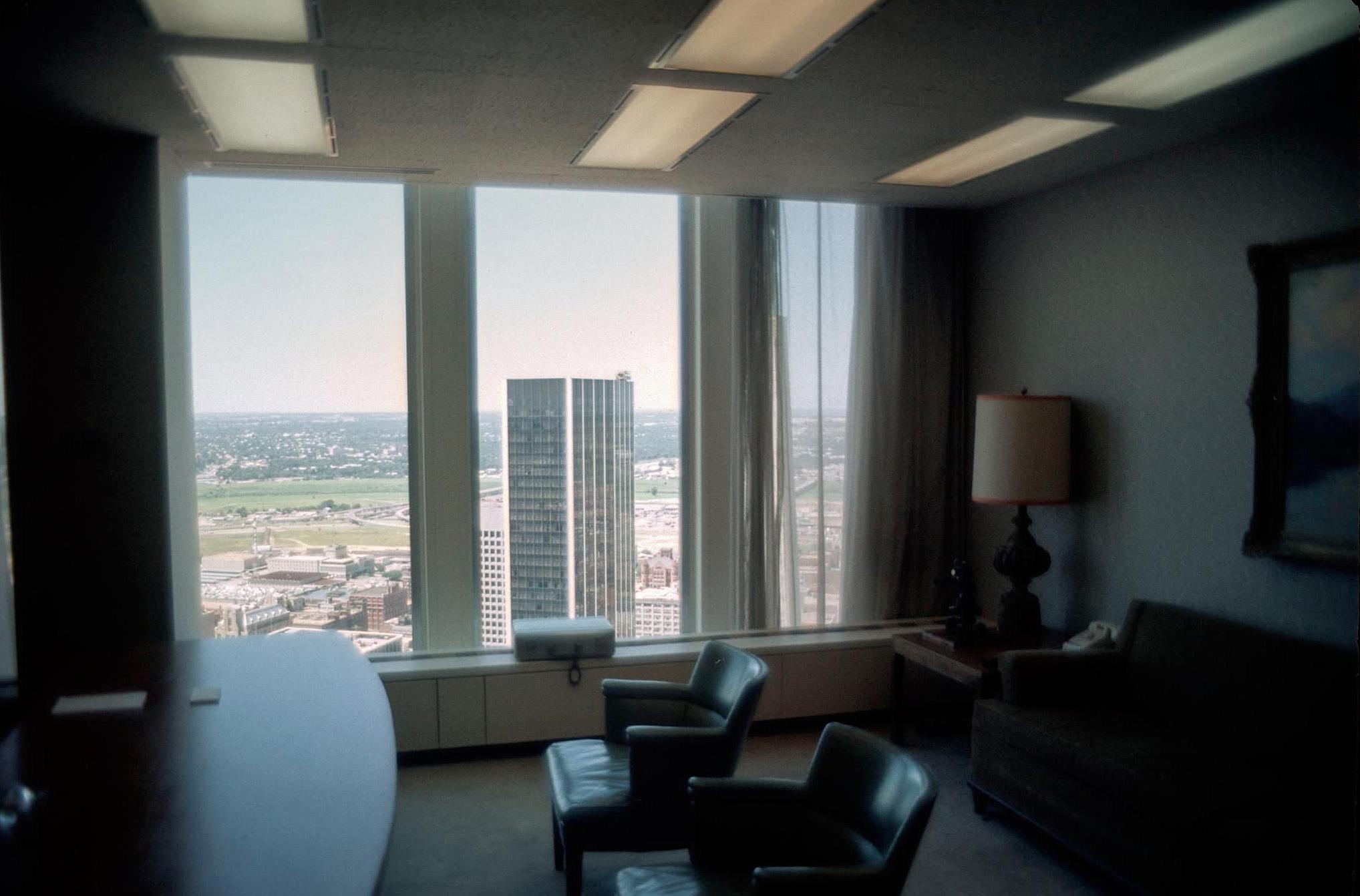
“I lived in Dallas until I was 9 years old, at which time we moved to Palo Alto, Califorinia. I spent the summer of 1968 at Texas A&M in an engineering program for high-ability science students. My parents picked me up in College Station and we came back via Dallas. I was a ‘tourist who used to live there’ and wanted some shots to remember the city by — even as a teenager. I had a fairly good camera, and I knew how to take pictures, having done photojournalism in high school. Also, I remembered how much fun I had living in Dallas, so maybe I was looking at the city a little differently.

“We stopped in Dallas for a few days on the way back, and we spent one day downtown visiting old haunts. My dad and I were in our suits, and we went to the new (to us) Republic Tower 2 and rode the elevator to the top and asked around if we could take some shots out of some windows. Some very nice folks allowed us to use an office that was currently not being used. A number of shots were made from the same office. I think we were in and out in about 5 minutes — I remember the folks up there were very nice to us … considering we just ‘dropped in.’

“I just wish I had shot like 3 rolls of film — like inside the Mercantile lobby, inside Titche’s, and inside Neiman’s. I would have shot stuff at Walnut Hill Village, Marsh Hill Village, in the terminal at Love Field, at my old school, peoples’ houses I remembered, restaurants, etc. if I had known they would be of value in 50 or so years.

“I guess the takeaway is that today if something catches your eye, shoot it (with your phone even), and archive it so it can be found later… and don’t throw away old pictures! You may not be able to keep everything, but be careful about what might be of value to someone.”

*

Below are some of Bill’s really, really wonderful photos taken on that summer day in 1968 from a top floor of the tallest building in Dallas. (Many of these are HUGE. Click to enlarge.)

republic2_parrish_2_1968

republic2_parrish_5_1968

republic2_parrish_4_1968

republic2_parrish_3_1968

republic2_parrish_6_1968The office Bill shot from; his aluminum camera case is on the windowsill.

republic2_parrish_7_1968The original be-rocketed Republic National Bank Building on the left, the taller Republic Tower 2 in the middle.

***

Sources & Notes

All photos in this post by Bill Parrish, used with his permission. They first appeared in the Retro Dallas Facebook group.

During this short trip to Dallas, Bill’s family also shot some home movie footage, which can be seen here.

Below, a Google map showing the Bill’s general view of the photos looking over Pegasus to Oak Cliff:

map-view-from-republic2

Some photos by a different photographer, taken from the top of the Republic Center Tower II (its official name) in 2007, can be seen here. A couple of the photos show the exact same shots Bill took. A lot can happen in 40 years!

The Wikipedia page for Republic Center is here; the official Republic Center site is here (worth checking out if only to see the BEAUTIFUL shot of the two buildings, including the re-lit “rocket” tower).

My previous post, “The Republic National Bank Building: Miles of Aluminum, Gold Leaf, and a Rocket,” is here.

All of Bill Parrish’s photos are very large. Click to see some of them much, much larger!

Thank you so much, Bill, for sharing these fantastic pictures. The photo at the top is now one of my favorite-EVER shots of the Dallas skyline!

*

Copyright © 2015 Paula Bosse. All Rights Reserved.


Winter Scene: The Belo Mansion & The Cathedral of the Sacred Heart — ca. 1902

cathedral_snow_flickr-colteraSnow on Ross Avenue…

by Paula Bosse

A beautiful dusting of snow in one of the tonier areas of the city, captured by a postcard photographer in the early years of the 20th century — back when the snowy slush along Ross Avenue would have been caused by horses and the buggies they pulled behind them.

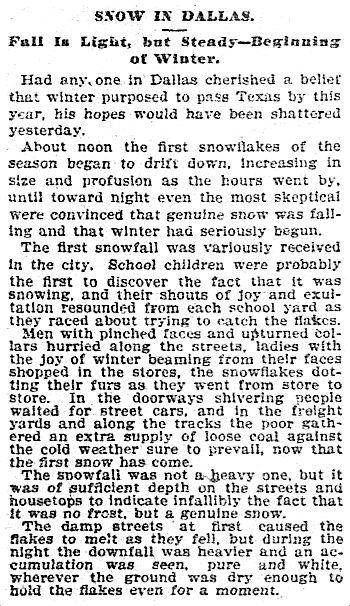
The date of this postcard is unknown, but at the end of 1902 (the same year the construction of the cathedral was completed) it snowed in Dallas — a “weather event” then (as now) so out of the ordinary that it resulted in these rapturous few paragraphs from the December 4, 1902 edition of The Dallas Morning News:

snow_dmn_120402DMN, Dec. 4, 1902

***

Sources & Notes

Postcard from Flickr, here.

The Belo Mansion was built in about 1890; more info here.

Construction of the Cathedral of the Sacred Heart (now the Cathedral Santuario de Guadalupe) was completed in 1902. Except for the bell tower, which, though part of the architect Nicholas J. Clayton’s original design, was not completed until 2005. More on this “sympathetic addition” from Architexas, here.

While most of the buildings and houses that once stood along ritzy Ross Avenue are long gone, both the Cathedral and the Belo Mansion still stand as Ross Avenue landmarks.

Below, the same view today (sans snow), via Google Street View (click for larger image). I really wish that iron fence was still there.

belo-cathedral_google

*

Copyright © 2015 Paula Bosse. All Rights Reserved.

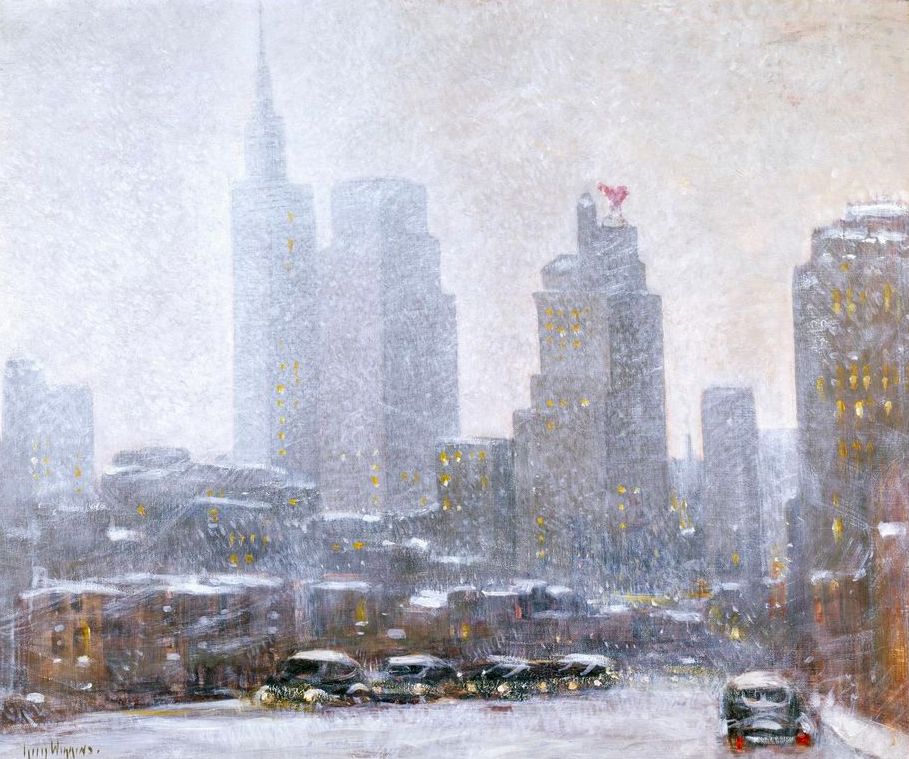
“Dallas in Winter” by Guy Wiggins — ca. 1942

wiggins_dallas-in-winter_c1942_dma“Dallas in Winter” by Guy Carleton Wiggins (Dallas Museum of Art)

by Paula Bosse

A nostalgic look back at a snowy Dallas scene from the 1940s by Guy Wiggins (1893-1962), an artist most remembered for his snow scenes of New York City. Wiggins was apparently quite fond of Dallas and was a frequent visitor, beginning in the 1920s. He had countless gallery shows here over the years, and while in town he’d often present lectures and “master classes” to arts groups and women’s groups. According to articles in local newspapers, Wiggins painted views of the Dallas skyline several times, paintings which no doubt found their way into private collections and are probably still hanging on the walls of local art patrons. In 1952, his daughter and her family moved here, giving Wiggins yet another reason to visit.

The wonderful snow scene above is in the collection of the Dallas Museum of Art; this is the DMA’s description of the painting:

A rare snowstorm in Dallas captured the eye of Guy Carleton Wiggins, who recorded this scene from the downtown vantage point of Live Oak and Pearl streets, showing the skyline’s distinctive historic landmark of the red statue of Pegasus on the Magnolia building.

Although born and raised in the East, where he was affiliated with the artists’ colony in Old Lyme, Connecticut, Wiggins traveled widely throughout the United States during his career. He became known for urban winter scenes such as this one.

***

Sources & Notes

The painting “Dallas in Winter” by Guy Carleton Wiggins is from the Patsy Lacy Griffith Collection, Dallas Museum of Art; it was a bequest of Patsy Lacy Griffith. More information on the painting can be found on the DMA’s website, here.

(Patsy Lacy Griffith was the daughter of oil millionaire Rogers Lacy, who was this close to building the incredible Frank Lloyd Wright-designed hotel downtown. I wrote about it in a previous post, here.)

More on the career of Guy Wiggins, from Wikipedia, here, and from a 2011 New York Times profile of the Wiggins family of painters, here.

Because he visited so often and had many friends here (and because he apparently painted very quickly), Wiggins’ paintings were well represented in private collections in Dallas. (One of his earliest patrons was Miss Ela Hockaday, of the Hockaday School for Girls, who loaned one of her paintings for an exhibit at the Dallas Public Library in 1930.) Among works depicting views of the city were oil studies with the titles “Morning Over Dallas,” “The Akard Canyon,” “Dallas: Morning From Cliff Towers,” and “Dallas Nocturne,” all of which were probably still damp when first shown, as The Dallas Morning News reported that they had been painted “little more than a week ago” before they went on display at the Ed Spillars gallery on Fairmount at the end of December, 1948 (DMN, Dec. 22, 1948). I’d love to see these paintings.

Want “Dallas in Winter” hanging on your walls? Buy the poster from the DMA Shop here. Look at it longingly when it’s 157 degrees in August.

*

Copyright © 2015 Paula Bosse. All Rights Reserved.

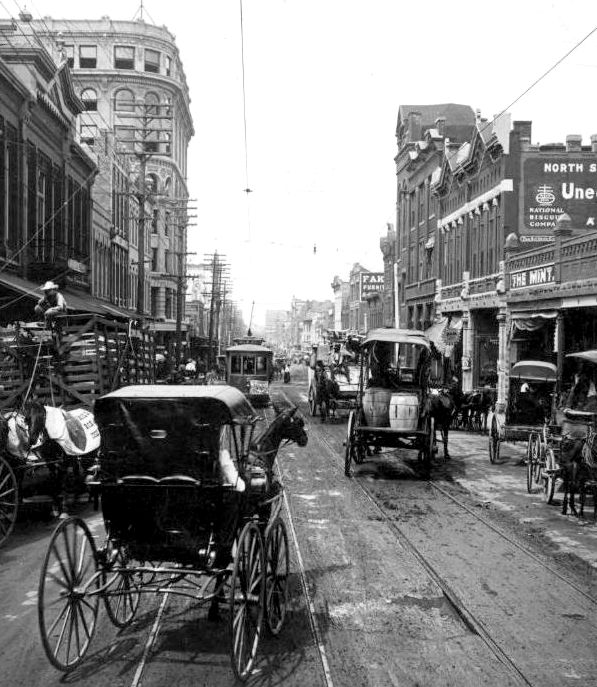
“Everyday Life” on Elm Street — ca. 1905

elm-street_everyday-life_UCR-smallElm Street rush hour

by Paula Bosse

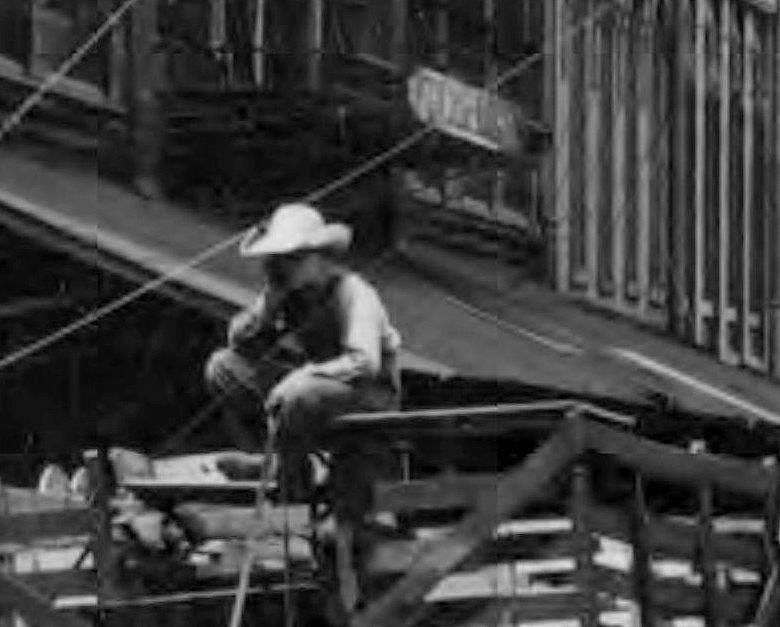
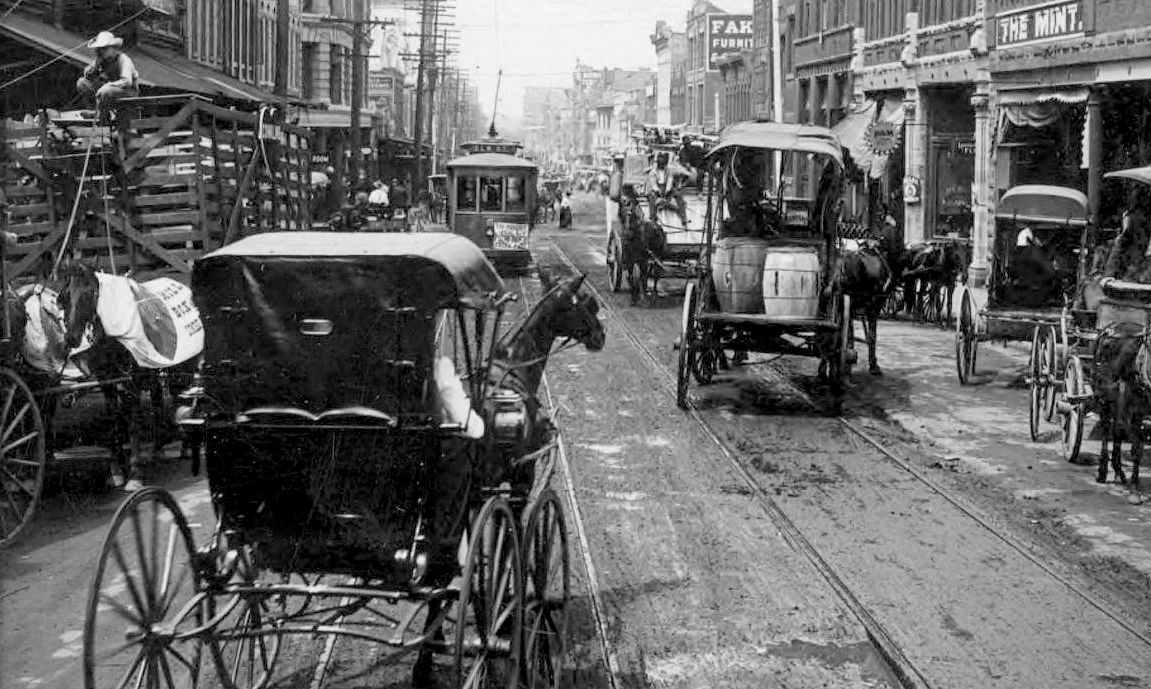
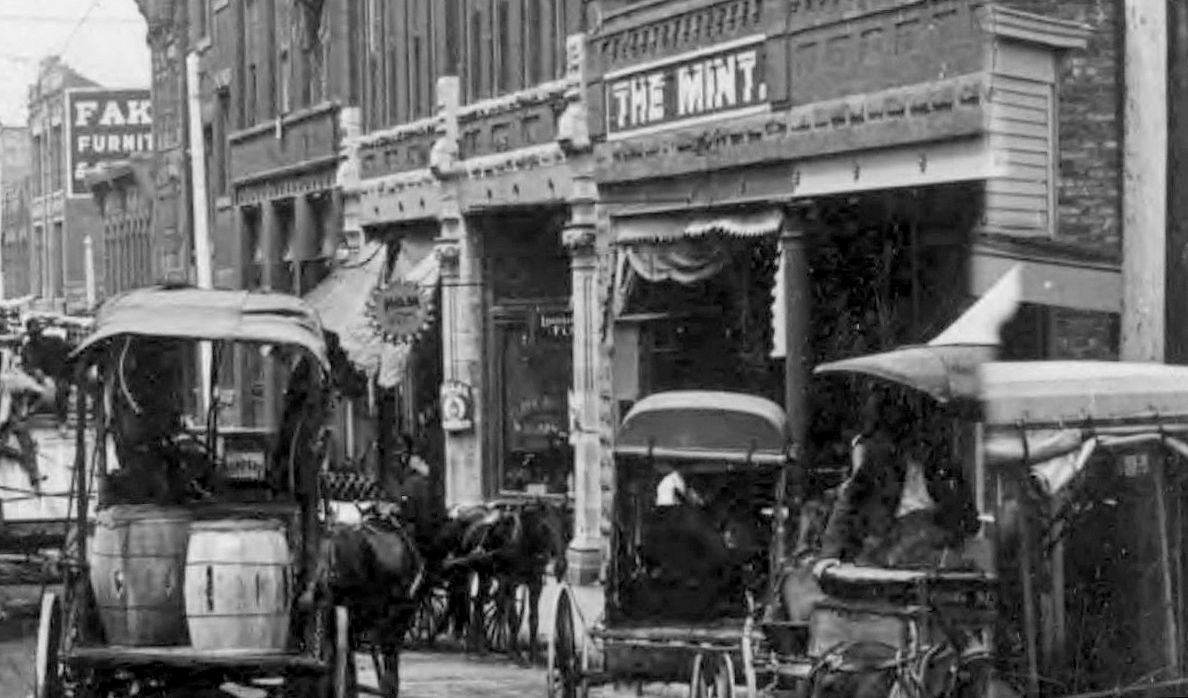
Automobiles would be rolling down Elm Street very soon, but even when the traffic was still mostly horse-related, there’s a lot going on here: horses, buggies, barrels, saloons, a bored kid on a wagon, a street car, and the Wilson Building.

elm-st_everyday-life_UCR-det

elm-st_everyday-life_UCR-zoom(click for larger images)

And what was The Mint? The Mint was a saloon. I’m not sure when it first set up shop in Dallas, but it was listed in an 1877 directory, one of the city’s earliest.

elm-st_everyday-life_mint_UCR

Speaking of 1877, read about a typical frontier day at The Mint in two accounts of a stabbing, from The Dallas Herald in April, 1877, here, and the follow-up, here.

***

Sources & Notes

Photo is from a stereograph titled “Everyday Life, Elm Street, Dallas, Tex.” from the Keystone-Mast Collection, UCR/California Museum of Photography, University of California at Riverside; it can be accessed here.

Images larger when clicked.

*

Copyright © 2015 Paula Bosse. All Rights Reserved.

Roseland — 1916

roseland_terrill-yrbk_1916The Roseland Theater, 1613 Main St. (click for larger image)

by Paula Bosse

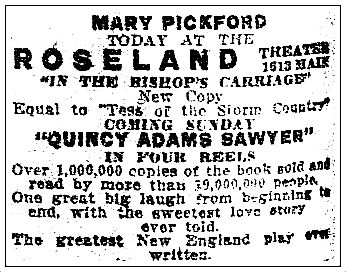
Despite its grainy quality, I really like this photo. It shows people walking past the Roseland Theater at 1613 Main Street, a theater I’d never heard of. I couldn’t find out much about it other than that it doesn’t seem to have lasted very long (from at least 1914 until at least 1916). It was owned/managed by P. G. Cameron, who ran several theaters and was in the general “amusements” business around town (he had run the Fair Grounds Skating Rink back in the aughts for a short while, until the place was shut down because of the discovery of a prostitution operation being conducted there … on city-owned property).

roseland_dmn_050914Dallas Morning News, May 9, 1914

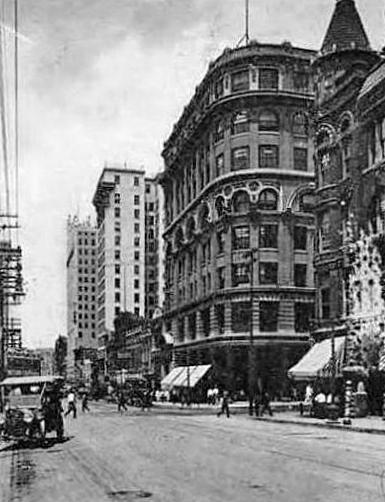
In 1916, the north side of Main Street contained three theaters: the Nickelodeon (1607 Main), the Roseland (1613 Main), and the Best (1615 Main). This is the much-beleaguered (and now mostly demolished) block of Main, which in 1916 was anchored by the dazzling Praetorian and Wilson buildings. The Roseland occupied part of what was once the Everts Jewelers building. Below, another view of this block in 1916, with the theater(s) on the right, about halfway between the tall white Praetorian Building and the stately rounded Wilson Building.

main-st_1916_smu-rotunda_sm Another grainy photo, Main looking west

I like this Roseland photo because it’s a candid shot taken by a teenager on the sidewalk of a lively downtown Dallas who had happened upon his teacher away from school. And the sign is cool. Too bad it’s so hard to see.

roseland_terrill-yrbk_1916_det

***

Sources & Notes

Photo from the 1916 Terrillian, the Terrill School yearbook. (The caption for the photo of one of the school’s teachers: “Passing by or coming out, Mr. F.?”)

Photo of Main Street, looking west, from the 1916 Rotunda, the yearbook of SMU.

See what the 1600 block of Main looked like in 1909, here. Much of the block has been demolished.

See the 1921 Sanborn map showing this block, here.

Below, a recent (2015) Google Street View of the building that housed the Roseland: the really lovely shorter white building. This building may already have been razed. What a shame. (UPDATE — 2018: Yep, demolished.) The current view (as I assume this block is ever-changing) can be seen on Google Street View here.

roseland_google2015, not long for this world….

*

Copyright © 2015 Paula Bosse. All Rights Reserved.


The Southern Rock Island Plow Company

southern-rock-island-plow_city-directory_1908-det_smFrom plow company to Dallas’ most famous building (click to enlarge)

by Paula Bosse

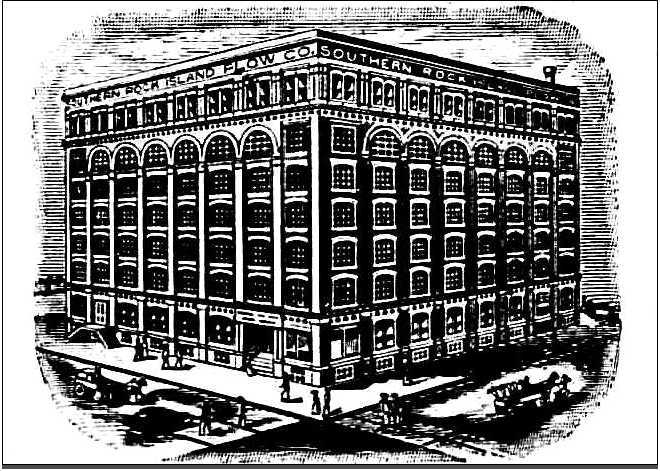
Behold, the Southern Rock Island Plow Company building. Looks familiar? Perhaps “Texas School Book Depository” is an easier hook to hang your hat on. When Dallas seemed to be farm implement-central, there were numerous plow companies in business here. This is the second Southern Rock Island Plow Co. building — the first one (built in the same location around 1898) burned down when it was struck by lighting. The building that still stands was built in 1903, and it is, without question, the most famous building in Dallas.And it’s probably not that far behind the Alamo.

southern-rock-island-plow_city-directory-19081908

southern-rock-island-plow_bldg-code_19141914

***

Sources & Notes

Ad from the 1908 city directory.

Photo from the Building, Plumbing, Gas & Electrical Laws of the City of Dallas (1914).

More on the history of the Dallas branch of the Southern Rock Island Plow Co. can be found here.

For more about what’s going on with the building these days, see the Dallas Morning News article “Dallas County May Move Offices Out of Historic School Book Depository” by Matthew Watkins, here.

For more on the various incarnations of the building (which, by the way, is officially called the County Administration Building and which now houses county offices as well as the Sixth Floor Museum), see my previous post, “The Sexton Foods Building and the Former Life of the School Book Depository,” here.

*

Copyright © 2015 Paula Bosse. All Rights Reserved.


Luncheon at The Zodiac Room, Darling

zodiac-room_smFood, fashion, & the unmistakable whiff of Old Money (click for larger image)

by Paula Bosse

Two cool and sophisticated postcards from the cool and sophisticated Neiman-Marcus (although it’s debatable whether the truly cool and sophisticated N-M shopper would, in fact, mail anyone something as bourgeois as a postcard of a department store, Neiman-Marcus or not). Perhaps these were done up for the sizable tourist trade. I love these cards. Commercial art of this period is wonderful.

The description on the back reads: “One of the great dining spots of the Southwest … N-M’s famed ZODIAC ROOM. The superlative food specialties of Director Helen Corbitt and her staff are enjoyed during modeling of fashions a la Neiman-Marcus at luncheon and dinner. Also, tea served daily.”

Below, the Carriage Entrance:

neimans_postcard_c1950s-carriage-entrance-sm(click for larger image)

The description: “‘The Carriage Entrance’ — famous passageway into one of the world’s great specialty stores.”

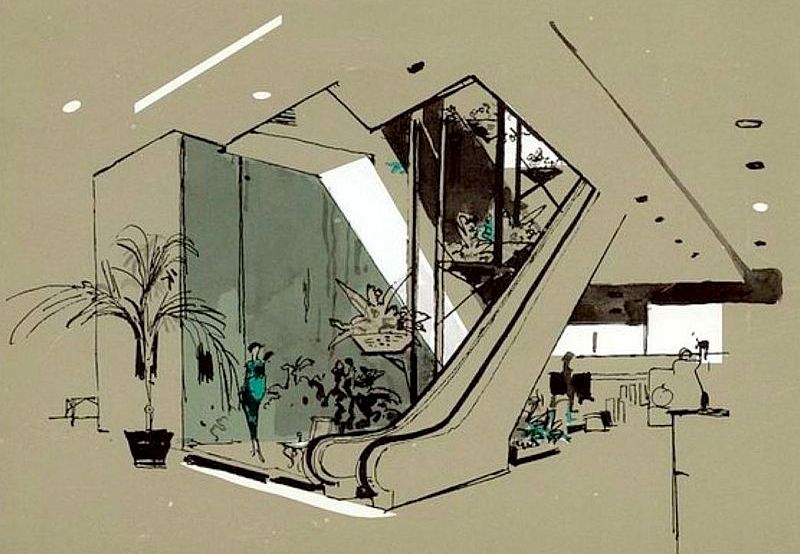
And another (I’d love to see the whole series of these postcards.) Sadly, no description on this one, featuring a fashionable escalator.

n-m_escalator_pinterest

I fear I shall never reach the level of swan-like sophistication needed to become an habitué of The Zodiac Room. Tant pis.

***

I have no idea where these postcards came from. I’m not sure of the date, either, but … “1950s”? Maybe very early 1960s? Let’s go with “Mid-Century” — everyone loves that! Whenever this was, this was a period when fashion was chic and fabulous. As was Neiman-Marcus. (I still miss that hypen!)

Need to make a reservation at The Zodiac? Info is here.

*

Copyright © 2015 Paula Bosse. All Rights Reserved.

The Wilson Building Under Construction — 1902

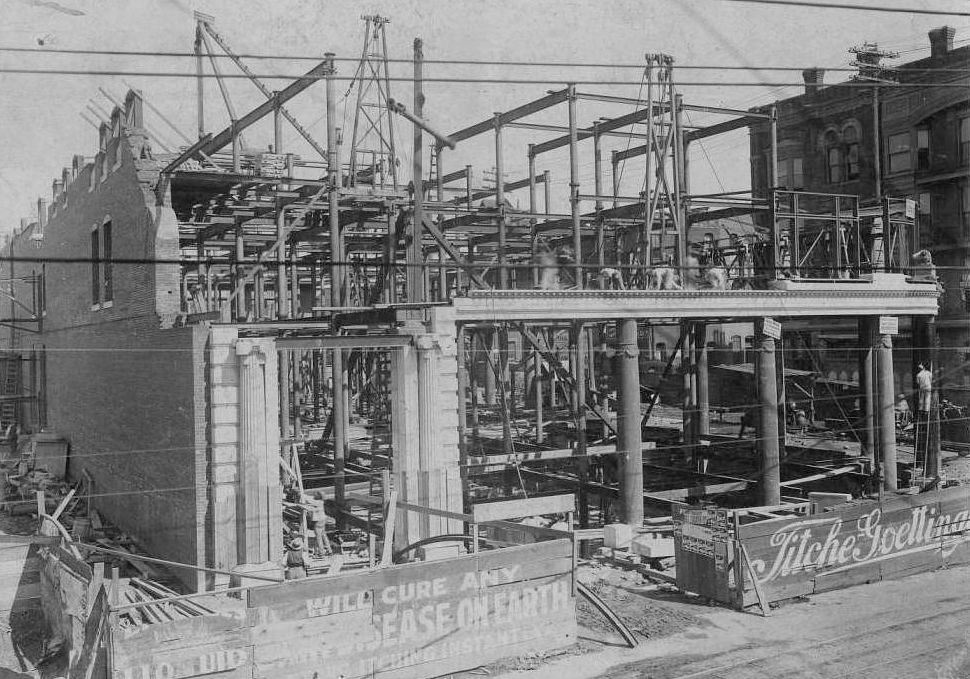
wilson-bldg-construction_cook_degolyer_smu_1902_bwSlowly but surely…. (DeGolyer Library/SMU)

by Paula Bosse

The Wilson Building is one of Dallas’ most beautiful buildings. Designed by the immensely influential Fort Worth firm of Sanguinet & Staats, the building opened in 1904, with its most notable tenant being the Titche-Goettinger department store, which occupied the basement and first two floors.

From the Dallas Public Library’s website:

“J. B, Wilson, a wealthy Dallas cattleman, built this French Renaissance/Second Empire (Beaux Arts) style building, modeled after the Paris Grand Opera House. Craftsman from all over the country came to contribute to the building finish, exterior and interior, with a mahogany and marble interior finish. It was the first eight-story building in Texas. The building originally housed the Titche-Goettinger department store on the bottom floor, with the upper floors used as office space. In 1911, Sanguinet & Staats built a twelve-story annex to the building, which was raised five floors in 1957.”

It was listed in the National Register of Historic Places in 1979.

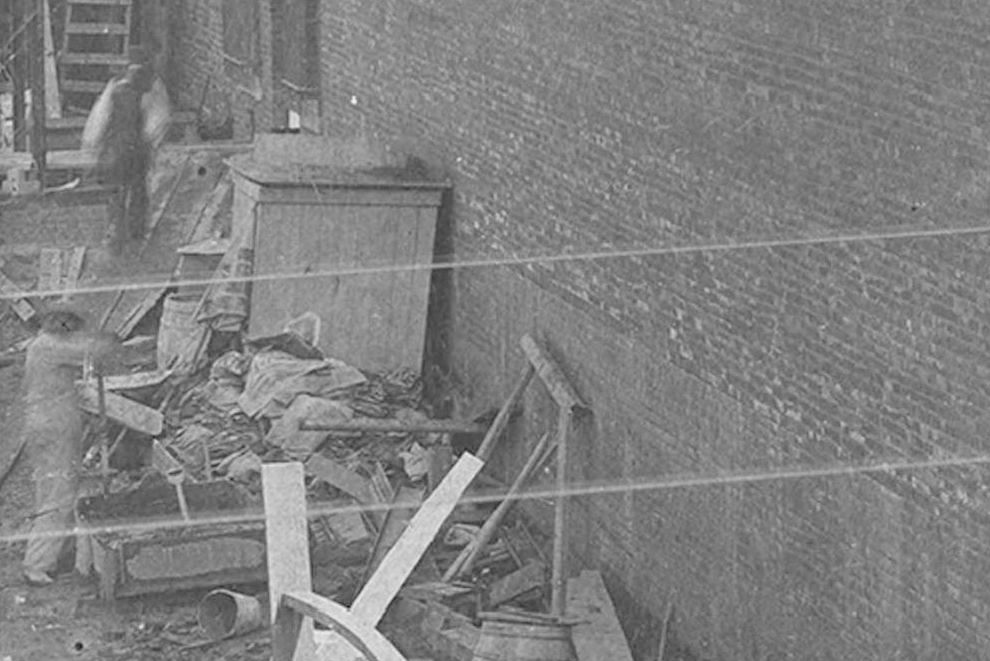
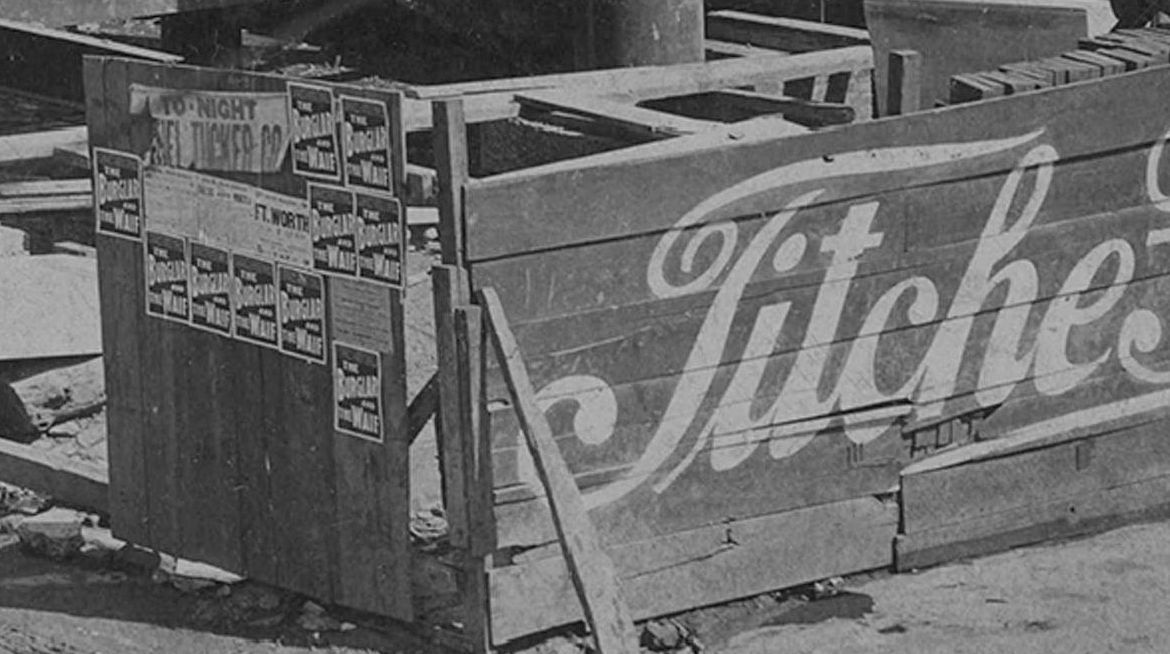
The photo above is part of the incredible George W. Cook Dallas/Texas Image Collection at SMU’s wonderful DeGolyer Library (see note below). Below are a few enlargements of parts of the original photo to see more details. (Click for larger images.)

wilson-bldg-constuction_cook_degolyer_smu_1902-det7_bw

wilson-bldg-construction_cook_degolyer_smu_1902-det4_bw

wilson-bldg-construction_cook_degolyer_smu_1902-det5_bw

wilson-bldg-construction_cook_degolyer_smu_1902-det3_bw

wilson-bldg-constuction_cook_degolyer_smu_1902-det6_bw

wilson-bldg-construction_cook_degolyer_smu_1902-det2_bw

wilsonbldg-det

wilsonbldgHere it is today. Beautiful. Click photo for an image so colossally large that you can easily check out all the fabulous intricate architectural details. (Photo by Joe Mabel.)

***

Sources & Notes

This photo (titled “Building Construction at the Intersection of North Ervay and Elm Street”) is from the incredible George W. Cook Dallas/Texas Image Collection, housed at the DeGolyer Library, Central University Libraries, Southern Methodist University; it can be viewed here. It is not currently identified as being the Wilson Building. (UPDATE: The photo is now titled “Wilson Building Construction, Intersection of North Ervay and Elm Street.” And this post is actually cited in the description! Thank you, DeGolyer Library!) (I have altered the color of these images as they were appearing harshly yellow in my photo editor — please see DeGolyer page for correct color of the original gelatin silver photograph.)

The DeGolyer Library is one of Dallas’ very best repositories of important historical images and papers, and just knowing that they are scanning this fantastic collection of Dallas ephemera is making me a little dizzy. So many incredible images!! An exhibit of selected items from the collection opens TOMORROW (Jan. 30, 2015) — details are here.

Credit and photo info for the gigantic present-day photo by Joe Mabel is here.

Read about Sanguinet & Staats here.

More on the Wilson Building from the Dallas Public Library, here. Check out the photo of the excavation of the site before construction began at the top of the page.

And what does Wikipedia say? See here.

*

Copyright © 2015 Paula Bosse. All Rights Reserved.