Flashback : Dallas

A Miscellany: History, Ads, Pop Culture

Category: Oak Lawn/Turtle Creek

Oak Lawn Ave. — Keep on Truckin’ (1971)

iconoclast_oak-lawn-avenue_iconoclast_aug-1971

by Paula Bosse

This is a great little ad, which includes a bunch of notable Oak Lawn landmarks in the neighborhood’s hippie-fabulous days. I love this artwork — it’s almost as good as a photograph!

The 3500 block of Oak Lawn — between Lemmon and Bowser — is depicted in super-groovy, early-’70s, patchouli-scented artwork (inspired by R. Crumb). Starting at the left, here’s what we see:

  • A tiny portion of the sorely missed diner mainstay, LUCAS B & B, 3520 Oak Lawn
  • Next, NAME BRAND SHOES (men’s shoes), 3516 Oak Lawn
  • Next, R.F.D. No. 1 COUNTRY STORE (clothing), 3514 Oak Lawn, subject of the ad (formerly El Chico, which you can see in the second and third photos here)
  • Next, THE FOG (rock club), 3508 Oak Lawn
  • Next, SUPERIOR BAKERY, 3502 Oak Lawn
  • Next, NATIONAL AUTO SOUND OF DALLAS (car stereos), 3500 Oak Lawn (at Lemmon)

iconoclast_oak-lawn-avenue_aug-1971_1972-directory1972 city directory

*

Watch silent home movie footage shot in this block around this same time at the Portal to Texas History, here (unfortunately, there are only glancing images of The Fog, which I would have liked to have seen more of). The Oak Lawn footage begins at 10:34 and continues until the end, with scenes shot at Lee Park. (There’s a guy who looks like he should be someone important — he looks a bit like Harry Nilsson — at 10:59.)

*

The illustration is by Steve Brooks, a 1967 graduate of Sunset High School who has had quite the career in illustration, commercial art, and rock posters. He’s worked extensively with Willie Nelson and Buddy magazine, and… yes, if you saw that drawing above and thought “head shop,” he’s the guy (THE guy) behind all the artwork connected to The Gas Pipe (which deserves a post of its own as a truly iconic Dallas success story!). Read an interesting biography about Brooks here. See some of his work in the collection of his alma mater, UNT, here.

***

Sources & Notes

Ad from the August 1971 issue of the underground newspaper, The Iconoclast.

iconoclast_oak-lawn-avenue_iconoclast_aug-1971

*

Copyright © 2024 Paula Bosse. All Rights Reserved.

“This Month In Dallas” — Aug./Sept. 1962: The Clubs

club-dallas_this-month-in-dallas_aug-sept-1962_ebay_detClub Dallas, Browder Street

by Paula Bosse

Downtown Dallas was a cool place for entertainment and dining in the early 1960s, from high-class clubs and lounges to famous and infamous strip joints (some of which were higher-class than others). A few months ago on eBay, someone scanned a bunch of pages of a magazine called This Month in Dallas (“Where to Go, What to Do”), which seems to have been aimed at the conventioneer or out-of-town visitor. (I’ve never heard of this publication, but I would LOVE to see more!)

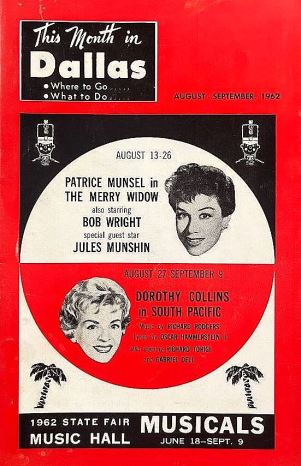
this-month-in-dallas_aug-sept-1962_cover_ebay

As far as image quality, I’m at the mercy of the person doing the scanning, but here are several of the ads featured in the eBay listing. All appeared in the Aug./Sept. 1962 issue of This Month in Dallas. (At the top, a detail from an ad for Club Dallas — the full ad is below.)

*

Let’s just do them alphabetically.

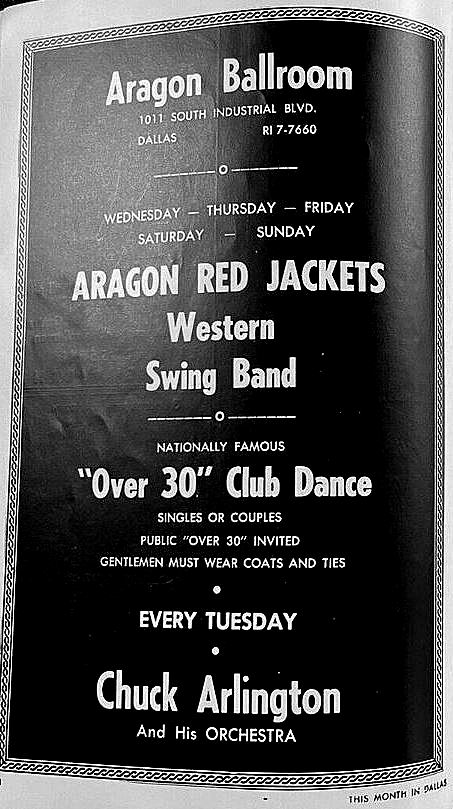
ARAGON BALLROOM, 1011 S. Industrial Blvd. (now S. Riverfront). Featuring the Aragon Red Jackets Western Swing Band, the “Over 30” Club Dance, and Chuck Arlington and His Orchestra.

aragon-ballroom_this-month-in-dallas_aug-sept-1962_ebay

*

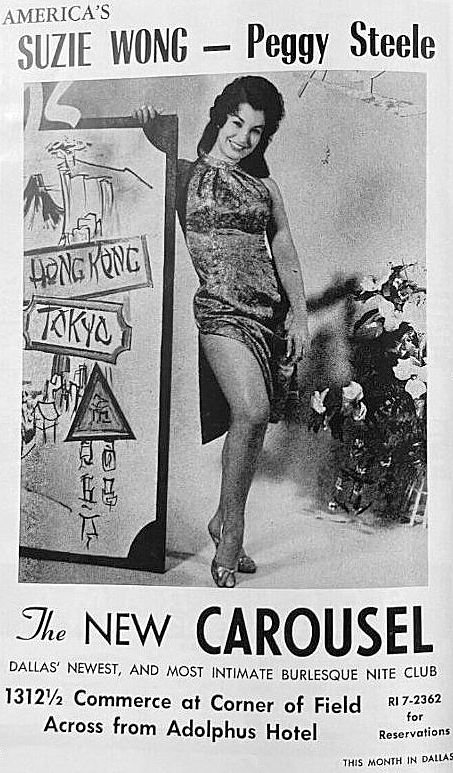
CAROUSEL CLUB (or “New” Carousel Club), 1312½ Commerce, at Field. Jack Ruby, proprietor. “Dallas’ Newest and Most Intimate Burlesque Nite Club.” This ad (the first of several) features stripper Peggy Steele, “America’s Suzie Wong.”

carousel_peggy-steel_this-month-in-dallas_aug-sept-1962_ebay

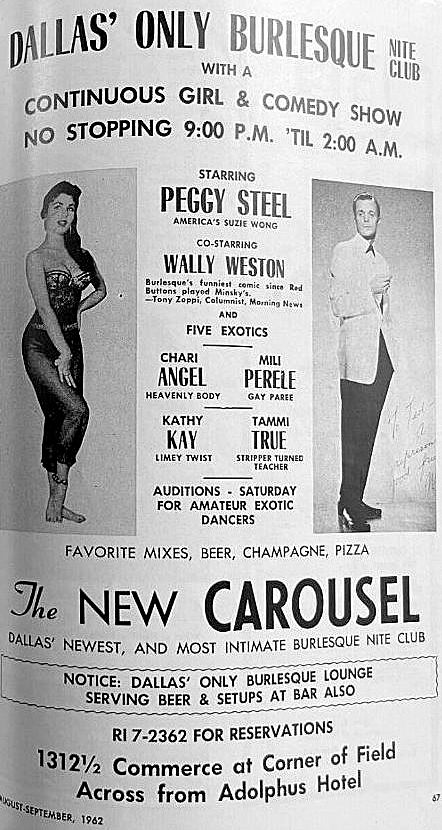
More CAROUSEL. “Dallas’ only burlesque nite club with a continuous girl and comedy show. No stopping, 9:00 PM ’til 2:00 AM.” America’s Suzie Wong” is back, now spelled Peggy Steel. MC’d by comic Wally Weston.

carousel_wally-weston_this-month-in-dallas_aug-sept-1962_ebay

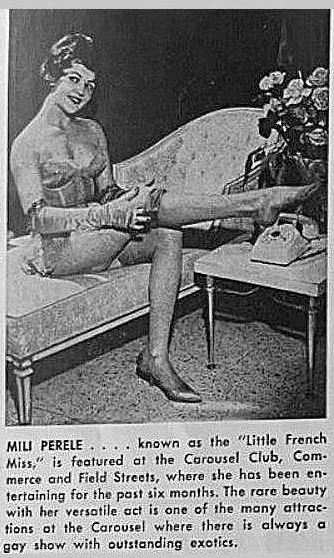
More CAROUSEL. Here’s Mili Perele, “the Little French Miss.”

carousel_mili-perele_this-month-in-dallas_aug-sept-1962_ebay

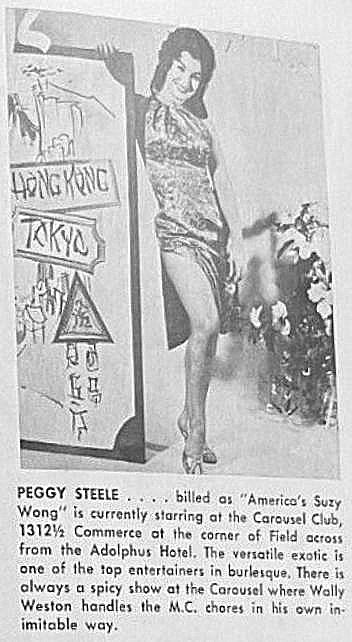
More CAROUSEL. Heck, let’s throw in another Peggy Steel/e mention.

carousel_steel-paggy_this-month-in-dallas_aug-sept-1962_ebay

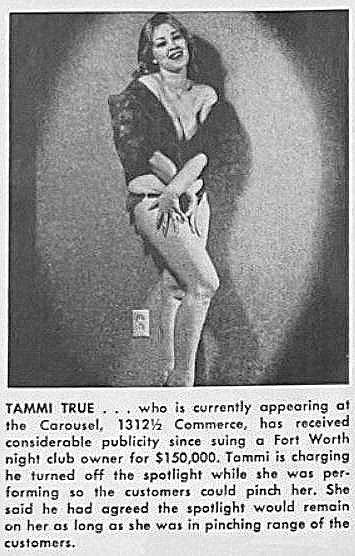
More CAROUSEL (Jack’s advertising budget was impressive). Tammi True, then in the midst of a pinching brouhaha.

carousel_tammi-true_this-month-in-dallas_aug-sept-1962_ebay

*

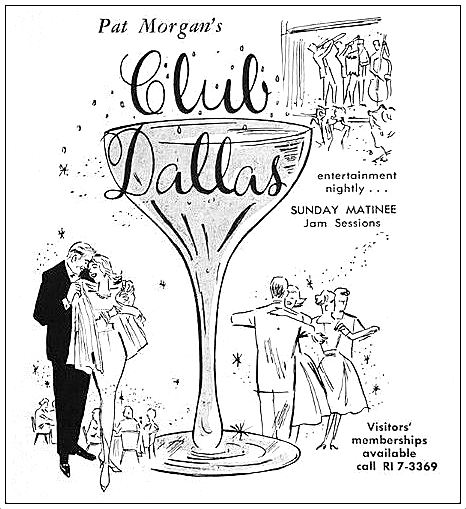
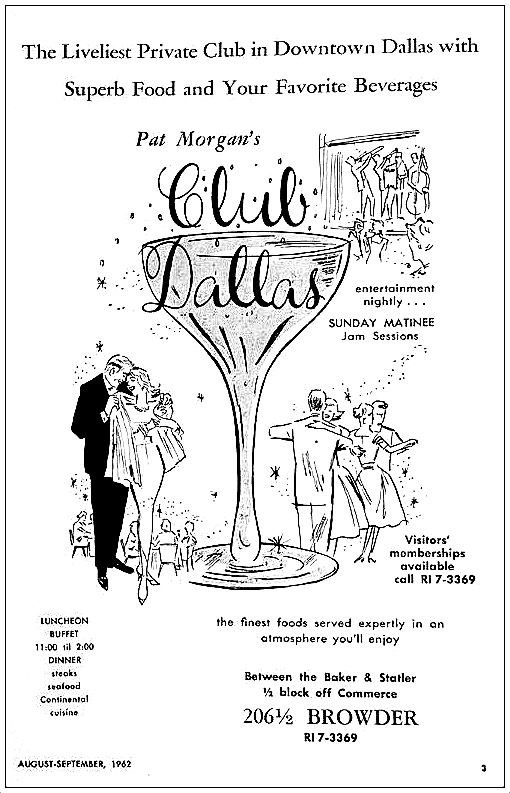
Pat Morgan’s CLUB DALLAS, 206½ Browder (just south of Commerce). I love this ad, but I’m not familiar with the establishment or Mr. Morgan. Looks like it opened in the summer of 1962 (“Owner Pat Morgan has eliminated the semi-nude waitresses and aims for the family trade” — Dallas Morning News, July 27, 1962), changed its name in September 1962 to simply “Pat Morgan’s,” and finally closed in February 1963. I bet he rued the day he dumped those semi-nude waitresses….

club-dallas_pat-morgan_this-month-in-dallas_aug-sept-1962_ebay

*

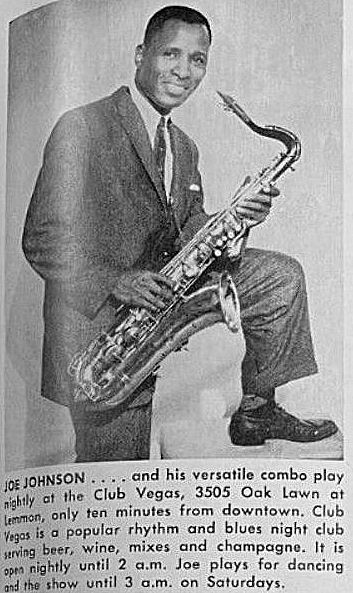
CLUB VEGAS, 3505 Oak Lawn. Yes, there was swinging nightlife beyond downtown. Club Vegas was famously owned by Jack Ruby’s sister, Eva Rubenstein. This club booked a lot of Black and Hispanic bands (for mixed audiences), including Joe Johnson and Trini Lopez. (I’ve been meaning to write about this place for the past 10 years!)

club-vegas_joh-johnson_this-month-in-dallas_aug-sept-1962_ebay

*

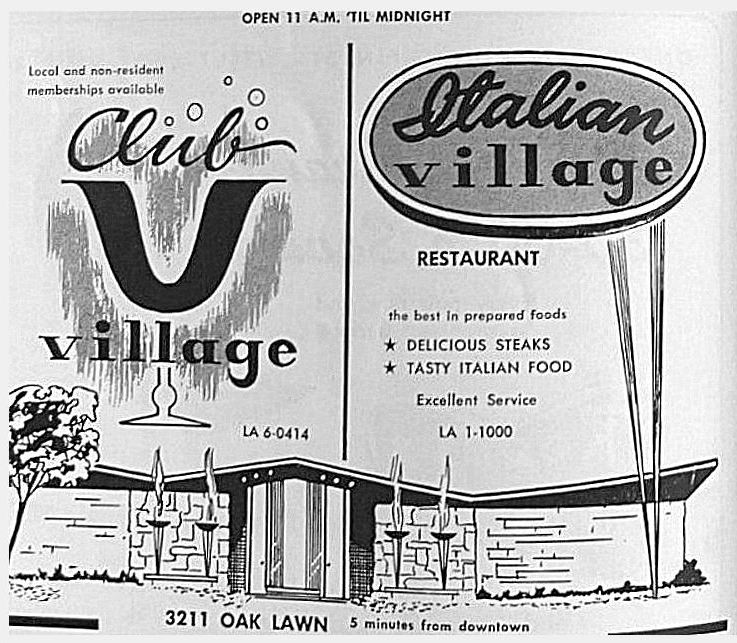
CLUB VILLAGE / ITALIAN VILLAGE RESTAURANT, 3211 Oak Lawn. Another happening place in Oak Lawn. I wrote and wrote and wrote about Sam Ventura’s Italian Village here.

club-village_italian-village_this-month-in-dallas_aug-sept-1962_ebay

*

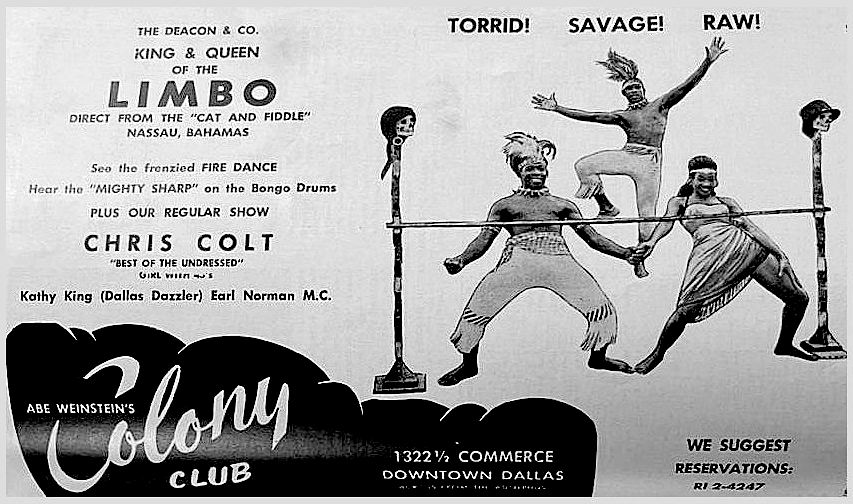
COLONY CLUB, 1322½ Commerce. Abe Weinstein, proprietor. The “high-class” strip joint. Also featured acts like Deacon & Co., King and Queen of the Limbo.

colony-club_limbo_this-month-in-dallas_aug-sept-1962_ebay

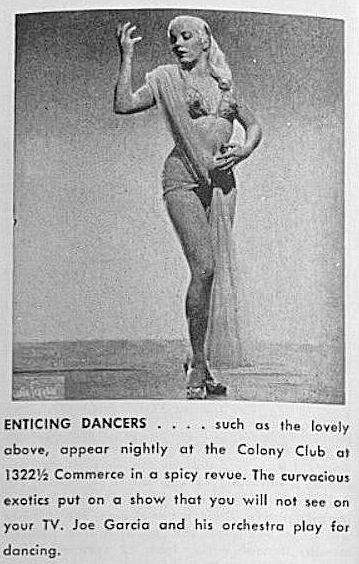
More COLONY CLUB. An unnamed exotic.

colony-club_this-month-in-dallas_aug-sept-1962_ebay

*

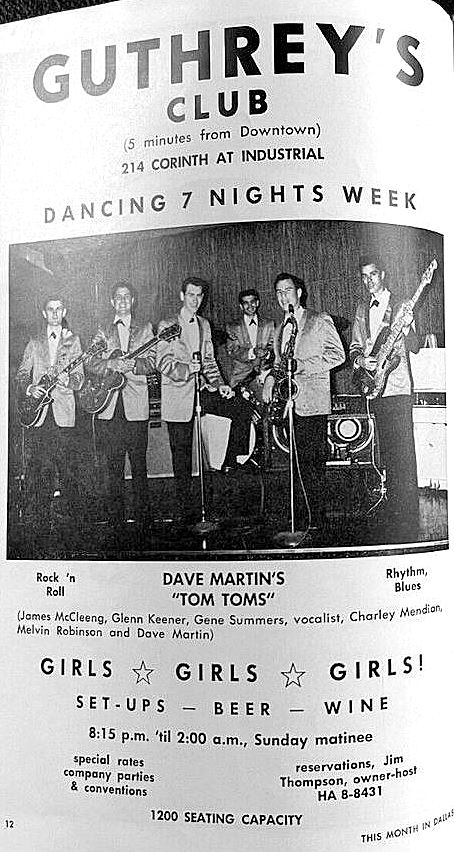
GUTHREY’S CLUB, 214 Corinth, at Industrial (now Riverfront). Very popular back in the day. “Girls! Girls! Girls! Set-ups, beer, wine.” This ad features Dave Martin’s Tom Toms (James McCleeng, Glenn Keener, Gene Summers — vocalist, Charlie Mendian, Melvin Robinson, and Dave Martin).

guthreys_dave-martins-tome-toms_this-month-in-dallas_aug-sept-1962_ebay

*

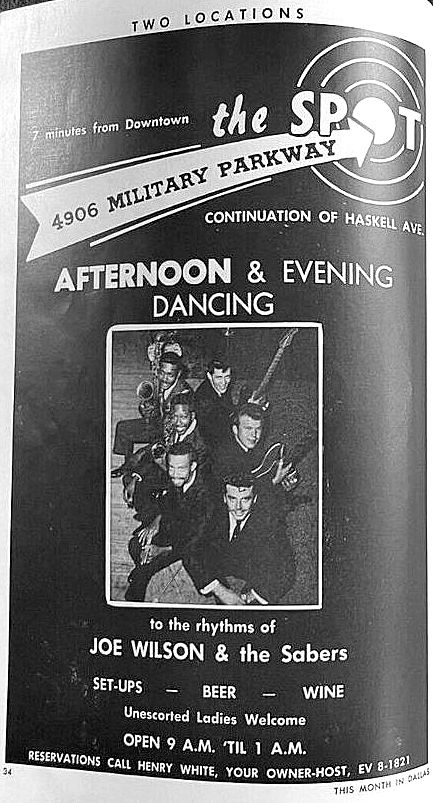
THE SPOT, 4906 Military Parkway. This ad features Joe Wilson & The Sabers.

spot_military-pkwy_this-month-in-dallas_aug-sept-1962_ebay

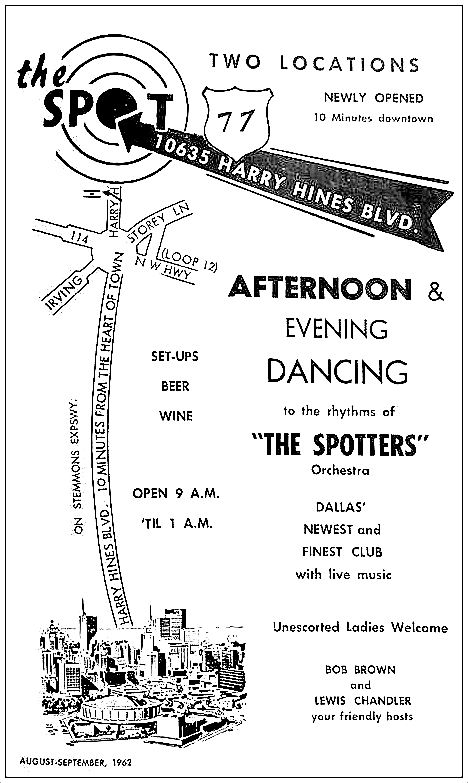
THE SPOT, the “other” location, 10635 Harry Hines. House band The Spotters.

spot_harry-hines_this-month-in-dallas_aug-sept-1962_ebay

*

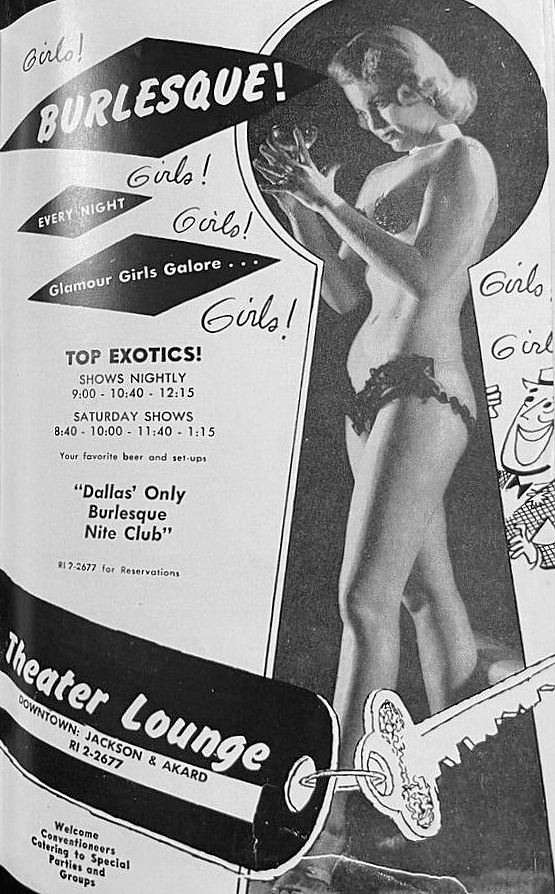
THEATER LOUNGE, 1326 Jackson, at Akard. Barney Weinstein, proprietor. “Glamour Girls Galore.”

theater-lounge_this-month-in-dallas_aug-sept-1962_ebay

*

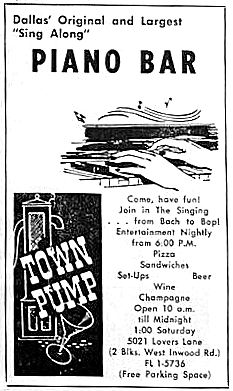
TOWN PUMP, 5021 Lovers Lane. “Dallas’ Original and Largest ‘Sing Along’ Piano Bar.” That is one scary sentence.

town-pump-piano-bar_this-month-in-dallas_aug-sept-1962_ebay

***

Sources & Notes

All ads from the Aug./Sept. 1962 issue of This Month in Dallas.

club-dallas_this-month-in-dallas_aug-sept-1962_ebay_det_sm

*

Copyright © 2023 Paula Bosse. All Rights Reserved.

Home Sweet Home: Oak Lawn Car No. 755

In retirement…

by Paula Bosse

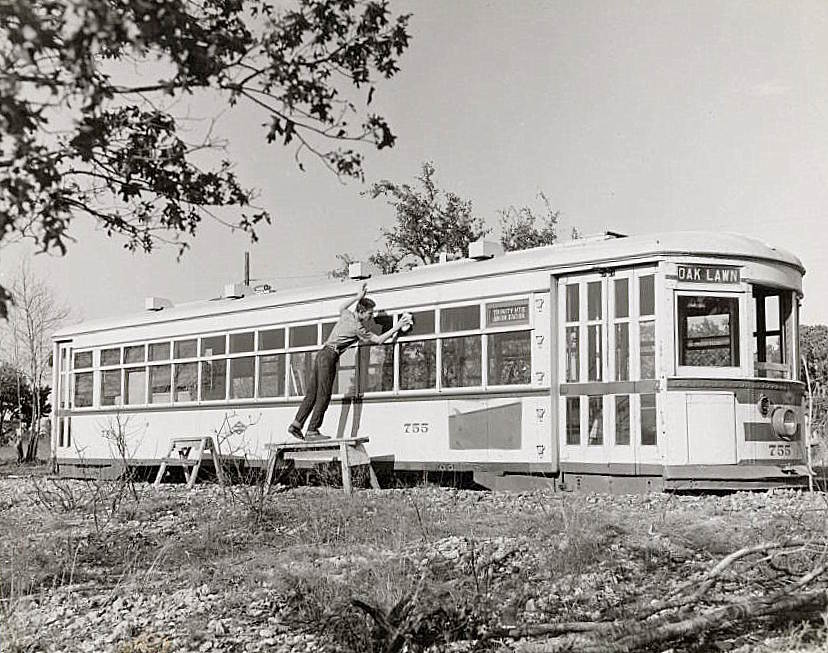
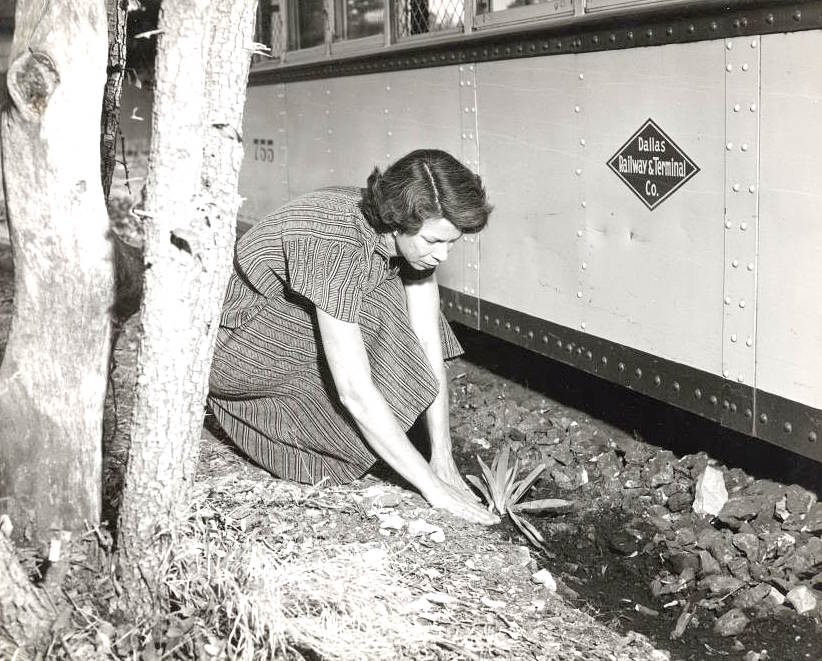
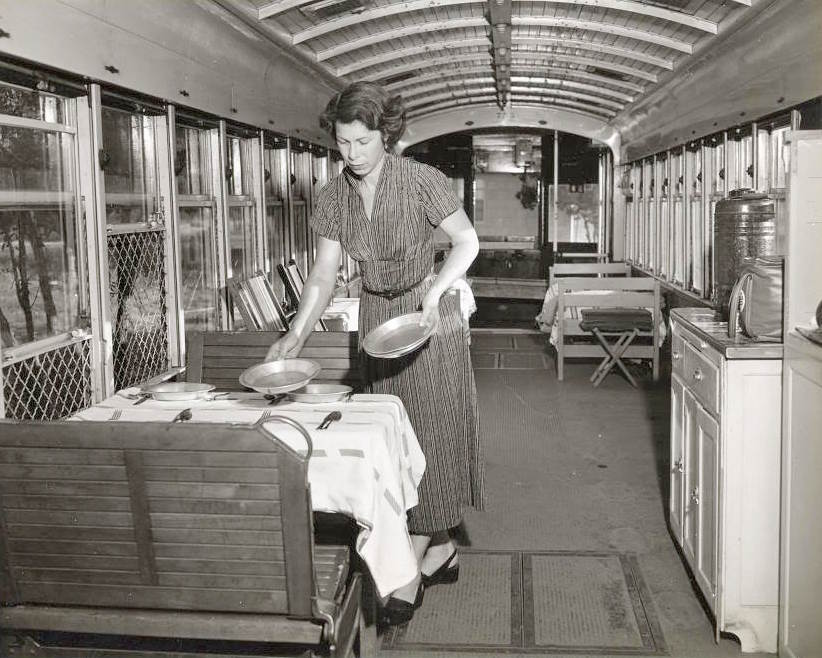
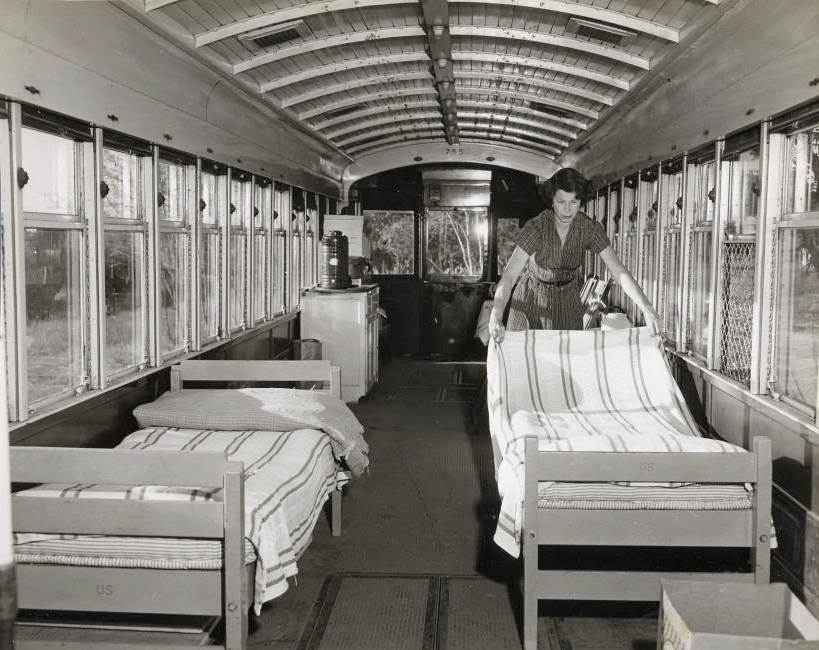
I came across these photos several years ago, but I don’t really know anything about them. They show a decommissioned Oak Lawn streetcar (car #755), which was manufactured in the 1920s for the Dallas Railway & Terminal Co. The photos, which look to be from the 1950s, show the car remodeled into a home (or, as the text below suggests, a sort of weekend “lake house”). When I clipped these photos (they were on some obscure railroad forum I stumbled onto), the only info was that someone had placed a for-sale ad for this on Craigslist in 2009. Below is the seller’s ad:

Antique 1920s or 1930s Dallas interurban trolley car. Trolley was retired from service in the 50s. Has a porch built on the back. Has a separate room with bath. There’s a kitchen and a 1930s refrigerator that works very well. On about a half acre wooded lot at Lake Whitney. Not far from boat ramp. Walking distance to water. Used to be on the “Oak Lawn” run in Dallas. Unusual, neat place to spend summers at the lake. Call Carol or Ron (214) xxx-xxxx. No owner financing.

I don’t know where the photos came from (they look like photos that would have accompanied a story in a magazine like Life), but they are great.

**

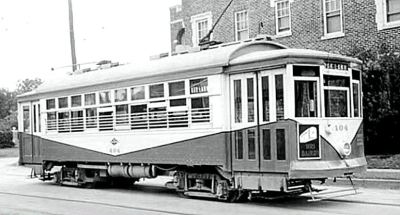
I don’t think that’s an interurban car, but it’s really long for a streetcar. (How would it turn corners?) Has it been extended? Below is a typical Oak Lawn streetcar:

This photo was actually in the video below (“Dallas Oak Lawn Streetcar Line No. 8”). It’s a pretty uneventful video — a man in a car retraces the Oak Lawn streetcar route. My mother grew up in Oak Lawn and talks about riding the streetcar to and from downtown, but I had no idea how far into Oak Lawn it traveled. 

*

While looking to see if I could find anything more about the renovated Dallas streetcar, I came across a story which showed something similar (but more elegant) in this article about a renovated interurban car in New Jersey: “One-of-a-Kind Point Pleasant Home Built Around Century-Old Trolley Car.”

*

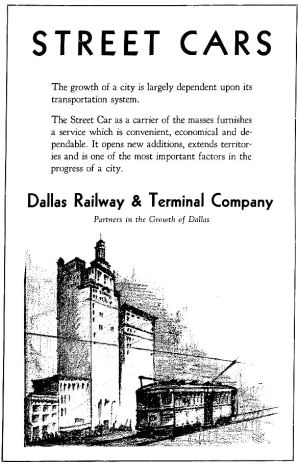
An ad from 1930, not long after the Oak Lawn car was manufactured:

streetcars_dallas-railway_dallas-mag_april-1930

*

If you know more about Oak Lawn car #755 — where it’s been, where it is now — please comment below!

***

Sources & Notes

First four photos are from a Dallas Craigslist ad placed in or before 2009 — I believe the photos were posted with the ad. The ad was then reposted on a railroad forum.

Ad from the April 1930 issue of Dallas magazine.

*

Copyright © 2023 Paula Bosse. All Rights Reserved.

Southwestern Medical College — 1944

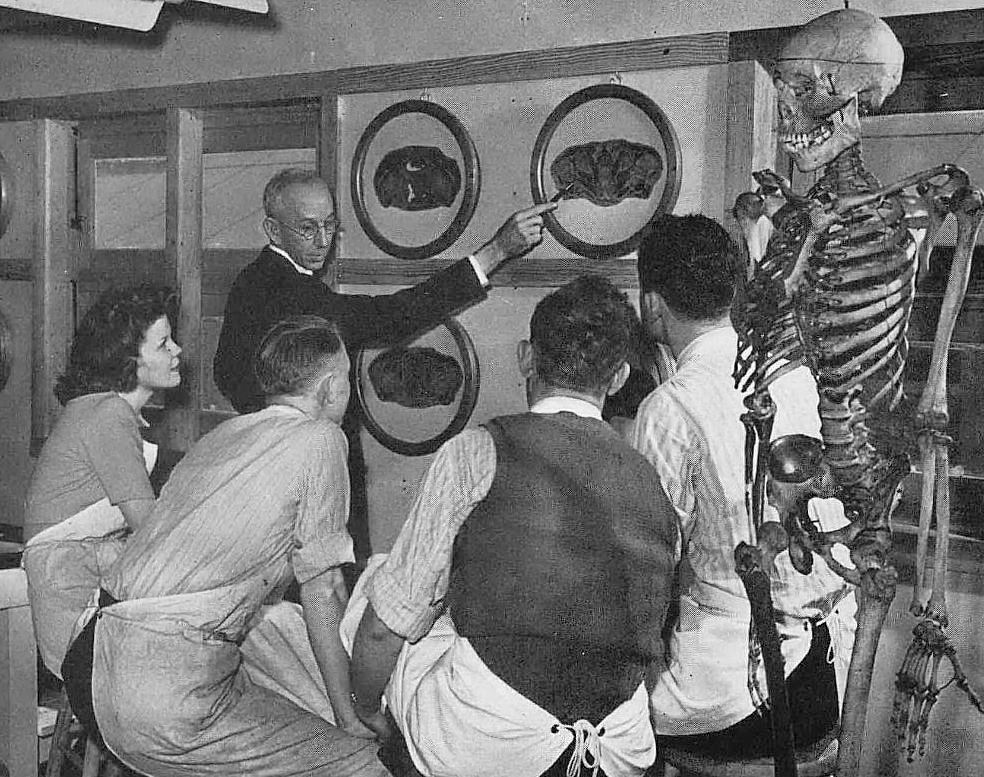
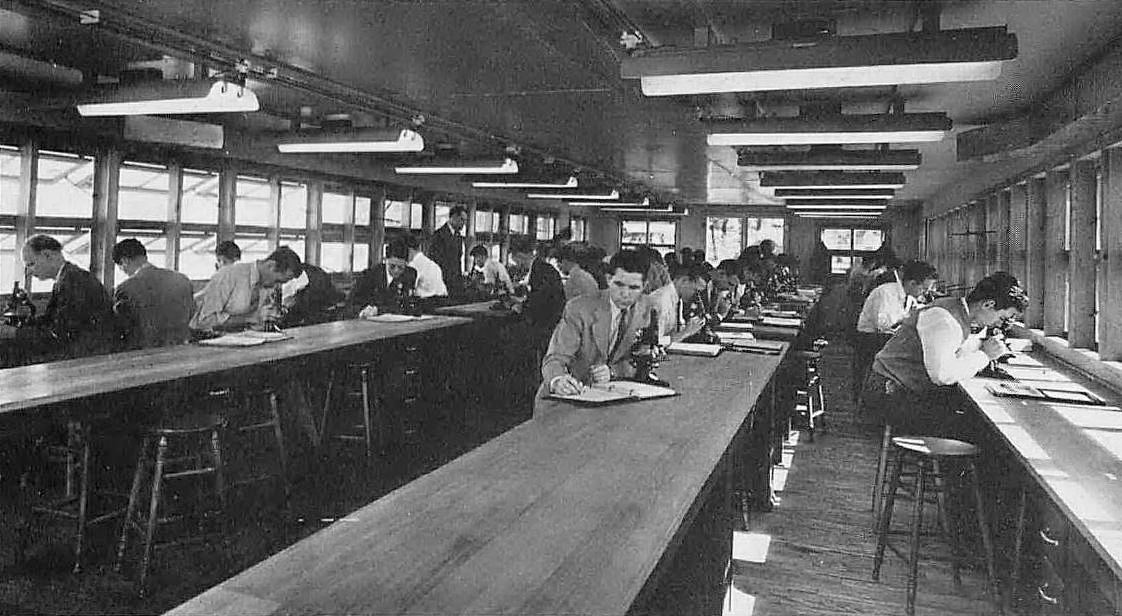
southwestern-medical-college_1944 yrbk_students_dr-w-w-looney_anatomySouthwestern Medical College students in anatomy class…

by Paula Bosse

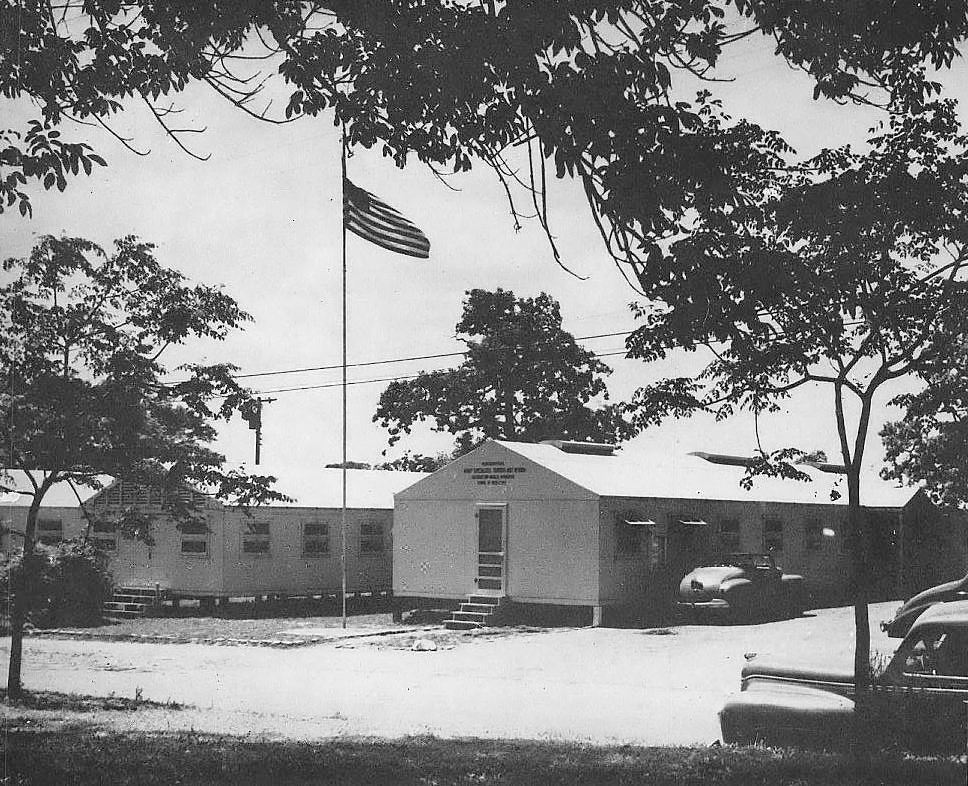
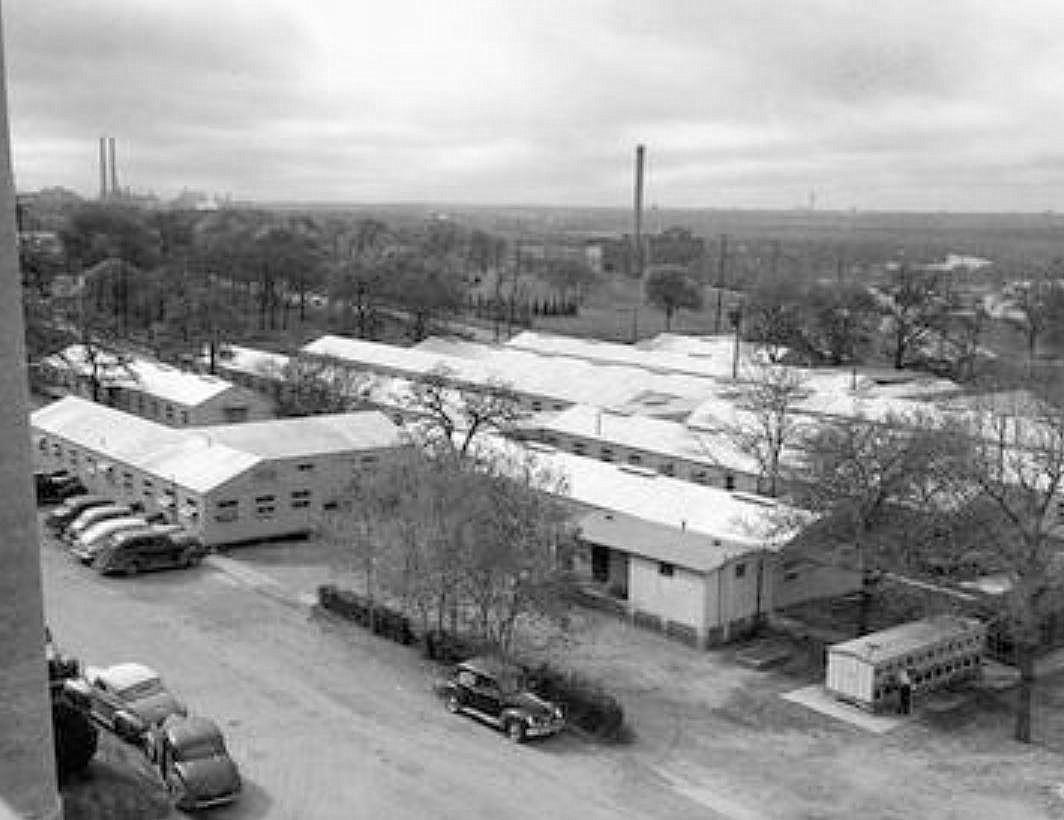
Decades before the University of Texas Southwestern Medical School was an internationally renowned institution, its precursor — the scrappy little Southwestern Medical College — opened its pre-fabricated doors to students in 1943 in temporary buildings on the Parkland Hospital grounds.

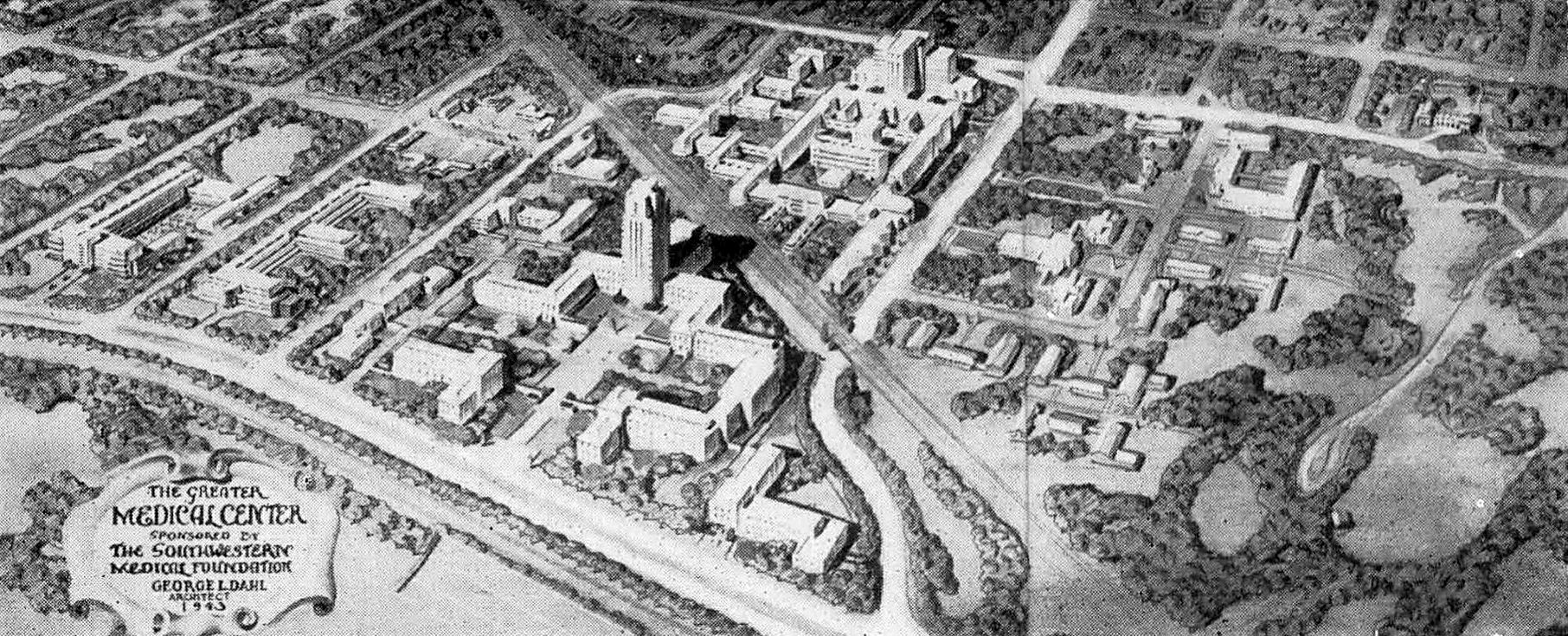
To read an in-depth history of UTSW, see their website. But, briefly, there had been medical schools in Dallas in the past (including the Dallas Medical College at the turn of the century), but by the time World War II had arrived, the Baylor University college of medicine (located on the campus of Baylor Hospital in East Dallas) was it, and many medical professionals at the time considered it to be lacking in facilities, equipment, and enthusiastic financial support. The Southwestern Medical Foundation was organized in 1939 by Dr. Edward H. Cary who, along with other Dallas civic leaders, spent many years working tirelessly to see his vision of not just a medical school, but of an entire sprawling medical center (hospitals, clinics, schools, research labs, etc.) finally built on a 36-acre tract of land, centered around Harry Hines and Inwood.

By 1943, the Foundation had plans drawn up and had been assured of support from the city and, more importantly, funding. They also hired the entire faculty of the Baylor medical and dental schools and attracted most of their students. They hoped to work with Baylor University as a partner in their grand medical center, but Baylor dropped out of negotiations when the Foundation insisted the new school would be non-sectarian. The Baptist university decided, instead, to leave Dallas for Houston, at the invitation of the M. D. Anderson Foundation.

The new Southwestern Medical College opened in 1943 in a handful of  temporary buildings built on the Parkland campus — they also utilized other nearby buildings in this first year, and lectures were often conducted in various Dallas hospitals and clinics. 

These photos are from 1943-1944, the college’s first year and the humble beginnings of what just grew and grew and grew into a huge medical center and one of the world’s most respected medical research institutions.

Below, the epicenter! (Click photos to see larger images.)

southwestern-medical-college_1944 yrbk_temp-bldg_1

Don’t know exactly where this was, but this is the very appealing Medical Library:

southwestern-medical-college_1944 yrbk_temp-bldg_2

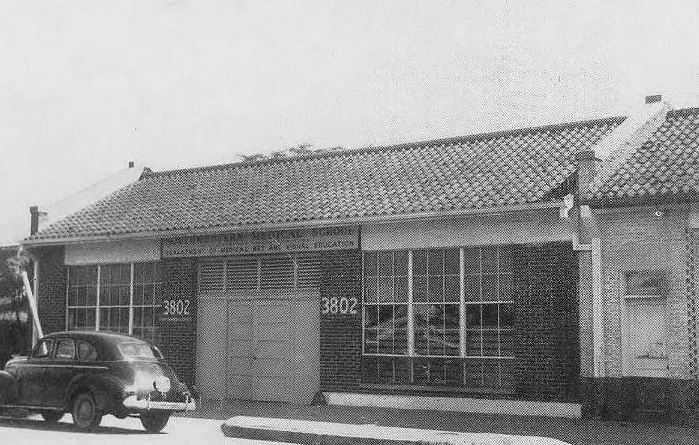
The Department of Medical Art and Visual Education, a building which was probably at 3802 Maple Avenue, across from Parkland Hospital:

southwestern-medical-college_1944 yrbk_temp-bldg_3

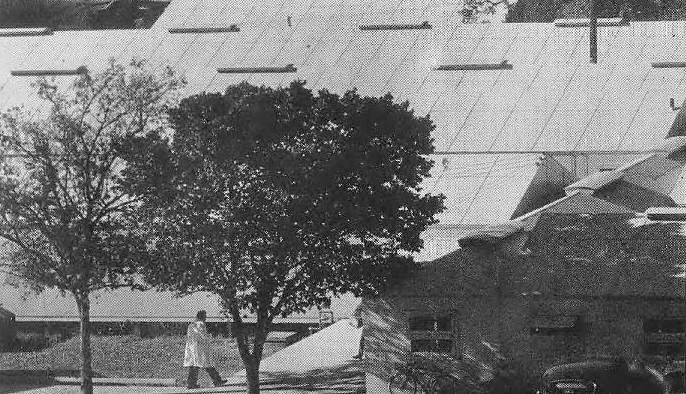
A man in a white coat is seen walking toward the rows of temporary pre-fab buildings:

southwestern-medical-college_1944 yrbk_temp-bldg_4

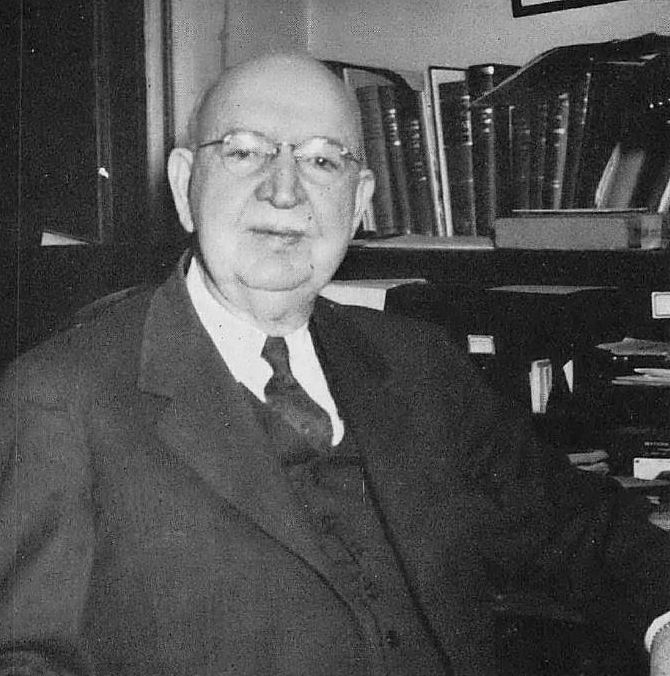
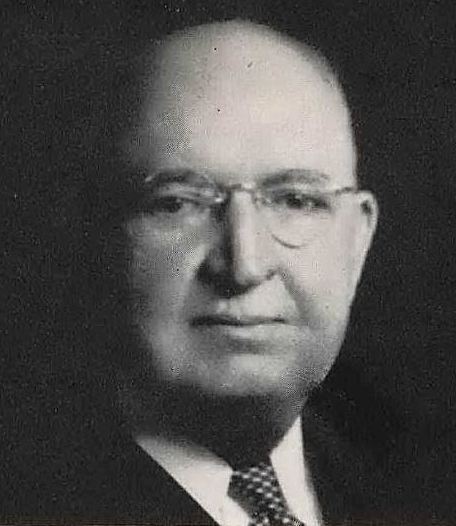
Below, Dr. E. H. Cary, the man who was the driving force behind the school and the vision which has now become UTSW (he was also a professor of ophthalmology at the new college):

dr-e-h-cary_southwestern-medical-college_1944-yrbk

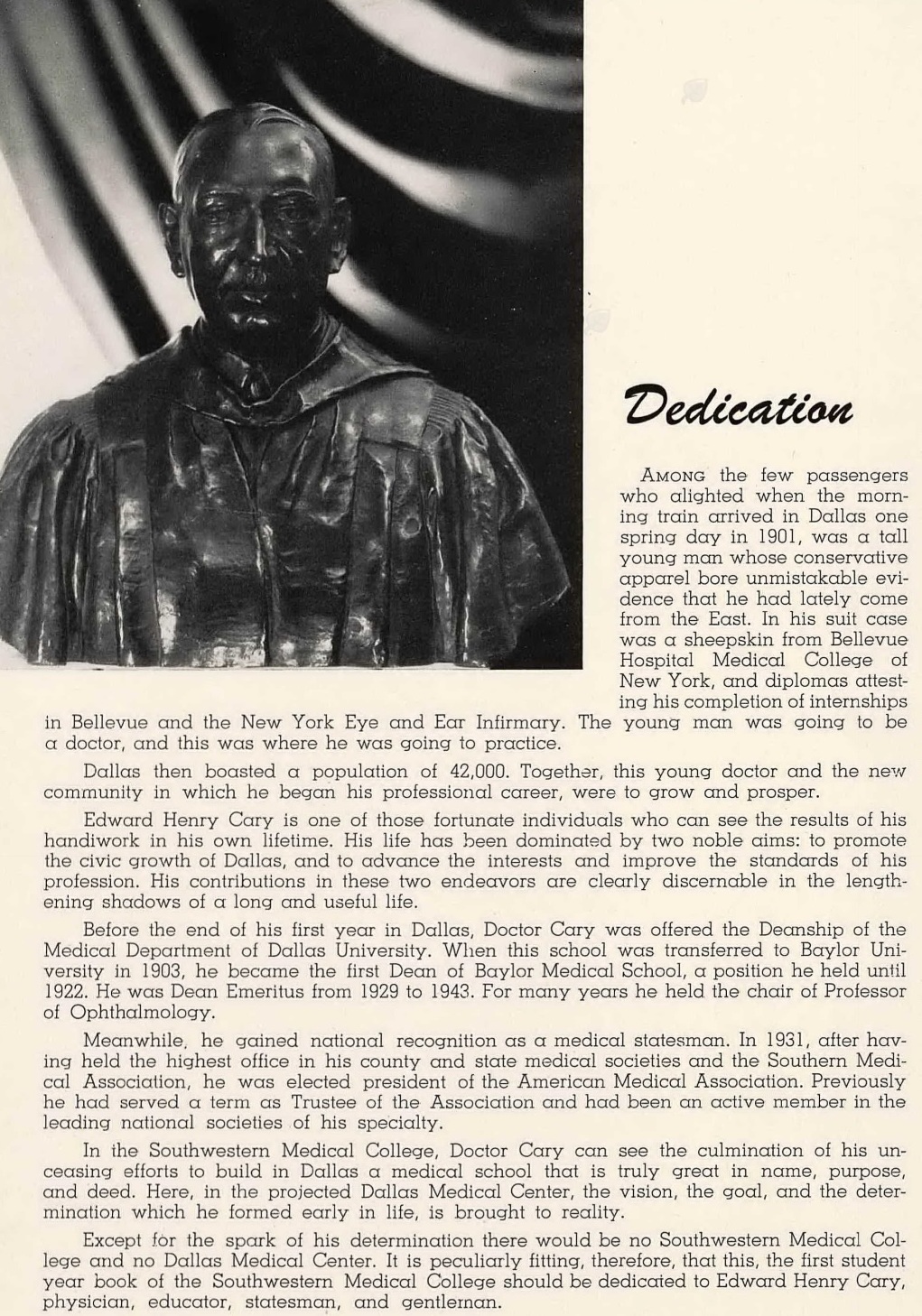
The first yearbook was dedicated to Dr. Cary:

southwestern-medical-college_1944 yrbk_caduceus_dedication_dr-e-h-cary

The dean was Dr. Tinsley R. Harrison:

dr-tinsley-r-harrison_dean_southwestern-medical-college_1944-yrbk

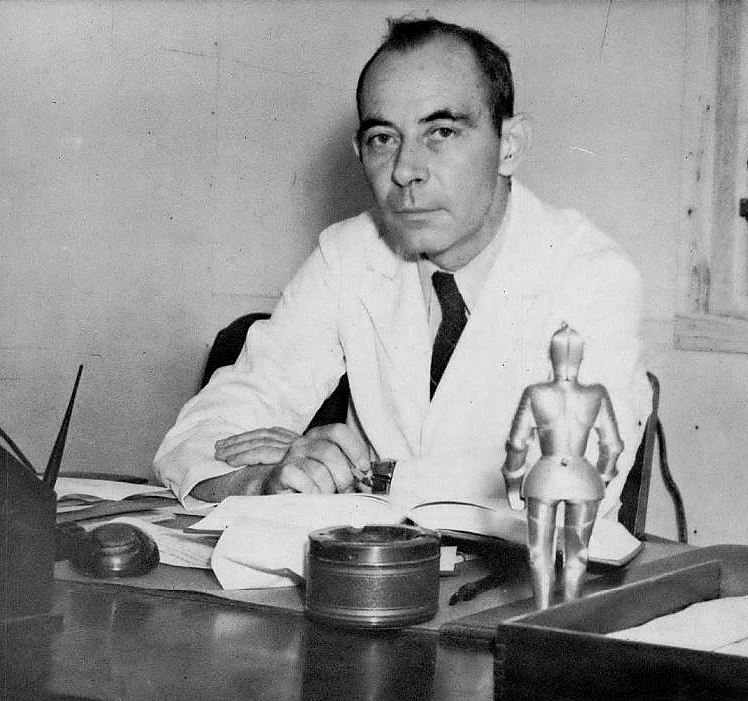
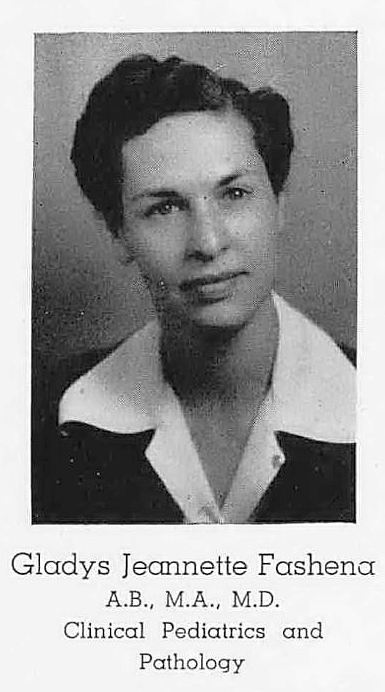
One of the only women instructors at the new college was Dr. Gladys Fashena, who had a long career in Dallas. (See her in WFAA news footage from 1969 when she was a director at Children’s Medical Center — pertinent footage begins at the 6:49 mark.) There were a few female students, but very few. One can be seen in the top photo, the caption of which reads “Dr. W. W. Looney quizzes a group of freshmen on the mysteries of cross-section anatomy.”

fashena-gladys_southwestern-med-college_1944-yrbk_professor_only-woman

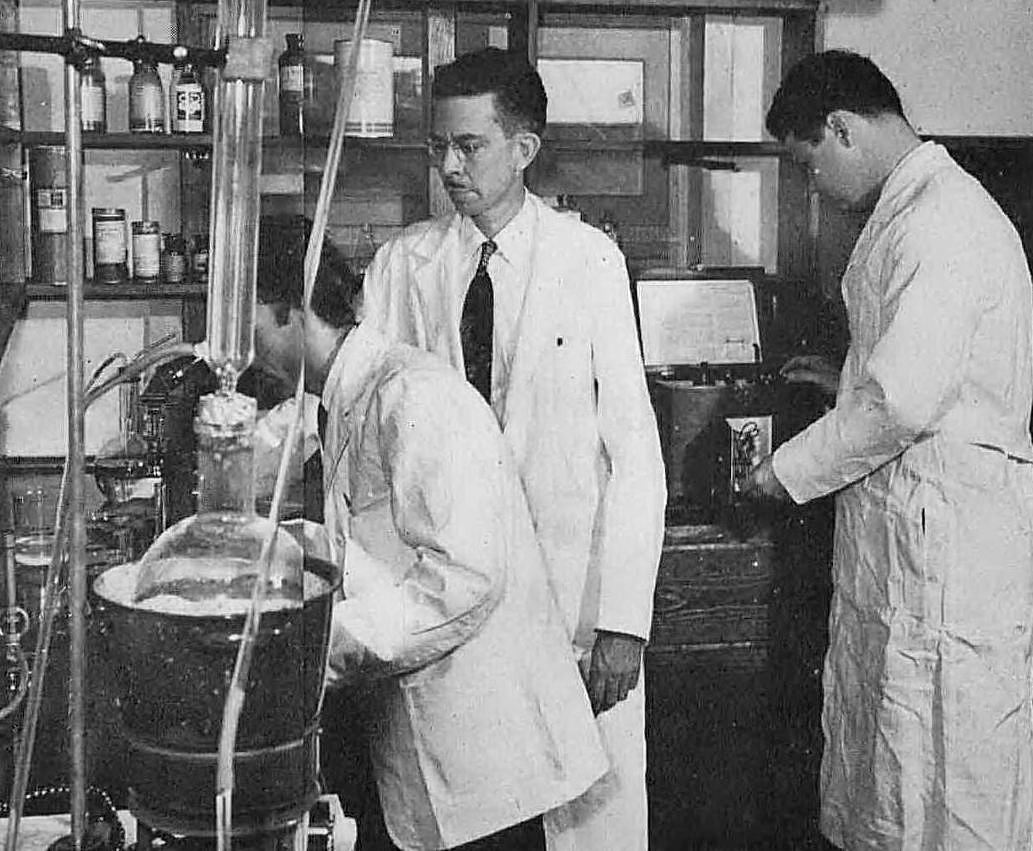
Here is Dr. Herbert C. Tidwell teaching a biochemistry class:

southwestern-medical-college_1944 yrbk_students_1

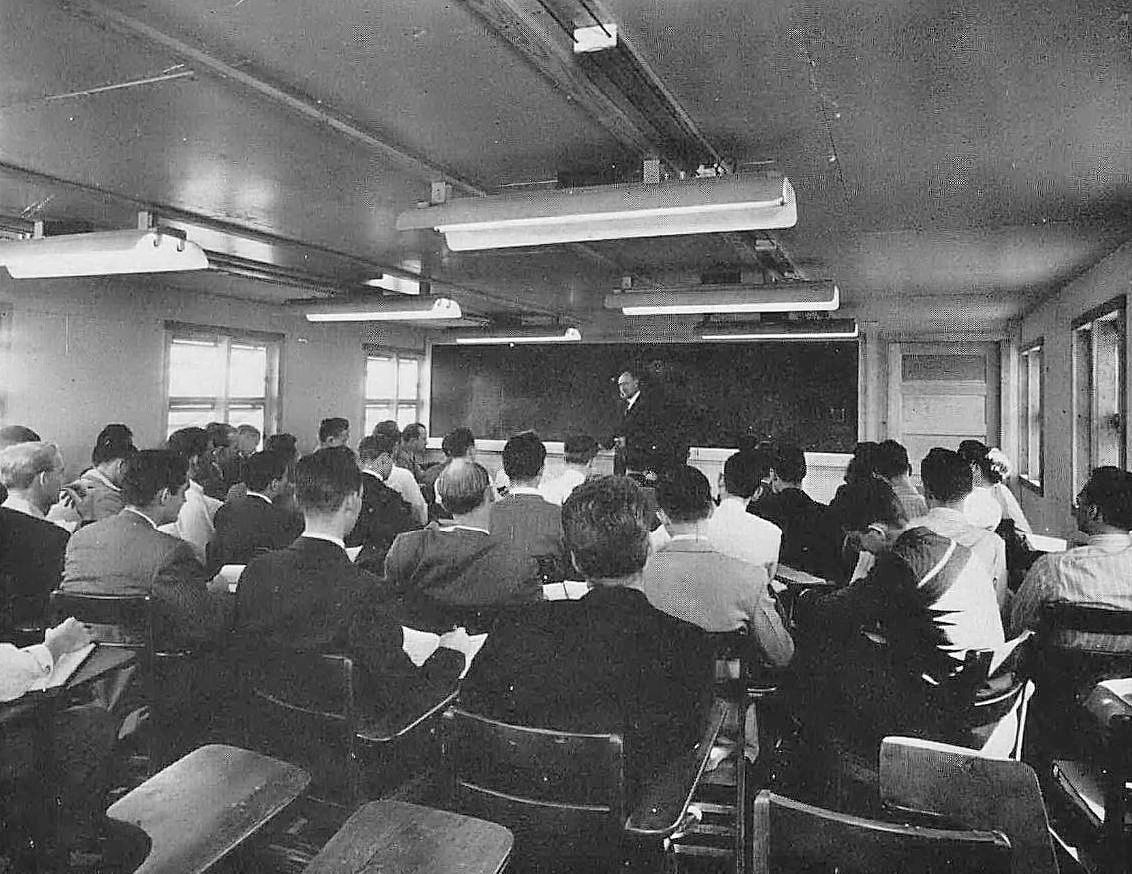
Students attending a pathology lecture by Dr. George T. Caldwell:

southwestern-medical-college_1944 yrbk_students_dr-george-t-caldwell_pathology

“Sophomores examine pathological tissues under the microscope”:

southwestern-medical-college_1944 yrbk_students_microscopes

Students pouring things:

southwestern-medical-college_1944 yrbk_students_test-tubes

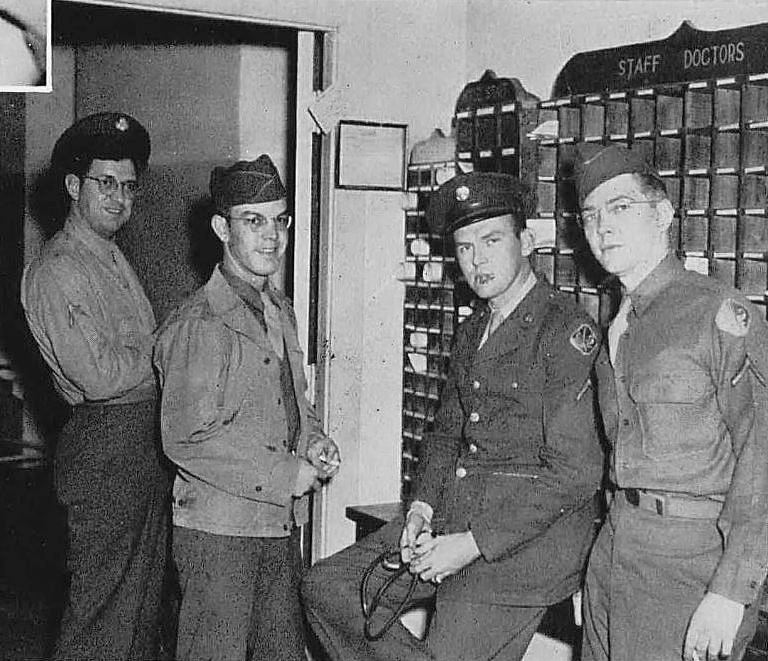
When the first year began, the U.S. was deep into WWII. Most students would be headed to military service after graduation (which was accelerated in order to get more medical professionals into the pipeline). “Upperclassmen wait for ward rounds”:

southwestern-medical-college_1944 yrbk_students_upperclassroom_waiting-for-ward-rounds

The great vision of “The Greater Medical Center” (architect, George Dahl, 1943):

southwestern-medical-college_1944 yrbk_george-dahl_greater-dallas-medical-center

A little backstory: 

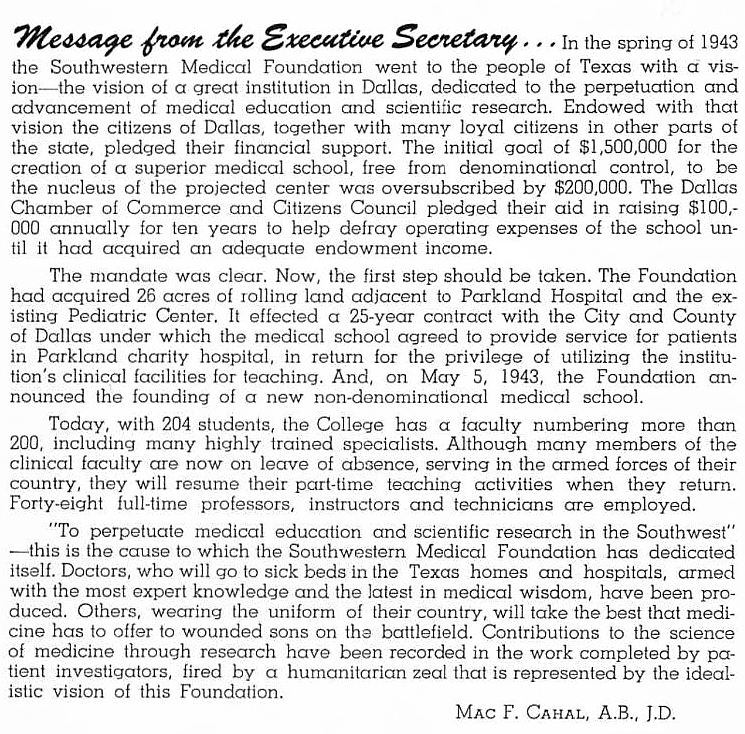
southwestern-medical-college_1944 yrbk_story

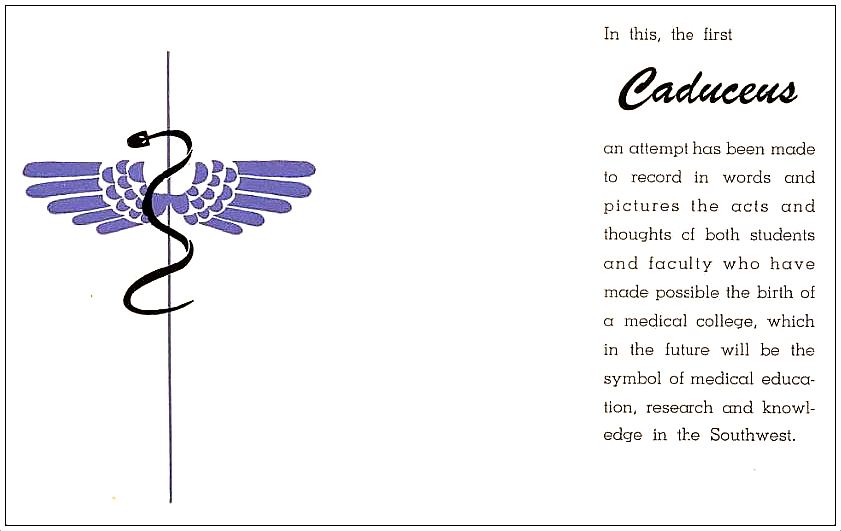
The Foreword: “In this, the first Caduceus, an attempt has been made to record in words and pictures the acts and thoughts of both students and faculty who have made possible the birth of a medical college, which in the future will be the symbol of medical education, research and knowledge in the Southwest” (1944):

southwestern-medical-college_1944 yrbk_caduceus_foreword

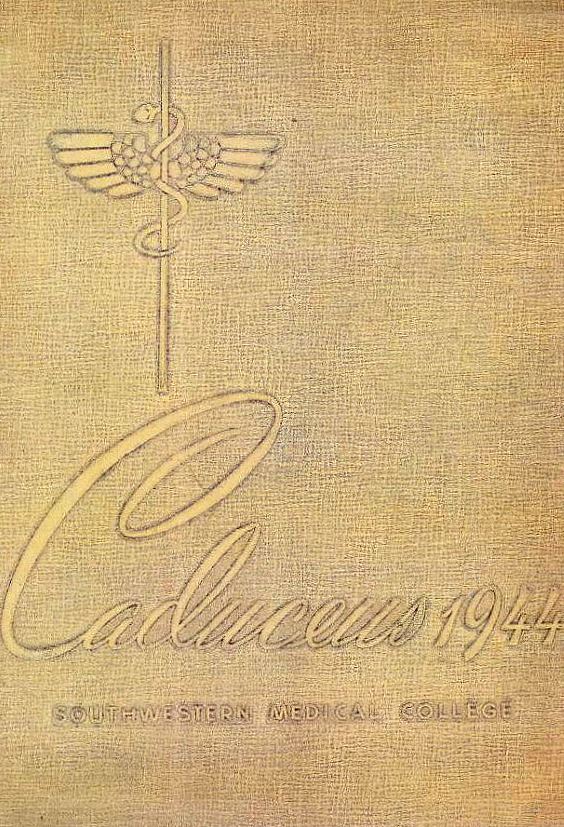
southwestern-medical-college_1944 yrbk_caduceus_cover

dr-e-h-cary_president_southwestern-medical-college_1944-yrbkDr. Edward H. Cary

***

Sources & Notes

All images are from the 1944 edition Caduceus, the yearbook of Southwestern Medical College.

Below, an early photo from Wikipedia

southwestern-medical-college-wikipedia

More Flashback Dallas posts tagged as “Medical” can be found here.

southwestern-medical-college_1944 yrbk_students_dr-w-w-looney_anatomy_sm

*

Copyright © 2020 Paula Bosse. All Rights Reserved.

Random Photos of Turn-of-the-Century-ish Houses

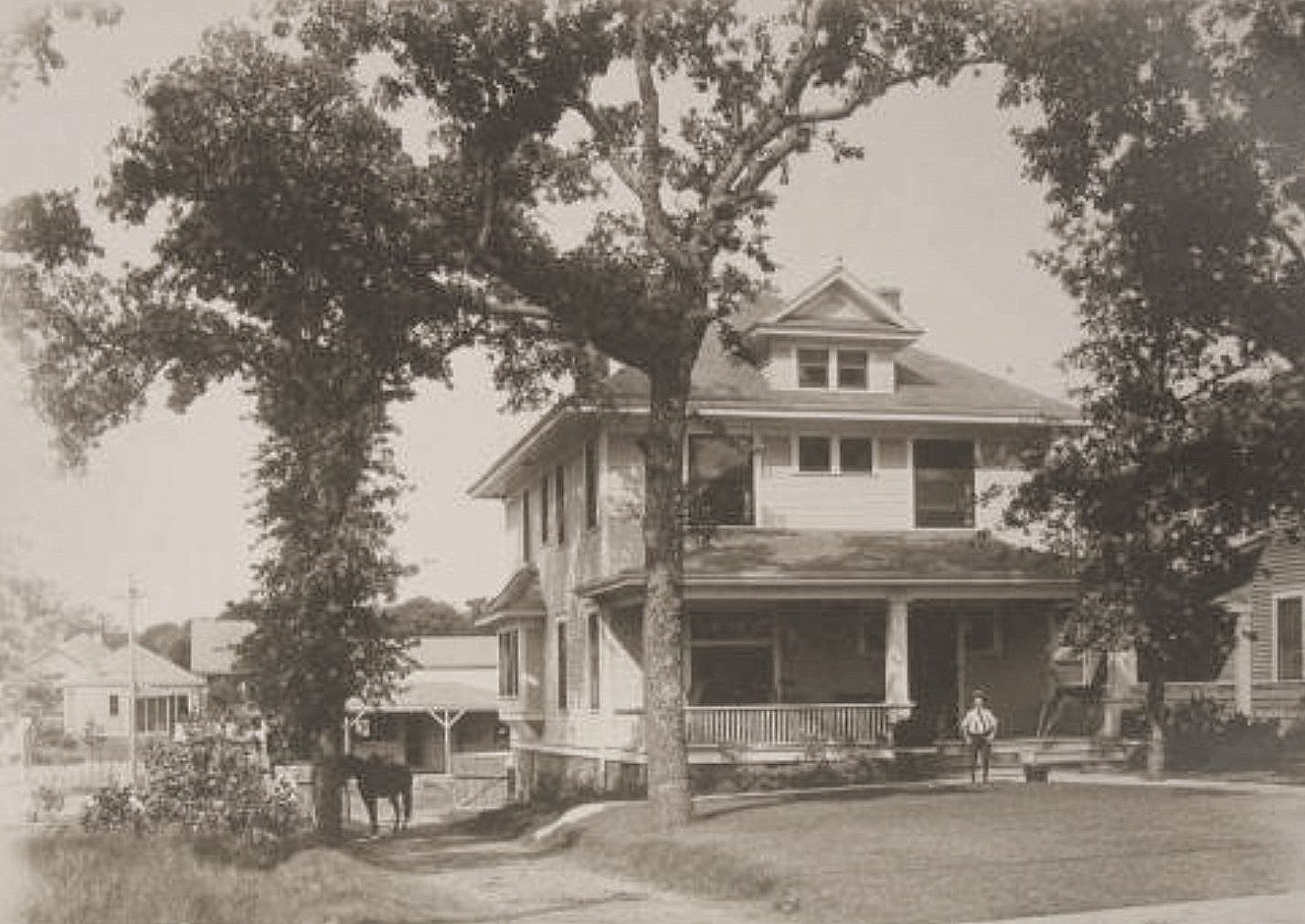
lemmon-avenue_house_rppc_ebayLemmon Avenue home, horse included….

by Paula Bosse

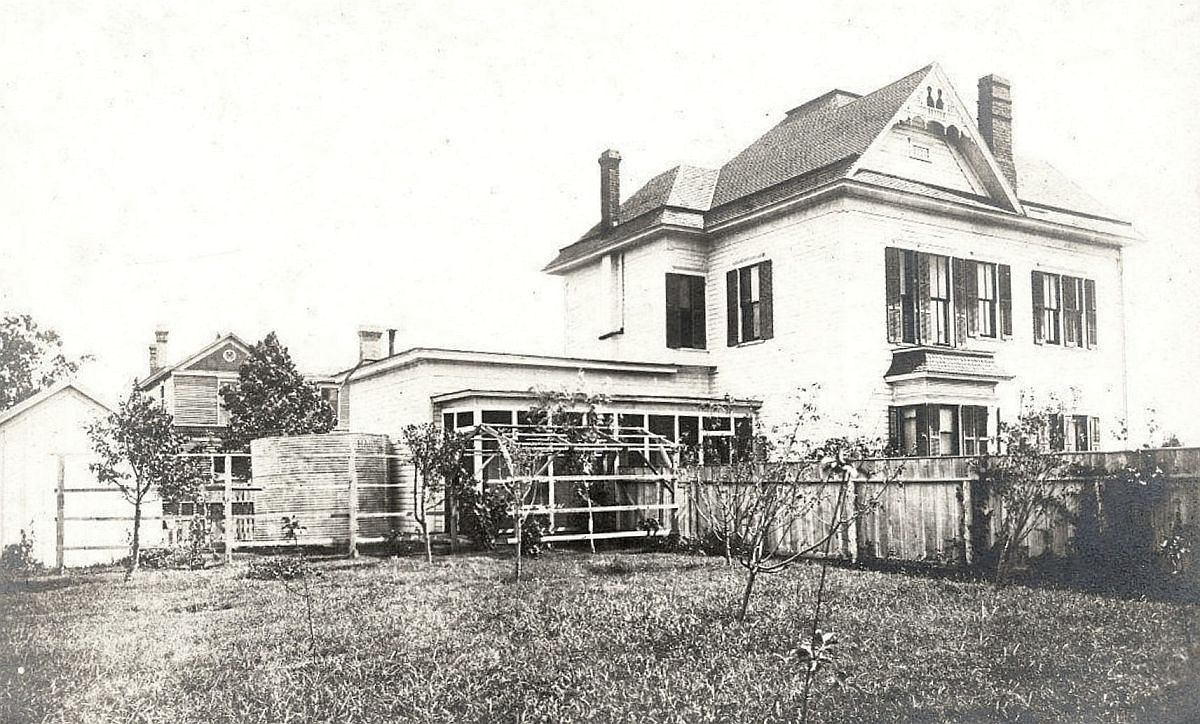
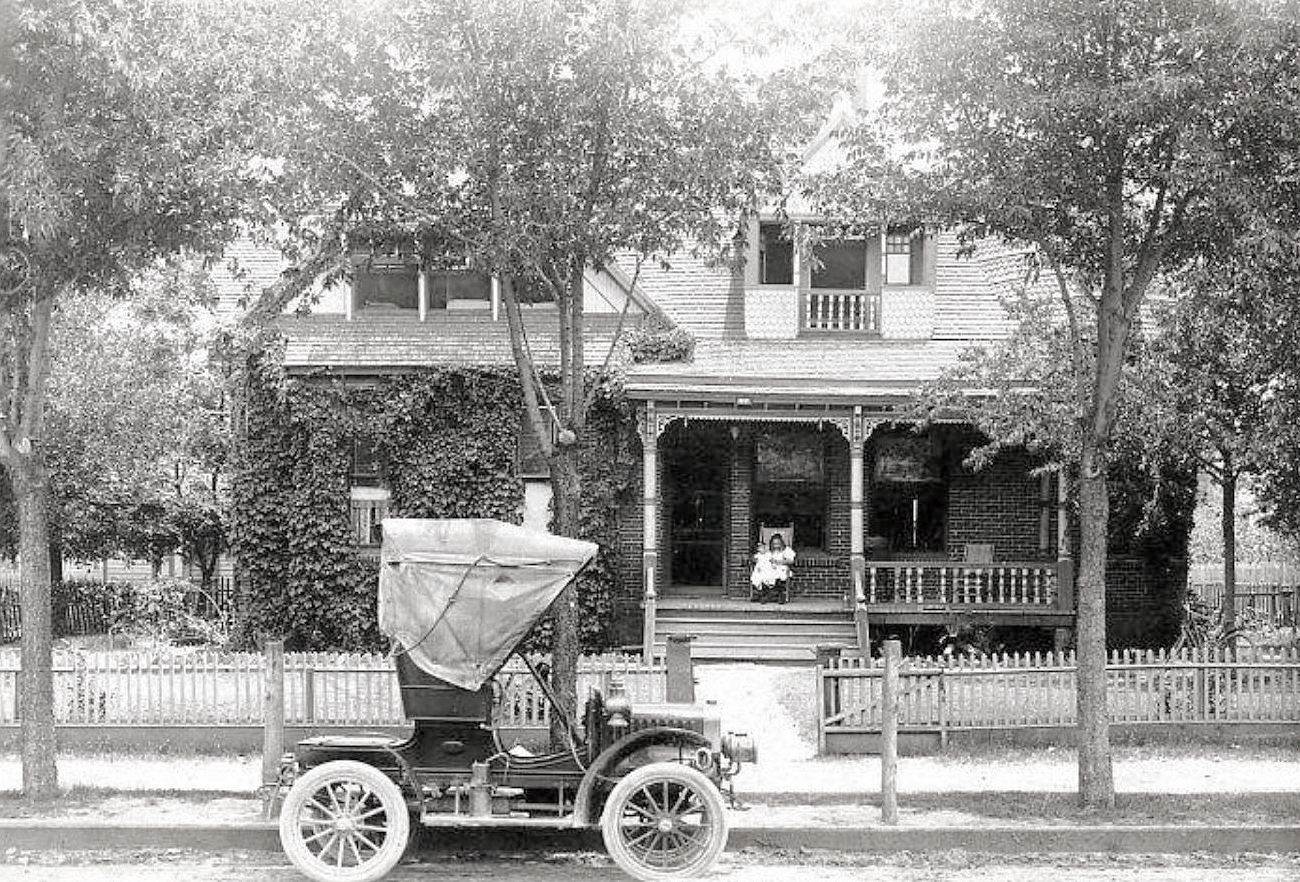
I love looking at old houses — especially ones which once occupied parts of town which are definitely no longer residential areas. It’s always sad to realize that the beautiful house you’re looking at — one which you can imagine living in now, in the 21st century — has, almost always, been torn down decades ago and replaced with something much less interesting. Thankfully, people 120 years ago used to have their homes photographed in order to print up picture postcards which they would then send to friends and relatives. Most of the images below come from these “real photo postcards,” and all show nice little glimpses into Dallas homes from before 1910. Only one of these houses is still standing. (All photos are larger when clicked.)

*

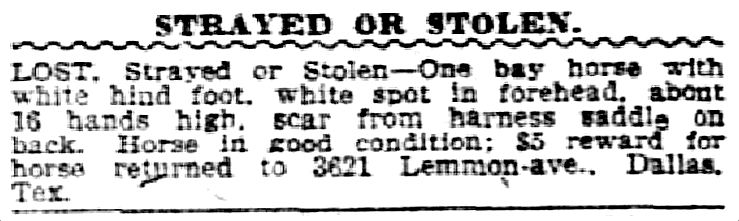
Sadly, the house above is not still standing. It’s a beautiful house. Even comes with a horse! The house was at 405 Lemmon Avenue in Oak Lawn. After the addresses in Dallas changed in 1911, the address became 3621 Lemmon (in the middle of the block between Welborn and Turtle Creek Park/Lee Park — apartments and a parking garage now occupy that whole block) — see it on a 1921 Sanborn map here. The owner was W. Leslie Williams, a real estate man. Family horses wandered off a few times, according to “strayed or stolen” ads placed in the paper, such as the one below.

williams_dmn_111211_strayed-horse
Nov. 1911

*

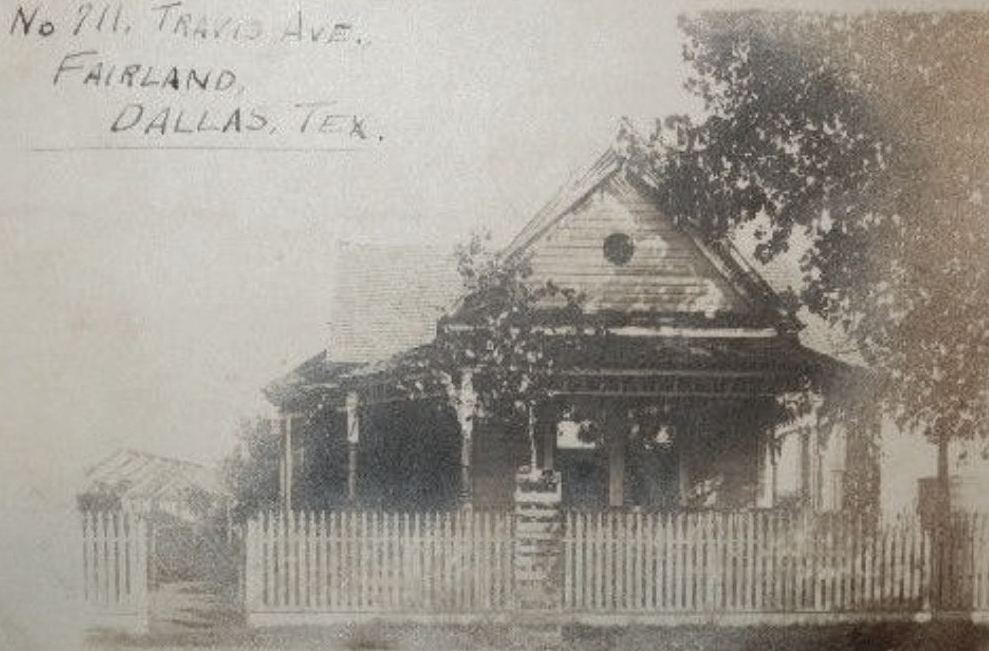
Below, a house which once stood at 711 Travis (which later became 4627 Travis), between Knox and Hester (the Katy railroad tracks would have run right behind the house) — see it on a 1921 Sanborn map here. It was in the “Fairland” addition. The owner of the house was T. B. Baldwin, a traveling agent for The Dallas Morning News. The photo was on a postcard mailed in 1908.

travis-ave-house_fairland_1908_ebay_rppc

*

Now to South Dallas (The Cedars?). This house stood at 200 Cockrell Ave. (which became 2130 Cockrell), between Corinth and Montgomery, now part of a large swath of empty land almost certainly being developed in somebody’s head as I type this. See it at the very bottom of this 1921 Sanborn map. The house was owned by Horatio W. Fairbanks, supervisor of the Dallas Cotton Mills, and was later occupied by the Wesley Settlement House for several years. The photo below is from 1896.

fairbanks-h-w_1896._ebay_cockrell-ave

*

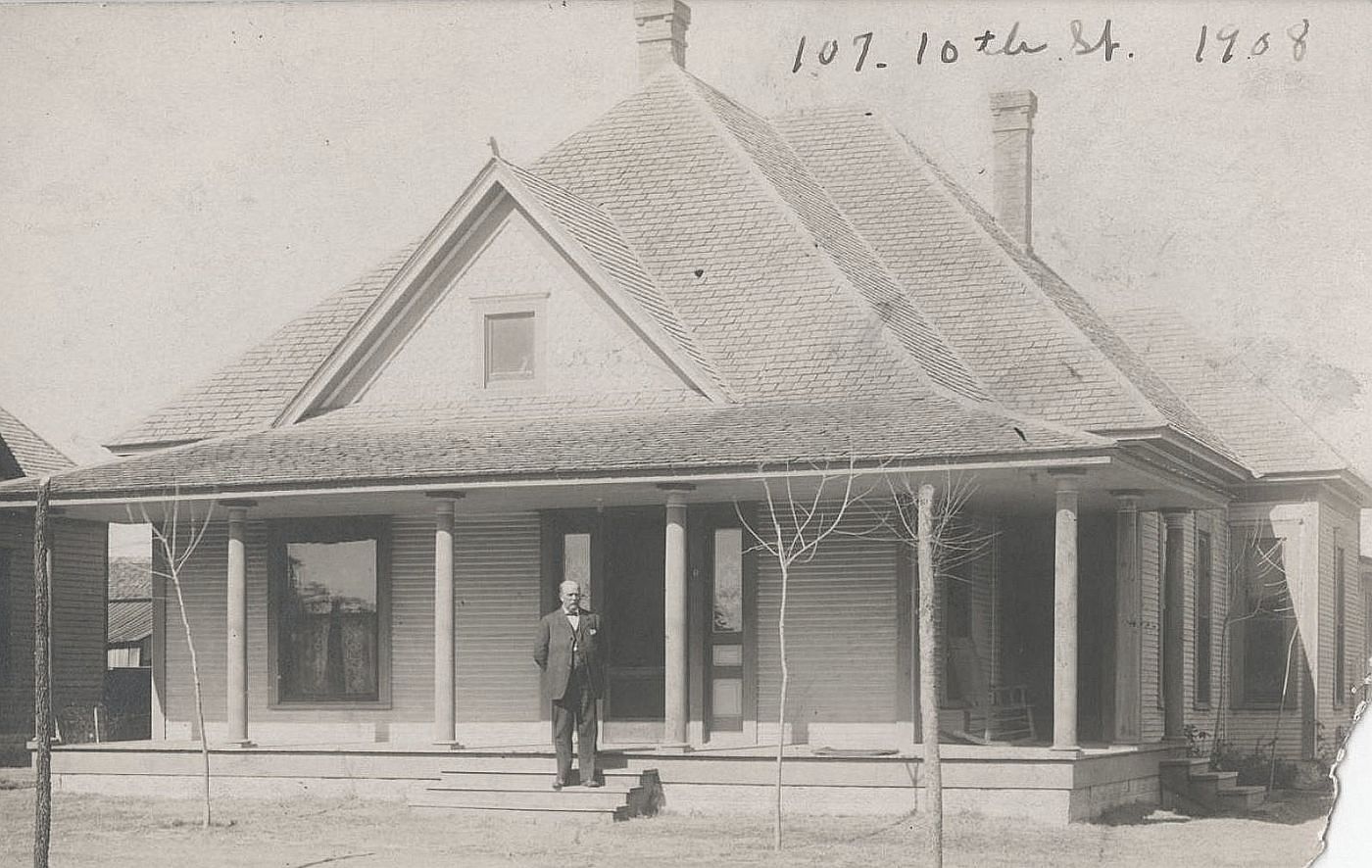
Now to four houses in Oak Cliff. The first stood at 107 10th Street (later 525 E. 10th St.), between Lansing and Marsalis — see it on a 1922 Sanborn map here. This was the home of Dr. William E. King, whom I presume is the man standing in front of the house — he died in 1909, a year after this photo was taken. The land now appears to be occupied by a body-shop parking lot. (This 1908 photo is from the Murphy Historical Society, via the Portal to Texas History, here.)

king-william_oak-cliff_1908_murphy-historical-society_via-portal

*

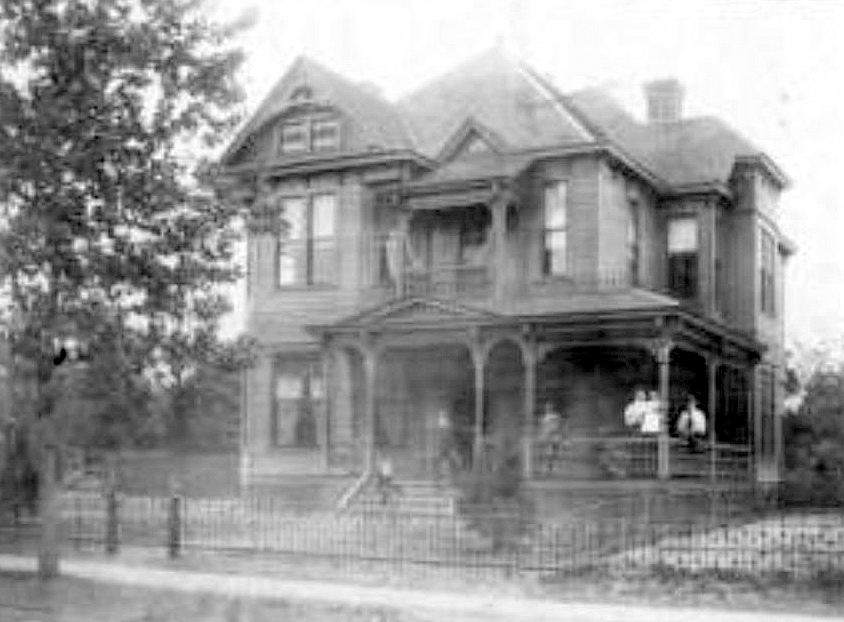
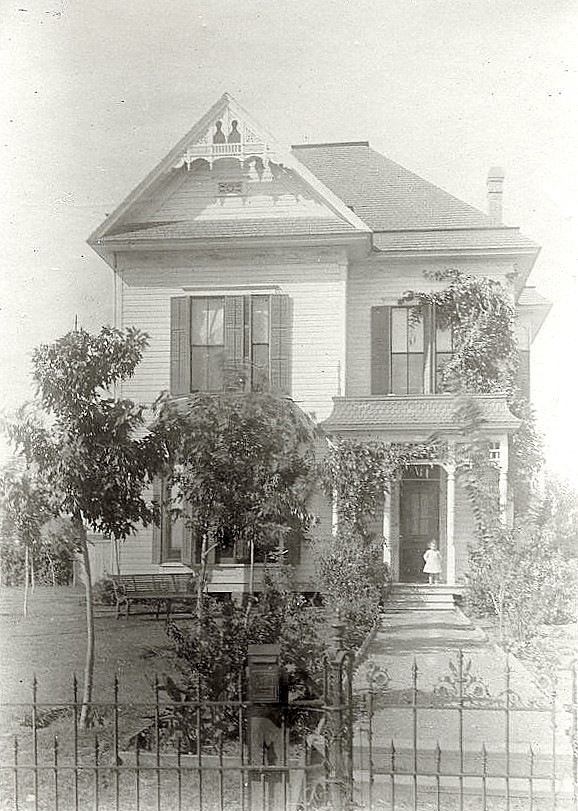
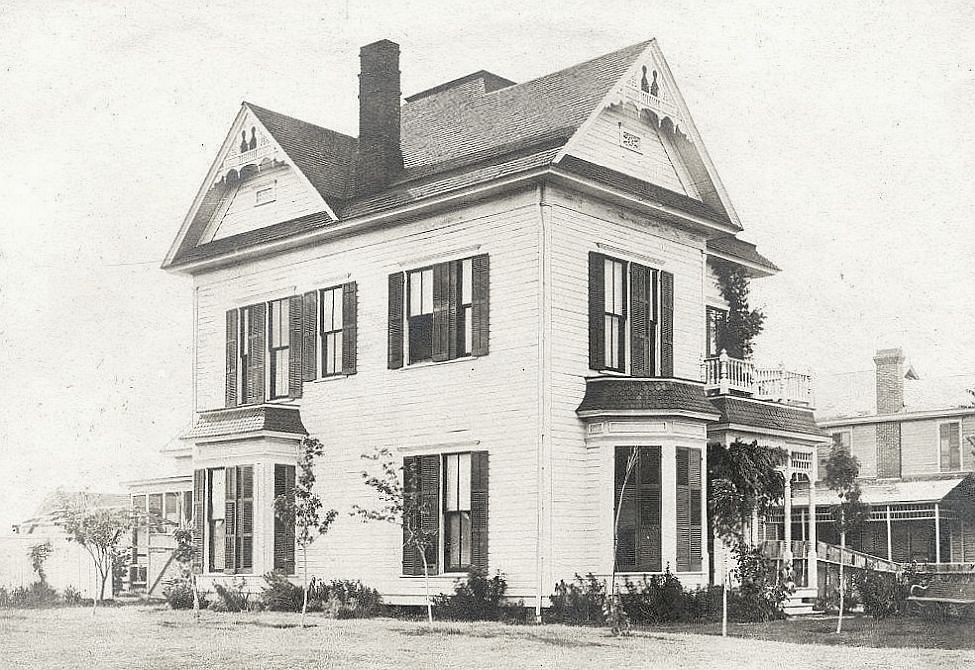
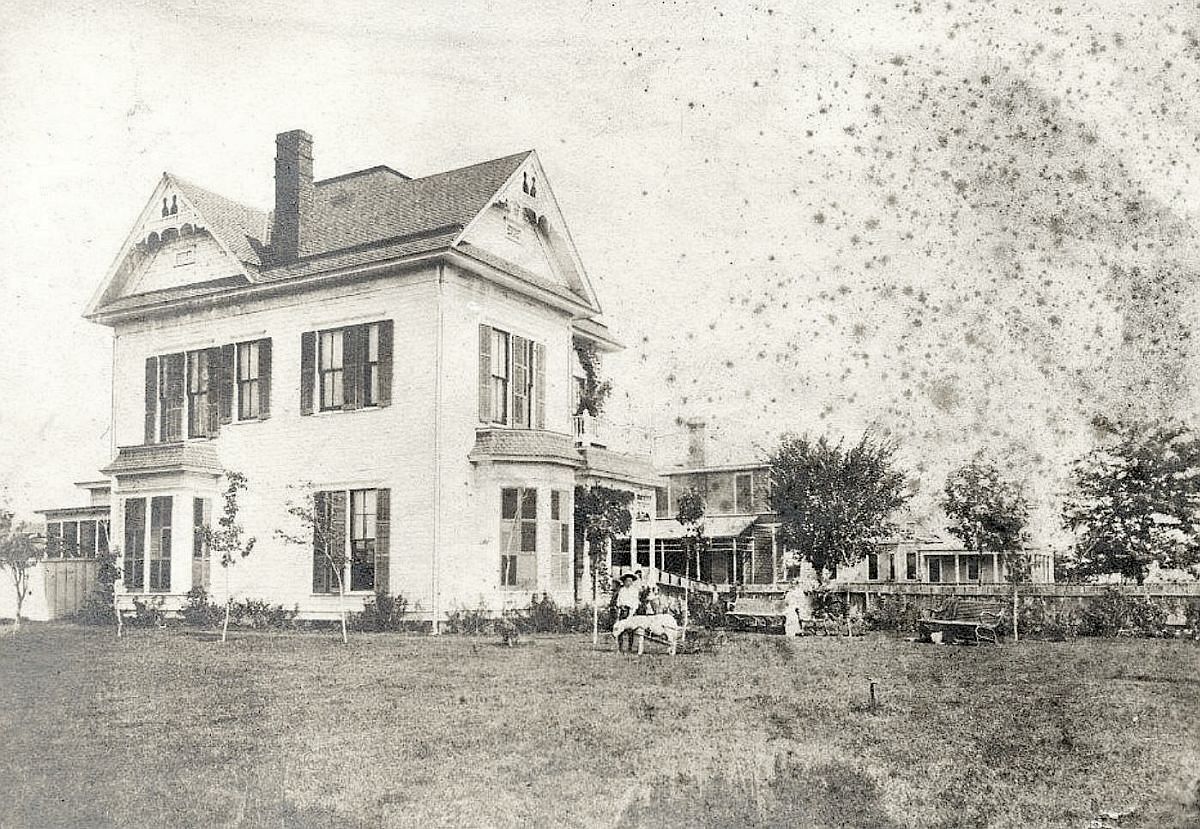
The home of T. Henry Dorsey, a member of the family who founded the Dorsey Printing Co., a pioneer printing establishment in Dallas, was at 161 Grand Ave. (the name of the street was changed to Marsalis, and in 1911 the address of this house became 113 N. Marsalis), between 9th and 10th streets — see it on a 1905 Sanborn map here. The current occupant of this land is, I think, a trucking company. This house — which Dorsey moved into around 1900 — can be seen below from several angles (including one from the back which shows a fence running into part of the house which appears to be encroaching onto a neighbor’s property. 

dorsey_ebay_d

dorsey_ebay_a

dorsey_ebay_b

dorsey_ebay_c

*

Before 1911, the address of the house below — a house I absolutely love — was 174 South Jefferson; after 1911, the address was, rather confusingly, changed to 516 East Jefferson (between Patton and Denver) — see it on a 1905 Sanborn map here. It was on land now occupied by Felix Botello Elementary School. This house was owned for several decades by Dr. William M. Lively. The image below is from a postcard dated 1909. (Great car!)

lively-house_poss-oak-cliff_rppc_1909_ebay

*

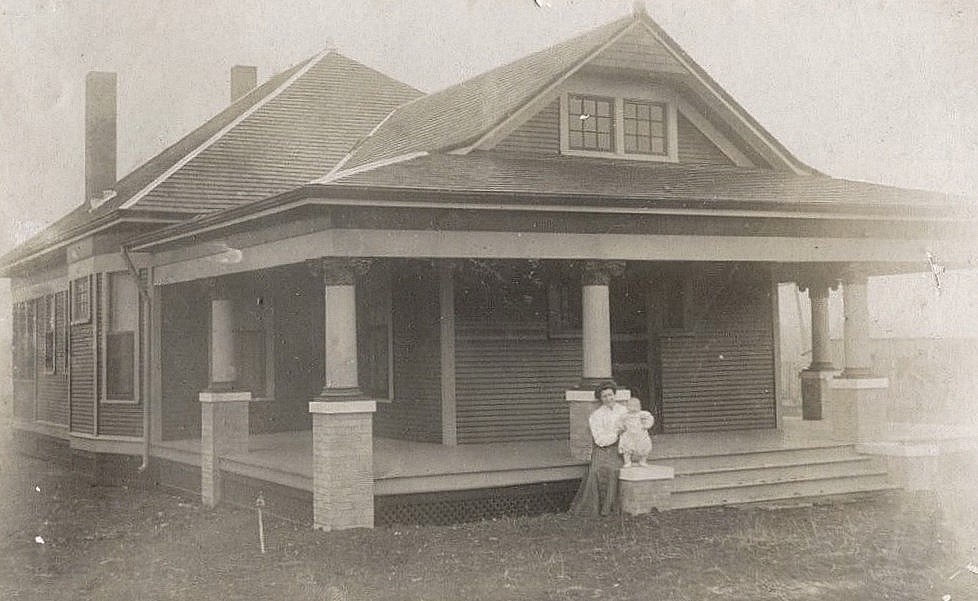
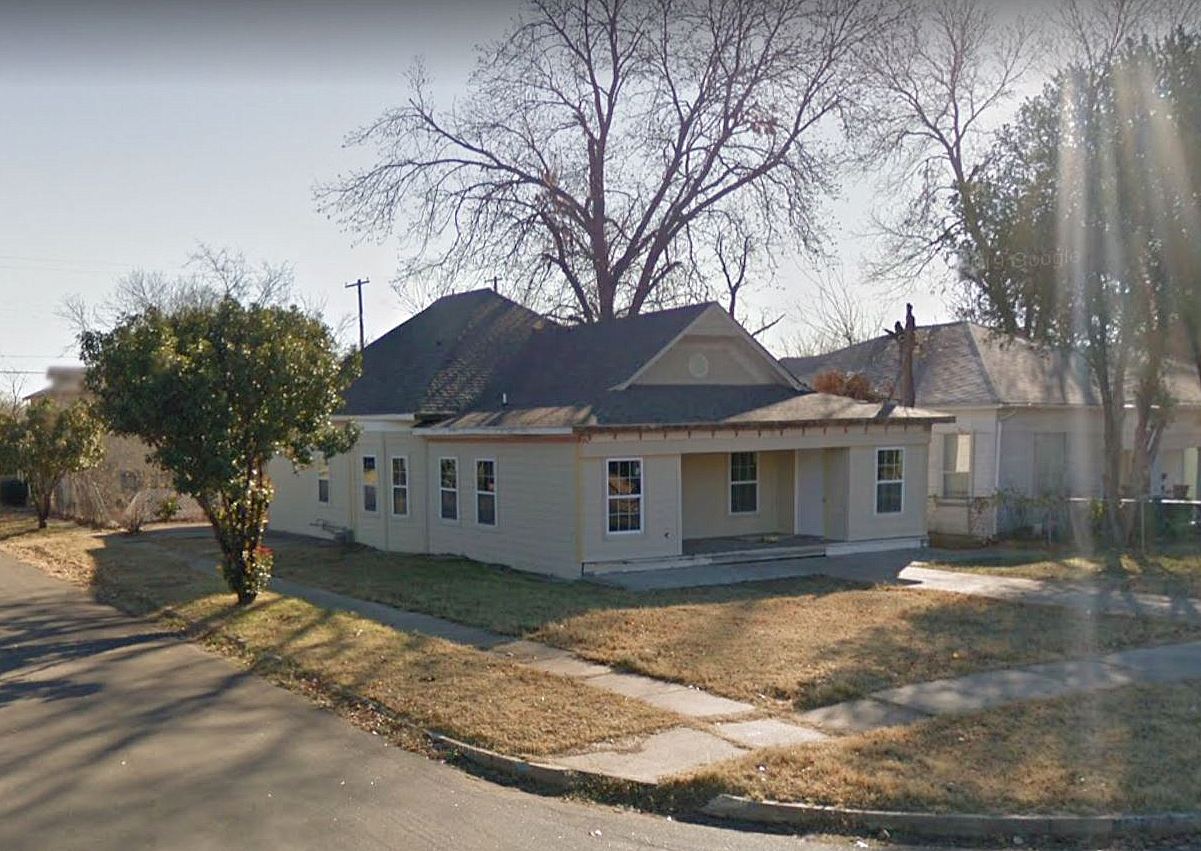
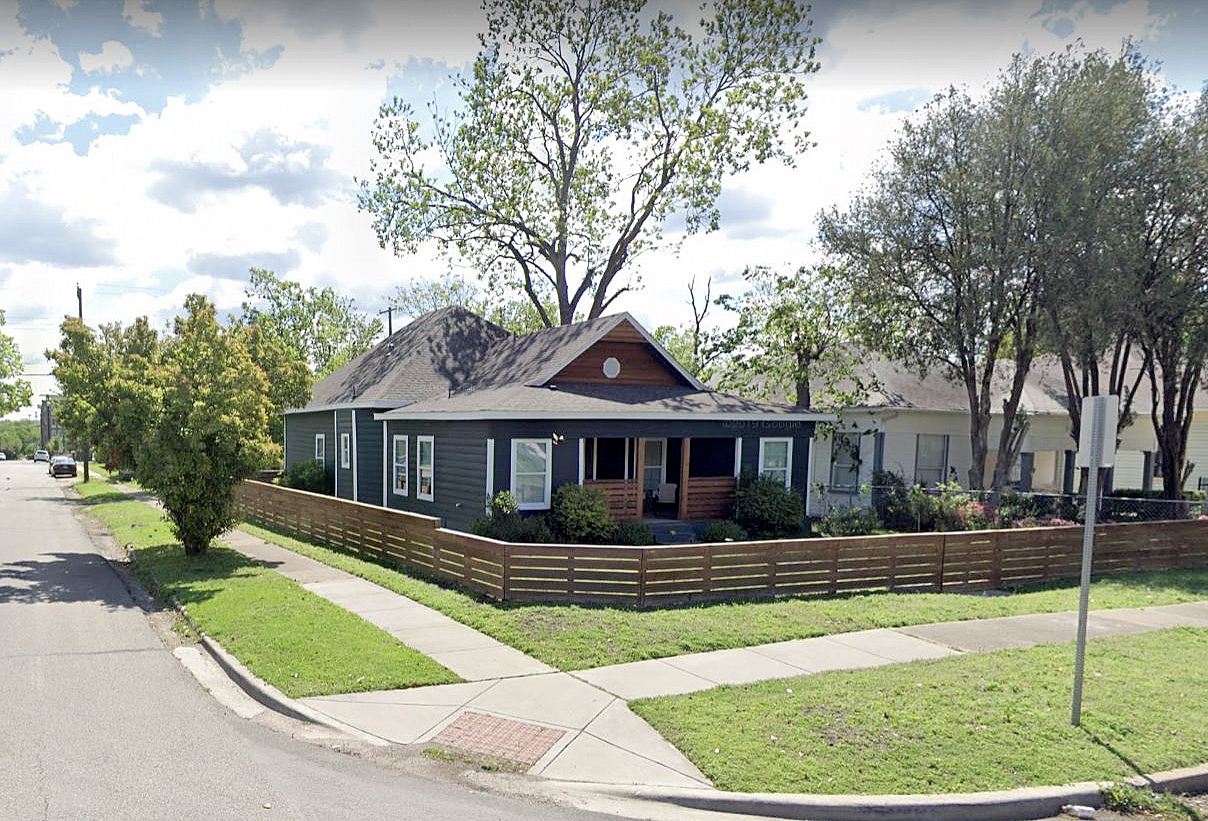
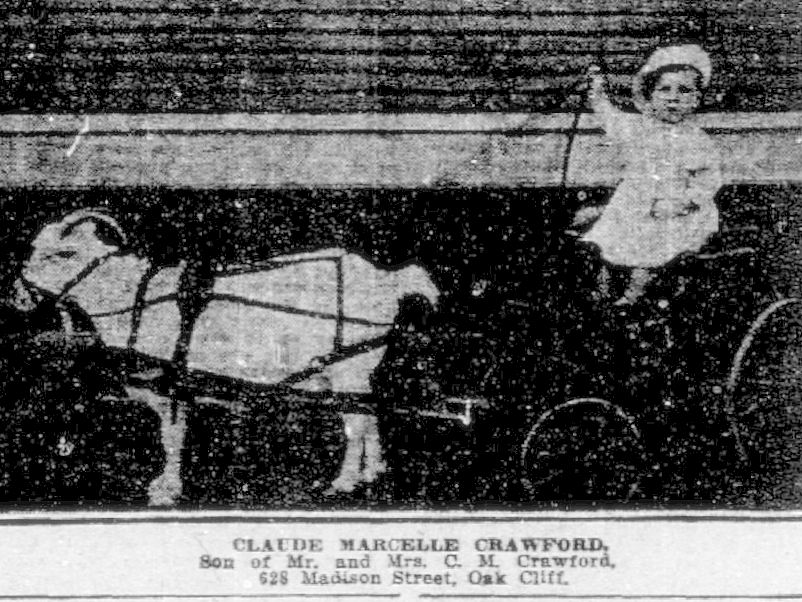
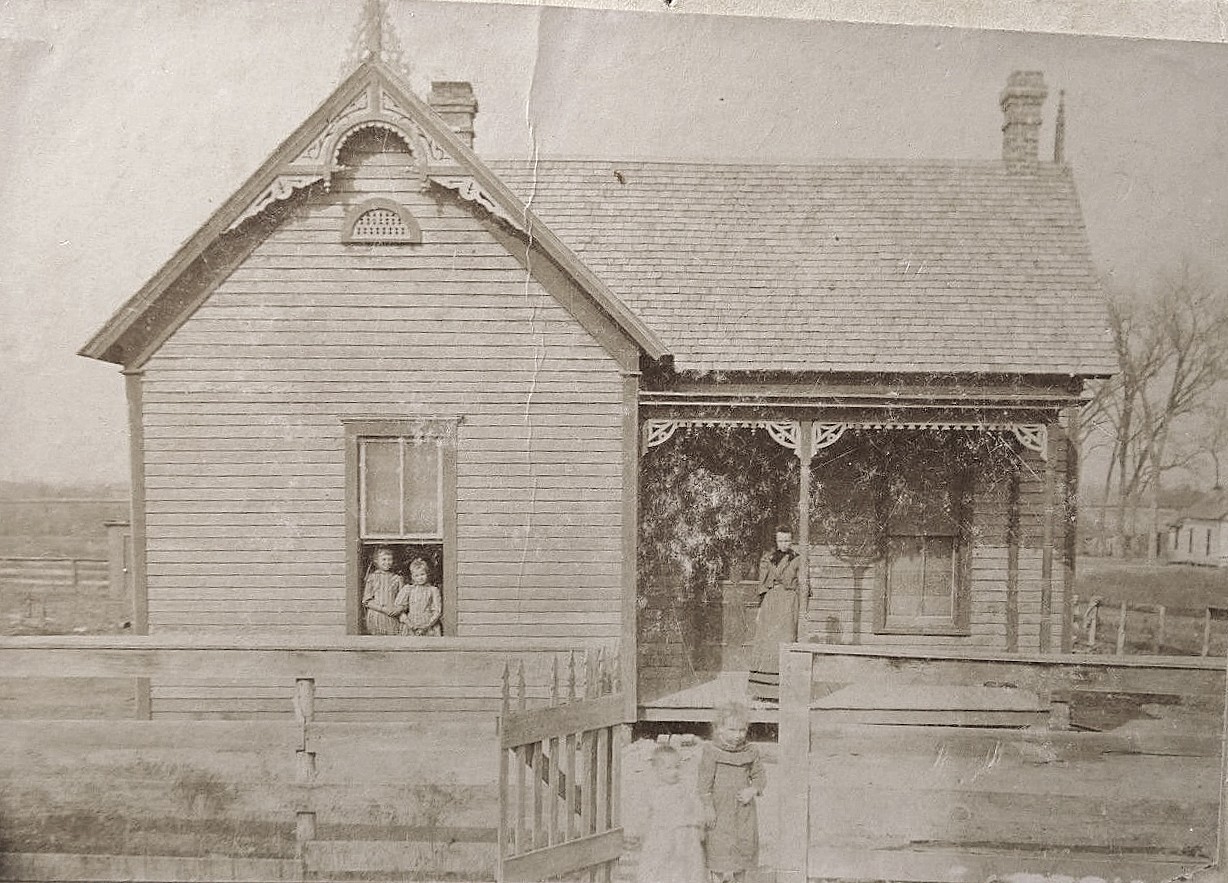
Below is the only one of these houses still standing. It began life as 120 Madison Ave. (which later became 628 N. Madison), at the corner of W. Neely St. in the Kidd Springs neighborhood of Oak Cliff. See it on a 1922 Sanborn map here (bottom left corner). Claude Marcelle (C. M.) Crawford, a traveling salesman, lived here with his wife, Maud, and their infant son, Marcelle Crawford. Maud Crawford (who died in 1913, just a couple of years after this photo was taken) wrote: “What do you think of our ‘cosy corner.’ Every one tells us it is pretty so much until we almost believe it our selves.” Crawford eventually went to work for Bristol-Myers as a regional branch manager, and after 30 years, when he was in ill health, the company retired him on full pay (!) in gratitude for his service. When he retired, he owned a Beverly Drive home in Highland Park, apparently having done very well. His charming little starter-house in Oak Cliff still stands, having recently been remodeled. 

crawford-house_madison_oak-cliff_ebay_cropped
about 1910

crawford-house_madison_google-street-view_2012
2012, Google Street View

crawford-house_madison_google-street-view_20192019, Google Street View

crawford-claude-marcelle_dmn_081311
Claude Marcelle Crawford, Jr., Dallas Morning News, Aug. 13 1911

*

And, lastly, the only house I wasn’t able to determine the location of — it also looks like the oldest. On the back is a faint penciled notation which appears to  be signed “G. P. Taylor.” In a more recent notation in ink, the family members in the photo are identified: “Made in Dallas, Tex. — Elm St. — Mother on porch, Mattie & I in window, Pearl & Joe in gate.” 1870s or 1880s? It’s a mystery!

elm-street-house_ebay_taylor

***

Sources & Notes

All images except the William E. King house are from eBay.

lemmon-avenue_house_rppc_ebay_sm

*

Copyright © 2020 Paula Bosse. All Rights Reserved.

Private Education in Dallas — 1916

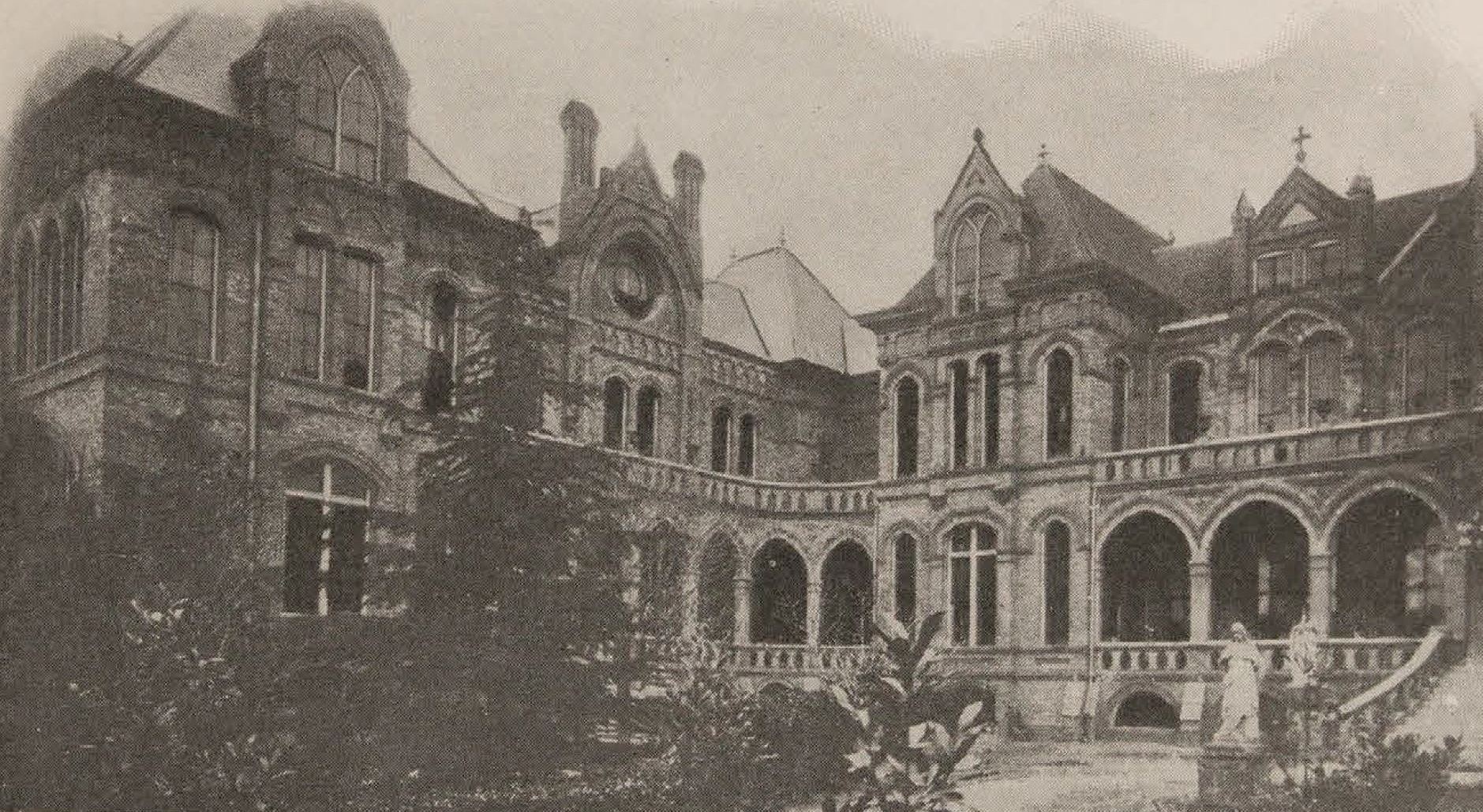
dallas-educational-center_ursuline_ca-1916_degolyer-library_smu_photoThe looming Ursuline Academy in Old East Dallas

by Paula Bosse

Here is a collection of photos and mini-histories of several of the top private schools that Dallas parents were ponying up their hard-earned cash for in 1916. Some were boarding schools, some were affiliated with churches, some were rooted in military discipline, some were medical schools, and some were places to go to receive instruction on the finer things in life, such as music and art. Sadly, only one of these buildings still stands. But two of the schools in this collection have been operating continuously for over 100 years (Ursuline and Hockaday), and two more are still around, having had a few name changes over the years (St. Mark’s and Jesuit). Here’s where the more well-to-do girls and boys of Dallas (…and Texas — and many other states) were sent to become young ladies and gentlemen. 

**

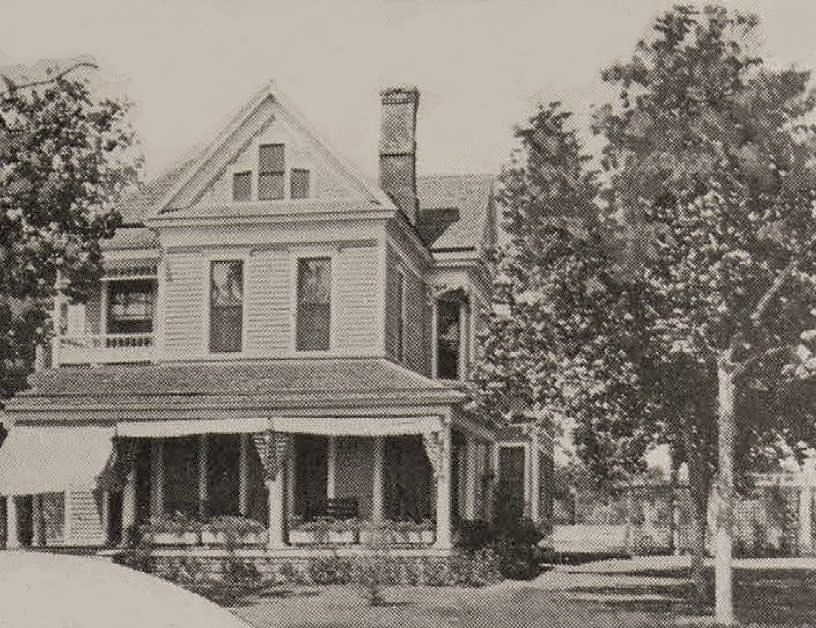
THE URSULINE ACADEMY (above) — Mother Mary Teresa, superioress — the block bounded by Live Oak, Haskell, Bryan, and St. Joseph. This school for girls and young women was established in Dallas by the Ursuline Sisters in about 1874 — and it continues today as one of the city’s finest institutions. The incredible gothic building was… incredible. So of course it was demolished (in 1949, when the school moved its campus to its present-day North Dallas location). See what it looked like at its Gothic, grandiose height in a previous Flashback Dallas post here.

dallas-educational-center_ursuline_ca-1916_degolyer-library_smu

*

MISS HOCKADAY’S SCHOOL FOR GIRLS — Miss Ela Hockaday, principal — 1206 N. Haskell. Hockaday was (and is) the premier girl’s school of Dallas society — like Ursuline, it is still going strong (and, like Ursuline, it moved away from East Dallas and is now located in North Dallas). In 1919, three years after these photos were taken, Miss Hockaday would buy the former home of Walter Caruth, Bosque Bonita, set in a full block at Belmont and Greenville in the Vickery Place neighborhood — there she built a large campus and cemented her place as one of the legendary educators in Dallas history. (In 1920, Hockaday’s annual tuition for boarding students eclipsed even the hefty tuition of The Terrill School for Boys: Miss Hockaday had parents lined up to pay her $1,000 a year — now the equivalent of about $13,000 — to educate and refine their daughters at her prestigious institution.)

dallas-educational-center_hockaday_ca-1916_degolyer-library_smu

dallas-educational-center_hockaday_tennis_ca-1916_degolyer-library_smu

dallas-educational-center_hockaday_ca-1916_degolyer-library_smu_text

*

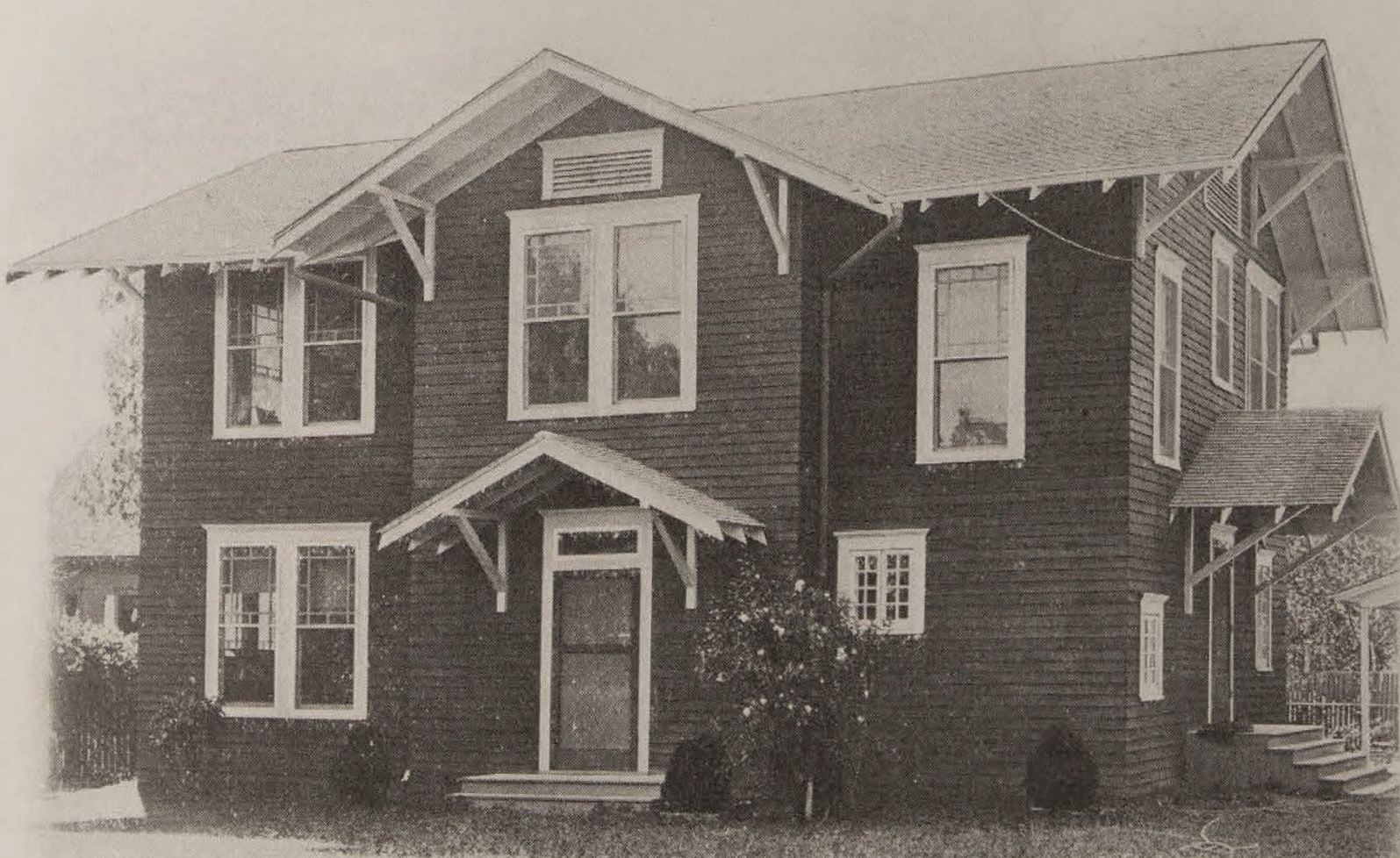
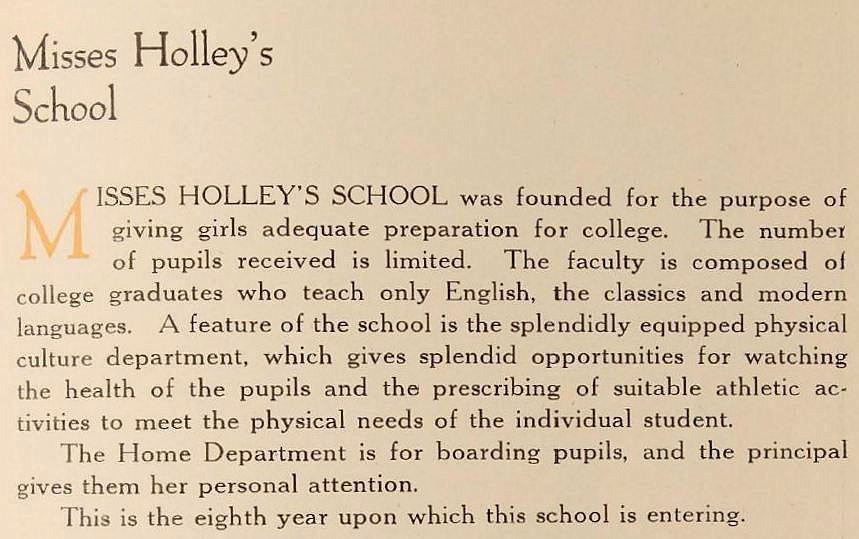
MISSES HOLLEY’S SCHOOL FOR GIRLS — Miss Frances Holley and Miss Josephine Holley, principals — 4528 Ross Avenue (at Annex). Another somewhat exclusive school that catered to young society ladies was the Holley school, established in 1908 by the two Holley sisters, who limited their student body to only 35 girls. The school (which is sometimes referred to as “Miss Holley’s School” and “Holley Hall” — and which was located behind the sisters’ residence) closed in 1926.

dallas-educational-center_holleys-school_ca-1916_degolyer-library_smu

dallas-educational-center_holleys-school_ca-1916_degolyer-library_smu_text

*

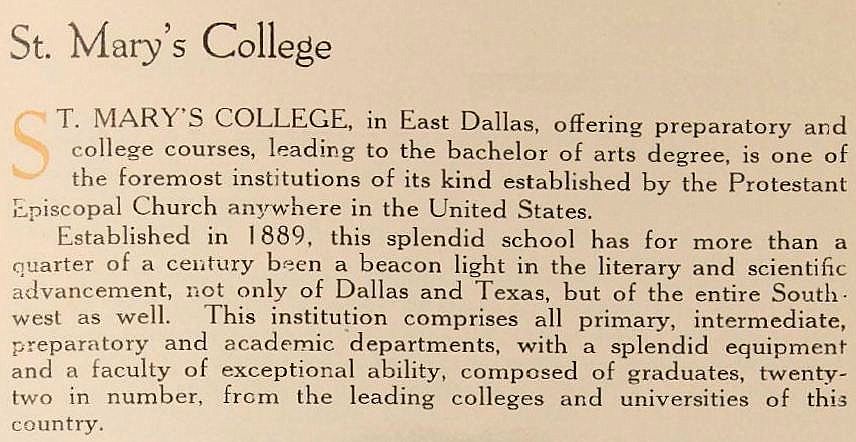
ST. MARY’S COLLEGE — Miss Ethel Middleton, principal — Garrett and Ross Avenue.  This Episcopal-Church-associated boarding and day school for girls and young ladies was one of the Southwest’s leading institutions of learning for young women. When established in 1889, it was built outside the city limits on a “hill” — back then the area around the school was often referred to as “College Hill.”

dallas-educational-center_st-marys_b_ca-1916_degolyer-library_smu

dallas-educational-center_st-marys_ca-1916_degolyer-library_smu

dallas-educational-center_st-marys_ca-1916_degolyer-library_smu_text

*

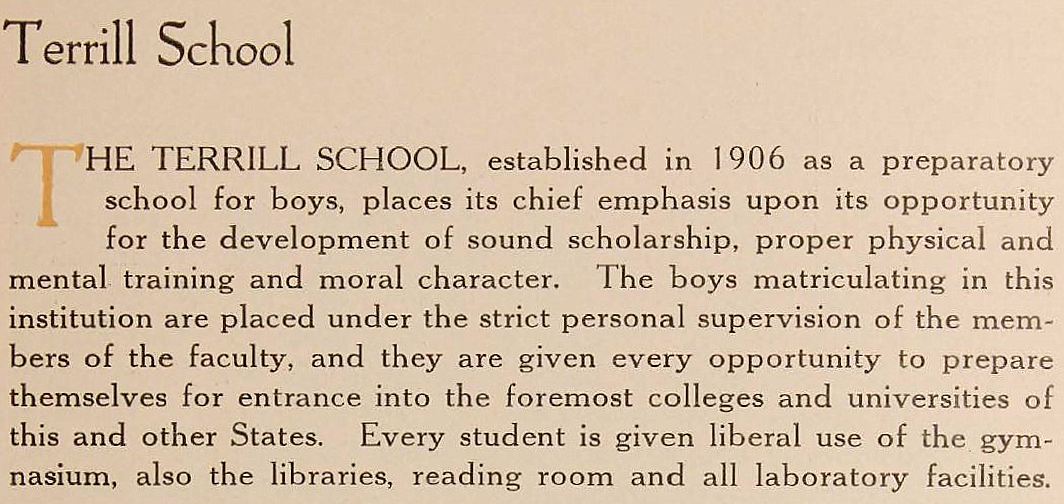
THE TERRILL SCHOOL FOR BOYS — M. B. Bogarte, head master — 4217 Swiss Avenue (at Peak). The exclusive boys school in Dallas (which, after several mergers, continues today as St. Mark’s); the cost of a year’s tuition for boarding students in 1920 was $850 — the equivalent of about $11,000 — a very pricey school back then. More on the Terrill School can be found in previous Flashback Dallas posts here and here.

dallas-educational-center_terrill-school_ca-1916_degolyer-library_smu

dallas-educational-center_terrill-school_ca-1916_degolyer-library_smu_info

*

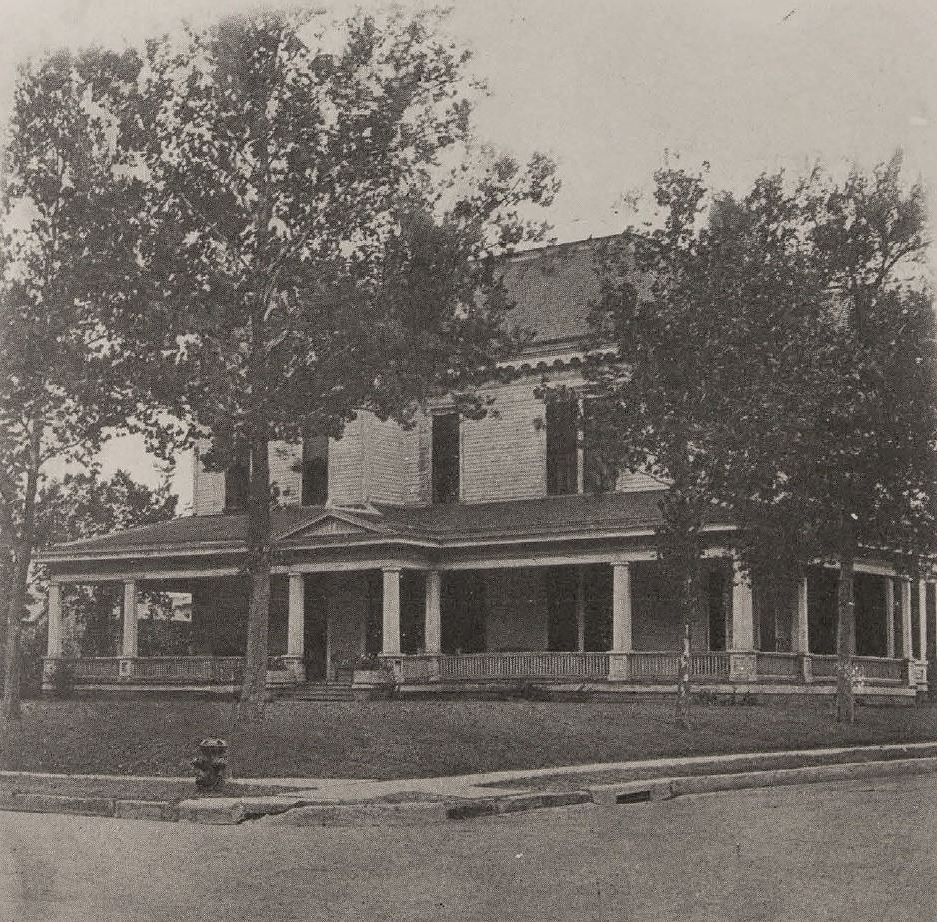
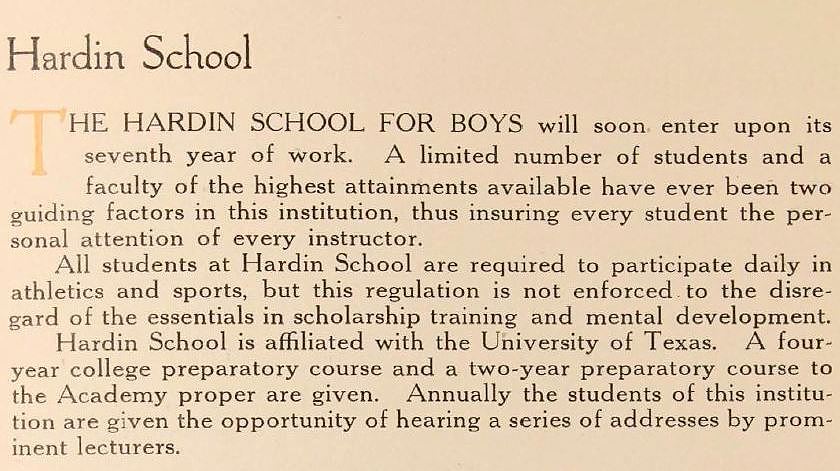
THE HARDIN SCHOOL FOR BOYS — J. A. Hardin, principal — 4021 Swiss Avenue. This prep school was affiliated with the University of Texas. It was located for a while in downtown Dallas and for a time at the location seen below in Old East Dallas, but in 1917 it either bought out and merged with the Dallas Military Academy or that school went out of business, because the Hardin School settled into the military academy’s location, which had been Walter Caruth’s old home, Bosque Bonita, at Belmont and Greenville, where boys were marching around doing drills until Miss Hockaday moved in two years later in 1919.

dallas-educational-center_hardin-school_ca-1916_degolyer-library_smu_photo

dallas-educational-center_hardin-school_ca-1916_degolyer-library_smu

*

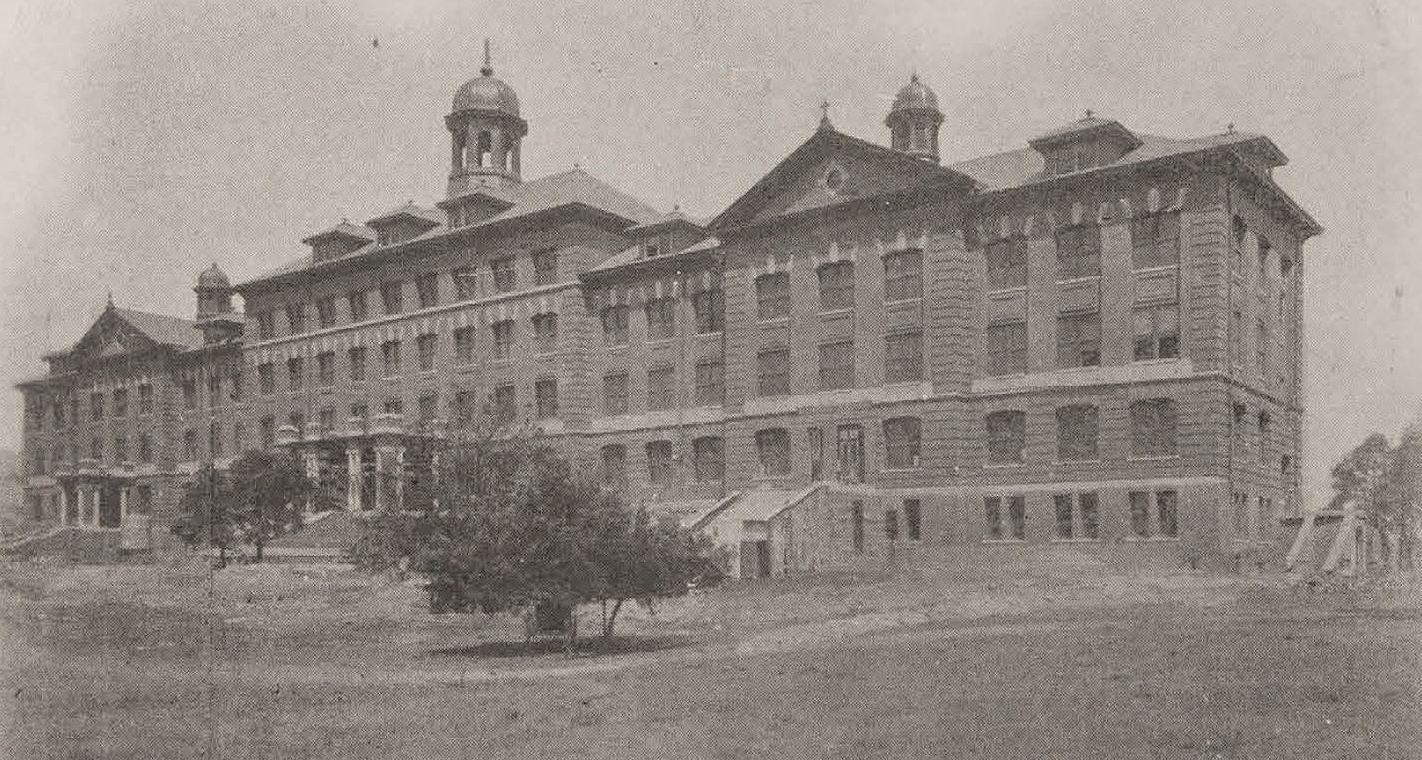
DALLAS MILITARY ACADEMY AND SCHOOL OF ENGINEERING — C. J. Kennerly, superintendent — Belmont & Greenville Ave. This “practical school for manly boys” opened up in 1916 in a large house which had been built by Walter Caruth in the area now known as Lower Greenville. The Dallas Military Academy lasted for only one year until the large house became home to the Hardin School for Boys in 1917 (and, two years later in 1919, it became the longtime home of the Hockaday School). If you didn’t click on the link for it above, now’s your chance to read more about the history of Caruth’s grand house, Bosque Bonita, here.

dallas-educational-center_pre-hockaday_dallas-military-academy_ca-1916_degolyer-library_smu

dallas-educational-center_pre-hockaday_dallas-military-academy_ca-1916_degolyer-library_smu_text

*

UNIVERSITY OF DALLAS — Very Rev. P. A. Finney, president — Oak Lawn Ave. & Gilbert. When it opened in 1906, this school was known as Holy Trinity College; its name was changed to the University of Dallas in 1910. The University of Dallas closed in 1928 because of lack of money; it was later known as Jesuit High School until Jesuit moved to North Dallas — the grand building was demolished in 1963. (See an aerial view of this huge building here.)

dallas-educational-center_univ-of-dallas_trinity_jesuit_ca-1916_degolyer-library_smu_photo

dallas-educational-center_univ-of-dallas_trinity_jesuit_ca-1916_degolyer-library_smu

*

THE MORGAN SCHOOL (formerly the Highland Park Academy) — Mrs. Joseph Morgan, principal — 4608 Abbott. A co-ed school.

dallas-educational-center_morgan-school_b_ca-1916_degolyer-library_smu

dallas-educational-center_morgan-school_ca-1916_degolyer-library_smu

dallas-educational-center_morgan-school_ca-1916_degolyer-library_smu_text

*

POWELL TRAINING SCHOOL — Nathan Powell, president — Binkley & Atkins (now Hillcrest) in University Park. I believe this is the only building in this post still standing — more can be read in the earlier post “Send Your Kids to Prep School ‘Under the Shadow of SMU’ — 1915,” here. (That is, in fact, a bit of the very, very young SMU campus seen in the distance at the bottom right.)

dallas-educational-center_powell-school_ca-1916

dallas-educational-center_powell-school_ca-1916_info

*

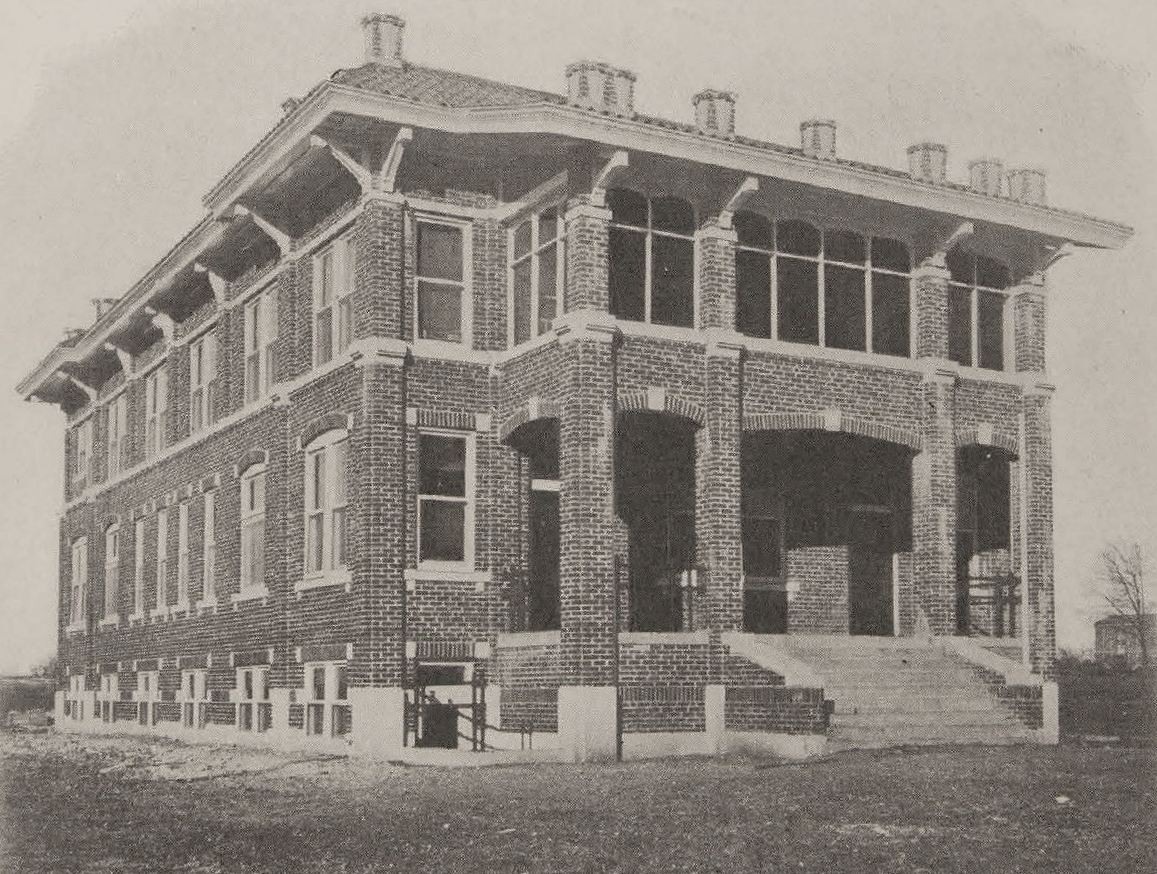
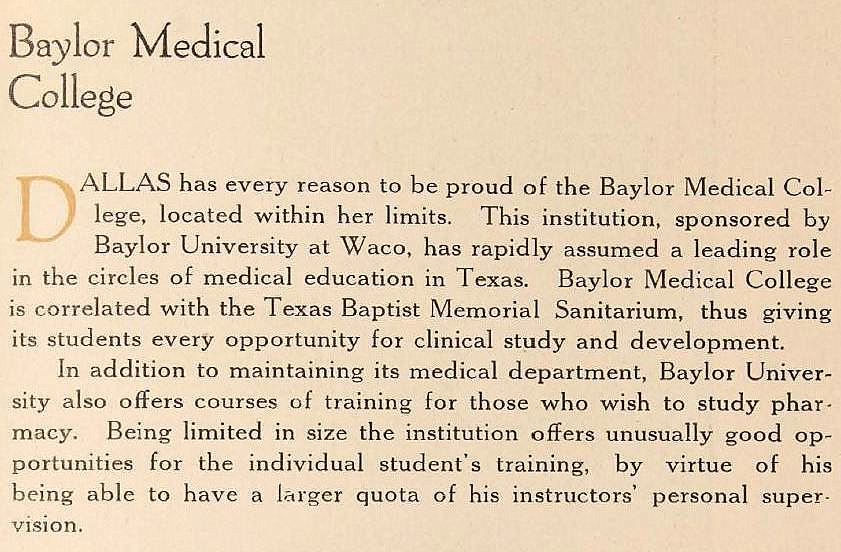
BAYLOR MEDICAL COLLEGE — E. H. Cary, dean — 720 College Ave. (now Hall Street).

dallas-educational-center_baylor-medical-college_ca-1916_degolyer-library_smu_photo

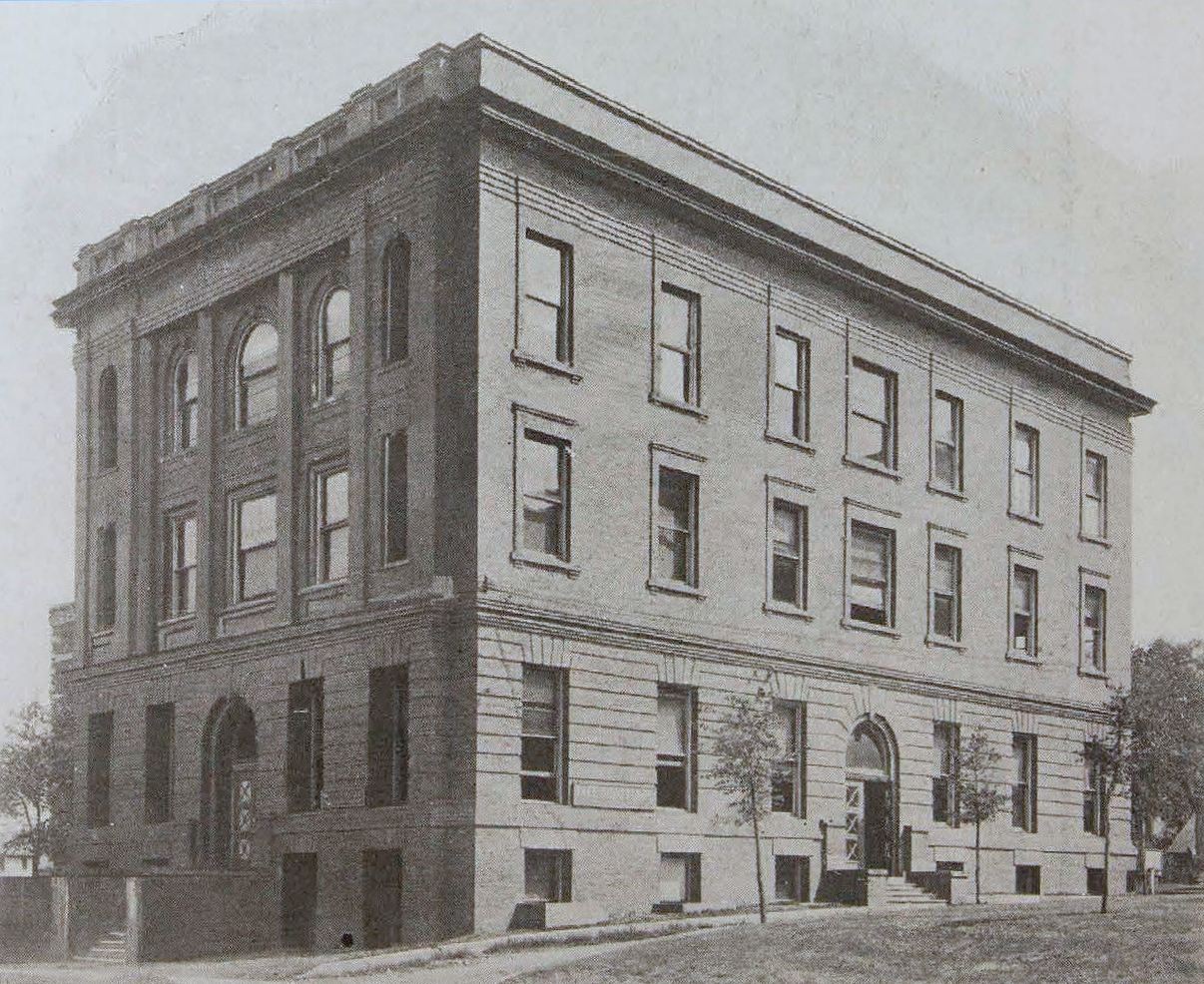
DALLAS POLYCLINIC/POST-GRADUATE MEDICAL SCHOOL — John S. Turner, president — S. Ervay & Marilla (affiliated with Baylor Medical College).

dallas-educational-center_dallas-polyclinic_ca-1916

dallas-educational-center_baylor-medical-college_ca-1916_degolyer-library_smu

*

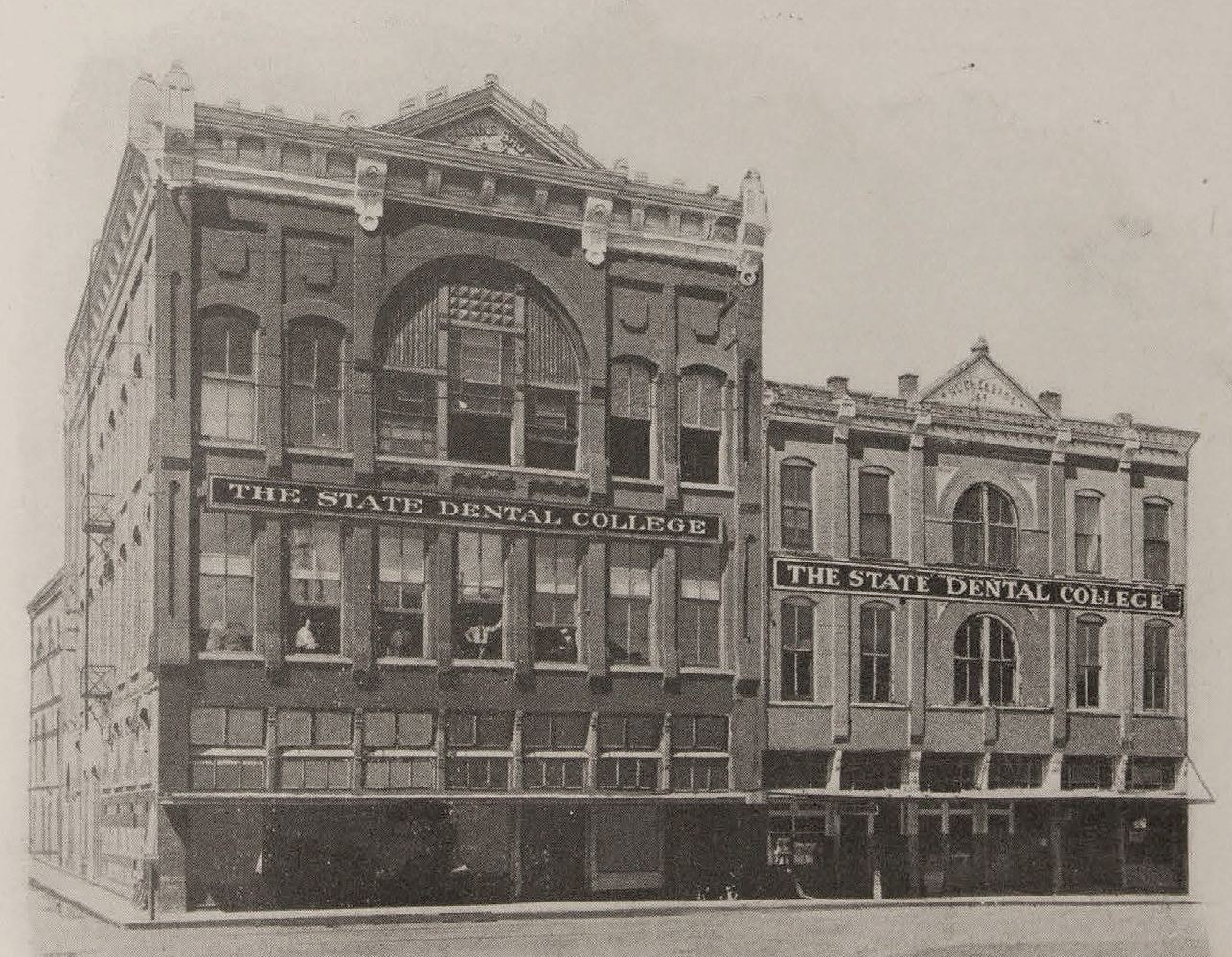
STATE DENTAL COLLEGE — 1409 ½ South Ervay, across from the Park Hotel (more recently known as the Ambassador Hotel).

dallas-educational-center_state-dental-college_ca-1916_degolyer-library_smu_photo

dallas-educational-center_state-dental-college_ca-1916_degolyer-library_smu

*

HAHN MUSIC SCHOOL — Charles D. Hahn, director — 3419 Junius. 

dallas-educational-center_hahn-music-school_ca-1916_photo

dallas-educational-center_hahn-music-school_ca-1916

*

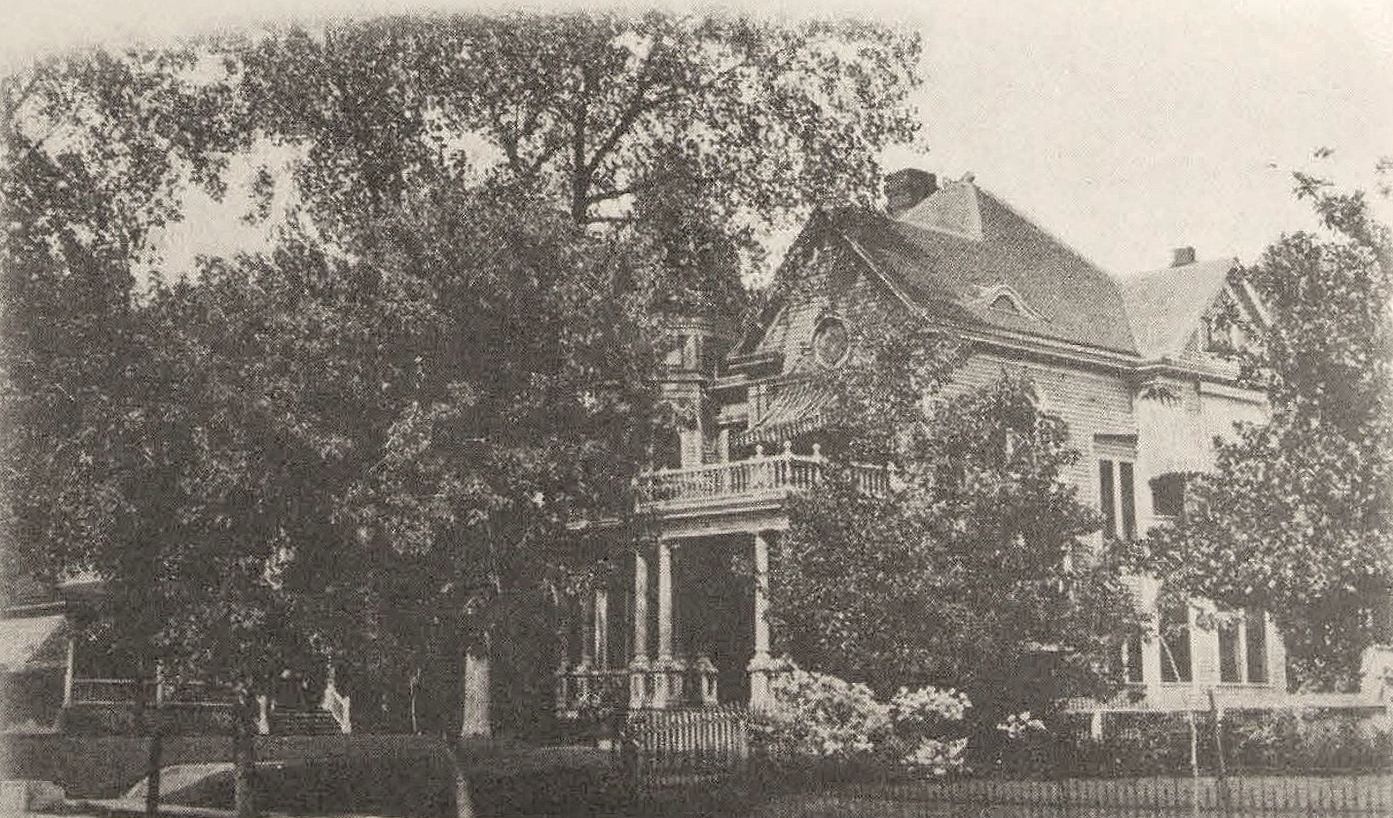
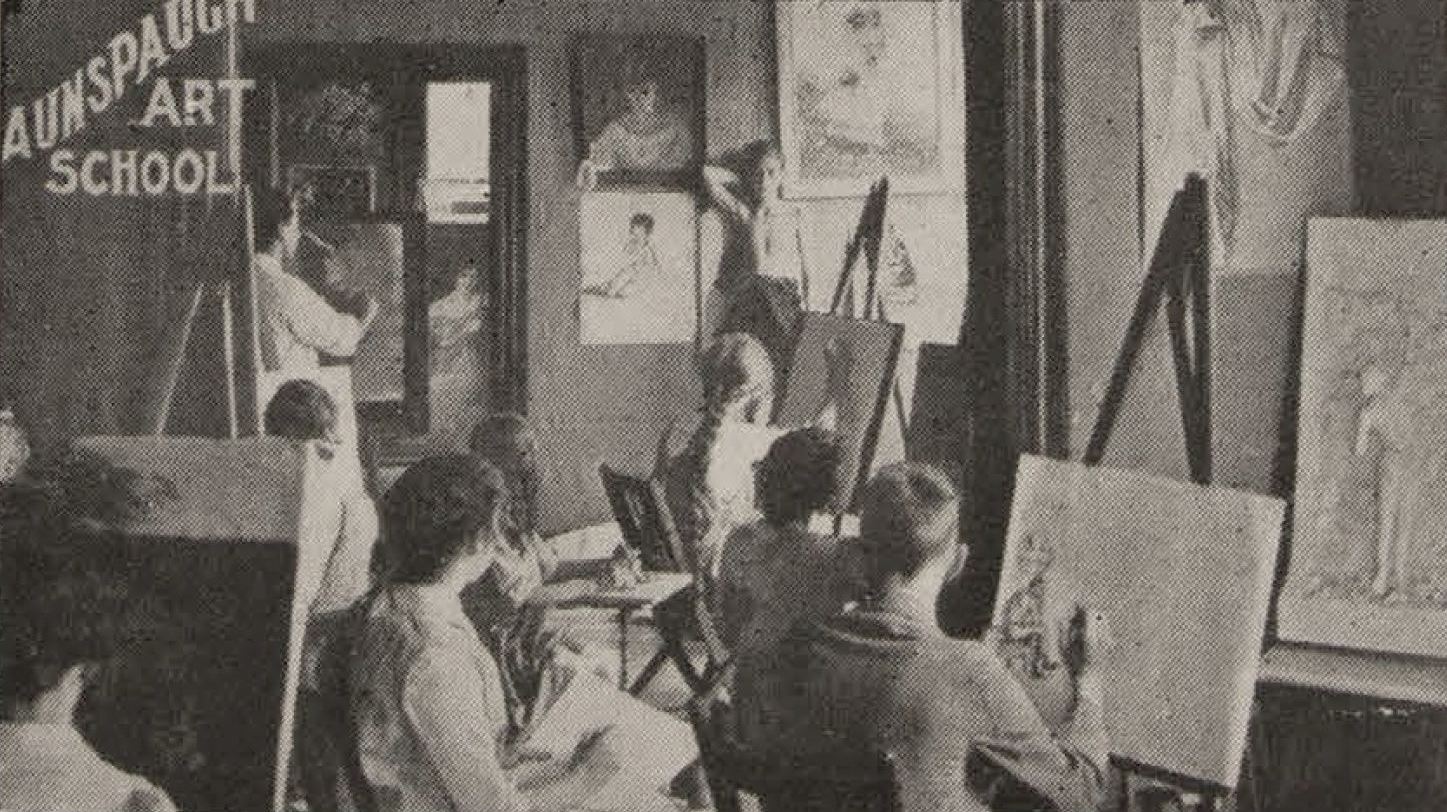
AUNSPAUGH ART SCHOOL — VIvian Aunspaugh, director — 3409 Bryan. A well-established Dallas art school for 60 years. Miss Aunspaugh died in 1960 at the age of 90 and was said to have been giving lessons until shortly before her death. (The photo below of the exterior is the only one here not from about 1916 — that photo is from 1944.)

dallas-educational-center_aunspaugh_interior_ca-1916_degolyer-library_smu

aunspaugh-art-school_james-bell_1944_DHSvia Dallas Historical Society

dallas-educational-center_aunspaugh_ca-1916_degolyer-library_smu

*

dallas-educational-center_ca-1916_degolyer-library_smu

dallas-educational-center_front-cover_ca-1916_degolyer-library_smu

***

Sources & Notes

All images (but one) from the booklet “Dallas, The Educational Center of the Southwest” (published by the Educational Committee, Dallas Chamber of Commerce, and Manufacturers Association, Dallas, ca. 1916), from the collection of the DeGolyer Library, SMU Libraries, Southern Methodist University; more information on this publication — and a full digital scan of it — can be found at the SMU site, here.

The exterior photo of the Aunspaugh Art School is from the Dallas Historical Society, taken in 1944 by Dallas resident James H. Bell; more information on this photo is at the DHS site, here.

dallas-educational-center_aunspaugh_interior_ca-1916_degolyer-library_smu_sm

*

Copyright © 2019 Paula Bosse. All Rights Reserved.


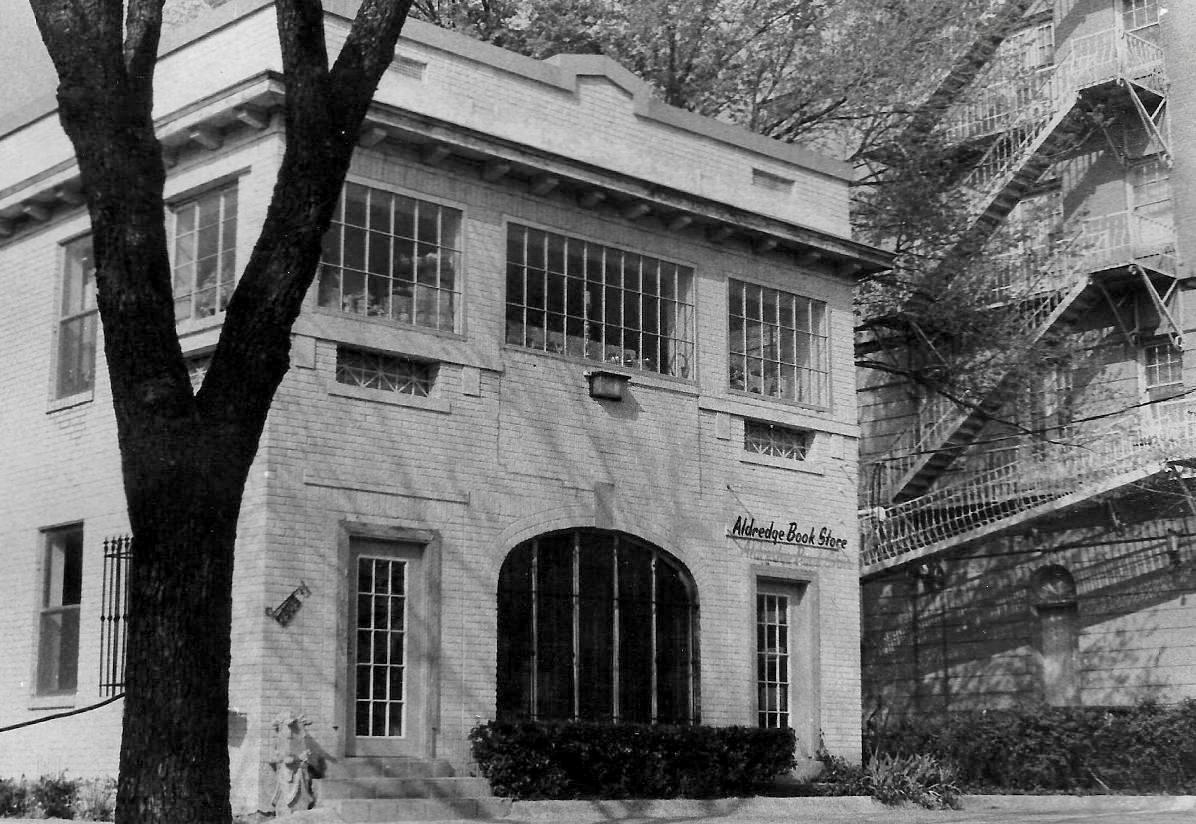
The Aldredge Book Store — 2909 Maple Avenue

abs_2909-maple-ave_erik-bosse
The last location of The Aldredge Book Store, next to the Stoneleigh Hotel

by Paula Bosse

Today is the birthday of my late father, Dick Bosse. For most of the life of The Aldredge Book Store, he either managed it or, later, owned it. The store’s first location was in an old Victorian house at 2800 McKinney Avenue, at Worthington (a photo showing the house with weirdly overgrown vegetation is here), the second location was at 2506 Cedar Springs, near Fairmount, and the final location was the one seen above, at 2909 Maple Avenue, right next door to the Stoneleigh Hotel. My brother, Erik, took the photo, sometime in the 1980s, I think. The Stoneleigh is the building partially seen at the right. The bookstore occupied the building’s lower floor, and the top floor was occupied by the engineering business of the owner, Ed Wilson.

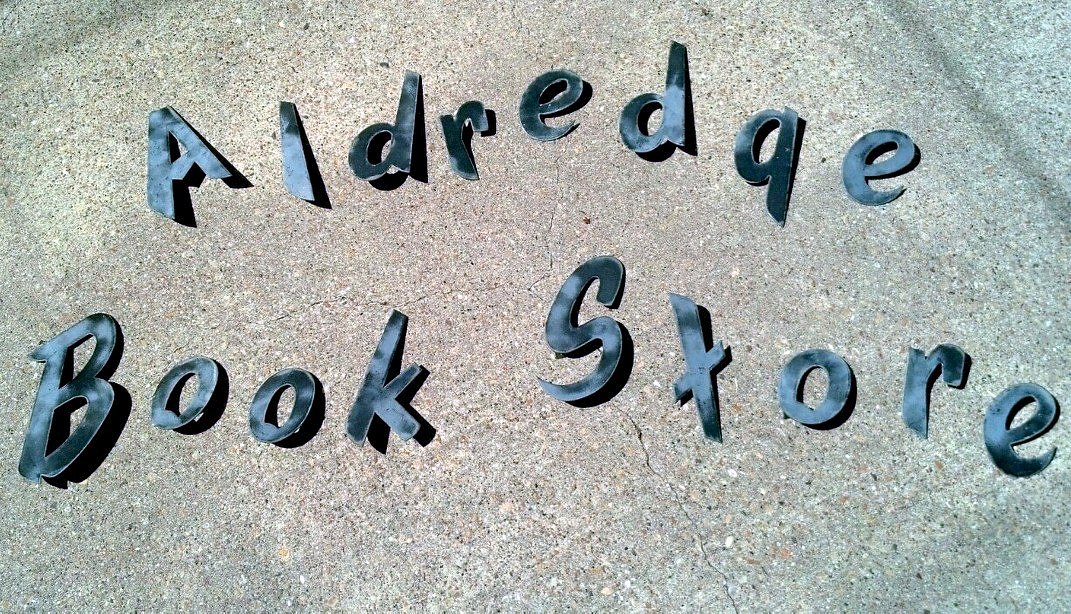
We closed the store in the early 2000s, a few years after my father’s death. Erik and his friend Pete removed the letters spelling out the store’s name which were bolted to the brick exterior over the entrance. I came across them a few years ago and laid them out in my driveway (in a much jauntier arrangement than was seen on Maple).

abs_sign-letters_paula-bosse

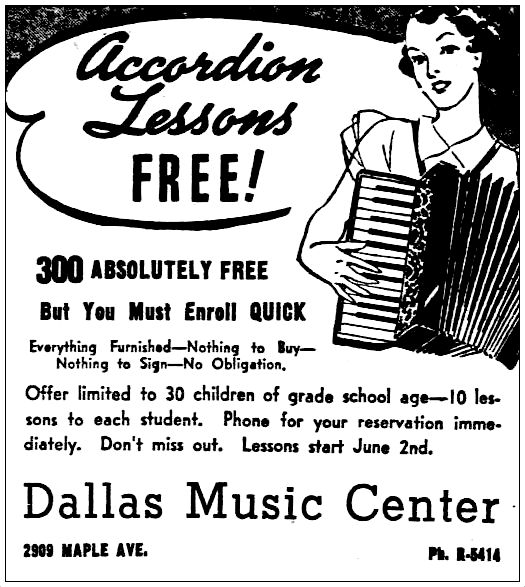
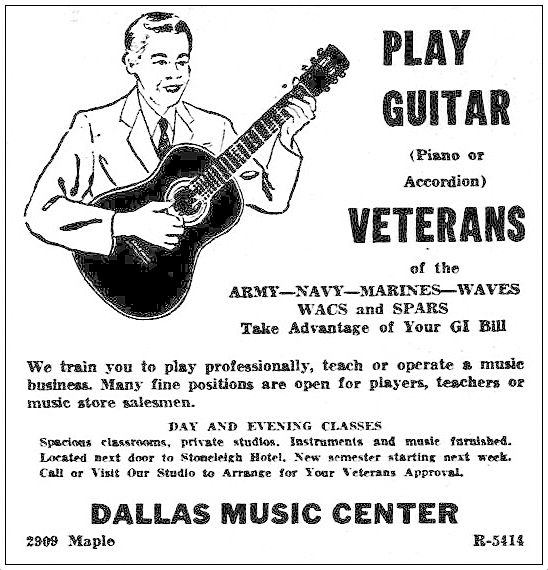
As far as I can gather, the two-story building was built about 1930 and was originally a duplex — a classified ad shows that the lower floor (where the bookstore was) was a 6-room apartment with 3 bedrooms and a tile bath. Sometime in the late ’30s, building owner Glen Shumaker opened up the Dallas Music Center, where students (children and adults) took music lessons; a sort of “music business school” was also offered as part of the curriculum. That business seems to have been around at least into the early 1950s.

dallas-music-center_0527471947 ad

dallas-music-center_0124481948 ad

It was later the home of several businesses, including sales offices and an advertising company, a farming trade magazine, a correspondence school, and the Dallas Diabetes Association. I’m not sure when the bookstore moved in — maybe 1979 or 1980.

Sadly, the building was demolished in the early-to-mid-2000s and is currently a driveway/parking area for the Stoneleigh Hotel. It still surprises me to not see the old building when I drive by.

dick-bosse_aldredge-book-store
Dick Bosse

***

Sources & Notes

Photograph of The Aldredge Book Store by Erik Bosse; photo of the ABS letters by Paula Bosse.

Other Flashback Dallas posts on The Aldredge Book Store can be found here.

*

Copyright © 2019 Paula Bosse. All Rights Reserved.


My First Home — 3809 Cole Avenue

cole-avenue-farmhouse_ca-1900_warlick
Home sweet home, circa 1900…

by Paula Bosse

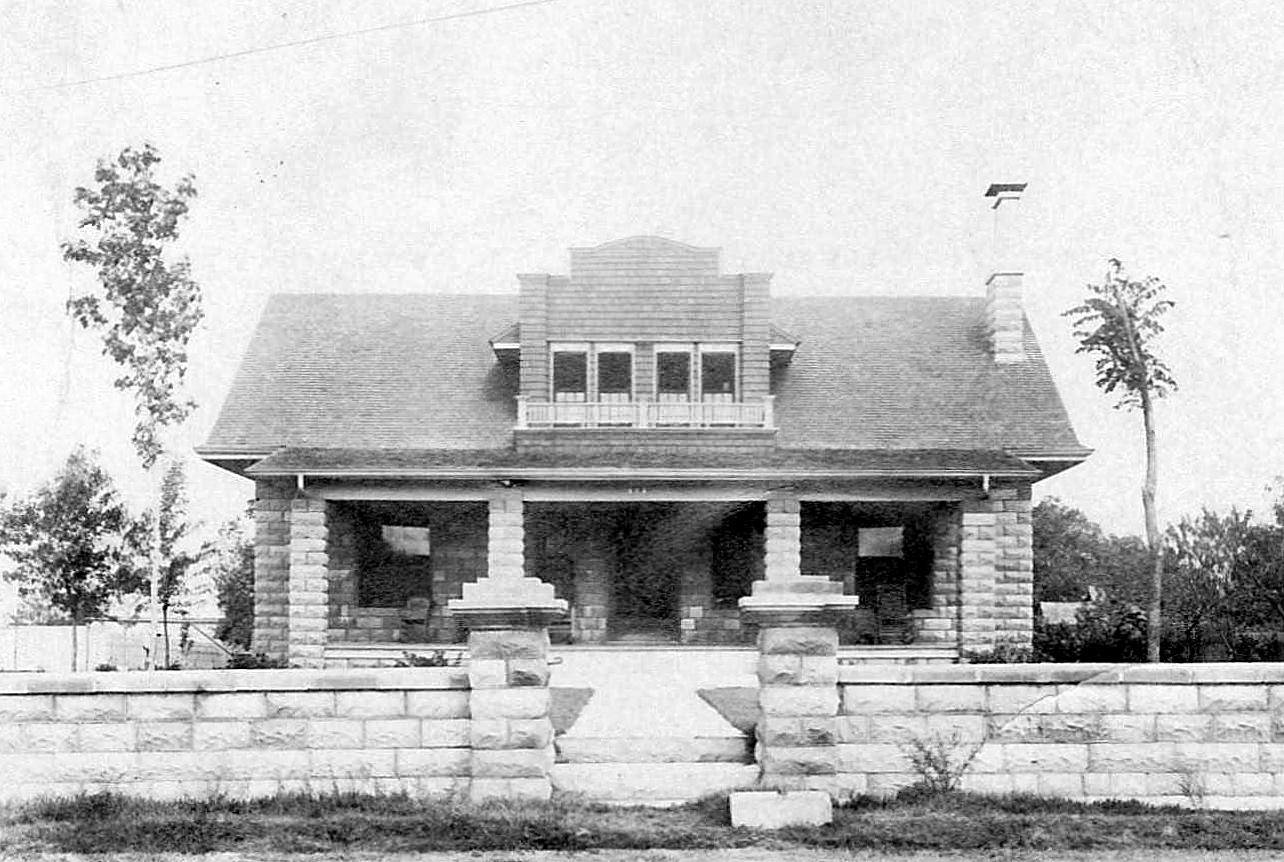
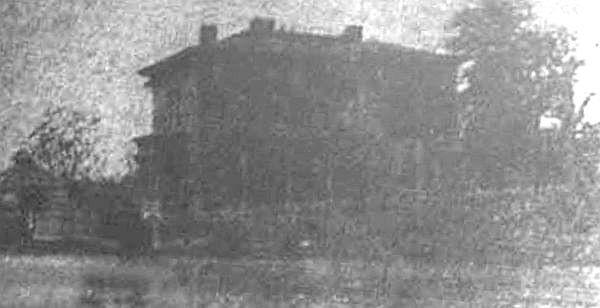
Above is a photo of a stone house which once stood at 3809 Cole Avenue, across from North Dallas High School. It was built by John H. “Jack” Cole — probably around 1880-1900 — and it was occupied for decades by family members, up until the 1960s. By the 1980s it was owned by the Southland Corp. and was ultimately torn down around 1987 or so. And it was the very first house I lived in (…briefly).

Jack Cole was one of the sons of Dr. John Cole, an important early settler who arrived in Dallas in 1843 and whose family soon owned thousands of primo acres in what is now Highland Park and Oak Lawn.

cole-jack_flickr
John H. “Jack” Cole

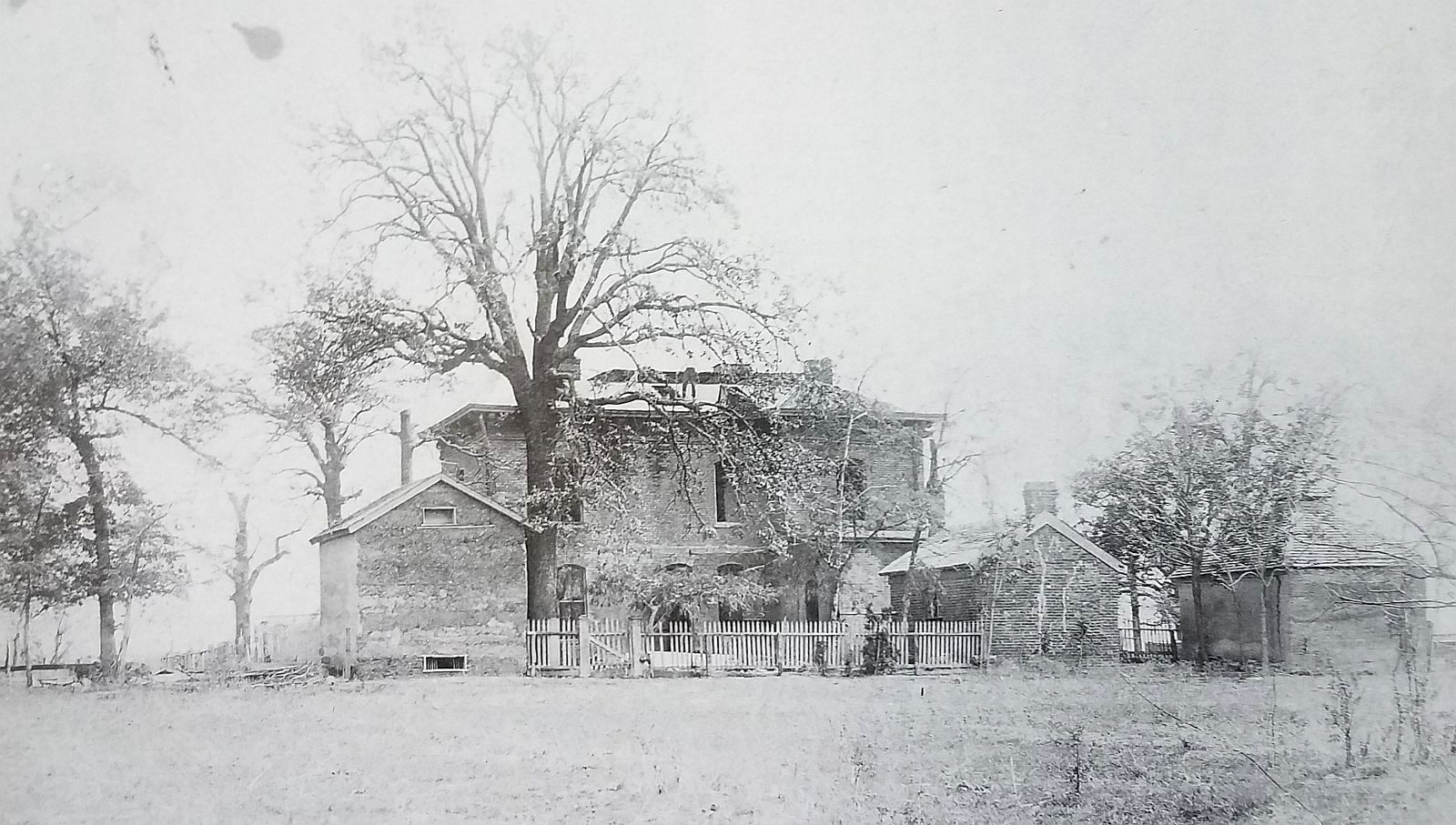
According to a great-great grandson, Jack’s farmhouse once stood on land which is now the site of Cole Park (about where the tennis courts), and his barn and stock tank were on the land now occupied by North Dallas High School. Below is a photo of the farmhouse (it looks like it might be the back of the house); built in the 1850s (and added onto over the years), it was said to be one of the first brick houses in Dallas County (Jack had his own brick kiln on the property).

cole-jack_farmhouse_park-cities-photohistory_galloway
photo: Bill Gillespie

Below is the only other photo I’ve been able to find of the house — apologies for the image quality!

cole-farmhouse_wheat

The smaller house seen at the top was located a short distance away.

At some point Jack Cole’s farmhouse and barn were torn down; the land for Cole Park was donated to the city by the family and became part of the Dallas park system in 1921, and North Dallas High School opened the following year.

The small stone house was occupied by various Cole descendants over the years, primarily the Miers and Warlick families. It was opened up to renters in the 1960s and, until sometime in the late ’80s, was rented as both living space and retail space.

My parents lived there only about a year. My father ran a small book business out of the front of the house, and my parents lived in the back and upstairs. The floors were brick and the walls were stone, and according to my mother, a lot of the mortar was gone and you could see outside though gaps in the walls. It was a very, very cold place in the winter. I was born during this time and lived there for a few chilly months until we were off to someplace across town with better insulation.

I mentioned this house a few years ago in a post about North Dallas High School, and a guy named Craig Thomas contacted me to tell me that he had lived in that same house in the 1980s — along with friends who were part of local bands The Plan and Luxor. They dubbed the house “Green Acres” because it was definitely something of a fixer-upper along the lines of the TV show of the same name. He even sent me a photo of the house from 1984! It looked a little tired by then, but it was close to a hundred years old by that time.

cole-house_ca-1984_craig-thomas
photo: Craig Thomas

It pleases the history geek in me to know that I started out my life living in a house built by a member of one of the most important founding families of Dallas. …I sure wish I remembered it!

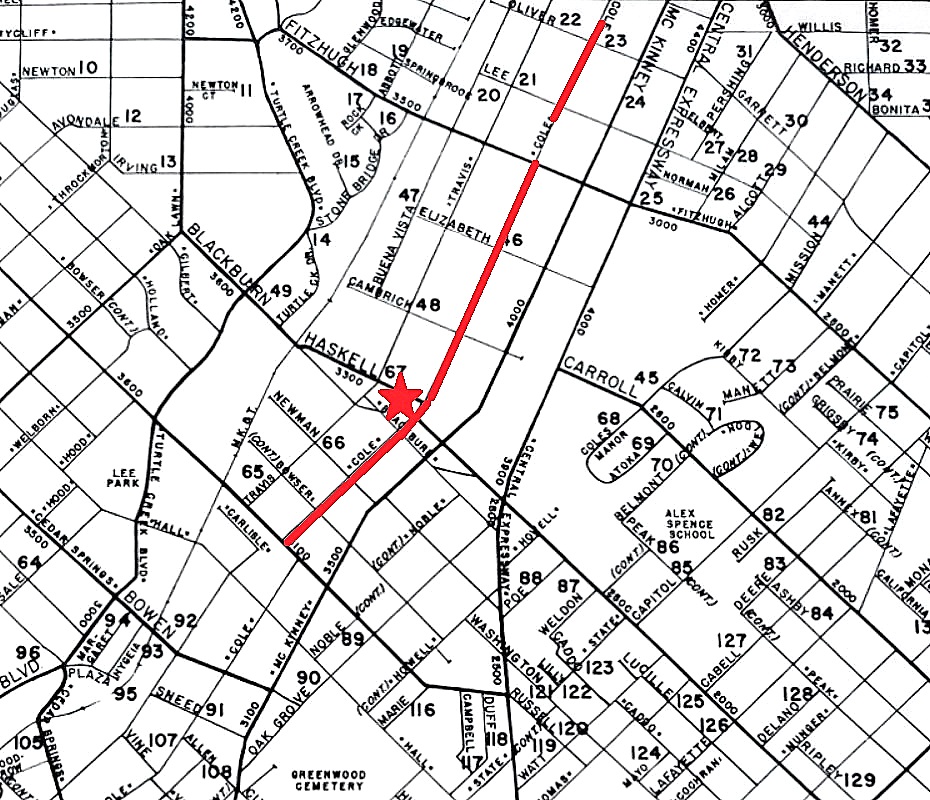
3809-cole_1952-mapsco
1952 Mapsco

***

Sources & Notes

Top photo is from the collection of Michael Warlick, a Cole descendant who grew up in the house. (Many thanks to Danny Linn for bringing this fantastic photo to my attention!)

The photo of the Jack Cole farmhouse is from the book The Park Cities, A Photohistory by Diane Galloway, credited as coming from the collection of Bill Gillespie, another Cole descendant.

The blurry photo is from Jim Wheat’s site, here (the accompanying article is very interesting, here).

The color photo is used courtesy of Craig Thomas (whose blog is here).

*

Copyright © 2019 Paula Bosse. All Rights Reserved.

Esquire Theater — 1969

esquire-theater_1969_portal“Midnight Cowboy” at the Esquire, 1969…

by Paula Bosse

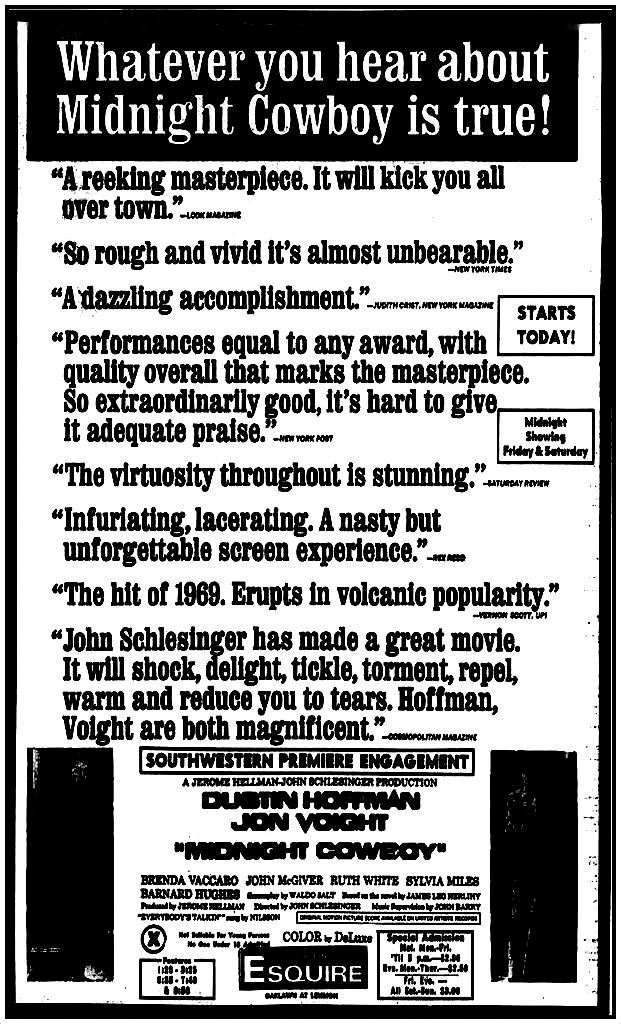
This is a really great photo of the still-missed Esquire Theater in Oak Lawn. Here we see it in 1969, showing the X-rated film Midnight Cowboy, which went on to win several Academy Awards, including Best Picture (the only X-rated film to receive the Best Picture Oscar), Best Director (John Schlesinger), and Best Adapted Screenplay (by Waldo Salt, based on the novel by James Leo Herlihy).

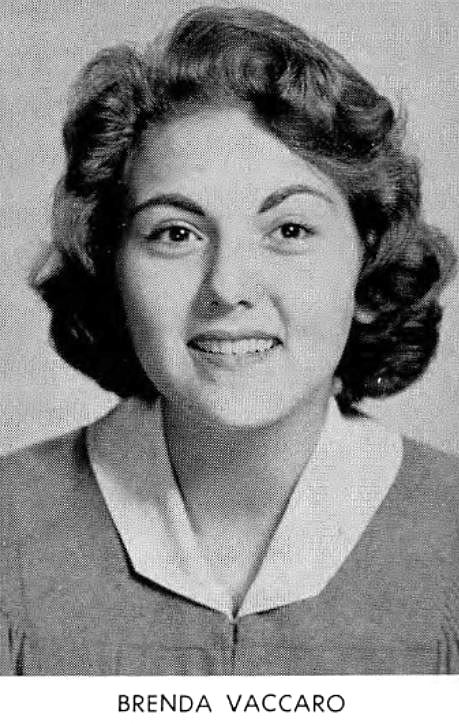
Midnight Cowboy opened at the Esquire in July, 1969 and ran for several months. One of the featured actors in this American classic is Dallas’ own Brenda Vaccaro (Thomas Jefferson High School Class of 1958, daughter of Mario Vaccaro who owned Mario’s Italian restaurant) — I’ve loved her in everything I’ve ever seen her in. (Here’s one of her scenes from Midnight Cowboy.)

vaccaro-brenda_thomas-jefferson_1958_seniorThomas Jefferson High School, 1958

“Whatever you hear about Midnight Cowboy is true!” … “A reeking masterpiece. It will kick you all over town.” … “A nasty but unforgettable screen experience.”

midnight-cowboy_072369_opening_esquire
Opening day, July 23, 1969

It’s been a while since I’ve seen this movie. I had forgotten how much I liked the opening in which Joe Buck leaves Texas to head to New York. Here it is, overflowing with small-town Texas flavor (filmed in Big Spring). Cameo by an evocative Mrs. Baird’s paper hat.

***

Sources & Notes

Photo titled “[‘Midnight Cowboy’ at Esquire Theatre]” is from the Spotlight on North Texas collection, provided by UNT Media Library to The Portal to Texas History; more on this photo can be found here.

*

Copyright © 2019 Paula Bosse. All Rights Reserved.

Dallas in “The Western Architect,” 1914: City Buildings and Churches

parkland-hospital_western-architect_july-1914

by Paula Bosse

The 7-part Flashback Dallas series of buildings and houses featured in the Dallas issue of The Western Architect finally comes to an end! What I thought would be a quick and painless way to share tons of cool Dallas photos I’d never seen has turned into a seemingly endless dive into the research of a whole slew of buildings, most of which I knew very little (if anything) about. I feel like I’ve been through an immersive, three-week course in “Lang & Witchell”!

This final installment features buildings built by the city (mostly fire stations) and a few churches — six of these eight buildings are still standing. Today’s star architects are Hubbell & Greene.

*

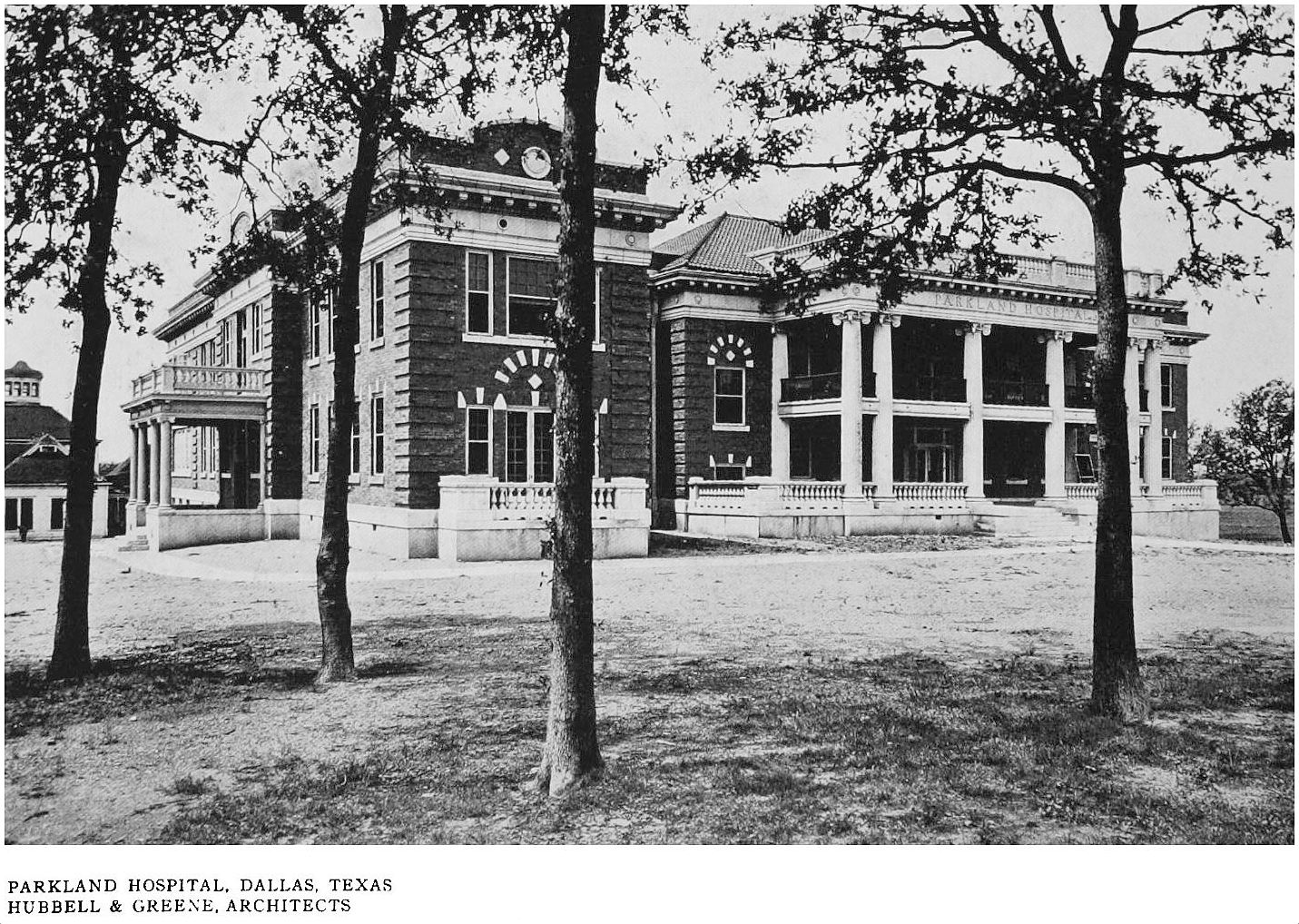
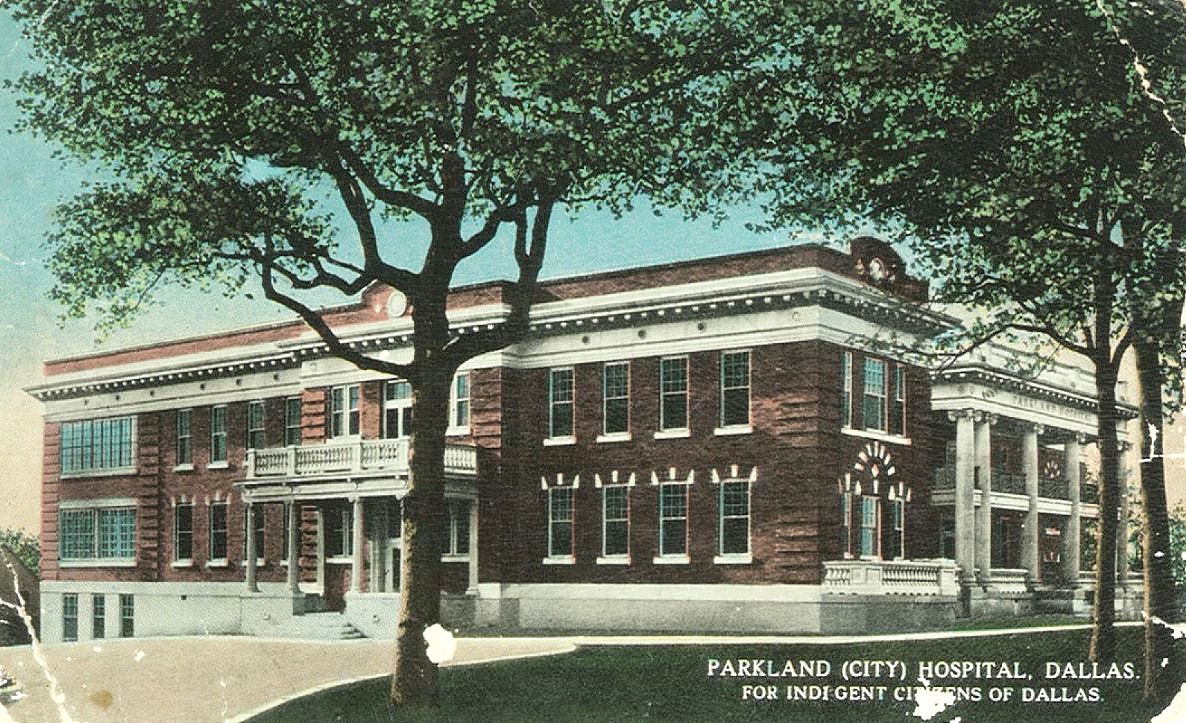
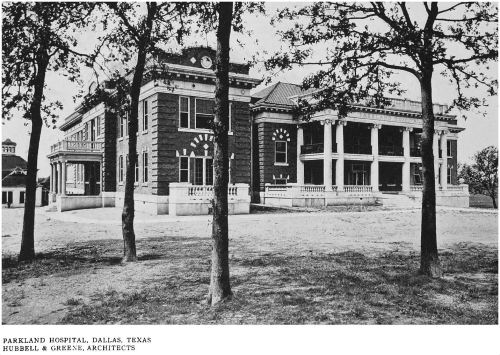
1.  PARKLAND HOSPITAL (above), Oak Lawn & Maple avenues, designed by Hubbell & Greene. This new, sturdy, brick “city hospital” was built in 1913 on the beautiful park-like 20-acre-site of the previous city hospital (the old wood frame building — built in 1894 — was cut in pieces and moved farther back on the property, “across a ravine” — it was reassembled and for a time housed patients with chronic and contagious diseases and was the only institution in Dallas at the time that served black and Hispanic patients — part of this old building can be seen at the left in the background of the photo above). The new hospital was “entirely fireproof” and was built with very little wood  — other than the doors, trim, and banister railings, it was all steel, cement, reinforced concrete, plaster, and brick. The original plans called for two wings, but the city had to put construction of the second wing on the backburner until funds became available. As it was, this one-wing hospital (with beds for 100 patients) cost in excess of $100,000 ($2.5 million in today’s money). The building still stands but is barely visible these days behind a wall, trees, and dense shrubbery — it is surrounded by a huge, recently-built complex of similarly-styled buildings. (See it on a 1921 Sanborn map, here.) (All images are larger when clicked.)
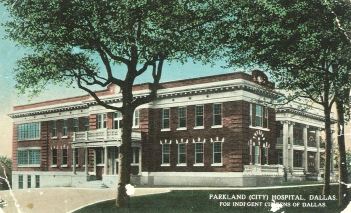
parkland_psotcard_1914_pinterest
postcard dated 1914, via Pinterest

*

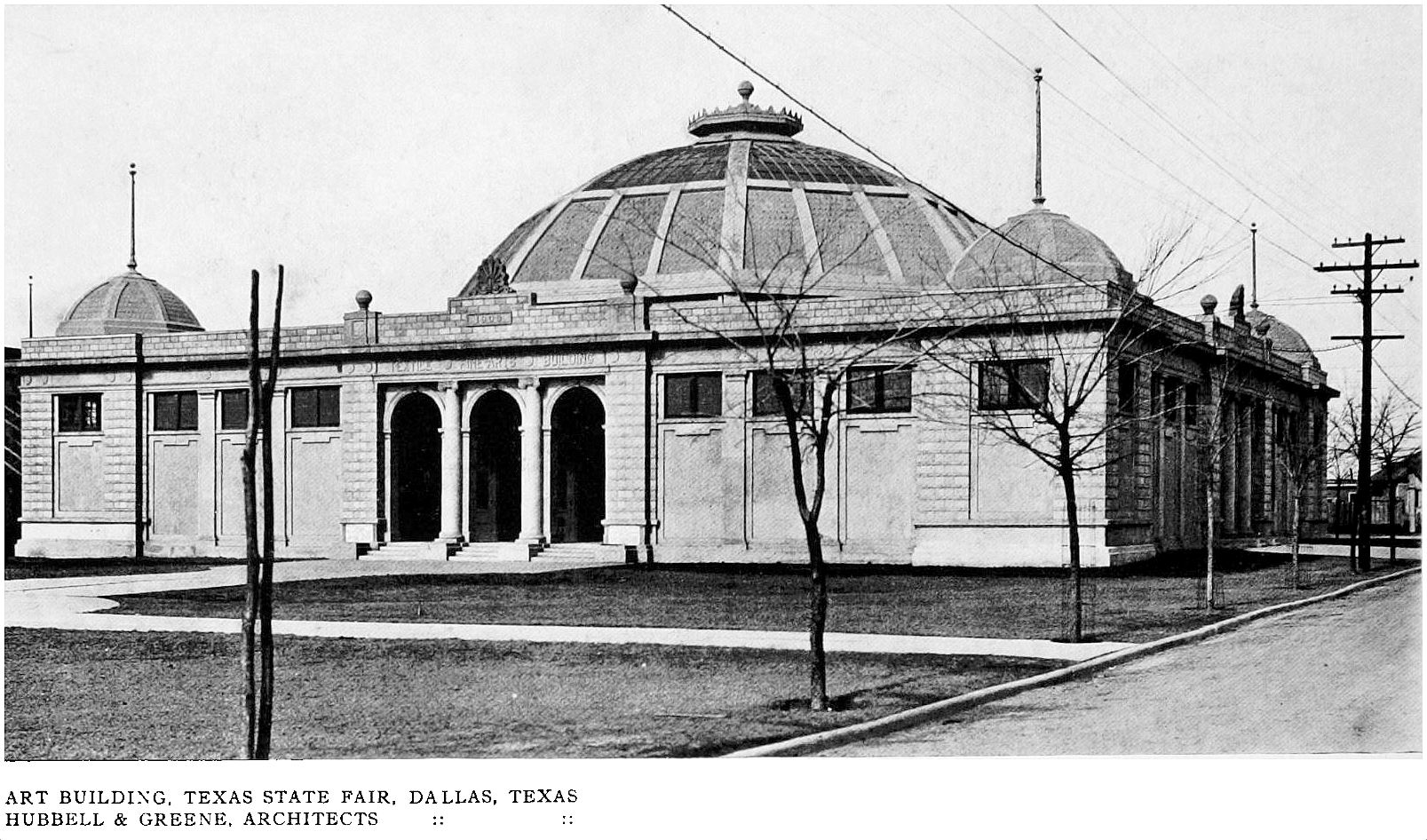
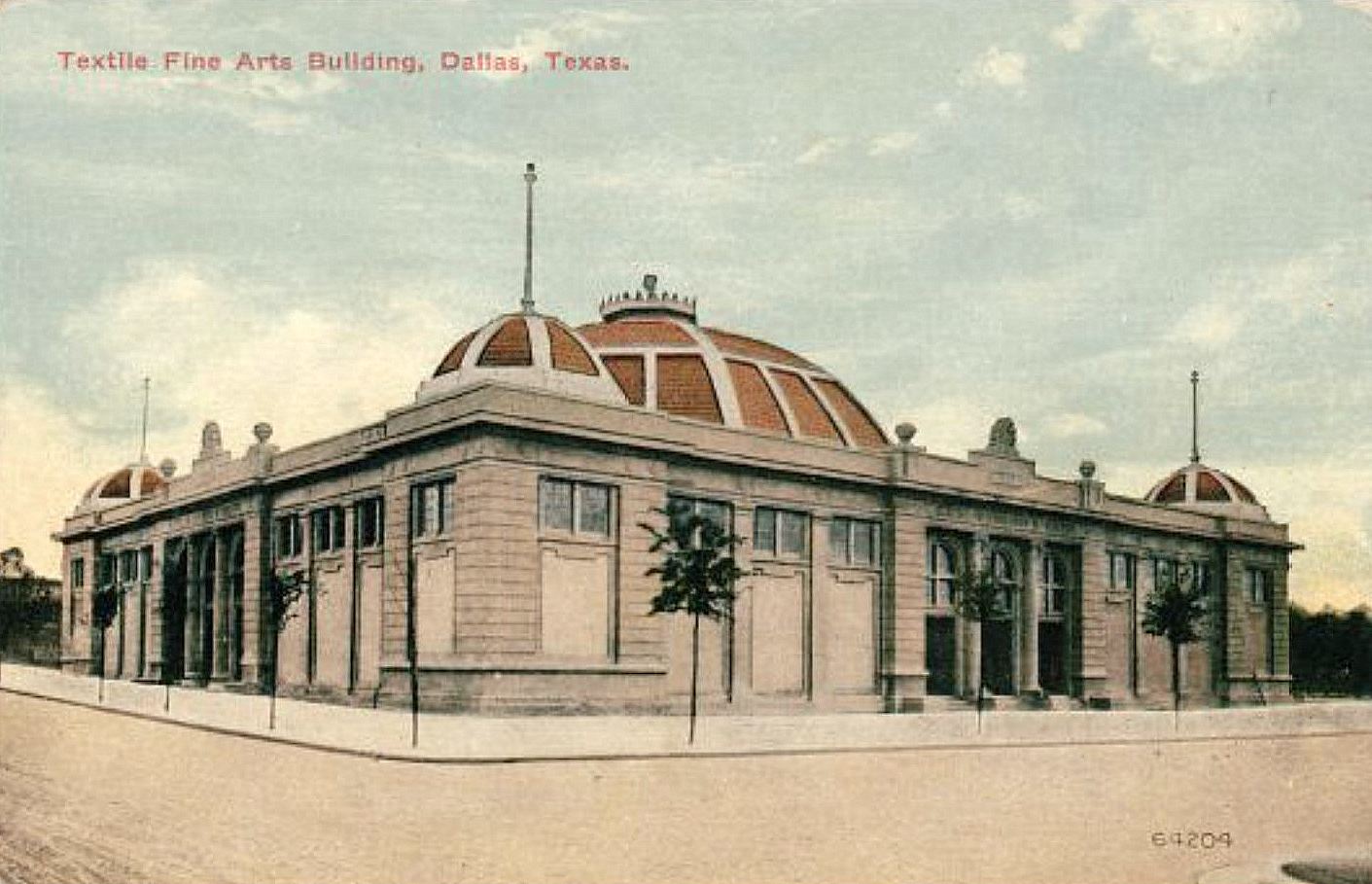
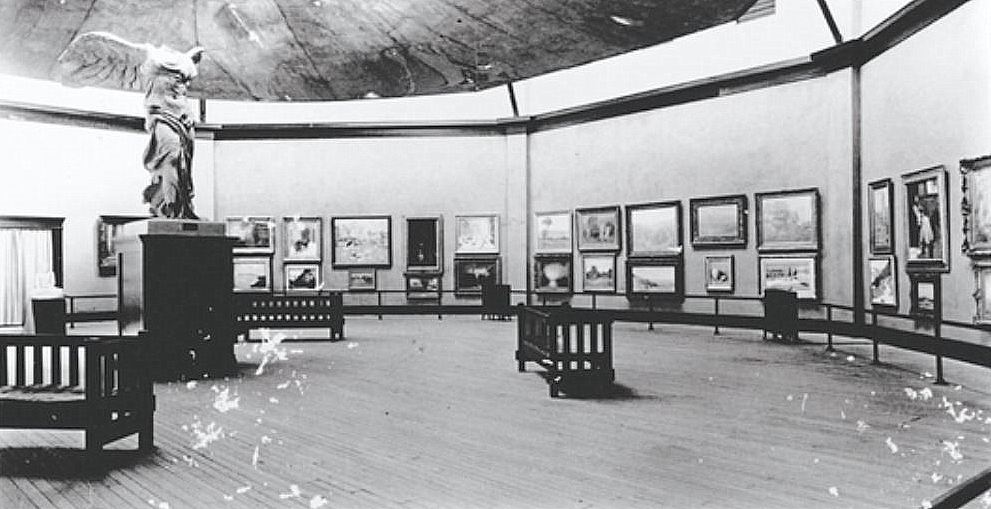
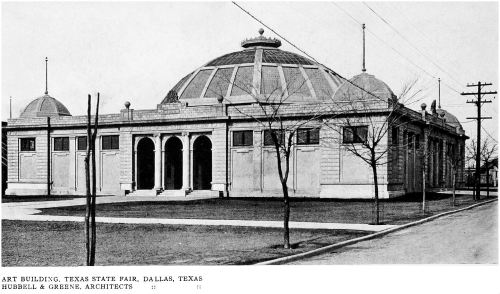
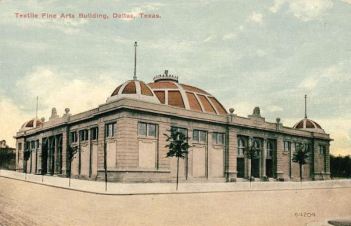
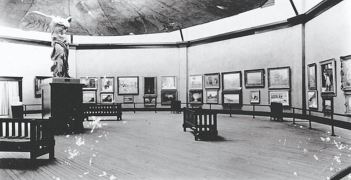
2.  ART BUILDING, Fair Park, designed by Hubbell & Greene. Known as the Art & Ladies’ Textile Building when it was erected in 1908, this domed building gave Dallas its first public art museum. No longer would the 14 paintings owned by the Dallas Art Association (including works by Childe Hassam and Robert Henri) be relegated to being displayed (when staff was available) in a room in the public library. The building was initially built as a nod to “ladies” and was the place where textile crafts and artworks were displayed during the State Fair (Texas artist Julian Onderdonk was given the task of beating the bushes in New York City for works to be loaned for display in this building during the fair). The art gallery was set in the rotunda — a sort of gallery within a gallery — while textiles and other exhibits were shown in the outer area of the octagonal building. One interesting bit of trivia about the construction of this building is that it was built largely of cement blocks — 70,000, according to newspaper reports. In order to facilitate construction, a “cement block plant” was set up on the grounds in Fair Park, turning out hundreds of blocks a day, which were then laid out to “season” in the sun. (Incidentally, this building was under construction during the historic flood of 1908 — which the newspaper refers to as “the recent high water,” and the bad weather was slowing the construction process.) The building is no longer standing, but it seems to have lasted at least through the end of 1956. It stood just inside the Parry Avenue entrance, to the left, next to the Coliseum (now the Women’s Building) — the site is now occupied by a parking lot directly behind the D.A.R. house. (See it on a 1921 Sanborn map, here.)
fair-park_art-bldg_western-architect_july-1914

fair-park_textile_fine-arts-bldg_postcard

art-and-textile-bldg_dma_uncrated_interior
via Dallas Museum of Art blog “Uncrated”

*

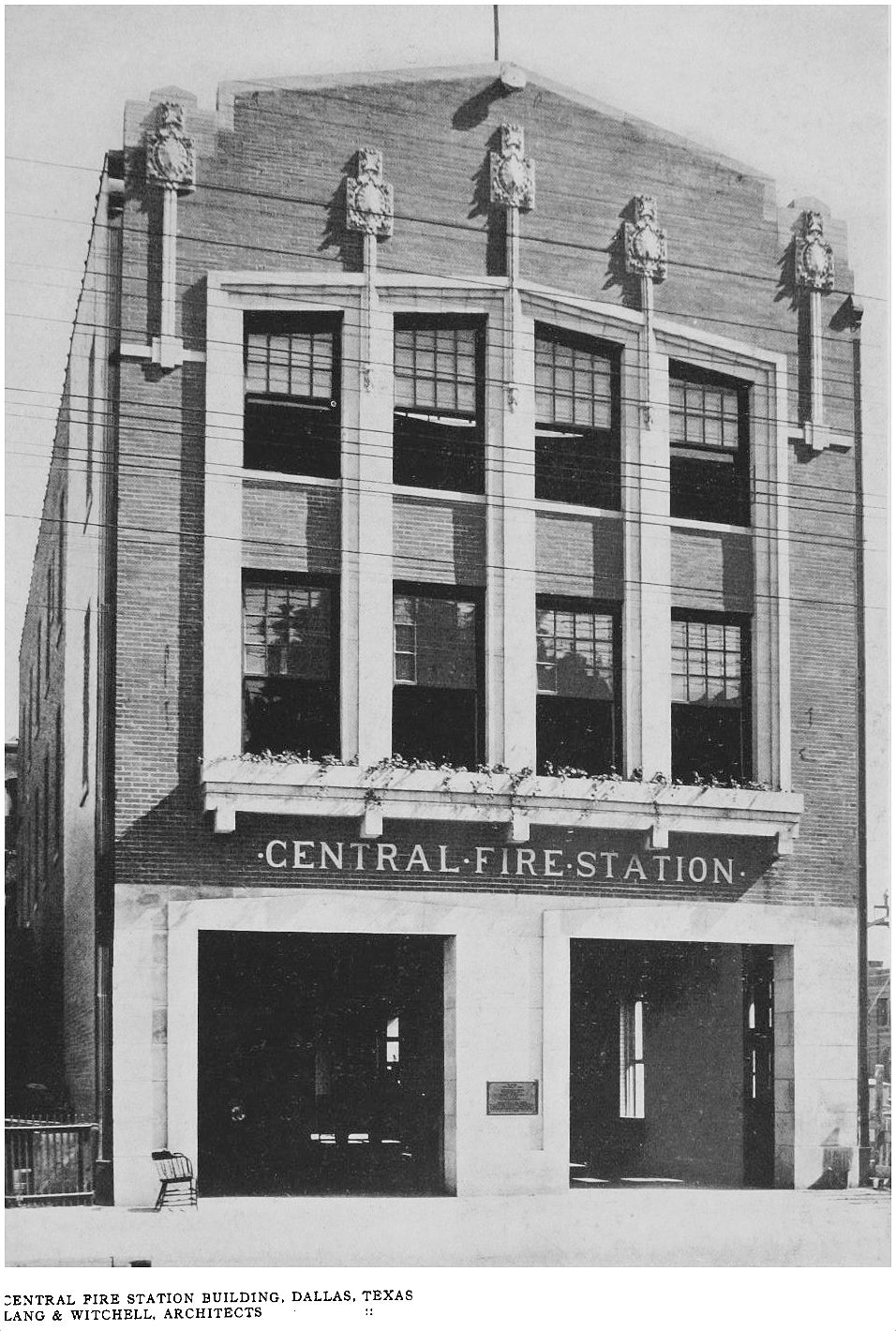
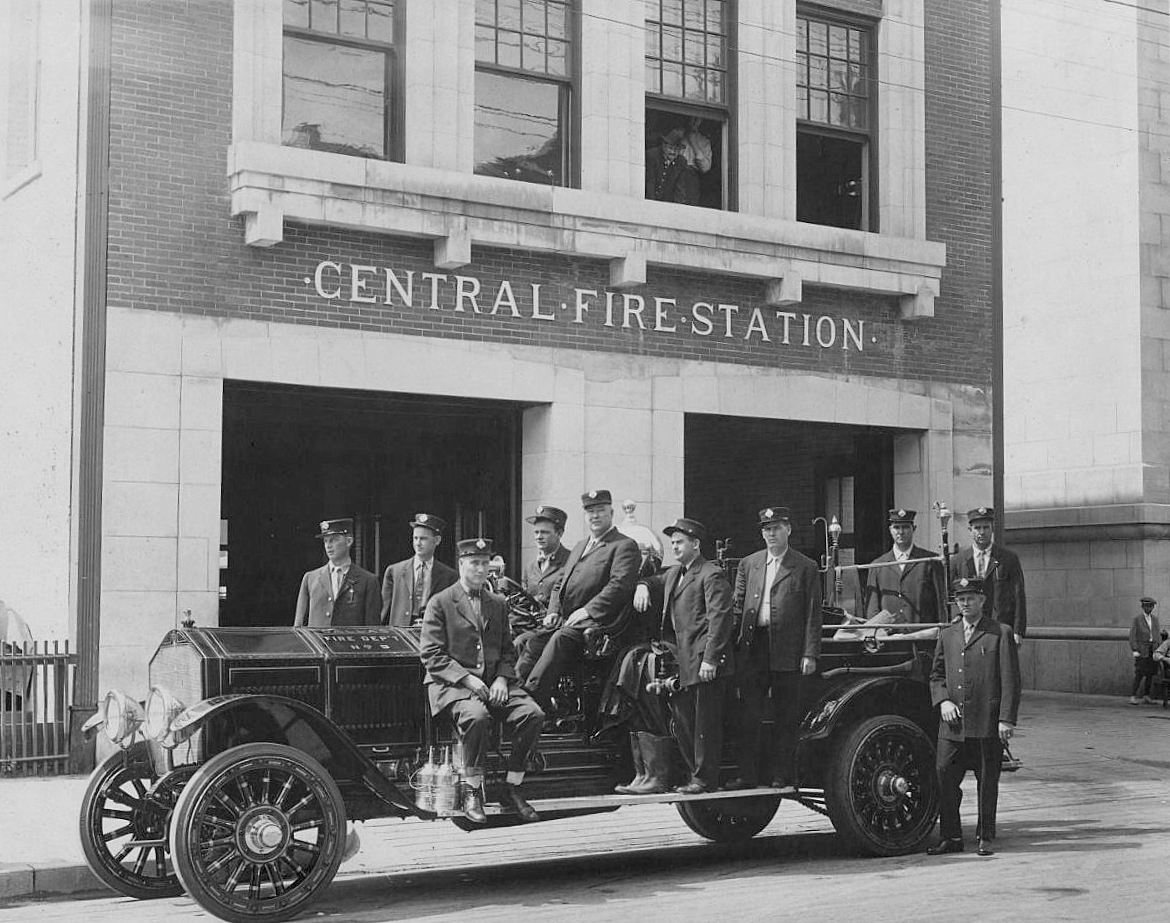
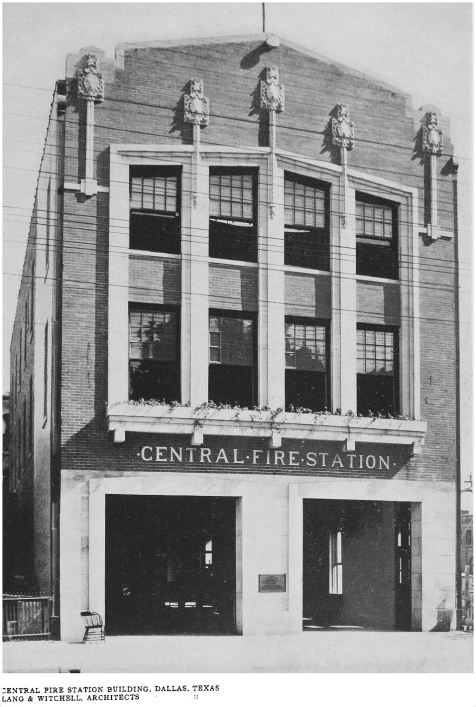
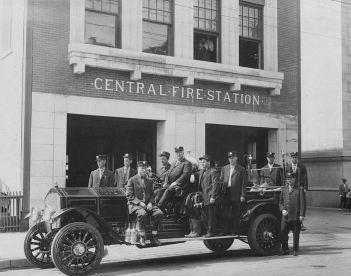
3.  CENTRAL FIRE STATION, 2012 Main Street (adjoining the Municipal Building), designed by Lang & Witchell. When Adolphus Busch acquired the land Dallas’ City Hall and central fire station sat on (in order to build his Adolphus Hotel), there was a sudden springing to action to build new homes for both displaced entities. The new location for the firehouse was in an already-standing building facing Main, adjacent to the new Municipal Building — it became the new headquarters for the Dallas Fire Department in 1913. It was, I believe, the first Dallas firehouse built without horse stalls, as it housed only motorized firefighting vehicles. The building’s use as a fire station ended in the 1920s; it was thereafter used by other municipal offices: for a while in the 1930s its third floor was used as a women’s jail, and for many years it was the site of Dallas’ corporation court. It looks like the building is still there, but I’m unsure of its current use. (See it on a 1921 Sanborn map, here.)
firehouse_central-fire-station_western-architect_july-1914

central-fire-station_dallas-firefighters-museum_portalDallas Firefighters Museum, via Portal to Texas History

*

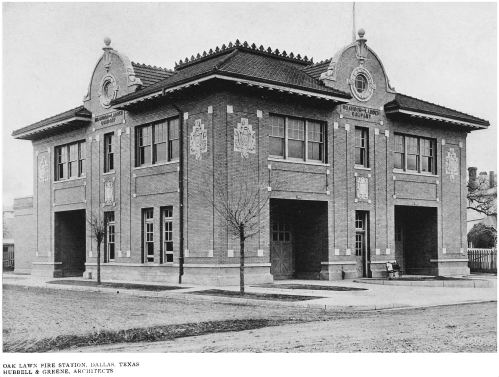
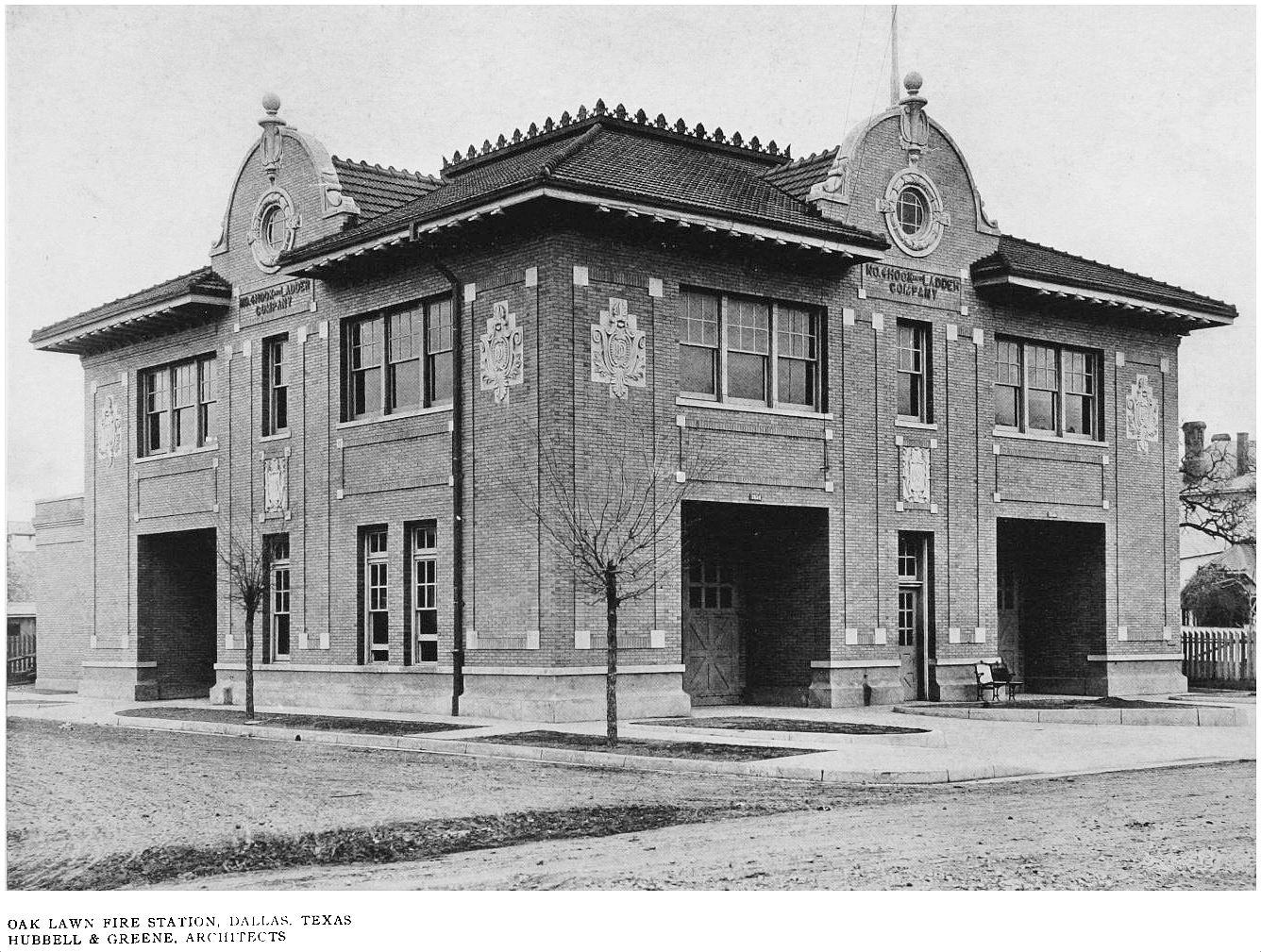
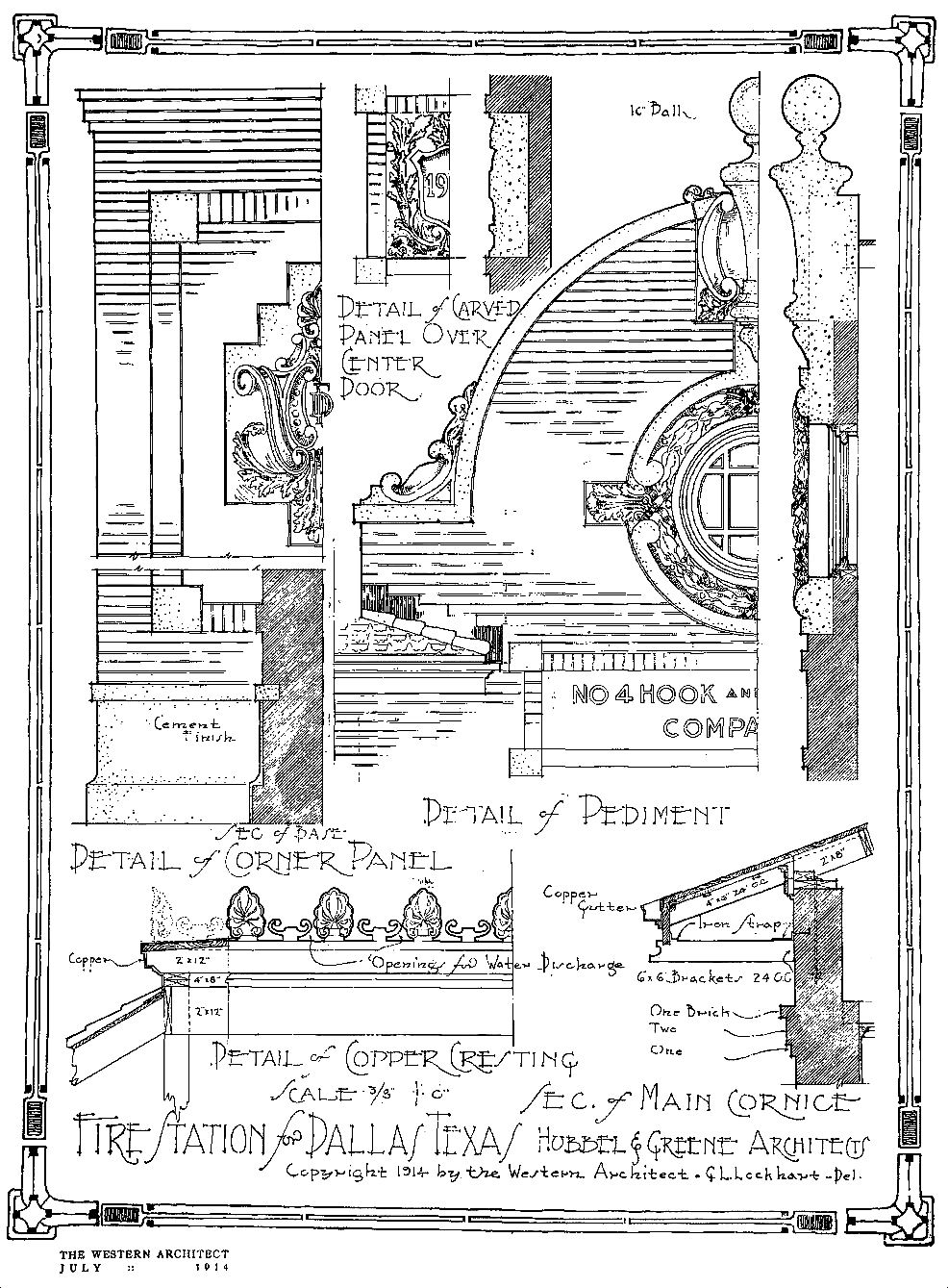
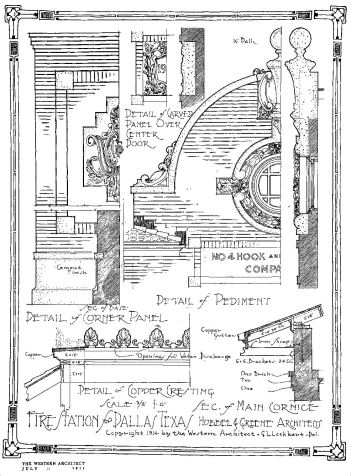
4.  OAK LAWN FIRE STATION, Cedar Springs & Reagan, designed by Hubbell & Greene. This still-active firehouse (!) — Dallas’ first “suburban” fire station — was built in 1909 as the home of No. 4 Hook and Ladder Company. When construction of the building was announced, it was described as being a gray brick structure topped by a roof of “cherry red Spanish tiling.” It was — and still is — a beautiful building. (I’ve written about this firehouse previously, here.) (See it on a 1921 Sanborn map, here.)

firehouse_oak-lawn_western-architect_july-1914

firehouse_oak-lawn_western-architect_july-1914_architectural-details_2

*

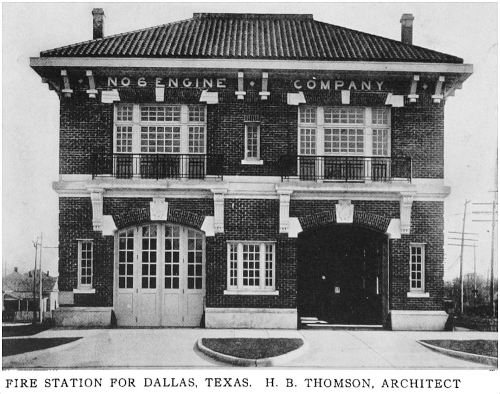
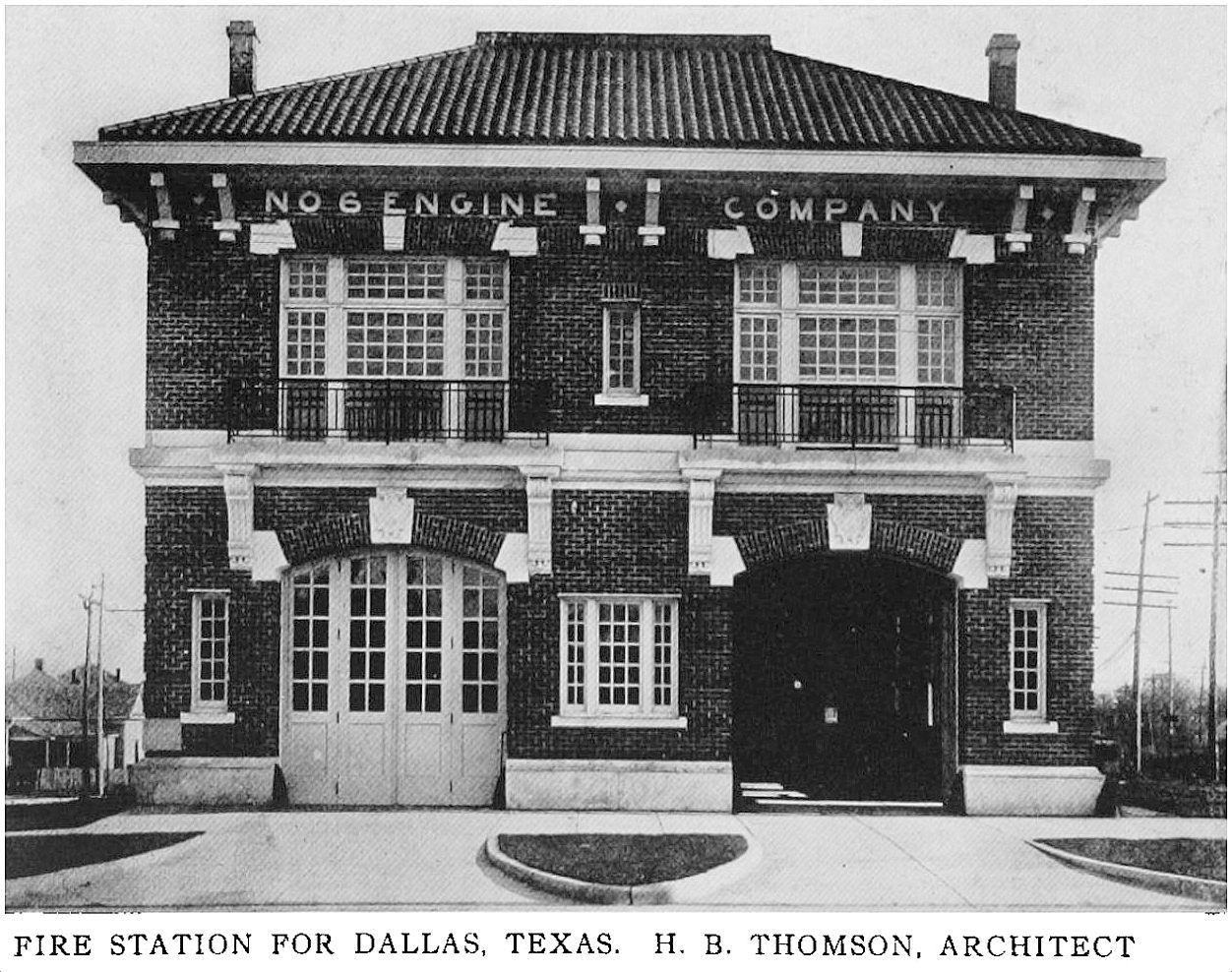
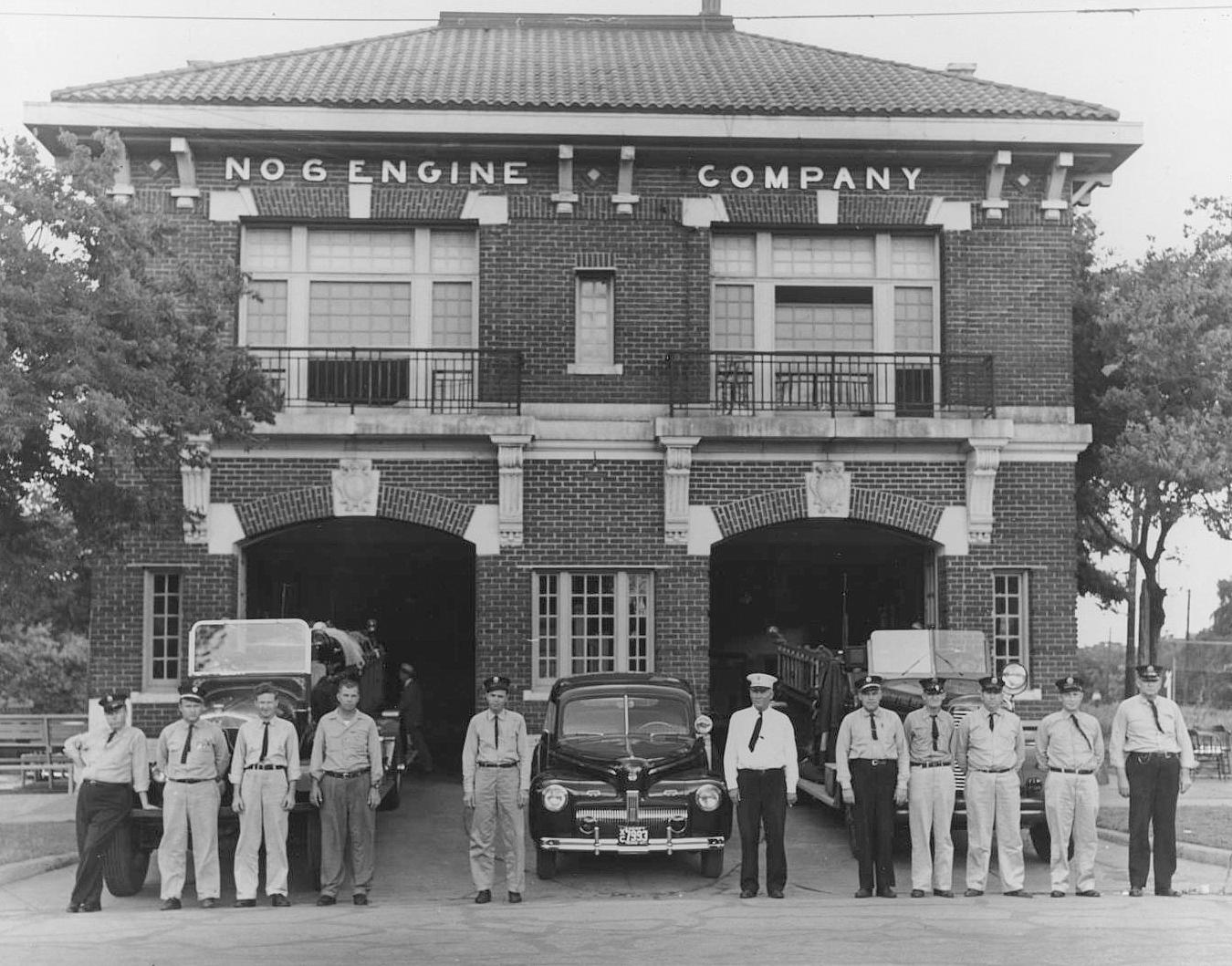
5.  NO. 6 ENGINE COMPANY, Forest Avenue (now MLK Blvd.) & Kimble, South Dallas, designed by H. B. Thomson. This South Dallas fire station was built in 1913 and was in service until 1955 when it was demolished to make way for the “South Central Expressway” (see more photos in a previous post on this, here). (See it on a 1922 Sanborn map, here.)

firehouse_no-6-engine_western-architect_july-1914

fire-department_no. 6_forest-ave-mlk
Dallas Firefighters Museum, via Portal to Texas History

*

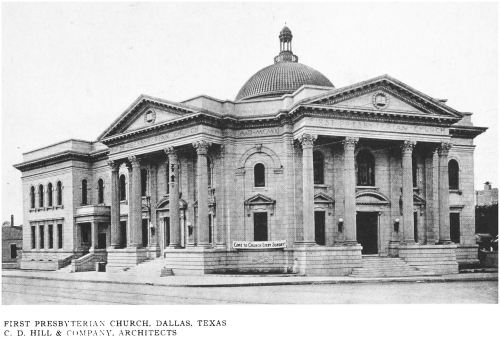
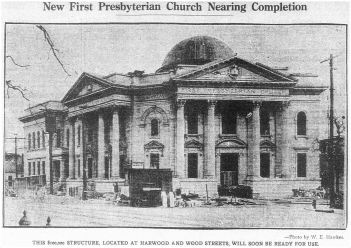
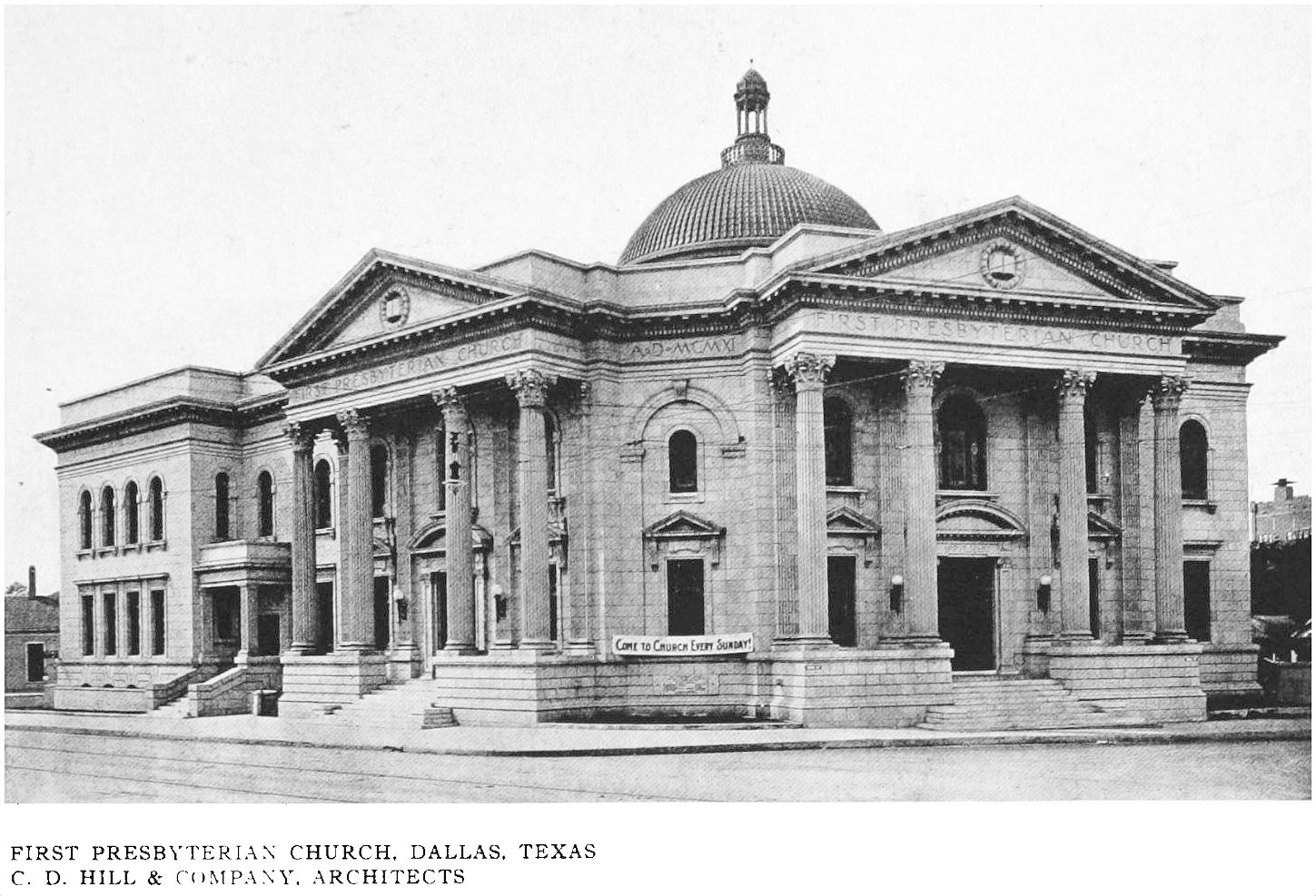
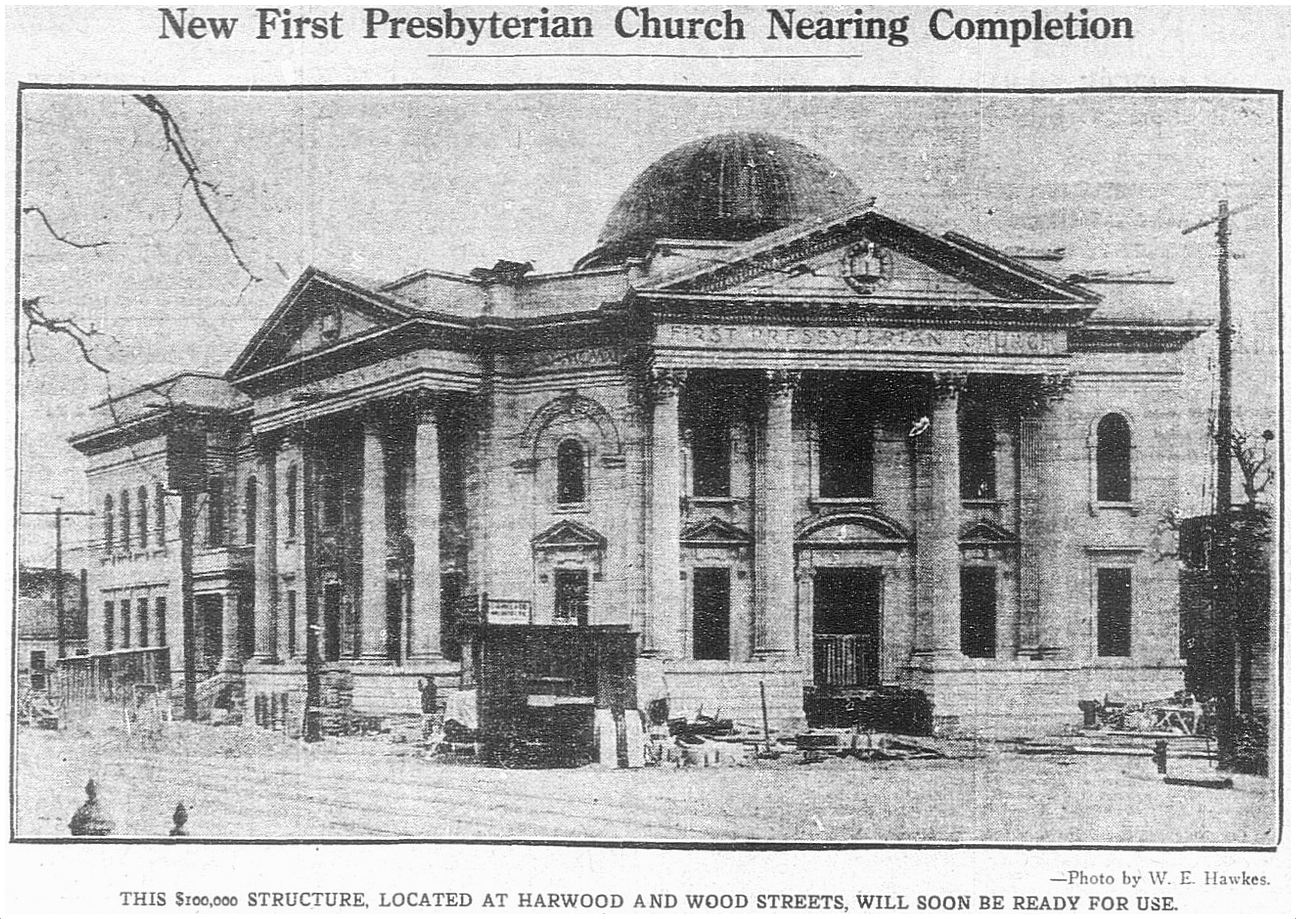
6.  FIRST PRESBYTERIAN CHURCH, S. Harwood & Wood, designed by C. D. Hill. Built in 1911-12, this impressive building boasted “the largest monolith columns in the city” (a claim which might have been surpassed by architect Hill’s be-columned Municipal Building built soon after this church, two blocks away — and rivaled by Hubbell & Greene’s Scottish Rite temple, one block away). Still standing and much expanded, the church is still looking great. (See it on a 1921 Sanborn map, here.)
first-presbyterian-church_western-architect_july-1914

first-presbyterian-church_dmn_032412Dallas Morning News, March 24, 1912

*

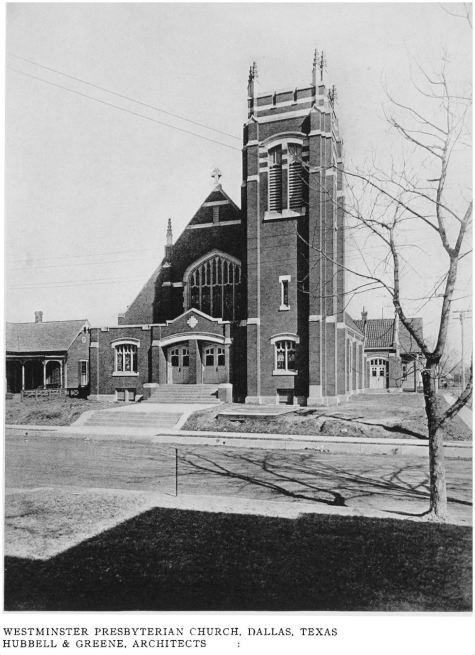
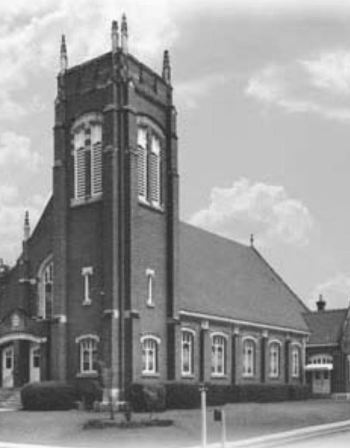
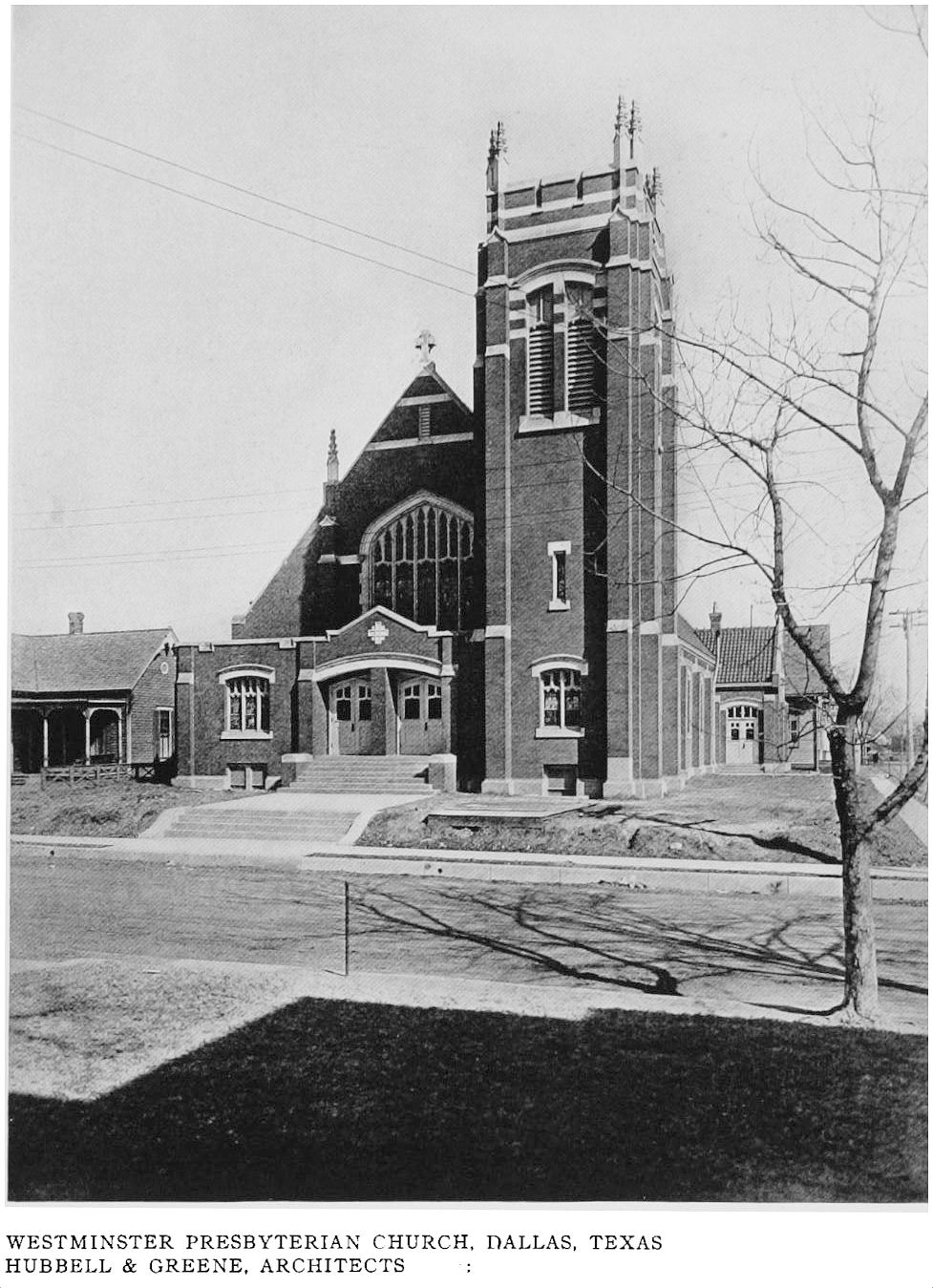
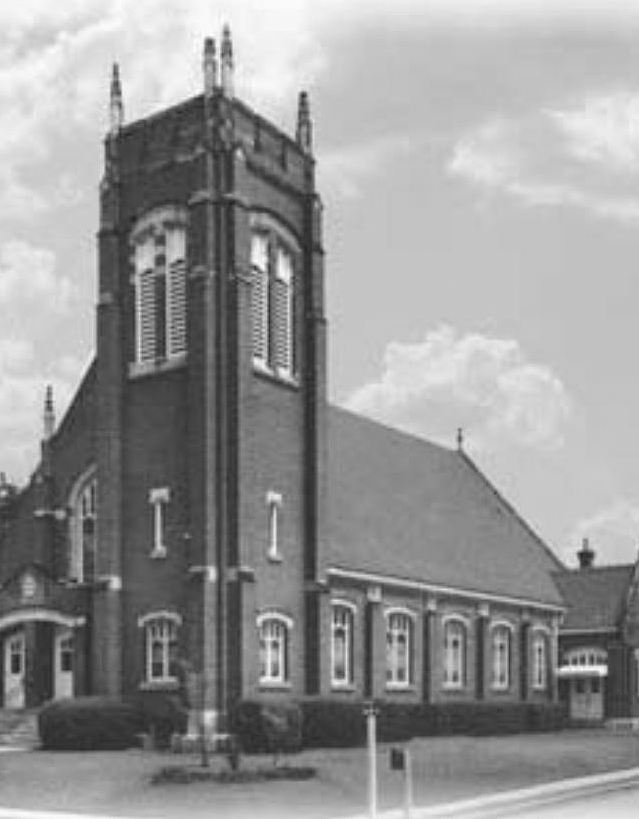
7.  WESTMINSTER PRESBYTERIAN CHURCH, 2700 Fairmount (at Mahon), designed by Hubbell & Greene. Before looking this one up, I had no idea what part of town this church was in — I was surprised to see it was in the area now known as “Uptown” … and it’s still standing. This congregation (organized in 1892) had occupied churches in the McKinney Avenue/State-Thomas area for several years before this church was built in 1910-11. When the congregation moved to their current location on Devonshire in the 1940s, the building was taken over by Memorial Baptist Church. When that congregation was dissolved, the church was given — for free! — to the First Mexican Baptist Church (Primera Iglesia Bautista Mexicana). After several decades, they, too, eventually moved to a new location, and the old church has had a variety of occupants come and go. (Read about its recent past — and see tons of photos — at Candy’s Dirt, here.) (See it on a 1921 Sanborn map, here.)
westminster-presbyterian-church_western-architect_july-1914

westminster-presbyterian-church_websitevia Westminster Presbyterian Church website

*

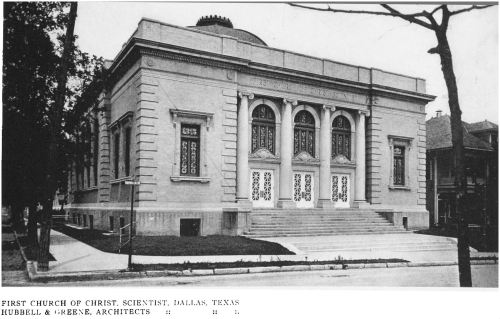
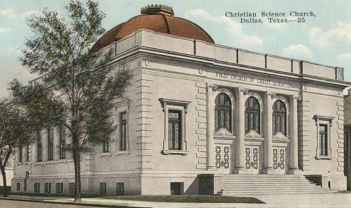
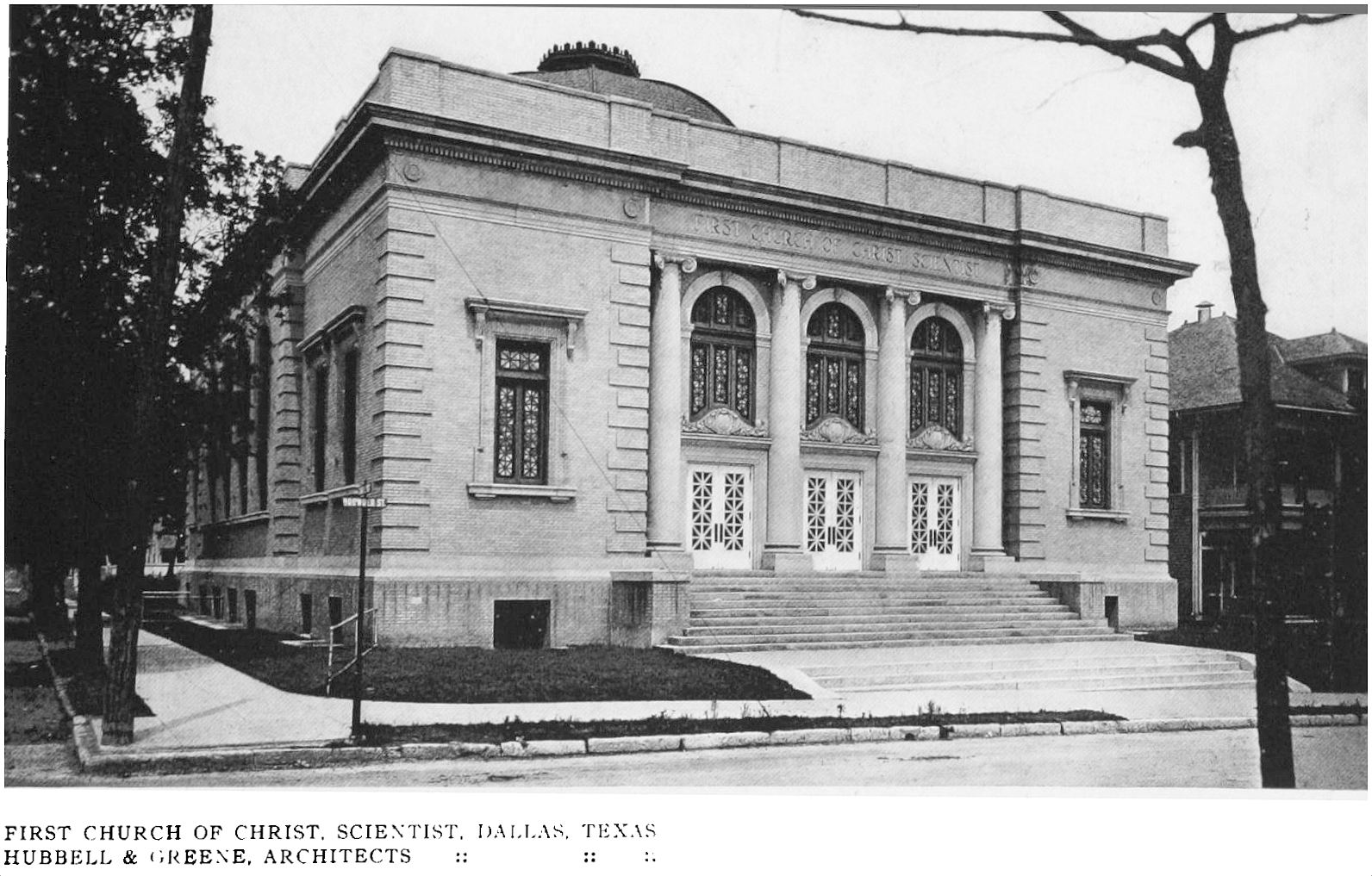
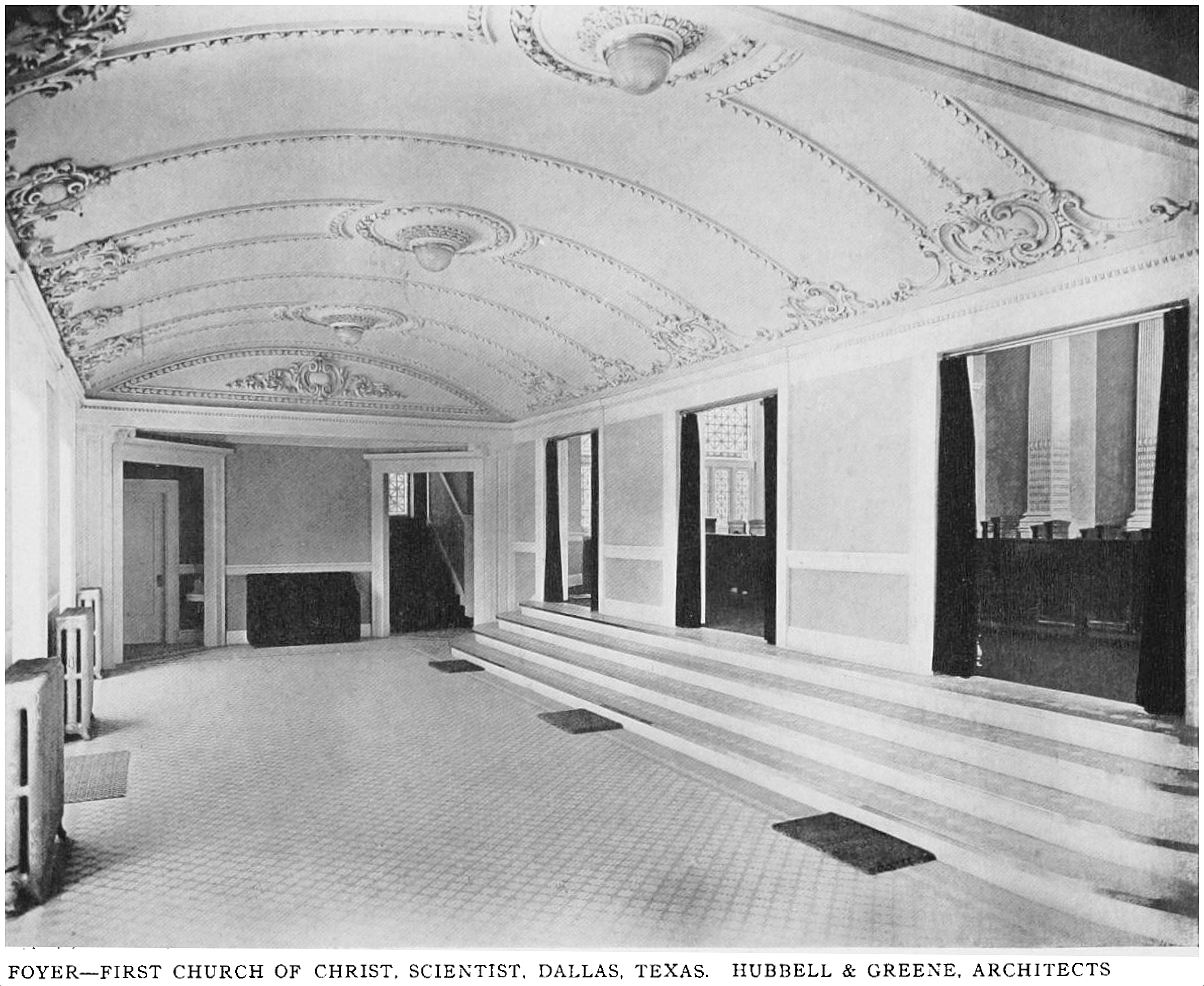
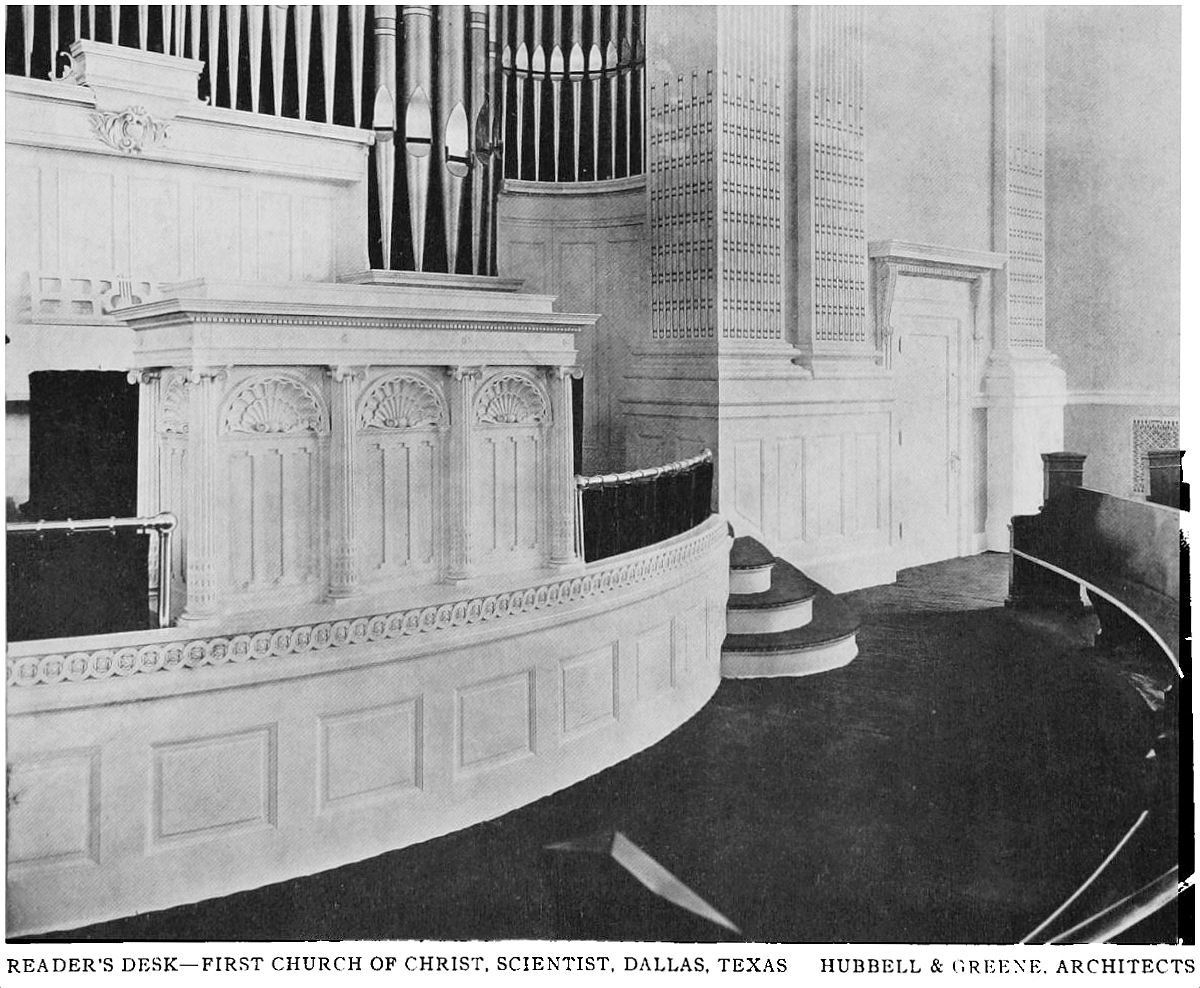
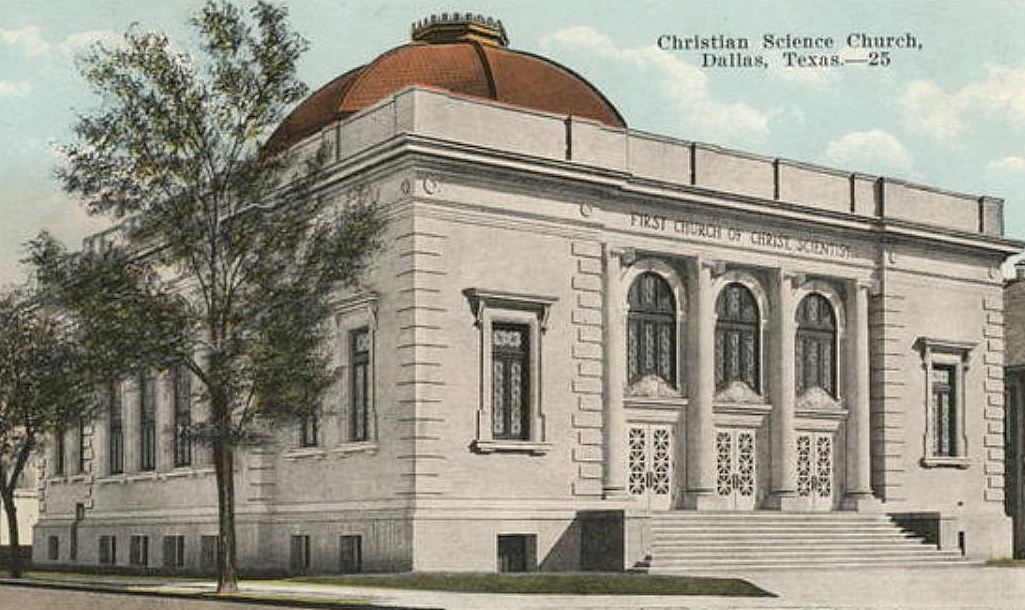
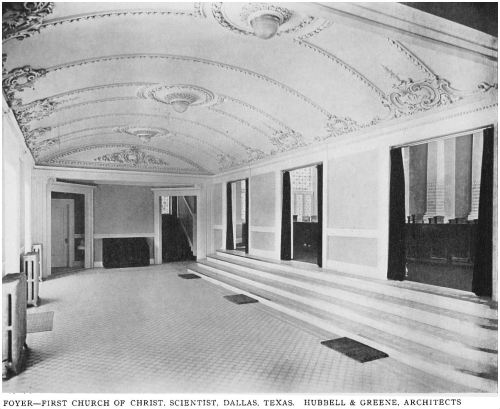
8.  FIRST CHURCH OF CHRIST, SCIENTIST, corner of Cadiz & Browder, designed by Hubbell & Greene. This Christian Science church was built in 1910 on the southern edge of downtown for $100,000 (over 2.5 million dollars in today’s money). Following its days as a Christian Science church, it has had secular and non-secular occupants. It still stands (as a lonely building in what is mostly a sea of parking lots), and it is currently a house of worship once again. (See it on a 1921 Sanborn map, here.)
first-church-of-christ-scientist_western-architect_july-1914_exterior

first-church-of-christ-scientist_western-architect_july-1914_foyer

first-church-of-christ-scientist_western-architect_july-1914_readers-desk

christian-science-church-postcard

**

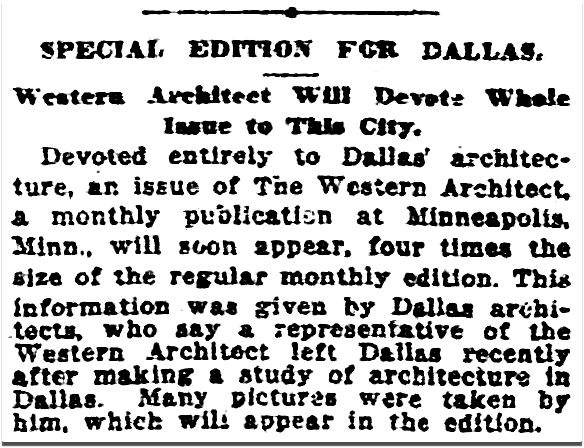
And that concludes this 7-part series featuring photos from the 1914 all-Dallas issue of the trade publication The Western Architect, which can be viewed in its entirety (with additional text), here (jump to p. 195 of the PDF for the July, 1914 scanned issue).
***

Sources & Notes

The Western Architect, A National Journal of Architecture and Allied Arts, Published Monthly, July, 1914. This issue, with text and critical analysis in addition to the large number of photographs, has been scanned in it entirety by the University of Illinois at Urbana-Champaign as part of its Brittle Books Program — it can be accessed in a PDF, here (the Dallas issue begins on page 195 of the PDF). Thank you, UIUC!

In this 7-part series:

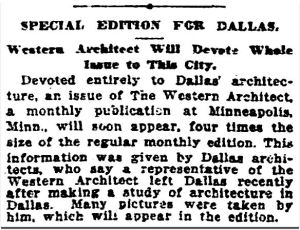
western-architect-in-dallas_dmn_060414
Dallas Morning News, June 4, 1914

*

Copyright © 2018 Paula Bosse. All Rights Reserved.