Flashback : Dallas

A Miscellany: History, Ads, Pop Culture

Category: Neighborhoods

Highland Park High School: Ads from the 1964 Yearbook

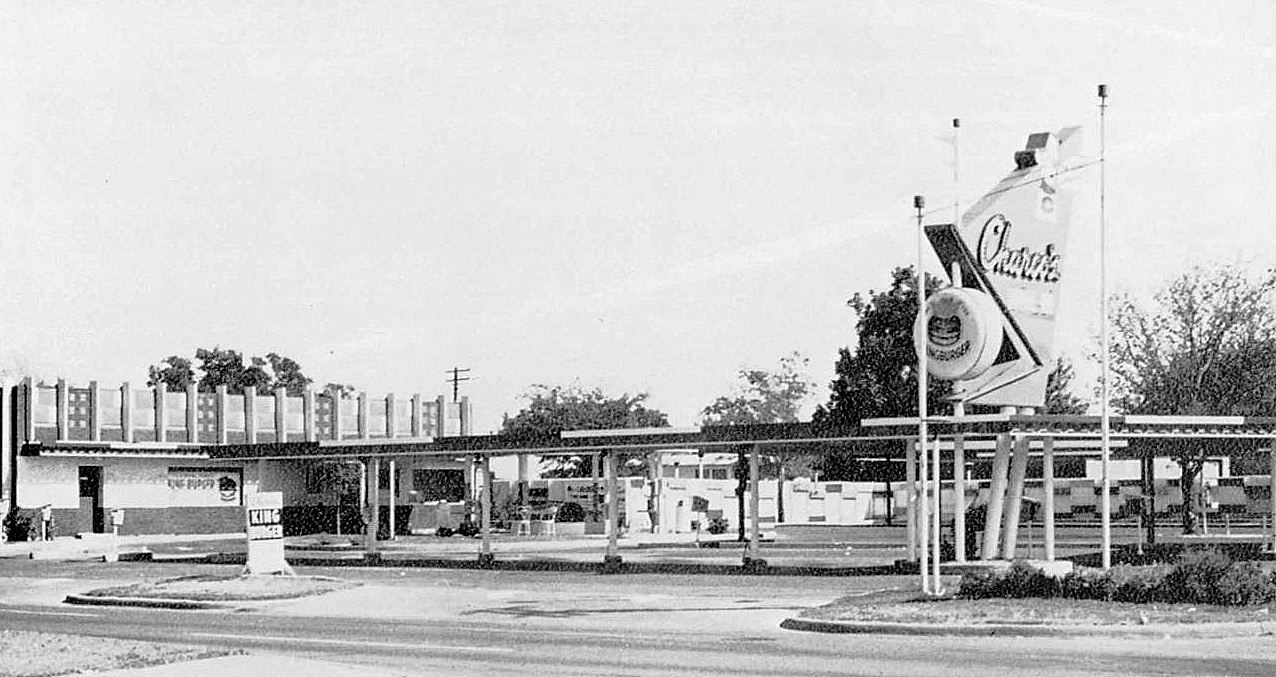
charcos_ad_5300-lemmon_HPHS-yrbk_1964_photoCharco’s on Lemmon — with “14 friendly electronic speakers”

by Paula Bosse

Here are a few ads from the 1964 Highlander, the yearbook of Highland Park High School — some of the ads feature HPHS students. (Click ads to see larger images.)

Above, Charco’s, 5300 Lemmon Avenue (James R. Inman, manager). The full ad is below. This was the third “Charco’s Circle-Thru” drive-in, following the first location at 6375 E. Mockingbird (at Abrams), which opened in 1957, and the second location at 10218 Garland Road.

charcos_ad_5300-lemmon_HPHS-yrbk_1964

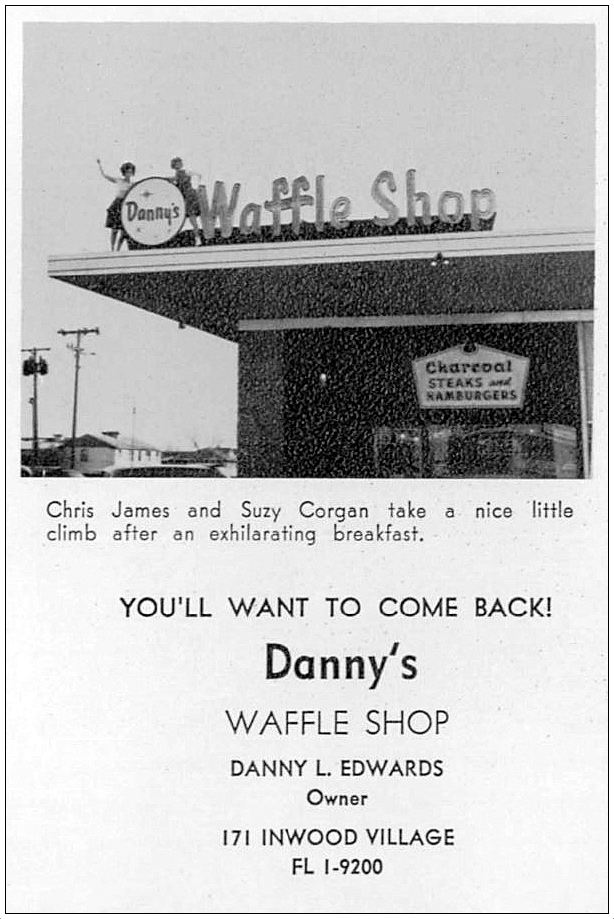
Danny’s Waffle Shop (Danny L. Edwards, owner), 171 Inwood Village. Featuring students Chris James and Suzy Corgan up on the roof.

dannys-waffle-shop_HPHS-yrbk_1964

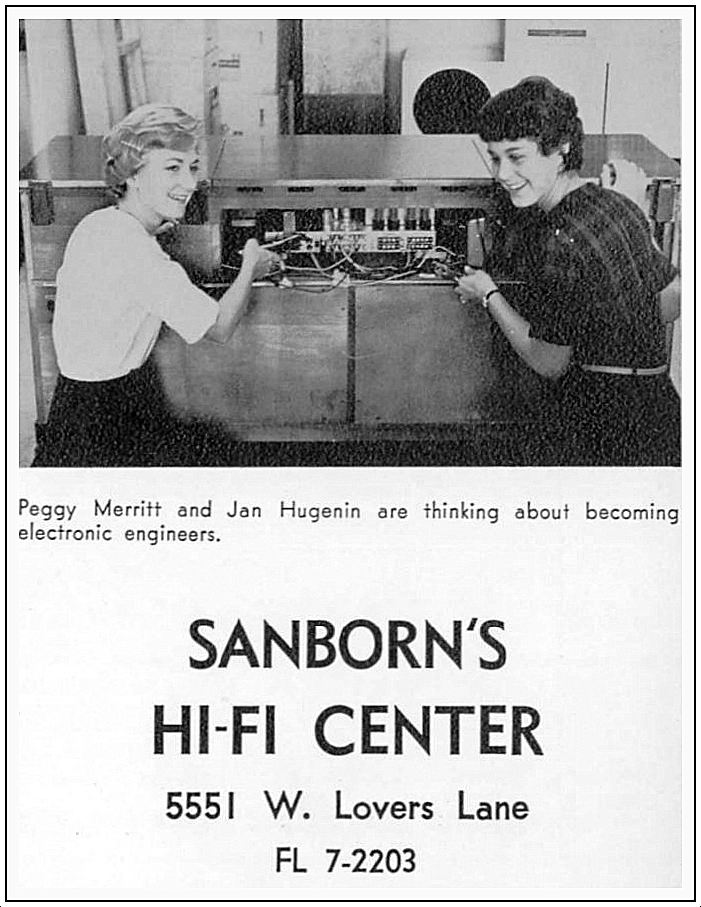
Sanborn’s Hi-Fi-Center (Charles Larsen, president), 5551 W. Lovers Lane. Featuring Peggy Merritt and Jan Hugenin.

sanborns-hi-fi-center_HPHS-yrbk_1964

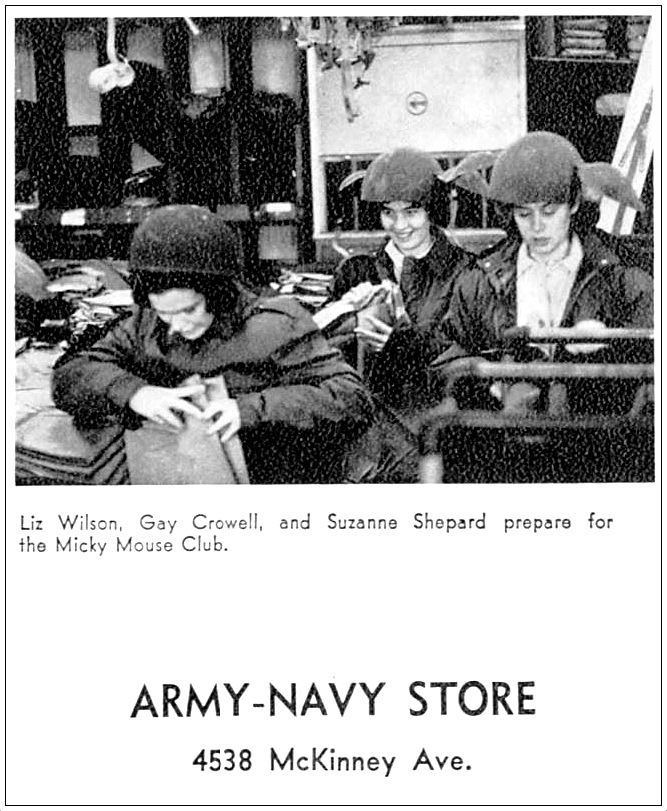
The Army-Navy Surplus and Salvage Store at 4538-40 McKinney Avenue (Julia Cooper, owner). Featuring students Liz Wilson, Gay Crowell, and Suzanne Shepard. 

army-navy-store_HPHS-yrbk_1964

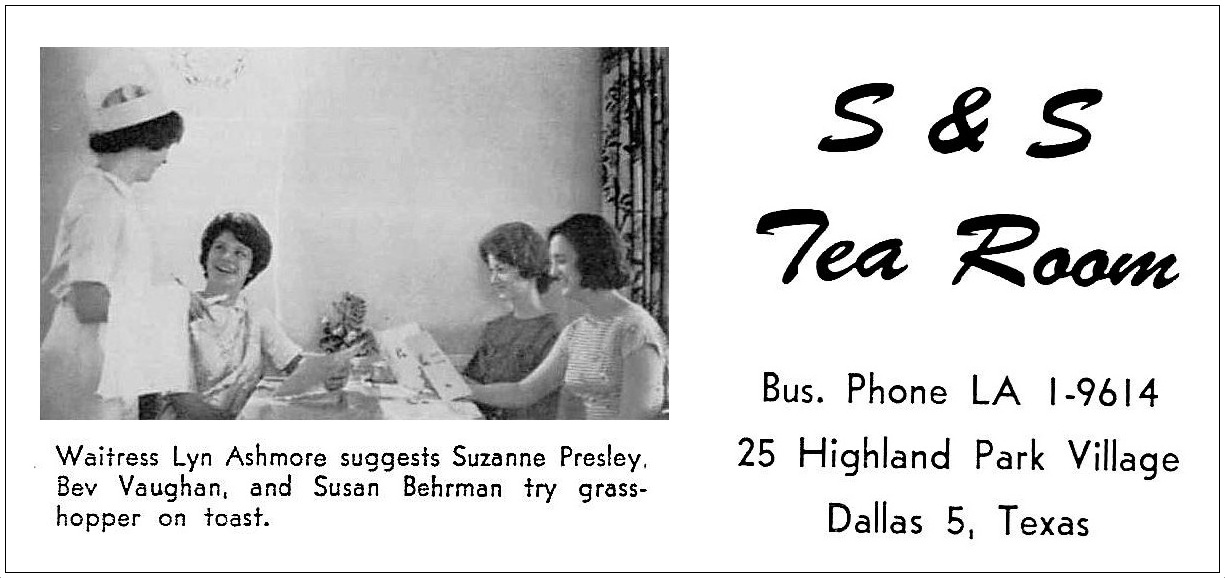
S & S Tea Room, 25 Highland Park Village (Dr. Raymond C. Libberton and Mildred A. Libberton, owners). Featuring waitress Lyn Ashmore with students Suzanne Presley, Bev Vaughan, and Susan Behrman. (Dr. Libberton was still a regular presence at the restaurant until his death in 1976 at the age of 104.)

s-and-s-tea-room_HPHS-yrbk-1964

Midnight Coiffures, 5628 Lemmon and 4826 Gaston (Esther Groves, owner). “Dallas’ only midnight salon.” This is a great idea!

midnight-coiffures_ad_HPHS-yrbk_1964

Centex Construction Co., 4606 Greenville Avenue (Tom H. Lively, president).

centex-construction_HPHS-yrbk_1964

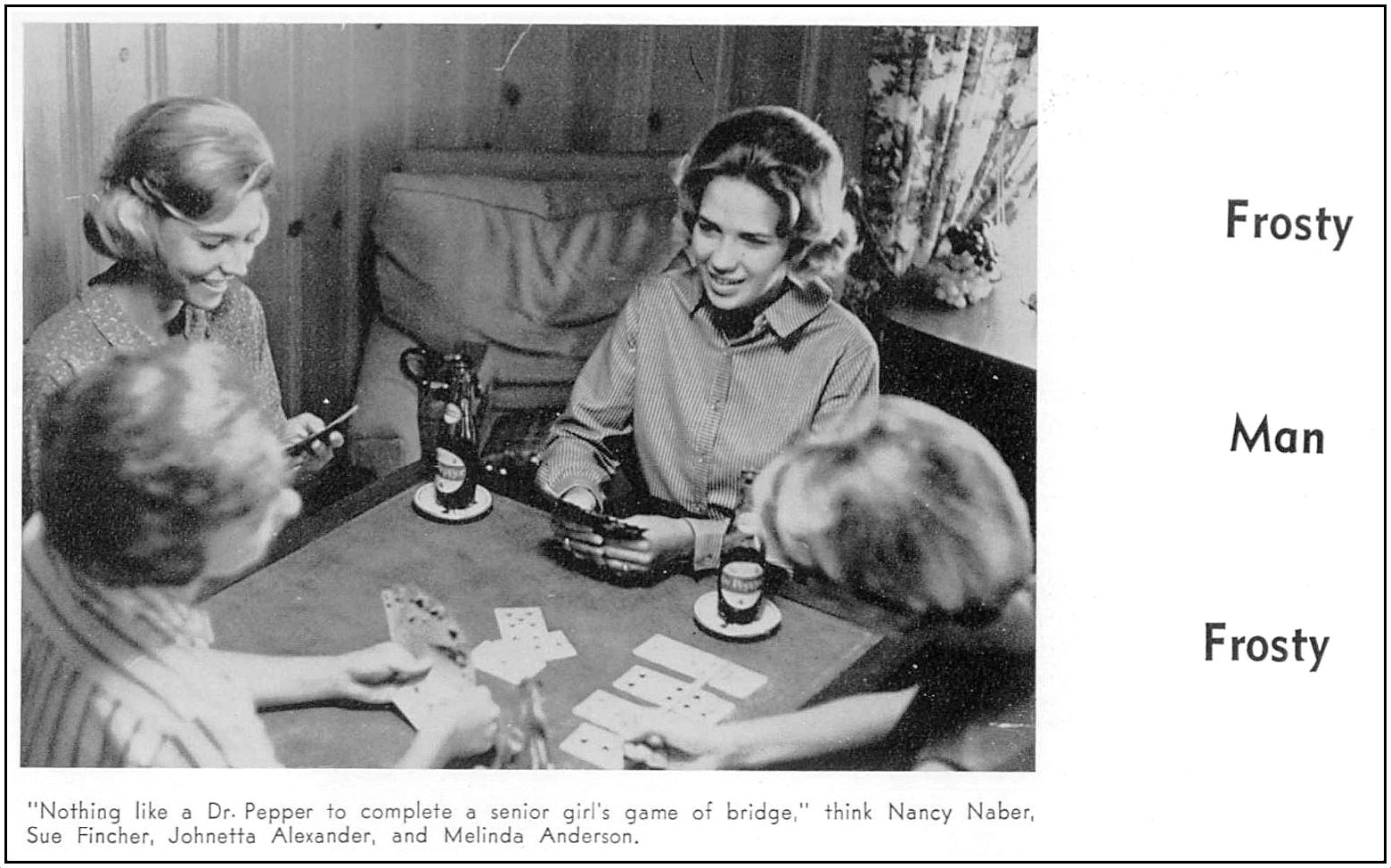
Dr Pepper, national headquarters located at Mockingbird and Greenville. Ad featuring teen bridge players Nancy Naber, Sue Fincher, Johnetta Alexander, and Melinda Anderson. “Frosty, Man, Frosty.”

dr-pepper_ad_HPHS-yrbk_1964

La Tunisia, 200 N. Exchange Park (Iqbal Singh Sekhon, general manager — he previously managed Safari in North Dallas at Preston and Royal).

la-tunisia_HPHS-yrbk_1964

*

seal_HPHS-yrbk_1964

***

Sources & Notes

All images from the 1964 Highlander, yearbook of Highland Park High School.

Other Flashback Dallas posts which have dipped into the HPHS yearbooks can be found here.

charcos_ad_5300-lemmon_HPHS-yrbk_1964_det_sm

*

Copyright © 2020 Paula Bosse. All Rights Reserved.

George Dahl’s Proposed Massive “Lone Star” Entrance to Fair Park

tx-centennial_proposed-lone-star_george-dahl_dma-catalog_1972_portalWhat could have been at Fair Park: a really, really big star…

by Paula Bosse

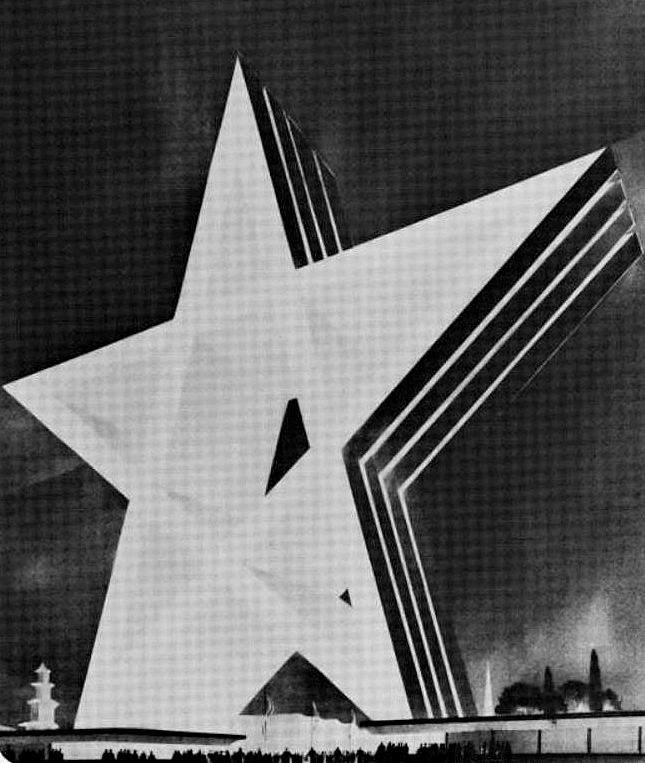
As this year’s State-Fair-of-Texas-that-wasn’t draws to a virtual end, I thought I would post this image I came across a while ago — I’d never seen it before, and it’s something of a mystery. It appeared in a 1972 Dallas Museum of Art exhibition catalog called “1930s Expositions” (link at bottom of post). One of the expositions covered in the catalog was the Texas Centennial Exposition held at Fair Park in 1936. Most of the buildings we see today were built in 1935/1936, and the entire sprawling project was led by visionary chief architect George L. Dahl of Dallas. The description of this image reads:

“The monumental scale of the central area of the Exposition was set by the massive pylons which formed the entrance to the Centennial. How even more heroic would have been George Dahl’s proposed ‘Lone Star’ entrance.”

Whoa! Can you imagine that gigantic star spanning the entrance? A sort of  Colossus of Rhodes for Big D! (Big Tex is as close to a Colossus as we’re going to get.)

I searched and searched but could find nothing more about this incredibly dynamic Dahl vision. The closest I got was not what I was looking for, but it was still pretty interesting.

“Erection of a star-shaped building at a cost of $1,000,000 will be asked of the Legislature… This structure would be administrative headquarters for the central exposition in Dallas.” (Dallas Morning News, Dec. 9, 1934)

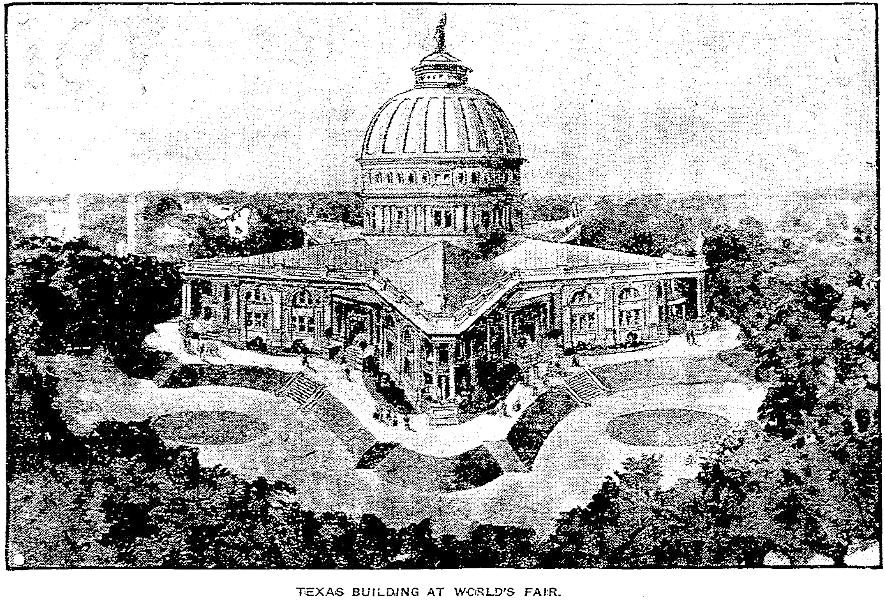
My first thought was, “Is that thing a building?” And then I searched on “star-shaped building” and found that there had been an extremely controversial “star-shaped building” built as the “Texas Building” at the St. Louis World’s Fair in 1904. Super-wealthy Texan E. H. R. Green was so appalled at the building’s design (by St. Louis-born Texas architect C. H. Page) that he resigned from the state commission in protest, saying this:

“I am not in any way to be identified with the official responsibility of the building that portrays Texas as a freak and that is what that star-shaped building does. No one ever heard of such a type of architecture before. I want a building that will impress those who see it with the idea Texas has some dignity.” (Fort Worth Star-Telegram, April 12, 1903)

St. Louis built it anyway. It was kind of freaky — especially with a replica of the State Capitol dome awkwardly plonked down in the middle (gilding the lily, man…) — but it was, apparently, quite popular. See a ground-level photo of the Texas Building here — and here’s a drawing:

tx-bldg_st-louis-worlds-fair_FWST_013104
FWST, Jan. 31, 1904

That was an odd little detour. Anyway….

About that star over the Parry Avenue entrance to Fair Park — I’d love to know more about it. I’d love to see a better image. Anyone know anything? I wonder if Dahl’s plans and drawing for this giant Lone Star might be resting comfortably in the Dallas Historical Society archives?

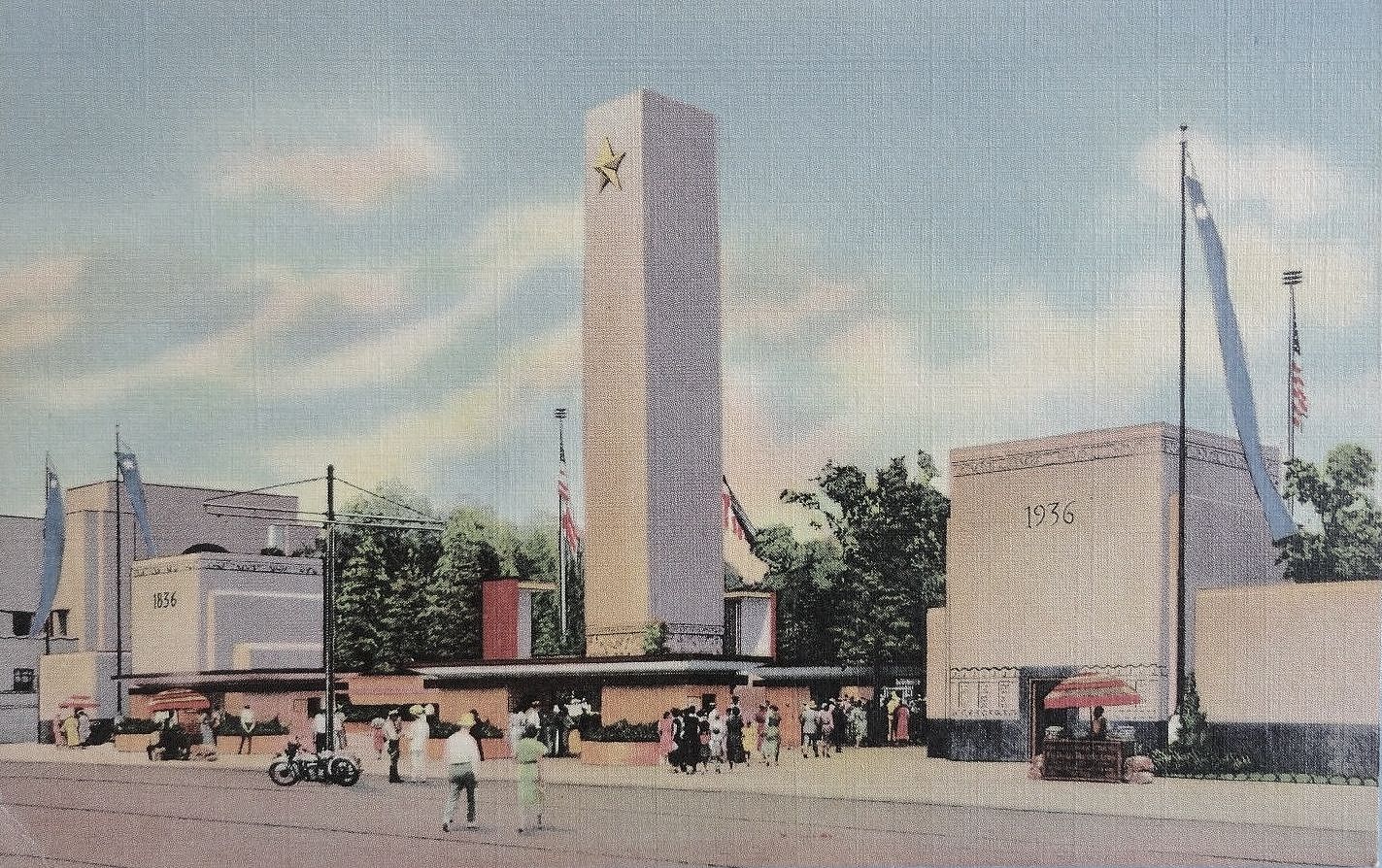
Here’s the entrance design which was ultimately decided on — the one we still see today at Parry and Exposition. Yeah, there’s a star there, but now that I’ve seen what we could have had, it seems kind of puny. What it lost in overall heft it gained in height, I guess. But just imagine what it COULD have been!

fair-park_entrance_postcard_tx-centennial_1936_ebay_col

***

Sources & Notes

Top image is from the 1972 Dallas Museum of Fine Arts catalog for the traveling show “1930s Expositions” (page 16); a scan of the catalog can be found at the Portal to Texas History here, and at the DMA website here.

Color postcard found on eBay.

tx-centennial_proposed-lone-star_george-dahl_dma-catalog_1972_portal_sm

*

Copyright © 2020 Paula Bosse. All Rights Reserved.

“A Man’s Shop With a Texas Man’s Viewpoint” — 1945

irby-thompson_western-wear_tx-country-day-school-yrbk-1945

by Paula Bosse

Back when men wore Western pearl-snap shirts embroidered with cardinals, leaves, and acorns — and, if this ad is anything to go by, they wore them proudly and unironically.

Frankly, I’d like to see a return to this style.

*

“Wherever Texas men gather to relax and play
you’ll see fine sports clothes by Irby-Thompson.”

Western Suit: $115 (equivalent in today’s money to about $1,660)
Sport Coat: $45 (today, $650)
Slacks: $20 (today, $290)
Tie & Handkerchief: $5 (today, $73)

***

Sources & Notes

Ad found in the pages of the 1945 Texas Country Day School yearbook. 

Irby-Thompson (housed in the Mercantile Building), was opened in 1944 by Collis P. Irby and J. S. Thompson; in 1948 Irby and his former store manager, Count Mayes, bought out Thompson and became Irby-Mayes.

Related: see the Flashback Dallas post “Irby-Mayes Ad With a Cameo by the Merc — 1948.”

irby-thompson_western-wear_tx-country-day-school-yrbk-1945_sm

*

Copyright © 2020 Paula Bosse. All Rights Reserved.

Awaiting the “Victory Fair” of 1946…

sfot_victory-fair_ebay_1946

by Paula Bosse

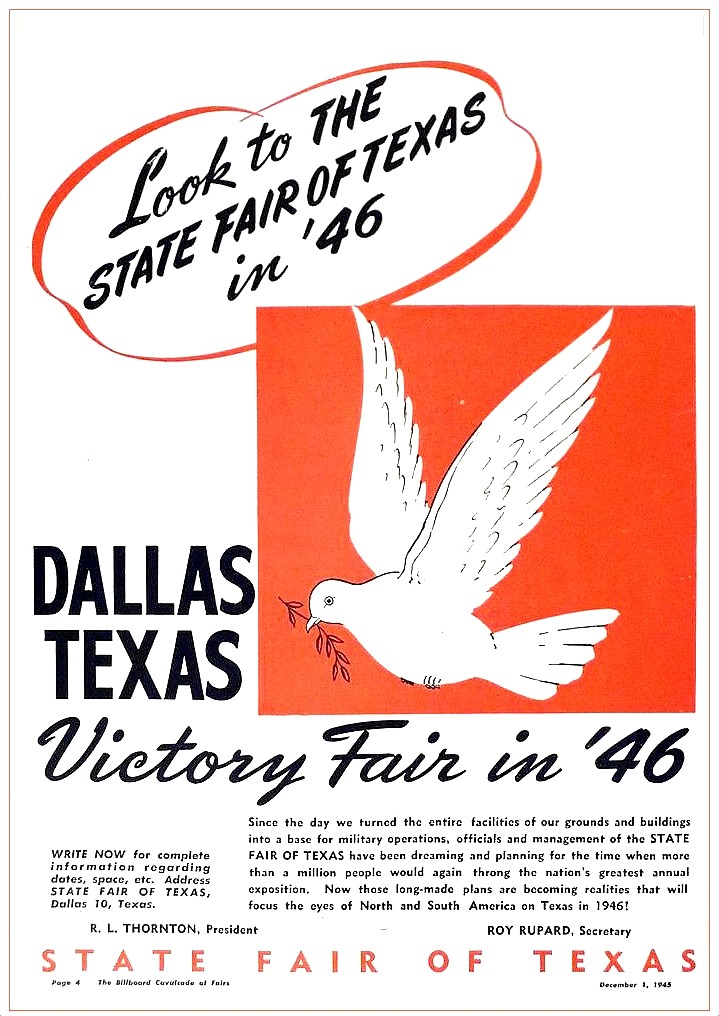
Many of us are missing the State Fair of Texas, canceled this year due to the COVID-19 pandemic. The last time the fair was canceled was during World War II. Here is an ad from 1945, assuring everyone that the State Fair would be back in 1946.

*

Dallas Texas Victory Fair in ’46

Since the day we turned the entire facilities of our grounds and buildings into a base for military operations, officials and management of the STATE FAIR OF TEXAS have been dreaming and planning for the time when more than a million people would again throng the nation’s greatest annual exposition. Now those long-made plans are becoming realities that will focus the eyes of North and South America on Texas in 1946!

***

Sources & Notes

Ad found on eBay (originally published in the “Billboard Cavalcade of Fairs,” Dec. 1, 1945).

More Flashback Dallas posts on the State Fair of Texas can be found here.

*

Copyright © 2020 Paula Bosse. All Rights Reserved.

Legendary Sports Writers of the Fort Worth Press — ca. 1948

sportswriters_blackie-sherrod_dan-jenkins_bud-shrake_etc_fort-worth-press_SMUBlackie and crew…

by Paula Bosse

The legendary sport writers of The Fort Worth Press, circa 1948: (standing, l to r) Jerre Todd, Blackie Sherrod, Dan Jenkins; (sitting) Andy Anderson and Edwin “Bud” Shrake. Missing: Gary Cartwright. 

This is what sports writers should look like!

***

Sources & Notes

Photo — titled “[Staff of Fort Worth Press]” — is from the Blackie Sherrod papers, DeGolyer Library, Southern Methodist University; more info can be found here.

More on Blackie Sherrod, who became the dean of Dallas sportswriters, can be found in the Flashback Dallas post “Blackie Sherrod: The Most Plagiarized Man in Texas: 1919-2016.”

Read a great, lengthy piece about these guys and their time as the greatest sportswriting staff in Texas in the article “Mourning Dark: The Fort Worth Press’ Legendary Sportswriters Are a Dying Breed” by Kathy Cruz (Fort Worth Weekly, Jan. 3, 2018).

*

Copyright © 2020 Paula Bosse. All Rights Reserved.

Southwestern Medical College — 1944

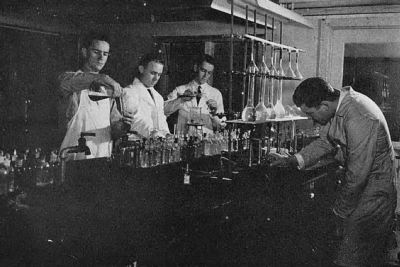
southwestern-medical-college_1944 yrbk_students_dr-w-w-looney_anatomySouthwestern Medical College students in anatomy class…

by Paula Bosse

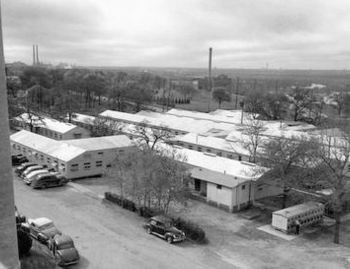
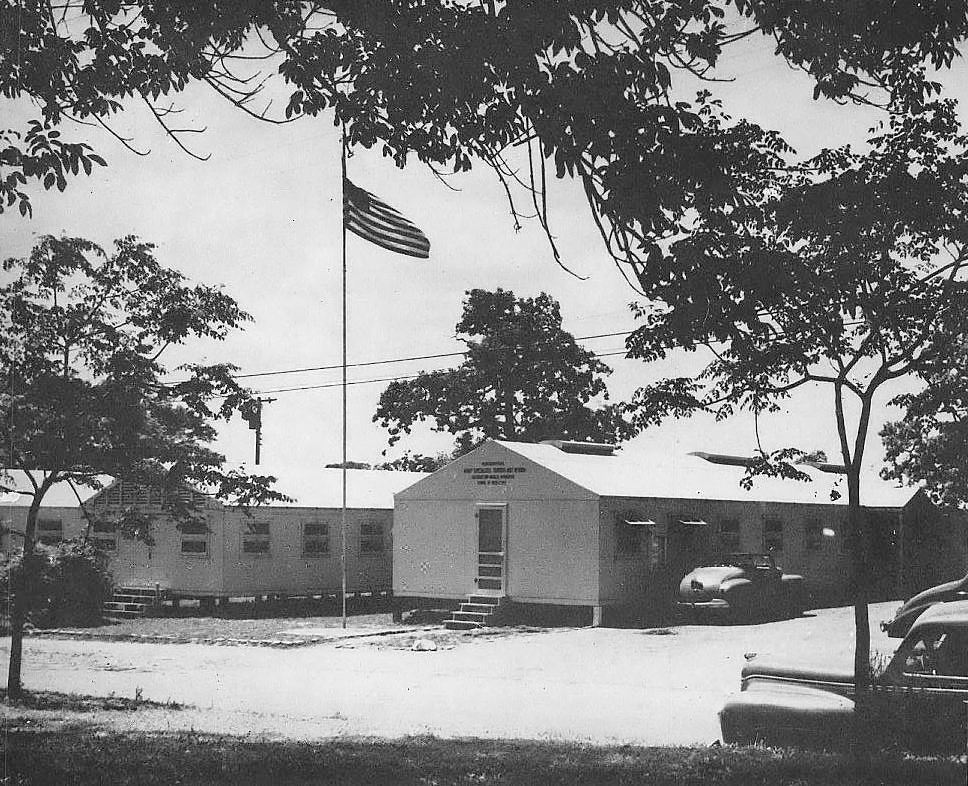
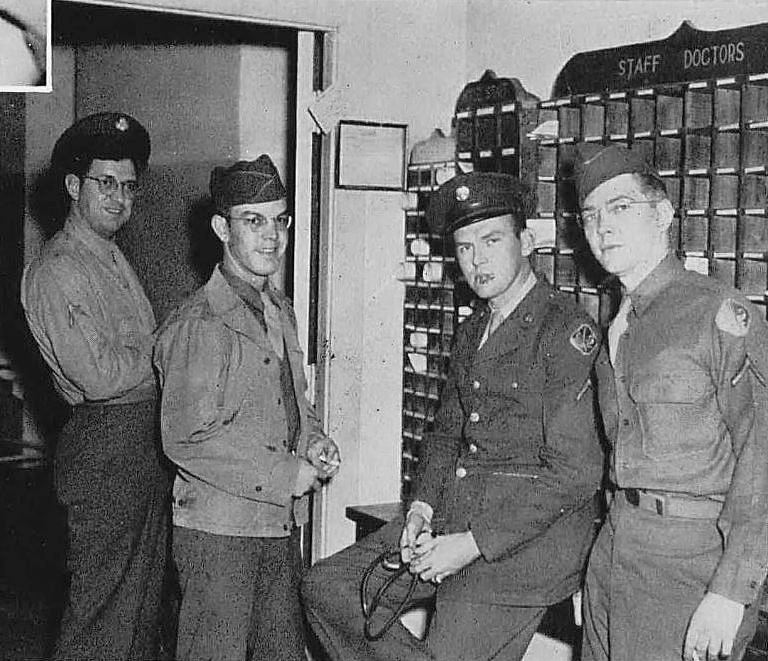
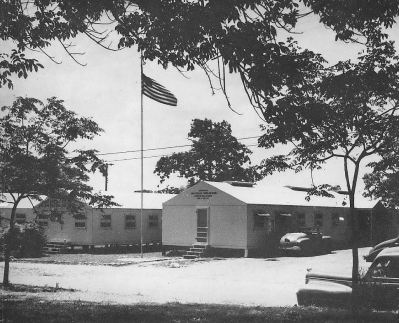
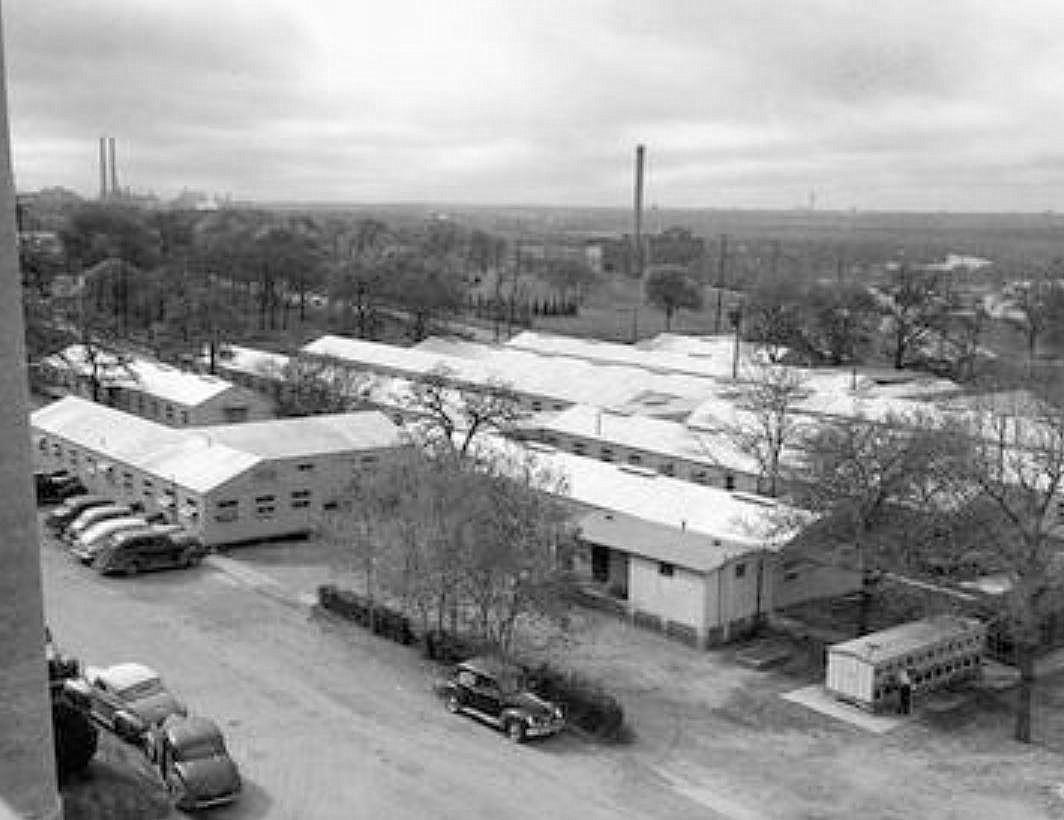
Decades before the University of Texas Southwestern Medical School was an internationally renowned institution, its precursor — the scrappy little Southwestern Medical College — opened its pre-fabricated doors to students in 1943 in temporary buildings on the Parkland Hospital grounds.

To read an in-depth history of UTSW, see their website. But, briefly, there had been medical schools in Dallas in the past (including the Dallas Medical College at the turn of the century), but by the time World War II had arrived, the Baylor University college of medicine (located on the campus of Baylor Hospital in East Dallas) was it, and many medical professionals at the time considered it to be lacking in facilities, equipment, and enthusiastic financial support. The Southwestern Medical Foundation was organized in 1939 by Dr. Edward H. Cary who, along with other Dallas civic leaders, spent many years working tirelessly to see his vision of not just a medical school, but of an entire sprawling medical center (hospitals, clinics, schools, research labs, etc.) finally built on a 36-acre tract of land, centered around Harry Hines and Inwood.

By 1943, the Foundation had plans drawn up and had been assured of support from the city and, more importantly, funding. They also hired the entire faculty of the Baylor medical and dental schools and attracted most of their students. They hoped to work with Baylor University as a partner in their grand medical center, but Baylor dropped out of negotiations when the Foundation insisted the new school would be non-sectarian. The Baptist university decided, instead, to leave Dallas for Houston, at the invitation of the M. D. Anderson Foundation.

The new Southwestern Medical College opened in 1943 in a handful of  temporary buildings built on the Parkland campus — they also utilized other nearby buildings in this first year, and lectures were often conducted in various Dallas hospitals and clinics. 

These photos are from 1943-1944, the college’s first year and the humble beginnings of what just grew and grew and grew into a huge medical center and one of the world’s most respected medical research institutions.

Below, the epicenter! (Click photos to see larger images.)
southwestern-medical-college_1944 yrbk_temp-bldg_1

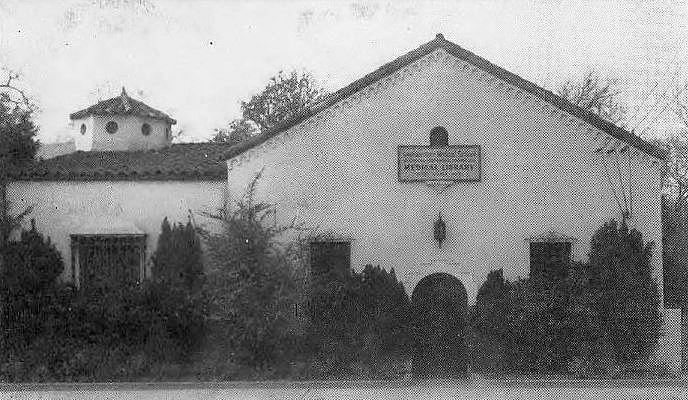
Don’t know exactly where this was, but this is the very appealing Medical Library:

southwestern-medical-college_1944 yrbk_temp-bldg_2

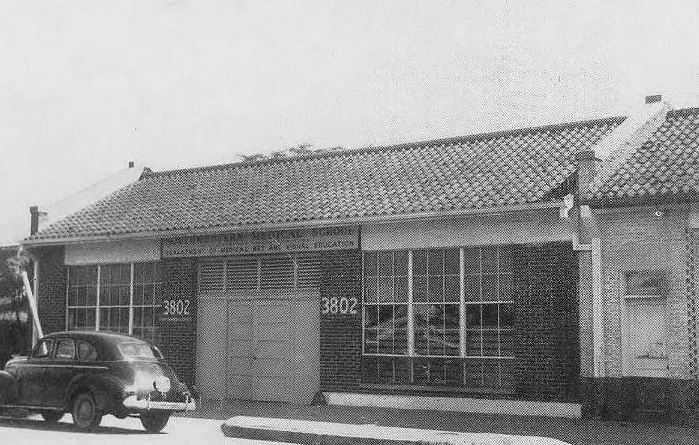
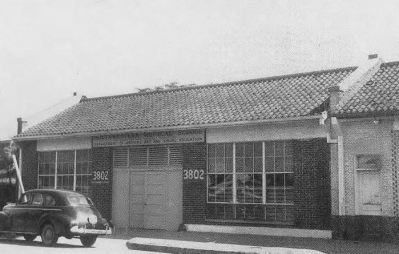
The Department of Medical Art and Visual Education, a building which was probably at 3802 Maple Avenue, across from Parkland Hospital:
southwestern-medical-college_1944 yrbk_temp-bldg_3

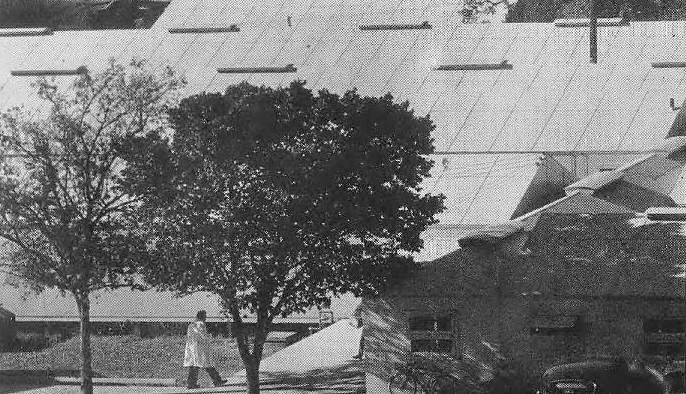
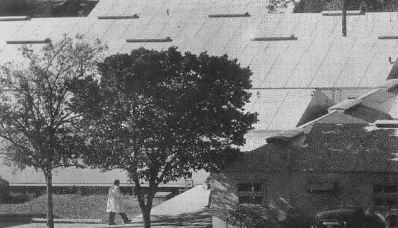
A man in a white coat is seen walking toward the rows of temporary pre-fab buildings:
southwestern-medical-college_1944 yrbk_temp-bldg_4

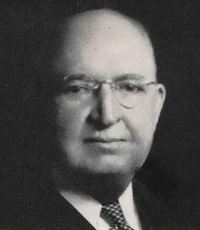
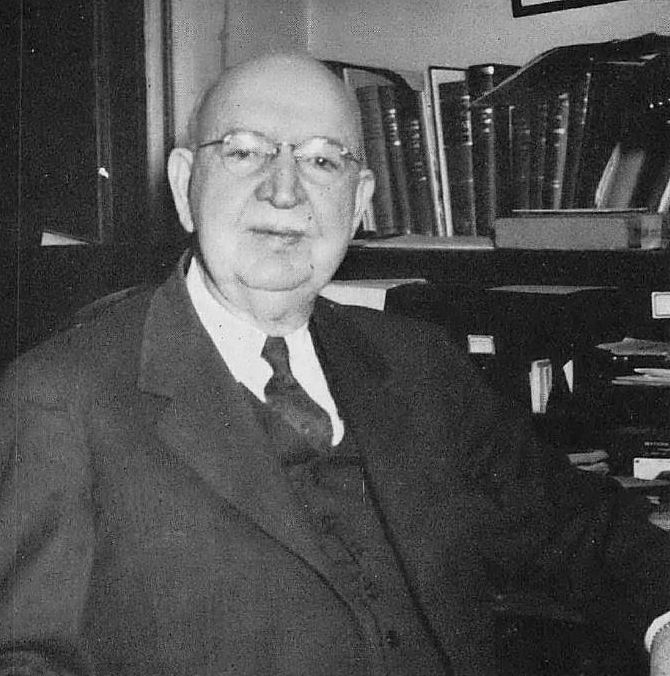
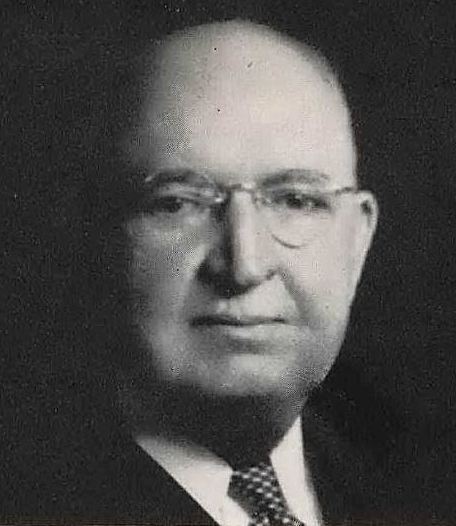
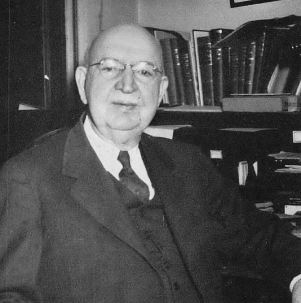
Below, Dr. E. H. Cary, the man who was the driving force behind the school and the vision which has now become UTSW (he was also a professor of ophthalmology at the new college):
dr-e-h-cary_southwestern-medical-college_1944-yrbk

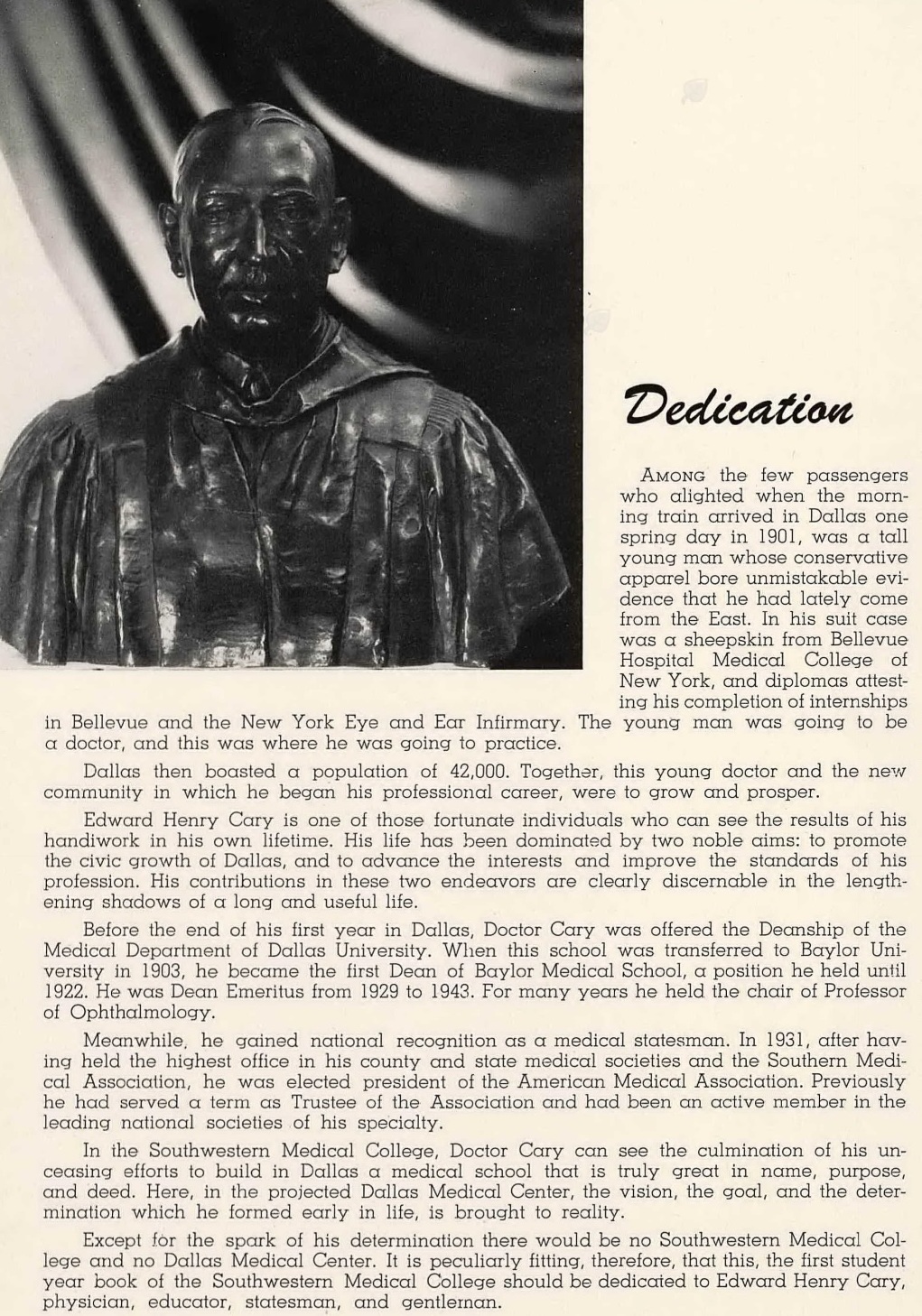
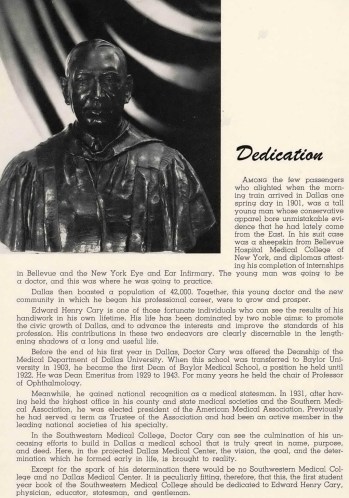
The first yearbook was dedicated to Dr. Cary:
southwestern-medical-college_1944 yrbk_caduceus_dedication_dr-e-h-cary

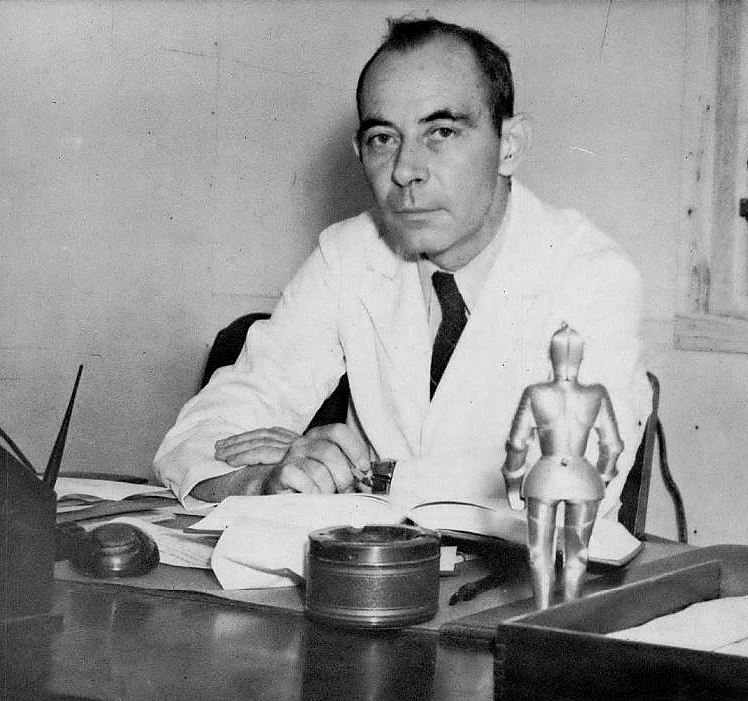
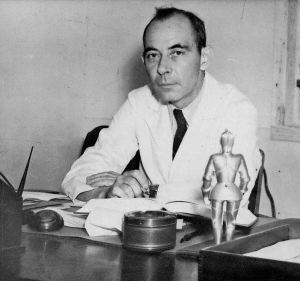
The dean was Dr. Tinsley R. Harrison:
dr-tinsley-r-harrison_dean_southwestern-medical-college_1944-yrbk

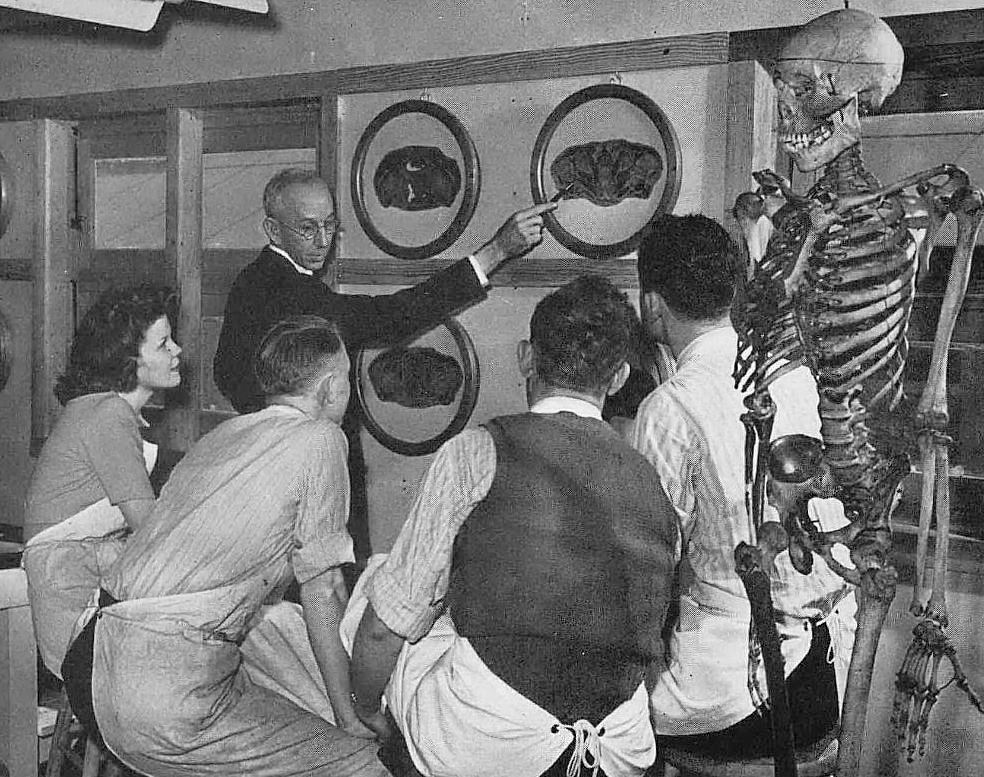
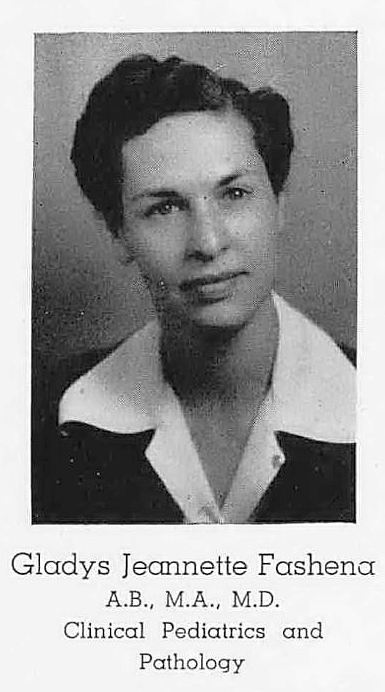
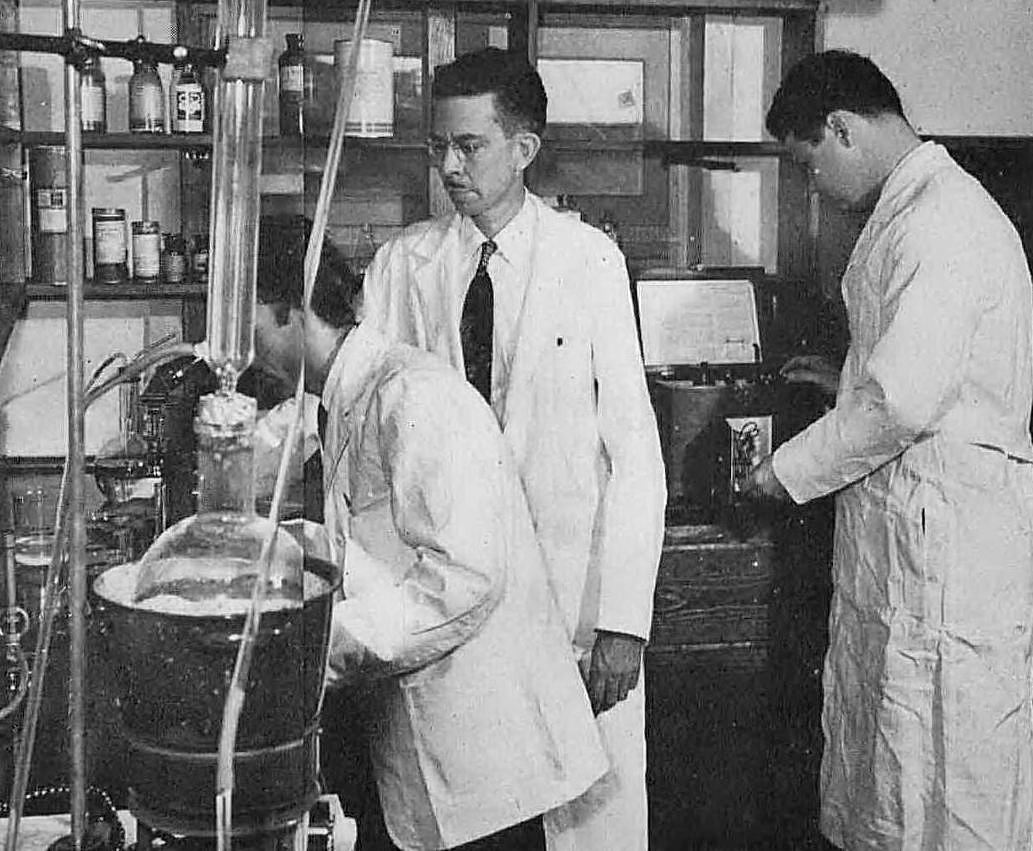
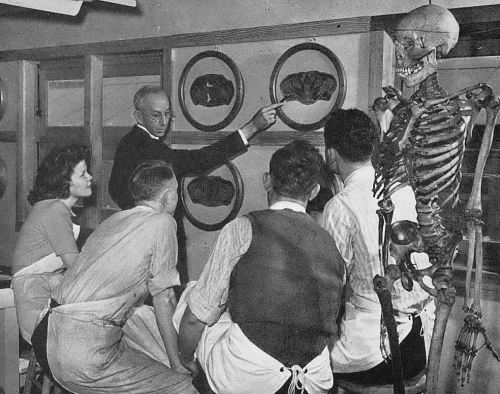
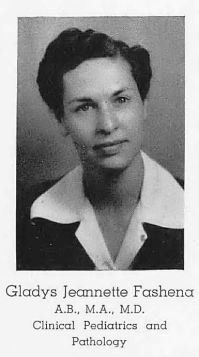
One of the only women instructors at the new college was Dr. Gladys Fashena, who had a long career in Dallas. (See her in WFAA news footage from 1969 when she was a director at Children’s Medical Center — pertinent footage begins at the 6:49 mark.) There were a few female students, but very few. One can be seen in the top photo, the caption of which reads “Dr. W. W. Looney quizzes a group of freshmen on the mysteries of cross-section anatomy.”
fashena-gladys_southwestern-med-college_1944-yrbk_professor_only-woman

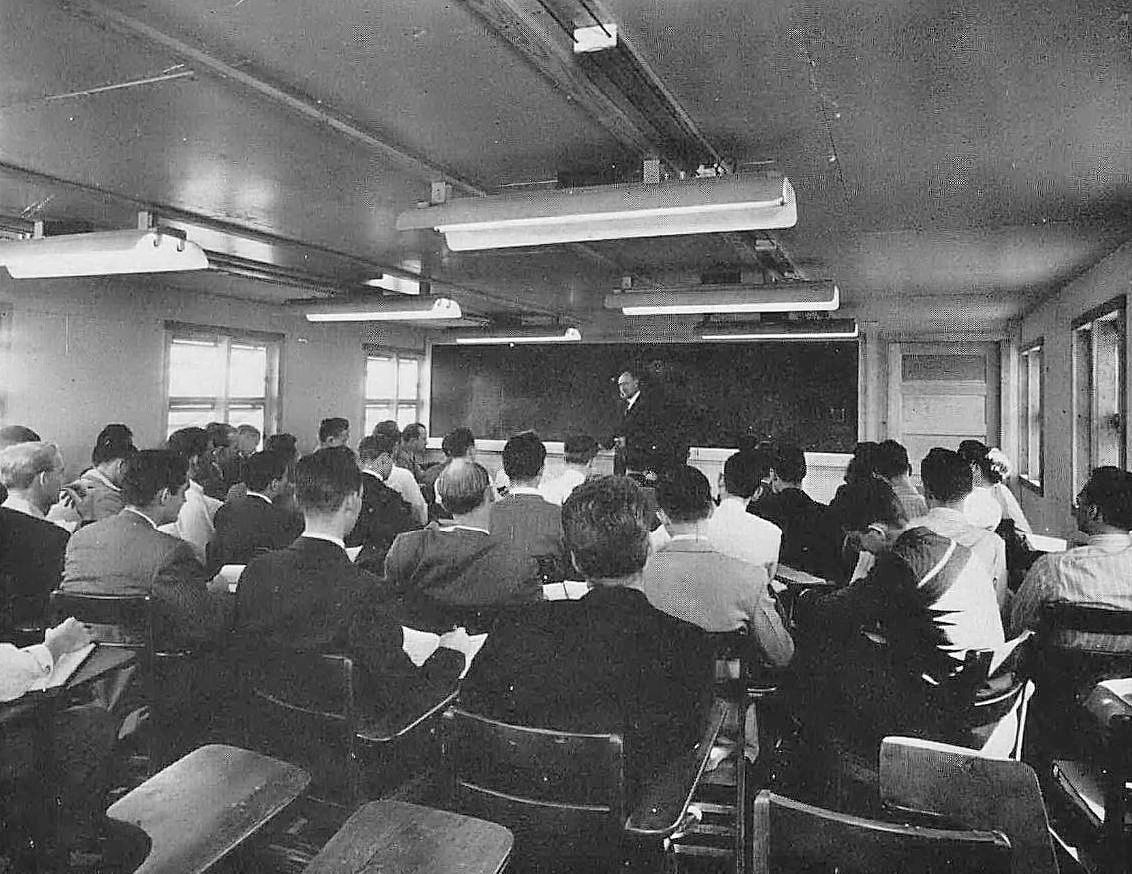
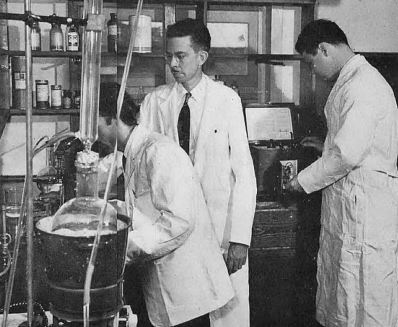
Here is Dr. Herbert C. Tidwell teaching a biochemistry class:
southwestern-medical-college_1944 yrbk_students_1

Students attending a pathology lecture by Dr. George T. Caldwell:

southwestern-medical-college_1944 yrbk_students_dr-george-t-caldwell_pathology

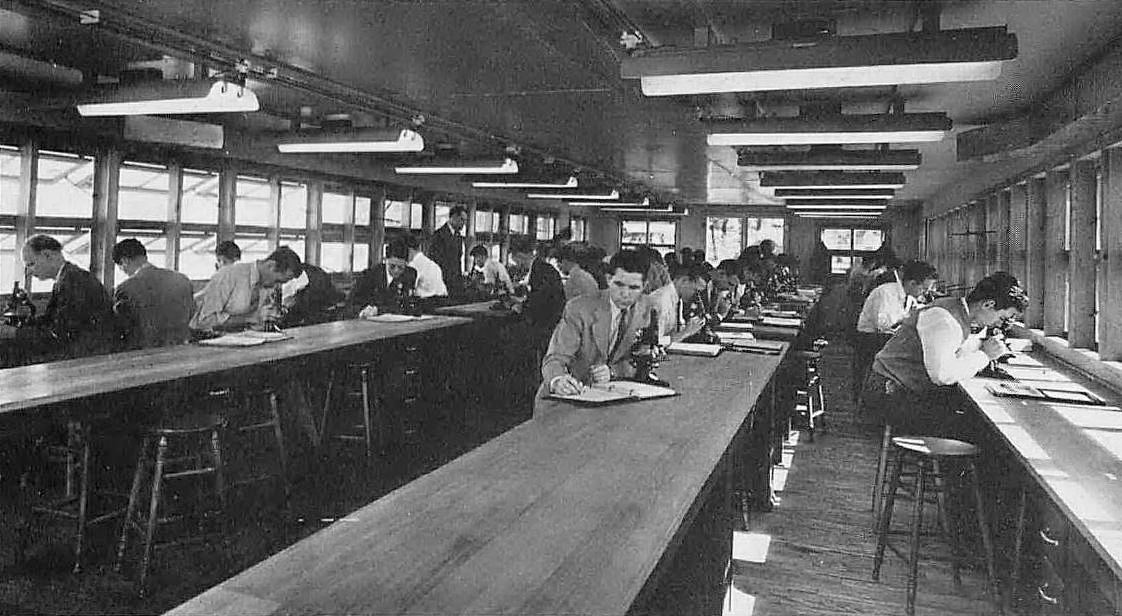
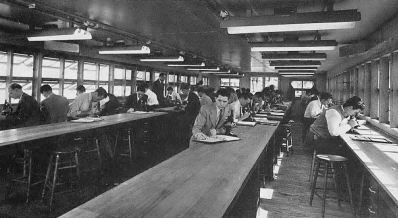
“Sophomores examine pathological tissues under the microscope”:
southwestern-medical-college_1944 yrbk_students_microscopes

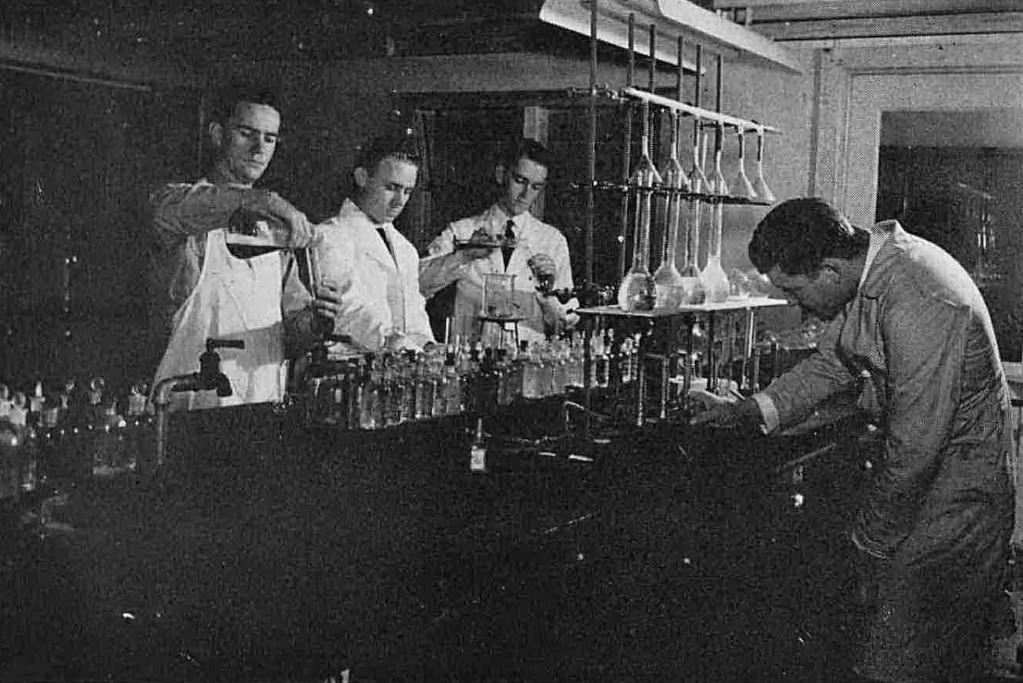
Students pouring things:

southwestern-medical-college_1944 yrbk_students_test-tubes

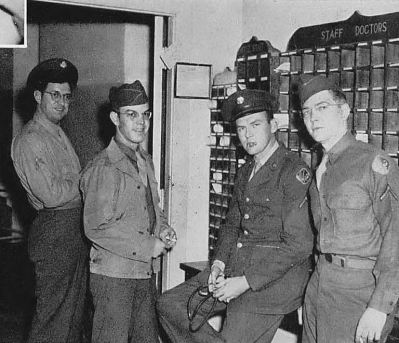
When the first year began, the U.S. was deep into WWII. Most students would be headed to military service after graduation (which was accelerated in order to get more medical professionals into the pipeline). “Upperclassmen wait for ward rounds”:
southwestern-medical-college_1944 yrbk_students_upperclassroom_waiting-for-ward-rounds

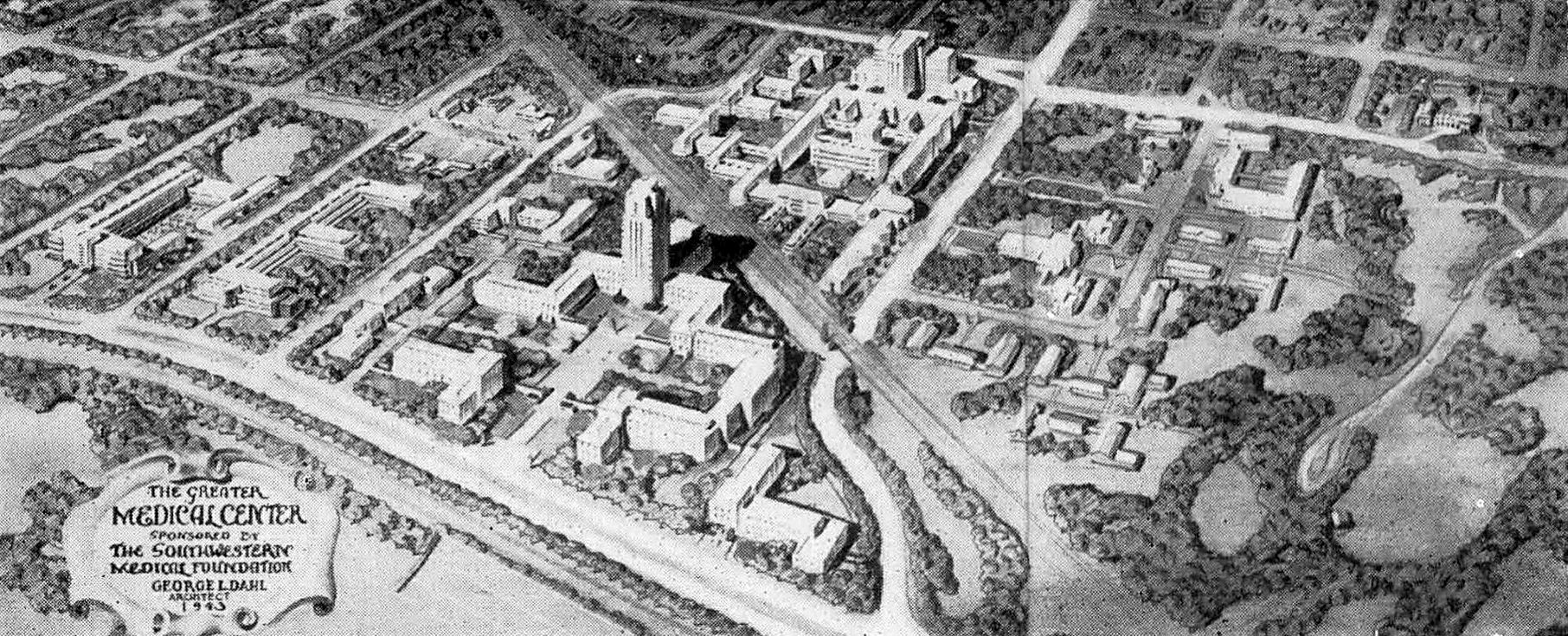
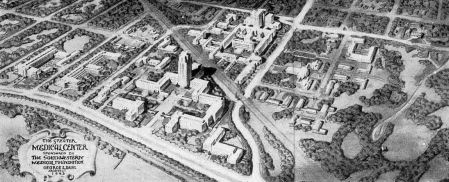
The great vision of “The Greater Medical Center” (architect, George Dahl, 1943):
southwestern-medical-college_1944 yrbk_george-dahl_greater-dallas-medical-center

A little backstory: 

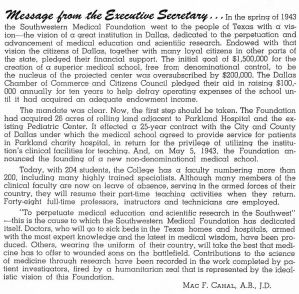
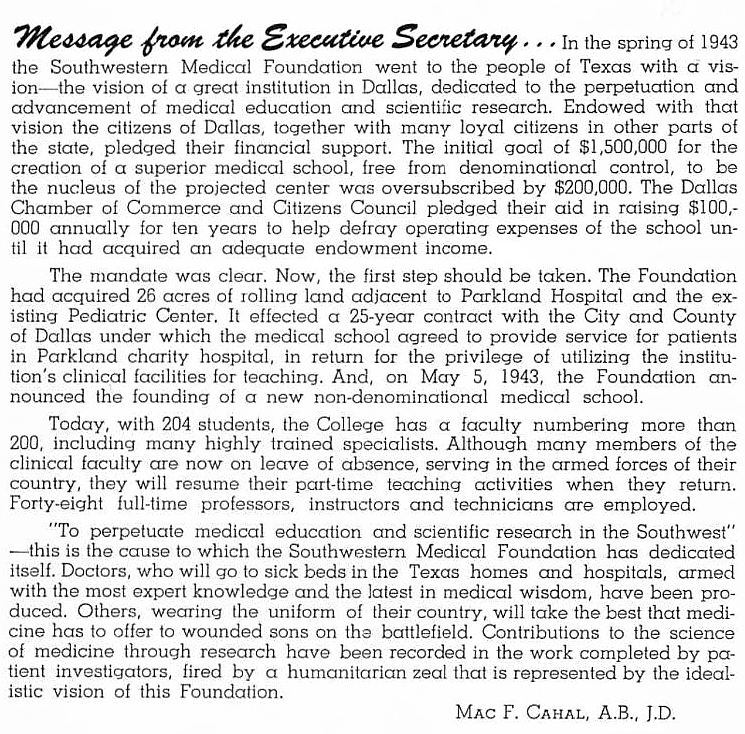
southwestern-medical-college_1944 yrbk_story

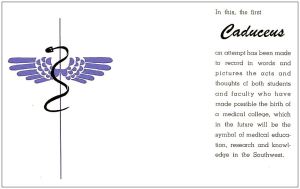
The Foreword: “In this, the first Caduceus, an attempt has been made to record in words and pictures the acts and thoughts of both students and faculty who have made possible the birth of a medical college, which in the future will be the symbol of medical education, research and knowledge in the Southwest” (1944):
southwestern-medical-college_1944 yrbk_caduceus_foreword

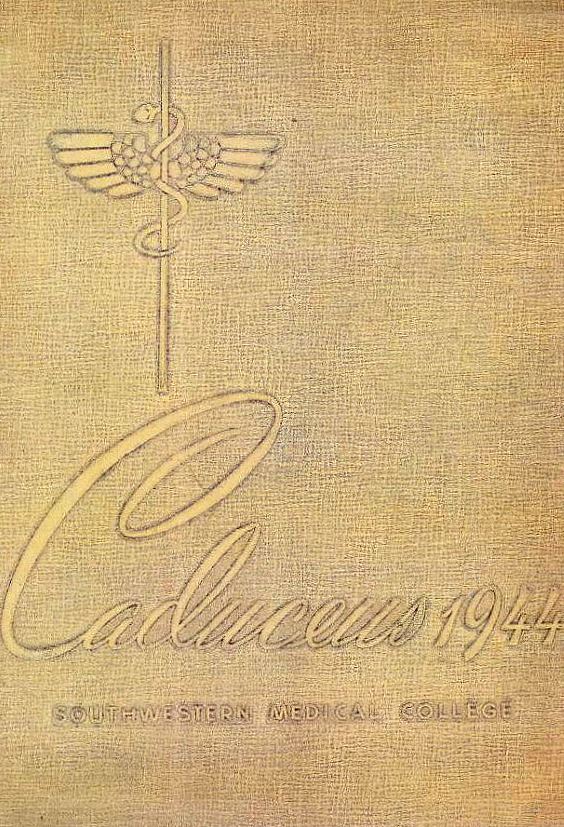
southwestern-medical-college_1944 yrbk_caduceus_cover

dr-e-h-cary_president_southwestern-medical-college_1944-yrbkDr. Edward H. Cary

***

Sources & Notes

All images are from the 1944 edition Caduceus, the yearbook of Southwestern Medical College.

Below, an early photo from Wikipedia

southwestern-medical-college-wikipedia

More Flashback Dallas posts tagged as “Medical” can be found here.

southwestern-medical-college_1944 yrbk_students_dr-w-w-looney_anatomy_sm

*

Copyright © 2020 Paula Bosse. All Rights Reserved.

Live Oak, From Elm and Ervay

downtown-dallas_mayflower_med-arts_southland-life_lee-optical_ebayLive Oak, looking northeast…

by Paula Bosse

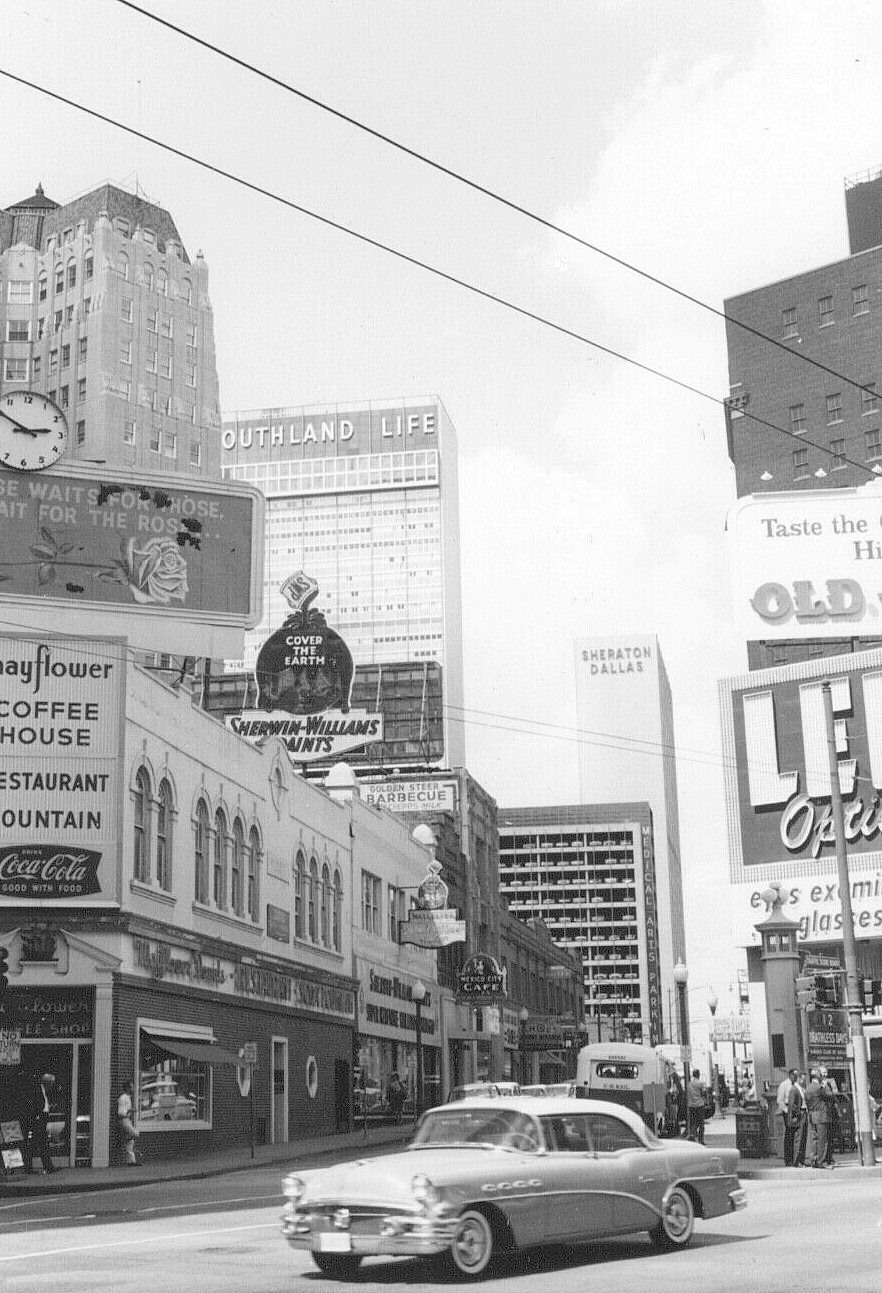
Downtown, at the 3-point intersection of Elm, Ervay, and Live Oak (see a map from 1952 here). This photo shows Live Oak, with a view to the northeast. There are a lot of landmarks: the Mayflower Coffee Shop, the Medical Arts Building, the Southland Life Building, the Sheraton Dallas hotel, the Mexico City Cafe, an entrance to an underground public restroom (the tower-like thingy directly under the Lee Optical sign), and the Dallas Athletic Club. Out of frame to the right is the large flashing Coca-Cola sign (which comes with a handy weather forecast). I’ve gotten this intersection from almost every angle. See other photos of this crossroads here and here.

***

Sources & Notes

This photo is currently available on eBay (the seller is in France — wonder how this photo ended up in Antibes?).

downtown-dallas_mayflower_med-arts_southland-life_lee-optical_ebay_sm

*

Copyright © 2020 Paula Bosse. All Rights Reserved.
City Park, From the Air: 1948-1997

1948_city-park_aerial_dallas-municipal-archives_portalCity Park, 1948 (Dallas Municipal Archives)

by Paula Bosse

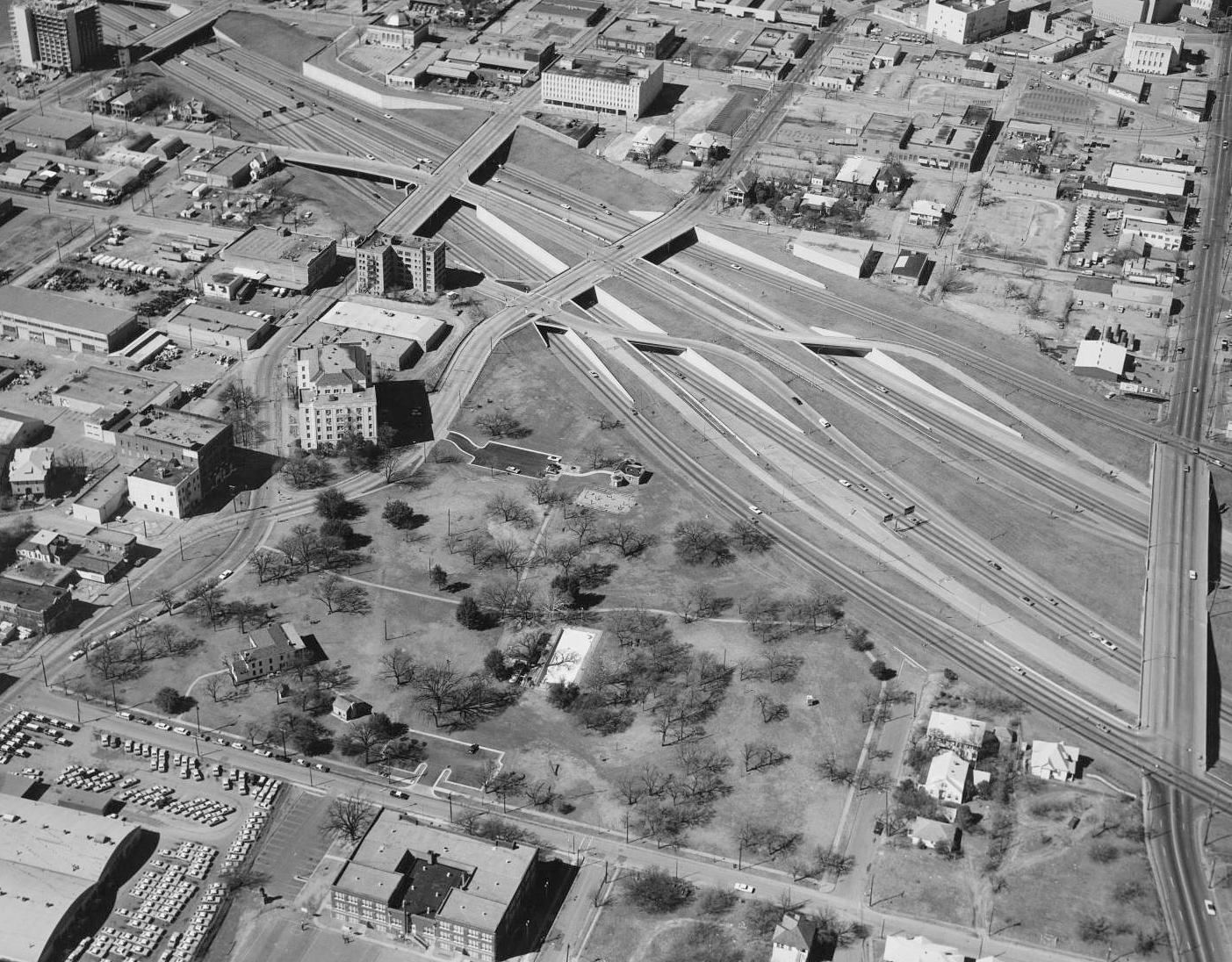
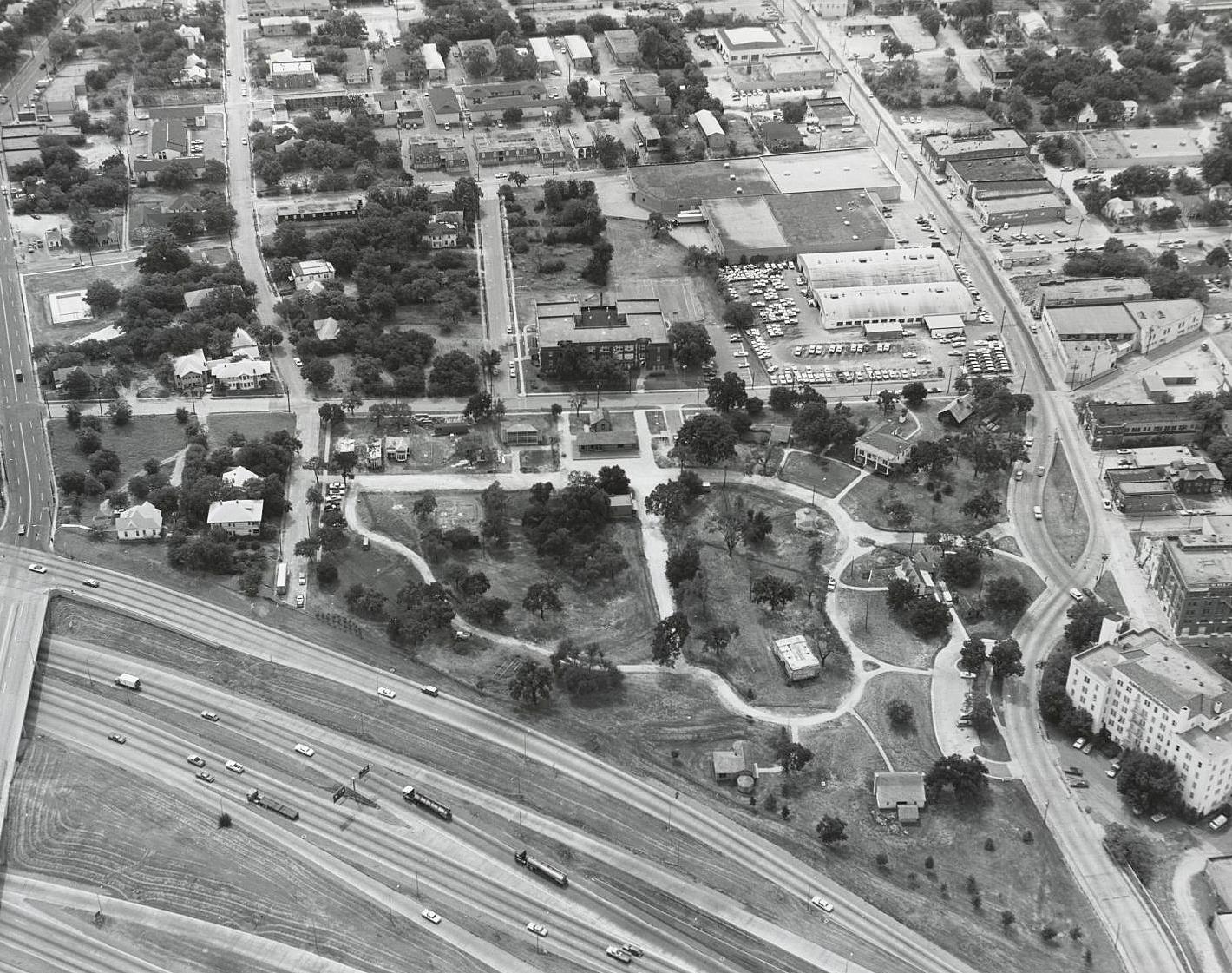
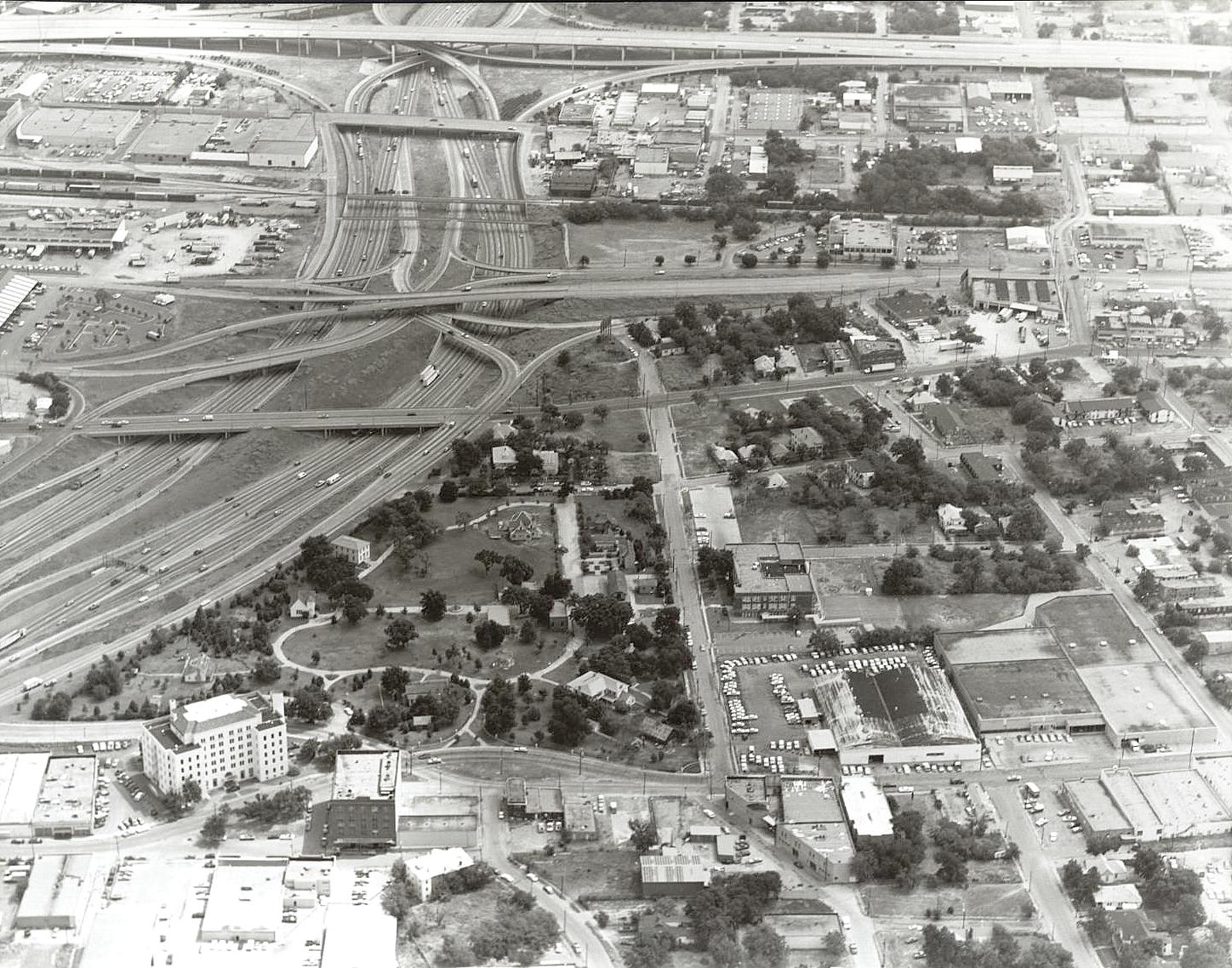
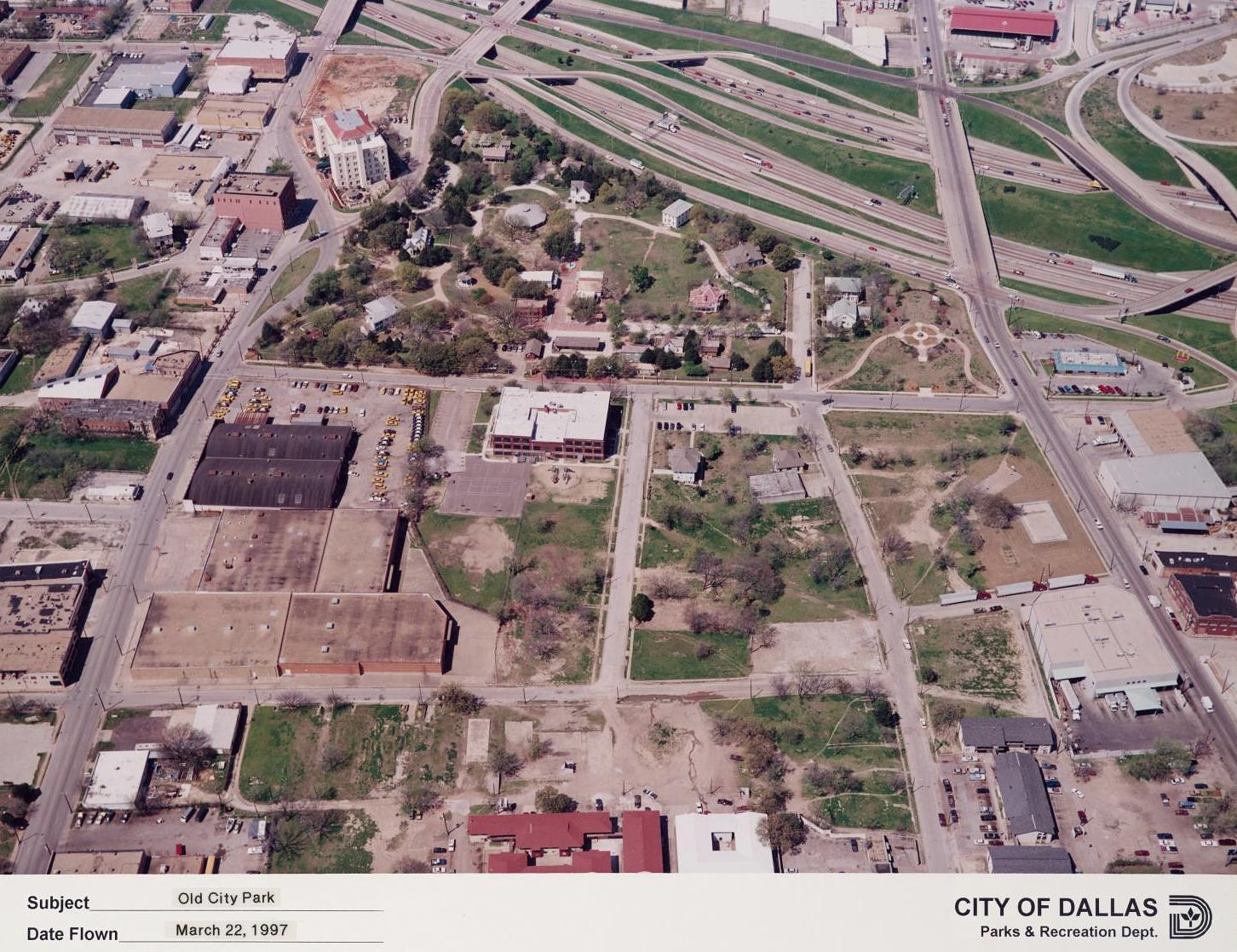
These eight aerial photos of City Park/Old City Park in The Cedars, just south of downtown, show the encroachment of an ever-increasing acreage of asphalt onto what was once the city’s most beautiful park. (All photos are from the Dallas Municipal Archives, and all are larger when clicked.) The one thing present in all photos is the late Ambassador Hotel (RIP).

Above, in 1948, before the cement mixers arrived (photo by Barnes Aerial Surveys).

Below, 1954.

1954_city-park_aerial_squire-haskins_dallas-municipal-archives_portal
Squire Haskins, Dallas Municipal Archives, 1954

1966:

1966_city-park_aerial_squire-haskins_dallas-municipal-archives_portalSquire Haskins, Dallas Municipal Archives, 1966

1969:

1969_city-park_aerial_squire-haskins_dallas-municipal-archives_portalSquire Haskins, Dallas Municipal Archives, 1969

1972:

1972_city-park_aerial_squire-haskins_1972_dallas-municipal-archives_portalSquire Haskins, Dallas Municipal Archives, 1972

1975:

1975_city-park_aerial_squire-haskins_1975_dallas-municipal-archives_portalSquire Haskins, Dallas Municipal Archives, 1975

Circa 1982:

1982-ca_city-park_aerial_dallas-municipal-archives_portalDallas Municipal Archives, ca. 1982

1997:

1997_city-park_aerial_reginald-d-loftin_dallas-municipal-archives_portalReginald D. Loftin, Dallas Municipal Archives, 1997

Today-ish (or at least before the Ambassador burned down in May, 2019):

city-park_google-maps_aerialGoogle Maps

***

Sources & Notes

All photos are from the Dallas Municipal Archives Collection, via the Portal to Texas History; they can all be found here.

Read about the history of the Ambassador Hotel in the Flashback Dallas post “The Majestic Hotel/The Park Hotel/The Ambassador Hotel: R.I.P — 1904-2019.”

A few old postcards of City Park in its heyday can be found in the post “Iola Bridge.”

1948_city-park_aerial_dallas-municipal-archives_portal_sm

*

Copyright © 2020 Paula Bosse. All Rights Reserved.

Luby’s, In Dallas Since 1929

lubys_main-st_1954_detLuby’s No. 2, Main Street, 1954 (photo detail)

by Paula Bosse

The liquidation of Luby’s restaurants was announced this week. There are a lot of people (Texans in particular) who are going to take this news hard.

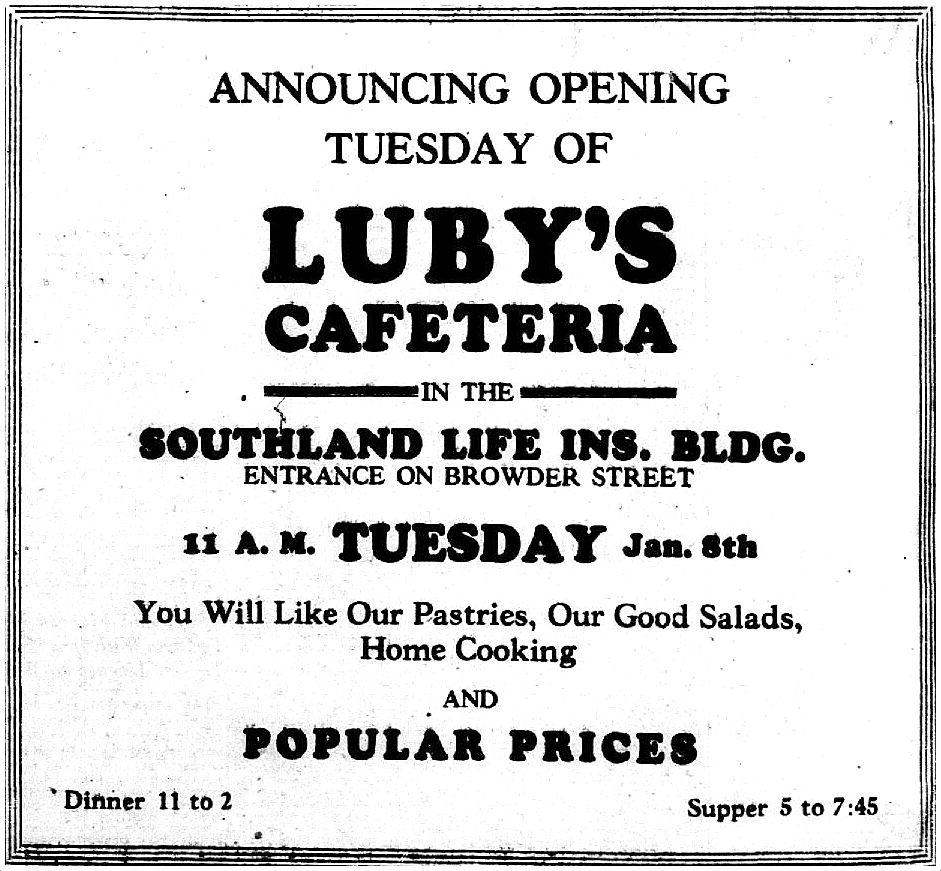
I spotted the Luby’s seen in the picture above in a photo I found on eBay a few years ago (see the full photo here). I was surprised to learn that the first Luby’s in Dallas opened in 1929. (I think it was the first Luby’s in Texas — there might have been a tangentially related “Luby’s”-branded restaurant in Muskogee, Oklahoma, but let’s just say that the Luby’s at 205 Browder Street in downtown Dallas was the first one in Texas. It was opened by Earl E. Luby on January 8, 1929.

lubys_010829_adJan. 8, 1929

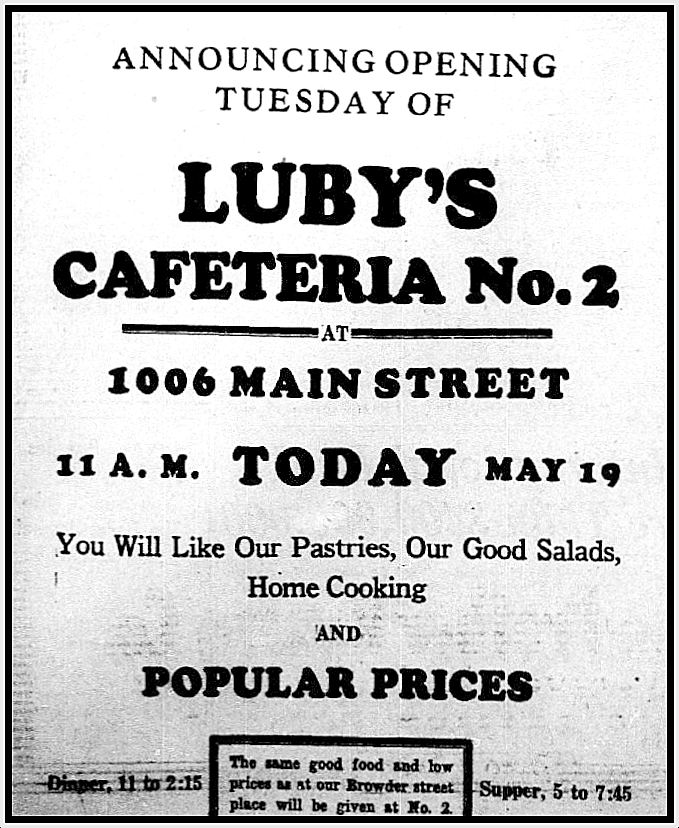
The second location (the one seen in the photo above) opened at 1006 Main Street (at Poydras) two years later, on May 19, 1931.

lubys_051931_no-2May 19, 1931

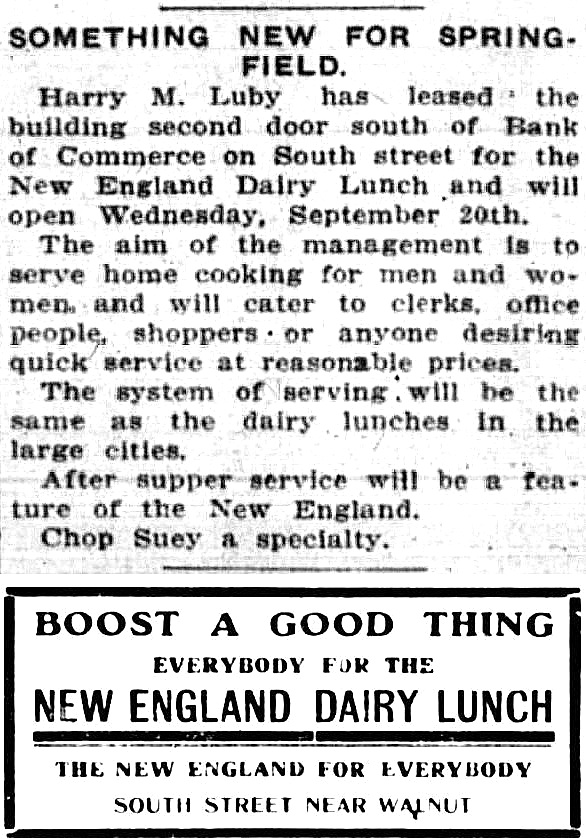
Earl Luby was the first cousin of Harry M. Luby, the man who is generally considered to have opened the forerunner of what we now know as Luby’s. In September, 1911, Harry opened a cafeteria in Springfield, Missouri called New England Dairy Lunch — there were several other restaurants around the U.S. with the same name, so I’m not sure if he bought it as a franchise, but whatever the case, that cafeteria was the start of a tray-toting empire.

luby_springfield-MO-news-leader_sept-1911Springfield News-Leader, Sept. 20 & 21, 1911

He opened other New England cafeterias in Missouri and, with cousin Earl, in Oklahoma. (There was one in Dallas in 1919, located at 1409 Elm, which appears to be connected to the Luby family.)

new-england-cafeteria_041619Apr. 16, 1919

In 1929 Earl branched off, moved to Texas, opened his own cafeterias (mostly in Dallas), and made a fortune. (There were Luby’s cafeterias run by other members of the Luby family, most notably Harry’s son, Robert Luby, who was active in South Texas a few decades later. I don’t know whether these were two completely different business entities, but Earl was king of the very lucrative Dallas market.)

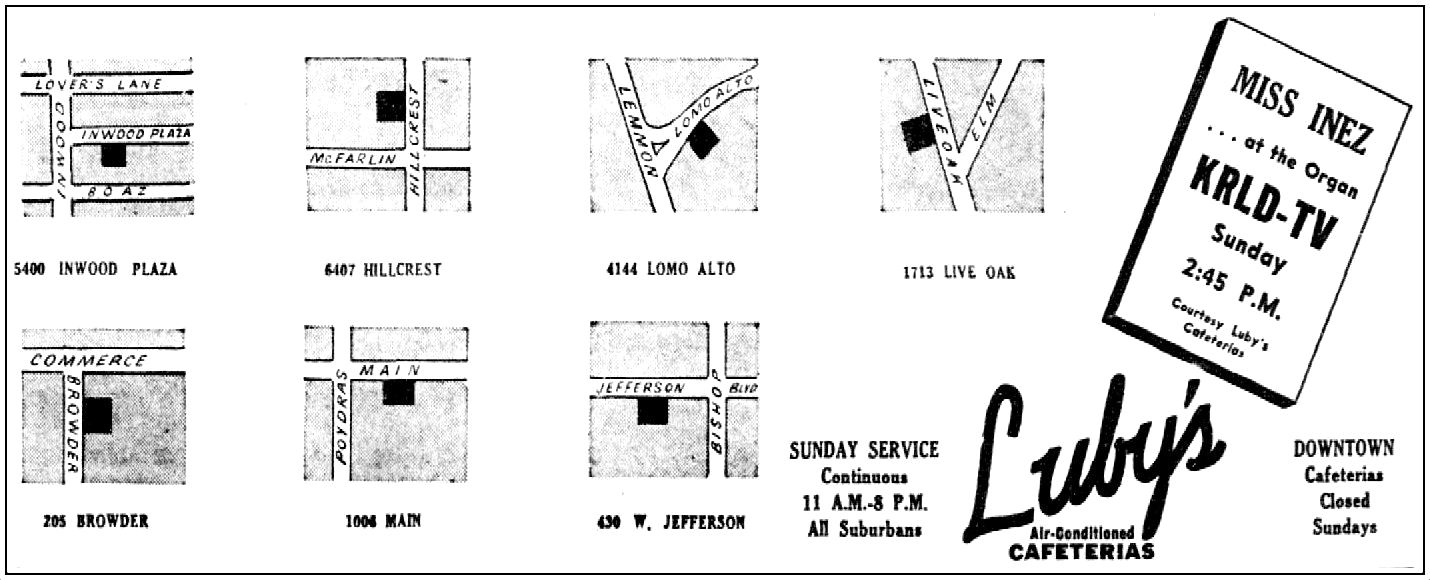
Here’s an ad from 1953 with Luby’s locations at that time (along with a Miss Inez shout-out). (Click to see a larger image.)

lubys_062153_ad-det_maps

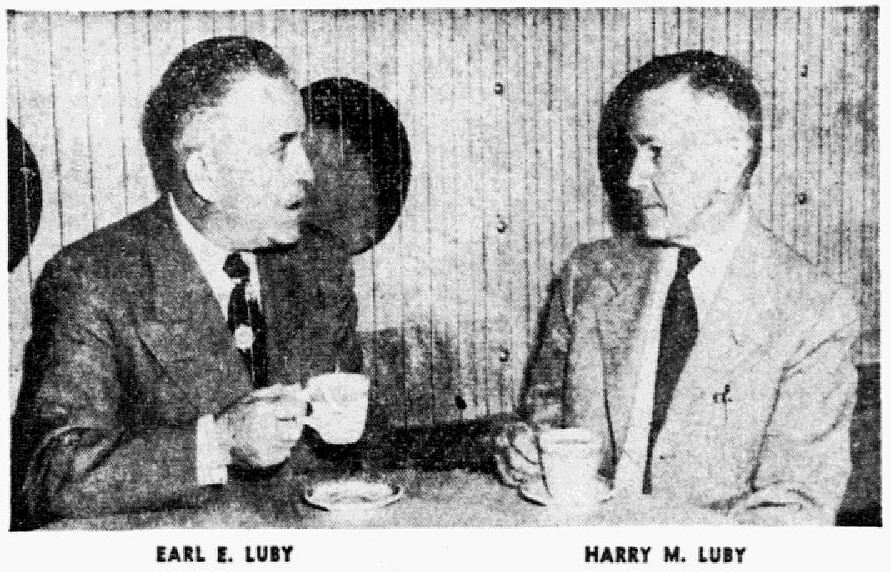
And from the same ad, a photo of cousins Earl and Harry enjoying a convivial cup of coffee.

lubys_062153_ad-det_photoJune 1953 ad (details)

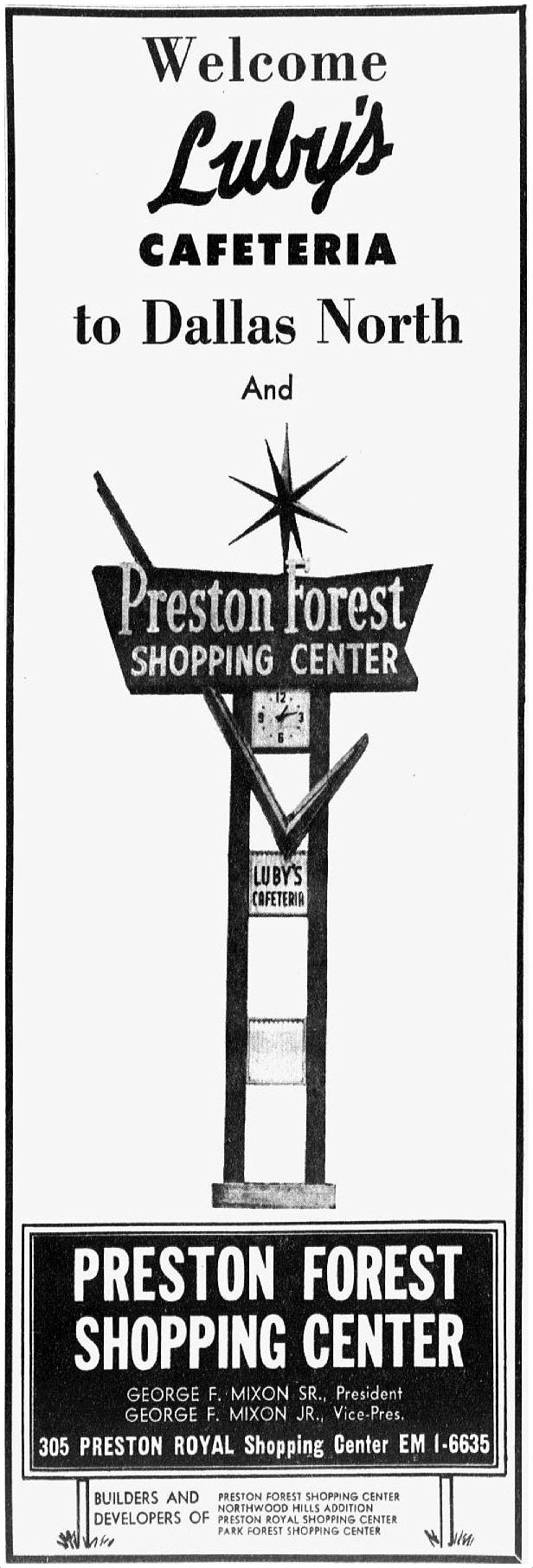
And, below, a 1960 ad for the new Luby’s at the Preston Forest Shopping Center (that sign is fantastic!).

preston-forest_lubys_090760_signSept. 1960

It’s a shame to say goodbye to such a long-lived Dallas institution. RIP, Luby’s. And thanks, Earl (1897-1990).

lubys_matchbk

***

Sources & Notes

1954 photo of Main Street is a detail of a larger photo found in the Flashback Dallas post “Streetcar #728, Main Street — 1954.”

Luby’s website is here (hurry!).

More on the history of Luby’s (with some incorrect information and nary a mention of Earl!) can be found on Wikipedia and The Handbook of Texas.

lubys_main-st_1954_det_sm

*

Copyright © 2020 Paula Bosse. All Rights Reserved.

Labor Day Weekend, Union Bus Depot — 1952

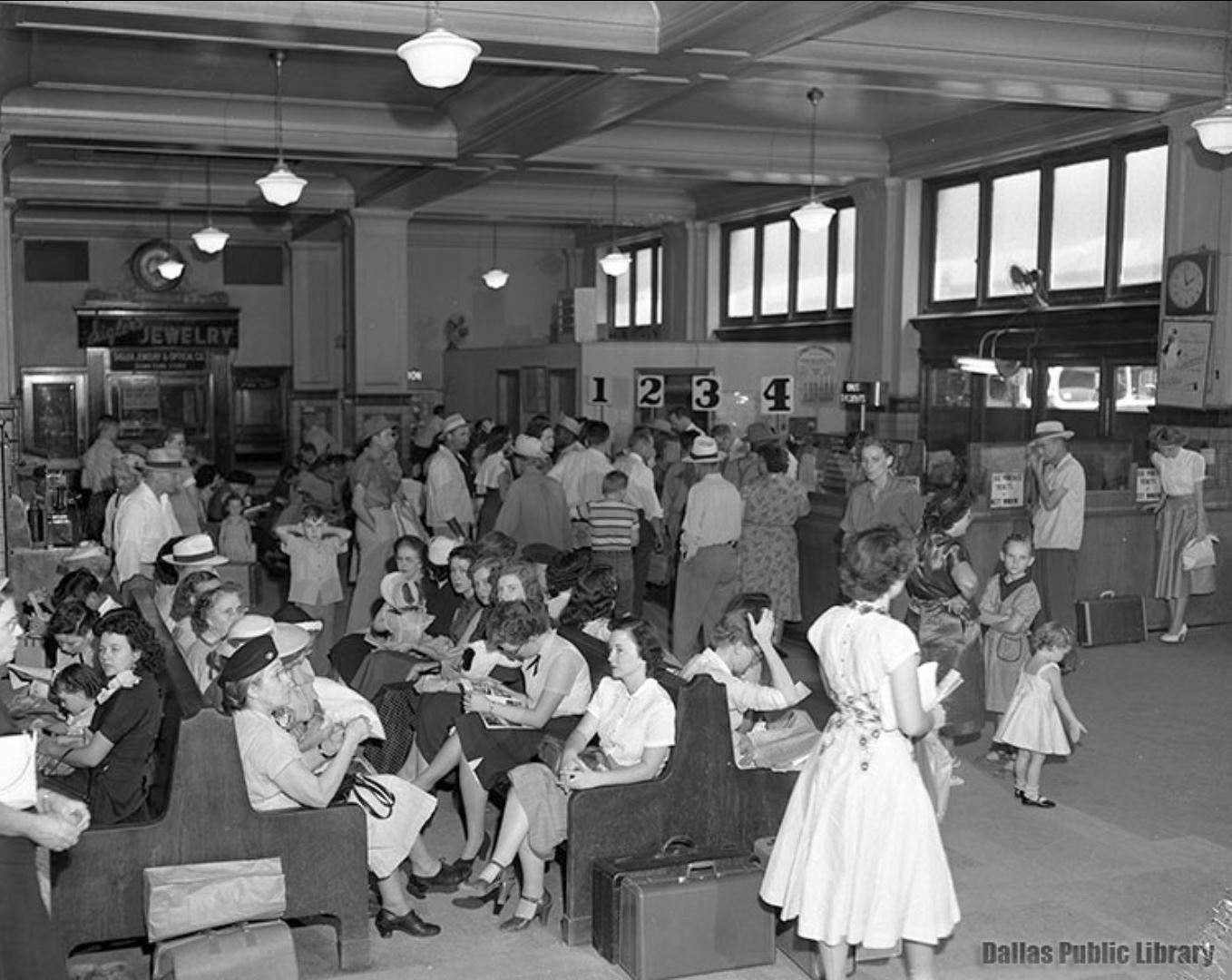
labor-day_union-bus-depot_hayes-coll_1952_DPLWaiting for buses… (photo: Dallas Public Library)

by Paula Bosse

Labor Day in 1952 was on Sept. 1. The people in the photo above were waiting for buses to whisk them away for a nice end-of-summer Labor Day holiday. They were in the Union Bus Depot in the Interurban Building (downtown, at Jackson and Browder). They were probably waiting for a Continental Trailways bus. (While waiting, they might have availed themselves of merchandise at the Sigler’s Jewelry & Optical Co., seen in the background. This was their downtown location — I wrote about their main store at Peak and Elm here.)

So what was going on in Dallas on Labor Day in 1952? Well, it was hot. Real hot. (It’s always hot.) (ALWAYS!) It was 102°, and it was very dry and very windy. Grassfires were popping up everywhere — there were 30 fires that day! 

There were, of course, Labor Day picnics. The largest was for members of the UAW-CIO — the crowd of union members and their families was estimated at 5,200 and was held on ranchland (the D & L Ranch) west of Grapevine. There were also hundreds of AFL plumbers and carpenters at a picnic at Vickery Park on Greenville Avenue. 6,000 Dallasites took advantage of the city’s swimming pools on the last they were open. And then there were 500 people who waved off the whole “outdoor” thing and spent the day skating at the chilly Fair Park ice rink. 

The movie “Jumping Jacks,” starring Dean Martin and Jerry Lewis, was playing at the Majestic, and “Merry Widow,” starring Lana Turner, was at the Palace. Kay Thompson, the singer (and creator of the Eloise children’s books) was opening at the Adolphus Hotel’s Century Room. And there was a square-dancing contest on the Fair Park midway.

It was a bad day, however, for a motorist who indulged in one too many Labor Day adult beverages. The guy zig-zagged in and out of traffic on the Houston Street viaduct, hit a curb, and then swerved back into traffic. He was stopped by one of the cars he had whipped around. Unfortunately for the tipsy driver, the man who stopped him was Sheriff Bill Decker. Bet he’d wished he gotten out of town, along with all those sweaty travelers seen above waiting at the Union Bus Depot.

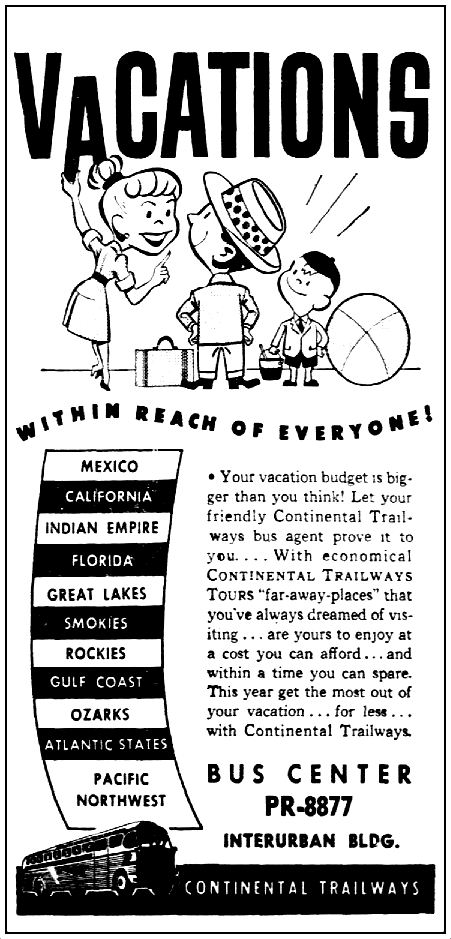
continental-trailways_ad_march-1952March, 1952 (click for larger image)

continental-trailways_ad_may-1952May, 1952

*

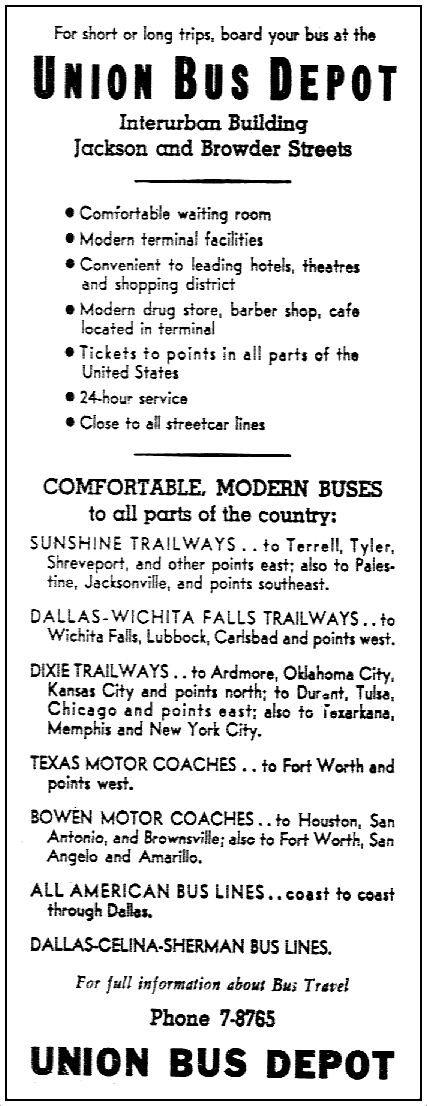
I was unaware of the Union Bus Depot until researching this post. It was established around the time when the Dallas-Fort Worth Interurban ceased operation on Christmas Eve, 1934 (the line from Dallas to Waco and Denison kept going a while longer). Suddenly the Interurban terminal at Jackson and Browder streets was going to be sorely underused, so it was decided to make it a great big bus depot. Most of the major bus companies serving Dallas (except for Greyhound, which had it own terminal) used the Interurban Building terminal as a shared depot. 

union-bus-depot_interurban-bldg_072537July, 1937

***

Sources & Notes

Photo, titled “Labor Day Weekend crowd at the Union Bus Depot” (Aug. 31, 1952), is from the Hayes Collection, Dallas Public Library Dallas History & Archives Division, Dallas Public Library; Call Number PA76-1/11420.

From the Dallas Morning News archives:

  • “Outings on Labor Day Lack Only In Oratory” by Frank X. Tolbert (DMN, Sept. 2, 1952)
  • “Last 24 Hours in Dallas” by Lorrie Brooks (DMN, Sept. 2, 1953)
  • “Grassland Areas Hit By Flames” (DMN, Sept. 2, 1952)
  • “Negotiations For Union Bus and Interurban Terminal Are Under Way By Electric Lines” (DMN, Oct. 25, 1934)
  • “Electric Line Station To Be Bus Terminal” (DMN, Dec. 1, 1934)

More on Labor Day in Dallas can be found in the Flashback Dallas Post “Labor Day Parade — 1911.”

labor-day_union-bus-depot_hayes-coll_1952_DPL_sm

*

Copyright © 2020 Paula Bosse. All Rights Reserved.