Flashback : Dallas

A Miscellany: History, Ads, Pop Culture

Category: Neighborhoods

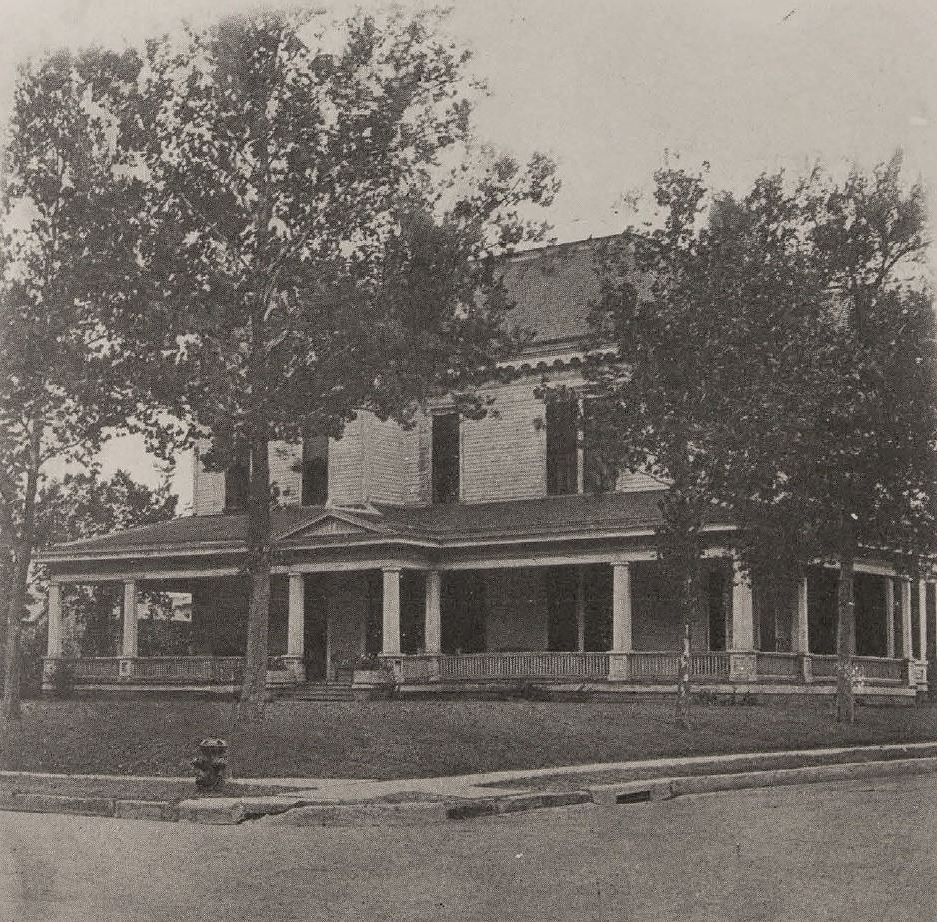
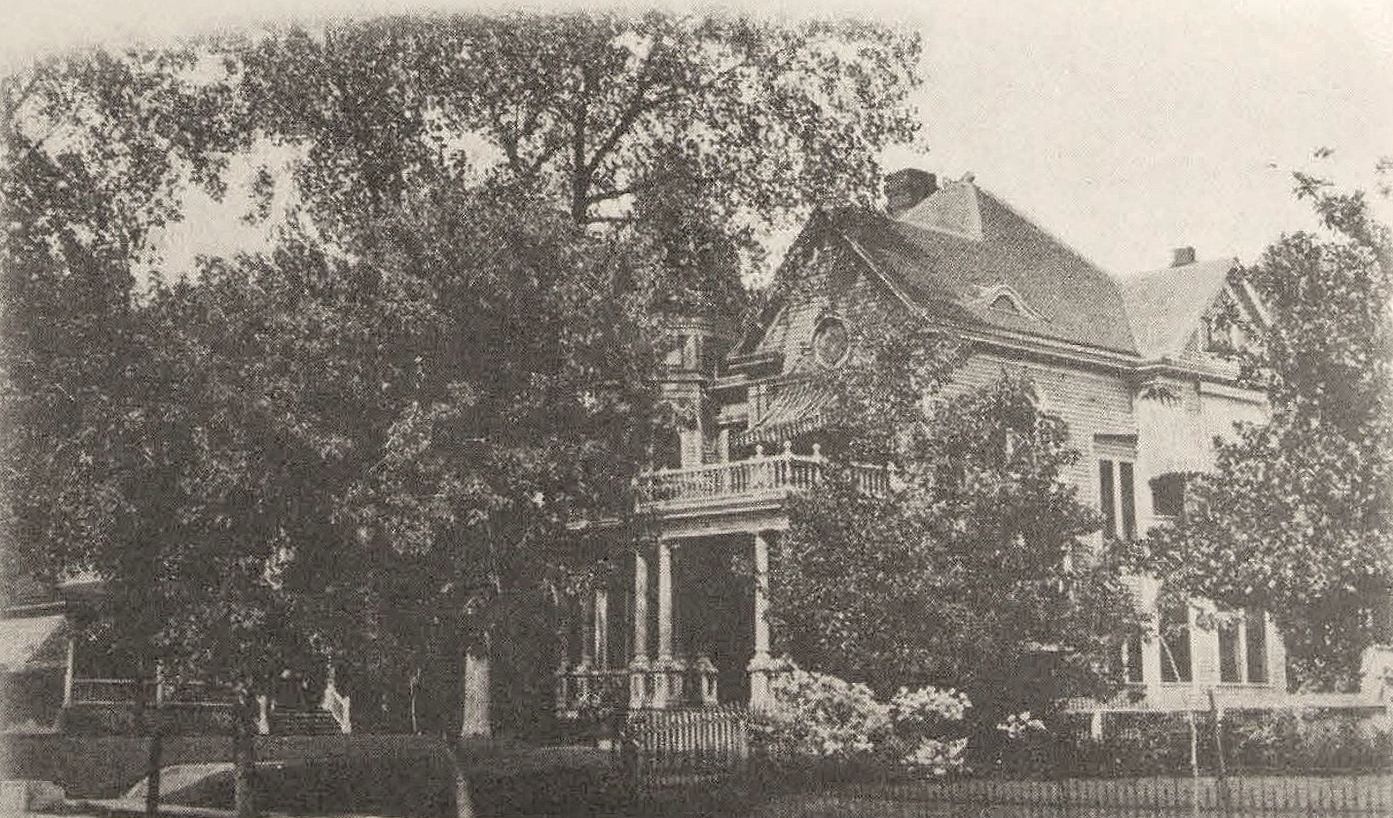
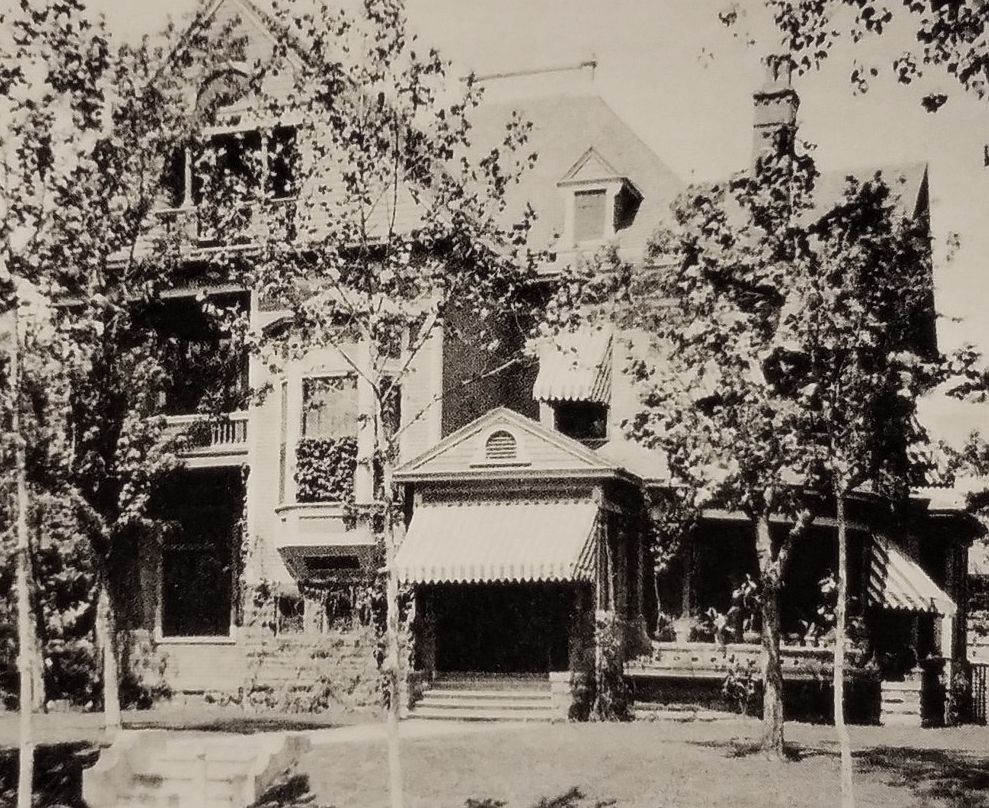
The Murphy House — Maple Avenue
murphy-house_ca-1910_dallas-rediscovered-DHS
154 Maple Avenue (2516 Maple Avenue), circa 1910

by Paula Bosse

I posted a screenshot of a “mystery house” (here) to see if anyone could figure out where it was — and a few people identified it! The screenshot was from a June, 1960 WFAA Channel 8 news piece on an embezzlement case against the owner of the insurance business that was then occupying the old house — it was the home of the State National Life Insurance Company at 2516 Maple Avenue. And I don’t know what happened with its “remodeling” along the way, but… yikes. Someone did an unbelievably bad job!

According to a 1947 Dallas Morning News article (see “Sources & Notes” at bottom of page), the house was built in 1897. The address then was 154 Maple Avenue, back when Maple Avenue was lined with very nice homes, occupied by well-to-do families who would later move to Highland Park. You can see the house at the corner of Maple and Mahon (which for a while was called Martin) on the 1899 Sanborn map here, the 1905 map here, and the 1921 map here

I’m not sure who built it, but in 1901 it was occupied by banker Roderick Oliver who sold it to Capt. John P. Murphy in 1906 for $18,000 — or $500,000 in today’s money. Murphy was the legendary pioneer real estate man of Dallas. He started his real estate company in 1874 and was joined by partner Charles F. Bolanz in 1884 — Murphy & Bolanz was the premier real estate company in the city for decades. 
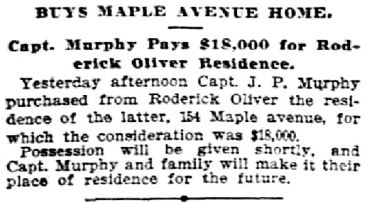
murphy-house_dmn_051806Dallas Morning News, May 18, 1906

The house stayed in the Murphy family for many years. In 1947 the house was elaborately restored by three women (two of whom were Murphy’s daughters) who opened it as The Laurels, an elegant location for weddings and receptions. The house had been slated for sale and demolition, but the women thought that the old house would serve brides well, as “the highlight of any young girl’s life is her marriage, and few places in Dallas offer a suitable environment for such an occasion,” said one of the women (DMN, Oct. 5, 1947). The Laurels appears to have been in business only through the end of 1948 — about a year; a classified ad shows that it had become a boarding house “for young working people” soon after.

It seems to have been sold in the 1950s when it became home to various businesses. After the embezzlement interlude, it was, among other things, a theme club called The Haunted House in the 1960s, community radio station KCHU in the ’70s, and an antique shop in the ’80s.

Below is how it looked in June of 1960 as it was passing into receivership. A news story described it thusly: “…a big house that is a study in contradictions. Outside, flat green paint peels and cracks, gentility sliding headlong toward an ‘arty’ disrespectability” (“Old House on Maple Services Insurance Empire,” Dallas Morning News, June 9, 1960). It looked pretty sad.
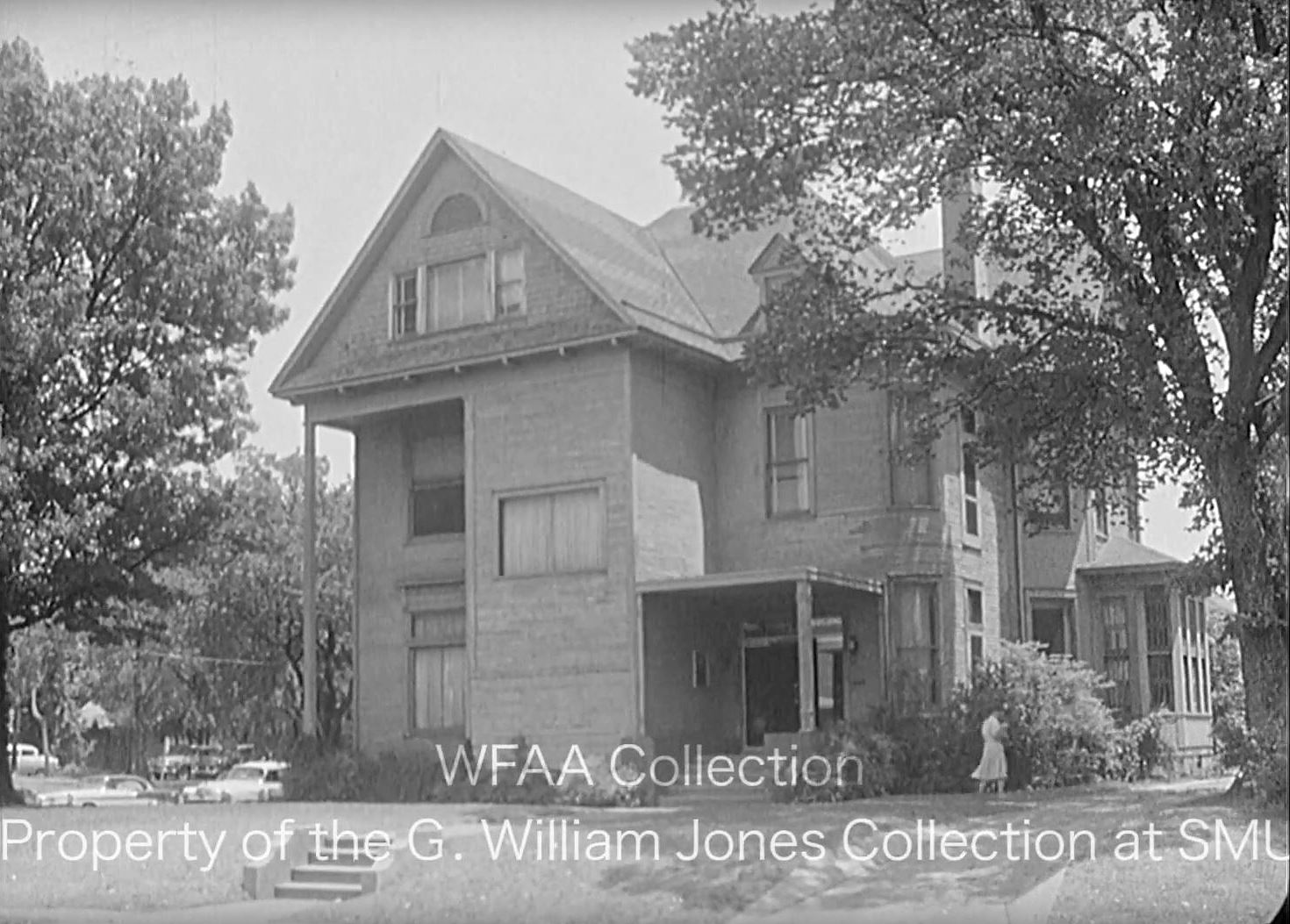
mystery-house-1960
1960, G. William Jones Collection, SMU

In the mid-’70s, it became the headquarters of community radio station KCHU (90.0 FM). (Watch Channel 13 story on KCHU on YouTube here.)

kchu_murphy-house_KERA_dec-1975_screenshot1975, G. William Jones Collection, SMU

kchu-sign_kera_dec-1975_SMU

It was spiffed up a bit in the early ’80s for the antique shop, Booth Galleries, but it still looked weird, like someone had sheared off the sides of the house, removing any and all character.
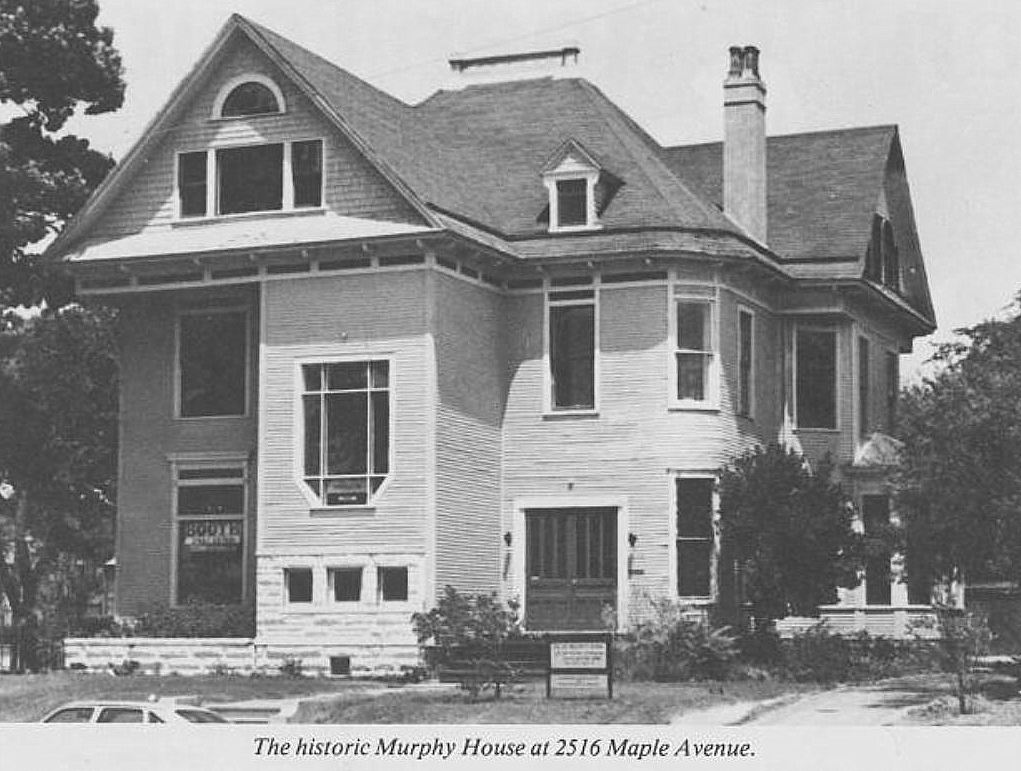
murphy-house_2515-maple_historic-dallas-mag_fall-1980_portal_photo
1980, Historic Dallas, via Portal to Texas History

Then — saints preserve us! — the gods smiled down and Claire Heymann bought the decrepit old house (which was waiting for its all-but-inevitable date with the wrecking ball) and worked absolute miracles to transform the house into the stunningly beautiful Hotel St. Germain, located across from the Crescent. This is one instance where a restoration/renovation actually improves on the original! I’ve loved this redone building — Dallas’ first bed and breakfast inn — since it first appeared in 1991. Long may it stand. Thank you, Claire!

hotel-st-germain_google_2017
2018, Google Street View

hotel-st-germain_google-street-view_2019
2019, Google Street View

***

Sources & Notes

Top photo showing the home of John P. Murphy, circa 1910, is from Dallas Rediscovered by William McDonald, with photo credited to the Dallas Historical Society.

The Dallas Morning News article “Early Dallas Home Restored for Weddings” (DMN, Oct. 5, 1947) states that the house was built in 1897. “The Laurels” was opened by Murphy’s daughters Mrs. Louise Boyce Sanford and Mrs. Eugene P. Locke in partnership with Mrs. Dorothy Doran Walker.

murphy-house_ca-1910_dallas-rediscovered-DHS_sm

*

Copyright © 2019 Paula Bosse. All Rights Reserved.
Private Education in Dallas — 1916

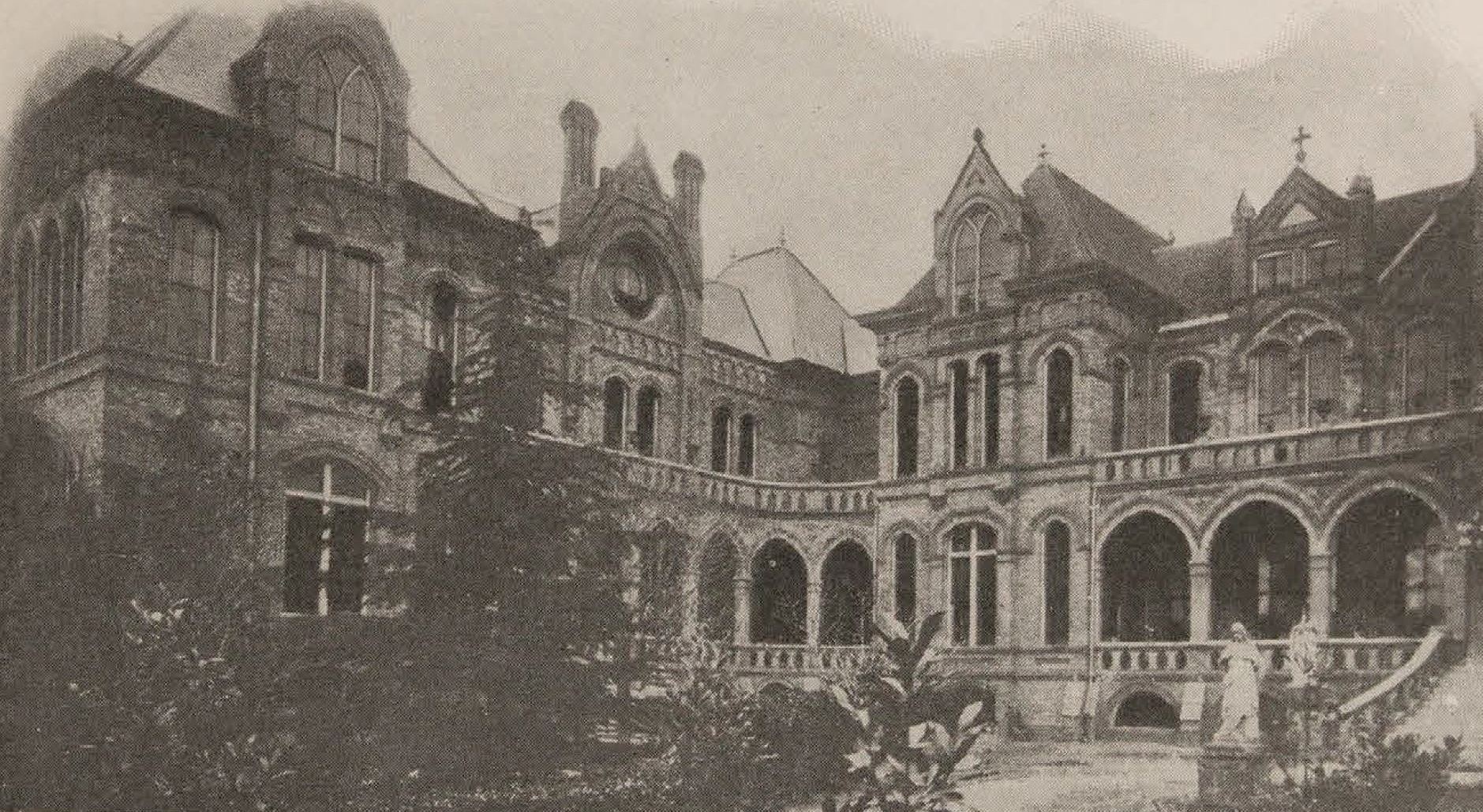
dallas-educational-center_ursuline_ca-1916_degolyer-library_smu_photoThe looming Ursuline Academy in Old East Dallas

by Paula Bosse

Here is a collection of photos and mini-histories of several of the top private schools that Dallas parents were ponying up their hard-earned cash for in 1916. Some were boarding schools, some were affiliated with churches, some were rooted in military discipline, some were medical schools, and some were places to go to receive instruction on the finer things in life, such as music and art. Sadly, only one of these buildings still stands. But two of the schools in this collection have been operating continuously for over 100 years (Ursuline and Hockaday), and two more are still around, having had a few name changes over the years (St. Mark’s and Jesuit). Here’s where the more well-to-do girls and boys of Dallas (…and Texas — and many other states) were sent to become young ladies and gentlemen. 

**

THE URSULINE ACADEMY (above) — Mother Mary Teresa, superioress — the block bounded by Live Oak, Haskell, Bryan, and St. Joseph. This school for girls and young women was established in Dallas by the Ursuline Sisters in about 1874 — and it continues today as one of the city’s finest institutions. The incredible gothic building was… incredible. So of course it was demolished (in 1949, when the school moved its campus to its present-day North Dallas location). See what it looked like at its Gothic, grandiose height in a previous Flashback Dallas post here.

dallas-educational-center_ursuline_ca-1916_degolyer-library_smu

*

MISS HOCKADAY’S SCHOOL FOR GIRLS — Miss Ela Hockaday, principal — 1206 N. Haskell. Hockaday was (and is) the premier girl’s school of Dallas society — like Ursuline, it is still going strong (and, like Ursuline, it moved away from East Dallas and is now located in North Dallas). In 1919, three years after these photos were taken, Miss Hockaday would buy the former home of Walter Caruth, Bosque Bonita, set in a full block at Belmont and Greenville in the Vickery Place neighborhood — there she built a large campus and cemented her place as one of the legendary educators in Dallas history. (In 1920, Hockaday’s annual tuition for boarding students eclipsed even the hefty tuition of The Terrill School for Boys: Miss Hockaday had parents lined up to pay her $1,000 a year — now the equivalent of about $13,000 — to educate and refine their daughters at her prestigious institution.)

dallas-educational-center_hockaday_ca-1916_degolyer-library_smu

dallas-educational-center_hockaday_tennis_ca-1916_degolyer-library_smu

dallas-educational-center_hockaday_ca-1916_degolyer-library_smu_text

*

MISSES HOLLEY’S SCHOOL FOR GIRLS — Miss Frances Holley and Miss Josephine Holley, principals — 4528 Ross Avenue (at Annex). Another somewhat exclusive school that catered to young society ladies was the Holley school, established in 1908 by the two Holley sisters, who limited their student body to only 35 girls. The school (which is sometimes referred to as “Miss Holley’s School” and “Holley Hall” — and which was located behind the sisters’ residence) closed in 1926.

dallas-educational-center_holleys-school_ca-1916_degolyer-library_smu

dallas-educational-center_holleys-school_ca-1916_degolyer-library_smu_text

*

ST. MARY’S COLLEGE — Miss Ethel Middleton, principal — Garrett and Ross Avenue.  This Episcopal-Church-associated boarding and day school for girls and young ladies was one of the Southwest’s leading institutions of learning for young women. When established in 1889, it was built outside the city limits on a “hill” — back then the area around the school was often referred to as “College Hill.”

dallas-educational-center_st-marys_b_ca-1916_degolyer-library_smu

dallas-educational-center_st-marys_ca-1916_degolyer-library_smu

dallas-educational-center_st-marys_ca-1916_degolyer-library_smu_text

*

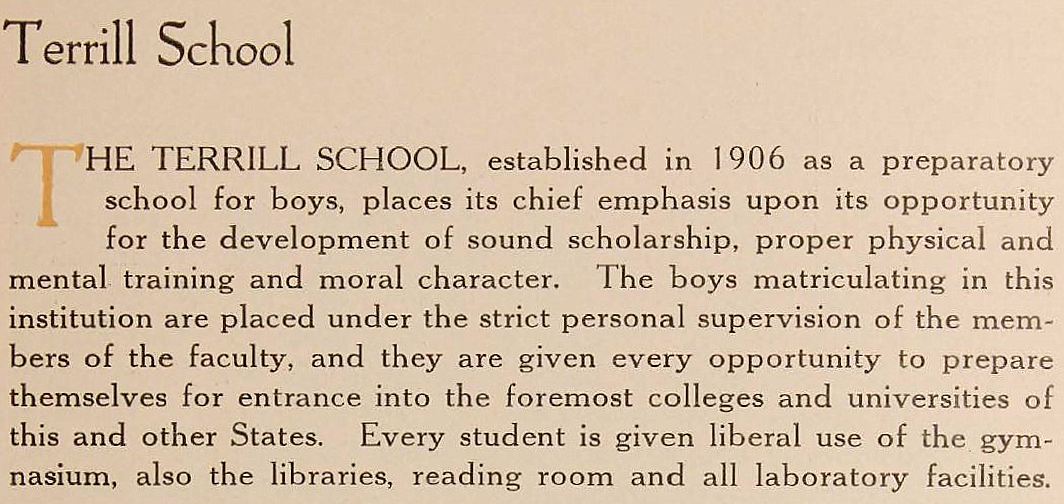
THE TERRILL SCHOOL FOR BOYS — M. B. Bogarte, head master — 4217 Swiss Avenue (at Peak). The exclusive boys school in Dallas (which, after several mergers, continues today as St. Mark’s); the cost of a year’s tuition for boarding students in 1920 was $850 — the equivalent of about $11,000 — a very pricey school back then. More on the Terrill School can be found in previous Flashback Dallas posts here and here.

dallas-educational-center_terrill-school_ca-1916_degolyer-library_smu

dallas-educational-center_terrill-school_ca-1916_degolyer-library_smu_info

*

THE HARDIN SCHOOL FOR BOYS — J. A. Hardin, principal — 4021 Swiss Avenue. This prep school was affiliated with the University of Texas. It was located for a while in downtown Dallas and for a time at the location seen below in Old East Dallas, but in 1917 it either bought out and merged with the Dallas Military Academy or that school went out of business, because the Hardin School settled into the military academy’s location, which had been Walter Caruth’s old home, Bosque Bonita, at Belmont and Greenville, where boys were marching around doing drills until Miss Hockaday moved in two years later in 1919.

dallas-educational-center_hardin-school_ca-1916_degolyer-library_smu_photo

dallas-educational-center_hardin-school_ca-1916_degolyer-library_smu

*

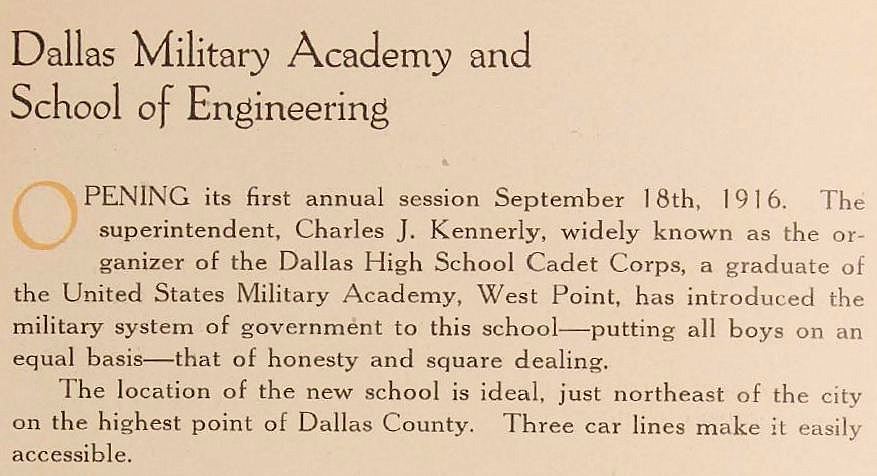
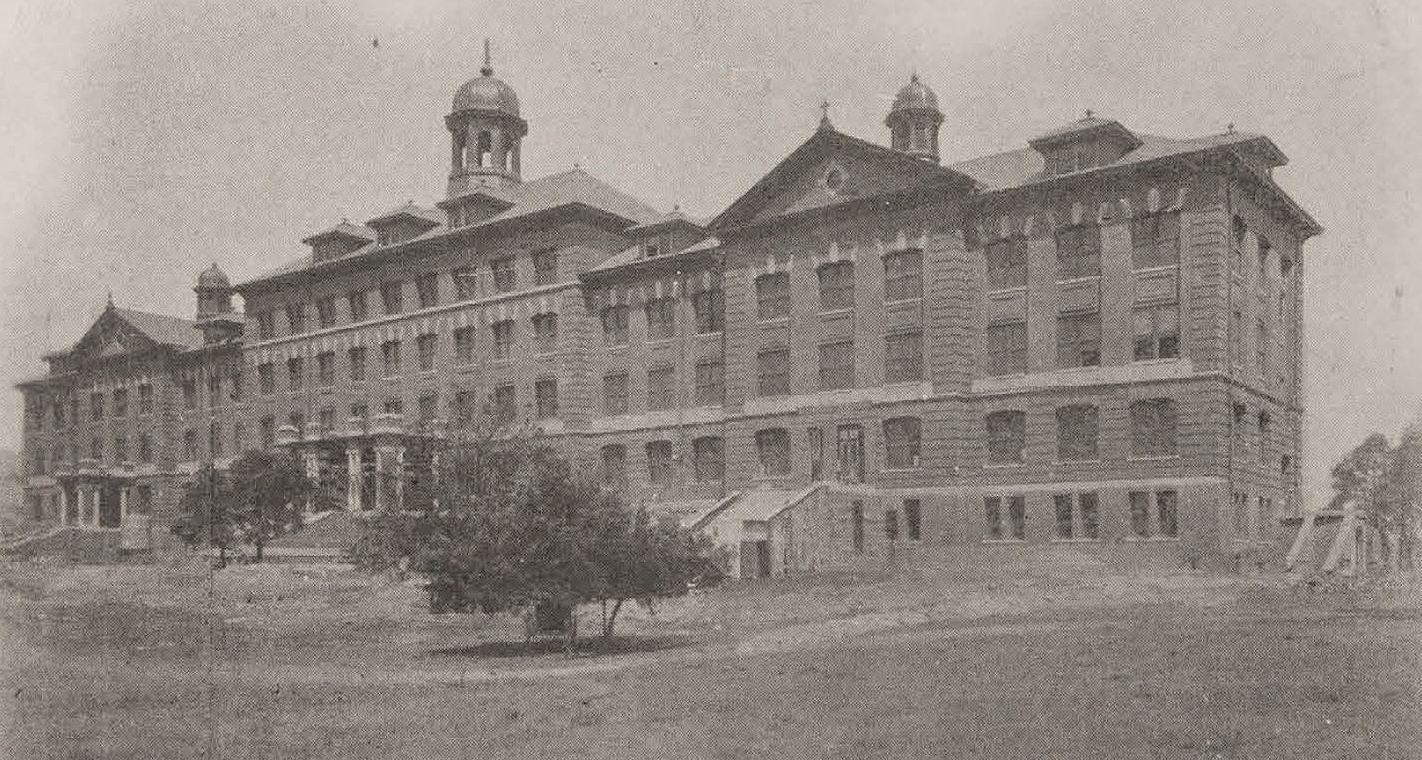
DALLAS MILITARY ACADEMY AND SCHOOL OF ENGINEERING — C. J. Kennerly, superintendent — Belmont & Greenville Ave. This “practical school for manly boys” opened up in 1916 in a large house which had been built by Walter Caruth in the area now known as Lower Greenville. The Dallas Military Academy lasted for only one year until the large house became home to the Hardin School for Boys in 1917 (and, two years later in 1919, it became the longtime home of the Hockaday School). If you didn’t click on the link for it above, now’s your chance to read more about the history of Caruth’s grand house, Bosque Bonita, here.

dallas-educational-center_pre-hockaday_dallas-military-academy_ca-1916_degolyer-library_smu

dallas-educational-center_pre-hockaday_dallas-military-academy_ca-1916_degolyer-library_smu_text

*

UNIVERSITY OF DALLAS — Very Rev. P. A. Finney, president — Oak Lawn Ave. & Gilbert. When it opened in 1906, this school was known as Holy Trinity College; its name was changed to the University of Dallas in 1910. The University of Dallas closed in 1928 because of lack of money; it was later known as Jesuit High School until Jesuit moved to North Dallas — the grand building was demolished in 1963. (See an aerial view of this huge building here.)

dallas-educational-center_univ-of-dallas_trinity_jesuit_ca-1916_degolyer-library_smu_photo

dallas-educational-center_univ-of-dallas_trinity_jesuit_ca-1916_degolyer-library_smu

*

THE MORGAN SCHOOL (formerly the Highland Park Academy) — Mrs. Joseph Morgan, principal — 4608 Abbott. A co-ed school.

dallas-educational-center_morgan-school_b_ca-1916_degolyer-library_smu

dallas-educational-center_morgan-school_ca-1916_degolyer-library_smu

dallas-educational-center_morgan-school_ca-1916_degolyer-library_smu_text

*

POWELL TRAINING SCHOOL — Nathan Powell, president — Binkley & Atkins (now Hillcrest) in University Park. I believe this is the only building in this post still standing — more can be read in the earlier post “Send Your Kids to Prep School ‘Under the Shadow of SMU’ — 1915,” here. (That is, in fact, a bit of the very, very young SMU campus seen in the distance at the bottom right.)

dallas-educational-center_powell-school_ca-1916

dallas-educational-center_powell-school_ca-1916_info

*

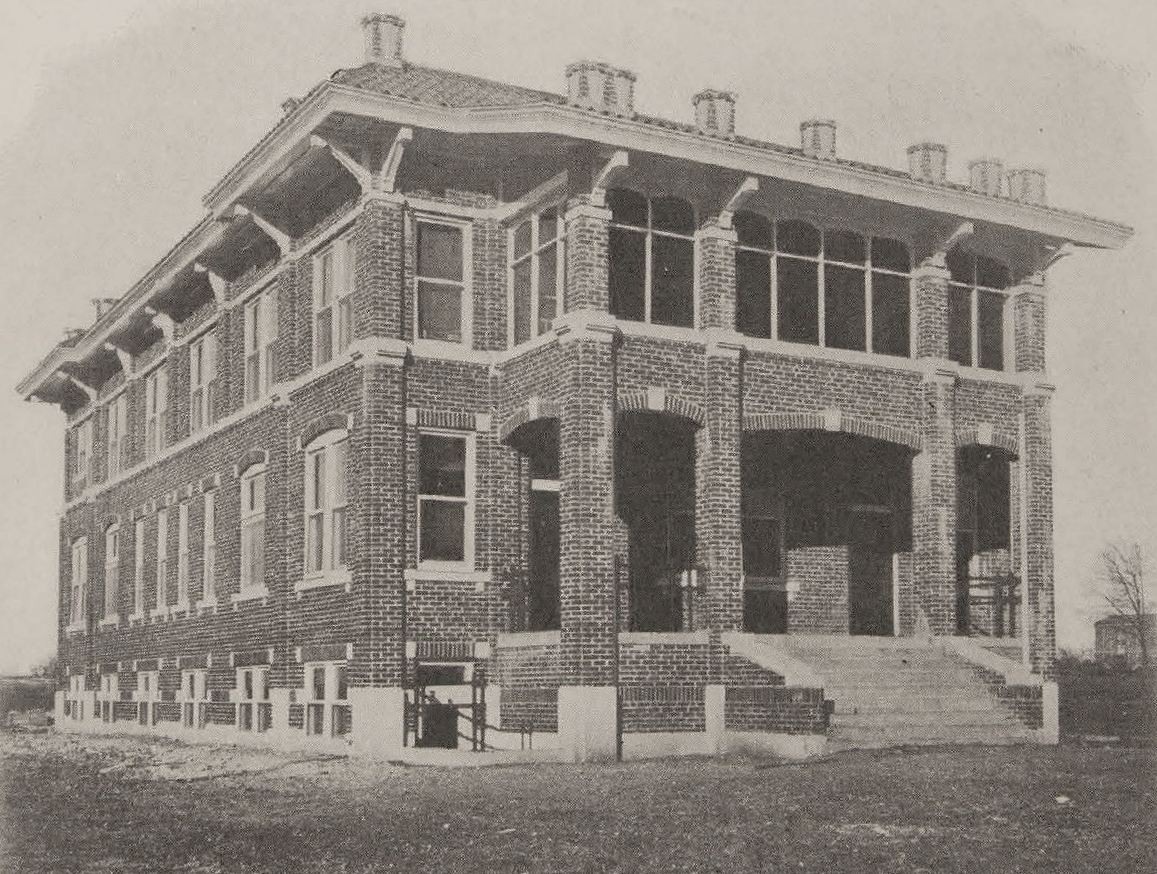
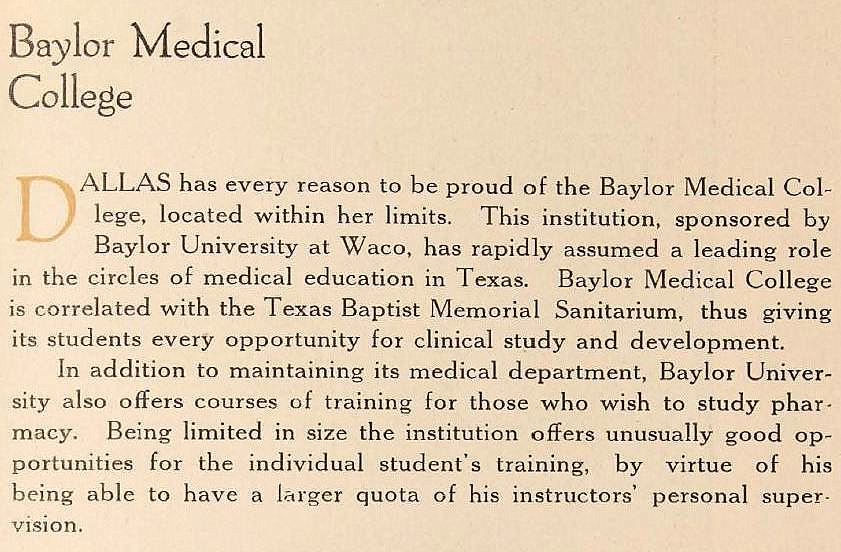
BAYLOR MEDICAL COLLEGE — E. H. Cary, dean — 720 College Ave. (now Hall Street).

dallas-educational-center_baylor-medical-college_ca-1916_degolyer-library_smu_photo

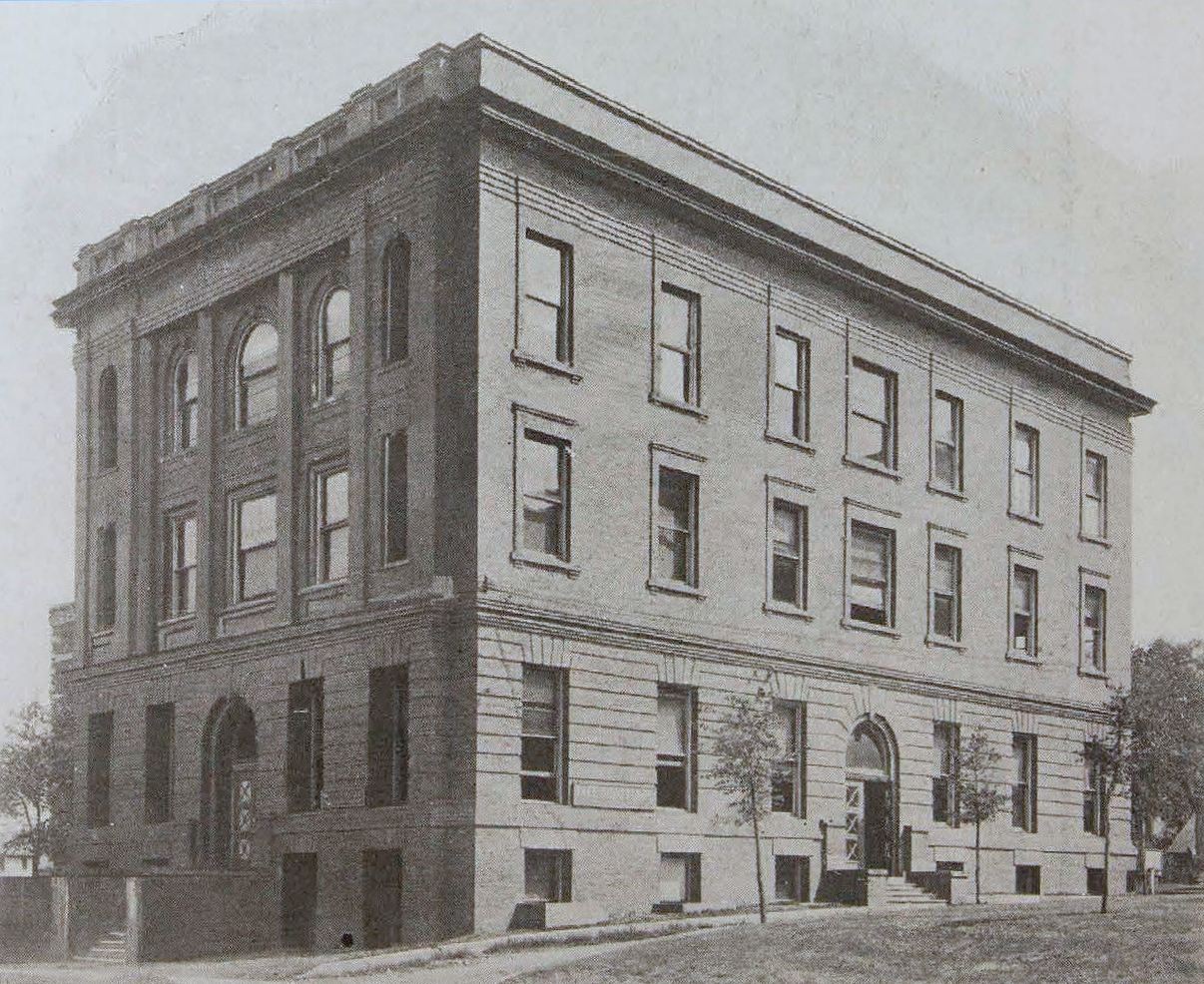
DALLAS POLYCLINIC/POST-GRADUATE MEDICAL SCHOOL — John S. Turner, president — S. Ervay & Marilla (affiliated with Baylor Medical College).

dallas-educational-center_dallas-polyclinic_ca-1916

dallas-educational-center_baylor-medical-college_ca-1916_degolyer-library_smu

*

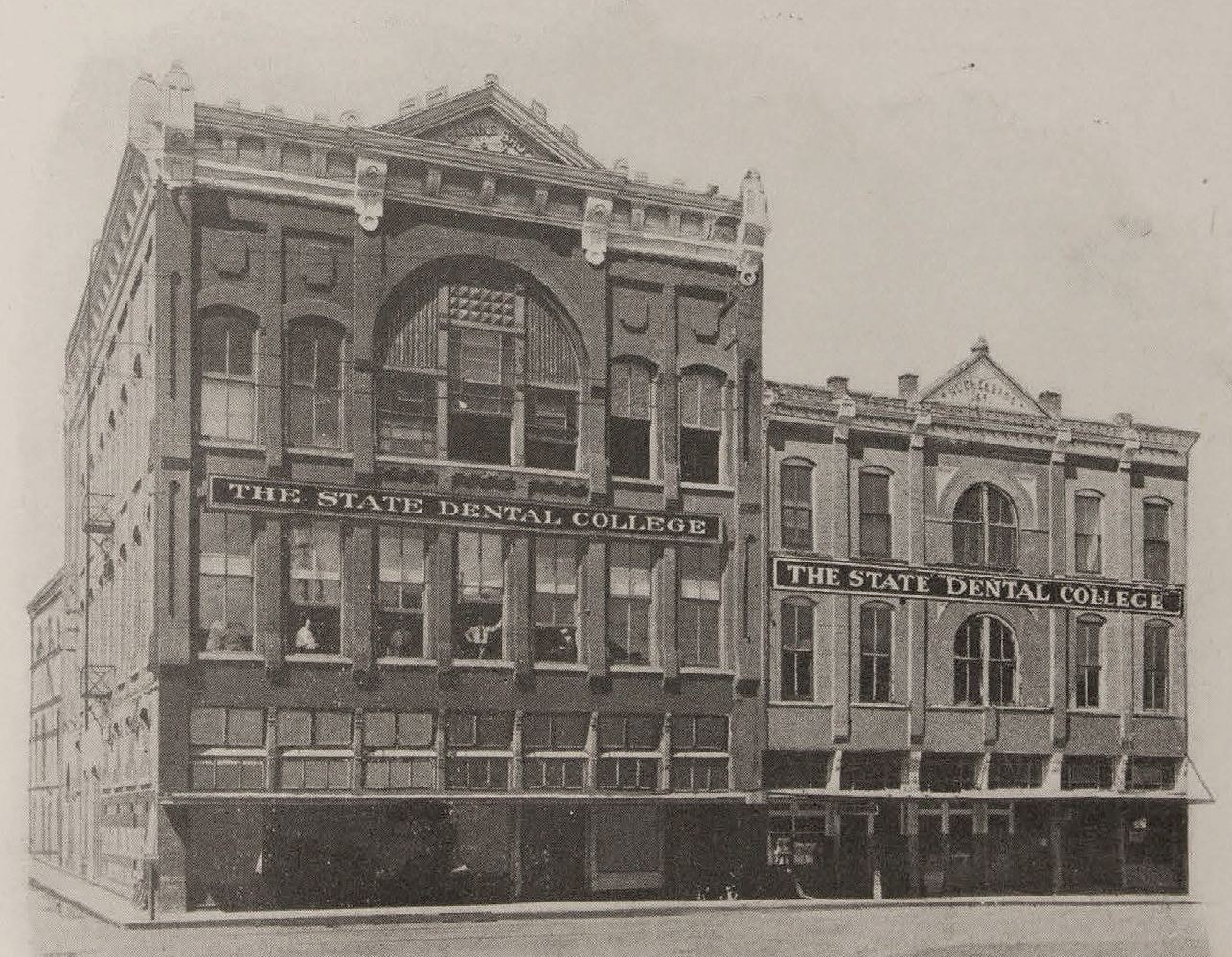
STATE DENTAL COLLEGE — 1409 ½ South Ervay, across from the Park Hotel (more recently known as the Ambassador Hotel).

dallas-educational-center_state-dental-college_ca-1916_degolyer-library_smu_photo

dallas-educational-center_state-dental-college_ca-1916_degolyer-library_smu

*

HAHN MUSIC SCHOOL — Charles D. Hahn, director — 3419 Junius. 

dallas-educational-center_hahn-music-school_ca-1916_photo

dallas-educational-center_hahn-music-school_ca-1916

*

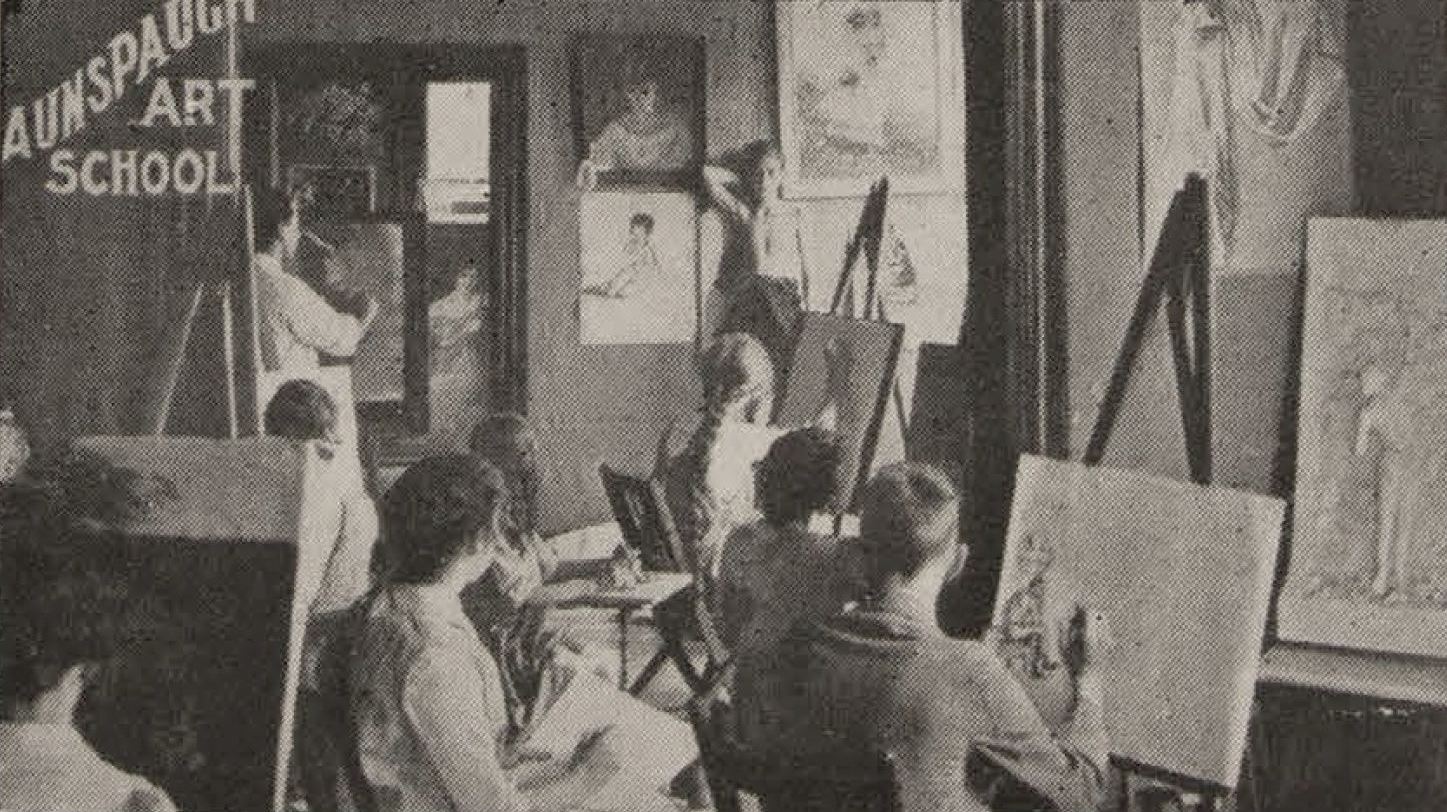
AUNSPAUGH ART SCHOOL — VIvian Aunspaugh, director — 3409 Bryan. A well-established Dallas art school for 60 years. Miss Aunspaugh died in 1960 at the age of 90 and was said to have been giving lessons until shortly before her death. (The photo below of the exterior is the only one here not from about 1916 — that photo is from 1944.)

dallas-educational-center_aunspaugh_interior_ca-1916_degolyer-library_smu

aunspaugh-art-school_james-bell_1944_DHSvia Dallas Historical Society

dallas-educational-center_aunspaugh_ca-1916_degolyer-library_smu

*

dallas-educational-center_ca-1916_degolyer-library_smu

dallas-educational-center_front-cover_ca-1916_degolyer-library_smu

***

Sources & Notes

All images (but one) from the booklet “Dallas, The Educational Center of the Southwest” (published by the Educational Committee, Dallas Chamber of Commerce, and Manufacturers Association, Dallas, ca. 1916), from the collection of the DeGolyer Library, SMU Libraries, Southern Methodist University; more information on this publication — and a full digital scan of it — can be found at the SMU site, here.

The exterior photo of the Aunspaugh Art School is from the Dallas Historical Society, taken in 1944 by Dallas resident James H. Bell; more information on this photo is at the DHS site, here.

dallas-educational-center_aunspaugh_interior_ca-1916_degolyer-library_smu_sm

*

Copyright © 2019 Paula Bosse. All Rights Reserved.
 

A Few Random Postcards

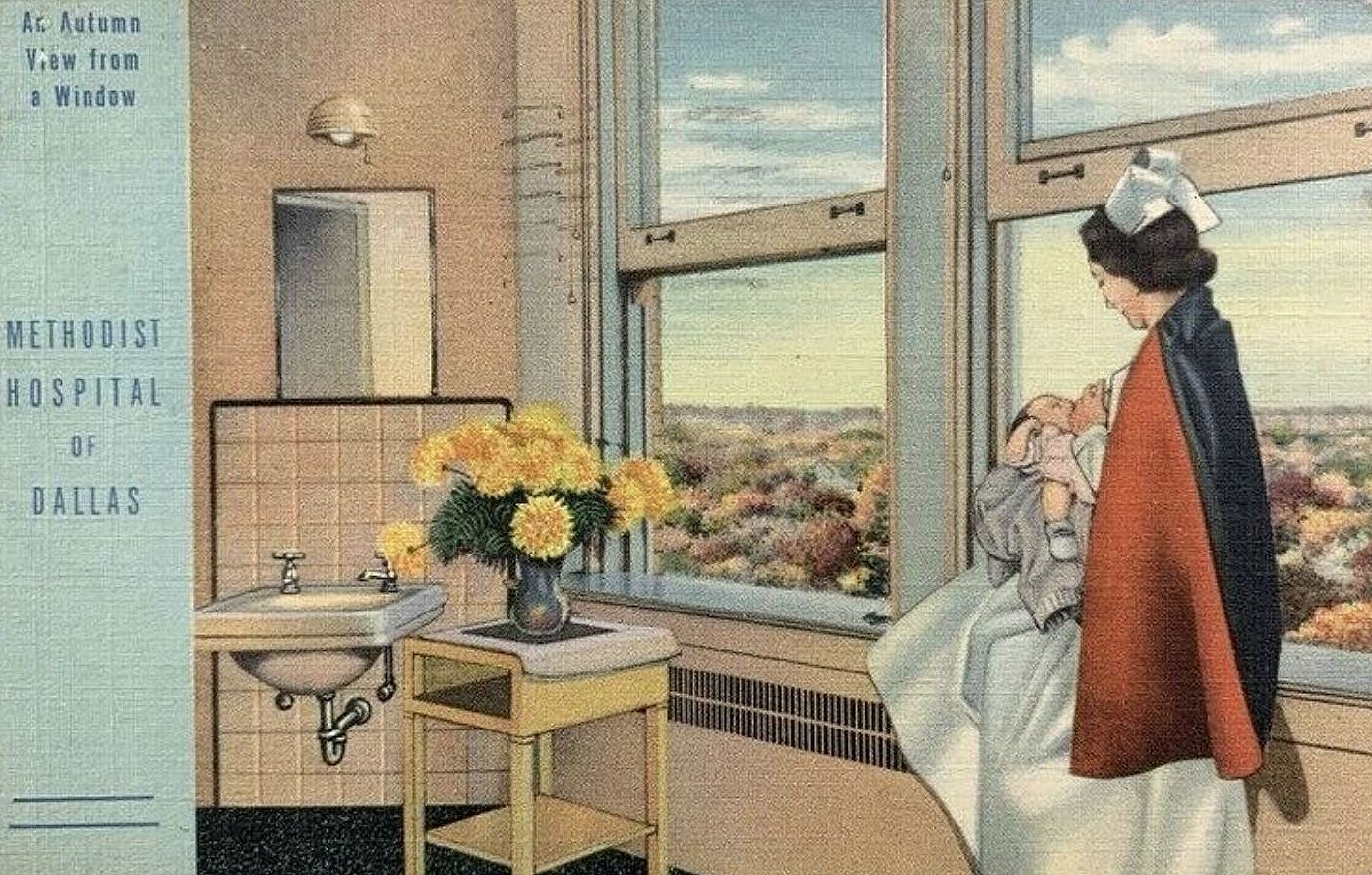
methodist-hospital_postcard_1944_ebay

by Paula Bosse

Here are a few totally random postcard images, pulled from bulging digital file folders.

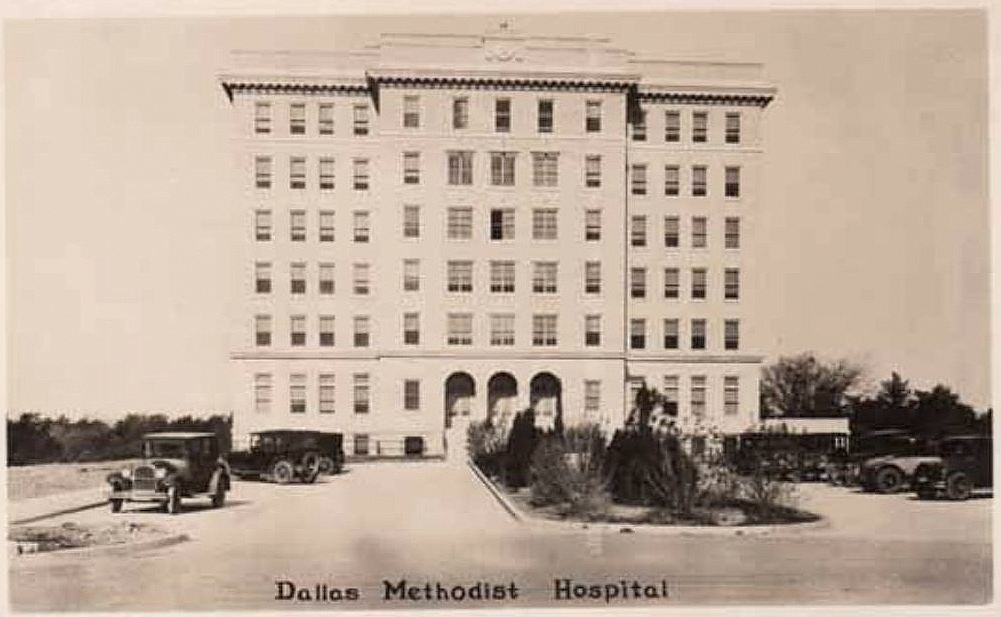
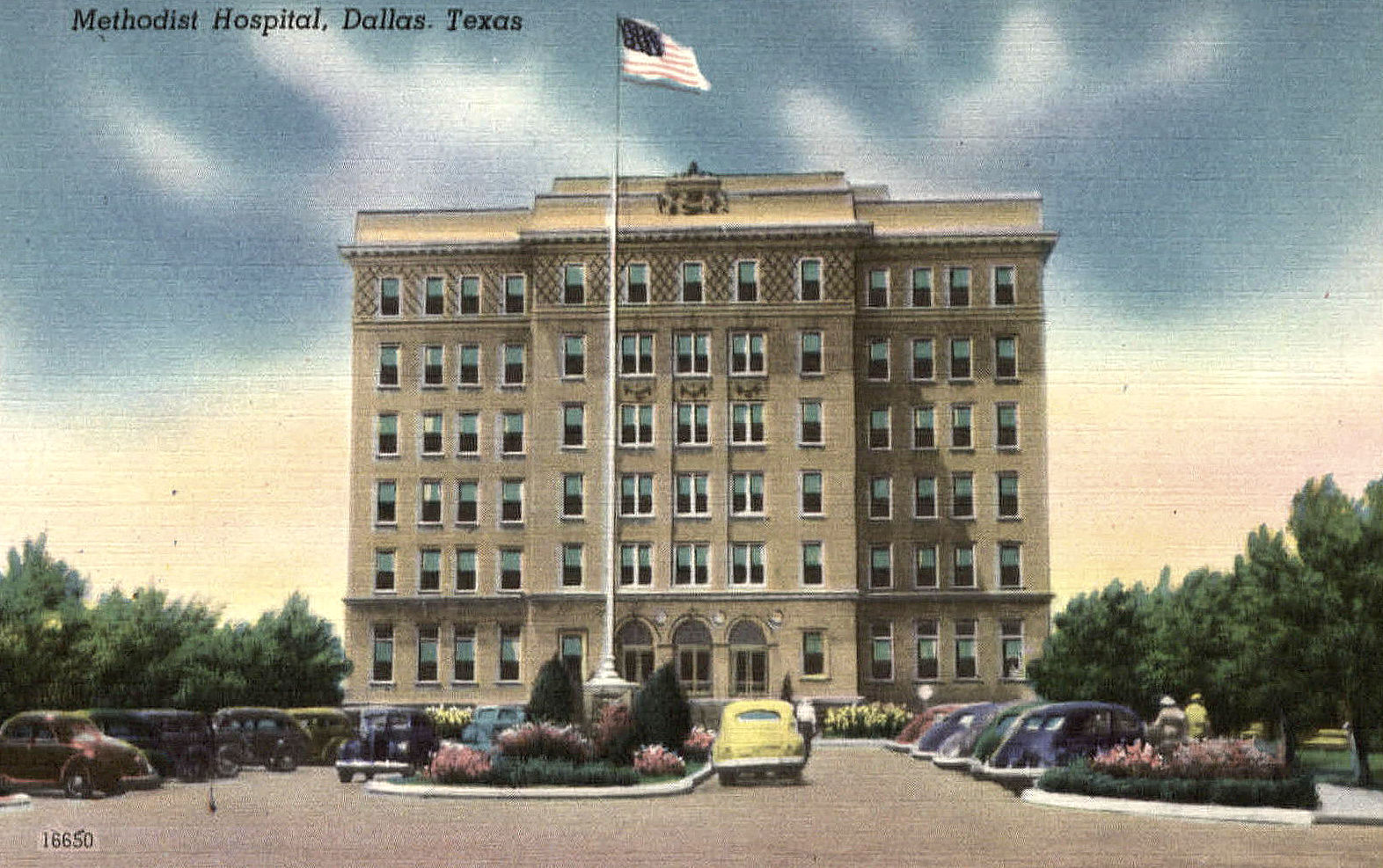
Above, an unusual postcard for Methodist Hospital — “An Autumn View From a Window.” The hospital was located in Oak Cliff at 301 Colorado Street — built in 1927, demolished in 1994. The card is postmarked 1944. Below are two other images.

methodist-hospital_rppc_ebay

methodist-hospital

*

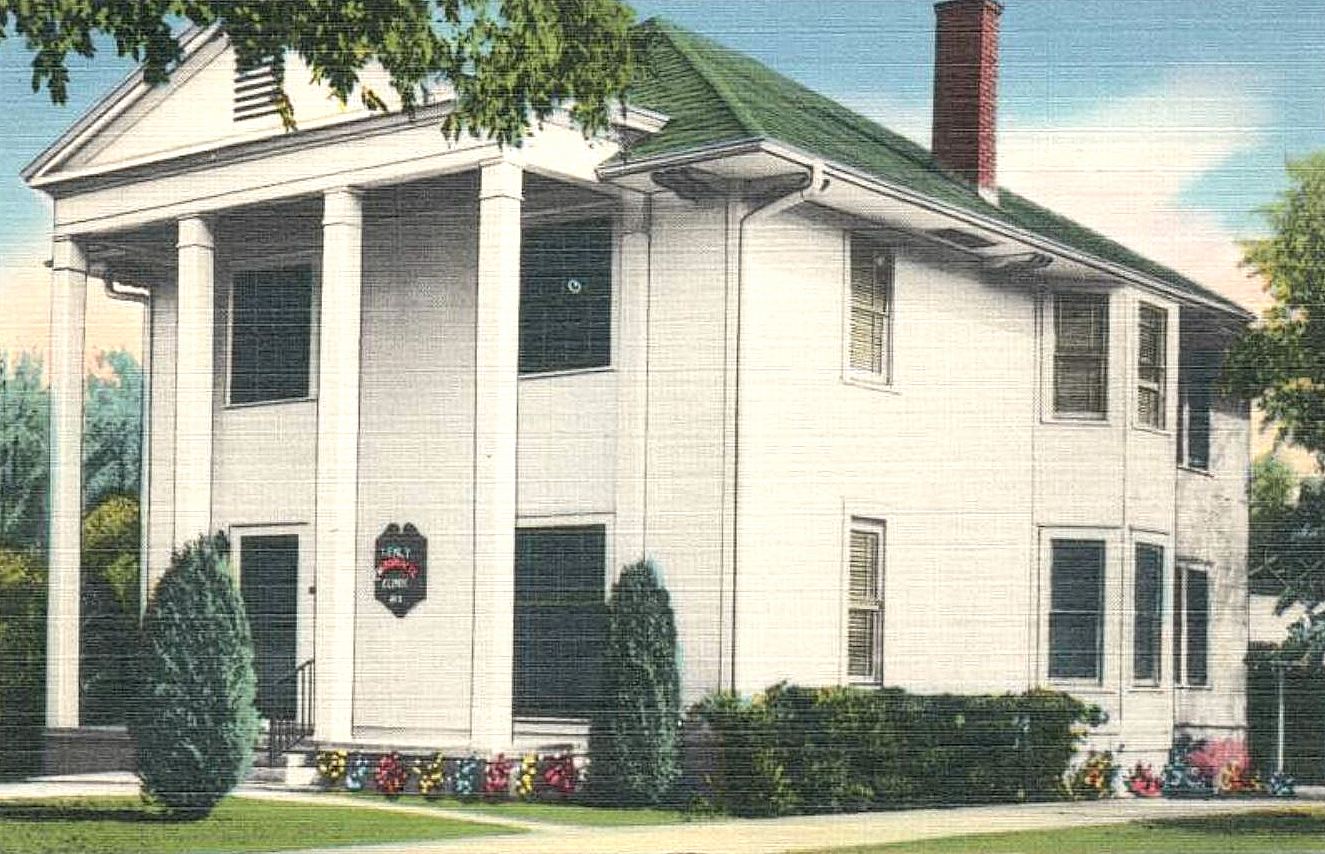
Below, the Lemly Chiropractic Clinic of Dr. F. Lee Lemly at 808 N. Bishop in Oak Cliff (this was also the residence of his family). The house is still standing.

lemley-chiropractic_808-n-bishop_ebay

*

A circa-1910s pretty view of City Park (part of which still hangs on as the site of Dallas Heritage Village in The Cedars):

city-park_postcard_clogenson_ebay

*

Another postcard from The Cedars/South Dallas, once home to a large, vibrant Jewish community, this one shows the Colonial Hill home of insurance man Sidney Reinhardt (1864-1924) at 277 South Boulevard (now renumbered as 1825 South Blvd.). The house was built around 1907, and this postcard appeared before 1911. The house — in what is now designated as the South Boulevard-Park Row Historic District — still stands.

south-blvd_now-1825_sidney-reinhardt_postcard_1910_ebay

*

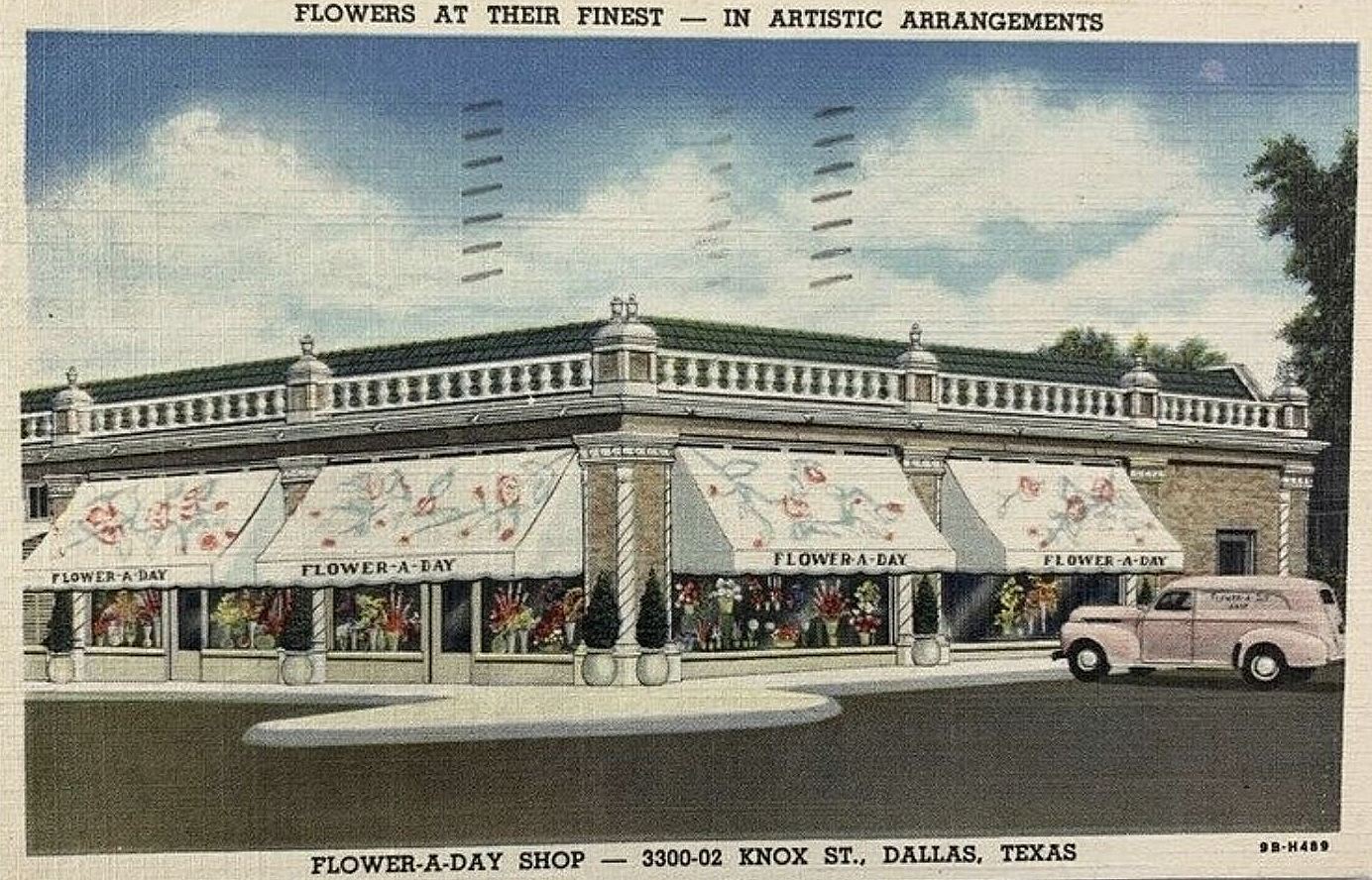
Here’s the Flower-A-Day Shop at the corner of Knox and Travis; the building is still there, but it’s nowhere near as charming today as it was when this postcard was mailed in 1955.

flower-a-day_knox-and-travis_postmarked-1950_ebay

*

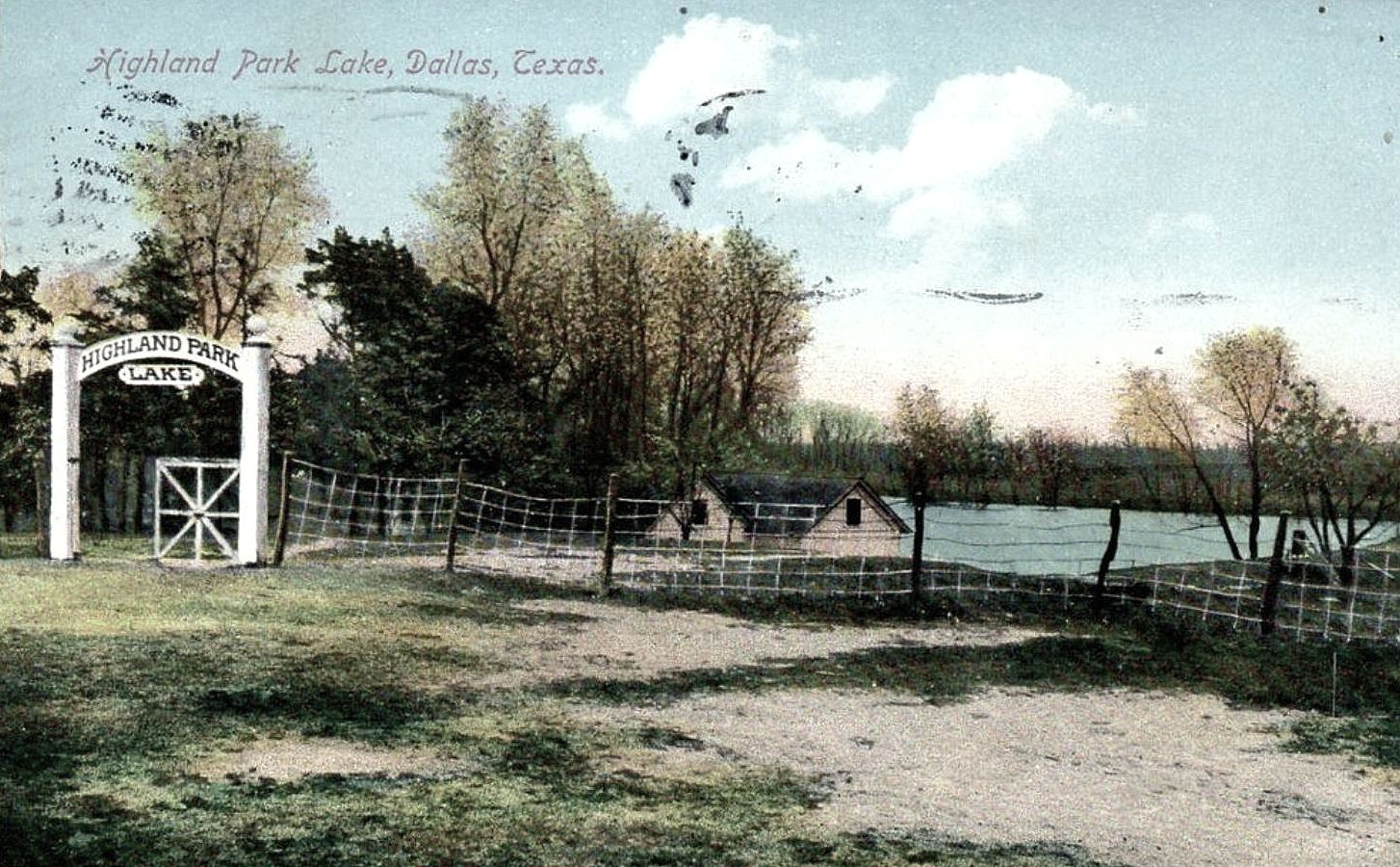
And, lastly, “Highland Park Lake,” now Exall Lake. In fact, it was originally Exall Lake, as it was on the property of Henry Exall, who created the lake by damming Turtle Creek. The lake was a favorite recreation spot way out of town. It seems to have become “Highland Park Lake” after John Armstrong had taken over the property with an eye to developing what eventually became Highland Park. I’ve actually never heard of “Highland Park Lake,” but it was still being referred to as that in the 1960s — I’m not sure when it reverted to “Exall Lake” (or where exactly this photo was taken), but it remains one of Highland Park’s beauty spots. 

highland-park-lake_postcard

***

Sources & Notes

Most of these postcards were found on eBay.

methodist-hospital_postcard_1944_ebay_sm

*

Copyright © 2019 Paula Bosse. All Rights Reserved.
First Presbyterian Church — 1960

first-presbyterian-church_downtown_squire-haskins_UTA_022960

by Paula Bosse

Above is another wonderful photo by Dallas photographer Squire Haskins. It captures an interesting view of the First Presbyterian Church in downtown Dallas (Harwood and Wood streets), with background cameos by bits of the Statler Hilton, the Lone Star Gas Building, whatever the building is next to the Lone Star Gas Building, and the Southland Life Building.

I’m not sure why Haskins took this particular photo (on February 29, 1960), which seems to focus on the church’s parking lot, but a few days after this photo was taken the church celebrated the 47th anniversary of the move from their previous location at the northeast corner of Main and Harwood by recreating the two-block march which the 1,000-member-strong congregation took back in 1913 from the old church to the brand new one. The recreated march included participation of 88 church members who had made the original march in 1913. The first services were held in the new church on March 2, 1913.

And it still looks beautiful.

*

Below, the previous home of the First Presbyterian Church, built in the 1880s, at the  northeast corner of Main and Harwood.

first-presbyterian-church_LOC
via the Library of Congress

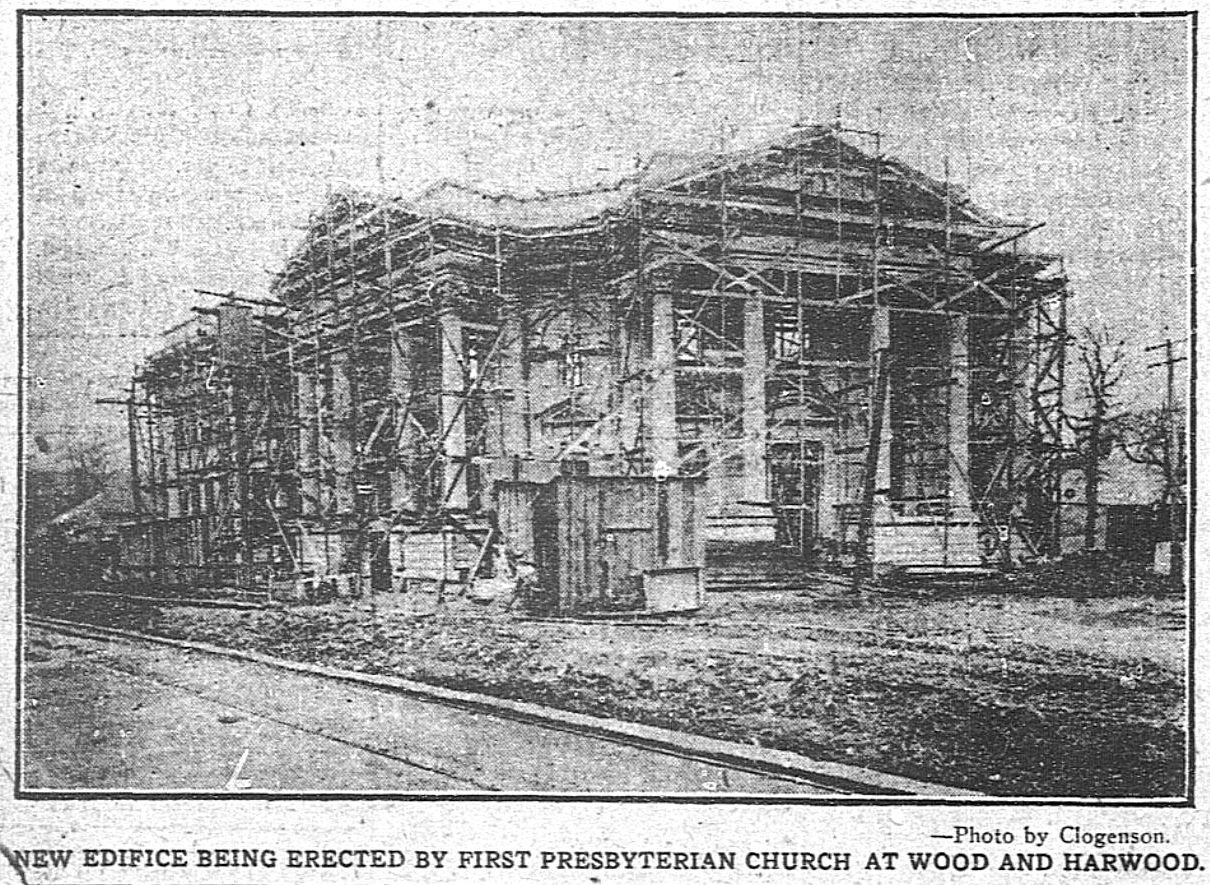
The dome-less new church in December, 1911 (construction of the copper dome was “almost complete” in March, 1912):

presbyterian_first-presbyterian-church_under-construction_dmn_123111_clogensonDallas Morning News, Dec. 31, 1911

Completed, and wowing them on picture-postcard stands.

‏first-presbyterian-church_ca-1916

***

Sources & Notes

Top photo — “First Presbyterian Church, downtown Dallas, Texas” — by Squire Haskins, taken on Feb. 29, 1960; it is from the Squire Haskins Photography, Inc. collection, University of Texas at Arlington Libraries, Special Collections, UTA. More info on this photo (and a larger image) is here.

Read an exhaustive account of the new church’s design features in the Dallas Morning News article “First Presbyterian Church Completed” (DMN, March 2, 1913), here.

Read a history of the First Presbyterian Church in Dallas, from 1856 to 1913, in an article which is dominated by a photo of the Main and Harwood building and titled “Will Be Abandoned As Church Property After Sunday Services” (DMN, Feb. 21, 1913), here.

Two more very early photos of the First Presbyterian Church can be found in the Flashback Dallas post “Dallas in “The Western Architect,” 1914: City Buildings and Churches” (scroll down to #6).

first-presbyterian-church_downtown_squire-haskins_UTA_022960_sm

*

Copyright © 2019 Paula Bosse. All Rights Reserved.


Buried Alive at the Fair Park Midway — 1946

sfot_scotty-scott_buried-alive_coffin_cook-colln_degolyer-library_SMU_1946Welcome to my casket!

by Paula Bosse

In May, 1946 a new Fair Park midway opened with new rides and new attractions to entice entertainment-seekers to Fair Park at a time of the year when the State Fair of Texas wasn’t in session. On opening day a beauty queen was chosen, a new 17-inch telescope was introduced, and a man was buried alive.

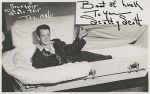
That man was C. S. “Scotty” Scott, seen above lounging in a comfy-looking casket in pajamas and robe, looking happy, propping up the lid. On May 11, 1946, Scotty Scott was buried six feet below the midway where he vowed to remain until the last day of the fair — Oct. 20th. That’s five and a half months.

sfot_scotty-scott_buried-alive_050946

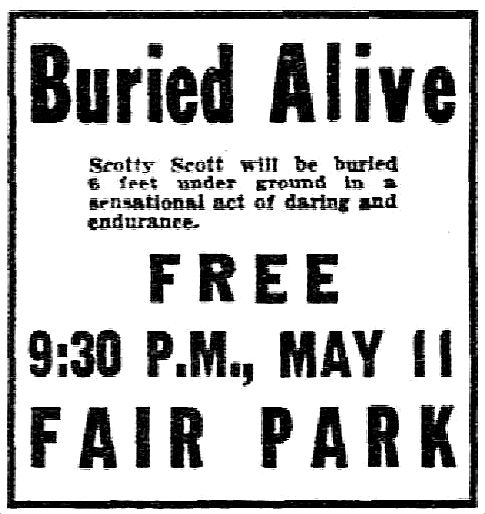
Countless ads appeared over the weeks offering $500 (the equivalent of about $6,500 in today’s money) to anyone who might stop by his Fair Park lair and find him not there.

sfot_scotty-scott_buried-alive-051246

The exact set-up is not fully clear, but, basically, he was buried in a coffin in a very small space, with a ventilation pipe. One report said that visitors were able to see him through a glass partition — another said that people were peeking at him and talking to him via an eight-inch vent pipe. However they were observing him, they weren’t doing it for free — if you wanted to get a look at Scotty doing whatever it was he was doing down there, you had to fork over 25 or 30 cents. All this being-watched and chit-chatting probably helped distract Scotty from the fact that he was buried alive! (I’m getting claustrophobic just typing this.)

Scotty’s tomb was equipped with air conditioning, a radio, a telephone, and an electric razor (which seems unnecessary, but, again, it probably helped pass the time…). (He might have kept up with his shaving, but he let his hair grow, a fact which apparently had the hoi polloi debating about whether Scotty was a man or a woman.) He was able to indulge in the occasional sponge bath and “exercise himself with a vibrator machine.” There was mention somewhere of a feeding tube.

If the thought of being buried alive gives you the willies, Scotty was not completely immune himself. One report mentioned this was probably the last time he would perform this stunt because he was reaching his “breaking point” and “He has to fight himself continuously to keep from being irritable and cross” (Dallas Morning News, Oct. 13, 1946). Luckily, claustrophobia did not seem to be too much of a problem for him as he had been doing this kind of endurance stunt for several years and kept coming back for more — he had, somehow, managed to remain buried in San Francisco for eight months!

Though he considered his main vocation to be a daredevil race driver, he had stumbled into this weird, but lucrative, line of work in 1935 when he had seen a similar stunt being performed in California, and a friend bet him $1,000 he couldn’t do it for 30 days. He won the bet. By the time of this 1946 Dallas stunt, he had been buried alive a LOT — he estimated that he had spent a total of more than four and a half years (!) buried alive.

According to Scotty, the worst part of the buried-alive-thing was the un-burying:

“From past experience the most painful part of the ordeal will come when they dig me up. My circulation will be so bad that my body will turn purple and I will be unable to sit or stand for any length of time. My whole body will feel like a leg or arm that has gone to sleep.” (DMN, Oct. 13, 1946)

Scotty Scott spent 162 days buried alive in Dallas — he even celebrated his 28th birthday underneath Fair Park. He was buried on May 11 and was disinterred on the final day of the fair, Oct. 20. Crowds gathered as men with jack-hammers cracked open the cement-covered tomb. As the coffin was lifted up a woman fainted. He was transported by ambulance to a hospital, and the next day he was interviewed on a national radio program.

Why on earth would anyone do this? More than 75,000 people had paid to take a look at Scotty Scott lying underground. The total amount of money people paid for this creepy privilege works out to almost $300,000 in today’s money. That’s why.

***

Sources & Notes

Photo is from the George W. Cook Dallas/Texas Image Collection, DeGolyer Library, SMU Libraries, Southern Methodist University; more info can be found here.

Try not to think about being buried alive. TRY!

sfot_scotty-scott_buried-alive_coffin_cook-colln_degolyer-library_SMU_1946_sm

*

Copyright © 2019 Paula Bosse. All Rights Reserved.

“Texas Excitement” — Six Flags Over Texas by Rail

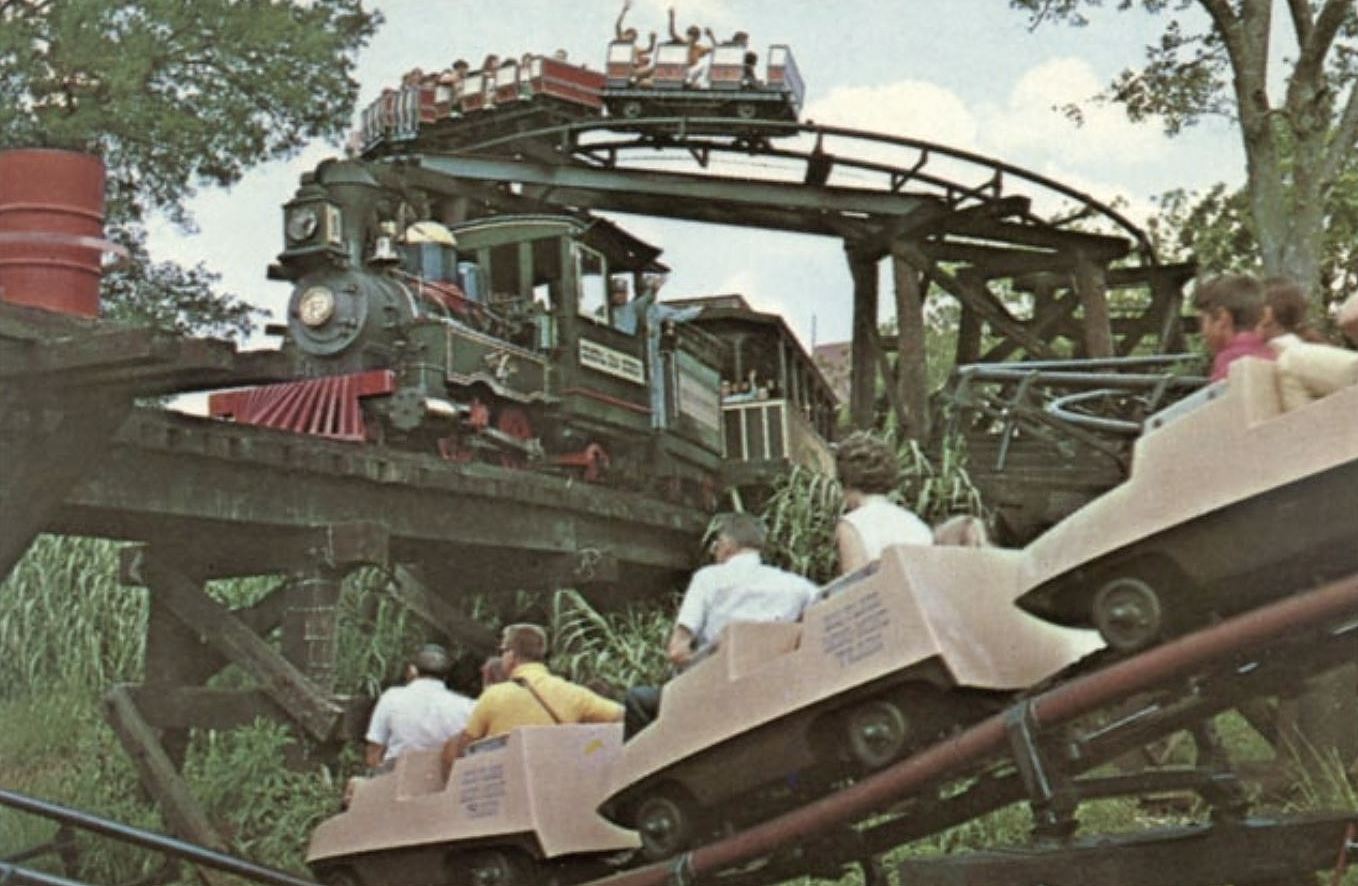
six-flags-over-texas_three-rides_postcard_ken-collierCount ’em…

by Paula Bosse

There’s a lot going on in this postcard! The description, from the back of the card:

TEXAS EXCITEMENT
Three of the most popular rides at SIX FLAGS Over Texas are shown in action. At top is the Runaway Mine Train which annually carries more than 2½ million riders. At center an authentic 1898 steam engine carries passengers over a narrow gauge track which encircles the huge theme park. And, in the foreground is the SIX FLAGS Mini Mine Train, designed for the younger set.

***

Sources & Notes

This 1970s-era postcard is from Ken Collier’s fantastic Six Flags Over Texas site, here.

*

Copyright © 2019 Paula Bosse. All Rights Reserved.
“I’m No Angel” Packing Them In at The Majestic — 1933

majestic-theatre_im-no-angel_elm-street_1933_portal

by Paula Bosse

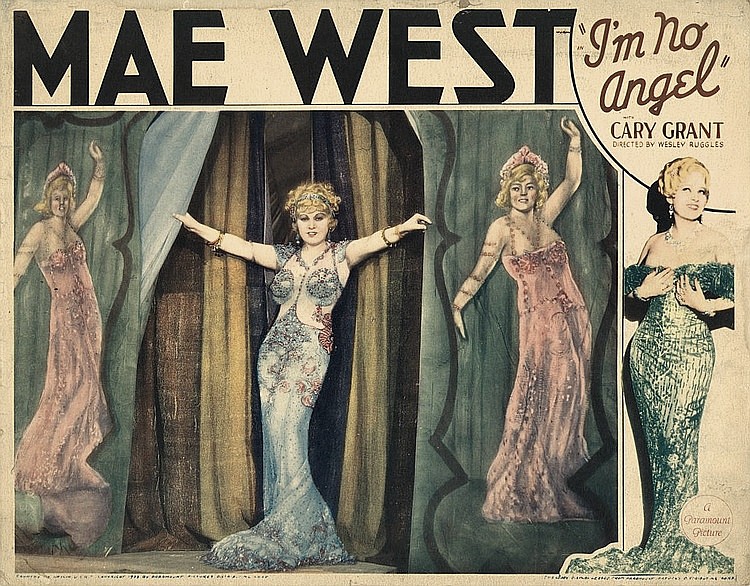
Mae West was hot in 1933. Dallas moviegoers lined up on Elm Street to see her in “I’m No Angel” at the Majestic Theater. On a Monday afternoon!

mae-west_im-no-angel_1933
via IMDb

***

Sources & Notes

Photo from the Spotlight on North Texas collection, UNT Media Library, Portal to Texas History; more info can be found here.

(Check out the brick paving on Elm Street!)

*

Copyright © 2019 Paula Bosse. All Rights Reserved.
 

Super-Cool Roger Miller in Dallas — 1960s

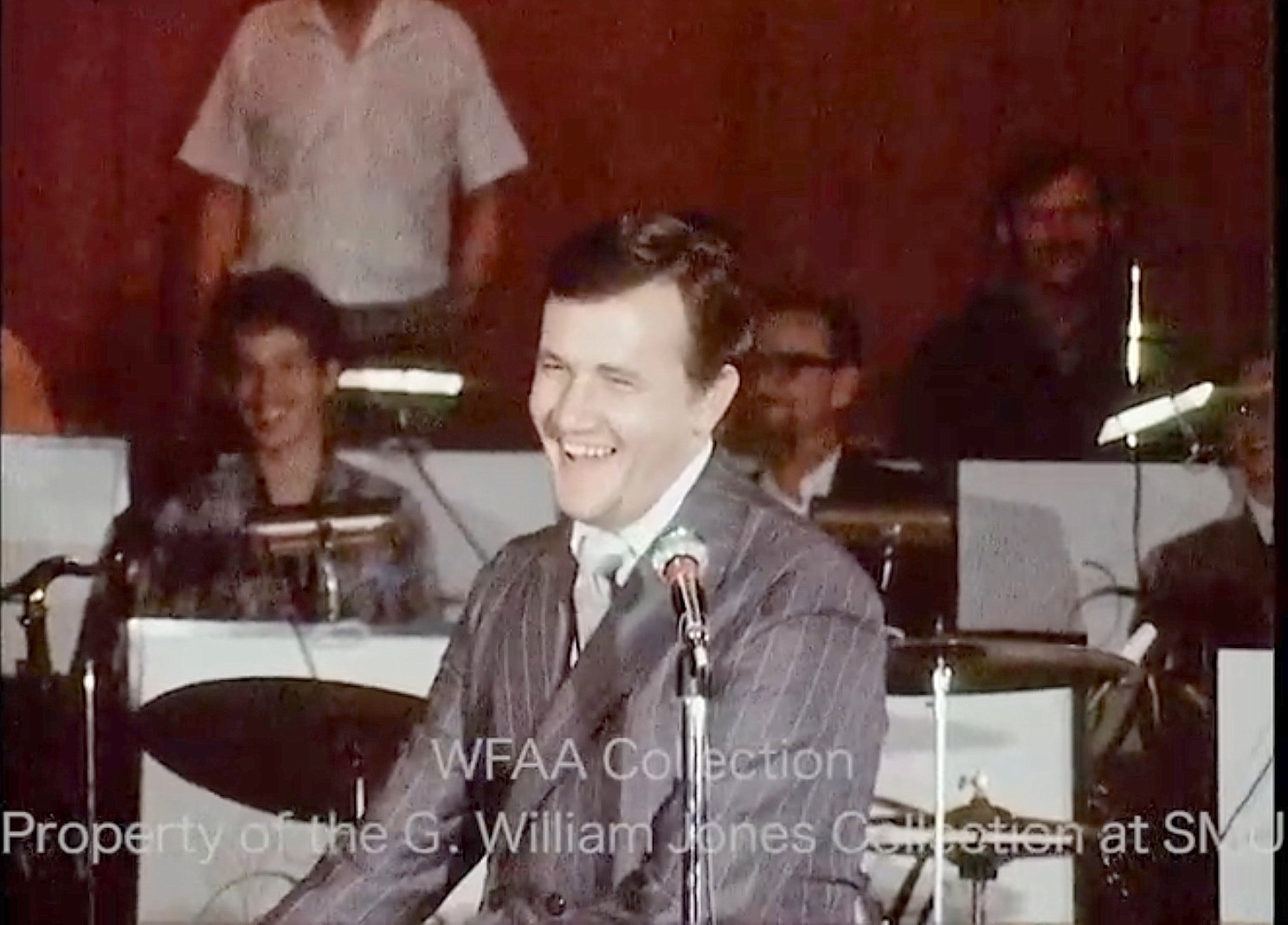
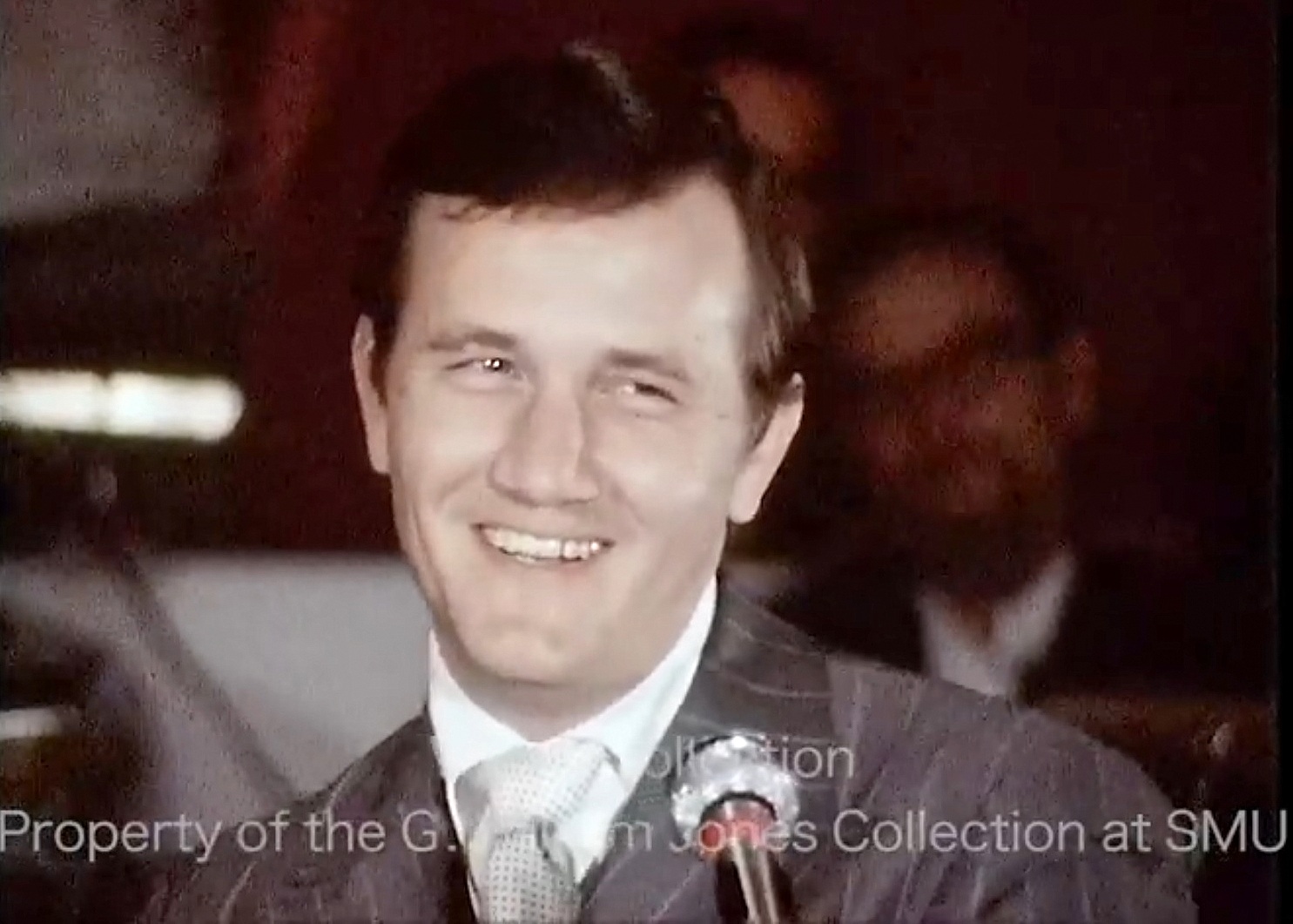
roger-miller_venetian-room_oct-1969_wfaa_jones-film_SMURoger Miller on the Venetian Room stage, October, 1969

by Paula Bosse

Who doesn’t love Roger Miller? He was always one of the most effortlessly “cool” entertainers, celebrated as much for his songwriting and singing as he was for his humor and storytelling.

Roger Miller was born in Fort Worth in 1936 but spent most of his childhood in Oklahoma following the death of his father. He launched an entertainment career after a stint in the U.S. Army came to an end. (See an extensive timeline at Wikipedia, here.)

After years of struggling, he finally hit the big-time in 1964 with the hit “Dang Me” and, a few months later, with his biggest hit, the classic “King of the Road.” He won a huge number of Grammys (11 in 1964 and 1965 alone) and was a bona fide star who had incredible crossover appeal for fans of both country music and traditional popular music.

*

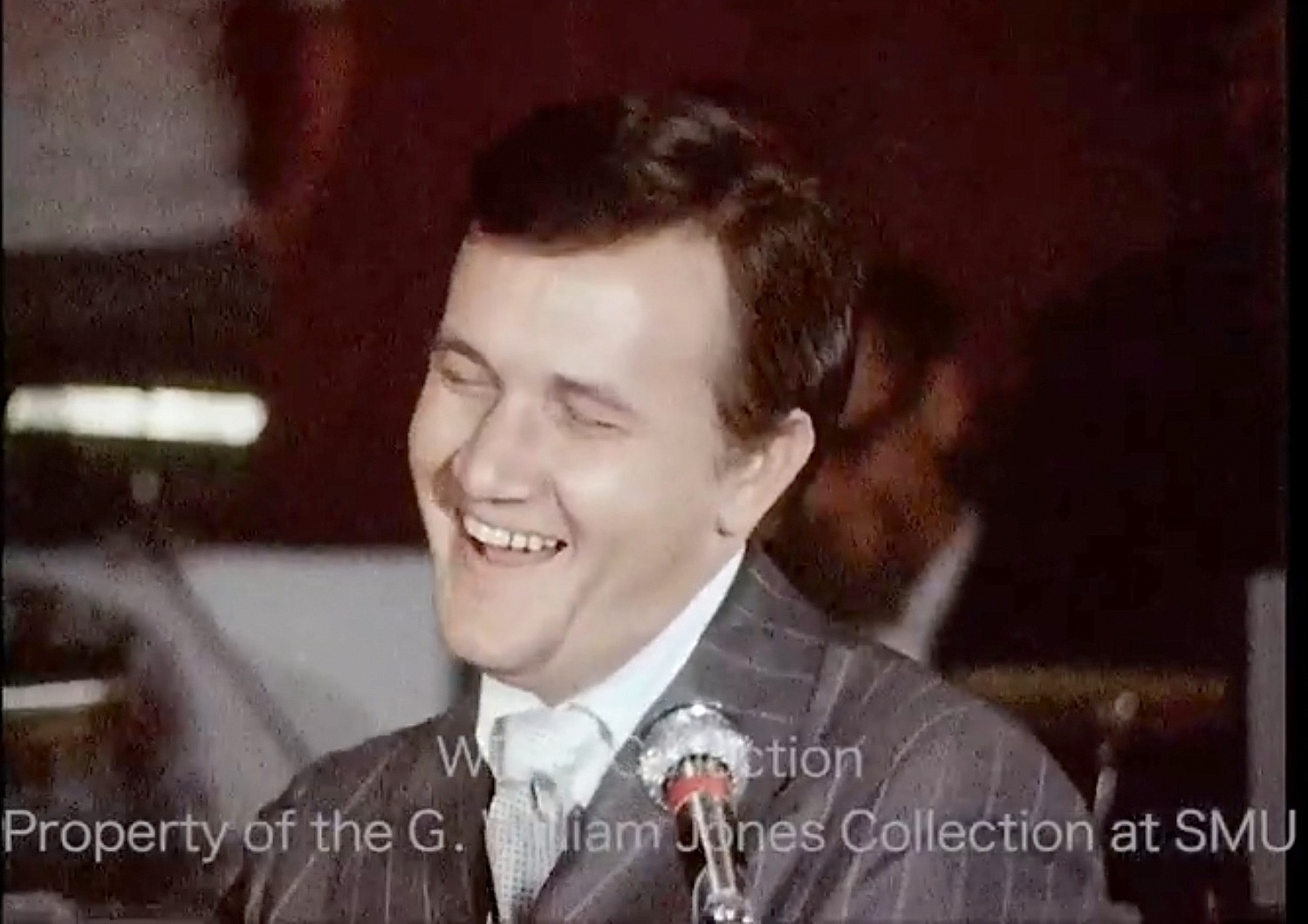
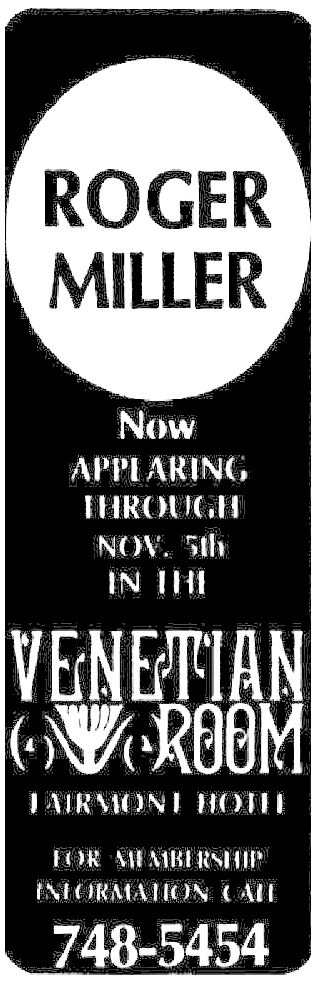
When he came to Dallas in October, 1969 it was for a 3-week run at the Fairmont Hotel’s swanky Venetian Room, and he apparently packed them in every night. Below is a snippet of an interview with WFAA-Channel 8 News in which Roger answers the burning question of whether he was “serious” when he wrote his hit novelty song “You Can’t Rollerskate In a Buffalo Herd” (listen to the song here). His quipped response (which cracked up the Jerry Gray Orchestra behind him) probably didn’t make it to the local airwaves in 1969:


roger-miller_venetian-room_oct-1969_wfaa_jones-film_SMU_a

roger-miller_venetian-room_oct-1969_wfaa_jones-film_SMU_b

(As an interesting sidelight, in an interview with Philip Wuntch of The Dallas Morning News (Oct. 19, 1969), Miller said that he and his wife had been in Texas for a few days prior to his Venetian Room engagement looking at houses in both Dallas (his mother was then residing in Fort Worth) and San Antonio (his wife’s hometown). Nothing apparently came of this, but it certainly would have been nice to have been able to claim Roger Miller as a Dallas resident!)

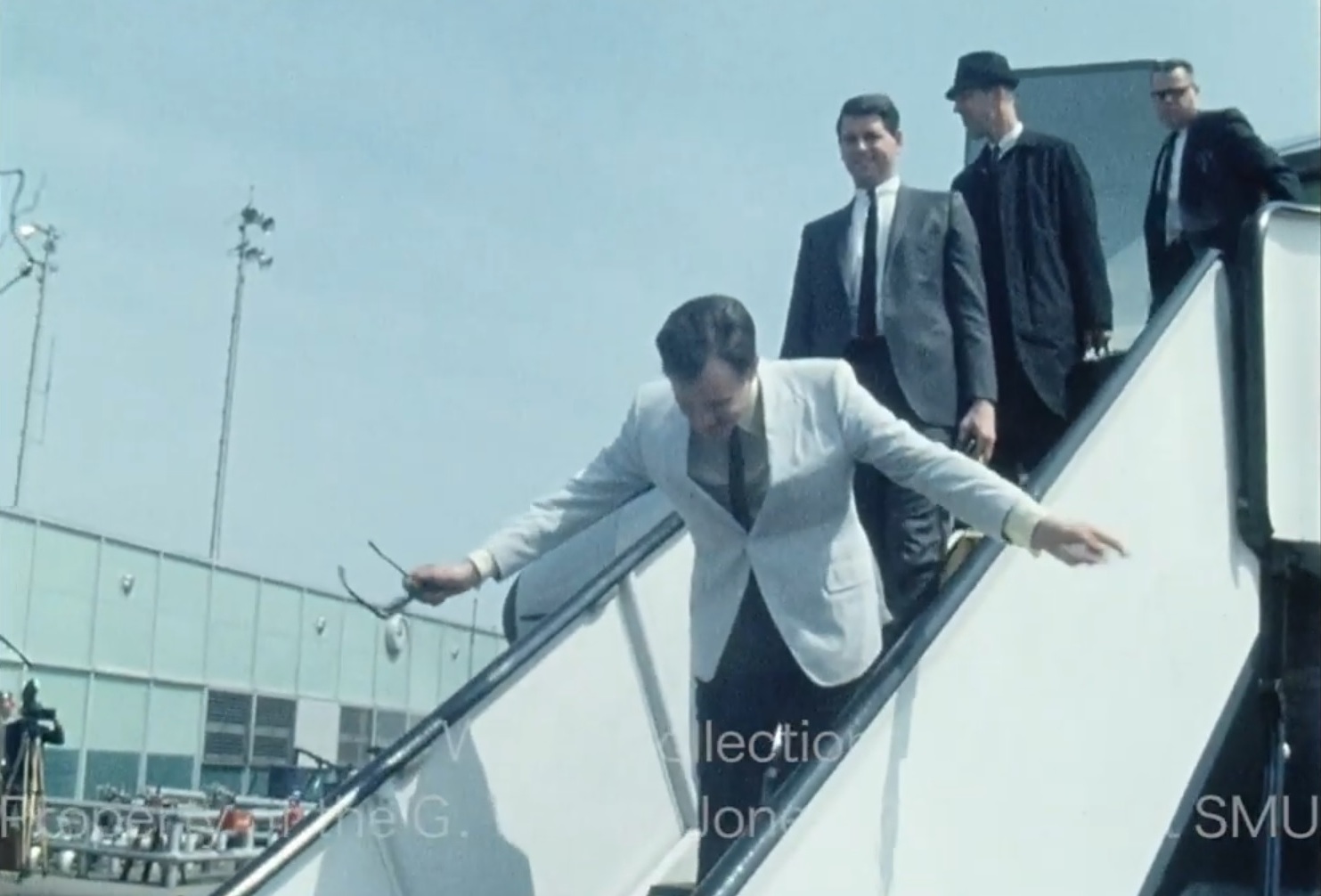
He was in town a couple of years earlier, in 1967, and sat down for a Channel 8 interview which was a bit more sedate — it took place in the American Airlines “Celebrity Room” at Love Field as he was passing through Dallas on his way to San Antonio with his wife and young son, Dean Miller:


roger-miller_venetian-room_march-1967_wfaa_jones-film_SMU

On this trip, newspapers reported that he was shuttled about in private Lear Jets and Rolls Royces — a big change from his early days when he picked cotton, hitchhiked, slept in cars, and stole milk off front porches.

Roger Miller died in 1992 at the age of 56 from complications of lung cancer.

*

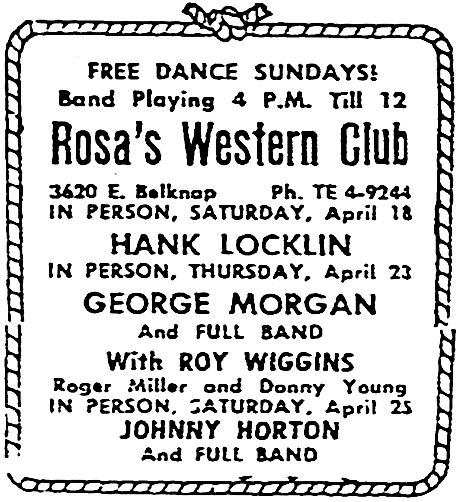
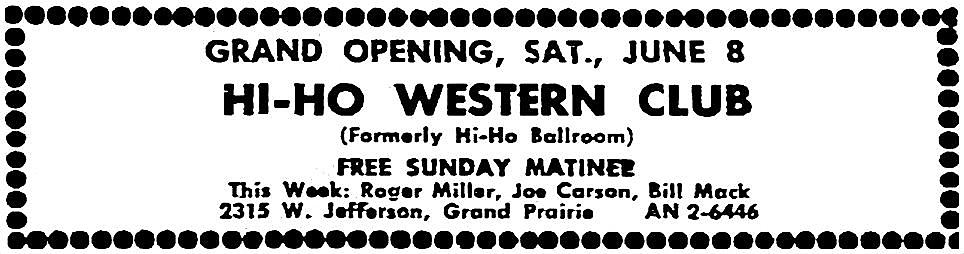
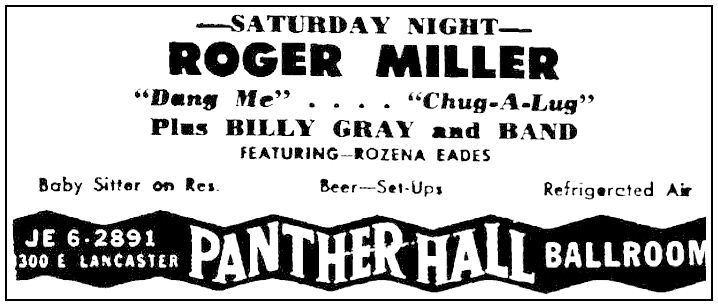
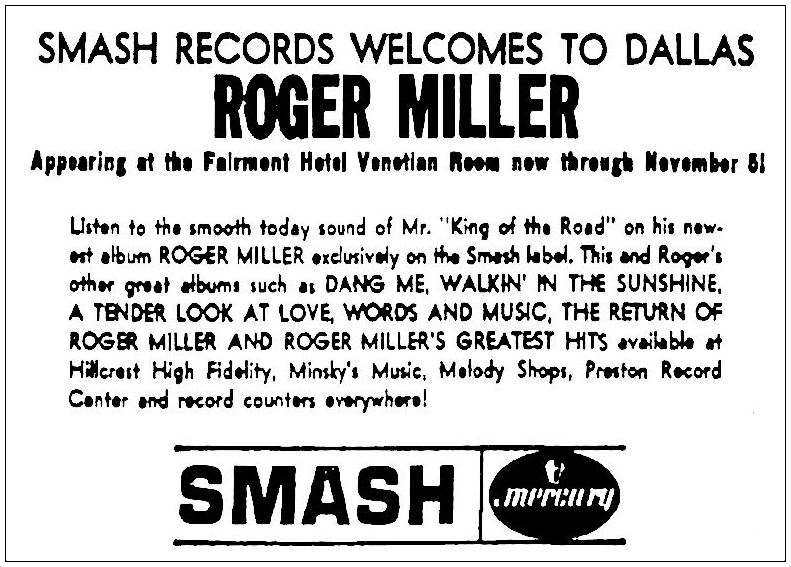
Below are a few ads from Roger Miller’s DFW appearances. He played large venues like the Big D Jamboree in Dallas and Panther Hall and Northside Coliseum in Fort Worth, but he also played a lot of little clubs as he worked his way up to becoming a major recording artist and television personality.

miller-roger_FWST_041259_rosas-western-clubRosa’s Western Club, Fort Worth with Donny Young (aka Johnny Paycheck), April 12, 1959

miller-roger_060863_hi-ho-western-club_grand-prairieHi-Ho Western Club, Grand Prairie, TX, June 8, 1963

miller-roger_FWST_081364_panther-hallPanther Hall, Aug. 13, 1964

miller-roger_101669_fairmont-hotelVenetian Room, Dallas, Oct. 16, 1969

miller-roger_101769_fairmont-hotel_smash-recordsSmash Records ad, Oct. 17, 1969

***

Sources & Notes

Film footage of Roger Miller in Dallas (on YouTube here and here) is from the WFAA Collection, G. William Jones Collection, Hamon Arts Library, Southern Methodist University.

The official Roger Miller website is here.

roger-miller_venetian-room_oct-1969_wfaa_jones-film_SMU_sm

*

Copyright © 2019 Paula Bosse. All Rights Reserved.

“Dallas Day” at the State Fair of Texas

state-fair_dallas-day_100956
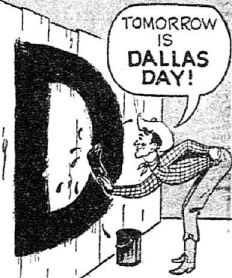
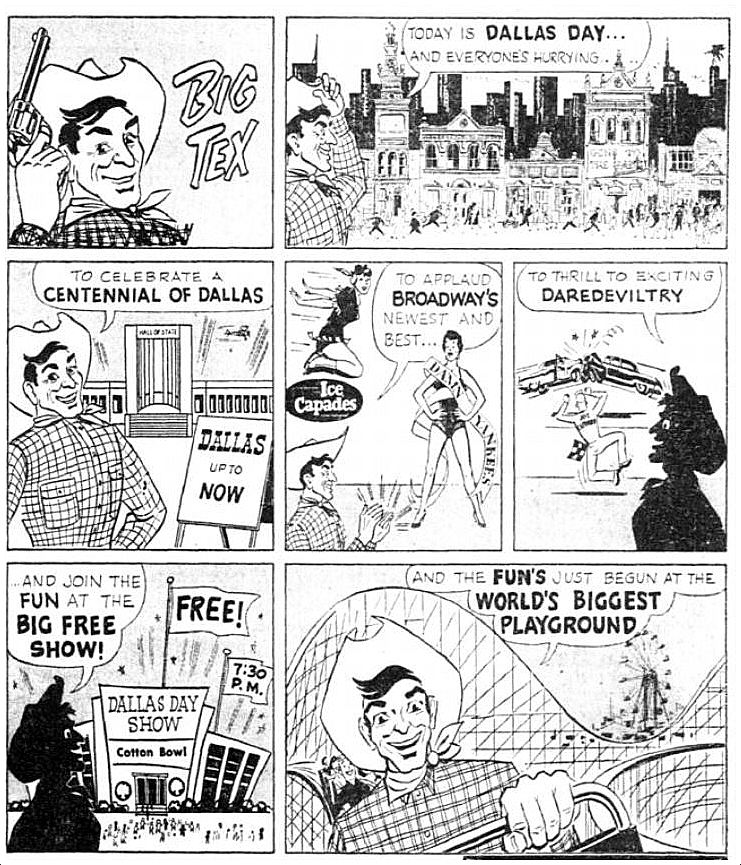
Hey, Big D — don’t forget “Dallas Day”!

by Paula Bosse

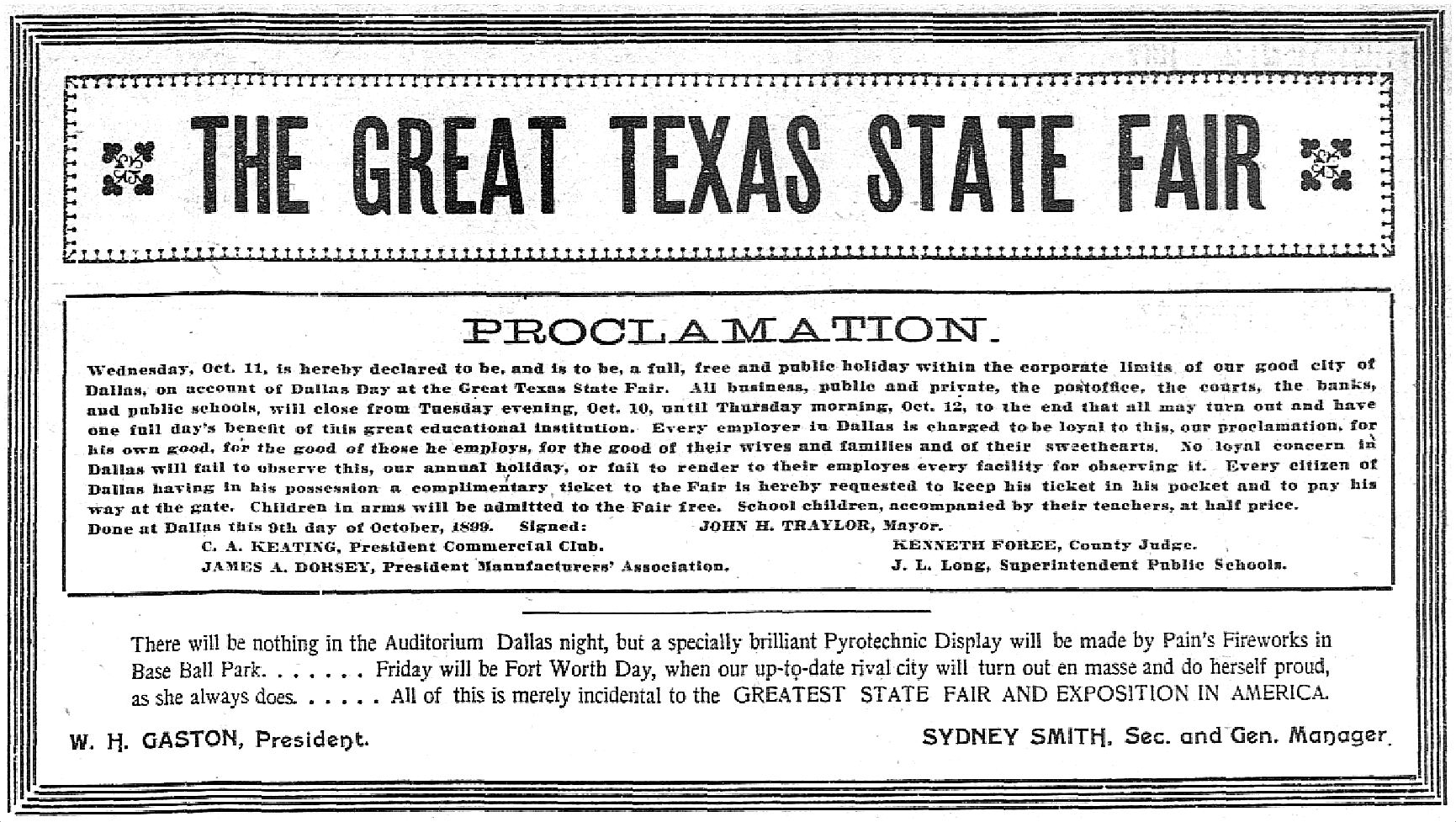
“Dallas Day” used to be an important day at the State Fair of Texas. Like really important. Like national-holiday-important. Below is a typical mayoral proclamation announcing the sweeping closures of public and private businesses and institutions on “Dallas Day,” from 1899 (click to see a larger image; transcription follows):

1899_dallas-day_sfot_dmn_101099Dallas Morning News, Oct. 10, 1899

THE GREAT TEXAS STATE FAIR

PROCLAMATION

Wednesday, Oct. 11, is hereby declared to be, and is to be, a full, free and public holiday within the corporate limits of our good city of Dallas, on account of Dallas Day at the Great Texas State Fair.

All business, public and private, the postoffice, the courts, the banks, and public schools, will close from Tuesday evening, Oct. 10, until Thursday morning, Oct. 12, to the end that all may turn out and have one full day’s benefit of this great educational institution.

Every employer in Dallas is charged to be loyal to this, our proclamation, for his own good, for the good of those he employs, for the good of their wives and families and of their sweethearts.

No loyal concern in Dallas will fail to observe this, our annual holiday, or fail to render to their employes every facility for observing it.

Every citizen of Dallas having in his possession a complimentary ticket to the Fair is hereby requested to keep his ticket in his pocket and to pay his way at the gate. Children in arms will be admitted to the Fair free. School children, accompanied by their teachers, at half price.

Done at Dallas this 9th day of October, 1899.

Signed:
John H. Traylor, Mayor

*

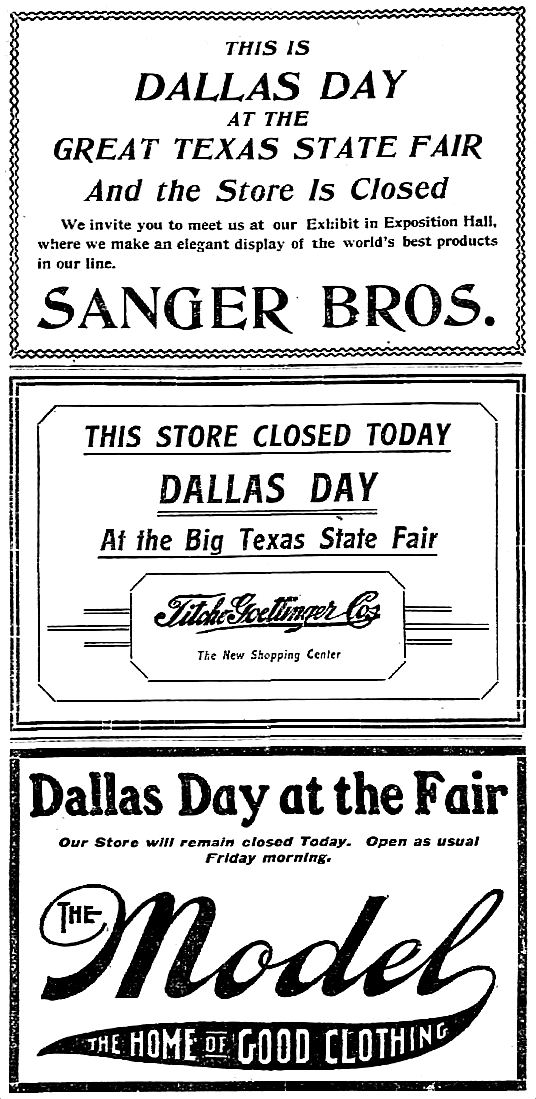
For decades, it was expected that most Dallas businesses and government offices would close on “Dallas Day.” The central business district must have been a ghost town. Woe be to anyone needing a new frock, a replacement gasket, a bank draft, or even a postage stamp on “Dallas Day.” The city had bigger fish they wanted its citizens to fry.

1906_dallas-day_sfot_dmn_101806Oct. 18, 1906

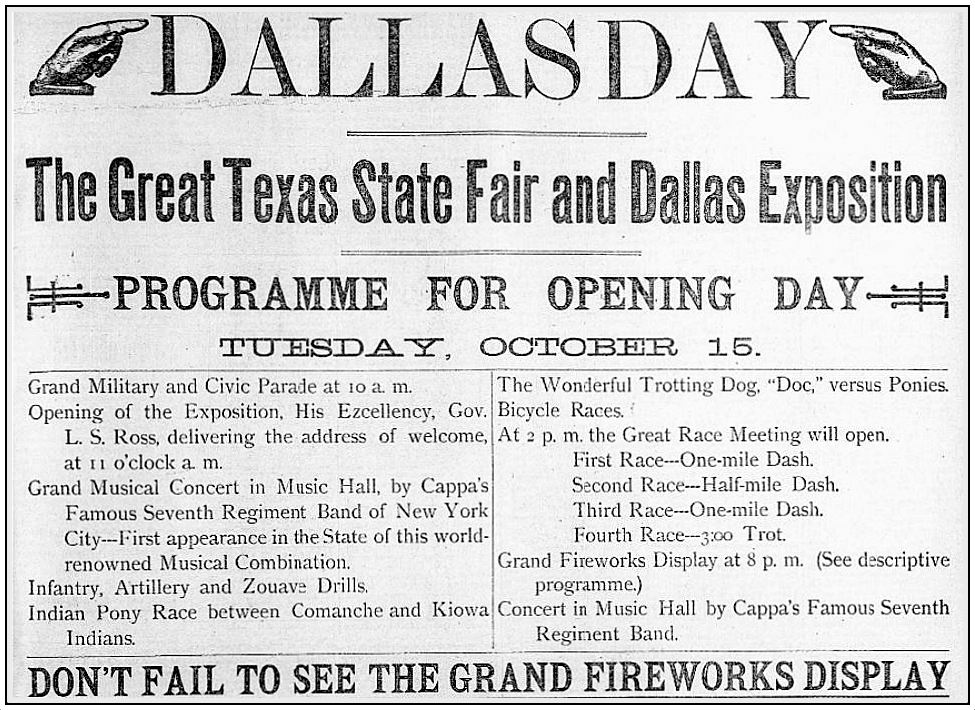
Here’s an early “Dallas Day” ad from 1889 with pointing fingers:

1889_dallas-day_sfot_dmn_101489Oct. 14, 1889

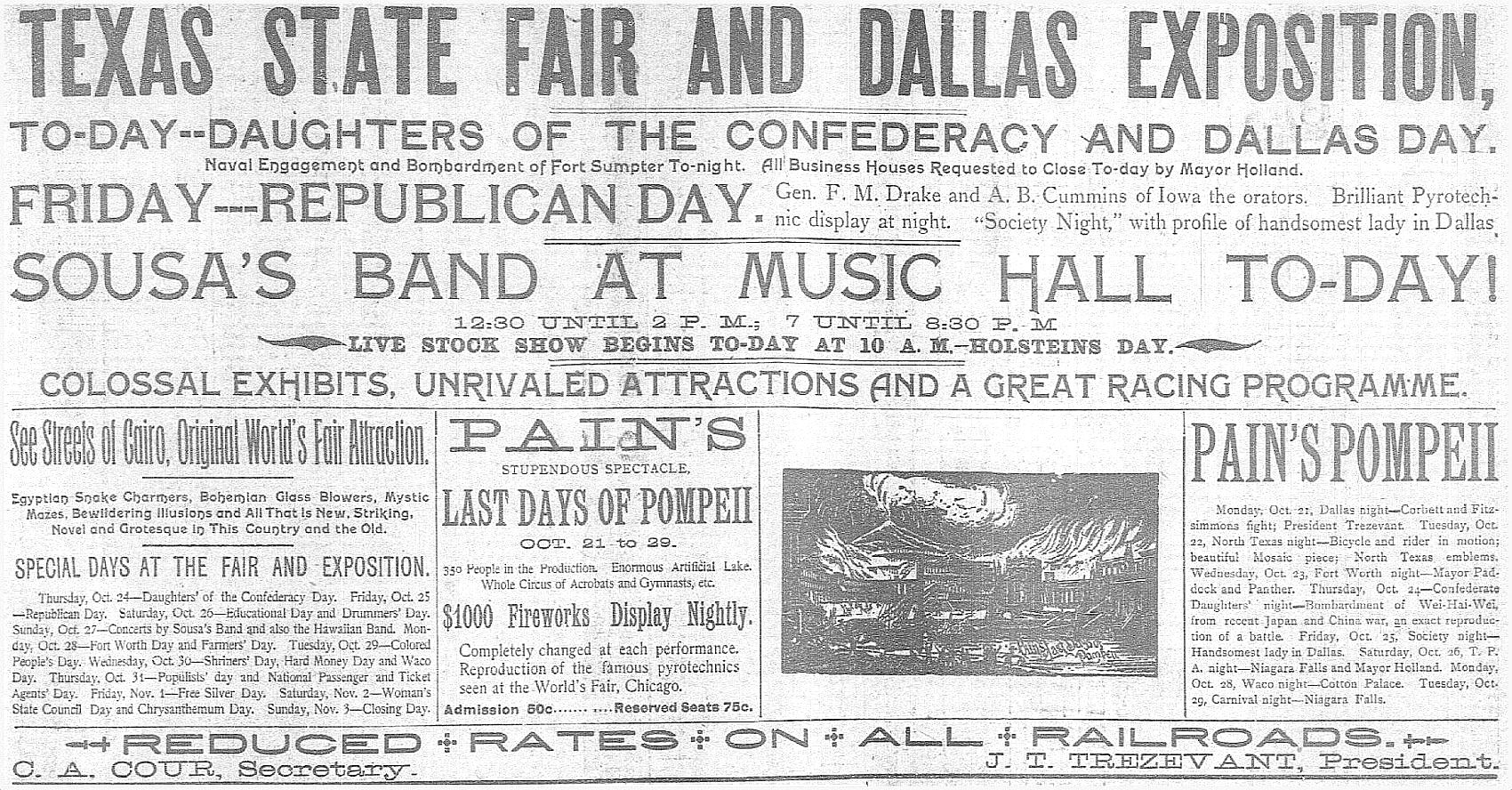
The State Fair of Texas was (and continues to be) so filled with other ubiquitous “days” (such as old favorites “Hard Money Day” and “Chrysanthemum Day,” as seen in the ad below from 1895) that if Dallas weren’t Dallas, “Dallas Day” might run the risk of getting lost in the jam-packed fair schedule.

1895_dallas-day_sfot_dmn_102495Oct. 24, 1895

There were, of course, “Dallas Day” parades:

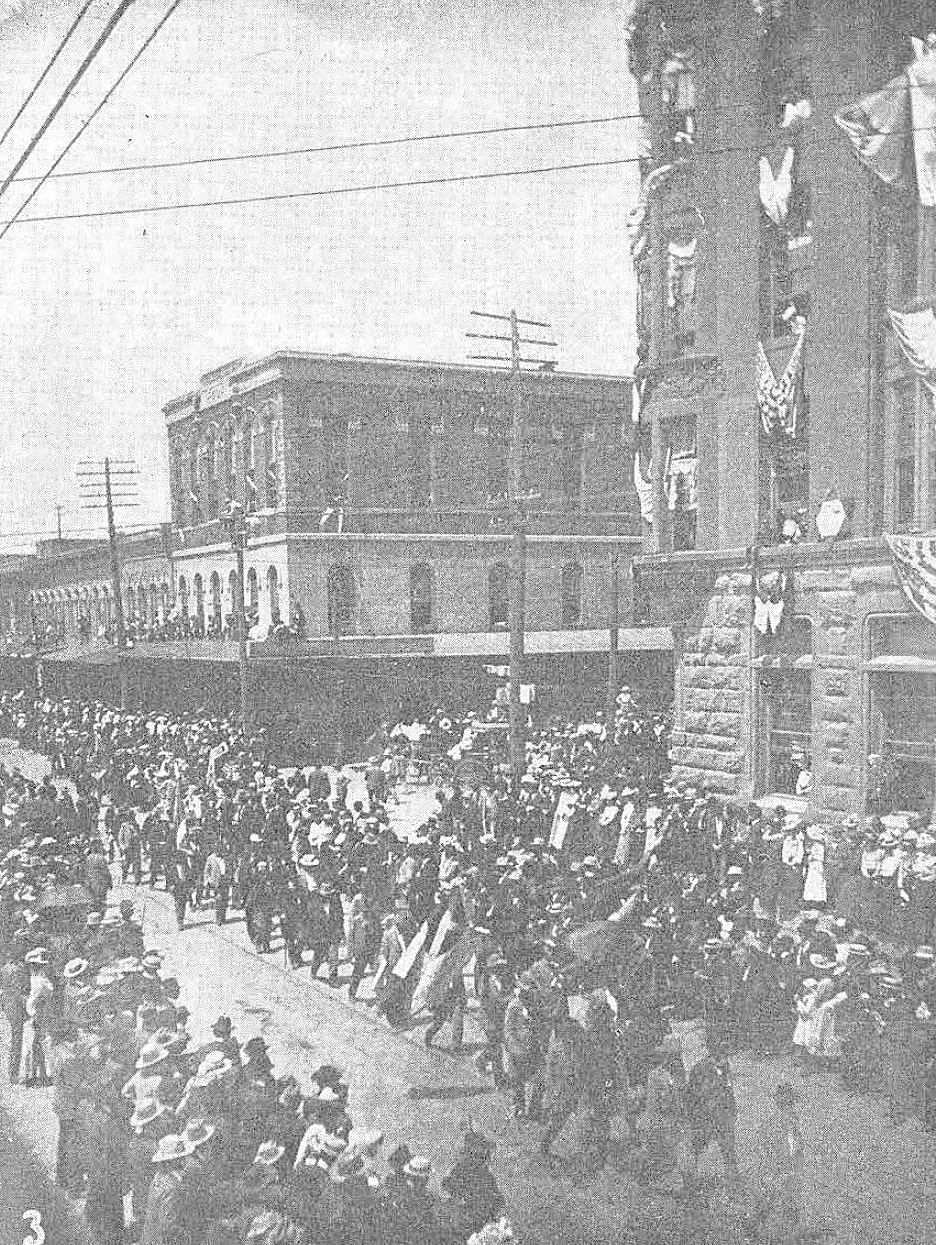
parade_state-fair_dallas-day_come-to-dallas_degolyer_SMU_ca1905ca. 1905, via DeGolyer Library, SMU

“Dallas Day” may still be a thing, for all I know (I guess I think of “Dallas Day” as the day Dallas’ elementary school kids get off to go to the fair, a tradition I hope never dies), but it had lost a lot of steam after those early days. Some businesses continued to close or shorten their hours to let employees enjoy the fair, but the era of a city shutting down so that everyone could flock to the State Fair began to fade after those early decades of the 20th century. But imagine how exciting that must have been, with all of Dallas descending on Fair Park en masse.

state-fair_dallas-day_101056Oct. 10, 1956

*

state-fair_dallas-day_100956_det_sm

*

Copyright © 2019 Paula Bosse. All Rights Reserved.

State Fair of Texas, Miscellaneous Tidbits from Its History

state-fair-of-texas_pennant_ebay_crop

by Paula Bosse

The State Fair of Texas is, once again, in full swing. Here are a few random SFOT images and ads from the past.

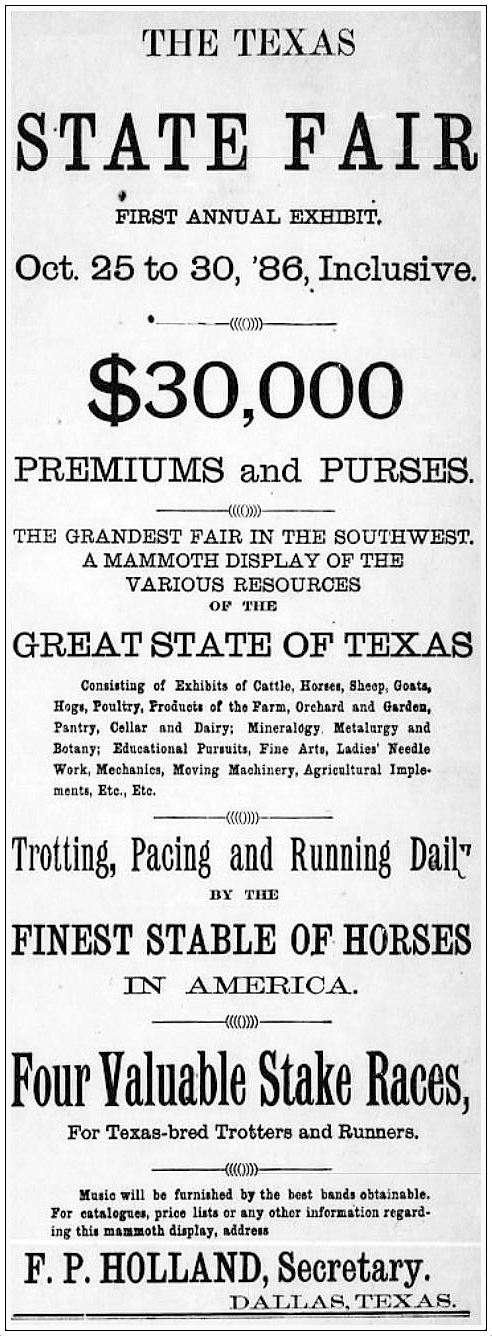
First up, an ad for the very first state fair in Dallas, in 1886. Almost unbelievably, this “Dallas State Fair” (held on 80 acres of land now known as Fair Park) was one of two competing state fairs held in the city that year — the other one was the “Texas State Fair,” which was held about three miles northeast of the courthouse on a 100-acre site roughly about where Cole Park is near present-day North Dallas High School. The two state fairs ran concurrently, and both were smash hits. The “Dallas State Fair and Exposition” eventually became the State Fair of Texas in 1904. Below are the ads for those competing two fairs. (Click to see a larger image.)

state-fair_first_dallas-herald_100986
The East Dallas fair, Dallas Herald, Oct. 9, 1886

texas-state-fair_fairland_dallas-herald_102086
The North Dallas fair, Dallas Herald, Oct. 20, 1886

*

One of the original buildings built for the 1886 Dallas State Fair was the massive Exposition Building, designed by architect James Flanders. On a site devoted to the career of Flanders, the architect recalled this project many years later: “The progress of the work on the structure was watched by most people with a degree of curiosity far more intense than is excited by the loftiest skyscraper in these days when people have no time to wonder. Such an apparition on the bald prairie attracted crowds of the curious from far and near on Sundays.”

state-fair_exposition-bldg_ca-1890s

Above, the huge Exposition Hall, enlarged from its initial design, which, in 1886 was reported to contain 92,000 square feet of unrivaled exhibition space. Unfortunately, the wooden buildings seen above burned to the ground in the early hours of July 20, 1902. The blaze was so intense that “the whole of the city was lit up with the brilliancy of the sunrise” and that “flames rose to such great height that they were seen as far west as Fort Worth, where it was thought the whole city of Dallas was burning” (Dallas Morning News, July 21, 1902). More on this building can be found on the Watermelon Kid site, here.

Below, the Exposition Building can be seen from the fairgrounds racetrack in a photo published in 1900 in an issue of The Bohemian magazine (via the Fort Worth Public Library).

fairgrounds_racetrack_bohemian_1900_fwpl

*

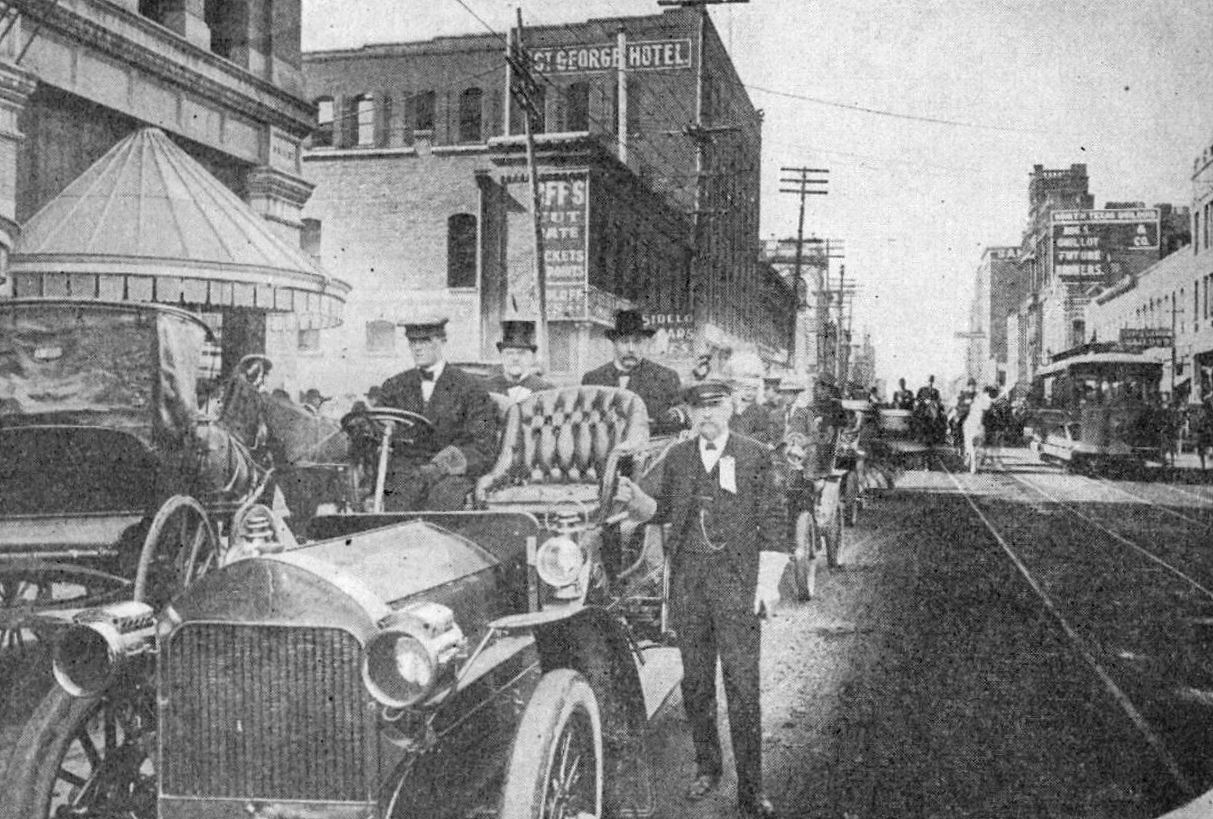
A moment from the opening day parade festivities of the 1903 fair is captured in the photo below, with the following caption from the 1941-42 edition of the Texas Almanac: “Gov. S. W. T. Lanham (in rear seat of pioneer horseless carriage) in opening day parade for 1903 State Fair of Texas formed on Main Street. Fair President C. A. Keating was seated beside him, and Secretary John G. Hunter of Board of Trade is seen standing beside the gasoline buggy.”

state-fair_opening-day_1903_tx-almanac_1941-42_portal
Main Street, looking west, via Portal to Texas History

*

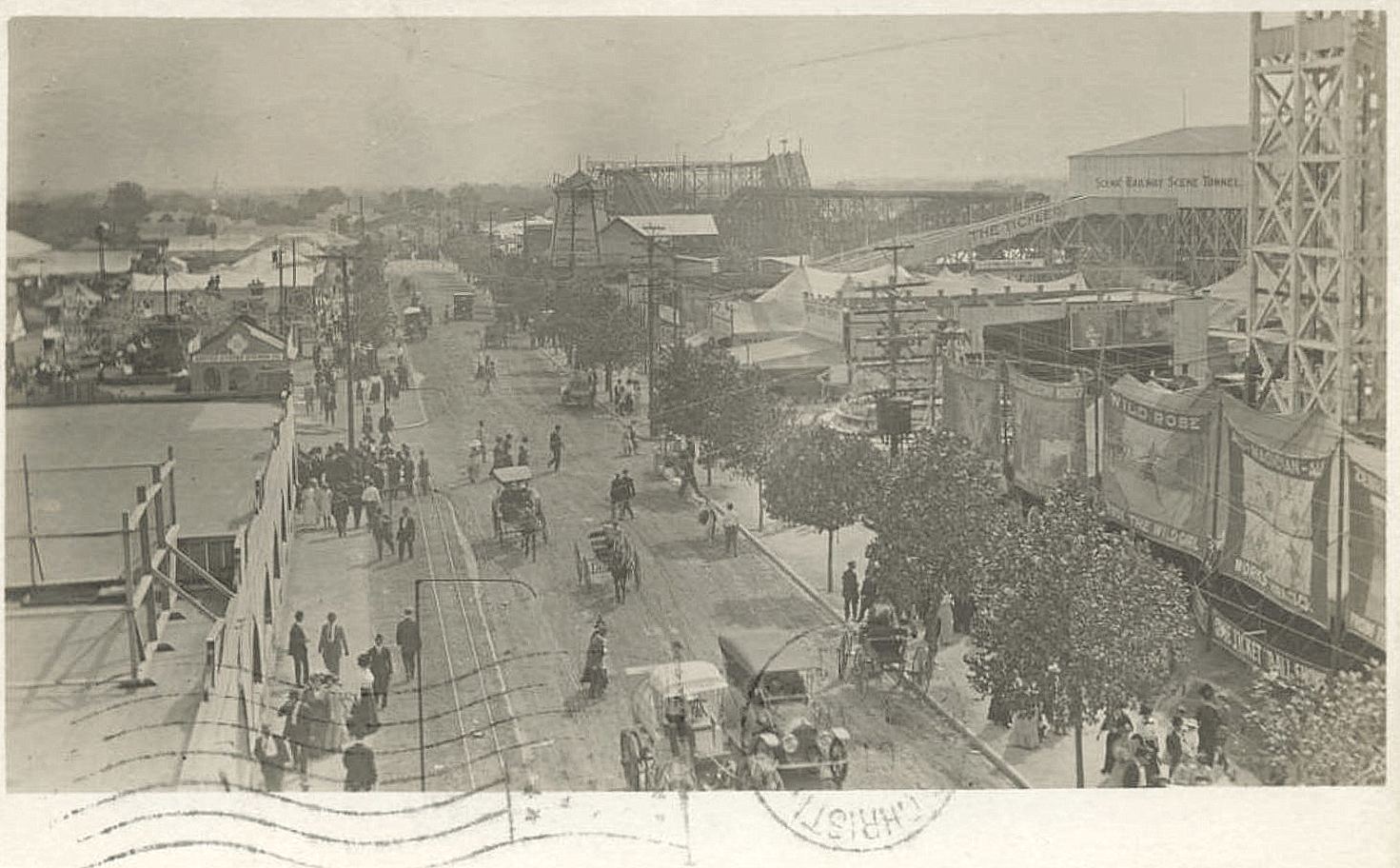
Here is a 1911 view of the state fair midway taken by John R. Minor, Jr. in a real-photo postcard. (More on Mr. Minor is here; more images of the Shoot the Chutes water ride can be found here.)
state-fair_street-scene_john-minor_1911_cook-colln_degolyer
via George W. Cook Collection, DeGolyer Library, SMU

*

From the 1920s, an ad for Clayco Red Ball gasoline (“It’s RED in color”). I’m always a sucker for ads containing photos or drawings of Dallas landmarks, and here we see the entrance to Fair Park. (Why was the gas red? Why not? It was the brainchild of Dallas advertising man Wilson W. Crook, Sr. who needed a way to make this Oklahoma gas different. He remembered that during his WWI days in France that higher quality airplane fuel was colored red to distinguish it from regular gasoline. When the gas was introduced to Dallas in August, 1924, he devised a promotion that gave away 5 gallons of this gas to every red-headed person who showed up at participating service stations.)

ad-red-ball-gas_state-fair_dmn_101224-det

ad-red-ball-gas_state-fair_dmn_101224Clayco Red Ball ad, Oct. 1924

*

If we’re talking about the State Fair of Texas and we’ve come to the 1930s, there’s a pretty good chance there’s going to be a photo from the Texas Centennial. And, looky here: a nice shot of concessionaires waiting for thirsty patrons at the Centennial Exposition in 1936. A couple of nickels could get you a Coke and a phone call.

sfot_concessionaires_coke_unt_portal_1936via Portal to Texas History

*

During World War II the State Fair was on hiatus. Here’s an ad from the 1941-42 Texas Almanac pre-closure, with a nice pencil sketch of the Esplanade and Hall of State:

state-fair_tx-almanac_1941-42

state-fair_tx-almanac_1941-42_det

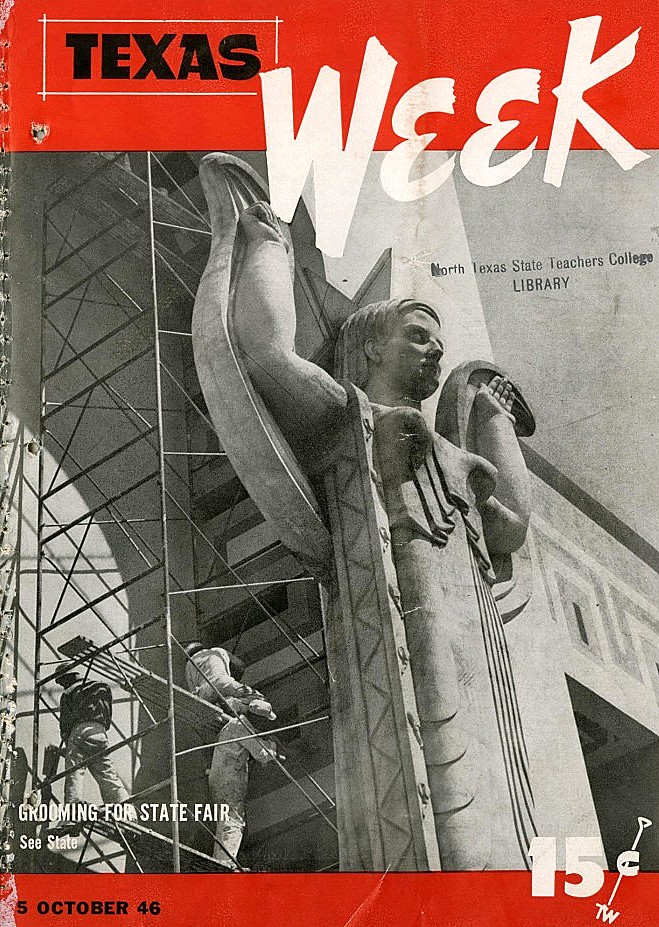
And a 1946 magazine cover story on the imminent reopening of the fair:

state-fair_texas-week-mag_100446_portal_cover
via Portal to Texas History

*

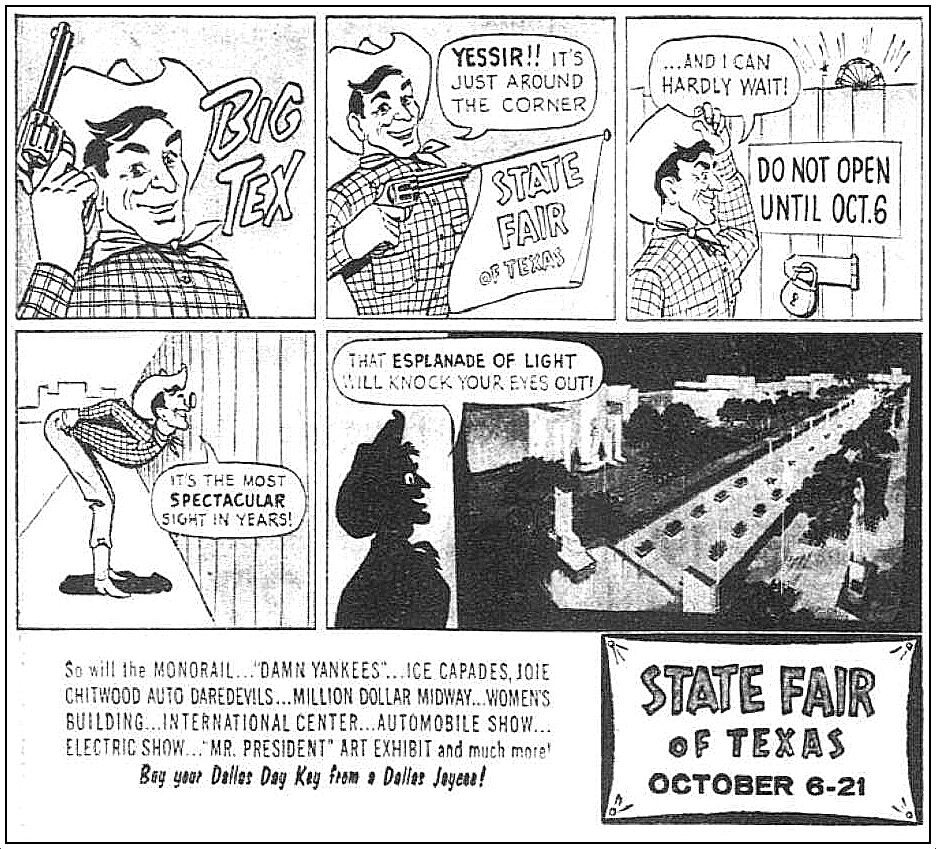
In 1956 Big Tex warned/assured you that the Esplanade lights would “knock your eyes out.”

state-fair_big-tex-ad_092456

*

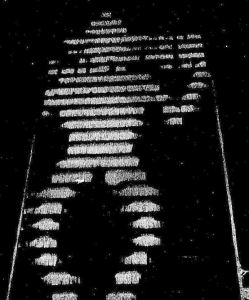
Speaking of Big Tex and lights knocking your eyes out, in the 1960s Big Tex was memorialized on the side of a downtown building, like a giant bow-legged Lite-Brite.

sfot_big-tex_illuminated_1960s

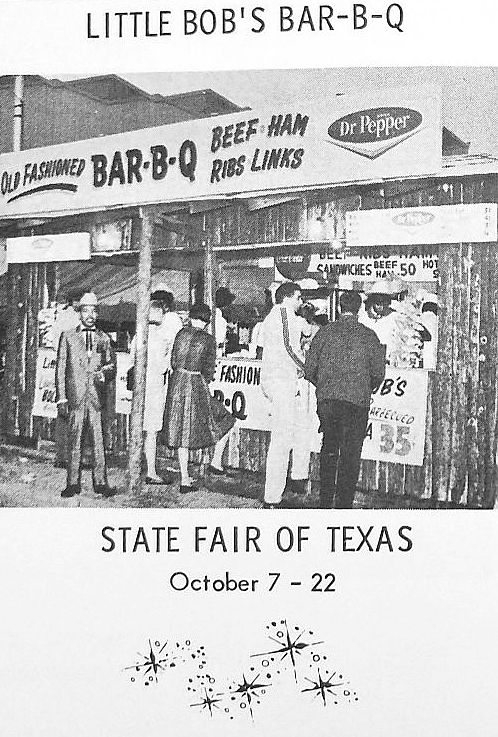
Back at Fair Park, Huey P. Nash was supplying fair throngs with barbecue from his Little Bob’s Bar-B-Q stand. In 1964, Nash was the first African-American vendor to be granted a food concession at the State Fair. Little Bob’s (which I believe is still in business) was, at the time of this 1967 ad, located in South Dallas at 4203 S. Oakland (now Malcom X), at the corner of Pine. (Ad is from the 1967 Souvenir Program of the 74th Annual Session of the Missionary Baptist General Convention of Texas; more photos from this publication can be seen here.)

sfot_little-bobs-bbq_baptist-convention-program_1967_photo

sfot_little-bobs-bbq_baptist-convention-program_oct-1967

The 1960s also gave us the Swiss Skyride, which replaced the Monorail (which, when it was introduced in 1956, was the first commercially operated monorail in the United States). The Swiss Skyride was erected in Fair Park in August, 1964, and the 6-minute ride debuted a few months later at the 1964 State Fair of Texas.

state-fair_swiss-sky-ride_tinkle-key-to-dallas_1965_replaced-monorail_
via Lon Tinkle’s children’s book Key to Dallas (1965)

sfot_swiss-skyride_FWST_101864

sfot_swiss-skyride_FWST_100964

*

state-fair-of-texas_pennant_ebay_crop_sm

*

Copyright © 2019 Paula Bosse. All Rights Reserved.