Flashback : Dallas

A Miscellany: History, Ads, Pop Culture

Category: Neighborhoods

“Dallas in Winter” by Guy Wiggins — ca. 1942
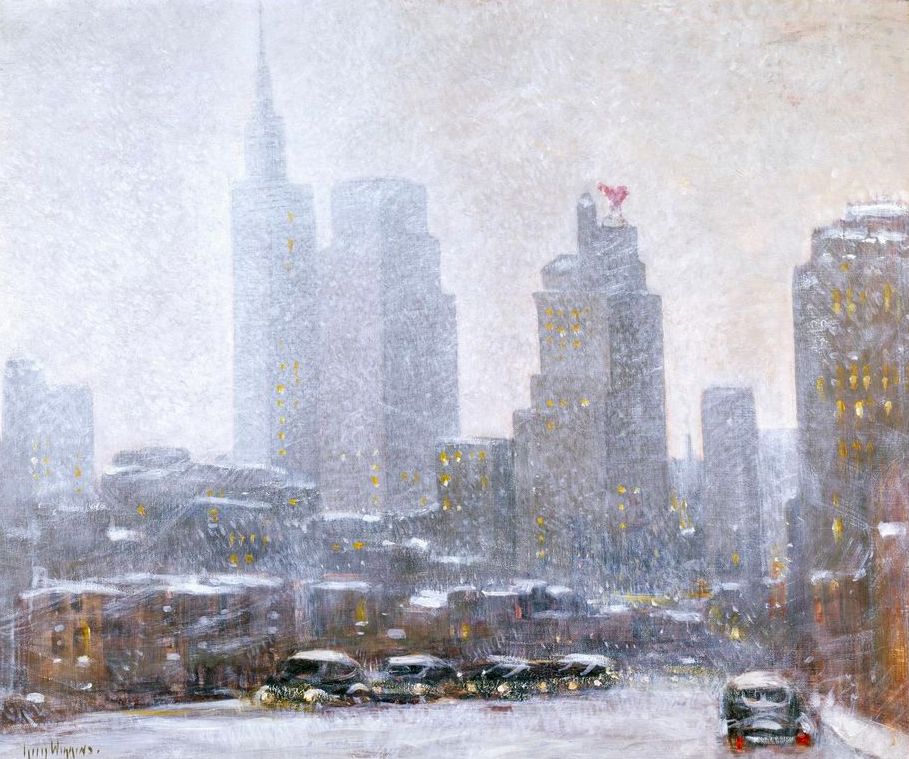
wiggins_dallas-in-winter_c1942_dma“Dallas in Winter” by Guy Carleton Wiggins (Dallas Museum of Art)

by Paula Bosse

A nostalgic look back at a snowy Dallas scene from the 1940s by Guy Wiggins (1893-1962), an artist most remembered for his snow scenes of New York City. Wiggins was apparently quite fond of Dallas and was a frequent visitor, beginning in the 1920s. He had countless gallery shows here over the years, and while in town he’d often present lectures and “master classes” to arts groups and women’s groups. According to articles in local newspapers, Wiggins painted views of the Dallas skyline several times, paintings which no doubt found their way into private collections and are probably still hanging on the walls of local art patrons. In 1952, his daughter and her family moved here, giving Wiggins yet another reason to visit.

The wonderful snow scene above is in the collection of the Dallas Museum of Art; this is the DMA’s description of the painting:

A rare snowstorm in Dallas captured the eye of Guy Carleton Wiggins, who recorded this scene from the downtown vantage point of Live Oak and Pearl streets, showing the skyline’s distinctive historic landmark of the red statue of Pegasus on the Magnolia building.

Although born and raised in the East, where he was affiliated with the artists’ colony in Old Lyme, Connecticut, Wiggins traveled widely throughout the United States during his career. He became known for urban winter scenes such as this one.

***

Sources & Notes

The painting “Dallas in Winter” by Guy Carleton Wiggins is from the Patsy Lacy Griffith Collection, Dallas Museum of Art; it was a bequest of Patsy Lacy Griffith. More information on the painting can be found on the DMA’s website, here.

(Patsy Lacy Griffith was the daughter of oil millionaire Rogers Lacy, who was this close to building the incredible Frank Lloyd Wright-designed hotel downtown. I wrote about it in a previous post, here.)

More on the career of Guy Wiggins, from Wikipedia, here, and from a 2011 New York Times profile of the Wiggins family of painters, here.

Because he visited so often and had many friends here (and because he apparently painted very quickly), Wiggins’ paintings were well represented in private collections in Dallas. (One of his earliest patrons was Miss Ela Hockaday, of the Hockaday School for Girls, who loaned one of her paintings for an exhibit at the Dallas Public Library in 1930.) Among works depicting views of the city were oil studies with the titles “Morning Over Dallas,” “The Akard Canyon,” “Dallas: Morning From Cliff Towers,” and “Dallas Nocturne,” all of which were probably still damp when first shown, as The Dallas Morning News reported that they had been painted “little more than a week ago” before they went on display at the Ed Spillars gallery on Fairmount at the end of December, 1948 (DMN, Dec. 22, 1948). I’d love to see these paintings.

Want “Dallas in Winter” hanging on your walls? Buy the poster from the DMA Shop here. Look at it longingly when it’s 157 degrees in August.

*

Copyright © 2015 Paula Bosse. All Rights Reserved.
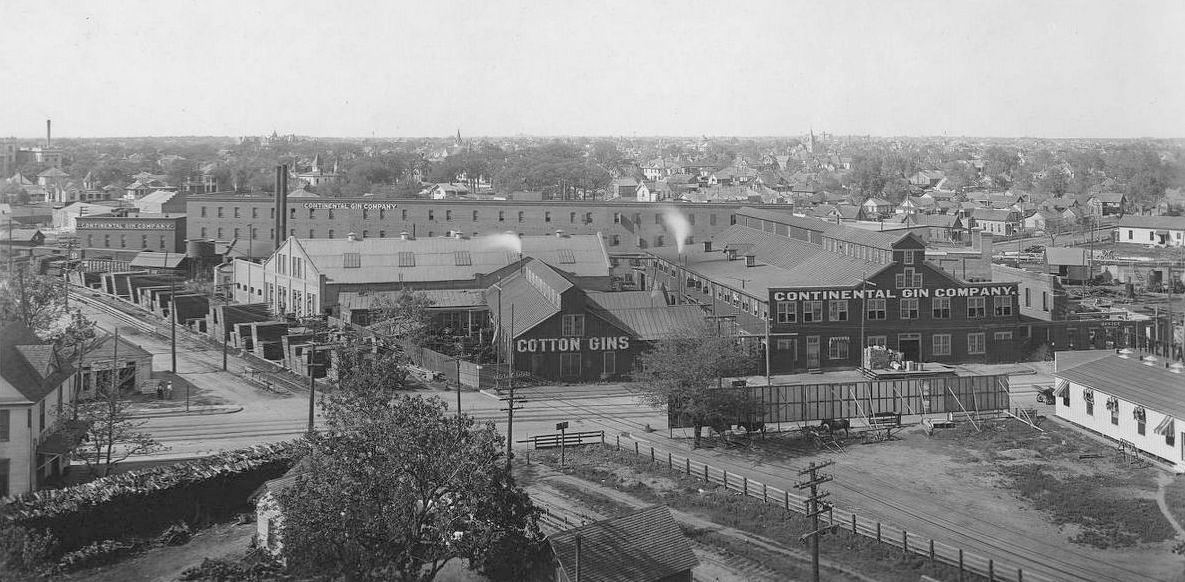
The Continental Gin Complex — 1914

continental-gin-bldg_1914_cook-degolyer-smu-bwPhoto by Chas. Erwin Arnold (DeGolyer Lib., SMU) (click for larger image)

by Paula Bosse

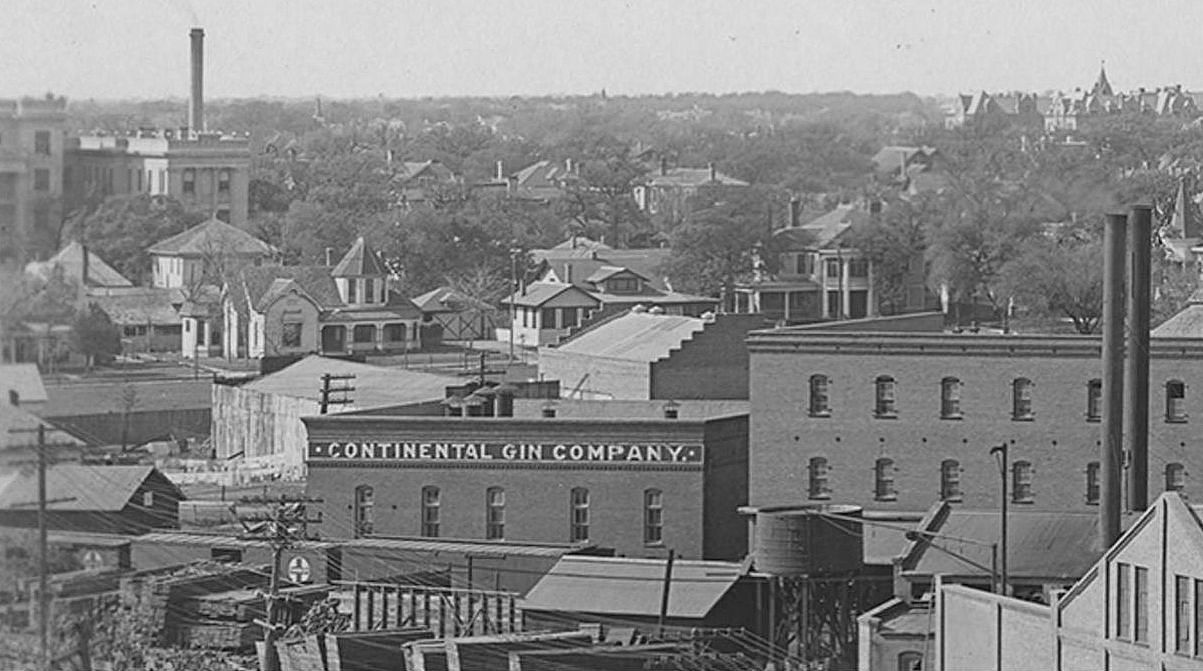
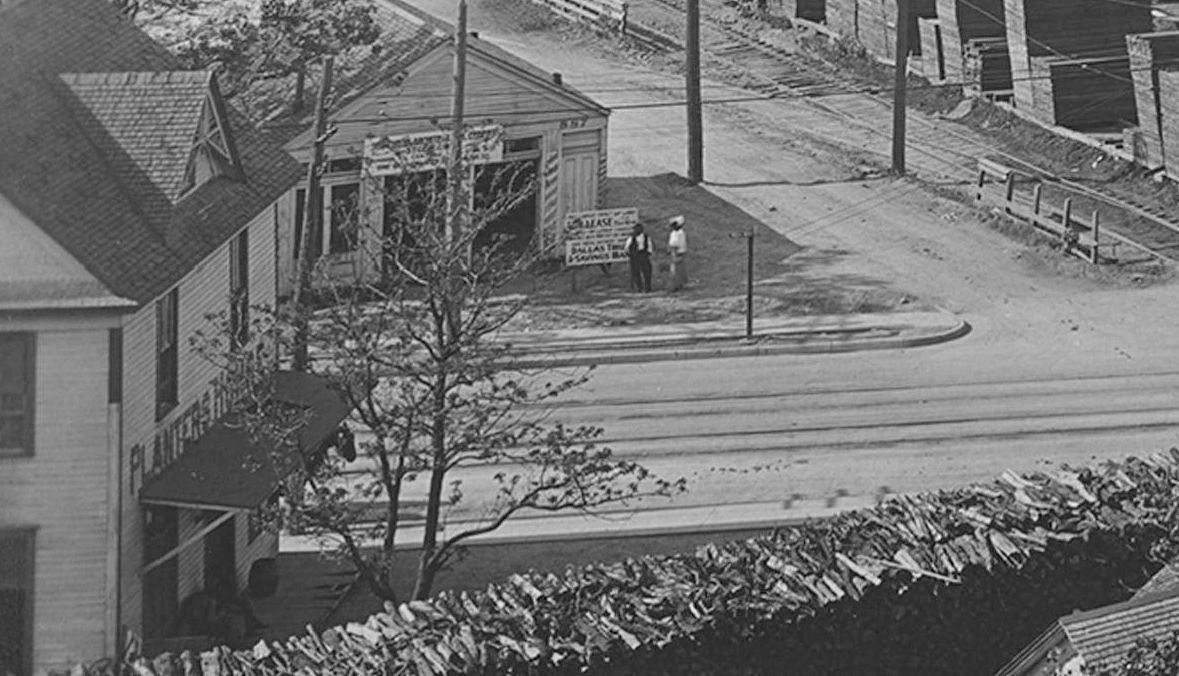
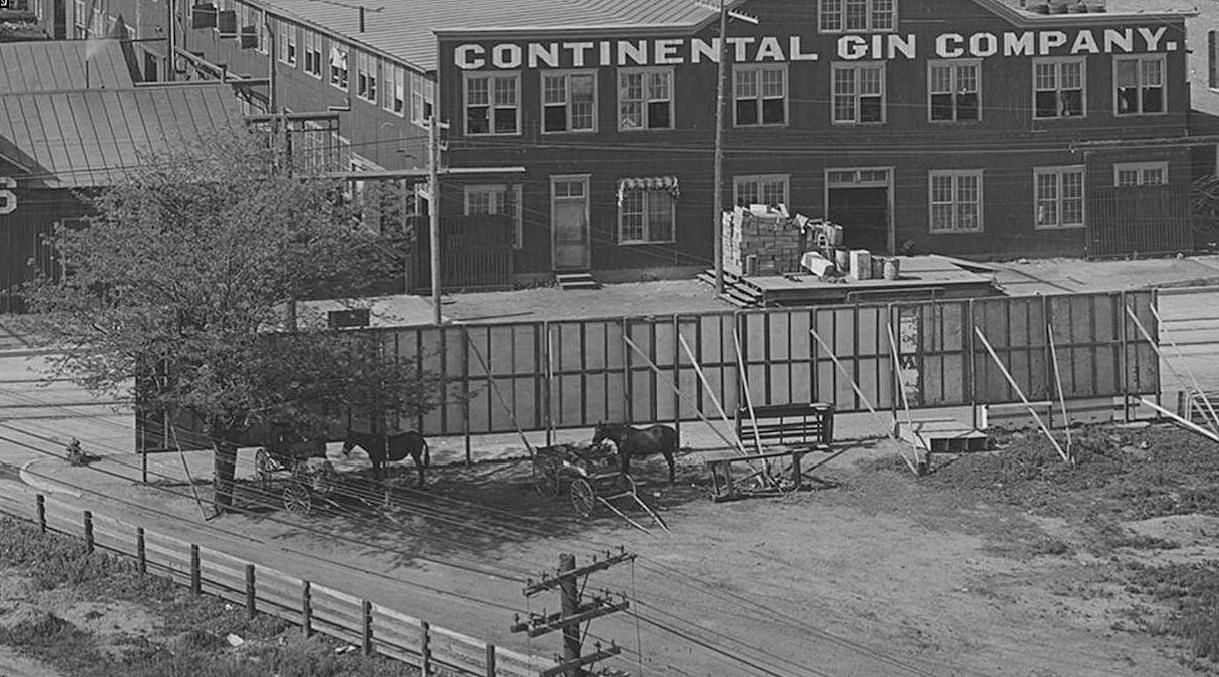
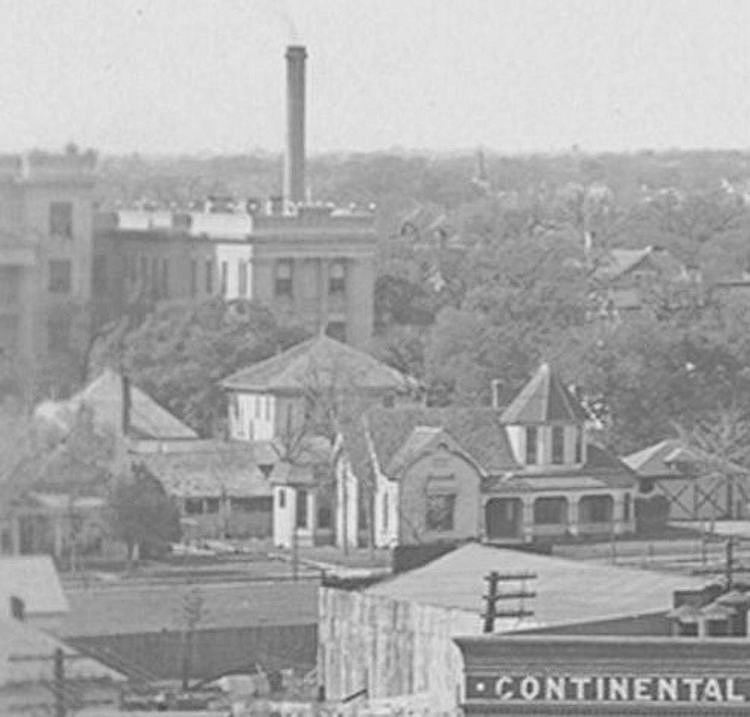
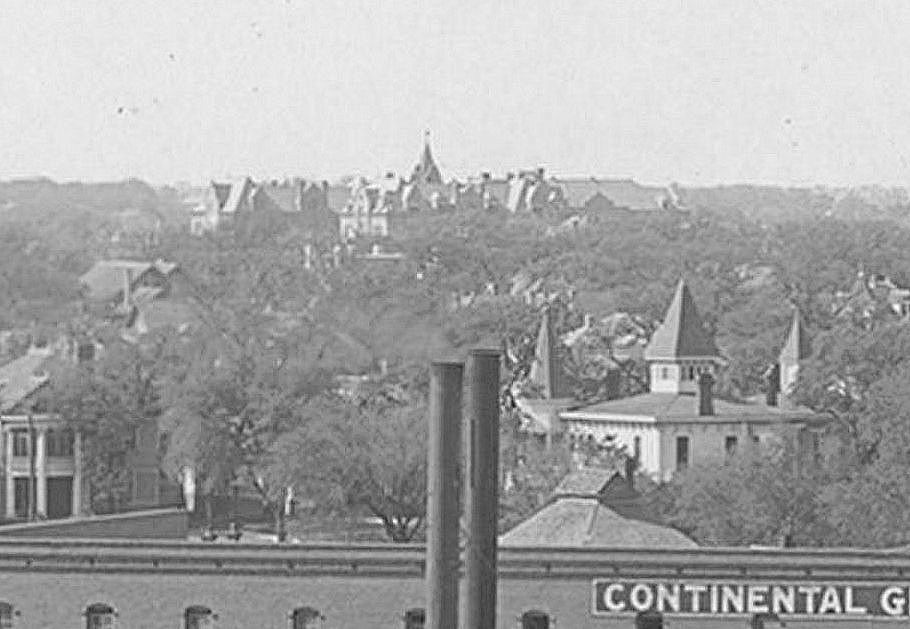
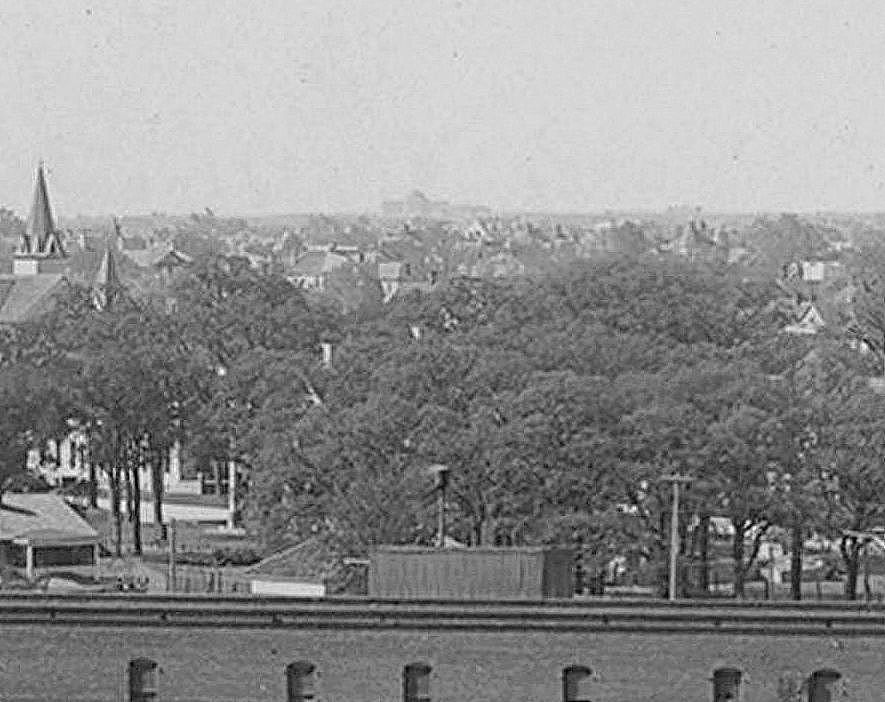
This is a really wonderful view of the Continental Gin Company complex, a Dallas landmark, much of which is, remarkably, still standing in Deep Ellum. Granted, my experience is limited, but I’ve never seen a photograph from this period showing the manufacturing end of Deep Ellum and the residential neighborhood just beyond it to the north. This is another incredible image from the George W. Cook Collection at the DeGolyer Library at SMU. A few magnified details, below. (Click for much larger images.)

continental-gin-bldg_1914_cook-degolyer-det1_bw

continental-gin-bldg_1914_cook-degolyer-det2_bw

continental-gin-bldg_1914_cook-degolyer-det3_bw

And zooming into the distance….

continental-gin_baylor_1914_bwThe back side of Baylor, at the top left. See it from the front here.

continental-gin_ursuline_1914_bwIn the middle at the top, Ursuline. (See more views of it here.)

continental-gin_smu_1914_bwAnd, my favorite, SMU’s Dallas Hall, waaaaaaaaaaaaaay in the distance. SMU hadn’t even officially opened when this photo was taken!

map_1919_continental-gin-bldg1919 map

***

Photograph titled “Continental Gin Company on Elm Street, Facing North” by Charles Erwin Arnold; from the George W. Cook Dallas/Texas Image Collection housed at the DeGolyer Library, Central University Libraries, Southern Methodist University. The photo and its details can be viewed here (I have altered the color in the images seen in this post).

Map detail from a large 1919 Dallas street map (which can be seen via the Portal to Texas History, here).

A view of this area from the 1921 Sanborn maps can be found here (click to make larger). (What’s a Sanborn map? Wikipedia tells you here.)

I wrote at length about the history of the Continental Gin complex of buildings in the post “Munger’s Improved Continental Gin Company,” here.

All images larger when clicked.

*

Copyright © 2015 Paula Bosse. All Rights Reserved.
 

“Everyday Life” on Elm Street — ca. 1905

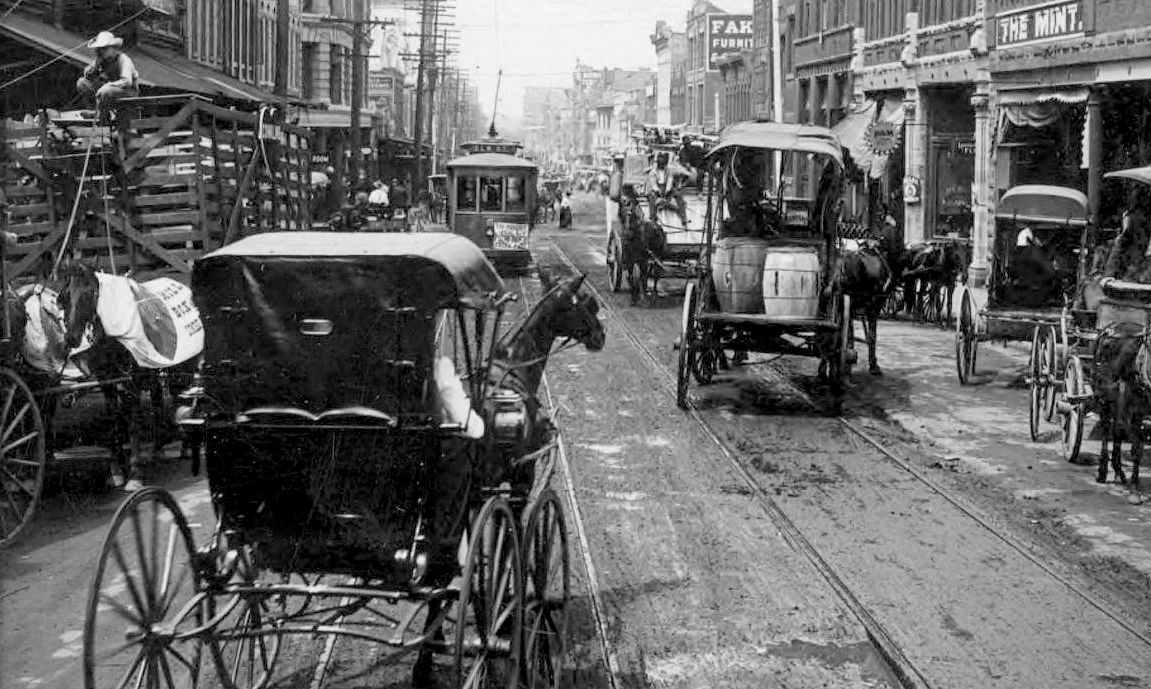
elm-street_everyday-life_UCR-smallElm Street rush hour

by Paula Bosse

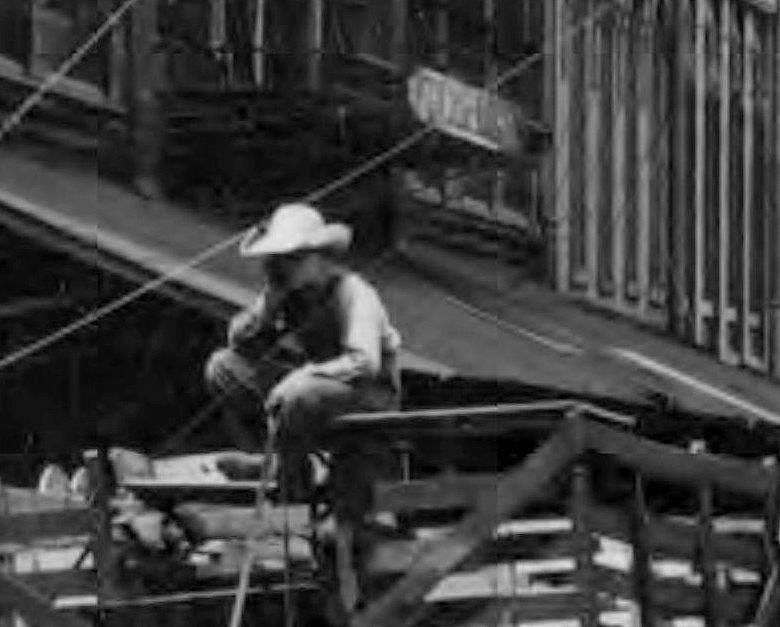
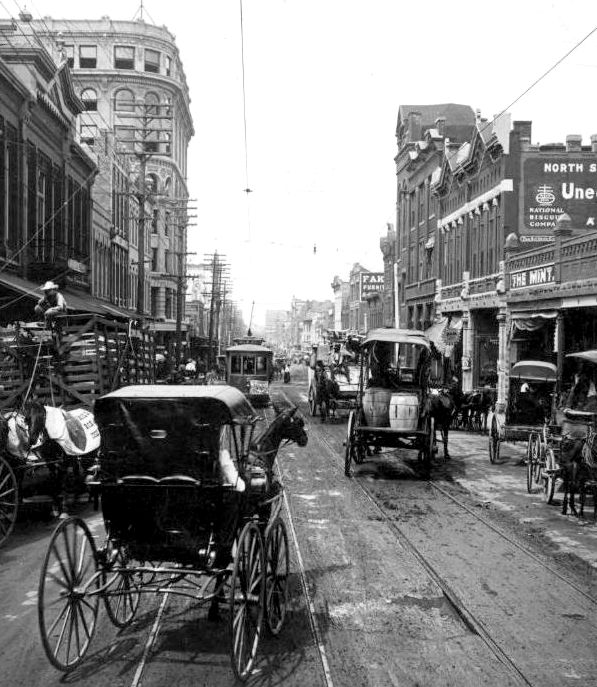
Automobiles would be rolling down Elm Street very soon, but even when the traffic was still mostly horse-related, there’s a lot going on here: horses, buggies, barrels, saloons, a bored kid on a wagon, a street car, and the Wilson Building.

elm-st_everyday-life_UCR-det

elm-st_everyday-life_UCR-zoom(click for larger images)

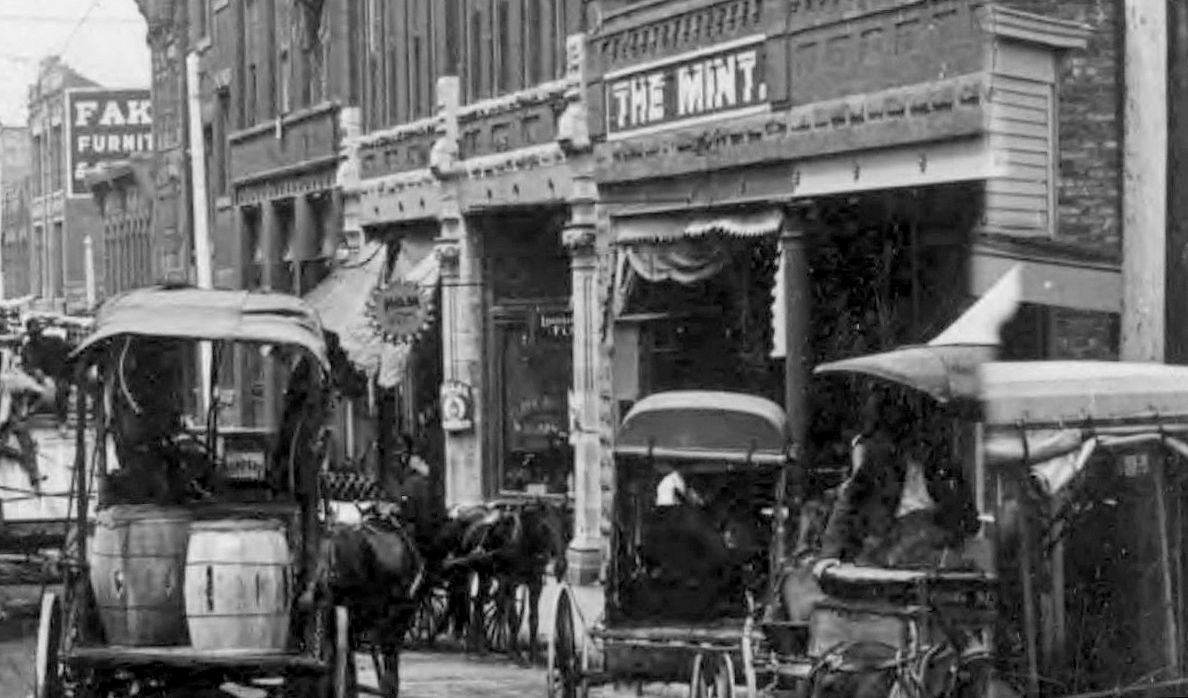
And what was The Mint? The Mint was a saloon. I’m not sure when it first set up shop in Dallas, but it was listed in an 1877 directory, one of the city’s earliest.

elm-st_everyday-life_mint_UCR

Speaking of 1877, read about a typical frontier day at The Mint in two accounts of a stabbing, from The Dallas Herald in April, 1877, here, and the follow-up, here.

***

Sources & Notes

Photo is from a stereograph titled “Everyday Life, Elm Street, Dallas, Tex.” from the Keystone-Mast Collection, UCR/California Museum of Photography, University of California at Riverside; it can be accessed here.

Images larger when clicked.

*

Copyright © 2015 Paula Bosse. All Rights Reserved.
Roseland — 1916

roseland_terrill-yrbk_1916The Roseland Theater, 1613 Main St. (click for larger image)

by Paula Bosse

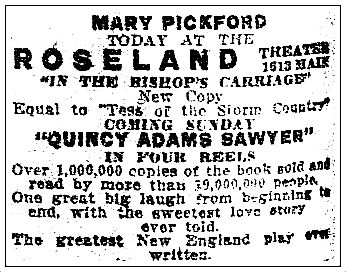
Despite its grainy quality, I really like this photo. It shows people walking past the Roseland Theater at 1613 Main Street, a theater I’d never heard of. I couldn’t find out much about it other than that it doesn’t seem to have lasted very long (from at least 1914 until at least 1916). It was owned/managed by P. G. Cameron, who ran several theaters and was in the general “amusements” business around town (he had run the Fair Grounds Skating Rink back in the aughts for a short while, until the place was shut down because of the discovery of a prostitution operation being conducted there … on city-owned property).

roseland_dmn_050914Dallas Morning News, May 9, 1914

In 1916, the north side of Main Street contained three theaters: the Nickelodeon (1607 Main), the Roseland (1613 Main), and the Best (1615 Main). This is the much-beleaguered (and now mostly demolished) block of Main, which in 1916 was anchored by the dazzling Praetorian and Wilson buildings. The Roseland occupied part of what was once the Everts Jewelers building. Below, another view of this block in 1916, with the theater(s) on the right, about halfway between the tall white Praetorian Building and the stately rounded Wilson Building.

main-st_1916_smu-rotunda_sm Another grainy photo, Main looking west

I like this Roseland photo because it’s a candid shot taken by a teenager on the sidewalk of a lively downtown Dallas who had happened upon his teacher away from school. And the sign is cool. Too bad it’s so hard to see.

roseland_terrill-yrbk_1916_det

***

Sources & Notes

Photo from the 1916 Terrillian, the Terrill School yearbook. (The caption for the photo of one of the school’s teachers: “Passing by or coming out, Mr. F.?”)

Photo of Main Street, looking west, from the 1916 Rotunda, the yearbook of SMU.

See what the 1600 block of Main looked like in 1909, here. Much of the block has been demolished.

See the 1921 Sanborn map showing this block, here.

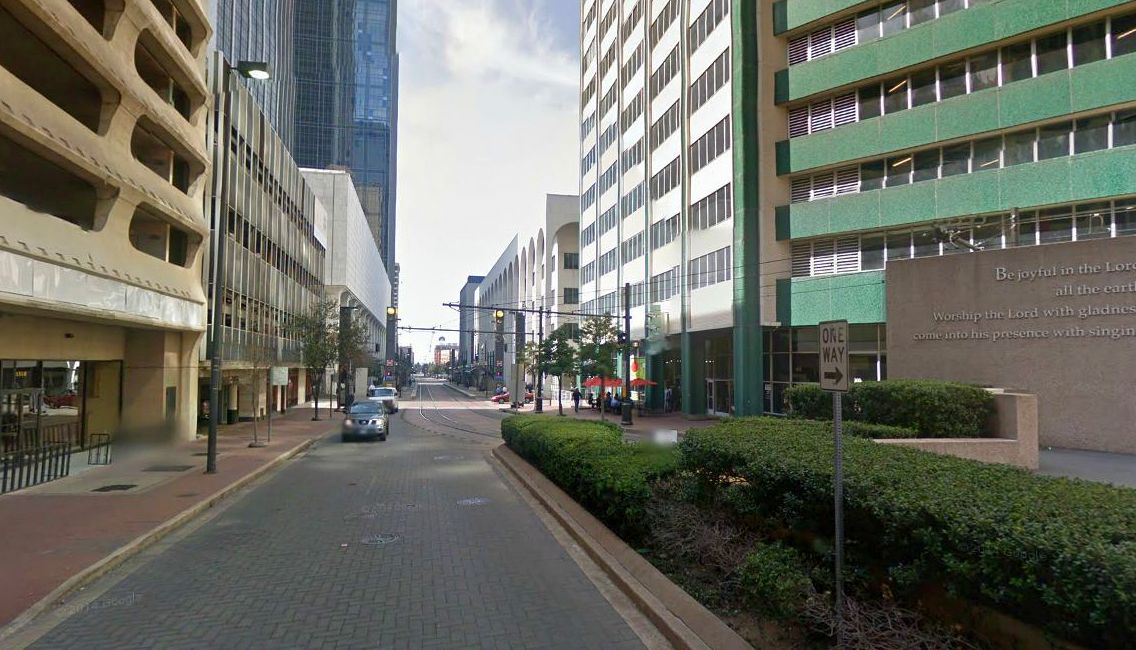
Below, a recent (2015) Google Street View of the building that housed the Roseland: the really lovely shorter white building. This building may already have been razed. What a shame. (UPDATE — 2018: Yep, demolished.) The current view (as I assume this block is ever-changing) can be seen on Google Street View here.

roseland_google2015, not long for this world….

*

Copyright © 2015 Paula Bosse. All Rights Reserved.
 

Views From a Passing Train — 1902

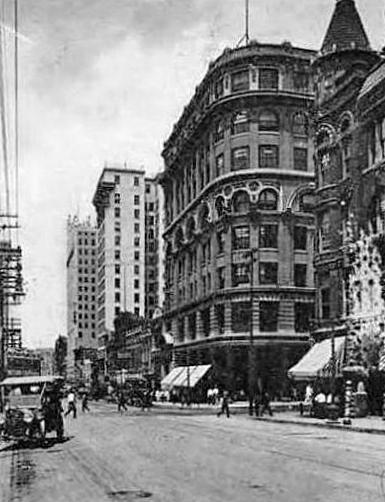
edmunds_pacific-bryan_free-lib-phil_1902Pacific, looking west toward Bryan, 1902 (click for larger image)

by Paula Bosse

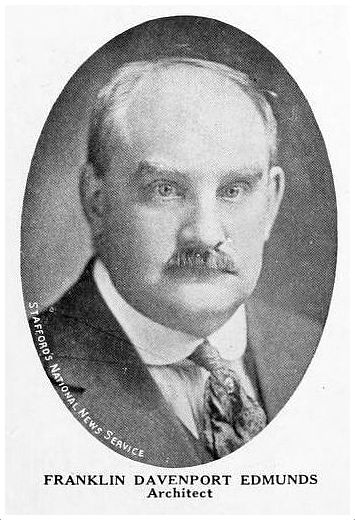
Franklin Davenport Edmunds (1874-1948) was a Philadelphia architect whose hobbies were travel and photography. A 1902 train trip to Mexico took him through Texas, during which there as a blink-and-you’ll-miss-it stop in Dallas.

edmunds_whos-who-philadelphia_1920Who’s Who in Philadelphia, 1920

On the way to Mexico, he stopped in St. Louis for a while (where he took several photos on Feb. 12), passed through Arkansas (on Feb. 13), apparently saw very little of Dallas as he rolled through, and then took a lot of photos when he reached San Antonio (by Feb. 14). He then continued on to a vacation of at least two or three weeks in Mexico, where his camera was never far from his side.

The two photos that were taken as he passed through Dallas (which I’m assuming were snapped from the train) were probably taken on Feb. 13 or 14, 1902.

The location of the photo above is not noted, but it appears to be Pacific Avenue looking west. Peter S. Borich’s sign-painting business was on the northeast “corner” of Bryan and Pacific (at the point of the diagonal intersection). The photo shows the back and side of his building. It’s hard to see them, but there is a wagon with a team of horses at the Bryan St. intersection. Behind Borich’s is a blacksmith shop, and across the street, there are several furniture stores. Straight ahead is an almost mirage-like smoke-spewing locomotive heading toward the camera. (Unless Edmunds was standing in the middle of Pacific, I’m guessing he was taking the photo from the rear of the train.)

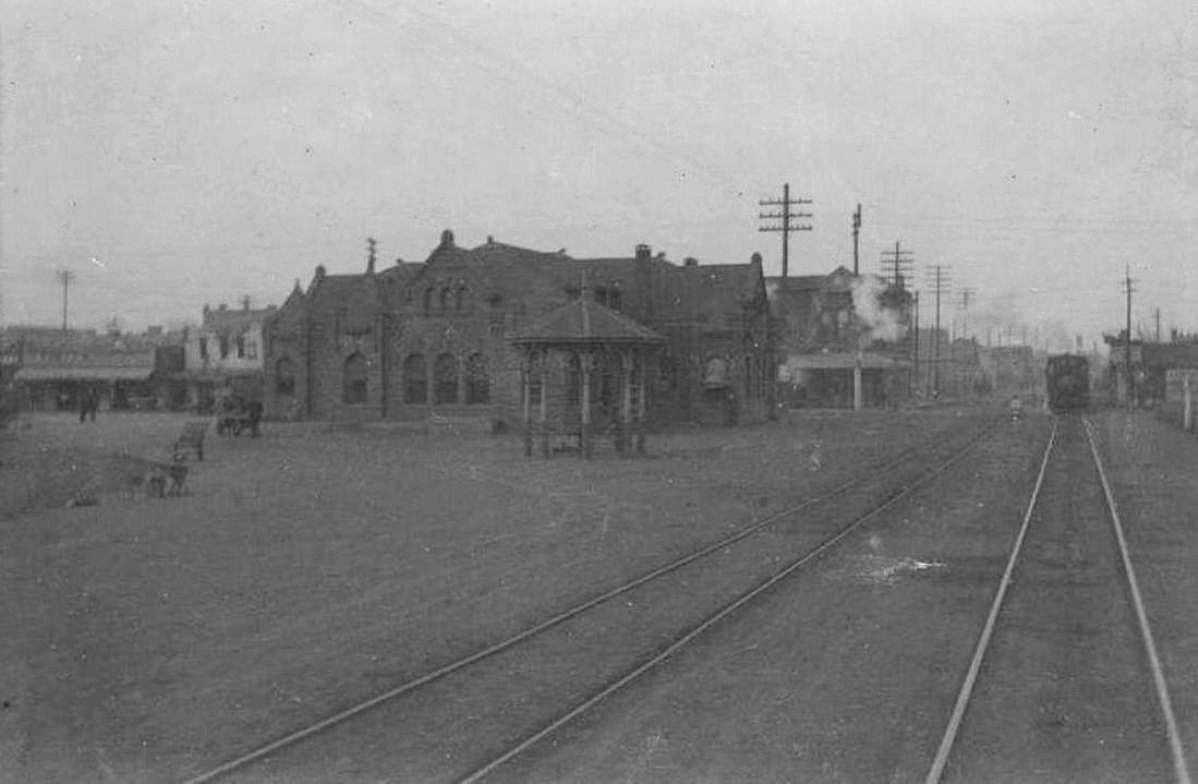
Seconds later, the train would have pulled into the old Union Depot (located about where Pacific would cross present-day Central Expressway).

edmunds_old-union-stn_free-lib-phil_1902(click for larger image)

Even though not identified in the photo description, the distinctive old Union Depot is instantly recognizable (an unrelated photo taken from about the same spot can be seen in this one from the George W. Cook collection at SMU’s DeGolyer Library). Again, the photo appears to have been taken from the train.

Edmunds took a ton of photos on this trip, but, sadly, he seems to have merely passed through Dallas without wandering around to explore its streets (which I would think would be interesting — if not downright exotic — to a Philadelphia architect) — I’m not sure he even got off the train to stretch his legs! But I’ve never seen these two photos, and they’re pretty cool. So, thanks, Frank — you should have hung around a little longer.

***

Both photos by Franklin Davenport Edmunds are from the Free Library of Philadelphia. The Pacific Avenue photo can be accessed here; the Union Depot photo, here. Other photos he took in Texas during the 1902 trip (and a few from a previous 1899 trip) can be viewed here.

A biography of Edmunds can be read at PhiladelphiaBuildings.org here.

A detail from the 1905 Sanborn map showing the businesses located at Pacific and Bryan, with Borich’s business circled in red and the camera’s vantage point in blue, can be seen here.

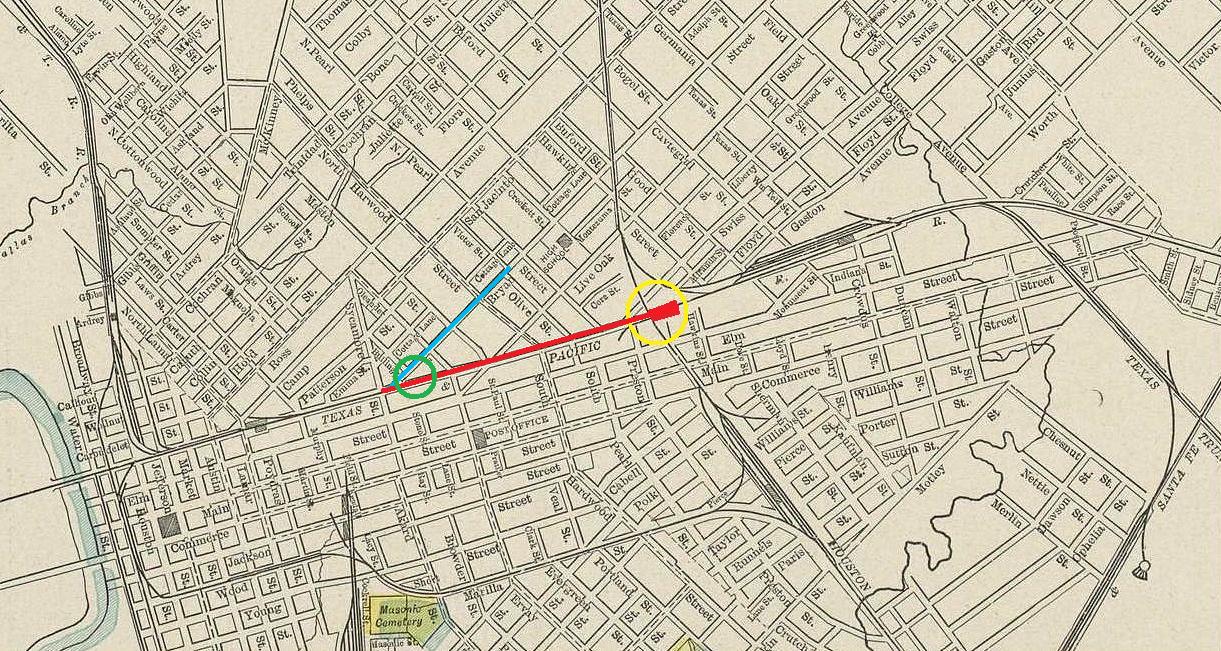
Below, a detail from a map (circa 1890-1900), showing the locations of the two photos, with the Pacific Ave. location circled in green and the Union Depot location in yellow.

dallas-map_ca1900(click for larger image)

And, lastly, a present-day image showing the same view as the top photo (from Google Street View).

pacific-bryan_google

My previous post, “The Old Union Depot in East Dallas: 1897-1935” — a history of the station with several photos — can be found here.

Images larger when clicked.

*

Copyright © 2015 Paula Bosse. All Rights Reserved.
South Pearl, In the Shadow of Downtown — 1950s

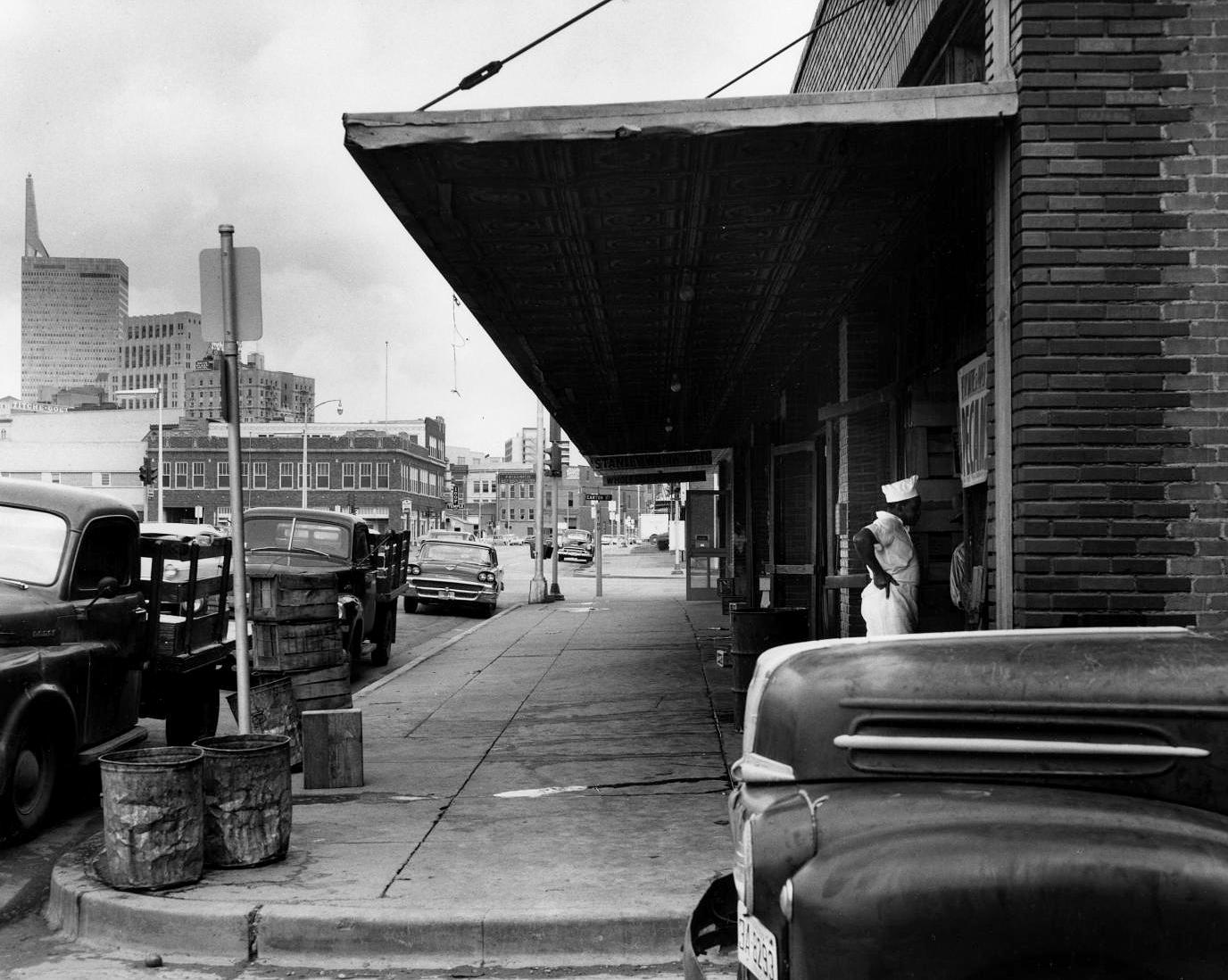
farmers-mkt-area_repub-bank-bldg_1950s_portalSkyscraper vs. paper hat (click for much larger image)

by Paula Bosse

Great shot of the Farmers Market area, showing the 400 block of South Pearl. South Pearl intersects with Canton at the light, halfway up the photo. Just past the intersection on the left is the IOOF Oddfellows Temple. And the Republic National Bank Building — which, until 1959, was the tallest building in the city — looms at the top left. (I think this is the same view seen here a decade or so earlier.)

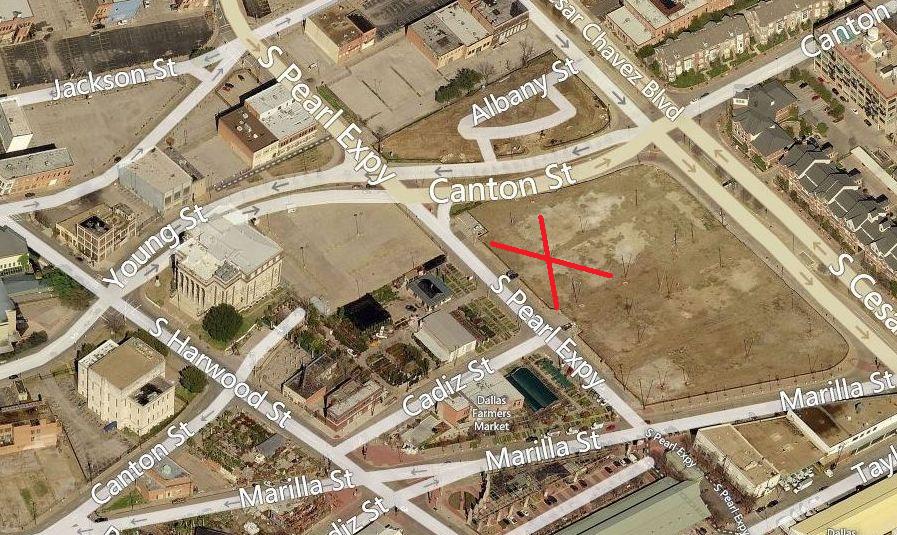
Below, a map of the area today, with an X marking the spot seen in this photo. This area — where all the wholesale produce markets used to be — is now, largely, condos. Call me crazy, but I will always prefer gritty street corners to sterile condos. …Always.

canton_s-pearl_bing(click for larger image)

***

Photo from the Dallas Farmers Market — Henry Forschmidt Collection 1938-1986, Dallas Municipal Archives; it can be viewed via the Portal to Texas History, here (with a not-entirely correct description).

Map from Bing.

Previous Flashback Dallas posts on the Farmers Market area can be found here.

*

Copyright © 2015 Paula Bosse. All Rights Reserved.
“Happy Days,” SMU-Style — 1958

smu_gazing-adoringly_degolyer_1958Oh, the Fifties… (click for larger image) (DeGolyer Library, SMU)

by Paula Bosse

Ralph and Potsie are just out of frame.

smu_gazing_1I love these girls’ faces. And hair! (click for larger image)

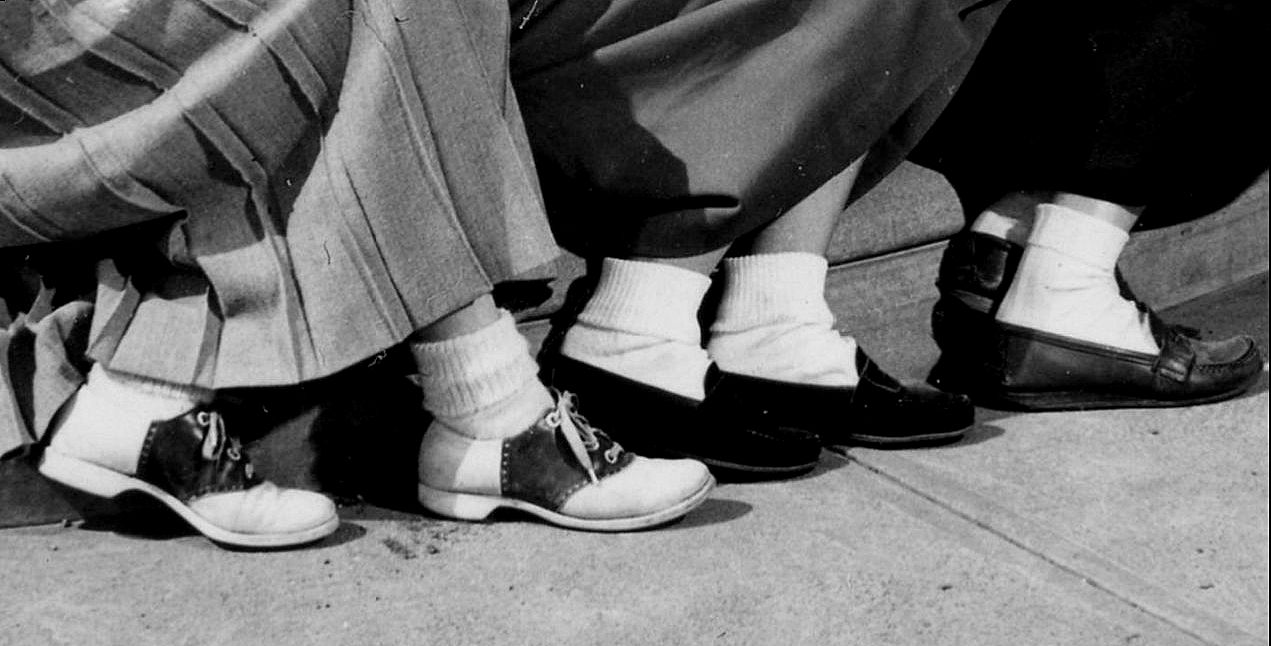
smu_gazing_2And their shoes!

smu_gazing_3The Big Men on Campus appear to  be enjoying the attention.

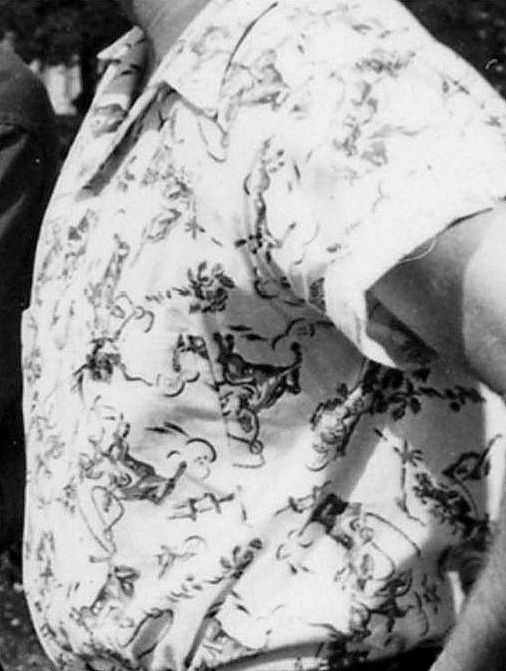
smu_gazing_4That print is kind of … busy. Is it a cowboy motif? Are those horses? Is that Peruna?!

***

Photo titled “Gazing Adoringly,” 1958, from the collection of the DeGolyer Library, Central University Libraries, Southern Methodist University; photo can be viewed here.

UPDATE: Yes, the photo does look odd, doesn’t it? Thanks to a commenter on the Flashback Dallas Facebook page, I now realize that this is a strange superimposition of separate images. The fountain is much closer to Dallas Hall, and the image of the students at the fountain has been superimposed over a long shot up Bishop Blvd., with Dallas Hall way in the distance. I’m pretty sure this photo originated at SMU — it might have appeared in a yearbook or promotional material for the university. Or maybe someone was just having fun in the darkroom. If anyone knows more about this photo — or who any of the students are — let me know!

All images larger when clicked.

*

Copyright © 2015 Paula Bosse. All Rights Reserved.
Back at the Ranch with Yves Saint Laurent — 1958

YSL_longhorn_josey-ranch_1958_eric-sweckerYSL & friend… (photo: Eric Swecker)

by Paula Bosse

Even if you had no idea who the man with the glasses was, this would be an attention-grabber of a photo. But if you do happen to recognize the man as international fashion icon Yves Saint Laurent, then it’s even more of an attention-grabber. Yes, that is 22-year-old Yves Saint Laurent, head of the legendary House of Dior.

…In a pasture with a longhorn steer.

…Wearing a Stetson (or something Stetson-like).

..In Carrollton, Texas! What could be more unexpectedly perfect?

The UPI/Telephoto caption:

9/5/58-DALLAS: Yves-Mathieu Saint Laurent, 22-year-old master of the House of Dior, got a taste of Texas tradition on his first trip to the US. Saint Laurent, in Dallas to receive an award from Neiman-Marcus, stopped off at a cattle ranch near here before departing for France and was presented a Texas-style hat and introduced to a real “Texas Longhorn” steer.

YSL (who had not yet jettisoned the “Mathieu”) was the wunderkind fashion designer who — at the unbelievable age of 21 — had succeeded Christian Dior as Dior’s head designer. His first collection was a hit, and he was 1958’s fashion superstar.

That was the year that YSL was invited to Dallas by Stanley Marcus to receive the 21st Annual Neiman-Marcus Fashion Exposition Award — known throughout the industry as the “Fashion Oscar.”

He has had many offers to come to America to accept awards but the Dallas honor was the only one he accepted. He had a sentimental reason. His late master, Christian Dior, came to Dallas to accept the Neiman-Marcus award in 1947 after he had created the New Look in his second collection. (Dallas Morning News, Sept. 4, 1958)

While in Dallas, the young Saint Laurent — whom the fashion editor of The Dallas Morning News described as looking “like a serious young man who might be coming to enroll at SMU” — soaked up a little local color: he was taken to the Orleans Room downtown to see the Dixieland jazz band The Chain Gang, and — apparently at his request — he was taken to a Texas ranch.

Saint Laurent had been quite keen to see a real Texas ranch, so Stanley Marcus’ son Richard took him out to the nearby Josey Rancho — the large ranch owned by Dallas oilmen brothers Clint and Don Josey in then-rural Carrollton. The fashionably dressed, Cartier-watch-wearing dudes took a bumpy ride in a pickup truck across the large ranch, and there was much gawking of longhorn cattle and herds of buffalo. YSL seems to have enjoyed himself and must have found the whole thing very “Texan”: he got closer to a longhorn than I’d ever get (and he squatted like a real cowboy!), he watched some calf roping, and he ate some barbecue. And he was probably the most stylishly-dressed visitor the ranch ever had (there aren’t a lot of tailored suits and French cuffs out on the lone prairie).

He headed back to Paris later that afternoon with, I’m sure, plenty of exotic stories to share with those back at the atelier. He also had a new hat. And maybe some indigestion.

*

ysl_090458_stanley-marcus-papers_SMUvia Stanley Marcus Papers, SMU

josey-rancho-longhorns_lufkin-line-mag_1956Josey Rancho

josey-rancho-buffalo_1950sJosey Rancho

josey-rancho_aerial_pointer-bkJosey Rancho

***

Sources & Notes

Top photo by UPI/Telephoto. This wire photo is from the collection of my old friend Eric Swecker. Thank you for use of this fantastic photo, Eric!

Photo of longhorns at the Josey Rancho from a trade magazine called The Lufkin Line (Jan./Feb., 1956). Photo of Josey Rancho buffalo and the aerial photo are from the book Carrollton by Toyia Pointer, with photo credit given to Linda Sollinger; more on the book here. More information on the ranch from the book is here.

More on YSL’s visit can be found in the Dallas Morning News article “N-M Awardees Get Glimpse of Texas” by Gay Simpson (DMN, Sept. 6, 1958).

YSL wiki, here.

“When Coco Chanel Came To Dallas — 1957” — my post about Mlle. Chanel’s visit to Dallas to accept the previous year’s Neiman-Marcus award — is here. (Let’s hope Saint Laurent liked the BBQ more than Coco did.)

*

Copyright © 2015 Paula Bosse. All Rights Reserved.

The Southern Rock Island Plow Company

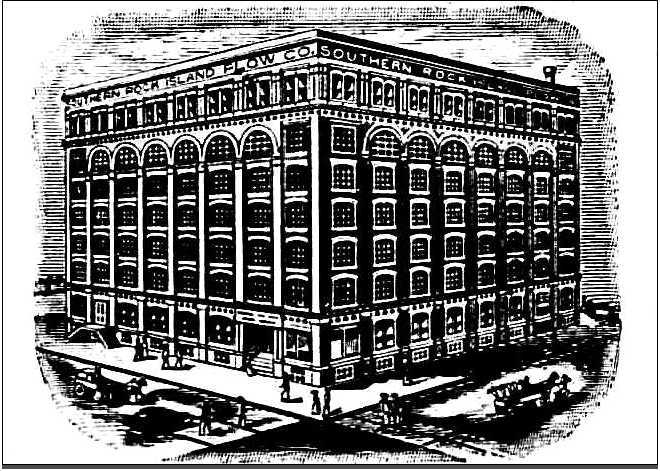
southern-rock-island-plow_city-directory_1908-det_smFrom plow company to Dallas’ most famous building (click to enlarge)

by Paula Bosse

Behold, the Southern Rock Island Plow Company building. Looks familiar? Perhaps “Texas School Book Depository” is an easier hook to hang your hat on. When Dallas seemed to be farm implement-central, there were numerous plow companies in business here. This is the second Southern Rock Island Plow Co. building — the first one (built in the same location around 1898) burned down when it was struck by lighting. The building that still stands was built in 1903, and it is, without question, the most famous building in Dallas.And it’s probably not that far behind the Alamo.

southern-rock-island-plow_city-directory-19081908

southern-rock-island-plow_bldg-code_19141914

***

Sources & Notes

Ad from the 1908 city directory.

Photo from the Building, Plumbing, Gas & Electrical Laws of the City of Dallas (1914).

More on the history of the Dallas branch of the Southern Rock Island Plow Co. can be found here.

For more about what’s going on with the building these days, see the Dallas Morning News article “Dallas County May Move Offices Out of Historic School Book Depository” by Matthew Watkins, here.

For more on the various incarnations of the building (which, by the way, is officially called the County Administration Building and which now houses county offices as well as the Sixth Floor Museum), see my previous post, “The Sexton Foods Building and the Former Life of the School Book Depository,” here.

*

Copyright © 2015 Paula Bosse. All Rights Reserved.
 

Luncheon at The Zodiac Room, Darling

zodiac-room_smFood, fashion, & the unmistakable whiff of Old Money (click for larger image)

by Paula Bosse

Two cool and sophisticated postcards from the cool and sophisticated Neiman-Marcus (although it’s debatable whether the truly cool and sophisticated N-M shopper would, in fact, mail anyone something as bourgeois as a postcard of a department store, Neiman-Marcus or not). Perhaps these were done up for the sizable tourist trade. I love these cards. Commercial art of this period is wonderful.

The description on the back reads: “One of the great dining spots of the Southwest … N-M’s famed ZODIAC ROOM. The superlative food specialties of Director Helen Corbitt and her staff are enjoyed during modeling of fashions a la Neiman-Marcus at luncheon and dinner. Also, tea served daily.”

Below, the Carriage Entrance:

neimans_postcard_c1950s-carriage-entrance-sm(click for larger image)

The description: “‘The Carriage Entrance’ — famous passageway into one of the world’s great specialty stores.”

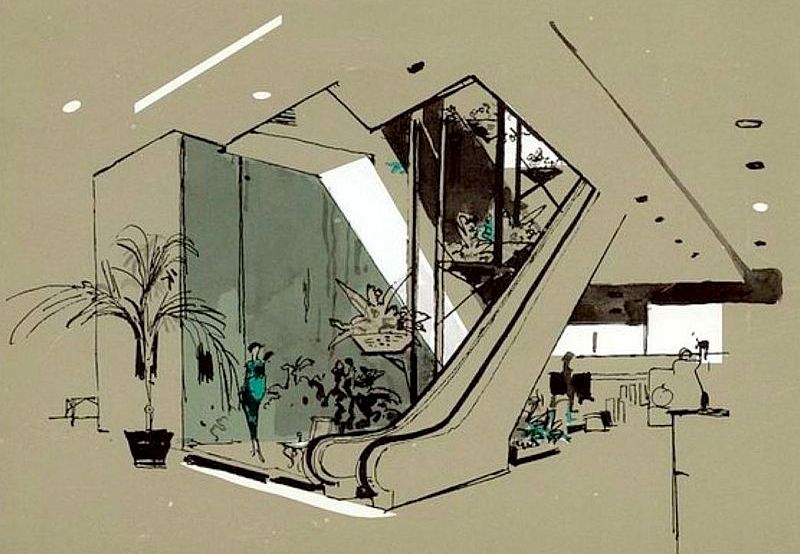
And another (I’d love to see the whole series of these postcards.) Sadly, no description on this one, featuring a fashionable escalator.

n-m_escalator_pinterest

I fear I shall never reach the level of swan-like sophistication needed to become an habitué of The Zodiac Room. Tant pis.

***

I have no idea where these postcards came from. I’m not sure of the date, either, but … “1950s”? Maybe very early 1960s? Let’s go with “Mid-Century” — everyone loves that! Whenever this was, this was a period when fashion was chic and fabulous. As was Neiman-Marcus. (I still miss that hypen!)

Need to make a reservation at The Zodiac? Info is here.

*

Copyright © 2015 Paula Bosse. All Rights Reserved.