Flashback : Dallas

A Miscellany: History, Ads, Pop Culture

Category: Photographs

The Gill Well

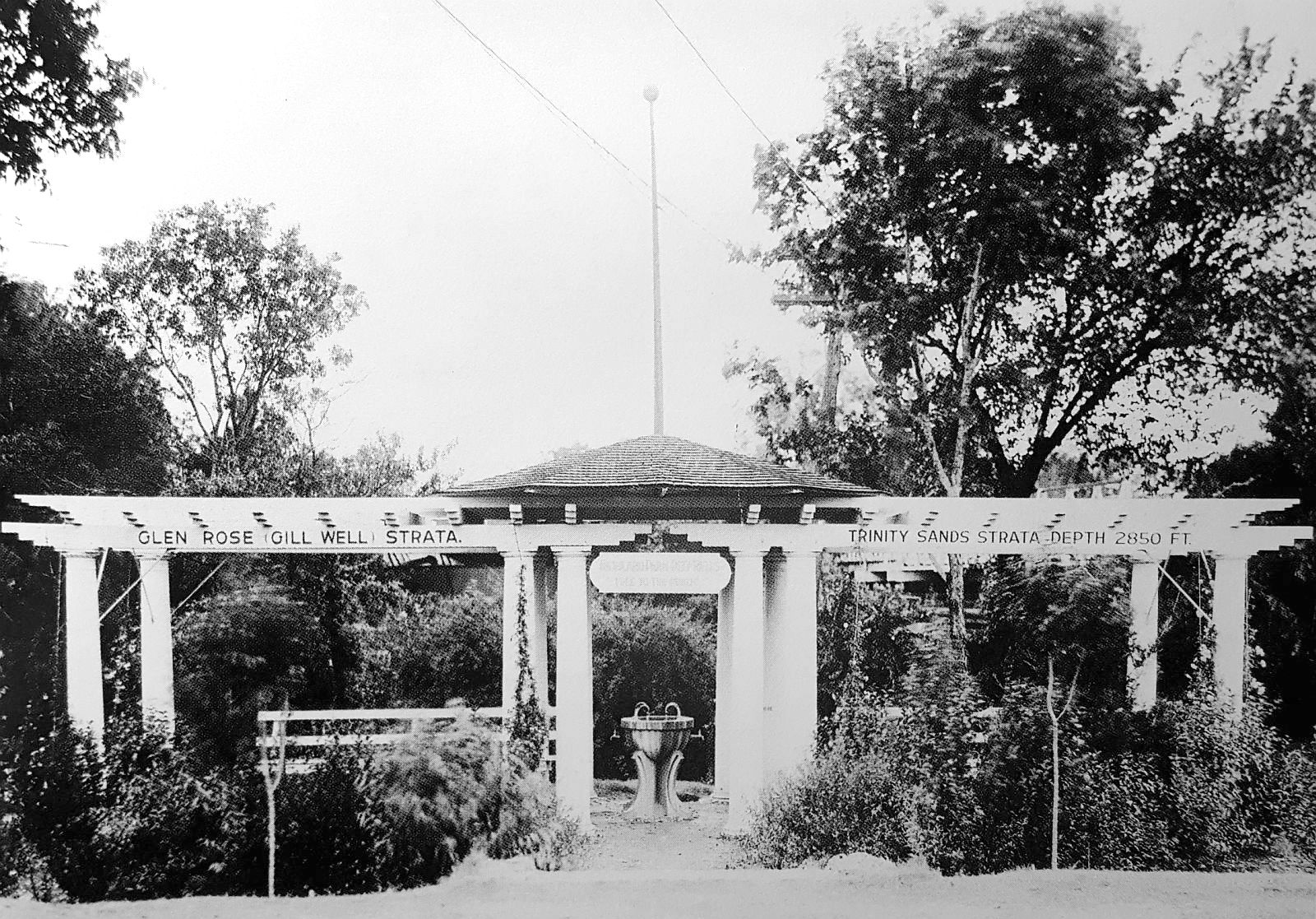
gill-well_highland-park_dallas-rediscoveredThe Highland Park pagoda… (click for larger image)

by Paula Bosse

I never heard of the Gill Well growing up — in fact, it wasn’t until around the time I started this blog — about three or four years ago — that I first became aware of it. Though largely forgotten today, the Gill Well used to be a pretty big deal in Dallas: for years, early-20th-century entrepreneurs tried valiantly and persistently to capitalize on the mineral-heavy artesian water from this well — the plan was to use this hot spring water in order to turn Dallas (or at least Oak Lawn) into, well, “the Hot Springs of Texas.” We came so close!

So — Gill Well? Who, what, when, where, why, and how?

In 1902 city alderman and water commissioner C. A. Gill proposed sinking an artesian well near the Turtle Creek pumping station in order to determine if the flow of water in underground springs was sufficient to augment Dallas’ water supply (there was, at the time, another such test well being drilled in West Dallas). The City Council was on board and wanted this test well to be a deep well, “the deepest in the state — in order to settle once and for all the question as to whether or not there lies beneath the earth in this section a body of water, or ‘an underground sea,’ as some call it, of sufficient size to supply the needs of all the people” (Dallas Morning News, Aug. 6, 1902).

Fellow alderman Charles Morgan explained Gill’s proposition to the people of Dallas in a prepared statement to the Morning News:

By sinking artesian wells it is not intended to abandon the plans proposed to secure an adequate storage supply from surface drainage, but that the artesian wells shall augment the supply. We can not get too much water, but if we secure an ample artesian supply our storage basins will be reserve. There will be no conflict. We simply make success double sure. (Alderman Charles Morgan, DMN, Aug. 24, 1902)

The well was sunk in September or October of 1902 near the Turtle Creek pumphouse (which was adjacent to where a later station was built in 1913, the station which has been renovated and is now known as the Sammons Center for the Arts — more on the construction of that 1913 station and a photo of the older pumphouse can be found here); the drilling was slow-going and went on until at least 1904, reaching a depth of more than 2,500 feet. It’s a bit out of my area of expertise, but, basically, good, palatable artesian water from the Paluxy sands — water “free from mineral taint” — was found, but, deeper, a larger reservoir of highly mineralized “Gill water” — from the Glen Rose stratum — was found. That was good news and bad news.
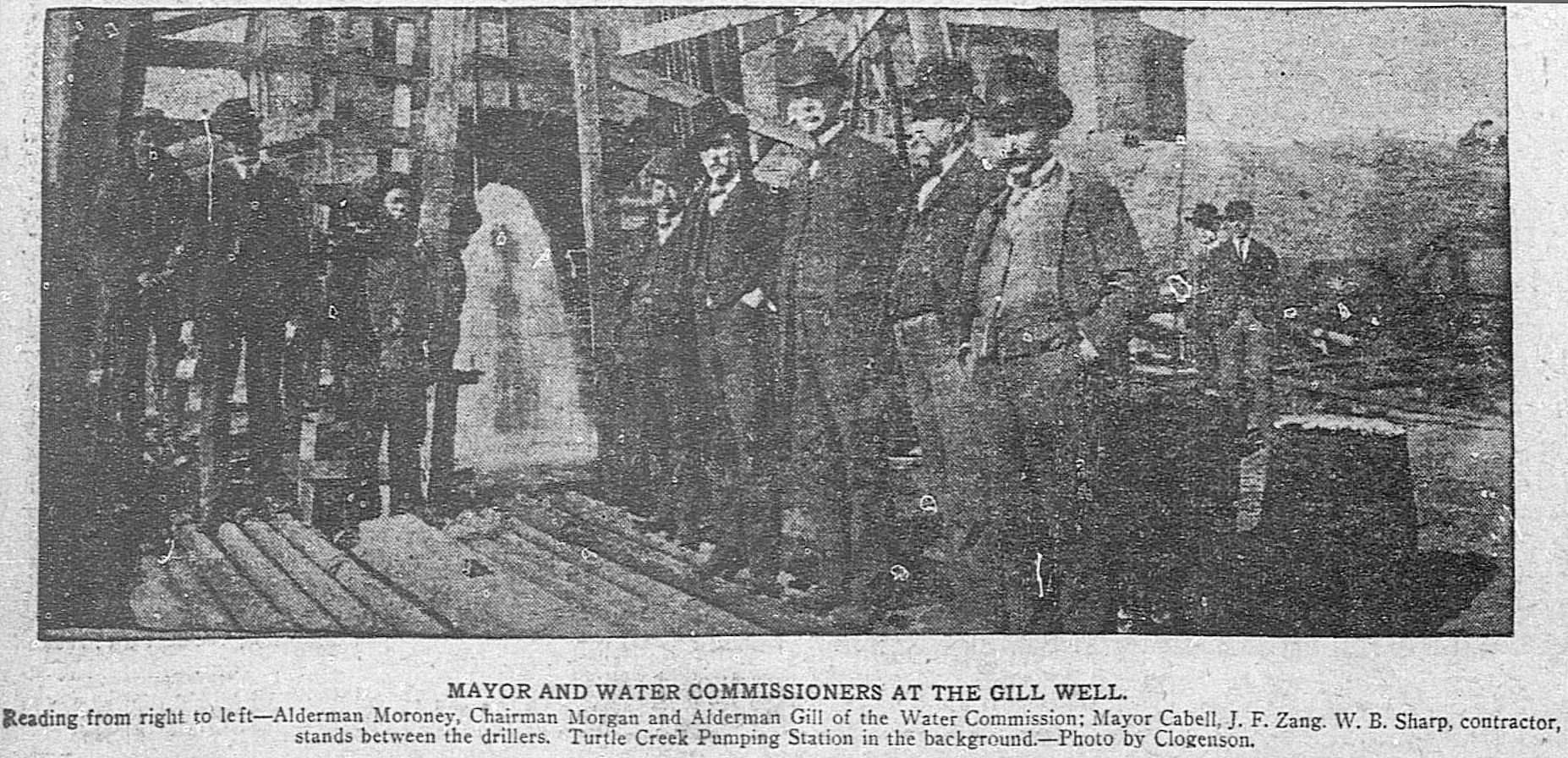
gill-well_dmn_120103Dallas Morning News, Dec. 1, 1903

The “bad news” came from the fact that a part of a pipe casing became lodged in the well, causing an obstruction in the flow of the “good” water from the Paluxy formation. Again, it’s a bit confusing, but the heavy flow of 99-degree-fahrenheit mineral water (which was corrosive to pipes) threatened to contaminate the “good” Paluxy water … as well as the water from the Woodbine formation from which most (all?) of the private wells in Dallas secured their water. (Read detailed geological reports on the well in a PDF containing contemporaneous newspaper reports here — particular notice should be paid to the comprehensive overview of the well and its problems which was prepared for the Dallas Water Commission by Engineer Jay E. Bacon and published in the city’s newspapers on May 10, 1905).

So what the City of Dallas ended up with as a result of this Gill Well was a highly dependable source of hot mineral water. But what to do with it? Monetize it!

As part of the city’s water supply, the mineral water was made available to Dallas citizens free of charge: just show up at one of the handful of pagoda-covered dispensing stations with a jar, a bucket, or a flask, and fill up with as much of the rather unpleasant-smelling (and apparently quite powerful!) purgative as you could cart home with you. (For those who didn’t want to mingle with the hoi polloi, home delivery was available for a small fee.) One such “pagoda” was erected a short distance away, in front of the city hospital (Old Parkland) at Maple and Oak Lawn (the healthful water was also piped directly into the hospital for patient use).
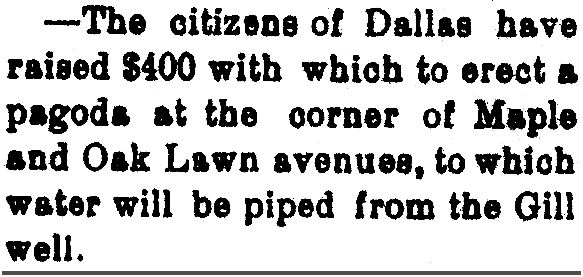
gill-well-parkland-pagoda_brenham-weekly-banner_040605
Brenham Weekly Banner, April 6, 1905

One man, however, began offering the water for sale beyond Dallas, hoping to cash in on the free-flowing tonic (see the mineral-content breakdown here), but the city clamped down on him pretty quickly as he was not an authorized agent. From his 1906 ad, one can see that the reputation of Gill water and its healing and restorative powers was already widely known.
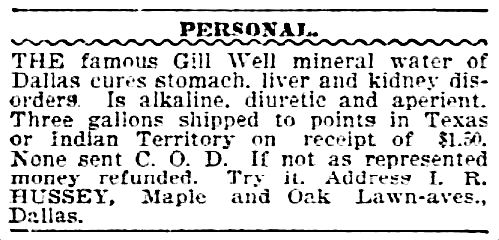
gill-well-water_dmn_080206
DMN, Aug. 2, 1906

If the water was not to be sold, what was the City of Dallas going to do with it? It was decided to pipe the the water a short distance from the test well to nearby property adjacent to the land now occupied by Reverchon Park, then lease the access to the water to a capitalist who would build a sanitarium/spa where people could come to “take the waters” — to bathe in the naturally warm, mineral-heavy artesian water with mystical recuperative properties. The sanitarium would make money by charging its patrons for its services, and the city would collect a small annual income based on the number of the sanitarium’s bathing tubs and the amount of water used:

Compensation to the city shall be $10 per tub per year and one-half-cent per gallon for all water used. (DMN, Jan. 4, 1907)

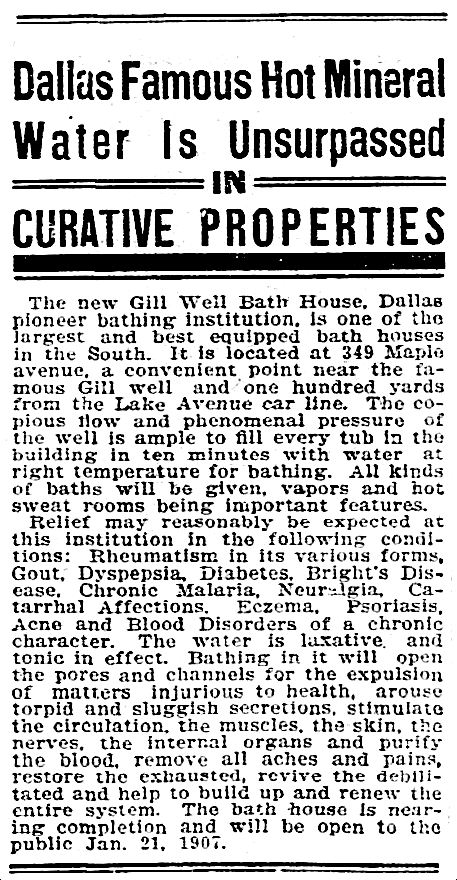
The Gill Well Sanitarium and bath house opened in January 1907, on Maple Avenue just north of the MKT Railroad (now the Katy Trail). (Most clippings and pictures in this post are larger when clicked.)
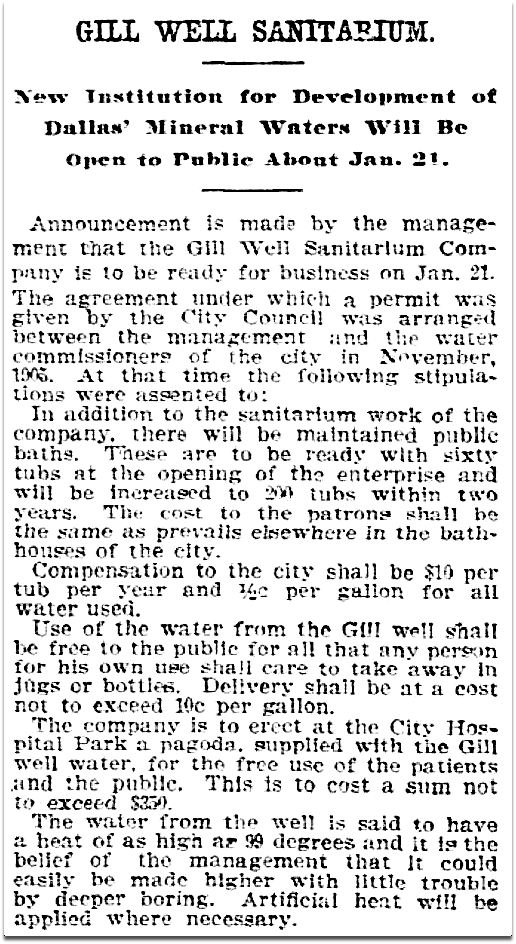
gill-well-sanitarium_dmn_010407DMN, Jan. 4, 1907

I searched and searched and searched for a picture of the building and, hallelujah, I finally found one, in the pages of The Dallas Morning News, taken by photographer Henry Clogenson. (This is the only picture I’ve been able to find of it, and, I have to say, it’s not at all what I expected the building to look like. It actually looks like something you’d see in a present-day strip mall.)
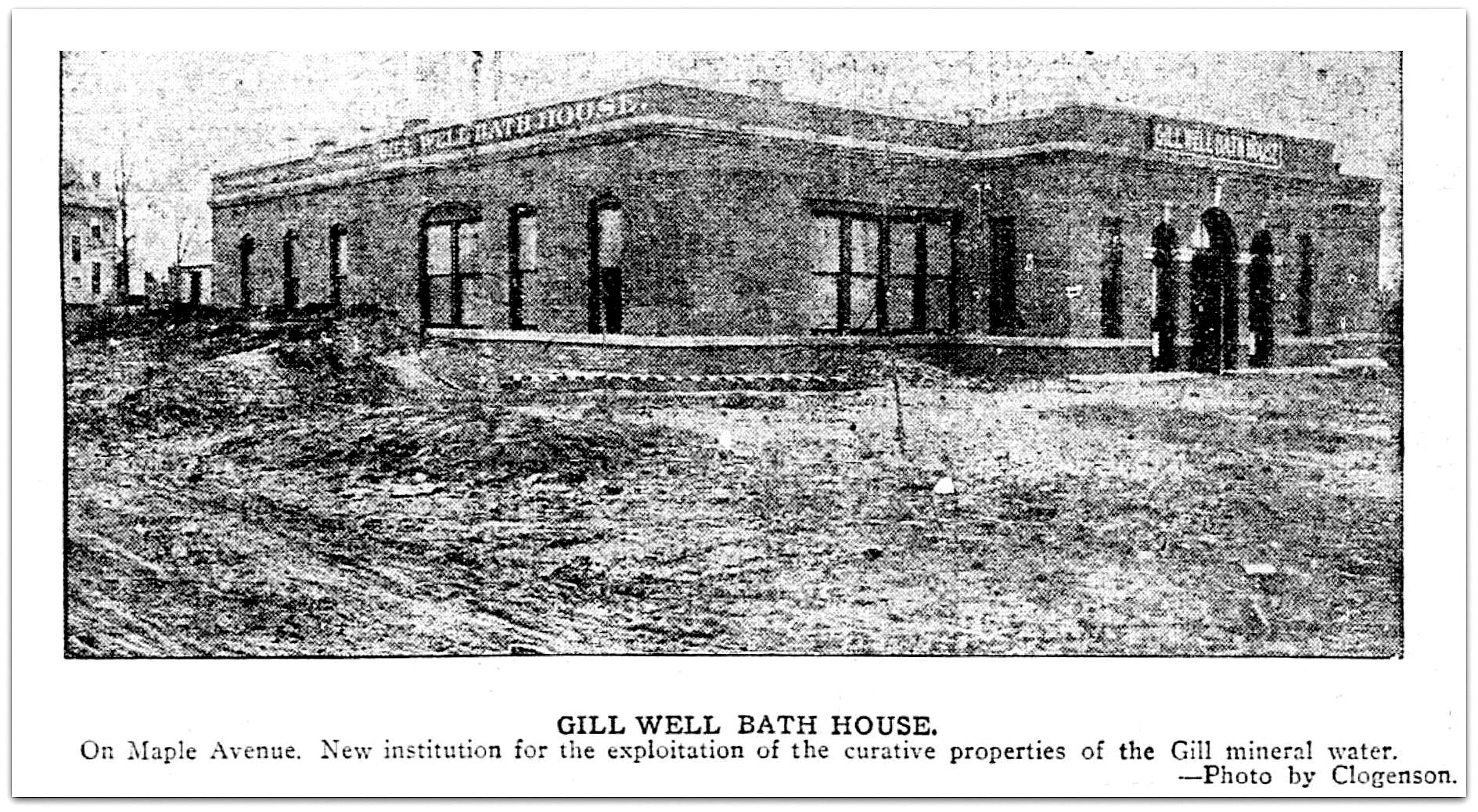
gill-well-sanitarium_dmn_011307_photoDMN, Jan. 13, 1907

gill-well-sanitarium_dmn_010607_ad
Advertisement, DMN, Jan. 6, 1907

Business at the new sanitarium was very good, and the public fountains/spigots at both the sanitarium property and a block or so away at the city hospital continued to be popular with residents who needed a boost or a “cure” and stopped by regularly for a sip or a pail of the free mineral water.
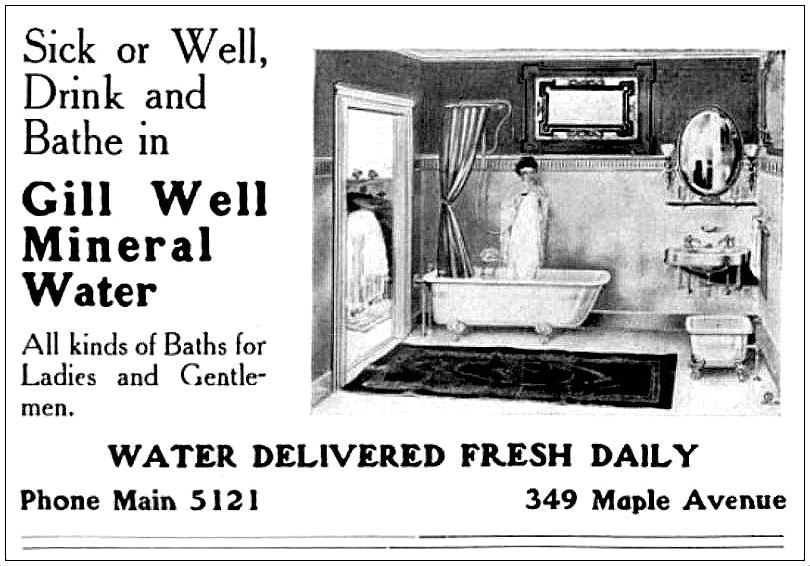
gill-well_ad_dallas-police-dept-bk_1910_portal1910 ad

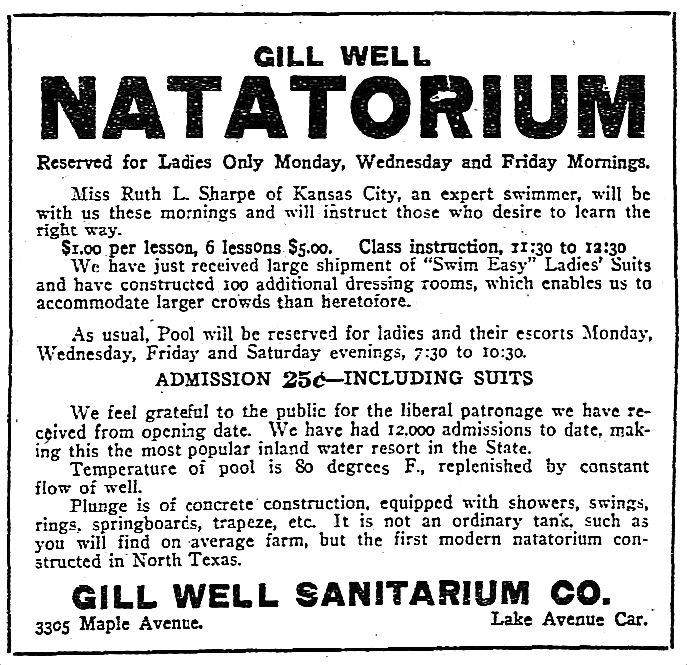
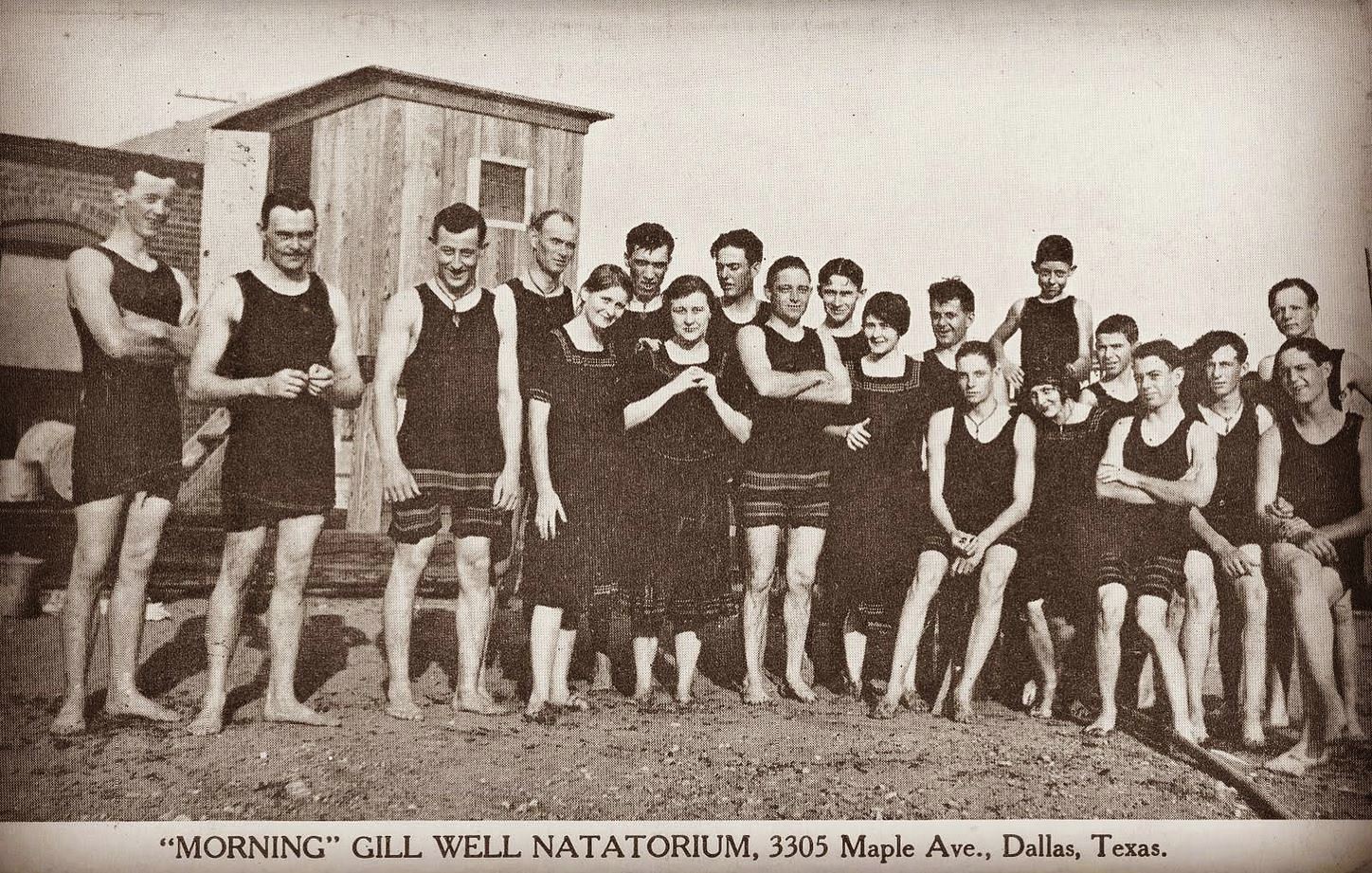
In 1912 a natatorium (an indoor swimming pool) was added and proved even more popular. It was open to men, women, and children; admittance and bathing suit rental was 25¢ (about $6.50 in today’s money). (Contrary to the headline of the ad below, it was not Dallas’ first natatorium — there was one near City Park on South Ervay by at least 1890 — but it was probably the first pool in the city filled with warm mineral water.)
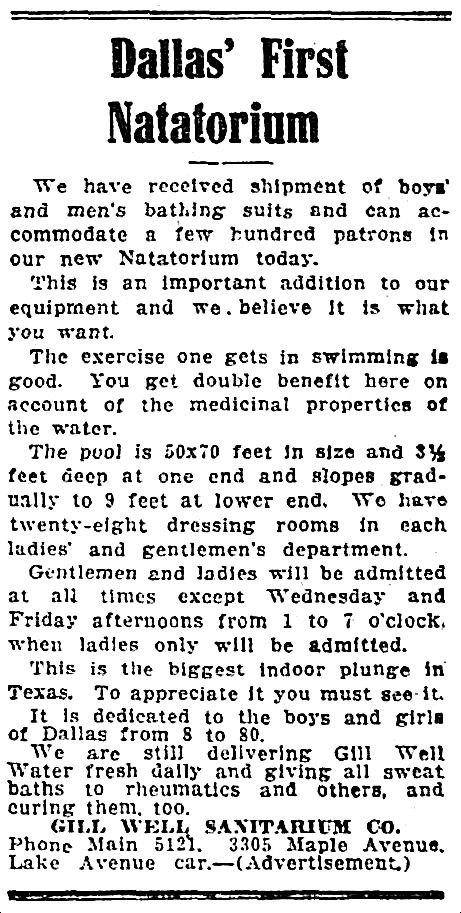
gill-well_natatorium_dmn_041412
DMN, April 14, 1912

gill-well-natatorium_dmn_070712
DMN, July 7, 1912

gill-well-natatorium_texas-swimming-and-diving-hall-of-fameCourtesy of the Texas Swimming and Diving Hall of Fame
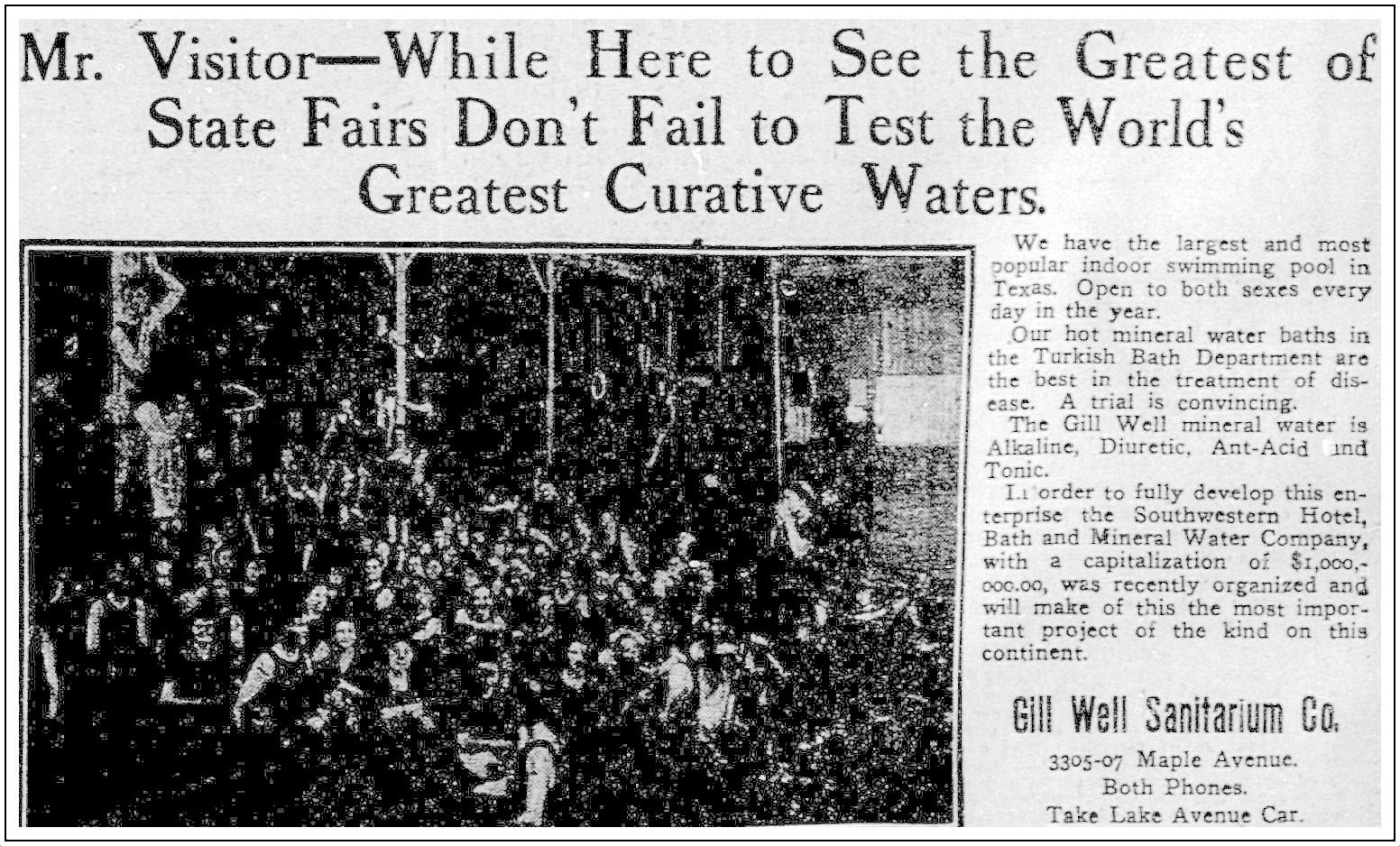
gill-well-natatorium_dmn_100612DMN, Oct. 6, 1912

The last paragraph of the ad above mentions a plan to pipe Gill water to a hotel downtown — not only would the Gill Well Sanitarium Company’s services be offered in the heart of the city amidst lavish hotel surroundings (instead of in Oak Lawn, way on the edge of town), but the company would also be able to compete with Dallas’ other (non mineral-water) Turkish baths — then they’d really be rolling in the cash. As far as I can tell, nothing came of the plan, but the men behind it were pretty gung ho, as can be seen in this rather aggressive advertorial from the same year:

ad-sanitorium-baths_blue-bk_1912The Standard Blue Book of Texas, 1912

All seemed to be going well with the sanitarium until the city and the Missouri, Kansas & Texas Railroad (the MKT, or the Katy) decided to remove the railroad’s grade crossings through the Oak Lawn area (all work which was to be paid for by the railroad). Double tracks were to be added and crossings were either raised or the streets were lowered. The crossings affected were Lemmon, Cedar Springs and Fairmount (where street levels were cut down to go under the tracks) and Hall, Blackburn, and Bowen (where tracks would be elevated). Also affected: Maple Avenue. (Read more about the MKT plan in the Dallas Morning News article from Aug. 23, 1918 — “Dallas Is Eliminating Four Grade Crossings” — here.)

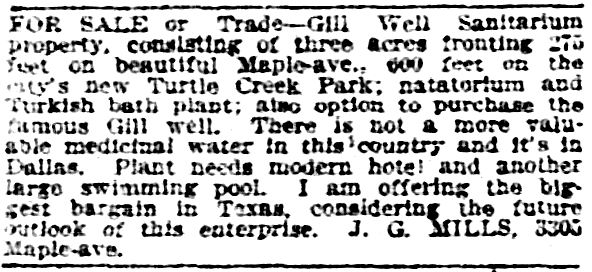
The Maple Avenue-Katy Railroad crossing had long been a dangerous area for wagons, buggies, and, later, automobiles. Not only was it at the top of a very steep hill (see what that general area north of that crossing looked like around 1900 here), but it also had two sharp curves. The decision was made to straighten Maple Avenue between the approach to the railroad crossing and Oak Lawn Avenue at the same time Maple was being lowered and the Katy track was being raised. (Read the announcement of this plan — “Straighten Maple Avenue Is Plan” — from the Nov. 29, 1917 edition of The Dallas Morning News, here.) The only problem — as far as the Gill Well Sanitarium was concerned — was that the straightened road would go directly through the sanitarium property. I don’t know if the long-time owner of the sanitarium, J. G. Mills, knew about this approaching dire situation, but in 1915 — just a few short months after boasting in advertisements that more than 50,000 patients had availed themselves of the sanitarium’s amenities in 1914 — he placed an ad seeking a buyer of the business (although, to be fair, he’d been trying to sell the company for years):
gill-well_dmn_080815_for-saleDMN, Aug. 8, 1915

(In the ad he states that the buyer had an option to purchase the actual well, but the city had never expressed any desire to sell either the well or the full rights to the water.)

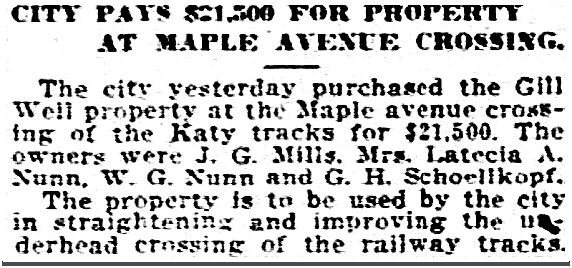
The Gill Well Sanitarium Co. appears to have been dissolved in 1916, but there was still hope that a sanitarium/hot springs resort could continue on the property. In 1917, interested parties petitioned the city to change its plans to straighten Maple, arguing that it would destroy any ability to do business on the site, but the city went forward with its plans, and in November 1919, the City of Dallas purchased the land from the group of partners for $21,500 (about $305,000 in today’s money).
gill-well_dmn_111319
DMN, Nov. 13, 1919

The monetization of water from Dallas’ fabled Gill Well ended after ten years.

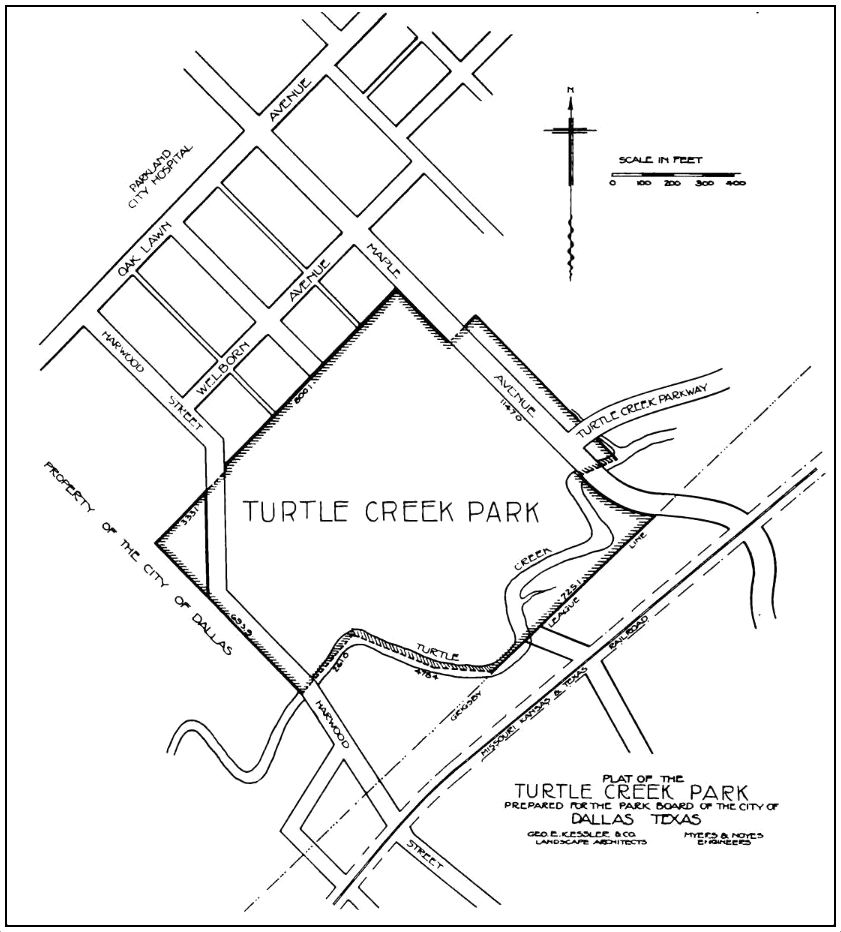
I had never heard of Maple Avenue being straightened. Below is a map of Turtle Creek Park (which became Reverchon Park in 1915), showing Maple’s route, pre-straightening — the main buildings of the sanitarium were in the bulge just west of Maple, between the Katy tracks and the boundary of the park.
reverchon-park_turtle-creek-park_map_1914-15
1915 map, via Portal to Texas History

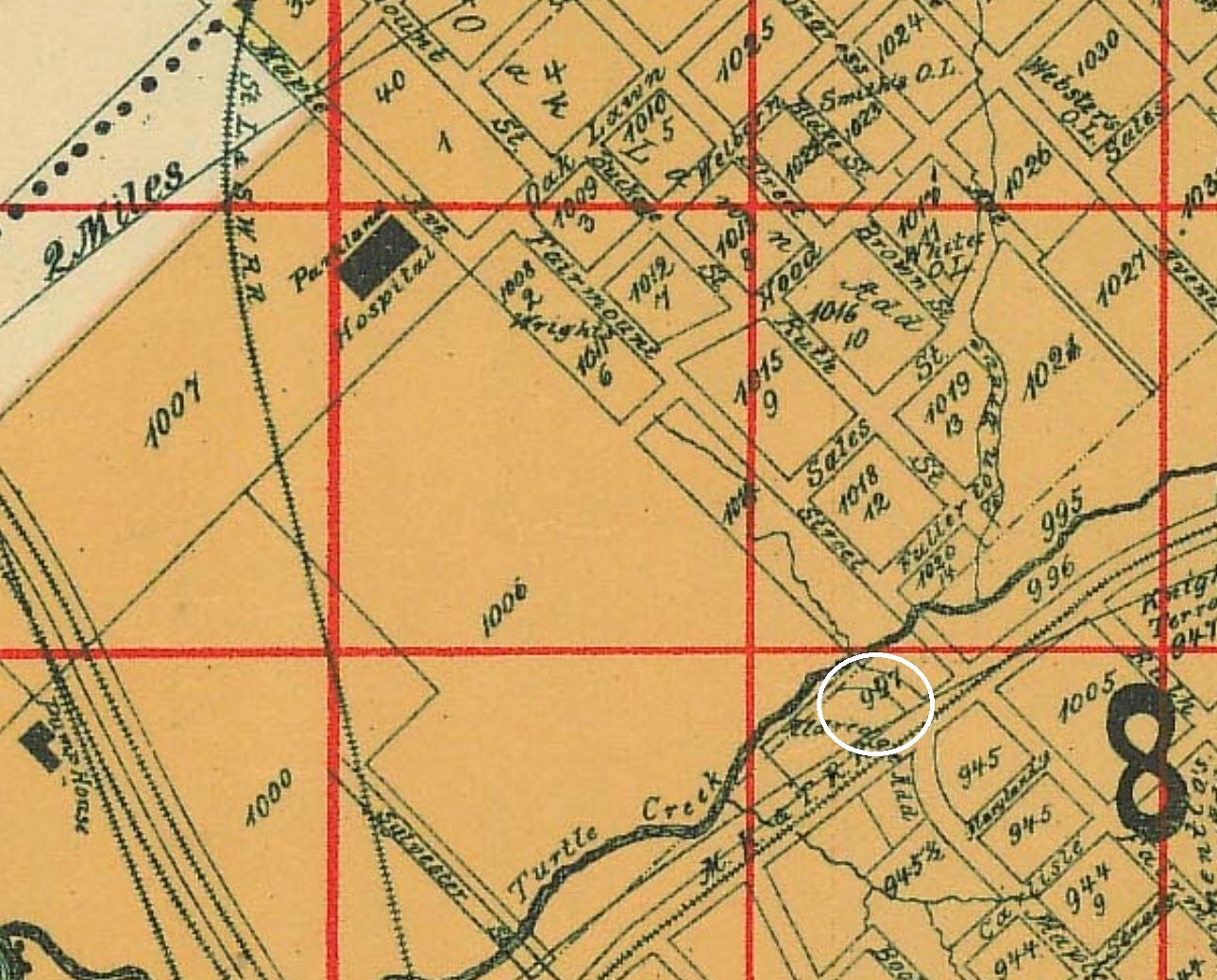
Another view can be seen in a detail from a (fantastic) 1905 map, with the approximate location of the Gill Well Sanitarium circled in white:
maple-ave_1905-map_portal_det_gill-wellWorley’s Map of Greater Dallas, 1905

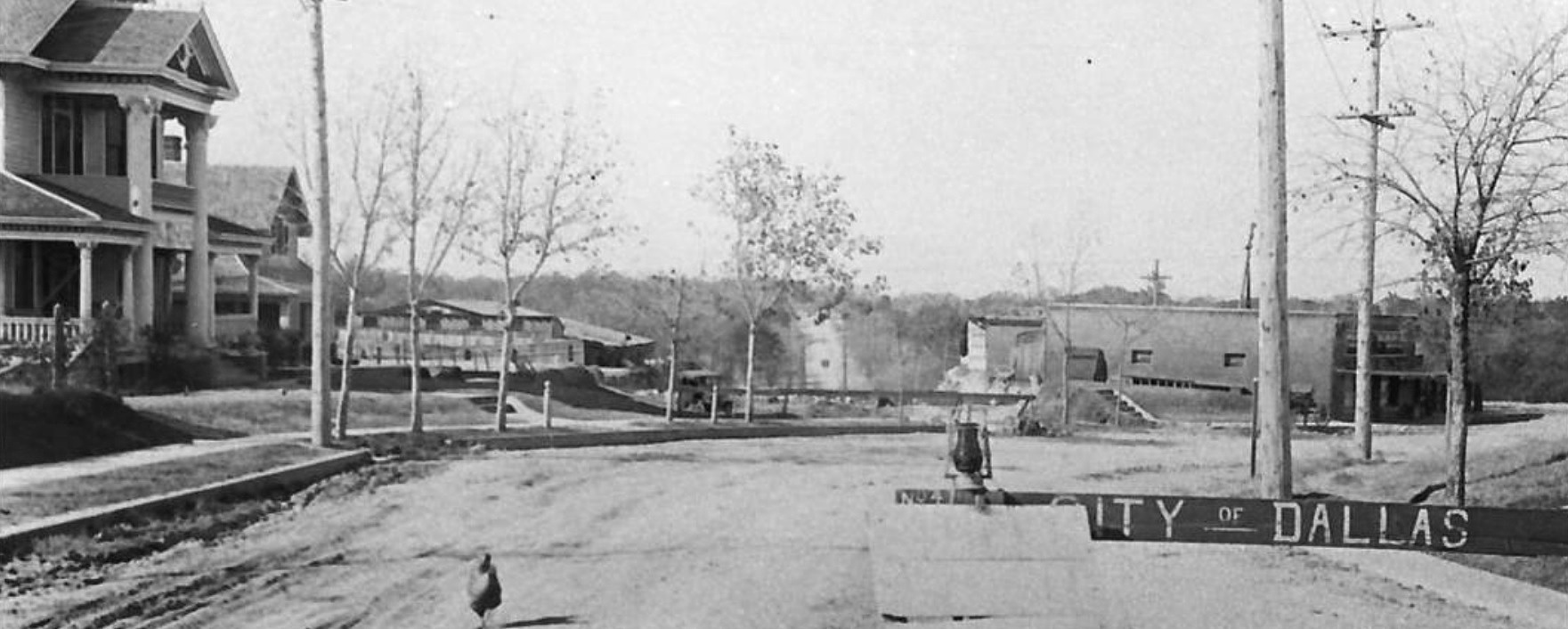
A year or more ago I saw the photo below on the Big D History Facebook page but had no idea at the time what I was looking at: it apparently shows Maple Avenue in 1918, taken from about Wolf Street (probably more like Kittrell Street), which was then near the city limits, looking north. You can see the curve Maple makes and the steep hill — that large building at the right must be the sanitarium and/or the later-built natatorium.
maple-ave_road-construction_from-wolf_1918_big-d-history-FB

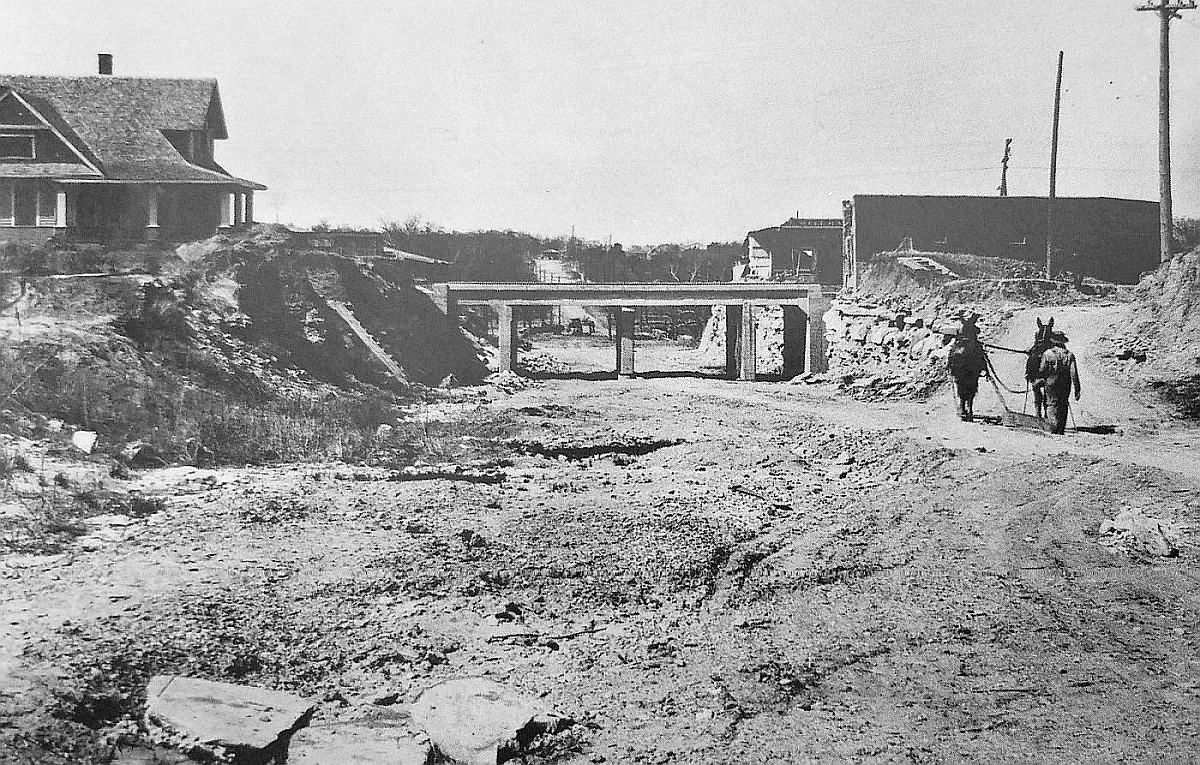
The photo below shows the road-straightening in progress, with the MKT bridge now spanning Maple Avenue.
maple-MKT_ca-1920_DPLDallas Public Library

And here it is almost a hundred years later:
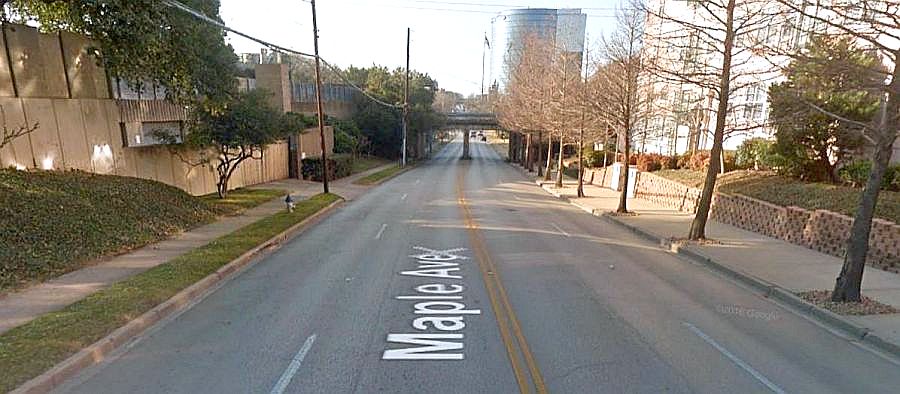
maple-MKT_google-street-view_2014Google Street View, 2014

So the Gill Well Sanitarium and Bath House was closed, the land was purchased by the City of Dallas, Maple Avenue was straightened, and, in the summer of 1923, the remaining abandoned buildings on the property were demolished. But that didn’t spell the end of the famous Gill Well water.

Highland Park’s “Gill Water” Pagoda

Around 1924, “Gill water” tapped from the Glen Rose Strata was made available to Highland Park, via a small “watering house” and drinking fountain on Lakeside Drive (at Lexington), a location which proved to be quite popular. The mineral water was a byproduct of Highland Park’s “deep well” which was drilled in 1924 to tap the pure artesian springs of the Trinity Sands Strata in order to augment the water supply of the City of Highland Park: in order to get down to the Trinity Sands, one had to pass through the Glen Rose Strata — I guess the HP powers-that-be figured they might as well tap the hot mineral water and offer their citizens access to it by building a small fountain and dispensing station. In 1928, the little “watering station” structure was spiffed up with the addition of a tile roof, attractive walkways, and drainage. The photo seen at the top of this post has frequently been misidentified as the Reverchon Park well, but it is actually the Highland Park “pagoda.” Here it is again:

gill-well_highland-park_dallas-rediscoveredfrom the book Dallas Rediscovered

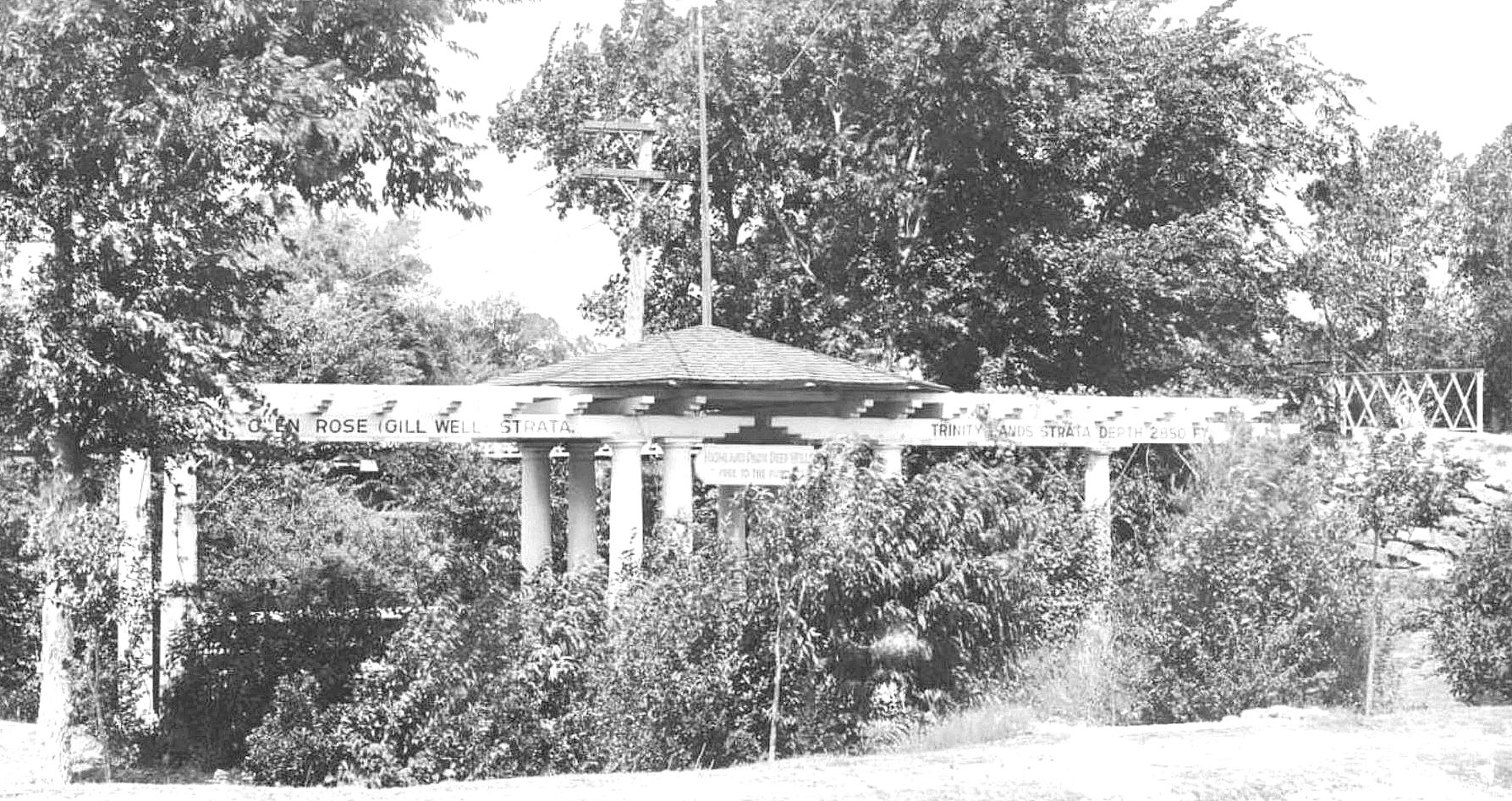
It can be identified as the Highland Park location because of the photo below from the George W. Cook collection of historic Dallas photos from SMU’s DeGolyer Library — it shows what appears to be a later view of the same pagoda, now slightly overgrown. The steps to the bridge across Exall Lake and the bridge’s railing can be seen at the far right (the bridge led to the Highland Park pumping station, which can be seen on a pre-watering-station 1921 Sanborn map here).
gill-well_highland-park_cook-collection_degolyer_smuGeorge W. Cook Collection, SMU

And, well, there’s the sign that reads “Highland Park Deep Wells — Free to the Public” — here’s a close-up:
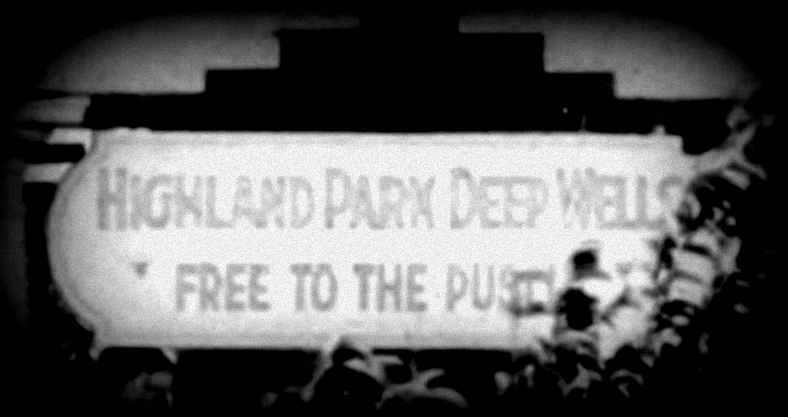
gill-well_highland-park_cook-collection_degolyer_smu_det

(The same sign from the top photo can be seen in a high-contrast close-up here.)

After seeing this photo, I realized that a photo I featured in a post from last year showed the pagoda in what looks like its earliest days, at Lakeside Drive and Lexington Avenue (the bridge can be seen at the left):
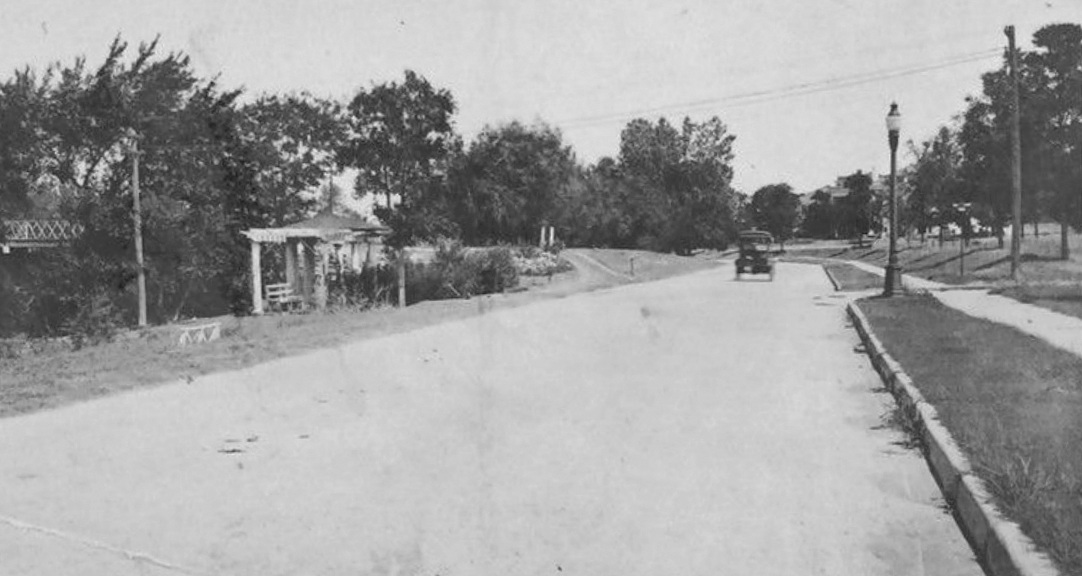
hp_lakeside-drive_rppc_ebayeBay

I was unable to find out when this HP pagoda bit the dust, but the location as seen today on Google Street View is here. (It’s pretty strange to think that a steady stream of people from all over Dallas drove to the Park Cities to fill up jugs with free mineral water; my guess is that the wealthy Lakeside Avenue residents weren’t completely enamored of the situation.)

Reverchon Park Pavilion

Even though the Gill Well Sanitarium Co. had dissolved in 1916, and the last traces of its buildings had been torn down in 1923, the famed well’s water didn’t disappear from the immediate Oak Lawn area. In February of 1925, the City of Dallas opened a $5,000 pavilion, “making up for twenty years indifference to what is said to be the finest medicinal water in the South” (DMN, Feb. 11, 1925). This pet project of Mayor Louis Blaylock seems to have continued to be a place for Dallasites to get their mineral water at least through the 1950s, according to online reminiscences. This 1925 “pavilion” is described thusly in the WPA Dallas Guide and History:

The water, which resembles in many respects the mineral waters of European resorts and is used in several county and city institutions, is carried to the surface in pipes and can be drawn from taps arranged around a semicircle of masonry near the entrance to the park. Here cars stop at all hours of the day and people alight to drink the water or to fill bottles and pails.

I have not been able to find a photograph of that post-sanitarium dispensing site. A 1956-ish aerial photo of Reverchon Park can be found here. I don’t see a “semicircle of masonry” in an area I assume would be located near Maple Avenue and the Katy tracks.

According to a comment on the DHS Archives Phorum discussion group, there was also a public spigot nearer to the original well, along Oak Lawn Avenue, across the street from Dal-Hi/P. C. Cobb stadium.

There is surprisingly little accurate information on the Gill Well online. I hope this overview helps correct some of the misinformation out there. If anyone knows of additional photos of the sanitarium and/or natatorium, please send them my way and I’ll add them to this post. If there are any photos of the Reverchon Park pavilion, I’d love to see those as well. There is a 1926 photo of the Highland Park location which shows two women and two girls filling receptacles — I am unable to post that here, but check the Dallas Morning News archives for the short article “Free Mineral Well Waters Popular” (DMN, May 29, 1926).

**

Incidentally, even though the wells have been capped, that hot mineral water is still there underground and could be tapped at any time. Dallas could still be the “Hot Springs of Texas”!

***

Sources & Notes

Top photo is from p. 199 of Dallas Rediscovered by William L. McDonald. The photo is incorrectly captioned as showing the location of the “Gill Well Bath House and Natatorium, c. 1904” — it is actually the Highland Park dispensing station at Lakeside Drive and Lexington Avenue in about 1928.

“Morning” postcard featuring healthy bathing patrons of the natatorium is from the collection of the Texas Swimming and Diving Hall of Fame and is used with permission.

Photo showing Maple Avenue, pre-straightening, is from the Big D History Facebook page; original source of photo is unknown.

Second photo of the Highland Park Gill Well location (with the vegetation looking a bit more overgrown) is from a postcard captioned “Drinking Bogoda [sic], deep mineral well in Highland Park, Dallas, Texas” — it is from the George W. Cook Dallas/Texas Image Collection, DeGolyer Library, Central University Libraries, Southern Methodist University; more information on this image is here.

Photo showing Lakeside Drive with the pagoda at the left is a real photo postcard captioned “Lake Side Drive in Highland Park” — it was offered last year on eBay.

Sources of all other clippings, ads, and maps as noted.

*

Copyright © 2017 Paula Bosse. All Rights Reserved.
The Swiss Avenue Car on Main Street — ca. 1900

swiss-ave-streetcar_main-and-market_cook-degolyer_c1900Main and Market, looking east…

by Paula Bosse

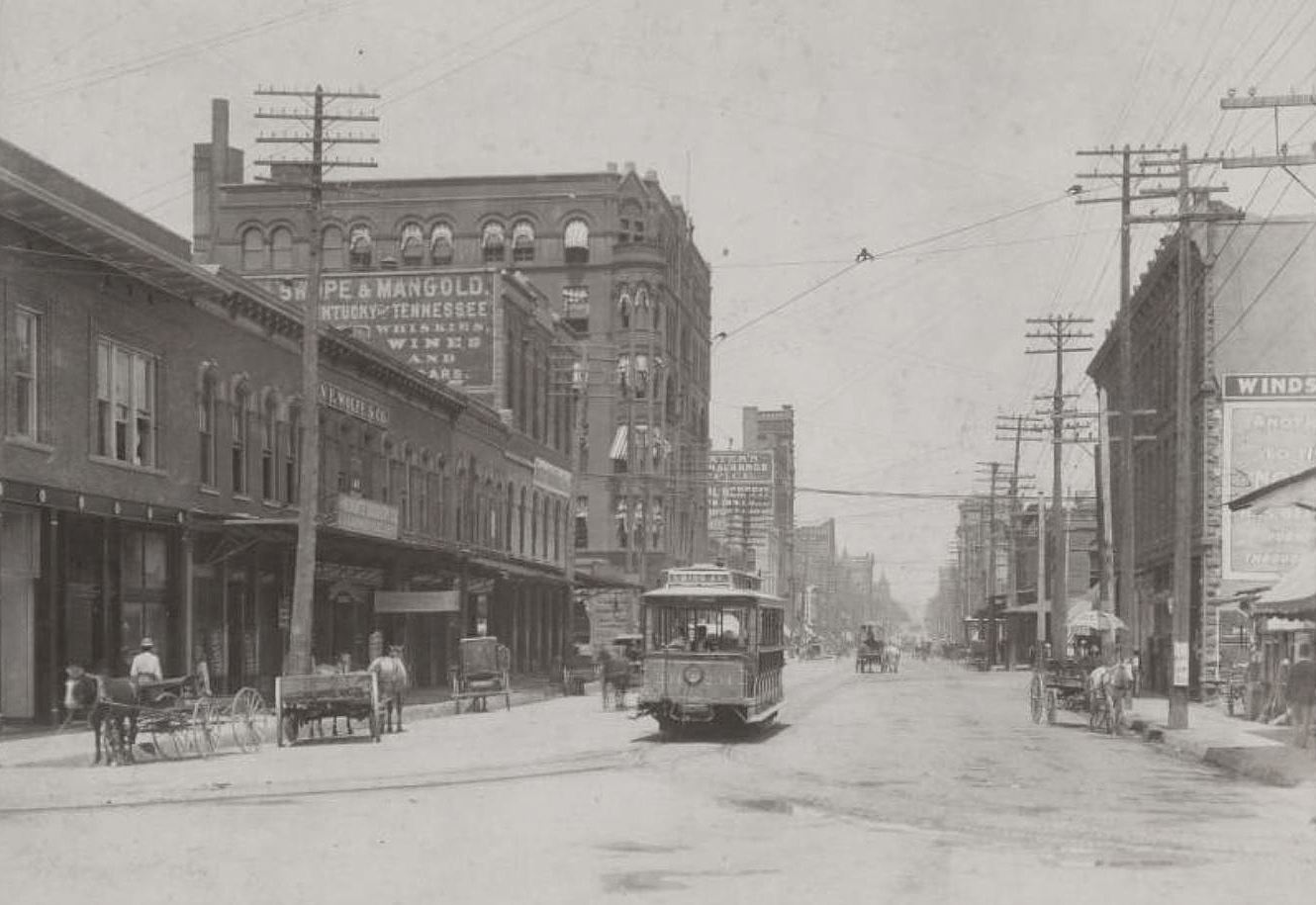
Here’s another great photo from the George W. Cook collection at SMU. This one shows Main Street sometime between 1899 and 1902 (the year asphalt was laid on Main and the year that Sanger Bros. expanded their building from two stories to six); we’re looking east from Market Street. (The aesthetically challenging view as seen today on Google is here.)

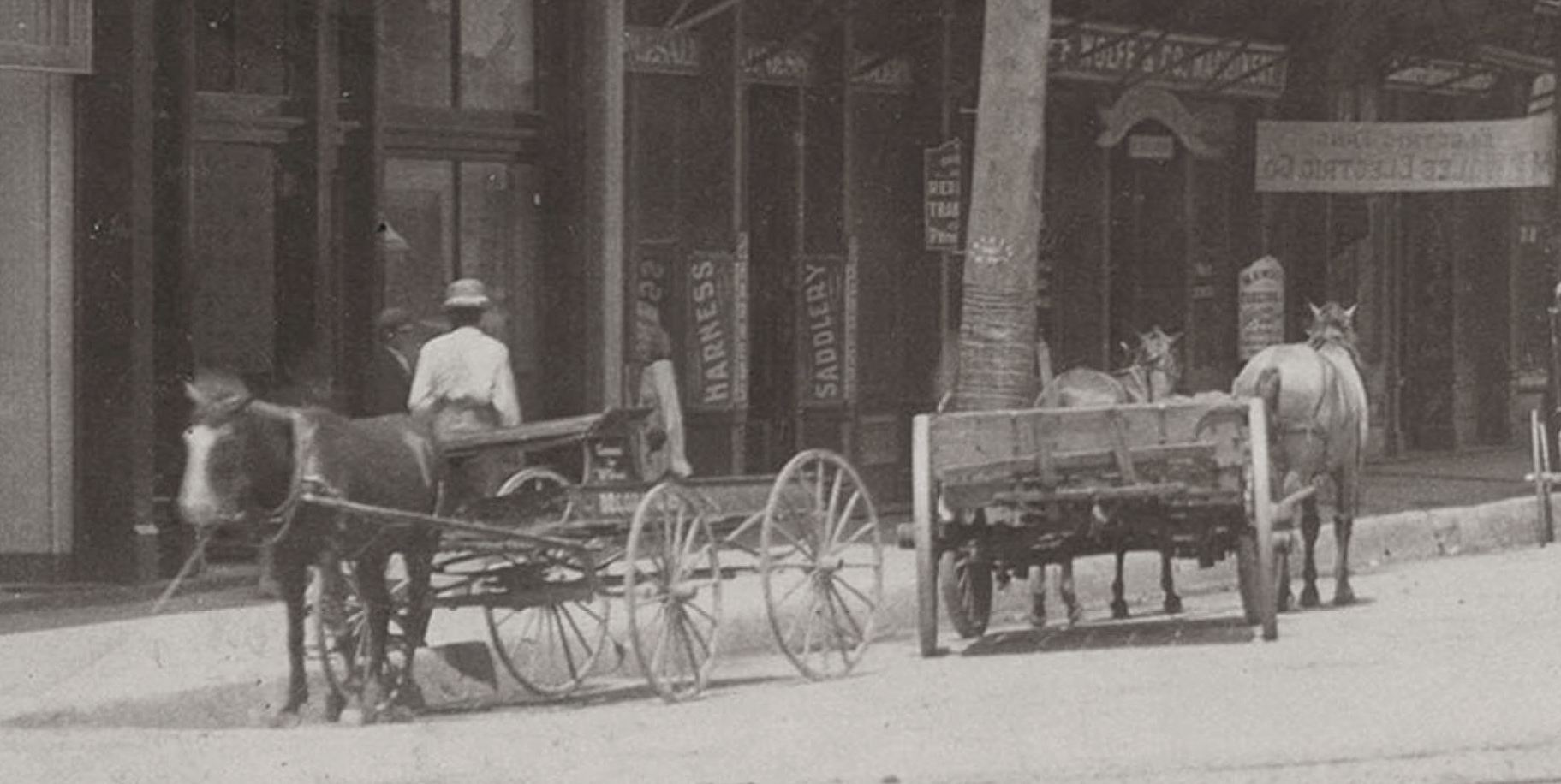
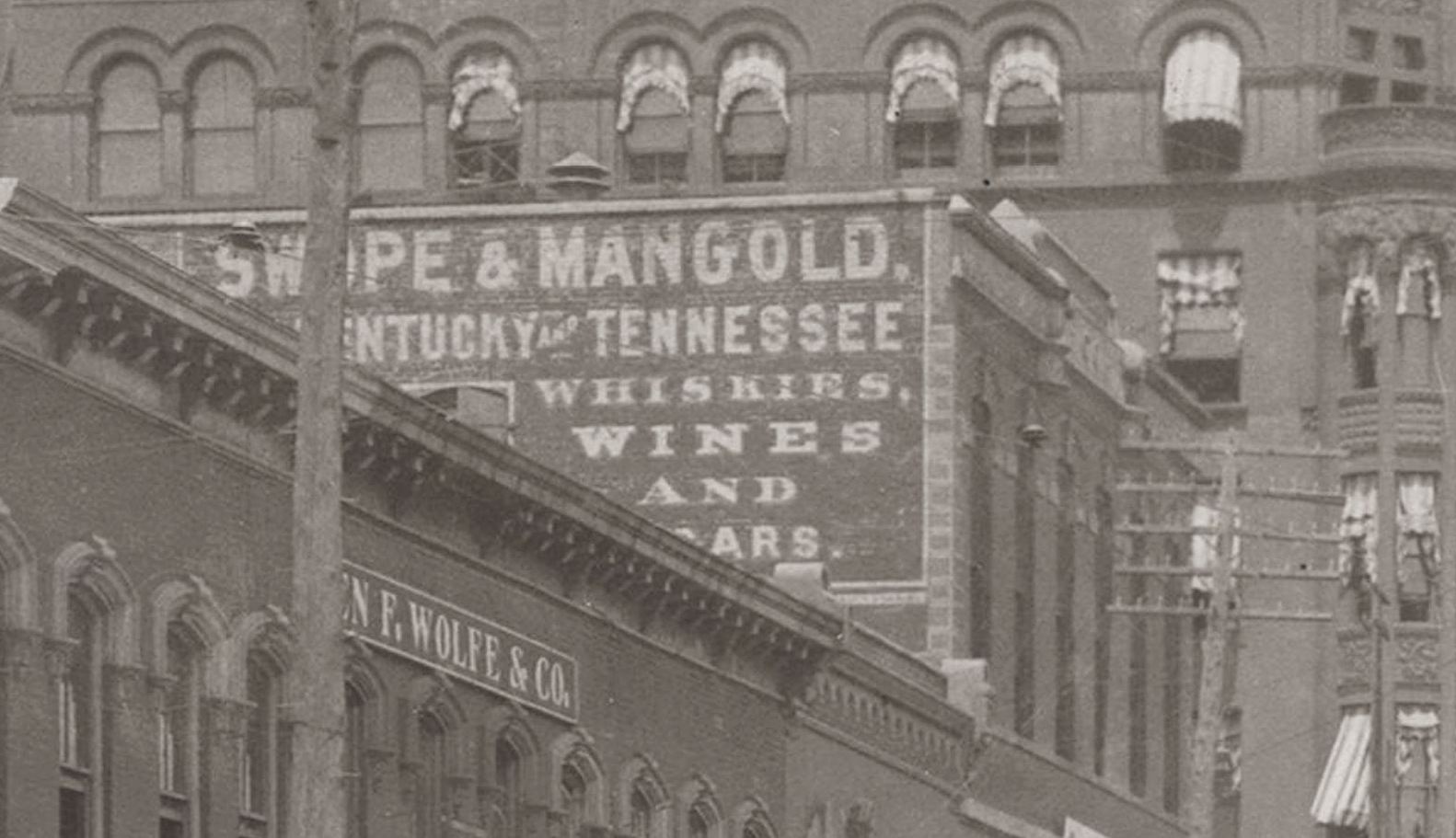
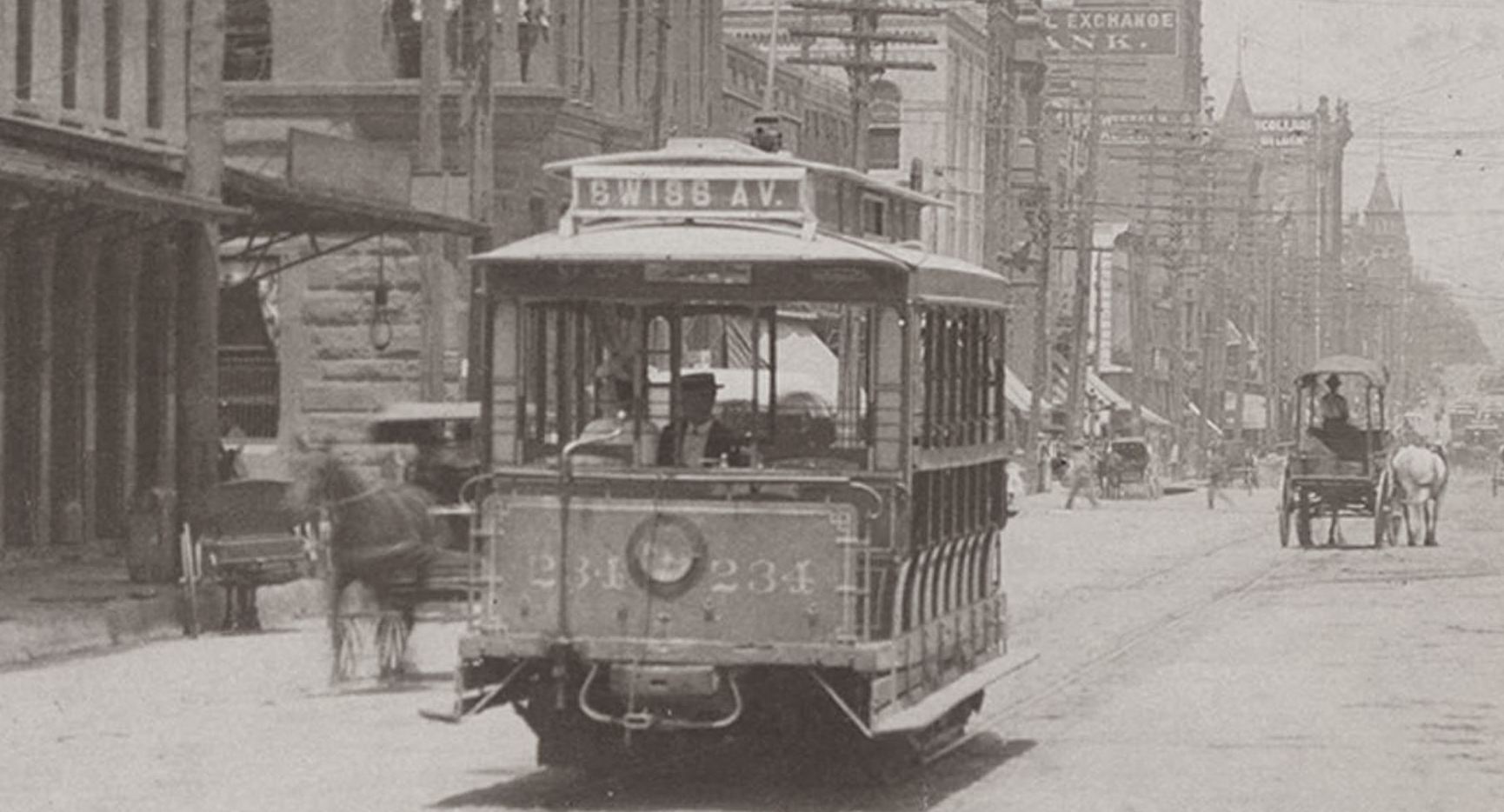
On the north side of Main (at the left), we can see horse-drawn wagons parked in front of a group of businesses including Konantz Saddlery Co., Ben F. Wolfe & Co. (machinery), a banner across the sidewalk for the Southwestern Electrical Engineering & Construction Co., Swope & Mangold wholesale and retail liquor company; then past Austin Street, on the corner, is the Trust Building, with the then-two-story Sanger Bros. building right next door (Sanger’s would build that up to six floors in 1902 and would eventually take over the Trust Building); across Lamar is the North Texas Building, with Charles L. Dexter’s insurance company advertised on the side; and, beyond, the Scollard Building, etc. The Windsor Hotel can be seen on the south side of the street in the foreground. And in the middle, an almost empty little streetcar with “Swiss Av.” on it, moving down Main underneath a canopy of hundreds of ugly electric wires zig-zagging overhead. Let’s zoom in around the photo to see a few closeups (all images are much larger when clicked).

Wagons parked at the curb:

swiss-car_1

*

Is that someone in the window looking down the street?

swiss-car_2

*

Swope & Mangold was one of the oldest “liquor concerns” in turn-of-the-century North Texas.

swiss-car_3

*

The electric streetcar shared the roadway with horses, buggies, and wagons.

swiss-car_4

*

I can’t quite make out the writing on the umbrella or on the sign posted on the pole. Part of the old Windsor Hotel can be seen at the right. At the bottom corner is a shop that sold “notions” and household goods, and just out of frame were a fish market and a meat market.

swiss-car_5

*

And the little Swiss Avenue car 234. Lotsa free seats.

swiss-car_4-a

*

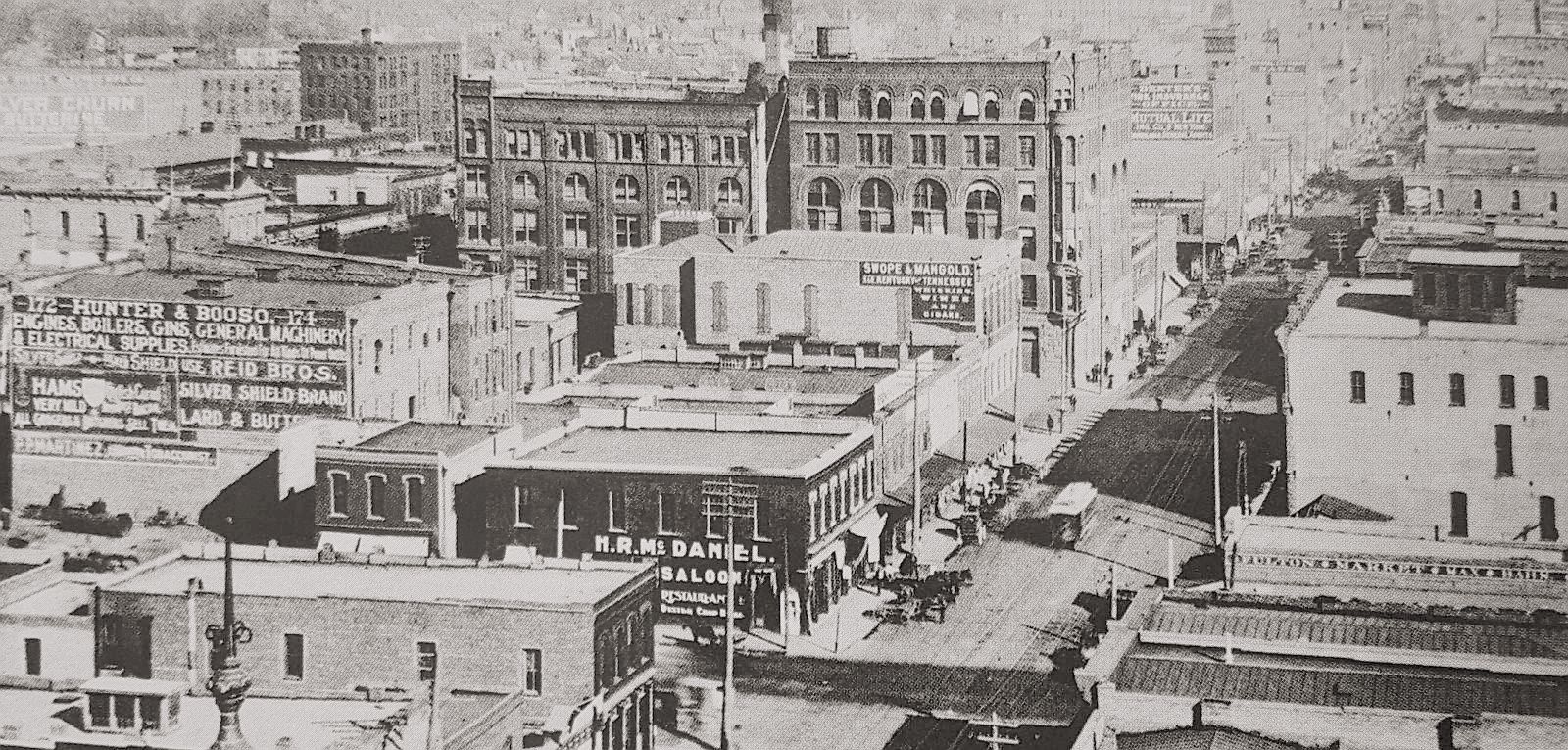
Here’s another view of Main Street looking east, taken around the same time. There’s even a streetcar in about the same spot.

main-street-birdseye_ca-1900_dallas-rediscov_p42_DHS

*

See the 1899 Sanborn map for this general area here (note that Record Street was once Jefferson Street).

***

Sources & Notes

Top photo — titled “Main Street between Austin and Market Streets” — is from the George W. Cook Dallas/Texas Image Collection, DeGolyer Library, Central University Libraries, Southern Methodist University; more information on this photo is here.

The circa-1900 bird’s-eye view photo at the bottom is from the collection of the Dallas Historical Society, found in the book Dallas Rediscovered by William L. McDonald (p. 42).

*

Copyright © 2017 Paula Bosse. All Rights Reserved.
“Your Dallas of Tomorrow” — 1943

downtown_your-dallas-of-tomorrow_1943_portalMain Street, 1943… (click for larger image)

by Paula Bosse

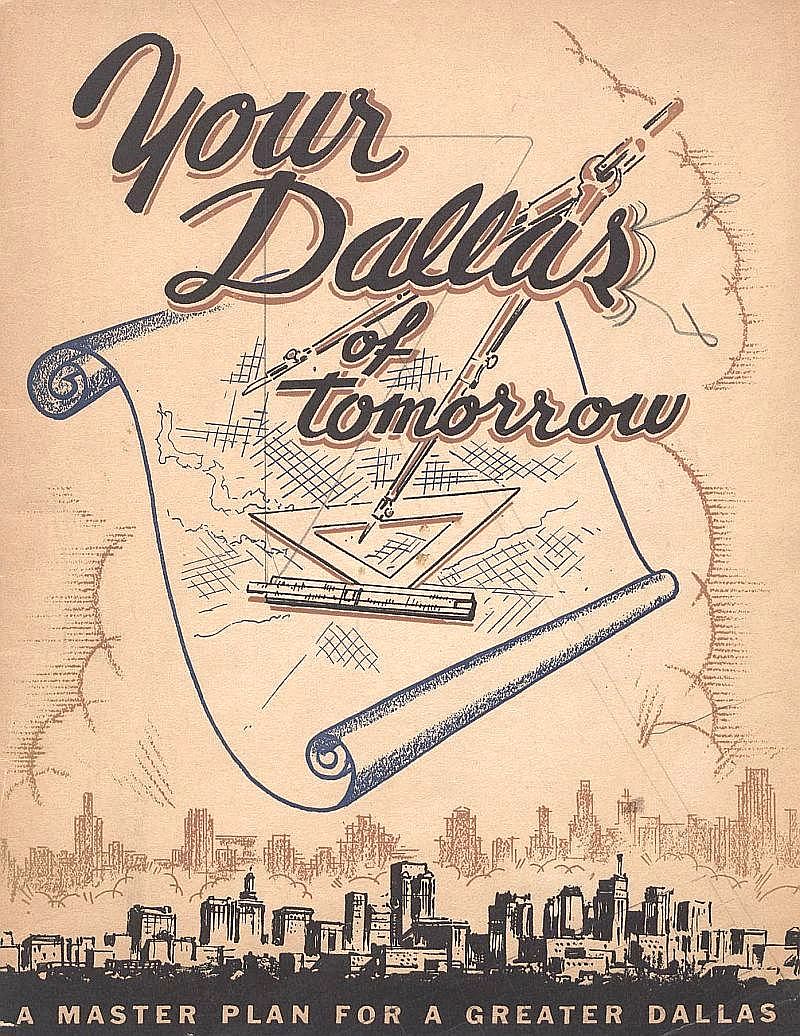
Harland Bartholomew, a St. Louis urban planner and civil engineer, was asked by the City of Dallas in 1943 to prepare a master plan for Dallas which would address the needs of the city’s post-war growth and livability. As then-mayor Woodall Rodgers said, “We need another Kessler Plan and have waited long enough to start. We want to be ready to put Dallas ahead when the war is over and we will have great opportunities to put a master plan in effect” (Dallas Morning News, April 1, 1943).

Read Bartholomew’s incredibly thorough 51-page report titled “Your Dallas of Tomorrow” here. It has been scanned in its entirety and is presented (courtesy of the Dallas Municipal Archives) on UNT’s Portal to Texas History site. In addition to the report, there are drawings, graphs, maps, and the wonderful photo seen above showing an already-vibrant metropolis, with its newest addition to the skyline, the Mercantile Bank Building. Below are a few other things from Bartholomew’s master plan I found interesting. (All images are larger when clicked.)

your-dallas-of-tomorrow_1943_portal_cover

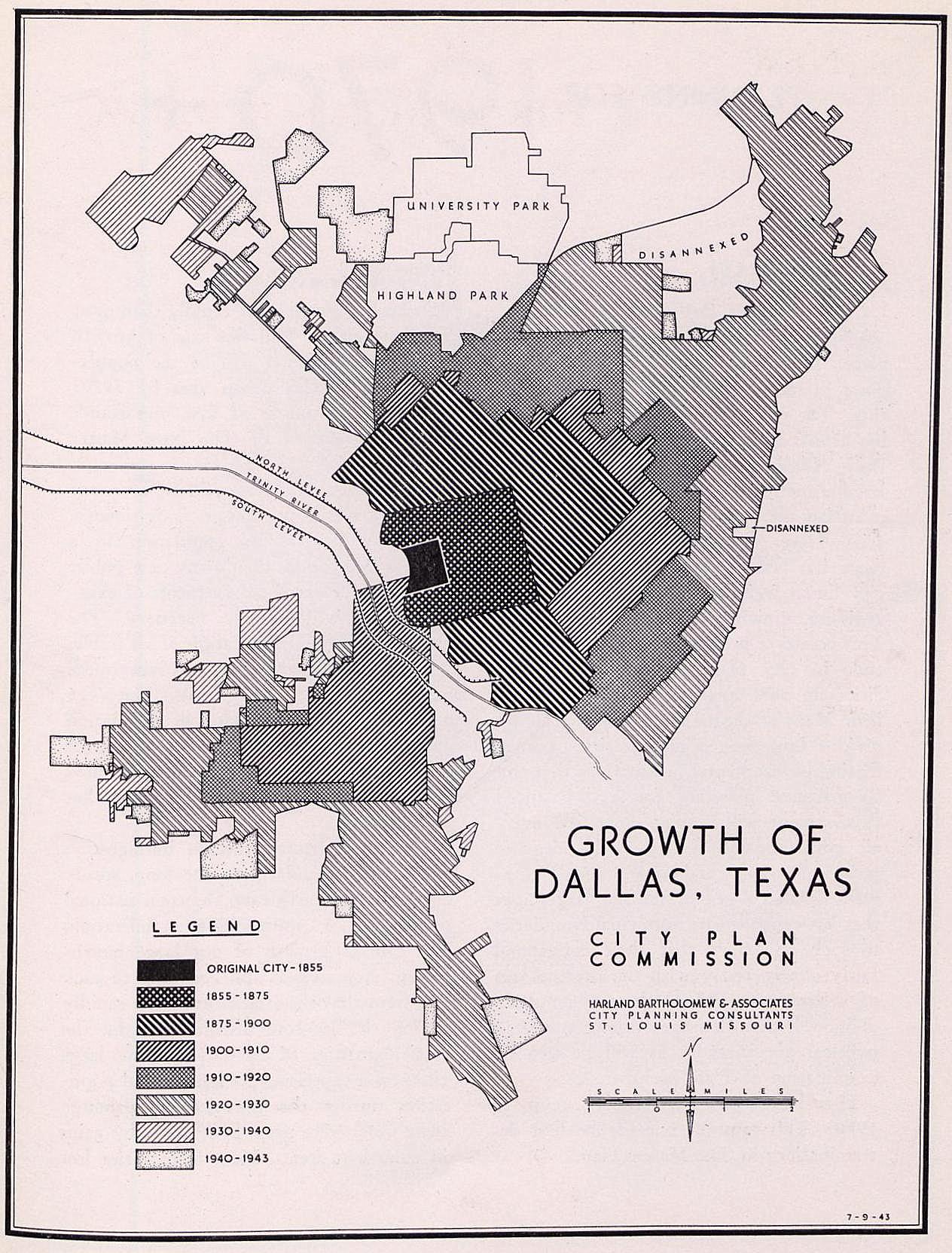
This map showing the growth of the city, from 1855 to 1943, is really interesting. Check out the “disannexed” areas. (I think that area east of the Park Cities was disannexed because landowners — which included W. W. Caruth — argued that it was undeveloped farmland and shouldn’t be subjected to city taxation. …I think.)

growth-of-dallas-to-1943_your-dallas-of-tomorrow_portal

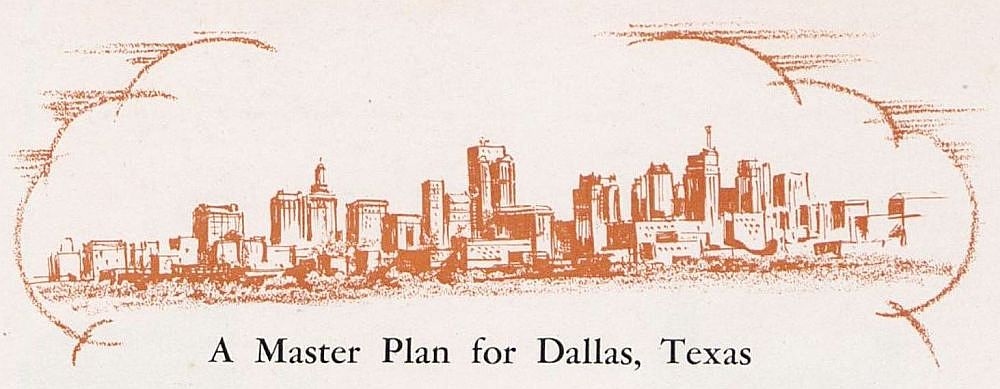
A somewhat recognizable skyline.

skyline_your-dallas-of-tomorrow_1943_portal

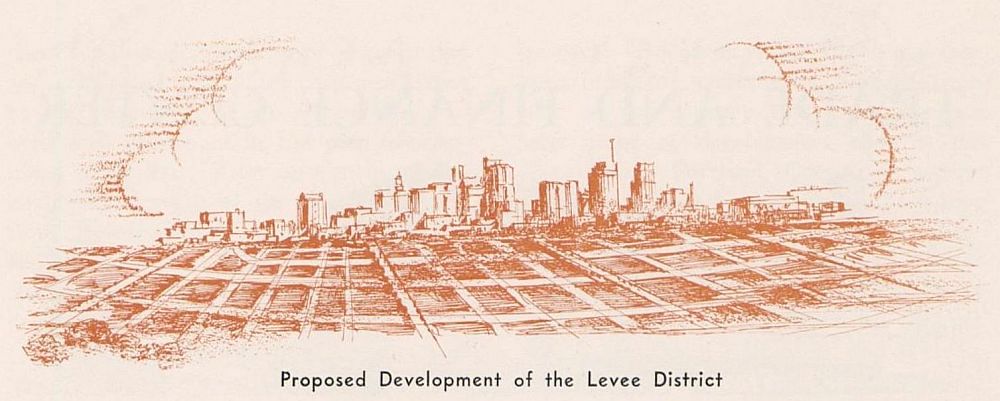
Levee District.

levee-development_your-dallas-of-tomorrow_portal

The old Union Depot at the edge of Deep Ellum, demolished in 1935.

union-depot_your-dallas-of-tomorrow_1943_portal

There is much more in this interesting report, including quite a bit of good historical information on the development and growth of Dallas.

***

Source & Notes

All images from “Your Dallas of Tomorrow, A Master Plan for Dallas, Texas,” prepared by Harland Bartholomew and Associates of St. Louis, Missouri in September, 1943. Booklet from the Dallas Municipal Archives, accessible on the Portal to Texas History, here.

The report above was the first one issued — and it was the most glitzy. The ones that followed were more down-to-business. Some of the plans were implemented, some were not. See all of the reports of the master plan prepared by Bartholomew and Associates — issued between 1943 and 1946 — here. If you like maps, this link has your name all over it!

*

Copyright © 2017 Paula Bosse. All Rights Reserved.

How to Keep Cool During a Heat Wave — 1951

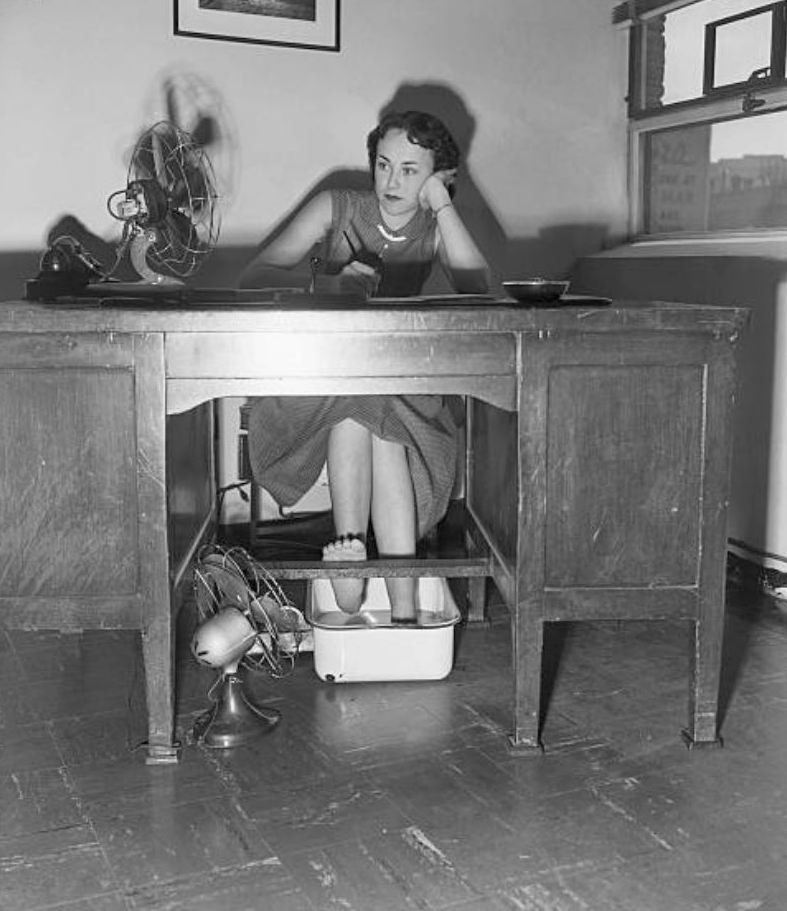
summer-heat_081451Mildred, hanging in there

by Paula Bosse

The photo above appeared in newspapers around the country in August 1951 above this caption:

What the well-dressed Texas gal will wear during the current heat wave might be something quite novel. Here, Dallas secretary Mildred Walston starts a new trend in her efforts to keep cool. She uses two fans and a cool pan in which to slosh her feet. Later in the afternoon, Aug. 14, when the temperature hit 103 degrees, Mildred’s boss broke down and sent her off to the nearest swimming pool.

Mildred Walston Fulenwider (1915-1962) worked for many years in the motion picture business in Dallas and was a founding member of WOMPI (Women of the Motion Picture Industry), organized in Dallas in 1952.

I’m going to have to remember that fan-pointed-at-feet-soaking-in-pan-of-cool-water trick.

***

Sources & Notes

Photo from the old Bettmann/Corbis site.

*

Copyright © 2017 Paula Bosse. All Rights Reserved.
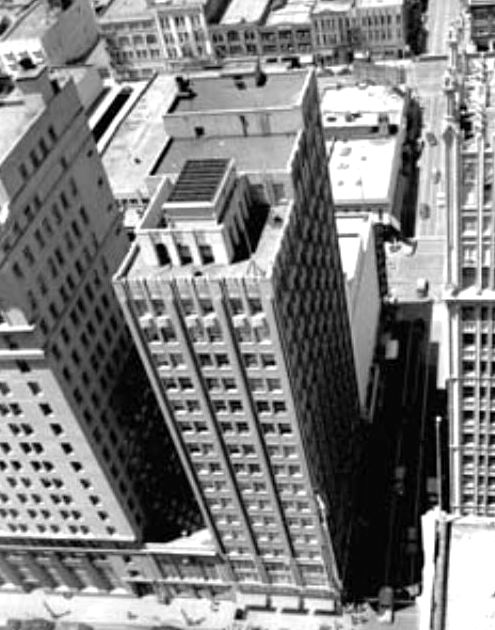
The “Akard Street Canyon” — ca. 1962

downtown-dallas_aia-journal-april-1962Looking north toward Main, and beyond…

by Paula Bosse

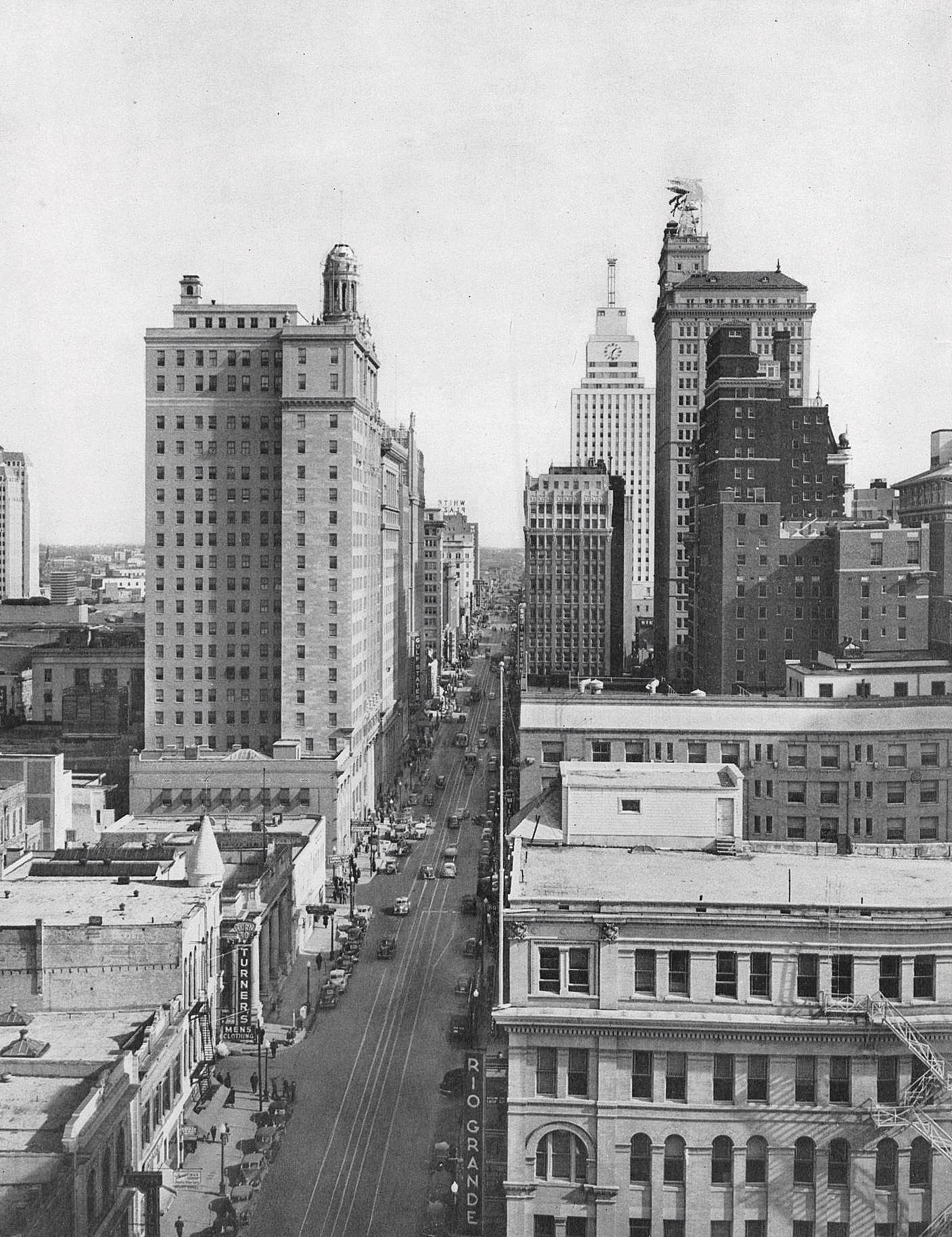
A view of the dowtown “canyon” — looking north on Akard from just south of Main, published in 1962, but probably taken in 1961 — possibly from the Baker Hotel.

A few of the tall buildings which made up the walls of the “canyon“:

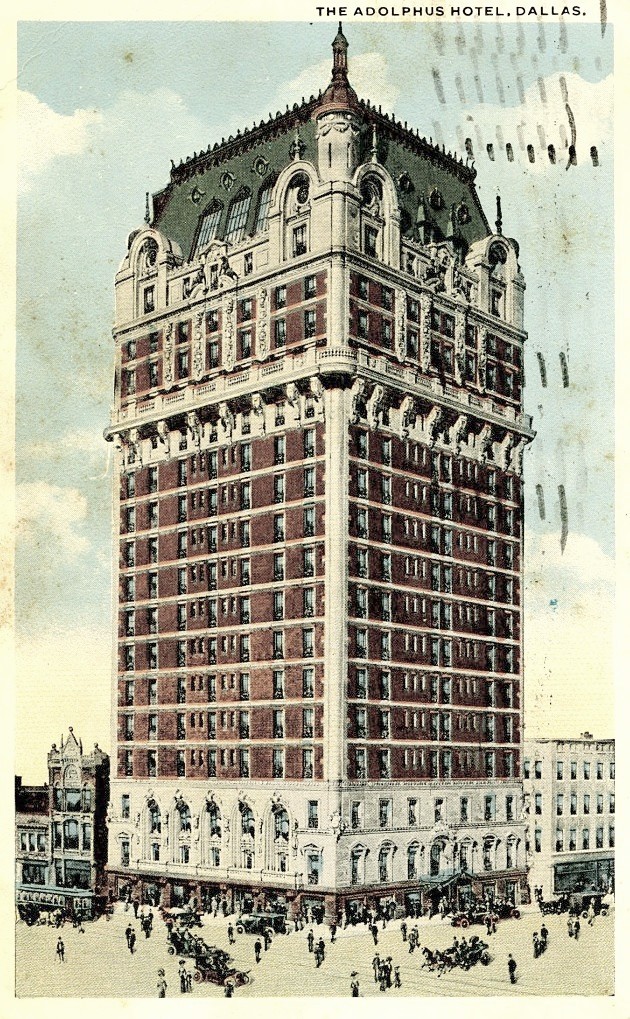
Adolphus Hotel — northwest corner of Commerce and Akard, built in 1911/12, designed by architects Barnett, Haynes & Barnett. The Adolphus — the oldest building in this group and the tallest building in the city when it was built — is definitely one the canyon’s anchors, but in the photo above it is mostly — if not entirely — out of frame at the left foreground.

adolphus_1910s_postcard

Magnolia Building — northeast corner of Commerce and Akard (seen at right foreground of photo); called the “Mobil Building” in the 1962 Dallas directory, built in 1922; Alfred C. Bossom, architect. Now the Magnolia Hotel.

magnolia-building_postcard_pre-pegasus

Adolphus Tower — southwest corner of Main and Akard, built in 1954; Wyatt Hedrick, architect (click pictures to see larger images). The building is currently being remodeled for office use.

adolphus-tower_jan-1955_ad-det_sm

Southwestern Life Building — southeast corner of Main and Akard, built in 1911/12; Otto H. Lang, architect. Bill Clements (before he became Governor of Texas) bought the building on spec in 1965, then had it demolished in 1972. It was a parking lot for many years. It is now Pegasus Plaza, an attractive open area.

southwestern-life-bldg_1913-directory

Gulf States Building — northwest corner of Main and Akard; originally known as the Marvin Building, built in 1927, with a later addition of upper stories designed by Lang and Witchell. Converted to lofts.

gulf-states-bldg_dpl

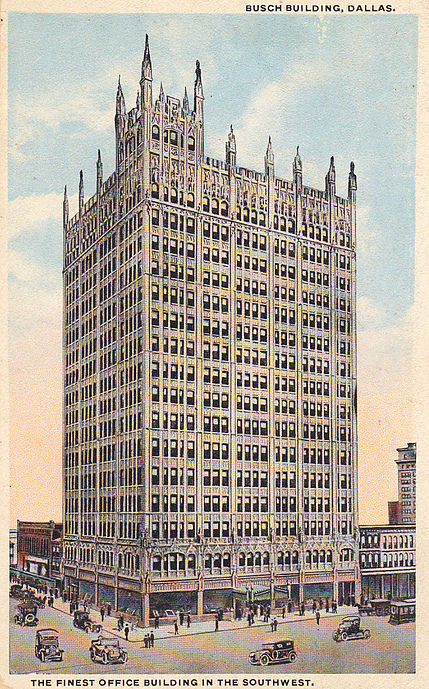
Kirby Building — northeast corner of Main and Akard. The Kirby Building — the beautiful white building at center right in the top photo — was designed by the same architects who designed the Adolphus Hotel, Barnett, Haynes & Barnett, with a 1924 annex designed by Lang and Witchell. When construction began in 1912, the building was originally called the Busch Building, named after Adolphus Busch, whose hotel was just a stone’s throw away (it was called the Great Southern Life Building from 1918 to 1922 and was renamed “Kirby” when it was purchased in 1922 by John H. Kirby). When the building opened in 1913, its most prominent tenant was the A. Harris department store, which occupied the first five floors and the basement. On December 31, 1960, it was announced that the parent company of pioneer Dallas department store Sanger’s (which, at the time of this announcement was part of the Federated Stores chain, but which had opened as Sanger Bros. in Dallas in 1872) had acquired another pioneer Dallas department store, A. Harris & Co. (established in 1892, though Adolph Harris had been in business in Dallas since 1887). The newly christened “Sanger-Harris” store settled into the old Harris space in the Kirby in 1961. It’s hard to tell, but it looks as if there is both an “S” on the corner of the building in this photo (for “Sanger’s”?) as well as the “A. Harris & Co.” sign affixed to the Akard side of the building. The A. Harris store had been a Dallas landmark at Main and Akard for almost 50 years, but it seems the sign would have come down by the time of the official change in name (which happened on July 10, 1961). So perhaps this photo was taken between January and July of 1961, when both stores were actually operating under the same roof and accepting either store’s credit card. The Kirby is now a snazzy apartment building.

busch_bldg_postcard

Mayfair Department Store — 1414 Elm, southwest corner of Elm and Akard. Built in 1946, this Dallas outpost of a department store chain was designed by George L. Dahl and has been converted to apartments.

mayfair-dept-store_dahl_feb-1947

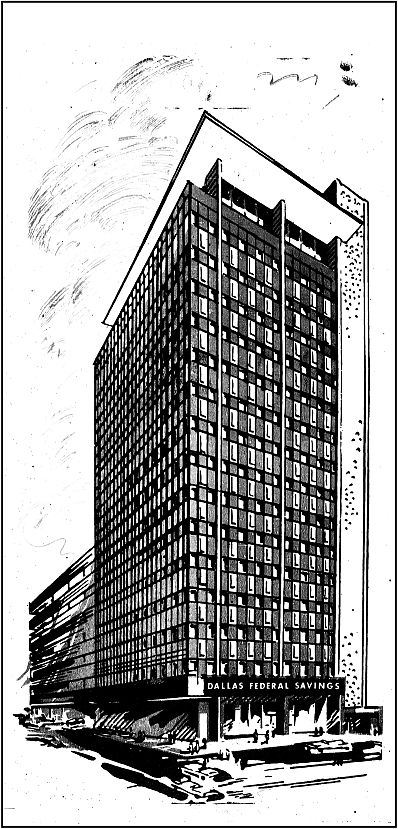
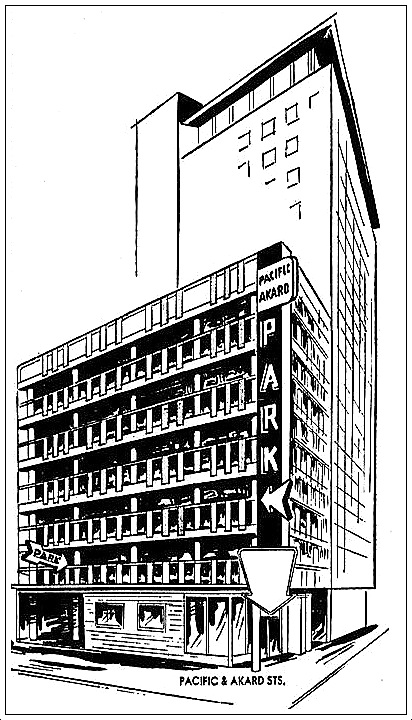
Dallas Federal Savings and Loan Building  —  1505 Elm, northeast corner of Elm and Akard. This blue, gray, and white building was built in 1956/57 and was designed by George Dahl. One of Dallas’ earliest movie theaters — the Queen Theater, built in 1912 — was demolished in 1955 to make way for the new office building. (A brand new parking garage was built at the same time.) Converted to condos and apartments.

dallas-federal-savings-and-loan_1505-elm_1957_sm     dallas-federal-savings_parking-garage_1957_ad-det

Fidelity Union Tower — northeast corner of Pacific and Akard, built in 1959/60, designed by Hedrick & Stanley; called the Mayflower Building for a short time. Now the Mosaic, converted to residences.

fidelity-union-tower-mayflower-bldg_hedrick-and-stanley_1958

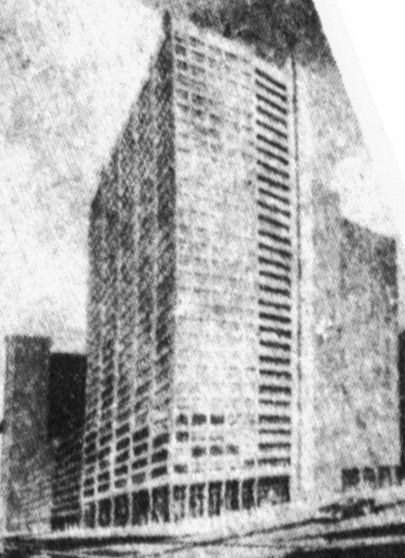
511 North Akard — between Patterson and San Jacinto, built in 1958/59, designed for the Relief and Annuity Board of the Southern Baptist Convention by architects Thomas, Jameson & Merrill. Currently apartments, with a 7-Eleven at street-level.

511-akard_1958-rendering_advance-leasing_ad-det

All but one of these buildings are still standing, and most have been converted into apartments and condos. The view up Akard today (here) doesn’t look as much like a canyon as it did 55 years ago, due mainly to the loss of the Southwestern Life Building at Main and Akard.

Below is a photo looking south on Akard, with the Baker Hotel (on Commerce) straight ahead. That “third wall” formed by the Baker makes things a little more “canyon-esque.” (Note the Queen Theater at the left.)

akard_mayfair_pinterest

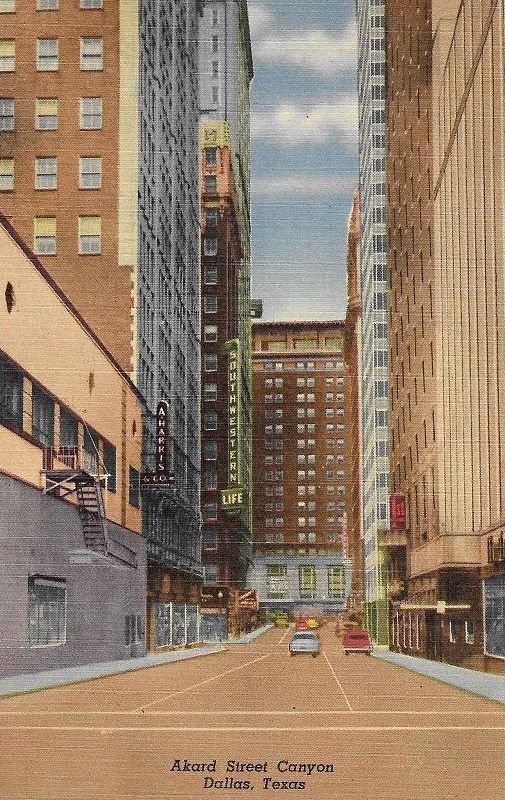
And, finally, a postcard of “The Akard Street Canyon” which tourists could share with the family back in Poughkeepsie.

akard-canyon_ebay

***

Sources & Notes

Top photo from the April, 1962 issue of AIA Journal (which is scanned in its entirety in a PDF, here).

Adolphus Hotel postcard from the Portal to Texas History.

Bird’s-eye view of the Gulf States Building from the collection of the Dallas Public Library.

Photo looking south on Akard from Pinterest.

Sketches and renderings of buildings mostly from ads, almost all of which appeared when the building in question opened.

For several photos showing the view south on Akard over the years, see the Flashback Dallas post “Akard Street Looking South, 1887-2015,” here.

*

Copyright © 2017 Paula Bosse. All Rights Reserved.

Need Bonnie & Clyde and Smoot Schmid Memorabilia?

bonnie-and-clyde_ring_rr-auction_june-2017Nothing says “I love you”…

by Paula Bosse

Thank you, Robin McLauren, for making me aware of the upcoming “Gangsters, Outlaws, & Lawmen” auction presented by RR Auction (the sale is June 24, 2017, with the lots available to be previewed here and bidding to begin next week). Of particular interest to those of us in Dallas are the lots concerning Bonnie & Clyde and the lots concerning Dallas County Sheriff Smoot Schmid (known for, among other things, his involvement in the Bonnie & Clyde case) — these Dallas-specific lots can be viewed separately, here (there are three pages, see the page numbers at the bottom of the page).

There is everything from photos of B&C’s bullet-ridden car, photos of the two West Dallas outlaws lying on morgue slabs, Bonnie’s blood-stained glasses, Schmid’s gun, and even his Shriners fez. Here are a few of the items I found interesting.

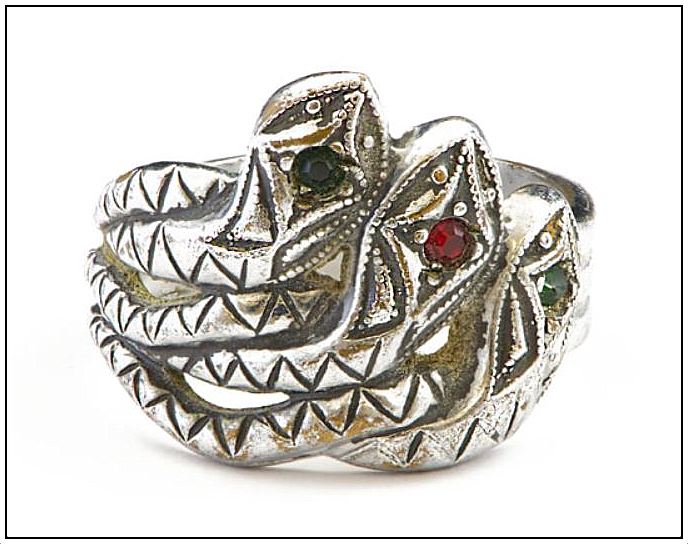
The first one is pictured at the top: a 3-headed serpent “promise ring” Clyde made for Bonnie while in prison (information on the lot can be found here). It’s kind of cool. (Most images on this page are larger when clicked.)

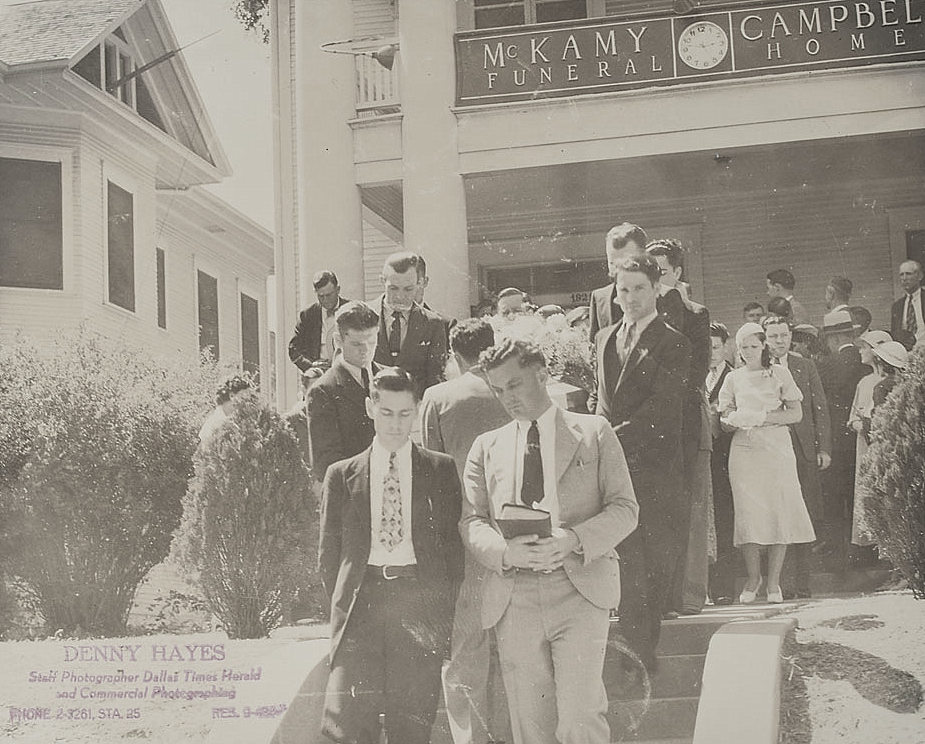
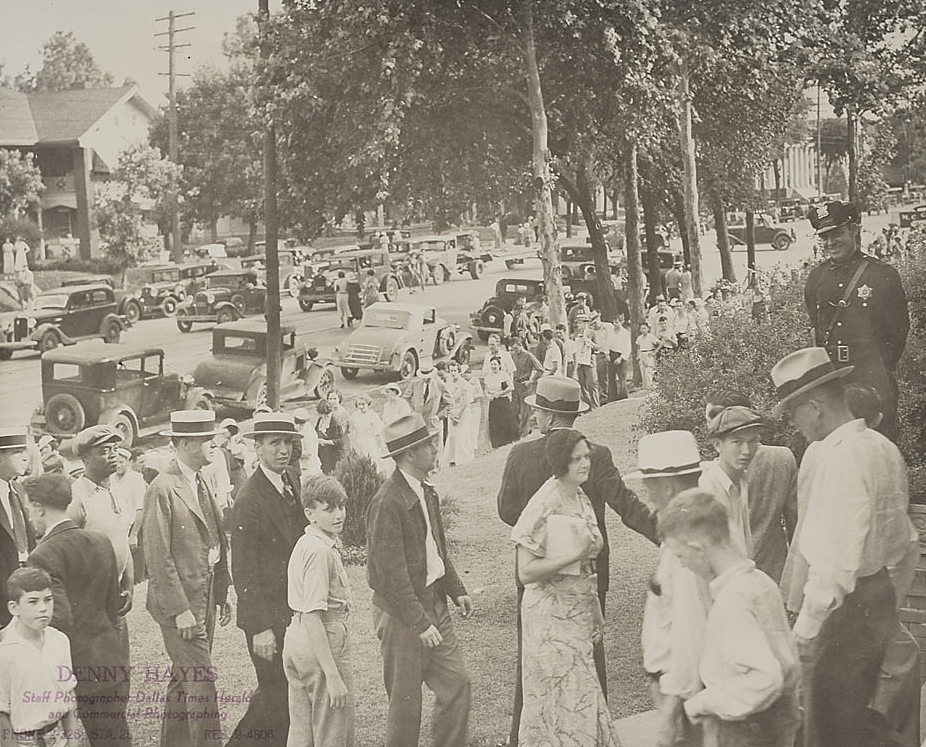
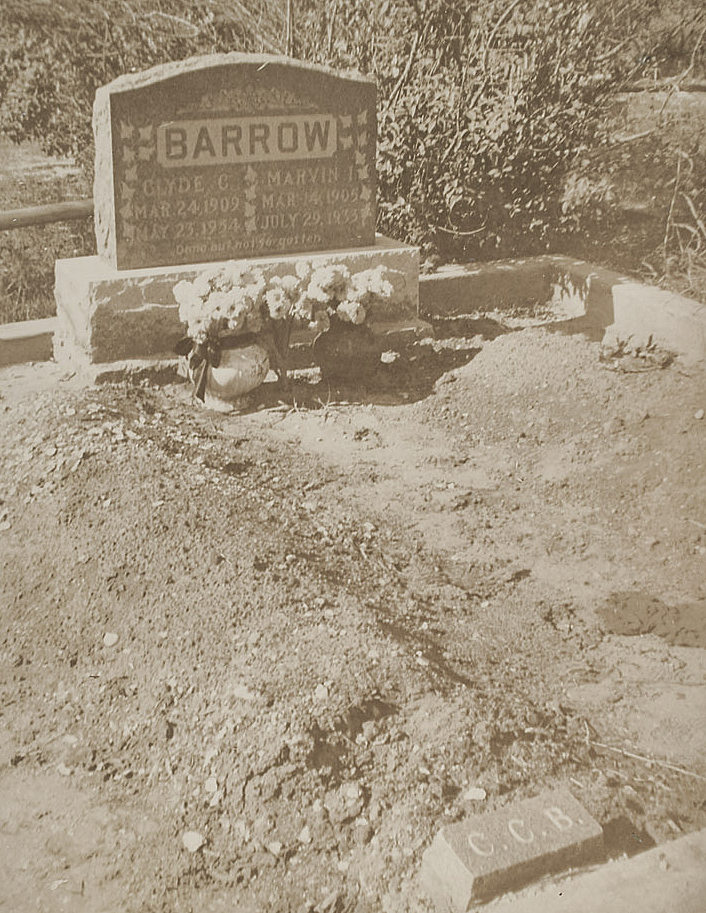
Another lot (here) contains four photos: two show the crowds attending Bonnie Parker’s viewing at the McKamy-Campbell Funeral Home on Forest Avenue, taken by Dallas Times Herald photographer Denny Hayes, and two show the gravesites of Bonnie Parker and Clyde Barrow.

bonnie-parker_mckamy-funeral-home_rr-auction_june-2017

bonnie-and-clyde_funeral-home_rr-auction_june-2017

bonnie-parker_grave-marker_rr-auction_june-2017

clyde-barrow_grave-marker_rr-auction_june-2017

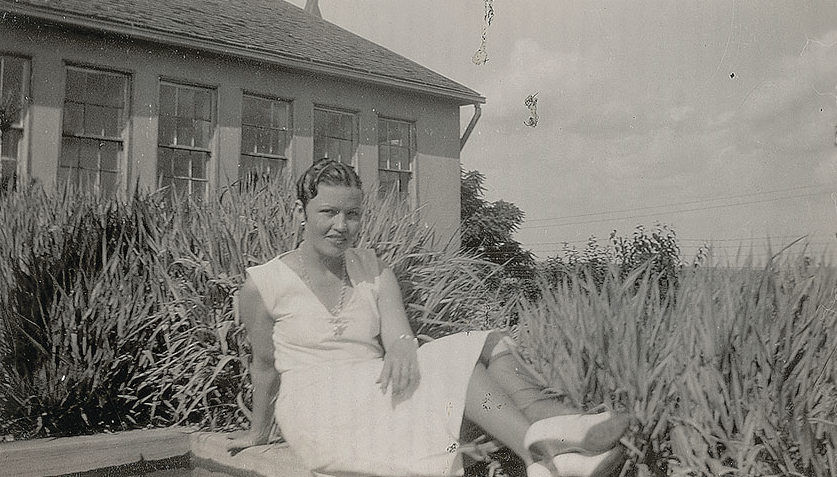
Another lot (here) has 36 photos concerning Blanche Barrow, wife of Clyde’s brother Buck Barrow. Here she is marcelled and striking a pose.

blanche-barrow_rr-auction_june-2017

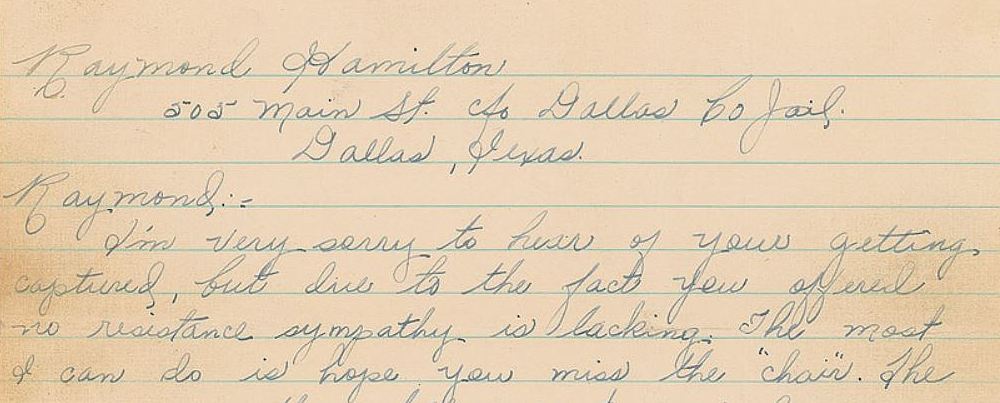
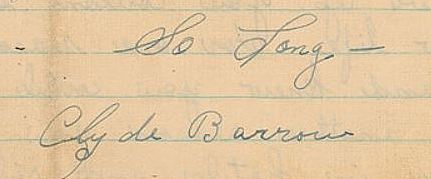
By far the best item is the bitter and angry letter of April, 1934 sent by Clyde Barrow to ex-Barrow Gang member Raymond Hamilton who was incarcerated in the Dallas County jail. Clyde dictated the letter to Bonnie, who must have had better penmanship (he signed it). A month later, Bonnie & Clyde were dead. The content of the 4-page letter is fantastic — read it here.

barrow_letter-to-raymond-hamilton-april-1934_rr-auction_june-2017

barrow_letter-to-raymond-hanilton_april-1934_signature_rr-auction_june-2017

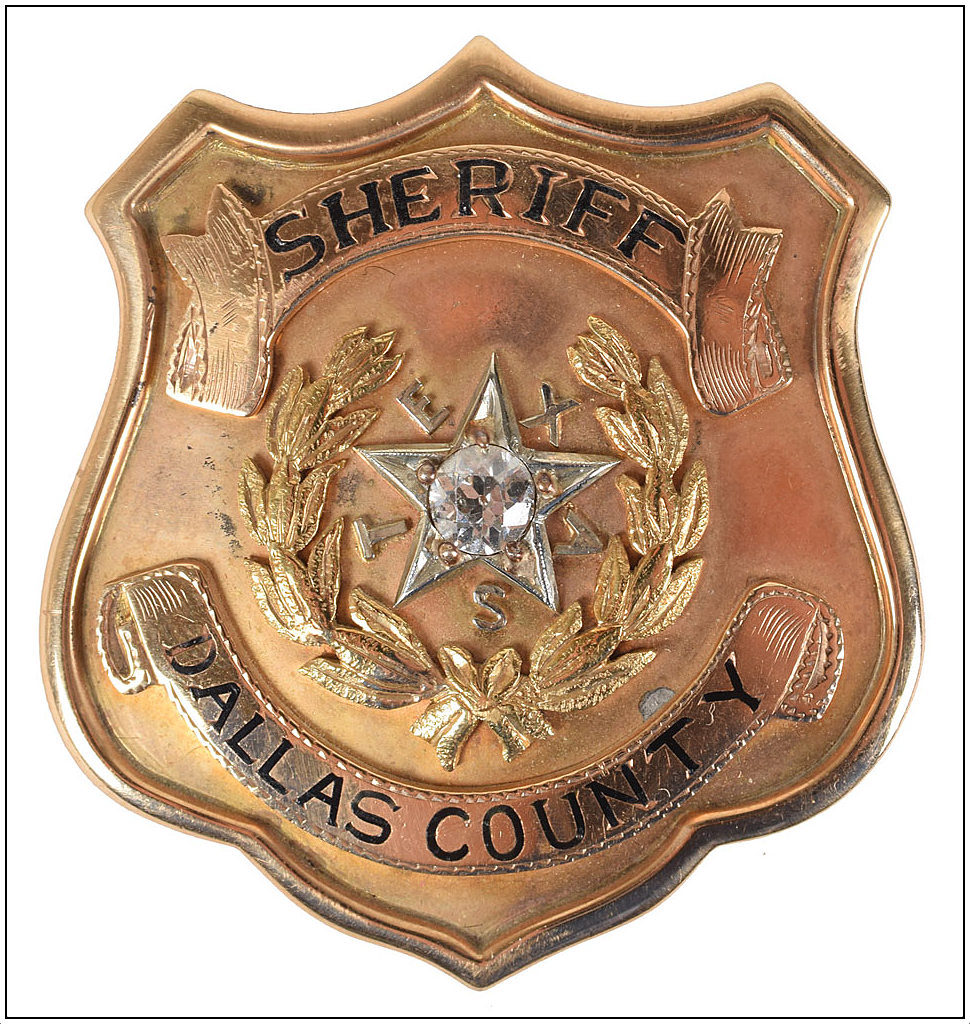
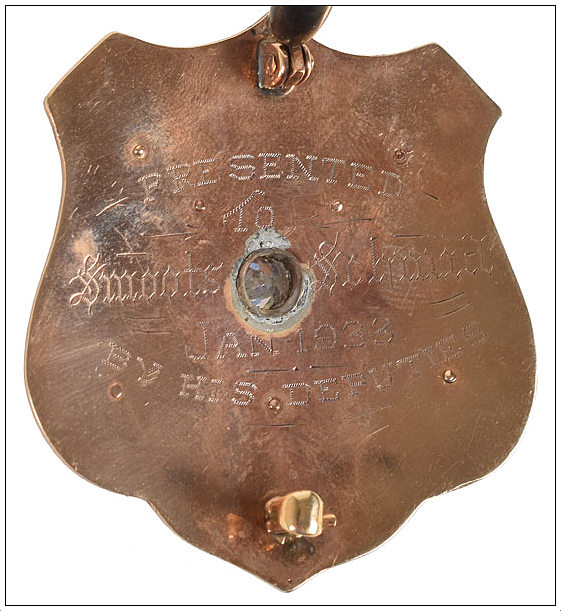
There are several items that once belonged to Sheriff Richard A. “Smoot” Schmid, including this 14K gold diamond-studded badge presented to “Smoots” Schmid by his detectives in 1933.

smoot-schmid_badge_front_rr-auction_june-2017

smoot-schmid_badge_back_rr-auction_june-2017

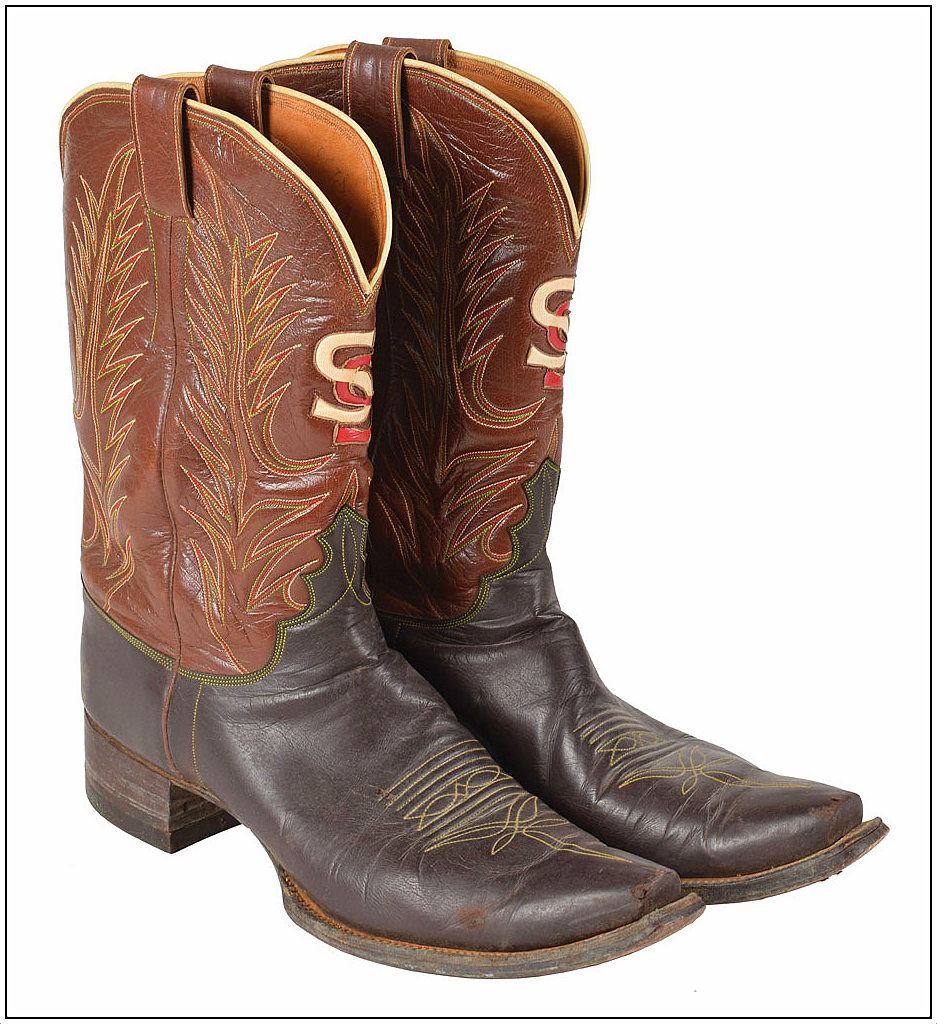
And, his boots, with his “SS” initials on each.

smoot-schmid_boots_rr-auction_june-2017

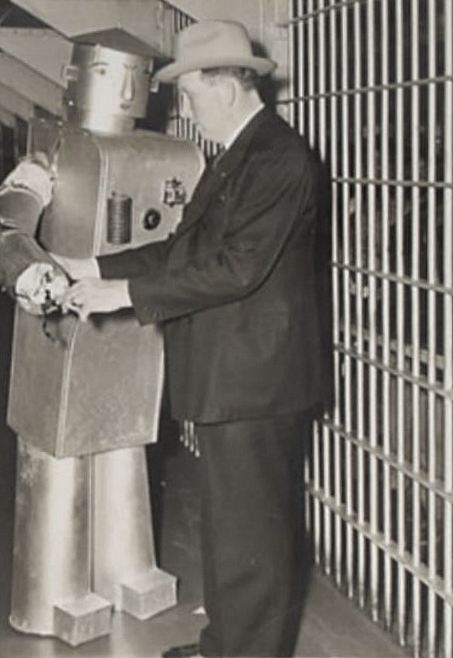
And just because it’s odd, I have to admit I’m quite taken with this photo tucked into a lot containing several photographs which shows Schmid slapping cuffs on a robot.

smoot-schmid_robot_jail_rr-auction_june-2017

Bidding begins June 15!

***

Sources & Notes

The RR Auction website is here.

More Flashback Dallas posts on Bonnie and Clyde are here.

Most photos are larger when clicked.

*

Copyright © 2017 Paula Bosse. All Rights Reserved.


San Antonio Extra: The Texas Transportation Co. and the Pearl Brewery Electric Freight Trolley

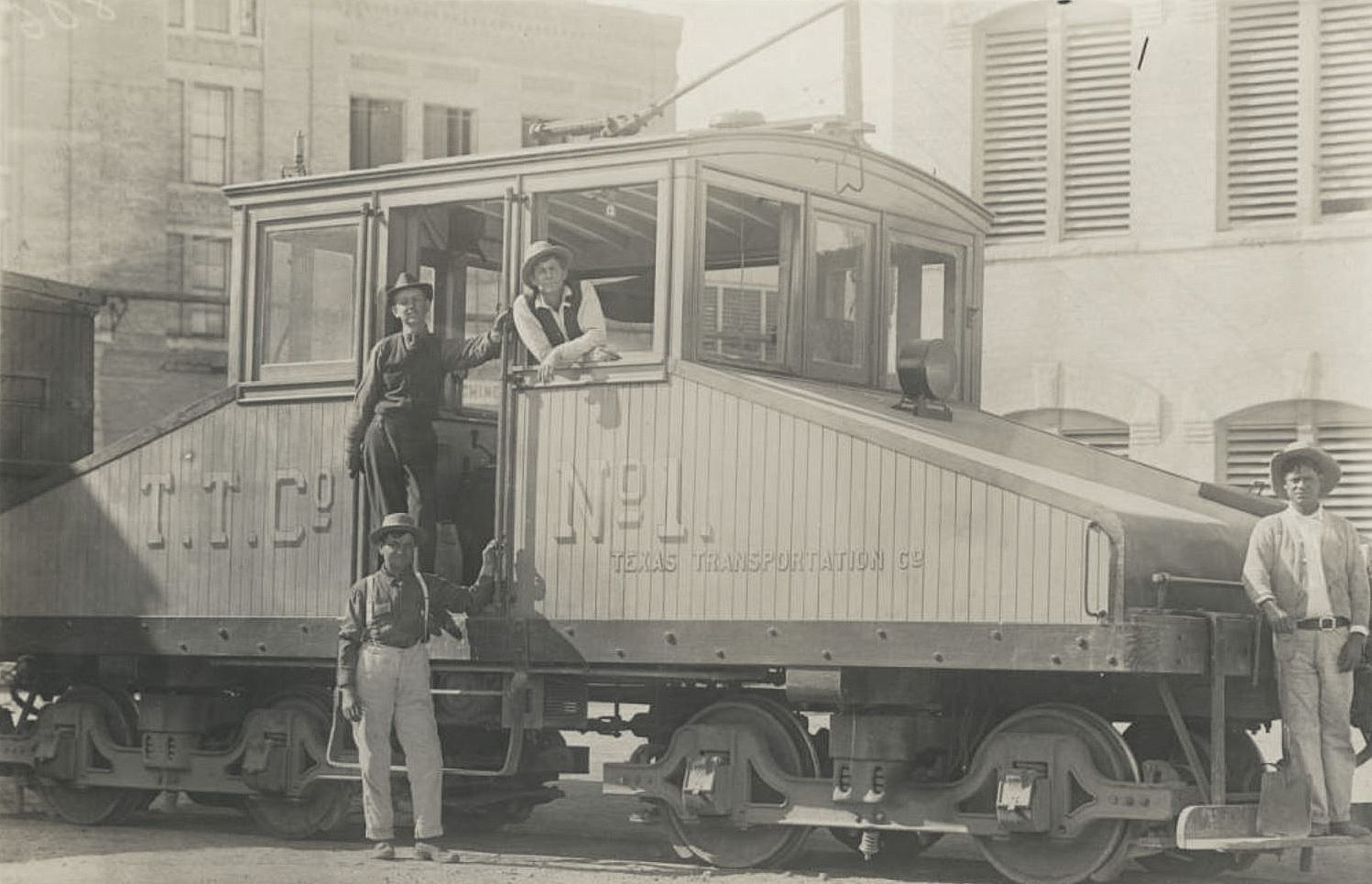
texas-transportation-co_cook-coll_degolyer_smu_san-antonioT. T. Co. No. 1, at your service… (click for larger image)

by Paula Bosse

I come across a lot of interesting Texas photos that have nothing to do with Dallas, so I think I might, on occasion, post them here, knowing that someone else is also likely to find them interesting. Like the one above.

This photo is from the incredible gift that just keeps giving, the George W. Cook Dallas/Texas Image Collection, held by the DeGolyer Library at SMU. Most of the items in the collection have a Dallas connection, but there are several others of general Texas interest.

When I saw this photo I wasn’t sure what it was. It looked like an electric trolley, but I’d never seen a shape like that before. It turns out it was, indeed, an electric freight locomotive. It was one of two locomotives that belonged to the Texas Transportation Co.’s tiny fleet of two — this was engine No. 1. The T.T.C. operated a freight service on their very short 1.3-mile track for 113 years (1887-2000), serving primarily the Pearl and Lone Star breweries of San Antonio, running freight to and from the breweries and the Southern Pacific rail yard. (More at Wikipedia, here.)

Here’s a later photo of the locomotive (October, 1928), now emblazoned with the Pearl Beer logo.

texas-transportation-co_1928_denver-public-library

As hard as it is to believe, this electric freight trolley ran along the streets of San Antonio until the year 2000, when it became a victim of the Pabst Brewing Company’s acquisition and shuttering of the Pearl Brewery. Without the brewery, there was no need for the trolley to continue to run. A month before it stopped running, a man shot video footage of the locomotive(s) trundling through San Antonio. I particularly liked seeing the locos push freight cars as well as pull them (seen at about the 12:50 mark). (Read the notes of the man who shot the video on the YouTube page under “Show More.”)

*

***

Sources & Notes

Top photo — titled “T. T. Co. No. 1. Texas Transportation Co.” — is from the George W. Cook Dallas/Texas Image Collection, DeGolyer Library, Central University Libraries, Southern Methodist Unviersity; more information about this photo can be found here.

Second photo — titled “Texas Transportation Co. locomotive, engine number 1, engine type Electric” — is from the Otto C. Perry Memorial Collection of Railroad Photographs, Western History Department, Denver Public Library; more information on this photo can be found here.

A great short, illustrated history of the Texas Transportation Co. and the various locomotives that ran on its rails can be found at the Don Ross Group website, here (be sure to read the reminiscences of a man who worked at the Pearl Brewery as a college student in 1960 at the bottom of the page).

I wrote about electric interurban freight-hauling locomotives in the Flashback Dallas post “Interurbans: Freight Movers?”

Click photos to see larger images.

*

Copyright © 2017 Paula Bosse. All Rights Reserved.
 

Zang and Beckley

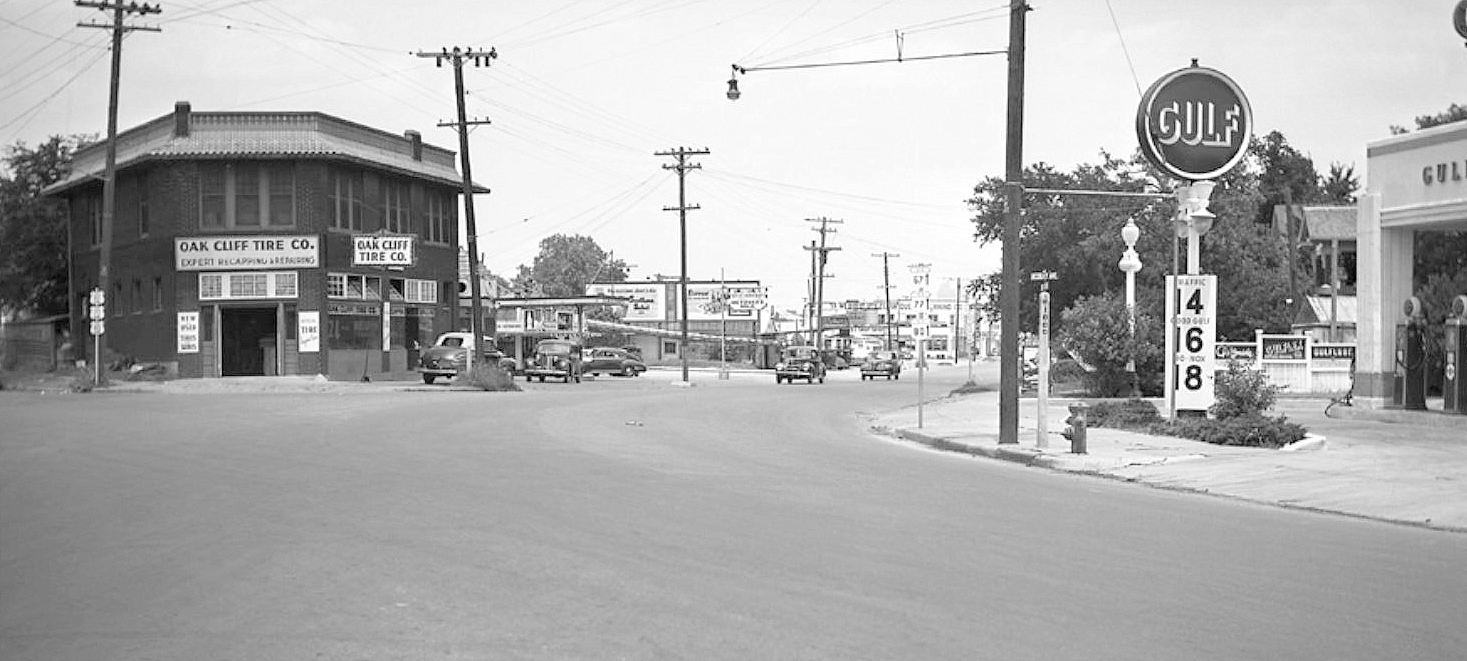
oak-cliff_zang-and-beckley_dfw-freewaysGulf’s “No-Nox” gas just 18¢/gallon…

by Paula Bosse

This photo shows the Oak Cliff intersection of N. Zang Blvd. and N. Beckley Ave. The 1953 Dallas directory shows L. B. Poche’s Oak Cliff Tire Co. at 1101 N. Zangs and K. R. Hollis’ Gulf service station at 1102 N. Zangs (this was before that “s” in the street name was eliminated).

The photo comes from the exhaustive tome Dallas-Fort Worth Highways, Texas-Sized Ambition by Oscar Slotboom. His caption for this photo (found on page 98 of the PDF here):

This undated view shows the predecessor of IH 35, US 67, aligned on Zang Boulevard through Oak Cliff just south of downtown at the intersection with Beckley Avenue. The three highway shields show that this alignment also served US 77 and US 80. The narrow streets leading into downtown were unable to handle increasing traffic after World War II, making freeway construction a top priority.

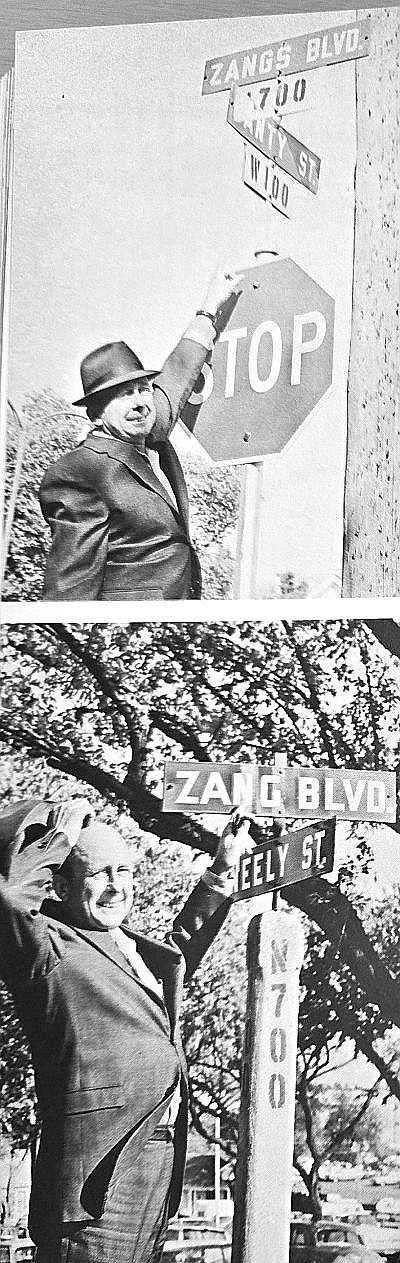
Zang Boulevard was originally called “Zang’s Boulevard” (later just “Zangs Boulevard”) after J. F. Zang. When it opened in 1900, it was the only direct road between Dallas and Oak Cliff. 

zangs-blvd_dmn_102600
Dallas Morning News, Oct. 26, 1900

In 1967, it was beginning to be a problem, with mixed messages from the city on what the street was actually called, illustrated by the photos below, which ran with this caption: “Harry Gaston, Oak Cliff real estate and insurance man, points out the ZANGS street sign in the north 700 block of the boulevard at Canty Street. A look of bewilderment adorns his face, however, when he discovers the ZANG (no S) sign on the opposite end and other side of the same north 700 block. City records show ZANG as the correct spelling… a reorientation program for the public and some great big headaches for map makers.” (Oak Cliff magazine, Nov. 1967). In June 1968, the city officially dropped the “s,” and it became, simply, “Zang Boulevard.” (The full article about this is linked below in the Sources & Notes section.)

zang-zangs_oak-cliff-mag_nov-1967-a_DPL-photosNov. 1967

***

Sources & Notes

Top photo is from Oscar Slotboom’s Dallas-Fort Worth Freeways website, which is pretty amazing. If you’re interested in the evolution of Dallas’ highway system, you will be glued to this site which is full of incredibly detailed information.

Photos of the beleaguered Mr. Gaston wondering what the street was actually called is from Oak Cliff magazine, Nov. 1967, Periodicals Collection, Dallas History and Archives, Dallas Public Library. The article that ran with these photos — “Zang(s) Problem(s) Confuse(s) Chamber(s)” by Phyllis Dischman — is here.

*

Copyright © 2017 Paula Bosse. All Rights Reserved

Downtown Dallas, Last Week

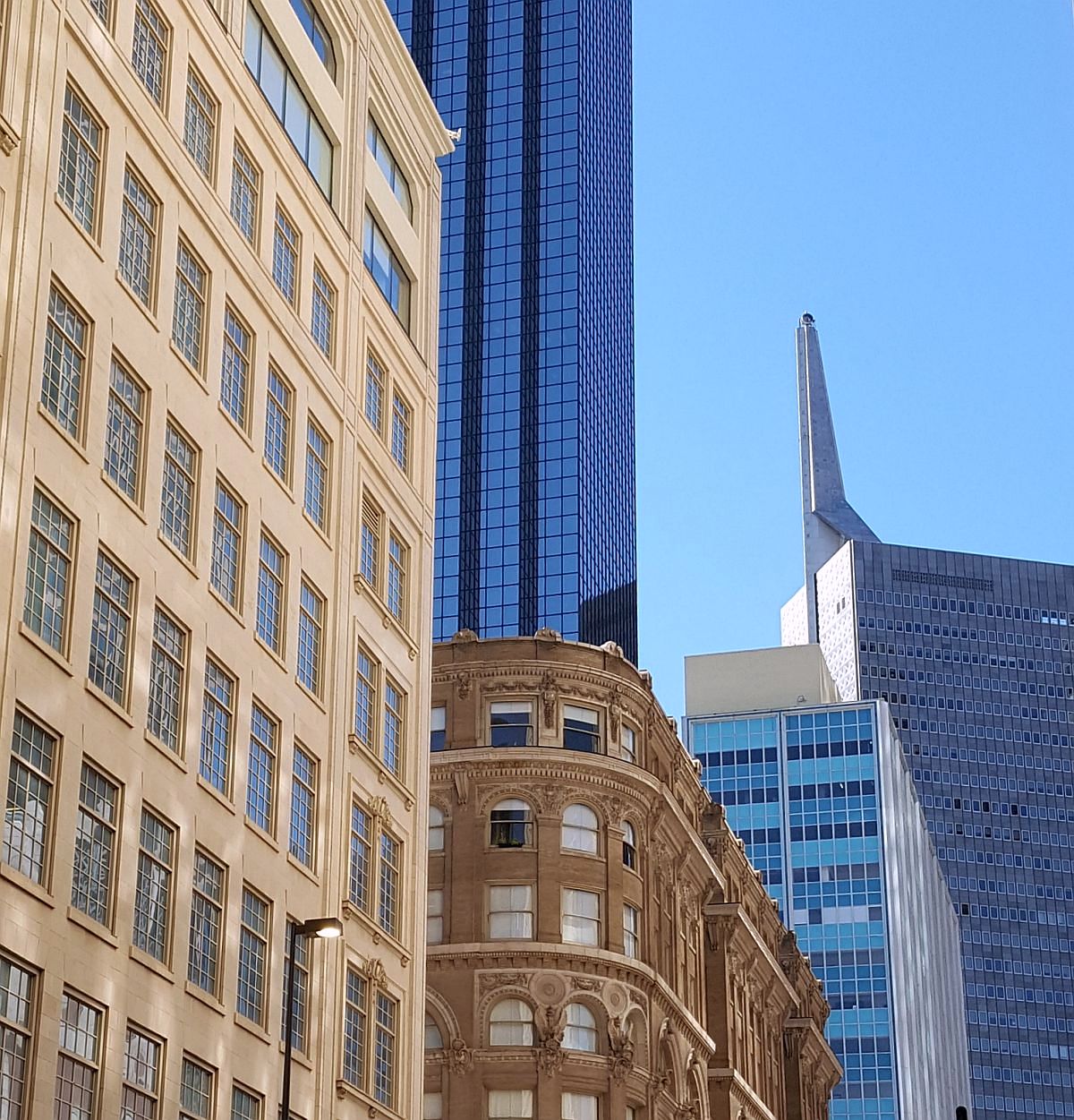
ervay-north-from-commerce_det_052417_bosseSo many architectural styles! (click for larger image)

by Paula Bosse

Last week I went downtown to check on the restoration of the St. Jude Chapel mosaic (I’ll write about that soon…). Sadly, I’m hardly ever downtown, so I took the opportunity to walk around a bit and was struck by how much construction and beautifying is going on. Parts of it are verging on the overly hipsterized, but, generally, downtown is looking better these days than I’ve ever seen it.

I parked at an incredibly affordable parking garage behind Neiman’s — Dal-Park on Commerce just west of Ervay (you do not have to be a Neiman’s customer to park there). Three bucks! (Just drive slowly on your way out — it’s kind of cool, but it’s like going down a spiral staircase … in a car.)

One of the first things you see when you emerge from the parking garage is the Mercantile Building. I never tire of seeing this building. (All photos in this post are much larger when clicked.)

mercantile-from-commerce_052417_bosse

*

Head north on Ervay from Commerce and you see that great view seen in the top photo — it’s kind of crazy to see so many wildly different styles of architecture, from so many eras all clustered together: the Neiman Marcus building (opened in 1914) on the left, the Wilson Building (1904), 211 N. Ervay (1958), the Republic Bank Building (1954), Thanksgiving Tower (1982), and just out of frame to the right, the Mercantile Bank Building (1943). Too bad the Old Red Courthouse (1891) is in the other direction! 

Heading up Ervay from Commerce, Neiman’s takes up the whole block to your left. The display windows on this side might not get the glory of the Main Street side, but the display seen in the photo below is great. I chuckled to myself when I realized that the star of a Neiman Marcus window was corrugated cardboard. But those dogs are fantastic! The name of the Dallas artist who made them is Loran Thrasher and you can see other examples of similar works at his website — click on “Installations.”

neiman-marcus-window_loran-thrasher_dogs_052417_bosse

*

As you approach Main Street you see this elegant sign (Neiman-Marcus, for me, will always have that hyphen in it!). (See what this block looked like around 1920, looking south from Main, here.)

neiman-marcus-sign_ervay_052417_bosse

*

Turn left on Main, and you’ll see this wonderful building across the street, just west of Stone Place — it’s one of the oldest buildings downtown, built sometime between 1892 and 1899. (I wrote about this building — and its two immediate neighbors — here.) I love this building which was very nicely restored by the fine folks at Architexas about 15 years ago.

sol-irlandes_052417_bosse

*

After admiring the Sol Irlandes building I turned around to see this surreal sight several stories above street-level.

joule-pool_052417_bosse

It’s an infinity pool — part of the Joule hotel (see what the pool looks like from up there here). It was pretty odd. If I felt a twinge of vertigo looking at this from the ground, I can’t even imagine how I would handle looking down. If the view isn’t obstructed, those brave swimmers can get a pretty good look at Pegasus (who is probably also a little concerned). This must be quite a sight at night.

joule-pool_pegasus_052417_bosse

*

Just to the right of the Magnolia Building, you can see the Adolphus peeking through.

adolphus_052417_bosse

*

One of the most impressive buildings in Dallas is the Wilson Building, at Main and Ervay (…and Elm and Ervay). It’s even more impressive when you see it up-close. I love seeing all these intricate decorative details on a building so unlike anything else in Dallas. (See what it looked like under construction in 1902 here.) Thank you, Sanguinet & Staats, for building us such a lovely architectural landmark.

wilson-bldg_detail_052417_bosse

*

I decided to walk over to see how work on the Statler was coming, so I headed to Main Street Garden Park. This photo isn’t the best, but I wanted to get the Municipal Building (which is currently being restored to its original 1914 grandeur) in the same shot. The Statler is coming along nicely and should be open soon. I’ve always wanted to see inside that building. (Even if it no longer has its original heliport!)

municipal-bldg_statler_052417_bosse

*

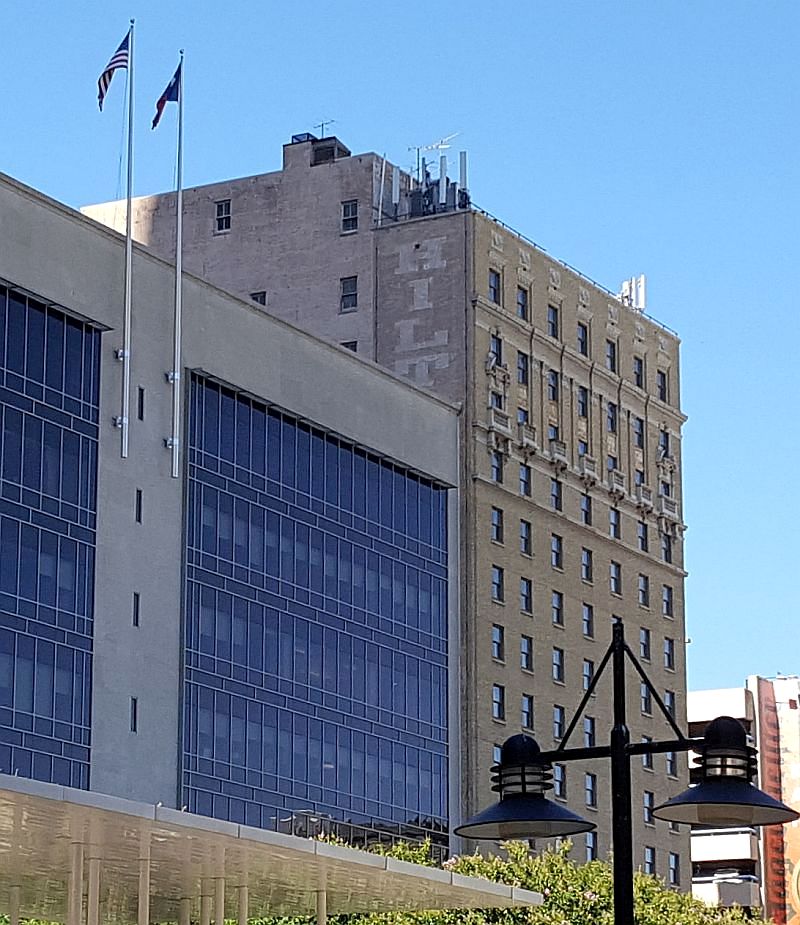
Speaking of the Statler Hilton Hotel (opened by Conrad Hilton in 1956), it’s nice to see that someone has repainted the “Hilt” on the side of what was the first hotel Conrad Hilton built anywhere, The Hilton Hotel, built at Main and Harwood in 1925 (it is now Hotel Indigo). (See the original “Hilton” sign in about 1925 here; it was repainted when it became the White Plaza a few years later.)

hilton-hotel_ghost-sign_052417_bosse

*

I took the photos above from St. Paul, looking east. I turned around and saw this great view of the Merc! It looks good from every angle. (Here it is around 1942, looking west from Harwood.)

mercantile-from-st-paul_052417_bosse

*

It’s nice to see that so many of Dallas’ landmark buildings are still looking good — and it’s also a little strange seeing the places I read about and write about every day standing right in front of me. I need to get back downtown again soon — there’s so much more to see.

***

Sources & Notes

All photos by Paula Bosse; they were taken on May 24, 2017.

All are much larger when clicked.

*

Copyright © 2017 Paula Bosse. All Rights Reserved.
 

Cowtown Extra: Fort Worth Zookeeper Ham Hittson and His Forest Park Friends

FW-zoo_hamilton-hittson_fawn_062937_UTAZookeeper Hittson and tiny friend…

by Paula Bosse

Today, Fort Worth. I was looking for photos of the old Forest Park in Oak Cliff (which was renamed Marsalis Park in 1925) and came across photos of the Forest Park Zoo. A search on the internet showed me that there was also a Forest Park Zoo in Fort Worth. I’ve never actually been a big fan of zoos, but I saw the photo above and was won over by its sheer cuteness. So let’s just take a little trip westward and enjoy some photos of cute animals, most of which feature zookeeper Henry Hamilton (“Ham”) Hittson.
Ham Hittson (1912-1966) began working as a zookeeper at the Forest Park Zoo in the early 1930s — if his obituary is correct, he became the zoo’s director in 1933 — at the age of only 21! During World War II he served for two years in the Coast Guard, assigned to work with sentry and attack dogs and with patrol horses. After the war he returned to the zoo (he was the director of the zoo for 21 years) and eventually became the director of the Fort Worth Park Department. His 1966 obituary (he was only 54 when he died) noted that he was instrumental in forming the Fort Worth Zoological Association. And, well, these photos are very sweet.

(All photos are from the University of Texas at Arlington Libraries. Click pictures to see larger images; click the link below each photo for more information.)

*

The photo at the top is my favorite — it shows Hittson with a tiny fawn born the previous day. The photo above and the one below were taken on June 29, 1937.

FW-zoo_hamilton-hittson_fawn_062937-b_UTAMore info here

Below, Hittson with a new baby lion cub named Will (June 29, 1939).

FW-zoo_hamilton-hittson_lion-cub_062939_UTAMore info here

Actor Jimmy Stewart stopped by the zoo on May 22, 1953 to check out the zoo’s new rhinoceros, Marilyn Monroe. F. Kirk Johnson, zoological board president, is at the left and Hittson, then park department director, is at the right.

FW-zoo_jimmy-stewart_052253_UTAMore info here

Back to Ham’s zookeeper days: in the photo below (taken on August 2, 1940), he’s standing with one of the zoo’s top attractions, an elephant named Queen Tut. He’s bidding her farewell as he is about to leave for New York where he will pick up a baby elephant to be her companion. (Hittson and the zoo’s veterinarian brought the one-year-old elephant back with them in a trailer — they must have attracted a lot of stunned looks along the highway as they drove back from New York.)

FW-zoo_hamilton-hittson_elephant_080240_UTAMore info here

The arrival of this new elephant was big news — there were almost daily updates in the pages of the Fort Worth Star-Telegram. In order to buy the elephant, the zoo had had to take out a loan from the bank, and in what was both a speedy way to pay off the debt and a clever way to garner publicity, there followed a successful drive to raise money to pay off the “mortgage”: countless school children happily did their parts by contributing pennies, nickels, and dimes in the fundraising effort and then flocked to the zoo to see the newest member of the zoo family and welcome her to Fort Worth.

And here’s Queen Tut with her new little pal, Penny, on September 10, 1940.

FW-zoo_queen-tut-and-penny_091040_UTAMore info here

Awww.

***

Sources & Notes

There are tons of photos of the Forest Park Zoo in the UTA Libraries Special Collections, here (20 pages’ worth!).

*

Copyright © 2017 Paula Bosse. All Rights Reserved.