Flashback : Dallas

A Miscellany: History, Ads, Pop Culture

Category: Photographs

An Afternoon Outing with SMU Frat Boys & Their Dates — 1917
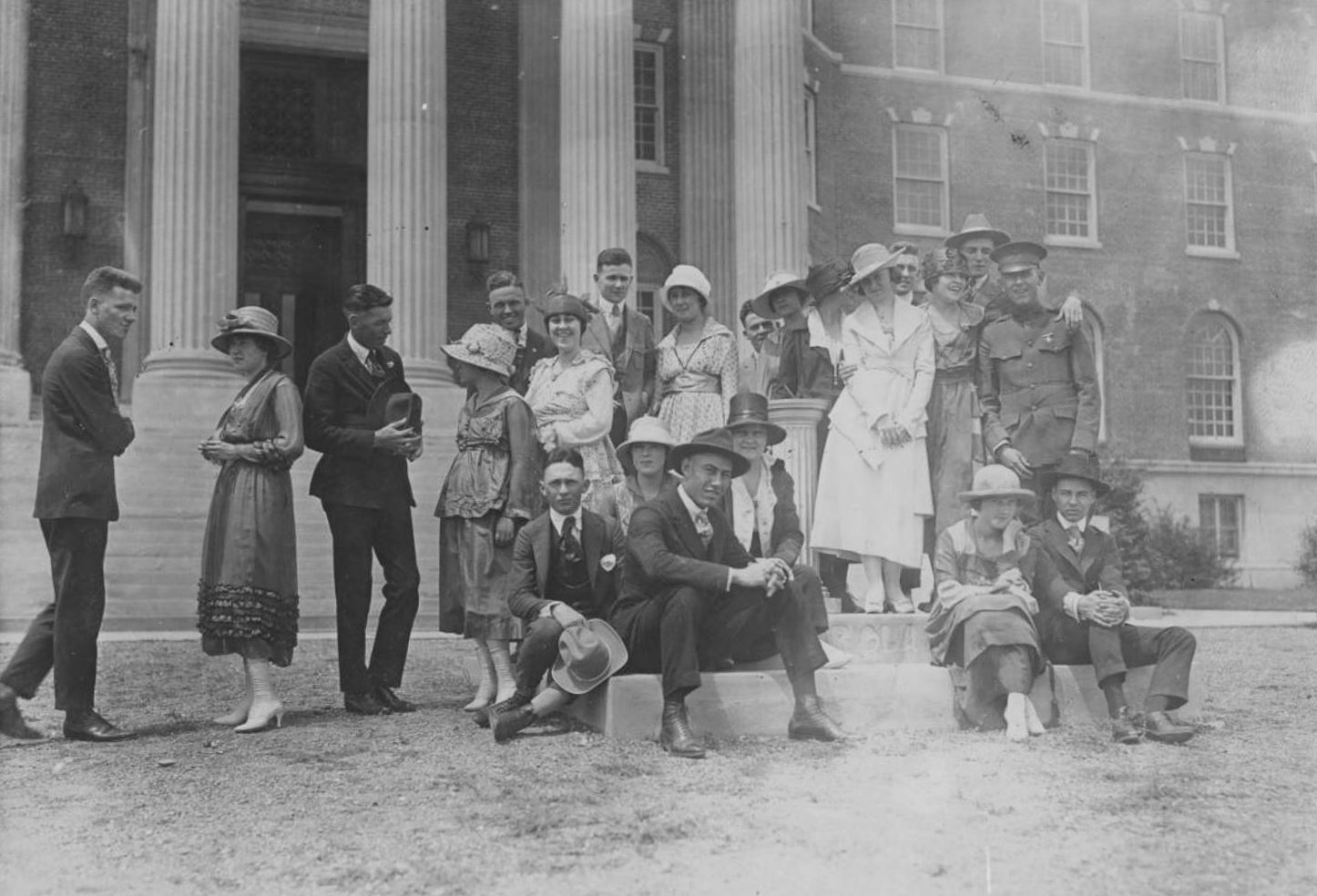
smu_omega-phi_dallas-hall_1917_degolyerCampus couples, 1917

by Paula Bosse

I came across three wonderful World War One-era photos in the SMU archives while I was looking for something else. You know how you can become enthralled by the charm of old photos and sit for long stretches of time staring at every little detail and wondering about the lives of the unidentified people who populate them? That happened to me with these. There is one particular young woman who stands out more than anyone else. Not only is she the best-dressed person in the photos, she also seems calm, collected, and serene. She looks friendly. She was probably very pleasant to have around.

These three photographs show a group of ten young couples and a pair of chaperones spending a beautiful sunny day together, with the highlight of the day being a trip to Highland Park’s Exall Lake. The men are SMU students, identified only as members of the Omega Phi fraternity. The women are identified merely as “dates,” but I’m sure that some of them were also SMU students. The photograph above shows the crowd gathered on campus in front of Dallas Hall. The woman in white looks like she’s on a pedestal, glowing in a spotlight. Below, a closer look at her stylish outfit (as well as a look at the young be-medaled WWI soldier next to her).
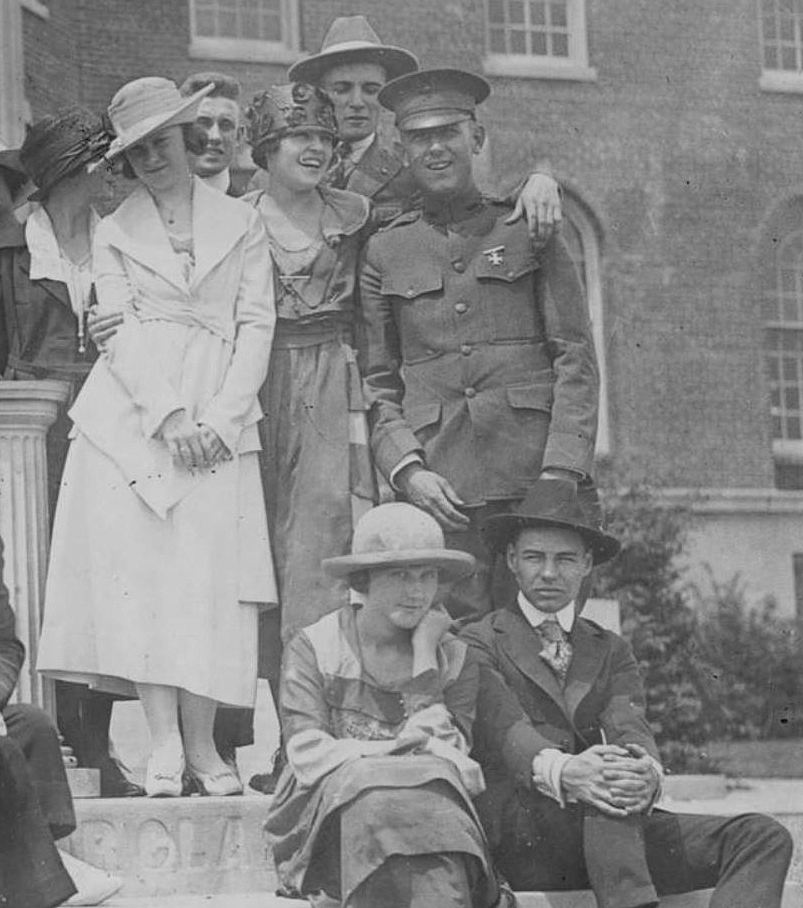
smu_omega-phi_dallas-hall_1917_degolyer-det1

And, below, a similar detail, but this one showing the daintily crossed ankles of another pretty girl, seated beside a sour-looking companion.
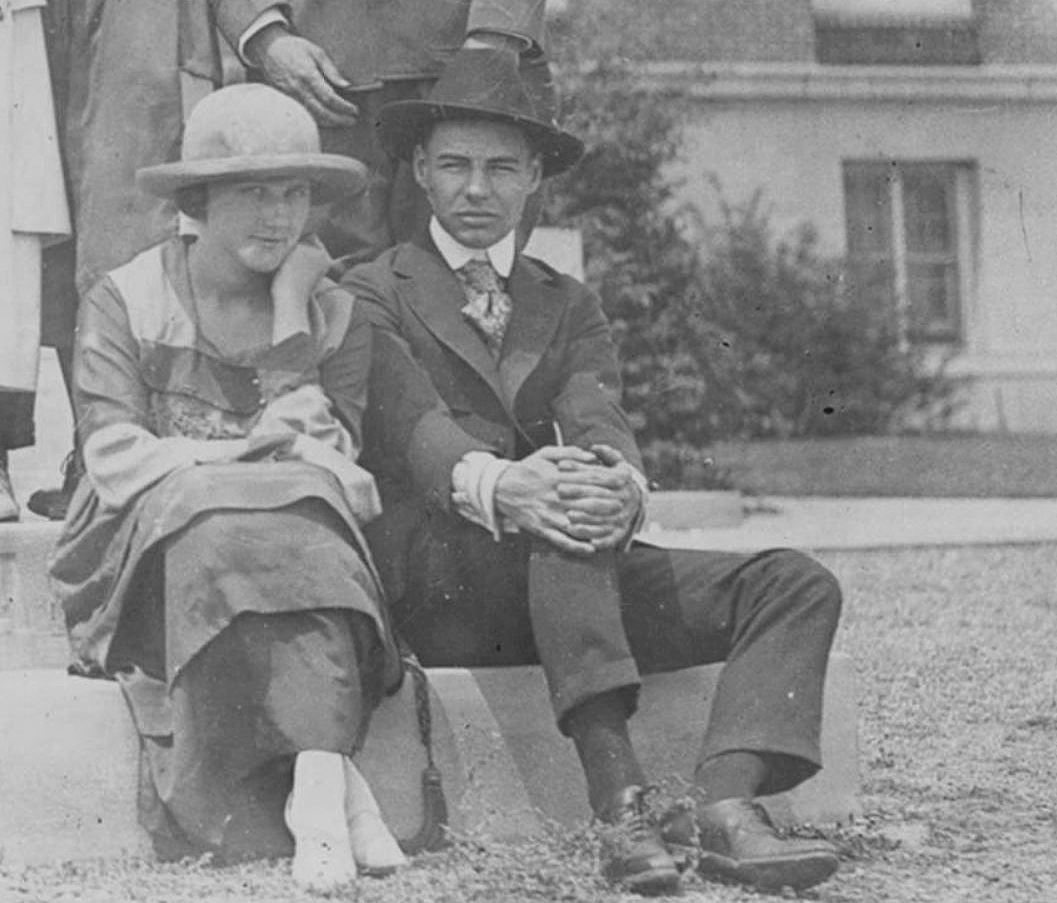
smu_omega-phi_dallas-hall_1917_degolyer-det2

And here’s the gang on the idyllic banks of Exall Lake. Diane Galloway included this photograph in her book The Park Cities, A Photohistory with this caption:

At one time a bridge crossed Exall Lake near the Cary house, shown in the distance. The photographer was standing on the bridge to capture this picture of well-dressed SMU students going boating on the lake. A trip to Lakeside Drive was one of the few off-campus excursions permitted in 1917.

I love this photo. If I didn’t know what the Turtle Creek area looked like, I’d be hard-pressed to identify this as Dallas!

smu_omega-phi_exall-lake_1917_degolyer

Here’s a close-up of the beatific, smiling woman in white. I like the kid lurking in the background.

smu_omega-phi_exall-lake_1917_degolyer-det1

And the boat.

smu_omega-phi_exall-lake_1917_degolyer-det2

And the sour-looking guy again, looking even more annoyed than before.
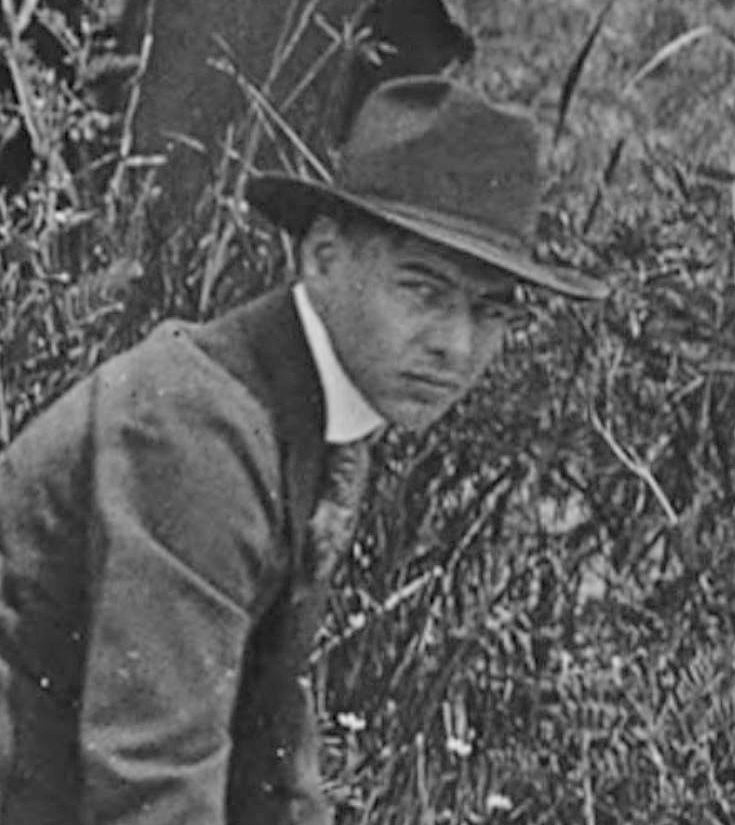
smu_omega-phi_exall-lake_1917_degolyer-det3

And here’s the crowd sitting on the steps of the frat house (which was located at Haynie and Hillcrest). The personnel has changed a little bit (they gained a woman and lost a man), but (almost) everyone seems pretty happy.
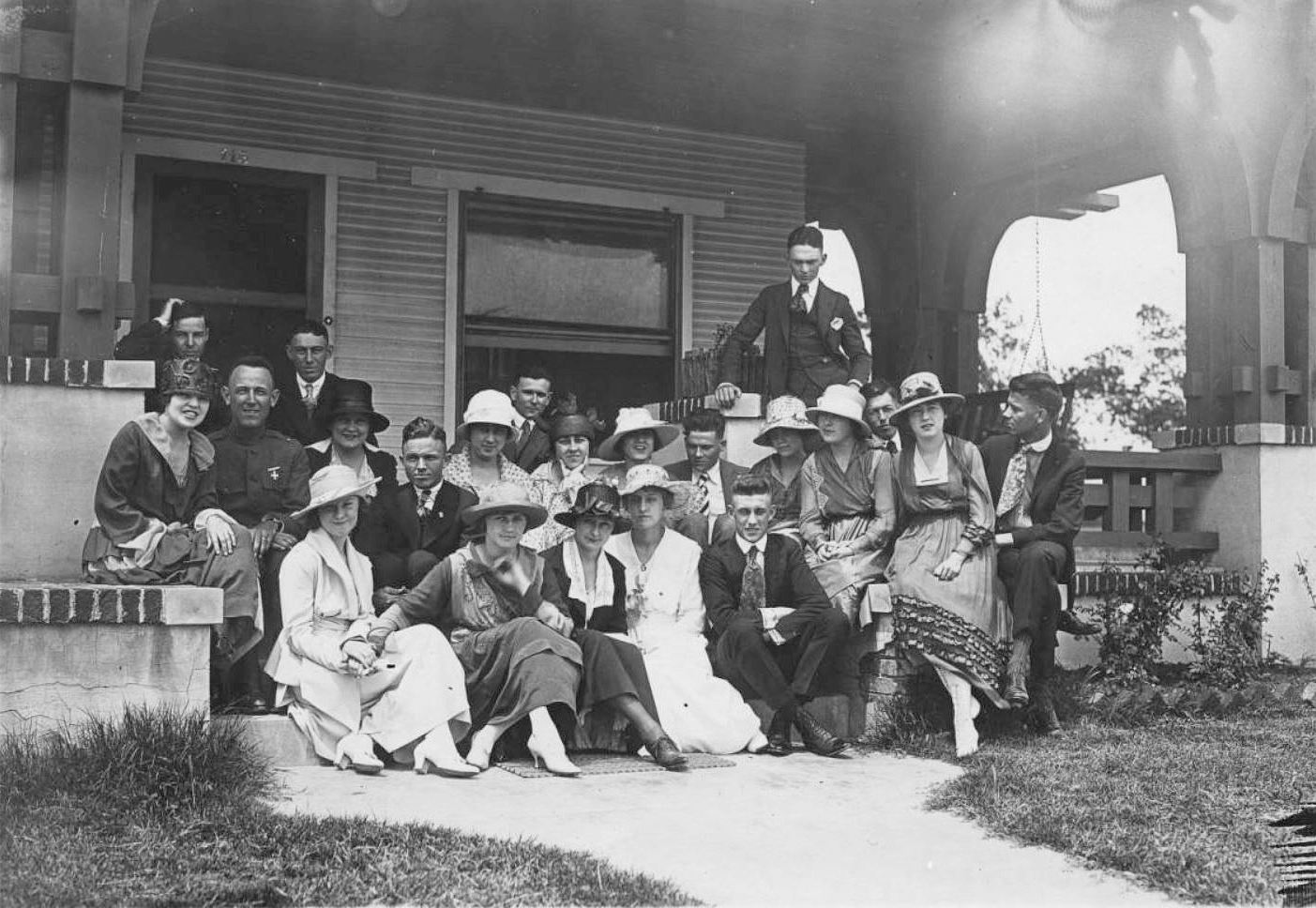
smu_omega-phi_porch_1917_degolyer

And, below, my very favorite detail from these three photos.
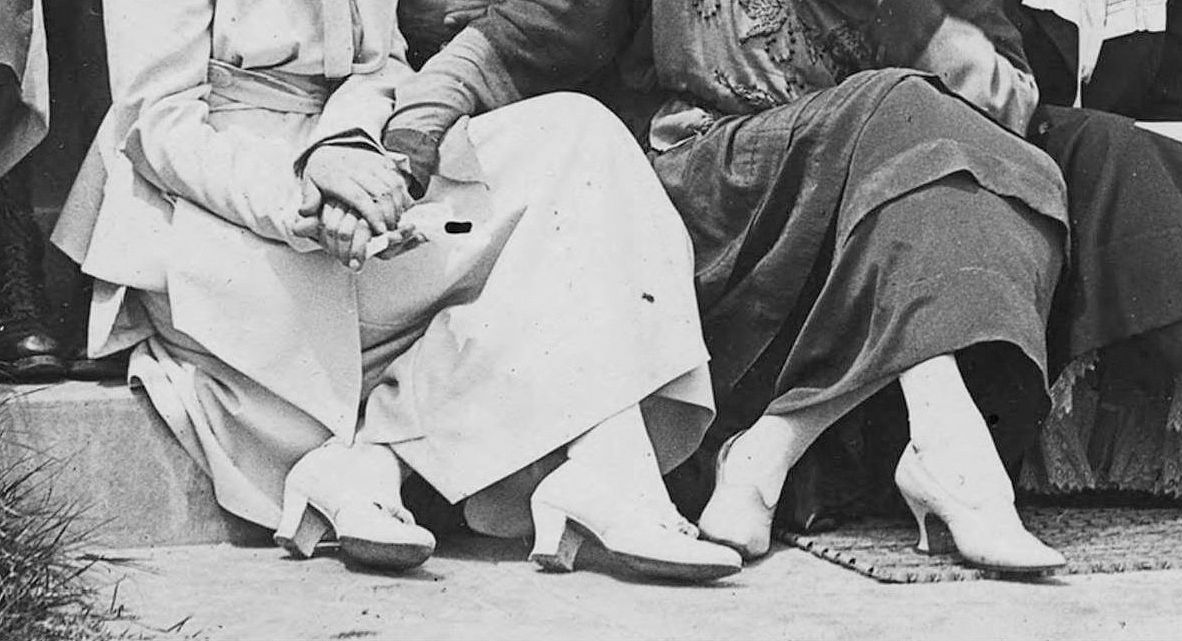
smu_omega-phi_porch_1917_degolyer-det1

After a bit of sleuthing, I found a picture of the house at the time these photos were taken. It was actually a residence which was, I think, being rented out to the small group of Omega Phis. They had a proper fraternity house built several years later.
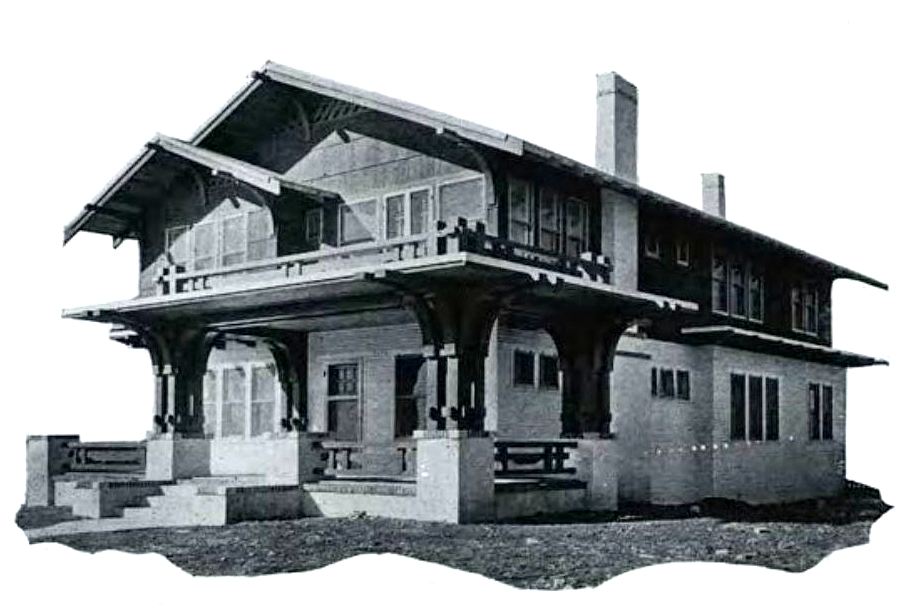
omega-phi-house_rotunda_1917

The top photo had “1917” written on the back, so I checked SMU’s Rotunda yearbooks from around that time. Here’s a look at the men who were members of Omega Phi in 1918. Several of these faces match the ones in the photos of the afternoon outing.
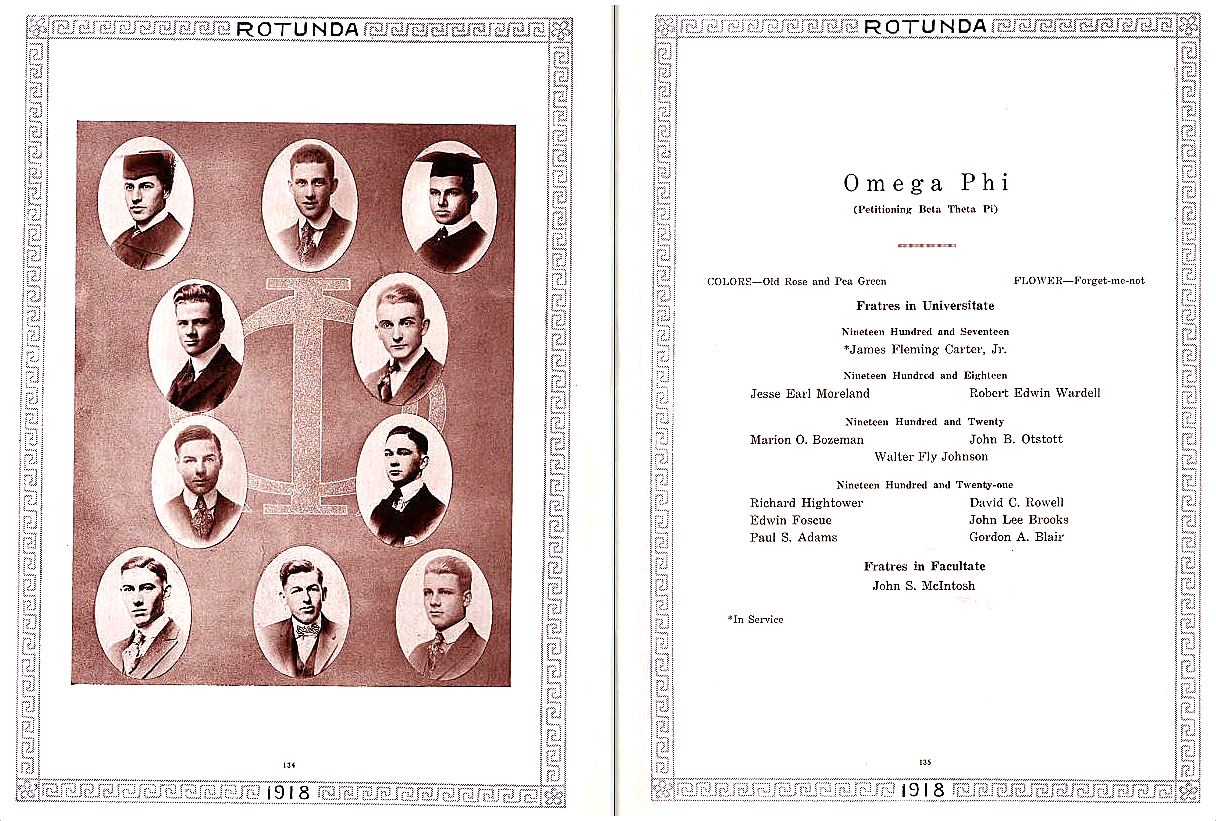
omega-phi_rotunda-1918

And, below, a photo collage from the Omega Phi page of the 1917 Rotunda. Several of the women look familiar. I see the Woman in White in at least one of these snapshots.
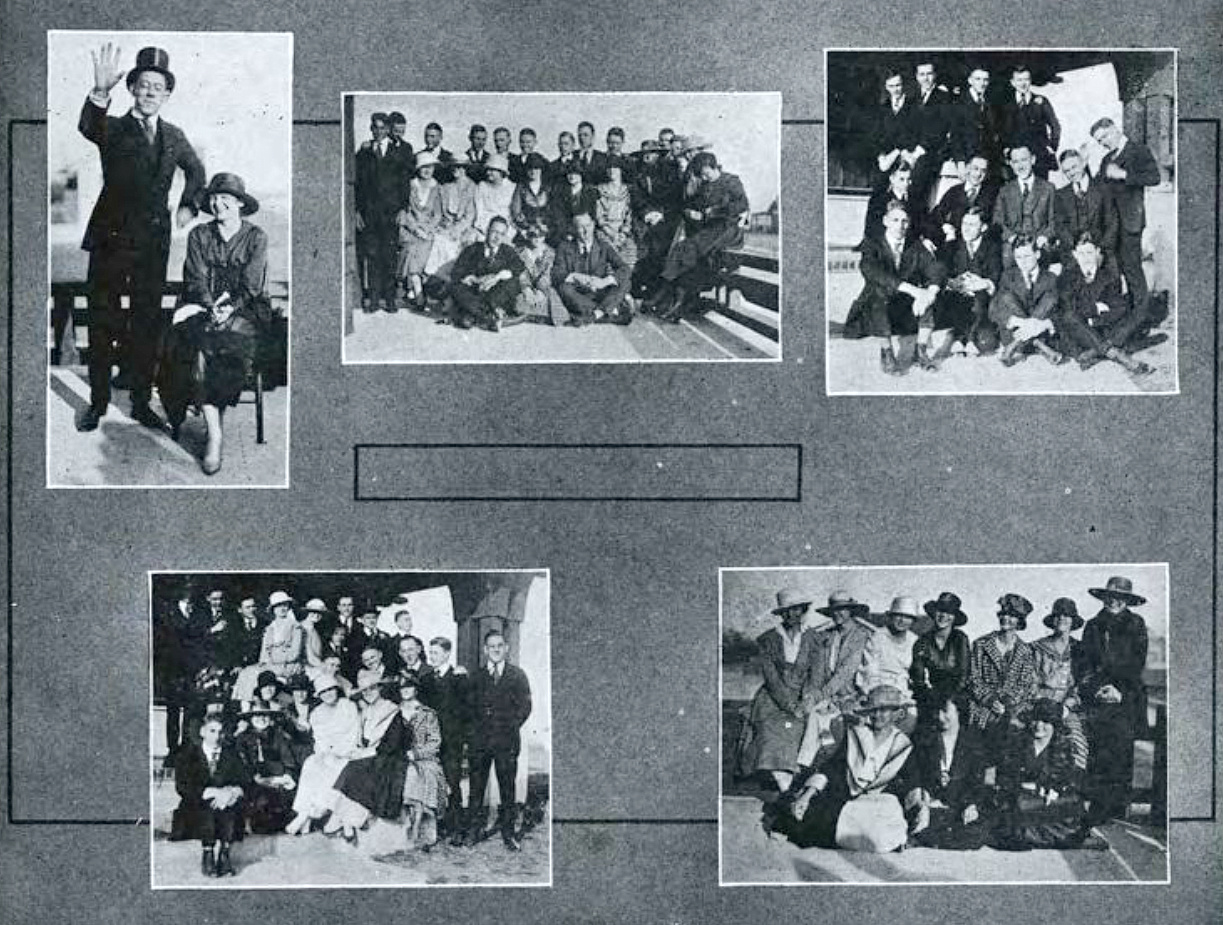
omega-phi_photos_rotunda_1917

And here she is, close up. I hope she was as happy, intelligent, and confident in her real life as she appears to be in these photos.
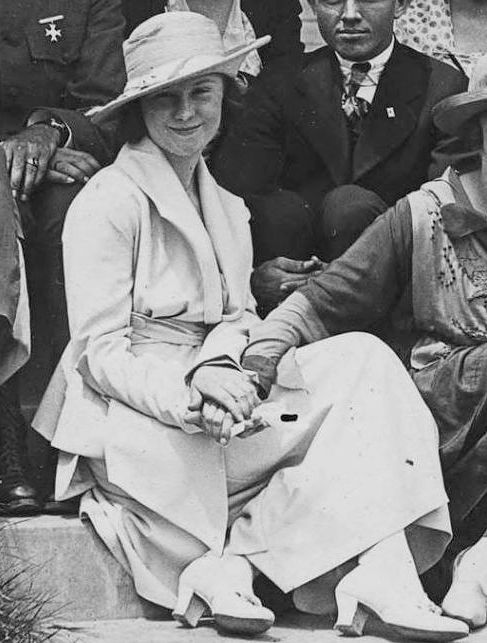
smu_omega-phi_porch_1917_degolyer-det2

***

Sources & Notes

The three photos of the afternoon outing all come from the collection of the DeGolyer Library, Central University Libraries, Southern Methodist University:

  • “Omega Phi Fraternity members and their dates in front of Dallas Hall” is here.
  • “Omega Phi Fraternity member outing to Exall Lake” is here.
  • “Omega Phi Fraternity members and their dates on porch” is here.

The quote from Diane Galloway comes from her FANTASTIC book, The Park Cities, A Photohistory (Dallas: Diane Galloway, 1989), p. 24.

The ersatz Omega Phi fraternity house was located at 115 Haynie Avenue, just west of Atkins (now Hillcrest). (The photo of the exterior of the house is from the 1917 SMU Rotunda yearbook.)
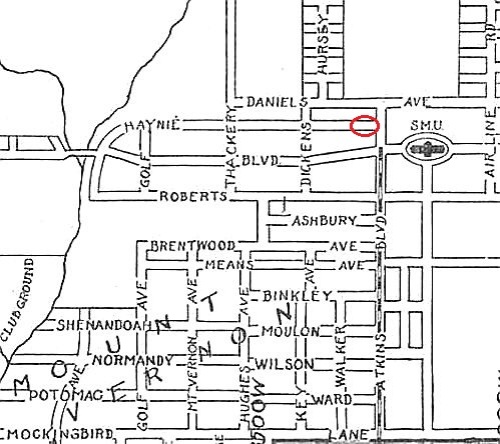
omega-phi_map_19191919 map (detail), Portal to Texas History

I have absolutely no idea how college fraternities work, but it seems that when they formed on the SMU campus in 1915, the Omega Phi group was not actually affiliated with a national fraternity. They “petitioned” to be chartered by national groups, but they finally stopped trying after 11 years of, I guess, being repeatedly turned down — in 1926 they declared themselves to be an “independent society.” But one year later, they were granted a charter by the national Kappa Sigma fraternity. In the Dallas Morning News article announcing the news, this sentence was included: “The local chapter will be known as Delta Pi chapter.” I have no idea what any of that means, but if you’re really into these things, read the DMN article “Kappa Sigmas Grant Charter” (Sept. 26, 1927), here.

As for the identities of the women in the photos, it’s a mystery. I would assume, though, that at least some of them were the women mentioned in this little article about a cozy winter get-together at the Haynie Ave. house:
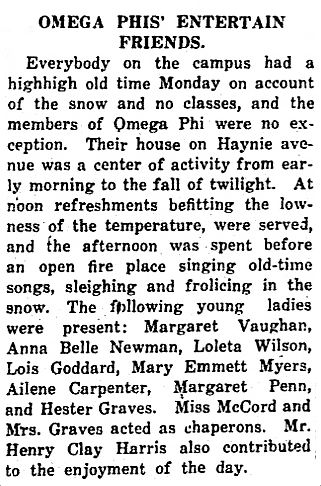
omega-phi_smu-campus_011917DMN, Jan. 19, 1917

If you’re not familiar with beautiful Exall Lake, you can watch a short, minute-long video of the lake’s history, produced to celebrate the 100th anniversary of Highland Park, here.

For other posts featuring photos I’ve zoomed in on to reveal interesting little vignettes, click here.

UPDATE: I stumbled across another photo of this group, from Diane Galloway’s book The Park Cities, A Photohistory:
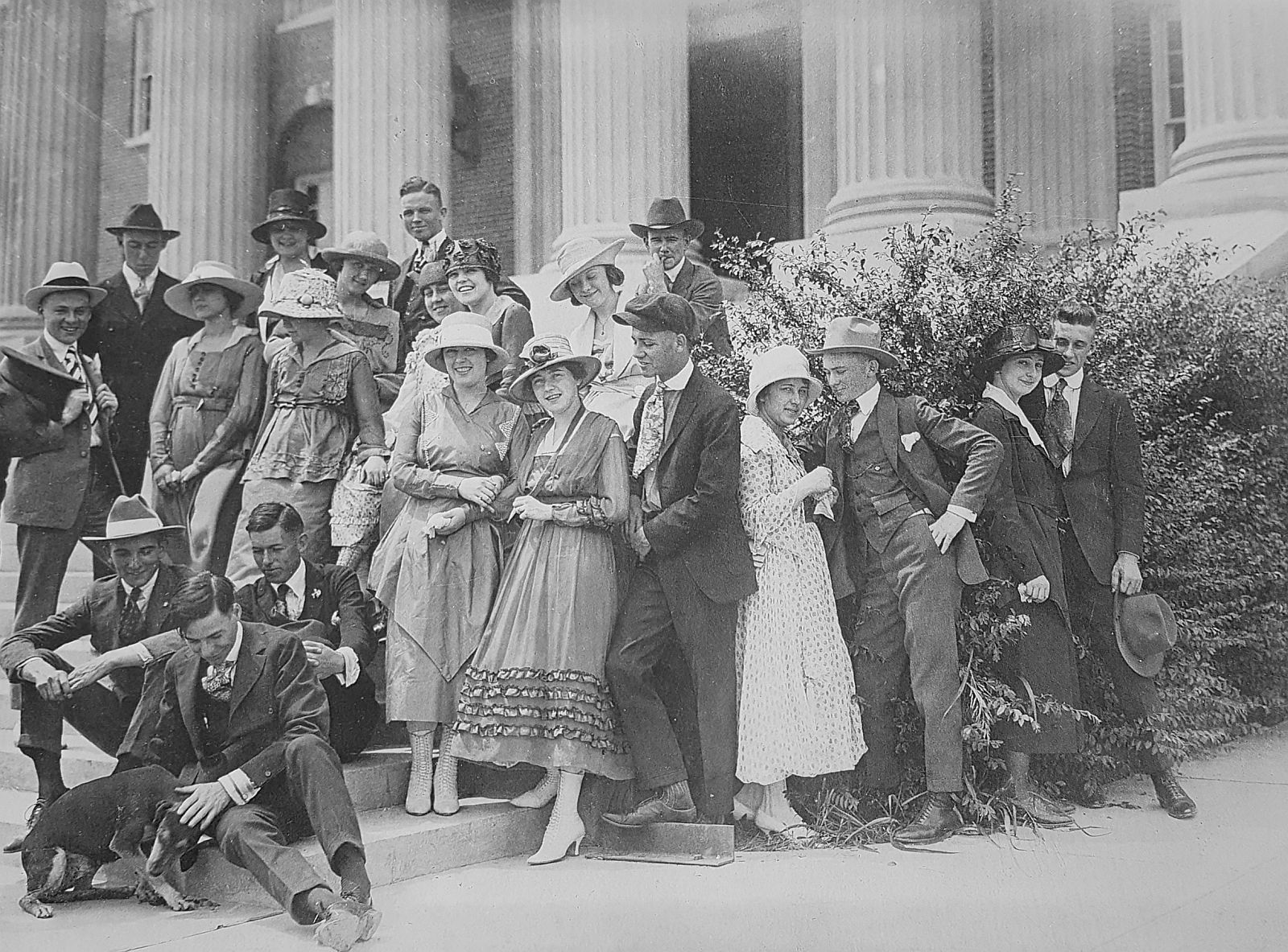
smu_group-date_park-cities-photohistory_galloway

*

Copyright © 2015 Paula Bosse. All Rights Reserved.

“The Fair Is In the Air — Let’s Go!”

state-fair_1923Look at this 1923 typeface!

by Paula Bosse

Here we are again in the final days of another State Fair of Texas. Why not take a look at a few random images of the fair over the years. (Click pictures for larger images.)

First, from 1900, the entrance to the fairgrounds. (It appears to be the same view as the top postcard seen in a previous post, here, just a few steps inside the archway.)

fairgrounds-main-entrance_bohemian_1900_fwplFort Worth Public Library

*

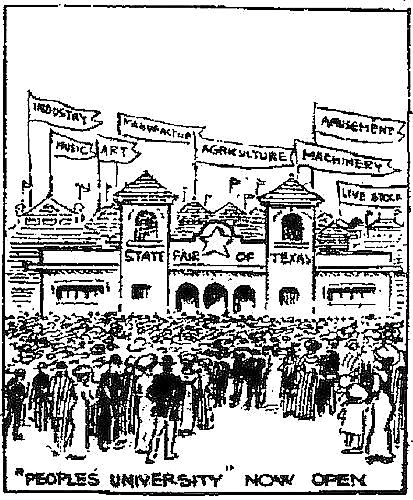
A cartoon from The Dallas Morning News in 1912 — “The People’s University.” Remember, it’s not just about Ferris wheels and candy apples.

state-fair_dmn_102012-cartoonDMN, Oct. 20, 1912

*

1921. Don’t miss The Whip.

state-fair_1921

*

From the Texas Centennial in 1936, a shot of a remarkably spotless Midway. (Am I the only one who would have paid to see the “28-Ft. Monster” do battle with whatever freakish specimens were ensconced within the walls of the Ripley’s Believe It Or Not building?)

tx-centennial-midway_1936_ebay

*

During World War II, no fair was held between 1942 and 1945. “Not until the boys come home, will there be another State Fair of Texas.”

state-fair_wwii_tx-almanac_1945-46

*

By the ’50s, everything was back to normal. Big Tex had arrived, and this ad promises “She’s a LULU in ’52.” Martin & Lewis and whatever a Thrillcade was!

state-fair_dmn_092552_lg

*

And, lastly, an aerial view of the Midway from 1966. Now this IS all Ferris wheels and candy apples. (To watch a short collection of color footage from the damp 1967 SFOT — including a sad, rainy parade downtown — click here.)

state-fair_1966_UNTUniversity of North Texas

***

Sources & Notes

1900 photo of the entrance to the fair is from The Bohemian magazine (1900) in the collection of the Fort Worth Public Library (those perforations in the photo are the FWPL’s).

1921 photo — I’m afraid I have no source on this one.

1936 postcard of the Centennial Midway is from eBay.

Patriotic WWII ad is from the 1945-1946 Texas Almanac.

Photo of the 1966 Midway is from the University of North Texas University Libraries blog, here.

My previous collection of SFOT photos over the decades appeared in the post “So Sorry Bill, But Albert Is Taking Me To The State Fair of Texas,” here.

Other Flashback Dallas posts on the State Fair of Texas are here; posts specifically on the Texas Centennial are here.

Again … some of these pictures are pretty dang big — when in doubt, click ’em!

*

Copyright © 2015 Paula Bosse. All Rights Reserved.


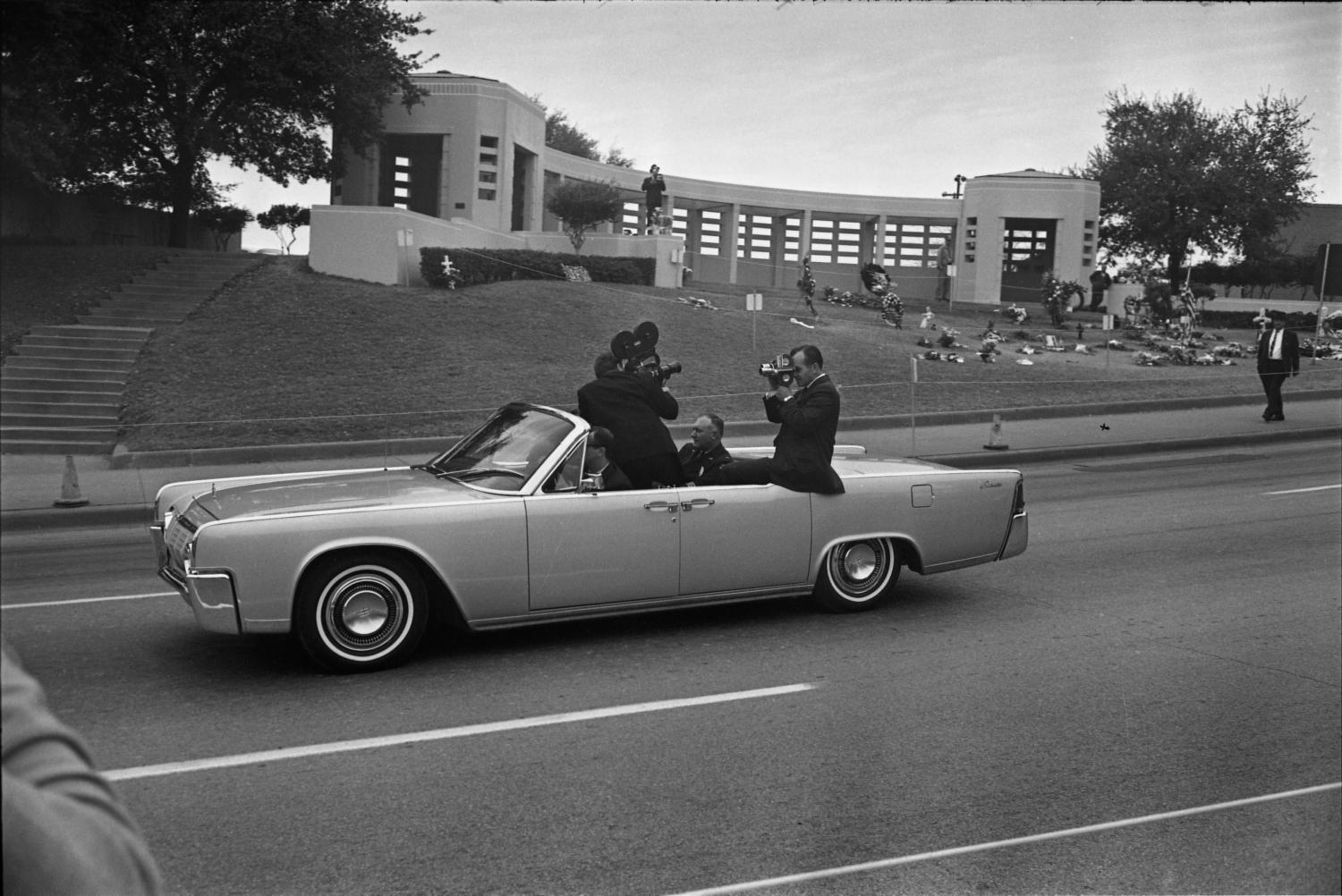
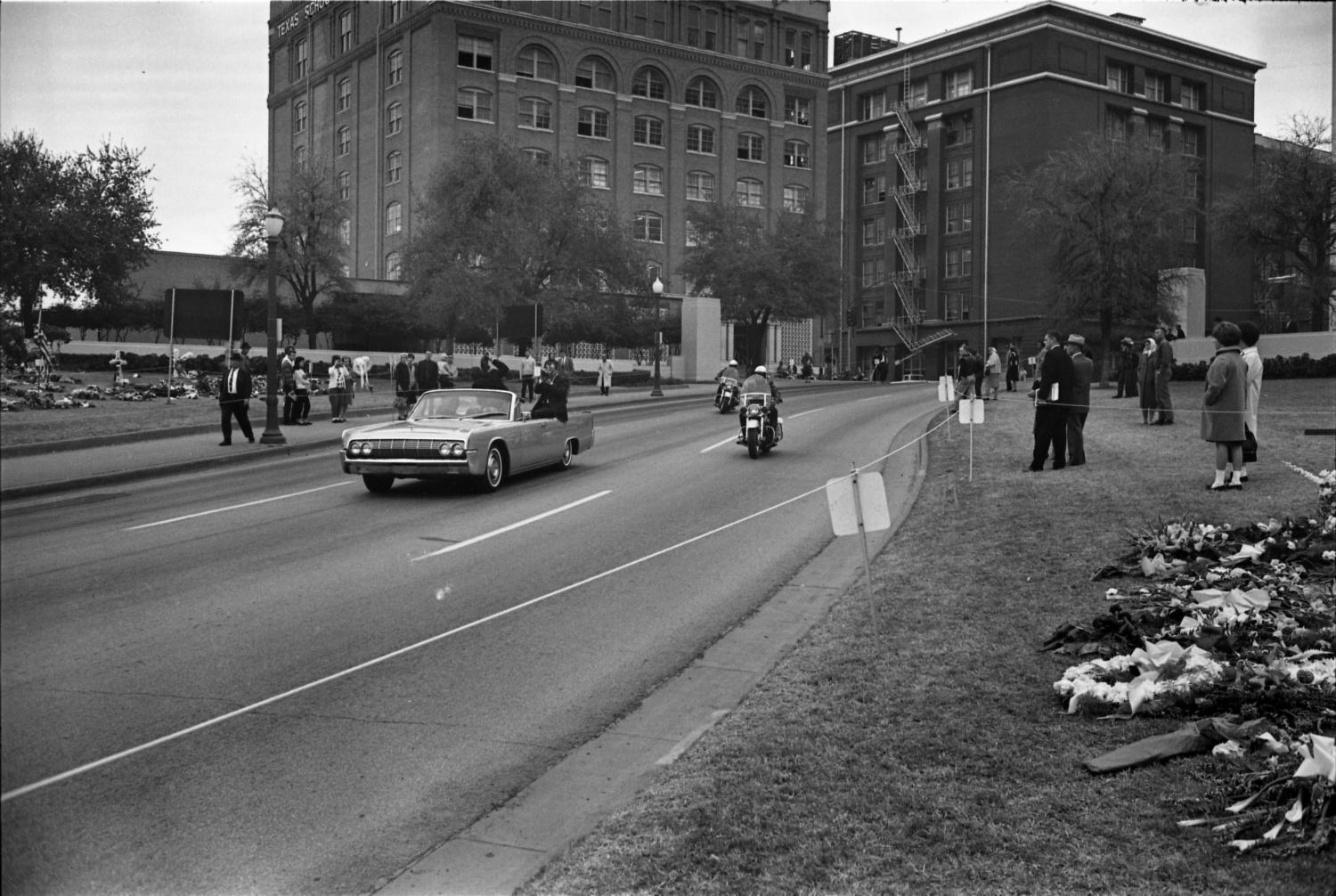
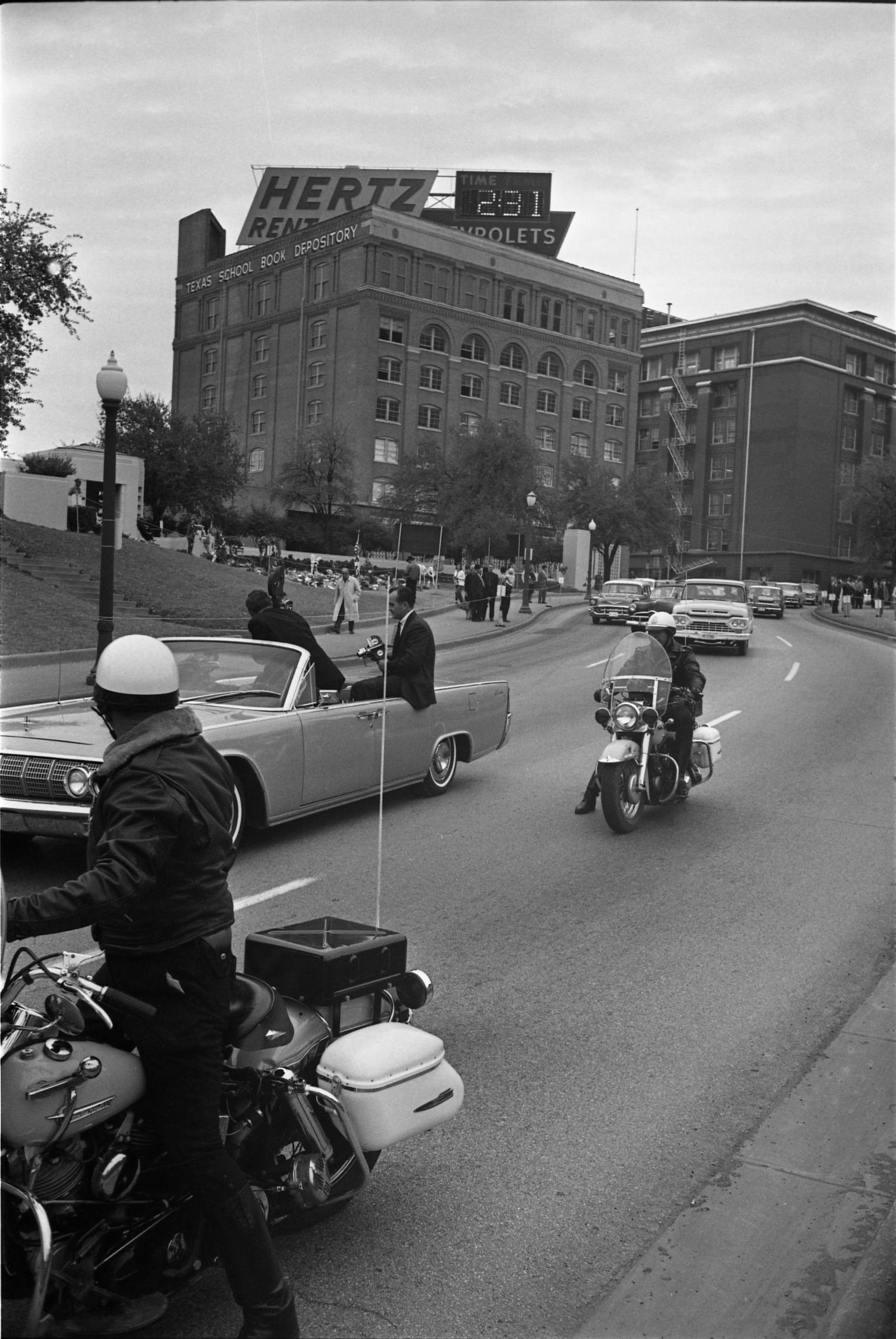
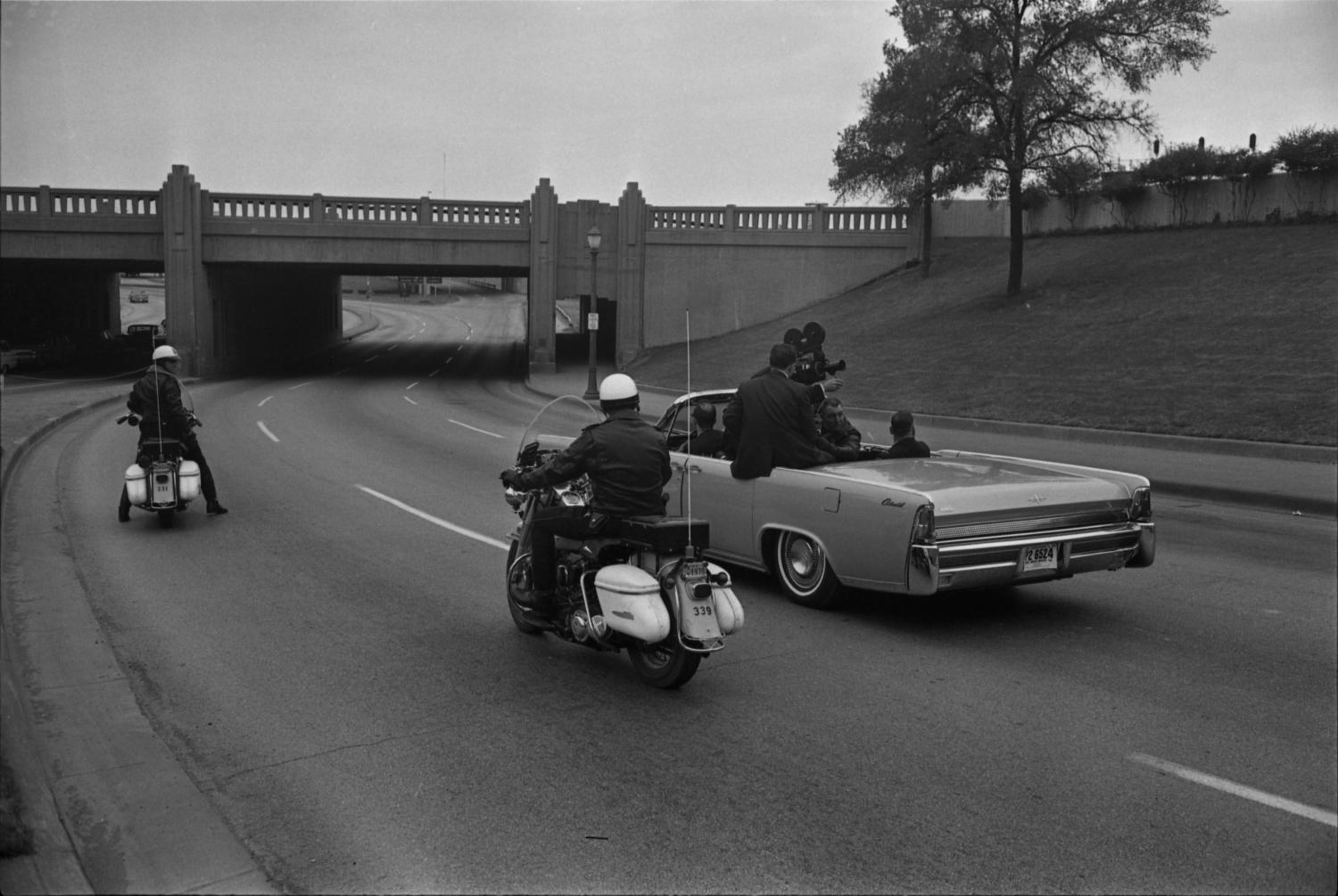
The First JFK Assassination Reenactment — 1963

jfk_secret-service-reenactment_dth_112763Secret Service film crew, 11-27-63

by Paula Bosse

There is yet another JFK assassination-related film being shot in and around Dealey Plaza, causing all sorts of traffic woes, but spotlighting some great period cars, trucks, and fashions. The first reenactment? It took place on November 27, 1963 as part of the Secret Service investigation. A newspaper account suggested that Jack Ruby may have been watching from his jail cell, mere steps away. The photos below, showing some of that filming, were taken by a Dallas Times Herald staff photographer. (All photos from the Sixth Floor Museum at Dealey Plaza/UNT’s Portal to Texas History.)

jfk_secret-service-reenactment_dth_112763c

jfk_secret-service-reenactment_dth_112763b

jfk_secret-service-reenactment_dth_112763d-triple-underpass

Another photo — this one of somber onlookers — taken the same day. Ruby’s home-away-from-home — the jailhouse — is in the background at the left.

jfk_secret-service-reenactment_same-afternoon_dth_112763

***

Sources & Notes

Photos from the incredible Dallas Times Herald collection of Kennedy assassination photographs from the Sixth Floor Museum at Dealey Plaza, viewable online via UNT’s invaluable Portal to Texas History; the reenactment photos are here (the first photo is here).

The reenactment received only a few paragraphs in The Dallas Morning News the next day: “Crime Re-enacted by Secret Service” by Carl Freund (DMN, Nov. 28, 1963).

Currently filming in Dallas: the television adaptation of Stephen King’s novel “11-22-63.” Read the updates on the filming from Robert Wilonsky of The Dallas Morning News, here.

UPDATE: Watch the footage shot this day in my post “The Official Government Reenactment of the Kennedy Assassination — Nov. 27, 1963,” here.

*

Copyright © 2015 Paula Bosse. All Rights Reserved.
Wading in Turtle Creek, 100 Years Ago

turtle_creek-smu-rotunda-1916_sm

by Paula Bosse

A photograph of children wading in a very different-looking Turtle Creek, taken about 1915, the year Highland Park (pop. 1,100) was incorporated.

***

Sources & Notes

Photo from the 1915-1916 SMU Rotunda yearbook.

Population factoid from Wikipedia.

Click picture for larger image.

*

Copyright © 2015 Paula Bosse. All Rights Reserved.


Young Bucks at the Fair — 1915

state-fair_men-touring-car_1915_degolyerRaring to go…

by Paula Bosse

Some of these guys look like they’d be fun to spend a day with at the fair. …Some of them don’t.

***

Sources & Notes

Real photo postcard titled “Men in a touring car with 1915 State Fair of Texas in Dallas banner” is from the Collection of Texas Postcards, DeGolyer Library, Central University Libraries, Southern Methodist University; it can be accessed here.

*

Copyright © 2015 Paula Bosse. All Rights Reserved.

SMU Turns 100: A Look Back at Its Very First Days — 1915

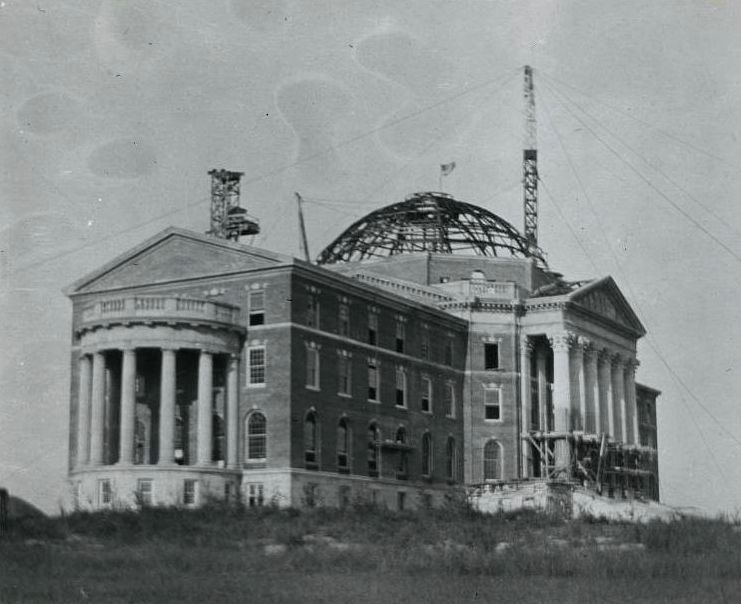
smu_dallas-hall-dome-under-construction_1914Dallas Hall’s dome under construction, 1914 (SMU Archives)

by Paula Bosse

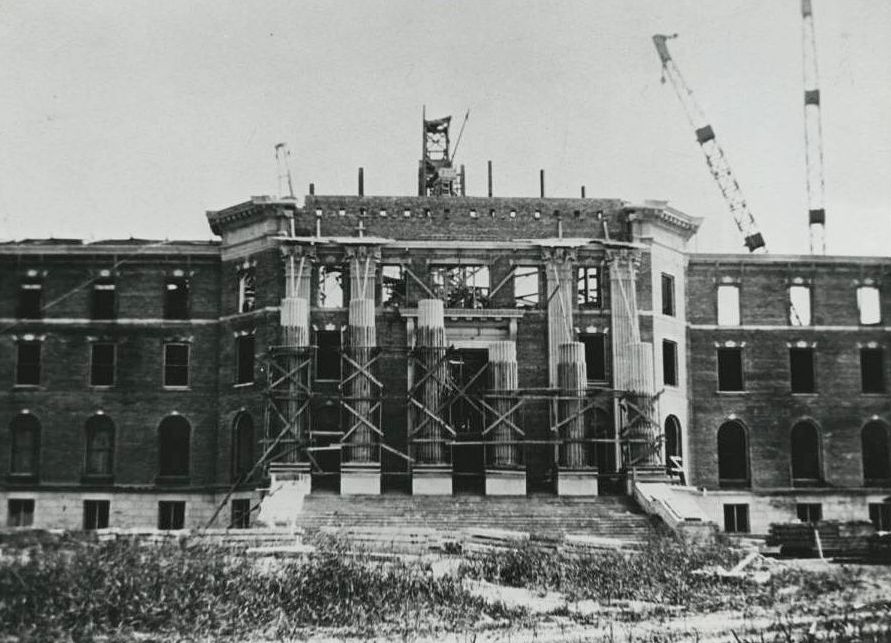
Classes began for the very first time at brand new Southern Methodist University on September 28, 1915 — 100 years ago today! Where HAS the time gone? Below, a few photos from those early days (click pictures for larger images).

smu_dallas-hall-columns-under-construction_1914_degolyerDallas Hall’s columns going up, 1914, out in the middle of a mostly empty prairie, well beyond the Dallas city limits.

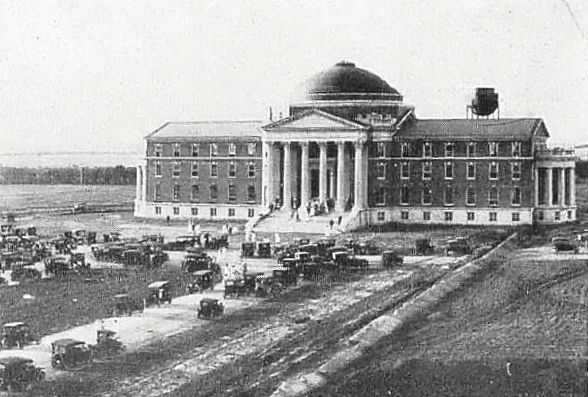
smu_week-before-opening_1935-rotundaVisitors checking out the new campus, a week before its opening.

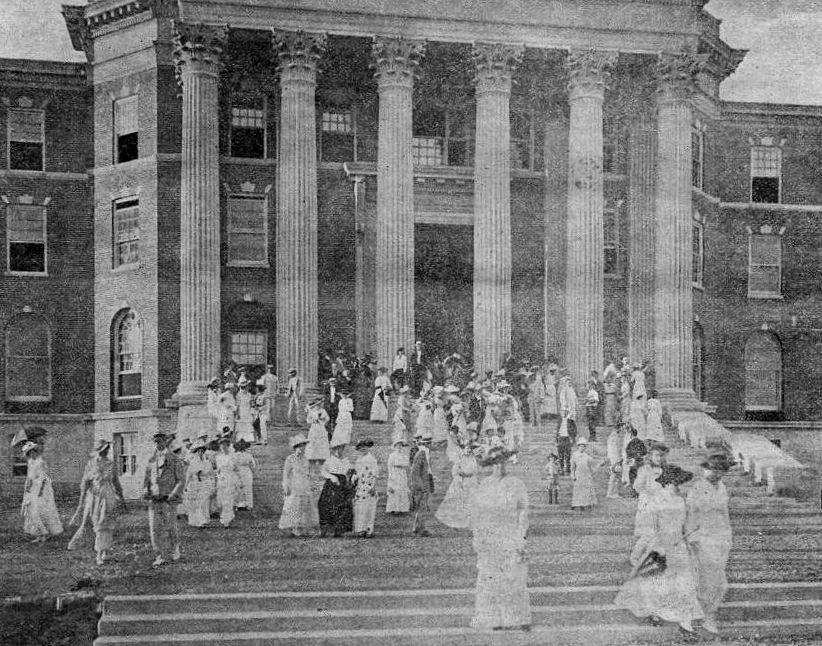
smu_visitors-before-opening_091115Genteel visitors on the steps of Dallas Hall, the only building on campus in which classes were actually held.

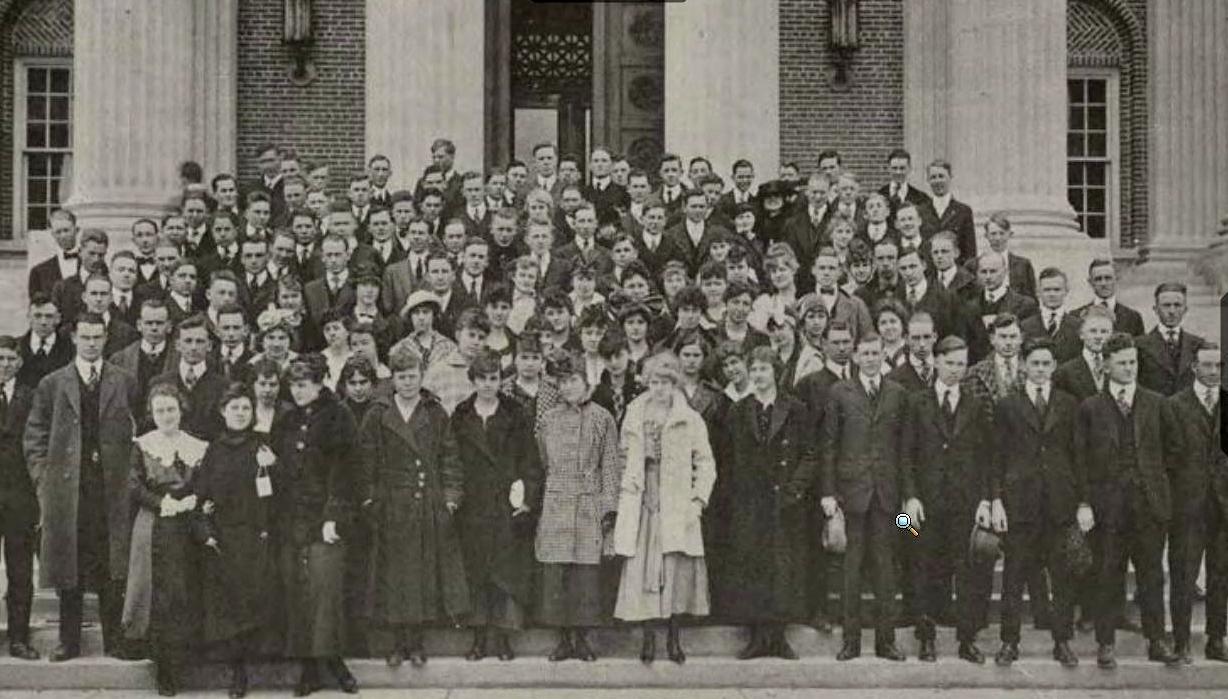
12smu-rotunda-1916_freshman-classSMU’s first freshman class.

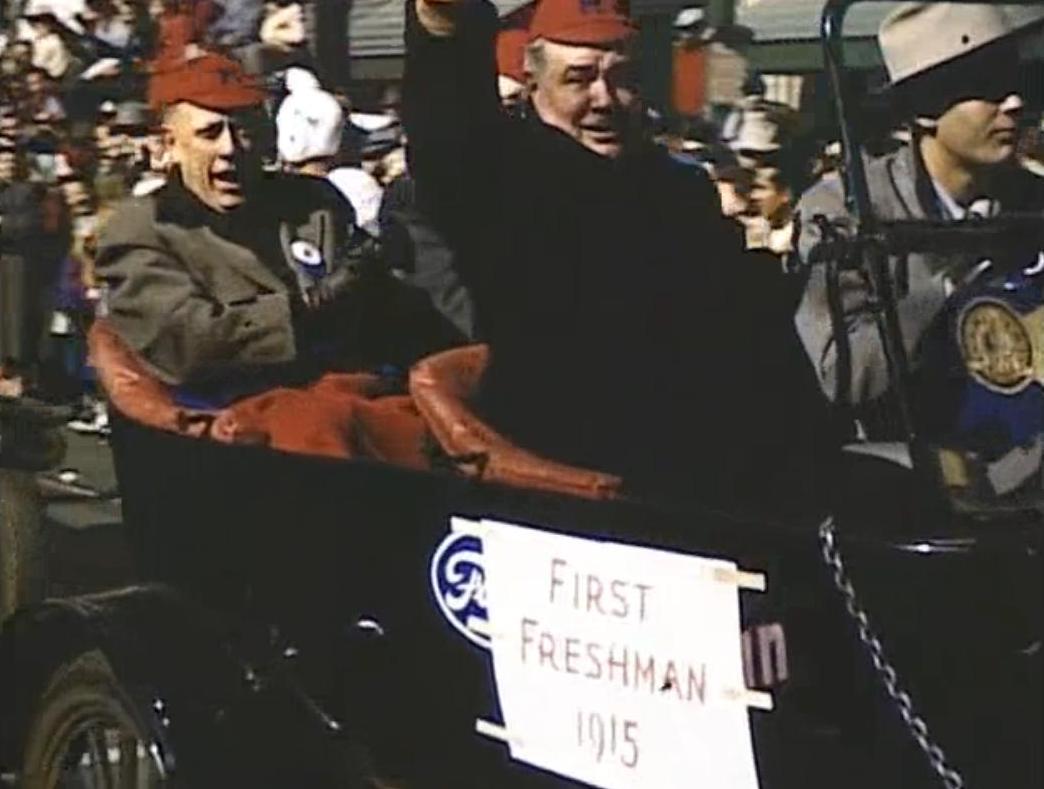
smu_first-freshmen_1950-homecoming-paradeAnd a couple of those freshmen, 35 years later, riding in a car in the 1950 Homecoming Parade downtown.

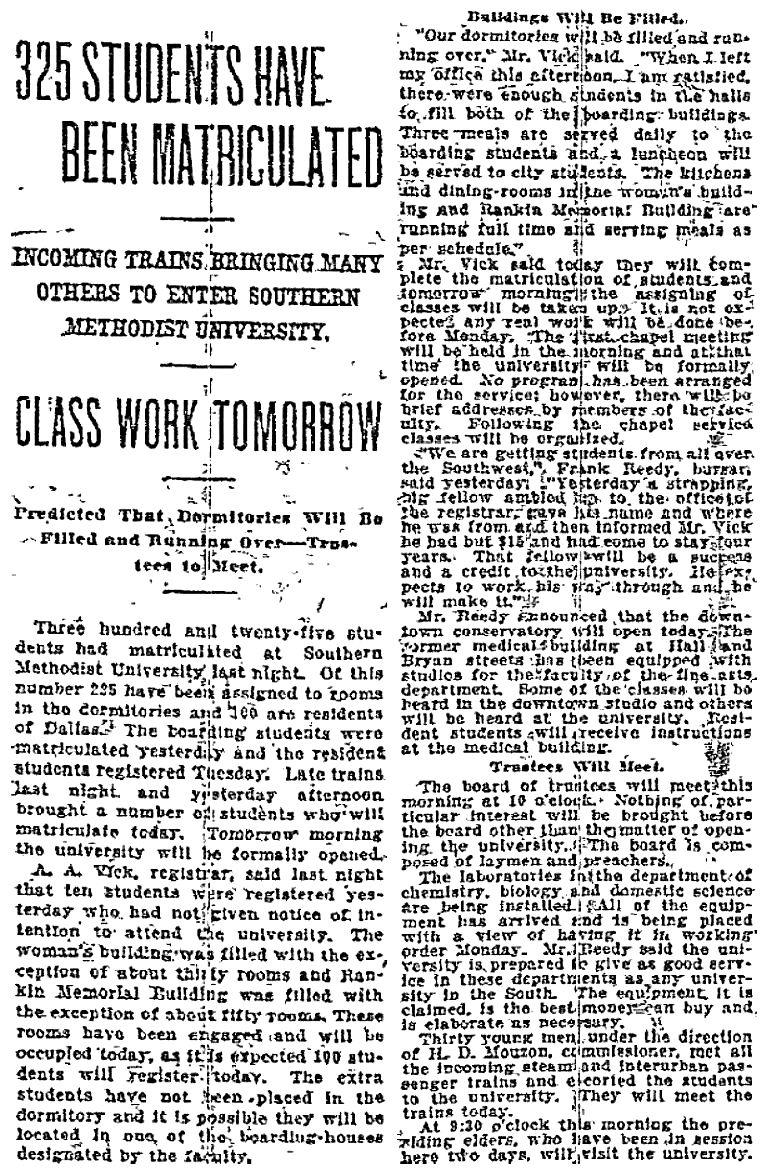
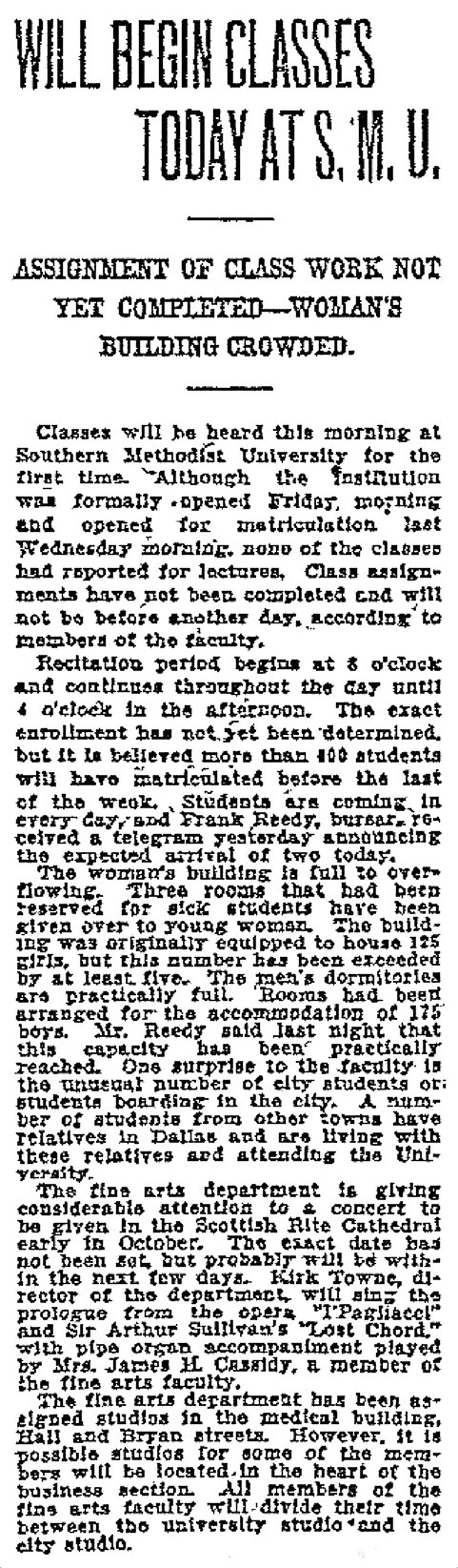
Below are a couple of logistical and progress-report articles from the week when students began arriving for that first year’s classes. Most interesting is that several classes were held off-campus, because of lack of space in an already crowded Dallas Hall. The fine arts department was housed at the “downtown conservatory” which was located in a former medical building at Hall and Bryan streets. The fine arts faculty had studios there and would move between downtown and the SMU campus. (Click articles for larger images.)

smu_first-day_dmn_092315Dallas Morning News, Sept. 23, 1915

smu_first-day-classes_dmn_092815DMN, Sept. 28, 1915

Happy Centennial, SMU!

***

Sources & Notes

The photos of Dallas Hall under construction are from the DeGolyer Library, Central University Libraries, Southern Methodist University. The photo of the dome under construction is here; the photo of the columns going up is here.

The photo of campus visitors and their cars lined up in front of Dallas Hall is from the 1935 edition of the SMU Rotunda yearbook; the caption: “Dallas Hall, a week before opening of SMU.”

The photo of visitors on the steps of Dallas Hall is from Bridwell Library, Special Collections, Perkins School of Theology, Southern Methodist University, and it can be accessed here. The photo was taken on Sept. 11, 1915 and was printed in the Sept. 23, 1915 edition of The Texas Christian Advocate above the caption “[Snapshot] of visitors at entrance to Dallas Hall on occasion of the reception given Saturday the 11th by the citizens of Dallas to the faculty.” (The article and another photo can be seen at the link above.)

The photo of SMU’s first freshman class is from the 1915-16 SMU Rotunda yearbook.

The image of the former SMU freshmen is a screen capture from a home movie of SMU’s 1950 Homecoming Parade which is part of the DeGolyer Library’s collection; the entire 17-minute silent color film can be watched on the SMU Central Libraries site, here. The very entertaining film contains the parade, a tour around campus, an elaborately decorated Fraternity Row, and the football game against Texas A & M at the Cotton Bowl.

These other Flashback Dallas posts related to SMU’s first year may also be of interest:

  • “SMU, ‘The School of the Future’ — 1915-16,” here
  • “SMU’s First Year: The Dinkey, Campus Hijinx, and The Basket Ball — 1915-16,” here
  • “University Park, Academic Metropolis — ca. 1915,” here
  • “Send Your Kids to Prep School ‘Under the Shadow of SMU’ — 1915,” here (Incidentally, the Powell University Training School opened on the same day as SMU as a sort of “sister school” — the building it occupied is still standing, on Binkley, just off Hillcrest — this building celebrates its Centenary, too!)

Click photos and clippings to see larger images.

*

Copyright © 2015 Paula Bosse. All Rights Reserved.


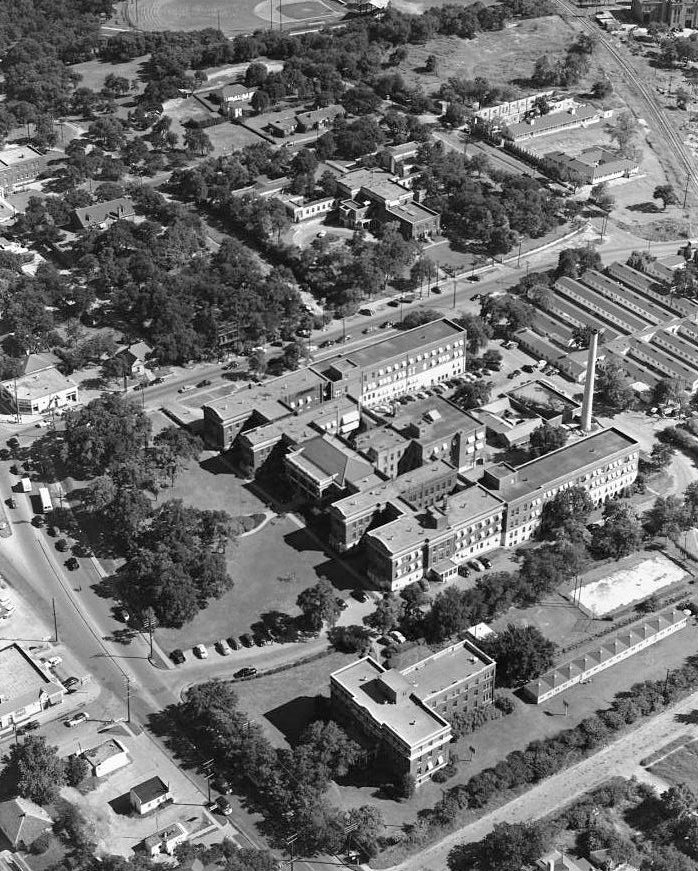
Old Parkland — 1950

parkland_aerial_1950_utsw_smThe *OLD* Old Parkland… (click for larger image)

by Paula Bosse

Fantastic aerial view of Parkland Hospital, looking south toward Reverchon Park (you can see the baseball diamond at the very top, just west of the old Turtle Creek pump station — now the Sammons Center — in the upper right corner). Maple is running north and south at the left of the photograph, Oak Lawn, east and west, just above the center.

Here’s the same view today.

maple-oak-lawn_google-earthGoogle Earth

***

Sources & Notes

Photograph titled “Aerial view of Parkland Hospital on Maple with Southwestern Medical School adjacent,” is from the UT Arlington Special Collections Library, hosted on the UT Southwestern Archives Collection site, here. You can zoom in and see incredible magnified details here.

The photo was taken August 15, 1950, by an unknown photographer. It looks a lot like a photo by Squire Haskins, taken a couple of blocks south — see it in the previous Flashback Dallas post “Reverchon Park Flyover,” here.

*

Copyright © 2015 Paula Bosse. All Rights Reserved.


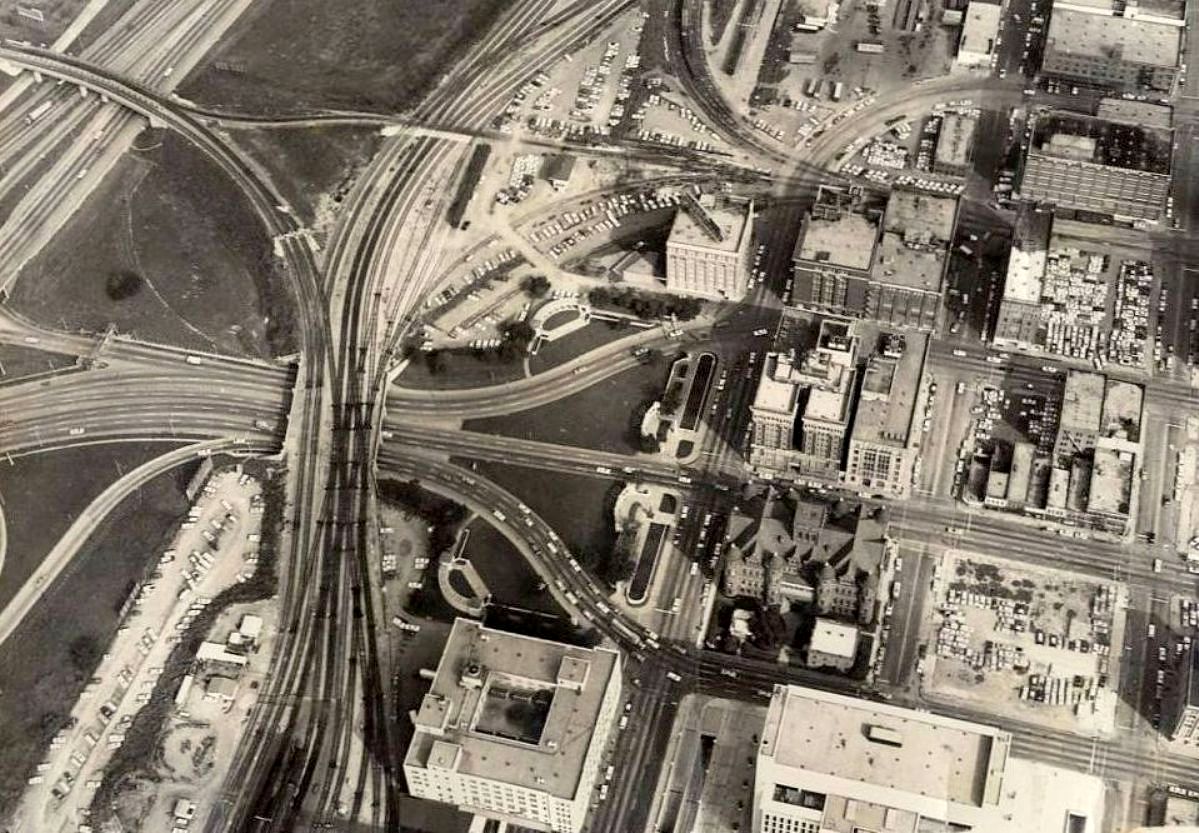
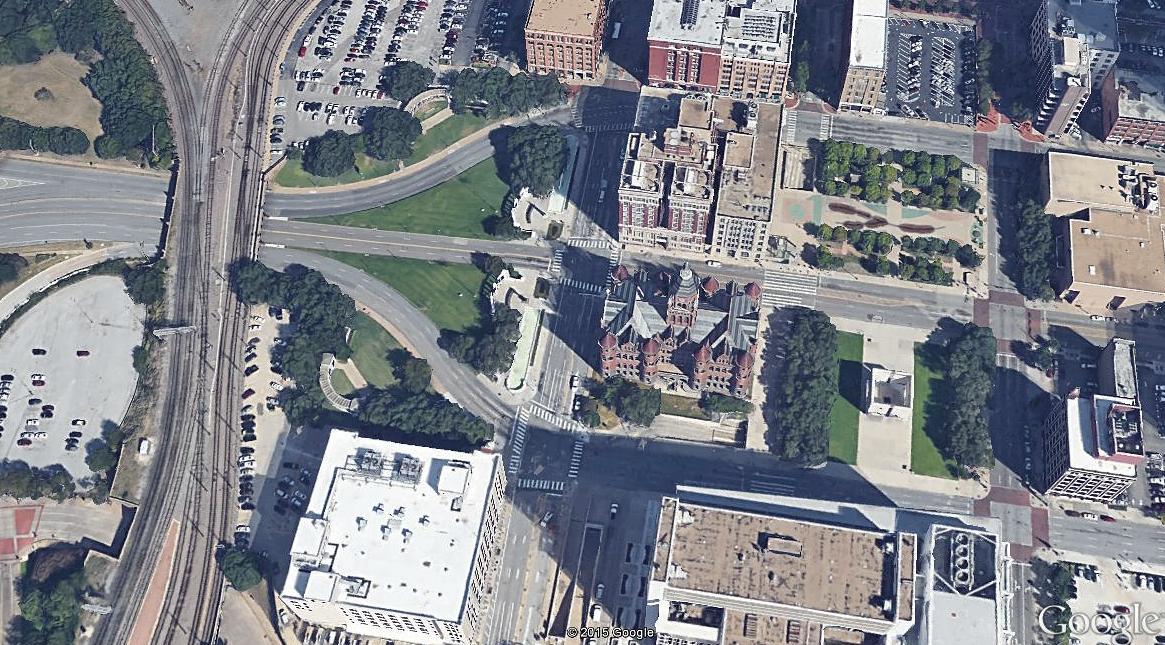
Dealey Plaza, From Above — 1960s

dealey-plaza-aerial_c1966_baylorPhoto by David Lifton (Baylor University)

by Paula Bosse

Photo showing a mid-to-late-’60s Dealey Plaza and downtown Dallas, with the block just east of the Old Red Courthouse cleared for the eventual construction of the John F. Kennedy Memorial.

And today

dealey-plaza_google-earthGoogle Earth

***

Photo is by David Lifton, from the collection of Penn Jones, W. R. Poage Legislative Library, Baylor University, Waco, TX; it is accessible here. Lifton is an assassinationologist best known for his 1981 book Best Evidence: Disguise and Deception in the Assassination of John F. Kennedy.

Click pictures for larger images.

*

Copyright © 2015 Paula Bosse. All Rights Reserved.

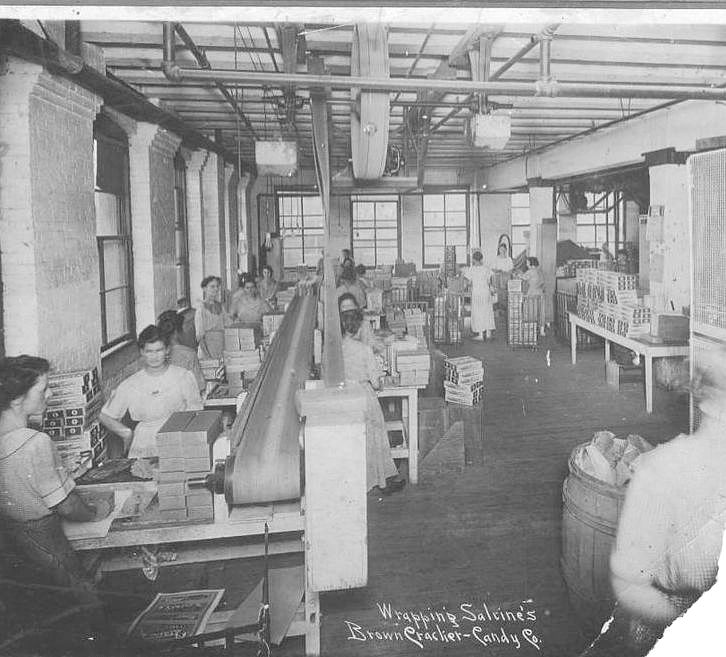
Brown Cracker Co. Cracker Wrappers

brown-cracker_ca1918_cook_degolyerThe saltine-wrapping room

by Paula Bosse

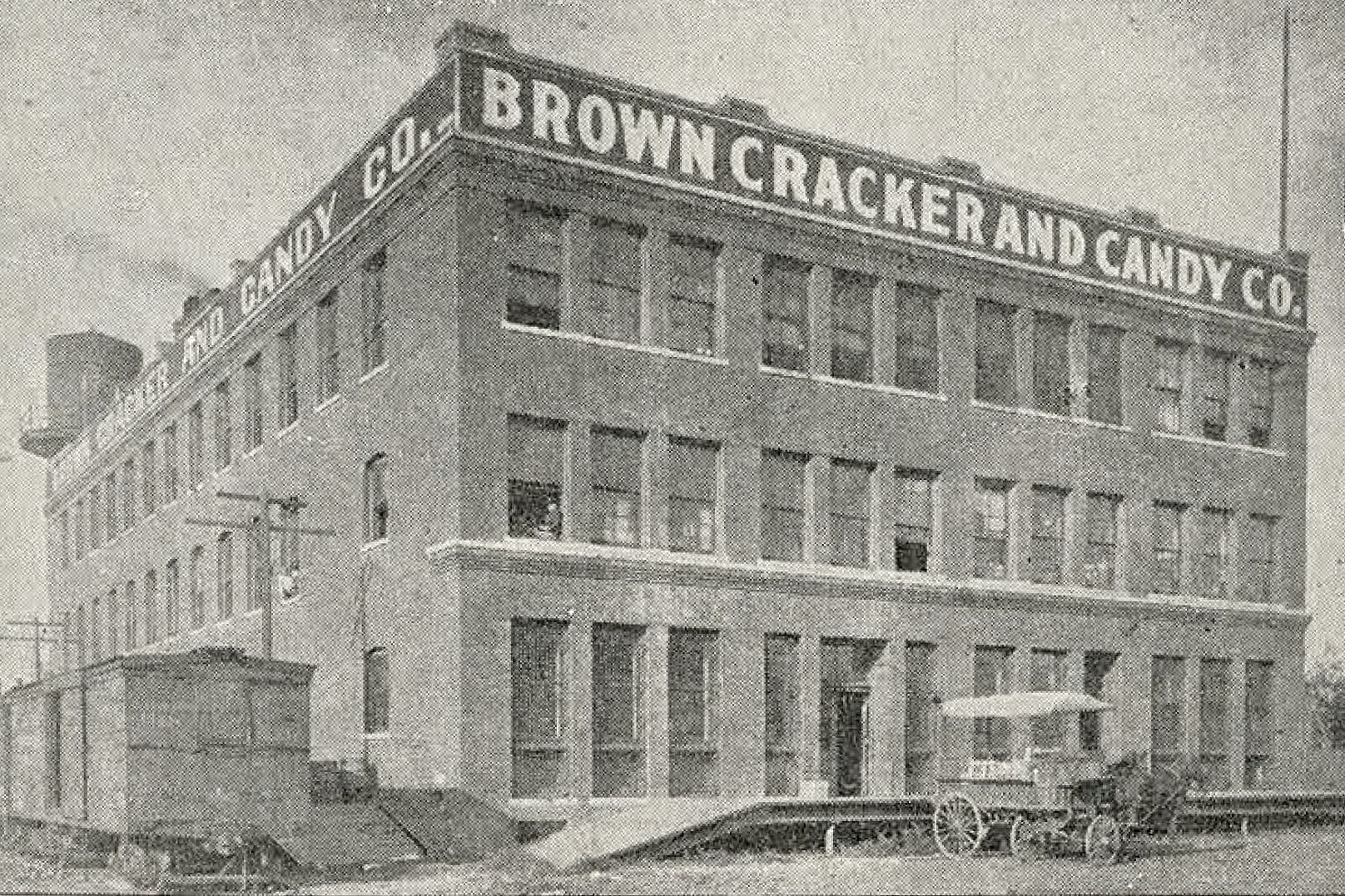
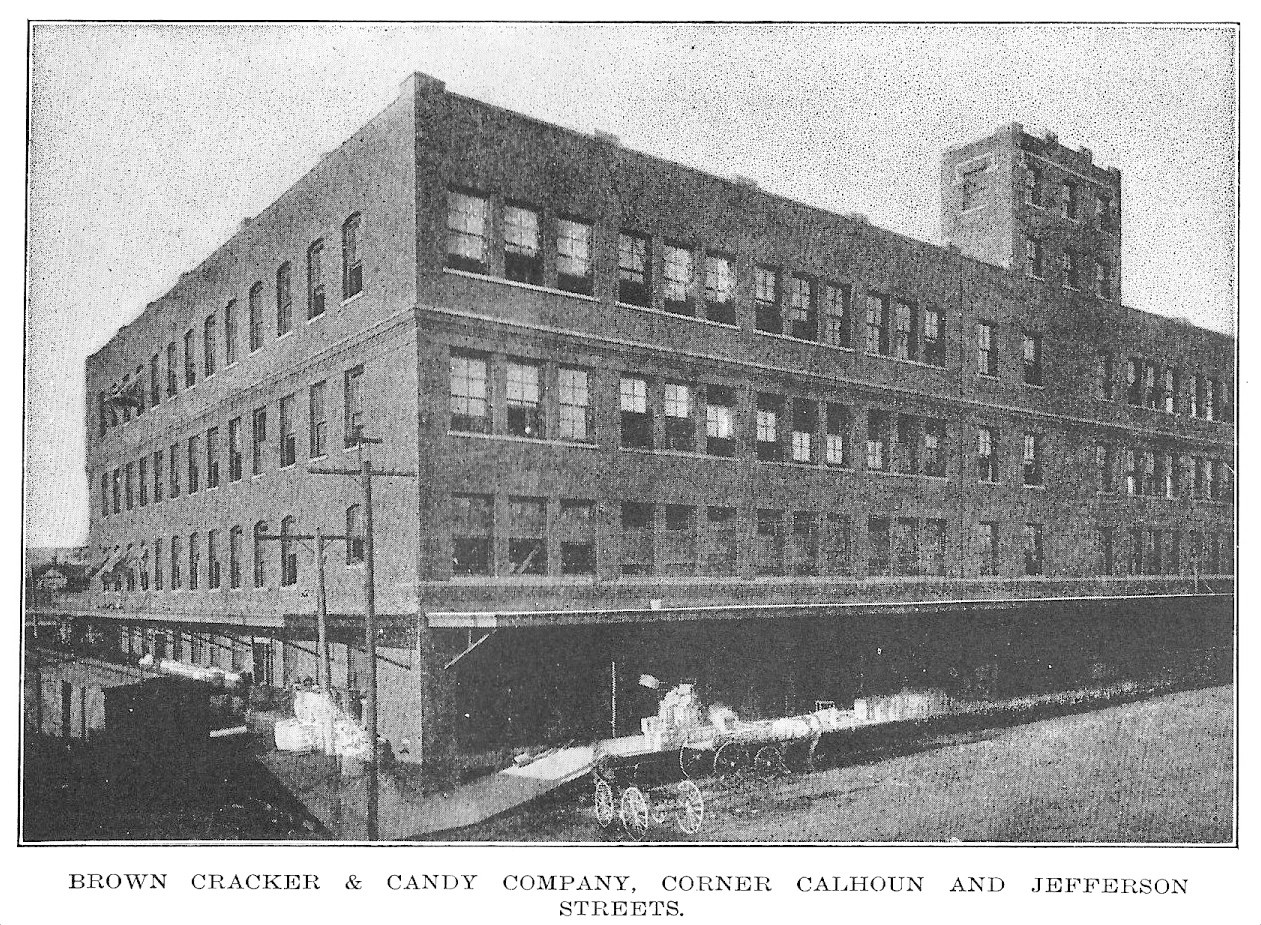
I will stop and look at great length at any photograph containing a conveyor belt. The conveyor belt in this photo belonged to the Brown Cracker and Candy Company, a large and important Dallas manufacturer and employer. The cracker, cake, and candy factory opened in 1903 in a brand new building in the industrial area just south of McKinney Avenue (the part of town that borders downtown, now known as the West End). Best known these days as the West End Marketplace building, the structure still stands and, in fact, has just been purchased and is about to undergo renovation.

brown-cracker_postcard_cook-degolyerDeGolyer Library, SMU

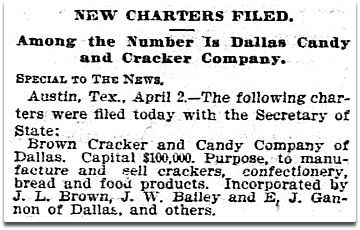
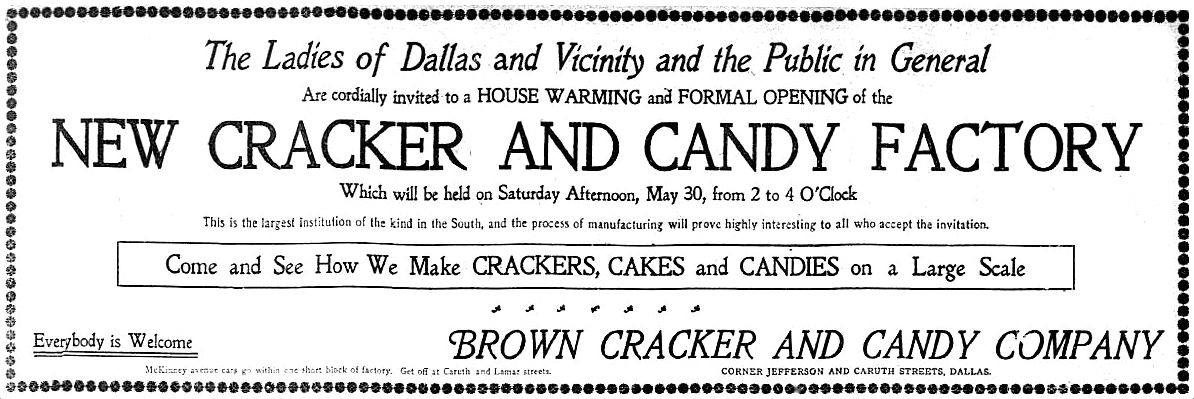
As the new building was nearing completion, the company charter was filed in April 1903, and just a few short weeks later, the factory opened itself up for inspection by the community.

brown-charter_dmn_040303Dallas Morning News, April 3, 1903

brown_opening_dmn_052903
DMN, May 29, 1903 (click for larger image)

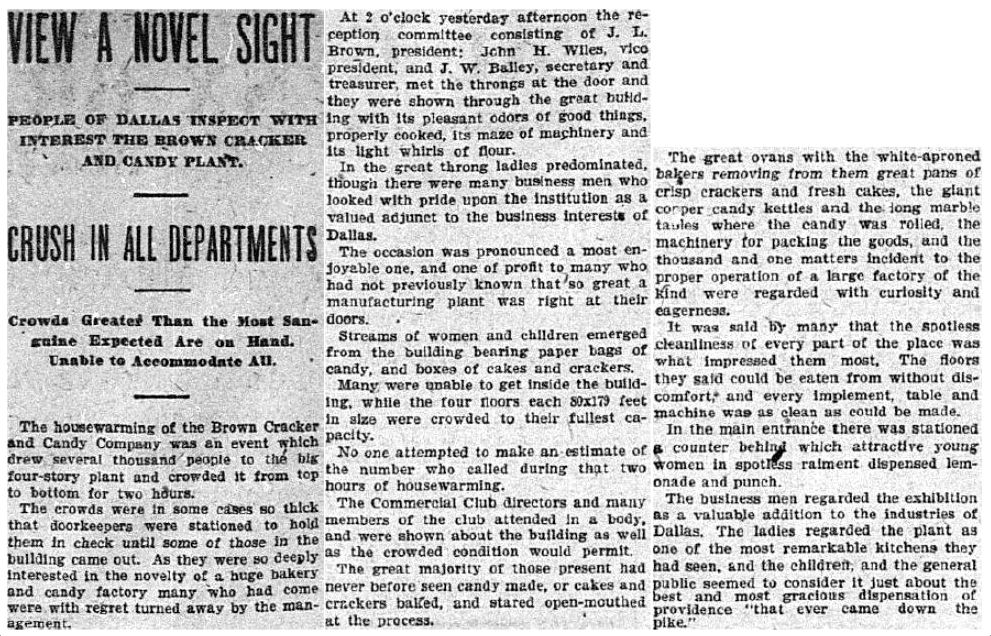
The open house was packed — several thousand people (mostly women) showed up to tour the plant, fascinated by the inner workings of the city’s newest business, a manufacturer of crackers and sweet treats. Of particular interest must have been the two giant brick ovens on the the second floor, which used more than one ton of coal daily, and the huge copper kettles used in candy making on the top floor. There were also things like chocolate dipping machines, starch machines (?), and marshmallow heaters (I don’t know what that is, but I want to see one in action — could it have been a “marshmallow beater,” like the one seen here?).

brown-cracker_dmn-053103DMN, May 31, 1903

The main reason to open the factory to the public for inspection — other than as a PR-managed meet-and-greet — was to let the people see for themselves just how CLEAN the place was. This was at a time when unsanitary food handling and manufacturing practices were much in the news (see here) — concerns which ultimately led to the enactment of the Pure Food and Drug Act of 1906 — and the above article stresses that visitors were impressed by the factory’s “spotless cleanliness” (“The floors they said could be eaten from without discomfort…”). In regard to the “cracker wrappers” pictured at the top, the company wanted to make sure everyone knew that their products were wrapped and boxed — gone were the days of shoppers dipping their (probably unclean) hands into the old “cracker barrel” full of loose, stale crackers.

crackers_dmn_040603DMN, April 6, 1903

Let’s take a closer look at the top photo, probably taken around 1920 (click pictures for larger images).

brown-cracker_ca1918_cook_degolyer_det2

brown-cracker_ca1918_cook_degolyer_det1

ad-brown_dmn_122003DMN, Dec. 20, 1903

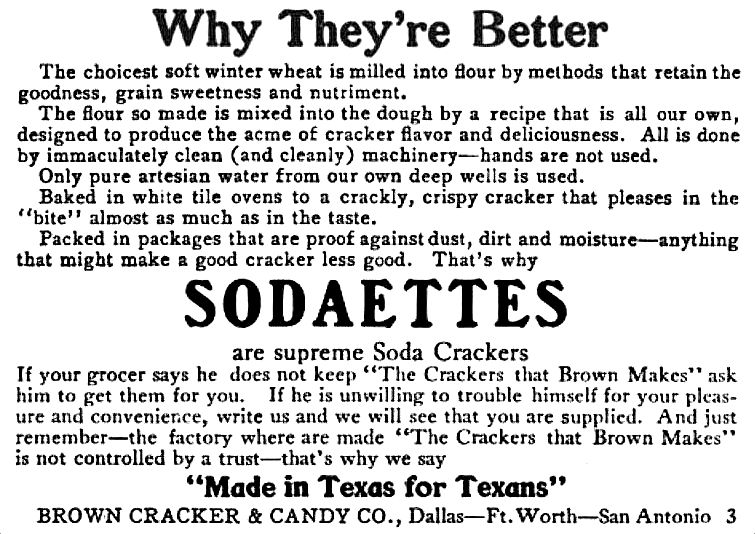
sodaette-crackers(click to read text)

brown-cracker_1922-directory1922 city directory

brown-cracker_come-to-dallas_degolyer_SMU_ca1905ca. 1905

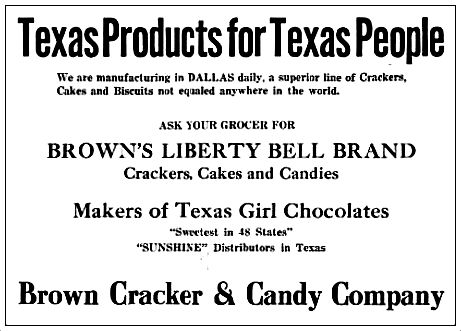
brown-cracker-greater-dallas-illustrated_ca1908ca. 1908

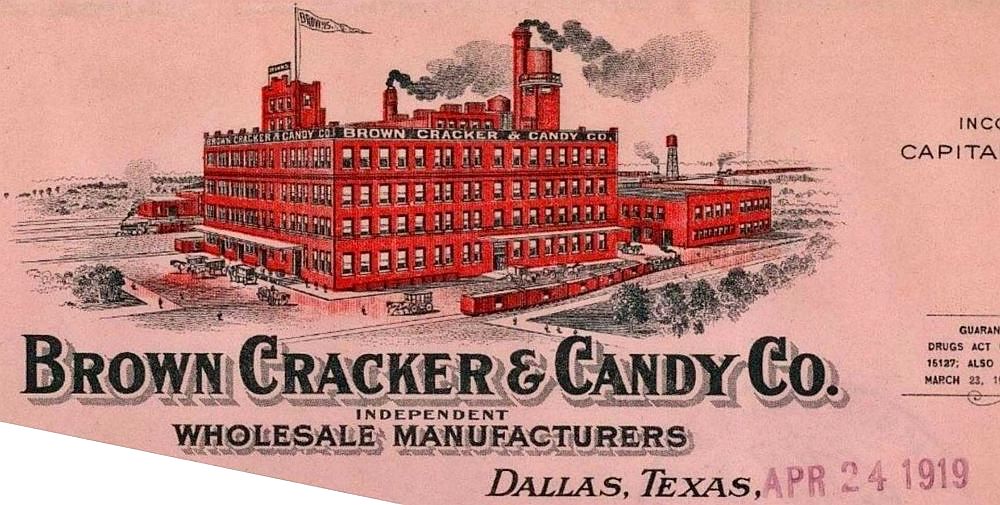
brown-cracker-co-lettrhead_1919_ebay1919 (eBay)

***

Sources & Notes

Top photo, titled “Wrapping Saltines at Brown Cracker and Candy Co.,” is from the George W. Cook Dallas/Texas image collection, DeGolyer Library, Central University Libraries, Southern Methodist University; it can be accessed here.

Written on the back of the photo: “Miss Bessie Manning, 2724 Roadwood [sic] avenue, Dallas, Texas.” Bessie Manning (born Bena Manina in 1899 to Italian immigrants), began working at the Brown Cracker Co. (with a brother and a sister) around 1917 but wasn’t living on Rosewood (later North Harwood) until 1919; she left Brown in 1921 or 1922. She isn’t identified in the photo, but she is, presumably, one of the women on the left; she would have been about 20.

bessie-manning_1920-censusBessie Manning’s occupation, 1920 census
The color postcard showing the Brown Cracker Co. is also from the Cook collection at SMU; it is here.

The Sodaette ad is from Library of Advertising by A. P. Johnson (Chicago: Cree Publishing Co., 1911).

The photo from about 1905 is from the promotional brochure titled “Come To Dallas” (Dallas: Dorsey Printing Co., about 1905), in the collection of the DeGolyer Library, Southern Methodist University; more info is here.

The photo at the bottom is from Greater Dallas Illustrated, The Most Progressive Metropolis in the Southwest (Dallas: The American Illustrating Company, 1908; reprinted by Friends of the Dallas Public Library, 1992). The informative company profile that accompanied the photo can be read in a PDF, here.

All other ads and clippings as noted.

Another very informative article which details the specifics of the building and its machinery — “New Dallas Industry, Brown Cracker and Candy Company About to Begin Operations” (DMN, Apr. 6, 1903) — can be read in a PDF, here.

To see the Brown Cracker Company’s specs on a Sanborn map from 1905, see here; to see where it is on a modern map, see here.

For current info on what’s about to happen to the building (much expanded over the years), see Steve Brown’s Dallas Morning News article, here.

And, yes, a teenaged Clyde Barrow apparently worked there briefly, for a dollar a day.

*

Copyright © 2015 Paula Bosse. All Rights Reserved.

White Mule, Red Whisky, & “Wicked Liquid” — Moonshining In, Around, & Under Dallas In the 1920s

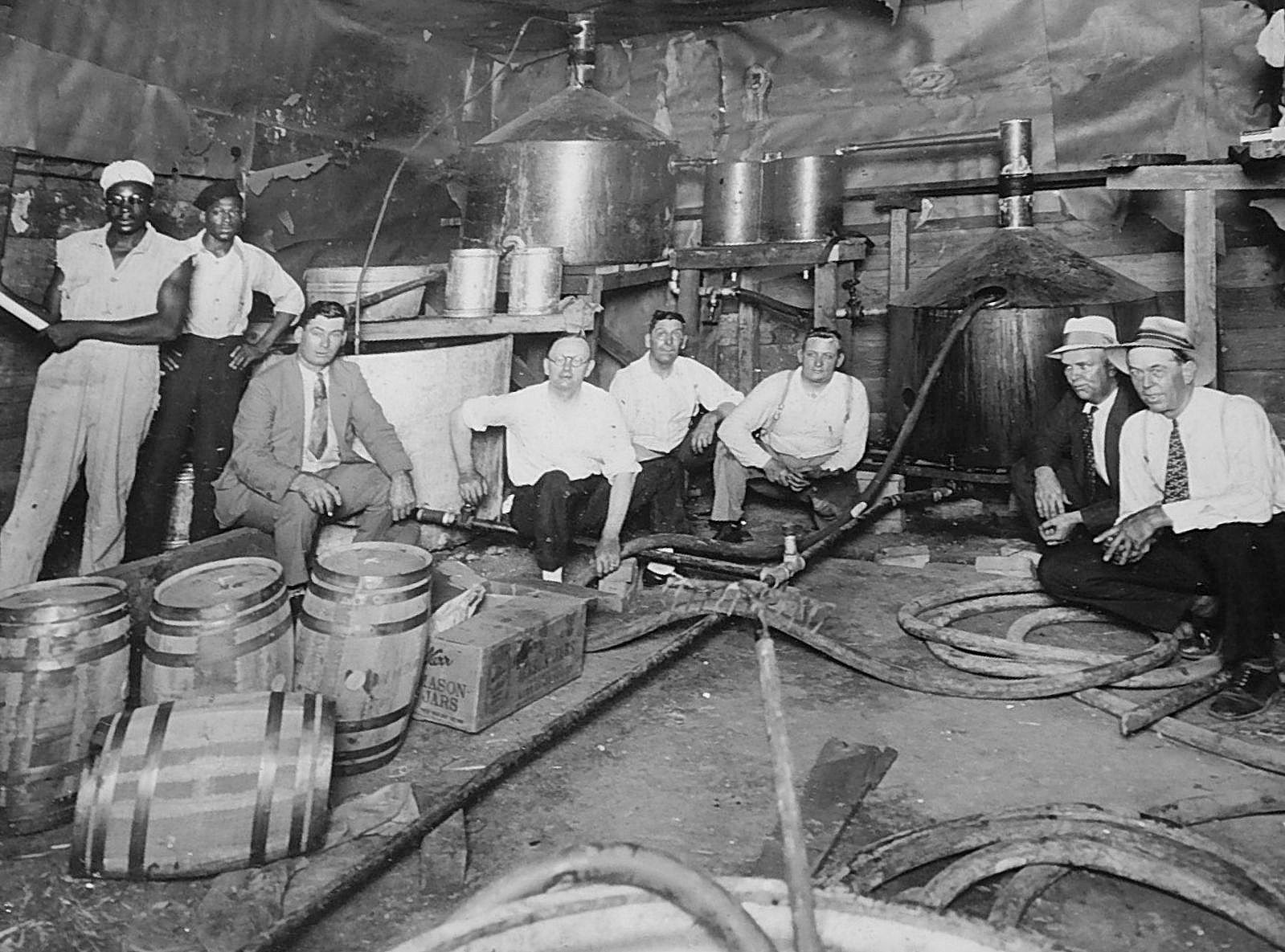
prohibition-stills_ebayBusted!

by Paula Bosse

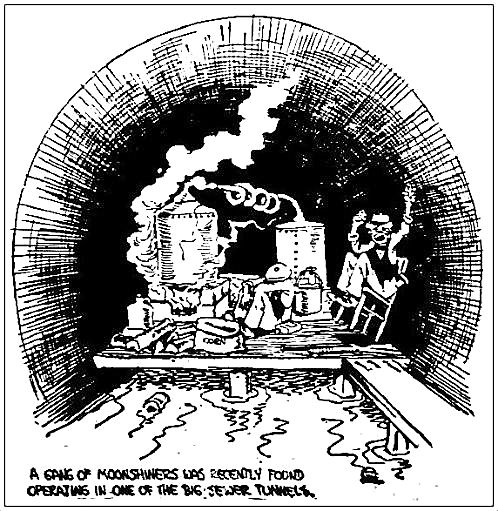
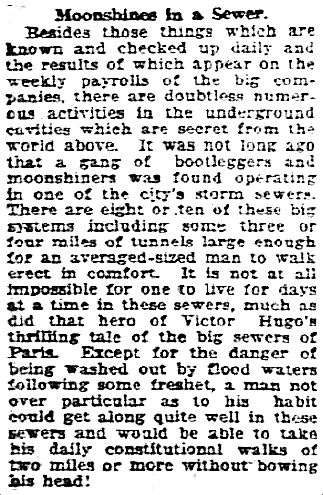
I recently came across an article from 1925 describing a whole world of hidden activity that went on beneath Dallas’ downtown streets. This cartoon and paragraph about moonshiners and bootleggers conducting business in underground storm sewers was particularly interesting:

moonshine_sewer_dmn_050325-cartoon

moonshine_sewer_dmn_050325-by-george-geeDallas Morning News, May 3, 1925

I searched and searched for news of this subterranean moonshining operation but was unable to find anything. I did, however, find some interesting stories from the ’20s, when it seems moonshining and bootlegging were going on absolutely everywhere.

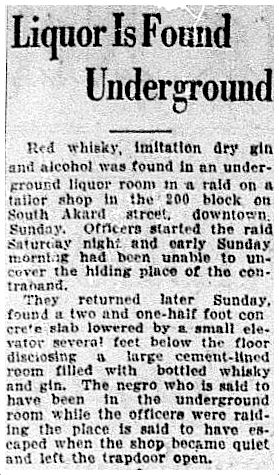
For example, one such operation was going on in a “large cement-lined room” underneath a tailor shop in the 200 block of South Akard, which was accessed by a small “elevator” through a trapdoor.

moonshine_akard_dmn_121425DMN, Dec. 14, 1925

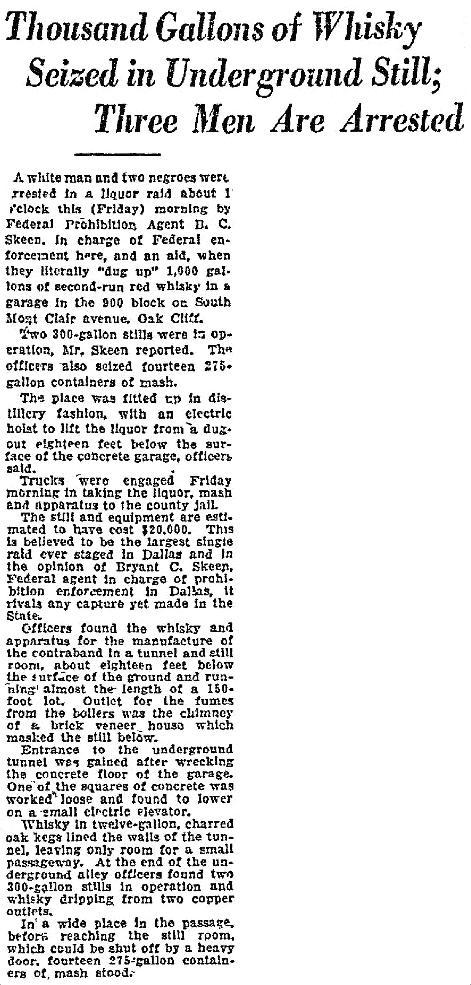
One was in operation underground in Oak Cliff in the 900 block of South Montclair (click to read).

moonshine_dmn_121125DMN, Dec. 11, 1924

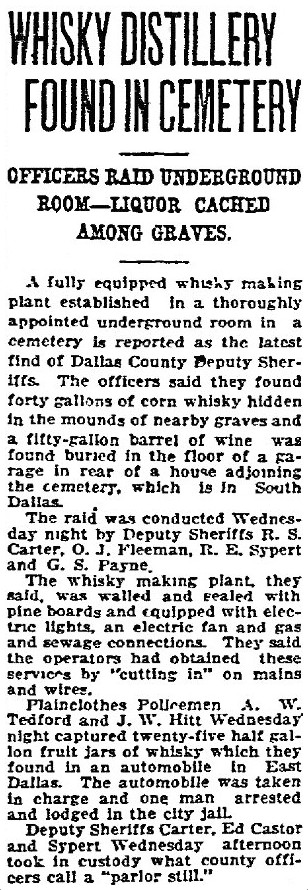
Then there was a still operating in a South Dallas cemetery.

moonshine_dmn_090424-cemeteryDMN, Sept. 4, 1924

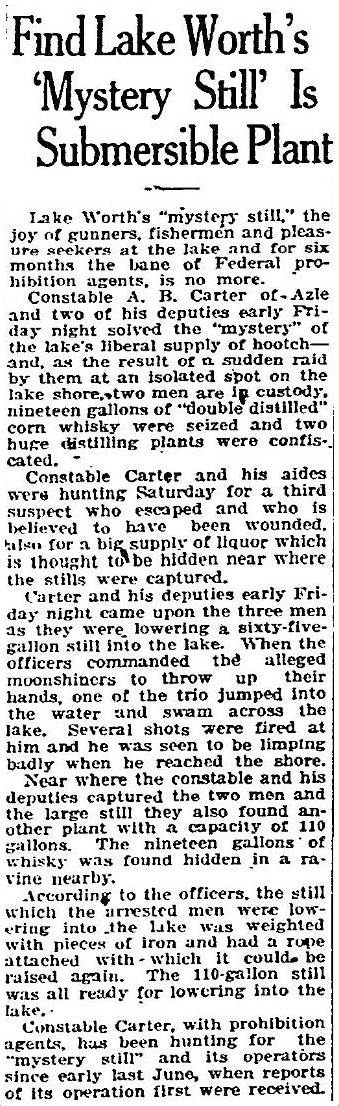
Over in Tarrant County — at Lake Worth — some outside-the-box-thinking moonshiners were hiding stills under the WATER.

moonshine_FWST_111921_lake-worthFort Worth Star-Telegram, Nov. 19, 1921

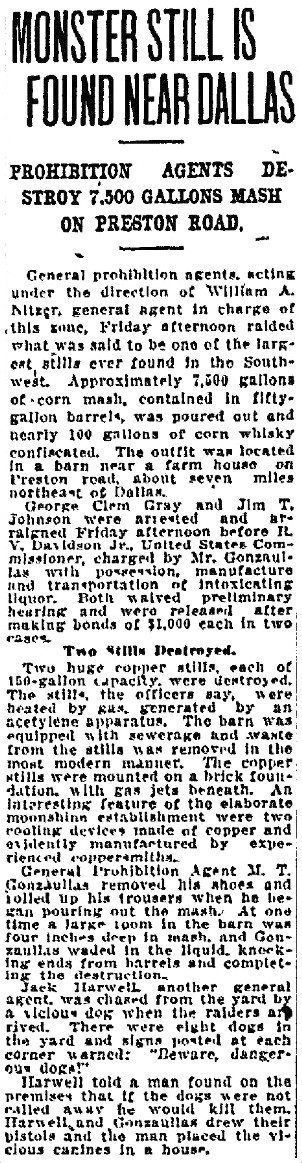
Up north on Preston Road, a massive still was discovered — one of the largest ever found in the Southwest. This operation was above ground, in a barn. 7,500 gallons of corn mash was emptied by legendary Texas Ranger M. T. “Lone Wolf” Gonzaullus, who “removed his shoes and rolled up his trousers when he began pouring out the mash. At one time a large room in the barn was four inches deep in mash, and Gonzaullus waded in the liquid” (DMN, Dec. 23, 1922).

moonshine_gonzaullas_dmn_122322DMN, Dec. 23, 1922

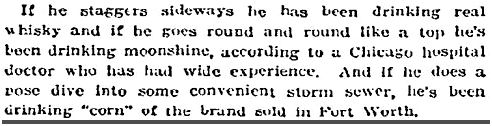
During this incredibly productive and creative period in DFW history, there were different levels of moonshining: there were people making small batches of so-called white lightning for “home use” (kind of like Mayberry’s Morrison sisters who provided small “medicinal quantities” of “elixir” to Otis Campbell), and then there were massive “distilleries” involving large networks of bootleggers and making big money. The former were usually “jest folks,” but the latter were generally professionals, often dangerous and armed-to-the-teeth. The quality of the product varied markedly. This was a handy primer:

moonshine_FWST_120420FWST, Dec. 4, 1920

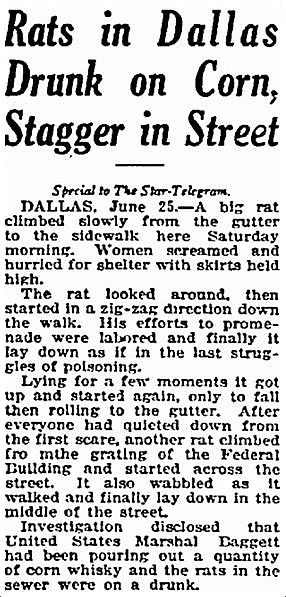
My favorite moonshine-related story appeared in The Fort Worth Star-Telegram. It was about drunken rats “staggering” in the streets of Dallas. Star-Telegram publisher (and famous Dallas-hater) Amon Carter must have cackled as he read this. I’m surprised the headline wasn’t bigger.

moonshine_rats_FWST_062621FWST, June 26, 1921

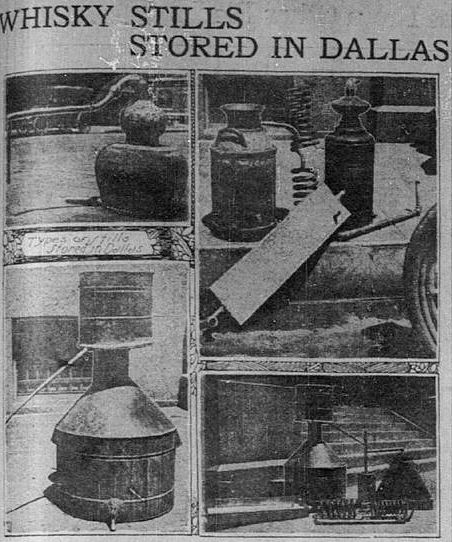
A whole passel of confiscated stills — having been emptied of their contents into nearby gutters (the cause of Big D’s apparent rampant rodental inebriation problem) — can be seen in the photos below, displayed for the media in 1921 by the sheriff’s office in a “perp walk” of inanimate objects. “Your tax dollars at wok.” It’s a good thing Prohibition would last only another … twelve long years.

stills_dmn_050821DMN, May 8, 1921

***

Sources & Notes

Top photo — taken by Frank Rogers — appeared on eBay a few months ago. It shows a moonshine operation somewhere in Dallas County, with Deputy Sheriff Ed Castor in there somewhere.

All other newspaper clippings as noted.

The initial Dallas Morning News story about the goings-on in the sewers and tunnels beneath downtown was “A Peep Into Dallas’ Real Underworld” by George Gee (a very entertaining writer who doesn’t seem to have been with the DMN long — I wonder if his name is a pseudonym?); it appeared on May 3, 1925 and can be read here.

A very informative article on local moonshining and bootlegging appeared in the DMN — “Now Bootleggers May Weep At Sight of Strange Display” (meaning those photos just above of confiscated stills); it was written by Ted Dealey and appeared on May 8, 1921 — it can be read here.

Prohibition wasn’t ever going to work. Read the Handbook of Texas entry about the movement in Texas, here.

Read an entertaining WFAA article about how openly Prohibition laws were flouted in Dallas, here.

You know what Wikipedia is good for? Reading about moonshine, more moonshine, and corn whiskey. If fails me, however, on Mason jars, so I went here and learned a few things about why moonshine was usually sold in these famous “fruit jars.”

Another photo of confiscated stills displayed on the steps of the old Municipal Building/City Hall can be found in my previous post “Prohibition Killjoys,” here.

Check out a photo of the booming business in a Dallas speakeasy in the post “Hoisting a Few in the Basement Speakeasy,” here.

Since you’re in the mood, why not settle back and watch a scene from the “Alcohol and Old Lace” episode of The Andy Griffith Show, here. Otis Campbell’s darkest day.

*

Copyright © 2015 Paula Bosse. All Rights Reserved.