Flashback : Dallas

A Miscellany: History, Ads, Pop Culture

Category: Postcards

Take a Spin In “The Rotor” at The State Fair of Texas

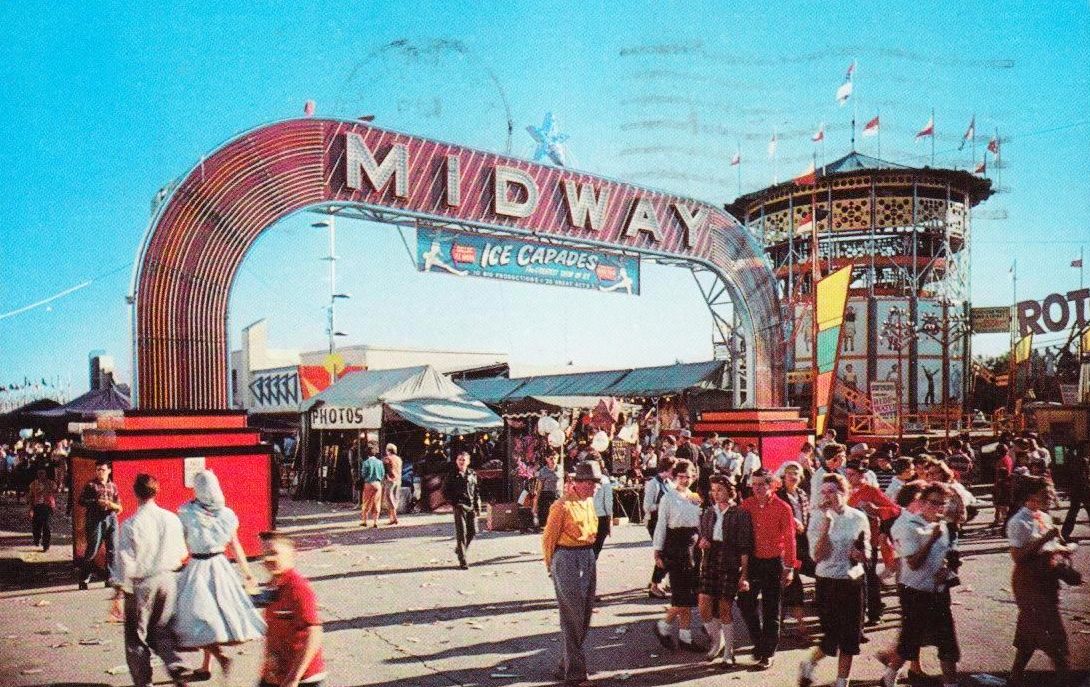
state-fair-midway_ebayAnother beautiful day at the fair!

by Paula Bosse

Students’ Day at the Fair? There are a lot of unaccompanied kids in that photo eating food on sticks.

I could be wrong, but I think the round structure to the right of the entrance is The Rotor (part of the sign is visible at the far right). The Rotor resembled a large barrel inside. You’d stand with your back to the curved wall, and then the walls would begin spinning around. Eventually the spinning got faster and you’d be pinned against the wall with centrifugal force as the floor dropped out. …Which could be a big mistake after too many corny dogs and cotton candy.

The Rotor debuted at the State Fair in 1952, imported from England. The British company would be sued later that year by the man who invented the ride, Ernst Hoffmeister. Hoffmeister sued several people who were operating similar rides internationally, but all was resolved by the following year, and the Rotor ride was an extremely popular fixture of the State Fair of Texas midway for many years.

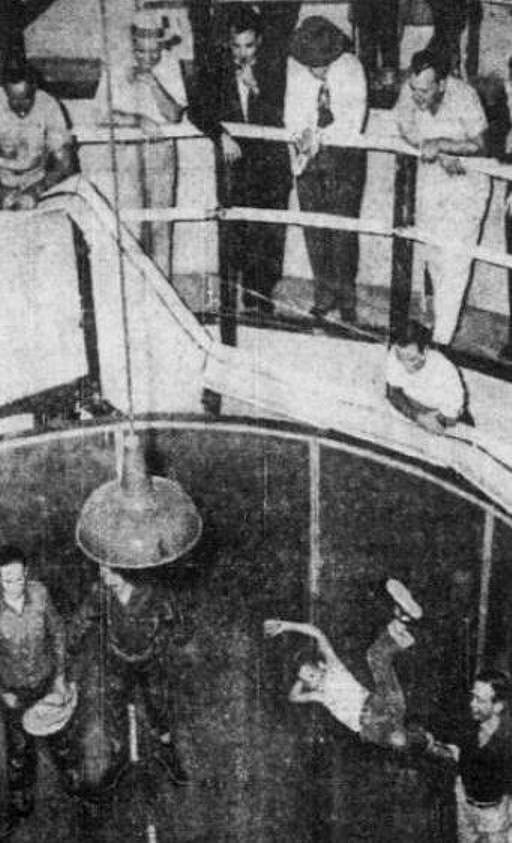
 Below, the ride in action.

rotor_1953

***

Sources & Notes

Postcard from eBay.

For more on this, head to the Dallas Morning News archives and read an interview with the men who brought the Rotor to the State Fair of Texas in the article “‘Bloody Sensation’ — Britons to Supply Ride on State Fair Midway” by Frank X. Tolbert (DMN, Sept. 25, 1952).

*

Copyright © 2015 Paula Bosse. All Rights Reserved


Young Bucks at the Fair — 1915

state-fair_men-touring-car_1915_degolyerRaring to go…

by Paula Bosse

Some of these guys look like they’d be fun to spend a day with at the fair. …Some of them don’t.

***

Sources & Notes

Real photo postcard titled “Men in a touring car with 1915 State Fair of Texas in Dallas banner” is from the Collection of Texas Postcards, DeGolyer Library, Central University Libraries, Southern Methodist University; it can be accessed here.

*

Copyright © 2015 Paula Bosse. All Rights Reserved.

Trinity Heights: The Tallent Furniture Studio and The Sunshine Home

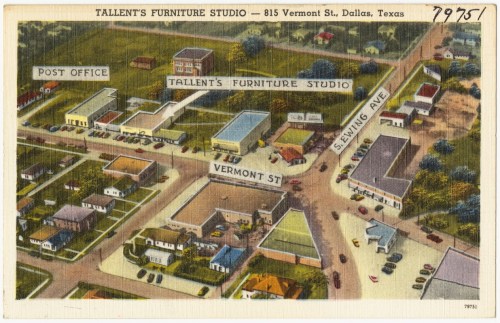
tallents-furniture-store_oak-cliff_tichnorVermont & South Ewing… (click for larger image)

by Paula Bosse

The postcard image above shows a bird’s eye view of a few blocks in the Trinity Heights neighborhood of Oak Cliff, from the late 1940s. As I looked at it, I wondered a) what does this intersection look like now, b) what is that unlabeled building that looks like a jail behind the furniture store, and c) what was Tallent’s Furniture Studio?

Tallent’s Furniture Studio, owned by Raymond E. Tallent, was located at 815 Vermont Avenue.

tallent_dmn_010350-obit-photo

tallents-ad_dmn_081256-det1956

Not only did it house a furniture store, but it also served as an office for Tallent’s real estate business. According to Tallent’s obituary, he came to Dallas in 1920 and started his real estate business five years later. Starting out, he’d’ve been happy to trade you property for diamonds. “What have you?”
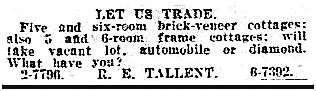
tallent_dmn_042928-real-estate-adApril, 1928

The first mention I found for the furniture store is this Christmas ad from 1947.

tallents_ad_121147Dec., 1947

Tallent died in January of 1950 at the age of 53. Both of his businesses continued after his death, and the furniture store was still going in the late 1960s.

So, nothing out of the ordinary — just a small business, like thousands of other small Dallas businesses. Probably the most interesting thing about Tallent was that he had the good taste to have that great promotional postcard made. That strange little building behind the store was a lot more interesting.

*

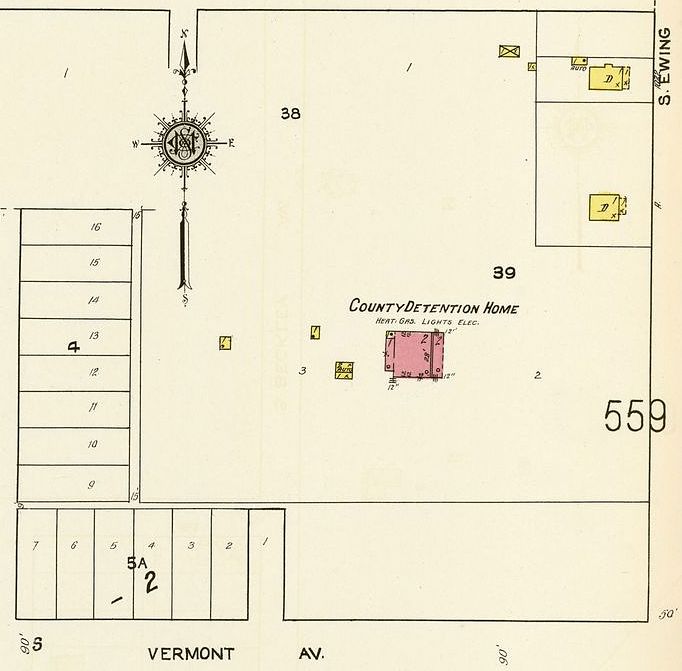
What was that building? The first time it popped up on a Sanborn map was 1922: it was identified as a “County Detention Home” (click for larger image).
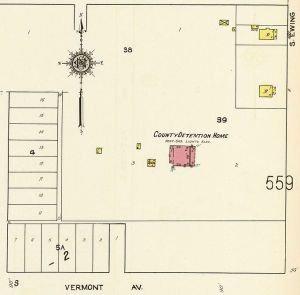
detention-home_sanborn_19221922 Sanborn map detail — see full page here

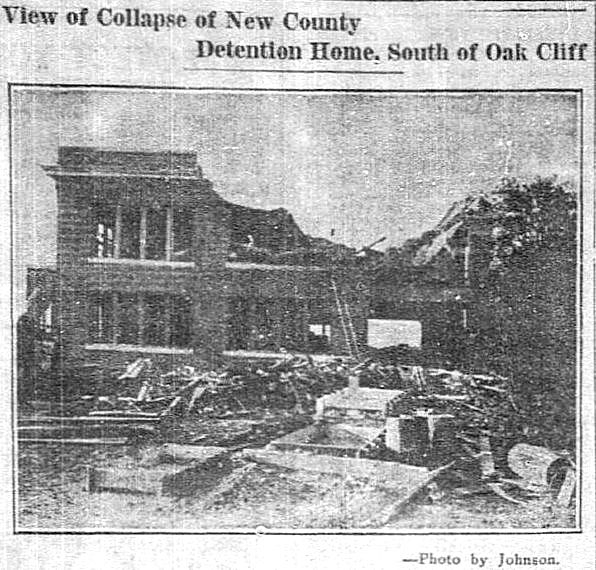
Despite its name, the “detention home” was not a correctional facility for juvenile delinquents, but it was a home for dependent children who had been made wards of Dallas County because of neglect or abandonment or because parents had died or were simply unable to care for them. This detention home was built in 1917 at 1545 South Ewing (“south of Oak Cliff”). During its construction in 1917, its roof collapsed, killing one of the workers.
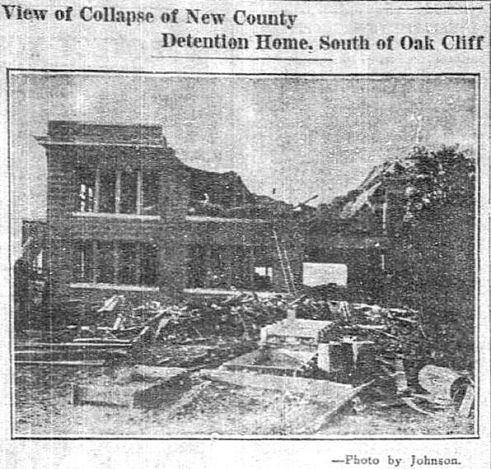
detention-home-collapse_dmn-041317Dallas Morning News, Apr. 13, 1917

The home was almost immediately overcrowded, and its superintendents were constantly scrambling for an increase in funding. Children, ranging in age from toddlers to teenagers, lived there as long as they needed — some for a few months, some for several years. They attended nearby schools, and even though they were wards of the court and were living in an institution, the people who ran the place tried to make it as home-like as possible. In January, 1934, the name of the county facility was changed to the much more cheerful “Sunshine Home.”

In 1950, the Sunshine Home received $165,000 in bond money for improvements and expansion, adding modern structures to the large campus but still retaining the original two-story red brick building built in 1917.

In 1975, the Dallas County Sunshine Home and the Girls’ Day Center merged, and the former Sunshine Home was renamed Cliff House.

In 2014, the 28,000-square-foot property on just under five acres was put up for sale, and in early 2015 plans for a charter elementary school were approved.

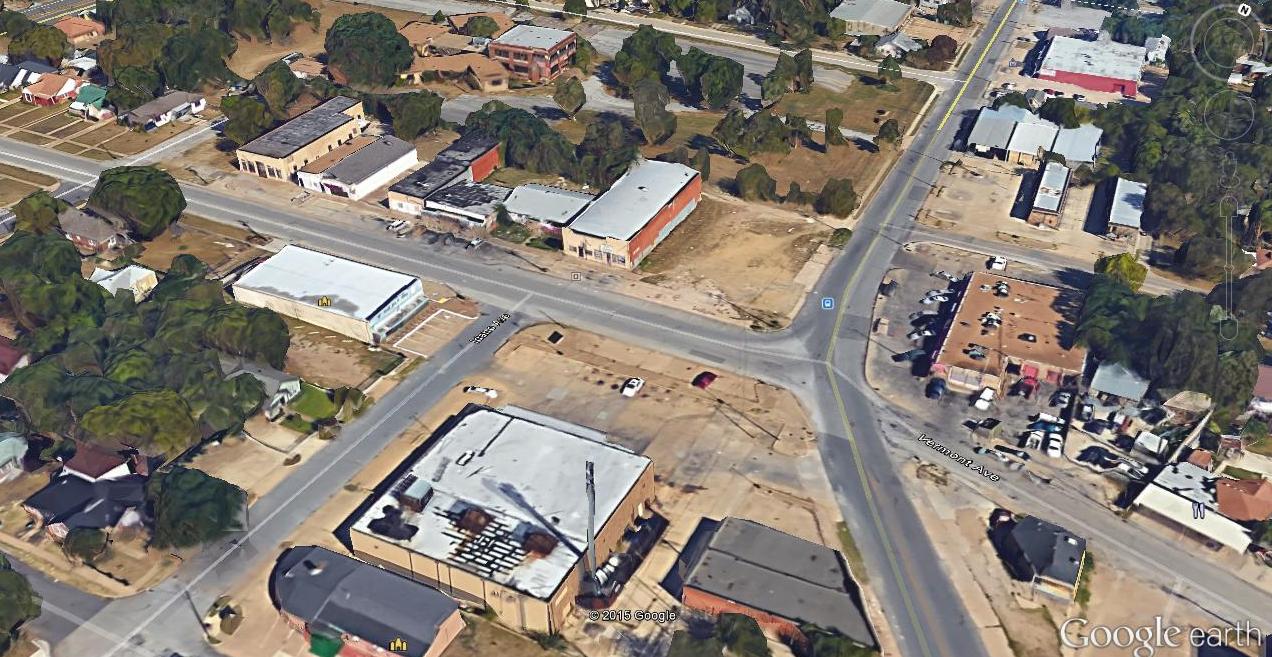
Below, a Google Earth image of the same view as the postcard featuring Tallent’s Furniture Studio, captured before the old Sunshine Home buildings had been demolished (click for larger image).

tallent_birdseye-google-earthGoogle Earth

The view is remarkably similar to the one taken more than 65 years earlier. A little bleaker these days, perhaps, but certainly still recognizable.

***

Sources & Notes

Top postcard is from the Boston Public Library Tichnor Brothers Postcard Collection; it is viewable here.

Information on the plans for the KIPP Truth Academy submitted to the City of Dallas (with interesting illustrations/maps on pages 10 and 11) can be found in a PDF, here.

A recent Google Street View of this block of Vermont Avenue can be seen here. The Tallent furniture store occupied the building to the left of the Vermont Grocery.

The heart-tugging article “For All Loving Care Bestowed, Sunshine Home, Space Small, Needs Much to Cheer Children” (DMN, July 24, 1941) — written by popular Dallas Morning News columnist Paul Crume — describes daily life in the Sunshine Home and can be found in the Dallas Morning News archives.

A then-and-now comparison (click for larger image):

tallent_then-now

*

Copyright © 2015 Paula Bosse. All Rights Reserved.


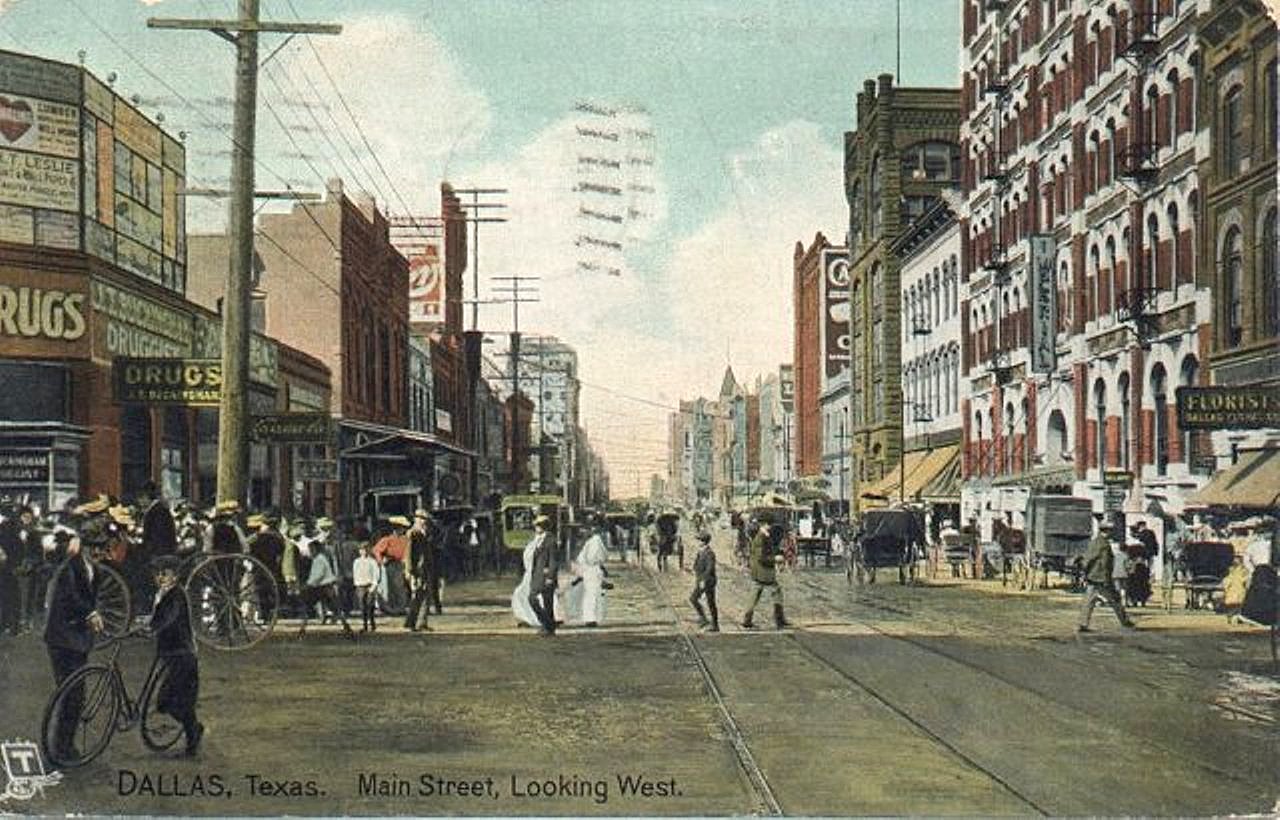
Crossing Main Street

main-looking-east_watermelon-kidLife in the Big City…

by Paula Bosse

Turn-of-the-century traffic: buggies, bicycles, wagons, and people.

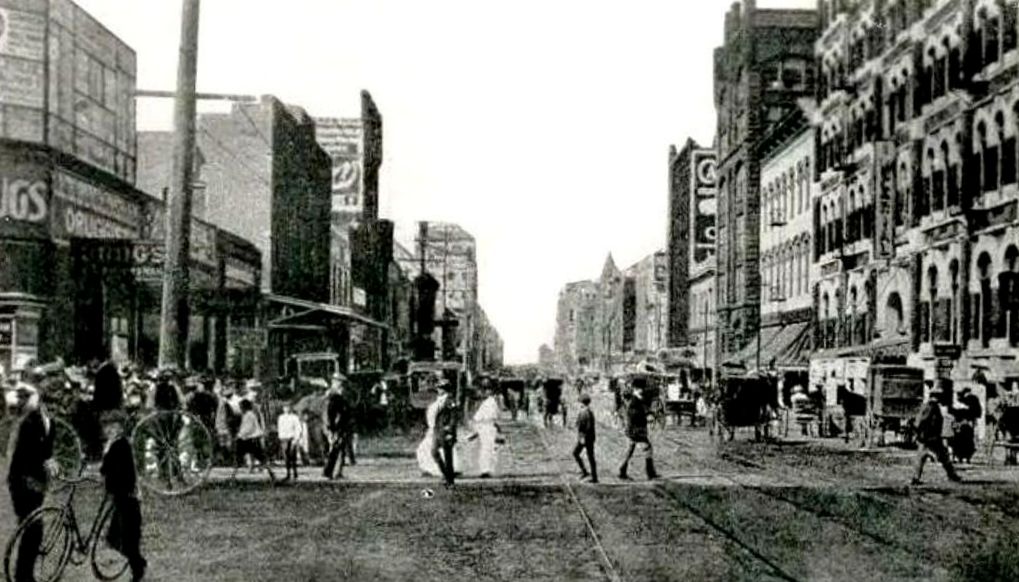
I first came across the image below in — of all places — a 1931 SMU yearbook and backtracked to finding the “color” postcard, above. The very grainy image (below) may just have been a black and white photo of this postcard rather than the original photograph, but it’s interesting to see them together. The yearbook identifies this as being Main and Akard, looking west on Main; it also dates it about 1906, but I think it’s earlier than that — there probably would have been evidence of automobiles on Main Street by then. Whenever it was, it seems like a pleasantly nostalgic frozen-in-time moment.

main-west-from-akard_smu-rotunda-1931***

Postcard at top from the Watermelon Kid’s great site, here.

Weird, blurry black and white image from the 1931 Southern Methodist University Rotunda yearbook.

Click pictures for larger images.

*

Copyright © 2015 Paula Bosse. All Rights Reserved.
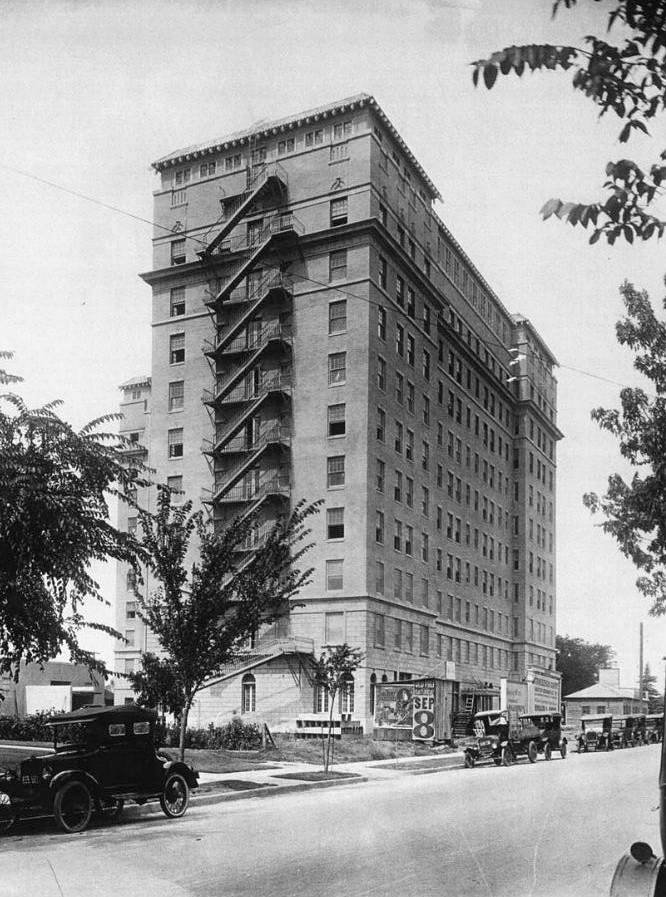
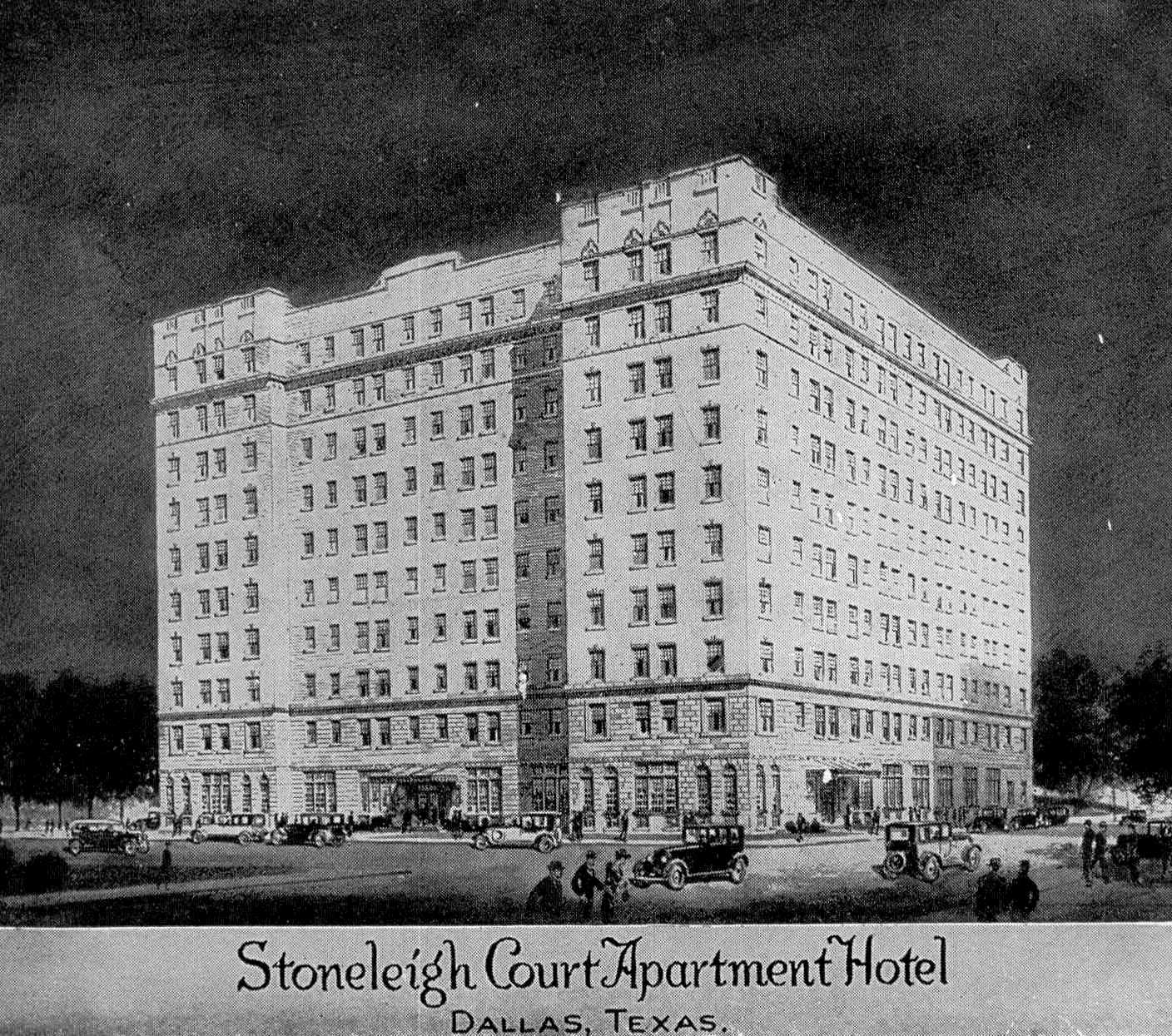
The Stoneleigh Court Apartment Hotel — 1923/1924

stoneleigh_1923_natl-reg-application
Still standing, still beautiful…

by Paula Bosse

Above, the Stoneleigh Hotel (originally known as the Stoneleigh Court Apartment Hotel) in 1923, in its final weeks of construction. When the Stoneleigh opened in October, 1923 at the corner of Maple Avenue and Wolf Street, it was a swanky apartment house, with hotel amenities (a few rooms were set aside for “transient” travelers). Thankfully, the Frank J. Woerner-designed building still stands and remains a lovely hotel.

Originally there were 125 apartments (which ranged from 1-5 rooms each), all of which were fully furnished (linens, silver, kitchen utensils, dishes, telephones, etc.), and maid service was provided. There were also radios in every room (a pretty new-fangled thing at the time). Each apartment had a kitchenette and a private bath, and ice water was piped to all apartments. Another innovative feature was the Servidor delivery service which allowed residents and hotel staff to conduct transactions without ever having to look one another in the eye or exchange stilted chit-chat. There was a grocery store, a pharmacy, a beauty shop, and a barber shop on the premises. There were smoking rooms, billiards rooms, and lounges on the ground floor and a grand ballroom on the top floor. And apartments were “handsomely furnished, [with] a color scheme of taupe, blue and mulberry being observed alternately on the various floors.” Sign me up!

*

Below, an early ad (click to see a much larger image of the illustration on its own).

ad-stoneleigh_terrill-yrbk_1924

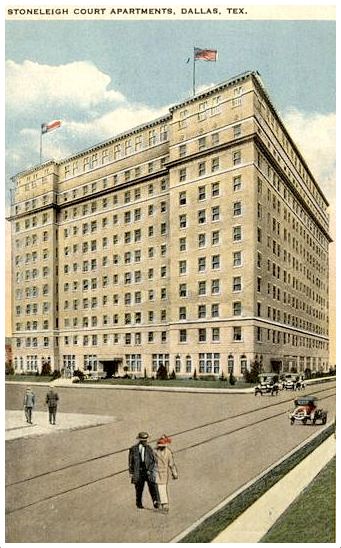
And, of course, the obligatory postcard in which the building looks familiar, but which its surroundings seem somewhat … romanticized.

stoneleigh_court_apartments

*

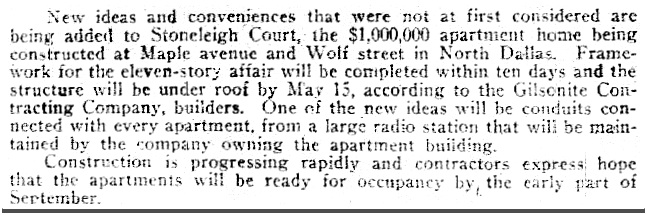
A grainy photo from the construction and its caption:

stoneleigh-hotel_dmn_042223_under-construction_photo

stoneleigh-hotel_dmn_042223_under-construction_captionDallas Morning News, April 22, 1923

***

Sources & Notes

Photo of the building nearing the end of its construction is from the application to the National Register of Historic Places, which can be found in a PDF, here. (Dallas Historical Society photo.)

Ad is from the 1924 Terrill School yearbook.

To read a lengthy article published a few days before the Stoneleigh officially opened — “Stoneleigh Court Most Pretentious Apartment Hotel in the Southwest” (Dallas Morning News, Oct. 14, 1923) (with “pretentious” used here in a good way!) — click here.

Not sure what an “apartment hotel” is? See Wikipedia, here.

The Stoneleigh is currently called “Le Méridien Dallas, The Stoneleigh,” and the official website is here.

*

Copyright © 2015 Paula Bosse. All Rights Reserved.

Fly United to Chicago in Only Eight Hours!

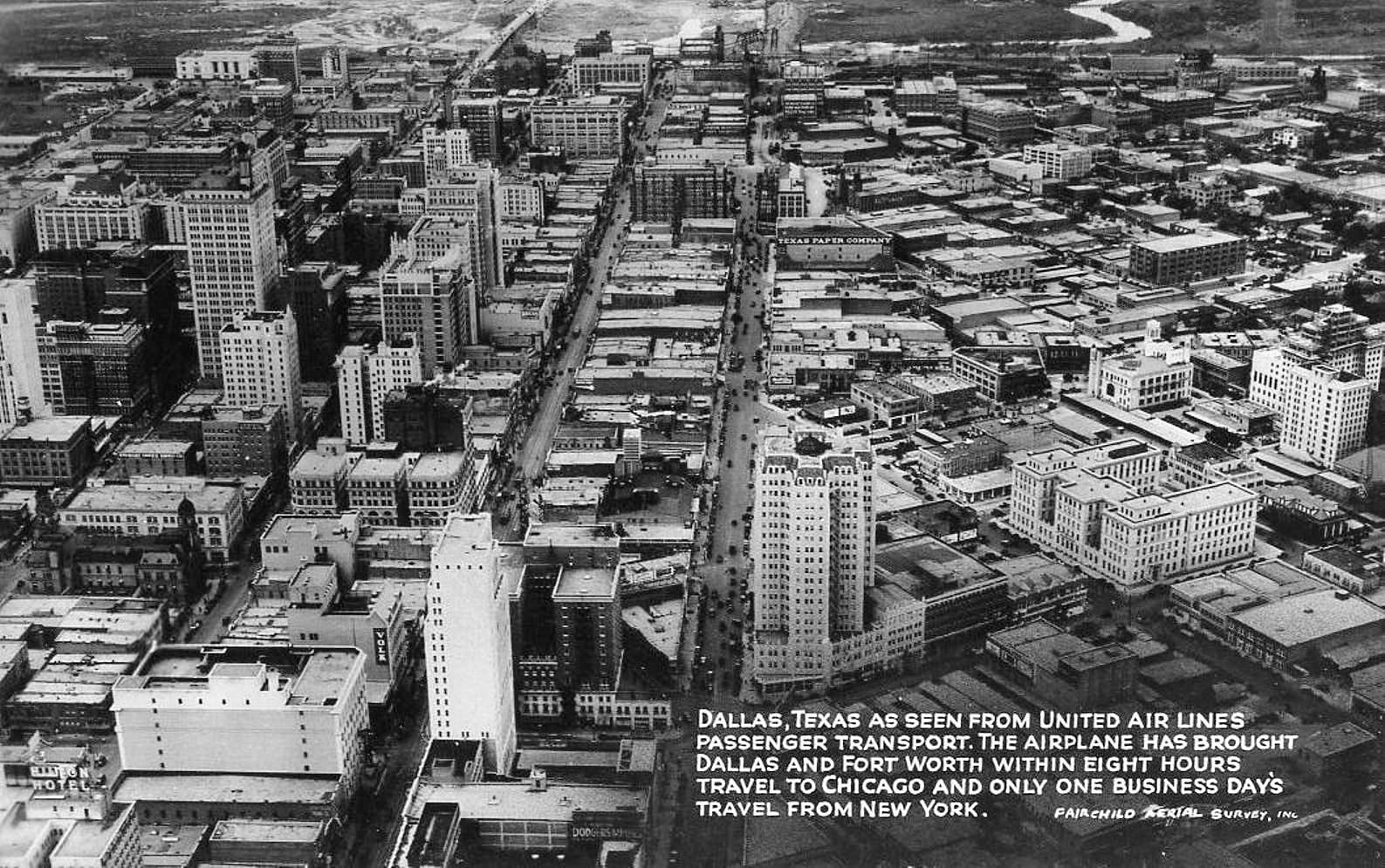
aeiral_united-air-lines_fairchild_ebay_rppcHow many buildings can you identify? (click for larger image)

by Paula Bosse

Dallas, Texas as seen from United Air Lines passenger transport. The airplane has brought Dallas and Forth Worth within eight hours travel to Chicago and only one business day’s travel from New York.

Back when it took all day to fly to New York from Dallas.

This is another great aerial photo by the Fairchild Aerial Survey company, probably taken by Lloyd M. Long. Date-wise? Late-1920s? Before the Trinity was straightened (beginning in 1928), with land being cleared in the area that would become Dealey Plaza? 1928-ish? Or could it have been the very early 1930s? The United Air Lines promotional postcard was issued around 1932 or 1933.

It wasn’t until 1933 that United introduced its new Boeing “twin motor airline transports” and boasted that they would finally “bring the city within eleven and a half hours of New York City” (Dallas Morning News, Aug, 16, 1933).

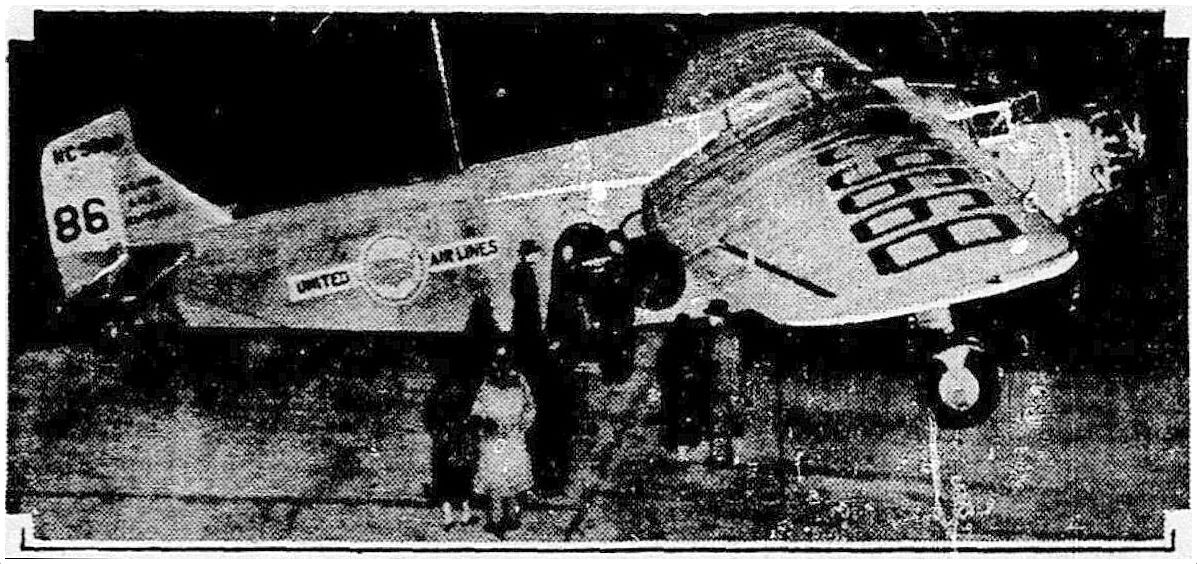
Below is a photo from a Dallas newspaper ad showing one of United’s planes from the earlier, more carefree days of 1932, when passengers were still trudging through the skies at a more leisurely pace.

united-air-lines_ad-det_dmn_110432United Air Lines ad, detail, 1932

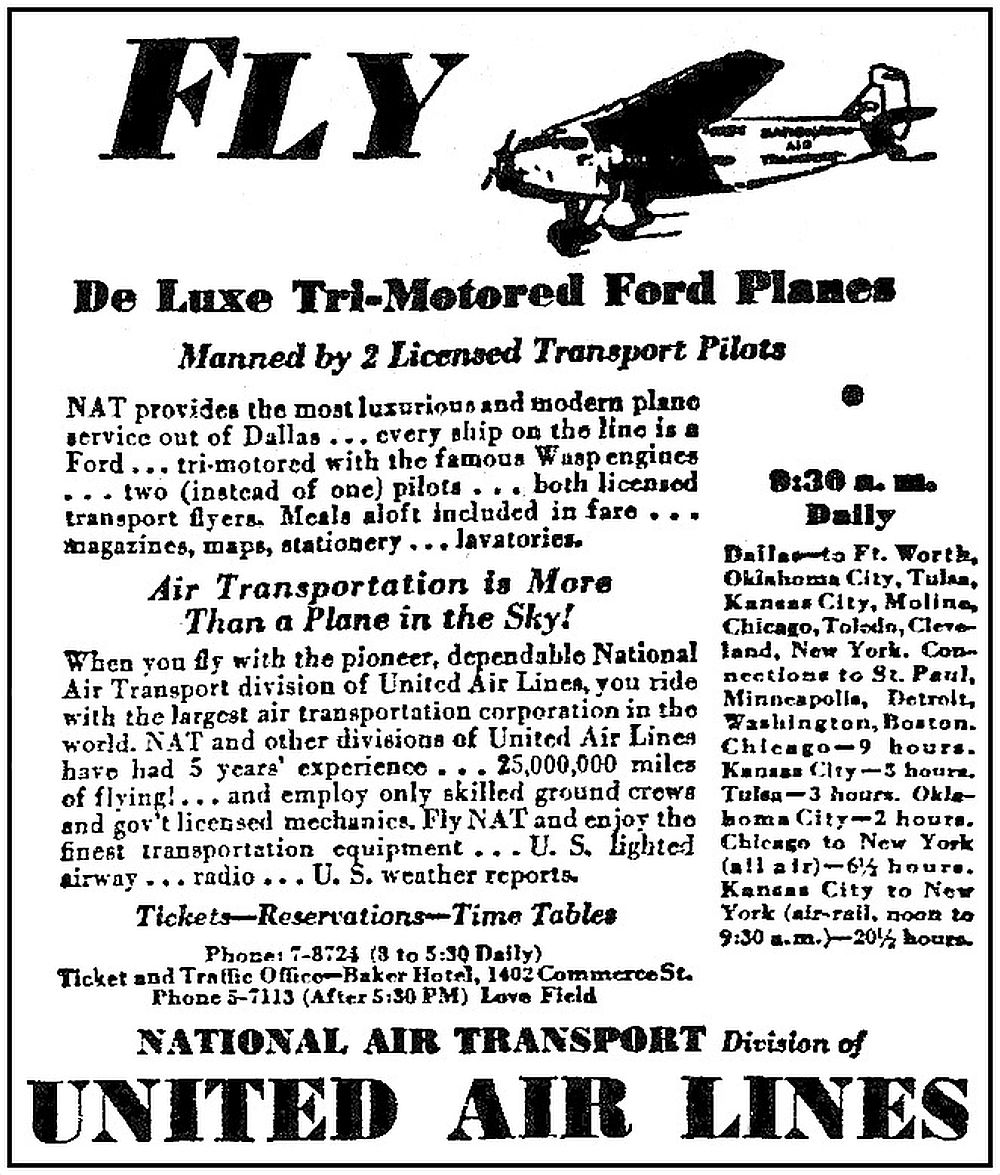
And an even earlier ad, from 1931, when a flight from Love Field to Chicago was nine hours long (today a direct flight from Love Field to Chicago takes about two hours and fifteen minutes). And if you wanted to continue to NYC, you had to board another plane and fly from Chicago to New York, adding another six and a half hours!

united-air-lines_dallas-to-nyc_1931
1931 ad

FLY

De Luxe Tri-Motored Ford Planes Manned by 2 Licensed Transport Pilots
 
NAT provides the most luxurious and modern plane service out of Dallas … every ship on the line is a Ford … tri-motored with the famous Wasp engines … two (instead of one) pilots … both licensed transport flyers. Meals aloft included in fare … magazines, maps, stationery … lavatories. 

Air Transportation is More Than a Plane in the Sky! 

When you fly with the pioneer, dependable National Air Transport division of United Air Lines, you ride with the largest air transportation corporation in the world. NAT and other divisions of United Air Lines have had 5 years’ experience … 25,000,000 miles of flying! … and employ only skilled ground crews and gov’t licensed mechanics. Fly NAT and enjoy the finest transportation equipment … U.S. lighted airway … radio … U.S. weather reports.

*

In an interesting side-note, the first pilot to fly a mail plane between Kansas City and Dallas (on May 12, 1926) was Richard Dobie, brother of Texas literary legend, J. Frank Dobie. In 1926 he flew a Curtiss Carrier Pigeon; in 1933, he’d worked his way up to the speedy and powerful Boeing. He flew for United for several years.

***

Sources & Notes

Top image is a promotional postcard, found on eBay.

Read more about the tri-motor airplane (manufactured by the Ford Motor Company and affectionately known as the “Tin Goose”) in the article “Ford’s Tri-Motor” by Edward J. Vinarcik (Advanced Materials and Processes, Oct. 2003) here.

All images larger when clicked.

*

Copyright © 2015 Paula Bosse. All Rights Reserved.


Akard Street Looking South, 1887-2015

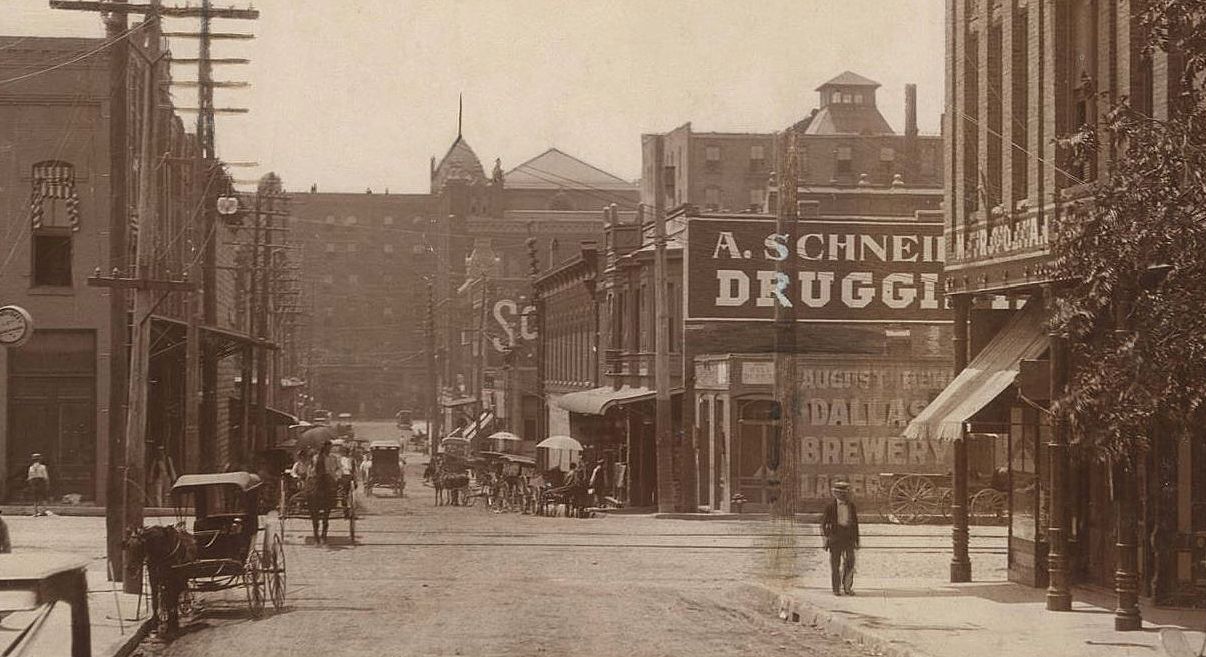
akard_from-pacific_cook_degolyer_smu_ca1898-detAkard Street from Pacific, ca. 1898, via Cook Collection, SMU

by Paula Bosse

I realized the other day that I have an inordinate number of photographs and postcards showing Akard Street looking south — usually taken from Pacific or Elm, so I thought I’d collect them all together. Some of these aren’t dated, so they’re not in strict chronological order, but I’ve made a half-hearted attempt to make sure horse-and-buggy photos are before the men-in-straw-hat-boaters, which are before the women-in-Miss-Crabtree-dresses, which are before the cars-with-rounded-bodies. It might be easiest to just assume they are not in chronological order. (All photos are larger when clicked — a couple are really  big.)

*

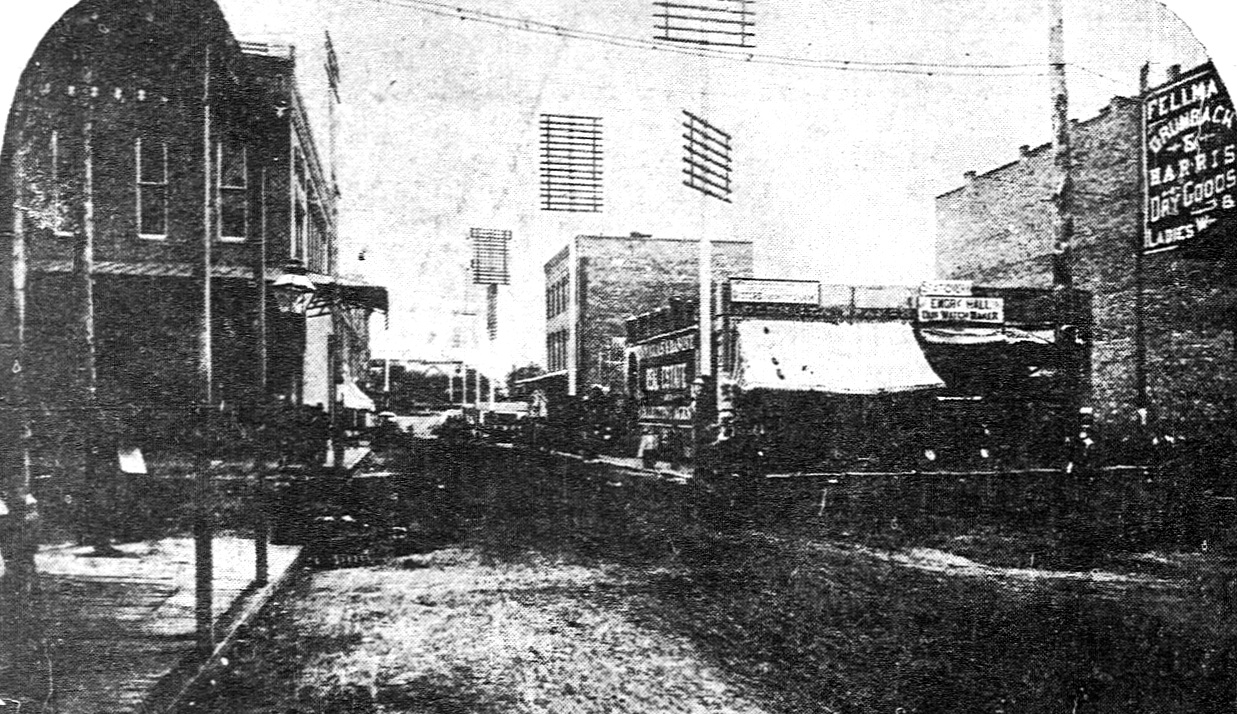
The oldest is from 1887, when North Akard was still called Sycamore Street, and before the Oriental Hotel was built at Commerce and Akard in 1895.

akard_south-from-elm_1887

*

Next up, an incredible photo, taken around 1898, a detail of which appears at the top of this post. The Oriental Hotel can now be seen at the end of Akard, at Commerce, where Akard used to make a dog-leg turn before continuing south, giving the appearance of a dead-end street.

akard_from-pacific_cook_de-golyer_smu-ca1898via George W. Cook Collection, DeGolyer Library, SMU

*

Another, with the Adolphus Hotel (built in 1912) now on the right, across Commerce from the Oriental. The tall building across Akard from the Adolphus is the Southwestern Life Building. The Gentry photography studio was at the southeast corner of Elm and Akard from 1912, which is probably the date of this postcard image. Construction of the Busch Building (now known as the Kirby Building) began in December, 1912.

akard-elm_postcard_ebay_ca-1912via eBay

*

From 1925, with the new Baker Hotel having replaced the Oriental Hotel. This area was now being called “the canyon district” or “the canyon.”

akard_south-from-elm_1925

*

In this great Frank Rogers photo, the canyon walls are getting higher, with the Adolphus Hotel firmly anchoring the Commerce corner across from the Baker.

akard_baker-adolphus_postcard_rogers_ebayvia eBay

*

By the time this photo was taken in about 1936, Pegasus had become a part of the skyline, perched atop the Magnolia Petroleum Building. (Note the Queen Theater at the northeast corner of Elm and Akard.)

akard_pacific_1936_legacies-spring-1989via Legacies History Journal

*

This photo is from the early- or mid-1930s — LOOK AT ALL THOSE PEOPLE.

akard-canyon_municipal-archives_dma-uncratedvia the DMA’s Uncrated blog

*

As opposed to this one, which has NO people in it.

akard-canyon_ebayvia eBay

*

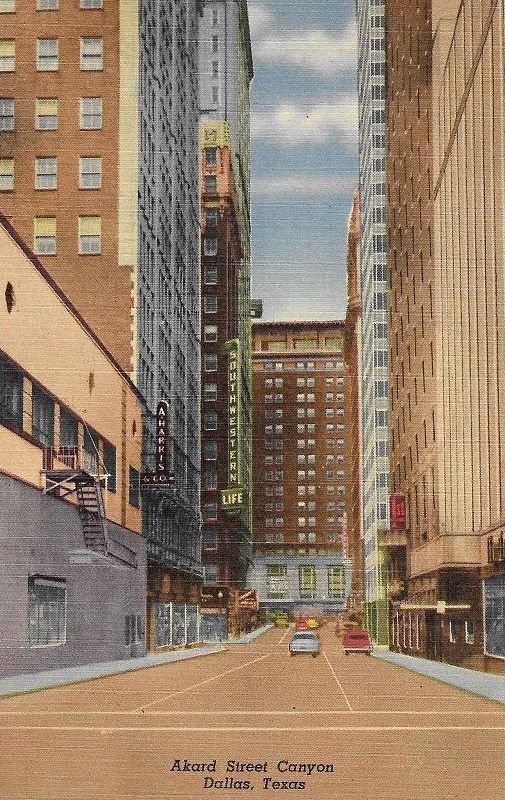
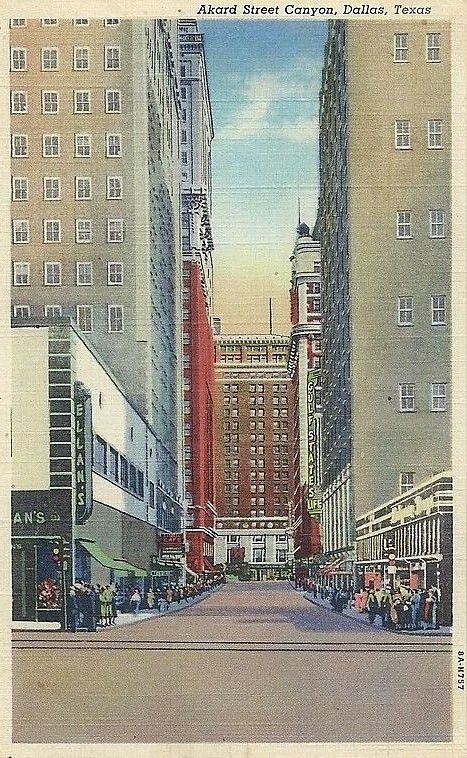
More canyon, this view showing the super-cool art-deco-y building at Elm and Akard with Ellan’s hat shop on the ground floor, late-1930s.

akard-st-canyon_ellans

*

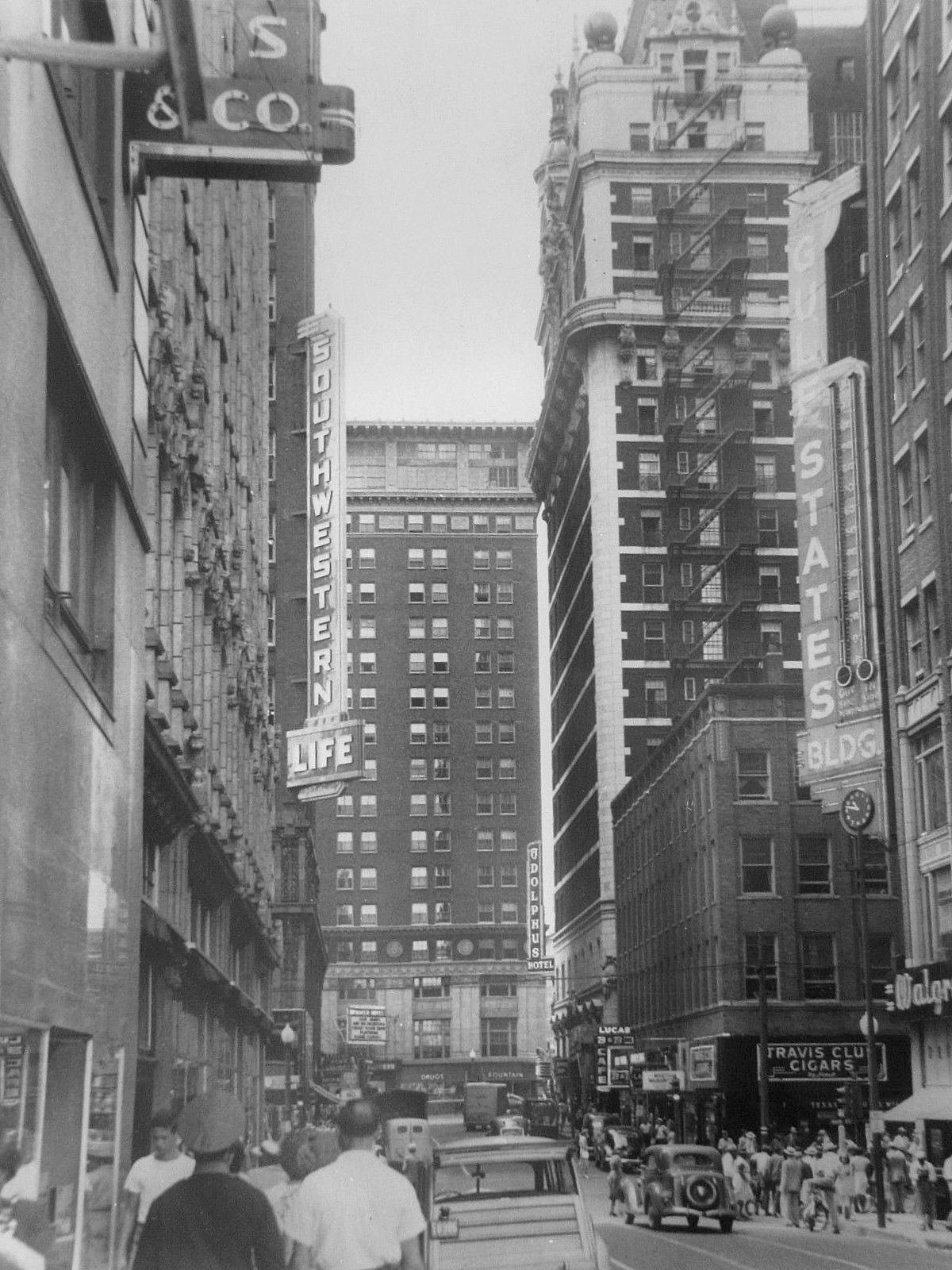
This candid photograph, a little deeper into the canyon, is one of my favorites. (Click to see a gigantic image.)

akard-looking-south_ebayvia eBay

*

From 1951 — a bit grainy, but a slightly closer view of the side of the Queen Theater at the left and the Mayfair department store, built in 1946, at the right:

akard_dpl_1951via Dallas Public Library

*

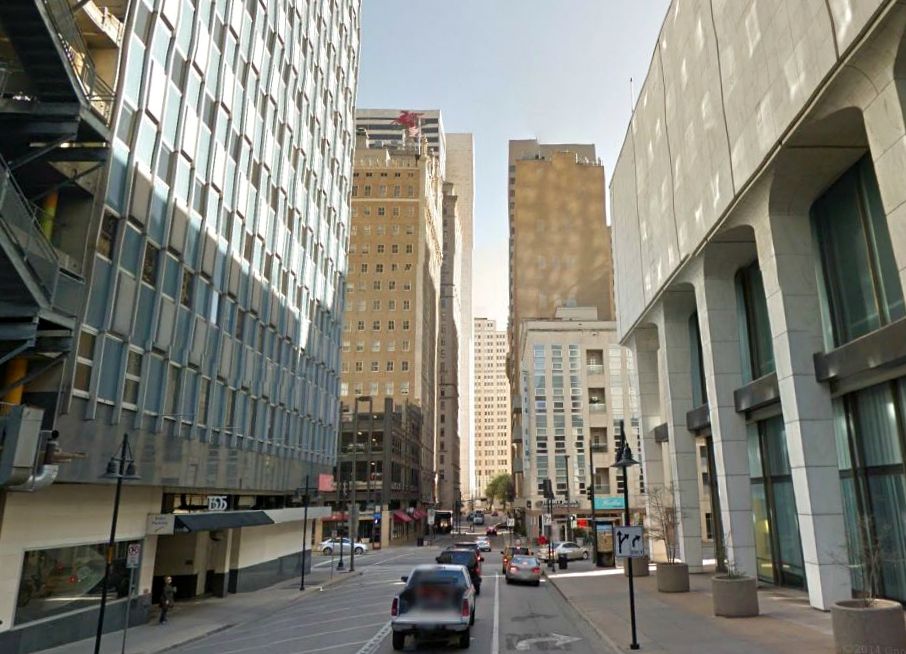
And, finally, today. Pegasus and the Adolphus are still there, but the Baker Hotel was demolished in 1980, replaced by the One AT&T Plaza/Whitacre Tower.

akard-looking-south_google_2015via Google Street View, 2014

***

Sources & Notes

The photo dated by SMU as “circa 1898” is titled “Akard Street from Akard and Pacific Avenue Intersection”; it is from the George W. Cook Dallas/Texas Image Collection, DeGolyer Library, Central University Libraries, Southern Methodist University, and it can be viewed here.

The circa 1936 photo showing Pegasus is from the Spring, 1989 issue of Legacieshere; it is from the Hayes Collection, Texas/Dallas Archives Division, Dallas Public Library, and is attributed to Denny Hayes.

The photo showing “ALL THOSE PEOPLE” is from the Dallas Museum of Art’s Uncrated blog — here — is from the Dallas Municipal Archives. They have the date as “1940,” but Liggett’s Drug Store was gone from Elm and Akard by 1936.

Other sources as noted.

Click pictures for larger images — sometimes MUCH larger images.

*

Copyright © 2015 Paula Bosse. All Rights Reserved.


The Caveteria: “Marvelous Food at Moderate Prices”


caveteria_ebay
The finest in downtown basement dining (click for larger image)

by Paula Bosse

How could you NOT want to dine in a restaurant called a “Caveteria”? It was a cafeteria in the basement — the cave — of the swanky Baker Hotel, and it looks like it was a nice cheap place to grab a quick lunch downtown in the 1920s and 1930s.

caveteria_baker-hotel_postcard_ebay

*

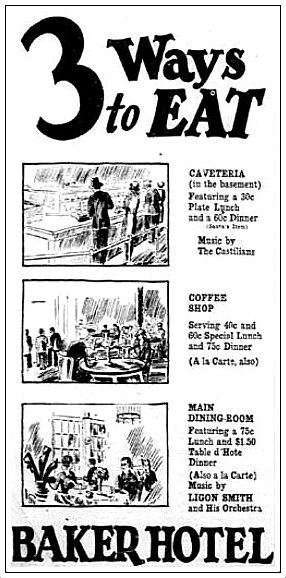
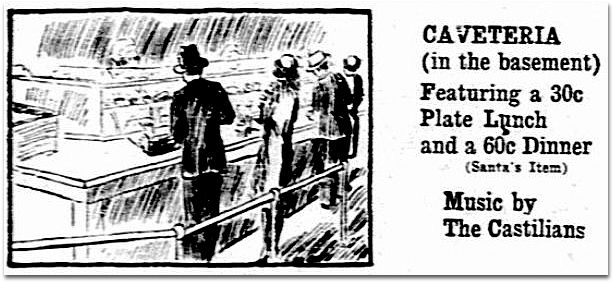
The Baker Hotel had “3 ways to eat”: one could eat cheap in the basement Caveteria (where, according to the Inflation Calculator, a 30-cent lunch in 1927 was the equivalent of about four bucks today), eat sort of cheap in the probably street-level coffee shop (lunch was about $6.75 there), and eat not cheap in the main hotel dining room (where lunch was over $10.00). (There was also the Peacock Terrace night club, well beyond reach of basement-dwelling diners.)

caveteria_dmn_120427

caveteria_dmn_120427-det1927

*

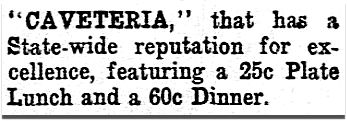
The price actually went down to a quarter by 1931 and had a “State-wide reputation for excellence.”

caveteria_dmn_020131DMN, Feb. 1, 1931

*

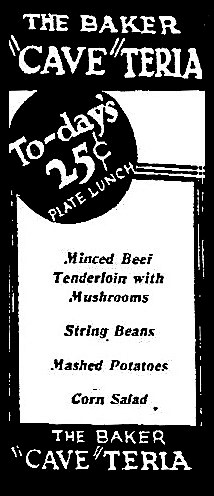
A year later the price was holding at 25 cents and it seems like a pretty good deal.

caveteria_dmn_021532DMN, Feb. 15, 1932

*

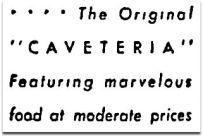
“The Original ‘Caveteria'” — accept no imitations! At least one other hotel in the Baker chain — the Gunter, in San Antonio — had a “Caveteria,” but apparently Dallas’ was first. In fact, the word and the hotel made their way into H. L. Mencken’s The American Language, Supplement One (see here).

caveteria_corsicana-daily-sun_031632Corsicana Daily Sun, Mar. 16, 1932

*

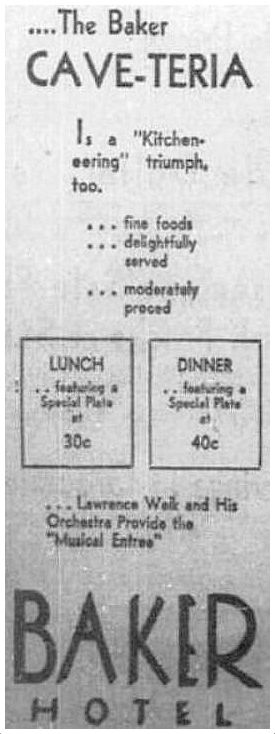
Oh yeah — live bands played while you ate your hearty meal of minced beef tenderloin. Even Lawrence Welk settled in for a stint as the “musical entree” in 1934.

caveteria_dmn_022234-lawrence-welkFeb., 1934

*

In 1942, the space once occupied by the Caveteria was turned over to the USO:

The Baker Hotel has provided the USO with what used to be the Caveteria in the basement of the hotel. It will be known as USO Club in the Cave. The entrance will be through the Akard Street entrance of the hotel.  (Dallas Morning News, Jan. 27, 1942)

*

And there it is — another place I wish I’d been able to visit.

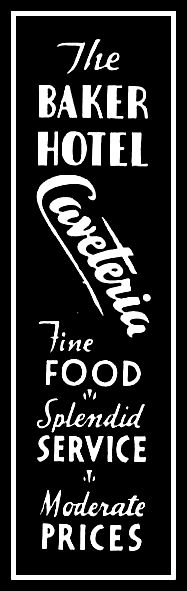
“Fine food. Splendid Service. Moderate prices.”

ad-baker-hotel-caveteria

***

Sources & Notes

Color postcards found on eBay.

The Baker Hotel opened in 1925 at Commerce & Akard on the site where the Oriental Hotel had previously stood, catty-corner from the Adolphus.

*

Copyright © 2015 Paula Bosse. All Rights Reserved.


St. Paul’s Sanitarium — 1910

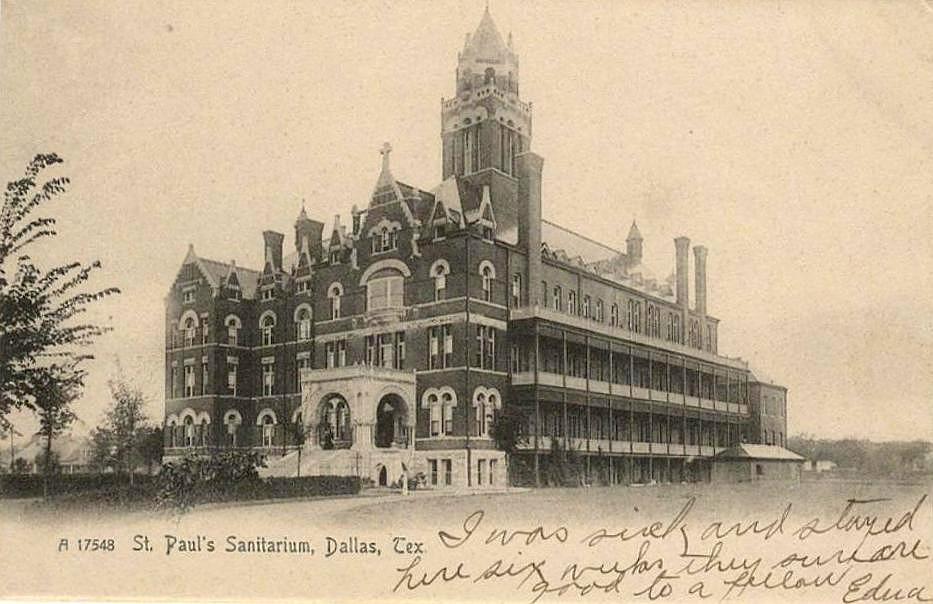
st-pauls_postcard_de-paul-univSt. Paul’s Sanitarium, located at Bryan & Hall (click for larger image)

by Paula Bosse

My posting has been infrequent as of late, due, in part, to obligations concerning a family member’s hospital stay. So, since I have a short time before I have to rush off to run errands and make visits, why not focus on a historic Dallas hospital?

St. Paul’s Sanitarium was opened in a small cottage on Hall Street in 1896 by the Daughters of Charity of St. Vincent de Paul, but it soon moved to the new large H. A. Overbeck-designed building on Bryan Street in 1898. In 1927 the name changed to St. Paul’s Hospital, and in 1958, the name changed again, this time to St. Paul Hospital. The imposing building and annex (and whatever other structures were contained in the complex) were demolished in 1968.

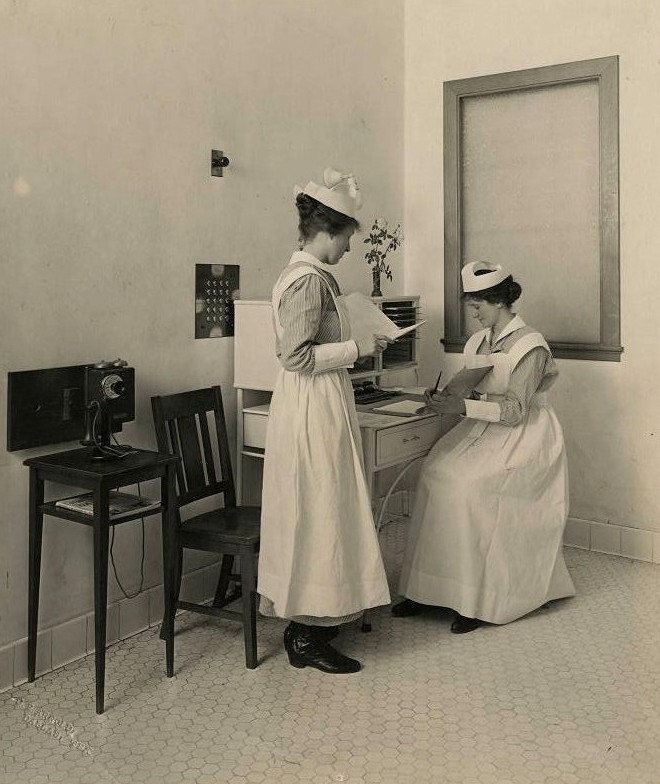
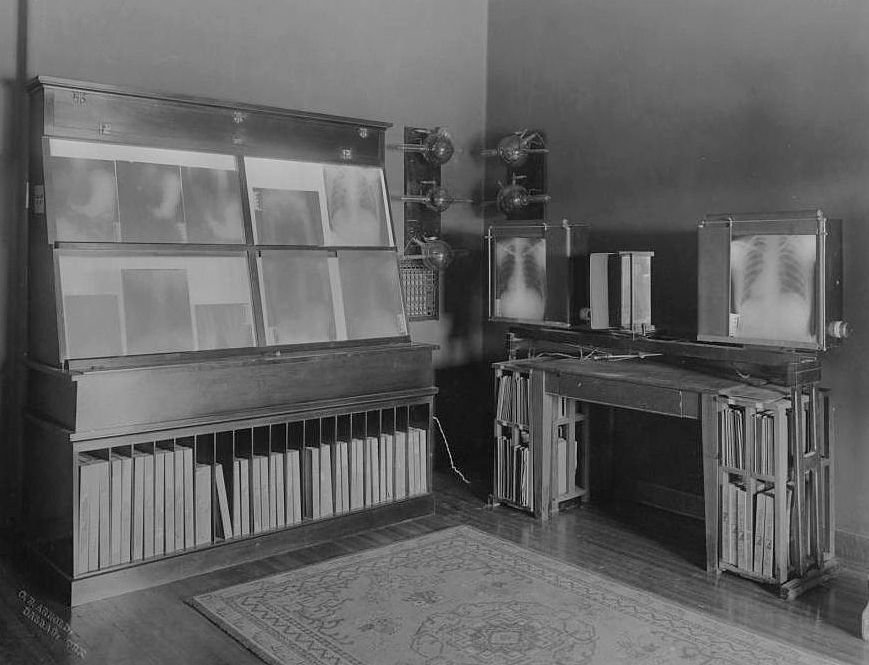
Below are several wonderful photographs taken inside the sanitarium around 1910 by one of Dallas’ best photographers, C. E. Arnold. They are from the St. Paul Hospital Collection in the UT Southwestern Library (click links below photos to see info about each picture).

*

st-pauls_nursing-stn_1910_utsw_smThe nursing station.

*

st-pauls_mexican-ward_1910_utswThe “Mexican Ward” (as noted on the back of the photograph).

*

st-pauls_sleeping-porch_1910_utswA patient ward on a screened-in sleeping porch.

*

st-pauls_waiting-room_1910_utswA waiting room.

*

st-pauls_xray-room_1910_utswThe x-ray room.

*

st-pauls_nurses-library_1910_utswThe nurses’ library. (I LOVE this photo! Check out the crazy typewriter stand attached to the desk — I’ve never seen anything like that before.)

*

st-pauls_student-nurses-dorm_1910_utswThe nurses’ dormitory on the top floor.

*

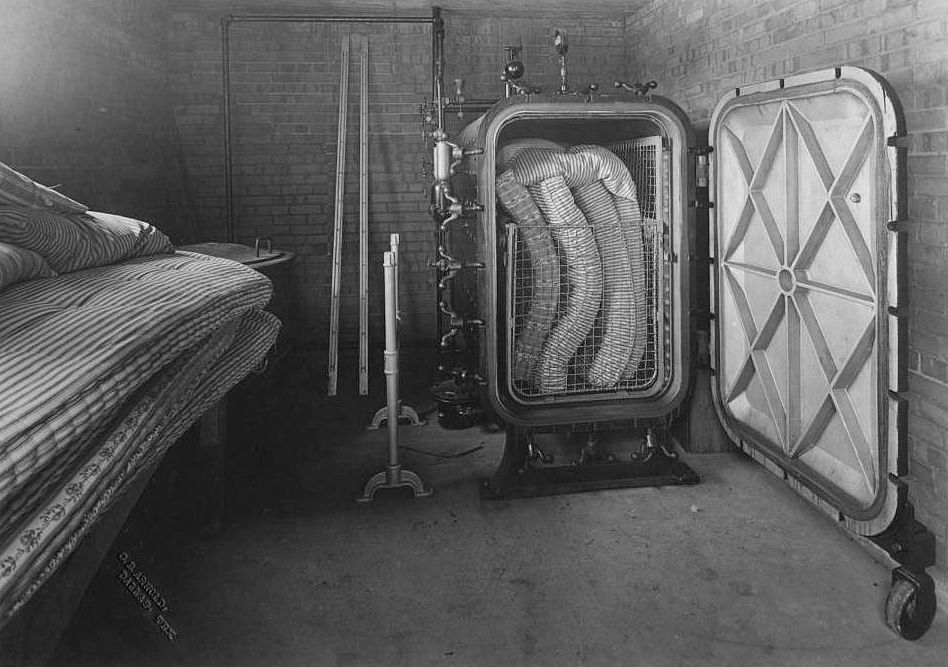
st-pauls_mattress-sterilization-room_1910_utswAnd, my favorite, the ominous-looking mattress sterilization room in what appears to be a dungeon.

*

st-pauls_flickr_coltera

**

UPDATE: Check out some fantastic historic photos of the hospital and its nurses contained in this UT Southwestern Medical Center publication, “St. Paul University Hospital, A Legacy of Caring,” here.

***

Top postcard is from the Vincentiana Postcard Collection, Special Collections and Archives, DePaul University Library, Chicago; it can be found here.

Bottom postcard, with the cheerful message from Edna, was found on Flickr, here.

All photographs are from the St. Paul Hospital Collection in the UT Southwestern Library. Other photos from this 1910 collection can be found here. (For fuller descriptions, click the linked text beneath the photos in this post.)

An interesting article on the photographer, Charles Erwin (C. E.) Arnold, and the technique used in capturing his interiors, can be found here.

A historical timeline of St. Paul’s can be found in a PDF here.

Wondering where St. Paul’s Sanitarium was located? It was at Bryan and Hall streets, across from Exall Park. Here is the location, from a 1919 map:

st-pauls_1919-map

All images larger when clicked.

*

Copyright © 2015 Paula Bosse. All Rights Reserved.

Neon Refreshment: The Giant Dr Pepper Sign

hotel-jefferson_neon-dr-pepper_cook_degolyer_SMU_ca1945

by Paula Bosse

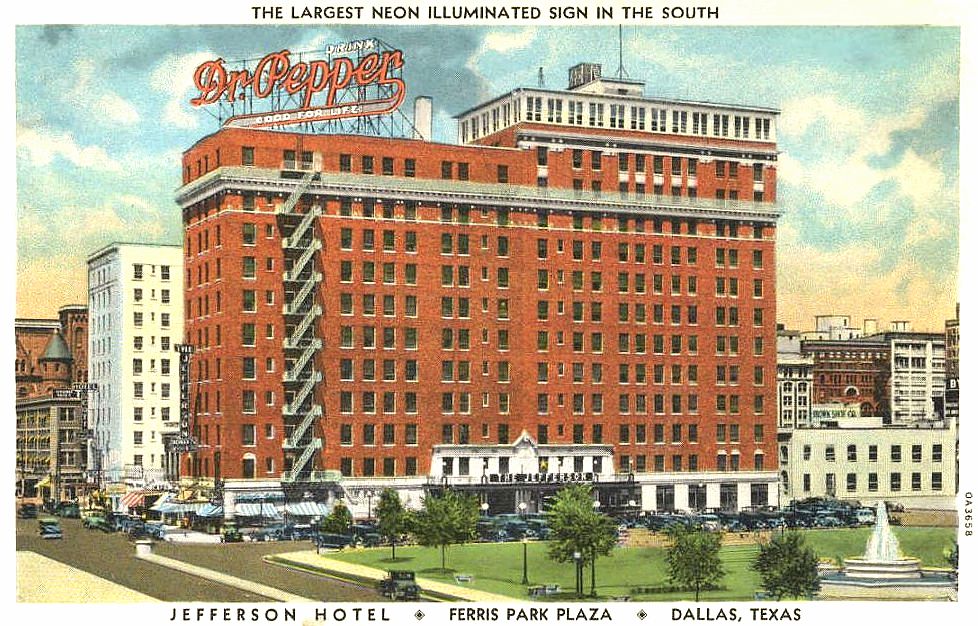
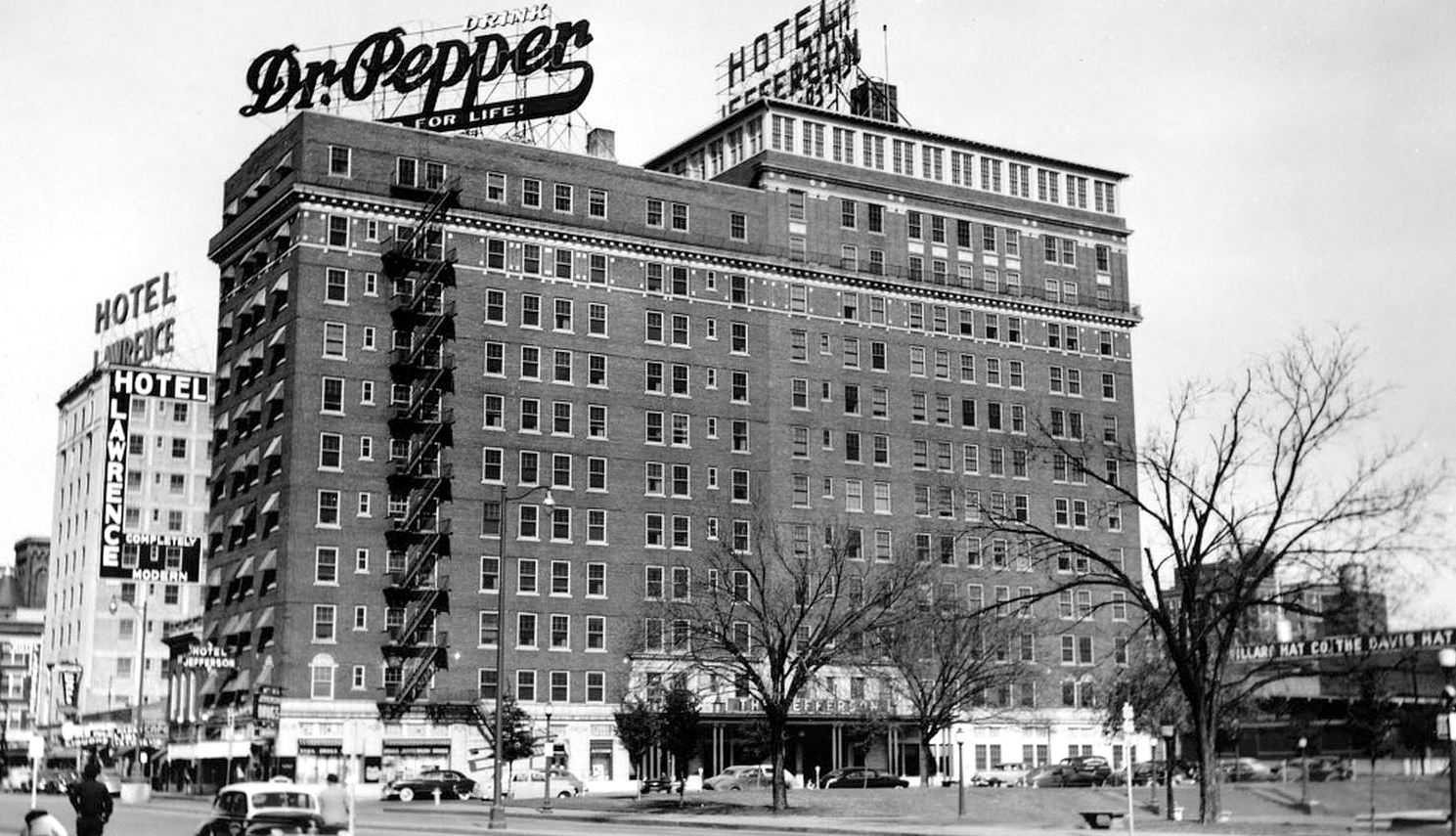
The Jefferson Hotel probably made some serious money leasing out rooftop acreage to the Dr Pepper people who erected a huge neon sign there. The hotel was located across from Union Station and a couple of blocks from the Old Red Courthouse. For people approaching the city from the southwest, there was absolutely nothing between them and that refreshing beacon rising tantalizingly above S. Houston and Wood streets.

hotel-jefferson_neon-dr-pepper_cook_degolyer_ca1945-verso

jefferson-hotel_hotel-lawrence_dr-pepper-sign_dmn-tumblr

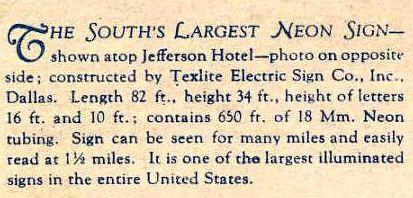
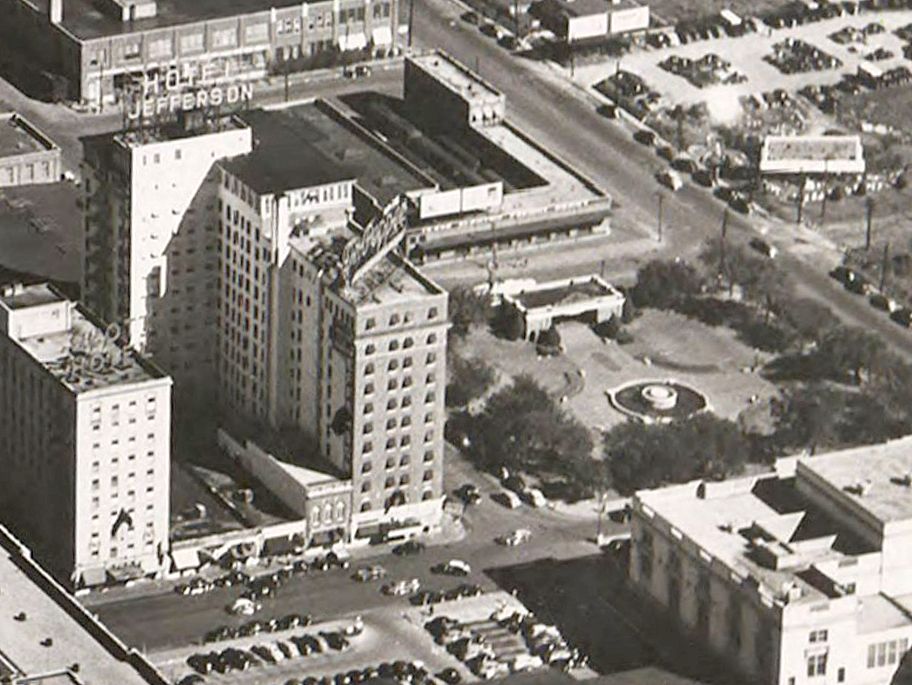
Texlite — the Dallas company that made the sign — was the first company in the Southwest to build and sell neon signs. Their first neon in Dallas advertised a shoe store in 1926 or 1927. (Texlite is best known as the company that built the red neon Pegasus and installed him on top of the Magnolia Petroleum Building in 1934.) My guess is that this Dr Pepper sign went up sometime between 1927 and 1934. It was up there for quite some time. Below is a detail from a photo taken sometime after 1943, and that DP sign was still there, continuing to make people subliminally thirsty

hotel-jefferson_dp_foscue-det(click for larger image)

It’s surprising Dallas didn’t have more neon back then. With a pioneering hometown neon company, the Dallas skyline should have been lit up like a Christmas tree 24 hours a day!

***

Sources & Notes

Postcard is from the George W. Cook Dallas/Texas Image Collection, Central University Libraries, Southern Methodist University; it can be viewed here.

First black-and-white photo was purchased at an antique mall or flea market, origin unknown; found here.

The 1940s-era aerial photo is a detail of a larger photo, “Downtown Dallas looking east (unlabeled)” by Lloyd M. Long, from the Edwin J. Foscue Map Library, Central University Libraries, SMU; the full photo can be viewed here.

A great photo of the hotel and sign can be seen in Sam Childers’ Historic Dallas Hotels, here. Childers writes that the Dr Pepper sign came down when the Jefferson was sold and became the Hotel Dallas in 1953. 20-some-odd years for a sign like that to remain in one place is a pretty good run.

The Jefferson Hotel (or as it’s sometimes identified, “Hotel Jefferson”) was at 312 S. Houston St. The building was demolished in 1975. It is now a hotel-shaped parking lot.

See what other clever thing once occupied the roof of the Jefferson Hotel in the Flashback Dallas post “The Jefferson Hotel and Its ‘Wireless Telegraph’ Rooftop Tower — 1921.”

*

Copyright © 2015 Paula Bosse. All Rights Reserved.