Flashback : Dallas

A Miscellany: History, Ads, Pop Culture

Category: Restaurants

El Chico Foods/Cuellar Foods
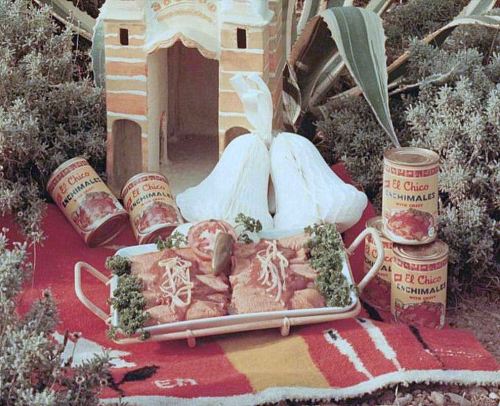
enchimales_canned_introduced-1968_portal_detEl Chico’s Enchimales with Gravy, ca. 1968

by Paula Bosse

I give you the “Enchimale,” a product introduced under the El Chico label in 1968. A news release described the delicacy thusly: “Wedding bells are ringing at El Chico for the marriage of the enchilada and the tamale, and the new product is called the Enchimale. […] This food is in the shape of a tamale, filled with fresh meat, with a mild enchilada sauce over it” (Dallas Morning News, Oct. 31, 1968). (So… a tamale?) I gather this was a short-lived product. (See the “Sources & Notes” section at the bottom of this page for an unusual and unrelated — I hope — recipe for enchimales which appeared in a newspaper in Spokane, Washington in 1950.)

This photo caught my eye while I was looking into the history of El Chico’s manufactured foods. Especially their canned foods, which I was unaware of. I’m not surprised they existed — I remember their frozen food line — I just have no memories of canned foods from El Chico.

But I’m getting ahead of myself. You’ve probably heard the story of Mama Cuellar and the Cuellar brothers and their El Chico empire (if not, a good article is here). As far as their Dallas restaurants, the Cuellar brothers opened their first El Chico restaurant in 1940 at 3514 Oak Lawn (next door-ish to Lucas B & B, which opened in Oak Lawn in 1953). This location closed in either 1954 or 1955.
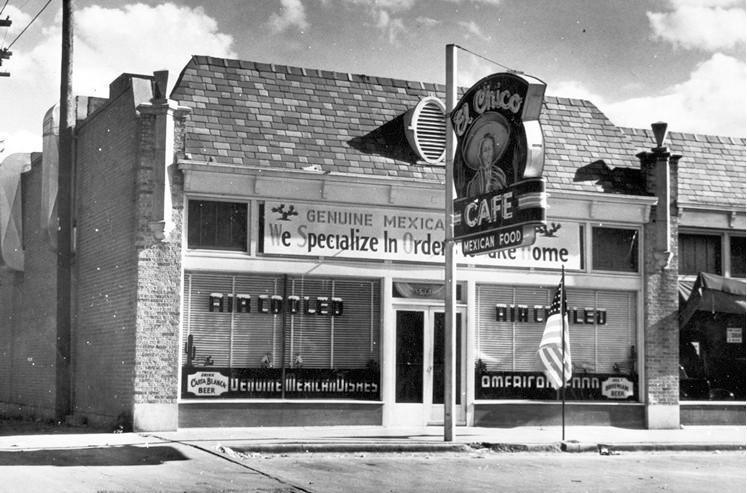
el-chico_oak-lawn_d-mag_nov-2013El Chico No. 1, Oak Lawn, via D Magazine
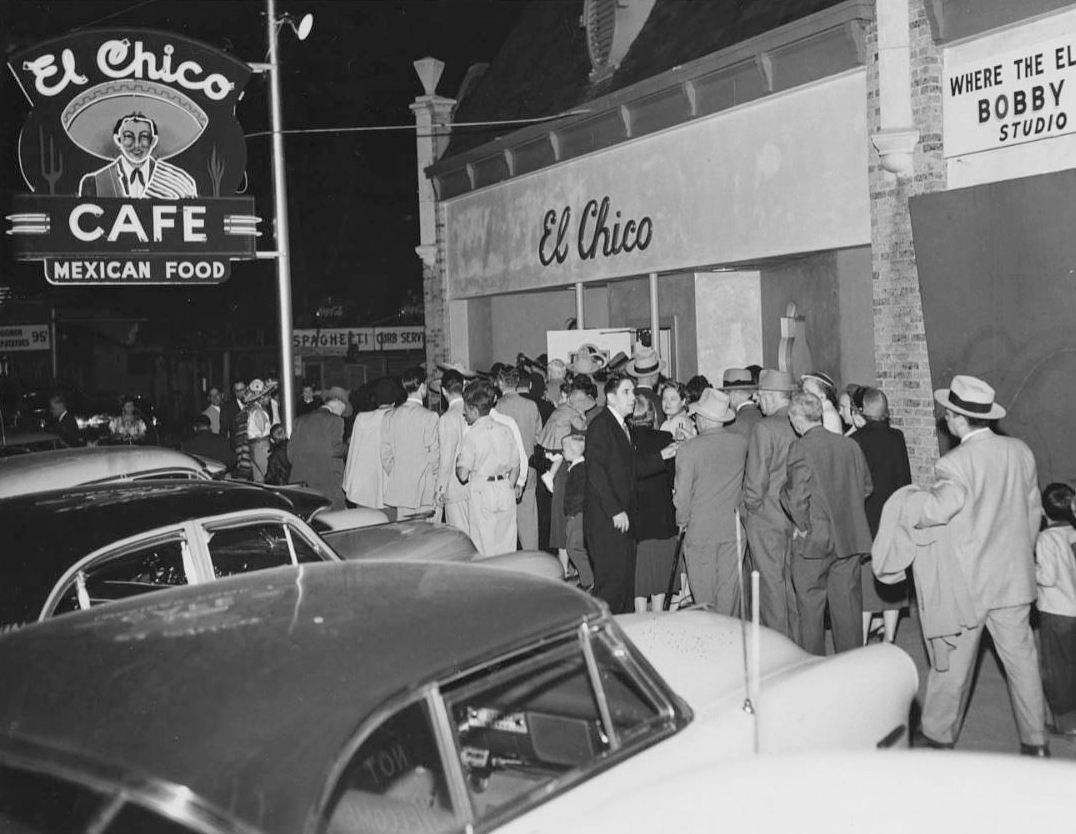
el-chico_oak-lawn_no-1_portalEl Chico No. 1, Oak Lawn, via Portal to Texas History

Six years later, they opened their second location in Lakewood at 2031 Abrams.
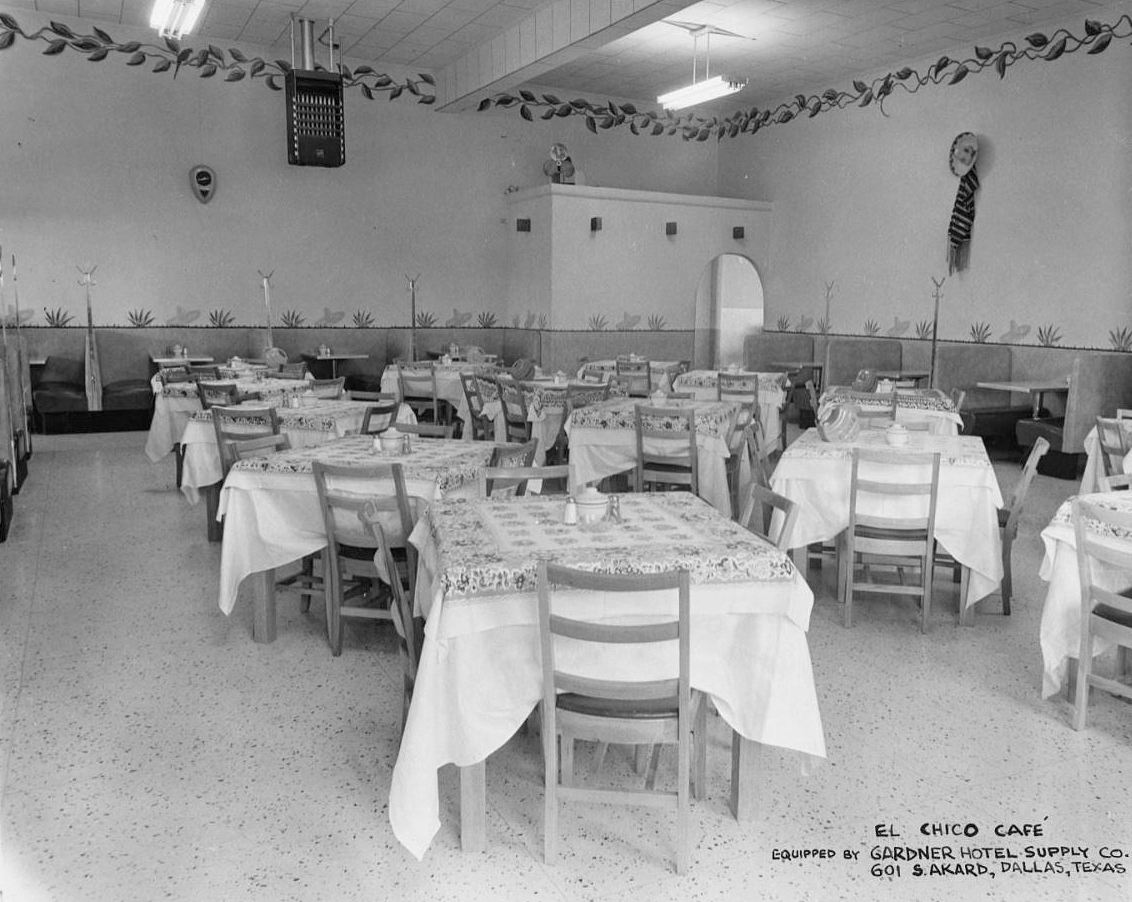
photo_el-chico-no-2_lakewood_portalEl Chico No. 2, Lakewood, via Portal to Texas History

Their third Dallas location opened near the Inwood Theater in 1949 at 5526 Lovers Lane.
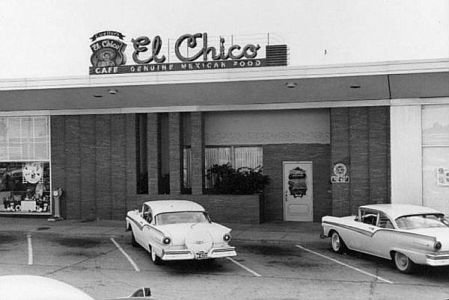
el-chico_inwood-village_1953_inwood-village-websiteEl Chico No. 5, via Inwood Village website

When that location opened, the family was operating 11 restaurants in Texas, Oklahoma, Louisiana, and Kansas. Things were good in Cuellar-land.

At the end of 1949, the Cuellars decided to begin manufacturing canned food products, with the aim to sell Tex-Mex staples nationally under the label “El Chico Foods.” The new factory was located at 162 Leslie St., in the then-pretty-new Trinity Industrial District. (They later moved waaaaaaaaaaay up north, to 1925 Valley View Lane.)
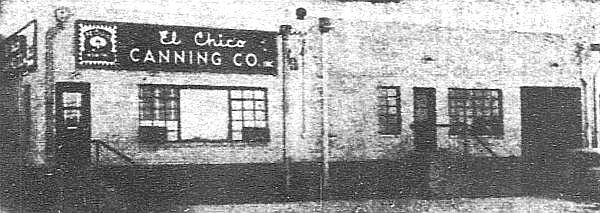
el-chico-canning-coEl Chico Canning Co., 162 Leslie St., Dallas

El Chico canned foods began to show up in DFW grocery stores in March 1950. Make way for canned chili, enchiladas, tamales (in corn husks), enchilada sauce, and hot sauce.
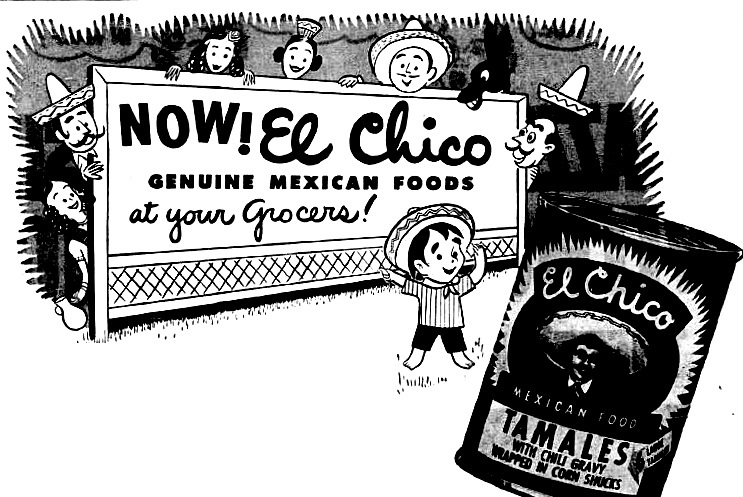
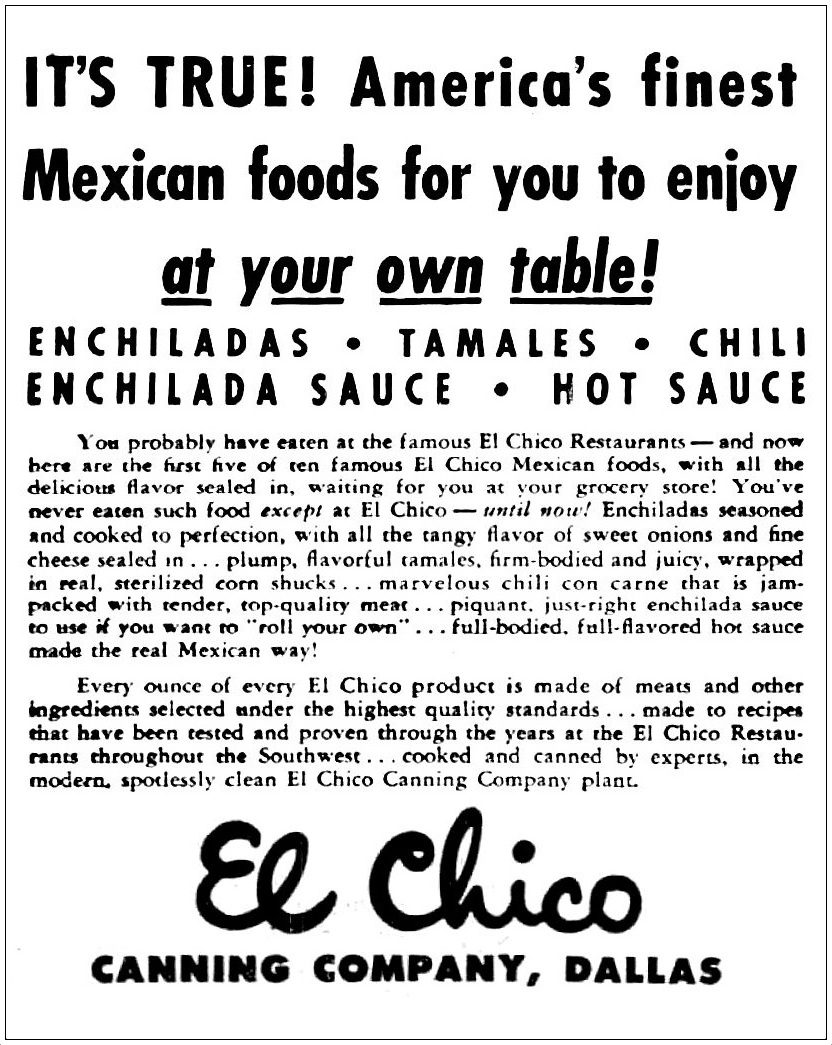
1950_canning-co_FWST_031750_det-1

1950_canning-co_FWST_031750-det-2Fort Worth Star-Telegram, Mar. 17, 1950

Soon to follow were other foods, including the mystifying canned tortillas — thanks to the photo below, I now know that it was possible to buy tortillas in a can, which was opened with a key. Just like Spam, or a canned ham. (Not sure what the “El Chico Show” was, but apparently it was broadcast on Channel 5 — at least in October 1950.)
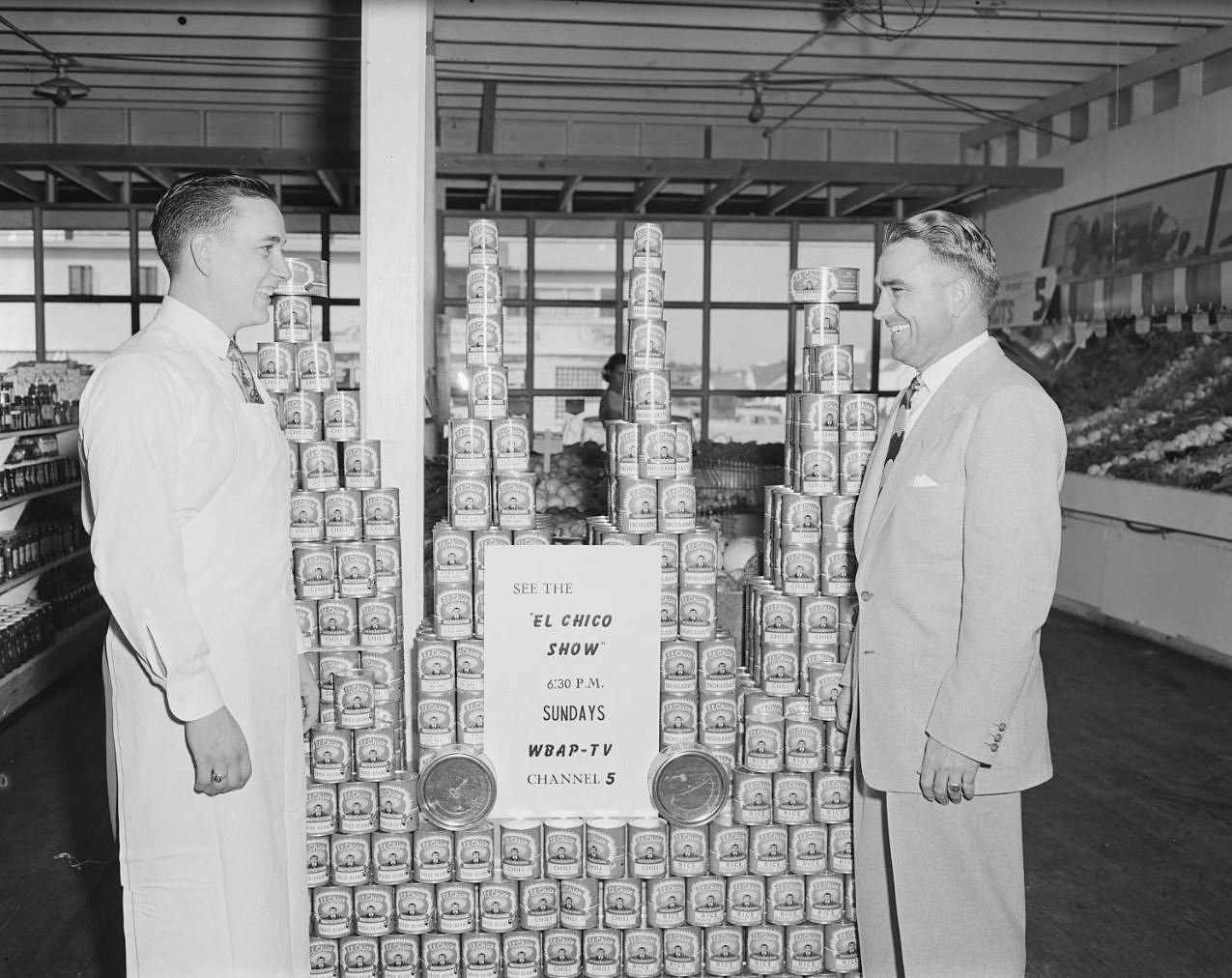
el-chico_canned-products_KXAS-NBC-5-collection_102450_portalOctober 1950, via Portal to Texas History

Business boomed! After only 9 months, production tripled. After 2 years El Chico canned foods were in more than 30 states.

But in March 1953, the Cuellar family was sued in federal court for copyright infringement by a man named Benito Collada who owned a well-known nightclub in Greenwich Village called “El Chico,” a name he copyrighted in 1931. He demanded that the Cuellars change the name of their restaurants and their canned foods. The judge handed down an unusual verdict in which both sides were able to claim partial victory (or partial loss): the Cuellars were allowed to keep “El Chico” as the name of their restaurants, but they had to bid adios to the name on their canned foods.

The company regrouped and rebranded. The name of their Tex-Mex products became “Cuellar’s,” and the label even came with a pronunciation guide: “QUAY-YAR.”
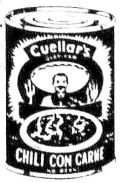
cuellar-chili

Apparently, sales dropped. Steeply. The Cuellars fought their way through the appeals process, determined to retain the “El Chico” name on their manufactured foods, and, in September 1954 they won the right to once again sell canned foods under the El Chico brand.
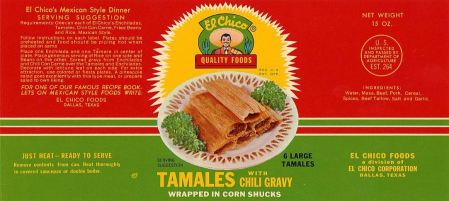
el-chico_canned-tamales_label_smithsonian

Sales really increased when they added frozen dinners to their line — their factory on Leslie Street installed a huge freezing system — they were able to freeze 6,000 frozen dinners at a time in 90 minutes.
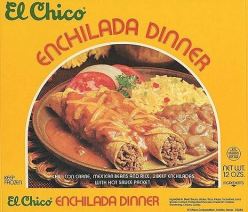
el-chico_frozen_smithsonianvia Smithsonian Institution

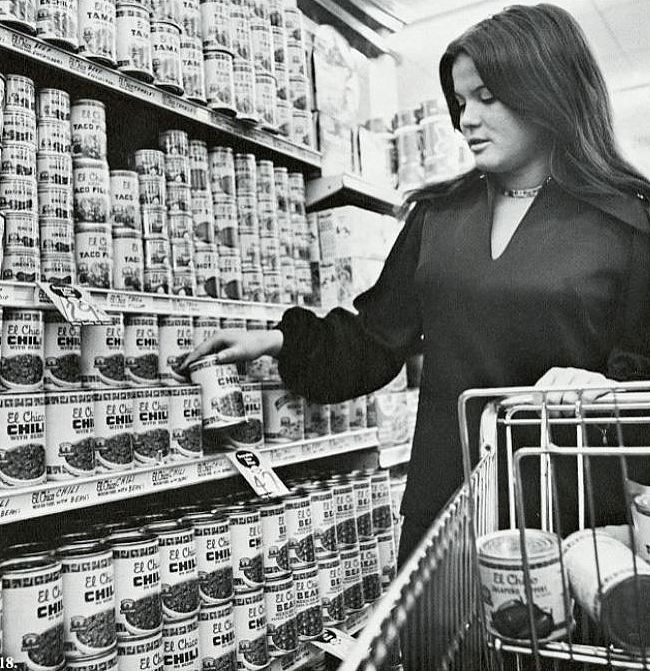
el-chico_shopper_shelves_smithsonianvia Smithsonian Institution

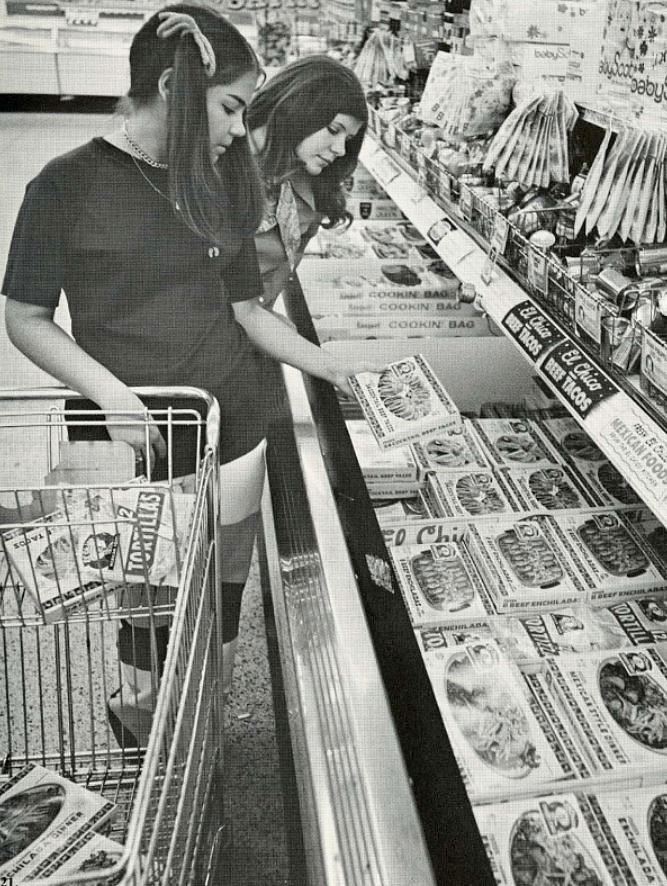
el-chico_shoppers_frozen_smithsonianvia Smithsonian Institution

Along with the typical frozen dinners you’d expect, El Chico also sold frozen tortillas. In the photo above, there is a box of frozen tortillas in the shopping cart and in the freezer case. As I recall, I think I liked the frozen Mexican dinners as a kid, but frozen tortillas and tortillas in a can sound equally unappealing.

The frozen dinners ultimately took over the manufacturing side of Cuellar foods, and at some point, the canned products eventually faded away. As I said, I remember the frozen dinners, but I don’t remember the canned foods at all. But I find them so interesting that that they are going to get their very own post — check out that post here.

***

Sources & Notes

Top (cropped) image is from the Frank Cuellar Sr. Collection, University of North Texas Special Libraries Collection, Portal of Texas History, and can be found here (the full collection may be browsed here).

Several images in this post are from the Smithsonian Institution’s “Guide to the El Chico Restaurants Collection.”

Read a good history of the Cuellar empire in “The Family Who Sold Tex-Mex to America” by Nancy Nichols, D Magazine (Nov. 2013).

So. “enchimales.” I did a quick search on the word and found mentions back to 1934 for a cafe selling something with this name in Shreveport. For all I know, this is a traditional Mexican dish which I’ve just never heard of. BUT, I wonder whether any actual Mexican-related dish would bear any resemblance to the enchimales recipe devised by Mrs. Vincent Katzenberger of Garfield, Washington which appeared in Spokane’s Spokesman-Review newspaper? It was the 14th-place (!) winner in the “Meltin’ Pot” international cooking competition. Here’s a short synopsis of Mrs. Katzenberger’s dish, which is made like enchiladas: in a tortilla, place a filling of onions, cheddar cheese, and a can of olives (all of which has been passed through a meat grinder) — on top of that filling, plop one canned tamale; roll up this filled tortilla and place it in a baking dish; repeat a dozen or so times; cover everything with tamale sauce; bake; when done, serve on a lettuce leaf and top with sprinkles of Parmesan cheese. The recipe is here. If you make this, please let me know how it came out.

enchimales_canned_introduced-1968_portal_det_sm

*

Copyright © 2023 Paula Bosse. All Rights Reserved.

Safari Redux

safari_squire-haskins_1961_UTA_1Dallas? Yes!

by Paula Bosse

Back in 2014 — when Flashback Dallas was still in its blogging infancy — I wrote about the Safari Steak House in North Dallas in the post “Back When Preston Royal Was ‘Exotic’ and Had Its Very Own Elephant.” There were a few errors in that post which I corrected today, thanks to a couple of commenters on the original post who pointed out that what I thought showed the Safari restaurant at Preston & Royal showed, instead, the Houston location. Kind of embarrassing!

What better time than this to say that I ABSOLUTELY WELCOME CORRECTIONS!! I’d like this blog to be as unpedantically accurate as possible, so, please, if you see I’ve smugly written something which is blatantly incorrect, please let me know! I’ll be happy you let me know.

I invite you to check out that original post, now updated with a couple of photos of the actual Dallas Safari Steak House, including the one above, taken by the estimable Squire Haskins in 1961.

***

Sources & Notes

Photo “Safari Steak House, Dallas, Texas” by Squire Haskins, 1961, from the Squire Haskins Photography Inc. Collection, University of Texas at Arlington Libraries, Special Collections — more info on this photo can be found here. (Thank you for the links, Tom Bowen!)

The Safari space is now occupied by Royal China, which I love from the days I worked across the street at Borders.

safari_squire-haskins_1961_UTA_1_sm

*

Copyright © 2022 Paula Bosse. All Rights Reserved.
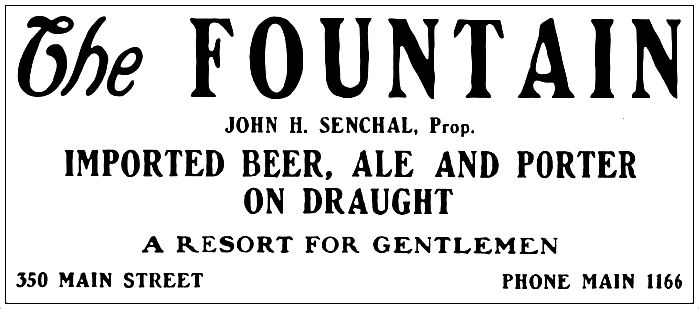
The Fountain: “A Resort for Gentlemen” — ca. 1911

by Paula Bosse

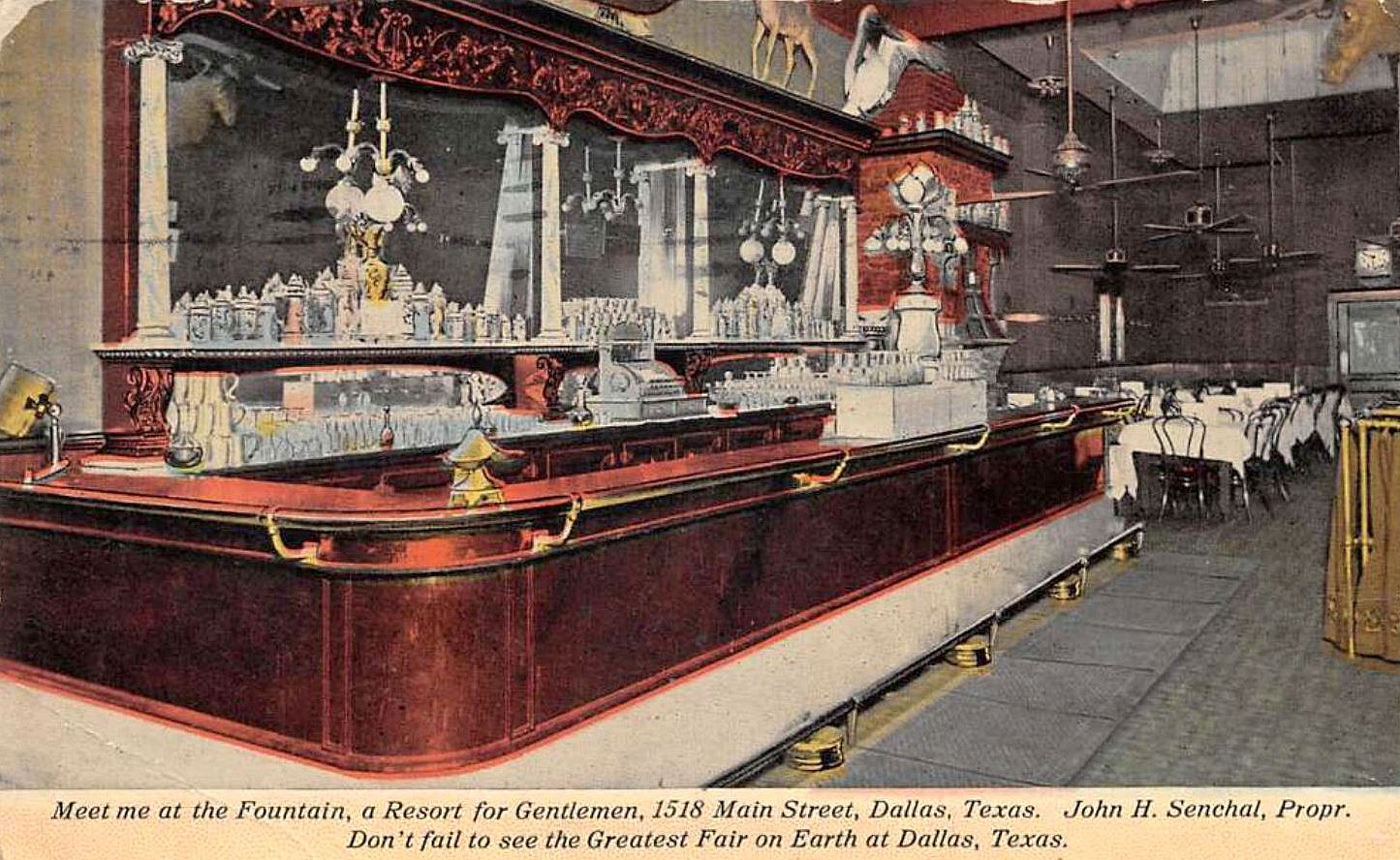
This postcard (which has a 1911 postmark) shows The Fountain, a well-appointed drinking establishment (not lacking in ceiling fans). The caption reads:

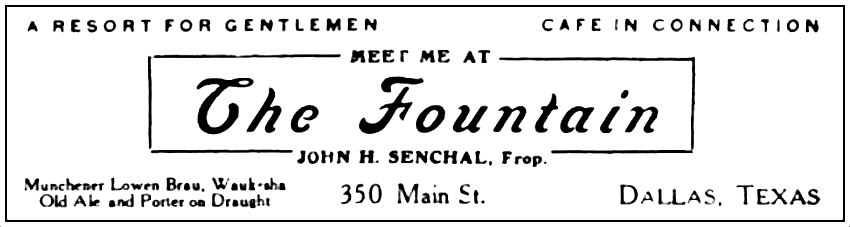
Meet me at the Fountain, a Resort for Gentlemen, 1518 Main Street, Dallas, Texas.
John H. Senchal, Propr.
Don’t fail to see the Greatest Fair on Earth at Dallas, Texas.

This bar-with-food was located on the south side of Main, steps away from the present location of Neiman Marcus. It was in the block seen in the picture below (it is just out of frame at the bottom right, next door to the Colonial Theater):

Main Street looking east from Akard

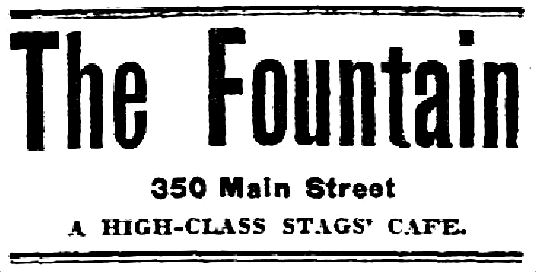
Its address was originally 350 Main — after the city-wide address change in 1911, it became 1518 Main. It appears to have opened in 1907 and was in business until at least 1918 (after Dallas voted to go “dry,” the former saloon became The Fountain Cafe). Here are a few early ads for the “High-Class Stags’ Cafe” in its early go-go “gentlemen’s resort” days: 

Dallas Morning News, Oct. 1907

Dallas directory, 1909

Dallas Police annual, 1910

A few years later, the owner, John Henry Senchal, opened Senchal’s Buffet and Senchal’s Restaurant and Rathskeller at 1614-1618 Main.

Dallas directory, 1915

*

Johnnie Senchal — born in Galveston in 1875 to a French father and American mother — appears to have been a popular, civic-minded man’s-man. He frequently traveled with Dallas businessmen to other cities and states to act as a booster for the city. He also indulged in sporty activities such as being a regular wrestling referee and sponsoring horse races at the State Fair of Texas (in 1914 a $2,000 “Fountain Purse” was offered — in today’s money, more than $56,000!). One 1915 newspaper report said he was “probably the best known saloon man in the city.” He was very successful and was not hurting for money.

He also seems to have had a cozy relationship with members of the Dallas police department — a situation which is probably commonplace between saloon-owners and cops. One news story described how he had leapt to the defense of a policeman who was waylaid by a large group of men while he was walking prisoners to jail — a huge brawl broke out, and Senchal and the cop emerged victorious. Also — in a story which wasn’t fully explained — Senchal and another man ponied up $5,000 in bond money ($140,000 in today’s money!) for a Dallas policeman who was charged in the fatal shooting of a 17-year-old, Those are some strong ties between a saloonkeeper and the local constabulary, man.

In 1912 there was another confusing story concerning a man who had been arrested and convicted for being the owner/lessee/tenant of an establishment which was “knowingly permitted to be used as a place in which prostitutes resorted and resided for the purpose of plying their vocation. […] The house was a ‘disorderly house.’ Prostitutes resorted there and displayed themselves in almost a nude condition.” The man who was charged was seen there on a number of occasions “dancing with the prostitutes.” The man appealed his conviction because he had been charged with being the owner/lessee/tenant of this “bawdy house” — but the lessee/tenant was none other than Johnnie Senchal and another man. As far as I can tell, Senchal was not charged with anything regarding this case. 

But a couple of years later, in 1914, he was charged with running a “disorderly house” (a term often meaning a bordello or gambling den, but also meaning a place which is frequently the site of disturbances and is generally considered to be a public nuisance). It seems Johnnie and other were offering “cabaret” entertainment which might gotten out of hand. From The Dallas Morning News:

Alleging that the cabarets are conducted as “disorderly houses,” [charges were filed] on behalf of the State of Texas against owners of three restaurants in the downtown section. Affidavits accompanying the petitions alleged that women were allowed to drink at the places and to act in an unbecoming manner. (DMN, March 12, 1915)

I’m not sure exactly what constituted “an unbecoming manner,” but Johnnie Senchal was one of the men charged. At the very same time he was fighting this violation of the cabaret ordinance, it was reported that “an involuntary petition in bankruptcy has been filed in the United States court here against John Senchal and J. O. Walker, partners in the saloon business on Main Street. The petition was filed by local brewery agents and whisky houses” (DMN, June 20, 1915). Bankrupt! Even though he was apparently rolling in dough for years, he was rather ironically pushed to bankruptcy because he couldn’t pay his own bar tab.

And so Johnnie put the barkeeper’s life behind him. And I mean he REALLY put it behind him: he became a fervent speaker at Anti-Saloon League events, saying that having been forced out of the saloon game was actually a godsend — he was quoted as saying that his profits increased 75-80% when he stopped selling alcohol and became a full-time restaurateur. That seems unlikely, but that’s where he was in 1918, an improbable evangelist for Prohibition. 

Soon after, he and his family moved to Houston, where he opened a small cafe. On Oct. 9, 1929, after closing-time, Johnnie Senchal died in his cafe from a self-inflicted gunshot wound. He was 54 years old.

***

Sources & Notes

Postcard of The Fountain found on eBay.

Postcard of Main Street found on Flickr.

*

Copyright © 2022 Paula Bosse. All Rights Reserved.
Pleasant Grove Eat Spots, including El Charo and the Vel-Mar — 1950s & 1960s

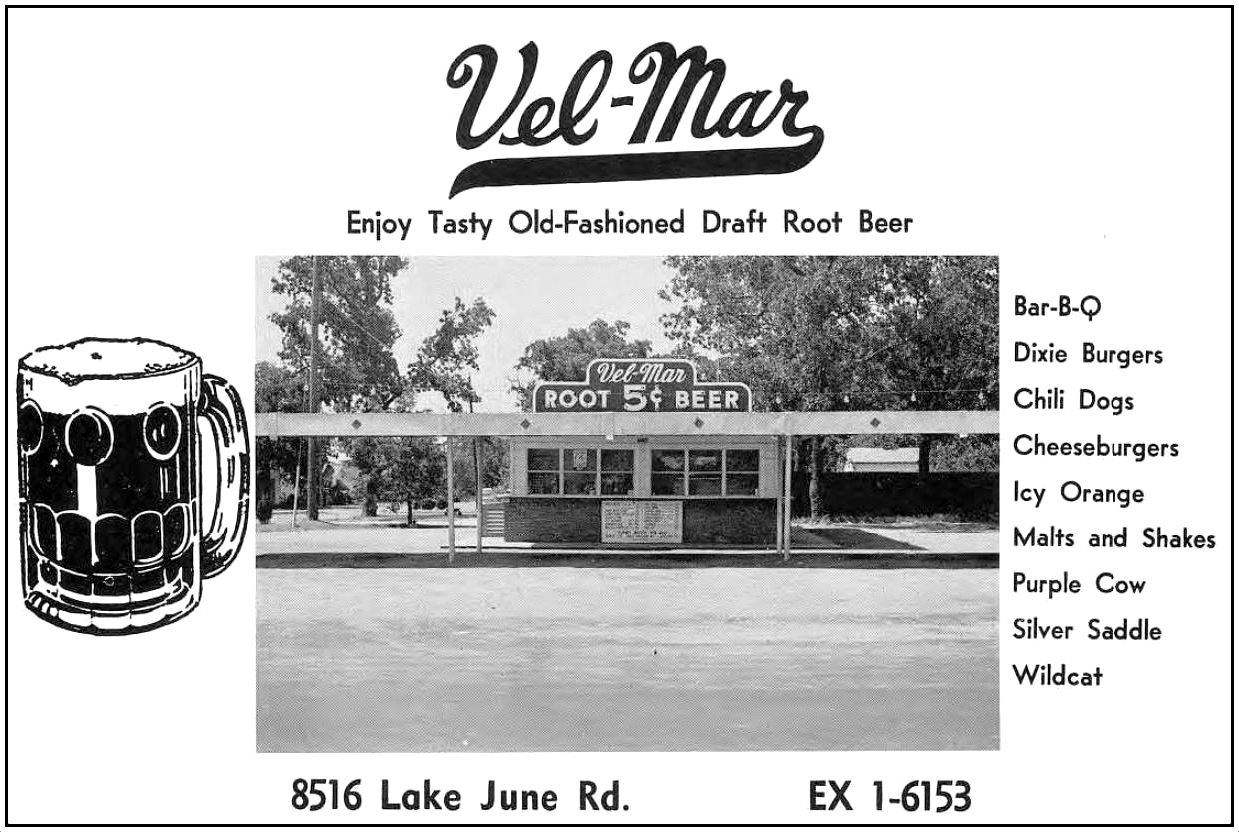
vel-mar_samuell-high-school_1959-yrbk_detVel-Mar, 8516 Lake June Rd., 1959

by Paula Bosse

Here are a whole bunch of ads for Pleasant Grove dining establishments, most with photos, thanks to the intrepid advertising staff of the yearbooks of H. Grady Spruce High School and W. W. Samuell High School. (Most ads are larger when clicked.)

You gotta start with Dairy Queen. I’m not sure how many DQs were in the Pleasant Grove area, but here are a couple.

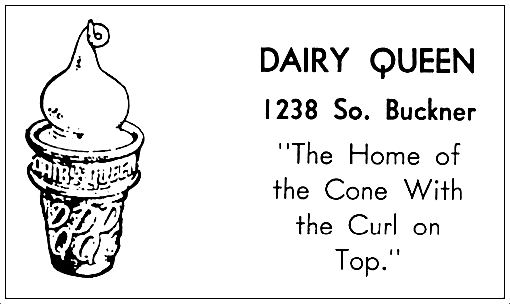
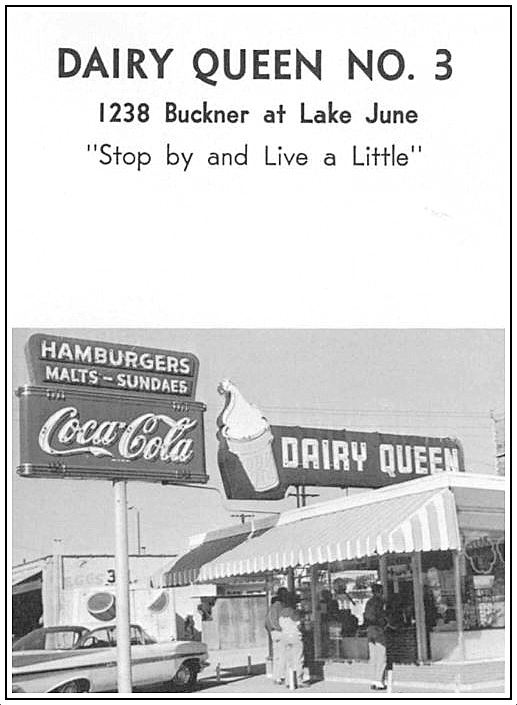
Benson Dairy Queen, 1238 S. Buckner Blvd.

samuell-high-school_1958-yrbk_benson-dairy-queen1958

spruce-high-school_1966-yrbk_dairy-queen1966

spruce-high-school_1967-yrbk_dairy-queen_buckner-and-lake-june_full1967

*

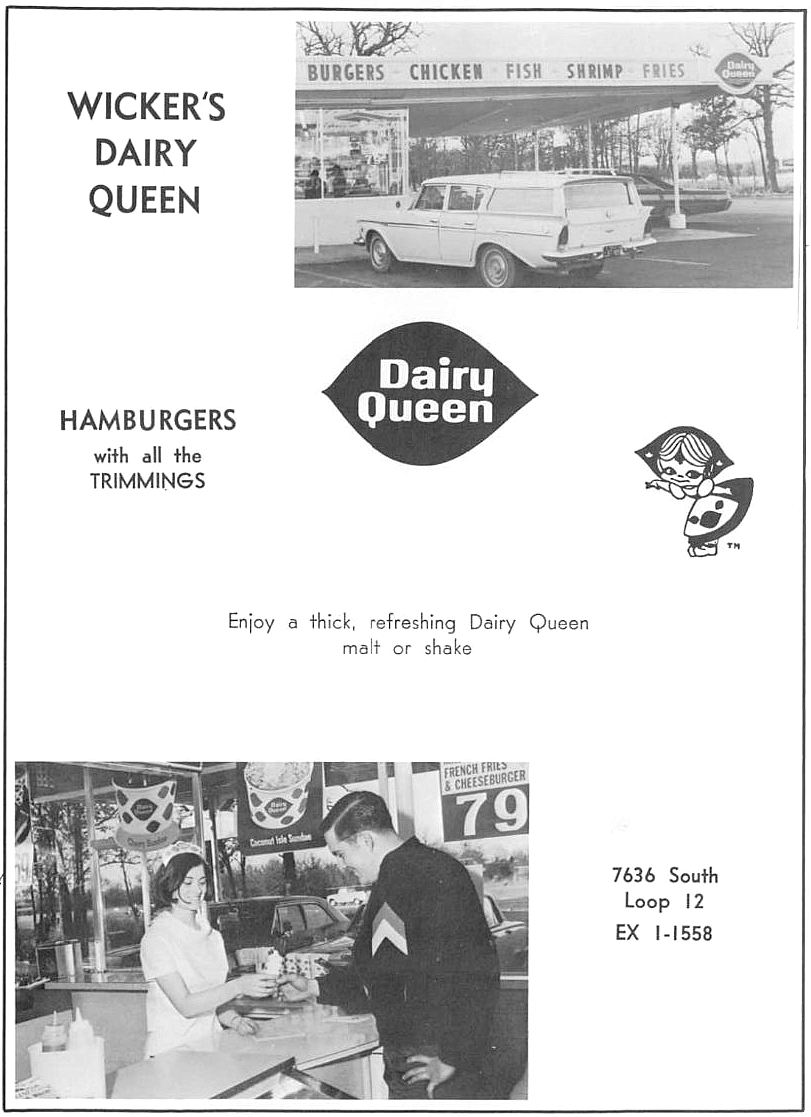
Wicker’s Dairy Queen, 7636 South Loop 12.

spruce-high-school_1967-yrbk_wickers-dairy-queen_full1967

*

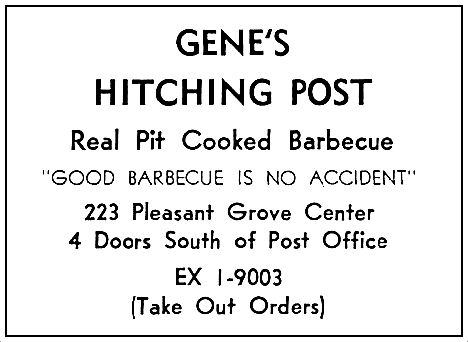
Gene’s Hitching Post, 223 Pleasant Grove Center. “Good barbecue is no accident.”

spruce-high-school_1964-yrbk_genes-hitching-post-bbq1964

*

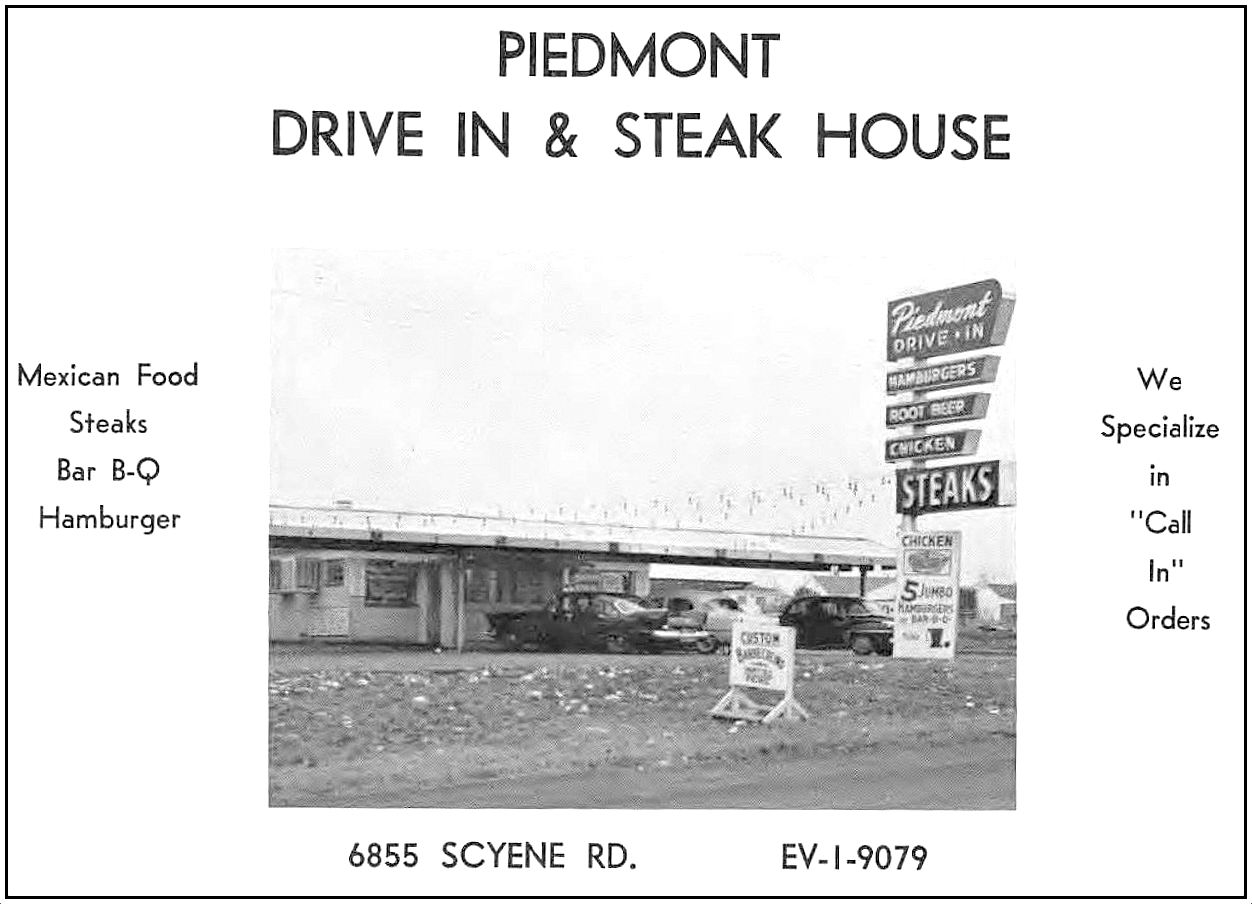
Piedmont Drive-In & Steak House, 6855 Scyene Rd.

samuell-high-school_1959-yrbk_piedmont-drive-in1959

*

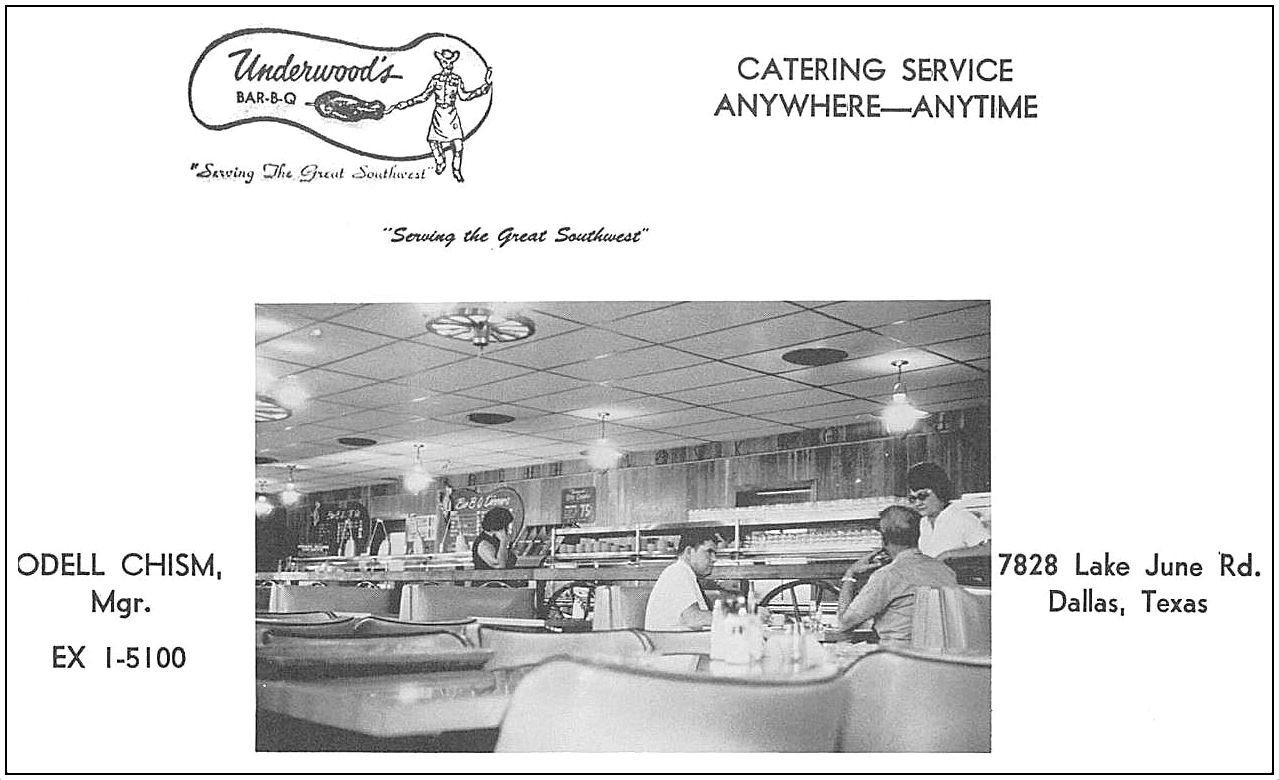
Underwood’s Bar-B-Q, 7828 Lake June Rd. Odell Chism, manager.

spruce-high-school_1967-yrbk_underwoods-bbq1967

*

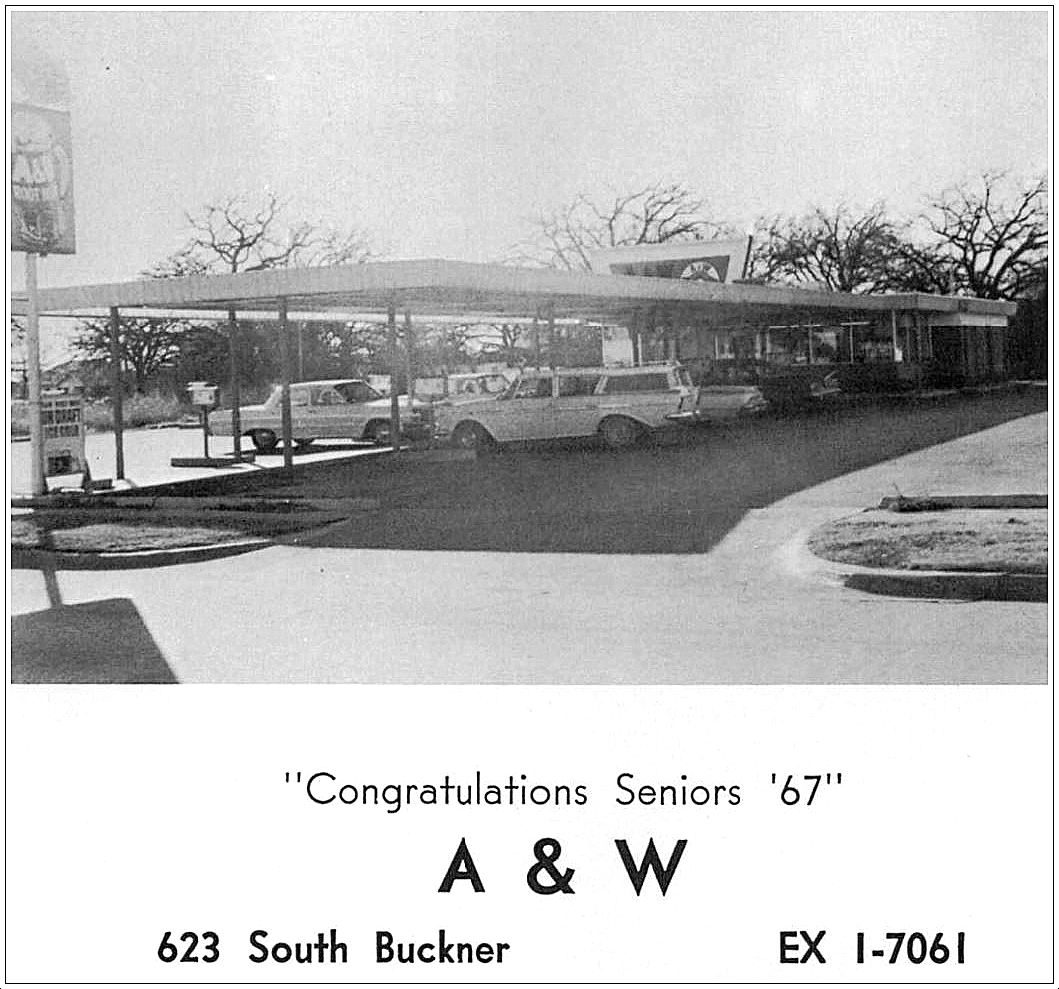
A & W, 623 S. Buckner.

spruce-high-school_1967-yrbk_a-and-w1967

*

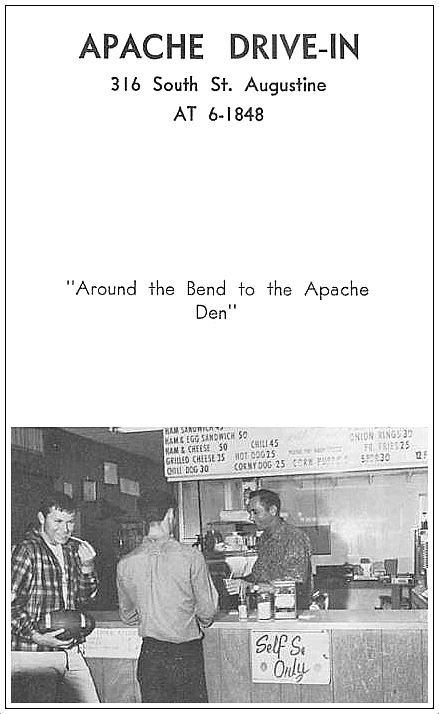
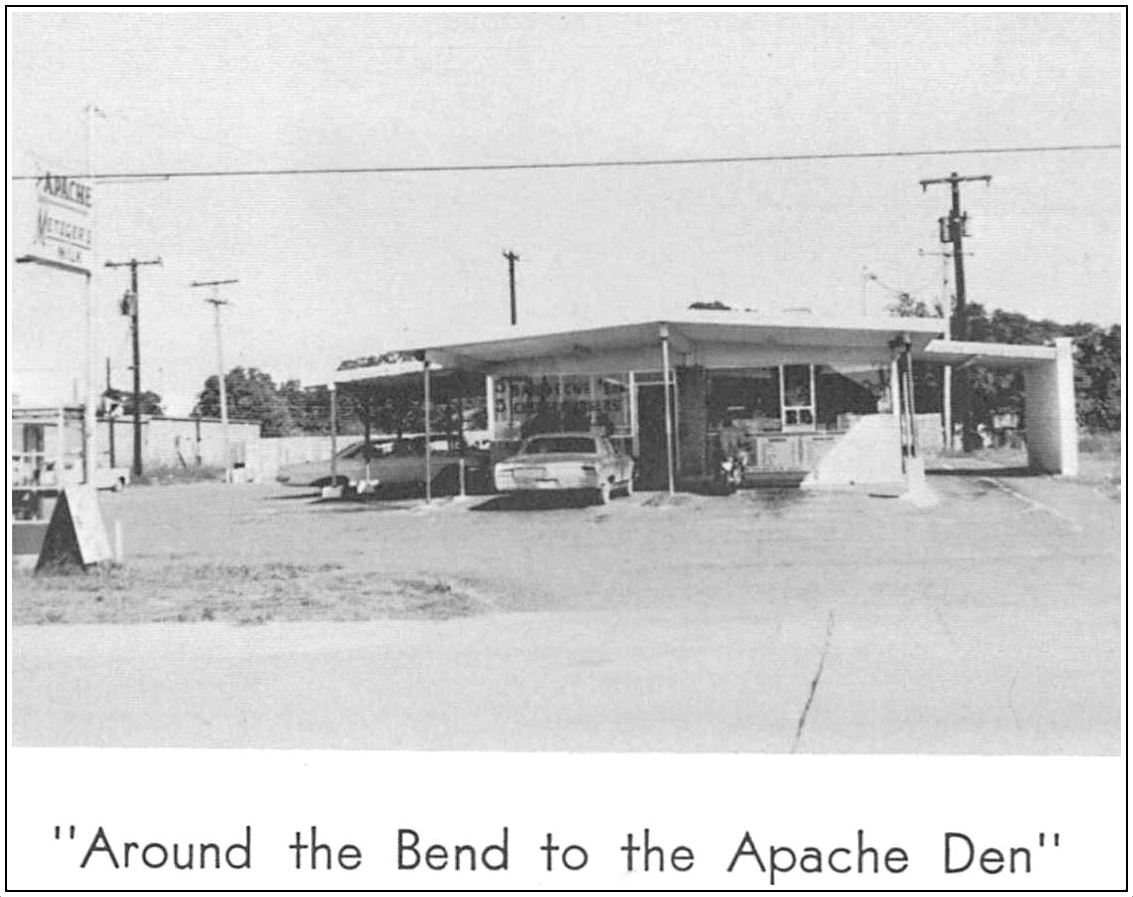
Apache Drive-In, 316 South St. Augustine. “Around the Bend to the Apache Den.” (The Spruce High School mascot was the Apache.)

spruce-high-school_1967-yrbk_apache-drive-in1967

spruce-high-school_1968-yrbk_apache-drive-in1968

*

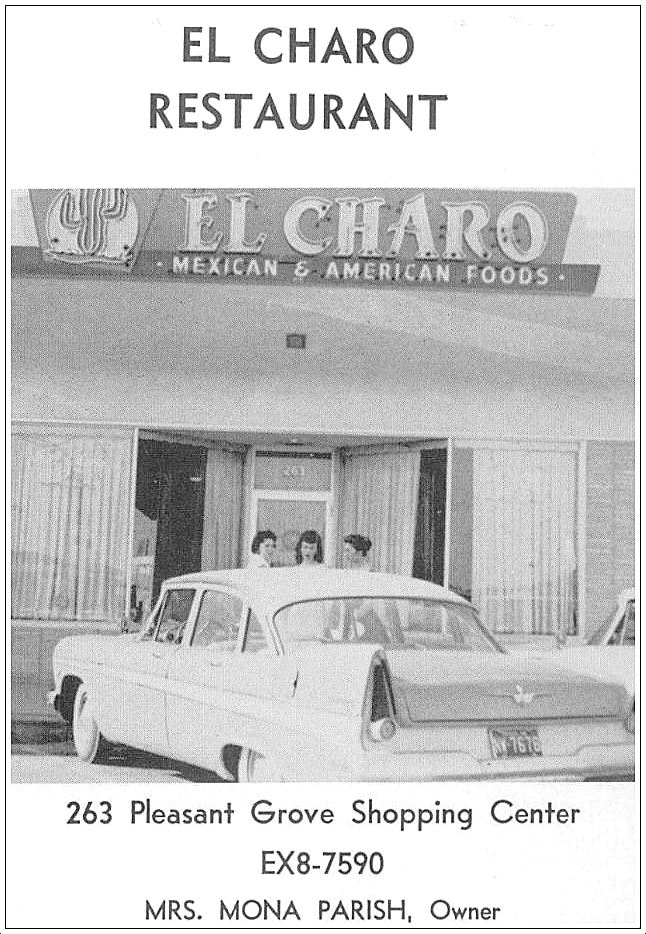
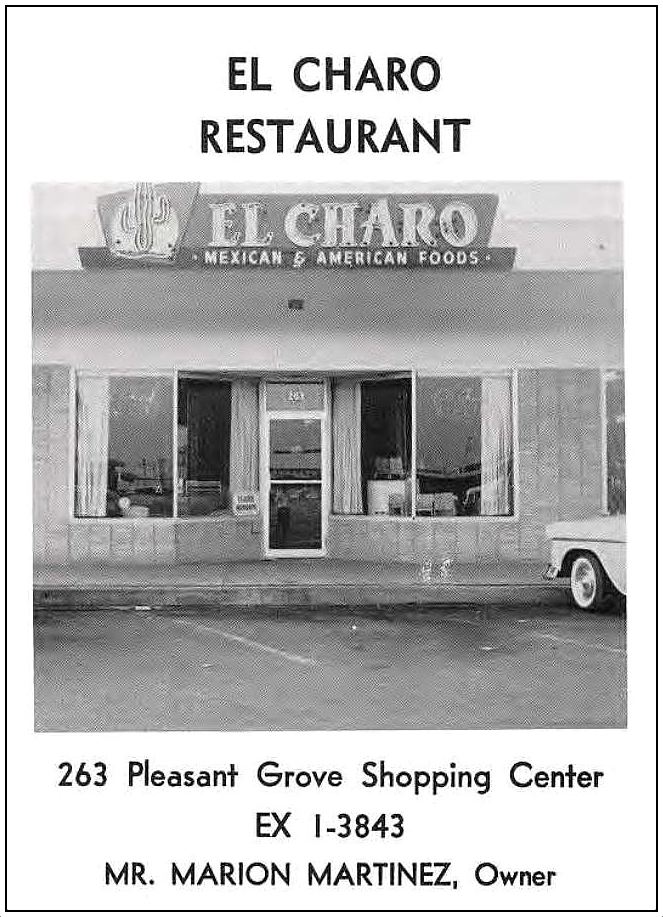
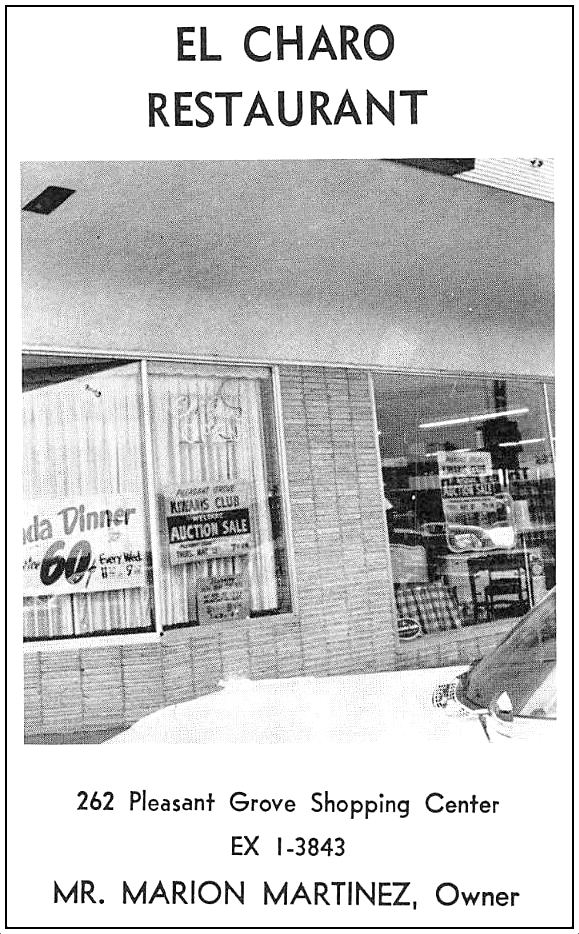
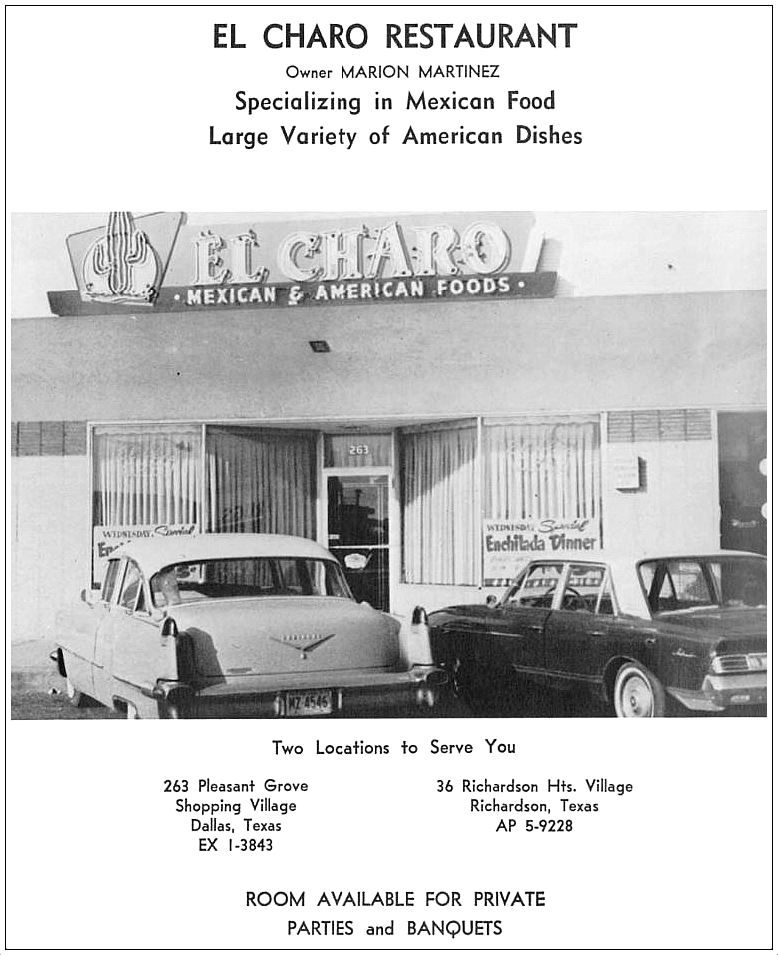
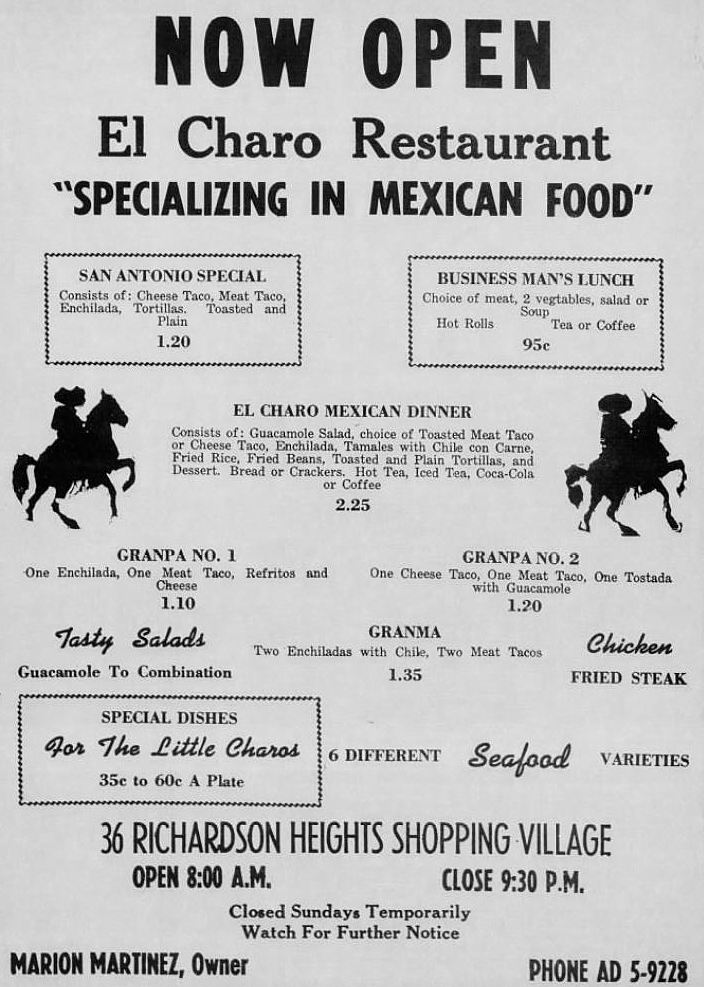
El Charo, 263 Pleasant Grove Shopping Center. The owner of this Mexican restaurant in the first ad (from 1958) is Mona Parish, whose husband Carl “Jake” Parish had died the previous year. From 1959, the owner was Marion Martinez, whose son, Mariano, went on to great acclaim with his own restaurant where he invented the frozen margarita (based on his father’s margarita recipe). The younger Martinez almost certainly worked at this Pleasant Grove restaurant.

samuell-high-school_1958-yrbk_el-charo1958

el-charo_samuell-high-school-yrbk_19591959

samuell-high-school_1962-yrbk_el-charo1962

spruce-high-school_1964-yrbk_el-charo_pleasant-grove1964

el-charo_plano-star-courier_nov-1962Plano Star-Courier, Nov. 1, 1962

*

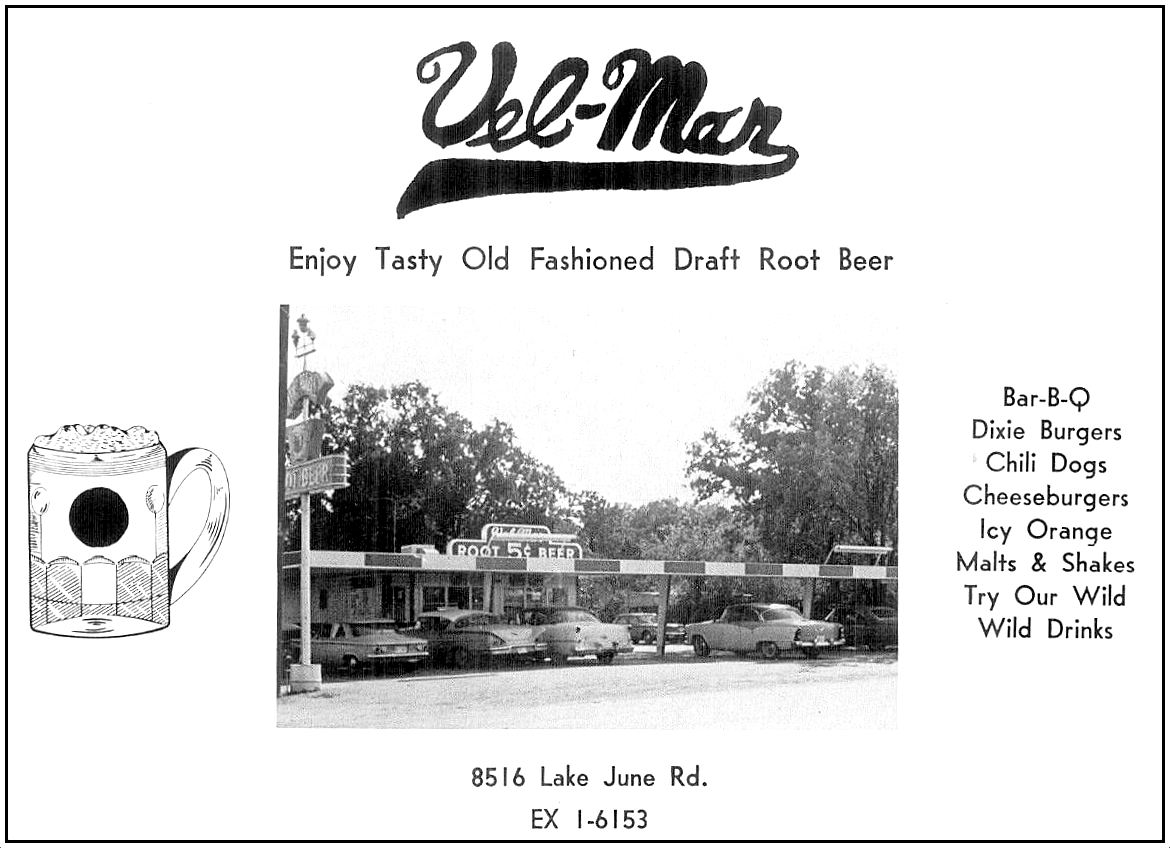
I have to admit, I’d never heard of the Vel-Mar drive-in, located at 8516 Lake June Rd., but I understand it was something of a Pleasant Grove fixture during the 1950s, ’60s, ’70s, and into the ’80s. According to a newspaper article which chronicled the history of the Vel-Mar and its then-recent sale by Robert Schweder to James and Sharon Harris (“Drive-In Shrine Alive and Well” by Steve Blow, Dallas Morning News, June 15, 1980), the small chain of root-beer-stand drive-ins was founded by three couples — including a Velma and a Marie (the third, Thelma, wasn’t lucky enough to get her name into the business name). Eventually, the Pleasant Grove location was the last remaining Vel-Mar.

Vel-Mar tidbits:

  • It always closed for the winter, from October to March.
  • Other than its root beer, it was known for its “Dixie Burger” which was a loose-meat sandwich.
  • It was a Pleasant Grove high school hangout, and it had special drinks for students of Spruce and Samuell: a blue and red drink was called “The Sprucette” (also “Spruce Juice”), and a blue drink was called “The Spartini” (for the Samuell Spartans). 

samuell-high-school_1957-yrbk_vel-mar1957

samuell-high-school_1959-yrbk_vel-mar1959

samuell-high-school_1960-yrbk_vel-mar1960

spruce-high-school_1966-yrbk_vel-mar_drive-in1966

***

Sources & Notes

All ads from the yearbooks of H. Grady Spruce High School and W. W. Samuell High School (unless otherwise noted).

More on Pleasant Grove can be found in the Flashback Dallas post “Life in The Grove: Pleasant Grove — 1954-1956,” with material gleaned from Pleasant Grove High School yearbooks.

vel-mar_samuell-high-school_1959-yrbk_det_sm

*

Copyright © 2021 Paula Bosse. All Rights Reserved.
Miscellaneous Dallas #2

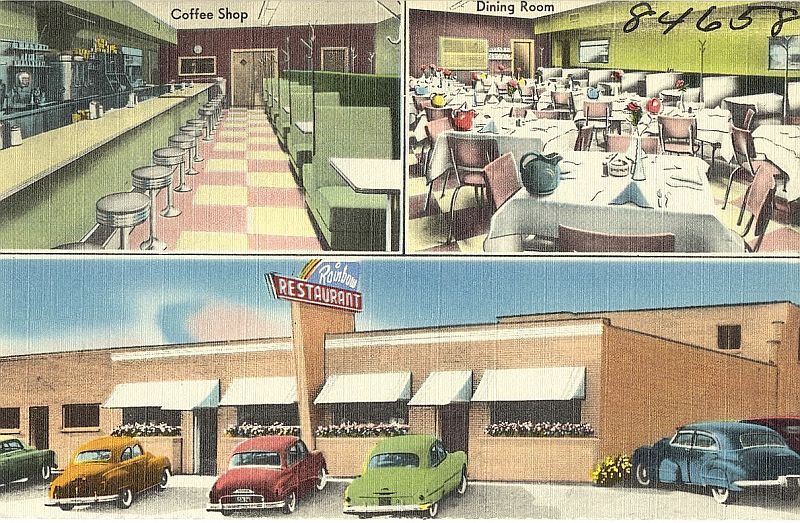
rainbow-restaurant_tichnor-bros-collection_boston-public-libraryOpen 24 hours, plenty of free parking…

by Paula Bosse

And now, a bunch of homeless, random images (all are larger when clicked).

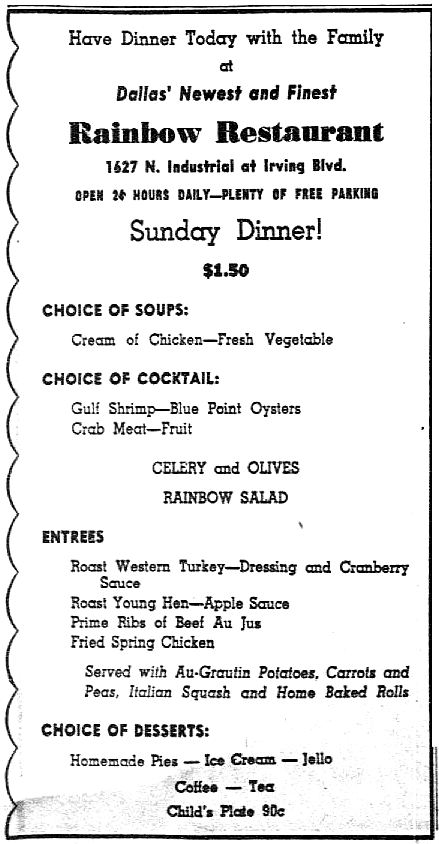
Above, the 24-hour Rainbow Restaurant, 1627 N. Industrial at Irving Blvd. Below, its menu.

rainbow-restaurant_ad_dec-19511951

*

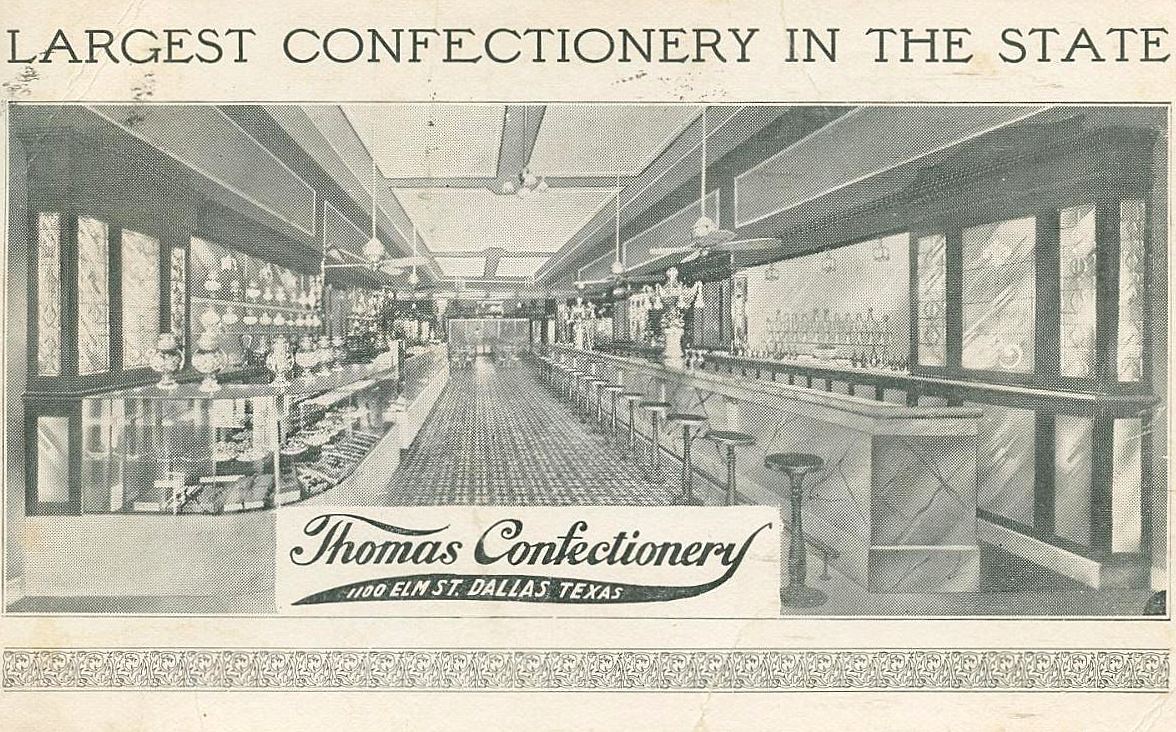
Thomas Confectionery, 1100 Elm Street. “Largest Confectionery In the State.” Popular date spot with the pre-flapper generation.

thomas-confectionary_postcard_1911_sam-rayburn-house-museum-via-portal1911 (via Portal to Texas History)

thomas-confectionery_0915121912. Dallas Morning News want-ad

*

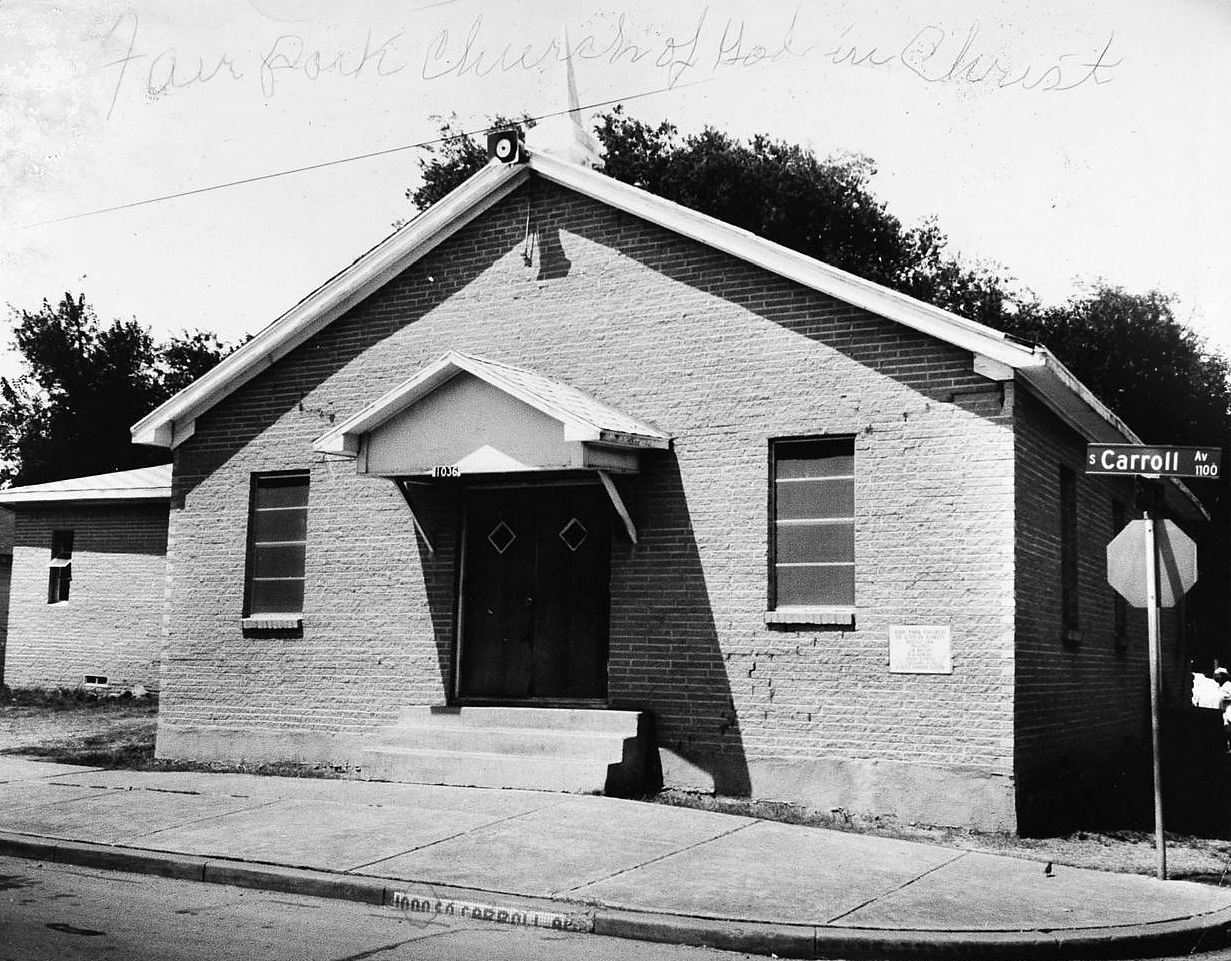
Fair Park Church of God in Christ, 1036 S. Carroll Ave.

fair-park-church-of-god-in-christ_1974_USC-libraries 1974 (via USC Libraries)

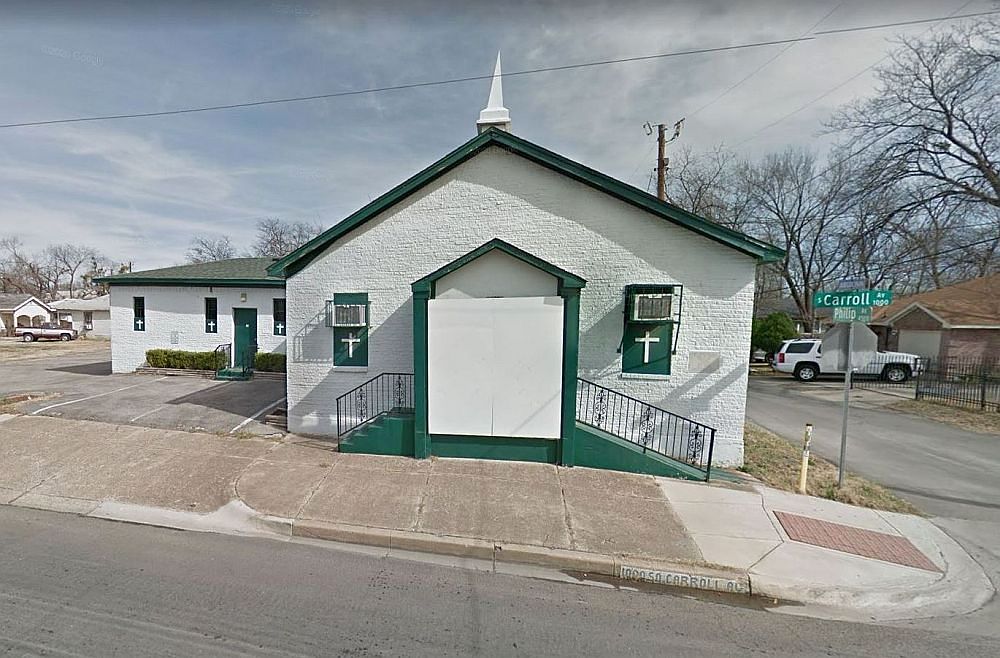
And it’s still standing! (I love that the curb tiles are still there.)

fair-park-church-of-god-in-christ_google-street-view-20172017 (via Google Street View)

*

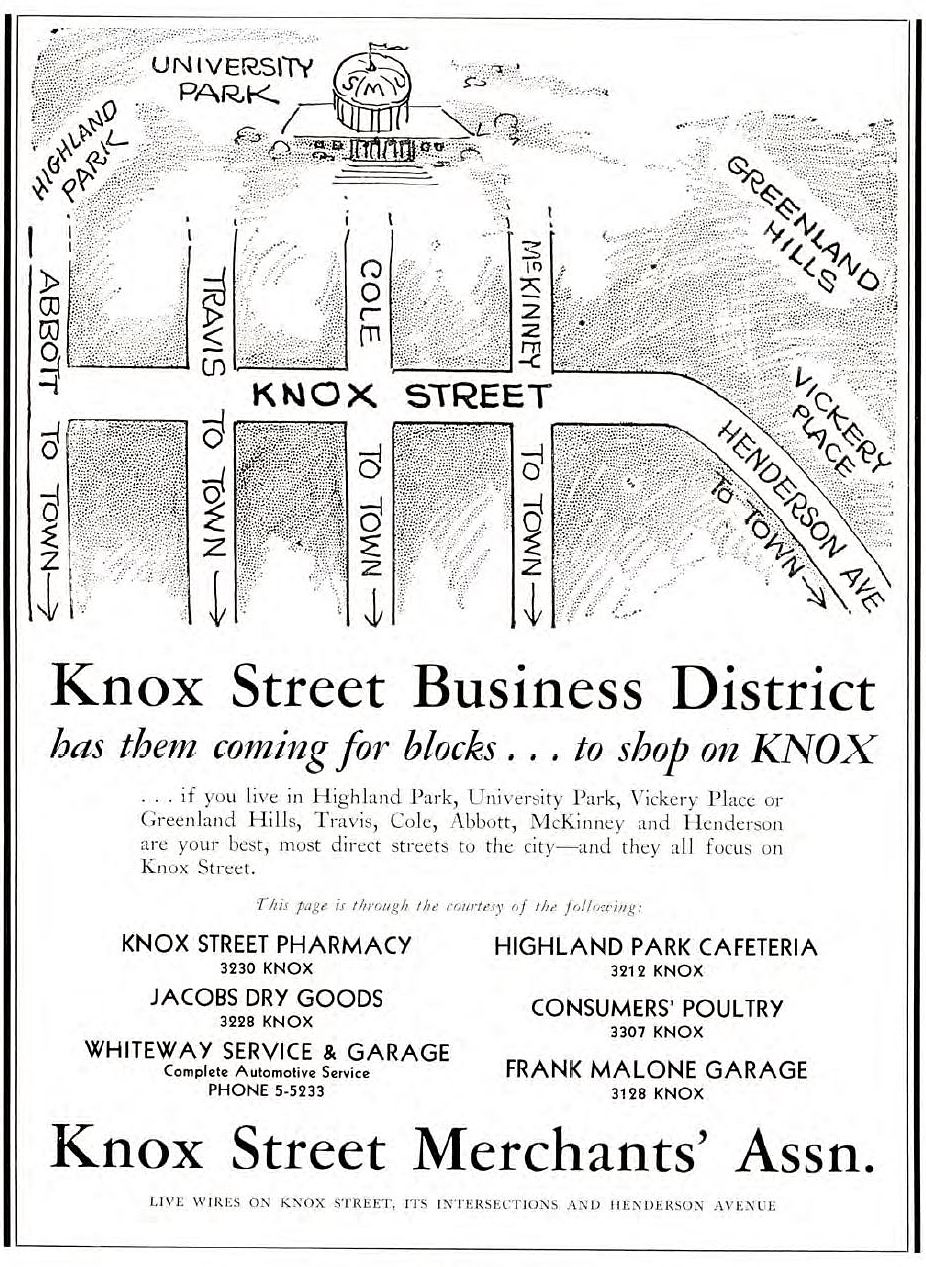
The Knox Street Business District, pre-Central Expressway. …Way pre.

knox-street-business-district_1932-smu-rotunda1932 (via SMU Rotunda)

*

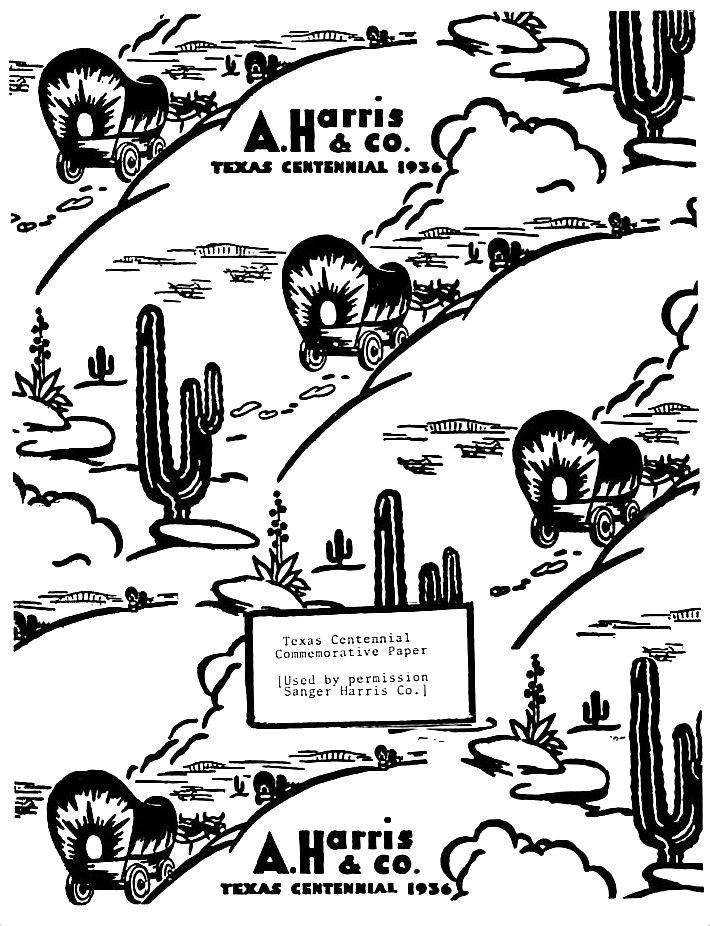
A. Harris & Co. — Texas Centennial Commemorative Paper (gift wrap?).

tx-centennial_a-harris_gift-paper_elm-fork-echoes_april-1986_portal-tx-hist1936 (via Portal to Texas History)

*

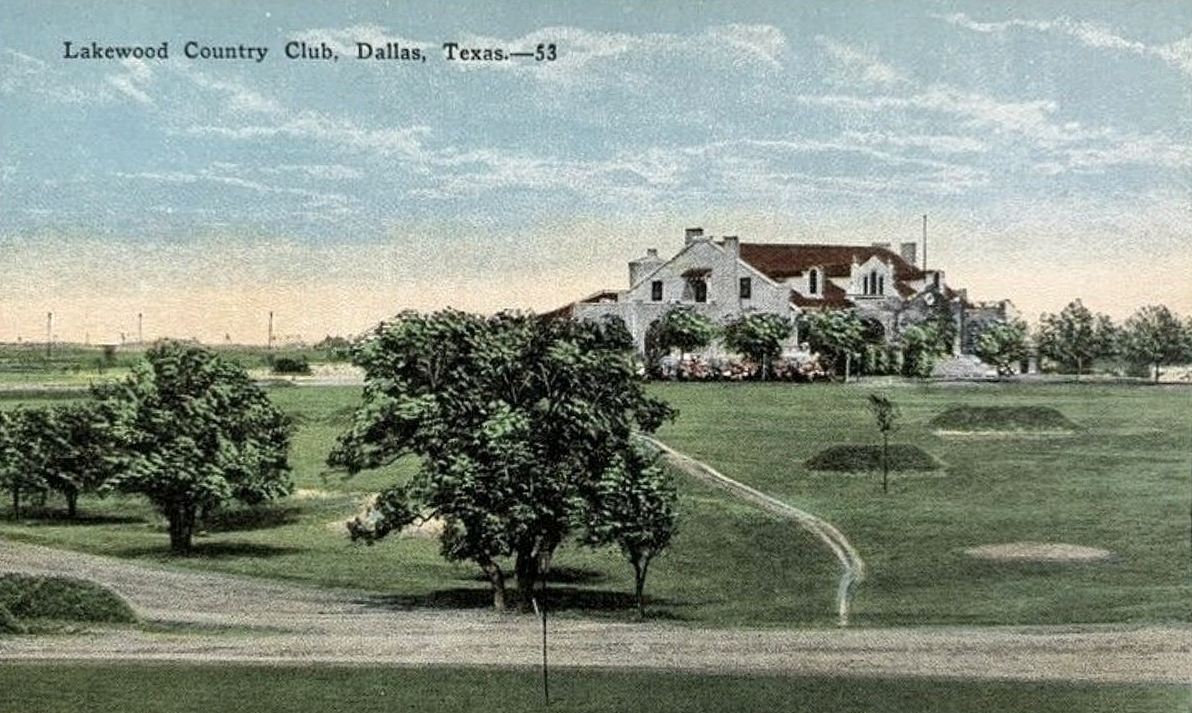
The Lakewood Country Club (see it before the landscaping in this photo from this post).

lakewood-country-club_postcard_ebay(via eBay)

*

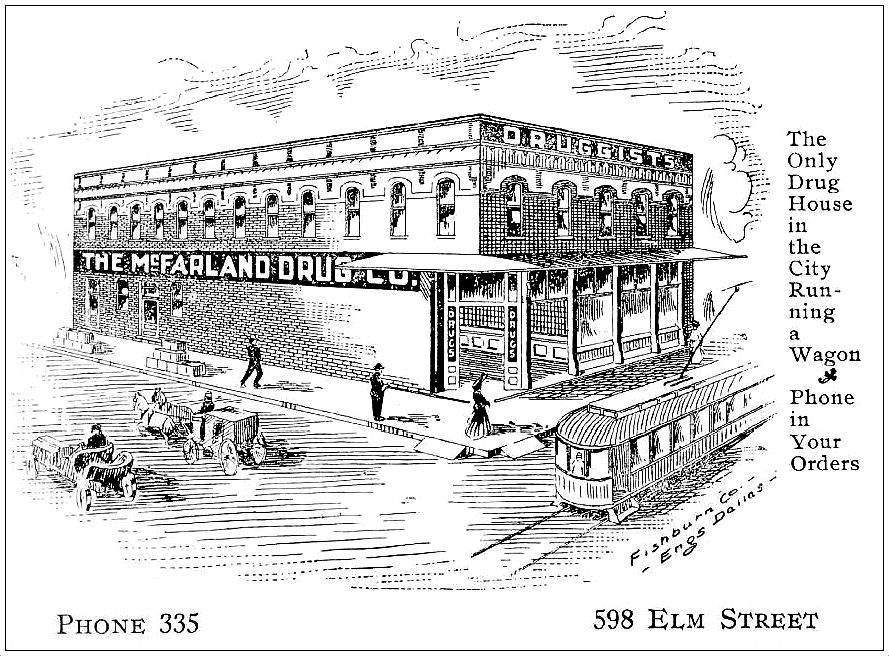
The McFarland Drug Co., 598 Elm, at Hawkins, in Deep Ellum (later became 2424 Elm).

mcfarland-drug-co_hints-to-housekeepers_degolyer_SMU_19051905 (via DeGolyer Library, SMU)

*

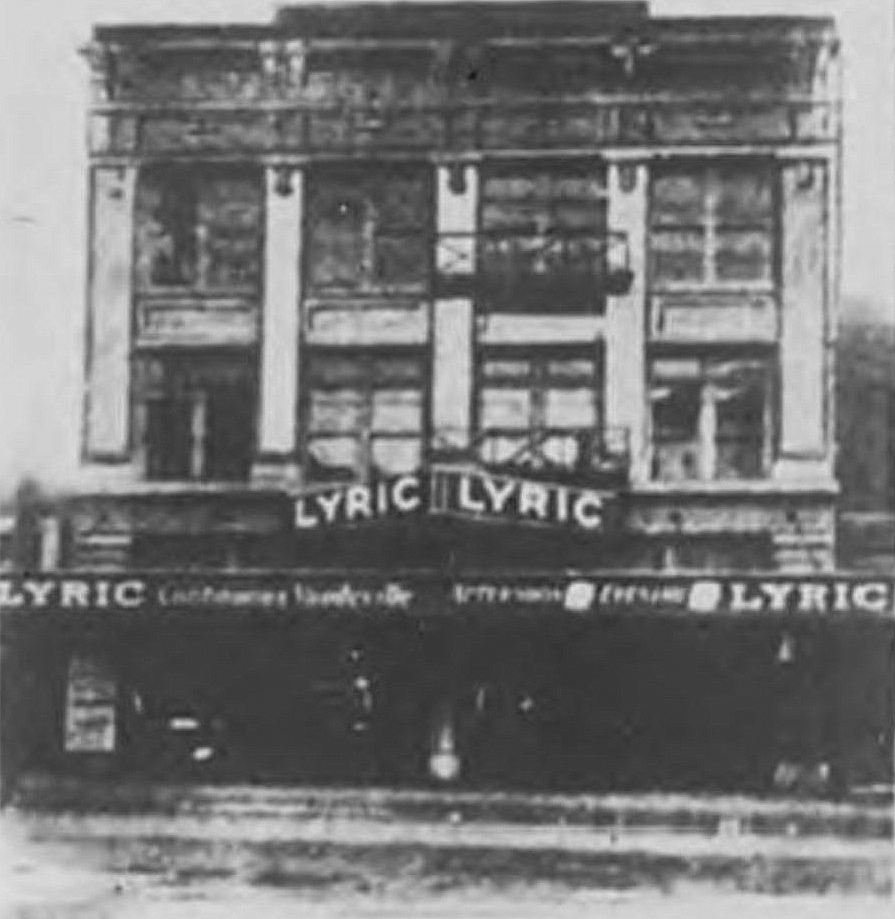
The Lyric Theatre, 364 Elm, near Stone (later 1602 Elm).

lyric-theater_degolyer-lib_SMU_dallas-theaters_nd1907-ish (via DeGolyer Library, SMU)

*

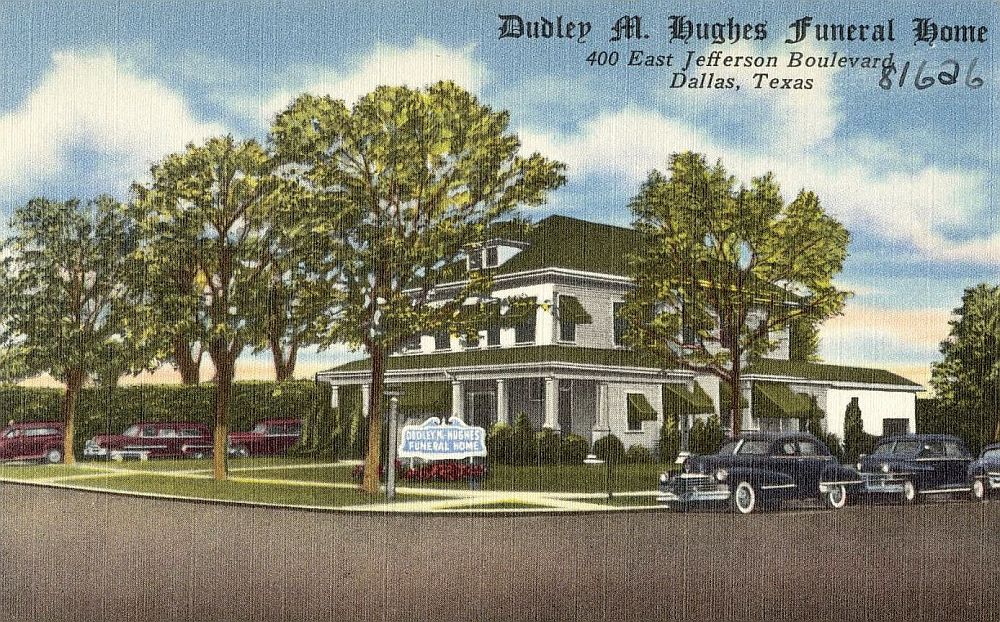
Dudley M. Hughes Funeral Home, 400 E. Jefferson Blvd, Oak Cliff.

dudley-hughes-funeral-home_tichnor-bros_boston-public-library(via Tichnor Bros. Collection, Boston Public Library)

*

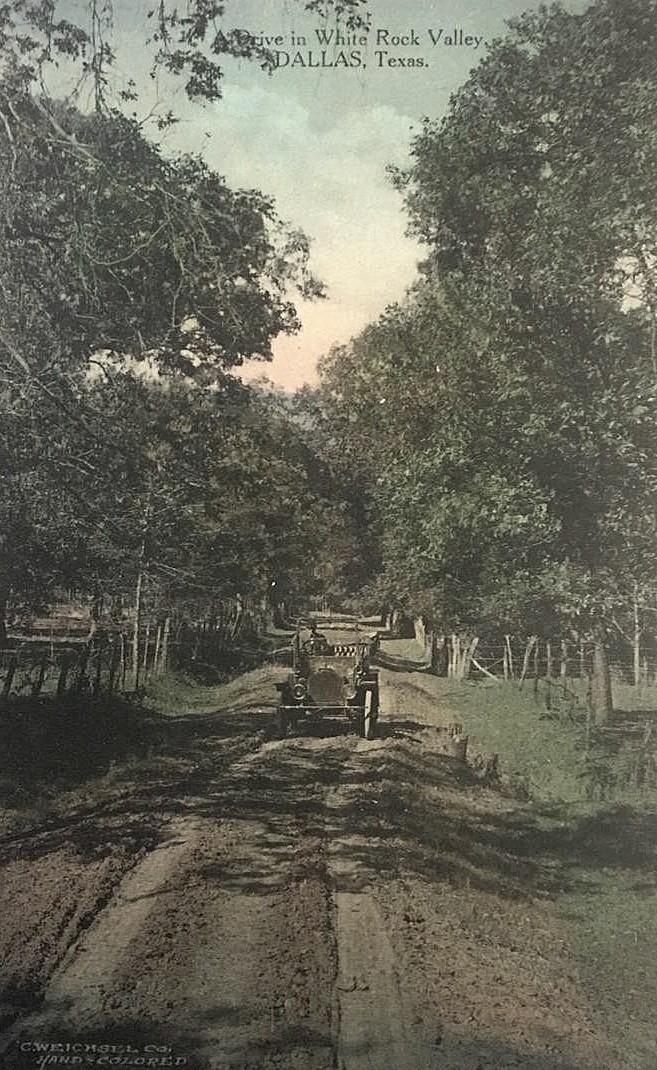
“A Drive in White Rock Valley.” Before the lake.

white-rock-valley_postcard_1912_ebay(via eBay)

***

Sources & Notes

Rainbow Restaurant postcard is from the Tichnor Bros. Postcard Collection, Boston Public Library.

See the first installment of “Miscellaneous Dallas” here.

rainbow-restaurant_tichnor-bros-collection_boston-public-library_sm

*

Copyright © 2021 Paula Bosse. All Rights Reserved.

Ross Graves’ Cafe: 1800 Jackson — 1947

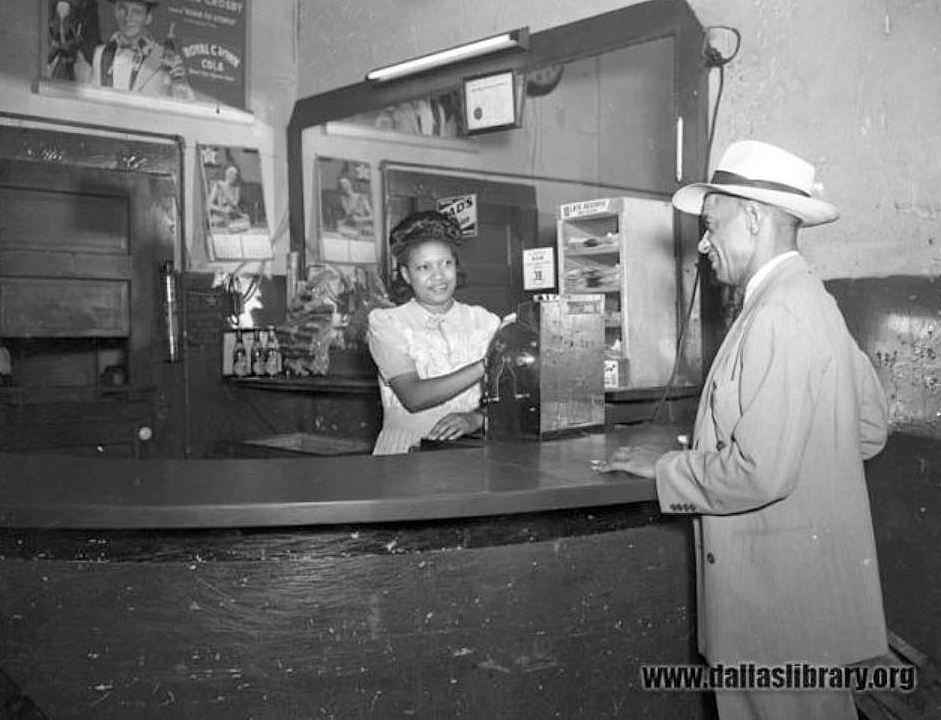
graves-cafe_marion-butts_dpl_1947_cashierGraves Cafe… (photo by Marion Butts/Dallas Public Library)

by Paula Bosse

Ross Graves (1903-1973) seems to have been something of a successful bon vivant who dipped his toe into a variety of businesses catering to Dallas’ African-American community: he was the proprietor of, variously (and often simultaneously), a night club, a liquor store, a gas station, a barber shop, and, most successfully, a restaurant, which was in business for almost 20 years (sometimes referred to as Ross Cafe or Graves Place). Below is a photo from 1947 showing the Ross Graves Cafe at 1800 Jackson Street (at Prather) in downtown Dallas (we see the south side of Jackson, with the view to the west).

graves-cafe_1800-jackson_negro-directory_1947

This photo accompanied an ad with the following text:

graves-cafe_negro-directory_1947-48-text

He opened the cafe around 1937 and kept it going until 1955 when he “retired” (he also dabbled in dice-game-hosting at the cafe and was busted in 1954 on gaming charges — he was given a 2-year probated sentence the next year). (Also, the building was part of a large donation to the city in 1955 — more about that below.)

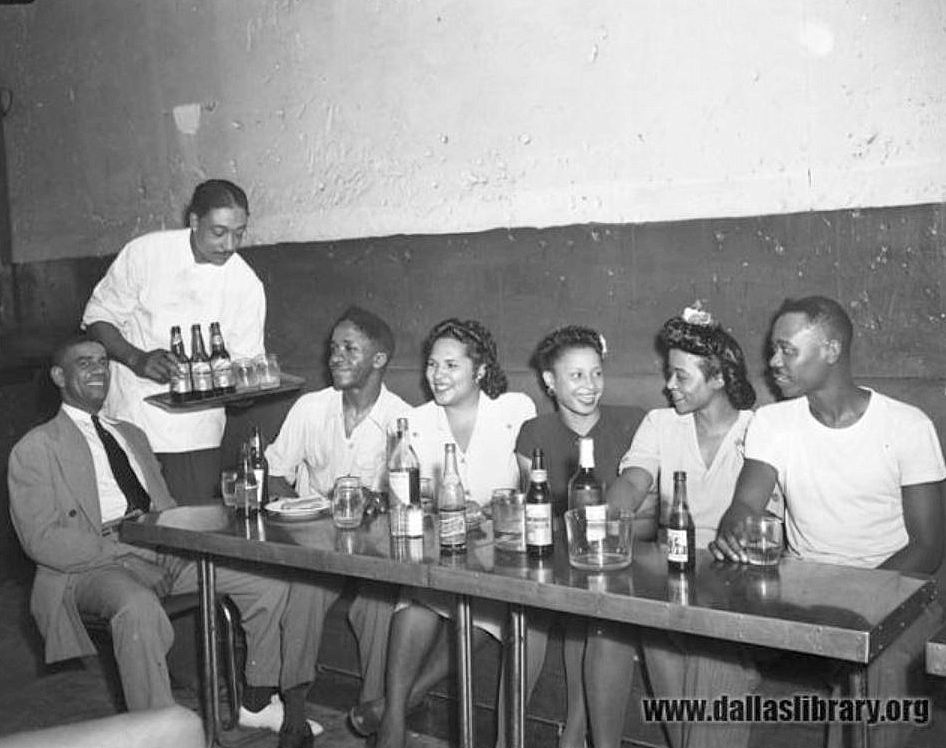
The photo at the top shows, I’m guessing, Mr. Graves standing at the cafe’s cash register with an employee in 1947. He’s also seen in the photo below.

graves-cafe_marion-butts_dpl_1947(photo by Marion Butts/Dallas Public Library)

**

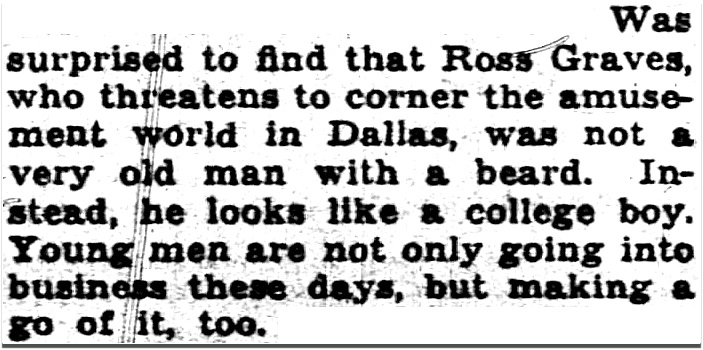
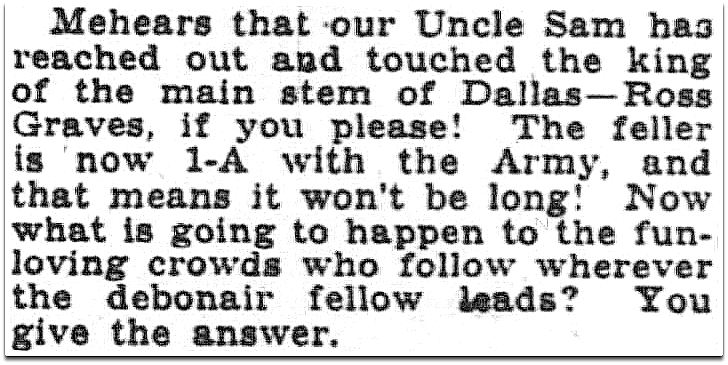
I was originally intrigued by the photo of the exterior of the cafe — I couldn’t picture where it had been. But in trying to find out more about the building, I learned about the life of Ross Graves and came across some interesting little tidbits which paint a a picture of a fun-loving man with an active social life, lots of friends, and a healthy bank account. Below are a few clippings from the Pittsburgh Courier, a newspaper published in Pennsylvania which served as something of a national newspaper for Black America, with political, sports, and entertainment news from around the country. There was always news from Dallas in it — in fact, they had a local office here (3306 Roseland). There was even a Dallas-based society/gossip columnist named Mrs. O. J. Cansler (whose column had the rather unfortunate name of “Kolumn Komments”). She was quite frothy and wrote with the breathless excitement one expects in a society columnist. (I highly encourage anyone with a subscription to Newspapers.com to check out her “kolumn” — it’s a breath of fresh air to read about Dallas’ Black community presented in such a lively and fun manner (or in ANY manner, really — you weren’t going to find any of what she was writing about in the Dallas Morning News or the Dallas Times Herald). Especially interesting are mentions of long-forgotten clubs and nightspots where bands and performers from Dallas’ vibrant musical scene played. Here are a few appearances of Ross (and his wife, Ruby) from the pages of the Pittsburgh Courier.

*

1939_graves_pittsburgh-PA-courier_111139_kolumn-komments_o-j-cansler
Pittsburgh Courier, Nov. 13, 1939

Graves was 36 years old at the time.

*

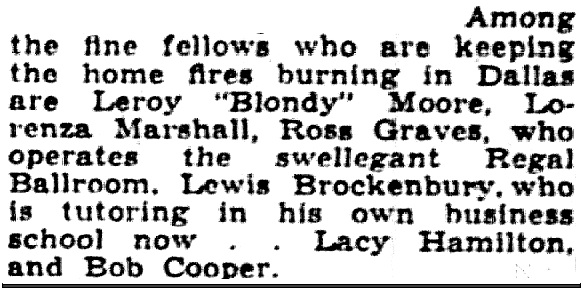
1942_graves_pittsburgh-PA-courier_080842_toppin-the-town_columnPittsburgh Courier, Aug. 8, 1942

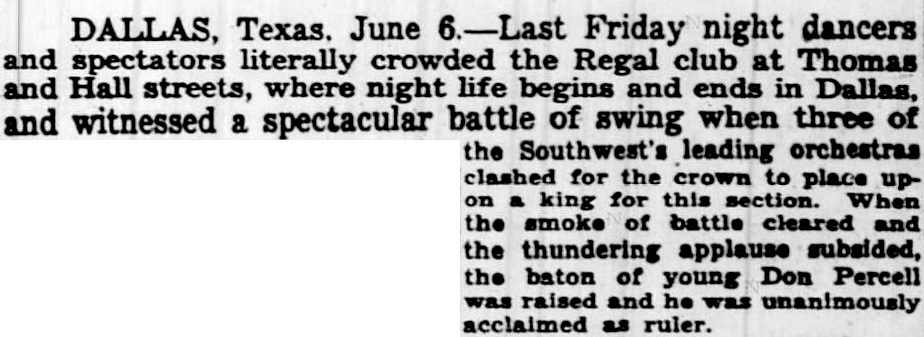
The Regal Ballroom (listed as the Regal Nite Club in city directories) was at 3216 Thomas, at Hall. It didn’t last very long, but while it did, it was, apparently, “swellegant”! Here’s a mention of it as the location of a swing band contest in 1940 (won by Don Percell):

graves_regal-club_pittsburgh-courier_060840Pittsburgh Courier, June 8, 1940

*

1942_graves_pittsburgh-PA-courier_101742_kolumn-komments_mrs-o-j-canslerPittsburgh Courier, Oct. 17, 1942

*

Graves’ second wife, Ruby Graves, was known for her “smart toggery.”

1944_graves_pittsburgh-PA-courier_101444_ruby-gravesPittsburgh Courier, Oct. 14, 1944

*

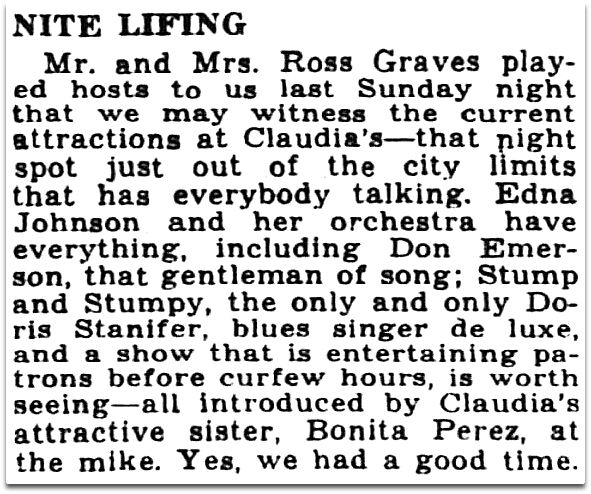
Ross and Ruby were quite the hosts:

1945_graves_pittsburgh-PA-courier_040745_kolumn-komments_mrs-o-j-canslerPittsburgh Courier, Apr. 7, 1945

I love this. This is the sort of thing you would never have read in the Morning News or the Times Herald. I want to know more about Claudia’s — “that night spot just out of the city limits that has everybody talking.”

*

graves-cafe_ad_pittsburgh-courier-051245Pittsburgh Courier, May 12, 1945

*

1946_graves_pittsburgh-PA-courier_062246_kolumn-komments_mrs-o-j-cansler
Pittsburgh Courier, June 22, 1946

Just popping up to NYC in their new Fleetwood to take in a boxing match. As one does.

**

Ross and Ruby eventually ended up living in a house on “swellegant” South Boulevard (2500 South Blvd.). At least one of their daughters was an Idlewild debutante, who made her debut in 1967 (read about the world of Black debutantes in 1937 Dallas here). Milam County native Ross Graves died on Dec. 4, 1973 at the age of 70. He had lived in Dallas for 50 years. And I bet he had a good time.

**

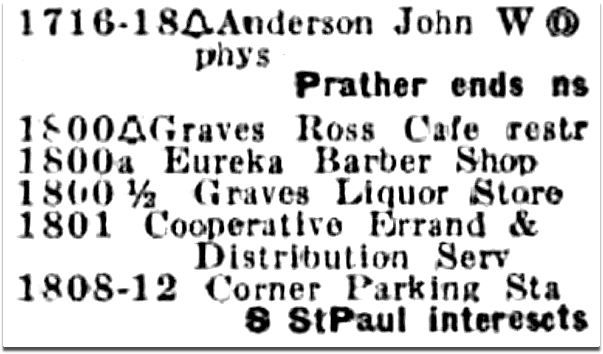
The location of Ross Graves’ Cafe was at 1800 Jackson Street, between Ervay and St. Paul, in a weird stretch of Jackson where two blocks were connected without a  break, in a row of buildings without an intersecting street. (The buildings are long gone, but the location can be seen on Google Maps here.) An interesting detail about these two blocks — the 1700 and 1800 blocks of Jackson Street — is that this property was owned by Dr. John W. Anderson, a prominent Black physician. After his death, his widow, Pearl C. Anderson, deeded the land to the Dallas Community Chest, the proceeds of which would be used to help needy Dallasites. (The donation was conservatively estimated at $200,000 at the time — about $2 million in today’s money). She donated the property in 1955, the same year Graves retired.

graves-cafe_dallas-directory-1947Jackson Street, 1947 Dallas city directory

***

Sources & Notes

Photos of the interior of Ross Graves’ Cafe are from the Marion Butts Collection, Dallas Public Library. Call Number for the top photo is PA2005-4/380.1; Call Number for the second is PA2005-4/380.2 (both are incorrectly identified as being in Deep Ellum).

The photo of the exterior of the cafe is from the Dallas, Texas Negro City Directory, 1947-1948 (many thanks to Pat Lawrence).

graves-cafe_marion-butts_dpl_1947_cashier_sm

*

Copyright © 2021 Paula Bosse. All Rights Reserved.

Thompson’s, 1520 Main — 1916

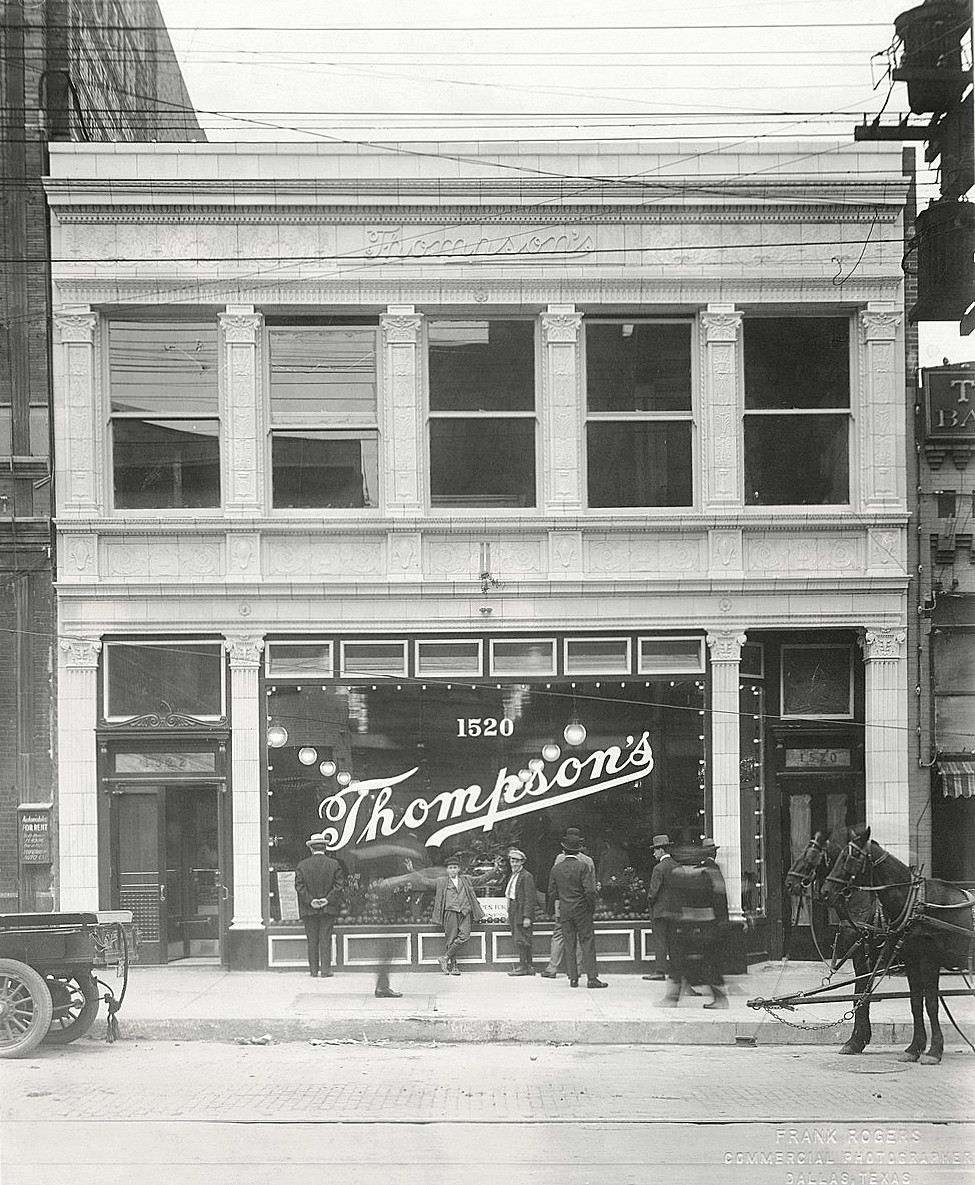
thompsons_atlantic-terra-cotta-co-coll_UT_frank-rogers_XLOpen for business…

by Paula Bosse

Above, the newly constructed building at 1520-1522 Main Street, between Akard and Stone, home to Thompson’s, a national chain of restaurants owned by John R. Thompson of Chicago. It was built and opened in 1916.

thompsons_dmn_071615Dallas Morning News, July 16, 1915 (click for larger image)

The site had previously been the location of the Happy Hour Theater (which can be seen in this photo), the demolition of which was announced in January, 1916. 

1520-main_dmn_010416DMN, Jan. 4, 1916

And it was a beautiful building!

thompsons_atlantic-terra-cotta-co-coll_UT_frank-rogers

Thompson’s remained in this location until the 1930s. When Bond Clothes took over the space in 1938, news accounts rather ominously mentioned that the building would be completely remodeled, inside and out.

Workers are engaged in ripping out the front of the building. An all black glass front will be installed on most of the building and near the top of the second floor glass brick will be featured. Bronze trim will be used throughout. (DMN, Feb. 13, 1938).

All that beautiful glossy white terra cotta “ripped out”!

But things got worse. Much worse. It’s hard to believe, but this is the same building:

1520-main_selzer-assoc_facebook_crop_campisisPhoto from Selzer Associates Facebook page

In recent years, though, Selzer Associates Architects and Nedderman & Associates worked some absolutely stunning restoration magic. (Read the story of the restoration in Texas Architect magazine here, starting on p. 36.) I mean, look:

iron-cactus_google-street-view_feb-2020Google Street View, Feb. 2020

It’s beautiful again! Thank you, magic-workers!

***

Sources & Notes

The circa-1916 photograph by Dallas photographer Frank Rogers is from the Alexander Architectural Archives, University of Texas Libraries, The University of Texas at Austin — more info on this photo can be found here.

See an interior shot of a Thompson’s restaurant in a 1927 photo here.

Read more about the Thompson’s restaurant chain in the following articles:

thompsons_atlantic-terra-cotta-co-coll_UT_frank-rogers_sm

*

Copyright © 2021 Paula Bosse. All Rights Reserved.

Highland Park High School: Ads from the 1964 Yearbook

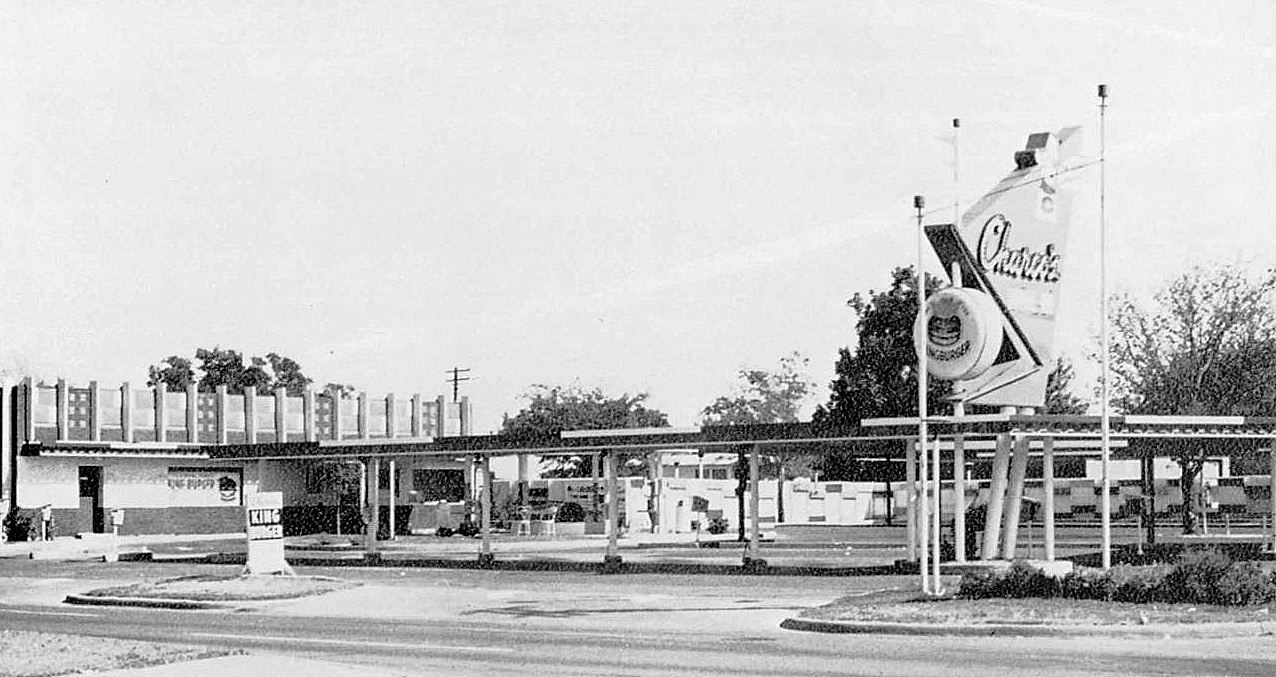
charcos_ad_5300-lemmon_HPHS-yrbk_1964_photoCharco’s on Lemmon — with “14 friendly electronic speakers”

by Paula Bosse

Here are a few ads from the 1964 Highlander, the yearbook of Highland Park High School — some of the ads feature HPHS students. (Click ads to see larger images.)

Above, Charco’s, 5300 Lemmon Avenue (James R. Inman, manager). The full ad is below. This was the third “Charco’s Circle-Thru” drive-in, following the first location at 6375 E. Mockingbird (at Abrams), which opened in 1957, and the second location at 10218 Garland Road.

charcos_ad_5300-lemmon_HPHS-yrbk_1964

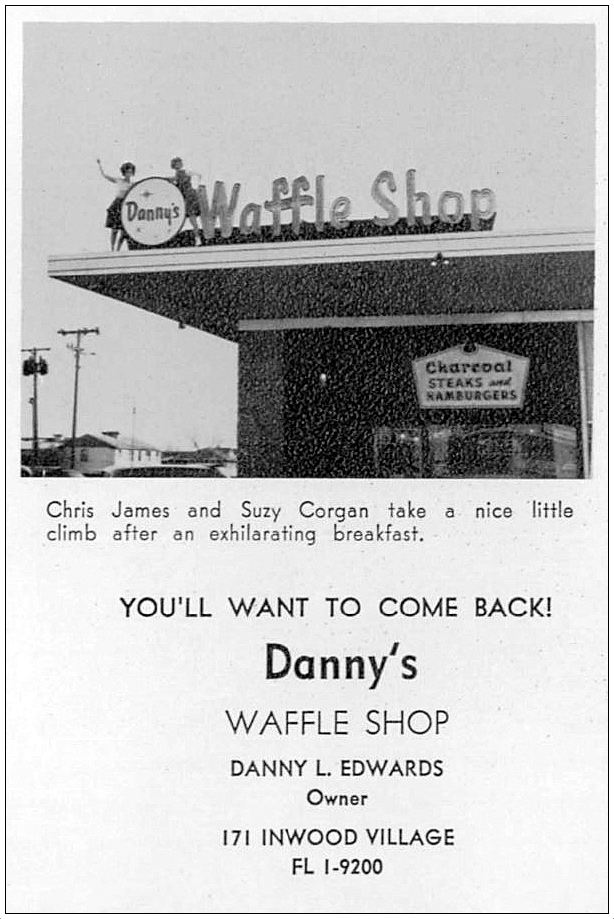
Danny’s Waffle Shop (Danny L. Edwards, owner), 171 Inwood Village. Featuring students Chris James and Suzy Corgan up on the roof.

dannys-waffle-shop_HPHS-yrbk_1964

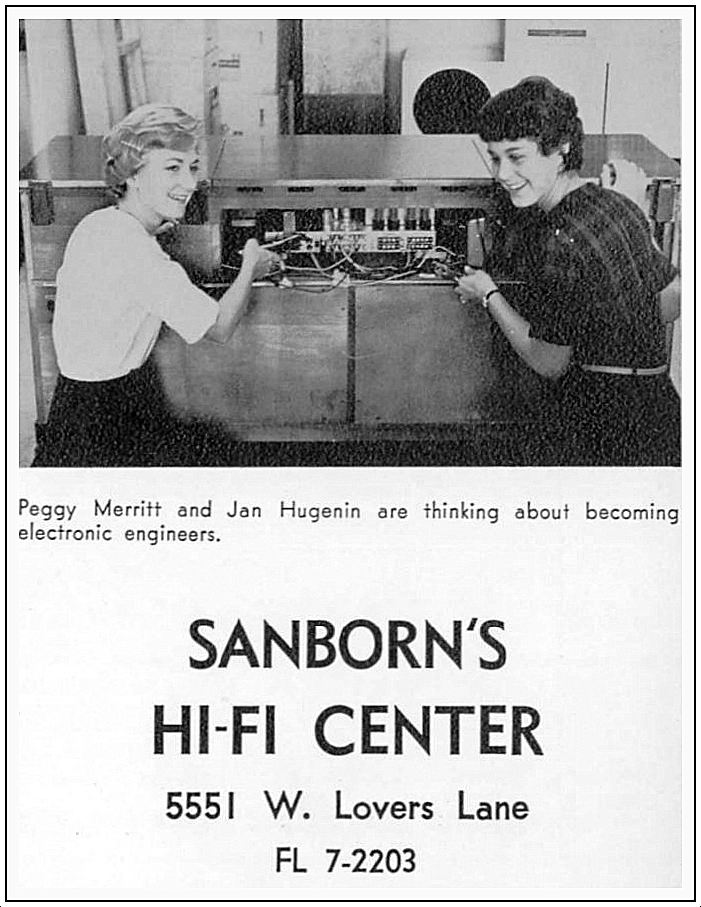
Sanborn’s Hi-Fi-Center (Charles Larsen, president), 5551 W. Lovers Lane. Featuring Peggy Merritt and Jan Hugenin.

sanborns-hi-fi-center_HPHS-yrbk_1964

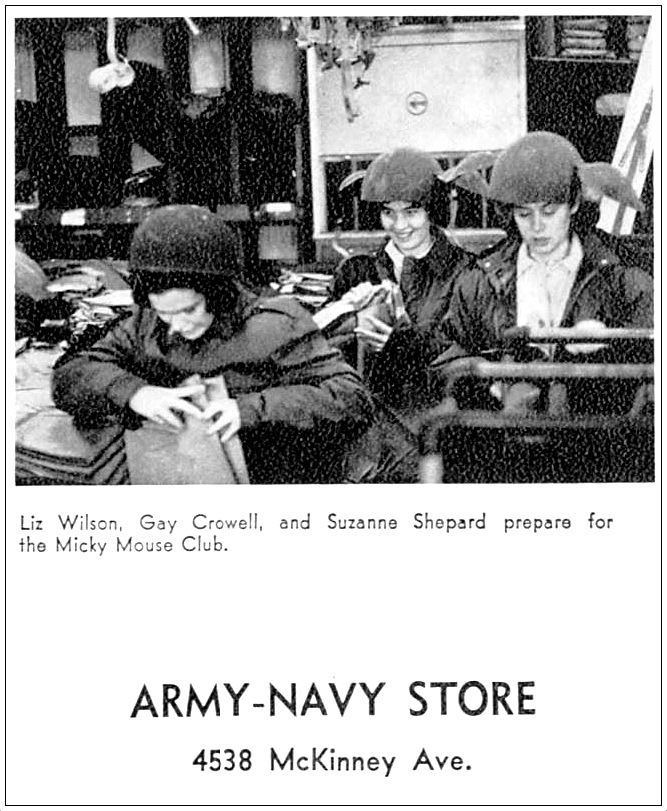
The Army-Navy Surplus and Salvage Store at 4538-40 McKinney Avenue (Julia Cooper, owner). Featuring students Liz Wilson, Gay Crowell, and Suzanne Shepard. 

army-navy-store_HPHS-yrbk_1964

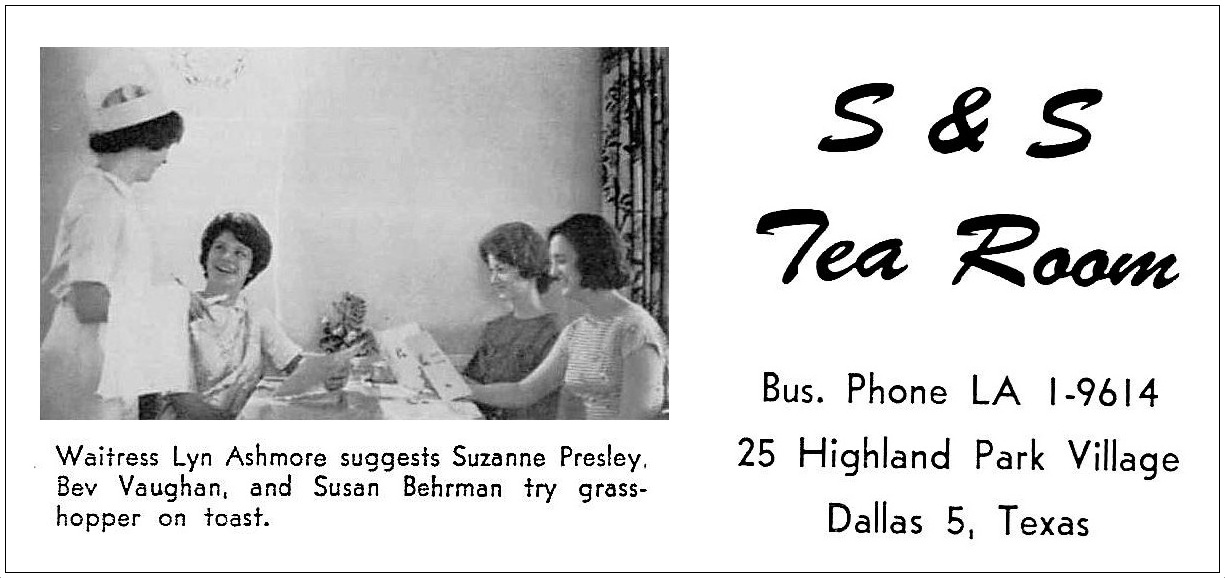
S & S Tea Room, 25 Highland Park Village (Dr. Raymond C. Libberton and Mildred A. Libberton, owners). Featuring waitress Lyn Ashmore with students Suzanne Presley, Bev Vaughan, and Susan Behrman. (Dr. Libberton was still a regular presence at the restaurant until his death in 1976 at the age of 104.)

s-and-s-tea-room_HPHS-yrbk-1964

Midnight Coiffures, 5628 Lemmon and 4826 Gaston (Esther Groves, owner). “Dallas’ only midnight salon.” This is a great idea!

midnight-coiffures_ad_HPHS-yrbk_1964

Centex Construction Co., 4606 Greenville Avenue (Tom H. Lively, president).

centex-construction_HPHS-yrbk_1964

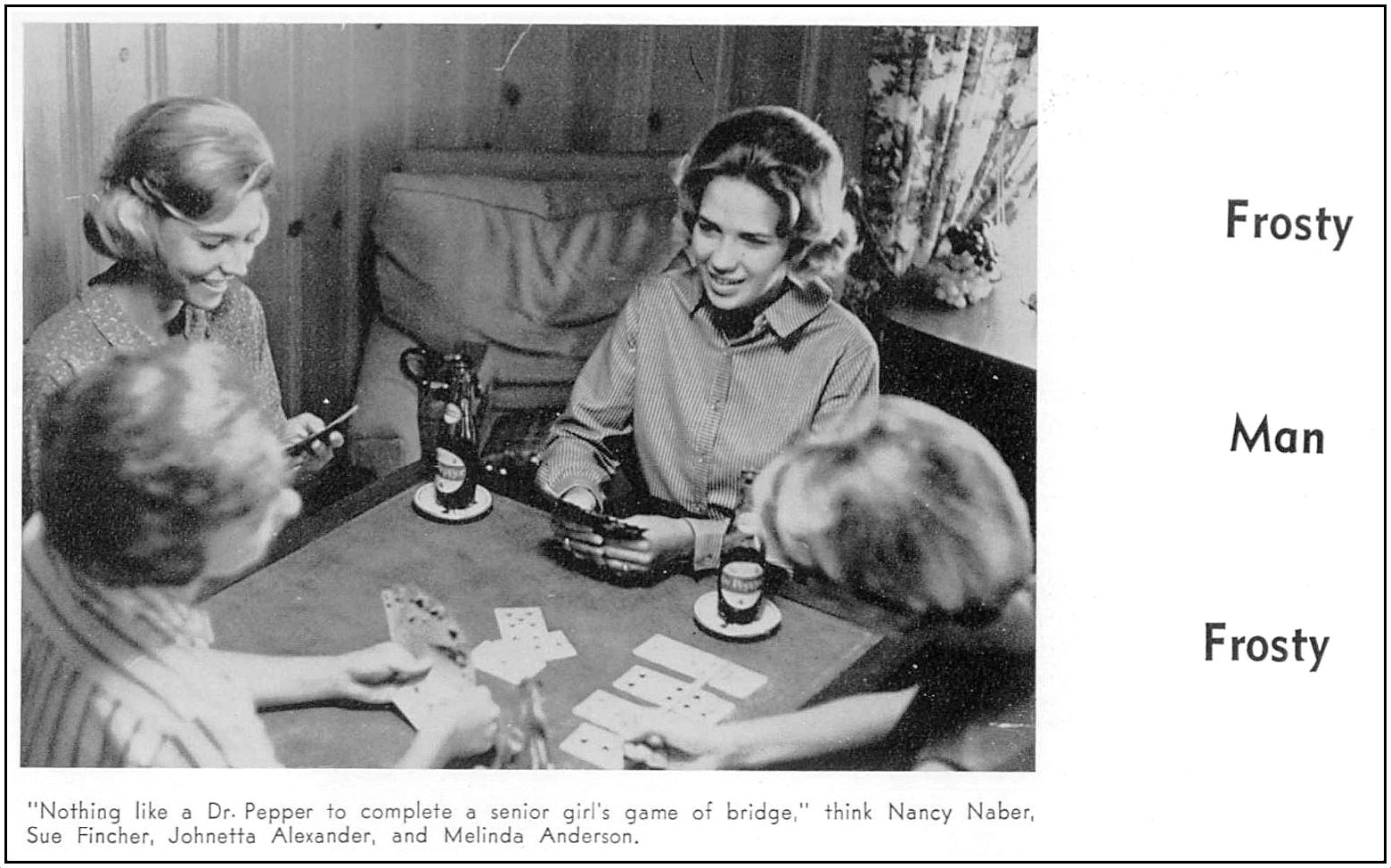
Dr Pepper, national headquarters located at Mockingbird and Greenville. Ad featuring teen bridge players Nancy Naber, Sue Fincher, Johnetta Alexander, and Melinda Anderson. “Frosty, Man, Frosty.”

dr-pepper_ad_HPHS-yrbk_1964

La Tunisia, 200 N. Exchange Park (Iqbal Singh Sekhon, general manager — he previously managed Safari in North Dallas at Preston and Royal).

la-tunisia_HPHS-yrbk_1964

*

seal_HPHS-yrbk_1964

***

Sources & Notes

All images from the 1964 Highlander, yearbook of Highland Park High School.

Other Flashback Dallas posts which have dipped into the HPHS yearbooks can be found here.

charcos_ad_5300-lemmon_HPHS-yrbk_1964_det_sm

*

Copyright © 2020 Paula Bosse. All Rights Reserved.
Luby’s, In Dallas Since 1929

lubys_main-st_1954_detLuby’s No. 2, Main Street, 1954 (photo detail)

by Paula Bosse

The liquidation of Luby’s restaurants was announced this week. There are a lot of people (Texans in particular) who are going to take this news hard.

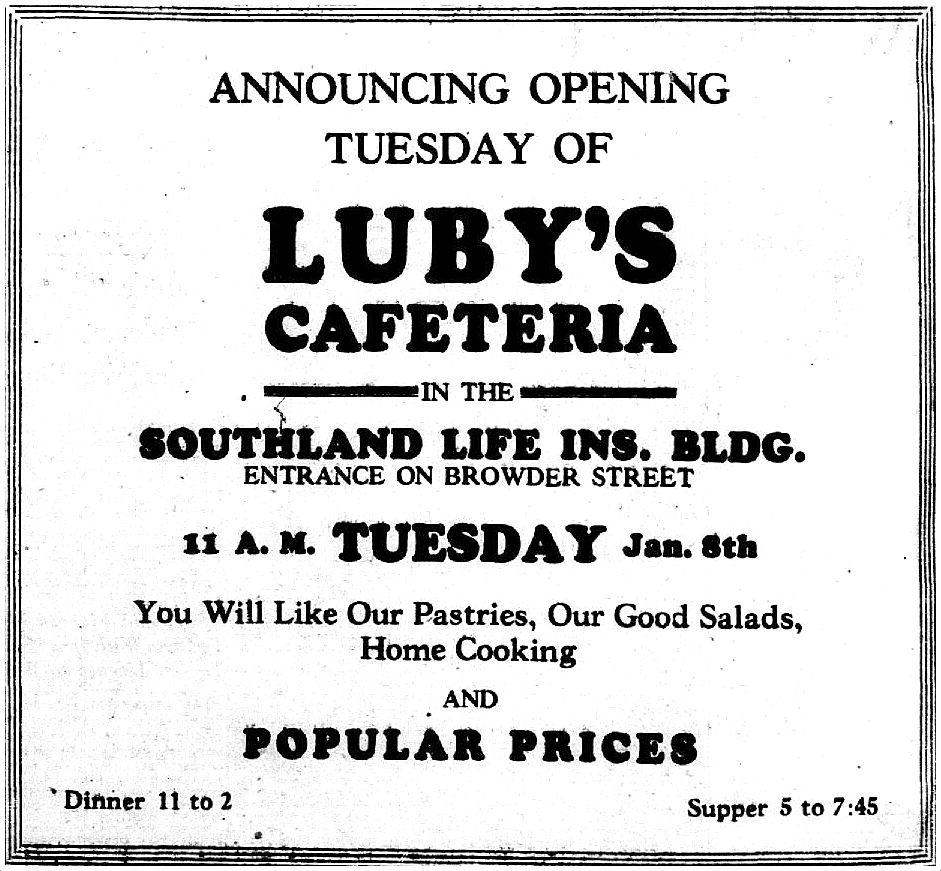
I spotted the Luby’s seen in the picture above in a photo I found on eBay a few years ago (see the full photo here). I was surprised to learn that the first Luby’s in Dallas opened in 1929. (I think it was the first Luby’s in Texas — there might have been a tangentially related “Luby’s”-branded restaurant in Muskogee, Oklahoma, but let’s just say that the Luby’s at 205 Browder Street in downtown Dallas was the first one in Texas. It was opened by Earl E. Luby on January 8, 1929.

lubys_010829_adJan. 8, 1929

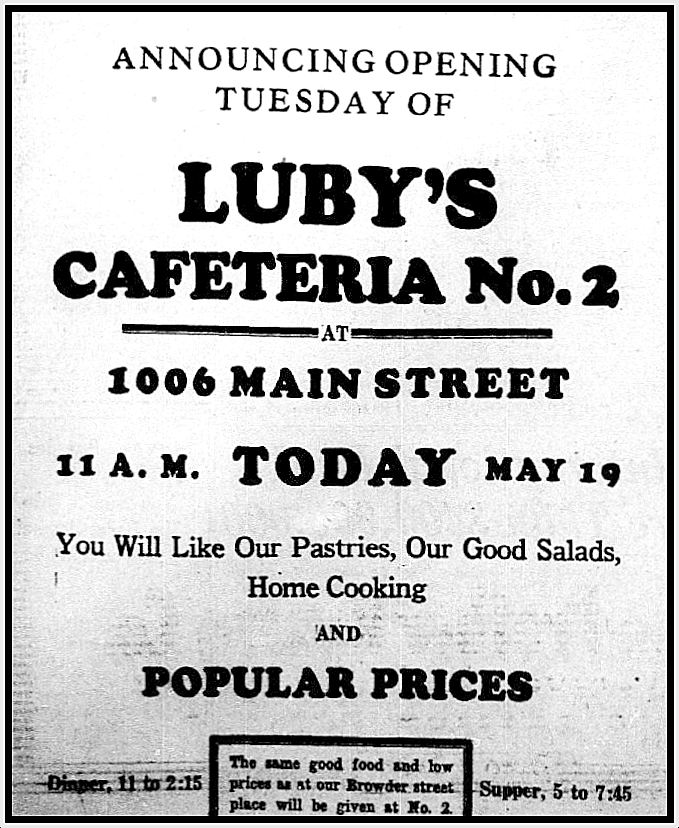
The second location (the one seen in the photo above) opened at 1006 Main Street (at Poydras) two years later, on May 19, 1931.

lubys_051931_no-2May 19, 1931

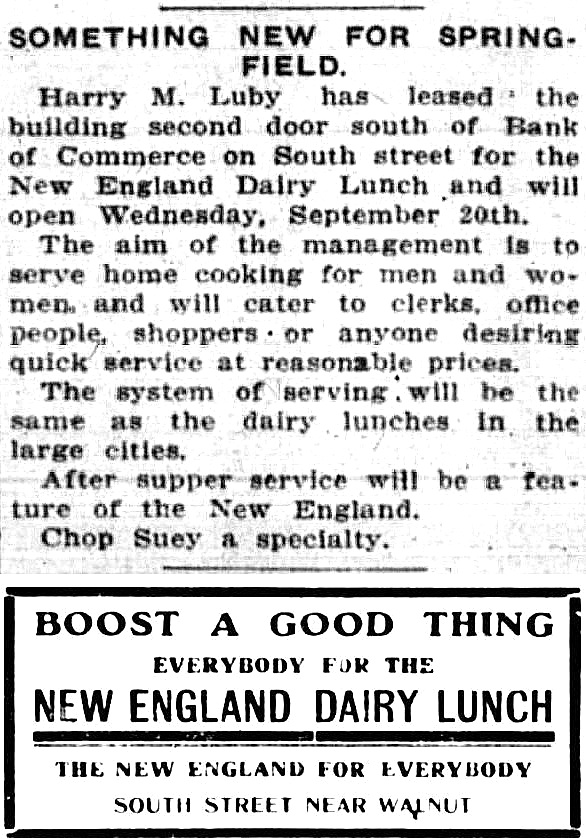
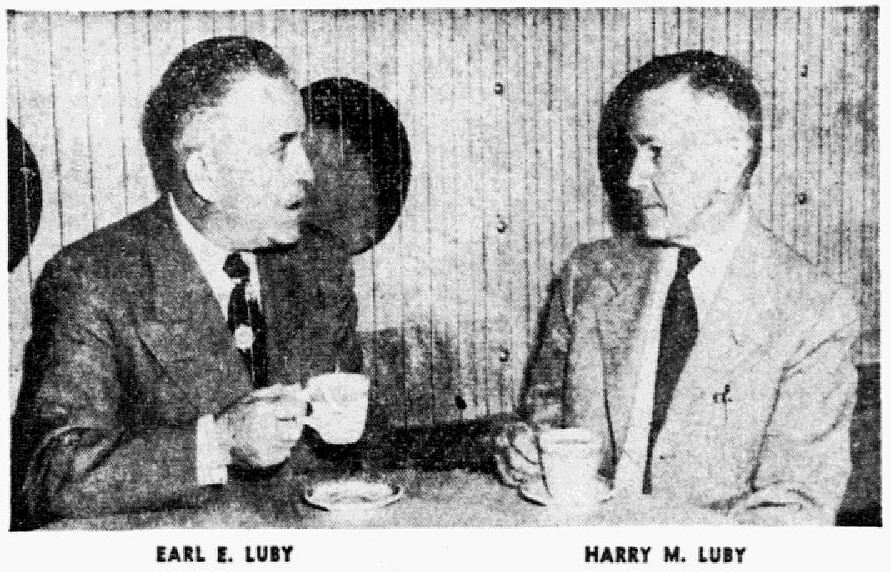
Earl Luby was the first cousin of Harry M. Luby, the man who is generally considered to have opened the forerunner of what we now know as Luby’s. In September, 1911, Harry opened a cafeteria in Springfield, Missouri called New England Dairy Lunch — there were several other restaurants around the U.S. with the same name, so I’m not sure if he bought it as a franchise, but whatever the case, that cafeteria was the start of a tray-toting empire.

luby_springfield-MO-news-leader_sept-1911Springfield News-Leader, Sept. 20 & 21, 1911

He opened other New England cafeterias in Missouri and, with cousin Earl, in Oklahoma. (There was one in Dallas in 1919, located at 1409 Elm, which appears to be connected to the Luby family.)

new-england-cafeteria_041619Apr. 16, 1919

In 1929 Earl branched off, moved to Texas, opened his own cafeterias (mostly in Dallas), and made a fortune. (There were Luby’s cafeterias run by other members of the Luby family, most notably Harry’s son, Robert Luby, who was active in South Texas a few decades later. I don’t know whether these were two completely different business entities, but Earl was king of the very lucrative Dallas market.)

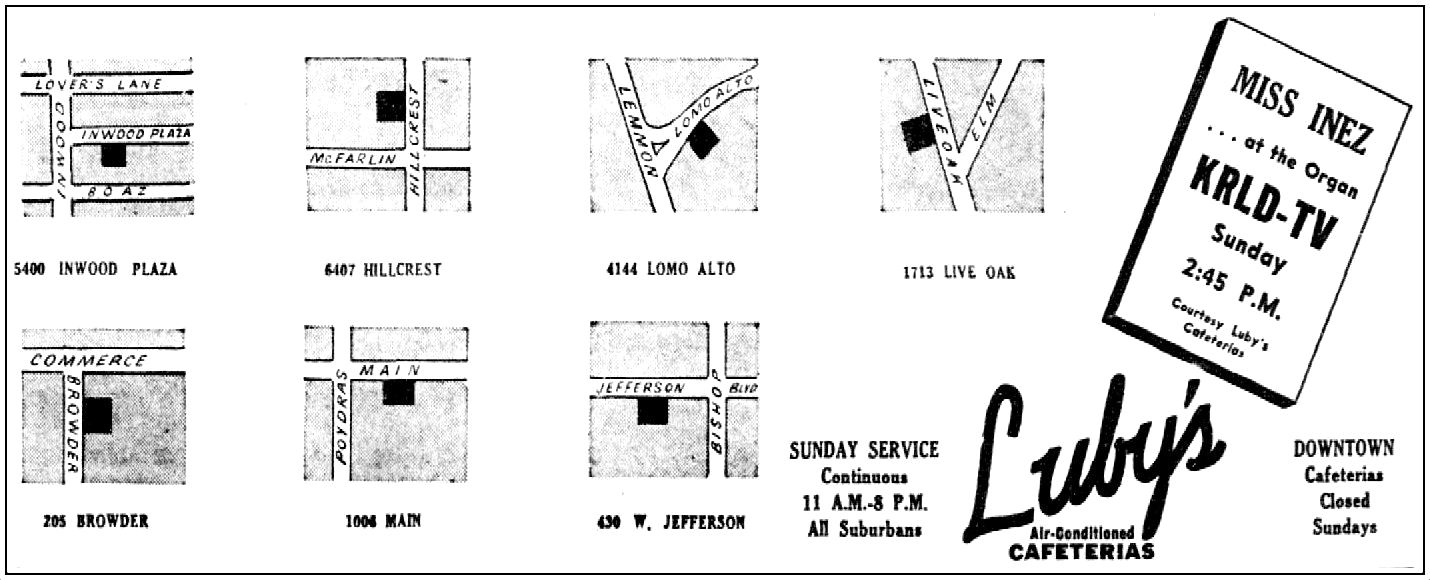
Here’s an ad from 1953 with Luby’s locations at that time (along with a Miss Inez shout-out). (Click to see a larger image.)

lubys_062153_ad-det_maps

And from the same ad, a photo of cousins Earl and Harry enjoying a convivial cup of coffee.

lubys_062153_ad-det_photoJune 1953 ad (details)

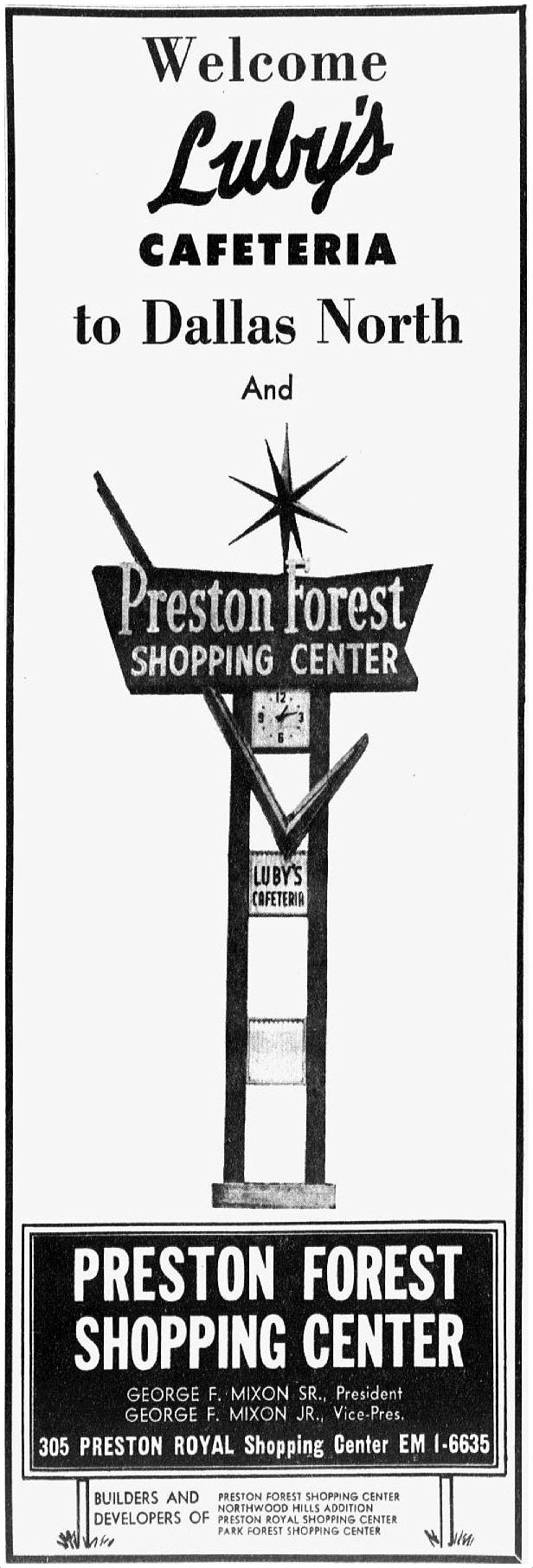
And, below, a 1960 ad for the new Luby’s at the Preston Forest Shopping Center (that sign is fantastic!).

preston-forest_lubys_090760_signSept. 1960

It’s a shame to say goodbye to such a long-lived Dallas institution. RIP, Luby’s. And thanks, Earl (1897-1990).

lubys_matchbk

***

Sources & Notes

1954 photo of Main Street is a detail of a larger photo found in the Flashback Dallas post “Streetcar #728, Main Street — 1954.”

Luby’s website is here (hurry!).

More on the history of Luby’s (with some incorrect information and nary a mention of Earl!) can be found on Wikipedia and The Handbook of Texas.

lubys_main-st_1954_det_sm

*

Copyright © 2020 Paula Bosse. All Rights Reserved.
Mother Hansen’s Home Cooking — 1913

mother-hansens-home-cooking_ebay_postmarked-1913Mother Hansen’s, 1814 Main Street… (click for larger image)

by Paula Bosse

A popular restaurateur in early-20th-century Dallas was Ruth Hansen (1870-1947), known to most people as “Mother Hansen.” She maintained a restaurant in downtown Dallas from about 1910 until the early 1930s, moving between locations on S. Ervay and a couple of different addresses on Main Street. The cafe interior seen above was at 1814 Main Street, just west of St. Paul — the photo was taken in 1912 or 1913.

In a 1968 Dallas Morning News interview with Mr. and Mrs. D. L. Whittle, Mother Hansen’s eatery was still remembered. When the Whittles arrived in Dallas in 1912, their Western Automatic Music Co. was two doors from the restaurant — they were regular customers of Mrs. Hansen, and Mrs. (Elsie) Whittle “vividly” remembered the place:
“It was pretty expensive,” Mrs. Whittle said with a smile. “I remember that a T-bone steak dinner cost all of 25 cents.” (“Music Brought Whittle to the City” by Sam Acheson, DMN, Nov. 25, 1968)

(That 25 cents would be about $7.00 in today’s money.)

I love this era of cafes and restaurants — three others in downtown Dallas from this same era are:

***

Notes & Sources

Postcard (with a 1913 postmark) found on eBay.

In addition to buying the Western Automatic Music Co. soon after his arrival in Dallas, D. L. Whittle was also a partner in the Crystal Theatre and, most famously, the founder of the Whittle Music Co.

*

Copyright © 2020 Paula Bosse. All Rights Reserved.